CGTX 8-K
Cognition Therapeutics Inc (CGTX)
UNITED
STATES
SECURITIES AND EXCHANGE COMMISSION
Washington, DC 20549
FORM
CURRENT REPORT
Pursuant to Section 13 or 15(d)
of the Securities Exchange Act of 1934
Date of Report (Date of earliest event reported):
(Exact name of registrant as specified in its charter)
| (State
or other jurisdiction of incorporation or organization) |
(Primary Standard Industrial Classification Code Number) |
(I.R.S.
Employer Identification No.) |
| (Address of principal executive offices) | (Zip Code) |
Registrant’s telephone number, including
area code: (
Not
Applicable
(Former name or former address, if changed since last report)
Check the appropriate box below if the Form 8-K filing is intended to simultaneously satisfy the filing obligation of the registrant under any of the following provisions (see General Instruction A.2. below):
| Written communications pursuant to Rule 425 under the Securities Act (17 CFR 230.425) | |
|
| |
| Soliciting material pursuant to Rule 14a-12 under the Exchange Act (17 CFR 240.14a-12) | |
| Pre-commencement communications pursuant to Rule 14d-2(b) under the Exchange Act (17 CFR 240.14d-2(b)) | |
| Pre-commencement communications pursuant to Rule 13e-4(c) under the Exchange Act (17 CFR 240.13e-4(c)) |
Securities registered pursuant to Section 12(b) of the Act:
| Title of Each Class | Trading Symbol | Name
of Exchange on Which Registered | ||
Indicate by check mark whether the registrant is an emerging growth company as defined in Rule 405 of the Securities Act of 1933 (§230.405 of this chapter) or Rule 12b-2 of the Securities Exchange Act of 1934 (§240.12b-2 of this chapter).
Emerging
growth company
If
an emerging growth company, indicate by check mark if the registrant has elected not to use the extended transition period for complying
with any new or revised financial accounting standards provided pursuant to Section 13(a) of the Exchange Act.
Item 7.01 Regulation FD Disclosure.
Attached as Exhibit 99.1 and furnished for purposes of Regulation FD is a presentation that Cognition Therapeutics, Inc. may use from time to time in presentations or discussions with investors, analysts, and other parties.
The information in this Item 7.01 (including Exhibit 99.1) is being furnished solely to satisfy the requirements of Regulation FD and shall not be deemed to be “filed” for the purposes of Section 18 of the Securities Exchange Act of 1934, as amended (the “Exchange Act”), or otherwise subject to the liabilities of that Section, nor shall it be deemed to be incorporated by reference in any filing under the Securities Act of 1933, as amended, or the Exchange Act.
Item 9.01 Financial Statements and Exhibits.
(d) Exhibits
The following exhibits are being furnished herewith:
| Exhibit No. |
Document | |
| 99.1 | Investor presentation of Cognition Therapeutics, Inc. | |
| 104 | Cover Page Interactive Data File (embedded within the Inline XBRL document) |
SIGNATURES
Pursuant to the requirements of the Securities Exchange Act of 1934, the registrant has duly caused this report to be signed on its behalf by the undersigned hereunto duly authorized.
| COGNITION THERAPEUTICS, INC. | ||
| Date: January 13, 2025 | ||
| By: | /s/ Lisa Ricciardi | |
| Name: | Lisa Ricciardi | |
| Title: | President and Chief Executive Officer | |
| Targeting Pathogenic Oligomers: January 2025 A Disruptive Approach to the Treatment of Neurodegenerative Diseases |
| 2 FORWARD-LOOKING STATEMENTS This presentation contains forward-looking statements within the meaning of The Private Securities Litigation Reform Act of 1995. All statements contained in this presentation, other than statements of historical facts or statements that relate to present facts or current conditions, including but not limited to, product candidates, including zervimesine, also known as zervimesine, and any expected or implied benefits or results, including that initial clinical results observed with respect to zervimesinewill be replicated in later trials, and our clinical development plans, including statements regarding our clinical studies of zervimesine and our regulatory plans, expectations regarding potential patient populations, expectations regarding our patent portfolio, and our expected cash runway, are forward-looking statements. These statements, including statements related to the timing and expected results of our clinical trials, involve known and unknown risks, uncertainties and other important factors that may cause our actual results, performance, or achievements to be materially different from any future results, performance, or achievements expressed or implied by the forward-looking statements. In some cases, you can identify forward-looking statements by terms such as “may,” “might,” “will,” “should,” “expect,” “plan,” “aim,” “seek,” “anticipate,” “could,” “intend,” “target,” “project,” “contemplate,” “believe,” “estimate,” “predict,” “forecast,” “potential” or “continue” or the negative of these terms or other similar expressions. We have based these forward-looking statements largely on our current expectations and projections about future events and financial trends that we believe may affect our business, financial condition, and results of operations. These forward-looking statements speak only as of the date of this presentation and are subject to a number of risks, uncertainties and assumptions, some of which cannot be predicted or quantified and some of which are beyond our control. Factors that may cause actual results to differ materially from current expectations include, but are not limited to: our ability to successfully advance our current and future product candidates through development activities, preclinical studies and clinical trials and costs related thereto; uncertainties inherent in the results of preliminary data, preclinical studies and earlier-stage clinical trials being predictive of the results of early or later-stage clinical trials; the timing, scope and likelihood of regulatory filings and approvals, including regulatory approval of our product candidates; competition, our ability to secure new (and retain existing) grant funding, our ability to grow and manage growth, maintain relationships with suppliers and retain our management and key employees; changes in applicable laws or regulations; the possibility that the we may be adversely affected by other economic, business or competitive factors, including ongoing economic uncertainty; our estimates of expenses and profitability; the evolution of the markets in which we compete; our ability to implement our strategic initiatives and continue to innovate our existing products; our ability to defend our intellectual property; impacts of ongoing global and regional conflicts; the impact of the COVID-19 pandemic on our business, supply chain and labor force; and the risks and uncertainties described more fully in the “Risk Factors” section of our annual and quarterly reports filed with the Securities & Exchange Commission that are available on www.sec.gov. These risks are not exhaustive, and we face both known and unknown risks. You should not rely on these forward-looking statements as predictions of future events. The events and circumstances reflected in our forward-looking statements may not be achieved or occur, and actual results could differ materially from those projected in the forward-looking statements. Moreover, we operate in a dynamic industry and economy. New risk factors and uncertainties may emerge from time to time, and it is not possible for management to predict all risk factors and uncertainties that we may face. Except as required by applicable law, we do not plan to publicly update or revise any forward-looking statements contained herein, whether as a result of any new information, future events, changed circumstances or otherwise. TRADEMARKS This presentation may contain trademarks, service marks, trade names and copyrights of other companies, which are the property of their respective owners. Solely for convenience, some of the trademarks, service marks, trade names and copyrights referred to in this presentation may be listed without the TM, SM © or ® symbols, but we will assert, to the fullest extent under applicable law, the rights of the applicable owners, if any, to these trademarks, service marks, trade names and copyrights. MARKET & INDUSTRY DATA Projections, estimates, industry data and information contained in this presentation, including the size of and growth in key end markets, are based on information from third-party sources and management estimates. Although we believe that these third party-sources are reliable, we cannot guarantee the accuracy or completeness of these sources. Our management’s estimates are derived from third-party sources, publicly available information, our knowledge of our industry and assumptions based on such information and knowledge. Our management’s estimates have not been verified by any independent source. All of the projections, estimates, market data and industry information used in this presentation involve a number of assumptions and limitations, and you are cautioned not to give undue weight to such information. In addition, projections, estimates and assumptions relating to us and our industry's future performance are necessarily subject to a high degree of uncertainty and risk due to a variety of factors, including, but not limited to, those described above, that could cause future performance to differ materially from our expressed projections, estimates and assumptions or those provided by third parties. Forward-looking Statements |
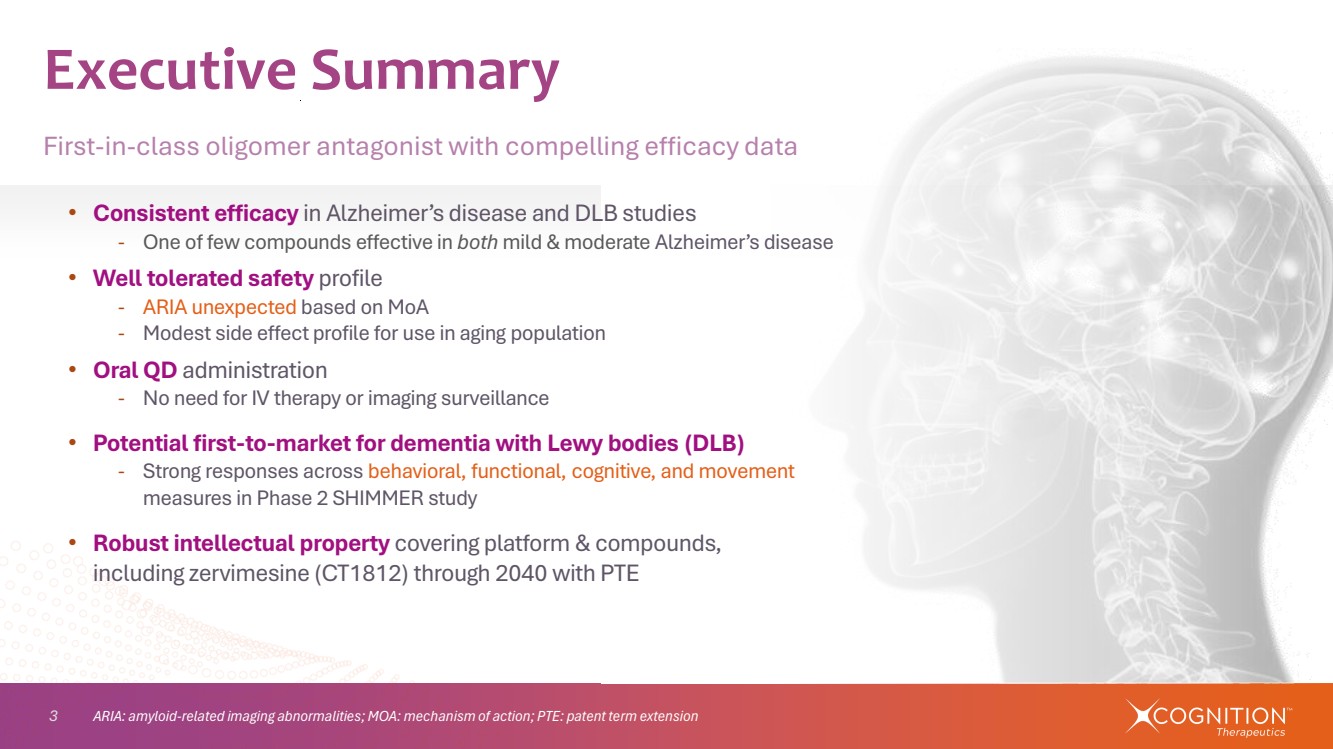
| 3 Executive Summary First-in-class oligomer antagonist with compelling efficacy data • Consistent efficacy in Alzheimer’s disease and DLB studies - One of few compounds effective in both mild & moderate Alzheimer’s disease • Well tolerated safety profile - ARIA unexpected based on MoA - Modest side effect profile for use in aging population • Oral QD administration - No need for IV therapy or imaging surveillance • Potential first-to-market for dementia with Lewy bodies (DLB) - Strong responses across behavioral, functional, cognitive, and movement measures in Phase 2 SHIMMER study • Robust intellectual property covering platform & compounds, including zervimesine (CT1812) through 2040 with PTE ARIA: amyloid-related imaging abnormalities; MOA: mechanism of action; PTE: patent term extension |
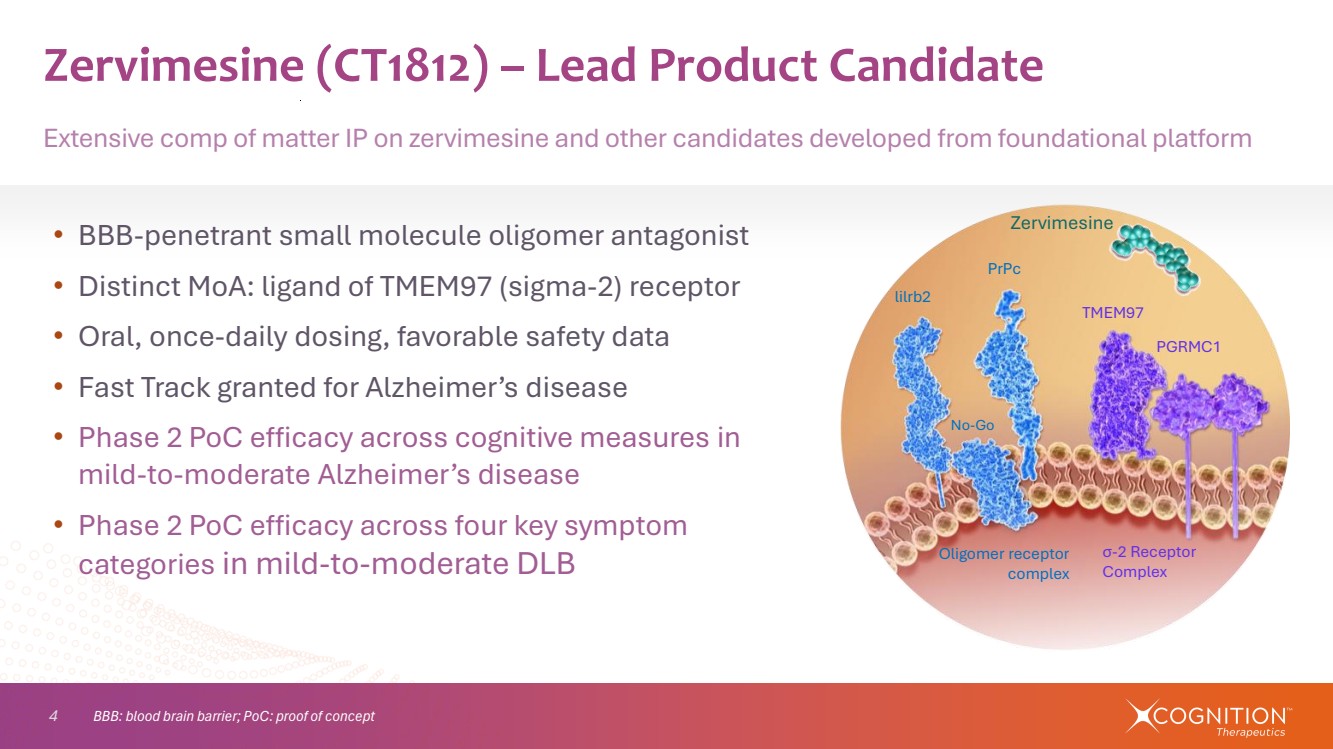
| 4 • BBB-penetrant small molecule oligomer antagonist • Distinct MoA: ligand of TMEM97 (sigma-2) receptor • Oral, once-daily dosing, favorable safety data • Fast Track granted for Alzheimer’s disease • Phase 2 PoC efficacy across cognitive measures in mild-to-moderate Alzheimer’s disease • Phase 2 PoC efficacy across four key symptom categories in mild-to-moderate DLB Zervimesine (CT1812) – Lead Product Candidate Extensive comp of matter IP on zervimesine and other candidates developed from foundational platform lilrb2 PrPc No-Go TMEM97 PGRMC1 σ-2 Receptor Complex Oligomer receptor complex Zervimesine BBB: blood brain barrier; PoC: proof of concept |
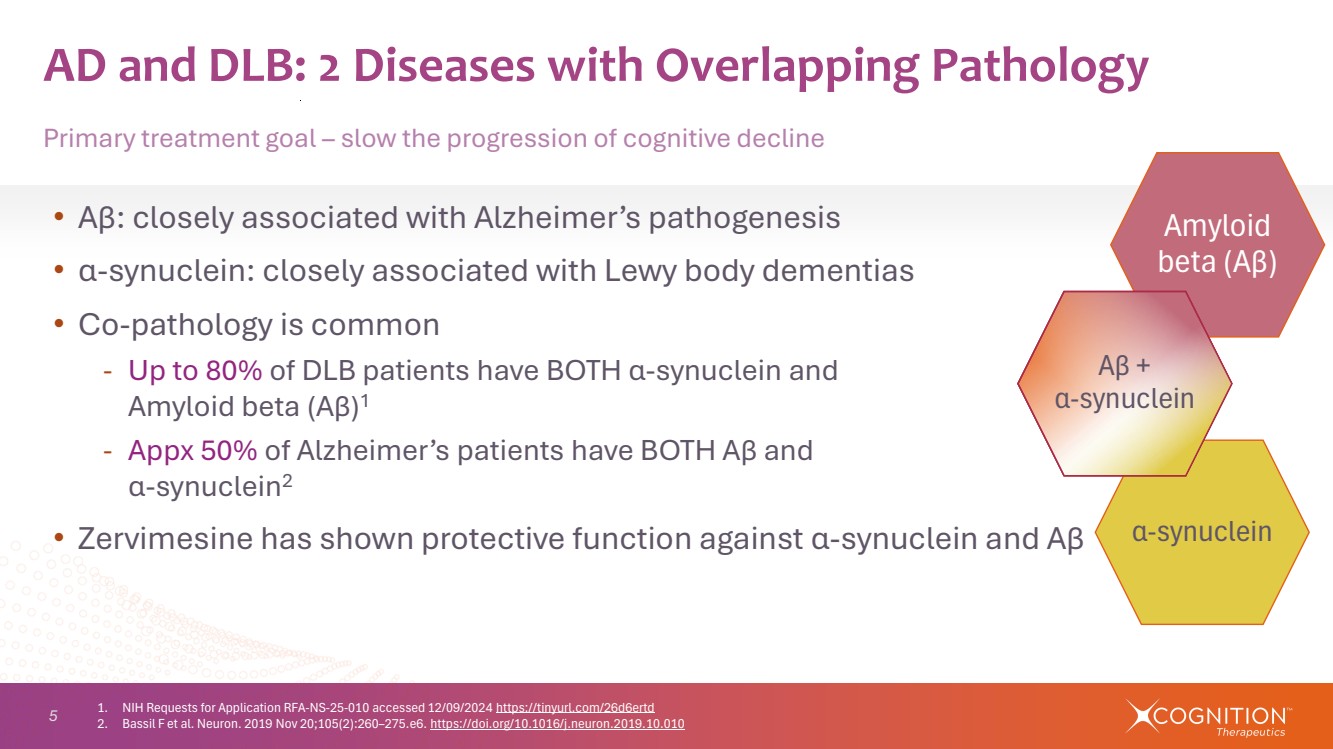
| 5 α-synuclein Amyloid beta (Aβ) • Aβ: closely associated with Alzheimer’s pathogenesis • α-synuclein: closely associated with Lewy body dementias • Co-pathology is common - Up to 80% of DLB patients have BOTH α-synuclein and Amyloid beta (Aβ)1 - Appx 50% of Alzheimer’s patients have BOTH Aβ and α-synuclein2 • Zervimesine has shown protective function against α-synuclein and Aβ AD and DLB: 2 Diseases with Overlapping Pathology Primary treatment goal – slow the progression of cognitive decline Aβ + α-synuclein 1. NIH Requests for Application RFA-NS-25-010 accessed 12/09/2024 https://tinyurl.com/26d6ertd 2. Bassil F et al. Neuron. 2019 Nov 20;105(2):260–275.e6. https://doi.org/10.1016/j.neuron.2019.10.010 |
| Strong clinical signals across four major symptom domains in Phase 2 SHIMMER Study Dementia with Lewy Bodies (DLB) |
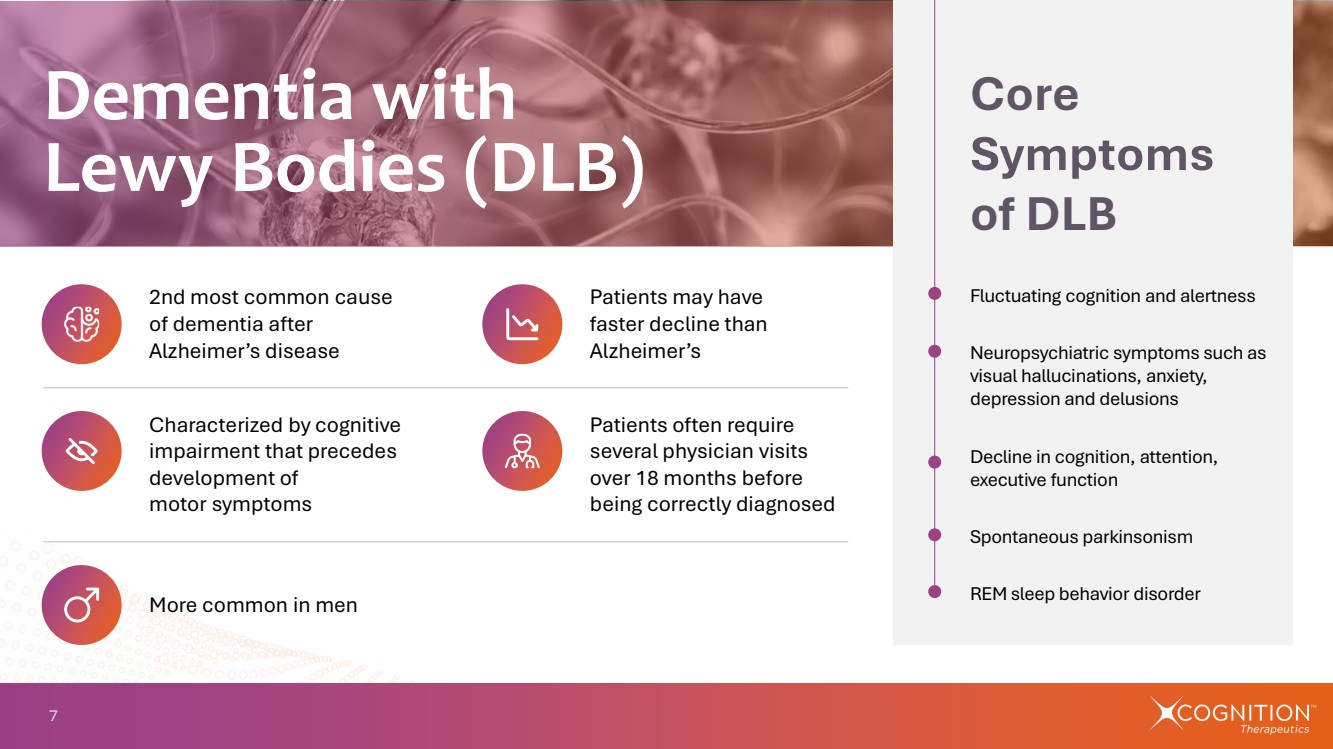
| 7 Dementia with Lewy Bodies (DLB) Core Symptoms of DLB Fluctuating cognition and alertness Neuropsychiatric symptoms such as visual hallucinations, anxiety, depression and delusions Decline in cognition, attention, executive function Spontaneous parkinsonism REM sleep behavior disorder More common in men 2nd most common cause of dementia after Alzheimer’s disease Patients may have faster decline than Alzheimer’s Characterized by cognitive impairment that precedes development of motor symptoms Patients often require several physician visits over 18 months before being correctly diagnosed |
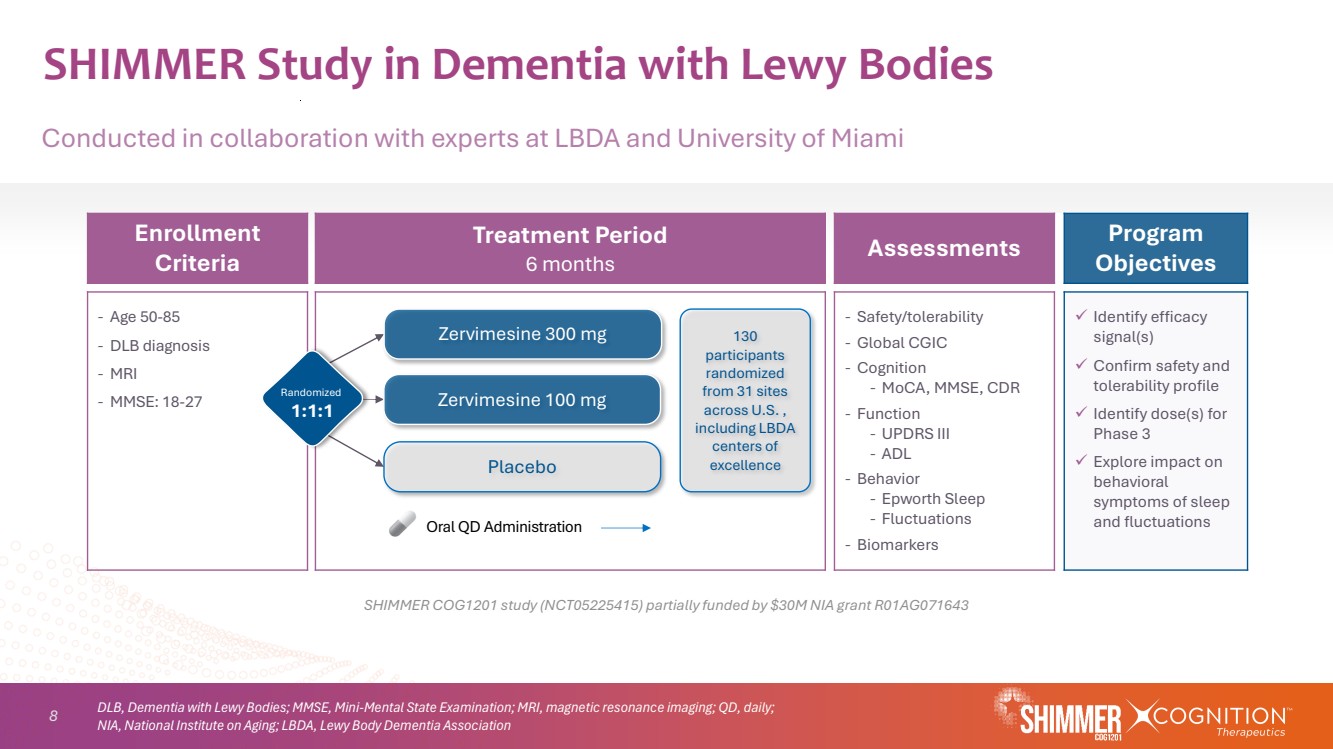
| 8 SHIMMER Study in Dementia with Lewy Bodies Conducted in collaboration with experts at LBDA and University of Miami SHIMMER COG1201 study (NCT05225415) partially funded by $30M NIA grant R01AG071643 Enrollment Criteria Treatment Period 6 months Assessments Program Objectives ‐ Age 50-85 ‐ DLB diagnosis ‐ MRI ‐ MMSE: 18-27 ‐ Safety/tolerability ‐ Global CGIC ‐ Cognition ‐ MoCA, MMSE, CDR ‐ Function ‐ UPDRS III ‐ ADL ‐ Behavior ‐ Epworth Sleep ‐ Fluctuations ‐ Biomarkers ✓ Identify efficacy signal(s) ✓ Confirm safety and tolerability profile ✓ Identify dose(s) for Phase 3 ✓ Explore impact on behavioral symptoms of sleep and fluctuations Placebo Zervimesine 100 mg Zervimesine 300 mg Oral QD Administration Randomized 1:1:1 130 participants randomized from 31 sites across U.S. , including LBDA centers of excellence DLB, Dementia with Lewy Bodies; MMSE, Mini-Mental State Examination; MRI, magnetic resonance imaging; QD, daily; NIA, National Institute on Aging; LBDA, Lewy Body Dementia Association |
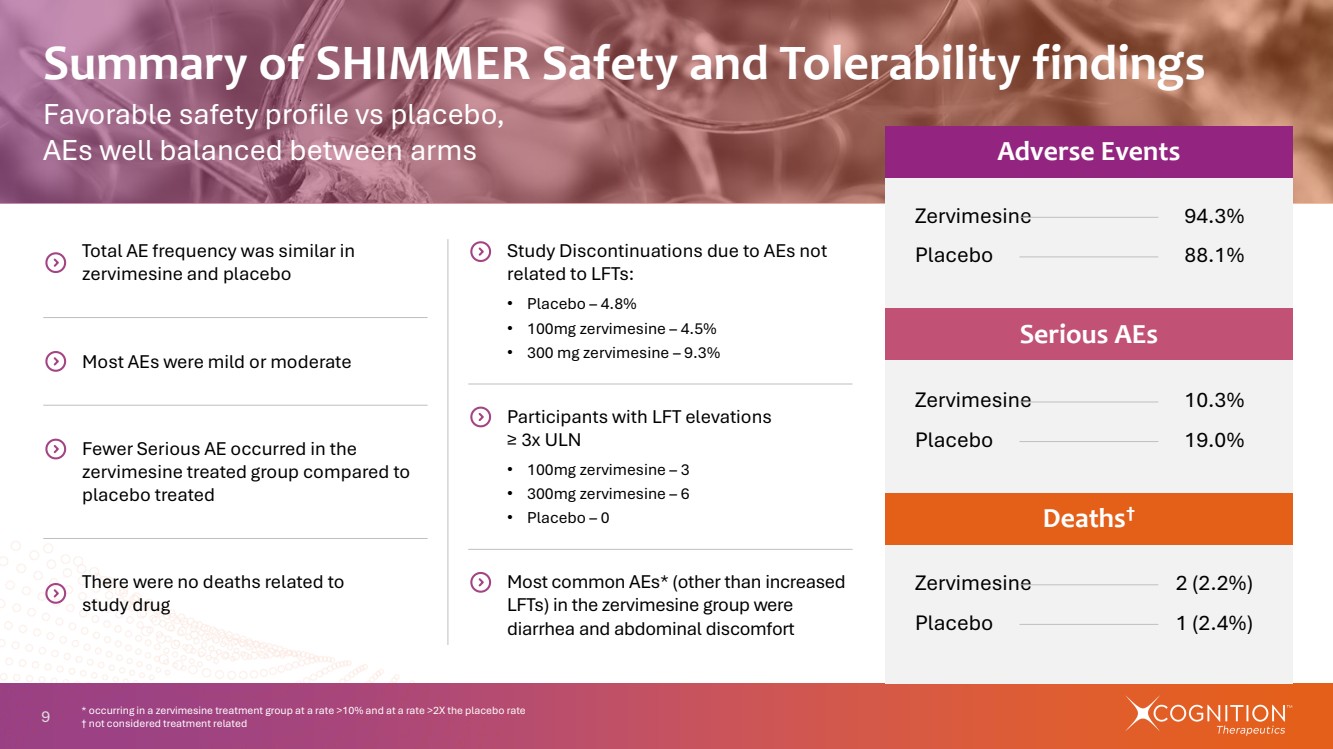
| 9 Summary of SHIMMER Safety and Tolerability findings Favorable safety profile vs placebo, AEs well balanced between arms * occurring in a zervimesine treatment group at a rate >10% and at a rate >2X the placebo rate † not considered treatment related Study Discontinuations due to AEs not related to LFTs: • Placebo – 4.8% • 100mg zervimesine – 4.5% • 300 mg zervimesine – 9.3% Participants with LFT elevations ≥ 3x ULN • 100mg zervimesine – 3 • 300mg zervimesine – 6 • Placebo – 0 Most common AEs* (other than increased LFTs) in the zervimesine group were diarrhea and abdominal discomfort Total AE frequency was similar in zervimesine and placebo Most AEs were mild or moderate Fewer Serious AE occurred in the zervimesine treated group compared to placebo treated There were no deaths related to study drug Adverse Events Zervimesine 94.3% Placebo 88.1% Zervimesine 10.3% Placebo 19.0% Serious AEs Zervimesine 2 (2.2%) Placebo 1 (2.4%) Deaths† |
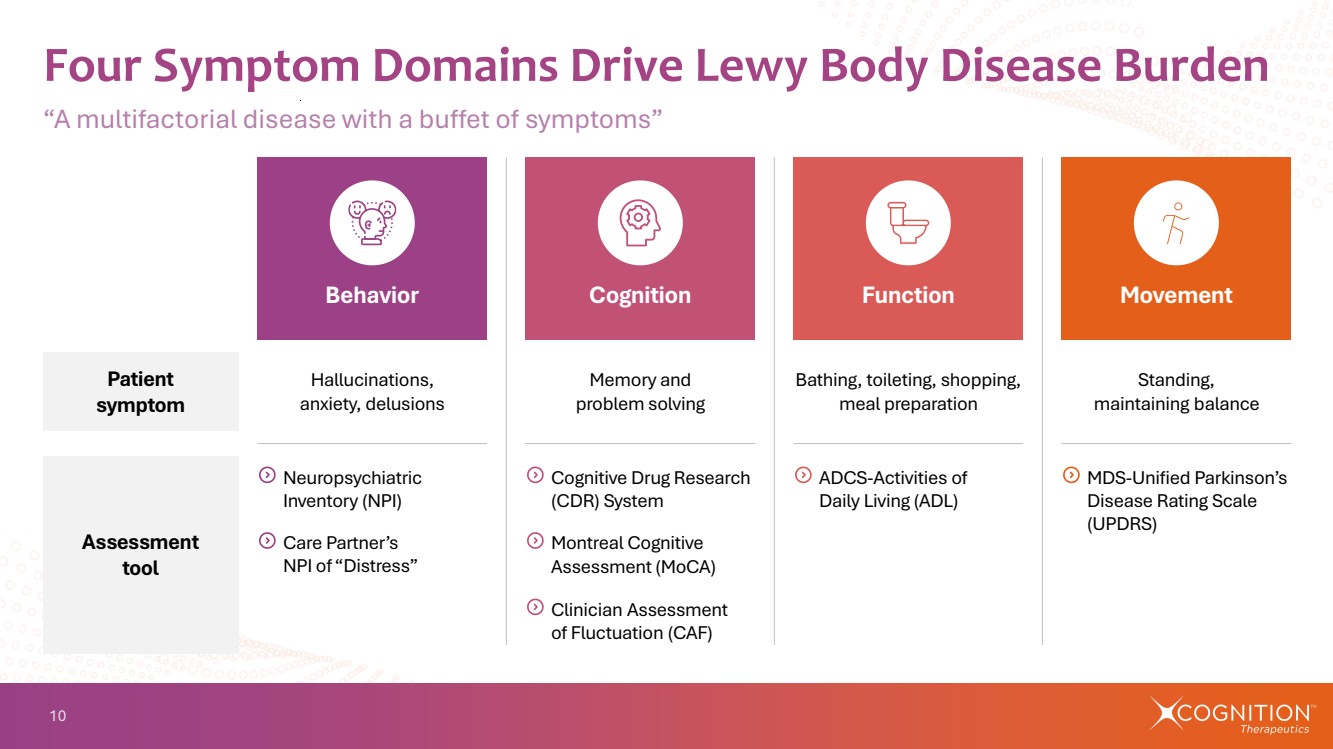
| 10 Behavior Cognition Function Movement Four Symptom Domains Drive Lewy Body Disease Burden “A multifactorial disease with a buffet of symptoms” Cognitive Drug Research (CDR) System Montreal Cognitive Assessment (MoCA) Clinician Assessment of Fluctuation (CAF) Neuropsychiatric Inventory (NPI) Care Partner’s NPI of “Distress” MDS-Unified Parkinson’s Disease Rating Scale (UPDRS) ADCS-Activities of Daily Living (ADL) Memory and problem solving Hallucinations, anxiety, delusions Standing, maintaining balance Bathing, toileting, shopping, meal preparation Patient symptom Assessment tool |
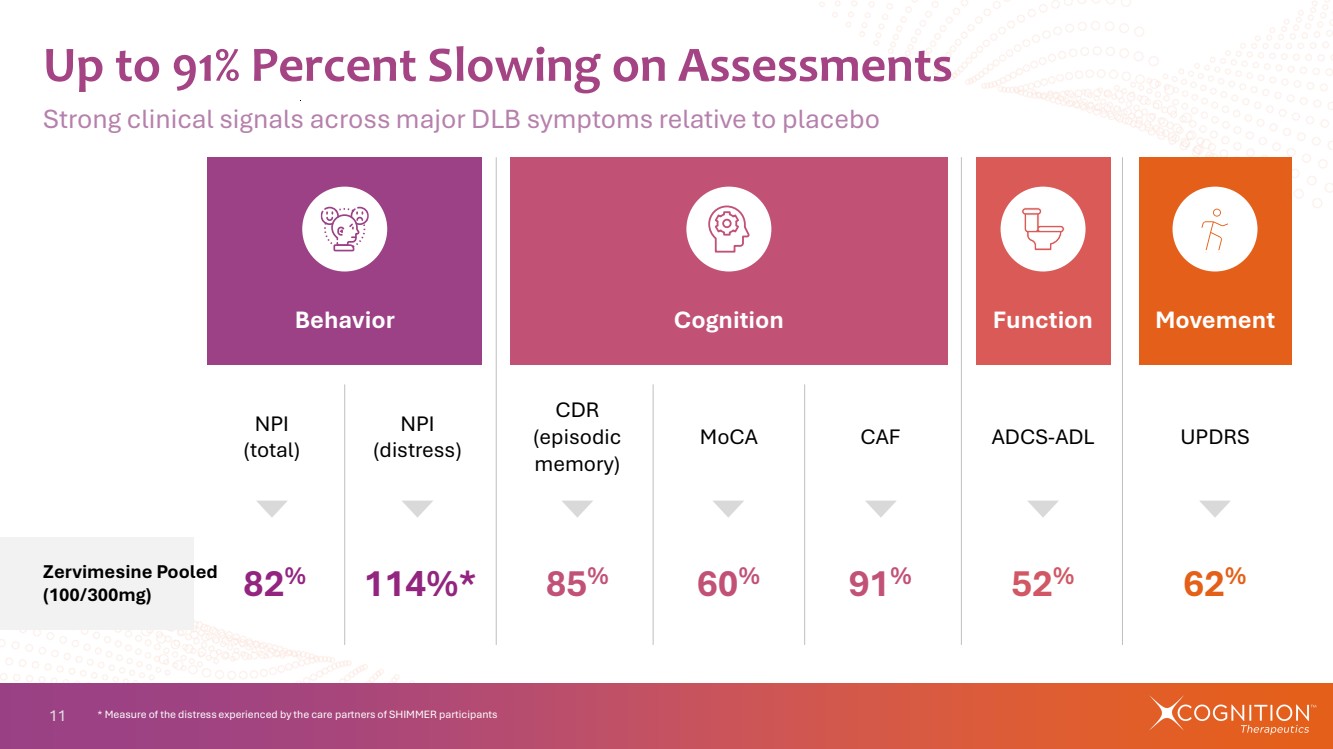
| 11 Up to 91% Percent Slowing on Assessments Strong clinical signals across major DLB symptoms relative to placebo * Measure of the distress experienced by the care partners of SHIMMER participants Behavior Cognition Function Movement NPI (total) NPI (distress) CDR (episodic memory) MoCA CAF ADCS-ADL UPDRS Zervimesine Pooled (100/300mg) 82% 114%* 85% 60% 91% 52% 62% |
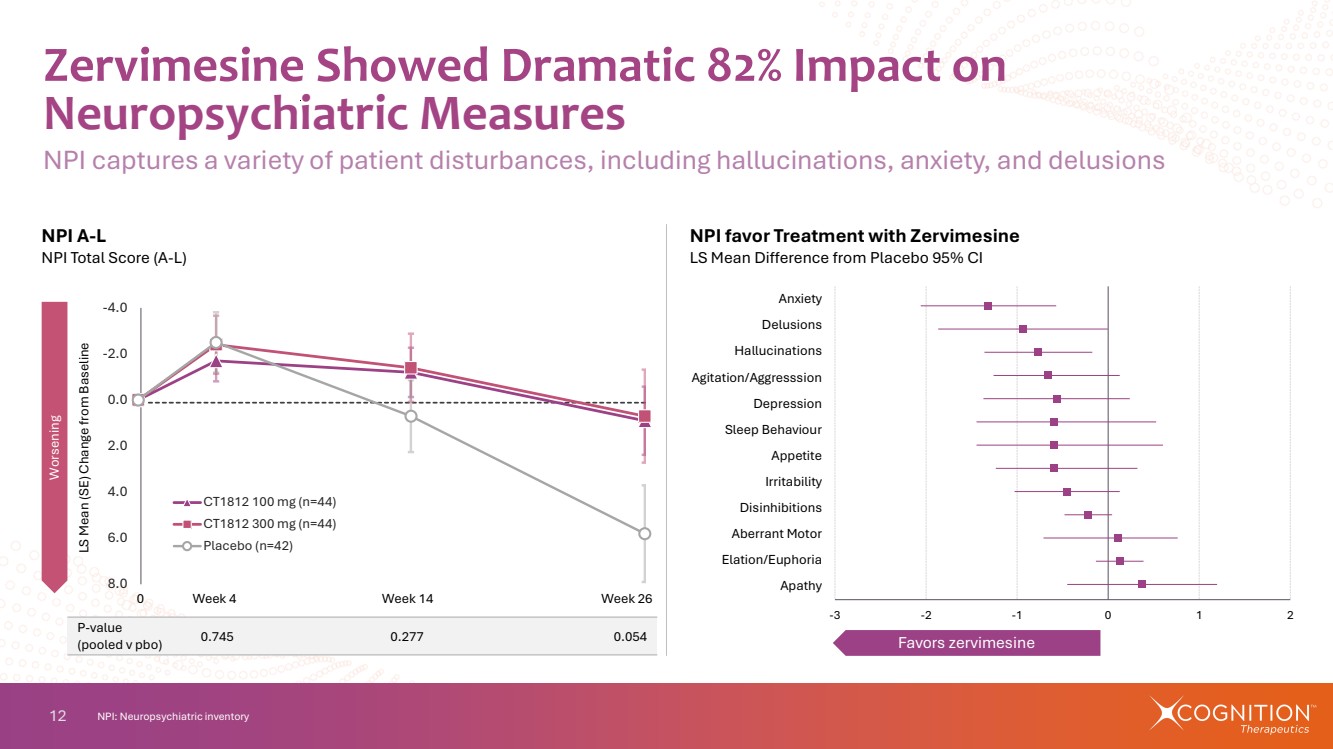
| 12 Zervimesine Showed Dramatic 82% Impact on Neuropsychiatric Measures NPI captures a variety of patient disturbances, including hallucinations, anxiety, and delusions NPI: Neuropsychiatric inventory NPI favor Treatment with Zervimesine LS Mean Difference from Placebo 95% CI -3 -2 -1 0 1 2 Apathy Elation/Euphoria Aberrant Motor Disinhibitions Irritability Appetite Sleep Behaviour Depression Agitation/Aggresssion Hallucinations Delusions Anxiety Favors zervimesine -4.0 -2.0 0.0 2.0 4.0 6.0 8.0 CT1812 100 mg (n=44) CT1812 300 mg (n=44) Placebo (n=42) Worsening LS Mean (SE) Change from Baseline 0 Week 4 Week 14 Week 26 P-value (pooled v pbo) 0.745 0.277 0.054 NPI A-L NPI Total Score (A-L) |
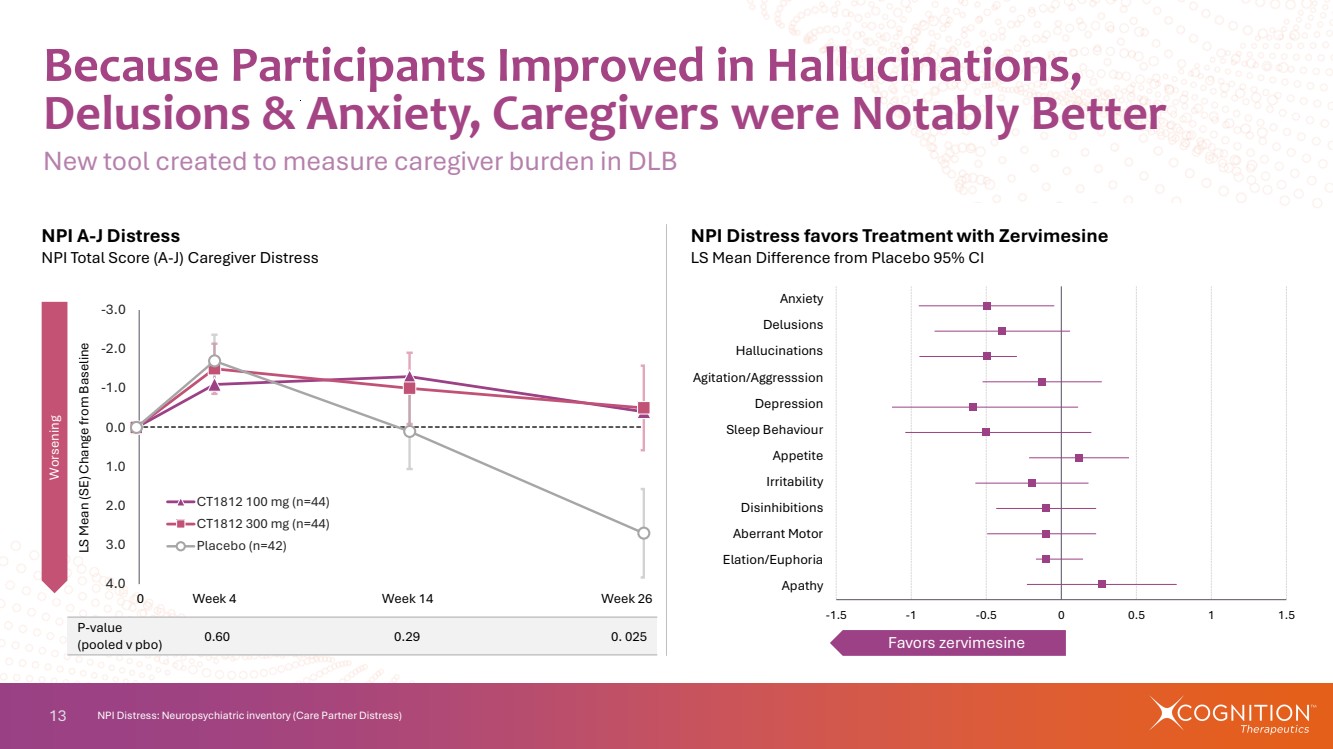
| 13 Because Participants Improved in Hallucinations, Delusions & Anxiety, Caregivers were Notably Better New tool created to measure caregiver burden in DLB NPI Distress: Neuropsychiatric inventory (Care Partner Distress) NPI Distress favors Treatment with Zervimesine LS Mean Difference from Placebo 95% CI -1.5 -1 -0.5 0 0.5 1 1.5 Apathy Elation/Euphoria Aberrant Motor Disinhibitions Irritability Appetite Sleep Behaviour Depression Agitation/Aggresssion Hallucinations Delusions Anxiety Favors zervimesine NPI A-J Distress NPI Total Score (A-J) Caregiver Distress -3.0 -2.0 -1.0 0.0 1.0 2.0 3.0 4.0 CT1812 100 mg (n=44) CT1812 300 mg (n=44) Placebo (n=42) Worsening LS Mean (SE) Change from Baseline 0 Week 4 Week 14 Week 26 P-value (pooled v pbo) 0.60 0.29 0. 025 |
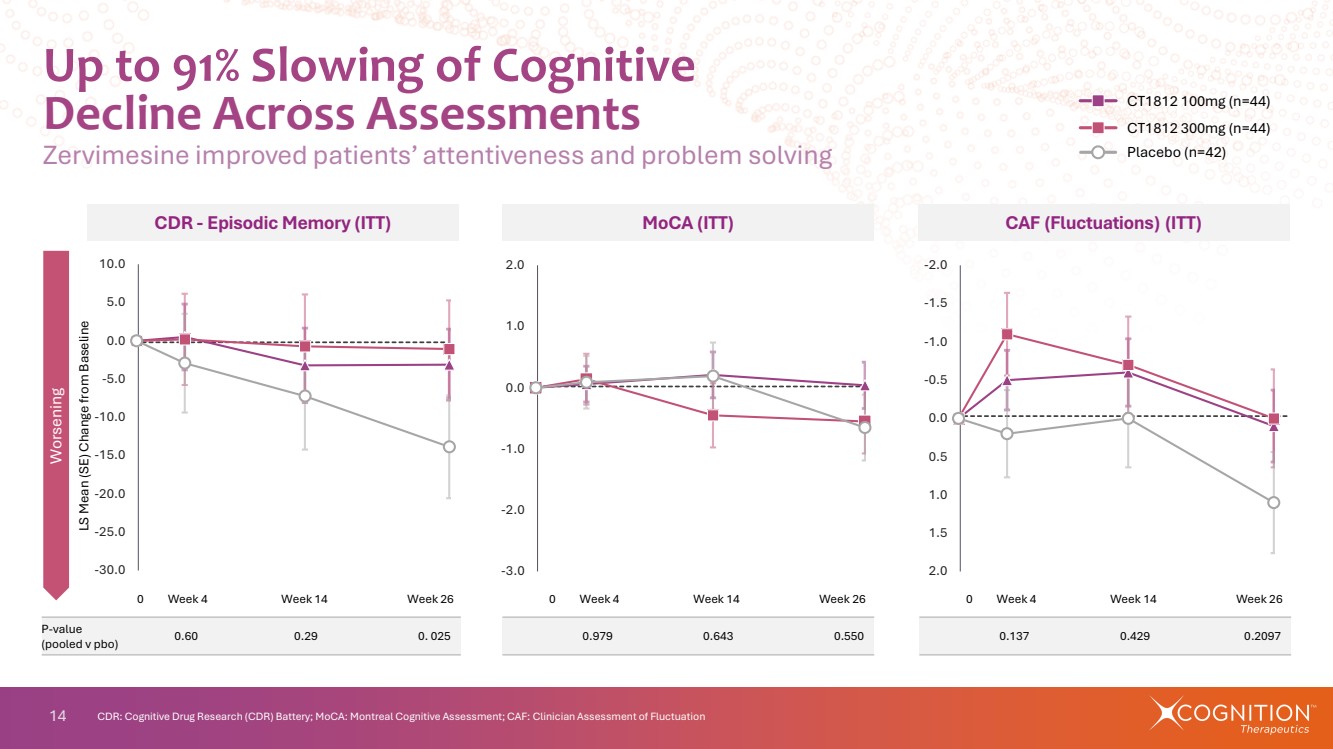
| 14 0.979 0.643 0.550 Up to 91% Slowing of Cognitive Decline Across Assessments Zervimesine improved patients’ attentiveness and problem solving CDR: Cognitive Drug Research (CDR) Battery; MoCA: Montreal Cognitive Assessment; CAF: Clinician Assessment of Fluctuation CDR - Episodic Memory (ITT) MoCA (ITT) CAF (Fluctuations) (ITT) P-value (pooled v pbo) 0.60 0.29 0. 025 0.137 0.429 0.2097 Worsening LS Mean (SE) Change from Baseline 0 Week 4 Week 14 Week 26 0 Week 4 Week 14 Week 26 -30.0 -25.0 -20.0 -15.0 -10.0 -5.0 0.0 5.0 10.0 -3.0 -2.0 -1.0 0.0 1.0 2.0 0 Week 4 Week 14 Week 26 -2.0 -1.5 -1.0 -0.5 0.0 0.5 1.0 1.5 2.0 CT1812 300mg (n=44) Placebo (n=42) CT1812 100mg (n=44) |
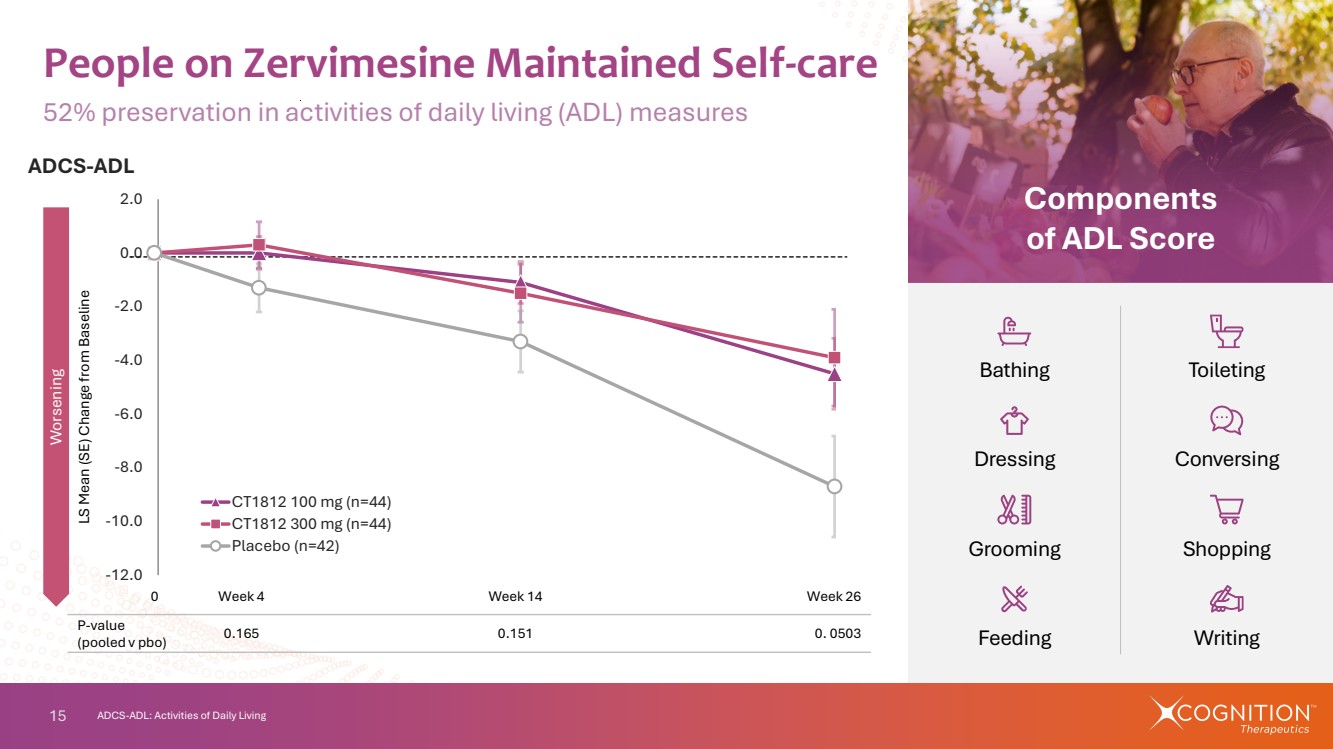
| 15 People on Zervimesine Maintained Self-care 52% preservation in activities of daily living (ADL) measures ADCS-ADL: Activities of Daily Living -12.0 -10.0 -8.0 -6.0 -4.0 -2.0 0.0 2.0 ADCS-ADL CT1812 100 mg (n=44) CT1812 300 mg (n=44) Placebo (n=42) Worsening Components of ADL Score Bathing Toileting Dressing Conversing Grooming Shopping Feeding Writing 0 Week 4 Week 14 Week 26 P-value (pooled v pbo) 0.165 0.151 0. 0503 LS Mean (SE) Change from Baseline |
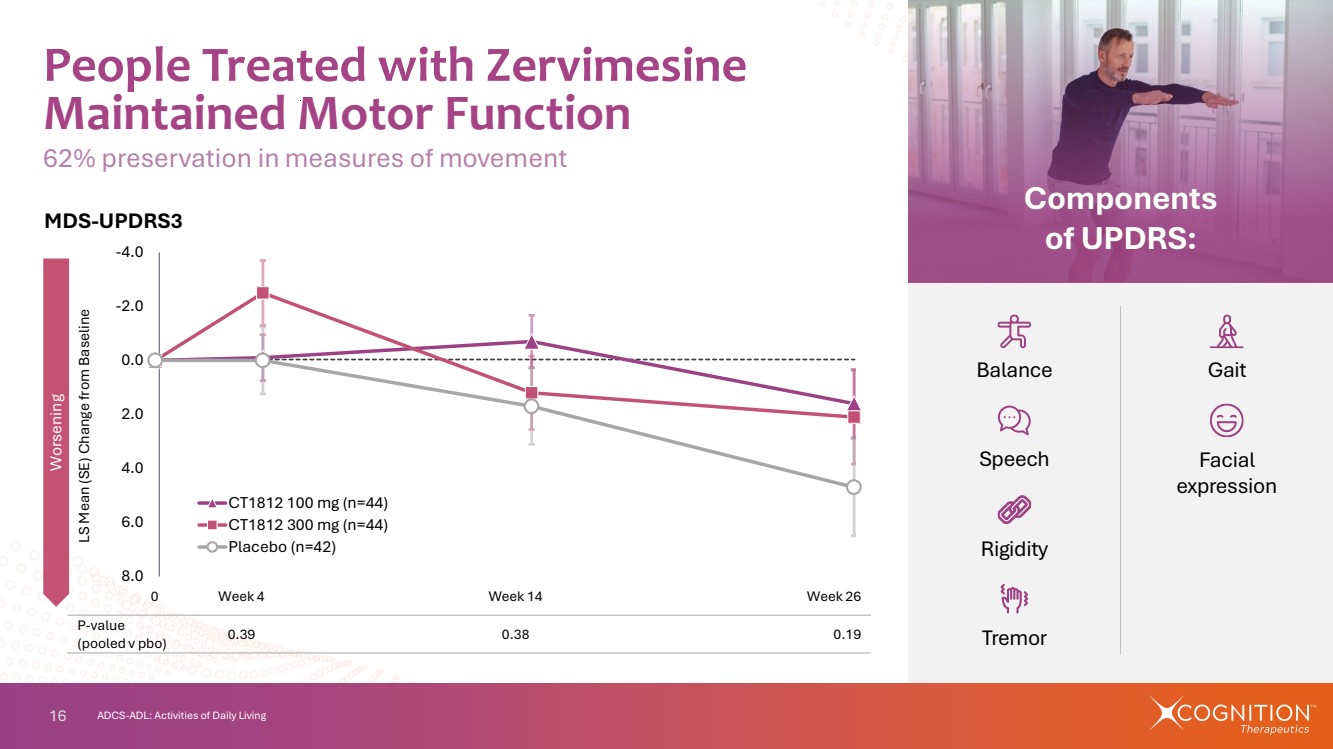
| 16 -4.0 -2.0 0.0 2.0 4.0 6.0 8.0 MDS-UPDRS3 CT1812 100 mg (n=44) CT1812 300 mg (n=44) Placebo (n=42) People Treated with Zervimesine Maintained Motor Function 62% preservation in measures of movement ADCS-ADL: Activities of Daily Living Worsening Components of UPDRS: Balance Speech Rigidity Tremor Gait Facial expression LS Mean (SE) Change from Baseline 0 Week 4 Week 14 Week 26 P-value (pooled v pbo) 0.39 0.38 0.19 |
| 17 SHIMMER Met and Exceeded Objectives and Expectations Identified consistent signals of efficacy and a safe and tolerable dose range COG1201 SHIMMER was a phase 2a safety and tolerability study seeking signals of efficacy in people with dementia with Lewy bodies The safety and tolerability profile was similar to past experience with CT182 Clear signals of efficacy were observed • Across Behavioral, Cognitive, Functional and Motor domains • Treatment differences increased over 6 months These data provide support for advancement of zervimesine as a treatment for dementia with Lewy bodies |
| Extensive preclinical and clinical testing culminating in positive results in Phase 2 PoC ‘SHINE’ trial Alzheimer’s Disease |
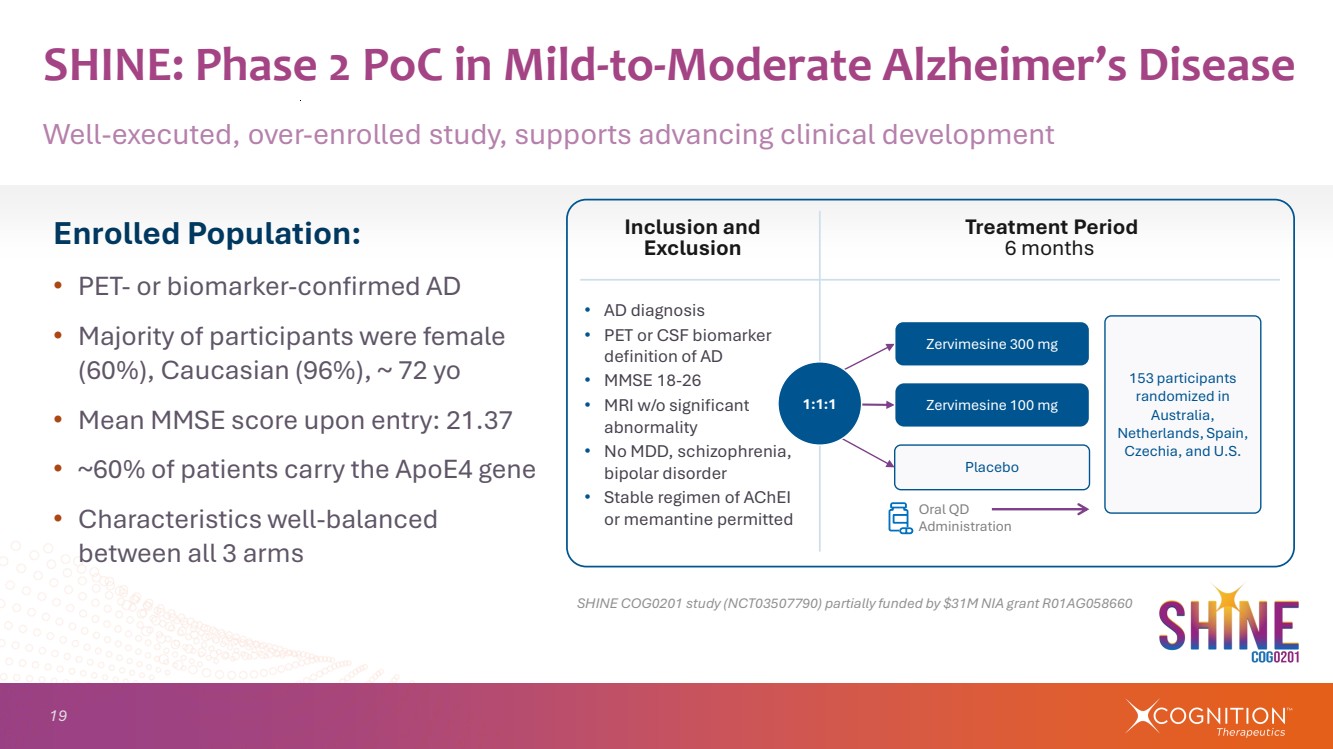
| 19 Enrolled Population: • PET- or biomarker-confirmed AD • Majority of participants were female (60%), Caucasian (96%), ~ 72 yo • Mean MMSE score upon entry: 21.37 • ~60% of patients carry the ApoE4 gene • Characteristics well-balanced between all 3 arms SHINE: Phase 2 PoC in Mild-to-Moderate Alzheimer’s Disease Well-executed, over-enrolled study, supports advancing clinical development Inclusion and Exclusion • AD diagnosis • PET or CSF biomarker definition of AD • MMSE 18-26 • MRI w/o significant abnormality • No MDD, schizophrenia, bipolar disorder • Stable regimen of AChEI or memantine permitted Placebo Zervimesine 100 mg Zervimesine 300 mg Oral QD Administration 1:1:1 Treatment Period 6 months 153 participants randomized in Australia, Netherlands, Spain, Czechia, and U.S. SHINE COG0201 study (NCT03507790) partially funded by $31M NIA grant R01AG058660 |
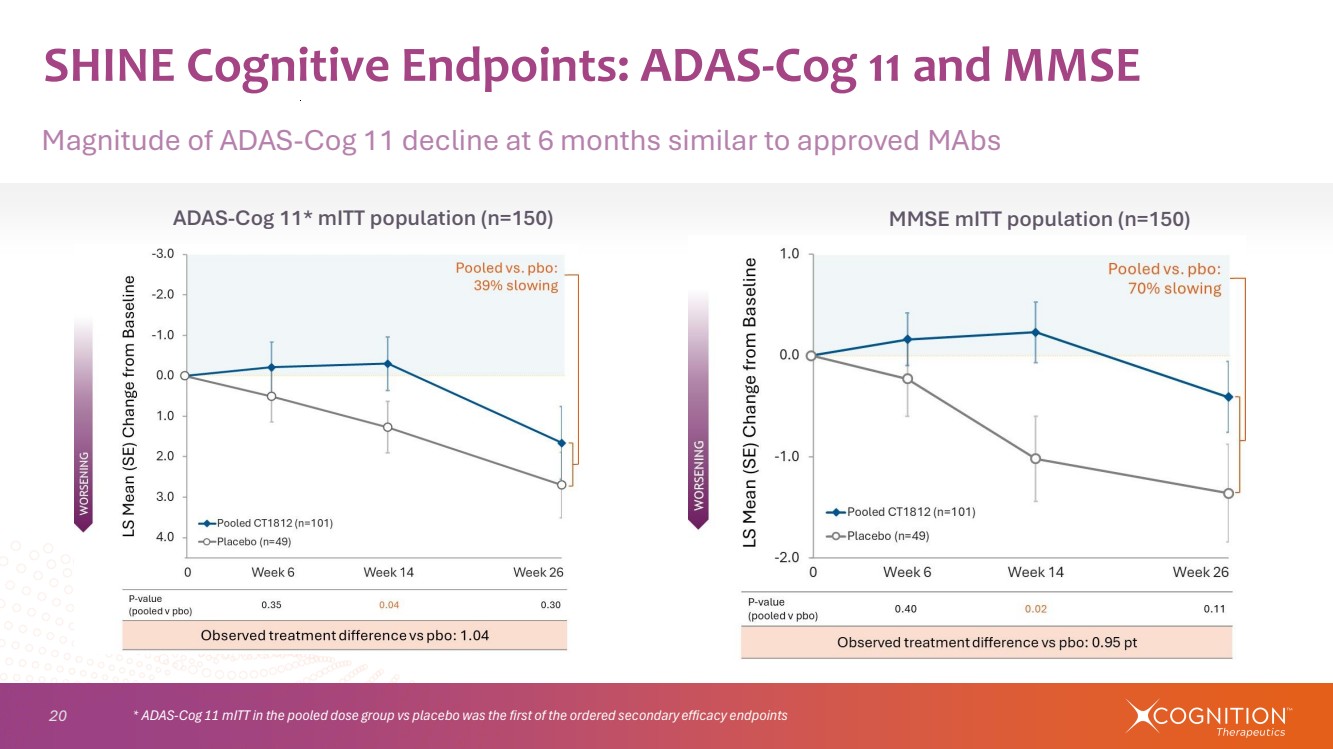
| 20 SHINE Cognitive Endpoints: ADAS-Cog 11 and MMSE Magnitude of ADAS-Cog 11 decline at 6 months similar to approved MAbs * ADAS-Cog 11 mITT in the pooled dose group vs placebo was the first of the ordered secondary efficacy endpoints ADAS-Cog 11* mITT population (n=150) MMSE mITT population (n=150) |
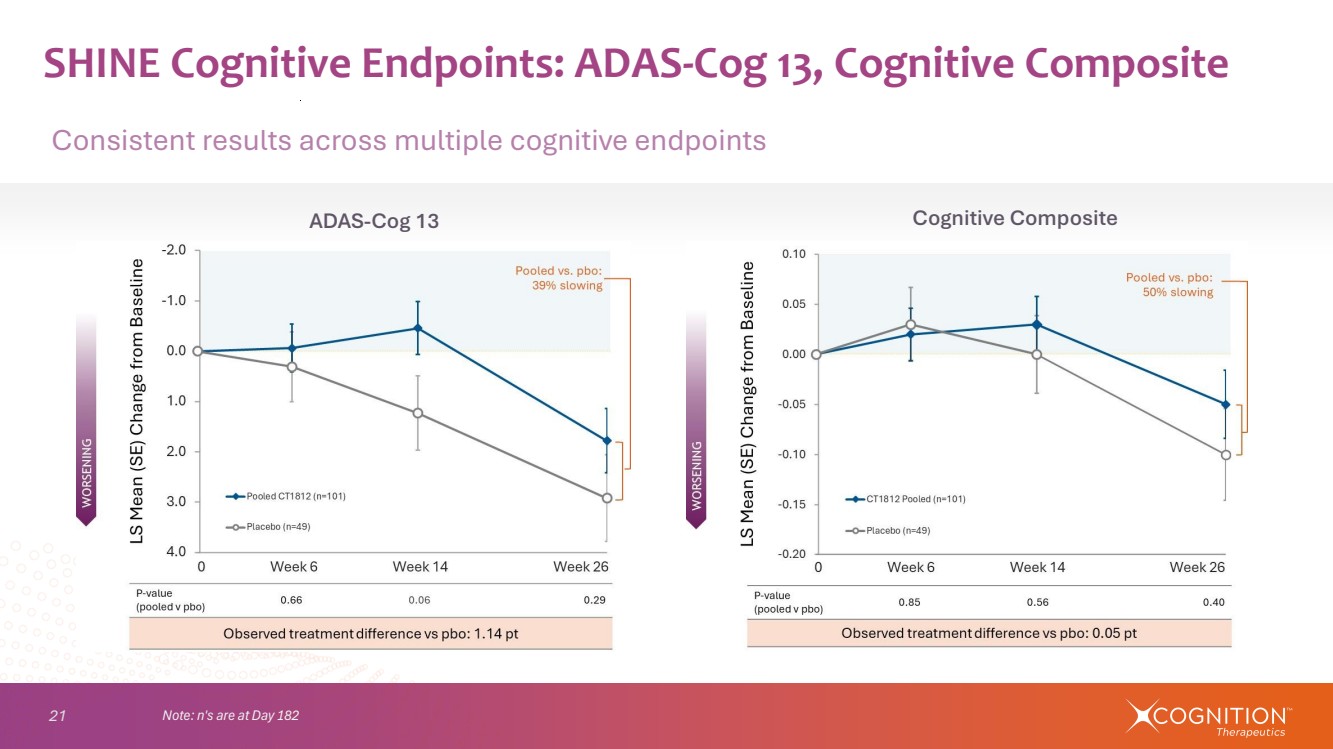
| 21 SHINE Cognitive Endpoints: ADAS-Cog 13, Cognitive Composite Consistent results across multiple cognitive endpoints ADAS-Cog 13 Cognitive Composite Note: n's are at Day 182 |
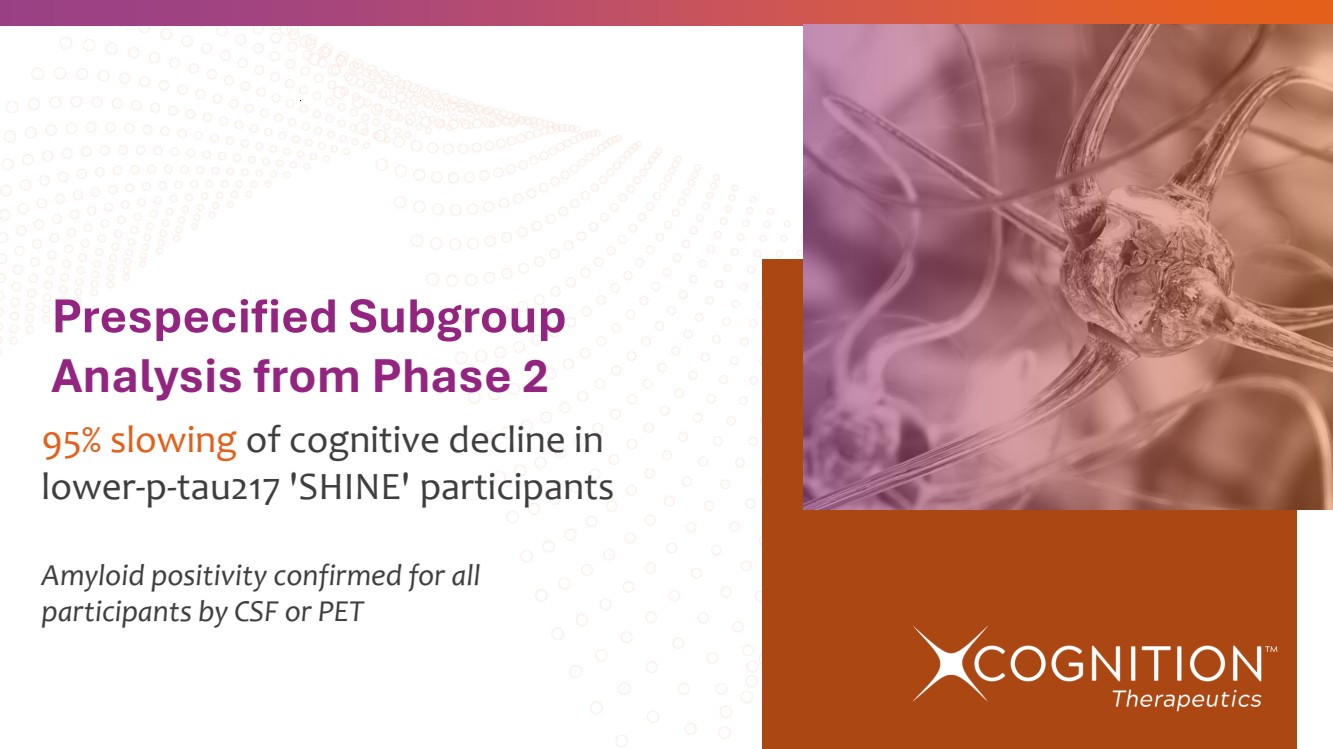
| 95% slowing of cognitive decline in lower-p-tau217 'SHINE' participants Amyloid positivity confirmed for all participants by CSF or PET Prespecified Subgroup Analysis from Phase 2 |
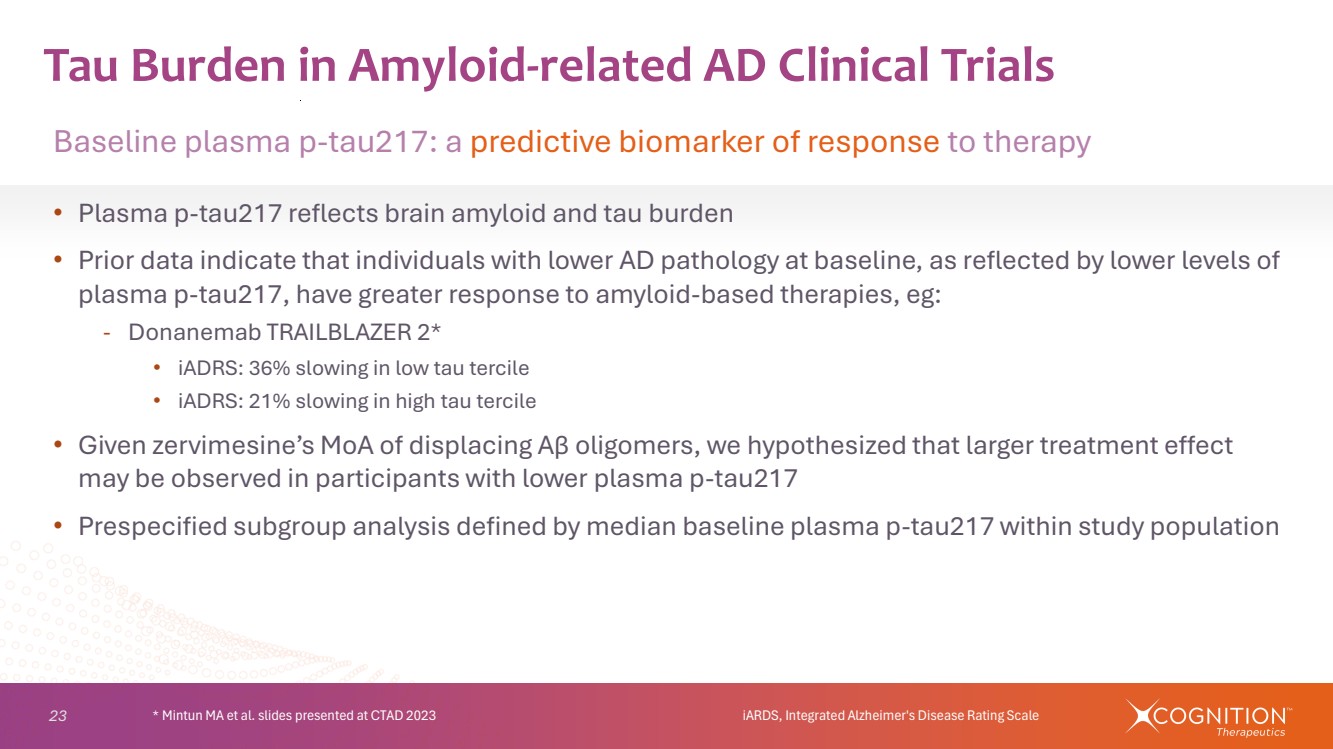
| 23 • Plasma p-tau217 reflects brain amyloid and tau burden • Prior data indicate that individuals with lower AD pathology at baseline, as reflected by lower levels of plasma p-tau217, have greater response to amyloid-based therapies, eg: - Donanemab TRAILBLAZER 2* • iADRS: 36% slowing in low tau tercile • iADRS: 21% slowing in high tau tercile • Given zervimesine’s MoA of displacing Aβ oligomers, we hypothesized that larger treatment effect may be observed in participants with lower plasma p-tau217 • Prespecified subgroup analysis defined by median baseline plasma p-tau217 within study population Tau Burden in Amyloid-related AD Clinical Trials Baseline plasma p-tau217: a predictive biomarker of response to therapy * Mintun MA et al. slides presented at CTAD 2023 iARDS, Integrated Alzheimer's Disease Rating Scale |
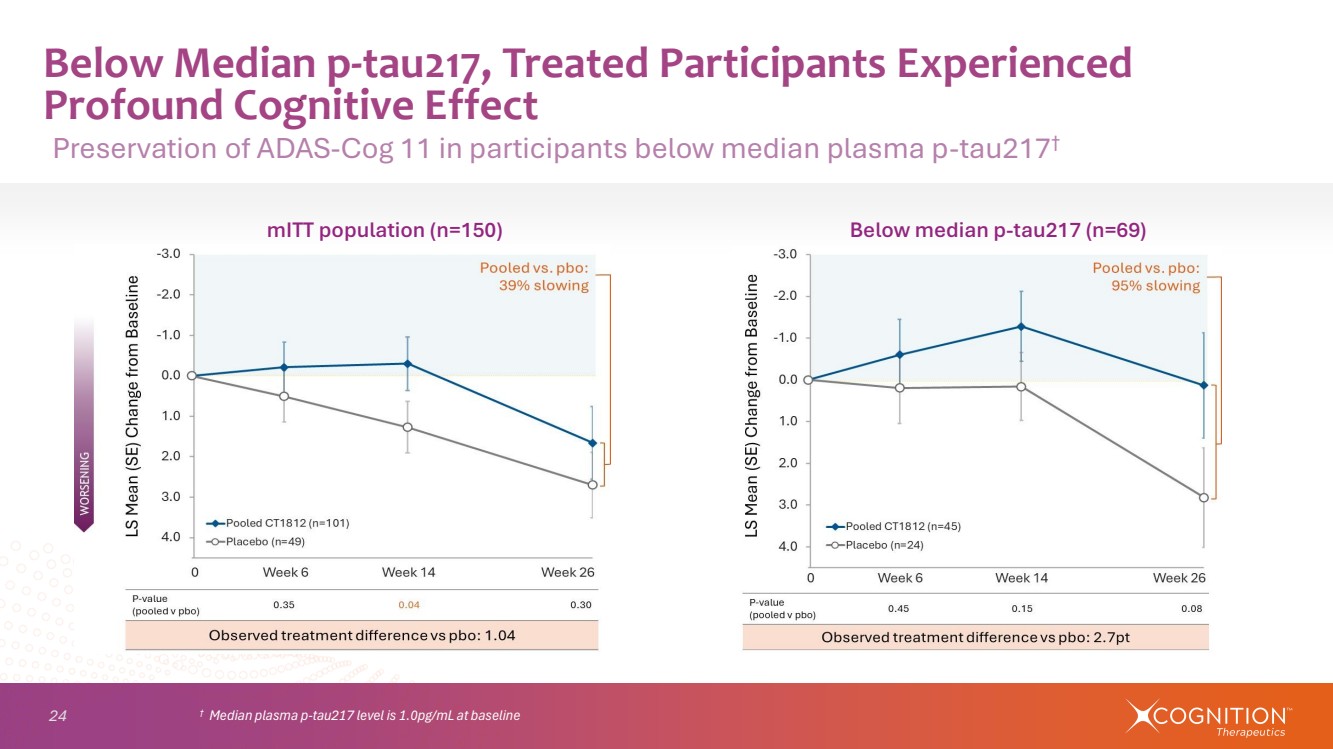
| 24 Below Median p-tau217, Treated Participants Experienced Profound Cognitive Effect Preservation of ADAS-Cog 11 in participants below median plasma p-tau217† † Median plasma p-tau217 level is 1.0pg/mL at baseline mITT population (n=150) Below median p-tau217 (n=69) |
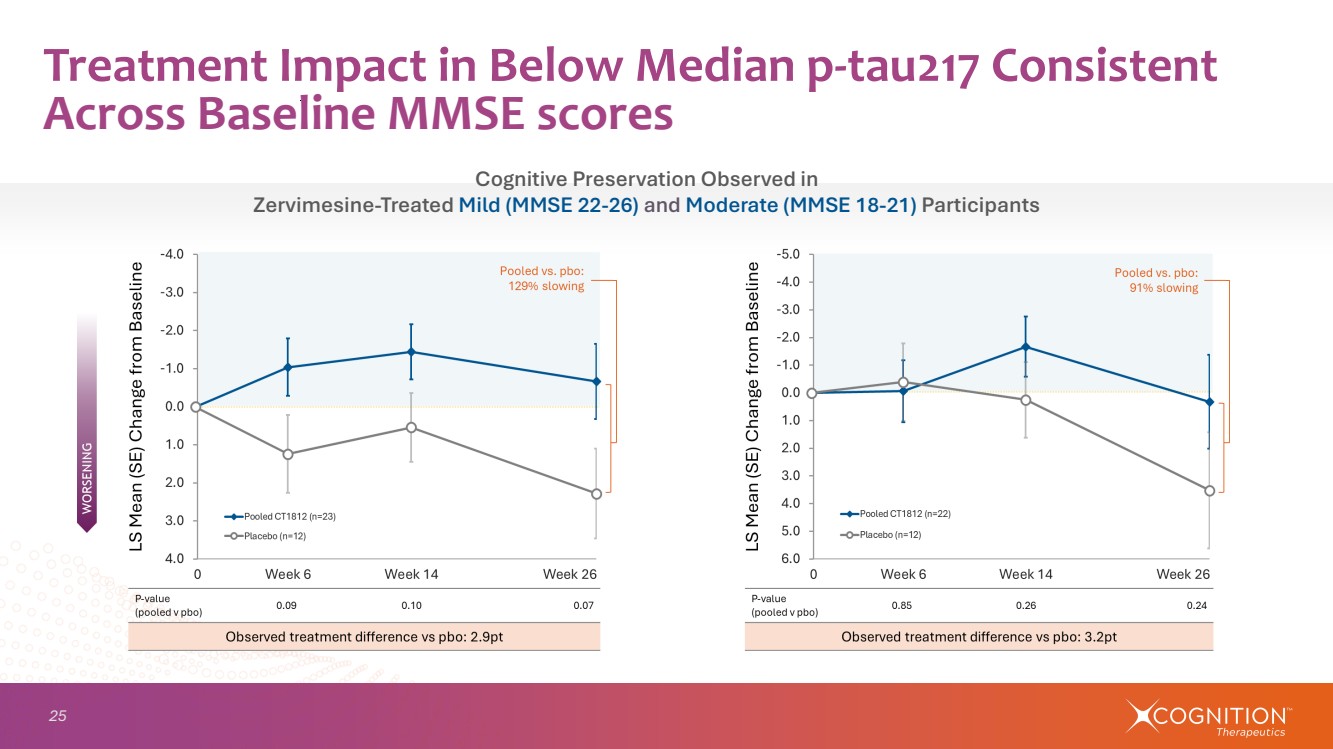
| 25 Treatment Impact in Below Median p-tau217 Consistent Across Baseline MMSE scores Cognitive Preservation Observed in Zervimesine-Treated Mild (MMSE 22-26) and Moderate (MMSE 18-21) Participants |
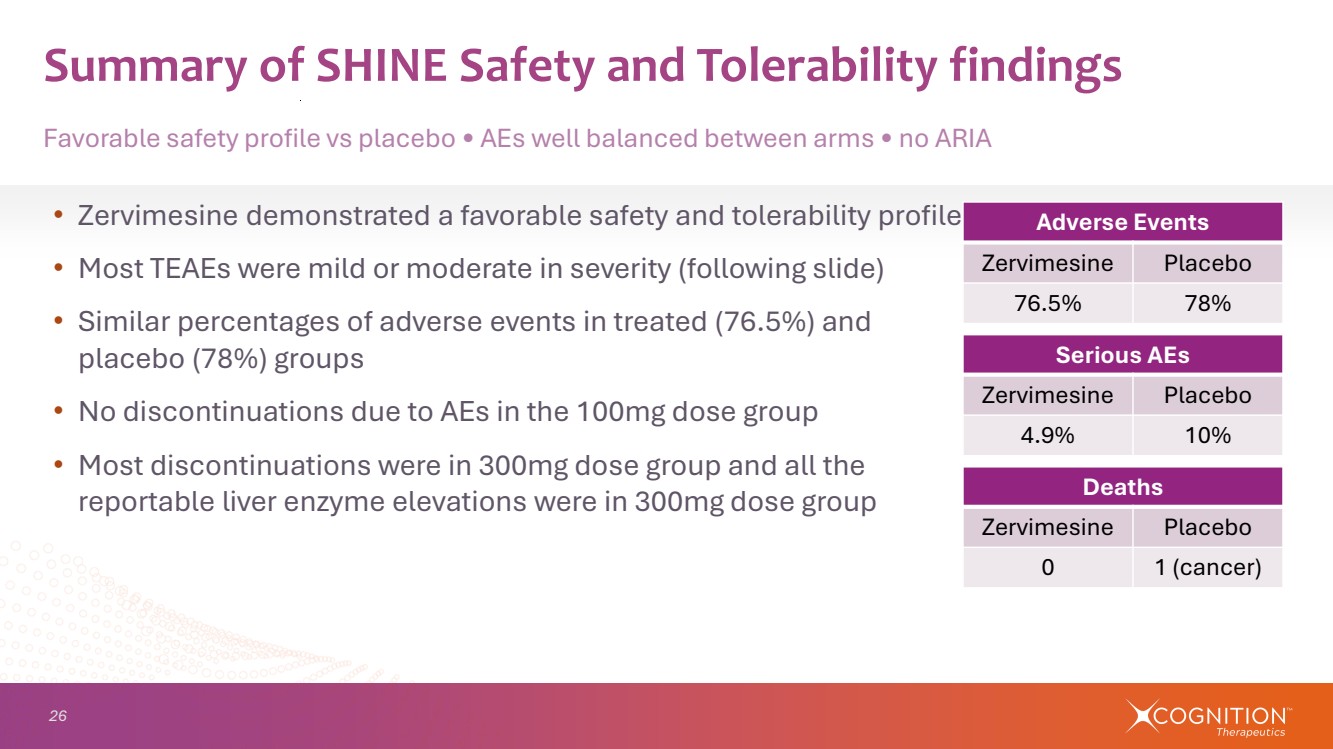
| 26 • Zervimesine demonstrated a favorable safety and tolerability profile • Most TEAEs were mild or moderate in severity (following slide) • Similar percentages of adverse events in treated (76.5%) and placebo (78%) groups • No discontinuations due to AEs in the 100mg dose group • Most discontinuations were in 300mg dose group and all the reportable liver enzyme elevations were in 300mg dose group Summary of SHINE Safety and Tolerability findings Favorable safety profile vs placebo • AEs well balanced between arms • no ARIA Adverse Events Zervimesine Placebo 76.5% 78% Serious AEs Zervimesine Placebo 4.9% 10% Deaths Zervimesine Placebo 0 1 (cancer) |
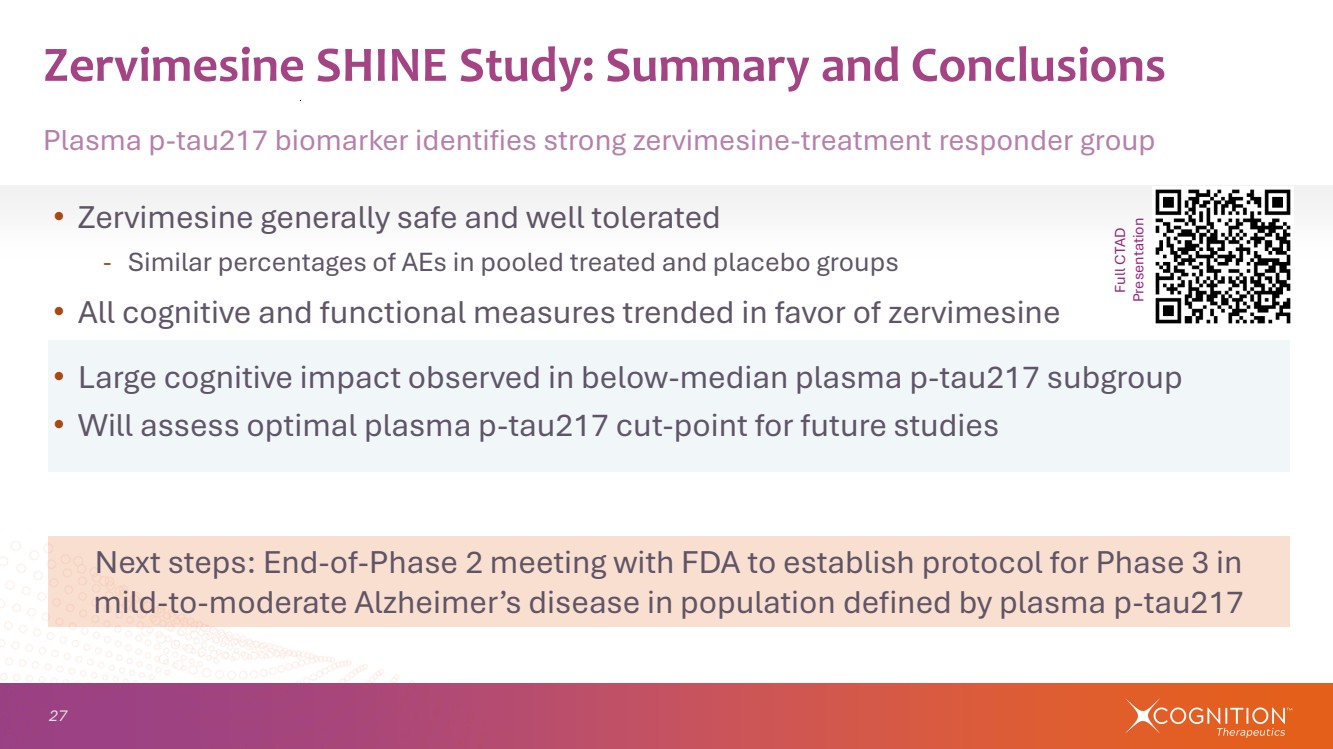
| 27 Next steps: End-of-Phase 2 meeting with FDA to establish protocol for Phase 3 in mild-to-moderate Alzheimer’s disease in population defined by plasma p-tau217 • Zervimesine generally safe and well tolerated - Similar percentages of AEs in pooled treated and placebo groups • All cognitive and functional measures trended in favor of zervimesine • Large cognitive impact observed in below-median plasma p-tau217 subgroup • Will assess optimal plasma p-tau217 cut-point for future studies Zervimesine SHINE Study: Summary and Conclusions Plasma p-tau217 biomarker identifies strong zervimesine-treatment responder groupFull CTAD Presentation |
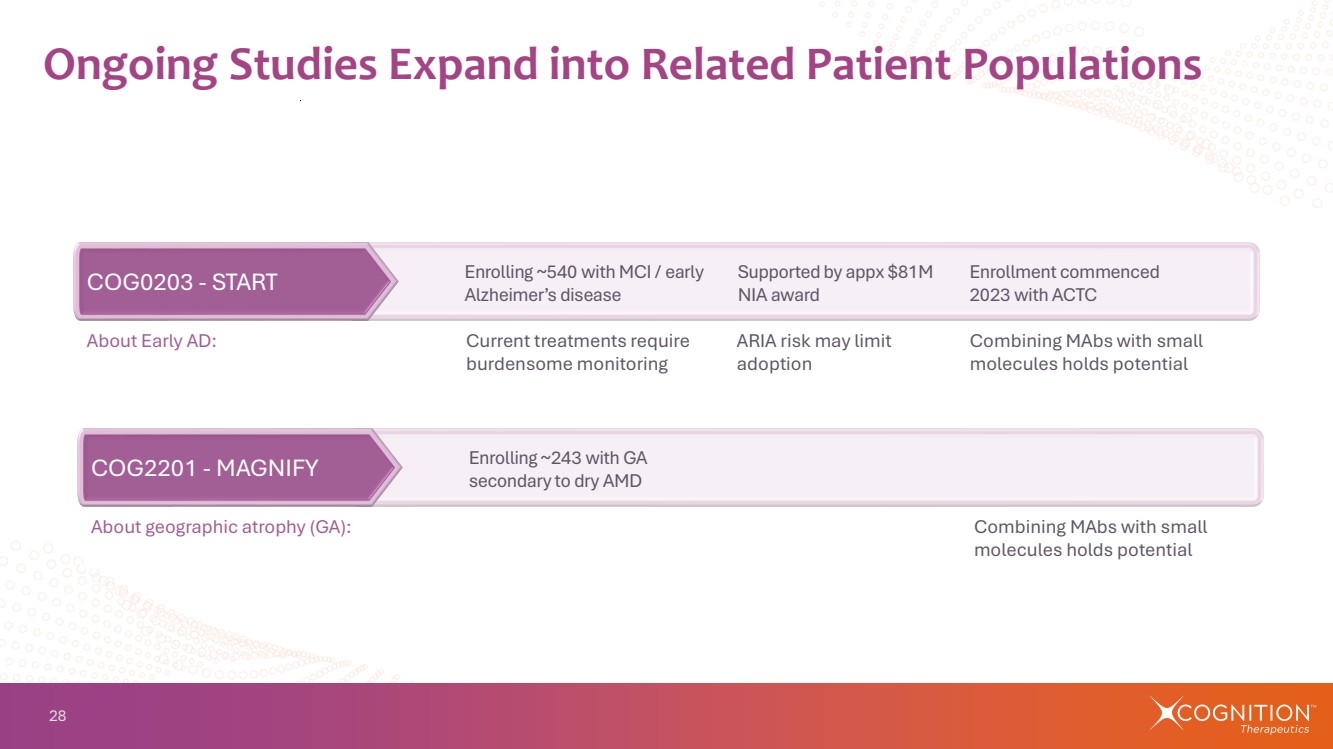
| 28 Ongoing Studies Expand into Related Patient Populations COG0203 - START About Early AD: Current treatments require burdensome monitoring ARIA risk may limit adoption Combining MAbs with small molecules holds potential Enrolling ~540 with MCI / early Alzheimer’s disease Supported by appx $81M NIA award Enrollment commenced 2023 with ACTC COG2201 - MAGNIFY About geographic atrophy (GA): Combining MAbs with small molecules holds potential Enrolling ~243 with GA secondary to dry AMD |
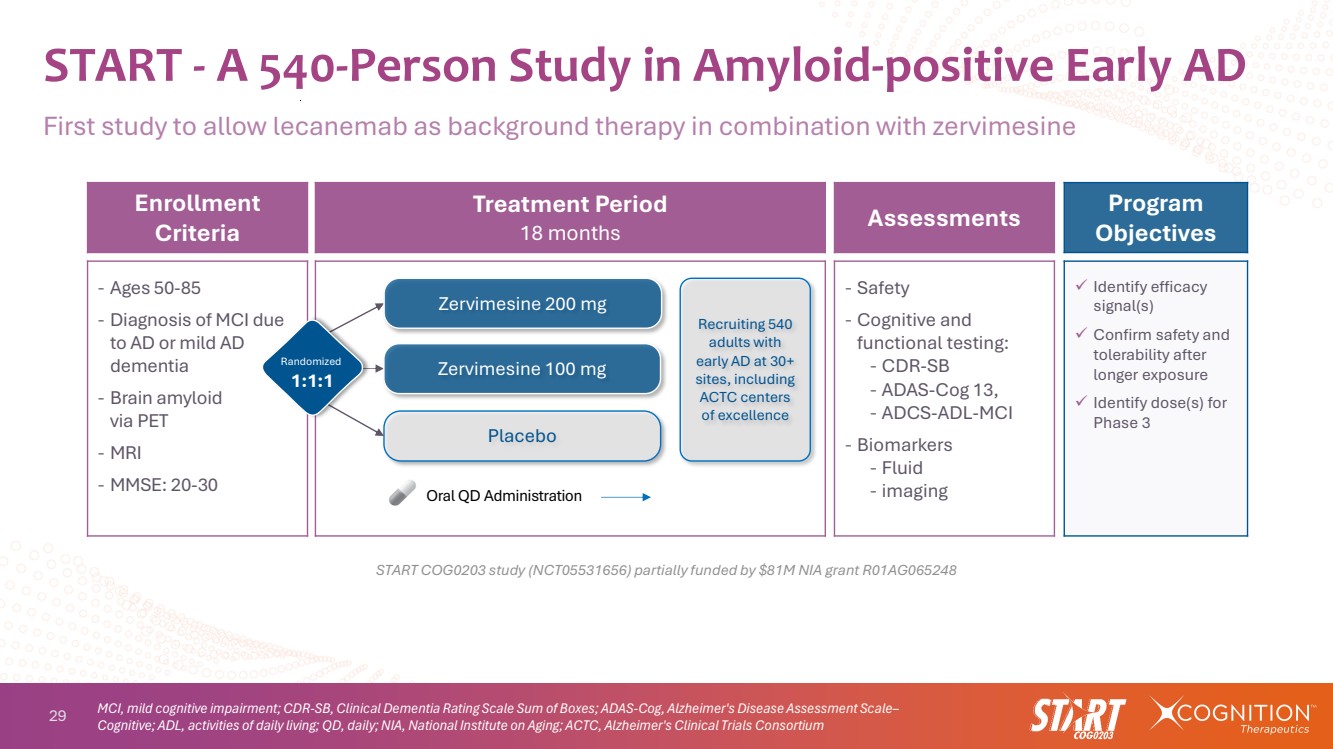
| 29 START - A 540-Person Study in Amyloid-positive Early AD First study to allow lecanemab as background therapy in combination with zervimesine START COG0203 study (NCT05531656) partially funded by $81M NIA grant R01AG065248 Enrollment Criteria Treatment Period 18 months Assessments Program Objectives ‐ Ages 50-85 ‐ Diagnosis of MCI due to AD or mild AD dementia ‐ Brain amyloid via PET ‐ MRI ‐ MMSE: 20-30 ‐ Safety ‐ Cognitive and functional testing: ‐ CDR-SB ‐ ADAS-Cog 13, ‐ ADCS-ADL-MCI ‐ Biomarkers ‐ Fluid ‐ imaging ✓ Identify efficacy signal(s) ✓ Confirm safety and tolerability after longer exposure ✓ Identify dose(s) for Phase 3 Placebo Zervimesine 100 mg Zervimesine 200 mg Oral QD Administration Randomized 1:1:1 Recruiting 540 adults with early AD at 30+ sites, including ACTC centers of excellence MCI, mild cognitive impairment; CDR-SB, Clinical Dementia Rating Scale Sum of Boxes; ADAS-Cog, Alzheimer's Disease Assessment Scale– Cognitive; ADL, activities of daily living; QD, daily; NIA, National Institute on Aging; ACTC, Alzheimer's Clinical Trials Consortium |
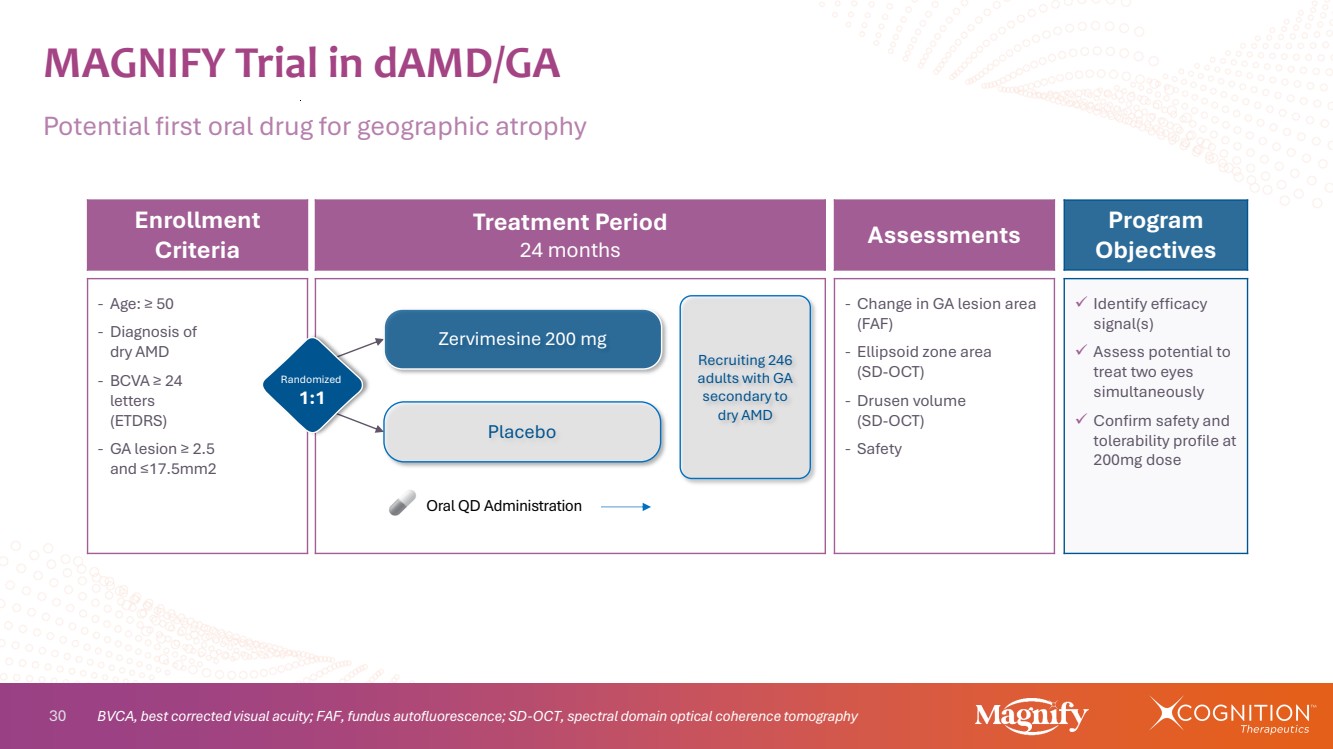
| 30 MAGNIFY Trial in dAMD/GA Potential first oral drug for geographic atrophy Enrollment Criteria Treatment Period 24 months Assessments Program Objectives ‐ Age: ≥ 50 ‐ Diagnosis of dry AMD ‐ BCVA ≥ 24 letters (ETDRS) ‐ GA lesion ≥ 2.5 and ≤17.5mm2 ‐ Change in GA lesion area (FAF) ‐ Ellipsoid zone area (SD-OCT) ‐ Drusen volume (SD-OCT) ‐ Safety ✓ Identify efficacy signal(s) ✓ Assess potential to treat two eyes simultaneously ✓ Confirm safety and tolerability profile at 200mg dose Placebo Zervimesine 200 mg Oral QD Administration Randomized 1:1 Recruiting 246 adults with GA secondary to dry AMD BVCA, best corrected visual acuity; FAF, fundus autofluorescence; SD-OCT, spectral domain optical coherence tomography |
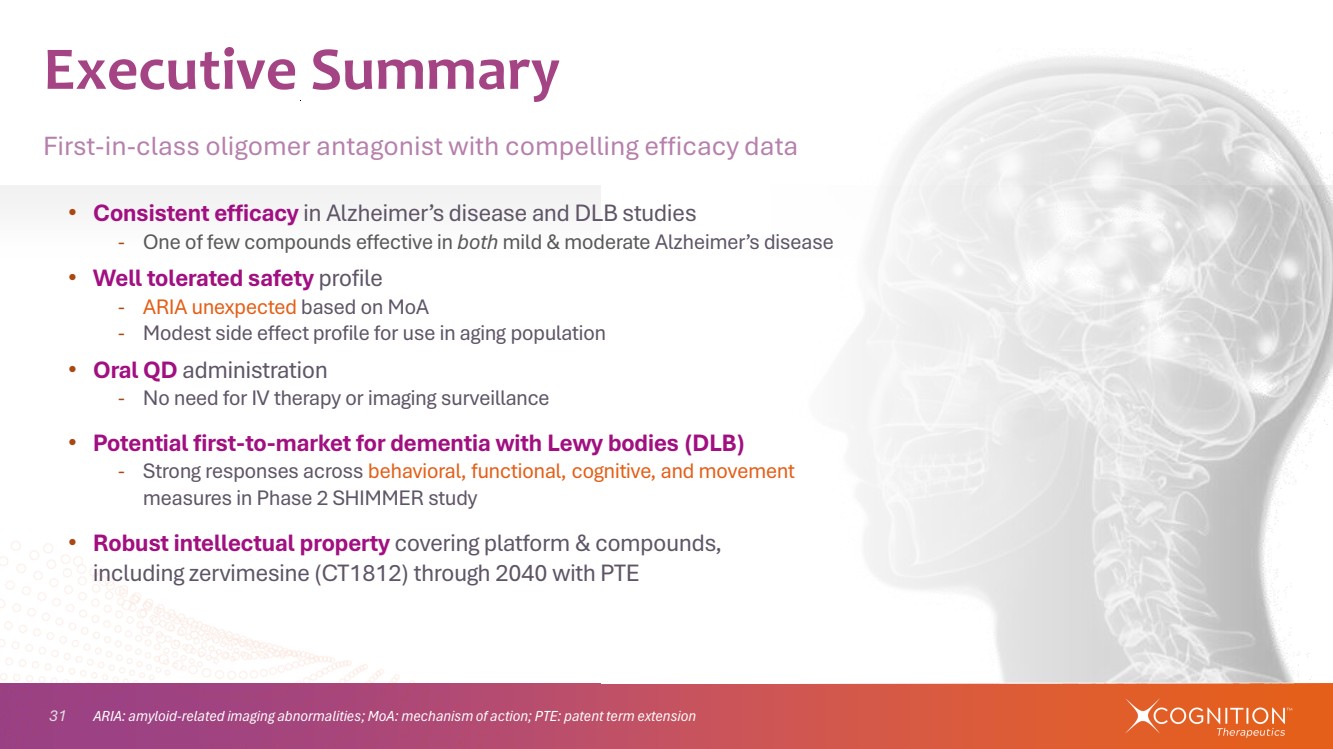
| 31 Executive Summary First-in-class oligomer antagonist with compelling efficacy data • Consistent efficacy in Alzheimer’s disease and DLB studies - One of few compounds effective in both mild & moderate Alzheimer’s disease • Well tolerated safety profile - ARIA unexpected based on MoA - Modest side effect profile for use in aging population • Oral QD administration - No need for IV therapy or imaging surveillance • Potential first-to-market for dementia with Lewy bodies (DLB) - Strong responses across behavioral, functional, cognitive, and movement measures in Phase 2 SHIMMER study • Robust intellectual property covering platform & compounds, including zervimesine (CT1812) through 2040 with PTE ARIA: amyloid-related imaging abnormalities; MoA: mechanism of action; PTE: patent term extension |
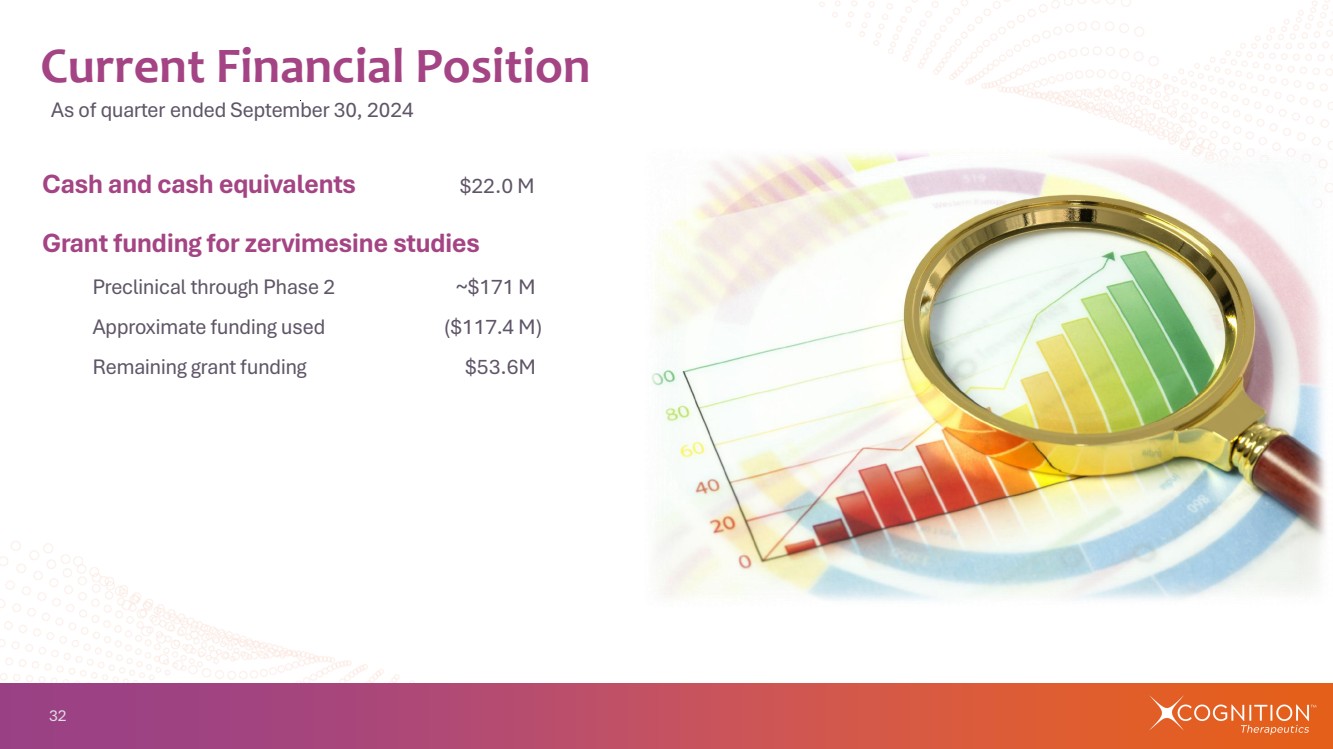
| 32 Current Financial Position Cash and cash equivalents $22.0 M Grant funding for zervimesine studies Preclinical through Phase 2 ~$171 M Approximate funding used ($117.4 M) Remaining grant funding $53.6M As of quarter ended September 30, 2024 |
| Thank You |