Operator
Greetings, and welcome to the Chimera Investment Corporation Second Quarter Earnings Conference Call. This conference is being recorded. It's now my pleasure to turn the call over to Mean Sung. Please proceed.
Speaker 1
Thank you, operator, and thank you, everyone, for participating in Chimera's Second Quarter 2025 Earnings Conference Call. Before we begin, I'd like to review the safe harbor statement. During this call, we will be making forward-looking statements, which are predictions, projections or other statements about future events. These events are based on current expectations and assumptions that are subject to risks and uncertainties, which are outlined in the Risk Factors section in our most recent annual and quarterly SEC filings. Actual events and results may differ materially from these forward-looking statements. We encourage you to read the forward-looking statement disclaimers in our earnings release and our quarterly and annual filings. During the call today, we may also discuss non-GAAP financial measures. Please refer to our SEC filings and earnings supplement for reconciliation to the most comparable GAAP measures. Additionally, the content of this conference call may contain time-sensitive information that is accurate only as of the date of this earnings call. We do not undertake and specifically disclaim any obligation to update or revise this information. I will now turn the conference over to our President and Chief Executive Officer, Phil Kardis.
Speaker 2
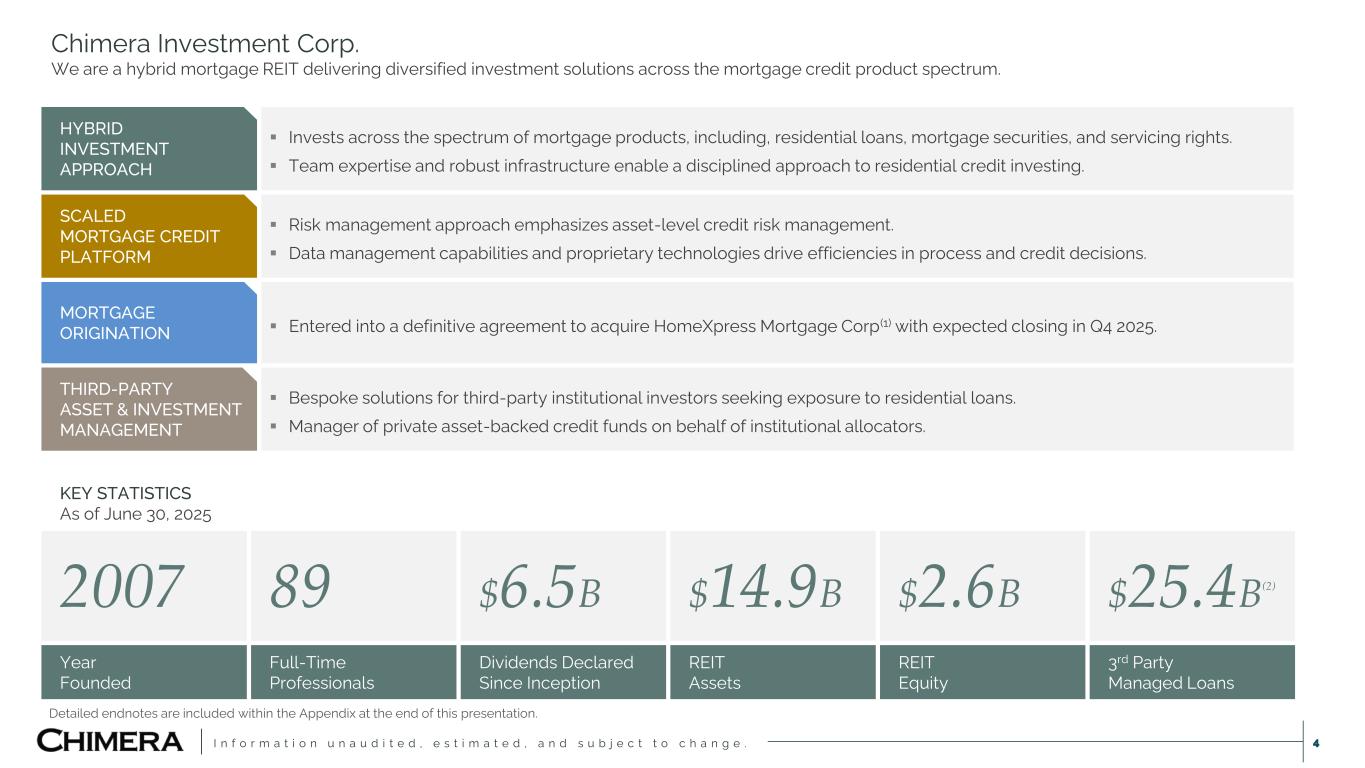
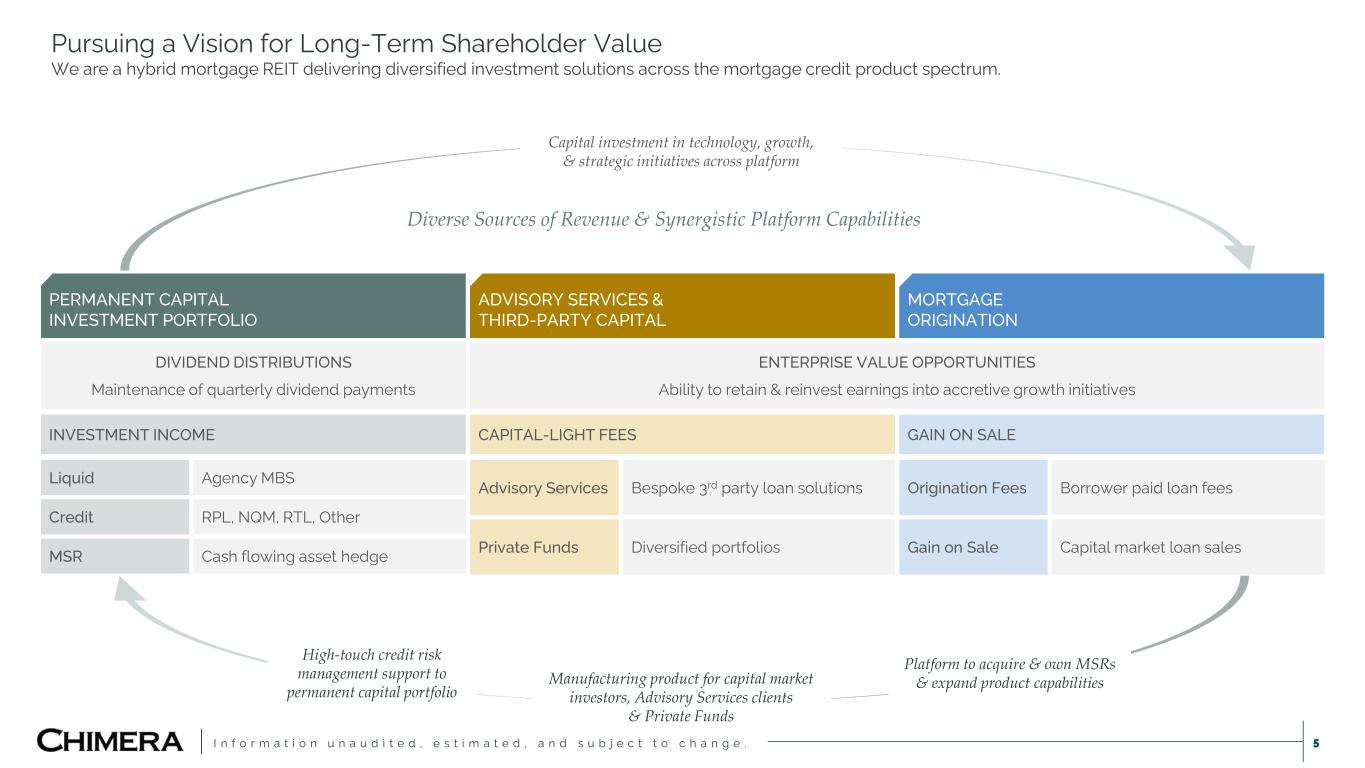
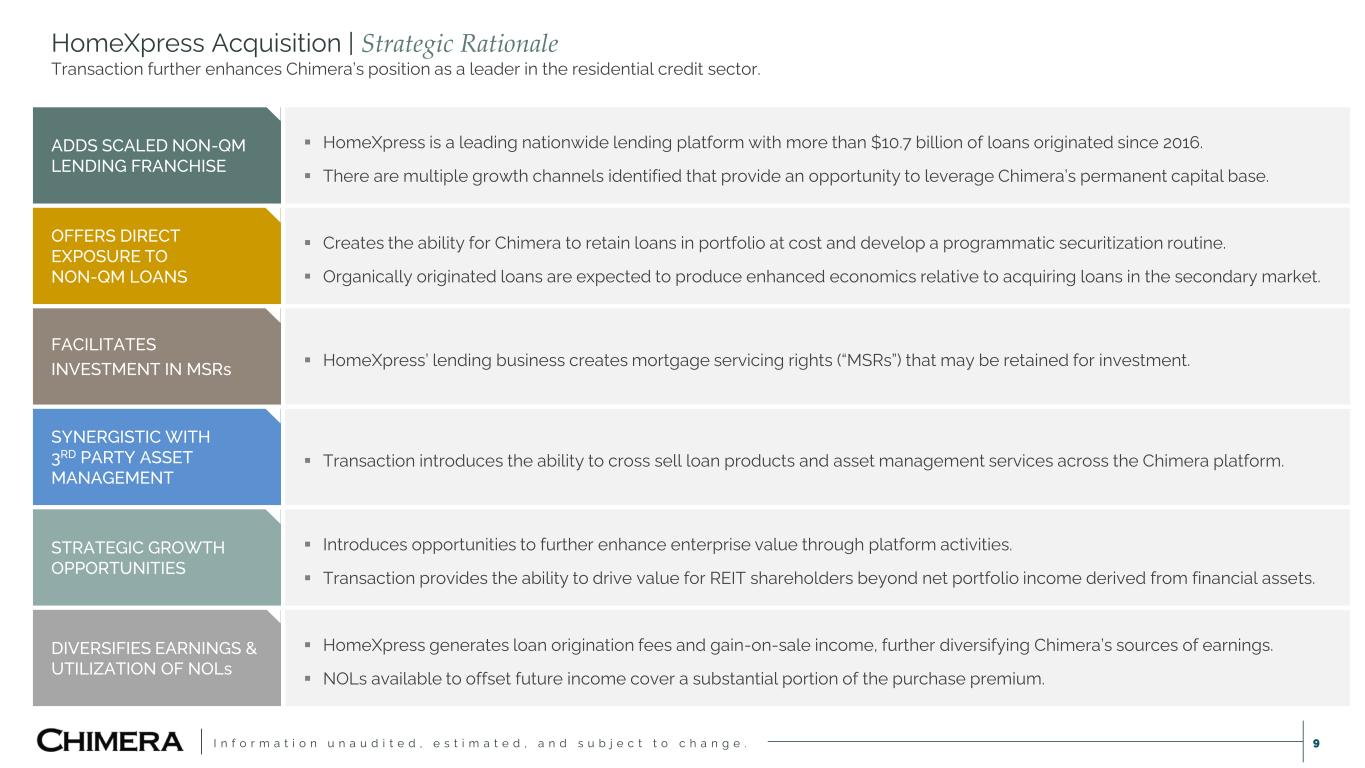
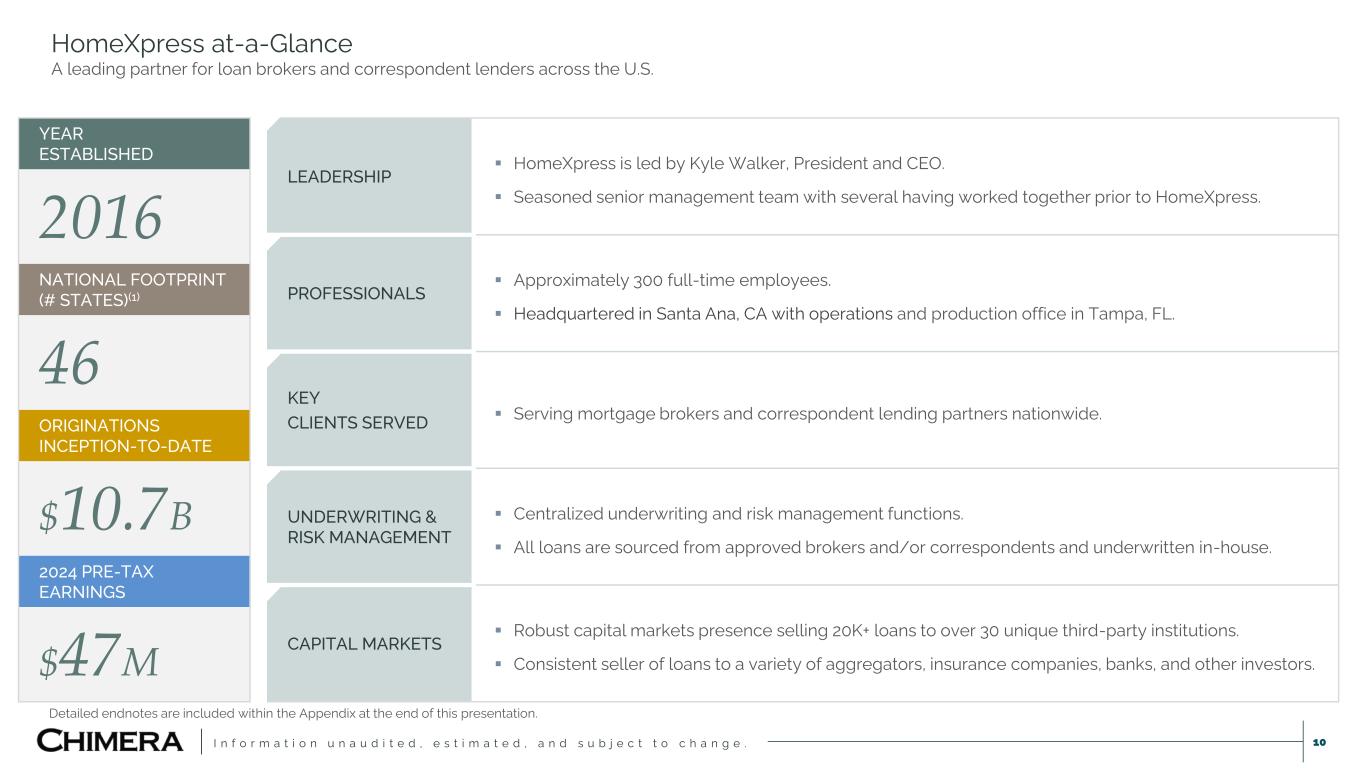
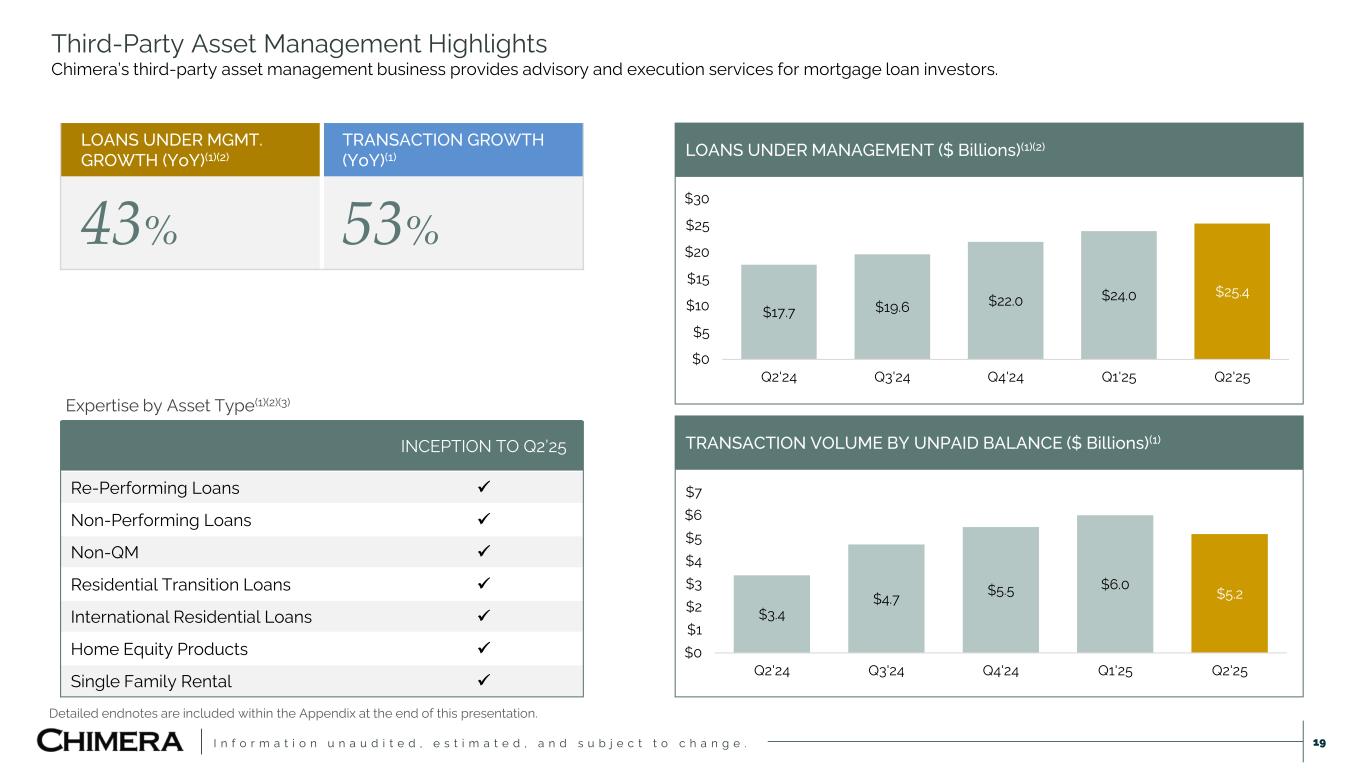
Thank you. Good morning, and welcome to the Chimera Investment Corporation's Second Quarter 2025 Earnings Call. It's great to have you with us today. Joining me on the call are Jack Macdowell, our Chief Investment Officer; and Subra Viswanathan, our Chief Financial Officer. After my remarks, Subra will review the financial results, and then Jack will review our portfolio before opening the call for questions. You may be familiar with the ancient Greek parable, 'the fox knows many things, but the hedgehog knows one big thing.' It's a simple parable, but powerful. The fox is clever, always trying new things. The hedgehog, it just sticks to what it knows best, and the fox cannot defeat him. And good to great, Jim Collins took that idea and asked what separates great companies from the rest? He found the answer was not simply trying new things. It was focus. He called it the hedgehog concept, the intersection of 3 key questions. What are you deeply passionate about? What can you be the best in the world at? And what drives your economic engine? A couple of years ago, we looked at ourselves in the mirror and realized we were too focused on securitizing reperforming residential mortgage loans. We needed to change, but not by becoming something new, not by chasing the new hot idea, rather by becoming more of who we already are, something we're deeply passionate about that we believe we can be the best at and will drive our economic engine, and that's residential mortgage credit. The first step, the acquisition of the Palisades Group, which enhanced our existing expertise in residential mortgage credit, brought us third-party mortgage loan management, portfolio optimization and third-party private capital raising. The second step was portfolio diversification. We have started selling some of our assets and have relevered some of our securitizations and used those proceeds to acquire Agency RMBS, which supports our REIT and 40 Act compliance as well as providing us with a source of liquidity and income. And more recently, to acquire $6.5 billion of Fannie Mae mortgage servicing rights through a servicing partnership. We made progress, but there's still more work to be done. The third step is the acquisition of HomeXpress, a leading non-QM originator with a history of growth and profitability. We currently have broad, deep experience in acquiring, financing and managing a range of residential mortgage credit assets, both for ourselves and for others, and HomeXpress adds the production of those assets to our platform. But this is not just vertical integration, but this is strategic clarity. With both Palisades and HomeXpress, we look for companies that expanded and enhanced our existing capabilities. We expect both acquisitions to be accretive, not through subtraction or reduction in headcount or other so-called cost saving synergies, but through addition, the addition of complementary capabilities, the addition of talent and the addition of scale and scope. So what's next? We're not done yet. We'll continue to look for opportunities to grow the platform, both organically as well as adding new pieces, all the while being diligent to our core principles, our expertise in residential mortgage credit, our hedgehog status. Our new trajectory will not be linear. As we noted during the last earnings call, while we successfully relevered our NR securitization, it takes time to effectively deploy capital, especially given the volatility surrounding Liberation Day, which resulted in a short-term drag on earnings in April and May before we hit our stride in June. Also, while we believe HomeXpress acquisition will be meaningfully accretive to our earnings as we expect 2026 and 2027 to be especially strong years for non-QM originations, we may experience decreased earnings in the short term as we redeploy capital for the acquisition and integrate them as an operating subsidiary. We also expect to invest some of those earnings to grow the platform and our assets to support future growth of our dividend. As we look forward to the future, what's the big takeaway? We're a company that knows one big thing, residential mortgage credit and executes it. We'll continue diversifying our portfolio and income streams, growing recurring fee income, adding liquidity and looking for opportunities to add accretive platforms and invest in accretive assets, all with the focus of growing our assets and dividend or total economic return over the long term. I'll now hand it off to Subra to walk you through the financials.
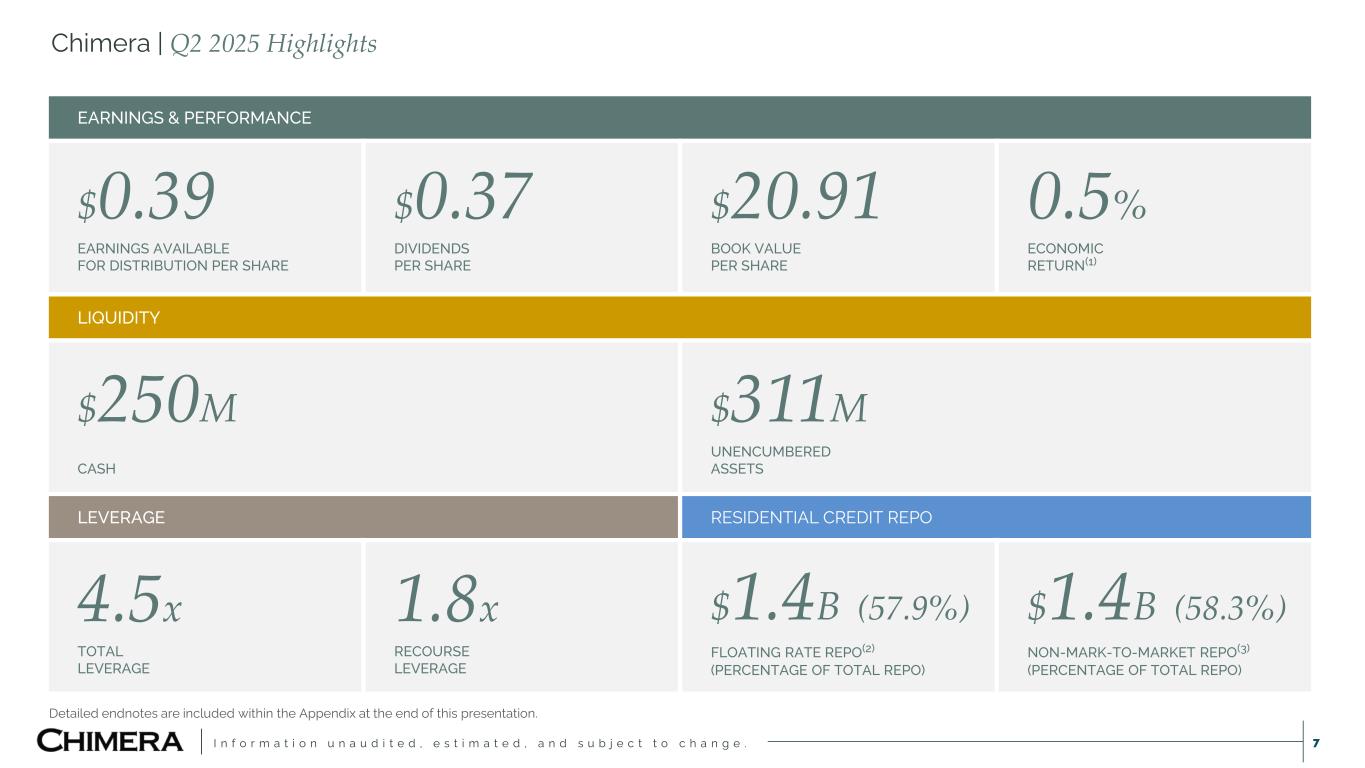
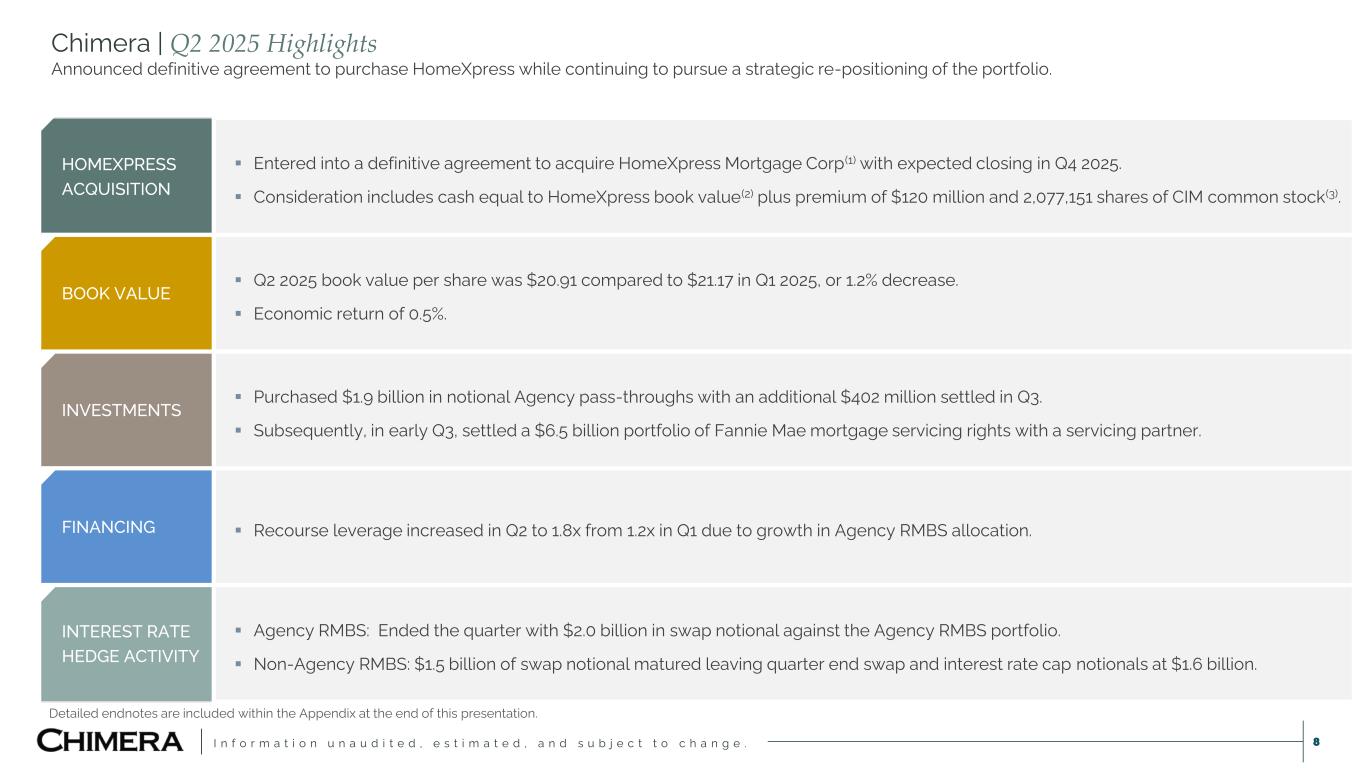
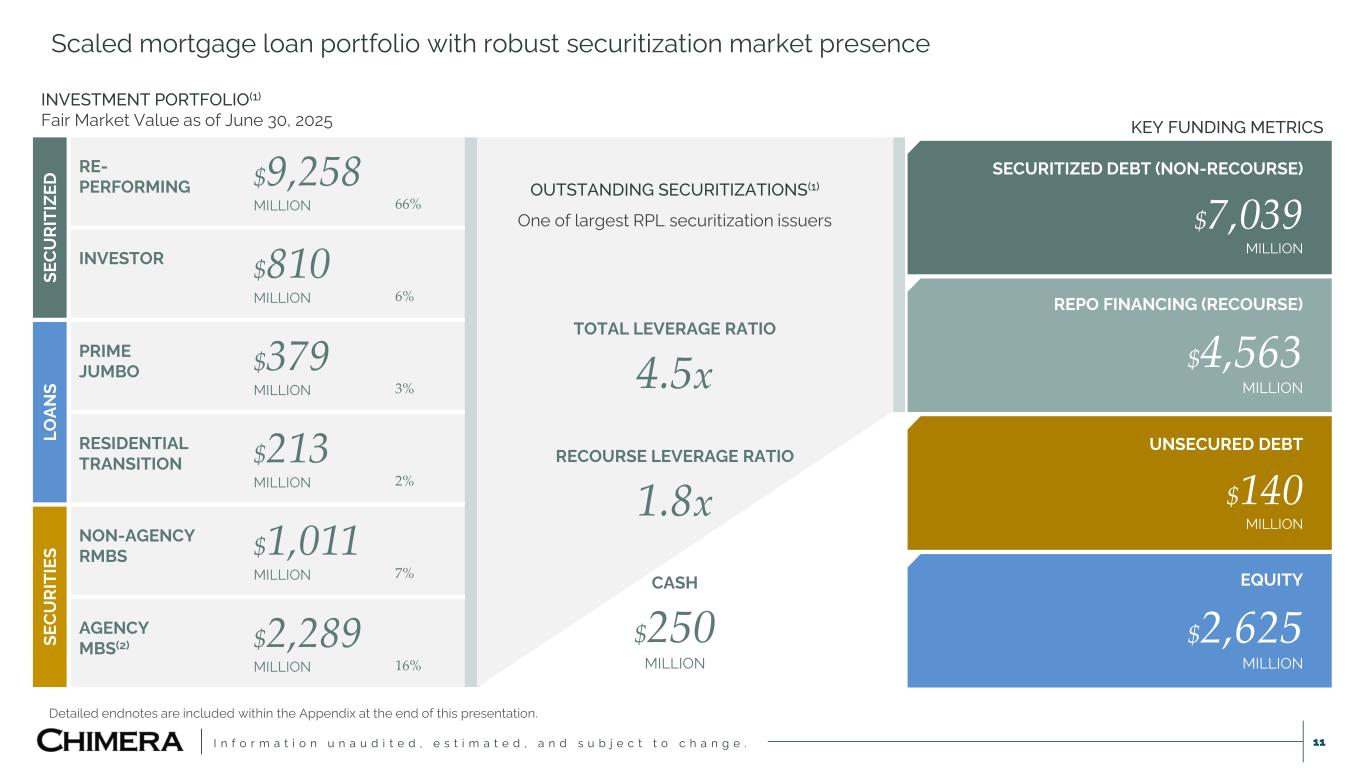
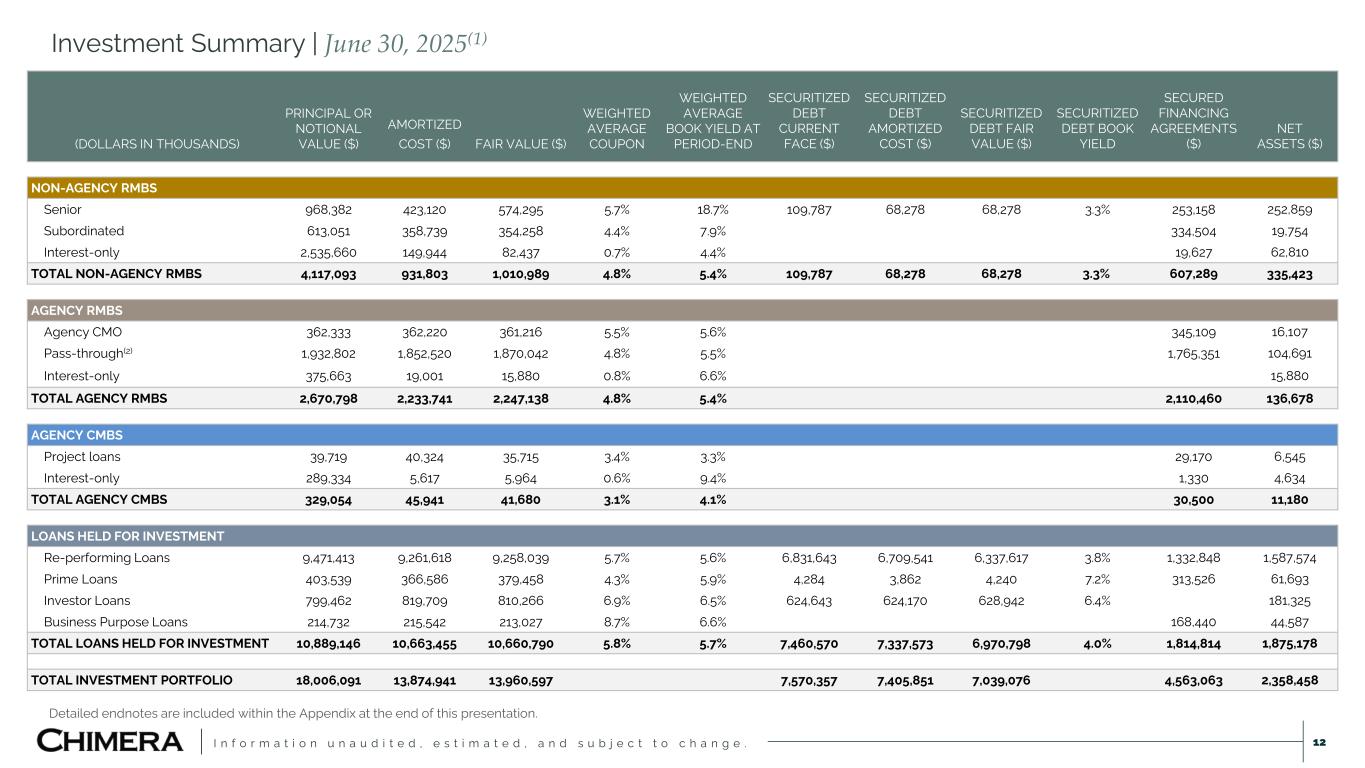
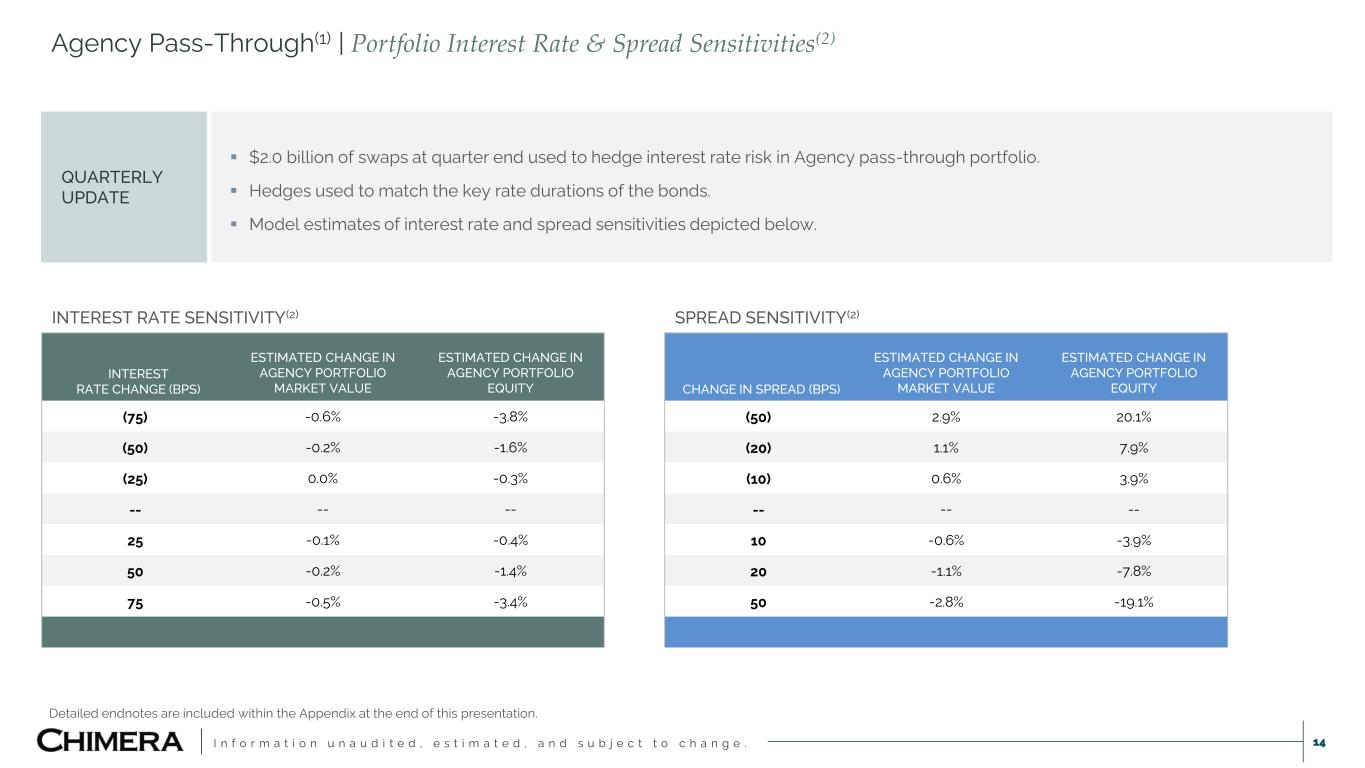
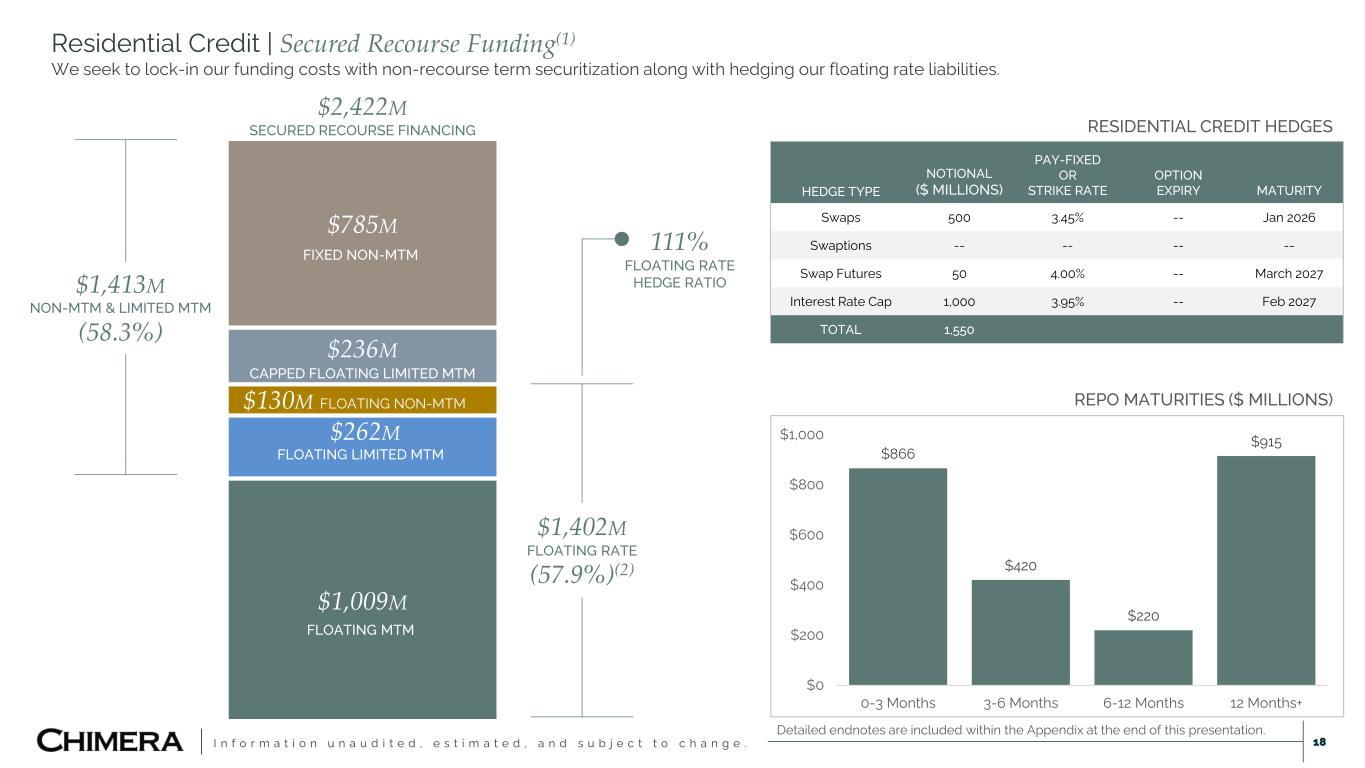
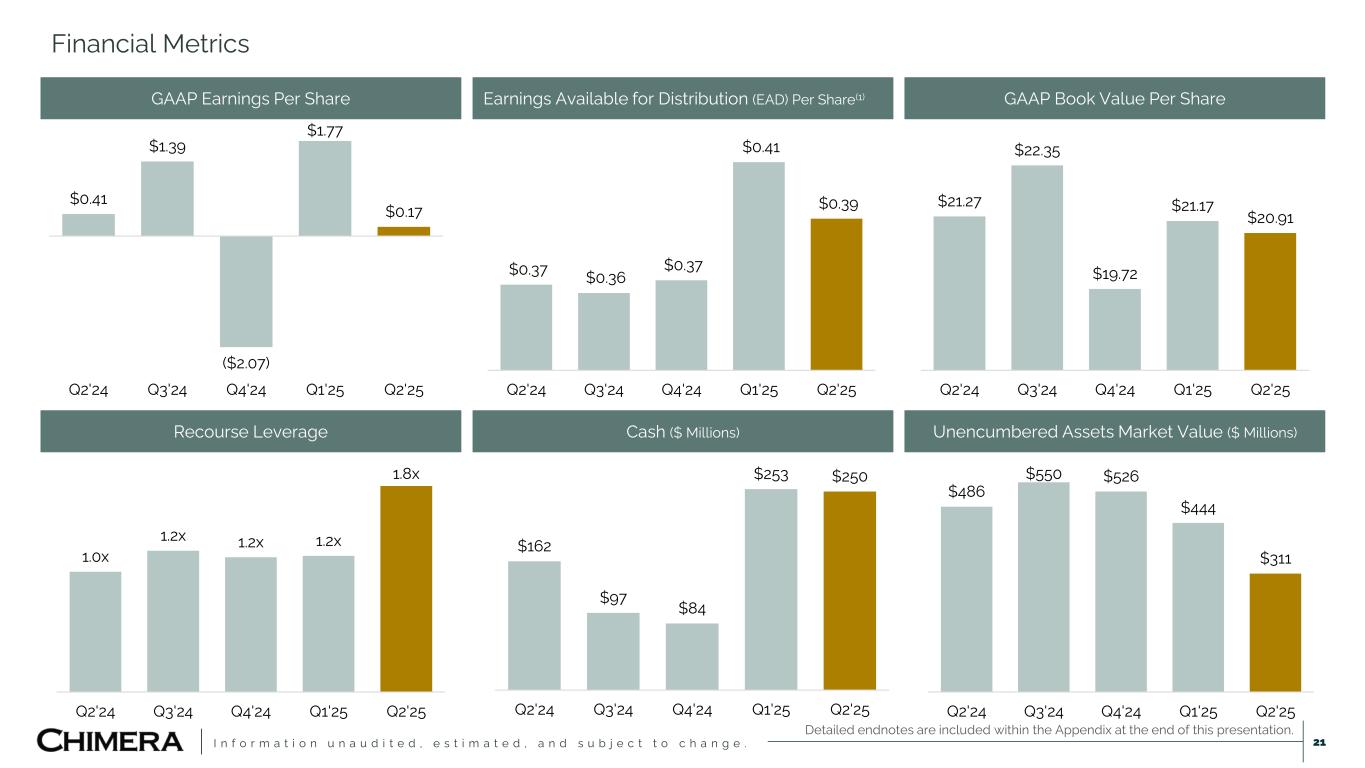
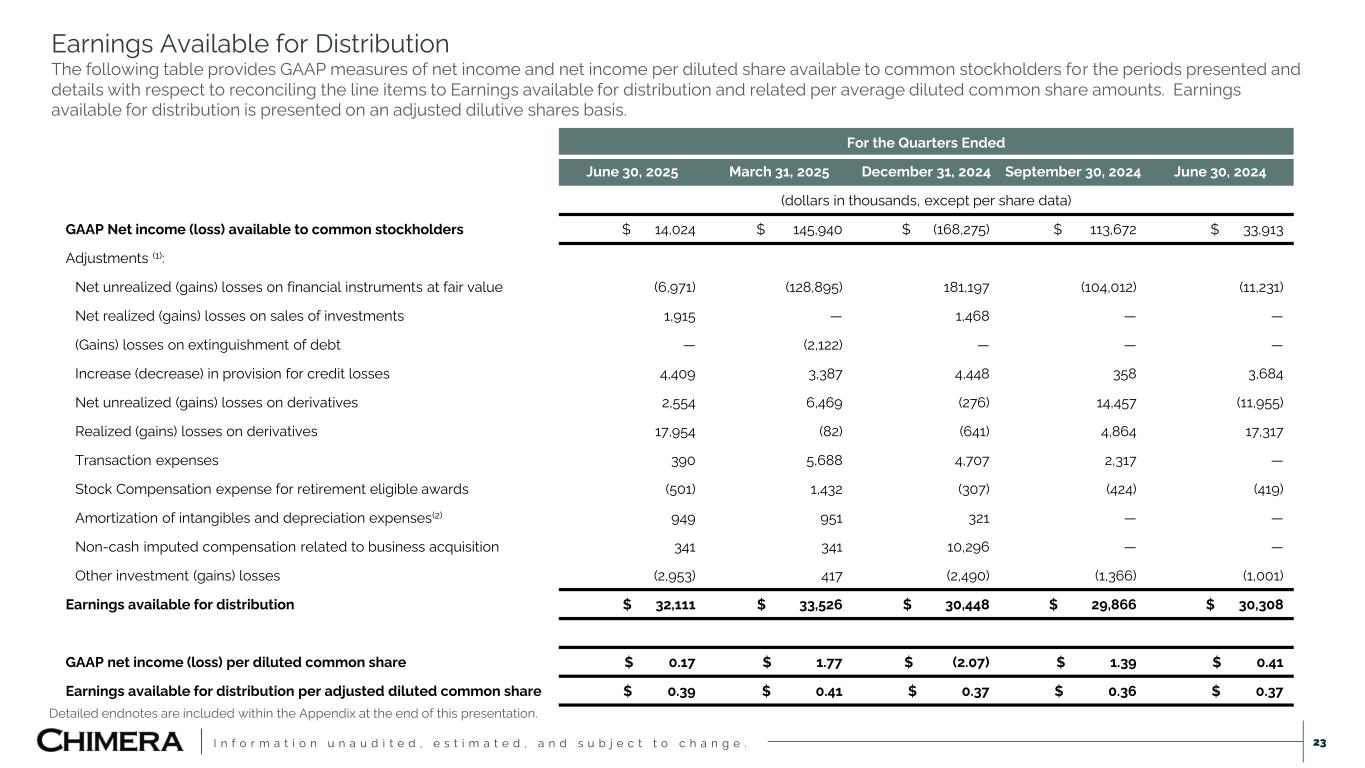
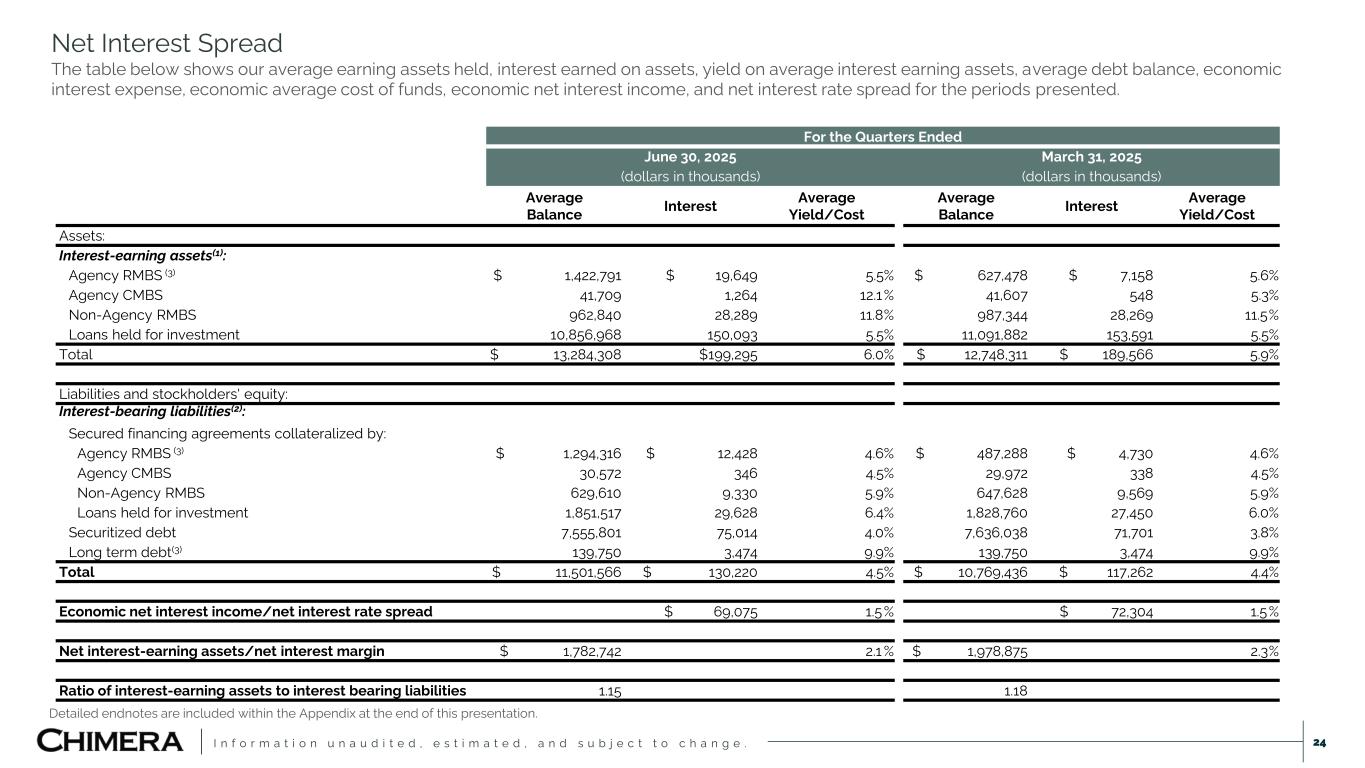
Thank you, Phil. I will review Chimera's financial highlights for the second quarter of 2025. GAAP net income for the second quarter was $14 million or $0.17 per share. GAAP book value at the end of the second quarter was $20.91 per share. For the second quarter, our economic return on GAAP book value was 0.5% based on the quarterly change in book value and the $0.37 second quarter dividend per common share. Year-to-date 2025, our economic return on GAAP book value was 9.8%. On an earnings available for distribution basis, net income for the second quarter was $32.1 million or $0.39 per share. Our economic net interest income for the second quarter was $69 million. For the second quarter, the yield on average interest-earning assets was 6%, our average cost of funds was 4.5% and our net interest spread was 1.5%. Total leverage for the second quarter was 4.5:1 while recourse leverage ended the quarter at 1.8:1. Recourse leverage increased this quarter as we increased our investments in agency securities. For liquidity and strategic developments, the company ended the quarter with $561 million in total cash and unencumbered assets. As Phil mentioned, during the quarter, we announced a definitive agreement to acquire HomeXpress Mortgage Corporation. This transaction is expected to close in the fourth quarter of 2025. On the investment front, we deployed approximately $2.3 billion in new Agency RMBS investments during the quarter, primarily in the back half as opportunities arose. For repo and hedging, we had $2.4 billion outstanding repo liabilities secured by the residential credit portfolio. 58% of the outstanding residential credit repo or $1.4 billion had a floating rate sensitivity, and we maintained $1.6 billion in notional value of various interest rate hedges protecting the repo liabilities. We had $1.4 billion in either non or limited mark-to-market features on our outstanding repo agreements, representing 58% of our secured recourse funding for the residential credit portfolio. On the Agency RMBS side, we had $2 billion of interest rate swap notionals with various tenants protecting against $2.1 billion of outstanding repo liabilities. Additionally, during the quarter related to the Agency RMBS hedges, we entered and closed out $2.5 billion notional of swaption contracts with varying maturities. For the second quarter of 2025, our economic net interest income return on average equity was 10.5%. Our GAAP return on average equity was 5.4%, and our EAD return on average equity was 7.5%. Lastly, compensation, general, administrative and servicing expenses were marginally lower this quarter. Our transaction expenses were lower by $5 million this quarter, reflecting the costs associated with increased securitization activity in the prior quarter. I will now turn the call over to Jack to review our portfolio and investment activity.
Speaker 4
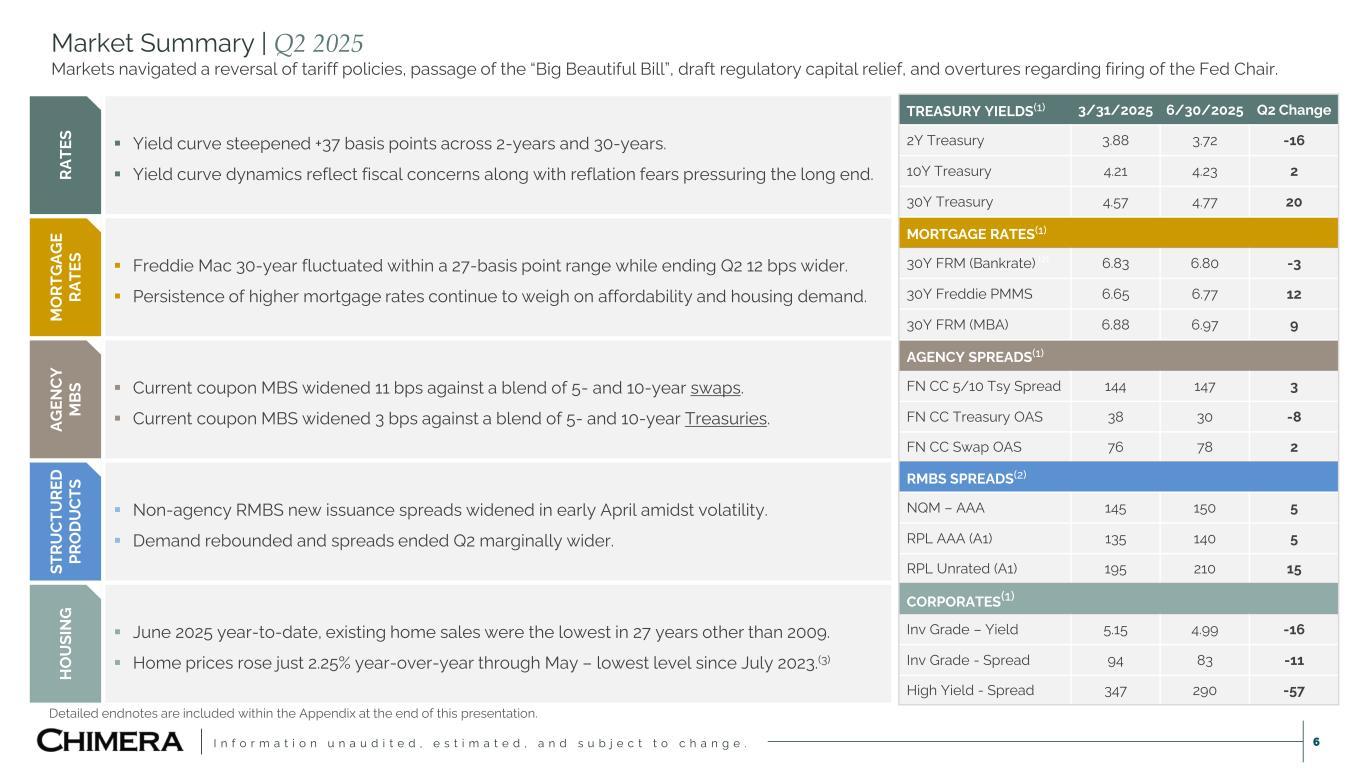
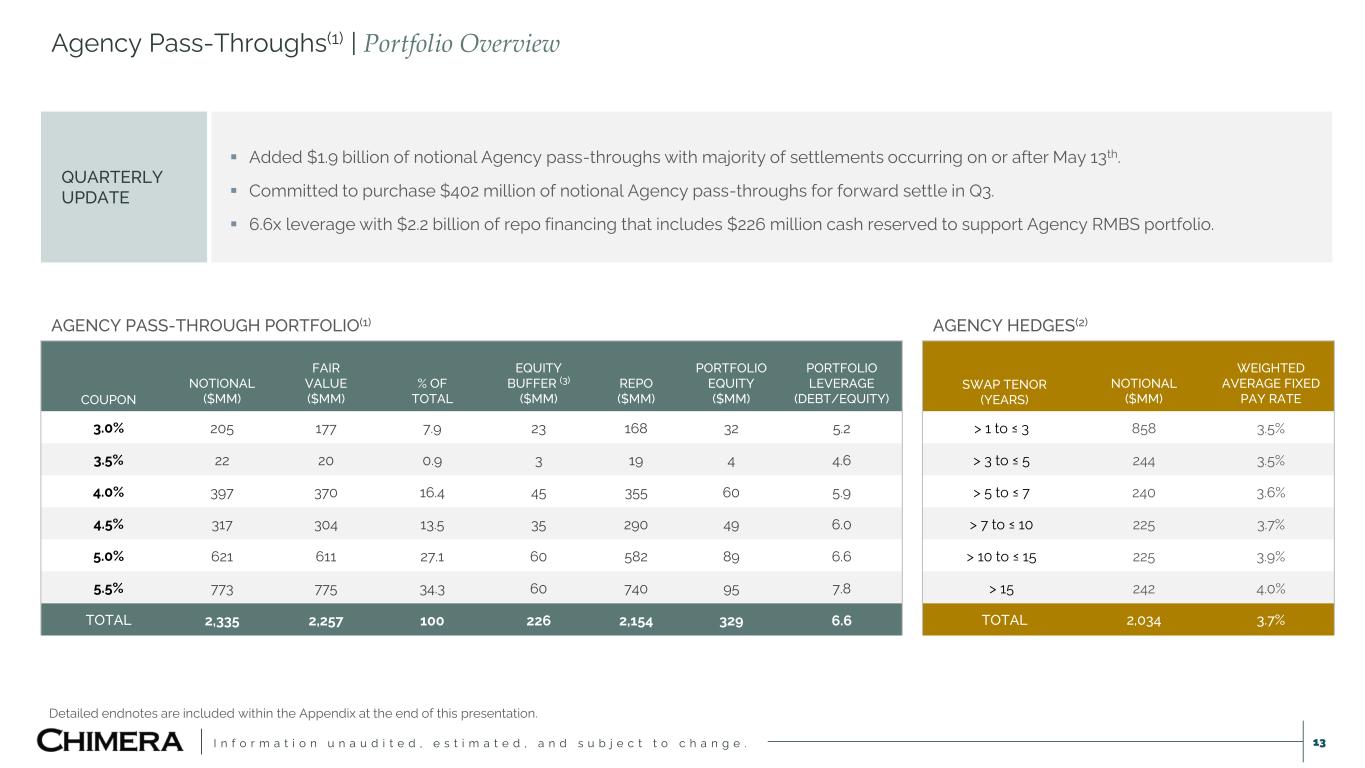
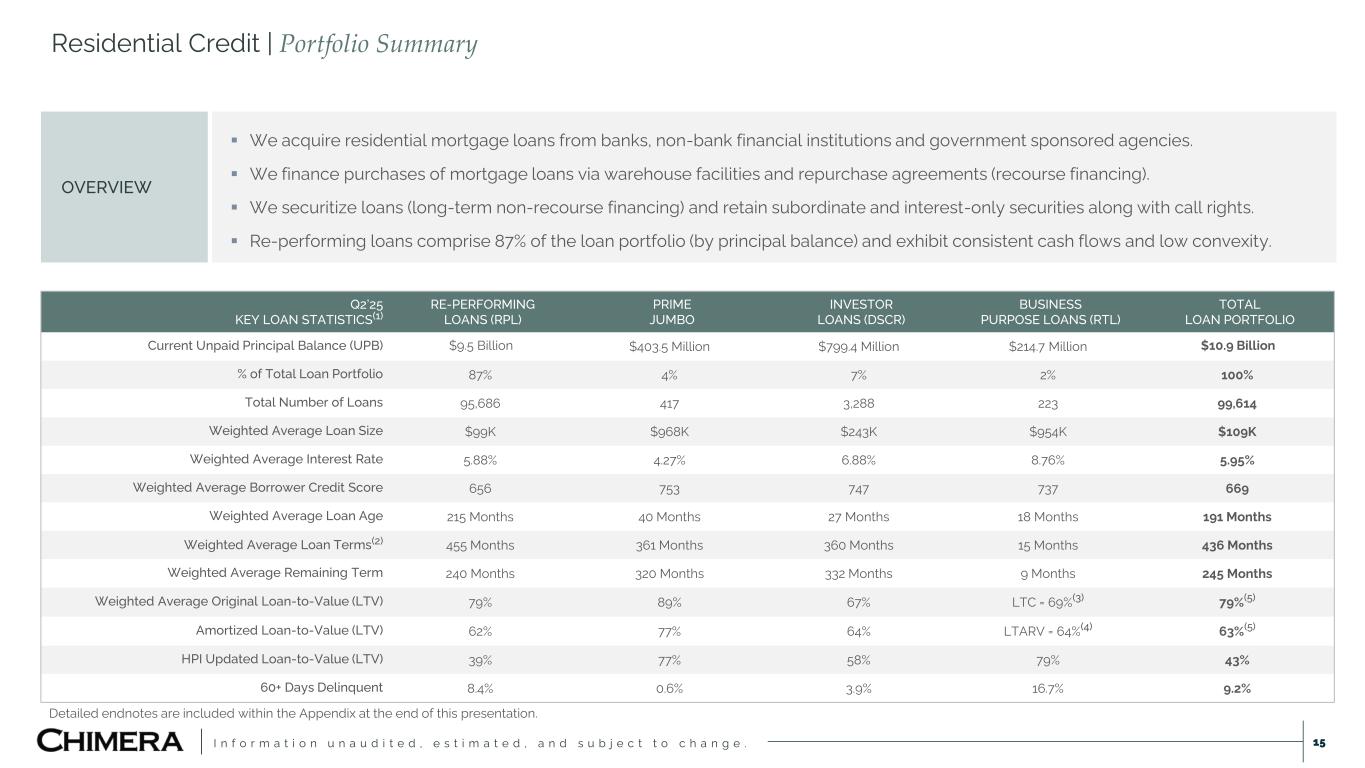
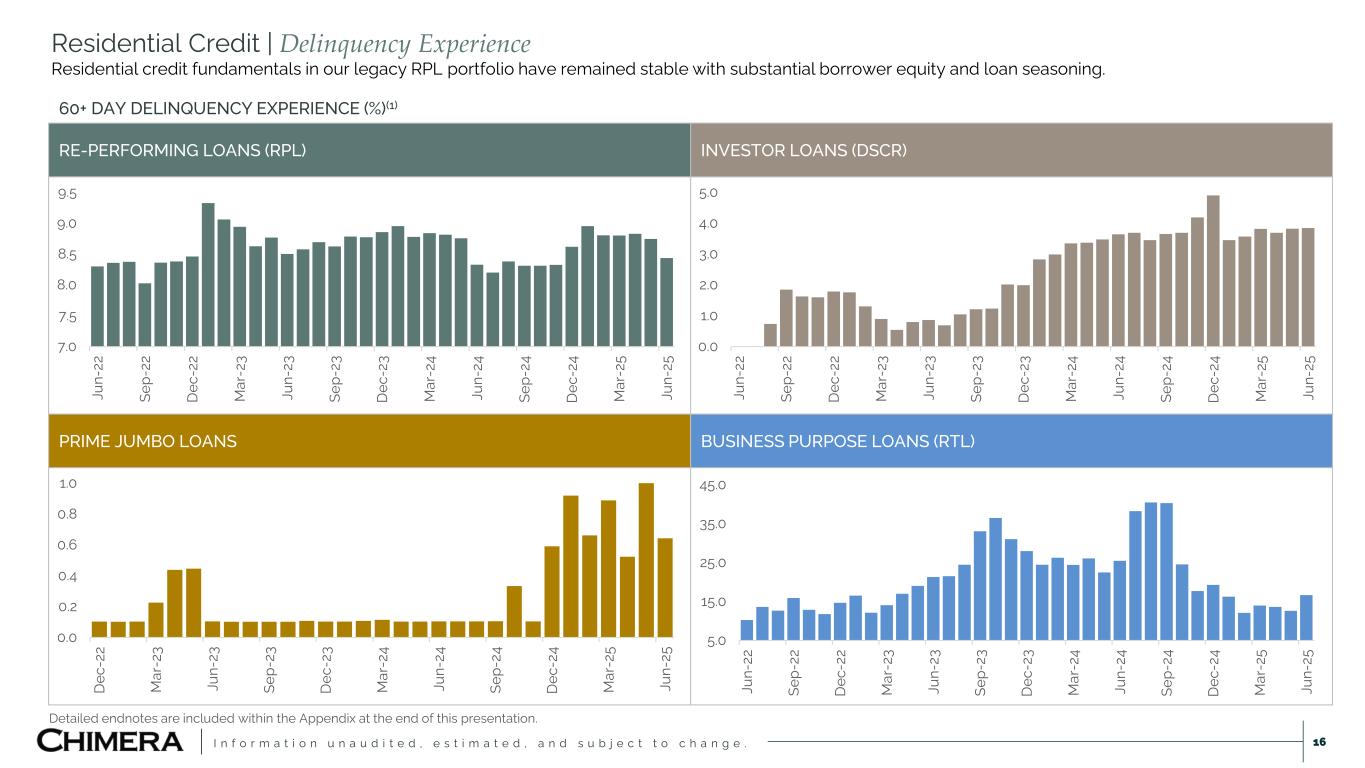
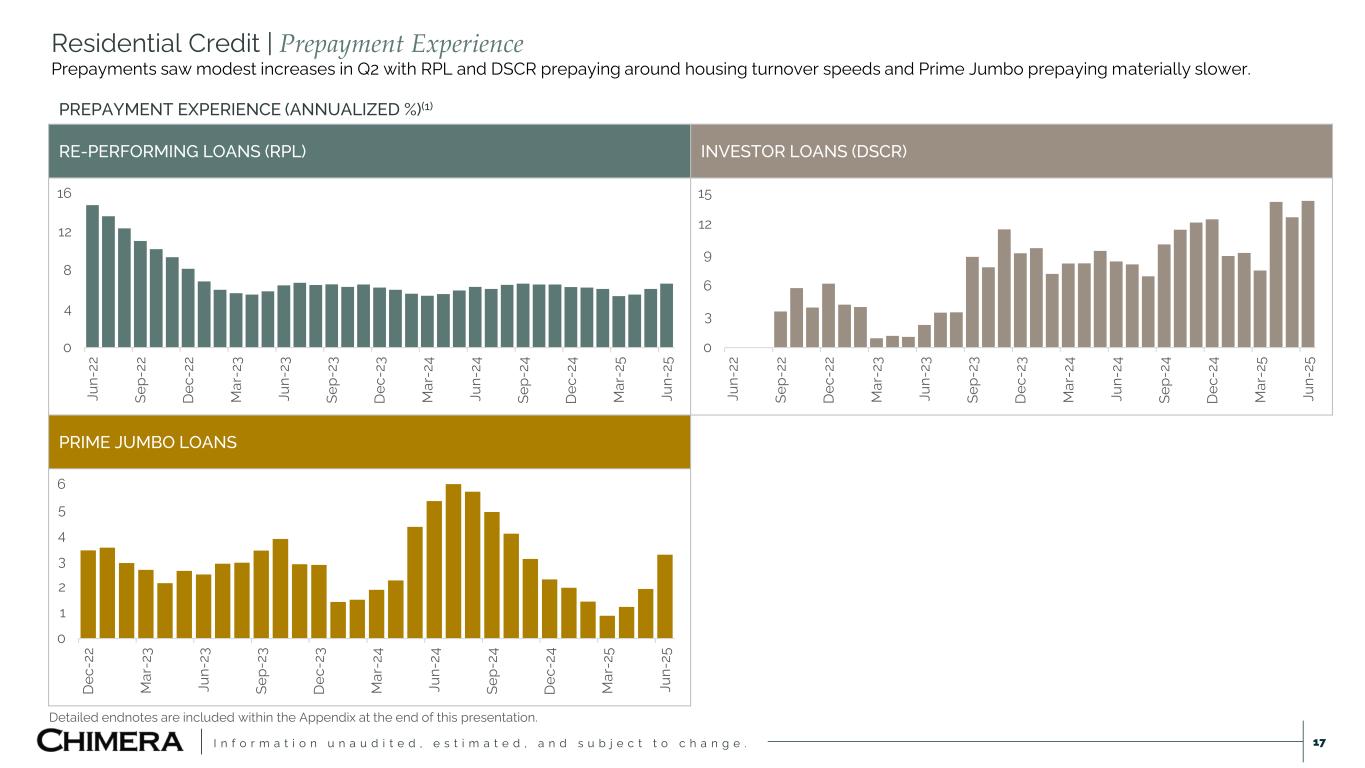
Thanks, Subra, and good morning, everyone. The second quarter was shaped primarily by policy developments, including international trade uncertainty, the administration's tax proposal, regulatory capital relief initiatives, geopolitical events and ongoing scrutiny of Federal Reserve rate policy. The early April tariff escalation rattled risk markets, pushing interest rate volatility to levels not seen since October 2023. Investors repriced the odds of a June Fed rate cut peaking at an implied 1.6 cuts on April 8 as concerns of a tariff-induced recession increased. But as trade timelines extended and policy tensions eased, risk sentiment stabilized and volatility finished the quarter below its starting point. Economic data remained a key market driver as the Fed maintained its data-dependent stance. While early Q2 consumer sentiment surveys showed weakness, June data improved notably. Hard data revealed surprising economic resilience despite tariff concerns. Employment statistics consistently met or exceeded expectations and core PCE inflation ended the quarter at 2.8%, just 10 basis points above where it began. The yield curve steepened during the quarter, with the 2-year treasury yield declining approximately 16 basis points, supported by softening inflation expectations and a more balanced economic backdrop. Conversely, long-duration treasuries faced headwinds with the 10-year yield edging up 2 basis points, while the 30-year sold off roughly 20, pressured by mounting fiscal supply concerns and uncertainty around duration demand. This dynamic produced significant curve steepening with the 2s, 10 spread widening approximately 19 basis points and the 2s and 30s by roughly 37 basis points. Corporate credit spreads outperformed non-Agency RMBS as investment grade and high-yield corporates tightened 11 and 57 basis points, respectively, while non-Agency RMBS was wider by 5 to 10 basis points across the capital stack. Generically, Agency MBS held up better against treasury hedges with current coupon OAS tightening 8 basis points, whereas swap OAS traded within a 23 basis point range, ending 2 basis points wider. Housing conditions remain challenging against the backdrop of low affordability and market uncertainty. Through June 2025, existing home sales registered the weakest year-to-date activity in nearly 27 years outside of 2009. While resale inventory remains historically low, May's 1.5 million units represented the highest level since June 2020. Home price forecasts have moderated with most year-to-date projections now ranging between 0% and 4% for 2025. The bright spot continues to be the non-QM market, where originations and issuance volumes continue to outpace 2024 levels and are on track to reach the highest post-crisis level on record. Our book value declined 1.2% during the quarter, primarily driven by the rally at the short end of the curve that impacted our securitized debt valuations more significantly than the corresponding gains in our loan portfolio. With respect to the portfolio, we entered April with $253 million in cash and a fortified liability structure that allowed us to navigate market volatility comfortably. Our funding remains stable throughout the turbulence as approximately 61% of our portfolio liabilities are comprised of nonrecourse term financing. The remaining 39% is made up of repo with approximately $2.1 billion secured against liquid Agency MBS and $2.4 billion against non-Agency RMBS. Notably, 58% of our non-agency repo or $1.4 billion is non-mark-to-market or limited mark-to-market, providing stability in our funding during times of market stress. We ended Q2 with approximately 62% of the portfolio's capital allocated to legacy reperforming loans, which compares to roughly 68% at the end of the first quarter. RPL portfolio fundamentals performed consistent with expectations. Cash flow velocity remained steady. Prepayments increased each month of the quarter, consistent with seasonal factors, while RPL delinquencies ended the quarter lower at 8.4%. With ample liquidity coming into Q2, we remain disciplined while markets work through early quarter volatility. Consistent with the strategy we outlined in Q1, we focused on repositioning toward more liquid assets through an expanded Agency MBS allocation. We began deploying capital following the peak volatility period, adding positions opportunistically in late April and more aggressively in May when spreads remained wide with the majority of settlement activity occurring in the back half of the quarter. That deliberate pacing resulted in a modest drag on earnings in Q2 while also preserving strategic flexibility and underscoring our commitment to disciplined risk management amid evolving market dynamics. During the quarter, we committed over $300 million of capital toward the purchase of approximately $2.3 billion of agency pass-throughs, utilizing approximately 6.5 turns of leverage. We hedged these positions with swaps to achieve tighter duration alignment, match our SOFR-based funding profile and capitalize on structural carry advantages in the current negative swap spread environment. We expect these positions to deliver high-quality carry with levered ROEs in the low to mid-teens. After quarter end, we closed on our first MSR transaction consisting of $6.5 billion of Fannie Mae loans through a third-party servicing partnership. The portfolio consists of 4-year seasoned loans with a 4% average interest rate, $220,000 average balance, 71% loan-to-value and 750 average borrower credit score. The transaction deployed approximately $37 million of capital at an expected levered ROE in the low teens. This asset class complements our residential credit and Agency MBS holdings while helping balance portfolio interest rate sensitivities. Looking ahead, we continue to evaluate liquidity-generating opportunities within our portfolio of securitizations where we hold exercisable redemption rights. That currently includes 18 callable deals consisting of approximately $6 billion of loans. We analyze the economics of exercising call rights and either selling the underlying loans or as we did in Q1, resecuritize them. Our decision framework incorporates breakeven ROE thresholds, near-term book value impacts and longer-term earnings accretion potential. While some opportunities may offer accretive redeployment, they may require near-term book value reductions when redeeming discounted securitization debt at par. We carefully weigh enhanced earnings power against book value impacts and corresponding payback periods. And as we identify deals that meet our economic thresholds, we expect to pursue these strategies as we continue repositioning our portfolio and platform. As mentioned, on June 12, we announced the acquisition of HomeXpress, marking another strategic step in transforming our portfolio and platform capabilities. From a business standpoint, HomeXpress' founders and senior leadership have built a high-caliber team serving brokers and correspondent lenders in the non-QM and DSCR markets at scale. Additionally, they have a strong network of institutional investment partners that have been consistent buyers of HomeXpress' loan production over the years, and we intend to continue supporting and growing those relationships. From a portfolio perspective, the HomeXpress platform creates a pipeline of investable assets, not only for the REIT, but also for our investment and asset management clients while simultaneously supporting the growth of our third-party MSR footprint. We're excited about the cultural alignment, business synergy and HomeXpress' ability to capture market share in the expanding non-QM sector. We are pleased with the progress made in Q2 as we patiently deployed the capital raised, ending with over $300 million allocated to Agency MBS, prepared for our first MSR investment that closed in early July and announced the acquisition of HomeXpress. We look forward to maintaining this momentum through the third quarter. And that concludes our prepared remarks. We'll now turn the line back over to the operator for questions.
Operator
Our first question today is from Bose George at KBW.
Speaker 5
In the prepared remarks, you mentioned that there may be further opportunities on the acquisition front as the company continues to evolve. Could you elaborate on what direction that could take?
Speaker 2
Yes. I want to indicate that, similar to HomeXpress, we will remain open to opportunities that align with our core expertise in residential credit. We are signaling our willingness to explore these possibilities, as there is still potential for growth that can be synergistic within that framework.
Speaker 5
Okay. That makes sense. And then after the HomeXpress deal closes, do you think you have all the pieces in place to generate a double-digit ROE next year?
Speaker 4
Yes. I think, Bose, just from an earnings power perspective, I mean, obviously, we're doing several things that are focused on increasing our earnings power, increasing our EAD. HomeXpress is obviously a critical component to that. We think that's going to be materially accretive as we go forward in 2026 and beyond. The other thing that we alluded to in some of the prepared remarks was just our efforts to generate liquidity and earnings power just from our existing callable securitization. So that's something that we're continuing to focus on and try to identify the economics of. The other thing, too, is just looking across our portfolio, we've got a lot of legacy positions. So identifying any underperforming or fully valued assets and seeking to sell those, redeploy them into more accretive investments. And I think as we've mentioned on prior calls, another element that we're very focused on is continuing to increase the revenue and earnings attribution from our fee-based businesses, our asset management and investment management platforms. So look, all those pieces and then there's obviously market dynamics that flow into this with respect to the path of Fed rate policy, and that obviously impacts our net interest margin and things like that. But we certainly believe that we're laying the foundation and are on the right path for continuing to increase our earnings power going forward.
Operator
Next question today is coming from Trevor Cranston from Citizens JMP.
Speaker 6
As you guys continue to go through the portfolio repositioning process, can you talk about how you sort of envision the long-term capital allocation mix between the legacy credit portfolio and the newer Agency/MSR asset classes?
Speaker 4
Yes, that's a good question. It depends on several factors, including market conditions and the natural decline of our legacy portfolio over time. We're focused on our model portfolio in-house, aiming for a diversified mix across complementary sectors or product types to ensure stability and durability in various economic situations and interest rate environments. The legacy portfolio mainly consists of reperforming loans and seasoned loans with substantial equity, which we value for many reasons. However, they were securitized during a different market phase, and as they continue to delever, it affects our earnings potential. Looking ahead, we conducted our first MSR transaction, which currently accounts for less than 2% of our overall capital allocation. Regarding equity duration, depending on the types of MSRs we acquire, they could make up about 15% to 25% of our allocation. Agencies are also a crucial part of our portfolio, but our allocation will be influenced by our liquidity needs and the relative value we see in different opportunities. Thus, it's challenging to specify an exact long-term allocation. However, I can confirm that agencies and MSRs will play a permanent role in our strategy, and we'll continue to be opportunistic across various sectors because we have the capability to manage and allocate assets throughout the entire residential credit landscape. We don't want to restrict ourselves to just one or two options. I hope this gives you a clearer understanding of our strategy.
Operator
Next question today is coming from Doug Harter from UBS.
Speaker 7
Hoping you could talk about how you're thinking about the dividend strategy going forward once HomeXpress closes and how you think about retaining some capital from that business versus increasing the payout?
Speaker 2
This is Phil. As we indicated, we evaluate several factors including our liquidity needs and investment horizon. We aim to maintain and enhance our total economic return, with several levers at our disposal such as dividends, book value, and supporting assets. Regarding HomeXpress, we are confident it will significantly boost our earnings. In the coming year, we will consider how to allocate some of those earnings to invest in growing that platform and its assets while also providing a near-term dividend. We have not finalized the exact mix yet, but these considerations will guide us as acquiring new and profitable assets is essential for supporting and increasing the current dividend. Thus, we need to find the right balance between using some of those earnings to grow the dividend now and making investments that will enhance the dividend in the future.
Speaker 7
Great. And then shifting to the secured financings. It looks like as of June 30, that rate came down about 60 basis points from the prior quarter. I guess can you just talk about what drove that and how much of that benefit you saw during the second quarter?
Doug, it's Subra. Thanks for your question. So that 60 basis points is really a result of our increase in financing of our agency portfolio. So that just brought the weighted average rate down.
Speaker 7
Okay. That makes sense. Has there been any significant change in book value this quarter or through July?
Speaker 4
Yes, as of last Friday, our book value was down about 55 basis points. This was mainly due to our loan portfolio remaining relatively flat for the quarter, and we noticed slight tightening in spreads on senior securitized debt. This resulted in an increase in the value of our securitized debt, which had a minimal effect on our book value.
Operator
Our next question is coming from Eric Hagen from BTIG.
Speaker 8
Maybe following up on that last point. I mean you mentioned some mark-to-market noise related to the move at the short end of the yield curve last quarter. I mean what's the outlook from here if the Fed cuts rates? And how will that drive your appetite to call the remaining securitized debt that you have that's currently callable?
Speaker 4
Yes, that's a great question, Eric. If the Federal Reserve cuts rates as anticipated, it would have several effects on our outlook. First, it would increase our net interest margin due to the structure we've used for our non-agency hedges with the $1 billion cap implemented earlier this year. As rates decline, we stand to gain from our net interest margin, while also having protection if rates rise. Additionally, a decrease in rates could positively influence the economics of our callable securitization analysis. This means that some deals that currently aren't economical to call could become more actionable. We are definitely monitoring these developments closely.
Speaker 8
Got it. That's helpful. That's helpful. All right. So we're looking at the really low mark-to-market LTV for these seasoned reperforming loans. I imagine the DTI is probably too high for most of those folks to get a cash out refi or take on more debt. But there's so much innovation in our market right now, right, especially with like home equity products. I mean, are there other equity products which could appeal to these borrowers, which either drive a refi event or strengthen the underlying credit in some way?
Speaker 4
Yes, that's a great question. We are well aware of various home equity products available, including those that don't require monthly payments. Many borrowers could benefit from these options if they wish to access their home equity. However, considering the profiles of the borrowers in this portfolio, they have been in their homes for 17 to 20 years. If they did not refinance in 2021, it seems they plan to remain in these homes for the long term. This is reflected in the prepayment speeds, which align with housing turnover rates. It is possible that some of these home equity products could reach these borrowers, leading to an increase in payoff speeds. However, from a credit standpoint, it's uncertain if these products would significantly enhance the credit profile. As mentioned in the prepared remarks, the cash flow velocity is strong, and there is substantial equity in these loans. Typically, borrowers may miss a payment or two around the holidays but catch up when they receive their tax returns. So, I'm not certain if that fully addresses your question.
Speaker 8
No, that was really helpful detail. No, that was good stuff. I appreciate that. One more, if I may. I mean, do you have a sense for how much of the production from HomeXpress will be capitalized on the balance sheet versus sold to third parties going forward?
Speaker 4
Yes, it's essential to highlight that their business is built on long-term relationships with institutional investors who have consistently supported them by purchasing their production. We plan to continue fostering these relationships as well as selling to third parties. As HomeXpress' production volume increases, we aim to retain a portion of that production for our REIT balance sheet, credit funds, and third-party asset management clients. However, we want to carefully balance nurturing existing relationships while considering what we retain. Currently, we don't have a specific number or percentage in mind, and we are still evaluating this as we move forward.
Operator
We reached the end of our question-and-answer session. I'd like to turn the floor back over for any further or closing comments.
Speaker 2
This is Phil Kardis again. I want to thank everyone for participating in our second quarter earnings call, and we look forward to speaking with you in November for our third-quarter call. Thank you.
Operator
Thank you. That does conclude today's teleconference and webcast. You may disconnect your line at this time, and have a wonderful day. We thank you for your participation today.