Operator
Hello and welcome everyone to the Fiscal 2025 Fourth Quarter and Year-End Earnings Call for CMC. Joining me on today's call are Peter Matt, CMC's President and Chief Executive Officer, and Paul Lawrence, Senior Vice President and Chief Financial Officer. Today's materials, including the press releases and supplemental slides that accompany this call, can be found on CMC's Investor Relations website. Today's call is being recorded. After the company's remarks, we will have a question and answer session, and we'll have a few instructions at that time. I would like to remind all participants that today's discussion contains forward-looking statements, including with respect to economic conditions, effects of legislations and trade actions, U.S. steel import levels, construction activity, demand for finished steel products, the expected capabilities, benefits, costs, and timeline for construction of new facilities, the benefits and impact of the pending acquisitions of Foley Products Company and Concrete, Pipe, and Precast, the company's operations, the company's strategic growth plan and its anticipated benefits, legal proceedings, the company's future results of operations, financial measures, and capital spending. These statements reflect the company's beliefs based on current conditions but are subject to risks and uncertainties, The company's earnings release most recent annual report on Form 10-K and other filings with the U.S. Securities and Exchange Commission contain additional information concerning factors that could cause actual results to differ materially from those projected in forward-looking statements. Except as required by law, CMC does not assume any obligation to update, amend, or clarify these statements. Some numbers presented will be non-GAAP financial measures, and reconciliations for such numbers can be found in the company's earnings release, supplemental slide presentation, or on the company's website. In addition, today's presentation includes financial information that gives effect to the consummation of pending acquisitions, pro forma financial information is presented for illustrative purpose only, and is based on available information and certain assumptions and estimates that the company believes are reasonable. The pro forma financial information may not necessarily reflect what the company's result of operations and financial position would have been had the transactions occurred during the periods discussed or what the company's results of operations and financial position will be in the future. Unless stated otherwise, all references made to year or quarter end are references to the company's fiscal year or fiscal quarter. And now, for opening remarks and introductions, I will turn the call over to Peter.
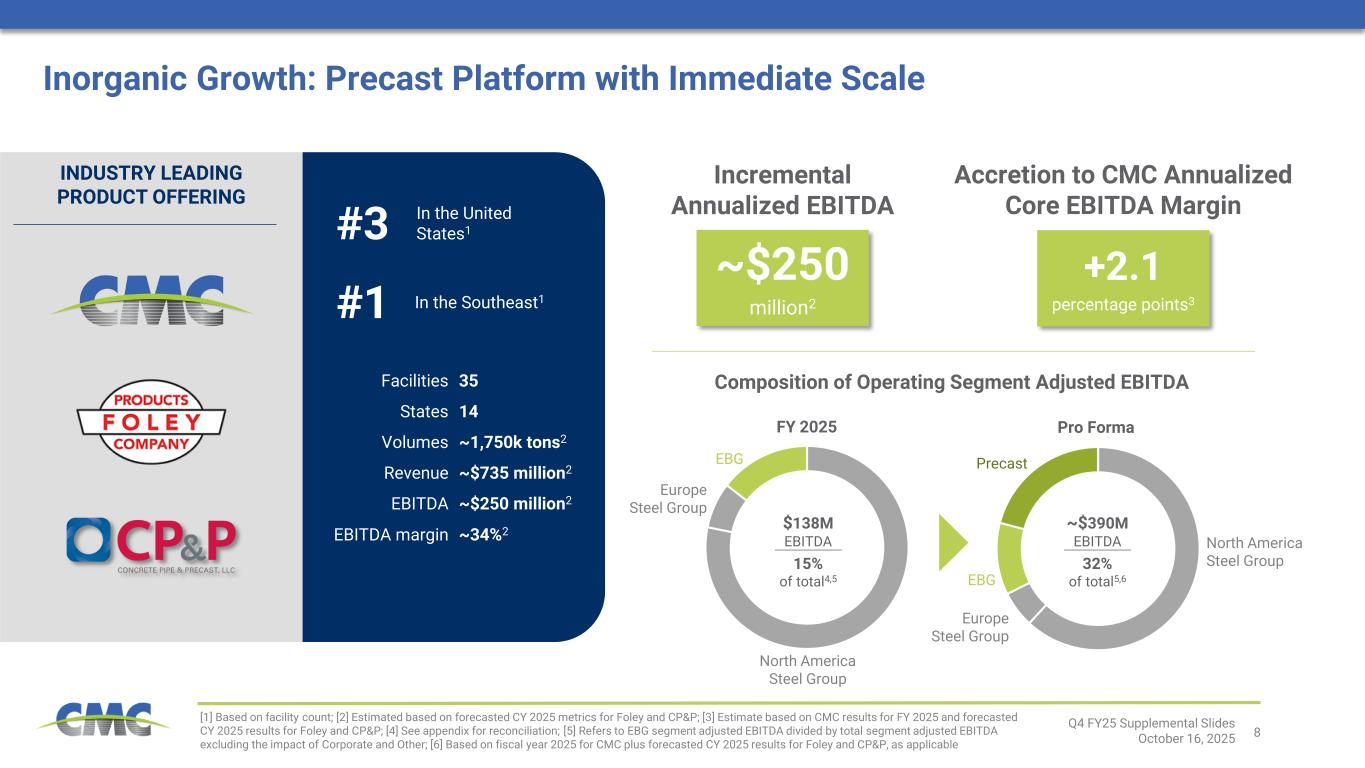
Good morning, everyone, and thank you for joining our conference call. As you've likely already seen, we have a lot of ground to cover today. We are excited to share more about CMC's agreement to acquire Foley Products Company, after which we will discuss 2025's strategic progress and our outlook before opening the call to questions. To supplement today's commentary, we have posted two presentations to our IR website, One for the Foley acquisition and one detailing our fourth quarter and fiscal 2025 results. Class business with industry-leading margins to CMC's portfolio. In combination with our recently announced acquisition of CP&P, the addition of Foley will create a high-quality, large-scale platform in the strategically attractive precast industry, greatly enhancing CMC's financial profile and growth over the long term. I am confident that the acquisition of Foley will increase our value proposition for customers and shareholders alike, extending our growth runway and marking another major milestone as we execute our strategy. Slide four of the acquisition presentation provides a brief overview of Foley. Since its founding by Frank Foley over 40 years ago, the company has grown into the largest regional precast producer in the United States with 580 employees in 18 plants across a strong track talented management team and the industry leading practices facilities across history challenges. 8 helps illustrate of the page, outlines full margin and cash flow profiling practice, also developed a engineering capability one-stop shop for many construction applications. These capabilities highlighted on slide Mino Foley to the originally identified. Social synergies are likely to emerge but have not been included. On slide 10, we are excited by a vast majority of the acquired precast facilities. So I'll conclude my comments on Foley when we began our study of the precast space and materials in the column.
I share the excitement of the acquisition of Foley in combination with CP&P as shown on slide 11, the creation of the number of CP&P and Foley of adjusted ETH and synergies with EBITDA margins in an EBITDA margin of 10.7. The addition of these levels of earnings by the precast operations will significantly shift the completion of the acquisition. strong margin. The capital intensity of these businesses' free cash flow form would have improved and will cover the major terms related to the transaction. Total consideration will be paid at closing and is subject to customary working capital. This valuation for 2025 EBIT is reduced to approximately 9.2% are considered if this is a fair valuation for a fair. Worth noting, Foley's EBITDA margins are 5 to 10 percentage points higher to pay the transaction to be immediately accretive to earnings and the combined total consideration of approximately $2.5 billion related to the purchases of Foley and CP&P, the combination of cash on hand and the completion of both transactions, which is expected by the end of calendar 2025, expected to increase to approximately 2.5 billion in the past, we are comfortable with temporarily opportunity, as we did with the highly successful acquisition of Gerdap. We will prioritize de-levering in the wind-down of capital expenditures for the construction of steel wood cover.
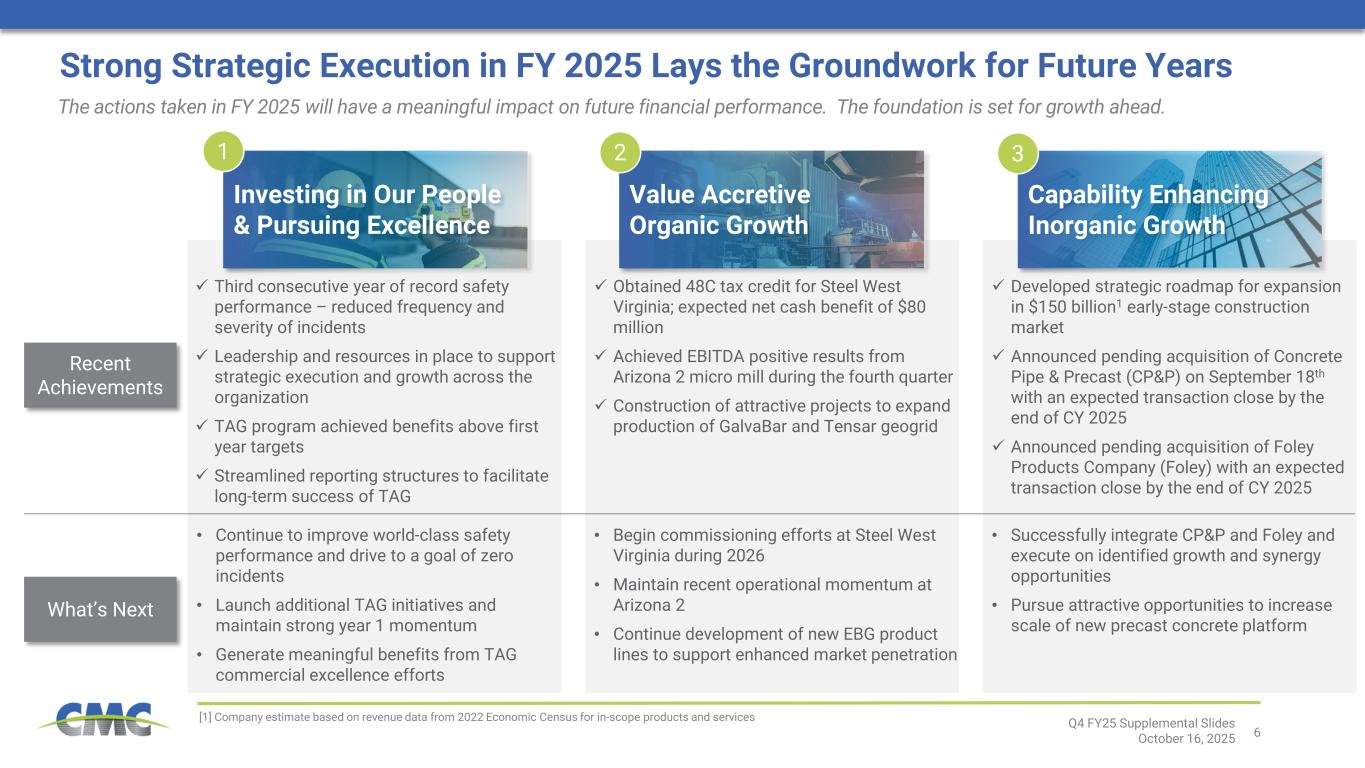
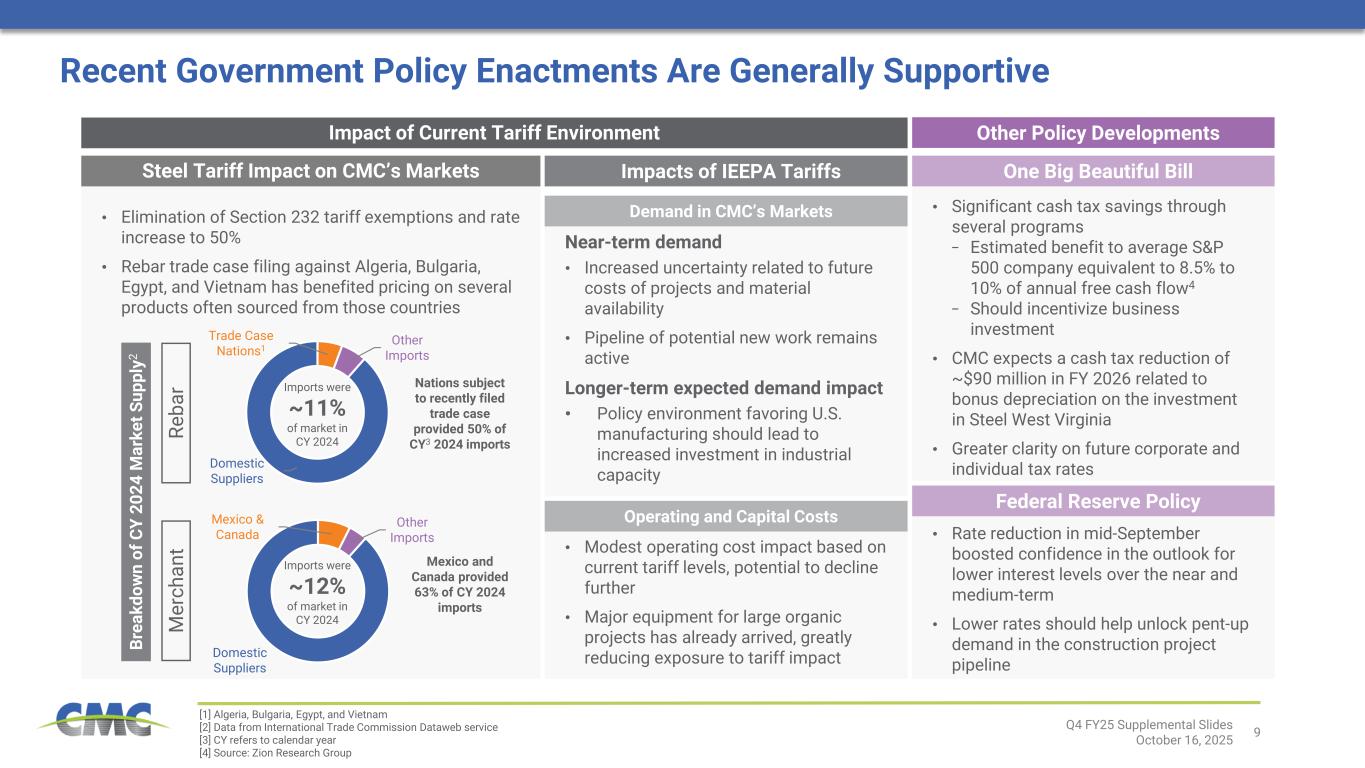
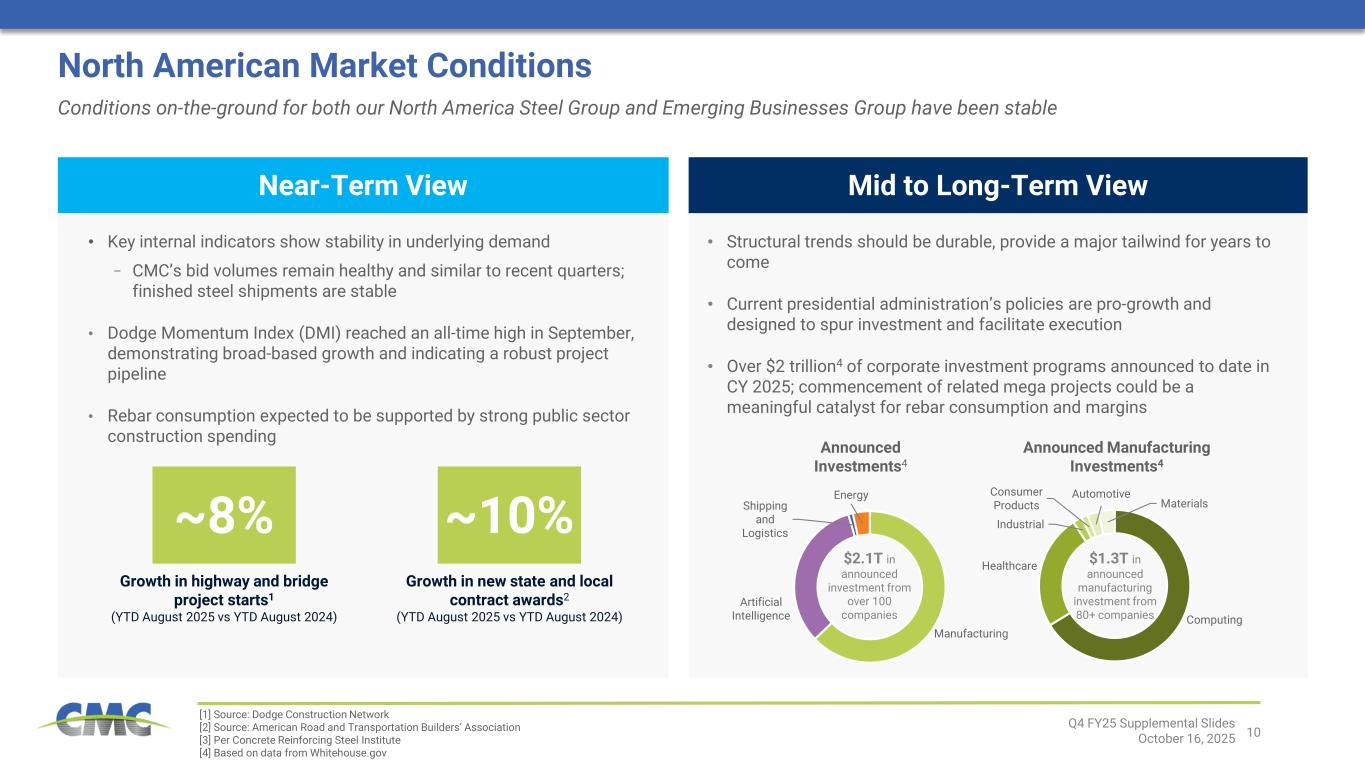
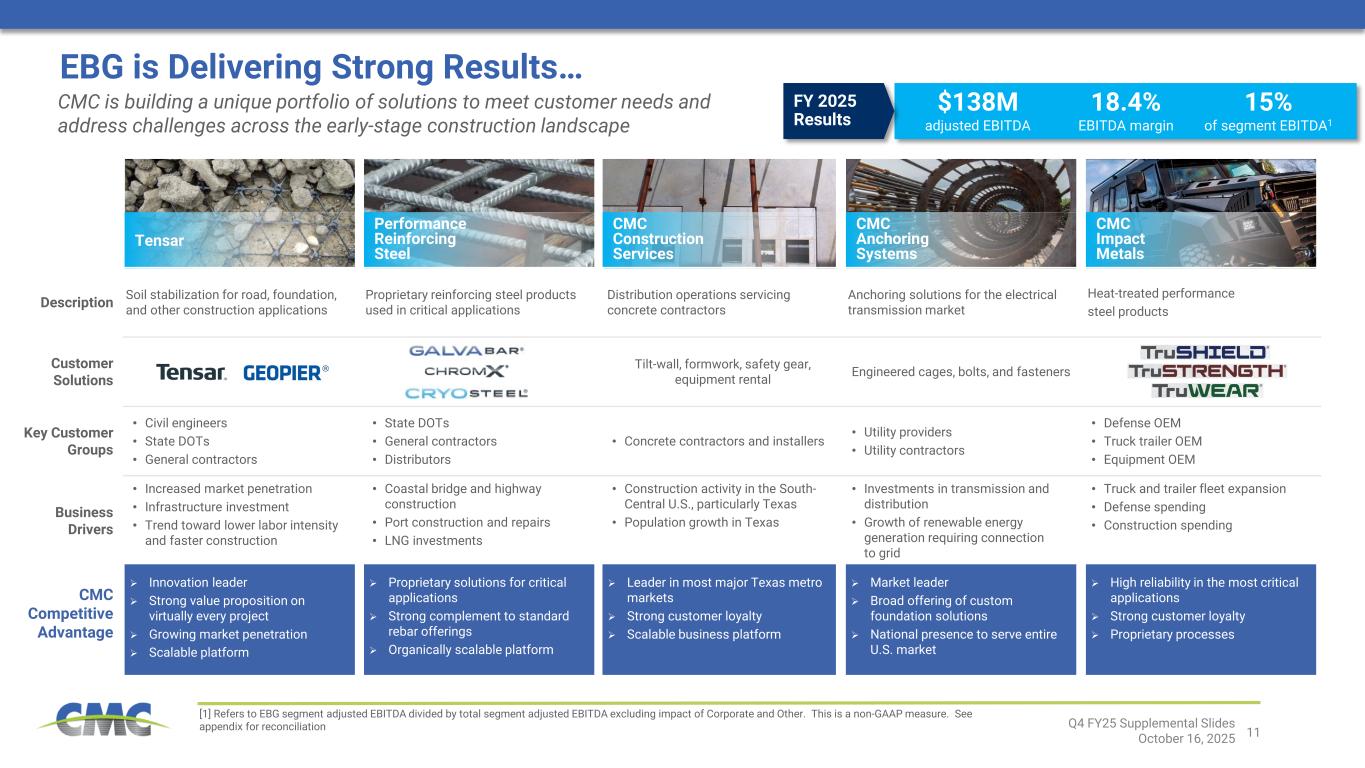
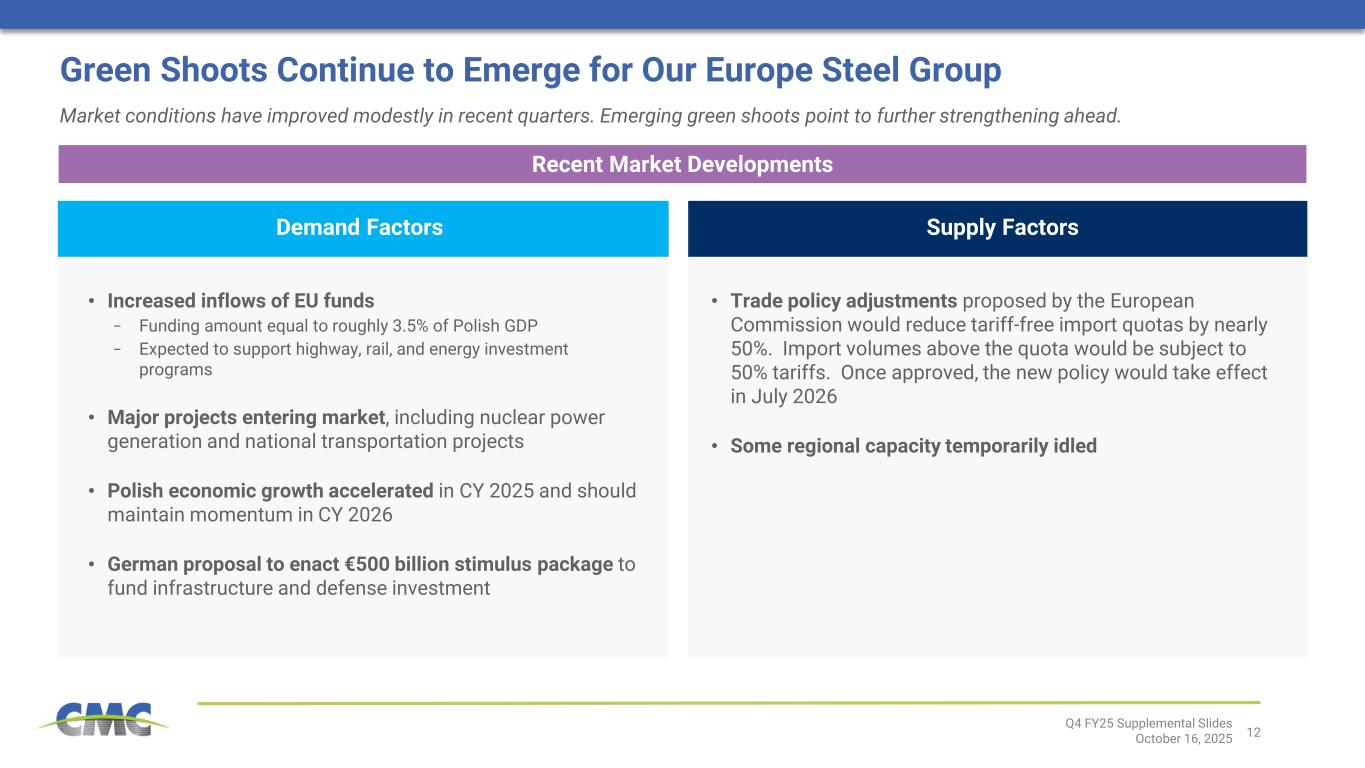
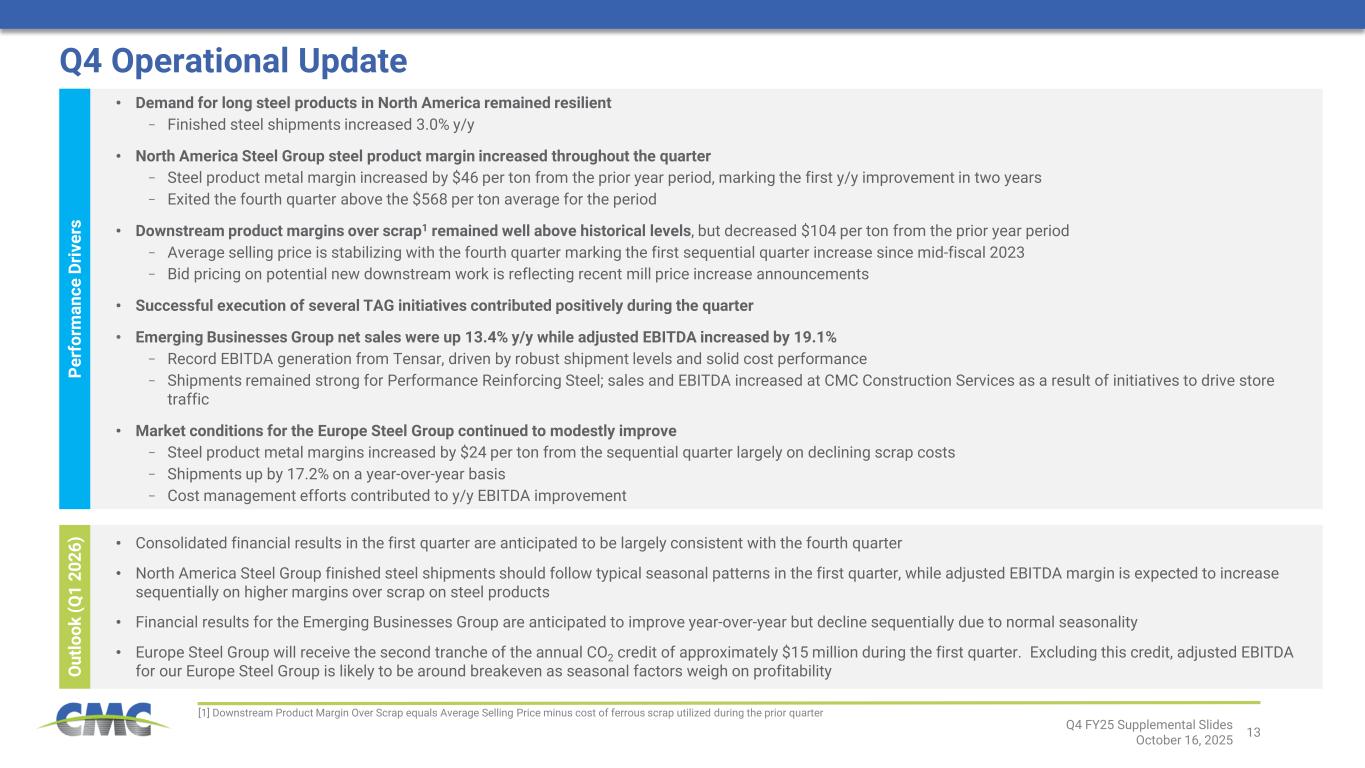
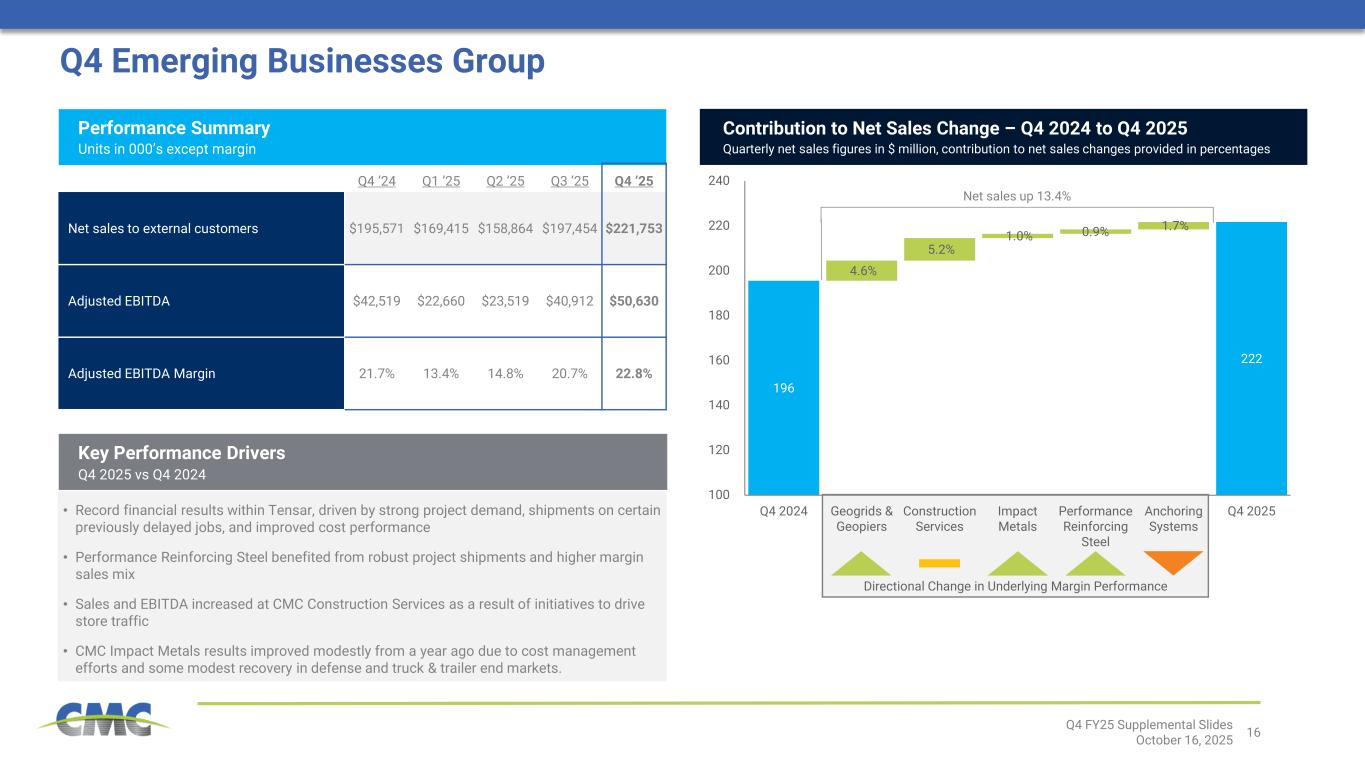
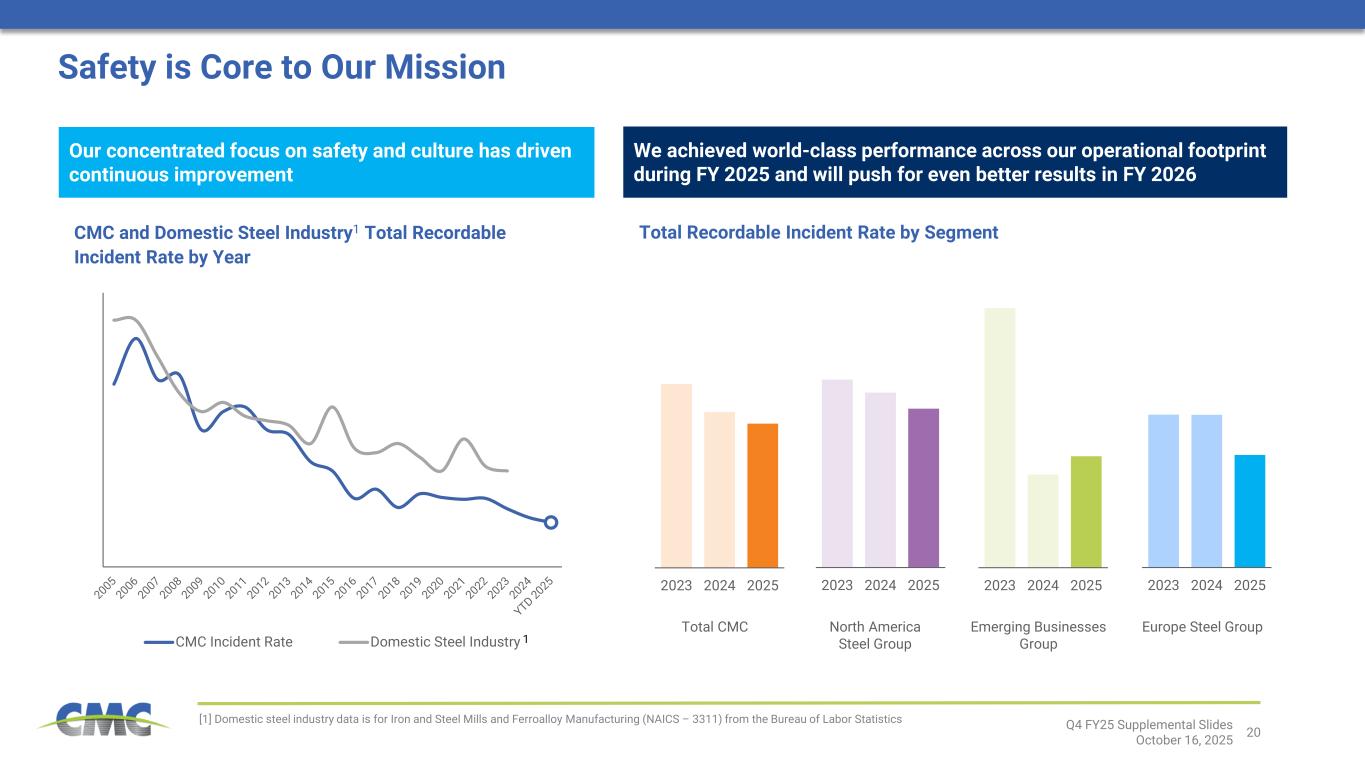
As I've said before, the most important investment we can make in our people is to keep them safe on the job. The fiscal 2025, the job of improving safety is never done, but we are in our position of earning early dividends. 26. The next strategic path is value accretive organic growth, which we anticipate will represent a meaningful source of new earnings and cash flow EBITDA. I would like to congratulate our team out west. I would also like to highlight, say, net-enhancing inorganic growth, as I've already discussed at length, platform will cover the financials, but in North America, a combination of resilient construction activity and a balanced supply landscape resulted in favorable conditions that indicated previous in non-residential markets. In the Dodge Momentum Index, or DMI, as well as recent conversations with many of our largest customer activity by Gert High in September related to the current environment, zero capacity. Moving on to profitability in this segment, we have a downstream business. On to our other segments, I would like to briefly update you onto the U.S. market, our emerging businesses group on slide 11, current conditions are a supportive element of the EBG segment. We drive product adoption prior year. Finally, for our supply side, levels of a year ago. During the fourth quarter, we saw metal margins recover to their highest mark in recent developments of the year of Nepal, I would like to recognize the efforts of the team as we execute on our
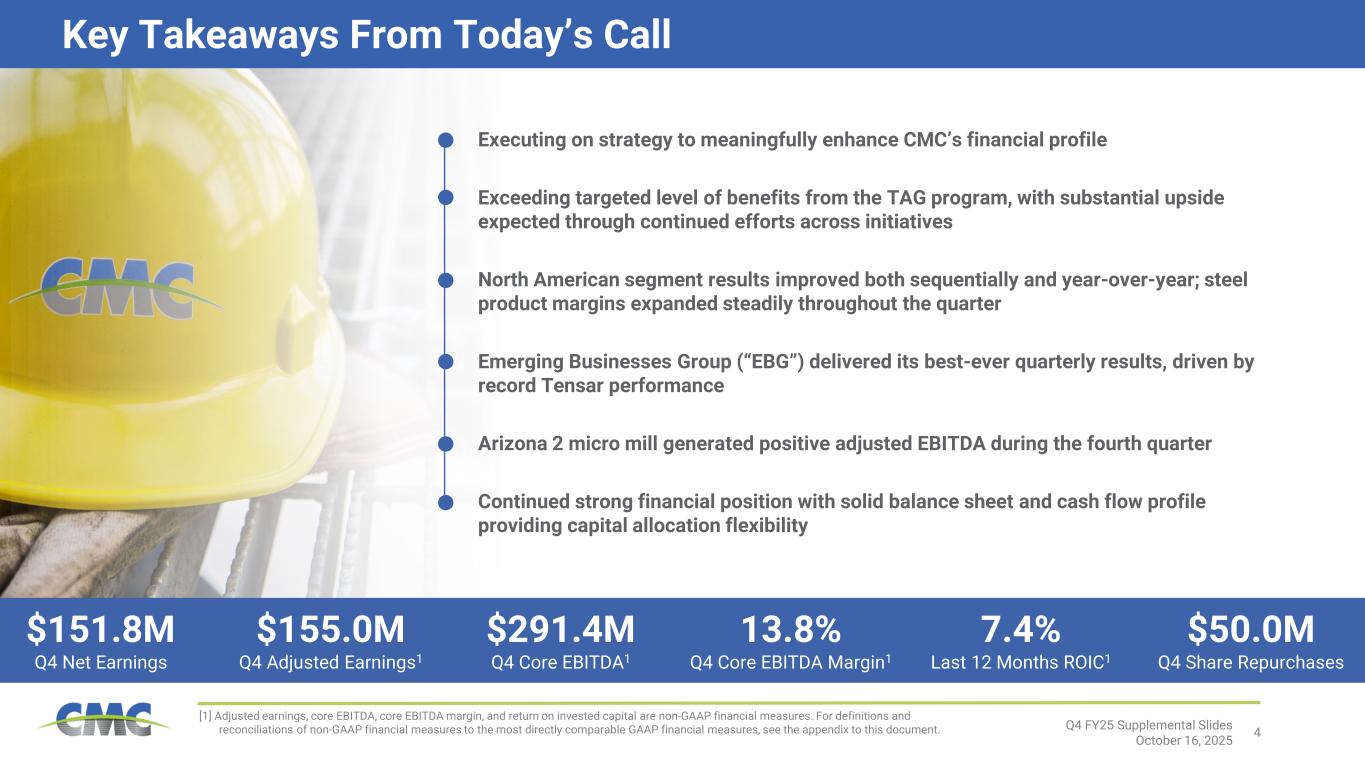
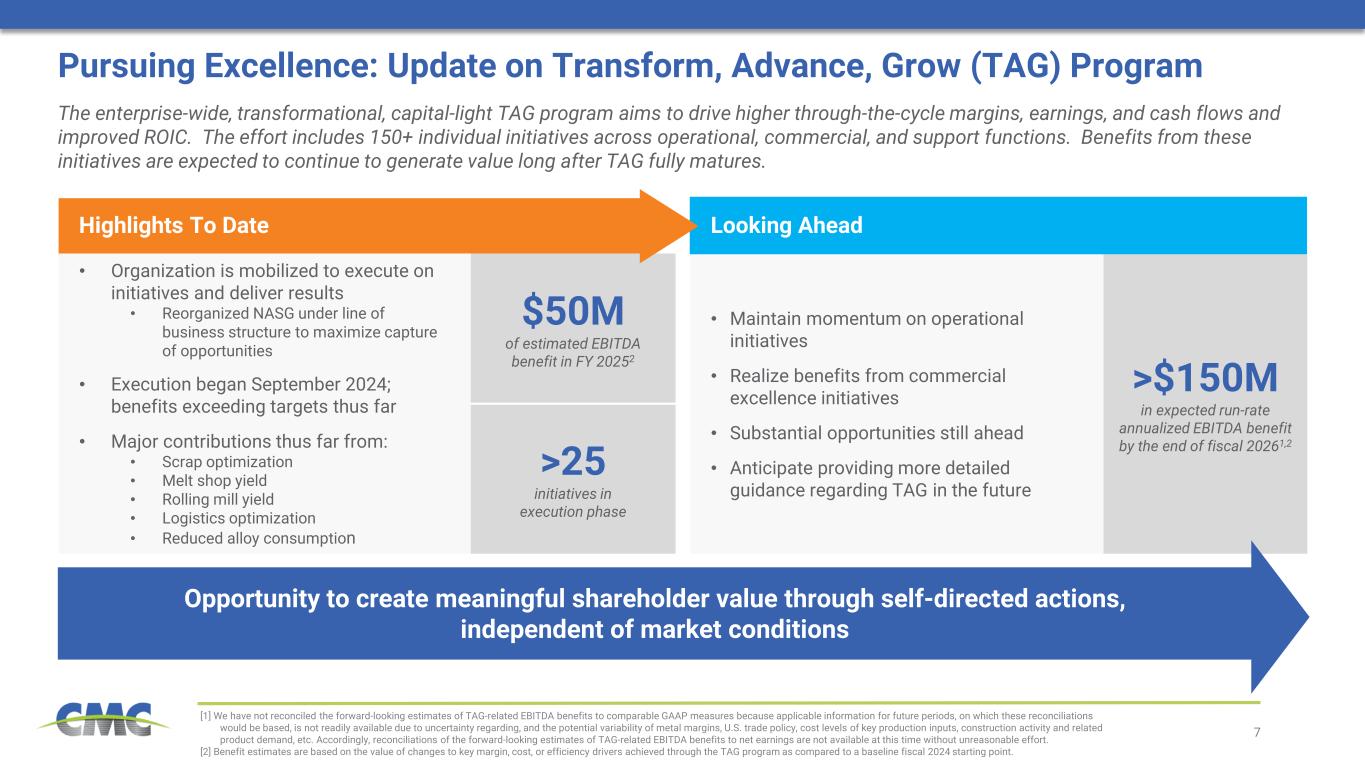
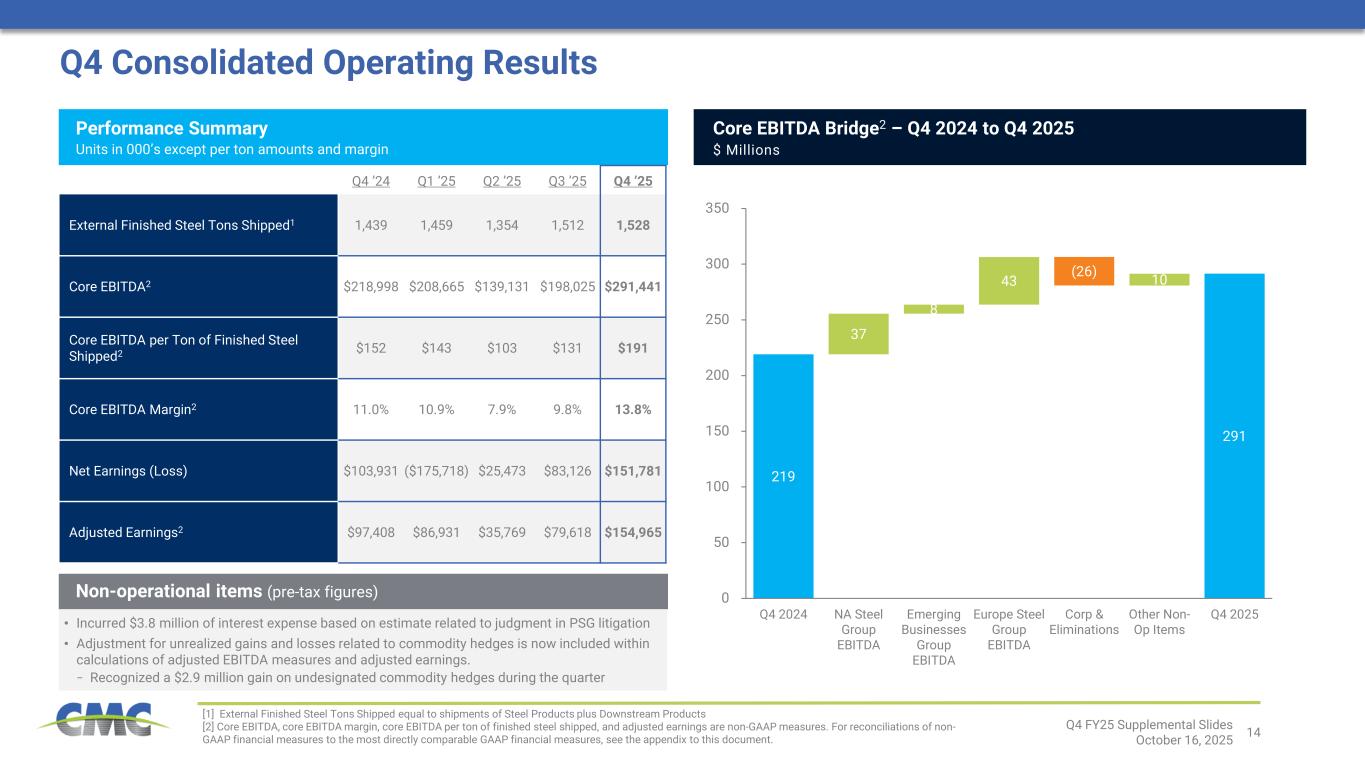
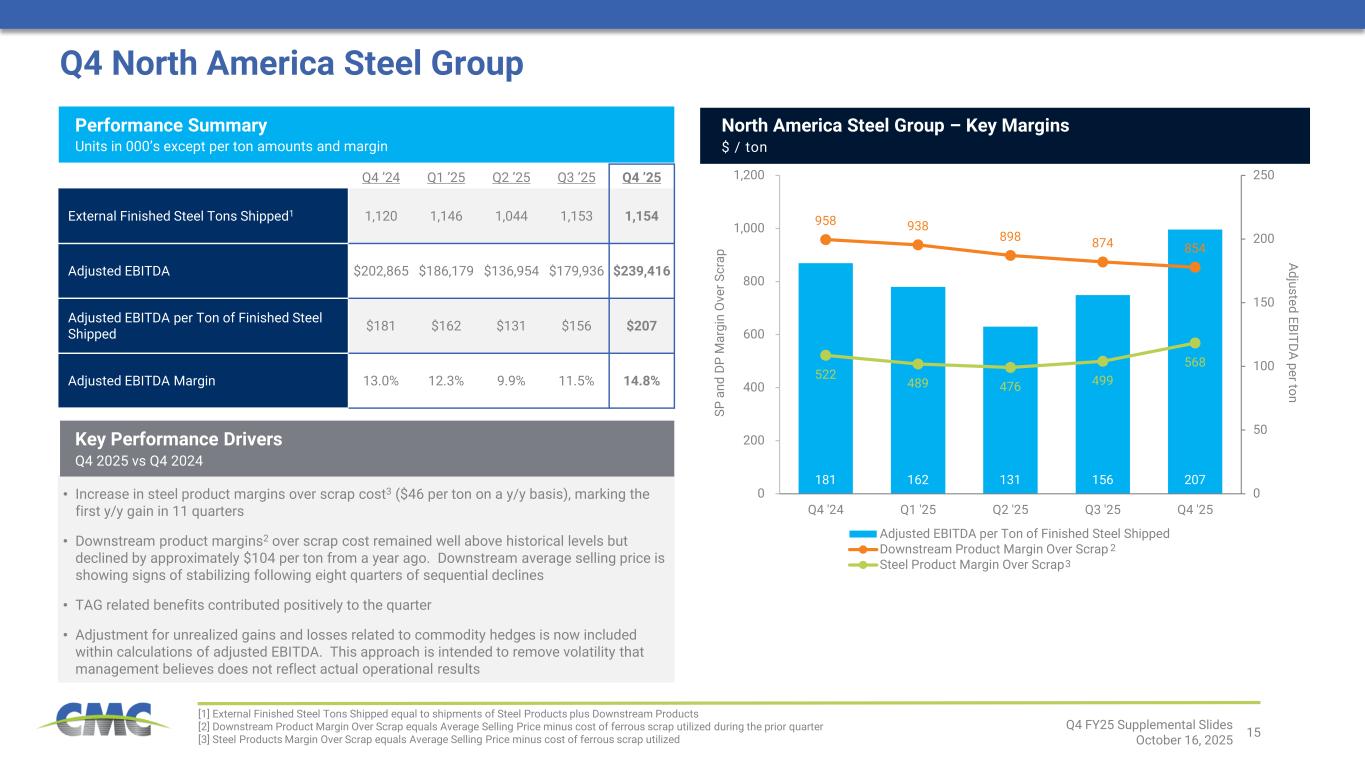
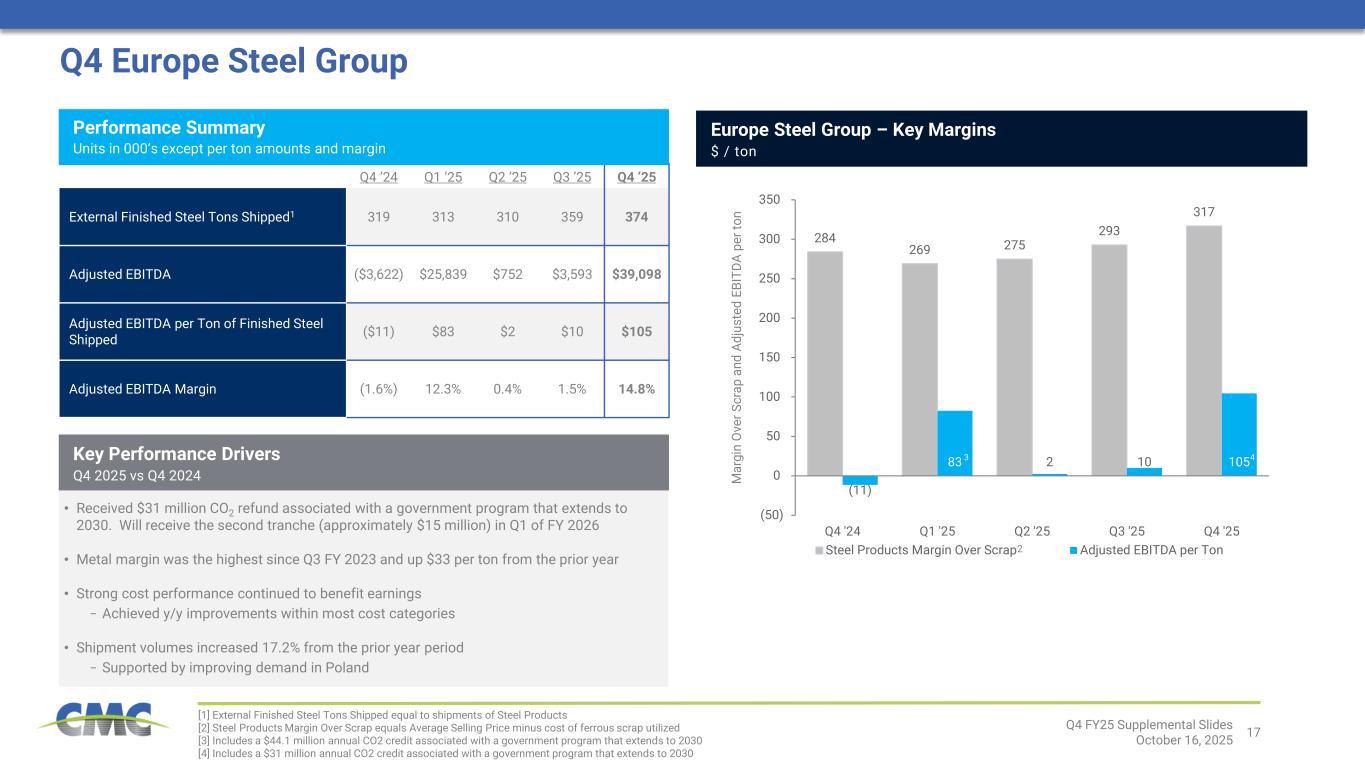
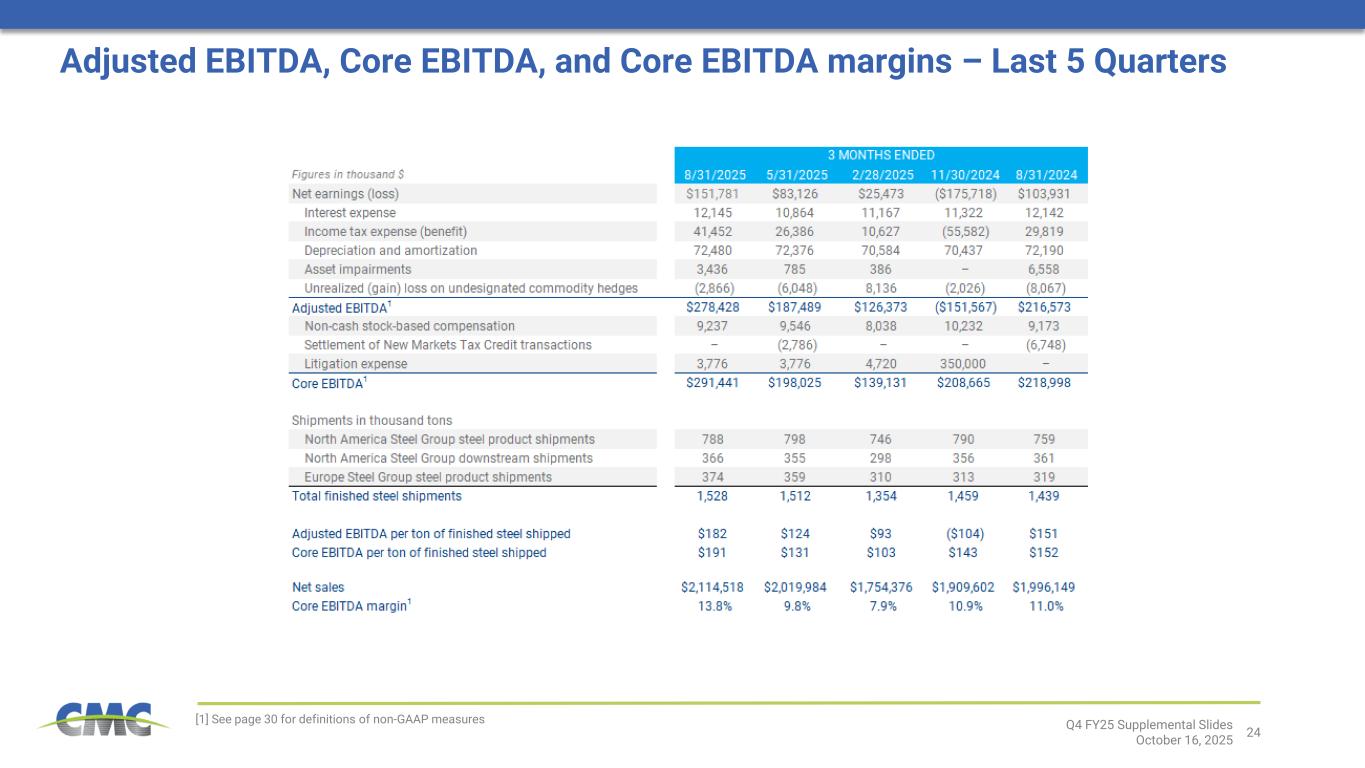
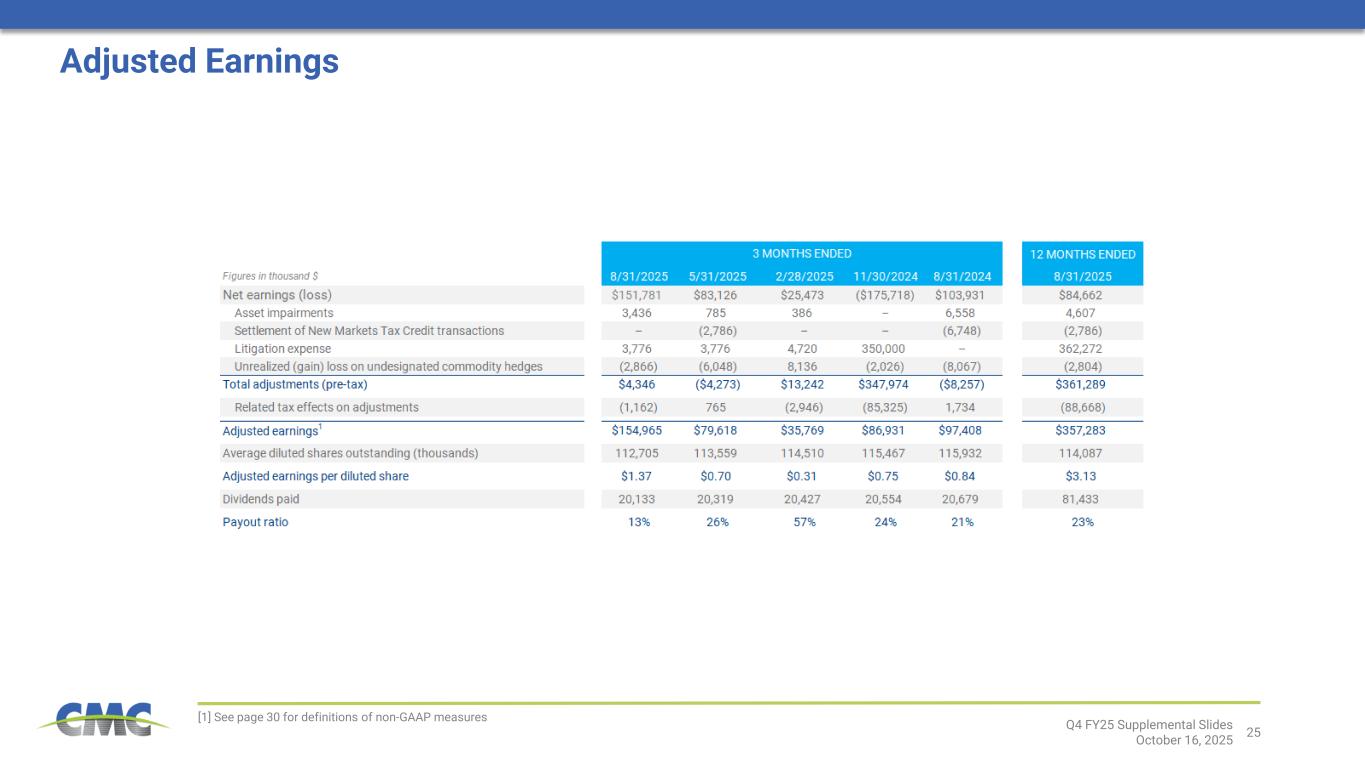
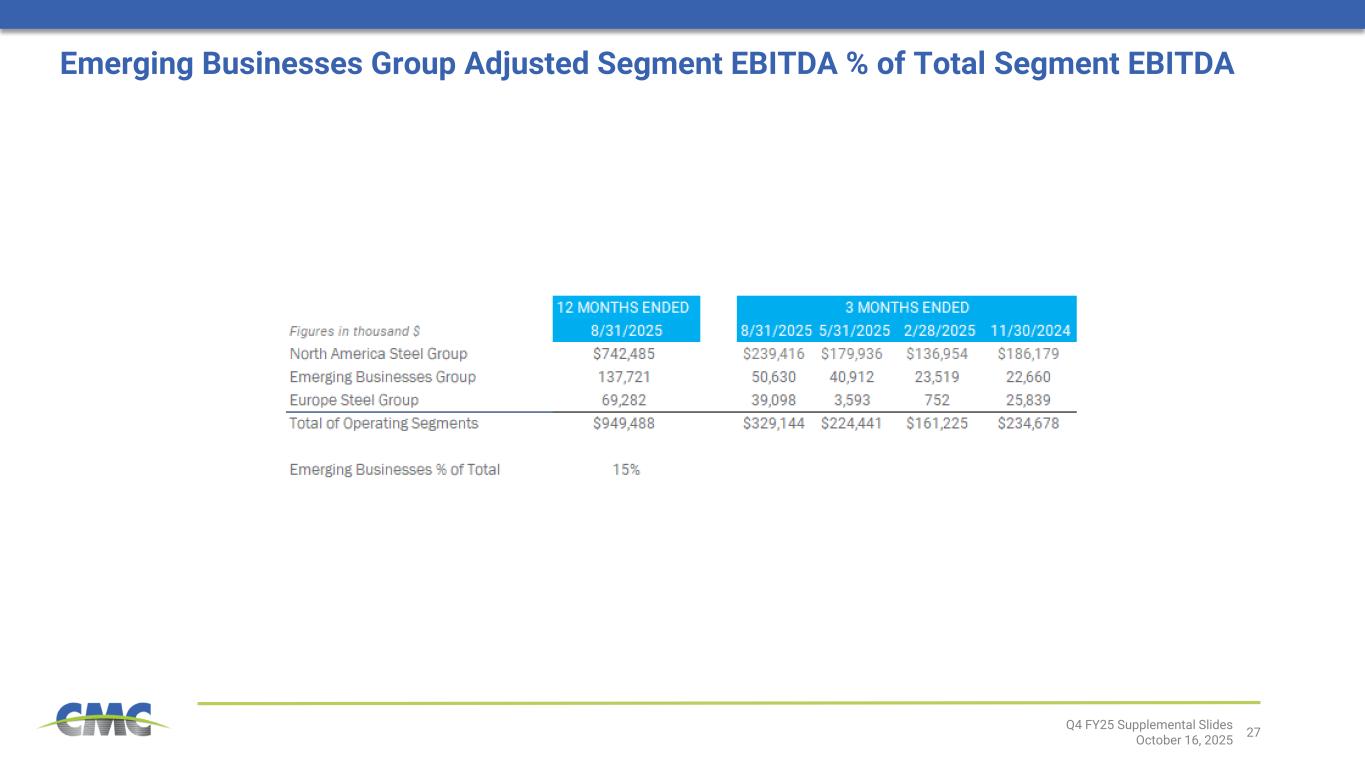
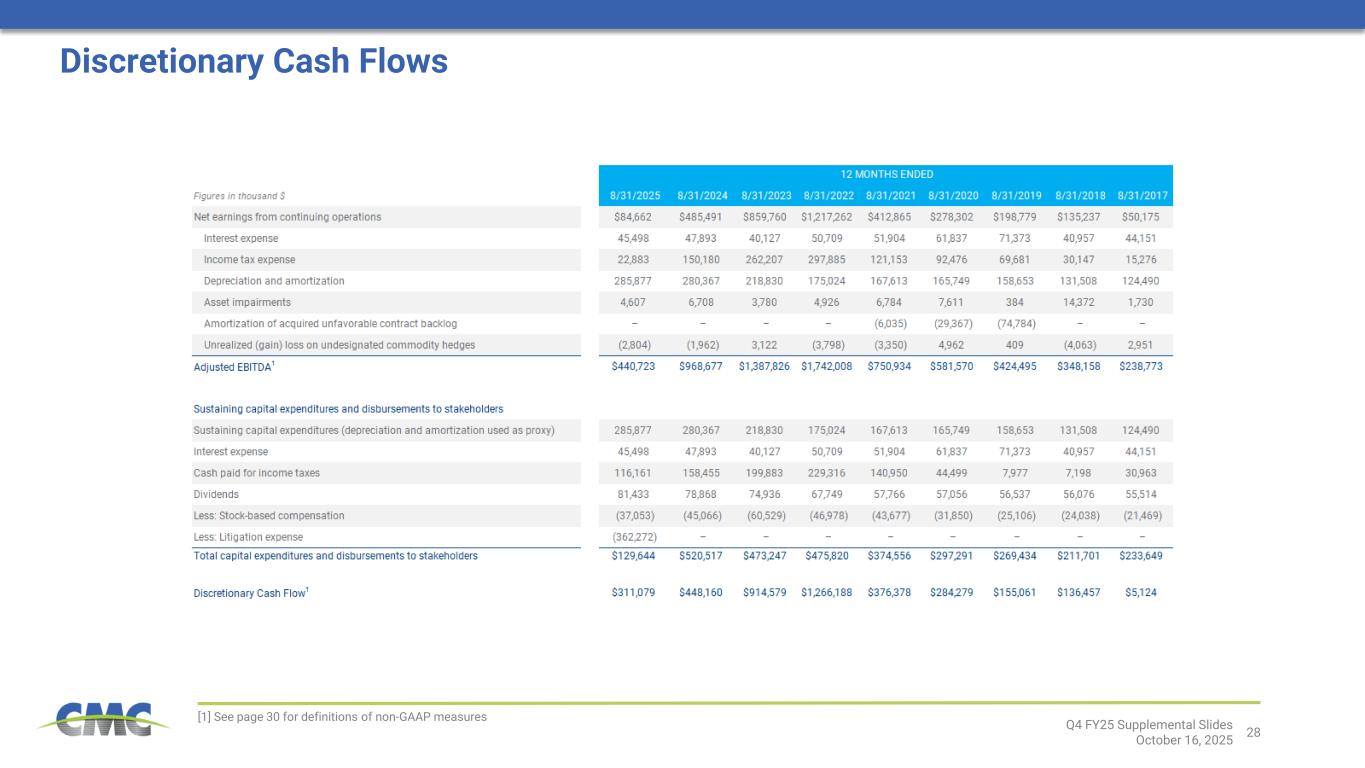
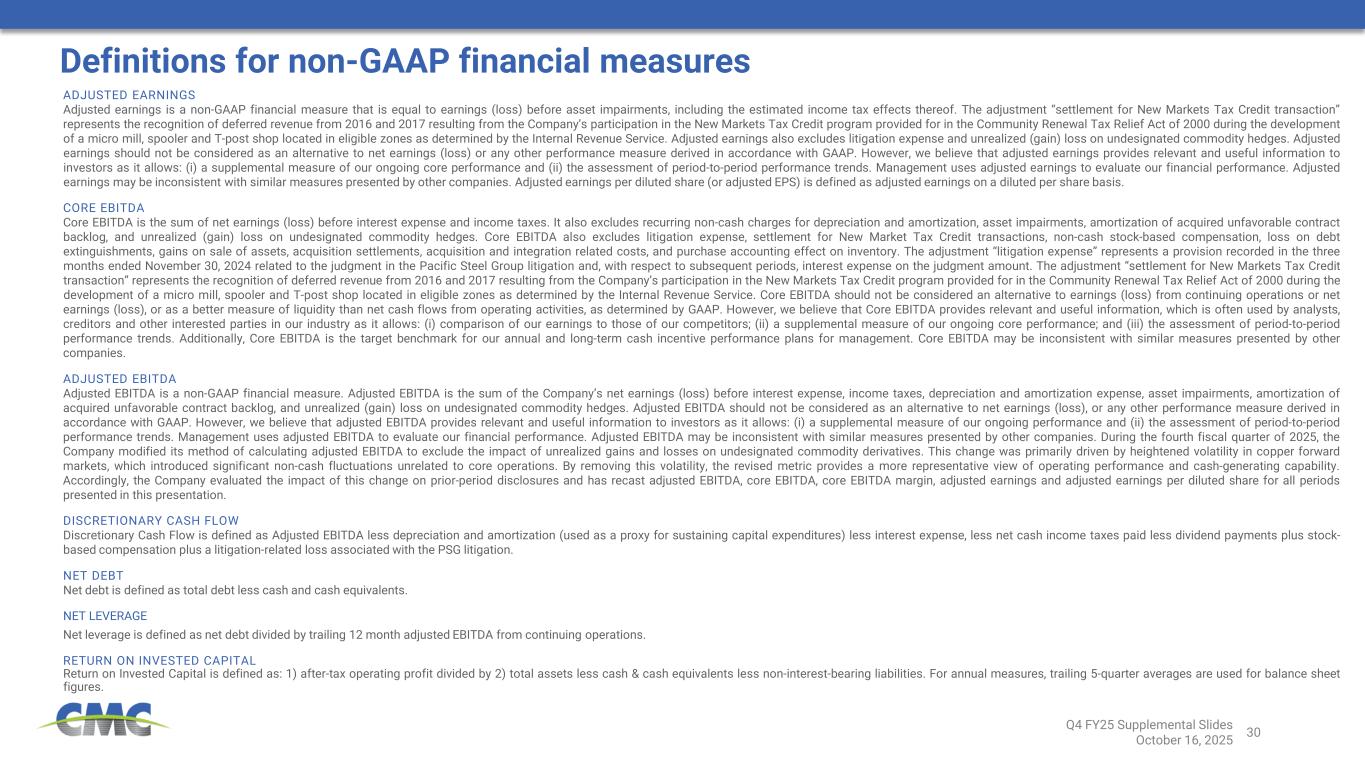
ambitious vision of maintaining that momentum. Quarter 2025 net earnings of 151 point investments consisted of a $3.8 million charge of $3.4 million, $2.9 million unreal. In 2025, we modified our method of cover operations. The relevant financial figures, including historical numbers, have been adjusted to reflect the consolidated adjusted earnings, adjusted earnings per diluted share, adjusted EBITDA, core EBITDA, and core EBITDA margin, as well as North American Steel Group adjusted segment EBITDA. Given the prominence of these metrics, we have published fiscal 2019 in a Form 8K filing accompanying our earnings release this morning. We believe this change in reporting will provide a more representative view of our cash-generating cap of $291.4 million for the fourth quarter of 2025, representing a 33% increase from the $219 million generated during the 14 of the supplemental presentation illustrates the year-to-year changes in CMC's quarterly financial performance. The segment level adjusted EBITDA increased by 87.4 million in total, with our North American Steel Group contributing 36.6 million of improvement, EVG providing 8.1 million, and the Europe Steel Consolidated Core EBITDA margin of 13.8% compared to 11% in Steel Group generated adjusted EBITDA of $239.4 million for the quarter, equal to $207 per ton of finished steel shipped. Segment adjusted EBITDA increased 18% compared to the prior year period margin over distributions from our TAG operational excellence efforts. In particular, scrap optimization, alloy consumption reduction, process yield improvements, and logistics optimization. Group adjusted EBITDA margin of 14.8% compares to 13% sequentially as steel product margins continued the expansion that began early in the third quarter. As Peter noted, while adjusted EBITDA commercial initiatives within our – turning to slide 17 of the earnings presentation, our Europe Steel Group reported adjusted EBITDA of $39.1 million for the fourth quarter of 2025 compared to a margin of 14.8 percent improved by a 17 percent increase in shipment buys on market repeater mentioned cmc's effective tax rate was 48c depreciation on our west virginia mill investors significantly turning to cmc's fiscal 20s virginia micro mill as well as a handful of high return growth and this concludes ebitda
Margin is a global excellence program, organic product company, seeing our customers.
Operator
And at this time, we will now open the call to questions. To ask a question, you may press star, then 1 on your telephone keypad. If you are using a speakerphone, please pick up your handset before pressing the keys. If at any time your question has been addressed and you would like to withdraw your question, please press star, then 2. Please limit yourself to one question and one follow-up. At this time, we will pause momentarily to assemble our roster. And your first question today will come from Mike Harris with Goldman Sachs. Please go ahead.
Hi, good morning. This is Cecilia Tang on for Mike Harris. You mentioned strong growth in the construction industry. So I was wondering how much of that demand is coming from infrastructure, residential, industrial, and energy.
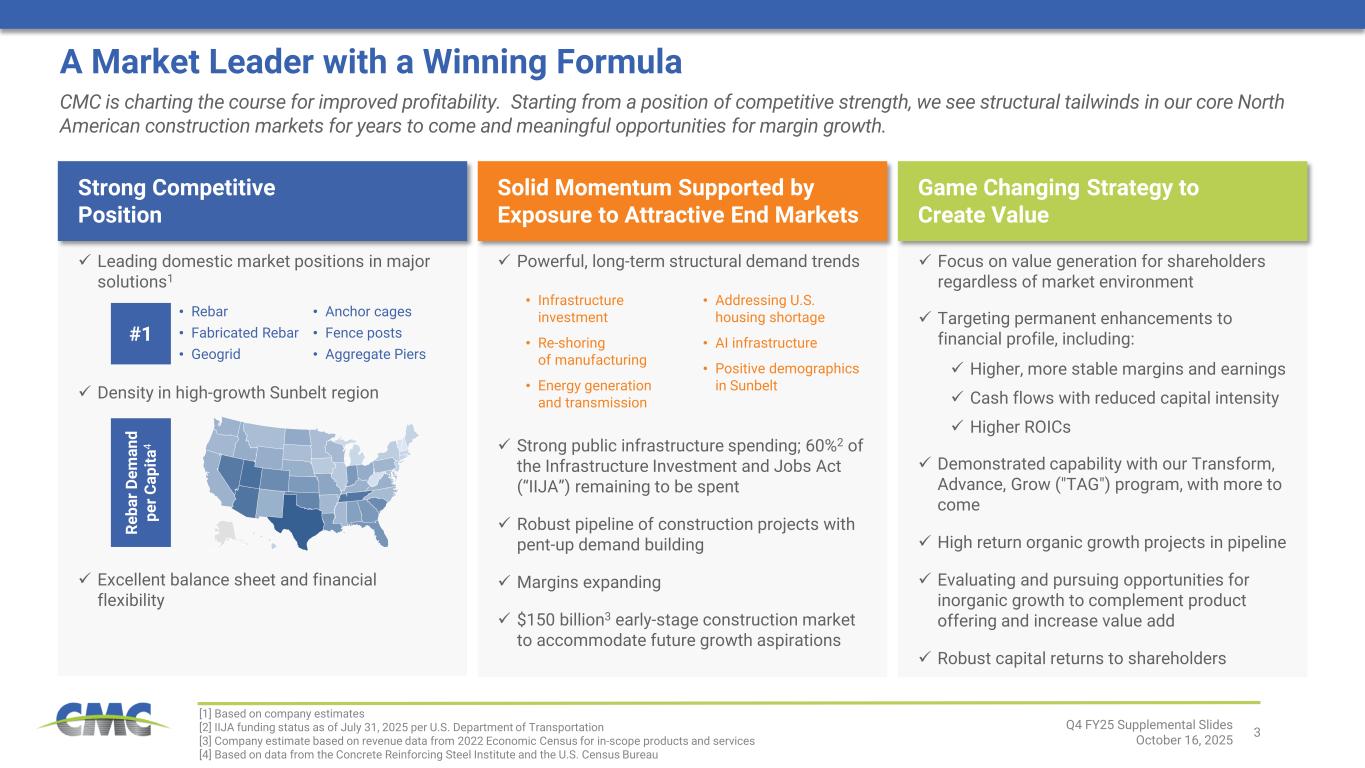
Yeah, thank you very much for the question, Cecilia. Infrastructure has been very strong. It has been for the past several years, really, on the back of the IIJA, and we expect it's going to continue to be strong. And I would say that we expect there to be a follow-on bill so that this should be a multi-year trend. Non-residential construction, it's been a bit mixed. There have been certain areas that are very strong, areas like energy, as you cite, that's been very strong. Data centers, obviously, very strong. Institutional spending on hospitals, that type of thing has been also very strong. But then there have been other areas that are kind of weaker, and I'm thinking about, you know, kind of commercial buildings, retail has been weaker. The thing that's exciting about the non-residential space is that there is a huge backlog of potential projects coming down the pike. And I'm thinking about, and we've said this before, there are something like $2 trillion of potential projects that are out there that have been announced. And then there's still a huge pipeline of potential projects that come behind that in some of these trade deals if and when they get negotiated. So we're very bullish about a turn in non-residential spending, and we'll see that move from, you know, kind of what's been flattish to something that's growing again. And then lastly, residential markets. You know, residential markets have been lackluster, I would say, and a lot of that is tied to interest rates. Those markets tend to be more sensitive to interest rates. But as we see interest rates start to come down, we have confidence that we're going to see a turn in that market. And remember that we have a deficit of two to four million homes in this country. So there's absolutely a demand backdrop that warrants the residential spending. And we just have to get to a place where the economics support that. But we think we're going to see that as rates continue to drift down. So, you know, in total, we remain very bullish about the level of spending over the next several years. Each of these sectors, it's a multi-year trend.
Thank you. That's very helpful. And I was wondering, given the bullish outlook, why is it that the first quarter outlook is not more positive, especially given the positive performance in the current quarter?
Yeah, Celia, you know, there's a few moving pieces to our outlook for the first quarter. You're correct. As far as North America Steel Group is concerned, we're going to have a very strong quarter in the first quarter. You know, we often measure the North American Steel Group as a EBITDA per ton. And it was great to see in the fourth quarter that the EVA dot per ton of that segment was over $200 a ton. And as we said in our stated remarks, that we exited the quarter with a metal margin over $30 a ton higher than the average for the quarter. So North America Steel Group will have a great quarter. However, if we look at our Europe Steel Group, two aspects to that. We talked about the reduction in the CO2 credits. We will get another credit in the first quarter, but it will be roughly half of what we received in the fourth quarter. So that will be a $15 million impact. And then we have our typical seasonal plan maintenance outage that will reduce the operating performance, excluding the CO2 credits to near breakeven. And the other piece is within the EBG group, because TENSAR means a significant portion to that business and it's really involved in site prep, the seasonality of that business is quite a bit more significant than our other businesses. So as we guided towards improvement over last year, but a similar type of transition from fourth quarter to first quarter. Those are the major factors which drive us towards a fairly consistent overall quarter over quarter, but many different moving pieces within the portfolio.
That makes sense. Thank you.
Operator
Thank you, Surya. And your next question today will come from Satish Kathanasan with Bank of America. Please go ahead.
Yeah. Hi. Good morning, Peter and Paul. Congrats on a strong quarter and the announced acquisition. So, with Foley and CPNP now, I think you now have a strong scale in the precast concrete market. With this kind of size, do you think the focus over the next couple of years will be to just integrate the assets and reduce debt? Or given the fragmented market, would you continue to look for additional inorganic growth opportunities?
Yeah, so that's a great question. So, thank you very much. As we kind of look forward with these two transactions, I'd say it's fair to say we are done for now. We have quite a bit of integration to do with these transactions, and we're very happy with the platform that we've built. As we look a little bit further forward, once we bring our leverage down into our acceptable range, then we would start to look at other transactions. We think, you know, this is a big market. Again, precast overall, as we said on the last call when we introduced CP&P, this is a $30 billion market, and it's fragmented, and we think there are going to likely be opportunities for us over time. Boltons will be super attractive because they typically are cheaper. They come with synergies, and they strengthen our core, which is kind of part of the message that we are consistently trying to reinforce. And bigger transactions will likely be more episodic. But our goal for this platform is ultimately to create one of national scale that looks a little bit like our rebar business. Again, to do that, we're going to build a platform that's several hundred million dollars of EBITDA, but we're going to do it on a measured basis. And remember, we've always said from the beginning, we're going to be super disciplined about M&A and making sure that we deliver the returns on the M&A that we do. and integrating these assets successfully is absolutely critical to ensuring the success of that going forward. So very excited about the opportunity, and these two businesses could not fit together better. So anyway, super excited about what we have so far.
Satish, I would just add, you know, as we've been talking with the investment community probably for two years, We've been looking at the early stage construction and really honing in on this precast market, and the one thing that came up repeatedly was these are the two leaders in the space. And so, obviously, we don't dictate timing of when the assets become available, but when they became available, it was imperative that we took a look and tried to build the portfolio that made sense.
Yeah, that's great to hear. Just on Foley, it is clear that the margin profile is one of the best today. But can you maybe share the historical growth rate for Foley over the past two, three years? And looking ahead, do you see potential for this business to continue to grow or gain market share and grow above the 5% to 7% market growth?
Yeah, I think, you know, if you look at the growth of the business over the last couple of years, I think we should assume there's a base level of growth that's kind of GDP related. And then on top of that, there's growth related to kind of share expansions that the business makes. And in the case of Foley, it has a number of expansions that it's in progress on in its territory today or in its territories today that will provide opportunities for future growth. So we would expect to grow at a level in excess of GDP over the next couple of years from a volume standpoint.
And I would just add, Satish, the margin level that we describe in the material, the business has generated that consistently over the last handful of years. So very consistent performer.
Okay. Thank you. I'll jump back in a few. Thank you.
Operator
And your next question today will come from Alex Hacking with Citi. Please go ahead.
Yeah, thanks. Morning, and congrats on the deal. I guess just following up on the margin question, you know, Foley's margins look like they're almost double CP&P. Could you maybe give a little more color on kind of what's driving that, and is there a potential opportunity to increase margins at CP&P from learning from Foley?
Yeah, thanks, Alex. Appreciate the question. So a couple things that I would point to, and, again, I think as we look at these businesses, is one of the things we really like about this, and as Paul said, we spent a lot of time looking at these businesses, is that they both bring strengths to the table. There are certain things that Foley does really well, and there are certain things that CP&P does really well. And I think the combination of those two companies is going to build a really formidable company in our portfolio. If we look at Foley specifically relative to CP&P and try to articulate the margin differentials, one of the things Foley has a different operating model than CP&P. And so that's a factor. And the other thing that I would say on the CP&P side is that CP&P has made a number of acquisitions recently where they are kind of works in process and so are works in progress. And so as a consequence, the margins in some of those businesses are lower and they bring down the overall margin. So, you know, if you look at precast in general, it is the case that Foley's margins stand out. But CP&P does, if you look at the plants that are, you know, kind of the more mature plants, they have very attractive margins there as well. Okay, thanks for the color. And
I guess on the cash conversion side, you know, of the $600 million CapEx next year estimate, how much of that would be for pre-cost? And within that, how much would be kind of sustaining versus growth?
Yeah, there's – well, for pre-cast, it's the maintenance CapEx on these businesses is much lower. We talked about – in the case of CP&P, you may remember, we talked about $8 million to $10 million of maintenance CapEx. In the case of Foley, it's probably like a, you know, kind of 10 to 15 type of number. In the case of CP&P, for the reason that I just explained to you, they've got these businesses that they've acquired where there's some investment that we think we can support. Their spending is probably going to be a little bit higher over the first couple of years of our ownership as we kind of bring together the investments that they've made. And, again, those are all – all of that CapEx beyond maintenance is maintenance or is spending that has very attractive returns tied to it.
The only thing, Alex, I'd add is Peter's talking about annual numbers. And, you know, as we talked about, really, we expect the transaction to close by the end of the calendar year. So the numbers in our fiscal will be a lot lower than those.
Operator
Thanks for the clarification. Thank you. And your next question of the day will come from Carlos de Alba with Morgan Stanley. Please go ahead.
Yeah, thank you very much. And maybe a follow-up on the prior question. How quickly do you think the margins in CPP, and particularly in those recent acquisitions, could bring up or come to the levels that Foley and maybe the core CPP business is already experiencing? Is it already in a year or two years?
Great question, Carlos. So the one thing I'd say is, you know, we want to be a little careful. We don't own these businesses yet. So we need to kind of close on the transactions and better understand what we have. And with that understanding will come more clarity on the timeframe. But I think the appropriate way to frame it for you at this juncture is that we talk about the synergies as being achievable over a three- to five-year horizon, and I think that that's the right horizon to think about for any kind of improvement in the CP&P margins. Obviously, there are some things that will come quick, and then there's other things that will take longer. I just mentioned before in response to Alex's question that we're going to put some extra capital into to the tune of, you know, kind of $5-ish million per year into CP&P, and that will be to accelerate some of that. And, again, that's all, you know, really high return capital that we'll be deploying.
All right. So, the $5 to $10 million incremental EBITDA in CPP that you mentioned, that includes this recent acquisition by the company stepping up the EBITDA generation, right?
No, just to be clear. So, when we announced CPP, we said that there was $5 to $10 million in that transaction. We maintain that. And then in this transaction, we're bringing another 25 to 30 over a three to five year period. So that's why, and you'll remember in the last conversation that we had when we announced the acquisition of CP&P, we said that as we have a platform, we would have more synergies with successive moves. And this is a great example of this. And honestly, you know, you might ask the question about the timing of these two transactions, and obviously we couldn't call the timing. But I think when you see that magnitude of synergies, it makes it clear why this was a transaction we had to look at seriously. So, yeah, it's an extra 25 to 30 in this transaction. All right.
And my second question is regarding the outlook for dividends and buybacks vis-a-vis the cash flow generation of the company. You did mention that the acquisitions, both of them are going to be accreted to free cash flow. You're not going to really pay a lot of cash taxes in the next two years. How do you see dividends and buybacks in the coming quarters?
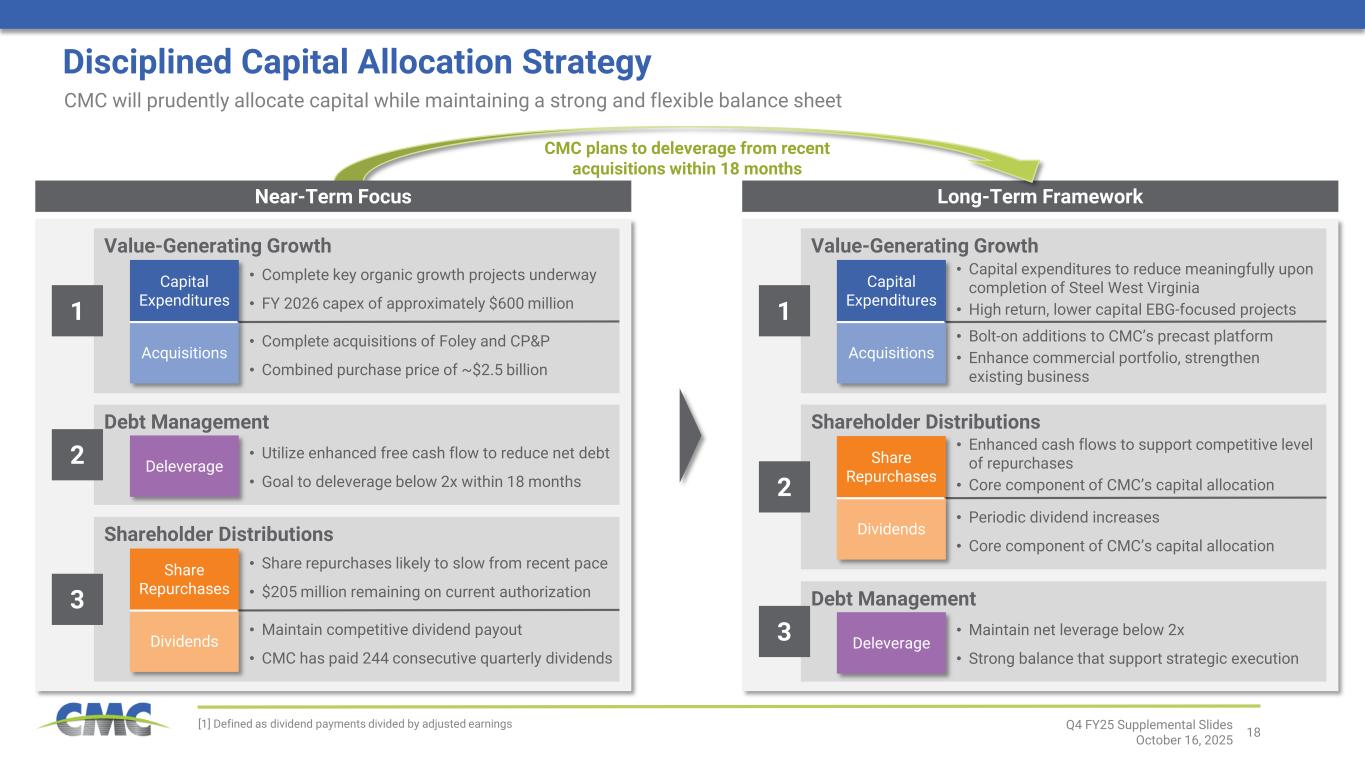
Yeah. So let me just say, to answer your question directly, on dividends, we have no plan to change our dividend, zero plan to change our dividend. And I'd say also our long-term capital allocation strategy is not changing at all, not at all. What I would say is that we are done with acquisitions for now, and we're going to focus on big acquisitions for now, and we're going to focus on integration and making sure that we make these transactions highly successful and great return investments for our business. We will continue the organic growth projects that we've started across the company. Many of you know, as we move past Steel West Virginia, these will be much more capital light investments, but we will continue those. And we will slow down our share repurchase program and probably bring it to a level where we're offsetting employee share grants in the short term as we get our leverage back down below the two times target. And once we get to the two times target or below, we'll then ramp up share repurchases. Share repurchases are a critical part of our capital allocation strategy, and we intend to resume those as our balance sheet comes into line.
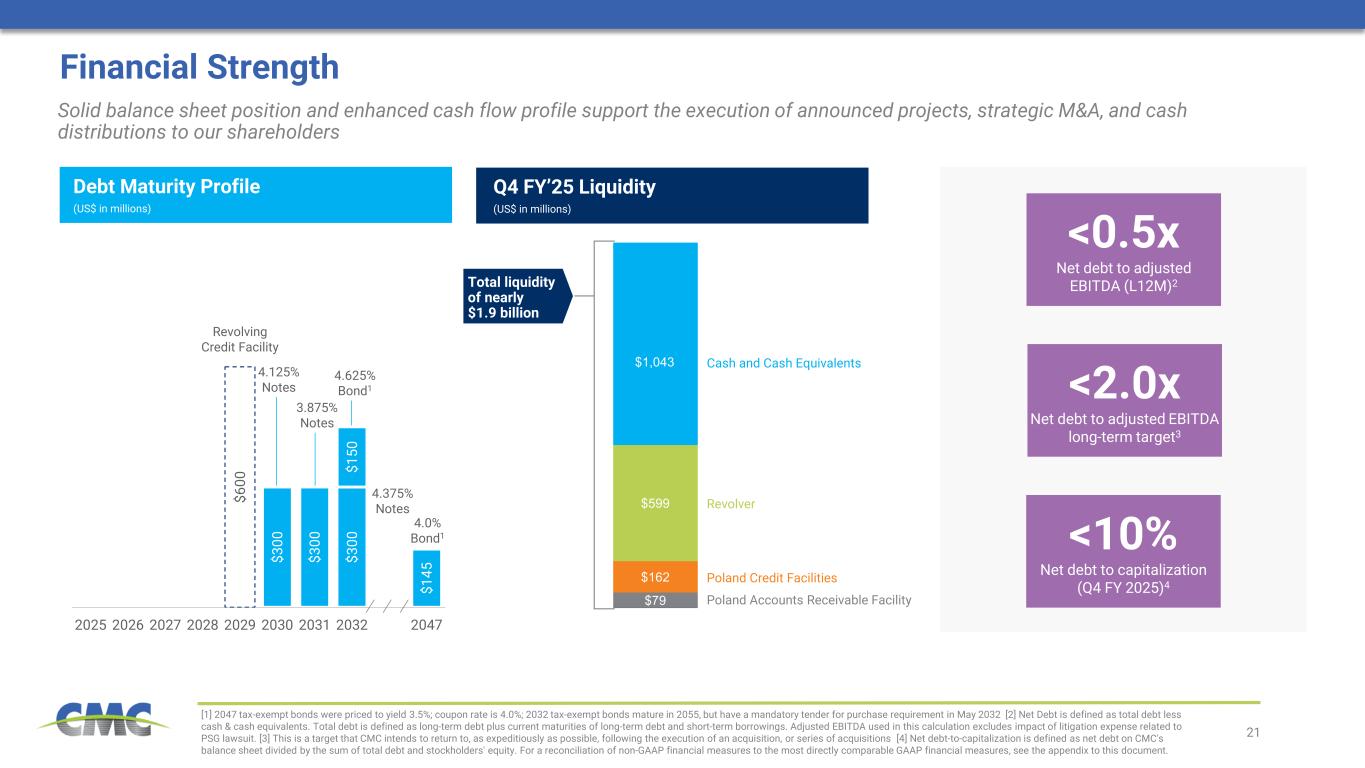
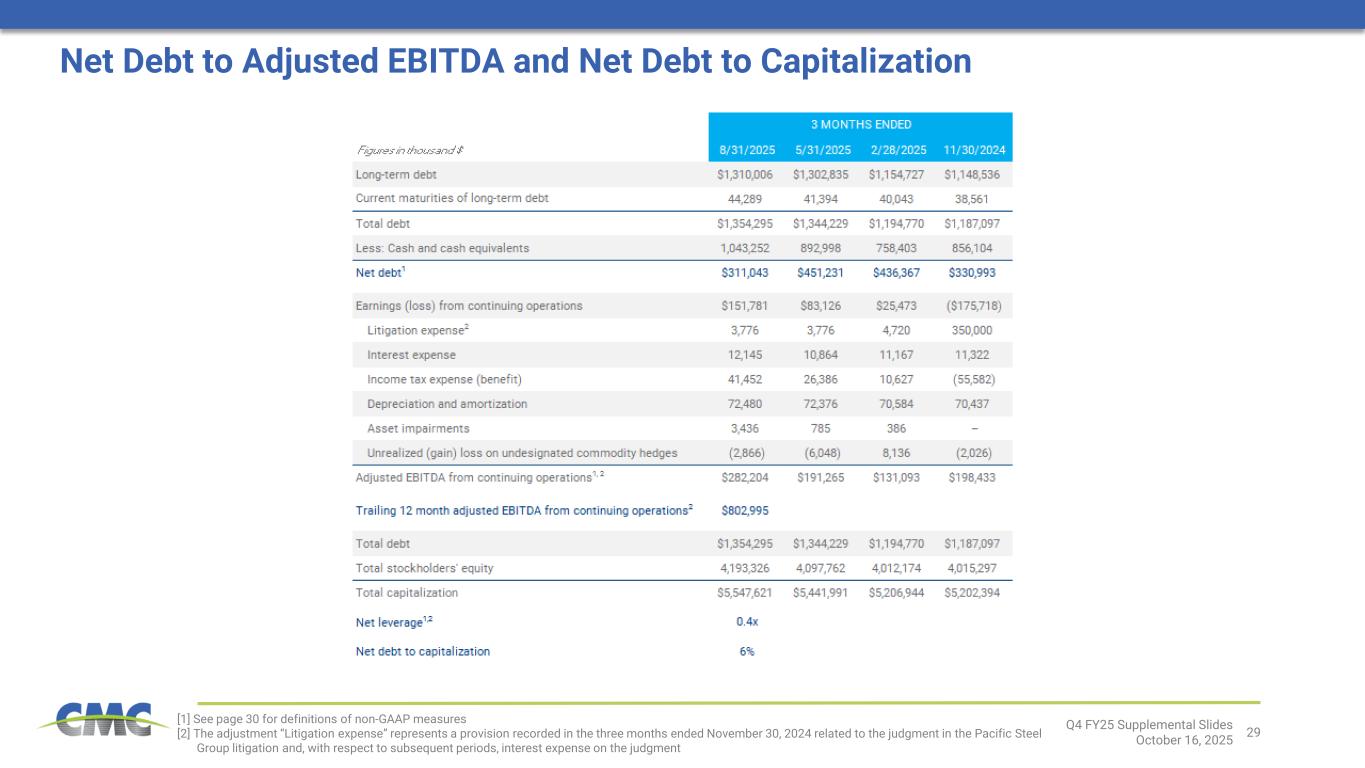
And, Carlos, we're very confident in both the numerator and the denominator in terms of being able to bring that leverage down. You mentioned the cash flow and the lack of U.S. cash taxes, the reduction in CapEx going forward, and the optimism in the current environment in our business is that cash flow generation is expected to be very strong. And then that also is helping the EBITDA that we expect the business to generate over the coming periods is also expected to be strong. And therefore, both aspects should help us achieve that two times net leverage over the coming quarters. Perfect. Thank you.
Operator
Thank you, Carlos. And your next question today will come from Bill Peterson with J.P. Morgan. Please go ahead.
Yeah. Hi, good morning. Thanks for taking the questions, and congrats on the second transaction here in a few months. Along those lines, I have a longer-term question, maybe more suited for a capital market state, but given these transactions, how would you envision a company looking like in sort of a five-plus-year timeframe in terms of product mix, rebar versus long products, ground stabilization, precast, or other materials? You know, given the margin structure in these newer businesses and acquired companies, would you consider selling core essence in order to accelerate the transition? I'm just trying to get a sense on how we should envision this company over the long term.
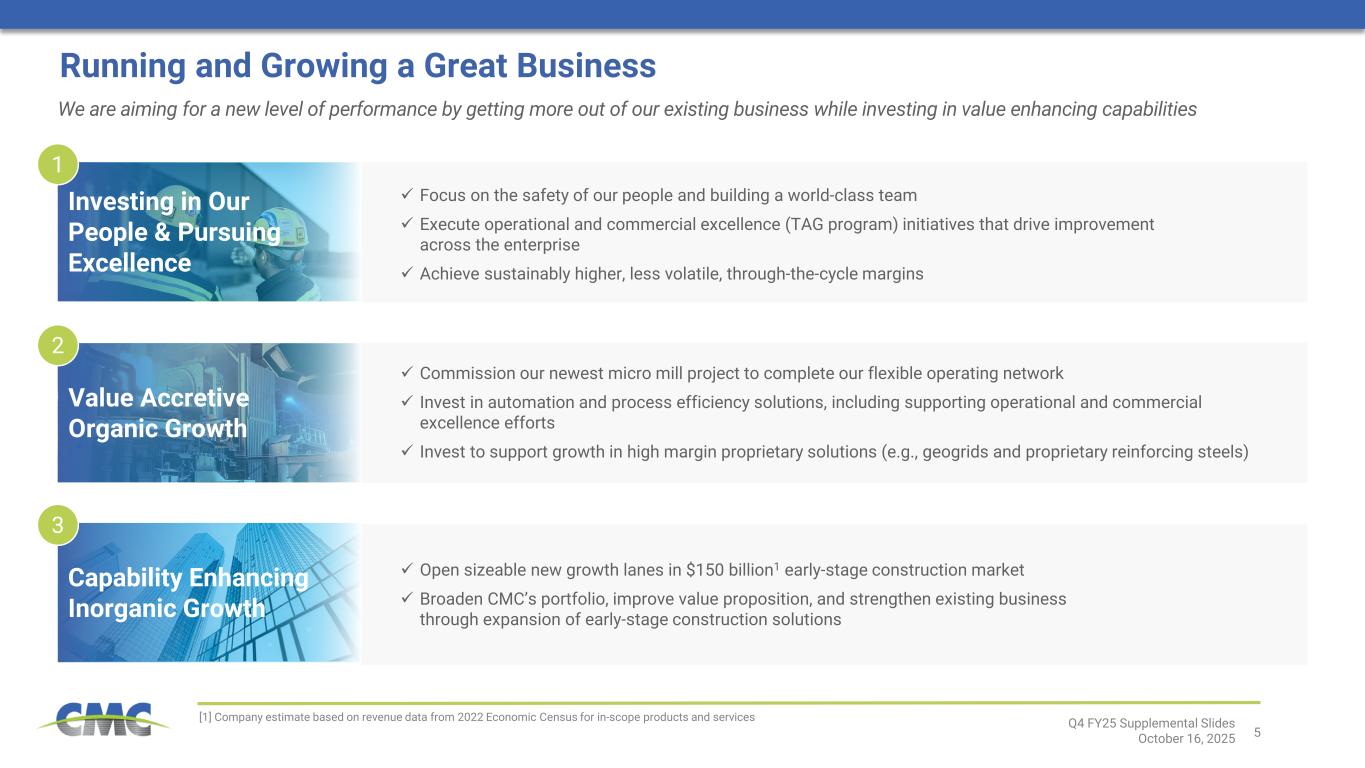
Yeah, it's a great question. If you think about the strategy that we've outlined, it's one of becoming an early-stage construction supplier. And if you think about our rebar business, our fabrication business, these fit perfectly, and these are early-stage construction suppliers. You think about our Tensar business, it's early-stage construction. Think about our recently acquired precast platforms, early-stage construction, PRS, performance reinforcing steels, early-stage construction, and construction services, same thing. So, you know, if you look at the portfolio that we have today, we've got a number of interesting assets that we can build on, and that's one of the things we find so compelling about the portfolio to become a leader in early-stage construction. So, you know, when we talk about our precast business, again, as I said in response to an earlier question, our goal is to build that into something where we have a national footprint, and that's going to mean, you know, kind of several hundred million dollars of EBITDA with these two transactions. We're well on the way to doing that. And with the footprint that Foley brings, I think we have a beachhead to examine some of those markets that, by the way, we know well because we're already in those markets with our rebar fabrication and our mills business, right? So there's a very natural path that we're following. As we look at our other EBG businesses, we would love to grow Tensar. We think that has great potential, and it's still a very underpenetrated market. It will be an important piece of our portfolio. Performance reinforcing steel, the plant that we have today is sold out, so we're building another one. And we believe that the demand for kind of corrosion-resistant steel in this country, given some of the changes in weather and so forth, is only going to increase. And construction services is a tremendous asset. We talk to customers, and the customers tell us, you know, the construction services business where we are, and it's really a small segment of our footprint, which is really Texas, Louisiana, and Oklahoma, it's a great asset to the customers we have. So that's something that we're, you know, looking at as a potential way to kind of complement the early-stage construction portfolio that we're building. So, you know, as we look at the portfolio, again, what we want is we want businesses that can be of scale and that can be of significance to our customers. We want businesses that bring value to our customers. So it's difficult to define the portfolio precisely, but the direction that we're going is we want value-added products that have high margins and kind of good returns on invested capital. And I want to just come back. Sorry, this is a long answer, but I think this is important. I want to come back to our steel business and TAG. And the whole mission of TAG is to improve the great platform that we already have in steel. And it is so critical when we talk to the customers and I'm talking about big contractors, they tell us, you know, you guys are your your franchise in the steel market is tremendously valuable to us because you do what you say you're going to do and you do it when you say you're going to do it. And TAG is helping us make that business even better, and our goal with that business is to raise the margins through the cycle so that they start to look like the margins in some of our, you know, kind of ultimately some of our EBG businesses. So, again, this is a multi-year journey, but we think we have a lot of opportunity, and the team that's executing the TAG program within our company is doing a phenomenal job. So, anyway, Bill, I know that's a long answer to your question, but hopefully it gives you some color.
No, certainly. Thanks for all the details there. My next question is more, I guess, near-term focused. And you talked about, you know, typical seasonality across several of these sectors. But I guess on North America, if you look back, this would imply something like a down 3% to 7% quarter on quarter. But we've seen a lot of variability over the last five years or so. I would assume you're really talking more driven by the downstream versus products, but can you unpack what typical seasonality has really meant here and what that may look like for the various subsectors, subsegments of your business?
Yeah, Bill, you know, the season September through November, really it is a good construction season similar to our fourth quarter with the exception of the week that we lose for Thanksgiving. So, really, we see it's usually that 2%, 3% reduction in volumes that we see in the first quarter on the North American Steel Group. As I said in an earlier answer, you know, we do see impacts to the other segments a little bit stronger given the more cyclical nature of site preparation, which drives a lot of the EBG business. So that one is a little bit more seasonal, as you saw last year. And then Europe with the outage, less seasonal, but the outage season.
Thanks for that, Paul. Thanks for all the details. Appreciate it. Thank you, Bill.
Operator
And your next question today will come from Andrew Jones with UBS. Please go ahead.
I just want to better understand the barriers to entry in this business. I mean, to me, it looks like it's a pretty fragmented business. You obviously call out a few things on the slides, including relatively high capital costs. I mean, could you give us some idea in terms of how to sort of quantify those? And, you know, when you talk about the steep learning curve, can you kind of give us some sort of sense as to how complex this is? Because just high level, a fragmented business usually means a much lower margin than we're seeing in these numbers.
Yeah. So, again, if we look at what drives this business, it starts with customer relationships, right? And if you look across the portfolio of CP&P or Foley, they've got great relationships in the region that connect them and obviously a reputation and the capability to service the jobs that they're getting. And I think, obviously, reputation, just like in our rebar fabrication, it's critical that you deliver the products on time and that you deliver good quality products and that you help the contractor accelerate their job. So those are really important. And the third leg of this is capability. And when you look at the capabilities of both CP&P and of Foley, they bring a broad-based precast capability. So you can be in the precast business pretty easily if you, you know, kind of have a concrete mixer and a mold. But, you know, the point is that most of these complicated job sites, they need a lot of different forms to serve the precast need. And so as a consequence, the capability that both of these companies have across the concrete pipe and precast fronts gives them a differentiating capability to perform in the market on these complicated jobs. And the last thing I would say is, and this goes to the speed point, is that having some scale helps a lot on these larger jobs because, again, what the contractors will tell you is when they start a project, they want to go fast. And so they don't want to wait for material. And the party that can have the material available has a real advantage in supplying the product.
So, Andrew, can you start over because we lost that follow-on.
Oh, no, no, I just said – no, that was clear.
Operator
And your next question today will come from – pardon me. And your next question will come from Katja Jankic with BMO Capital Markets. Please go ahead.
Thank you for taking my question. Maybe just quickly, Peter, did you say earlier on in the call that you would like to grow the precast business to $700 million in EBITDA? Did I hear that correctly?
No, no, several, several hundred million dollars, several hundred million dollars. And sorry, go ahead.
No, I was just going to say several hundred million. And, again, between these two acquisitions, we're already at $250 million. So we've got a good start.
And I think before with the announcement of the first acquisition, the commentary was that most of the growth there is more likely through M&A. Is that correct?
It is. I mean, again, there are organic projects, and I noted two of them earlier in this call on the Foley platform, and there's a number of organic growth projects in the CP&P platform. But, again, to build scale and the scale that we're talking about doing, as I said in the last call, it's likely going to involve M&A. The good news is that now, as I said, we have a real platform that we can build around. So bolt-on acquisitions that come with lots of synergies will be very appealing. And then when they come around, some of these, you know, the larger acquisitions, which are, you know, not going to be every single day, but when they come around, we'll be in a position to look at those as well.
Just to supplement that catch, you know, I would say the step change comes from inorganic growth. I think, you know, as we look at the trends in these businesses, we see above average growth for the adoption and penetration of precast product. You know, they really solve a labor shortage issue. They solve stormwater management issues. And, you know, that has been what really has driven some good size growth. And if we look at the regions in which these businesses operate, the growth expectation of construction activity in their geographies is expected to be very attractive over the coming years.
Perfect. Thank you so much.
Operator
Thank you, Katja. And your next question today will come from Phil Gibbs with KeyBank Capital Markets. Please go ahead.
A question about the CapEx guidance for this year, around $600 million. Does that include CapEx related to the businesses that you're poised to close on? And if not, what's the typical maintenance level of CapEx associated with those businesses?
It does not. That's a CMC CapEx number. But, Phil, you may have heard us say in response to an earlier question, the maintenance CapEx for these businesses, it's probably 8 to 10 for CP&P and probably 10 to 15 for Foley. So they're not big CapEx numbers.
That's a percentage of their revenues?
no that's a million dollars oh okay yeah so it's generally three to four percent revenue in in this pre-cast uh space is is the uh the maintenance capex a very generic number but that's it's a
very capital light okay and as you've really uh pivoted and and accelerated the strategy to acquire some of these more upstream-oriented construction-facing businesses in the United States, particularly in the Southeast and Mid-Atlantic. Do you think that that means that there should be a more natural buyer, perhaps, for your European assets?
Well, so, again, when we look at our European assets, I think I've said this in the past, We really, really appreciate those assets for what they bring to the CMC family. And I would just point to the TAG kind of initiative that I mentioned earlier on the call. The team in Europe has done just a phenomenal job on being low cost, and there's a lot that we can extrapolate from what they've done to help us in North America. And one of the things that our team in North America is absolutely dead set on is that we will be a low-cost producer in our steel business in North America. So the Polish business brings a lot to the table, and it's absolutely a core part of our portfolio.
Operator
At this time, there appears to be no further questions. Mr. Matt, I'll turn the call back over to you.
Thank you very much. At CMC, we remain confident that our best days are ahead. The combination of the structural demand trends we have noted, operational and commercial excellence initiatives to strengthen our through-the-cycle performance, and value accretive growth opportunities, including our recently announced precast acquisitions, create an exciting future for our company. Thank you for joining us on today's conference call. We look forward to speaking with many of you during our investor calls in the coming days and weeks. Thank you very much, everybody.
Operator
That concludes today's CMC conference call. You may now disconnect.