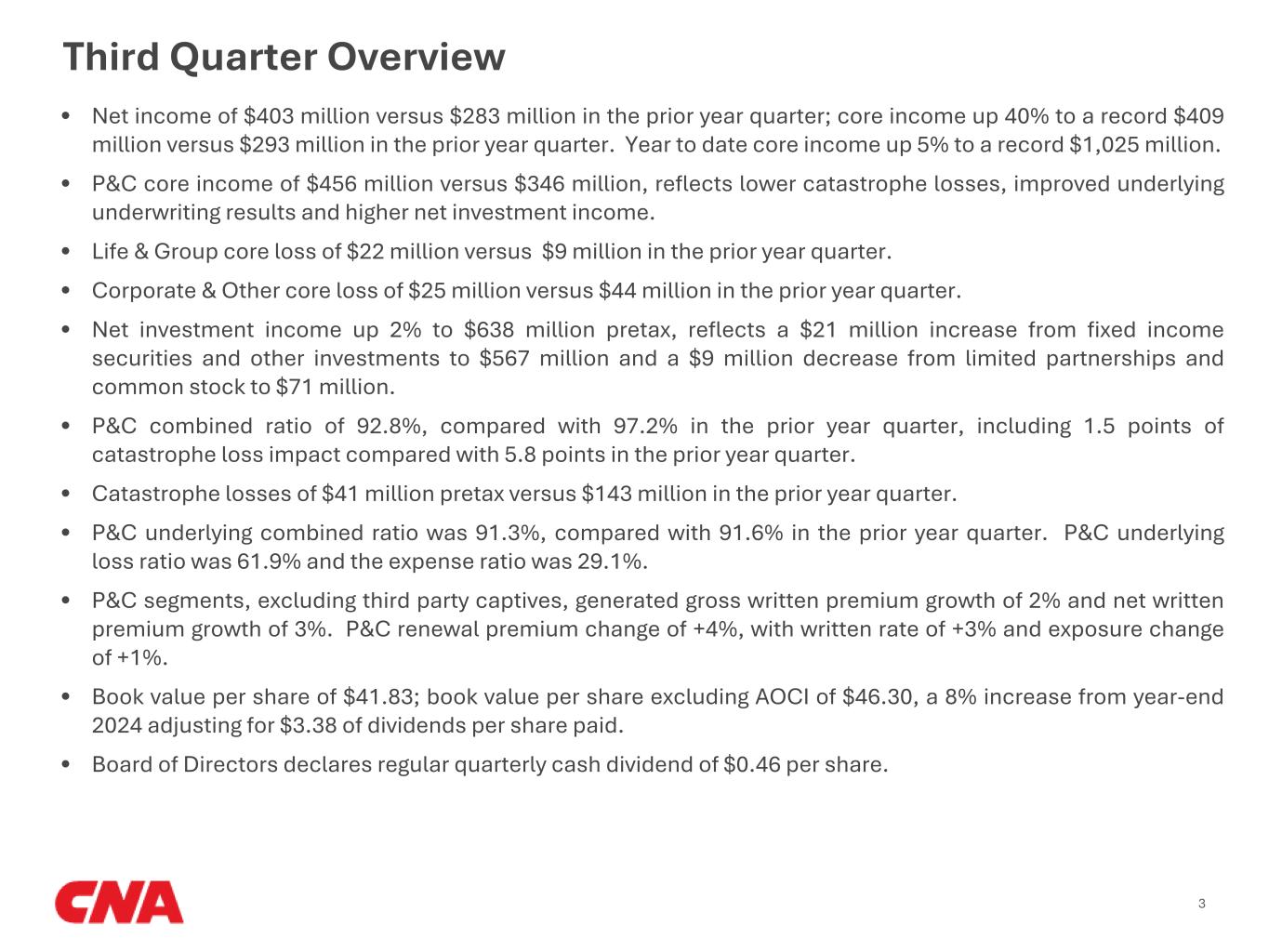
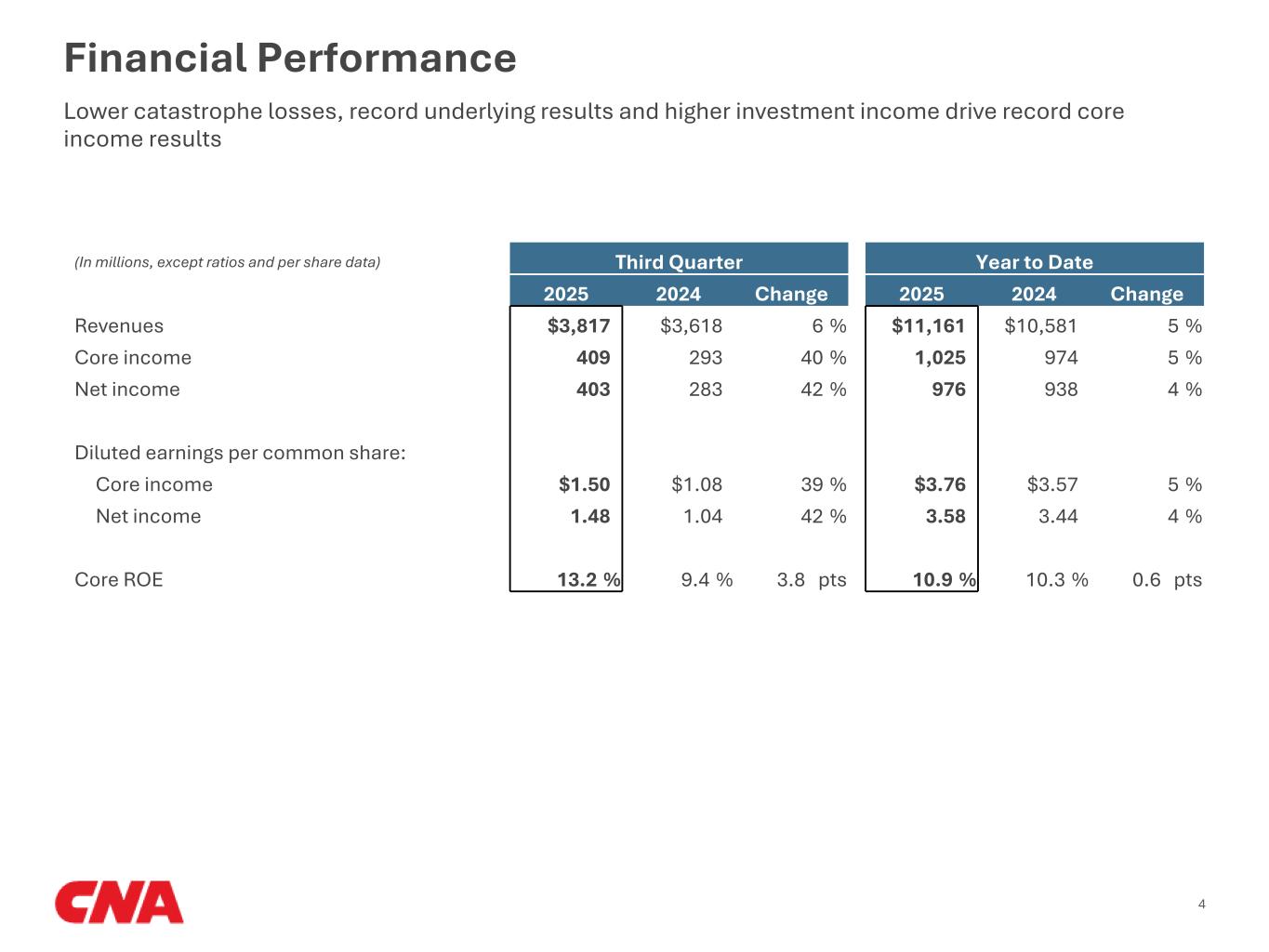
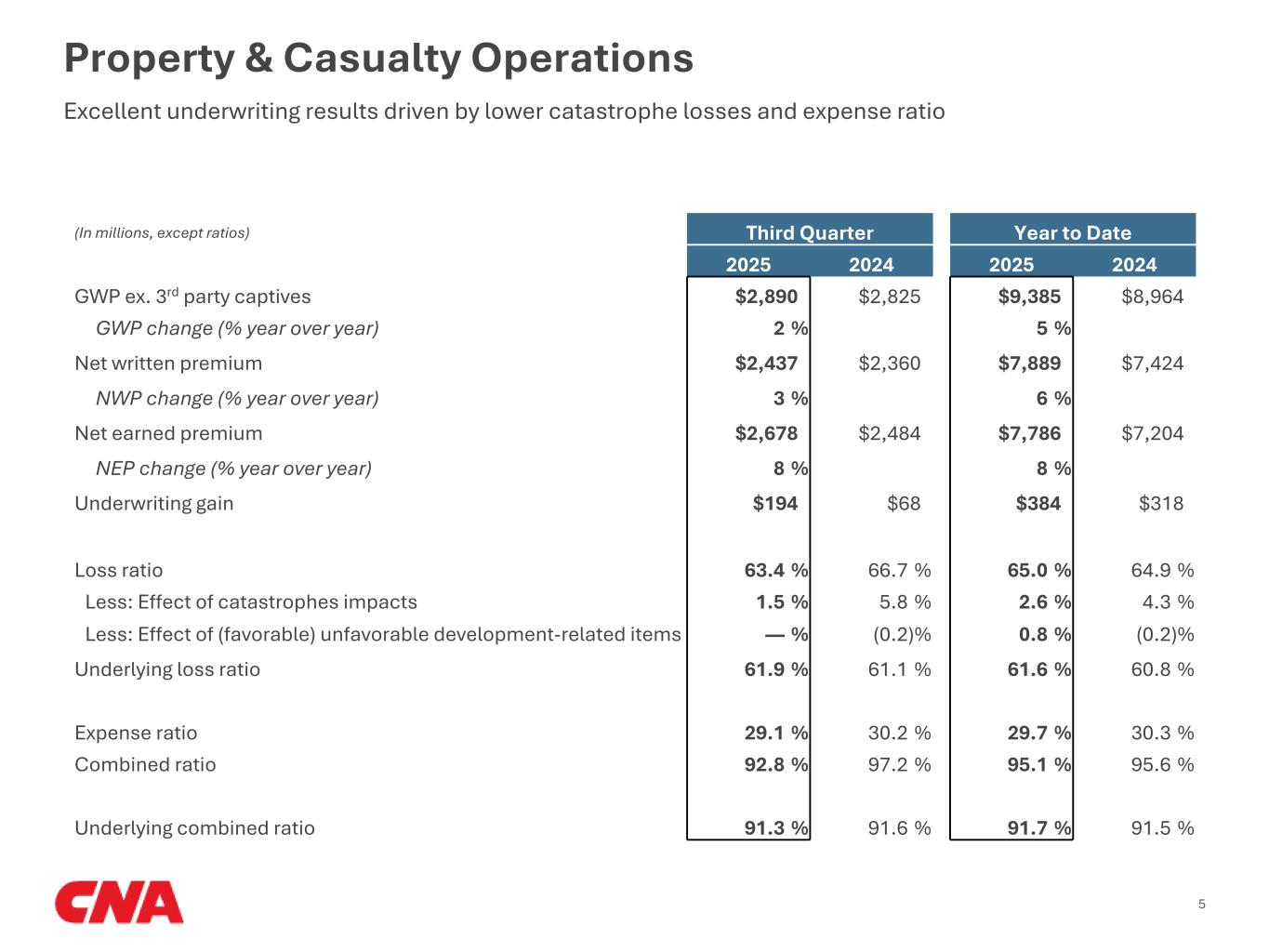
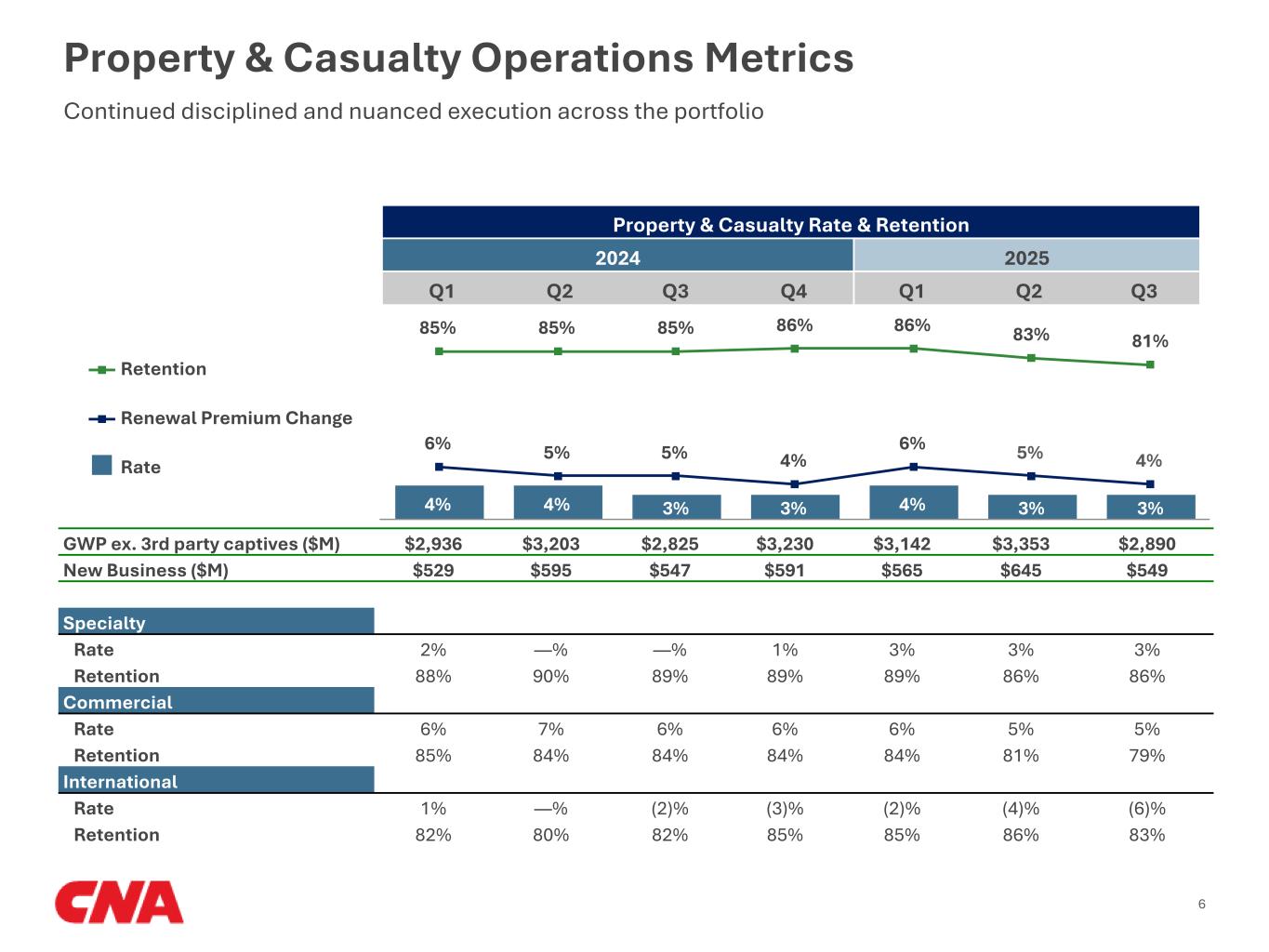
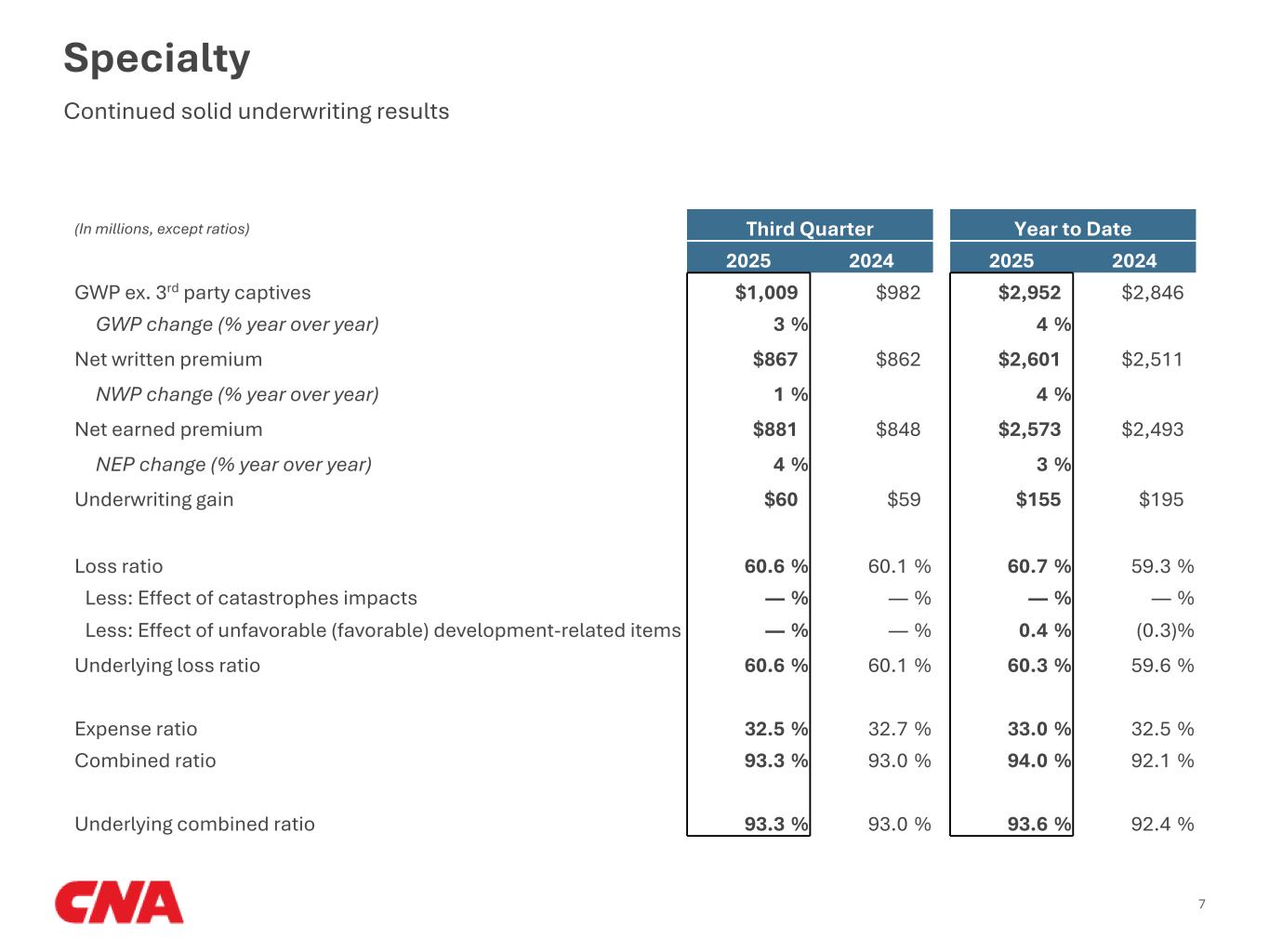
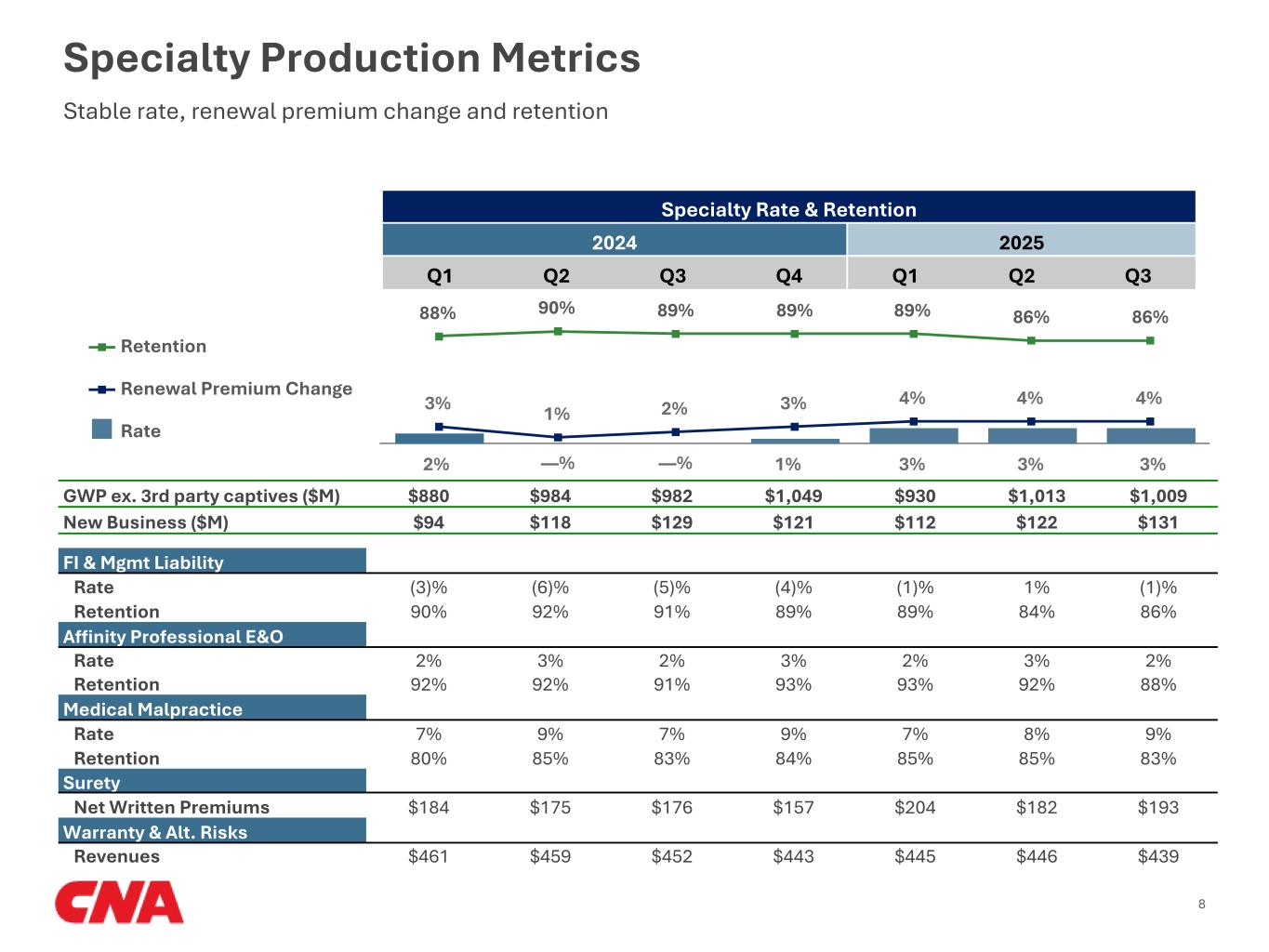
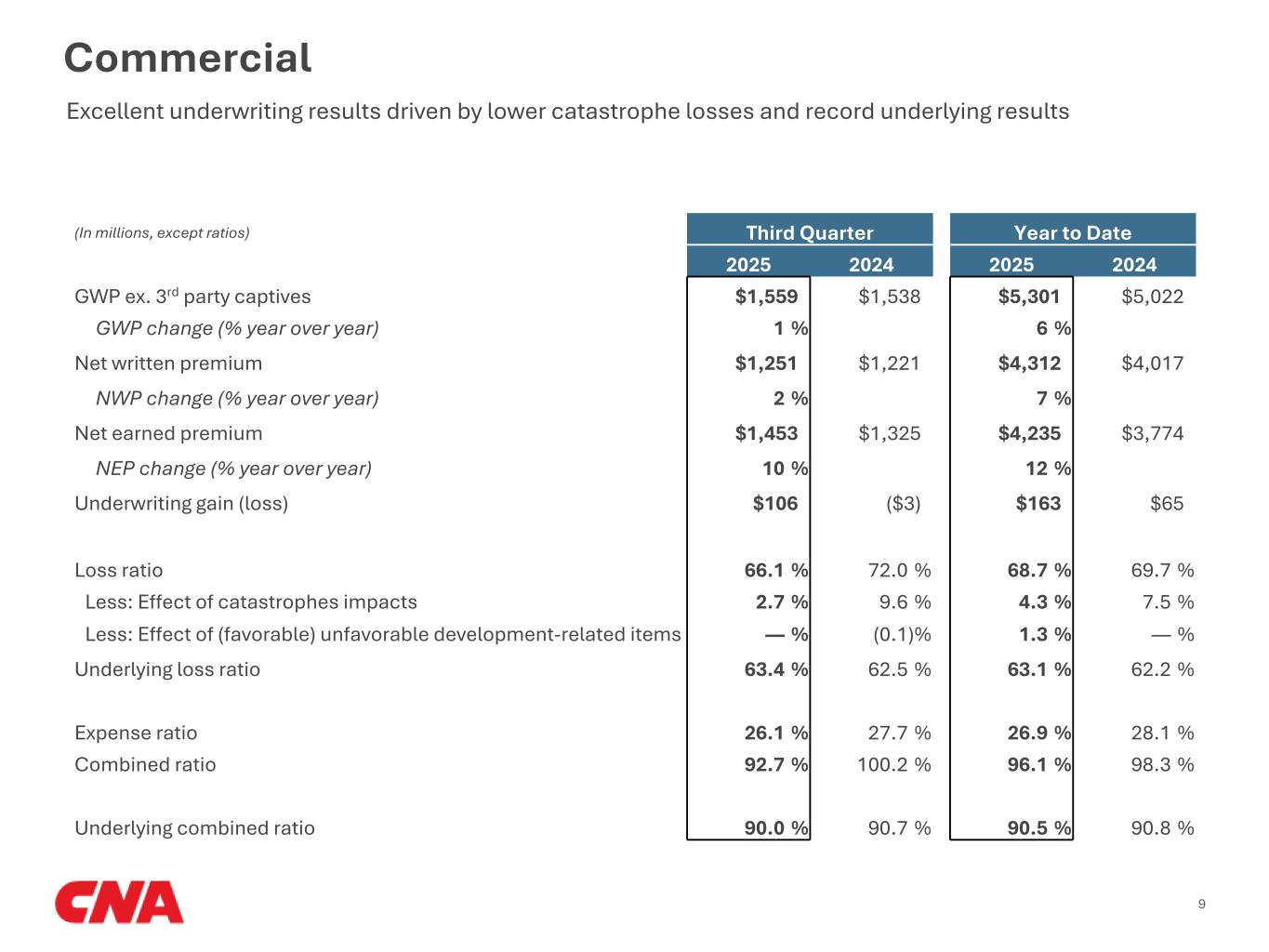
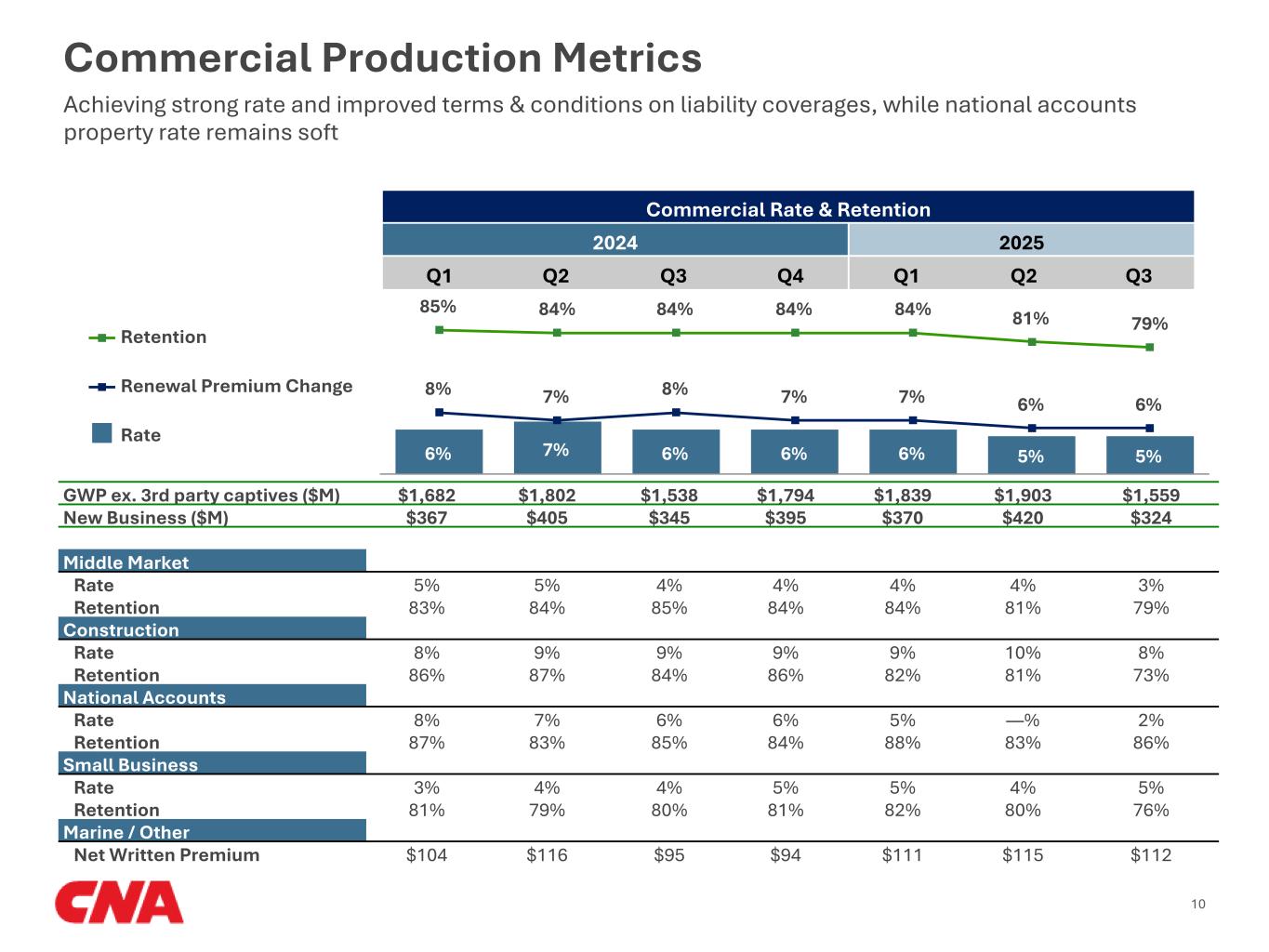
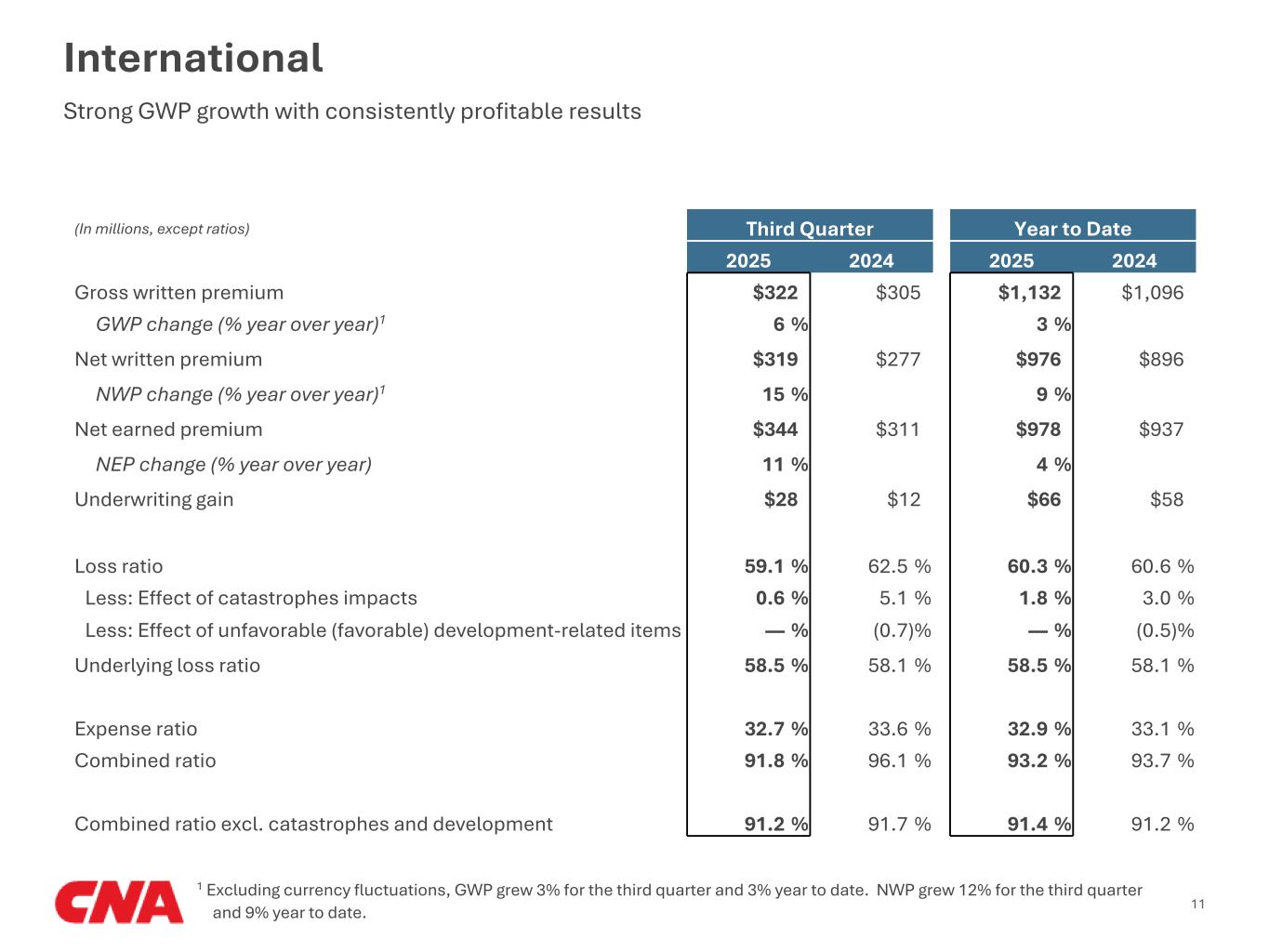
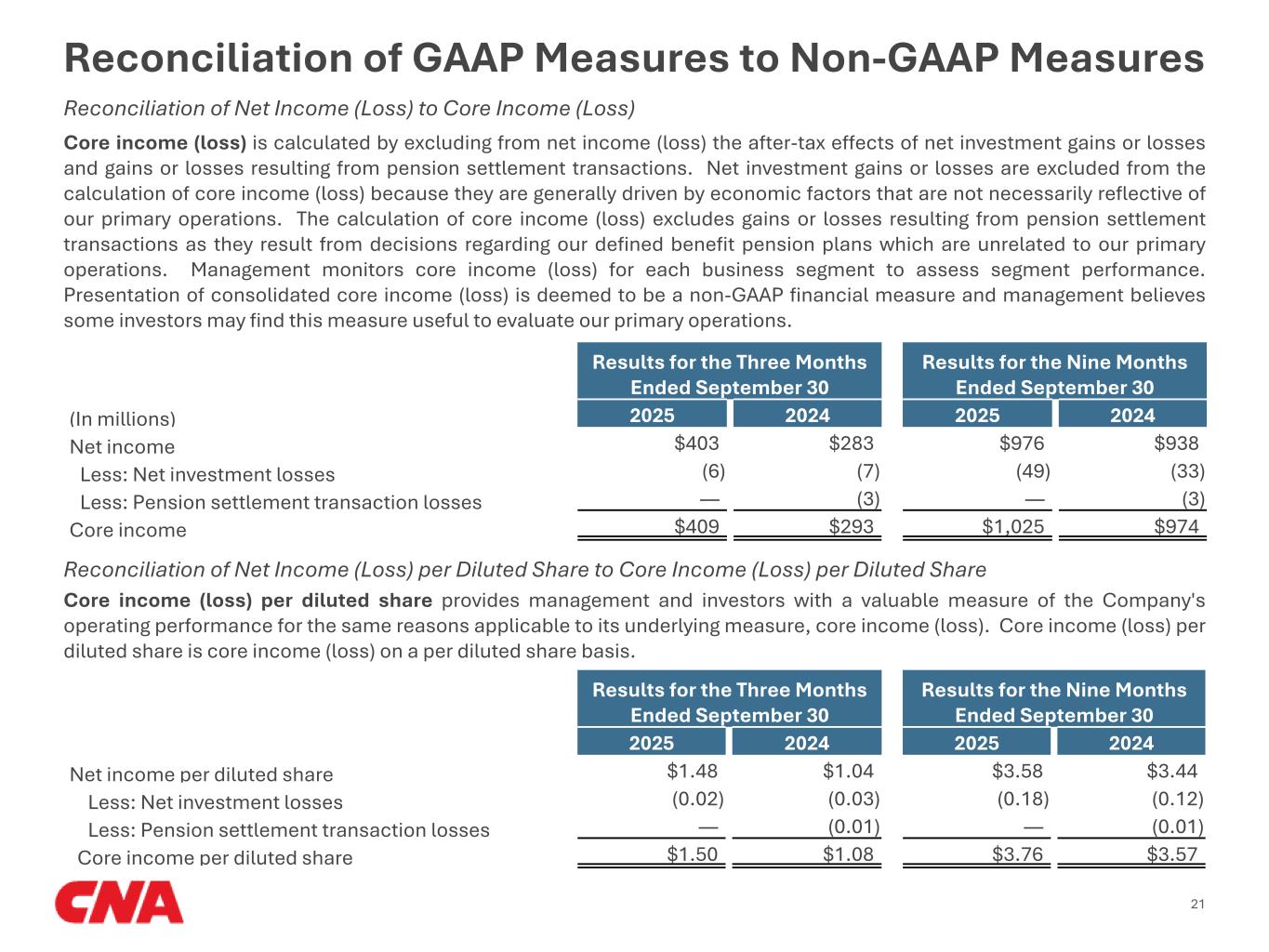
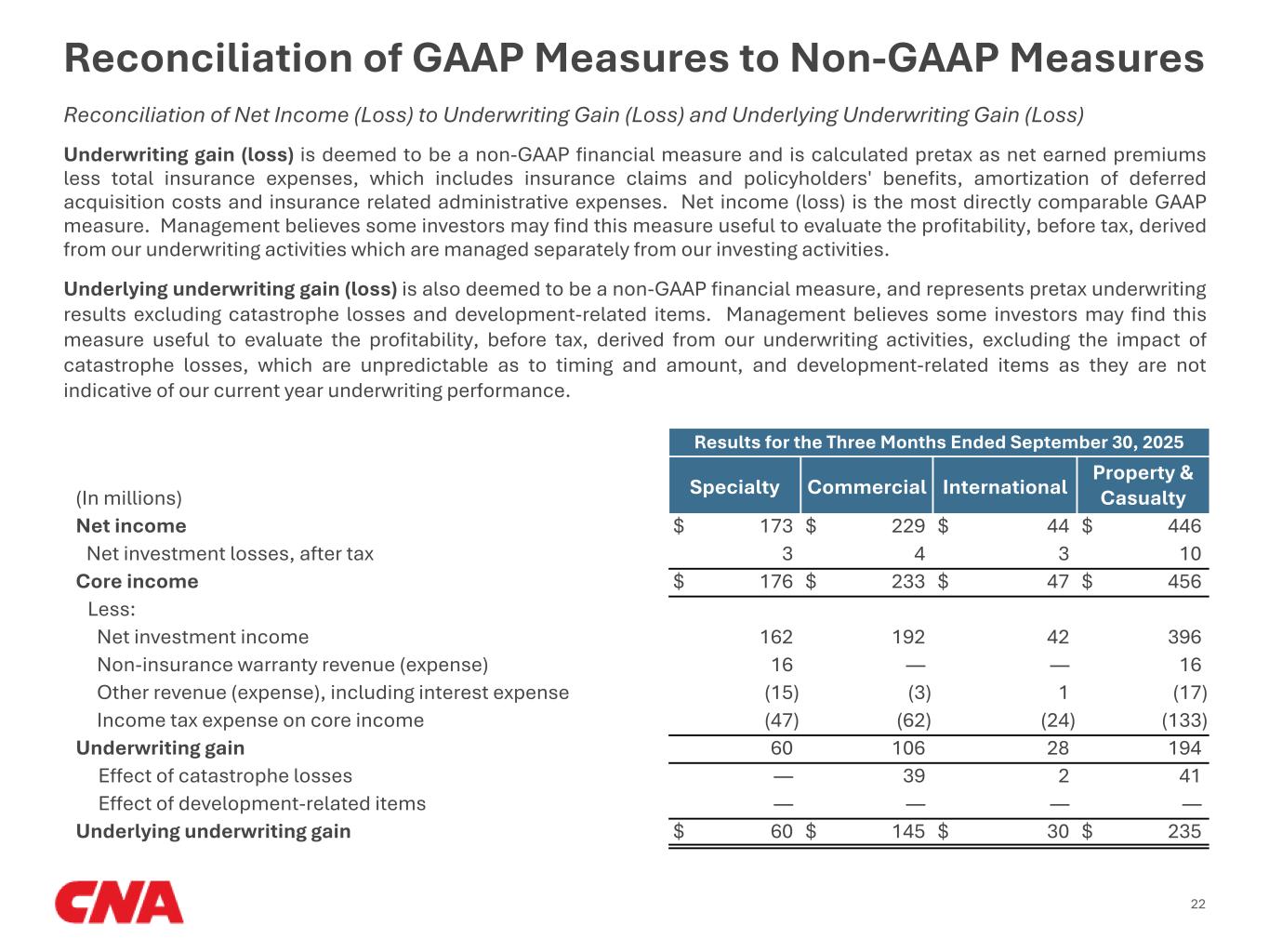
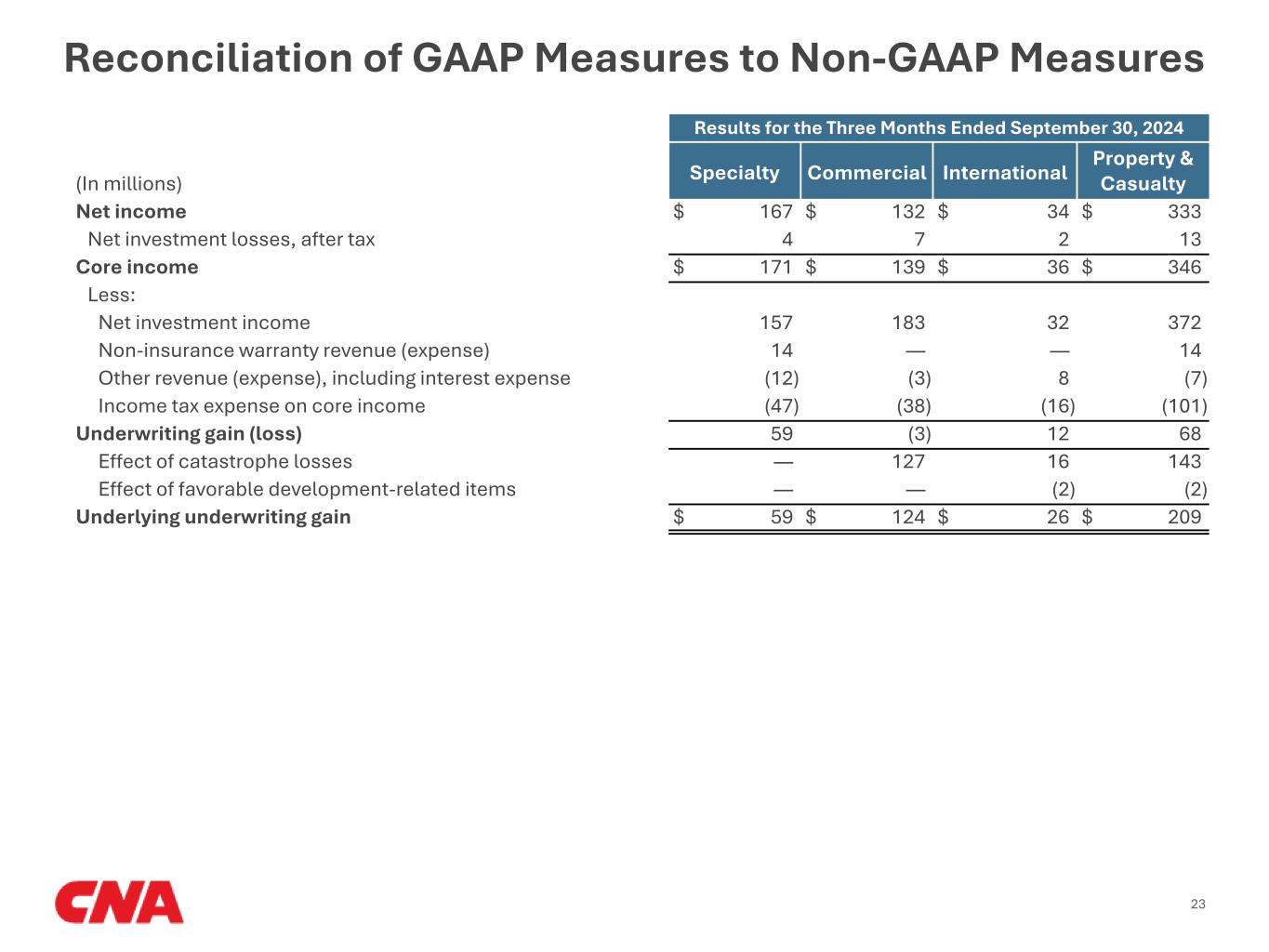
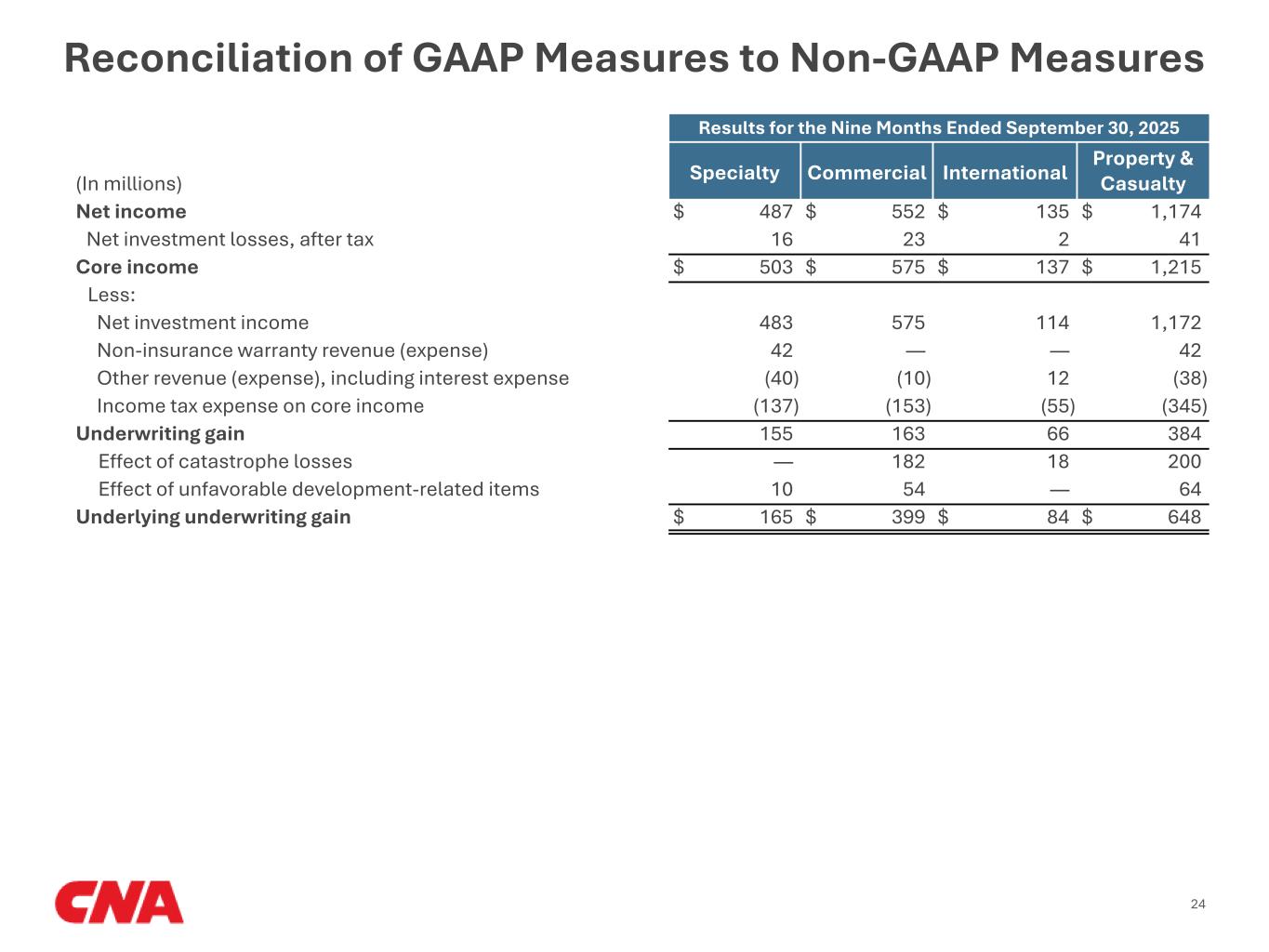
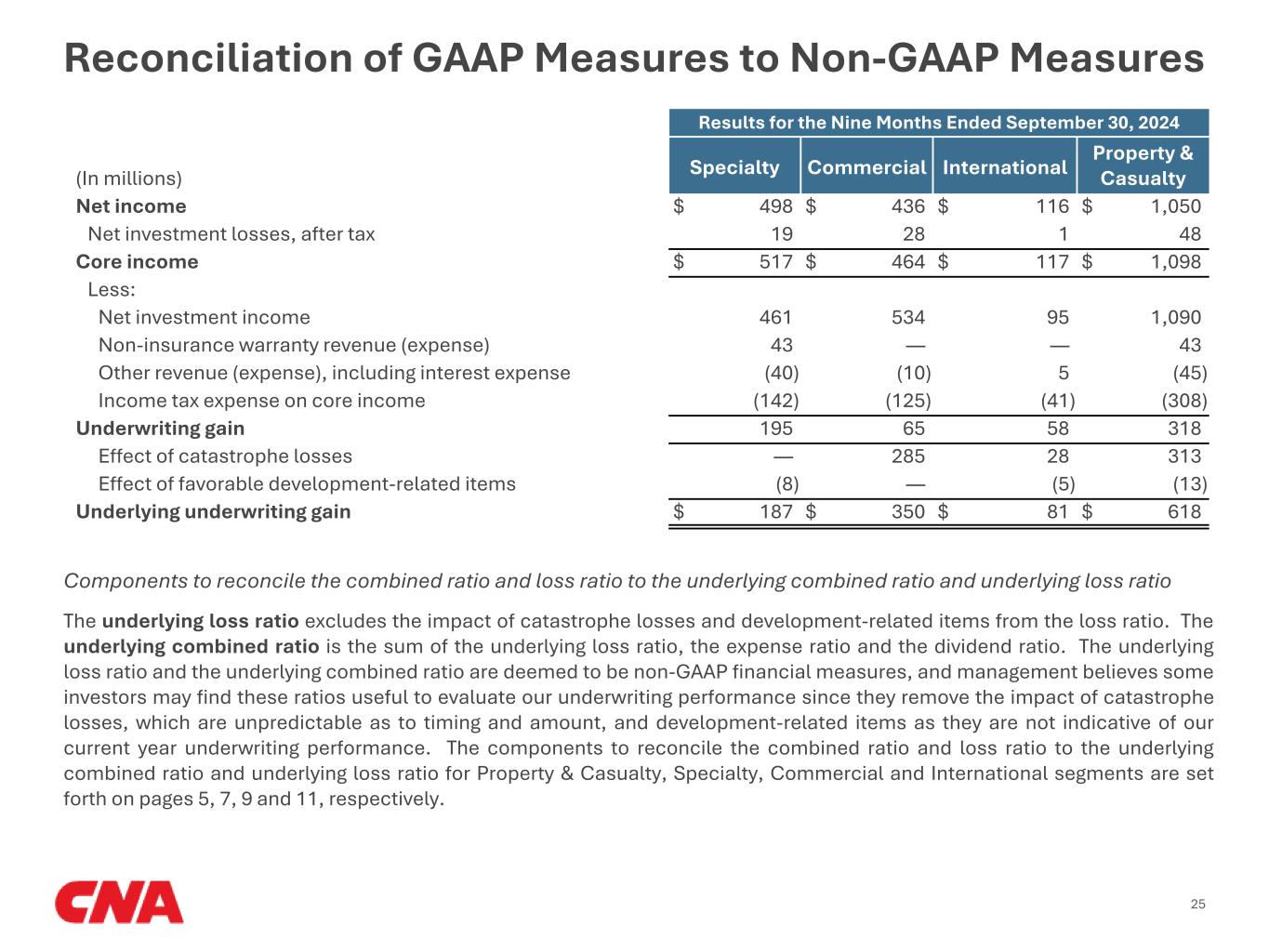
We are pleased with our third quarter results, which produced record core income of $409 million, driven by a strong underwriting gain and higher net investment income. Year-to-date through September, core income exceeded $1 billion for the first time. Underwriting income was strong this quarter at $194 million, nearly triple from the same quarter last year, benefiting from minimal catastrophe losses. We achieved a record underlying underwriting gain of $235 million, marking the tenth consecutive quarter of gains above $200 million. Net written premiums grew by 3% as we continue to take advantage of excellent growth opportunities while maintaining solid underwriting discipline. Operating cash flow remained strong, and net investment income increased to $638 million, up $12 million year-over-year, due to better fixed income results. The P&C all-in combined ratio stood at 92.8% for the third quarter, including $41 million from catastrophe losses. The catastrophe loss ratio was significantly lower than our average over the last five years. Prior period development had a negligible impact this quarter. The P&C underlying combined ratio was 91.3%, with an underlying loss ratio of 61.9%, slightly higher than both the same quarter last year and the first half of this year, as we stick to our cautious approach based on market conditions regarding pricing and loss cost trends. We managed our expense ratio effectively, which was 29.1%. Net written premiums grew by 3%, and gross written premiums, excluding captives, increased by 2%. Similar to last quarter, growth was affected by lower retentions in certain segments of the Commercial and Specialty portfolios as we implement custom renewal strategies to optimize our portfolio. In some specific lines and geographies, we believe the external loss cost environment is not being accurately reflected. When our underwriters cannot secure proper pricing, terms, and conditions relative to the risk, we are prepared to forgo bottom line profit for growth and step back. The P&C rate increase was 3%, consistent with the previous quarter, with a renewal premium change of 4%. In both our Commercial and Specialty segments in the U.S., both rate and renewal price changes were similar to the prior quarter, while rates declined by two points internationally. P&C new business slightly increased to $549 million, and we continue to seize opportunities across all our segments. In our three operating segments, the Commercial all-in combined ratio was 92.7%, representing a 7.5 point improvement compared to the previous year. Catastrophe losses reached $39 million, accounting for 2.7 points of the combined ratio, a 6.9 point improvement from the same quarter last year. Prior period development was negligible. The underlying combined ratio was a record low of 90.0%, marking the seventh straight quarter below 91%. The expense ratio was 26.1%, improving by 1.6 points year-over-year, and this was the first quarter recorded below 27%. However, the underlying loss ratio increased to 63.4%, up 0.9 points year-over-year and 0.5 points compared to the first half of this year, reflecting our careful reserving approach, especially for lines affected by social inflation. Due to ongoing higher loss cost trends, we are not reducing the underlying loss ratios for those impacted lines, despite rates being at or above long-term loss cost trends. The issues related to social inflation persist, warranting our cautious approach in establishing the underlying loss ratios. Commercial segment net written premiums grew by 2%, while gross written premiums, excluding captives, increased by 1%. New business was $324 million this quarter. The decrease in new business is due to our continued careful underwriting practices in parts of our commercial auto portfolio, where the terms and conditions of new account opportunities did not provide a suitable rate of return. The rate increase for the Commercial segment was 5%, with a renewal premium change of 6%, consistent with the last quarter. We have noticed reductions in national accounts property rates, which decreased by one point from the second quarter; nevertheless, this segment remains successful in achieving appropriate returns overall, and we continue to exploit favorable opportunities despite recent declines. Property rates, excluding national accounts, remain strong in the high single-digit range. Excess casualty rates remained in the low double digits this quarter, and commercial auto rates were consistently high at 17%. Primary general liability rates are still in the mid single-digit range, and although the workers' compensation rate improved this quarter, it remains negative, with a positive renewal premium change due to a 4% increase in exposure, which significantly acts like a rate increase. Retention in the Commercial segment was at 79% this quarter. The decline in retention is largely attributed to our earlier efforts to reposition the commercial auto portfolio in construction and middle market sectors amid the prevailing market conditions and specific underlying loss drivers in these areas. Consequently, the retention for commercial auto was several points lower than the overall average, while in workers' compensation, which has been particularly profitable for us, retention was several points higher than the average. Within the Specialty segment, the all-in and underlying combined ratios stood at 93.3%. The expense ratio was 32.5%, and the underlying loss ratio was 60.6%, which is 0.5 points higher than the third quarter of last year and the first half of this year, influenced by ongoing flat to negative rates in the financial institutions and management liability portfolios. We continue to utilize our deep specialization in the Specialty portfolio to implement tailored underwriting strategies to optimize our business in the current competitive landscape. However, consistent with our cautious reserving approach, we believe it remains sensible to respond to current market dynamics in areas like financial institutions and management liability, and we will continue to make necessary adjustments over time. The Specialty segment's net written premiums grew by 1%, and gross written premiums, excluding captives, increased by 3%. Rates rose by 3%, maintaining consistency with the past two quarters. New business totaled $131 million this quarter, with retention remaining strong at 86%, similar to the second quarter. The minor underlying loss ratio adjustments in Commercial and Specialty this quarter, compared to the first half of this year, reflect our best estimate of impacts for the later half of accident year 2025. In each scenario, this showcases our cautious philosophy across our portfolio, where long-term loss cost trends remain unchanged from preceding quarters but continue to be at elevated levels, while pricing levels have decreased for certain classes, resulting in slightly higher loss ratios that create some uncertainty as the accident year matures. In International, the all-in combined ratio reached 91.8% this quarter, incorporating $2 million of catastrophe loss, accounting for 0.6 points, compared to 5.1 points in the same quarter last year. The underlying combined ratio stood at 91.2%. The underlying loss ratio was 58.5%, increasing by 0.4 points compared to last year but remaining consistent with the first half of this year. The expense ratio was 32.7%, down 0.9 points from last year. Net written premiums in the International segment rose by 15%, and by 12% when excluding currency fluctuations. Gross written premiums increased by 6% and by 3% when excluding fluctuations. The net written premium was positively affected by a re-evaluation of reinsurance costs for previous treaty terms. New business totaled $94 million, a 29% increase, as we persist in capitalizing on various niche opportunities. Rates decreased by 6% due to increasing competition. Our retention was 83% as we retain profitable parts of our portfolio, leading to twenty-one consecutive quarters of underwriting profitability in this segment. We expect the International segment to continue to make a significant contribution to both our top and bottom lines moving forward as we navigate through the softer market conditions to leverage favorable opportunities.
Speaker 1
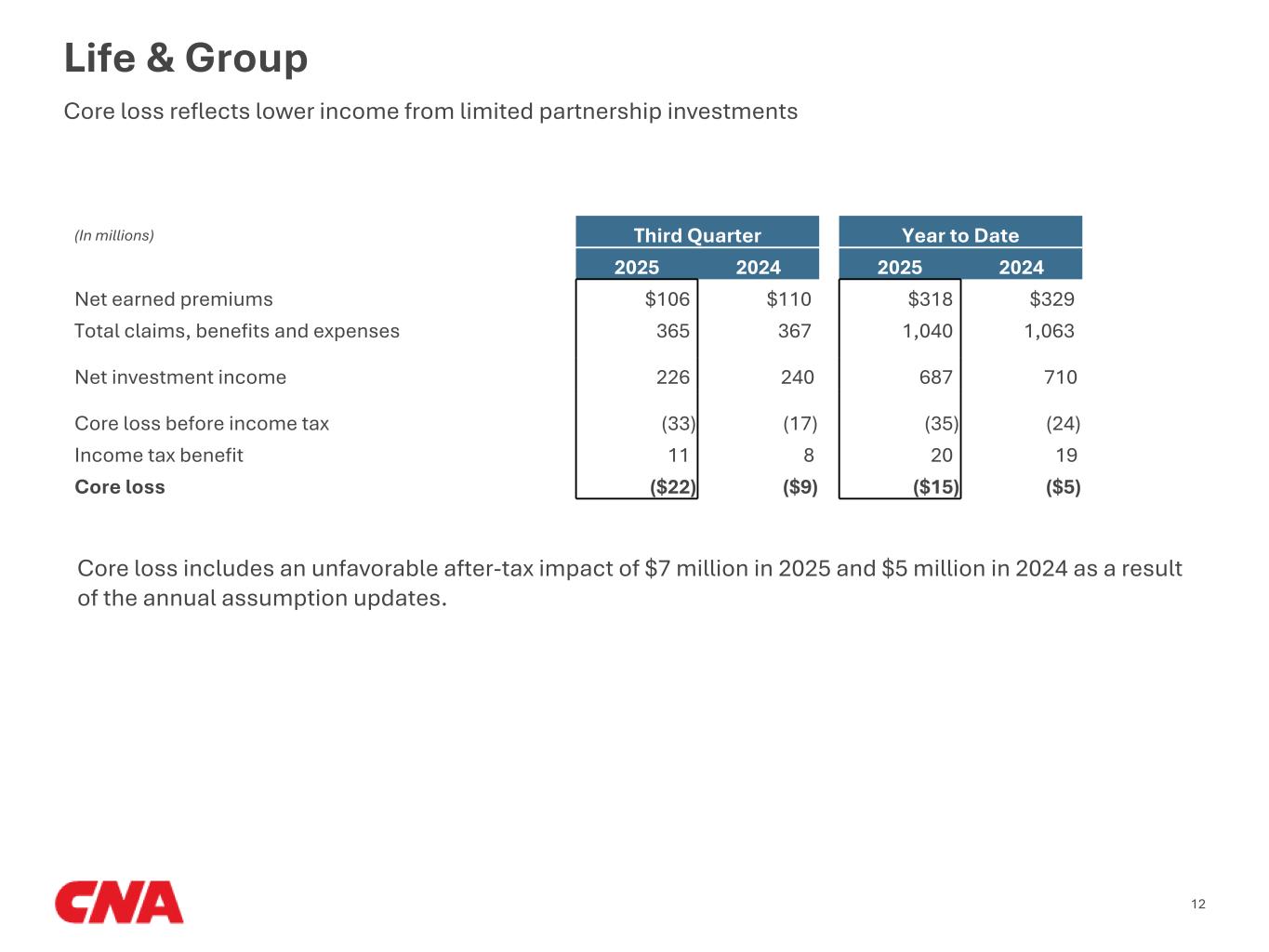
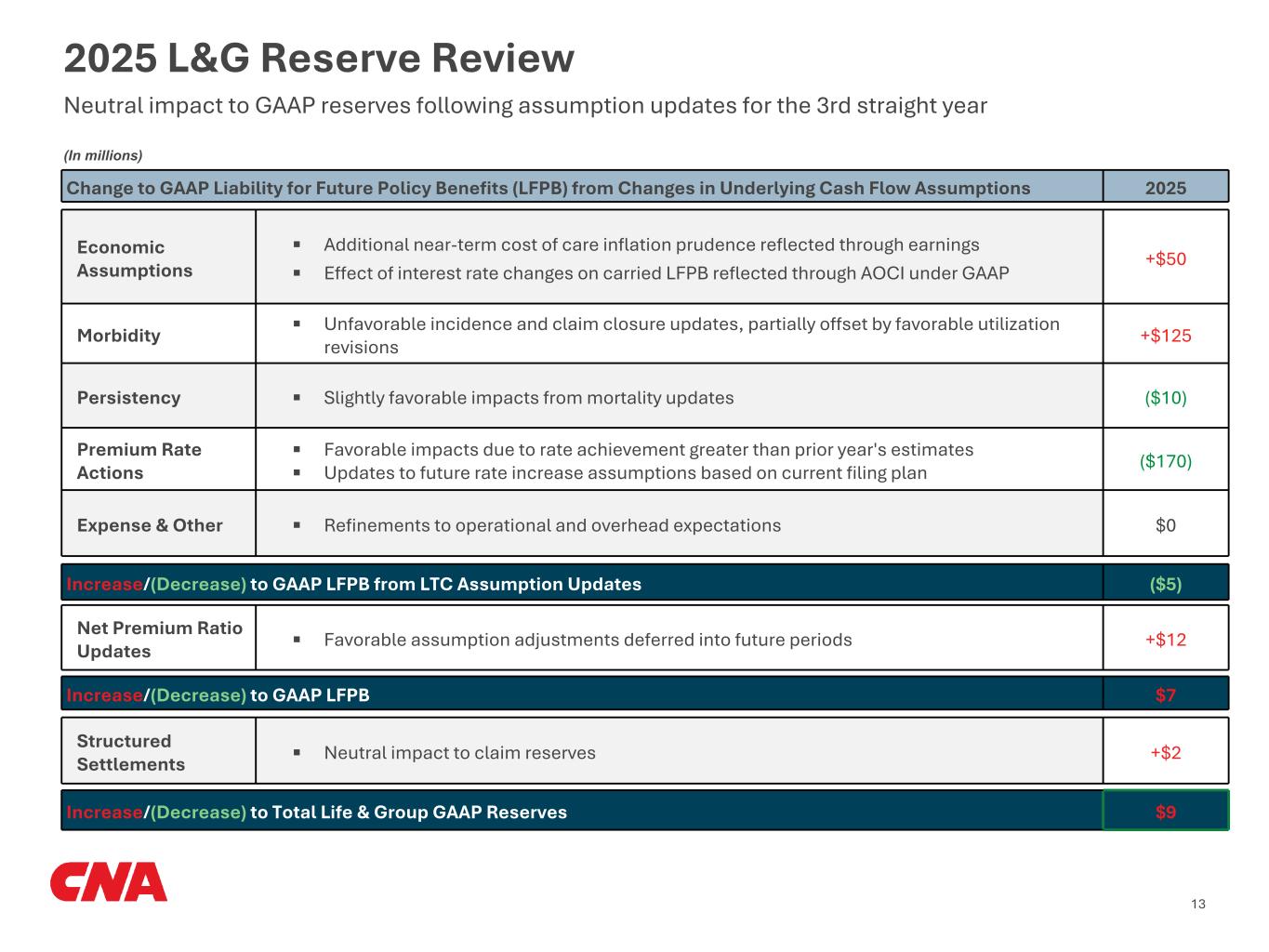
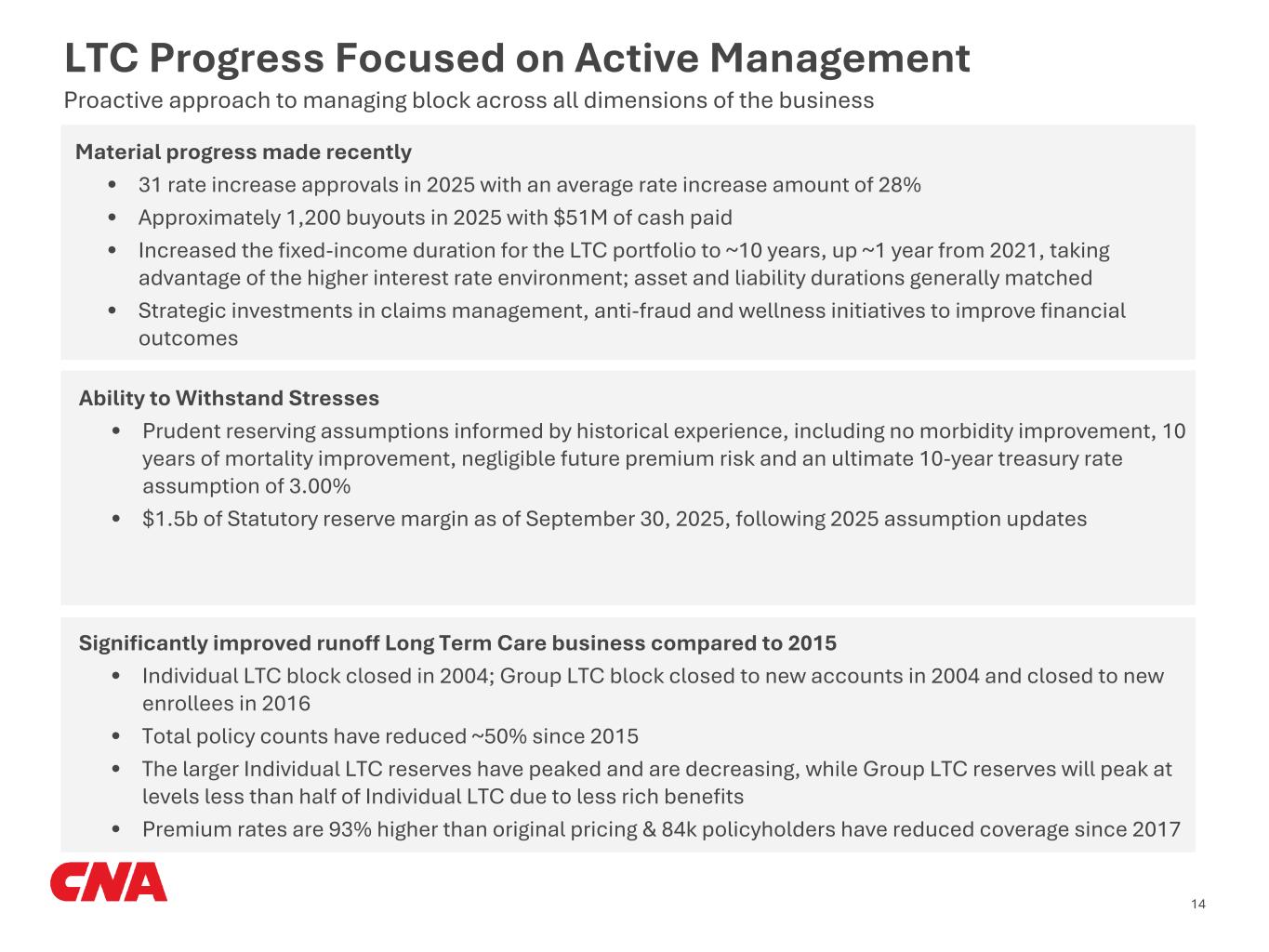
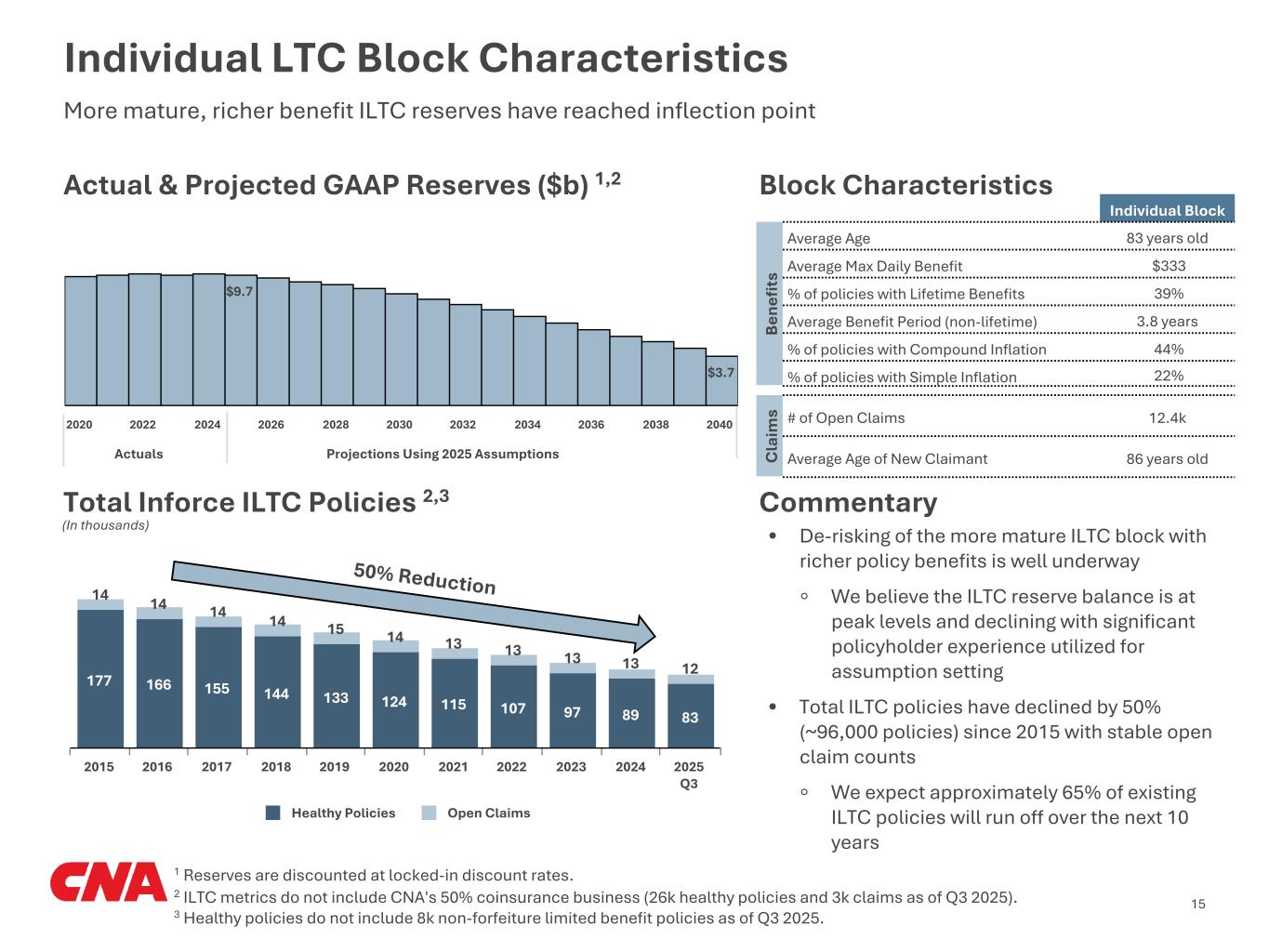
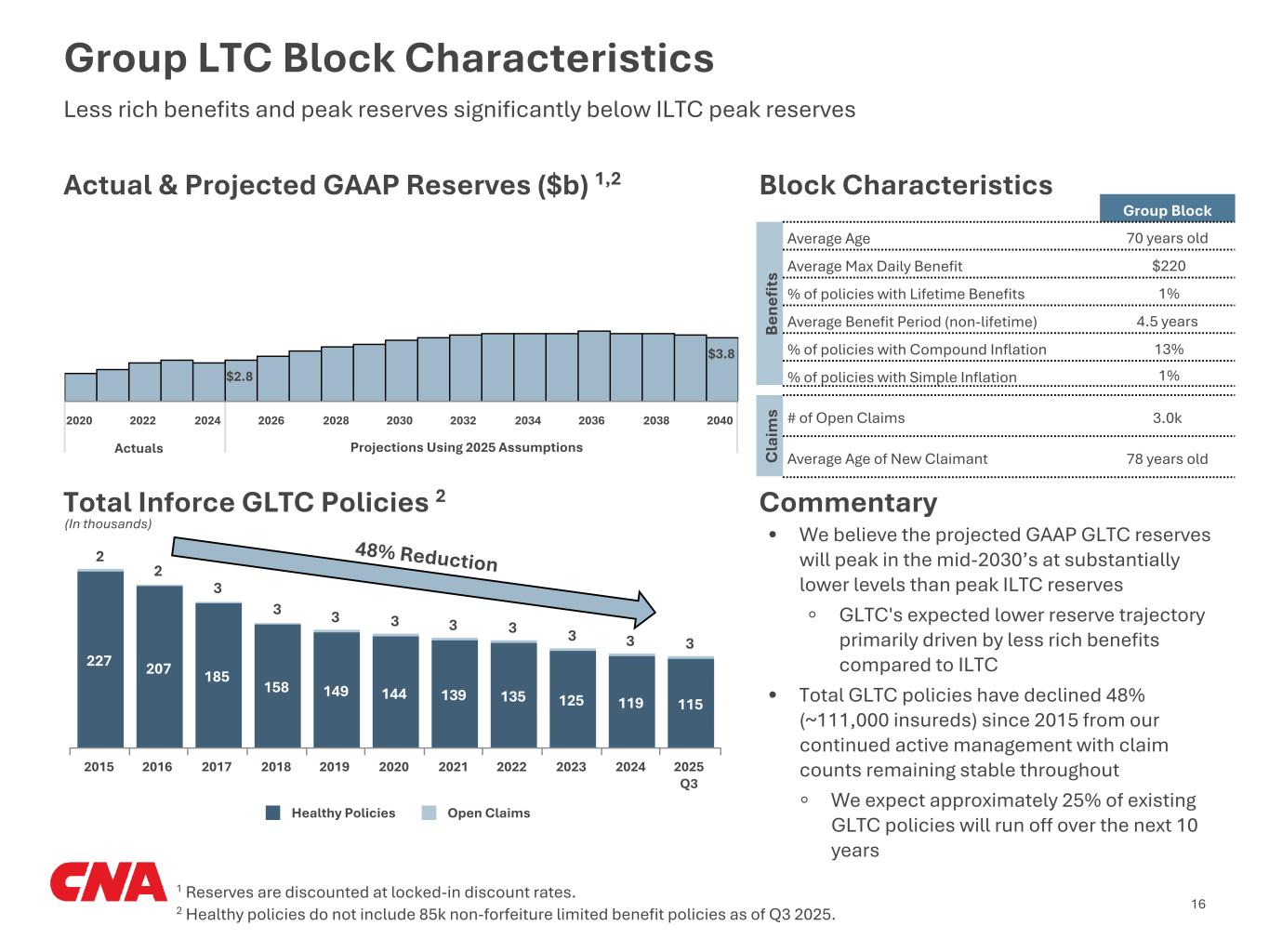
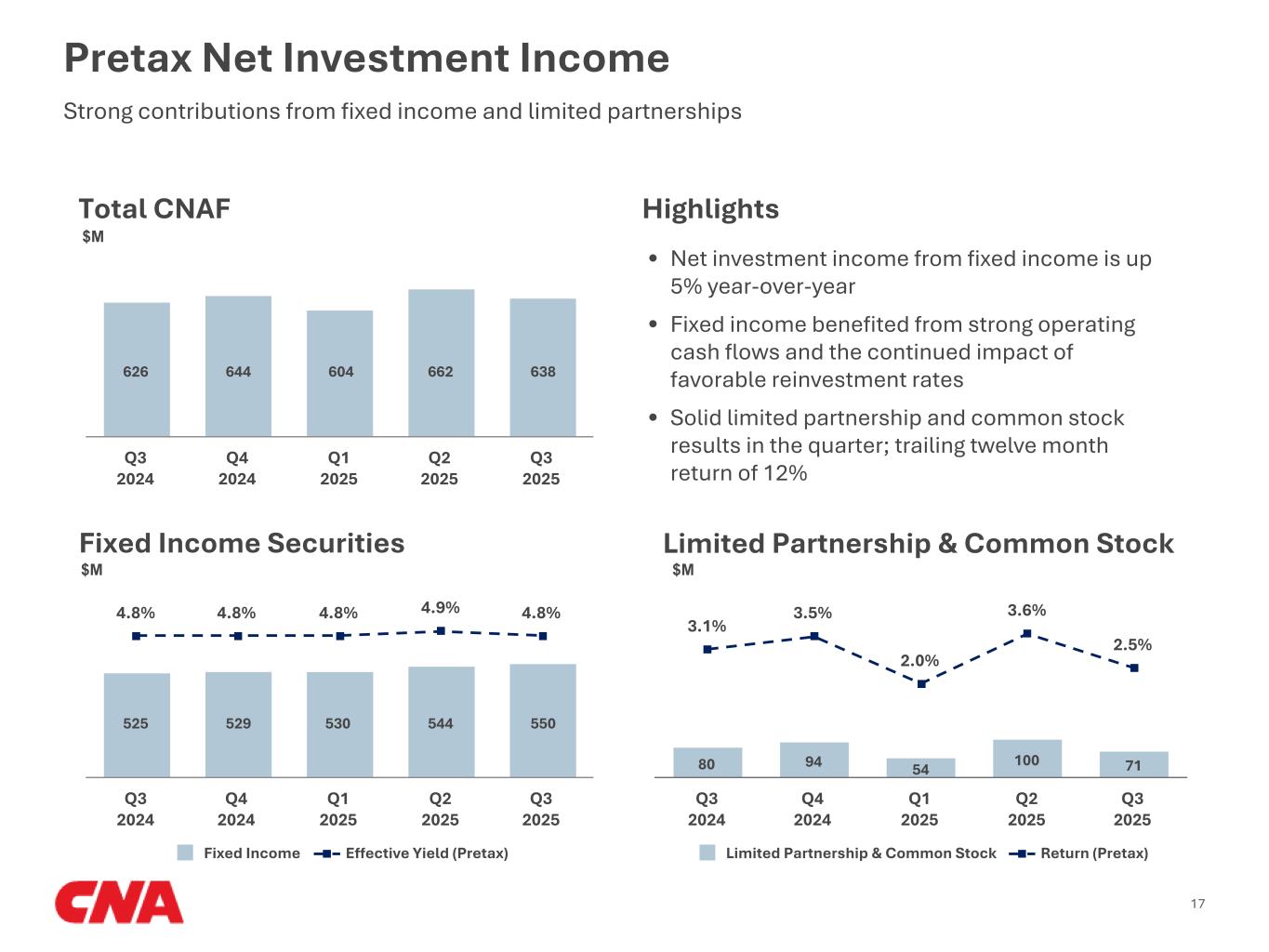
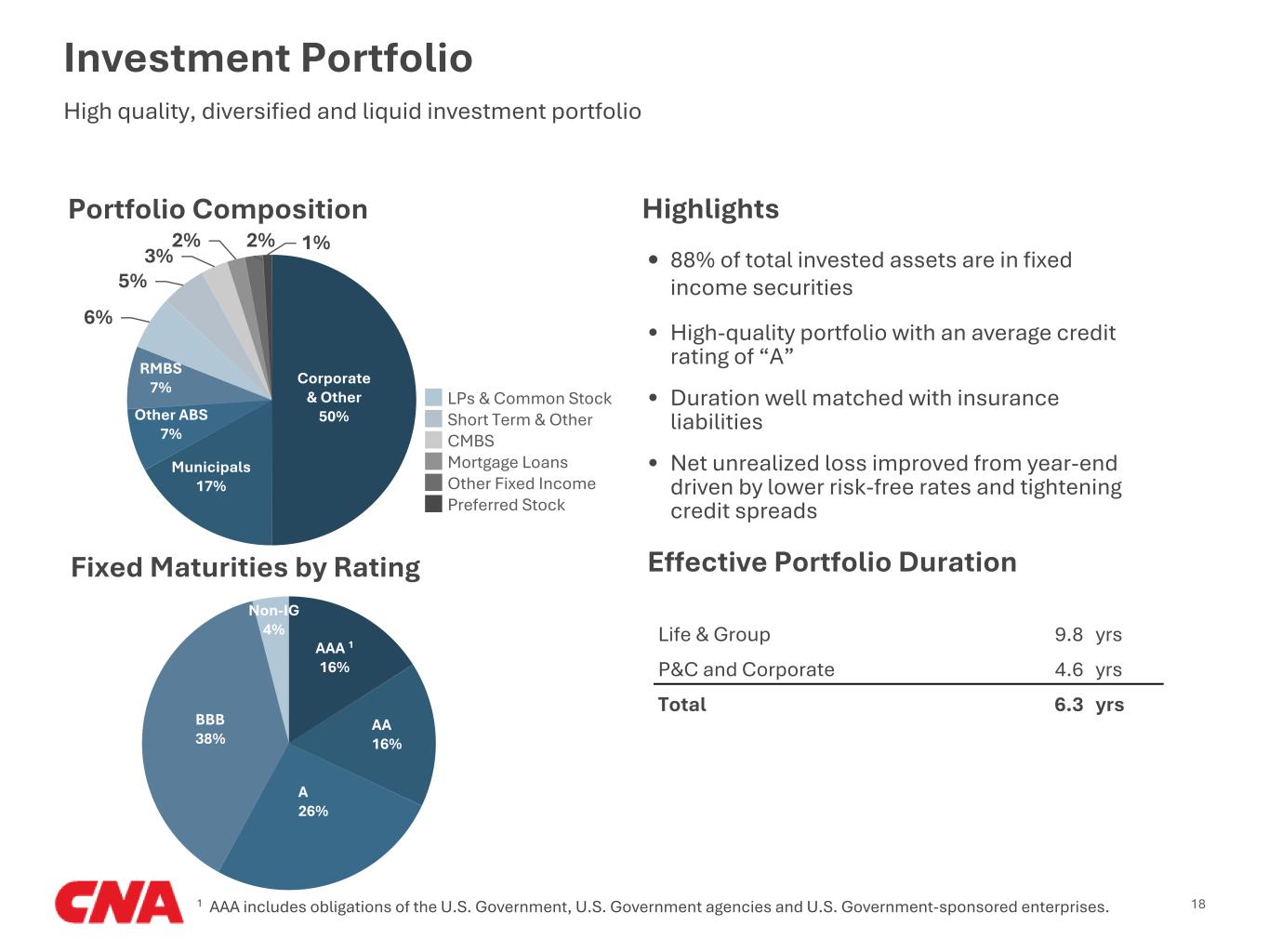
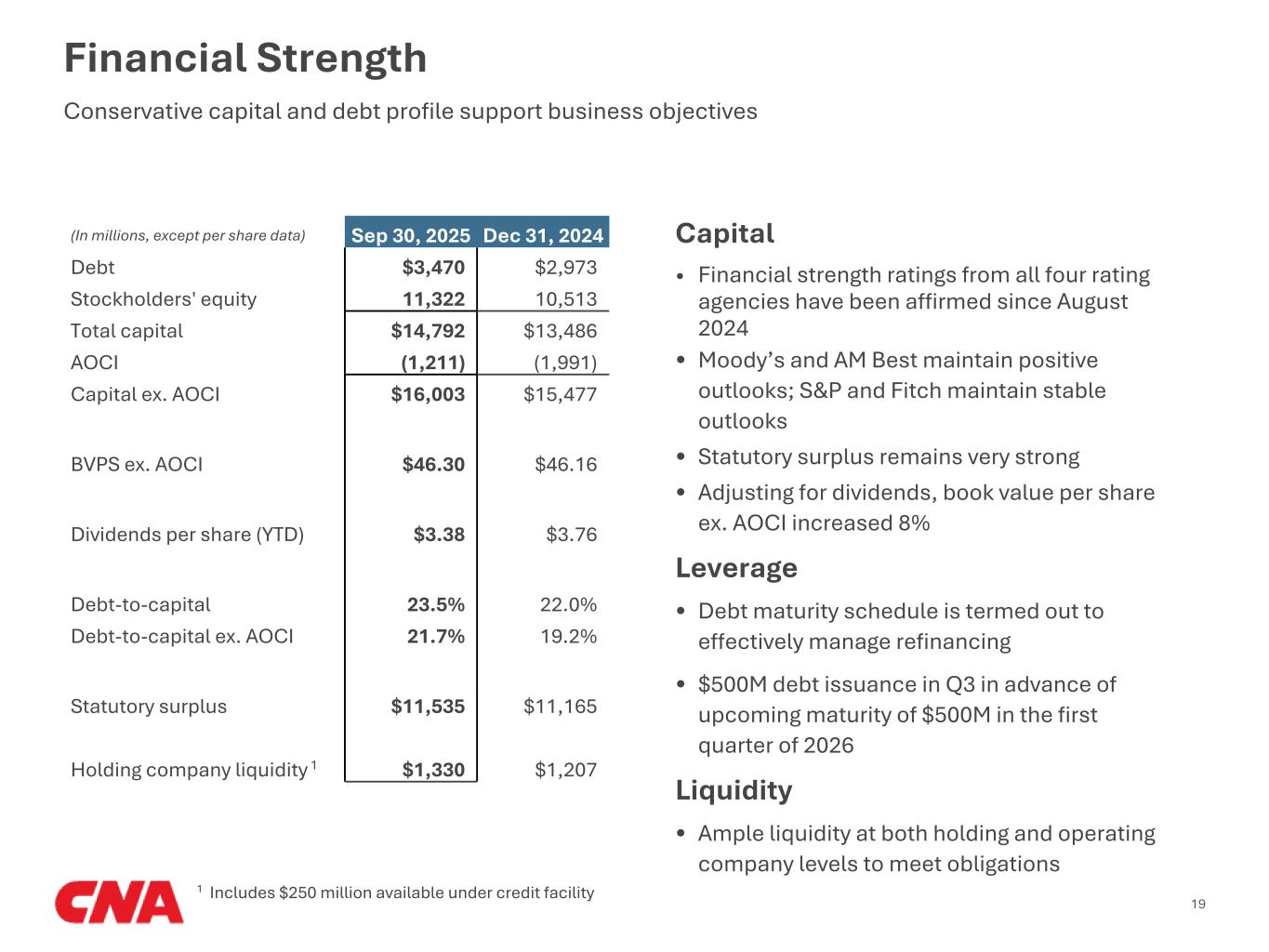
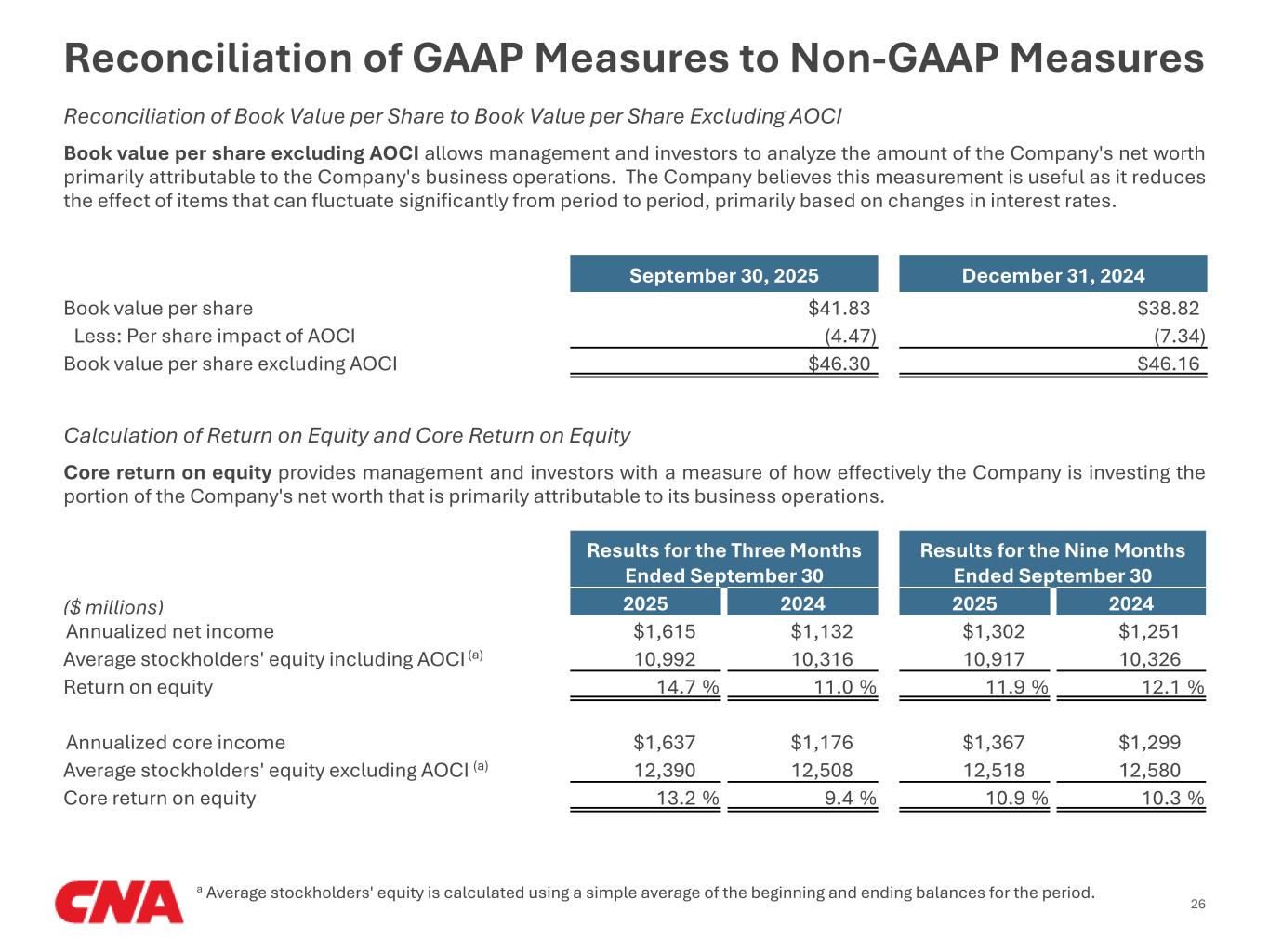
CNA's third quarter core income of $409 million is up from $293 million in the prior year, leading to a trailing twelve-month core return on equity of 10.9%. These results reflect another quarter of strong underlying underwriting results, lower catastrophe losses, and excellent investment results. Our P&C expense ratio was 29.1% for the third quarter and 29.7% for year-to-date 2025. These results reflect higher net earned premiums and a lower acquisition expense ratio. Recognizing the expense ratio can vary quarter to quarter, we currently expect a fourth quarter 2025 expense ratio somewhere in the range of where it has been for the two most recent quarters. The P&C net prior period development impact on the combined ratio was flat in the current quarter across each of our segments. In the Specialty segment, prior period development was neutral overall, and this was attributable to favorable development in surety offset by unfavorable development in other professional liability and management liability from the professional errors and omissions business. Our Corporate segment produced a core loss of $25 million in the third quarter, compared to a $44 million loss in the prior year quarter. The prior year quarter included a $17 million after-tax charge related to unfavorable prior period development largely associated with legacy mass tort abuse reserves. We also note that, as has been the case in recent years, we intend to review our asbestos and environmental reserves within the Corporate segment in the fourth quarter. In the Life and Group segment, we recorded a core loss of $22 million for the third quarter compared to a $9 million core loss for the prior year quarter. Life and Group investment income decreased by $14 million pretax compared to the prior year quarter, driven by lower earnings from limited partnership investments. In addition, both periods were impacted by our annual reserve assumption updates, a $7 million unfavorable after-tax impact in 2025 and a $5 million unfavorable impact in 2024. Each year in the third quarter, we undertake our reserve reviews for Life and Group, which includes the analysis of reserving assumptions underlying our Long-Term Care (LTC) and structured settlement reserves. Taken together, the third quarter reserve reviews resulted in an essentially neutral impact on reserves for Life and Group. The results of our annual reviews are highlighted on slide 13 of our earnings presentation. The assumption update for LTC involves a thorough review of all our reserving assumptions including cost of care inflation, morbidity, persistency, and premium rate actions. Notably for this year's assumption update, we revised morbidity assumptions reflecting unfavorable incidence and claim closures, and we strengthened our near-term cost of care inflation assumptions. In addition, we outperformed rate increase assumptions reflecting rate approvals across a number of states. The net impact of all LTC assumption updates was slightly favorable. Under Long Duration Targeting Improvements (LDTI) accounting, the net premium ratio can defer favorable or unfavorable results into future periods, depending on which policy year cohort is impacted. For this assumption update, $12 million of favorable assumption updates have been deferred for recognition in future periods over the remaining life of the respective impacted policy year cohorts. After the deferral of favorable assumption updates, the result was a $7 million unfavorable adjustment to LTC reserves. Updates to best-estimate assumptions also impact our LTC margin under statutory accounting practices. These assumption revisions increased our statutory margin to $1.5 billion, up from $1.4 billion a year ago. Finally, the annual structured settlement reserve review resulted in a $2 million unfavorable adjustment to GAAP reserves. Slide 14 of our earnings presentation provides an update on our LTC business. We believe our proactive approach to managing this portfolio, combined with the higher interest rate environment over the last four years, has considerably improved the outlook for this business. Our Individual block has been closed since 2004, and our Group block has been closed since 2016. We have achieved substantial reduction in policy exposure in each block since these respective dates, while at the same time obtaining substantive rate increases and benefit reductions via our active inforce management, inclusive of our ongoing policy buyout program. On the investment side, the favorable interest rate environment since early 2022 has improved the underlying economics of this business, as we have been able to lock in high quality, longer duration securities at attractive coupons to support the underlying liabilities of the business, essentially achieving appropriately matching asset and liability durations. This is reflected in the statutory margin which has grown to $1.5 billion, up from $1.1 billion in 2022. Slide 15 of the earnings presentation provides details on the Individual block characteristics. This block is more mature, with an average attained age of 83 years, and generally features richer benefits, including inflation riders on most policies and lifetime benefits on some policies. The de-risking of this block continues through inforce initiatives, with policy counts down by 50% since 2015 and stable open claim counts. Going forward, we currently expect policy counts to decline by 65% from the current level over the next ten years. We believe the Individual LTC reserves have hit an inflection point and have begun to decline using locked-in discount rate assumptions. Slide 16 of the earnings presentation provides details on the Group block characteristics. The attained age is 70 years, and, compared to the Individual block, the Group block features less rich policy benefits. Only 1% of Group policies feature lifetime benefit periods, and the block has a relatively modest exposure to inflation. As is the case with the Individual block, the de-risking of the group block continues through inforce initiatives, with policy counts down by 48% since 2015 and stable open claim counts. Going forward, we currently expect policy counts to decline by 25% from the current level over the next ten years. We currently believe Group LTC reserves will peak in the mid-2030s and at a substantially lower level relative to the Individual block primarily due to lower benefit features. In summary, we believe the financial risk from the LTC block is contained as we believe we are past peak reserves in the larger Individual LTC block, our policy count is half what it was ten years ago, we have demonstrated continued progress executing on inforce and investment portfolio actions and we believe we maintain prudent reserving assumptions. Turning to our investment results, net investment income was $638 million in the third quarter compared with $626 million in the prior year quarter, an increase of 2%. Fixed income and other investments generated $567 million of income, up 4% compared to the prior year quarter. Our A-rated fixed income portfolio continues to provide consistent contributions to core income, which have been steadily increasing because of favorable reinvestment rates and strong cash flow from operations. The effective income yield of our consolidated fixed income portfolio was 4.8% in the third quarter. Reinvestment rates continue to be above our P&C portfolio effective income yield of 4.4% and are fairly in line with our Life & Group portfolio effective income yield of 5.7%. Looking ahead, based on the current interest rate environment we expect income from fixed income and other investments to be about $570 million for the fourth quarter. Our limited partnership and common stock portfolio returned a $71 million gain, or 2.5%, in the current quarter compared to an $80 million gain, or 3.1%, in the prior year quarter. At quarter-end, our balance sheet continues to be very solid with stockholders' equity excluding accumulated other comprehensive income (AOCI) of $12.5 billion, or $46.30 per share, an increase of 8% from year-end 2024 adjusting for dividends. Stockholders' equity including AOCI was $11.3 billion or $41.83 per share. With the decline in interest rates during the year, the net unrealized investment loss in our fixed income portfolio decreased to $1.2 billion as of quarter-end, roughly half the level at year-end 2024. Finally, we ended the quarter with statutory capital and surplus in the Combined Continental Casualty Companies of $11.5 billion, which is the highest on record. We continue to maintain a conservative capital structure with a low leverage ratio and a well-balanced debt maturity schedule. During the third quarter, we issued $500 million of senior notes in advance of our next debt maturity in the first quarter of 2026. Operating cash flow was $720 million for the quarter as compared to $748 million for the prior year quarter, while year-to-date operating cash flow is up 3% to $1,920 million. These results reflect continued strength in our underwriting and investment results. The effective tax rate on core income was 21.3% for the third quarter and 21.4% for the year-to-date period, which is in line with our full-year 2025 expectations. Finally, we are pleased to announce our regular quarterly dividend of $0.46 per share to be paid on December 4, 2025, to stockholders of record on November 17, 2025.