Operator
Good morning, and welcome to CenterPoint Energy's third quarter 2025 earnings conference call with senior management. During the company's prepared remarks, all participants will be in listening mode. There will be a question and answer session after management's remarks. To ask a question, press star 11 on your touchstone keypad. I will now turn the call over to Ben Vallejo, Director of Investor Relations and Corporate Planning. Mr. Vallejo?
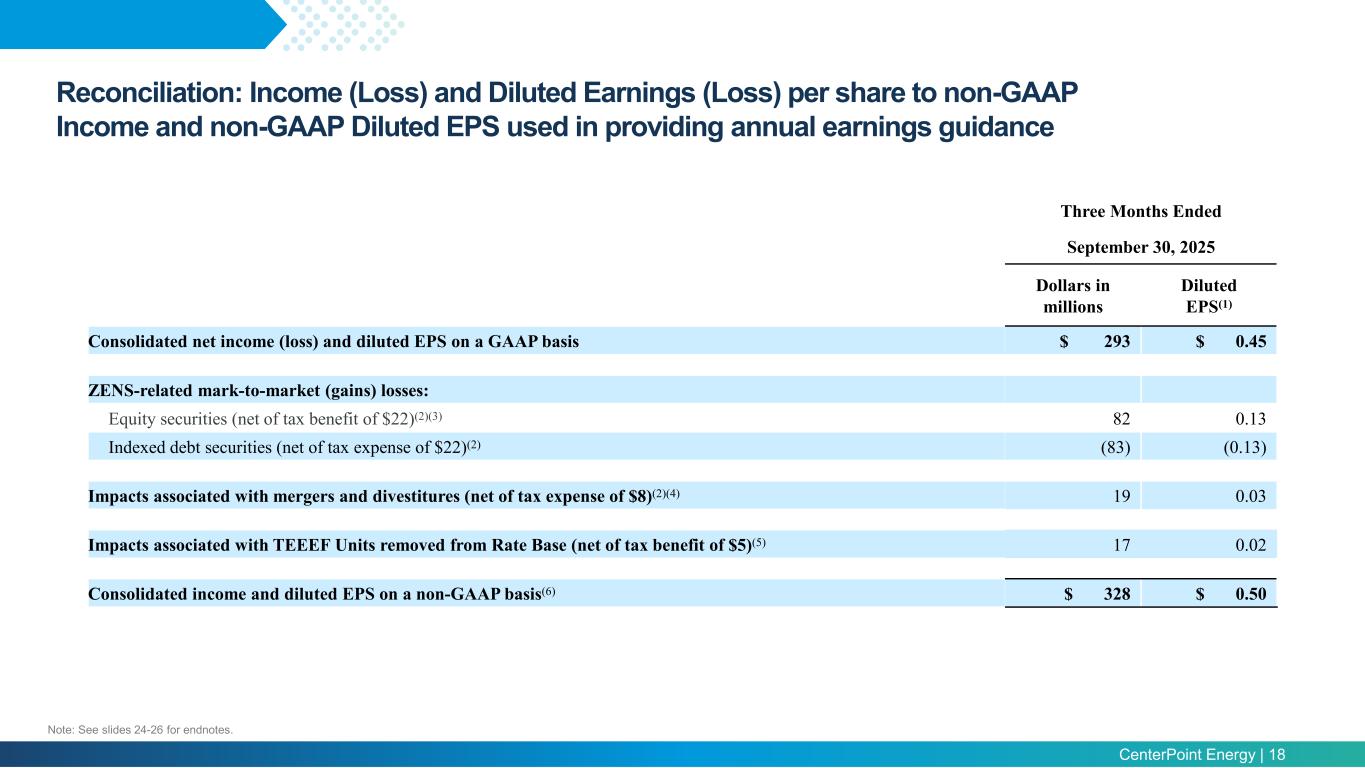
Good morning, and welcome to CenterPoint's Q3 2025 earnings conference call. Jason Wells, our CEO, and Chris Foster, our CFO, will discuss the company's third quarter results. Management will discuss certain topics that will contain projections and other forward-looking information and statements that are currently based on management's beliefs, assumptions, and information currently available to management. These forward-looking statements are subject to risks and uncertainties. Actual results could differ materially based on various factors, as noted in our Form 10-Q and other SEC filings, as well as our earnings materials. We undertake no obligation to revise or update publicly any forward-looking statement other than as required under applicable securities laws. We reported diluted earnings per share of $0.45 for the third quarter of 2025 on a GAAP basis. Management will be discussing certain non-GAAP measures on today's call. When providing guidance, we use the non-GAAP EPS measure of diluted adjusted earnings per share on a consolidated basis referred to as non-GAAP EPS. For information on our guidance methodology and reconciliation of the non-GAAP measures used in providing guidance, please refer to our earnings news release and presentation on our website. We use our website to announce material information. This call is being recorded. Information on how to access the replay can be found on our website. Now, I'd like to turn the call over to Jason.
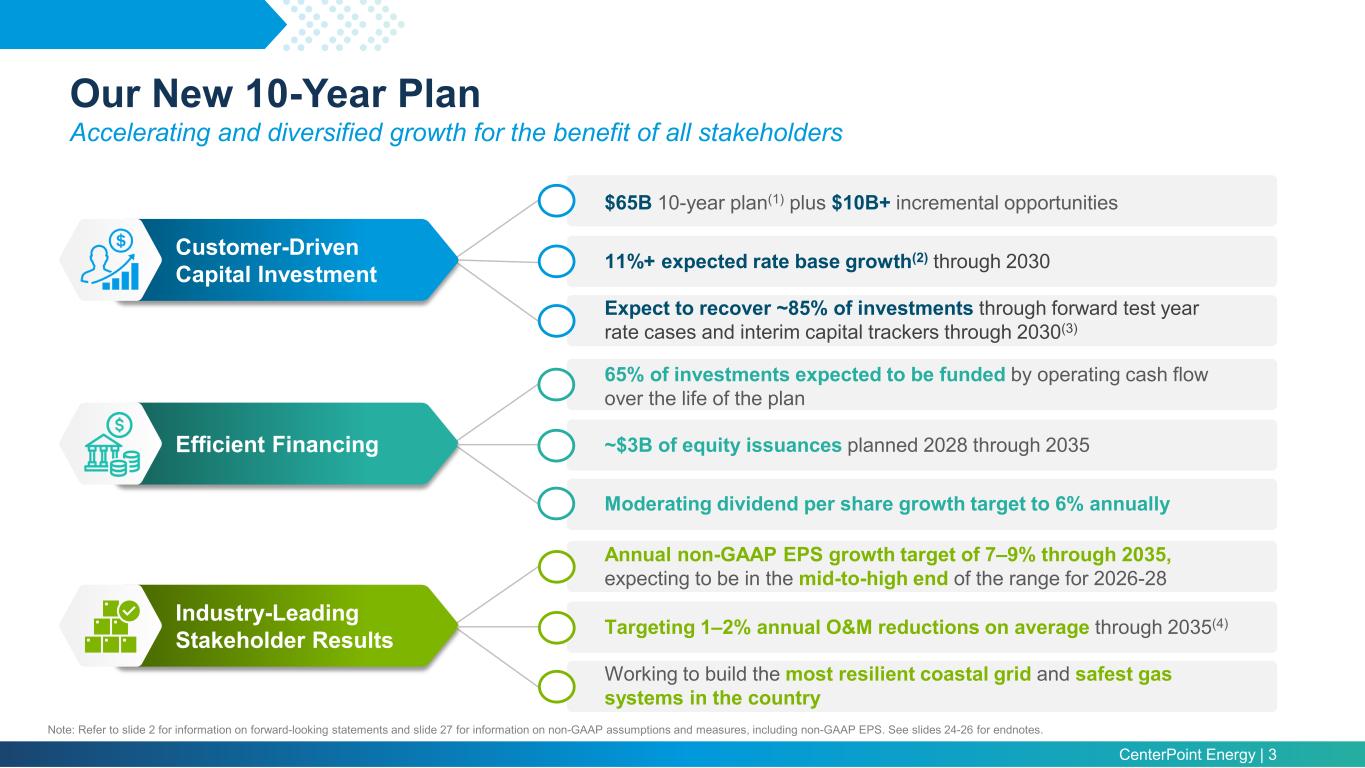
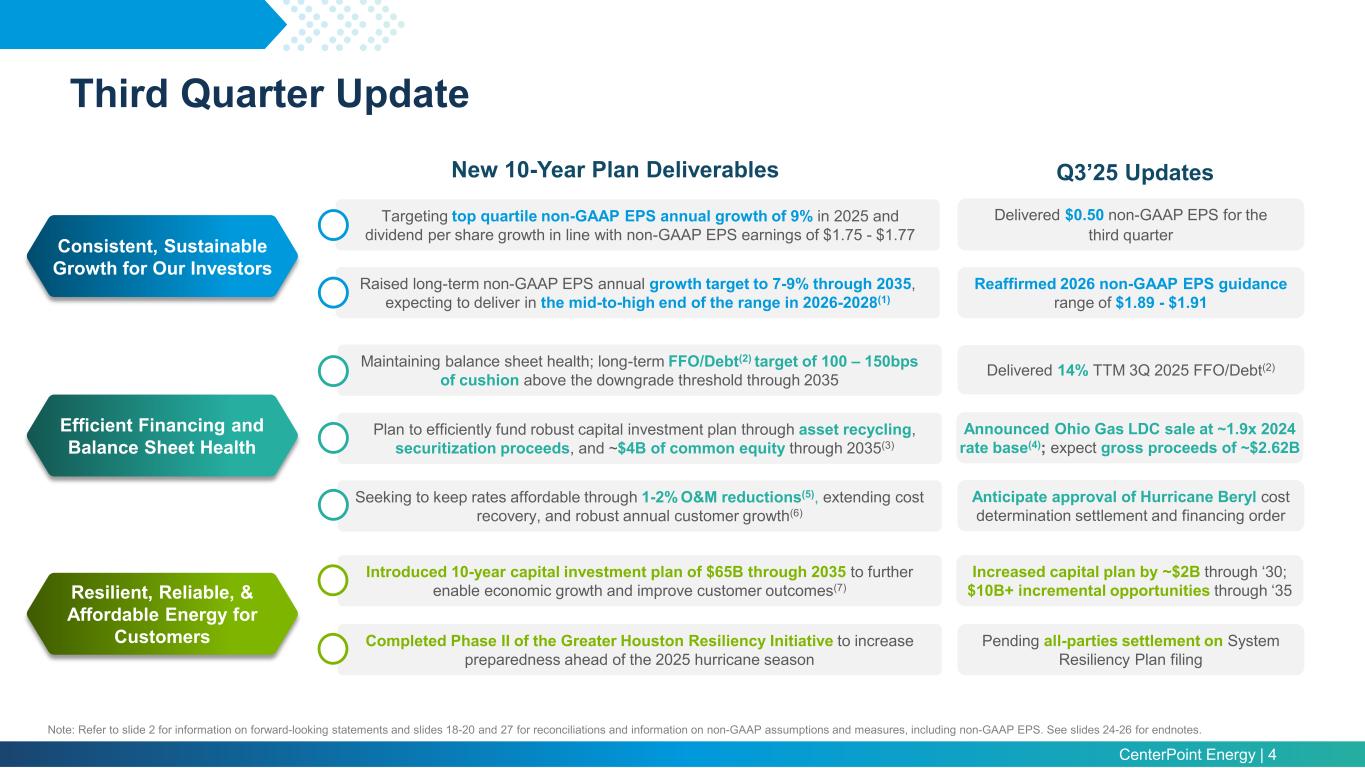
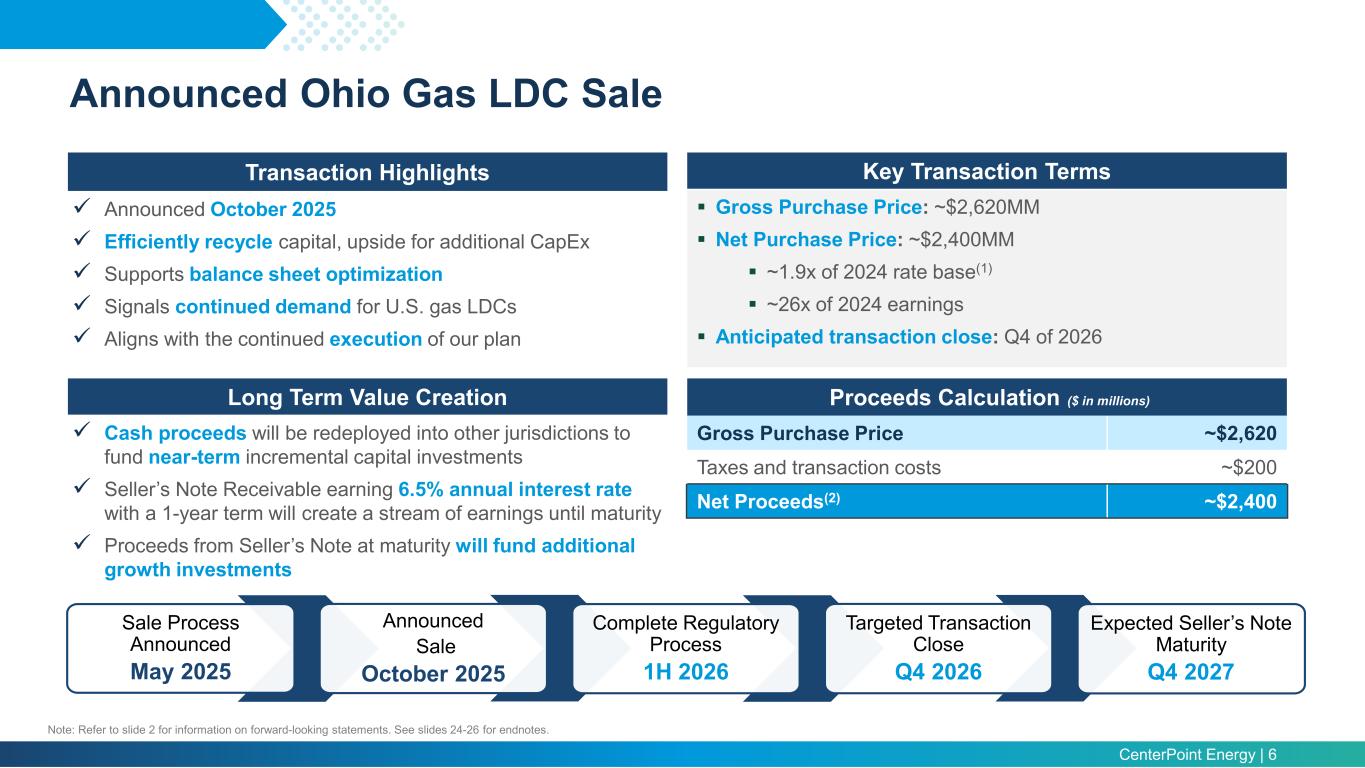
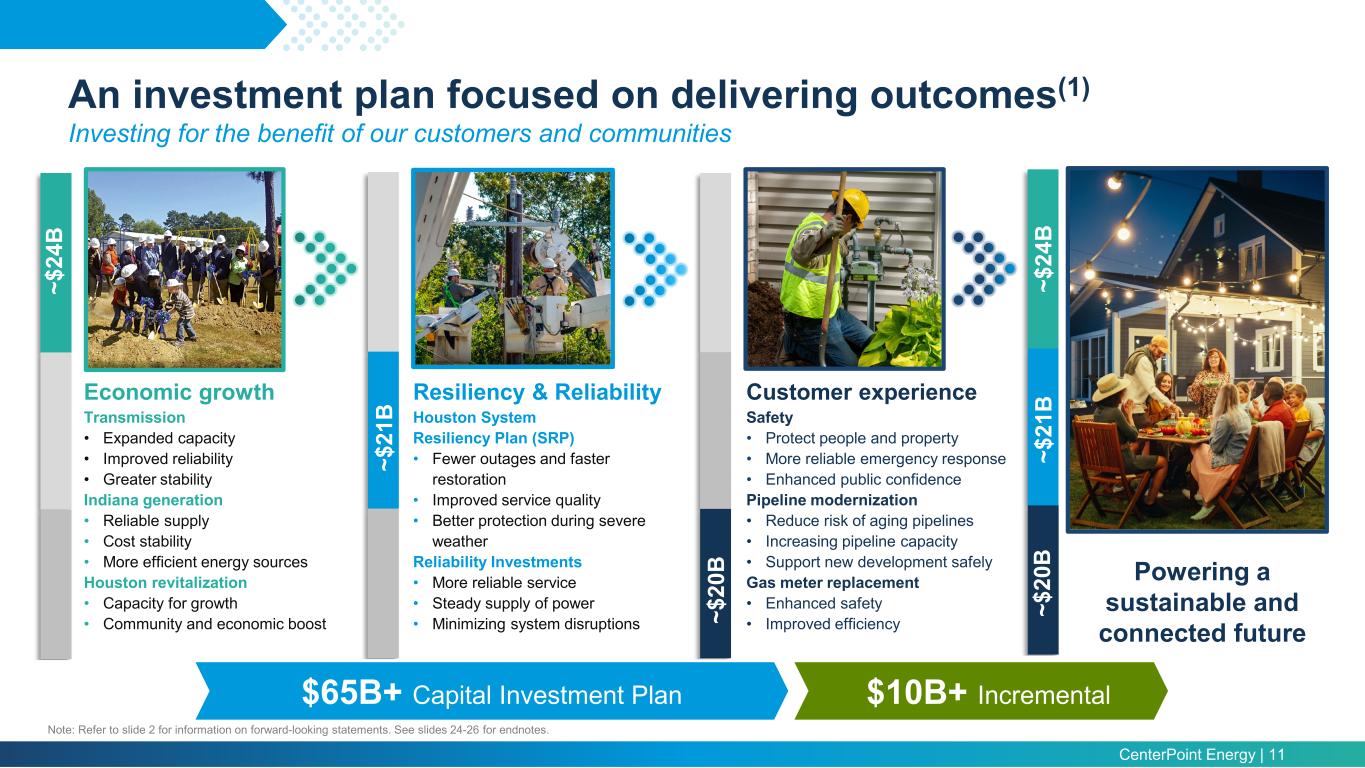
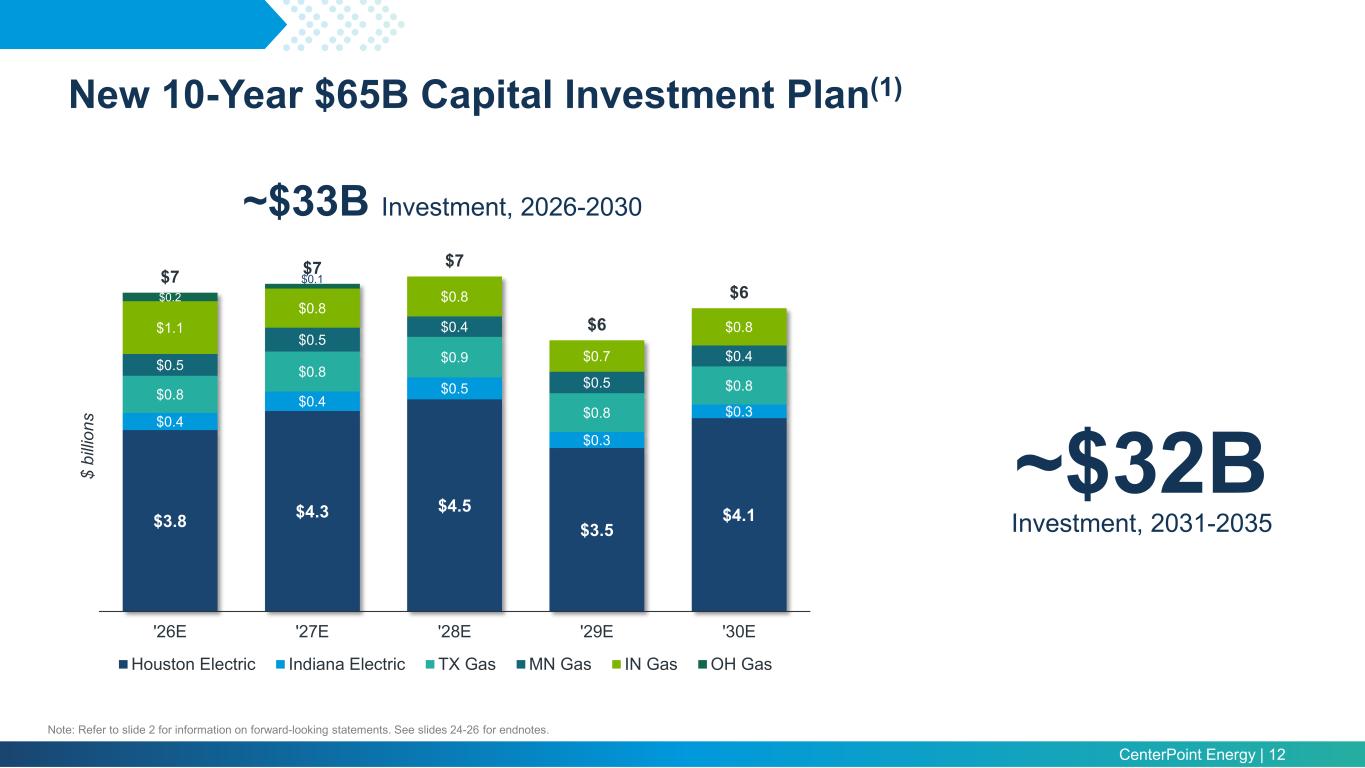
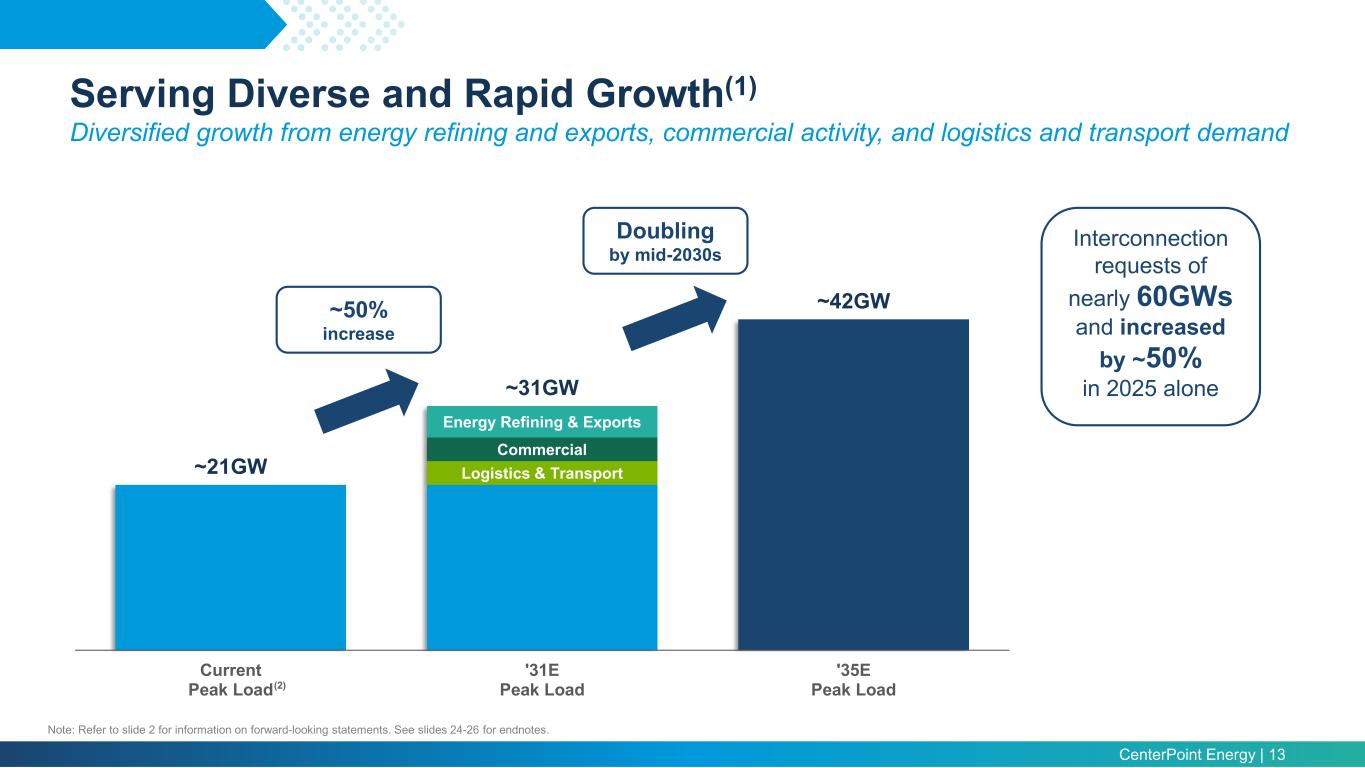
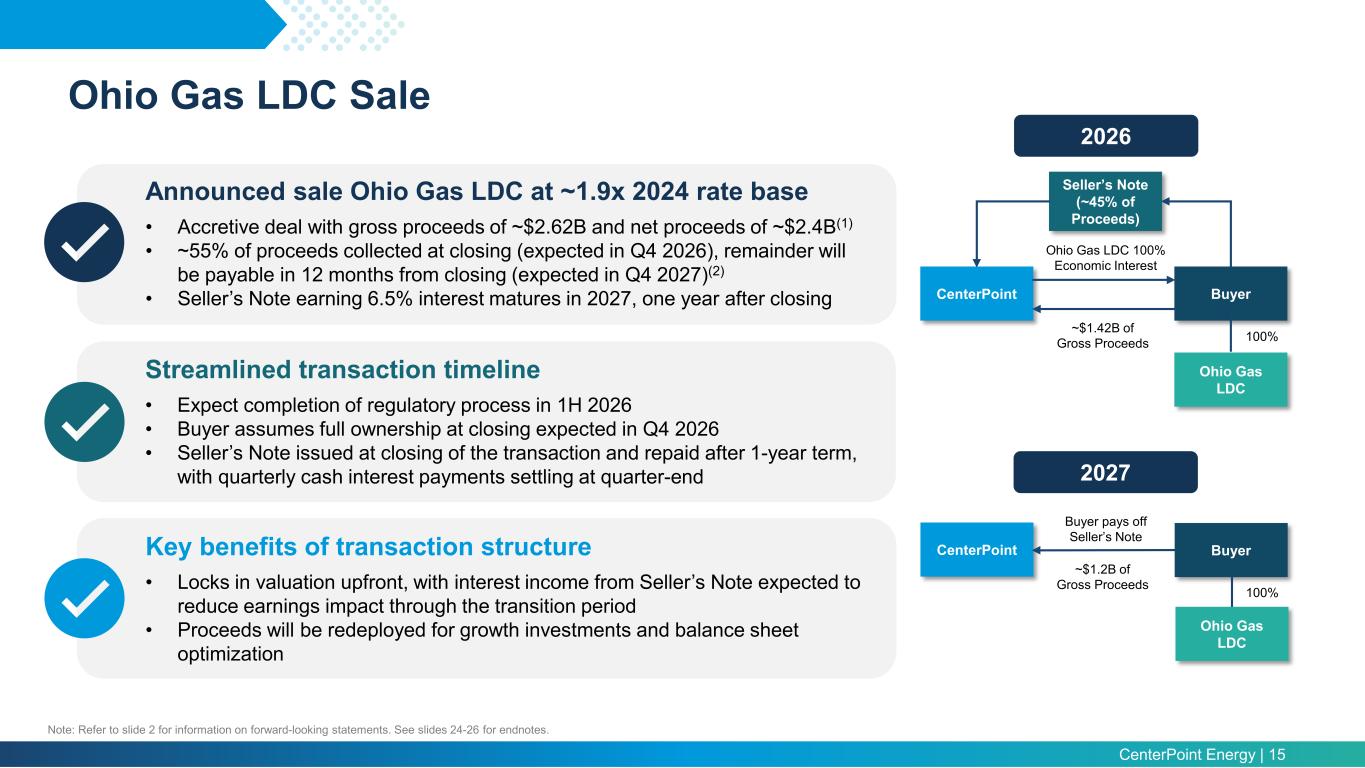
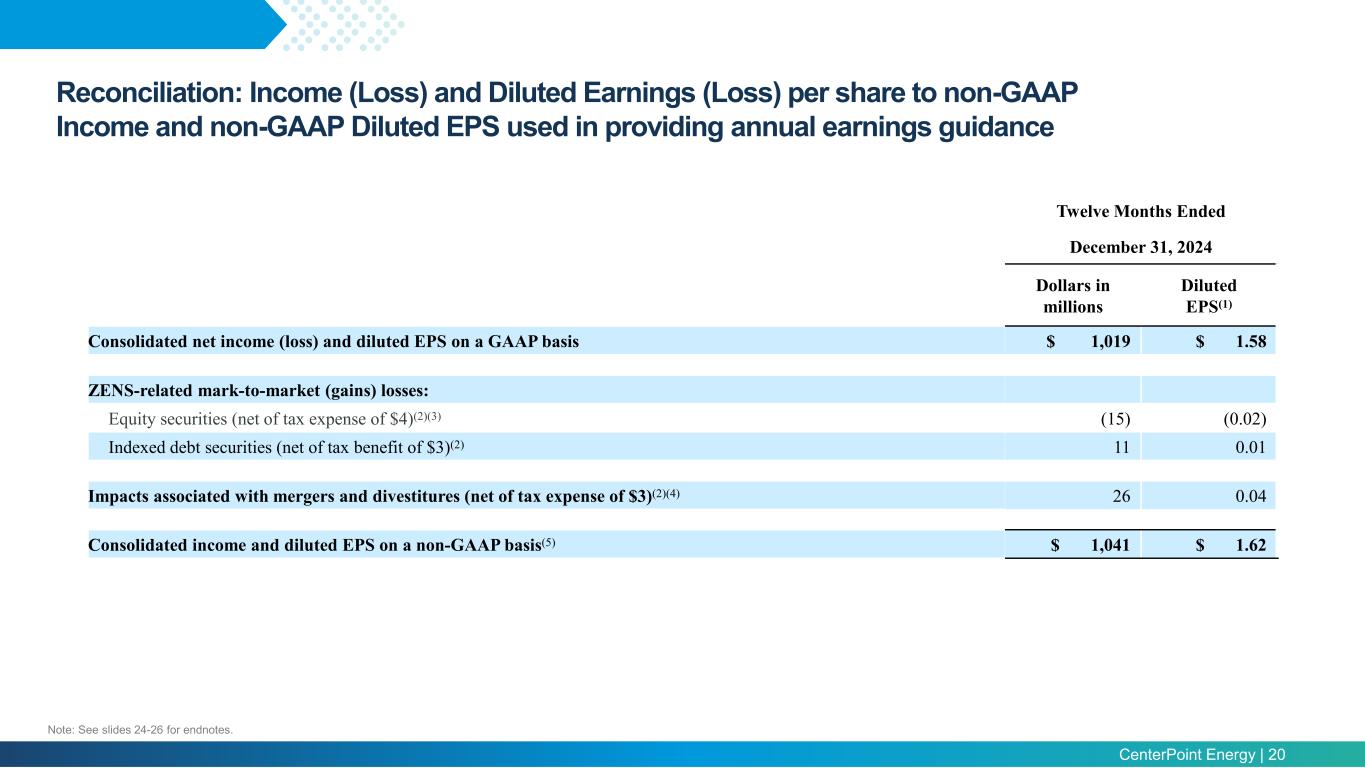
Thank you, Ben, and good morning, everyone. On today's call, I'd like to address three key focus areas for the quarter. First, I will briefly touch on the 10-year financial plan update we introduced just weeks ago. Second, I will walk through our strong third-quarter financial results. And lastly, I'll discuss our announcement from earlier this week regarding the sale of our Ohio Gas LDC. Last month, we introduced an ambitious 10-year plan focused on supporting economic development, delivering strong customer outcomes, reducing O&M through operational efficiency, and driving value for our investors. Our capital investment plan of at least $65 billion is supported by some of the fastest-growing demand for energy anywhere in the country. Importantly, we also have visibility to at least $10 billion of incremental capital investment opportunities over the course of the plan, particularly in Texas, given the dramatic growth the communities we serve continue to experience. Specifically, in our Houston Electric Service territory, we forecast peak load demand to increase by 10 gigawatts in 2031. This forecasted growth would represent a nearly 50% increase in peak demand over the next six years. Additionally, through the middle of the next decade, we estimate the electric load demand on our system will double to approximately 42 gigawatts. This level of demand will continue to support a strong investment profile. Our capital investment plan through 2030 drives a projected rate-based CAGR of over 11% through the end of the decade and the potential for double-digit rate-based growth through the middle of the next decade. The greater Houston area is thriving, powered by what we believe is the most diverse set of growth drivers in the sector. It is not relying on any single industry, and the results speak for themselves. This growth isn't aspirational. It's already here. Notably, throughput in our Houston Electric business are up 9% year-to-date. This strong growth is anchored by our surging industrial customer class throughput, which are up over 17% quarter-over-quarter and up over 11% year-to-date. This incredible growth provides a solid foundation for our earnings guidance. Specifically, we have strong conviction in our ability to achieve non-GAAP EPS at the mid to high end of our 7% to 9% annual growth guidance from 2026 through 2028 and 79% annually thereafter through 2035. I continue to believe we have one of the most differentiated plans in the industry because of our unique combination of the diversity and pace of electric demand growth, a de-risk regulatory and financing profile, and our ability to continue investing affordably for the benefit of our customers. These attributes set us apart from our peers and enable us to continue to deliver value for all our stakeholders over the next decade and beyond. Now moving to our strong third quarter financial results. This morning, we reported non-GAAP EPS at 50 cents for the third quarter, representing a 60% increase over the same period last year. As we signaled last quarter, 2025 earnings reflect a more back-end weighted profile for the year, consistent with our return to traditional capital recovery mechanisms now that the bulk of our rate case activity is behind us. I'll let Chris cover the details in his section, but we remain well positioned to execute on our recently increased 2025 non-GAAP EPS guidance. As such, we are reiterating our full year 2025 non-GAAP EPS guidance range of $1.75 to $1.77, which would represent 9% growth over 2024 delivered results of $1.62 per share. Additionally, we are also reiterating our 2026 non-GAAP earnings guidance we initiated a few weeks ago. As a reminder, we are targeting at least the midpoint of $1.89 to $1.91 per share. At the midpoint, this range would represent an 8% increase over the midpoint of our 2025 non-GAAP EPS guidance range. Further, we continue to expect to grow non-GAAP EPS at the mid to high end of our 7-9% long-term annual guidance range from 2026 through 2028 and 7-9% annually through 2035. As a reminder, our guidance is based on actual delivered results as we continue to execute and deliver value for our shareholders each and every year. I'd now like to discuss the recent announcement regarding the sale of our Ohio Gas LDC. Earlier this week, we announced the signing of our Ohio Gas LDC transaction, which is expected to generate approximately $2.6 billion in gross proceeds, representing the significant milestone in executing our 10-year financial plan. The strong valuation of approximately 1.9 times 2024 rate-based underscores the exceptional demand for U.S. natural gas LDCs. This outcome once again demonstrates our ability to efficiently finance our growth investments, this time by recycling the transaction proceeds of a high quality business at nearly two times book value and reallocating capital into our remaining portfolio at one times book value. The after-tax net cash proceeds of approximately $2.4 billion dollars will be redeployed into higher growth jurisdictions to efficiently fund our capital investment plan. Importantly, the proceeds should also provide additional flexibility and funding for future incremental capital investments. The transaction is expected to close in the fourth quarter of 2026. Chris will go into the details of the transaction, including its structure, which will allow us to more smoothly redeploy capital while maintaining a strong earnings profile. It has been a privilege to serve the customers and communities in our Ohio gas business and we are committed to a smooth transition for our customers. This is a tremendous business with fantastic employees and we know they will continue to provide great service to the 335,000 meter customers in Ohio. This transaction reflects our continued commitment to disciplined capital allocation as we seek to further enable growth, especially in Texas, and long-term value creation for all stakeholders. Our growing capital investment opportunities are supported by accelerating and diverse set of load growth drivers. This, coupled with our ability to efficiently finance our plan, continues to support our conviction that we have one of the most tangible long-term growth plans in the industry. And with that, I'll hand it over to Chris.
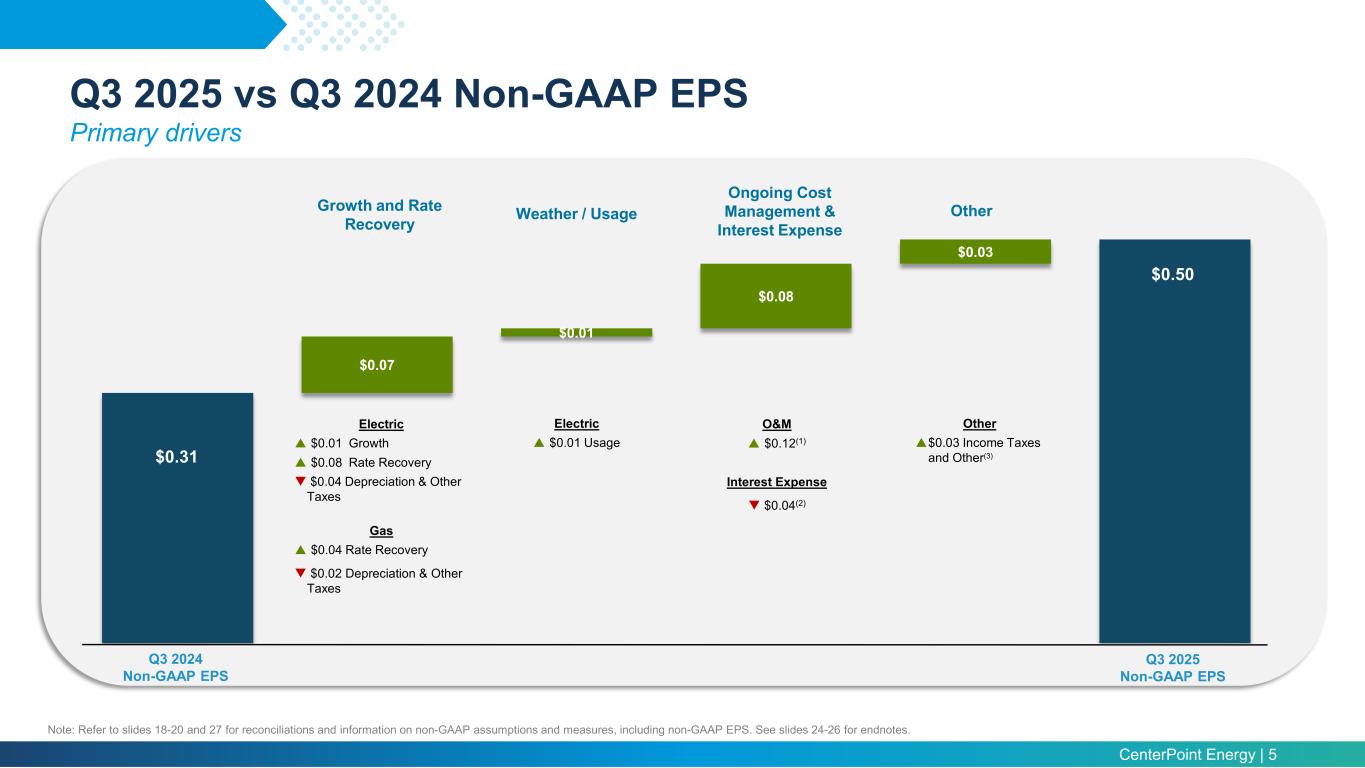
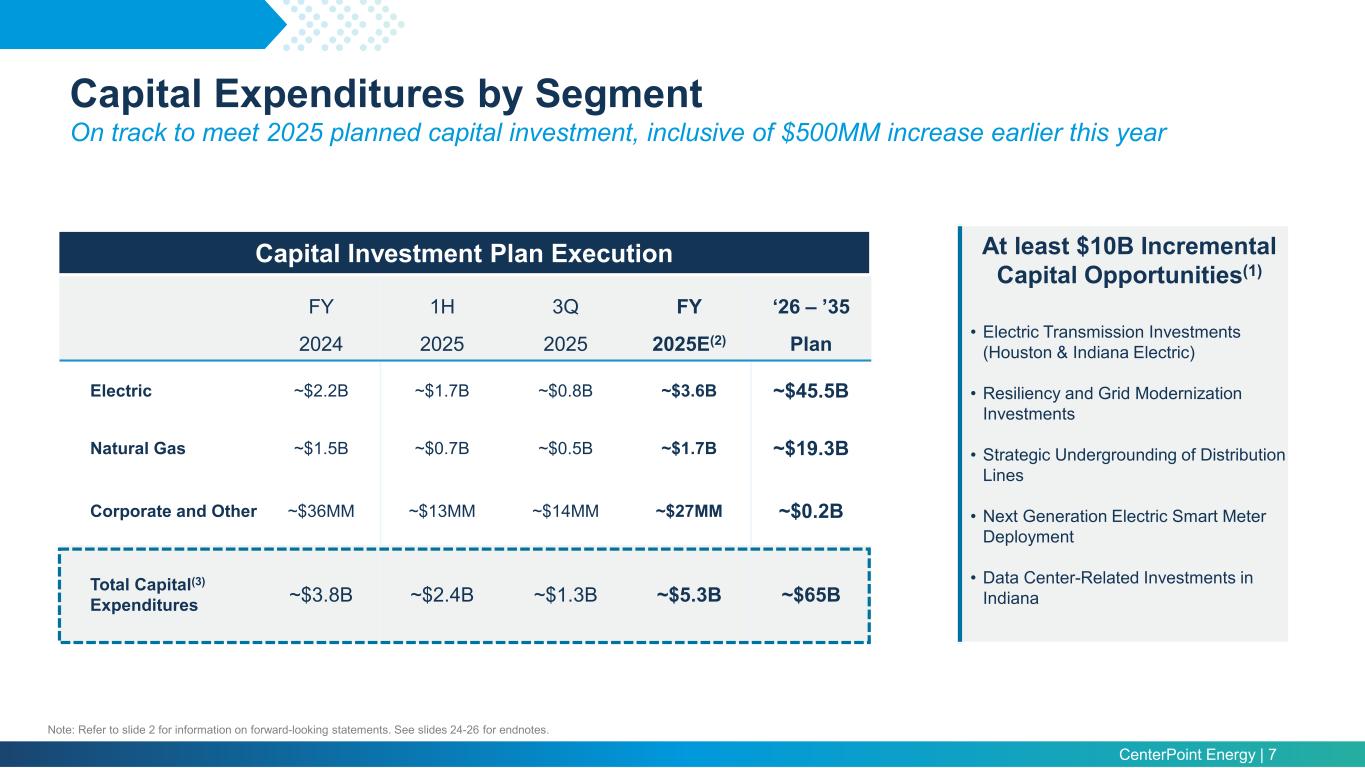
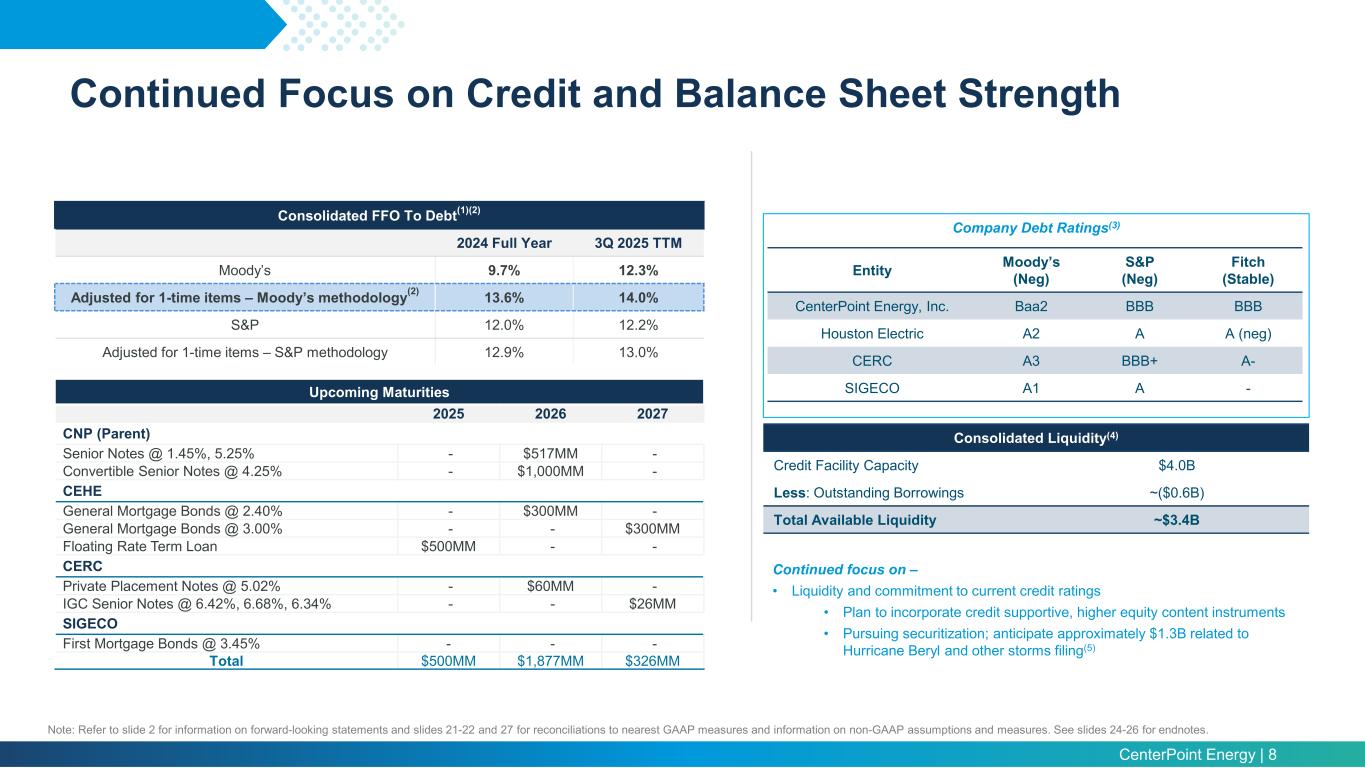
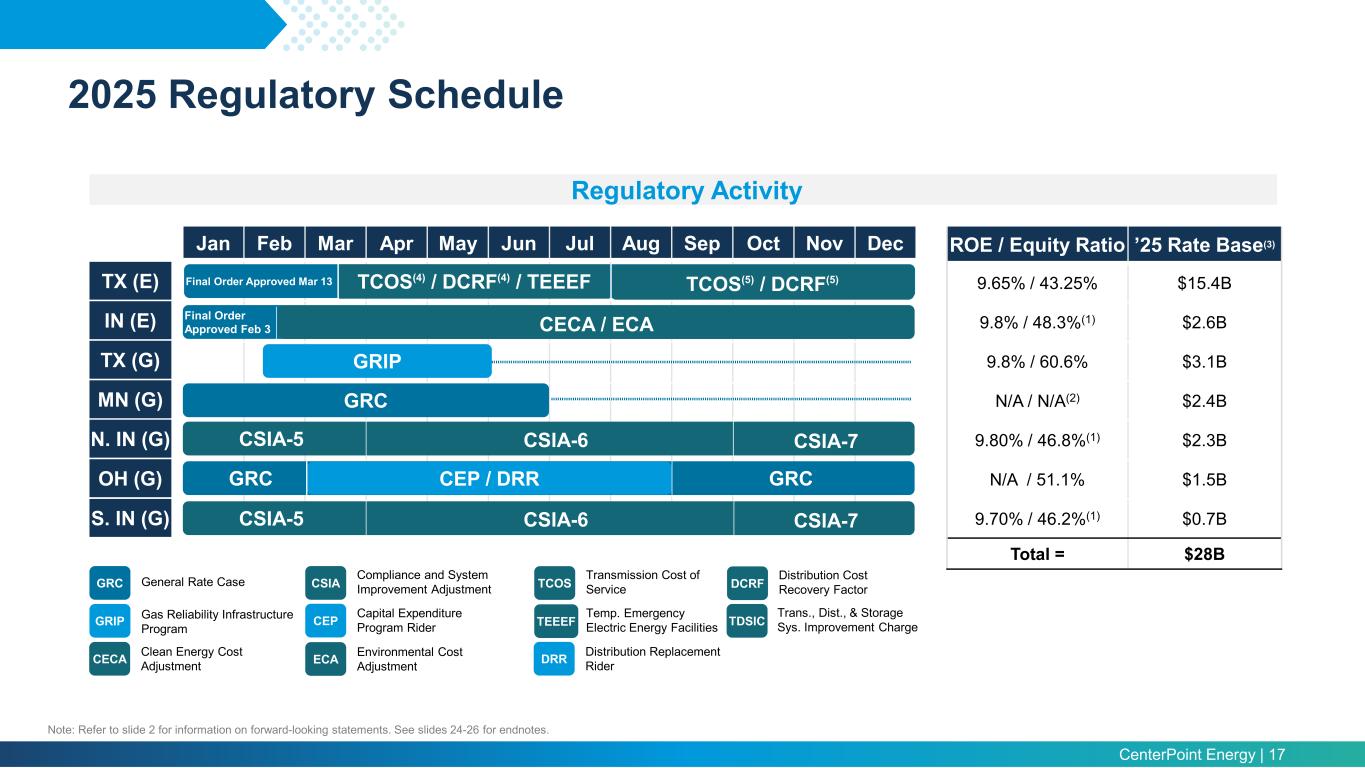
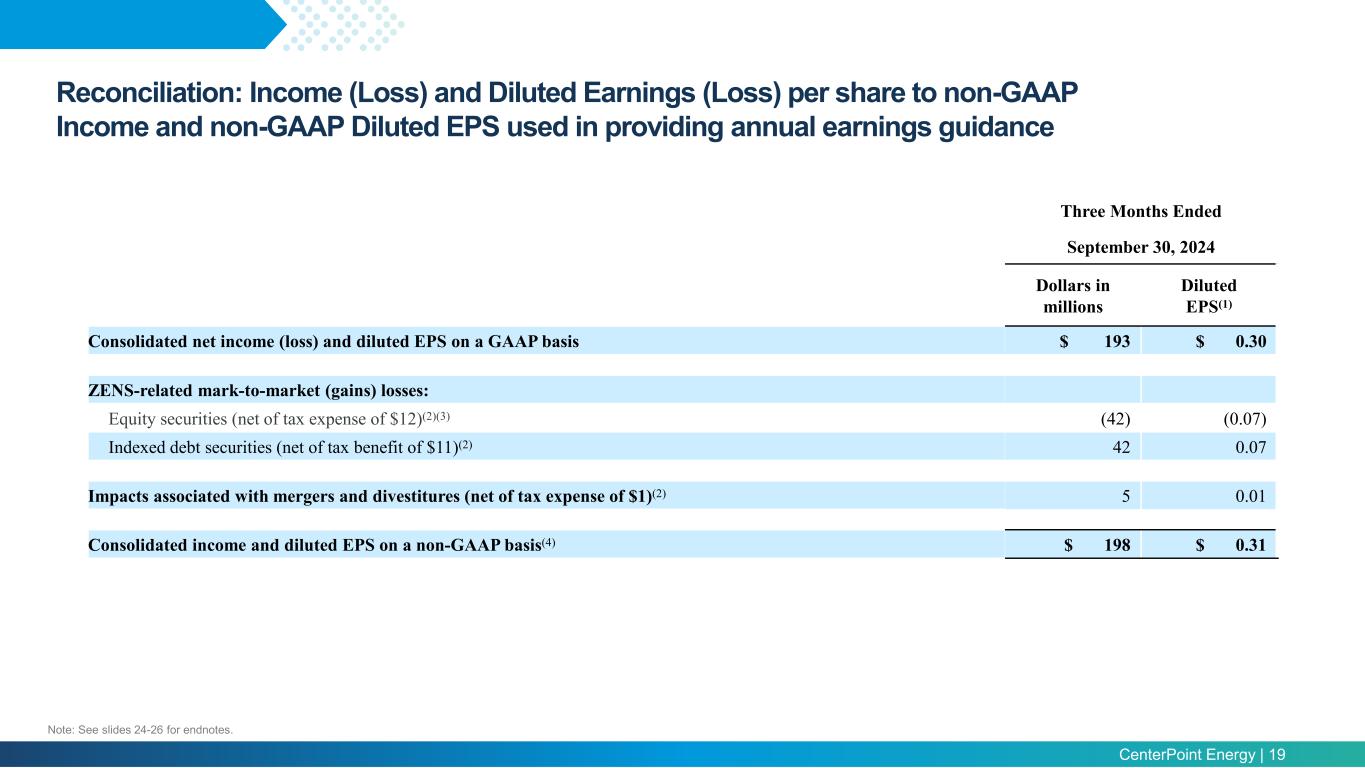
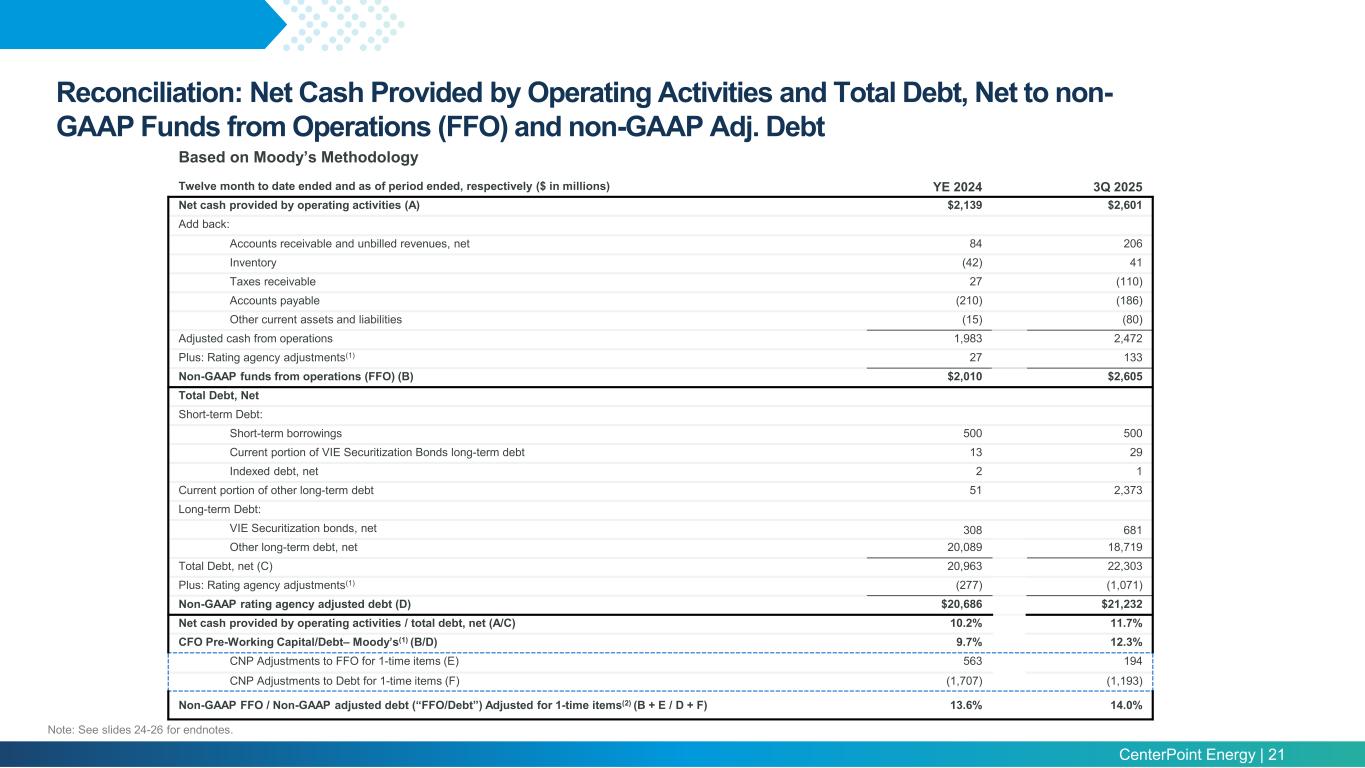
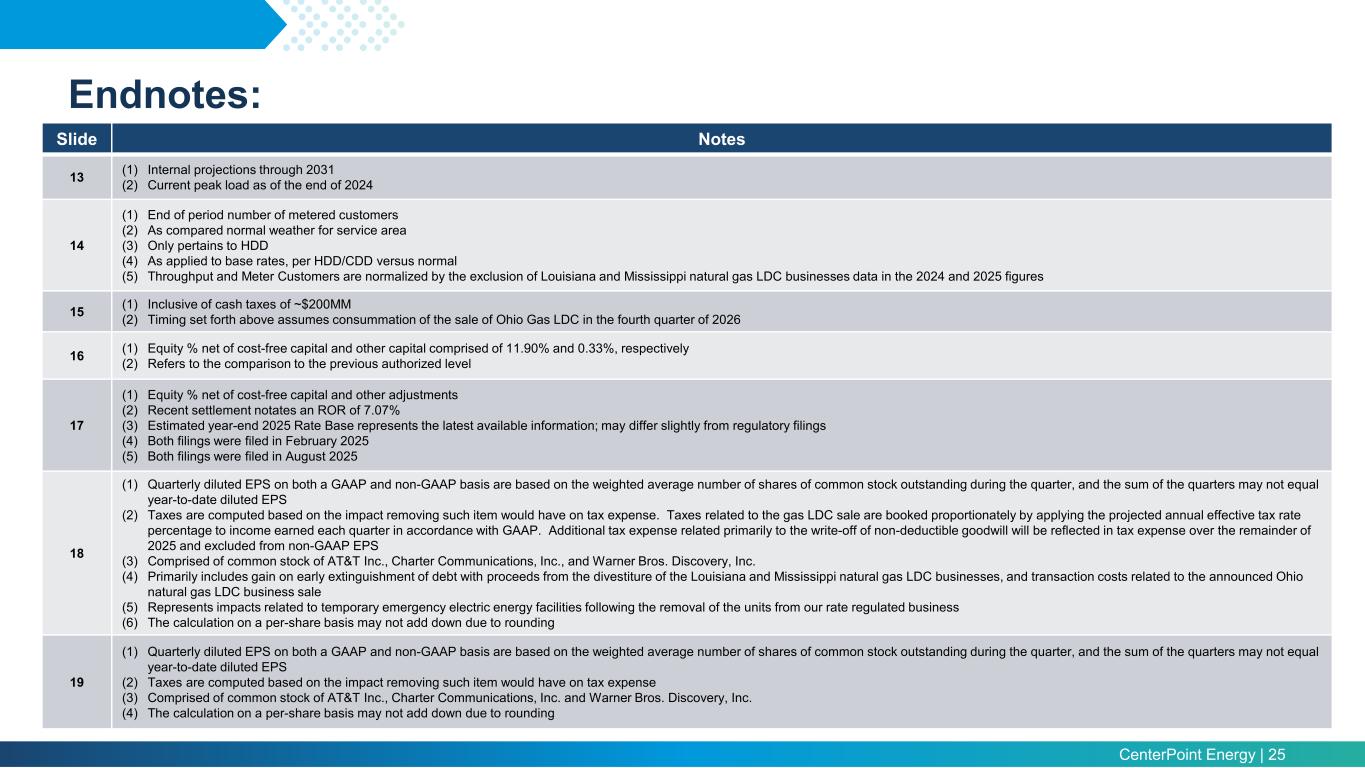
Thanks, Jason. This morning, I will address four key areas of focus. First, I will review the details of our third quarter results. Second, I'll discuss the transaction structure of the recently announced sale of our Ohio Gas LDC. Third, I'll highlight our progress on the execution of our 2025 capital investment plan. And lastly, I'll provide an update on where we ended the third quarter with respect to the balance sheet. Let's now move to the financial results shown on slide 5. On a GAAP EPS basis, we reported $0.45 for the third quarter of 2025. On a non-GAAP EPS basis, we reported $0.50 for the third quarter of 2025, compared to $0.31 in the third quarter of 2024. Our non-GAAP results removed $0.03 of charges, primarily consisting of tax true-ups related to the sale of our Louisiana and Mississippi businesses and transaction costs in connection with our announced Ohio Gas LDC sale. In addition, it removes two cents related to our temporary generation units, as these units are no longer part of our rate-regulated business. These strong results give us confidence in meeting our positively revised 2025 non-GAAP EPS guidance of $1.75 to $1.77. Now, taking a closer look at the drivers of our third quarter earnings, Growth and rate recovery, when netted with depreciation and other taxes, were a favorable variance of 7 cents when compared to the same quarter of last year. This positive variance underscores the strength of our interim capital tracker mechanisms, which continue to support the efficient recovery of our investments. We expect these tailwinds to continue driving earnings through the remainder of the year. During the quarter, we filed for our second set of interim capital recovery trackers at Houston Electric, the TCOS and DCRF mechanisms, which support the timely recovery of transmission and distribution investments, respectively. Our TCOS filing, which included a $15 million annual revenue requirement increase, was approved and reflected in customer rates on October 10th. Our DCRF filing, which includes a $55 million annual revenue increase, is on the PUCT Open meeting agenda for later today, with updated rates expected to take effect in December. Weather and usage were $0.01 favorable when compared to the comparable quarter last year, driven by fewer outages across our Houston Electric Service territory related to storm activity. O&M was $0.12 favorable compared to the third quarter of 2024. This significant improvement in O&M is primarily driven by last August's vegetation management and other storm-related costs, where we spent approximately $100 million to accelerate work and improve customer outcomes. Additionally, we had three cents of favorability in other, which is primarily driven by an income tax remeasurement. This reflects our continued efforts to optimize our tax structure to align with the evolving composition of our portfolio, which, after the closing of our Ohio transaction, will skew more heavily towards Texas. These favorable drivers were partially offset by four cents of higher interest expense and financing costs, primarily due to incremental debt issuances since the third quarter of 2024. Next, I'll go through the details of our recently announced Ohio Gas LDC sale. As many of you may have seen, earlier this week, we announced the sale of our Ohio Gas LDC, which is expected to generate gross sale proceeds of approximately $2.62 billion, garnering a multiple of nearly 1.9 times 2024 year-end rate base. We anticipate total net proceeds of roughly $2.4 billion after taxes and transaction costs. This is an outstanding outcome. This result exceeds what was contemplated in our financing plans, underscoring the conservative approach we take to our planning process. As such, the transaction will be accretive to both our plan and alternative financing sources. In the near term, these proceeds will serve to further strengthen our balance sheet. And over the long term, as Jason alluded to, this transaction will allow for greater financing flexibility and may enable us to fund incremental capital investments with less equity than the 47% rule of thumb we provided at our September investor update. Transaction proceeds will be redeployed into higher-growth jurisdictions to support near-term capital investments in our Texas electric and gas businesses. Notably, after the close of this transaction, Texas will represent 70% of our investment portfolio. In connection with the transaction, we will enter into a one-year seller's note with a 6.5% annual coupon, which will help support earnings in 2027. As a reminder, last quarter we announced an increase to our 2025 investment plan as we continue to make targeted system enhancements. These incremental investments will help partially offset the loss of Ohio investments upon the close of the sale. The transaction is expected to close in the fourth quarter of 2026, aligning with our financing plans and long-term value creation goals. Next, I'll touch on our capital investment plan execution through the third quarter, as shown here on slide 7. For the quarter, we are right on track to meet our positively revised 2025 capital investment target of $5.3 billion. In the third quarter, we invested $1.3 billion of base work for the benefit of our customers and communities, which, combined with the $2.4 billion we invested in the first half of the year, represents approximately 70% of our total year target. In short, we remain well-positioned to achieve our investment targets for 2025. Now, moving to an update on our balance sheet and credit metrics. As of the end of the quarter, our trailing 12-month adjusted FFO to debt ratio based on the Moody's rating methodology was 14%. when removing transitory storm-related impacts. We anticipate these credit metrics could be further improved by early next year as we expect to issue securitization bonds in connection with Hurricane Beryl in the first quarter of 2026. We continue to target 100 to 150 basis points above our Moody's downgrade threshold of 13% as we remain laser-focused on efficiently financing our robust capital investment plan. Earlier this month, we once again illustrated our commitment to a strong balance sheet through our $700 million junior subordinated note issuance, which provides 50% equity credit. Our common equity guide through 2030 remains unchanged at $2.75 billion. As a reminder, we have de-risked over a billion dollars of these equity needs through the forward sales we executed earlier this year, and we do not anticipate common equity needs beyond those forward sales from now through 2027. We believe we are well positioned to execute the remainder of the year and beyond, and we are reaffirming our 2025 non-GAAP EPS guidance range of $1.75 to $1.77, which equates to 9% growth at the midpoint from our delivered 2024 non-GAAP EPS of $1.62. Additionally, we are also reiterating our 2026 non-GAAP earnings guidance we initiated a few weeks ago at our investor update from the midpoint of our new and higher 2025 range. For 2026, we are targeting at least the midpoint of $1.89 to $1.91. At the midpoint, this would represent an 8% increase over the midpoint of our 2025 non-GAAP EPS guidance range. Looking ahead, we expect to grow non-GAAP EPS at the mid-to-high end of our 7% to 9% range from 2026 through 2028. After 2028, we will target growing earnings annually at 7% to 9% through 2035. We look forward to executing our plan that delivers on the most diverse growth drivers in the country, fueling economic development for years to come. And with that, I'll now turn the call back over to Jason.
Thank you, Chris. I'm proud of the team's continued execution over the past quarter and the results that firmly put us on track to deliver our guidance this year. This management team will work to not only execute the ambitious targets we set forth in our new industry-leading 10-year plan, but we will also work to enhance the plan for the benefit of all of our stakeholders.
Operator
At this time, we will begin taking questions. If you wish to ask a question, please press star 11 on your touchtone keypad. The company requests that when asking a question, callers pick up their telephone handsets. Thank you. Our first question is from Nick Campanella of Barclays. Your line is now open.
Hey, good morning. Thanks for all the disclosures.
Operator
Good morning, Nick.
Hey, morning. I just wanted to ask, you know, Chris, you talked a little bit about it in your prepared remarks on balance sheet capacity here from the Ohio transaction. You know, how are you kind of viewing it on, you know, of like an FFO to debt improvement basis versus the plan. You mentioned financing may be less than the 47% equity assumption. Is that now 30 or 15? Is there any kind of way to further quantify that? Thanks.
Sure. Hi, Nick. If I could just maybe take a step back. And as you look at the transaction, there's really a couple of things going on. One is over time, you've seen us continue down this path of increasing really the focus on the portfolio where we're reducing also earnings and cash lag where we can. So maybe that kind of goes to your epiphoto debt point. As you look at the total outcome, as we do sources and uses, you'll probably see us initially step into reducing the Opco debt that's there. So that's roughly $800 million if you base it on a year-end 26 rate base of $1.6 billion. six. And then as we looked at our plan overall, you're probably looking on the order of 400 million of benefit net to plan. So ultimately, what this puts us in a position to do, as you can imagine, is we'll evaluate both the improvement to the balance sheet here in the near term, and then as we go forward, it could allow us to deploy additional CapEx to the plan in an accretive way.
Okay, great. Appreciate it. And then just maybe on the deal, just any update on how, you know, local feedback has been on the ground and, you know, reception to the deal from state leadership since it was announced.
Yeah, good morning, Nick. It's Jason. Reception has been great so far. You know, any job. Our counterparty.
Operator
Thanks a lot. Thank you. Our next question is from Steve Fleischman with Wolf Research. Your line is now open.
Hi, good morning. Just maybe, Jason or Chris, more color on the sales growth in Texas, which obviously that's very strong. You know, just what sectors are driving the industrial sales so much higher this year?
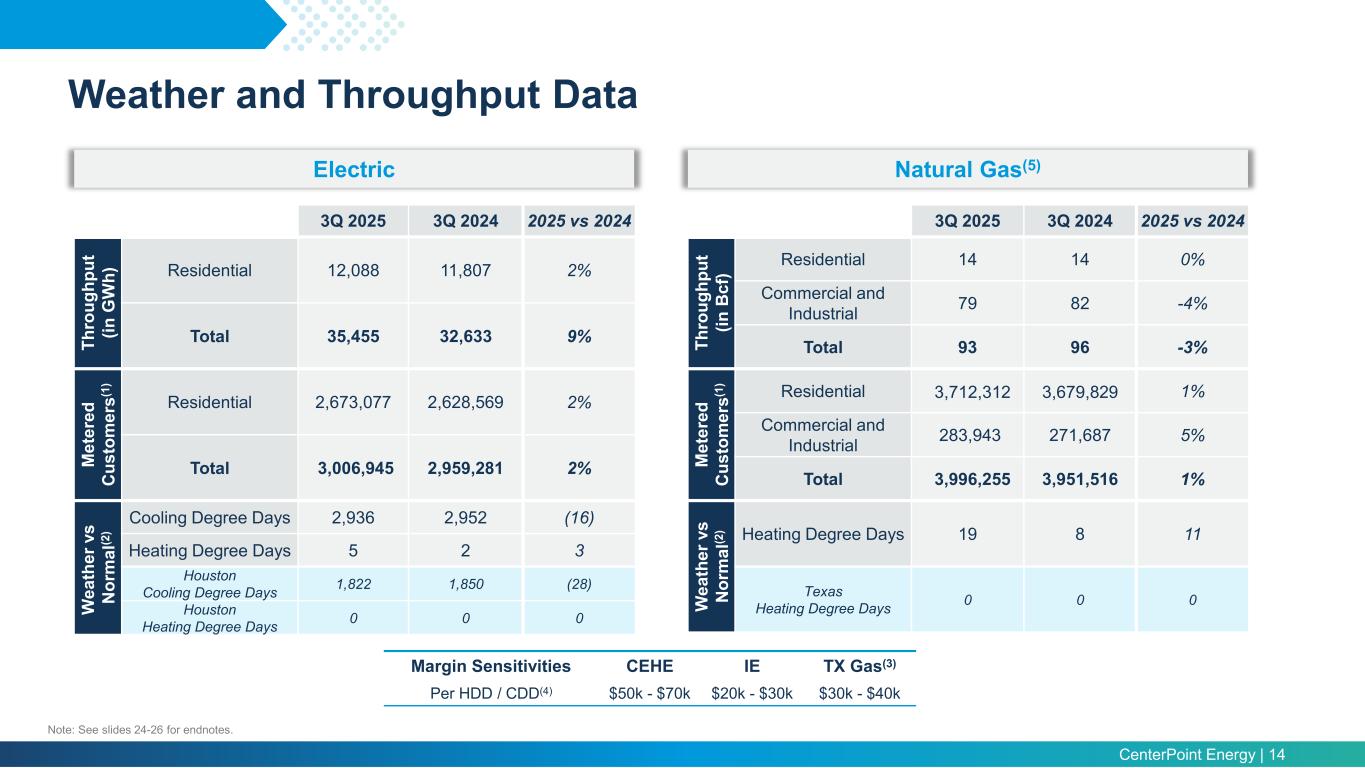
Good morning, Steve. Thanks for the question. You know, I think the throughput year over year really reflects the diversity of your Houston area. You know, we've already connected this year alone over half a gig of data center activity. Much of that is on the transmission sort of industrial rate side. You know, we continue to see very strong demand from energy refining, processing, and exports. And I think what we really saw as a differentiator this quarter was the increase in activity at the Port of Houston. And, you know, it's the largest port by waterborne tonnage in the world. And we saw about an 18% increase quarter over quarter in export. So it's really just a diversity of drivers. You know, this isn't growth that we're anticipating coming down the line. This is growth across a number of different industries.
Okay, great. That's helpful. And then just any update on prospects of data center activity in Indiana? and I don't know if you want to share any thoughts on how you're feeling about the regulatory environment in Indiana. I know you don't have any cases there right now, but just thoughts there.
Yeah, we continue to actively work. Data center opportunities in Indiana feel well positioned to deliver on that. As we've talked about in the past, I think we're pretty uniquely positioned in the fact that we've got excess capacity today on the system that allows us to move quickly. It's an area that is very constructive, both from a cost of and availability of land, water, et cetera. And, you know, we've just easily converted a combined cycle. So, you know, we continue to feel good about the prospects. Data center activity to southwest Indiana, you know, stepping back on kind of a broader basis, you know, we are all focused. We, like many of the other Indiana utilities, had a fairly significant step up in rates last year as a result of facilities. As we project forward, though, we see our rates growing in line with inflation. Over the remainder, we've taken some steps to help kind of mitigate the impact. We've canceled about a billion dollars of renewable projects, and we'll push out the retirement of our third and final coal facility a few more years. And so I think at the end of the day, we, like other utilities, are taking proactive steps to make sure that we moderate the pace of rate increases, but working constructively to bring economic development activity to the state. And I think that's very much aligned with the state leadership's goals.
Operator
Thank you. Our next question is from Jeremy Tonit with J.P. Morgan Securities. Your line is now open.
Hi. Good morning. Good morning, Jeremy. Chris, thanks for the comments there on the asset sale. I was just wondering if you might be able to expand a little bit more. It sounds like a nice credit accretive properties to the final field terms versus expectations. I'm just wondering if you could expand a bit more, I guess, on whether you see this being accretive to the earnings over time or any thoughts on that side?
Sure. I think, Jeremy, there's a couple ways to look at this. We do see it as directly beneficial to the financing plan, as I mentioned, and helpful from an earnings standpoint, too. A thing to keep in mind is as we looked at the sale here of Ohio specifically, as we reallocate spend, we're going to be in a situation where we're experiencing 25% to 30% less cash lag just on a historical basis, so I think that's certainly helpful as well. Going forward, we'll be putting those dollars to work, as Jason mentioned, certainly heavily in our Texas gas and electric business, including in a set of Texas gas projects that we're excited about really for years to come, where it really is a great business, as you know, coming out of the Ray case last year there. So I think well-positioned both financing-wise and from an earning standpoint. Keep in mind, I alluded to this in my prepared remarks, but would just emphasize here too, as we're stepping into making sure that we were managing any otherwise earnings impact, we've already deployed about $500 million this year that we expressed in our plan. And keep in mind, as I mentioned earlier, this is about a billion six year-end 26 rate base. So you should assume that we're also going to accelerate another roughly billion dollars in 2026. That means in that year we're going to fully replace that rate base by the beginning of 2027. So overall, this is just well going forward.
That's very helpful. Thanks. And just one more, I guess, on the seller's note, as you guys are receiving in the deal, as far as how you think about how that helps facilitate the plan and what value, I guess, that brings to CenterPoint here, being able to layer that in and how that allows you, I guess, to manage earnings going forward. But it sounds like the capital plan, as you said, really is a big offset there.
Yeah, certainly from a capital allocation plan, we've been pre-funding thoughtfully. What I would say on the seller note is it's a pretty straightforward instrument there where we'll have that opportunity for the second year, so 2027, having that 6.5% coupon associated with it on just over a billion dollars. And so it allows us, again, to have good clarity. It also settles on a quarterly basis, I think, which is nice, too, so there's no real lag there. So straightforward instrument, one that is a helpful component of the plan as well. Got it. I'll leave it there. Thank you.
Operator
Thank you. Our last question comes from the line of Julian Dumoulin-Smith with Jeffries. Your line is now open.
Hey, good morning, team. Thank you guys very much. I appreciate it.
Hey, good morning. Jason, quickly, a couple things to follow up on. First off, I know you alluded to it a few weeks ago here, but how do you think about the AMI and rollout and the timeline on that front? I mean, certainly it seems like this is a multi-year project here, But certainly within the scope of the five-year plan, how do you think about the cadence of that rolling in? When do we start to get some visibility around that and contributions?
Yeah, Julian, thanks for the question. This next generation of AMI investments really will start to fold into the plan in 26, Maybe taking a step back for a second, you know, as we released the new $65 billion 10-year CapEx plan we identified, you know, more than $10 billion of upside. I would consider one of these projects as, you know, one of the upside opportunities to that plan. I think coming back to the timing, the most important thing that we can do is run a pilot in 26 to prove the use case and benefits for our customers. And then I would really look at that once we have that pylon in hand, making a pylon with the PSTT and really starting to kind of work this project in earnest beginning in 2027 and beyond. I think there are very real benefits for our customers, as we've talked about in the past. You know, when we experienced winter storm URI, because of the generation of meters we had at the time, we could not use those meters for load shed related activities. Instead, we had to shed load at the circuit level. You know, this next generation of smart meters would allow us to do that at the home and I think would allow us to be much more targeted and allow for even more rolling of power if an event like Winter Storm Uri was to occur again. So a number of benefits to our customers. We need to prove those out with a pilot in 26 and then look towards more fulsome deployment beginning in 27.
Excellent. Thank you for that. And then if I could pivot in a slightly different direction, obviously kudos on the transaction here. The other item, if I were to think about what's not in terms of included in the formal guidance on cash flows is mobile gen. I perceive that the economics and price points there continue to improve as evidenced maybe by some of the folks out there like Fermi talking about this. But how would you characterize today where you are around that and the opportunities that exist? More in the longer term, obviously, is that it's less committed in terms of the existing units and your exposure to some of that improved market pricing?
Yeah, there's really two aspects to that, Julian. You know, there's first, we've got what we call medium-sized units, just a little bit larger than five megawatts apiece, five units, five megawatts apiece, that, you know, currently we have the ability to market and are actively doing that. the market for those units remains very strong and would be a potential cash flow tailwind of the plan. On a larger basis, we have 15 units that are roughly, can I call them, 30 megawatts apiece that are now actively supporting the grid outside of San Antonio until either late 26, early 27 at the latest, at which time then we'll be able to re-market those units. As you said, the market remains strong. If anything is improving modestly, that will become a cash flow tailwind when we can release those units from the support of the ERCAC rate in San Antonio and re-market those, again, probably likely around spring of 27. So we continue to work with brokers, third parties, to keep a pulse on the market and think about how we can kind of de-risk and take advantage of this growth, but obviously more to come here as the quarters unfold and as we get closer to the release of those units.
Excellent. Sorry, nothing to pick, but one vital detail here, HB 4384, right? So that's your peers in the state, your pure gas utility in the state have been talking a good bit about this. I know that you all in the interim have talked up even more gas investments in your plan a few weeks ago. Is the scope of the contributions in that legislation fully included in the plan, and to what extent is there anything else that we should be considering here, given your expanded investment in gas in recent weeks?
Yeah, we think that was a very constructive piece of legislation to help sort of reduce regulatory lag. What I would say is the benefit of that legislation is incorporated in the plan that we released with respect to, you know, the investments that we have identified, you know, as we continue to look at enhancing the plan, and we've alluded to the, you know, $10 billion plus opportunity as we fold gas-related capital in, the plan could be enhanced further with, you know, partially in the plan as the opportunity to be improved as we...
Got it. All right. We'll stay tuned there. All All right, I'll leave it there. Thank you guys very much. Have a great day, guys.
Thanks, Jason. Operator, this concludes our call. Thank you all.
Operator
This concludes CenterPoint Energy's third quarter 2025, our news conference call. Thank you for your participation.