Operator
Good morning, and welcome to the Dianthus Therapeutics conference call. My name is Michelle, and I'll be your operator for today's call. A slide presentation to accompany the call is available on the Investors' section of the Dianthus Therapeutics website. Following the company's prepared remarks, we'll move to a Q&A session. Please note that today's call is being recorded. I will now turn the call over to Marino Garcia, CEO of Dianthus Therapeutics. You may begin.
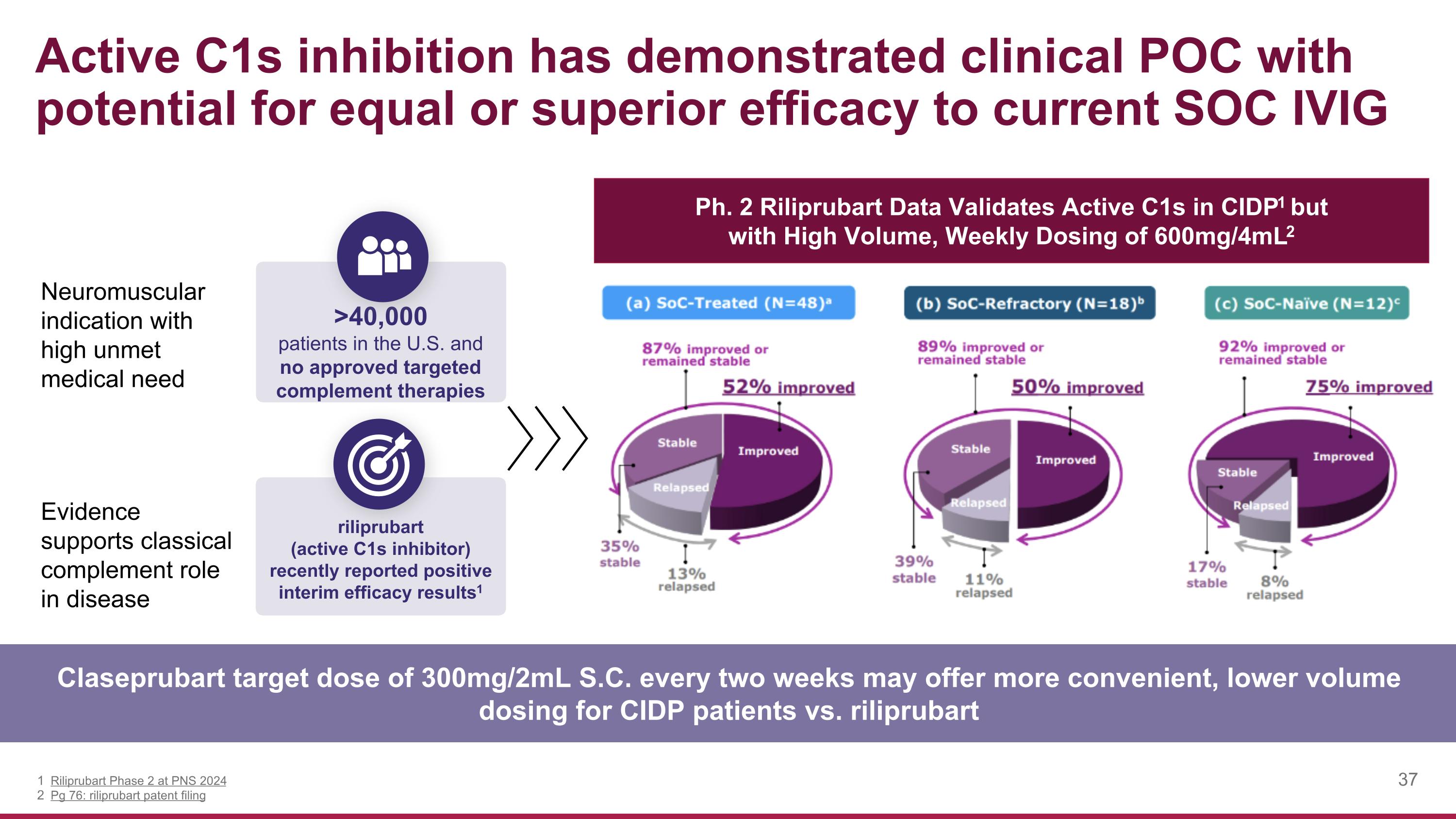
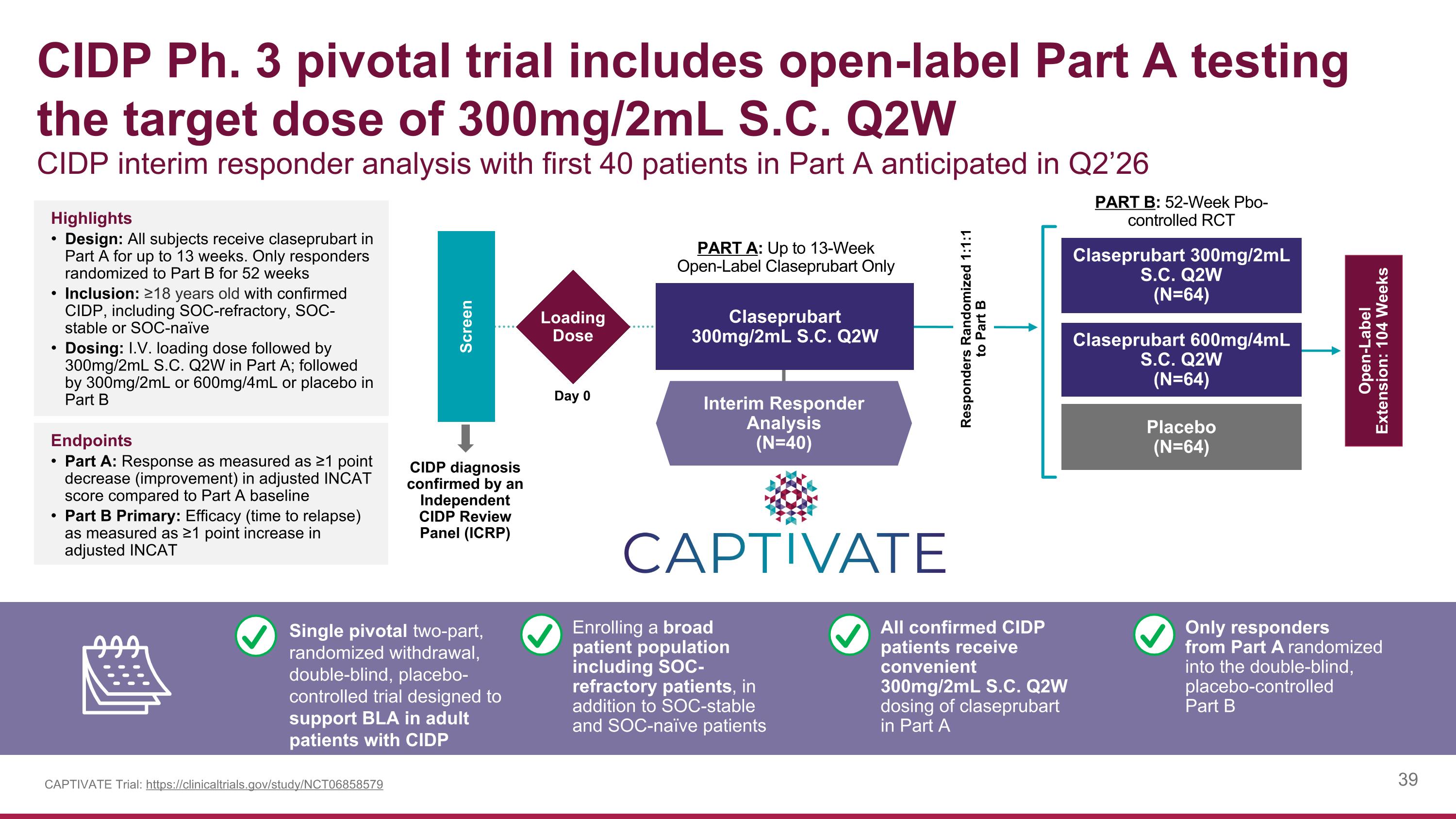
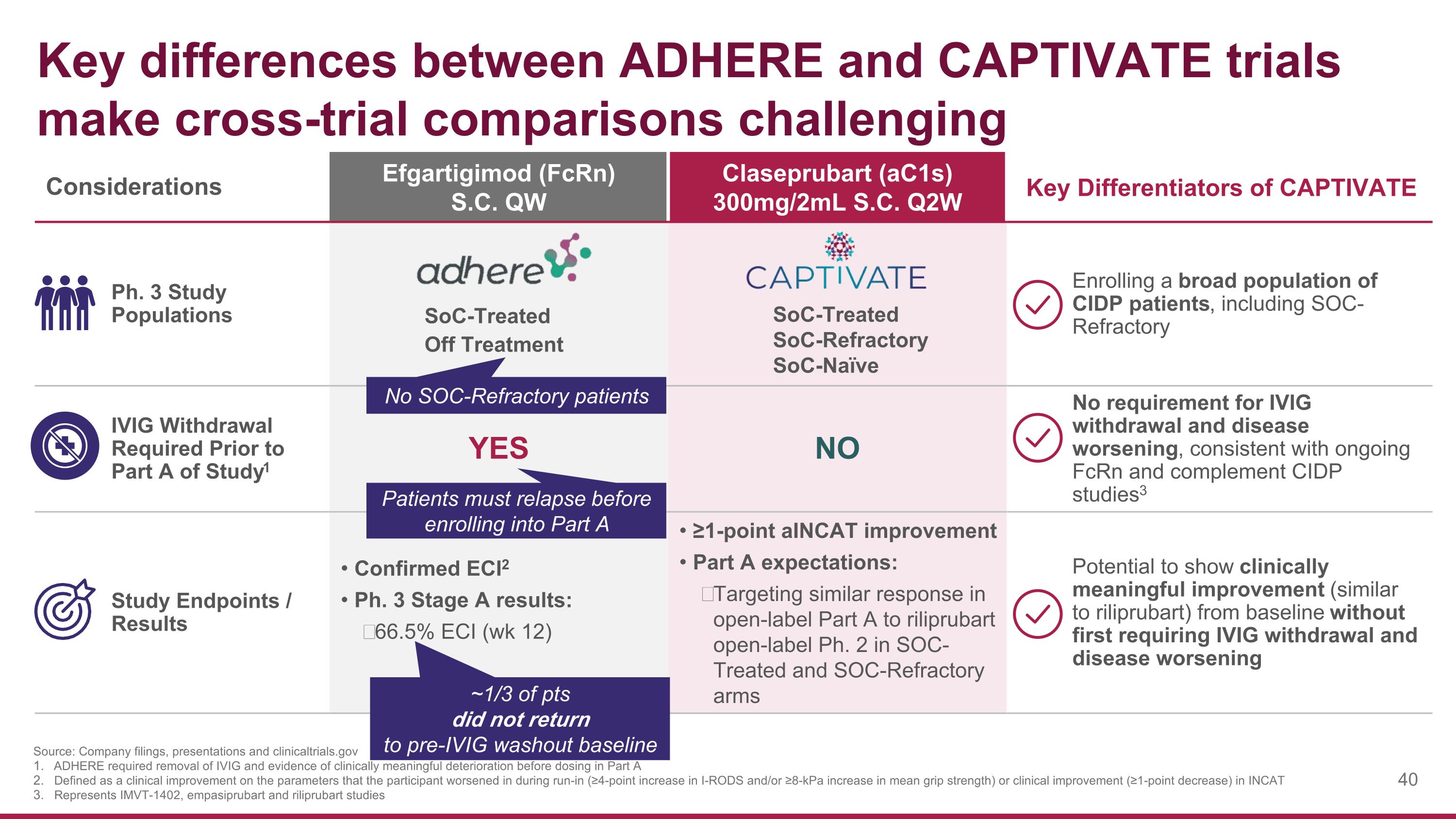
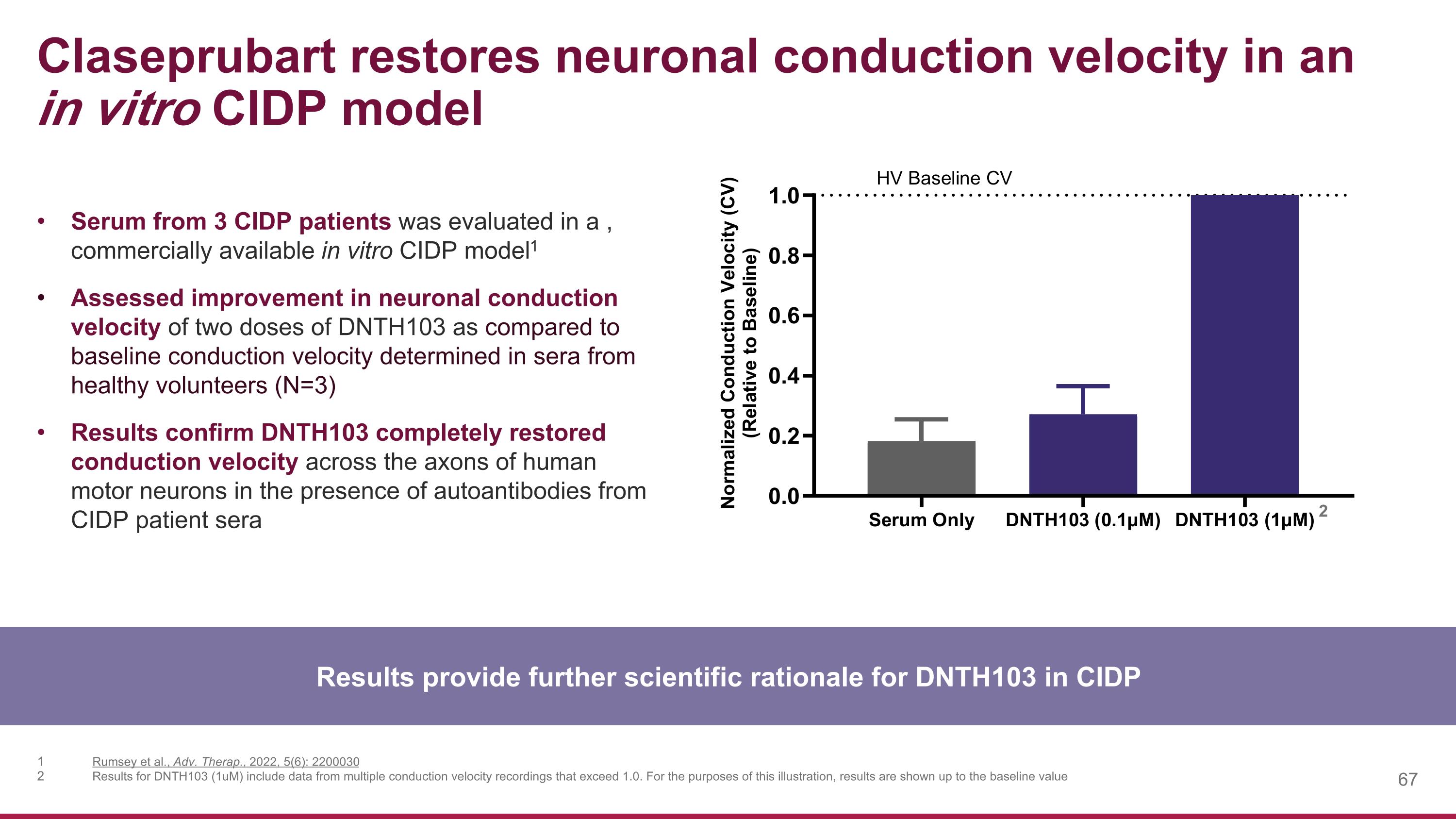
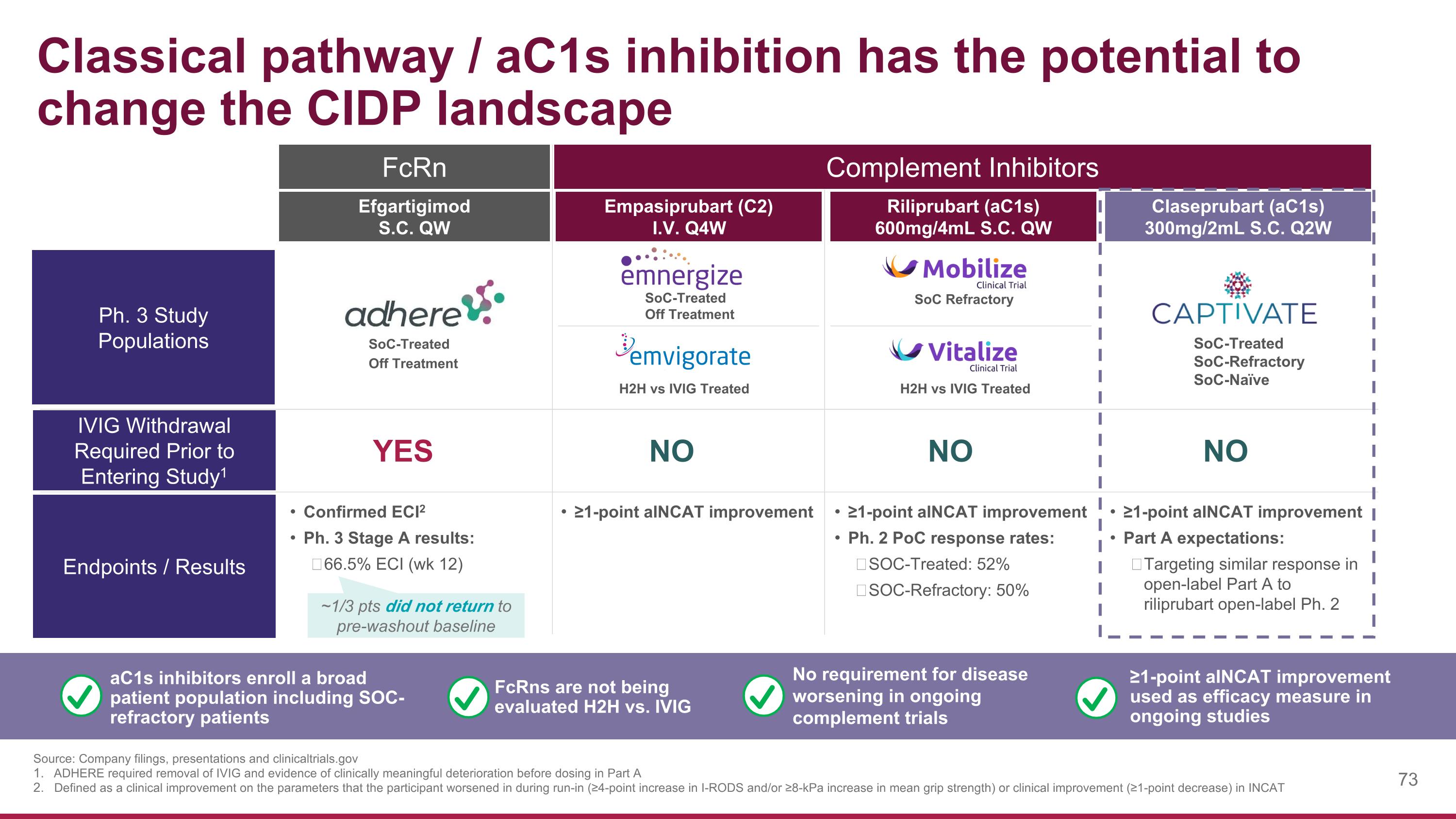
Thank you, operator. good morning everyone and thank you for joining us today earlier this morning we issued a press release with our early go decision for the interim responder analysis for a captivate trial and CIDP and we're thrilled to share with you more today on this call this earlier than anticipated announcement reflects the dianthus team's commitment and passion for patients suffering from severe neuromuscular diseases and I'd like to take a moment to thank them for their hard work. Specifically, thank you to the clinical development team, to the clinical operations team, working on CIDP, and all the supporting players across the organization that are making this exceptional execution possible. I'm very proud and grateful to be part of this team. Just a note before I begin the presentation, we will be making forward-looking statements, and I would refer you to our SEC finalists for more information. Next slide, please. I'm joined today by Dr. Simran Dawa, our Head of Research and Development, Ryan Savas, our Chief Financial and Business Officer, and John King, our Chief Commercial Officer. I'll begin with a few introductory remarks about the CAPTIVATE trial and best in disease potential we see for class apribart and CIDP, one of three neuromuscular conditions we are pursuing. Next, Sim will review our interim responder analysis for the CAPTIVATE trial. Finally, I'll discuss the opportunity we see for Clasipabart in CIDP and upcoming milestones. Then we'll open up the line for questions. Two slides forward, please. I'm overjoyed to be here to discuss the planned interim responder analysis in our early GO decision to continue the CAPTIVATE trial evaluating Clasipabart in CIDP at 300 milligrams, 2 milliliters every two weeks. a reminder that captivate is an ongoing single two-part phase three pivotal trial and it's designed to support a bla in adults with ciup because it is ongoing we are unable to share specific data and respond to rates for party at this time as we must protect the integrity of this pivotal trial we will aim to provide some color and context but protecting the patients on this trial is our priority as a reminder part a is open label where patients who are standard of care naive stable or refractory are dosed or switched within seven days to a single subcutaneous injection of classipabart at 300 milligrams 2 milliliters every two weeks for up to 13 weeks then only patients that improve by at least one point on the incat score for two visits in a row over their baseline starting at week five can then move on to part b part b is the randomized withdrawal double blind placebo control part of the trial today's announcement is an early go decision based on the planned interim responder analysis in part a of the trial which sim will speak to in a few minutes now for some of you captivate will look very similar to adhere the trial evaluating efgar-tigamide in CIDP patients, which resulted in a broad label for the treatment of all adults with CIDP. As you know, we generally cannot make cross-trial comparisons, obviously, and in this specific situation, it is even more difficult due to three very important differences. Please, next slide. The first difference is Captivate allows patients who are refractory to IVIG or standard care to enter the trial. ADHERE did not. We strongly believe that active C1S inhibition will provide additional benefit above and beyond what IVIG could do for these patients based on the impressive improvements seen with Relipobart in their open-label trial. Secondly, ADHERE withdrew IVIG, making patients wash out from their treatment and relapse before allowing them to enter their open-label Part A. Patients had to deteriorate in a clinically meaningful way before they were allowed to be dosed with F-Gartigamide. Captivate doesn't do that. Like other complement behavior trials in CIDP, including Rolipibar's proof-of-concept trial, Captivate switches refractory or stable patients from their IgE treatment within seven days without a washout or making patients relapse. And then the third key difference is Captivate, Part A, defines a responder as a patient that improves above and beyond their baseline. Our goal was to see at least 40 to 50 percent of stable and refractory patients improve by at least one point on the NCAT score above and beyond their previous therapeutic regimen, including IVIG, after an immediate switch and without causing a relapse. ADHERE demonstrated a 67% response rate, but you need to keep in mind this response rate means only two-thirds of patients were able to recover or approach their baseline scores after they were made to relapse. One-third of the patients were not able to recover from their relapse. So why were we targeting approximately 50% responder rates without Part A? This is based on the impressive precedent data set for active c1s inhibition and cidp next slide please this is the proof of concept data i'm referring to with relipobart which is currently in phase three for cidp this open label trial enrolled cidp patients that were naive to or stable on a standard care as well as patients that were refractory to standard care and switch them within seven days to relipobart in the group on the left these are patients who are stable on standard care including IVIG were switched to Relipibart, and 52% did even better than how they were doing before. Again, this is switched within seven days. In the second group, patients were refractory to standard care in IVIG. These are patients with no real alternatives today to IVIG if it didn't work. Here again, 50% of patients improved when switched to active C1S inhibition. These These are the patients that here did not allow into their study. This trial seems to suggest active C1S inhibition may provide a benefit for a significant percent of the patients above and beyond what today's standard of care therapy could achieve. The third group on the right are the standard of care naïve patients, and not surprisingly, the responder rates there look even more impressive. I will remind you that the dose for Rilipobard in this trial and in their Phase III trials is 600 milligrams, four milliliters, every week. We are evaluating classipobart at 300 milligrams, two milliliters, half the dose, a single subcutaneous injection every two weeks. So in other words, they're dosing four times more drugs than classipobart, and if delivered in a two-milliliter auto-injector, it would mean eight shots a month for relipobart versus two shots a month for classipobart. So how does this data inform our objectives for partying the captivate trial next slide with part a of captivate the threshold for the go decision at 300 milligrams two milliliters every two weeks was to see a confirmed response in the 50 range with patients or 20 out of the first 40 patients that complete part a this target was based on the approximate 50 response rate benchmark we saw with relivabart in their open liberal trial. Next slide. With this, I'll now hand it to Sim to take you through the update and provide a little more color and context around our early GO decision. Sim?
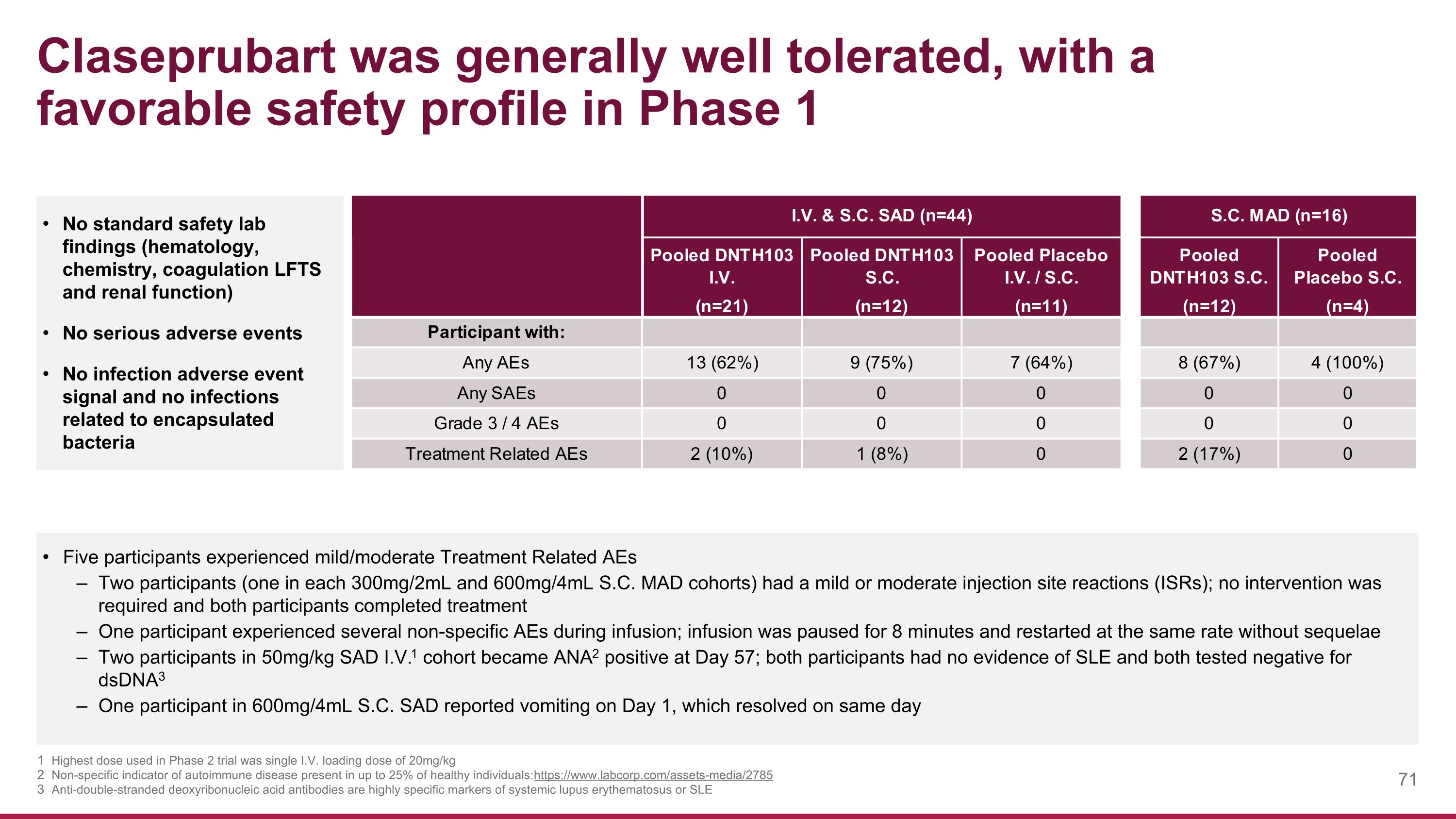
Thank you, Marino. The medical team is very motivated to get to primary results as quickly as possible based on what we have seen in Part A so far. I would like to emphasize that our interim responder definition was a very high bar to meet because it required an improvement in NCAT over baseline, a high efficacy metric to achieve. In addition, this NCAT response needed to be confirmed at two consecutive visits, two weeks apart, and could not occur prior to study week seven, eliminating therapeutic overlap with discontinued medications. Our GO intention targeted an NCAT response rate of 40% to 50% in 40 patients who completed Part A, based on Phase II Rolipibart CIDP data. This means the upper end of our target was 20 NCAT responders. We hit this target prior to 40 patients completing Part A. On the safety front, we continue to be reassured on the cluster-pubart safety profile, with no concerning safety events recorded, including no clinical symptoms of autoimmune activation, concerning bacterial infections, or studied discontinuation for safety or tolerability issues. Next slide. As you can see in these pie charts, the patients studied in Captivate and the Reliprobar Phase II are quite similar based on treatment buckets. I will add, our results were not driven by a specific patient subgroup such as geography. Next slide. All right, now let's switch gears to how the interim analysis has informed positive changes to the Captivate study design. First, Part A remains unchanged. We will continue to evaluate 300 mg sub-QQ2 weeks. Second, we see no need to evaluate 600 mg in Part B. So we are dropping that arm, and And Part B will now be a two-arm blinded RCT evaluating 300 mg Q2 weeks versus placebo. Third, we are raising our Part A responder target from 40% to 50%, which we feel is a comfortable bar to meet. The implications of these changes are a substantial reduction in Part B patients needed from 192 to 128, and a greater reduction in Part A patients dosed from 480 to 256. Next slide. Finally, we have the revised study schematic showing our updated Captivate study schematic with a two-arm Part B and a Part A responder target increased from 40 to 50%. And with that, I'll turn it back to you, Marino.
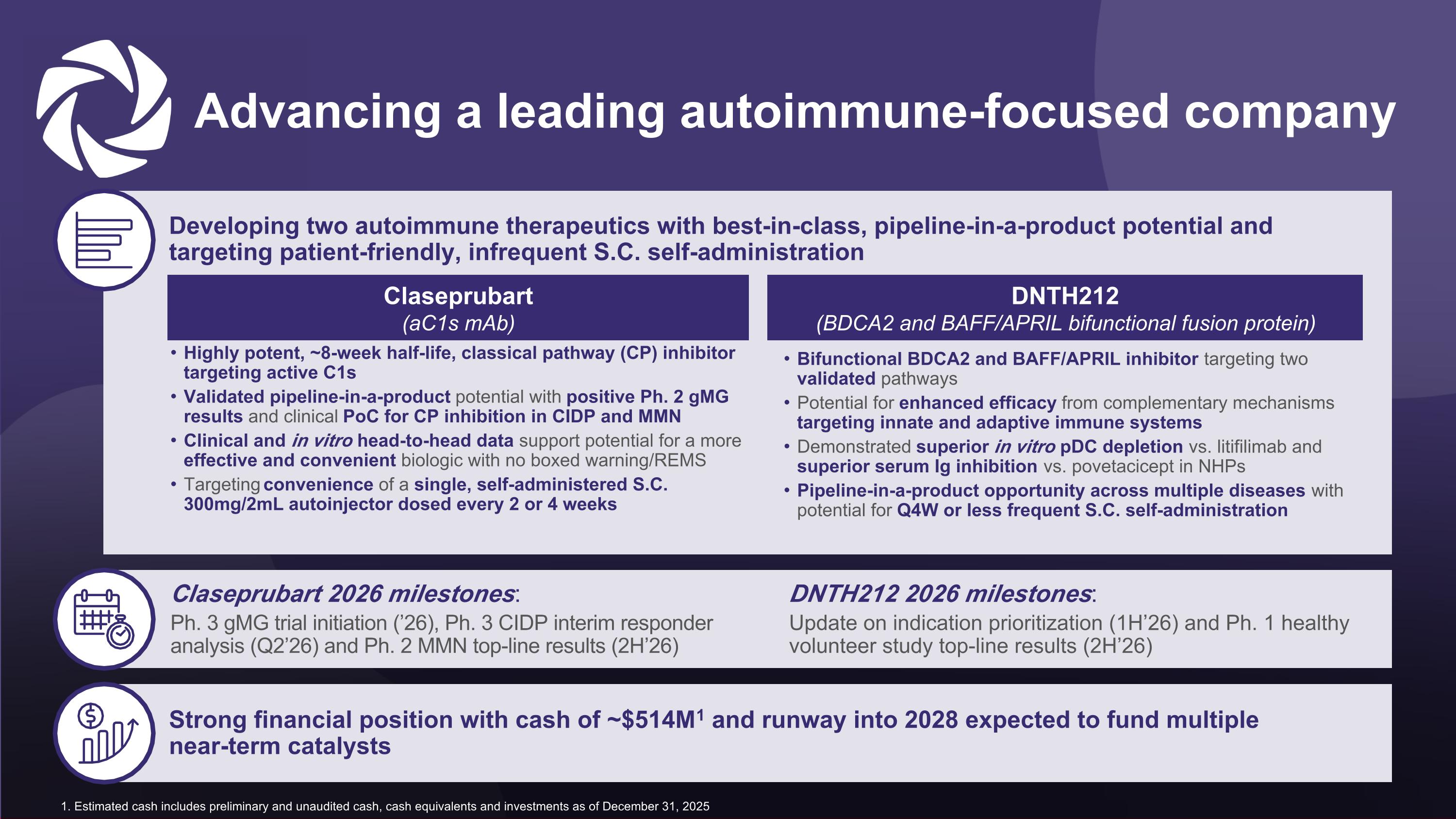
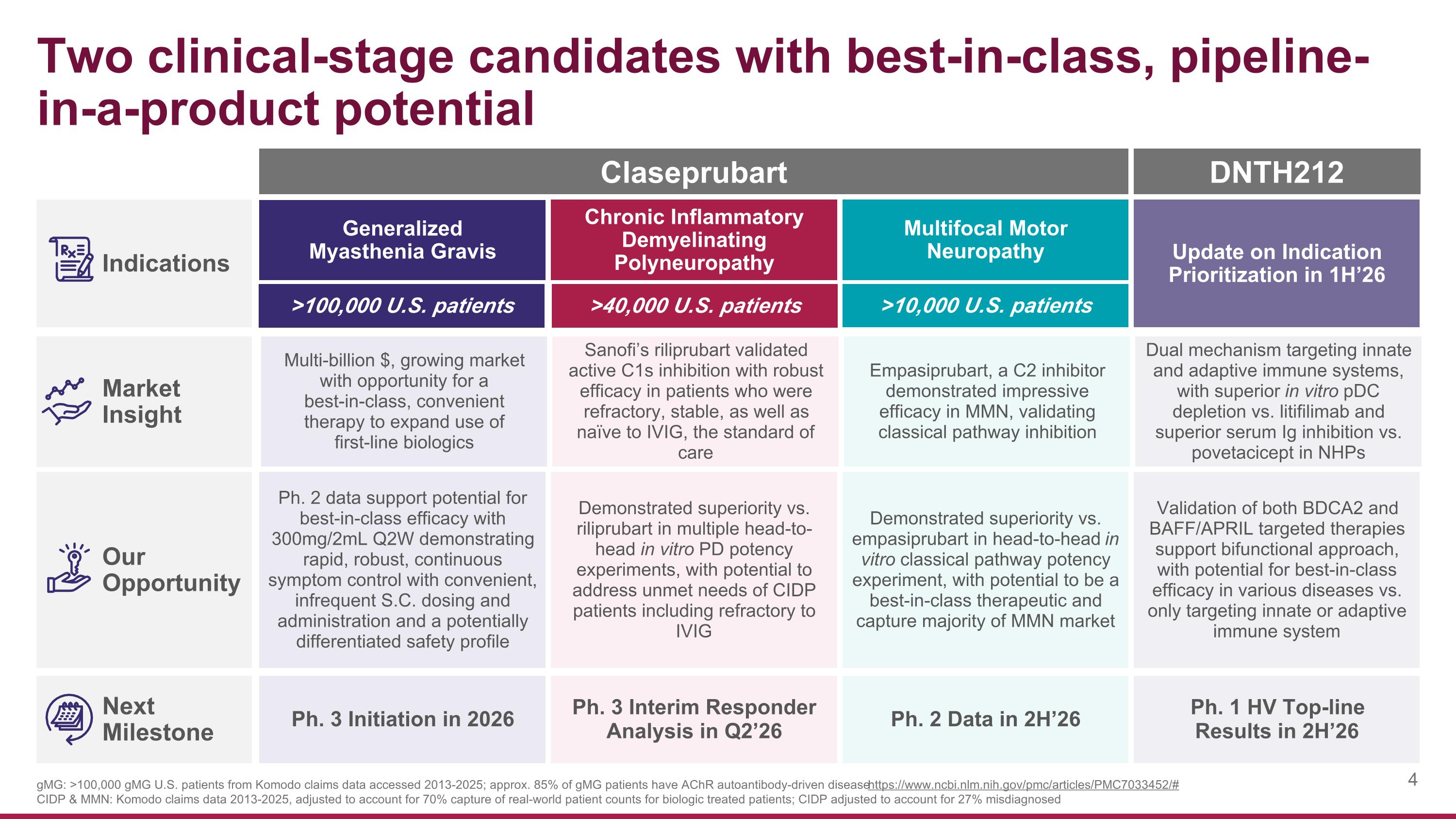
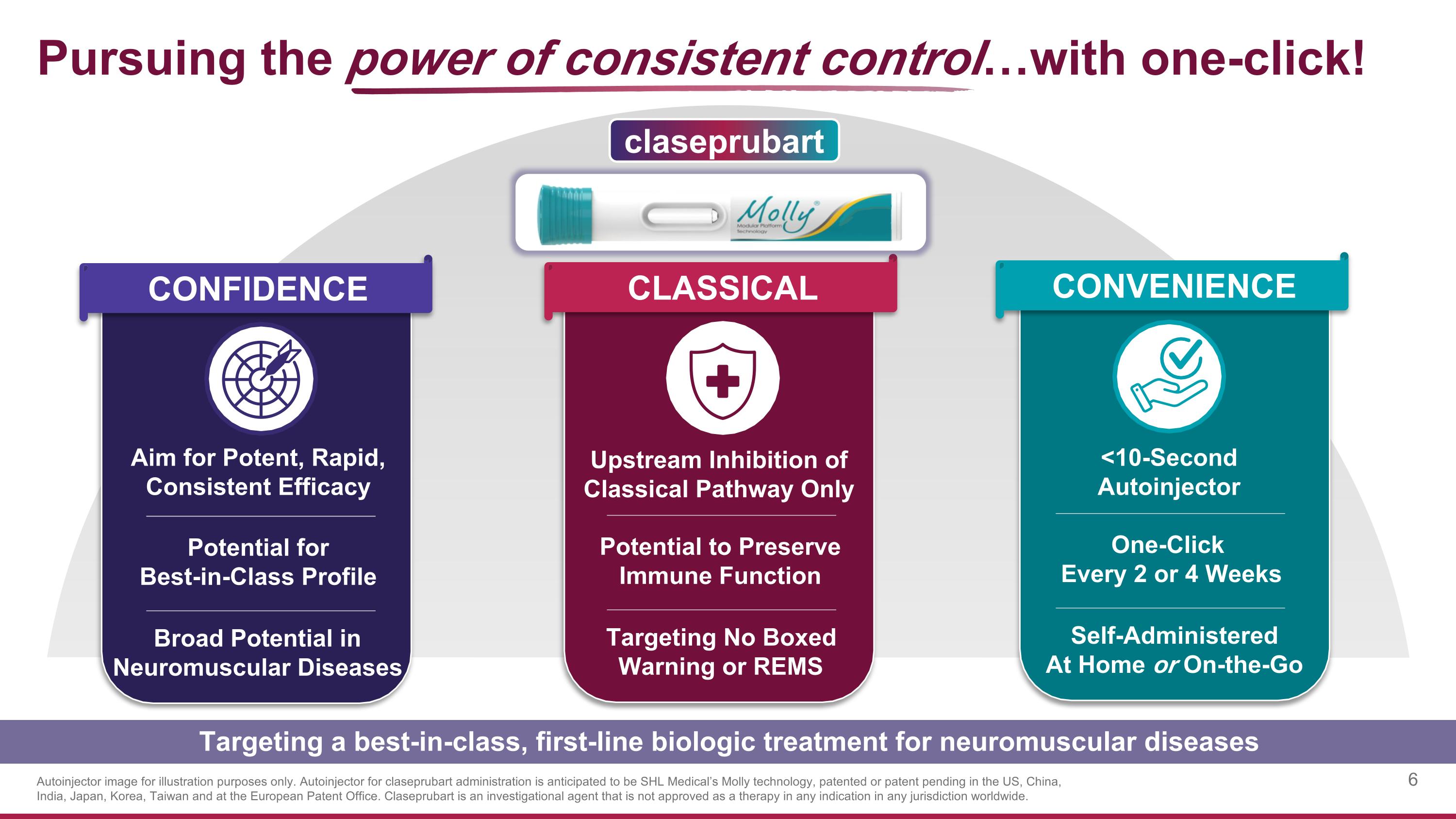
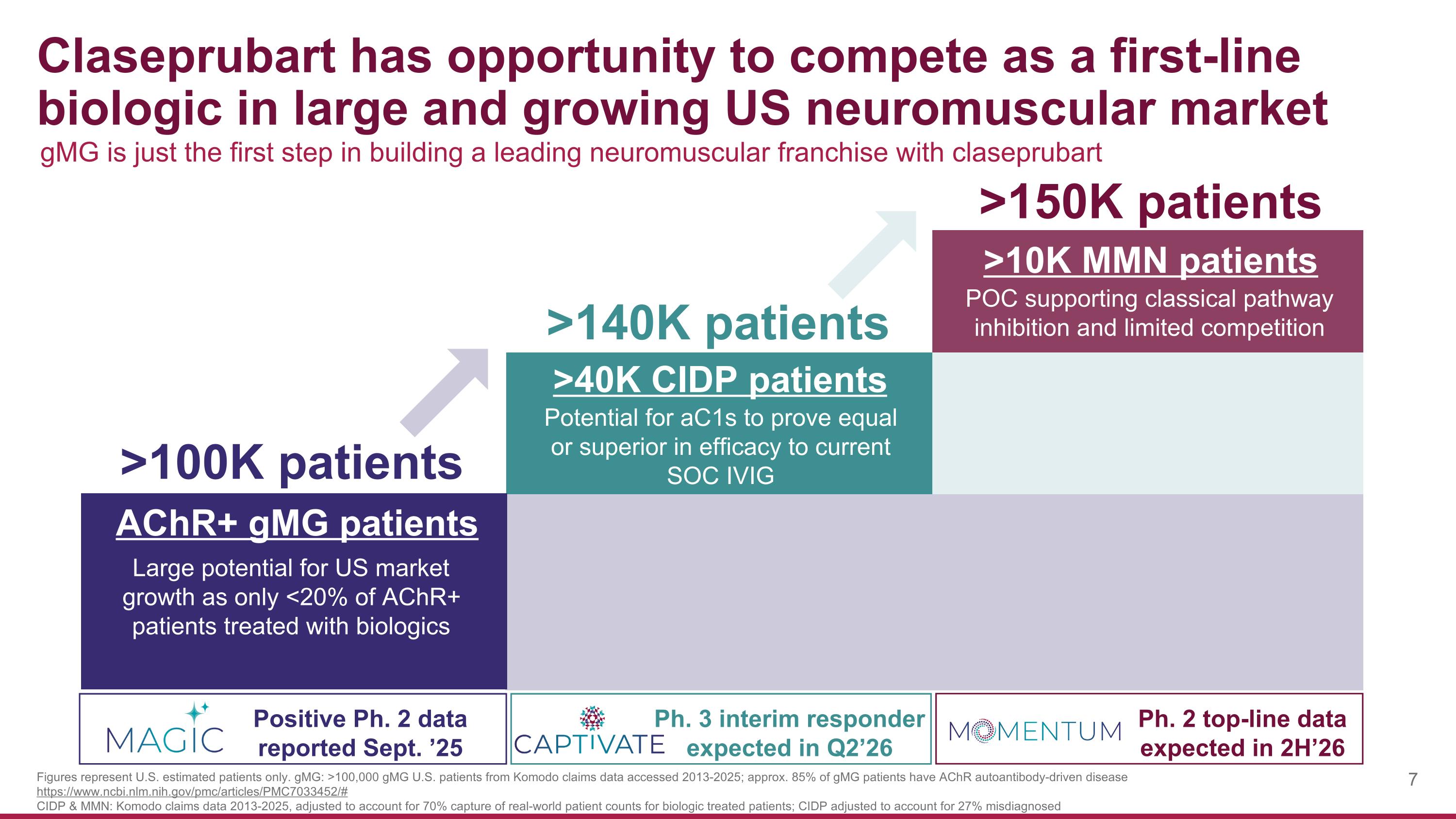
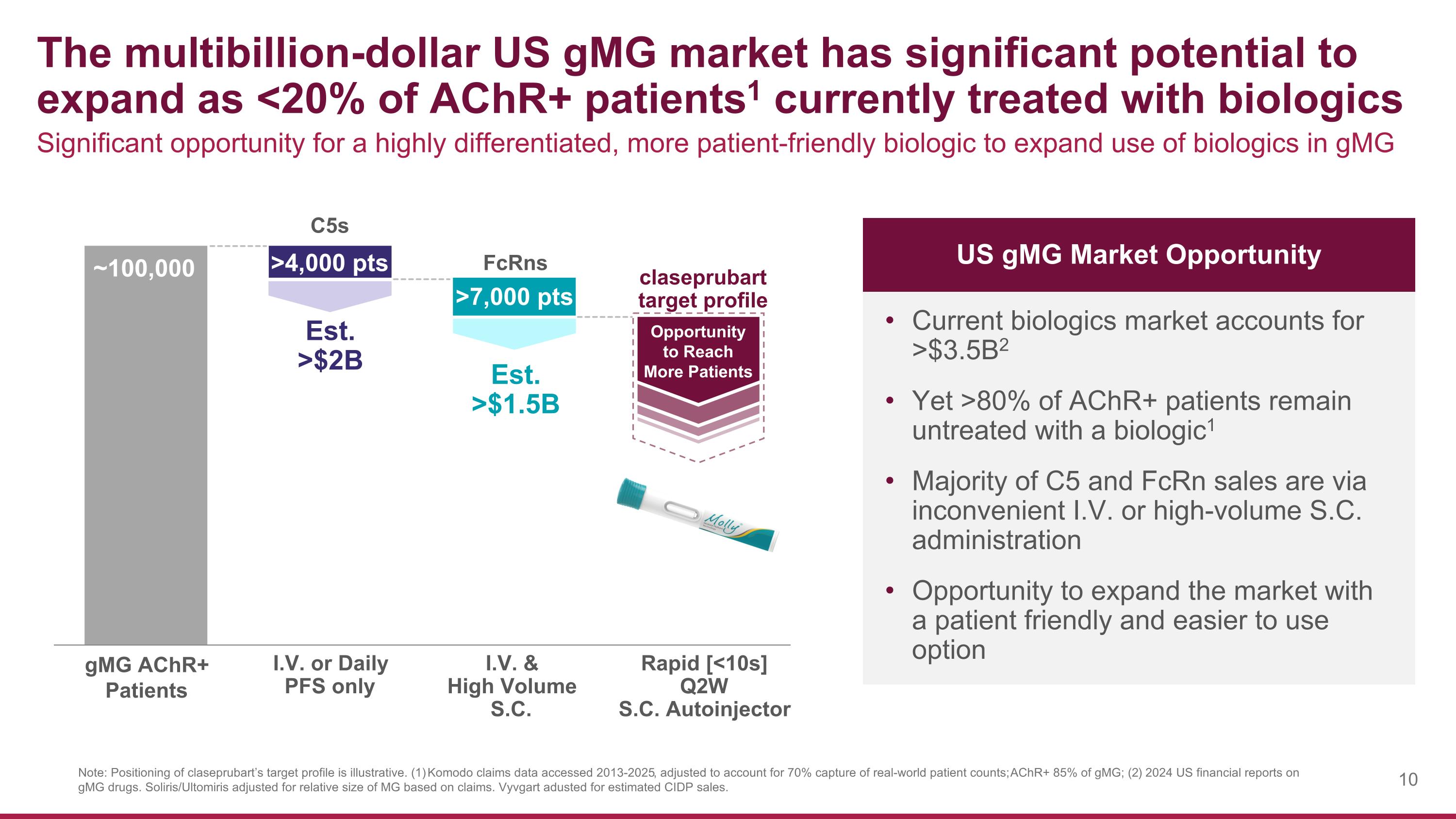
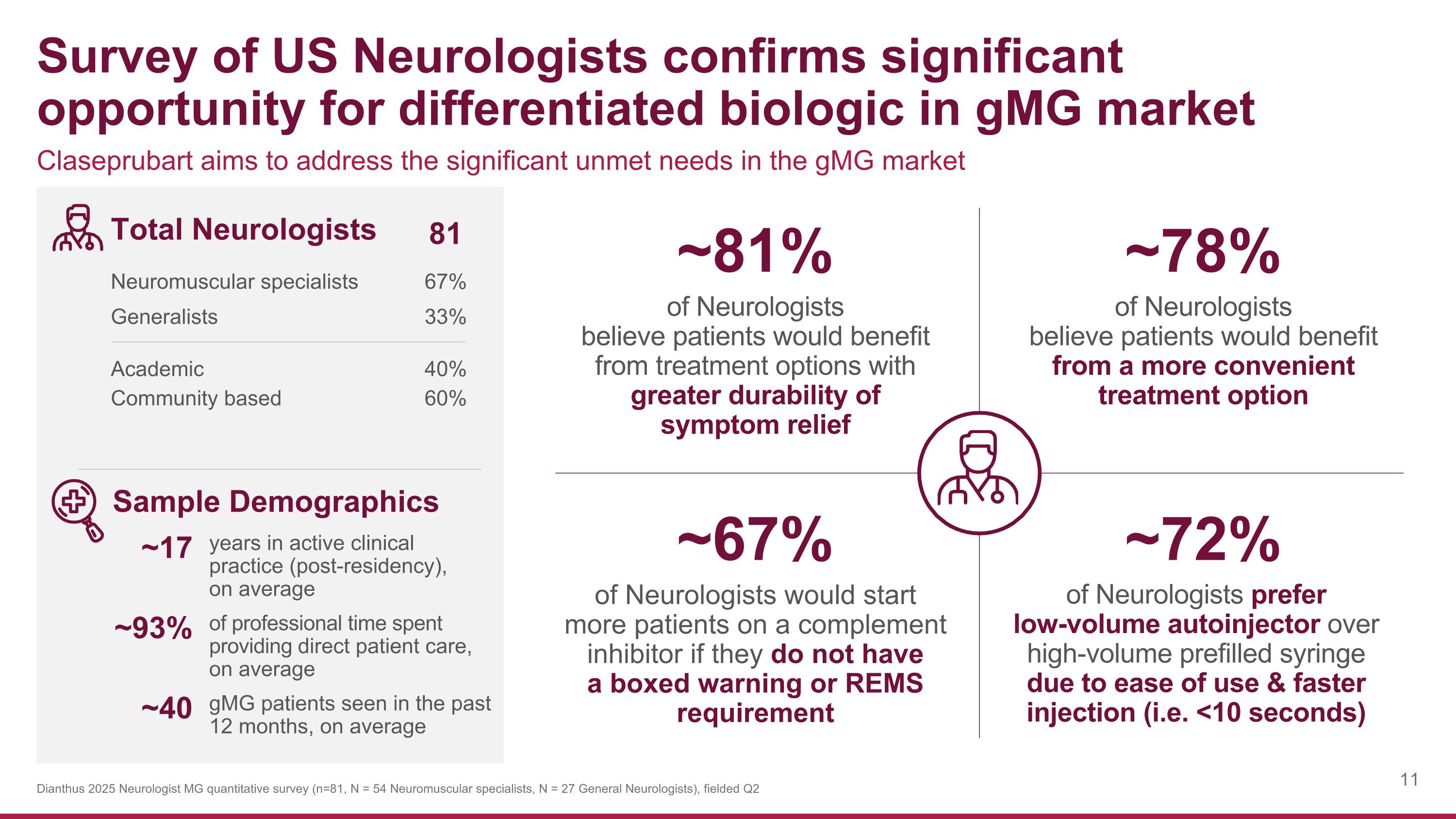
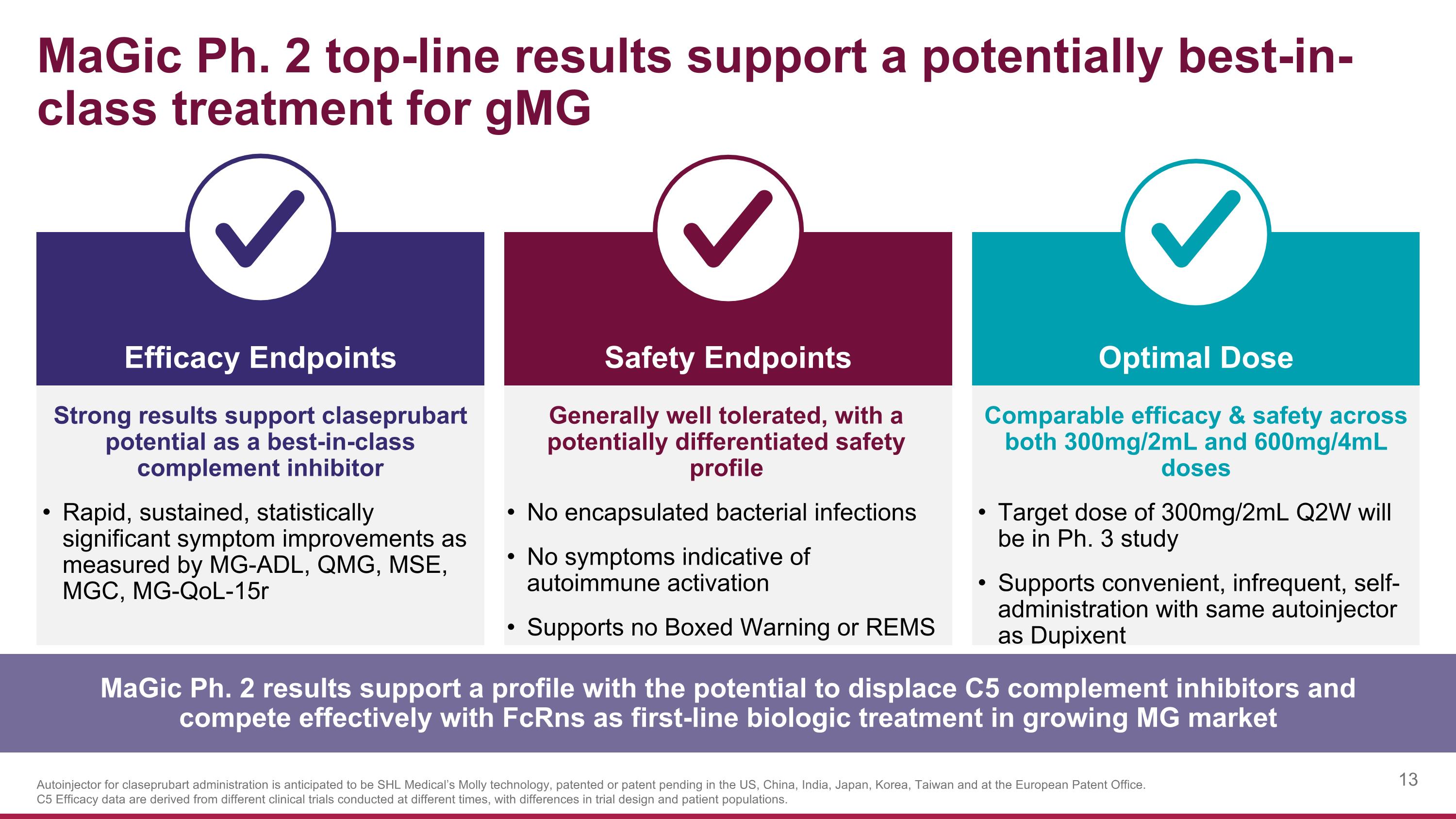
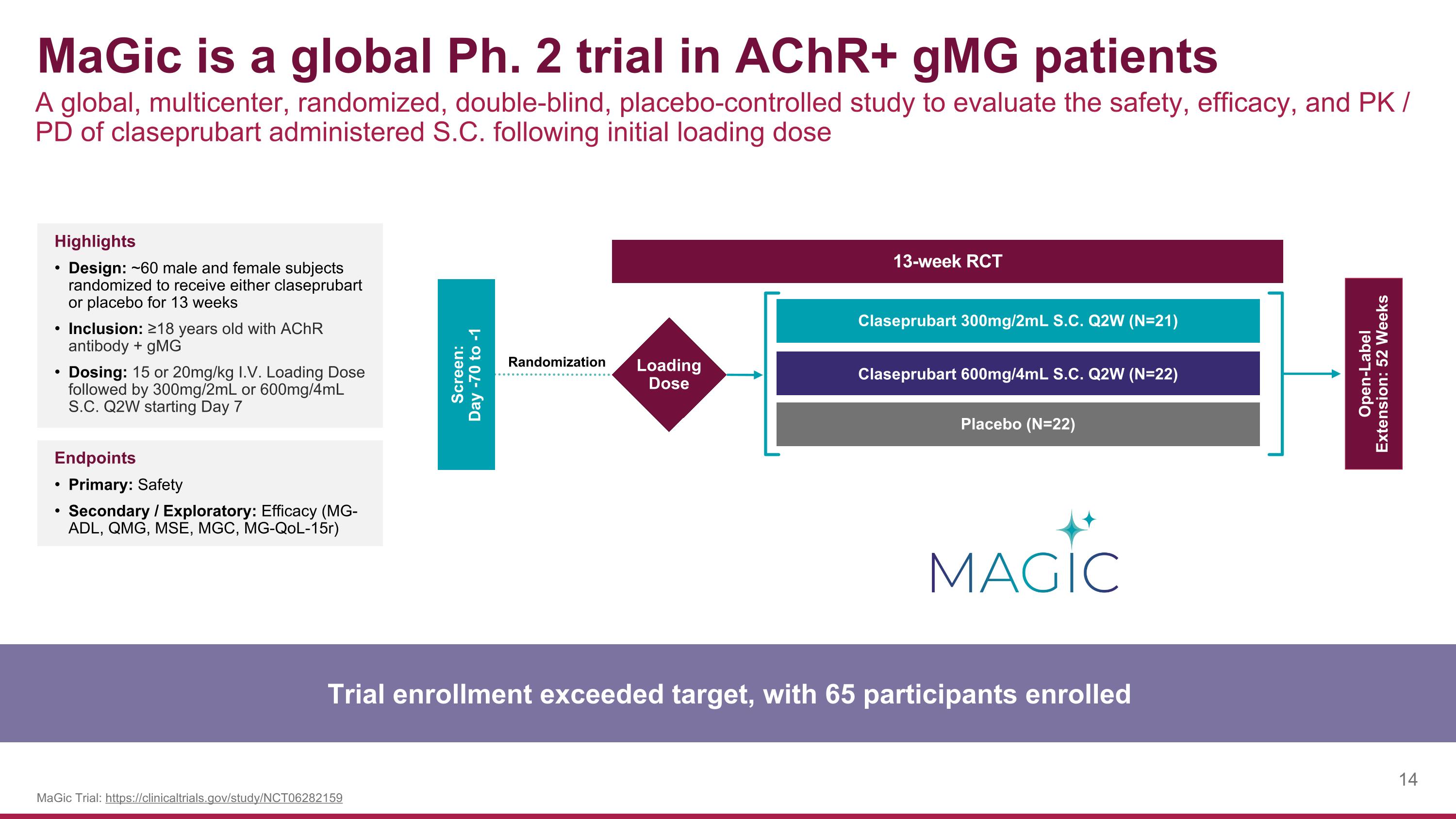
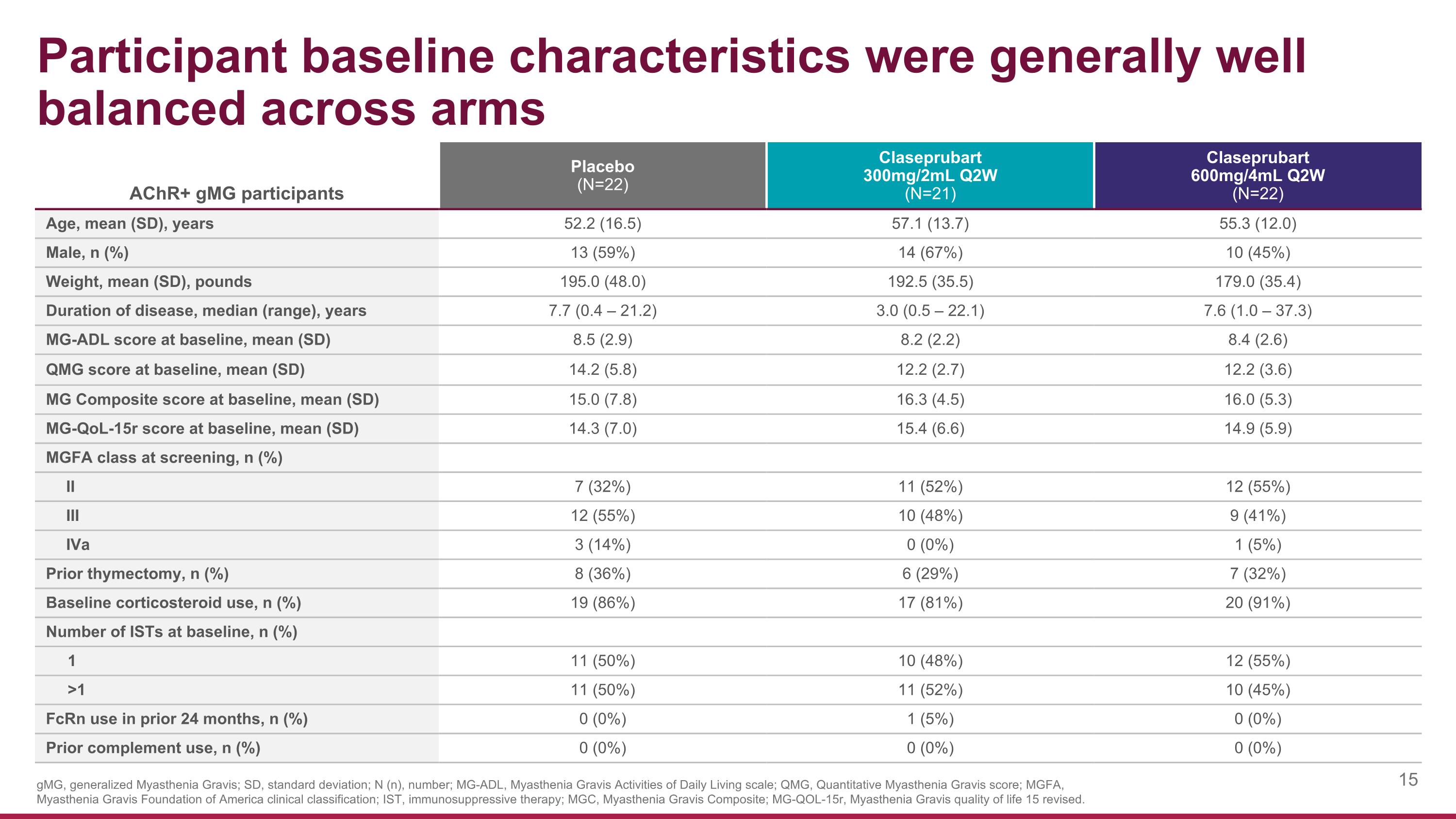
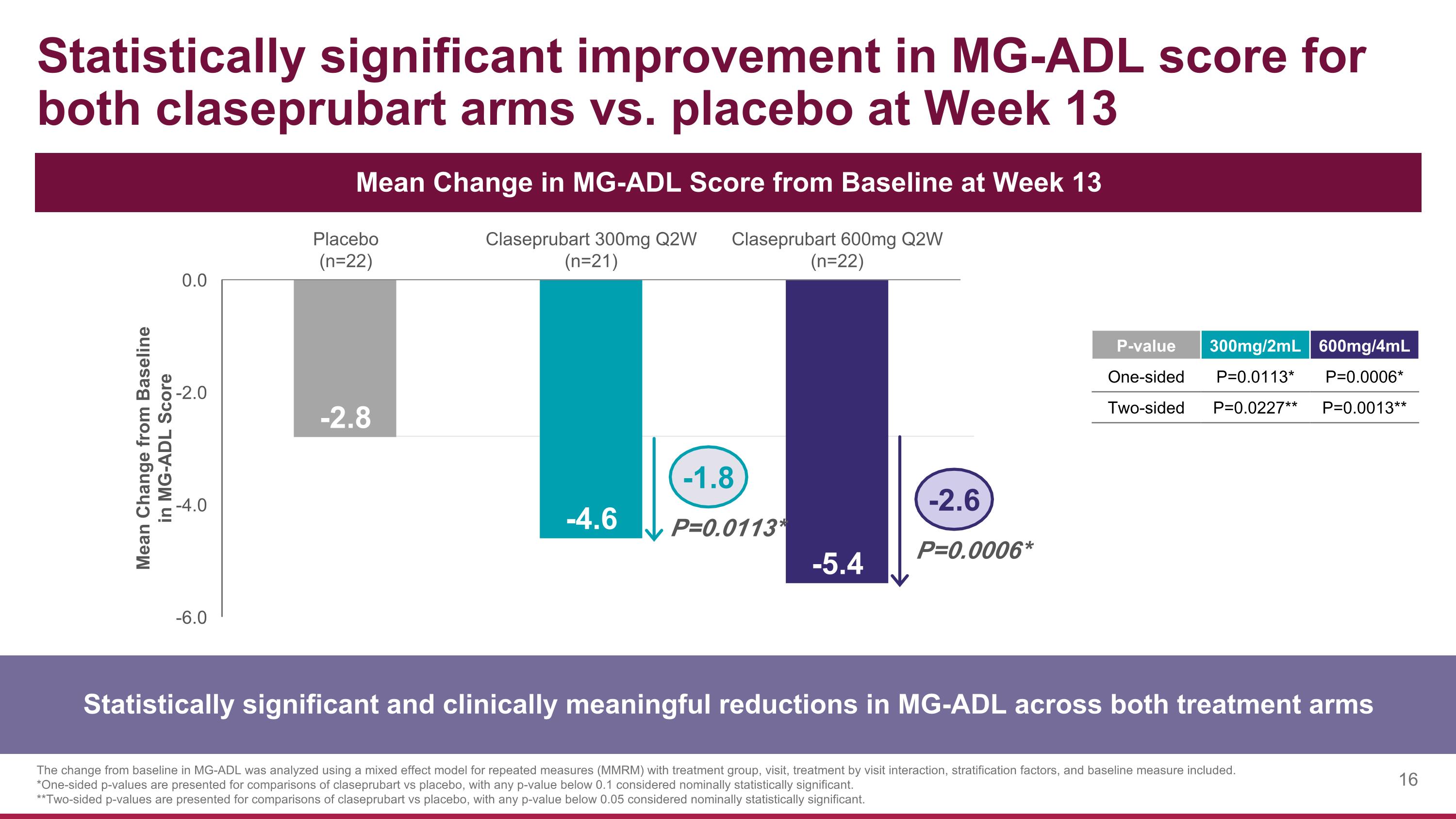
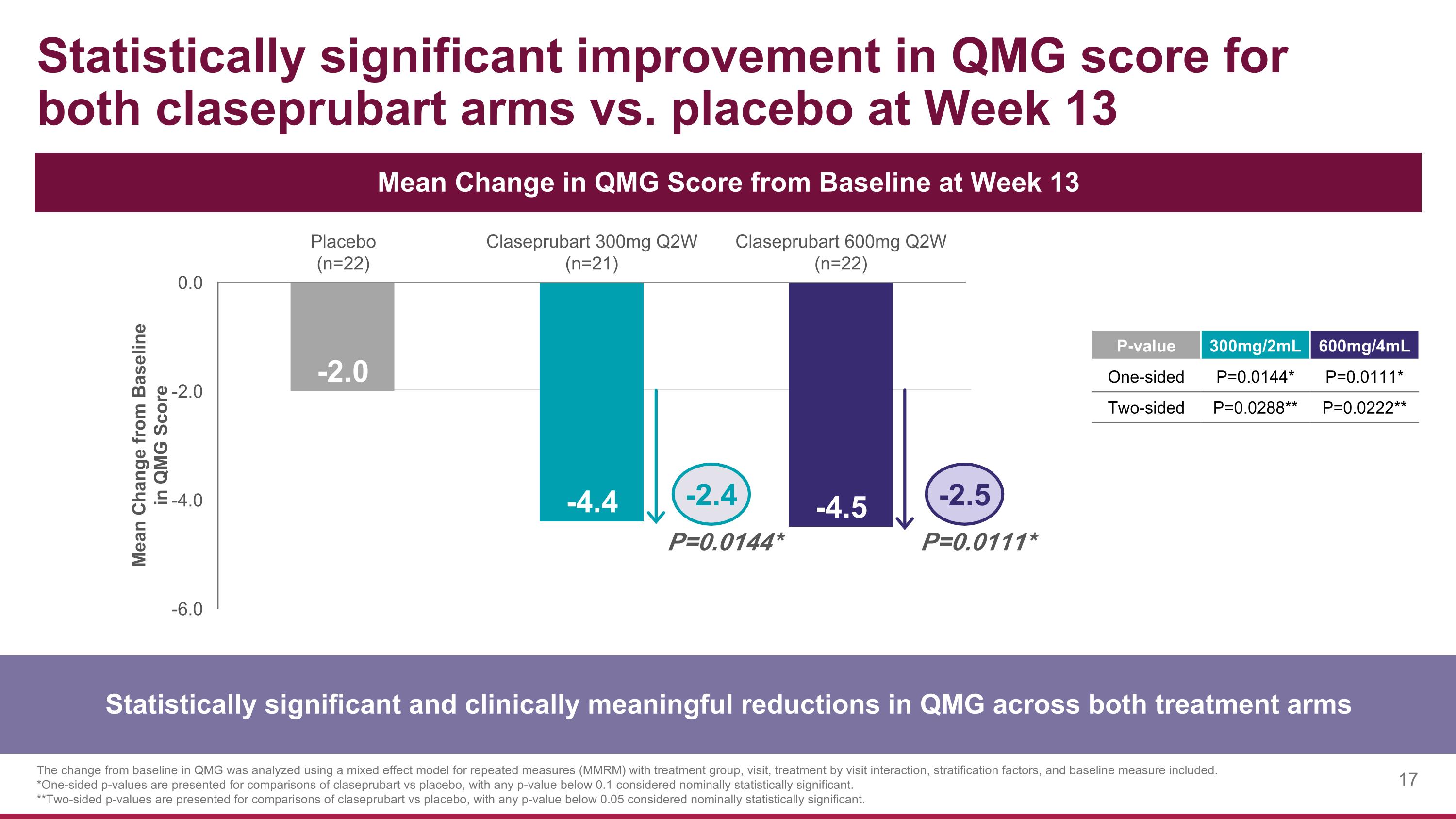
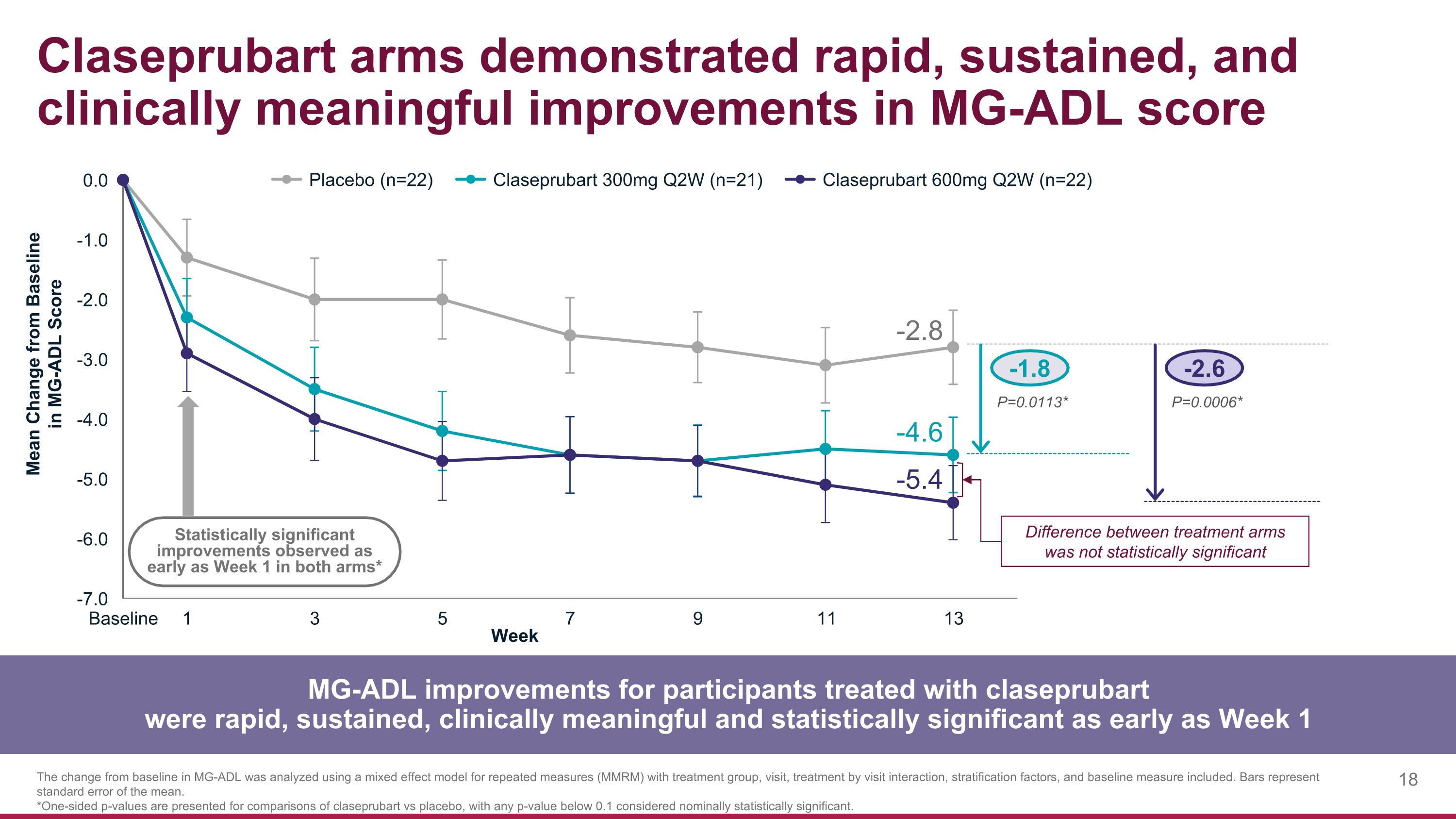
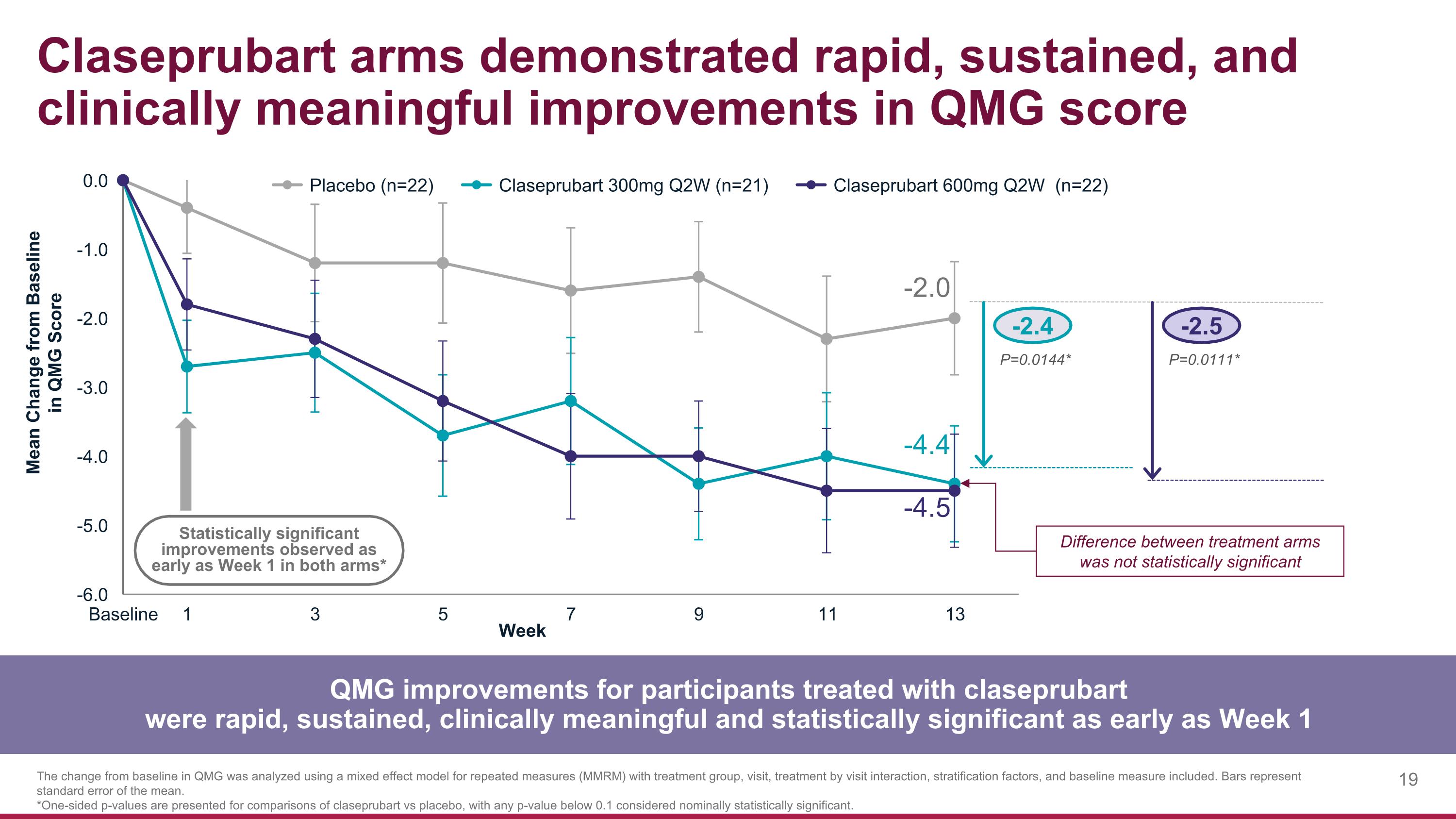
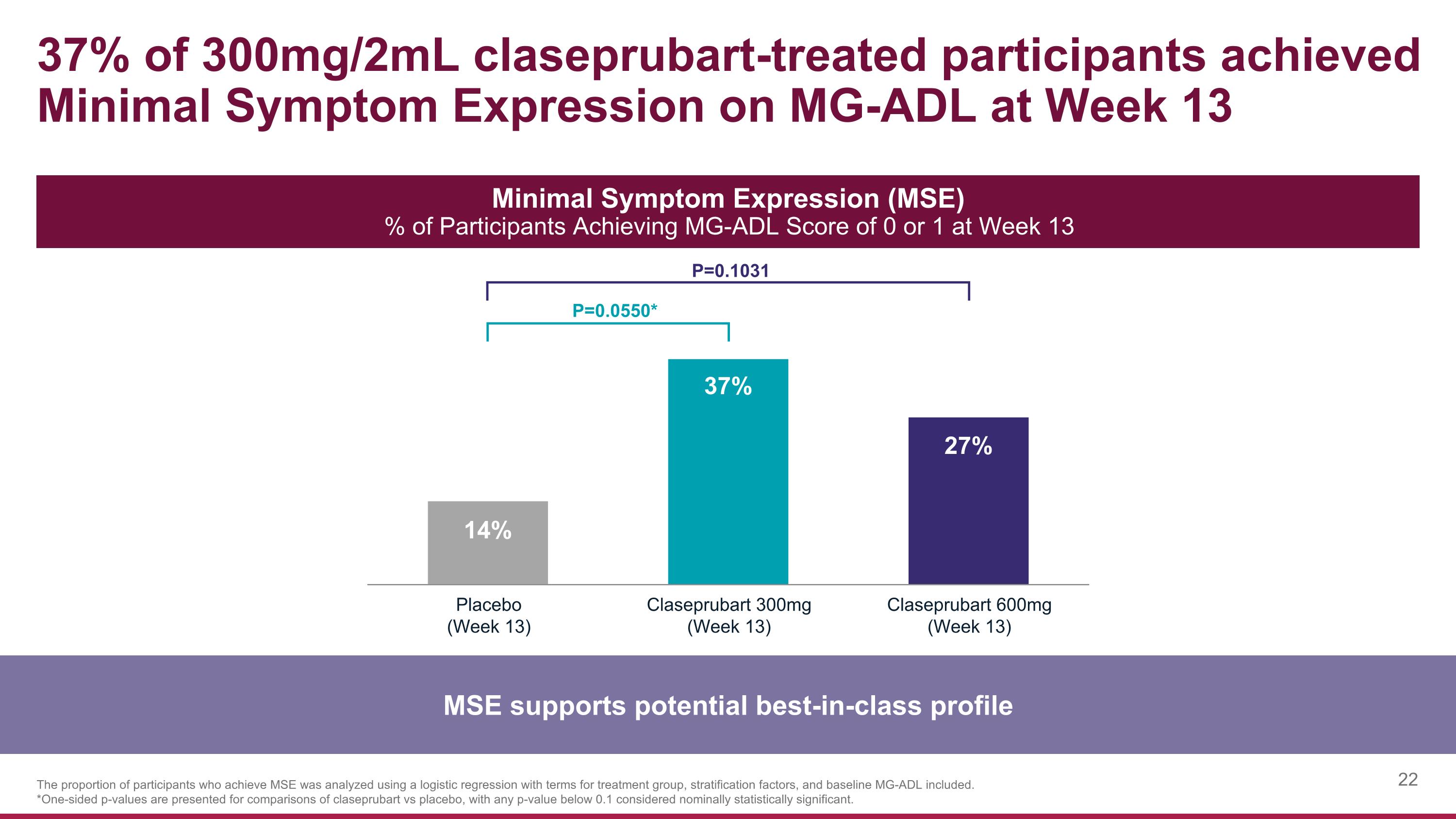
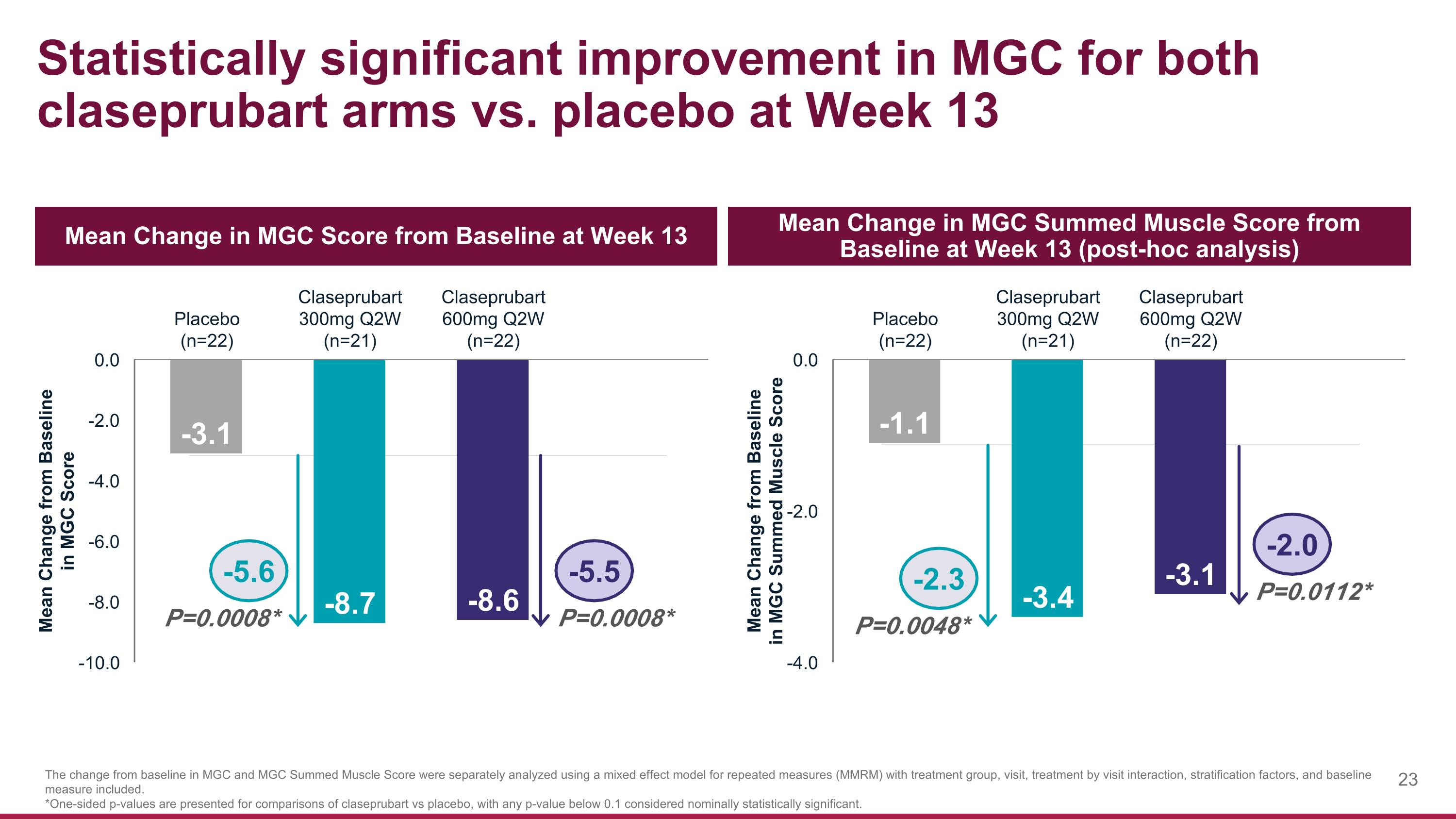
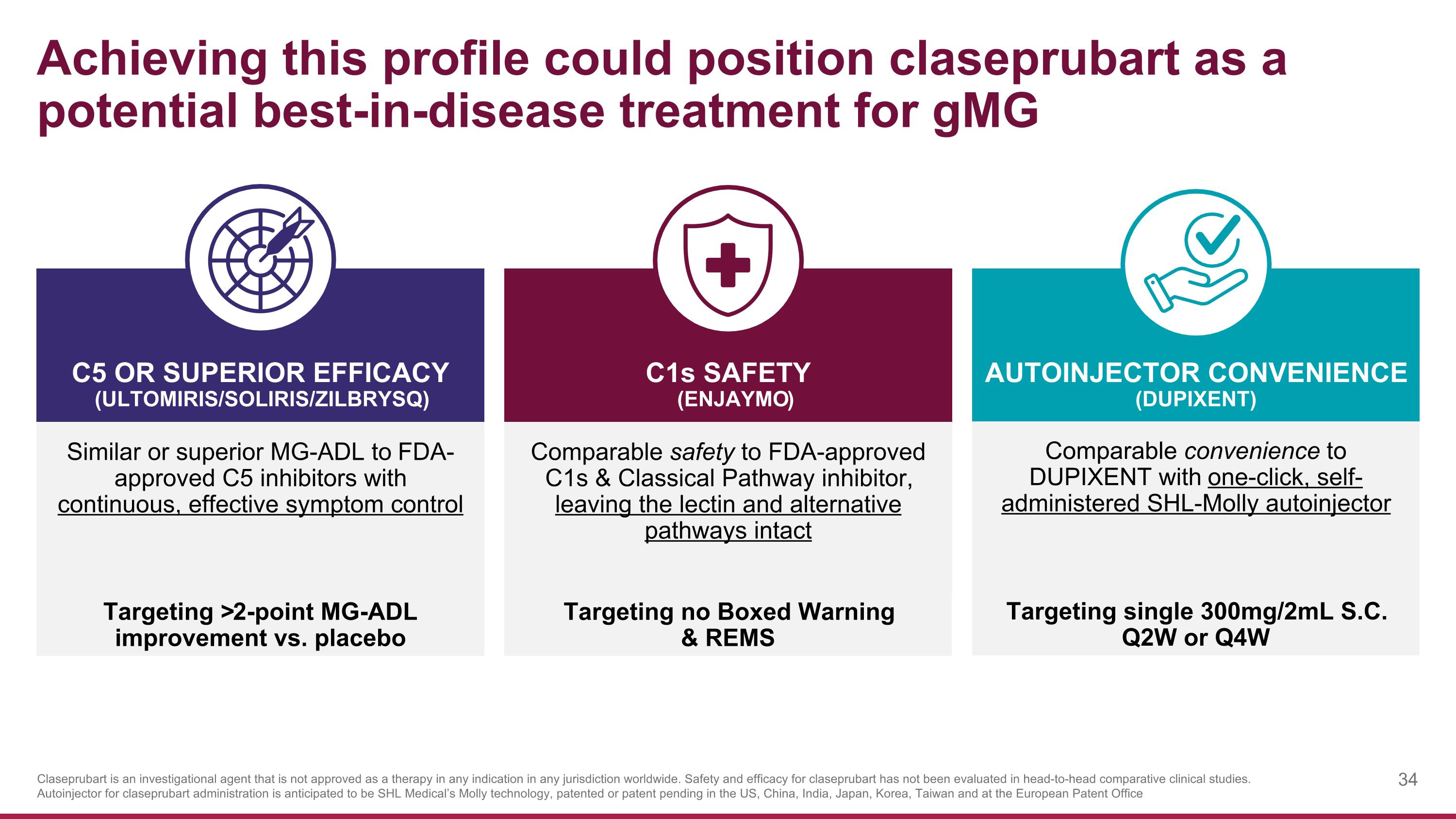
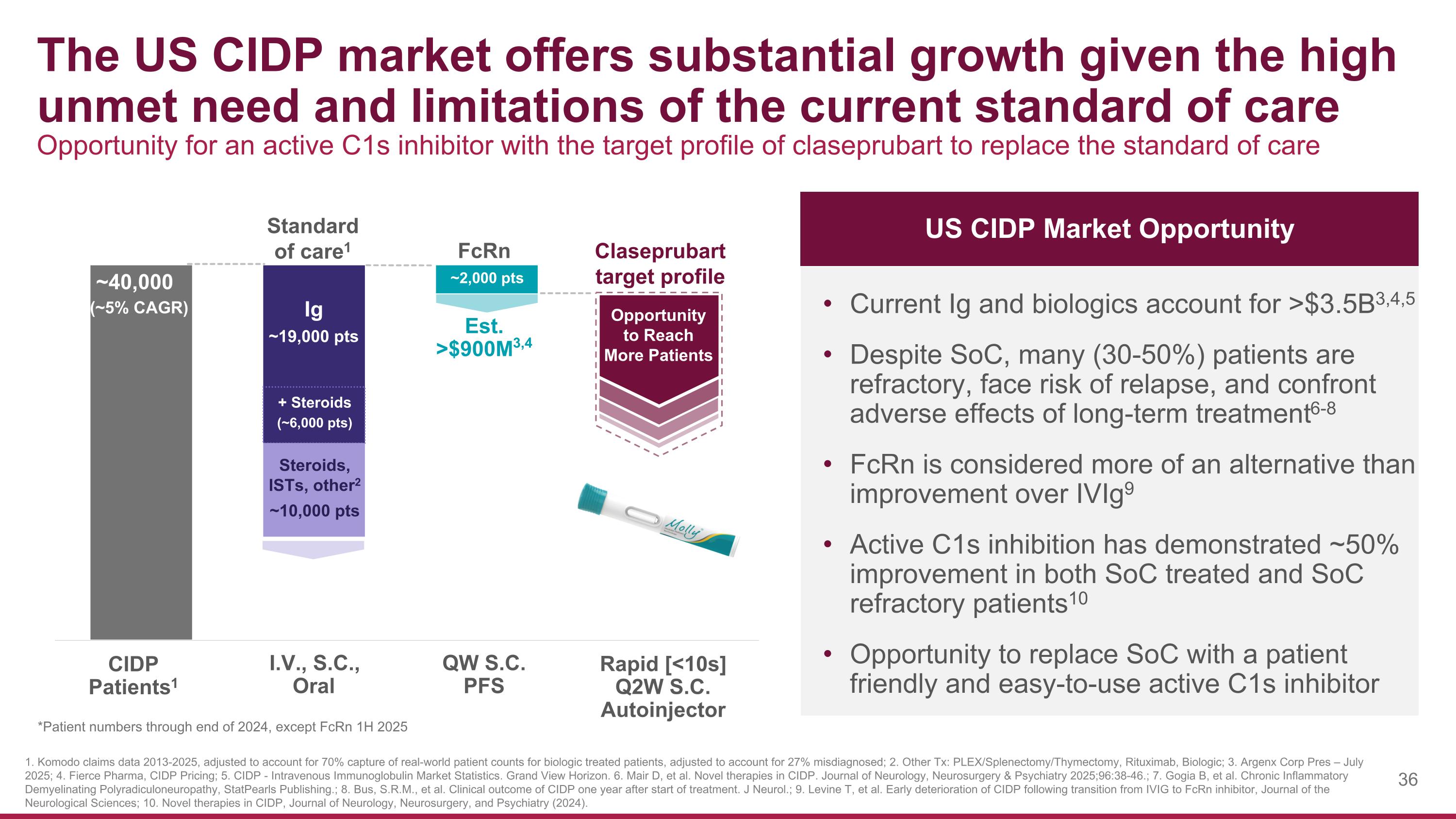
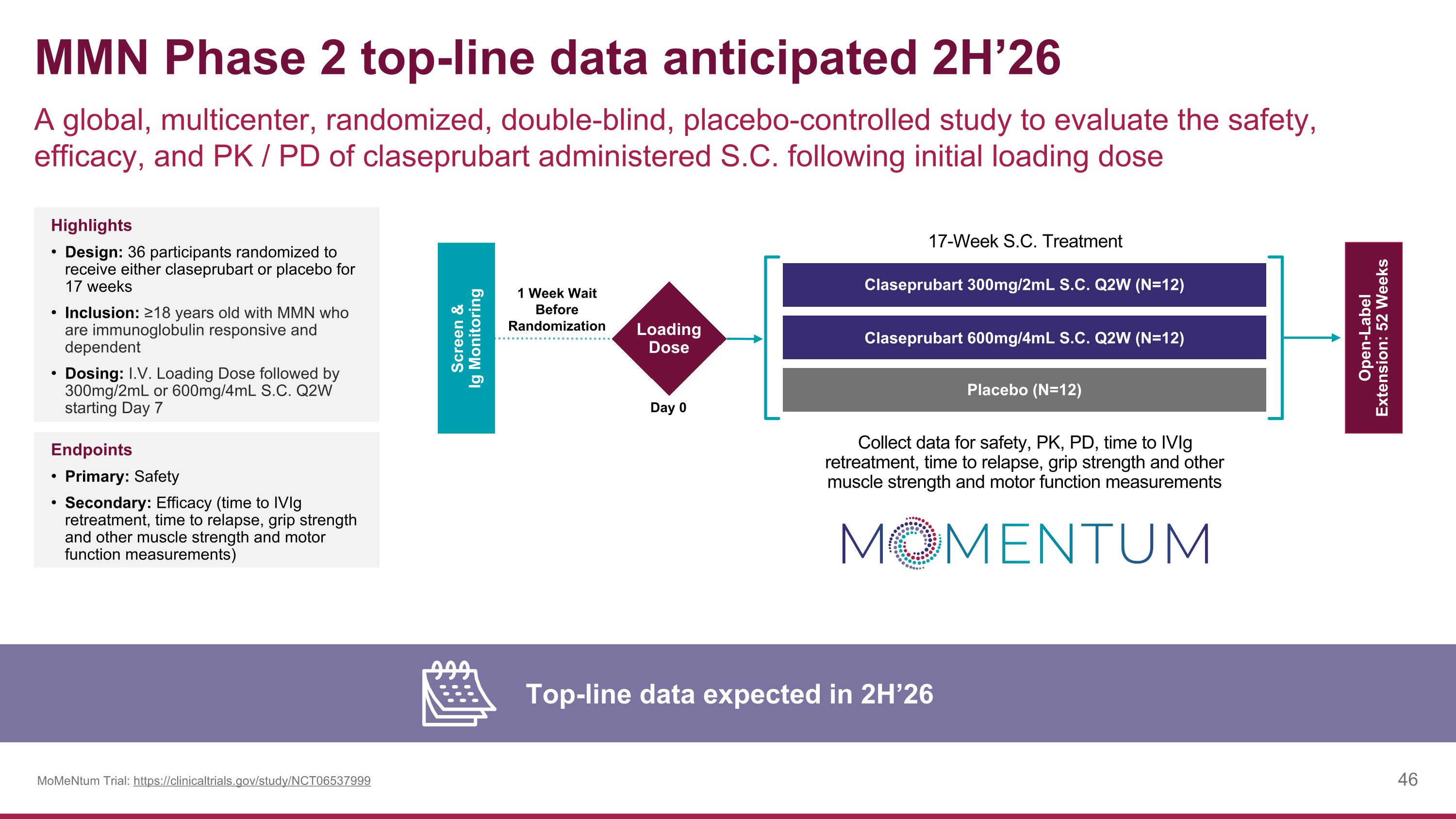
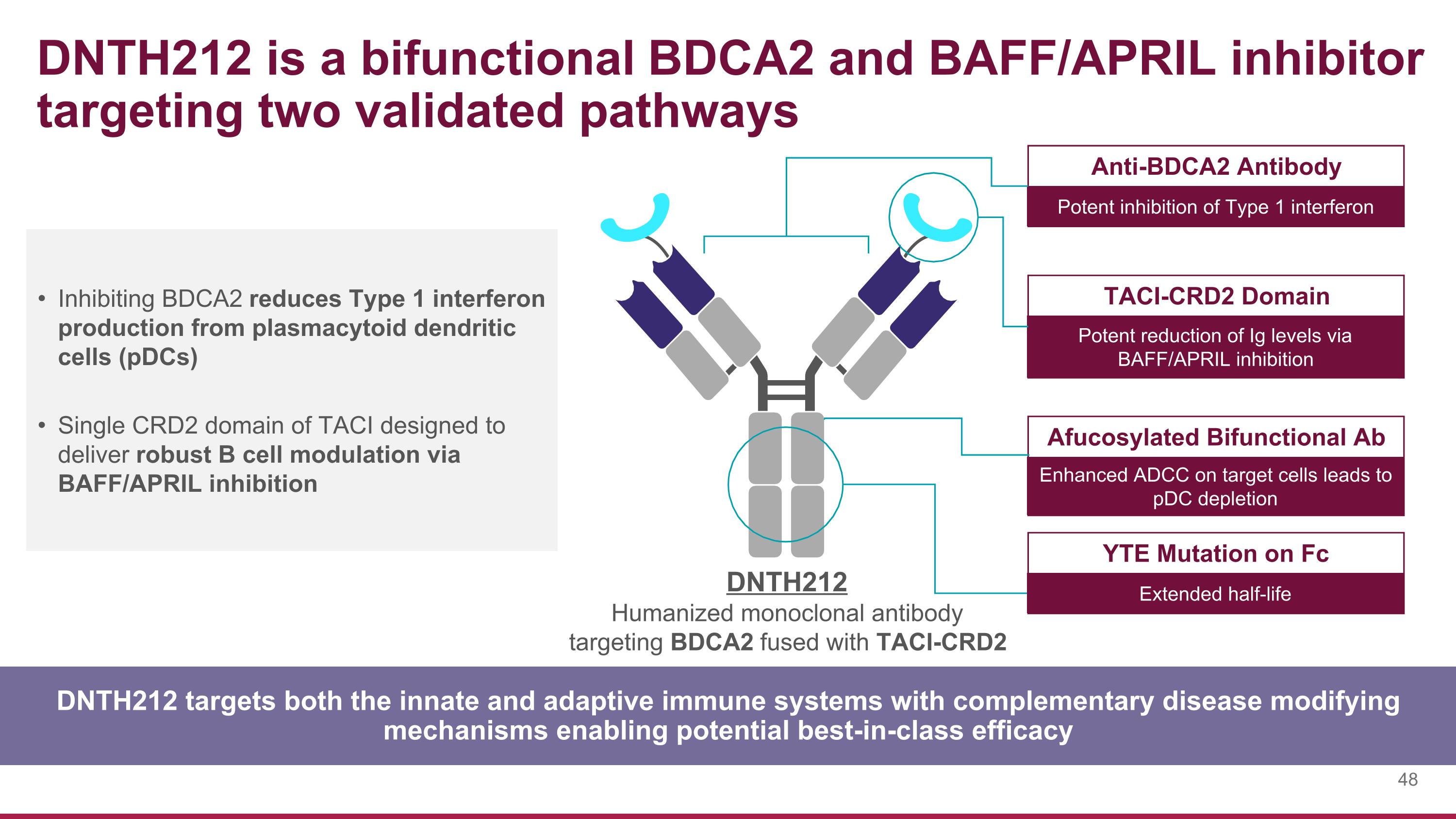
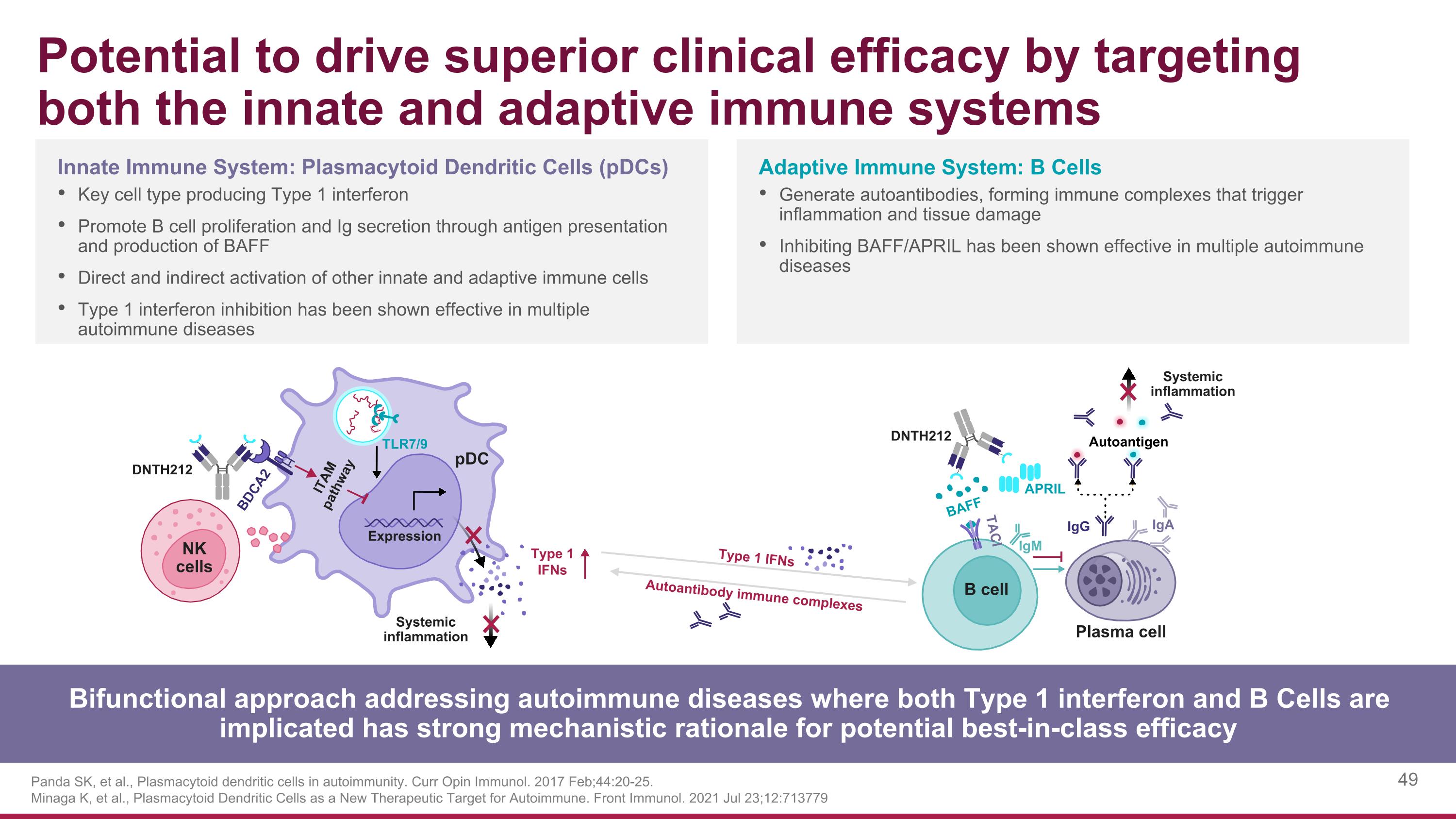
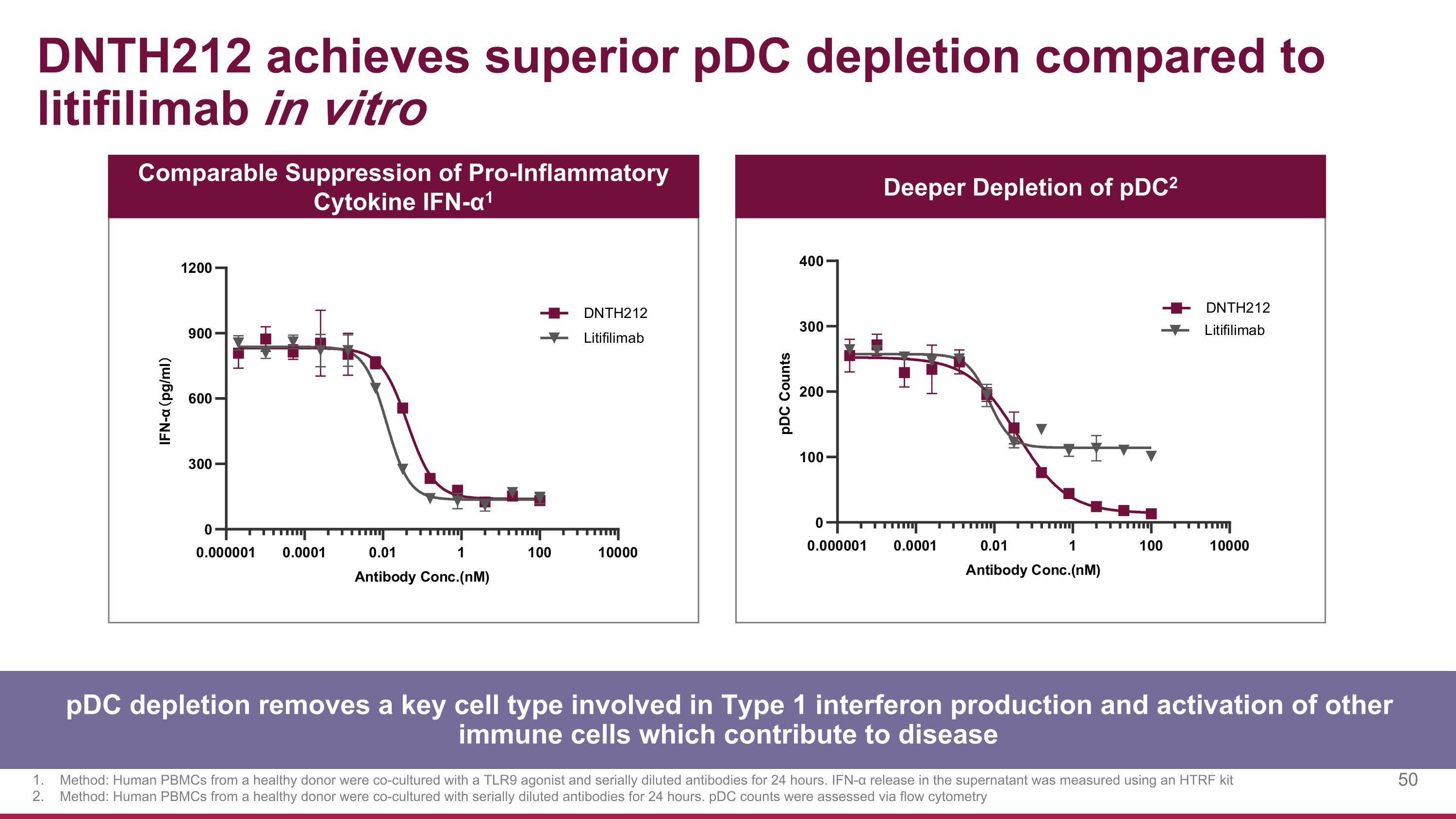
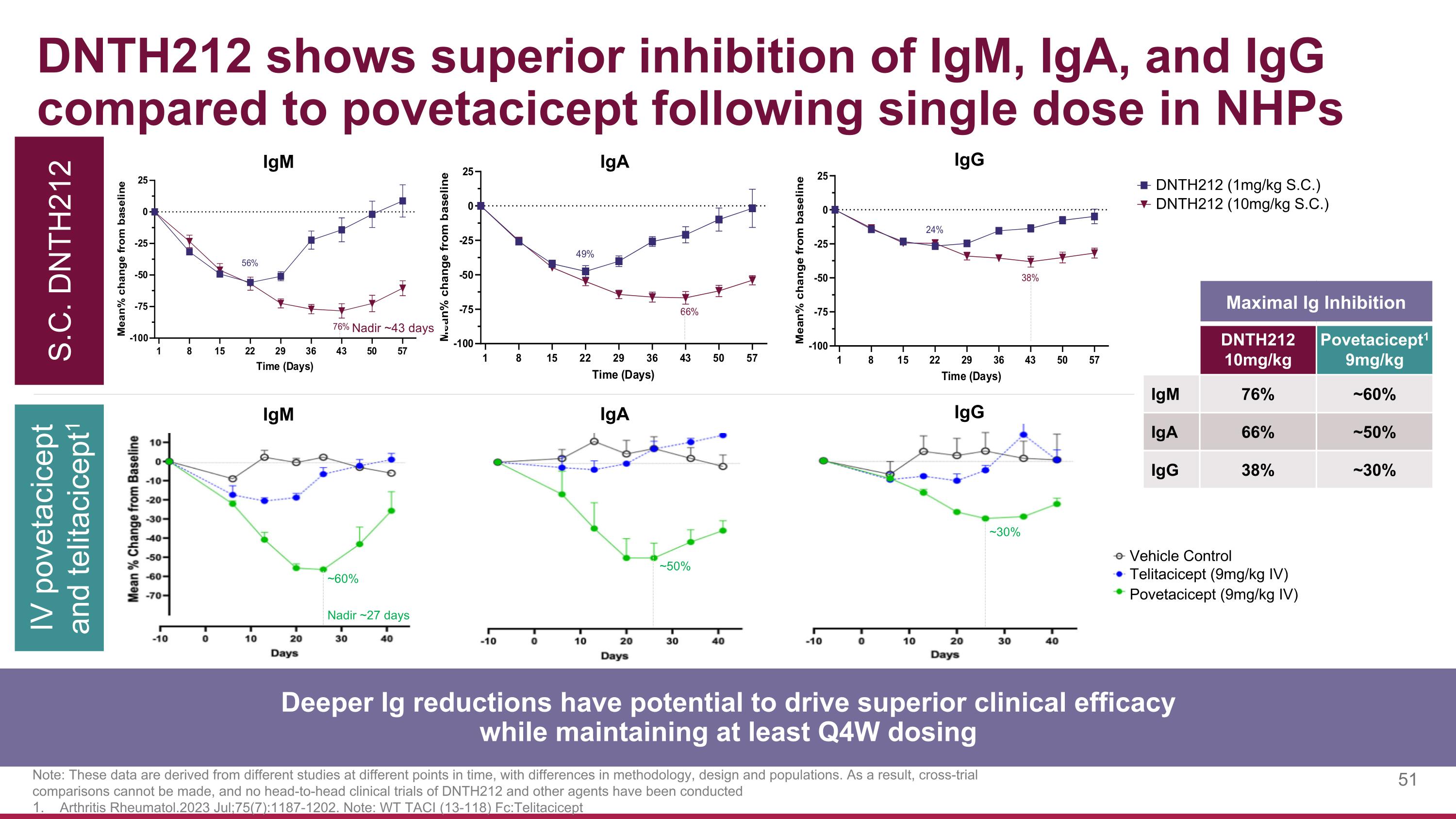
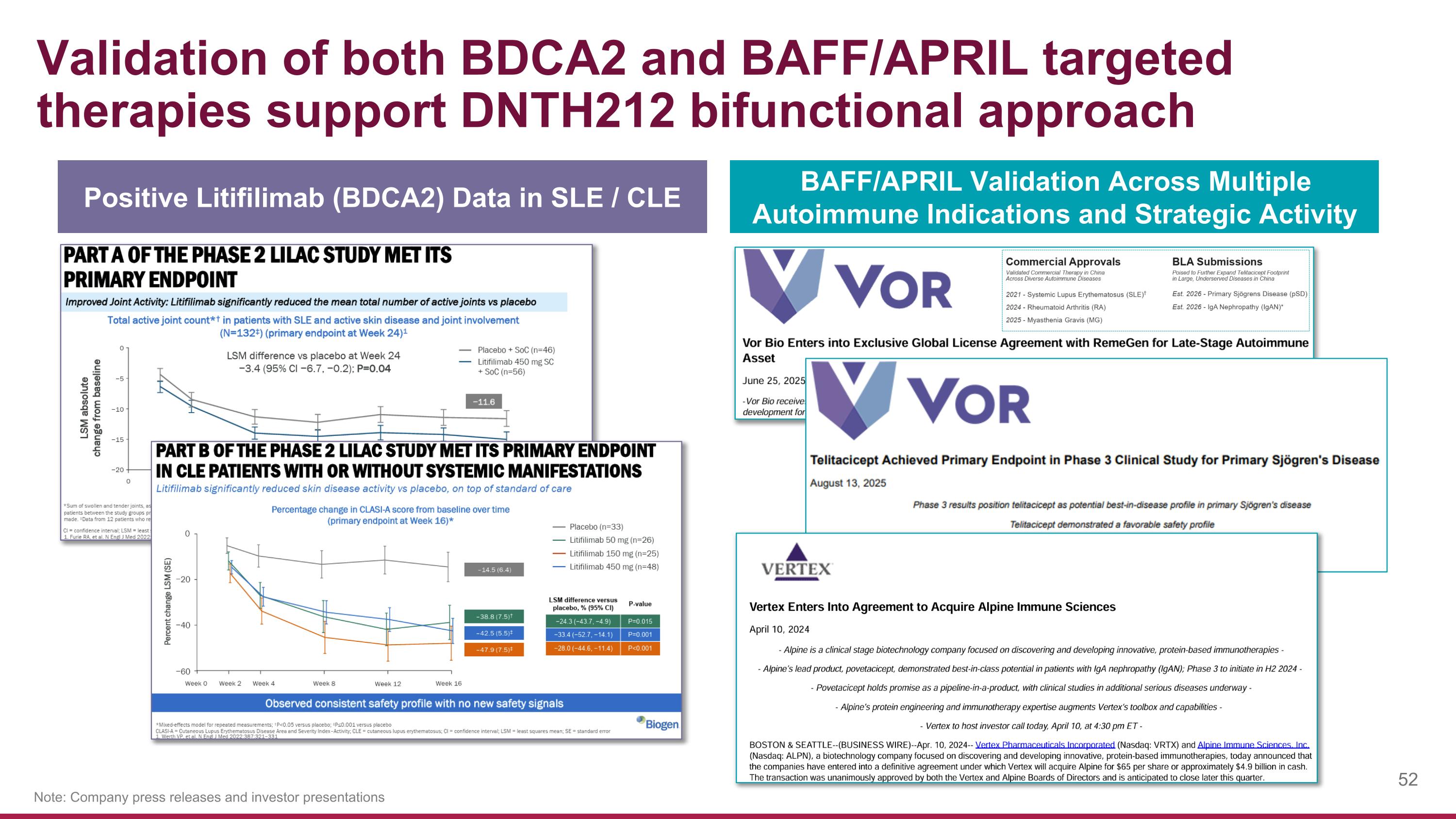
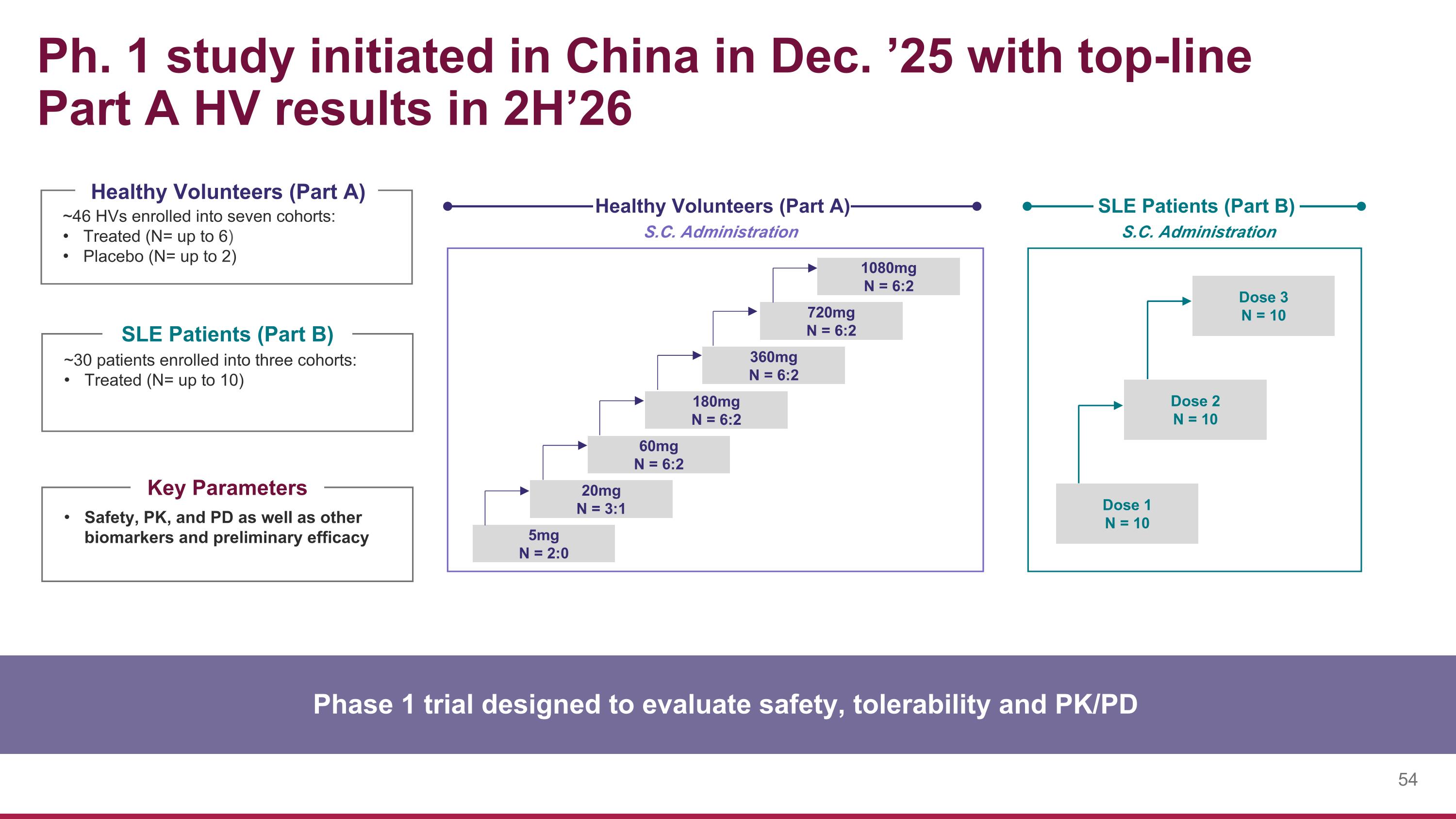
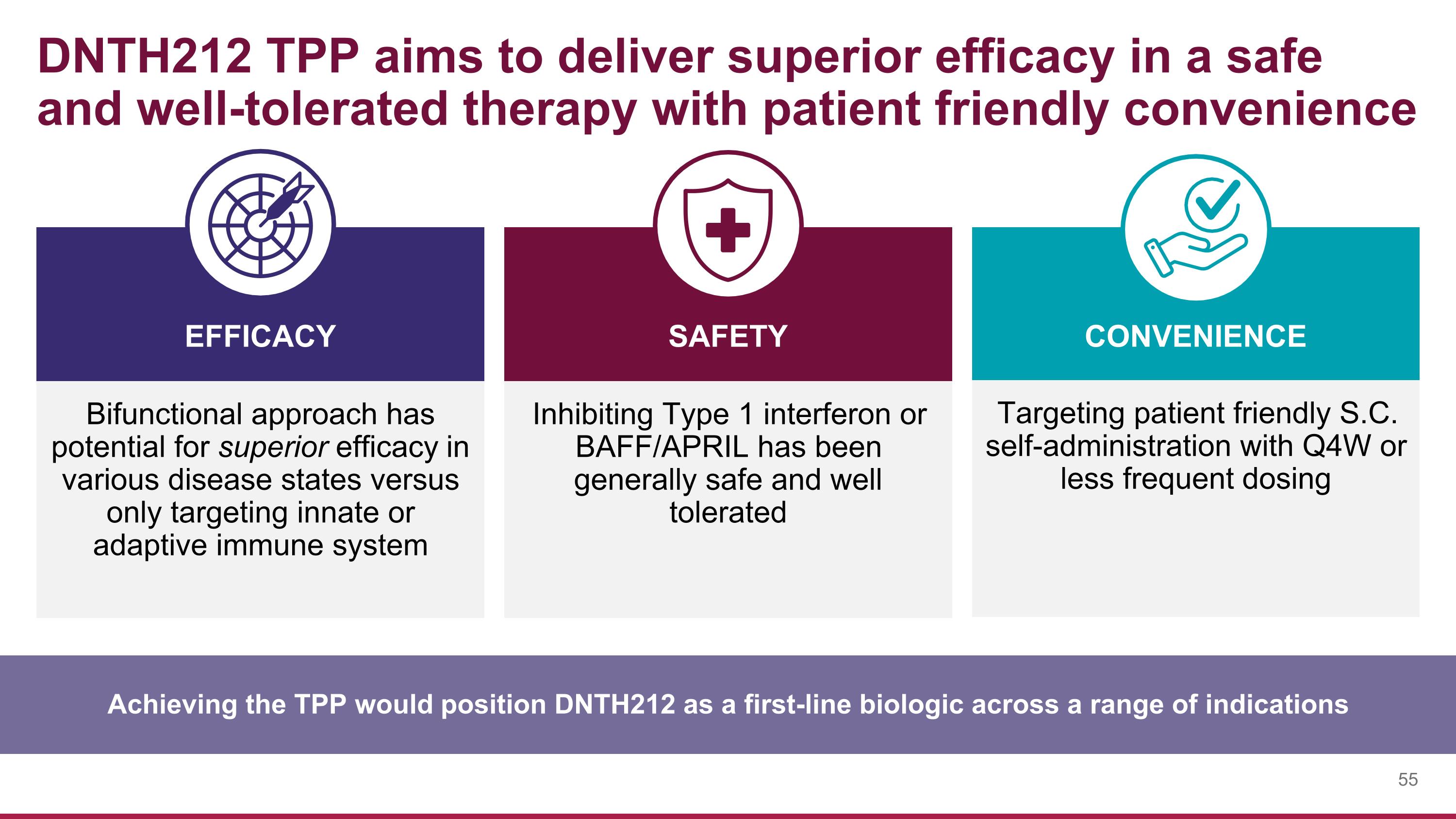
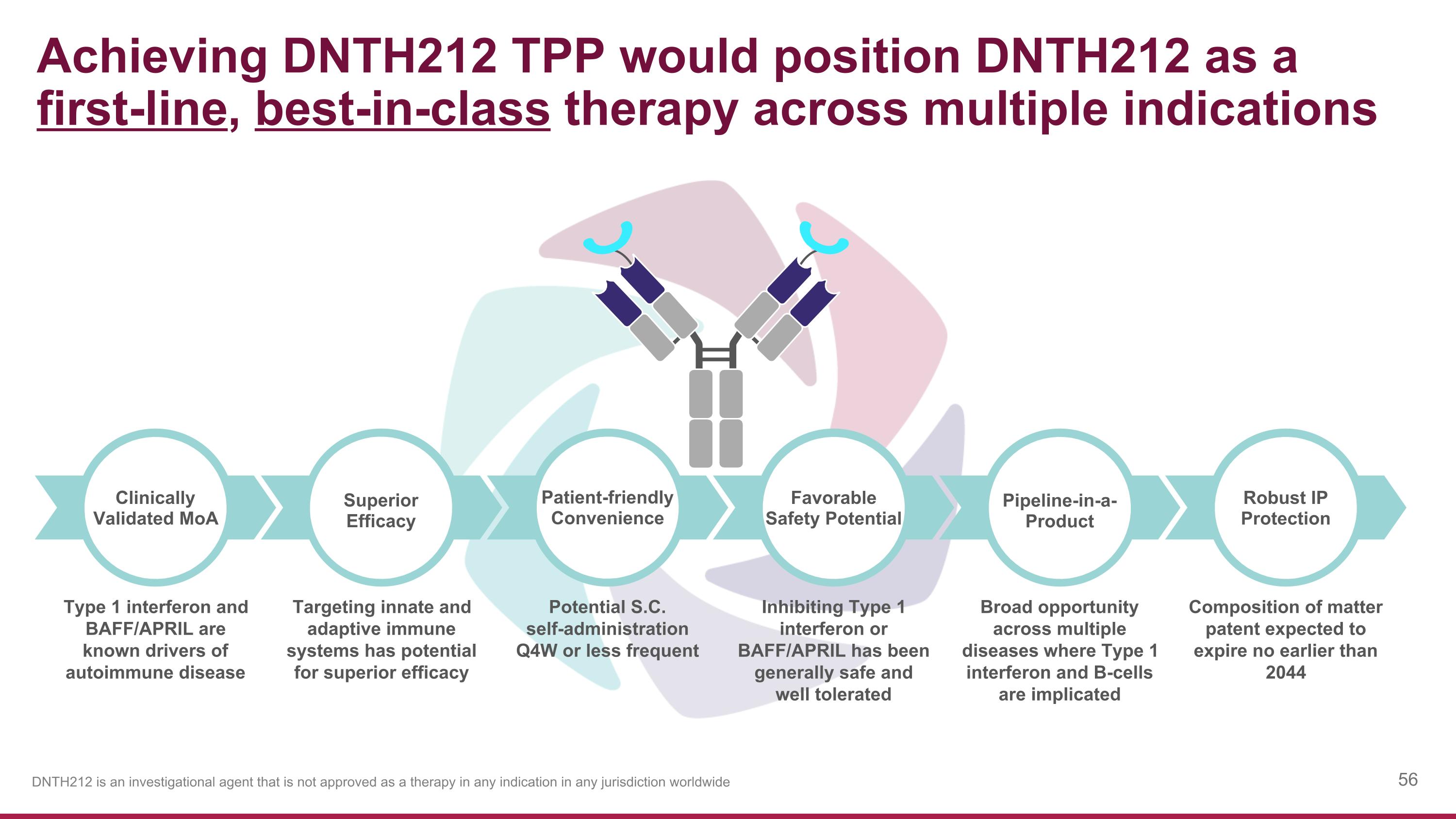
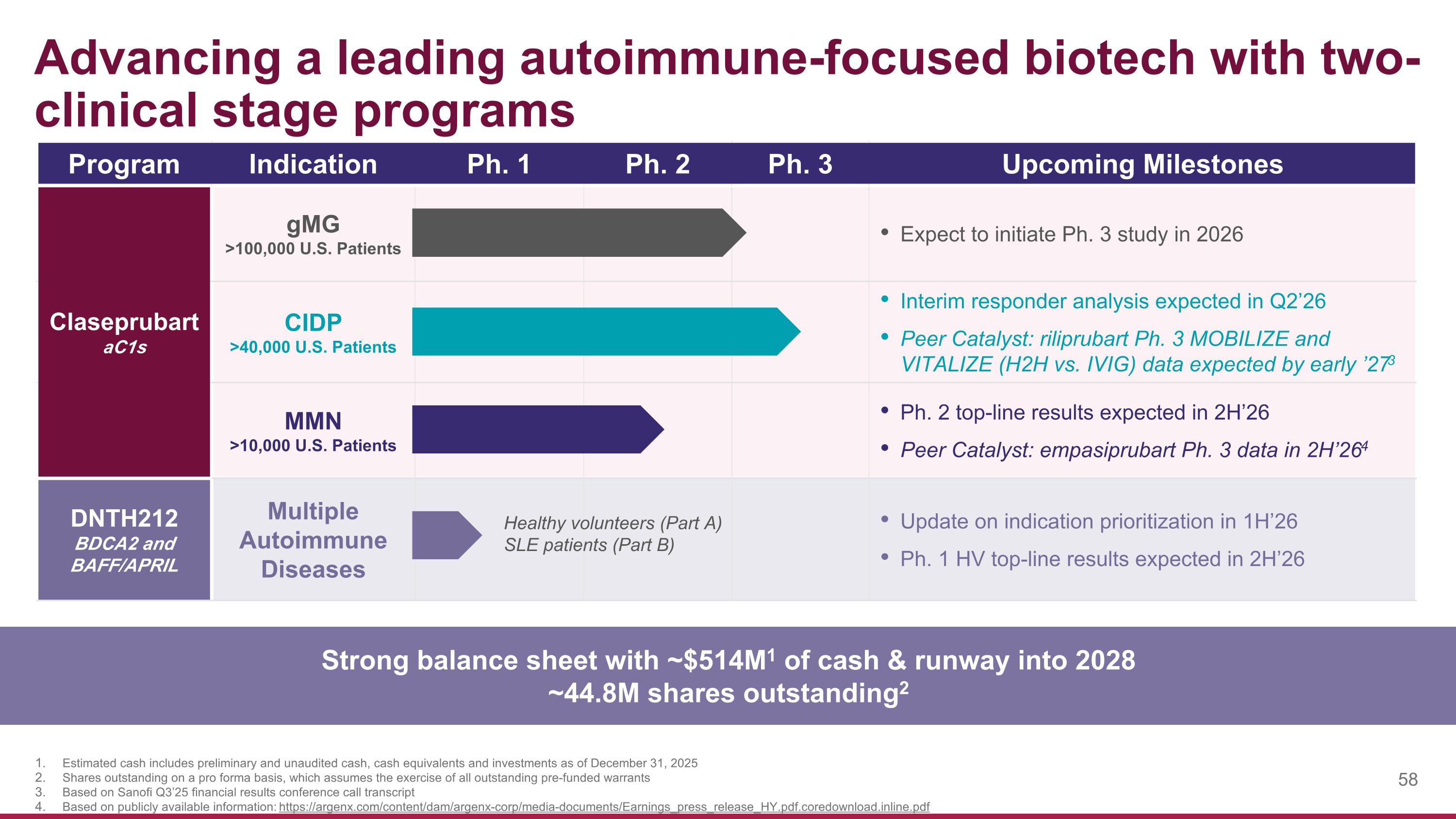
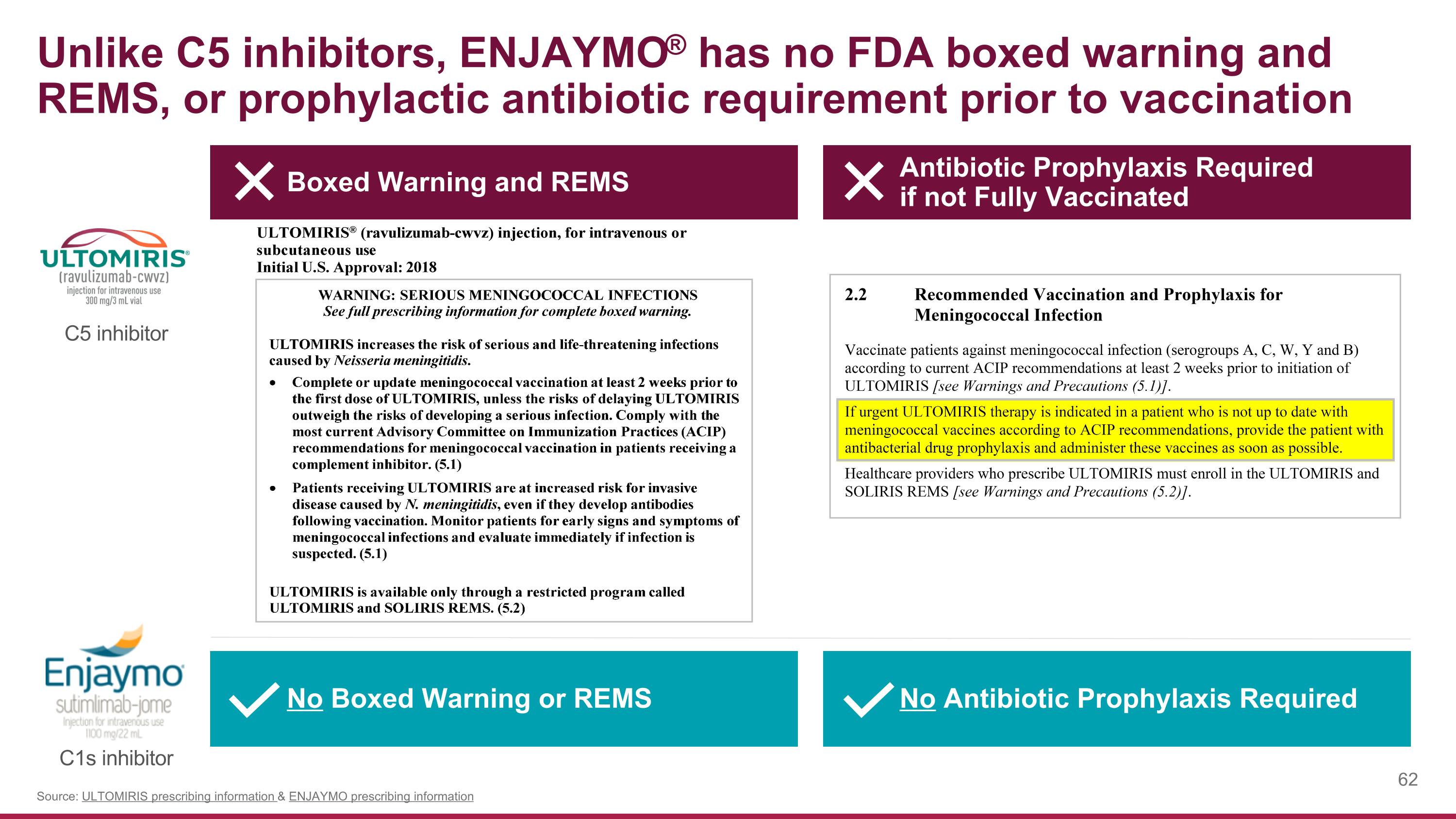
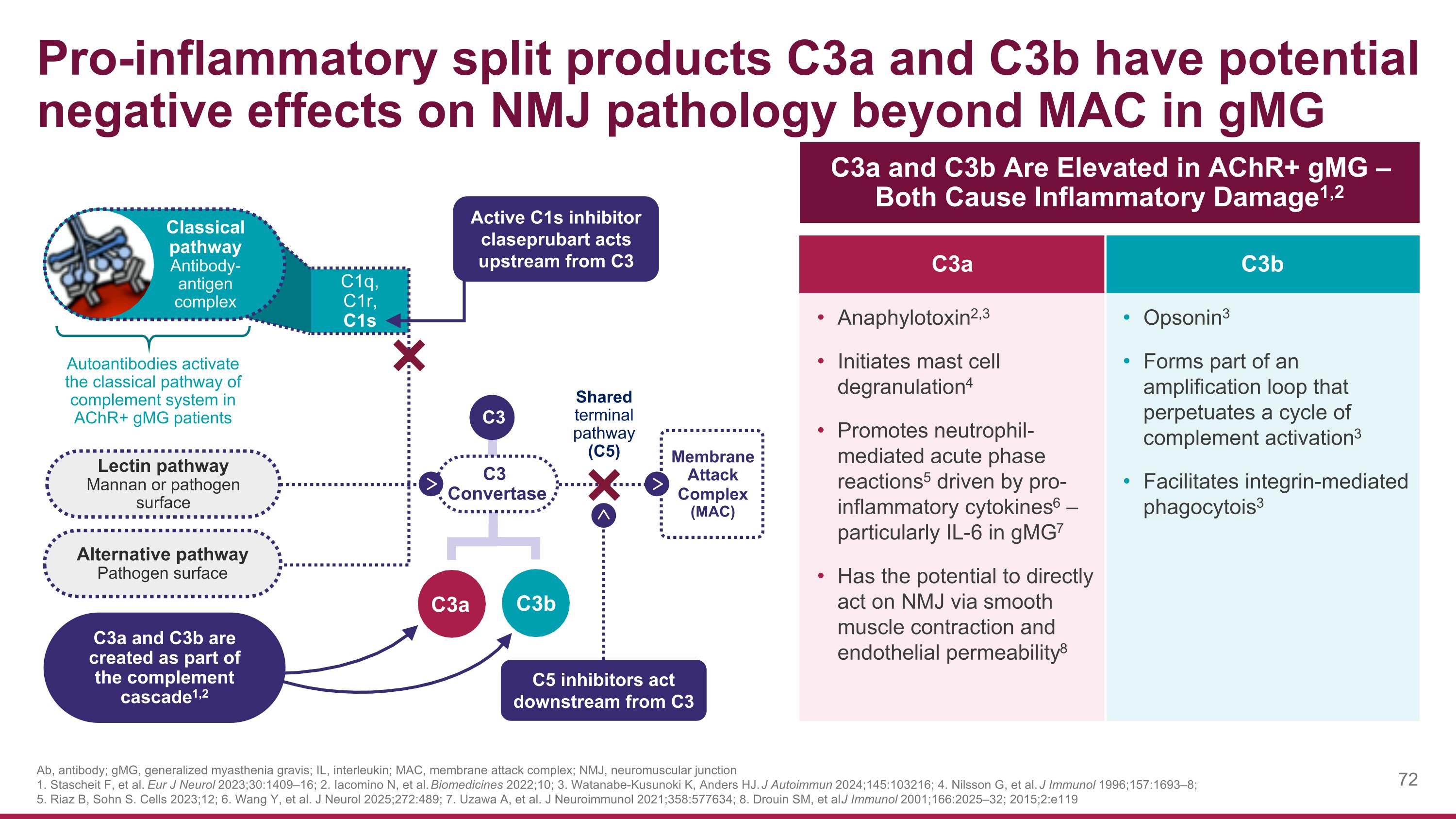
Thank you, Sim. Now, moving to slide 15, today's update continues to build on the promise of Classyprabart as a potential pipeline and a product and best in disease therapy in growing and underserved neuromuscular markets. We announced impressive, robust results in generalized Mycena Gravis with our MAGIC trial in September last year, and today we have a milestone moment with an early go decision for our Captivate trial in CIDP. We look forward, as Sim said, to completing this trial as quickly as possible. We will provide guidance for when to expect top-line results sometime later this year. And CIDP is a multibillion-dollar opportunity for Clasifibart because of the significant unmet needs that remain for patients. Next slide, please. The CIDP market is a large and growing multibillion-dollar market with an estimated 40,000 patients in the U.S. alone. The unmet needs in CIDP remain high and significant, including the need for more efficacious, better tolerated, and more convenient options. Next slide, please. This conclusion is supported by recent market research we conducted with a survey of 80 neurologists that treat CIDP in the U.S. What we heard clearly from them is they want new therapeutic options that provide three things. one greater efficacy with more consistent sustained symptom control two safer and better tolerate options with no box warning or rims and finally more convenient easier to use ideally as self-administered therapy next slide ivig is still considered the most effective therapy on the market today for cidp patients and yet when we specifically asked these neurologists how they felt about IVIG, we found that three-quarters of neurologists surveyed told us they need therapies that can help patients that are refractory to IVIG, as they don't have any effective options for these patients available today. And more than half told us that their patients on IVIG experience waning efficacy before their next dose, suffer a high treatment burden due to frequent and time-consuming infusions, and that they are concerned about IVIG's box warnings. These overall needs are what Clasipribart aims to address effectively. Next slide, please. The target product profile for Clasipribart in CIDP aims to be a potentially best-in-disease therapeutic. Our goals are to achieve efficacy that compares favorably to current standard-of-care therapies like IVIG with a safety and tolerability label similar to the first-generation C1S inhibitor cetimumab, or enjimo, which has no box warning of REMS, and finally with a dupixin-like convenience of a one-click self-administered fast auto-injector dose once every two weeks. Next slide, please. With today's update, we're well on our way to building a powerhouse neuromuscular franchise where Clacifibar can compete effectively as a at Firstline Biologic in three growing markets with over 150,000 patients in the U.S. alone. As I mentioned earlier, we have reached two important milestones in building our position in MG and CIDP, and our next step is to read out our Phase II NMN trial in the second half of this year. Next slide. So looking ahead, this will continue to be a catalyst-rich year for Dianthus. We announced this morning we plan to initiate our phase three trial in mg in mid-2026 evaluating 300 milligrams every two weeks as well as 300 milligrams once a month versus placebo top line results are expected in the second half of 2028 and we continue to expect as i mentioned top line phase two data from our momentum trial in mmn in the second half of this year we also look forward to our genex's phase three results from pacifibard in mmn later this year which should have very positive read through to us for dnt h212 our new clinical stage bifunctional fusion protein targeting bdca2 and bath april we expect to announce indications we will be prioritizing in the first half of this year and then announce top line results from our phase one healthy volunteer study in the second half of this year as well as a reminder we have a very strong balance sheet with cash balance of approximately 514 million dollars as of December 31st to fund operations into 2028 please turn to slide 22 and with that let me close with this one comment today's announcement is a double upside scenario for us not only did we hit our target number of responders much earlier than expected and hence the reason we are here with you today ahead of our already accelerated guidance of q2 this year but I want to point out that moving our baseline conservative an assumption of responders required in Part A from 40% to 50% is a huge change and a signal of our confidence in the data we are seeing. We went into this trial assuming success with a 40% ratio in Part A, expecting to see similar efficacy to Relipobar. The fact that we are changing it to 256 patients or a 50% ratio on top of a go decision signals very strong confidence in the data we're seen. With that in mind, thank you and let's open it up for questions.
Operator
Thank you. If you'd like to ask a question, please press star 11. If your question has been answered and you'd like to move yourself in the queue, press star 11 again. Our first question comes from Yaten Suneha with Guggenheim. Your line is open.
Speaker 4
Hey guys, thank you for taking my questions and congratulations some of the data, really good results in our perspective. So two-part questions. So first is, I mean, you are showing that the patient population is very similar to Riliprobar, and despite that you are able to produce, or it seems like the efficacy is better than Riliprobar. So could you talk about what your hypothesis is, what is driving the superior data relative to Riliprobar? And then, Marina, you just made a comment on change in this percentage to 50% now. I know you cannot disclose the data, but could you articulate, like if you see, let's say, something in the 40% to 55% responder rate, would you have changed that? Or does that need to be meaningful, higher than your assumption, for you to make that 50% change? Thank you.
Thank you, Yatin. On the first question, let me hand it to Sim to provide his perspective.
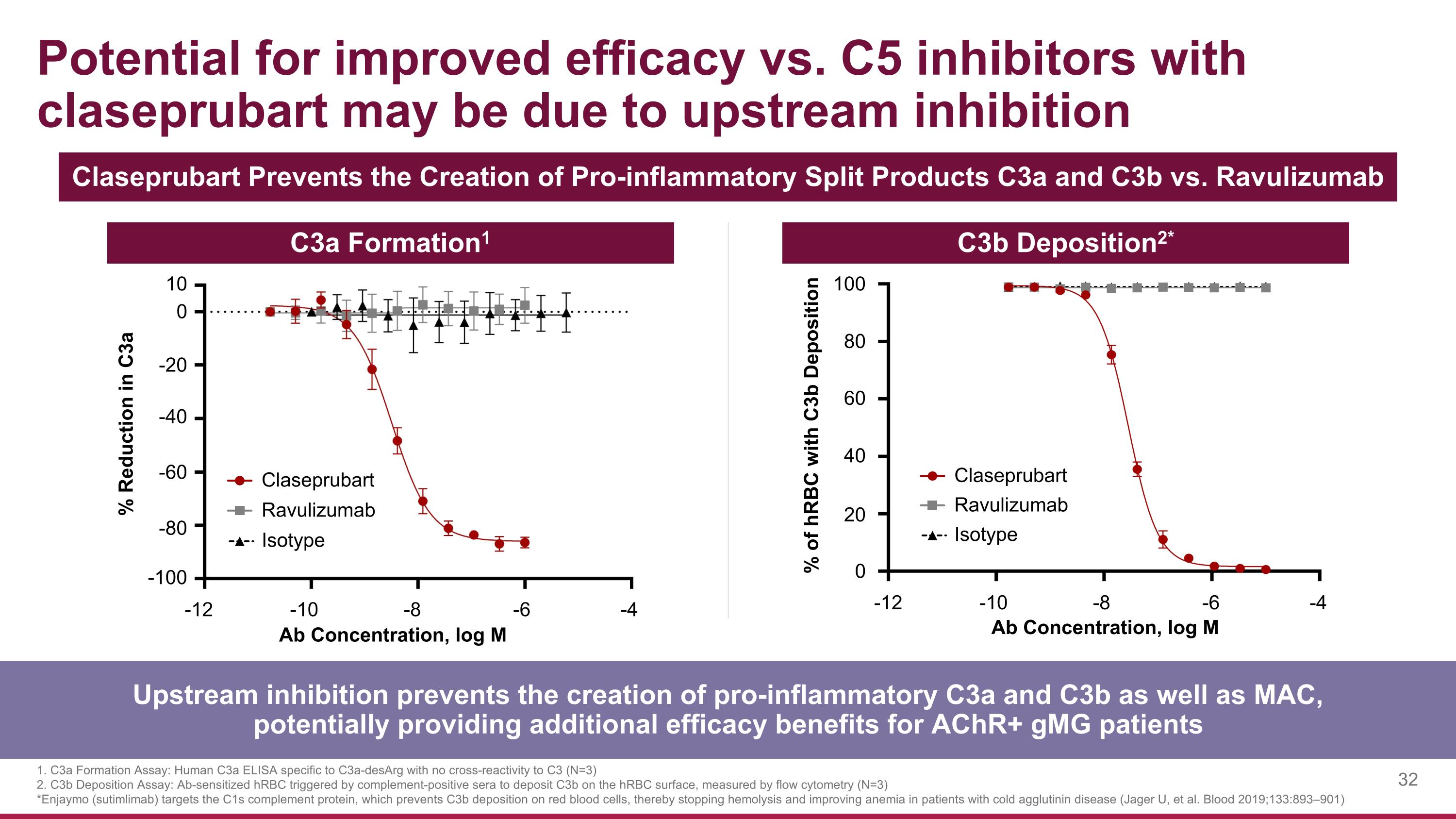
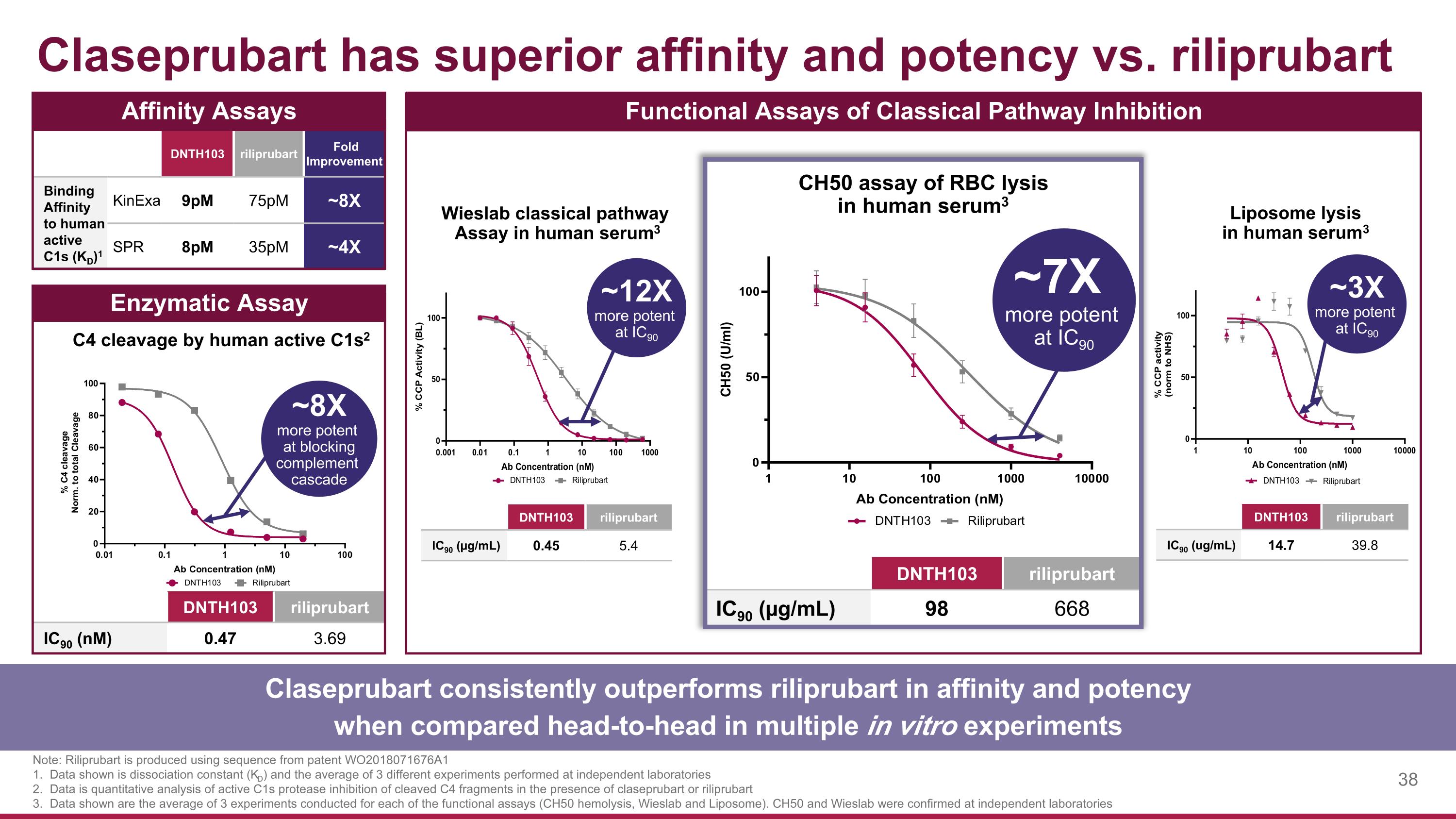
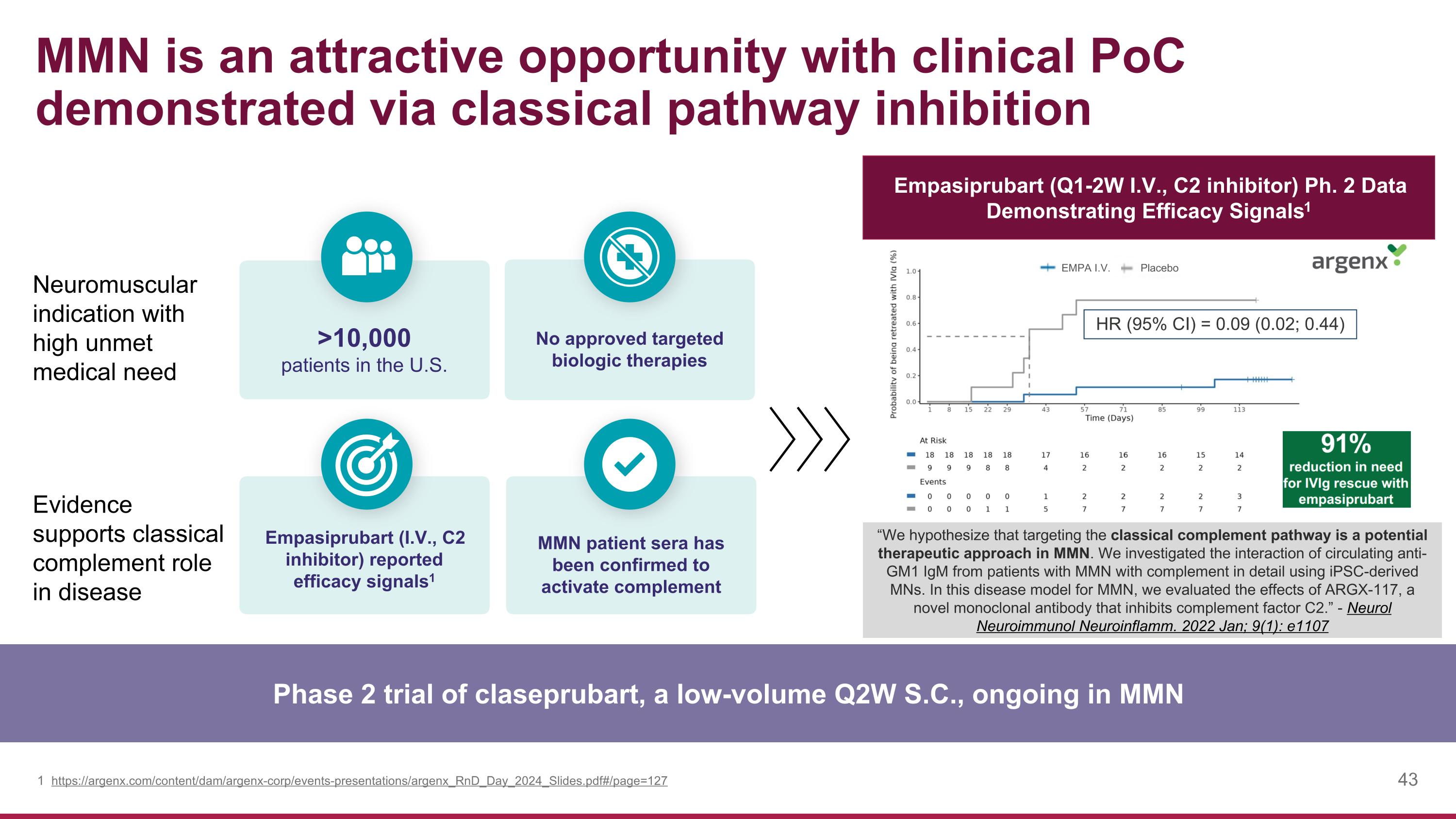
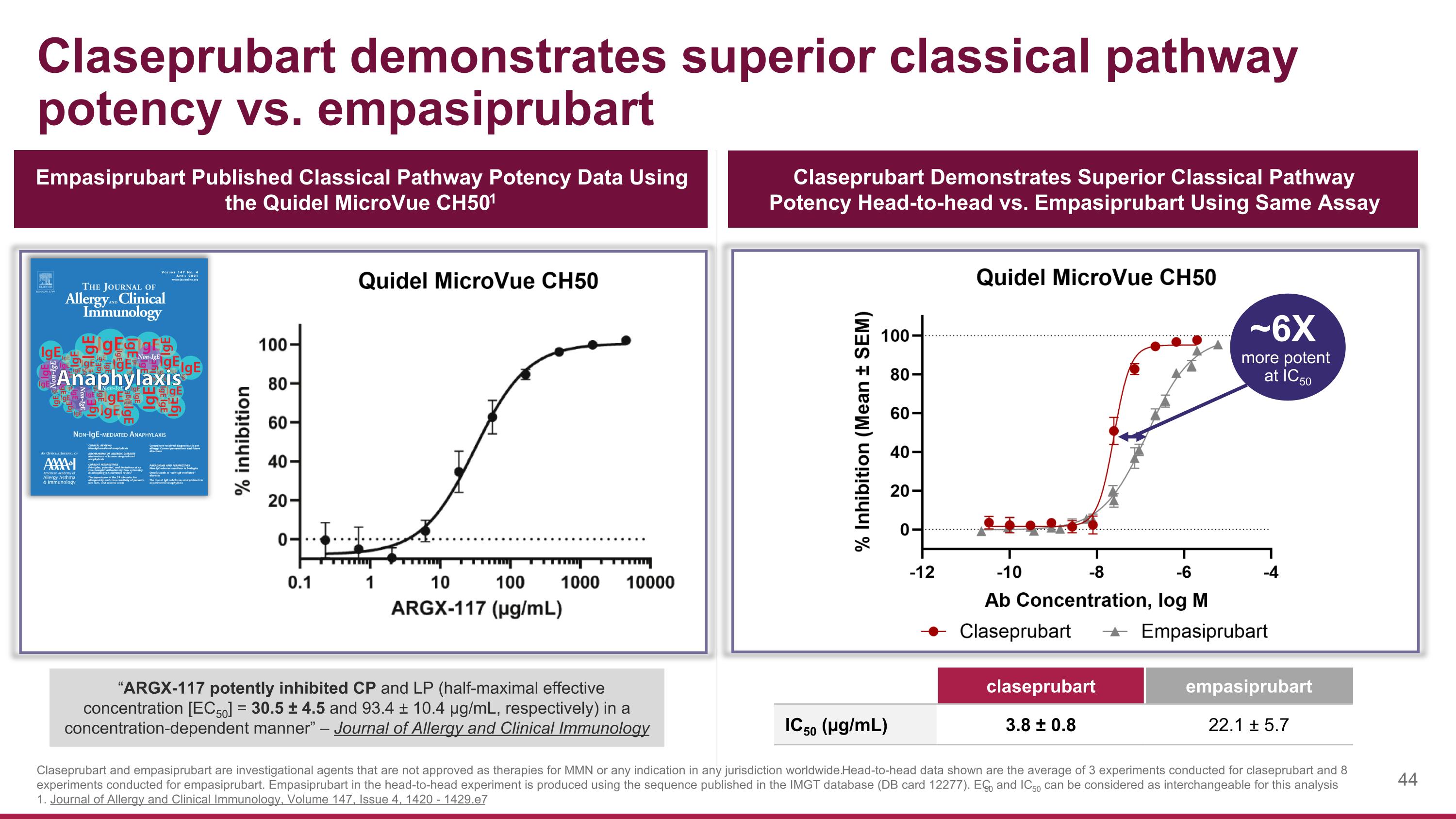
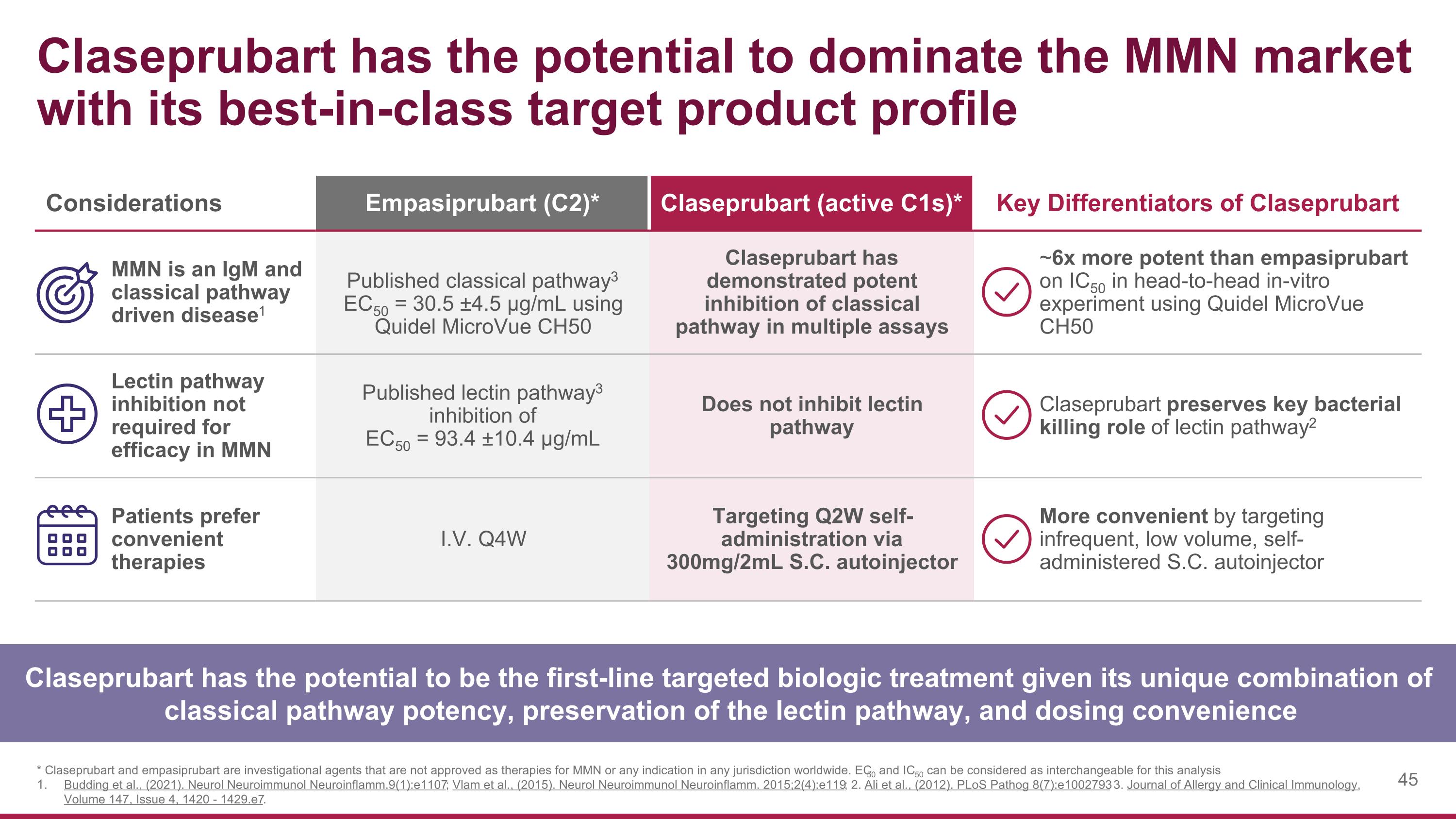
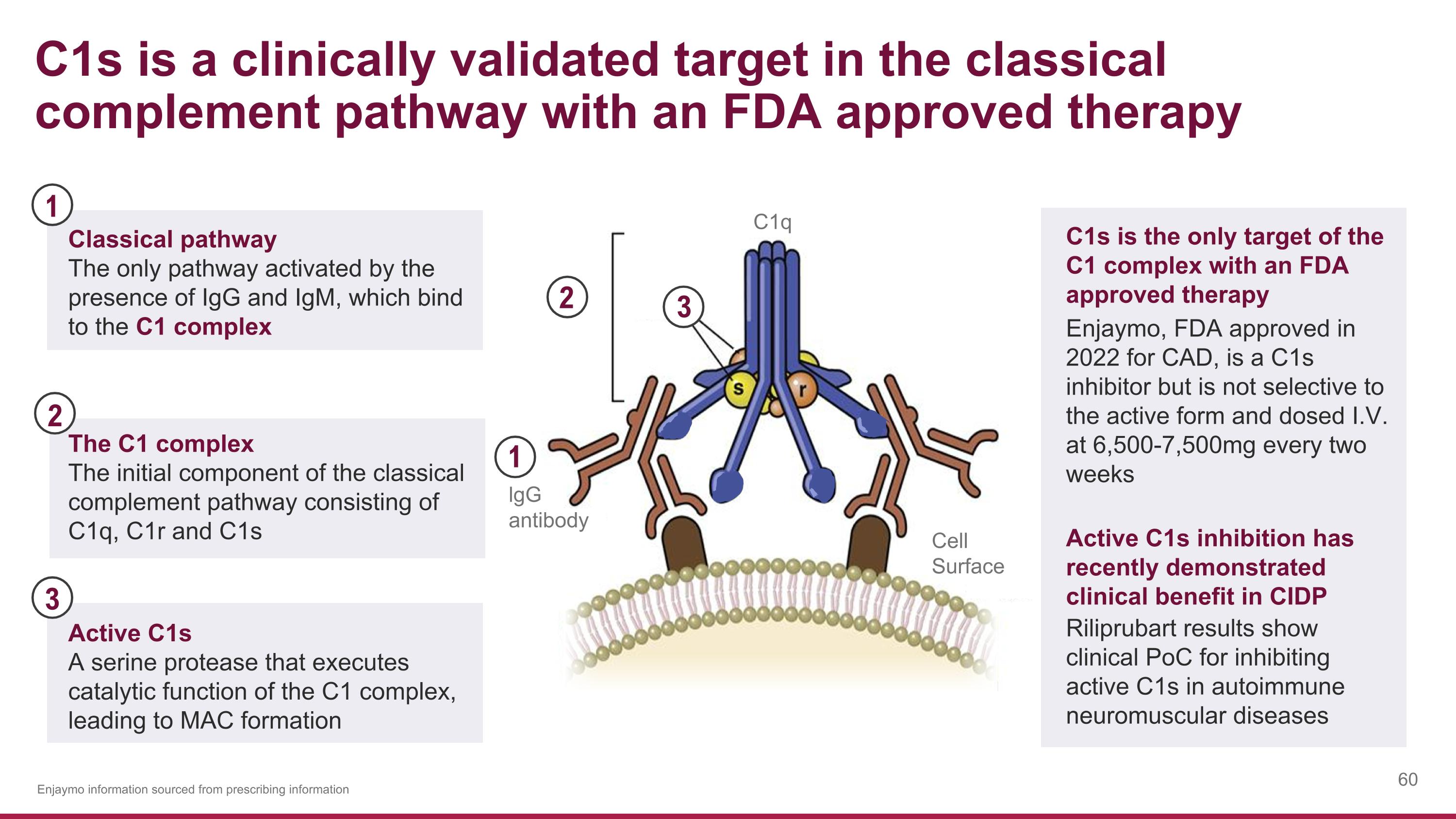
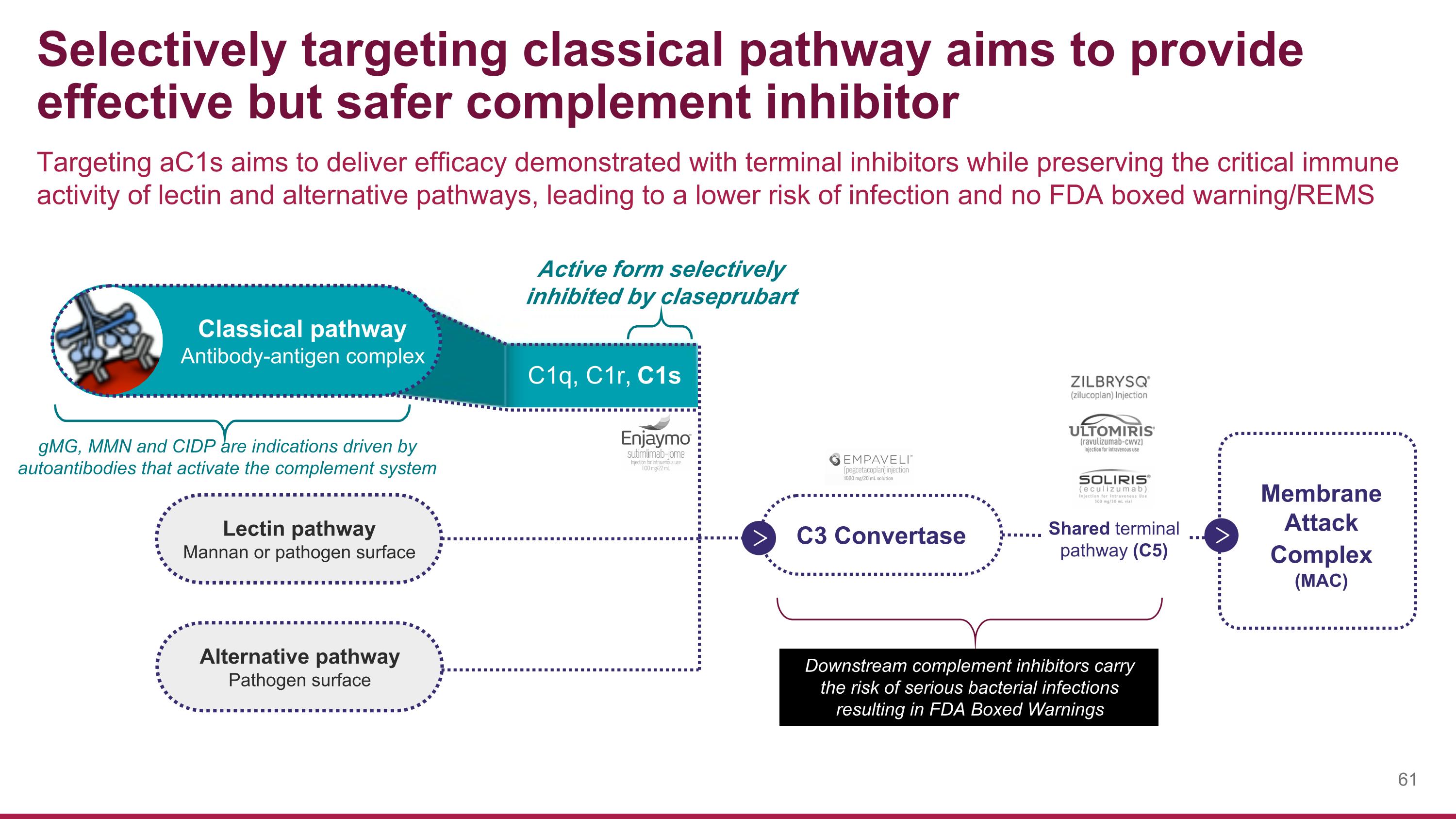
Yeah, so I think the, To summarize, the question was, you know, why do we think we're seeing data that kind of beat our expectations, which were largely based around what we saw with Rolupabar's I think there are two possible explanations. One is, I think we're seeing that the hypothesis of classical complement pathway inhibition upstream seems to be real. Now, we've seen it twice. So, we know that the mechanism is behaving well in this patient population. And then, of course, we know that we are a far more potent product, which means that we are probably delivering more upstream inhibition than they're able to. So that's one hypothesis. The other hypothesis, again, is I just want to caution everybody. Like, we are releasing an interim analysis. This is in a meaty but a small number of people. So we designed an interim at a time when we thought it would be informative to the study. So, again, that should mean something.
But, again, it is in a relatively small number of people. so it is you know so you know I just want to make sure that that is also well understood yeah and on your second question I think what you're asking is if the response rates we had seen were somewhere in the 40 to 55 percent range would we have changed it to 50 percent no we needed to see a substantial substantially higher response rate than that to move that 50 percent that that 50% is a conservative number to make sure that we absolutely don't risk under-enrolling Part B. Next question.
Operator
Thank you. Our next question comes from Alex Thompson with Stiefel. Your line is open.
Congrats on the data. Maybe two quick ones. I guess for the subpopulations here, maybe could you comment on whether you're seeing response rates that are sort of consistent with what you would expect based on the Reliprobarth Phase II, and then could you also comment on sort of what it is to define a responder in your study versus the Reliprobarth Phase II and how that might be more rigorous or not? Sure, Leif. So I think what we've suggested is that the overall response rate that we're seeing seems to be higher than what was seen previously. So what that would imply is that in each of the buckets, the response rate was somewhat higher. And that is true. In terms of consistency between where we expect the response rates to be highest, I would say yes, that's largely true. And we want to see that. So in those patient populations where you would expect a slightly higher response rate, that's exactly what we see. If we didn't see that, we'd actually be concerned about our data set. So we're actually pleased to see that. The second point around the rigor of the actual endpoint. So the NCAT is a relatively high efficacy metric to move. So if you look at the possible different efficacy metrics in CIDP that you can approach, right? There's the NCAT. There's the IRODS. There's the MRC or the muscle sum score. There's grip strength. Those are generally the ones that you think about. Of those, the hardest one to move is really the NCAT. It takes the most improvement to move it. So in of itself, it's pretty rigorous, and that's what was used in the Lollipobart trials as well. In our specific case, because this is a registrational study and not just a single open label study, we really tried to make sure that the responses we were seeing are valid because, of course, we want to have a positive Part B, not just a pleasing Part A. And what that means is we required confirmation of the NCAT at a subsequent visit, and that confirmation could not happen prior to week seven. So what that means is that if you came in at week five and you were an NCAT responder, you had to confirm that response at week seven. You could not simply revert back to baseline and then confirm the response at a later visit. It had to be on two consecutive visits. The other thing, of course, is the medical team. We took great pains to make sure that what we were seeing on the NCAT was actually consistent with what was happening on the other efficacy metrics. So we didn't just sort of check box off an NCAT responder and say, great. We looked and made sure that whatever the patient said they improved on was reflected on what the physician saw in their physical exam.
Next question, please. Thank you, Alex.
Operator
Thank you. Our next question comes from Pete Stavaropoulos with Cancer Fitzgerald. Your line is open.
Yeah, good morning. How are you? Good morning. Marino, Sim, Ryan, and team, congratulations on the outcomes. So, one question that I have is the dosing window for Part A is up to 13 weeks of treatment. Will you miss some of the patients that therefore reduce the reported responder rate when Part A is completed? And the reason I ask is, you know, when you look at the reliper part data, there is continued deepening of benefit, and some patients, you know, had not crossed the one-point threshold on the NCAT by week 12 and 16?
Pete, that's a great question. I'll ask Sim to add some comments there. But yeah, it was a higher hurdle. We would not count anyone, obviously, after 13 weeks. So we are only counting responders who respond two weeks in a row starting week five to week seven and so on. But yeah, if someone needed 15 weeks, 16 weeks to respond, they weren't counted as responder in our analysis?
Yeah, I don't have much more to add to Marina outside of saying that this was something we paid attention to during the course of the study, and on the table was always extending part A if we thought that that was needed. Fortunately for us, we saw a very hefty responder rate, so we didn't feel the need to do it, but I think obviously if we extended out to 24 weeks, any rational human being would assume that our response rates would go up a little bit.
Yeah. And look, part of why we thought 13 weeks was enough and felt like that higher hurdle was not a problem for us is the data we saw in MG. I mean, it's just very rapid, robust, quick response in patients with neuromuscular conditions. And the data that we're seeing in CIDP is consistent.
Operator
Thank you. please. Our next question comes from Gavin Clark Gardner with Evercore ISI. Your line is open.
Hey, guys. Congrats on the great outcome. I just wanted to make sure I heard you correctly on safety. There was no drug-induced lupus, no autoimmune symptoms, including lupus, and I think no other signs of autoimmune activation. And then just quickly on the sample size, for Part B, was there any consideration to lower the sample size below 256, or was this really the lowest you wanted to go?
Sorry, Gavin, you said Group B, but 256 is Group A. Which one are you referring to, the 128 in B or the 256 in Part A? The 128 in B, sorry.
Yeah, I'll ask Sim to comment on those. Look, the safety remains very pleasing, right, in terms of what we saw clinically in MG. very clean study and that remains true now in CADP as well and of course as you start to get more and more experience with the drug and a greater number of people now across two indications you know we feel more and more confident on what the ultimate safety profile of this drug is and yes I will confirm there were zero indications of anything that would lead somebody to believe in any autoimmune activation let alone DIL right so so very very clean from that standpoint. In terms of growing and going lower in Part B, I think, you know, I think it's a registrational study, right? So sponsors always kind of tend to become very, very conservative in their assumptions because you've got one shot at getting this done correctly. And you want to make sure that in trying to reduce sample size, you don't somehow end up with a study that fails. And so it's my way of telling you that, yes, if we look deeply, probably, you know, you could shave some numbers off here or there based on common sense. But I think it's a small price to pay to over-enroll a little bit to make sure that the molecule is allowed to show exactly what it needs to do.
Thank you, Gavin. Let's go to the next question.
Operator
Thank you. Our next question comes from Yaron Werber with TD Cowan. Your line is open.
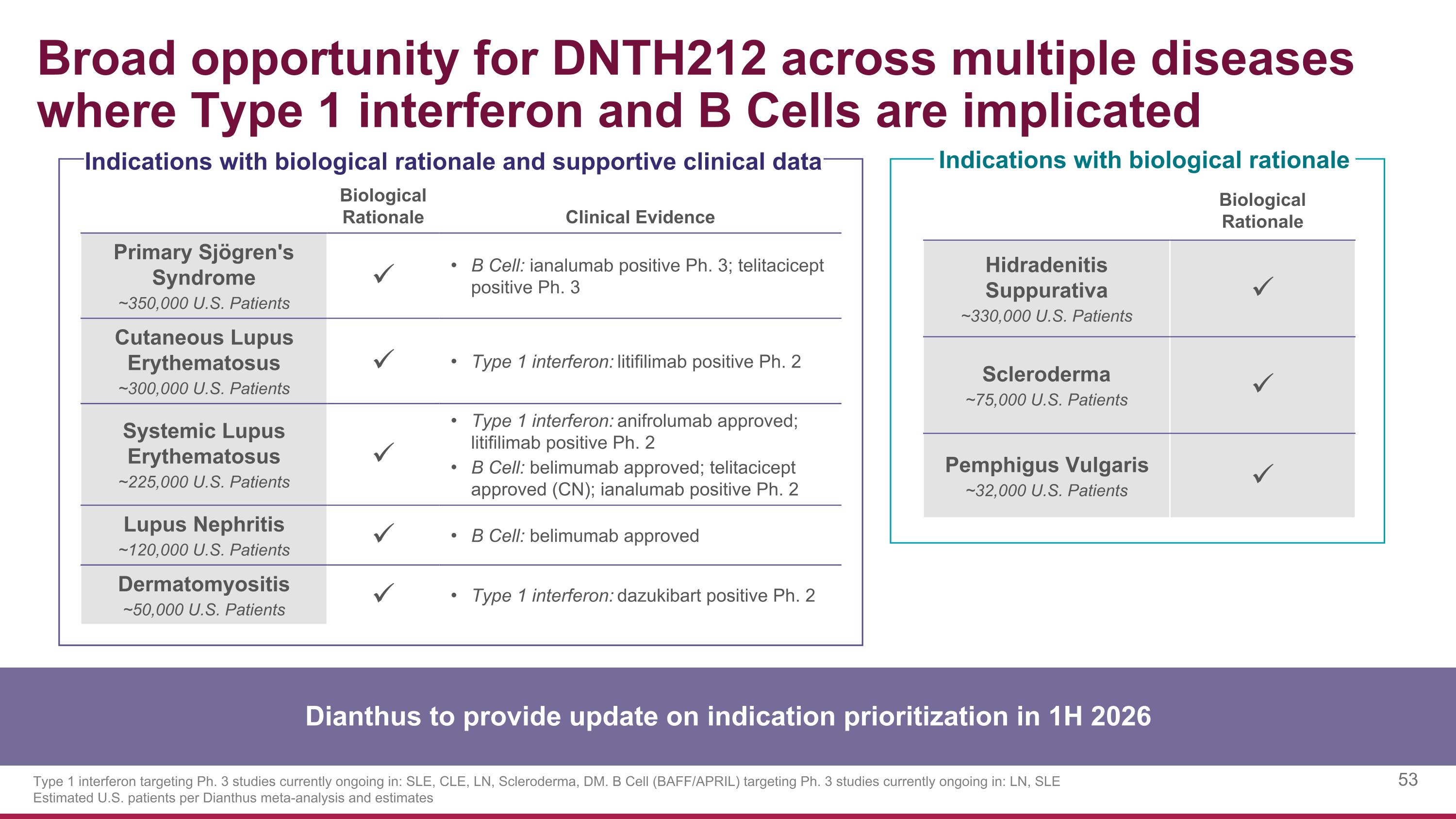
And congrats as well for me, really, for the terrific results. Two questions. One is just a follow-up on Gavin's question. For the Phase III GMG study starting mid-year, can you – it sounds like you've been in discussions with FDA about whether you need to do ANA monitoring and you can exclude patients with baselines, ANA titers. Can you give us an update on that? And then secondly, it sounds like in Q2, we're going to get an update on the ANTIS-212 and potential indications. I think you've talked in the past about cutaneous lupus, lupus nephritis, SLE, dermatomyositis, and Sjogren's. How should we think about, would you only prioritize one? Would you run two phase twos, two different indications at the same time? You know, any thoughts would be great. Thank you.
Yeah, thank you, Yaron. So on the MG trial, yeah, we had a very, very productive, very fast, very short meeting with the FDA. We're just waiting for the minutes to come in there they're imminent and make sure that we have everything that we agreed to in black and white so we'll provide more details and updates on the MG trial in the very near future in your term on this second question which I'm not trying oh two on two yeah well I mean you named the six indications that were made the shortlist you should expect that we're going to announce three that we're interested in, pursuing as quickly as possible. And then at some point later this year, potentially, you know, what exactly is going to be the rollout, what phase, et cetera, et cetera. But yeah, the three, we're going to mention three that we prioritize from those six. Does that answer your question, Jerome?
Operator
Thank you. Our next question comes from Rami with Lifestyle Capital. Your line is open.
Hey, guys. Wanted to pass along Mike some graphs on the update as well. I guess, any hypothesis as to why you've been able to accelerate enrollment of your CIDP study while Sanofi has announced delays?
And then, secondly, based on the…
Go ahead, Rami. Finish up.
I was going to say, based on the results in MG and now CIDP, do you also expect to drop the 600-mig dose of ClutibraBart in MNN, or is there a need for a greater complement inhibition of that disease.
All right, great. So one thing, yeah, on your question about, look, they're having delays with their recruitment. They say it's because of recruitment. We're not seeing that issue. I think there's two things I've mentioned to investors that I think were very helpful. One is, you know, we designed this trial for multiple reasons, and one of them was that we knew that it would be very competitive out there. CIDP is a rare disease, and yet there are multiple pivotal trials going on with multiple sponsors. And so the idea was, how could we make our trial more attractive for patients? How could we make it the ideal type of trial for patients to enroll into? And so when we saw the results of the ADHERE trial, and we saw the results of their label, getting a broad population across all adults with CIDP, despite, for example, not having any refractory patients in their trial we thought this would be make the best sense so if you're a CIDV patient looking at multiple trials and trying to decide which one you want to go into if you're eligible most trials you go in you're blinded right from the start you could get placebo you could get continue on IVIG which obviously you're motivated to get off of and that's why you're going to control or you might get a drug that you don't know if you're even going to respond to it versus with us it's just open label you just come in and you only have to come in every two weeks as opposed to every week, for example, with your lipobart, you get one shot and you see exactly what's happening. And only if you get better above and beyond your baseline, then you get randomized. And yes, there's a chance you get placebo there, but even then, you know, we watch you like a hawk and the moment you relapse, we pull you out, rescue you, and you get a chance to go back on the drug that you know you responded to in Part A and get that for up to two years for free. So it's just a much more patient-friendly study, so I think that has a little bit to do with it. I'll let Sim to maybe add anything, but clearly our team is just executing at a really impressive level. They're doing it across all programs in the company, not just CIDP. Do you want anything?
Yeah, I don't have anything to add to what you said on the first question. On the second question, which regards the 600 milligram arm in MN. I think that, you know, first of all, I think the CIDP data, because of the nature of the two diseases, right, which seem to be more upstream complement driven than perhaps others, I think the CIDP results really magnify the probability of success in the MMN study, frankly. And then regarding the dosing, intuitively, we've dropped 600 in MG. We've now dropped it in CIDP. It would seem to make sense to drop it in MMN.
The issues are, there are a couple of issues there.
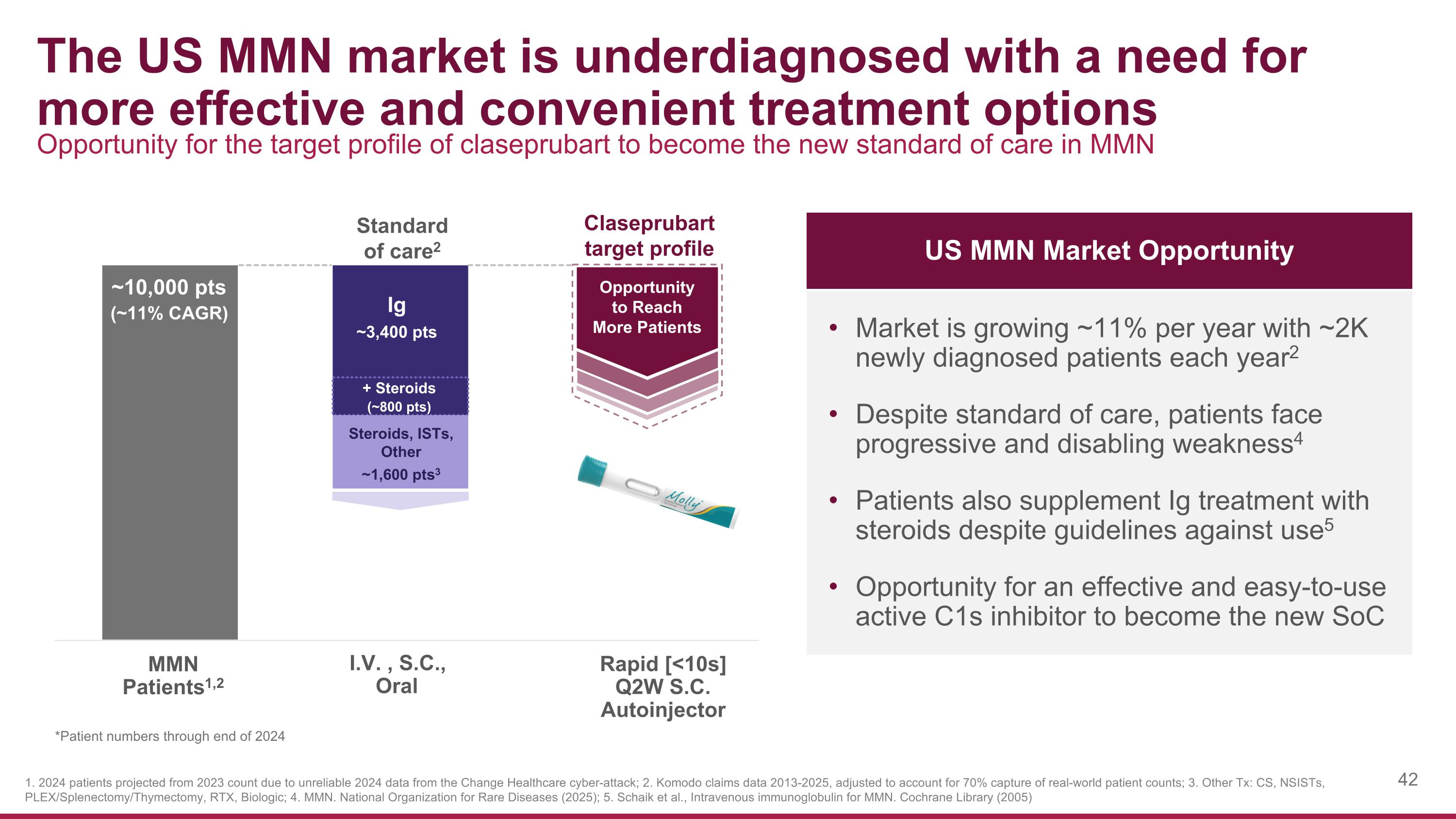
Number one is we're already well advanced in that study, right? We didn't have a lot of people randomized in CIDP, so we could go ahead and drop the arm. But in MMM, we're well advanced in that study. Number two, out of all three indications that we're in with 103, MMM is the most underserved. There are actually no targeted options. I don't consider IVIG a targeted option for an autoimmune disorder. So there are no targeted biologic options in MMM. So this is the one shot that we have to just make sure that we deliver the very best efficacy possible. And we don't know enough about MMM. We have no data there. They're just scant data available, period. So the medical team has really decided actually a while back that we'd like to proceed with both arms and MMM.
Thank you. Thank you, Rami. Let's go to the next question.
Operator
Thank you. Our next question comes from Maury Raycroft with Jefferies LLC. Your line is open.
Hi. Congrats on the update, and thanks for taking my question.
I'm wondering how many patients you estimate could be enrolled by the end of this year and what type of guidance you'll be able to provide for Part B at that point. And will you be able to announce when you've achieved the 128 responders needed to complete Part B?
Thank you, Mari. Yeah, so we're not going to give any guidance right now on what our targets are for this year. Suffice it to say that every target we set for this trial, we keep beating, which is a nice situation to be in. But, yeah, sometime later this year, we'll provide guidance on when exactly we expect top-line results for the entire trial. I mean, frankly, for myself, and I think for Sim, we'd want to see at least 100 patients in complete Part A before we really got comfortable with our estimate so that we don't sandbag or overpromise on when we expect top-line results.
The other thing I'll add there is, you know, we didn't hold back on the study whatsoever, right? We took a very global approach to where we're going to go. We were not at all conservative in terms of the number of countries or the number of sites that we wanted to approach because we knew how many patients would be required, especially when we still had the 600 arm in play. And we knew how competitive the market was and that CIDP patients aren't a dime a dozen either, right? So we went pretty broad. And what that means is that when you go broad, different countries have very different startup times. And so part of the reason why we're not giving you guidance is, frankly, we still have some very meaty geographies that are just opening up this week. So we haven't really had time to let them enroll and see what they're able to do. And until we do that, it's hard for us to come out and just give you a date.
Yeah. So was there another part to your question? No. Yeah, that was helpful. Thank you. That's it? Thank you. Next question, please.
Operator
Thank you. Our next question comes from Danielle Brill with Truist Securities. Your line is open.
Operator
Hey, guys. Good morning. Big congrats on these incredible results. So, I have a question on response rates by background therapy. Since the majority of patients represented in the GO analysis were receiving background standard of care, I'm curious if there were any discernible patterns or differences in response rates observed based on prior background therapy, whether that be steroids or IVIG. And then can you also comment on the median time to response? I know it's a small end, but curious if you were seeing responses concentrated around in a certain time frame or if they were dispersed across the 13-week evaluation period. Thank you.
Yeah, so I'll be very open. I know the answers to all of your questions, you know, since obviously we have patient-level data, but there are several of which it's just not the right time to speak about publicly, and the reason for that, frankly, is just to maintain the integrity of our study, right? So, in other words, this is a registrational study. We are at the beginnings or the beginning phase of recruitment, and the last thing we want to do is to influence physicians or patients in terms of their expectations in Part A, because what we want to do is make sure that our Part A response rate is as rigorous as possible, that these are true responders, so that the ones on placebo will deteriorate and we have a successful Part B. right? So that's part of the reason why we've released limited information. What I feel is fair to say is that, number one, is that our response rates were not clustered, and you wouldn't expect them to be in a disease like this because CIDP patients are, each one's kind of their own individual story. Fast forward 20, 30 years, we may find out that CIDP, the way we look at it today, is three or four different diseases that have similar external physical symptoms so this is why patients have very different courses and very different responses to therapy and in that type of situation you want to see exactly what we see which is people have very different periods in terms of when they respond to something some respond very well and some don't right and that's exactly what we've seen in our study in terms of different subgroups all i will say is no surprises Like, the only surprise is what Marino mentioned earlier, what I've mentioned with caveats as well, which is that it seems like overall the response rates are higher than what we anticipated, but the pattern of them is pretty much what we expected.
Operator
Does that answer your question, Zaneel? It does. Thank you so much.
Thank you. Next question.
Operator
Thank you. Our next question comes from Ryan Deschner with Raymond James. your line is open.
Congratulations on the results today. Real quick, given the substantial reduction in enrollment for Captivate, how much time do you think you could realistically shave off your timeline to potential approval in CIDP, and what needs to happen logistically with regulators to remove that 600 milligram dose arm in Captivate? Thanks.
Look, in terms of speed, clearly we've been doing really well, and now the changes we're making to the trial will accelerate our ability to get to top-line results. Again, we'll provide guidance on what that looks like later this year. I'll tell you what's on my mind is just a couple of years ago, Relipid Bar was probably about three years ahead of us to market. Based on their delays, based on our acceleration to date, that difference is now in the one to two year frame. And so what I'm looking for is further updates from them. And then you'll get further updates from us later this year. And then we'll see if we've been able to, you know, minimize or nullify that first to market advantage they had at one point. That's what I'd like to see. And that's what I'm really focused on right now. On the second part of your question, I'll hand it to Sim.
Yeah, we have pretty rapid mechanisms in most countries that we're going to leverage to cut the 600 arm off, so I don't feel like we're going to waste any patients recruiting to 600. Yeah.
It's going to happen. This is something that we suspected early on when we first started seeing patients come into Part A, so the team's ready to execute really quickly on this. Thank you. Thank you. Let's go to the next question.
Operator
Thank you. Our next question comes from Colleen Cousy with Baird, your line is open.
Operator
Great. Congrats on the data, and thanks so much for taking our questions. Given the strength of data that you're seeing so far, is there any reason you'd want head-to-head data versus IVIG, either for regulators or for commercial, or would that be something you'd entertain maybe in a post-marketing setting?
Yeah, look, I'm eager to see the head-to-head data from, especially from Relipibart. And of course, that'll inform us because at this point, we believe anything that Relipibart could do, we probably could do or match for sure or do better. So once we see that data, then we can decide how we go about creating our own head-to-head data versus IVIG. and it may not be in the same form that they've done it because we don't need it for registration. It'll be a purely, as you said, commercial requirement or nice to have. So, yeah, it's something we definitely have in our mind, and I think the data we see from our competitors will inform that.
Operator
Good, thank you.
Thank you. Next question.
Our next question comes from Bill Mond with ClearStreet. your line is open good morning and congratulations so to ask a little bit more on the the timing of responses if we assume that you are more potent than the lipopart would we also potentially assume that you may see responses faster and not only just more frequently and then on the other side of the timeline is there any any thought that you may be leaving some responder eight points on the table by looking at a week 13 endpoint versus looking a little bit further?
So, yeah, I think in general, if a drug works and you're more potent, then you probably should see results a little bit quicker. But without knowing their data set and their specific points at which they responded, I have no way to accurately answer that question yet. It's possible. I don't know. I just know that overall we're really pleased with the responders that we're seeing. In terms of lengthening the study, it's a balance, right? Because there's cost involved. There was cost involved. There's the fear of dribble-drabbles at the end who maybe aren't true responders. So again, my focus and the team's focus, yes, we want to see responders, but we also want to make 100% sure that we're doing everything we can to get true responders who should relapse once they're off of our drug. And the fear, of course, is the longer and longer you go and you get a dribble-drabble at the end, was that a real responder or somebody who's just been in there long enough to feel better on their own? And so we cut it at 13 weeks. And then we saw the results that we saw, and then so we didn't really feel a need to extend it any further. and that's the best answer I have to get. Yeah, I think here's the bottom line.
As Sim said earlier, extending Part A was an option if we weren't seeing pleasing results in the first 13 weeks. We didn't just see pleasing results that told us, okay, we have a go. We saw results that materially were better than our expectations. I just want to make that clear. It's not results that we say, okay, this is great and met our objectives, this is clearly much better than we had hoped and expected based on precedent data with RelipDepart. And so absolutely 13 weeks was the right decision. Thank you. Next question.
Operator
Thank you. Our next question comes from Laura Chico with Wedbush. Your line is open.
Hi, this is Dennis on for Laura Chico. Thanks for taking question. So, how do the Captivate study modifications change your power and assumptions around Part B? Yeah, we basically have eliminated the 600 arm and we increased the responder rate from 40% to 50%. So, it resulted in a reduction in Part B from...
Sorry, I think we went from 192 to 128 patients in Part B. We got rid of the 600 arm and now it's actually stronger power to show a separation because 300 and 600 split the alpha before and now we're not splitting the alpha. Does that answer your question?
Operator
Thank you. We will take our last question from Jake Batchelder with William Blair. Your line is open.
This is Jake on from Miles Minter. Thanks for taking our question. I just wanted to confirm that you guys have regulatory alignment on a sufficiently sized exposure database now with this 128 patient downsizing.
Yeah. I mean, we didn't go back specifically to regulators to ask them if this number of patients in Part B is adequate, but we use our sort of common sense based on our conversations and other indications that we've just had, such as MG, where we have far fewer patients overall that are going to be dosed. And so we feel pretty comfortable that the overall exposure data, especially with sort of a one-year Part B, 13 weeks ahead of that, so over a year in a registrational setting, plus an extension beyond that. And then let's not forget that regulators do look at, from a safety perspective, which is a question you're really asking, they do look at like doses and similar indications. And so we have 300 milligram data all the way from phase two with people with one year extension will be tested again in phase three, and we have the same doses and higher in MN. So we feel like we have plenty of safety data.
Does that answer your question?
All right, great. Thank you. So if I could just close, Thank you, everybody, for attending the call today. And I just want to, again, highlight how proud I am, how overjoyed I am with the results we've seen so far and the Dianthus team's execution. So a big thank you to them. You know, the fact that we're making this early call, and on top of that, raising the bar and changing our ratio from Part A to Part B, because of the materially better, materially significantly better results we're seeing than expectations and the precedence set with this mechanism of action, you know, it's just better than everything we had hoped at this point. And especially because we're seeing consistency in terms of the baseline characteristics with patients. We don't have more naive patients, for example, than Rolipibard had as a percentage. and the fact that we're seeing very consistent results across different geographies, different health care systems, different ways of treating CIDP in different countries. It is really, really a great moment for Dianthus, and I'm especially excited for CIDP patients and what this drug could do for them. So with that, let me conclude again and thank you. And if anybody would like to, any investors would like some time with the Dianthus team today, please reach out and we'll do our best to schedule some time with you. Thank you.
Operator
Thank you for your participation. You may now disconnect. Good day.