Operator
Good morning. My name is Sylvie, and I will be your conference operator today. At this time, I would like to welcome everyone to Energizer's First Quarter Fiscal Year 2025 Conference Call. After the speaker's remarks, there will be a question-and-answer session. Please note that this call is being recorded. And now I would like to turn the conference over to Jon Poldan, Vice President, Treasurer and Investor Relations. You may begin your conference.
Good morning and welcome to Energizer's first quarter fiscal 2025 conference call. Joining me today are Mark LaVigne, President and Chief Executive Officer; and John Drabik, Executive Vice President and Chief Financial Officer. A replay of this call will be available on the Investor Relations section of our website, energizerholdings.com. In addition, the slide deck providing detailed financial results for the quarter is also posted on our website. During the call, we will make forward-looking statements about the company's future business and financial performance, among other matters. These statements are based on management's current expectations and are subject to risks and uncertainties, which may cause actual results to differ materially from these statements. We do not undertake to update these forward-looking statements. Other factors that could cause actual results to differ materially from these statements are included in reports we file with the SEC. We also refer to our presentation of non-GAAP financial measures. A reconciliation of non-GAAP financial measures to comparable GAAP measures is shown in our press release issued earlier today, which is available on our website. Information concerning our categories and estimated market share discussed on this call relates to the categories where we compete and is based on Energizer's internal data, data from industry analysis and estimates we believe to be reasonable. The battery category information includes both brick-and-mortar and e-commerce retail sales. Unless otherwise noted, all comments regarding the quarter a year pertain to Energizer's fiscal year and all comparisons to prior year relate to the same period in fiscal 2024. With that, I would like to turn the call over to Mark.
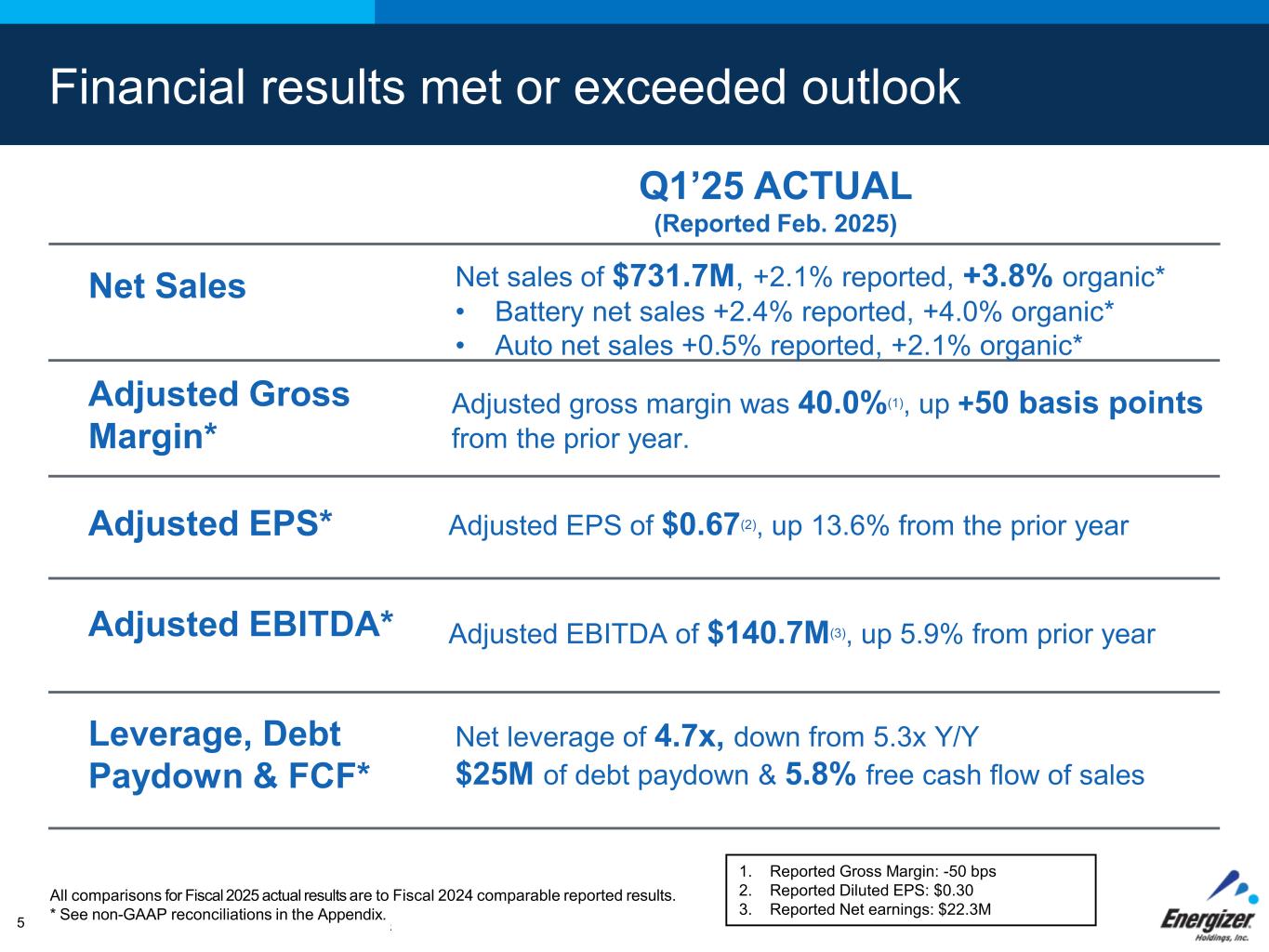
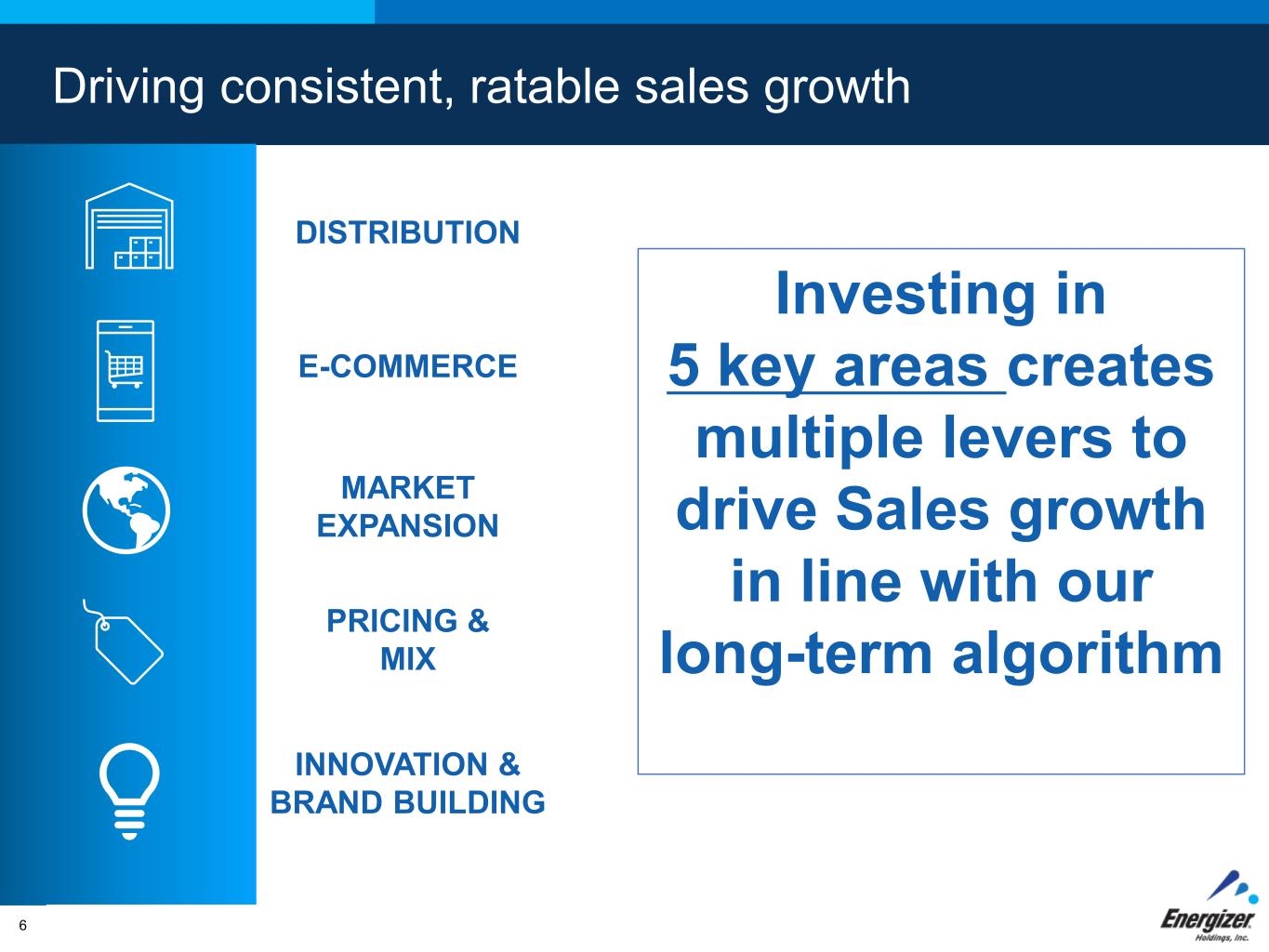
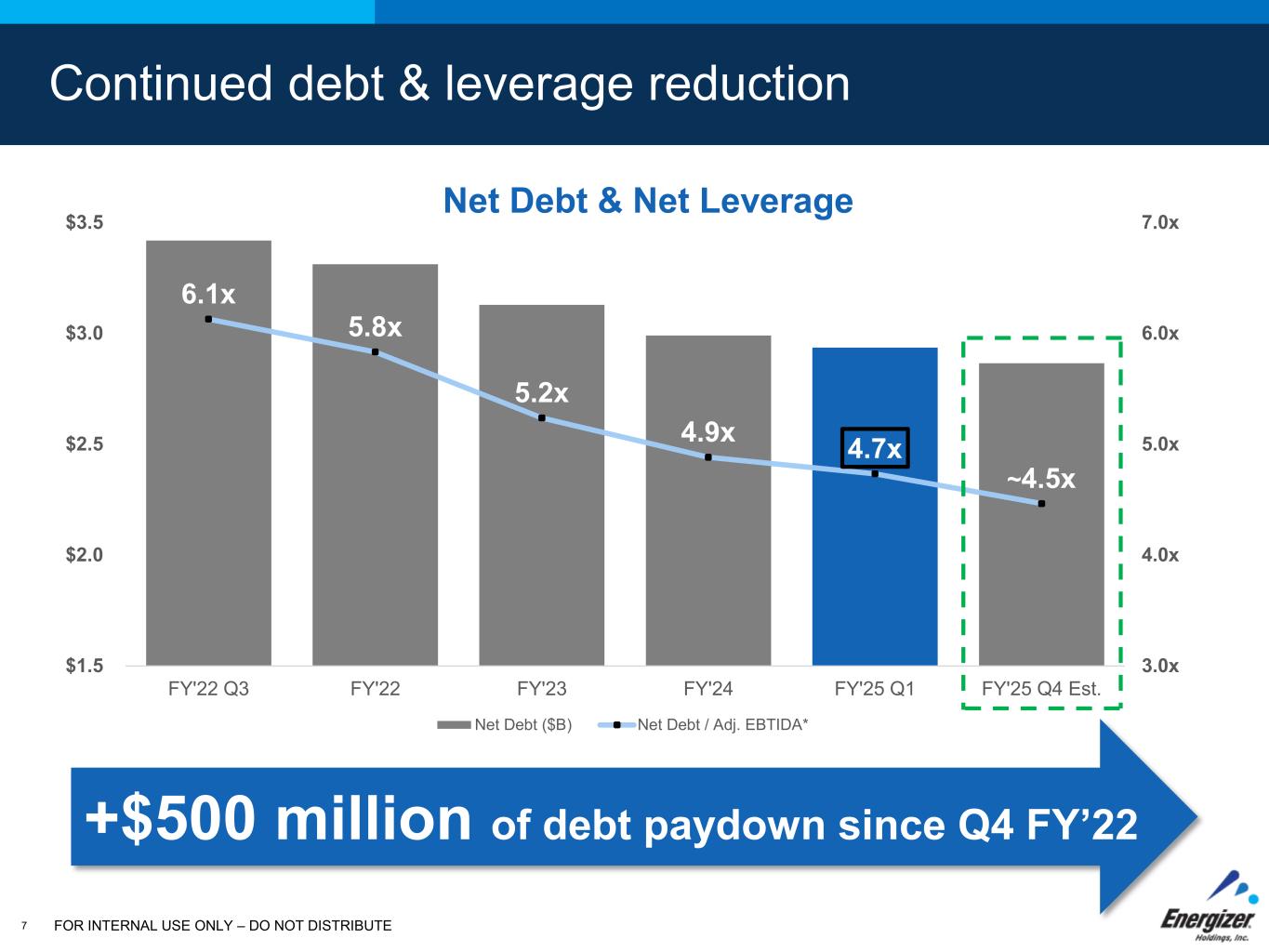
Good morning, everyone, and thank you for joining us today. We had a great start to the year and delivered strong results in our first quarter of fiscal 2025. Specifically, we delivered organic net sales growth of nearly 4%. We expanded adjusted gross margin by 50 basis points. We grew adjusted earnings per share by 14%, and we paid down $25 million of debt. We entered the year positioned to drive growth through our strategic initiatives, and our investments are paying off. We achieved organic growth in batteries of 4% and Auto Care 2%. As Jon will discuss more in a moment, our strong start to the year has given us the confidence to increase our organic sales outlook for the full year. We were able to achieve this growth while continuing to improve our adjusted gross margins, which reached 40% in the quarter. The top-line growth and margin expansion have been enabled by Project Momentum, which reestablished our margins and provided us the flexibility to invest. With three quarters remaining in the program, we expect it to enable continued investment in growth as well as margin improvement. The combination of our strong top-line performance and margin expansion drove meaningful earnings growth, enabling debt reduction for the tenth consecutive quarter. Our results are certainly bolstered by the health of our categories. Battery category volume remained positive, both globally and in the U.S. Importantly, we are seeing improving value trends as well. This is resulting in volume and value converging in a manner consistent with our expectations. The auto category also continued to show growth. We are seeing strong category fundamentals, including a steady increase in the age of the car park and a continued consumer shift towards do-it-yourself car care activities. These category underpinnings, combined with international expansion drove solid growth for our brands in the quarter. The first quarter highlighted how we are leveraging both Project Momentum and our strategic growth initiatives. And before turning it over to John, I would like to provide a forward look on how both of these areas look for the rest of the fiscal year. Let's start with Project Momentum. We generated significant savings over the life of this program and this quarter was no exception. Project Momentum generated nearly $20 million of savings in the quarter and helped to drive very strong earnings growth. There is more to come in the balance of the year, and we expect to finish fiscal 2025 with roughly $60 million in total savings for the year and approximately $200 million for the program. We will capitalize on the success of Project Momentum and invest for consistent ongoing growth. We've previously identified five areas where we expect to capture growth going forward: distribution, pricing and revenue management, market expansion, innovation, and the digital economy. This quarter demonstrates the progress in several of those areas with the biggest impact in Q1 coming from distribution. In the quarter, we expanded our business with existing customers and on new ones. These gains were broad-based across channels, both in the US and in international markets. We expect distribution to be a tailwind for the balance of the year. Innovation will also play a big part for us in fiscal 2025. On our call last November, we unveiled some of our newest and most innovative product lines, including the Armor All Podium Series developed in partnership with Oracle Red Bull Racing. We are pleased to report the early indicators are very positive. We have secured distribution at large retailers across the United States, Australia, UK and more. In total, Podium Series will be on the shelves in more than 15,000 retail locations across the globe. We also expect areas like market expansion, pricing and revenue management and our investments in expanding our digital economy business to drive growth in future quarters and fiscal years. The benefit of having this broad-based pipeline is that we can invest and build each of them out over time to generate the consistent growth our financial algorithm calls for. We are excited about what we have already seen and the pipeline across each of these areas is very robust. I will wrap up and turn the call over to John. From a high level, we delivered a strong first quarter and entered the second quarter with even greater confidence in our strategic initiatives. Our strong start to the year adds to our confidence that we are executing the right strategies to deliver on our 2025 financial outlook.
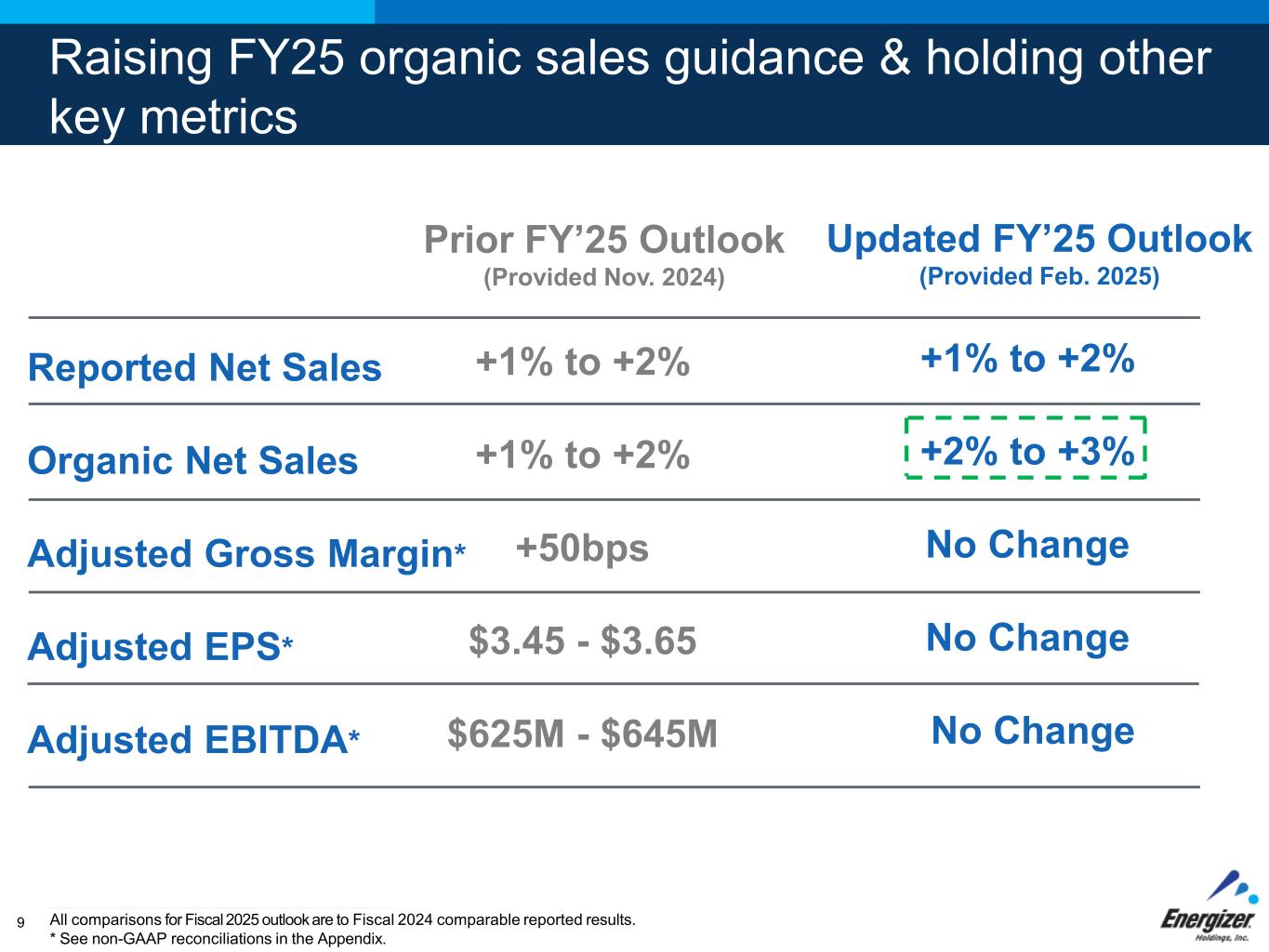
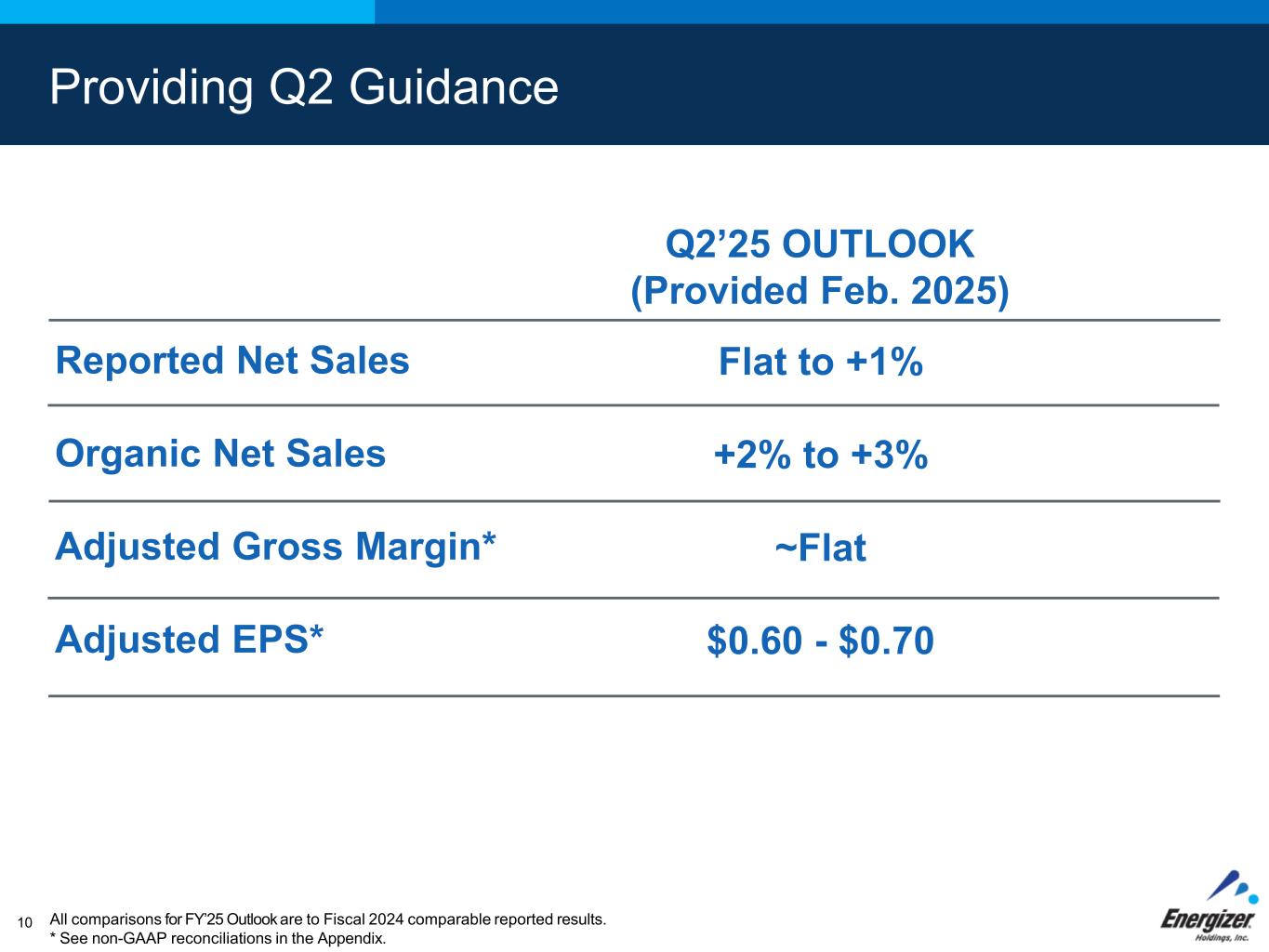
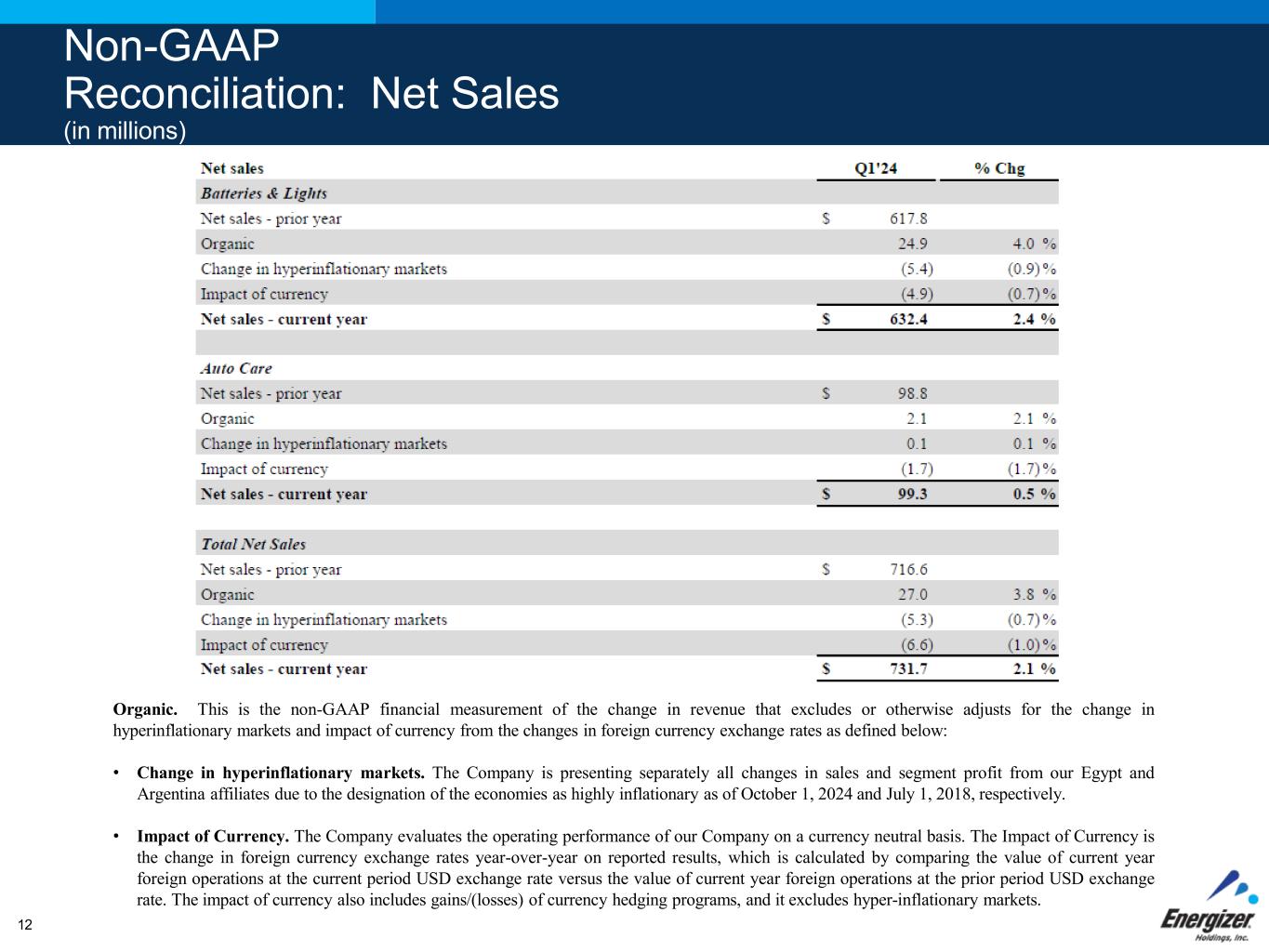
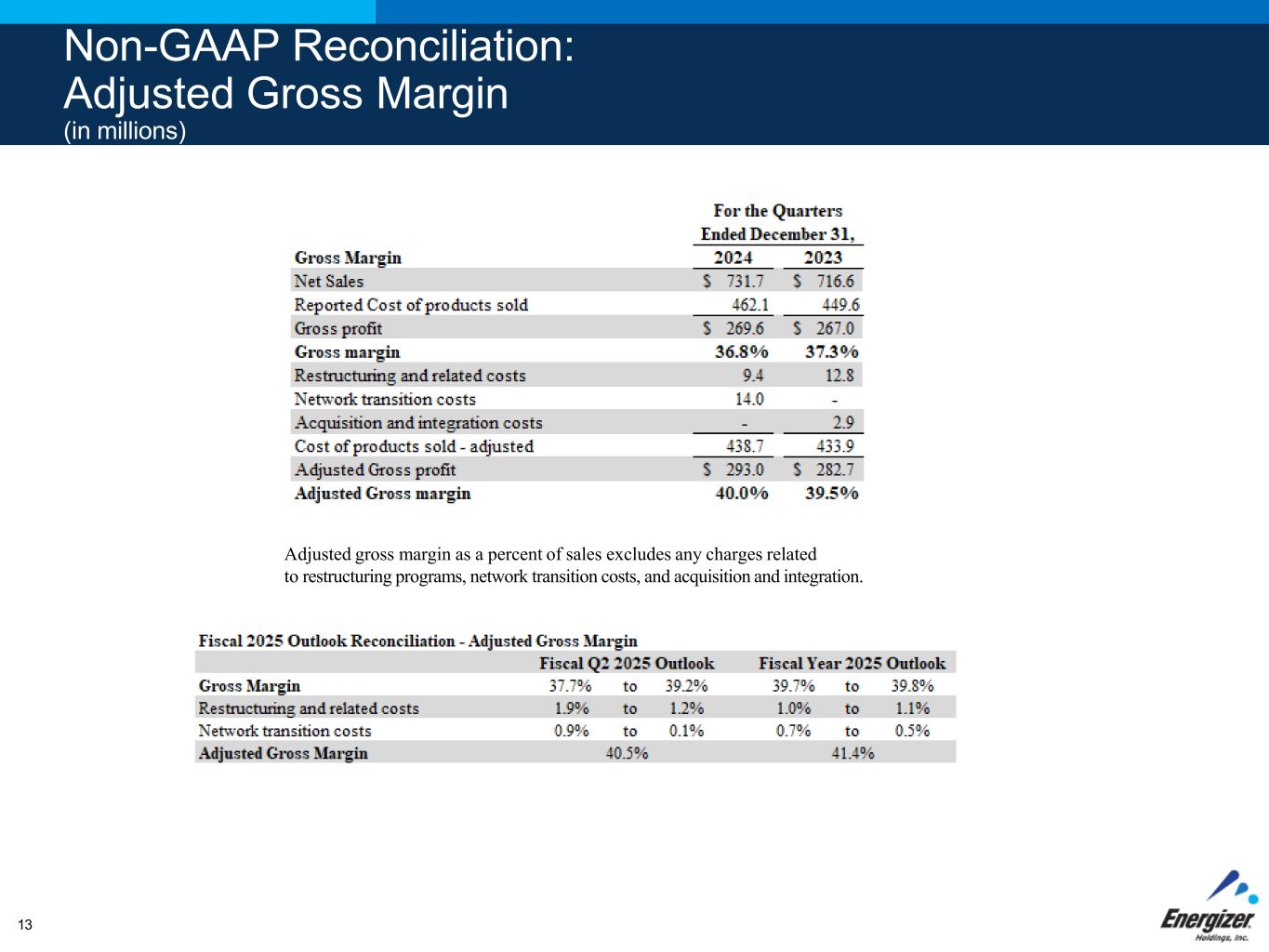
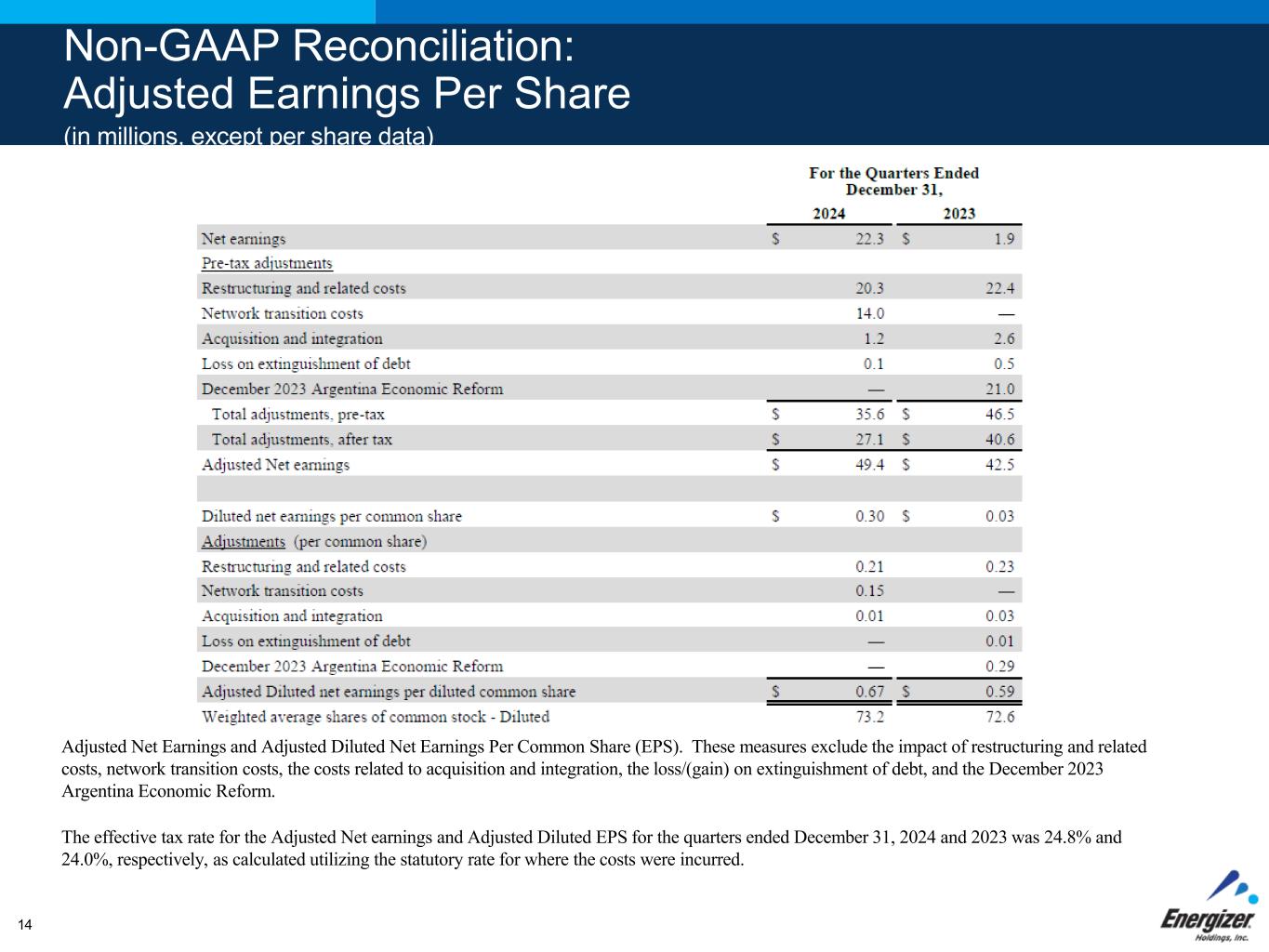
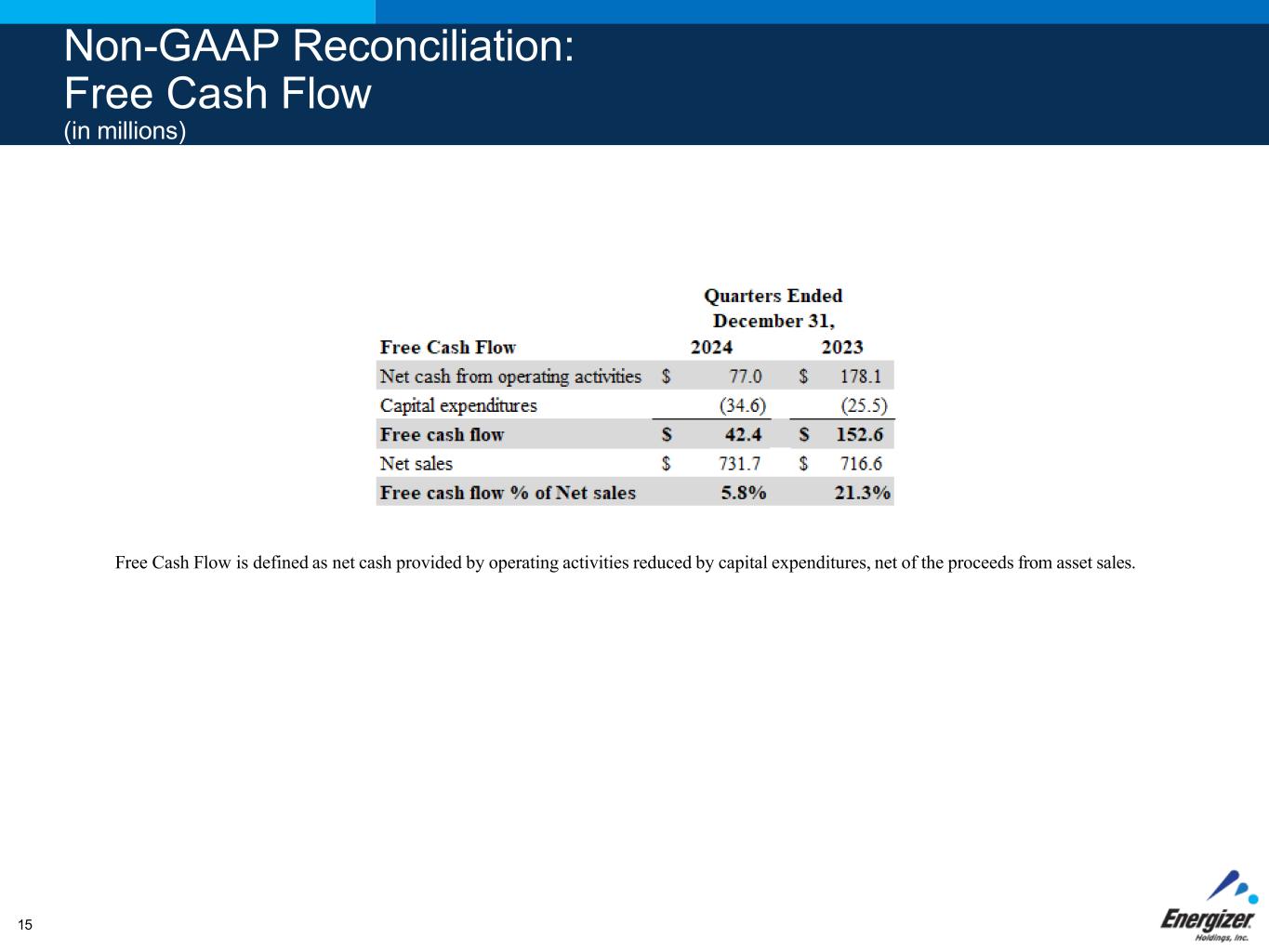
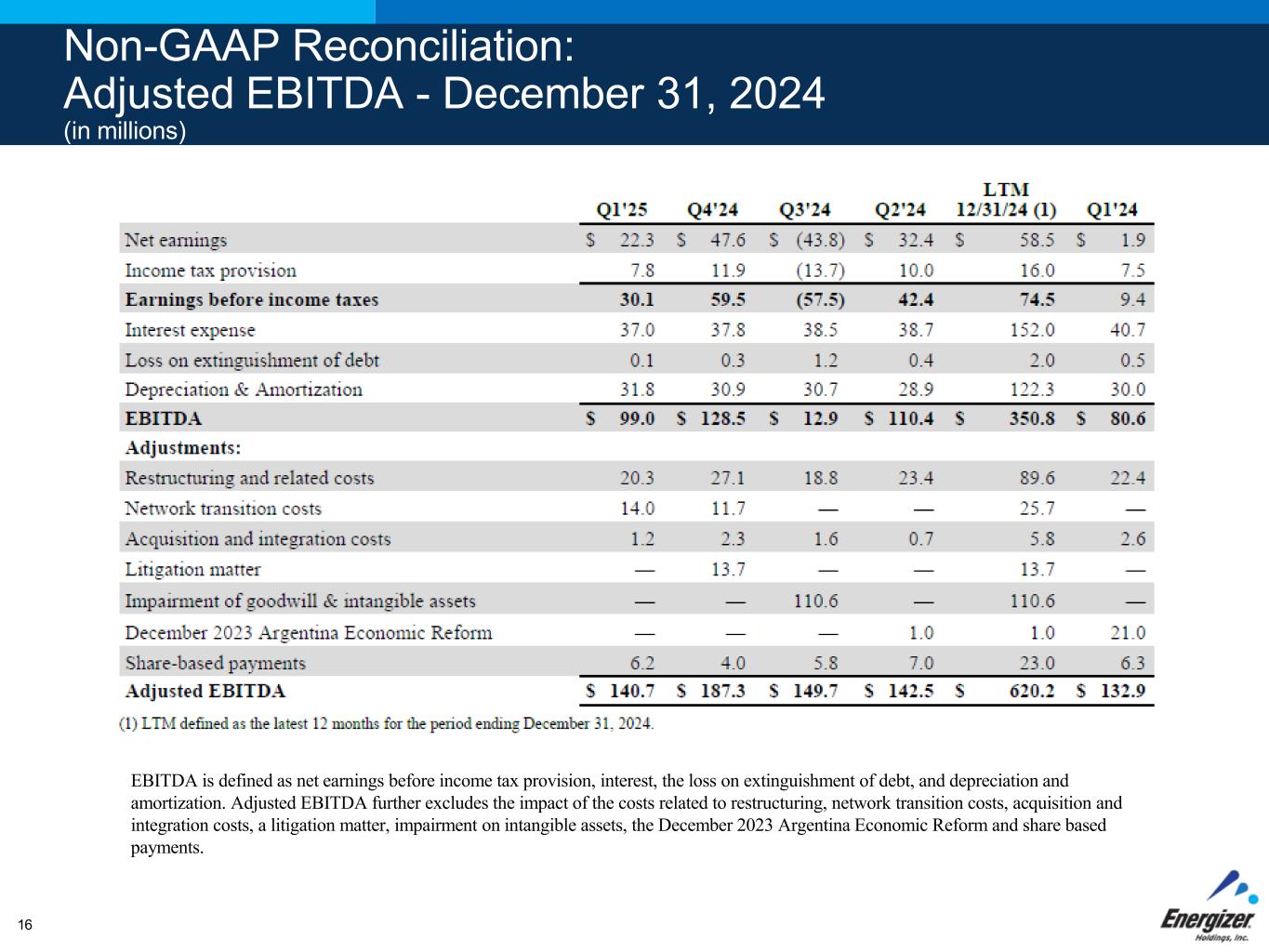
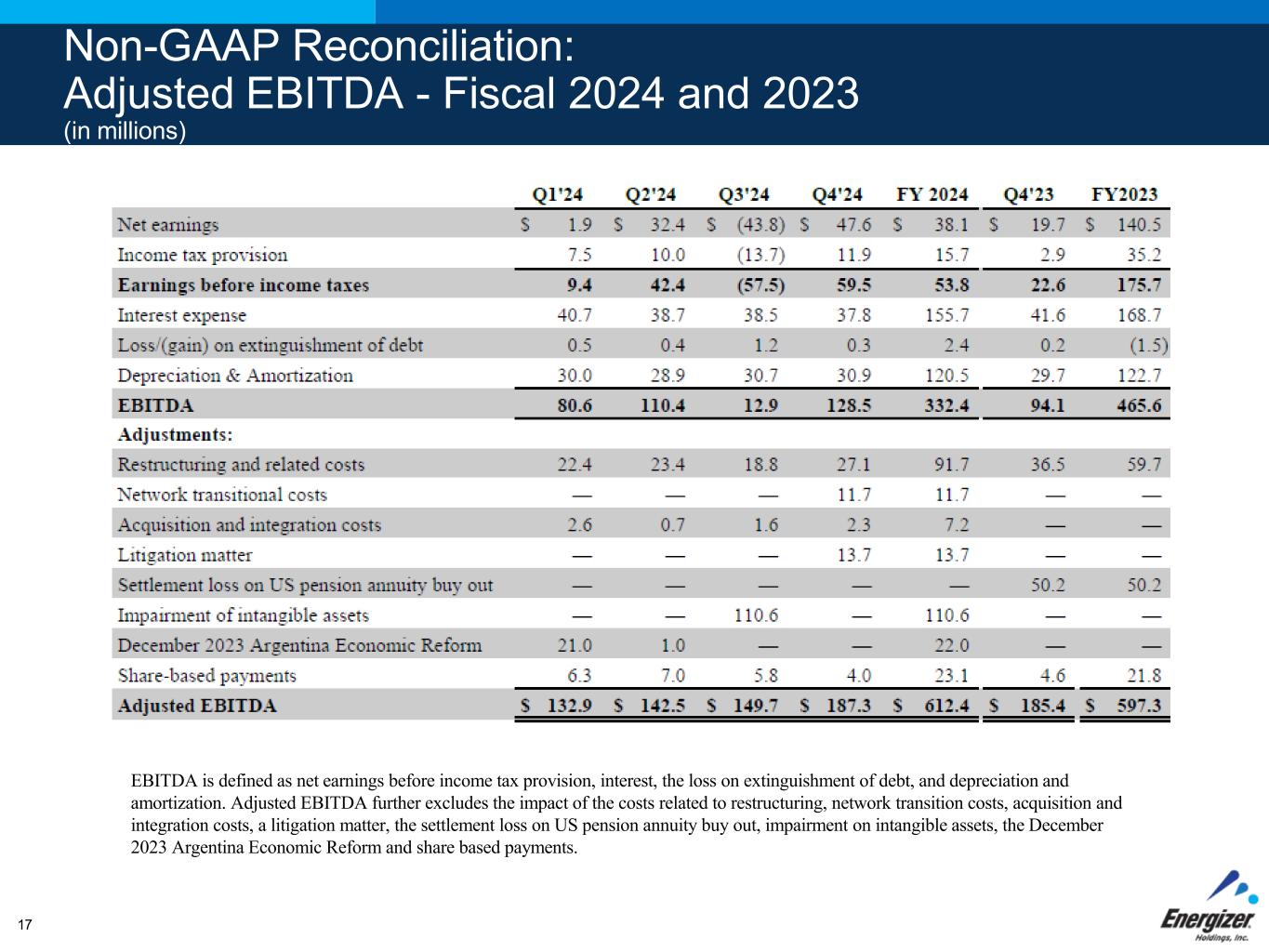
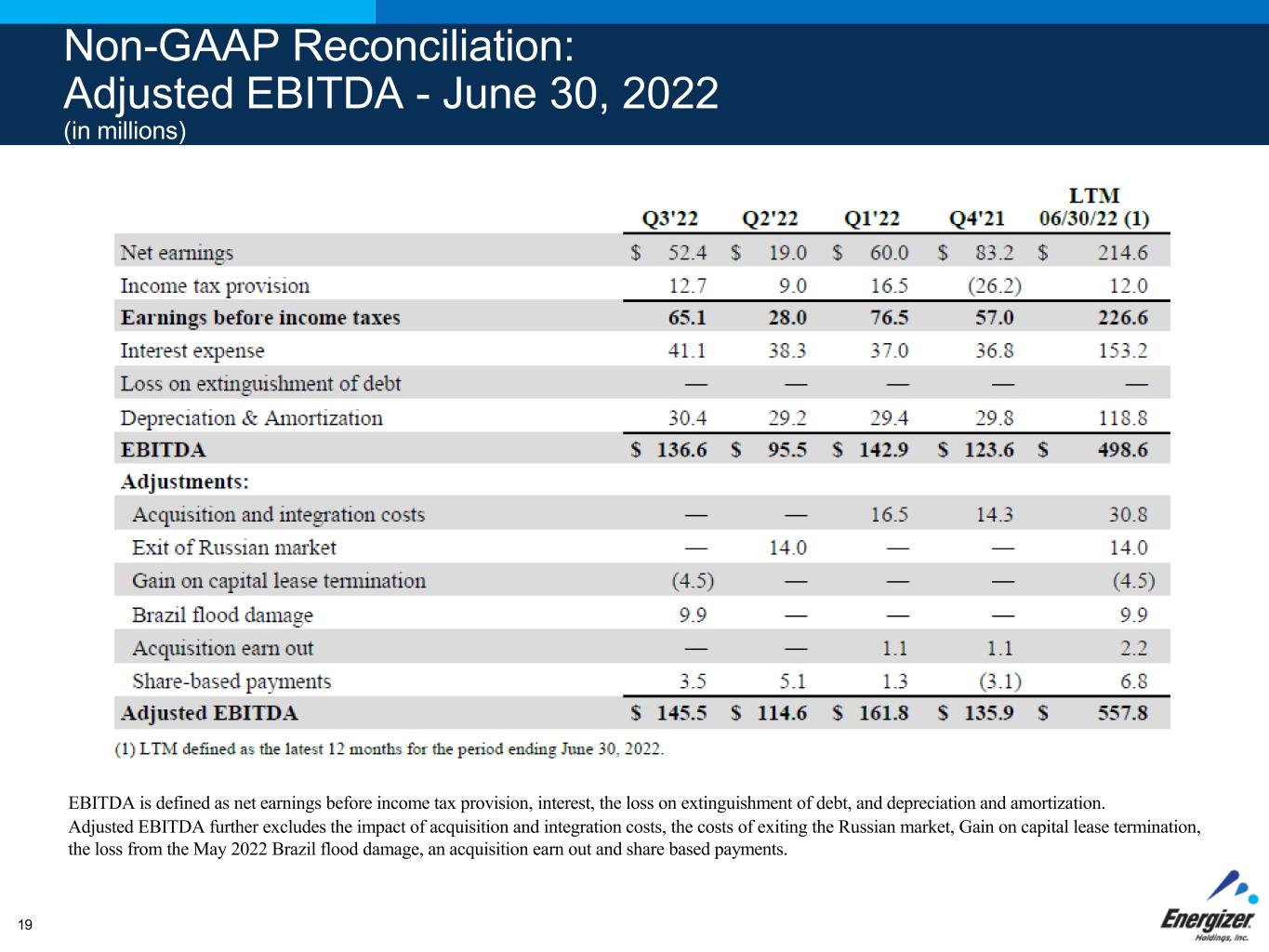
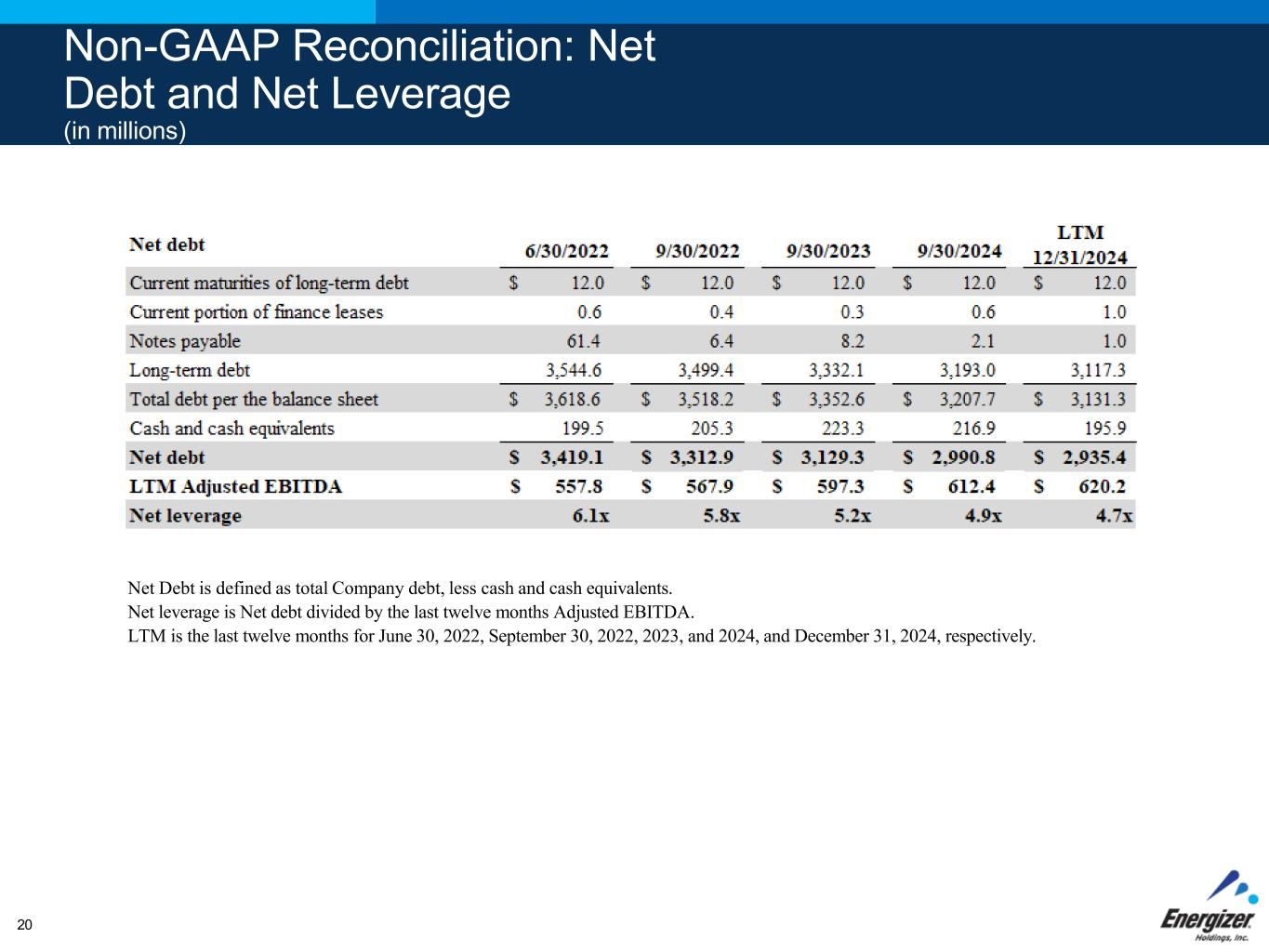
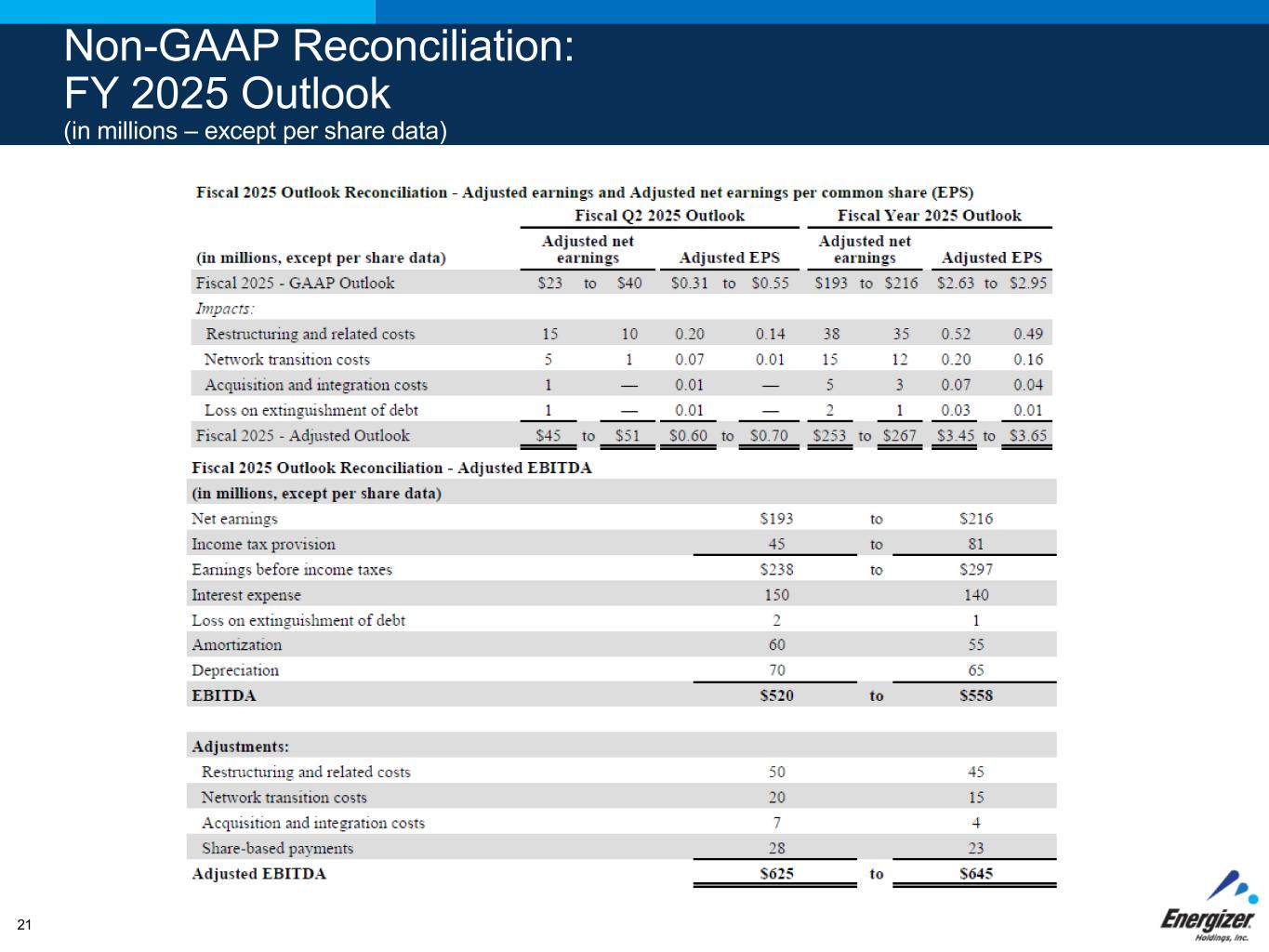
Thanks, Mark, and good morning, everyone. I am pleased to report solid first quarter results with both organic net sales and adjusted earnings per share above the guidance we provided in November, and adjusted gross margins in line with our expectations. I will now walk you through our quarterly results in greater detail and update our expectations for the rest of the year. For the quarter, reported net sales were up 2.1% with organic revenue increasing 3.8%. Our battery business posted 4% organic growth driven by distribution gains and $10 million of hurricane-related sales, which we noted during last quarter's earnings call. Even though the first quarter is the smallest quarter for our auto business, we were pleased to see strong organic top-line growth of 2%, led by distribution gains, international market expansion, and digital economy growth, partially offset by an earlier shift in holiday orders. The volume growth in both businesses was partially offset by 1.9% of planned pricing and promotional investments in support of the holiday season. Adjusted gross margin increased by 50 basis points to 40%. Project Momentum savings of $16 million and an improvement in product input costs were the biggest drivers this quarter. These benefits were partially offset by pricing and promotional investments as well as the negative impact from the strengthening U.S. dollar. Adjusted SG&A as a percent of sales was 16.3% and roughly flat on a dollar basis. A&P as a percent of sales was 7.3%, an increase of $6.4 million. The increase year-over-year was primarily driven by an increase in investment behind our brands and business to support the key holiday season. Interest expense decreased by $3.7 million due to lower average debt outstanding. We delivered adjusted EBITDA and adjusted earnings per share of $140.7 million and $0.67, representing growth of 6% and 14%, respectively. We also generated north of $42 million of free cash flow or nearly 6% of net sales and paid down an additional $25 million of debt. Now turning to our outlook for fiscal 2025. Following our strong operating performance in the first quarter, we are raising our full year organic sales guidance to be up 2% to 3% versus our previous call of about 1% to 2%, while reaffirming adjusted earnings per share and adjusted EBITDA outlook. We anticipate consistent organic growth throughout the next three quarters driven by continued distribution gains in both the U.S. and international markets as well as strong performance behind multiple new product launches. We also intend to continue investing in pricing and promotional activity, which will partially offset the projected volume gains. The U.S. dollar has also continued to strengthen, which at current rates creates a headwind to reported revenue, resulting in reported net sales growth in the range of 1% to 2%. We continue to expect adjusted gross margin expansion of 50 basis points to more than 41%. Project Momentum savings are roughly $60 million, with adjusted earnings per share and adjusted EBITDA in our original range of $3.45 to $3.65 and $625 million to $645 million, respectively. We continue to expect debt pay down in the range of $150 million to $200 million and to end 2025 with a net leverage ratio of around 4.5 times. Capital expenditures are still expected to be in the range of $80 million to $90 million, driven by our continued investments across IT, operations, and our plastic-free packaging initiative. We expect free cash flow to be in the range of 8% to 10% of net sales. I would also like to provide some additional color on the second quarter. We project organic growth in the range of 2% to 3%, driven largely by distribution gains, new product launches, and international growth in our Auto Care business. We expect reported net sales to be flat to up 1%, as we continue to see pressure from the strength of the US dollar. We anticipate adjusted gross margin to be flat year-over-year at 40.5%, as Project Momentum savings are expected to be offset by pricing and promotional activity and foreign currency headwinds. We are forecasting adjusted earnings per share in the range of $0.60 to $0.70 compared to $0.72 in the prior year. The decline year-over-year is primarily driven by increased investments in digital transformation and growth initiatives.
Thanks, John. A great start to the year, and we're excited for what's ahead. Project Momentum has delivered strong results providing the necessary flexibility to invest for growth, which we saw come through this quarter. We are operating from a position of strength and have a high level of confidence in our ability to deliver long-term value for our shareholders. Now let's open the call for questions.
Operator
Thank you, sir. Your first question will be from Bill Chappell at Truist Securities. Please go ahead.
Speaker 4
Thanks, good morning.
Speaker 4
Hey, first question, the topic regarding tariffs. I think in the US, Latin America, and Europe, you have fairly local manufacturing for batteries or domestic manufacturing for batteries. Can you talk about what impact tariffs would have? Would it have a benefit, especially as you look at some of your private label competitors that manufacture overseas? And then kind of same question for the auto business.
Yes, Bill, I'll start with kind of the exposure. So yes, you hit it; we've leaned into in-market production. This helps us minimize some of that exposure. I spoke last quarter about our procurement from China for US consumption being about 5% of our COGS, so it's not huge. If you throw in Canada and Mexico into the mix, we procure less than 1% of our COGS from those two markets, so not really large. The way we're thinking about it is we'll continue to mitigate these tariffs by optimizing our sourcing strategy. And anything that we can't get out of the system, we're committed to taking pricing.
On the competitive side, when you think about China tariffs or even Mexico tariffs, in particular, some of our competitors do produce, including private label, which is produced in China. As tariffs would be implemented on those, we would have to see what the details would be, how retailers would react to that, how pricing would react to that, and what opportunities there may be as the tariff landscape becomes clear.
Bill, just to be clear, my numbers were consolidated. So, that's battery and auto.
Speaker 4
Got it. Can you describe the overall performance? It seems like there were strong results for the quarter and good organic growth. How was the holiday season? Did it meet your expectations, or was it better in terms of consumer behavior, and how does that impact your confidence moving forward?
Look, I think it was a solid holiday season for us. I think it was an interesting one in that we started in October with hurricane tailwinds. November was not a particularly robust month from a consumer standpoint, and then December really turned around nicely with the late holiday season. I think you saw different shopping patterns than what you had seen in previous years. But we're really pleased with the way Q1 played out for us. And again, it gave us the confidence to raise our top line outlook for the full year.
Speaker 4
Great. Thanks for the color.
Operator
Next question will be from Peter Grom at UBS. Please go ahead.
Speaker 5
Thanks, operator. Good morning, everyone. Hope you are doing well? I was just hoping to get some perspective on what you're seeing from an input cost perspective. Obviously, a lot can change just in reference to what Bill was talking about with tariffs. But just love to get an update in terms of what you're seeing across your key cost baskets and how you think about inflation and your gross margin bridge through the balance of the year.
Well, we're not seeing a big change from where we were last quarter when we gave the outlook. I would say it's kind of mixed. We continue to see some cost pressure on metals like zinc, copper, nickel, and corrugate. However, we've got some offsets with lithium, silicone, and some of the gas we buy for the auto business. So net-net, we're calling for a modest benefit from materials and input costs. I think where we are seeing some pressure continues to be on energy and labor. We also saw a little bit of an uptick in some of the freight rates, especially coming out of Asia over the last quarter or so. We'll continue to watch that. But we feel good about our expectation for 50 basis points of improvement for the full year.
Speaker 5
Great. And then just a follow-up on Bill's question or your response to this question, just on the competitive landscape and sourcing differences. Do you think this could be an opportunity to gain additional business with these retailers just given the differences? Or do you not really foresee that being an impact on your business going forward?
Peter, I appreciate the question. I think it's an interesting one and one we think about a lot. I do think it's a bit of a multivariable equation that we're trying to solve for there. A lot of it is going to come down to what the details of any trade tariffs or trade restrictions might be. The details are going to matter in terms of how they play out and what the impact would be. Certainly, it's our job to continue to look at any changes in the landscape and make sure we turn these types of situations into opportunities, and we'll continue to work toward that. I think the first order of business is where John started with Bill's question, which is we have to make sure we mitigate any impact that these may have inside our four walls and react accordingly. And then once we've done that, I think it's time to look at where we can expand and create opportunities above and beyond that.
Speaker 5
Thanks so much. I'll pass it on.
Operator
Next question will be from Andrea Teixeira at JPMorgan. Please go ahead.
Speaker 6
Hi. This is Shovana Chowdhury on behalf of Andrea. Thank you for taking our question. You raised the top line but then you maintained the bottom line. So are you anticipating higher than expected investments back into the business? Can you also elaborate on what you're seeing on the consumer front regarding value-seeking behavior, like pricing promotion being a negative in the quarter? And how do you see this trending for the rest of the fiscal year? Thanks.
Sure, Shovana. I'll start with your last question, and then I'll turn it over to John for the first part of your question. From a consumer standpoint, as you've heard from many of our peers, you're seeing a stable but cautious consumer. The level of stability and caution really depends on where that consumer resides within the income levels. The habits you're seeing out of consumers have been consistent over the last 12 to 18 months, which is they are value-seeking and looking for innovation. They'll respond accordingly when you deliver that to them. I don't know that the consumer landscape is changing dramatically. It does shift quite a bit with macro events that occur. But all in all, I think it's a stable but cautious consumer environment. This lends itself well for our portfolio because we have a full range of products, and we have the advantage of meeting consumers where they are, leveraging different brands within our portfolio to respond to any needs they have.
Yes. And then I know you asked about the investments, but maybe I'll just talk about the splits for the rest of the year and how we're thinking about the outlook. So, 2% to 3% organic top-line growth is expected to be quarter-over-quarter for the rest of the year, pretty solid growth as we have distribution expansion and good category trends from new product launches. Of course, when you talk about investments, we do anticipate still having a little over 5% on A&P, although I would expect that to be heavy in the second and third quarters as we do those launches. I think that will have a bit of an impact that we've mentioned today. Also, for the last couple of quarters, I've given some insight on SG&A and the investments we're making in digital transformation and growth initiatives—that will continue to manifest in the SG&A number. We'll be expecting more like $120 million a quarter for the run rate going forward. The other areas we've provided outlook on, whether it was interest reductions or tax rate, are pretty consistent. The dollar continues to strengthen, and that’s flowing through, so some of the organic growth we are achieving is offset by the dollar increase.
Speaker 6
Thank you. I'll pass it on.
Operator
Next question will be from Rob Ottenstein at Evercore. Please go ahead.
Speaker 7
Great. Thank you very much. You mentioned that the consumer looks pretty stable in terms of behavior. Should we take that to mean there’s not much change at this point, at least sequentially in terms of channel, pack size, and private label? Just want to clarify. And then looking more forward, can you give us any more color about the new distribution? Is there a way to quantify that, what quarter that comes in? Any color around additional shelf space? Thank you.
Sure. Let me address those, and if I miss anything, just let me know. In terms of distribution, all the distribution wins are built into the consolidated guidance we provided today. They're broad-based. They're across batteries, auto, dollar channels, and club channels, both in the US and internationally. We're pleased with the distribution gains we’ve made as we really focus on those five strategic growth initiatives we have internally. Regarding consumers, I wouldn’t say there's significant change; consumers remain stable and cautious, but they also exhibit value-seeking behaviors. They're comfortable shifting channels and determining where they want to make purchases. As such, we need to be nimble in how we meet consumers with promotions, innovation, and investment to drive top-line sales.
Speaker 7
Yes, I think you answered some of this already, but just for clarification, are these gains coming as retailers are expanding shelf space to your categories? If not, who or what are you displacing, given that retailers are being pretty selective?
Yeah, Brian, it is quite specific to each retailer. In some instances, we're seeing expanded distribution, while in others, we are gaining new distribution or capturing some shelf space that might have previously been occupied by competitors or value brands. We're looking to drive overall performance while leveraging our full portfolio, and we have built this into our financial outlook. We're tracking almost 4% organic growth this quarter, and we’re maintaining our expectation of 2% to 3% for the fiscal year. You may see a lot of these new distributions appear in retail very soon.
Operator
Next question will be from Carla Casella at JPMorgan. Please go ahead.
Speaker 8
Hi. Follow-up question and then one question. Can you give us some color on what key products are made in China or Mexico for both you and the industry? Is it batteries, lighting, or Auto Care?
For us specifically, some of the bigger areas still include lights, which get produced in China. Additionally, some of the auto components, like hoses and gauges, are sourced from China. There are smaller categories around battery as well. We do keep an eye on some raw materials we procure from China.
Speaker 8
That's great. Have you looked at or can you talk about the M&A environment and whether that would be a pillar for growth as well?
It's something, Carla, we always look at, and we keep a pulse on what's out there. Our immediate emphasis, however, is to focus on debt paydown. We will continue to consider small bolt-on acquisitions. There are some opportunities available, but I wouldn't expect anything larger from us; it will strictly be smaller-scale acquisitions.
Operator
Next, we will hear from William Reuter at Bank of America. Please proceed.
Speaker 9
Good morning. My question is on e-commerce, one of the five growth pillars. Can you talk about where the industry is in terms of penetration in the US and how it is growing relative to the brick-and-mortar market? Are you observing any increases in private label competition in that channel?
E-commerce continues to be a growth source in our categories. Overall, I'd say stable shares from a private label premium perspective are remaining the same. While there is no significant shift to private label, we experience substantial growth opportunities, both domestically and internationally. For our expectations this year, we discussed in November that we're aiming for roughly 30% growth in our e-commerce business in fiscal 2025. We are definitely set to participate in, and likely exceed, the category growth we're experiencing in e-commerce.
Speaker 9
Got it. Secondarily, the pricing and promotions you're investing in—are those related to the new distribution, and are they somewhat onetime in nature? Once you lap those promotional offers and gain the shelf space, could you see some gross margin improvement in fiscal year 2026?
Yes, some of it is indeed tied to new distribution and product launches. How we're thinking about it this year, Bill, is the overall pricing investment is about 100 basis points for the full year, but I expect that to be more front-loaded from holiday promotions, with investments decreasing as we approach the end of the year.
Speaker 9
Got it. So the increase in promotions is a headwind to gross margins, then? Would the 100 basis points you mentioned equate to about 70 basis points for the full year?
Yes, that would flow into our margin. We've accounted for about 100 basis points of pricing investment, translating to approximately 70 basis points for the full year.
Operator
Thank you. At this time, Mr. LaVigne, we have no other questions. Please proceed.
Thanks for joining us today. I appreciate your interest in Energizer. I hope everyone has a great rest of the day.
Operator
Thank you, sir. Ladies and gentlemen, this does indeed conclude your conference call for today. Once again, thank you for attending. At this time, we ask that you please disconnect your lines.