Operator
Good morning, ladies and gentlemen, and welcome to Flotek Industries' First Quarter 2025 Earnings Conference Call. This call is being recorded on Wednesday, May 07, 2025. I would like to turn the conference over to Mike Critelli, Director of Finance and Investor Relations. Please go ahead.
Thank you, and good morning. We are thrilled to have you with us for Flotek’s first quarter 2025 earnings conference call. Today, I am joined by Ryan Ezell, Chief Executive Officer; and Bond Clement, Chief Financial Officer. We will start with prepared remarks covering our business operations, financial performance, and the acquisition announced on April 28, 2025. Following that, we will open up the floor for questions. Yesterday, we announced our first quarter 2025 results and updated earnings presentation, both of which are available on the Investor Relations section of our website. This call is being webcast with a replay available on our website shortly after its conclusion. Please note that the comments made on today’s call regarding projections or expectations for future events are forward-looking statements. Forward-looking statements are subject to a number of risks and uncertainties, many of which are beyond our control. These risks and uncertainties can cause actual results to differ materially from our current expectations. We advise listeners to review our earnings release and the risk factors discussed in our filings with the SEC. Please refer to the reconciliations provided in the earnings press release and investor presentation, as management will be discussing non-GAAP metrics on this call. With that, I will turn the call over to our CEO, Ryan Ezell.
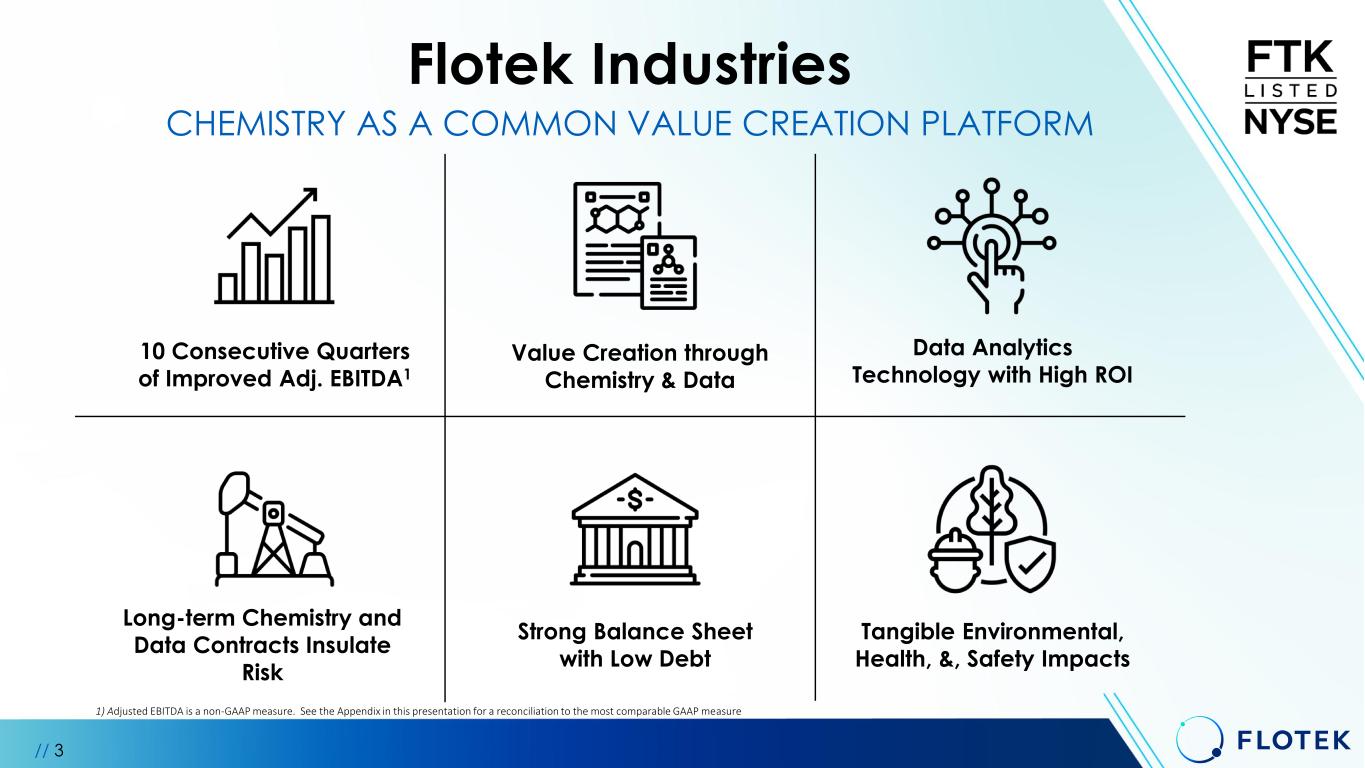
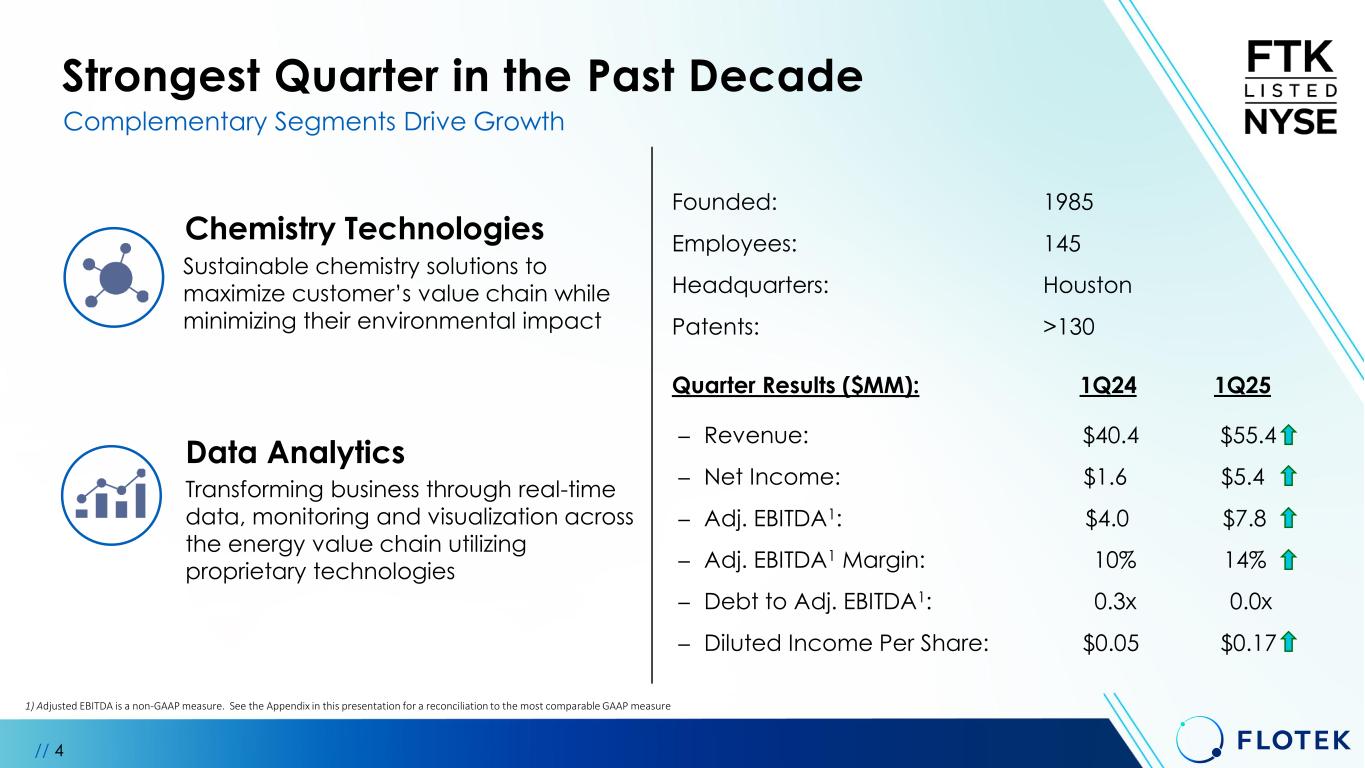
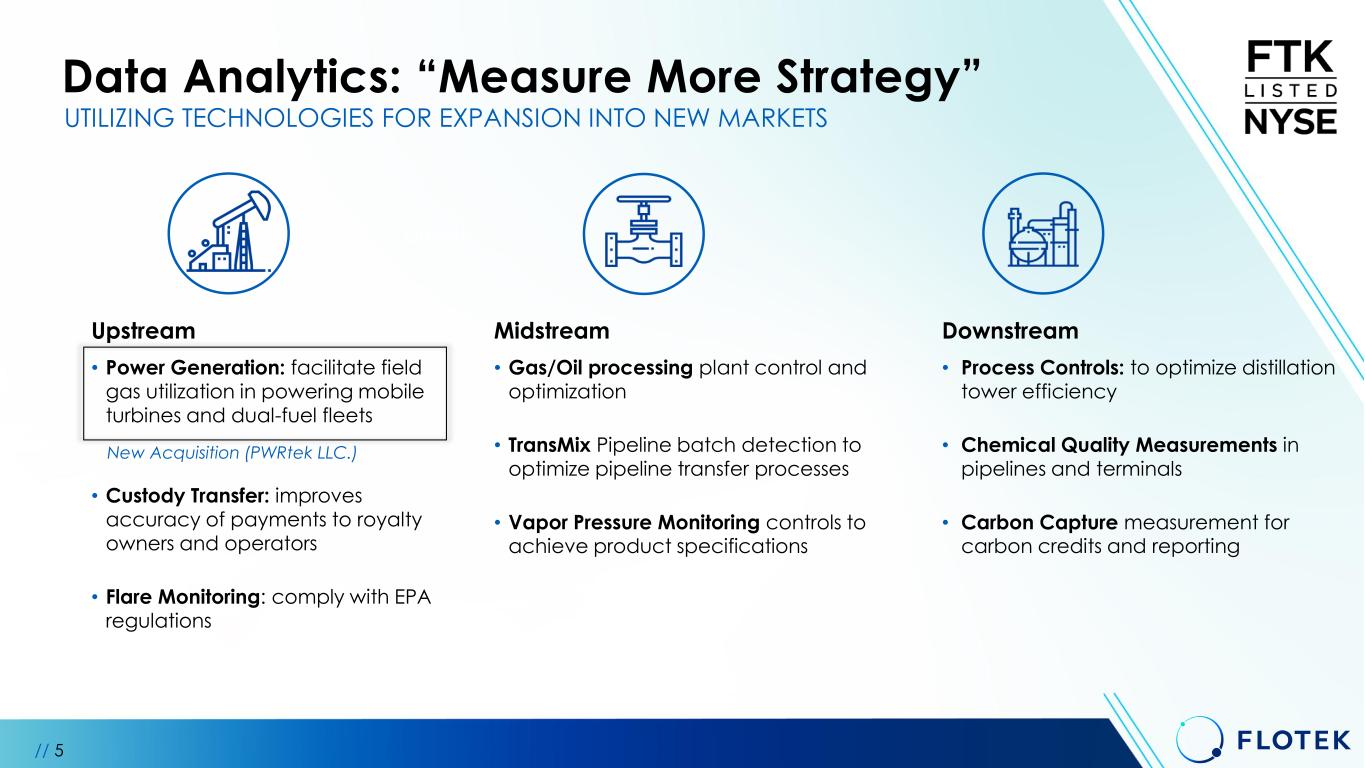
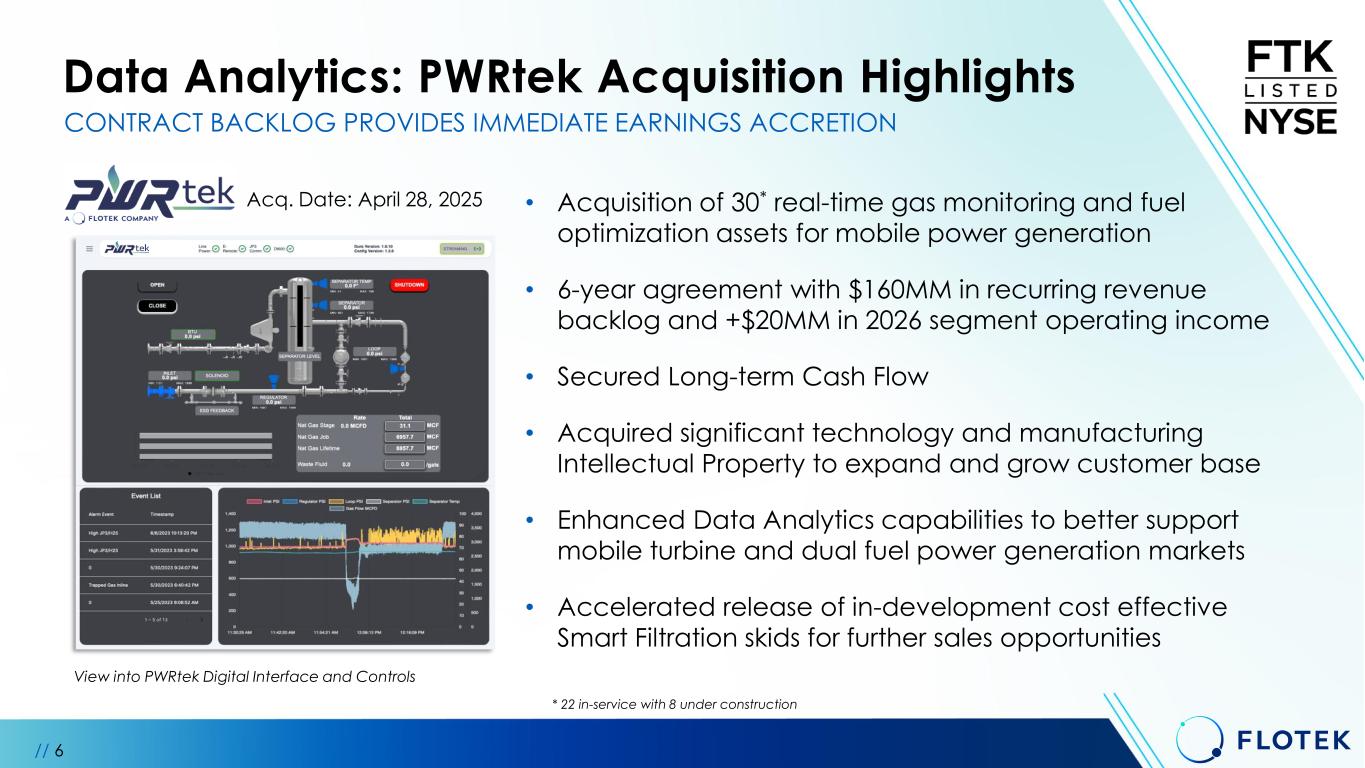
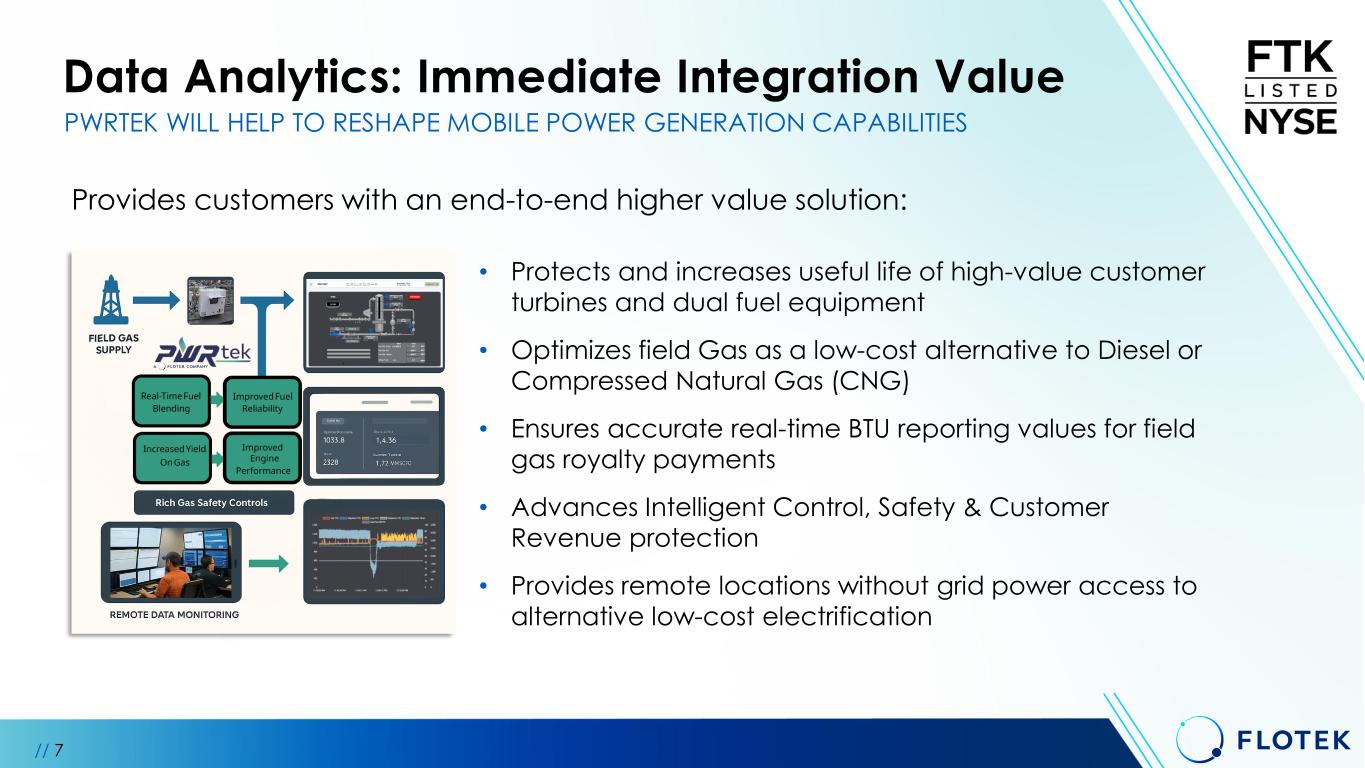
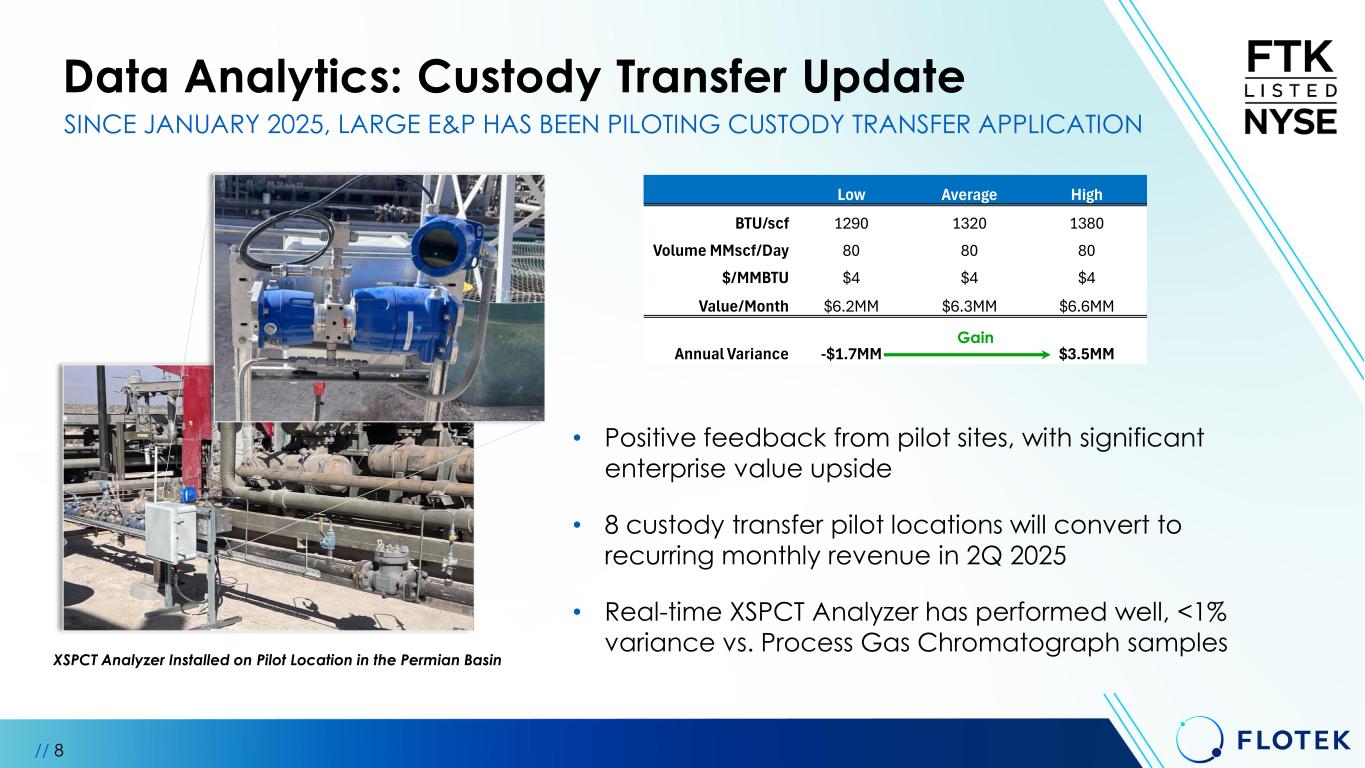
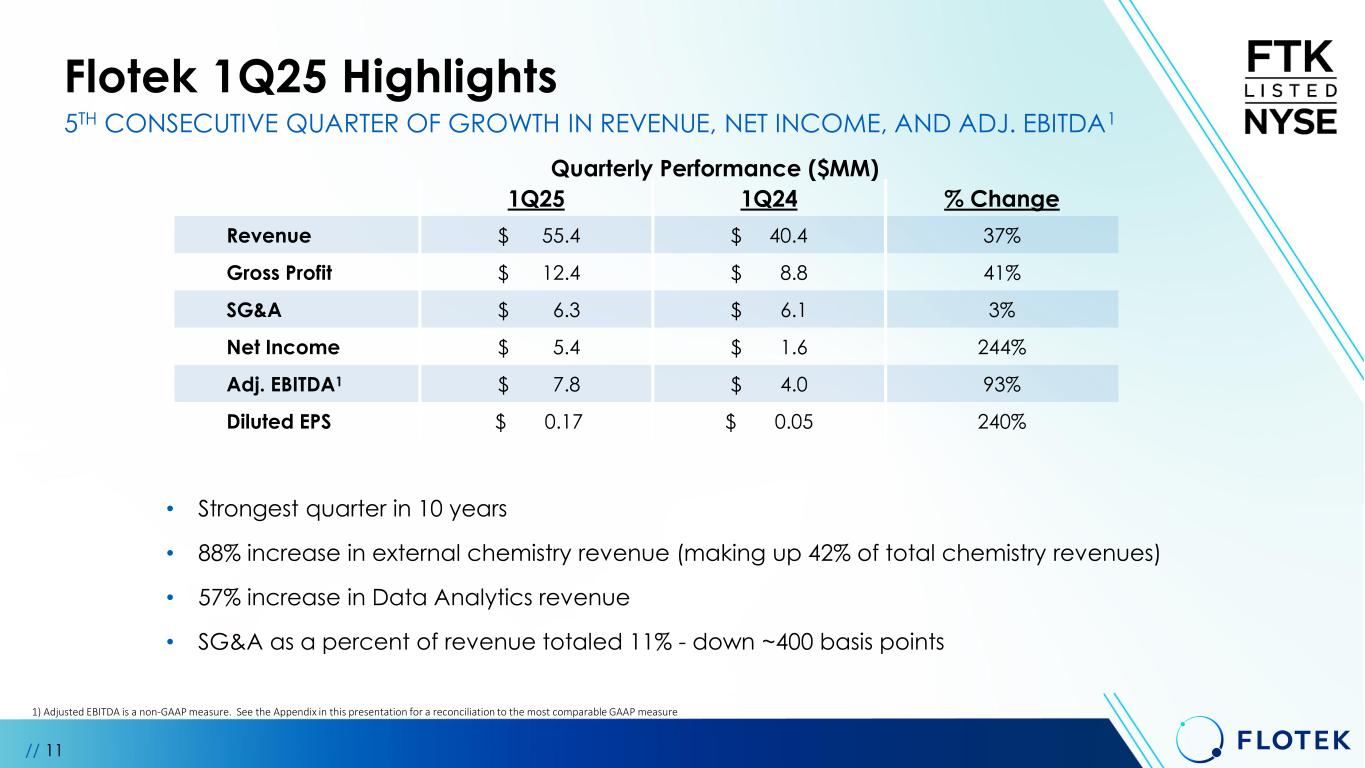
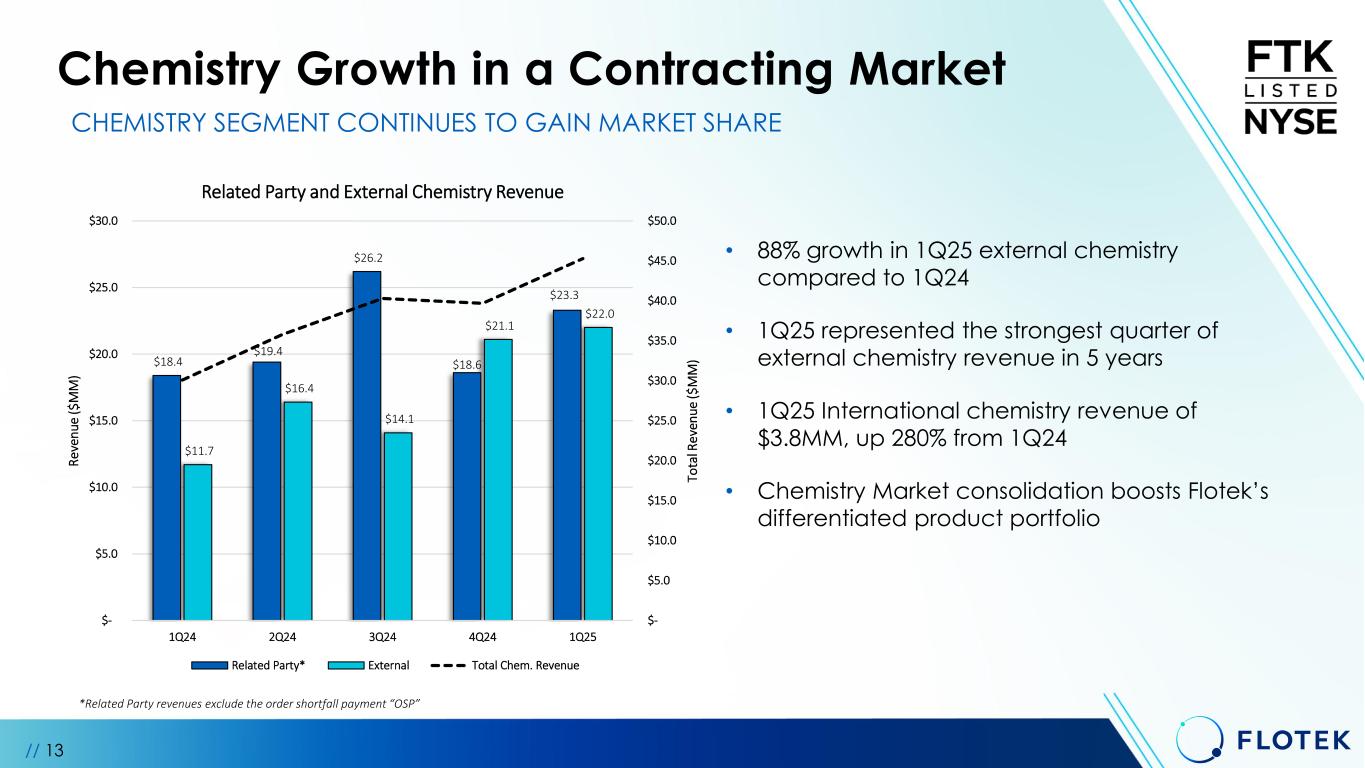
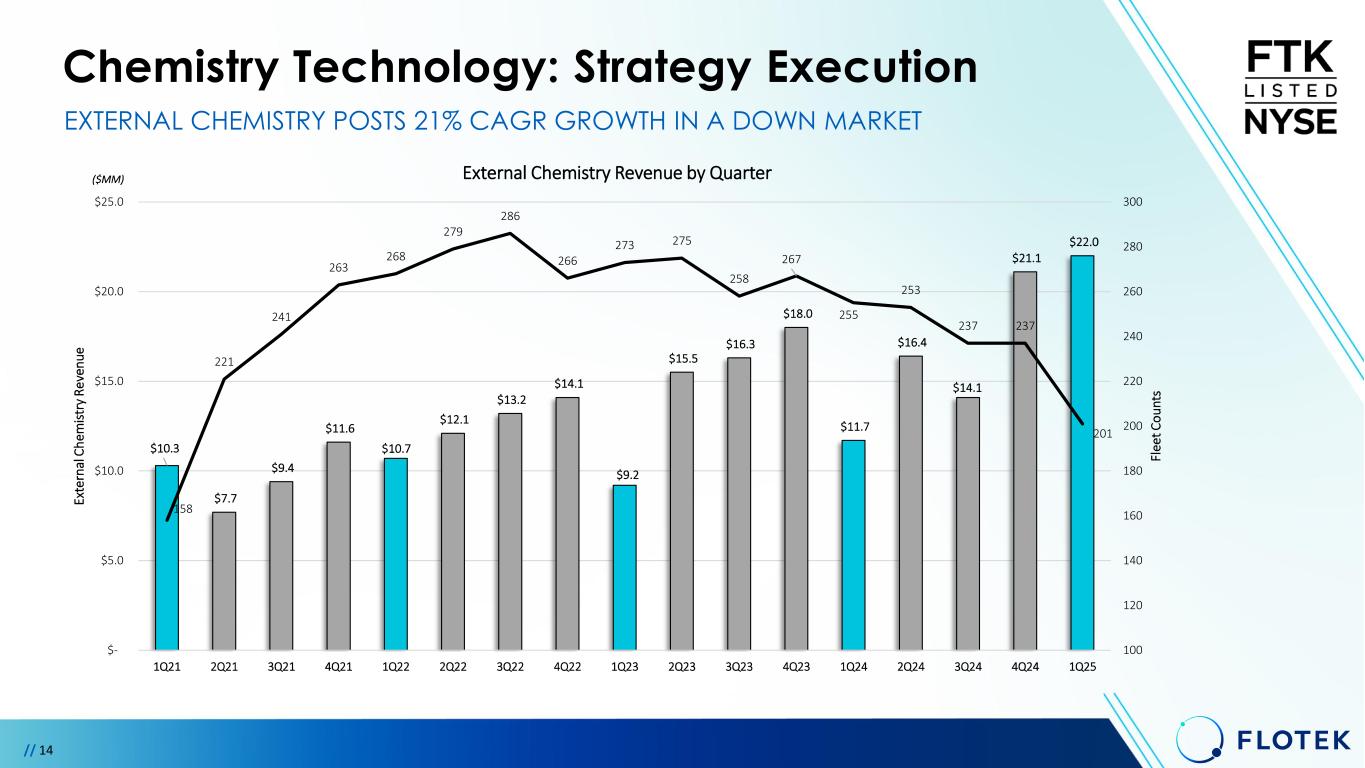
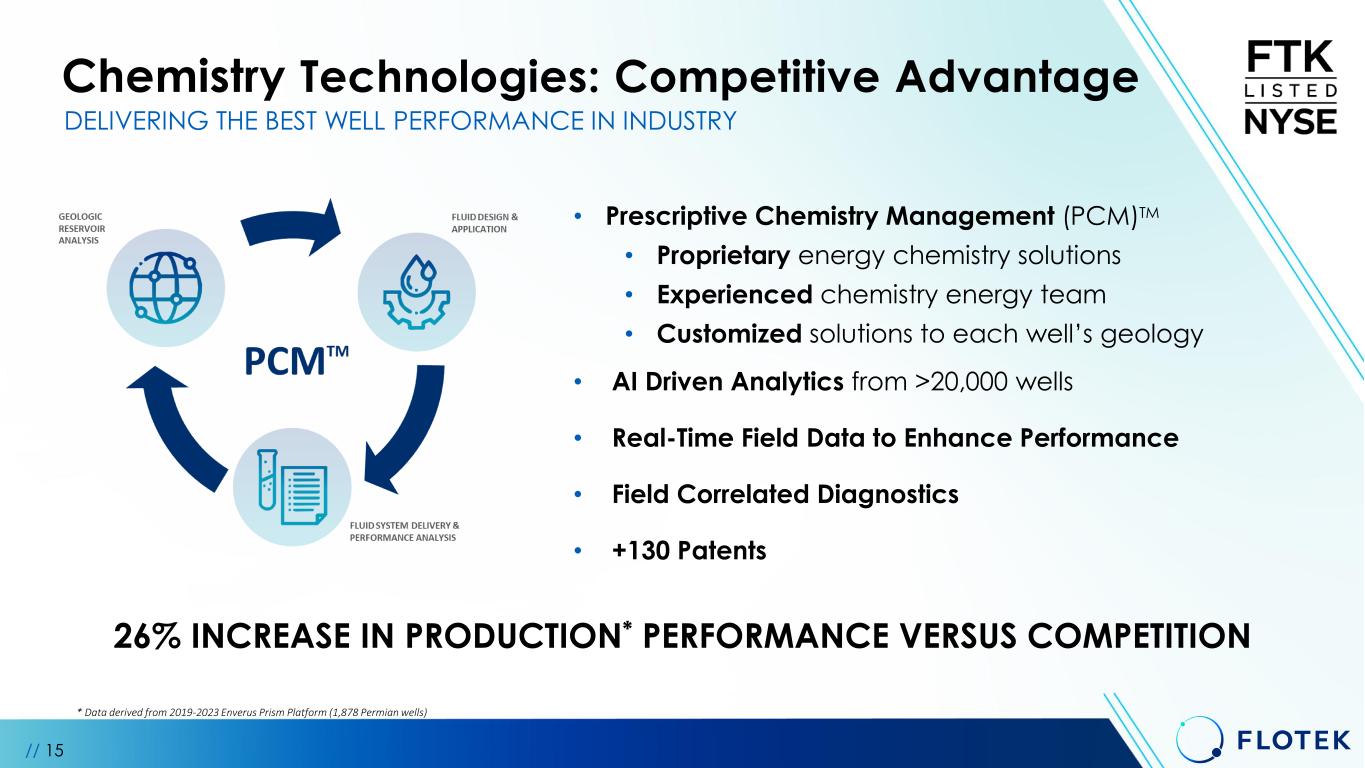
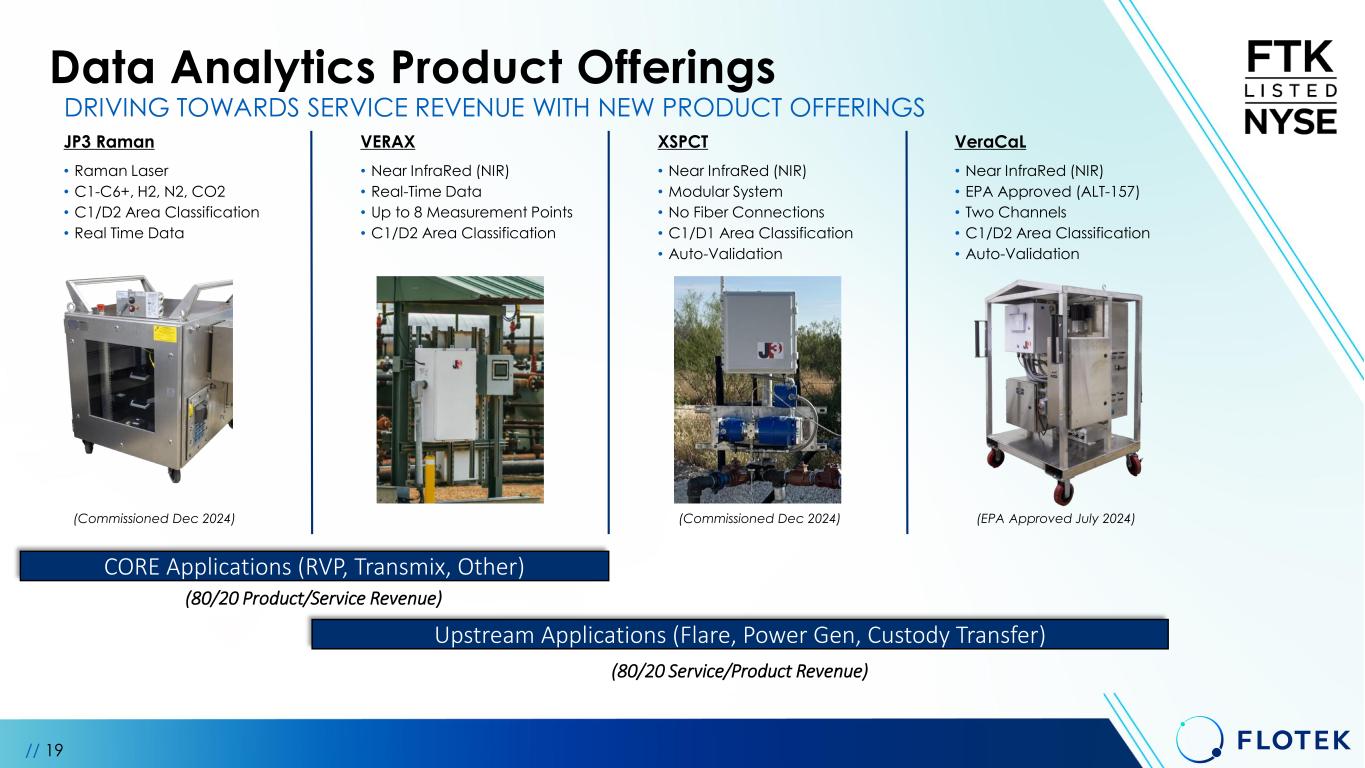
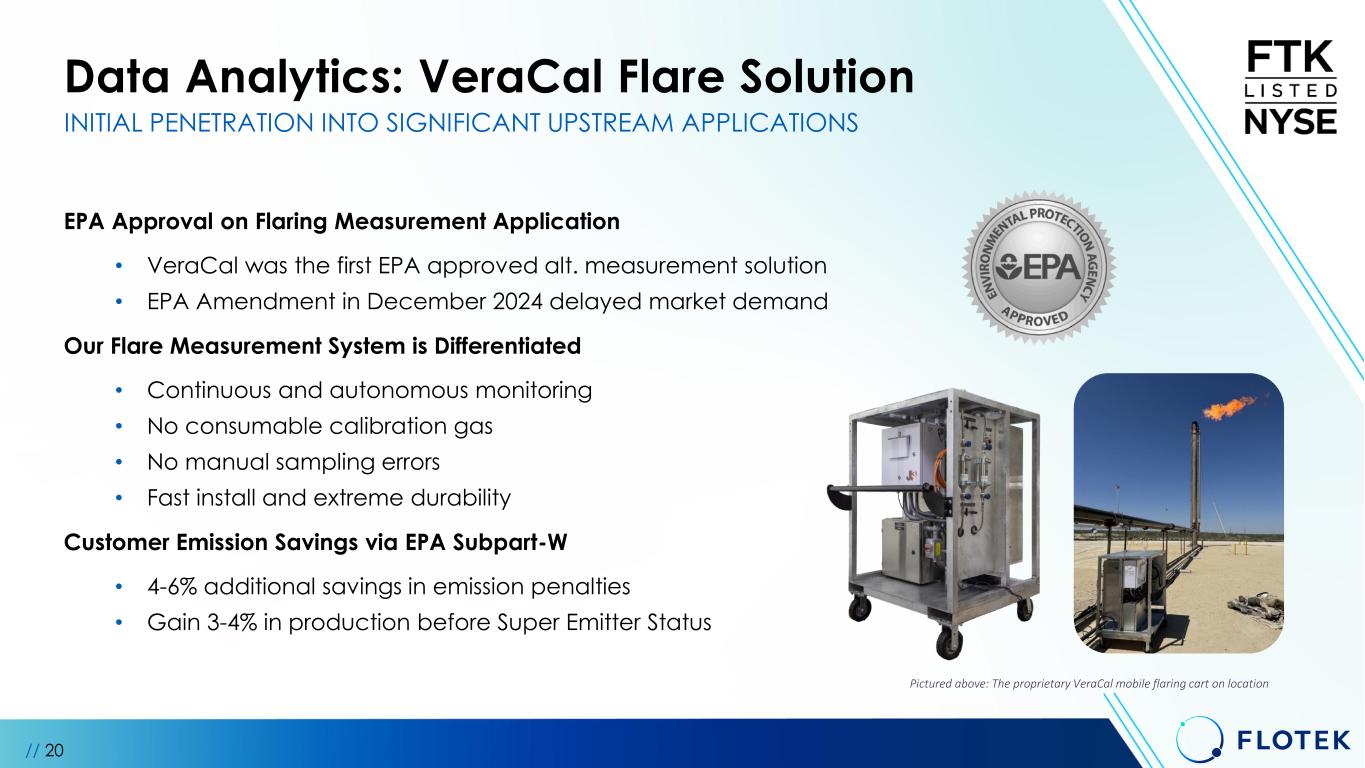
Thank you, Mike, and good morning. We appreciate everyone’s interest in Flotek and for joining us today as we discuss our first quarter of 2025 operational and financial results. Despite the dynamic geopolitical and macroeconomic challenges that have generated uncertainty within the market, the Flotek team remained steadfast in the execution of our corporate strategy. This laser focus resulted in the delivery of the strongest quarter in a decade and our strategic expansion into real-time data monitoring and gas conditioning in the energy infrastructure sector. In the first quarter of 2025, Flotek continued its track record of increasing market share and profitability growth in both of our complementary business segments, as we remain unwavering in our commitment to create value for our customers and shareholders through the convergence of innovative chemistry and data solutions. With that, I’d like to touch on some key highlights for the quarter that Bond will discuss later in the call. As part of our Measure More strategy in the Data Analytics segment, we acquired 30 real-time gas monitoring and dual fuel optimization assets. We also secured a $160 million multi-year contract poised to drive substantial earnings growth and free cash flow for the segment. First quarter 2025 results represented the fifth consecutive quarter of growth in revenue, gross profit, net income, and adjusted EBITDA. Total revenue during the quarter rose 37% versus the first quarter of 2024, highlighted by an 88% increase in external chemistry revenue, which is our strongest quarter in the last five years, and a 57% increase in Data Analytics revenue. Gross profit climbed 41% versus the first quarter of 2024, with first quarter 2025 gross profit margin rising to 23%. Net income and adjusted EBITDA were up 244% and 93%, respectively, versus the first quarter of 2024. Most importantly, all of these achievements were accomplished with zero lost time incidents in the field of operations. I'd like to take a moment to thank our employees for all their hard work and commitment to safety and service quality in achieving these outstanding results. I remain excited about Flotek’s future as we strengthen our position as a technology leader, spearheading innovation, and delivering tailored chemistry and data solutions that meet our customers’ specific needs. We’re committed to shaping the industry’s future by leveraging chemistry as the common value creation platform. Now let’s dive into the details referencing slide five of the earnings deck. Today, I want to spotlight the remarkable progress in our Data Analytics segment. We are particularly energized by three upstream technology applications: power generation, custody transfer, and flare monitoring, all of which are fueling significant advancements for our organization. The first is our transformative power generation solution, which has evolved from a novel analytical approach into a game-changer for the energy infrastructure sector, which we call PowerTech. What began as advanced analytics has grown into a comprehensive end-to-end fuel management platform, redefining performance standards and operations within the sector. Looking at slide six, on April 8, 2025 we acquired 30 patented real-time gas monitoring and dual fuel optimization assets. This transaction instantly strengthens our presence across all U.S. Basins, adding turnkey capacity for fuel valuation, conditioning, and distribution to support remote energy services, data center, and grid power generation infrastructure. This acquisition also secures a six-year contract, anchoring over $160 million in recurring revenue backlog, generating over $20 million in annual operating income and boosting free cash flow. Importantly, this $160 million is just a starting point with additional revenue opportunities embedded in this contract. Moving to slide seven, at the heart of PowerTech is our VariX Analyzer, which goes beyond data collection to deliver custody transfer grade measurements. It provides precise BTU and volume reporting for royalties, invoicing, and performance guarantees. Complementing this, our patented ESD trailers actively remove liquids and contaminants, conditioning iBTU hydrocarbon feeds to meet exact turbine or engine performance specifications. Because every site and grid condition is unique, we’ve integrated Coriolis metering, automated CNG blending, and seamless backup connections, allowing operators to switch fuels or go off grid with a single button, resolving major constraints to the development of data center and grid power infrastructure. But PowerTech is about more than just technology. It’s about control. Operators interact effortlessly through an on-trailer HMI or a unified web portal that is accessible on desktop, tablet, or smartphone. Our cloud-based portal enables the monitoring of live VTU trends, H2S alerts, Coriolis flow meter readings, and automated CNG blend controls combined with custom alarm thresholds to automatically isolate off-spec hydrocarbon feeds and protect high-value turbines or engines from catastrophic damage, thus minimizing downtime and operational risk while enhancing safety. All data flows securely through our patented Edge to Cloud pipeline, ensuring zero manual intervention, end-to-end encryption, full audit trails, and compliant custody transfer record-keeping. Our expanded fleet is already making an impact, monitoring and managing over 50 million cubic feet of gas daily, transferring raw feedstock into optimized, safe fuel for our customers. Building on success, we’re developing a smart filtration skid, which is a minimal footprint unit that integrates custody transfer analyzers to remove liquids, monitor BTU and emissions, and auto-divert out of spec gas. Capturing just 10% of the roughly 500 North American field gas engines could drive 50 plus skid rentals, generating an additional $10 million to $14 million in annual revenue at 70% to 80% gross margins, all backed by robust precision measurement data. Finally, our over 30 Data Analytics patents combined with five new patents from this acquisition position Flotek as a leader across the natural gas value chain. When considering our capabilities for advanced fuel blending, zero emissions analytics, custody transfer grade flow cell measurements, wireless ESD actuation, and secure edge to cloud data transmission, we deliver unmatched monitoring, control, and safety for field gas operations. Now let’s transition to slide eight, where we’ll dive into our second upstream application, custody transfer. Since January of 2025, a leading E&P partner has been piloting this solution in multiple U.S. Basins, and the results so far are encouraging. At a single pilot site, we have pinpointed an annual customer opportunity of up to $3.5 million of savings, highlighting the significant value this solution creates. Considering the potential scale of this E&P operator, the enterprise value creation at this level is driving further applications with eight custody transfer pilot locations set to transition to recurring DAS revenue in the second quarter of 2025 and more conversions planned throughout the year. Additionally, we are actively pursuing opportunities with domestic operators and targeted NOCs in the Middle East. By monitoring hydrocarbon quality and composition in real time and taking measurements every five seconds, we are positioned to unlock a new market for Flotek in 2025. This groundbreaking application sets a new standard in the oil and gas industry, delivering unprecedented transparency and minimizing enterprise risk for producing wells like never before. Let’s move to our third upstream application, the VeraCaL Flare Monitoring solution. In the first quarter of 2025, we saw an uptick in demand following the EPA’s regulatory updates released in late December of 2024. Starting in mid-February, customer interest accelerated, and by March, VeraCaL sales gained momentum. We are thrilled about the growth potential in flare monitoring as we partner with operators and flare developers to develop value that goes beyond compliance, unlocking new efficiencies and environmental benefits for our clients. It’s obvious that the strategy to grow our Data Analytics segment is gaining traction, but what is most important is what it means for our stakeholders and investors. First, our DAS-driven strategy ensures predictable recurring revenue and cash flow, delivering stability and long-term value. Second, our proprietary technologies and superior measurement accuracy establish a high barrier to entry, securing client loyalty and supporting our value-based service model. And third, long-term high margin subscriptions position Flotek for sustained growth and margin expansion, driving significant shareholder value over time. Now looking over the next decade, global energy demands are projected to expand with sustained requirements through 2045, despite the ongoing market volatility and uncertainty in the near term. For the first time in nearly two decades, U.S. electricity consumption is expected to surge by 15% by 2030 with natural gas poised to fulfill most of this additional need. We foresee continued global economic growth fueling a strong appetite for all energy sources, heightening service intensity across this entire sector. And lastly, our chemistry technology segment continues to deliver robust quarter-over-quarter growth driven by the differentiation of our prescriptive chemistry management services and our expanding presence in the UAE, Saudi Arabia, and Argentina as shown on slide 13. Making an even deeper observation, slide 14 validates the strong performance of the segment as revenue and profitability grew despite the historical trend of the first quarter being sequentially weaker than Q4 and overall market consolidation. It should be noted that the anticipated downward pressure on oil prices in the second half of 2025 prompted operators to accelerate first-half completion activity, taking advantage of the higher prices, and in turn increasing PCM adoption for enhancing asset value in the first half of the year. It's evident that our chemistry team has executed our strategy flawlessly, steadily capturing market share while creating value for customers. While Q2 schedules remain strong, uncertainties around activity levels in the second half of 2025 persist due to macro factors that could affect the completion chemistry market. However, we remain focused on defying these challenges, delivering differentiated chemistry and data services to provide our customers with industry-leading returns on their investment. We are confident that our expanding suite of services positions us to deliver superior solutions to a variety of industry's most challenging problems while maximizing our customers' value chain. Now I'll turn the call over to Bond to provide key financial highlights.
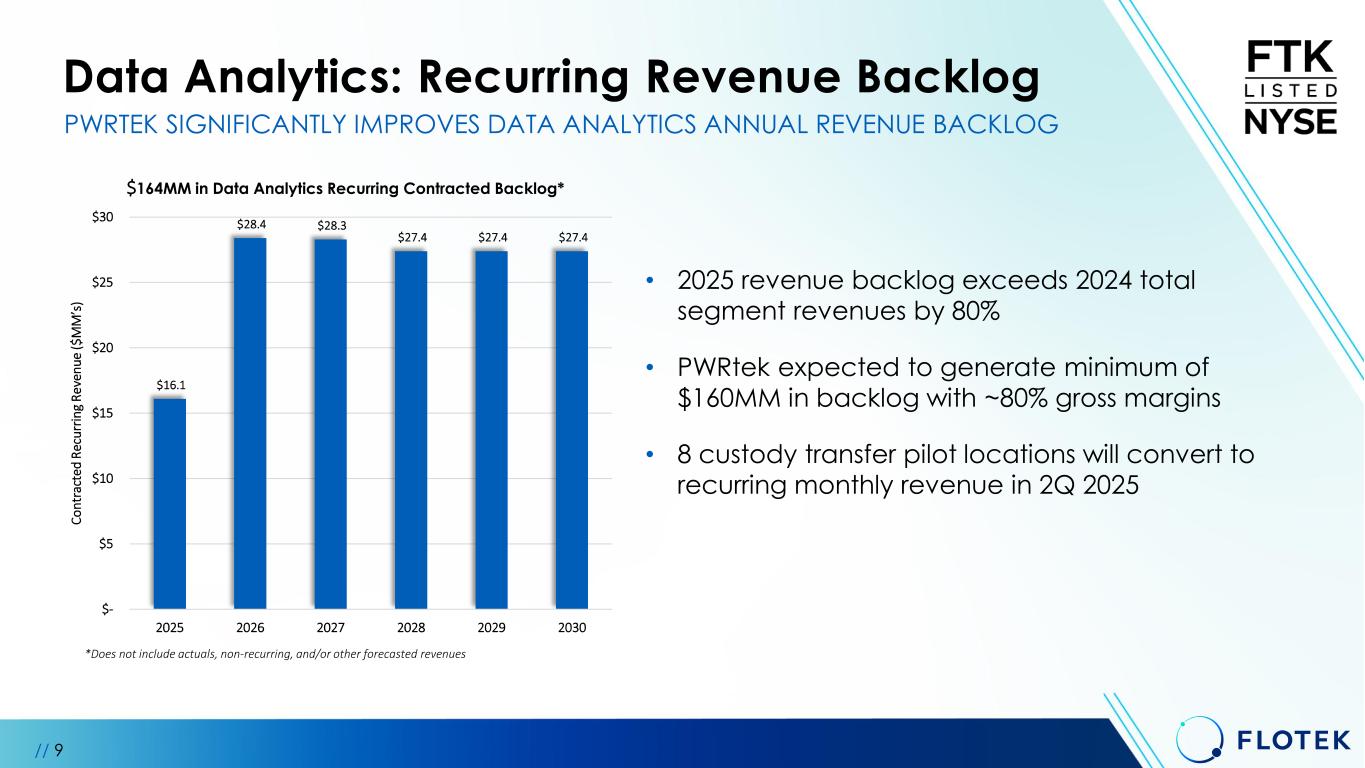
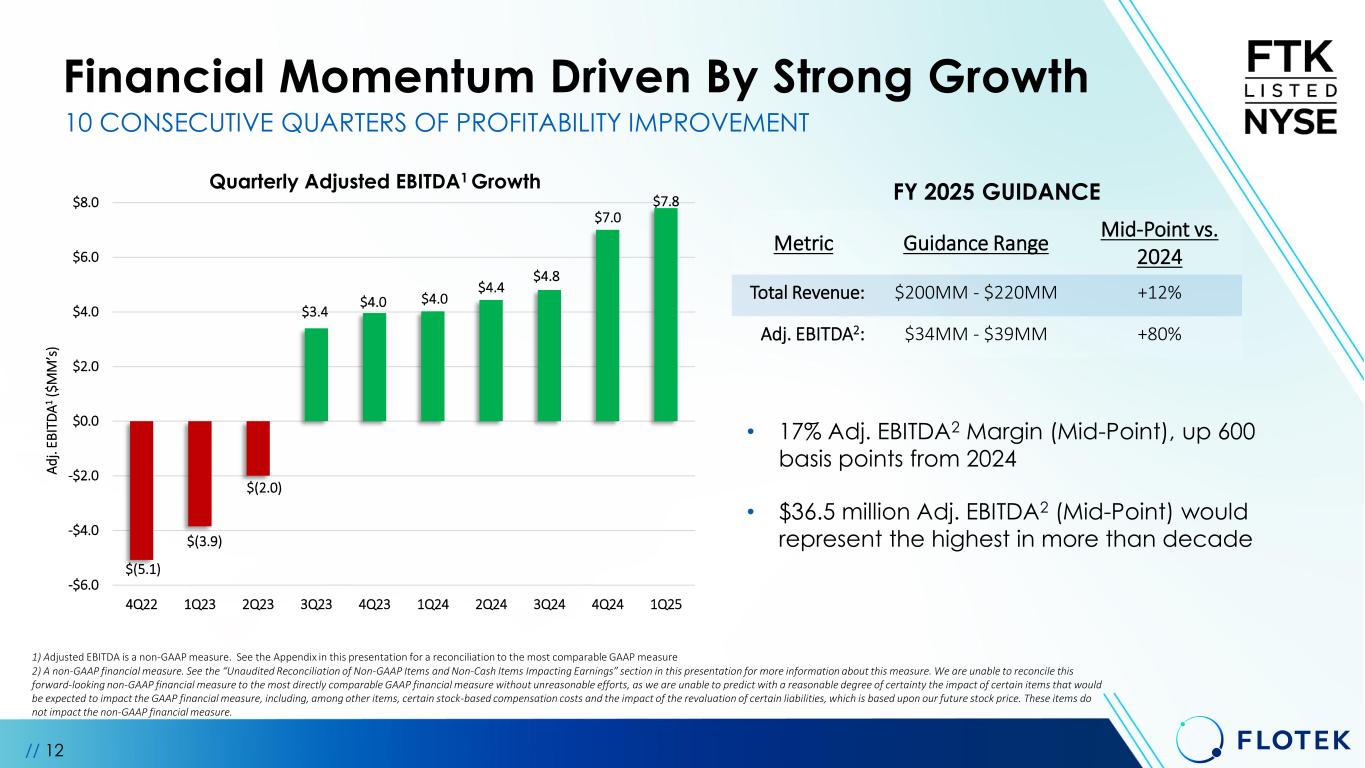
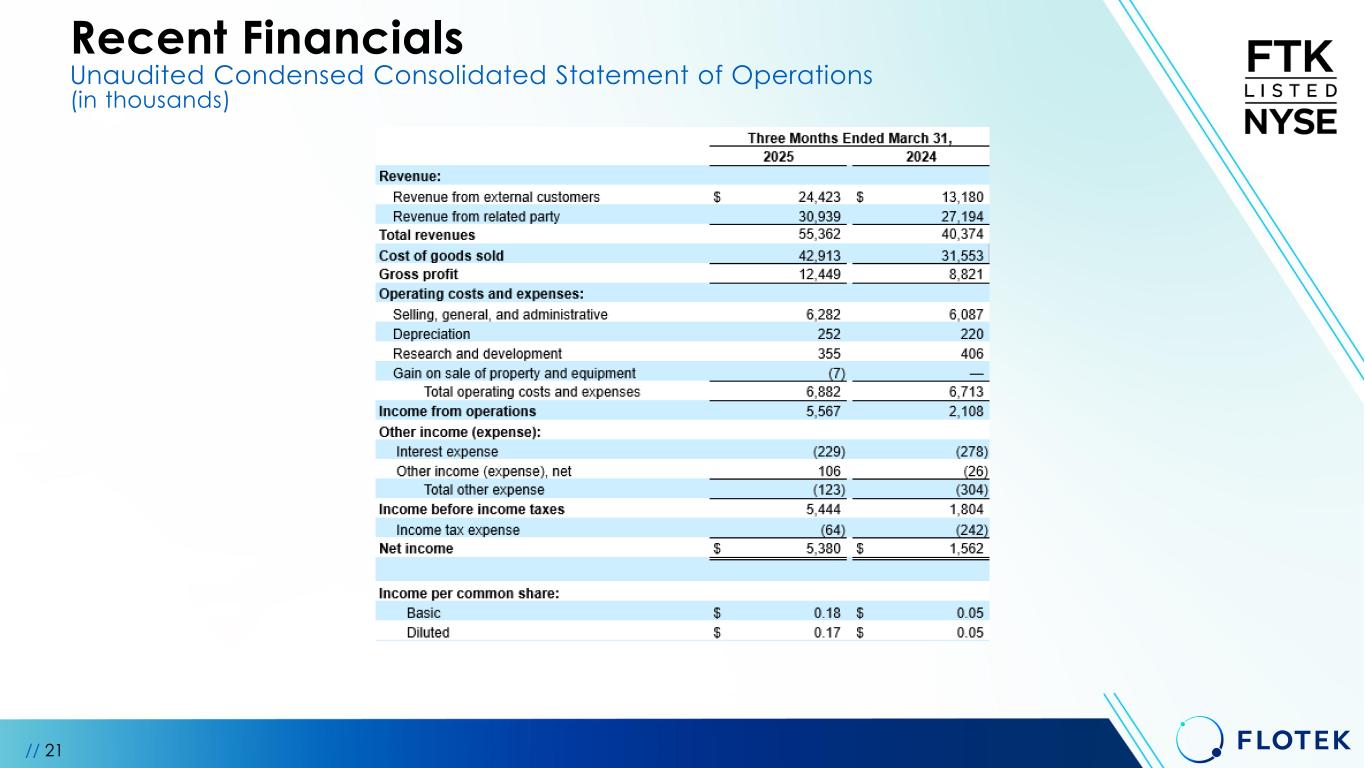
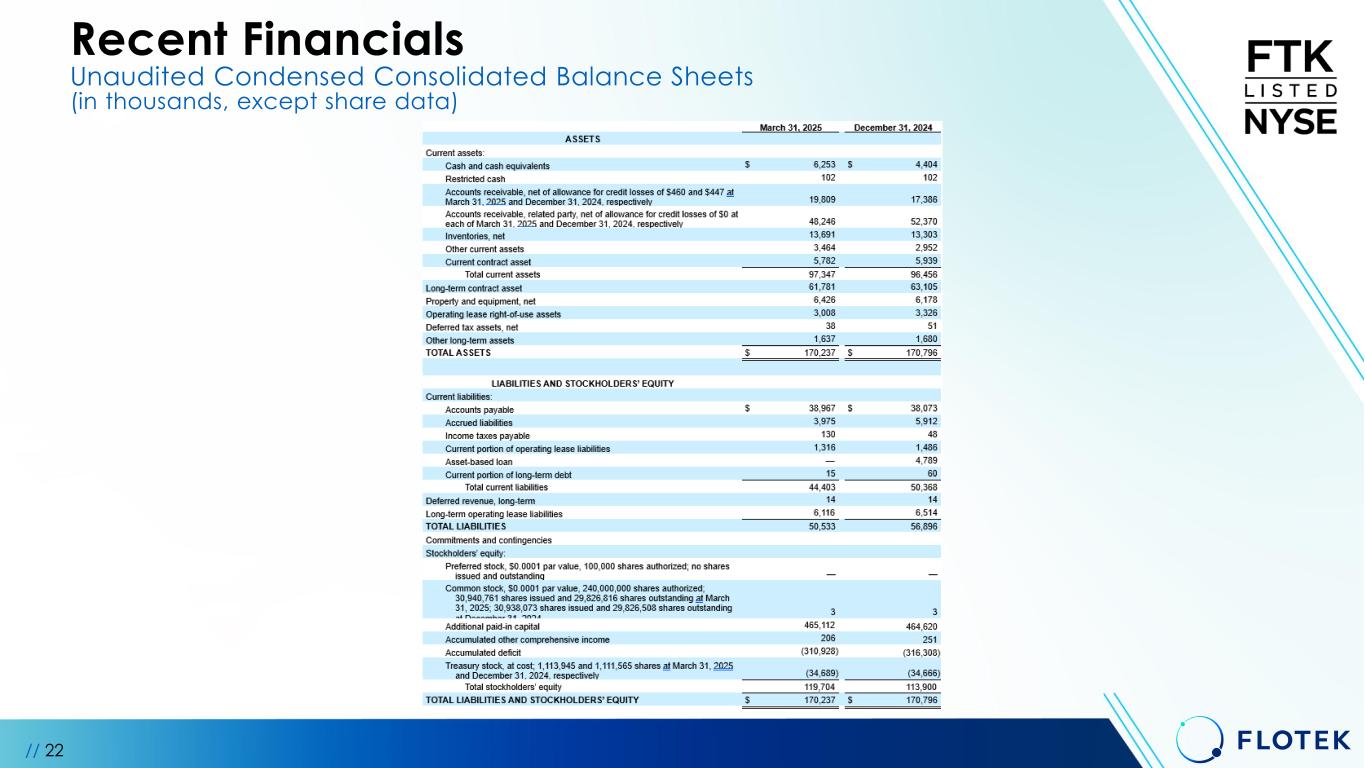
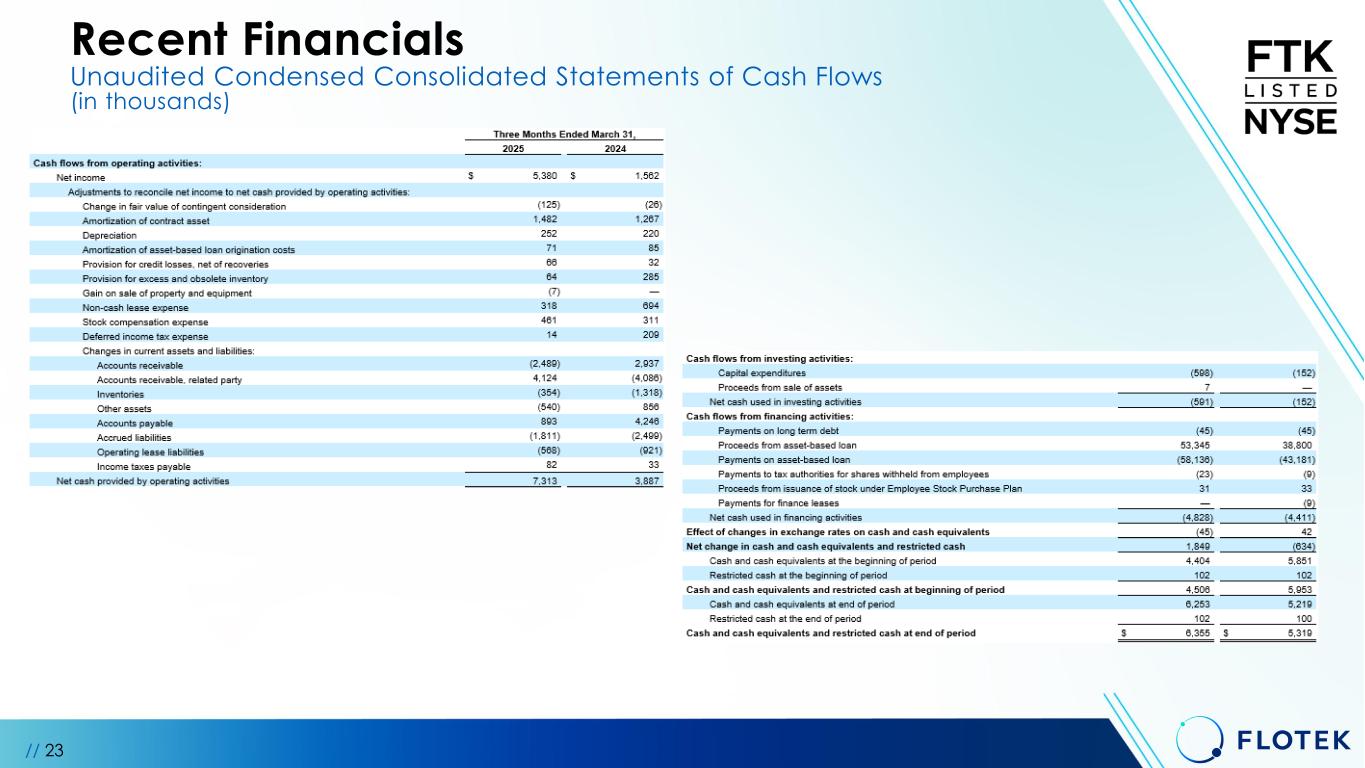
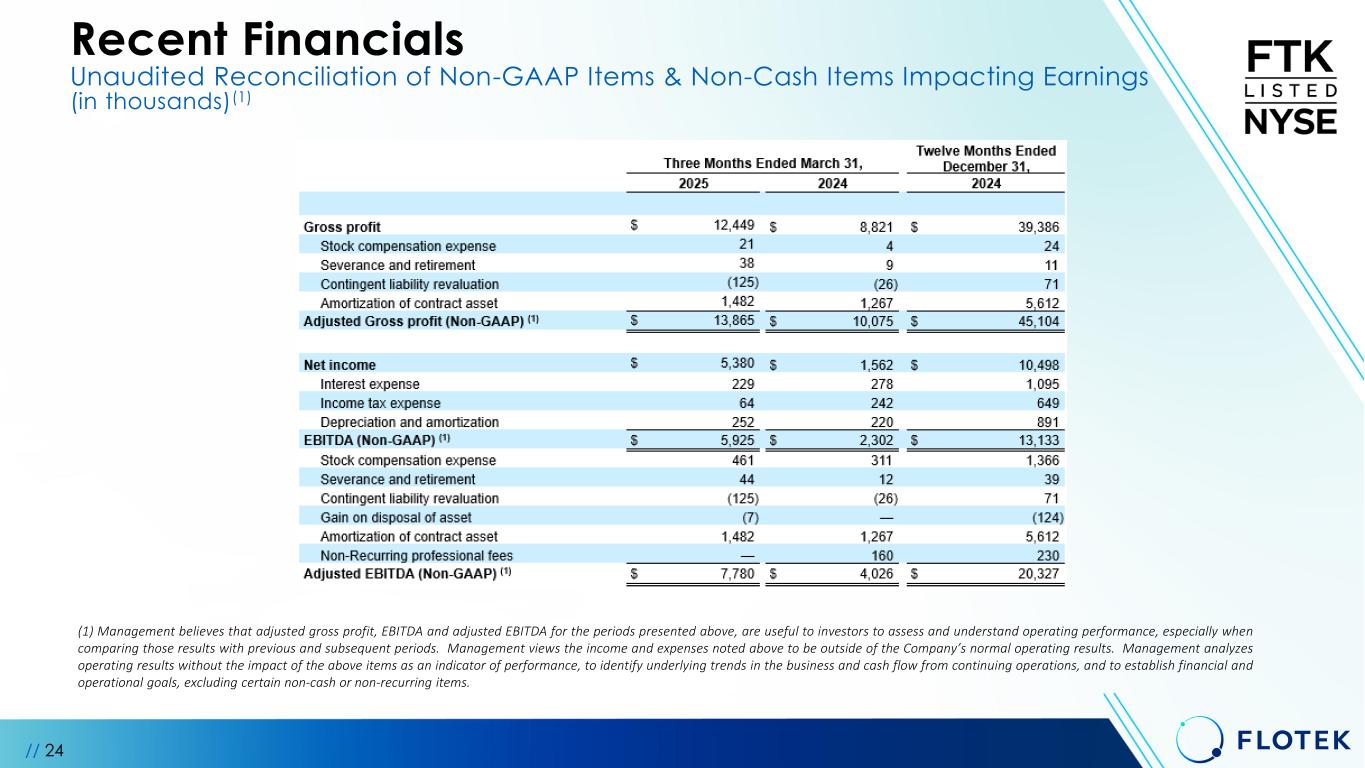
Thanks, Ryan. Yesterday afternoon we reported another quarter of exceptionally strong results that builds upon the financial momentum that began in the fourth quarter of 2022 as shown on Slide 12 in the presentation. On a sequential basis, we increased revenue 9%, net income 21%, and adjusted EBITDA by 11%. As Ryan mentioned, first quarter 2025 marked the fifth consecutive quarter that we grew revenue, net income, and adjusted EBITDA. Before getting into the quarterly results, I wanted to touch briefly on a few details with respect to last week's announced Data Analytics transaction. Part of the consideration for the transactions included utilizing a portion of the 2024 and 2025 Chemistry Supply Agreement Shortfall Payments. Utilizing shortfall amounts against the purchase price does not impact our revenues or profitability in any way as we are electing to use the shortfall payments to purchase assets versus collecting the cash. We do expect to utilize future shortfall amounts to quickly pay down the $40 million note that we took on in connection with the transactions as there are no prepayment penalties to do so. Again, no impact to revenues or net income utilizing shortfall amounts to pay down debt. We fully expect to see our leverage ratio move well below one times by the first quarter of 2026 through the combination of debt repayment and growth in adjusted EBITDA. For reference, the midpoint of our 2025 guidance implies 80% growth in adjusted EBITDA in 2025. To put some context around the impact of the transaction, we noted in last week's release that we expected the contract to generate segment operating income in 2026 that exceeds the total company's 2024 adjusted EBITDA of $20.3 million. So assuming the contract contributes an equivalent amount of cash flow in 2026, this transaction would effectively increase adjusted EBITDA by at least 100% with only 20% share dilution, clearly a very accretive transaction for the company. Even though eight of the 30 acquired assets are not currently generating fixed fee recurring revenue, we do expect to clearly see the impact of the transaction on our financials beginning in the second quarter. As the assets under construction come online throughout the year, we expect to see continued quarterly improvements in Data Analytics revenues and profitability as shown on Slide 9, with all 30 assets in service during 2026, fixed fee revenue is expected to exceed $27 million. Moving quickly through the quarter results, revenue growth was led by an 88% increase in external chemistry versus the year-ago quarter. International revenues totaled $3.8 million during the quarter, a roughly 250% increase from the $1.1 million in the year-ago quarter. In total chemistry revenue grew 36% versus the year-ago quarter. For Data Analytics, we grew revenue 57% versus the first quarter of last year. Revenues during the quarter were skewed more heavily to product sales, but we also grew service revenues by 30% as compared to a year ago. As shown on slide 9 with the PowerTech transaction, we expect to see a big jump in recurring revenues throughout the remainder of the year as the new mobile power generation contract is expected to provide more revenue in 2025 than the entire Data Analytics segment reported in 2024. On the SG&A front, as we indicated in our year-end call, SG&A costs during the first quarter declined sequentially. SG&A as a percentage of revenue decreased to 11% in the first quarter of this year versus 13% in the fourth quarter. Net income for the quarter totaled $5.4 million or $0.17 per share. Our earnings per share in the first quarter represented 50% of the total earnings per share for all of last year. Looking at slide 12, during the first quarter we continued our streak with respect to adjusted EBITDA. The first quarter represented the tenth consecutive quarter of improvement. Our first quarter 2025 adjusted EBITDA was nearly 100% higher than the year-ago quarter. Yesterday we also provided our initial 2025 guidance on revenue and adjusted EBITDA, which we've highlighted on Slide 12. As a result of the strong start in 2025 combined with the impact of the power generation acquisition, we're guiding for continued growth in 2025 on both metrics. The midpoint of our revenue and adjusted EBITDA guidance indicates 2025 growth of 12% and 80% respectively, as compared to last year. Impressively, using the midpoint of both metrics implies a 17% adjusted EBITDA margin as compared to only 11% in 2024, demonstrating the positive margin impact that the power generation transaction is expected to provide. It's worth noting that our guidance does reflect a conservative outlook for the second half of the year as it relates to our chemistry business, given the recent commentary from multiple E&P operators on CapEx reductions due to the uncertainty regarding oil prices and the impact of tariffs on the cost of pipe and tubulars. Touching on the balance sheet at March 31, we had nothing drawn under ABL. We did collect $15 million in cash related to the 2024 chemistry shortfall penalty due during March and paid off the ABL. In closing, we're excited about the continued growth in our base chemistry and Data Analytics segments and we look forward to realizing the very positive effects that the power generation contract is expected to provide over the next several years in terms of very high margin revenue. I'll now turn the call back over to Ryan for closing remarks.
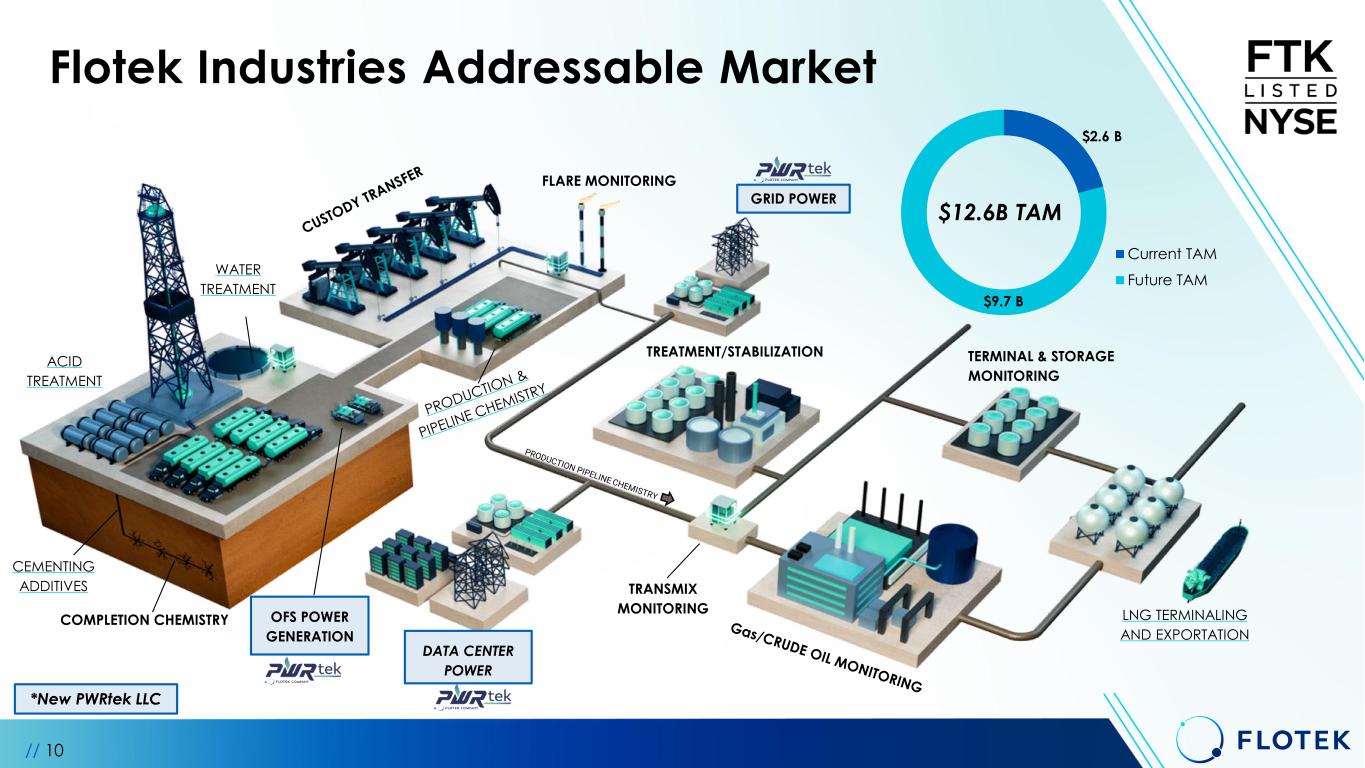
Thanks, Bond. The first quarter of 2025 results build upon our now multi-year track record of consistently posting improved financials. Looking at slide 10, and as I said at the end of last year, I remain convinced we are still in the early innings of Flotek's transformation as we continue to grow and maximize returns for our customers and shareholders across the entire value chain of the energy landscape. Our transformative and strategic entry into the energy infrastructure sector is expected to provide a significant increase in high margin Data Analytics revenue and cash flow for years to come through the growth of our upstream applications. We believe the Data Analytics segment is poised to contribute over half of the company's profitability in 2026. We have now secured long-term contracts for both our chemistry and Data Analytics segments, which should provide confidence in Flotek's ability to deliver consistent revenue and profitability, helping to mitigate the impact of commodity price volatility in the near term on our business. No other company in our industry is better positioned to deliver the cutting-edge technologies needed to tackle unique challenges of the energy and infrastructure sectors. I'm incredibly proud of our progress and confident in our team's ability to execute moving forward. Given the growth potential for our chemistry and Data Analytics segments, we see Flotek as a compelling investment opportunity. Thank you for your continued support and we're eager to share our vision for Flotek's future and looking forward to updating you on our progress in the quarters ahead. Operator, we're ready to open the floor for questions.
Operator
Thank you. Your first question comes from Donald Crist with Johnson Rice. Your line is now open.
Speaker 4
Good morning, Ryan, and Bond. Hopefully you all are doing well this morning.
Hey Don, how are you doing?
Speaker 4
Well, I wanted to start on the PowerTech side. Obviously a very good transformational acquisition for you all, but it's going to obviously increase EBITDA and revenues as we kind of move forward in 2026, but I was curious as to kind of third-party demand on this side. I mean, obviously all those trailers are working with ProFrac today and once they're all delivered in kind of early 2026, just curious as to how fast you can expand that to third parties and take over construction of those trailers moving forward.
Yes, Don, that's a great question. And in reality, what is probably the basis of some of the most exciting things that we have going on here at Flotek is that we've been testing the Verax on I would say almost 10 external or additional customers besides where we have the long-term contract now and getting great results. What most of them have been telling us is they still don't have that full end-to-end solution even though we're able to monitor the gas for them on their current things they're trying to test now. So what this offers for us to go back to them and say, hey, you've been renting just our Verax to monitor the gas quality; now we have the full solution. So we expect some pretty rapid uptake. We are looking at what we will kind of move forward. We may discuss a little bit further in future calls on what we'll be spending in CapEx to build additional units because I can tell you that we put in excess of 15 additional Verax units to other customers in the last quarter at testing gas quality for remote power operations. So we expect some solid opportunities there going forward.
Speaker 4
It seems like a very good opportunity for you all and I wanted to shift over to the custody transfer. Obviously, that's a very big market for the Verax sensors, and eight pilot locations are converting over. Just curious as to customer demand and how many other pilot locations you have going right now and where you think from a sensor count you could get to maybe by the end of the year as kind of those pilot locations transition over to monthly revenue and it grows from here.
Yes, I would say that we mentioned around we have the eight units that only with that one single E&P operator right now that are converting into revenue streams this month. They have an additional, I want to say 14 verified that are putting into basis now. Five of those are on location. The other 11 we're finally validating where the install sites are. We've got probably up to 10 additional customers that we're moving those forward to. And as a matter of fact, our team, including Tom Redlinger is in the Middle East right now validating where we are on the pilot locations in two additional countries there in UAE and Saudi. So we do. I expect the UAE contracts to come online by mid-year on a conservative side, maybe sooner. And I really believe that as we're reporting more and more, this will lead to people understanding the enterprise value that this is creating; this thing is going to see a rapid uptick. I do believe we've started looking from the capital investment side around this, driven by our new generation measurement unit, the XSPCT unit, which is our third generation. We've advanced building those at our facility in Austin to meet this demand. But I do think we're going to continue to see that probably growing in a much sharper than linear fashion in the back half of the year. So it's probably overall, Don, I know we talked about the power generation side having such an immediate impact and will continue to be from you looking at the energy growth. But I do believe that still all-in-all when you look at the enterprise value and the market size for custody transfer, it still continues to be the longer to grow but still the biggest market that we'll get in the upstream Data Analytics part of the business.
Speaker 4
I totally agree with you. And if I could sneak in one more on the external chemistry, you had a huge uplift in international sales. Just curious, that's obviously much more stable than the U.S. market as we kind of ebb and flow here in this environment. But just curious as to where you think that international market can go in the coming years. Obviously, you have some pretty big customers over there and don't know kind of how many you're with today versus what you think you can get to in the future.
So I would say, when you look at the international spread, a big majority of our revenue is obviously focused in the Middle East, particularly in Oman, Arab Emirates, and Saudi. With the consistent NOC customers you see there with ADNOC, Aramco, Nestor, Halliburton, the general trends that we use there; I do think, and I can get Bond to comment on the percentage numbers, but we will see a material increase year-on-year in international revenue and I think it's going to be relatively stable. You've seen where Saudi Arabia is adding additional frac fleets in the growth there. We've got our approved slick water system and the mega tender that's been coming out in ADNOC will be released in the back part of this year. We are the preferred chemistry supplier and approved technically for the majority of a lot of the specialty chemicals on the traditional and carbonate type stimulation solutions, and so I think we're going to see just that consistent, steady, profitable growth in the Middle East over the next couple of years, I do believe. And the Latin American business is interesting because most of it is around Argentina, around our entry with our completion chemistries. And we're monitoring that. Our big thing there is to ensure payment cash flow for that market. But I think it's a great opportunity. Leon, and his team are doing a phenomenal job of pursuing that work. What I think is an effective cash flow manner for how we are going to grow our business.
Speaker 4
I appreciate it. I'll call it back to the operator. Thanks, guys.
Operator
Your next question comes from Jeff Grampp with Northline Capital Markets. Your line is now open.
Speaker 5
Morning, guys. Ryan, I wanted to circle back on PowerTech here. Can you touch a little bit on the competitive environment? What are the main incumbents that are servicing this industry, if there are any? And then wanted to confirm in your prepared remarks, I think you mentioned a 500 unit kind of TAM in North America. I just want to make sure I understood. Is that kind of specific to the oil and gas market? Is that a broader definition of the industry? Just to make sure I kind of understand the market opportunity you guys see over the next couple of years.
Yes, I’ll try not to get overly technical here. There's a lot to unpack in your question. Our initial assets, powered by the Verax measurement technologies we just acquired, are fully patented and provide a unique, complete solution for detecting out-of-spec field gas, as well as safely conditioning it and optimizing fuel flow for turbines, dual fuel engines, or any other operational equipment. This technology is relevant across various sectors, including energy and oil field services, and addresses the challenges that have hindered the growth of data centers using field gas, particularly in terms of controlling and monitoring volume and creating evaluations for payment. It also supports grid power, whether in remote locations or not. Regarding other assets we’re exploring, there is no real competition; we offer a comprehensive turnkey solution. What does exist right now is something similar to what we were talking about where we were looking at our smart filtration skids. There are current, what we call knockout filtration units out there that can detect big volumes of liquids or they use almost like a JT skid in that they use a pressure drop to drop out some of the heavier hydrocarbons and try to stabilize the BTU, but they can't real-time monitor it, they can't condition it. They're almost just like just a heavy-duty filter. And so even our smart filtration skids will be an advancement compared to them. Differentiated, so our high-level ESDs and Verax’s, there's nothing really to compete with them. They are differentiated premium price technologies for any application. We look at the Smart skids we were targeting; most of those will be oil field locations because you need a smaller footprint to get on location. And it's that first backup to knock out something that could damage whether you're looking at a gen set or turbine or engine. Whereas the other units like the ESDs can operate anywhere. And it's a much, much larger market for those than just oilfield services. If that is a little, you know, the clarity you're looking for.
Speaker 5
Yes, that's perfect. Ryan. And is that kind of what that 500 unit number represents?
Yes, the 500 unit is mostly just domestic oil and gas. Like when you're looking at rig power or frac power only not counting that doesn't address industrialized grid power support, AI data center support, or any of those like what the ESDs can do. In other words, it's a much larger market when you pull all of it together.
Speaker 5
Yes, definitely. Understood. Okay, great. And then I wanted to circle back. Ryan, you kind of wrapped up the prepared remarks on Slide 10, which I thought was a really cool slide and kind of laying out the longer-term opportunity. I'm curious, I know this doesn't all happen overnight, but what do you see Ryan, as kind of the next one or two steps we get the PowerTech assets closed and integrated? What's kind of next for Flotek in that schematic in terms of other, I guess kind of end markets or opportunities you guys are excited about?
Yes, how I talk in general terms, I'm always about executing these small steps as part of our multiphase strategy that we talk about. Slide 10 references the overall view of the runway that Flotek is on. So there's no doubt we're going to make a hard impact. Where you see PowerTech notated around data center power grid power, and we call energy services oilfield service power generation. The next step for us that we really see focusing is upgrading more of our real-time instrumentation along this value chain from coming out from chain of custody. When we can do that, you essentially have a company that can design your completion from the chemistry side, monitor the chemicals going down hole. Once the well comes online, we leave an XSPCT unit to monitor the quality of production coming out and the additional assets that we'll put to look at the aqueous phase monitoring gives us the ability to run production chemistry in real time, which opens up a $6 billion market just on the domestic side alone with a differentiated service offering. So you'll start to see us start just filling the gaps along here, but I think our real-time monitoring based out of custody transfer and moving in the production chemistry direction will be the next big phase that we move into. Because holistically Jeff, what the long-term strategy is, we are creating an industrialized chemical and data company that can manage the entire energy landscape. If you need to monitor anything related to using chemistry as a platform, we think that makes it a massively valued investment opportunity for the market. And more importantly, you can see the impact that it's having on the addressable TAM for us. Where we started out, we put the strategy in place. We had about a $2 billion TAM. It's opened up to more than $13 billion and that's just talking domestically, not talking about what we may be able to do internationally. What's most exciting about it is all of this growth we're talking about would take place if they stopped drilling today and we didn't complete any more wells because all the stuff is on the FX and energy support landscape and so that's really exciting for the long-term investment in Flotek.
Speaker 5
That's really helpful Ryan. I appreciate all those details and thank you guys for the time.
Operator
Your next question comes from Gerry Sweeney with ROTH Capital. Your line is now open.
Speaker 6
Good morning Ryan, Bond, Mike, thanks for taking my call.
Speaker 6
I want to start with Data Analytics and then, like everybody else, we'll shift over to the Power market, but on Data Analytics, obviously what queries you've been working on and you spoke a lot about custody transfer and just sounds as though there's a little bit of a longer sales cycle there. Just curious what can open up that market a little bit. Is that getting a couple maybe anchor investors, proof of concept or any thoughts on that front?
Yes, so I think it's you know, technically if you, and you and I have been talking about this for over a year, you've seen us steadily pull forward. We feel like it's going to be the impact from custody transfer at a point in time, I would say at the beginning of 2024 we had not completed building the XSPCT unit in the full production yet. And now that we've gotten there and we've actually field proven the unit, we're starting to see this opportunity in custody transfer significantly accelerate. We mentioned in Q2 of last year that we were targeting trying to get five to eight pilot sites; we're now at over 20 and those eight are converting to full-time DAS revenue. This is like you're talking to me; this is that proving use case by a large proven E&P operator that we think is going to drive significant impact. We do believe that our international pieces we'll have secured by mid-year is going to drive impact in terms of use case understanding. And right now, I think the biggest hurdles we've kind of crossed is that number one, they wanted to ensure that honestly we're seeing such a monumental variance in most of these sites that we test; the operators sometimes are skeptical and that they bring GCs out to the location to test. We've always tested within 1% or less variance from a GC and right then the operators are just taken aback in that while you've got we're getting a measurement from a unit that's as accurate as our GC, we're getting it every five seconds and there's that trust build there. Then they're starting to realize we're seeing this potential on one site and we have thousands of these. What now is transition from a localized basin operation to the complete enterprise value for the whole company. And so we do believe those will really start to accelerate. The biggest risk still for us is helping them understand it's easy selling these on new wells. Like almost every one of these applications are on a new well. The ones where they're still hesitant is putting it on old producing wells because there's still some potential concern on opening the back door on liability on someone being underpaid and that's probably the most inertia that we have right now. And I do believe, as you see it, on more of these new construction wells, that we're going to be pulled into settling disputes that are upcoming because most of the work on the old wells we're doing right now are settling disputes and it works out pretty well because we're the unbiased view on that between the operating resource owner or the end-use buyer. So but all-in-all though, I do believe it's just, there's just too much enterprise value, Gerry, for the whole oil and gas industry to provide this level of transparency for it not to grow and move forward. I mean, Warren Buffett even commented on this years ago; sooner or later you see such measurement, level of automation that it removes all the snake oil measurement out of it, right. It will be completely understood data and we want to be the tip of the spear on the innovation side doing that. So I think that we're going to start to see this thing really get critical mass sooner than later, honestly.
Speaker 6
Got it. And on the power gen side, a lot of information has been thrown out there. I apologize if this was sort of asked, writing, thinking a couple things here at the same time. But now that you have the assets, and this may not be solidified, which I understand, but what is the growth strategy or growth assets going forward this year into next year? I mean, do you need to add salespeople? How do we think about how the opportunity not only develops, but you sort of build the scaffolding around it?
Yes, that's another solid question in terms of. We look at it very much similar when you look at the PowerTech component, very similar to what we've done with our chemistry business. We want to create a push-pull mechanism in that there are some of the larger entities that have enterprise value around selling field gas for the data center components, or selling field gas or grid power, etcetera, that we work directly with, providing these assets for the total turnkey solution no matter what it's doing. There's also some channel partners, for lack of a better term, that we'll work with that are on site doing, particularly in the energy services side that we will provide the technology to as part of their service to sell to pumping companies or people who are providing mobile turbines or things of that nature. So we want to work with both, right? We want to be partners with people who are doing a lot of field services where we provide the patented technology on a service or DAS service type mechanism. And then there'll be some of these E&P operators who have large install projects, particularly focused on. We can solve a lot of the problems for what they've seen in the past around data center support or grid power by inconsistency of gas, how to pay people, how to value and all those. We can solve those problems and we'll work with E&P guys direct. So depending on what the customer is, we have a little bit of a hybrid business model that we hope creates a push-pull mechanism. This works the same way on chemistry side as we work with E&P operators to get a better reservoir in terms of how it produces. We work with the pumping companies to get effective output from their pumping equipment with how we look at friction reducer, service quality, tank configuration, real-time monitoring, things like that. So we're going to create a very similar, I would say ecosystem on the PowerTech side of business. And on the sales component, we've already started adding salesforce on the PowerTech side.
Speaker 6
Would it be fair to say on the PowerTech side, you enable some of the gas providers or equipment providers the ability to sell to the data centers; you give them, you provide that certainty of quality of gas and uptime, etcetera?
Yes, a lot. When you look at a lot of these data centers, you look at what they're going to do here in Texas, right? Or even just electricity demand in Texas, the growth; you've got this gas stranded in these remote locations. It comes to gathering sites and so one of two of the big problems that they've had is number one, when you look at just the pure quality gas, they can't necessarily handle the liquids or they can't handle the BTU fluctuations or anything of that nature to basically optimize the fuel to the optimized BTU so that you get the maximum life out of the power gen devices, right. Our technology uniquely solves that but more importantly is even if they could do that, which they haven't been able to successfully, even if they could do that, they can't meter and value the quality of all the different gases that are co-mingling coming in. Whereas our Verax and our XSPCT sensors can go out and measure each line so that we know the volume composition and the quality of gas that's all flowing to the combined point for the data center and so we can actually give that actual royalty payments accurately to all the people who are supplying gas, which is always problematic too. And so this really unlocks a lot of the past constraints are really making this successful. And not to mention is that it has the backup capacity to where if you get a bad point of field gas, we can automatically actuate off your smartphone, close it and make it run off compressed natural gas that you can have an emergency tank while you fix the field line. So it just offers a unique solution that's just not currently out there. It really does some amazing things.
Speaker 6
That's super helpful and I appreciate that tutorial. So I'll jump back in line.
Operator
Your next question comes from Gaushi Sriharan with SRI Singular Research. Your line is now open.
Speaker 7
Hey, thanks Ryan, can you hear me? Good morning.
Yes, we got you. We got you.
Speaker 7
Given the growth in the international markets, how are you seeing whether the impact on tariffs will have any, you wouldn't need any external partners or investments in local suppliers?
Yes, so it's a good question and technically speaking, when you look at the way we've been constructing Flotek to be able to manage cycles and changes in commodity pricing and geopolitical environments is that most of the chemicals that we're supplying to international markets we are buying manufactured in country or from partners over there to one improve our in-country manufacturing, whether we're looking at ICTVA and the other localized country sourcing that we see in the UAE. So we're definitely doing that in terms of just what's required as table stakes to operate in those countries. But more importantly, we are running consistent inflationary and price changing impacts based on what we see of tariffs, what countries we buy and some of this little bit of shift we're seeing. There's no doubt though we've seen, we are experiencing some, I should say the industry is experiencing some supply chain disruption. I do believe that we're positioned in place to outperform a lot of our competitors in that because the team here at Flotek comes with a massive amount of experience in the background. We've kind of done a lot of this before and we were really preparing for this potential shift that we're seeing right now. So, but there is no doubt it still causes a little bit of headaches; it still causes a little bit of timing problems. But I think we've taken some really strong steps to put what I would call guardrails in place so that we get maximum benefit from in-country manufacturing, blending, and how we source the materials, depending on where we are on the globe bringing operations.
Speaker 7
And I think you've alluded in the past that there's been some bureaucratic hurdles, especially in the Middle East as we move forward. And I think you've kind of become a proven commodity. Do the margins and the lead times get shorter as we move into FY26?
Yes, anyone familiar with our international markets understands that working in countries in the Middle East presents ongoing pressures regarding the commoditization of systems and margins. However, one of our strengths in chemistry is our ability to continuously adapt our product mix to address these challenges. You are right; as we build relationships with these operators, they expect us to be agile and reduce lead times. We have been collaborating with local partners to establish a critical presence as our revenue increases in these regions. As we expand, we are creating local entities in the UAE, focusing on laboratory, storage, and team development. I believe that as our business grows in Saudi Arabia, we will eventually need to establish local entities there as well. We are planning for this and have incorporated these scenarios into our budgeting process, ensuring we are prepared to execute when the time is right.
Operator
Your next question comes from Josh Jayne with Daniel Energy Partners. Your line is now open.
Speaker 8
Thanks. Good morning. First question, just going back to the power gen side. I was hoping you could talk about the transaction a bit more. Obviously, the EBITDA and the accretion and the backlog, they all make sense. But Ryan, could you speak a little bit to why these specifically were the right assets and why this was the right time today to get into that business?
Yes. There are a few points to consider regarding our partnership with Profrac and the long-term supply agreement we established. Initially, we highlighted the advantages of having a significant partner like Profrac, particularly in terms of our shared focus on technology, cost management, environmental sustainability, and innovation. Profrac's approach aligns well with ours, especially with their commitment to advanced electric fleets and environmentally conscious operations. This partnership dates back nearly two years, during which we engaged in discussions with their leadership and initiated pilot testing of our Verax equipment. Our goal was to develop this technology further and innovate in terms of intellectual property. We recognized the potential for these solutions to significantly decrease emissions and their environmental impact. For instance, during our first major site test, we managed to prevent the burning of 1.2 million gallons of diesel, which underscored our commitment to this goal. As we observe the electrification trends and the challenges posed by aging transmission and distribution systems in the U.S., there's an urgent need to address these issues. The success of our equipment hinges on advanced technology, automation, and our Viper software. Thus, it made perfect sense for us to explore acquiring field-proven, patented technology from Profrac, as this can benefit not only us but other operators in need of similar equipment. We also have existing relationships with operators who can utilize our technologies to supply natural gas to data centers and power grid operations. Last year, our stock performance was bolstered by growth in our data and chemistry sectors, but competitors who succeeded better were those that adapted to providing grid support. This transition aligns well with our strategy, even amid some short-term fluctuations in commodity prices. Our goal is to stabilize our operations, enhance predictability, and drive data-driven EBITDA. This explains our interest in these particular, innovative assets and our strategic collaboration with Profrac, which has made this integration smoother than pursuing an organic process.
Speaker 8
No, no, for sure. That's very helpful. And then the last question that I have is just when we think about, I think you've talked in the past about, being able to change things at an organization when you had a larger budget. And through your time at Flotek, it's been sort of on a shoestring budget, minimal cash flow, and then with the results that you're projecting and the free cash flow you're seeing, you're going to definitely have more of an opportunity to grow that way. Could you just talk through with all the balls in the air, the importance of building out the bench across the different subsectors and just how you're thinking about Flotek over the next couple of years as a full organization and just your strategy and how to execute on all of the different things that you guys have going on, that'd be great. Thanks.
No, I mean, I think, and I'll let, I'll let Bond comment on some of these parts so I don't get too far out over my skis. But in my opinion, our whole point was we want to get to a point to where the first thing was, the past couple years, stabilize the business, execute on what we told the market we're going to do, grow chemistry, enhance our data business, and then get to where we start generating free cash flow. That's the big part. Now we're getting a stabilized position to do that. We have definitely a series of ranked and importance and financial impact investments in CapEx and growth that we'll be focusing on to even accelerate that cash flow more. We will definitely be making, I would say in this year we're going to spend more CapEx than we had probably the last three years combined. And then in 2026 that will continue to move as we build more ESDs, more smart filtration, build more XSPCT units because there's no doubt that those businesses are going to grow. But in the grand scheme of things, building these monitoring units are significantly cheaper than buying big turbines. So I think we're staying in the wheelhouse of where we're significantly differentiated and we'll help try to maintain a clear balance sheet because we still don't want to build up a significant amount of leverage on the business. That's just the way we've always looked at it from not only the board but also internally. And Bond, I don't know if you want to.
Yes, I mean that's sort of the beauty of the way we structured the transaction where we're able to utilize these shortfall penalties that, as you guys know, accrue every month, but they only settle annually. So we use the shortfall penalty as part of the initial consideration from a cash perspective, but also in terms of paying down the debt. And so what we've effectively done is we've traded accrued revenue over a 12-month period for monthly recurring realized revenue to the tune of about over $2 million a month. So it's going to give us a lot of dry powder to continue to invest in the business and utilize free cash flow to continue to grow out other parts of the business.
And the great thing is, all these assets, we build them based on demand. We've got relatively fast turnarounds. XSPCT units' ROIs are usually less than four months. Most of these kids at market rates, we're payoff periods in less than a year. And so I think it's a great spot for us to be in right now to grow this business.
Speaker 8
Appreciate all the information. Thanks to you all. Congrats.
Operator
There are no further questions at this time. I will now turn the call over to Ryan Ezell for closing remarks.
Yes, I want to thank everyone again for joining us as we were able to convey our performance in the first quarter 2025, our recent acquisition, and our confidence in our future and the vision here at Flotek. We'll be participating in the Louisiana Energy Conference on May 27th through 29th at the Four Seasons New Orleans. So please secure your spot; you can connect with us there. And other than that, thank you for joining us today.
Operator
Ladies and gentlemen, this concludes your conference call for today. We thank you for participating and ask that you please disconnect your lines.