Thank you, operator, and good afternoon, everyone. Welcome to Forward Air's Third Quarter 2025 Earnings Conference Call. With us this afternoon are Shawn Stewart, Chief Executive Officer; and Jamie Pierson, Chief Financial Officer. By now, you should have received the press release announcing Forward Air's third quarter 2025 results, which was also furnished to the SEC on Form 8-K. We have also furnished a slide presentation outlining third quarter 2025 earnings highlights and a business update. Both the press release and slide presentation for this call are accessible on the Investor Relations section of Forward Air's website at forwardair.com. Please be aware that certain statements in the company's earnings release announcement and on this conference call are forward-looking statements within the meaning of the Private Securities Litigation Reform Act of 1995. This includes statements which are based on expectations, intentions and projections regarding the company's future performance, anticipated events or trends and other matters that are not historical facts, including statements regarding our fiscal year 2025. These statements are not a guarantee of future performance and are subject to known and unknown risks, uncertainties and other factors that could cause actual results to differ materially from those expressed or implied by such forward-looking statements. For additional information concerning these risks and factors, please refer to our filings with the SEC and the press release and slide presentation relating to this earnings call. Listeners are cautioned not to place undue reliance on these forward-looking statements, which speak only as of the date of this call. The company undertakes no obligation to update any forward-looking statements, whether as a result of new information, future events or otherwise, unless required by law. During the call, there may also be a discussion of financial metrics that do not conform to U.S. generally accepted accounting principles or GAAP. Management uses non-GAAP measures internally to understand, manage and evaluate our business and make operating decisions. Definitions and reconciliations of these non-GAAP measures to their most directly comparable GAAP measures are included in today's press release and slide presentation. I will now turn the call over to Shawn.
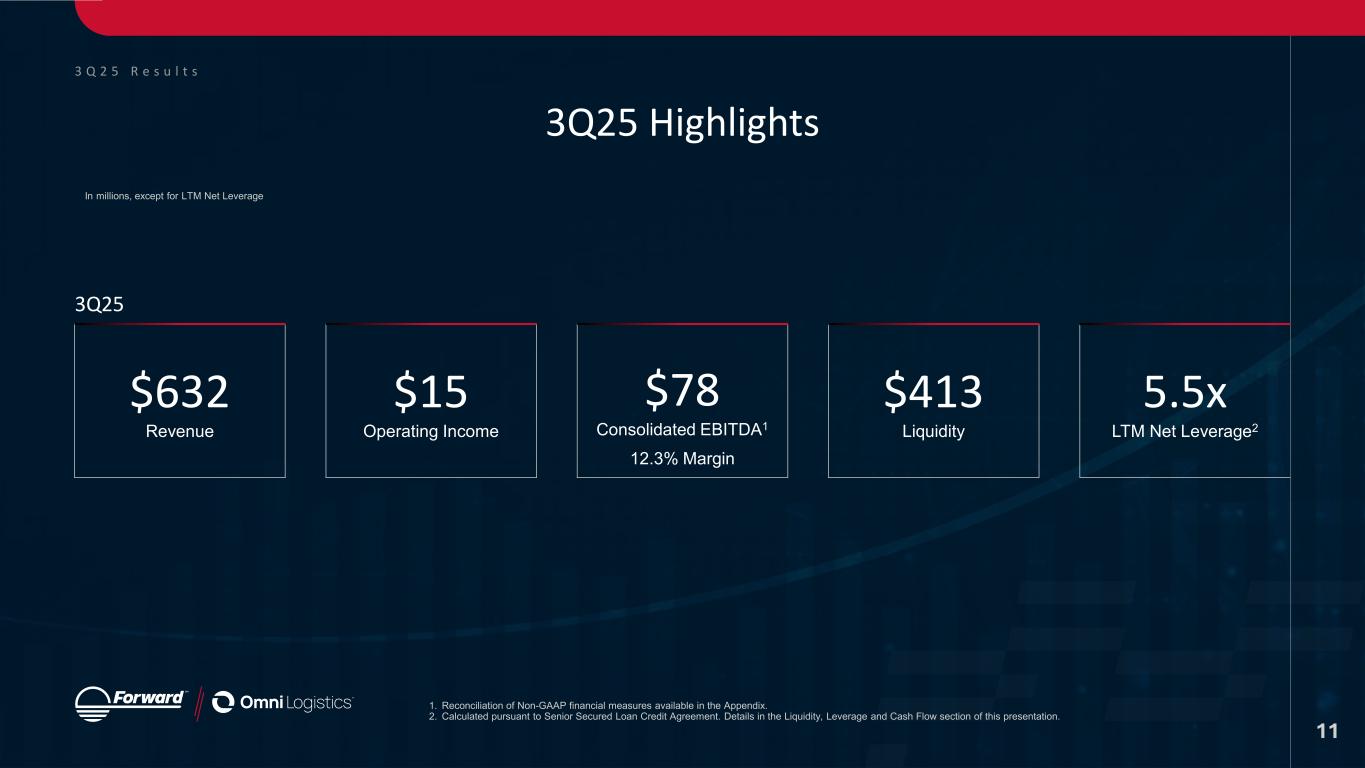
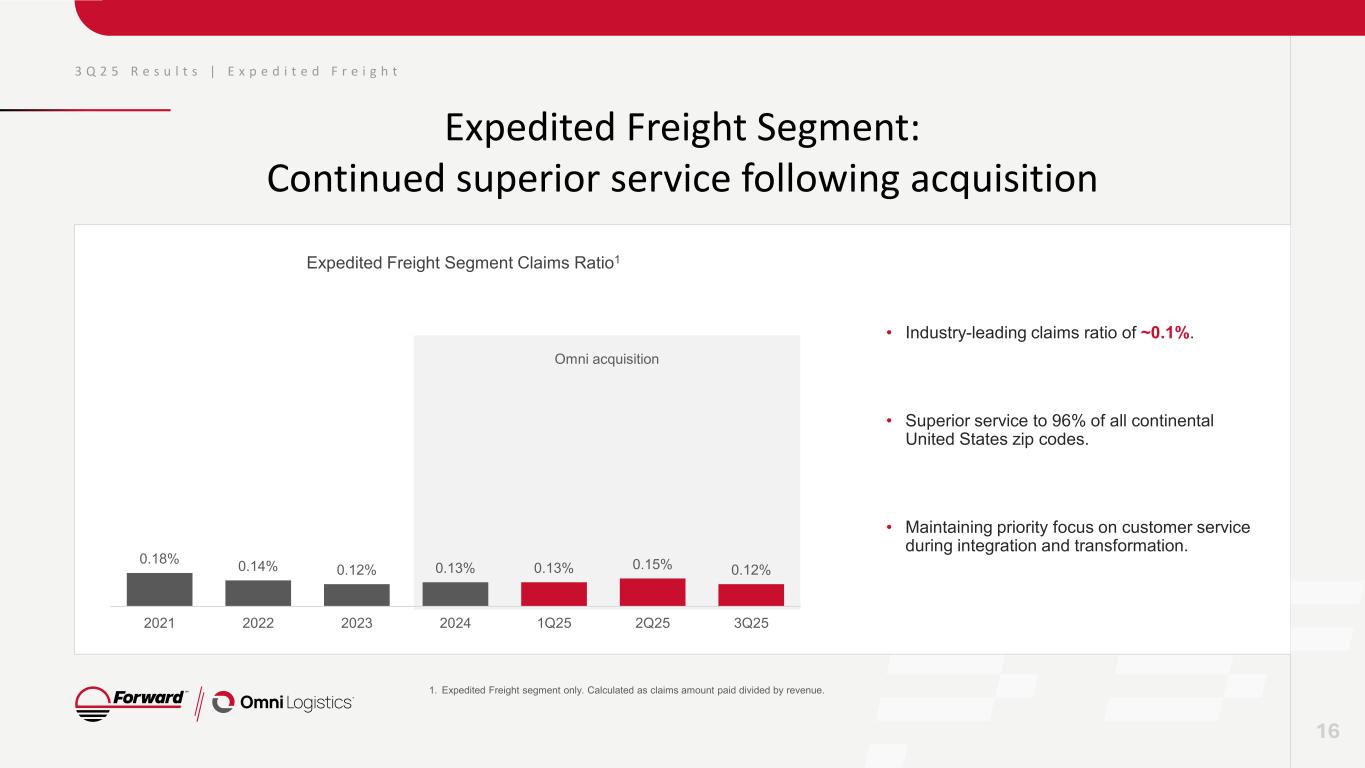
Good afternoon, everyone, and thank you for joining us. Today, there are three main topics that I'd like to cover. First, I will provide an update on our strategic alternatives review process. Second, I will provide an update on the progress we are making on our transformational journey, and I will close with a few comments on the third quarter results before turning the call over to Jamie. Beginning with the strategic alternatives review, we are aware of the rumors in the market over the last several months. I want to be clear that the strategic alternatives review process is ongoing. I also want to acknowledge the length of the process to date and emphasize a few critical points. Over the course of this review, we have had discussions with multiple interested parties and those discussions are continuing. We conducted appropriate proactive outreach to interested parties. Along the way, other parties have also initiated dialogue with us at different points in time. Obviously, we welcomed inbound inquiries, the timing of which was out of our control and has contributed in part to the length of this review. The review to date has been a thorough and inclusive process to explore all available opportunities to maximize value. The process has and continues to include the evaluation of a potential sale, merger or other strategic or financial transactions relative to the long-term value potential of the company on a stand-alone basis, as well as a review of the components of our portfolio to ensure there is a long-term strategic fit. Our Board is taking the time it needs to be methodical, thoughtful, and comprehensive to ensure that we pursue the best possible outcome for the company and all of our shareholders. With all that said, we do not intend to disclose further developments relating to the process until we determine an update to be appropriate or necessary. And when we do, we will let you know. Our policy is not to comment on rumors, and that will continue to be our policy. On a commercial and leadership basis, the good news is that we did not recognize at the outset how much this process would bring our team together. We are more aligned, more in tune, and more connected beyond what I would have ever thought. As you will see when Jamie previews the results, we are focused on running the business and are continuing to deliver positive period-over-year results in one of the most challenging markets in years. As for my second point and our continued transformation, I am pleased that we are also continuing to execute our plan to become a unified company as discussed on previous calls. Over the past several quarters, as we worked to transform the operations of our U.S. and Canadian businesses, we have focused on a clear and strategic goal, which was to unify our operations under a new regional structure and harmonizing our blueprint. The goal laid the foundation for the creation of our One Ground Network, a positive step forward in aligning our business for long-term success under a single leader, Tim Osborne, President of U.S. and Canada Operations. The One Ground Network brings together the operations of our businesses to form a more cohesive and agile organization. It includes the unification of our U.S. domestic ground operations and brings together key service lines: line haul, pickup and delivery, truckload brokerage, and expedited services into a single streamlined structure. By doing so, we are removing silos, simplifying how we work, and unlocking new efficiencies. However, it is important to note that we expect our sales channels to continue to function separately, providing the same solutions and service that they always have, while our operations remain fully agnostic across the network, delivering the same best-in-class, on-time service and, if not the best, industry claims results. Our team handles every shipment with the same discipline, precision, and care, keeping our focus where it belongs on service-sensitive freight and operational excellence. For our customers, it means the same seamless and reliable experience that they have been accustomed to and expect from us. For our employees, it means clear priorities, enhanced collaboration, and more opportunities to grow within a connected network. For our business and future results, it positions us to accelerate and leverage growth. We are also continuing to rationalize our tech stack, including upgrading and minimizing the number of systems across the company. We expect these changes to enhance efficiencies, improve real-time data-driven decisions and drive cost savings as a result. Regarding the quarterly financial results, we reported a consolidated EBITDA, which is calculated pursuant to our credit agreement of $78 million, in line with the $77 million reported in the second quarter of this year. I am extremely proud of our team for focusing on what they can control and delivering a solid quarter as we navigate through an extended freight recession, a strategic alternatives process and continued transformation of the company. We are focused on delivering industry-leading quality of service with our world-class leaders while tightly managing cost and prudently managing the business. We are optimistic that market conditions will eventually rebound, and our focus is on continuing the progress we have made over the past year and keeping that momentum over the long term. With that, I will now turn the call over to Jamie to go through the detailed results for the third quarter.
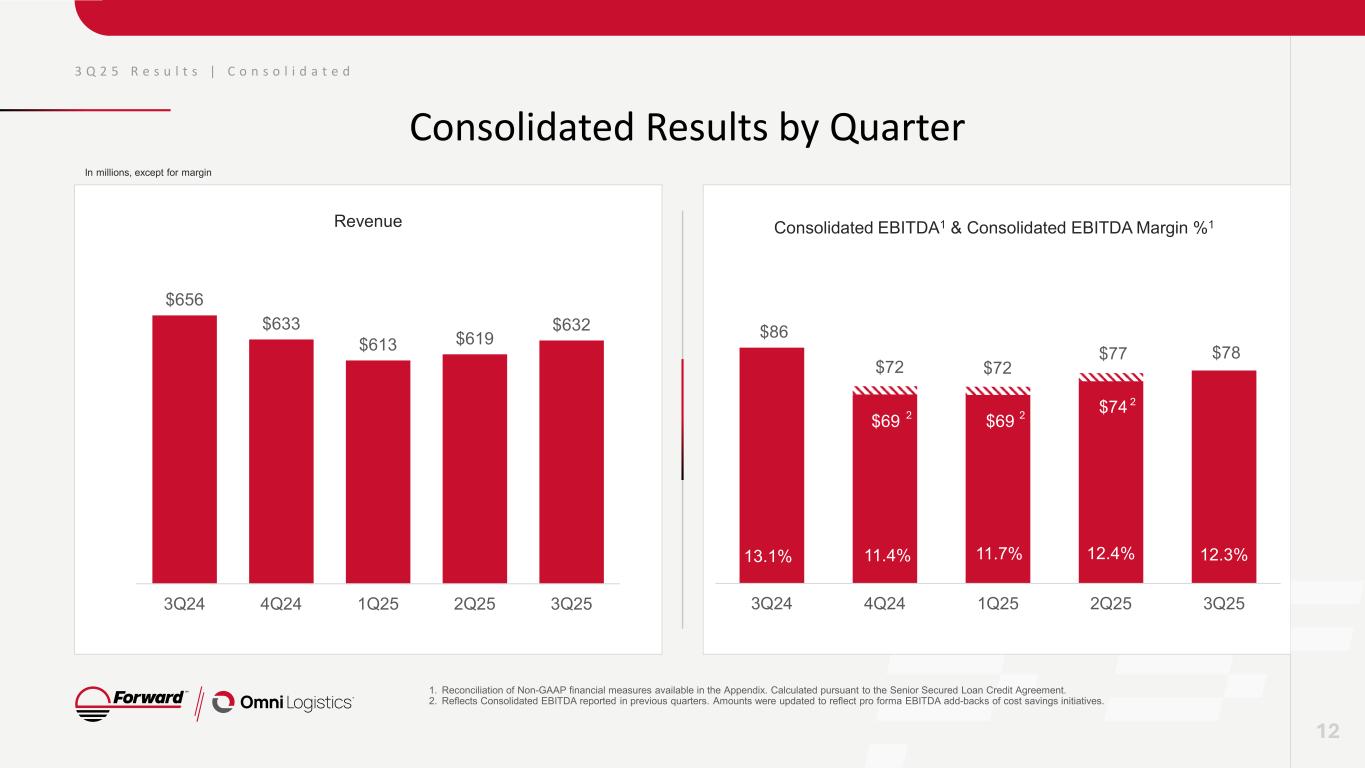
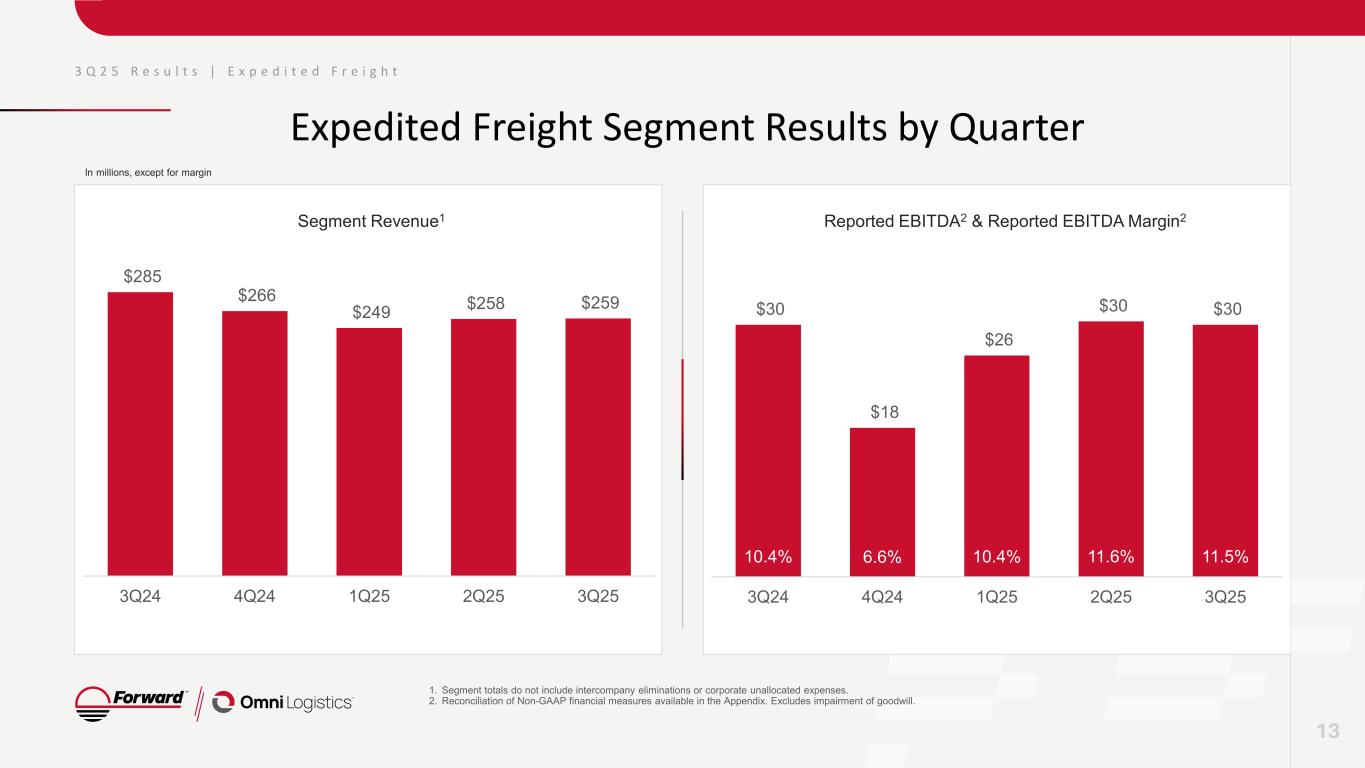
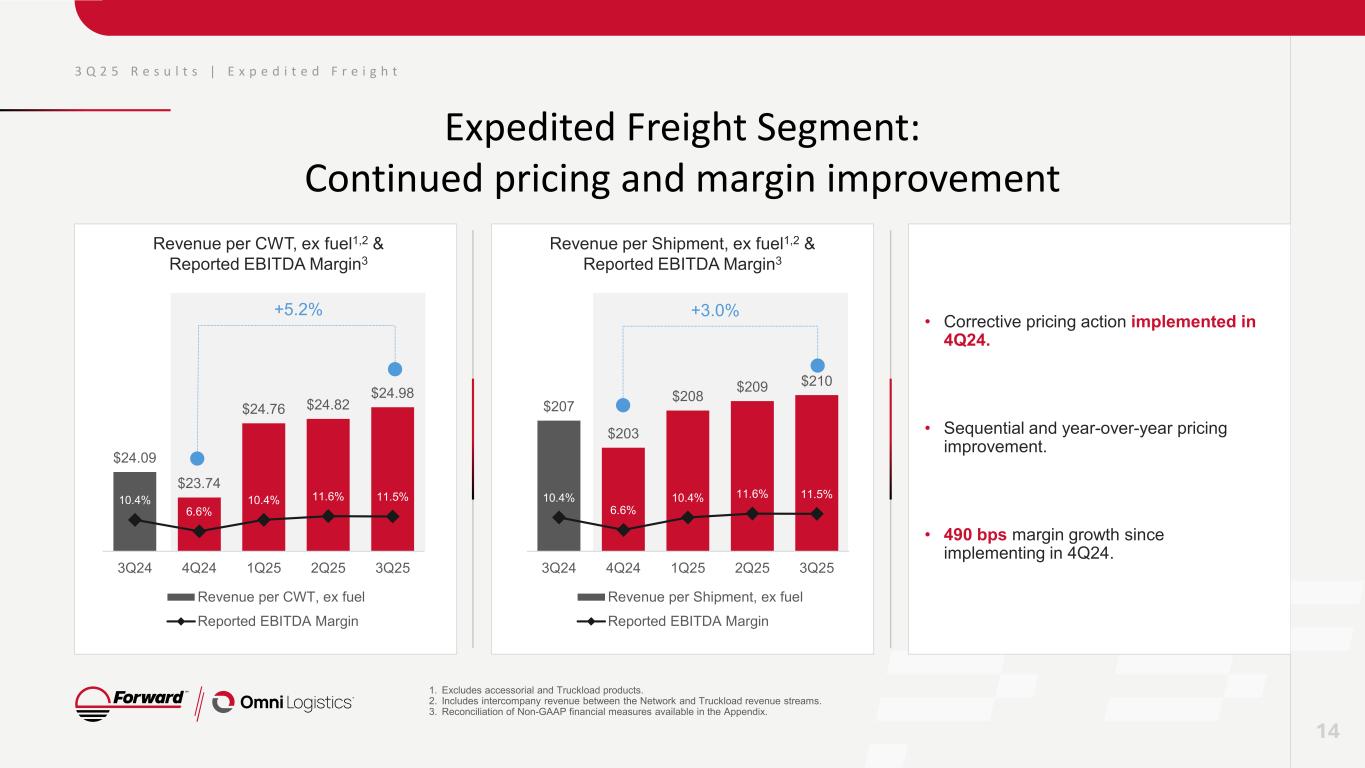
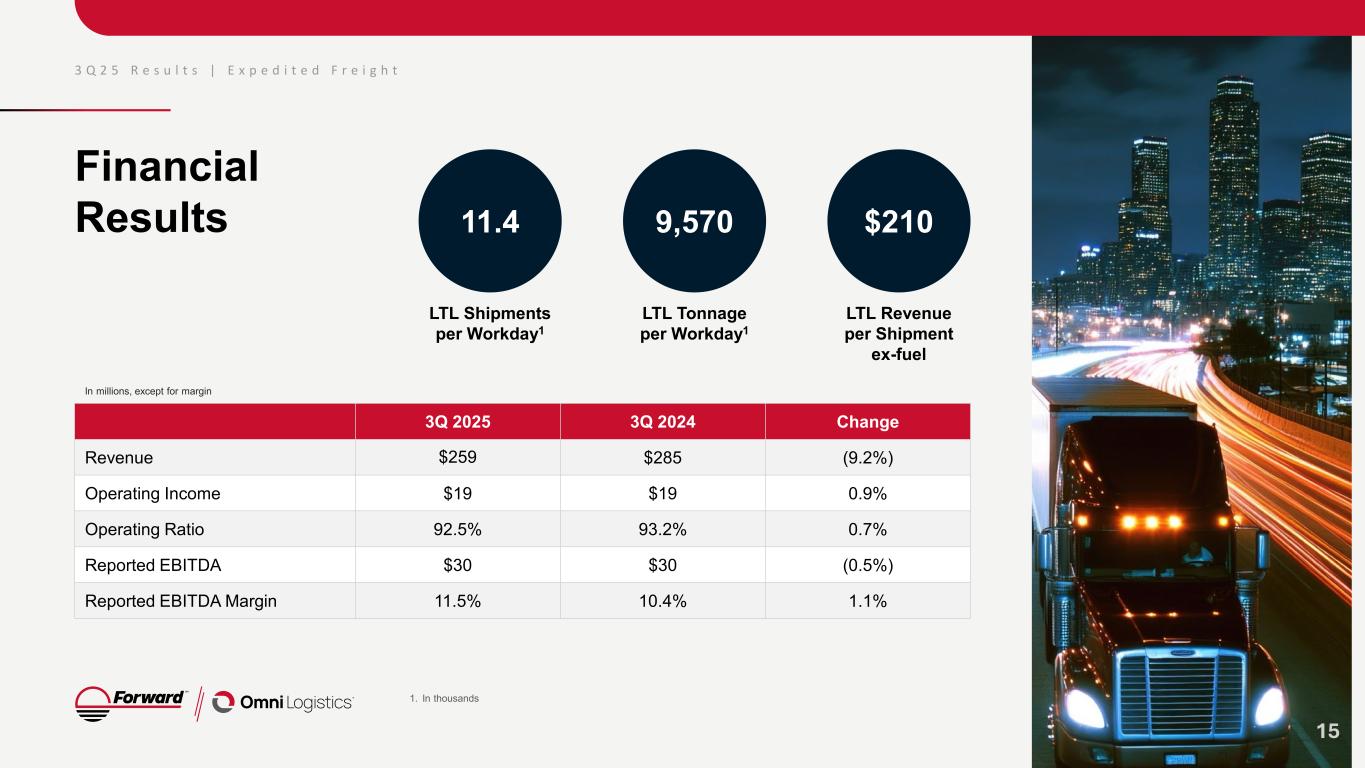
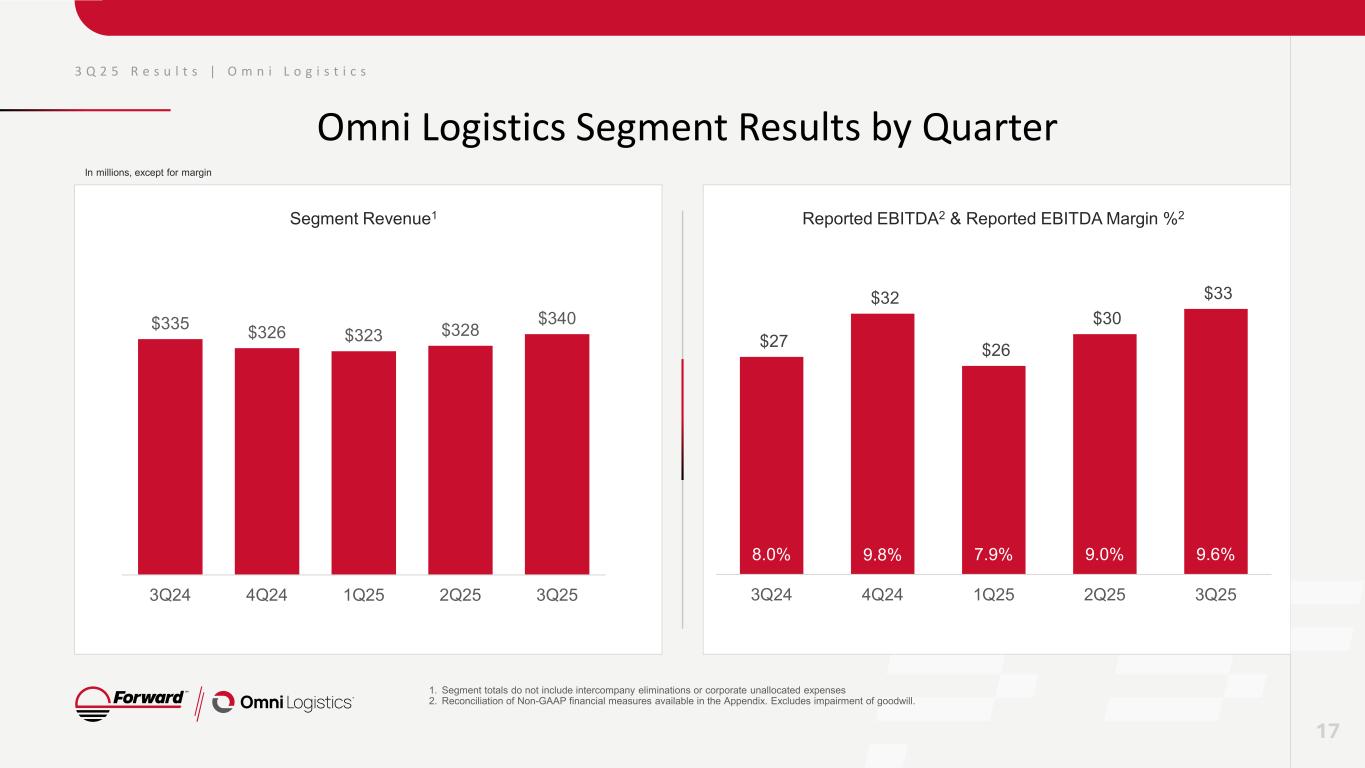
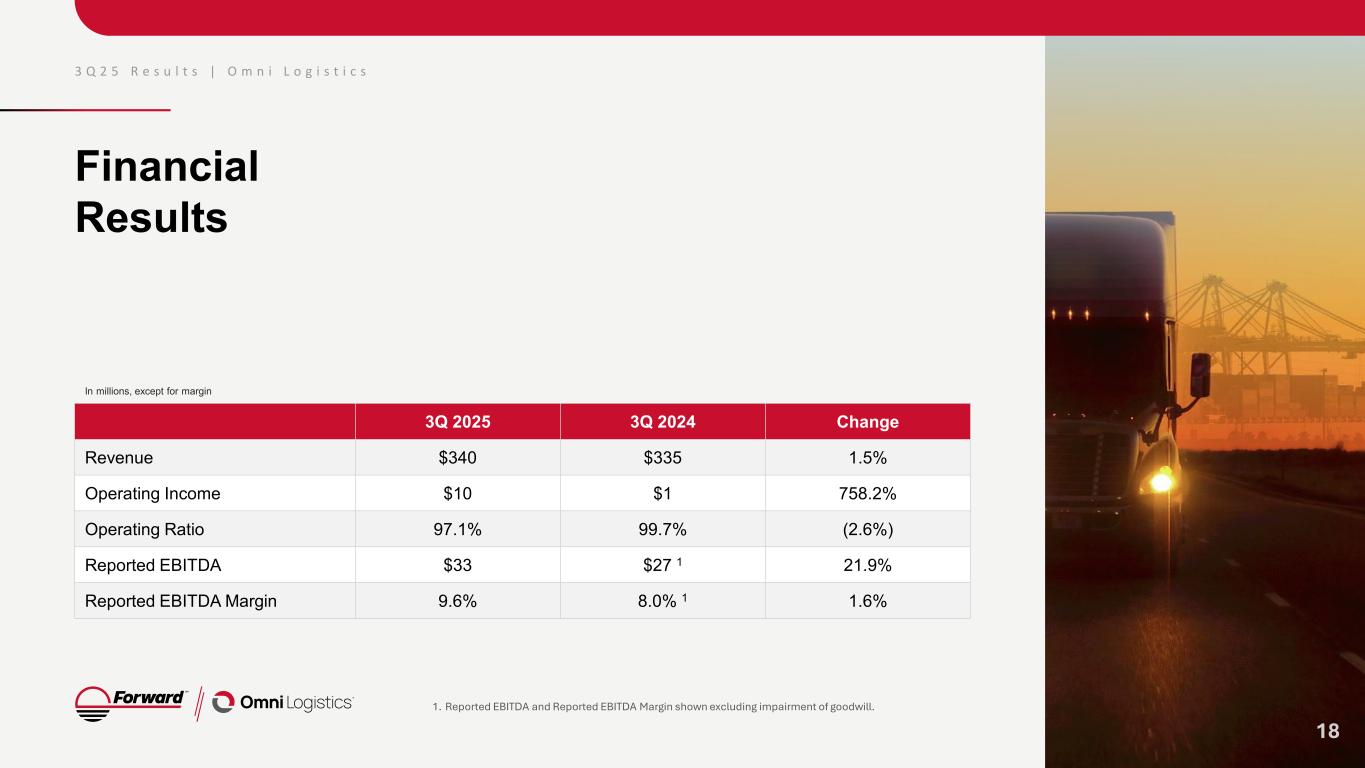
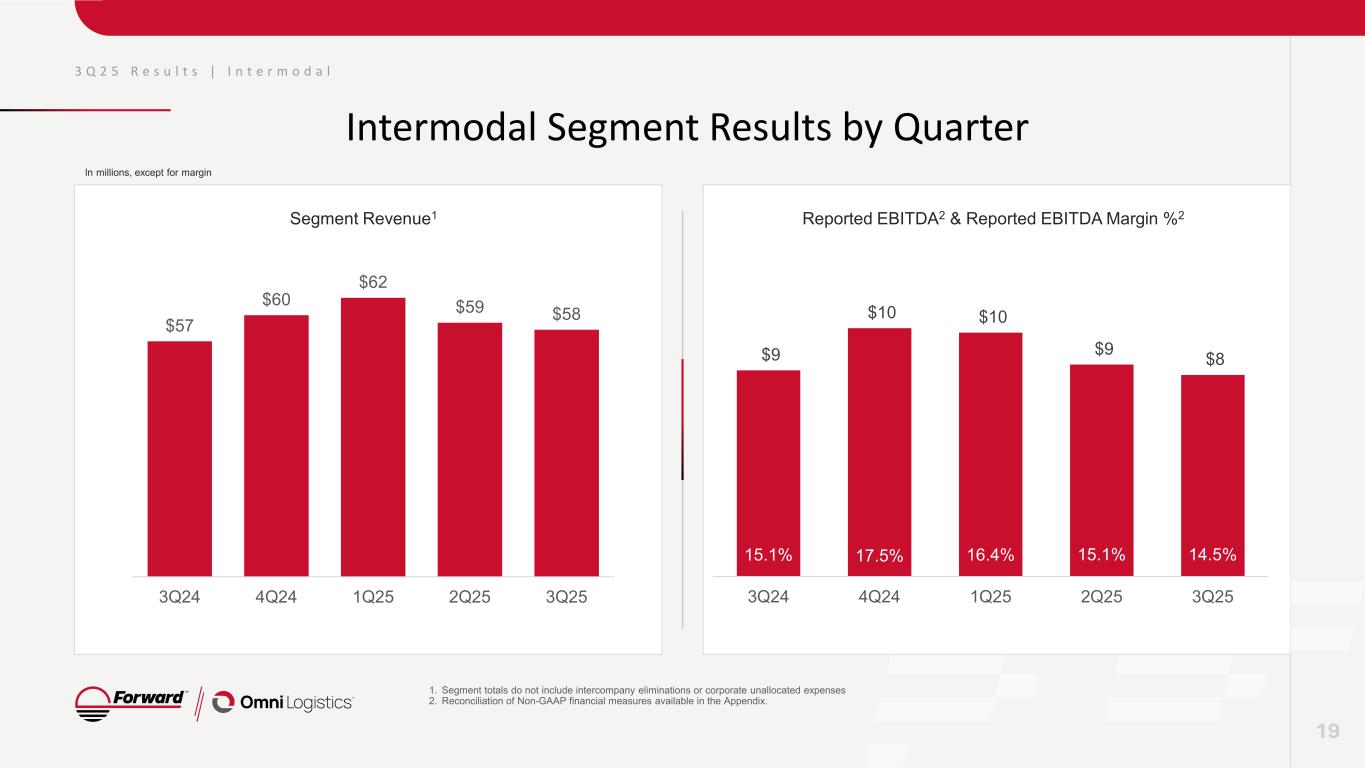
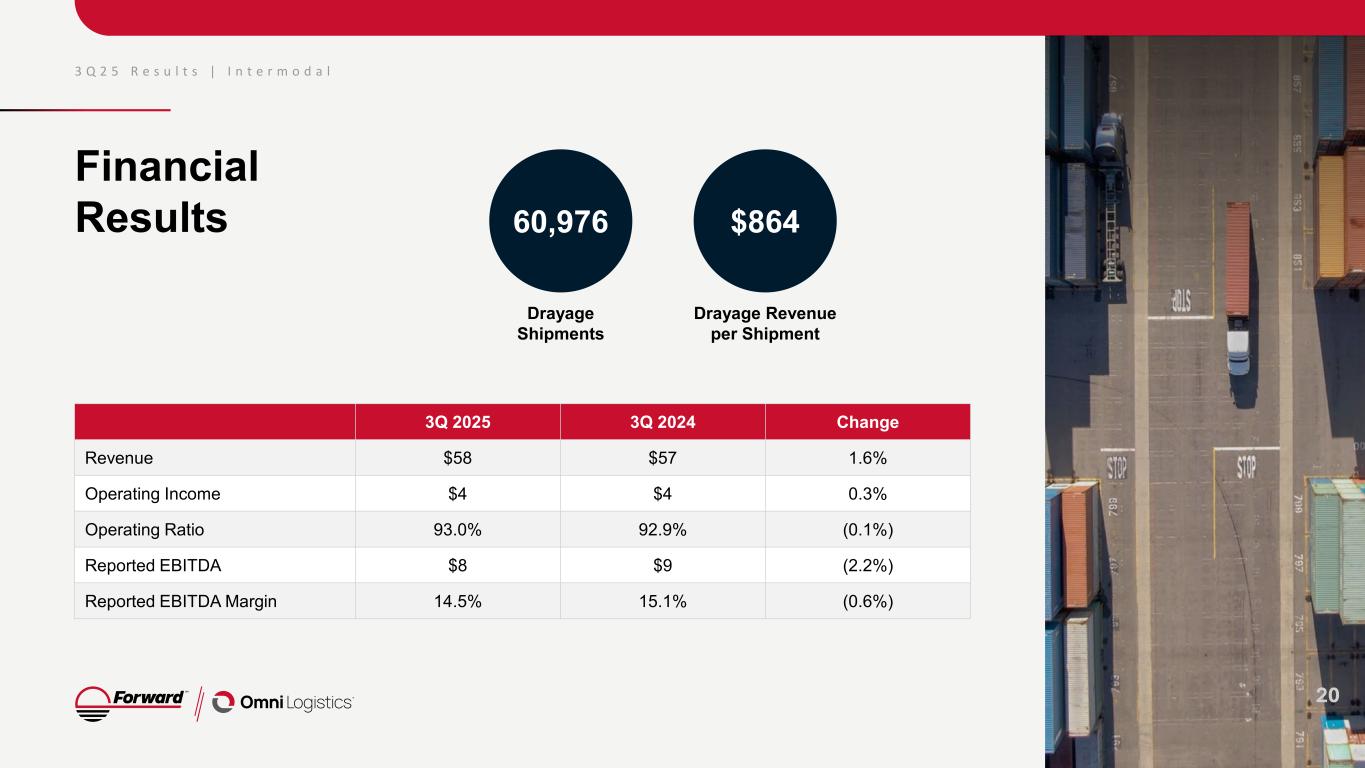
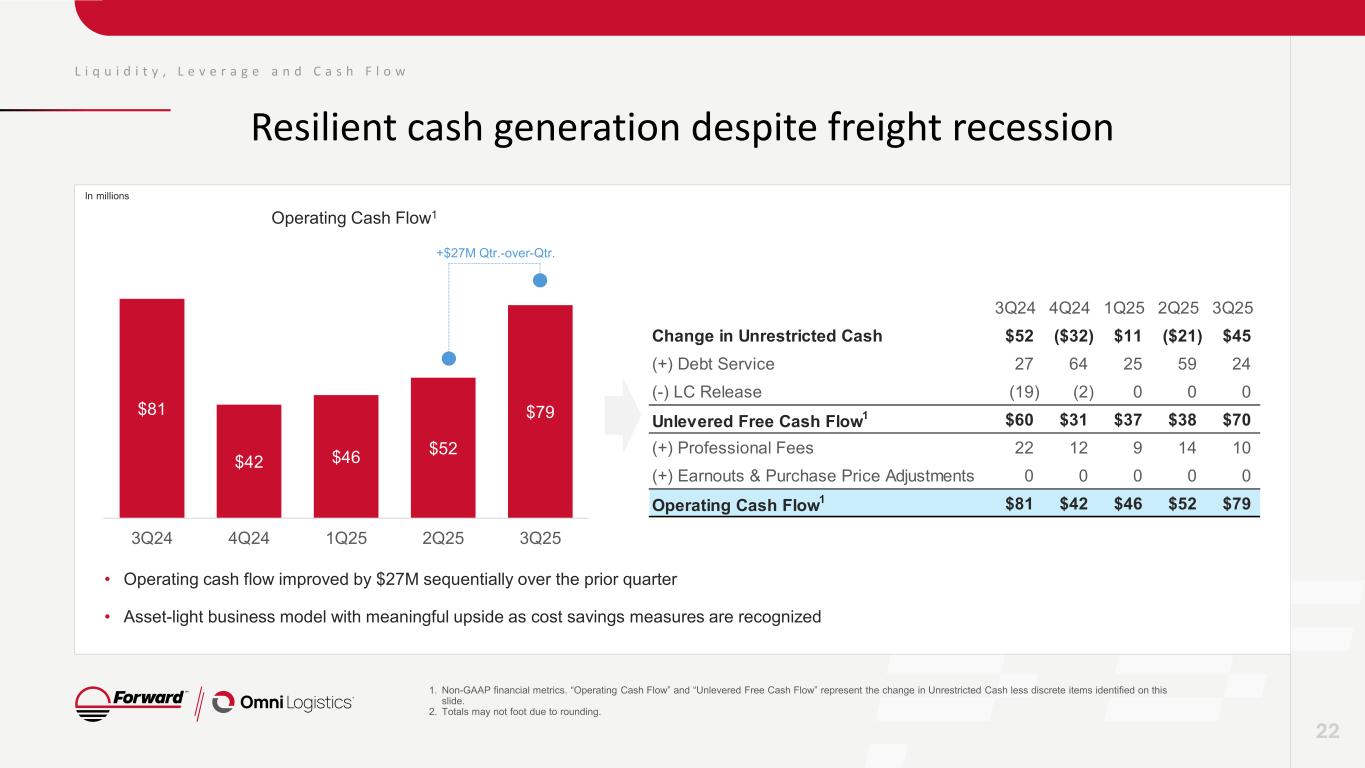
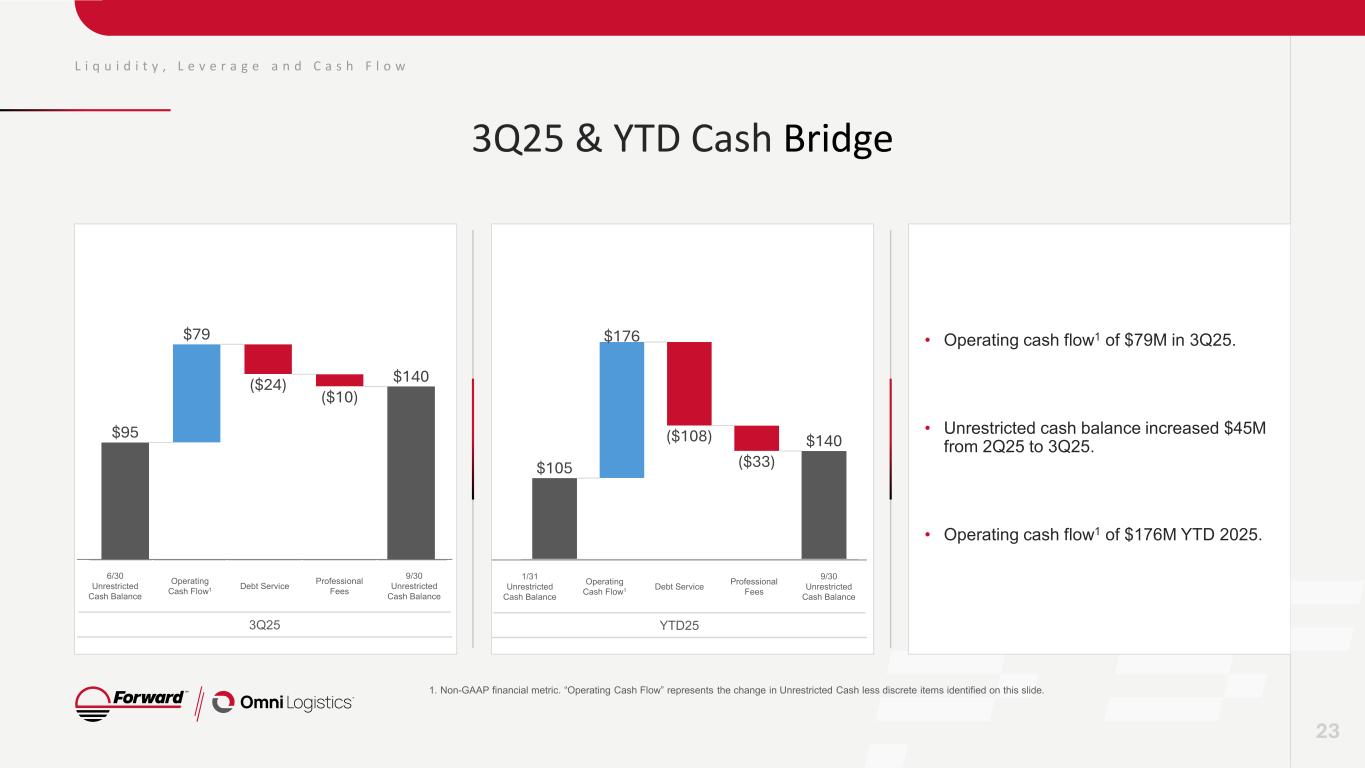
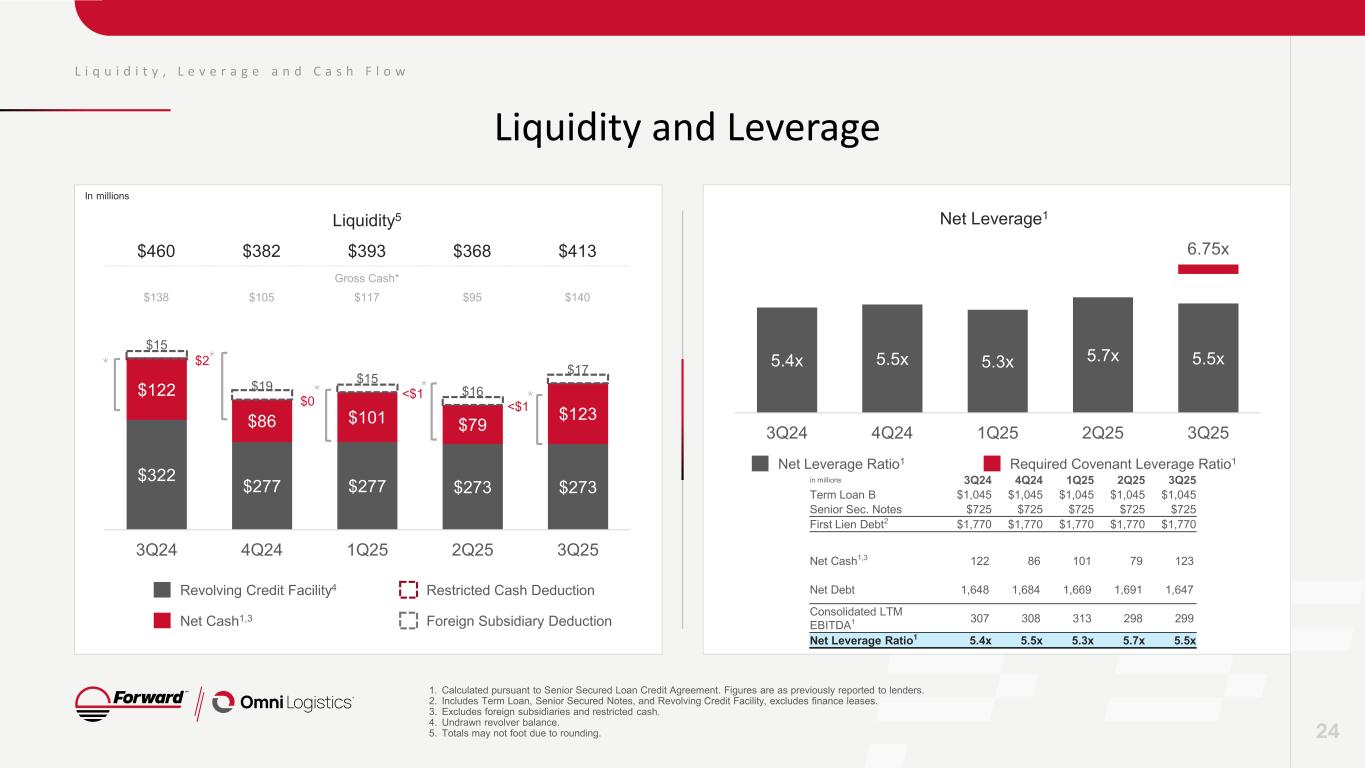
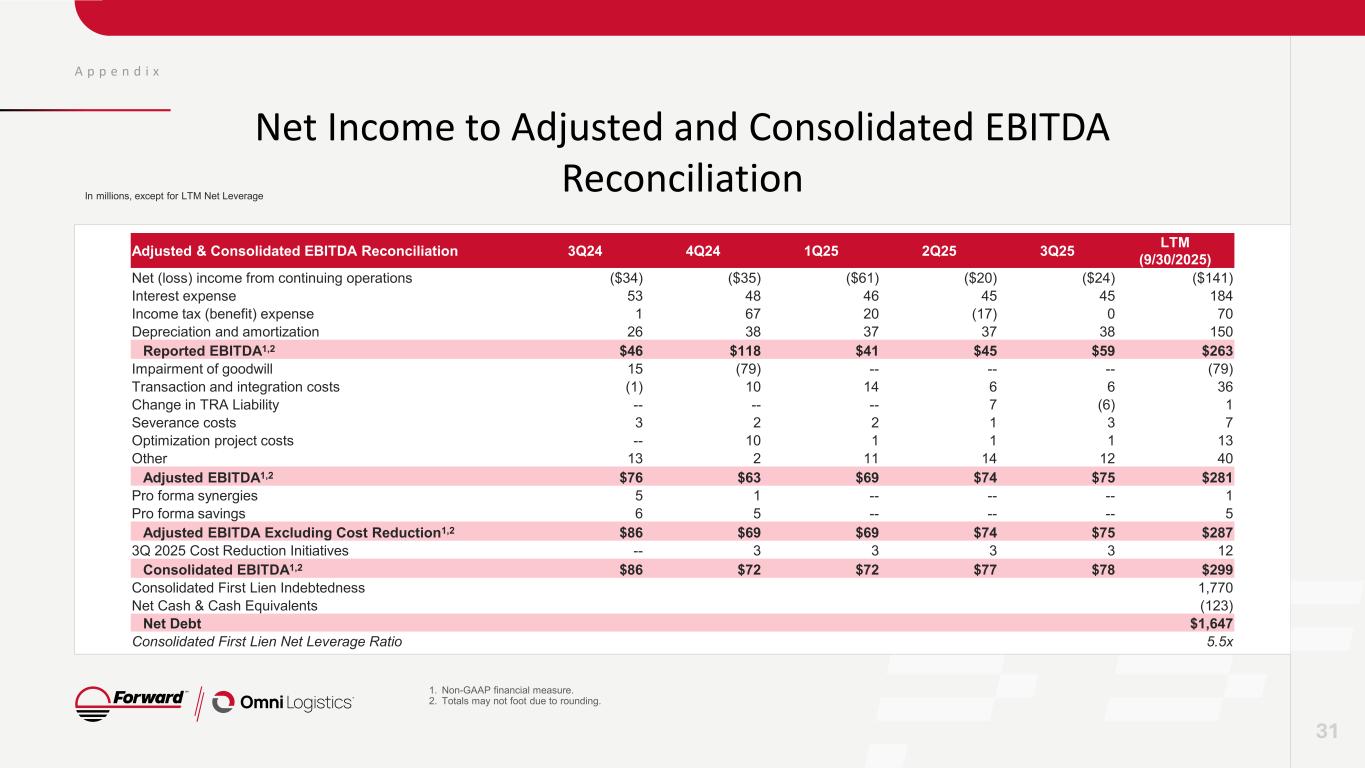
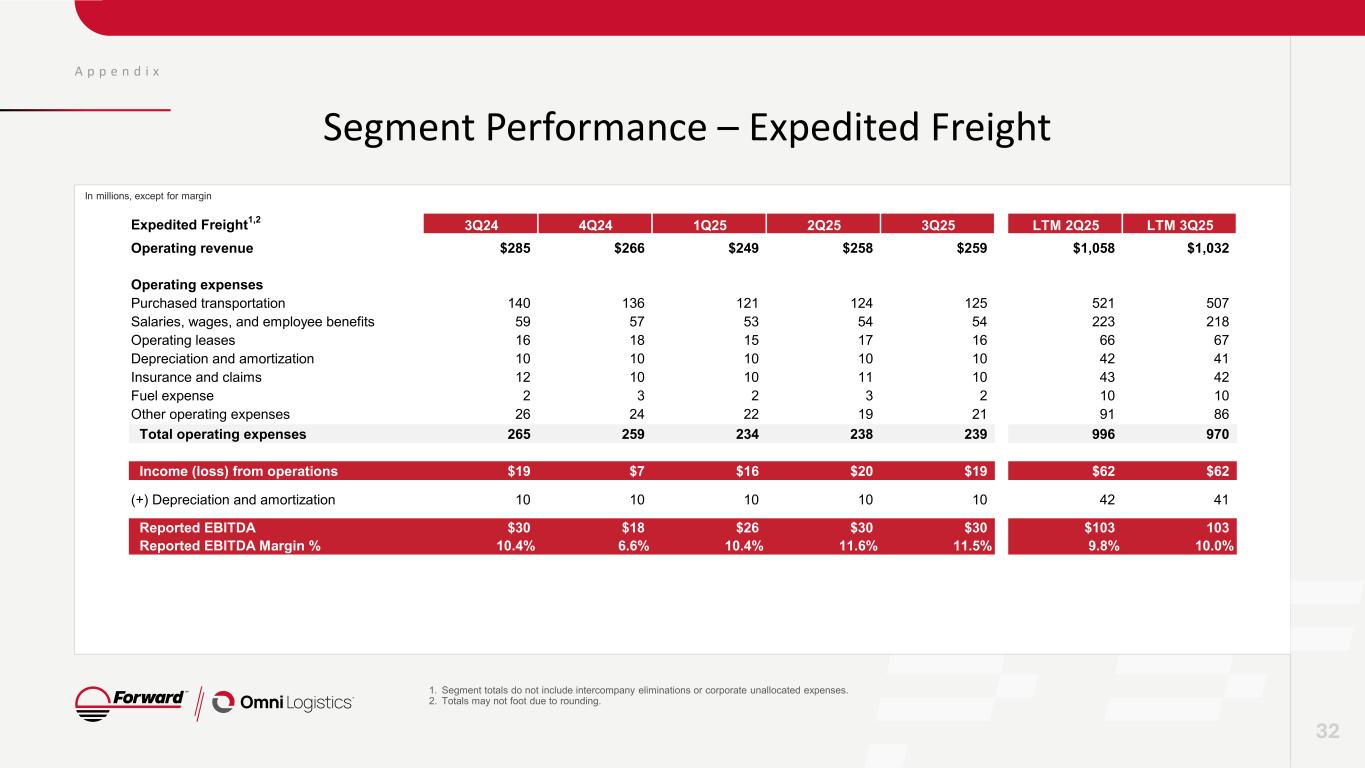
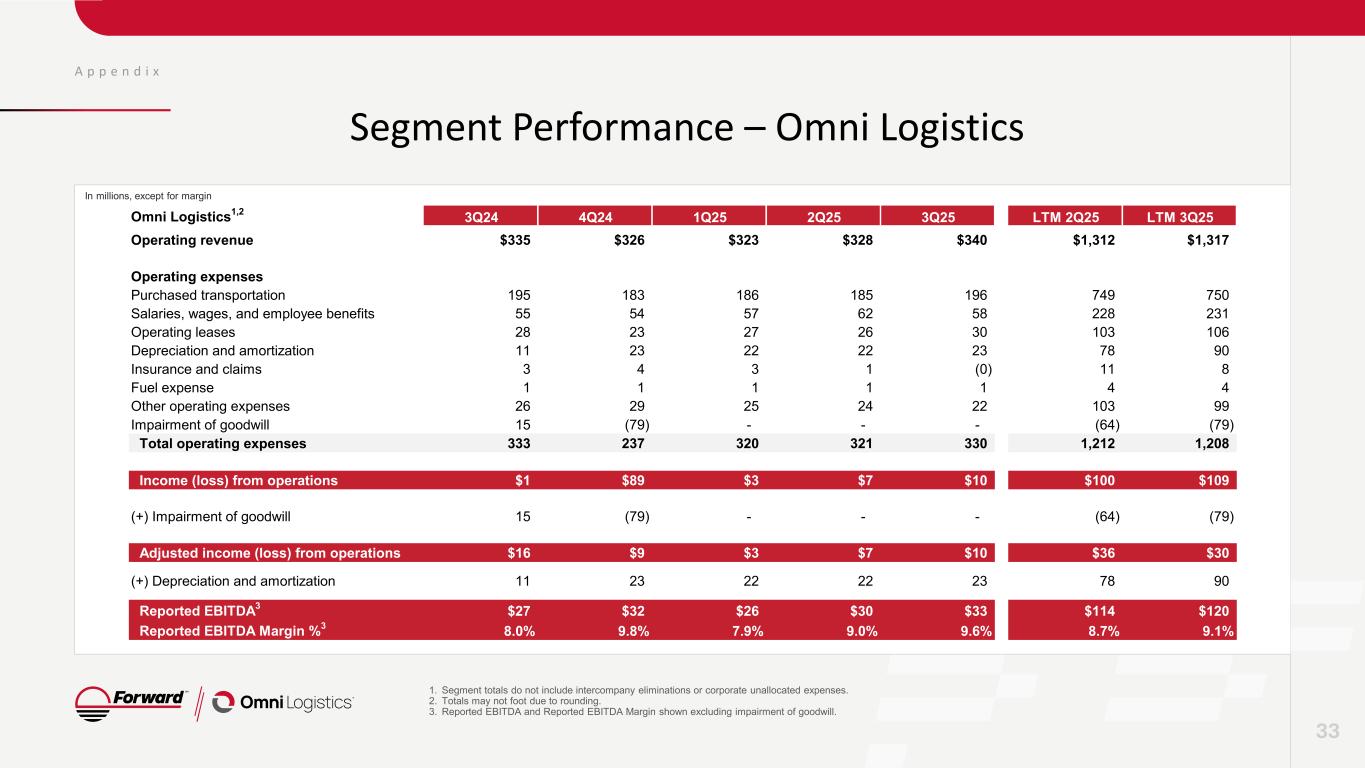
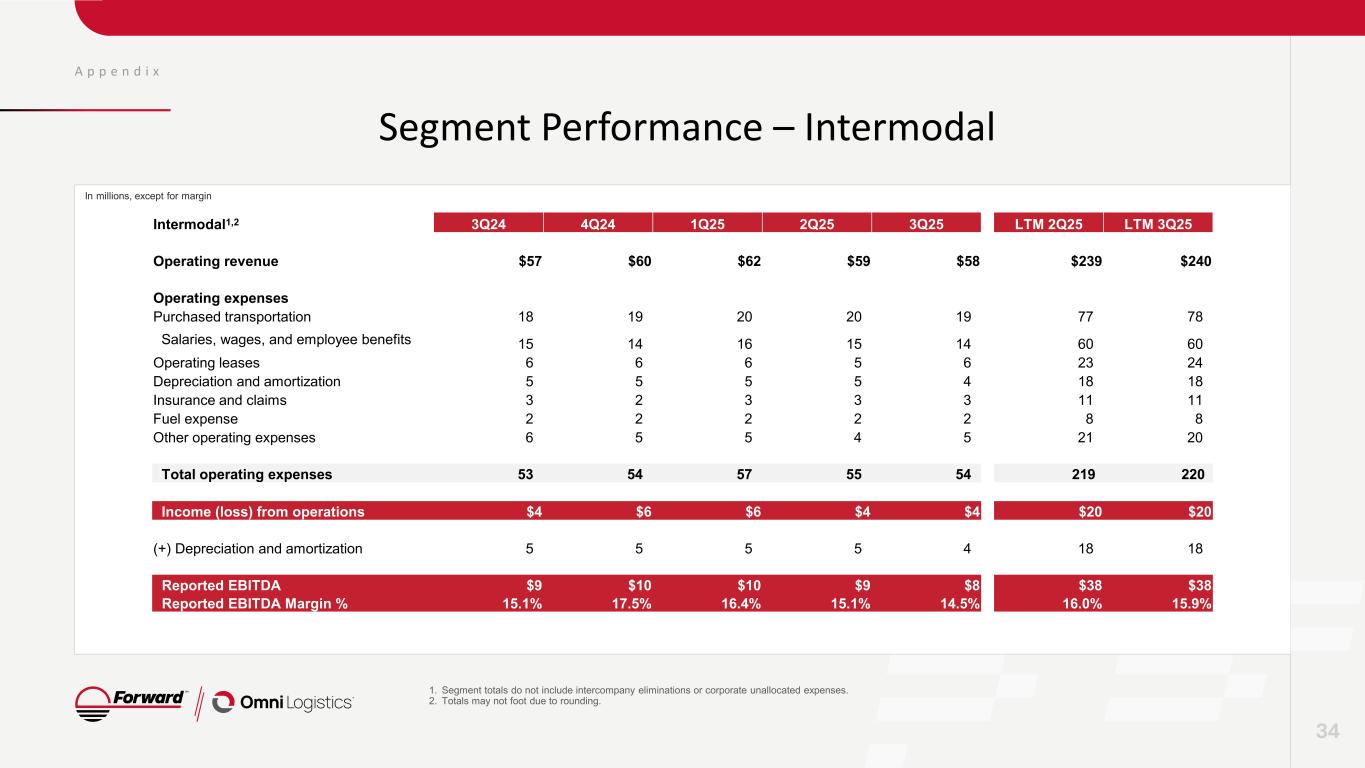
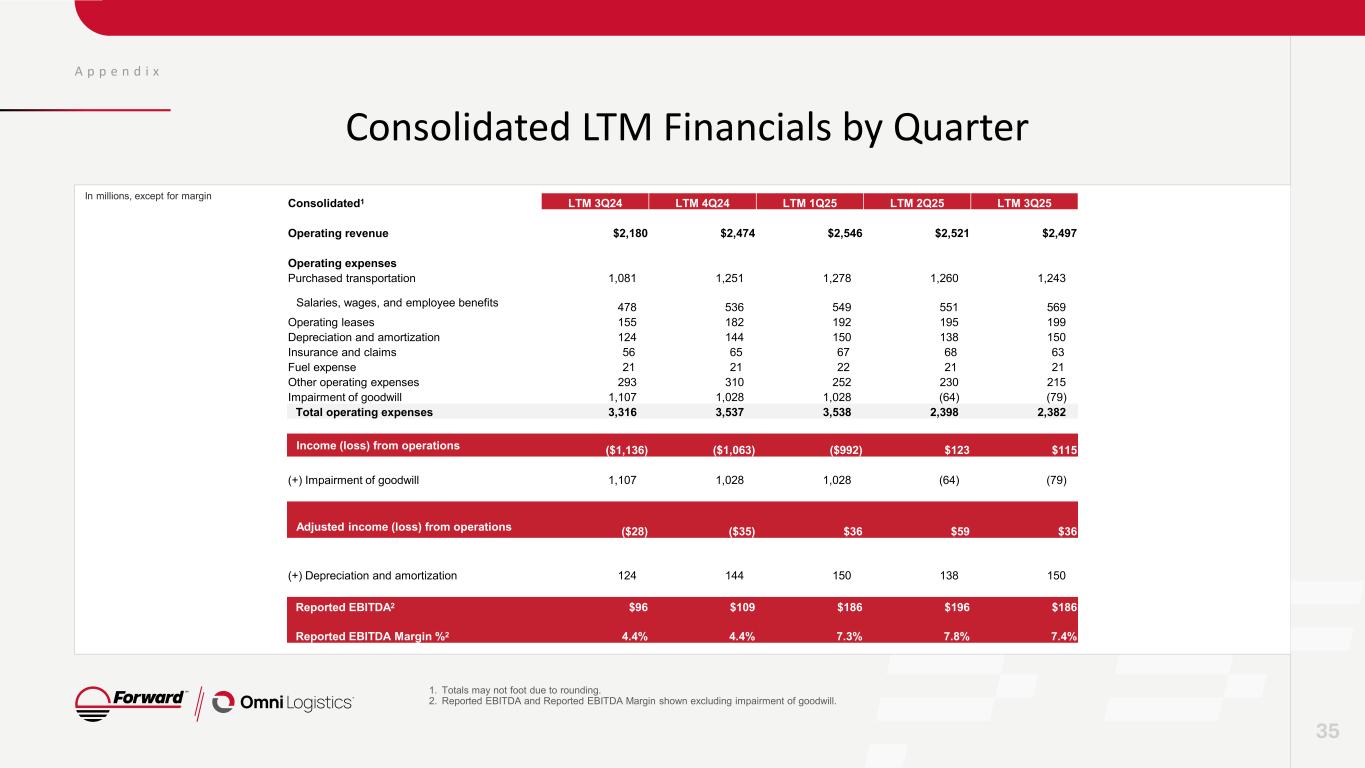
Thanks, Shawn, and good afternoon, everyone. As you heard from Shawn, we reported consolidated EBITDA of $78 million in the quarter. The third quarter and LTM results were favorably impacted by cost reduction initiatives that we enacted equating to approximately $12 million on an annualized basis. The initiatives primarily included rightsizing our business to align with the current freight demand and on our ongoing transformation strategy that Shawn discussed earlier. On an adjusted EBITDA basis, we are cranking out very consistent performance, reporting $75 million in the third quarter of this year compared to $74 million in the second quarter of this year and $76 million in the third quarter of last year. At the Expedited Freight segment, third quarter reported EBITDA was $30 million with a margin of 11.5%. The margin is the second highest since the fourth quarter of 2023 and is in line with the $30 million reported EBITDA and 11.6% margin in the second quarter of this year. In the third quarter a year ago, reported EBITDA was also $30 million with a margin of 10.4%. Despite a challenging freight environment and a decline in tonnage, we have significantly improved pricing programs and actively managed discretionary expenses. Our focus has been on maintaining the right freight mix in our network at optimal prices, which has resulted in an improvement in reported EBITDA, as it has grown from $18 million in the fourth quarter of 2024 to $30 million in both the second and the third quarters of 2025, and the margin has improved from 6.6% to 11.6% and 11.5%, respectively. At the Omni Logistics segment, we're excited with the steady progress that we're seeing. In the third quarter, we achieved the highest revenue and reported EBITDA, excluding the impact of goodwill since the transaction in the first quarter of last year. Sequentially, from the second quarter to the third quarter of this year, revenue increased by $12 million to $340 million and reported EBITDA increased from $30 million to $33 million. The margin also improved sequentially by 60 basis points to 9.6%. On a year-over-year basis, reported EBITDA improved from $27 million in the third quarter last year compared to $33 million this year, which is a 22% increase. The margin also improved by 160 basis points, up from 8%. Relative to the challenges in the broader market and especially port activity, the Intermodal segment and the drayage business we service continue to deliver solid results. This management team persevered and performed well in both good and challenging market environments. In my opinion, they are the best team in the drayage space. In the third quarter, this segment reported EBITDA of $8 million, which was in line with the $9 million in the second quarter of this year and the third quarter a year ago. Rolling up all of the segments and on an LTM basis, consolidated EBITDA was $299 million. As usual, we have detailed the information used to reconcile the adjusted and consolidated EBITDA results on Slide 31 of the presentation. And as a quick heads-up regarding consolidated EBITDA for the prior three quarters, you will see that we have adjusted the previously reported amounts by the actions we took in the third quarter to improve our cost structure. The credit agreement allows for the inclusion of unrealized and pro forma savings from these actions to be included in our historical consolidated EBITDA and requires that they be spread back in time to the period in which the expense would have occurred. As such, we appropriately adjusted the prior quarters to reflect the impacts of the cost savings. If you would, please reference Page 12 in the slide presentation issued today, and you will be able to see what we reported in the past and updated for the most recent cost-out and pro forma actions. Turning to cash flow, cash and liquidity. We reported $53 million in cash provided by operations in the third quarter, which is a $2 million increase compared to the $51 million in cash provided by operations a year ago. For the first three quarters of 2025, we've reported $67 million of cash provided by operations, which is a $113 million improvement compared to the same period a year ago. As for liquidity, we ended the third quarter with $413 million in total liquidity, comprised of $140 million in cash and $273 million in availability under the revolver. This is a $45 million increase compared to the $368 million at the end of the second quarter. And as usual, I'd like to leave you with a few additional thoughts for the quarter. The first of which is, as you heard from Shawn in his opening remarks, we are making progress upgrading our tech stack as a part of the broader transformation. This includes the One ERP initiative to move from multiple ERP systems to one. This project will unite all company financial systems on a single streamlined platform. With all financial data in one place, standardized reporting and uniform processes, we expect our team will be more efficient and more effective. The project will have a phased rollout with completion expected by the end of next year. Point two, in a tough market, we continue our focus on controlling expenses and adjusting to demand by rightsizing our cost structure commensurate with the support needed to continue serving our customers at the highest level, and the level they are accustomed to receiving from us. It is important to note that the focus on our cost structure did not impact our service levels and still led to another solid quarter and sequential improvement in consolidated EBITDA. The final point is prioritization and focus on cash generation. As you heard earlier, cash provided by operations significantly improved by more than $100 million in the first nine months of this year compared to a year ago. On Slide 23 of the earnings presentation, you will see that on a non-GAAP basis, we generated $79 million in operating cash flow in the third quarter and $176 million year-to-date through the third quarter. I will now pass the mic back to Shawn for his closing comments before Q&A.
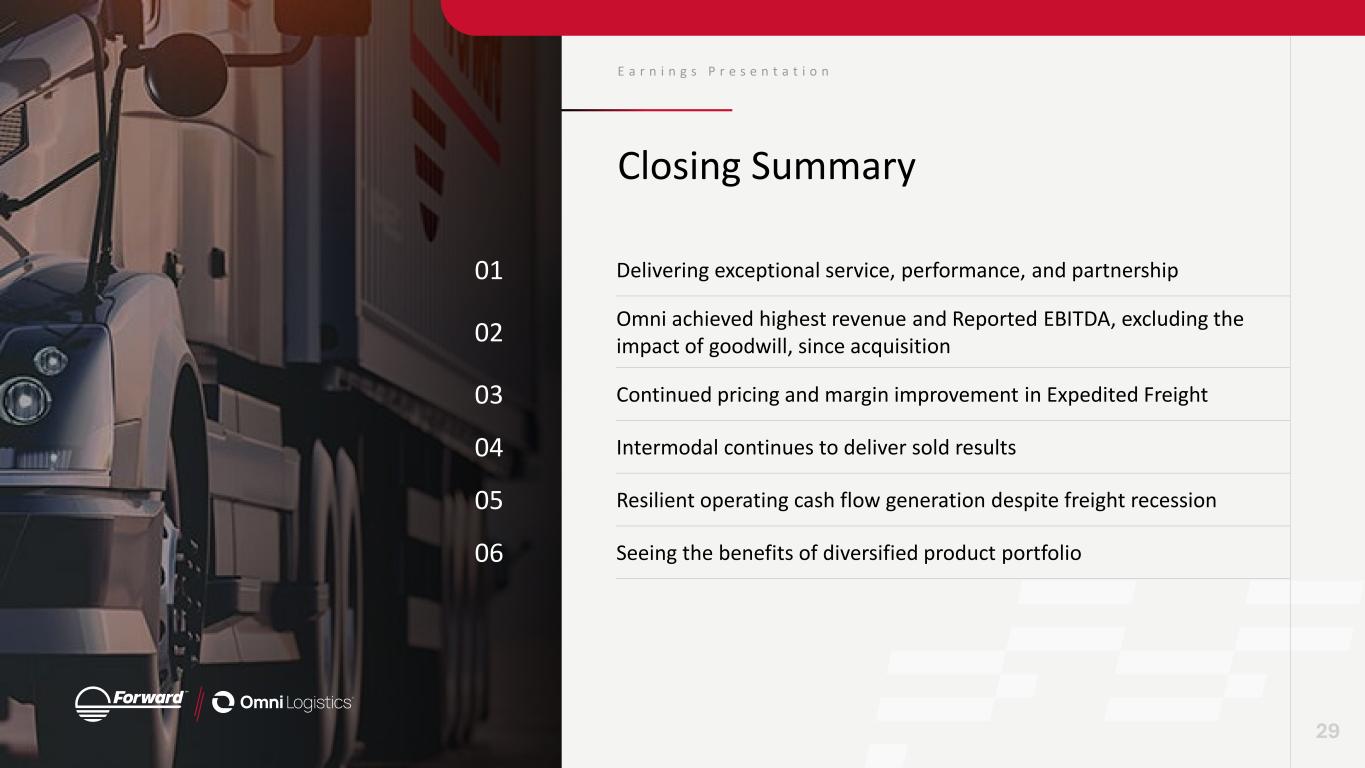
Thank you, Jamie. In closing, I want to express my deep pride in our team for their unwavering dedication and consistent focus on the customer. Their ability to execute operationally with precision while maintaining rigorous control over cost has been truly exceptional. This disciplined approach not only strengthens our day-to-day performance but also positions us well for the challenges and opportunities ahead. Despite the uncertainty in today's macroeconomic environment, I remain confident in the strength of our team. We have built a solid foundation that is well equipped to drive sustainable long-term growth. Our team's commitment to excellence ensures that we continue to deliver meaningful and measurable value to our customers and are positioned very well for when the freight stabilizes. As we go into Q&A, I would like to focus our comments on the state of the industry, the business, and not on the strategic alternatives review process. As you know, we cannot further comment. Thanks in advance for your understanding. I will now turn the call over to the operator to take questions.
Operator
Our first question comes from Bruce Chan with Stifel.
Speaker 4
I would like to begin by discussing Omni. This business has made significant progress, and it seems there is now some stability with EBITDA margins. However, the segment has faced many changes, particularly in this volatile environment. As you consider the long-term outlook for this business, could you remind us of your long-term margin targets? What earnings potential do you foresee for this segment? Additionally, how does this factor into seasonality as we approach Q4 and into 2026?
Bruce, it's Shawn. So yes, I would say we've done a really good job of turning this business around, really driving the synergy selling where we had segments of customers' revenue in one of our many diversified offerings and spreading that more into the other offerings. And that's really where the growth is coming from. I would say it's rather hard to say right now what that optimal margin is because it's suppressed right now just because of the overall market. But Jamie, do you want to comment at all on margins or?
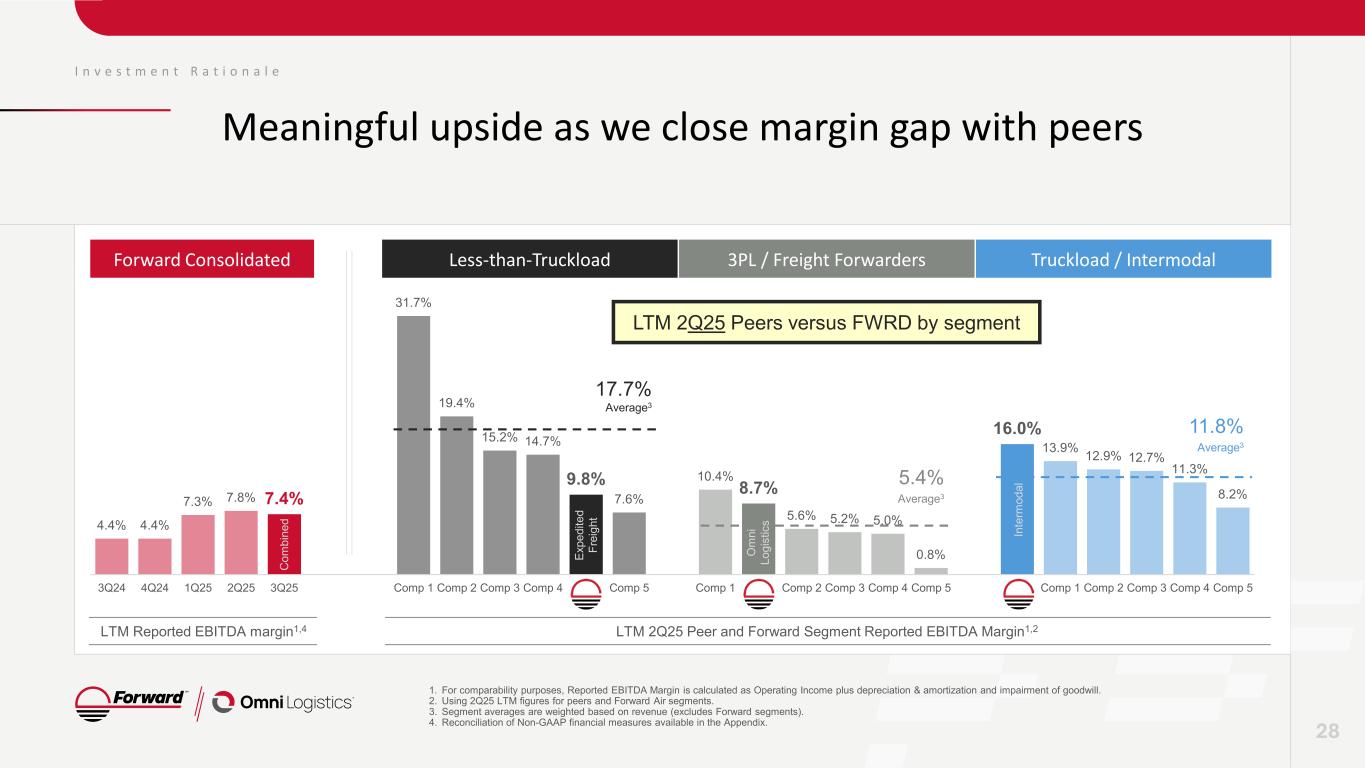
Yes, Bruce, if you look at Page 28 in the slide deck, it's one of my favorite pages because it offers various interpretations. I'll explain from left to right and then address your question about Omni specifically. In the Intermodal sector, the drayage business is performing at the highest level compared to publicly traded peers. Although there's no direct comparison, they remain a market leader in terms of margin within the Intermodal space. Regarding Omni, we have a comparison of five companies you've already analyzed, and we are at the upper end of the margin in our collection of assets. The greatest opportunity lies in the LTL or expedited segment of the business. It's important to note that when you purchase a share of Forward Air, you are buying a portfolio of logistics assets, with Omni being one of them, and it is performing exceptionally well, particularly in contract logistics. I believe, and many others might agree, that we have surpassed expectations in how this segment has performed post-acquisition. So, in summary, we're already operating at the upper end of margins.
Speaker 4
No, that's really good color. So I guess if I could just follow up on that. It sounds like we're at the point now where we can start to think about maybe some more seasonality in this business and other businesses. And if I could expand on that a little bit, any kind of commentary on how you're thinking about fourth quarter? I know you all tend to have a little bit more retail exposure, for example, than some of your peers.
Yes. So are you talking about Omni specifically or the portfolio?
Speaker 4
Yes. First part, Omni and then if you want to broaden that up to the rest of the portfolio.
Yes. If you examine Omni, it won't be as seasonal as one might expect primarily due to the warehouse segment of the business, which is quite stable and lacks a significant seasonal trend compared to the air and ocean segments. I'm looking forward to when we can separate these segments into their different services in the near future, likely within the next couple of quarters. However, I should mention that from an Omni perspective, we anticipate a more subdued performance than expected because of the absence of seasonality. Regarding Intermodal, the forecast for port volumes over the next three months suggests a continuation of a lackluster situation, not an encouraging outlook. Nevertheless, the team consistently generates $8 million to $10 million in EBITDA each quarter, regardless of the operating environment. Lastly, on the LTL side, we are observing patterns similar to what our competitors have reported. There hasn't been a notable seasonal decline, and with November being an 18-day month, we shouldn't expect an increase either. Overall, we are seeing a continuation of the trends we have experienced in the past few quarters.
Operator
Our next question comes from the line of Stephanie Moore with Jefferies.
Speaker 5
I wanted to follow up on the LTL side. Look, I think in previous calls and in our conversations, you've talked a lot about really fine-tuning the organization on the LTL front and really just getting, I guess, adjusting operating costs to revenue, and it clearly remains a really weak environment. So maybe you could give us a little bit of an update on the progress on kind of realigning costs, and maybe kind of bifurcate what's just been a function of this is a weak environment and what is something that we think is sustainable that really speaks to the actions that you've made over the last year?
Stephanie, it's Shawn. I'll address the first part of your question and then let Jamie chime in. One important point to emphasize, particularly to our peer group regarding comparable performance, is that we do not operate as a fixed cost network; we are a variable cost network. Most of our fleet consists of owner-operators. The team skillfully adjusts their transportation costs based on volume. When volume decreases, we typically shift drivers from the LTL segment to the Truckload segment, which is currently thriving. We are not dismissing any drivers but reallocating them from LTL to TL, which allows us to reduce transportation costs. Additionally, we've made significant improvements in our operating team's productivity and have been using two different optimization tools to analyze our miles and service. The goal is to achieve efficiency by running fewer miles without compromising service quality. Tim and his team have now selected one optimization tool to utilize going forward, and they have done an excellent job with this transition. This approach of moving drivers from LTL to TL, while also minimizing miles, is a strategy we should maintain even in peak seasons, as well as in low seasons. I hope this provides some clarity, and I'm here to answer any questions you may have.
Steph, let me add on it real quick with a little bit more specificity. If you think about it on a year-over-year basis, in terms of improved operating performance, we took out a little more than 300 FTEs on a year-over-year basis. And over that same period of time, we actually improved safety, arguably improved quality, held claims flat at one of the best rates in the entire industry, and we have fewer labor hours per shipment. So operationally, pretty good. And then to build on Shawn's point about it being more of a variable versus a fixed solution, certainly helps us flex down in times such as this. But if you look at Page 13 of the earnings presentation, on a reported basis, even though we've got slightly lower revenue, we're still cranking out $30 million in reported EBITDA and a mid-11% EBITDA margin.
Speaker 5
Yes, absolutely. I think that's clear. As a follow-up, I understand you can't discuss specific details about the process, but can you provide any update on when that information might be available?
I would say, Steph, if I had that, I would. So look, it's a very detailed process that the Board is running. And as soon as we can, we will update you.
Operator
Our next question comes from Scott Group with Wolfe Research.
Speaker 6
I want to confirm my understanding of your comments regarding the duration of this process. Are you indicating that there is new interest, which is contributing to a slowdown in the process, rather than a decrease in interest? Is that the point you were making?
So Scott, this is Shawn. No, I think I was pretty clear in the points I was trying to make. There was a good interest, obviously, in our organization and whereas different periods of times where interested parties came in. I'm not blaming wholeheartedly that that's what's elongated it. But between interested parties and other parties coming in at different times is where we are today.
Speaker 6
You mentioned earlier that Truckload is thriving, but I haven't heard that perspective from anyone else. Additionally, Jamie noted that LTL is stable and not declining, while many others have indicated that LTL is indeed experiencing a drop. Those are two intriguing observations that I haven't encountered elsewhere. Could you provide more insight on those points?
Well, to be clear, our Truckload is booming. There's a lot of high-tech moving. And that high-tech requires asset-only companies, of which we are and a lot of security, and that is something that we're really great at. And so our Truckload is booming.
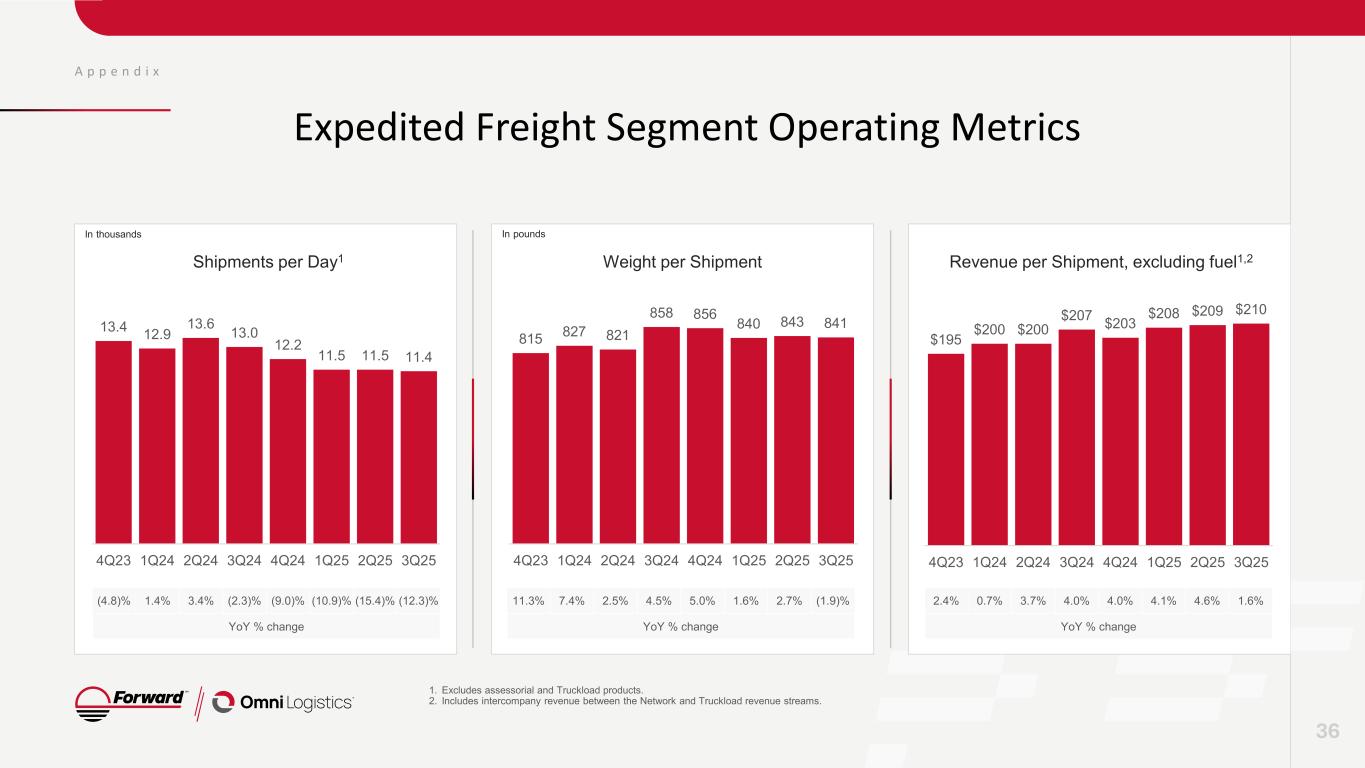
Yes. I would describe that as the cycle of livestock for us. When I say LTL is stable, the volume is decreasing, but we're seeing a shift from LTL to TL. We're compensating for some of the lost volume in LTL with gains in TL, which supports Shawn's statement. Regarding the stability of LTL, I want to clarify that I’m not suggesting our overall volume is stable—it is not. However, we are implementing two key strategies to maintain stable earnings: increasing pricing and intensifying our focus on operating more efficiently. The stability I referred to is more about the $30 million of reported EBITDA from the last quarter, this quarter, and the same quarter last year.
Operator
And then maybe just lastly, Jamie, just give us an update on how you're thinking about cash flow going forward into Q4? I know seasonally, there's the interest ramp in the debt payments. And then just remind us the calendar of when the credit, the covenants start to get a little tougher.
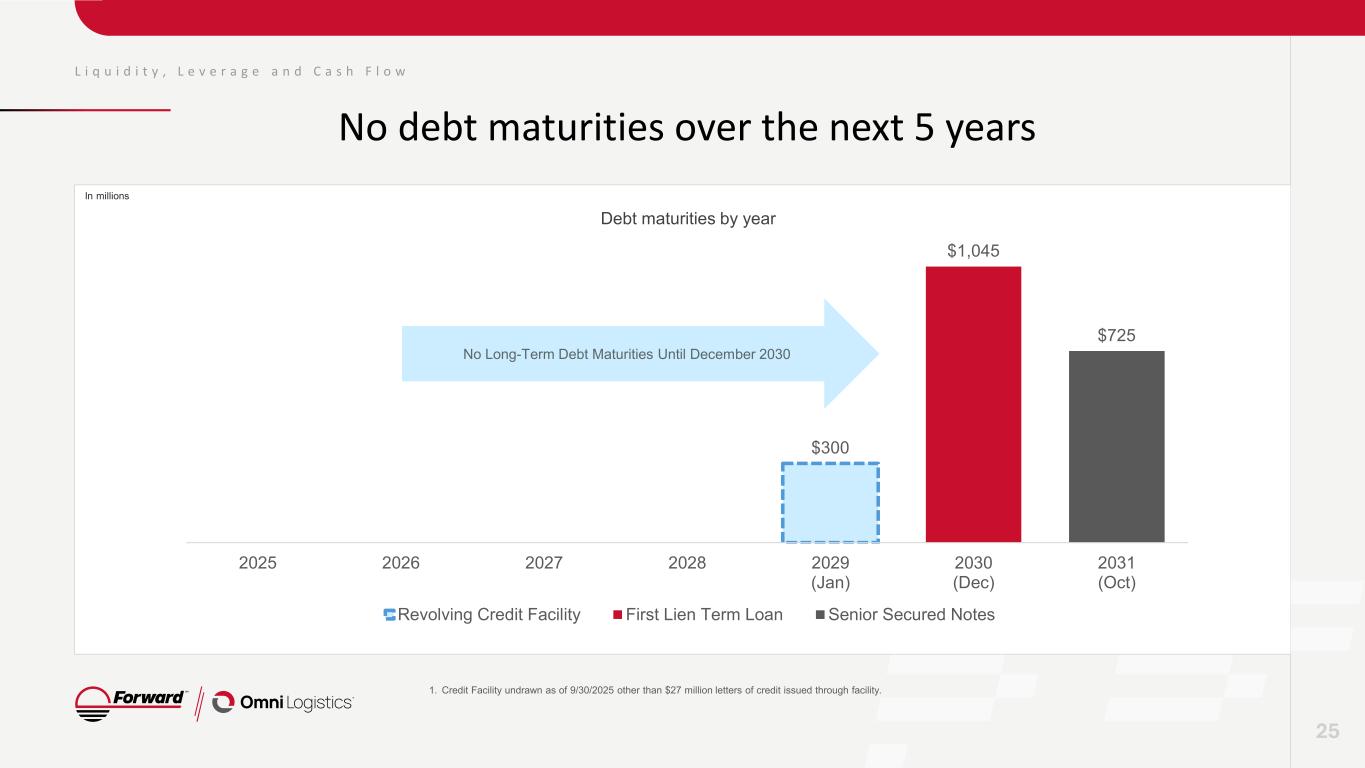
Yes. Scott, you're all over it. So the semiannual senior secured note payments gets made in April and October. So the quarter that is in between is when we make all the money and then we generally lose a little bit in the quarter that we make that payment. We're just going to make more in the quarter that we don't. And it's exactly what we did this quarter. I'd say we did very well in terms of not only managing the operations but also managing the balance sheet, which then increased cash by $45 million in this quarter as a stand-alone period. And then in terms of the covenant step down, we're at 6.75x this quarter. Next quarter, it starts to tighten by 0.25x and it does so every single quarter into the fourth quarter of 2026. At what point it levels out at 5.5x and it stays there through maturity.
Operator
Our next question comes from Christopher Kuhn with Benchmark.
Speaker 7
I think in the past, you guys talked about the benefit of the combined company and giving us some examples. I mean, I'm just wondering if you have an update on that.
Run that past me one more time, Chris, sorry.
Speaker 7
Yes. I think in the past, you've talked about winning business as a combined company with Omni and the LTL business and some of the other businesses within Omni. So I don't know if, obviously, you still feel that way, but if you have any sort of thoughts on that?
Yes, we are successful in winning business on the Omni side regardless of the circumstances. We aim to integrate that business into the legacy Forward Air LTL, but if we find a better solution outside of our network, we will still pursue it on the Omni side. However, for most of our ground or domestic sales, we prioritize finding a way to integrate them into our network initially. The collaboration between our two organizations really drives growth. Simultaneously, we effectively manage our legacy indirect market through our reliable freight forwarders and 3PLs, which allows them to grow with minimal conflict between our organizations. While some conflict exists, we work through it with our partners. Overall, it's functioning well, and I'm pleased with our progress as a combined company, especially considering initial expectations of a potential disaster when I joined. I'm optimistic about our current position.
Speaker 7
And then I think you talked about the LTL to TL conversion. I mean, obviously, any updates on that? Is that still going on? I guess, what do we need this TL sort of spot prices to start going back up to get that reversed?
Yes, we need the spot rate to increase. The team adjusts our assets between LTL and TL based on the volume in LTL and the demand on the TL side. This adjustment happens frequently, either daily or weekly. Currently, with the spot market rates being low, LTL volumes are being utilized within Truckload capacity. Organizations are opting to shift their freight to Truckload at a lower per pound rate compared to traditional LTL. However, as those rates increase, we expect to see a gradual return of volume from TL back to LTL. This shift represents a significant portion of the volume that is not currently in LTL.
Yes, I would actually say it's not an event.
Yes, it's not a one-time event. It's over time.
Yes. So if you look at the Cass, and the Cass Index being like $1.25 a mile, it would probably have to creep back up over to the $1.50 a mile before you see something meaningful, but it's going to happen along the way. Anything above $1.50 to $1.60 per mile on the Cass, I would say is getting back to what I would term as a more normalized balanced LTL to TL market.
Operator
Our next question comes from Bascome Majors with Susquehanna.
Speaker 8
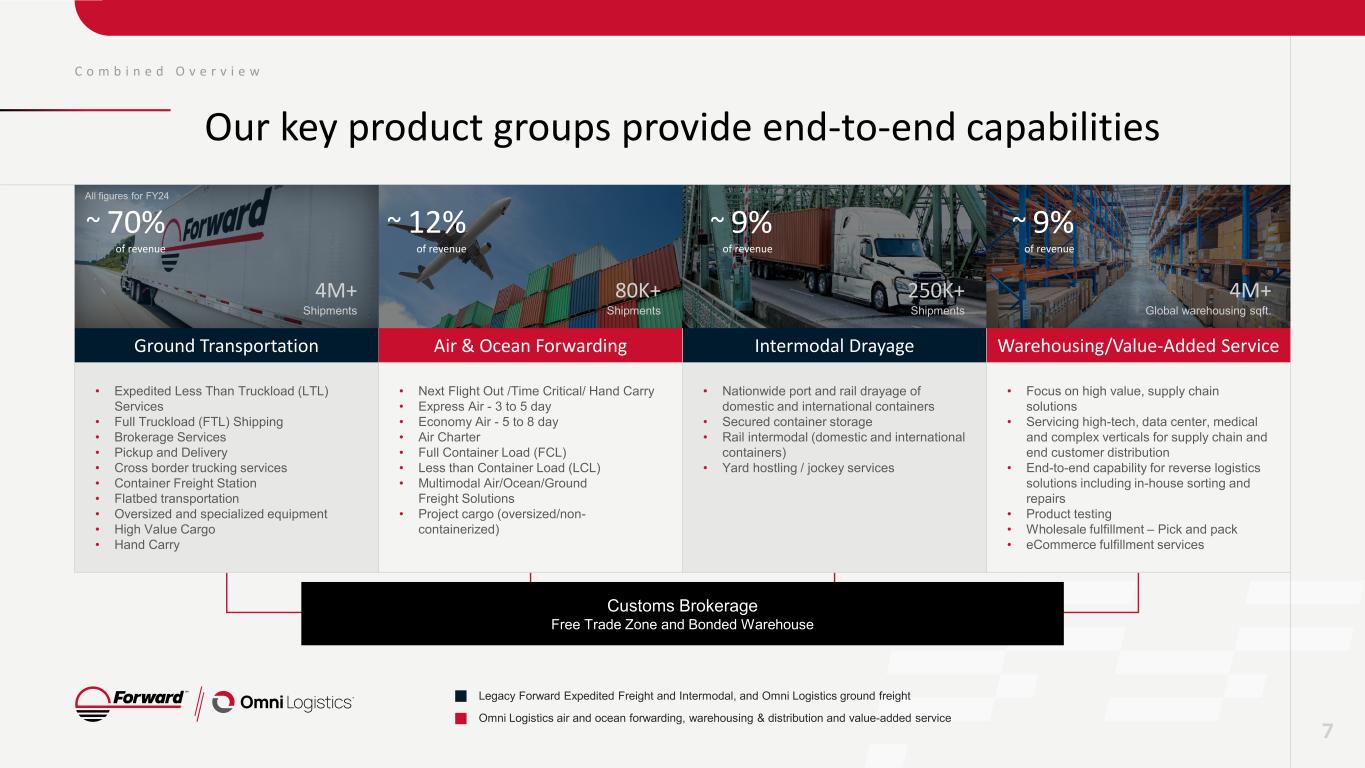
I wanted to go to the mix detail that you kind of broke out for us a bit more functionally earlier this year on Slide 7. I mean that's 2024. I know we can do some of this with your reported revenues, but we don't have a lot of breakdown on Omni. If we looked at that 70%, 12%, 9%, 9% split you laid out for '24, how would that look different today for kind of where we're exiting '25 as we think about the business and sort of cyclical views into '26?
We don't have a specific change to report at this time. We chose to highlight this point as an indication of how we plan to report the business beginning in 2026. While it represents a significant improvement, the adjustments we make are part of our ongoing process. The overall situation hasn't changed dramatically since last year, but it is continuously evolving. However, given the scale of our operations, it would require a major shift to see substantial changes in these figures.
Speaker 8
Maybe if I ask it just directionally another way. Within Omni, has the air and ocean side of the business from a profit perspective, outgrown or undergrown the warehousing and value-added piece?
Yes. We don't break out that level of detail. At least today, we don't. You'll see it next year in the level of detail that you want. Right now, we consider all three of those still in a single segment. I know you're asking, Bascome, but I'm not going to answer.
Speaker 8
No, understood. Well, and as we look into next year and kind of think about the business, just directionally from your opportunity to improve the bottom line further versus either cyclical or other risks you want to flag, like what are the one or two biggest upside potential drivers that you see for EBITDA in the next year and the one or two biggest risk across the entire portfolio?
The main opportunity right now lies in the operating leverage within the Expedited segment, whether that comes from increased volume or higher prices. While I would prefer both, the current network is structured so that any extra shipment has a significant positive effect on our profits. Therefore, I see increased density in the Expedited sector as key. On the downside, I don't want to suggest we've only recently been in this challenging environment, but we have indeed faced it for the last three years. The ISM index has been below 50 for 34 of the last 36 months, tonnage in this area has declined for 21 out of 22 months, and Cass has reported negatives for the past 33 months. This truly reflects a three-year period, however you look at it. From my viewpoint, we may have reached the bottom. Of course, it could always worsen. Thus, the primary risk would be further macroeconomic deterioration, and whether that occurs is something you may understand better than I do.
Operator
It appears there are no further questions at this time. Let me turn it over to Mr. Stewart for any final remarks.
All right. Thank you, Angela. Listen, we really appreciate your interest and support. We remain extremely confident in our strategy and look forward to updating you at the next quarterly earnings call. So if you have any questions, please follow up directly with Tony, and we look forward to talking to you soon. Take care.
Operator
This concludes today's Forward Air Third Quarter 2025 Earnings Conference Call. Please disconnect your line at this time, and have a wonderful day.