Operator
Welcome to Forward Air's first quarter 2026 Earnings Conference call. At this time, all participants have been placed on a listen-only mode, and the floor will be open for your questions following the presentation. If you would like to ask a question at that time, please press star 1 on your telephone keypad. If at any point your question has been answered, you may remove yourself from the queue by pressing star 2. So others can hear your questions clearly, we ask that you pick up your handset for best sound quality. Lastly, if you should require operator assistance, please press star zero. I would now like to turn the call over to Tony Carino, Senior Vice President of Treasury and Investor Relations.
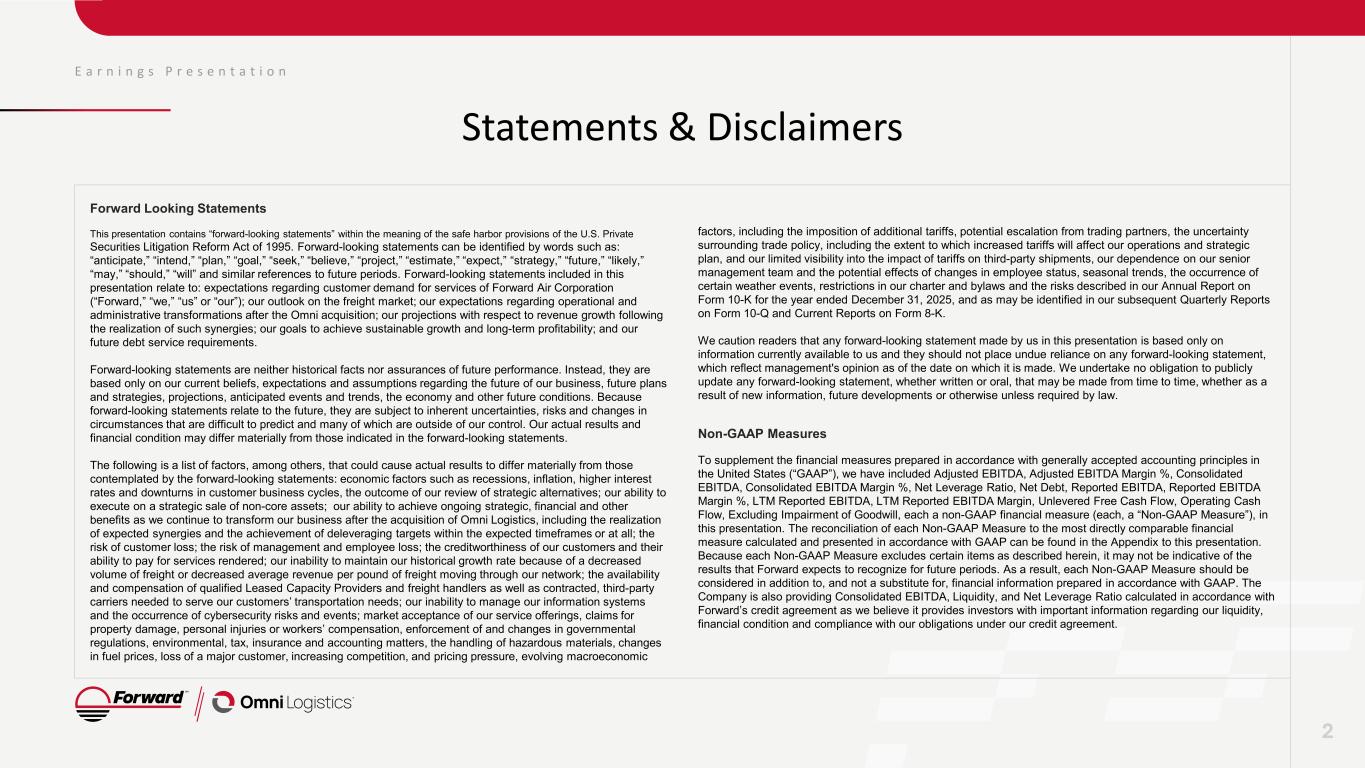
Thank you, operator, and good afternoon, everyone. Welcome to Forward Air's first quarter earnings conference call. With us this afternoon are Sean Stewart, President and Chief Executive Officer, and Jamie Pearson, Chief Financial Officer. By now, you should have received a press release announcing Forward Aire's first quarter 2026 results, which was also furnished to the SEC on Form 8K. We have also furnished a slide presentation outlining first quarter 2026 earnings highlights and a business update. Both the press release and slide presentation for this call are accessible on the Investor relations section of ForwardAire's website at forwardair.com. Please be aware that certain statements in the company's earnings release announcement and on this conference call may be considered forward-leasing statements. This includes statements which are based on expectations, intentions, and projections regarding the company's future performance, anticipated events or trends, and other matters that are not historical facts, including statements regarding our fiscal year 2026. These statements are not a guarantee of future performance and are subject to known and unknown known risks, uncertainties, and other factors that could cause extra results to differ materially from those expressed or implied by such forward-looking statements. For additional information concerning these risks and factors, please refer to our filings with the SEC and the press release and slide presentation relating to this earnings call. The listeners are cautioned not to place undue reliance on these forward-looking statements, which speak only as of the date of this call. The company undertakes no obligations to update any forward-looking statements, whether as a result of new information, future events or otherwise, unless required by law. During the call, there may also be discussions of financial metrics that do not conform to U.S. generally accepted accounting principles or GAAP. Management uses non-GAAP measures internally to understand, manage, and evaluate our business and make operating decisions. Definitions and reconciliations of these non-GAAP measures to their most directly comparable GAAP measures are included in stage press release and slide presentation. I will now turn the call over to Sean.
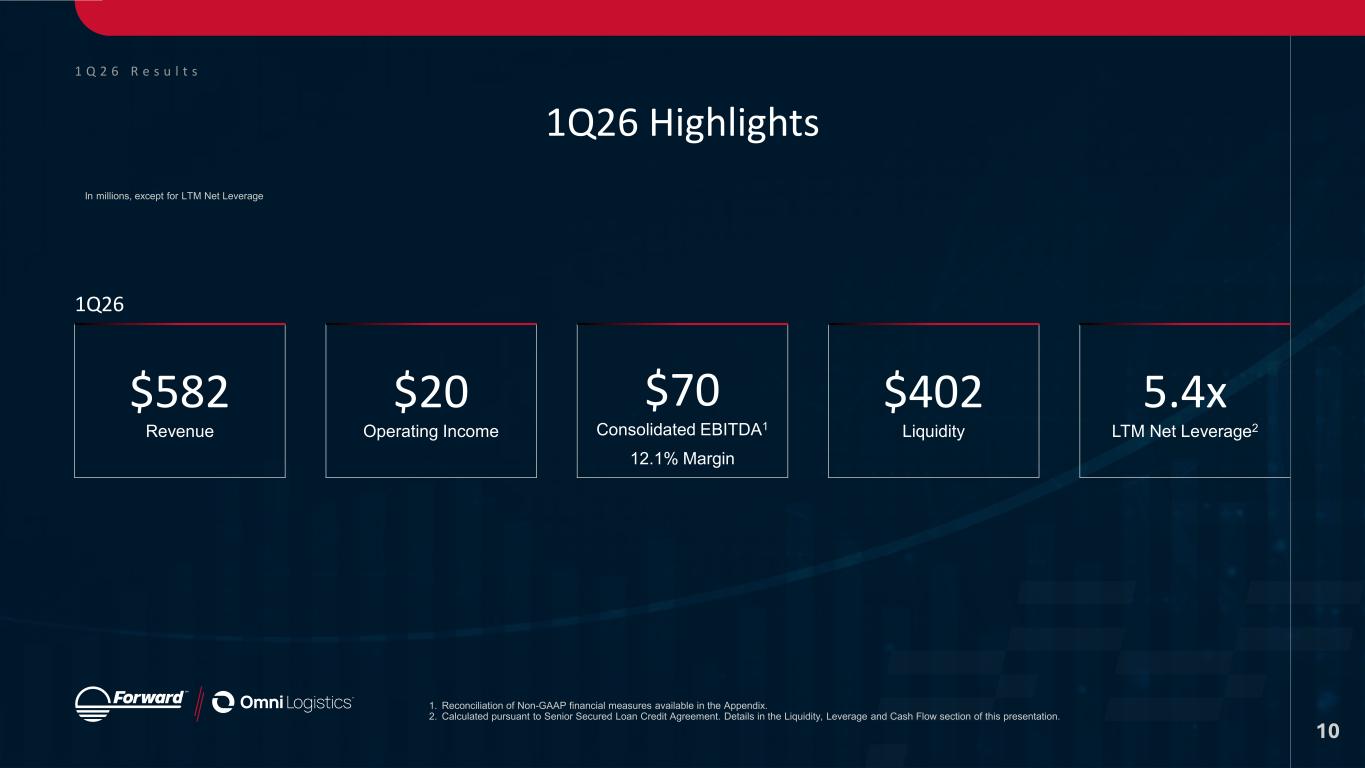
Good afternoon, everyone, and thank you for joining us. I appreciate your interest in Ford Air Corporation. There are three main topics that I'd like to cover on today's call. First, I will provide an update on a customer transition and our strategic alternatives review that we announced in our press release. Second, I will share some thoughts on our first quarter results and the logistics market in general. Third, I will comment on recent awards earned by our team before turning the call over to Jamie. Let me start with the customer transition. While no formal notices have been delivered, we are in discussions with one of our largest customers to transition a significant portion of their business to other providers. How much of the business will be transitioned and the timing thereof are still being discussed, but we are currently anticipating that the majority of what will ultimately transition will start in early 2027 and take place throughout the balance of the year. It is important to note that we believe this has little, if anything, to do with the impeccable level of service that we provide them and more about their own internal diversification strategy. We are still in active discussions to retain as much of the business as possible, and we are doing everything we can to minimize the impact to our company. I want to reiterate that we believe the customer's decision is entirely related to their own operation and supplier diversification initiatives and has nothing to do with the exceptional service we provide them during our long-term partnership. And this leads me to an update on our strategic review and the new actions we are now pursuing to enhance value and help offset this potential impact. As you know, in January 2025, the board initiated a comprehensive review of strategic alternatives to maximize shareholder value. We have had extensive negotiations and discussions with multiple parties. However, due to a variety of factors, including the developments that I just mentioned, no actionable proposals for sale of the company were received. We continue to consider all opportunities to enhance shareholder value, and we are now pivoting our focus to pursue a sale of non-core assets, including our intermodal segment and two of our smaller legacy omni business businesses which in aggregate represent approximately 394 million of our 2025 revenue these targeted sales are intended to advance our efforts to deliver the balance sheet and further focus our services around the core of what we do every single day which is providing service-sensitive logistics to our customers around the world in air, ocean, ground, and contract logistics markets. With that, let's turn to the second topic, our quarterly results. In the midst of an incredible complex integration, a fairly weak industry backdrop, changing tariff regulations, and the disruption in the Middle East, our team continues to make progress executing our transformation plan, overhauling operations, and improving the quality of our earnings results, which is reflected in our results. For the first quarter, we reported operating income of $20 million compared to $5 million last year. And consolidated EBITDA, which is calculated pursuant to our credit agreement, was $70 million compared to $73 million a year ago. regarding the overall logistics market domestic transportation supply has continued to tighten driven in large part by increased regulatory and enforcement actions over the past year these dynamics have accelerated carrier exits particularly among smaller operators while limiting capacity additions a tightening supply environment is a component in rebalancing the freight market and supporting a return to a more favorable market dynamics after years of prolonged freight recession. However, supply is only one side of the equation. Improvement in demand will ultimately determine the pace and sustainability of a recovery. Encouragingly, early indicators suggest that the industrial economy which is weighed on freight demand may be approaching an inflection point. Manufacturing PMIs have now remained in expansion territory for four consecutive months. Readings above 50 have historically served as a leading indicator for increased freight volumes as rising manufacturing activity typically drives higher shipment of raw materials and finished goods. Additionally, the ratio of inventory sales continues to decline. Outside of the post-COVID de-stocking, the current levels are at or slightly below the 10-year average with shippers operating with conservative inventory levels amid ongoing tariff uncertainty and evolving trade policy. While this has suppressed freight demand in the most recent past, it also creates the potential for a restocking cycle, which could serve as a meaningful tailwind for the freight volumes when demand improves. Also, do not lose sight of the recent increase in truckload spot rates and corresponding spike in tender rejection rates. That said, while the VIX may have settled, macroeconomic risk remain. Ongoing geopolitical tensions in the Middle East and the associated rise in fuel prices introduce a key source of uncertainty. Sustained increases in energy costs could pressure manufacturers and consumers, raising input costs, compressing margins, and ultimately dampering demand. Outside of this week's announcement and subsequent sell-off in oil, if elevated fuel prices persist, they could lead to tempered demand, offsetting some of the positive momentum emerging in the industrial economy and delaying a recovery in the freight markets. While we are optimistic about the improving freight dynamics, we remain focused on prioritizing customer service and thoughtful cost management. We have been operating as one company for over two years now, and I am proud of what our team has accomplished and even more excited about our future. Finally, it gives me a great deal of pride for our team of dedicated logistics professionals to be recognized for their hard work, diligence, and commitment to our customers. Forward Air was recently named the 2026 Surface Carrier of the Year by Air Forwarders Association, whose members are freight forwarders that rely on our expedited ground network to maintain the integrity of their air freight schedules. This recognition reflects the strength of our network, our team's performance, and our commitment to delivering exceptional service on a consistent basis. Board Air was also recently named to Newsweek's list of the most trustworthy companies in America 2026. The annual ranking recognizes companies across the industries that have earned strong trust among customers, employees, and investors. This award follows the company's selection to Newsweek's list of most responsible companies in 2025. This recognition underscores the significant transformation our team has achieved over the past two years in optimizing operations, improving performance, and enhancing customer relationships. Both of these honors are a reminder of the high service standards that we are known for. They reflect the dedication of our people whose efforts continue to drive our reputation for excellence. With that, I will now turn the caller to Jamie to go through the detailed results of the first quarter.
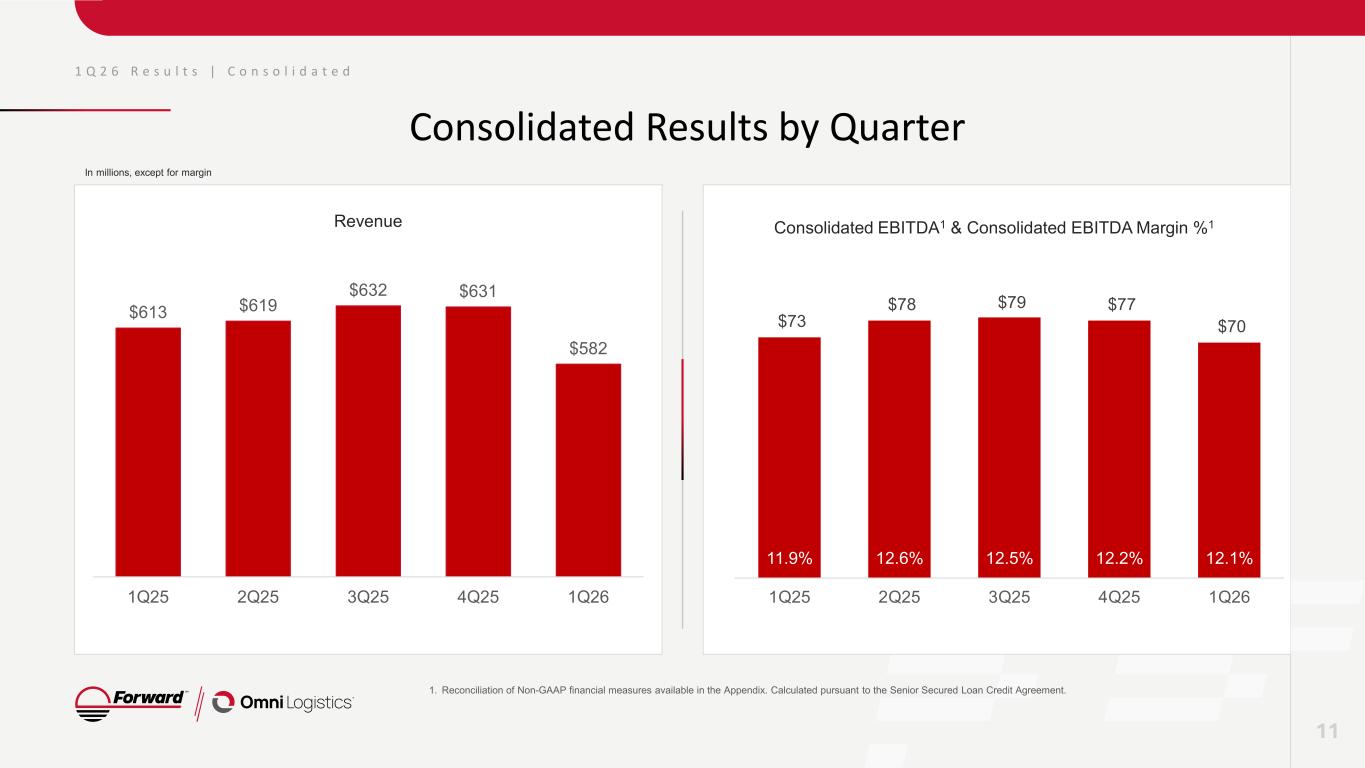
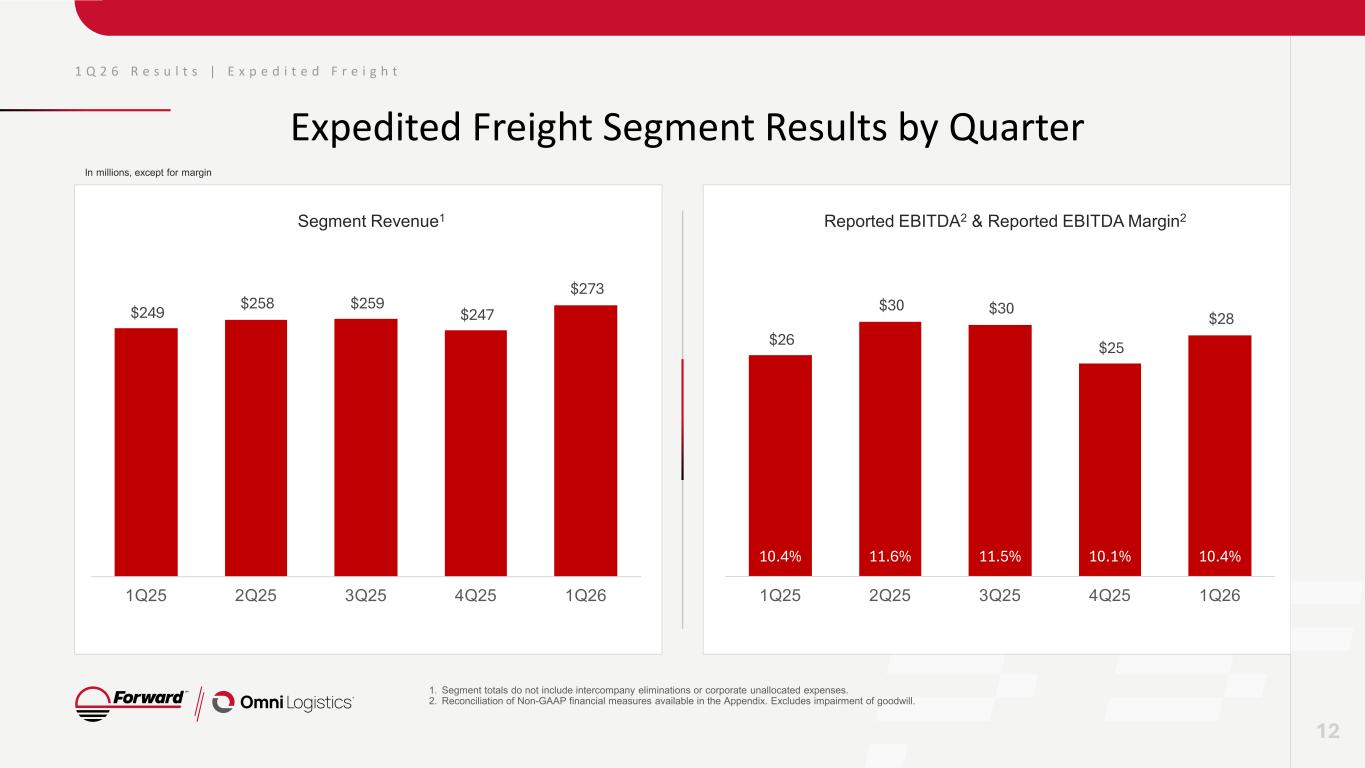
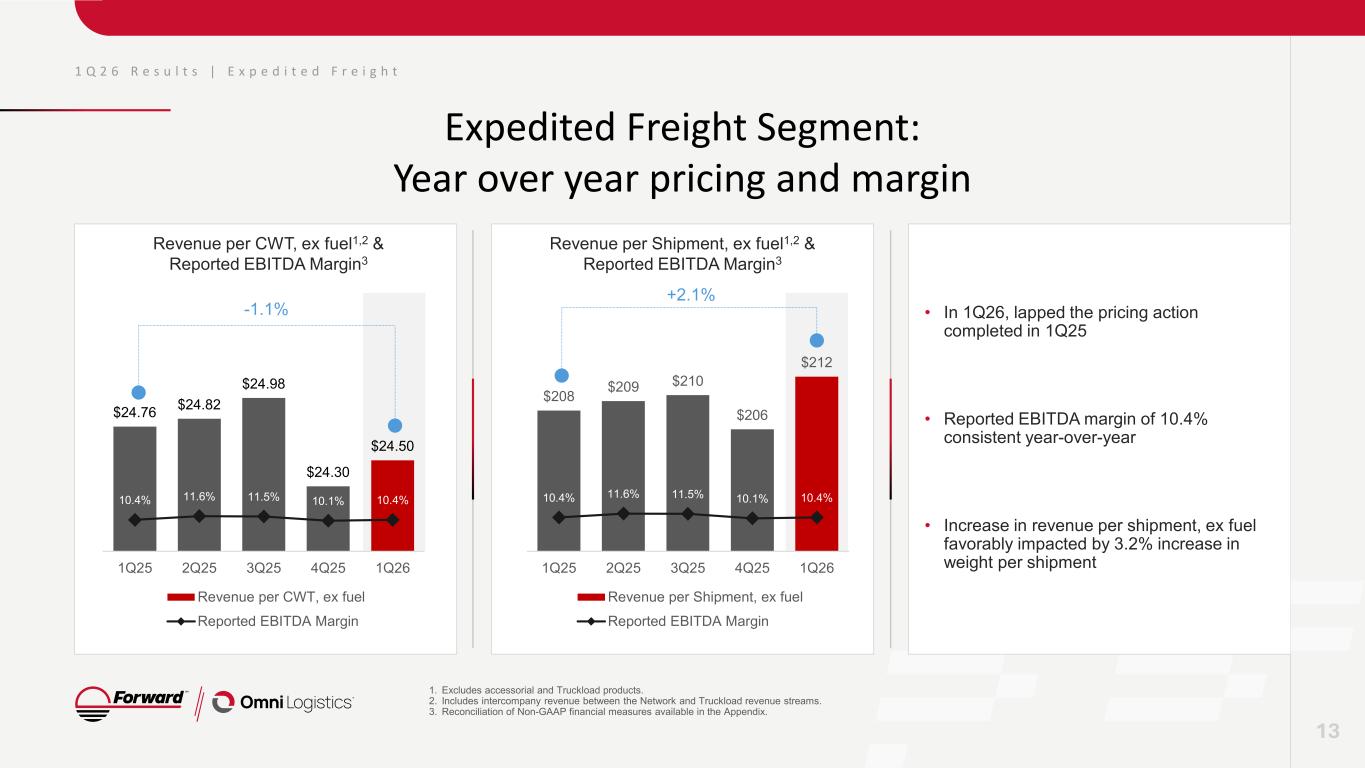
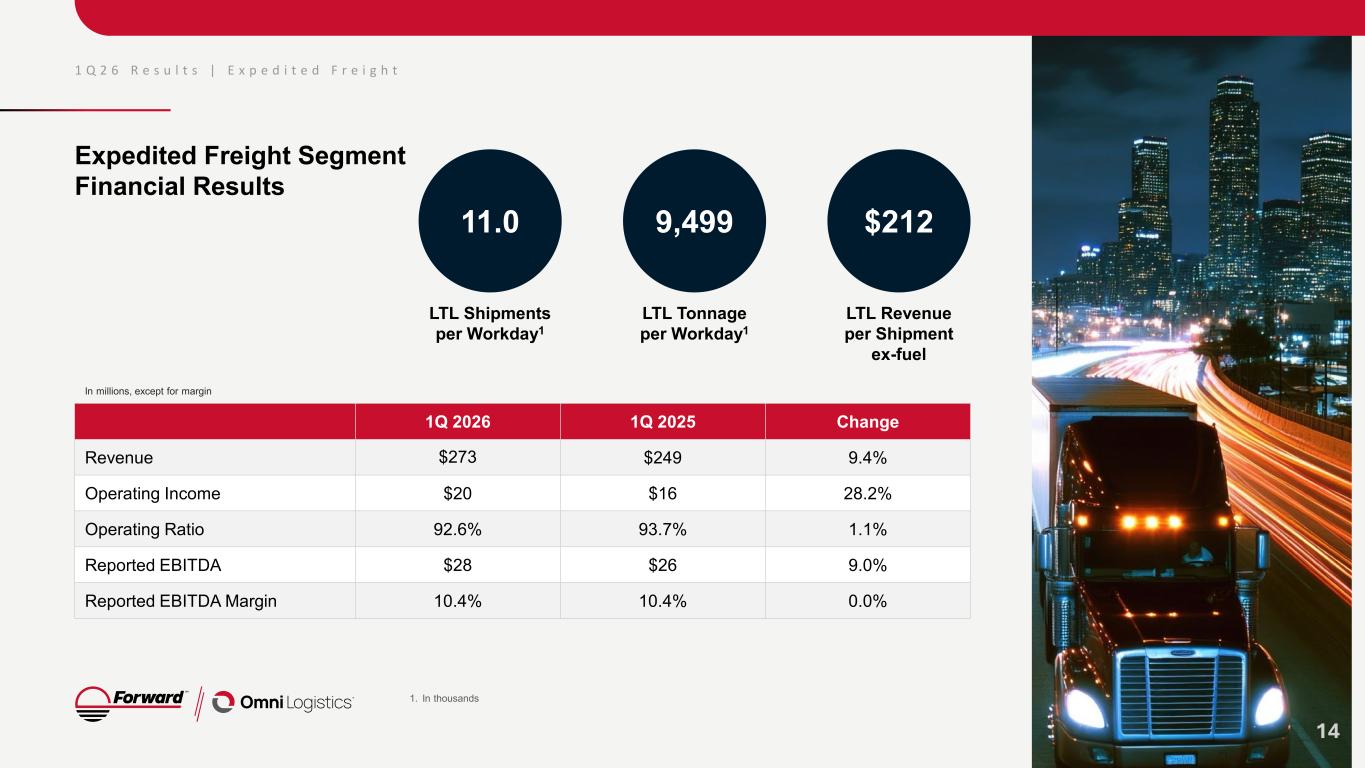
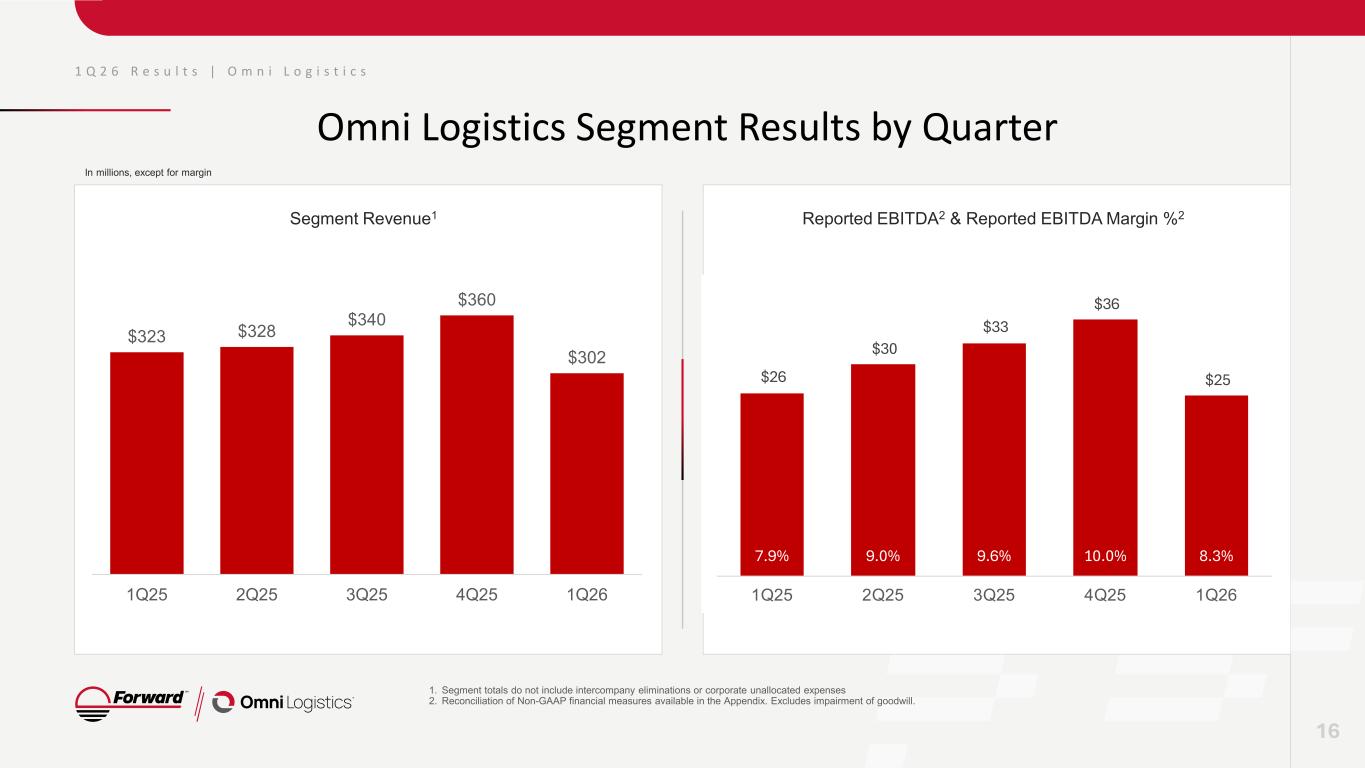
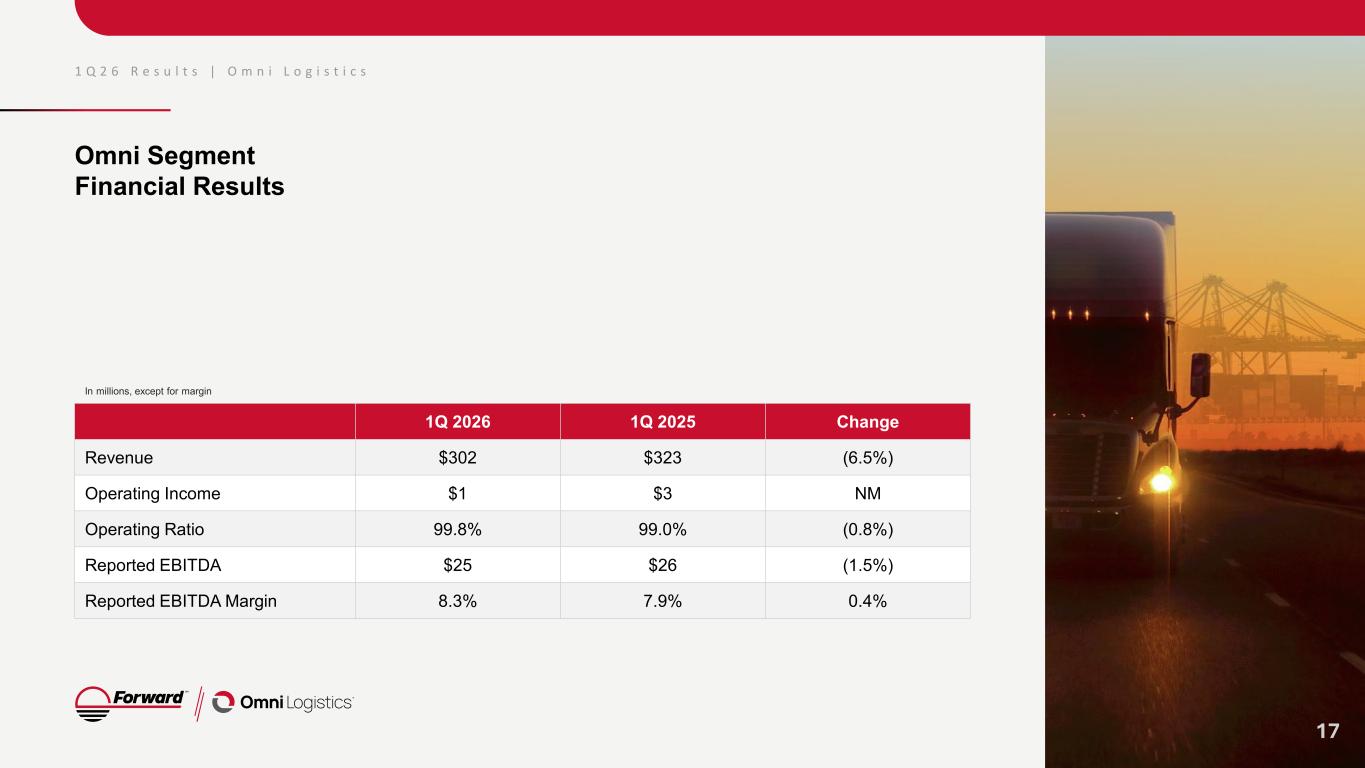
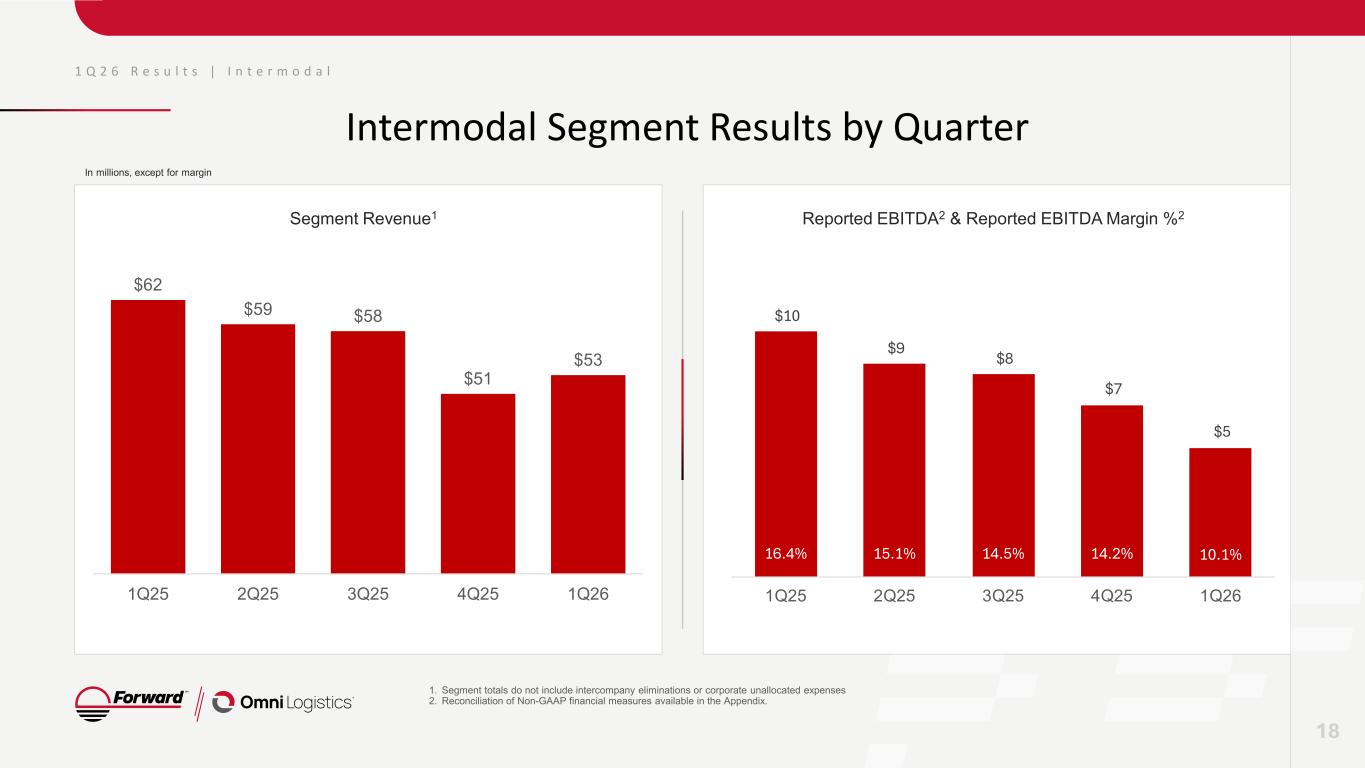
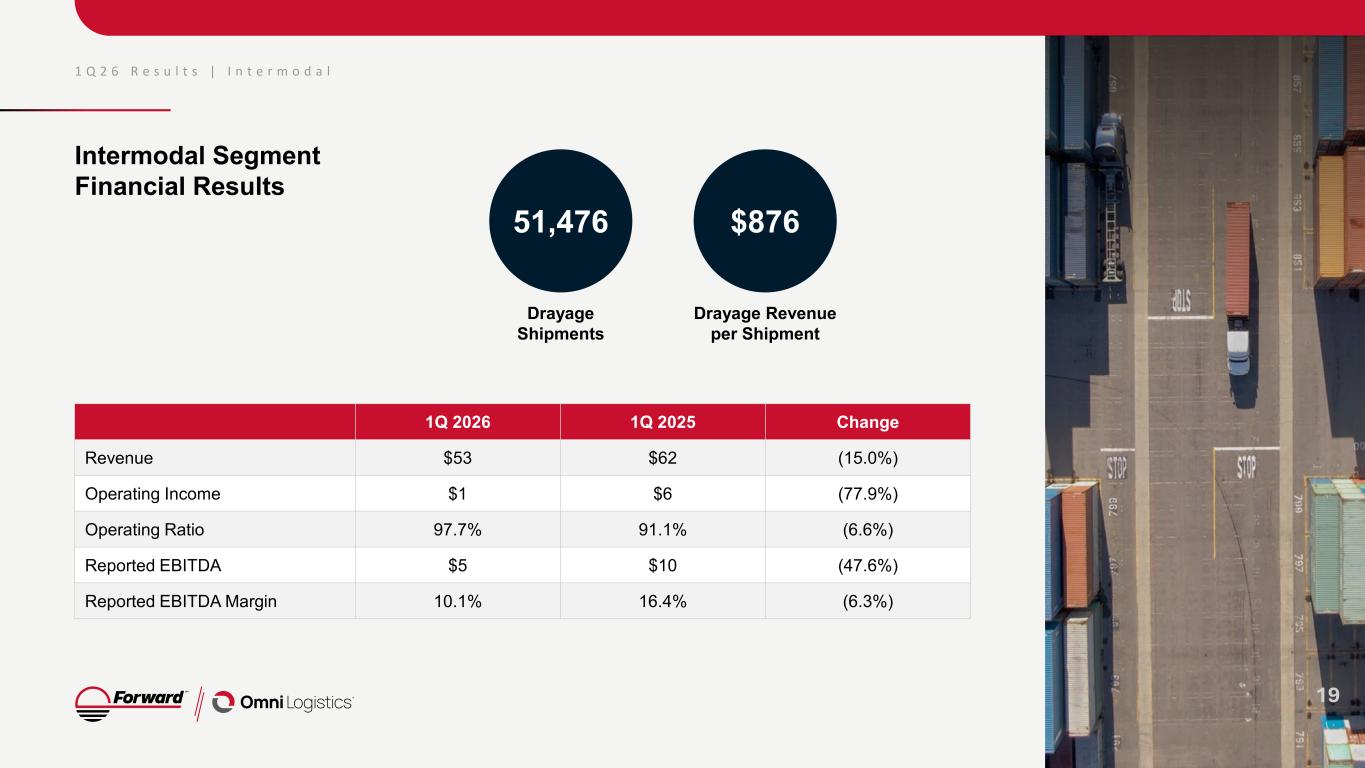
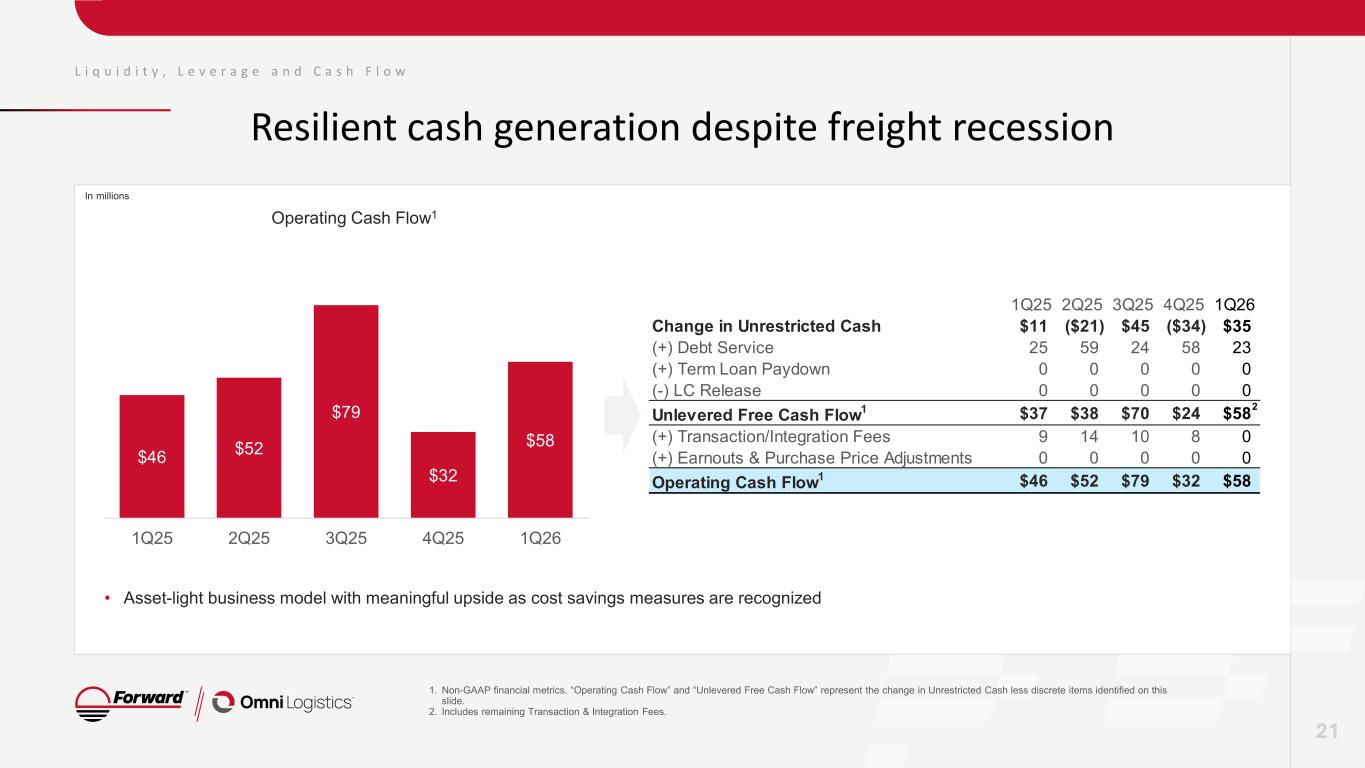
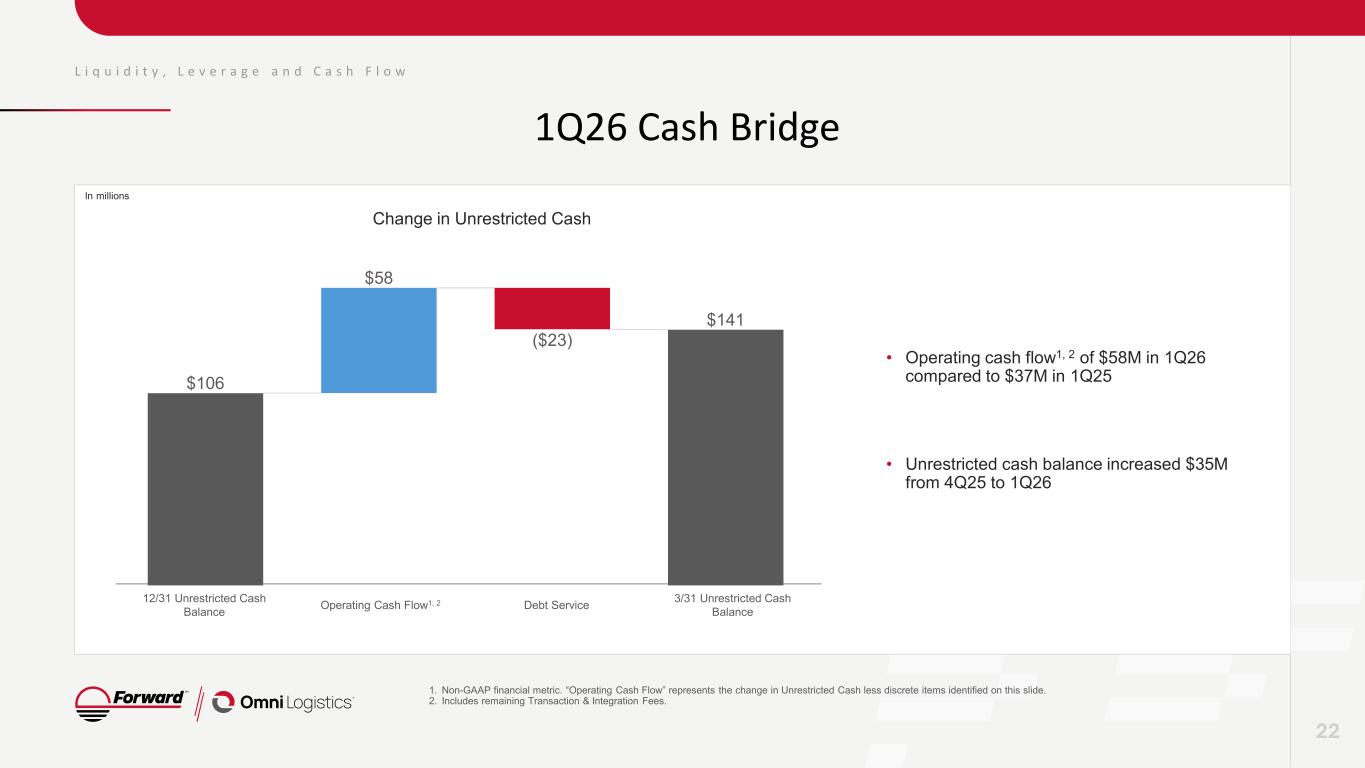
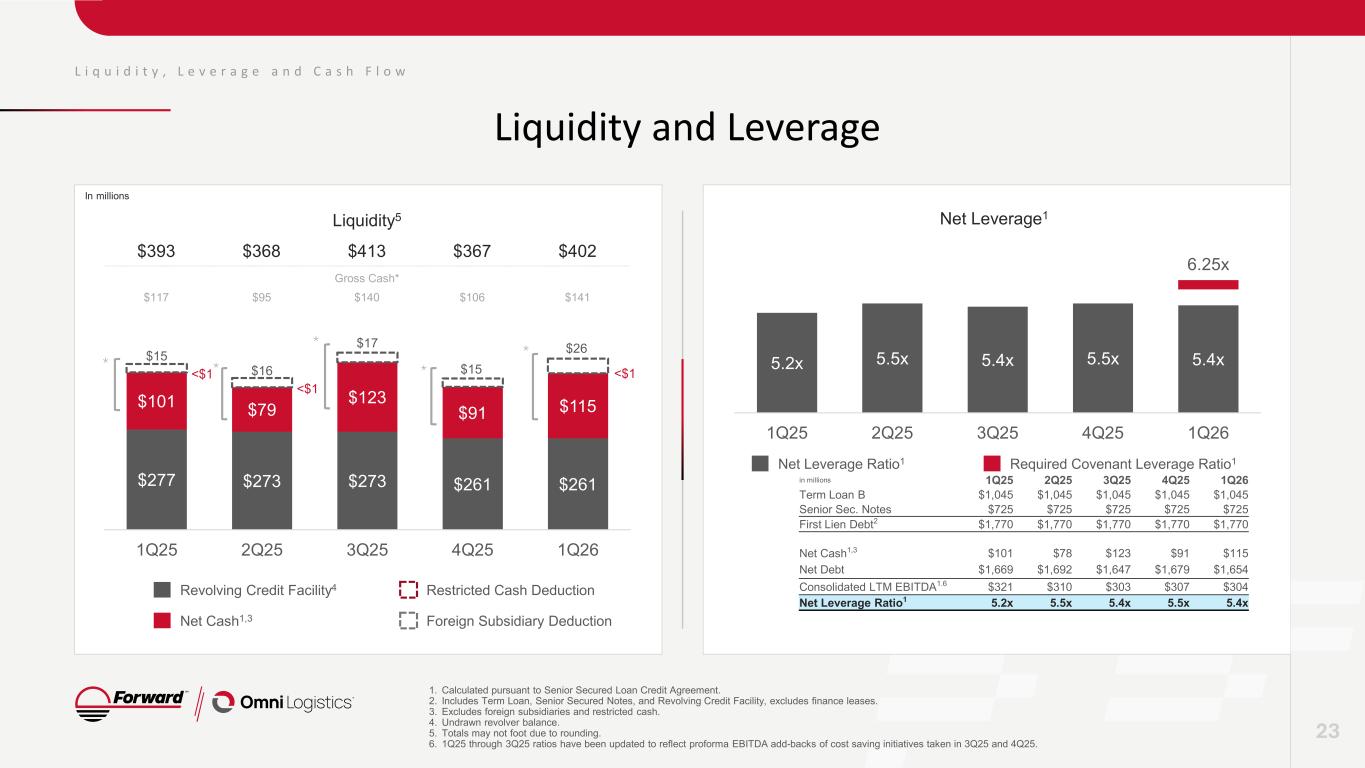
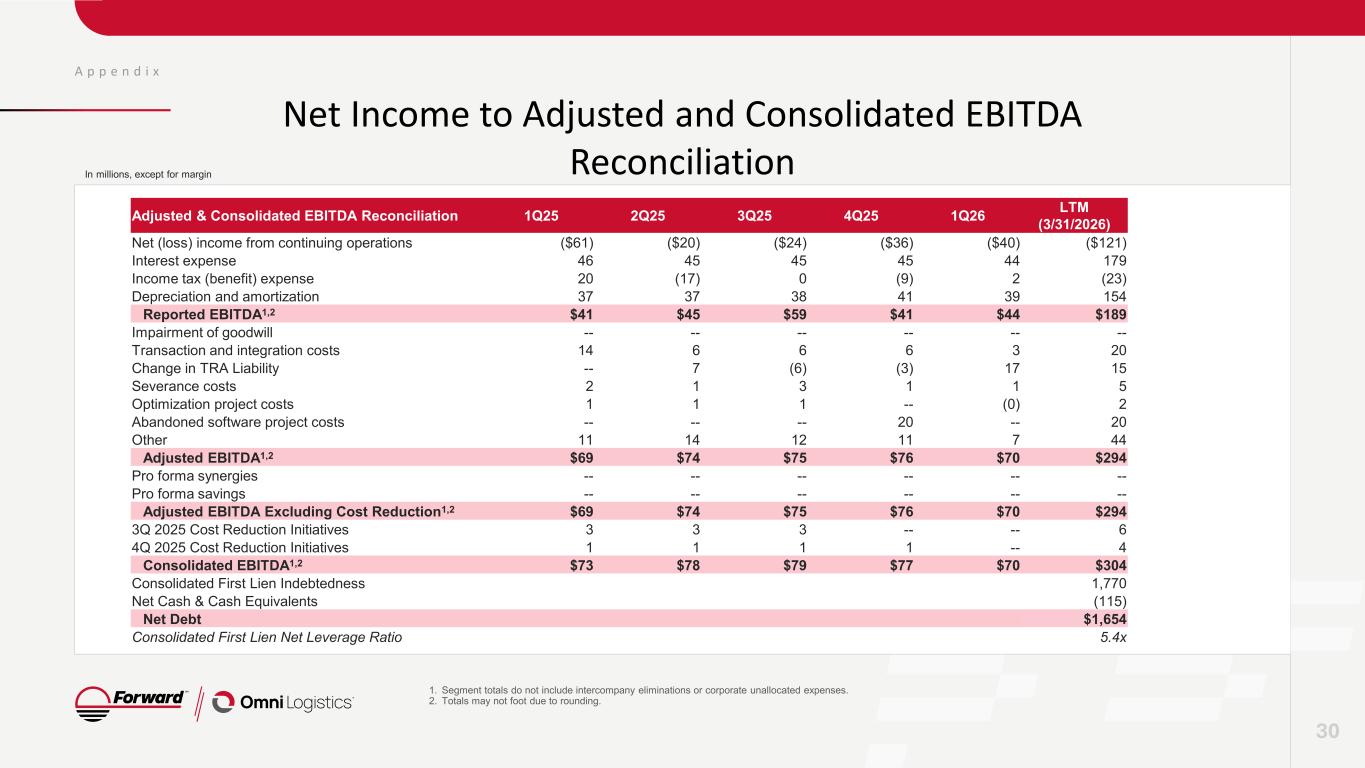
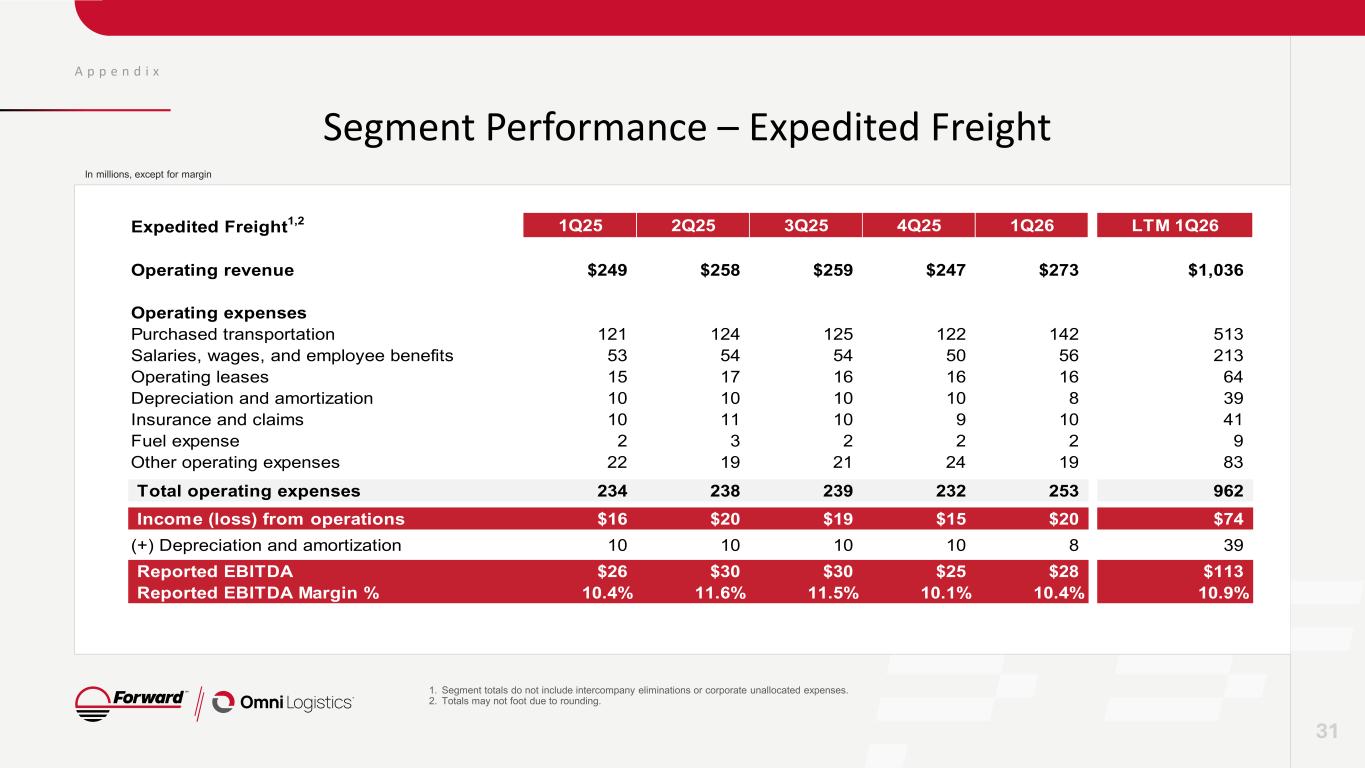
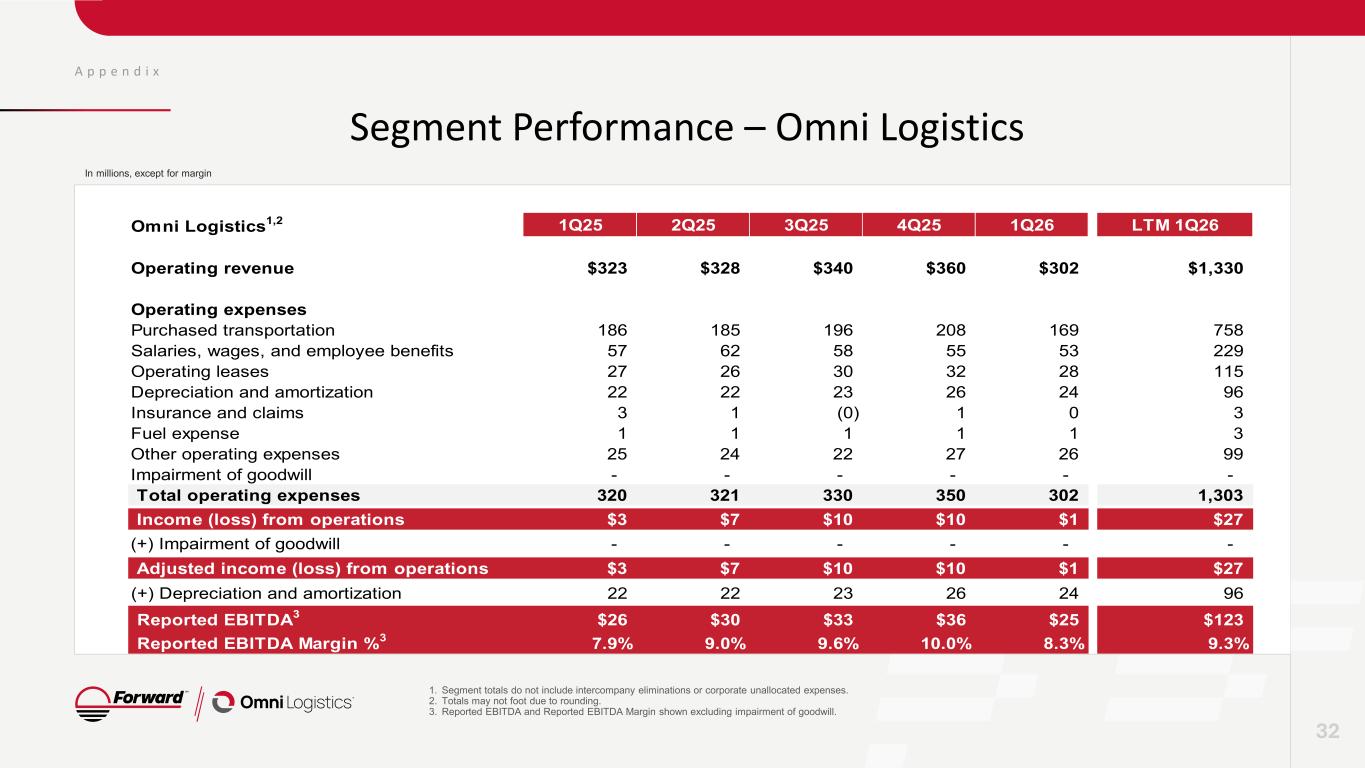
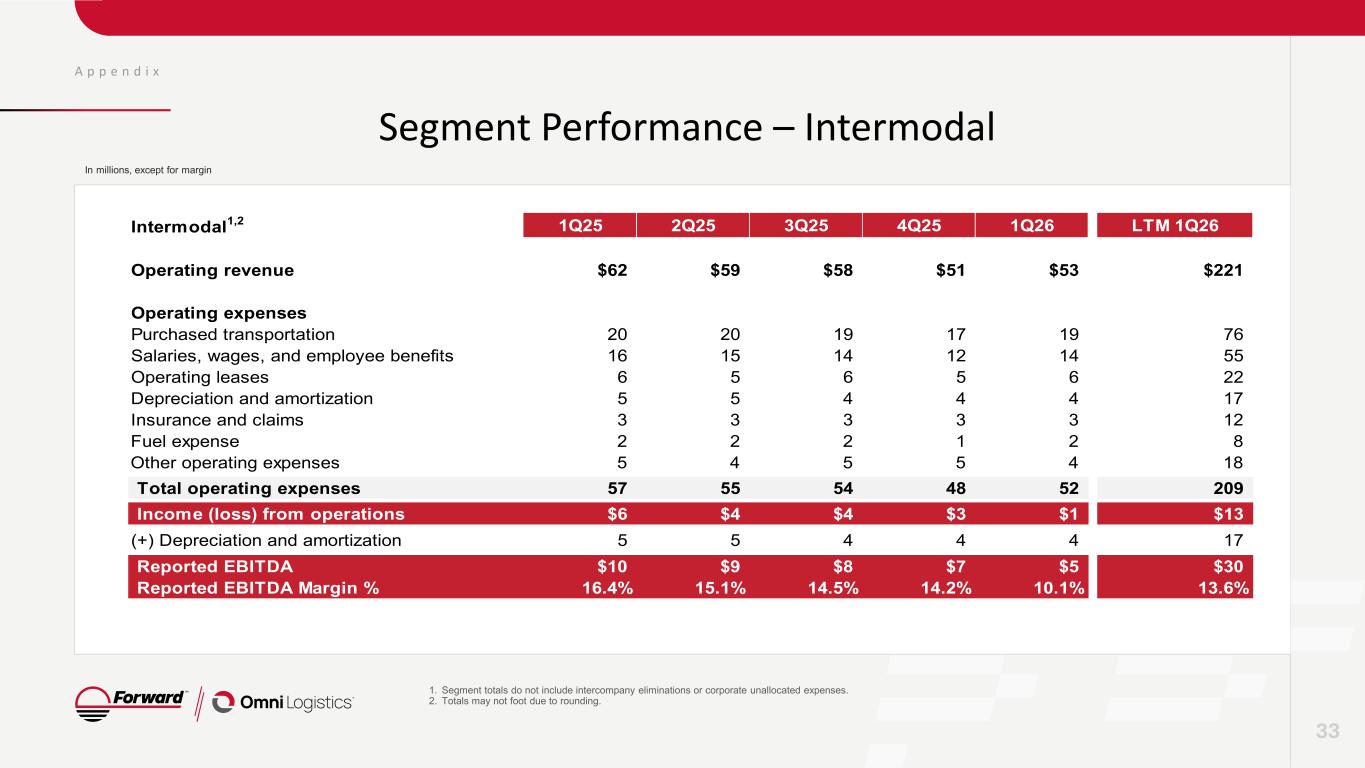
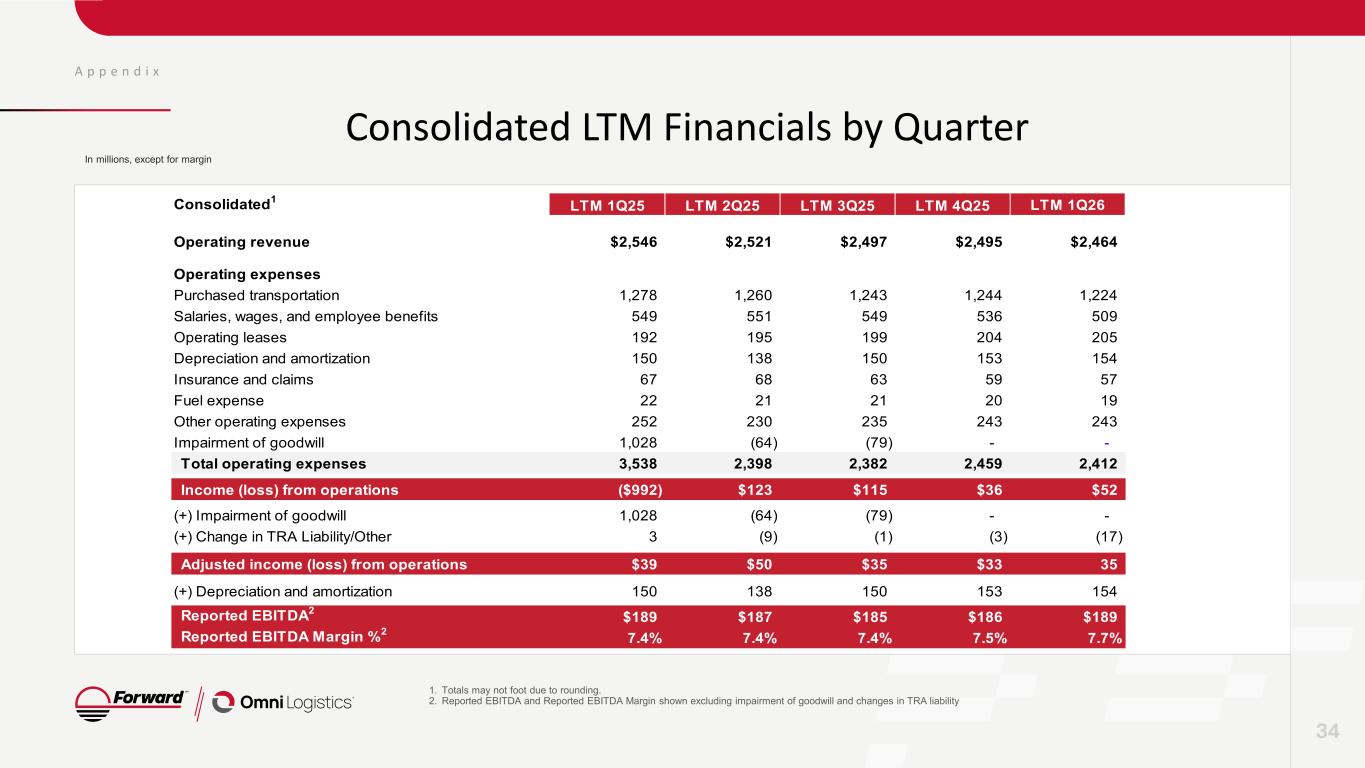
Thanks, Sean, and good afternoon, everyone. As you heard from Sean, we reported a consolidated EBITDA of $70 million in the first quarter compared to $73 million in the first quarter of 2025. As a reminder, the comparable results attributable to a year ago were favorably impacted by $4 million of annualized cost reduction initiatives that were actioned in the second half of 2025. The credit agreement allows for the inclusion of the unrealized and performer savings from these actions to be included in our historical consolidated EBITDA and required that they be spread back in time to the period in which the expense would have occurred. On an LQM basis, consolidated EBITDA was $304 million. Like we normally do, we have detailed the information used to reconcile the adjusted and consolidated EBITDA results on slide 30 of the presentation. On an adjusted EBITDA basis, we reported $70 million in the first quarter compared to $69 million in the first quarter of last year. Turning to the segment, expedited freight reported EBITDA improved to $28 million compared to $26 million a year ago with the exact same margin of 10.4%. The expedited freight segment's first quarter results also improved sequentially when compared to the $25 million reported EBITDA in a margin of 10.1% in the fourth quarter of 2025. At the omnilogistics segment, reported EBITDA of $25 million in the first quarter of this year was in line with the $26 million we reported a year ago. The margin improved from 8.3% to 7.9% last year, driven by an increase in contract logistics volume with a higher margin compared to a decrease in air and ocean volumes that have lower margins. At the intermodal segment, we continue to see a challenging market, especially from reduced port activities. International trade-related softness among several core customers contributed to a decline in shipments and revenue per shipment compared to a year ago. In the first quarter, the intermodal segments reported EBITDA and margin were $5 million and 10.1% respectively, compared to $10 million and 16.4% a year ago. Externally, and going back into the back half of the year, we expect to see capacity tighten as JIT supply chains for our BCO customer base loosens as tariffs stabilize. and as additional capacity exits the market due to financial difficulties and bankruptcies of smaller drayage carriers. Internally, we have a strong pipeline and have recently enacted strategic rate increase to several key accounts. Turning to cash flow, cash, and liquidity, net cash provided by operating activities in the first quarter was $46 million, and an improvement of $18 million, or more than 60%, compared to $28 million in the first quarter of last year. As for liquidity, we ended the first quarter with $402 million, which is an increase of $35 million compared to the end of the fourth quarter of 25, and about a $10 million increase from last year's comparable $393 million. The $402 million is comprised of $141 million in cash and $261 million in availability under the revolver. And as usual, I'd like to leave you with a couple additional thoughts, the first of which is liquidity and how we manage the business, especially in uncertain times. As you heard earlier, our ending liquidity included $141 million in cash, which is the highest-ending cash balance in the past eight quarters. When compared to our publicly traded peers, we are at the upper end of the spectrum when calculating liquidity as a percent of both total assets and LPM revenue. And on slide 22 of the earnings presentation, you'll also see on a non-GAAP basis, we generated $58 million in operating cash flow in the first quarter, which is approximately $12 million better than last year's comparable results. Secondarily, as you heard from Sean, we are cautiously optimistic about improvements in freight demand, especially in the most recent past. However, there are numerous cross-currents, including potential continued improvements in the freight demand, counterbalanced by ongoing headwinds from inflation, subdued consumer confidence, and macroeconomic risks will need to play out to see if the improvement in demand is sustainable. Regardless of when we see the market fully turn in a positive direction, we plan to continue focusing on the customer, increasing sales, and tightly managing expenses. I will now turn the call over to the operator to take questions. Operator?
Operator
The floor is now open for questions. At this time, if you have a question or comment, please press star one on your telephone keypad. If at any point your question is answered, you may remove yourself from the queue by pressing star two. Again, we ask that you pick up your handset when posing the questions to provide optimal sound quality. Thank you. Our first question is coming from Bruce Chan with Stiefel. Your line is now open.
Hey, good afternoon, team. this is andrew cox on for bruce i just wanted to touch on you know the customer loss or customer transition here we you know understand that nothing is set in stone but you know we are talking about 10 percent of total revenue um we'd just like to get some more details on maybe what segment it is in and what maybe the margin profile is and how much fixed or structural costs are associated with this customer and how fast you guys expect to be able to flex down either the cost or, you know, backfill the revenues. Thank you.
Hey, Andrew, it's Sean. So, thank you for the question. Yeah, so, it's quite diverse and dynamic of what service offerings we provide them. It's mainly in contract logistics and some transportation. So, margins are different depending on what area, what segment of that that I just said is in but you know we're still in conversation so it's very fluid obviously we want to be transparent today but we are still in heavy negotiation or not negotiations with conversations and it's very it's a very good relationship so it's not a situation of of anything other than what we understand and believe to be diversifying their overall supply chain portfolio between providers.
Yeah, if I can add on there, Andrew, I mean, we're positioning ourselves to hold on to as much of this business as possible. Sean said it perfectly, which is, you know, it's our belief that, you know, this isn't about service. It's about their growth and their concentration with this. It's just a simple diversification play. I think it's important to note that we don't see any meaningful impacts to the current year. And as you noted, it's ongoing. And to date, the conversations have been positive.
Okay. That's helpful. I guess let's move on to strategic review. It seems like we've got a conclusion here, and that's positive. And we appreciate the background on the total revenue between the three businesses you guys are looking to sell. But is there any kind of timeline we can expect here or any more details on the sale process? Thank you.
Yeah, I'll jump out there first and let Sean back clean up. Yeah, in terms of the timing, the two smaller Legacy Omni months, I think we anticipate to close in the next probably 60 to 90 days. On the larger intermodal, we're just kicking that off. I think we'll be done by the end of the year. At least that's our expectation. So I'd say, you know, small proceeds in the next 60 to 90 days, and then the expectation again is being able to sell the intermodal business by the end of the year.
Okay, really helpful. I'll hop back in the queue. Thanks.
Operator
Thank you. Our next question comes from Stephanie Moore with Jefferies. Your line is now open. Hi, good afternoon.
I guess maybe going back to the situation with the customer, maybe I'll ask this, you know, a little more direct in the prior question i guess i'm trying to understand you know how much leeway or time you saw this coming like is this been a conversation that's been going on for some time you know i think it's hard to believe for a customer of this size to kind of make these changes so quickly if you could give a little bit of color of maybe what services this customer provides or at market just to get some color there, maybe a little history on maybe other customer losses if it's not due to service and it's just diversification. It's obviously having a really large impact this year. So if you could just touch a little bit more about when this started kind of happening and then at the same time, you know, what can be done on your end to hopefully try to retain this as possible.
Yeah. Hey, Stephanie, Jamie here. I'll jump in there first. In terms of the timing, mean, it's still happening. You know, I think Sean said it, I certainly did, is, you know, the dialogue to date is active. I mean, it's on an ongoing basis, and I'd say it's constructive. We're putting ourselves in the best possible spot to hold on to as much of the business as we can, and if it was a service-related issue, I might feel differently, but if we looked at our service KPIs with this customer, we're incredible, in my opinion. It's my opinion. These are my words, Stephanie, nobody else's. We're incredible. So, you know, it's more about their concentration with us. They've grown with us. They've been a long-term partner with us. So I think it's more about a, you know, a risk management perspective on their behalf than anything else in terms of how quickly it's, you know, it's May, it's the beginning of May, it's going to take some time. You know, the best that we can tell is there's not going to be any impact to 2026. It won't be until early 27 that we see anything meaningful or material, if at all. I mean, we're, again, we're not throwing in the towel, but we just felt that it was, you know, the right thing to do to let you guys know that we're in these discussions as quickly as we possibly could.
Well, I guess my question on this, too, is I guess you worded it today and then the release that part of maybe the strategic alternative review process was impacted by this development with this customer. So as we think about this, how much does this weigh on maybe that strategic process? And then once there is some definitive maybe decision here, whether it is bad or, you know, if this customer does decide to walk away, what does that mean in terms of ongoing strategic processes once this is cleared up?
Yeah, I don't know. I can't answer that second question about what will happen after it's cleared up. But in terms of it impacted, any time you've got a large customer concentration like this, it's going to weigh in either positively or negatively. I mean, you get one or the other, right? So in terms of its impact on the straddle, it's the fact that you look at a customer that is approximately $250 million plus or minus in revenue, it is going to have an impact.
Operator
Yep, absolutely.
I guess one last one for me, just sorry, some of that was clarification, but just on the core business itself. You know, we wanted to get a sense of just the ongoing pricing environment. I mean, I think this is, you know, a good – there's certainly some green shoots and some positives in the underlying freight environment. So, if you could just talk a little bit about just pricing across your business and just your level of comfort, given, you know, given we are seeing, you know, what appears to be a bit of an uptick in the underlying freight market.
It's Sean. So, pricing, we feel really strong about. You know, we had the hiccups in a prior period, and I feel strongly that we are extremely solid in all of our revenue strains, whether it be in the global freight forwarding market and or the ground LTL business and truckload. So I'm extremely confident in what we're doing, both on a cost management basis and on a revenue generation basis. And as you can see, the consistency in our margins and profitability. So it's a proof that we learned a lot, and we've continued to enhance our sales from there on forward.
And if I can jump in there a little bit, if you look at the spot rate over the last six months, which I know you do, it's up, I think, about 40% since late last year. Tender rejections are up almost 2x, are up 100%. ISR continues to lean out. So I think all of the macro indicators, and PMI is positive for four months in a row, I think the macro indicators are pointing in our direction, if you will. And my experience in this space is it generally takes, you know, three to six months for it to really take effect. and we're kind of in that third or sixth month now. So we're not pricing for yield. We're not pricing for volume. We're pricing for profitability.
Operator
Thank you. Our next question comes from Scott Group with Wolf Research. Your line is now open.
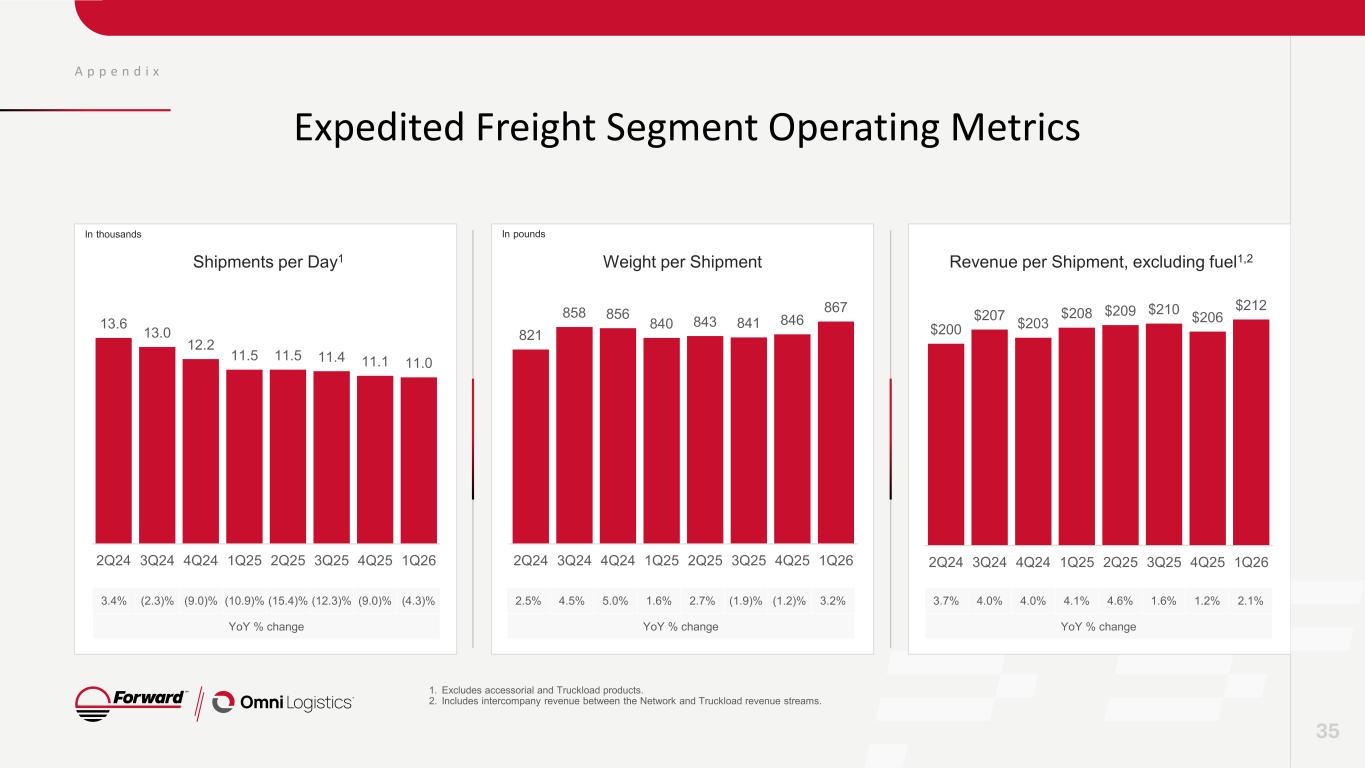
Hey, thanks. Afternoon, guys. So just to follow up on the business trends, tonnage was down, what, about 2%? and yields ex-fuel down about a percent. So what are you maybe seeing as the quarter progresses so far in Q2? Are things accelerating? I know you said you feel good about the price, but yield ex-fuel down a little bit, just a little bit more color would be great.
Hey, Scott, I'm going to let Jamie go because I know he just wants to say He's not going to give you guidance, but great, great question. But let's see if he's nicer today.
Yeah, that's actually funny. He beat me to the punch at the risk of not giving guidance. But I think over the last two weeks of the quarter, and I'd say even kind of going into April, we've seen a fairly strong volume environment, at least from our perspective. I don't want to, you know, preordain that the recovery is here. I stick by what I said about the spot, the tender and the SR and the PMI, that there's a lag there. But I tell you, the last couple of weeks of the quarter and going into April, we've seen a fairly, I don't want to say too verbosely, but a fairly strong volume environment.
And then, Jamie, I just want to clarify that you said the business that you're selling is $390 million of revenue. That's internodal plus the two smaller Omni businesses, right?
That's exactly right. You got it.
And what are the two smaller Omni businesses, and you have any sense of – can you share any sense of profitability there?
Yeah, no. They're two small legacy Omni entities, Scott. well i'm not going to disclose which they are there's some confidentiality as you can imagine with the buyers that we preclude us from giving you the names but you can see uh the 390 230s intermodals you're talking about 160 that's remaining it's not that much and then your intermodal business um are there containers here or is it all asset light containers here is it all you think is it intermodal or are we leasing the um chassis so what's your question again sorry
What exactly is your intermodal business? I don't think it's like a J.B. Hunt intermodal business, but maybe I'm wrong.
So, Scott, I'll take that. So it's mainly port and railhead drayage with what we call CUI or container yard management. So storage of containers on chassis, and mainly port and railhead dredge to final customers.
And this is where you own trucks or you have owner-operators?
We have owner-operators and we have owned and leased chassis.
And then maybe just one more for you, Jamie, if I can. With this customer loss, I know the leverage metrics start, the leverage thresholds as the year plays out start to get a little bit harder. I guess maybe this customer is more 27, but any conversations with the lending group at all? How should we be thinking about this?
Yeah, sure. It's the right question to ask, Scott. So we ended the quarter with $40 million in cushion, a small step down from where we ended the year. But we ended the quarter with the highest cash balance we've had in two years and over $400 million in liquidity. And I know you've done this math. I mean, you all have. If you looked at a liquidity as a percent of total assets or liquidity as a percent of LTM total revenue, we're at the upper echelon of that spectrum of our publicly traded peers. So, and $40 million nutrition is a place that I can certainly live in. $400 million in liquidity is a very good place to be.
Appreciate the time, guys.
Operator
Thank you. And once again, if you do have a question, you may press star 1 on your telephone keypad at this time. Our next question comes from Harrison Bauer with Susquehanna. Your line is now open.
Okay, thanks for taking my question. One quick follow-up on the Omni businesses that you're selling. About $160 million, is there any crossover of the potential lost business of the $250 million.
Not that I can think of, Harrison, if it is, it's certainly not material.
No. Okay. Thanks for that. And then just maybe taking a step back, just general competitive dynamics, obviously with the announcement of Amazon supply chain services this week. I mean, is there any relation to that and the loss of this business at all? And are there other areas of your business that are potentially exposed, you know, to what Amazon is trying to lay out there and some of their maybe aggressive pricing actions that they may take?
Yeah, I'll take that one, Harrison. So no correlation between Amazon and our customer. You know, obviously the news of Amazon is fairly new, but we know them extremely well over the years and so not surprised necessarily by their announcement but I also don't think you know we need to let this thing evolve a little bit and see where it goes but ultimately we're not so susceptible to this announcement by our volumes etc so but respect what they're doing respect amazon a lot and uh something that we'll continue to keep an eye on and not be naive with
it um but not overly concerned today as we sit around the impact to us at all on this announcement okay thanks thanks for the color there and then you know maybe last one for me in the retaining or existing omni business that you have left you know now that you have a handful of capacity that you need it back. So how are you thinking about pricing for that going forward and maybe the trade-off of volume and price around your business, not just for Omni, but maybe also in the core expedited LTL as well? Thanks.
I would say, Harrison, we're not going to get in any kind of desperate situation here. We have a great organization, great solutions, a fantastic product and we'll continue to price aggressive but also keeping profitability in mind so you know we'll get strategic where it makes sense and a given customer or a giving origin destination pair but not at the detriment of the company and our overall margin so we will you will see us and you have seen us pick up new logos and new businesses and we'll continue on that mantra but I'm not I'm not someone that gets over over worried or in a situation because we're great and we just need to continue to stick to what we do and we'll move forward with with replacing that potential loss in different areas as we see fit. Thanks for the thoughts.
Operator
Thank you. Our next question comes from Christopher Kuhn with Stonex. Your line is now open.
Hey, guys. Good afternoon. Thanks for the question. Sorry, I just wanted to qualify. So that customer loss is $250 million. That's the total amount of a customer's business with you, and you may or may not lose all of it. You're in negotiations for that right now. Is that the case?
It is total 2025 revenue of $250,000. So we're giving you holistic of what the revenue is. That does not by any means, Chris, state that we're losing $250,000. That was the total spend in 2025.
All right. So it may be less than that.
It will be less than that.
Oh, okay. And then if you do, I mean, the negotiation? Is it on price? Because the service seems pretty solid there. So what would be the issue aside from just diversification?
That's it. I mean, you got to think about what the, you know, what we do for some of our customers. We handle an incredible amount of their supply chain. And it's, I don't want to say it's incumbent. Incumbent is probably the wrong word. But it is wise and a fiduciary duty for them not to put too much of a percentage in any one particular supplier's hands and throughout the years we've grown with them we provided that level of service and it is in our opinion simply a diversification play and understandable okay got it and then if you lost some of this would that change the margin profile i guess it's in within the omni business or or is it relatively um you know similar to where your either down margins are yeah we don't talk about margins on any one particular customer You know, we're going to see how this thing shakes out here in the near future. But, man, we're, again, Chris, I think the takeaway is threefold. One, the conversations have been both active and constructive. Two, no impact that we can see that's going to occur in 2026, given the complexity of what we do for our customers. And then lastly, you know, they've been, you know, fairly positive to date. So we're continuing to have the conversations, and we're going to continue to do so.
And is there sort of a way to, if you lost any of it, to backfill it with another customer? Is there a plan for that, or you'll just wait and see?
That's a plan every day, Chris, whether you're losing customers or down-trading customers. Growth is the number one strategy of our combined organization. And so, you know, it's obviously been – we've been in a tough market, but at the same time, you've seen us be very sustainable over the last two years. And so we need this market to turn, but absolutely, we're not changing anything because of this announcement, but we may run a little faster with already sprinting going on as the way we run our organization.
The only thing I'd add to that, Chris, as best as I can tell in the, I don't know, what is it, 23 months that I've been here is going back and looking at history is that we are a fairly high beta performer. We do better in times of volatility and especially when capacity gets tight. We all do good when capacity gets tight. We seem to do better than our peers when that occurs. So that is certainly part of the plan.
Okay. And then just last one, you guys have talked about this in the past, but I mean, have you seen any truckload back to LPL conversions in your business?
Heard, yes, because the rising. And I don't want to get too ahead of ourselves back to Scott's question. We're seeing volumes. So it could be, but we don't have enough information to to say that and as you guys probably been watching the true domestic intermodal market you're seeing a lot of diversions from over the road onto the domestic intermodal but you're also seeing slowly an influx of the ocean containers coming back in so there's going to be a point of inflection there where a lot of things are going to shift as the demand comes through and And but it could be the early stages, but don't quote me on that because that's just we're watching it. But we have we have heard from certain customers that that transition is starting just because of the overall price of the truckload.
You got it, guys. Thanks, Sean. Thanks, Jimmy. Thank you.
Operator
Thank you. At this time, there are no further questions in queue. Let me turn it over to Mr. Stewart for any final remarks.
All right. Thank you guys so much for your time and attention and interest in our organization. You know, in closing, in recent quarters, we've, you know, really navigated the challenging environment with discipline and focus while taking actions to strengthen our company and our overall business. We're extremely confident in the foundation we are building and the steps we are taking to improve our performance. So, again, really appreciate your time today. And as usual, if you have any follow-up questions, please reach out to Tony directly. Thank you.
Operator
This concludes Forward Air's first quarter 2026 Earnings Conference Call. Please disconnect your line at this time and have a...