Operator
Good morning, and welcome to the Galaxy Digital Third Quarter 2025 Earnings Call. Today's call is being recorded. At this time, I would like to turn the conference over to Jonathan Goldowsky, Head of Investor Relations. Please go ahead, sir.
Good morning, and welcome to Galaxy's Third Quarter 2025 Earnings Call. Before we begin, please note that our remarks, including answers to your questions, may include forward-looking statements. Actual results could differ materially from those described in these statements as a result of various factors, including those identified in the disclaimers in our earnings release or other filings which have been filed with the U.S. Securities and Exchange Commission and on SEDAR+. Forward-looking statements speak only as of today and will not be updated. Additionally, we may discuss references to non-GAAP metrics the reconciliations of which can also be found in our earnings release. Finally, none of the information on this call constitutes a recommendation, solicitation, or offer by Galaxy or its affiliates to buy or sell any securities. With that, I'll turn it over to Mike Novogratz, Founder and CEO of Galaxy.
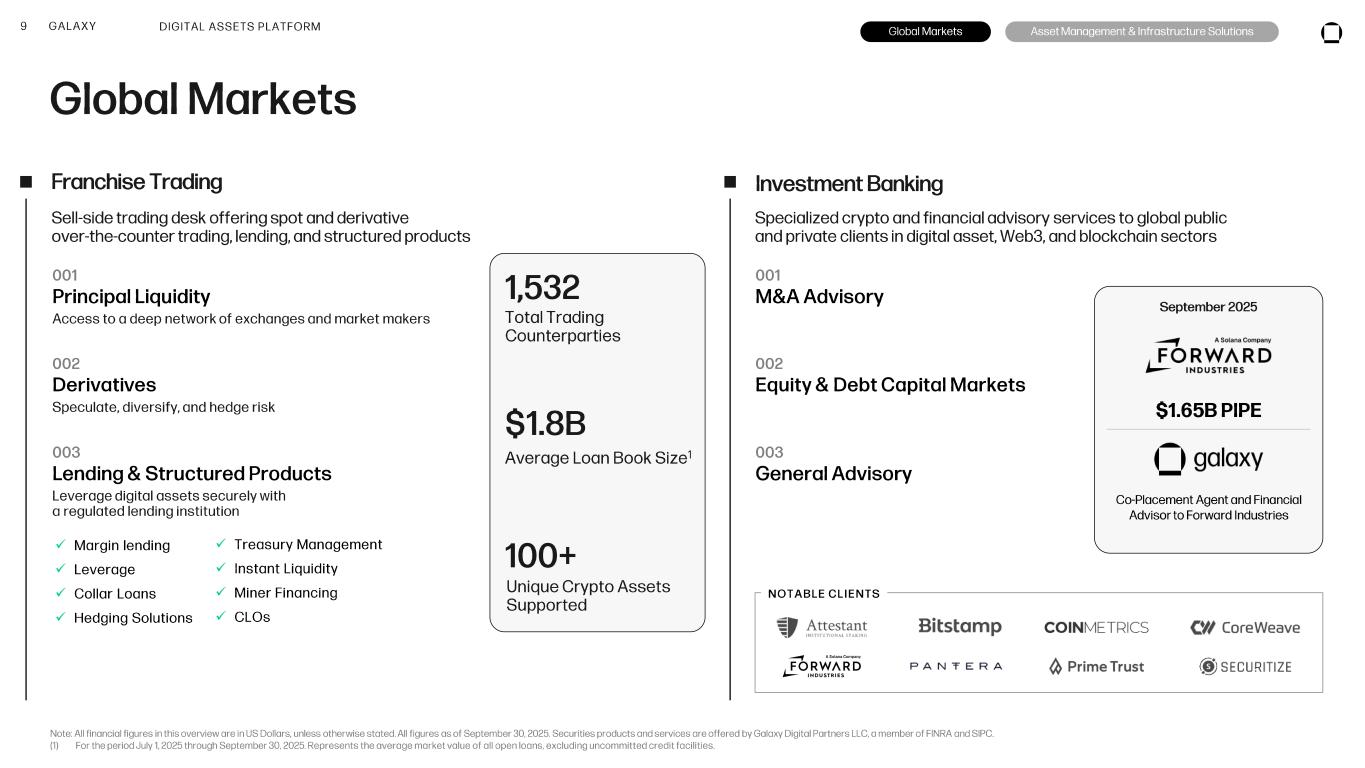
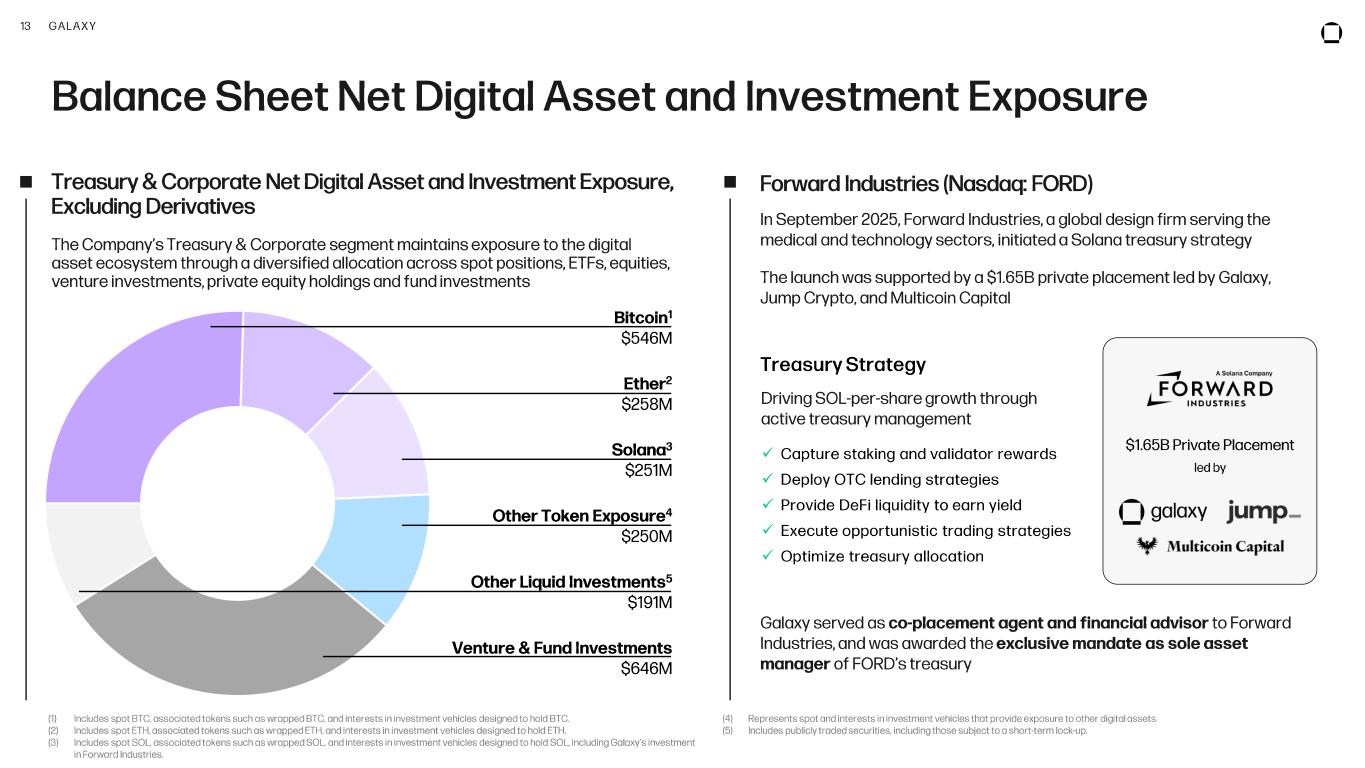
Well, good morning, everyone. Chris Ferraro would get upset with me if I didn't give you a New York weather report. It is a gorgeous day here in the Big Apple, a great fall day. I couldn't be more excited to be with you. I want to welcome our new friends who are logging in on YouTube. Last time in our conference call, we didn't have enough slots, which was a bit embarrassing. And so we wanted to make sure our story gets out there and anyone who wants to hear can hear. And so thanks for following us. Listen, quarter 3 was the best quarter in Galaxy's history. And so I show up today with a grin. Probably about running the company is that grin lasts probably for the length of this call, and then my face gets stern and we start grinding. What happened? Listen, we have for 8 years, been trying to build a brand of confidence and trust. And Q3, it felt like that all kind of came together, right? We did a gigantic spot crypto trade, which came to us because there are guys in the community that trusted us to move $9 billion of their Bitcoin into cash. That didn't come overnight. That comes from a long time of relationship building and liquidity building, quite frankly. We also helped launch the largest Solana DApp again, raising $1.7 billion, $1.65 billion to invest in the Solana ecosystem and doing it quickly comes from having built up trust with lots of people. And so that's kind of the story that we've been working hard for 8 years. We didn't do a great job telling our story originally, and we're really focused on that. Part of that was not being here. We're 6 months now in the U.S. NASDAQ company gives us a lot more ability to tell our story. And so part of my job is out there making sure people understand what Galaxy is, what we're doing, what we're thinking about. I'll just hit you with a few quick highlights, and I'm going to pass this to Tony and Chris. But one, we generated over $500 million of net income. That's just a lot. Our assets on platform reached $17 billion. That's by far a record for us. That strong organic growth in asset management is staking. Asset management, we did a great job of understanding when all these treasury companies were starting that we could play a role in helping them manage those assets and stake. And so that was over $4 billion of new assets added to the platform, and those are high fee-paying assets that will be with us for a long time. On the trading side, outside of that 80,000 Bitcoin order, we saw record volumes. And that hopefully continues to grow each quarter. Those are the businesses that we keep investing in, thinking that, that will in the long run, give Galaxy great ballast. Our lending book, which had spent years roughly in that $900 million to $1.2 billion, is on the move. We were at $1.8 billion and growing. And so I talked a lot about credit needing to be a key part of the Galaxy growth story, and we are focused on making it so. Excitingly, we launched Galaxy One. It's our opening for to get individual investors into the Galaxy universe. We're going to take the knowledge and institutional profile that we've built at Galaxy and opened the window to more and more people. It's a new business. We're going to give you updates, but it's going to take us a little while to get that really up and running. And so let's think of that as a Q2 '26 big update. Data centers, which is I always think of we're half a data center company and half a digital assets company. We are grinding in the data center business. There are 2 sides to this. There's the 800 megawatts that we have in building that out for CoreWeave, that's building on time. It's building on cost, that's getting it financed. All of those things, Chris is going to talk on, I'm feeling great about. And then we're in queue with a bunch of people for more power in Texas. And we'll know a lot more about that in the foreseeable future, but we feel pretty good that 800 is not going to be our total footprint. And finally, listen, last week, we did a PIPE deal, $460 million from a large institutional investor. I couldn't be more excited about having them as a partner and investor in us. That money is going to be used to help build out a world-class company and a world-class data center. And with that, guys, like I said, couldn't be more excited. I'm going to pass it to Tony.
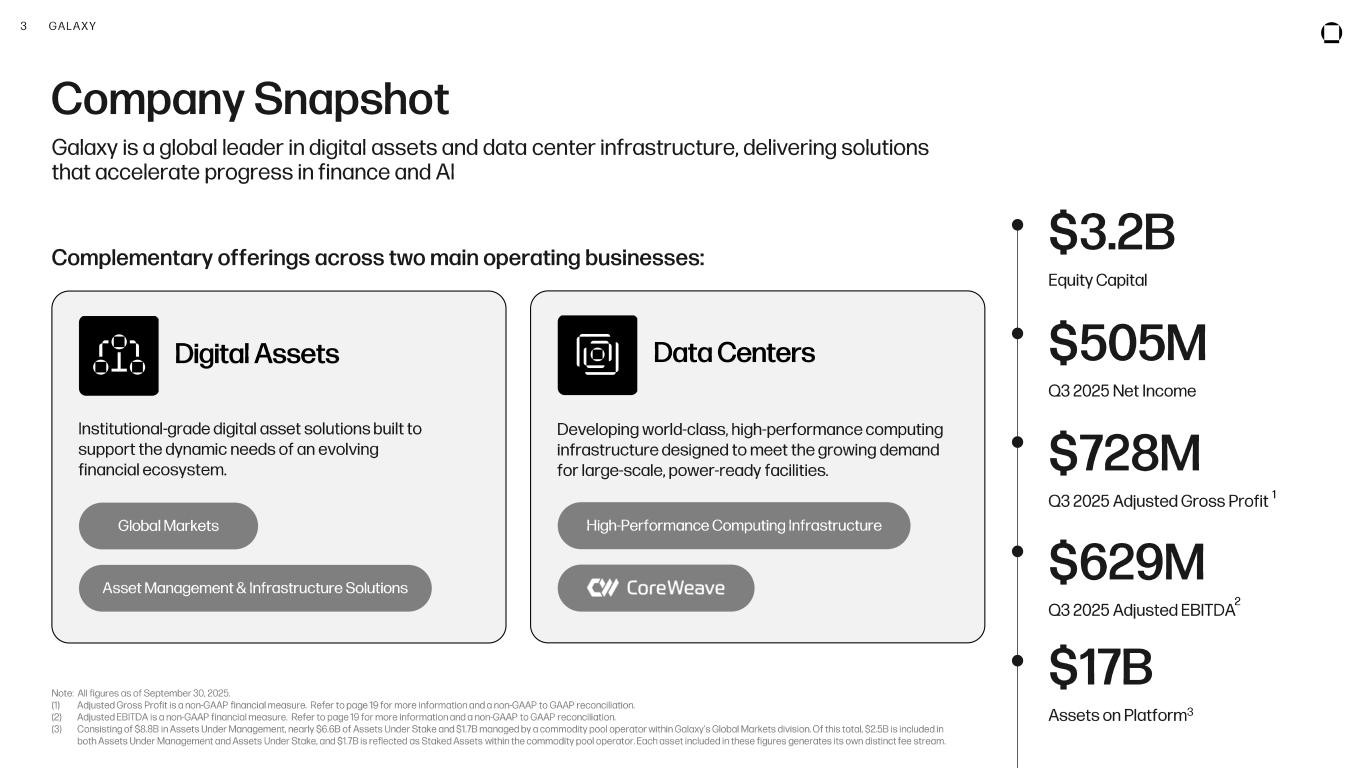
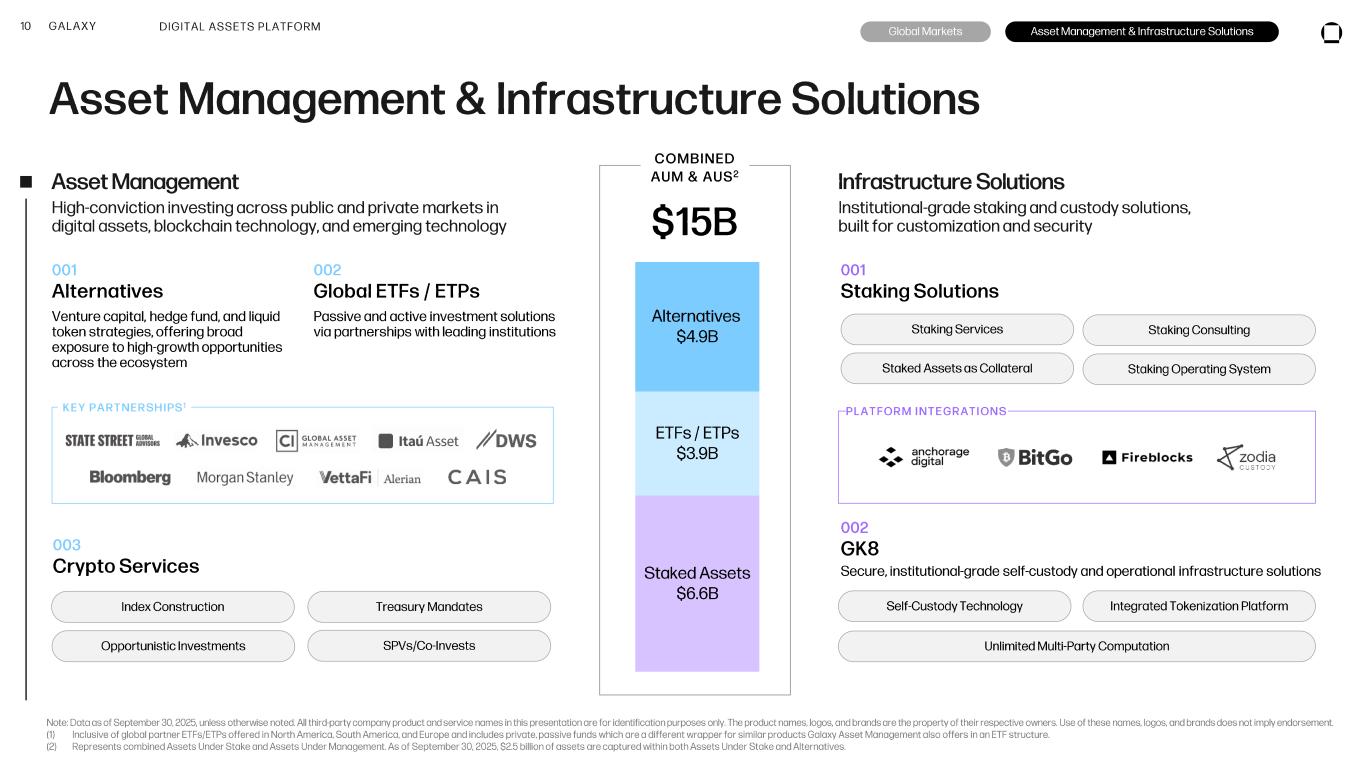
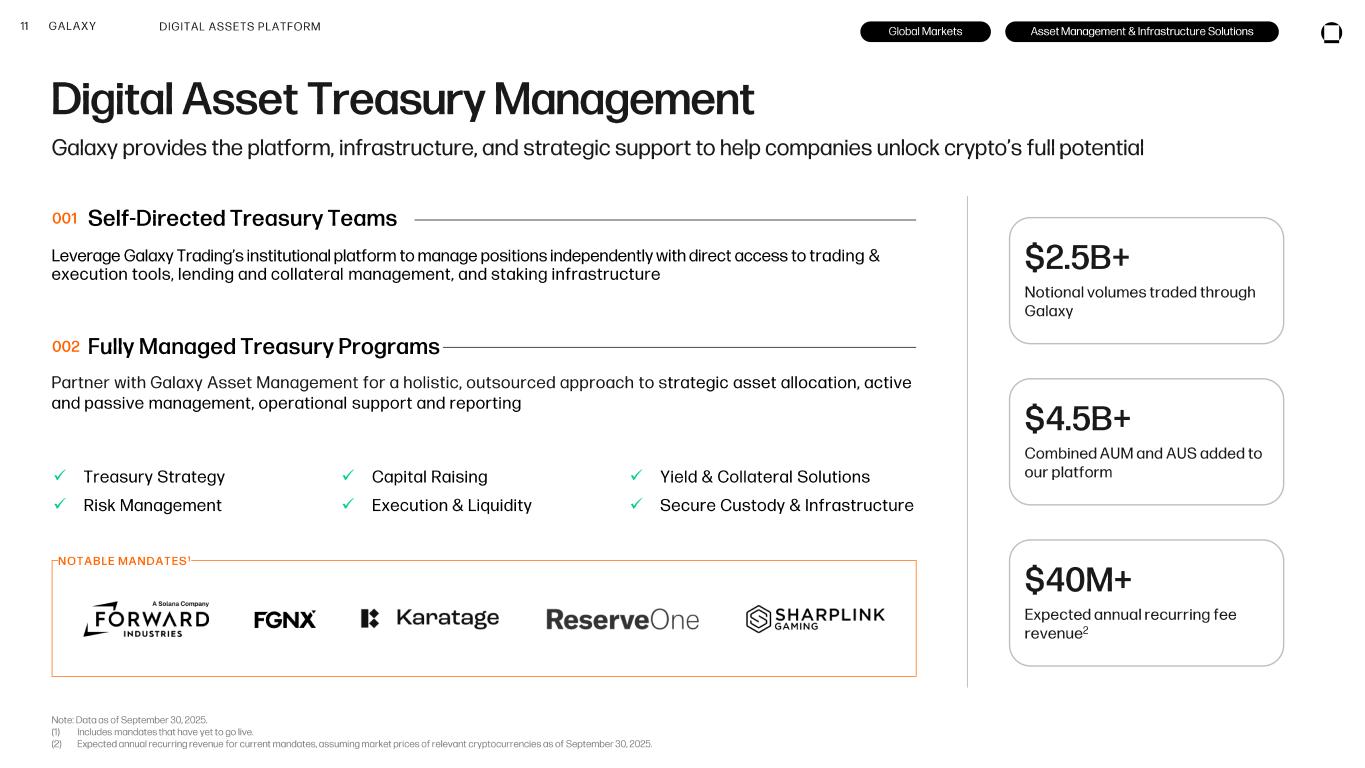
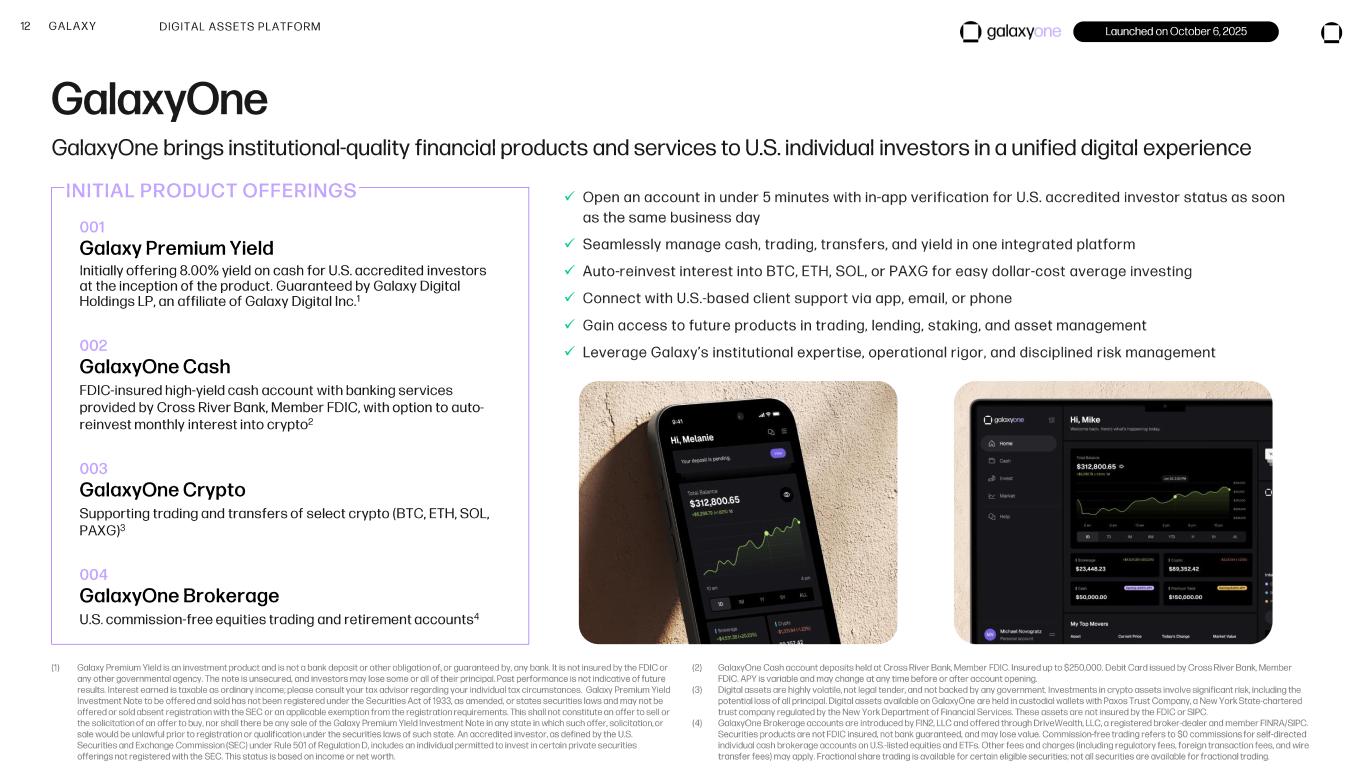
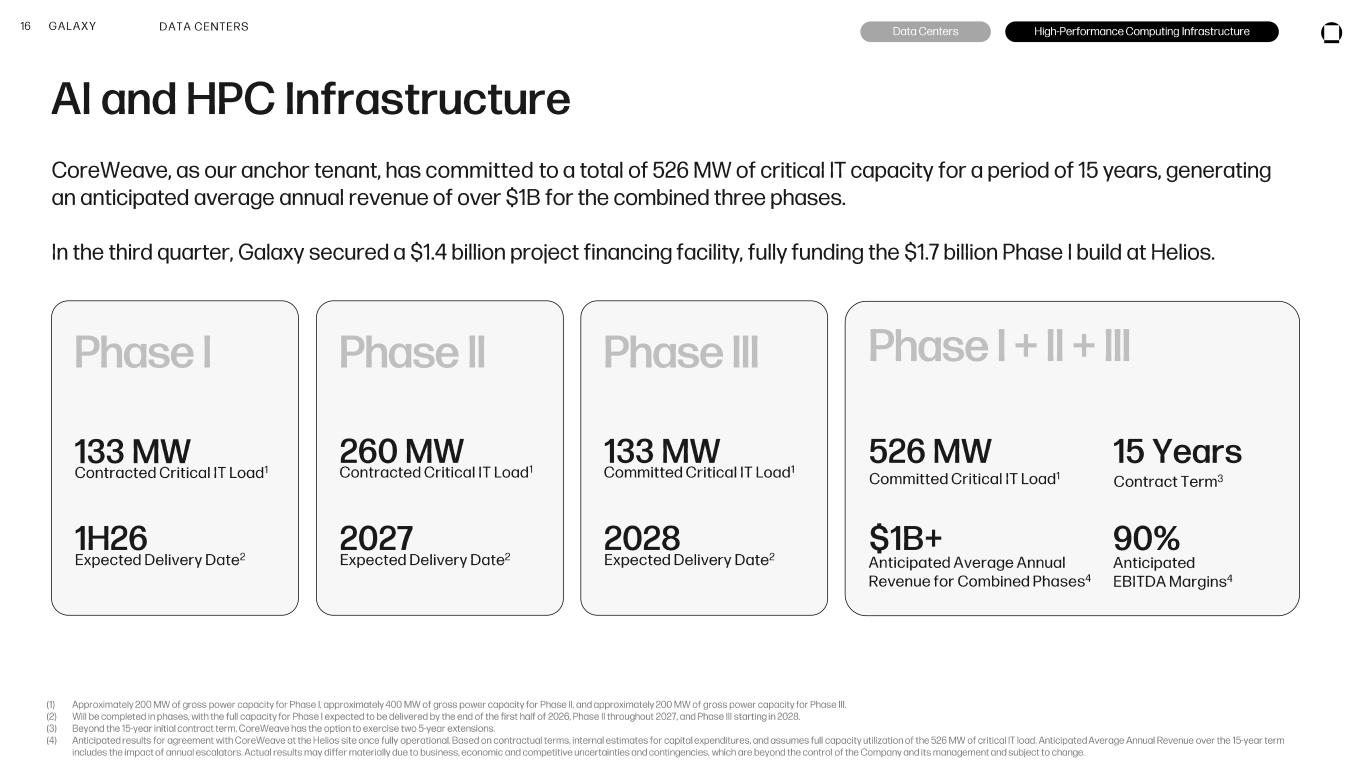
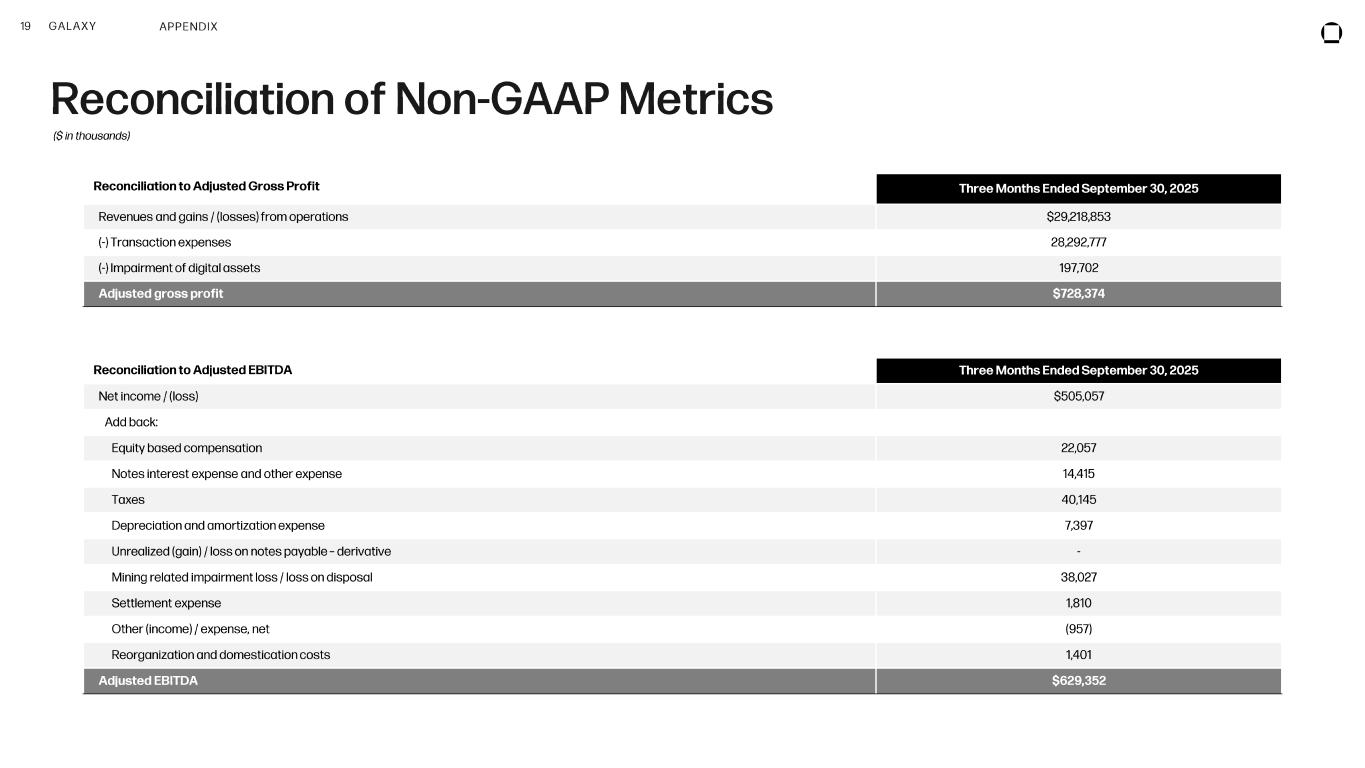
Great. Thanks, Mike, and thank you, everyone, for joining the call today. As with last quarter, I'll provide a summary of Galaxy's overall performance in Q3, then I'll dive into some more details on the digital asset business and then turn it over to Chris to provide a more detailed update on data centers. As Mike mentioned, Q3 was a standout quarter for Galaxy with record performance across the Digital Asset segment and continued operational progress as we scale our core businesses. GAAP net income for the quarter came in at $505 million, on record adjusted gross profit of $728 million, underscoring the strength of our diversified model and ability to execute in a dynamic market environment. This performance was driven by outsized contributions from both our Digital Asset segment and our Treasury and Corporate investment portfolio. In Digital Assets, we delivered a record adjusted gross profit of $318 million, reflecting strong momentum across trading, investment banking, asset management and staking. Our platform continues to benefit from increased institutional engagement, broader client activity and rising demand for sophisticated investment and advisory solutions. In Treasury and Corporate, we delivered adjusted gross profit of $408 million primarily driven by gains across our digital asset and investment portfolios. Within our private investments book, we saw sizable unrealized gains from our investments in Ripple Labs and from Bullish, which went public during Q3. As a reminder, we've transitioned the majority of our venture investing activity from our balance sheet into our venture franchise within the asset management business, which allows our institutional LPs to invest alongside Galaxy while enabling us to generate long-term management fees for overseeing these investments. In data centers, as mentioned previously, we expect financial results in this segment to be de minimis until the first half of 2026 when we plan to begin recognizing revenue under Phase 1 of our CoreWeave lease agreement. Until then, all major capital expenditures associated with our data center build-out are being capitalized including the interest associated with the $1.4 billion project level loan we secured during the quarter. Firm-wide adjusted EBITDA came in at $629 million, up from $211 million in Q2, a clear reflection of the increased scale and profitability across the enterprise. Total operating expenses, excluding grossed-up transaction costs were $184 million in Q3. The increase from Q2 was driven by a $38 million onetime impairment related to our legacy mining infrastructure and an increase in compensation expense. Looking forward, we do not expect any material further impairments to our remaining mining equipment, which is now held on our balance sheet at an aggregate value of less than $50 million. Turning to the balance sheet. We ended Q3 with $1.9 billion of cash and stablecoins, up roughly $700 million from Q2, primarily reflecting the net sale of certain digital assets and investments during the quarter as well as deposits received from CoreWeave following the exercise of their Phase 2 and 3 options. Within our Treasury and Corporate segment, we held approximately $2.1 billion in net digital assets and investments at quarter end, reflecting the continued strategic allocation of capital towards high conviction investment opportunities. We ended Q3 with $3.2 billion in equity capital, up more than 20% quarter-over-quarter with roughly 65% allocated to our operating businesses. Over time, we expect the amount of capital allocated to our operating businesses to continue to increase as we scale across both digital assets and data centers. As Mike mentioned, earlier this month, one of the world's largest and most respected names in Global Asset Management made a $460 million investment in Galaxy. The $325 million in net proceeds to the company will help drive the build-out of our Helios data center campus, which Chris will speak to shortly. We feel good about our overall capital position and we'll look to optimize our sources of funding as we continue building across 2 major growth businesses. As mentioned last quarter, we will continue to manage our balance sheet with fortress principles demonstrating disciplined risk management and maintaining sufficient capital and liquidity to support sustained growth over the long-term. Now turning to our operating results, starting with Digital Assets. On last quarter's earnings call, we highlighted that July marked the strongest monthly performance for our Digital Assets business, and that momentum carried through the remainder of Q3. We had record results in global markets generating approximately $295 million of adjusted gross profit, driven by healthy trading activity and continued growth across our client base. Industry-wide crypto trading volumes improved meaningfully during the quarter, reflecting higher prices, strong market sentiment and increased engagement, and Galaxy outperformed that backdrop delivering record crypto trading volumes that were up 140% from Q2. As Mike mentioned, this included the sale of over $9 billion of Bitcoin on behalf of a single client and one of the largest notional Bitcoin transactions ever completed, underscoring our ability to deliver complex transactions at scale with limited market impact. In our lending business, as Mike mentioned, our average loan book grew to over $1.8 billion in Q3, driven by new clients and market appreciation. A shift in mix caused some net interest margin compression during the quarter. And as the crypto lending market evolves, we will continue to maintain prudent risk standards and explore strategies to efficiently fund this business with a focus on supporting long-term scalability. On the advisory front, Galaxy closed 2 deals during the quarter, including serving as a co-placement agent and financial adviser to Forward Industries on the $1.65 billion private placement. And this deal highlights the strength of our advisory franchise and our growing role as a trusted partner for institutional clients navigating this market. It also marks the first step in a broader partnership with Forward Industries that extends across our platform, which I'll speak to in a moment. Shifting to Asset Management and Infrastructure Solutions. We ended the quarter with more than $15 billion in total assets under management and assets under stake, nearly doubling from last quarter and generated $23 million in adjusted gross profit, reflecting strong growth across both businesses. Assets under management grew to approximately $9 billion this quarter, reflecting strong net inflows of roughly $2 billion across both ETF and alternative strategies. This momentum was driven by continued adoption of our digital asset treasury solutions with Galaxy being selected as the manager of choice by several companies in this space. Winning these mandates reflects our deep experience managing across market cycles and navigating volatility to deliver strong risk-adjusted returns reinforcing our position as a trusted partner. These mandates also represent a meaningful shift in the profile of our asset management business to more strategic long-term capital that generates recurring durable revenue streams. The asset management business is now firmly run rate profitable, giving us a solid foundation to continue investing in order to expand the platform and broaden our reach. Turning to Infrastructure Solutions. Our assets under stake more than doubled quarter-over-quarter to approximately $7 billion, with growth being driven largely by digital asset treasuries and our custodian integration strategy. Through these integrations with leaders across the custody space, including the custodian for the majority of U.S. crypto ETFs, we positioned ourselves to serve institutional clients at scale and enable our staking services to reach a much broader audience. Stepping back, Q3 served as a sort of activation of the flywheel across our multiple digital asset businesses. This is an exciting development and notable marker of the continued maturation in Galaxy's business model. A clear example of this flywheel is our work with digital asset treasury companies. What began as an emerging opportunity earlier in the year has evolved into a multichannel business line with mandates across some of the largest publicly traded holders of digital assets. This includes supporting clients with initial capital raise through our advisory business, then leveraging our network to provide operational support and connectivity to key service providers to ensure a successful launch. It also includes working closely with treasury teams to implement institutional-grade yield strategies aligned with their objectives, spanning staking, lending, trade execution, asset management and other on-chain opportunities all within a disciplined risk-managed framework. Our partnership with Forward Industries is a case in point. In Q3, we announced a strategic investment alongside Multi-Coin Capital and Jump Crypto in Forward's Solana-based treasury initiative, the largest of its time to date. We supported Forward's private placement through our advisory business, assisted them with execution and deployment of the proceeds, became the sole asset manager of all their treasury assets and helped launch their validator on the Solana blockchain. Collectively, our digital asset treasury mandates have added more than $4.5 billion in AUM and AUS to Galaxy. And at current market prices, we expect the annual recurring fee revenue associated with these mandates to be more than $40 million. This is exactly the kind of institutional-grade solution Galaxy is uniquely positioned to deliver, leveraging our expertise to build long-term partnerships and generate durable recurring revenue for the franchise. Shifting to innovation, a couple of things to highlight. As part of our broader mission to connect traditional finance with blockchain infrastructure, last quarter, we partnered with Superstate, one of our venture portfolio companies, to tokenize Galaxy's Class A common stock on the Solana blockchain. As noted in our press release from September, these on-chain shares are not a synthetic representation of ownership. They're fully SEC-registered securities with the same legal and economic rights as our traditional shares. We believe this event marks a meaningful step towards modernizing capital markets, serves as a proof point for how traditional markets and on-chain infrastructure can connect and positions Galaxy at the forefront of that evolution. We will continue to work with regulatory agencies and leading financial institutions to explore new opportunities to broaden and expand tokenization in the coming quarters. On artificial intelligence, we're not just building one of the newest, largest and most advanced data centers in the world, we have bought into the promise of AI and the impact it can have on our overall company. Over the past year, we've integrated AI across nearly every function at Galaxy from engineering and technology to finance and operations to trading and risk. Our employees are now using AI tools on a regular basis and productivity gains are materializing. In particular, areas like agentic coding are seeing step change improvements, giving us the confidence that continued investment in these tools will have compounding productivity benefits down the road. Looking forward, AI won't just streamline how we operate, it will redefine how we serve clients, innovate faster and compete at scale. Last but not least, as Mike mentioned, 2 weeks ago, we launched GalaxyOne, our first direct-to-consumer product offering with an exciting growth opportunity for the franchise. GalaxyOne gives U.S.-based individual investors access to high-yield cash, crypto and equities trading, all through one single unified platform. Unlike many mass market retail platforms, GalaxyOne offers clients a seamless way to manage assets across both traditional and digital finance, supported by Galaxy's institutional expertise, operational rigor and disciplined risk management. GalaxyOne also opens up new opportunities for cross-platform collaboration and integration across our trading, asset management and staking businesses. The premium yield product is a good example. Over time, we expect this product to broaden and diversify our sources of funding, which will help drive efficiency and profitability in our digital assets business overall. And while it's still early, we are encouraged by GalaxyOne's initial traction, we are already seeing adoption from clients who closely align with our target market, mass affluent investors who have historically been underserved by traditional platforms and this early engagement reinforces our conviction in the opportunity ahead. As Mike mentioned, we have an ambitious roadmap for this — for GalaxyOne, and we look forward to updating you on progress in the coming quarters. Wrapping up, Q3 was a breakout quarter for Galaxy and our businesses are building momentum. We're heading into year-end with a strong foundation, clear priorities and a long-term vision.
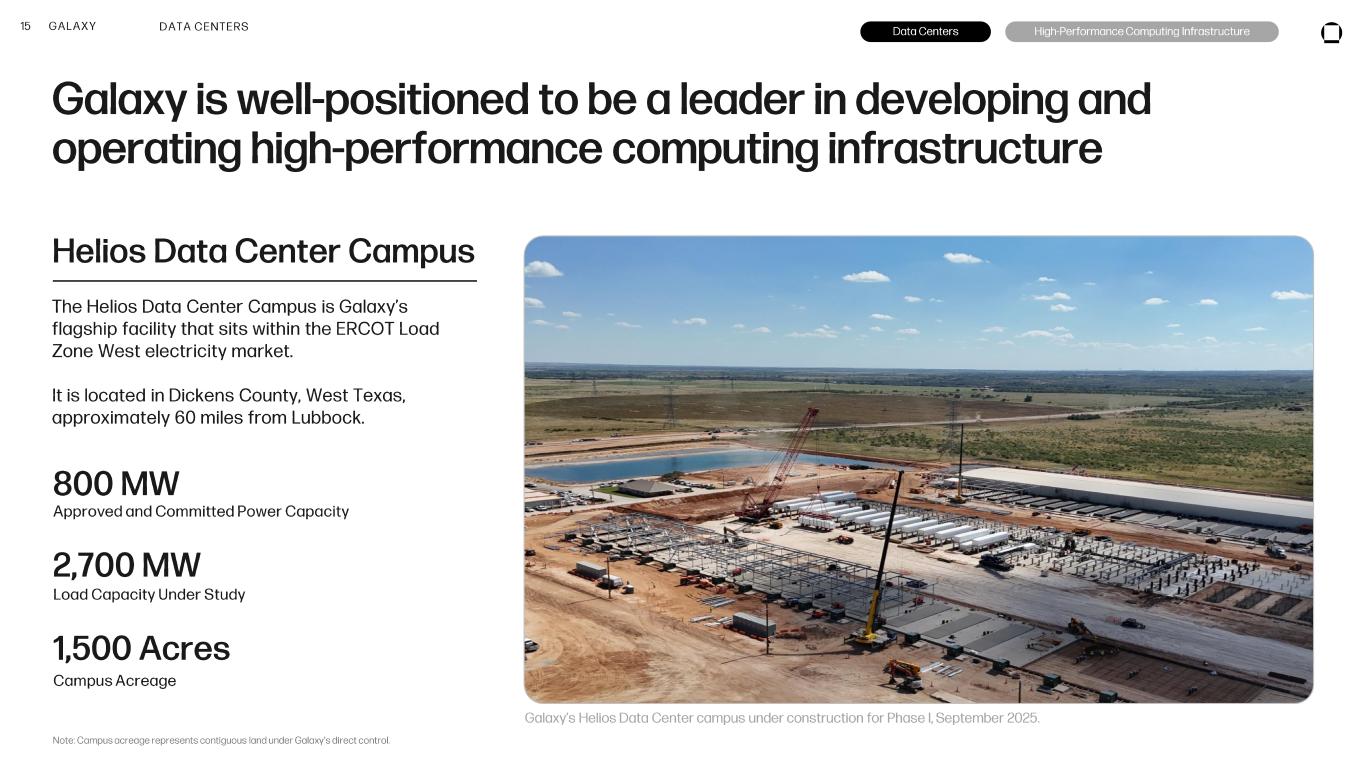
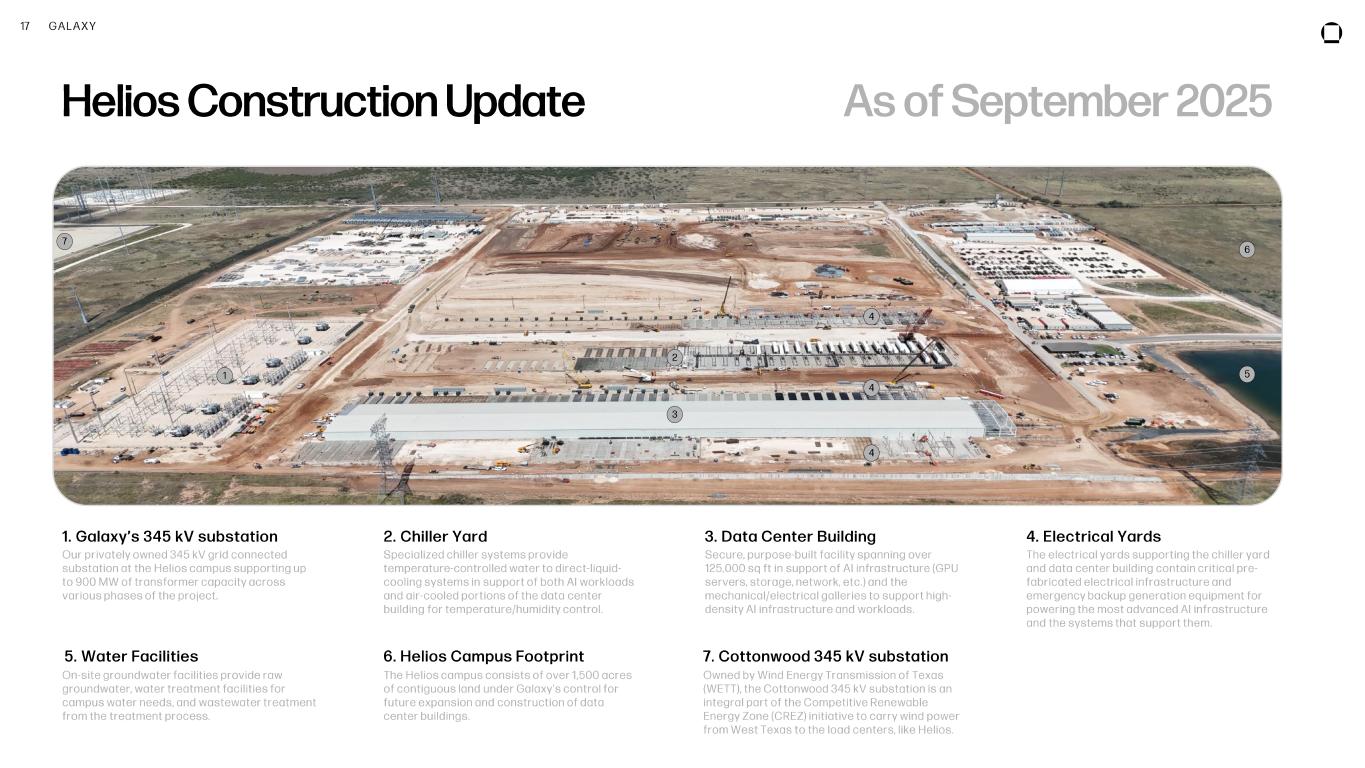
Thanks, Tony. Turning to our data center business. It was just one year ago on our third quarter earnings call that we announced the signing of a term sheet to support AI and HPC infrastructure at our Helios campus. In the 12 short months since the progress has been extraordinary. CoreWeave has now committed to the full 800 megawatts of approved capacity, we've secured project financing for Phase 1, and construction is advancing at an impressive pace. After laying the groundwork in the first half of the year, we carried significant momentum into the third quarter. We executed relentlessly and successfully, rapidly developing the Phase 1 portion of the Helios campus on budget and on schedule. Some updates on our construction progress. Approximately 70% of our civil and concrete work is now complete and equipment deliveries and installations are well underway. We are now placing chillers and putting together the piping system that will form the backbone of our advanced liquid cooling design, an essential component to support next-gen GPUs at industry-leading cabinet densities. Our e-houses, which contain the critical electrical infrastructure have started to ship from the integrators and medium-voltage switchgear and transformers are already being set on their pads. The building for Phase 1 is on track to be fully dried in or sealed from weather within the next few weeks, an important step that protects the mechanical and electrical equipment from inclement weather and allows interior trade work to proceed regardless of outdoor conditions. We've already logged more than 500,000 hours worked with over 700 construction team members on site daily, an extraordinary effort that underscores the efficiency, precision and discipline of the design and construction team supporting the project. The next major construction milestone for us is the powering on of the first data hall, which is scheduled in early December. Following that milestone, we'll begin commissioning activities with our third-party commissioning agent, vendors and contractors in preparation for making the first data hall ready for service. Importantly, we remain on schedule with construction, a testament to our growing data center team, the contractors and subcontractors working on the project and the thousands of hours of coordination required for complex projects like this one to be successful. At the same time, we're scaling the supporting infrastructure at the Helios campus for both the first and second phase of construction. Our on-site workforce development hub constructed on 90 acres we own adjacent to the main Helios campus, has been open for nearly a month now in support of construction and operation activities. As we look ahead to our Phase 2 and 3 projects at the Helios campus, we're applying lessons learned from Phase 1 to optimize the design for scalability and constructability while also enhancing the efficiency of our power and cooling systems. We are proactively securing long lead time items like backup diesel generators and medium-voltage switchgear early, locking in cost certainty and delivery timelines. We've transitioned from planning and preparation to full-scale execution as the Helios campus rapidly evolves from a construction project into what we expect will become one of the largest AI and high-performance computing campuses in the world. On financing, we achieved a major milestone in August with the closing of a $1.4 billion project financing facility with Deutsche Bank for Phase 1 of Helios, covering 200 megawatts of utility power. This deal underscores our ability to execute on efficient capital structures and provides a signal of the market's confidence in our execution capabilities, the value of Helios and the long-term economics of our lease. The facility is structured at 80% loan to cost and Galaxy has already funded the equity for the Phase 1 development. It's a 3-year loan secured by all Helios Phase 1 assets priced at SOFR plus 475 basis points plus ancillary fees, bringing the all-in cost to approximately 10% to 11%, if held to maturity. As a reminder, once Phase 1 is stabilized and generating revenue, our plan is to refinance the construction loan at a lower cost of capital. Doing so will likely unlock equity, enabling us to recycle capital into future phases and additional developments, keeping our balance sheet flexible, our capital structure efficient and our growth momentum strong. The success of this financing validates our capital strategy, disciplined leverage, flexible terms, partnership with top-tier institutions and an unwavering focus on execution. Shifting to Power. As we spoke about last quarter, ERCOT's interim process and the level of scrutiny applied to large loads requesting to interconnect to the system has led to delays in additional capacity approvals across the state of Texas. Despite the longer-than-expected timeline, we remain convicted in our ability to work through the existing process and contract additional interconnection capacity at the Helios campus. Based on recent feedback, we believe that we are well positioned to receive approval for a portion of the requested capacity that we've studied and submitted for review. We view this additional capacity as a transformational long-term growth opportunity for the Helios campus as we prepare for the next phase of AI and high-performance compute demand. As we shared last quarter, during Q3, we acquired 160 acres of additional land along with an additional 1 gigawatt load interconnect study adjacent to the Helios campus. With this addition, the Helios campus spans over 1,500 contiguous acres under Galaxy's direct control. Our Helios campus is strategically positioned to become among the largest AI data center campuses in the world. In a power market with exponential generation and battery storage growth, Helios stands as a flagship development for both Galaxy and the AI data center industry writ large. We were also encouraged to see wet break ground on the new Pitchfork 345-kilovolt substation, which is expected to deliver an additional 3 gigawatts of power capacity with 2 synchronous condensers adjacent to the Helios campus starting in 2028. It's great to see both wet and ERCOT investing in critical infrastructure in the region, reinforcing their commitment to reliability and the long-term growth potential of Helios and the broader data center ecosystem. Across our data center business, we're continuing to thoughtfully and strategically add world-class talent with proven expertise in engineering, construction and operations to our data center business. In the last few months, we've made key hires from some of the largest hyperscalers in the world across the engineering, construction and operations verticals of the business. The caliber of this team gives me tremendous confidence in our ability to execute with precision across all 3 phases at Helios and to deliver on the ambitious long-term vision we have for the business. The Helios campus represents more than just a single project. It's the cornerstone of Galaxy's next-generation infrastructure strategy and the blueprint for a multi-campus, multi-tenant, multi-gigawatt platform built to power the future of AI and high-performance computing. We continue to evaluate additional power and land opportunities across the region and nationally, leveraging the blueprint and expertise developed here to replicate the Helios model, efficient, scalable and AI-ready infrastructure built for the next generation of compute demand. It's been a transformative year for the business, and I couldn't be more proud of how our data center business continues to build momentum and strengthen its position with each passing quarter. Thank you all. Now back to the operator for questions.
Operator
The first question comes from James Yaro with Goldman Sachs.
Speaker 5
Congrats on a good quarter. I wanted to just touch first on the impacts of the forced liquidations we've seen across the crypto ecosystem. Has that had ramifications on market structure and your client franchise, maybe on which customers and maybe you could summarize what the overall ramifications could be?
Yes. So first of all, Galaxy did spectacularly well during that liquidation. And so I wanted to shout out our trading desk; we were quick to move. We didn't have any credit losses. We're all over our customer base. And it didn't hit us where it hits everybody else, right? So who got hurt in that? First and foremost, market makers. Market makers that were market making on DeFi platforms like hyper liquid or cross market makers that were market making on Binance plus others. And so some estimates as high as 25% of those guys got put out of business, which is significant. And so what does that mean? It means you have a little less liquidity, you have a little wider bid-out spreads, probably means there's lots of talent available to hire, but certainly not great for the ecosystem in the short run. Who else got hurt was retail. Lots of retail, especially overseas retail trades crypto very leveraged. And I always scratched my head. I was like, we got to the 40 to 80 vol asset. I'm not sure you really need 2x to 3x the leverage on it, let alone 30x of leverage. But part of the ethos of crypto is people want to make a lot of money on a little bit of money. And so there was a lot of leveraged accounts that got wiped out. Not just in crypto, but ever since I've been a trader, I've always said, when Humpty Dumpty breaks, he doesn't get fixed overnight. It takes days, weeks, months for markets to kind of regain that vitality. And they always do, right? People get wiped out, find new money and they participate again. But it's a short-term negative, no doubt. There's been lots written and we wrote a pretty interesting research piece on why this happened. There are lawsuits being filed. But when you have a significant deleveraging like that, there's both opportunity and there's short-term pain. And I think that's what we're going through. And you see the crypto price roughly trading sideways. Gold has outperformed Bitcoin significantly in the last 5 months. Bitcoin had outperformed gold for a long time. And so some of that's just rotation. But I think some of this recent the last 10 days of us going sideways is still the market digesting that deleveraging.
Speaker 5
That's really helpful color, Mike. So maybe just turning to one other one here. You announced GalaxyOne earlier this month. Maybe you could just expand on your aspirations in the business and maybe what the right client base is? Is it existing customers? Or is this TAM expanding? And if so, what's the new customer TAM?
Sure. I'll take the first part and then pass it to Chris. We are proud of our launch. Getting a product out is challenging, and we started with a simple minimum viable product that includes two unique features. One is an FDIC-insured checking account that offers a competitive interest rate, along with the 8% Galaxy offering, which is attracting clients. We're excited about the growing interest. We also provide stock and crypto trading, and we have an ambitious plan for the next 6 to 18 months to develop the wallet into a comprehensive solution. While it's not there yet, we're working towards it. Our primary audience consists of high-end consumers who want the same level of service and knowledge that we offer to our institutional clients. However, we don't want to restrict ourselves to just that demographic. Although we designed it with affluent consumers in mind, our belief in the crypto ethos is that everyone should have equal access to investing. Therefore, I would regret not aiming to reach a much broader customer base beyond just high-end consumers.
I want to highlight a couple of key points. The goal behind launching GalaxyOne for consumers is to capture the full range of a consumer's wallet from an investment perspective. Our intention is to expand our offerings to include products that allow high net worth consumers to invest, hold, and manage their wealth with minimal friction, enabling them to easily move funds between traditional investments, such as equities and bonds, as well as newer investments like digital assets and cash management. This is also part of our long-term vision for the institutional side. As we consider the future of Galaxy's digital asset business, our plan is to gradually integrate more traditional financial services, providing clients with access to all their assets in one convenient platform. The target user base for GalaxyOne significantly differs from our historical customers, offering us a chance to expand our total addressable market. We're seeing early success with our desired customer profile; for instance, the average net worth of Galaxy users onboarded is over $2 million, and their average annual income is about $340,000. Currently, we are not focusing on low dollar balances or aggressive trading strategies, but instead on a customer demographic that has been historically overlooked, which tends to be the most profitable segment for many consumer platforms—those who have wealth and want to store and allocate it effectively.
Operator
The next question comes from Patrick Moley with Piper Sandler.
Speaker 6
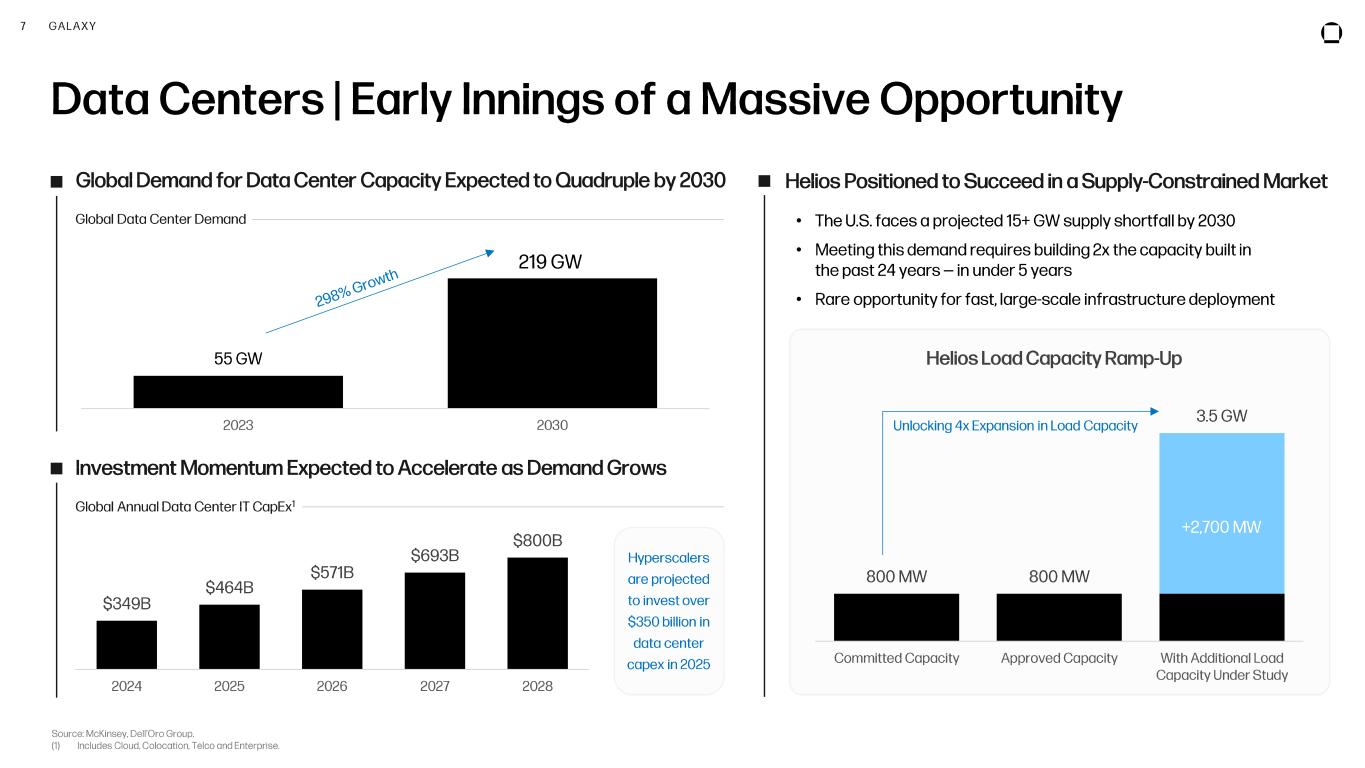
So shifting to the data center business, and the 2.7 gigawatts that's currently awaiting approval, you said that you expect to get approval for that somewhat soon, I think. Any update on the timing there? And how large any tranche that were to get approved would be? And then just generally curious what sort of inbound you've been getting on the potential for that incremental power? How has demand been there? What have those conversations been like?
I'm looking at Chris, and he's looking at me. These are tricky questions. The honest answer is that we won't know until we get approval. We see many encouraging signs that suggest a positive outcome. However, predicting the date is probably not wise because if we're wrong, we'll appear foolish, and if you're right, someone has likely already informed us about it. Texas has faced a bit of a challenge over the past year with the volume of approval applications submitted. There were statistics released today that are quite surprising regarding the number of applications received. Many of those applications lacked studies and weren't serious threats to obtaining short-term approval. In the near future, you can interpret that however you wish. I wish I could provide a clearer answer, but that's our current situation.
Yes. I'd like to add a couple of points. What gives us higher confidence these days is all the major constituents and stakeholders we are partnered with in terms of getting approval and implementing interconnect. It's not just ERCOT; it's also AEP, our utility partner. All three are actively working with us today to finalize the studies that have been established for over 18 months, and progress is being made at a faster pace than earlier in the year. These are the data points that provide us with considerable comfort. However, as Mike mentioned, ERCOT and Texas will take the necessary time to ensure they are not taking on loads that could destabilize the grid. There is a significant number of poorly planned loads that have attempted to enter the queue, but the good news is that they are focused on weeding those out and collaborating with the entities that have demonstrated they will deliver capacity as promised. To quickly address your other question regarding demand, I would say we are seeing positive traction. There has been an increase in proactive inquiries from large customers, in addition to our current partner, CoreWeave, who are all eager to know when we will receive approval and the specifics regarding capacity and timeframes. This is encouraging as we consider long-term project decisions about potential incremental capacity expected to come online in 2028, 2029, and beyond. We believe the demand for our power continues to grow, which is a very positive sign as we approach a point where meaningful progress is expected.
Speaker 6
Okay. That's great color. And then just a follow-up. Chris, you mentioned the plans to eventually refinance and that would unlock some capital. Any idea how much capital the refinance could unlock that could potentially go to future build-outs? Just wondering how to think about that in our model?
We have a strong expectation that opportunities will arise once we reach stabilization. Stabilization means that we have delivered 100% of the data hall, and it is fully operational with CoreWeave paying rent. We believe there will be chances to revisit the financing structure for Phase 1 and introduce something innovative. To consider this, think about the period around Q3 and Q4 of 2026. The specifics are uncertain due to the dynamic nature of the market, especially regarding the AI boom and its longevity, which are shifting daily. The perception of CoreWeave's credit profile, which lenders are closely monitoring, along with Galaxy's credit profile, is improving consistently. The ultimate outcome will depend on the conditions of CoreWeave, ourselves, and the market at that time. It’s important to note that on a stabilized basis, there are several examples of stabilized cap rates to consider for valuing Phase 1, which we currently assess in the high single digits. While I don't want to provide too many specifics, if CoreWeave and we continue to perform well, I anticipate that the number will likely decrease, influenced by long-term interest rates. Viewing it as a high single-digit cap rate helps differentiate between value and cost in our situation due to the lease dynamics. Therefore, we consider a loan-to-value approach instead of a loan-to-cost in the refinancing scenario, which suggests a substantial opportunity to refinance at higher amounts, potentially unlocking hundreds of millions of dollars in equity.
Speaker 7
Maybe to stick with some data center questions. So the $1.4 billion construction financing, can you give us some guidance on the kind of the cadence of when you'll pull that down? Because I don't think you pulled it all down at once, right?
Yes, we are not pulling down the financing all at once. We prefunded the equity on our end because the project needed to continue while we brought the financing together. Our approach to capitalizing Galaxy involves ensuring we have enough capitalization to support the projects through their stabilization and to have adequate capital early on so we can proceed on time and on budget, which helps us obtain the best financing. We prefunded the equity, and at closing, we made a relatively small draw to align our equity back to the intended 20% equity versus 80% debt on a cost basis. The draw cadence generally follows the project budget, occurring roughly twice a month throughout the construction phase. Since closing in August and now being in October, we have made several semi-monthly draws, so we are drawing regularly and at a consistent rate.
Jon, I'll just add. At the end of the quarter, Jon, we've drawn about $430 million from the $1.4 billion loan facility. So you'll see in total notes payable on the balance sheet about $1.15 billion. That comprises both the draw on that construction finance as well as our outstanding convertibles.
Speaker 7
Okay. Great. That's helpful. And I was curious if you had just some thoughts on your competitive positioning in the market from a data center perspective. You probably saw the IPO of Fermi recently that's building in Amarillo, which isn't too far away from the Helios campus and they're also talking about building many gigawatts. Just how do you think about the competitive nature of that region? And just I guess, more thoughts on that overall.
It's a great question. There are multiple aspects to consider. When we discussed our pipeline for potential acquisitions or developments two earnings calls ago, we noted that everything has become significantly more expensive. The market for some companies without contracts or customers is reflecting an unrealistic level of optimism. Therefore, in the short term, we are unlikely to make substantial purchases at these prices. The Helios site is unique because we own the land, and the necessary infrastructure is already in place. While there's a lot of speculative investment in this area, many projects may not materialize. Our primary focus is on financing and constructing our project, as well as obtaining approval for new land and power to repeat this process. We are actively engaging with the market, networking, and attempting to comprehend the landscape. However, we are cautious during this gold rush, ensuring we invest wisely in the right locations at the appropriate price.
Yes. I believe that execution is significantly undervalued in the current market. It's relatively easy to sign agreements with large figures, but the real challenge lies in delivering projects on time and within budget. This is crucial for long-term customer demand. As we consider the future with companies like CoreWeave, Microsoft, Meta, and Google, the focus is on whether we can fulfill our commitments. This leads us to prioritize having an excellent team and strong construction partners to ensure timely and budget-compliant delivery, which helps us secure future contracts. I think we have a considerable advantage over our competitors in this aspect.
Operator
The next question comes from Ed Engel with Compass Point.
Speaker 8
Two questions. The first was on Helios, other ones on more kind of operating the crypto business. On Helios, you talked about that being potentially a multi-tenant site. Just kind of curious how you're thinking about the puts and takes for financing when it comes to partnering with the new cloud like CoreWeave or maybe even a hyperscaler?
Yes. We're uncertain about the long-term composition of the tenant base for the Helios campus. Our partnership with CoreWeave has been excellent; they are a commendable partner in various aspects, including signing commercial agreements, design, and navigating challenges related to equipment procurement, timelines, and teams. CoreWeave is currently undergoing a transition, and it's advisable to refer to their earnings call for insights. The market is assessing CoreWeave's current credit quality and its future trajectory, which will significantly impact their ability to secure favorable lease rates and financing for us as the landlord. The direction in which this evolves is something we are closely monitoring. Considering trade-offs for capacity, we face a crucial decision regarding whether a lower-yielding lease from a higher credit quality tenant provides a better economic outcome as we look to diversify our portfolio. As investors, we generally believe in diversity and risk management, and we tend to favor that approach moving forward, regardless of the economics. Ultimately, the economic outcomes will depend on market conditions at any given time and CoreWeave's perceived credit risk when compared to investment-grade tenants.
Speaker 8
Great. And then just kind of a bit more of a bigger picture question. But in the past few months, we've seen Galaxy get more involved in the equity space, whether it's the DApps, Investment Banking advisory or even now the GalaxyOne for retail. How do you think about the opportunities within institutional equities now that blockchain and Wall Street are converging more?
Yes. If you ask me about my five-year outlook, as Chris mentioned earlier, we will see significant tokenization of real-world assets, including equities, fixed income, and commodities. The integration of what we currently refer to as digital assets or crypto with traditional finance will become more evident. As this integration unfolds, I believe that crypto customers, who have typically been highly speculative, will begin to seek more conservative investment options. However, the primary purchasers of these conservative products, especially tokenized credit, will likely be those who were already involved in traditional finance. For traditional finance companies, such as banks, this development is on the horizon, and they are working on building their own expertise, forming partnerships, and exploring acquisitions to stay ahead. This strategy will be crucial as we continue to collaborate with major financial institutions. Our advisory and core businesses are well-positioned for this, and the momentum we have built over the next three years with these partnerships appears to be strong. On a different note, regarding equity prices within some of these firms, it's challenging to ascertain if the equity market is overvalued, fairly valued, or undervalued. Multiples are relatively high, driven by significant liquidity, and there are indications of an emerging AI bubble. The duration of this trend is uncertain, and it tends to lift everything along with it. I predict we'll see more public crypto companies, leading to increased differentiation between those that are profitable and those relying on narratives without solid financials. Consolidation will occur in the market, particularly among smaller crypto companies with decent revenue but lacking the ability to go public. Currently, these companies might be overvalued due to market enthusiasm, and any reshuffling of shares will likely await some sort of market correction. This story of merging crypto infrastructure with traditional finance will continue to evolve over the next three years.
Operator
Was there a follow-up, Mr. Engel?
Operator
The next question comes from Devin Ryan with Citizens.
Speaker 9
Appreciate you taking the questions here. I just want to touch on the digital asset treasury opportunity. Galaxy just is uniquely positioned here with both combination of your expertise, but also just the breadth of services across capital raising and asset management and trading. So I'd love to just get a little more sense of the demand you're seeing right now from groups that want to launch a strategy. How much do you want to be a part of that? I suspect you're being still very selective here. And then I also appreciate it's going to be lumpy, but just want to get a sense of how sustainable you think this trajectory is? And just as you think about kind of the bigger picture for Galaxy, how much larger could it be just as some of these DApps probably raise tens of billions of dollars of capital potentially in the coming years?
I believe we are nearing the end of new issuances. While there are still a few in progress, most of the larger ecosystems have already established themselves. There are significant DApps on Solana, Ethereum, and numerous Bitcoin DApps, but there does not appear to be much room for expansion among these three major tokens. There is a highly liquid DApp that has not yet officially started trading but has already raised funds. The main question now is how much these DApps can grow. For instance, MicroStrategy, led by Michael Saylor, has achieved far greater growth than many anticipated. Similarly, a Bit miner and the Ethereum DApp led by Tom Lee are experiencing comparable excitement and expansion, with a substantial premium and ongoing equity raises for Ethereum. Some of these will trade at discounts, leading to some consolidation, but overall, they benefit the ecosystem by attracting numerous new investors to crypto, who might evolve into significant stakeholders through staking assets or investing in venture projects tied to their primary tokens. In some respects, these entities may serve as alternatives or supplements to the traditional foundations established in Switzerland due to regulatory considerations. While it's still early to determine their exact future, this presents an optimistic perspective.
Speaker 9
Got it. Just a quick follow-up here on the lending book. As you mentioned, it's on the move of $1.8 billion now. And I know it's important for a number of your clients. Can you talk about where the demand is coming from right now? And then just how you think about capacity for growing that from here?
Yes, the demand is quite broad and remains consistent with historical trends. We cater to the institutional market, which includes end customers borrowing cash and crypto to enhance their capital efficiency by applying reasonable leverage. We also engage with market makers who borrow coins and cash for working capital to facilitate market operations. Additionally, there's an interdealer market where dealers borrow from each other to meet customer demands. While this interdealer business is stable, it's less captivating for us. Our primary focus has always been on delivering lending, borrowing, and locating assets for institutional trading clients who aim to enhance their trading activities, which have typically been fully funded in the crypto space. We are addressing an existing gap in the market by developing a more automated margin-based financing system that functions like a prime brokerage, allowing institutions to access capital more easily while managing leverage constraints. We have begun to roll this out to a select group of clients on a trial basis and will proceed cautiously due to the significant risks involved, both in terms of system stability and market conditions, until we feel confident in the system's readiness. This initiative could significantly drive the growth of our loan book, assuming financing is available. Another important area we have not yet seen reflected in our current numbers is our traditional off-chain business with clients. There are emerging on-chain financing pools being established, including secured, undersecured, and unsecured options. We take this nascent market seriously and envision a future where our lending operations not only contribute to loan book growth but also evolve through infrastructure and technology development, enabling broader access to on-chain financing. We are very committed to pursuing this opportunity.
Operator
The final question will come from Martin Toner with ATB Capital Markets.
Speaker 10
So if I take your performance in digital assets this quarter, I annualize it, I put a multiple on it, it implies it's worth a lot. How sustainable are these results in your view?
Crypto is a highly volatile asset class, and I believe part of our results will continue to be influenced by that volatility. We aim to adjust our balance sheet by reducing our exposure when we anticipate a market decline and increasing it when we expect growth. While we manage this better than many, it’s still a challenging task. You will notice a relationship between our treasury and balance sheet assets and the market. Additionally, our enterprise side of the digital assets business is somewhat correlated because if crypto prices drop, our fees from asset management projects usually decline, and volumes often decrease as well. Crypto isn't mature enough to be completely independent of market trends; fluctuations in the S&P don't prevent companies like Morgan Stanley or Goldman Sachs from having good or bad quarters, and we remain somewhat linked to crypto. We aim to reduce that correlation, and each quarter we're making progress. Increasing the assets on our platform is crucial for stabilizing our business, and our senior management team is continuously focused on how to attract more assets. While we are working towards this goal, we are not quite there yet. Therefore, I wouldn't advise annualizing unless you truly believe there will be consistent strong inflows into the crypto markets each quarter. We remain optimistic about the medium term. I believe that given the current troubling state of the fiscal situation globally, Bitcoin reaching $1 million eventually could become a reality. I've stated this publicly before, and I hope it doesn't happen next year, as that would indicate serious issues in the U.S. economy, which would be detrimental for all of us. I anticipate a gradual devaluation of fiat currencies, which will likely benefit our sector. This reflects our straightforward approach; we strive each quarter to improve our business, and we will persist in our efforts.
Speaker 10
That's great, Mike. Can I ask if you think you can offer GPU as a service at Helios with some of the capacity? Are you considering it?
Sure. Technically, we could pursue that option, but we're not currently considering it. There are two main reasons for this. First, there are excellent companies, such as our partner CoreWeave and NVIDIA, that have developed extensive technology beyond just owning raw chips, which adds significant value and maximizes the potential of increasingly complex GPU clusters. We have not invested in that expertise internally yet. It’s tempting to think we could simply start this by purchasing GPUs. The second reason is that we are not confident about the useful life of GPUs. The improvements in GPU efficiency are still in their early stages. We prefer to invest in long-lasting infrastructure that has a clear understanding of its useful life, which we do not yet have for GPUs. Therefore, the business model for returns on capital regarding GPUs, especially without real expertise and added value, presents a significant challenge. So, we are not currently considering it.
Operator
That concludes our question-and-answer session. I would like to turn the conference back over to Mike Novogratz, Founder and CEO of Galaxy Digital for any closing remarks.
Guys, thanks for spending an hour with us this morning. I hope you hear from the tone we're excited about the opportunity ahead of us. We're charged up about our third quarter, but we're already a month into the fourth. And so we understand our job here, and we're going to work hard for you guys. So stay tuned.
Operator
The conference has now concluded. Thank you for attending today's presentation. You may now disconnect.