Operator
Good morning and welcome to the Hyatt Fourth Quarter and Full Year 2024 Earnings Conference At this time, all participants are in a listen-only mode. After the speaker's remarks, we'll have a question and answer session. To ask a question, please press star followed by the number one on your telephone keypad. As a reminder, this conference call is being recorded. I would now like to turn the call over to Adam Roman, Senior Vice President of Investor Relations and Global FP&A. Please go ahead.
Thank you, and welcome to Hyatt's fourth quarter and full year 2024 Earnings Conference call. Joining me on today's call are Mark Hoplamazian, Hyatt's President and Chief Executive Officer, and Joan Botterini, Hyatt's Chief Financial Officer. Before we start, I would like to remind everyone that our comments today will include forward-looking statements under federal securities laws. These statements are subject to numerous risks and uncertainties as described in our annual report on Form 10-K, quarterly reports on Form 10-Q, and other SEC filings. These risks could cause our actual results to be materially different from those expressed in or implied by our comments. Forward-looking statements in the earnings release that we issued today, along with the comments on this call, are made only as of today and will not be updated as actual events unfold. In addition, you can find a reconciliation of non-GAAP financial measures referred to in today's remarks on our Investor Relations website under the Financials section and in this morning's earnings release. An archive of this call will be available on our website for 90 days. Please note that unless otherwise stated, references to occupancy, average daily rate, and RevPAR reflect comparable system-wide hotels on a constant currency basis.
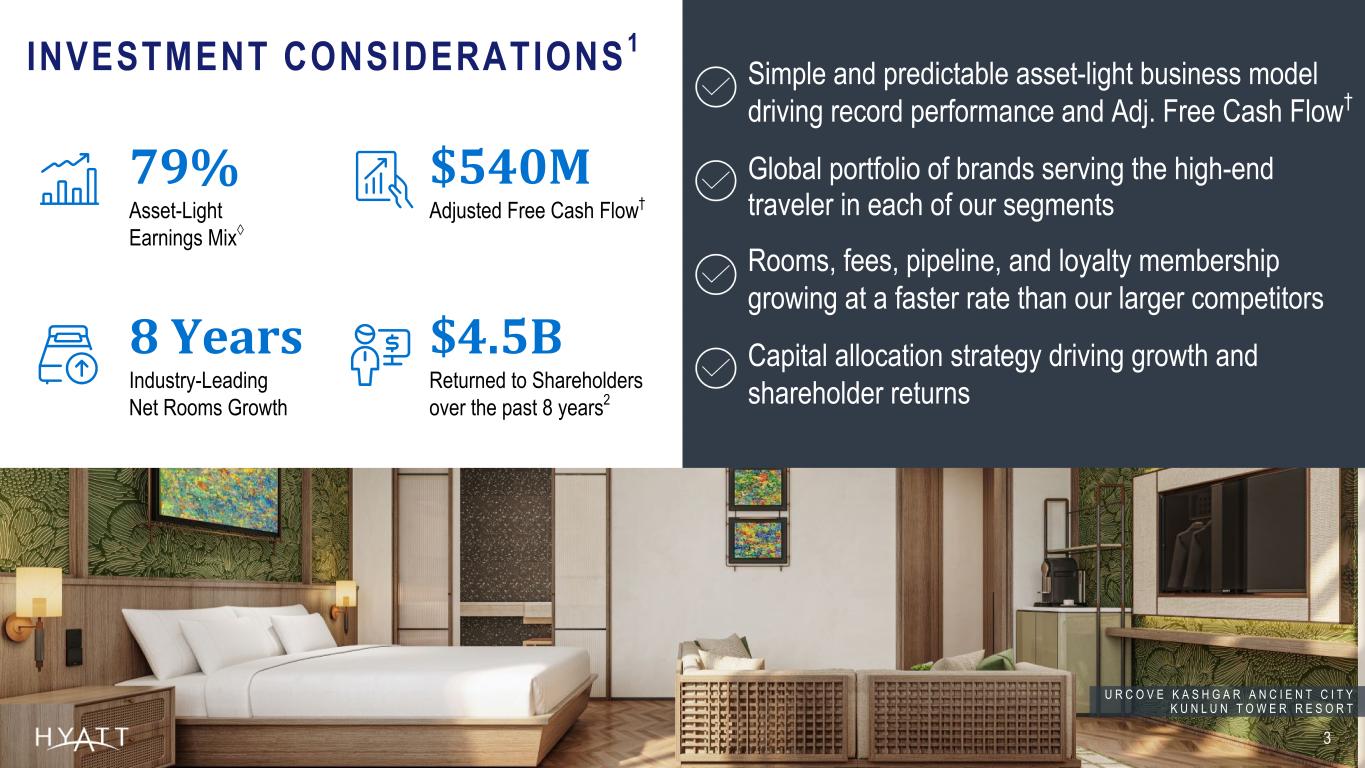
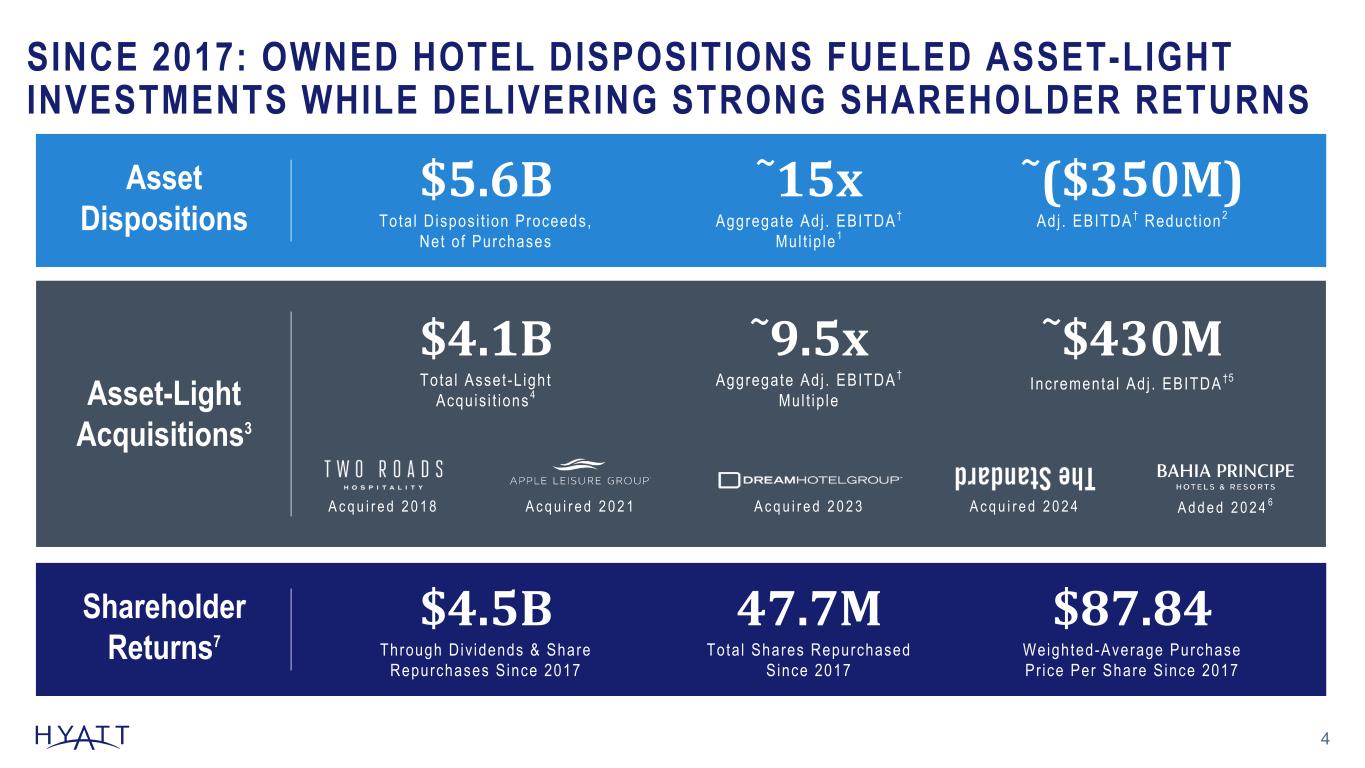
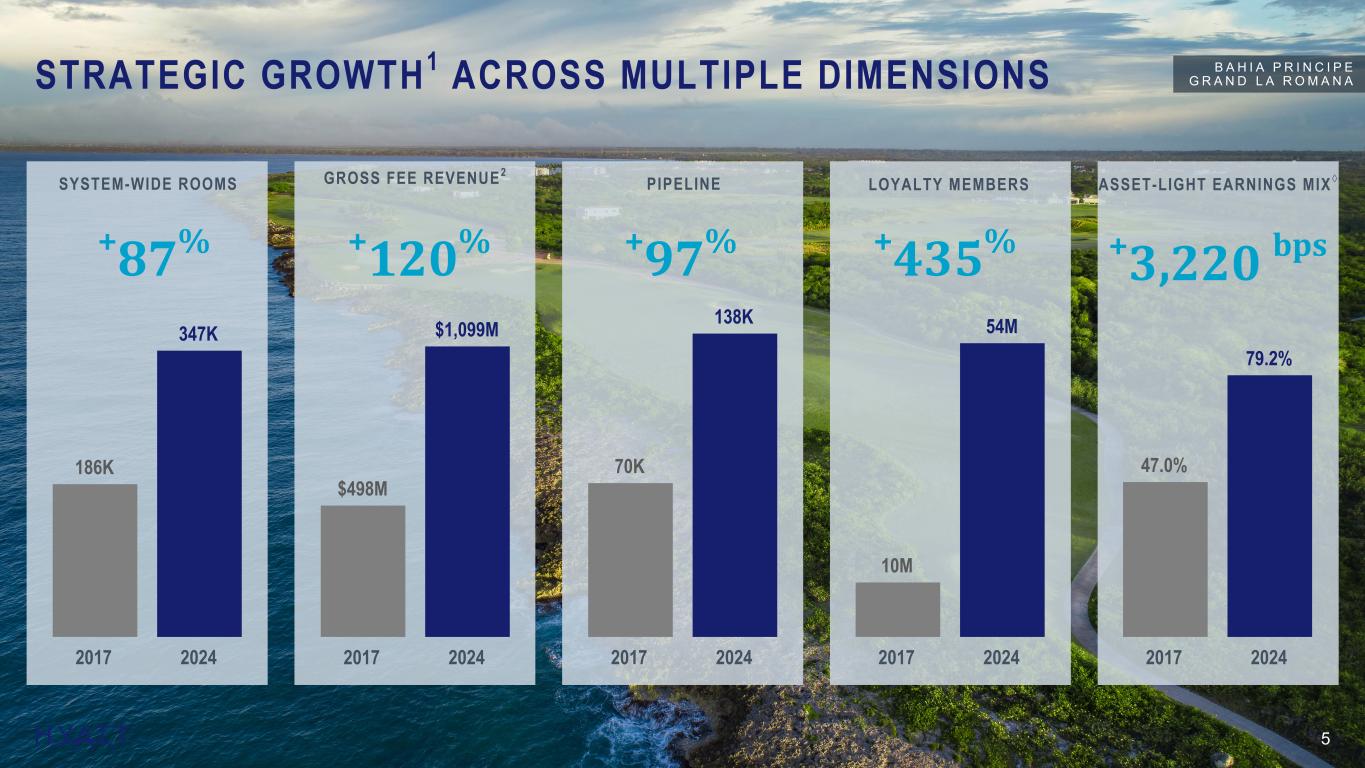
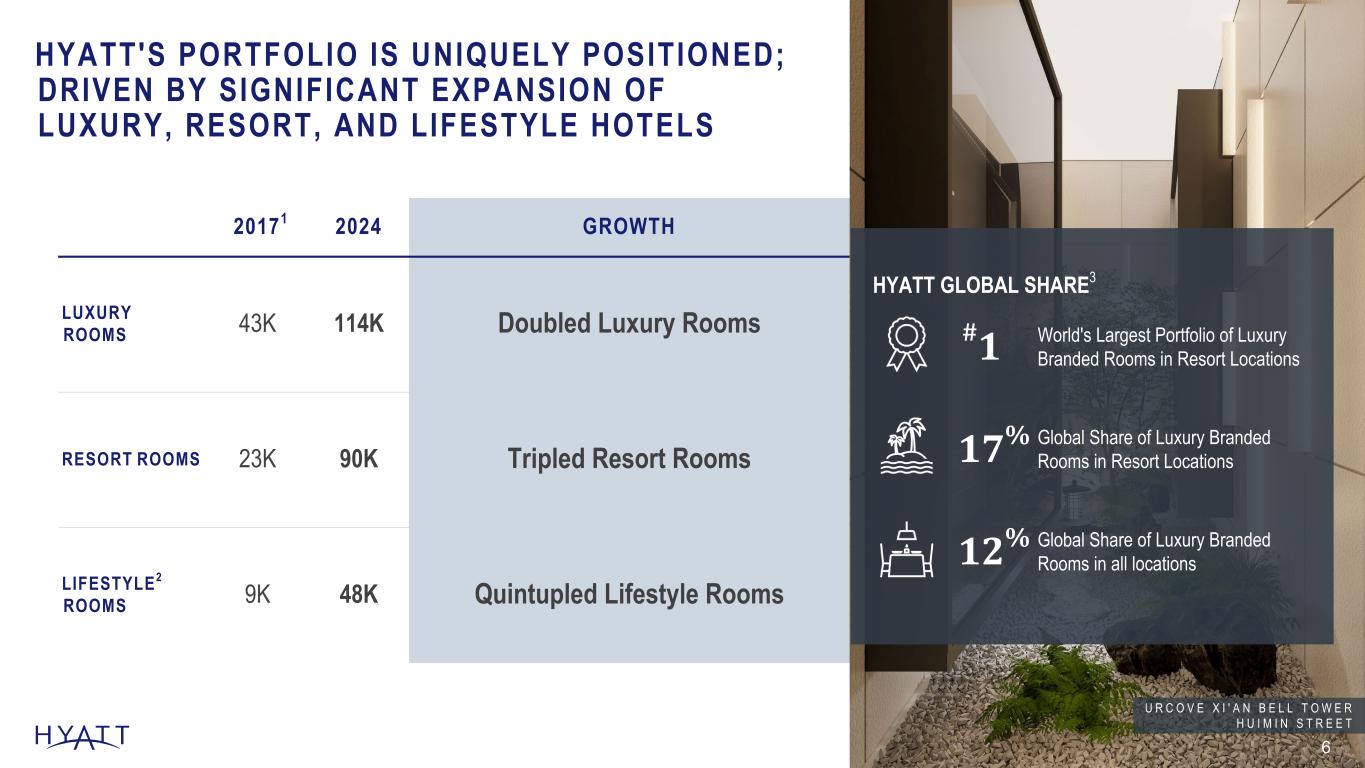
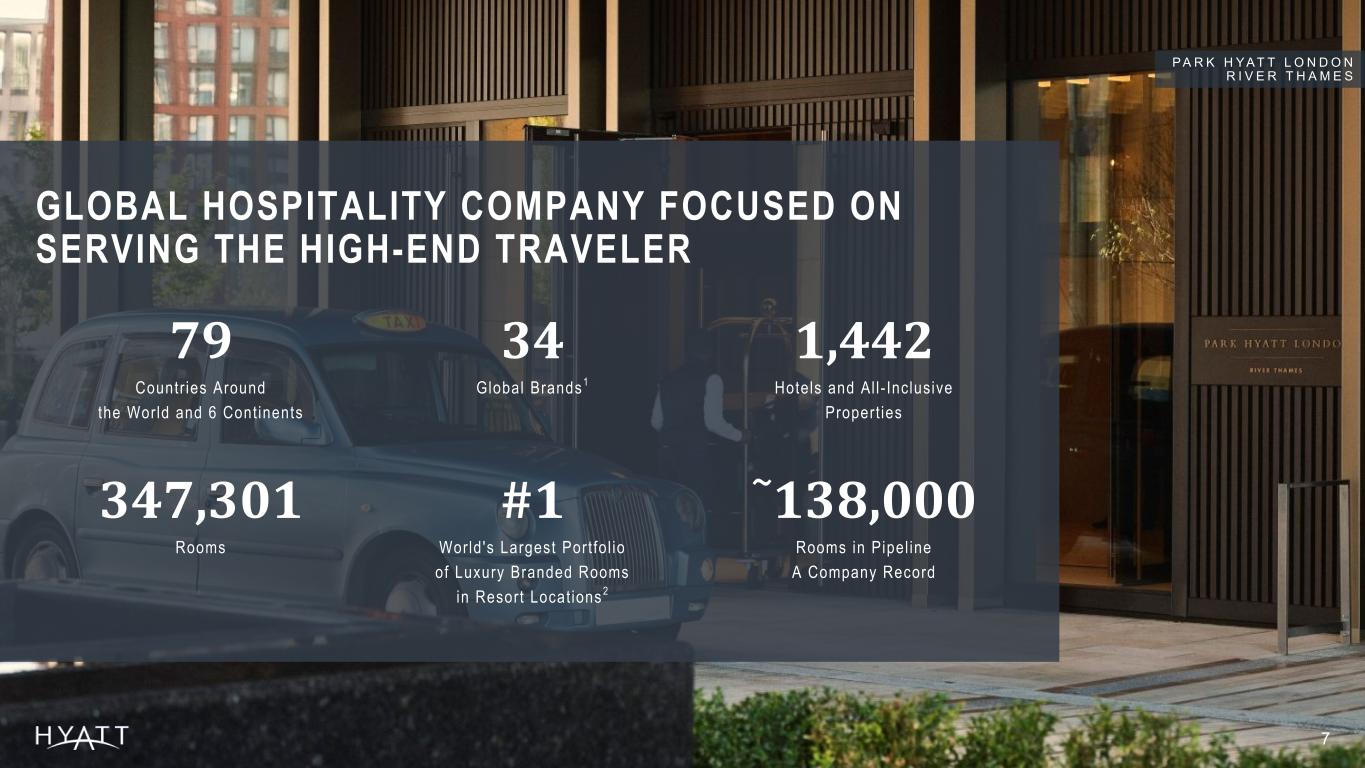
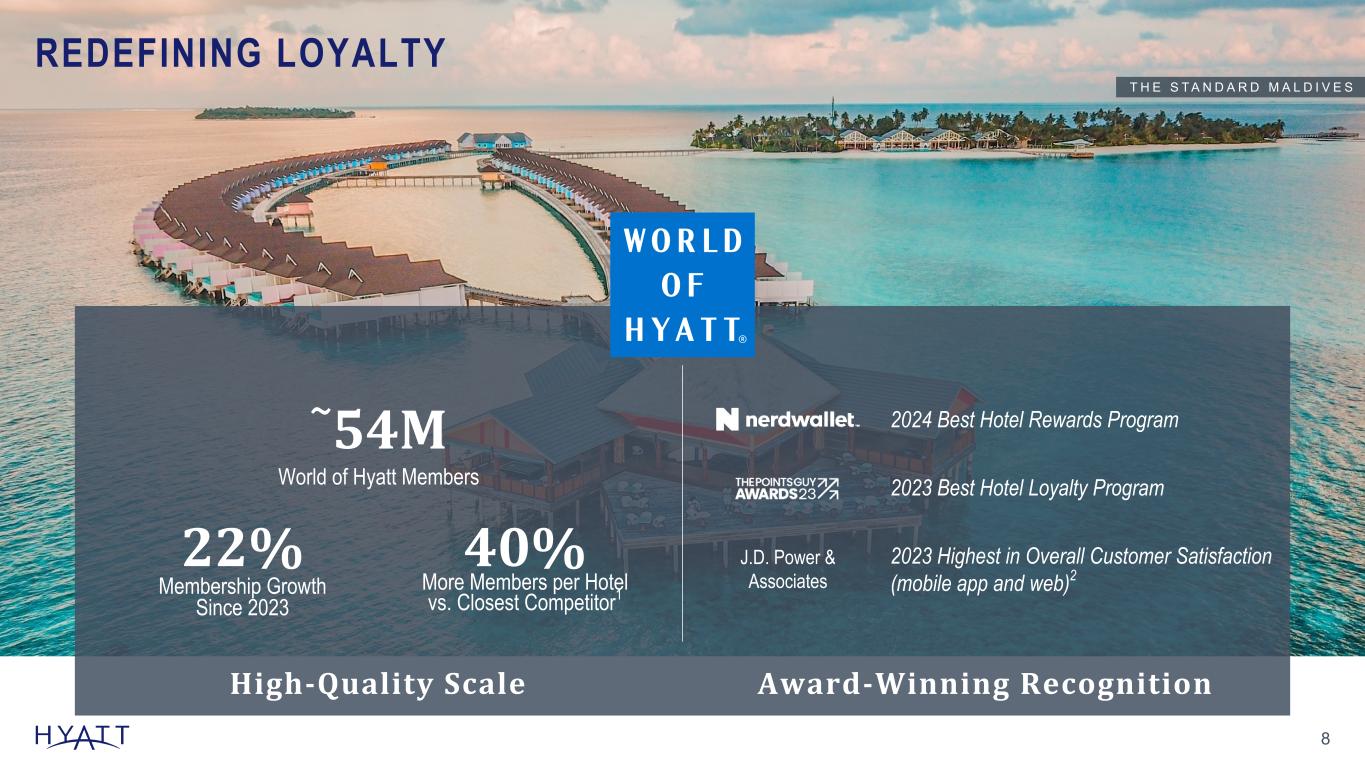
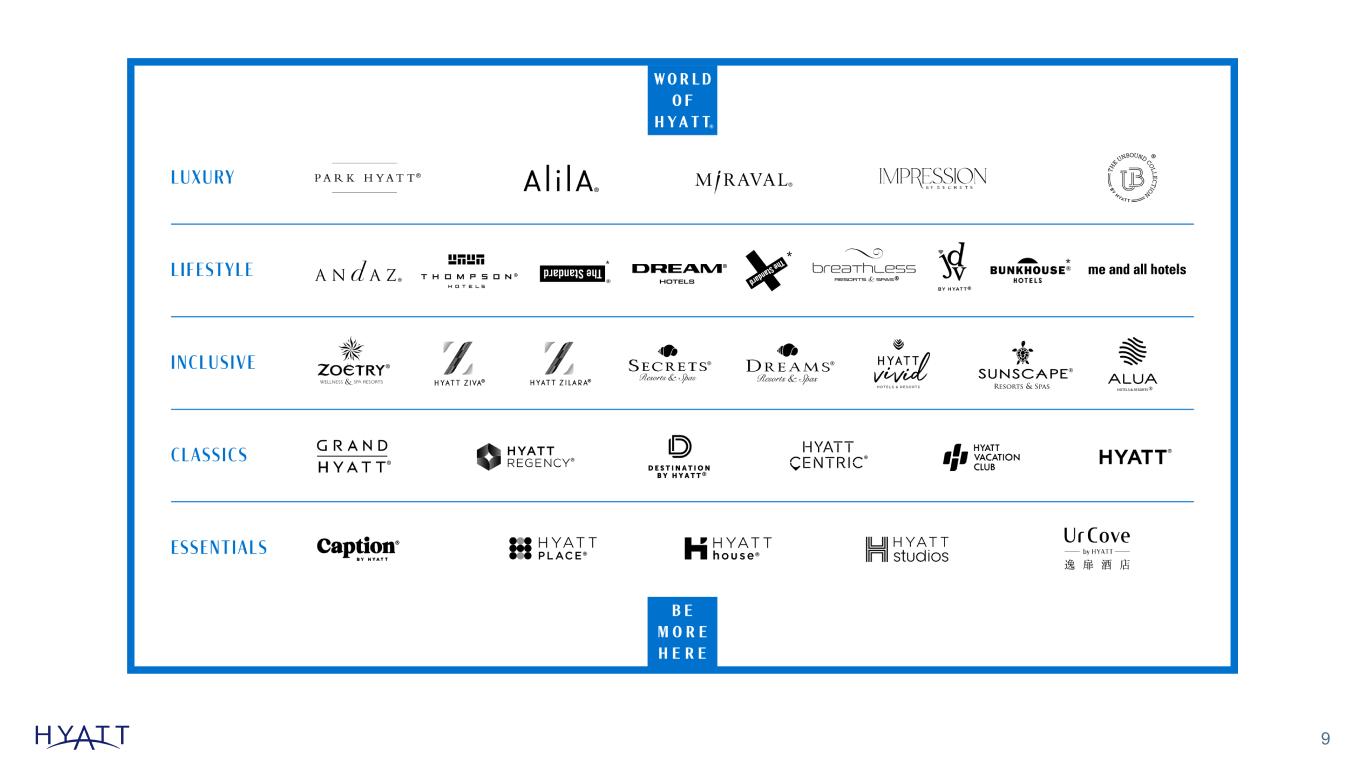
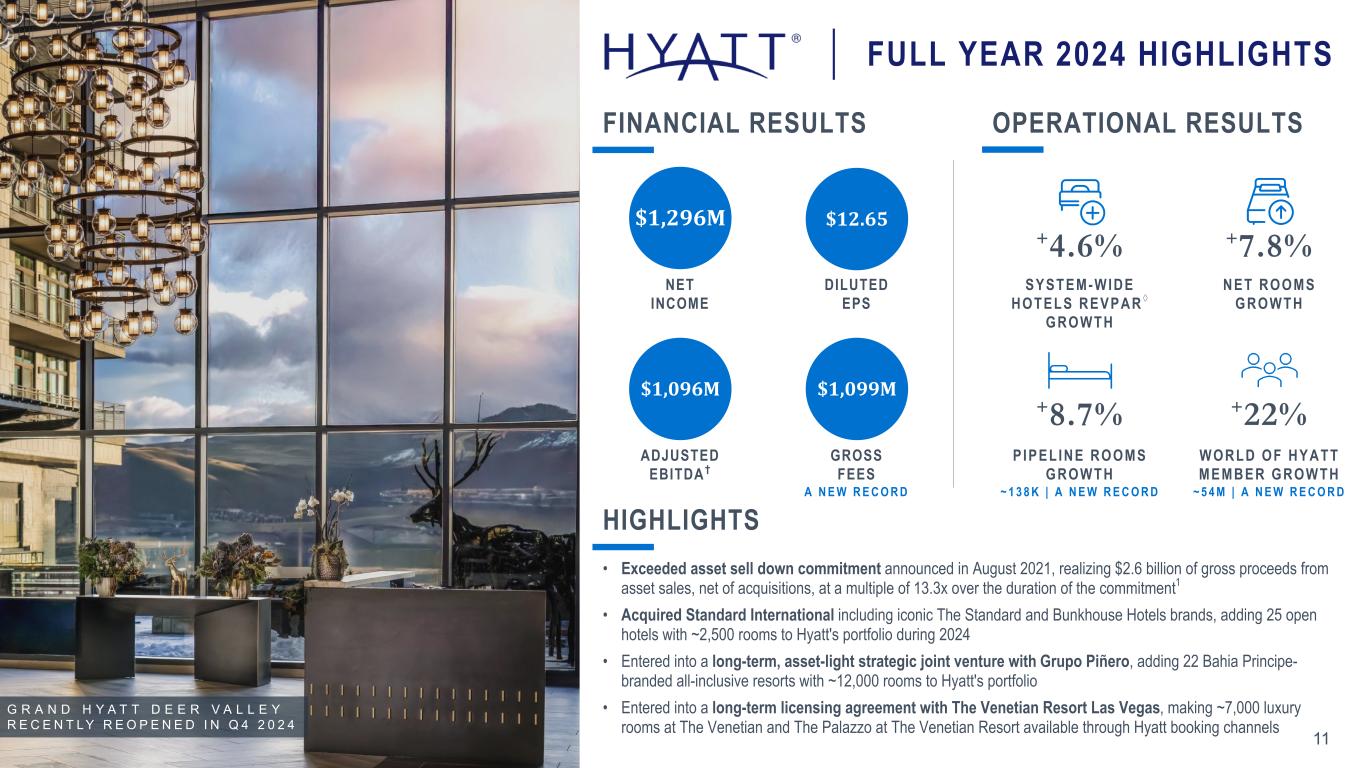
Percentage changes disclosed during the call are on a year-over-year basis unless otherwise noted with that i'll now turn the call over to mark thank you adam good morning everyone and thank you for joining us today recent tragic events around the world including the wildfires in the los angeles area and the plane crash in washington dc and the other in philadelphia have affected many of our communities our hearts go out to those affected and i want to thank the Hyatt colleagues who have cared for those in need during these difficult times. I'd like to start today's call by touching on recent transaction activity. On Monday this week, we announced that we entered into an agreement to acquire all outstanding shares of Playa hotels and resorts for $13.50 per share, or approximately $2.6 billion, including approximately $900 million of debt net of cash. Hyatt is currently the beneficial owner of approximately 9.4% of Playa's outstanding shares. The pending acquisition provides an opportunity for Hyatt to enter into long-term management agreements for our luxury all-inclusive Hyatt Ziva and Hyatt Zalara branded properties currently owned by Playa and to expand our distribution channels including ALG Vacations and Unlimited Vacation Club. We're well-poised to drive value creation through complementary business segments and strengthen our existing all-inclusive infrastructure in Mexico and the Caribbean. We remain committed to our asset-like business model and intend to identify third-party buyers for Playa's owned properties. At closing, we expect to announce a new commitment to realize at least $2 billion of proceeds by the end of 2027. This includes existing height assets and properties currently owned by Playa. We expect our asset-light earnings mix to exceed 90% on a pro forma basis in 2027. At closing, we expect to fund 100% of the acquisition with new debt financing and, consistent with maintaining our investment grade profile expect to pay down over 80% of the new debt financing with anticipated proceeds from the asset sales I just mentioned. We're very excited about the opportunity ahead of us and look forward to sharing more details once the transaction closes. We also closed on the acquisition of Standard International during the fourth quarter and finalized the 50% long-term strategic joint venture with Grupo Pinero to manage the Bahia Principe hotels and resorts. Additionally, we were active on the real estate front, selling Hyatt Regency O'Hare in Chicago, along with our share in two joint ventures, the Park Hyatt Los Cabos Hotel and Residences, and the Hyatt-centric downtown Nashville. We retained long-term management or franchise agreements for each property. We're also actively engaged in other discussions and expect to sell additional owned properties in 2025. Turning to growth, our pipeline expanded to approximately 138,000 rooms in the quarter, a new record for Hyatt, and represents 9% growth when compared to the fourth quarter of 2023. Our pipeline does not include the 7,100 rooms for the Venetian Resort Las Vegas, which joined the Hyatt system in early January of 2025. We now have nearly 10,000 rooms in Las Vegas that are part of World of Hyatt, including over 2,500 rooms at the Rio Hotel and Casino. We achieved net rooms growth of 7.8% in 2024, delivering industry-leading growth for the eighth consecutive year. There were several notable openings in the fourth quarter, enhancing our luxury resort and lifestyle offerings. These included Park Hyatt London River Thames, Grand Hyatt Deer Valley, Thompson Palm Springs, and the addition of the Standard and Bahia Principe hotels. We expect organic net rooms growth to meaningfully accelerate in 2025, reflected in the outlook that we provided this morning. We kicked off the year in a big way, with the addition of the Venetian Resort in January, and through the first 45 days of the year, we have already opened 9,000 new rooms. Now turning to operating results, our fourth quarter results reflect the strength of our brands as we achieved several records during the quarter. This morning, we reported system-wide RevPar growth of 5% for the quarter and 4.6% for the full year. We continue to see high-end consumers prioritizing travel as RevPar growth was strongest among our luxury brands in both the quarter and for the full year. Leisure transient rooms revenue increased approximately 4% in the quarter, and for the full year, revenue increased approximately 1%. Results were strong for resorts in the Americas over the FESTA period, and transient pace for the first quarter of 2025 is up in the high single digits compared to the first quarter of 2024. Group rooms revenue was flat in the quarter and was up 5% when adjusting for the timing of the Jewish holidays in October and the U.S. elections in November. Looking ahead, 2025 group pays for the U.S. full-service managed properties is up 7% compared to 2024, with average rate accounting for over half of the increase. We expect group contribution to be strong in the first quarter, driven by the timing of Easter falling in April 2025 compared to March of 2024, and the presidential inauguration in D.C. in January. Business transient customers remained our strongest growth segment, delivering revenue growth of 10% in the quarter. We continue to see our large corporate customers back on the road, and we experience an increase in both demand and average rate in the quarter. Overall, business transient revenue was up 12% for the year, and this benefited major urban markets in the United States, including New York, Washington DC, and Seattle. World of Hyatt continued to deliver remarkable results and has fueled our commercial success. World of Hyatt membership reached a new record of approximately 54 million members at year-end, a 22% increase over last year. Loyalty room night penetration during the quarter set a record high, highlighting the engagement from our World of Hyatt members. Spend on our co-branded credit cards increased 18% in 2024 compared to 2023, and our consumer card was the winner of the Kiplinger's Reader's Choice Award for the best hotel credit card. Our focused effort to deliver more unique experiences for our guests more frequently and in more locations helps to position Hyatt as the brand of choice. Before I turn it over to Joan, I'd like to spend a few minutes reflecting on Hyatt's evolution to a brand-led organization. When we launched World of Hyatt in 2017, we aspired to create a loyalty program that would build community and engage with high-end travelers. World of Hyatt was and is the foundation of our brand portfolio. and we've deliberately expanded that portfolio to meet the needs of our existing customers and to attract new members. While growing an award-winning loyalty platform, we also took intentional steps to add brands that would complement our existing portfolio while accelerating the growth of our existing brands. We used customer insights to identify where and why our members wanted to travel and deliberately grew our portfolio of luxury, resort, and lifestyle hotels while at the same time expanding into the upper mid-scale segment. Since 2017, we've doubled luxury rooms, tripled resort rooms, and quintupled lifestyle rooms. We also launched Your Cove and Hyde Studios, our upper mid-scale brands. At the same time, we embraced the power of a differentiated loyalty program by providing more benefits for our members when many loyalty programs were taking benefits away. The relationship with our members is more than a transaction because when they say the Hyatt they welcome us into their lives, and we have always committed to caring for them so that they can be their best. We also extended care by providing our members with more ways to experience Hyatt, whether on property or through collaborations that extended the value of their membership. While care is hard to measure, we would know we were succeeding if our membership base and engagement at our hotels increased. And on those measures, we've been extremely successful. Since 2017, we have grown our loyalty membership base on average by 27% per year. And today, our members per hotel is significantly higher than our larger competitors. And the next step of our journey begins with our new brand groupings, luxury, lifestyle, inclusive, classics, and essentials. Our brand-led organization allows us to further elevate the focus on our guests and customers that we serve in these brand groups. We're using new tools that deliver bespoke insights that will drive greater customer preference for each brand group and more loyalty to Hyatt. Even as we improve these abilities, we have the most white space and opportunities to grow compared to our major competitors. We expect to continue to grow at a healthy pace with well-defined brands and organic growth from our record pipeline to serve many more stay occasions for our guests. our growth in luxury and lifestyle will continue to be very intentional ensuring we protect the ethos of each brand and to not just grow for the sake of growth we will continue to be a leader in the all-inclusive space with an increasing level of powerful resources driving performance for hyatt this means much more than just a pending quote all-inclusive unquote to the end of an existing brand. It means providing a differentiated frictionless travel experience to vertically integrated channels like ALG Vacations and UBC while delivering the best food and beverage and entertainment offerings in the category. Our classics, which includes storied brands like Brand Hyatt and Hyatt Region C, and our Essentials Brand Group, which includes our select service brands. We'll drive scale for Hyatt. We will focus on expanding our brand footprint as we still have many more markets to serve, especially among our Essentials brands. This includes our upper mid-scale brands, which have great momentum with over 55 open Yercove hotels and our first Hyatt Studios hotel opening in the first quarter of this year. We have over 120 upper mid-scale hotels in the pipeline to fuel future growth. This is a view to our future, differentiated offerings across distinctive brands, and a highly focused approach to leveraging our loyalty program and the insights that matter the most as we serve high-end travelers across more and more of their stay occasions. We are committed to seeing our guests and customers as individuals and extending our purpose of care. We will not use a lowest common denominator approach in any aspect of our business. This leads to greater loyalty and share of wallet among our members and customers at a higher average rate and at a lower cost of acquisition, driving better returns for our owners. Our owners realize the benefit of the Hyatt network and want to build more properties with us. That increases our brand footprint. This provides more opportunities in more places for our members and guests, driving further loyalty to Hyatt and better performance for our owners. When you put this together, we have the ability to generate significant fees per room, which increases our earnings, margins, and cash flow over time and serves as a powerful growth engine into the future. I'd like to close by expressing my gratitude to all Hyatt colleagues, including the 15,000 new colleagues from Standard and Bahia Principe, who live our purpose every day by caring for each of our stakeholders. Joan will now provide more details on our operating results. Joan, over to you.
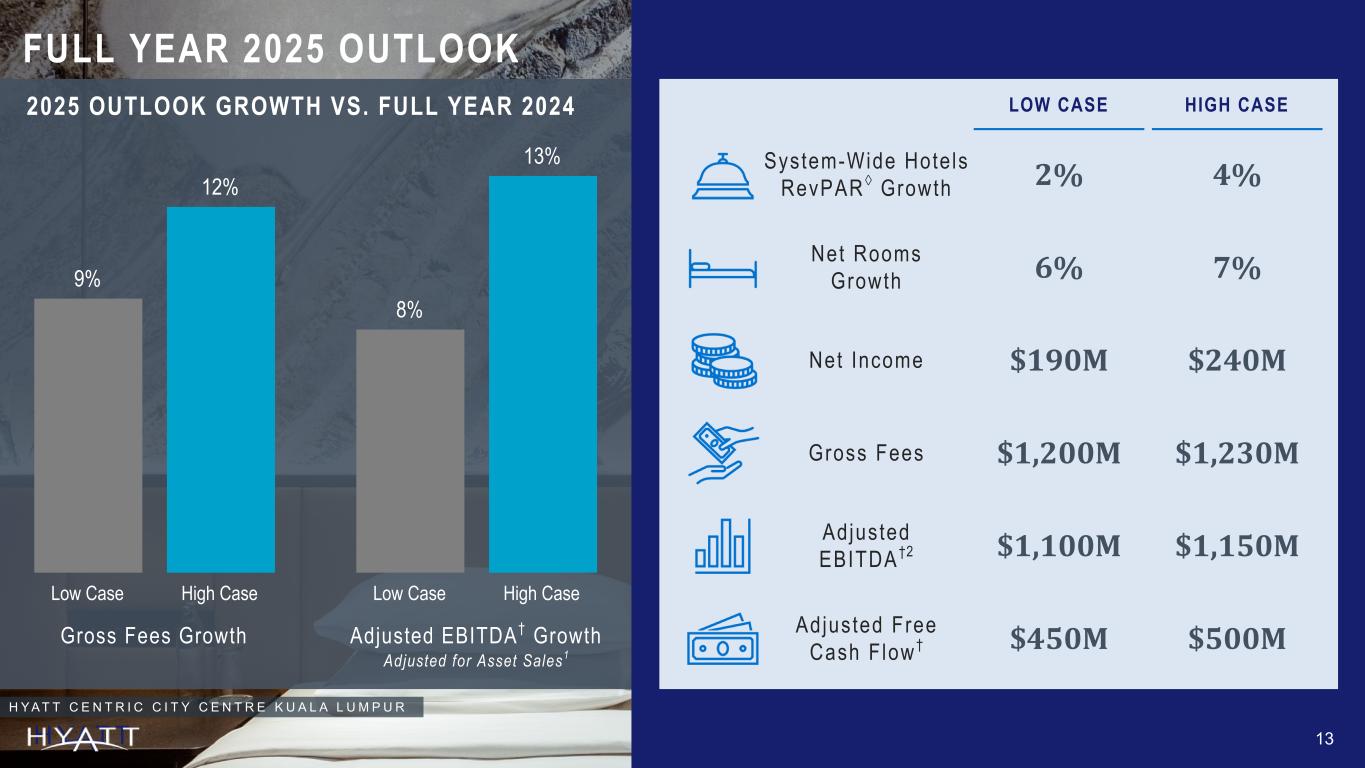
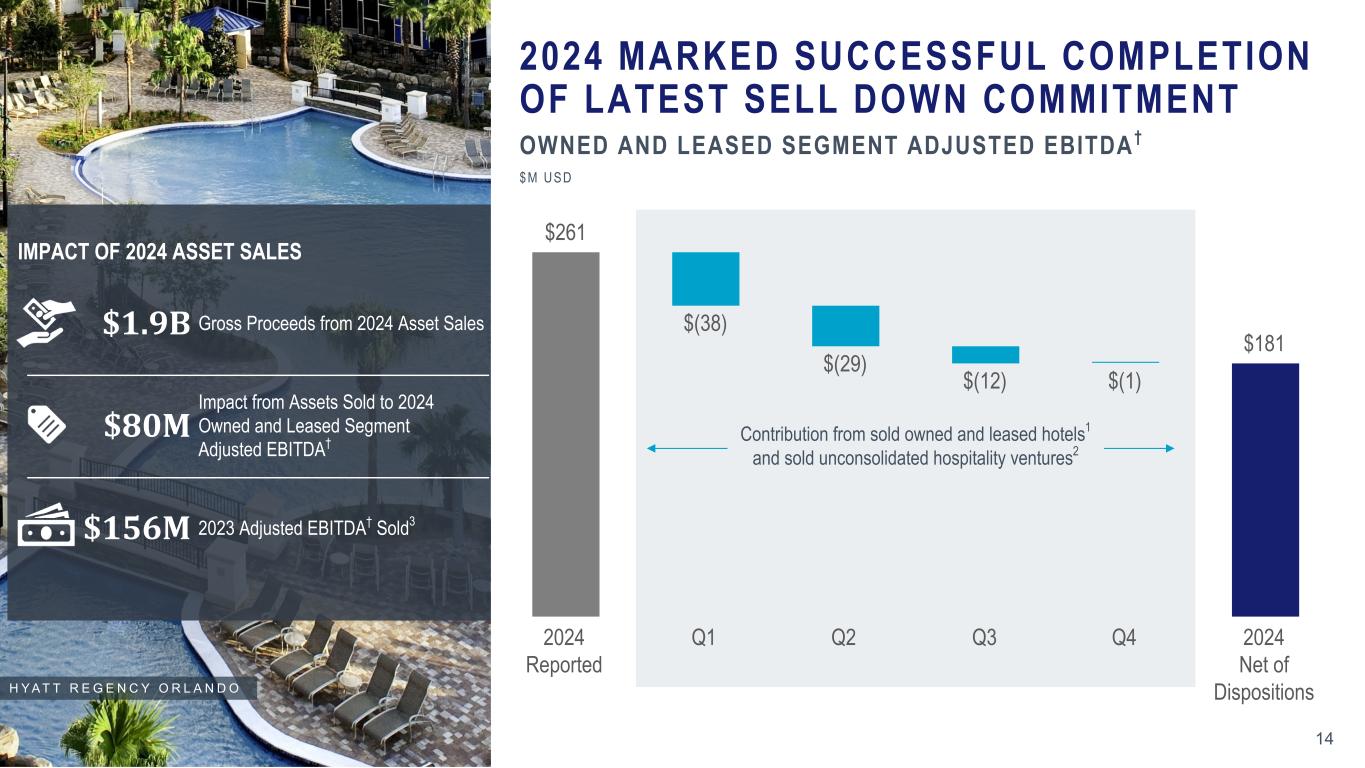
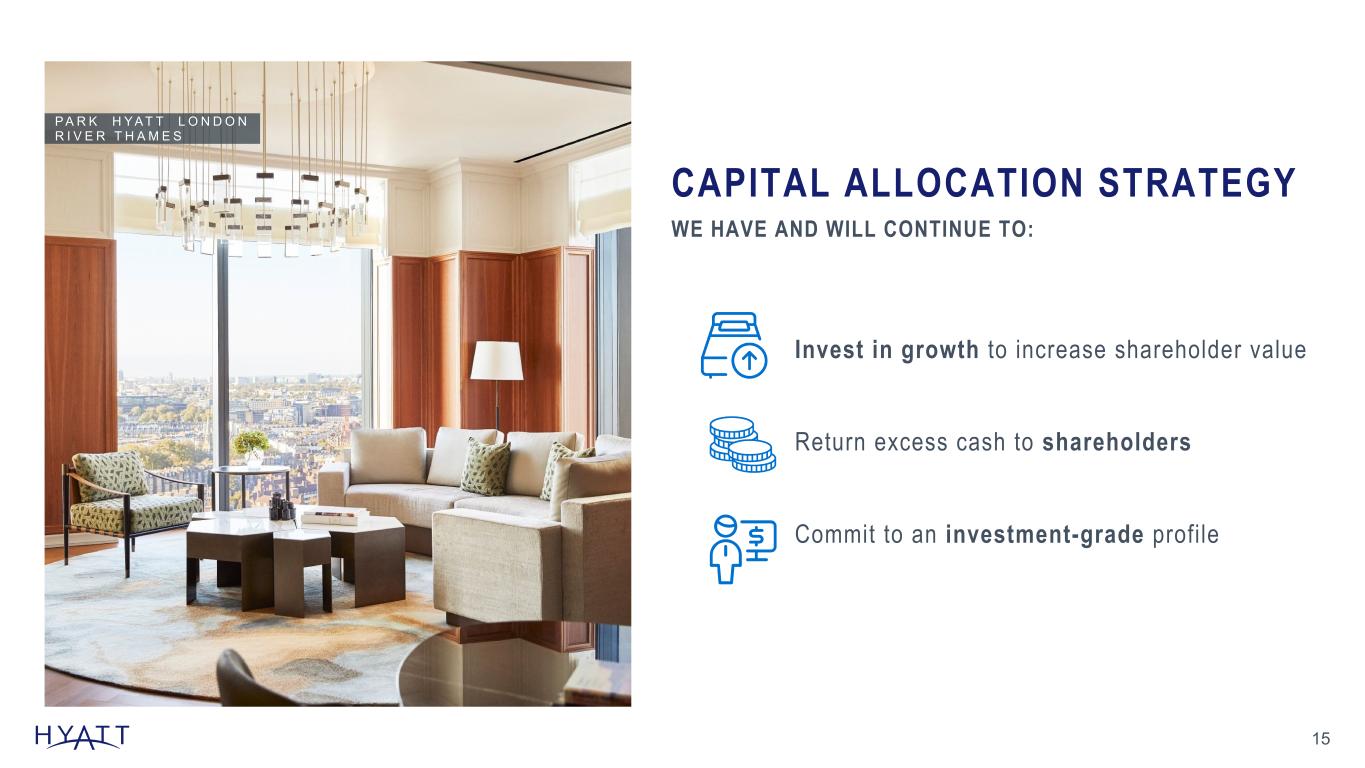
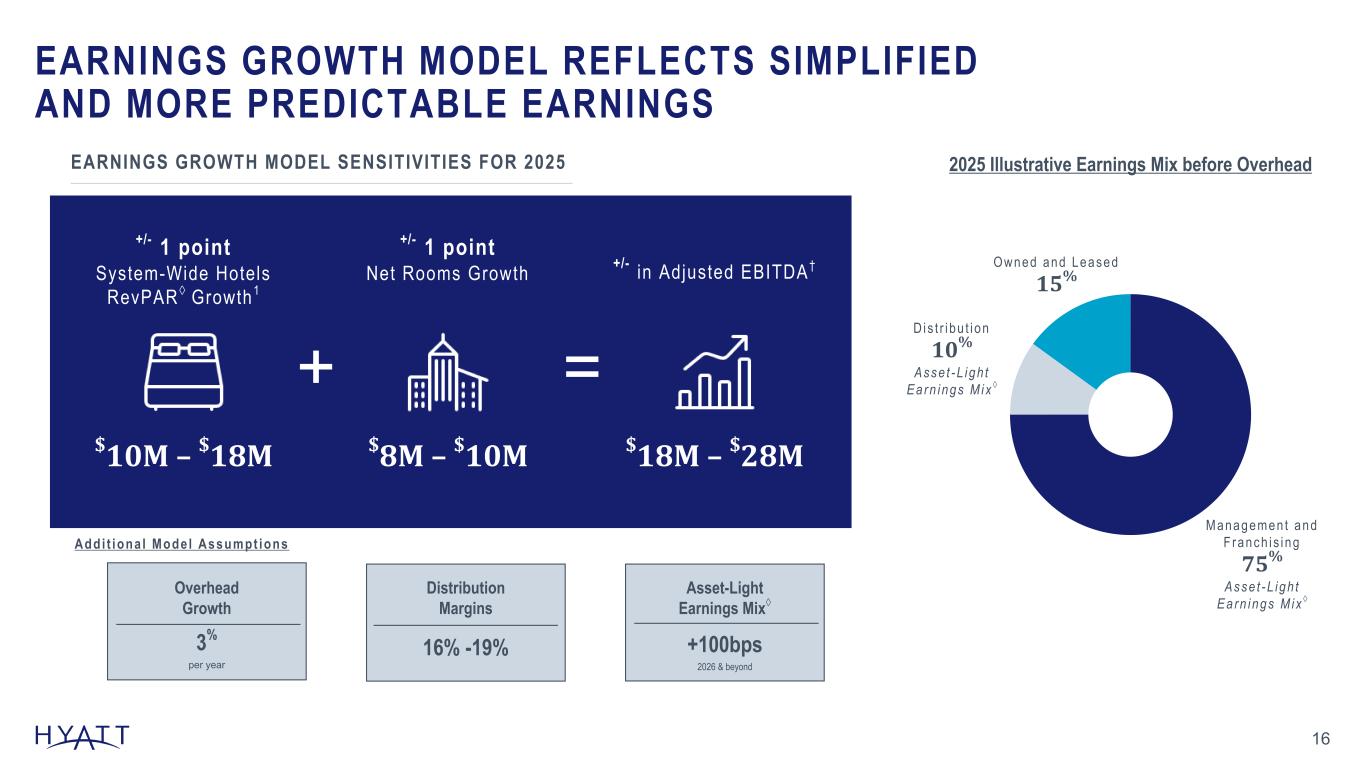
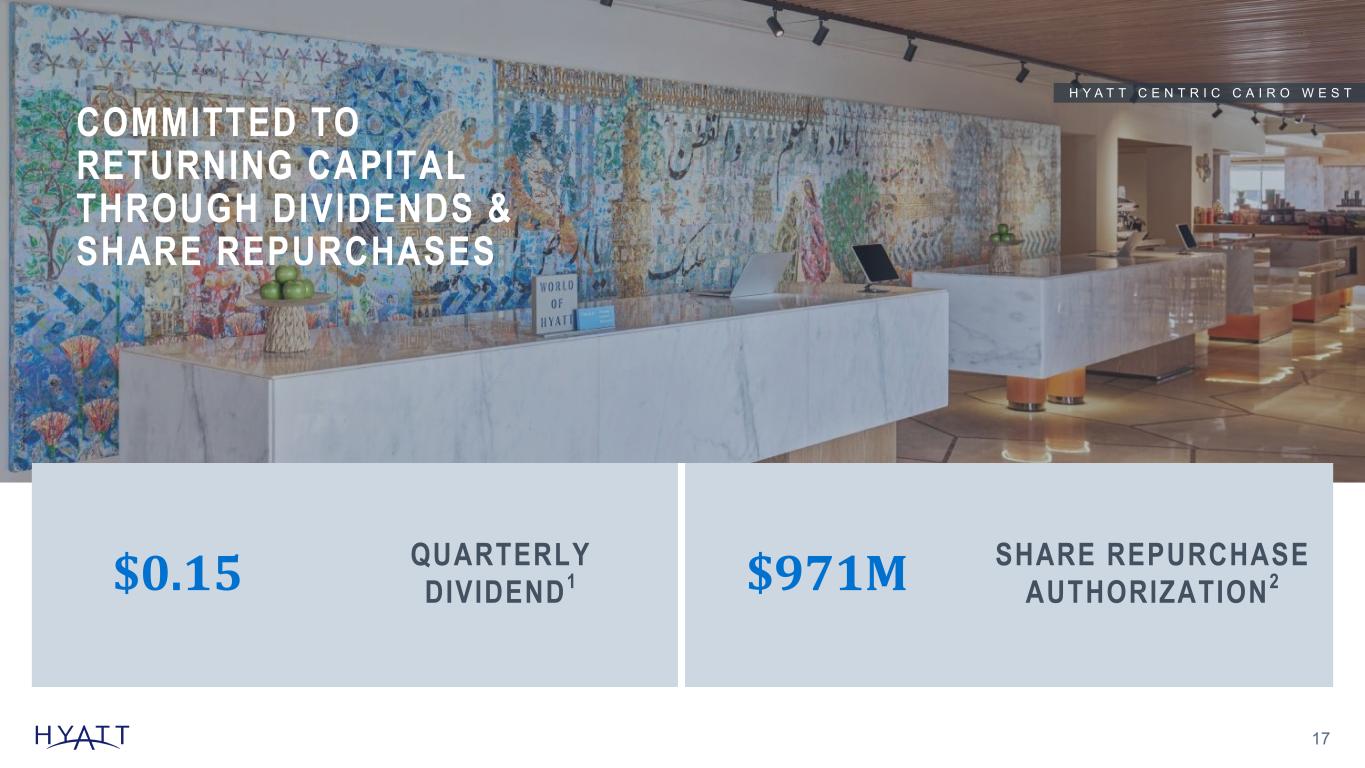
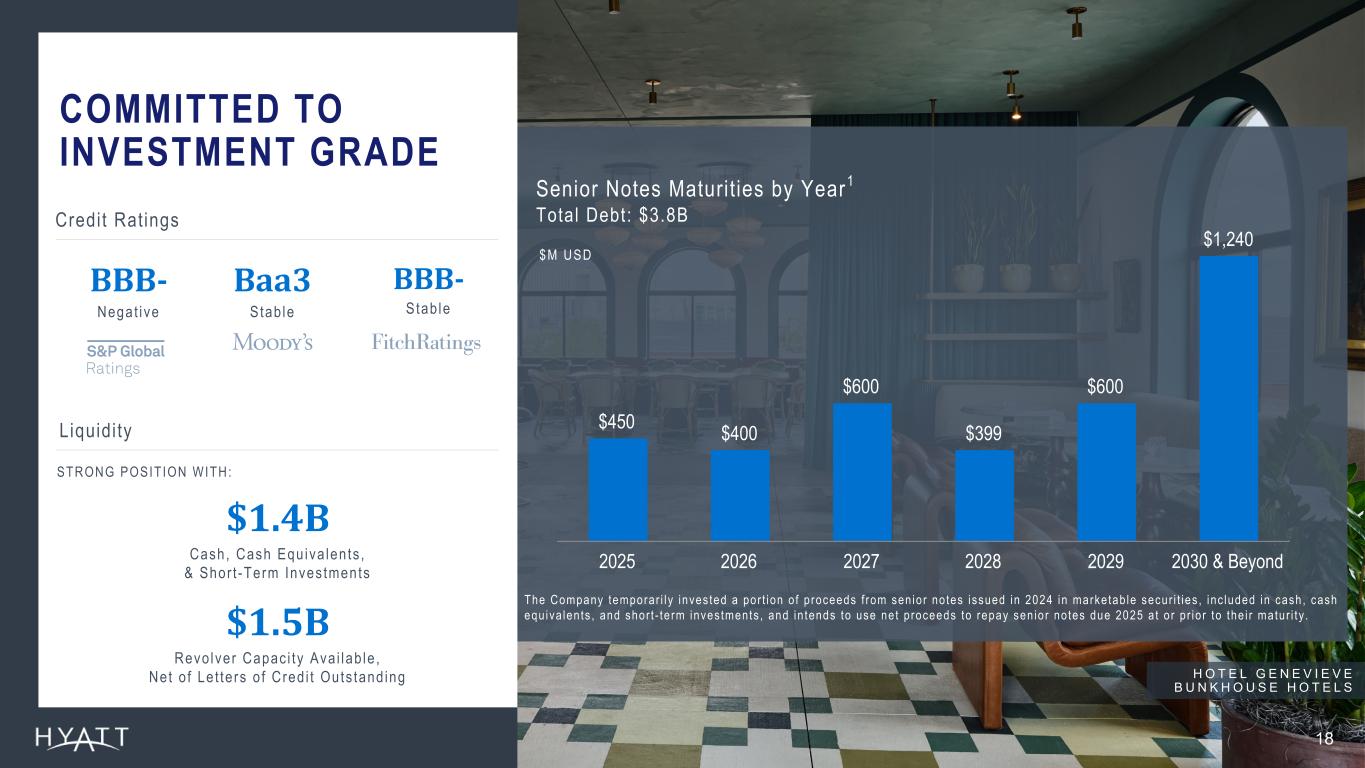
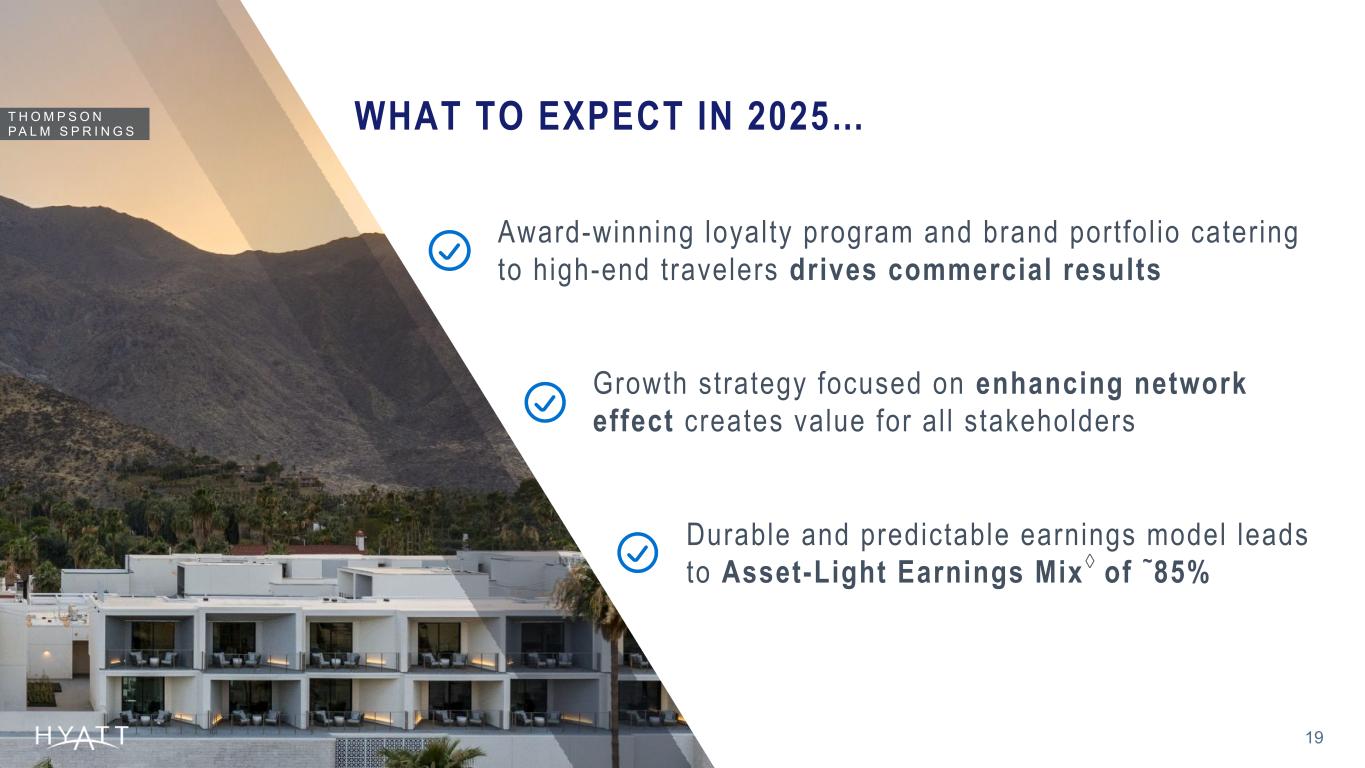
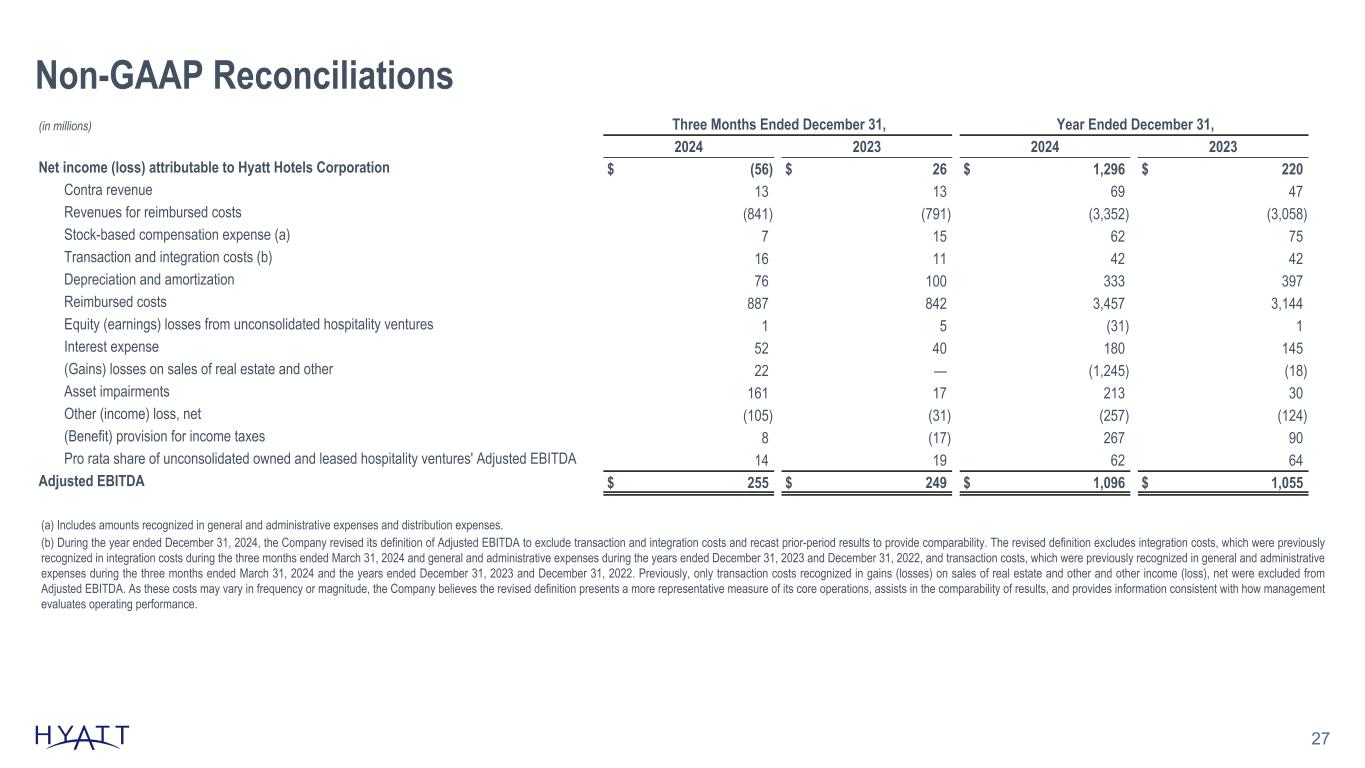
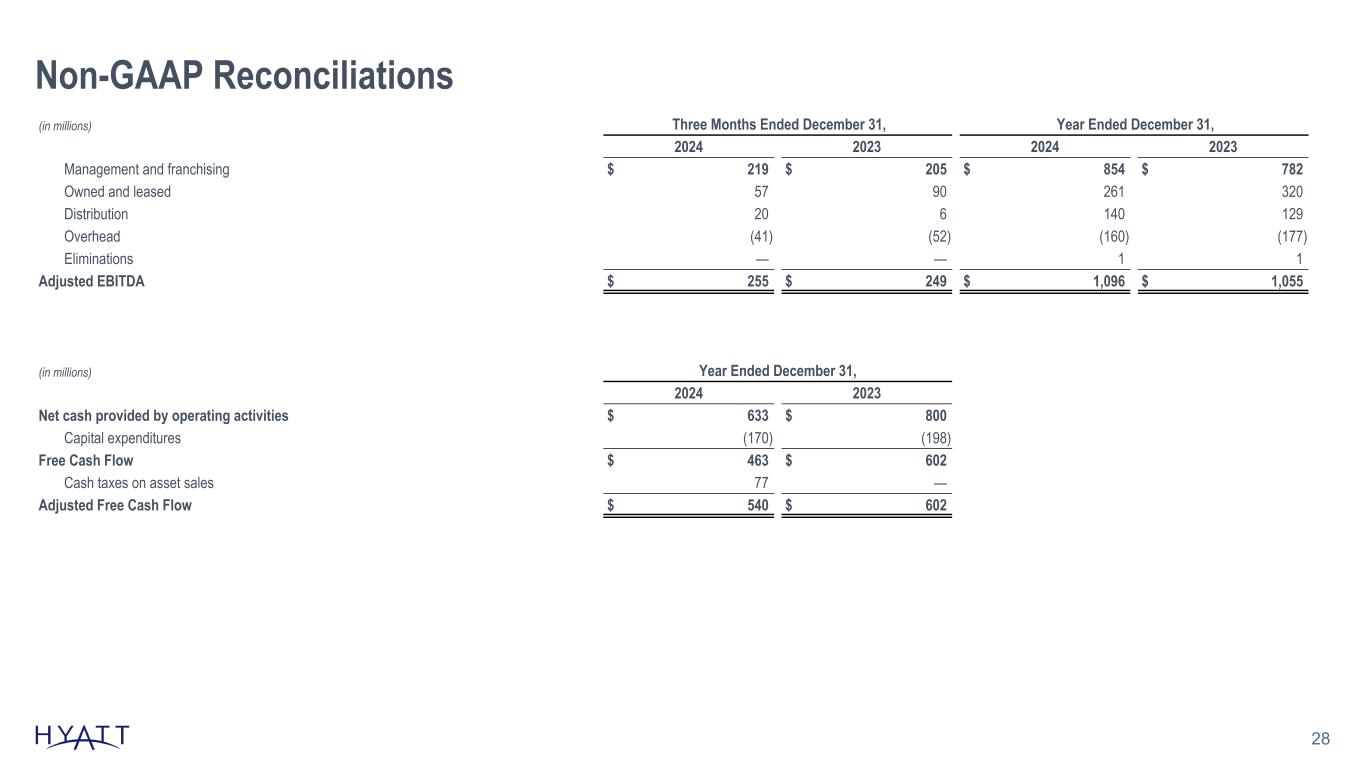
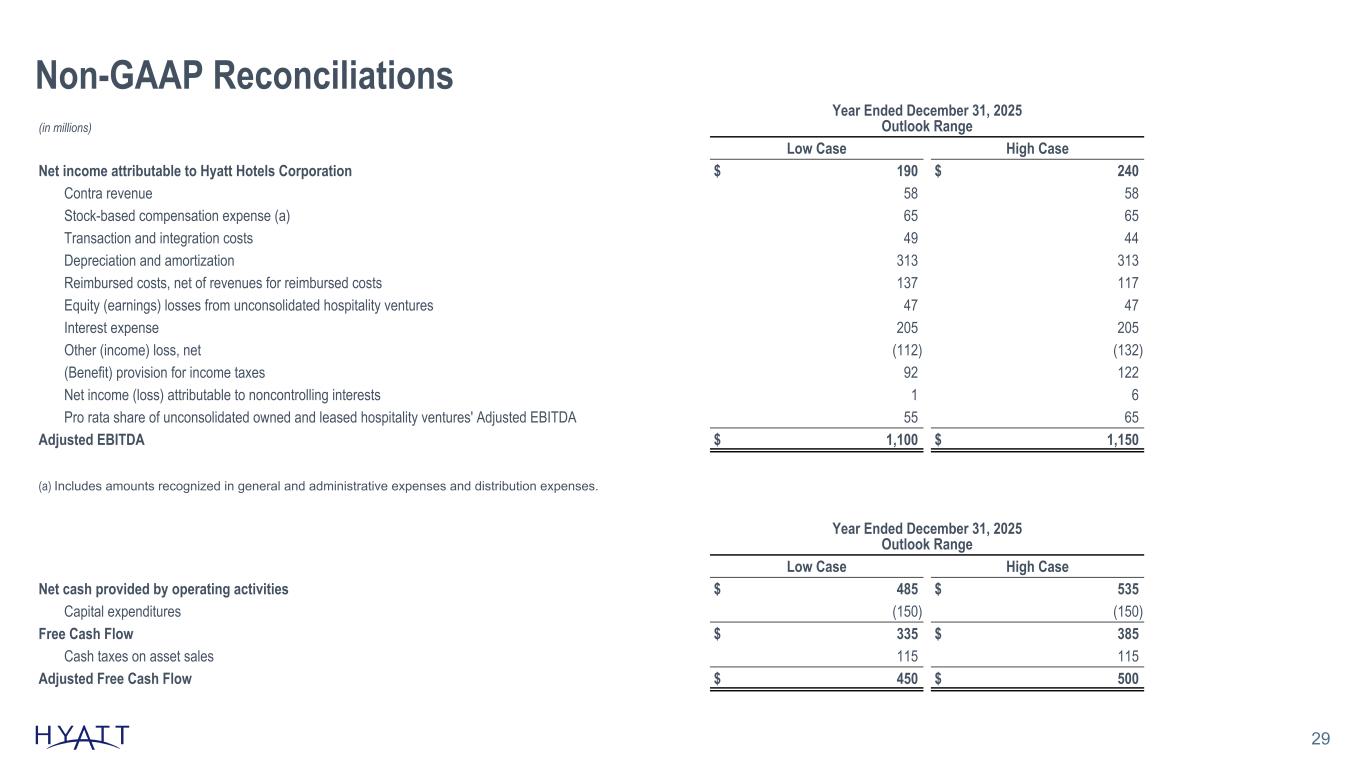
Thanks, Mark, and good morning, everyone. During the fourth quarter, system-wide RevPAR increased 5%, led by increased business and leisure transient travel. In the United States, RevPAR increased over 3%, our strongest quarter of growth in 2024 driven by business and leisure transient travel. RevPAR in the Americas, excluding the United States, increased approximately 9%, with business travel up over 15% in the quarter. Our all-inclusive properties in the Americas reported net package RevPAR up 2% to last year and had a strong festive season. In greater China, RevPAR was flat to last year, a significant an improvement from our third quarter results. Domestic business transient travel benefited hotels in mainland China during the fourth quarter, and we experienced similar trends in January of 2025. Asia-Pacific, excluding Greater China, had another quarter of strong results, with RevPAR up approximately 12%. RevPAR in South Korea, Japan, and India increased by double digits compared to last year, driven by increased international inbound travel into these markets. Europe finished an exceptionally strong year, with RevPAR up 7% in the quarter. Leisure and business transient were the primary drivers as international inbound continues to positively impact operating results in Europe. We reported gross fees in the quarter of $294 million, dollars up 17 percent we set a record for the highest gross fees in a quarter driven by franchise and other fees which increased 27 percent due to the contribution from uvc and revpar growth in the united states base fees grew by 11 percent fueled by managed revpar growth and fees from newly opened managed hotels incentive fees were up 11 percent from strong contribution from all-inclusive properties in the Americas and hotels and other international markets. Owned and leased segment adjusted EBITDA increased by 5% when adjusted for the net impact of transactions. Margins for comparable hotels increased 70 basis points in the quarter and on a full-year basis improved by 20 basis points compared to 2023. Our hotel teams have demonstrated strong cost discipline and a focus on productivity improvements, which has led to expanded margins despite increases in non-controllable costs. And finally, our distribution segment, adjusted EBITDA, declined by approximately $4 million when excluding the UVC transaction. Lower than anticipated booking volumes and Hurricane Milton contributed to the decline. In total, adjusted EBITDA was $255 million in the fourth quarter, an increase of approximately 20%, excluding the net impact of asset sales compared to last year. For the full year 2024, we repurchased approximately $1.2 billion in shares as we returned excess proceeds from asset sales to shareholders. We have approximately $1 billion remaining under our share repurchase authorization. As of December 31, 2024, our balance sheet remains strong with total liquidity of approximately $2.9 billion, including approximately $1.5 billion in capacity on our revolving credit facility and approximately $1.4 billion of cash, cash equivalents, and short-term investments. During the quarter, we issued $600 million of senior notes, and we intend to use a portion of those proceeds to repay our notes due in April 2025 on or before their maturity. Now I'd like to cover our outlook for 2025. The full details can be found on page three of our earnings release. As a reminder, our outlook does not include projections for acquisition or disposition activity beyond what has been completed as of today. For the full year 2025, we expect full-year system-wide REVPAR growth to be in the range of 2 to 4% compared to 2024. We expect REVPAR in the United States to grow near the midpoint of our system-wide outlook range, driven by strong group and business transient demand, but expect to see a continuation of elevated levels of outbound international travel for greater china visibility remains very short term but as we have previously noted trends have begun to improve at this point we expect to see international outbound travel trends in 2025 that look like 2024 however we expect domestic travel to improve throughout the year driven by business transients we anticipate our properties in asia pacific excluding greater China will have the strongest growth in REVPAR of any of our geographic regions, as they benefit from significant international inbound travel and favorable foreign exchange rates, especially compared with the U.S. dollar. While Europe is lapping very strong results in 2024, particularly in the second and third quarters from several large events, including the Olympics in Paris, we expect to see year-over-year REVPAR growth at the lower end of our range. We expect net rooms growth in the range of 6% to 7%, driven by an acceleration in our organic growth. Our outlook does not incorporate small portfolio deals, which would be accretive to our current outlook. Growth fees are expected to be in the range of $1.2 to $1.23 billion, an 11% increase at the midpoint of our range compared to last year. Our outlook includes the addition of the standard international and via principe transactions for the full year, accounting for approximately one-third of our fee growth. Our outlook also incorporates fees from the Venetian Resort Las Vegas, which joined the Hyatt system in January. We earn fees based on the business that we deliver through our channels and expect fees to steadily increase over the coming years. Adjusted G&A is expected to be in the range of $450 to $460 million, inclusive of G&A from the Standard International and via Principe transactions. Adjusted EBITDA is expected to be in the range of $1.1 to $1.15 billion, an 11% increase at the midpoint of our range compared to last year when adjusting for the impact of asset sales. Our outlook incorporates the reduction of $80 million of owned and leased segment adjusted EBITDA from real estate that we sold in 2024. Please refer to slide 14 of the investor presentation posted on our investor relations website this morning for the quarterly impact of real estate dispositions on 2024 results. For the distribution segment, we expect growth of approximately 5 to 10 million dollars compared to 2024 with most of the growth expected in the fourth quarter adjusted free cash flow is expected to range from 450 million to 500 million dollars which excludes 150 million dollars of deferred cash taxes expected to be paid in 2025 related to asset sales that took place in 2024. Our capital allocation strategy remains consistent. We are committed to our investment grade rating, identifying opportunities to invest in growth that create value for our shareholders, paying a quarterly dividend, and returning excess cash in the form of share repurchases. We're not providing an outlook for capital returns to shareholders at this time due to the pending transaction with Playa. However, we do expect to return capital to shareholders in 2025 beyond quarterly dividends. We will provide an update over the coming months as the transaction with Playa progresses. Before closing, I'd like to highlight recent REVPAR trends. January started the year off strong, driven by growth in leisure transient. We see these trends continuing so far into February, and with the shift of the timing of the holidays that Mark mentioned earlier, we expect for the first quarter to be at or above the high end of our full year guidance range. As a reminder, our first quarter adjusted EBITDA results are expected to be negatively impacted by approximately $40 million due to the real estate dispositions completed in 2024. In closing, our fourth quarter and full year results highlight the strength of our asset light business model. Over the past year, we have successfully executed our operational, commercial, and growth strategies while simplifying and streamlining our business model. And as we look ahead, we remain focused on operational excellence to continue to grow our core business, while our network is expected to be enhanced by strong organic growth in 2025, benefiting all stakeholders well into the future. And this concludes our prepared remarks. and we're now happy to turn it over to the operator for Q&A.
Operator
As a reminder, to ask a question, please press star followed by one on your telephone keypad. In the interest of time, we ask that you please limit yourself to one question and rejoin the queue for any additional questions. Thank you. Our first question comes from Ben Chaikin from Mizuho. Please go ahead. Your line is open.
Hey, good morning. Thanks for taking my question. For my one question, I would love to put some takes on the... I believe you mentioned mark in the prepared remarks that you expect NUG to meaningfully accelerate in 2025 on an organic basis? I guess any way we can kind of unpack that comment. And then I think last quarter there was a conversation about elevated attrition. Is this largely behind us, or is it still a variable that you're navigating?
Thanks, Ben. Net rooms growth, we don't refer to it as NUG, but net rooms growth outlook for this year is materially better in the composition of it. As I've mentioned in my prepared remarks, we've opened 9,000 rooms in the first six weeks of the – not quite six weeks yet – of the year, and that represents about 40 percent of our net room's growth for the year. The pipeline openings are expected to be significantly higher than last year because a number of projects got pushed from last year into this year, and a number of those are relatively larger hotels. And we're seeing an outlook that we published that doesn't include portfolio transactions. We have been very successful in conversions. In 2023, it was around 50% of our total net rooms growth last year about 30 this year probably 40 to 50 percent um and i think um i think uh the upside there's further upside first first of all we've got 40 already spoken for um and the further upside from potential portfolio deals is significant uh the uh the last thing i will say is over 60 of all of our openings that we see coming out of the pipeline this year are front-loaded there in the first half of the year. That's very different than the profile we had last year, which is why we had slippage. So I feel really good about where we stand and the conservatism of our outlook.
Thank you. Appreciate it.
It also, I would only also just add one other thing, and that is we have taken a very, I would say, conservative and cautious approach. You may have seen a number of people on the phone, I'm sure it read, that an entity of the Lindner group in Germany, which is under a franchise, a number of their properties are under a franchise agreement with us under the Lindner brand, not under the Me and All brand, filed for insolvency. Uh, that's like a, uh, more akin to a chapter 11, uh, uh, proceeding, but the, the family and, uh, some third party, um, appointees are working through that right now, but, uh, to be cautious and to be conservative, we've actually assumed within our network rooms growth outlook, attrition associated with that. I think that's a very conservative approach because the nature of these processes is to work out a go-forward basis on which you can continue to operate. And none of the hotels have stopped operating at this point.
Sorry, what's the size of that? It's pointed out somewhere. I can track it down.
Yeah, I think it's in excess of 2,000 rooms.
Operator
Our next question comes from David Katz from Defries. Please go ahead. Your line is open.
Thanks for all the detail and the follow-up with respect to the guidance. I wanted to ask about your Playa deal. And, you know, I don't know the degree to which you can shed some light, but it's come up in a number of conversations about it. With respect to the portfolio of brands, like the strategy of buying it and the real estate and recycling, I get it all. But there's a number of other brands within that portfolio. Assuming there is some strategy for dealing with those other brands, it's a bit unusual for what we see in that context.
So we're really not going to be commenting on the planned transaction or the details of it beyond what's already been released in the 8K filing issued earlier this week or in the earnings release, the focus of our attention is really the expanded management platform, the expansion of our distribution channels, namely ALGV, ALG Vacations, and UBC. That'll offer guests more seamless booking options and also more value. And we're, I think, very well positioned to be able to drive more value creation to the properties and to the owners of the properties and to Hyatt and to our guests through the complementary business segments and further optimizing our existing all-inclusive infrastructure in Mexico and the Caribbean. So that's really the gist of what we're focused on.
And beyond that, we're not going to really go into any further details until more things um reveal themselves as we go through the process which will take some months okay thank you our next question comes from connor cunningham from melius research please go ahead your line is open hi everyone thank you i was curious of just if you could talk a little bit about you know the appetite for further mna you've obviously been super active with your portfolio just are things going to calm down this year and you let things digest a little bit and then in the past, you've talked a lot about irreplaceable hotels. When you go through this next stop of dispositions, do you still view those as irreplaceable going forward? Just trying to understand the changes in the portfolio from here. Thank you.
Sure. The short answer to your first question is yes. Things will definitely calm down, as you said. This was a somewhat unique opportunity with respect to Playa and otherwise we feel really good about the brand portfolio that we currently have and we are focusing our attention on optimization. That's part of the rationale behind the brand organization that I mentioned in my prepared remarks. As to the portfolio, we do have a, we do have a number of really extremely high value assets in our portfolio. They, they, they are basically irreplaceable. It doesn't mean that they're not for sale. We don't have any hotels that I would consider to be off limits. We've got a number of hotels that we are in discussions with. We've got two with respect to which we have LOIs at the moment. We've already talked about the Hyatt at Grand Central Station in New York and also the Andaz and Liverpool Street. And we're working through those two processes. And yes, it's been a couple of years since we've been discussing it, and it will take longer because they're very complicated, but they are very attractive from a value perspective and from a freeing up of capital and CapEx obligations into the future. So we will continue to pursue those. And in addition to those two, we are also working on others at the moment. So we will continue to look towards further sales of existing assets in our portfolio. As we said very clearly, by 2027. It is an absolute sort of a plan at this point or expectation that we're going to get to 90% fee-based earnings on a run rate basis. So that's the direction of travel. And we said last year that you can expect to see us continue to look at further dispositions, and that hasn't changed.
Appreciate it. Thank you.
Operator
Our next question comes from Sneeds Rose from Citi. Please go ahead. Your line is open.
Hi. Thank you. I wanted to ask just a little bit more, I guess, you know, as you enter a period now of expected another kind of round of real estate sales, I was hoping to just kind of comment on the environment that you're seeing and maybe specifically in just kind of a way to apply it, but just maybe speak to just the all-inclusive market sales in general. It's not an area that we get a lot of information on, but we do see some transactions. And they seem like the buyer pool there is quite different from maybe the more traditional kind of legacy hotels. And I'm just kind of hoping we could just provide a little more color around how that could proceed and what's your willingness to provide seller financing as you look to sell down assets going forward. Thank you.
Thanks for the question. Because of our position through the ALG acquisition and our presence in the marketplace, we are doing business with the principal large investors in very high-end, all-inclusive resorts. So we know the market very well. It's dominated by families, both Spanish families and Mexican families and Dominican families. So not both, all of Mexican, Dominican, and Spanish. So they're well known to us, personal relationships with many of the family principals, and also those banks and other financial institutions, both in all three of those locales, Spain, Mexico, and Caribbean are also well-known to us. So we're in the market. We understand who's doing what to whom, what their strategies are, and how they think about it. It is a market that's not yet institutionalized in the same volume as you see in Europe. In Europe, all-inclusive resorts are largely owned by institutions, and we are at an inflection point in the Americas where institutional capital, yes, including PE capital, are now entering the market. And there's a pretty simple reason. The model is very, very attractive. It's more predictable, higher margins, higher free cash flow, and the durability of the model has been proven and the yields are higher for investors. So there has been and there continues to be an increasing elevated level of inbound interest from institutional capital into the market. So we feel like we are at that inflection point. We've already had a few transactions that aggregate to probably maybe just under a billion dollars worth of assets that have traded hands that involve institutional capital from the United States. And so we feel like the ice has been broken, so to speak, and we're optimistic that we'll see more and more investment in these kinds of assets going forward because they're so attractive.
And the seller financing piece? I think you did some in the fourth quarter.
I think it's really premature for us to comment on anything related to potential asset sales at this point. Okay. Thank you. Thank you.
Operator
Our next question comes from Stephen Grambling from Morgan Stanley. Please go ahead. Your line is open.
Hi, thank you. I think you referenced an 18% increase in spend on the co-brand credit card. I guess I'm curious, when was that contract last signed? And how do we think about an opportunity to drive incremental fees from this going forward?
So we renewed that contract in 21 and it's a five-year contract or five-year arrangement. So we are actively engaged in looking at alternatives as we look forward.
And is there any, you know, kind of rhyme or reason in terms of how those typically get set up or how you would think about characterizing the business now versus 2021 in terms of what is beneficial towards a co-brand partner?
Yeah, a couple of things. One, we've doubled the number of members over the last four years. Second, we are told, we don't have data to prove this ourselves, that we have the highest spend per cardholder of any hotel co-branded credit card. Third, our customer base is a customer base that is at a higher level household income and household net worth. So it stands to reason that they are more durable spenders. So I think we have a very attractive member base that is now twice as large as it was when we did our deal that's underway right now. And we've continued to add significantly to our luxury and our lifestyle and our resort portfolio, meaning we have many more aspirational hotels in great segments that that clientele would like to travel to. And I mentioned in my prepared remarks that our luxury brands had the highest ref par growth in the quarter and for the year, and that should not be lost on anyone in terms of the differentiation of our customer base. So I think all of that is the network effect. That's part of the network effect of why card membership and activity is higher and should be reflected in any future arrangement that we make.
Operator
Our next question comes from Chad Banan from Macquarie Group. Please go ahead. Your line is open.
Hi, good morning. Thanks for taking my question. Mark, you noted some of the stats in terms of the net unit growth confidence, particularly in the first half of the year. But I wanted to dive into that a little bit deeper, mainly related to the 50% of your pipeline, which is in the ASPAC region, which has had some more delays than other parts of developed markets. So is it fair to say that the growth that you're seeing or the confidence that you have in the net unit growth kind of highlights you know better construction starts and just openings in that part of of the world and then more importantly as we look forward have those construction starts picked up and that gives you more confidence as we look out beyond 25 with net unit growth thanks yeah um so i think um construction uh proportion of the portfolio that's under construction pipeline that's under construction is um about flat quarter over quarter And so we see a steady maintenance of that level.
And we expect to see that at least maintain itself, if not improve over the course of this year. I think that two things are happening. One is we will have our first Hyde Studios open in the first quarter. The, you know, in that particular market, seeing is believing. And so there's some element of momentum that we believe will come out of being the first one out of the ground. The Yurko activity has been extremely high, and that's our Chinese upper mid-scale brand. And those are conversions, adaptive reuse, basically, and those happen in very short periods of time. So from the time that a lease is signed, we're not the lessee, but from the time that a lease is signed and a management agreement is signed, it takes roughly nine or 10 months to open the hotel from scratch. So that tends to be a high throughput and short-term cycle time. And we are optimistic, actually, with respect to what we're seeing in Asia. at this point for openings. So I think across the board, we feel more and more constructive about openings over the course of this year. And I think that we're headed towards a better and maybe more balanced approach to promoting organic growth and realizing it.
Okay, thank you. And then And secondly, just on the own portfolio, I can see in the release, the impact, Joan, you mentioned $80 million from an EBITDA standpoint, and the revenues are in here as well. But as we think about the margins or change in the outlook of margins for the own portfolio, 25 versus 24, should we expect anything to be outside of the range that you've previously provided for us? Thank you.
We've been consistently guiding to the fact that the efforts that we've undertaken to look where we can with respect to productivity improvements and managing controllable costs has yielded great returns and with an eye towards making sure that we're preserving customer service expectations from our guests. So we are managing margins to be incrementally positive year over year, and what you see is the portfolio structurally has changed with the asset sales. So our expectation is that we continue to deliver at least flat to incremental margins going forward, despite the fact that we've got some non-controllable expenses that we're facing with respect to insurance costs and some wage inflation in some markets. So we're managing that well and continue to expect that our margins will expand.
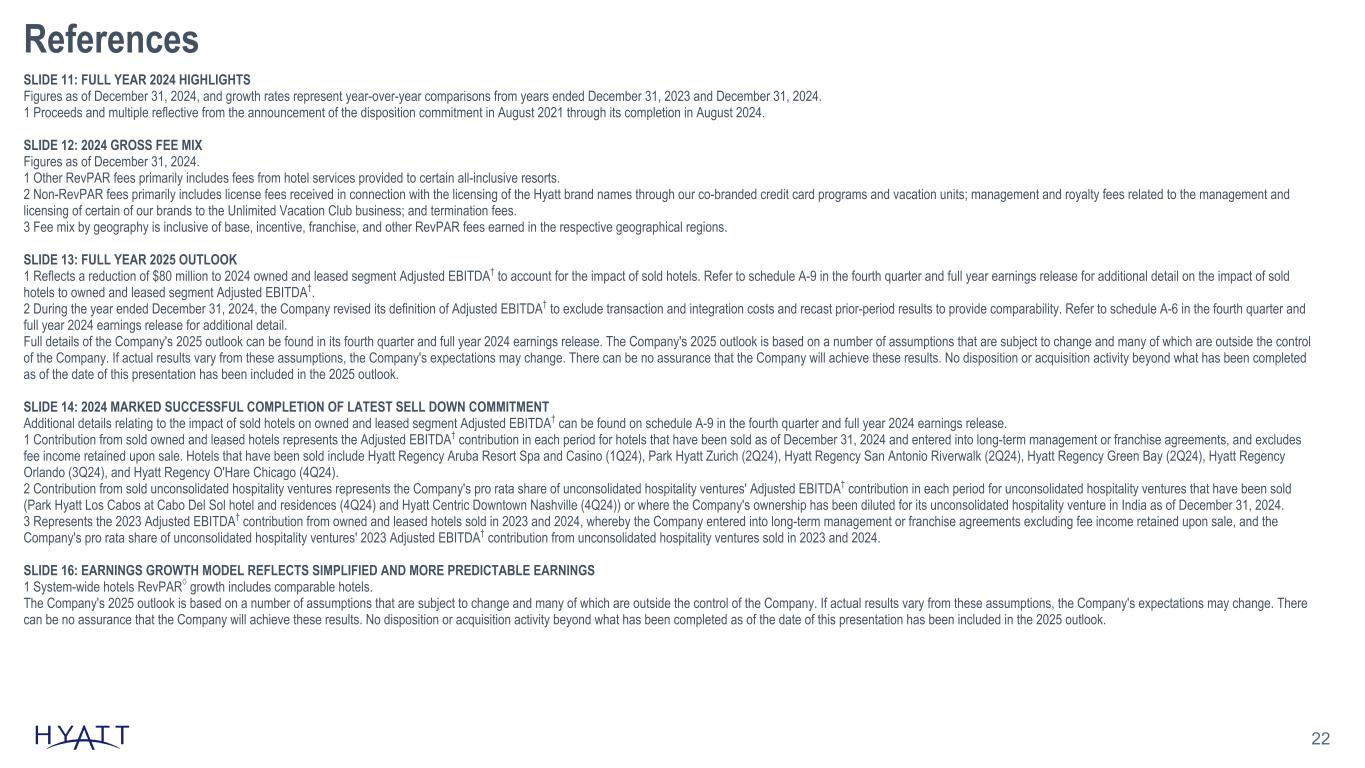
And if I could just add quickly, I think for clarity, we did make a note below the table at the top of page two of our earnings release about the adjusted EBITDA increase in the fourth quarter of 2024, excluding asset sales. We then put two pages in the investor deck, which are pages 13 and 14. Page 13 demonstrates the adjusted EBITDA growth without, or sorry, taking into account asset sales. And page 14, to provide all the information that should be needed to really understand this, it's broken down by quarter. So, I know that there may have been some misses in terms of picking up the information. So I just wanted to clarify that.
Yeah, those extra slides were prevented for your benefit because we've observed that some models are not picking up the dispositions of assets and the resulting EBITDA that is being the lost EBITDA associated with those dispositions.
Exactly. That's helpful. Thanks for the additional disclosures. Appreciate it.
Operator
Our next question comes from Brant Montour from Barclays. Please go ahead. Your line is open.
Good morning, everybody. Thanks for taking my question. So one of your peers kind of gave an outlook on IMF that was a little downbeat just given China uncertainty, but they had also had some other things going on. And everyone's, obviously, everyone's portfolio is different when it comes to IMF. I was wondering if, Joan, if you could give us some of your sense on how IMF could sort of come in this year or how you're feeling about it, at least given the sort of China uncertainty and especially the 1Q tough comp you have in China. Sure.
You know, the REVPAR growth that we're providing, the outlook for 2025, is healthy across all markets. And it's strong considering that we've had some a little bit tougher comps in 2024. But as we look to international markets, still healthy growth, we're expecting, and I pointed out what we expect in Asia Pacific, excluding greater China. So those markets deliver strong incentive fee growth, and we expect a strong contribution from those markets this year. When you – maybe just taking a step back on your question, too, when you look at our fee growth outlook and you consider the midpoint of that range, it's a healthy range, and a little less than a third of it is related to the acquisitions that we made in the fourth quarter. So it's still a healthy growth rate in the high single digits at the core of our fees related to REVPAR and net rooms growth. So, you know, across all of our line items based incentive franchise and other fees, we're seeing healthy growth across the board in 2025 that we expect. And just one last thing I'd point out is part of our net rooms growth is the Venetian. And the Venetian is a couple hundred basis points of that net rooms growth. And that property in particular, we're earning fees on the business that we deliver. And it's a little dilutive to our algo, to our fee algo, but we're seeing really great early results coming out of the business that we're delivering in just 45 days. So we expect that those fees will be contributing in 2025 and will continue to grow into the future. So overall, we feel really good about the fee growth into 2025.
That's really helpful. Thank you for that. Just to make sure I understand those Venetian fees will flow through the franchise and other bucket, correct?
Operator
Our next question comes from Alex Brignall from Redburn Atlantic. Please go ahead. Your line is open.
Thank you so much for taking the question. It really relates to the last point that you made on the Venetian, and obviously point taken on the contribution it has to the wider brand value. I guess my question is how that ties into underlying room growth. Obviously, that's a relatively large component of the guidance that you have given. And I wonder, if we look into outer years, how we should think about the contribution of incremental deals within your expectations for room growth and whether they are likely to be dilutive to fees as the vision is observed slightly.
Sure. So, you know, when we look at every single portfolio deal or individual asset, there's We obviously underwrite new deals, every single deal that requires on a portfolio basis. But we look across those individual deals and the fees per room that they contribute. And so overall, we've got higher fees per room across the industry because of the quality of our contracts and the quality of our assets, frankly, and our performance. So it's important to point out, yes, the Venetian has fees that, per the contract, are contributing based on the amount of business that we provide. So it's a little bit lower than our overall fees per room. And then I'd point out that another big transaction that we did, the buy-a-principe deal, has fees per room that are above, on a stabilized basis, our averages. So this all averages out, and we are constantly looking at our fees per room to make sure we're still delivering that quality value overall for the portfolio as we look at different portfolio deals, whether organic or inorganic growth. And, you know, I would just say, well, the Venetian deal is providing great interest and is attractive to our world of Hyatt members and our corporate customers, because our group sales system is engaging with them, both for the Venetian and the Rio and Vegas. But it's a unique deal and an exciting one for us.
That's fantastic. I guess as a quick follow-up, I might ask, in terms of the comment you made on an acceleration and underlying unit growth, if I kind of just look at the signings trajectory, it looks relatively similar on an underlying basis at some of these bolt-ons for 24 relative to 23. I may have done just terrible maths on that, so please excuse it if I have. So how would guys, in terms of the underlying net unit growth accelerating, what would be the fair way to think about it for outer years after this one? Should it be kind of the underlying growth that you've done X, the bolt-ons, and then we think about more bolt-ons? Or should that number grow exclusive of anything incremental that you would bolt on?
The latter. Really, what's happening is we're seeing signings maintain and have further momentum. We've got new upper mid-scale brand introductions that I think will drive a lot more signings in this year. So I think the signings base is going to continue to be strong, but also the openings out of our pipeline will continue to expand. Last year was an unusual year for openings out of the pipeline, unusually low. Part of that was hotels that got pushed. So I think we're at a point where we have, I think, both more visibility in the near term and also more confidence that we're going to see the mix change. It'll be increasingly organic. And the top up, as you described it, or the add, the increment will come from portfolio transactions.
That's hugely helpful. Thank you.
Operator
Our next question comes from Michael Bellisario from Baird. Please go ahead. Your line is open.
Thank you. Good morning, everyone. Just on this Linder uncertainty, is there an opportunity for you to invest there, maybe buy the brand or the real estate, just trying to think about alternative potential outcomes? And then also just a quick follow-up on FX, what impact are you assuming in your EBITDA outlook for 25? Thank you.
On the first one, I think there are many options that will reveal themselves. We're not in control of the situation, but we are very closely tied to the family members and advisors that are working on it. So yes, what you described are in the realm of possibility. And you can imagine we are inventive and have a lot history in identifying great real estate partners, but also, I would say, bespoke structures that will allow us to play a part, but that remains to be seen. And with respect to the FX question, I'll leave it to Joan.
Michael, the FX impact for us expected into 2025 is really, you know, our results and fee expectations or our outlook in Mexico and other markets around and around the world, there is a little bit of an impact, but it is really not material to our overall outlook. Nothing to call out with respect to our fee expectations related to FX at this point.
Operator
Our next question comes from Dwayne Fettigworth from Evercore ISI. Please go ahead. Your line is open.
Yeah. Hi, this is Peter on for Dwayne. Thanks for taking the question. So, you mentioned BT was up 10% in the fourth quarter. Leisure looks strong as well. Group is flat. And I know there's some calendar shift noise in there, but could you expand on your broad expectations for each of those demand segments and how they fit into the 2% to 4% rep for our guide for 2025? Thank you.
Sure. Absolutely right. You picked up all of those metrics from our prepared remarks. And as we look ahead, you know, group has really been strong. We ended the year with record production levels going into, you know, for all periods in the So we're looking at a 7% group pace in the U.S. in 2025, which is a really strong position to be in. And that's coming from both rate and demand occupancy. So that growth continues to be healthy. On the business transient side, we're seeing momentum as well going into the first quarter. January was off to a good start. and leisure has been very strong as well in the start of the year going into the quarter. So, you know, I would say overall it's a continuation of trends with group being really healthy, business being continuing the momentum, and leisure sustaining.
Yeah, I would just point out two things that might be useful additionally. Certainly, corporate group has been growing at a much higher rate than association, and part of that is rate-driven, which is why we're seeing rate continue to expand. And that's true for what we realized in 2024, but also what our outlook and pace looks like into 2025. And secondly, I'm really encouraged to see that we've got relatively balanced. I mean, the two sectors on the BT side, the business transient side, IT and banking and finance, are up over 20% in 2024 versus 2023. But we also have consulting and pharma that are also in the double digits. So it's not like one sector is blowing the doors off and everything else is flat or down. It's actually relatively well spread. And these sectors are our top sectors and they are also the biggest travel spenders. So the breadth of the market, so to speak, if you want to put it in stock market terms, is really healthy and very exciting to see our large corporate clientele, which is really our core base of BT, back on the road in significant measure.
Operator
Our next question comes from Richard Clark from Bernstein. Please go ahead. Your line is open.
Thanks for taking my question. I guess at your capital markets day in 2023, you said in 2025 you'd be doing 1.2 billion of EBITDA, and that would translate into 750 million of free cash flow. You obviously lost a bit of EBITDA due to the disposals, but you've lost nearly 300 million of that free cash flow. Just try to understand that bridge. and is that $750 million number maybe a number we can expect in 2026? Is that coming back?
Thanks, Richard. There's a couple of drivers between what we presented at Investor Day and where we are now for 2025. And you pointed out a very important one, which is we accelerated asset sales beyond what we anticipated back in 2023. So that's a big driver of the change. Another driver is the RevPAR ranges that we provided. Clearly, you know, we were emerging from the pandemic, and we provided pretty wide ranges, 3% to 7%. And so, you know, where we've come in in the last two years, that compounded growth rate since 2023, while 2023 was a little bit better than we had provided at Investor Day, 24, and what we're seeing for 25 is towards the lower end of the range. So those two are meaningful components of the difference. And then there's a couple that I would just point out with respect to our interest expense expectations. We've taken on a little bit more debt than we anticipated back at Investor Day. Feel really good about our execution in the debt capital markets. So we're getting our new debt at very good rates, but a little bit higher than what we had anticipated. And then finally, while our CapEx is coming down significantly, it's not quite at the levels that we had anticipated at Investor Day for two major reasons. We're providing some incremental investments towards some important strategic technology, both in our ALGV business and in our management business. So there's a little bit of CapEx related to those investments. And then we're making a couple of strategic investments into our own portfolio, really to position assets through some building systems work and some ROI projects. So those are the four items that bridge you, which is the sold EBITDA, the lower RevPAR expectations, a little higher interest expense, a little higher CapEx. We do anticipate that our free cash flow will be increasing. Our asset light mix in 25 is over 80%. So, it's going to continue to grow. And we'll keep you posted with respect to the specific number as we proceed through this year and look at 2026.
Yeah, I would just add one quick thing on the point that Joan made about the incremental investment in some of our assets. It's really designed to optimize and maximize the potential on sale. And for some other investments in relation to existing third-party owned assets in return for enhanced management agreement terms, we've also provided some support that we previously reported on with some of our major REIT owners. So those are the things that are, I think, having a short-term, but not a continuous, it's not a run rate issue, impact on our cash flow this year.
Operator
Our last question will come from Patrick Scholes from Truist Securities. Please go ahead. Your line is open.
Hi. Good morning. Most of my questions have been asked, but I wonder if we can just step back a little bit and talk about the fourth quarter. You know, quite a few of the high-level KPIs, REVPAR, package REVPAR, above expectations, yet EBITDA guides missed guidance. Only thing I heard in the prepared remarks might have been from Hurricane Milton or maybe timing of asset sales. It looks like, at least for my numbers and some others, distribution, which could have been from the hurricane, and other revenues and G&A expenses. Can you just talk about what, in your view, drove the earnings miss. Thank you.
Sure, Patrick. You hit on the points. I would just highlight we had some one-time G&A cost, bad debt reserves that we decided to take in the fourth quarter. When you consider our outlook for next year for 25 in relation to G&A, we've got a very modest growth rate when you consider inflation and adding some standard G&A and BioPrincipe G&A. So those amounts are one time in 2024 with a choice that we decided to make at the end of the fourth quarter. And yes, the distribution business was a bit lower. That was one-time events from the hurricane was partially contributing to that. And then some lower bookings that we saw. You know, our business has been healthy in net package RevPAR, but some of the lower chain scales that the ALG vacations distribution business serves were a little bit lower than we had anticipated. So those were the main two drivers of the EBITDA because we had really terrific fee growth in the quarter that was frankly ahead of our expectations and as a result of really strong demand that we're seeing globally.
Okay. I'll just follow up on the ALG vacation booking. Is that going to flow through to this year at all in your numbers? And what has been the trend so far this year with those ALG vacation bookings?
Yeah, it's a little bit better, but I would anticipate for modeling purposes, FLAX is incrementally positive in 2025 as part of our EBITDA outlook for the distribution segment.
So thank you all for your time this morning. We appreciate your interest in Hyatt and look forward to welcoming you to our hotels and resorts so you can experience the power of our care firsthand. Wish you a great day ahead.
Operator
This concludes today's conference call. Thank you for participating and have a wonderful day. You may all disconnect.