Operator
Good morning, and welcome to the Hyatt Second Quarter 2025 Earnings Conference Call. All lines have been placed on mute to prevent any background noise. After the speaker's remarks, there will be a question and answer session. If you would like to ask a question during this time, simply press the star key followed by the number 1 on your telephone keypad. If you would like to withdraw your question, press star 1 again. As a reminder, this conference call is being recorded. I would now like to turn the call over to Adam Roman, Senior Vice President of Investor Relations and Global FP&A. Thank you. Please go ahead.
Thank you, and welcome to Hyatt's second quarter 2025 earnings conference call. Joining me on today's call are Mark Hoplamazian, Hyatt's President and Chief Executive Officer, and Joan Botterini, Hyatt's Chief Financial Officer. Before we start, I would like to remind everyone that our comments today will include forward-looking statements under federal securities laws. These statements are subject to numerous risks and uncertainties as described in our annual report on Form 10-K, quarterly reports on Form 10-Q, and other SEC filings. These risks could cause our actual results to be materially different from those expressed in or implied by our comments. Forward-looking statements in the earnings release that we issued today, along with the comments on this call, are made only as of today and will not be updated as actual events unfold. In addition, you can find a reconciliation of non-GAAP financial measures referred to in today's remarks under the Financials section of our Investor Relations website and in this morning's earnings release. An archive of this call will be available on our website for 90 days. Additionally, we posted an investor presentation containing supplemental information on our Investor Relations website this morning. Please note that unless otherwise stated, references to occupancy, average daily rate, and REVPAR reflect comparable system-wide hotels on a constant currency basis. Percentage changes disclosed during the call are on a year-over-year basis unless otherwise noted. With that, I will now turn the call over to Mark.
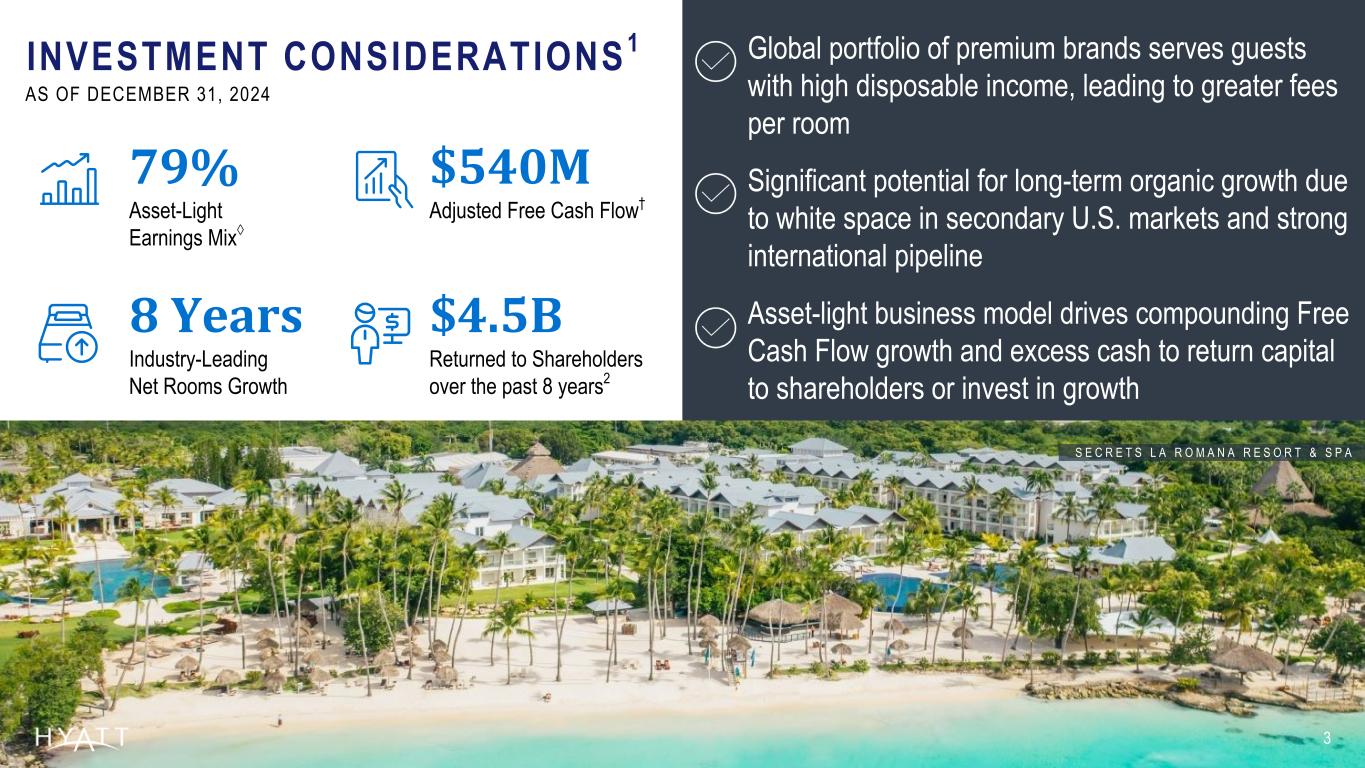
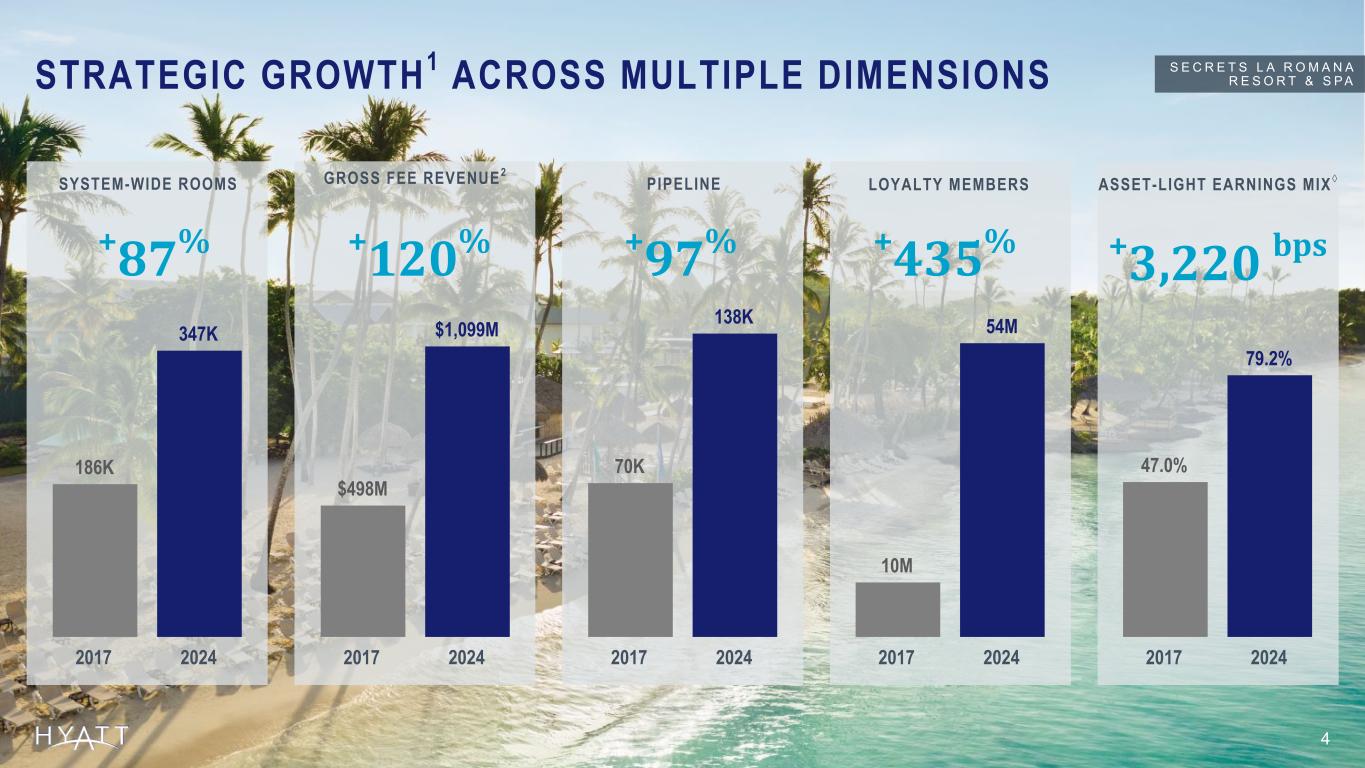
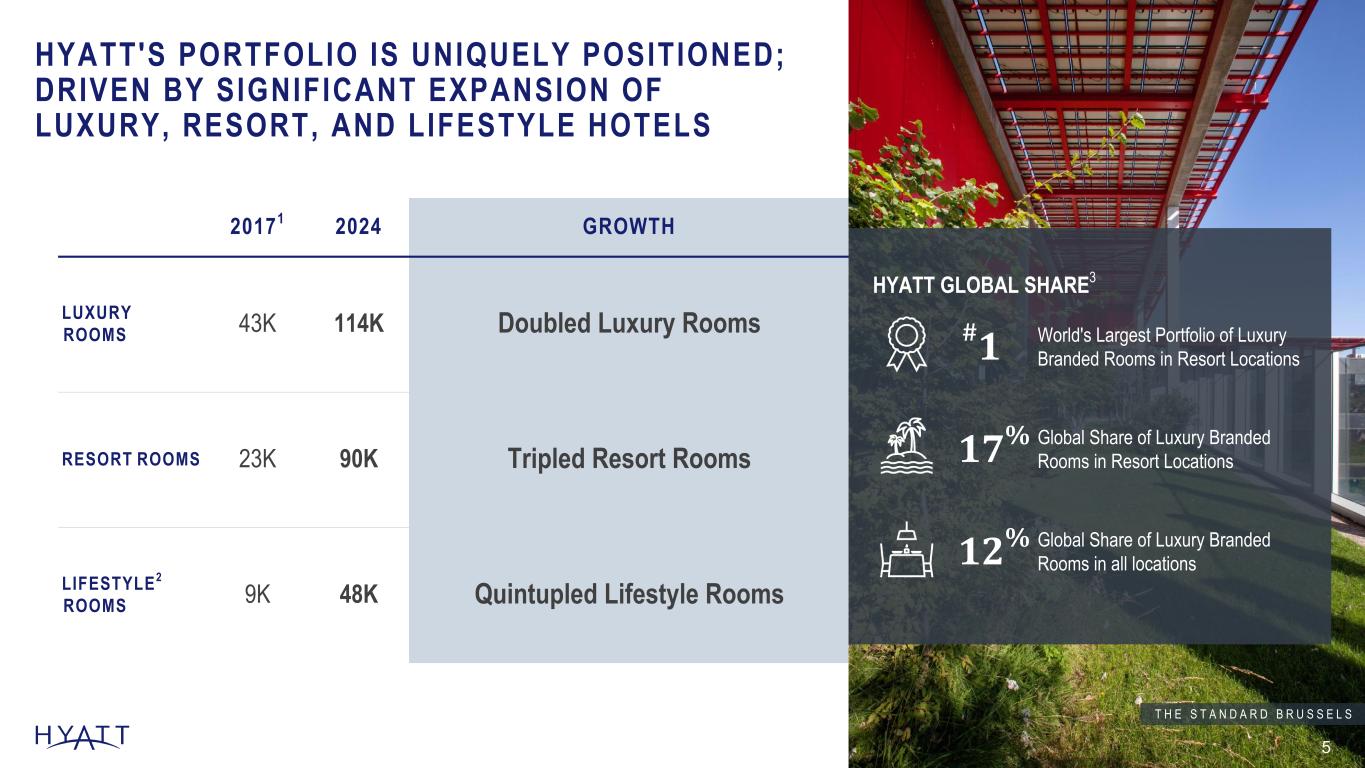
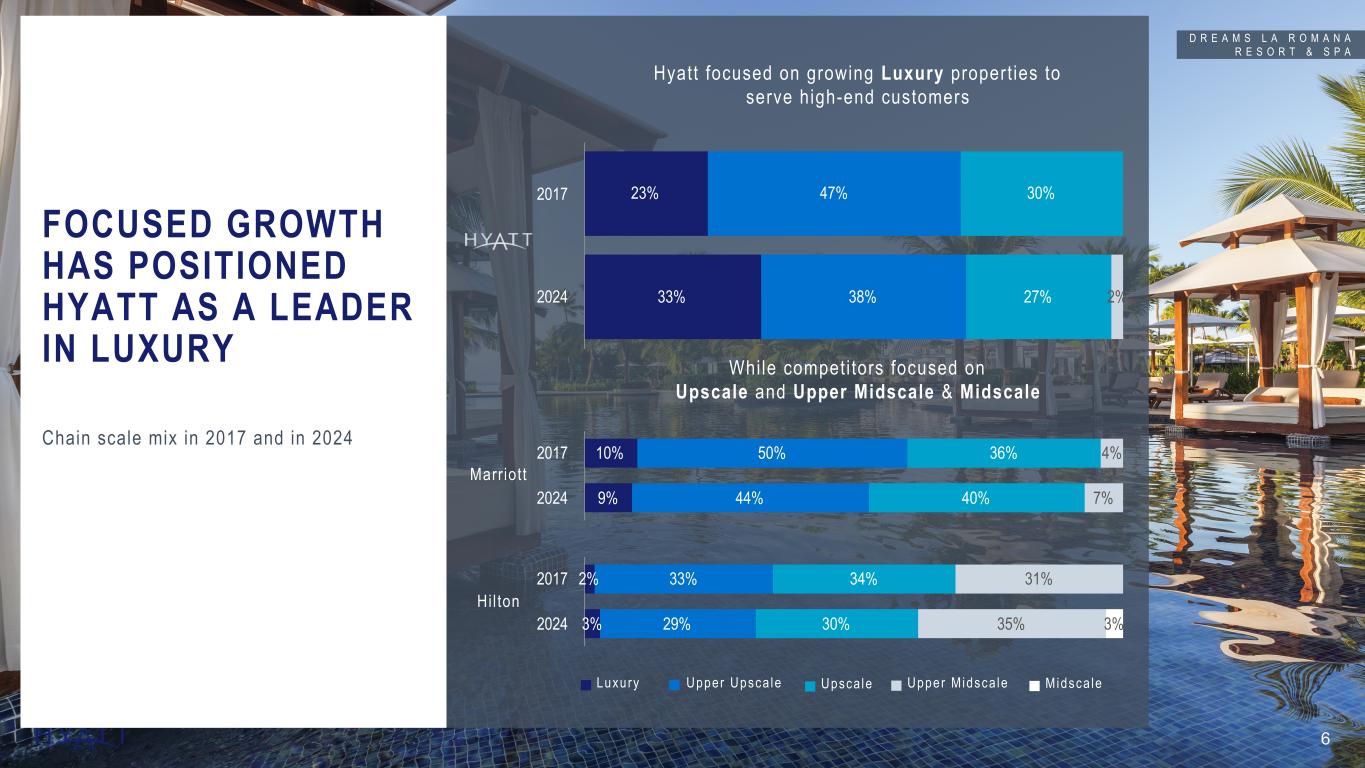
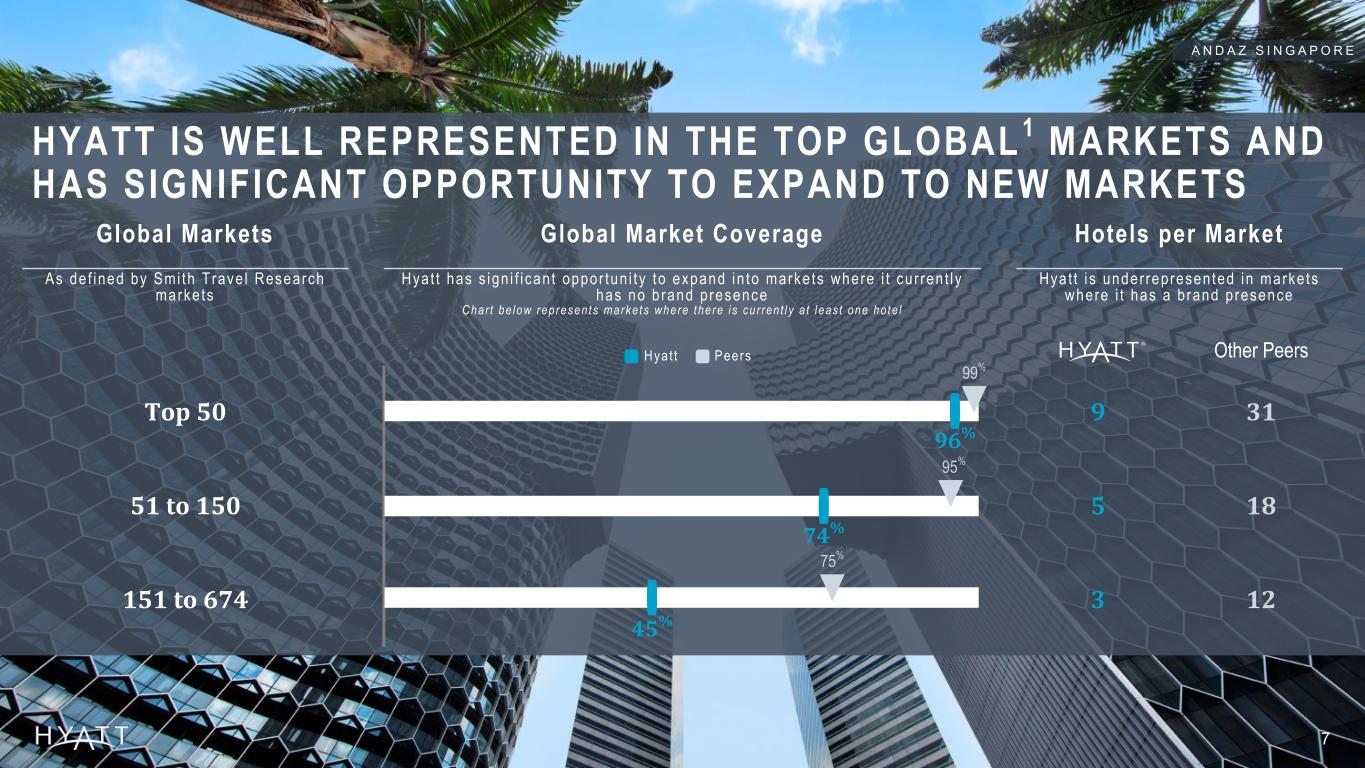
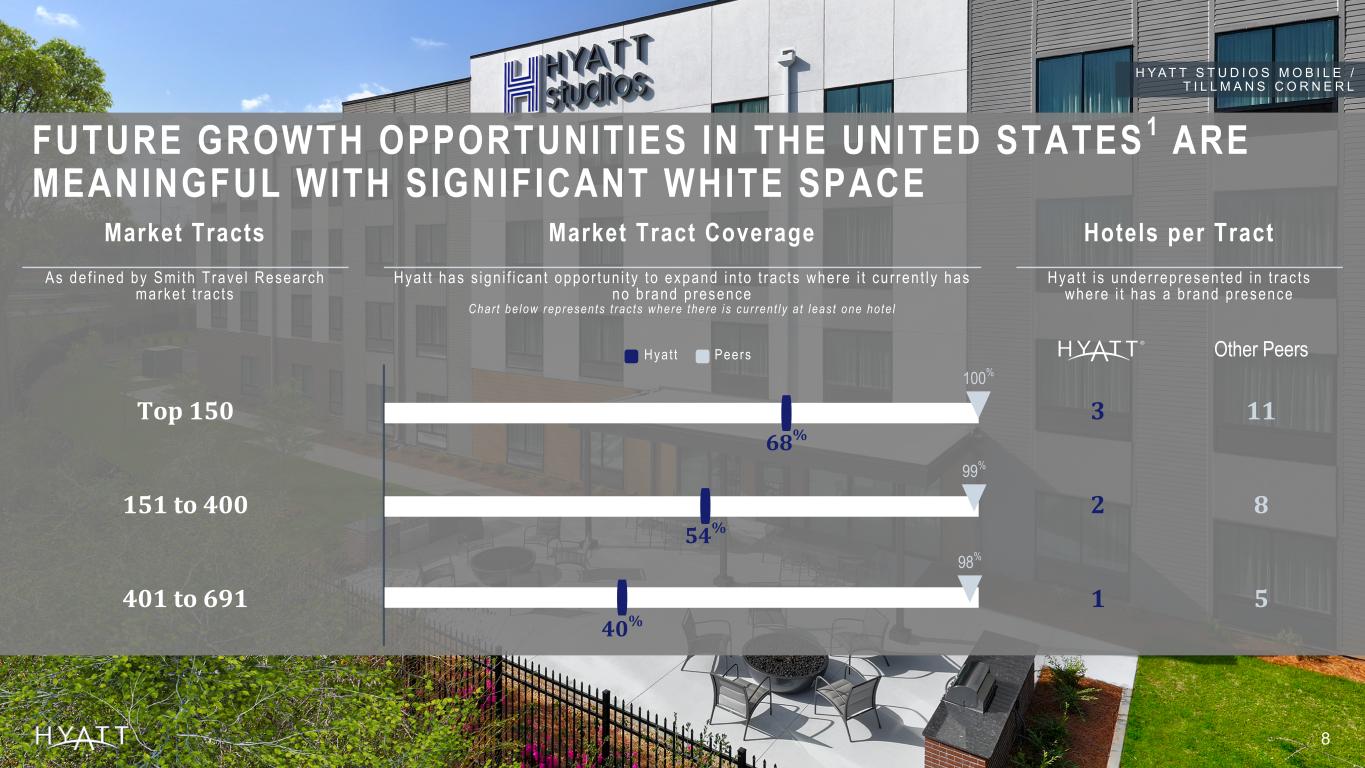
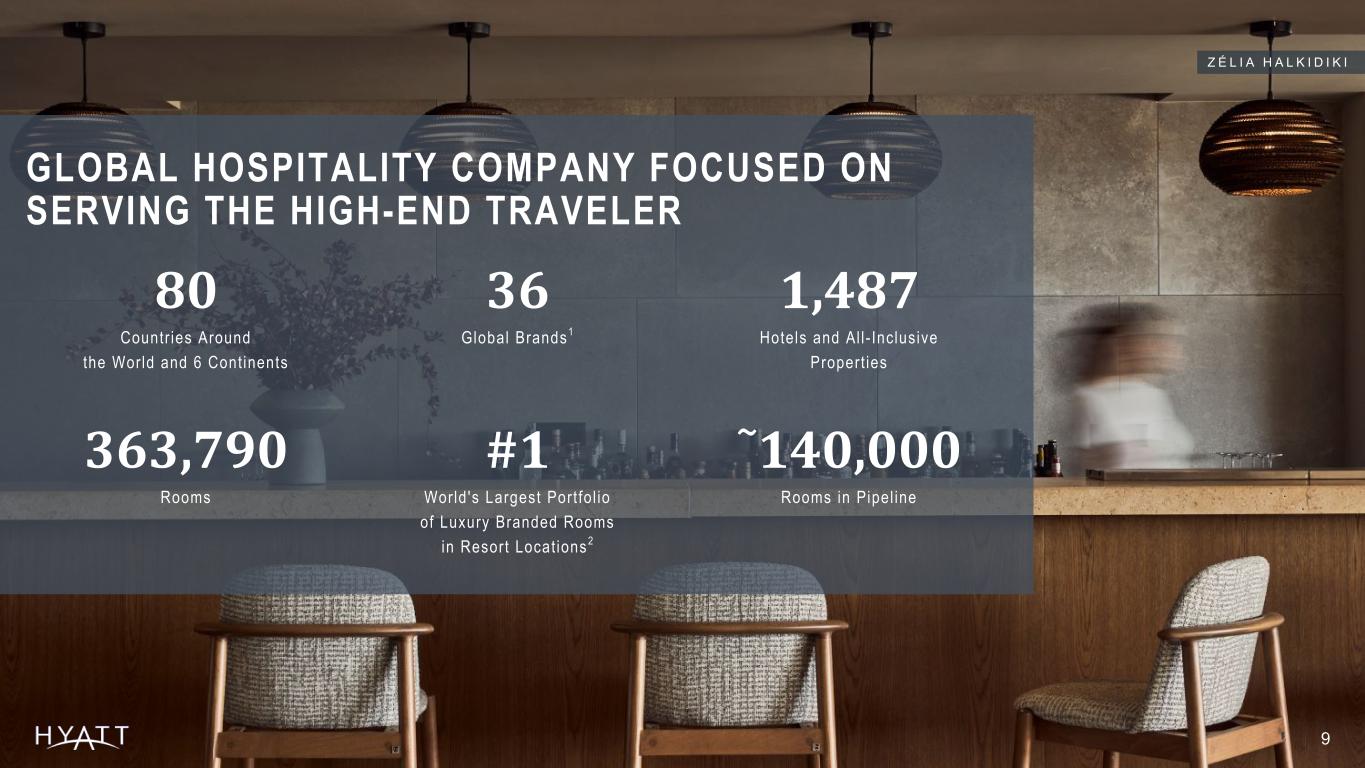
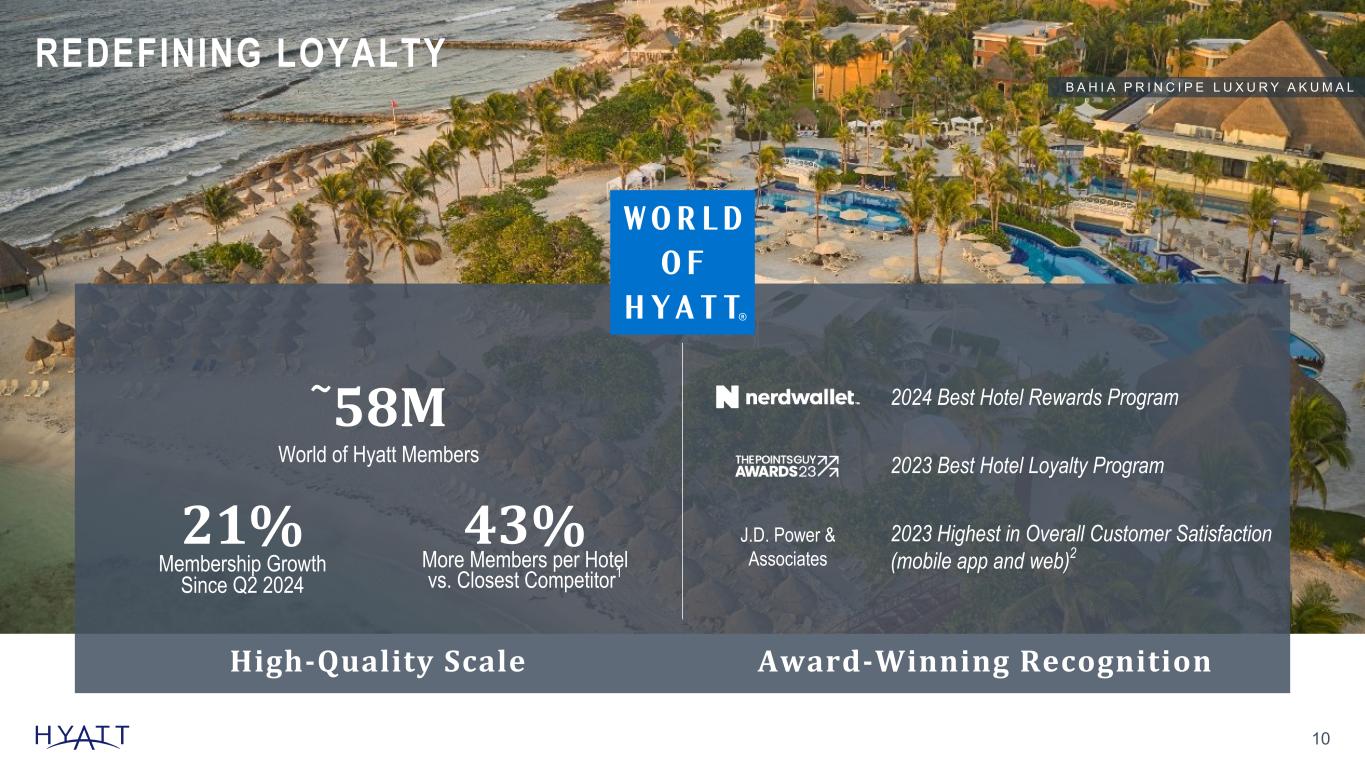
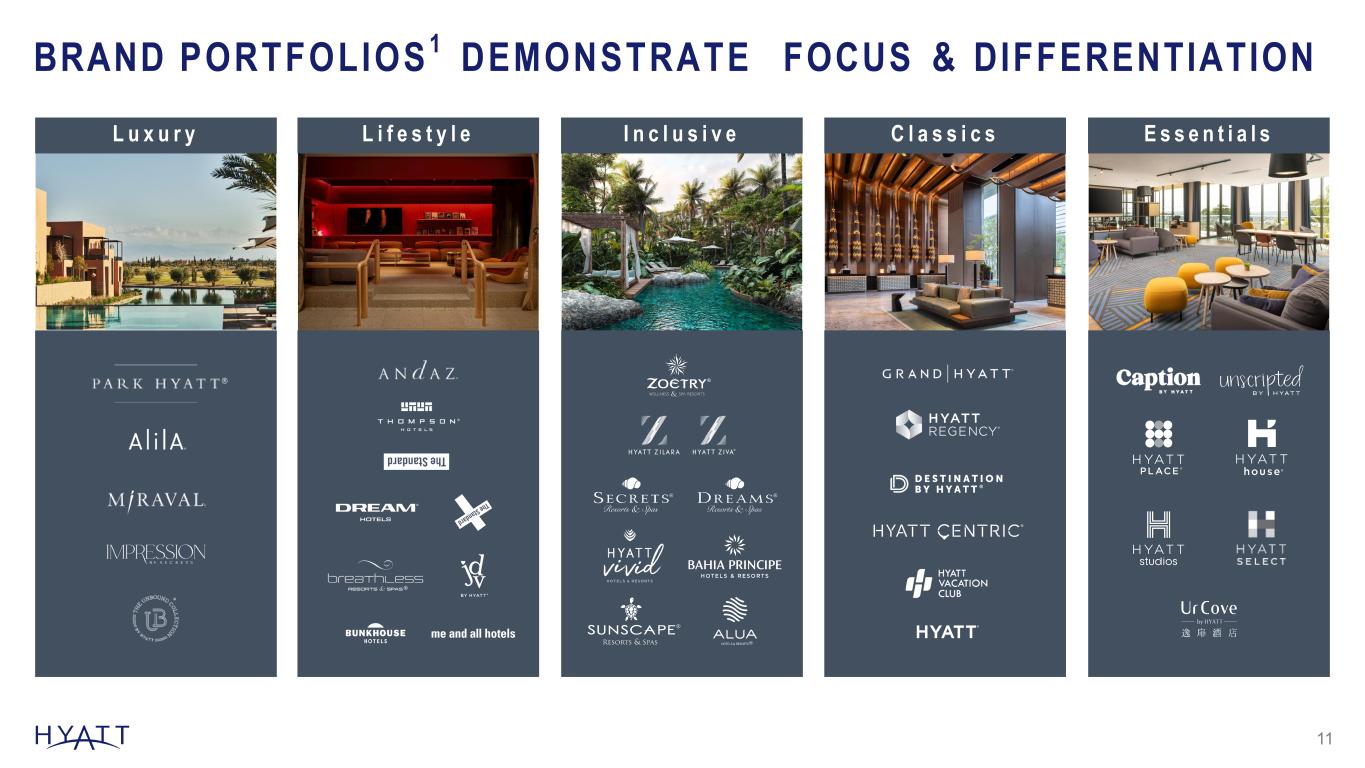
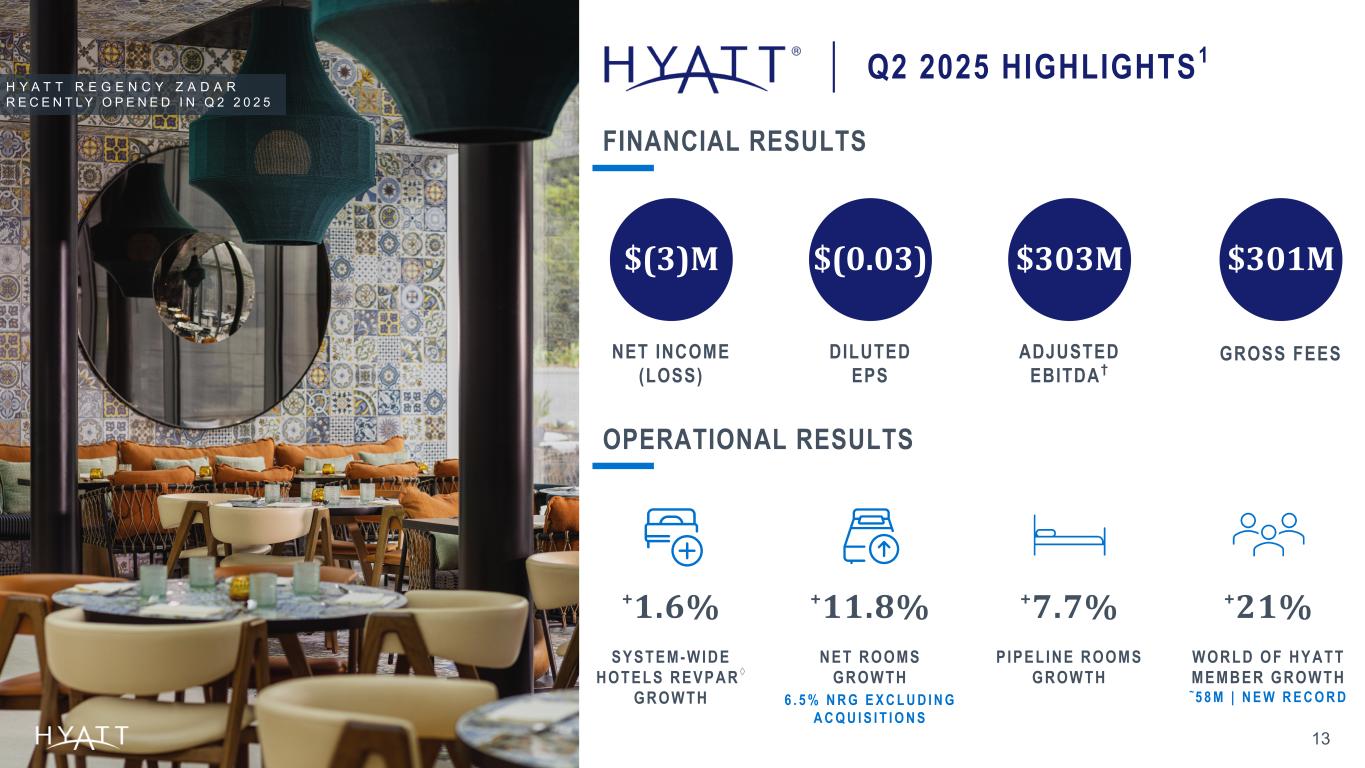
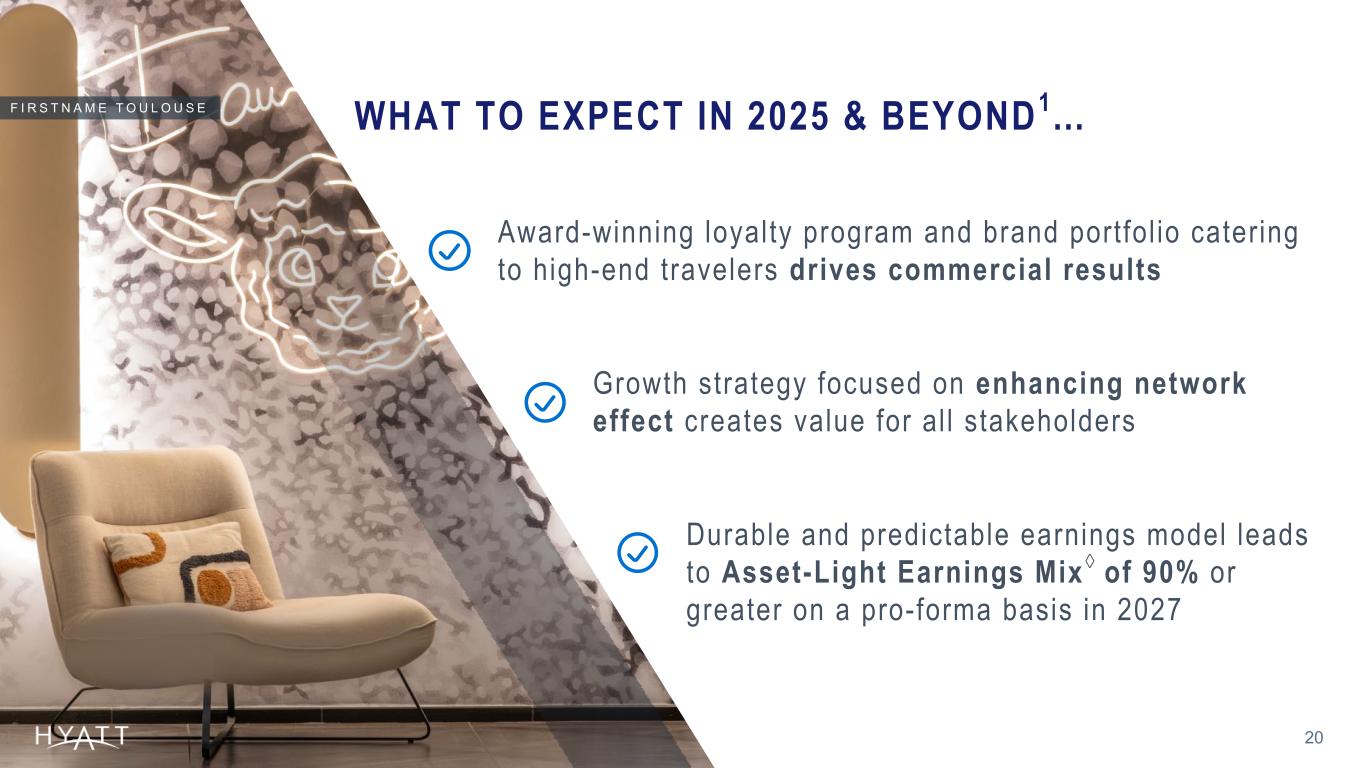
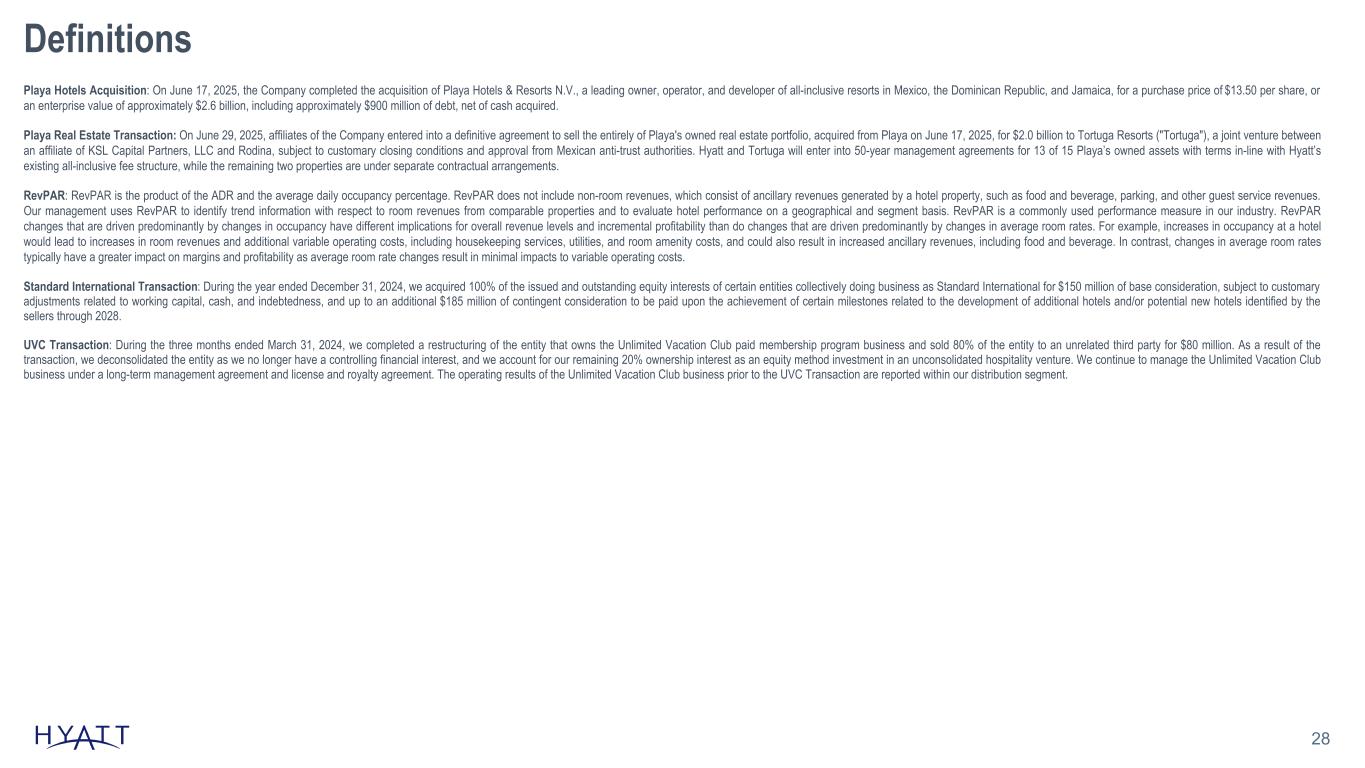
Thanks, Adam. I would like to start our call by saying how proud I am of our team's accomplishments over the last quarter. I'm thrilled that we closed on the acquisition of Playa Hotels and Resorts into an agreement to sell the entire Playa real estate portfolio. I would like to extend a warm welcome to the Playa colleagues who joined the Hyatt family and the expertise they are operating this quarter through our network and the dedication of Hyatt colleagues across the globe. For the 12th consecutive year, Hyatt was nominated to forging how we've been able to maintain our culture of care, even as we have significantly grown and transformed our business across the globe for their continued care for our guests, customers, and each other. Before I cover results, I'd like to provide an update on our transactions activity, starting with the acquisition of completed on June 17th. It included the acquisition of 15 all-inclusive resorts, including eight. I guess we announced that we entered into an agreement to sell the entirety of a transaction with the ability to receive an additional $143 million if certain conditions are met. We are pleased to be entering into this agreement with an ownership group that has deep knowledge and experience in the luxury all-inclusive, which we believe could close by the middle of the fourth quarter. We will enter into 50-year management agreements for 13 of the 15 resorts. In 2026, we expect to earn an additional $60 to $65 million of management fees, net of franchise fees that we previously would have earned from Playa. We also expect to generate earnings through our distribution. Upon stabilization in 2027, we expect the implied multiple on the net purchase price for the asset-like business to be eight and a half times to nine and a half times. a very strong outcome. Valuations are only pleased with the terms of the transaction and the speed at which we were able to execute. We expect the transaction to be accreted to shareholders in the first full year. This transaction demonstrates our commitment to our asset light business model while continuing to strengthen our brand portfolio and leadership in the luxury all-inclusive segment. We also continue to make progress to sell several of our own three hotels that were under a formal marketing process last quarter are now subject to an exclusivity agreement. We also have one property that is under a signed PSA and two that are under and Andaz London Liverpool Street, but we do not expect either of those transactions to close this year. We will share additional updates as these transactions progress and we continue to to exceed 90% by 2027. Moving to operating results, this morning we reported system-wide RevPAR growth of 1.6% for the quarter, or 2.2% when adjusting for the shift of Easter from the first quarter in 2024 to the second quarter in 2025. RevPAR growth was strongest among our luxury brands as high-end consumers continue to prioritize travel. Leisure Transient RevPAR was up 2.6% to last year, reflecting the shift of Easter and increased approximately 6% for our luxury brands. All-inclusive net package RevPAR increased 6% compared to the second quarter of 2024 in the Americans, highlighting the continued strength of luxury all-inclusive. Business transient REF PAR was flat in the quarter, with the United States declining by 1.5%, driven by select service hotels. Business transient REF PAR was up in the low single digits for us, as well as hotels in Europe and Asia-Pacific, excluding Greater China. In the quarter was up 0.3% to last year, and increased 1.1% when accounting for the timing of Easter. Group pace for full-service managed properties in the United States is approximately flat compared to 2024 for the last half of the year. The third quarter, which is lapping 6% year-over-year growth in 2024, has a challenging year-over-year calendar comparison due to special events like the Democratic National Convention in Chicago this year compared to October of last year. is up approximately, we should see easier comparisons due to the timing of Rosh Hashanah, as well as lapping last year's elections in the United States. As we look further out, Pace in 2020 has high single digits, and we are seeing positive momentum in bookings for 2026 and beyond. Although booking trends in the second quarter were softer compared to the first quarter, we're seeing an uptick in future bookings as transient travel. Corporate customers have shared that travel continues to be a priority, especially for customer-facing meetings, and we expect U.S. RevPAR growth to improve after labor. We continue to see exceptional engagement from our world of high-up loyalty members, a key driver and differentiator of our commercial performance. Since 2017 through the end of 2024, we have grown loyalty membership by approximately 27% per year, significantly outpacing the growth of our largest competitors. We ended the second quarter of 2025 with over 58 million members, an increase of 21% compared to the second quarter of 2024. And spend on our co-brand credit card continues to be strong. This sustained growth under loyalty program to high-end travelers and the desirability of our network. As we expand our brand footprint in new and established markets, we are delivering more opportunities for our members to engage with Hyatt. The World of Hyatt program remains a powerful growth engine, deepening guest relationships, reducing customer acquisition costs, and reinforcing our value proposition to owners. Turning to growth, we achieved net rooms growth of 11.8%, including approximately 2,600 rooms that joined the Hyatt system as part of the Playa acquisition. The additional rooms from Playa add approximately 70 basis points to our full year 2025 outlook, which we have raised to 6.7% to 7.7% inclusive of the Playa Rooms. Several notable openings, reference in geographies. In Europe, we expanded our resort offerings with the opening of resorts on Greece's Aegean coast. We also added to our essentials portfolio, opening new Yurko hotels in China and new select service properties in Canada. We continue to be very busy on the development front and ended the quarter with a pipeline of approximately 140,000 rooms, an 8% increase over last year. Things increased by over 30% compared to 24 and included several exciting products, two Zoetri Resort and two Grand Hyatt Hotels in India to highlight a few. It's by the level of development interest in our brands, which we expect to translate to greater, especially within our Essentials brand portfolio to organic growth with the introduction of our brand fills a key white space in Hyatt's portfolio, a lot from our global distribution and the World of Hyatt Loyalty program. We're seeing great interest from the development community, and we expect Unscripted by Hyatt to scale rapidly and complement the recent brand additions in our Essentials portfolio, Hyatt Select and Hyatt Studios. We remain confident in our strategy and our ability to deliver enables us to respond to shifting market dynamics on a real-time basis, continuing to care for our stakeholders and create meaningful differentiation in a competitive landscape. We built a high-end portfolio of brands through deliberate and disciplined expansion in the luxury, lifestyle, and all-inclusive spaces. Our luxury chain-scale rooms mix has increased by 1,000 basis points since 2017, while our largest competitors have seen their luxury mix stay flat or decline. We have cultivated deep expertise while attracting and growing a high-end customer base. This has yielded meaningful differentiation for Hyatt with more than 70% of our portfolio in the luxury and upper upscale chain scales that we believe is different. This sets us apart from our peers and positions Hyatt among the most recognized and respected names in global hospitality. This strategy has attracted a valuable customer who seek out quality experiences, engage deeply with our brands, increased co-brand fees per room, The foundation, efficiency, and speed, fanned into the upscale and upper midscale segments, will allow us to grow with intention in markets where we have significant white space. In the U.S. alone, we are absent from more than 50% of STR tracks, and in tracks where we have a presence, 30% the size. White space gives us robust growth opportunities, allowing us to provide existing members with more ways to stay with us while introducing new guests. Incredibly excited about Hyde's future. We have an unmatched global portfolio of premium luxury lifestyle and resort brands that has driven significant loyalty membership. Our significant white space for growth is expected to increase our fee-based earnings, further improving our capital-efficient asset-light model. We believe we are positioned to generate durable, growing free cash flow and deliver significant shareholder value every day by caring for each of our stakeholders, especially through changing market dynamics. Joan will now provide more details on our operating results. Joan, over to you.
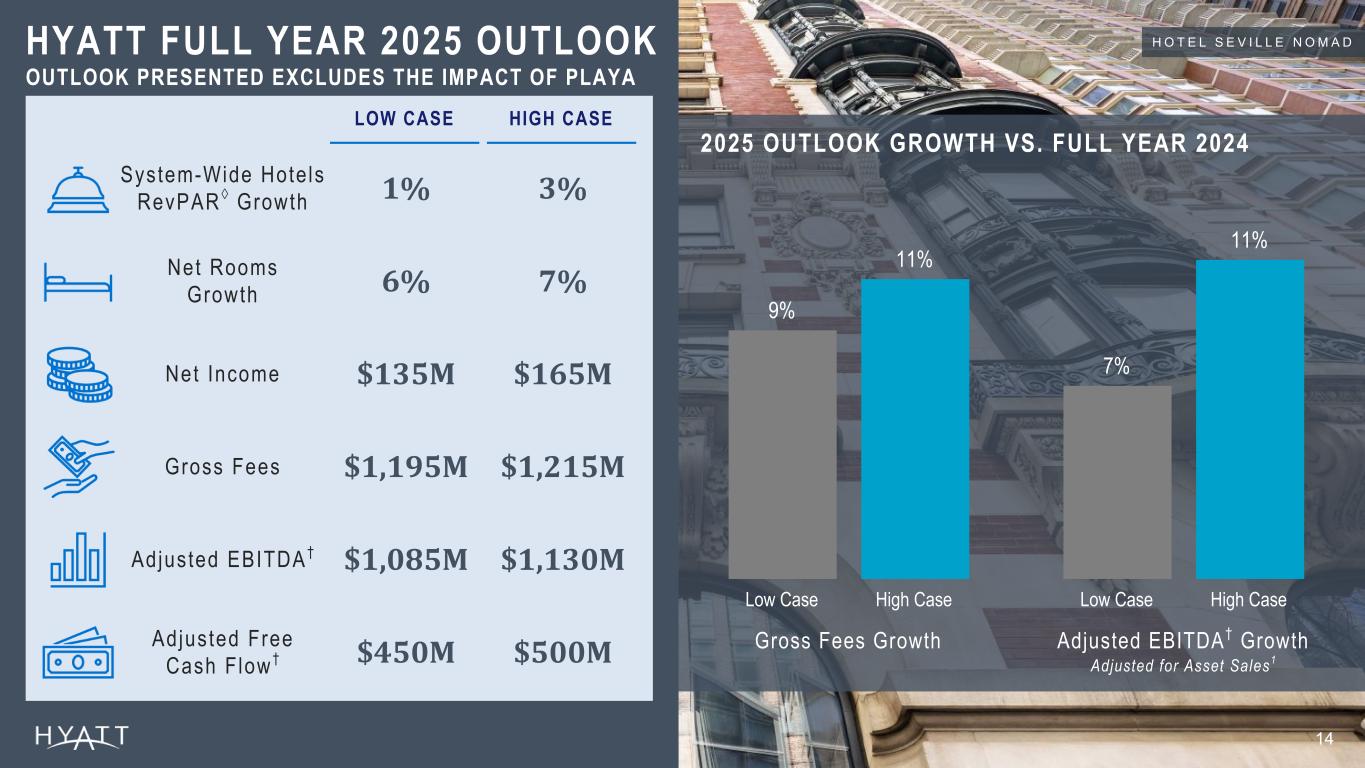
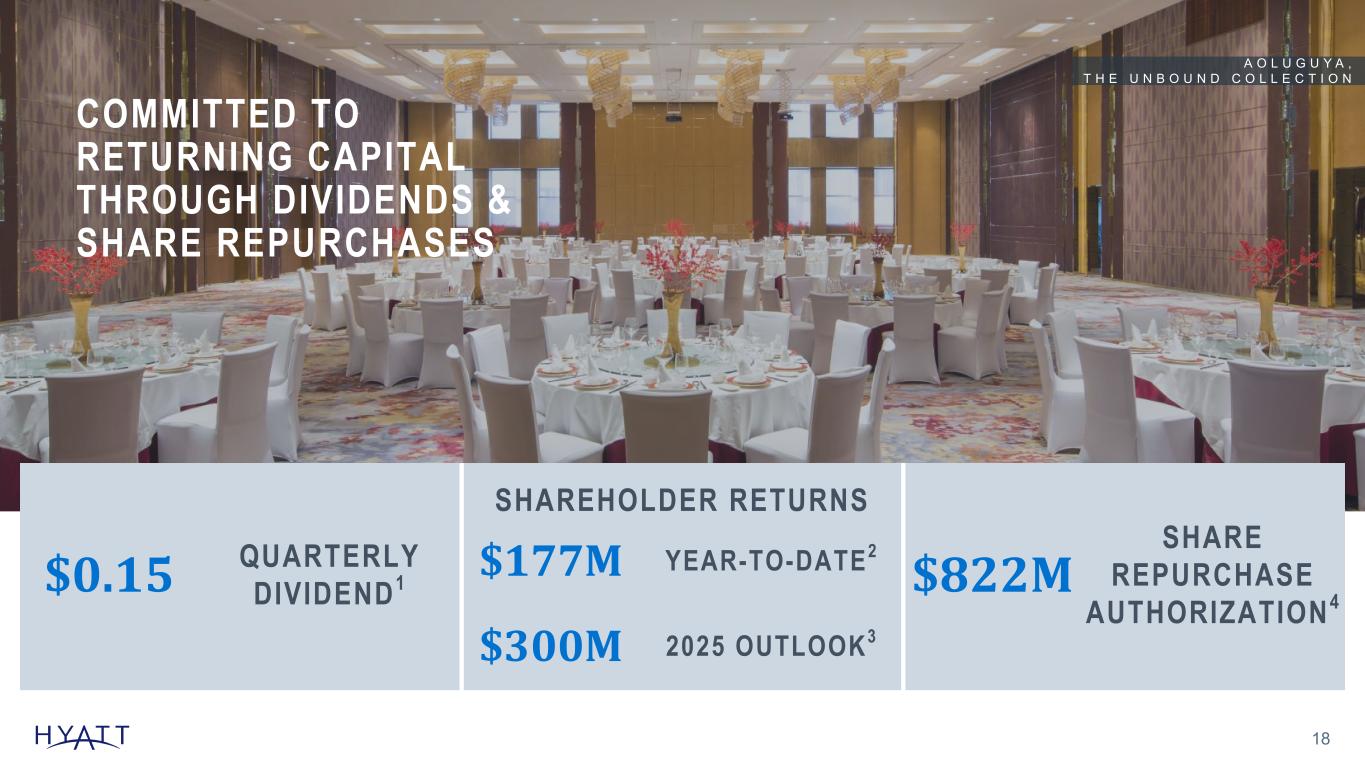
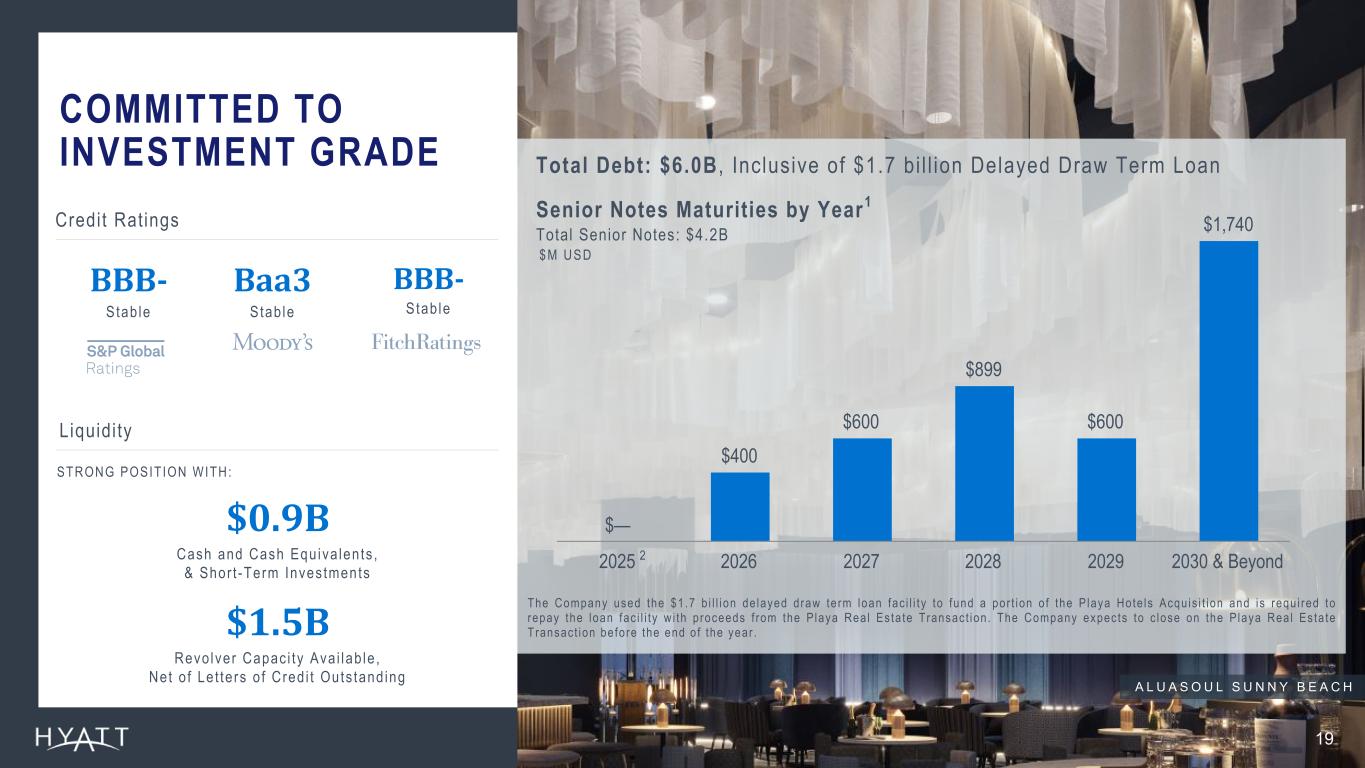
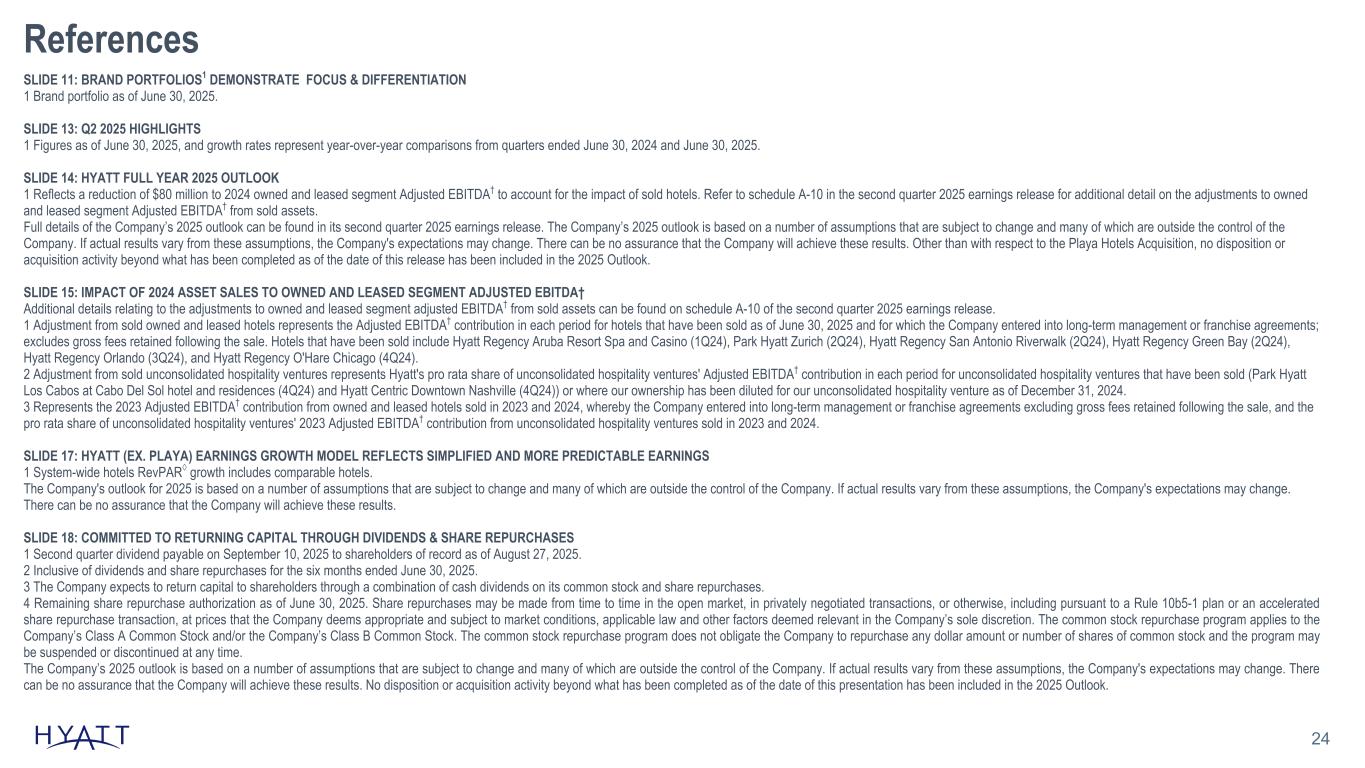
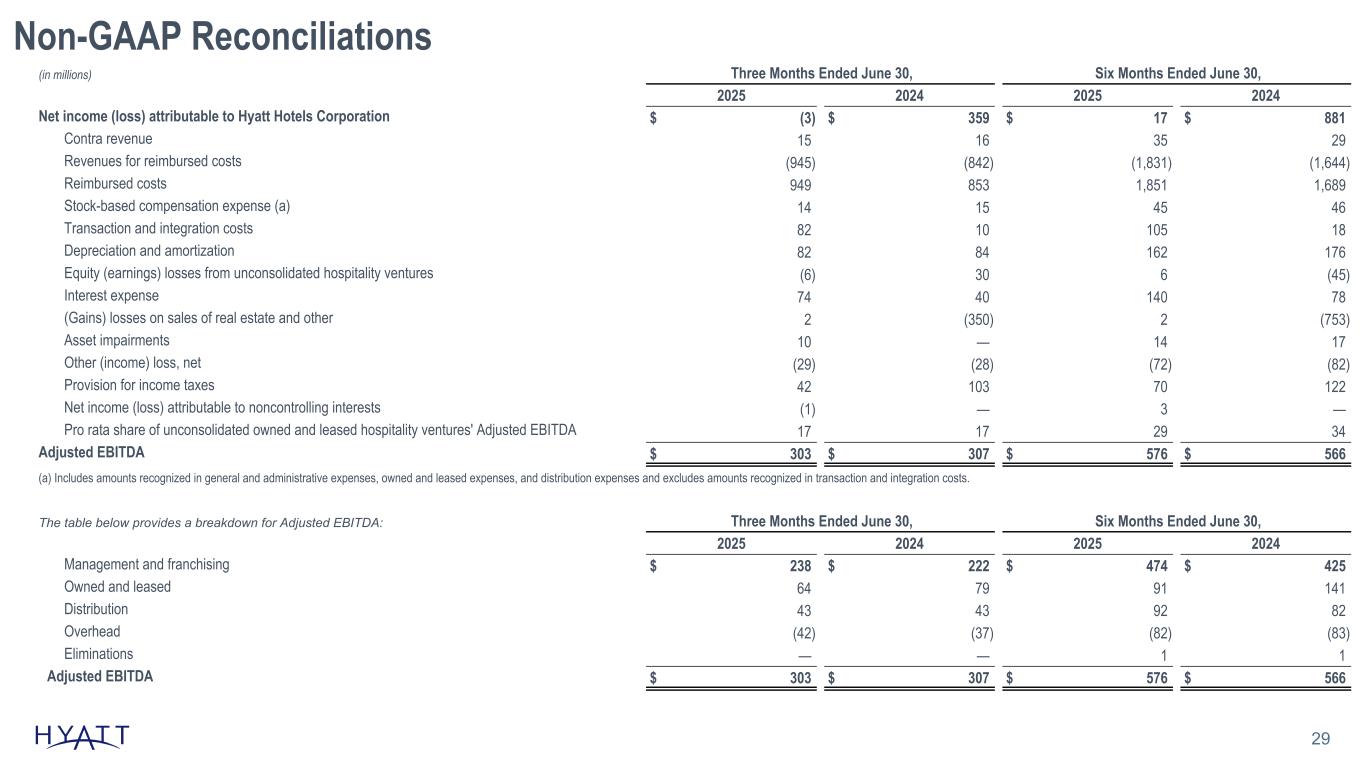
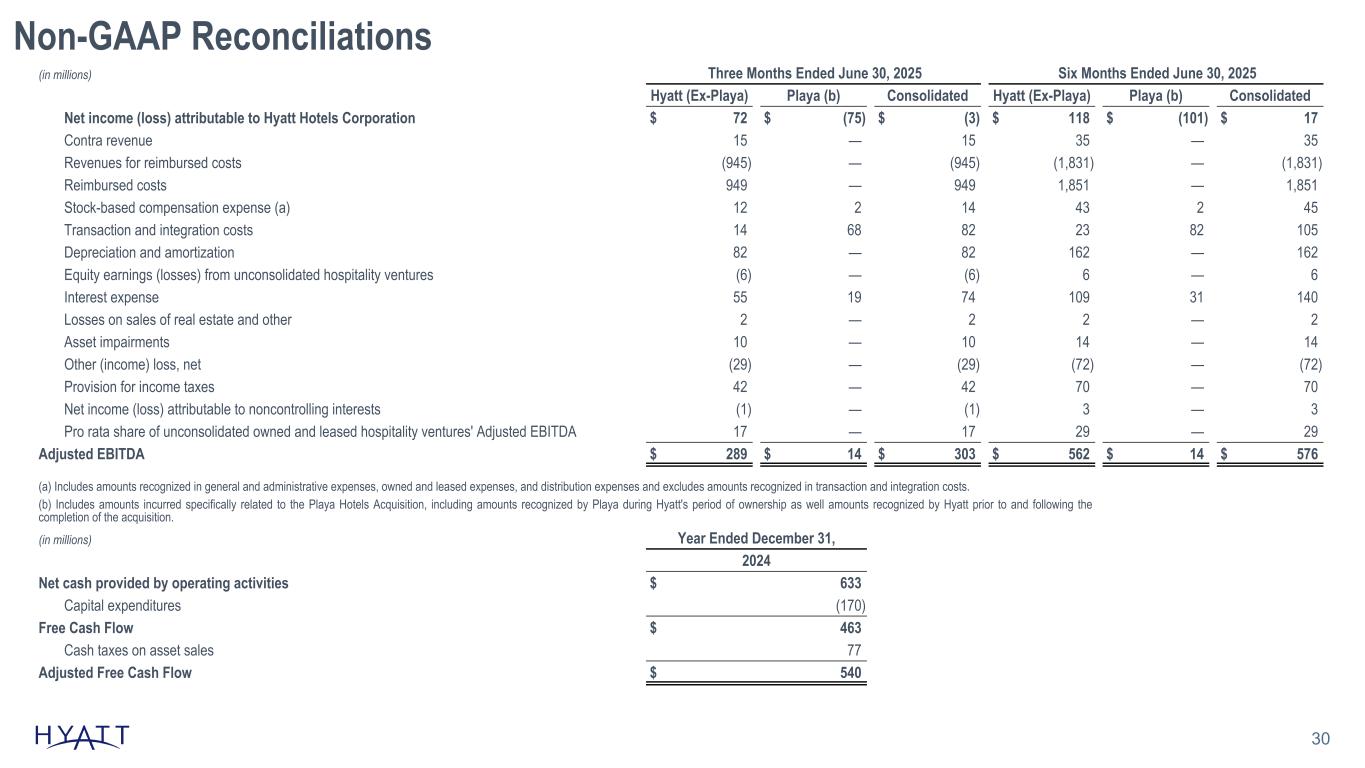
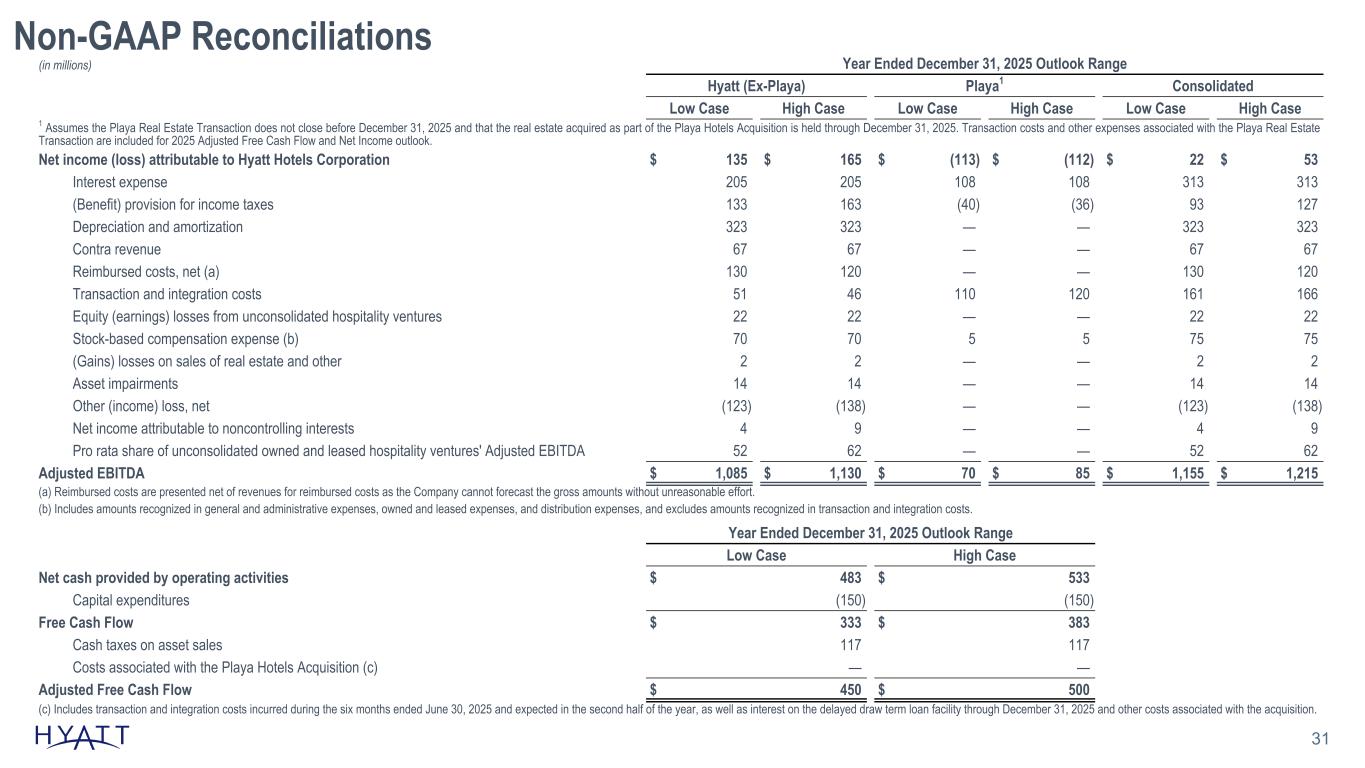
Thanks, Mark, and good morning, everyone. RevPAR growth in the second quarter grew 1.6% compared to last year, in line with our expectations shared during our first quarter earnings call. As Mark mentioned, and similar to the trends seen in the first quarter, the highest end chain scales outperformed, with our luxury brands up over 5% in the second quarter. In the United States, Rev Par was flat to last year, driven by the lower chain scales and the shift of Easter from the first quarter last year to the second quarter this year. The luxury chain scale performed well, up over 4% in the quarter from strength in group business. Upper upscale hotels were negatively impacted by the timing of Easter, which led to lower group contribution in the quarter, while upscale hotels were 1% below last year due to softer business transient demand. RevPAR outside of the United States performed well, and we saw continued strength in Europe and Asia Pacific, excluding Greater China. International inbound travel continues to be an important driver of results for these regions. Greater China grew RevPAR for the second consecutive quarter due to increases in leisure transient RevPAR. Demand for leisure travel remains very healthy within our all-inclusive portfolio. Net package RevPAR growth at our all-inclusive properties in the Americas and in Europe was exceptionally strong during the second quarter. PACE is up almost 5% in the Americas for the third quarter, and we're excited about the sustained demand for luxury all-inclusive travel for the remainder of the year. We reported gross fees in the quarter of $301 million, up 9.5%. Our strong fee growth was driven by international RevPAR performance, new hotel openings, and growth in non-RevPAR fees. The second quarter demonstrates our ability to generate sustained fee growth in a lower REVPAR growth environment, highlighting the strengths of our premium brands and industry-leading net rooms growth. Owned and leased segment adjusted EBITDA increased by 1% when adjusted for the net impact of asset sales and the Playa Hotel acquisition. Distribution segment adjusted EBITDA was flat to last year as higher pricing, effective cost management, and favorable foreign currency exchange offset lower booking volumes in the four-star and below segments served by ALG Vacations. In total, adjusted EBITDA was $303 million in the second quarter, an increase of approximately 9% after adjusting for assets sold in 2024. In the quarter, we recognized approximately $14 million of adjusted EBITDA related to the Playa acquisition for our period of ownership in the second quarter. During the quarter, we financed the Playa acquisition through a combination of cash on hand and drawing on the term loan we entered into early in the second quarter. Upon close of the real estate sale of the Playa assets, we'll use the net proceeds to repay the term loan as per the terms of the agreement. As of June 30, 2025, we had total liquidity of approximately $2.4 billion, including approximately $1.5 billion in capacity on our revolving credit facility, and approximately $900 million in cash, cash equivalents, and short-term investments. In the second quarter, we paid a quarterly dividend of $0.15 per share and have approximately $822 million remaining under our share repurchase authorization. We remain committed to our investment grade profile and our balance sheet is strong. Before I cover our full year outlook for 2025, I'd like to note that we have provided additional schedules within the earnings release and the investor deck, which include our expectations for Playa in the third and fourth quarter of this year. In these schedules and for simplicity, Playa's results post-acquisition are included for the entirety of the balance of the year with the assumption that the Playa real estate sale transaction does not close before the end of the year. However, based on current expectations, we anticipate the Playa real estate sale transaction could close by the middle of the fourth quarter of this year pending antitrust approval in Mexico. I'd like to note that approximately 60% of fourth quarter adjusted EBITDA for Playa's real estate is forecasted to be earned in December. I'll now cover our full year outlook for 2025, which does not include the impact of the Playa acquisition or planned real estate transaction. The full details of our outlook can be found on page three of our earnings release. We continue to monitor the dynamic macroeconomic environment, and as the second quarter progressed, consumer confidence improved. However, lower chain scales underperformed our full-service chain scales, especially in the U.S. We expect lower chain scales in the U.S. to underperform luxury and international markets in the third quarter, which is in line with the expectations that we shared during our first quarter call. Our full year 2025 REVPAR range of one to three percent implies REVPAR growth for the balance of the year of between flat to up two percent and we expect the third quarter to be towards the lower end of our balance of the year range and the fourth quarter at or above the high end of our balance of the year range. For the United States, we expect REVPAR for the balance of the year to be around flat. We expect third quarter REVPAR growth to be flat to down slightly, and we expect to return to positive REVPAR growth in the fourth quarter, led by group and business transient, as we lapped the presidential elections last year. For greater China, visibility remains limited, but as we lapped easier comparisons to last Last year, we believe REVPAR could be up in the low single digits for the balance of the We anticipate our properties in Asia-Pacific, excluding Greater China, will have the strongest growth in REVPAR of any geographic regions as they continue to benefit from significant international inbound travel. In Europe, we expect REVPAR growth to be flat for the balance of the year, with REVPAR growth contracting in the third quarter as we lab difficult comparisons, including the Olympics in Paris last summer. We expect Rev Park growth to be positive in the fourth quarter. We are maintaining our net rooms growth outlook range of 6 to 7 percent, which should not include rooms added from the Playa acquisition. Growth fees are expected to be in the range of $1.195 to $1.215 billion, a 10 percent increase at the midpoint of our range compared to last year. Adjusted EBITDA is expected to be in the range of $1.085 to $1.13 billion, a 9% increase at the midpoint of our range compared to last year when adjusting for the impact of assets. As a reminder, owned assets sold in 2024 accounted for $80 million worth of owned and lease segment adjusted EBITDA last year. Our full-year adjusted EBITDA outlook implies balance of year growth of 6% at the midpoint of our range. We expect most of our year-over-year growth of adjusted EBITDA, excluding the impact of asset sales for the balance of the year, to occur in the fourth quarter as we lap easier comparisons, especially in the U.S., which has a more favorable calendar, as well as higher one-time G&A costs last year that will not repeat this year. In the third quarter, we expect weaker demand among lower chain scales, impacting select service REVPAR in the United States, as well as earnings in the distribution segment. As a reminder, our owned Park Hyatt properties in Paris and Chicago benefited from the Olympics and Democratic National Convention, respectively, in 2024. Adjusted free cash flow is expected to be in the range of $450 to $500 million, which excludes $117 million of deferred cash taxes paid in 2025 related to asset sales that took place in 2024. forward. We are reinstating our full-year outlook for capital returns to shareholders and expect to return approximately $300 million in 2025, inclusive of share repurchases and dividends. Our capital allocation priorities remain unchanged. We are committed to our investment-grade profile, identifying opportunities to invest in growth that creates shareholder value, and returning excess cash to shareholders in the form of dividends and share repurchases. In closing, we are proud of our second quarter results and the strong execution around the Playa acquisition that will deliver asset-light earnings at a very attractive multiple once the sale of the real estate is completed later this year. We believe our commercial and growth strategy, the quality of our brand portfolio, and operational agility position us well to navigate this dynamic environment, and we remain committed to delivering against our long-term financial and strategic objectives. This concludes our prepared remarks, and we're now happy to answer your questions.
Operator
Thank you. We will now begin the question and answer session. If you have dialed in and would like to ask a question, please press star 1 on your telephone keypad to raise your hand and join the queue. If you would like to answer your question, simply press star 1 again. We'll take our first question from Connor Cunningham at Milius Research.
Hi, everyone. Thank you. Been very busy over the past couple of months. So, again, Again, appreciate the detail in the slide deck, too, on just the outcomes for the low and the high end as well. So thank you there. Just on the improvement that you expect through the remainder of the year, I'm just trying to understand it a little bit better. It seems like you expect some weakness in the third quarter. Is that mostly isolated to July and then things get better? There's a lot of comp headwinds and whatnot. It seems like the biggest swing factor is on the BT side. So just any thoughts on the moving parts as we move throughout the year? What gives you confidence that things get better? towards the year end. Thank you.
Sure, Connor. I'll just summarize some of what I said in my prepared remarks. As we look at the second half of the year and relative to the EBITDA guidance that we provided for the full year, the second half would suggest a, would reflect a 6% growth in EBITDA for the second half. And I mentioned that we expect the majority of that to be earned in the fourth quarter because, as you said, in the third quarter, as you mentioned, there are some, in particular, tougher comps, several one-time events, including the Olympics and the Democratic National Convention. Those one-time events will, as they were realized in the second, the third quarter of last year, that is one of the headwinds that we will have in the third quarter. We also have slower group pace growth in the third quarter that we're seeing right now. So it is slightly negative. As Mark mentioned earlier, our group pace is flat for the remainder of the year, and so the third quarter is negative as of right now. And then there's some slower pickup in our lower chain scales, And that impacts our upscale business in the U.S. as well as our distribution business. So that is sort of the headwinds in the third quarter, just to give a little bit more color. And then on the fourth quarter pickup, yes, there are easier comps because of one-time events in the fourth quarter, including some of the holiday shifts and the presidential election in November. So easier comps there in the fourth quarter. We're seeing some better pickup on the BT side that we expect to realize post-Labor Day into the fourth quarter. That's still a shorter-term business, but as we talk to our top corporate customers, they are confident in getting back on the road post-Labor Day. So that is what we're hearing and what we're seeing in the numbers recently. The group pace numbers, I mentioned that while we're flat for the entirety of the second half of the year, the fourth quarter is positive. So that gives us confidence. Obviously, we have more visibility to group pace. So that's a positive in the fourth quarter. So there's quite a few reasons for the difference in the growth rates that we expect in the third quarter and the fourth quarter. And we feel really good about our expectations based on what were the bookings that we're seeing and those estimates that we provided for the remainder of the year.
I would just add that if you pick your head up from this year into next year, the group pace into next year is extremely strong, with a lot of it represented by rate increases. So So while I think Joan explained the profile of the remainder of the year with great detail, I think maybe the more important message is that we see an improving picture heading into 2026 in addition to all the things that Joan just mentioned.
Yeah, the exit rate is certainly encouraging. But maybe I can ask another one. Just on the co-branded credit card negotiations, I mean, I'm just trying to understand a little bit better on the timeline and what you guys are trying to accomplish. From an outsider's perspective, you've obviously had a ton of growth and luxury. Your loyalty members are up over 400%. It just seems like you're in a pretty good negotiating position. So just any level, if you could level set us there, that would be great. Thank you.
Connor, we will update you as soon as we have something to update. As we've mentioned, we do feel good about what we'll be able to accomplish, but we'll provide more specifics on our expected economics as soon as we're able to do that. And I would expect, you know, maybe we'll be in a position later this year, early next year.
Okay. Had a try. Thank you.
Operator
We'll move next to Stephen Grambling at Morgan Stanley.
Hi, thanks. Just know you've done a lot with getting the apply real estate sale done here or on the path to being completed by the end of the year. But as we think about other hotel dispositions, maybe remind us of where you stand and how you think about capital allocation from any proceeds that could come out from that.
Sure, Stephen. Thanks for the question. The proceeds, Joan mentioned this, but the proceeds from the sale of the Playa real estate will go entirely to pay down debt that's outstanding associated with that. It does actually satisfy the goal that we set for real estate dispositions at $2 billion. Having said that, you heard that we've got a lot of activity in other assets, and we will continue to stay focused on further dispositions. And that will certainly allow us to have more flexibility with respect to return of capital to shareholders. And we expect that picture, that is the return of capital to shareholders, to continue to improve. Every quarter that goes by, we become increasingly fee-based in our earnings mix, and cash flow is going up. And it's also true that we have a fortress balance sheet, as it is, post the paydown of the debt that we took on for the playa acquisition. So I think that's what you can expect to see over the next 18 months.
And one very quick follow-up. You talked about the improving pre-cash flow conversion.
Maybe I missed this in your opening remarks, but how is the big, beautiful bill potentially going to impact your cash taxes and how you think about cash conversion over the next couple of years? um it'll have some impact we have the benefit uh like everybody else does of accelerated depreciation um and that we're spending is much less about uh bricks and mortar and technology um that those are all depreciation as well so i think we will beyond that i'm not sure that
um there's much to no just to reinforce the fact that free cash flow as we sell real estate continue to sell real estate and get to our 90% expectation for asset light earnings that will have greater and greater levels of free cash flow conversion over time.
Great, thanks. I'll jump back in the queue.
Operator
We'll move to our next question from Sean Kelly at Bank of America.
Hey, good morning, everyone. Thank you for taking my questions. You know, Mark or Joan, maybe one place to start would be just kind of, can you help us with the building blocks for next year overall? I think for the most part, the investment community gets them, but there is a lot moving around. So, if we think about kind of part one being the clean playa fees once the real estate is divested, part two being the credit card deal, part three being some amount of organic net unit growth, and then part four being, you know, trying to think about owned and leased, you know, pieces that are kind of net or maybe we need to annualize. Can you just help put some parameters around, you know, sort of each of those areas, each of those areas, just as people are trying to kind of look out a little further and want a clean look at what Hyatt really can do on the earnings power side next year? That'd be great.
I think we'll split this up. Joan, you can take it first.
Okay, John, I'll take the first two. So Mark had mentioned the expectations that actually we published when we announced the deal, the FIAT acquisition deal, that ultimately the contracts that we're entering into, the 50-year contracts with the Tortuga buyer reflects about $60 to $65 million of fees on an incremental basis. So when you look at that on a full-year basis, what we were realizing pre-acquisition was about $15 to $20 million of franchise fees. So that is the increment for 2026 relative to PLIA and with respect to – that's on the fee side – and with respect to the credit card, I'll just reiterate what I just responded to, which is that we will provide you insight into economics as soon as we're able to do that, as soon as we have a deal to share. So when we provide guidance for 2026 more officially, we'll be sure to give you some insight into that.
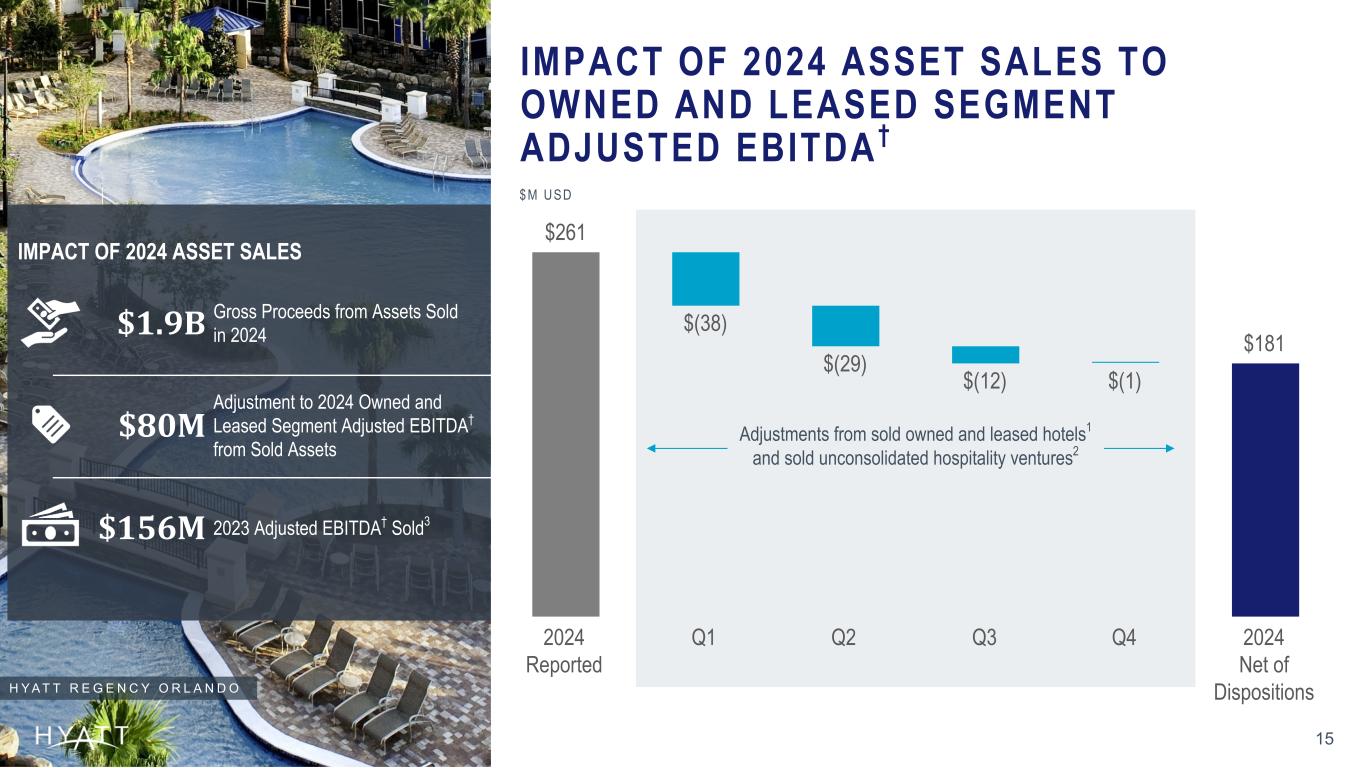
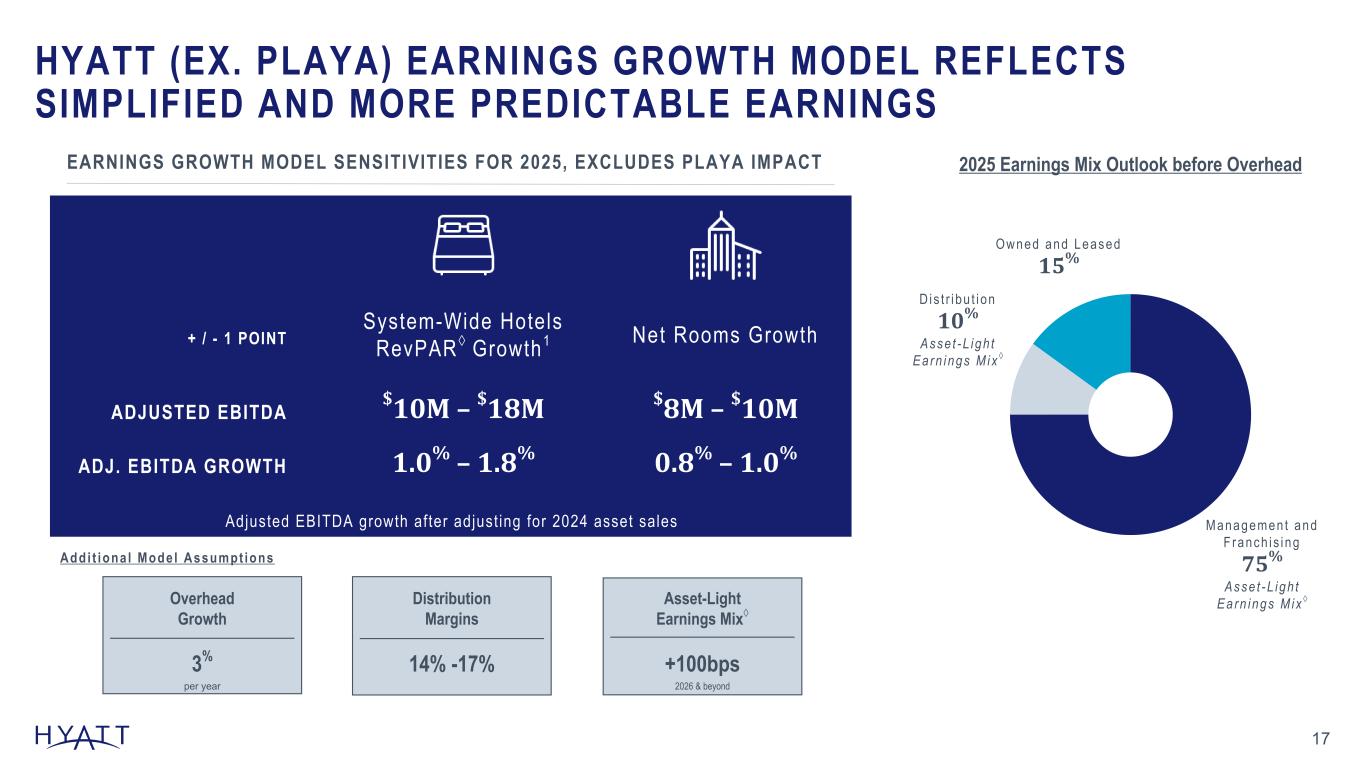
And then on the other two points, out on page 15 of the investor information deck that was released this morning, the quarter-by-quarter adjustments for 2024, and we will continue to report these adjustments out on a quarterly basis to facilitate everyone's ability to understand what the impact is on a year-over-year basis. I think the baseline as we head into next year is established, the foundation is established with really strong group pace and a continuing positive outlook for leisure travel, especially in the luxury leisure segment. I know that overall leisure numbers have been weaker, but that's primarily driven, if not entirely driven, or maybe more than 100% driven by lower chain scales. So that's not where we live. And if you include Europe in the outlook with respect to leisure, it's actually even better. So U.S. resorts were up mid-single digits year-to-date. If you include – and all-inclusive resorts in the Americas were up almost seven. If you include Europe, it's up eight. So that's year-to-date, but the outlook continues to be very strong. Pace into the remainder of the year for our HIC high-inclusive collection hotels is strong, as is the Pace outlook for the Playa hotels that we now own. So I think the most important thing in terms of the outlook heading into 2026 relates to those dynamics where we've got big chunks of our business that all have positive signs. NRG, upon pace outcome, in my opinion, with the 70 basis points that we added to the outlook has to do with apply a transaction. Our feeling and our sentiment, especially given the increased signings pace in the second quarter and some of the dynamics that we're seeing in some of the traction that we are starting to see really grab hold in the upper mid-scale for us, focus on that area is, in my opinion, going to continue to be the tailwind. And so I think we'll have wind in our sails with respect to NRG heading into next year and the year after that. And I'm increasingly confident that we'll be able to maintain those levels.
Yeah, and I would just add for your modeling purposes, Sean, the confidence that Mark just described about the business and our growth, this all leads to our confidence in the Fialgo holding up. So I think that helps with respect to what you're looking for for modeling into next year.
Thanks. I know that was a long one. Just a clarification, Joan, and I won't go any deeper. But just for the incremental fees from Playa in terms of the numbers that you gave, I think that you'd originally laid out $55 to $60 million. Just to be clear, that's the incremental fees. In addition, you keep the fees that you already had, right? So, but that'll be the incremental bump for 26 over 2025.
Yeah, the incremental, that number is the incremental. First of all, it was 60 to 65. Fees, top-line fees. Top-line fees, that net of the franchise fees that we would have received from Playa.
Right, which is why I provided those, because when you actually look at the second half of this year, when you consolidate Playa, you're going to see a, which is you'll see that on page three of the earnings release, that on a consolidated basis for the second half of the year, we don't earn any fees because we own the real estate. So that is why I provided the 15 to 20, which was the pre-acquisition fees, franchise fees that we collected from Playa. The 50 to 55 that you're referencing, Sean, that was an EBITDA number that we provided.
Yeah. So yeah, just to be clear, the 60 to 65 is the gross fees. That number is net of $17 million that we would have otherwise received. And the 50 to 55 is the EBITDA that's applied from the 60 to 65 of fees. Is that clear? And that's it.
It's clear. Thank you so much. I know it's a lot.
Operator
We'll move next to Michael Bellisario at Baird.
Mark, two-parter for you on the recent brand acquisitions. First on Standard and Bahia Principe, where are we in the process of integration, all the various milestones that you guys worked through? What is invocable on Hyatt channels? How is loyalty contribution trended so far? And then that $11 million of fees that you referenced in the press release, how was that relative to your expectations? And then secondarily for Playa, what's sort of the integration timeline there for the converted hotels and then also your expected step up in the associated distribution earnings over time. Thanks. Thanks, Michael. With respect to standard, we are live. There may be one hotel in their portfolio that's not live on World of Hyatt yet. I'm not sure. The Manor, I think, was the last hotel to convert or to be brought live. So as I sit here, I just don't remember, but it's a single. You know, Amar Lovatine ran development and was a key leader for W when W Hotels were launched when he worked at Starwood. And so he understands exactly how the right customer base can actually interface with a lifestyle group where you don't end up with sort of cognitive dissonance when you walk into our hotels. Um, and so there's a, there's a, um, there's a profile of customer that is going to be attracted to standard, but the early results, um, are really better than we expected in terms of, of, uh, contribution. The standard hotels are performing extremely well. That strength is maintained through our acquisition of the company. So everything that we are looking at is displacement of more expensive channels. So the owners of those hotels will benefit a lot from World of Hyatt members now staying in their hotels, and we expect that to grow further over time. So we will buttress and strengthen the overall earnings profile for those hotels and reduce distribution costs all at the same time. So we're really very favorable about that. On that, as to the corporate integration work, that will continue to unfold during the remainder of the year. Amar and his team did a complete inventory of all of our lifestyle hotels and also identified a lot of runway. So they're sort of tag-teaming their time through getting the integration work done and growing all of our brands. And we've already seen some really significant activity in our lifestyle brands, including Branded Resi, which has been super encouraging. With respect to Bayou Principe, likewise, that is fully managed out of the JV that we have a 50% interest in. And that integration work continues. use. I think we did fast-track World of Hyatt integration into those hotels. I don't know whether that's taken hold quite yet. If it has, it's been only literally in the last few days. So we have yet to really see significant impact with respect to our customer base into those hotels. Having said that, the business is performing quite well, at least as well as ours are. And the third one, the third area that you asked about was? Well, the third is just on the Playa Hotel that you're going to convert. Oh, yeah. Sorry. Thank you. Yes, there is disruption with respect to the rebranding. All of that will, we will be fully ramped by the end of the year. So that's underway, and we are turning on the channels that we have unique capabilities in, including ALG vacations. And so, yes, there is disruption there. Anytime you change brand groups, you're going to end up with disruption, but all of that will be fully behind us come January of 2016.
Operator
We'll move next to Smeet Rose at Citi.
Hi, thank you. I did have one more question around your supplier acquisition. I think as part of that, you kept a $200 million preferred interest in the assets. And just going forward, I assume that the – well, I don't know if you can give any kind of scope on kind of the interest you expect to receive there, and I assume that's not included in the fees that you've lined out going forward. Or, again, just sort of thinking about building blocks for next year, will that be a significant, you know, sort of economic interest for you?
Yeah, so quick summary. The returns associated with that preferred period, so they don't show up in the fee line. We're not conflating anything or recharacterizing anything, just to be super clear about that. Second, the way that that piece of paper is structured, it will encourage the buyer to refinance and repay that over time. So I'm not going to go into the specifics about at what rate the paper is issued at at this point. But structurally, it has features in it that over time will step up. So we expect that refinancing will be available. One of the reasons we were so confident with the sale of this real estate, first of all, we know the market extraordinarily well. We're the largest player as manager. And secondly, the yield for these assets is quite high. And it's quite high relative to anything that you might find in the United States, for example. And I think that the institutional community will not only understand but take advantage of that. And that is what allows you tremendous financial flexibility. So, yes, the buyers will earn a very attractive yield, and that's in part because that's what the market is. It is also true that the free cash flow that results from that gives them tremendous financial flexibility. So they're set up, rate of return, and 50-year management agreements, the hotels do.
And before we move to the next question, I just wanted to clarify. Adam just clarified a point I made earlier, and this is in reference to Sean's question. Our EBITDA expectations for 2026 for Playa are 55 to 60 million, and that has not changed since what we previously published. So, just wanted to make sure that that was clear.
We haven't changed our expectations.
Can I just switch over for a moment to, I know Hyatt Studio has been a big focus on a big rollout and I think it's an important part of your next rooms growth expectations.
Any kind of change or updates you can provide there in terms of how that rollout is going? um not uh really it's it's more of what we described last quarter we have more hotels under construction we have a lot more in in the funnel um and so we are very focused on converting into signed contract the early results in mobile so we feel good about that of the investor uh information pack that we that we deck that rather that we published this morning really what that demonstrates pretty starkly is just how big the opportunity is for us strategy has been based around building and strengthening the halo that Hyatt has enjoyed for many years as a premier player and as a high quality player and as a as a high rated player and in a proportion that is vastly in excess in terms of our system that is and now as we lean into all of these markets in which we have no representation um we believe that we're going to find tremendous take rate because the network effect for us is inviting a lot of people to start staying with us and existing members to to stay with us since we'll have something in those markets um they already have in place. And the luxury portfolio that provides the aspiration for all of our World of Five members, that's probably what's driving a 27% compounded growth rate from 2017. And cumulatively, we're growing at 20% every quarter that goes by. Almost 60 million members, which is more than twice the number of members that SPG had when Marriott purchased. We are really seeing tremendous in both the interest in our brands in these wide open markets. But I would definitely take a look at pages six and seven. That'll give you a very clear picture about where we stand and why about our growth rate going forward.
Operator
We'll go next to Van Chyken at Mizuho.
Hey, thanks for taking my questions. You have three additional assets you referred to in the prepared remarks. I think you said, I believe you said one hotel signed and two under LOI. if you dispose of more this year, would that increase your shareholder return expectations? And then I don't know if you want to touch this or not, but is there any way to size that opportunity for those three hotels and then one follow-up? Thanks.
Yeah. Well, you know, our practice is to provide specifics once we close transactions, so we'll wait to do that. But the answer to your question is, first, you've heard us repeat Other than that, we're committed to an investment-grade profile. We are well on our way to doing that with the paydown of the debt once we close the Playa real estate transaction. So those transactions, assuming that they close this year, could open up additional opportunities for us. And as we look into next year, as I mentioned earlier, we do have an expectation that we will be able to lean more heavily into shareholder returns.
Got it. And then just one quick follow-up thought. Just what are you seeing in China, either by chain scale or customer segmentation? Any color would be helpful. Thanks.
Yeah. The word of the day in China is caution and conservatism. The impact, the current policies that are in place, plus concern over the continued friction over tariffs led to, I would say, a tremendous level of caution, more significant than we experienced in the U.S. Depending on what quarter you look at, we've seen sustained demand in business transient and then more recently leisure. But in fact, what's happening is that a lot of the higher end customers in China actually spending more as they travel outside of China, but outside of China is not spending in China because inbound traffic remains very low. So right now, I would say name of the game is caution and conservatism, and I think that there's an increasing expectation that there will be some policy shifts. Beijing is very, historically, the government is very responsive and sensitive to customer sentiment, the expectation that there will be some policy shifts and possibly, so I would say, you know, I would say that we don't have a tremendous level of a crystal ball because everything is shortened up in terms of bookings, but we don't see really any significant hole, nor is there a way for us to predict that we're going to see a massive recovery in this year. And by way of reminder, total fees that we earn out of China are roughly 7% of our total fee base.
Operator
We'll go next to Patrick Sculls at Truist Securities.
Hi. Good morning, everyone. Thank you. Now that the Playa transaction is closed and it seems like it is going well and as intended, Would it be completely unrealistic to think there could be a similar opportunity with the public hotel REITs, which seem to be trading below NEB, the opportunity for you to flip the real estate and then enter into similar long-term management contracts? So, again, would that be completely on your list? Do you think that might be something you'd be interested in? Thank you.
I know it's just a little less too old there. I don't know really what the realm of possible explanations is or responses is. Look, I can tell you that we are really from the things that are really in our wheelhouse. I'm not sure that I have my...
Okay, thank you. It was just some investor chatter there that I wanted to ask about, hence the question. A more standard question here for Joan. I didn't hear you mention about, unless I missed it, expectations on the Caribbean for the rest of the year. I wonder if you could talk about that.
Yeah, we're very encouraged with what we're seeing on the booking side in the Caribbean. I mean, we have, I think Mark mentioned in his prepared remarks that our pace going into the third quarter is in the 5% range, and the supply of portfolio is also performing really well. I think it's in that same, you know, mid-single-digit range.
Yeah, maybe a little lower because of the brand conversion.
Yeah, the brand conversion maybe is having a little bit of an impact, but very strong hoking. So we're very encouraged by the level of activity we're seeing going into that market.
Operator
Okay. Thank you. We'll move next to Richard Clark at Bernstein.
Hi there. Thanks for taking my question. Just some questions, I guess, on the last division you not talked about, which is the distribution. Revenues down year on year, maybe despite an expected ease to boost. And just the mechanics. You said you think you can make some more money in distribution post the acquisition of Playa. How does that work? Is it more volume or better returns? And just to clarify that any of that in your guidance for this year, some boost to distribution from the Playa side.
Yeah, you heard right, Richard, that absolutely there's an opportunity to better utilize that distribution channel from the Playa Hotel. From a competitive perspective, they did not utilize that in their revenue management distribution strategy in those hotels. So now the combination provides a great opportunity for us to fill in into inventory in those properties, leveraging the expertise and the abilities of ALGB to find good spacing and booking windows to optimize for those hotels. So that will be recognized for us into 2026. We're still ramping into that shift in strategy. And so that would be included in the EBITDA numbers that I just reiterated from our expectations for next year for Playa. And the 55 to 60 for 2026 would include some distribution earnings as a result of that strategy.
And the decline this year, year on year in the quarter, despite what we might think would be an Easter boost to that business?
Yeah, you know, we had mentioned at the first quarter earnings call that we expect to be flat. Based on what we're seeing, which is the continued momentum of lower chain scales in those markets, you know, actually realizing some bookings that are a bit softer, that's going to impact distribution in the third quarter. And we still anticipate being, you know, flat to slightly down, maybe between 0% to 5% down in the distribution business for the full year. And that's because of the structural lower chain scale performance that we're seeing in that business.
Operator
We'll move next to Duane Fenningworth at Evercore ISI.
Hey, thank you. Just a couple quick ones. One on SG&A. as you, you know, your comment about an inflection point kind of caught our attention. Is the story more about scaling your current SG&A with top-line growth, or is there an efficiency opportunity? And for my follow-up, can you just remind us what the remaining asset sale target is after Playa? Is there any way to think about that on an annual basis? Thanks for taking the questions.
So, Dwayne, the way I would answer your SG&A question is when we had set forth our guidance for this year, that guidance actually is a decline on a, call it a year-over-year comparable basis, 2024 to 2025. So we've been very disciplined around SG&A, and so the growth rate has declined on the core business. The slight increase that you see in the guidance relative year-over-year is entirely due to acquisitions. So that's how we're managing G&A. We have a little bit of timing. You'll notice that the first half is a bit smaller as a proportion to the full-year estimate. That's just a little bit of – sorry.
And just on the remaining asset sale target after Playa, Is there any way to think about that on an annual basis as we think kind of longer term?
No. You know, our practice has been to optimize results, that is, sale results, and be really diligent about and thoughtful about who we're selling to. We've executed 17 at multiples of anything that's been attributed to our real estate portfolio. we have every expectation of doing that because we have clarity around what our assets are worth. So we will be disciplined in that, but we will stay leaning forward into executing. So you can expect to see a steady stream of, but beyond my pay grade.
Can you just remind us, is there a total amount remaining that you're targeting?
No. Frankly, on the one hand, I would say everything is for sales. So there's no, on the other hand, I don't think that we will ever get to zero. That's an unrealistic expectation and not evidenced anywhere in the industry.
Thanks. I just want to say thank you to all of you for your time this morning. We appreciate your interest in Hyatt, and we certainly hope to see you all showing your lovely faces in our hotels so that we can even do better. Enjoy the rest of your day.
Operator
And this concludes today's conference call. Thank you for participating and have a wonderful day. You may all disconnect.