Operator
Good morning and welcome to the Hyatt third quarter 2025 earnings conference call. After the speaker's remarks, we will have a question and answer session. To ask a question, you'll need to press star followed by the number one on your telephone keypad. To withdraw any questions, please press star one again. As a reminder, this conference call is being recorded. I would now like to turn the call over to Adam Roman, Senior Vice President of Investor Relations and Global FP&A. Thank you. Please go ahead.
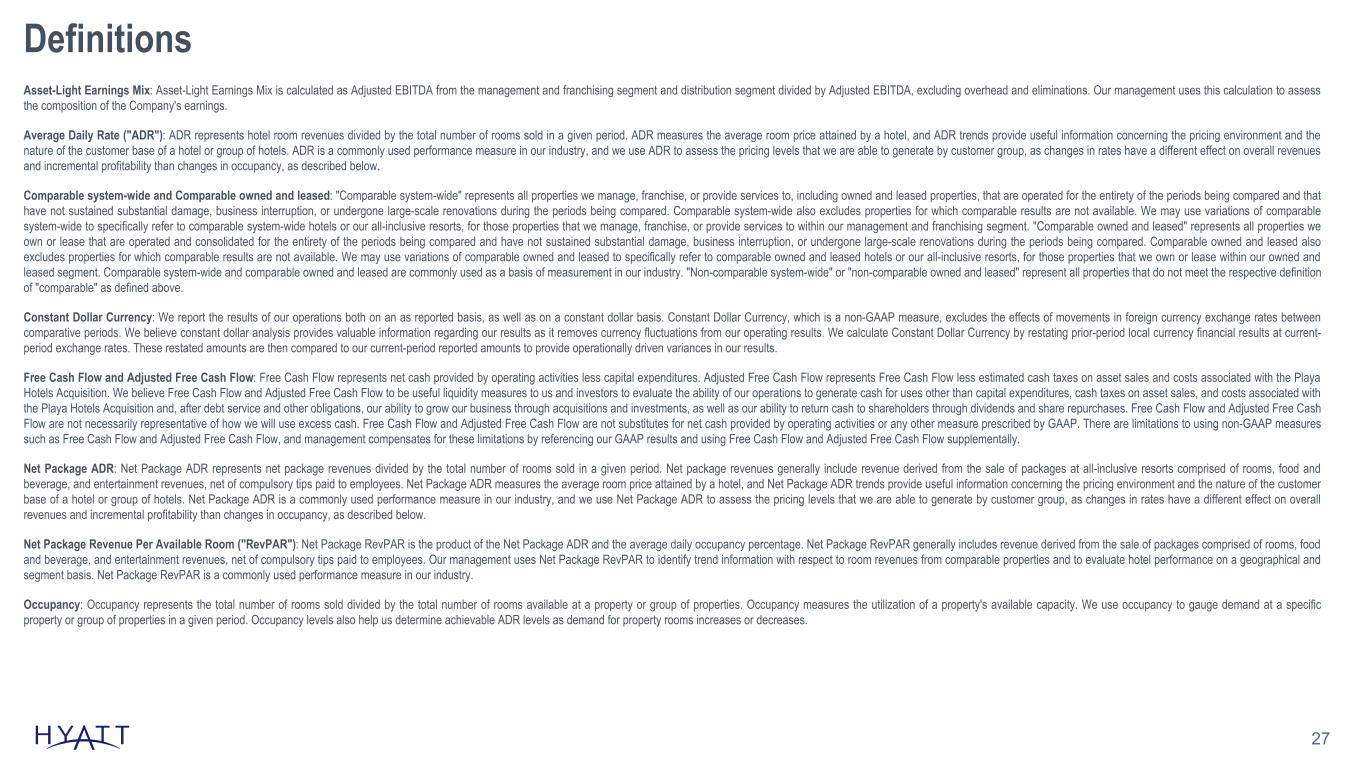
Thank you, and welcome to Hyatt's third quarter 2025 earnings conference call. Joining me on today's call, I would like to remind everyone to include forward-looking statements under federal securities laws. These statements are subject to numerous risks and uncertainties, as described in our annual report on Form 10-K, quarterly reports on Form 10-Q, and other SEC filings. These risks could cause our actual results to be materially different from those expressed in or implied by our comments. Forward-looking statements in the earnings release that we issued today, along with the comments on this call, are made only as of today and will not be updated as actual events unfold. In addition, you can find a reconciliation of non-GAAP financial measures referred to in today's remarks under the Financials section of our Investor Relations website and in this morning's earnings release. An archive of this call will be available on our website for 90 days. Additionally, we posted an investor presentation containing supplemental information on our Investor Relations website this morning. Please note that unless upscupancy, average daily rate, and REVPAR reflect comparable system-wide hotels on a constant currency basis. Percentage changes disclosed during the call are on a year-over-year basis unless otherwise noted. With that, I will turn the call over to Mark.
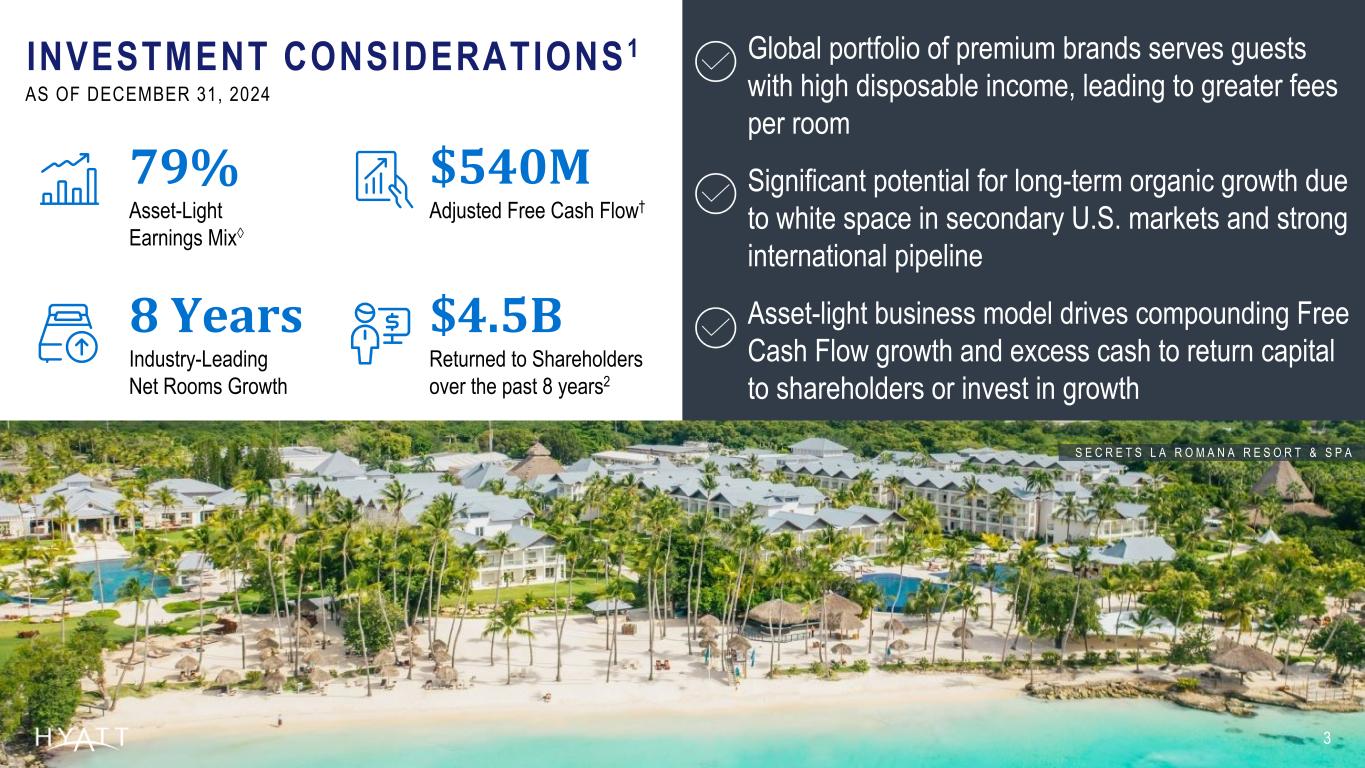
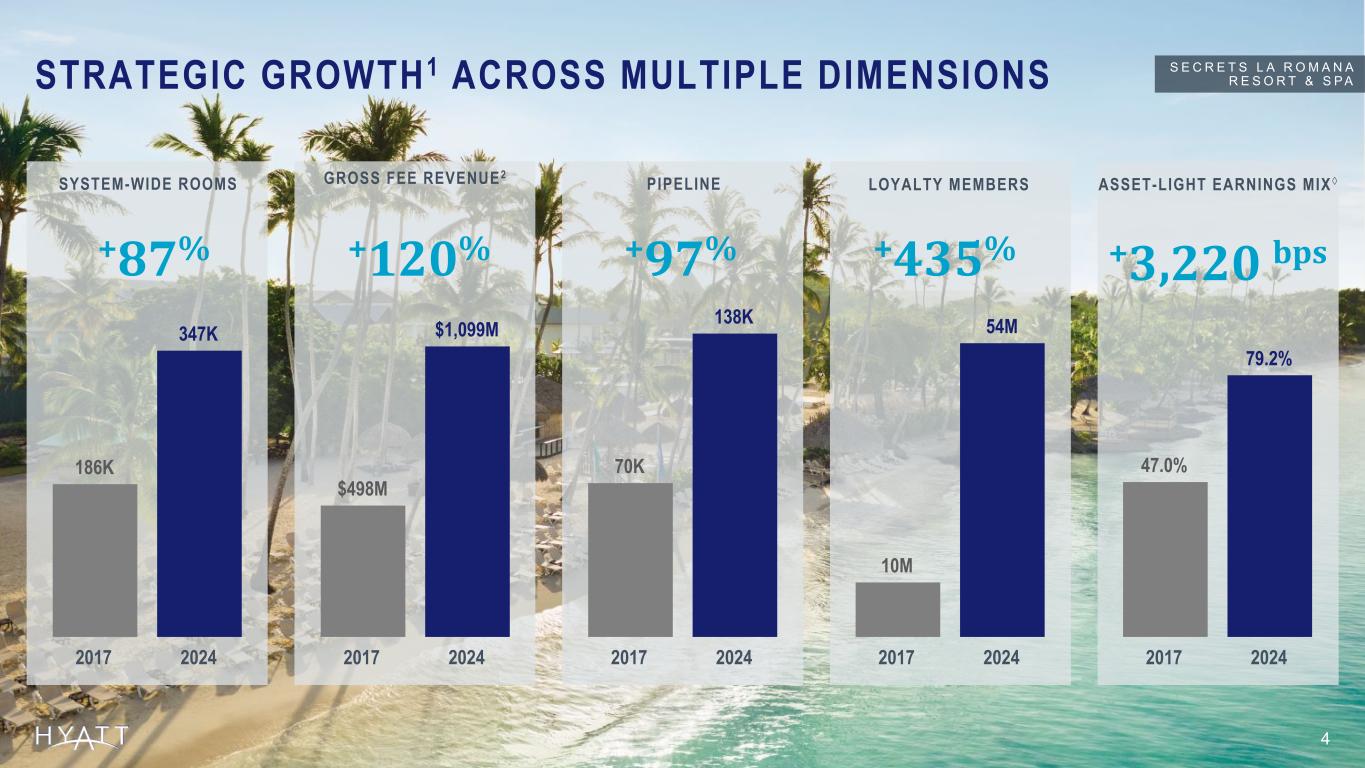
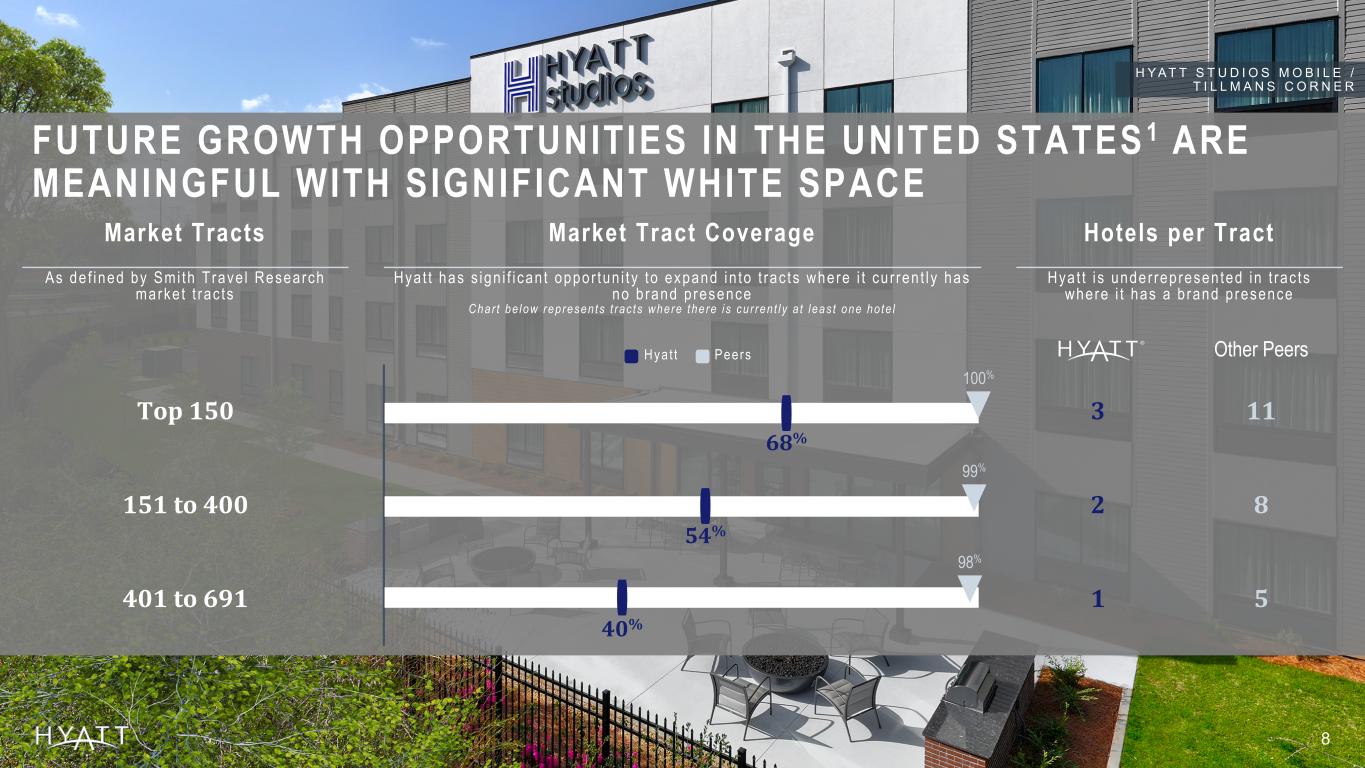
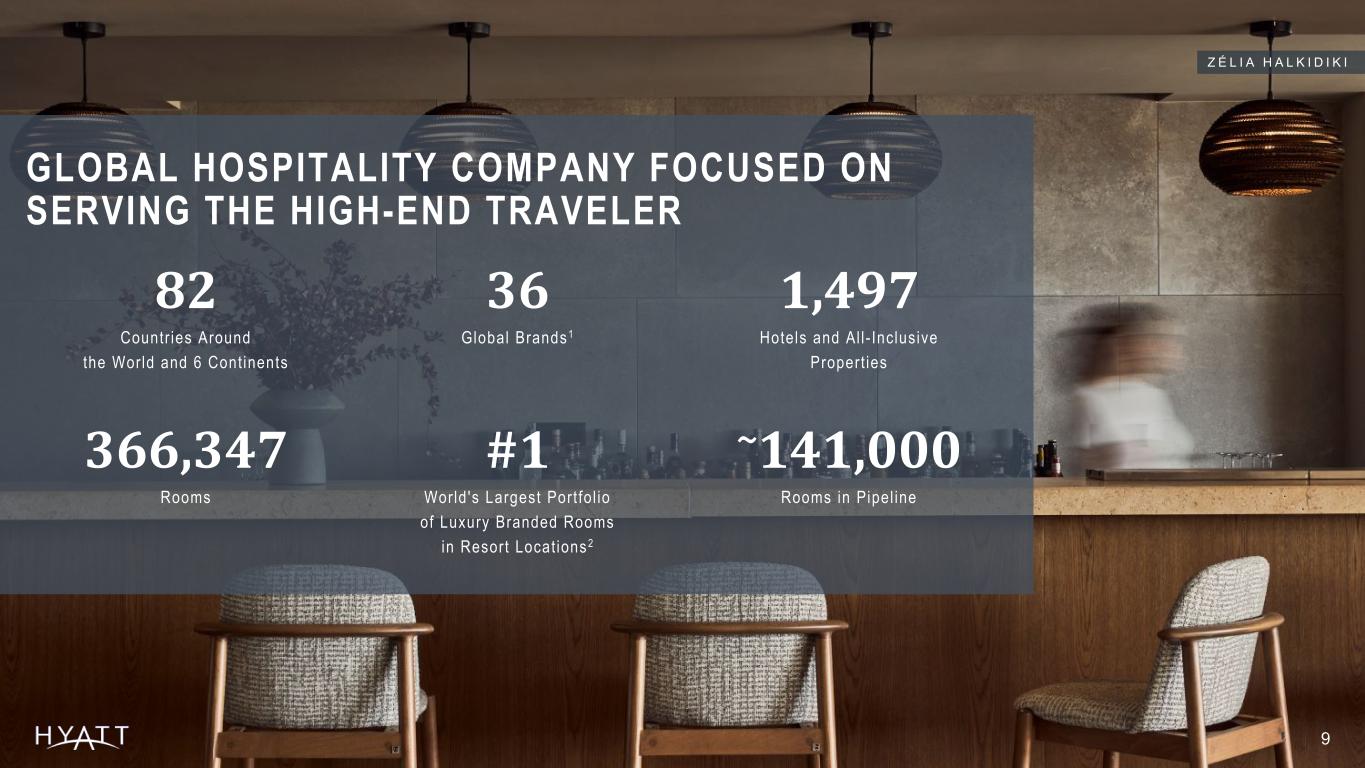
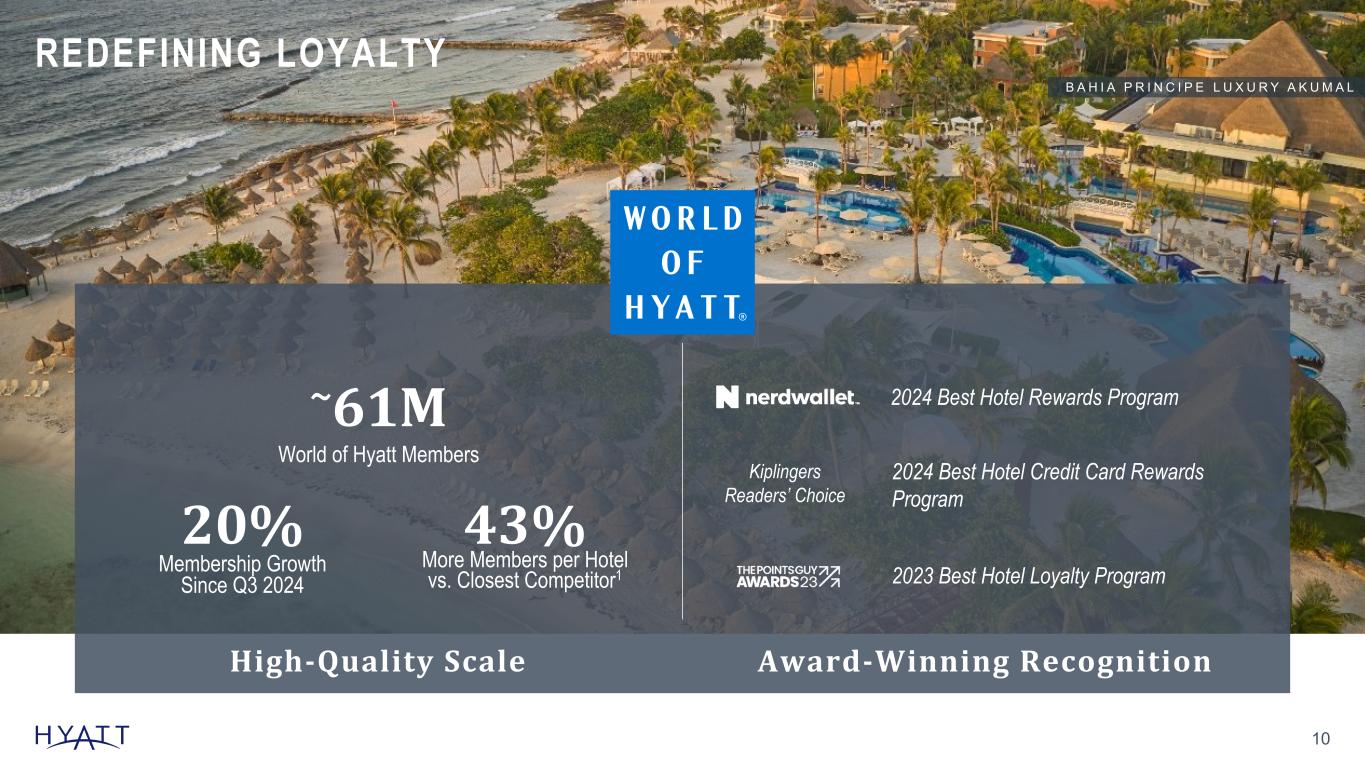
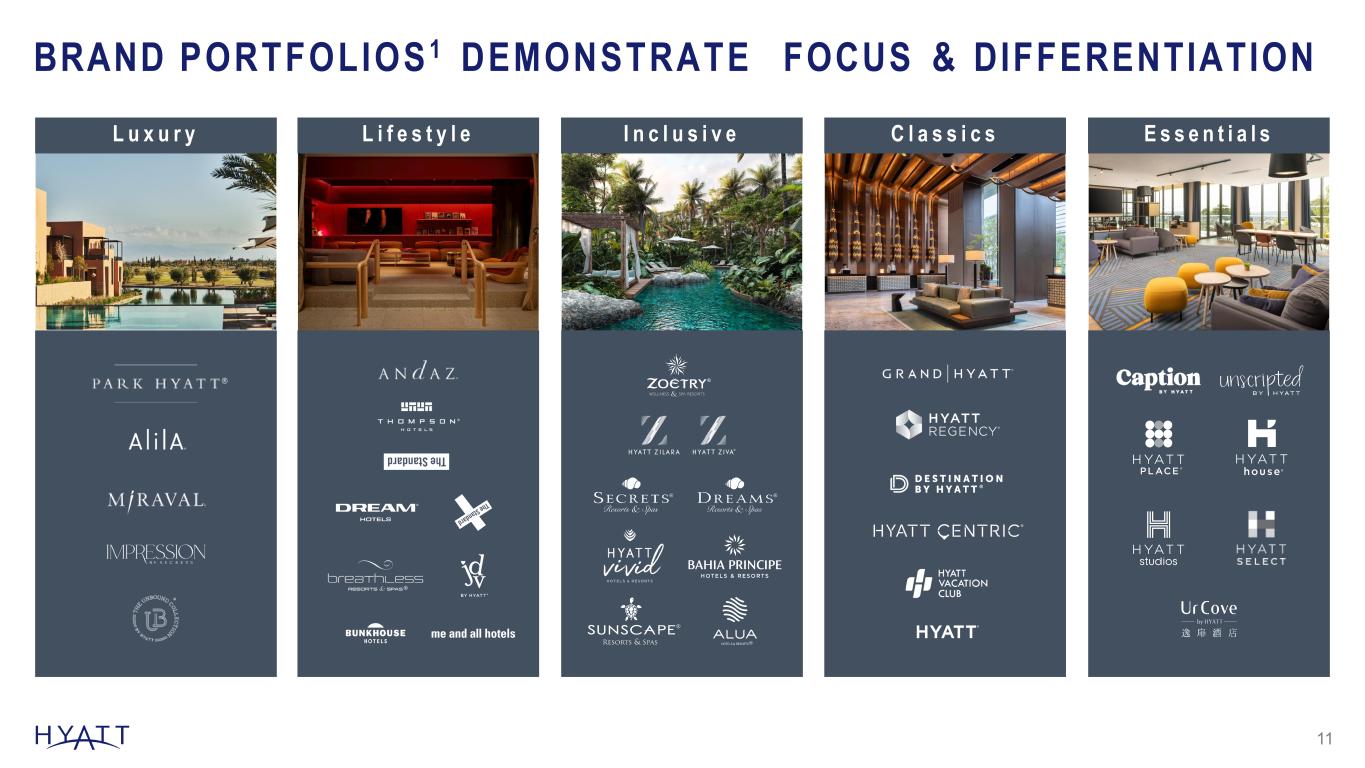
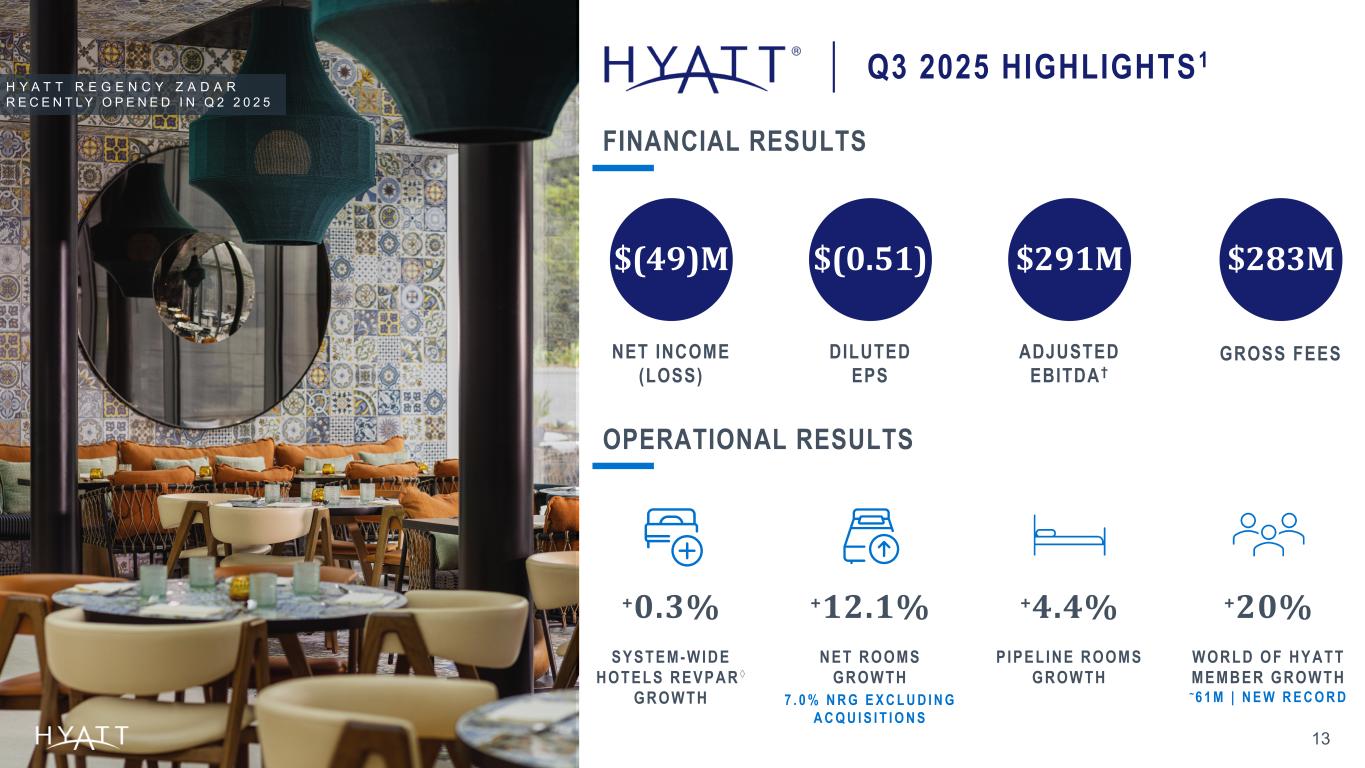
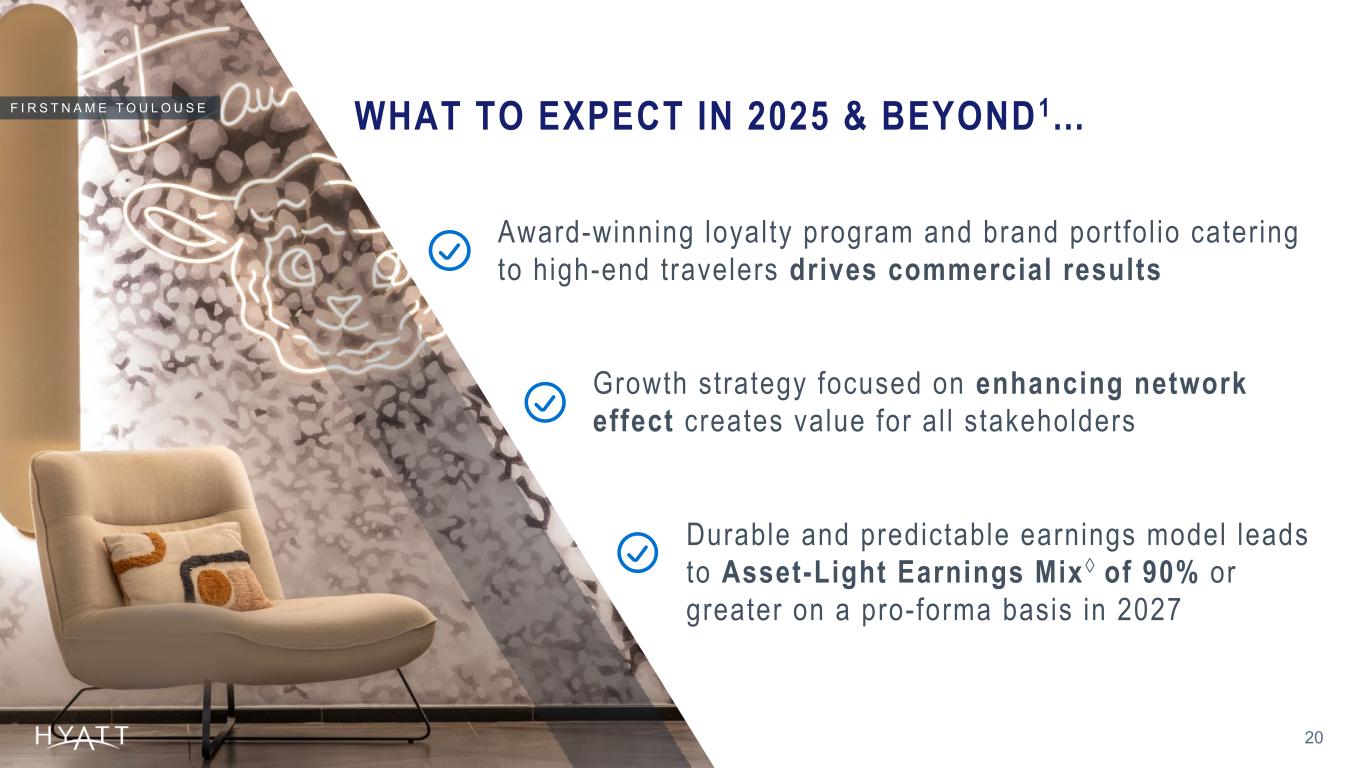
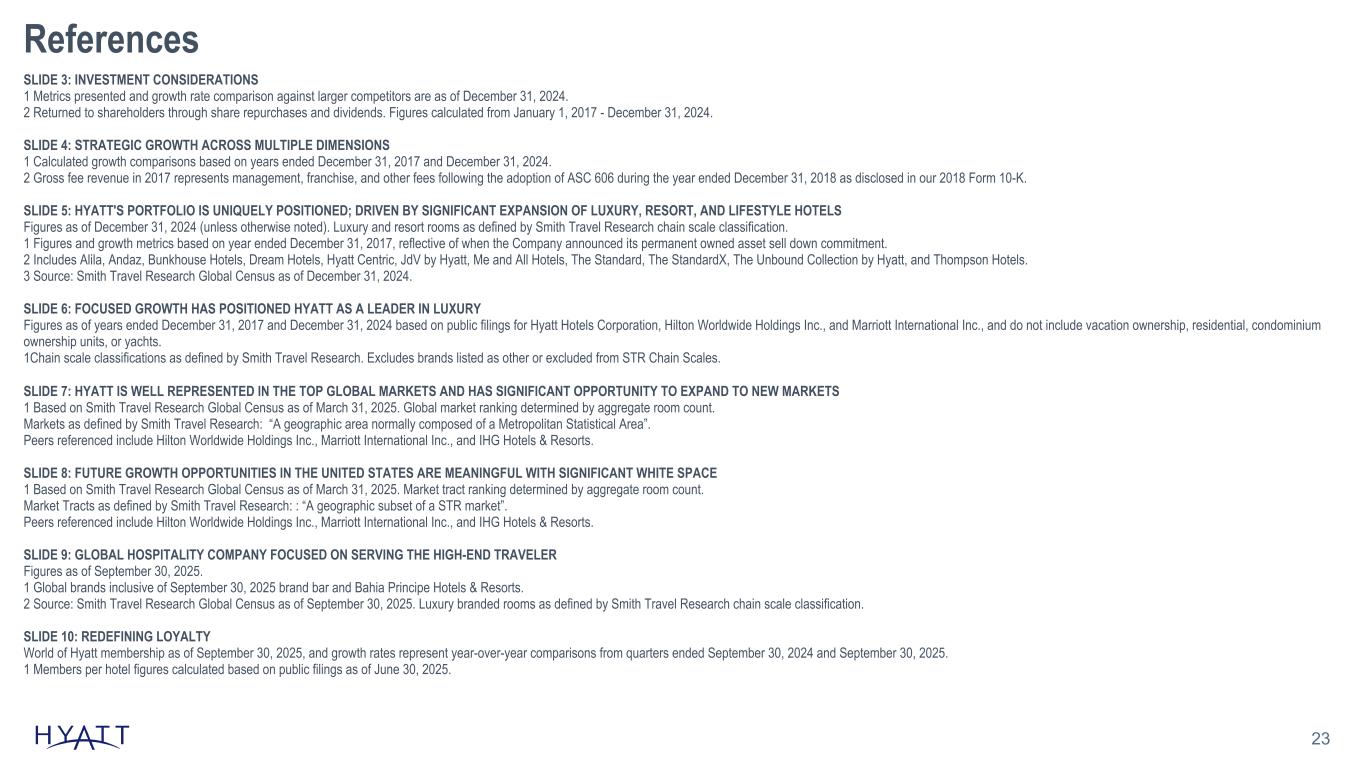
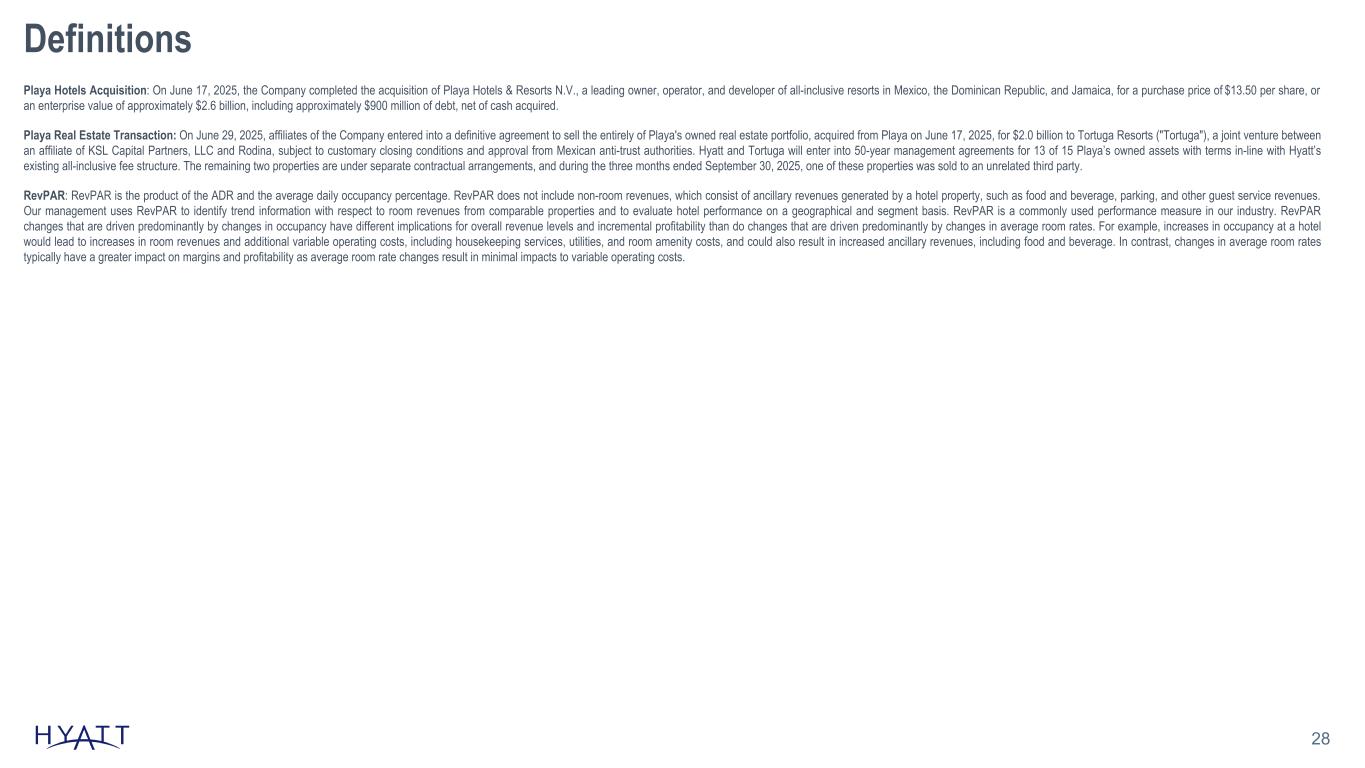
Thank you Adam. Good morning everyone and thank you for joining us today. I'd like to begin today's call by expressing my deep appreciation for our Hyatt colleagues around the world, especially those recently impacted by Hurricane Melissa. Our thoughts are with them and their families and we're hopeful for their continued safety and well-being. I want to thank the many colleagues who have stepped in to provide care and support, including financial assistance through the Hyatt Care Fund. This care and compassion from the members of the Hyatt family reflects the very best of who we are. Over the past couple of months, I've had the opportunity to visit teams across both Europe and Asia Pacific. I came away deeply inspired by how our colleagues around the world embrace our evolution to a more insight-led and brand-focused organization and continue to bring Hyde's purpose to care for people so they can be their best. Turning to the quarter, I'd like to provide an update on our transactions activity, starting with the sale of the hotels acquired as part of our acquisition of Playa Hotels and Resorts. On September 18th, we sold a property in Playa del Carmen to a third-party buyer for approximately $22 million, and net proceeds were used to repay a portion of the delayed draw. This was one of two properties that were not subject to long-term management agreements with Tortuga. We remain on track to close the real estate transaction with Tortuga for the remaining 14 hotels by the end of the year. We also continue to make progress to sell several of our owned properties. We have three hotels under contract with signed purchase and sale and grievance, and three more hotels with a signed letter of six hotels to close in the early part of 2026. We will share additional updates as these transactions progress, and we remain on track to exceed 90% asset-late earnings mix in the near term. Now turning to operating results, this morning we reported system-wide REVPAR growth of 0.3% for the quarter, which was impacted by a holiday shift and lapping with one-time events last year. Our luxury brands continue to generate the highest RevPAR growth, consistent with trends that we've seen since the beginning of the year. Leisure Transient RevPAR increased 1.6% to last year and was up approximately 6% across our luxury brands. Our all-inclusive portfolio continued to deliver strong results, with net package RevPAR up 7.6 percent compared to the third quarter of 2024, demonstrating the strength of luxury all-inclusive travel. Business transient RevPAR was flat in the quarter, but we saw improved performance in the United States, which grew by 3 percent compared to last year, with select service delivering positive quarterly growth for the first time in 2025. Declined 4.9% in line with our expectations, which assumed difficult year-over-year comparisons, including the Olympics in Paris and the Democratic National Convention in Chicago, and the shift of Rosh Hashanah into the third quarter of 2025 compared to the fourth quarter. Group pace for the fourth quarter is up approximately 3% as we lap easier comparisons due the holiday timing and last year's elections in the United States. While we are still in the planning stages for 2026, we are encouraged by the forward-looking booking trends. Group pace for full-service U.S. hotels remains up in the high single digits and is expected to benefit from special events like the World Cup and America 250 celebrations. Corporate negotiated rate discussions are ongoing and we expect average rates to increase in the low to mid single-digit range in 2026 compared to 2025. Pace for our all-inclusive resorts in the Americas excluding Jamaica is up over 10% in the first quarter, reflecting the continued prioritization of leisure travel. We look forward to providing more details on our 2026 expectations during our fourth quarter earnings call. Turning to growth, we achieve net rooms growth of over 12% during the quarter or 7% when excluding acquisitions. Notable openings included the stunning Park Hyatt Kuala Lumpur, located in the tallest skyscraper in Asia Pacific, along with the Park Hyatt Johannesburg. In the United States, we welcomed Hyatt Regency Times Square to our system, following an expansive, multimillion-dollar transformation, marking the first Hyatt Regency property in Manhattan and our 30th property in New York City. We ended the quarter with a strong development pipeline of approximately 141,000 rooms, an increase of more than 4% to last year. Momentum across our Essentials portfolio continues to build following the introduction of the Hyatt Select and Unscripted by Hyatt brands earlier this year. We signed a number of new deals for each brand during the quarter and have many more in In addition, we signed a master franchise agreement with Home Ends Hotel Group to develop Hyatt Studios across the country. further expanding our upper mid-scale brand presence in China. Under this agreement, Homing's plans to open 50 new Hyde Studios hotels over the coming years while building a robust pipeline to fuel future growth across. At the end of the third quarter, upper mid-scale brands now represent 13% of our pipeline, up from 10% at the end of 2024, and more than half of Hyde Select, Hyde Studios, and Unscripted by Hyde opportunities are in markets where we currently have no brand representation, helping to drive organic capital-like growth and increased network effect across our global portfolio. Our strong pipeline and the momentum we are seeing are upscale and upper mid-scale brands underscore the significant white space that we believe will support strong growth for years to come. Before I close, I want to spend a few minutes highlighting one of the most powerful strategic assets of our business, our loyalty program, World of Hyatt. During the quarter, World of Hyatt surpassed 61 million members, an increase of 20% year-over-year. World of Hyde continues to be the fastest-growing major global hospitality loyalty program, with membership having increased nearly 30% annually since 2017. Today, we have more than 40% more members per hotel compared to our closest competitor under proof of the deep engagement and strong preference we've earned from high-end travelers. While growth and scale matters, what truly sets World of Hyde apart is our purpose. Our program goes beyond transactional awards to create an experiences platform that delivers meaningful personal connection to our Guest of Honor program, which allows members to gift their top-tier status to others, or the introduction of award gifting. We've redefined what loyalty looks like by making it personal. Being personal also means that our members receive the most consistent and guaranteed benefits in the industry. In addition, we reward deep engagement through our milestone rewards program which delivers differentiated value even after a member achieves the highest elite status the expanded agreement with chase which we announced yesterday is a compelling proof point of how our differentiated loyalty program can deliver value to shareholders while providing rewarding experiences for members across all stay occasions the significant increase in economics will be driven by the expanded collaboration with chase The continued growth of World of Hyatt membership, the strength of Hyatt's global portfolio of premium brands, and Hyatt's robust pipeline. Adjusted EBITDA recognized by Hyatt related to these economics is expected to be approximately $50 million in 2025. We expect this to grow to approximately $90 million in 2026 and more than double to approximately $105 million in 2027. And we anticipate continued growth in future years. We also expect to deepen engagement with our members and continue to evaluate additional card products in the future, building on the success of our career. When a loyalty program is designed with care at its core, it leads to greater guest preference and helps support a powerful commercial platform that delivers more direct bookings and makes Hyatt more attractive to owners. And as we continue to grow our portfolio and expand into new segments and markets, we believe the power of World of Hyatt will continue to fuel preference and long-term value creation well into the future. As I look ahead, I'm encouraged by the momentum in our business and the performance of our brands. Our evolution to a brand-focused organization is designed to position Hyatt to be the most responsive, innovative, and highest-performing hotel company. and I'm incredibly excited for it. I will close by expressing my gratitude to all Hyatt colleagues who care for each of our stakeholders every day. Joan will now provide more details on our operating results. Joan, over to you.
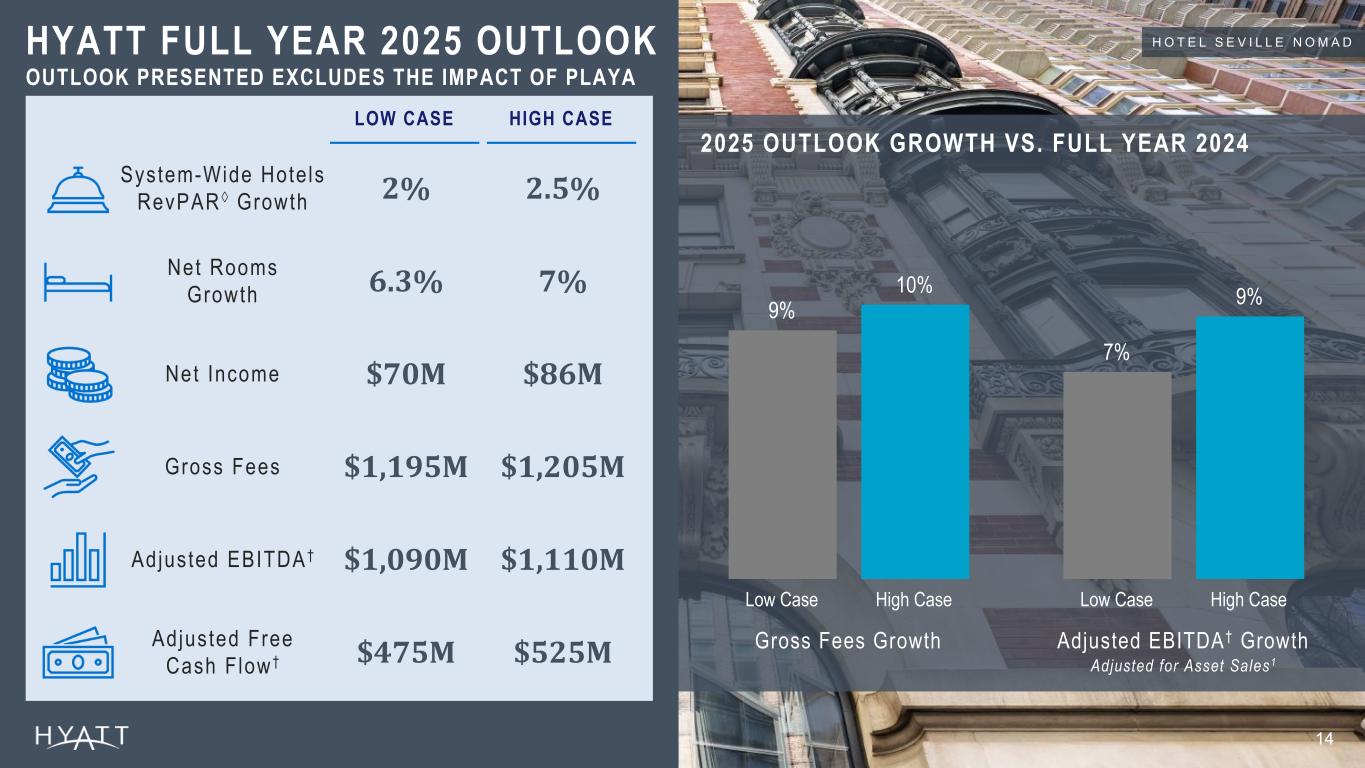
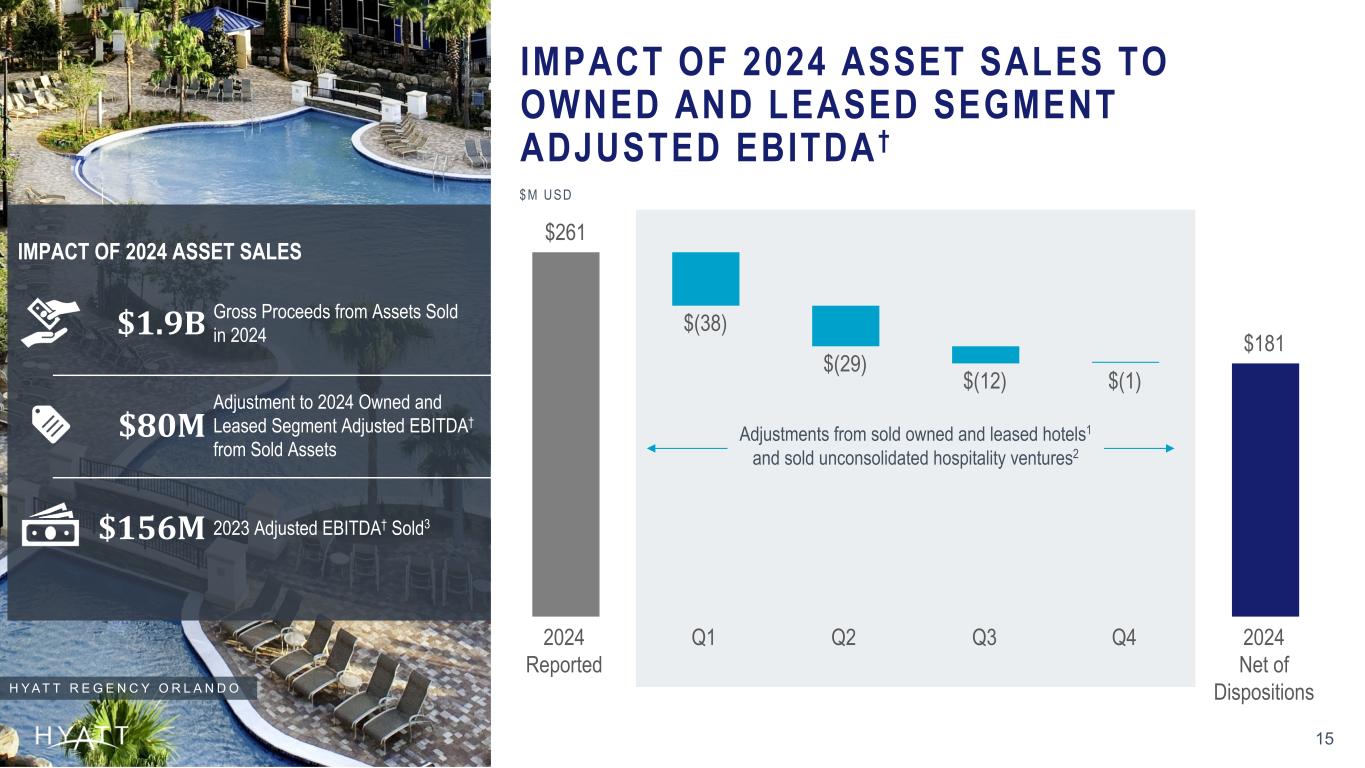
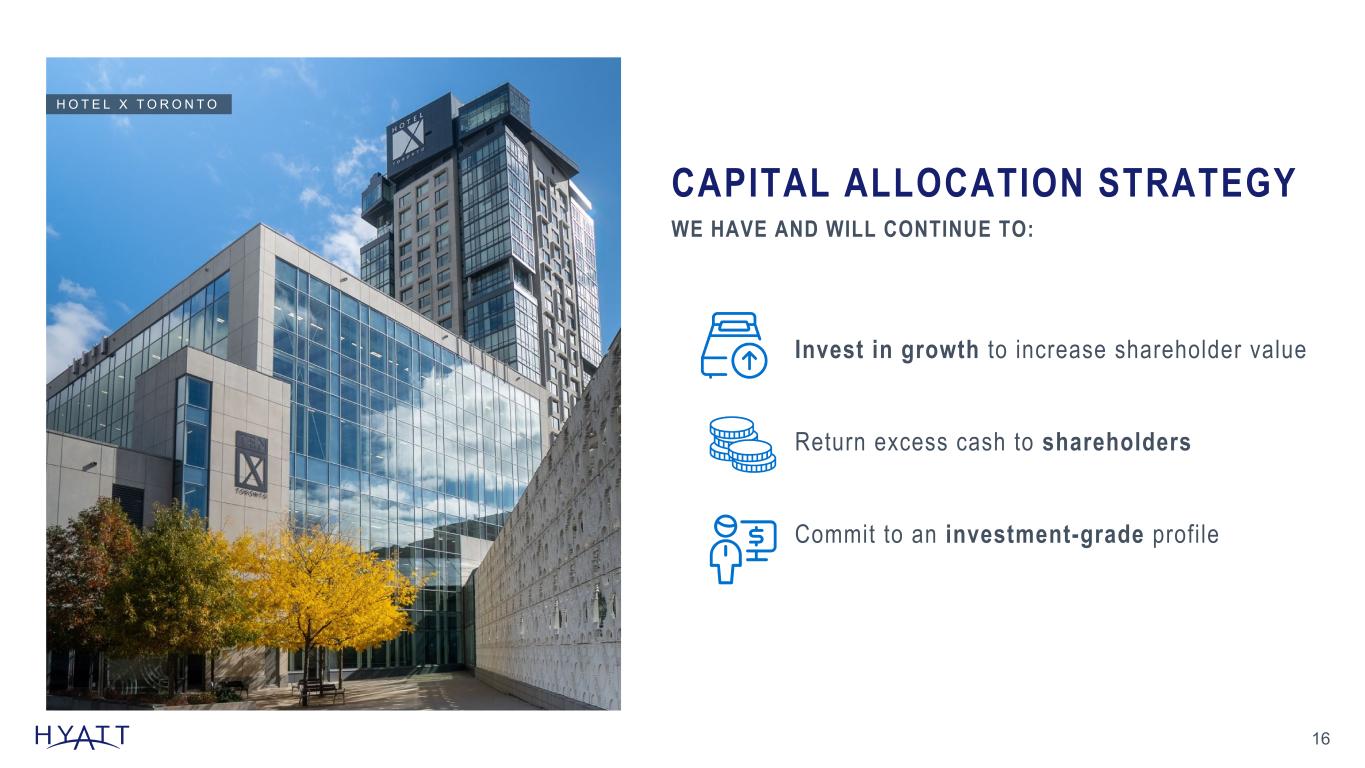
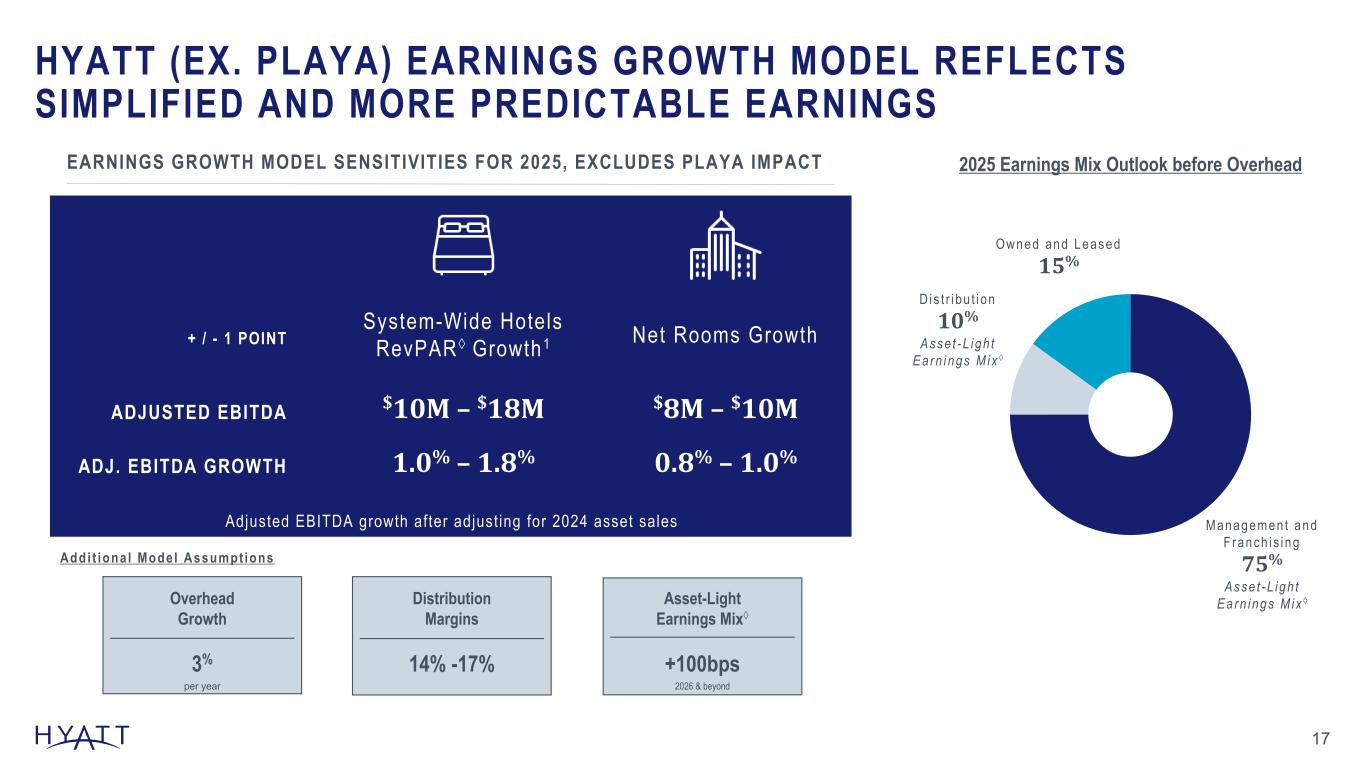
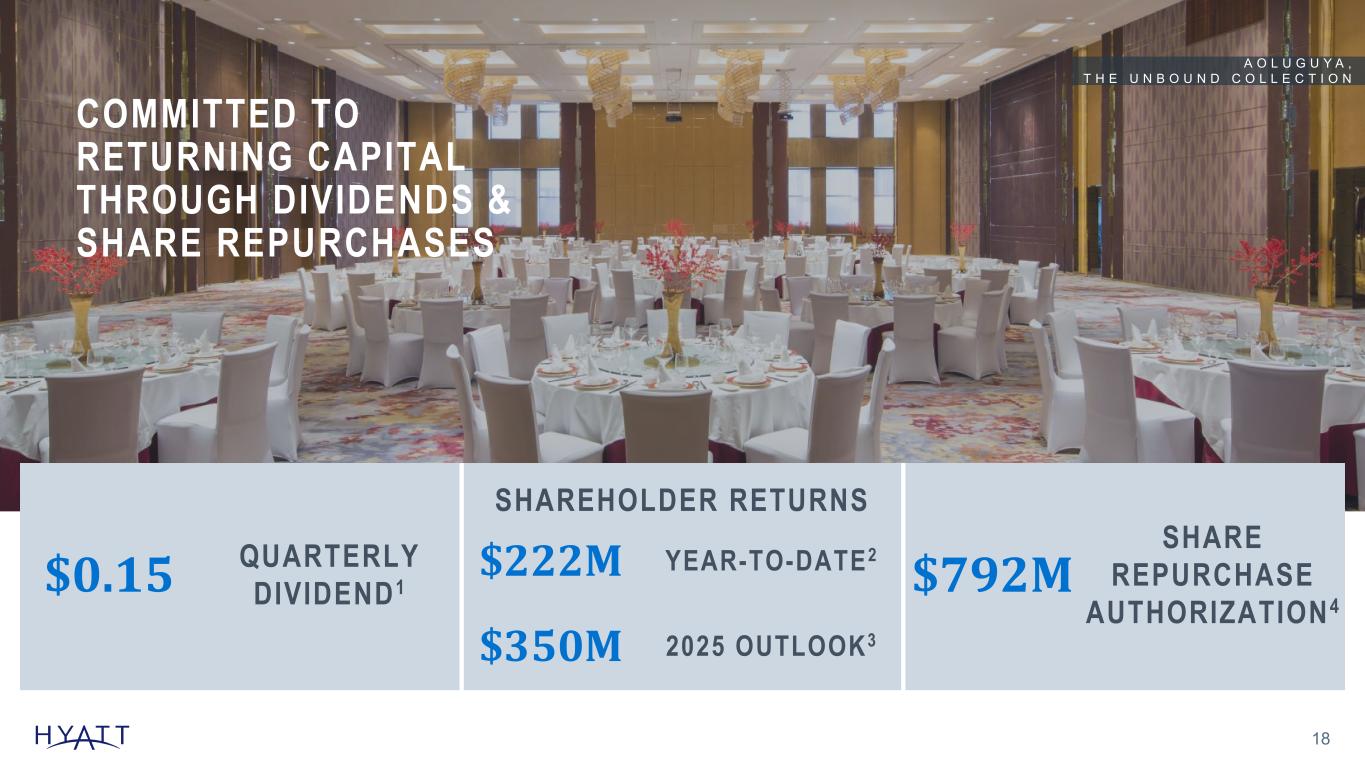
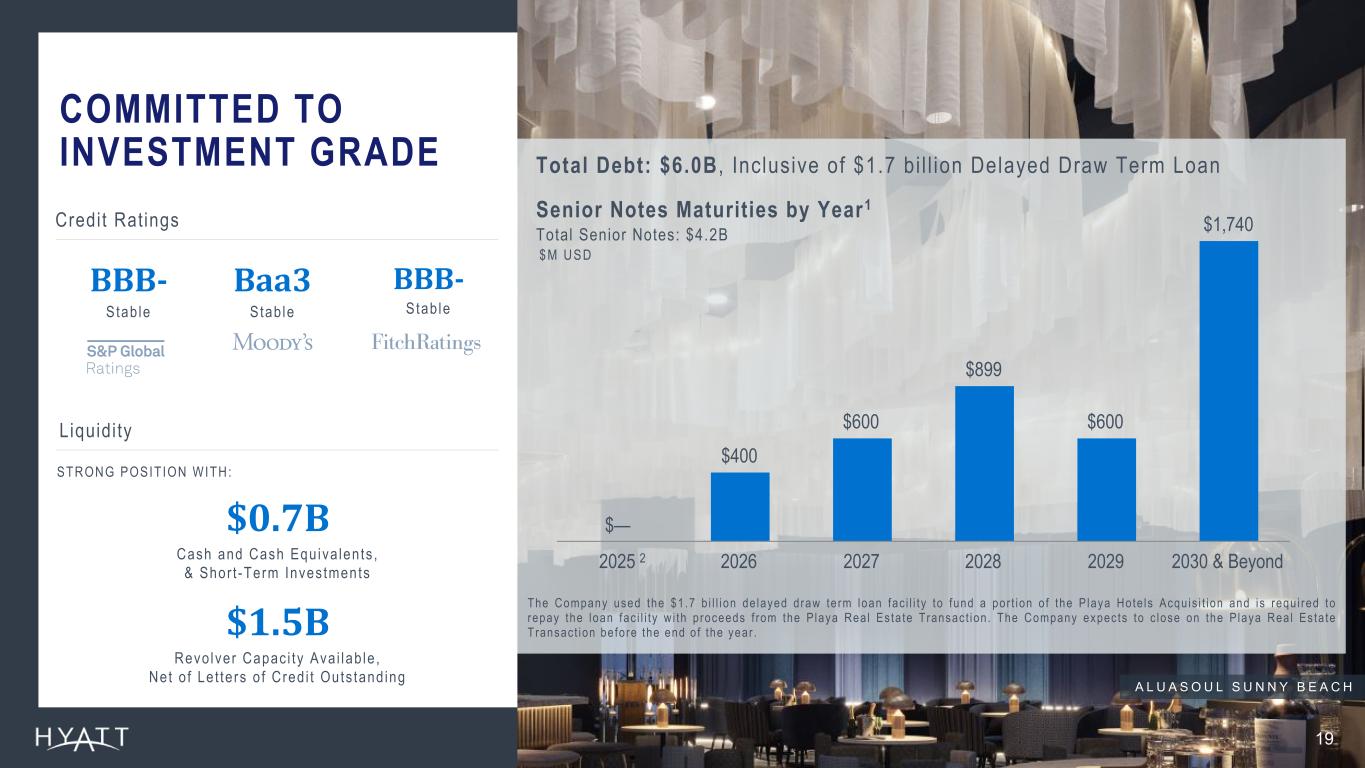
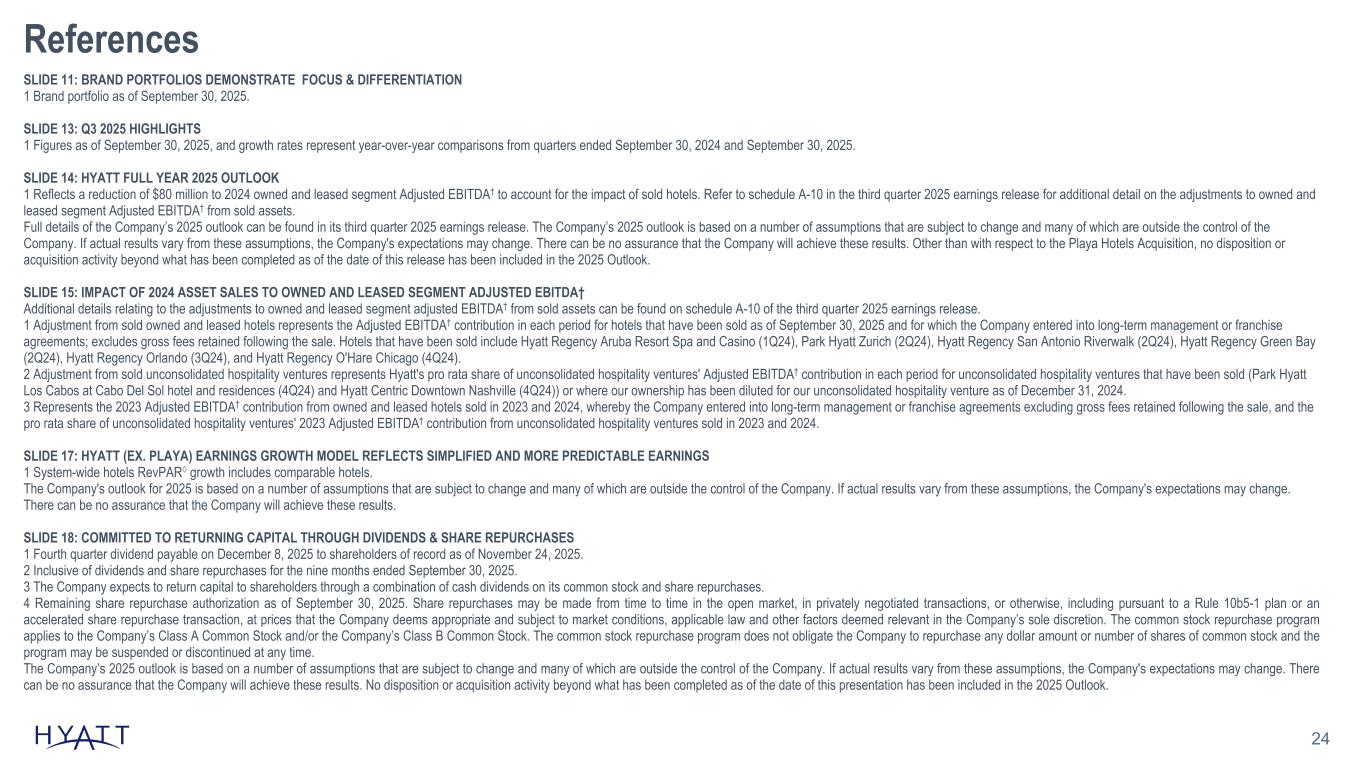
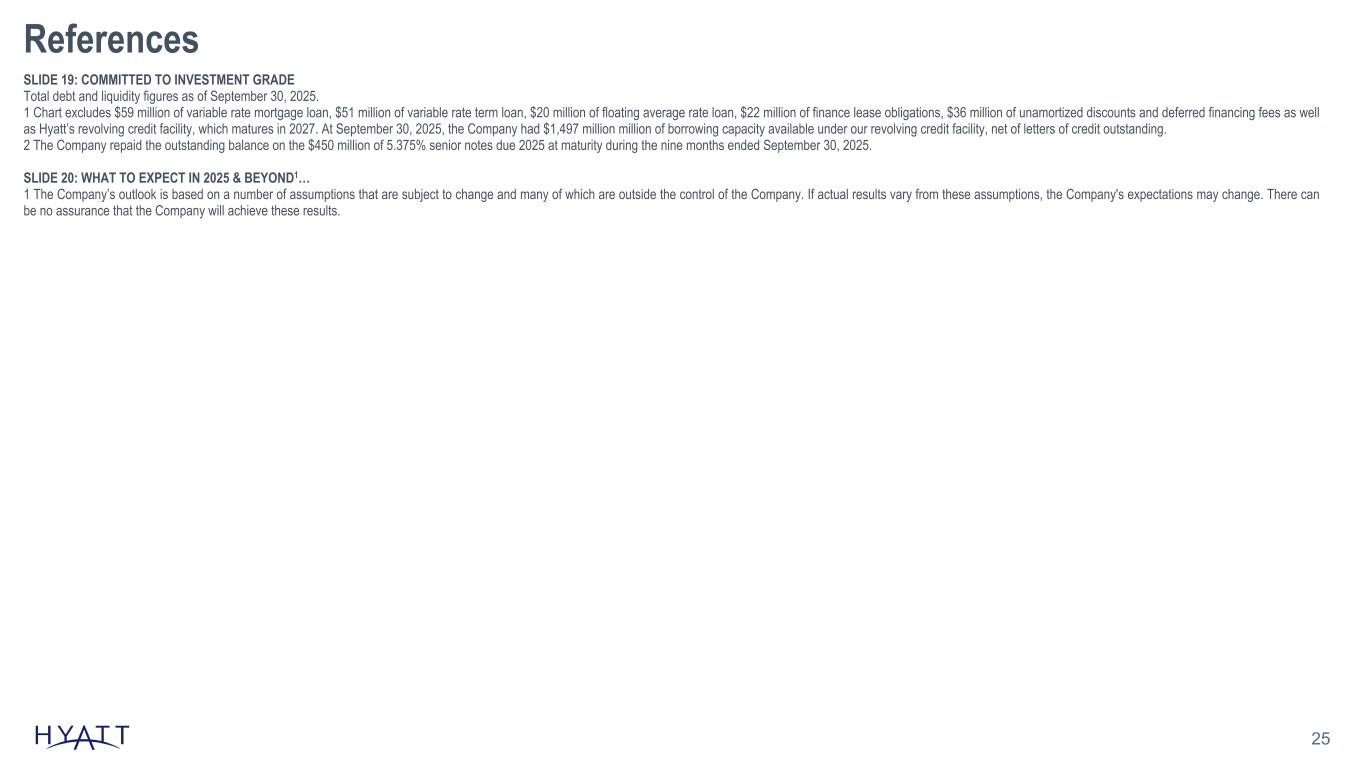
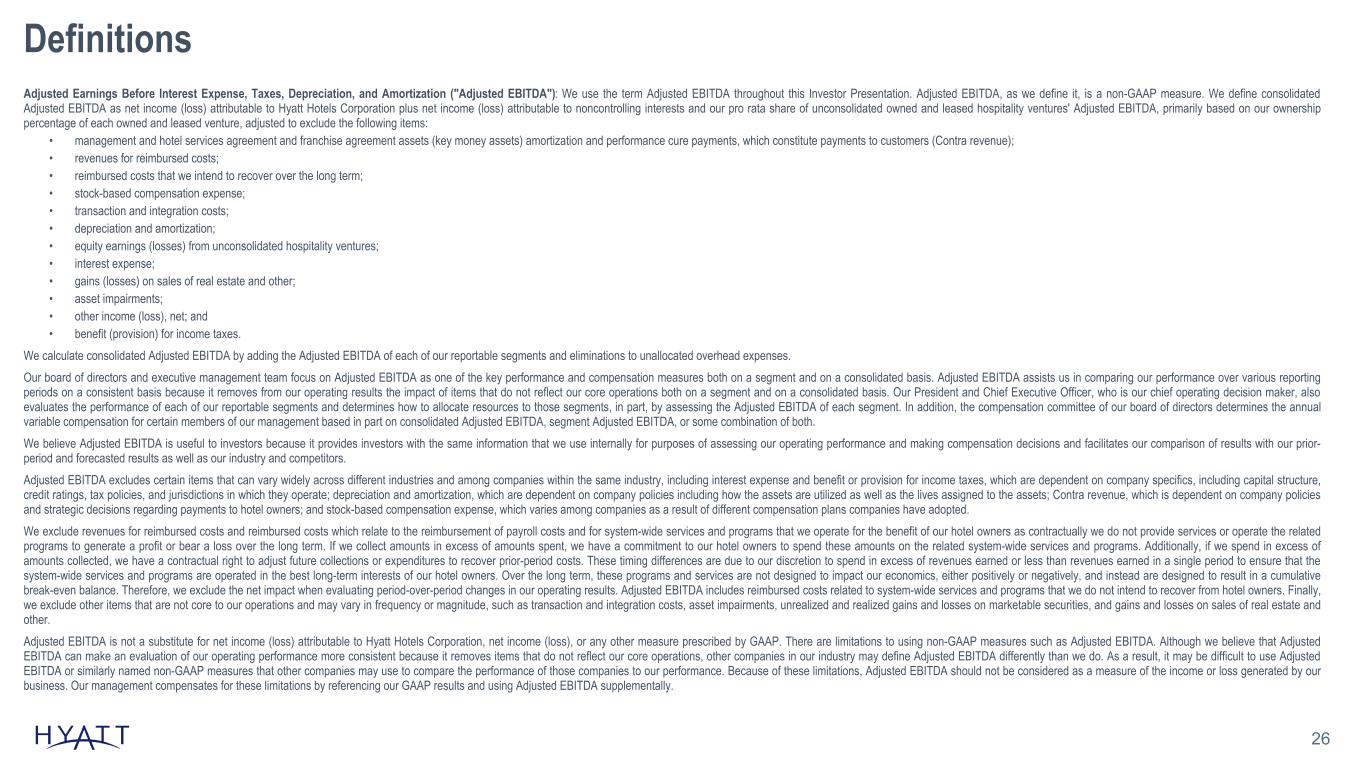
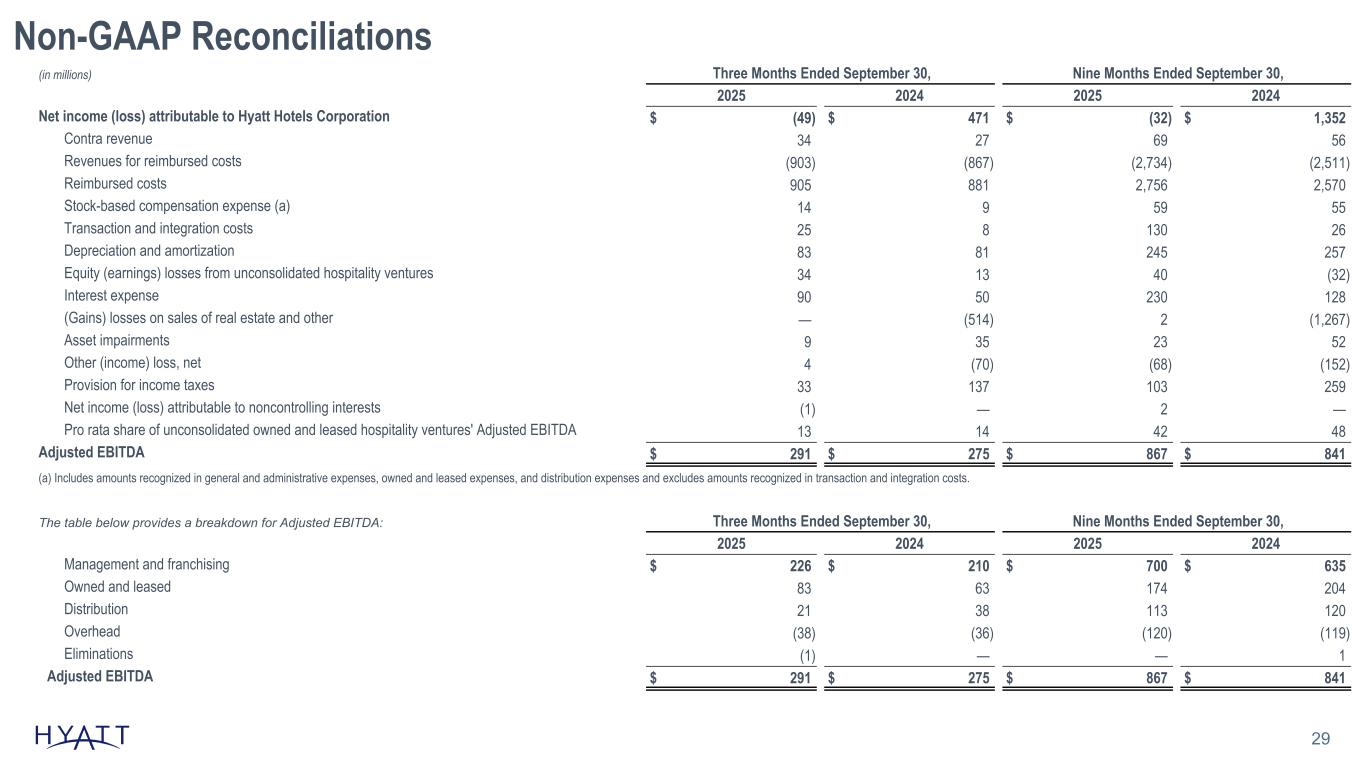
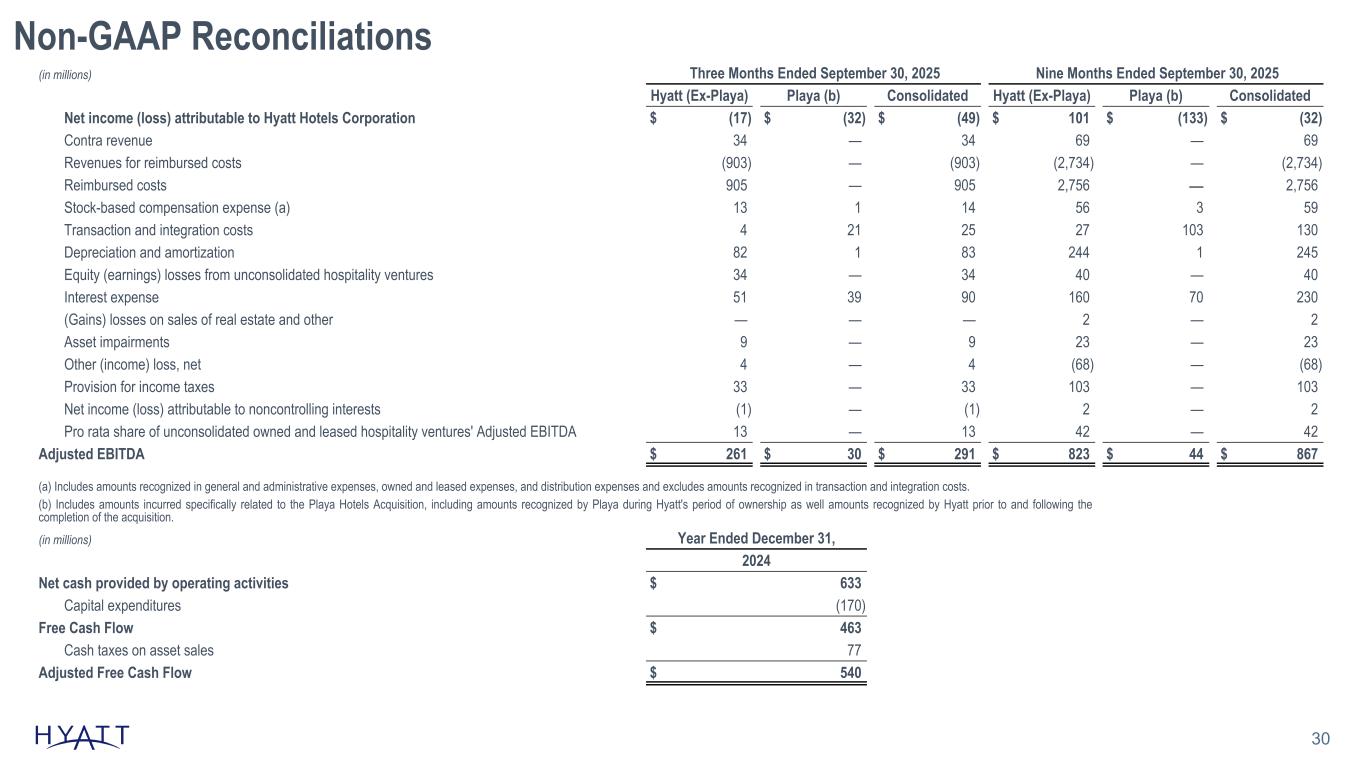
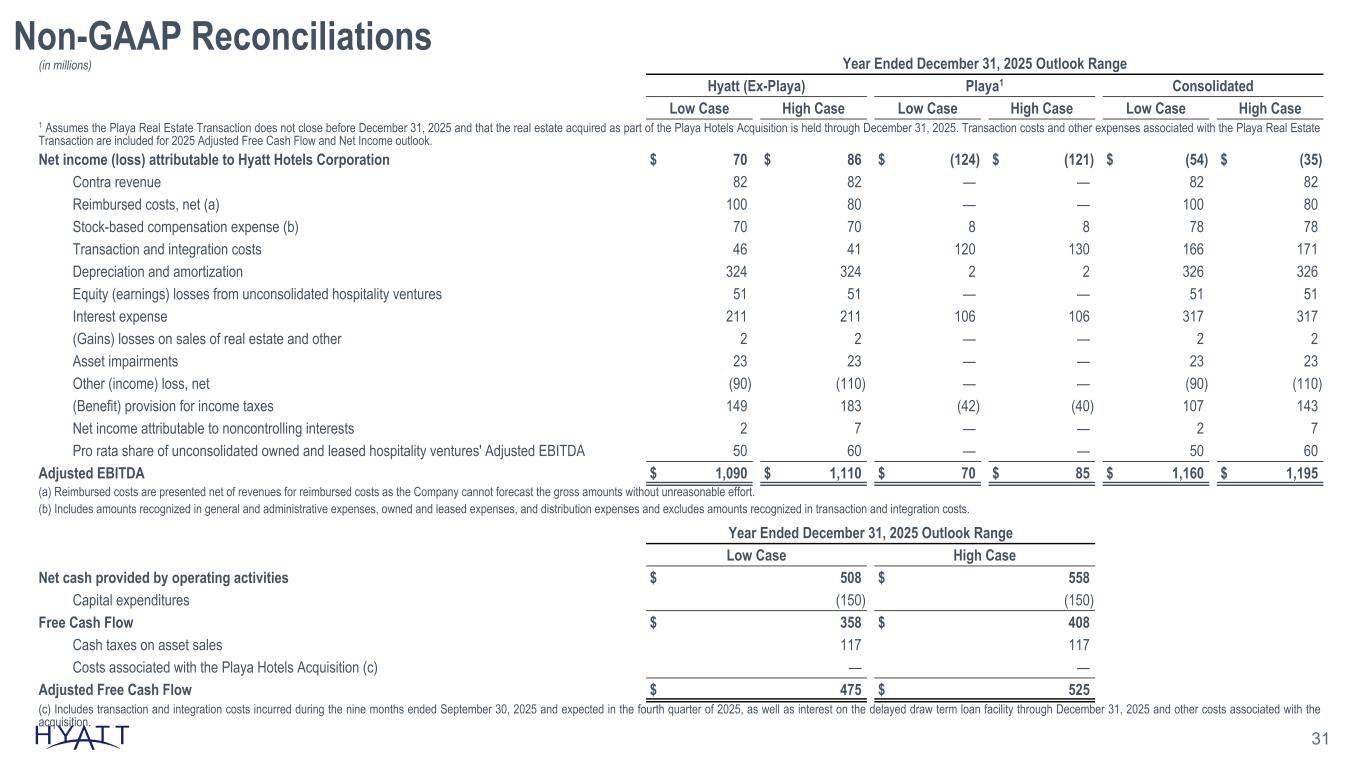
Thank you, Mark, and good morning, everyone. Over the past year, we've taken steps to align our above property and corporate teams in support of our brand-focused evolution, and we are confident these changes will deliver long-term benefits from multiple stakeholders. Our commercial teams have identified greater capacity to invest in initiatives that are expected to benefit our owners, including technology innovations and marketing efforts to further improve the performance of our brands. We also expect to realize lower run rate adjusted G&A costs over time. We expect adjusted G&A in 2026 will be moderately below full year 2024, despite two years of inflation and the addition of incremental payroll and other costs from acquisitions over the last year. As a result of these initiatives, we expect to incur approximately $50 million of restructuring charges this year, the majority of which were recorded in the third quarter. Now turning to third quarter results, RevPAR grew 0.3% compared to last year in line with our expectations shared during our second quarter earnings call. In the United States, RevPAR declined 1.6% to last year in line with our expectations, driven by select service hotels and the timing of Rosh Hashanah. Business transient RevPAR grew low single digits in the quarter, an improvement over the decline we saw during the second quarter. Full-service hotels were negatively impacted by the holiday timing, which led to lower group contribution in the quarter, while select-service hotels were below last year due to softer leisure transient demand. RevPAR outside of the United States performed well, and we saw continued strength in international markets. Europe saw positive RevPAR growth driven by strong international inbound travel, despite lapping a tough comparison from one-time events last year. Greater China grew REVPAR to last year due to increases in leisure transient demand. Net package REVPAR growth at our all-inclusive properties grew 7.6% in the quarter, highlighting the continued strong demand for leisure travel. Pace for our all-inclusive hotels in the Americas, excluding Jamaica, is up over 8% in the fourth quarter, and for the holiday festive period is up over 11%. As Mark mentioned, the sustained demand for luxury, all-inclusive travel gives us confidence as we look ahead to 2026. We reported gross fees in the quarter of $283 million, up 6.3%, excluding the impact of the Playa Hotel acquisition. Gross fee growth was driven by international RevPAR performance, new hotel openings, and non-RevPAR fees. Owned and leased segment adjusted EBITDA increased by 7% when adjusted for the net impact of asset sales and the Playa hotel acquisition. Distribution segment adjusted EBITDA was down to last year from lower booking volumes and lapping a one-time benefit related to ALG vacation credits from last year. The decline in travel from four-star and below hotels led to lower booking volumes and earnings flow-through, despite higher pricing and cost mitigation initiatives. In total, adjusted EBITDA was $291 million in the third quarter, in line with our expectations. During the quarter, we repurchased approximately $30 million of Class A common stock and have approximately $792 million remaining under our share repurchase authorization. During the quarter, net proceeds from the sale of a hotel in Playa del Carmen were used to repay a portion of the delayed draw term loan. And we expect to close supply a real estate transaction by the end of the year and will use the net proceeds to repay the outstanding balance on the delayed draw term loan. As of September 30, 2025, we had total liquidity of approximately $2.2 billion, including $1.5 billion in capacity on a revolving credit facility. On October 30th, we executed a new credit agreement that replaces the prior facility and provides for a $1.5 billion senior unsecured revolving credit facility, which will expire in 2030. We remain committed to our investment grade profile, and our balance sheet is strong. Before I cover our full-year outlook for 2025, please note that we continue to include additional schedules within the earnings release related to our expectations for Playa in the fourth quarter of this year. We've lowered our fourth quarter outlook for Playa by $7 million at the midpoint of our range as a result of Hurricane Melissa, while the full year outlook remains unchanged after a strong third quarter. For modeling purposes, our outlook assumes that we will own Playa's real estate for the entirety of the fourth quarter. And I'll cover our full year outlook for 2025, which does not include the impact of supply acquisition or planned real estate sales transaction. The full details of our outlook can be found on page 3 of our earnings release. We were encouraged by the performance of our hotels over the course of the third quarter. We expect full-service hotels in the United States to deliver higher growth in the fourth quarter compared to select-service hotels due to easier group comparisons. We also anticipate our luxury portfolio and international markets to perform well in the fourth quarter, supported by strong demand trends and high-end consumer resilience. We've tightened our REVPAR range and expect full-year 2025 REVPAR between 2 to 2.5%, which implies REVPAR growth in the fourth quarter between 0.5 and 2.5%. The quarter's off to a good start, with October REVPAR increasing in the United States by approximately 1% and globally by approximately 5%. For the United States, we expect REVPAR growth for both the fourth quarter and full year 2025 of approximately 1%. We expect fourth quarter REVPAR growth outside of the United States to remain an area of strength, especially in Europe and Asia Pacific, excluding greater China. We're increasing our net rooms growth outlook range to 6.3% to 7%, which does not include rooms added from the Playa acquisition. Growth fees are expected to be in the range of $1.195 to $1.205 billion, a 9% increase at the midpoint of our range compared to last year. We've lowered our adjusted G&A range to $440 to $445 million, reflecting the run rate cost efficiencies that we've been able to achieve throughout the year. Adjusted EBITDA for the full year is expected to be in the range of $1.09 to $1.11 billion, dollars eight percent increase at the midpoint of our range compared to last year when adjusting for the impact of asset sales as a reminder owned assets sold in 2024 accounted for 80 million worth of owned and leased segment adjusted EBITDA last year our full year adjusted EBITDA outlook implies growth in the fourth quarter of nine percent at the midpoint of our range Adjusted free cash flow is expected to be in the range of $475 to $525 million, which excludes $117 million of deferred cash taxes paid in 2025 relating to asset sales that took place in 2024. In the fourth quarter, we'll receive upfront cash of $47 million as part of the amended agreement with Chase. And we are increasing our full-year outlook for capital returns to shareholders and expect to return approximately $350 million in 2025, inclusive of share repurchases and dividends. Our capital allocation priorities remain unchanged. We are committed to our investment grade profile, identifying opportunities to invest in growth that creates shareholder value, and returning excess cash to shareholders in the form of dividends and share repurchases. In closing, our third quarter results reflect the strength of our business model and the effectiveness of our long-term strategy. Looking ahead, we believe our talented brand-led organization, strong development pipeline, and differentiated loyalty program provide meaningful advantages in today's dynamic environment. As we continue to expand into new markets and segments, we're confident in our ability to drive sustained growth, enhance profitability, and deliver attractive returns to shareholders. This concludes our prepared remarks, and we're now happy to answer your questions.
Operator
If you would like to ask a question, please press star, followed by the number one on your telephone keypad. In the interest of time, we ask that participants please limit themselves to one question. Thank you. Our first question comes from Steve Pazella from Deutsche Bank. Please go ahead. Your line is open.
Hey, good morning, everyone, and thank you for taking our question. Just wanted to start on net rooms growth, if we could. Good to see you raise the core NUG guidance for the full year and the pipeline increased. As we start to think about next year, realizing it is still early, but with the trends you are seeing in your pipeline and the positive commentary, how are you thinking about net rooms growth going into 2026 and beyond?
Thanks, Steve. I appreciate the question. Really, the new, we 38 hotels since we add additions.
Operator
Our next question comes from Smeeds Rose from Citi. Please go ahead. Your line is open.
I guess I just wanted to ask you a little bit about kind of what you're seeing so far in terms of group pace in the U.S. and kind of internationally for 2026. Anything you can share on that?
We ended the year in October, 2026 specifically. We're actually weaker than we expected them to be.
The only thing I would add is you didn't mention this, Smedes, but we obviously are encouraged by what we're seeing in Q4, which is what we had expected all year round because of the holiday shift. And the production that we saw in October, really short term, high quality, confident about Q3, excuse me, Q4. And Mark had mentioned, you know, several years out, we're seeing increased levels of booking activity, really, really strong booking activities out, which is positive because that means associations are booking and confident in their future outlook into future years.
Yeah, I mean, I think in terms of actualized business in October, group was up almost 4%, so we're seeing very, very strong.
Operator
Our next question comes from Ben Chaikin from Mizuho. Please go ahead. Your line is open.
Hey, good morning. Thanks for taking my question. I wanted to clarify the G&A comment earlier. I think you said 26, if I heard you correctly. I believe you said 26 down moderately versus 24. Is that versus the 445 of adjusted G&A, just so we're on the same page? And then can we touch on maybe what's driving that lower?
Sure. So, Ben, we talked about some organizational changes that we made this year and also some other efficiencies that we realized along the way throughout the year. So that's why we took down our numbers, our expectations for 2025. And the reference below 2024 was for 2026. And so, yes, we expect to be slightly down in 2026. We're still in the planning processes for 2026, and we'll give you the full guidance range in our Q4 earnings call. But what is really notable is the M&A activity and some incremental resources that we've added. We've been able to look at a two-year period and expect to be down in 2026. So good results coming out of our organizational changes and outcomes for us.
Operator
Our next question comes from Richard Clark from Bernstein. Please go ahead.
Your line is open. thanks thanks for taking my questions just a question on the uh 50 million uptick in capital returns i guess you've got the is that coming from the extra 47 million you're getting from chase and you know how you're factoring in the 50 million restructuring charge just how where's that extra 50 million come from i guess that's going to mean you're going to return somewhere around sort of 70 percent of free cash flow back to shareholders this year or adjusted free cash flow Any reason why that percentage can't edge up next year to maybe closer to 100% of free cash flow going back to shareholders in 26?
So, Richard, you have the offsets exactly right. You factored in that bonus that we realized in the negotiation of the new card agreement. And also the offset for this year is for those restructuring charges, which is all incorporated into free cash flow. As we look ahead into next year, we are on track to move much closer to our goal of 50% conversion on free cash flow to EBITDA. So we feel really good about that. We had some one-time items impacting us in 2025, but we're on.
Operator
The next question comes from Stephen Grambling from Morgan Stanley. Please go ahead. Your line is open.
Hi, thank you. I was hoping you could maybe outline a little bit more on the assumptions that underpin the EBITDA step up from the co-brand credit card in 26 and 27 as we think about changes in the terms of the deal versus future signups of new cardholders or even increased spend in cardholders. And do these include the fees that you'll recognize from the upfront payment? Thank you.
I'll start with your last question, that accounting for the upfront payment will be amortized over the life of the agreement. So that's just the accounting, just a point on that. And then, yes, we are really, really pleased with the outcome of the new agreement. And, you know, the benefit is kind of that double really strong result. a benefit to not only HHC, but also to the World of Hyatt program, which, as Mark outlined, all of the benefits that that program provides to our members, but it's a win-win, actually, across the board with respect to all of our stakeholders. What we would say about the estimates that we put out, while they're very strong, we've seen really, really incredible growth in the World of Hyatt program and also in our room's growth. So, you know, as both of those factors increase over the coming years, we think there's upsides in the credit card fees that we will earn over time. But we've taken a very reasonable assumption related to 2026 and 2027, and we'll continue to update you as those results come in.
Operator
Our next question comes from David Katz from Jefferies. Please go ahead. Your line is open.
Hi, good morning. Thanks for taking my question. I wanted to ask about the master agreement with home ends. Number one, a little more color on the economic intensity of those. Presumably, it's lower because of how those structures usually are. And then secondarily, how are we thinking about it in terms of net unit growth today and what that could provide over time?
Thanks, David. In U.S. parlance, many, many of them are the ability to write studios and machine, a significant organization that in both cases, in venture, we earn fees that we own, half of a venture. In the other case, it's fees. So we will be earning fees on the Hyatt Studios that open, that they've got. And it helps their network. It gives their, frankly, as a network effect matter, it's very significant. We will be fee positive for Hyatt Studios. And we earn fees directly and have a JV, 50% JV interest in your code. So I think it's been a great partnership, it's expanding, and it's not a situation in which $0.50 a year on something. In terms of total terms apiece, maybe $1.25.
Operator
Our next question comes from Sean Kelly from Bank of America. Please go ahead. Your line is open.
Hey, good morning, everyone. Thank you for taking my question. Mark or Joan, whoever wants to take it, would love just a little bit more insight on the cost program, your initiatives there. I think we've talked about strategically a little bit what you're doing, but just kind of what catalyzed the decision, sort of the why now question. It's obviously encouraging, but it takes a lot in a, you know, to move a big organization and, you know, what are some of the key building blocks or things that this is going to allow you to do a little bit more efficiently, maybe specifically on behalf of the owners. We sometimes hear feedback that these things can have an impact and help streamline some communication there. Thanks a lot.
Thanks, Sean. The ultimate goal here, we are going deep on How we will be the way in which we already, efficiency and direct impact, which we had a owner's advisory council meeting, and I went into some, we append before, how we organize the company automating, we are leaning into this very heavily, and you will see this as a tailwind for us.
Operator
Our next question comes from Dwayne Fettigworth from Evercore ISI. Please go ahead, your line is open.
Hey, thanks. Good morning. Joan, I appreciate your comments on capital allocation. Maybe you could just speak to priorities in an intermediate term. Does the order maybe change? Is deleveraging more of a focus, capital return, maybe less emphasis on finding opportunities that will accelerate your growth further?
Sure, Duane. You know, I think with respect to the leverage comment, we have a commitment in the near term to delever. we are required with the asset sales proceeds from the playa sale to actually pay down that which I noted in my prepared commitment to reach investment grade leverage by the end of 2027 and we've got some assets on right now and that we expect to also by the end of 2027 so that will improve our leverage with those now the M&A front and opportunities that we see but with respect to returns to shareholders we have been consistent in uh when we've had access the approach that we continue to follow going in we'll obviously give you uh some insight into 2026 on our fourth quarter earnings call but um we've realized some incremental free cash flow through this uh through the um credit card agreement and um that's you know the driver of what in guidance for this year for 2025. So we are taking those excess cash and doing exactly what.
Yeah, I would just point out that, you know, I think it's very important to look at history and our behaviors. You can do what we say. Since 2013, we have consistently continued to prioritize initially strictly through share repurchases and then more recently through both repurchase stock every year for the last 12 years in a row, executed over five plus to six balance sheets in the process. So we believe that is a key priority. We also believe that we can maintain that even as we find strategic opportunities to grow our business in businesses in which we can have a differentiated continue to do that in that way. And with the elevation of the conversion to free cash flow that John talked about earlier, you can also expect that we will find more opportunities to return more capital to shareholders.
Operator
Our next question comes from Michael Belisario from Baird. Please go ahead. Your line is open.
Thanks. Good morning. Just on loyalty, can you remind us just how the room night contribution from World of Hyatt has tracked year-to-date? I think it was at 45 percent last year. And just looking ahead, how do you keep narrowing the gap to peers and kind of what does that do for the value prop for owners and developers? Thanks.
Currently at the engagement level, I think in terms of the evolution, we believe that we are going to continue on an upward trajectory in terms of penetration. That's important in many dimensions. I just want to remind you that we have maybe the highest, let's say, for World of Hyatt, that even despite is in line with our peers. This is, when you look at the magic, apparently being 10 times our size doesn't also great value. The final thing I will say is that we are, we manage a bigger proportion of our total network than any of our major, and that matters because we have very, very consistent delivery of that. Elite members do not find wide variability across our hotels. Why? Because we directly control it. We're not influencing. We are actually directly controlling the delivery of benefits.
Operator
Next question comes from Brant Montour from Barclays. Please go ahead. Your line is open.
Great. Good morning. Thanks for taking my question. So, you know, a couple of your peers were willing to sort of give some insights or sort of early thoughts on how next year's REVPAR could shape up in the U.S. or globally. And I'm just curious, Mark, from what you're seeing in business transient, what you're seeing in group, what you're seeing in leisure, and of course we have the World Cup, what kind of confidence do you guys have going into next year in terms of the REVPAR environment re-accelerating?
50 continues to pace activity in the United Anticipated, and maybe we see into next year.
I would just add on, We are still early in the planning cycle, but the backdrop that Mark just described in the U.S. has given us confidence that we will be at or incrementally positive in the U.S. going into next year. Group is a significant factor to that because you layer in on top of those strong pace numbers, and it helps improve with rate. And the demand that, as you look at this year, where we had some of maybe easier comps in the second quarter and the third quarter going into next year for the U.S. is what we would expect. Outside the U.S., we've posted very strong results this year, and what we're hearing from our teams is that we expect those results to be good, continue. The momentum that we're seeing demand in international markets continues to be very strong. So while we may be lapping a little bit of tougher comps on that side, we still expect overall globally that we'll be incrementally positive in 2026. Yeah.
Just one final comment. We've mentioned all of the various data, but three globally up seven. This is not a baiting. Incessant question. The answer is the data. We're seeing it in all of our numbers. And yes, we do serve a different cost. Making any comments about mid-scale and below.
Operator
The next question comes from Patrick Scholes from Truist Securities. Please go ahead. Your line Hi.
Good morning, everyone. Mark, three months ago, you had noted you were feeling cautious and conservative about China. How are you feeling today about that market? Thank you.
You know, I feel what I would say is that we have been ways that, and it is to be exceptional. And I think that is drive continued opening, you know, lower is weaker. So I would say in terms of operating perspective, just because its group markets are still not restored to pre-Evergrand levels, but many of the others are very strong.
Operator
This question comes from Connor Cunningham from Melius Research. Please go ahead. Your line is open.
Hi, everyone. Thank you. If we could just talk a little bit about free cash flow conversion. I think you're targeting about 40% this year, and then you're saying that you reiterated the plus 50% next year. It seems like you've had a lot of incremental positives from the credit card deal. You've talked about G&A today, RevPAR re-accelerating into next year. It just seems like the plus 50% feels like a pretty easy threshold for you to get to. So, if you could just talk a little bit about the free cash flow conversion, if there's anything on the working capital side or if the hotel sales are limiting that a little bit, just anything there would be helpful. Thank you.
Yes, Connor, you picked up, obviously, the credit card deal is going to be helpful into next year. And we had some one-time items impacting us this year. So we're getting back to a normalized rate in 2025, excuse me, 2026. And remember, we will also have incremental fees from Playa going into next year post the asset sale transaction. So it would be a meaningful addition to our...
Operator
Our next question comes from Chad Bainan from Macquarie. Please go ahead. Your line is open.
Morning. Thanks for taking my question. Mark, I wanted to ask about the impact of the government shutdown so far in the fourth quarter and then on the back of, I guess it's fairly real time, on the back of the FAA's announcement to, you know, further cut some airline traffic starting this week, how that could affect travel in the fourth quarter.
Sure. I wouldn't say it's uniform, but the key agility and hotel teams being prepared to using some AI management system, drive-to and strengthen it tremendously during the early stages of COVID. We'll be talking specifically about leisure travel now. And so, therefore, I think there will be some mitigating factors. I also would just point out that my recollection is when we had a long government shutdown some years ago, the air traffic control dynamics is actually what led to finally getting back to a reopening of the government. And so I think with reduced mobility, there might be more back lawmakers to come to the table. So lift into some of our key markets is not based on what we can tell from our engagement with our key carriers, talking specifically about Cancun, Punta Cana, on the all-inclusive side, really remain encouraged by what we're seeing, and we always have options with respect to charter if we need extra air capacity.
Operator
Last question comes from Meredith Jensen from HSBC. Please go ahead. Your line is open. Good morning.
Just circling back to what you just mentioned about the ALG business and all-inclusive, I was hoping, knowing the importance of optimizing that distribution strategy from ALG, if you could speak a little bit more about this channel and what you're seeing in terms of broad B2B consumer and potentially how broadening the offering to ALG through Playa programs. I know they introduced like ALG locks and continue to increase the mix of client within the ALG.
ALGV is directly into our system. It is the biggest strategic asset. I think we've markets they serve and getting out of unprofitable utilization of AI, noise ratio, and actionable insights from attractive to the customer. I just want to thank you all for taking the time this morning to be with us. We, of course, appreciate your interest at Hyatt and really look forward to hoping and hoping that you will visit our hotels. You can experience the power.
Operator
That concludes today's conference call. Thank you for participating and have a wonderful day. You may all disconnect.