Operator
Hello and welcome to the Hamilton Insurance Group Earnings Conference Call. As a reminder, this call is being webcast and will also be available for replay with links on the Hamilton Investor Relations website. I'd now like to turn the call over to Darian Niferatos, Vice President, Investor Relations and Finance. Please go ahead.
Operator
Thanks, Operator. Hi everyone, and welcome to the Hamilton Insurance Group Second Quarter 2025 Earnings Conference The Hamilton executives leading today's call are Pina Albo, Group Chief Executive Officer, and Craig Howey, Group Chief Financial Officer. We are also joined by other members of the Hamilton Management Team. Before we begin, note that Hamilton financial disclosures, including our earnings release, contain important information regarding forward-looking statements. Management comments regarding potential future developments are subject to the risks and uncertainties as detailed. Management may also refer to certain non-GAAP financial measures. These items are reconciled in our earnings release and financial supplements. With that, I'll hand it over to Pina.
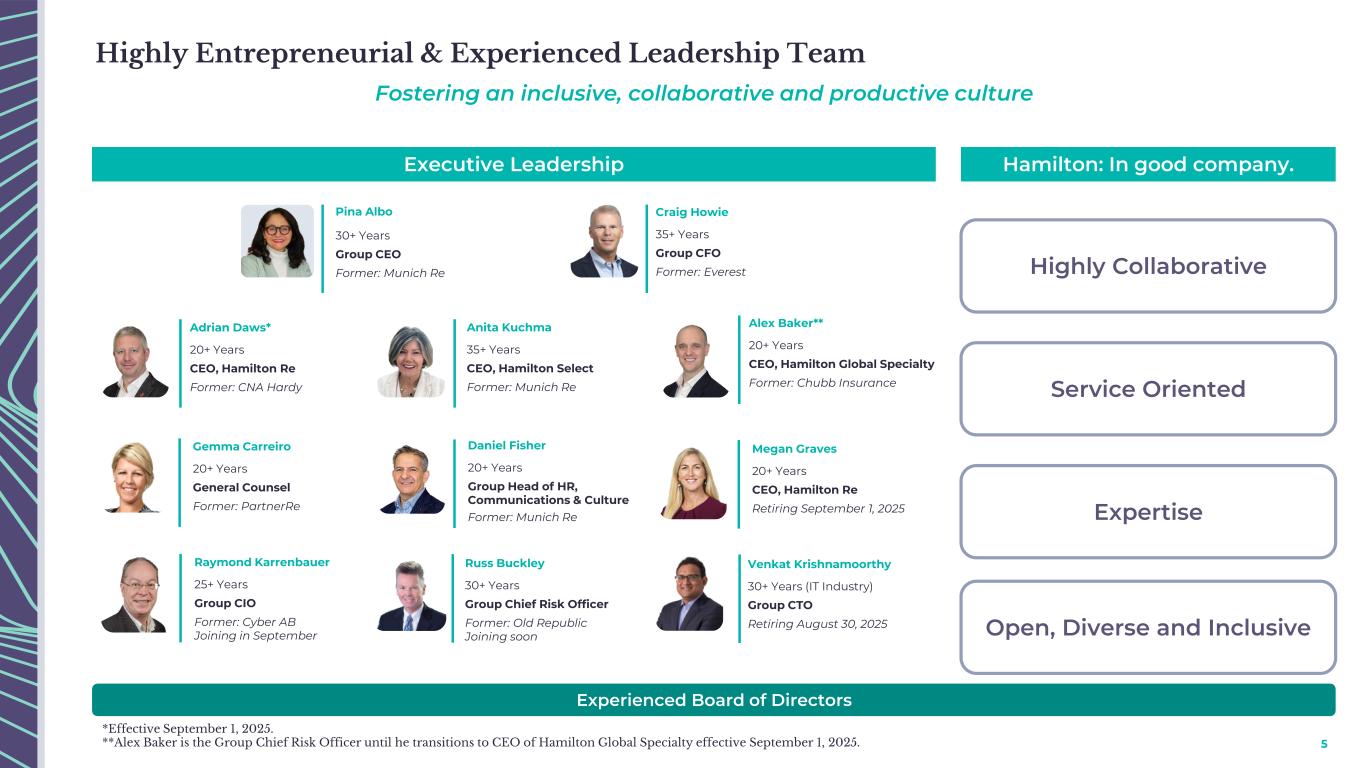
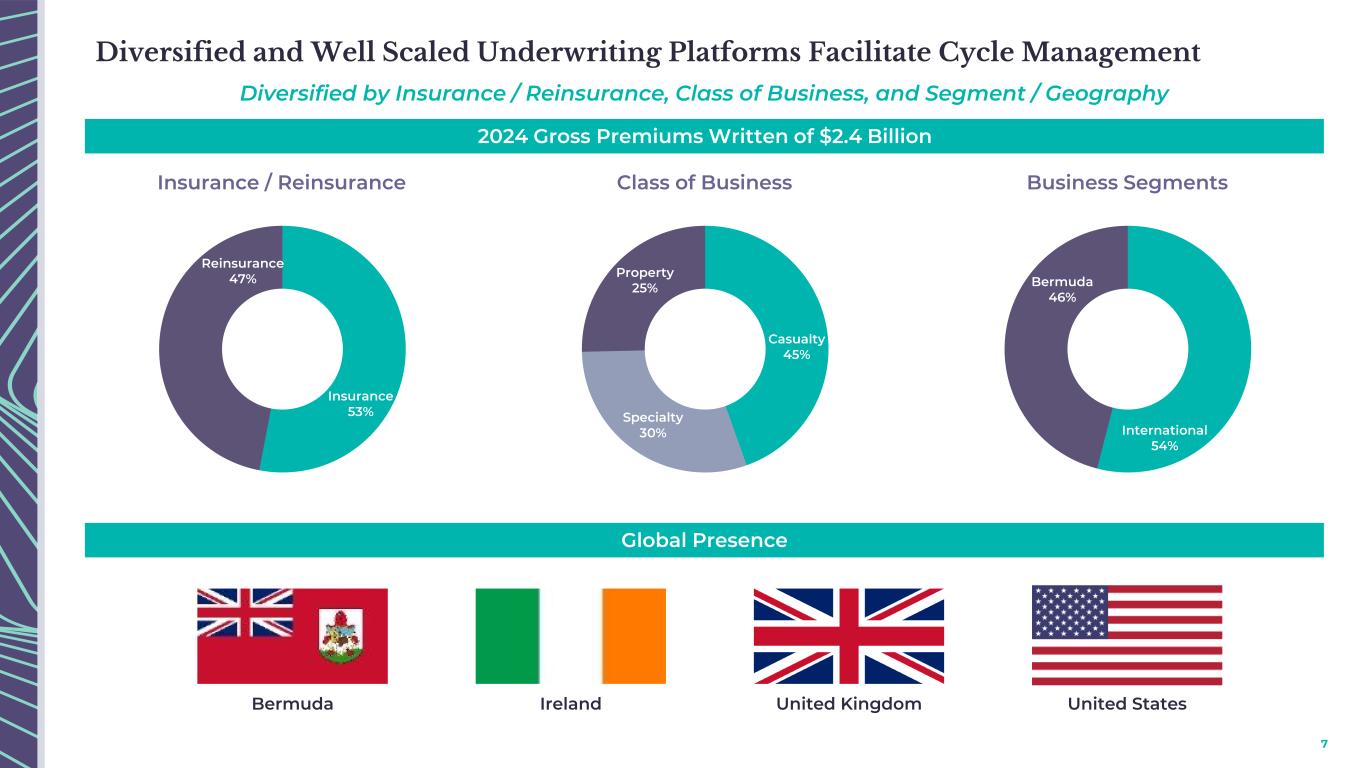
Thank you, Darian, and hello everyone. I'm excited to report another profitable quarter for Hamilton, including excellent underwriting results with a combined ratio of 86.8 percent and underwriting income of 67 million dollars investment income was also significant in this quarter at 149 million dollars reflecting strong returns from both the two sigma hamilton fund and our fixed income portfolio bottom line net income was 187 million dollars for the quarter, representing an impressive annualized return on average equity of 30.2%. Before providing some more commentary on the quarter, I want to take a minute to speak about our recently announced management appointments. Megan Graves, CEO of Hamilton Re, decided to retire after five years of transformational leadership. Megan will be missed and we're incredibly grateful for her many contributions to Hamilton's growth and success during her tenure. As we announced, and as part of a seamless execution of our succession planning, Adrienne Dawes, CEO of Hamilton Global Specialty, will succeed Megan as CEO of Hamilton RE from September 1st. At the same time, Alex Baker, our Group Chief Risk Officer, will take over from adrian as ceo of hamilton global specialty adrian and alex are both seasoned industry professionals with strong track records and a clear alignment to our strategy given this and the strength of our broader hamilton team we are confident about continuing our positive performance trajectory additionally tim duffin currently our chief underwriting officer for bermuda will step into a newly created role of Group Chief Underwriting Officer as of January 1st, 2026. Kim's proven leadership, business acumen, and strong industry relationships will provide further positive direction and momentum for our company. These appointments reflect the depth and breadth of talent in our organization. They also reinforce our commitment to our strategic imperative of being a magnet for talent by providing growth opportunities to employees within our organization. We are very pleased and indeed privileged to have such strong leaders in our group. While still on the topic of being a magnet for talent, it is important to note that in addition to being able to promote from within, we have also had great success in attracting exceptionally qualified external leaders for open positions, most recently for the positions of Group Chief Information Officer and Group Chief Risk Officer. We recently announced the appointment of Raymond Karnbauer as Group Chief Information Officer. Ray has years of relevant industry experience and will join us in September. We have also hired Russ Buckley as Group Chief risk officer. Russ is an experienced industry professional who is known to many on our executive management team, including me, as we have worked together in the past. Russ will be joining us shortly. Turning now to some of the highlights of our impressive second quarter results. Hamilton delivered strong top-line growth, with gross premiums written increasing by 18% in the quarter. This growth is reflective of the fact that we are still overall in an attractive underwriting environment and, as always, focused on proactive cycle management. This means that we leaned into areas or specific deals where the returns were attractive and and pared back our writings or exited deals where this was not the case. Bermuda led the way on growth, up 26%, driven predominantly by targeted casualty reinsurance business and new specialty reinsurance classes, both of which benefited from our AMBEST rating upgrade to A. More specifically, I can share that premiums directly tied to the rating upgrade were approximately $50 million in the second quarter and include growth in select casualty classes that are seeing healthy rate increases and in our new credit, bond, and political risk offerings, which are classified as specialty and had a great take-up this quarter. We also moderately grew our position in property CAT during the 6-1 and 7-1 renewals. A combination of increased participations on our existing portfolio and new business. On the flip side, and consistent with what I said earlier about cycle management, we decreased our writings in property D&F insurance and certain specialty reinsurance classes which did not meet our return thresholds moving on to our international segment which houses Hamilton Global Specialty and Hamilton Select gross premiums written grew 11% in the quarter starting with Hamilton Global Specialty gross premiums written were up 7% which reflects targeted underwriting actions as the market evolves into one requiring a higher level of discipline for example we reduced our writings in cyber insurance where pricing did not meet our hurdle rates at the same time with over 20 lines of business in hamilton global specialty we targeted growth in areas which are more attractive for example personal accident business which is well priced and where we are a respected market leader hamilton select continued its strong trajectory with growth of 52% over the same quarter last year. We are seeing a healthy flow of business into our US E&S operation. This reflects the relevance of our offerings, the talent in our operations, and the relationships we enjoy with our producers. As you've heard from others, professional lines classes continue to experience some pricing pressure, so we wrote less of that business in select again this quarter. On the other hand, pricing in excess casualty, general casualty, and small business remains attractive, so we directed more of our growth towards those lines where we can also retain tighter terms. Next, I'll speak to the recent reinsurance renewals. However, I will be brief as I'm sure most of you will have heard a similar story from our peers. As we reflect on the mid-year renewals, there was a healthy balance of supply and demand. Property catastrophe deals saw some rate pressure mid-year, particularly in the middle and upper layers of core non-loss affected programs. Despite this, since we are coming off of historical highs and the effects of the market reset of 2023 pricing for cat business still remains attractive with terms and conditions holding firm and attachment points even increasing in some instances the casualty market remains attractive as you've heard from others with continued strong underlying rate increases and while not a big part of our portfolio we are also starting to see rates flatten out in the D&O space. Our strong underwriting top line continues to drive growth in our balance sheet, with our investment portfolio growing along with our loss reserves. With respect to the latter, and as we have consistently said, we remain vigilant on our loss reserve position so that we can continue to preserve our ability to have favorable reserve development something we have experienced every year since the inception of this company as we have mentioned before the second quarter is when we conduct our regularly scheduled review of casualty reserves following this quarter's casualty review we decided to strengthen some of our casualty reserves by 18 million dollars in bermuda which was mainly related to discontinued business we also released some event-specific property reserves this quarter as the claims experience has trended more favorably compared to our initial more prudent estimates overall our reserve development was favorable for the quarter and year to date in closing my remarks i just want to say how proud i am of the results we delivered this quarter and that i look favorably to the foreseeable future for several reasons. Our well-diversified and well-scaled platform, our strong balance sheet and ratings, the strong client and broker relationships we have established, and last but by no means least, the world-class team of Hamilton professionals who know how to navigate all market cycles. While the market may be coming off historic highs in some areas, there is no one market, and the key is to focus on rate adequacy. It is still an attractive place to do business, particularly for astute and disciplined underwriting organizations like ours. With that, I will turn the call over to Craig.
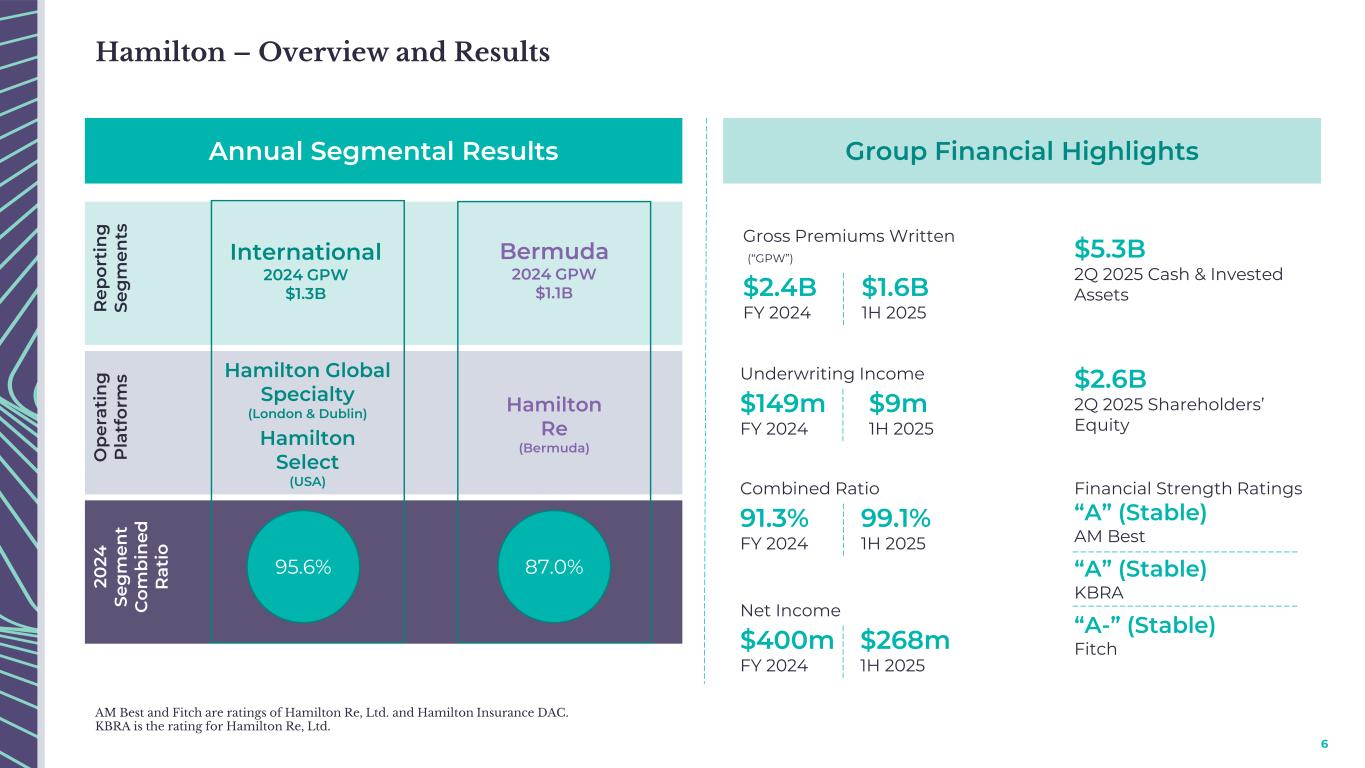
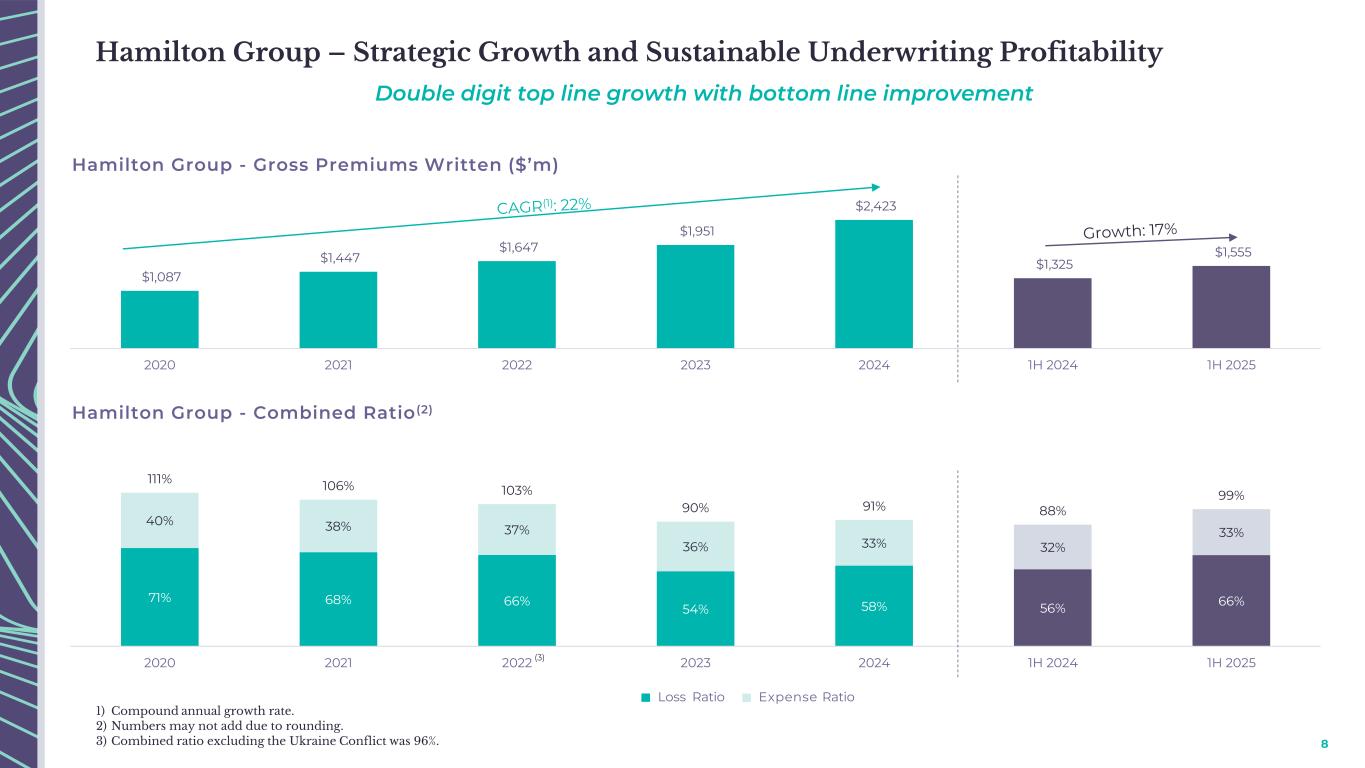
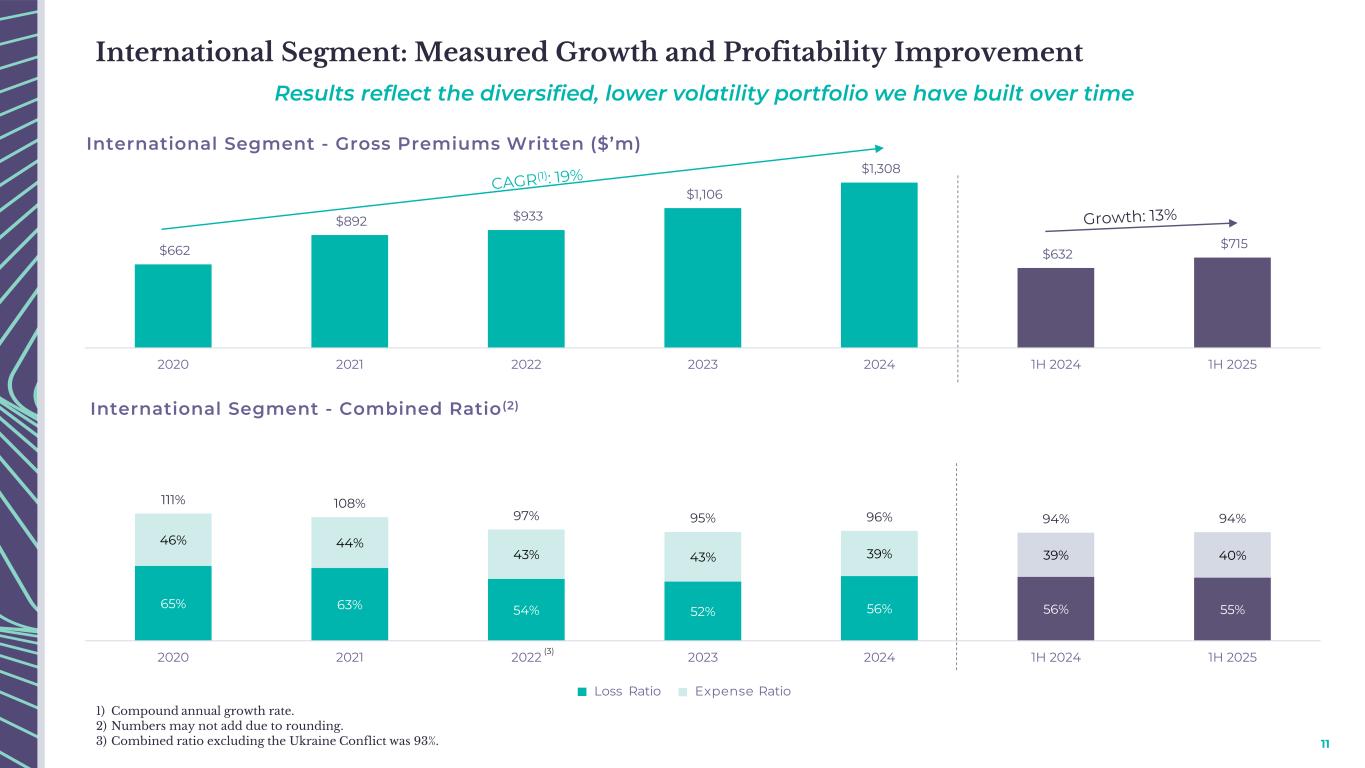
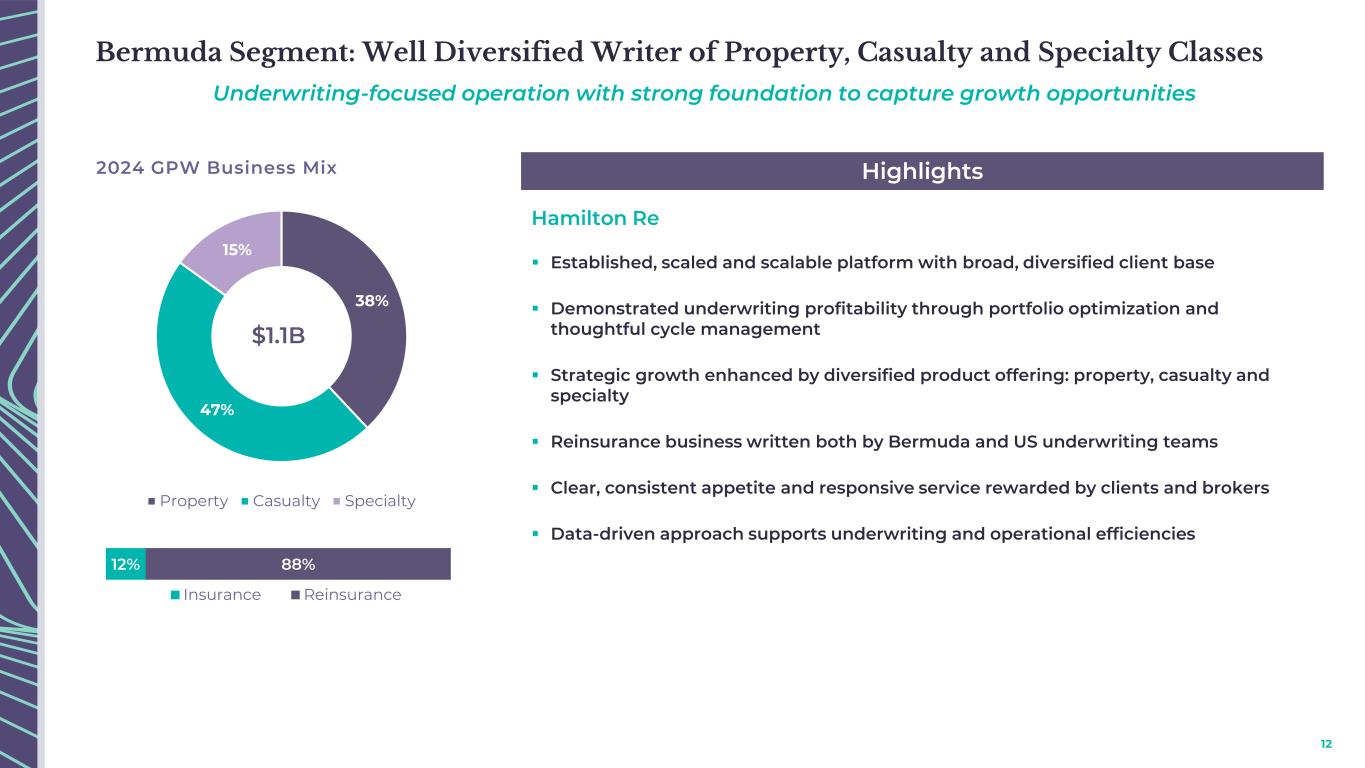
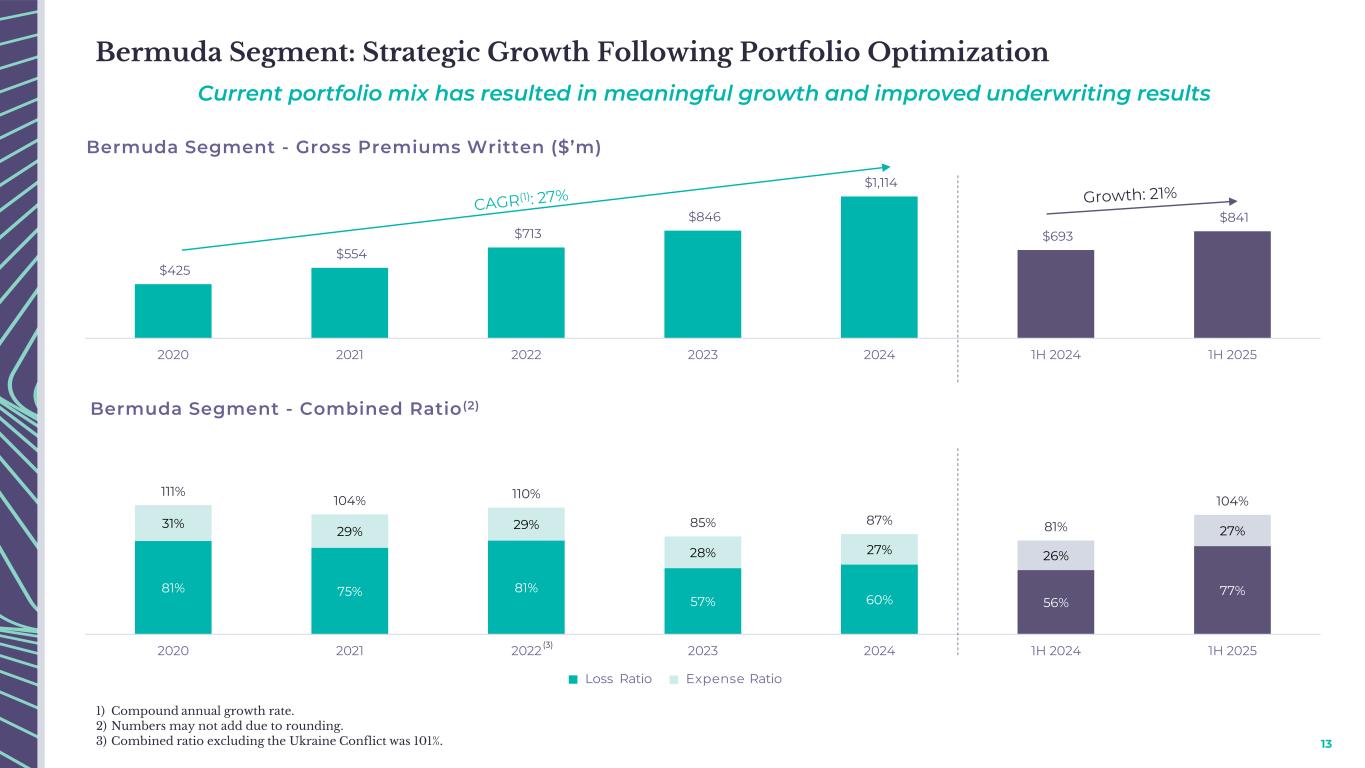
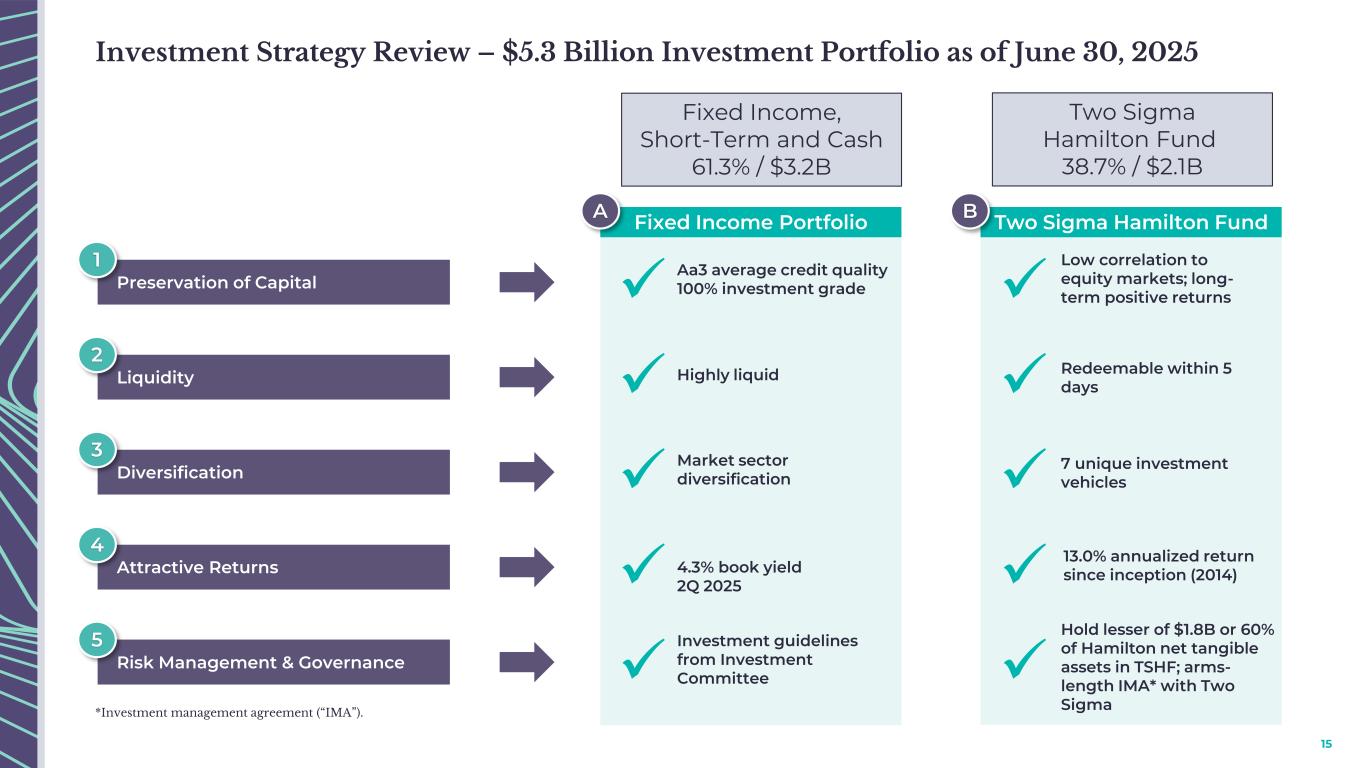
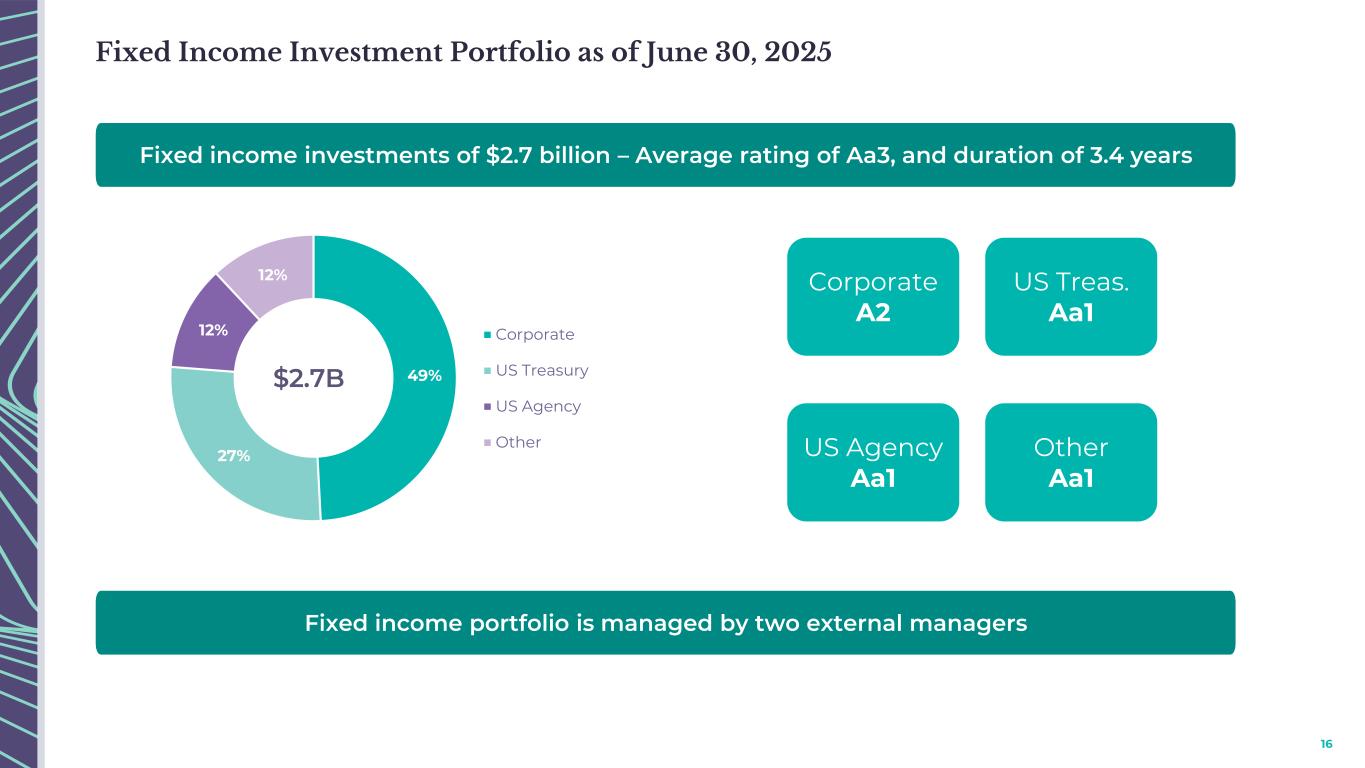
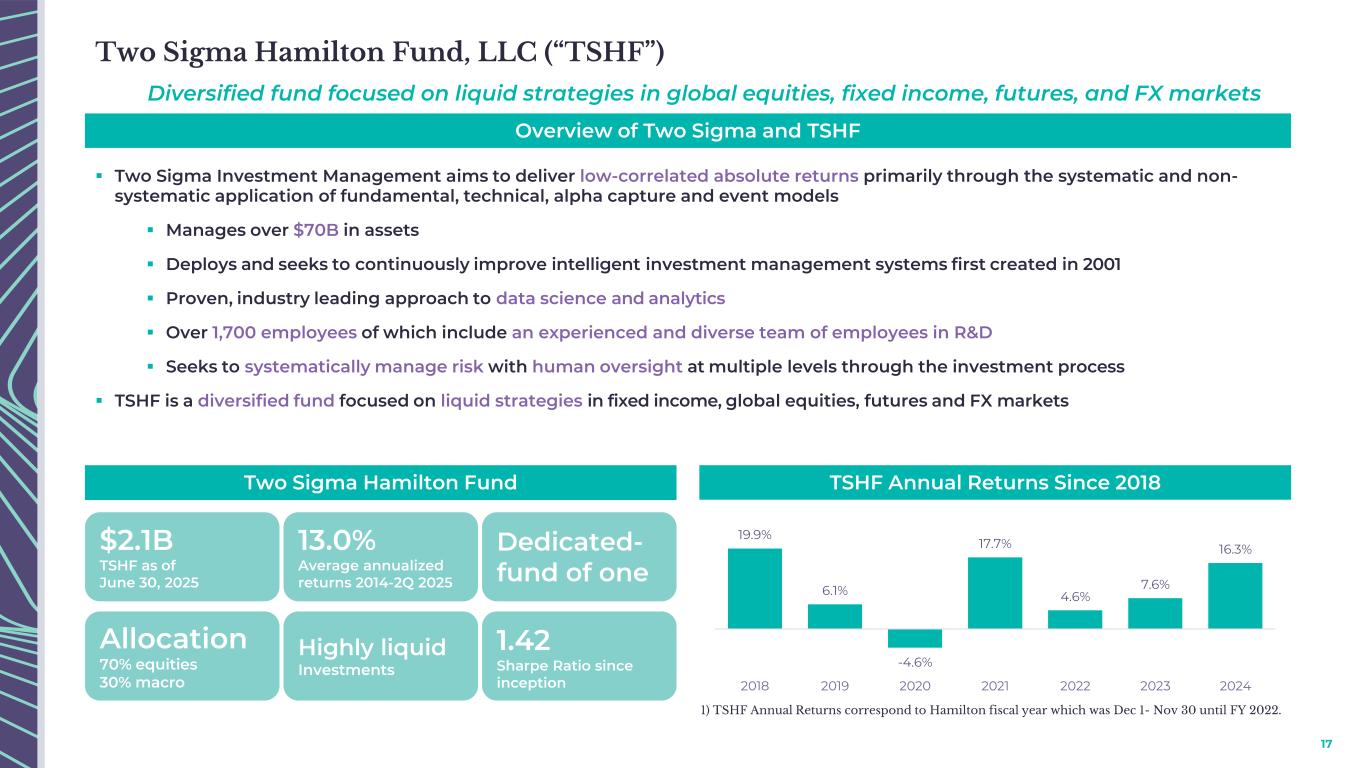
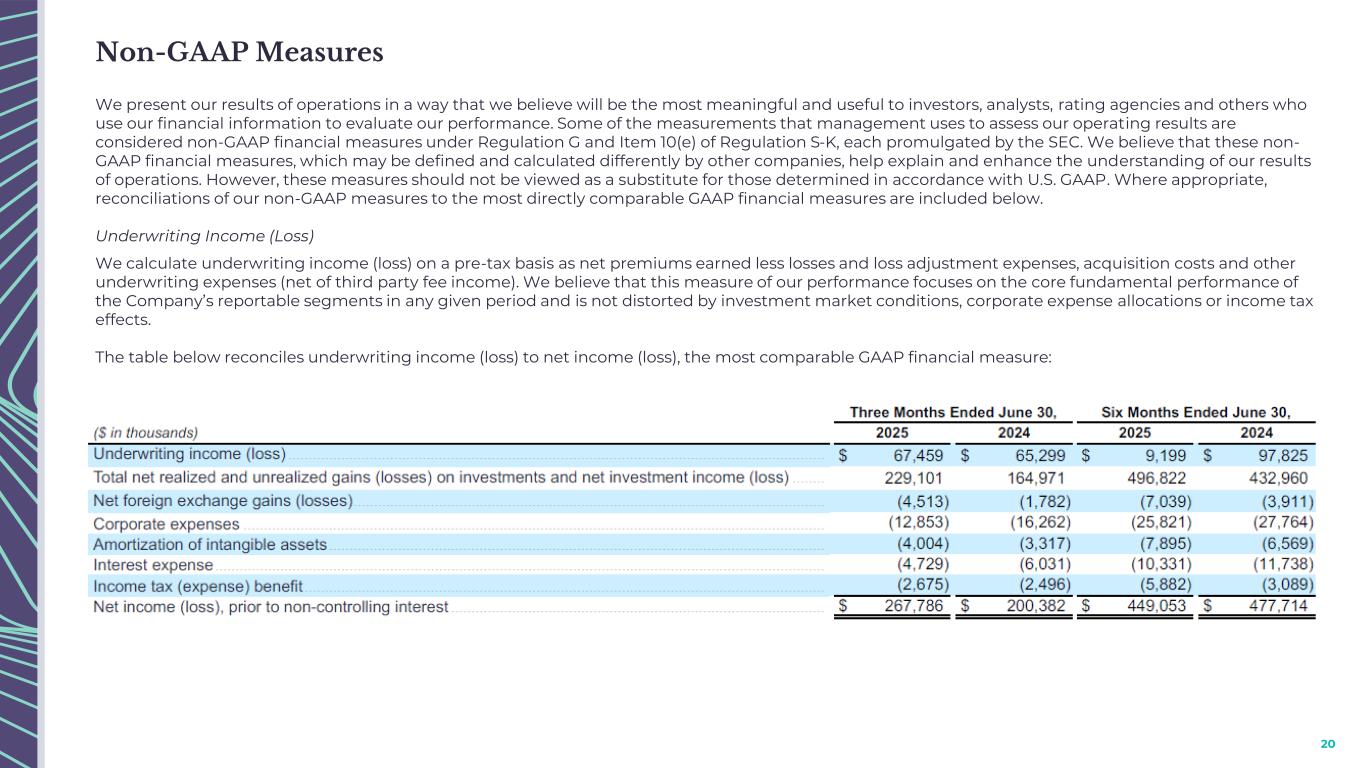
Thank you, Pina, and hello, everyone. Hamilton had another strong quarter with net income of $187 million equal to $1.79 per diluted share, producing an annualized return on average equity of 30.2%. We had operating income of $162 million equal to $1.55 per diluted share, producing an annualized operating return on average equity of 26.1%. We also increased book value per share by 8.3% this quarter to a record $25.55. These results compare to net income of $131 million, or $1.20 per diluted share, an annualized return on average equity of 23.6%, an operating income of $136 million, or $1.24 per diluted share, an annualized operating return on average equity of 24.4% in the second quarter of 2024. Turning to our underwriting results, Hamilton continues to grow top line at an impressive double-digit rate. In the first half of 2025, gross premiums written increased to $1.6 billion dollars compared to 1.3 billion dollars this time last year an increase of 17 percent our first half combined ratio was 99.1 percent all three of our operating platforms hamilton global specialty hamilton select and hamilton re were able to strategically grow in lines of business that were most attractive while shrinking those lines that did not meet our underwriting targets Now for some more detail on our quarterly underwriting figures. Hamilton had underwriting income of $67 million in the second quarter, compared to underwriting income of $65 million in the second quarter last year. The group combined ratio was 86.8% compared to 84.4% in the second quarter of 2024. In the second quarter, the loss ratio increased 1.6 points to 52.8 percent compared to 51.2 percent in the prior period. The increase was primarily driven by the current year attritional loss ratio, which was 53.0 percent compared to 51.6 percent in the prior period. This increase was driven by a change in business mix toward the casualty class and a specific large loss in our Bermuda segment, which I'll cover shortly. We had favorable prior year attritional development of 0.5 points in the quarter, driven by specialty and property classes, offset by certain casualty classes, which I'll discuss when I cover the segments. This compares to 0.4 points of favorable development in the second quarter last year. The expense ratio increased 0.8 points to 34.0% compared to 33.2% in the second quarter last year. The increase was mainly driven by the acquisition expense ratio due to the shifting mix of business. As always, I'd encourage you to use the full year 2024 attritional loss in expense ratios as an indication of where we expect the current book to perform. next i'll go through the second quarter results by reporting segments let's start with the international segment which includes our specialty insurance businesses hamilton global specialty and hamilton select for the first half of 2025 international gross premiums written grew to 715 million dollars from 632 million dollars an increase of 13 percent this was primarily driven by growth in all classes meaning our property casualty and specialty classes in the second quarter international had underwriting income of 27 million dollars and a combined ratio of 89.3 compared to underwriting income of 19 million dollars and a combined ratio of 91.0 percent in the second quarter last year the decrease in the combined ratio was primarily related to the loss ratio decreasing by three points mainly due to favorable prior year development partially offset by higher expense ratio the prior year attritional loss ratio decreased by 2.8 points compared to the second quarter last year this was driven by favorable development in all classes meaning our property specialty and casualty classes the expense ratio increased 1.3 points to 40.0 percent compared to 38.7 percent in the second quarter last year. The increase was primarily driven by the acquisition expense ratio due to increased profit commissions and a change in business mix. I will now turn to the Bermuda segment, which houses Hamilton Re and Hamilton Re U.S., the entities that predominantly write our reinsurance business. For the first half of 2025, Bermuda gross premiums written grew to $841 million from $693 million, an increase of 21%. The increase was primarily driven by both new and existing business in casualty and property reinsurance classes, including non-reoccurring reinstatement premiums related to the California wildfires. In the second quarter of 2025, Bermuda had underwriting income of $40 million in a combined ratio of 84.3%, compared the underwriting income of $46 million and a combined ratio of 77.4% in the second quarter last year. The increase in the combined ratio was primarily related to the loss ratio, with increases on the current year and prior year attritional loss ratios. The acquisition expense ratio was also higher than the second quarter last year. The Bermuda current year attritional loss ratio increased 3.7 points to 54.2 percent in the second quarter compared to 50.5 percent in the second quarter last year due to a change in business mix including more casualty reinsurance business and the air india airline loss this quarter the bermuda prior year attritional loss ratio increased 2.5 points to 2.0 points in 2025 compared to a favorable 0.5 points in the second quarter last year. As Pina mentioned, in the second quarter, we did our regularly scheduled casualty reserve reviews, which resulted in an $18 million charge on certain casualty lines, with the majority coming from our discontinued lines of business. This represents only about one percent of our casualty reserves and about a half a percent of our total reserve position. To be clear, we completed our casualty reserve reviews and strengthened our reserves based on our own review and not because of any third-party review. Our actions are consistent with our reserving philosophy of being quick to react to adverse development trends and slow to release reserves until we have more certainty. The Bermuda expense ratio increased by 0.6 points to 28.0% compared to 27.4% in the second quarter of 2024. This was driven by an increase in the acquisition expense ratio due to the change in business mix, partially offset by a decrease in the other underwriting expense ratio. Similar to my comment about the group ratios, ratios, I'd encourage you to use the full year 2024 attritional loss and expense ratios for the segments as a guide for how we expect the current segment books to perform. Now turning to investment income. Total investment income for the second quarter of 2025 was $149 million, compared to investment income of $96 million in the second quarter of 2024. The fixed income portfolio, short-term investments, and cash produced a gain of $62 million for the quarter, compared to a gain of $20 million in the second quarter of 2024. As a reminder, this includes the realized and unrealized gains and losses that Hamilton reports through net income as part of our trading investment portfolio. The fixed income portfolio had a return of 2.2% in the quarter, worth $58 million, and a new money yield of 4.3% on investments purchased this quarter. The duration of the portfolio was 3.4 years. The average yield to maturity on this portfolio was 4.3% compared to 4.7% at year-end 2024. The average credit quality of the portfolio remained strong at AA3. The Two Sigma Hamilton Fund produced an $87 million gain, or 4.4% for the second quarter of 2025. The fund had a net return of 10.1% for the first half of 2025. The latest estimate we have for the Two Sigma Hamilton Fund year-to-date performance was 8.2% through July 31, 2025, a decrease of about 1.9% in July. At this stage, the fund is still ahead of achieving our planned target of 10% for the year. The Two Sigma Hamilton Fund made up about 39% of our total investments, including cash investments, at June 30th, compared to 40% at March 31st, 2025. Now turning to capital management. In 2024, we announced a $150 million share repurchase authorization by the Hamilton Board of Directors. During the second quarter of 2025, we put a 10B-5-1 share repurchase plan in place. With that, we were able to repurchase $35 million of shares this quarter. After the close of the quarter, we repurchased an additional $15 million of shares as of the end of July. All shares were purchased at a discount to book value. With $62 million remaining under our share repurchase authorization, we're able to continue repurchasing shares and growing the business all while maintaining our strong capital position even during times of uncertainty. We will revisit additional share repurchase authorizations in the future as appropriate. Next, I have some comments on our strong balance sheet. Total assets were $8.9 billion at June 30, 2025, up 14% from $7.8 billion at year-end 2024. Total investments in cash were $5.3 billion at June 30, an increase of 11% from $4.8 billion at year-end 2024. Shareholders' equity for the group was $2.6 billion at the end of the second quarter, which was a 10% increase from year-end 2024. Our book value per share was $25.55 at June 30th, 2025, up 11% from year-end 2024. Thank you. And with that, we'll open up the call for your questions.
Operator
Thank you. We will now begin the question and answer session. If you have dialed in and would like to ask a question, please press star 1 on your telephone keypad to raise your hand and join the queue. And if you would like to withdraw your question, simply press star 1 again. For this session, we kindly ask you to limit yourself to one question plus one follow-up, and then rejoin the queue for any further questions. And our first question comes from the line of Christian Getzov with Wells Fargo. Your line is now open.
Hi, good morning. Can you provide more color around the reserve increases and the discontinued lines in terms of what accident years was that and were those covered by your LPT and then sticking with that with the casualty reserve review done did that lead to any change in your underlying loss fix uh particularly like on the Bermuda side because I think it's a little bit hard for us to see since you didn't quantify the air India loss like how much uptick there was versus the prior year thank you all right thanks for that question I'm going to just lead off very high level and then i'm going to pass the baton over to craig um i think it's really important to note that the amount of increase overall was modest um here in the context of our uh annual review of
this line uh cred's going to give you more detail on on that and as you rightly pointed out uh the increase stems from lines of business that we discontinued as part of the strategic transformation You might recall when I joined in 2018, the first thing we did was took a look at the entire portfolio, and we re-underwrote that entire portfolio, exiting a number of lines, and that is what this stems from. Craig, do you want to add on top of that?
Yeah, sure, Pina. First of all, this is $18 million. It's a very manageable number for us. It represents about a half a point of our overall reserve position, about 1% of our total casualty reserves. As Pina mentioned, you know, it comes from discontinued lines of business, business that we no longer write, things like commercial auto and clients that we no longer do business with. So that's what it relates to. Christian, you asked with respect to the years, the years are 2020 and prior, and you also asked whether it was impacted by the LPT. We do not have a lost portfolio transfer with the Bermuda book. This was essentially all related to the Bermuda book. The casualty reserves in the international segment were favorable throughout this process and review. I think your other question was also, did this cause us to change any of our loss picks? The answer is no. It did not cause us to change any of our loss picks for this. What we essentially did was we reviewed all the runoff patterns for these discontinued lines, and that's what it impacted. You may recall in the third quarter last year, we actually did make a change in our casualty reserves for the social inflation impacted lines of business. We did that in the third quarter, and that continued into the fourth quarter and into 2025. So those changes were made in the third quarter in 2024. for uh the other thing you may want to just know uh one one large loss that we had this quarter with respect to those reserves which is impacting the attritional loss line with the air India loss we took a six million dollar charge for that loss we booked the full limit on our exposure for that loss this quarter and that was out of the Bermuda segment the Bermuda segment writes aviation reinsurance does not write aviation insurance got it thank you and then for my follow up can you talk about what you saw in the quarter in terms of property pricing particularly for your portfolio and maybe if you could quantify how much of your property books use towards large
accounts versus sme and then if you want to go a step further if you could maybe potentially size the property exposure in your ens portfolio thank you i'll lead with that one christen um our property pricing let's start with insurance first uh as i noted in my prepared remarks We did see some pressure on property DNS insurance, and we saw that both in our international book and in our Bermuda book. And as a result of that, I mean, it's still very attractive pricing. Let's start with that. This is coming off of like seven straight years of price increases. However, we don't want to be responsible for driving the market down. So we were very disciplined there. and these are in part but not exclusively the stuff we would come off of as the larger business where we're seeing the most pricing pressure the business we stayed on uh was where we said lost pressure and that's probably mid-sized to smaller accounts uh that's on the insurance side on the um in terms of our hamilton select that's where we write the smallest risk we are not writing property in that uh entity uh at this time uh did you and then i don't know uh but in terms of property on the reinsurance side um i there you've heard a lot about that from my peers i think it's fair to say that property pricing mid-year was very deal specific you know ranging from minus 15% to plus 50%, you know, depending on loss history and peril exposure, that business is, that we're reinsuring is coming off of historic highs, still benefiting from, you know, the market reset, the higher attachment points, the tighter terms and conditions that we saw starting 2023. So that business, we still view as attractive. And we, as I mentioned on the call moderately grew our property cap portfolio at mid-year.
Operator
Your next question comes from the line of Michael Zaremsky with BMO Capital Markets. Your line is now open.
Dan
Analyst — BMO Capital Markets
Hey, morning. Dan on for Mike. Maybe just sticking with the select business, I think that business performed a little bit better quarter over quarter just in terms of the absolute growth rate just want to understand maybe are you guys seeing a lot of mga competition in in your select business or how should we think about that you know growth capability for the rest of the year uh yeah happy to take that yeah we're very very happy about the development of our hamilton select business again uh the take up for that align uh for the products that we offer are is very high, and that's a testament to the strength of our team.
We're still seeing a healthy flow of business into our operations, and we're leaning into the areas, as I mentioned, the general casualty, excess casualty, and small business where the rates are more attractive, paired back a little bit on professional lines, which is still under pressure. We do not support MGAs in the Hamilton Select portfolio at all. We do all the interwriting in-house. We are seeing some impact from MGAs and perhaps them being more aggressive. However, in our specific niche of hard to place, we are still seeing a very healthy flow of business and we're comfortable with how we're underwriting it.
Dan
Analyst — BMO Capital Markets
That's helpful. Thank you. And maybe just going to, you know, the Bermuda the casualty growth, I think you had like, you know, $80 million AMVEST target from that upgrade. And I heard, I believe it was around $50 million or so this quarter. Just wondering if you could maybe give us a new outlook on that number for the year.
Yeah. Let me talk about that a little bit more generically, then I'll get specifically to that question here. You know, firstly, I think as you've heard from many of our peers, um casualty and specifically you know general casualty excess casualties experiencing probably the strongest rate increases in the market um we're growing you know that both in the insurance side but predominantly the predominant casualty growth came this quarter on the casualty reinsurance side and there are a number of reasons for that a number of reasons that we feel comfortable with that growth as you may recall from previous calls we are growing from a much smaller base than many of our peers. We are growing on the back of that AM Best rating upgrade that gives us access to business that we have been targeting for years at a time where some markets who perhaps were overexposed on the softer years are paring back. So giving us that opportunity to move in when pricing, as I said earlier, is probably at the highest we've seen for some time. our focus here is really selectively on our top tier key clients that we support across many classes these are clients that we've identified as having strong underwriting cultures that take the rate that limit you know their line sizes that have strong claim teams and importantly keep a significant retention of this business we ensure they have skin in the game also our participations are rather modest. We want to make sure we have a diversified portfolio we're growing in and each deal is actuarially reviewed. Probably a little bit more than you wanted to know, but I think it's important to give you context around the growth. Again, we benefited significantly from this AMBEST upgrade. We told you we thought we'd do $80 million again this year as we did last year. We did $40 million the first quarter, $50 million this quarter, so we're slightly ahead of where we thought we were going to be, but as I look forward into the future, having had the benefit of this upgrade now for, you know, a full year, you will see, you know, much more moderate growth as we've gone through an entire cycle already. Having said that, you will see that premium, that strong premium on the back of strong rate increases continue to earn in.
Dan
Analyst — BMO Capital Markets
Great. That's helpful. Thanks. And maybe for Craig on share repurchase levels, that pace accelerate a little bit versus 1Q, and I understand there was some timing nuance just given the filing status and the window that was open for that, and then heard $15 million in July, but just wondering, is this the right run rate for the future, and just wondering how we could think about that with WINC coming up. Thanks.
Yeah, thanks, Dan. You know, so first of all, appreciate the question. I guess the answer is it depends, right? So first we put a 10B51 share repurchase plan in place this quarter, which allowed us to continue buying for the entire quarter. So that was the difference between that and Q1, as you mentioned. You know, we buy back these shares for a couple of reasons. One is capital management and the other is to take advantage of the share price because we think that the company is currently undervalued. So if those conditions stay, we will continue to buy because we think it's accretive. We think it's accretive to all shareholders. It's accretive to earnings per share. It's accretive to book value per share. It's accretive to ROE. We're going to be able to continue to buy. We have plenty of capital to be able to do that, but I will tell you that we will be diligent about buybacks during the win season as it progresses.
Operator
Again, if you would like to ask a question, please press star one on your telephone keypad and your next question comes from the line of Tommy McJoint with KBW.
Your line is now open. hey good morning guys um one quick one uh are you guys still fighting premium growth headwinds against those discontinued lines uh that you called out from the the transformation process or or that's been long last and you're just cheering up the reserves now no tom you know with respect to premium growth you know first of all i think you know we've shared this in the past you know last year we were able to grow our premium by 24 okay so far this year through the first half we've grown 17%.
So we're still expecting double-digit growth in premium, albeit at lower levels than what you've seen in the past. Okay. So as a reminder, we've been able to grow this book at double-digit premium growth every year since 2017. But at the end of the day, we've established, you know, a culture of underwriting discipline that's allowed us, you know, that will be reflected over time. And it's really allowed us to consider when and where we want to grow our book for the best risk adjusted returns.
Okay, got it. And then was the higher profit commission that they called out that drove the higher expense ratio, was that an anomaly this quarter or is that a reset in those agreements? And is the level in 2Q a good one to assume going forward?
So the way the profit commission works is it's based on the underlying book of business. If the underlying book of business performs properly and there's a profit commission on certain lines of business. It's not on all lines. But as those continue to perform, that's when you'll see that come through. You'll typically see it at the same time we try to accrue it in the same quarter that that profit commission is earned. So again, it's on certain lines of business. It could be in the international segment or it could be in the Bermuda segment, depending on those lines. So it's not a normal run rate. Great.
Dan
Analyst — BMO Capital Markets
Thank you.
Operator
Your next question comes from the line of Christian Getzsov with Wells Fargo. Your line is now open.
Hi, I just had one follow-up. Was there any change in your reserves related to the UK verdict on the Russia-Ukraine aviation losses?
Christian, this quarter there was no change in our reserve for the quarter. We booked, as a reminder, a Folsom reserve three years ago in 2022, taking into account all the potential losses, including aviation. And at this point, there's no new certainty around those potential losses for us to make a change in our loss estimate this quarter.
Gotcha. And then just one more follow-up. I noticed your interest expense dropped by a million quarter over quarter, but your debt was essentially flat. What was the driver of that?
So first, let me go back to the other question real quickly about the Ukraine expense one of the things i will say is that we did book a loss uh three years ago at 79 million dollars we still have about 75 percent of that held in reserves as ibnr so just to answer that question first as far as the interest expense goes i appreciate you asking that question it's a it's a multi uh factor answer one is the sofa rate which is where our term loan is based uh is a floating rate and that rate is down about 100 basis points year over year so that's number one Second, we had two reductions in our margin around our letters of credit, one, because of our ratings upgrade, and two, because of our banking partners have really recognized our credit story, and when we renewed those facilities, we got lower rates. So, certainly, we are a better credit than we were, you know, even three years ago.
Operator
Your next question comes from the line of Michael Zaremsky with BMO Capital Markets. Your line is now open.
Dan
Analyst — BMO Capital Markets
My follow-up is just on the total company underwriting expense ratio. Just wondering, I know there's some headwinds in the acquisition cost, just given mix, but trying to understand that other expense ratio story and just maybe how that can grind down over time and your focus on that. Some improvement year-to-date, not as much as last year, but just updating on that timeline.
Yep, understood. So then, you know, the acquisition expense ratio, so the expense ratio itself is based on two components, acquisition expense ratio and other underwriting expenses. The acquisition expense ratio is really based on mix of business. That's why you're seeing a change in that. And that's what we're attributing that increase to the acquisition expense ratios to be that as well as the profit commissions. So that's what you're seeing there. But as we expect to continue, our margin improvement is in the other underwriting expenses. That's something that we have control over, and that ratio has declined each and every year since 2019. If you look at the whole picture, you've heard me say this before about going back and looking at the full year of 2024. You know, right now, the full year of 2024 for our total expense ratio was 33.1%, and where are we year-to-date in 2025? We're at 33.2%. So, we're really right on target for what I would say if you look at it from a four-year perspective.
Operator
Your next question comes from the line of Matthew Carletti with Citizens Capital Markets. Your line is now open.
Dan
Analyst — BMO Capital Markets
Thanks. Good morning. Just a quick one probably for Craig. How should we be thinking about tax rate going forward?
Great question. You may recall from an overall standpoint, you know, taxes is something that we're very focused on. We think we still have a strategic competitive advantage from the standpoint of the global minimum tax, from the standpoint that we are deferred for five years. We do not start paying global minimum tax until the year 2030. So our current effective tax rate is still in the low single digits compared to the 15% global minimum tax rate. So, again, from our standpoint, it's a five-year deferral for that.
Operator
Thank you. That will conclude our question and answer session for today. Now, I'll turn the call back over to Tina Alpo. You may begin.
I just want to thank everybody for joining us on our call today. We appreciate the opportunity of sharing our story and the positive trajectory that we're on and also the opportunity to answer your questions. We look forward to speaking to you again next quarter.
Operator
Ladies and gentlemen, that concludes today's call. Thank you all for joining. You may now disconnect.