Thank you, operator. Good morning, everyone, and thank you for joining us to discuss Hagerty's results for the third quarter of 2025. I'm joined this morning by McKeel Hagerty, Chief Executive Officer and Chairman; and Patrick McClymont, Chief Financial Officer. During this morning's conference call, we will refer to an accompanying presentation that is available on Hagerty's Investor Relations section of the company's corporate website at investor.hagerty.com. Our earnings release, slides and letter to stockholders covering this period are also posted on the IR website as well as our 8-K filing. Today's discussion contains forward-looking statements and non-GAAP financial metrics as described further on Slide 2 of the earnings presentation. Forward-looking statements include statements about our expected future business and financial performance are not promises or guarantees of future performance. They are subject to a variety of risks and uncertainties that could cause the actual results to differ materially from our expectations. For a discussion of material risks and important factors that could affect our actual results, please refer to those contained in our filings with the SEC, which are also available on our Investor Relations website and at sec.gov. The appendix of the presentation also contains reconciliations of our non-GAAP metrics to the most directly comparable GAAP measures that are further supplemented by this morning's 8-K filing. And with that, I will turn the call over to McKeel.
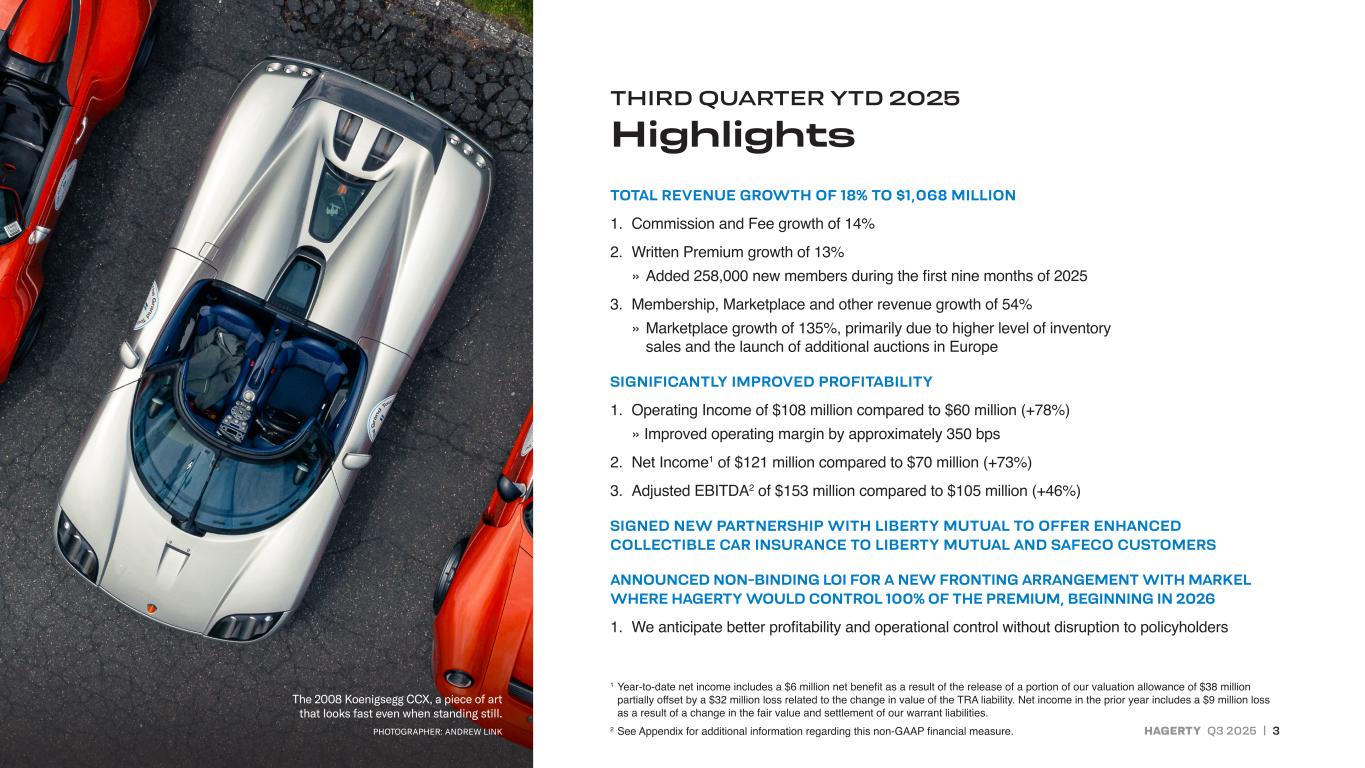
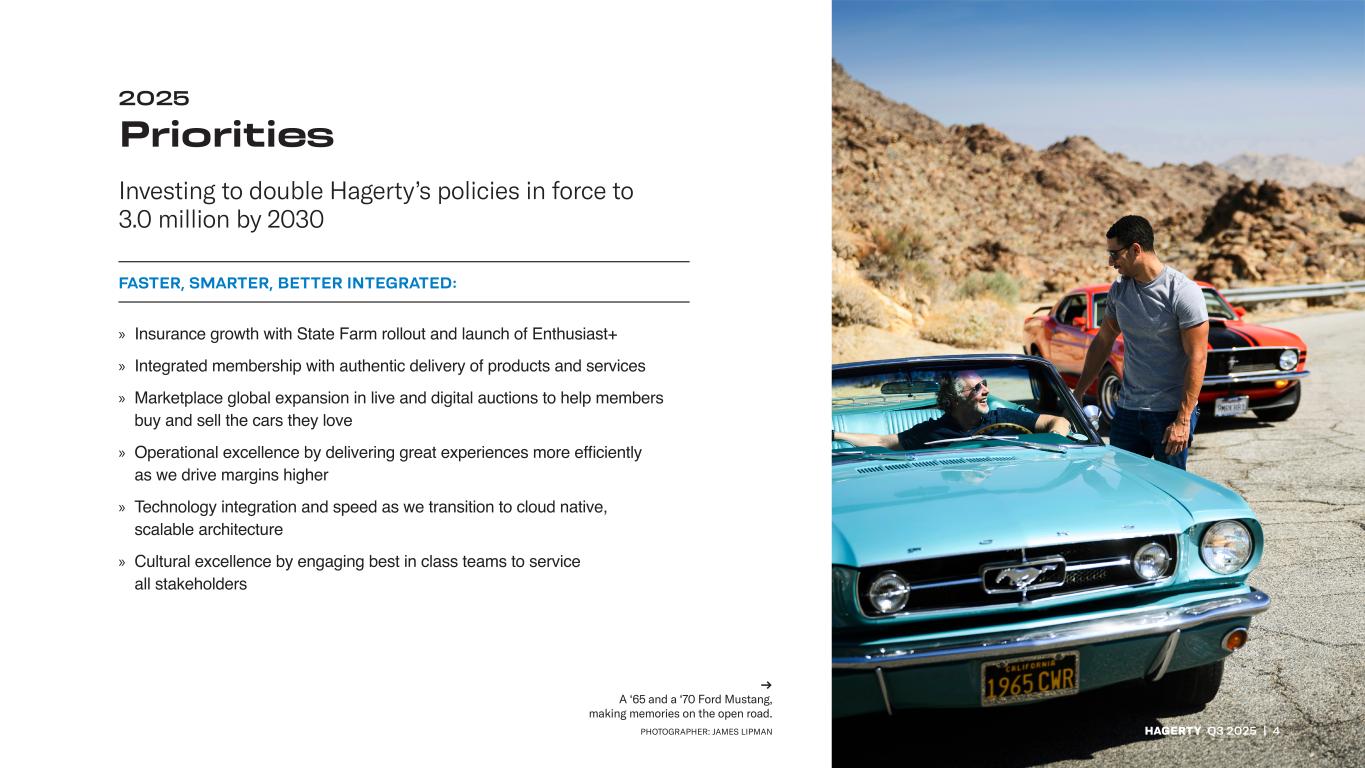
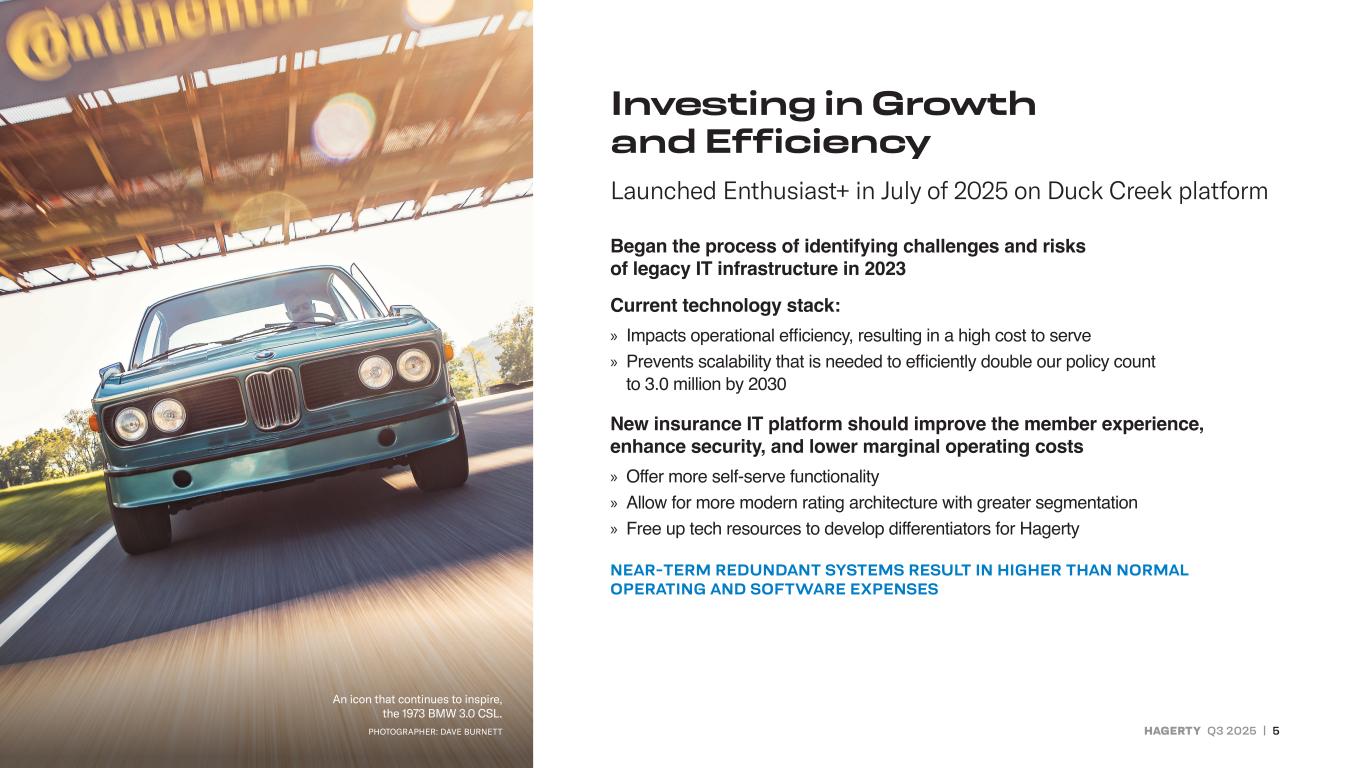
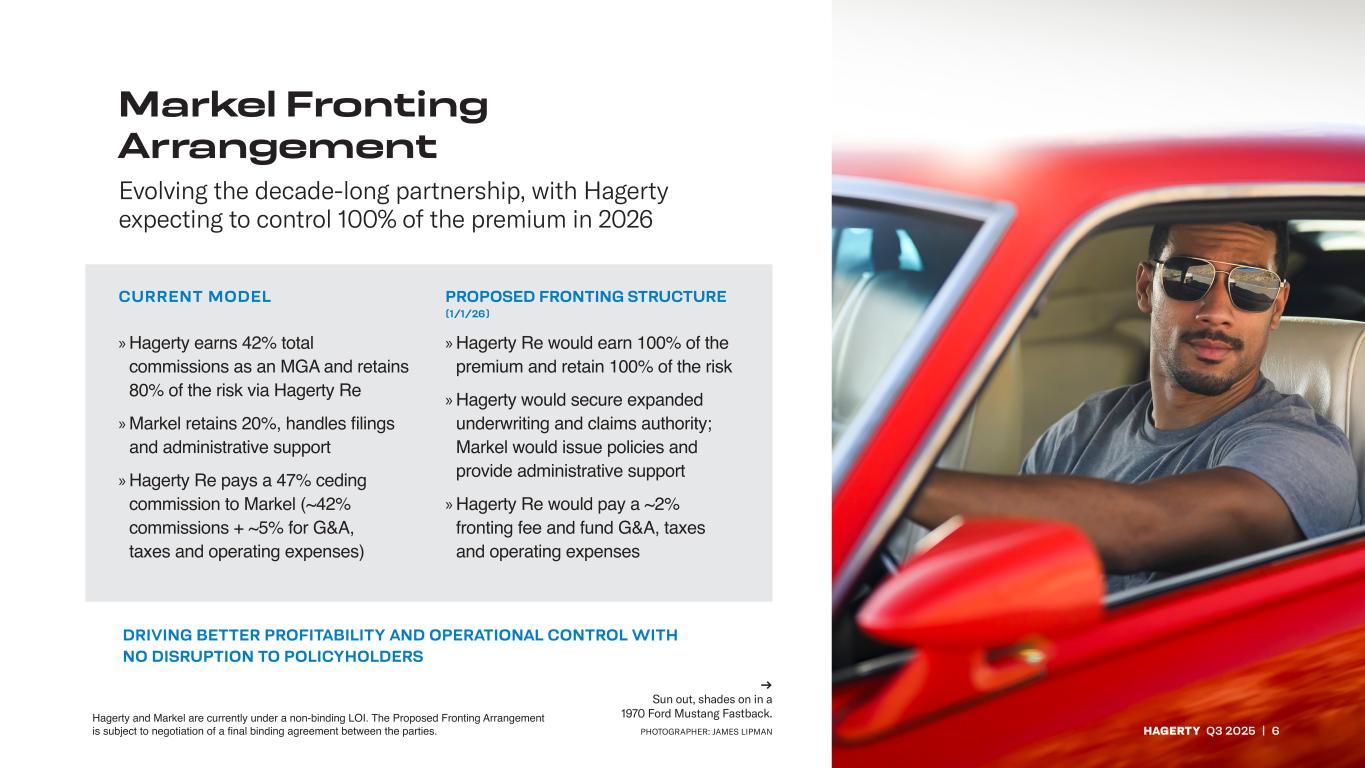
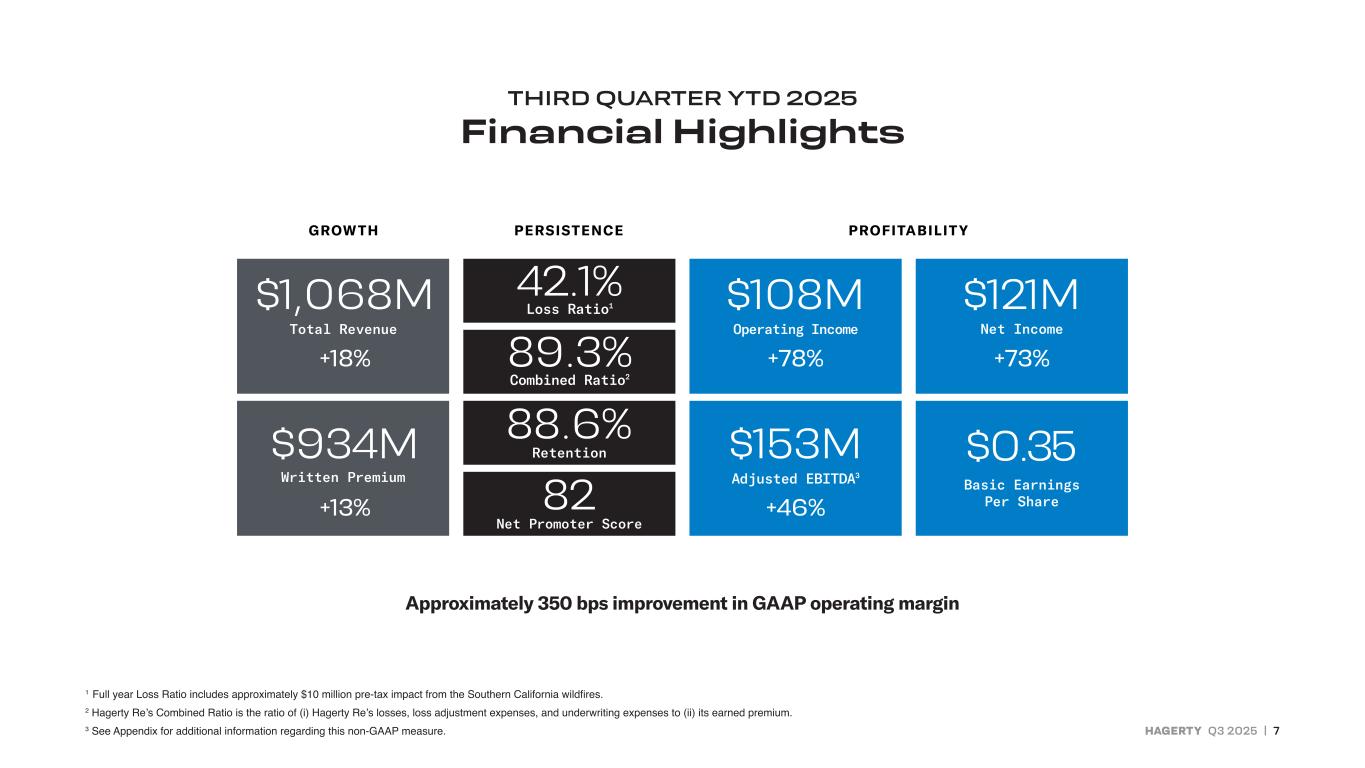
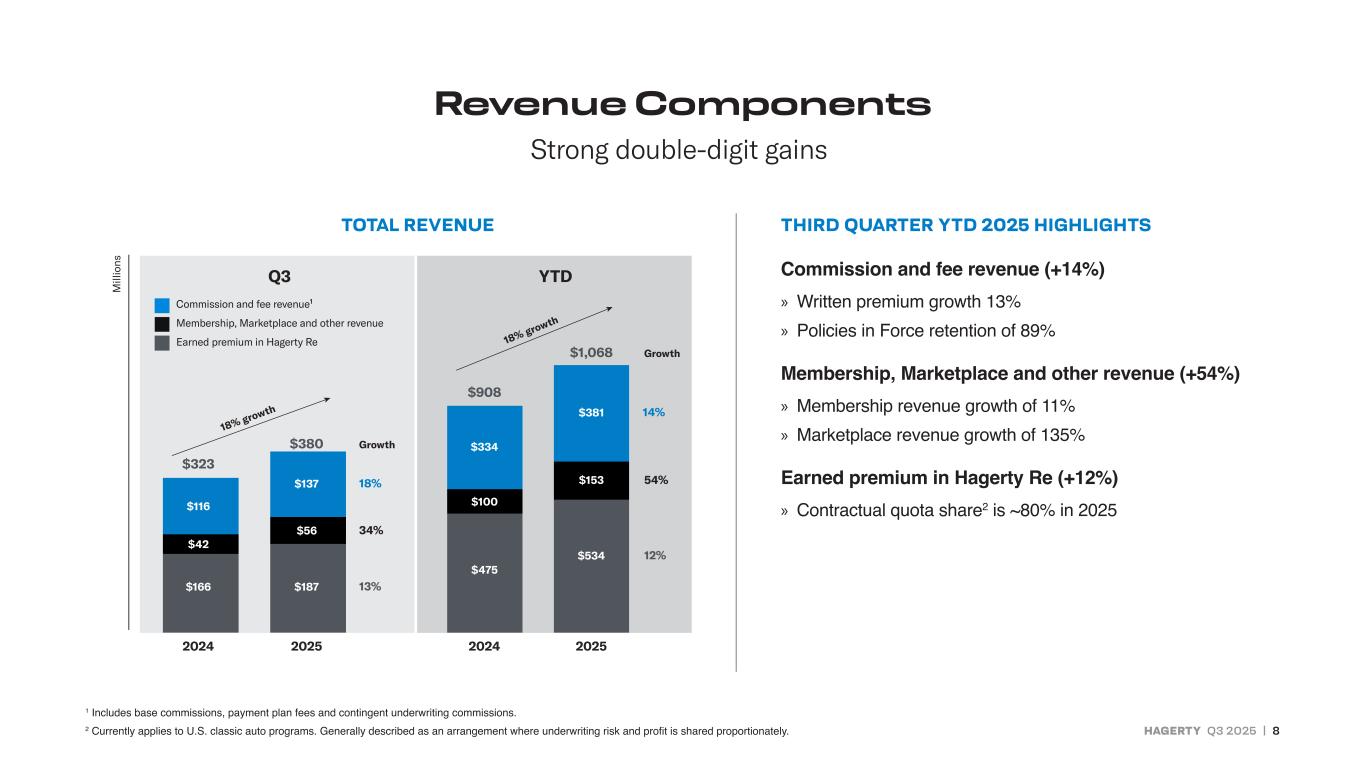
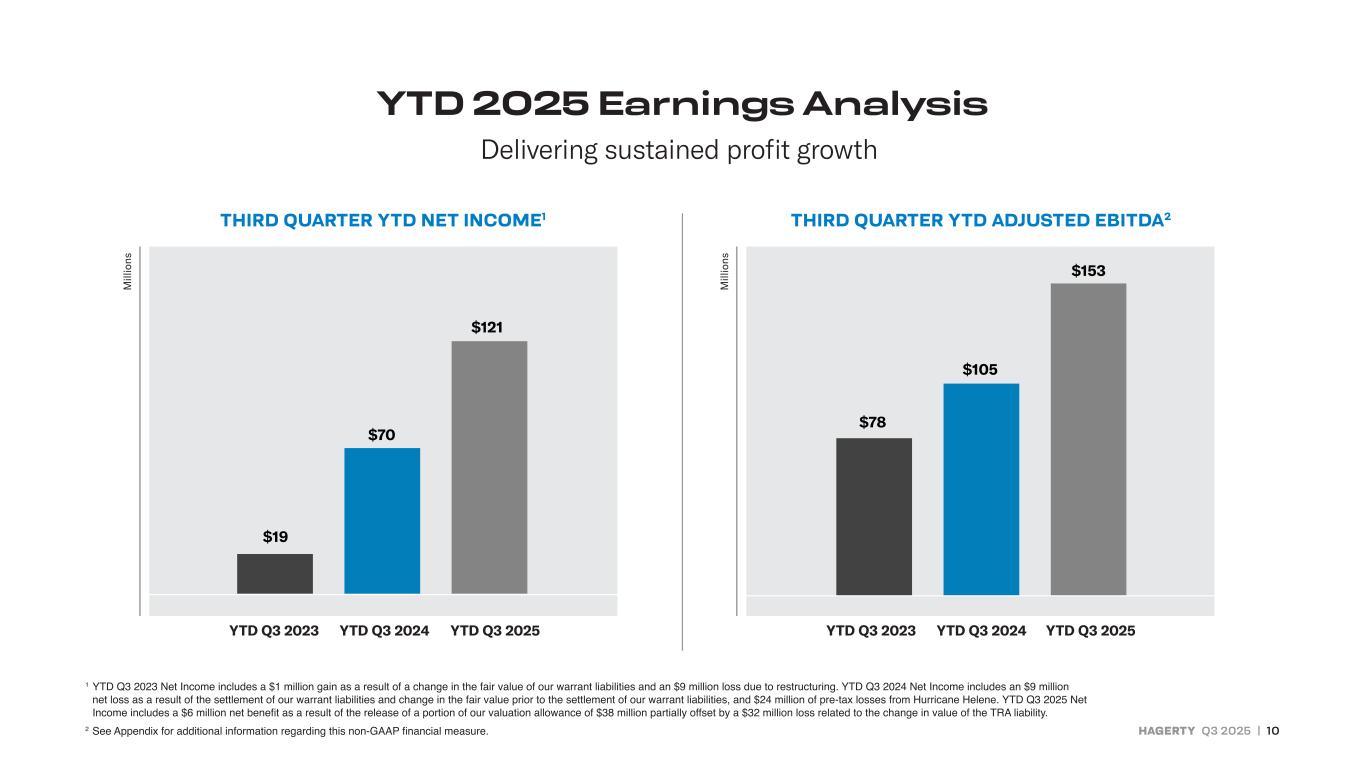
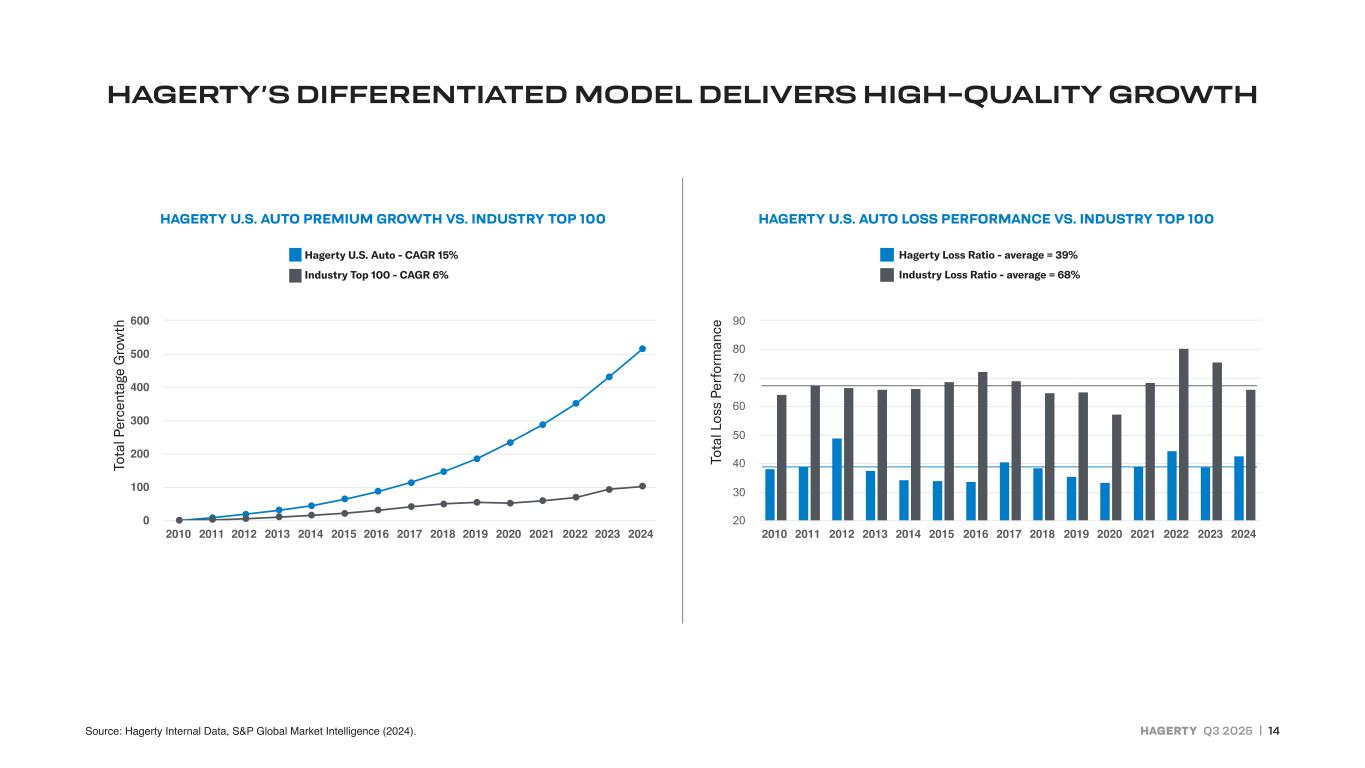
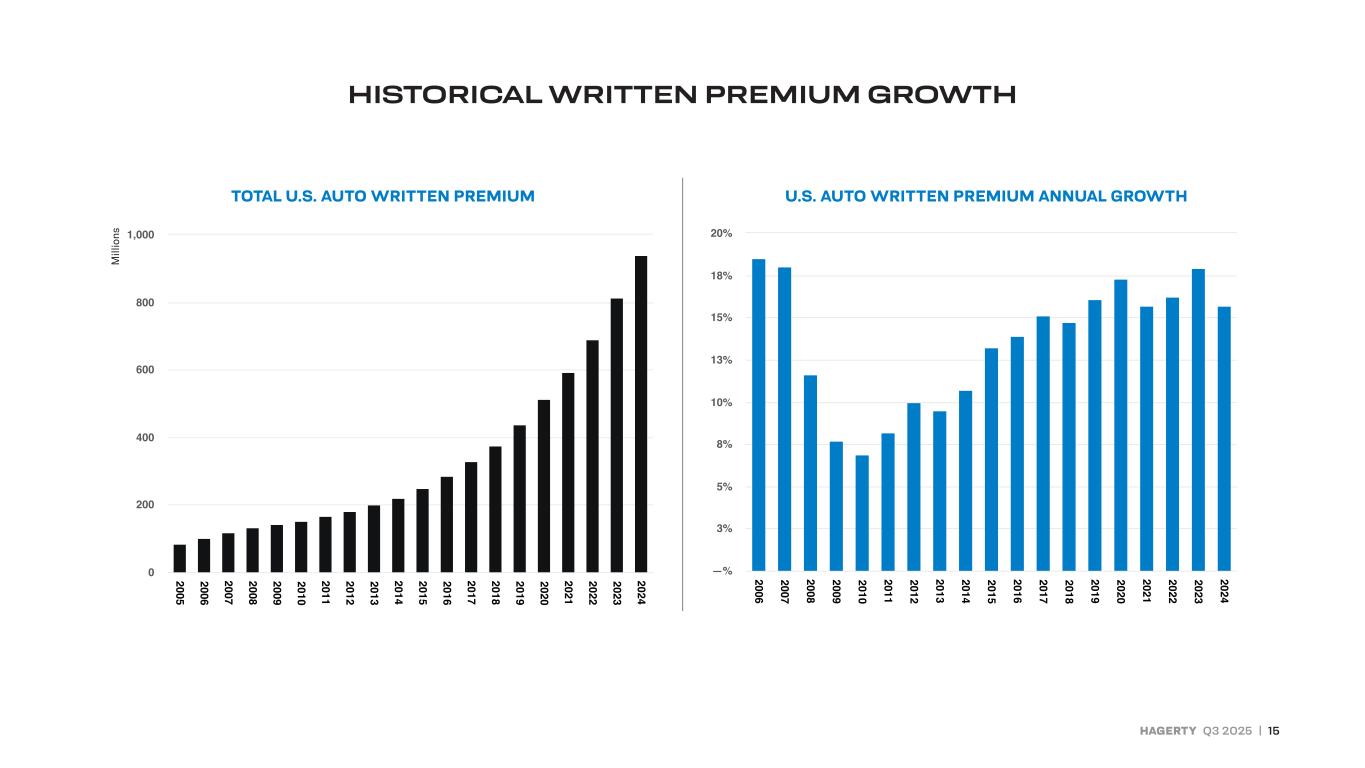
Thanks, Jay, and good morning, everyone. We appreciate you taking the time to join Hagerty's Third Quarter 2025 Earnings Call. While many of us are putting away our special cars in the fall after another fun driving season, we at Hagerty are breathing a sigh of relief that 2025 was a relatively benign year for catastrophes after a challenging start with the California wildfires. As our reinsurers have pointed out to us, even in the worst of hurricane years, our book of collectible vehicles tends to significantly outperform what their models would have predicted. Our members love their cars and they will find ways to drive them to safety. Building trusted relationships with our members through the years of delivering on our brand promise enables us to develop new products such as the recently launched Safe Storage Concierge, which provides guaranteed shelters for cars in hurricane-prone areas such as Tampa and Miami. While we hope our members never need to use the program, if they do, we will be there for them, regardless of the type of vehicle they love, leading to lower claim frequency and consistently strong and stable underwriting results year after year as we add new members. Let me dig into the highlights from the first 9 months of 2025 shown on Slide 3. Total revenue increased 18%. New business count fueled by a 13% increase in written premium and 14% growth in commission revenue, an acceleration from the first half results as State Farm policy conversions ramp up month-over-month. October came in even stronger than September, delivering the highest Policy in Force or PIF growth in our history. Earned premium in our risk-taking entity, Hagerty Reinsurance, increased 12% and membership, marketplace and other revenue jumped 54% due to the launch of our European auction business, plus growth in inventory sales and private transactions. Moving to profitability. During the first 9 months of the year, our operating margins jumped another 350 basis points, resulting in net income gains of 73% to $121 million and adjusted EBITDA growth of 46% to $153 million. High rates of compounding growth with a relentless focus on operating efficiencies are resulting in sustained margin expansion as we work towards doubling our policies in force to 3 million by 2030. Hagerty has become one of the largest MGAs in the specialty vehicle insurance business, thanks to omnichannel distribution, best-in-class service, valuation and underwriting capabilities, not to mention a brand unlike any other with a Net Promoter Score of 82 that towers over the industry's average score of 37. Our direct business is adding new members efficiently, thanks in part to our unique ability to drive a disproportionate number of people in Hagerty's funnel on the strength of the Hagerty brand and low-cost referrals. And our distribution team has been working diligently to cultivate relationships with the leading carriers in the U.S. as the majority of the specialty cars we seek to insure sit within their bundled policies. With that, we announced yesterday that we had signed a new partnership with Liberty Mutual and Safeco. Liberty Mutual is the seventh largest auto insurer in the U.S. and has built a sizable collector car program over the past decade under the Safeco brand. Hagerty will help Liberty Mutual engage and retain their customers through a combination of our excellent customer service and expertise at valuing, underwriting and handling claims on collectible vehicles. We are very excited to work closely with the Liberty Mutual team to help ramp up this partnership into 2027. Moving on to Slide 4. A reminder of our 2025 strategic priorities built around 3 themes: simpler, faster and better integrated. First is to expand our specialty insurance offerings to protect more of the collectible market, including modern enthusiast vehicles with the launch of our Enthusiast Plus program. Second is to simplify and better integrate our membership experience across our products and services, creating revenue synergies and driving cost efficiencies as we engage with our members in a unique and authentic way. Third is to expand our marketplace business internationally, leveraging the trust we have built in the United States. This includes 2 recent European auctions in Belgium and Switzerland, plus this past weekend's auction at the Wynn, Concours and Las Vegas, bringing our global vehicle value sold at Broad Arrow Live Auctions to $240 million through November 1. We are methodically building Hagerty and Broad Arrow into the most trusted brands for people to buy and sell special vehicles and live auctions work synergistically with our private sales transactions and financing business. And finally, we are investing in the technology re-platforming that will enable additional efficiency gains shown on Slide 5. Slide 6 shares details on the new fronting arrangement with our strategic partner, Markel, that we discussed in late July. As a reminder, we have been moving towards assuming more of the premium and risk associated with our high-quality underwriting and this 2% fronting arrangement would allow Hagerty to control 100% of the premium and risk commencing in 2026, a 25% increase compared to the current 80% quota share. We are excited to continue partnering with Markel as we build out our own capabilities to deliver a seamless experience for members with greater operational control, not to mention driving increased profitability from the additional underwriting and investment income.
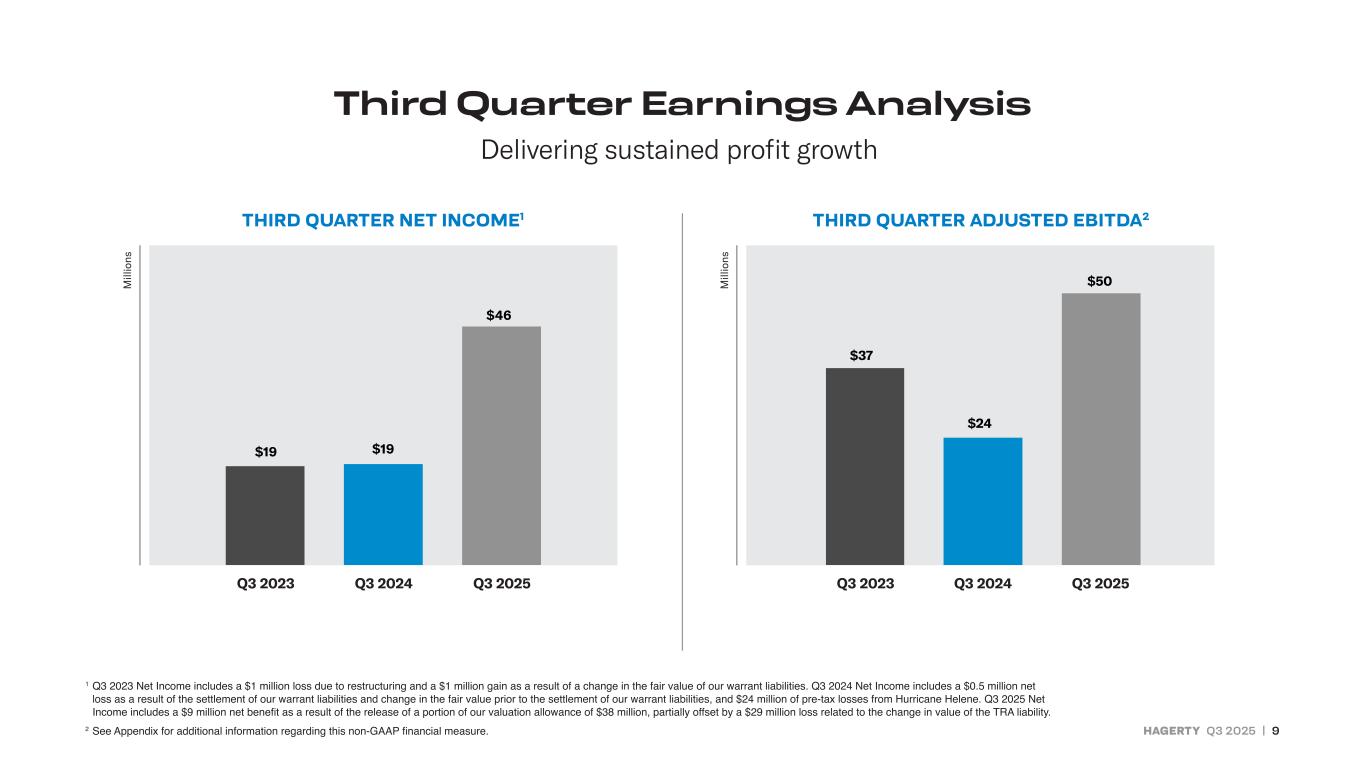
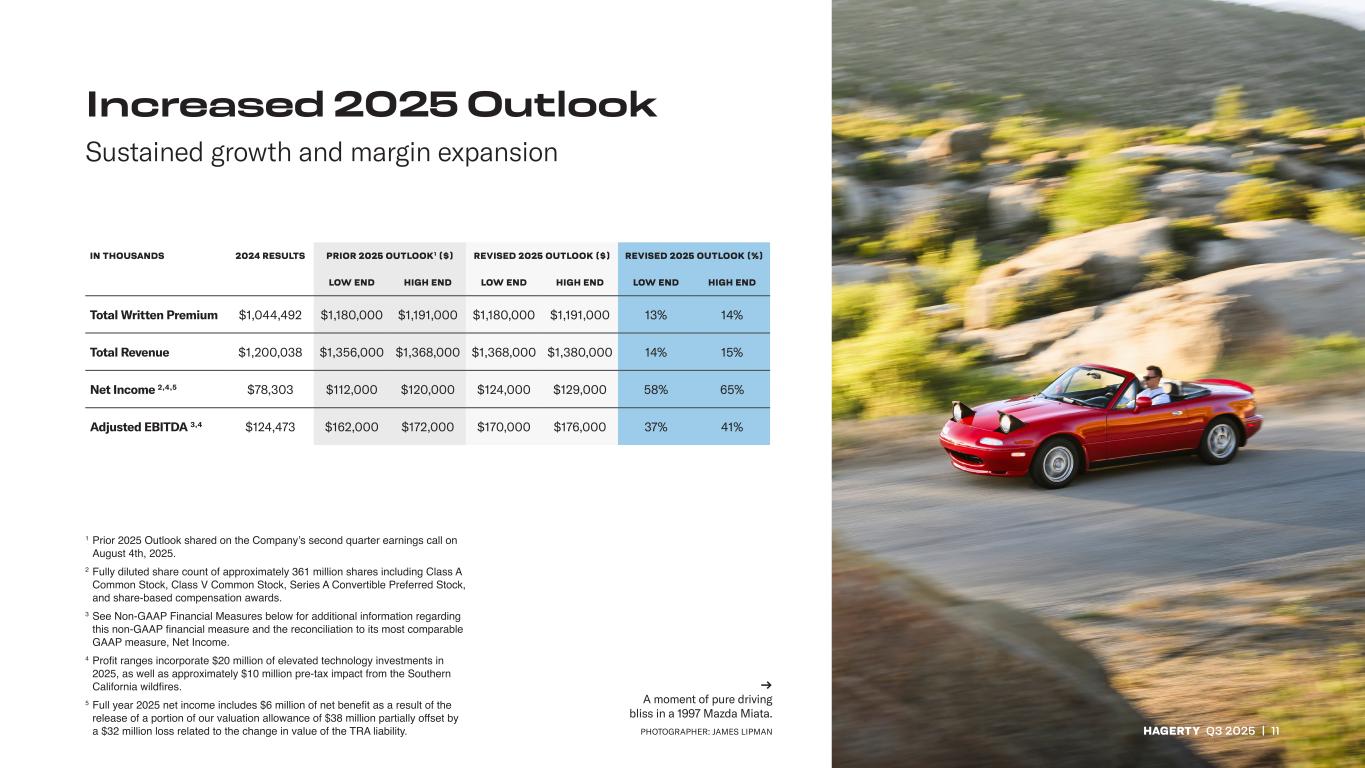
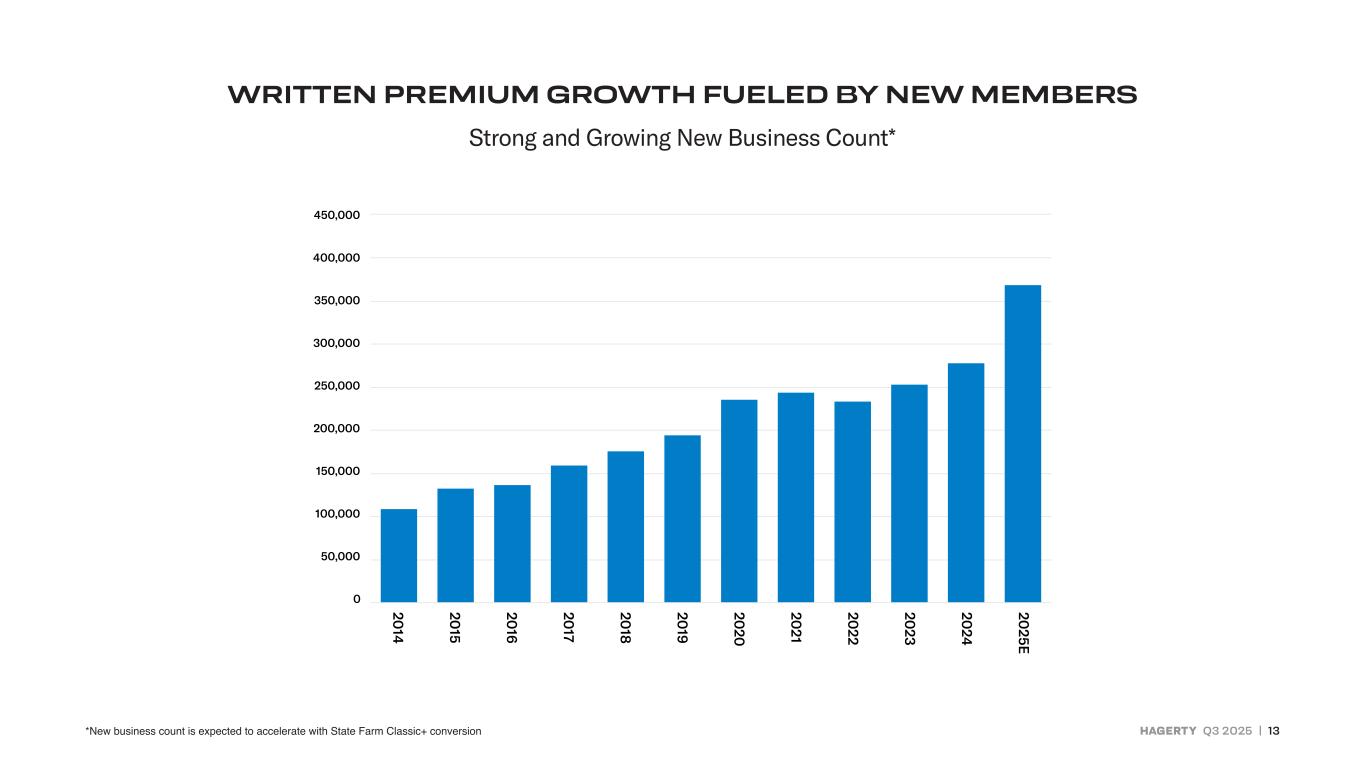
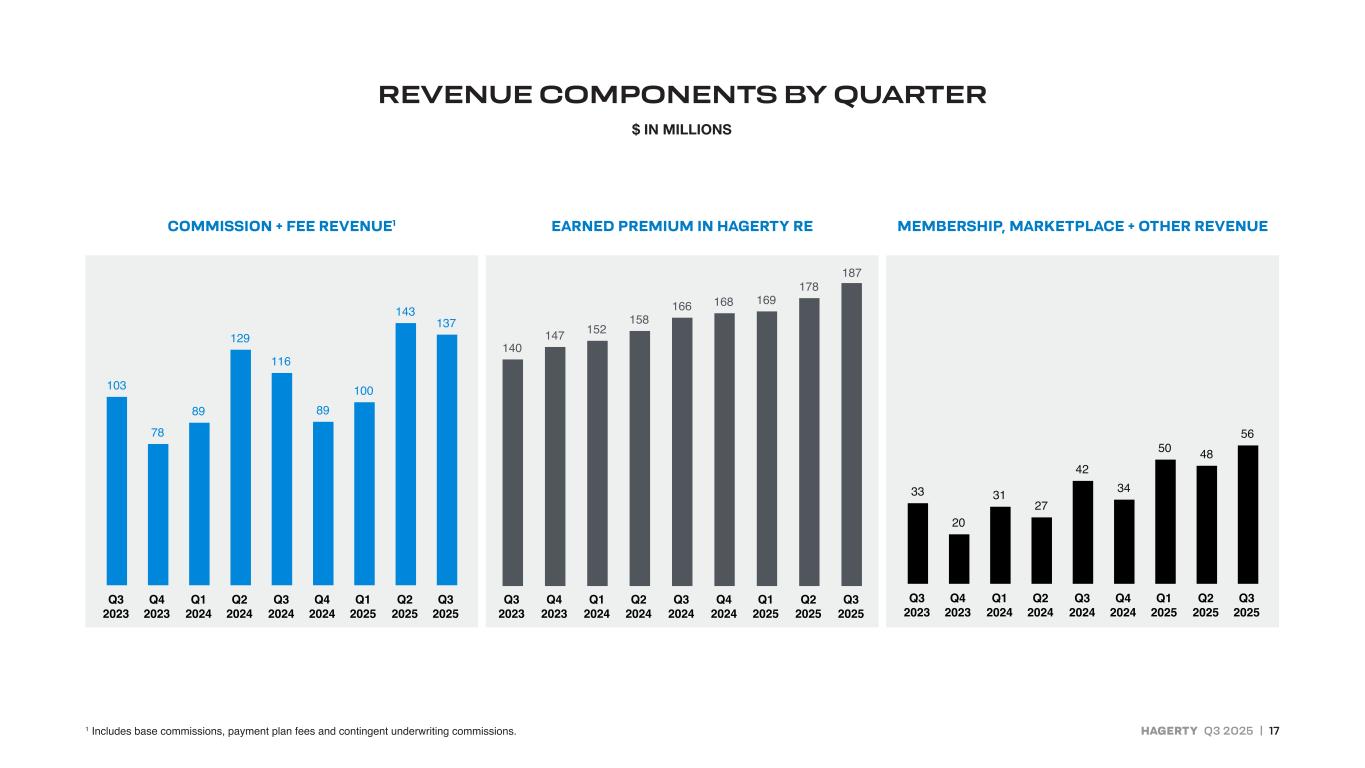
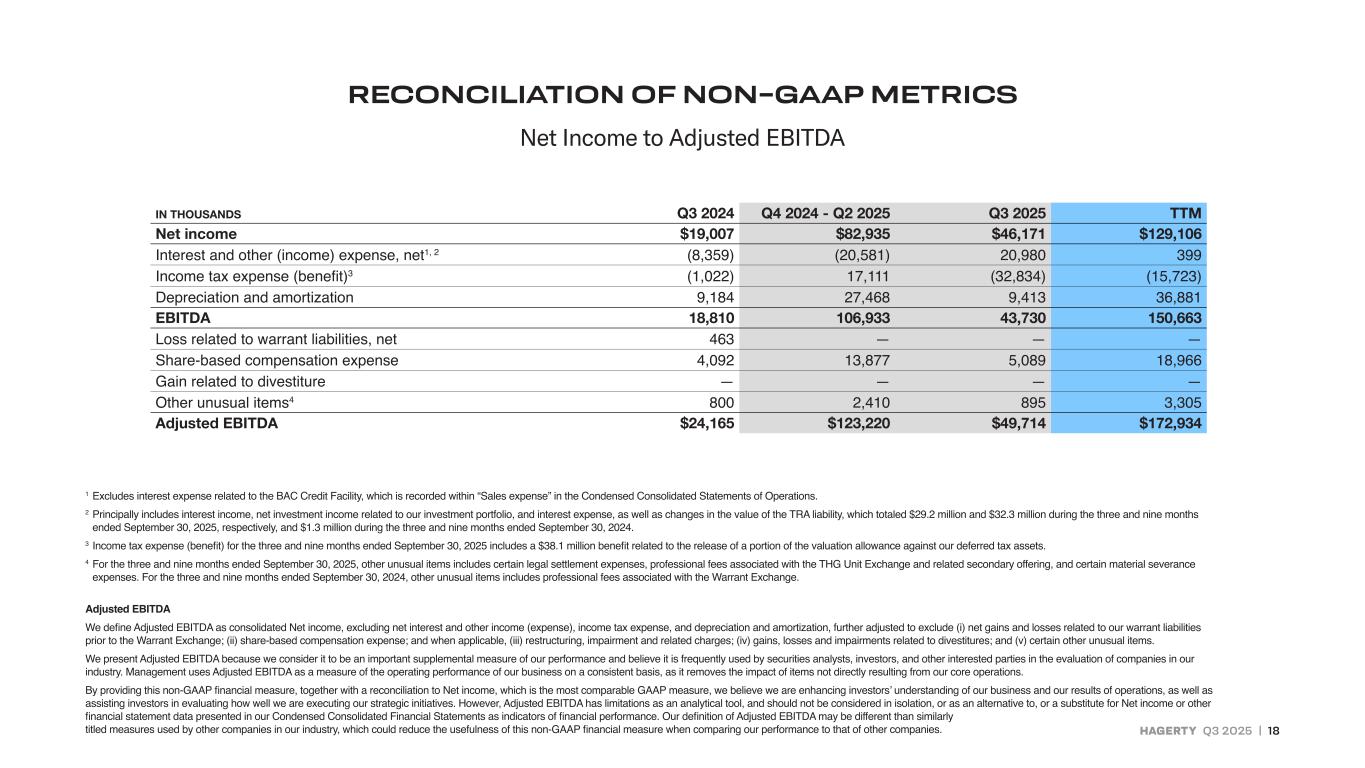
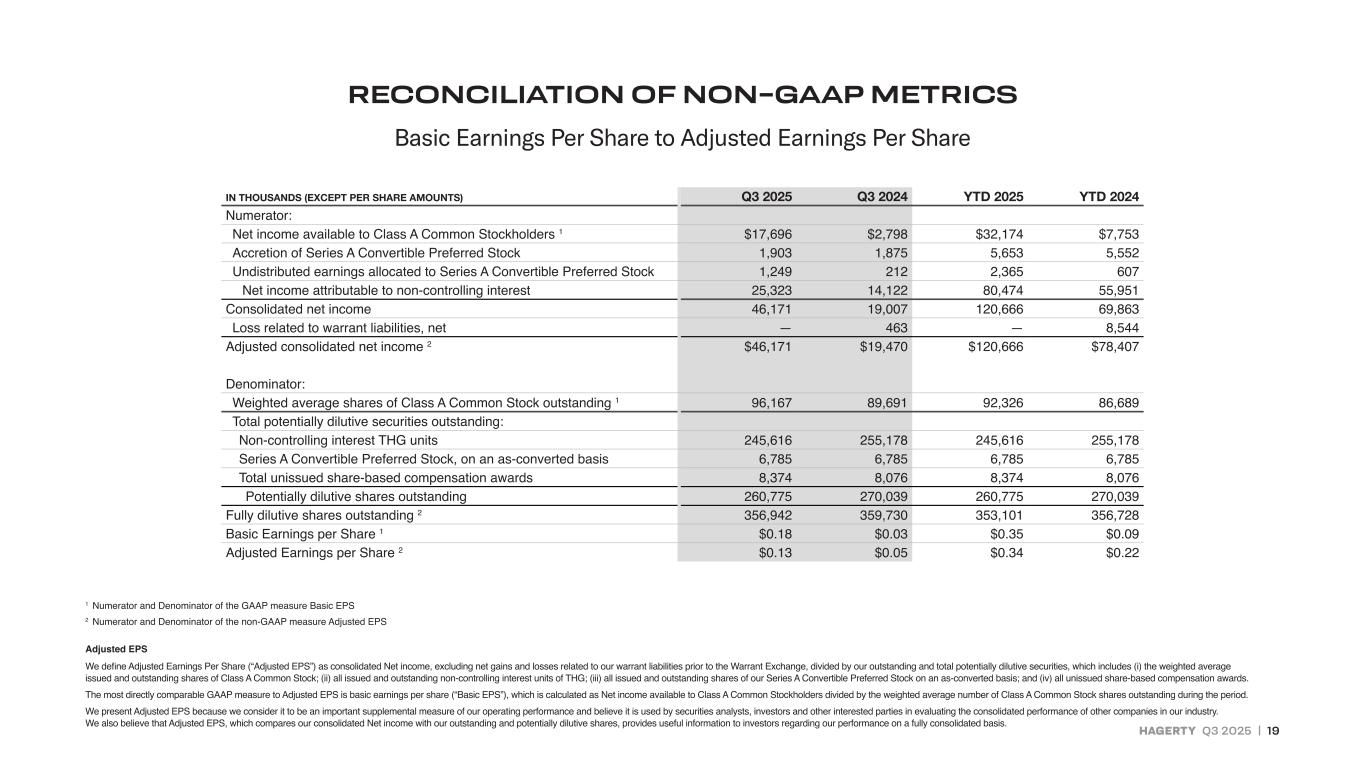
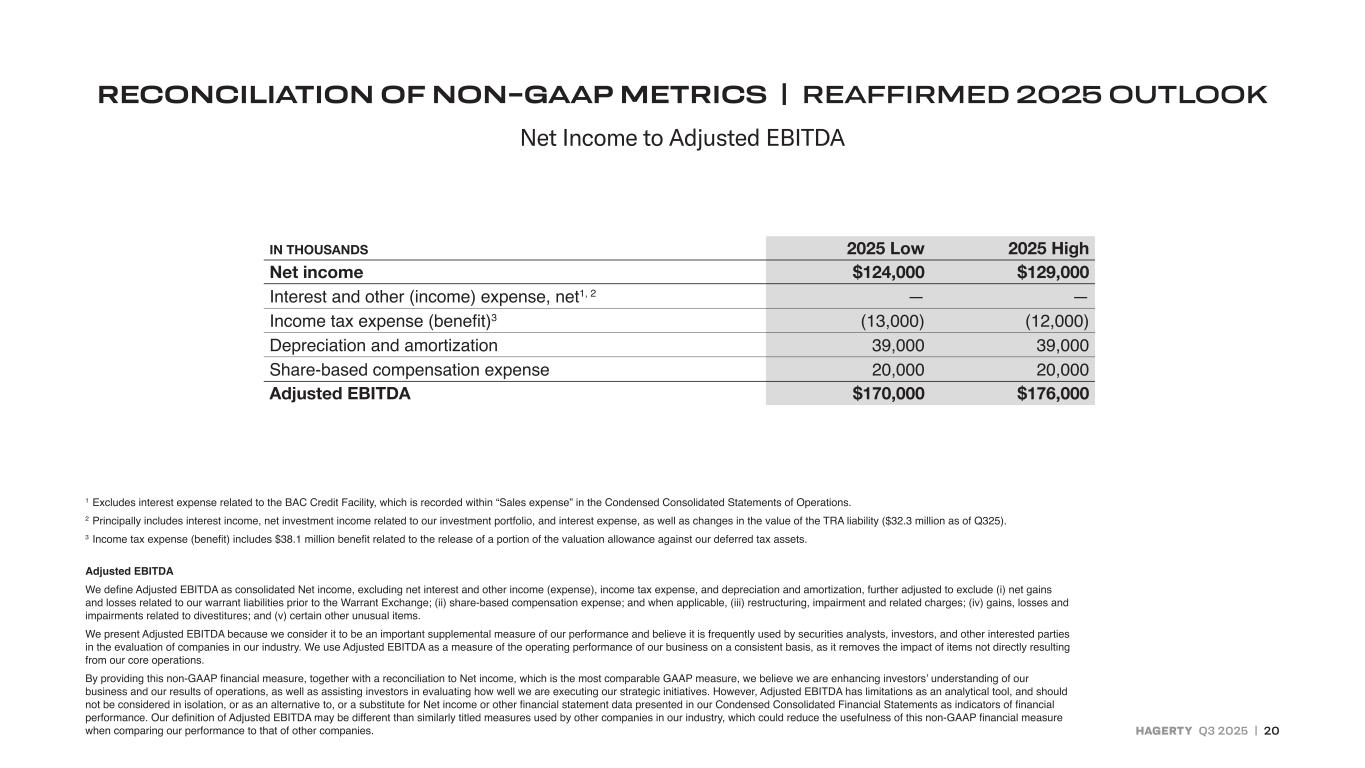
Thank you, and good morning, everyone. Let me dig into the third quarter results shown on Slide 7 and 8. We delivered 18% growth in total revenue to $380 million. New business count gains, combined with industry-leading retention of 89% drove a 16% increase in written premium. As expected, written premium growth accelerated in the third quarter, resulting in 2-year rate growth exceeding 30% as we ramp conversion of State Farm's 525,000 Classic policies to their new Classic Plus program, powered by Hagerty. Commission and fee revenue grew by 18% to $137 million. Earned premium increased 13% to $187 million. Our loss ratio came in at 42% for the quarter in the first 9 months of the year, resulting in year-to-date combined ratio of 89%. In Membership, Marketplace and Other Revenue jumped 34% to $56 million. As McKeel mentioned, we have quickly established ourselves as a leading auction house with unparalleled automotive expertise for our customers. We also continue to build our online marketplace, offering 240 Barn Find vehicles from the first tranche of The Generous Collection in October with more collections to follow over the coming months. Turning now to profitability, shown on Slide 9 and 10. We reported an operating profit of $34 million in the third quarter, an increase of 240% as operating margins jumped 590 basis points to 9%. G&A increased 17% due to higher software licensing costs from our technology transformation as well as the professional fees associated with the August secondary offering of shares from Kim Hagerty's estate and the Markel fronting arrangement. Salaries and benefits grew 44% due to higher year-over-year incentive compensation accruals, thanks to our strong financial outperformance this year. As a reminder, last year's incentive compensation was negatively impacted in the third quarter due to elevated cat losses from Hurricane Helene. Excluding professional fees and incentive comp, we are holding core growth in G&A and salaries and benefits to the mid- to high single digit range. This increase is due to merit and selective headcount additions to support future growth. We had a fair bit of activity on the tax front this quarter. Given the sustained improvement in our profitability, we concluded that the company will generate sufficient future taxable income to realize a portion of our deferred tax assets. As a result, $38 million of the valuation allowance was released and recorded as an income tax benefit. In connection with the release, we remeasured our tax receivable agreement liability resulting in an expense of $29 million, which was the driver of negative $21 million in interest and other income. Third quarter interest income from our investment portfolio was $11 million and interest expense was $2 million. In total, we delivered third quarter net income of $46 million compared to $19 million a year earlier, an increase of 143%. Net income to Class A common shareholders was $19 million after attribution of earnings to the noncontrolling interest and accretion of the preferred stock. GAAP basic earnings per share was $0.18 and diluted came in at $0.11. Adjusted EBITDA increased 106% to $50 million in the quarter. And we ended the quarter with $160 million in unrestricted cash and $178 million of total debt, which includes $75 million in back leverage for our portfolio of collateralized loans. Let me wrap up with our updated outlook for 2025, where we again increased full year expectations for revenue and profits shown on Slide 11. We now expect 14% to 15% revenue growth and are increasing our assumptions for margin expansion. This should result in net income of $124 million to $129 million, equating to growth of 58% to 65% and adjusted EBITDA of $170 million to $176 million, an increase of 37% to 41% compared to 2024. The net income range also includes a $6 million year-to-date net impact from the valuation allowance benefit of $38 million, partially offset by the increase in TRA liability of $32 million. In summary, we are delivering on our 2025 strategic priorities and are well positioned to accelerate profit growth and cash flow generation as we move into 2026 and 2027, fueled by high rates of organic growth in new members. Our brand strength and omnichannel distribution enable us to grow profitably during both good and bad times, making us truly differentiated from most P&C carriers, where profitability is dependent on the rate cycle. When you combine multiple growth levers with ongoing operating efficiencies, we believe we are pulling together all the ingredients necessary to create shareholder value over the coming years.
Speaker 3
My first question is on the Liberty Mutual and Safeco partnership. Can you maybe provide some quantification of how much of a PIF tailwind or premium tailwind that could be for your book kind of on a go-forward basis? And in terms of like the financials, could we see something like a book roll later on in the partnership? Or I guess, how are you thinking about that long term?
We're excited about our partnership with Liberty Mutual and Safeco. This collaboration aligns perfectly with our overall strategy. They chose us because they trust that we will provide the right products for their customers, making it a significant and consistent advancement in our approach. This venture represents tens of thousands of customers, creating a substantial opportunity, although not as large as the one with State Farm. We are currently working out the specifics of our relationship with both Safeco and Liberty Mutual, including the process of taking on their business. We will be sharing some financial arrangements with them, but we won't disclose too many details as it's specific to the partnership. This represents another crucial step as we expand our omnichannel distribution.
Speaker 3
Got it. And then for the Enthusiast Plus rollout, any quantification on kind of like the PIF growth that's happening there? I know you're live only in a few states and it's still early on. And then I guess, sticking with that, like how should we think about like your loss ratios on a go-forward basis, given that should be a younger, newer car cohort? And how would that kind of impact your loss ratios as that kind of like becomes a bigger portion of your mix?
Well, what we've talked about before, this is McKeel, by the way, and again, welcome to the call. As we've talked about with Enthusiast Plus, it's early days. This is built on the knowledge that we've been gaining through years of what we referred to before as our Flex Program. So we're coming to it with a lot of knowledge, but we are opening up the underwriting aperture to be able to take on more types of risk. We are live in one state. We will start rolling out new states. And as far as loss results, it's too early to be speaking specifically about it. But we're excited about what we're seeing and so far, so good.
Speaker 4
Just on the strong growth in written premium, the acceleration in the quarter, I guess when we back out the PIF growth, it looks like the pricing growth accelerated. Can you kind of parse that out for us? Is that State Farm-driven? Or what's causing the kind of the premium per policy or the pricing to accelerate?
Yes. We encourage you to consider that on a trailing 12-month basis since our business is very seasonal. When looking at the numbers, the numerator reflects a seasonal quarter, while the denominator represents a smoother total of policies in force. By analyzing it over the trailing 12 months, you'll find the results are much more consistent than what quarterly analysis suggests. In terms of trends for this quarter and the next couple of years, we anticipate that the metric will likely decelerate due to developments with State Farm. They are introducing many policies that are usually for single cars and typically lower than our traditional core book. As a result, the written premium per policy may start to decrease slightly. After we manage the large influx from State Farm, which includes 525,000 cars, we expect a return to more typical levels. Comparing year-over-year quarterly results is challenging; for instance, this time last year, we were just starting to work with State Farm, which added some noise to the third quarter of 2024. Now, as that effort accelerates, there’s a significant change in the premium per policy. Therefore, it's difficult to analyze things at an aggregate level. The key trends to focus on are in our traditional book, where we generally see 2% to 3% price increases over the long run, which is substantially lower than what’s found in daily driver metrics. We believe this gives us a competitive advantage, allowing us to secure business. While we do achieve price increases, they usually remain in the low single digits. Regarding State Farm's dynamics, over time, Enthusiast Plus is expected to bring in higher premiums per policy, which will also shift the dynamics as this ramps up in the coming years. Hopefully, this information is helpful. As always, there’s a mix and seasonality involved, along with numerous factors that influence such metrics.
Speaker 4
That is helpful. Maybe you can help us triangulate, I guess, the upside to your guide in the quarter on revenue and EBITDA. I guess, at a high level, how much was from underwriting versus marketplace? And I guess as we think about the strength in marketplace from some of the new business you talked about, how should we think about that trending from here, since there's some seasonality in that business, too, I think?
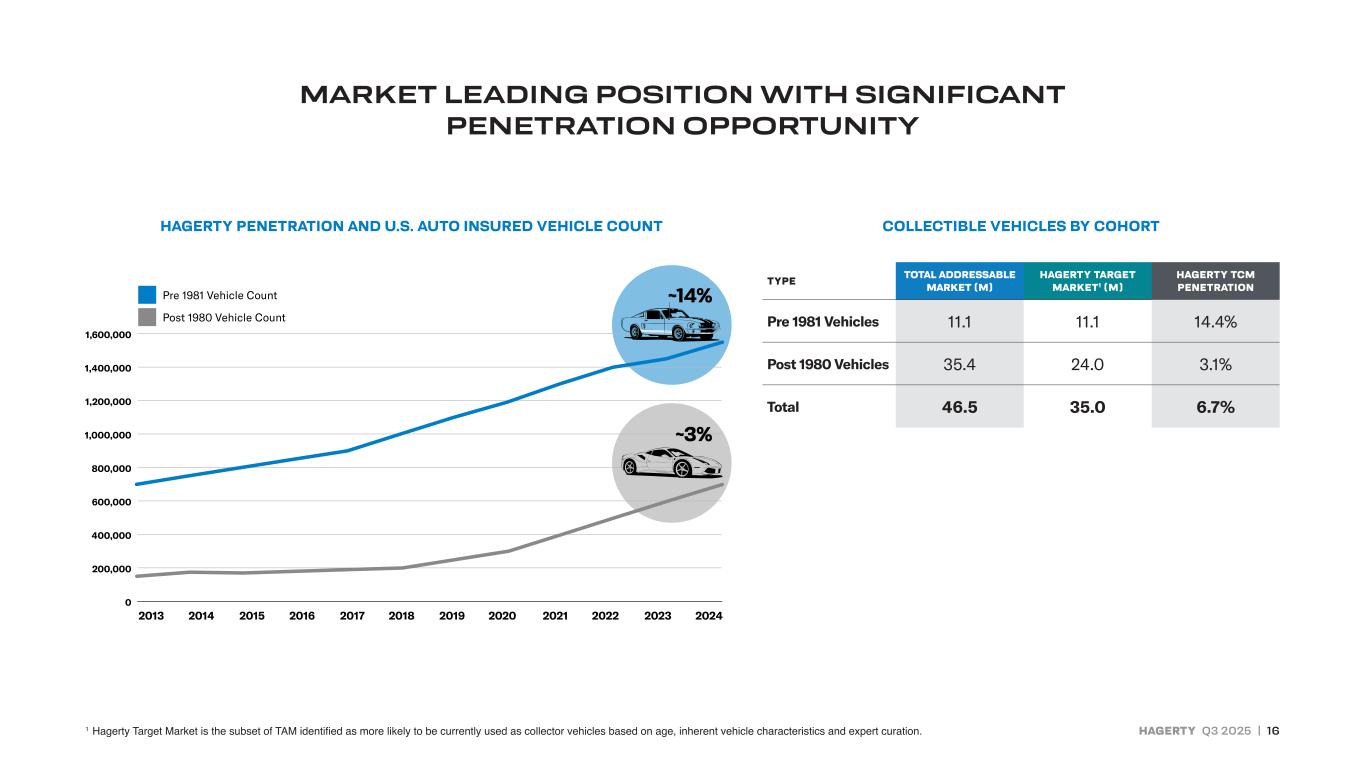
The marketplace business, especially in live auctions and private sales, is performing well this year, surpassing our expectations. This positive trend is reflected in our updated guidance. Looking ahead to next year, we anticipate continued growth in this area. We are nearly on a full calendar with four auctions set for both the domestic and European markets, with the possibility of adding one or two more. However, we do not expect to increase the number of auctions significantly next year. Our focus will be on maximizing volume during each auction rather than expanding the calendar. Therefore, while we expect the growth rate in live auctions to slow down next year, it will still show growth due to the full calendar we have in place. This year has also been particularly strong for private sales, and while some fluctuations are expected, we believe there are sustainable growth opportunities from what we've seen. This strength contributes to our raised earnings guidance. Sure. We can talk it through. It's not a new one. This is one that we've had out there for quite some time. I think the key intuitions from this, we have strong market positions in older cohorts. And so if you go back to pre-war cars, 1950s cars, 1960s, we've got good penetration in those cohorts, but still room to grow. And so we do see growth in those cohorts. And kind of with each decade, our penetration tends to be lower, right? So it's strongest in sort of the pre-war in the 1950s, still strong, but a little bit less as you get into the '60s, et cetera. We know that there are those 11.1 million cars out there. We've got those in our database. We know where they are. And so currently, we were about 14% penetrated and there are opportunities to grow that. Post 1980 and this is just when VIN numbers became industry-wide, and so it's just that's the demarcation point. Post 1980, you can see our penetration is much lower at 3.1%. We've done a ton of work on those post-1980 cars to make sure that we really understand what in that broader 35 million do we think is core addressable. And so that's that Hagerty target market. And so we think there's about 24 million vehicles that could fit for our program. And because we're so lightly penetrated there, that's where a lot of our efforts go. And that's a big driver behind the Enthusiast Plus product. We needed to be able to price for more modern vehicles that may get used more frequently and that's why we designed that new program and launched that initially in Colorado with more to come. Every decade, you end up with a certain cohort of cars that end up being collectible. That has not changed. And so we want to make sure that we've got a product in place and marketing in place that we can continue to grow with the market. Is that helpful?
Speaker 5
Patrick, I guess, first, I want to make sure I heard you correctly on your comments on some of the expense items, the salaries, benefits and G&A. I think you said for the 2 combined mid-single digit growth. Was that right? And if so, what time period were you talking about?
That's what it should be this year, for 2025 versus 2024.
Speaker 5
And that was the 2 combined, correct?
Speaker 5
I would like to understand if the addition of State Farm could affect the growth of your Driver Club membership in the near term, and whether there might be any negative growth potential associated with State Farm or Safeco impacting that growth.
Well, so great question. And the way the Hagerty Drivers Club is typically sold is it's an add-on to the policy purchasing process. So somebody comes in, they get a quote and that's the same, whether it's a direct consumer or through an agent or through one of our big partners, including State Farm. Then the second piece of the transaction is how we sell Hagerty Drivers Club, which is a $70 package with the features that we have in it. So pretty much wherever we are filling the top of the funnel and bringing it down through quote and application, we will see a lift in Hagerty Drivers Club. And our job is to make sure it's attaching well and attaching efficiently and that we can offer it along the way. The way we think of Hagerty Drivers Club, it's a product package, but it's part of our membership strategy, which is when you treat somebody like a member, they're more engaged. There's longer lifetime value and it's all part of the core strategy. So more insurance means more Hagerty Drivers Club.
Speaker 5
Okay. No, perfect. I guess is the uptick of that not the same from State Farm and possibly from Safeco, as it is from your traditional business?
It's too soon to determine the impact with Safeco, as mentioned earlier. This involves a book roll strategy where Safeco, which previously had a collector car program, is transitioning that business to us. We are still figuring out how we will integrate into that process. With State Farm, this is obviously a significant development for us. The approach is somewhat different, and the attachment rates have been slightly lower than our usual expectations through the typical onboarding process. However, we are working to improve those rates to align them with our goals.
Speaker 6
This is Mitch on behalf of Greg. My first question today, I was wondering if you could help quantify the sensitivity of your net investment income to the rate cuts and if the fronting shift change is going to have any impact on your view of liquidity of asset allocation?
The first one was investment sensitivity relative to the recent Fed rate cut is what you're saying?
Yes. Mitch, appreciate the question. We have allocated most of the investments into high-grade corporate and government bonds, duration of 2 to 3 years. So it's not sitting in money market accounts. So we think we're pretty well protected there.
Speaker 6
And my follow-up question, you had talked a little bit about the seasonality to the marketplace. Is there any seasonality to the loss ratio and acquisition costs in the fourth quarter?
We consider the loss ratio in the context of our seasonal business. Generally, in the first and second quarters, we align with our planned loss ratio for the year. The first quarter tends to be quiet in terms of seasonal activity, resulting in low actual loss activity. By the second quarter, we start to see an increase as we enter the season. Therefore, we usually adhere to our plan in the first two quarters. The third quarter is when we might adjust based on the experiences we've gathered throughout the year, particularly as we have more data from the cat season, even if it's not entirely finalized. By the fourth quarter, we will make any necessary final adjustments. So far this year, we have been aligning with our plan, which is reflective of the 42% figure you're seeing. The fourth quarter typically has lower activity as many people prepare their vehicles for winter, resulting in less driving. What was the other part of your question?
Speaker 7
You mentioned that the October PIF growth was really good. Do you feel like sharing any specific details? And what was the driver of the improvement in the month?
It's great to hear from you again, Mark. The State Farm flywheel is really starting to gain momentum. We've put a lot of effort into this integration over a significant period. At the beginning of the year, we were active in four states for new business, and our goal was to expand to 25 states by year-end. Now, we may actually reach 27 states. This is what we've been working towards, and the reality is becoming apparent. Our teams are enthusiastic. Usually, in this seasonal business, things slow down in October, but we are currently experiencing strong activity. This is an exciting time for us.
Speaker 7
In the presentation on the page where you talked about the change with Markel, you mentioned you secure expanded underwriting and claims authority. Is that just kind of an operational pro forma change? Or is there anything material to your business with, I guess, that increased authority?
Well, some of it is technical. In reality, we've had a strong partnership with Markel for a long time. The underwriting decisions have been standardized, and pricing decisions have been driven by the data we've analyzed, all of which was established during our previous quota share arrangement. By transitioning to a structure where we're assuming 100% of both the results and the risks through a fronting arrangement, there are some new technical responsibilities that we'll be taking on. Some will fall under Patrick's finance organization, while a small part will be integrated into Jeff Briglia's insurance organization, but overall, the impact on headcount and general administrative costs will be minimal. It's just the final components of the technicalities involved in fully operating that insurance company. We've been preparing for this for months, and we're ready to proceed.
Speaker 8
My first question is on guidance. Your EBITDA range for '25 suggests something like $20 million of EBITDA in 4Q at the midpoint, which is basically flat from last year on a much higher revenue base this year, right? Is there something that would prevent EBITDA growing in 4Q, maybe some quarter-specific expenses like bonus accruals or investments or the like? Or is it just talked out, because if you look at this year, you've basically grown EBITDA dollars every quarter by at least $10 million. So anything to call out for 4Q, I guess?
No, I don't think there's anything specific. Typically, the fourth quarter is seasonally a lighter quarter for us and has tighter margins. And so it could swing around a little bit. Right now that's our best guess with how things come together. There's nothing specific that we're sort of increasing spending on. So we'll just have to see how it unfolds.
Speaker 8
Okay. Patrick, regarding the transition to the Markel agreement, you might provide more details in the next call, but can you share your thoughts on how you expect EBITDA to trend next year compared to this year? I'm not asking for specific numbers, but I'm interested in the overall dynamics. Investment income will be included in EBITDA, and there will be some cost deferrals. You'll keep more underwriting income, but there will be some losses on the ceding commission. Considering all these factors, how do you see EBITDA potentially differing from this year?
We have several important updates to share with our investors and analysts regarding changes for next year. The most significant change is our transition from Article 5 to Article 7, which will align our disclosure practices more closely with those of an insurance company. This change is a result of taking on 100% of the risk and allows for further growth in that area. Consequently, investment income will be reflected above the line in our reports, whereas it has been presented below the line. This shift should be straightforward for everyone to understand. Additionally, our balance sheet disclosures will be different, and we will need to guide people through these changes. The adjustment in our relationship with Markel is also significant, which we previewed in August before our equity offering. We provided a reconciliation page to help the market understand the broader implications of this change. Moving forward, we will no longer include commission income related to that activity, although it will still occur internally and be eliminated upon consolidation. We are also entering a phase where we will have deferred acquisition costs, and we are navigating these alterations. Our plan for the fourth quarter call next year is to provide a clear road map outlining these changes. Overall, our insurance business, excluding State Farm, is expected to grow in the low teens in written premiums, and we will now own 100% of that business instead of 80% due to the change with Markel. When factoring in State Farm, there will be additional commission activity contributing to that growth. We have demonstrated our ability to expand margins, and we expect this to continue, although the presentation may become more complex. We will ensure to guide everyone through these developments.
Speaker 9
Just staying on that topic, one piece perhaps you can kind of help us drill into a little bit just is the policy acquisition costs that will start getting deferred and amortized over the policy term. Can you give us some early indications to how impactful that can be? Because it does seem like that could be a material change that could be accretive to earnings.
Not at this time. I need to make sure that we nail it all down and we're very clear on what the outcome is and share that with everybody. It's just still work-in-progress.
Speaker 9
Okay. No problem. And then going back to the marketplace side, that business line has seen very strong revenue growth this year. Can you help us map how much of that is falling to the bottom line? It looks like the sales expense has been rising in tandem and I know there's some sort of cost of goods sold there. So I'm just wondering what are the incremental margins on this revenue growth in that marketplace line?
Yes, that's a great question. We expect that business to be slightly profitable this year, and while it is contributing positively, the impact is modest, measured in single-digit millions of dollars due to its relatively small scale. The private sale business presents some challenges because it is quite episodic. We've had an excellent year, and the team has performed exceptionally well. However, predicting next year's performance is difficult. Essentially, we earn brokerage commissions with this business. Sometimes we buy items to resell, generating some profit, but often it's just an agency transaction. Occasionally, we take title temporarily, but we aren't taking on significant risk. In our auction business, we see buyer premiums around 10%, while the private sale business offers lower fees, which can range from high single digits to low single digits. We incur expenses primarily from commissions for frontline staff and operating overhead. While the business is profitable on a contribution basis and does support the bottom line, it isn't significantly affecting the overall outcome at this stage. I hope that provides a helpful framework.
We are very encouraged by our results over the first nine months and have a clear path ahead. In the insurance industry, long lead times necessitate long-term planning as we launch products like Enthusiast Plus and develop new partnerships with companies such as State Farm, Liberty Mutual, and Safeco. To maintain our strong growth year after year, we must invest in our teams and technology, allowing us to scale efficiently and achieve sustainable profit growth. That is precisely what we are doing at Hagerty. We are focused on our immediate goals while also investing in the future to leverage our growth potential over the coming decade. We wish you and your families a wonderful holiday season and encourage you to check out Hagerty Marketplace for that ideal gift for your loved ones. Our team has gathered some fantastic collections and vehicles which are looking for their perfect owners, so enjoy the shopping. Until then, keep driving.
Operator
Ladies and gentlemen, thank you for your participation. This does conclude today's teleconference. You may disconnect your lines, and have a wonderful day.