Good morning, and welcome to the Howard Hughes Holdings Second Quarter 2025 Earnings Call. With me today are Bill Ackman, Executive Chairman; David O'Reilly, Chief Executive Officer; and Carlos Olea, Chief Financial Officer. Before we begin, I would like to direct you to our website, www.howardhughes.com, where you can download both our second quarter earnings press release and our supplemental package. The earnings release and supplemental package include reconciliations of non-GAAP financial measures that will be discussed today in relation to their most directly comparable GAAP financial measures. Certain statements made today that are not in the present tense or that discuss the company's expectations are forward-looking statements within the meaning of the federal securities laws. Although the company believes that the expectations reflected in such forward-looking statements are based upon reasonable assumptions, we can give no assurance that these expectations will be achieved. Please see the forward-looking statement disclaimer in our second quarter earnings press release and the risk factors in our SEC filings for factors that could cause material differences between forward-looking statements and actual results. We are not under any duty to update forward-looking statements unless required by law. I will now turn the call over to our CEO, David O'Reilly.
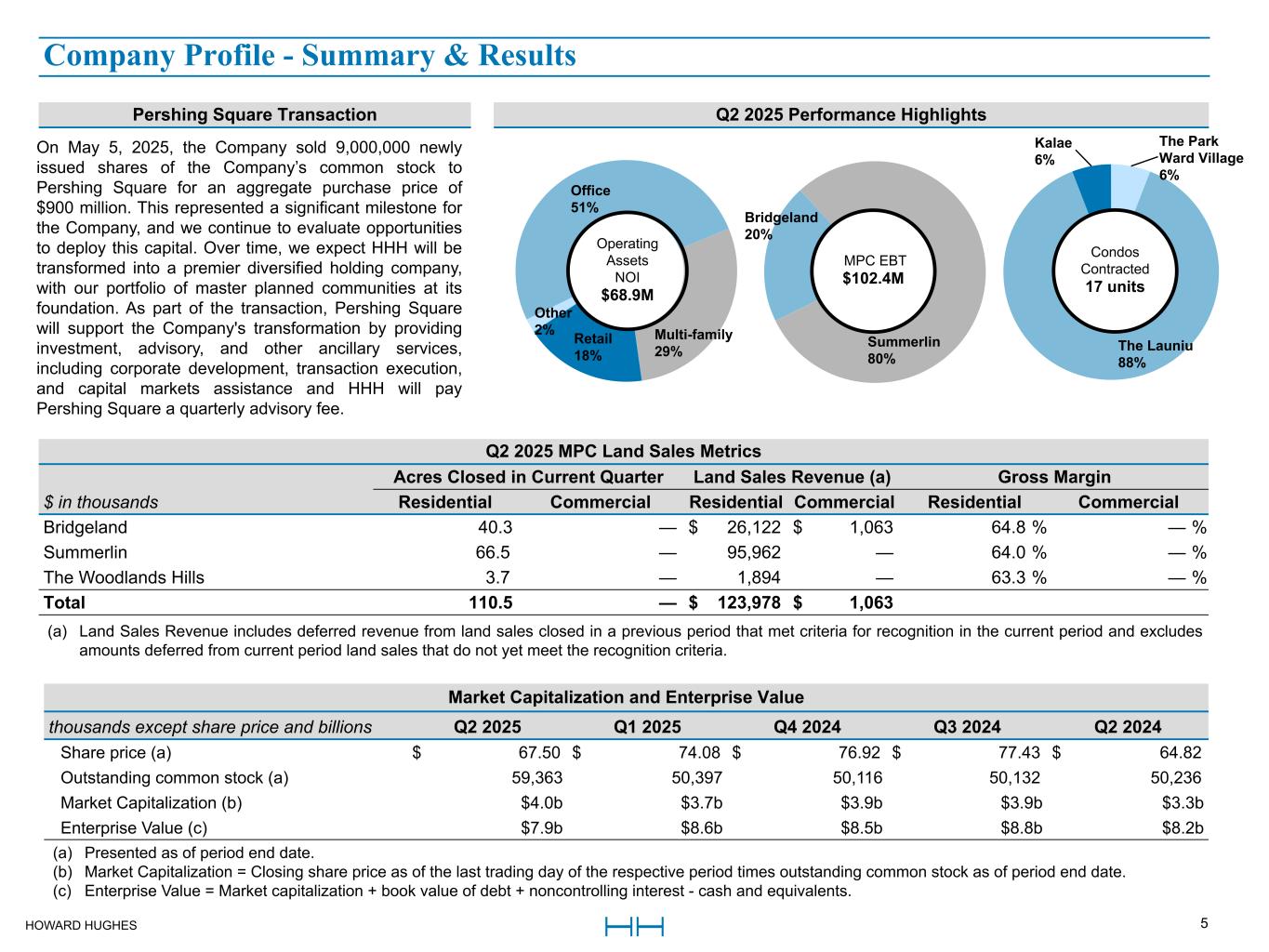
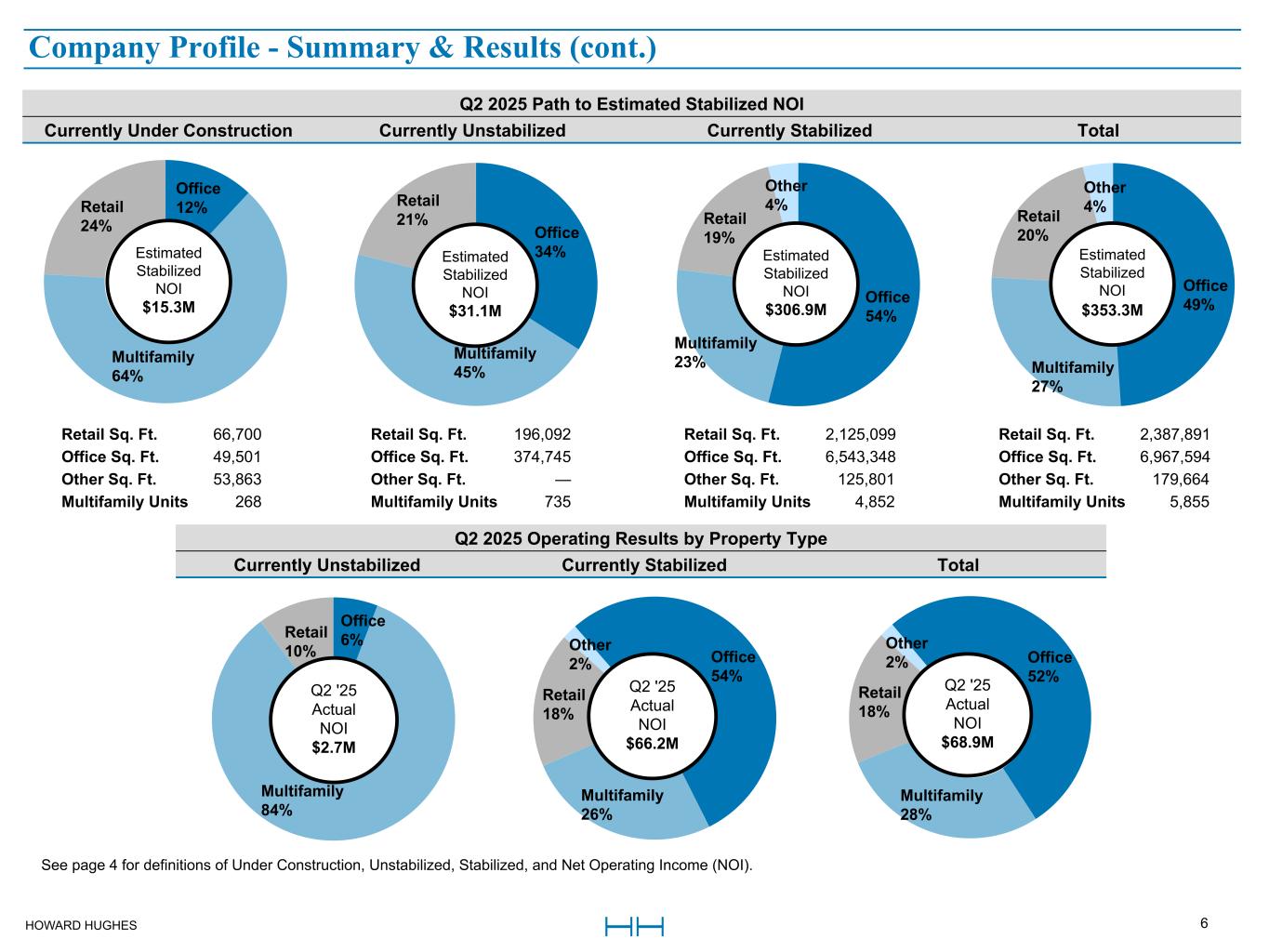
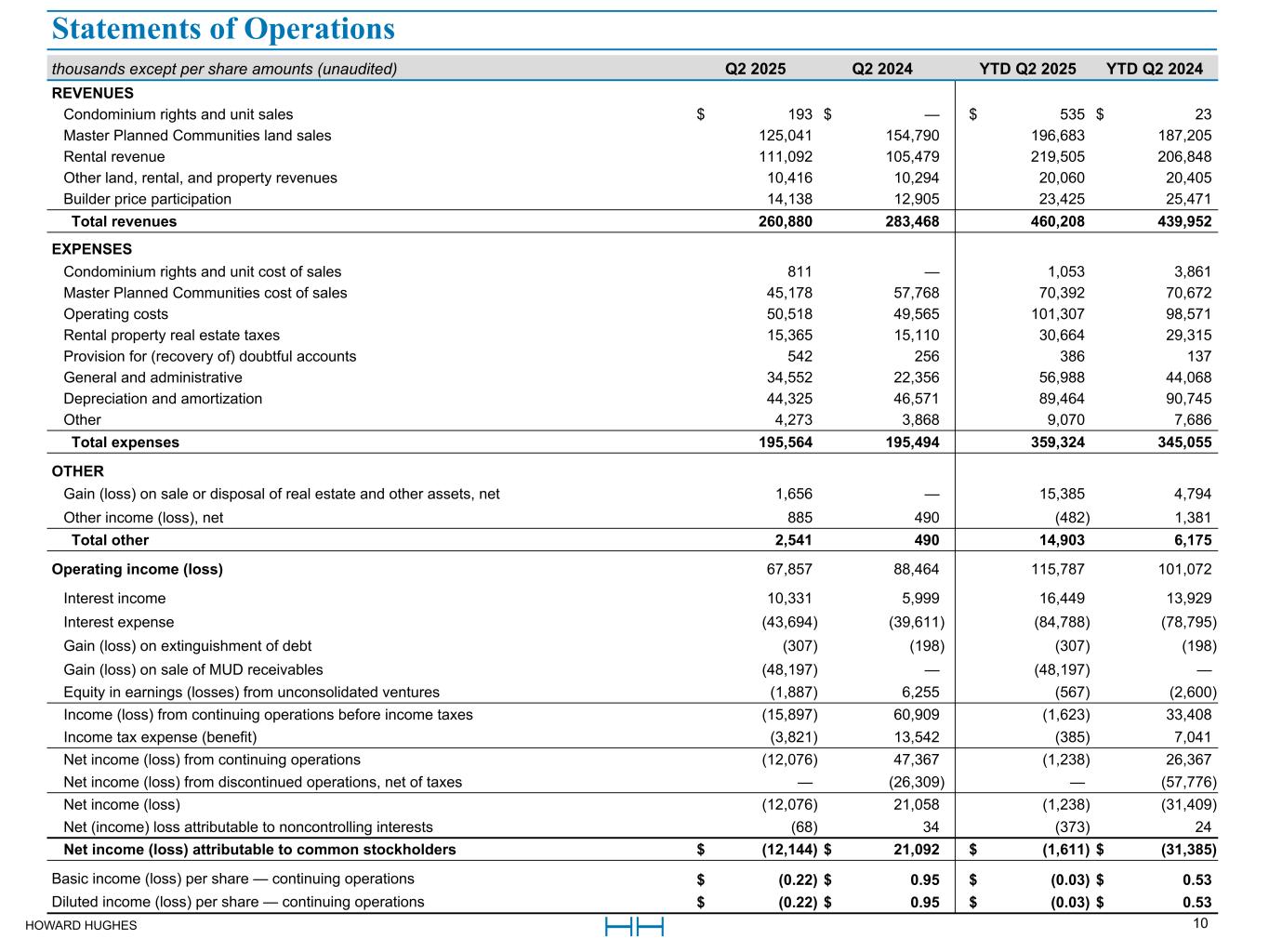
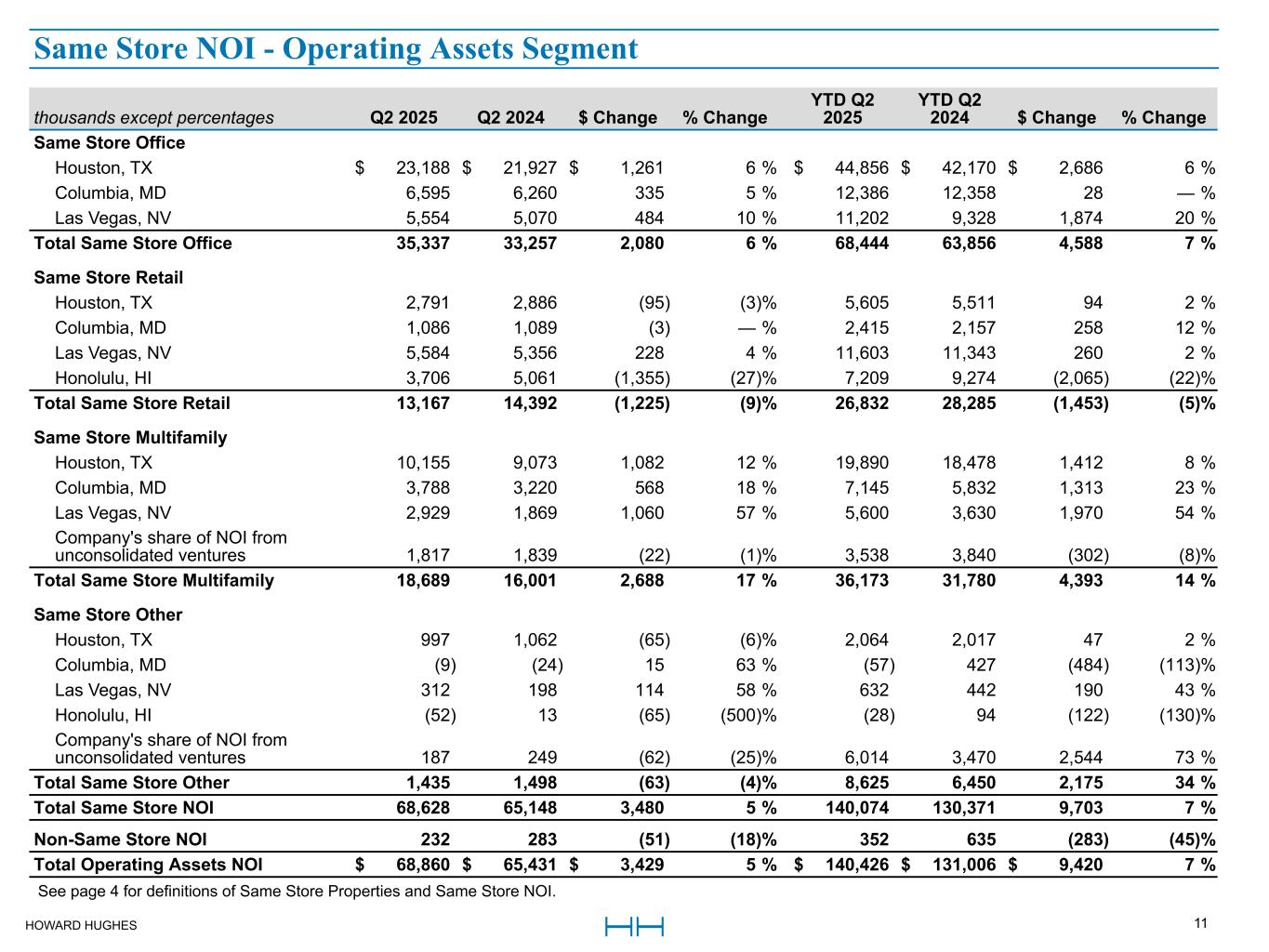
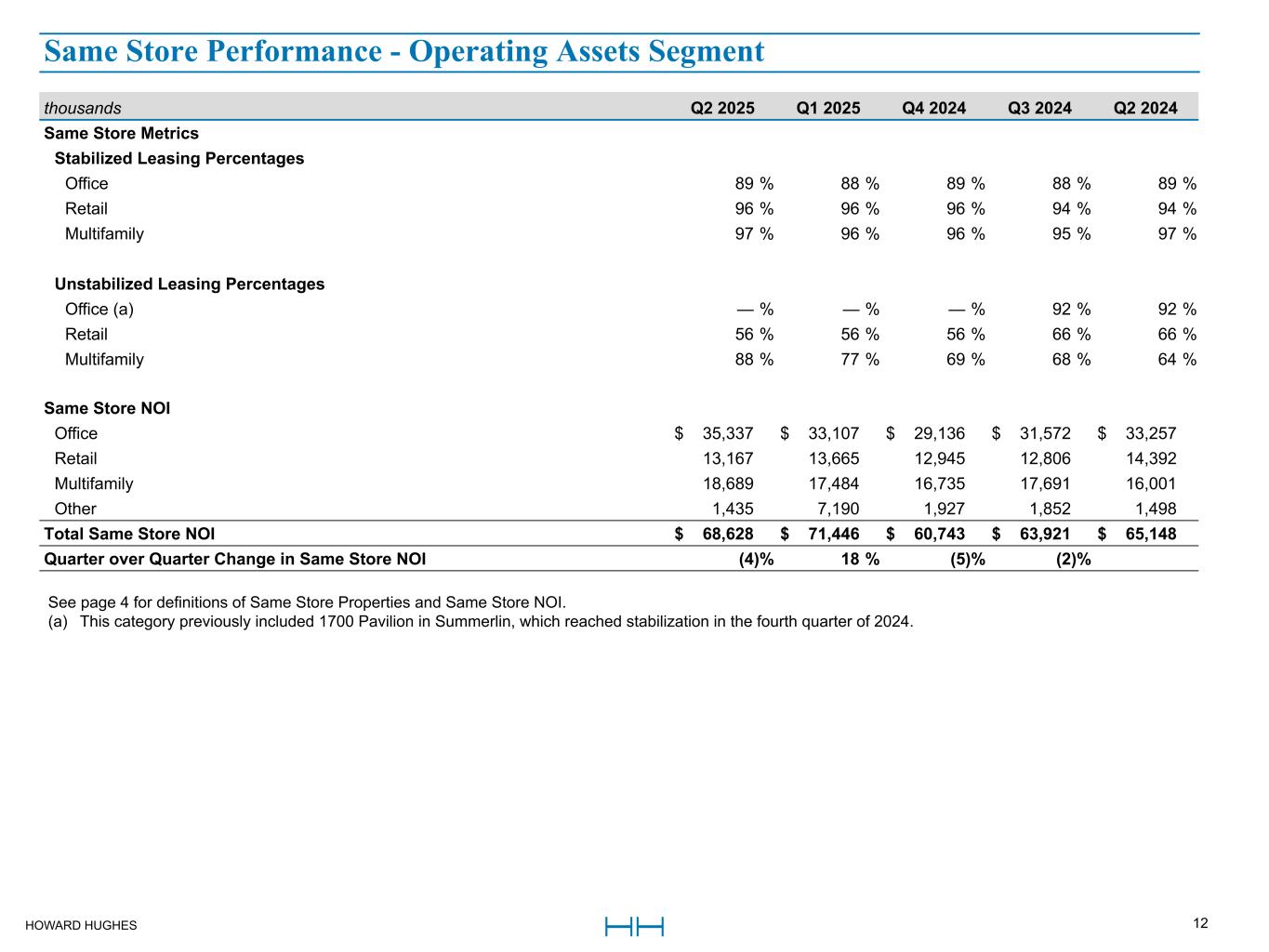
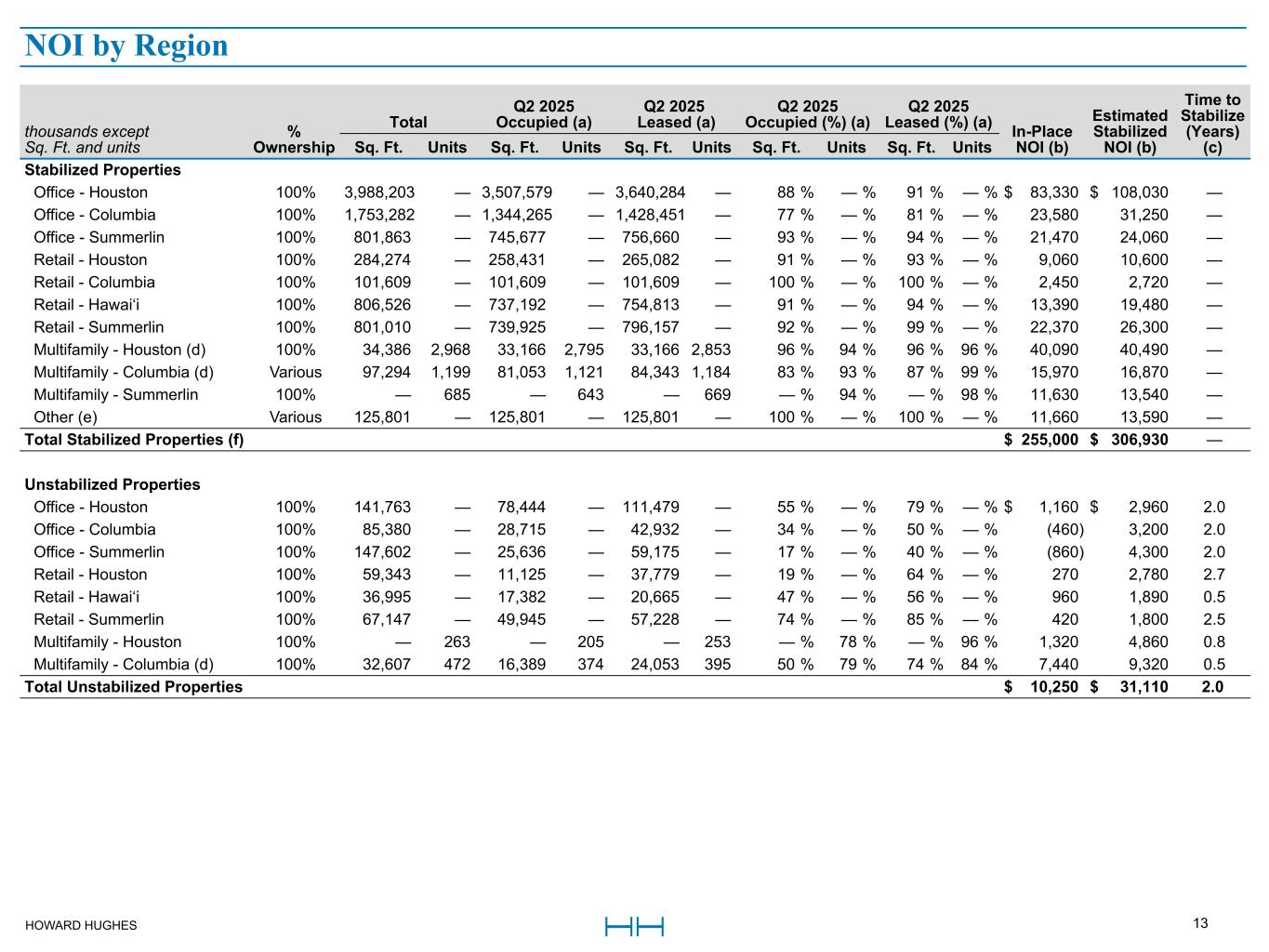
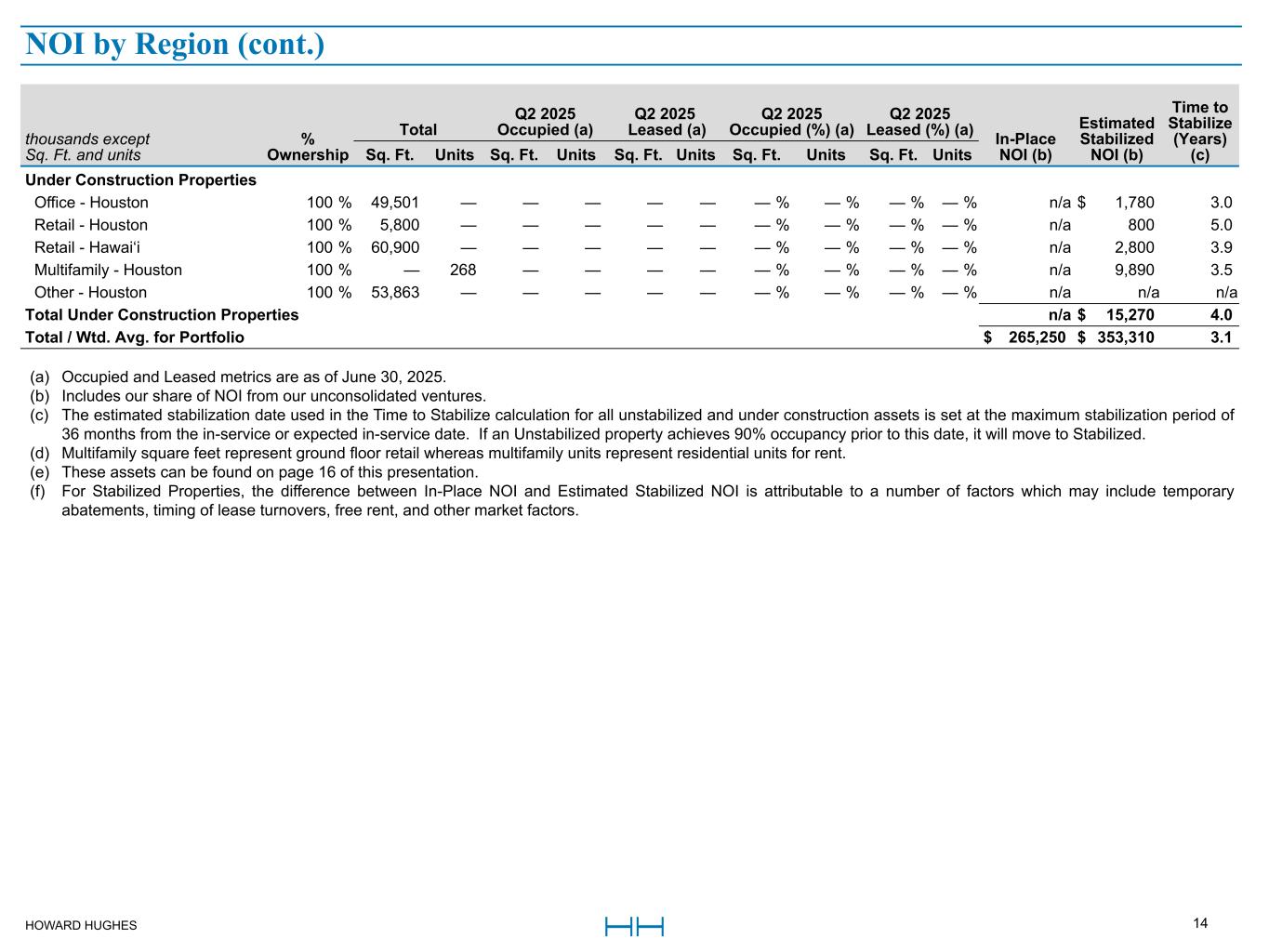
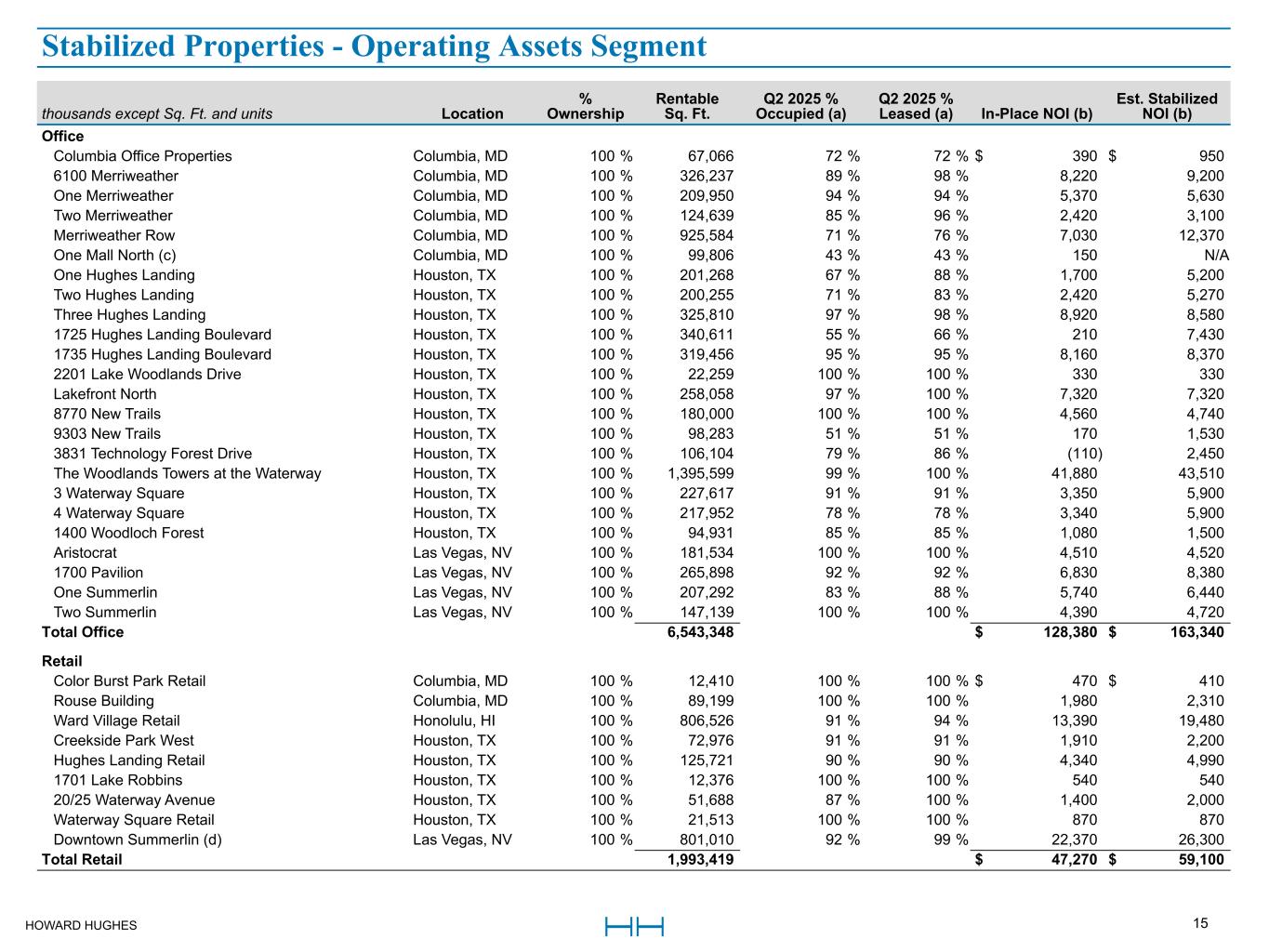
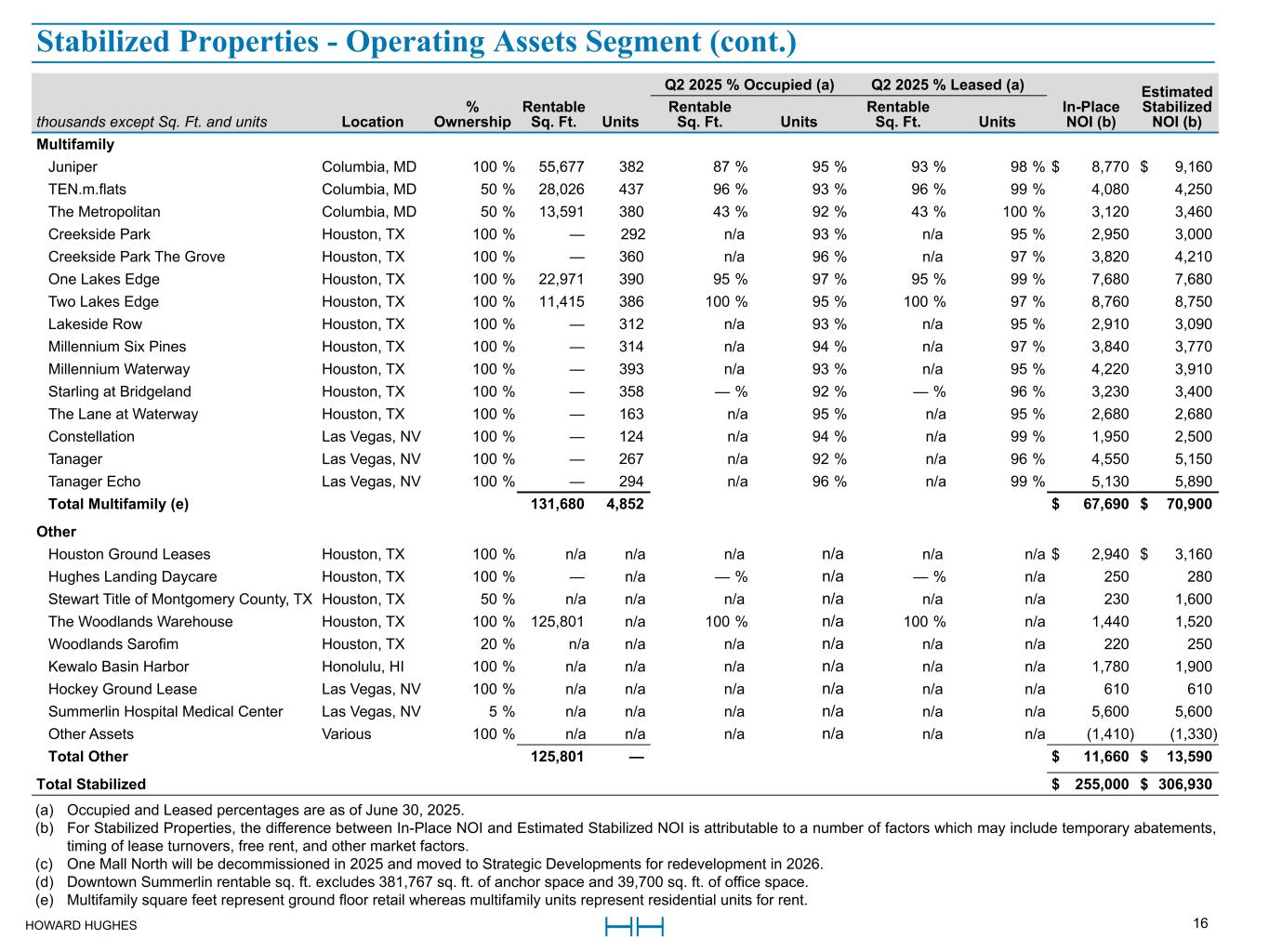
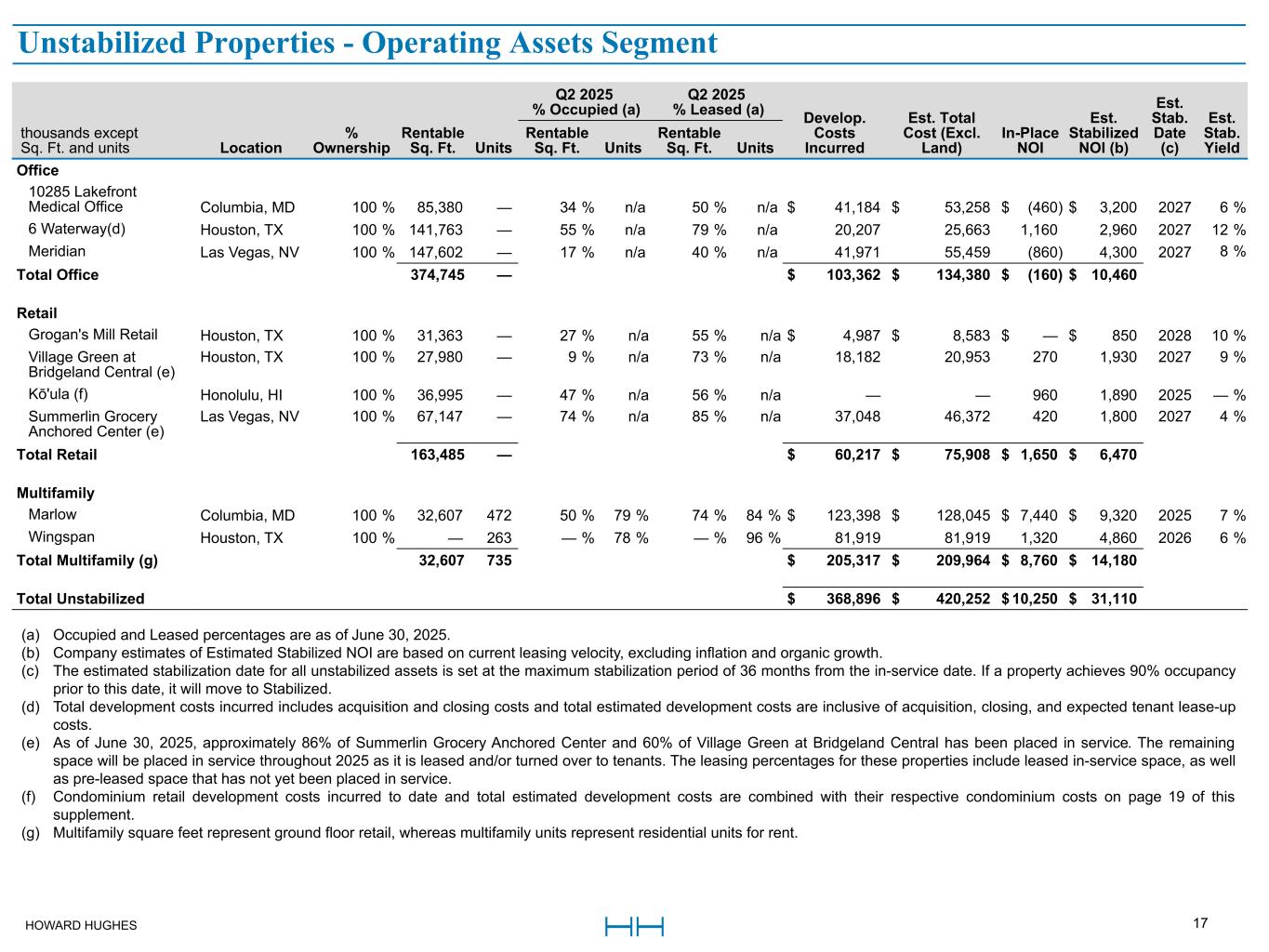
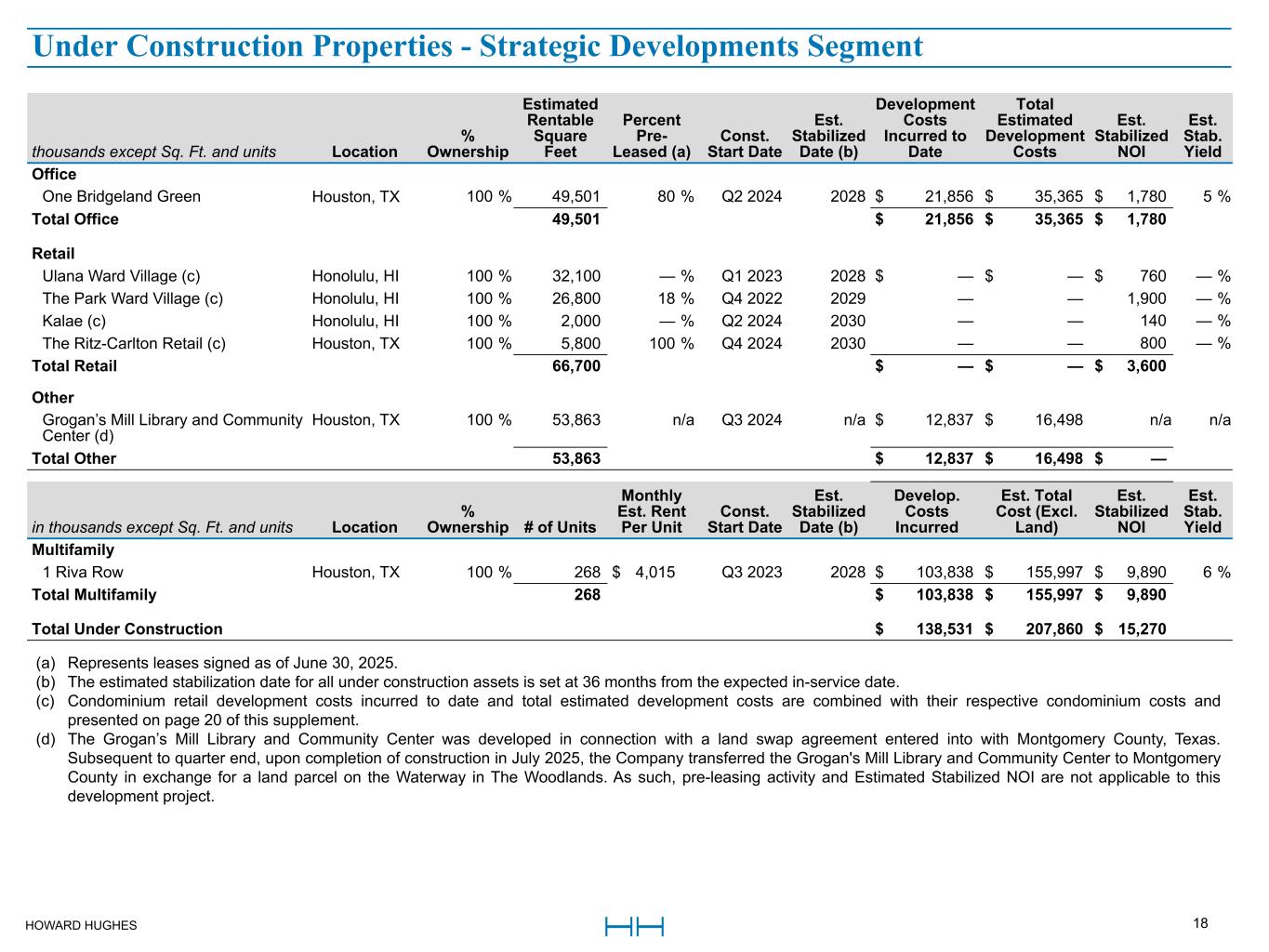
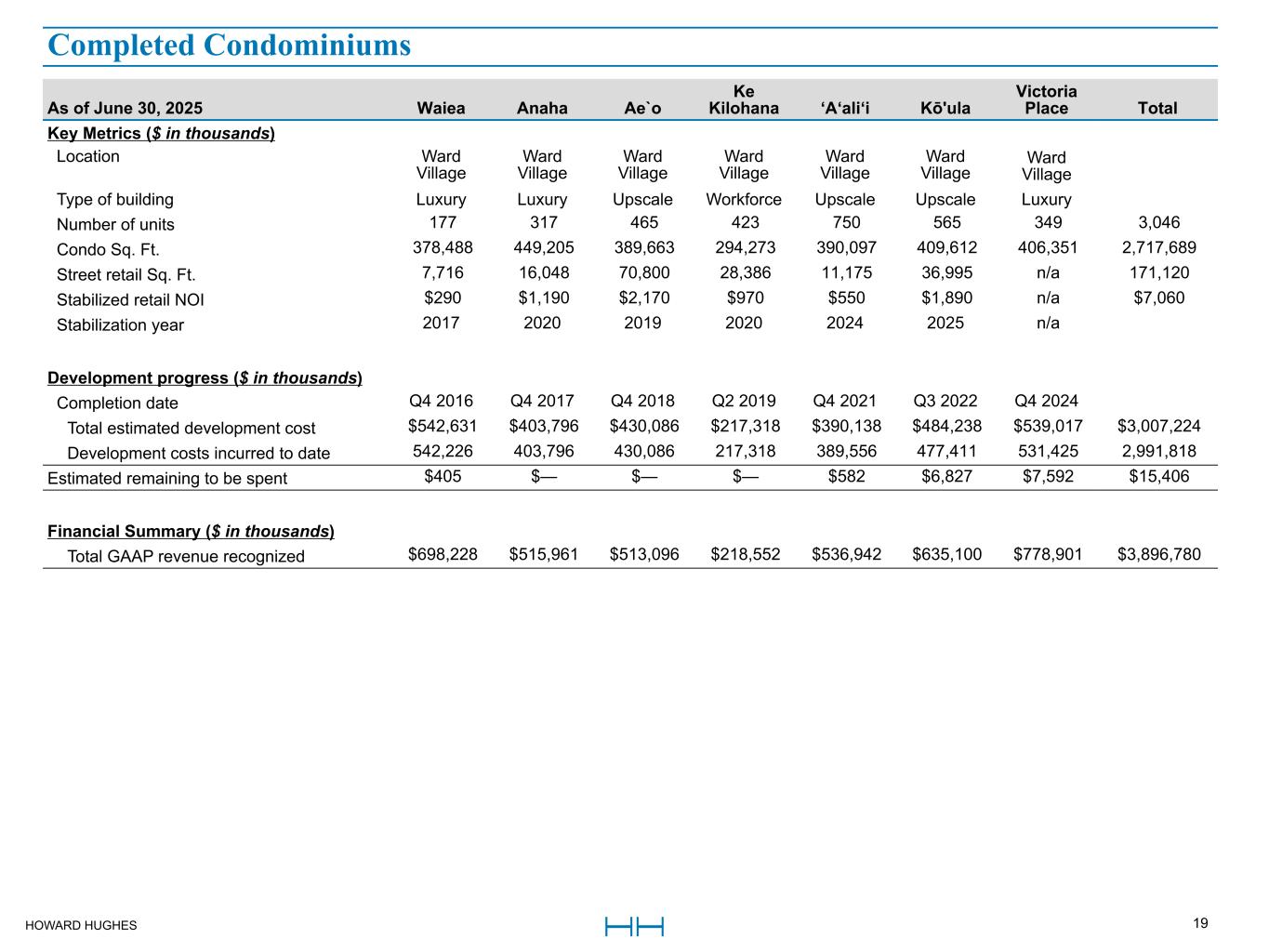
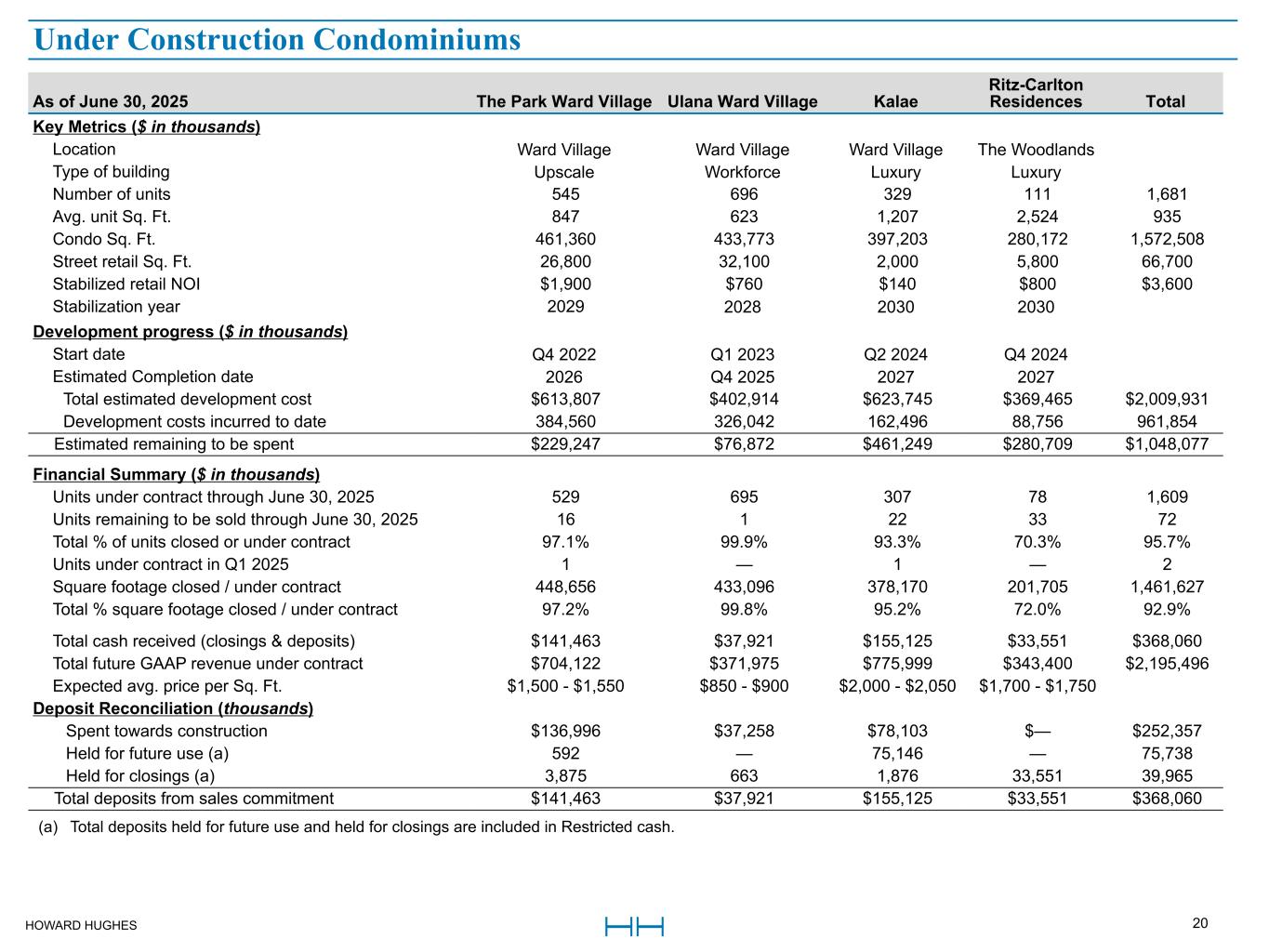
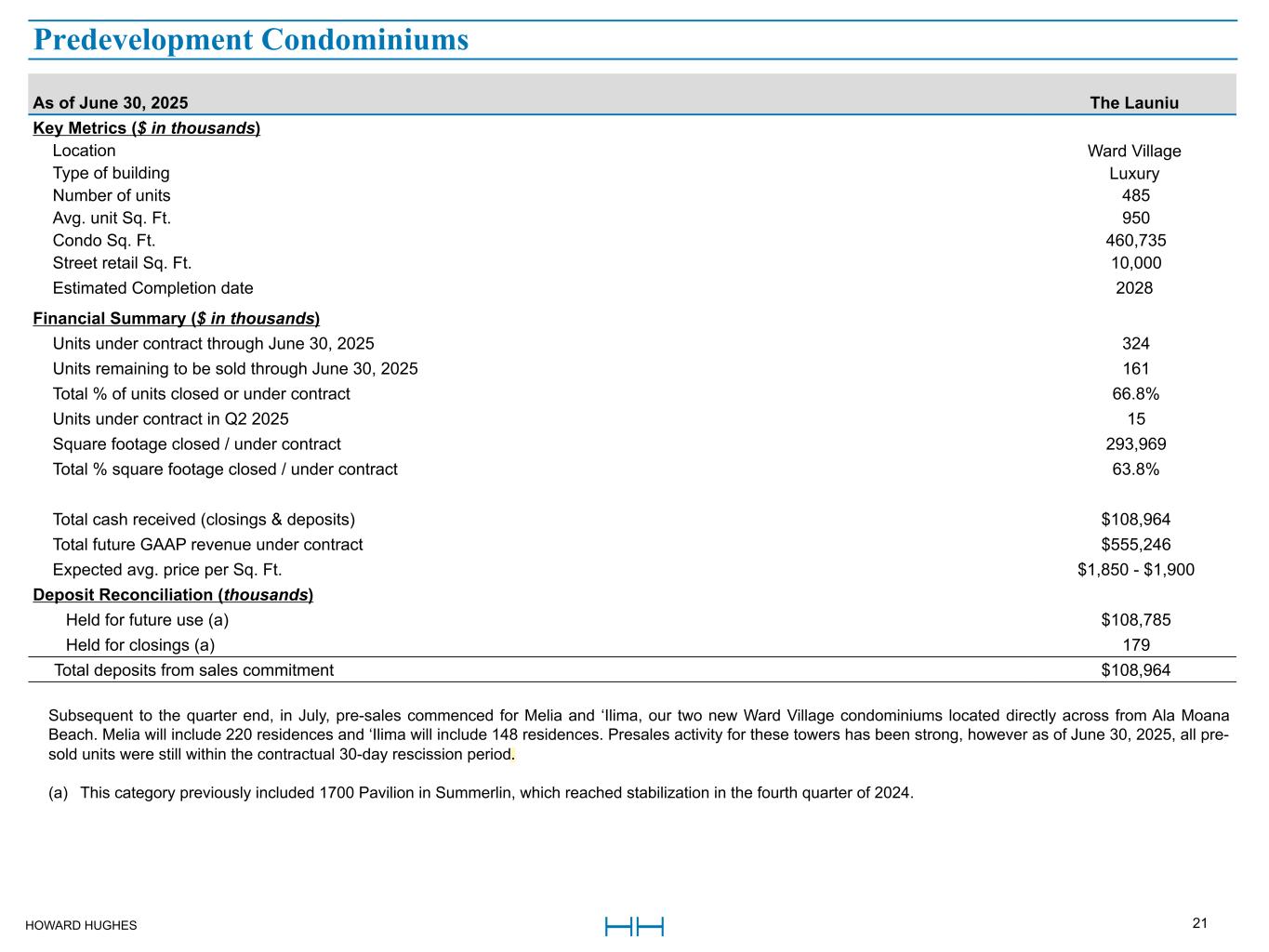
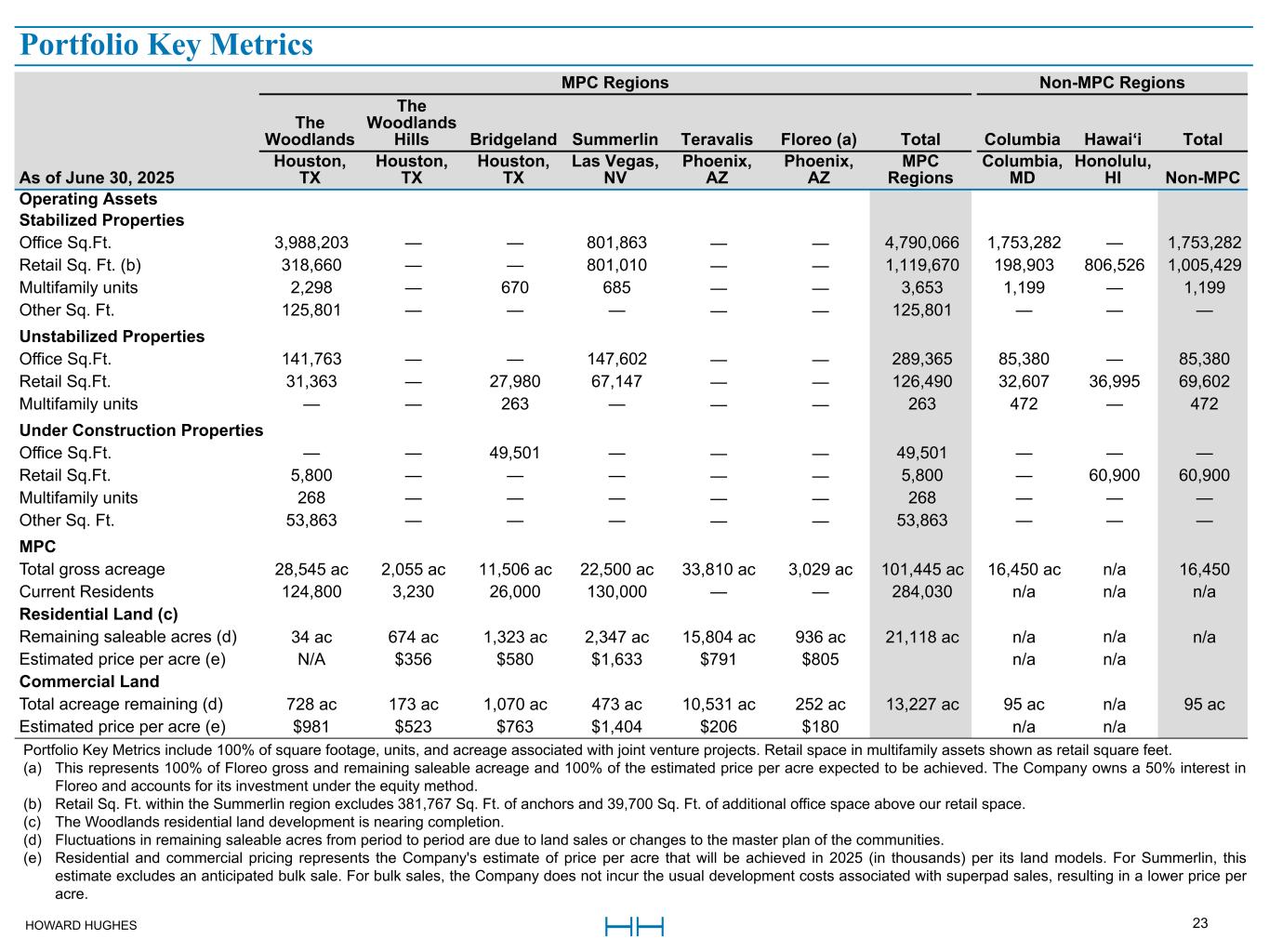
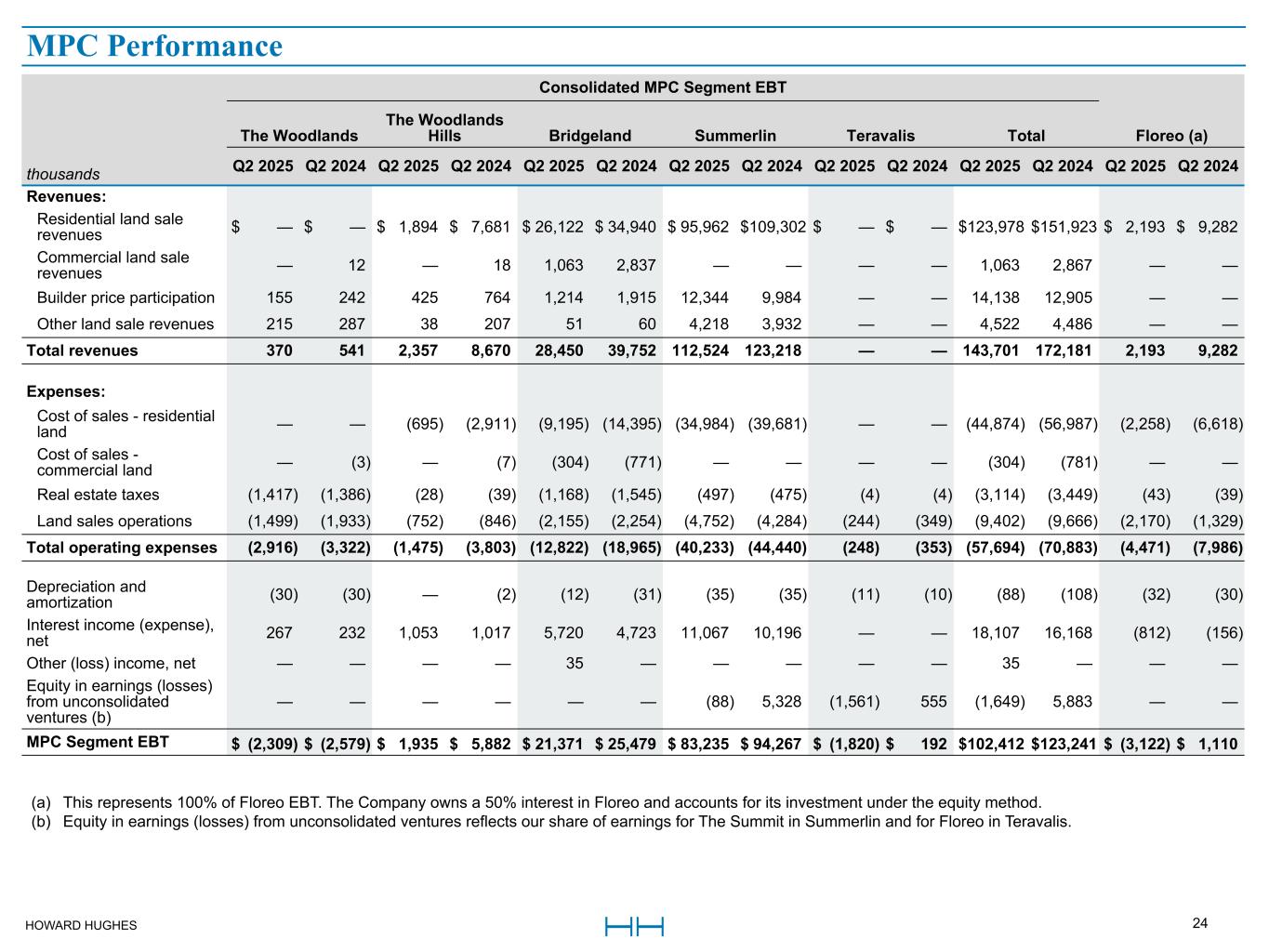
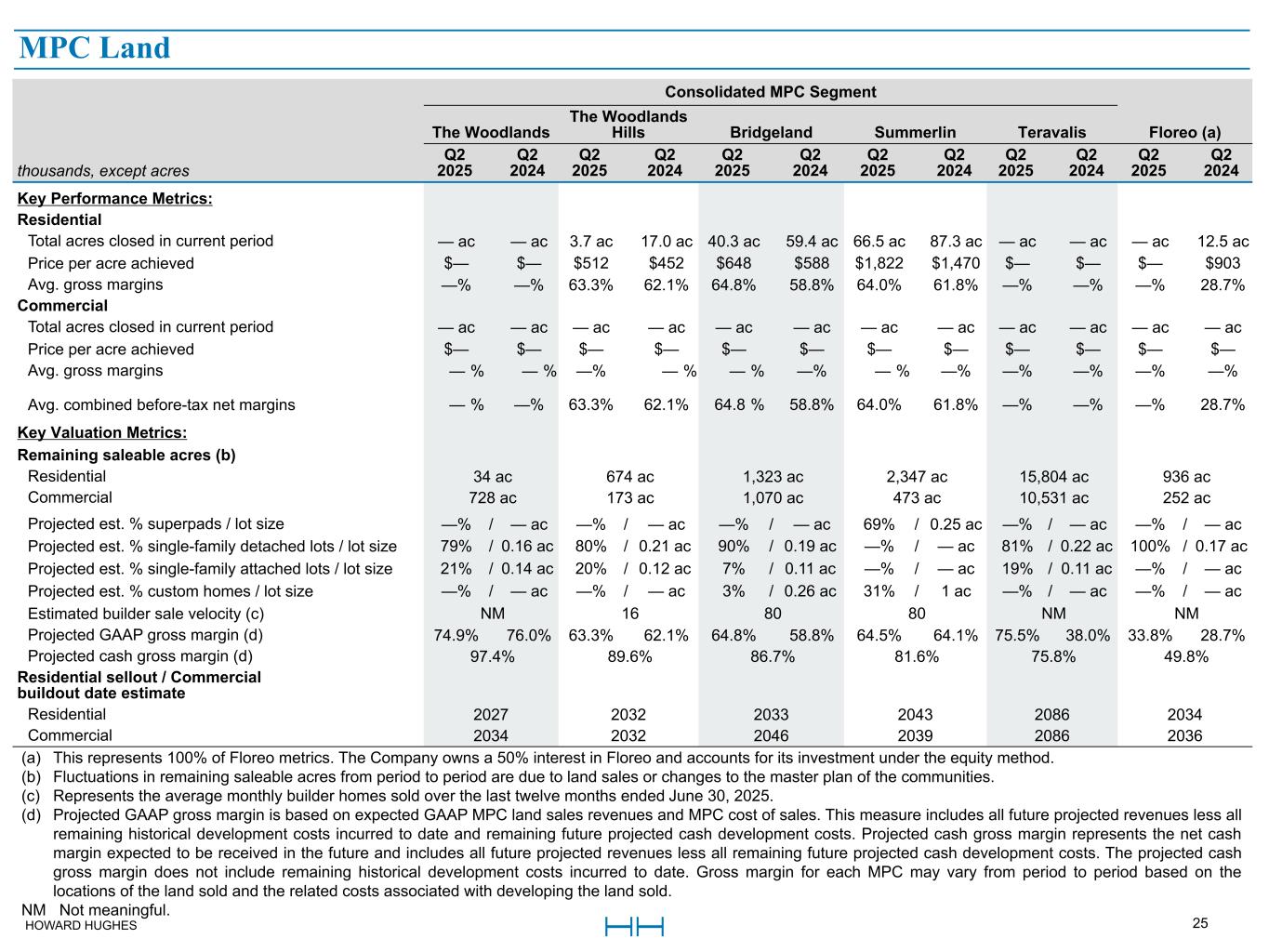
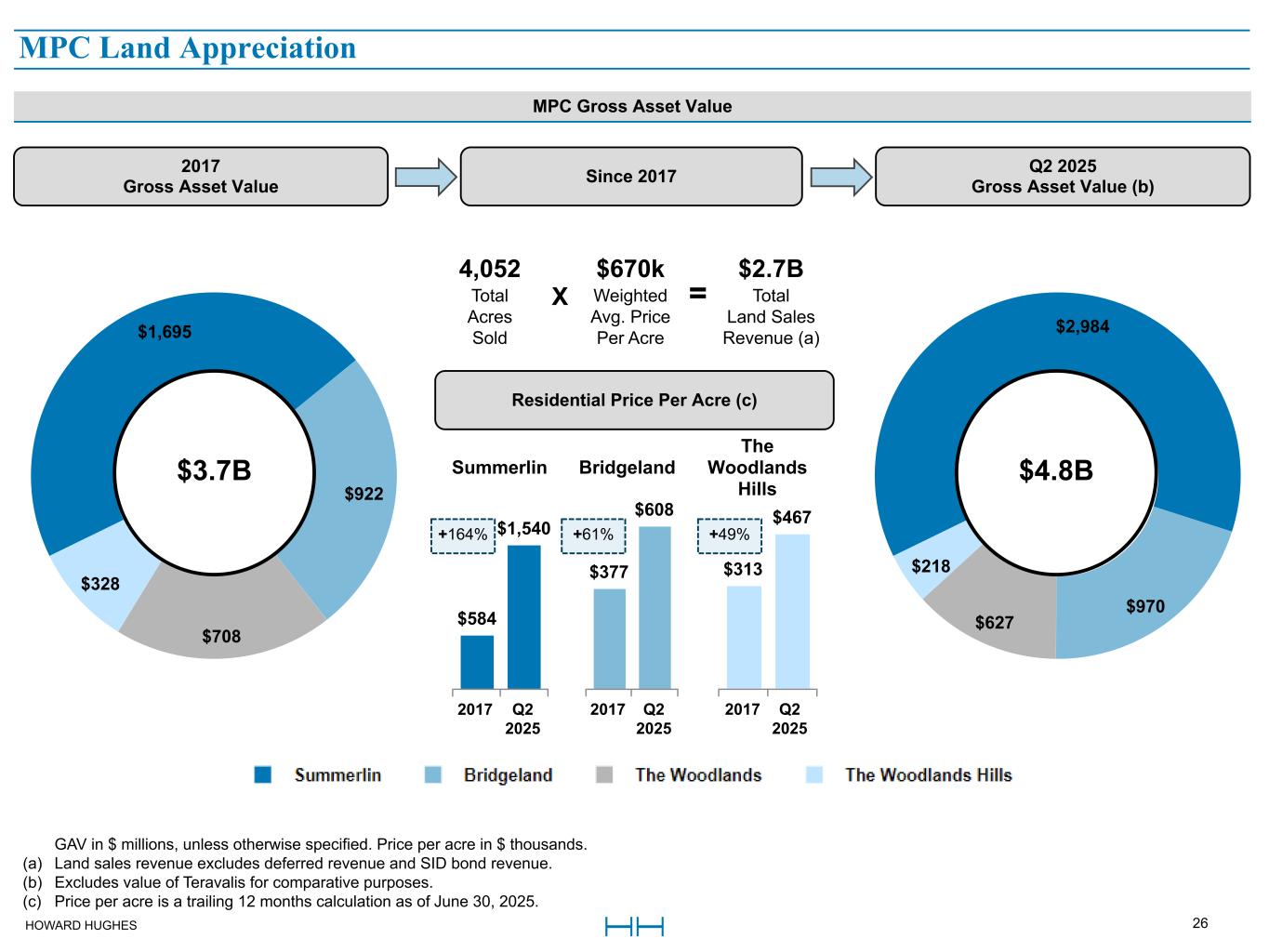
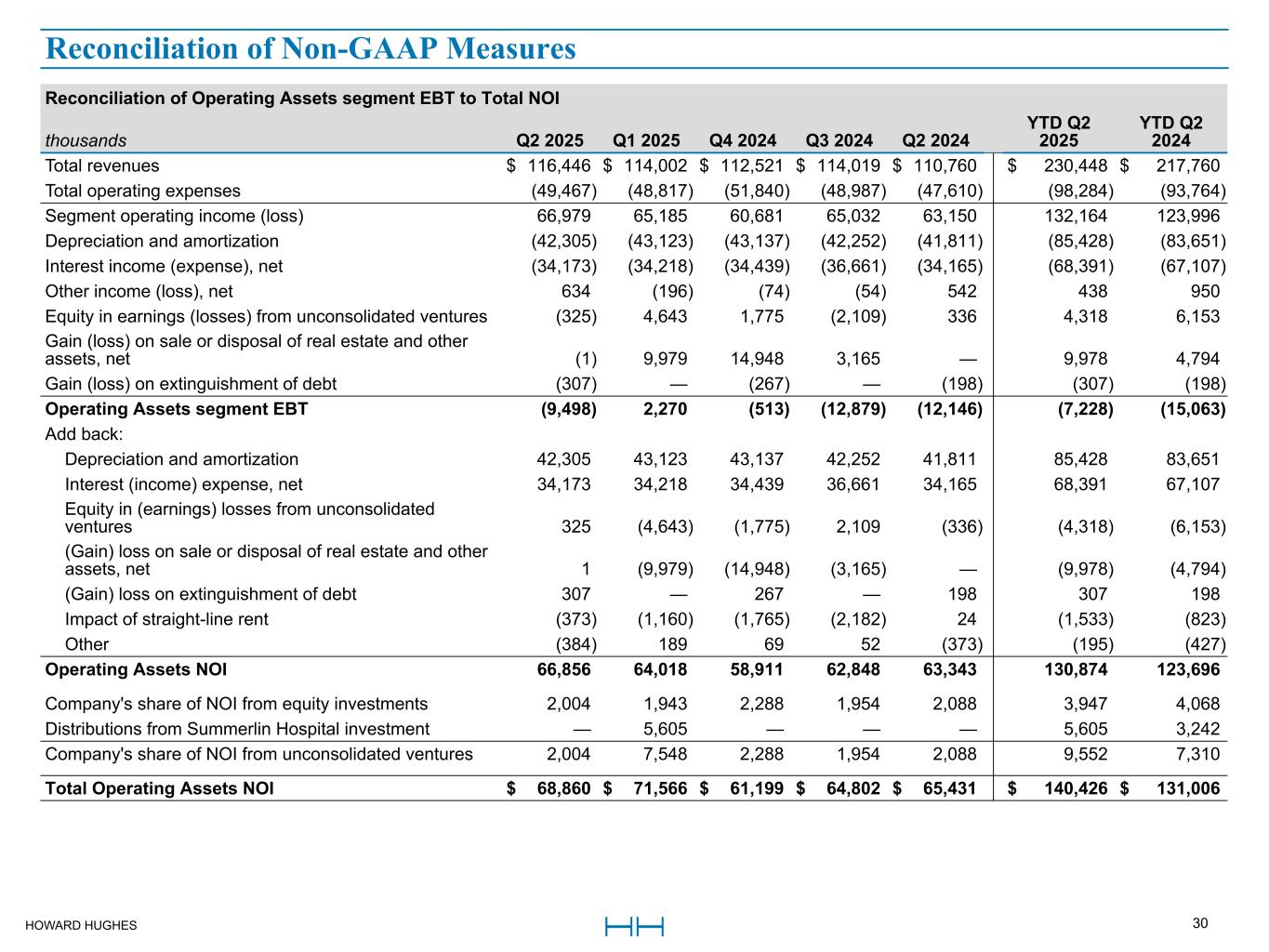
Thank you, Joe, and good morning. On our call today, I'm going to begin with a recap of the second quarter and cover segment highlights from the Master Planned Communities, Operating Assets and Strategic Developments. Carlos will review our updated full year guidance and balance sheet. Following our comments on the operating results for HHD, we'll hand the call over to Bill Ackman, our Executive Chairman, who will discuss HHH's future strategic direction before we open the lines for Q&A. As we discussed on our last earnings call, the second quarter marked a significant milestone for Howard Hughes Holdings, with Pershing Square investing $900 million in exchange for 9 million shares of HHH stock. These funds will be strategically used to transform Howard Hughes from our pure-play real estate company to a premier diversified holding company. Before Bill discusses this in a few minutes, I'm going to shift to talk about the results for HHH's real estate development business, the Howard Hughes Corporation in more detail. The second quarter was another exceptional quarter for Howard Hughes as our team delivered outstanding results across our business segments, highlighting the strong demand in our portfolio of Master Planned Communities and further solidifying our strong 2025 outlook. For the second quarter, we delivered adjusted operating cash flow of $91 million or $1.64 per diluted share. Our MPCs continue to see strong homebuilder demand executing land sales at record prices per acre in both Summerlin and Bridgeland. Operating assets also set a new record quarterly NOI across office and multifamily, with solid year-over-year segment growth of 5%. In strategic developments, condo presales remained strong at The Launiu, and we launched presales at Melia and Ilima, which are undoubtedly two of the most anticipated luxury residential towers ever to come to market in Honolulu. With these strong results, we are raising our full year guidance for adjusted operating cash flow, driven by the current and expected strength in our MPC land sale business and operating asset NOI. Carlos will discuss guidance in a few minutes. Turning to our MPC segment. We delivered solid MPC EBT of $102 million in the second quarter, fueled by the sale of 111 acres of residential land across our communities at a new record-high average price per acre of $1.35 million, a 29% increase over last year. Land sales were led by Summerlin with two superpad sales totaling 65 acres, achieving a record average price per acre of $1.6 million. We also sold two custom lots in Astra, Summerlin's newest luxury community for an impressive average price of $7.7 million per acre. Looking at new home sales, we continue to see solid demand across our MPCs with a total of 487 homes sold in the second quarter. While this was a decline from last year, the reduction was due to a reduced new home inventory in Summerlin and regulatory delays in Bridgeland. As both of these issues are currently being resolved, we expect to see home sales for the second half of the year remain strong. While the national housing market has shown signs of softening during the quarter, our record price per acre highlights the strength and desirability of our MPCs. We're seeing steady demand for new homes across our communities. We believe this demand will drive homebuilders to look for more land to develop in our communities, which will drive what we expect to be a continued record in residential land sales, price per acre, and MPC EBT for the full year in 2025. In our Operating Asset segment, we delivered NOI of $69 million, representing a 5% increase compared to last year, driven primarily by a record-breaking quarterly NOI in our office and multifamily portfolios. Looking closer at office, we reported NOI of $35 million or a 6% year-over-year increase. As we previously mentioned, this growth was primarily the result of last year's strong lease-up activity at 9950 Woodloch Forest, 6100 Merriweather and 1700 Pavilion, which ended the quarter 99%, 98% and 92% leased, respectively. During the quarter, we acquired 7 Waterway, the 186,000 square foot Class A office building and adjacent structured parking located in the Woodlands Town Center for approximately $16 million. This acquisition increases our already strong market share of the Woodlands Town Center submarket. With this market share exceptional basis and net rents in the high 20s, this asset is expected to provide outsized risk-adjusted returns upon stabilization. Our multifamily portfolio also performed well, delivering record NOI of $17 million or a 19% increase year-over-year, driven by strong lease-up efforts at our recently completed assets and improved overall leasing at our stabilized properties, which were 97% leased at quarter end. In our retail portfolio, NOI was $13 million, which reflected a 7% year-over-year reduction, primarily due to nonrecurring collections on tenant reserves at Ward Village in the prior year. Excluding this impact in 2024, our NOI would have seen a modest increase year-over-year. In Downtown Summerlin, we continue to make progress on our tenant upgrades and recently signed new leases with Vuori and Paris Baguette. At quarter end, we had only five retail spaces available, most of which are currently in negotiations, representing only 17,000 square feet. Turning to our Strategic Development in the second quarter, condo presales were solid with 17 units contracted, representing incremental future revenue of approximately $35 million. Nearly all of these presales were at The Launiu, bringing this tower to 67% presold. We expect to break ground later this year with an anticipated delivery in 2028. Presales at our condo projects under construction, which are 96% presold on average, were largely unchanged in the second quarter, and we remain on track to deliver Ulana, a workforce housing development that's 100% sold, in the fourth quarter of this year. At the end of June, we launched presales for Melia and 'Ilima, Ward Village's 12th and 13th condo developments. We've seen exceptional demand for these towers in a very short period of time, and we look forward to discussing these results as soon as the launch is completed and the presold units are beyond the recession period. With that, I'll turn the call over to Carlos to discuss our updated full year guidance and our balance sheet.
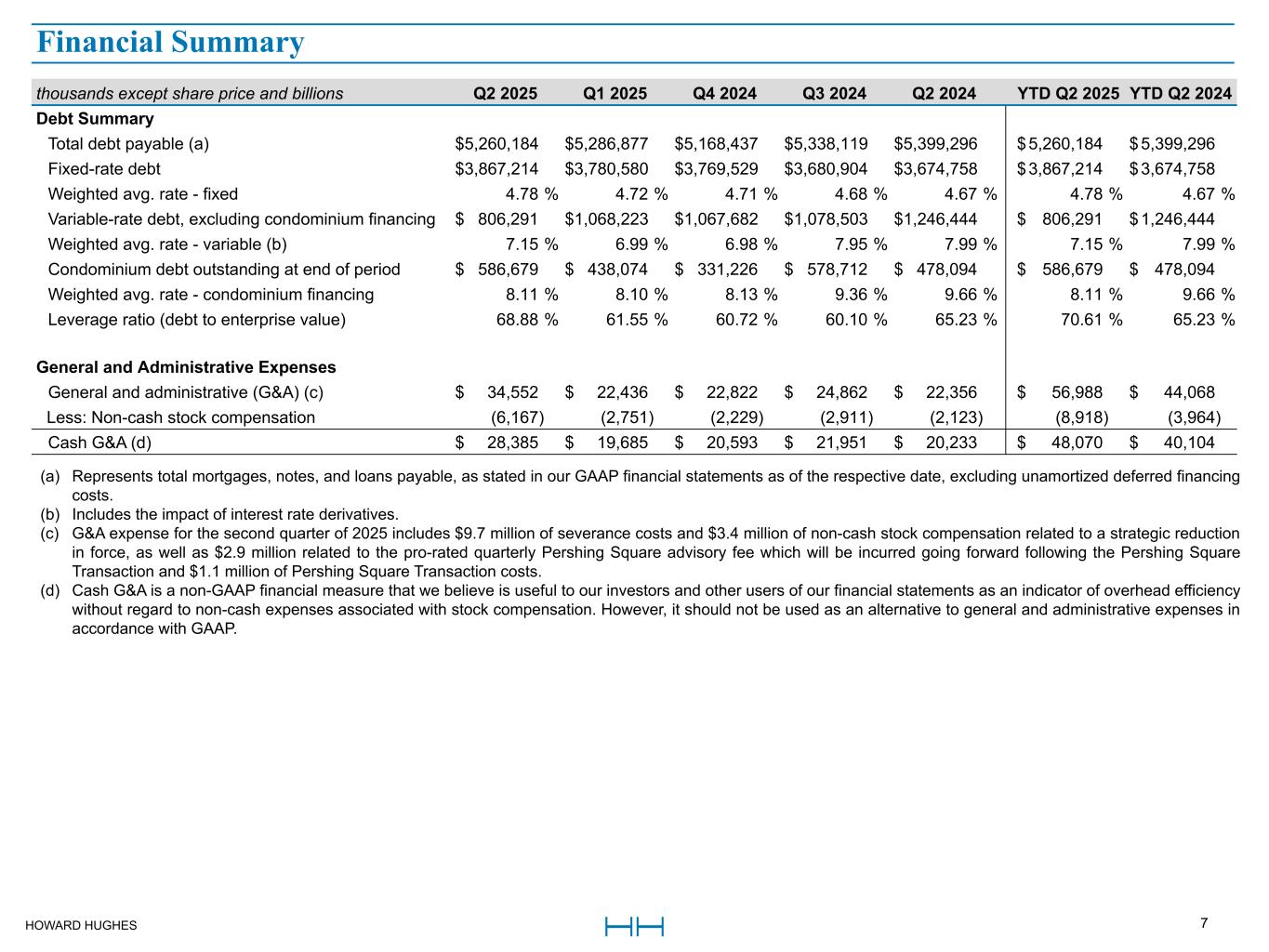
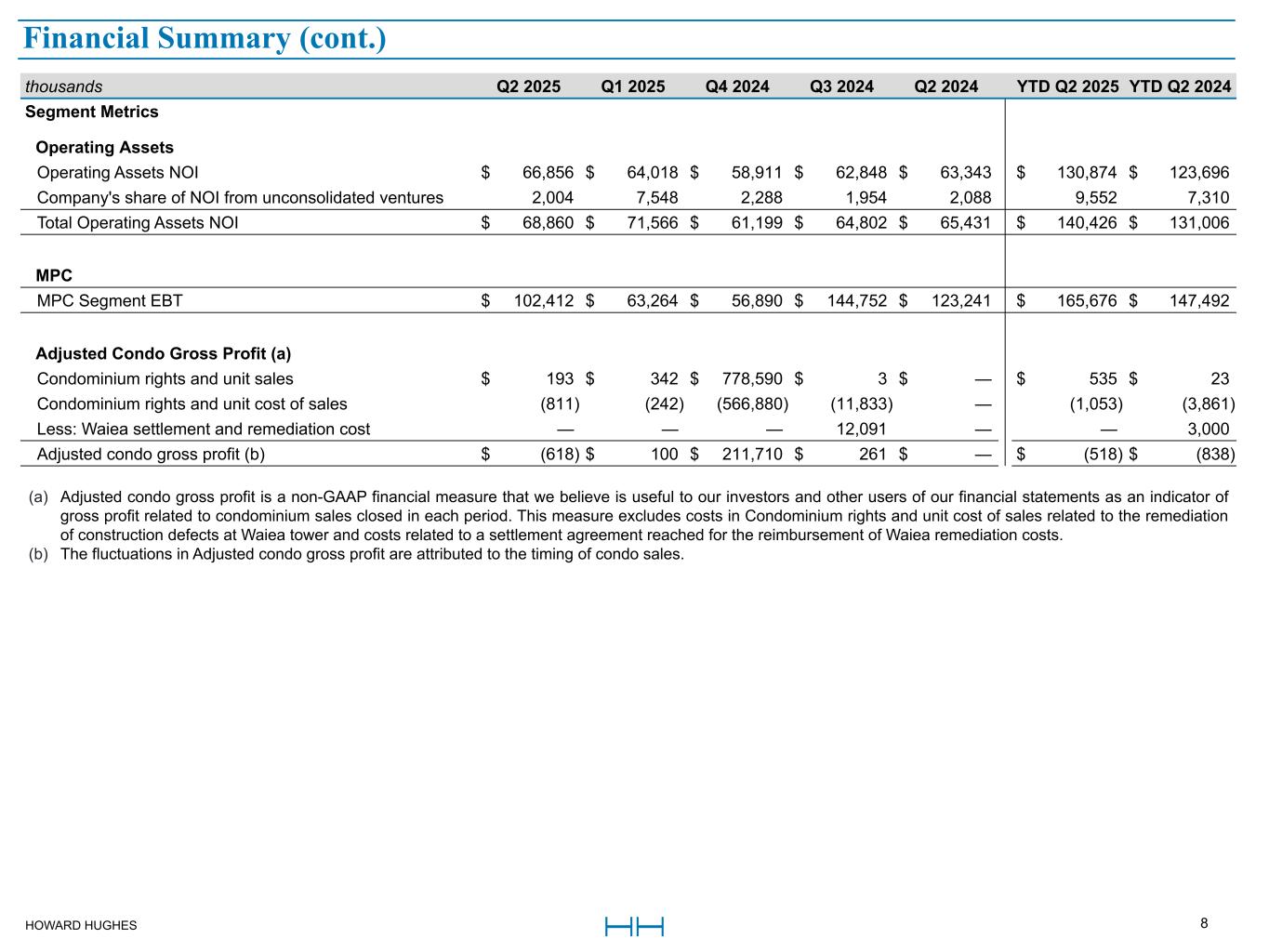
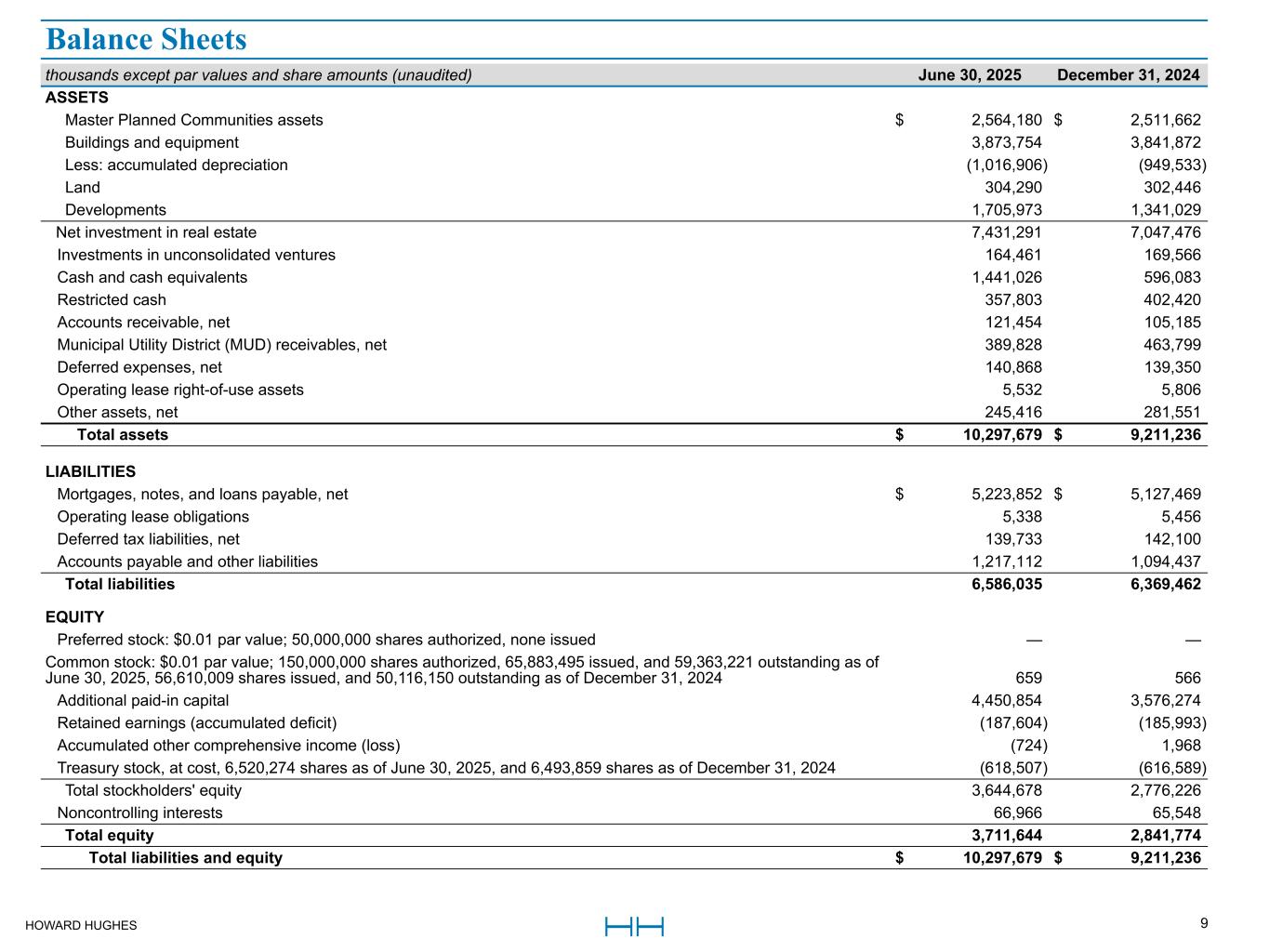
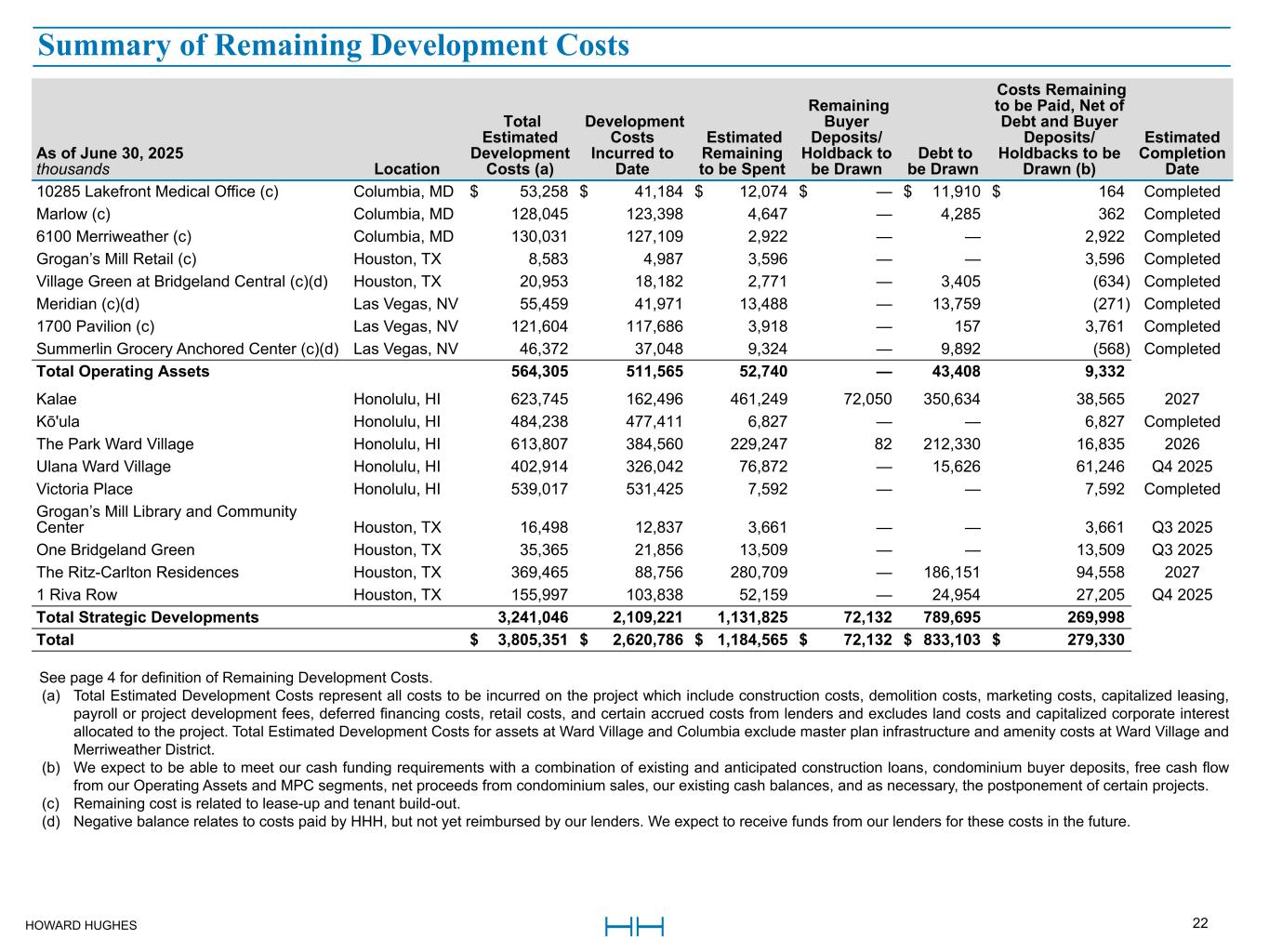
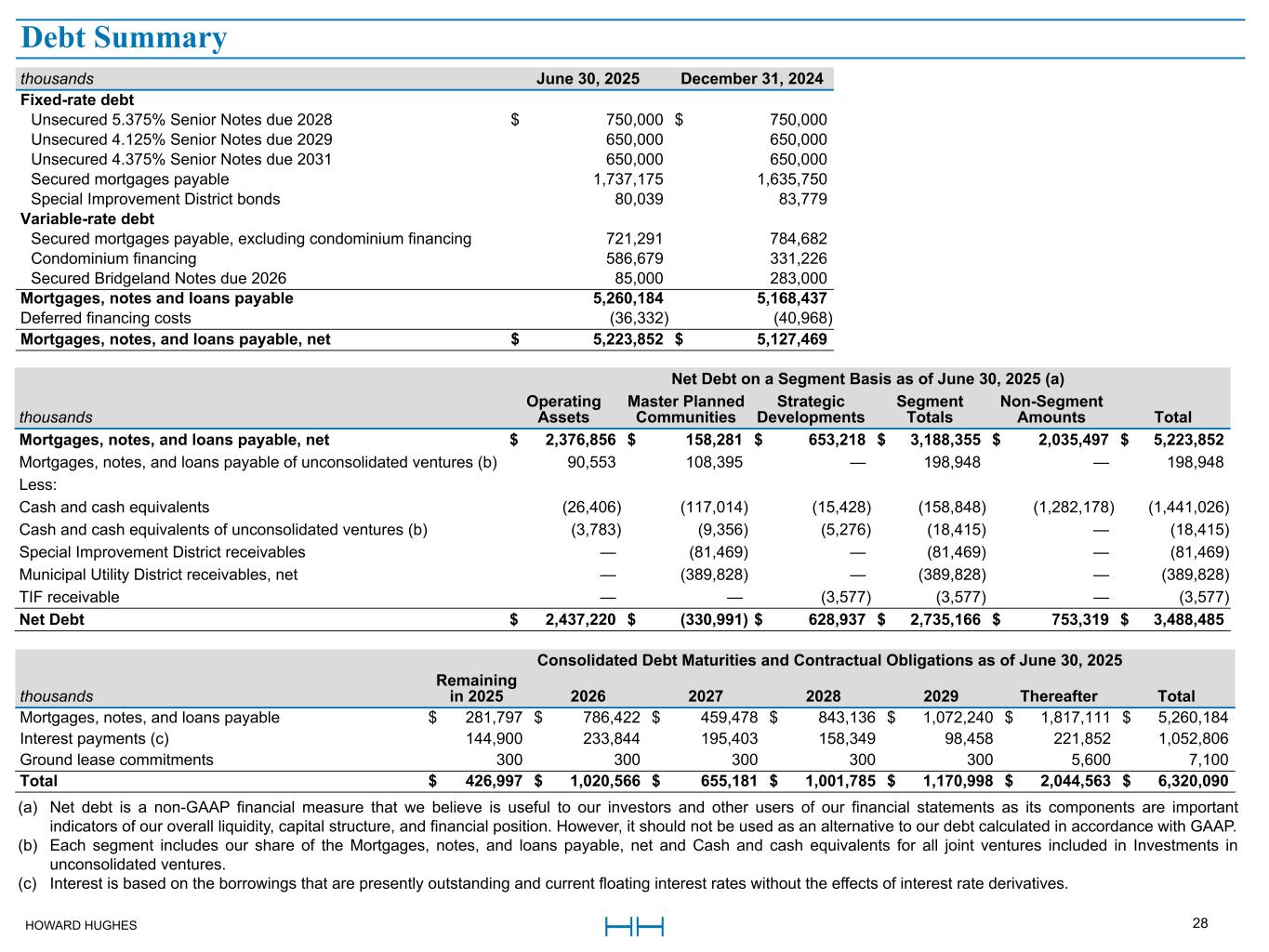
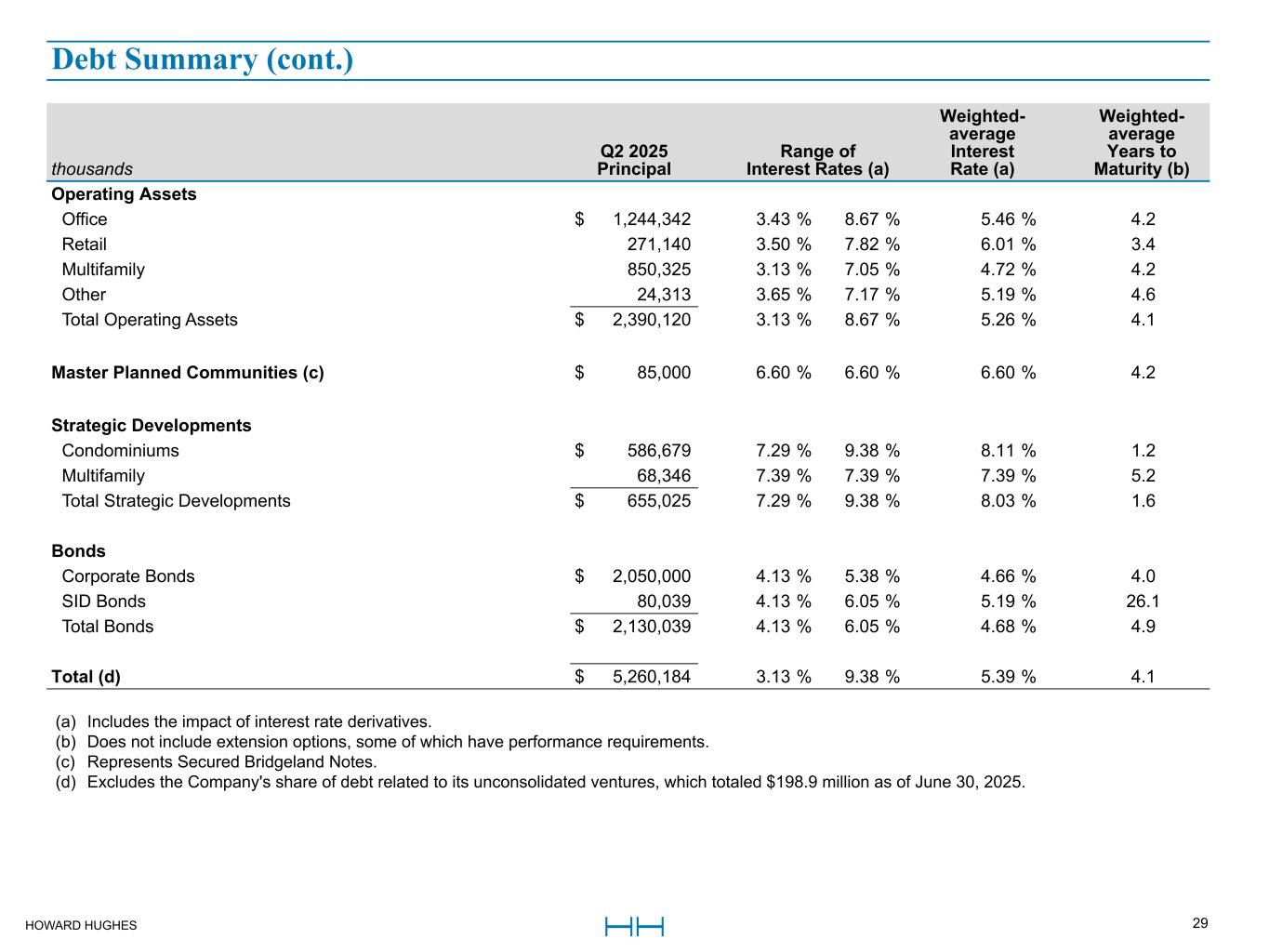
Thank you, David, and good morning, everyone. Today, we are increasing our adjusted operating cash flow guidance, driven by current and expected continued strength in our MPC and Operating Assets segments as well as reiterating our condo sales and G&A guidance for the year. As David mentioned earlier, this was an excellent quarter, led by the outperformance of our MPC and Operating Asset segments, and we now project our adjusted operating cash flow will range between $385 million and $435 million in 2025, with a midpoint of approximately $410 million or approximately $7.32 per share. This represents an increase of $60 million at the midpoint compared to the original guidance, with a corresponding increase of $0.30 per share, despite a higher share count resulting from the Pershing Square transaction. In our MPC segment, led by robust demand from homebuilders and continued low inventory of vacant developed lots, we now expect full year MPC EBT to be approximately $430 million at the midpoint reflecting an increase of $55 million compared to our prior guidance, driven by strong anticipated superpad sales in Summerlin and improved residential lot deliveries in Bridgeland in the second half of the year. In operating assets, we are increasing full year guidance from our previous $262 million midpoint to $267 million, led by the strong leasing activity of our office and multifamily portfolios. This guidance would represent a new full year record. We are reiterating both our cash G&A and condo sales guidance for the year. Cash G&A is expected to be in the range of $76 million to $86 million with a midpoint of $81 million. As always, our guidance excludes noncash stock compensation and one-time items, representing approximately $15 million and $10 million current expenses, respectively. Our guidance also excludes the Pershing Square variable advisory fee; however, it does include $10 million for Pershing Square based advisory fee, which we have offset substantially by future savings resulting from a reduction in our workforce and other cost reduction initiatives we have recently implemented. Condo revenues remain projected at approximately $375 million for 2025, reflecting the scheduled closing at Ulana in the fourth quarter, with no gross profit expected from this workforce housing tower. Turning to our balance sheet. We had $1.4 billion of cash and $515 million of undrawn lines of credit. Combined, we had approximately $2 billion of available liquidity. Together with our strong guidance expectations for the full year, we are well positioned to further strengthen our balance sheet and deploy capital appropriately. At the end of June, the remaining equity contribution needed to fund our current projects, which will not all be spent in 2025, was approximately $279 million. From a debt perspective, we had $5.2 billion outstanding at quarter end, of which 92% was fixed or hedged at an average rate of 5.1%. During the quarter, we made meaningful headway on reducing our near-term maturities, successfully completing two major financings to lower our '25 maturities to $282 million. Notably, we extended the construction loan on our Marlow multifamily properties to April 2027, and secured a new $75 million 5-year fixed-rate mortgage for 1700 Pavilion, replacing a construction loan previously scheduled to mature later this year. With these extensions completed, our remaining maturities for this year primarily consist of Merriweather Row, 6100 Merriweather, and Tanager Echo. We expect all of this will be successfully refinanced during this year with advanced discussions already underway. And finally, we closed on the sale of MUD receivables during the quarter, generating cash proceeds of $180 million. These funds were used to pay down the Bridgeland notes, reducing their balance to $85 million at quarter end, and leaving $515 million available for draw in the facility.
Speaker 3
Thank you, Carlos. I'm here with Ryan Israel, who is our CIO. We wanted to give kind of a report on what we've been up to for the last couple of months since the transaction closed. Our principal focus has been identifying and doing due diligence on a potential insurance company acquisition. Just to give you some context, if you look at Berkshire Hathaway sort of as a model here, a major part of the success of Berkshire has come from the acquisition beginning in the 1960s of an insurance operation and the growth of that business over the ensuing 60 years. What's interesting about insurance is that it’s a cash-generative business; generally, you write premiums, you receive cash upfront that you can invest. If you run a profitable insurance operation and invest the capital well, you can earn very attractive returns on equity. We want Howard Hughes to grow its intrinsic value per share at a high rate over a long period of time. The beauty of a successful insurance operation is it's a business where we can grow at a very nice rate over time without having to issue or raise equity capital to grow our business model. So that's been a very high priority for us. If you were to examine Berkshire over the last sort of 60 years, what's interesting is Buffett took a very different approach to the way he managed his insurance operation. A typical insurance company writes about as much premium as equity capital every year and then invests the float in fixed-income investments principally, but uses a fair amount of leverage to get an attractive return. So about 3x the assets relative to equity is a typical balance sheet structure for an insurance operation with those assets invested principally in low-risk fixed-income securities. What Buffett did is he ran a very low leverage insurance company. Instead of writing premiums equal to equity every year, he wrote premiums equal to about 1/3 or anywhere between 20% and 40% of equity in any one year. So very, very under-levered in terms of the risks assumed in the insurance operation. He took 100% of that float from writing premiums and invested in very short-term U.S. treasuries, basically taking no risk on the insurance company float. But then he invested about 100% of the equity of the insurance operation in common stocks. Buffett has been a good stock picker, and the result has been an insurance company that's earned well into a 20% return on equity over a very long period of time, and the power of compounding has led to the success of Berkshire Hathaway. It's really been driven off of the insurance operations and investment operations associated with that business. We've taken a page from Berkshire. We are looking to acquire a diversified insurance operation, and we intend to run it in a similar fashion: low leverage in terms of the premiums written relative to equity, low leverage in terms of the amount of assets relative to equity, call it, 1.5x versus 3x for a typical insurer; investing 100% of the float in short-term U.S. treasuries and taking no risk on kind of float balances and then investing in common stocks and very high-quality durable growth companies of the kind that Pershing Square has identified and invested in over time. One sort of interesting question would be, why don't more insurance companies operate this way? The answer is that what was unique to Buffett is he brought investment skills that are generally absent certainly on the common stock side of an insurance operation. Insurance companies today mainly focus on maximizing the profitability of their insurer. I would say the asset side of the balance sheet is a bit of an afterthought. Part of that is insurance companies have difficulty recruiting kind of best-in-class talent to run a successful investment operation, particularly one that invests in equities. One of the things that we bring to this transaction with Howard Hughes is an investment operation. That investment operation comes for free, if you will, to the insurance subsidiary. So the plan would be we acquire an insurer, we run it as a low leverage insurer. We're conservative, extremely conservative in the way we invest the insurance company float. Then Pershing Square’s team invests the assets of that equal to about the equity of the insurer in a common stock portfolio that we manage for the company for free. We are looking at a number of potential transactions. We hope to be in a position, if we find the right company at the right price, to have a transaction we can announce by the fall, at which point, obviously, we'll be able to share sort of more information. We have our annual meeting on September 30. We're hosting it this year in New York City. It will be at the Pershing Square Signature Center on 42nd Street. It's a theater complex for Signature Theater, it will be in the morning. We really encourage you to attend. We're going to give a very detailed presentation on our plans for the insurance operation. We're going to talk more about the overall strategy of the company. David O'Reilly is going to update shareholders who are less familiar with the real estate story of Howard Hughes. We hope to present some metrics that people should be focusing on as we build this company over time to measure our progress and success. So we encourage you to come to that meeting. We're also going to have an open Q&A session where Ryan, myself, and David will be available to answer questions. I think it will be an interesting session. So we really think it will be a great way for you to learn more about our plans going forward. One last comment with respect to our plans for the insurance company: one of the other benefits that this insurance operation had is it was part of a diversified holding company. The result of that is that incremental credit support that came from the holding company gave the insurance operation more flexibility in terms of its ability to invest its assets. We believe we offer something quite similar here in the sense that we have Howard Hughes Holdings as the owner of this insurance subsidiary and a completely unrelated business that will start to spin off substantial amounts of cash over time, unrelated to the insurance operation. Howard Hughes itself is owned 47% by the Pershing Square Funds, namely Pershing Square Holdings, which is an A-rated company with about $15 billion of equity and the Pershing Square Management Company, a highly profitable unlevered business that is not currently rated but was valued in a transaction last year at about $10.5 billion. You have about $25 billion of equity in terms of the 47% owner of Howard Hughes, a very high creditworthy enterprise and unrelated business to insurance. Howard Hughes itself owning an insurance operation and in the relative short term, we will run in a similar fashion in terms of the approach that Berkshire has taken over time with low leverage on both the asset and liability sides of the balance sheet and a higher return strategy for the company's assets.
Speaker 4
I have two questions. First, I want to discuss the MPC business, and then I will address the broader picture. David, your land sales volumes have increased, which is notable given the challenges in the single-family market that we're all hearing about. While you offer a premium product, there is also a wider variety. Can you provide more details about your properties, including their price points and the diversity of buyers, especially considering the higher interest rates and housing affordability issues? How confident are you that your business can continue to thrive despite these elevated interest rates and various macroeconomic concerns?
Alex, that’s a great question and one that we've spent a lot of time discussing. We go through extensive detail, tracking home sales within our communities. We see those home sales as a leading indicator for what the homebuilders will need in land purchases on a go-forward basis. To date, our home sales have been incredibly resilient; and I think that is due to the quality of assets that we have. Our MPCs have the best schools, amenities, and quality of life. They're attractive for residents and homebuilders. The homebuilders are building homes that sell at a premium relative to those areas around them. As a result, our land remains incredibly attractive. Our communities, I've been saying for years, we're not immune, but we're insulated. There's always a flight to quality in markets where there is perhaps a reduction in price in homes, and now it's my chance to get into Bridgeland, my chance to get into Summerlin. We see residents continue to come in and buy homes. The home prices we're seeing vary across the spectrum. In Bridgeland, our homes are in the $300,000 to the $500,000 range. In Summerlin, they're in the $400,000 to the $10 million range. We’re seeing this with first-time homebuyers, move-up homebuyers, and luxury buyers across the board. It has been somewhat surprising to those in the room given the national headlines. Even with the reports of softer national sales, we continue to see good velocity in our communities, which is incredible. We’re thrilled with the results. We see continued strength for the balance of the year. The record price per acre speaks to the quality of our communities and the desirability of our land. Ultimately, that land we have is the precious raw material that the homebuilders need to stay in business and remain profitable. If you're a homebuilder and you have the opportunity to buy land in our communities where there's shown success and outperformance over 25 years versus a market that is uncertain, we still believe that those homebuilders will choose to buy land in our communities.
Speaker 4
And then the second question is for Bill. Bill, when we met with you a few months ago, you spoke about the potential for creating your own insurance entity, hiring an individual and creating it homegrown. It sounds like now you're thinking more about acquiring an outside entity. So one is your thoughts on homegrown versus acquiring. And then two, as you ramp up Howard Hughes and that investment, cash flows, it almost sounds like from the outside like we should think about this to be 2 to 3 years before those cash flows really start to emerge. But just curious if we should be thinking longer or you think the accretion could be sooner?
Speaker 3
Sure. Our thinking on building versus buying is if we can find the right asset, we are increasingly confident we can. There are a number of potential transactions of a size and quality that would be a great start for us. Our expectation, based on what we’re looking at, is that we will be able to make a material transaction to Howard Hughes, assuming we do one of the transactions we're assessing. It would represent an important part of the business and would be run as a successful insurance operation that can earn returns on equity that are significantly higher even than the best-run real estate operations. We do expect insurance in the relative intermediate term to become very material to the company to the point that people will likely stop thinking about Howard Hughes as primarily a real estate company with a little insurance operation. I think they'll start seeing it the way we envision, as perhaps an insurance holding company or a diversified holding company with a major insurance operation.
Speaker 5
My first question is on the leverage side. Bill, as you look at the leverage as of today for Howard Hughes and the target that you're trying to go after, how should we think about a pro forma on leverage? Given that, what are the deal sizes that you think we should be expecting? Would it be 100% stake or a smaller stake in something else, or how should we think about that?
Speaker 3
We think that Howard Hughes' real estate operation is appropriately financed, and we do not intend to leverage it in any material way. We like the business as it is structured today. We have today excess cash certainly the $900 million and perhaps another $100 million or couple of hundred million of excess cash in the overall company, call it about $1 billion. That's the sort of capital we would intend to use if we were to invest in an insurance operation. If that business, the check size is larger, we would raise capital or partner with other Pershing Square affiliates in doing a transaction. But our goal would be for the company we acquire to be controlled by Howard Hughes.
Speaker 6
To clarify your question, we don’t need to own 100%. We would like to own more than 50% for control. However, I think it's important to highlight that we have strong capabilities to raise capital externally given our network of partners who have successfully partnered with us in the past.
Speaker 7
Bill, in your commentary earlier, I think you mentioned that you were looking at a number of potential transactions. I just wanted to clarify that ultimately, you'll just be acquiring one insurance company and not a series of acquisitions. For the companies you're considering to acquire, do they operate the way that you prefer in terms of being conservative and under-levered?
Speaker 3
What we're focused on now is buying one business run by an excellent management team that has done a very good job in writing business over time. All the companies we're looking at are operated as conventional insurance companies, which means we would plan to change that over time to suit our vision of how we want to run the operation.
John, I think conservatism is always the best policy. As incredible as our results have been this quarter and in the past several quarters, for me to try to extrapolate that to the moon over the next 30 years would be a little cavalier. We take a conservative approach. We don't use one quarter's results to impact the future per sale acres on a daily basis. We look on a trailing basis, and if we feel it's appropriate to apply that price per acre across the remaining, we will. On the Ritz-Carlton, we intentionally paused condo sales in the last couple of quarters.
Speaker 3
Actually, let me jump in there. Our team sold out the first half of the project despite raising prices on a weekly basis because of demand. I indicated that this is a unique, incredible asset, akin to the best of New York City types of projects, and I see us selling at prices that seem truly attractive. Consequently, I suggested that we only sell half and deliver the product before maximizing profitability with the remaining units. We still have an opportunity to demonstrate substantial value as we progress.
What remains is a representative sample set of the overall building, and essentially, every time we sell a unit, I remind my team that they may be selling it at a too-cheap price. Conversely, if a unit doesn’t get sold quickly, they hear from me about how they need to speed up the sales.
Speaker 8
What would you say to the common pushback from the market and investors regarding the complexity of the Howard Hughes story? It's been a concern over time and a challenge for the investment community to underwrite, especially with the long timeline for value unlocking and the lack of comps. Certainly, using Berkshire as a model is insightful, but it's a very unique success story in the public market.
Speaker 3
I completely understand it as a challenge we've encountered as a public company focused on this business. Ultimately, we realized that we would struggle to achieve the level of respect we believe we deserve as a pure-play real estate company. This was influenced largely by complexity and high costs of capital tied to businesses focused on real estate development. As such, we decided to embrace this complexity. The core real estate business is phenomenal, and you will understand it more over the next few years as it generates substantial cash. We don't want to continue putting more capital and acquiring more MPCs simply to tell the same story. The lesson from Berkshire is both crucial; our core business is high quality, and we believe we can establish a successful insurance operation that will serve as a major contributor to our portfolio over time. We see great potential in combining insurance and investment, and we believe if we execute this vision, we will expand our investor base significantly over time.
I want to extend my gratitude to all of you for attending today’s call. If there are additional questions, we are always available to provide answers. I would also like to reiterate what Bill mentioned earlier: we would like to invite everyone to join us on September 30 in New York City for the Annual Shareholder Meeting. It will be on 42nd Street in Manhattan. More information will be available after our proxy is filed beginning on August 18 on the Investor Relations page of our website, howardhughes.com. Thank you again.
Operator
This concludes today's conference call. Thank you for participating. You may now disconnect.