Operator
Good morning, ladies and gentlemen, and welcome to the Hamilton Lane Fiscal Second Quarter 2026 Earnings Conference Call. This call is being recorded on Tuesday, November 4, 2025. I would now like to turn the conference over to John Oh, Head of Shareholder Relations. Please go ahead.
Speaker 1
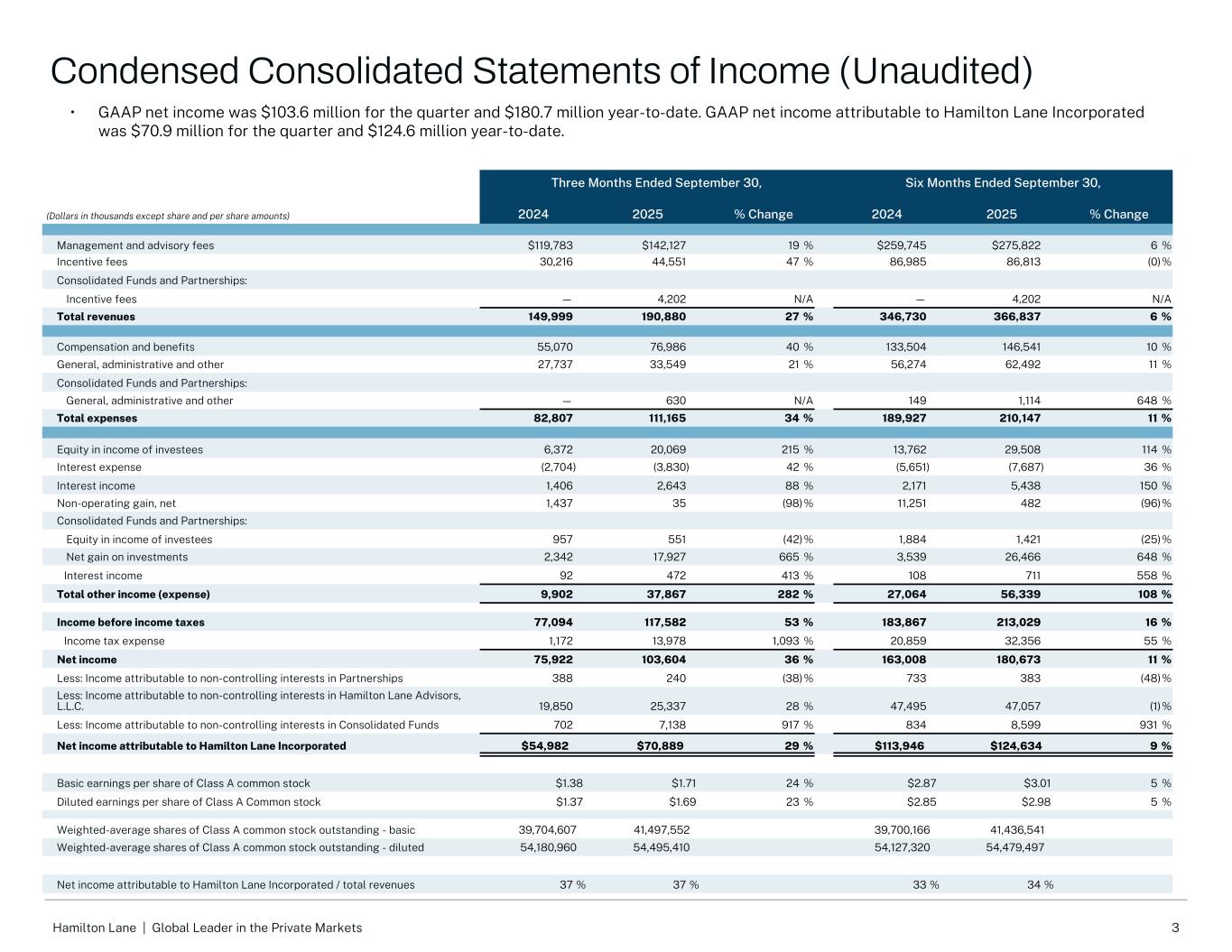
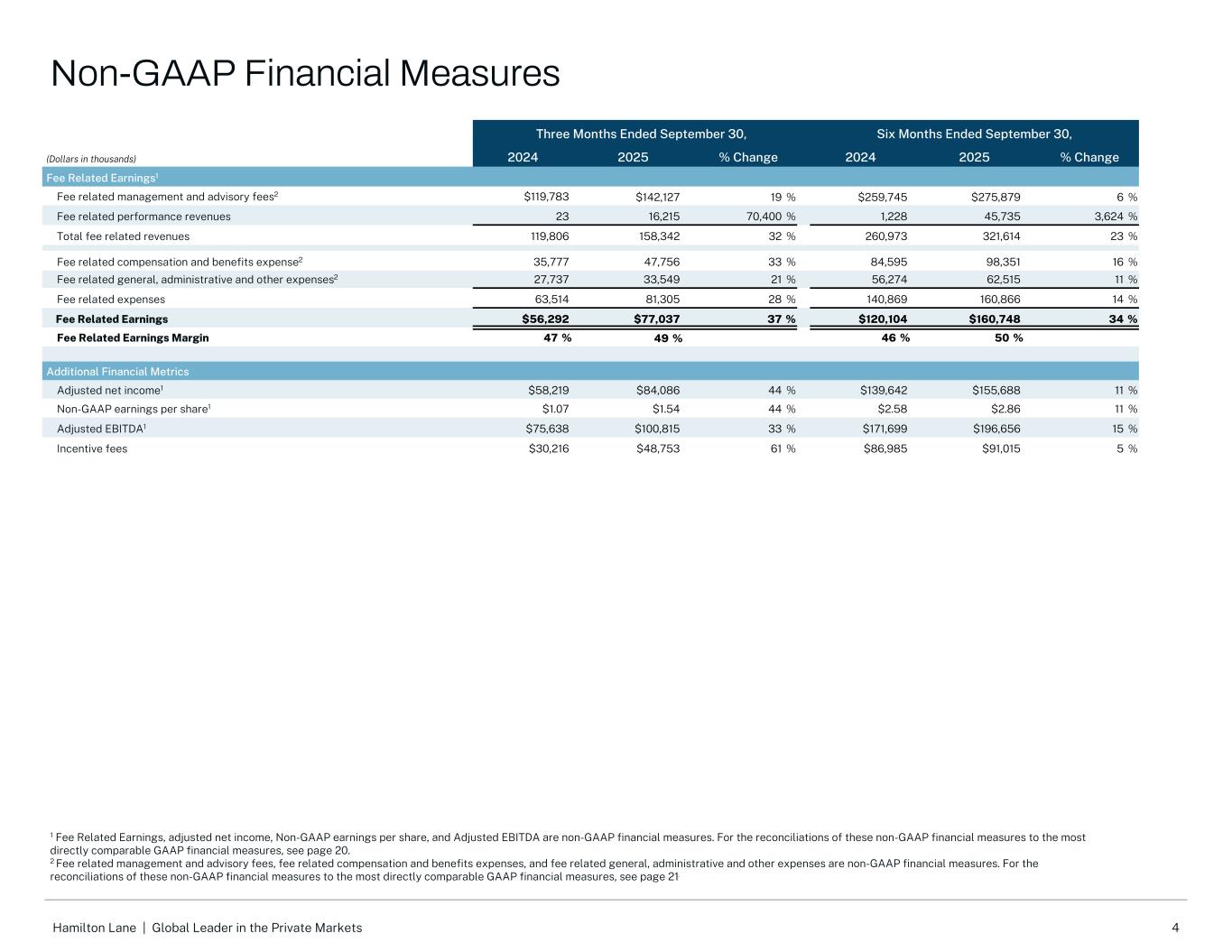
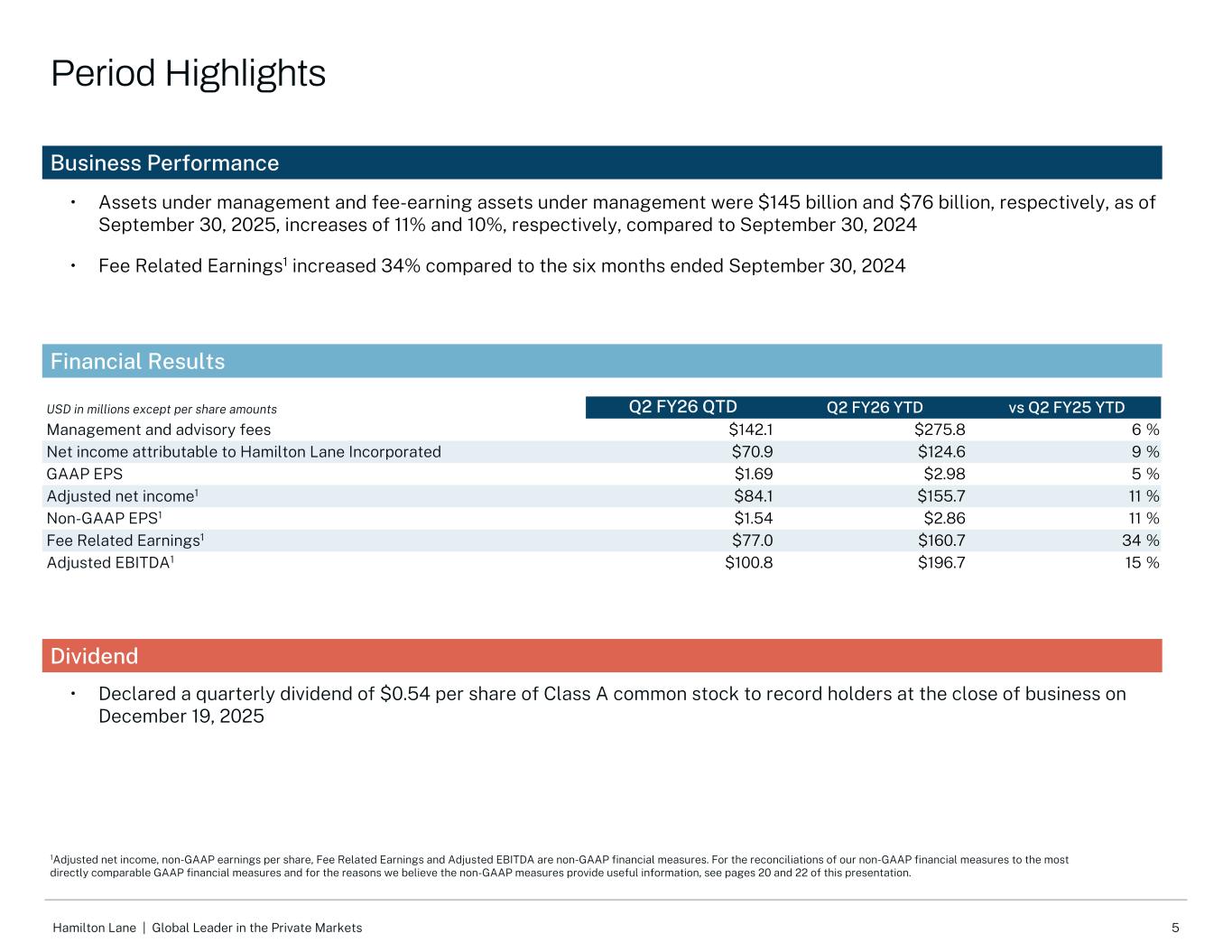
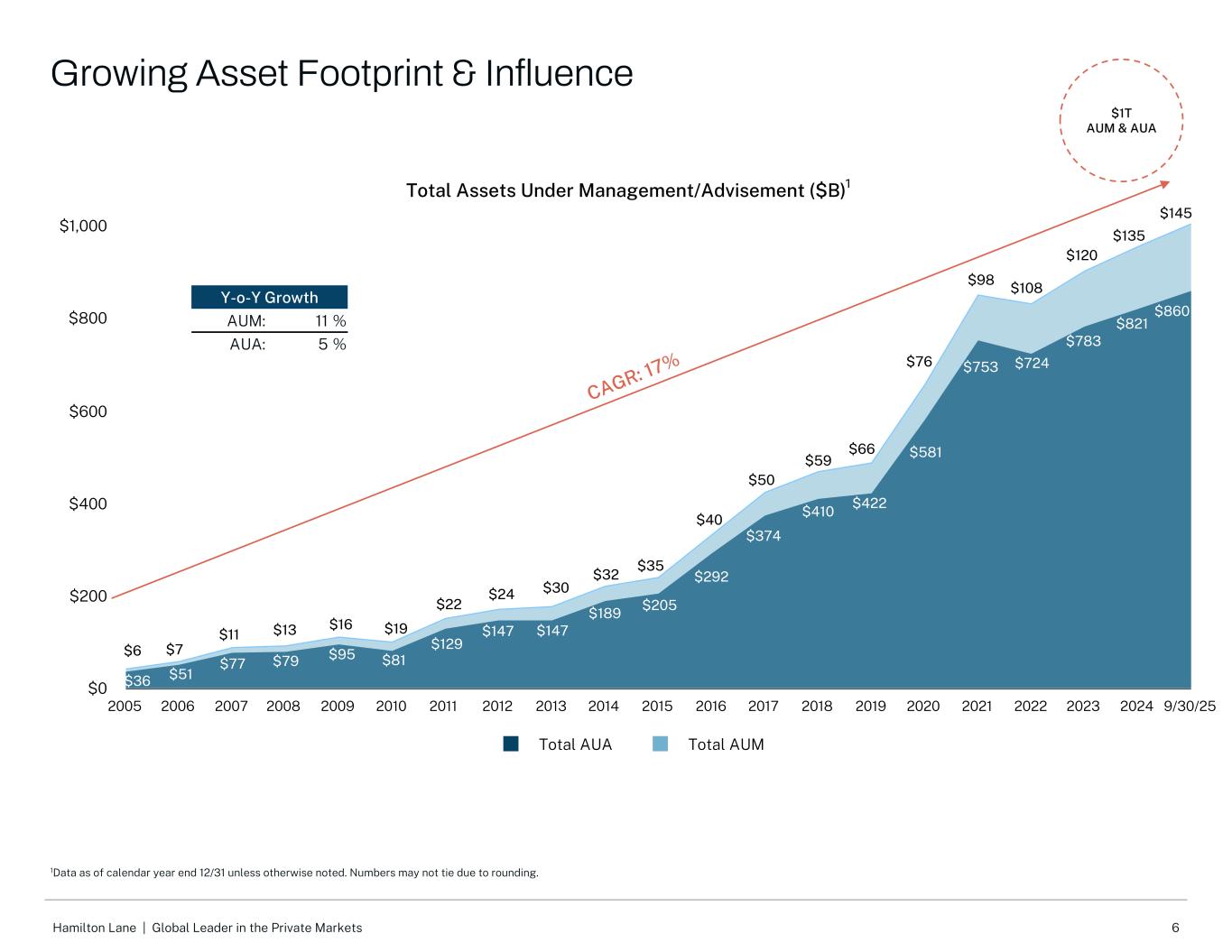
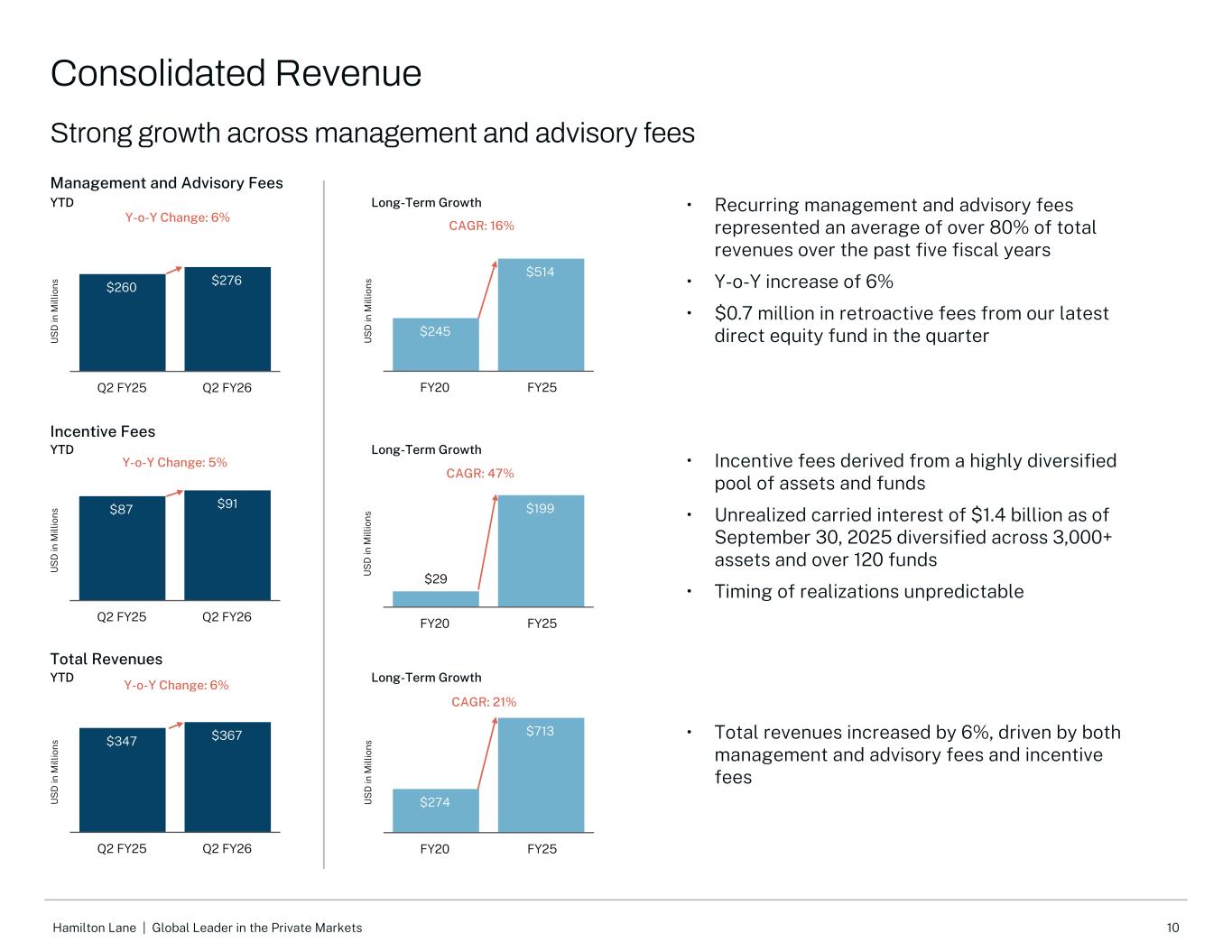
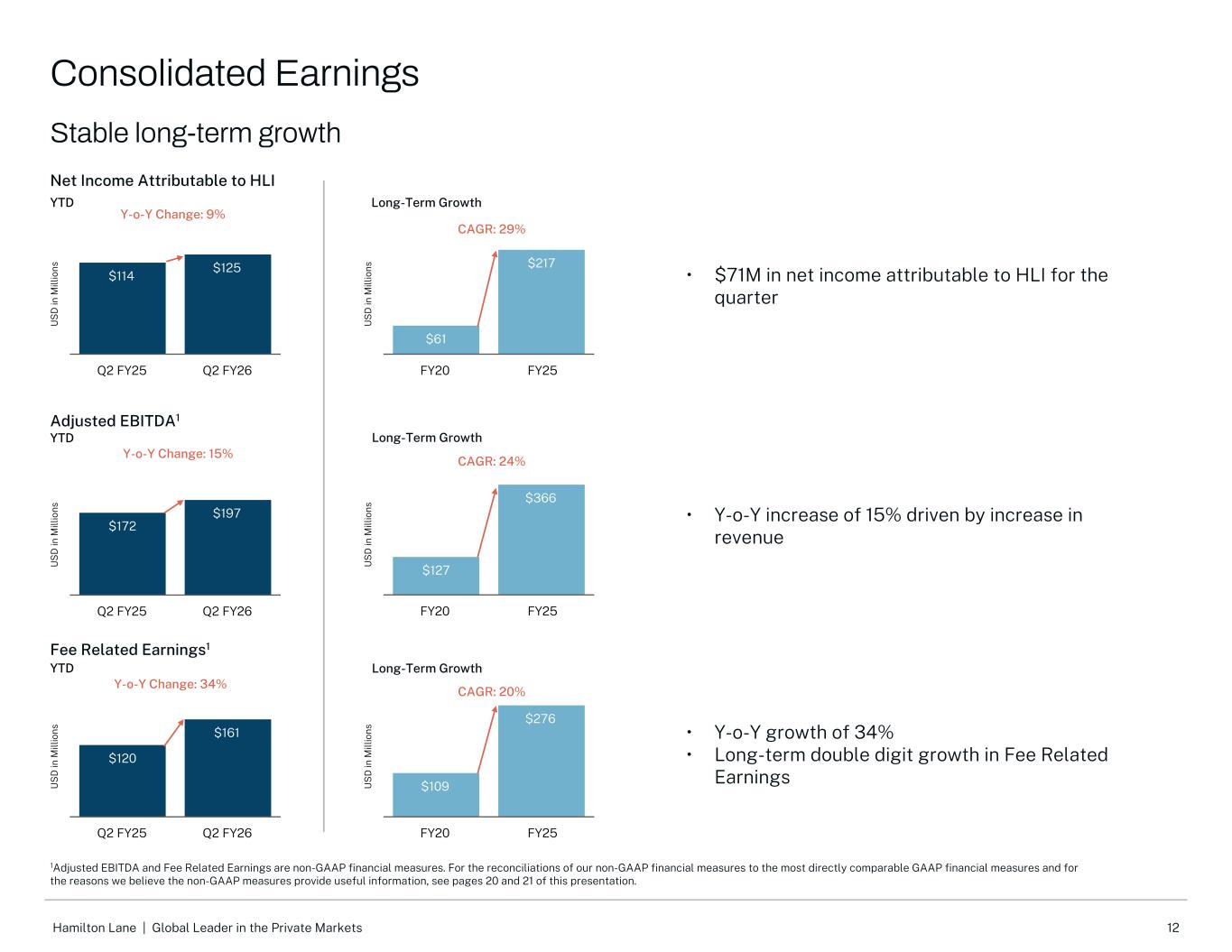
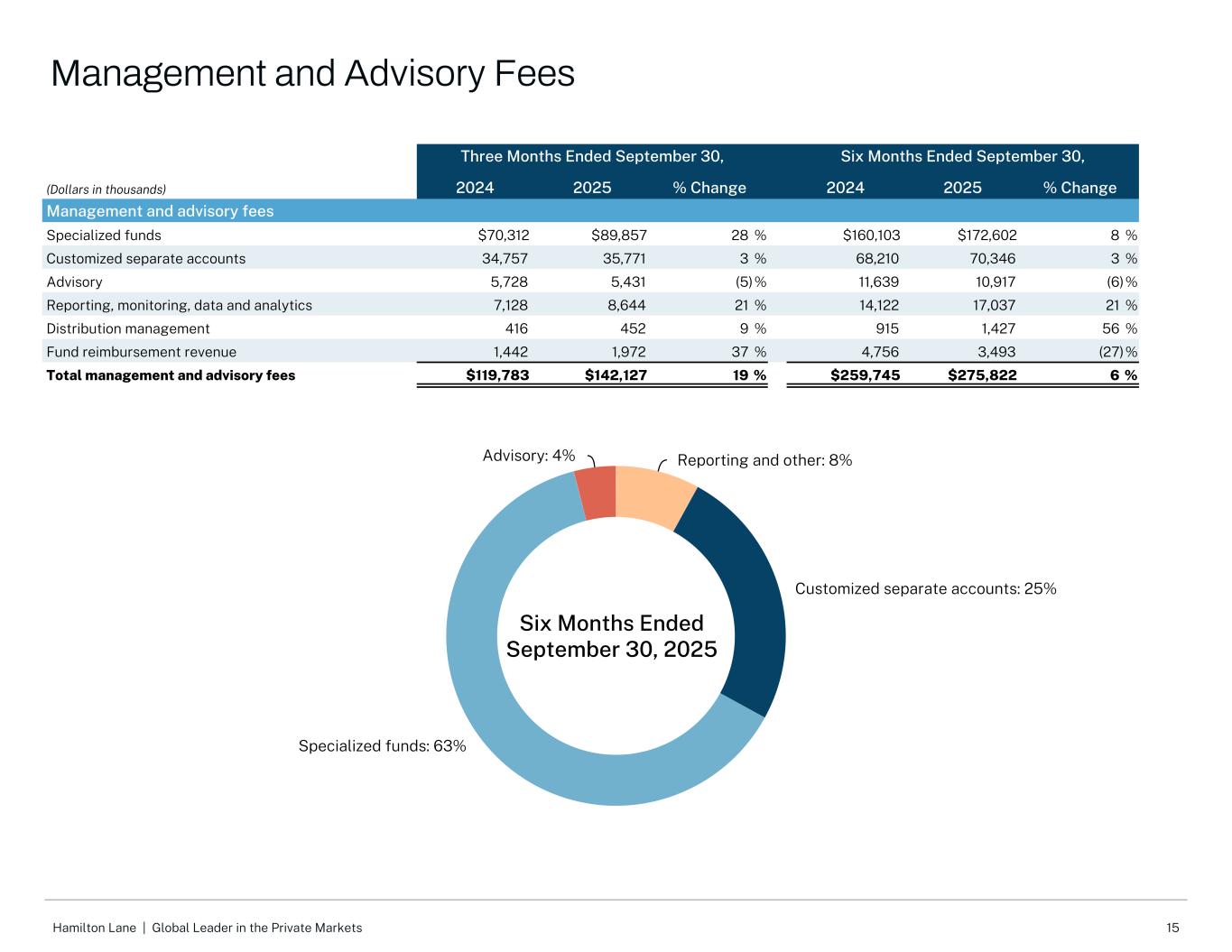
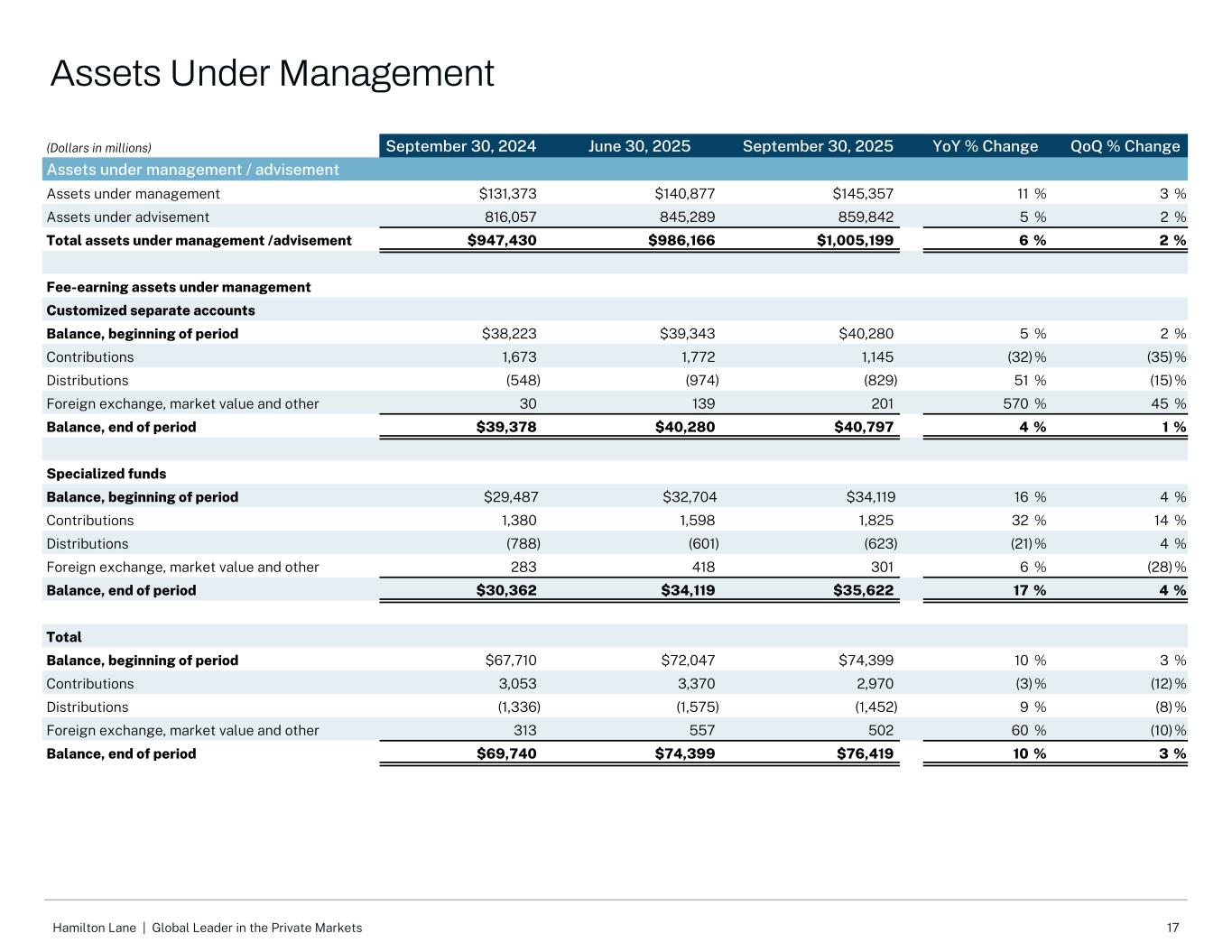
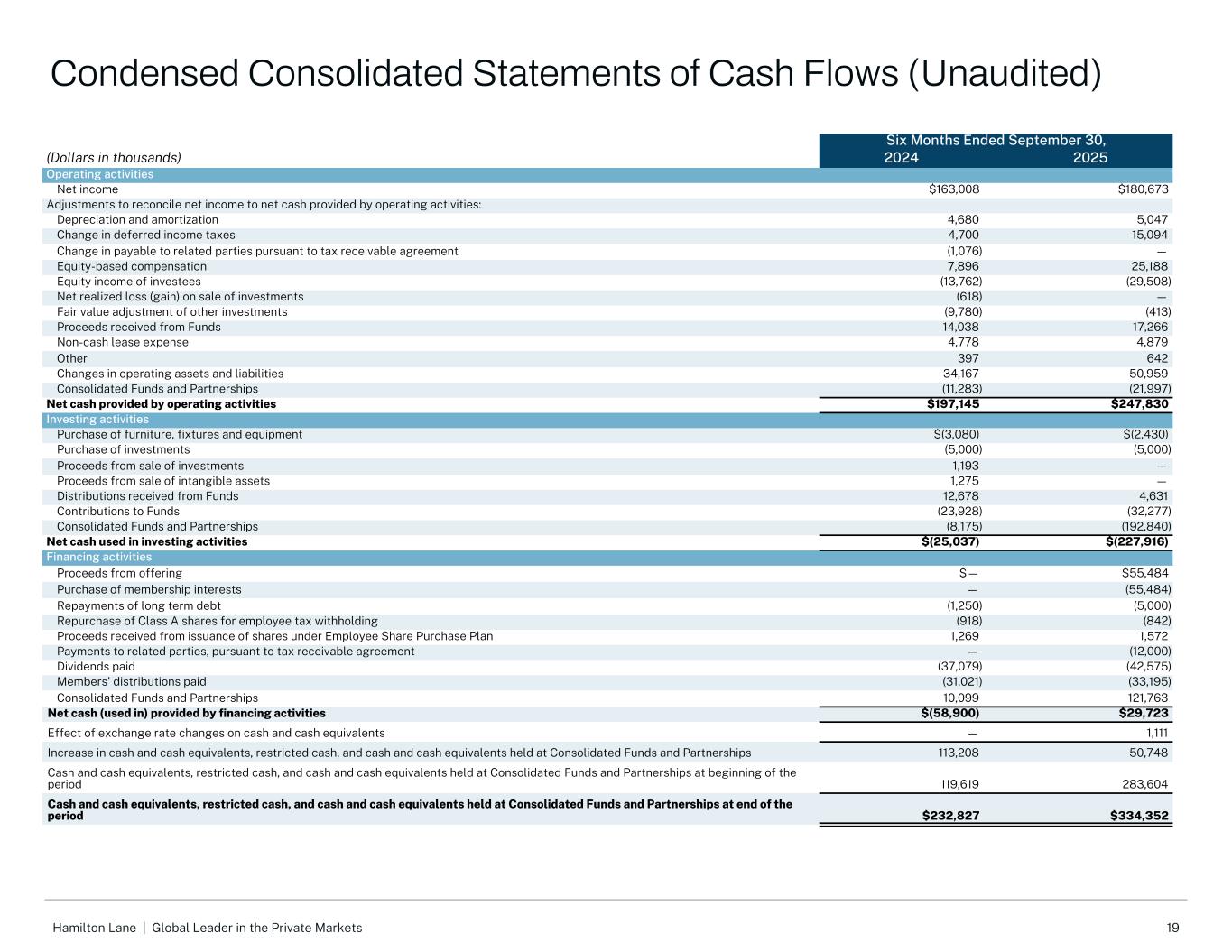
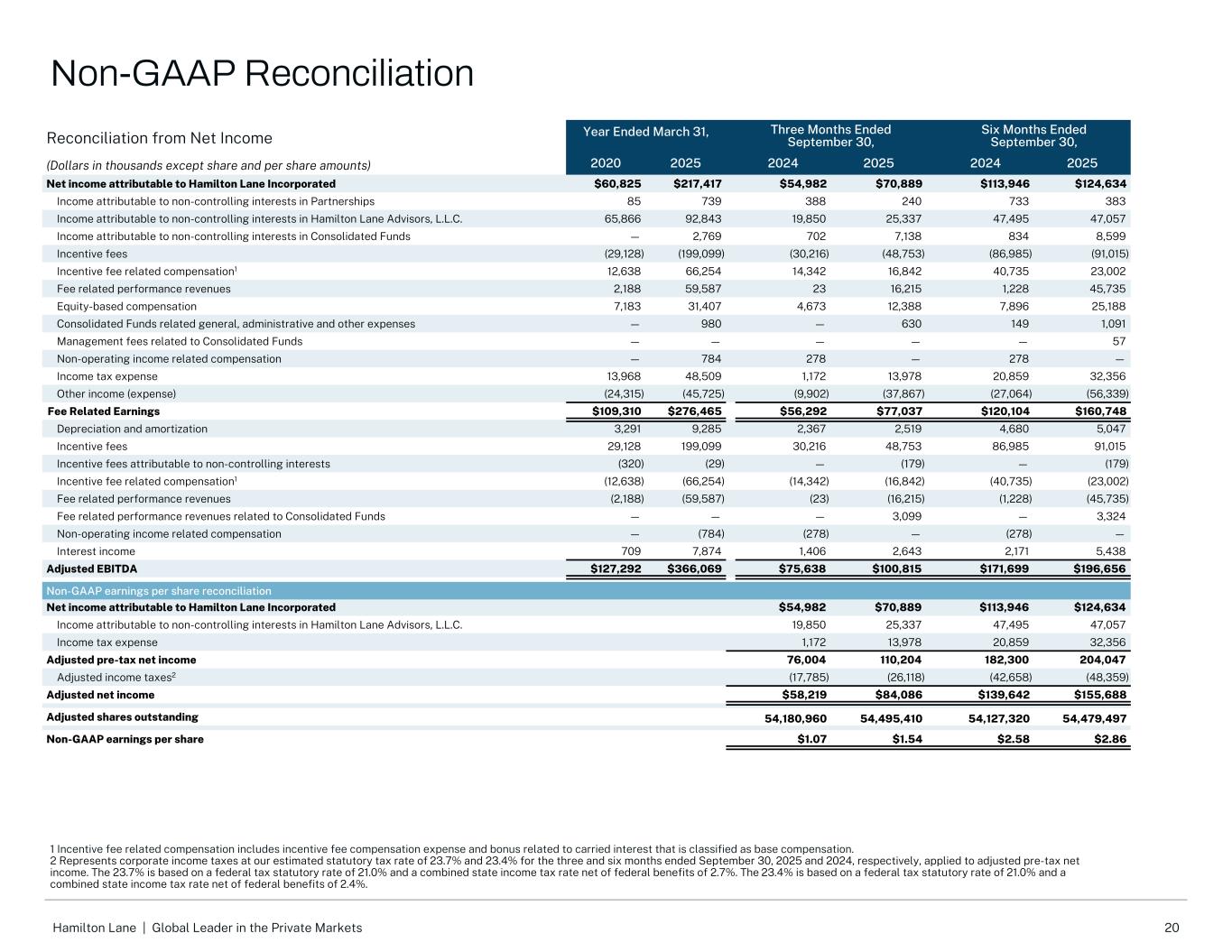
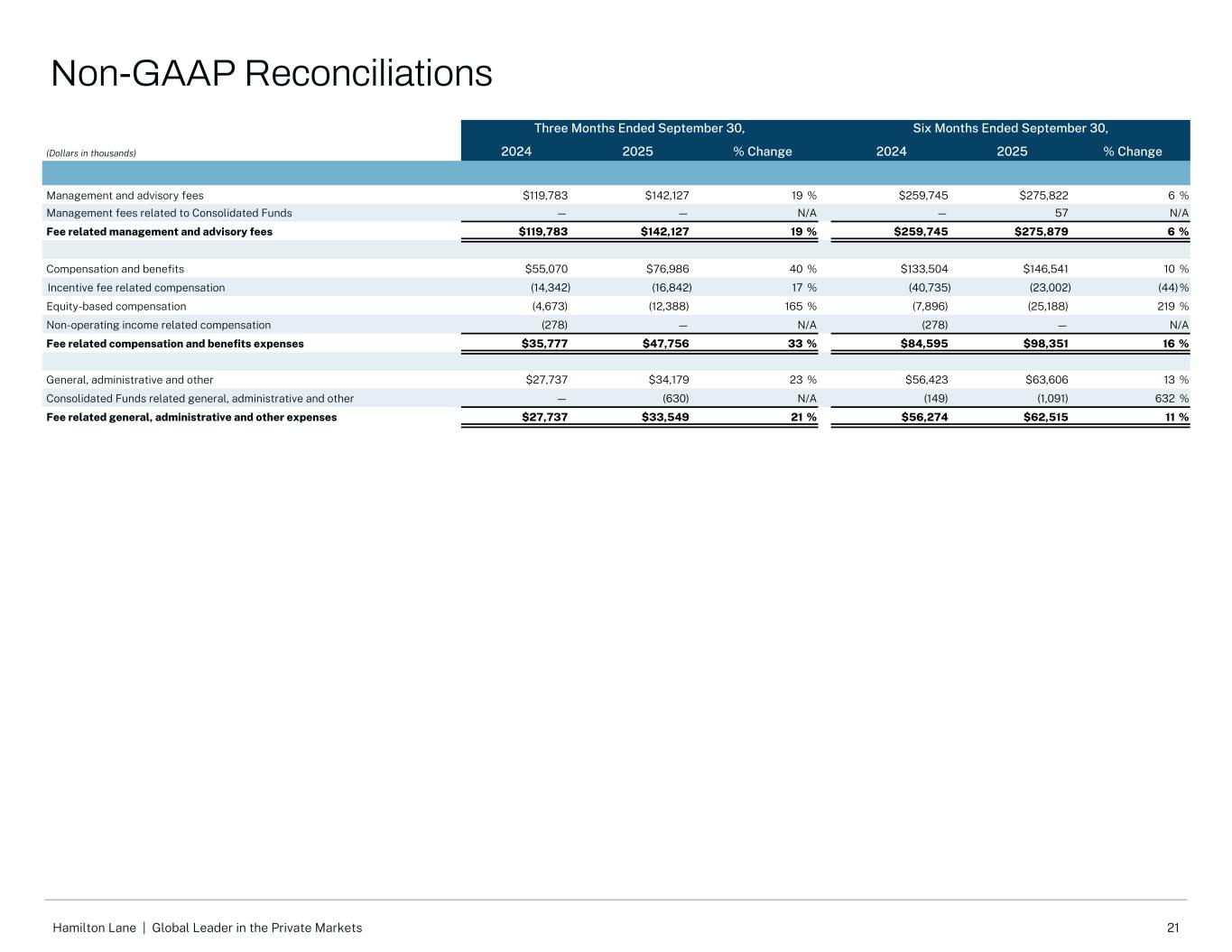
Thank you, Danny. Good morning, and welcome to the Hamilton Lane Q2 Fiscal 2026 Earnings Call. Today, I will be joined by Erik Hirsch, Co-Chief Executive Officer; and Jeff Armbrister, Chief Financial Officer. Earlier this morning, we issued a press release and a slide presentation, which are available on our website. Before we discuss the quarter's results, we want to remind you that we will be making forward-looking statements. Forward-looking statements discuss our current expectations and projections relating to our financial position, results of operations, plans, objectives, future performance and business. These forward-looking statements do not guarantee future events or performance and are subject to risks and uncertainties that may cause our actual results to differ materially from those projected. For a discussion of these risks, please review the cautionary statements and risk factors included in the Hamilton Lane fiscal 2025 10-K and subsequent reports we file with the SEC. These forward-looking statements are made only as of today, and except as required, we undertake no obligation to update or revise any of them. We will also be referring to non-GAAP measures that we view as important in assessing the performance of our business. Reconciliation of those non-GAAP measures to GAAP can be found in the earnings presentation materials made available on the Shareholders section of the Hamilton Lane website. Our full financial statements will be made available when our 10-Q is filed. Please note that nothing on this call represents an offer to sell or a solicitation of an offer to purchase interest in any of Hamilton Lane's products. Let's begin with the highlights, and I'll start with our total asset footprint. At quarter end, our total asset footprint stood at just over $1 trillion and represents a 6% increase to our footprint year-over-year. While this number can and will swing quarter-to-quarter due to our AUA, it is worth noting that this is the first time the firm has crossed over the $1 trillion mark. AUM stood at $145 billion and grew $14 billion or 11% compared to the prior year period. The growth came from both our specialized funds and customized separate accounts. AUA came in at $860 billion and grew $44 billion or 5% relative to the prior year period. This stemmed primarily from market value growth and the addition of a variety of technology solutions and back-office mandates. Total management and advisory fees for the year-to-date period were up 6% year-over-year. This year-over-year change includes the impact of $20.7 million of retro fees in the prior year period versus $800,000 in the current year period. Total fee-related revenue for the period, which is the sum of management fees and fee-related performance revenue was $321.6 million and represents 23% growth year-over-year. Fee-related earnings were $160.7 million year-to-date and represent 34% growth year-over-year. We generated fiscal year-to-date GAAP EPS of $2.98 based on $124.6 million of GAAP net income and non-GAAP EPS of $2.86 based on $155.7 million of adjusted net income. We have also declared a dividend of $0.54 per share this quarter, which keeps us on track for the 10% increase over last fiscal year, equating to the targeted $2.16 per share for fiscal year 2026. With that, I'll now turn the call over to Erik.
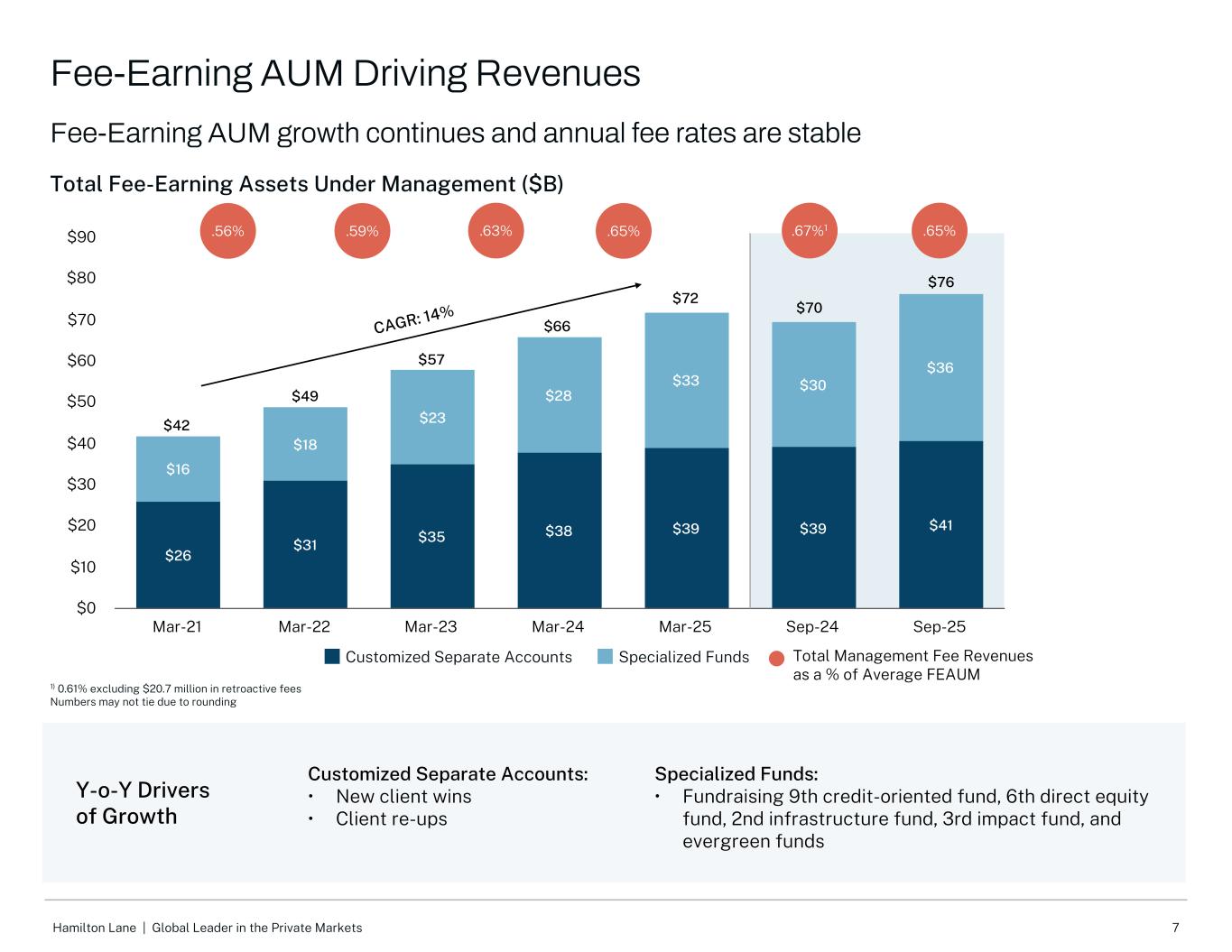
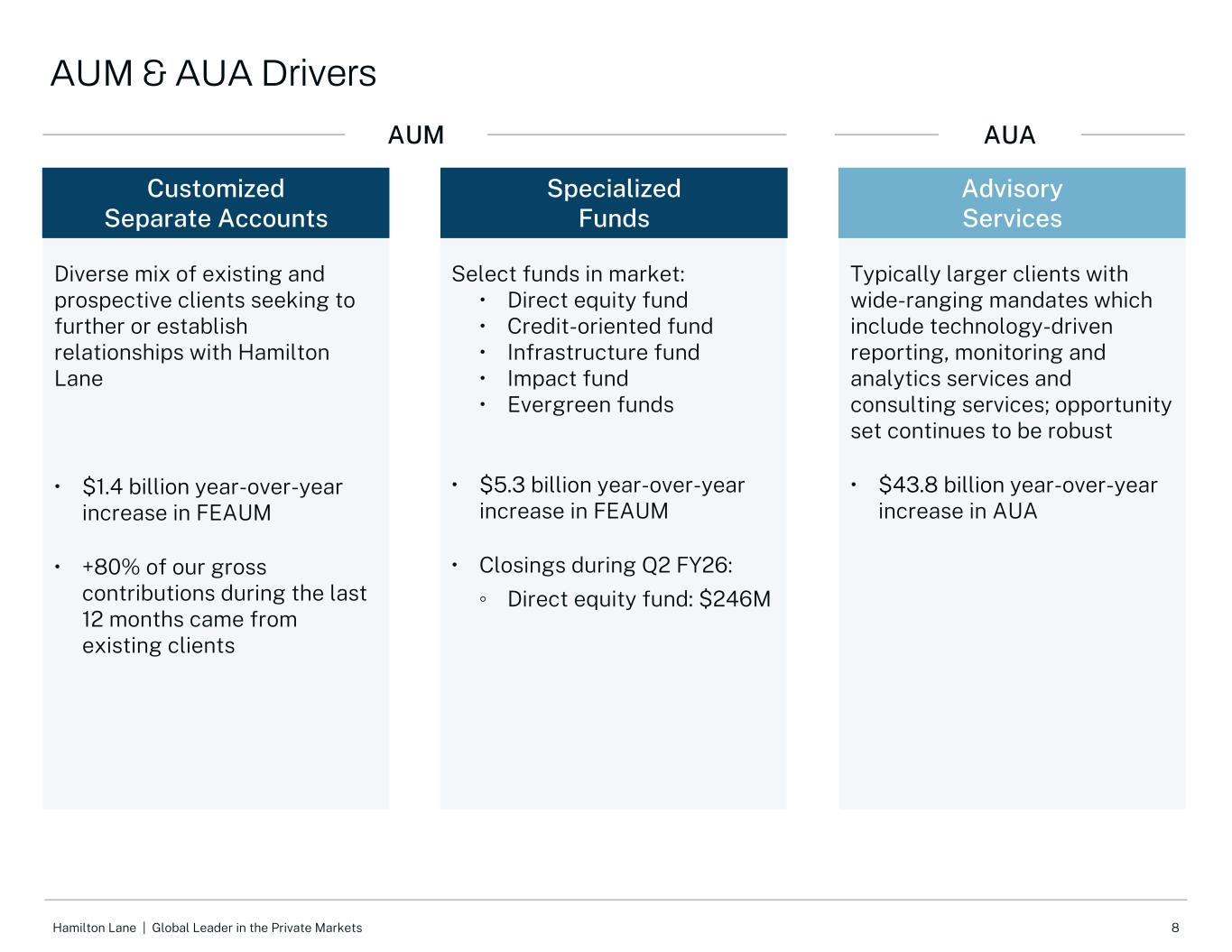
Thank you, John, and good morning, everyone. We have had another very strong quarter. Our job is difficult but not complicated: take care of the customer, build thoughtfully constructed portfolios, and deliver strong risk-adjusted returns. We accomplished all of these this quarter, which has resulted in gaining the trust of more clients and capital. I want to recognize the hard work and dedication of the entire team at Hamilton Lane. Our unwavering commitment to serving our clients has fueled our growth and success. As I’ve mentioned before, we’re building Hamilton Lane for the long term. Every decision is made with the aim of positioning ourselves for sustainable growth and success in the future. This quarter exemplified that approach. We expanded our product offerings, including launching additional Evergreen products, and just yesterday, we announced a substantial new strategic partnership. Guardian Life Insurance Company of America has selected Hamilton Lane as their core strategic partner in the private equity markets. Guardian is one of the largest life insurers in the country and a leading provider of employee benefits. Through this partnership, Hamilton Lane will manage Guardian’s current and future private equity portfolio. We will oversee Guardian’s existing portfolio of nearly $5 billion, and Guardian will commit to investing approximately $500 million annually for the next 10 years with Hamilton Lane. This commitment continues Guardian’s typical annual contribution to the asset class and aligns with its general account allocation goals. Hamilton Lane will manage this capital through a separately managed account, which will include significant capital into our various investment funds. Part of the initial capital deployment will involve $250 million designated as seed and investment capital to help expand and accelerate our growing global Evergreen platform. To support our shared goals of growth and value creation, Guardian will receive equity warrants and additional financial incentives from Hamilton Lane. We will also collaborate with Guardian’s registered broker-dealer and registered investment adviser, Park Avenue Securities, to deliver investment solutions for their clients and provide strategic support and education in private equity to their 2,400 advisers, who collectively manage approximately $58.5 billion in client assets as of December 31, 2024. Furthermore, investment professionals at Guardian currently managing the private equity portfolio are expected to join Hamilton Lane after the transaction concludes. Overall, we believe this partnership demonstrates our ability to provide customized solutions to leading institutions. In recent years, the convergence of private market asset management and the insurance industry has resulted in various partnership formats. This evolving opportunity set has been a focus as we continue to scale our insurance solutions platform to over $119 billion. In 2024, we formalized this focus with the creation of a dedicated insurance solutions team aimed at enhancing how we serve insurers, deepening our expertise, and improving our strategic execution for this sophisticated client base. We believe our partnership with Guardian showcases these efforts, and we are excited to be selected by Guardian for the essential task of delivering for their policyholders, ensuring their private equity portfolio continues to prosper. Jeff will share specifics on the expected financial impact in his section shortly. Before discussing our results, I want to address the current narrative suggesting the industry is on the brink of a broader credit crisis. We see no data supporting this claim, especially in private credit. In fact, we are witnessing a further decline in what was already a low bankruptcy rate. What we're seeing is a small number of high-profile bankruptcies, which has led the broader public market to speculate about a looming credit crisis. Interestingly, some of the voices warning of impending doom are from parties experiencing losses due to these recent bankruptcies, seemingly acknowledging their issues while predicting similar troubles for others. Looking at the data, credit fundamentals are sound, and defaults are low. Current leverage levels are prudent around 5x, down a full turn from 2022, and interest coverage is healthy at 2.8x, having increased by 0.5 turns over the past two years. The default rate is around 1%, below the historical average of 2.5%, and significantly lower than the nearly 10% seen during the global financial crisis. Even during the crisis, total bankruptcies and credit losses rose to 10%, but most of our managers experienced low single-digit losses and achieved positive performance. In fact, private credit generated positive annual returns from 2007 to 2010, averaging 9% to 10% per annum, with top quartile managers achieving returns over 12%. Our direct credit portfolio reflects similar trends, with increasing top lines and cash flows, prudent leverage levels, and near-zero investment losses. This highlights our capacity to provide accurate data on a sizable industry segment, rather than relying on anecdotes. Our database encompasses nearly 65,000 funds and 165,000 private companies, granting us insights into industry developments. We possess the visibility to understand the realities of the situation. This is one of our strengths for clients, providing clarity and transparency in complex environments. Now, let’s move on to some business highlights, starting with fee-earning AUM. Total fee-earning AUM reached $76.4 billion, an increase of $6.7 billion or 10% year-over-year. Quarter-over-quarter, growth was $2 billion or 3%. This growth primarily stems from our specialized fund platform, notably our semi-liquid Evergreen products, which continue to gain strong momentum. Our fundraising efforts, along with new product additions and solid performance, have contributed to the growth of our total fund net asset value. Our blended fee rate also benefits from the shift in fee-earning AUM towards higher-fee specialized funds, particularly our Evergreen products, currently standing at 65 basis points. This represents an increase of 8 basis points or 14% since our public debut in 2017. At the end of the quarter, customized separate account fee-earning AUM totaled $40.8 billion, growing $1.4 billion or 4% over the past year, with net quarter-over-quarter growth of $517 million or 1% driven by new client wins, free-up activity from existing clients, and contributions from investment activity. This was offset by capital returns from exit activity and the timing mismatch of legacy tranches rolling off and new tranches onboarding. Nonetheless, we continue to maintain significant amounts of committed and contractual dry powder for deployment, along with a strong backlog of business in the contracting phase. As noted previously, the scale and contracting dynamic in our SMA business may lead to unpredictability regarding the timing of these dollars, but we remain focused on acquiring new business. Additionally, these quarter-end figures do not yet reflect the impact of the Guardian partnership discussed earlier. Now, let’s turn to Specialized Funds, where I’ll provide updates on our closed-end fundraises and Evergreen platform. Specialized funds fee-earning AUM stood at $35.6 billion at the end of fiscal Q2, marking a $5.3 billion increase over the past 12 months, a growth of 17%. Quarter-over-quarter net growth was $1.5 billion or 4%. The growth in specialized fund fee-earning AUM is largely attributed to our Evergreen platform, both in net inflows and net asset value growth, driven by closures for certain closed-end funds and continued robust investment activity for closed-end funds charging management fees on invested capital. On the closed-end side of our lineup, we are currently fundraising for our six equity opportunities funds, which focus on direct equity investments alongside leading general partners and offer two fee arrangements: management fees on a committed capital basis with a 10% carry or on a net invested basis with a 12.5% carry. We raised $2.1 billion during this quarter, with additional closes totaling $246 million, bringing the total raised to nearly $1.6 billion. Of the $246 million, $88 million was on a committed capital basis, and $158 million was on a net invested basis, resulting in a total mix of capital raised of nearly 30% on committed and 70% on net invested. We have clear visibility into expected near-term closes, which we believe will push total capital raised to over $2 billion, and we have strong confidence in surpassing previous funds in the coming months. Moving on to our second infrastructure fund, we have made substantial progress and nearly doubled the amount raised for our first fund. This exemplifies our strategy of launching products, starting small, showcasing strong performance, and gaining trust from investors to support larger offerings. The strategy for this product focuses on direct equity and secondaries in the real assets and infrastructure areas, generating management fees on a net invested basis. In the past quarter, additional closes contributed $270 million of LP commitments, bringing total fundraising to over $1.1 billion. We've almost doubled the size of our first infrastructure fund, demonstrating our capacity to effectively launch and scale new products. Capital continues to flow in, and we aim to complete fundraising for this fund in the coming months. This fund has also deployed significant capital, and we expect to be back in the market by late 2026 or early 2027. Before discussing Evergreen, a quick note on the secondaries front: we've launched fundraising for our next flagship secondaries fund and anticipate a first close in the first half of 2026. Our strong track record of growing this platform through larger successive funds positions us well, supported by active portfolio management by both LPs and GPs alongside our solid investment track record, with our current vintage secondaries fund having produced a net multiple of 1.4x and a net IRR of 44.1% for our investors as of June 30, 2025. We look forward to keeping you updated on this front. Turning now to the Evergreen platform, for the quarter ending September 30, 2025, we achieved over $1.6 billion in net inflows across our entire suite of Evergreen products, marking our largest quarter ever. This success stemmed from expanded product offerings, strong fundraising, and stellar performance. The $1.6 billion includes initial subscriptions to newly launched Global Secondaries, Global Venture, and Asia funds, all of which started accepting capital in the third calendar quarter. By quarter end, total Evergreen AUM reached $14.3 billion. During our 2024 Shareholder Day, we outlined a clear strategy for continued growth in our Evergreen platform, focusing on expanding our existing lineup of three funds and maintaining confidence in our ability to launch scalable new products. Eighteen months later, that strategy has materialized, with the Evergreen suite expanding from three funds to eleven and AUM nearly doubling to over $14 billion. We've also become more agile in product launches, leveraging our scale to accelerate both introductions and growth. While our initial three funds took nearly two years to reach $500 million in AUM, our newer global infrastructure and secondary offerings have done so in under 12 months. Institutional investor support for these products remains robust, and thanks to the structural advantages of Evergreen funds, we continue to witness a shift from drawdown funds to this product line. Currently, over $1 billion in Evergreen AUM is not yet earning management fees due to the timing of initial subscriptions and fee holidays for new funds launched in the past 12 months. Although these funds aren't generating management fees yet, we can still earn performance fees for those that include a performance fee element. We expect that more than half of the current $1 billion will transition to specialized fund fee-earning AUM during the fourth quarter of 2025, with the rest following in 2026 as the fee holidays conclude for those respective funds. Now, onto some technology updates. This quarter, we announced three developments regarding our strategic technology balance sheet portfolio and our proprietary Hamilton Lane Private Market indices. First, we are excited to announce a partnership regarding our proprietary private market indices and benchmarks with Bloomberg, allowing users access to a suite of Hamilton Lane Private Market indices and benchmarks via the Bloomberg Terminal and data license. Although the revenue potential is modest at this early stage, this partnership provides a unique opportunity to reach a broader and growing private market audience, leveraging Bloomberg’s reach and scale. This will enhance our brand, particularly within the RIA community, as Bloomberg is a leader in financial news, data, and analytics, with terminals prevalent throughout financial services and investment management. Their client base spans major global institutions to individuals and their advisers, the latter being a key growth segment for private markets. This partnership positions Hamilton Lane’s brand and indices within these workflows, meeting the demand for better performance measurement tools across strategies, vintages, and geographies. This collaboration will elevate standards for how private markets are benchmarked and enhance our visibility among terminal users globally. Next, regarding Securitize, on October 28, it was announced that Securitize had entered into a definitive business combination agreement with Cantor Equity Partners II, a special purpose acquisition company. The closure of this transaction, anticipated in the first half of 2026, will result in Securitize becoming a publicly traded company. Securitize specializes in regulated technology that converts traditional financial assets into digital tokens for issuance, trading, and servicing on-chain. Hamilton Lane has built a strong relationship with Securitize since initially partnering in 2022 to tokenize several offerings and participating in a strategic fundraising led by BlackRock in May 2024. Together, we share a vision of making private markets more accessible to a broader range of investors. Securitize has distinguished itself in tokenizing real-world assets, and we are proud to deepen our strategic partnership as they enter this exciting new phase. Given the proposed pre-money valuation of the business combination, we expect a return of more than two times our initial investment, demonstrating our ability to successfully partner and invest our balance sheet capital in companies that will help drive growth and scale in our asset class. Finally, we have an exciting announcement regarding Novata. On October 7, Novata announced a significant strategic acquisition of Atlas Metrics, expanding Novata’s global reach and uniting two complementary firms to meet the rising demand from investors and companies for trusted, efficient, and scalable sustainability data solutions. The combined entity will serve over 400 clients and more than 13,000 private companies globally, providing necessary tools for collecting, reporting, and acting on sustainability data. In support of the acquisition and ongoing strategic initiatives, Hamilton Lane invested additional capital in a fundraising round alongside S&P Global, Modiv Ventures, and the Ford Foundation. We remain dedicated to increasing data transparency and analytical capabilities in our asset class and are pleased to support Novata in its mission to empower sustainability in private markets. Since our initial investment in 2021, Novata has experienced remarkable growth. By focusing on shared vision and execution, we believe Novata can continue to scale, and we are excited about the opportunities ahead. Now, I'll pass the call over to Jeff to discuss the financials.
Speaker 3
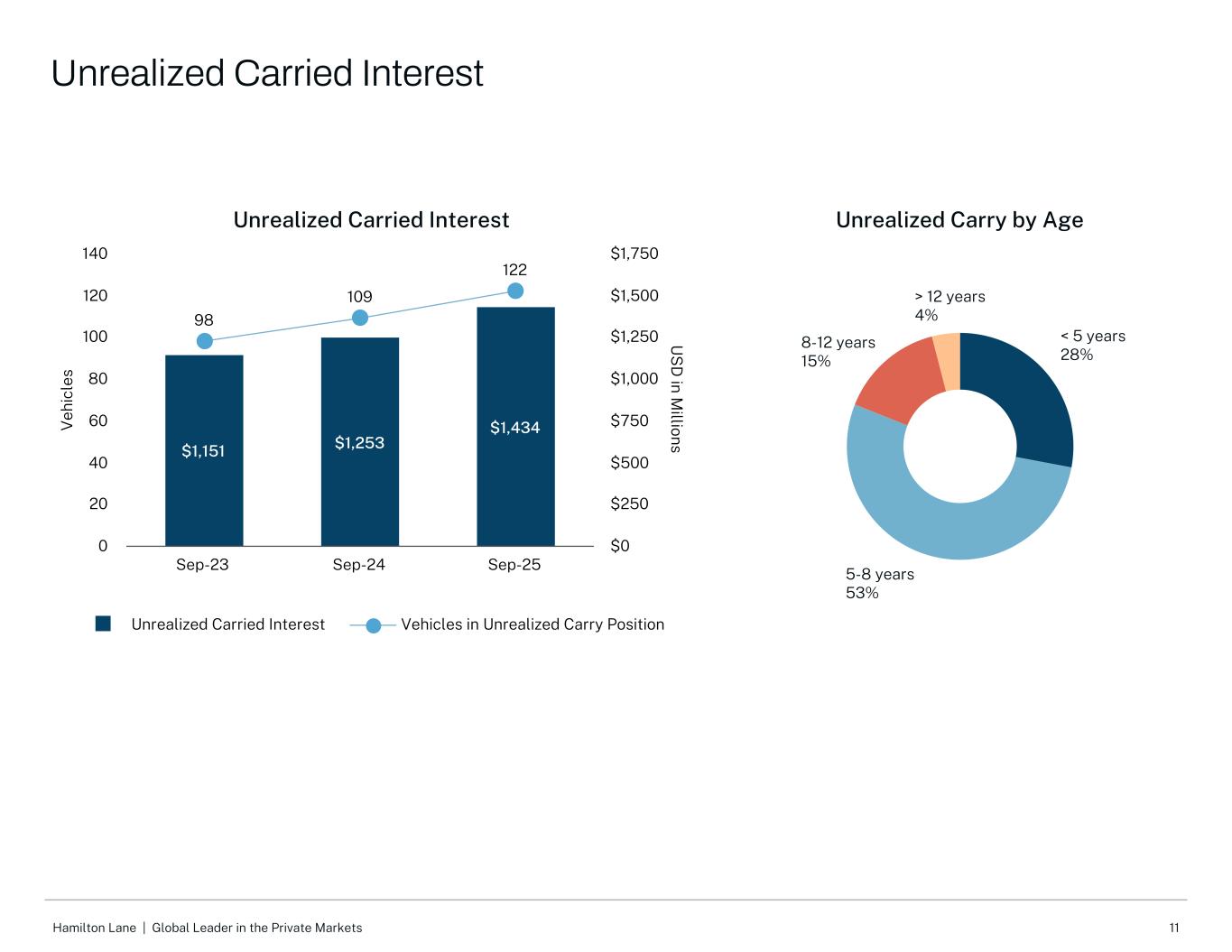
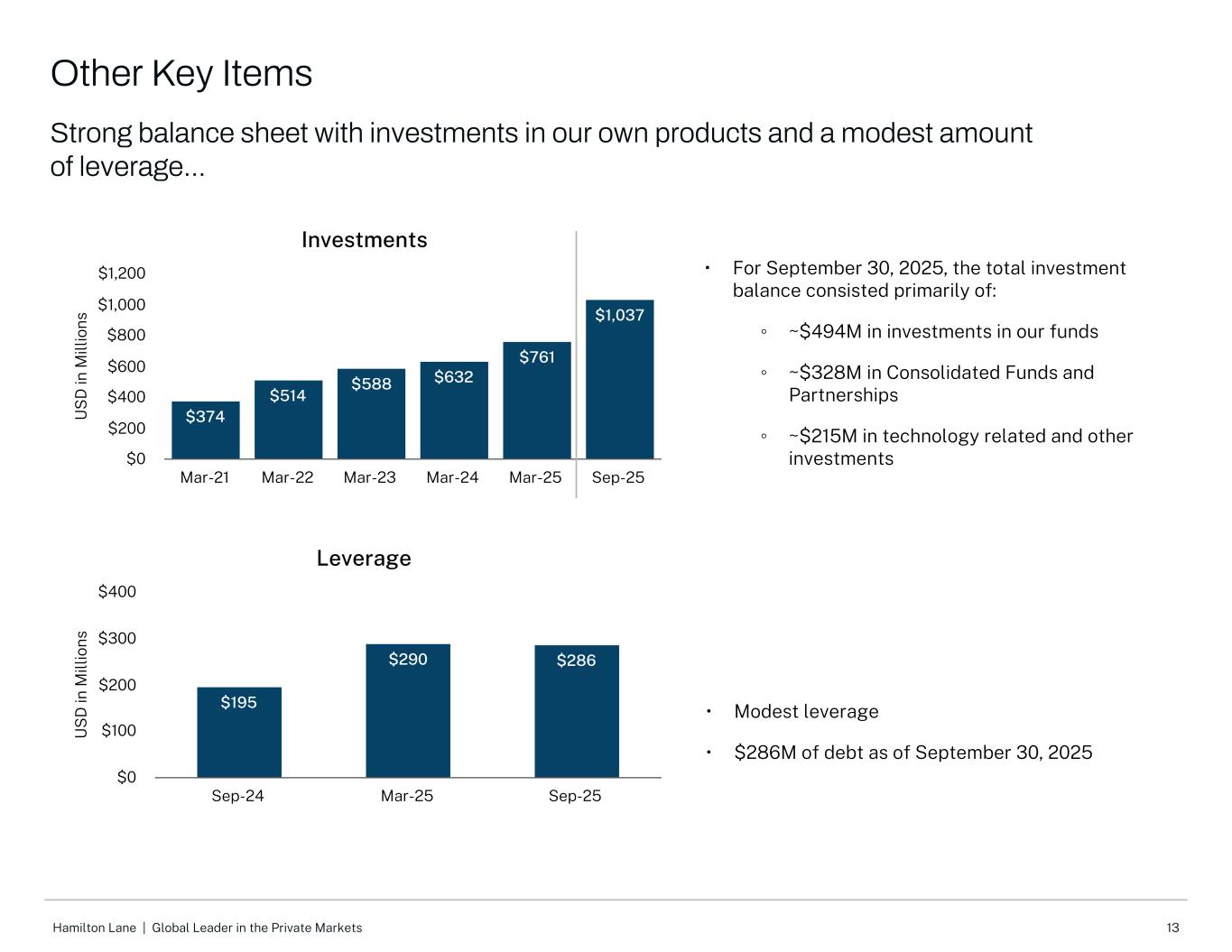
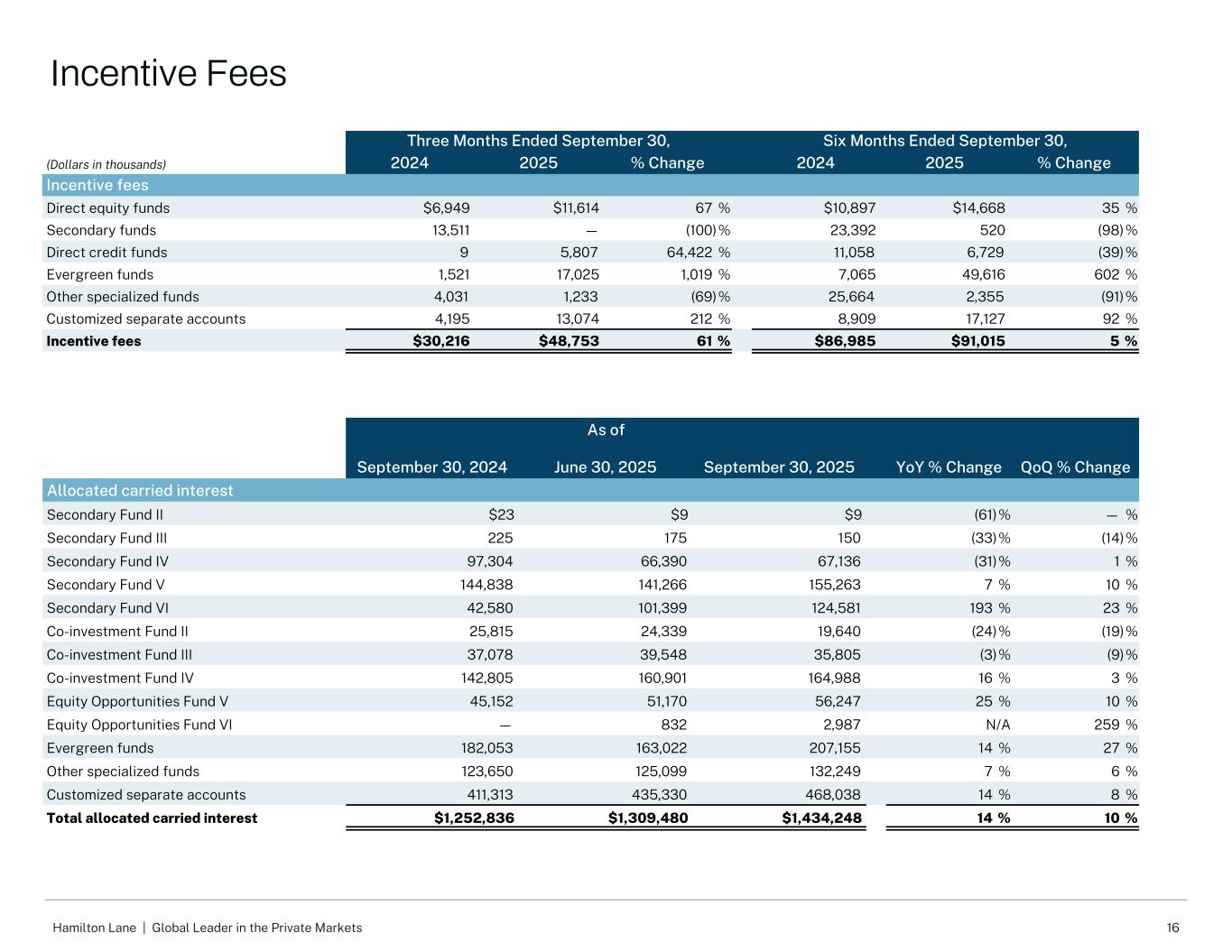
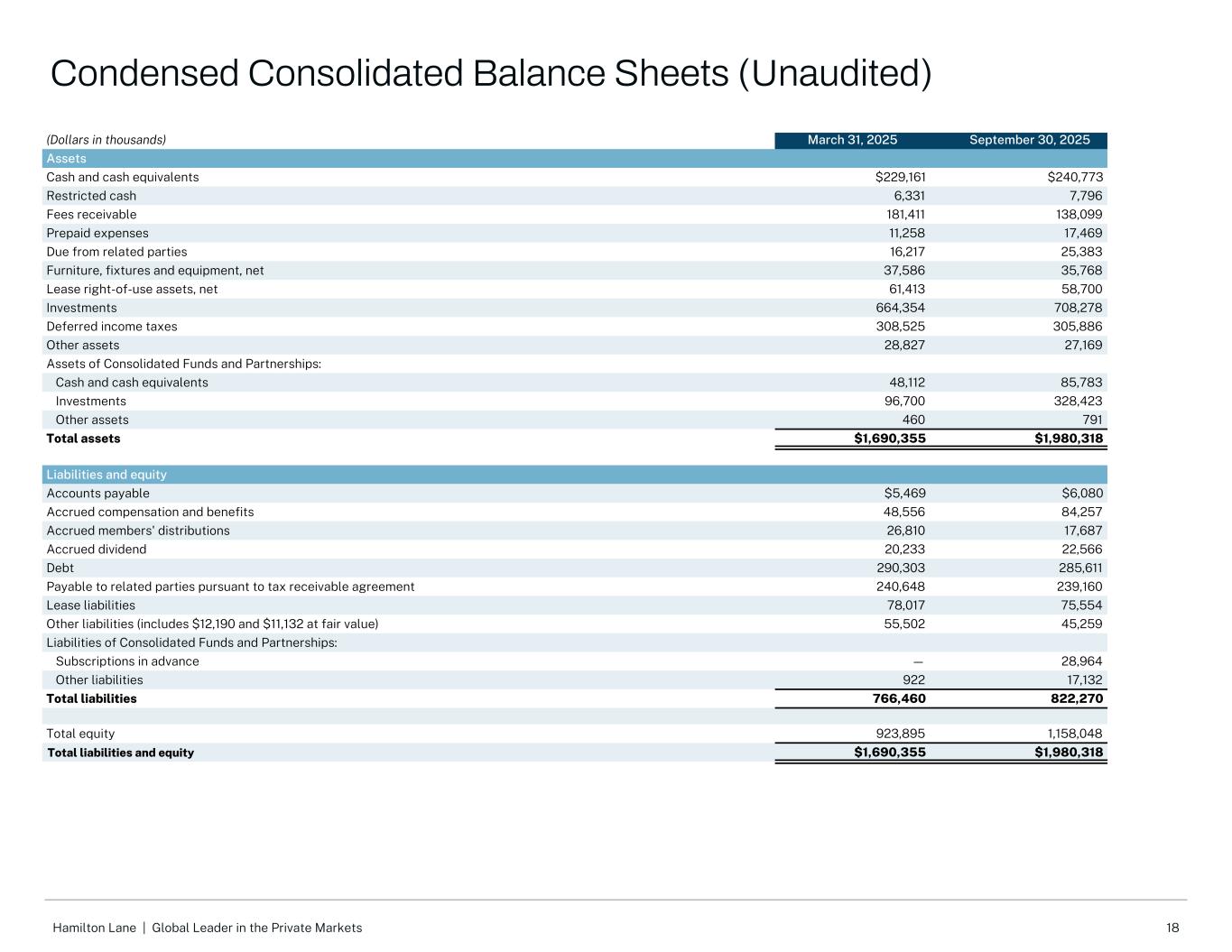
Thank you, Erik, and good morning, everyone. I'll start by discussing our business performance in the first half of fiscal 2026, followed by details on the Guardian Life partnership and its potential impact on our operations. In the first half of fiscal 2026, management and advisory fees increased by 6% compared to the prior year, which includes the effect of $20.7 million in retro fees from specialized funds related to the final close of our sixth secondary fund last year, contrasted with $800,000 in retro fees this quarter from our latest direct equity fund. Overall, fee-related revenue rose by 23%, driven mainly by fee-related performance revenue recognized in the first half of fiscal 2026, compared to a minimal amount in the same period of fiscal 2025. Revenue from specialized funds grew by $12 million or 8% year-over-year, supported by ongoing growth in our Evergreen platform, which remains a key driver of specialized fund fee-earning assets under management. Again, year-over-year growth here was influenced by the retro fee aspect I mentioned earlier. Regarding customized separate accounts, revenue increased by $2 million or 3% compared to last year, due to new account additions, renewals from existing clients, and continued investment activities. Our reporting, monitoring, data, and analytics services saw revenue rise by over $3 million or 21% year-over-year as we continue to experience robust growth in our technology solutions. The total for incentive fees reached $91 million for the period, with this figure reflecting fee-related performance revenue primarily derived from the quarterly crystallization of performance fees from our U.S. private assets Evergreen fund, along with contributions from our newly launched evergreen funds. Now, turning to our unrealized carry balance, it has increased by 14% from the prior year, despite $102 million in recognized incentive fees, excluding performance-related revenues, over the last twelve months. The carry balance currently stands at about $1.4 billion. Moving on to expenses, we saw fiscal year-to-date total expenses rise by $20 million or 11% compared to last year. Total compensation and benefits grew by $13 million or 10%, mainly due to an increase in headcount and equity-based compensation, offset by a decline in incentive fee compensation due to lower non-performance-related incentive fee revenue compared to the prior year. General and administrative expenses increased by $7 million, with continued growth in revenue-related expenses, including third-party commissions linked to our U.S. Evergreen product offered through wirehouses, which we have previously discussed. While overall G&A expenses have risen, the majority of this increase is attributable to revenue-related costs, which is positive and can signal future growth. We are also effectively mitigating these expenses with cost-saving measures and disciplined spending in other business areas. Now, regarding fee-related earnings, FRE will now encompass fee-related performance revenues and exclude equity-based compensation from its calculation. As a result, fiscal year-to-date FRE totaled $161 million, marking a 34% increase compared to the prior year, with a FRE margin for the quarter of 50%, up from 46% last year, bolstered by strong fee-related performance revenues during this period. Before concluding, I want to share some insights on the Guardian Life partnership discussed earlier. This collaboration underscores our capabilities as a trusted provider of private equity solutions, and we are enthusiastic about working with Guardian. As highlighted, in exchange for the capital we’ll manage for Guardian, they will receive HLNE equity warrants along with additional financial incentives that mainly consist of revenue share arrangements linked to their seed capital, all aimed at pursuing our shared growth and value creation objectives. The revenue from this partnership will come in two forms: first, we anticipate generating management fees from capital invested in our Evergreen funds, which will be reflected in specialized funds; second, the separate account we manage will generally follow the structure of a standard institutional separate account in terms of portfolio construction and fee schedule, contributing to separate account management fees. We expect the scale of this to grow as the portfolio is deployed over time, and in both scenarios, we can earn performance fees aligned with the strategies involved. Regarding the warrants, based on our fully diluted share count as of September 30, 2025, the total dilution from the Guardian warrants is expected to be less than 1%. This warrant package will have a vesting schedule that aligns with the partnership's duration and tiered exercise prices based on a reference price established by the HLNE 20-day volume-weighted average price as of the closing price on October 31, 2025. Further details on the warrant package will be provided in our 10-Q filing. Now, I’d like to offer some remarks on our balance sheet. Our primary asset remains our investment alongside our clients in customized separate accounts and specialized funds. We regard these investments as vital for our long-term growth, and we plan to continue investing our balance sheet capital alongside our clients. Concerning our liabilities, we remain modestly leveraged and will assess the use of our solid balance sheet to support ongoing growth for the firm. With that, we'll now open the call for questions.
Operator
Your first question comes from Alex Blostein from Goldman Sachs.
Speaker 4
On the Guardian announcement. Maybe we could start there. I heard your comments around just the structure of the arrangements, but maybe you could help us with the actual fees that are likely to hit P&L. I heard the geography of different line items. But as you sort of think about the $5 billion that's going to come over, maybe help us with the fee structure there and also with the $500 million a year that's going to get allocated over time. So maybe we can start there.
Thanks, Alex. It’s Erik. I think you should expect that the vast majority of the revenue that we’re generating is on the $5 billion that will be coming in over the next 10 years because the existing $5 billion is basically a monitoring assignment. Those are dollars already in the ground in a variety of partnerships. And so if you look at the $5 billion that will be coming over, we clearly called out the $250 million going into Evergreen. And then the SMA portion, I think, again, hard to predict exactly what the next decade looks like. But that’s going to be a mix of primary funds and a bunch of our specialized funds at whatever the prevailing fee rate is for those vehicles.
Operator
Your next question comes from Michael Cyprys of Morgan Stanley.
Speaker 5
I wanted to ask about the Bloomberg partnership and more broadly partnerships on the data side. I was hoping you could elaborate a bit around that. What's the scope for more broadly enhanced monetization of your data sets as you look out from here as well as indices? And what's the scope for creating investable index products as you think about looking at over time?
Yes. Thanks, Mike. It’s Erik. So the Bloomberg arrangement is going to be a revenue share model where that will grow over time as that installed base continues to grow and usage grows. I think we’ve been very tactical and selective at where we’ve been partnering. We view our data to be valuable. And so simply just running out and licensing it here, there and everywhere has not been part of our strategy. I think we’ve been thoughtful about where we see both chances for revenue and as I mentioned in my script, real chance for brand enhancement. And I think for us, this was a big opportunity for brand just given the number of RIAs who are regularly daily, minute by minute using Bloomberg terminals and Bloomberg data. And as we think about that world increasingly needing and wanting more private market benchmarks and information, we’re going to be the provider of that. And we think that is a huge brand enhancer for us. I think investable indices, I don’t see that as a focus. I know some have spoken of that. I haven’t seen traction for that. I think trying to sort of synthetically replicate what happens inside of private market portfolios using publicly listed securities has been tried by many smart people, and generally, they’ve all failed. And so I don’t see that as our focus today. I think it’s really around data as an education tool, data as a brand enhancer and data for making better investment in portfolio selections.
Operator
Next question comes from Ken Worthington of JPMorgan.
Speaker 6
Erik, I wanted to dig a bit further into the SMA business. Can you talk about how the pipeline is developing and at what rate that pipeline is growing? And then if we think about your sales force and the sales effort, to what extent do you have as many resources today sort of allocated to SMAs versus what you’ve had in the past, given the superior economics you see in Evergreen and the customized funds part of the business?
Thanks, Ken. None of our sales team are specifically organized around SMAs, especially regarding specialized funds. Most of the sales organization is structured by geographic territories where they focus on understanding the local players and identifying the challenges customers are facing, so we can provide effective solutions. We've discovered that, given the variety of products we offer, many of these have become better solutions for numerous customers. This is a key reason behind the strong growth in specialized funds. Additionally, the pipeline is substantial, with billions of dollars emerging even in stages that are not yet contracted, and this will be realized over time as we progress through the contracting phase. The pipeline remains healthy. Comparatively, if you consider our position with SMAs 5 or 10 years ago, we had very few specialized funds. Now we have significantly more, which are effectively catering to our customer base, benefiting our business model due to the favorable fee structure of these funds.
Speaker 6
Okay. Great. And I don’t know if I’m allowed to do a follow-up, but I’ll take a shot at it. In terms of Guardian, the warrants, you mentioned that the commitments will come over the next decade. Are the warrants being awarded over the next decade? Or are they more front-end loaded? And you mentioned like a revenue share. Are the warrants attached to the revenue share? Or was that separate?
Speaker 3
Ken, this is Jeff Armbrister. So the warrants are front-end loaded, but there is some period of time for additional warrants to be provided. The revenue share is not tied to the warrants. They are 2 separate pieces. So that's how you should think about it.
Operator
Your next question comes from Brennan Hawken of BMO.
Speaker 7
The core fee rate on specialized funds ex retro ticked up nicely quarter-over-quarter, likely benefited from the scaling of the Evergreen funds. But were there any other factors that impacted the fee rate? And how should we be thinking about that specialized fee rate going forward?
Yes, Brennan, it’s Erik. I think this is just what we’ve been saying, which is as the mix of assets is changing and coming heavier into specialized funds, particularly Evergreen, given that, that comes at a higher fee rate, you’re going to see that overall rate continue to blend up. We believe that, that will continue over time. So if you just look at relative flows and relative fee rates, stronger flows in specialized funds, both drawdown and Evergreen continues to be robust. All of those are charging at a higher fee rate than the current blended overall rate that we’re showing. And so to the extent that those flows continue, that will continue to lift the overall fee rate.
Operator
Your next question comes from Alex Bond of KBW.
Speaker 8
Just wanted to ask about how you're thinking about sales incentives or fee holidays on a forward basis for both your more tenured evergreen funds as well as the newer funds. Curious how often this is something you all revisit and then also how this may evolve as more competing Evergreen funds enter the market? And also if you think this is something you may need to extend or enhance as competition continues to increase there?
Thanks for the question, Alex. I want to approach this from a different perspective. I view this situation as a new product launch that has some initial funding, and attracting early adopters is crucial. The fund will have a relatively short track record, and bringing in participants during the first 6 to 12 months is becoming standard practice. This often includes financial incentives, such as a holiday on management fees. As Jeff mentioned, those calculations are ongoing and contributed to the recent financial results you observed. I don’t anticipate any factors emerging that would require us to apply similar incentives to established funds or to extend them beyond the current timeframes. I believe the market is normalizing for these initial periods in new offerings.
Operator
Your next question is from Brennan Hawken of BMO.
Speaker 7
It sounds like from the Guardian deal, there’s also some folks from Guardian joining Hamilton Lane. Can you speak about the potential impact on the expense side from that? And then a little bit more broadly, it sounds like this deal is one where the overall economics are going to scale over time. Is that right? Is it right to think about this as probably a pretty modest impact initially? And then as you continue to build and deploy that $5 billion, things are going to scale?
Yes, Brennan, it’s Erik again. So yes, to answer the second part of that question first, that’s the way to think about it because we’re going to be building that $500 million per year. The initial impact will be higher in that first year because a lot of that capital going into the Evergreen products and so again, higher fee rate. But yes, you’re going to continue to see that stacking. And so we think that’s beneficial. The team acquisition, I would say, is a de minimis add. And frankly, while we’re in the process of working through all the details with the team and with Guardian, I would expect and assume that really what’s going to be happening is that those team members are coming over, and they’re simply causing us to not need to go fulfill one of our open recs that is currently sitting on our website. So we’re in growth mode. We continue to have a lot of open recs and open positions. And this is a talented group of people who are very experienced in the private markets. And so I think the more logical answer is they’re coming over and taking positions that would have otherwise gone to a brand-new hire.
Operator
There are no further questions at this time. I will now turn the call back over to Erik Hirsch. Please continue.
Again, thank you for the time. Thank you for the questions, and thank you for the support. Have a great day.
Operator
Ladies and gentlemen, that concludes today's conference call. Thank you for your participation. You may now disconnect.