Operator
Good day, everyone, and welcome to the Hyster-Yale Inc. Third Quarter 2025 Earnings Call. Please note that today's event is being recorded. I'd now like to turn the floor over to Andrea Sejba. Please go ahead.
Speaker 1
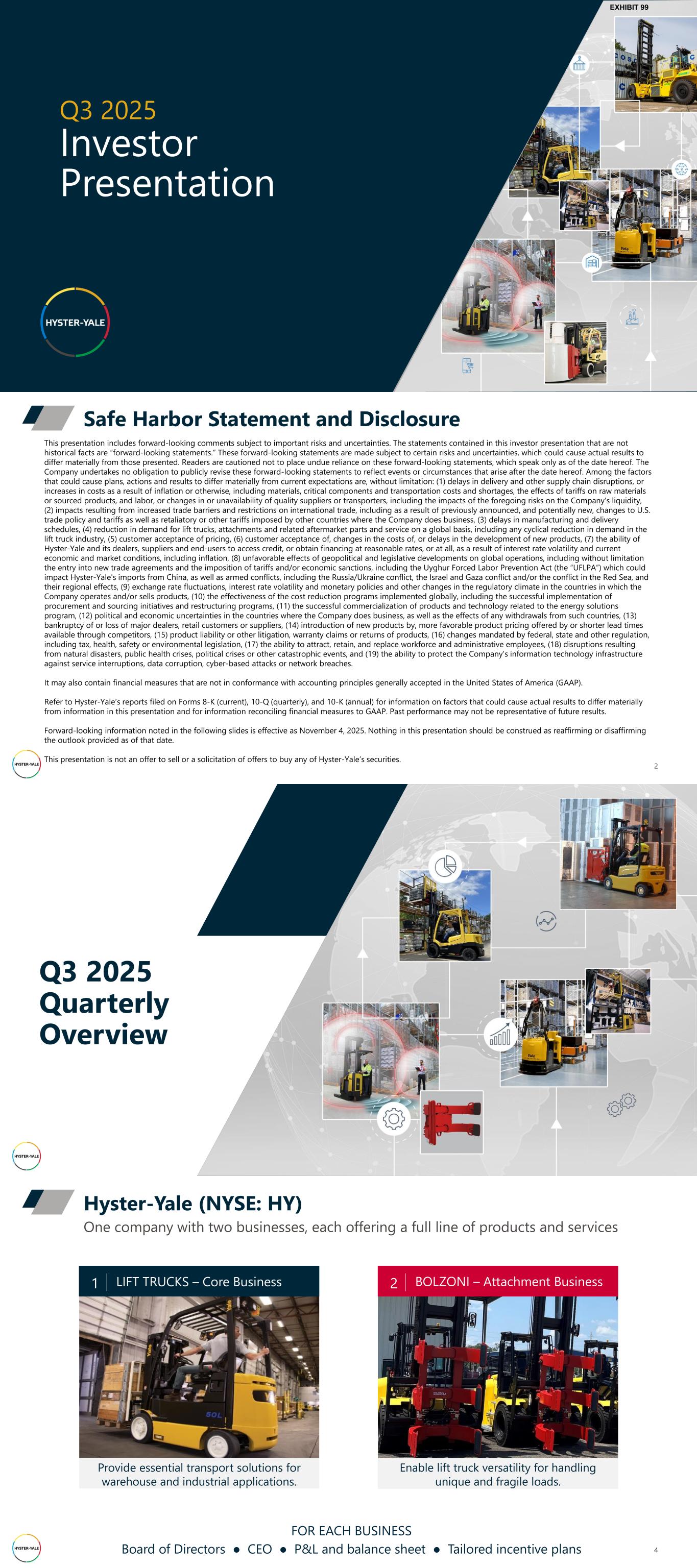
Good morning, and thank you for joining us for Hyster-Yale's Third Quarter 2025 Earnings Call. I'm Andrea Sejba, Director of Investor Relations and Treasury. Joining me today are Al Rankin, Executive Chairman; Rajiv Prasad, President and Chief Executive Officer; and Scott Minder, Senior Vice President, Chief Financial Officer, and Treasurer. We'll be discussing our Q3 2025 earnings release issued yesterday. You can find the release and a replay of this webcast on the Hyster-Yale website. The replay will remain available for approximately 12 months. Today's call contains forward-looking statements subject to risks that could cause actual results to differ from those expressed or implied. These risks are outlined in our earnings release and SEC filings. We'll be discussing adjusted results, which we believe are useful to supplement our GAAP financial measures. Reconciliations of adjusted operating profit, net income, and earnings per share to the most directly comparable GAAP measures are available in our earnings release and investor presentation. With that, I'll turn the call over to Rajiv.
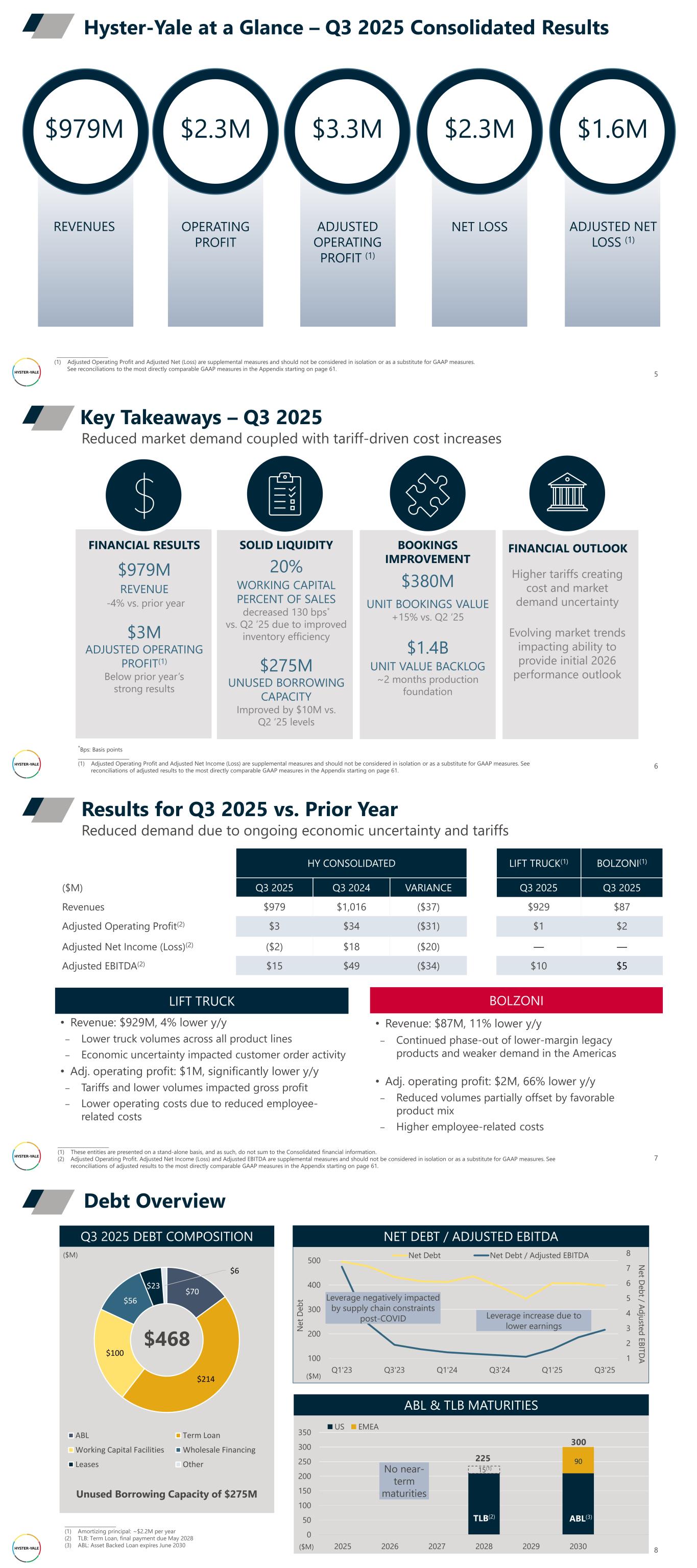
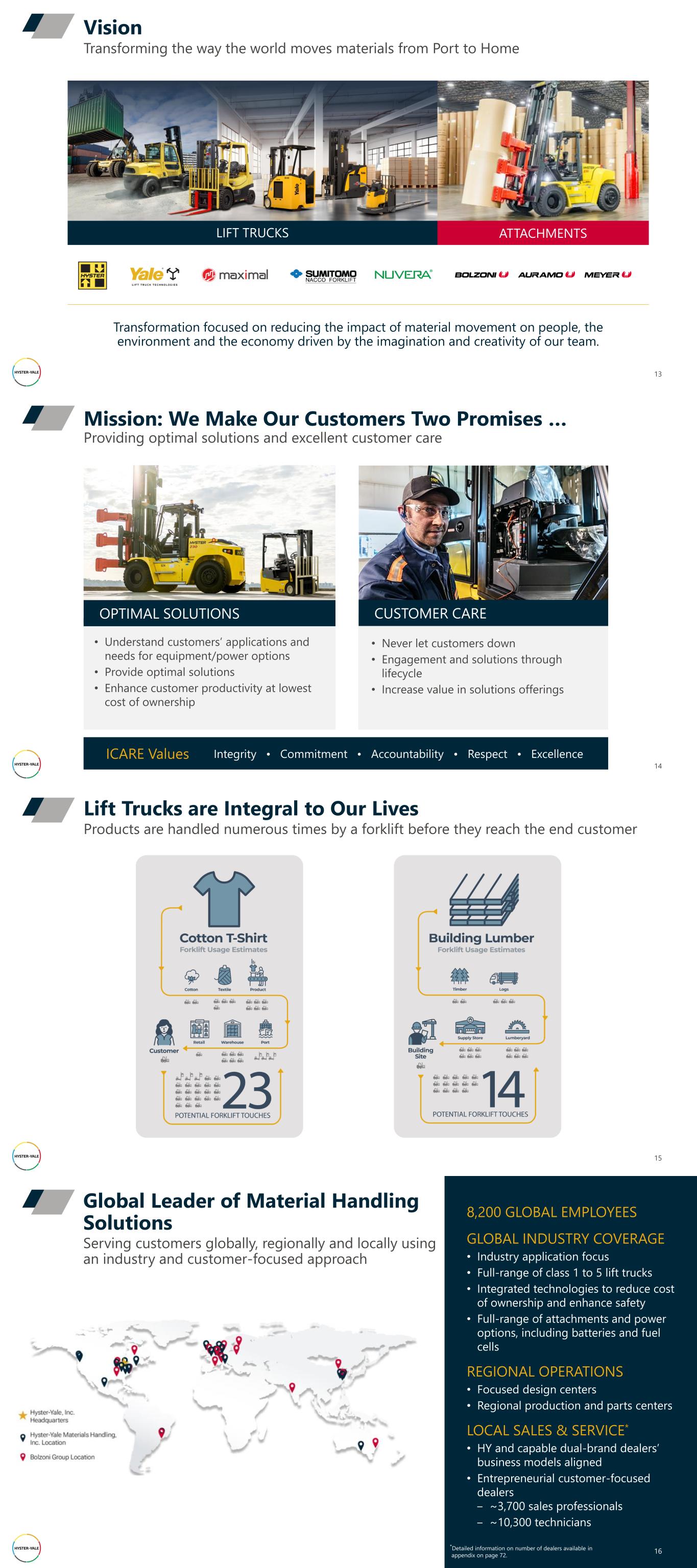
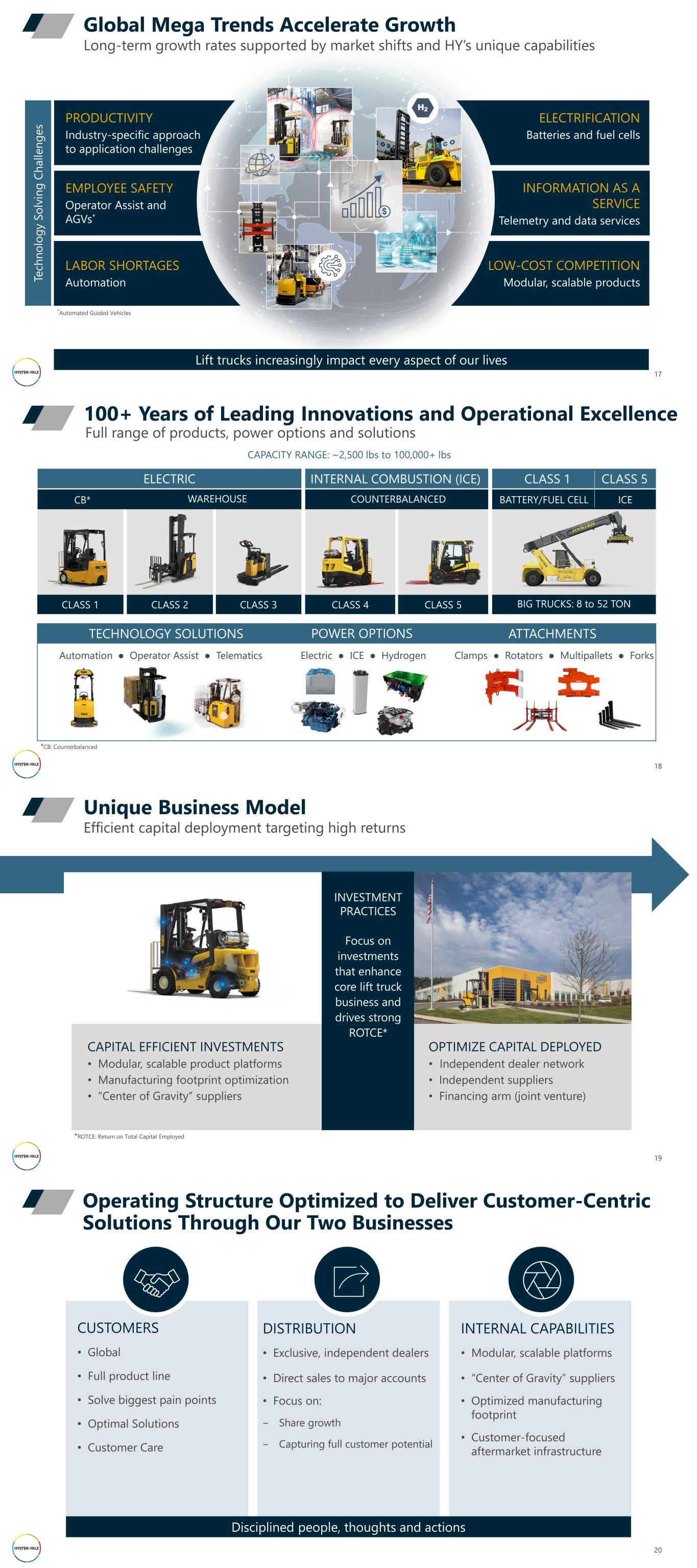
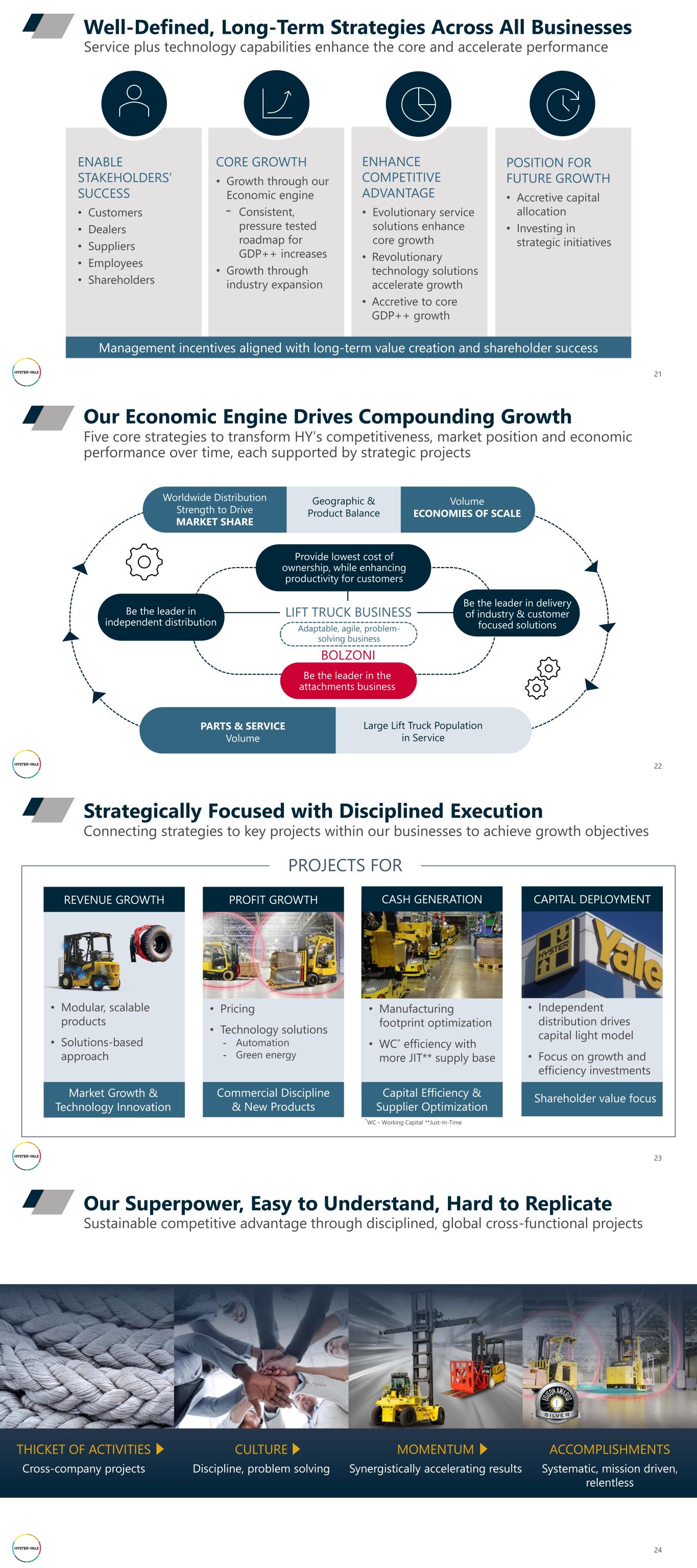
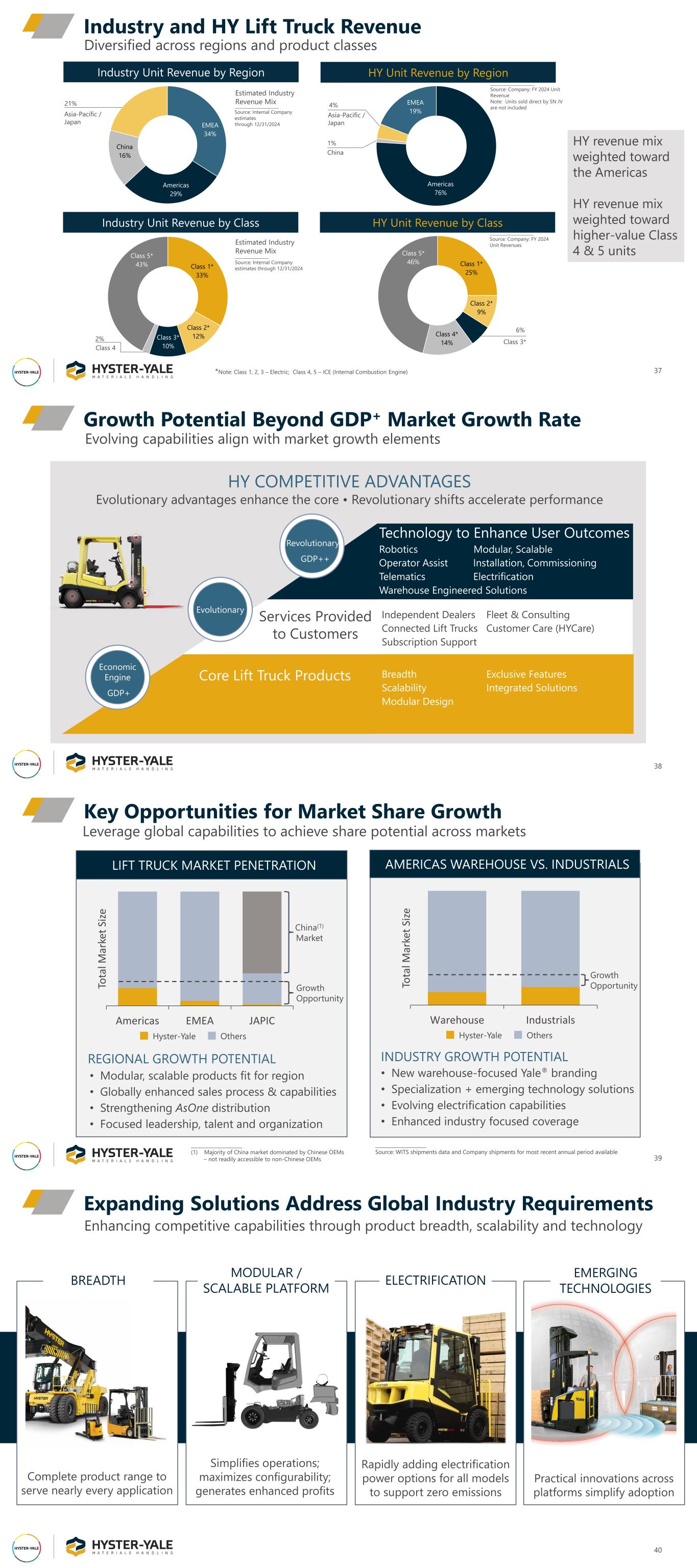
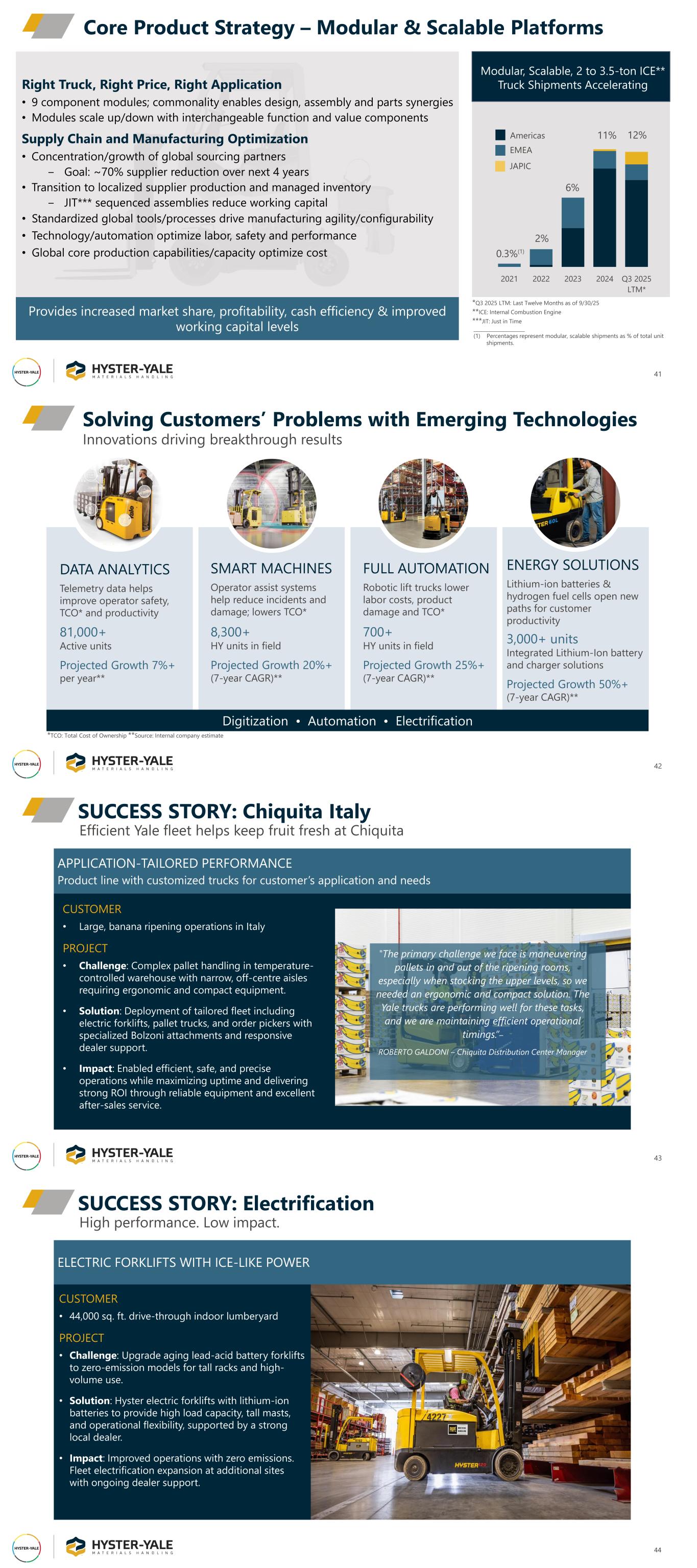
Thanks, Andrea, and good morning, everyone. I'll begin with our view of the current economic environment, how we're shaping customer behavior, and how Hyster-Yale is responding. Scott will follow with our financial results and outlook, and I will wrap up before we open the call for questions. Throughout the first half of 2025, we maintained a cautiously optimistic outlook, predicting an improvement in market demand in the second half of the year. However, since our last update in August, that optimism has faded largely due to the impact of tariffs on the market demand and on our costs. This shift in sentiment is not unique to our industry. It's a broad trend across the capital goods sectors. Customers are navigating volatile interest rates, tariff pressures, and geopolitical developments, all of which are influencing long-term investment decisions. This is reflected in our own experience during the third quarter. Overall lift truck market demand declined across all regions and most product categories compared to Q2. Many customers are postponing capital expenditures and taking a more conservative approach to balance sheet management, citing uncertainty about the trajectory of interest rates, inflation, and broader economic stability. Despite the broader market contracting, Hyster-Yale's booking activity ticked higher compared to both the prior year and the previous quarter. This dollar value booking increase is partly due to higher prices on our trucks, driven by higher tariff-related material costs. Bookings rose to $380 million in Q3, up from $330 million in Q2. Gains were led by the EMEA and APAC regions, while the Americas remained stable. Bookings improved across all product classes, with Class 1 trucks showing solid growth, improving our positioning in the warehouse segment. Notably, in October, we saw a strong bookings rate in the Americas for Class 5 trucks and, to a lesser extent, Class 2. While it's still early, this uptick may signal that the market is beginning to stabilize and that customers are recognizing the need to invest in new equipment. We view this as an encouraging indicator amidst an otherwise cautious environment. While quoting activities remain solid, ongoing macroeconomic uncertainty, largely due to tariff and interest rate discussions, is causing delays in customer order conversions. To safeguard our competitive position, we're implementing targeted initiatives aimed at increasing bookings through enhanced market participation and quote closure rates. These actions support our dual commitment to deliver optimal solutions and outstanding customer service. For example, we've announced our product offerings by expanding our full range of modular and scalable lift truck models that support customer applications from basic to complex. This allows customers to select configurations that best fit their operational requirements and budget constraints. The flexibility of our solution helps customers increase productivity at the lowest cost of ownership. In addition, our advanced warehouse truck technologies provide improved safety, efficiency, and automation options, helping customers optimize their material handling processes and reduce operational costs. On the customer care front, we're strengthening our connections with dealers and end customers by offering comprehensive support throughout the buying cycle. Our dedicated account teams work closely with customers to analyze fleet performance, identify opportunities for upgrade, and ensure recommendations are tailored to each customer's specific challenges. We also provide responsive after-sales support, including rapid maintenance services and proactive parts availability to minimize downtime and keep operations running smoothly. Regular training sessions for dealer personnel ensure that our partners are equipped to deliver prompt, knowledgeable service to end users. By engaging closely with our customers, we can better understand their changing priorities and collaborate to solve their most critical needs. We back these efforts with robust support services, continuing to deliver value beyond the product. We strive to help our customers maintain efficient, reliable fleets across all business conditions. We have a deep understanding of our market and our customers' buying cycles. We recognize that many customers are choosing to postpone investment in new lift trucks due to the current environment. However, we're confident in the market's long-term growth drivers and demand for existing fleet upgrades over time. Our experience shows that although customers may defer purchases for a period, the rising cost and operational efficiency issues associated with maintaining aging equipment make new fleet acquisitions inevitable. As maintenance expenses and downtime increase, the financial and productivity advantages from new truck investments become more apparent. This cycle reinforces our confidence in the long-term stability and vitality of the market. We're committed to supporting our customers through every life cycle phase with flexible solutions tailored to their evolving needs. Globally, the competitive landscape is changing rapidly. We are facing increasing pressure from low-cost foreign competitors, especially in South America and Europe. This competition is most pronounced in the Class 5 market for standard and value configurations, compressing margins in those markets. To address these challenges, we are expanding our lineup of modular, scalable models to more fully meet the requirements of all potential customers. These products, including those from our own China operations, will make us more competitive across all capability and price points in this critical product class while also protecting our margins. In addition, our new warehouse products and advanced truck technologies are helping us to stand out in global markets and are receiving strong customer feedback. At the end of Q3, our backlog stood at $1.35 billion, down from $1.65 billion in Q2. Shipments outpaced new bookings in the quarter, particularly in the Americas. This reduction was driven by fewer trucks, partially offset by higher value trucks due to increased product costs and favorable currency further diminished the real value of our backlog, intensifying the effect of lower truck volume. Maintaining a backlog that supports multi-month production is increasingly difficult in the current environment. The pace of market recovery remains below expectations despite underlying demand as a result of persistent uncertainty. As a result, we are managing our production schedule and inventory levels with caution, ensuring alignment with real-time market signals. Our expectation is for demand to remain soft in the near term, with production rates adjusted to reflect actual booking and cancellation trends, as well as backlog held. We are moderating near-term production expectations to preserve manufacturing efficiency, optimize inventory, and maintain appropriate backlog levels. As a result, we anticipate further backlog degradation in the near term. If shipments continue to outpace bookings, we may need to take additional actions to better align our cost structure with evolving market conditions. We've seen many market cycles, and our experience tells us that resilience and readiness are key. Regardless of external factors, we remain focused on what we can control: efficiency, productivity, innovation, and responsible cash management. To ensure this commitment, we're executing on several fronts to position Hyster-Yale for long-term success. These are operational efficiency. We continue to streamline operations, optimizing inventory levels and improving working capital efficiency to generate cash in a lower revenue and profit environment. Manufacturing flexibility. Our module vehicle designs allow us to produce the same model in multiple regions, giving us the flexibility to shift production in response to tariff changes or supply chain disruptions. Customer engagement. We're deepening our relationship with our dealers and end customers. We're listening closely to their evolving needs and co-developing solutions that address their most pressing challenges. Product innovation. We're accelerating the rollout of new products and technologies that enhance performance, reduce total cost of ownership, and differentiate us in the marketplace. Market readiness. We are watching leading indicators closely and preparing to scale quickly. Our goal is to be a first mover, ready to capture growth as soon as customer confidence returns. Global optimization. We're realigning our manufacturing footprint and supply chain to ensure cost competitiveness and responsiveness across all regions. These actions are enabling us to navigate the current environment with agility and discipline so that when the market recovers, we're prepared to emerge stronger. Over the longer term, we're reducing earnings volatility through a lower breakeven point and more resilient product margins. We remain committed to our strategy. By maintaining operational discipline and investing in the right areas, we're confident in our ability to deliver sustainable growth and profitability over time. Now I'll turn it over to Scott Minder to walk you through our financial results and outlook for the remainder of 2025.
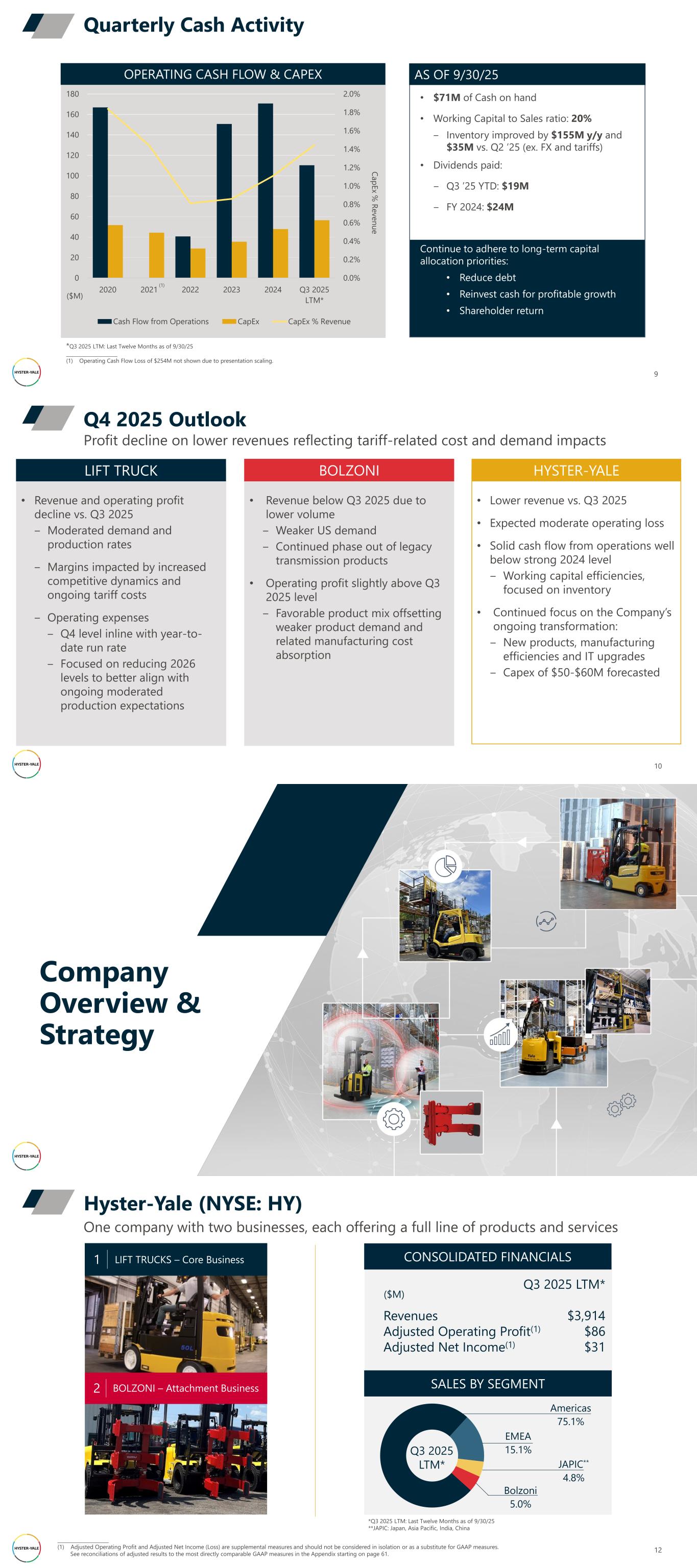
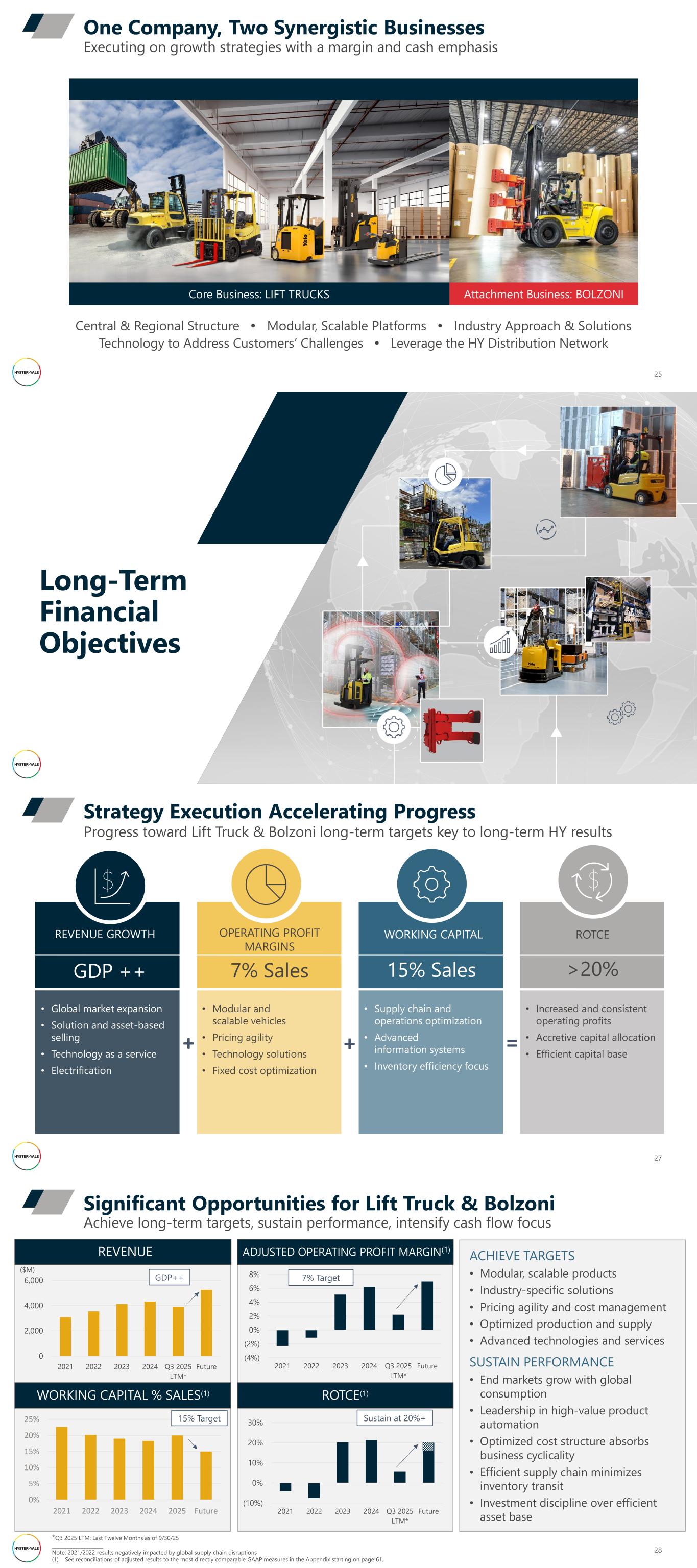
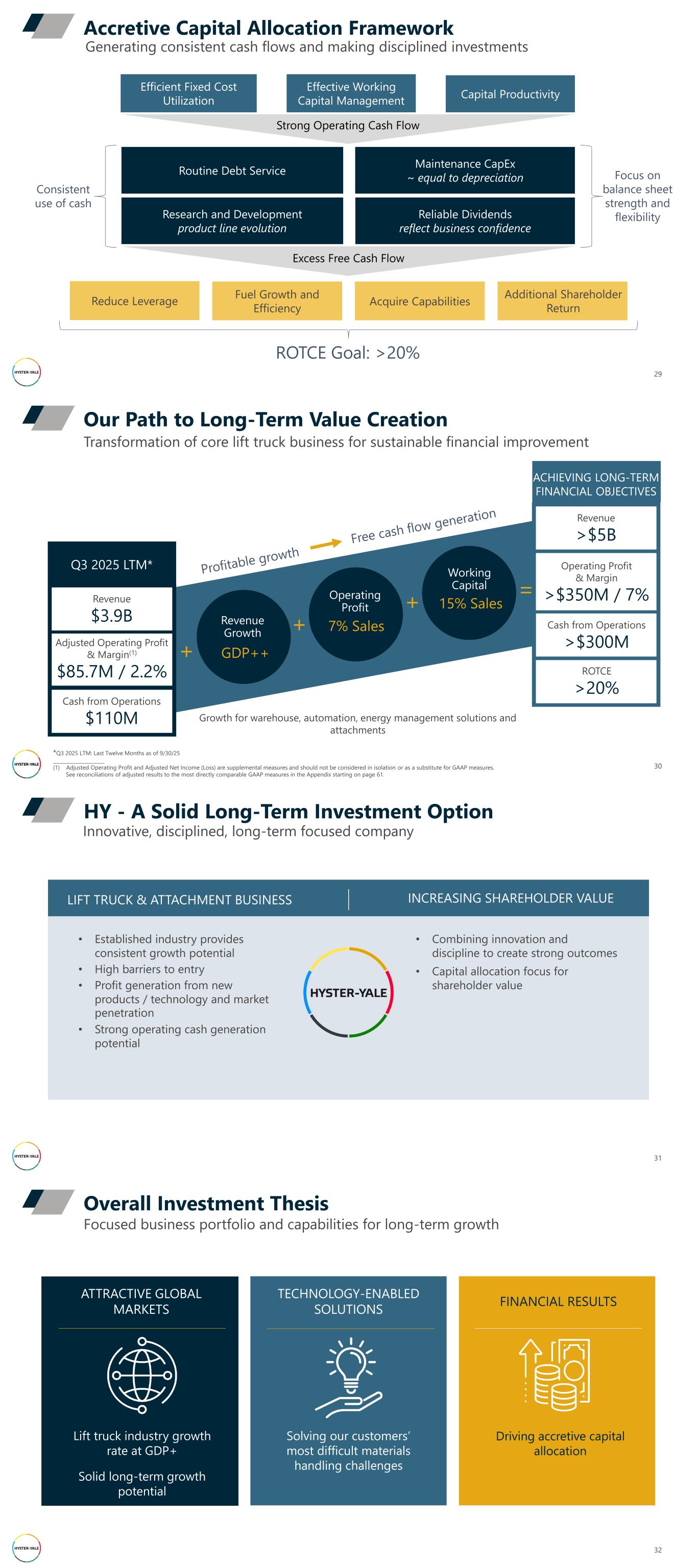
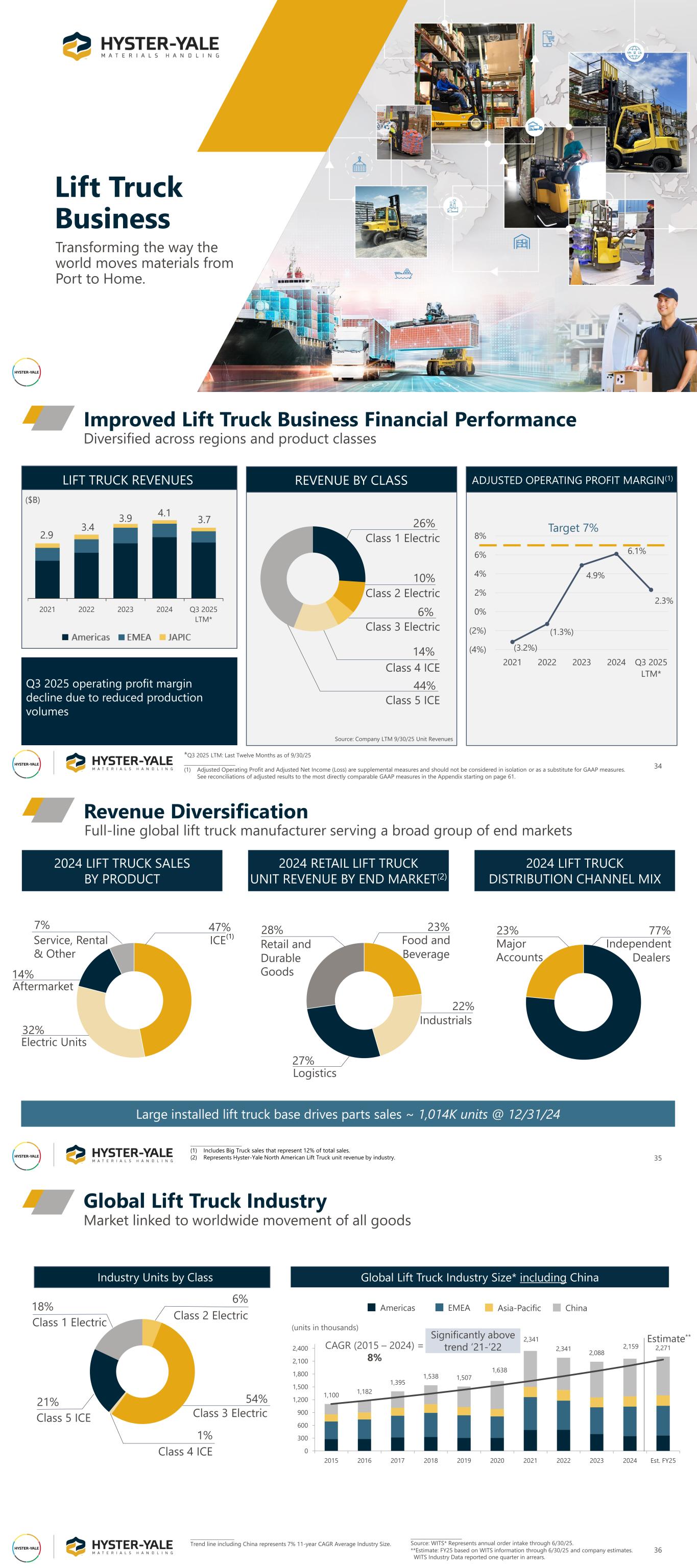
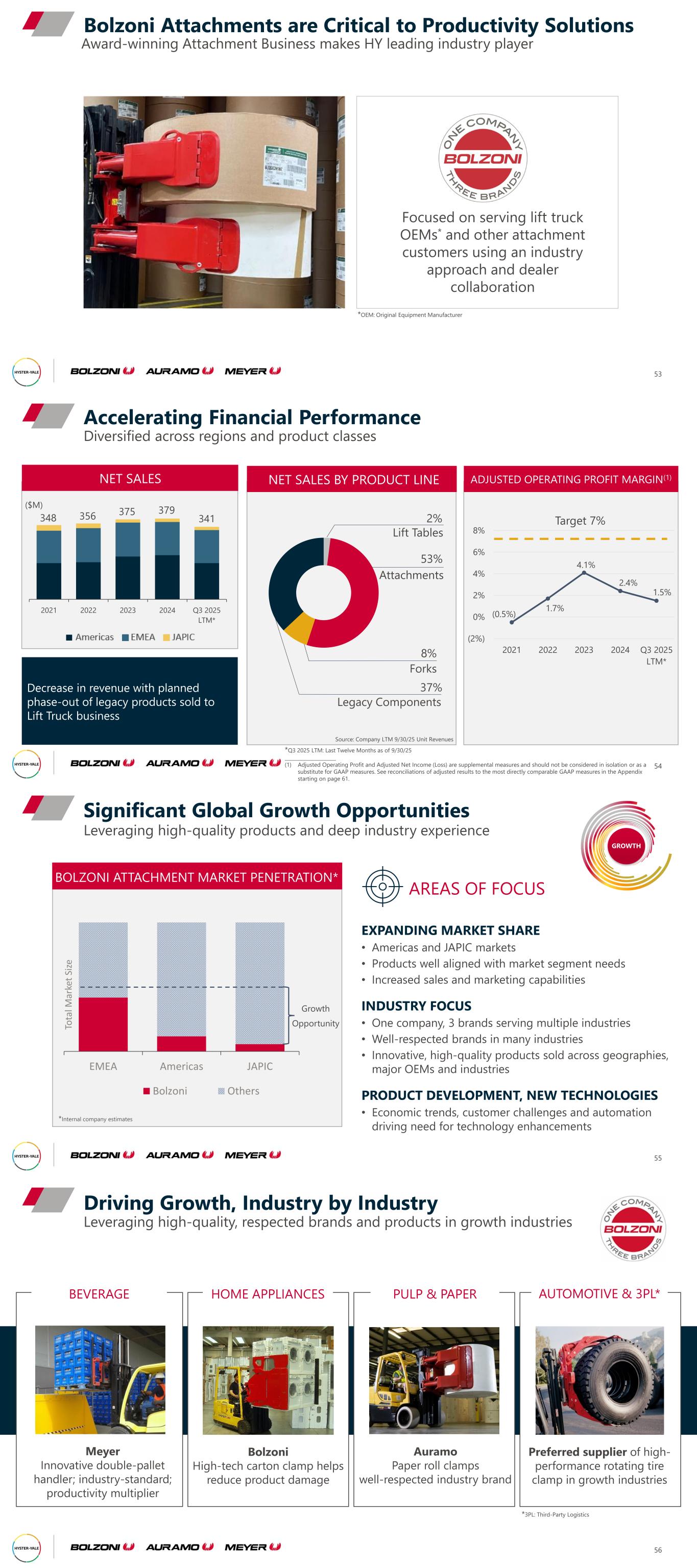
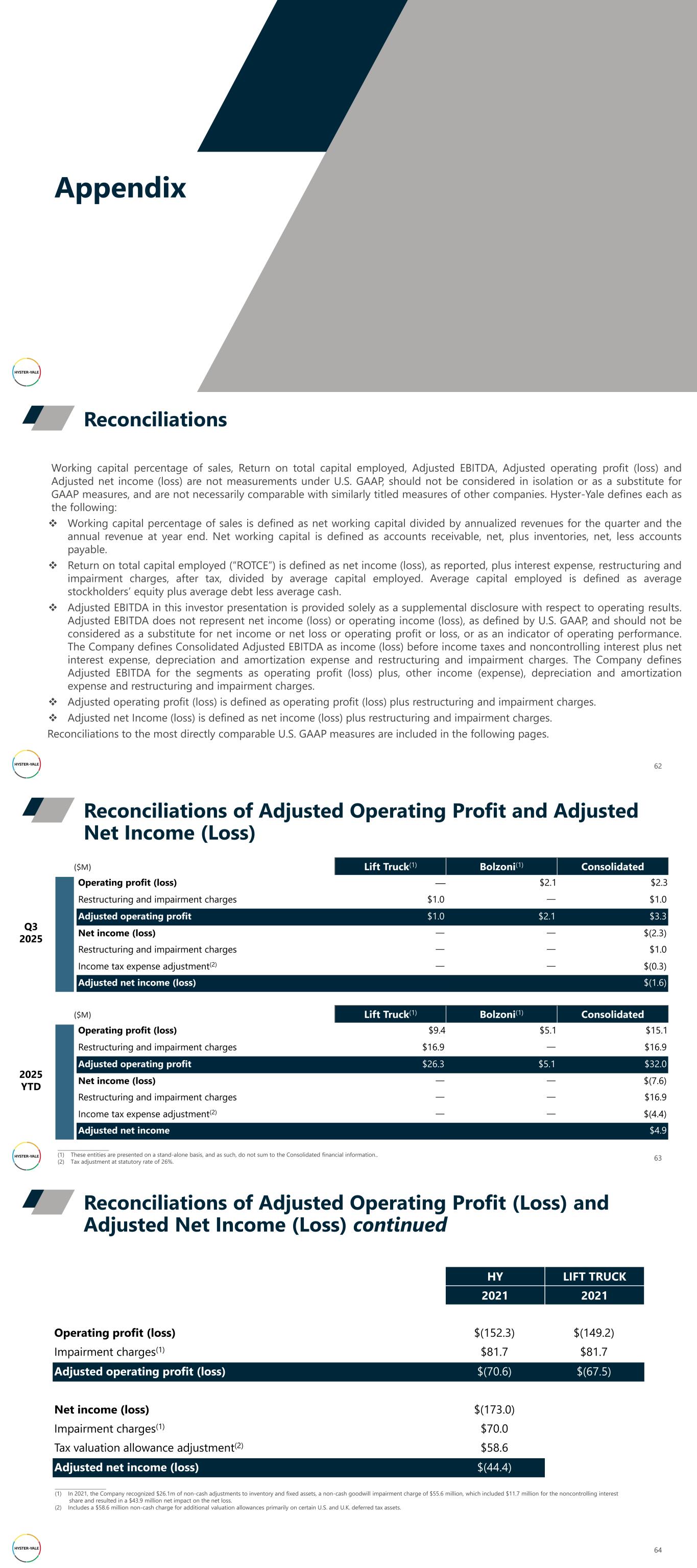
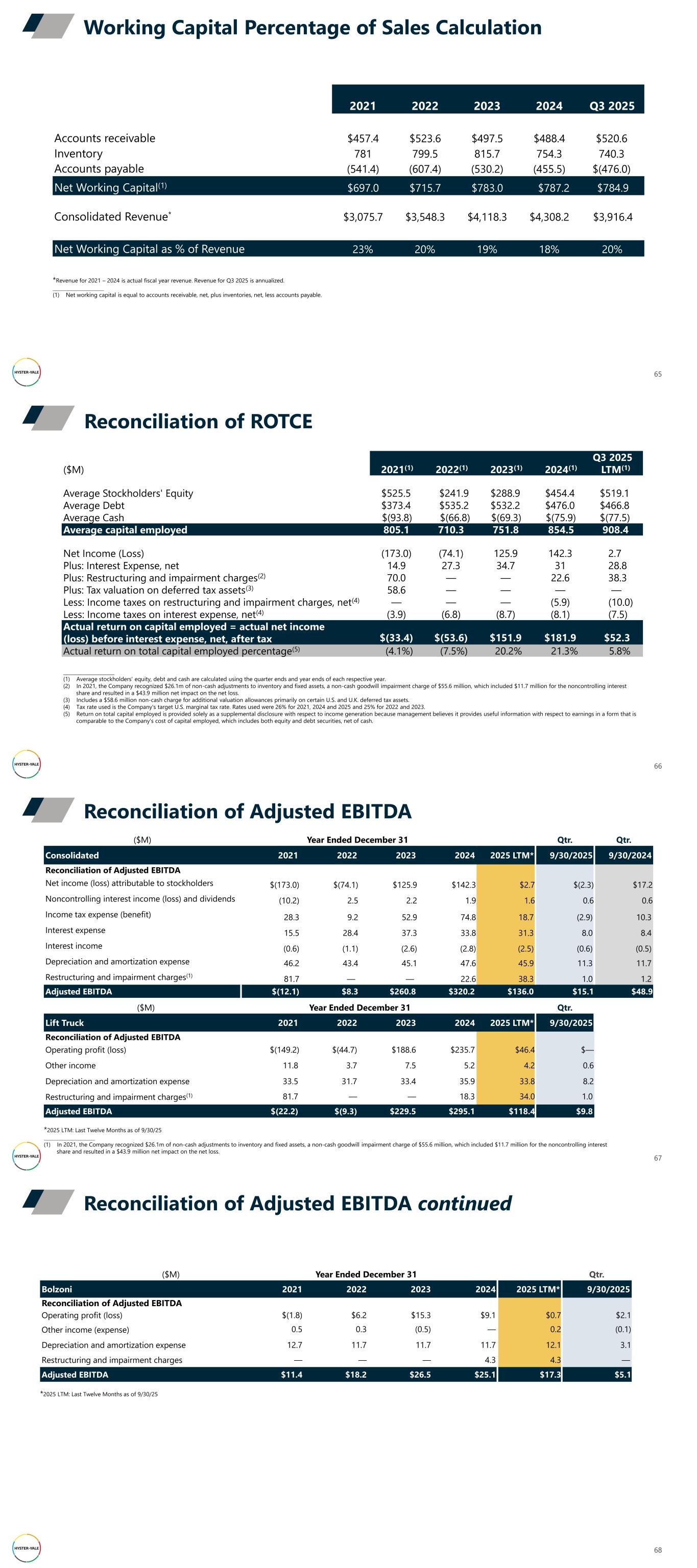
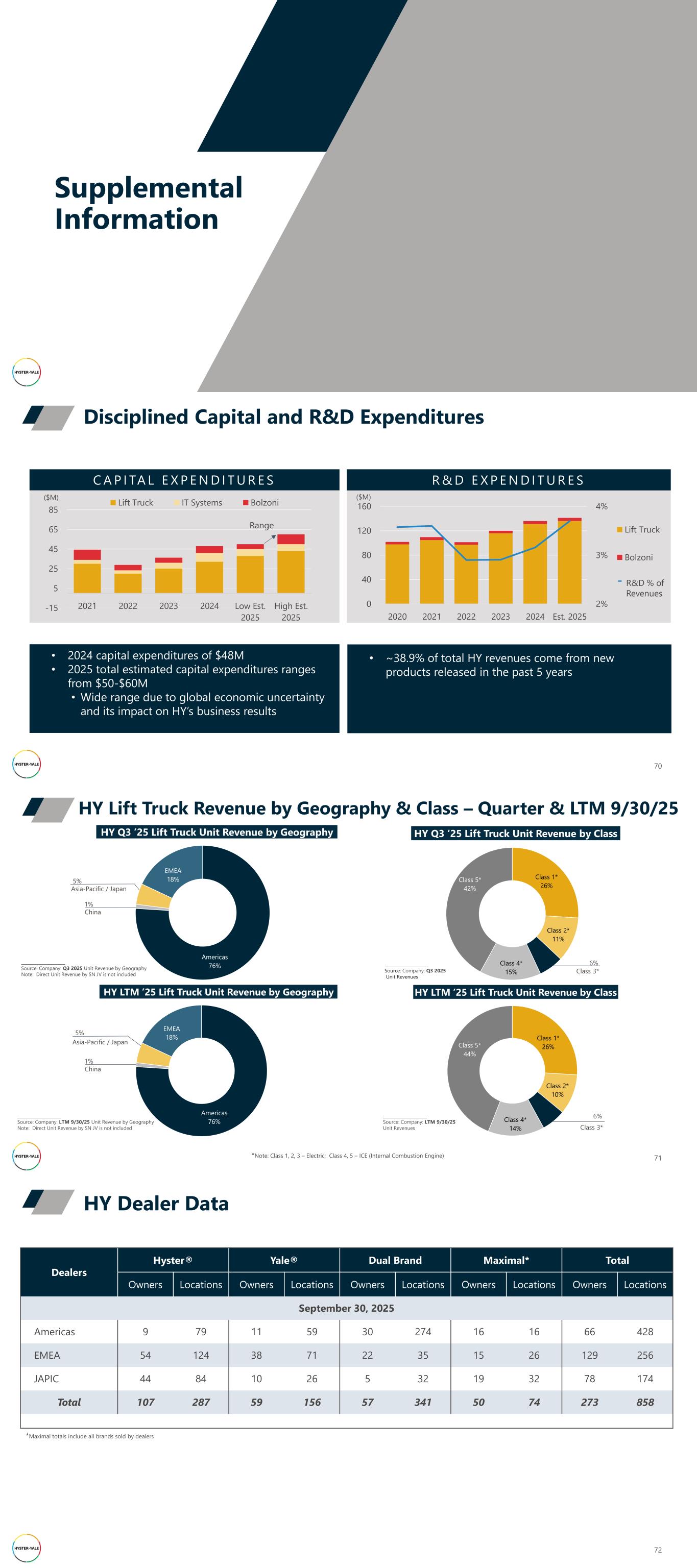
Thanks, Rajiv Prasad. Let's take a closer look at our Q3 results, starting with the Lift Truck business. Lift Trucks Q3 revenues were $929 million, reflecting a 4% decline compared to the prior year. This decrease was primarily due to lower truck volumes across all product lines. Lower volumes were a direct result of ongoing economic uncertainty, which has led to a slowdown in customer bookings over the past several quarters. In response to the softer demand and lower backlog, we adjusted our production rates to better align with current market conditions. Looking at the results by region. In the Americas, truck volumes fell with a significant drop in our higher-value Class 4 and 5 trucks in the 1 to 3.5 ton range. Many industrial customers deferred lift truck purchases due to lower equipment utilization rates within their existing fleet. These were largely caused by reduced manufacturing output amid demand uncertainty. Looking at EMEA, revenues increased year-over-year, primarily due to higher truck sales and favorable currency translation. Sequentially, overall lift truck revenues improved, supported by stronger sales of higher-value 4- to 9-ton electric and internal combustion trucks. Q3's operating results fell short of our expectations, primarily due to higher tariff costs, including new tariffs on steel imports during the quarter. Operating profit declined by $27 million year-over-year, mainly driven by lower truck volumes. Some of these negative impacts were offset by our strategic pricing actions and a favorable sales mix shift toward higher-value 4- to 9-ton trucks in the Americas. Additionally, Q3's operating costs decreased compared to the prior year, mainly because of lower employee-related expenses, including reduced incentive compensation and savings from Nuvera's previously announced strategic realignment. Breaking down regional performance, operating profit in the Americas declined primarily due to higher tariff costs and lower truck volumes. These negative factors were partially offset by increased selling prices and reduced freight expenses. In EMEA, the operating loss was mainly a result of pricing and margin pressures as lower-priced foreign trucks increased their market share in a variety of European markets. Additionally, material costs were elevated due to inflation. Sequentially, adjusted operating profit decreased largely due to lower product margins from increased tariff costs. Moving to Bolzoni. Q3 revenues were $87 million, dropping 11% year-over-year. This decrease was primarily driven by our planned phaseout of lower-margin legacy transmission components and softer lift truck demand in the U.S. Gross profit declined moderately, but a favorable product mix offset the impact from lower volumes and reduced manufacturing overhead absorption. Q3 operating profit was $2.1 million, down from $6.2 million in the prior year, with higher employee-related costs negatively impacting profitability. On a sequential basis, Bolzoni sales decreased mainly due to lower specialized attachment sales in the Americas. Gross profit remained stable, supported by a favorable product mix in EMEA. However, operating profit declined due to increased employee-related expenses. Next, I'll cover the company's tax position. We recorded an income tax benefit of $2.9 million in Q3, reflecting the positive impact of recent U.S. tax reform. This legislation allows us to immediately expense research and development costs versus deferring a significant portion over the next several years. Looking at cash flow and our balance sheet. Q3 operating cash flow of $37 million improved by nearly 25% from Q2's level. This favorable move was largely driven by improved inventory performance. Excluding foreign currency and tariff-related impacts of $40 million, Q3 inventory decreased by $155 million year-over-year and by $35 million sequentially. Q3 working capital stood at 20% of sales, down from Q2 levels, but above our long-term target. The company continues to make progress on its initiatives to align production schedules with available materials and expects further inventory improvements in the coming quarters. Q3's net debt of $397 million remains in a solid position, improving modestly from the prior year and prior quarter. While our debt levels did not reduce significantly, stability in a volatile demand and cost environment highlights our focus on cash generation and disciplined capital allocation. The company's unused borrowing capacity of $275 million increased by 6% from Q2. Q3's financial leverage, as measured by net debt to adjusted EBITDA, increased to 2.9x due to lower earnings. We remain committed to managing our debt and leverage ratios across market cycles. We're focusing on the things that we can control, optimizing working capital and maintaining operating and capital expense discipline. These actions help to ensure that our leverage level remains supportive of our strengthened credit ratings. With that, I'll move on to our fourth quarter outlook. First, I'll outline some key tariff-related assumptions in our guidance. Chinese tariffs in aggregate of 79% Section 232 tariffs included for steel and steel derivatives. Our Section 301 tariff exemption for lift truck parts ends on November 29, 2025. There are no lift truck-specific tariffs put into place. Our demand projections lose bookings, backlog, and market trends. We assume no demand drop due to a U.S. or global economic recession. Finally, our proactive sourcing, costing, and pricing initiatives are expected to reduce but not fully offset negative tariff impacts. Recent informal announcements suggest that Chinese tariff levels will be reduced and that our Section 301 tariff exemption will be extended by 1 year to November 2026. These changes, if finalized, will benefit our Q4 financial results by $2 million to $3 million compared to our current assumptions. Evolving tariff policies continue to shape our financial outlook. Despite our mitigation strategies, tariffs remain a major challenge for the company. In Q3, direct tariff costs totaled $40 million, while also dampening demand levels across a variety of end markets and customers. These negative impacts are expected to persist for the foreseeable future. The business is working diligently to limit these negative impacts. Our sourcing teams proactively seek alternative suppliers and regional solutions to reduce our exposure to high-tariff countries. At the same time, we're driving operational efficiencies and maintaining cost discipline to enhance our margin resilience. In addition to these actions, pricing has been a critical lever in our mitigation strategy. As the tariff landscape has shifted in value and focus, we've seen a variety of competitor approaches in the market. As an American company with a significant domestic manufacturing base and a global supply chain, we felt the tariff impact more quickly and often more robustly than others in our market. As a result, we led with pricing actions that have delivered a strong year-to-date benefit. However, they've not fully offset the negative tariff impact, largely due to the rapid changes in tariff rates applied to different countries. Competitive intensity has increased in our core markets as industry volumes have contracted. As a result, we're focused on a range of tactical and strategic actions to support long-term growth and profitability. The ongoing tariff policy uncertainty makes it increasingly challenging to predict future financial impacts. In this environment, we remain committed to cost discipline and to driving revenue through higher truck volumes, increased penetration of new technologies, and enhanced market adoption of our new products, including additional modular truck configurations and lithium-ion batteries. With the foundation laid, I'll cover our Q4 outlook, starting with the lift truck business. We expect Q4 revenue to decline compared to Q3 due to lower production rates caused by reduced bookings over the past few quarters. We're projecting a moderate operating loss mainly due to lower production rates and persistent tariff headwinds. We anticipate that elevated tariff levels and softer market demand will remain negative factors into early 2026. Our outlook assumes positive impacts from cost control and prior pricing actions to service partial offsets. We'll watch market demand and tariff rates closely, and we will take additional cost actions as needed to maintain profitability. Longer-term, we continue to make progress on the project announced in late 2024 to streamline our U.S. manufacturing footprint. So far this year, we've invested $2.4 million with another $3 million planned for Q4. This project is expected to deliver between $30 million and $40 million in annualized savings by 2027, lowering our financial breakeven point and enhancing our margin resilience. Turning to Bolzoni's Q4 outlook. Revenues are projected to decrease slightly compared to Q3, reflecting weaker demand in U.S. operations. Operating profit is expected to be modestly above Q3 as product mix improvements compensate for lower sales volumes. I'll close with a few comments on financial discipline and capital allocation and how they position us for the future. Over the past several years, we've increased our business's resiliency, improving product margins with pricing discipline and lowering costs, ultimately enabling us to better navigate challenging market cycles. While we continue to target a 7% operating profit margin across the business cycle, it’s important to recognize that tariffs have significantly and unexpectedly increased our costs and created substantial market uncertainty. They've negatively affected industry demand, our bookings, our backlog, and ultimately, our revenue. While we've taken meaningful actions to offset these impacts, we expect our near-term financial results to fall well below targeted levels. Looking ahead, our focus remains on taking actions that further strengthen our financial performance during an economic downturn. We're driving significant fixed cost reductions, building greater revenue resiliency, and investing in innovative new products that we believe will allow us to capture profitable market share over time. Generating solid operating cash flow and deploying capital accretively remain top priorities throughout the business cycle. For the full year 2025, we anticipate cash flow from operations to be solid but well below strong 2024 levels, reflecting significantly lower net income, partially offset by working capital improvements and cost-saving benefits. Strategic investments are core to our ongoing business strategy. In 2025, we expect capital expenditures to be between $50 million and $60 million, with investments focused on developing new products, manufacturing efficiencies, and IT infrastructure upgrades. These investments will help to streamline our operations, lower our financial breakeven point, and position the company for long-term profitable growth. As we generate cash, we're committed to our capital allocation framework, reducing debt, making strategic investments to support long-term profitable growth, and delivering sustainable shareholder returns. Now I'll turn the call over to Al for his closing remarks.
Thank you, Scott. We are operating in a period of extraordinary transition, facing both significant challenges and new opportunities. Today's environment is particularly shaped by the effects of elevated tariffs, which have raised our operating costs and made supply chain planning and pricing more complex. While these tariffs are short-term obstacles, we expect their impact to gradually stabilize as prices and tariffs come into equilibrium. This transitional phase is further complicated by a cyclical low in industry booking demand following an unprecedented surge in bookings during the COVID-19 pandemic. However, shipment levels have remained significantly higher than factory booking levels, which suggests to us that the time for new factory booking orders is now being reached. As booking demand returns to more typical levels, we will also need to navigate the shift in the competitive environment to increase value and standard applications with discipline and strategic foresight. Broader economic factors also influence our outlook. The manufacturing sector is showing shipment resilience, yet ongoing volatility and fluctuating interest rates continue to affect both investment decisions and customer purchasing behavior. These conditions highlight the need for a flexible and highly responsive forward-looking strategy that allows us to adjust quickly to protect and build a long-term market position. In response to these near-term pressures, our strategic focus remains on transformation and sustainable growth. As Rajiv and Scott have described, we are both strengthening our core counterbalance business and investing in warehouse lift trucks, technology solutions, energy solutions, and attachments. These initiatives are helping us address current challenges and position our company to capture future opportunities. Our goal is to ensure both competitive advantage and market responsiveness in the next market upturn. We remain committed to providing optimal solutions and exceptional care for our customers. We are confident that the actions we are taking today will deliver lasting benefits to our customers, shareholders, and stakeholders. As we continue navigating this complex environment, we look forward to keeping you up to date on our progress and achievements. This concludes our prepared remarks. We will now open the call for questions.
Operator
Our first question today comes from Chip Moore from ROTH.
Speaker 5
I just wanted to ask about the current environment of demand uncertainty. Obviously, every cycle is unique. But just how would you compare this, I guess, with some of the prior ebbs and flows you've been through over the years? And how long do you think these deferrals could last? It sounds like you're thinking maybe you see some improvement perhaps early next year, but what are your thoughts?
Yes. Maybe I'll get started, and others can make comments, Chip. So I think the way that we see the market, the market is still pretty active. And what I mean by that is there are still requests for quote processes running. People are reaching out to our salespeople and our dealers. What is slow is decision-making. I think that's really driven by the volatility of the environment people find themselves in, whether they're worried about tariffs because, for instance, we have surcharges and some of our competition do, or our competition has adjusted their prices. So those things are difficult for our customers. And then the other piece is they're worried about interest rates and what dynamics that's going to have with that whole environment. There's a cutting environment, but there are other things going on. So I think one last thing I would say, Chip, is that a large number of our customers have still also been digesting trucks that they ordered in the past, which we're towards the end of it, but we've still got probably another quarter of production to go, which were ordered a while back. So if you look at it from a customer's point of view, they've been getting a series of trucks. They haven't been ordering anything because they've been digesting it. And I think that's coming to an end. So we expect slowly the market will start to recover. People will start to make those decisions because there is no avoiding it ultimately. But I think the next 2 to 3 months, maybe a little longer, are going to be that stop-start where processes are being implemented, but decisions are not being made. We've seen that open up a little bit over the last few weeks, but I think that's still got a ways to go. One last element is that our dealers were in a similar situation with their inventory, and those inventories have mostly worked their way down. So we're starting to get orders from our dealers now as well to restock.
Speaker 5
And I guess maybe a follow-up would be, if you do see more degradation, if we get some macro downturn, what actions could you take if needed? And what would really trigger that?
Yes, Chip, we are reviewing everything at the moment, including our cost structures and the operation of our plants. We are considering if there's a more efficient way to run them, but we've yet to reach any conclusions. We expect to have some insights in the coming weeks. From a production standpoint, we are preparing for what you mentioned, while remaining cautious and ready to increase production if we notice an uptick in bookings and backlogs. For the next quarter or two, we plan to adopt a conservative approach.
Speaker 5
Maybe just more long-term, as things do normalize, just strategically around some of the investments you're making, just more of an update on the new modular scalable platform, how that's progressing, any challenges? And then lithium ion, some strategy there. Just maybe speak to that.
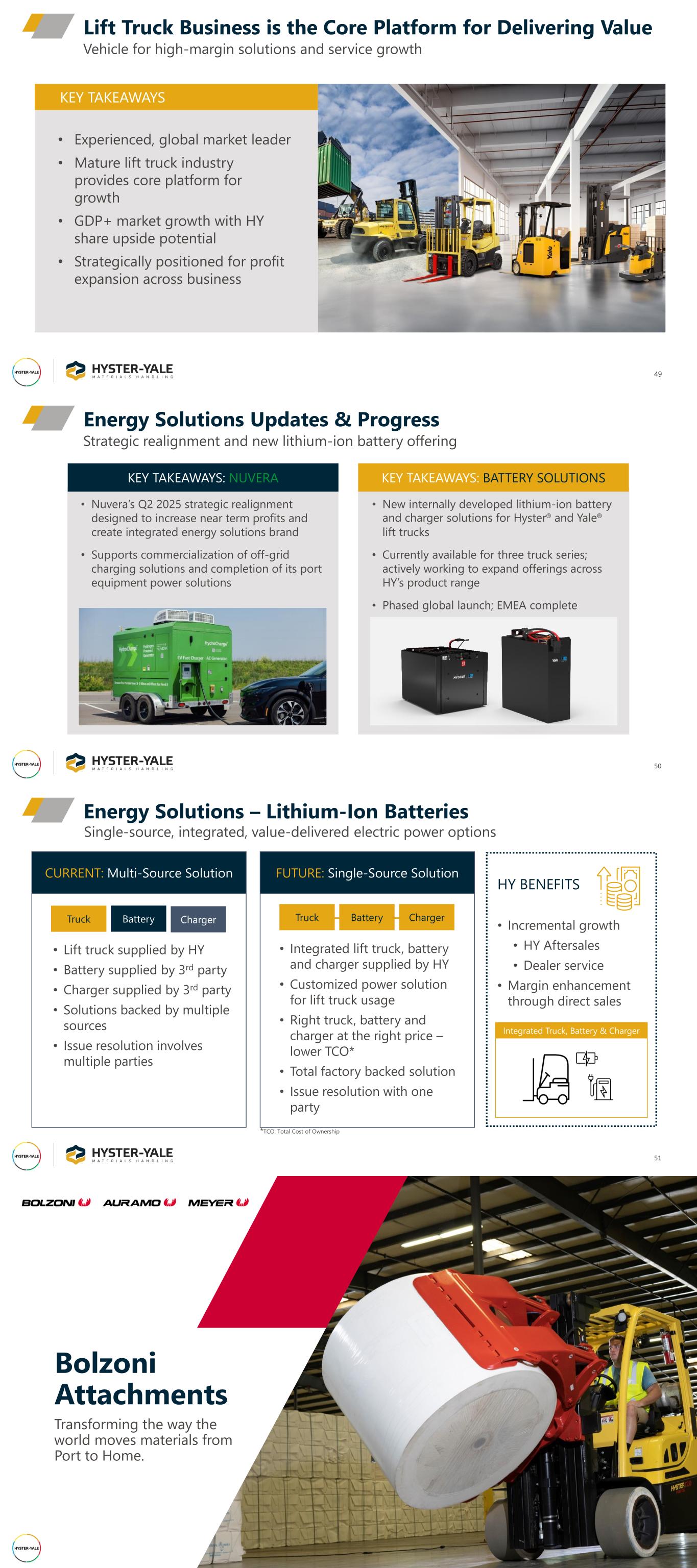
Yes. I think for the modular scalable product, if you look at our most important markets, North America and Europe, those products, the full scale has just got to those markets. Now we've had it in APAC, Asia Pacific, for a while, and Latin America for a while. And we've had very, very positive feedback from those markets. Now, as our dealers and some customers start to see this as a full-scale, we're getting similar responses from them. Based on some advice from our dealers, we have updated some of our nomenclature for them to better position the products in this new way. So we feel really good. We're still due to land and distribute significant numbers of these trucks, which will happen over the next 3 months or so. And then we'll start to get a better feel for how the customers are feeling about the more, what we're calling the prime match and the core match, which are, I would call the standard and the prime solutions in the field. And very similar to lithium-ion. We have one customer in North America, where we've put lithium-ion batteries in a large number of their operations. It's been very successful. And then we're launching our integrated lithium-ion solution, which we call the XT/LG or MX/LG. LG is lithium-ion, and the XT/MX is the name of the model. These will be rolled out both in North America and Europe. They're already in the Asia Pacific and are being very successful. So we feel really good about where lithium-ion is going. Early next year, we'll introduce a new set of electric trucks, which will come ready with lithium-ion batteries.
Operator
Our next question comes from Ted Jackson from Northland Securities.
Speaker 6
So the first question would be with regard to the weakness that you're seeing, I know you talked about it from more of a macro level with uncertainty and tariffs, and whatever. What about from a vertical level? So the Americas are the key ones. I mean, I've understood from people I've talked to that, in particular, like, for instance, the auto market has been a little soft because you have a few things and headwinds. One is the redeployment of assets around EVs that weren't necessarily needed. So there was some excess there. And then I'm also curious about what you've had with this aluminum issue and the impact on the auto markets, because there's a bunch of news with regard to Ford trucks and such. So I guess what I'm asking is, is there any kind of vertical for you that stands out in terms of some of the headwinds? And then is it auto? And if it's not, can you talk a little bit about how your auto exposure is and what's going on in there?
I think in terms of material availability, I don't think we have any specific issues. I mean, we obviously have our normal, I would say, back to 2018, 2019 type of things where we get stock out because of some reason or suppliers are late with delivery, but no foundational issue with our materials or components. The other piece, though, is the cost of it. I mean, certainly, we're not so aluminum-intensive, but we are definitely steel and iron-intensive. And those have been a significant issue for cost, but also for transition. We were using global steel in North America, and we are transitioning to mostly U.S. steel as much as we can, especially in our Mexico operations. So that's good. I mean, from a customer's point of view, in terms of how they're being impacted, we've certainly seen a slowdown on the manufacturing side. You've touched on auto. We would also put most heavy manufacturing in that environment. I think retail has been fine. I think I would say even light manufacturing and distribution has been fine. Food and beverages have been okay. So I think a majority of it has been the heavy side. And obviously, that's very important to us when we're talking about the paper industry, the metals, and large equipment. So that's been the big customer issue. We're starting to see that ease a little bit. But as I said, it's very new. We haven't seen that spread yet.
Speaker 6
So what you're telling me then is so more larger equipment, more industrial. Then moving over to pricing pressure. You're seeing a lot of pricing pressure, you said, with EMEA and APAC. And does that mean you're not seeing as much pricing pressure in the Americas? And if so, why? I mean, is this maybe a sideline that you're actually benefiting from tariffs on that front because it's keeping cheaper Chinese stuff out?
Pricing pressure is prevalent across the board, which typically occurs when we are not fully utilizing our capacity. Everyone is looking for additional capacity and market share to drive sales. What I meant to convey is that we lacked the appropriate scalable solutions in place as they were undergoing validation. We need to fulfill specific requirements, such as UL certification in North America and CE compliance in Europe. This process has taken some time, but we are now prepared to deliver trucks. The issue was more about availability rather than a lack of competitive pressure. If I observe how Chinese competitors are performing in EMEA and APAC compared to North America, there is certainly some limitation in the U.S. due to tariffs. Additionally, some trucks we compete against also come from China, so we don’t have a clear advantage. However, until recently, our availability was constrained by the completion of our validation processes.
Speaker 6
So when I listen to some of the things that same to the pricing pressure and your response to pricing pressure, the biggest response to pricing pressure for you, I mean, it's not that you're getting more aggressive in discounting. It's that you're going to have the new modular products allowing you to be able to offer a lower-priced product.
Absolutely. So the idea behind this whole scalability was to give the customer the product that works in their application. And if we can do that, they will get the productivity they need at the lowest cost of ownership. So that is the mission behind this whole scalability, and it's going to take a little bit of time to get that through to our network and our customers. But we've been working on that, getting everybody ready. We had some feedback. We've adapted to that feedback. And so I think now it's just a case of getting the products out in the hands of our customers so they can see how good these are and feel that it's the right option for them. But you're absolutely right. We expect our margins to be around our target margins because we're putting the right truck at the right customer, whereas in the past, we would have taken what we had and tried to put it into segments where it didn't work, compromising margin.
Speaker 6
My last question is, you referenced in the press release that you're going to be taking actions to increase your closure rates. The quoting activity is fine.
Our participation is fine. What we are starting to do is work closely with customers to understand what their actual fleet position is. Customers focus on what their core value proposition is, and material handling for a number of them isn't. So we're going to do some extra work with them to show them that if they have older vehicles in their range, that could lead to being on the wrong side of the cost of ownership. Working with our partners, create some very specific solutions for them in terms of what's in the truck, but also how we finance it, etc. So there are a number of steps to really go customer by customer and looking at what it would take for the customer to get over the hurdle of not wanting to make this decision when there is all this volatility around them.
Operator
Our next question comes from Kirk Ludtke from Imperial Capital.
Speaker 7
I just had a follow-up on the automation topic. Amazon's efforts to automate its facilities have been in the press recently. And I was hoping maybe you could expand on the pace of automation. Is it accelerating? And what impact does that have on your mix?
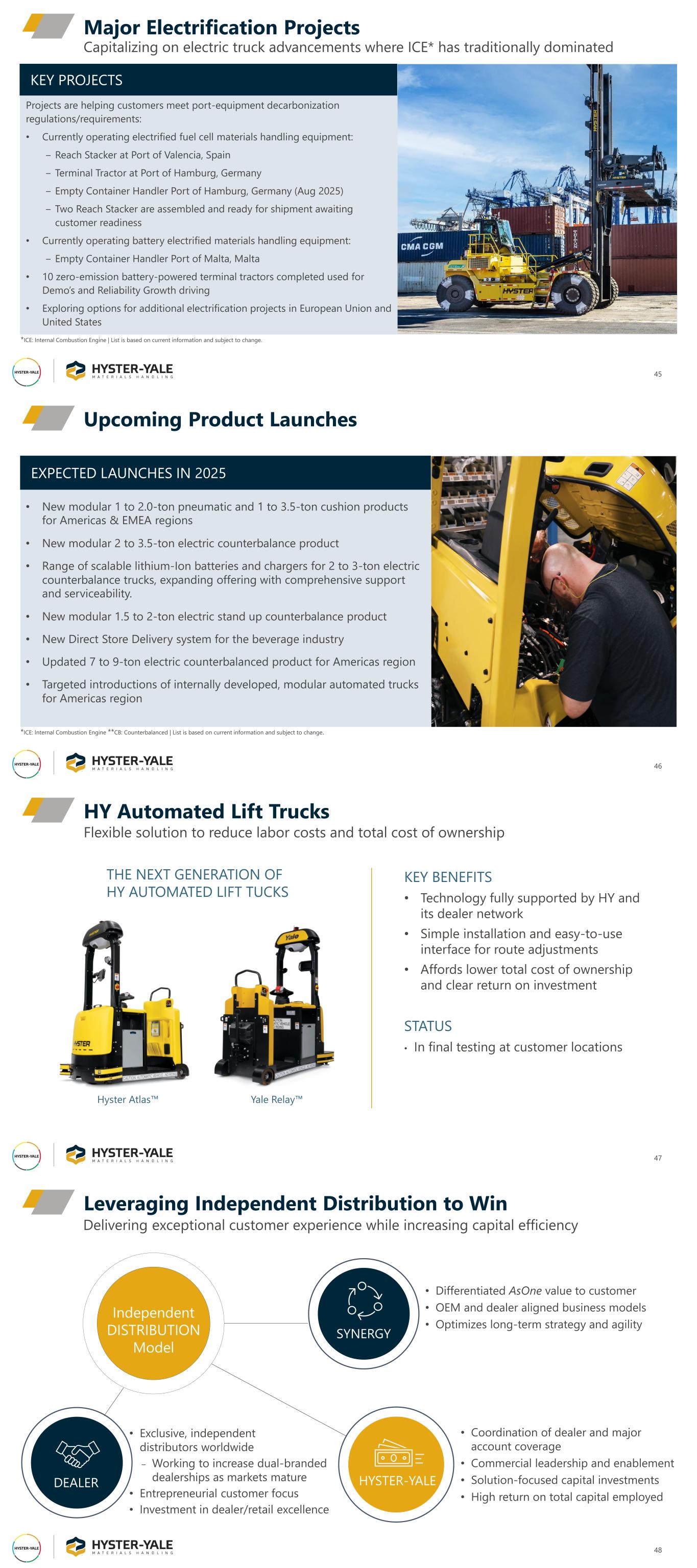
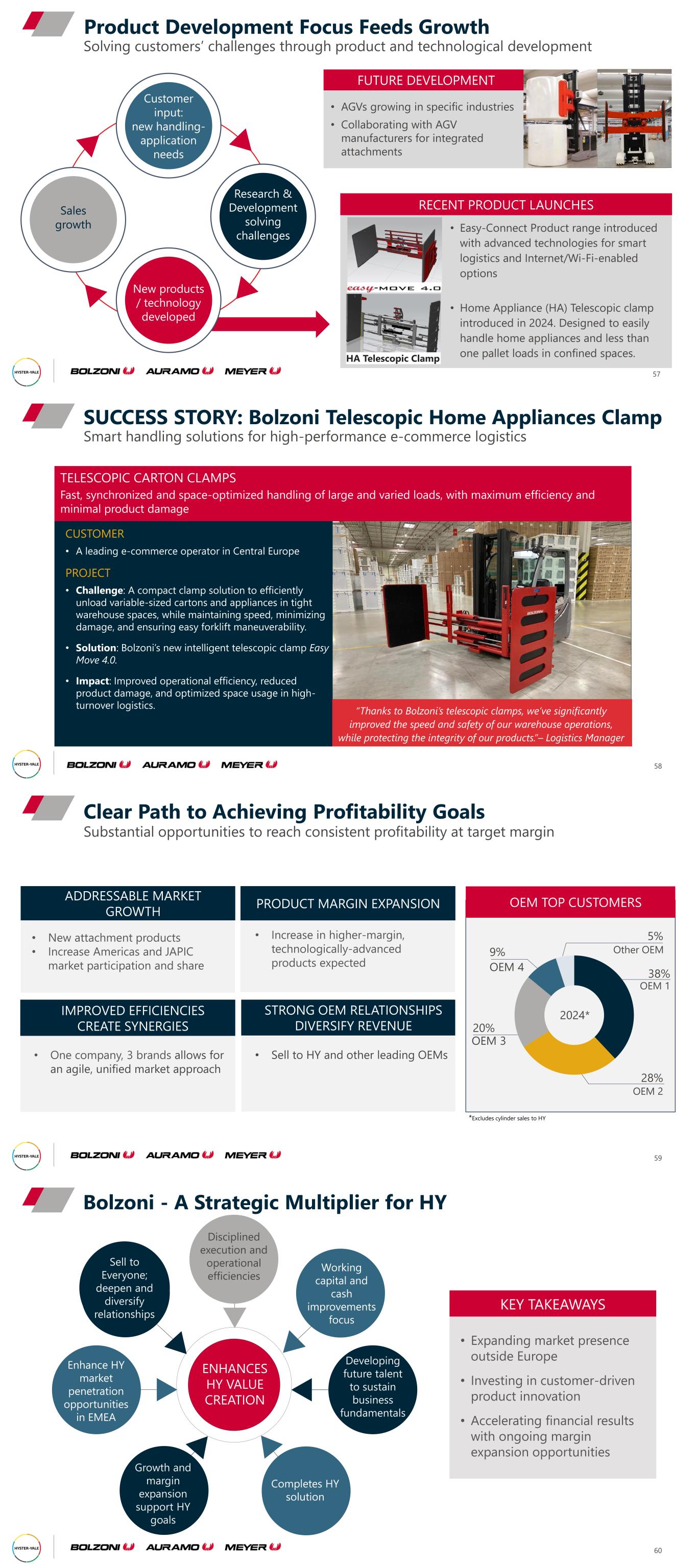
Let's say, the interest in automation is enormous because some of the basic trends that we are seeing, availability of people, and if you do get people, what is their expertise like in driving trucks. The implementation has been slower than we would expect. And part of that is, as you automate, you have to redesign some work, you have to redesign some of the material flow. And so the approach we've taken is we are working with customers in a very partnered approach so that they can experience what automation can do for them. Once they realize that, then they're able to identify how they could reconfigure their operation to better suit. At the moment, we're working with some of the largest companies. I won't go into those. But all the ones that are talking and writing about automation, we are working with at the moment. I think it's one of those things that's going to take some time for people to really understand how best to deploy these technologies, how to implement them, and integrate them into their operations, and then it will take off. So I expect a buildup, but then a fast acceleration after that.
And Kirk, I would add that as that trend takes hold, those trucks, whether they be with our hybrid automation or our full automation, come with higher prices and higher margins generally. So the benefit will accrue to the customer and their total cost of ownership, but will come back to us as well from the sale of the unit and the ongoing revenue of the technology.
Speaker 7
So you would consider this automation to be a positive for your business?
Yes, absolutely. I mean, we have automated trucks. We have about 600 or 700 of them running around today. And we're building that up slowly. We have a primary product released now in the marketplace, and then every 6 to 9 months, we'll be releasing another automated product.
Speaker 7
And then a follow-up on the excess equipment that you see out there. And when do you expect that excess equipment to be depleted and orders to pick up in a quarter? Any guess as to timing?
Yes. I think we're working with our network to get their excess inventory in the right place by the end of the year. So we expect our dealers, and they're showing signs of it, as I said, to start ordering from the factory rather than fulfilling from their inventory at their retail. And then customers, similarly, we understand our backlog. We also understand the industry backlog, and the majority of what customers were waiting for has already been delivered. But it takes a little bit of time to cut and some help from the customers to switch stands. They haven't been running RFQs, some of them, especially the heavy side of the business, and really making decisions. And that's where I talked to Ted about that we're putting some special activities in place to help customers get through that process efficiently.
Speaker 7
And then lastly, if some of your customers' hesitancy on placing orders, are they waiting for interest rates to come down? Is that part of what is going on here? I'm sure there are a lot of things, but is that a meaningful factor?
I think if I just think about ourselves, we're like them. We're looking at the ISM numbers. We're looking at what is going to happen to interest rates. We're looking at tariffs and the dynamics of tariffs and what this means to us. We're also looking at, in the worst conditions, what capital requirements do we have? And then once you've evaluated all of that, you go all right, what should I do now? The one thing that gets left out because it's not obvious to the customer is that their fleet has aged as well. And the downside of that is that their cost of operation is going to go up. And so we just want them to put that into the mix of their analysis and help them with it. So that's the way we feel we can move them off center because we can absolutely understand why those elements could create a bit of a freeze moment for making capital, at least capital expenditures that you feel that you have some flexibility with.
Speaker 7
And then, if I could just sneak one last one in. On the tariff front, I think I heard you say you're not at an advantage. I mean, everyone is sourcing the same components from the same countries. You're not at an advantage, you're not at a disadvantage with your competitors with respect to your competitors?
I believe that's mostly accurate, but there are notable exceptions. For instance, if you're a manufacturer in South Korea, you can import parts from various places, mostly tax-free. You can use Korean steel, but you'll incur a duty on the steel when bringing it in, along with a 15% duty on trucks. The same applies to Japan. In contrast, we're purchasing U.S. steel, which incurs duties, so I need to check the steel prices to see how they're affected. We pay duties based on the origin of many components, which often come from China, India, and other regions in Eastern Europe, potentially leading to substantial tariffs, particularly from China and India. When you assemble trucks in North America under these conditions, it feels somewhat unfair to us.
Operator
Our next question comes from Jack Fitzsimmons from Prudential.
Speaker 8
I think you mentioned cancellations in the prepared remarks. So I was just wondering if you saw a pickup in cancellations in Q3? And if so, you could just quantify that number?
I believe we have moved past the majority of our cancellations, which were particularly challenging in the first and second quarters. As our backlog has decreased, the number of cancellations has significantly reduced. We did not see many cancellations this quarter, and we do not anticipate many in the future. Most of these cancellations came from orders placed in late 2023 or 2024, meaning there have not been recent cancellations or new orders.
Speaker 8
And then just one more for me. I guess in the release, you mentioned a $40 million tariff impact in Q3. Just a clarification, is that net of price increases and other actions? And if not, kind of how much of that cost were you able to mitigate?
I can share a few insights before passing it over to Scott. It's important to note that we build trucks based on our backlog. As I mentioned earlier, the market remains quite competitive due to our inability to fully utilize our capacity. Consequently, we found it difficult to re-enter the market. Our customers essentially told us they would look elsewhere. Therefore, we couldn't secure substantial pricing for the trucks in our backlog. Most of the $40 million we incurred was due to tariffs, which significantly impacted our profit and loss statement. I anticipate this situation will continue into the next quarter since we're still facing similar challenges. However, we're now booking orders that better account for tariffs, either through surcharges or price hikes. Scott?
Well, I think you covered it pretty well. I would say, yes, the $40 million was the gross tariff cost, and we were able to offset less than half of that with the price in the quarter for the factors that Rajiv laid out.
Operator
And our next question comes from Eric Ballantine from CVC.
Speaker 9
Just a follow-up on that question on the backlog and pricing. I know in the past, you've talked about that you want a profitable backlog and so forth. Now it sounds like there's still some unprofitable or lower-profitable new units in the backlog. Of the overall backlog, what kind of percent is related to those unprofitable, lower-profitable units? And so, when do we think that when you start showing the value of the backlog, $1 billion, $1.2 billion, whatever that number is, that's really 100% profitable backlog or pretty close to it?
Yes. I think we'll get there in January, February. And I wouldn't say that these were bad margins when taken. Those were actually very good margins. But then we've had, as you heard, $40 million worth of tariffs, which went around when we took those bookings. So really, the untariffed covered backlog will be out of mostly by early first quarter next year in terms of what we're building. And of course, we are booking those right now.
Speaker 9
And then on your comments about the kind of the fourth quarter and the profitability falling off there, I know you've talked about that you didn't want to go back to the days of EBITDA negative and so forth. I mean, obviously, EBITDA is falling off pretty significantly this year. I mean, are we looking at a situation where we could potentially be back into the EBITDA negative sometime next year until the industry flips around? Or are you pretty confident that you're going to stay at least positive?
I think it's really difficult to tell at the moment. You saw us, we're pretty close to breakeven this quarter. I think as we've guided, we're going down, so going a little lower for the next couple of periods. So I think that's the best I can do right now.
Speaker 9
And then just on the AI issue, I mean, your comments around you're working with the customers. Is it really the customers or the issue in the sense that you have the product that you can deliver to them that's functional, AI-automated, and so forth? It's really the customers that need to kind of figure out their plans and figure out how they want to operate. Or is there something else that's limiting you guys?
Yes. We have designed our automated solution primarily from a material handling perspective. While we do utilize software, our expertise lies in material handling. We understand how to maximize the effectiveness of our solutions since we apply them in our own facilities. This experience enables us to support our customers accordingly. We believe this aspect is essential to our value proposition, allowing us to distinguish ourselves and provide customers with greater value. We are also preparing our sales teams, dealers, and customers to adopt these methods. Currently, we are conducting a pilot with several key customers in collaboration with our internal automation implementation team to test these concepts. The feedback from customers participating in the pilot has been very positive, indicating that our approach is unique and effective.
Operator
With that, we'll be concluding today's question-and-answer session. I'd like to turn the floor back over to Andrea Sejba for closing remarks.
Speaker 1
Thank you for your questions. A replay of our call will be available online later today, and the transcript will be posted on the Hyster-Yale website. If you have any follow-up questions, please feel free to reach out to me directly. My contact information is included in the press release. Thank you again for joining us today, and I'll turn the call over to Jamie to provide the replay information.
Operator
And we would like you to note that to access the replay of today's event, you may dial (855) 669-9658 or (412) 317-0088 and use the access code of 479-9887. Again, that is 479-9887. Replay will be available approximately 1 hour after the completion of today's event, and we do thank you for attending the presentation.