Operator
Hello, and welcome to Ensego Corp's first quarter, 2026 Financial Results Conference Call. Please note that today's event is being recorded. All participants today will be in a listen-only mode. Should you need assistance, please signal a conference specialist by pressing the star key, followed by zero. After today's presentation, there will be an opportunity for Q&A. To ask a question, please press star, then one on your telephone keypad. To withdraw your question, please press star, and then two. On the call today are Juho Sarvacos, Chief Executive Officer, and Stephen Gadoff, Chief Financial Officer. During this call, certain non-GAAP financial measures will be discussed. Reconciliation to the most directly comparable GAAP financial measures is included in the earnings release, which is available on the Investors section of the company's website. An audio replay of this call will also be archived there. Please also be advised that today's discussion will contain forward-looking statements. These forward-looking statements are not historical facts, but rather are based on the company's current expectations and beliefs. For discussion on factors that could cause actual results to differ materially from the expectations, please refer to the risk factors described in the company's Form 10-K, 10-Q, and other SEC filings, which are available on the company's website. Please also refer to the cautionary note regarding forward-looking statements section contained in today's press release. With that, I'd like to turn the call over to Juho Sarbacos, Chief Executive Officer. Please go ahead.
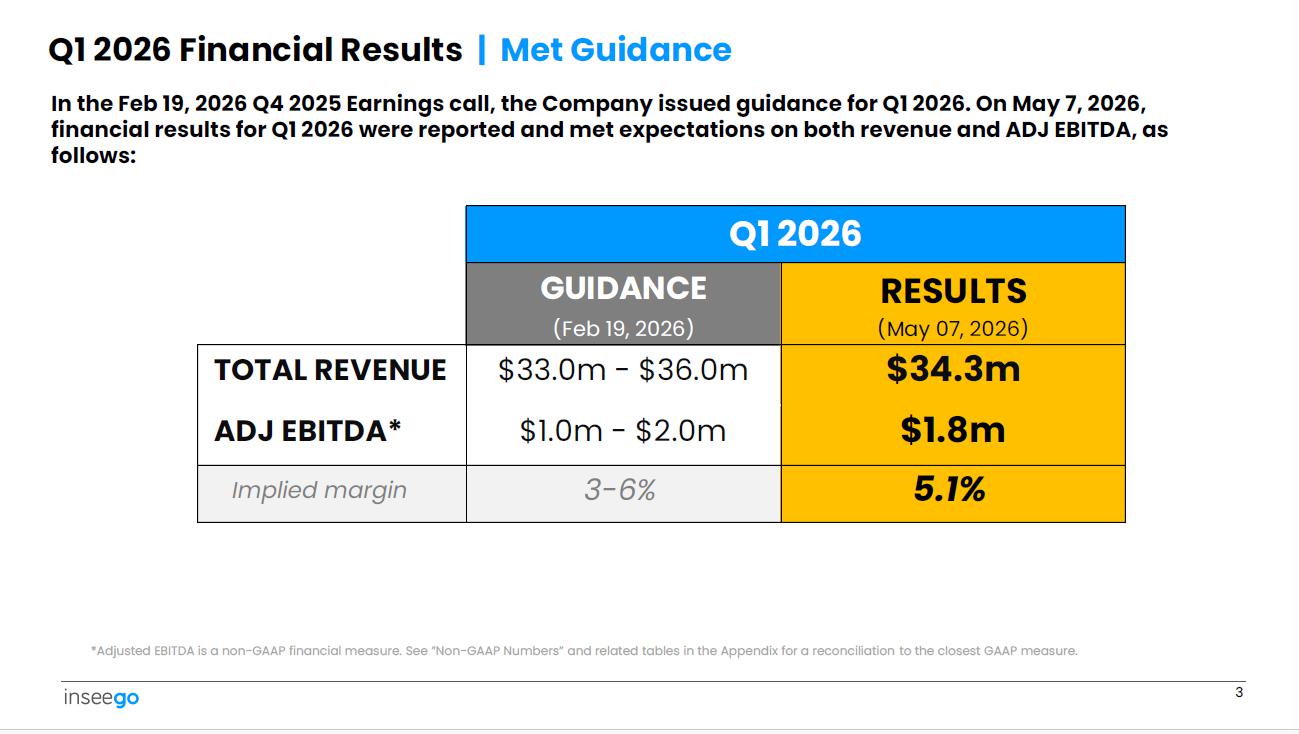
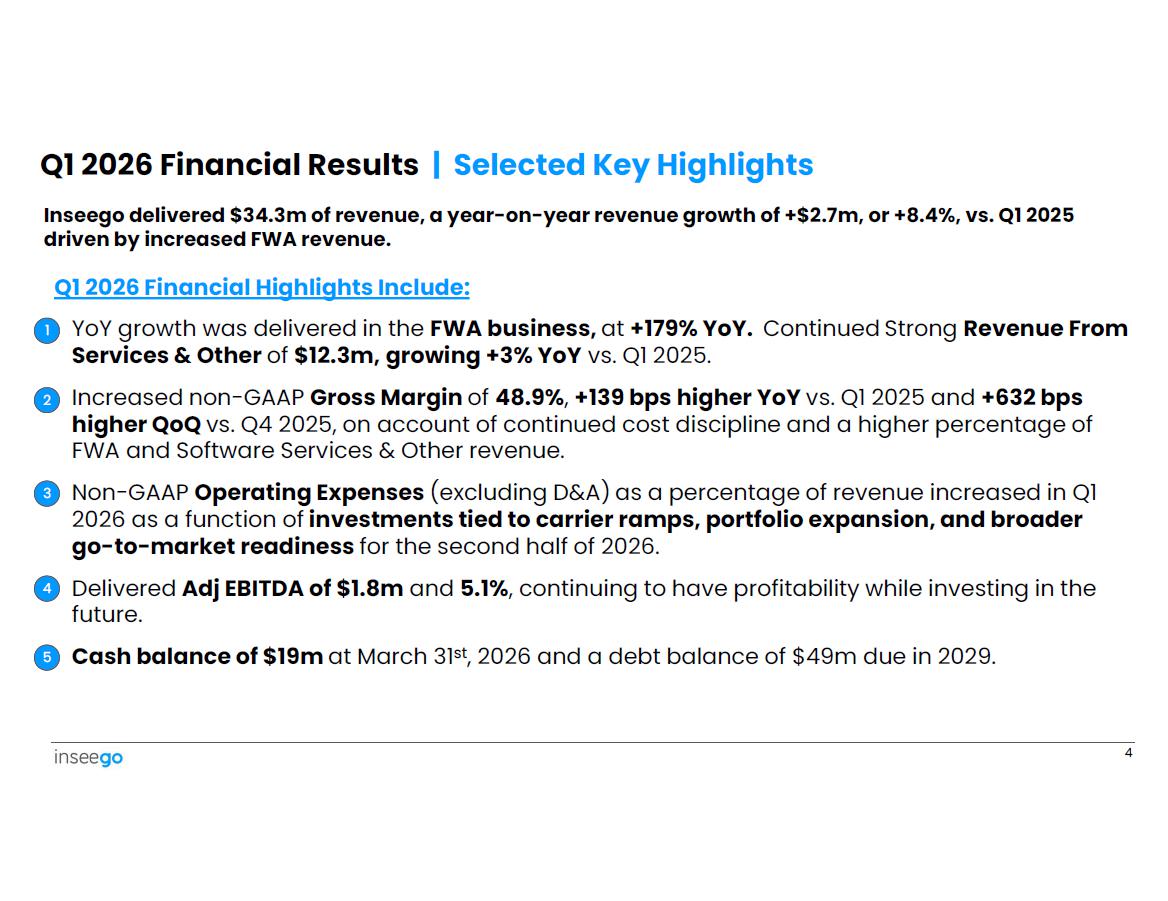
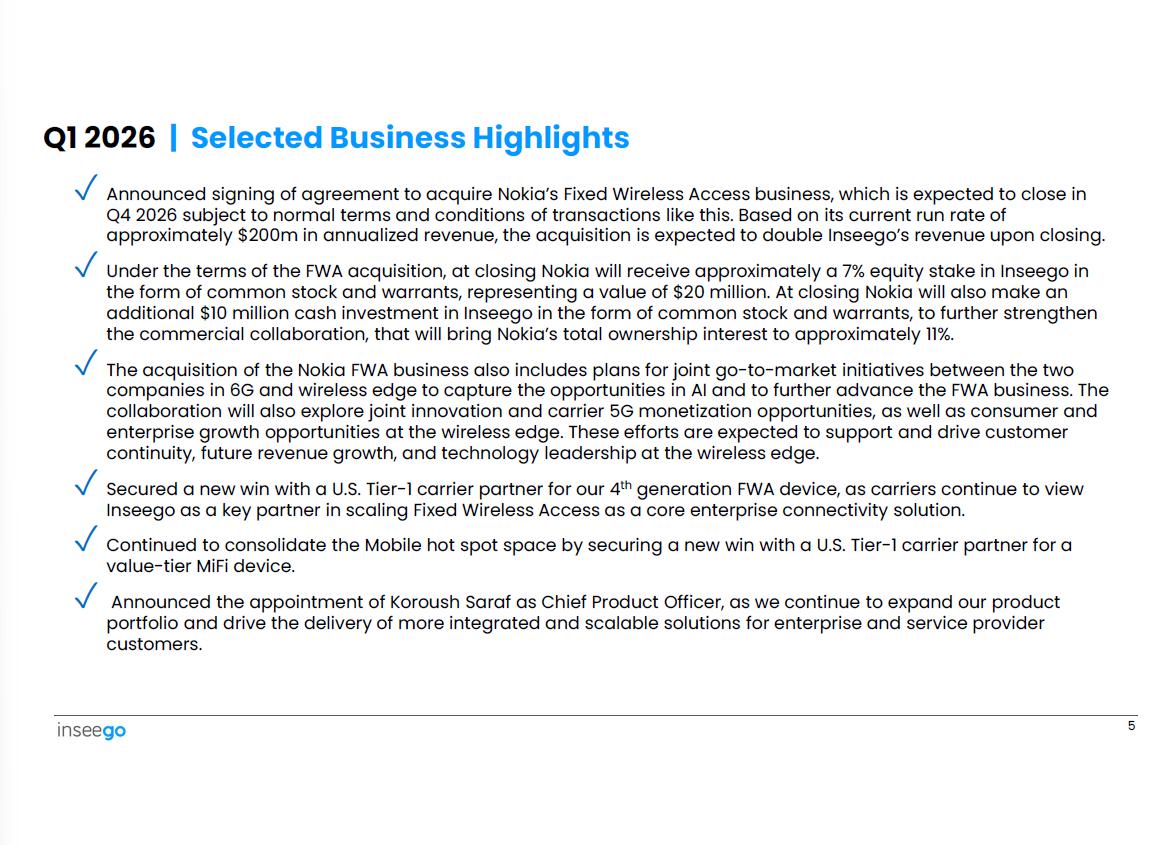
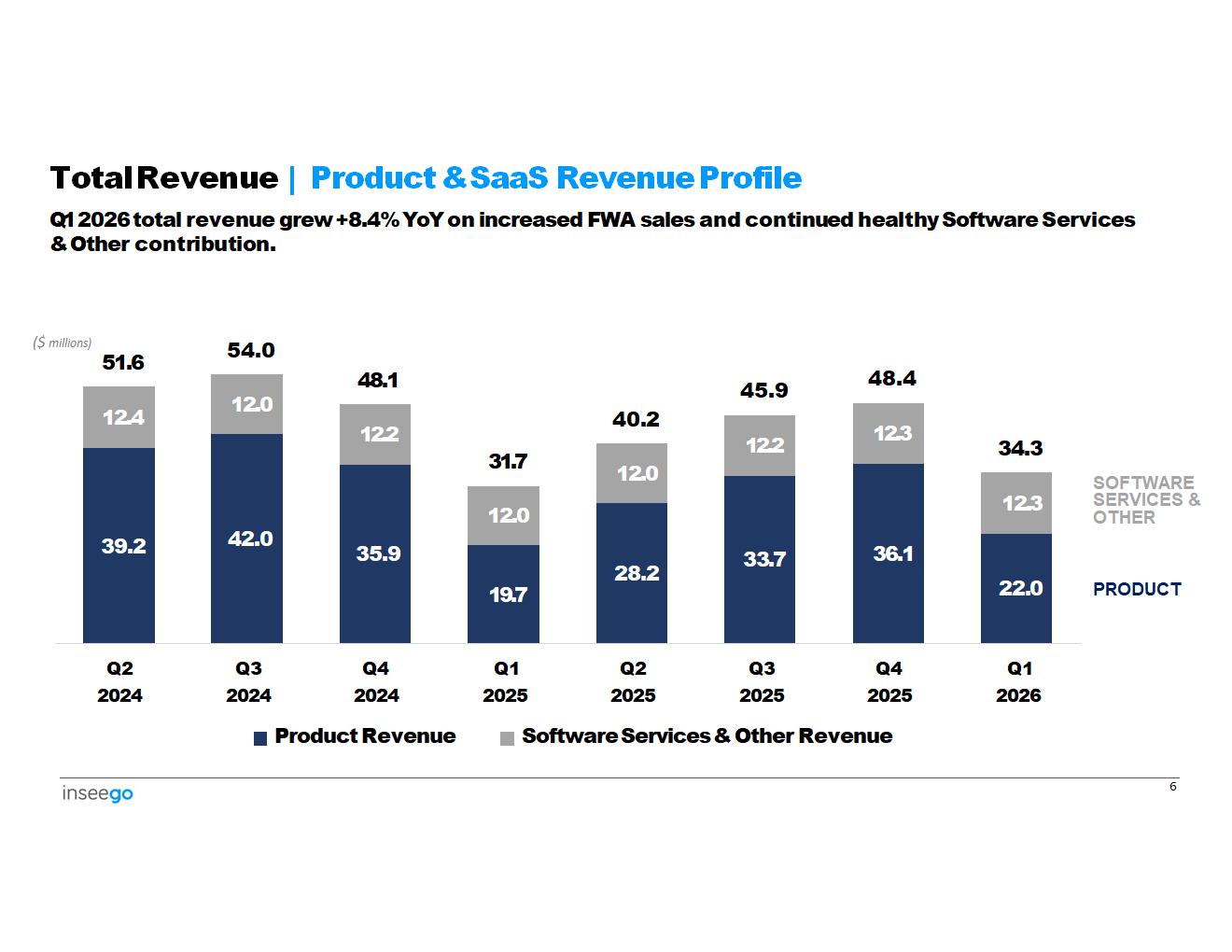
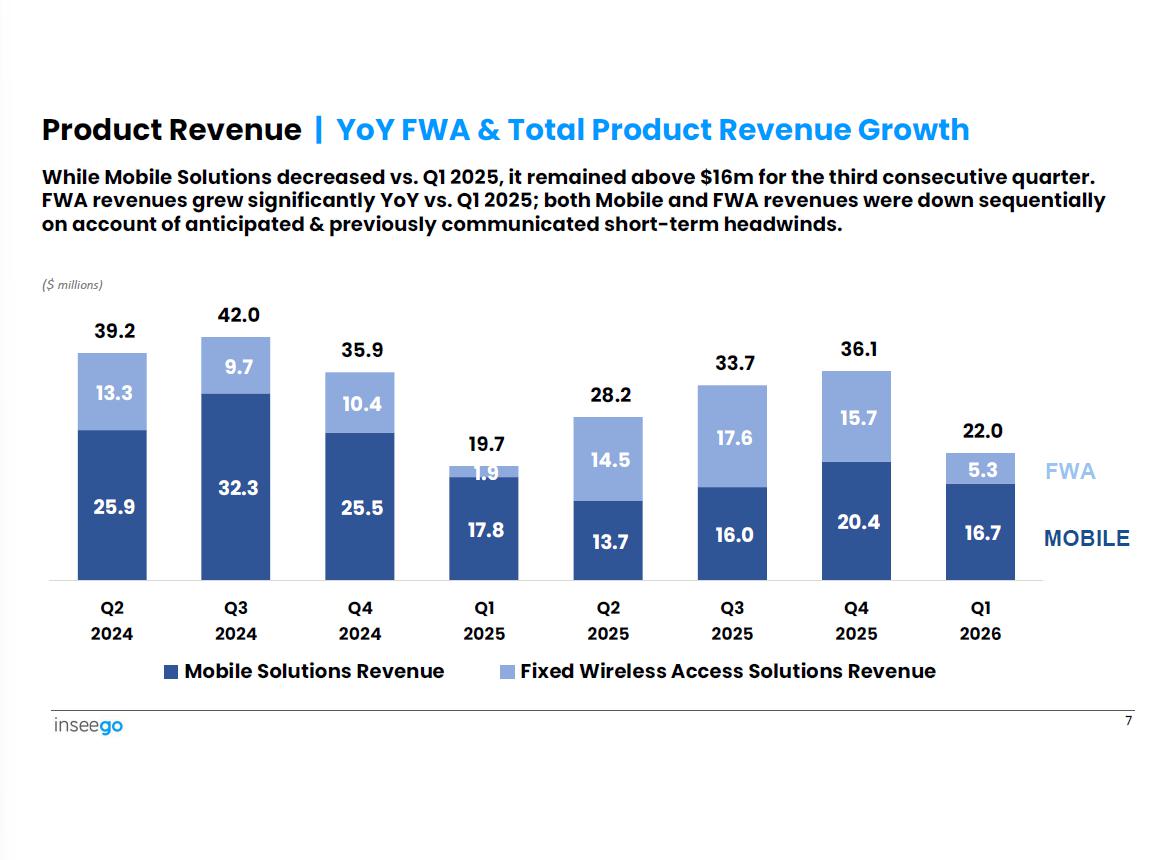
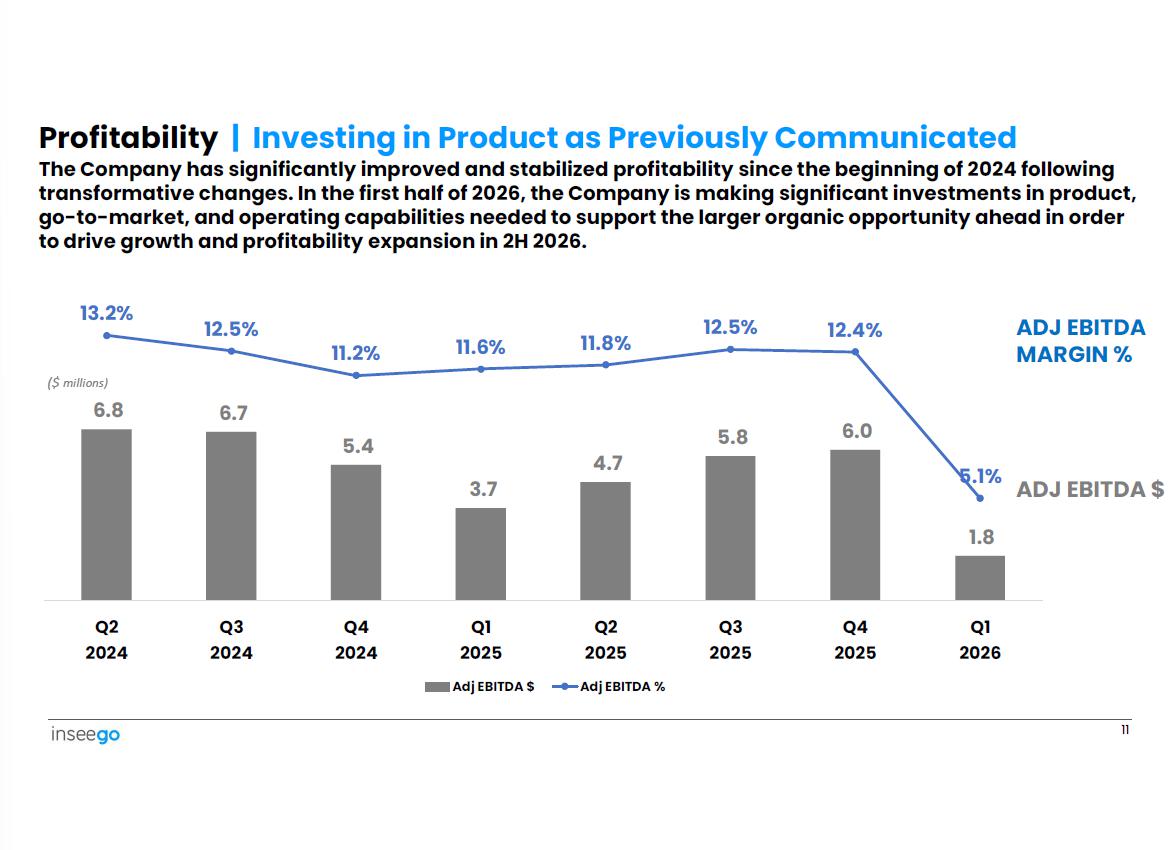
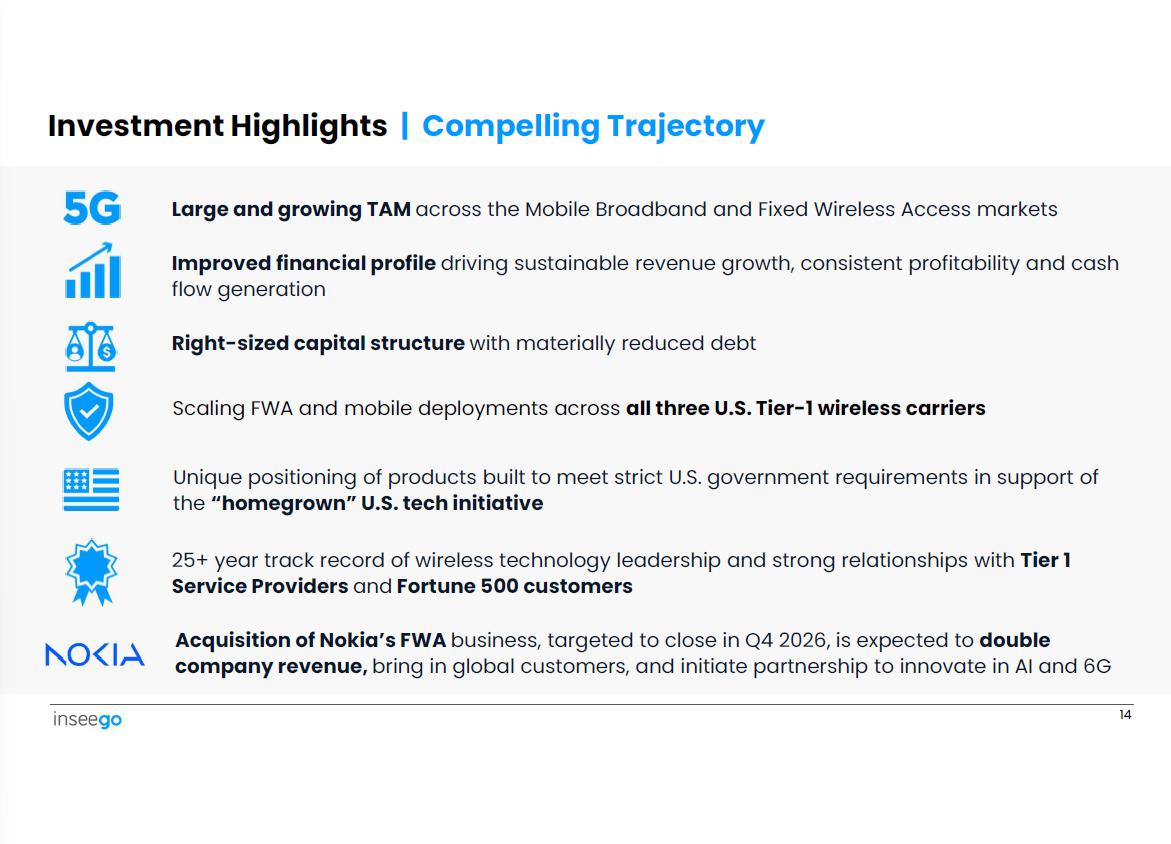
Good afternoon, everyone, and thank you for joining us today. This is a very exciting chapter for Insego and an important step in the company's transformation to diversify revenue and at scale. Over the past year, we have been executing a strategy focused on increasing stockholder value by strengthening the foundation of the company, expanding our product portfolio and customer base, broadening our routes to market, and solidifying our leading position as the partner of choice across mobile and enterprise FWA. Last week, we accelerated that strategy in a very significant way with the announcement of a truly transformational acquisition for Insego. It is the largest revenue deal in the company's history, and it's one that we structured very thoughtfully to meaningfully de-risk the profile of the transaction. We view it as a major milestone and important inflection point for the company for three reasons. First, it will more than double the revenues as of the company and take us from a North America-centric player to be the new global leader in wireless broadband in one decisive move as our end markets expand from North America to Asia Pacific and Europe, Middle East, and Africa. Second, it gives us one of the broadest portfolios in the industry across consumer and business markets, including FWA, mobile routers, and IoT gateways that we can use to address the expanded TAM. And third, it establishes a unique and strategic partnership with Nokia across go-to-market, AI, 6G, and the future of the wireless edge. Before I discuss the acquisition in more detail, I want to first cover our Q1 2026 results and provide color on our operational progress and some challenges in the quarter that we're managing through. Q1 revenue grew 8% year-over-year to $34.3 million, adjusted EBITDA was $1.8 million, and both revenue and adjusted EBITDA were within our guidance. We also delivered healthy gross margins at 48.9%. As we said on our Q4 call in February, 2026 is a year of investment in carrier ramps, product launches, and portfolio expansion in the first half, followed by benefits of greater scale, improving operating leverage, and stronger profitability as the year progresses. Q1 played out largely as we expected and in line with what we discussed on our Q4 call. One challenge in Q1 was in FWA. Our large FWA customer overhauled its executive team and changed its approach to enterprise go-to-market, which created disruption for us in the quarter. We are working with them to realign the go-to-market and expect to see progress. Meanwhile, we've secured a commitment for our next-generation FWA platform with that same customer, reinforcing both the strength of that relationship and our position at the leading edge of cellular technology. In addition, our recently added tier one customer is ramping very well in FWA. This goes to show the importance of executing our strategy of diversifying our revenue base. Mopal delivered $16.7 million of revenue. On last quarter's call, we said we had engineering delays in our new mobile hotspot broad family, which consists of a model for each of our Tier 1 carriers that would impact Q1. While we have successfully launched two out of three models, the delay in the third is persisting in the Q2. We anticipated to launch in late June. I'm happy to share with you that we've executed on our strategy to broaden the mobile portfolio across multiple value tiers and secured a career commitment for a new low-tier MiFi product, which is an important step in expanding the portfolio and positioning the category for broader contribution over time. I've made important changes to address the execution issues I mentioned. I brought in a new chief product officer and launched a search for head of engineering. It's important to note that as part of the Nokia FWA acquisition, I will be integrating people and best practices from Nokia, an industry leader in engineering technology, which will help us scale both our existing business and the newly acquired business. We recently welcomed Kourouj Saraf as our new Chief Product Officer. Kourouj brings more than 20 years of experience across networking, cybersecurity, hardware, software, and edge infrastructure with expertise in AI, SD-WAN, cloud security, and 5G. He held product leadership roles at ZPE Systems, Accredo, Palo Alto Networks, and Fortinet, where he helped bring products to market across connectivity, networking, and security. Gorush understands how to build and scale product platforms across hardware and software, and his background is closely aligned with our strategic priorities as we continue expanding the portfolio. So in summary, Q1 played out as we expected. As we move into Q2, we continue to build our FWA business. And in mobile, while we have launched a new product generation with two out of our three Tier 1 carriers, the additional delay with the third one will impact our Q2 outlook. As it won't launch until late June, it therefore won't benefit most of the quarter. Moving to the transformational announcement we made last week, the acquisition of Nokia's FWA business. What makes this transaction compelling is what it means for Ensego strategically, for our market position, our global reach, our technology roadmap, and our ability to lead the wireless broadband edge as AI, 5G evolution, and eventually 6G expand the opportunity in front of us. The simplest way to think about this transaction is that it's transformative for Ensego. We are acquiring Nokia's approximately 200 million revenue run rate FWA business. That more than doubles our revenue base, gives us immediate global scale in revenue and reach, and positions Insego as one of the leading global players in FWA with what we believe is the broadest platform in the industry across mobile, fixed, enterprise, and consumer connectivity. It also establishes a partnership with Nokia across technology, go-to-market collaboration, and ownership alignment. From a scale, reach, financial, and technology standpoint of view, This acquisition transforms Inseego and sets us on a greatly accelerated growth trajectory. For Inseego, the strategic logic is very clear. This acquisition materially advances our product roadmap and gives us immediate global presence. It takes what has been a U.S.-centric business and makes Inseego instantly global. It also gives us a strong set of global tier one customers and creates real opportunity to take Inseego products into Nokia's customer base and Nokia FWA products into Insego's customer base. It gives us a different level of scale from day one and positions us to compete across a much broader set of customer segments, geographies, and use cases. This gives us a much stronger position in FWA market, which is growing rapidly and becoming more important globally. The drivers are clear. Operators are increasingly using FWA to monetize 5G, expand broadband access, and serve a broader range of consumer and enterprise use cases. At the same time, AI-driven workloads are increasing uplink demand, lowering latency tolerance, and pushing more intelligence to the edge, while 5G evolution, millimeter wave, and over time 6G continue to expand what wireless broadband networks can support. We believe this transaction gives us exactly the right platform to capitalize on those key trends. This is also a strong fit for both companies. Nokia is sharpening its focus on AI infrastructure and network leadership. Insego is building a leadership position at the wireless broadband edge. Bringing these two together creates a very compelling combination and a strong fit strategically for both sides. On a personal level, this transaction means a great deal to me as well. I spent nearly eight years at Nokia, so I know the teams, the products, the customers, and the quality in which they operate the business. I also know the depth of technology and the relevance of this business in the broader wireless broadband ecosystem. This is a business we understand, a market we deeply believe in, and an opportunity we are genuinely excited to bring into Insego. I also want to thank Nokia President and CEO Justin Hotard and his team for the partnership and the work they've done to get us to this point. We appreciate the relationship and are excited about what we will build together going forward. It has been one week since we announced the deal, and while there is obviously a lot of work ahead of us, the response we've seen from partners and customers has been overwhelmingly positive. As I mentioned earlier, an important part of this acquisition for me is the ability to add strong Nokia expertise to our company. I'm driving to one global engineering team, one product team, and one integrated supply chain. Signing the deal only got us to the starting line. I'm laser-focused on making sure we execute along the way, starting with the overall integration of the business. We are approaching integration the right way, with a clear focus on customer continuity, employee integration, and building the right culture. We have a dedicated and experienced team leading this effort. Importantly, the business and financial attractiveness of this deal is well aligned. In this regard, this is not a bolt-on. It's about bringing two complementary organizations together with a clear set of opportunities for scale, efficiency, and cost synergies over time. The transaction structure is designed to give us the flexibility to integrate thoughtfully, continue investing in the roadmap, and optimize the business as we execute. Stephen will walk through the structure in more detail, but from my perspective, that operating framework is an important part of what makes this transaction so compelling. At the same time, we remain fully focused on the existing business. We are driving that business forward while preparing to bring these two organizations together as one fully aligned team, serving a much larger global opportunity across mobile, enterprise, and consumer wireless broadband. With that, let me turn the call over to Stephen to discuss the Q1 financials, Q2 outlook, and the Nokia acquisition structure and economics in more detail.
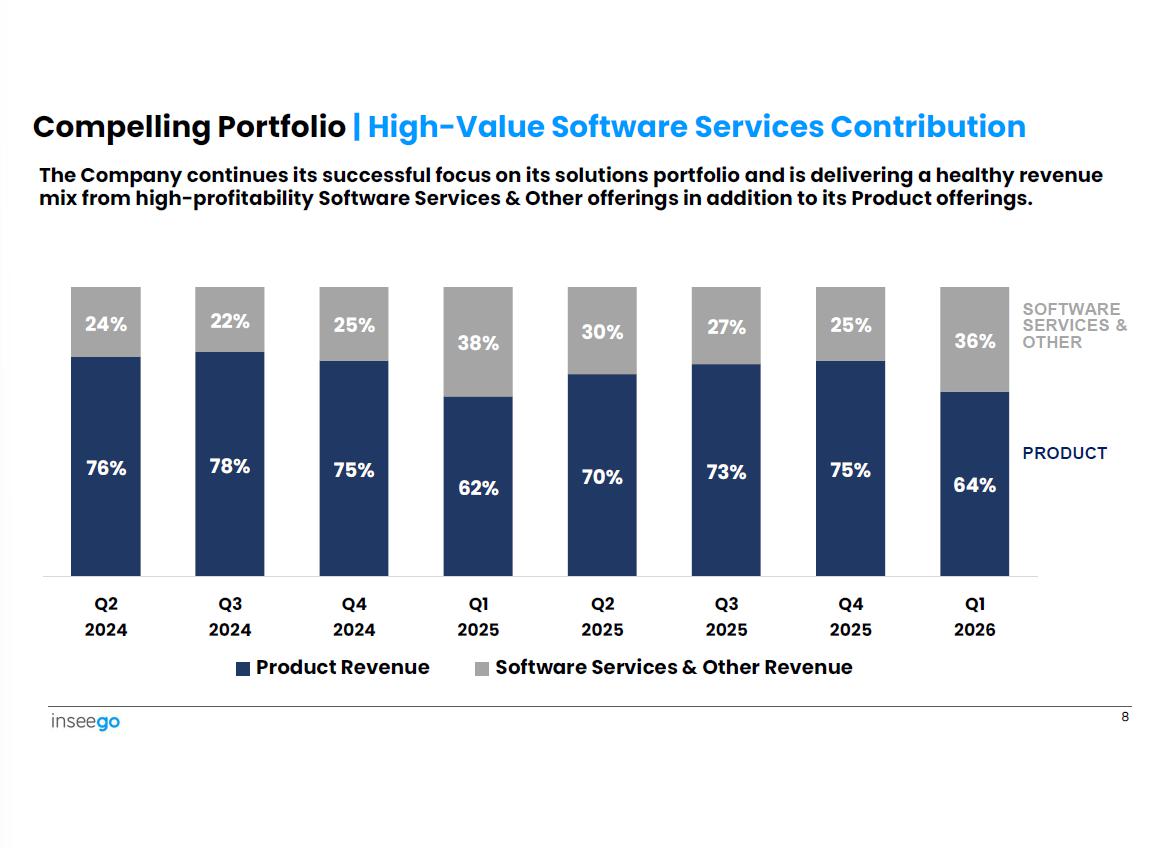
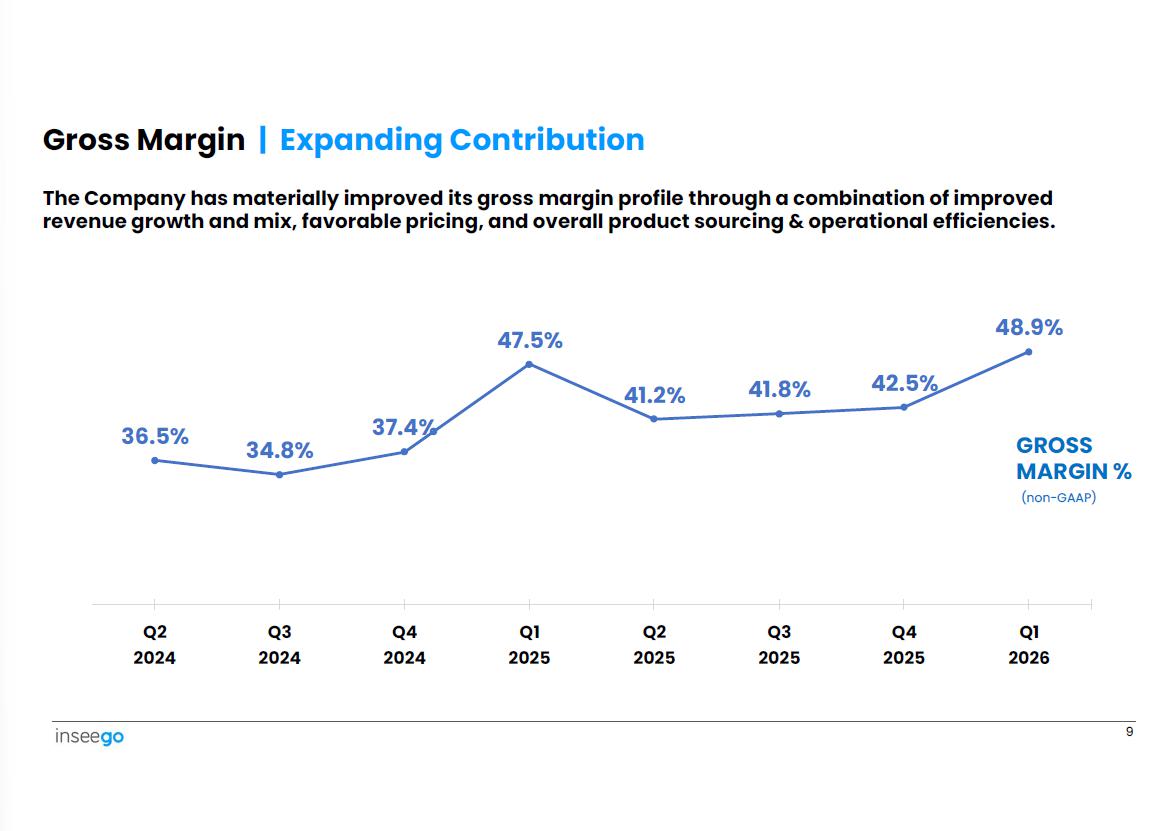
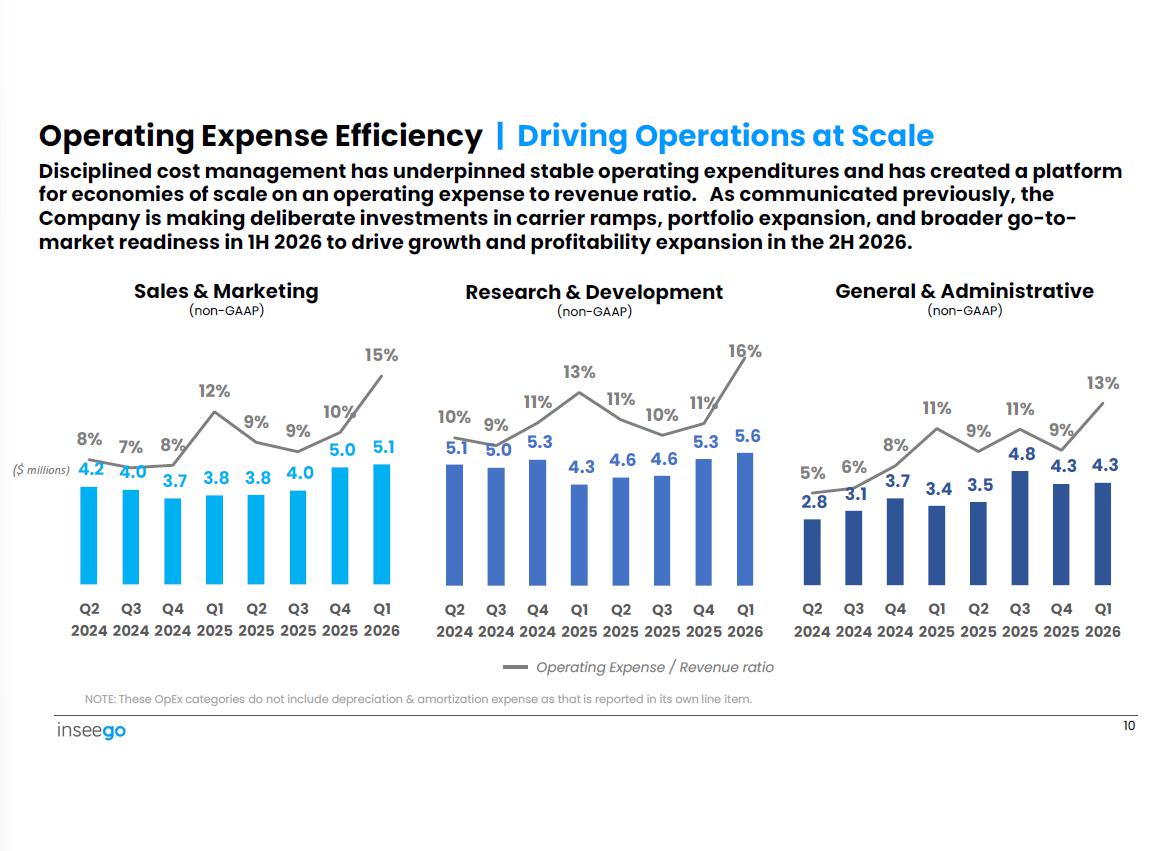
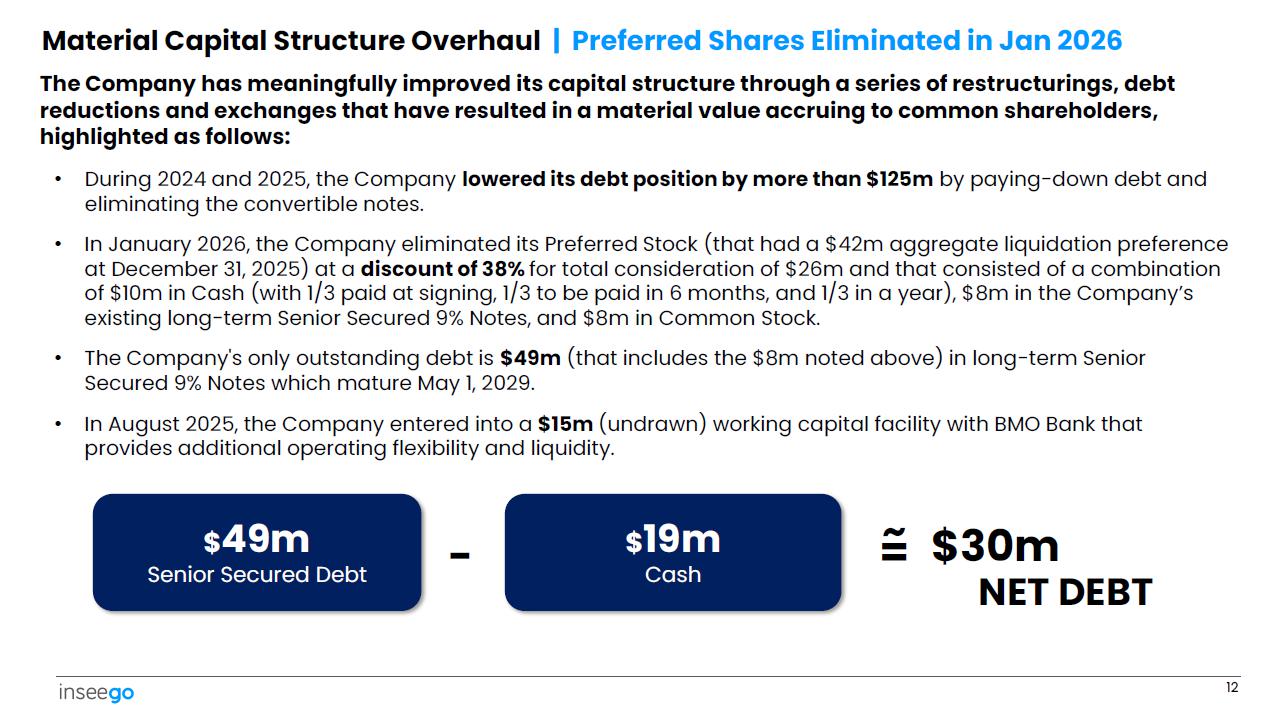
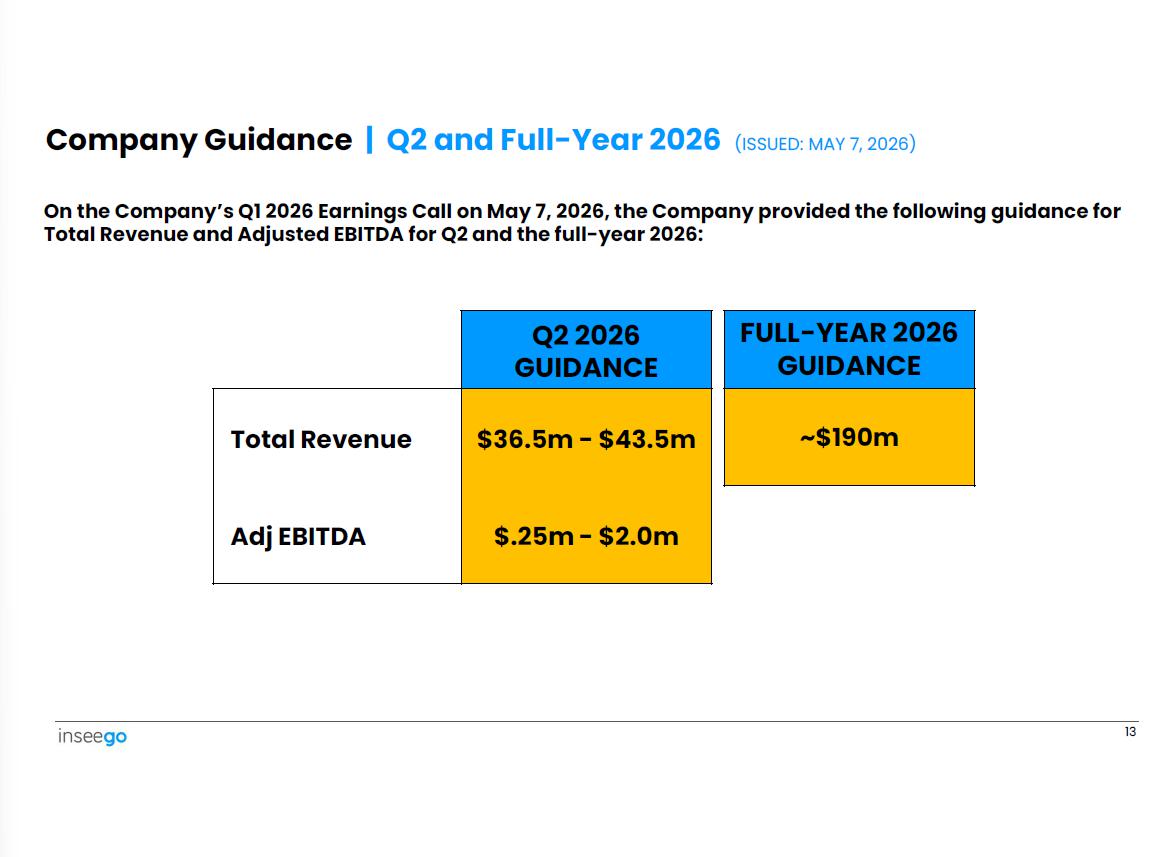
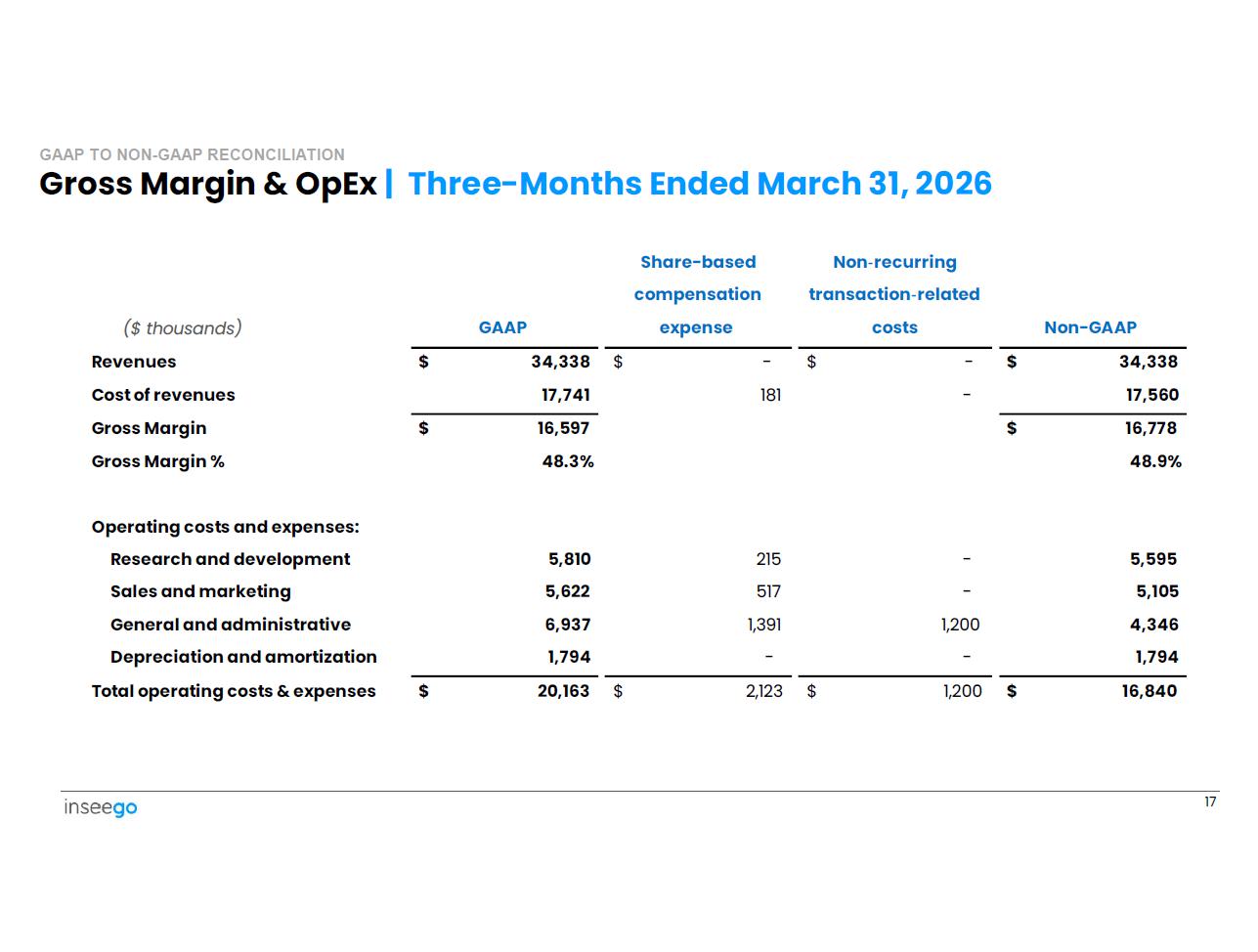
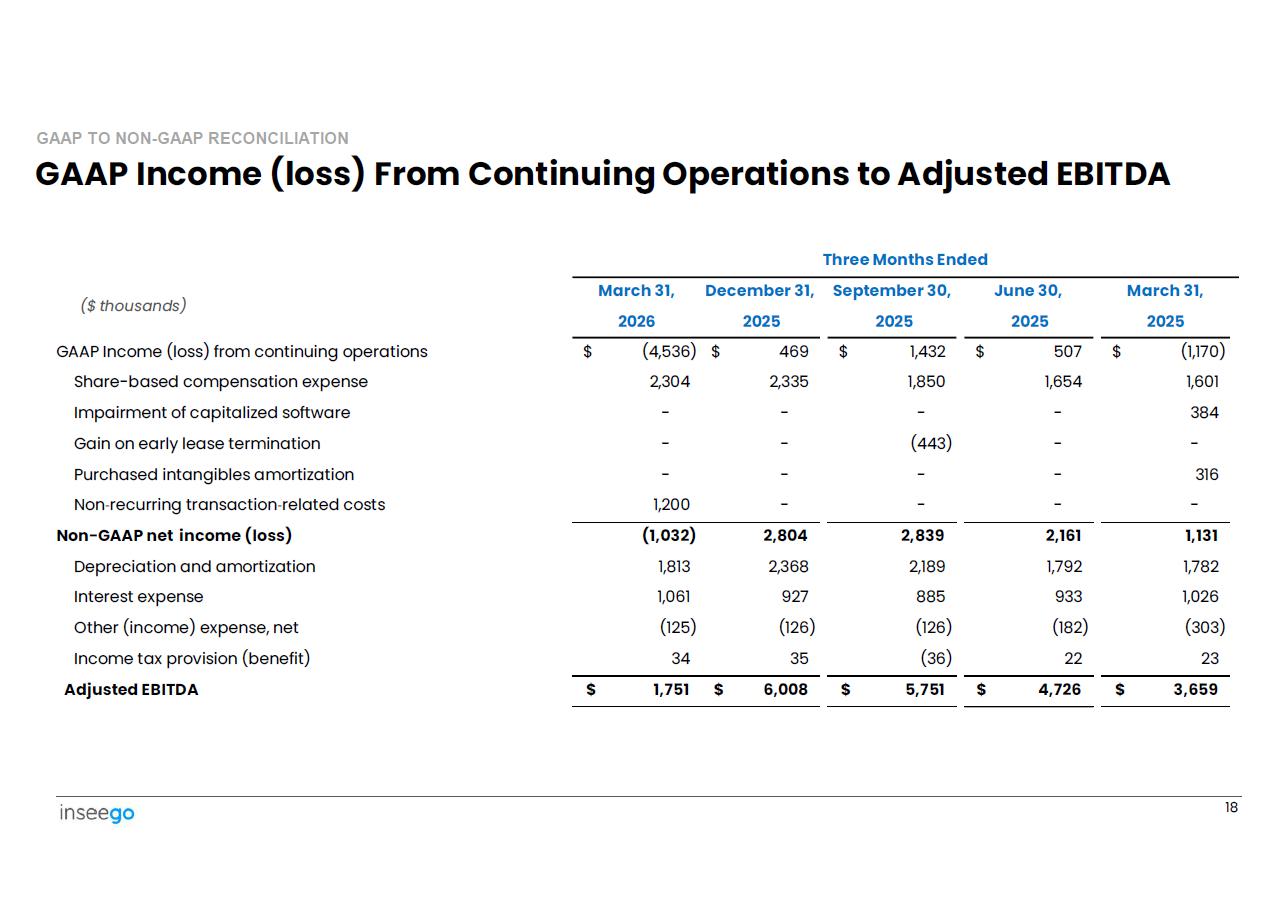
Thank you, Juho. Hi, everyone. Thank you for joining us. I'd like to cover three topics today, as Juho said. First, I'll take you through our Q1 2026 financial results. Second, I'll share some color on the financial profile of the business and provide our guidance for Q2 2026. And third, as you have mentioned, I'll provide more details on the FWA acquisition structure and economics. To be clear, though, the discussion of our financial results for Q1-2026 and our outlook and guidance for Q2 and the full year-2026 are for Insego only and do not include any of the Nokia FWA business. The acquisition is anticipated to close in Q4, 2026, and we will look to provide the relevant financial information in that timeframe. As we always do, we'll wrap up today by opening the call to your questions. Starting with our financial results, Q1 played out largely as expected, as EO mentioned, and reflected the timing and transition dynamics that we discussed on the last call. We delivered year-over-year revenue growth, healthy gross margins, and adjusted EBITDA within our guided range. And we did this while we continued to invest in the product, go-to-market, and operating capabilities needed to support the larger organic growth opportunities ahead. On the top line, total revenue for Q1 was $34.3 million, up 8% year-over-year, and driven by higher FWA volumes relative to the prior year period. along with a consistent contribution from our software services offerings. As expected, mobile was the larger dollar revenue contributor in the quarter at $16.7 million. FWA revenue was $5.3 million for the quarter. And while that was a sequential decline from Q4 2025 that reflected the timing and customer-specific dynamics that we highlighted on the last call, FWA revenue was up meaningfully year over year, supported by higher carrier volumes and a broader customer footprint. Software services revenue was $12.3 million, as mentioned, continuing to provide a stable, high-margin contribution to results. Moving down to P&L, non-GAAP gross margin in Q1 was 48.9%, up about 640 basis points sequentially, primarily as a result of a higher proportion of software services revenue. Non-GAAP operating expenses for Q1 were essentially flat to Q4 2025 at $16.9 million. As we discussed previously, this reflects the planned investment in sales and marketing and R&D in the quarter. These are deliberate investments tied to carrier ramps, portfolio expansion, and broader go-to-market readiness for the second half of 2026. adjusted EBITDA in Q1 2026 was 1.8 million dollars or 5.1 percent of revenue which was at the higher end of our guidance that result reflects what we said on the last call lower profitability in the first part of the year driven by front-end investment while preserving the setup for stronger scale and profitability in the second half of the year turning to the balance sheet we ended Q1 with a higher than anticipated cash balance of $19 million from a large customer clearing their quarter end AP balances. We drove healthy working capital through the quarter and finished Q1 with a manageable debt balance of approximately $49 million. That is $8 million higher than the year end balance on our successful elimination of all of the $42 million in outstanding preferred stock that we executed in January at a meaningful 38% discount. Let's now turn to Q2 2026 guidance. We continue to view 2026 as a growth year with front-loaded investment in the first half designed to position us for greater scale, stronger operating leverage, and improved profitability in the second half of the year. That basic first half, second half dynamic remains unchanged and is playing out as communicated. As we said on the Q4 2025 call in February and framing Q1, the first half of the year reflects several dynamics. First, the second half of 2025 benefited from a strong FWA ramp with a Tier 1 customer and elevated mobile volumes tied to carrier promotions and ordering cadence. Second, we are in the early stages of launching several new FWA programs with our Tier 1 carrier customers, and those revenue ramps build over time rather than all at once. And third, our refreshed MiFi portfolio is setting up for contribution in late Q2 and beyond as we work through the delays that Uho talked to. Against that backdrop, we remain positive on the outlook for both mobile and FWA in 2026 as we continue expanding our business with our Tier 1 carrier customers and broadening our routes to market. Looking at Q2 2026, we expect revenue to increase about 12% sequentially from Q1, driven by improved contribution from growth in FWA among both our carrier and channel customers, offset somewhat by a lower mobile quarter on MiFi, as you have discussed. We expect software services revenue to remain consistent at approximately $12 million. From a profitability standpoint, we expect Q2 2026 adjusted EBITDA to be lower sequentially with the anticipated increased spend in sales and marketing and R&D before that spend lowers again and revenue ramps to drive higher profitability levels in the second half of 2026, as we highlighted. Pulling this all together, we're providing the following guidance for Q2 2026. Total revenue in a range of $36.5 million to $43.5 million, and adjusted EBITDA in a range of $250,000 to $2 million. We see a higher range to the upside on revenue as we now have multiple new product launches and carrier initiatives in market. a new dynamic for Ensego, and the specific timing of which can land on either side of quarter end. Stepping back to the full year, 2026, we continue to expect organic growth and see a path to deliver $190 million of revenue, with the year building sequentially and profitability improving meaningfully in the back half as revenue scales. With that, let's turn now to the FWA acquisition. As we've said, we held a conference call last week on April 30th to walk through the transaction, so I'll keep the focus today on the key structural and financial points. We'd encourage anyone who hasn't already to listen to the webcast and download the acquisition presentation that's on the investor relations section of our website at incego.com. Overall, this is an asset purchase structure with an aggregate consideration of $20 million that consists of $15 million in Ensego common stock and $5 million in warrants to be issued to Nokia. We're very bullish on the deliberate transaction structure that we put together that meaningfully de-risks the addition of international scale and value creation for the company in a disciplined way and that aligns both parties around stockholder value creation. We would offer there are three aspects of the acquisition that we'd like to highlight. First, the way we structure the transaction preserves balance sheet flexibility. We are materially increasing the scale of the business without using cash or incurring any debt, and that matters. Second, the transaction structure creates real alignment between Ensego and Nokia. Nokia is not simply divesting an asset and moving on. They're becoming a shareholder of Ensego and have aligned incentives around execution and long-term stockholder value creation. And third, the transition support framework aspect of the transaction is important. We designed the structure to maintain the acquired FWA business at EBITDA break-even for the first year following the close. This will be achieved through quarterly cash payments from Nokia that are equal to the negative EBITDA of the acquired business that first year. That support gives us stability during the transition while preserving upside to realize the broader cost savings and operating synergy opportunities over time. As we discussed, the EBITDA make-hole is capped at $38 million in aggregate, which we see as wholly adequate for that first year of operations. There is also a longer-term alignment mechanism through profit sharing in years two and three following the close, where Nokia will be able to participate in positive EBITDA generated by the acquired business that is correlated with its performance. In this regard, we see an opportunity to leverage greater supply chain scale and purchasing power and to realize engineering efficiencies through product design and development model benefits in order to drive profitability over time. We believe the structure creates an attractive and disciplined framework for Ensego shareholders and the scale is compelling with the acquired FWA business essentially doubling the size of Ensego and bringing approximately $200 million of revenue on a run rate basis from their Q1 2026 results. When you combine that scale with the transition support, the equity alignment, and the revenue and cost synergy opportunities, we believe the way we structure this acquisition meaningfully de-risks the transaction financially, complementing the strategically compelling nature of the opportunity. As noted earlier on the announcement call, we currently expect the acquisition to close in Q4, 2026, subject to customary closing conditions, and we look forward to providing more financial details on the business as we move to the closing. With that, we appreciate your time and support and are glad to open the call for questions.
Operator
Thank you. We will now begin the question and answer session. To ask a question, you may press star, then one on your telephone keypad. If you are using a speakerphone, please pick up your handset before pressing the keys. To withdraw your question, please press star, then two. At this time, we'll pause momentarily to assemble the roster. And the first question will come from Tyler Burmeister with Lake Street Capital Markets. Please go ahead.
Hey, guys. Thanks for letting us ask a few questions here. Stephen, maybe first on the Nokia acquisition you guys announced last week. I'm wondering if you're able to at this point or if it's something we have to wave closer to closing to provide a little more detail on exactly what that year two, year three profit sharing looks like, what some of the metrics are that you would hit for Nokia to participate in that.
Yeah, let's do both of those. We will provide more details in our filings and we're happy to share that the basic structure of the profit share is based on the revenue performance of the acquired business. And the way it works is that Nokia will be able to participate somewhere between zero and 50% of the positive EBITDA that's generated from the business based on where the revenue of that business comes in. Maybe pivoting to the core and seagull business here in the quarter um you know gross margins maybe as we look through the year obviously there's going to be some some mixed headwind as your product revenue ramps um in q2 in the second half of the year wondering if you could just maybe give some thoughts on on gross margins the remainder of this year yeah we'll we'll tag team on that as usual and um i think you just summarized it really well that is exactly what's going on that um you know in the reported quarter in Q1, the margin was quite high, mostly on mix, mostly on a higher proportion of software because of the lower print on mobile, basically, and certainly on FWA, which is generally a higher margin business. And then as we roll out, though, more products that I mentioned earlier is, you know, this is really the first period in the company's history where multiple product launches across multiple carriers, and so the good news is we're looking to grow revenue and compete well, and that does bring some gross margin pressure insofar as rate.
So that is kind of the dynamic that you summarized quite well. Yeah, I think Stephen also mentioned in his prepared remarks that it's a new dynamic for the company. So if you look at our revenue a year ago when there were really three products across two carriers, now we're ramping up three mobile products across all three carriers. These mobile products are positioned now to capture a much larger share of the market, a lower price point, with some pressure on the cross-margin, as you'll see reflected. Meanwhile, on FWA, we're very happy to see the ramp of our new partner to realign a big element in addition to rebound effect, in addition to mobile, which is always good.
I appreciate all that color. Maybe last one, if I can sneak one more in. I was wondering on your software business, the subscribe, which is the majority of that business with one carrier customer today, I was wondering, you know, how you might think about the opportunities to expand that with Nokia's international carrier customer base, you know, post the close. Do you think there could be a more or less likely opportunity for inroads with some of those customers there?
Yeah, so absolutely. The global footprint opens up more market opportunities for a subscribe as well. The big thing for me with subscribe, as we've done heavy investment on the platform over the past year plus, and on the back of that, the immediate priority being the other large tier one carriers here in the U.S., I'm extremely encouraged by how well the solution has been received. And, again, as a recap, what Subscriber really is, is a full subscriber lifecycle solution, and it specializes in the most difficult. In addition, under Stephen's leadership.
Thanks. That's all for us. Thanks, guys. Thanks so much. Thanks, Tyler.
Operator
The next question will come from Lance Vitanza with TD Cowan. Please go ahead.
Thanks, guys. Two questions, I guess. The first is on the Nokia deal, which looks like it's, you know, a lot of potential upside there. How should we think about the gross margin potential once you sort of get that business integrated? You know, how should we – is that 10% gross margin? Is it 20% gross margin business? I'm just trying to think about what this thing could actually look like in a couple of years' time.
Yeah, so let's see. It was a good Will Tech team, of course. It's a good question, and we're working that through, and I think your good question has two aspects to it, like what is it at closing and then what is it over time? And in our view, those are reasonably different, not amazingly. But to your point, a good portion of the customer base right now is a high-velocity consumer-based, residential-based model. The product is pretty diverse and can go to business as well. But, you know, the margin profile of that business, you know, is more of a teens kind of gross margin than it is, you know, in the 20s right now. But we expect to be able to drive that in the future once we close.
There's not really a single gross margin percentage that would exist in nature in that business. If you look at, like Stephen was saying, the book of business that we're acquiring, you have anything from a very advanced millimeter wave deployment in Australia with a significantly higher cross-margin construct to emerging markets and everything in between. The other thing that in all of the discussions with our existing customer, now on the back of this asset and with Insego becoming number one in wireless broadband globally, we're viewed as a great candidate to take that asset here in the U.S. to tier one carrier, a significant growth opportunity.
Just to sort of follow up on that, like the go-to-market and the distribution capabilities that Nokia can sort of bring to bear here, is there a way to sort of get that started before the closing, or at least to sort of get it into position so that when the deal closes, you can kind of hit the ground running day one? Or how should we think about the ramp in terms of their ability to kind of add value from a distribution standpoint?
Lance, that's an excellent, excellent, excellent question. One of the key things that we've discussed with Justin Hotar from the beginning was to align on the market opportunity. And as a Part of that, the notion of this strategic go-to-market collaboration continuing with Nokia, even beyond, we close the transaction. So we will train, we will have a joint account management, pipeline management process. We will incentivize the Nokia global sales team to continue to hunt for us. So on the go-to-market side, that is a very valuable asset for us. It's also good to note that here in the U.S. we already have the sales structure in place.
Thank you. And maybe just one, switching gears for a second, just on the regulatory, you know, kind of Washington policy. And I've seen some headlines over the past couple of months, but honestly, I haven't been pulling them as closely as I could or probably should. but are you getting any sort of a tailwind in terms of what the FCC has been sort of doing in terms of thinking about what can or cannot go into the supply chain these days?
Yeah, so the FCC ruling is on residential routers, where the primary intended use case is for residential deployment. Our solutions for the FWA and Hotspot, for that matter, are intended primarily for enterprise use. They have manageability, security, all of that enterprise features it. Like you know, our mobile products also cross-sell into the consumer segment. So as this situation progresses, I do see this as a potential upside driver for us, given that we will be able to cater for both segments with a product that... The other thing I would note here is that the criteria here, and produced means designed, developed. We are unique in that we design and develop here in the U.S. And then when it comes to manufacturing, we have optionality. I do believe that our unique position as an American company with design development here in San Diego gives us a great opportunity.
Great. Thanks for taking the questions.
Operator
The next question will come from Scott Ciro with Roth Capital. Please go ahead.
Hey, good afternoon. Thanks for taking my questions. I got on the call a little bit late, so I apologize. I'm going to stay away from supply chain issues because I'm sure they've got addressed, and I can take that offline. But, Juho, maybe looking at the second half of this year, we kind of back some revenue more into the second half, so it's a really back-end loaded year. I'm wondering if you could kind of give us what's your level of confidence in terms of the number of operators and or products and programs that you expect to be launching up? Do you feel pretty comfortable about how the operator cadence of launches is going to perform in the mid to second half of this year?
Hey, Scott, thanks for joining us. Really, really appreciate your time. To your point, if you look at the revenue engines that we have going in the second half, we're in a really unique position with those three new hotspots launching and ramping by the end of the first half. In addition, on the call today, we announced that we have secured a new value tier win in a hotspot with a large tier one carrier. So there's more work to be done, more business to be expanded to. But the mobile portfolio going into the second half is in excellent shape, despite some of the time delays that we've experienced at Q1 performance and Q2 guide. Meanwhile, on FWA, very, very encouraged by the performance and the partnership with our new large tier one FWA customer, while we continue to realign the go-to market and sales strategy. So those are huge for us. In addition, I see great opportunity in the MSO space. We've done a lot of work both on products to become the perfect solution and ideal part for the large MSOs when it comes to failover, day one, and other use cases.
And you, Ho, maybe just to follow up on that, you know, MSO customers is that likely in the second half of this year. And maybe I'm wondering if you could just comment on the competitive landscape. There are a lot of dynamics going on out there. you know, as obviously related to FCC regulation and security issues. But the breadth of the product portfolio that you now have, and as you start to move from the high tier into the mid tier and low tier, you know, are competitors starting to dwindle and go away and just kind of opening up share gains for you within the existing operator base?
I'll take those one by one. On the MSO engagement pipeline, very strong. The job we have to do now is the final conversion. But again, we have good readiness, pipeline, and visibility into that opportunity space. The FCC ruling, which was at this point specific to residential routers, in the following Q&A was also identified to cover hotspots as a category. So there's a couple of things. First of all, the intended primary use case is the enterprise. We have manageability and security and all of those features that are covered. And secondly, if you look at design, develop, and manufacture in the U.S., we're in a unique position as a company to do all of that here in the U.S. So whatever happens there next and how that situation develops, I would expect will only be favorable for us as carriers transition their portfolios and new products go into FCC filings. Look at the volume of opportunities in the marketplace. We've done a great job in consolidating the MyFi or mobile market already now with that mid-high-tier portfolio that we're in the middle of launching across all three carriers. Like you know, we've positioned now for a significantly higher price than the bulk of the market. Now we can try volume share gains there, which in itself...
Gotcha. Very helpful. And if I could, just two quick ones on Nokia. I imagine you've probably had some inbounds and engagements with customers on both sides of the acquisition. I'm wondering what the operator response is now with you guys taking over with there being a long-term roadmap and direction for the company, you know, in terms of solidifying those existing relationships. and then the cross-sell opportunities for you to bring in higher-end mobile hotspots and otherwise into that carrier customer base. And on the gross margin front, I know it's early, but I'm kind of wondering if you've been able to get a quick peek at what's in the box in the bottom breakdown and have a roadmap to be able to enhance the gross margin profile once you guys get closer to close date and integration.
We've, as a part of the due diligence process, met top five. Think about it like that. Since then, we've had meetings with our new global customers across existing ones and the ones that are WA business. And the feedback has been single-handedly positive. We're a trusted, known technology leader in the landscape. While we've been operating exclusively, almost exclusively, in North America, So far, the reputation, commitment, and dedicated focus in this mobile or wireless broadband space is something that's very much acknowledged. Also, the strategic partnership that we'll carry forward with Nokia is something that's a big confidence builder, of course, for our customer base. But I feel like we're in a great position to continue to be and, quite frankly, expand the customer footprint for the business that we're acquiring as a trusted partner of choice. The other thing that I've been very encouraged with is that in these discussions, of course, we've also socialized our INSEEGO portfolio, be that our enterprise FWA or mobile, and we've already uncovered new international customers. To translate that into the cloud and the ARR side gives us the capability to complete everything that we've seen, the new home for the business, one team, one technology, and a global set of customers.
And then, Scott, to your good question on gross margin, we said a little bit earlier, it's interesting, the margin right now overall, a small number of customers, but sure, in that means, if you will, definition of a high-velocity model where you have tremendous market share and tremendous volumes in the millions of units. And so the technology and the engineering quality that Nokia has executed in their business is so compelling. They have been able to add additional customers at much higher margins, you know, with two handles on in the 20s. of the ability to build off of a foundation of a very strong, high-velocity model that efficient operations, and then go add higher-margin business to that, that becomes a really compelling story for us, and it's kind of what we've been able to do domestically, organically, and that we look to do there on a global basis.
I think, you know, the big thing for me here is that if we look at the product portfolio and the market opportunity. Meanwhile, connectivity modules own their own device roadmap, which we believe will make a difference.
Great. Thanks so much, and congrats on the deal again.
Appreciate it, Scott. Thank you. Thanks, Scott.
Operator
This will conclude our question and answer session as well as conference call. Thank you all for attending today's presentation. You may now disconnect.