Operator
Good afternoon. My name is Dilem, and I'll be your conference operator today. At this time, I would like to welcome everyone to the Inspire Medical Systems Third Quarter 2025 Conference Call. I'll now hand the call over to your first speaker, Ezgi Yagci, the Vice President of Investor Relations at Inspire. You may begin the conference.
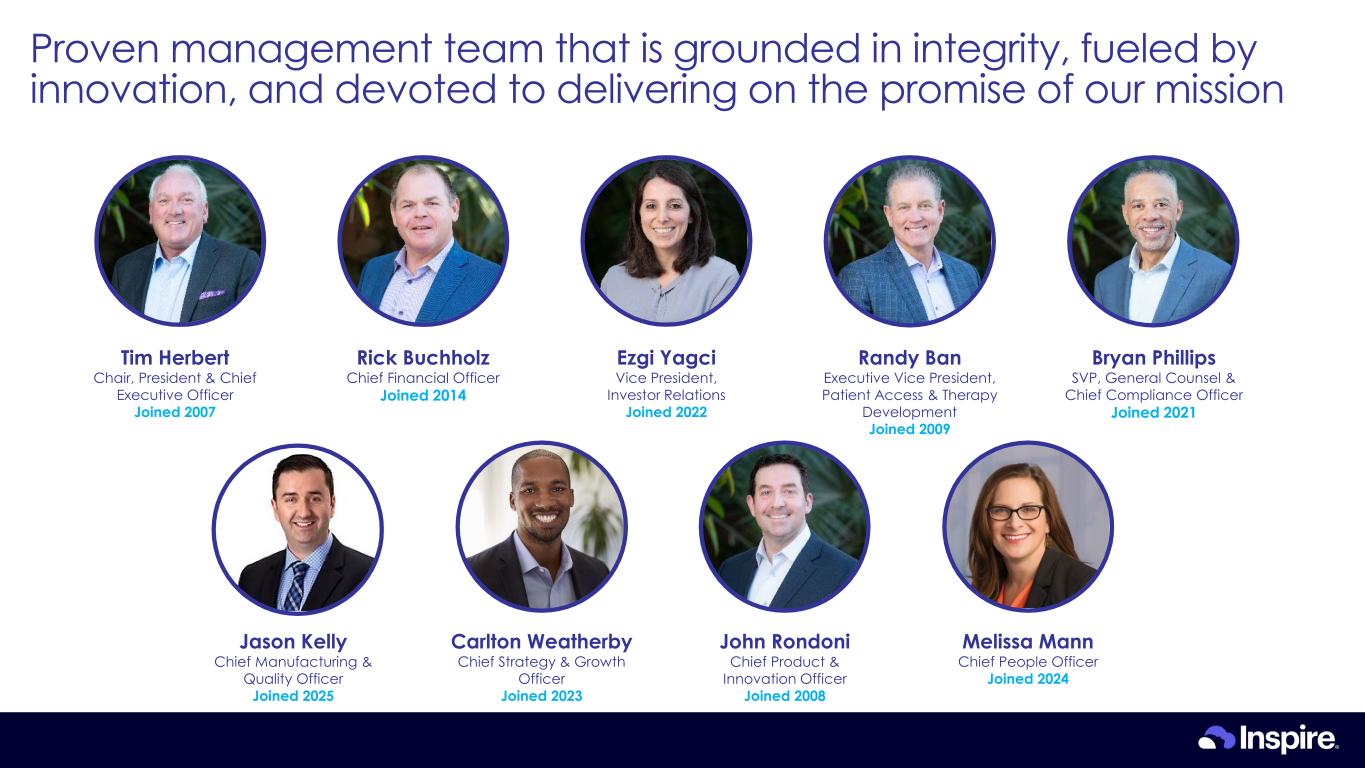
Thank you, Dilem, and thank you all for participating in today's call. Joining me are Tim Herbert, Chairman and Chief Executive Officer; and Rick Buchholz, Chief Financial Officer. Earlier today, we released financial results for the three and nine months ended September 30, 2025. A copy of the press release is available on our website. On this call, management will make forward-looking statements within the meaning of the federal securities laws. All forward-looking statements, including, without limitation, those relating to our operations, financial results and financial condition, investments in our business, full year 2025 financial and operational outlook and changes in market access are based upon our current estimates and various assumptions. These statements involve material risks and uncertainties that could cause actual results or events to materially differ. Accordingly, you should not place undue reliance on these statements. Please see our filings with the Securities and Exchange Commission, including our Form 10-Q, which we filed with the SEC earlier this afternoon for a description of these risks and uncertainties. Inspire disclaims any intention or obligation, except as required by law, to update or revise any financial projections or forward-looking statements, whether because of new information, future events or otherwise. This conference call contains time-sensitive information and speaks only as of the live broadcast today, November 3, 2025. With that, it is my pleasure to turn the call over to Tim Herbert. Tim?
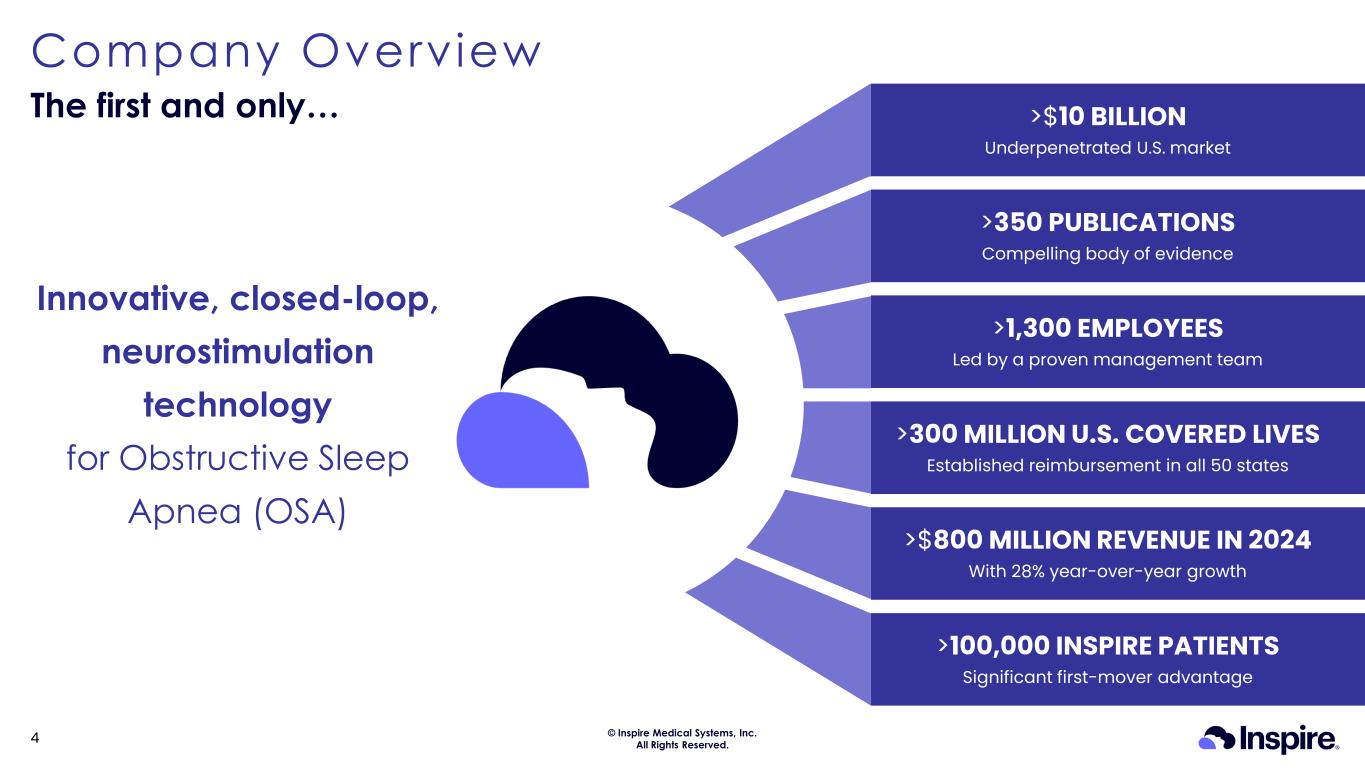
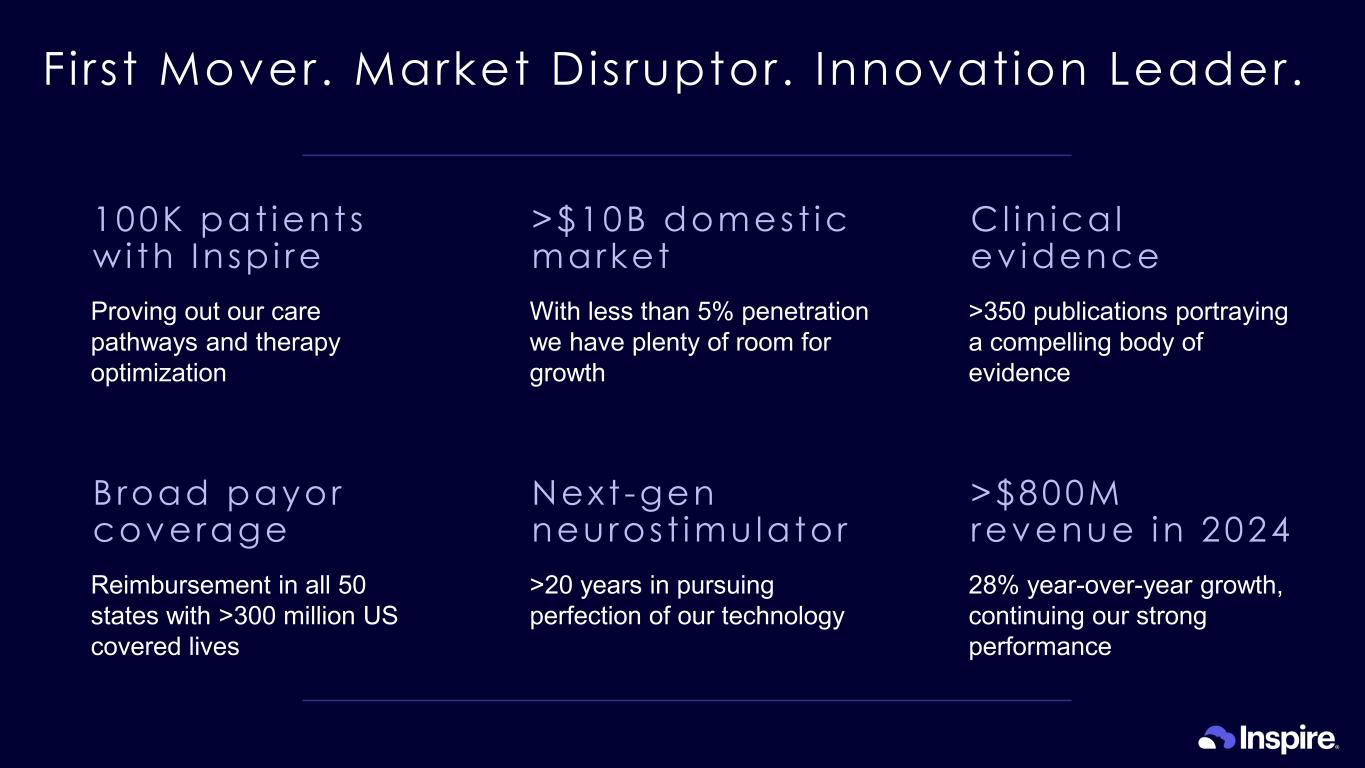
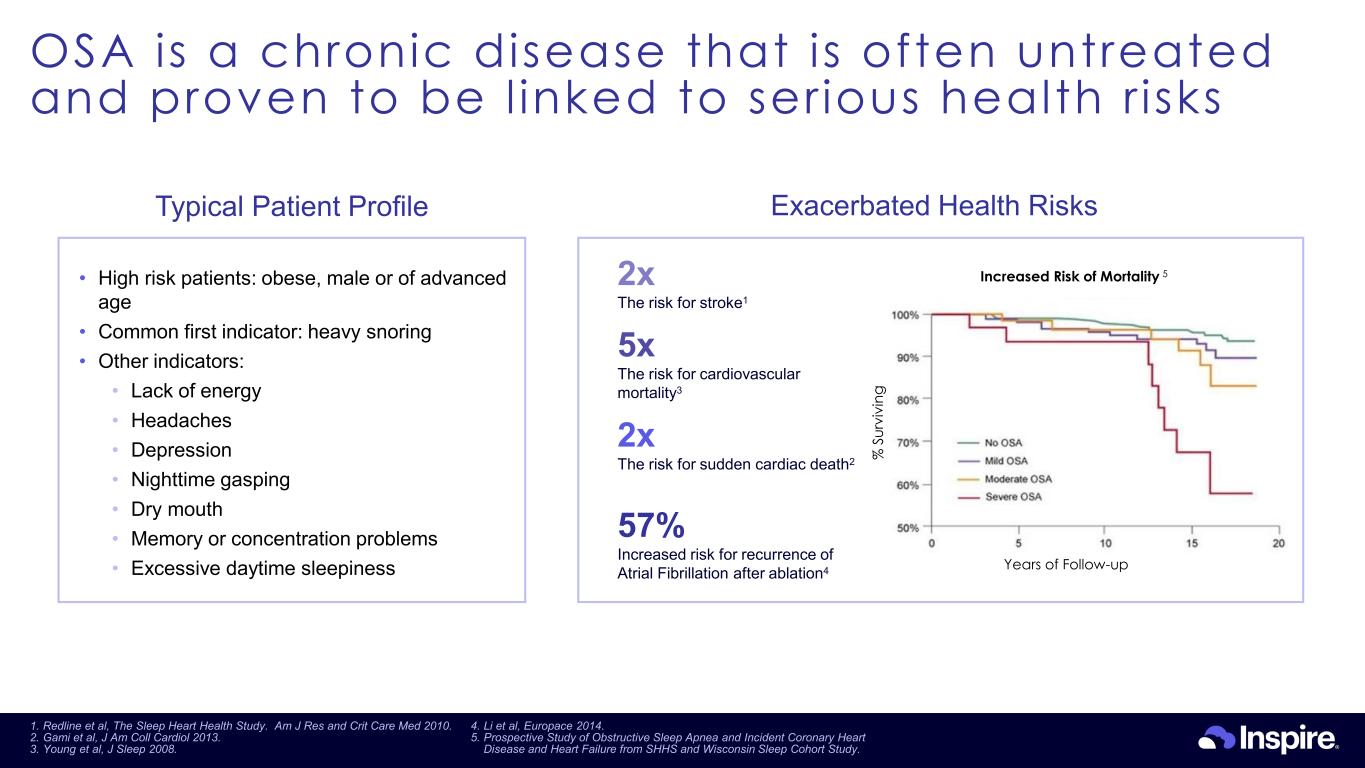
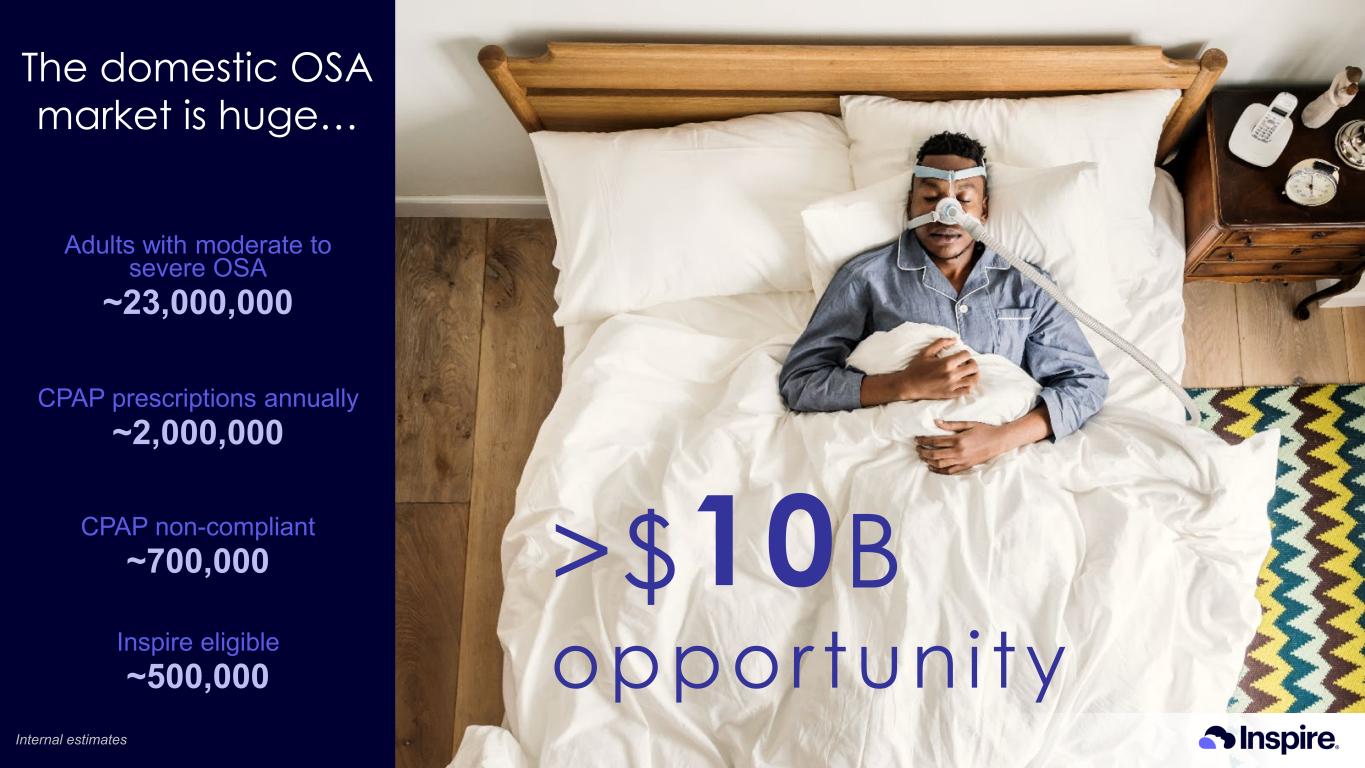
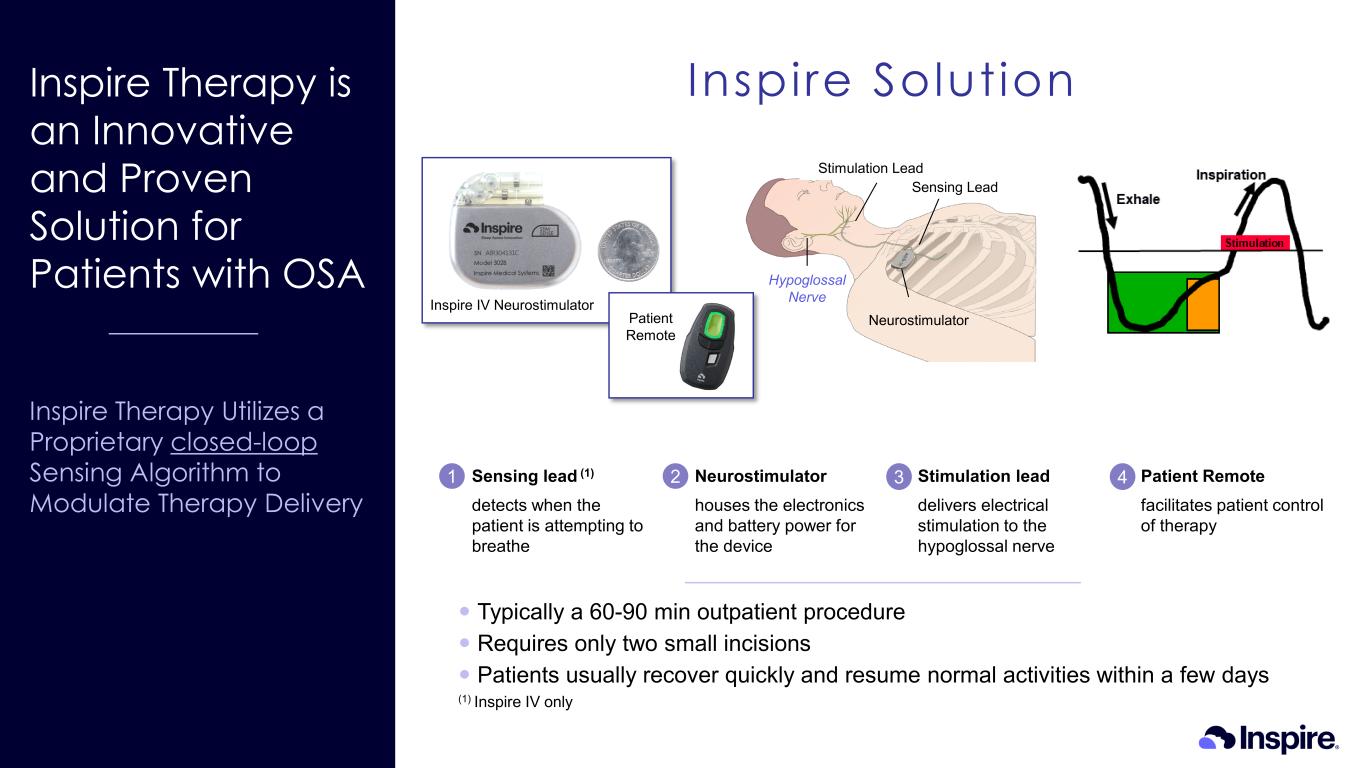
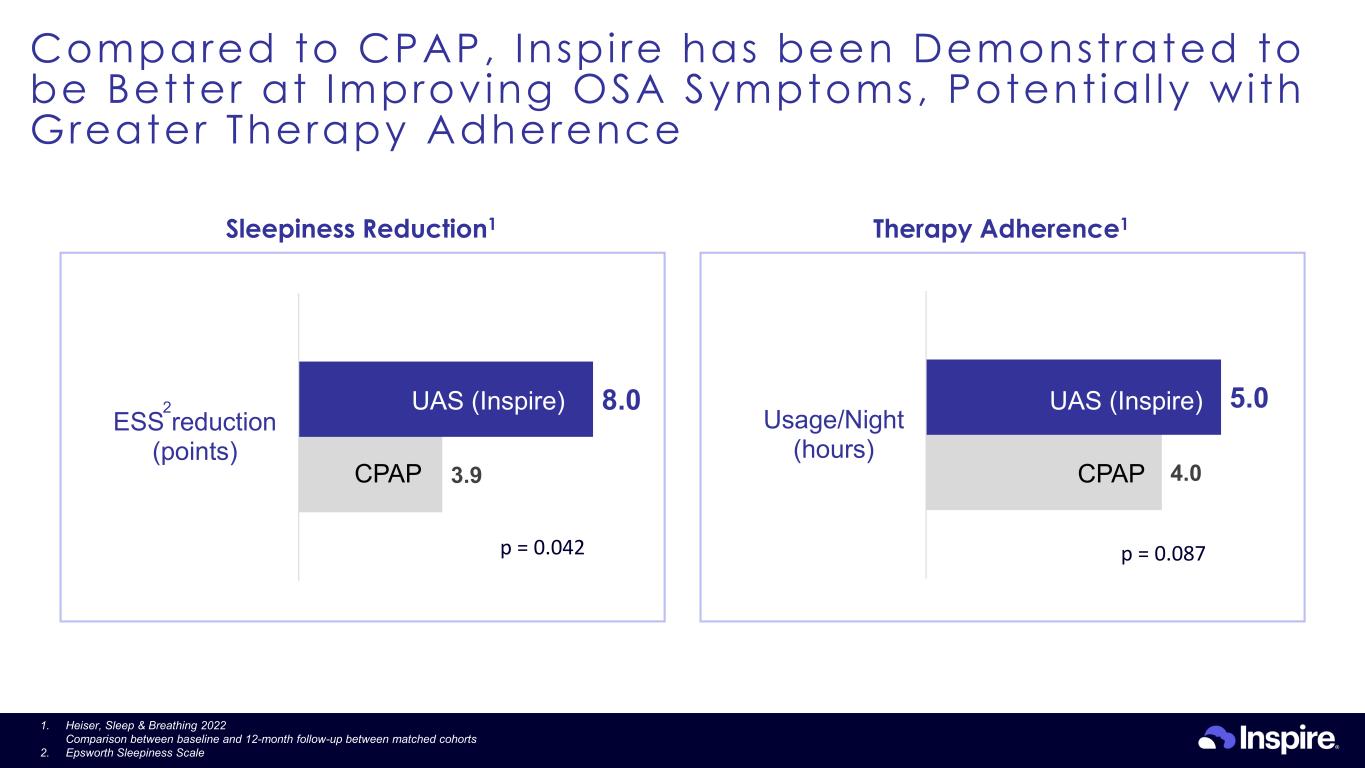
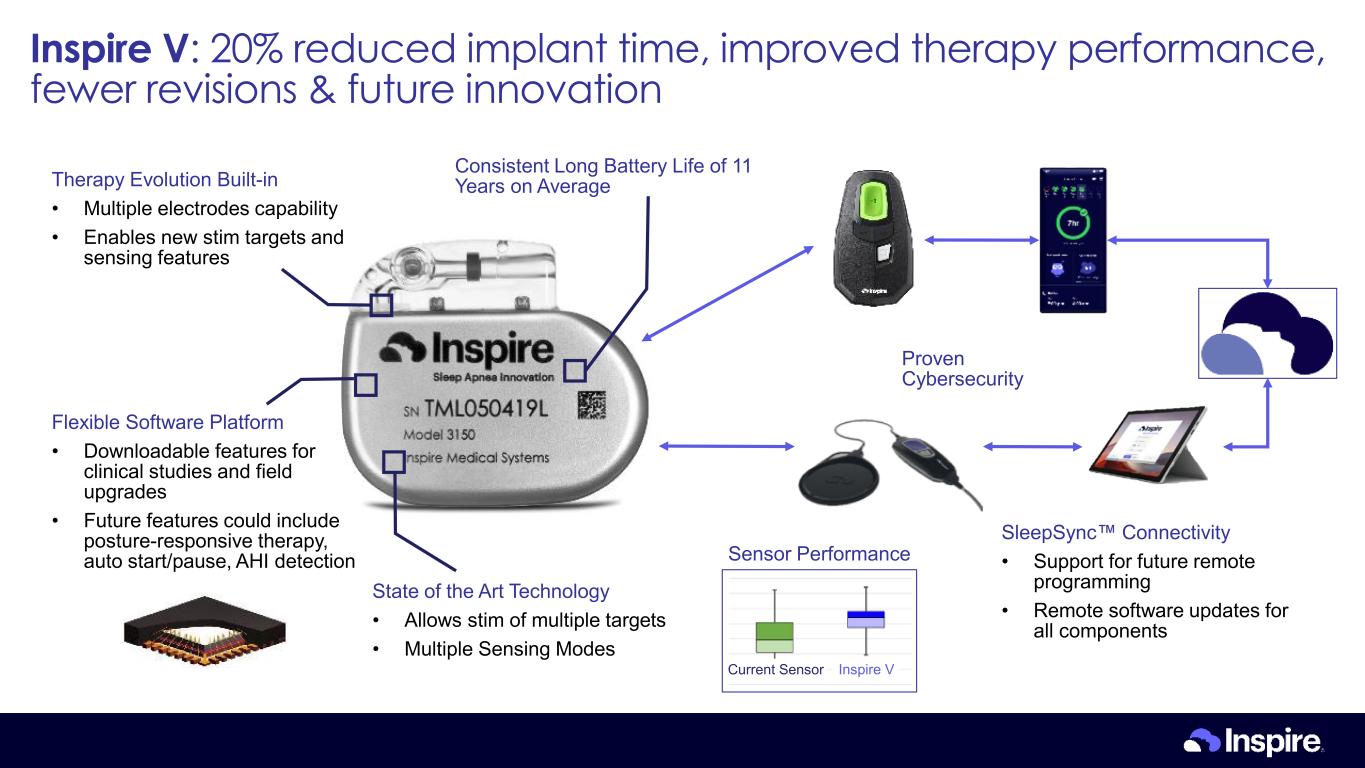
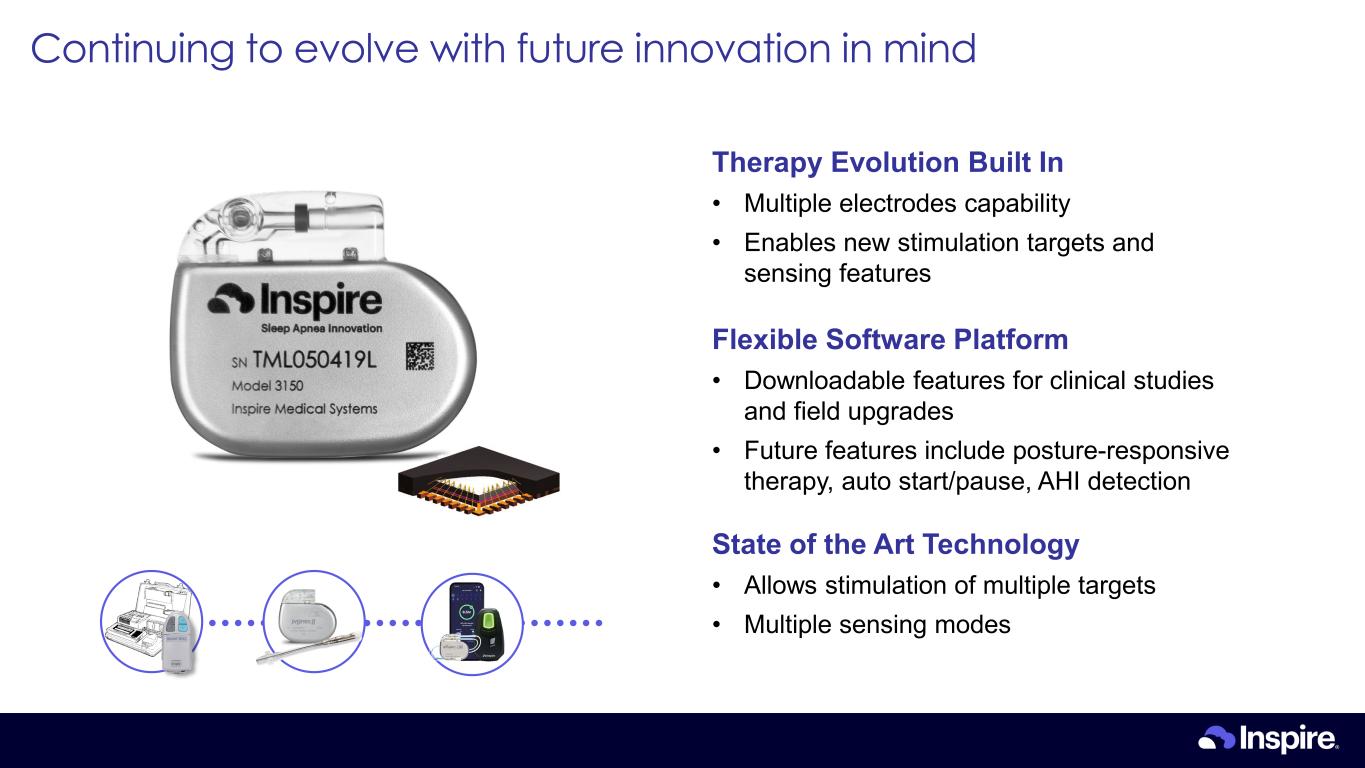
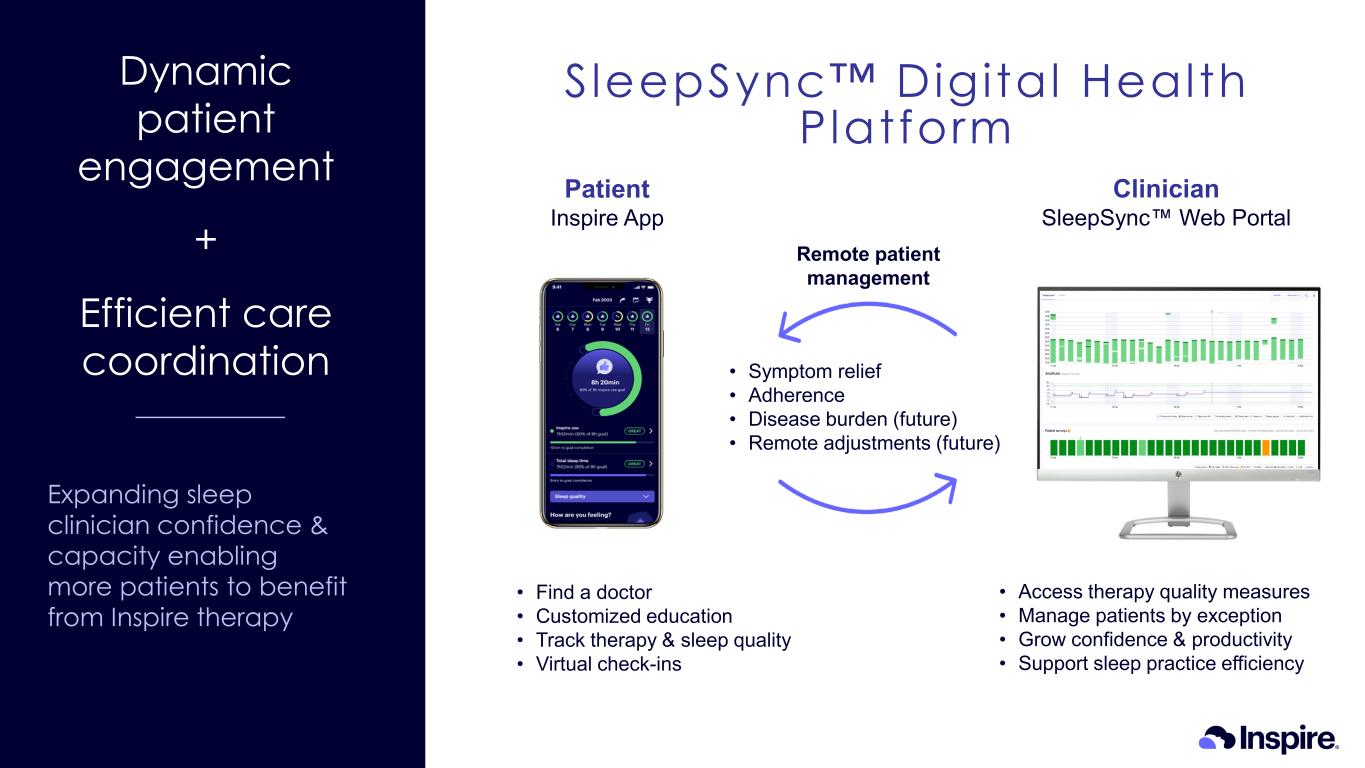
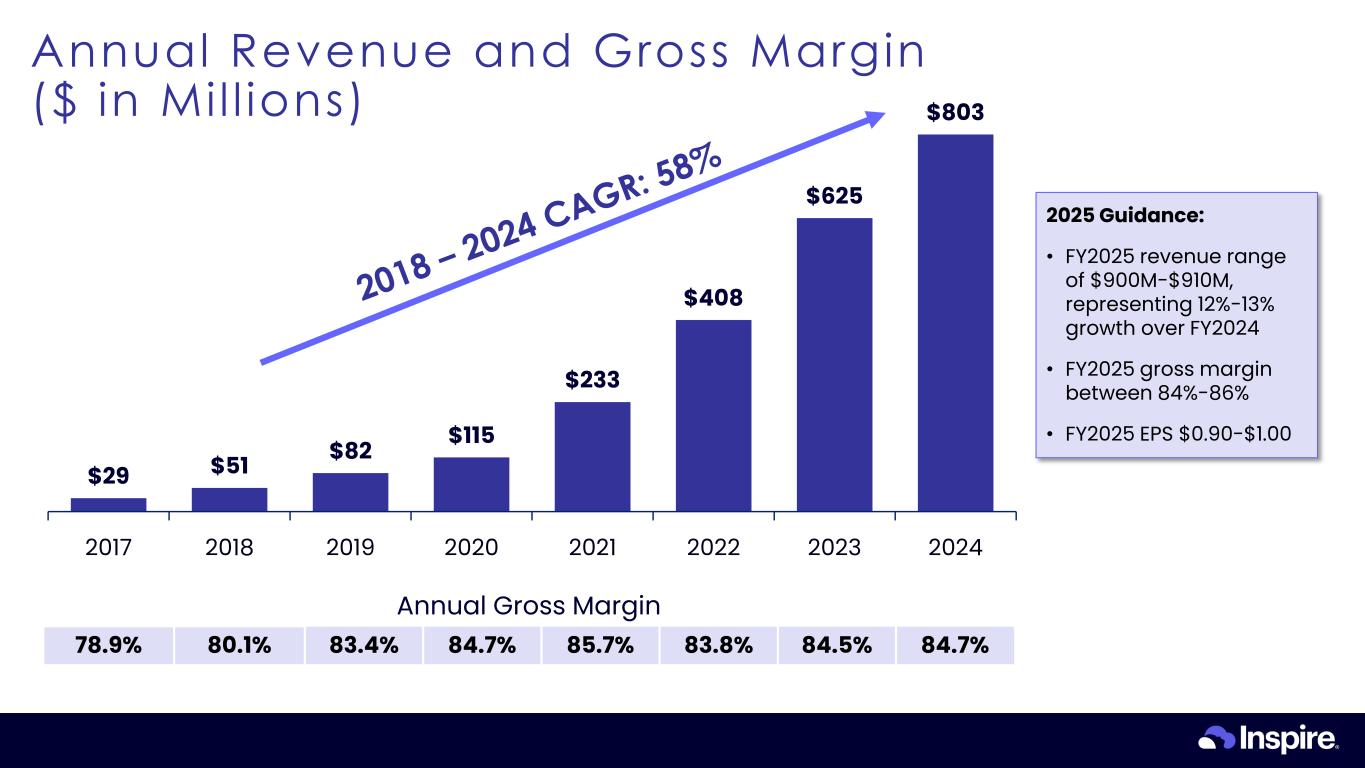
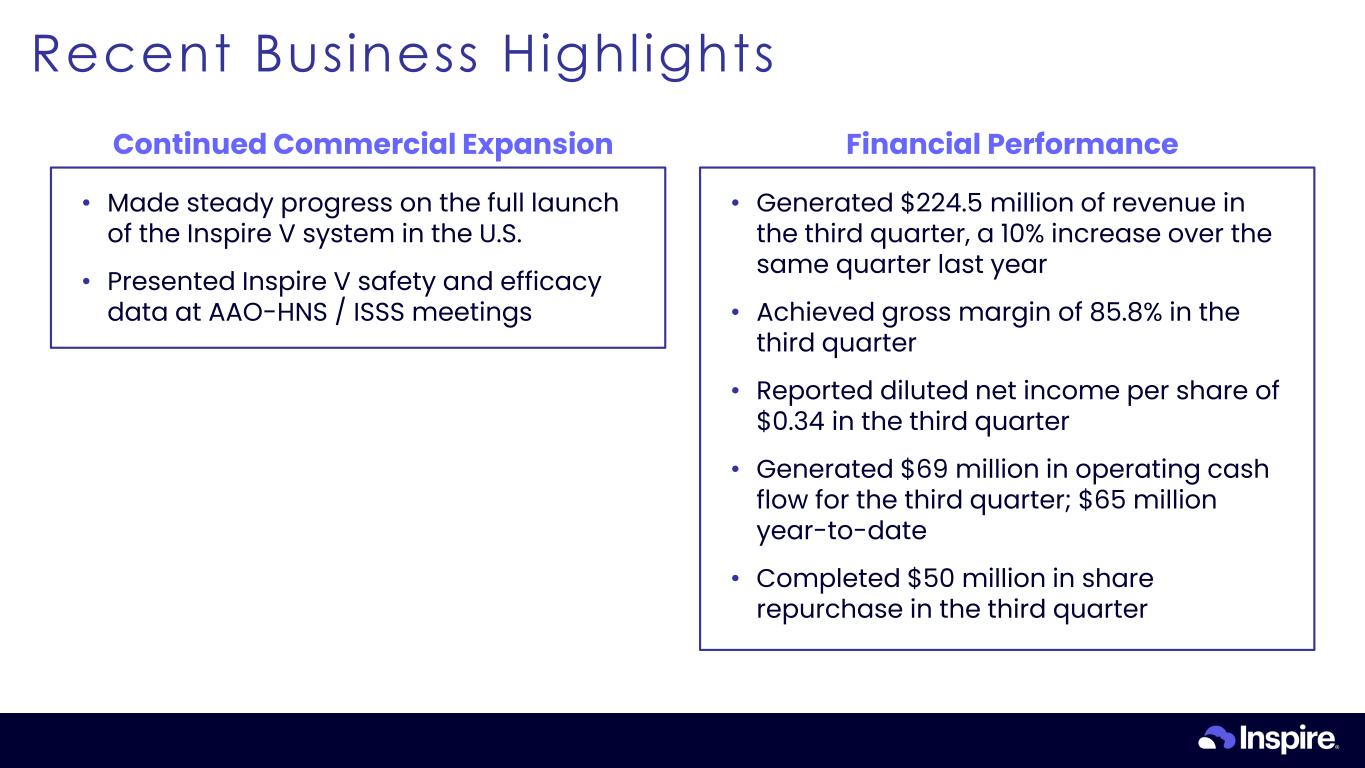
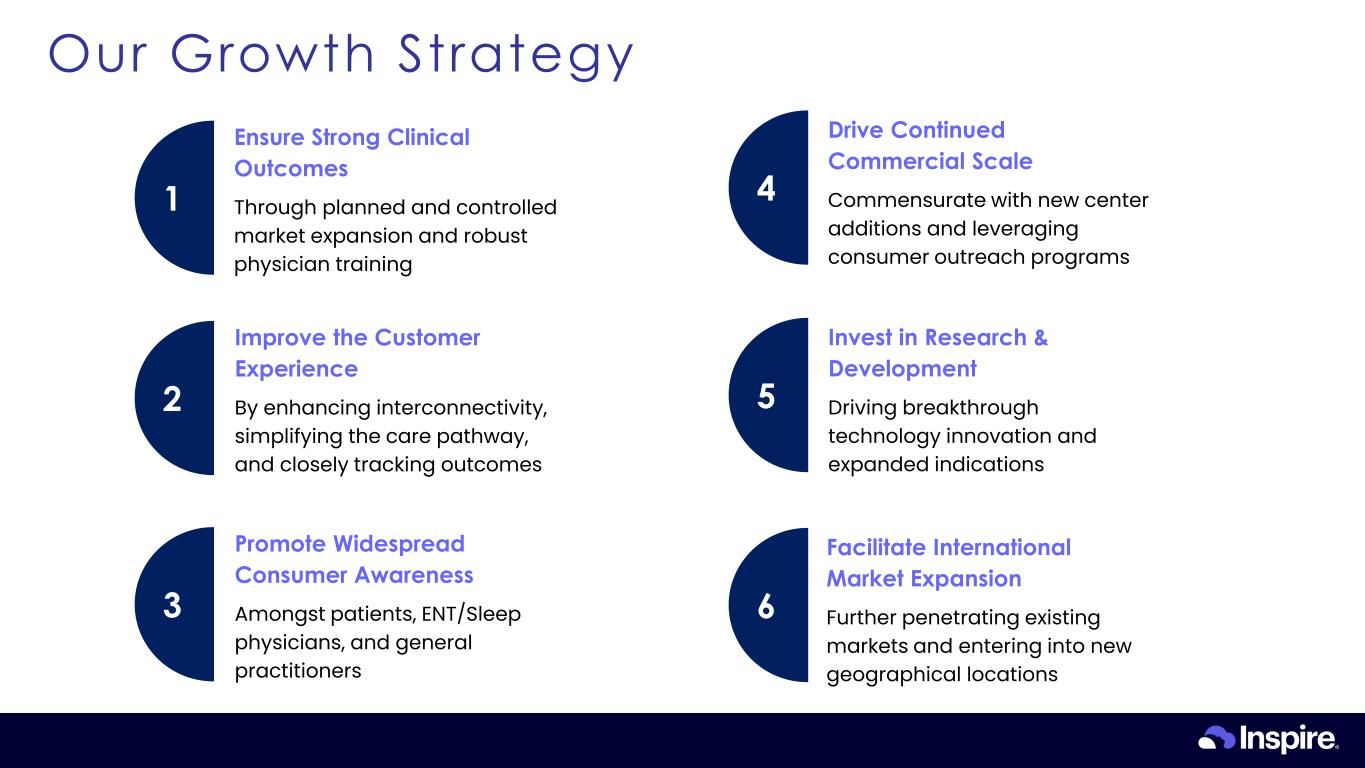
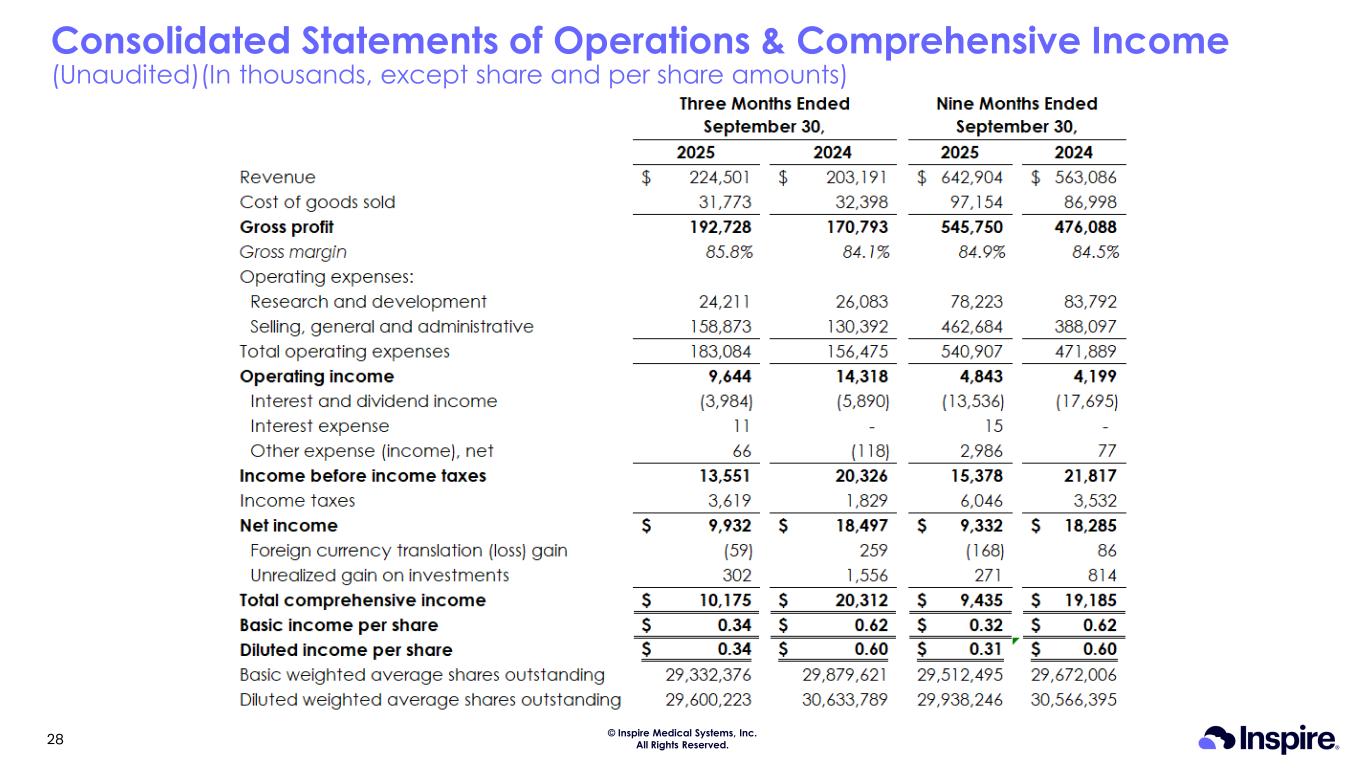
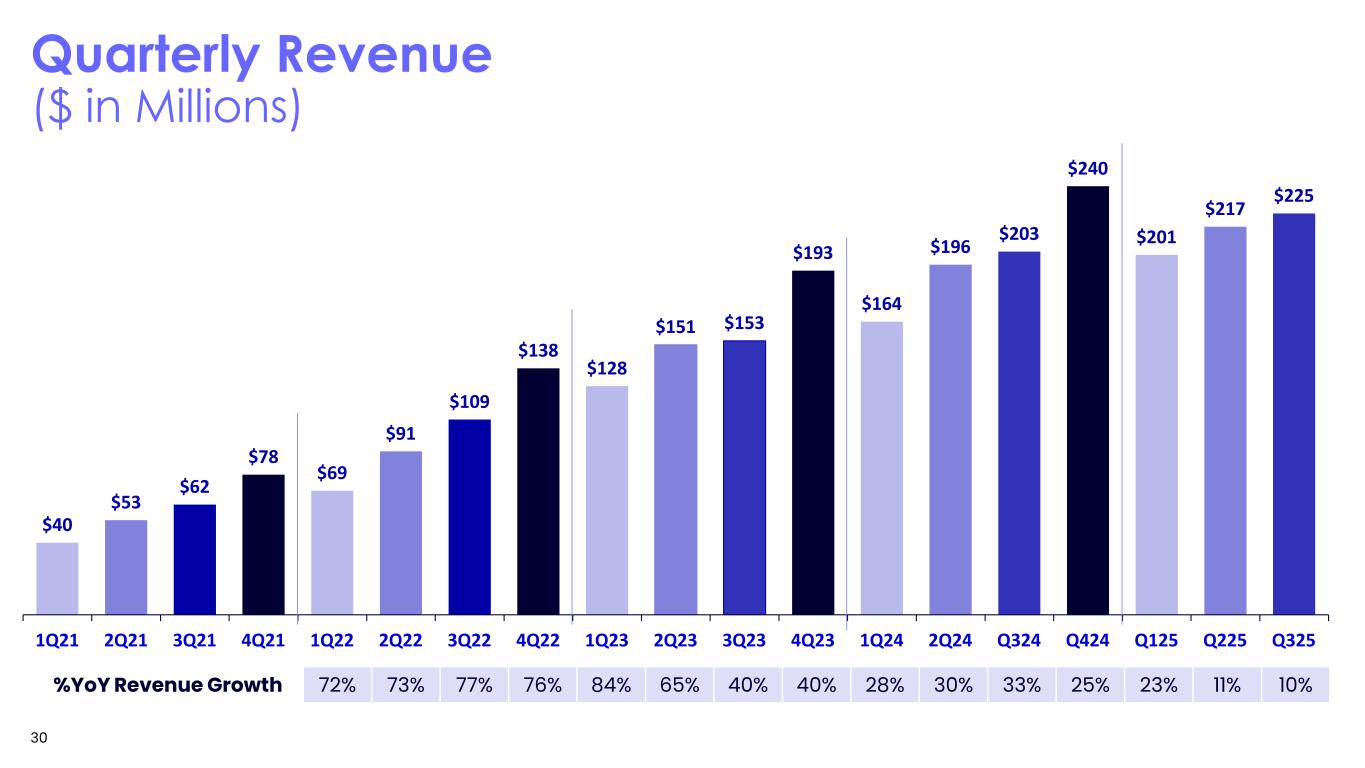
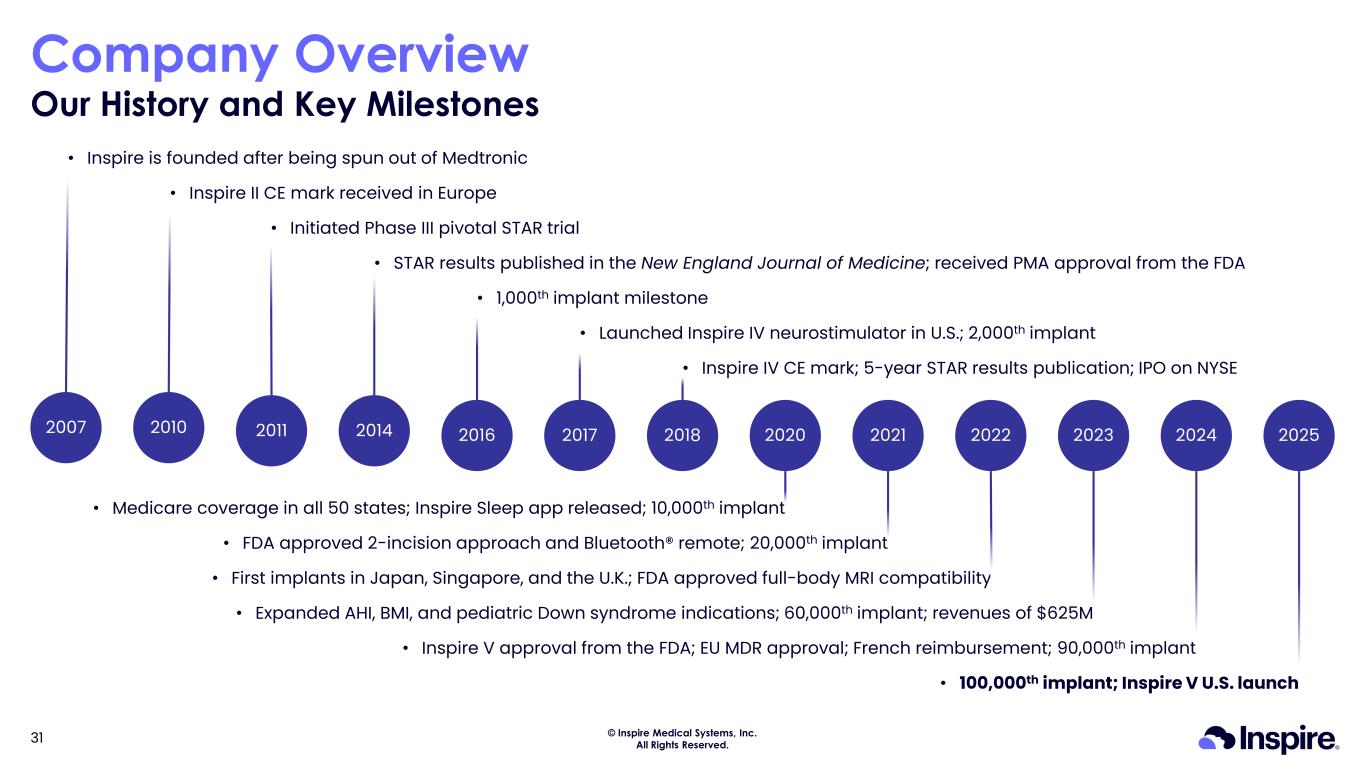
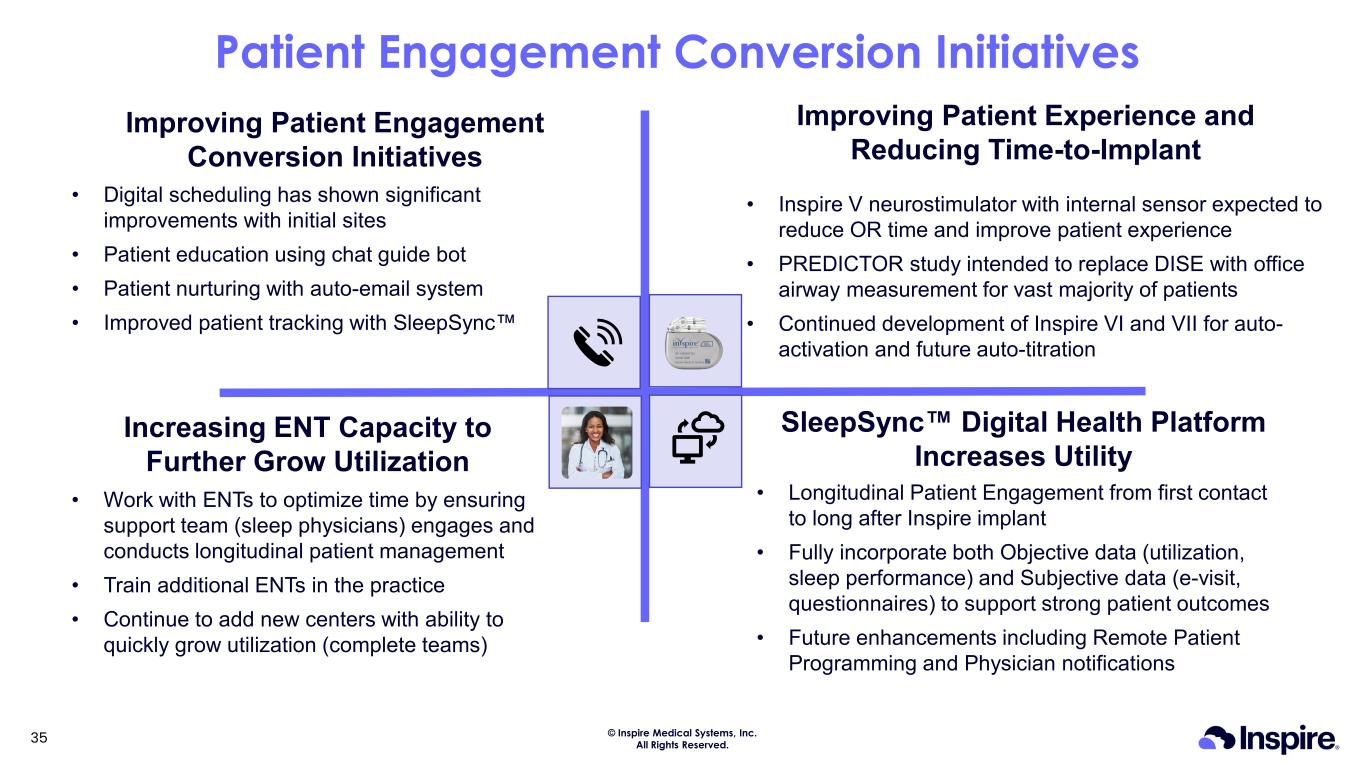
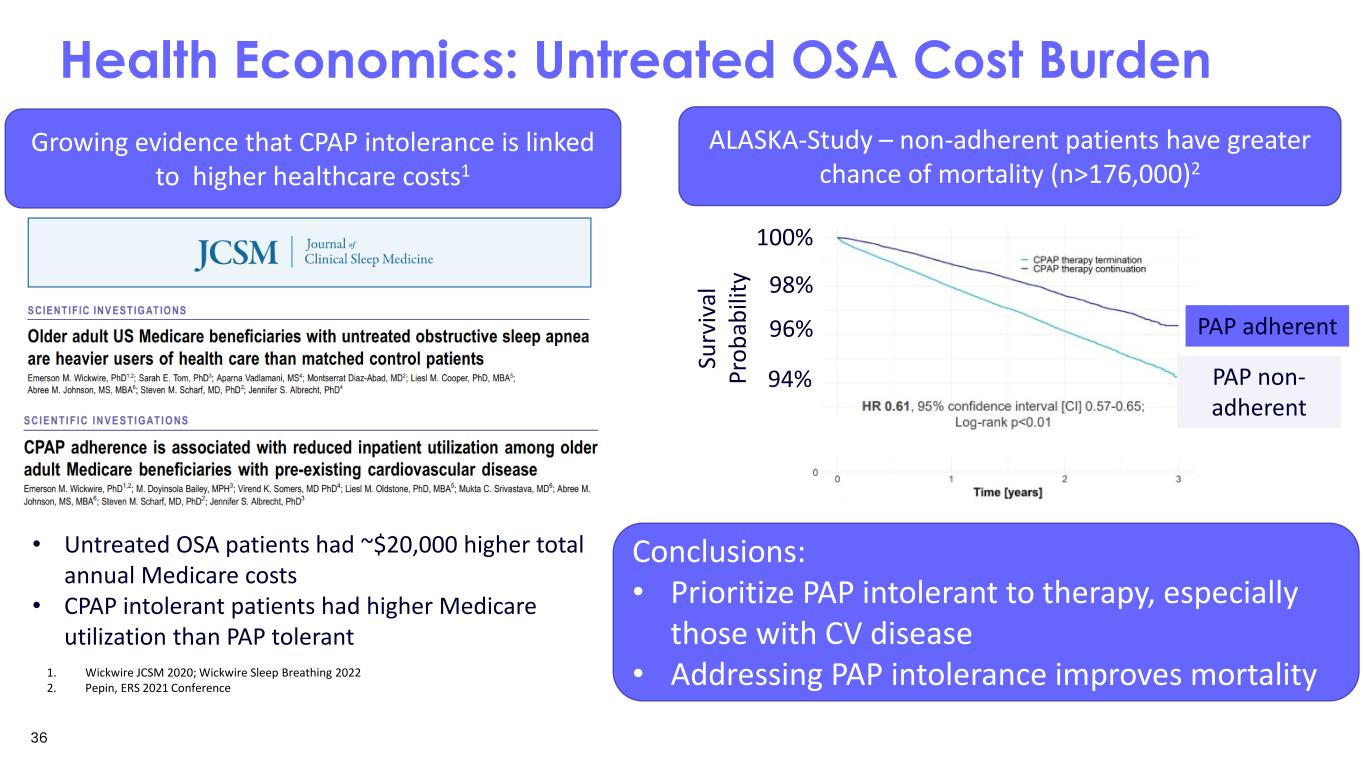
Thank you, Ezgi, and thanks, everyone, for joining our business update call for the third quarter of 2025. I'll start by highlighting some key takeaways of our third quarter results. I'll then discuss our updated 2025 guidance, and Rick will provide a financial review. We will then open the call up for questions. As always, I want to start by reiterating our commitment to put the patient first and deliver strong patient outcomes. We continue to invest in innovation and clinical evidence as we lead the way in hypoglossal nerve stimulation, and this was on display at the recent ENT Society meetings where Inspire V performance data were presented. The results of our Singapore clinical study of 44 patients demonstrated significant performance improvement as well as a 20% reduction in surgical times and early experience from our U.S. Limited-Market-Release of over 100 patients demonstrated clinically relevant reduction in disease severity with patients averaging over 6 hours of nightly device use. Furthermore, we presented data showing Inspire's 87% inspiratory overlap with the patient's breathing. As many of you already know, this is the foundation of our closed-loop stimulation system as the airway collapses during the inspiratory phase of respiration, synchronizing stimulation with inspiration is essential to optimize therapy. We are excited and energized by the strong performance of the Inspire V system and the clinical feedback on the simplified procedure and comfort settings has been tremendously positive. In addition, Inspire-related publications led the discussions at the ENT meetings, and we were excited to see two academic centers independently found that Inspire is an effective treatment for both supine and non-supine dependent OSA and that Inspire provides clinical benefit regardless of sleep position. Multiple papers demonstrated Inspire's ability to improve long-term cardiovascular comorbidities, including a study from University of Texas Health that assessed over 4,500 patients over a 10-year period in the TriNetX database. This is a large multi-institutional electronic health record network. The study showed that Inspire offered advantages in reducing long-term cardiovascular morbidity and mortality in patients with OSA compared to CPAP treatment. In another paper out of Thomas Jefferson University using the same database, Inspire was compared to CPAP and to no treatment. The study demonstrated that Inspire was associated with broadly improved non-apneic outcomes compared to CPAP and to no treatment. Specifically, they showed that Inspire therapy resulted in lower risk for myocardial infarction, cardiac arrest, ischemic stroke and depression, amongst others. Together, these studies are the first evidence that Inspire can reduce cardiovascular morbidity and mortality in the most vulnerable patients, namely those who are unable to tolerate CPAP. These outcomes are a testament to the importance of diagnosing and treating OSA and validate the continued investments we are making in innovation, clinical evidence, medical education and patient marketing. With respect to the Inspire V U.S. launch, the team made significant progress in the third quarter, and we are excited to report that physician training is over 98% complete. Contracting is over 90% complete for our centers and SleepSync onboarding is complete for over 75%, bringing the total to over 75% implanting Inspire V today. Given this progress and our strong momentum we are seeing, we are reiterating our full year revenue guidance of $900 million to $910 million, representing 12% to 13% growth compared to full year 2024. Switching to our quarterly results. We are very pleased with the strong revenue performance and cost discipline we demonstrated in the quarter. Third-quarter revenue totaled $224.5 million or a 10% increase compared to the prior year period. Including the increased investment we are making in patient marketing, we were able to deliver operating income of $9.6 million and earnings per share of $0.34. This strong performance gives us confidence to increase our earnings per share guidance to $0.90 to $1, up from $0.40 to $0.50 previously. On patient marketing, we've started rolling out a new ad campaign, highlighting the fact that with Inspire, many patients report that they can dream again, complete with a holiday-themed ad featuring none other than Ebenezer Scrooge treating the sleep apnea. You may also have seen our new ad featuring a celebrity influencer partnership with Chock Chappele, the winner of last season's Golden Bachelorette, our real Inspire user since 2021, and we are encouraged by the early indications from these initiatives. Regarding reimbursement, CMS recently finalized the 2026 physician fee schedule at approximately $660 or an 11% increase for CPT code 64568. As you know, for Inspire V, centers bill CPT code 64568, which has been accepted for plans covering over 90% of our 300 million covered lives, including Medicare. This change will take effect January 1, 2026. We are still awaiting the final OPPS rules to be issued by CMS. As you are aware, in July, CMS proposed to increase the national average Medicare hospital reimbursement for CPT code 64568 to $32,000, up approximately $1,300 or 4% from 2025 and the ASC reimbursement to $28,000, up $1,300 or 5% compared to 2025. These positive reimbursement changes will take effect January 1, 2026, once approved. Following our last earnings call, we conducted our own survey of over 200 sleep physicians to better understand their treatment paradigm for OSA since the introduction of GLP-1s. What we confirmed is that the GLP-1s are driving increasing interest in sleep health and bringing more patients into the clinic, if only to get their GLP-1s covered by insurance with an OSA diagnosis. Inspire welcomes this trend as it opens the door to alternatives beyond CPAP. Based on the survey results, about half the sleep physicians now prescribe and manage GLP-1s themselves, while the rest refer patients back to family practice due to the burden of managing these patients, whether it's insurance hurdles, challenging side effects or because weight management just is not their area of focus. The survey also identified that sleep physicians are not comfortable prescribing GLP-1s alone, but they prescribe concurrently with other treatment options initially CPAP. Patient monitoring, coupled with the insurance requirements to obtain refill prescriptions provide visibility into the patient's weight loss, adherence to CPAP and overall sleep health. These same physicians then understand the patient profile that may be recommended for Inspire therapy. Overall, the survey confirmed that patients will try GLP-1 prior to surgery, but also the patient pool has been increasing with the availability of GLP-1s to treat OSA. This reinforces our confidence that GLP-1s make it possible for higher BMI patients to lose weight and become eligible for Inspire therapy and Inspire is excited to help even more patients access effective lasting care. In summary, we remain focused on the patient to continue the growth and adoption of Inspire therapy. We will execute our growth strategy of driving high-quality patient flow and increasing the capacity of our provider partners to effectively treat and manage more patients. Our key strategies include training advanced practice providers, certifying additional surgeons qualified to implant Inspire therapy and driving adoption of SleepSync and our digital tools, all of which are embedded strategies in our commercial team's objective to increase provider capacity. Looking ahead, we are confident about our future and that we have the appropriate strategy in place to drive long-term stakeholder value. We have our arms around the headwinds that I have described and actions are already underway to accelerate the adoption of Inspire V for the remainder of the year. And looking beyond 2025, we continue to take actions to position the company for strong profitable growth. With that, I'd like to turn the call over to Rick for his review of our financials.
Thank you, Tim, and good afternoon, everyone. Total revenue for the quarter was $224.5 million, a 10% increase from the $203.2 million generated in the third quarter of 2024. U.S. revenue in the quarter was $214.4 million, an increase of 9% from the $195.8 million in the prior year period. Revenue outside the U.S. was $10.1 million, which was a 37% increase year-over-year. Gross margin in the quarter was 85.8% compared to 84.1% in the prior year period. The year-over-year increase was primarily due to increased sales volume and increased sales mix of Inspire V, which is more cost-effective to manufacture. Total operating expenses for the quarter were $183.1 million, an increase of 17% as compared to $156.5 million in the third quarter of 2024. This increase was primarily due to increased patient marketing expense and general corporate costs, partially offset by a reduction in R&D year-over-year. Operating expenses included $1.3 million in legal fees related to a civil investigative demand from the Department of Justice and patent infringement lawsuits with a competitor. These legal fees do not reflect costs associated with our ongoing operations. Please refer to our earnings press release for a reconciliation of these items. Interest and dividend income totaled $4 million in the quarter compared to $5.9 million in the prior year period. Operating income for the quarter totaled $9.6 million compared to an operating income of $14.3 million in the prior year period. Net income for the quarter was $9.9 million compared to net income of $18.5 million in the prior year period. This represented diluted net income per share of $0.34 for the quarter compared to $0.60 in the third quarter of 2024. Adjusted EBITDA for the quarter totaled $44 million compared to $44.5 million in the prior year period. The adjusted EBITDA margin in the third quarter was 20% compared to 22% in the third quarter of 2024. Adjusted net income per share totaled $0.38 compared to $0.60 in the prior year period. The weighted average number of diluted shares outstanding for the quarter was 29.6 million. Operating cash flow totaled $68.5 million for the third quarter, bringing the year-to-date total to $64.5 million. We completed $50 million of share repurchase in the third quarter, bringing the year-to-date total to $125 million, and we ended the quarter with $411 million in cash and investments. Our strong cash position allows us to remain focused on executing our growth strategies. Moving on to 2025 guidance. As Tim mentioned, we are reaffirming our revenue guidance range of $900 million to $910 million, representing an increase of 12% to 13% compared to full year 2024 revenue. We continue to expect full year gross margin to be in the range of 84% to 86%. We now expect diluted net income for the full year 2025 will be $0.90 to $1 per share, an increase from our previous range of $0.40 to $0.50 per share. We ended the quarter with 336 U.S. territories and 268 U.S. field clinical representatives. We are being more strategic in our approach to territory management and optimizing our model through targeted territory consolidation and increased field clinical reps. We hired 9 field clinical reps in the quarter, consistent with our strategy to get the ratio closer to 1:1 territory manager to field clinical rep. We now expect our reported tax rate in 2025 to be 25% as state minimum taxes are higher than expected. Furthermore, in the fourth quarter, we will likely eliminate a large portion of the valuation allowance on our deferred tax assets. This will create a large one-time tax benefit that we will call out when we report our fourth quarter results. We expect the full year diluted shares outstanding to be approximately 30 million. With that, our prepared remarks are concluded. Dilem, you may now open the line for questions.
Operator
I show our first question comes from the line of Travis Steed from Bank of America Securities.
Speaker 4
Congrats on the progress with Inspire V. Just curious how you're thinking about some of the puts and takes on 2026 at this stage. And anything to call out in terms of cadence, first half, second half and '26?
Travis, yes. Great question. I know this is top of mind for everyone. Right now, we're focused on finishing the fourth quarter strong. Now it's still early in our '26 planning process. So while we're not providing specific guidance at this time, I want to reiterate the underlying trends we're currently seeing. The Inspire V launch, positive clinical feedback and strong patient flow driven by our increased DTC investment give us confidence in the durability of our growth heading into next year. We'll provide formal 2026 revenue guidance in January once we've completed our year-end results and planning. Taking all into account and while not providing formal guidance, we can see accelerated growth from our third quarter and wish to provide an early indication of 10% to 11% growth for next year. In the meantime, our business fundamentals remain strong. We've seen and continue to see excellent momentum with Inspire V, both in physician adoption and patient outcomes. Our outreach campaign is generating record engagement, and our field organization is operating with greater focus and alignment than ever before, which is translating into more consistent execution. We're also realizing operational benefits from tighter integration across marketing and therapy development, which will continue to support long-term profitability. As always, we're mindful of near-term factors such as the Inspire IV inventory transition, GLP-1 trialing and ongoing competitive activity. Overall, we're executing with discipline and have reaffirmed our 2025 guidance. With Inspire V scaling and continued operational focus, we expect continued revenue growth and improvements in operating leverage. And as far as cadence, at this point, we expect to return to our historic norms prior to 2025 and the Inspire V launch.
Operator
And I show our next question comes from the line of Adam Maeder from Piper Sandler.
Speaker 5
I'll echo the congrats on the progress. Maybe to start, just kind of a little bit of a follow-up there, very helpful response, Tim, to Travis' question. But I wanted to just try and better understand some of the trends that we're seeing in the business for the month of October as well as kind of the visibility that you have going forward, November, December. I think you typically schedule cases several weeks out. So it would just kind of be helpful to understand some of the dynamics and what you're seeing as we try and reconcile the implied Q4 guidance? And then I had a follow-up.
Sure. I think the key to it is really the trends we see with Inspire V. And as we talked throughout the last earnings call with everything from Medicare to available product to the transition with SleepSync, really the field getting their arms around all that and working with individual centers and really seeing that transition really transpire mostly in the third quarter. And we have some additional work. But we know the majority of the inventory in the field today is Inspire V. So we're already working through that inventory transition from IV to V. We do see implants going forward. We know we always have our highest seasonality later in the year because of the high deductible insurance plans, and we're seeing those same trends now. And again, just to highlight, the marketing team is doing a great job with our new awareness campaign, and we are seeing the benefits of that as well.
Speaker 5
That's helpful, Tim. I appreciate the color there. And just for the follow-up, I guess you're a little bit over 75% of accounts that are implanting the Gen V device today. How do we think about kind of bridging that figure to 100% of your accounts? Just want to better understand kind of the remaining gating items there. It sounds like SleepSync is maybe the biggest one, but wanted to confirm that. And just one kind of clarification, the accounts that are adopting Gen V, are they only implanting Gen V going forward? Are they still kind of carrying a mix of Gen IV and Gen V? Hopefully, that made sense.
No, Adam, that's a good clarification that we want to make. I think we focus on the centers that are the highest implanters, the top 100, top 200 centers, of course, and make sure we get the majority of those centers across the line and taking care of patients with V. But even those centers, to your last point, we'll continue to do Inspire IV at a limited amount. I also will highlight there are centers due to economics and where they are in the United States and the Medicare reimbursement that they will continue to implant Inspire IV units, and we will continue to make Inspire IV available into the future. So I think we'll continue to bridge most centers over to Inspire V. But again, there will still be some additional centers carrying over and staying with Inspire IV. But I think the great majority will be complete with their transition by year-end.
Operator
And our next question comes from the line of Robert Marcus from JPMorgan.
Speaker 6
I wanted to ask more on expenses and R&D and OpEx came in a good clip below where we and the Street were thinking. Great expense control led to really good earnings power. How should we think about, I guess, a, what exactly you're pulling back on; and b, how sustainable that is?
Well, you also got to remember, not necessarily pulling back, but you also remember we're kind of in a launch period with Inspire V. And a lot of our focus is working on stabilizing the manufacturing line and getting a second line up and running and focusing on the digital side, specifically with SleepSync. So we're going to continue to invest in R&D. And I think we want to be more consistent with R&D as we move forward to focus on our opportunities with Inspire VI with our digital tools and keep pushing those elements to it. But I do think it will be more in line with what you're seeing right now.
Speaker 6
Great. Maybe just a quick follow-up. Tim, if you could update us on where you are in sort of the inventory conversion from IV to V. Was there any destocking or restocking in Q3? What we should expect that's baked into the guide in Q4? And is it all done exiting the year? Or is there still some more in '26? Appreciate...
As you recall, at the beginning of the third quarter, it was pretty much all Inspire IV inventory in the field. And now the majority of the inventory is already Inspire V, and that continues to change on a weekly basis. We think that those centers transitioning over to Inspire V will work through their Inspire IV inventory predominantly by the end of the year. Again, Robbie, remember, there's a few centers that are going to stay with Inspire IV. So we'll continue to make that product available. But again, the reports and the success that people are having with Inspire V is really strong. And once people transition over, they want to continue to focus on that and increase the number of patients that they can treat.
Operator
And I show our next question comes from the line of Danielle Antalffy from UBS.
Speaker 7
Congratulations on the progress made this quarter. I want to ask about your approach to ramping up centers with lower to mid-volume. I'm interested in what strategies you are implementing, as the capacity you have is a key factor, especially with the advantages that Inspire V offers. I'm curious about your efforts in the field with these lower-volume centers to enhance their usage and effectiveness.
Thank you. A big initiative that we have ongoing there. We have formed a new team that is really focused on that group about reenergizing the ENT. And we're kind of using Inspire V as the catalyst to do that. Because remember, the difference between Inspire IV and V is you don't have to place the pressure sensing lead between the intercostal muscles, and that's always been a little bit of the uncomfortable part of the Inspire procedure for an ear, nose and throat surgeon. So Inspire V lets us come back to those ENT surgeons and to new surgeons and to reengage with them, reenergize them around the benefits of Inspire V, the easier implantability of the device, if you will, and really focusing on that. So we have a long history and list of those centers that have started but not reached their potential, and we're going back and revisiting them with this team, but also going to centers and starting to recruit additional ENTs who now find this procedure more acceptable that they don't have to mess with the chest wall and the pressure sensing lead.
Speaker 7
Are you beginning to notice that? Or is this something that seems to be a relatively new initiative? Is it likely that this will contribute more in '26 and beyond, or is it already making a contribution?
Thank you, Danielle. I do think, yes, it's a contributing factor in '26 and beyond. But I do think we're going to see some activity with that in '25. And the key is getting surgeons to come in, let's try V. Let's get this transition to your center. Let's have you go in and do a couple of Vs. And we've already seen some evidence that, yes, this does work. And we can reenergize them and partner them up with a good sleep physician to build a strong system or a strong practice. And we've already seen early indications that we can excite the ENTs. So yes, we're going to continue this and work hand-in-hand with AAO, the American Academy of Otolaryngology, to make sure that we're running initiatives with the society as well.
Operator
And I show our next question comes from the line of David Rescott from Baird.
Speaker 8
I wanted to follow up on some comments about the business growth as we look toward 2026. The two main factors we usually monitor are utilization and the addition of new centers. Last quarter, there was mention of a decrease in spending that affected the opening of new centers. Before 2025, there were a few centers that were deactivated each quarter. I'm trying to get a clearer picture of where the center base stands currently and whether we should expect this to continue affecting growth next year or if the utilization with Inspire V will be a more significant growth driver than it has been so far.
Yes. Thanks, David. I think we got to combine those two comments, and the answer is yes. I think what we really like is the Inspire V is really the tool and the feature set there with, of course, the easier implantation of the device, the shorter implant times, but not only that, but the features that optimize outcomes and really increase the expectations for outcomes is really important. And so we don't see a lot of transition of centers away from Inspire over the last couple of quarters. In fact, we significantly increased the number of centers. And we think going back to the last question with Danielle, that being able to excite additional ENTs to do the procedure now that it doesn't have the pressure sensing lead kind of gives us a little bit more impetus to increase the number of centers. So we're going to continue on the pathway of not only growing utilization at existing centers with reduced surgical time, but also with the improved performance of the device and the implantability of the device to be able to continue to train new surgeons at existing centers as well as open new centers.
Speaker 8
Okay. That's helpful. And then maybe a follow-up to some of the comments on OpEx. I know you called out that there's going to be this higher tax benefit in Q4. I'm assuming or curious if that is implied in the $0.90 to $1 of EPS for the full year or if that gets backed out. Just trying to back into maybe what your exit rate on an OpEx basis and whether or not we should think about that as a jumping off point for 2026.
Yes, David, that potential tax benefit is not factored into our guidance. And so part of our improvement on the bottom line and operating margin, which I wanted to call out earlier was that we did have a 180 basis point improvement on gross margin. So that really helped drive our leverage in the third quarter, and that's because of the higher mix of Inspire V which drove higher gross margins.
Operator
And I show our next question comes from the line of John Block from Stifel.
Speaker 9
Tim, the rough 10% to 11% revenue growth next year seems like a refined thought from the acceleration off of the 12% to 13% that you conveyed last quarter. And the quarter was good, and you talked about some of the facilities working down inventory. So maybe if you could just give some color what led to a little bit of a change in thought from 3 months ago to today? Is it just being a little bit more prudent? Or what do you see out in the field that led to the refined number?
No, I think that's it. We just have a bit more experience, and it's early in our planning as well. I know it was a priority for everyone, as we mentioned in response to Travis' question that we needed to address that right away. We did provide insight on the progress with the Inspire IV inventory, as you mentioned. We also touched on the GLP-1s and any potential competitive impact. So we aimed to provide an early indication. As we navigate through the fourth quarter and continue our planning, we'll return with formal guidance around January.
Speaker 9
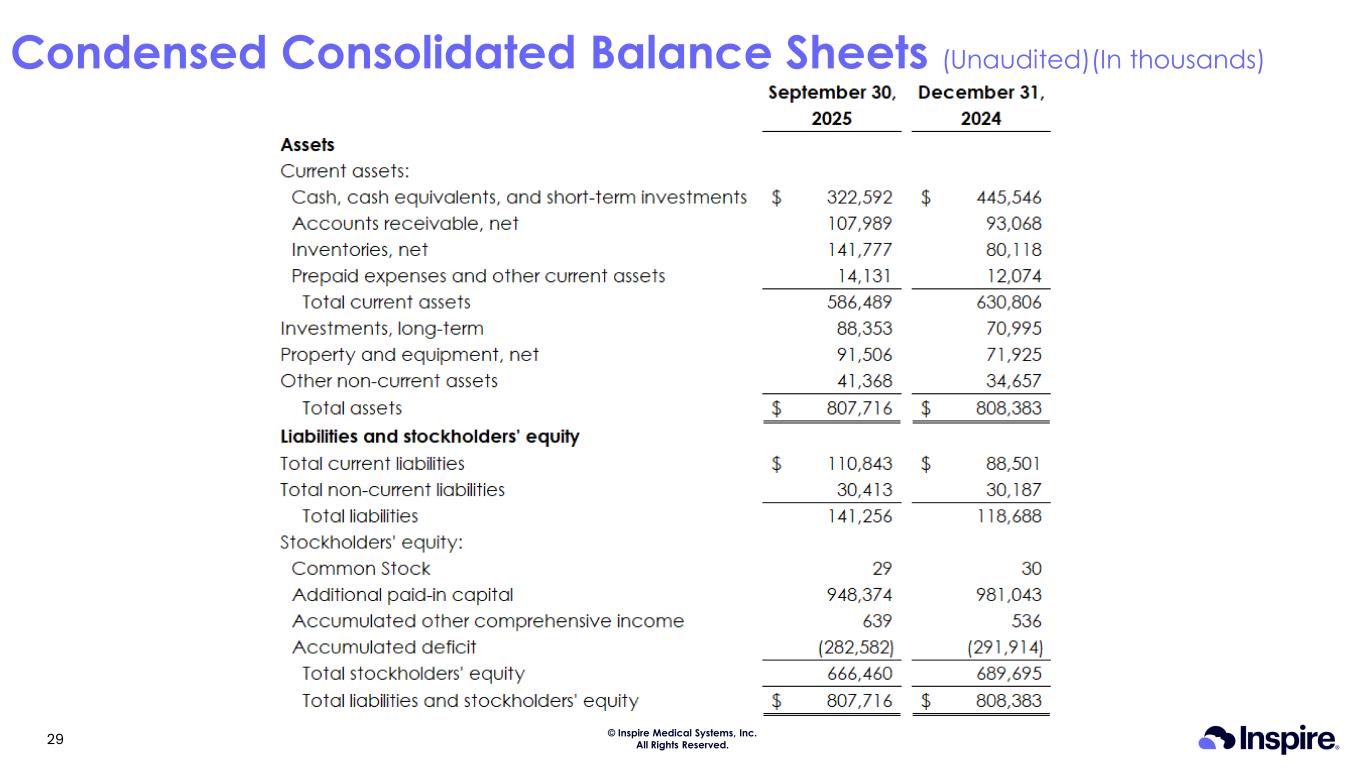
Okay. That's helpful. And then maybe just a quick follow-up. Can you guys just talk to the inventory on your balance sheet? I think it was $142 million at the end of the quarter with about $111 million in finished goods, it's up a good clip really throughout the year, throughout '25. Like what's in there? Are those IVs? Are those Vs, if they're all Vs, does it sort of clean up for a lot of next year? Maybe you could provide some color there.
Yes. It's both. I think the key is we are winding down the manufacturing of Inspire IV. That being said, we are going to still have Inspire IV available in the United States, as we talked about, but we also have a long regulatory process in Europe and in Asia for Inspire V. So we need to make sure that we have sufficient supplies of Inspire IV to carry us through until we can do the full international transition of Inspire V. So there is a big element of Inspire IV in there that will burn down over time. That being said, we also are increasing our inventory of Inspire V. Now that we're getting stability with our manufacturing site. We're still operating with a single manufacturing site. And then also remember some of the piece parts that are shared between Inspire IV and Inspire V. So once we wind down IV, we'll be able to leverage some of that inventory into building additional units for Inspire V in the future.
Operator
And I show our next question comes from the line of Larry Biegelsen from Wells Fargo.
Speaker 10
I guess, Tim, I was curious on the 10% to 11%, how are you thinking about the market growth with the new competitor coming into the market and what you're seeing from that new competitor so far? And I had one follow-up.
Sure. It's very early days right now. They are just getting started and need to work through all the reimbursement processes. There isn't a significant presence at the moment, but I think we will keep an eye on that and continue to monitor it. We can provide more detailed discussion when we give full guidance in January.
Speaker 10
Okay. For Rick, regarding the seasonality in 2026, I would like to confirm my understanding of Tim's comments. Prior to 2025, 2023 and 2024 were quite similar. If I calculated it correctly, it suggests around $205 in Q1, indicating low single-digit growth that would increase throughout the year. Is that approximately correct? And why would Q1 be so low? I apologize if my calculations are off.
The last couple of years, Larry, our seasonality was 15% sequential down in beginning of '24 and down 16% in '25. So that's kind of the recent historical trend. So we would expect, as Tim mentioned, that our cadence throughout the year will be comparable to kind of prior to 2025 and earlier.
Operator
And I show our next question comes from the line of Anthony Petrone from Mizuho Americas.
Speaker 11
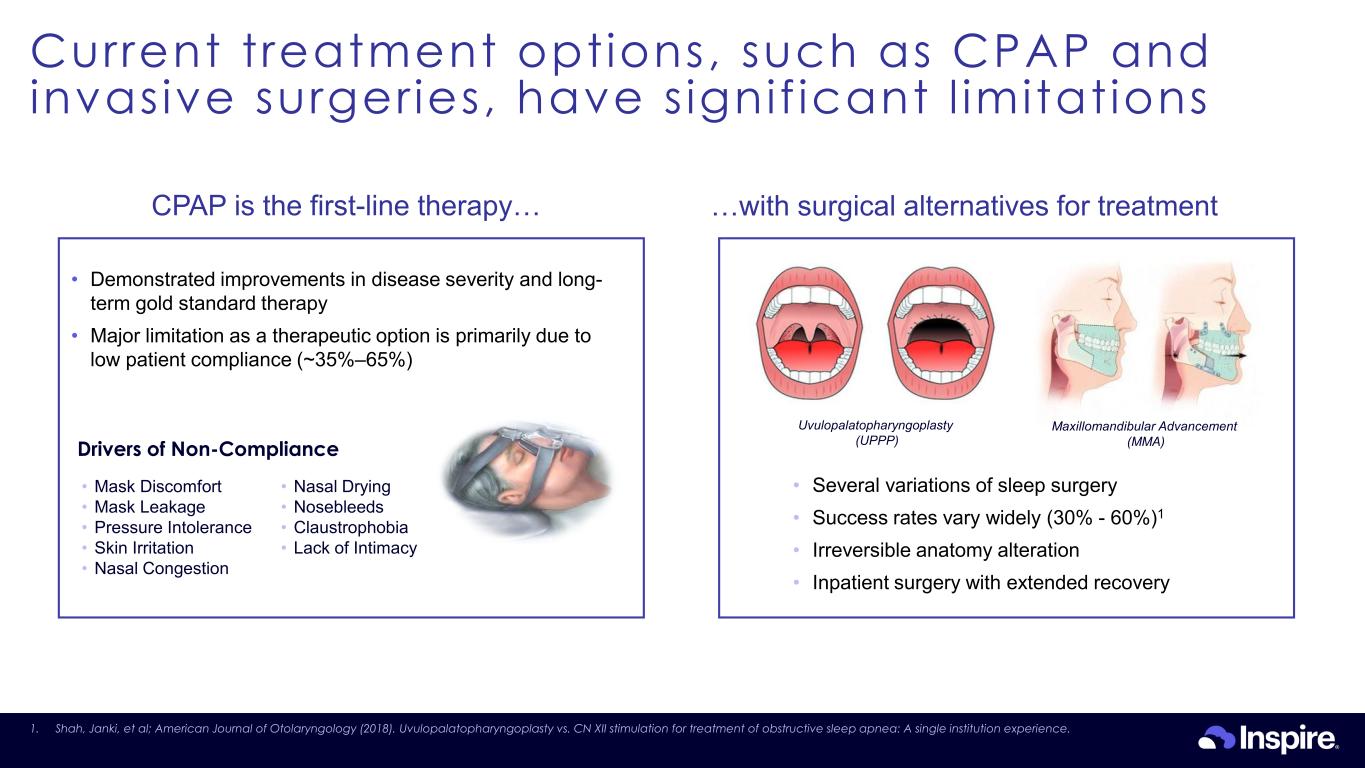
Congrats on the progress in the quarter with the V. Maybe on the 10% to 11%, I appreciate, Tim, the comments on the survey work on GLP-1, but still this dynamic of how much is coming in from the high BMI dropping into the sweet spots for Inspire and how much is sitting on the sidelines as folks trial GLP-1. So in the 10% to 11%, how much was GLP-1 factored would be the first question. And a quick follow-up to that would be, if you do see indications that GLP-1 is resulting in combo therapy out of the gate, specifically with CPAP, that CPAP dropout rate is still quite high. So over time, do you think the new starts on CPAP can actually transition to a higher rate of new starts on hypoglossal nerve stimulation over time?
Absolutely, you've explained that well. From our survey, we gained significant insights. There is a notable influx of patients visiting sleep labs due to an increase in phone calls for diagnoses of obstructive sleep apnea, which is necessary for insurance coverage assistance. However, sleep physicians are hesitant to make those diagnoses prematurely. They are committed to conducting thorough evaluations to ensure patients receive the appropriate care. In cases of moderate to severe sleep apnea, they won't delay treatment for a year to see if GLP-1s work; instead, they will initiate appropriate therapy. This includes starting patients on CPAP and GLP-1s while also monitoring their progress, as this is required by insurance providers. Consequently, we see more patients being treated by sleep physicians. If patients become noncompliant with CPAP, they may seek alternative surgical options or therapies. Sleep physicians are aware of which patients are suitable for Inspire based on their BMI and will refer those patients for Inspire therapy, continuing to manage their care in the long term. This aligns perfectly with our hypothesis. We believe that GLP-1s can effectively work alongside Inspire, aiding weight loss, minimizing lateral wall collapse, and enabling Inspire to treat cases of tongue-based collapse. These two mechanisms can indeed function synergistically.
Operator
And I show our next question in the queue comes from the line of Shagun Singh from RBC.
Speaker 12
Tim, I wanted to go back to the 10% to 11% growth next year because consensus is currently at 14%. So that's a pretty big gap. And you called out Inspire V, you called out the inventory dynamics, GLP-1s competitive effect and you said competition is not a big headwind. I think GLP-1s, you are positive longer term. There could be some trialing. I guess I wanted to ask, are there other factors that need to be contemplated as we think about 2026? What gets you closer to consensus at 14%? Have you factored in anything on increased reimbursement? Or is that a headwind as you think about Inspire V adoption and utilization? And just even looking at Q4, I'm looking at a step down in growth on a two-year basis and 6% exit rate. Can you just give us some commentary there on why that is? And you are talking about accelerating growth, but Q4 seems to be lower.
Yes, absolutely. You kind of laid out all those headwinds right there that we use to calculate, but there's also a lot of positives in there. And I think Inspire V performance and Inspire V acceptability is really strong. So once we complete the transition with V, that gives us great opportunity to kind of lean in and kind of reassess where we are with our guide. Now I know it's an early indication. It's not formal guidance, but we wanted to make sure that we put that out there. We know what we need to do to review that, and we're going to monitor that with Inspire with Q4 performance as well as when we come with full guide in January. But yes, we've kind of laid out the headwinds that we see that are going to challenge us, but we also want to leverage the opportunities that are there for us. Even the OPPS rule that just came out showing an increase in physician reimbursement for Inspire V as an opportunity because it really closes the gap between the reimbursement with 64568 versus the old code, 64582. And so there's a lot of positives mixed in there. So yes, we have a lot of work to do to be able to kind of work through the details for when we come with full guide in January.
Shagun, I would just add, it's still very, very early. We're very happy to be able to give an early preview of 2026. But as Tim alluded to, there are quite a few puts and takes, and we're just trying to be prudent at this time.
Operator
Our next question comes from the line of Vijay Kumar from Evercore ISI.
Speaker 13
This is Daniel Markowitz. So I had two questions. First, you noted about 75% of centers are ready to transition to the Inspire V, but that some continue to do Inspire IV for economic reasons. Can you just expand a little bit on those economic considerations? Are you hearing pushback to the physician reimbursement rate as it stands today? And would you expect this to change given the finalized 2026 physician fee schedule with an 11% bump to physician reimbursement?
No, it's really more of a good question. It's more related to the site of service or hospital reimbursement. With Inspire IV and Inspire V, we can make Inspire IV available with an economic benefit to some of those centers to help them get back to doing implants. So there is some discounting on Inspire IV that can help us out. Inspire V, that's not the case. So that's why some of these centers just choose to do IV based on the economics with the coding today. But as you saw, that doesn't affect our overall average selling price or gross margin.
Speaker 13
Got it. Okay. That's helpful. And then for the second one, as you look forward to 2026, do you have any initial thoughts on the trend in operating expenses, especially as it pertains to the new marketing campaign and DTC spend picking back up? I guess also, was DTC spend back at a normal run rate for Q3? Or is that still being held down quite a bit?
No, I think it was pretty close. We wanted to do an increase there because we held back in the first half of the year on DTC spend. But as you kind of look at OpEx going forward, we're going to see maybe a slight increase in DTC, but again, more level with full year, but we don't expect that to grow with the same level of revenue.
Operator
And I show our next question comes from the line of Michael Sarcone from Jefferies.
Speaker 14
I guess, I'll just ask both of mine upfront. You might have already answered kind of the second one, I'll ask Tim. But last quarter, you had mentioned that at the accounts that were converted to Inspire V, you were seeing about 20% same-store sales growth. Given the outlook for kind of 10% to 11%, at least early on right now for 2026, it seems like that's not carrying through. I just wanted to maybe get an update on how that 20% same-store sales has progressed as you've kind of opened up more accounts with Inspire V. And then is there any interplay there with the Inspire V reimbursement on the physician fee level being lower?
Mike, thanks for the question. So there's still absolutely a correlation between centers that have transitioned to Inspire V and faster volume growth that we saw through the end of Q3, which we're very, very pleased with. As we highlighted on our last earnings call, though, you shouldn't anticipate that 20% to continue for all centers. But we're very pleased with the correlation that we're seeing with Inspire V adoption and accelerated case volume. And again, as we noted on 2026, it's really early. There's still a lot of puts and takes, which we highlighted, and we just want to be prudent. But we're very, very pleased with what we're seeing with the Inspire V launch and experience to date.
Operator
And I show our next question comes from the line of Chris Pasquale from Nephron Research.
Speaker 15
I wanted to understand the territory realignment a little better. Was there a corresponding reduction in the number of centers you're working with? Or are you just increasing the number of accounts the remaining reps are responsible for?
No, we're actually building efficiencies into our territory management. So what we want is, well, because you've been around for a long time, you know how we're kind of ramping and we started to ramp the number of field clinical reps as well. And we want to get that ratio closer to 1:1. So as we're doing that transition, we're doing some promotions of field clinical reps and territory managers and then come back and hire additional field clinical reps behind that, and that's going to be a trend going forward. I think we're finding greater efficiencies with larger territories with territory managers as long as they have the support staff like the field clinical reps to be able to do the case coverage and the training. So I think you'll see more of that in the future.
Chris, I would just add that we've always talked about having the average territory managers support on average 4 to 6 centers, and we're still very much in that range. We did add a healthy clip of new centers in Q3 after slowing that initiative down in the first half of the year.
Operator
And then I wanted to follow up on the question about margins and OpEx. The implied guidance implies that OpEx is going to grow at roughly twice the pace of sales in Q4. That was obviously true in Q3. And you guys signaled that in the near term, you would have elevated spending. But you're also talking about driving operating leverage next year, which would really seem to imply that spending is going to moderate given the top line growth you're signaling. So help me understand just the cadence here. Is this just a very temporary bolus that then really sort of changes as the calendar flips? Or how do those two things line up?
Yes, Chris, so yes, you're right on all your assumptions. Year-over-year OpEx growth for 2025 is going to be in that 16%, outpaces full year revenue growth, but we are going to have an improvement in operating margin sequentially into Q4. Still pretty early to talk about 2026, but the new guidance also implies full year operating margins in that 2.5% to 3%. And on a longer-term basis, we expect to improve that over time.
Operator
And I show our last question comes from the line of Richard Newitter from Truist Securities.
Speaker 16
I want to follow up on Chris' question. Congratulations on achieving great expense control this quarter. I'm trying to understand why we all had higher expectations. We thought your profits would hold up better, even with the revenue decline last quarter. I'm curious about what has changed in the outlook that explains the $0.50 upward revision. I know you're not providing specific guidance for next year on operating expenses, but we all want to grasp the right normalized spending rate and the significant cost controls in place. However, it's unclear if this is linked to improved efficiency due to territory consolidation. Does the 10% to 11% growth rate require less investment compared to the initial 15% to 20% growth? Please help us understand what has shifted because the earnings seem to be quite volatile.
Yes, I can start maybe. First and foremost, our revenue did outperform where consensus was modeling. So first and foremost, the revenue beat in the quarter is what's helping with some of the EPS. Below the line, yes, we did increase our investments on DTC, but we were very disciplined across other areas, and we will continue to look for those types of savings as we move forward. Yes, there has been some consolidation of territories that's also driving some of that savings. But you're absolutely right. We're going to continue to support the business. We're going to continue to invest in R&D, in patient marketing and in medical education, but we're going to do it in a very methodical and disciplined way and make sure that we continue to show operating leverage going forward.
Okay. And then maybe just one second one. I'm curious, are you able to actually see more procedures per account in the accounts that have adopted or been fully trained in Inspire V? And can you quantify that?
We are noticing that a significant portion of our centers, over 75%, is now implementing Inspire V. There is definitely a link between the increase in volume growth and the adoption of Inspire V, and we are observing that clearly.
Operator
And I show our next question comes from the line of Brett Fishbin from KeyBanc.
Speaker 17
A lot of questions already on next year. So I'll ask one a little bit more qualitative. I think during the quarter, you had the press release with some of the Limited-Market-Release information about Inspire V in the U.S. One thing that stood out to me was the anecdote of one of the KOLs performing 12 implants per day. I believe that compared to 9 with Inspire IV. So something like a 30% to 40% increase in efficiency, which was above the 20% reported from Singapore. So just curious kind of like what drove that kind of performance? And are there specific items that can maybe be applied to other centers that have struggled to see that type of efficiency either in the past or with Inspire V?
Brett, this was an important topic discussed at the AAO or ISS meeting where a surgeon shared insights. The main issue is setting up their center to handle patient demand, which isn’t about the number of patients but rather the capacity of surgeons. This particular surgeon has access to two operating rooms and explained how crucial it is to balance the Inspire procedure time with the necessary cleaning time between cases to maximize daily efficiency. Consider the advantages not only for the surgeon performing several procedures but also the financial benefits for the hospital in conducting numerous surgeries in one day. This aligns with our focus on operational excellence and efficiency, allowing our clinical representative to be present all day instead of spending time commuting. It's beneficial for everyone involved, requiring skilled and efficient surgeons who can manage a high volume of cases effectively. We aim to replicate this successful model to optimize surgical schedules and case management.
Operator
And I show our next question comes from the line of Michael Polark from Wolfe Research.
Speaker 18
Question on 2025 revenue growth affirmed 12% to 13%. As you reflect on the year, do you think you'll be calling out kind of a net inventory headwind at customers? Is it similar to the question I asked last quarter? And maybe framed differently, in the 12% to 13% for your revenue growth, do you think Inspire procedures grew faster than that in 2025?
I'm going to come back and let me answer the first one and make you repeat the second one. I think the way we're planning it out, we are going to discontinue the manufacturing of Inspire IV, but we made sure that we did a forecast going forward. Remember, we have a three-year shelf life on these products to look at what's going to be available to support Europe and Asia as well as centers in the United States who want to continue with IV. So we are budgeting our manufacturing to align with our forecast for IV going forward. So what was your second question, Mike?
Speaker 18
Do you think the volume of Inspire procedures will grow alongside the revenue in '25? Is the growth rate of volume consistent with revenue at 12% to 13%, or were the procedures growing faster, influenced by customers reducing their stock of IV and increasing their stock of V during the transition, which posed a slight challenge?
I think that may have been a slight headwind at certain times over the course of the year. But for the most part, the implant to sales ratio has been pretty steady. I think we can take a closer look at that as we wrap up the year and figure out if it makes sense to disclose that on a one-time basis. But I would say, generally speaking, implant volumes have trended pretty closely to sales. So I don't know that, that would be necessary. And as Tim noted earlier, the vast majority of inventory in the field sitting on shelves today is already Inspire V. So that gives us confidence as we look ahead into Q4 and beyond.
Operator
And I show our last question comes from the line of Mike Kratky from Leerink Partners.
Speaker 19
Congrats on a nice quarter. One clarifying question there. Really appreciate the color on the survey of sleep physicians and certainly encouraging. It seems like you're expanding the top of the funnel. But were there any cross currents that are worth calling out there? And did you get the sense among physicians surveyed to what extent they're seeing or expecting GLP-1s to have a positive or negative impact on their overall Inspire procedure volumes?
I believe sleep physicians are noting an increase in their procedure volume due to GLP-1 medications. Family practice doctors are referring patients to sleep specialists for diagnosis, and these specialists are taking a responsible approach. Instead of simply conducting a study and sending the patient back, they are ensuring a thorough diagnosis and appropriate care. If a patient has moderate to severe sleep apnea, they won't delay for a year to see if GLP-1 is effective; instead, they will implement concomitant therapy. They will initiate CPAP treatment while also starting the patient on a GLP-1, and they must monitor these patients as required by insurance companies. This has led to an increased number of patients being seen by sleep physicians, and if patients become noncompliant with CPAP, doctors will consider alternative surgery or therapies. When appropriate based on BMI, the sleep physicians will refer patients for Inspire therapy. They will continue to manage these patients in the long run. This aligns with our hypothesis that GLP-1s can complement Inspire therapy by aiding weight loss and reducing lateral wall collapse, allowing Inspire to effectively treat patients with tongue-based collapse. Thus, we see two mechanisms of action that can work in synergy.
Operator
This concludes the Q&A session for the conference. I'd now like to turn the call back to Tim for closing remarks.
Thanks, Dilem. As always, I'm grateful to the growing team of dedicated Inspire employees for their enthusiasm, hard work and continued motivation to achieve successful and consistent patient outcomes. The team's commitment to patients remains unmatched and is the most important element to our success. I wish to thank all of our employees as well as the healthcare teams for their continued efforts as we remain focused on further expanding our business in the U.S., Europe and Asia. For all of you on the call, we really appreciate your continued interest in and support of Inspire and look forward to providing you with further updates in the months ahead. Take care, all. Thank you.
Operator
This concludes today's conference call. You may now disconnect.