Operator
Good day, everyone, and welcome to the Little Fuse 4th Quarter 2024 Earnings Conference Call. Today's call is being recorded. At this time, I will turn the call over to the Head of Investor Relations, David Kelly. Please proceed.
Good morning, and welcome to the Little Fuse 4th Quarter 2024 Earnings Conference Call.
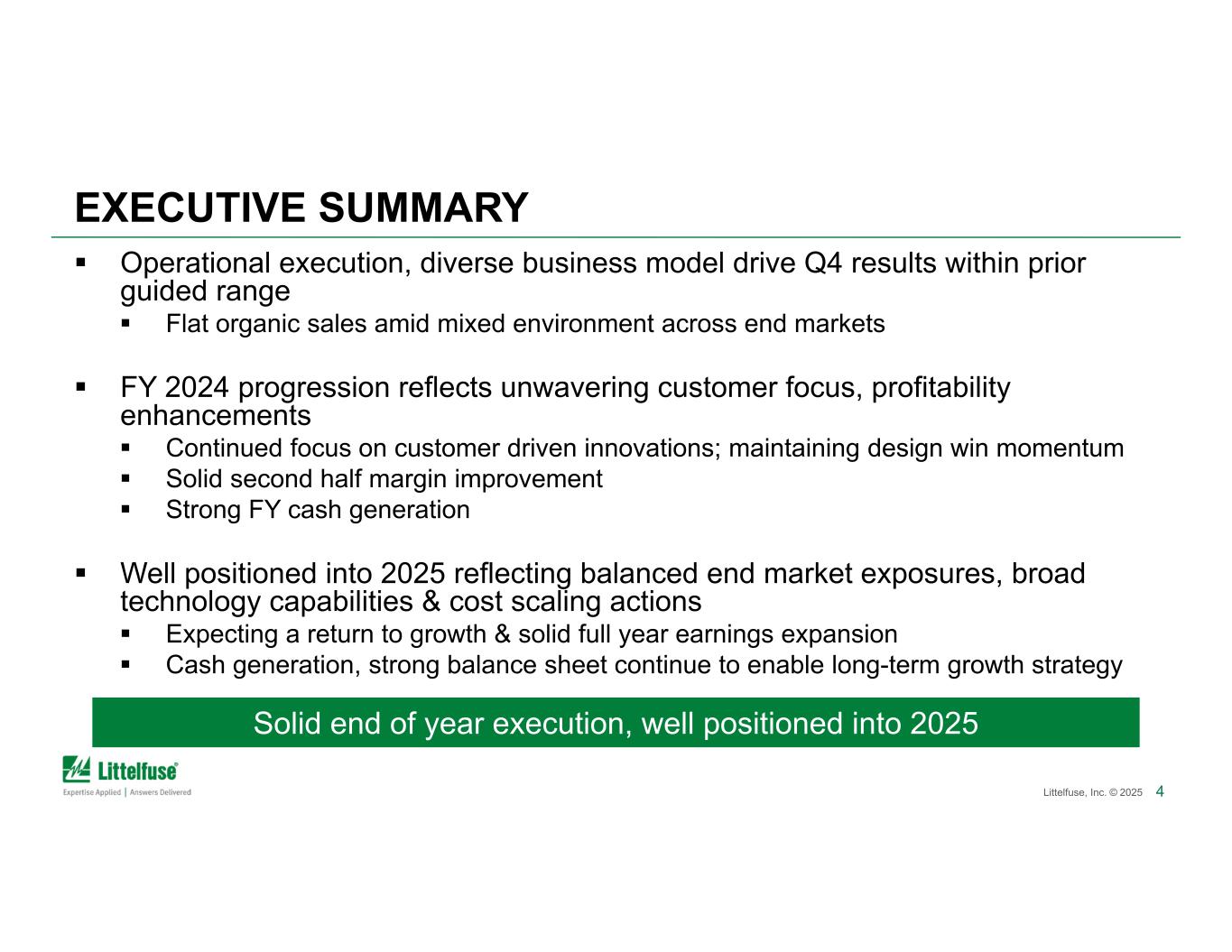
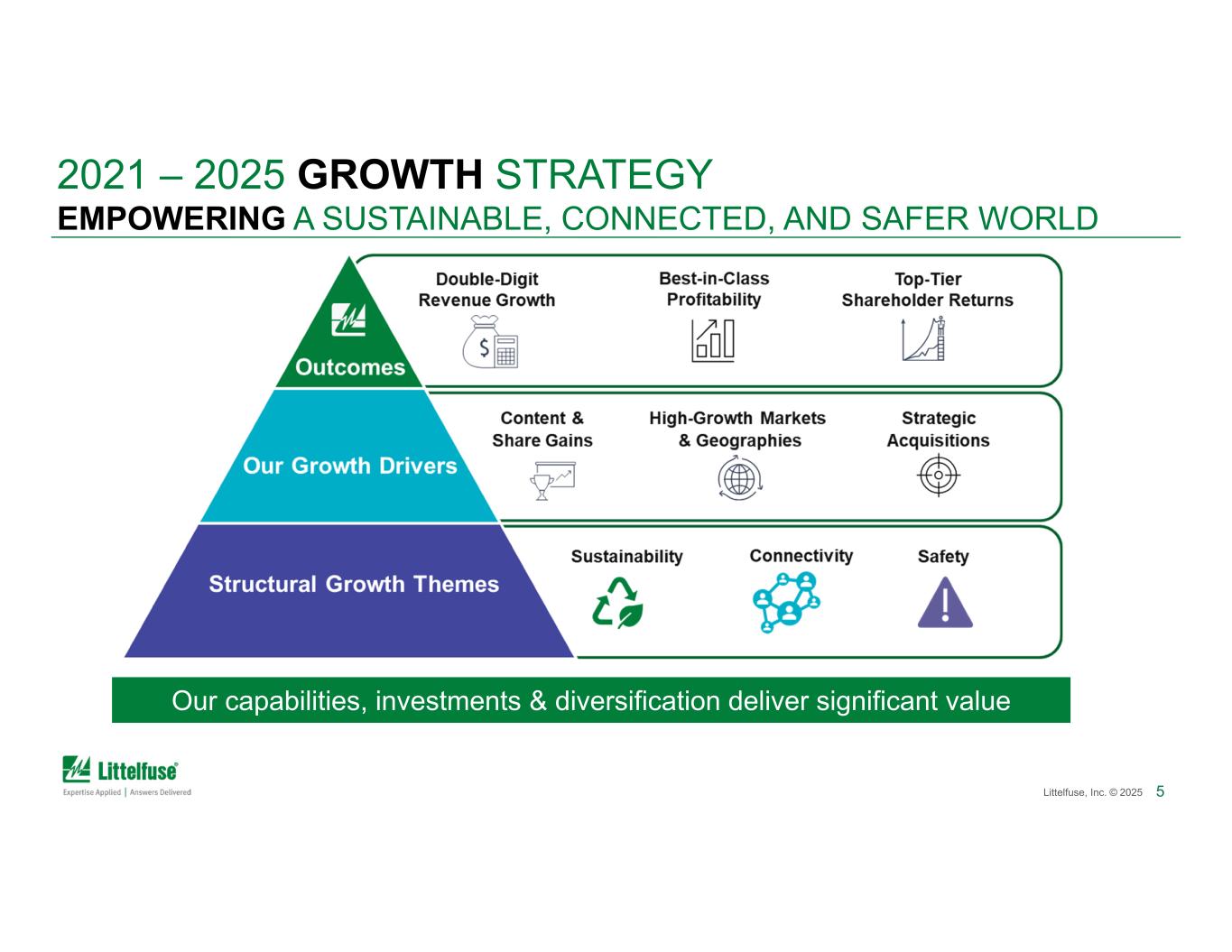
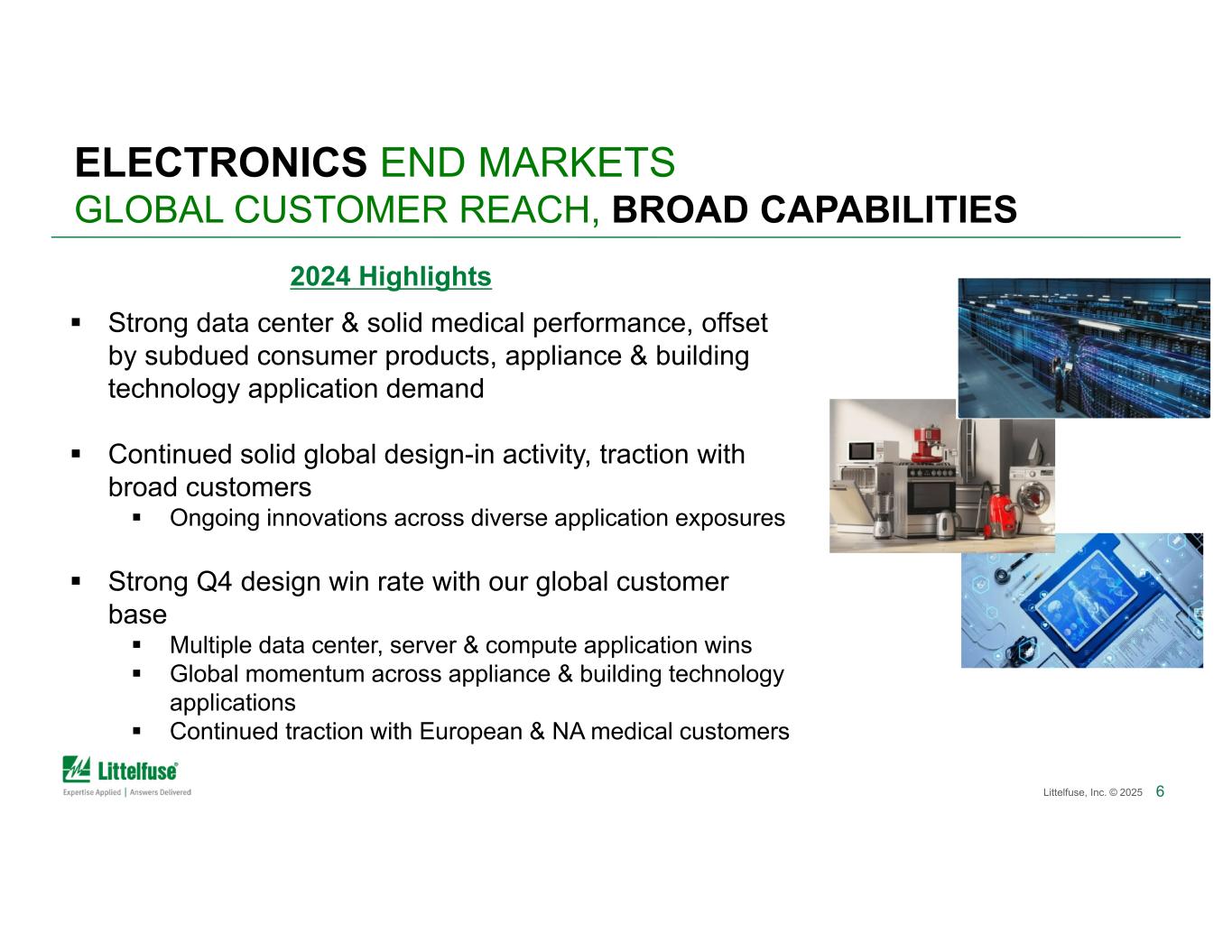
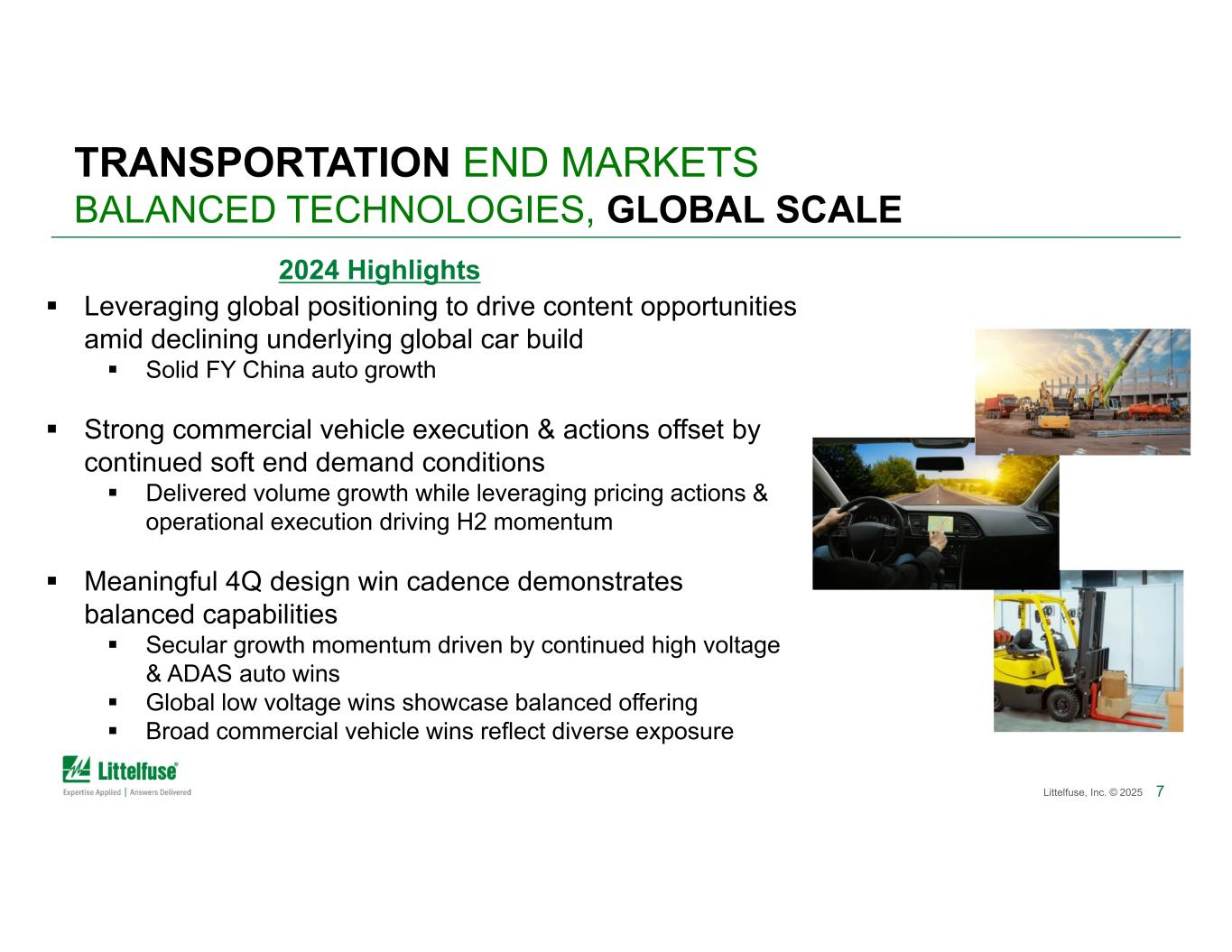
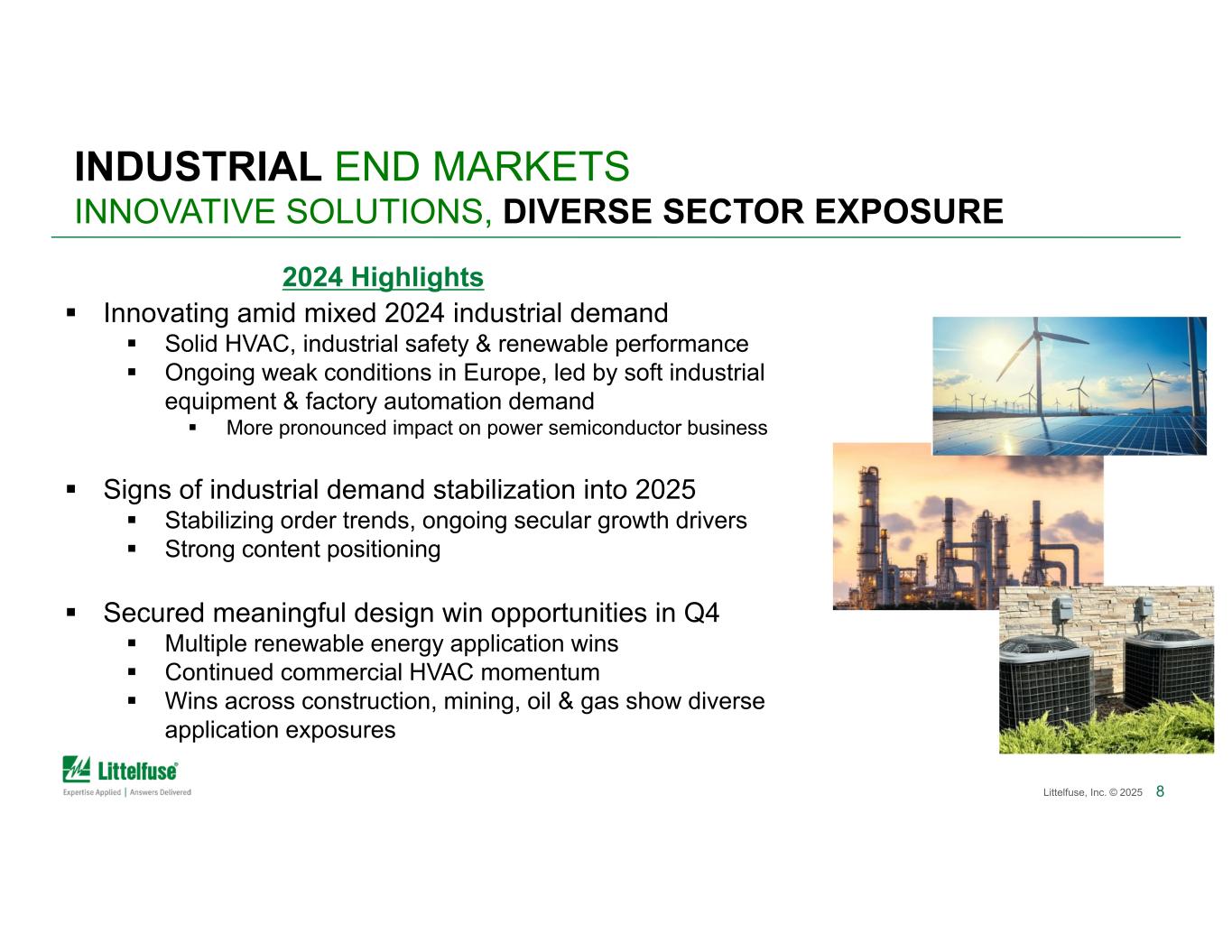
With me today are Dave Heinsman, President and CEO, Minol Cephna, Executive Vice President and CFO, and Greg Henderson, Little Fuse Board Director and incoming CEO. Yesterday, we reported results for our fourth quarter, and a copy of our earnings release and slide presentation is available in the Invest Relations section of our website. A webcast of today's conference call will also be available on our website. Please advance to slide two for our disclaimers. Our discussion today will include forward-looking statements. These forward-looking statements may involve significant risk and uncertainties. Please review yesterday's press release and our Forms 10-K and 10-Q for more details about important risk that could cause actual results to differ materially from our expectations. We assume no obligation to update any of this forward-looking information. Also, our remarks today revert to non-GAAP financial measures. A reconciliation of these non-GAAP financial measures to the most comparable GAAP measure is provided in our earnings release available in the investor relations section of our website. I will now turn the call over to Dave. Thank you, David. Good morning, and thanks for joining us today. Let's start with highlights on slide four. In the fourth quarter, our performance and results came in as we expected, as both sales and earnings were within our prior guided range. The consistency of our performance reflects our global team's strong operational execution and unwavering focus on our diverse and broad customer base as we delivered solid quarterly results amid a mixed environment across our end markets. For full year 2024, we continue to deliver design-wind momentum and drive new product innovations alongside our global customers while navigating a choppy environment. We believe our steadfast commitment to our customers positions us to deliver continued long-term top-tier growth. We've exited the year with the electronics de-shocking cycle behind us and signs of distribution inventory replenishment emerging. Our electronic segment, Book to Build, is at its highest level since the second quarter of 2022. Our past business booked a bill at the above one, and while power semiconductor remains below one, we observed improved order rates in the quarter relative to levels seen earlier in the year. As order rates are gradually improving, we continue to see broader design wind strength across our diverse technology offering and in-market exposures. We remain confident in our content trajectory, the key enabler of sustainability, connectivity, and safety megatrends. We also strove for improved operational performance in 2024 and delivered meaningful profitability enhancements across our businesses, driving solid second-half margin expansion. Into 2025, we continue to align our cost structure to reflect current business and market conditions, while positioning our company for a return to growth and further margin expansion. Finally, we generated strong free cash flow conversion in 2024, while our balance sheet exits the year well-positioned to support our long-term growth strategy. Taking a step back, we are confident our actions in 2024 will support growth and solid earnings expansion in 2025, as well as meaningful long-term momentum beyond the new year. I want to thank our global teams for their focused efforts and persistent hard work in the fourth quarter and throughout 2024. Now let's turn to our in-markets and design activities, starting with the electronics on slide six. Electronics market trends were mixed and improved through the fourth quarter. Data center remained a strong growth driver and part driven by AI application. Medical demand was mixed, while demand for consumer products, appliances, and building technologies remained subdued. Yet as the quarter progressed, we observed some emerging signs of stabilization, particularly in North America and Asia regions. Broadly, electronics in-market design and activity remained healthy, and we delivered another strong win rate across a broad set of applications in the quarter. Of note, we saw strong taxes, opportunities, and conversion in China, driving meaningful order expansion in the region in the fourth quarter and full year 2024. In North America, we continued to observe some ongoing design win to order conversion delays, but a pickup in order trends late in the quarter was encouraging. Turning to our electronics in-market design wins in the quarter, We secured a meaningful data center win for a cooling application in North America and an infrastructure application in Japan. We secured data comp, server, and compute wins in North America and China. We also delivered global wins for appliance applications that utilize our broad technology capabilities. Similarly, we secured business for multiple building technology and automation applications in regions including North America, China, Taiwan, and India. Finally, we deliver meaningful wins for medical applications in North America and Europe in the quarter. Moving on to transportation and markets and design wins on slide 7. Starting with our passenger car exposure, we benefited from our global positioning and balanced technology offering, which helped to offset slightly lower global car builds in the quarter and ongoing pruning actions associated with our sensor product line. We delivered solid growth in China as we leveraged our technology expertise, experienced local teams, and strong partnerships with local OEMs. Outside of China, solid demand for our low-voltage products partially offset weaker North American and European production volumes in EV sales. In 2025, we believe our exposure to multiple specular growth drivers and ongoing innovations with our global customers position us to offset likely continued soft global car build trends. Regarding our commercial vehicle exposure, while soft underlying market trends continued in the fourth quarter, we delivered solid volume expansion and continue to drive favorable pricing. Into 2025, we see some initial, albeit early signs of improvement in certain commercial vehicle markets, led by construction and heavy-duty trucks, with recovery likely weighted to the back half of the year. Given our strong content offering and continued traction with customers, we remain confident in our commercial vehicle positioning, and are excited about long-term opportunities across our broad exposures. In the quarter, we secured solid new transportation business across both passenger and commercial vehicle end markets. In passenger vehicles, we secured several meaningful high-voltage opportunities with customers in South Korea, China, and Europe. We also delivered multiple low-voltage fuse wins, including in North America, Europe, South Korea, and China, which demonstrates the global scale of our business. We secured ADOS application opportunities for customers in China and Europe. In commercial vehicle in-markets, we secured several construction and agriculture equipment wins for customers in North America and Europe. We also delivered multiple recreational and specialty vehicle wins in the quarter. Turning to slide eight, industrial markets and design activity. In the fourth quarter, we observed mixed in-demand trends across our broad industrial exposure. We benefited from continued strong HVAC and industrial safety application demand. However, we observed continued soft industrial equipment, factory automation, and charging infrastructure trends. We continue to see more pronounced softness across our industrial power semiconductor products, where we have more meaningful exposure to weaker European and Asian industrial markets. Broadly, we observed a solid order rate momentum late in the quarter and into 2025. We see an improving, albeit likely, gradual industrial recovery. Importantly, our industrial sector growth drivers remain intact, and we see continued strong momentum headlined by renewables, automation, and industrial safety. Regarding our design wins in the fourth quarter, we secured meaningful renewable opportunities, including for a solar application in North America and for a solar and energy storage application in China. We also secured several commercial HVAC wins in the quarter, so our teams continue to leverage core residential HVAC technology expertise to drive new market expansion. In Japan, we secured a win for a rail fraction drive application that will utilize our semiconductor capability. Finally, we delivered a variety of wins across heavy industrial markets, including construction, mining, and oil and gas in the quarter. Across our businesses, we continue to partner with our broad customer base to drive innovative solutions for our diverse in-market exposures. We will remain focused on operational execution as we strive to deliver leading performance in 2025. five. I will now turn the call over to Meenal to provide additional color on our financial performance.
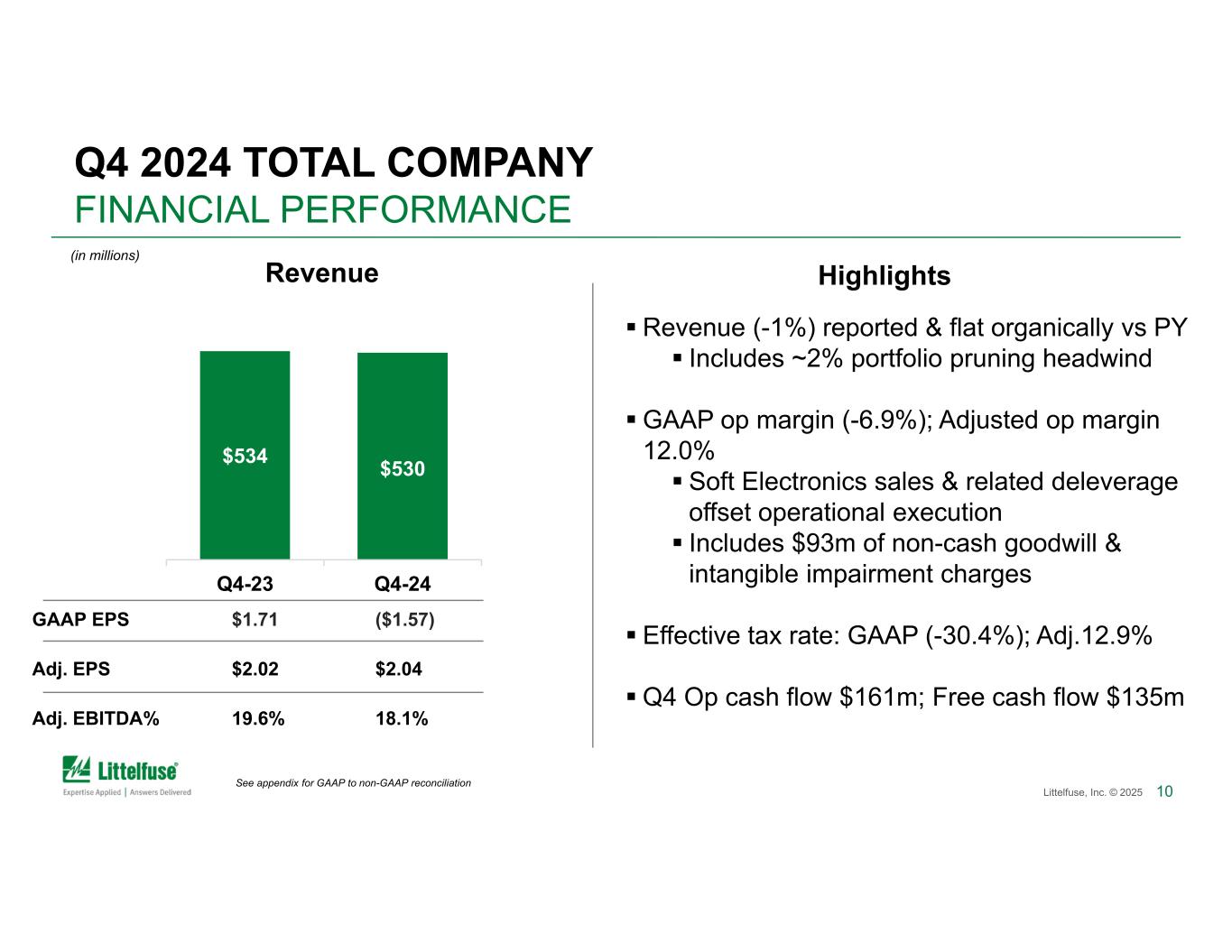
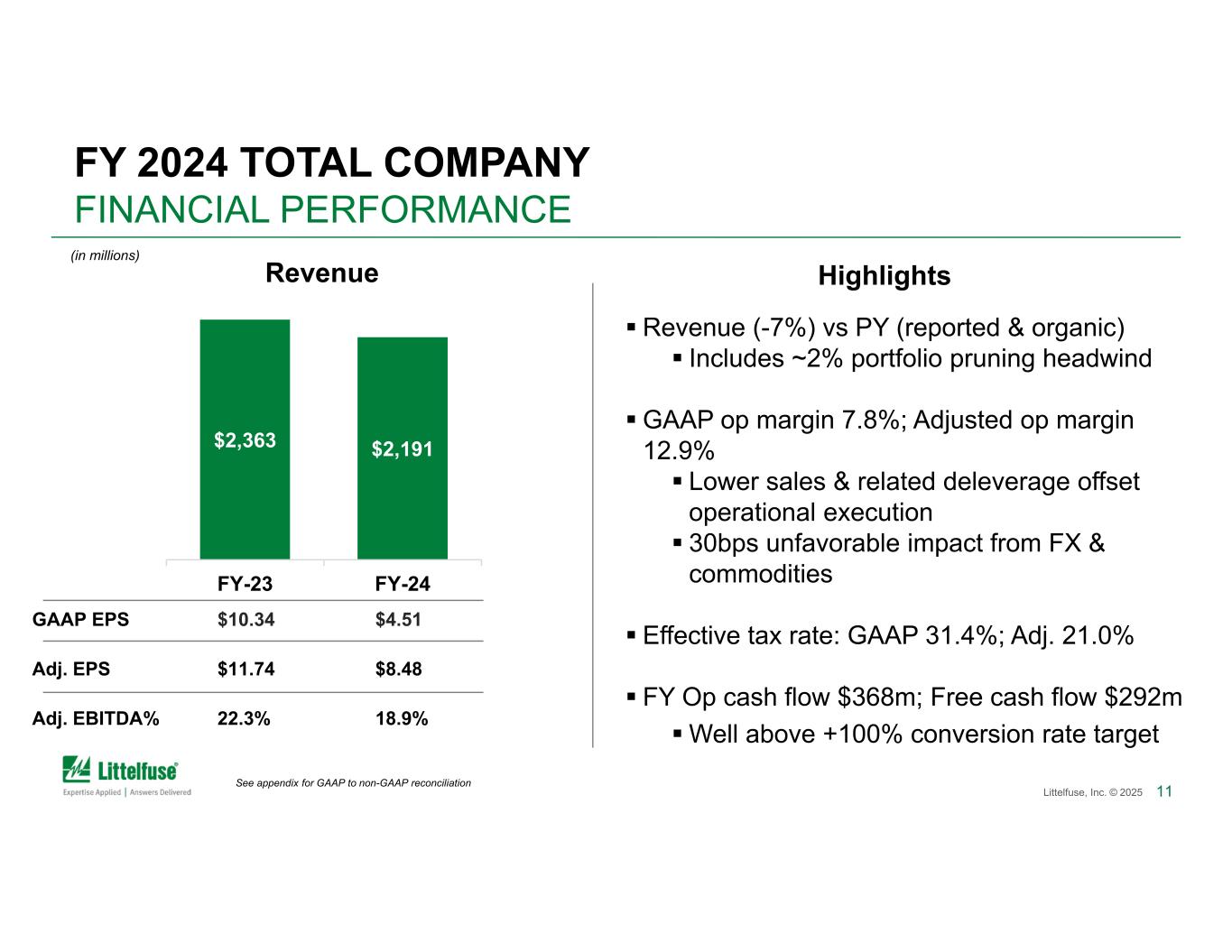
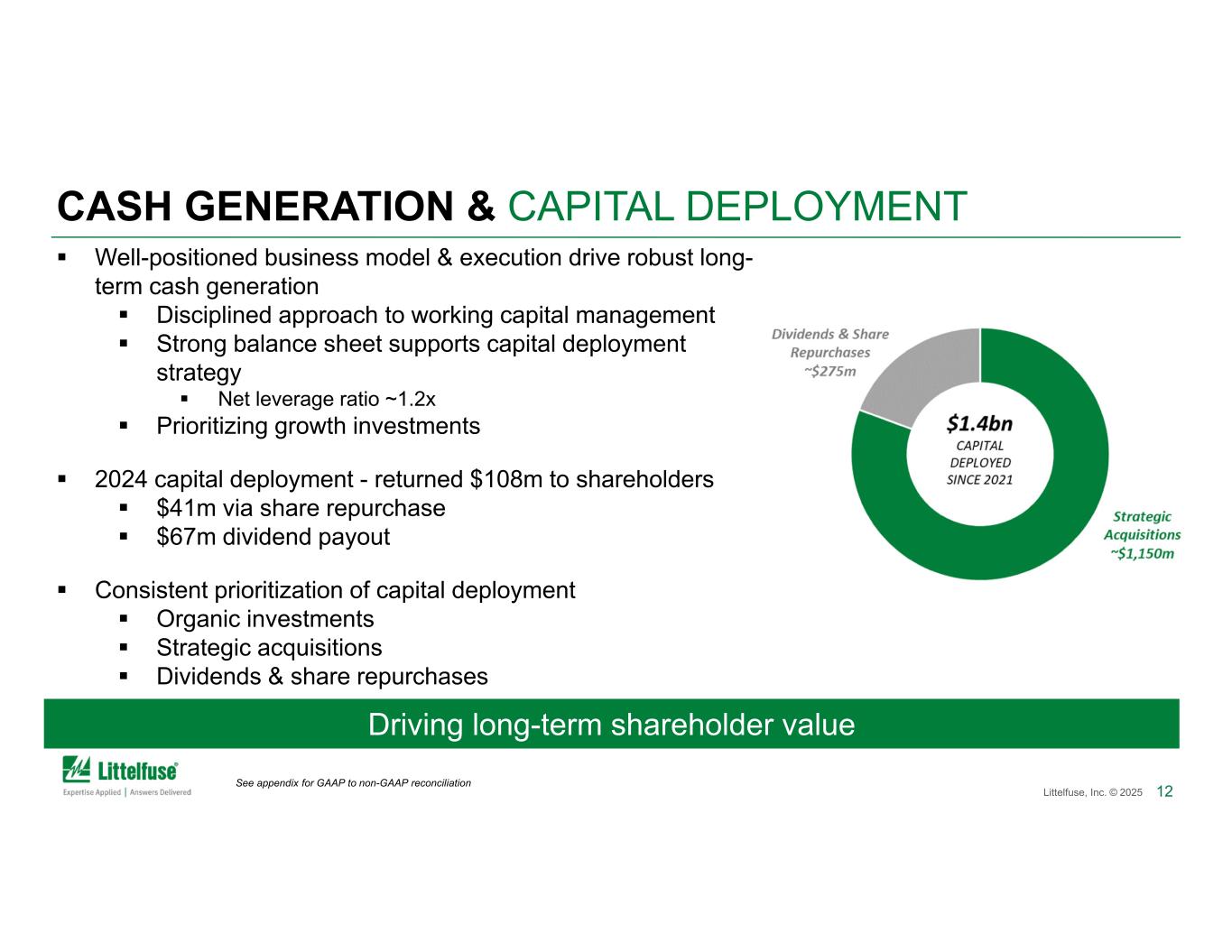
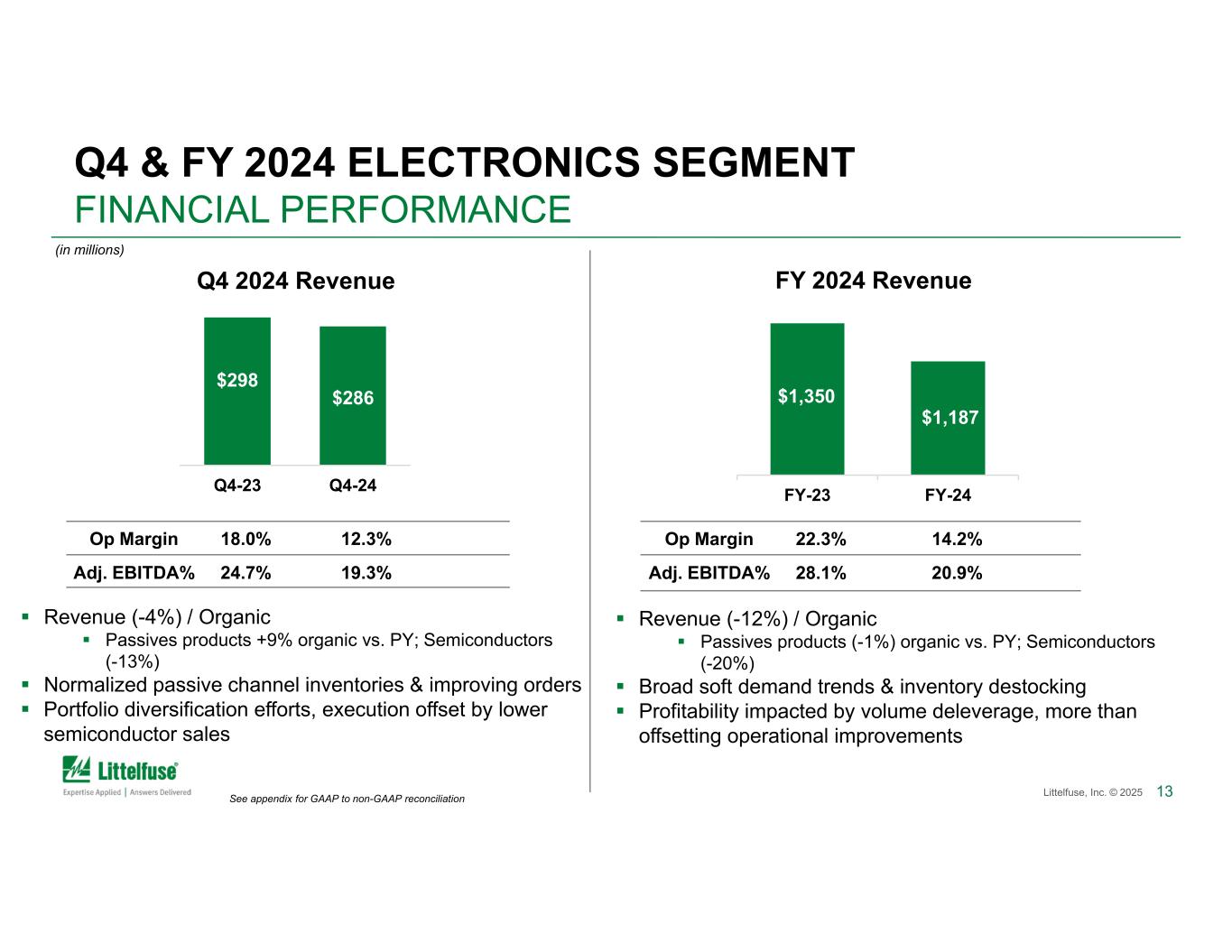
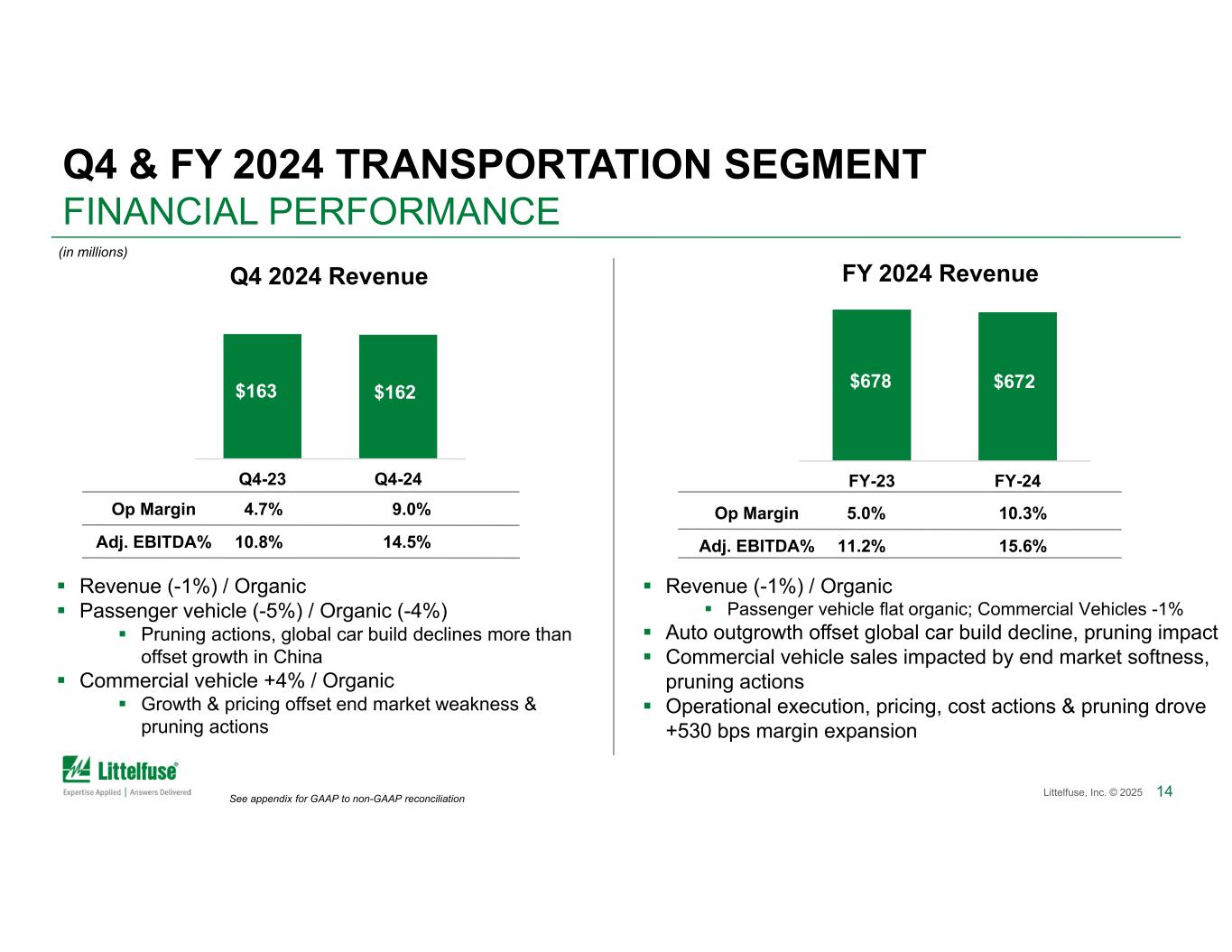
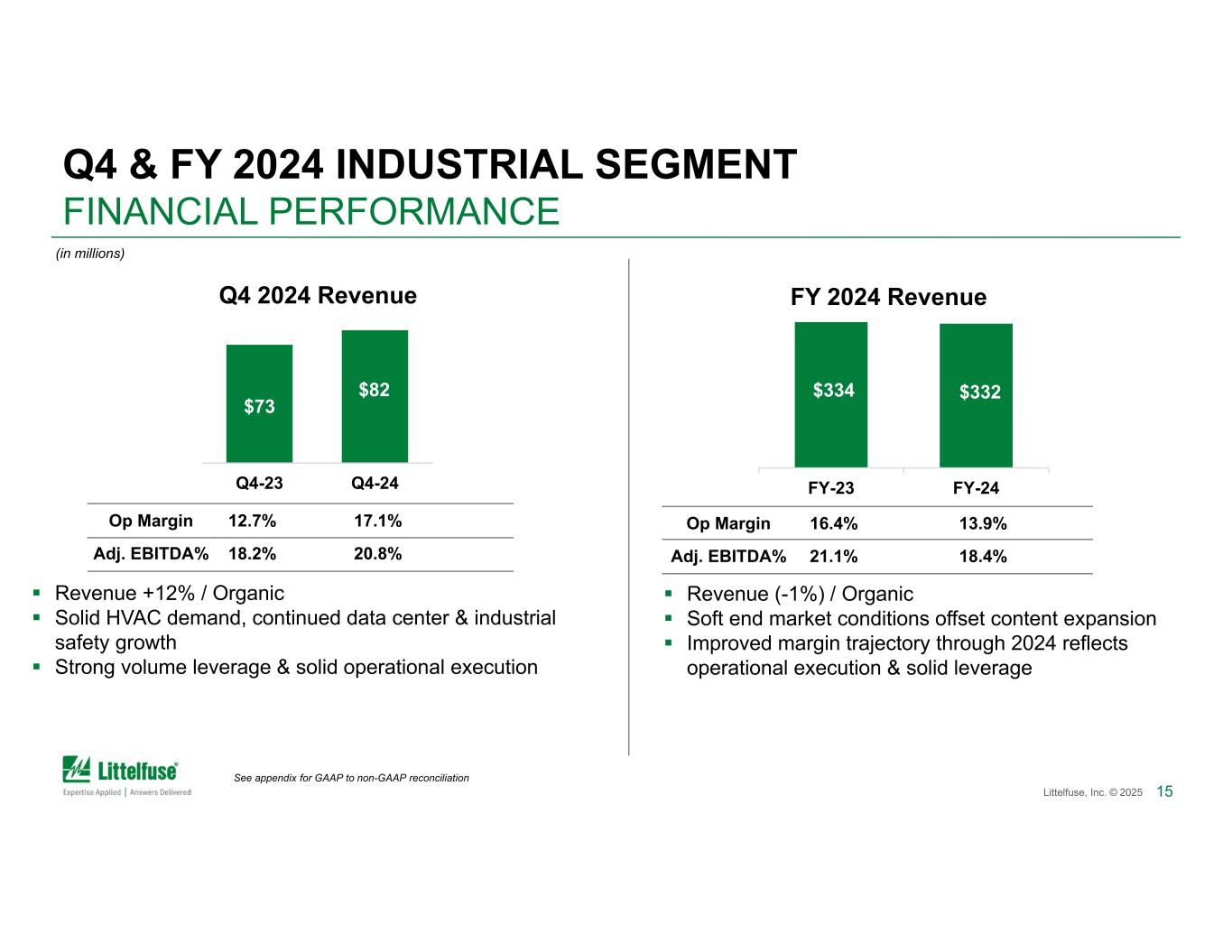
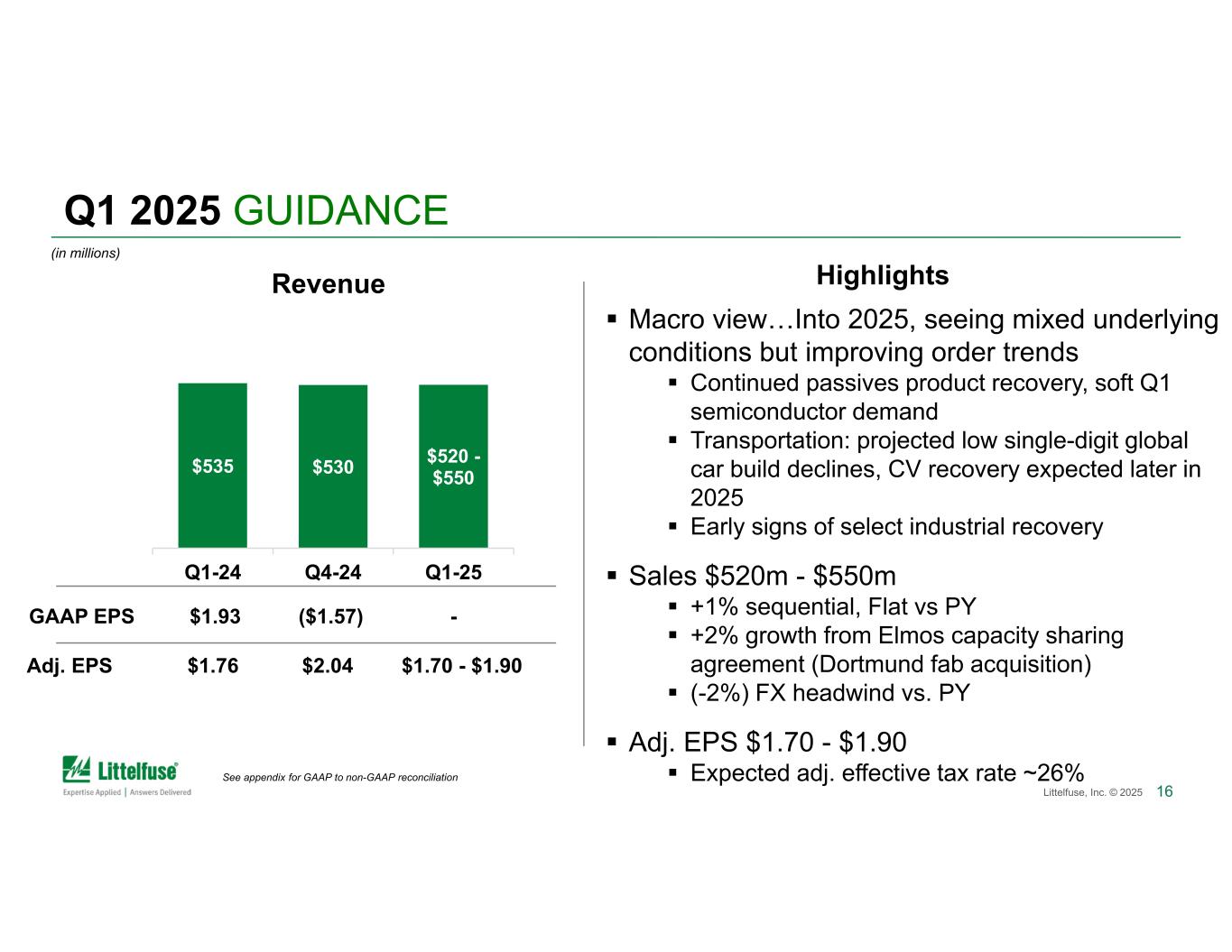
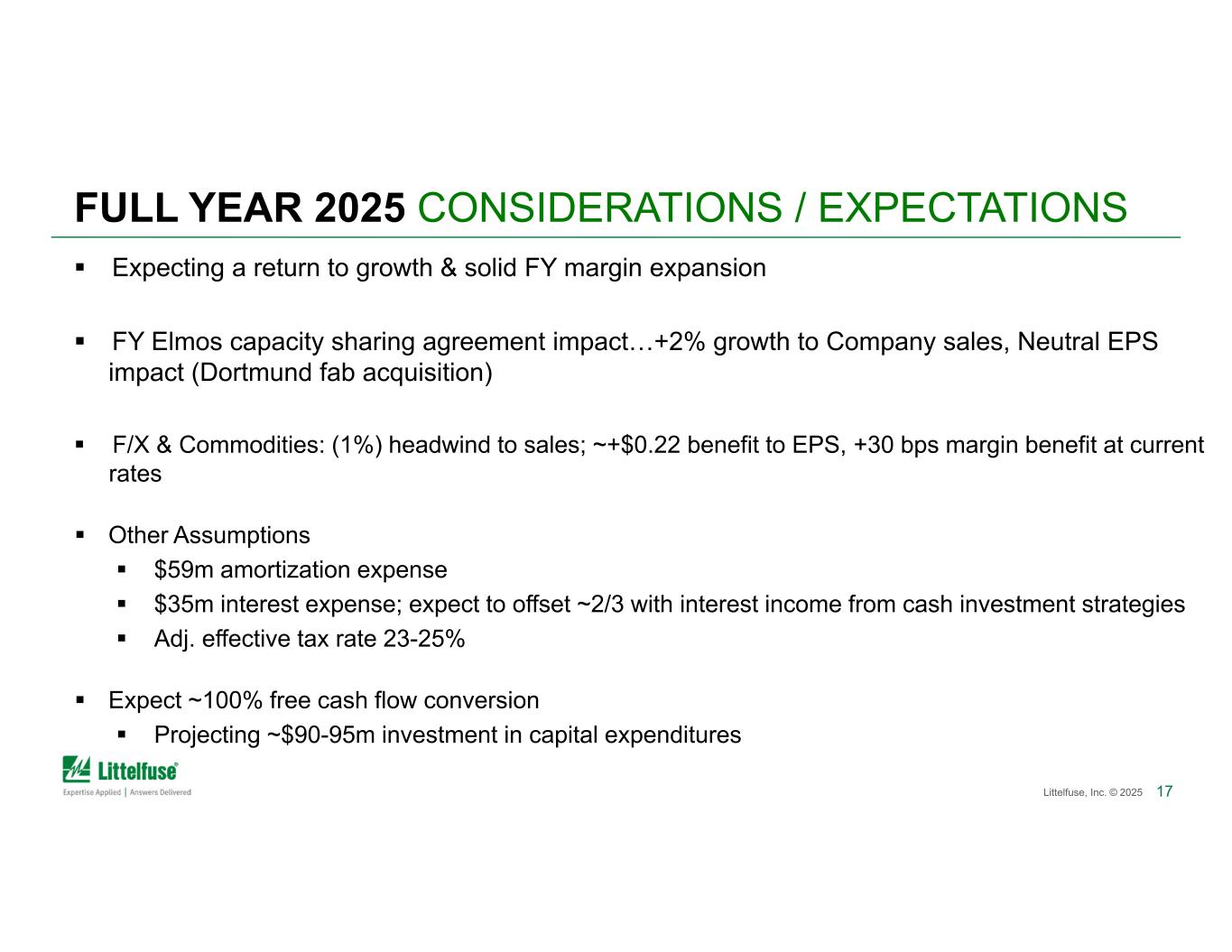
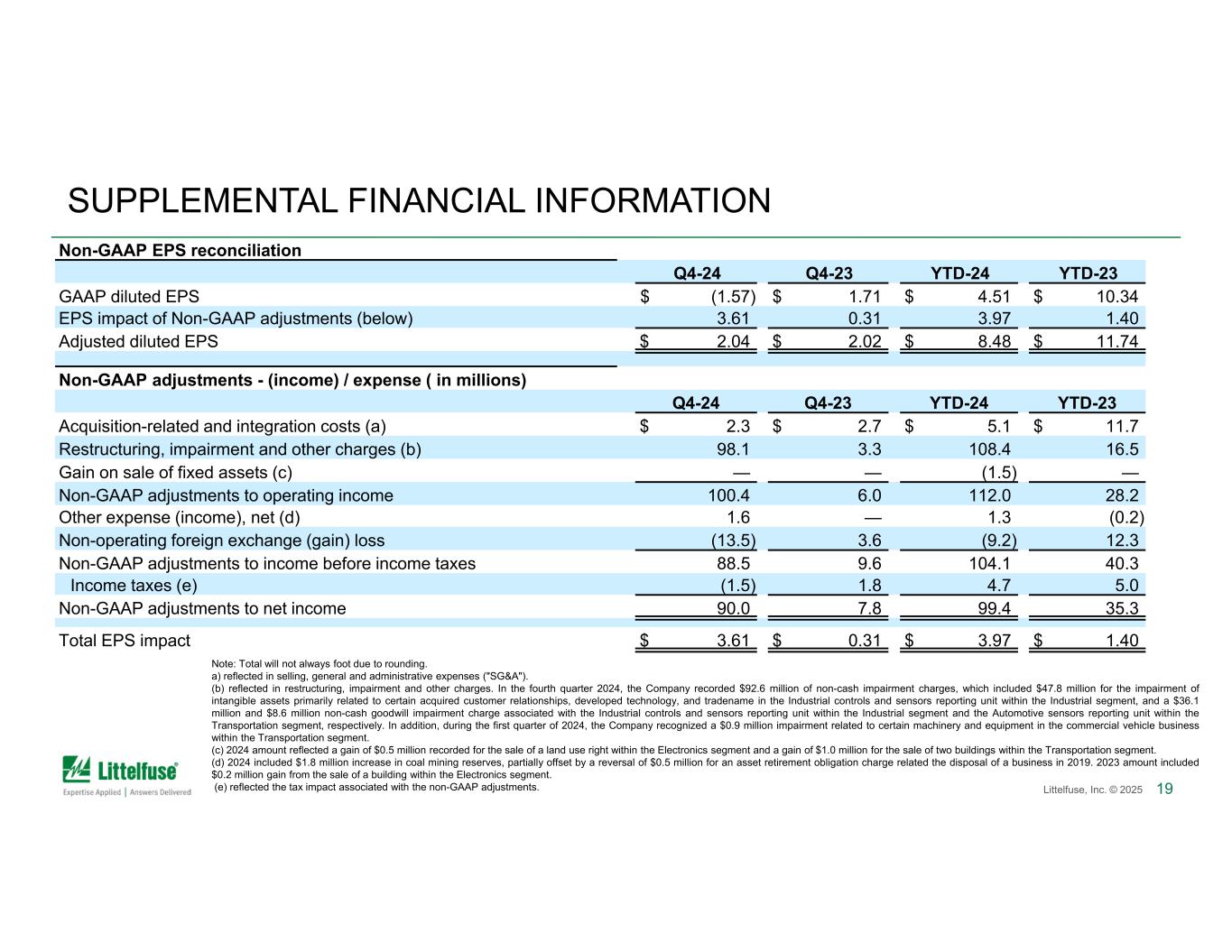
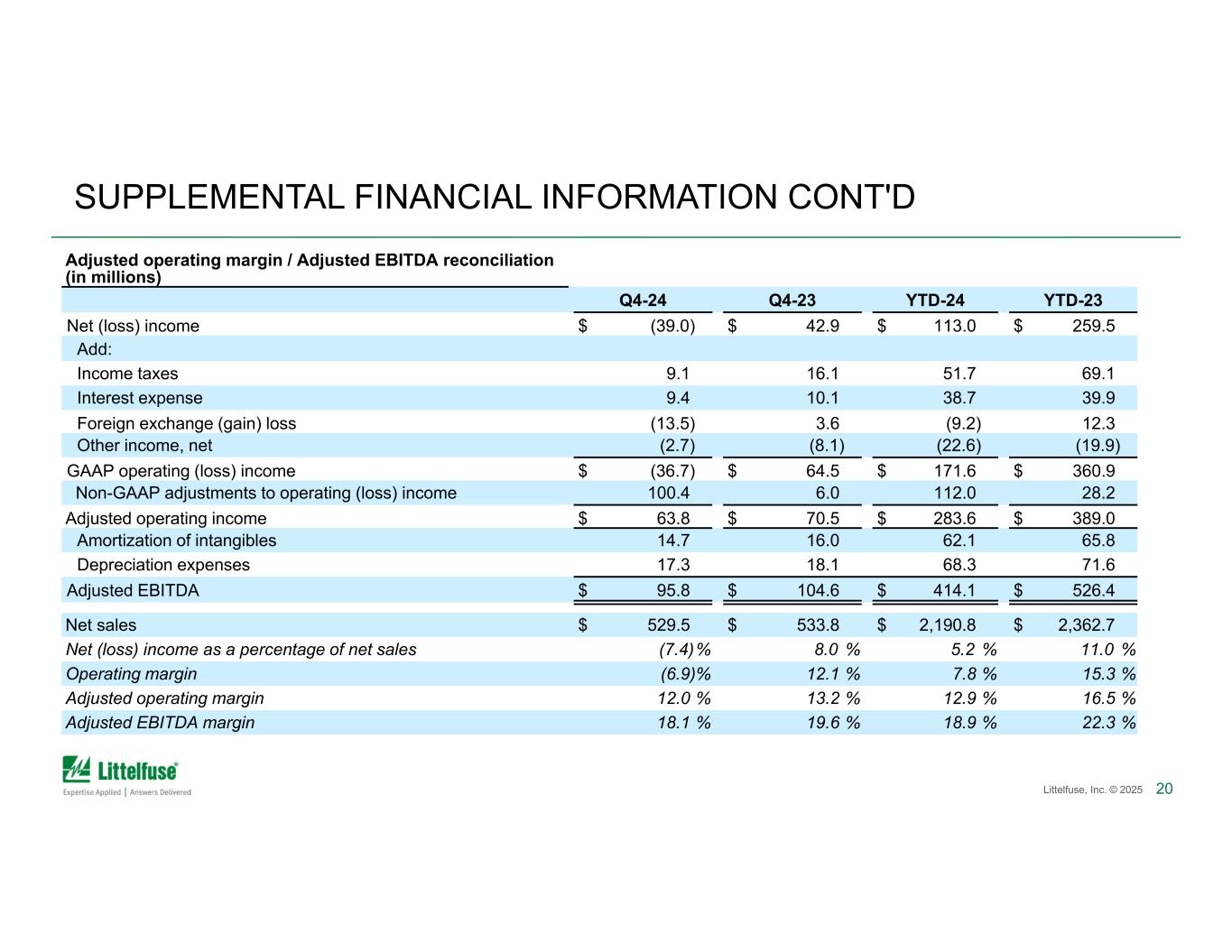
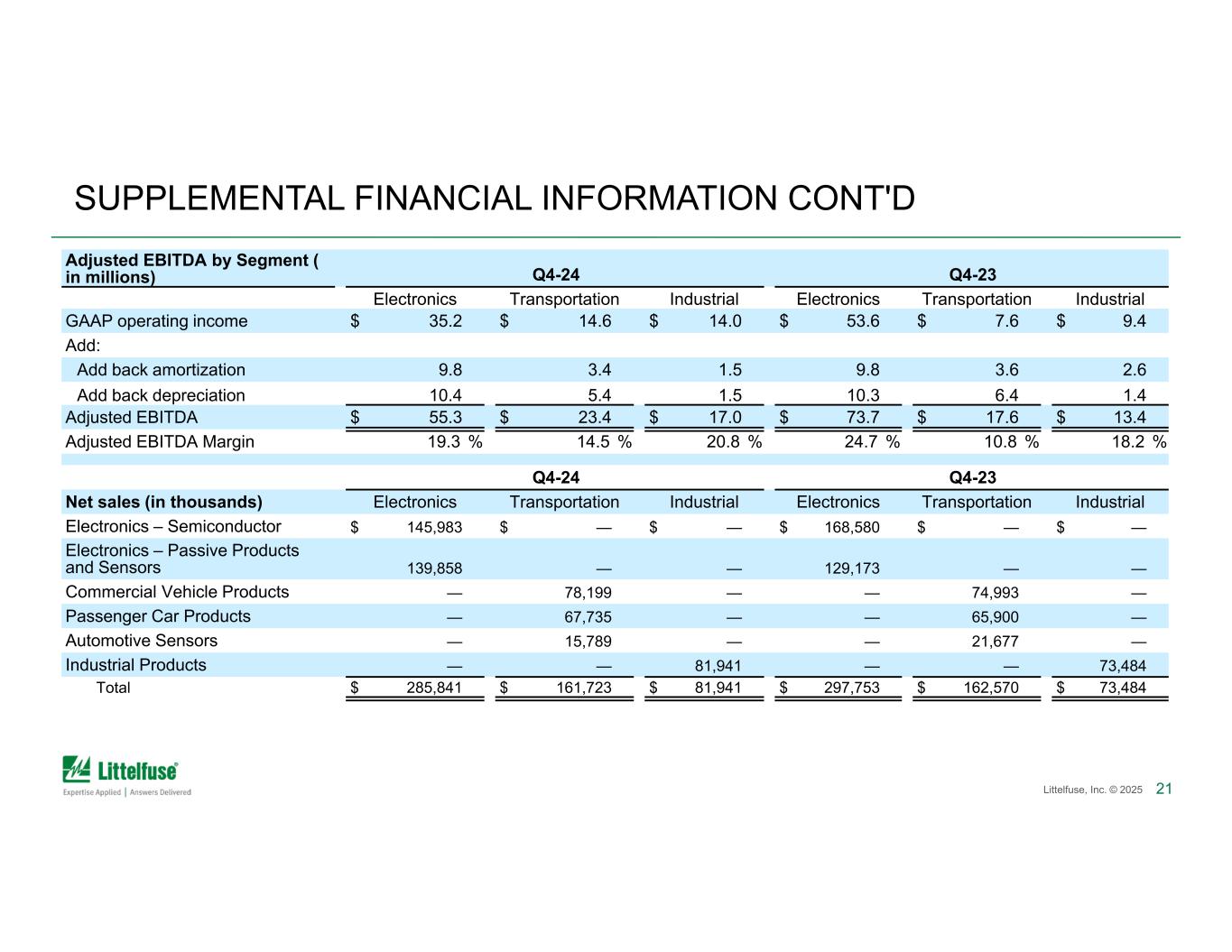
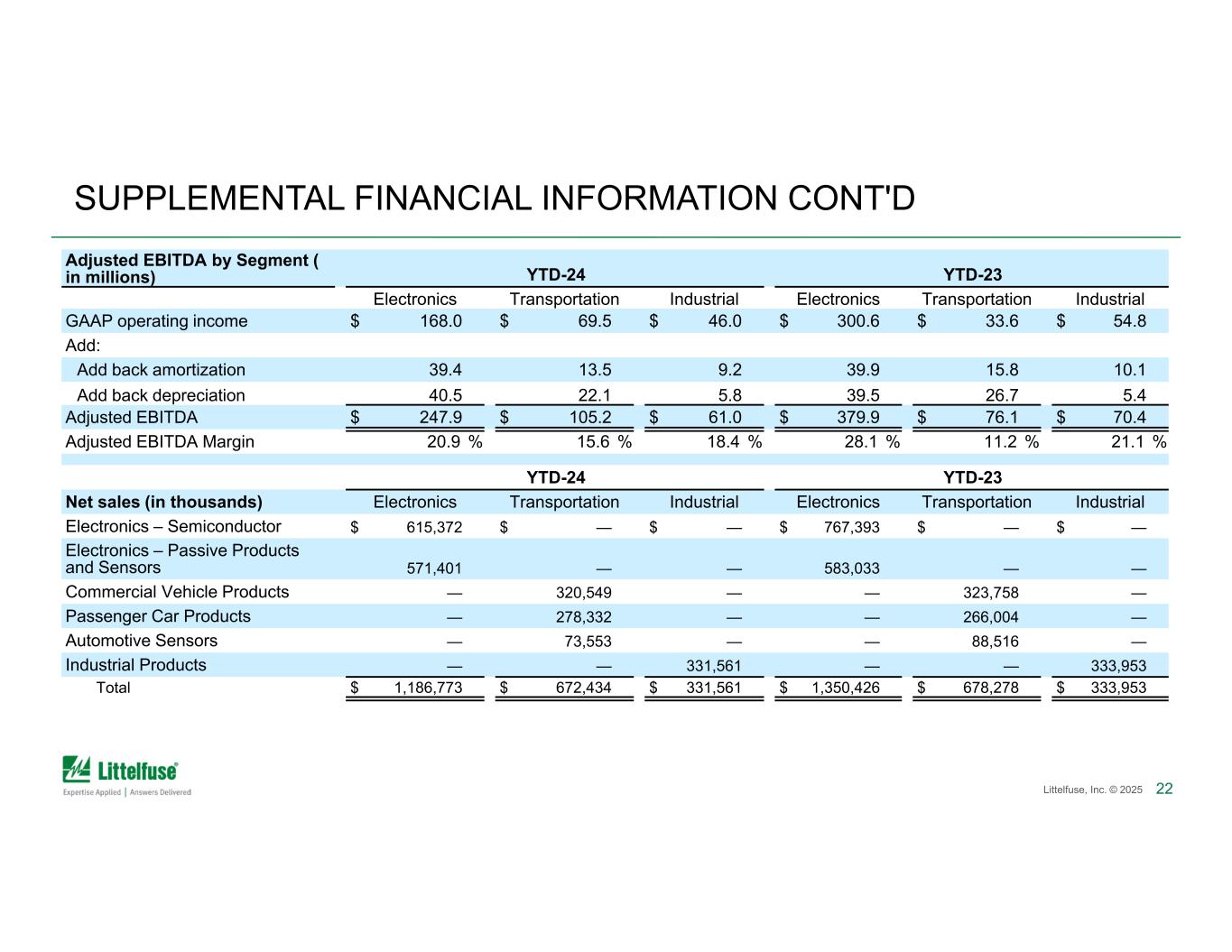
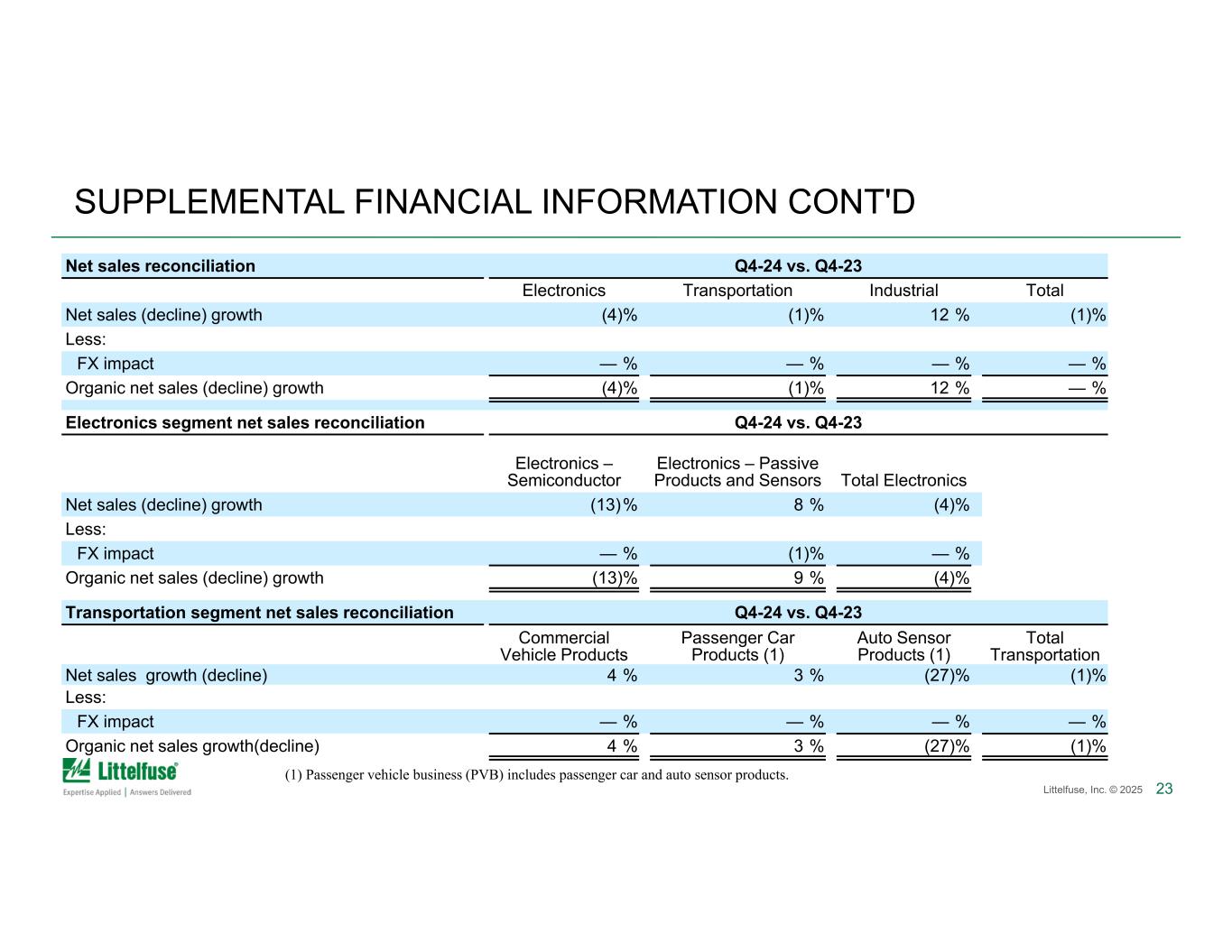
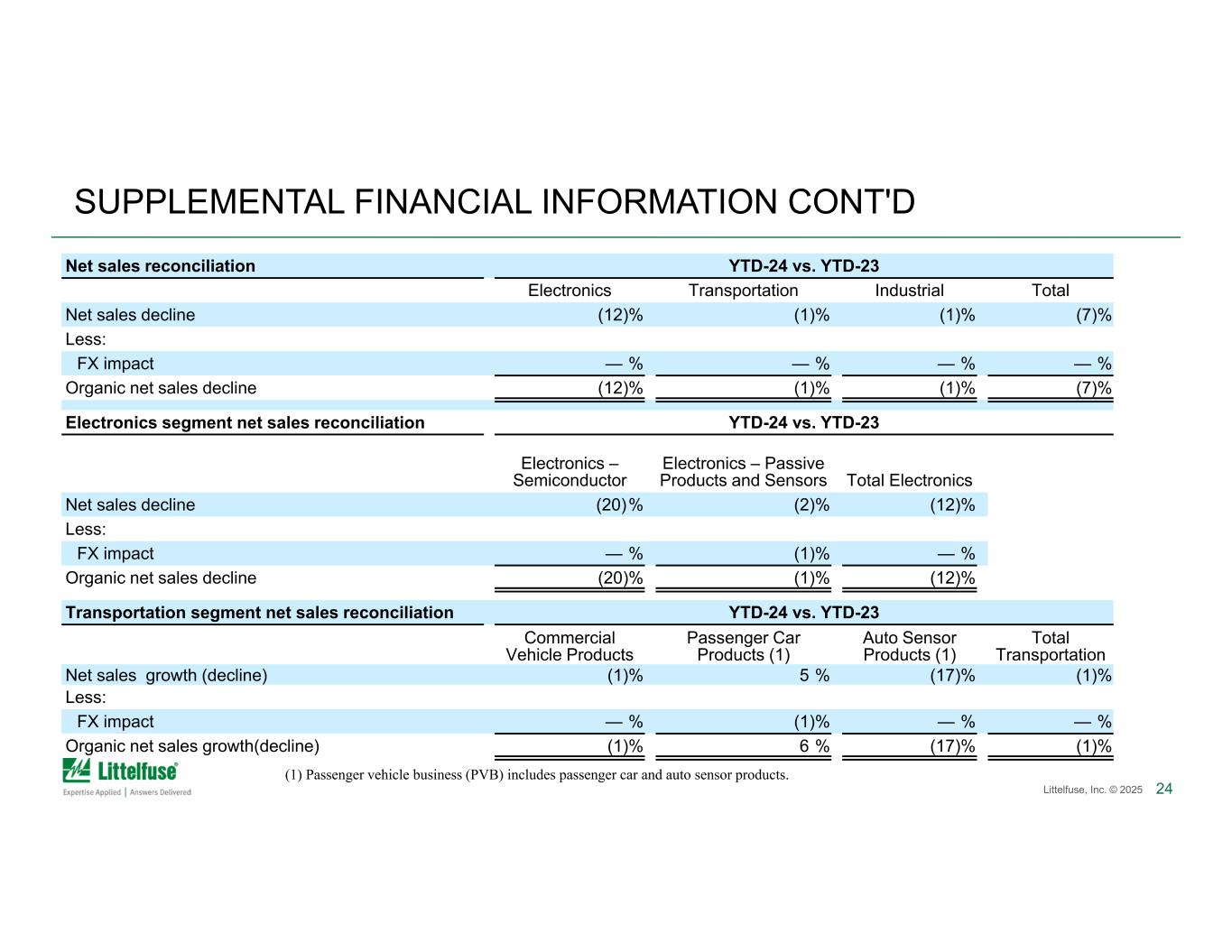
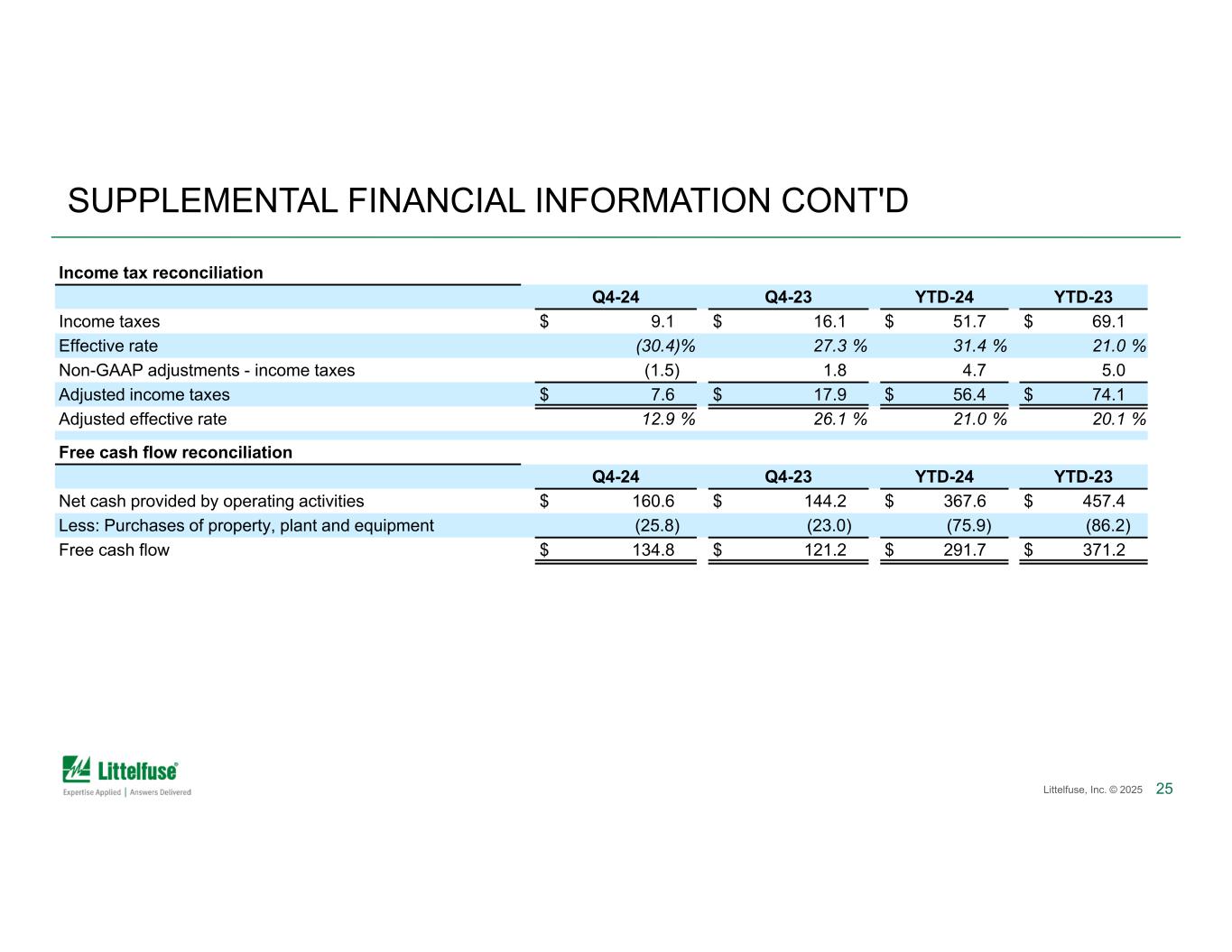
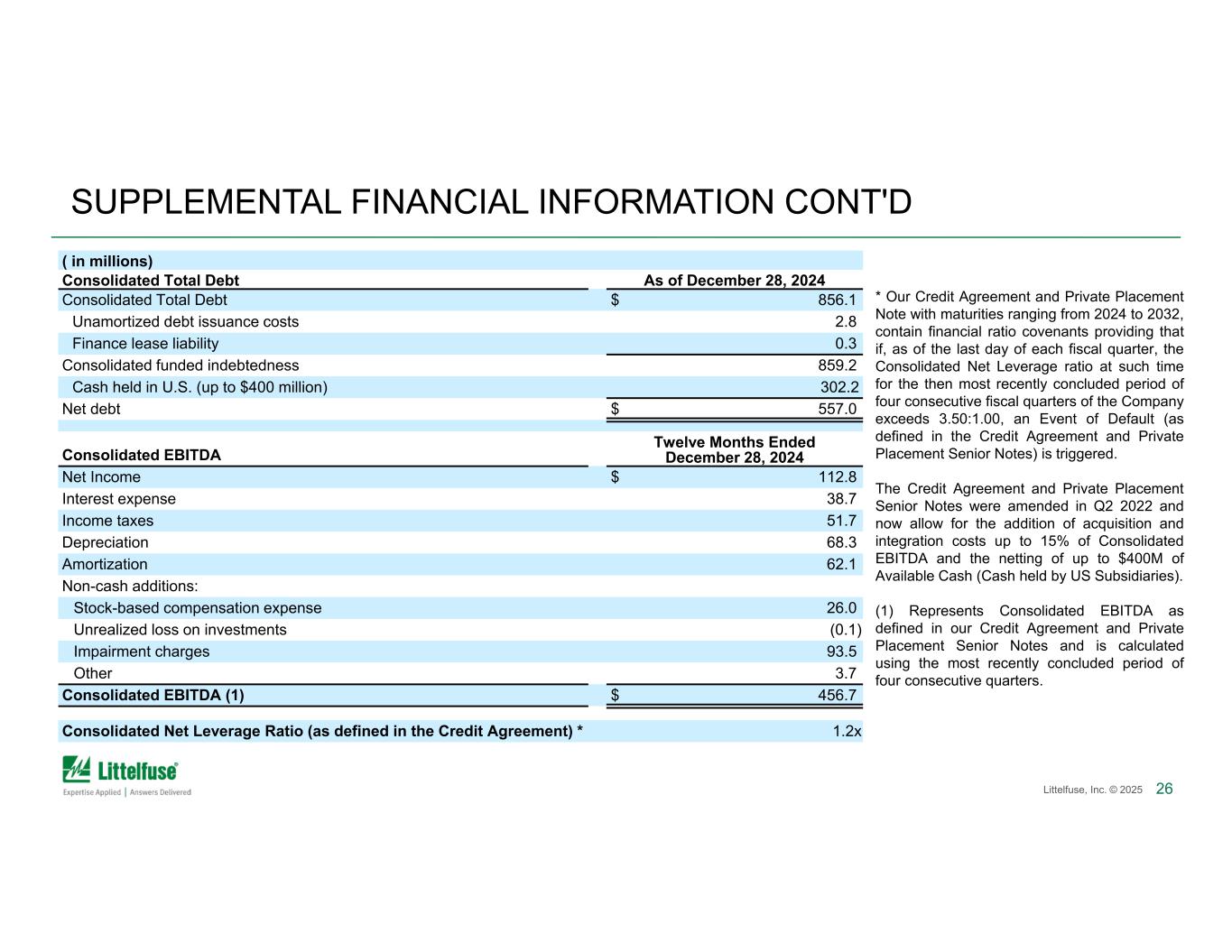
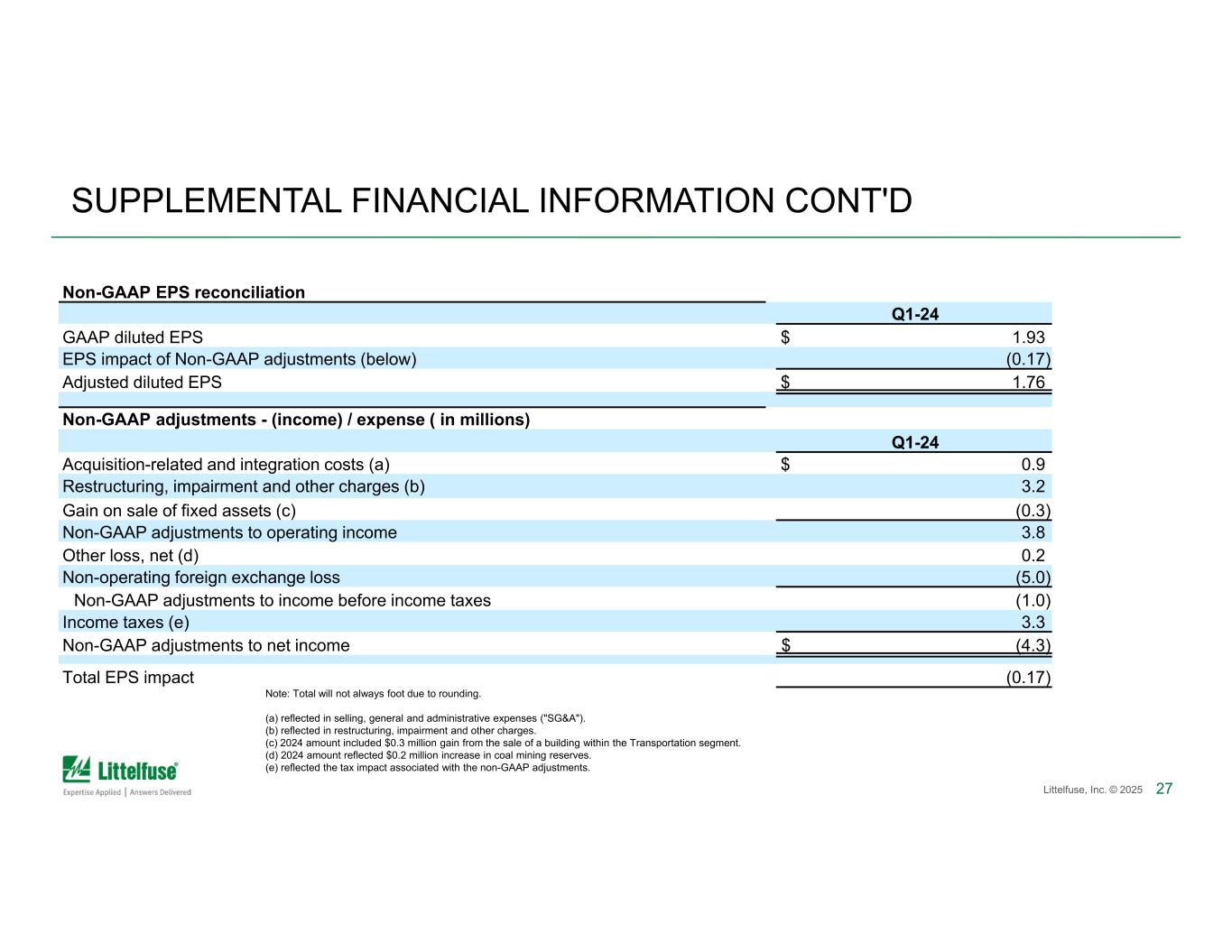
Good morning, everyone, and thank you for joining us today. Please turn to slide 10 to start with details on our fourth quarter results. Revenue in the quarter was $530 million, down 1% versus last year in total, and flat organically. The product line pruning actions we've discussed reduced sales about 2% in line with our expectations in the prior quarter. Gap operating margins were negative 6.9% and include $93 million of non-cash goodwill and intangible impairment charges. The charges are primarily related to the impairment of certain assets impacted by ongoing weak EV charging infrastructure trends. For the quarter, adjusted operating margins finished at 12% and adjusted EBITDA margins were 18.1%. Fourth quarter GAAP diluted loss per share was $1.57, and adjusted diluted earnings was $2.04. Our fourth quarter GAAP effective tax rate was negative 30%, and adjusted effective tax rate was 13%. Let's turn to slide 11, or full year performance. We finished the year with sales of $2.2 billion, down 7% in total and organically versus last year. GAAP operating margins were 7.8%. Adjusted operating margins finished at 12.9%, and adjusted EBITDA margins were 18.9%. Foreign exchange in commodities had a 30 basis point unfavorable impact to margins. We drove improvements in our cost structure in 2024 and are pleased with our resulting margin trajectory, as our second half operating margins expanded 220 basis points from the first half of the year. Finally, full year of GAAP diluted EPS was $4.51, and adjusted diluted EPS finished at $8.48. Our full year of GAAP effective tax rate was 31%, and adjusted effective rate was 21%. Please turn to slide 12 for updates on capital allocations. We delivered strong cash generation in 2024. In the quarter, operating cash flow was $161 million, and we generated $135 million in free cash flow. For the full year, operating cash flow was $368 million, and we generated $292 million in free cash flow, driving cash conversion well over 100%. Our strong performance also reflects our ongoing focus on working capital management. Into 2025, we continue to target 100% pre-cash flow conversion aligned with our long-term goals. We ended the quarter with $725 million of cash on hand and net debt to EBITDA leverage of 1.2 times. Our balance sheet remains strong and gives us continued flexibility on capital deployment. We'll continue to prioritize our pre-cash flow for thoughtful acquisitions, and will continue to return capital to our shareholders through our dividend and periodic share buyback. For the full year 2024, we returned $108 million of capital to shareholders, including $67 million through our cash dividend and $41 million through opportunistic share repurchases. We'll remain disciplined in our capital allocation strategy as we strive to maximize long-term shareholder value. Please turn to slide 13 for our product segment highlights, starting with the electronics product segment. Sales for this segment were down 4% organically and 12% for the quarter and year, respectively. Versus prior year, sales across passive products were up 9% organically for the quarter and down 1% for the year, while semiconductor products declined 13% and 20% for the quarter Our solid passive product sales growth in the quarter reflects stabilizing and demand trends and improved orders from channel partners. Within our semiconductor products exposure, we saw stabilizing demand for our protection products, but continued softness across power semiconductors. Operating margins in the quarter were 12.3%, while EBITDA margins finished above 19%, both in line with our expectations. We finished the year with segment operating margins of 14.2% and EBITDA margins of nearly 21%. Moving to our transportation product segment on slide 14, segment organic sales declined 1% for both the quarter and the year, amidst declines across global car bills and commercial vehicle and markets. Segment sales were negatively impacted 6% versus last year for the quarter and 5% for the year from pruning actions we've been undertaking. In the passenger vehicle business, sales declined 4% organically in the quarter and came in flat for the year. For the quarter, sales were negatively impacted by planned auto-sensor product exits and ongoing global car bill declines and part offset by growth in China. Within commercial vehicles, sales for the quarter were up 4% organically and down 1% for the year. In the fourth quarter, we delivered volume growth and favorable pricing despite continued end market weakness. This more than offset impacts from pruning action. For the segment, operating margins were 9% and over 10% for the quarter and year, respectively. while EBITDA margins finished at 14.5% in the quarter and 15.6% for the year. Foreign exchange and commodities were a headwind for the full year, unfavorably impacting margins' 110 basis points. We're pleased that our focus on cost actions, pricing, and pruning initiatives drove 530 basis points of operating margin expansion for the year. We believe these actions position us well for continued March growth into 2025. On slide 15, industrial product segment sales increased 12% organically for the quarter and declined 1% for the year, navigating well through a number of weak industrial and markets. Fourth quarter sales benefited from strong HVAC growth, solid data center momentum, and continued industrial safety expansion. Segment operating margins finished at 17.1% in the quarter, expanding 440 basis points versus prior year level, while full-year margins finished at 13.9%. Adjusted EBITDA margins were 20.8% in the quarter, while full-year margins finished over 18% for the year. We delivered strong margin expansion in the quarter, led by continued solid execution and strong conversion on volume growth. Our improved industrial segment margins throughout 2024 also reflect our operational execution and solid volume leverage. We expect continued growth and margin momentum into 2025. Now, please move to slide 16 for the forecast. As we start 2025, we continue to see a mixed macro environment. Within electronics, we expect passive products recovery, but ongoing soft semiconductor product sales in the first quarter. We expect ongoing industrial segment momentum while we see a mixed underlying transportation backdrop starting the year. We expect a low single-digit global car bill decline with signs of modest commercial vehicle market recovery projected for later in the year. With these assumptions, we expect first quarter sales in the range of $520 to $550 million. This includes about a 2% headwind from FX versus a prior year. We're projecting first quarter EPS to be in the range of $1.70 to $1.90, which includes a tax rate of 26%. Sequentially, the higher tax rate represents a $0.32 headwind to earnings as we benefited from a retroactive tax holiday extension in the fourth quarter. At current FX and commodity rates, we are expecting an $0.11 benefit to EPS versus a prior year. Please turn to slide 17 for additional full-year 2025 color. We expect solid earnings expansion, reflecting our growth positioning, recent cost-scaling actions, and ongoing focus on operational execution. At current rates, we expect FX and commodities will represent a 1% headwind to sales, but a 22-cent benefit to EPS. Also, as we announced in late December, we completed our acquisition of the Dortmund Semiconductor Fab from Elmos Semiconductor. The acquisition also includes a multi-year capacity sharing arrangement with Elmos. For 2025, we expect about a 2% total sales growth from volumes sold to Elmos and a neutral EPS impact from this arrangement. On other modeling items, we're saving $59 million in amortization expense and $35 million in interest expense, about two-thirds of which we expect to offset through interest income from our cash investment strategy. We are estimating a full-year tax rate of between 23% to 25%. As a reminder, ongoing Pillar 2 tax legislation is a headwind on tax rates, and we continue to evaluate opportunities to improve our rate. We also expect to invest $90 to $95 million in capital expenditures. As we turn the page to the new year, we believe our ongoing momentum with customers on design wins and product innovation positions us well for a return to growth. Our focused execution and cost scaling actions have enhanced our operating model, positioning us for solid earnings expansion in 2025 amidst a dynamic environment. Our strong cash generation focus and our well-positioned balance sheet also give us both flexibility and confidence as we aim to deliver long-term top-tier growth and earnings expansion. In closing, I'd like to recognize our employees and partners for their meaningful contributions and unwavering commitment to Little Feuds. I would also like to thank Dave for his outstanding leadership of Little Feuds. It's been a pleasure working with him for the last decade, and I'm grateful for our strong partnership. I wish you well in retirement. I've gotten to know Greg over his nearly two years on our board, and I look forward to partnering with him as we enter the next phase of the little-fused growth journey. I remain excited for the meaningful opportunities that lie ahead. And with that, I'll turn it back to Dave for some final comments.
Thanks, Neil. In summary, while we navigated a difficult environment in 2024, our unwavering focus on our customers and our persistent push for operational enhancements have positioned us to deliver solid growth and earnings expansion in 2025. With our diversified business model and broad technology offering, we are confident in our ability to drive long-term, toxier value for our shareholders. I just want to say a few words as I will soon be wrapping up a 40-year career with LittleFuse. It's been an amazing journey with a truly exceptional company. I want to thank the board for their continuous support over the years. I also want to thank all of the LittleFuse employees who work tirelessly to deliver on our long-term growth. It has been an honor to lead you all in positioning the company for meaningful long-term success. I'm also grateful to be leading the company in such great hands. Greg and I have worked closely together over the last couple years. It brings the ideal skill set and leadership track record to lead this company into the next stage of growth. And with that, I'm going to turn it over to Greg, who is going to say a few words. Thank you, Dave.
On behalf of LittleFuse, I want to thank you for your leadership and congratulate you on an impressive four-year career at the company. For the LittleFuse employees listening on the call, I look forward to working with you all as we begin the next chapter of the LittleFuse growth story. And for the analyst and investor community, I'm excited to meet many of you in the coming months. And with that, I'll turn the call back to music.
Thanks, Greg. Operator, we are ready to begin the Q&A.
Operator
We will now begin the question and answer session. If you have dialed in and would like to ask a question, please press star 1 on your telephone keypad to raise your hand and join the queue. If you would like to withdraw your question, simply press star 1 again. If you are a call upon to ask your question and are listening via speakerphone on your device, please pick up your handset to ensure that your phone is not on mute when asking your question. Again, press star 1 to join the queue. And our first question comes from the line of Luke Trunk with Bear. Your line is open.
Good morning. Thanks for taking the questions. Dave, just to start with, congratulations on your 40-year career at Littlefuse and upcoming.
In terms of the quarter itself to start with here, it'd be great if we could just put a finer point on book-to-bill and passive this quarter. Sounded pretty positive based on your comments, Dave, plus maybe just what you're hearing from distributors qualitatively as you begin to see some restocking in the passive channel as well.
Yeah, sure. Lucy, I think in general, let's take a step back and look at the overall inventory correction and the prepared remarks. Book-to-bills for the first time since early 2022 are now above one in electronics as a passes and our protection. Book-to-bills are firmly above one. And while the power semiconductor heavy industrial focus, particularly in Europe and China. So it's still below one, but it's improved nicely over the last quarter. And through the course of the quarter, while we saw, you know, end of the year above one, we also saw continued momentum improvement going into through January. So we remain pretty positive about kind of the general direction there and kind of getting some of the correction cycles. Conversations with our distribution partners, you know, range all over the map from individual kind of markets they're serving and things like that. I think what they're seeing generally is fairly stable book-to-bills and kind of stabilizing book-to-bills.
Is select industrial recovery, you know, relative to power semi and, you know, what has been weakness, is there any more texture in terms of market? Should we assume that it's from a geographic standpoint also weighted to North America and Asia, Dave?
Yeah, I think if you look at industrial more broadly, there where I say machine automation and things like that that are going on in Europe for global support, but, you know, that continues to be a bit sluggish there. But on the other industrial portion in our industrial segment itself, we had a very solid quarter there. And it's kind of a niche business, right, where we serve individual areas. And so we continue to see strength and safe in a really nice growth. Seed space, begin markets, and a stronger momentum. And, you know, that's starting.
And then, you know, with transportation margins showing some in the third quarter, stepping down sequentially here in the 4Q, but still finishing the year above. the level you were expecting. Can you just help us understand kind of what's in the margin profile in the back half of the year as we step into 2025? I guess I'm just trying to tease out what sort of base we should use to build our 25 margin assumption in the transportation.
Sure. Thanks, Luke. So I'd say, you know, one, we're really pleased with the progress that we've made through transportation. You know, we started the year at mid-single digit range and have worked our way up as we talked about a number of actions that we've been undertaking to really get to the point where we're at, finishing the double digits for the year. I would say going into 2025, we continue to feel very confident about the margin expansion. There's work that we've done in 2024 and continue to do in 2025 around pricing, as we've been talking about for a while, you know, finishing off some footprint work, some other cost reductions that we're taking. So, you know, we feel good and we feel those actions will mitigate some of the headwinds that you hear swirling around, around, you know, the declining car bill that we're expecting for the year and, you know, a little bit of the volatility around foreign exchange and commodities. But net-net, we feel good for continued margin expansion going into 2025 and the actions we have been taking and are continuing to take.
And then if I could just sneak in a last quick question. This is more just modeling. Historically speaking, Incentive Comp has had a heavier impact just seasonally in the second quarter based on how you come for it. Should we expect that to be the case again this year, Muno?
Great question. The Incentive Comp will be a little bit more of a run rate when we think about Q2 as opposed to that, I'll call it the outside spike that we've had. As we get into a little bit more around the Q2 guide, we'll give you a little bit more color on that, but I would expect it would be a little bit more dampened than what you've seen in historic years.
Got it. I'll leave it there. Thank you. Thanks for the questions, Luke.
Operator
And our next question comes from the line of Sari Boroditsky with Jeffries. Your line is open.
Hi, good morning, and congratulations, Dave, on your retirement and Greg and the new role. We look forward to working with you. I just wanted to kind of go through the guidance for 1Q. I think it implies margins are roughly flat sequentially. Could you just talk through the puts and takes on margin performance and how margins should progress through the year, especially if we do see some volume recovery?
Sure. So you're thinking more from a sequential perspective, just a little more color through things through the year. Yeah, you know, what I would say is, you know, we've always talked about, for us, one of the biggest factors as we think about margin recovery has typically been around volumes and strong volumes, strong conversion rates on that. While we're not waiting for that, we're definitely working on continuing to drive growth. We've done a lot of work in terms of, as I mentioned in the earlier comments, but just around pricing, cost adjustments, and other cost reductions and some footprint work. So I would expect that we'll see as we work through 2025, we'll continue to see margin expansion going forward through the year.
Appreciate the color. One of the markets you talked about seeing a benefit this quarter was HAC. Do you expect – I think there's been some talk about some pre-build there. So do you expect that to lead to an air profit in demand in the first quarter, and how does that impact industrial growth in 1Q?
Yeah, you know, obviously with the refrigerant change requirements coming and things like that, is there a pre-build going on in industrial space? There's a slowdown in general, we feel.
Operator
Perfect. Thanks for the questions.
Thank you, Sarah. Appreciate it.
Operator
Next question from Christopher Green with Aubin Heiber. Your line is open.
Hey, thanks. Good morning, and Dave, wishing you the best for a great retirement. I wanted to ask about, you talked about cost scaling action. Sounds like a little different characterization than, you know, straight cost restructuring. Does that refer to positioning the assets for very high conversion margins as growth returns? Is that what cost scaling actions refers to?
Yeah, Chris, it's Neal. So, you know, I'd say a couple of things. It's one, as we've been talking about where we are in terms of our growth trajectory right now, we're absolutely expecting 2025 and to see that return to growth. But in the meantime, where we are today, we're really just, I'll call it, right-sizing our cost structure to align to the state of our business today and to where we are today. Some of that are, you know, our cost reductions. We've also spent a lot of time around, you know, discretionary cost reductions. I've been talking about indefinitely different parts of the business. We've been doing a lot of what we call footprint work, whether that's relating to manufacturing and supply chains. And we've been trying to optimize that as we normally do. So it's really for us it's a combination of all that. But my reference to scaling is more aligning our cost structure to the current state of the business.
And then commercial vehicle, you've been growing the last couple of quarters now in down markets. And, you know, I believe with some concentration of the overall pruning actions of the company falling within the CV. I know you talked about price there. Is that really the full delta versus market, or does content have good momentum on CV even during this broad-based lull in global CV markets?
Yeah, and Chris, I think both have an impact. Clearly, we've been working to kind of look at customers, and we've done some pruning on and addressing that. Usually, if you take that approach, you'll do that with pricing actions to kind of drive those activities. So that certainly is a positive. Often you find when you're doing that that some customers stick around and are willing to pay the higher prices, and that's certainly a benefit. We've also seen – we have a fairly nichey business within commercial vehicles. So our ability to gain share, get in new applications, I feel have been a positive for us, will continue to be an opportunity for us, particularly as we focus on kind of the high-growth applications and technologies of products that we have that we think are most attractive. So I think it's actually gold. I think we've been outperforming the market because of our performance with supporting them and also from – Great.
Thanks. And then can we just get a little bit more detail on the impairment, what acquisition that might have been related to, or did it cut across a couple?
Chris, it's Nina, and so the impairment that we took the – and I think we noted in our prepared slide that was a $93 million impairment covering both some goodwill and intangible assets, it's almost all related to certain assets within our industrial segment. And, you know, we've been talking about for a while that we've seen some downturns in a number of different industrial markets, but particularly, you know, we're seeing this in the EV infrastructure space, which falls into our industrial segment. You know, we took a look at projections, market projections, our projections just don't see a substantial near-term recovery coming. So as part of the normal accounting assessment you have to go through when you come to some of those conclusions, You know, we went through our forecasting and basically just took a non-cash charge in the fourth quarter per the, you know, the accounting rules and how all the math works there.
Thank you, Mina. Thanks for the questions, Chris.
Operator
Our next question from David Williams with the Benchmark Company. Your line is open.
Hey, good morning. Thanks for taking the question. And, David, happy retirement to you. So it's good after 40 years you should take. I guess with that, I wanted to ask, since it hasn't been already, but just the impact of potential tariffs to your business, just kind of given China and then, of course, the discussions around EV. Anything with the new administration that gives you any concerns?
Great question, David. And certainly the volatility that, you know, potential tariffs and geopolitical actions take place are certainly an area that gets our attention. You know, we spend a fair amount of time looking at scenario planning and things. However, I would say the tariff situation itself, first of all, we're kind of waiting to see how it plays out exactly. But it's not new. Back in 2017, we went through these sorts of issues. And over the last several years, we've worked really hard to make sure our manufacturing footprint is aligned to the regions where the primary source of our customers are. And so we try to align closer to customers over that time so we've gotten better. While it certainly has an impact to us in the past.
On the five-year strategy update, I know you guys were going through that and with scheduling. How are you thinking about the business longer term? And maybe, Greg, if you're able to...
Yeah, I think it's a good question. And obviously, as we've postponed the investor opportunity to get his feet on the ground, really understand the business significantly. Yeah, we didn't think it was best necessary to have it be come in and kind of share with you where we are at on our current five-year strategy and where we're headed. So we felt there was a little bit more from the inside as opposed – so, Greg, maybe you have a couple of comments.
You know, for me, I'm really very excited to be here. And I think, as Dave mentioned, I think it was a great way for me to enter the company. Coming from the board, I've been working with Dave and been able to meet the leadership team over the last year and a half. So from my perspective, you know, Little Fuse is a great franchise. We have a strong global market position. We have great technology and people. and I'm excited to be part of that next Facebook. So we will be continuing to meet you, talk to you, roll out more about that as we go.
Thanks for the question, David.
Operator
And our next question comes from the line of William Curvin with Morning Star. Your line is open.
Hi. Thanks, everyone. And, Dave, let me echo all the congratulations on a tremendous career and a warm welcome to Greg coming in very soon. If I could just add one more on margin, but specifically for the electronic segment, I think that came in a little bit below where the expectations were coming into the fourth quarter. So, just curious what was going on there. Is that more of a semis dynamic or a passive dynamic, and how you expect that segment, specifically profit margin, to evolve over 2025?
Sure. It's a great question. So, here's what I would say. You know, when we take a look at our electronic segments over the years, and that's the one we've always talked about that goes through these market cycles that are further exacerbated by the distribution inventory cycle we go through. Those prior down cycles, you know, we've seen our margins drop into the mid-teens when you're down at the low points in terms of volumes. In this particular case, and we've gone through this down cycle, which has gone a little longer than anyone was expecting, the excess inventory that we've seen, not just in distribution channels, but in EMSs and OEMs, and then just this elongation of timing has really, you know, had a bit of a further effect on margins for us. I'm confident as we look ahead to 2025, when we start to see recovery, you know, Dave talked about passes in our protection. Some I can look to book the bills now are trending well over one, that, you know, from a 2025 perspective, the volume for us really drives margin recovery. And we, you know, we've proven the incremental margins that come out of that. So, I feel good about our trajectory, margin improvement across electronics. And, you know, we'll see some uplift as we go through the year.
Okay. Terrific. Thanks, Meenal. And maybe a longer-term one for me as a follow-up. Just curious, in the electric vehicle space, how you're seeing the dynamics over the next five years as OEMs move to higher voltage drivetrains and knowing that that provides a good amount of content uplift for you? And even if there are maybe some short-term fits and starts here with EV programs, are you seeing that momentum continue in terms of, you know, rising from, for example, 400 volts towards 800 volts, et cetera? And then maybe just a quick view on heavier vehicle electrification, too, whether that's ag equipment, semis, et cetera.
So, you know, electrification of vehicles certainly has gotten a lot of attention, positive and negative, over the last couple of years. Yeah, I think our position is that electrification will happen, right? It's going to happen over time, perhaps at a slower rate than we had hoped maybe a couple of years ago. So we've always had a bit more conservative view at the adoption rate than maybe what the market has viewed. So we're in it for the long haul. We've been developing products for us in there. For us, content, the higher the voltage, the higher the content for us. So as voltages go from 400 to 800 to beyond, those are all positive growth to partition there. We continue to win the voltage side and the electronics applications with Chinese OAMs. So even if we don't get all the high-voltage variety of approaches, and electrification and the commercial side can be everything from electrifying hydraulic mechanisms, let's say construction and agriculture equipment, which is not necessarily a full EV, but electrification of the movement system and certainly having truck, last mile, predicting the exact pace of it, I think we remain agile.
Thank you so much. Thanks for the questions, Will.
Operator
Again, if you would like to ask a question, press star then the number one on your telephone keypad. And we have a question from David Silver with CL King. Your line is open.
Yeah, hi, thank you. First, let me add my, you know, congratulations to Dave on a long, successful career, and also to Greg. I just would have a big-picture question. I'll call it kind of a look-back or look-forward type of question. But, you know, first, as a sell-side analyst, I know we're often guilty of a very narrow or short-term focus. Because, Dave, you've been with the company a very long time and, you know, grown up with it, I guess. I was just wondering if you could look back maybe three to five years, maybe to the beginning of the pandemic, just as a point in time. I was wondering if you might be able to call out one or two of the longer term or more structural changes that you have implemented that you would say, you know, really position your company well here and now looking ahead. And then secondarily, I do wonder if you could maybe point out one or two of the major challenges or opportunities, you know, that you think LittleFuse needs to, you know, adapt to or to succeed at in order for it, you know, to reach its long-term growth goals. Thank you.
Thanks, David. And, yeah, I have kind of grown up in the business. I walked into the doors of Little Fuse when I was 20 years old. So I have spent my career, you know, with the company and have learned from a very early stage of the different applications and pandemic situations. So what I would say prior to three to five years ago, what are the long-term positive megatrends that are going to drive opportunity for Little Fuse, not in the next three years, but in the next 10 years, we've served us well, we're stronger today than they were five years ago or 10 years ago when we identified them. So I think we continue to be well-positioned in these long-term trends. Yeah, your question on what challenges or whatever, we have a really strong team, strong experience, singular market. We've become more diversified over time. We run a global business. Our products and our team will serve us well and our investors well.
Okay, great. Congratulations again. That's all for me. Thank you.
Operator
That concludes the question and answer session. I would like to turn the call back over to David Kelly for closing remarks.
Yeah, thank you, and thanks, everyone, for your questions today. That does conclude the Q&A. We hope everyone has a great day. Thank you.
Operator
Ladies and gentlemen, this concludes today's conference call. You may now disconnect.