Operator
Good day, everyone, and welcome to the Little Fuse second quarter 2026 earnings conference call. Today's call is being recorded. At this time, I will turn the call over to the Vice President of Investor Relations, David Kelly. Please proceed.
Good morning and welcome to the Little Fuse second quarter 2026 earnings conference call. With me today are Greg Henderson, President and CEO, and Abid Kandelwal, Executive Vice President and CFO. This morning, we reported results for our second quarter, and a copy of our earnings release and slide presentation is available in the Investor Relations section of our website. A webcast of today's conference call will also be available on our website. Please advance to slide two for our disclaimers. Our discussions today will include forward-looking statements. These forward-looking statements may involve significant risks and uncertainties. Please review today's press release and our forms 10-K and 10-Q for more detail about important risks that could cause actual results to differ materially from our expectations. We assume no obligation to update any of this forward-looking information. Also, our remarks today refer to non-GAAP financial measures. A reconciliation of these non-GAAP financial measures to the most comparable GAAP measure is provided in our earnings release available in the Investor Relations section of our website. I will now turn the call over to Greg.
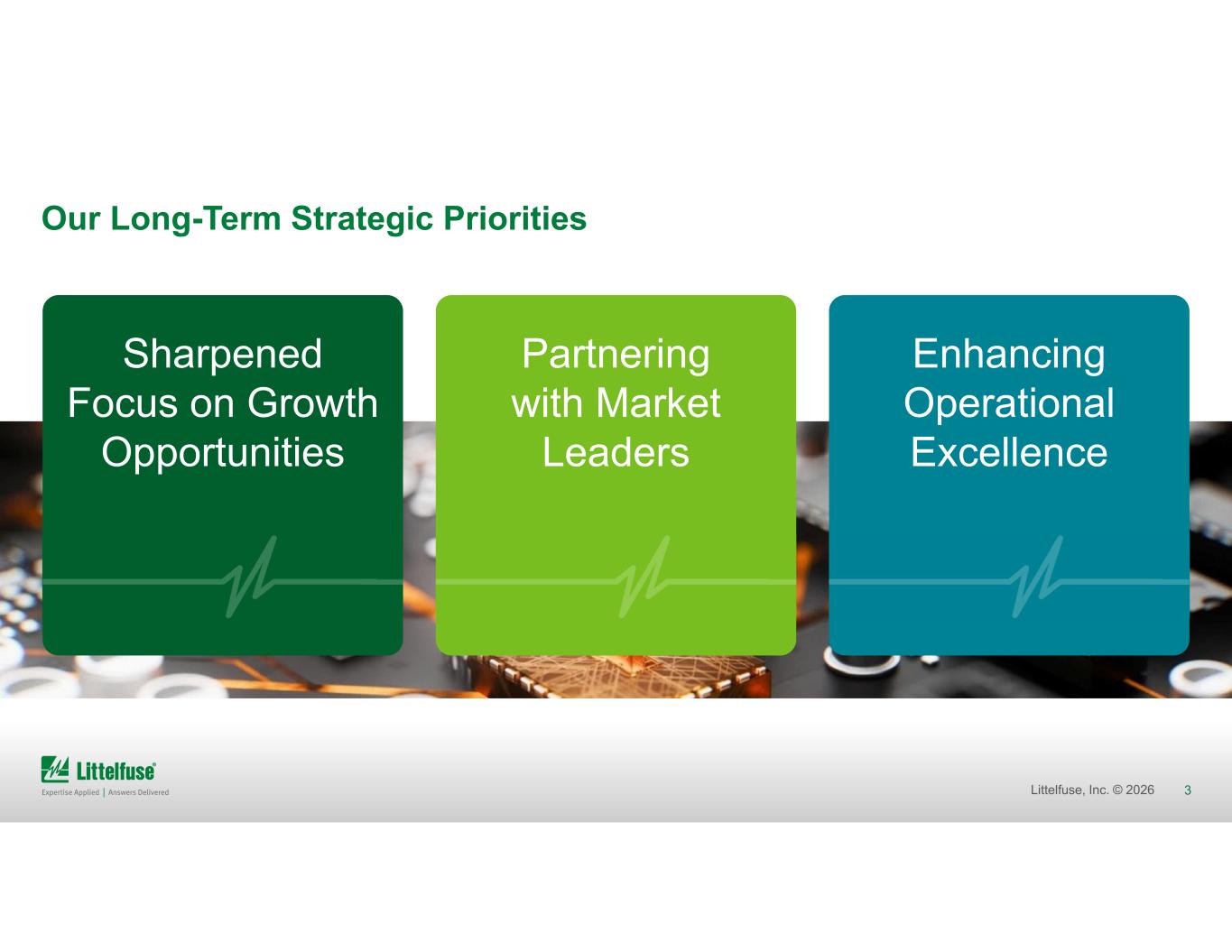
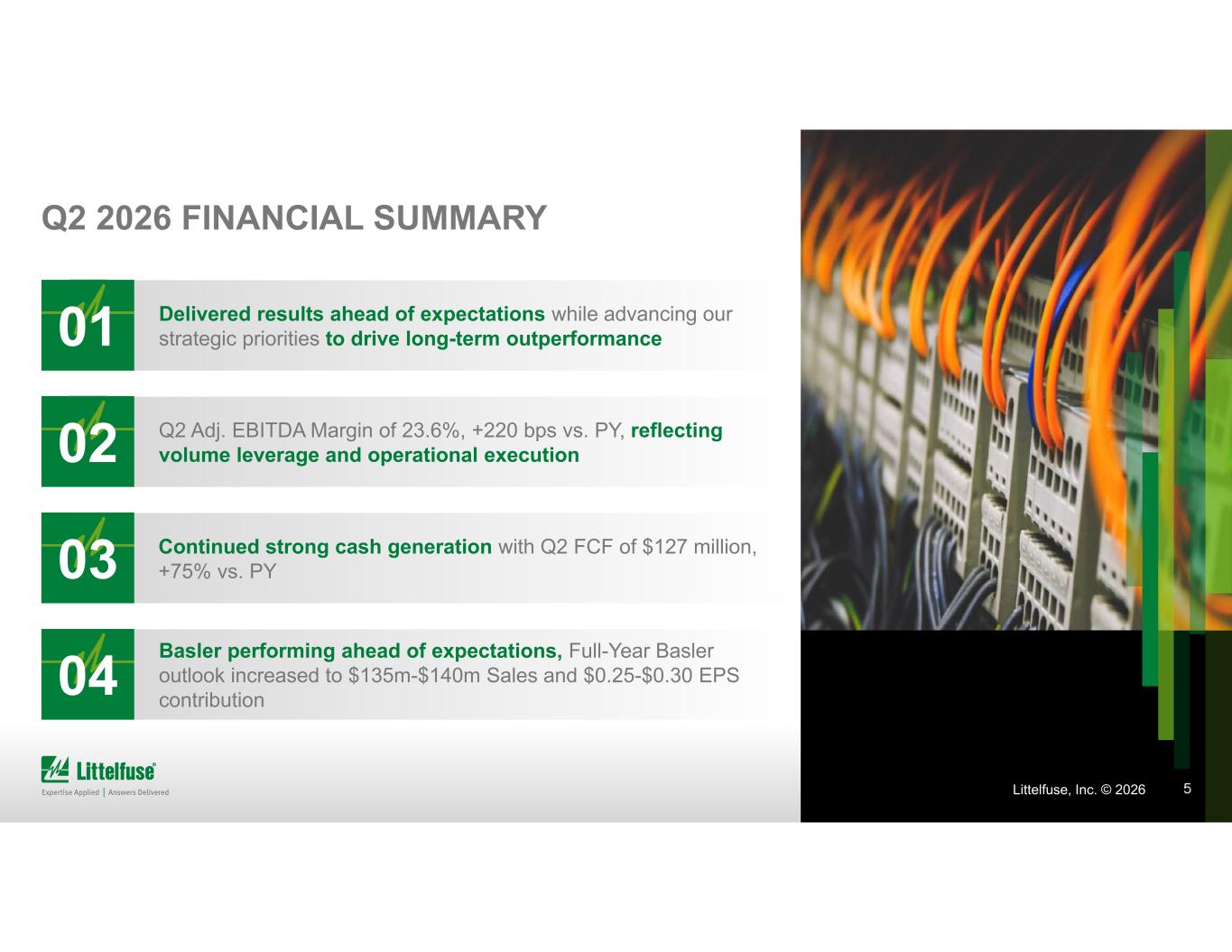
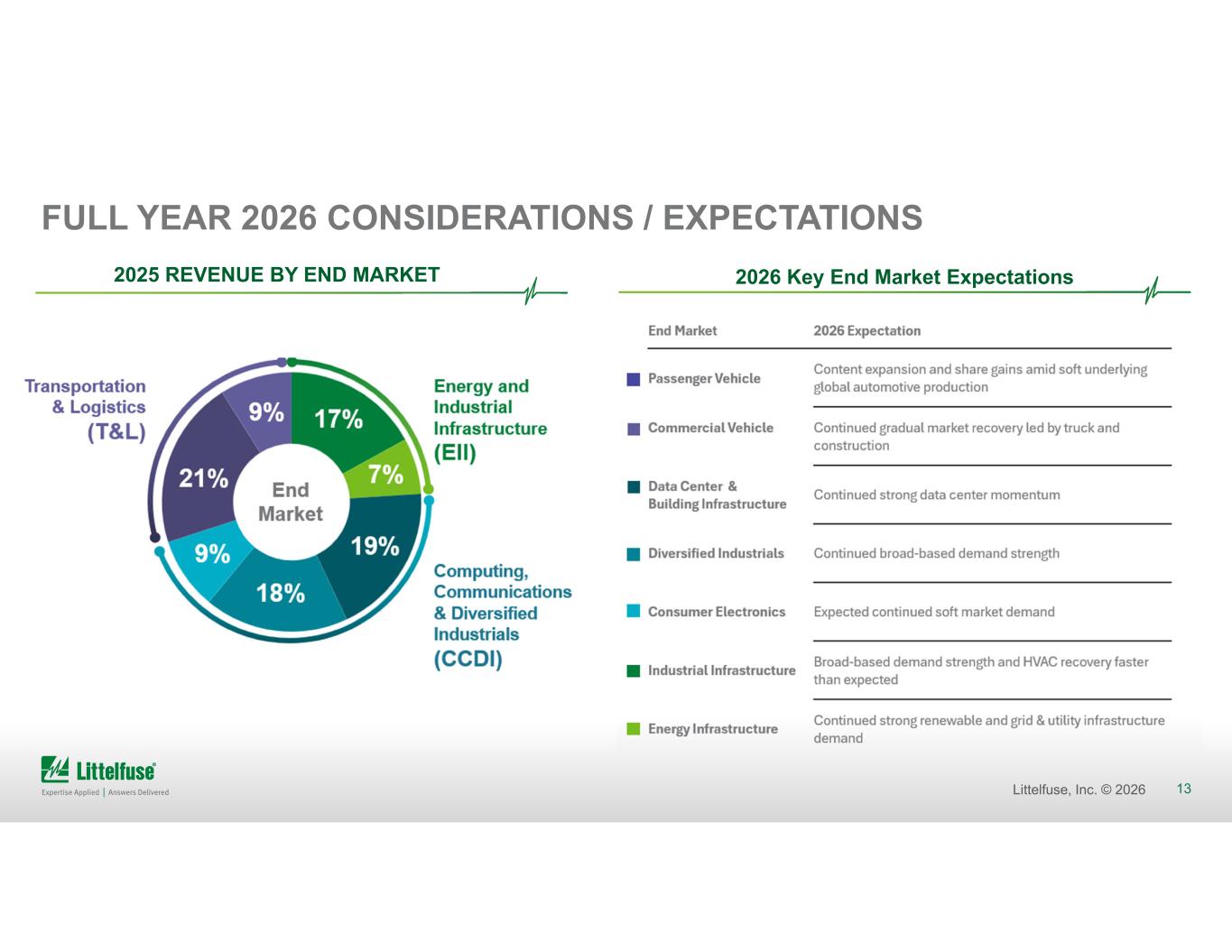
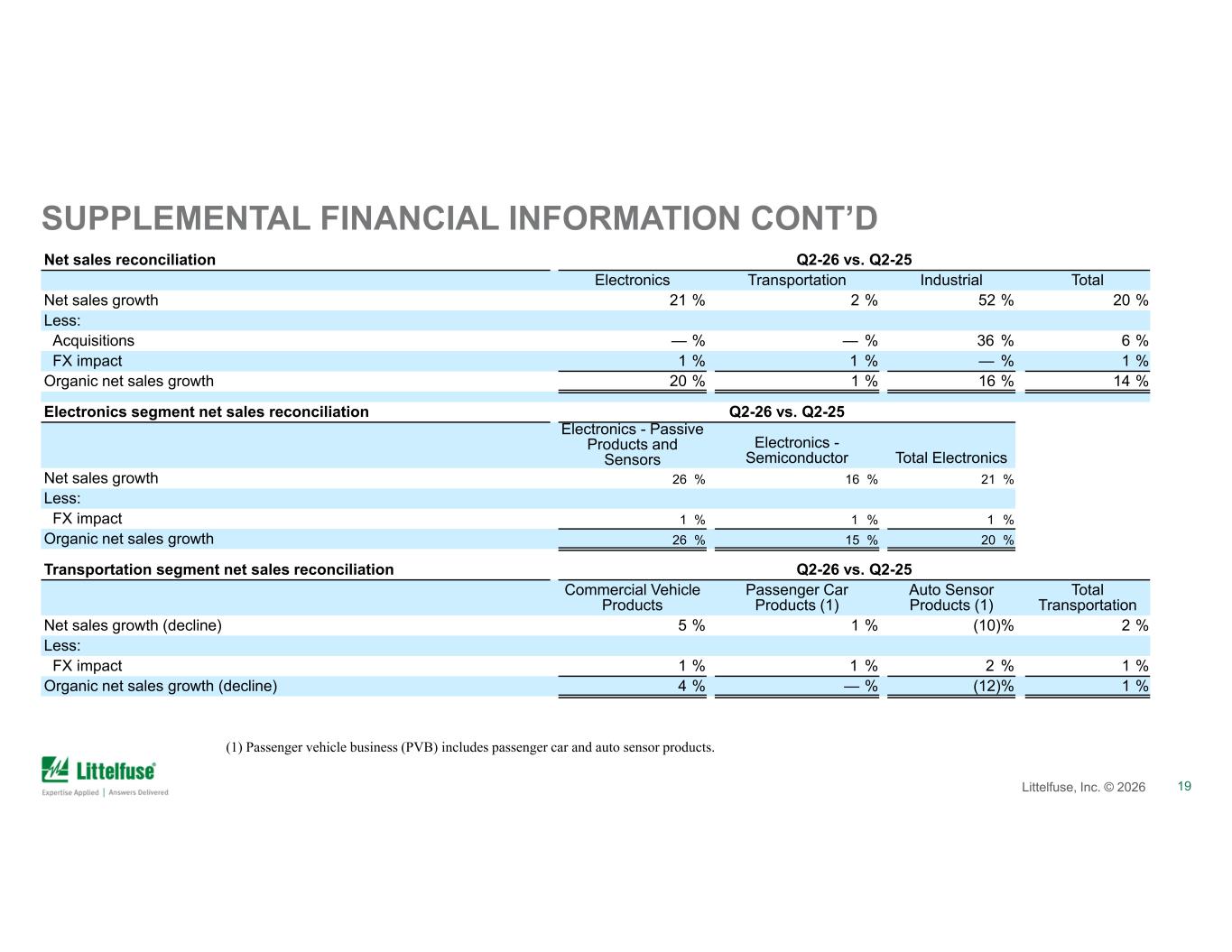
Thank you, David, and thank you to everyone for joining us today. This morning, I will provide details on our second quarter results, including an update on performance across our end markets. I'll then discuss progress against our strategic priorities before turning it over to Avi to review our financial results by segment. But before discussing the quarter in greater detail, I think it's important to step back and view our performance through the lens of the growth strategy we outlined at Investor Day in May. Our results reflect continued progress against the priorities we shared with investors. Across our markets, we are partnering with our customers to enable the adoption of higher power and more advanced electrical architectures. Our second quarter performance and the momentum we see into the second half of 2026 reinforce our confidence in our long-term growth and profitability framework. Now, turning to the quarter, we delivered sales and adjusted earnings above our expectations, with net sales of $739 million, up 20% year-over-year and 14% organically. We also delivered meaningful earnings growth as our teams executed well, while leveraging continued demand momentum across several of our key growth markets. Looking at our end market exposures across the Littlefuse portfolio, we delivered strong second quarter growth across computing communications and diversified industrial markets or ccdi within the market data center remained a leading contributor to growth as we continued to leverage our unparalleled grid to chip capabilities across our businesses diversified industrial channels were also a key contributor to ccdi growth while we benefited from improving demand across medical and aerospace and defense applications finally within ccdi consumer electronic sales declined in the quarter Consumer Electronics represents less than 10% of company sales and has a limited impact on our long-term growth trajectory as we prioritize strategic industrial and data center opportunities. Turning to Energy and Industrial Infrastructure and Markets, or EII, we benefited from both broad-based demand strength and the contribution from Basler in the second quarter. Across our industrial infrastructure verticals, growth was led by industrial automation and construction, while we benefited from faster-than-expected HVAC recovery. In energy infrastructure, we continue to benefit from demand tied to grid modernization, utility investment, and renewable energy deployment. Notably, Baffler continues to drive significant momentum in grid and utility infrastructure, a key strategic growth market for Littlefuse. Finally, revenue across transportation and logistics end markets increased moderately year over year. In passenger vehicles, we delivered growth despite lower global production volumes, driven by content expansion and share gains. In commercial vehicles, revenue growth benefited from improving demand in truck, construction, and agricultural equipment markets. We're seeing continued traction from our more focused and proactive go-to-market approach, particularly with leading OEM customers where we can bring system-level solutions and multi-technology capabilities to support more complex platform requirements. In the quarter, we partnered with a leading transportation customer for a light truck and commercial vehicle platform. Our integrated solution utilizes our current sensor and Megafuse technologies, providing up to a 700 amp protection rating while monitoring and sensing high impact loads. Importantly, our solution reduces risk of battery degradation typically associated with the stress of high current loads. This design win represents more than $20 million in annual revenue opportunity with potential to scale across additional vehicles in the future. Overall, our second quarter performance reinforces the strength of our end market diversity and technology portfolio, as well as the benefits of our sharpened focus on high growth opportunities and operational excellence.
Heading into the third quarter, we are well positioned to build on our growth momentum.
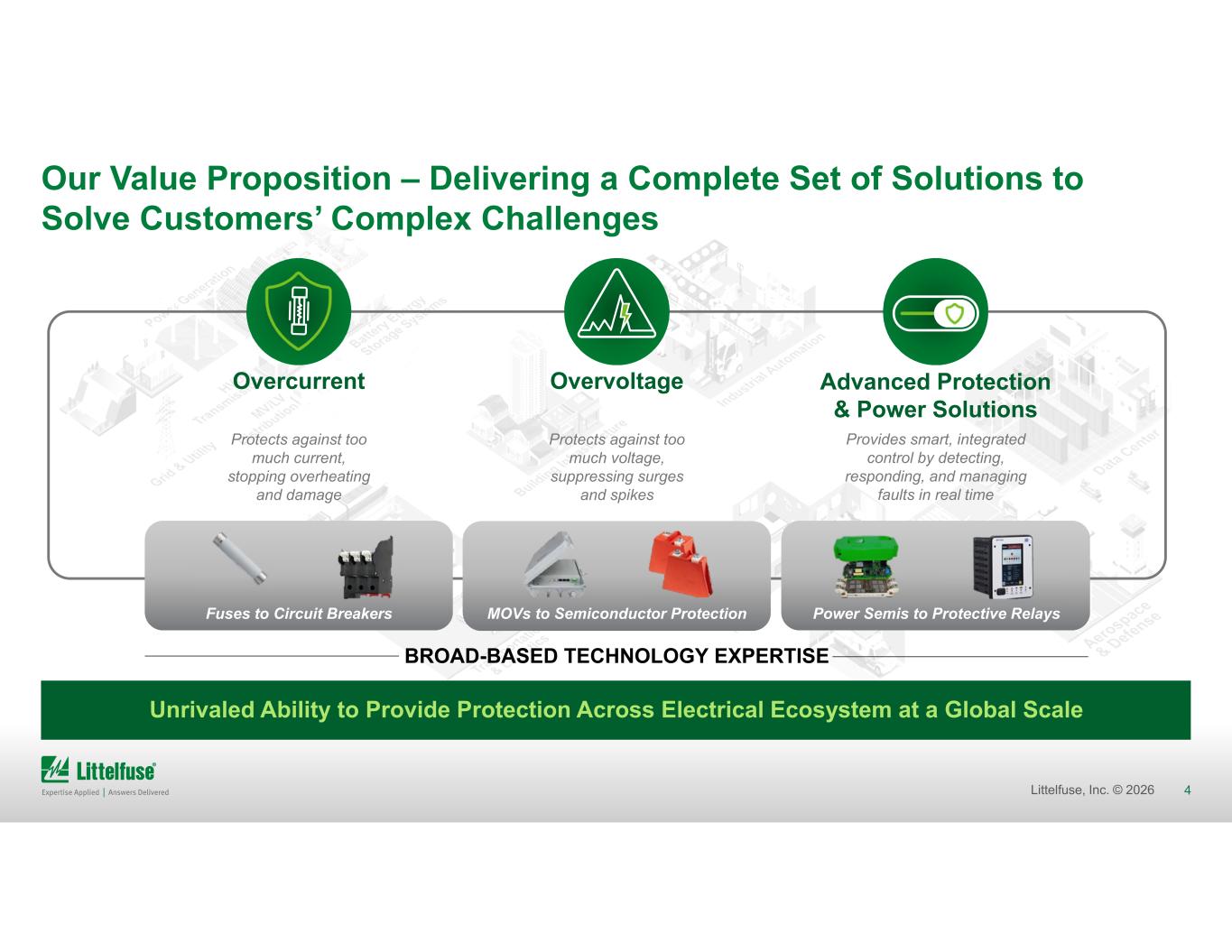
We entered the quarter with record bookings and our book to bill is well north of 1.0. We continue to partner more closely with customers on their next generation architectures with a focus on providing multi-technology solutions. Supporting this through the first half of the year, design wins were up double digits across each of our markets, reflecting improved conversion of our expanding new business opportunity pipeline. Let me provide you with an example of our progress. In the quarter, we were awarded a significant program with a leader in battery energy storage and power supply applications. Our solution, which utilizes our fast-acting TLS fuses, optimizes performance of battery backup units for data center markets. This design win, and our strategic partnership with this customer, is positioning us well for the expansion of high-voltage battery storage solutions for both data center and grid-scale markets. Finally, I want to update you on our portfolio optimization and rationalization in power semiconductor products. As mentioned at Investor Day, we are sharpening our power semiconductor focus on high power and high value applications where we have a differentiated right to win. As an example of where we are applying this strategy, we have a design win this quarter with a leading player in fusion power. Our solution leverages our high voltage IGBT and diodes to actively manage the stored energy that is used to drive the fusion reaction. This solution offers an unparalleled 4.5 kV operation in extremely compact footprint. We will begin shipping for this customer in the third quarter as they build their first prototype reactor. Notably, our power semiconductor demand strengthened in the quarter, and our teams executed well, contributing to improved growth and profitability. We see continued power semiconductor demand momentum into the third quarter, and we are balancing these growth opportunities with ongoing portfolio rationalization and footprint optimization. Abhi will update you on the process shortly, but we believe the actions we are taking will better position our semiconductor products business for enhanced long-term profitable Overall, we are encouraged by the progress we are making across our high-growth opportunities, customer partnerships, and operational execution as we position the company for continued long-term value creation. I want to thank our global teams for their hard work and for positioning Littlefew's wealth for the second half of the year. With that, I'll turn the call over to Abhi.
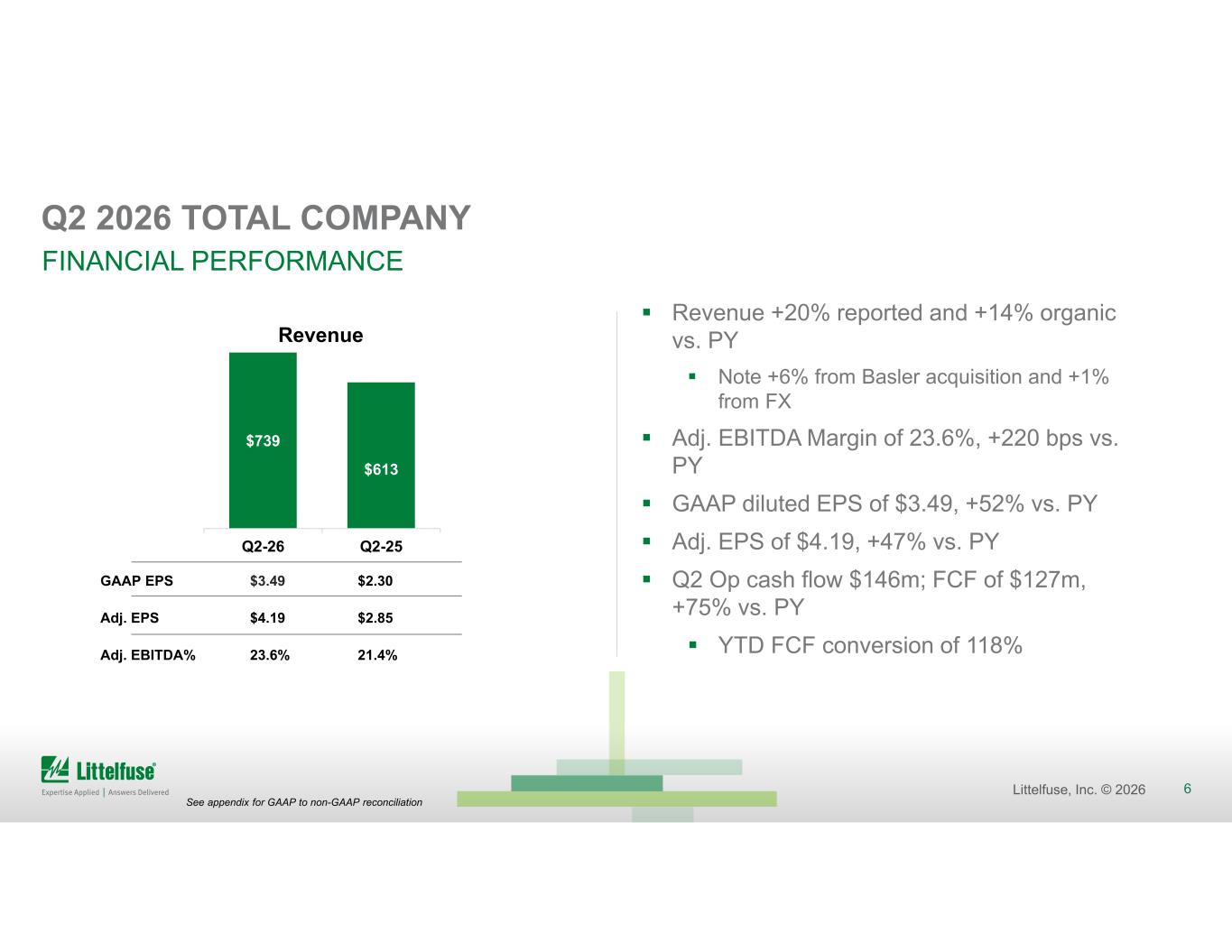
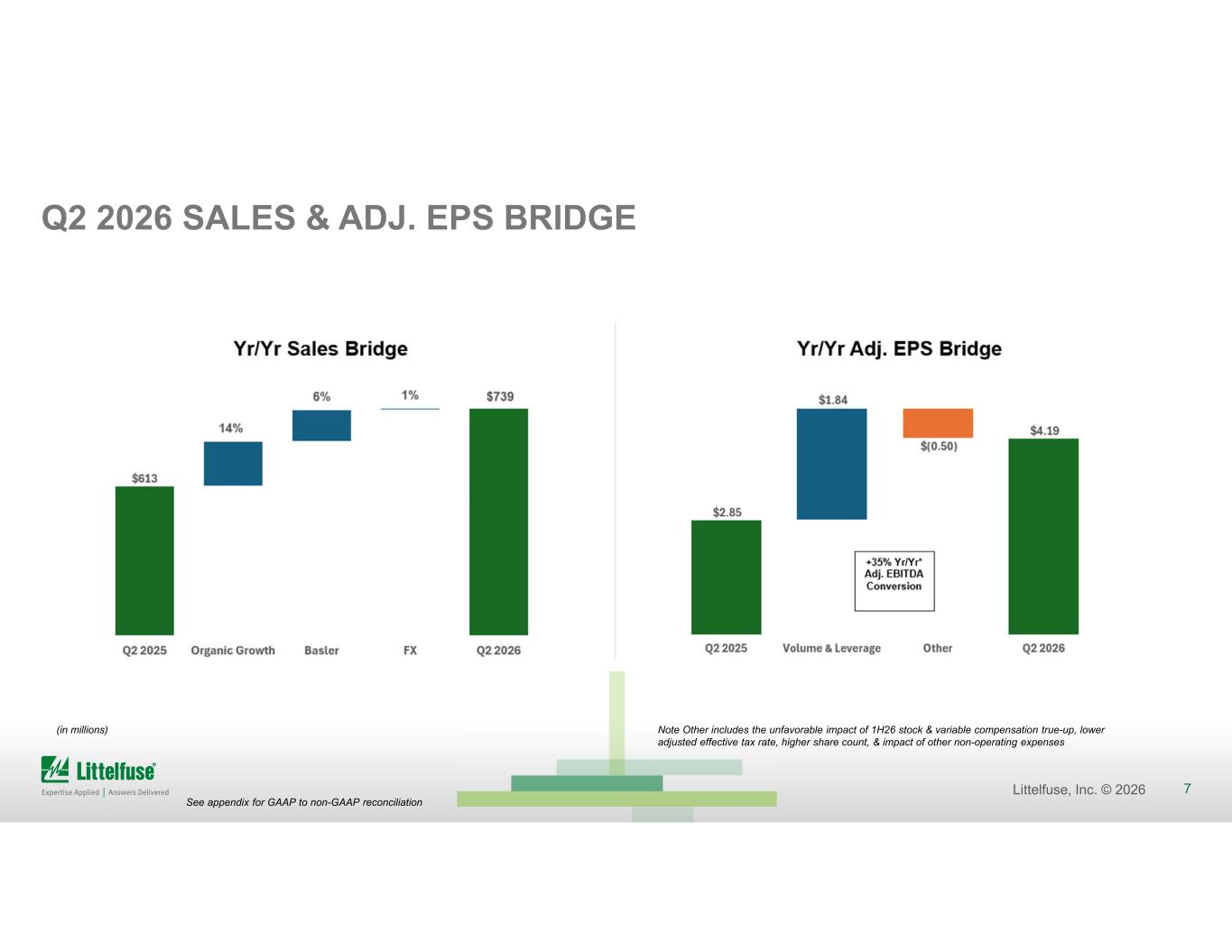
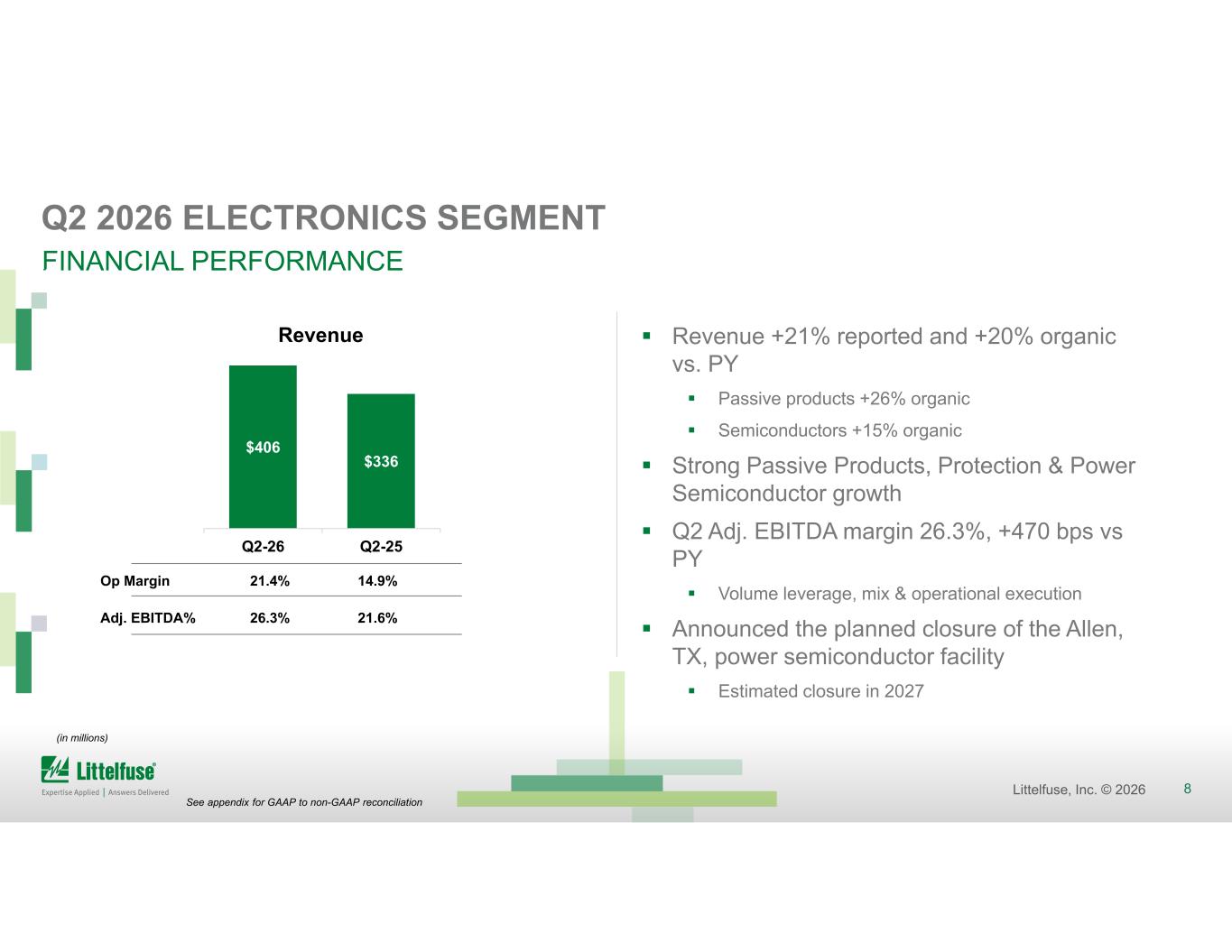
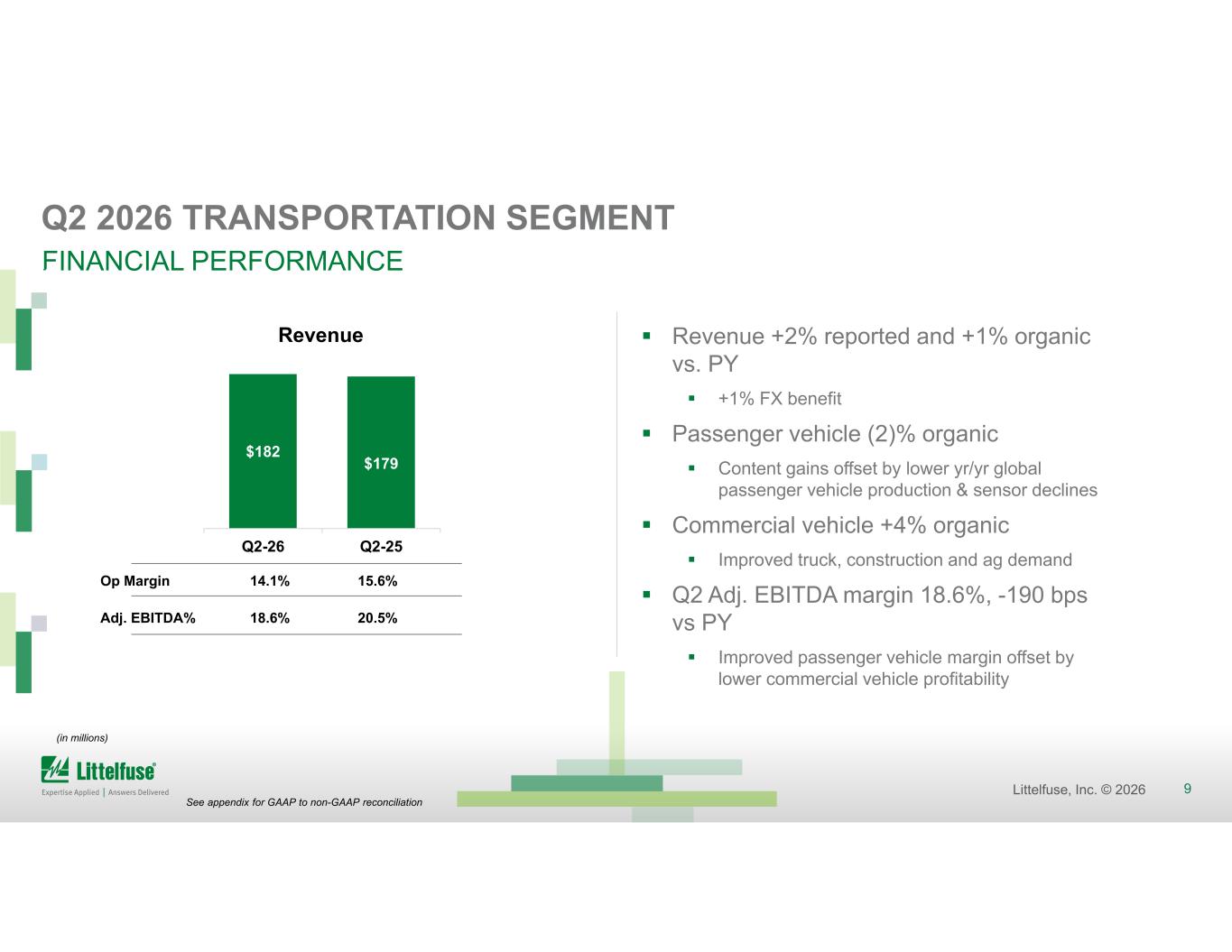
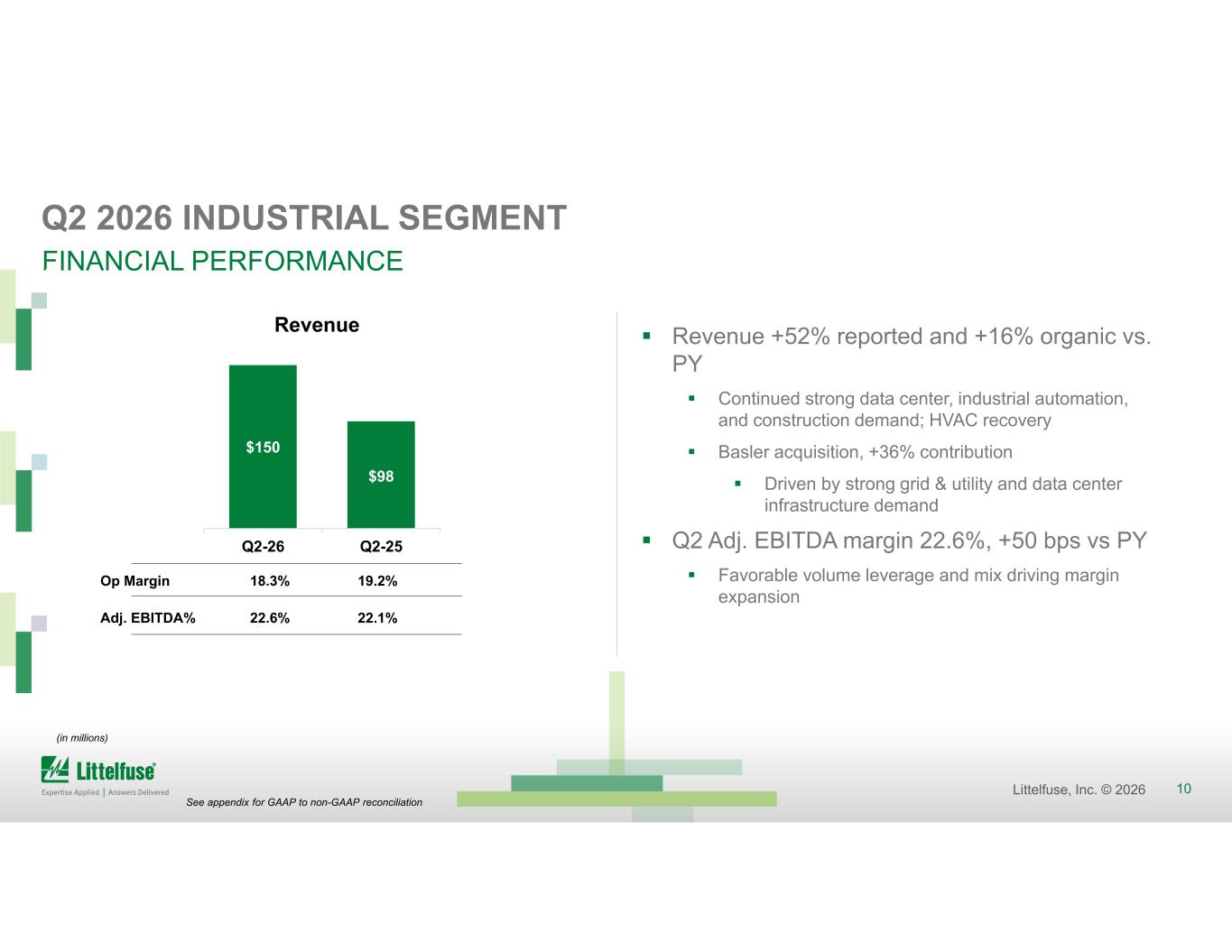
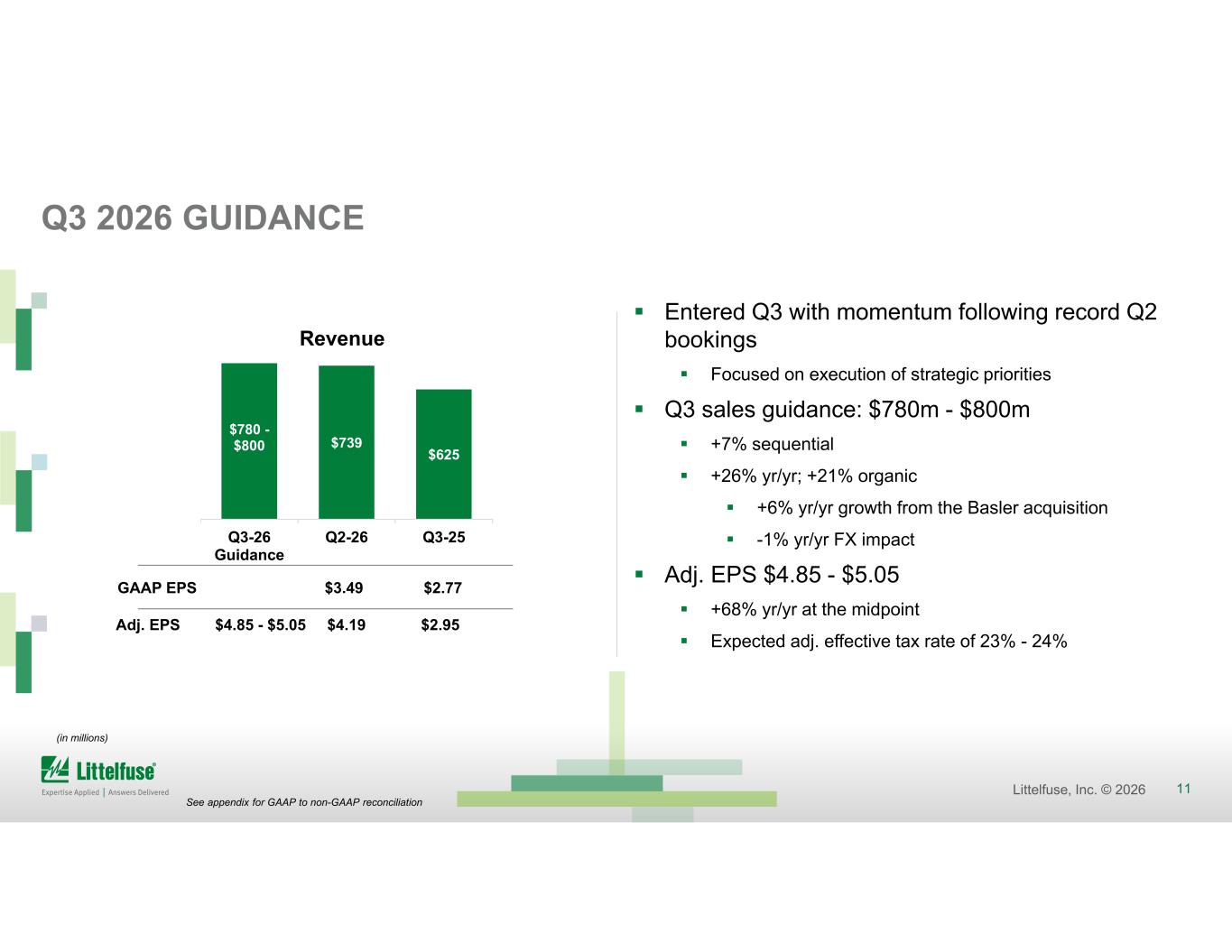
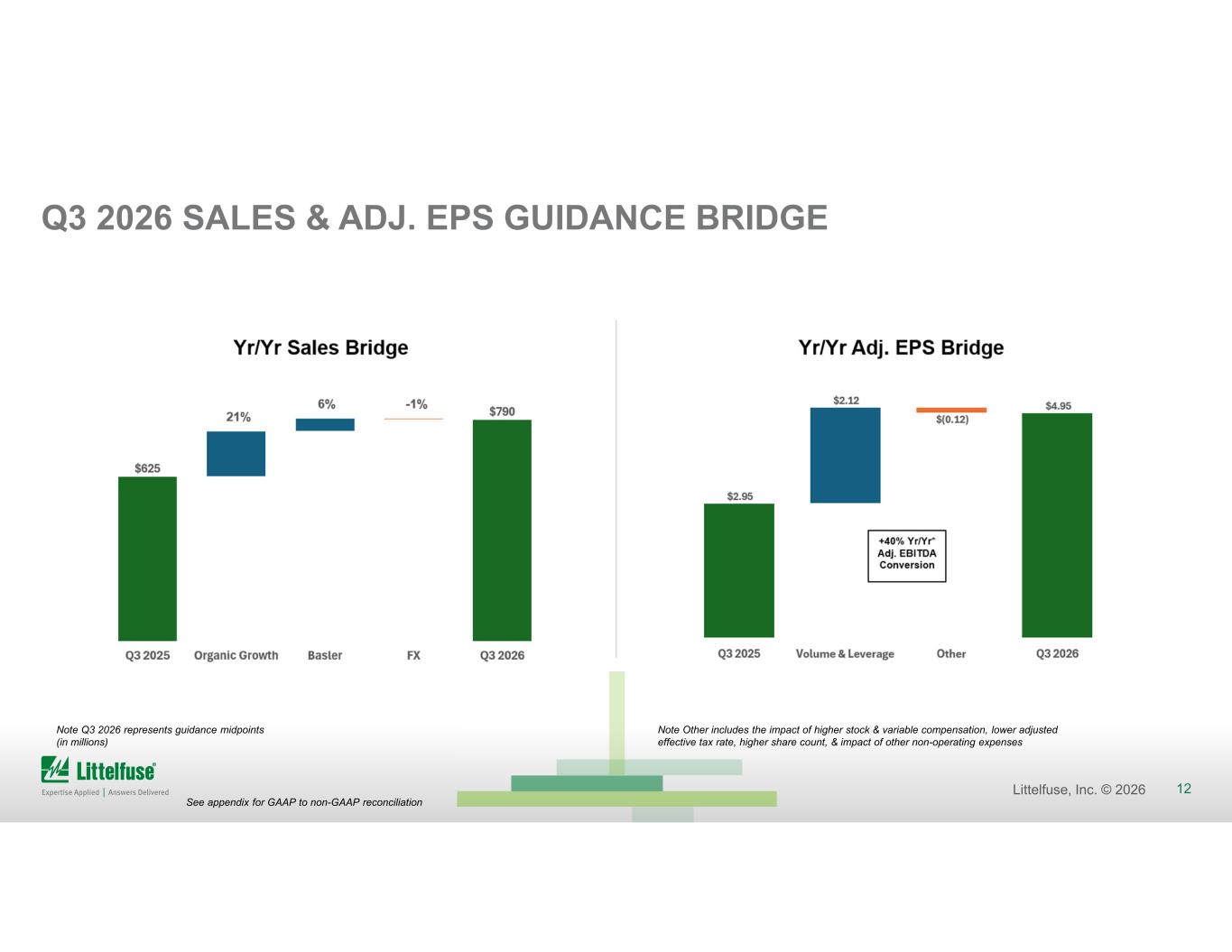
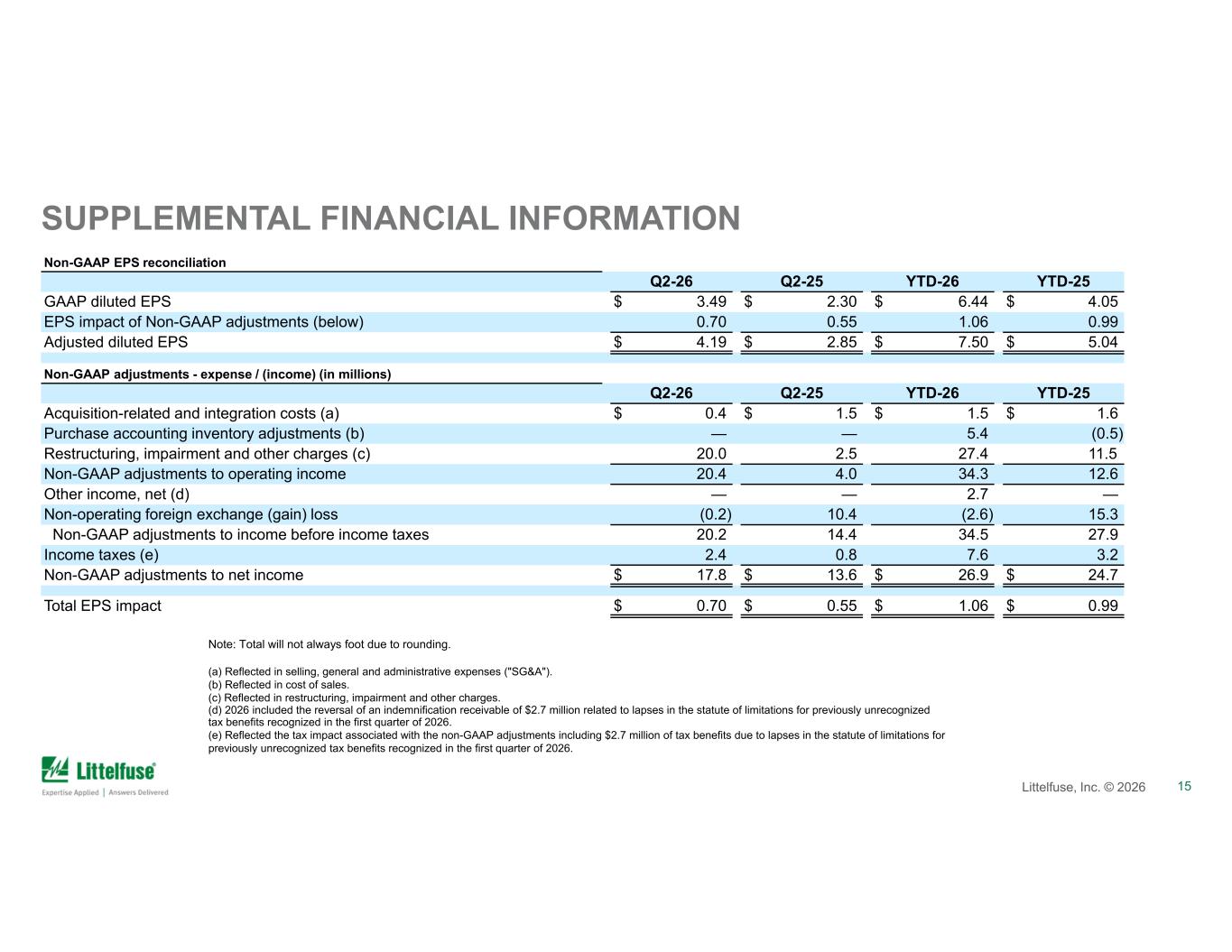
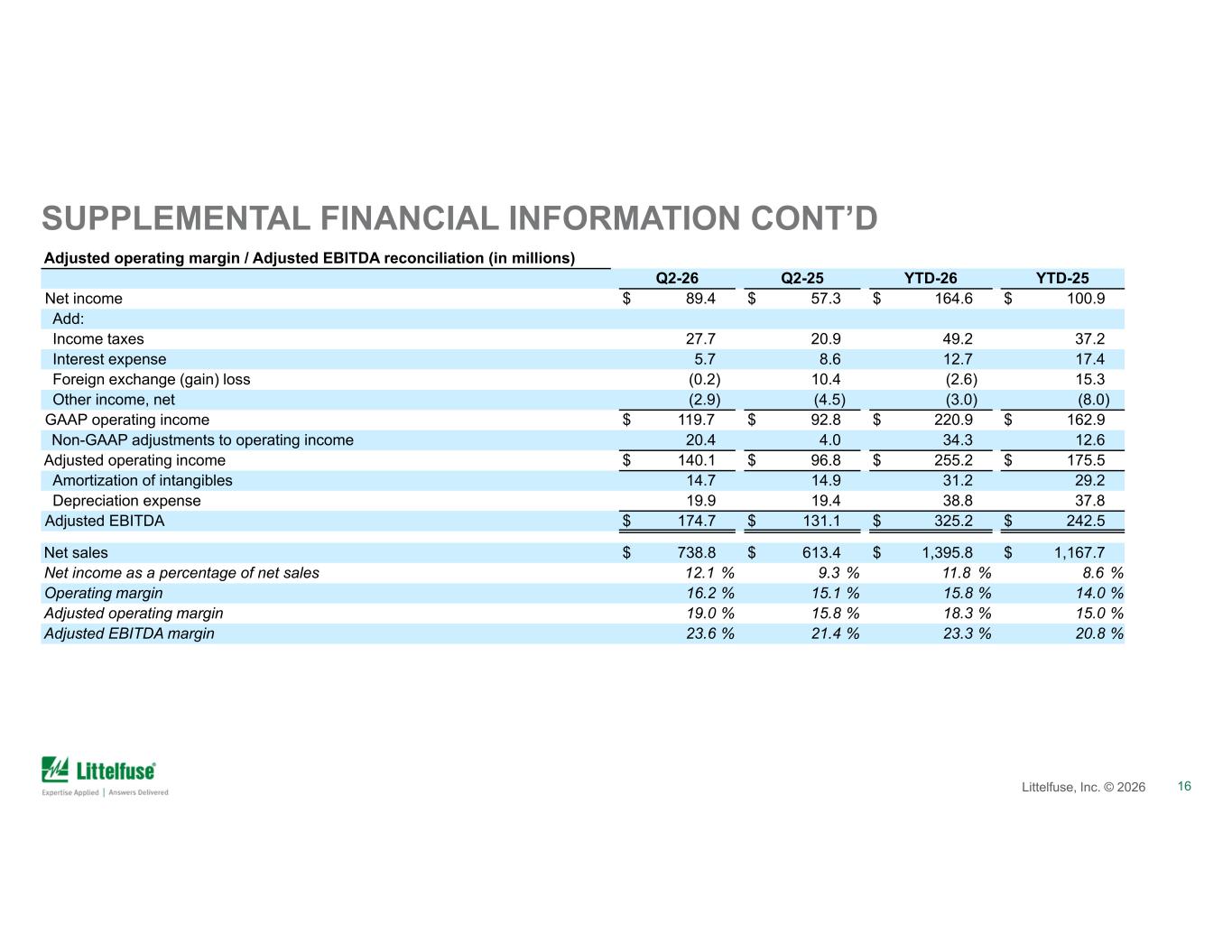
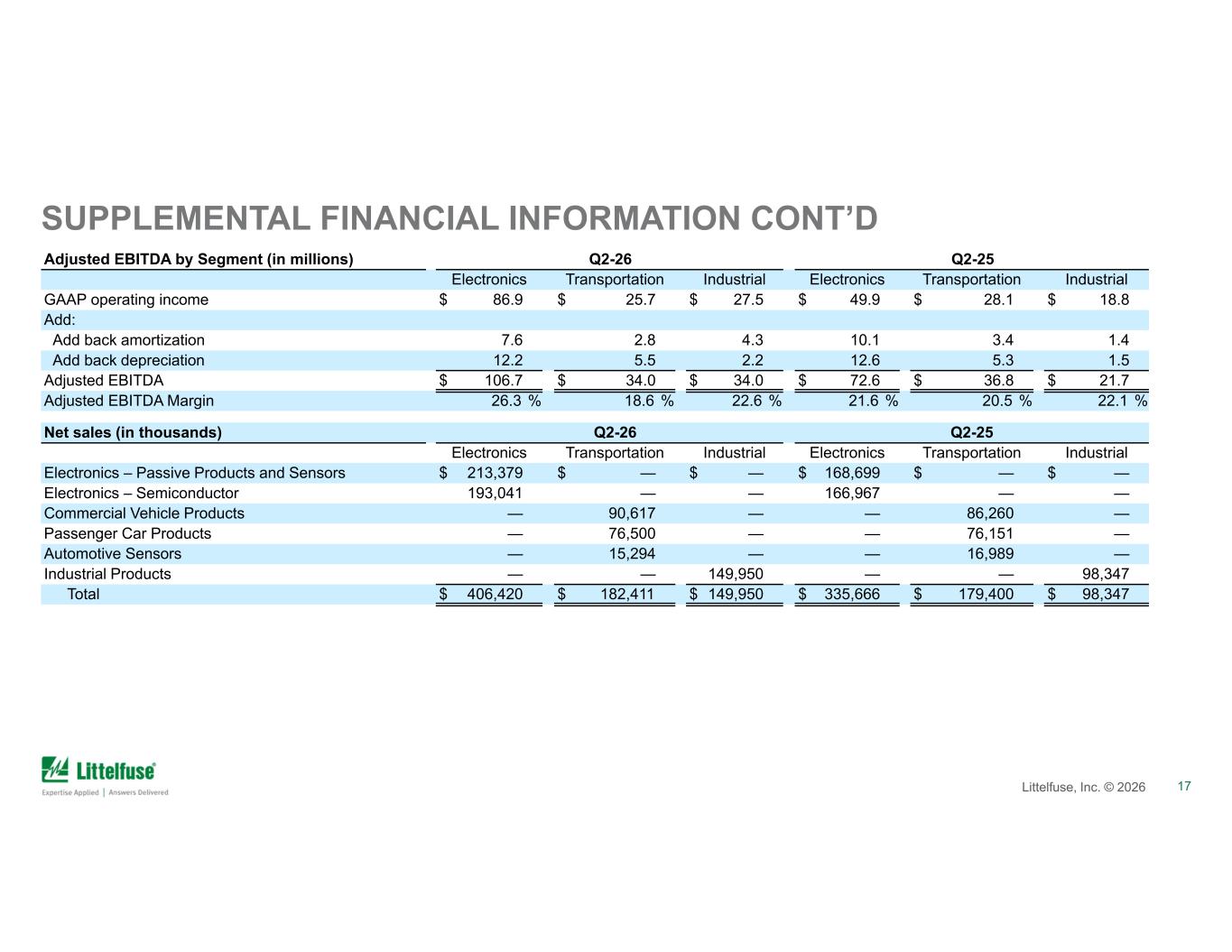
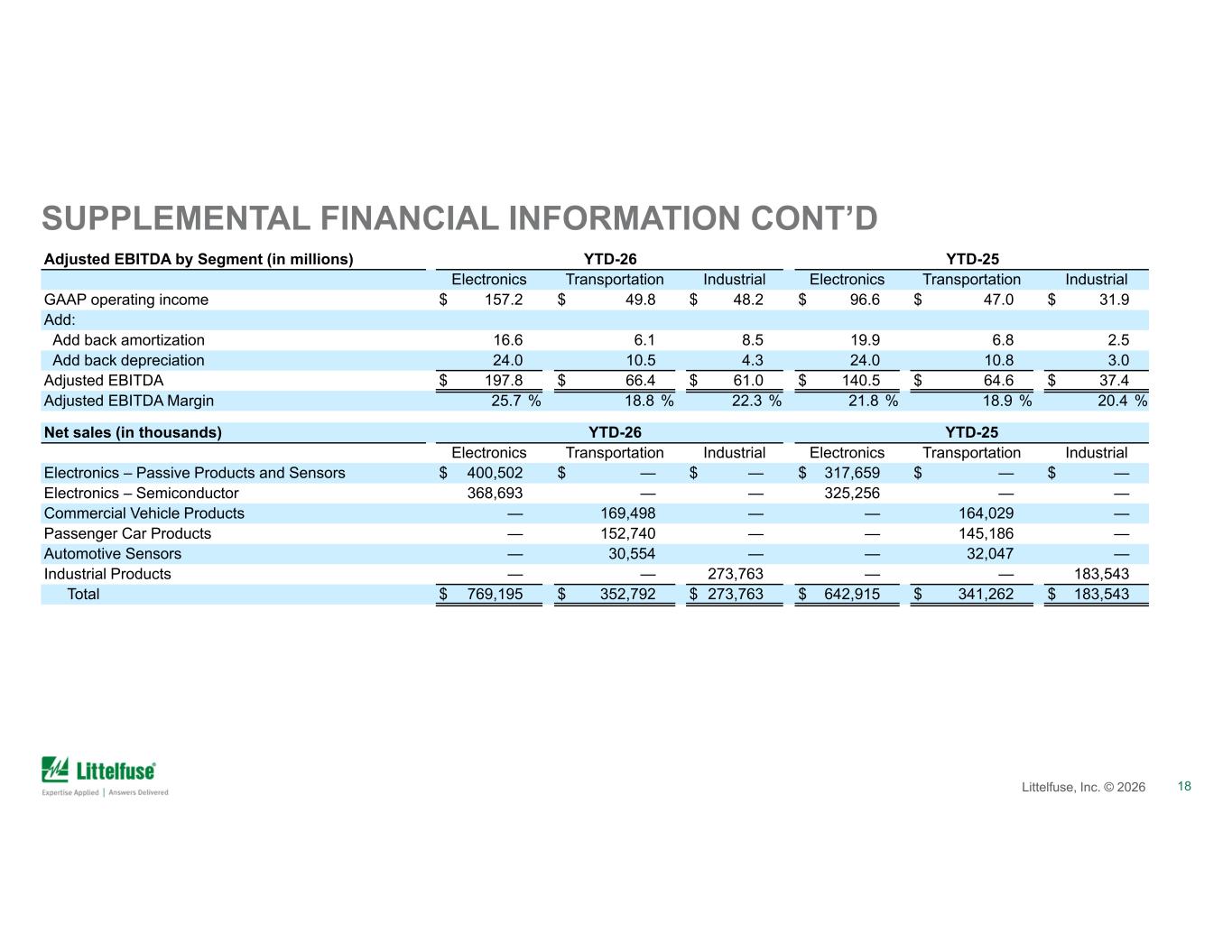
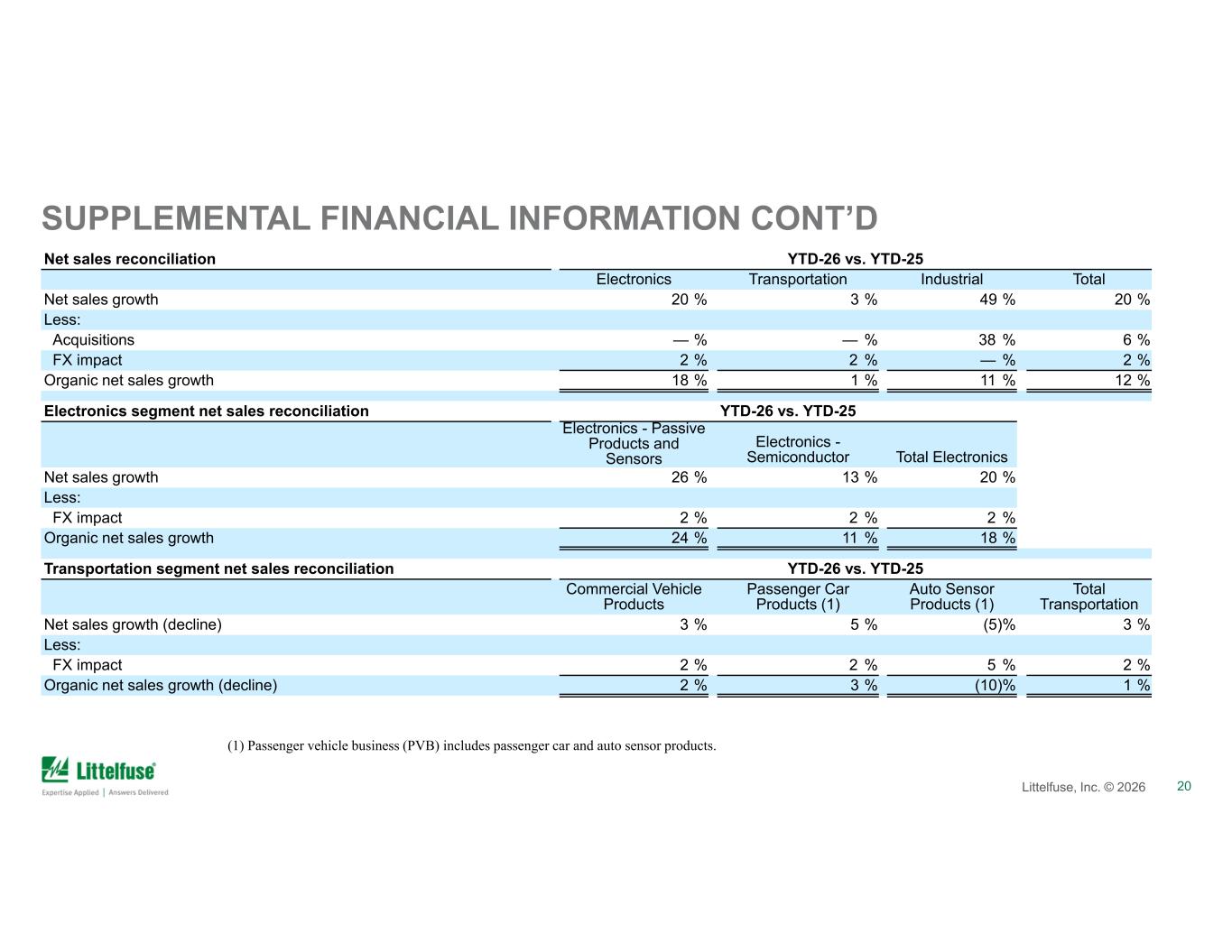
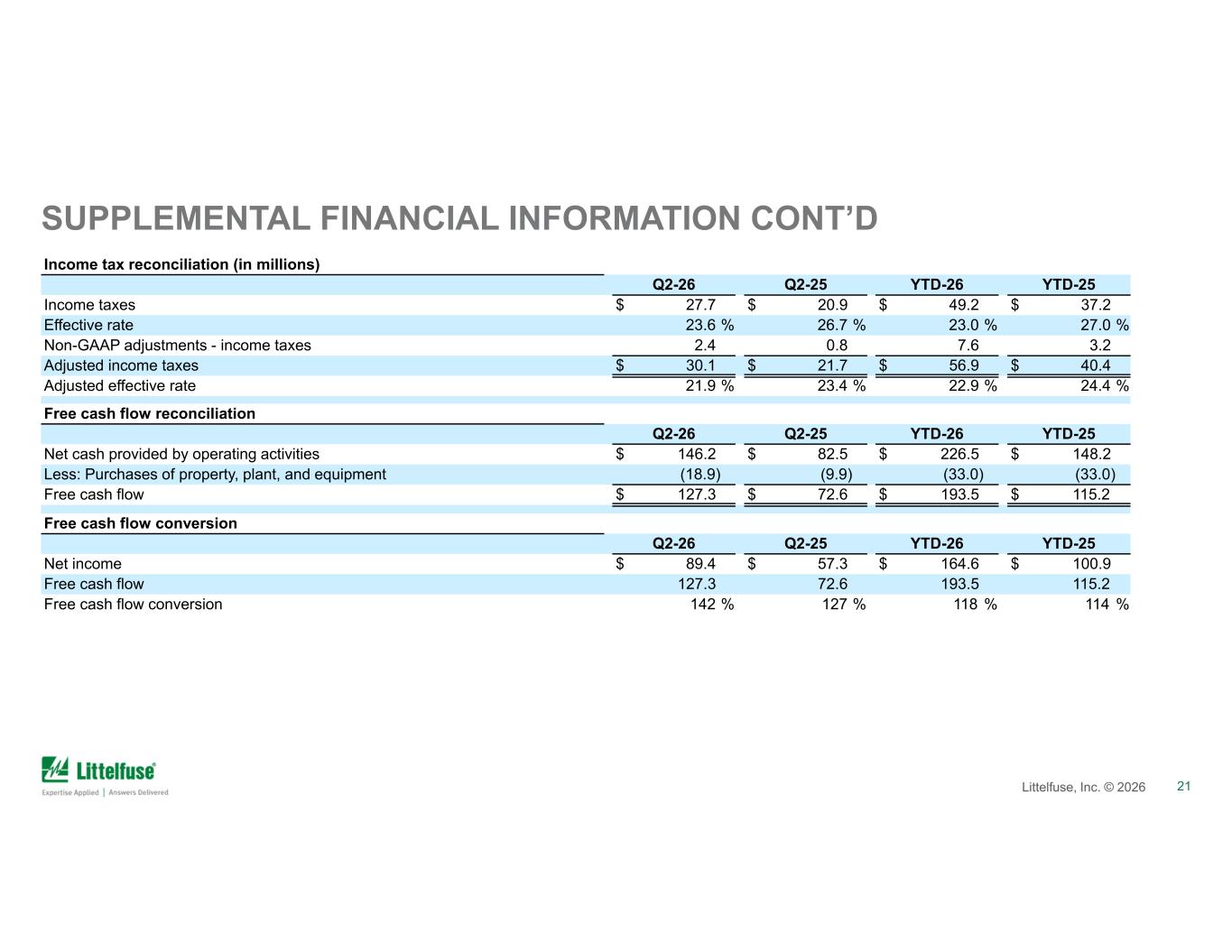
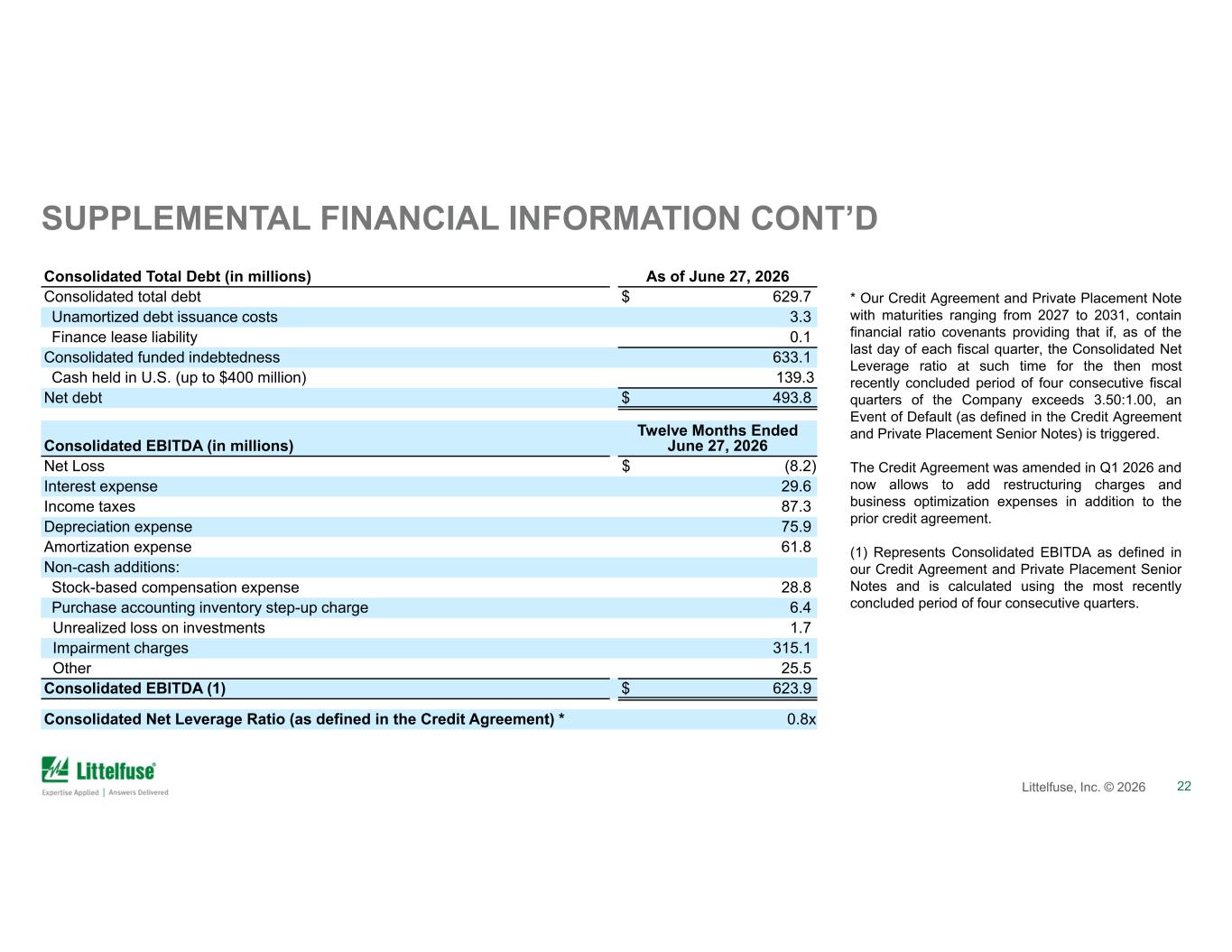
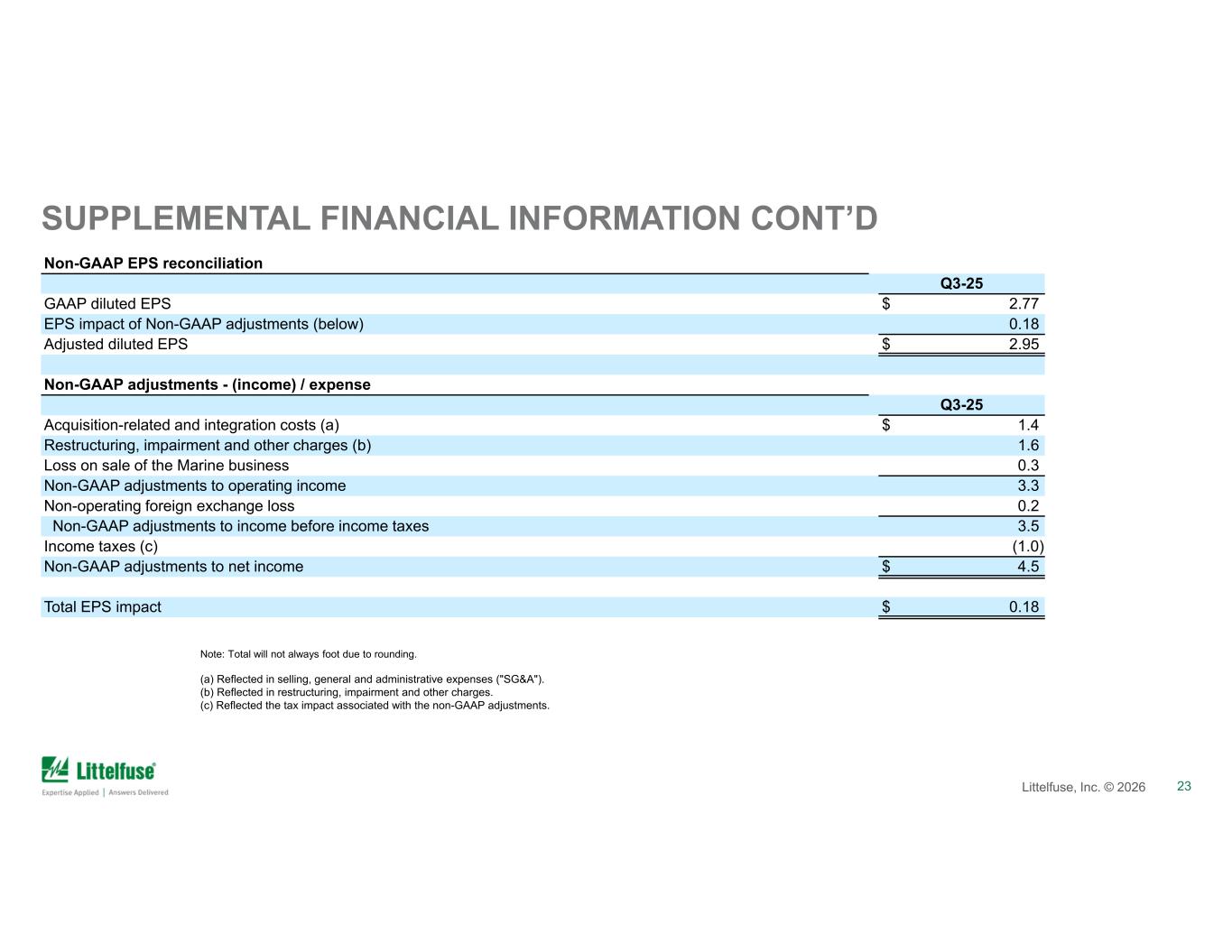
Thank you, Greg, and good morning, everyone. Today, I will walk you through our second quarter results. Please turn to slide six for details on our second quarter performance. All comparisons are versus the prior year, unless noted otherwise. Net sales in the second quarter were $739 million, up 20% and 14% organically. The bachelor acquisition contributed approximately 6% to sales growth while foreign exchange was a one percent tailwind adjusted ebitda margin finished at 23.6 percent up to 120 basis points reflecting strong volume leverage favorable mix and operational execution adjusted diluted earnings per share were four dollars and 19 cents up 47 versus the prior year in the quarter operating cash flow was 146 million while free cash flow grew to 127 million up 75% year-over-year. We ended the quarter with $628 million of cash, a consolidated net leverage ratio of approximately 0.8 turns, and returned $19 million to shareholders through our dividend. We increased our quarterly dividend by 7% to $0.80 per share, reflecting our continued commitment to returning capital to shareholders. Please turn to slide 8 for our segment highlights, starting with the electronics product segment. Sales for the quarter increased 21% year-over-year with 20% organic growth. Passive products again delivered strong growth, while semiconductor products benefited from continued protection strength and improved power semiconductor demand. Across the electronics product segment, we benefited from increased demand in data center, diversified industrials, and transportation end markets. Adjusted EBITDA margin for the electronics segment was 26.3%, up 470 basis points versus the prior year, reflecting strong volume leverage, mix, and execution. Looking ahead, we are pivoting our power semiconductor focus to high-value applications and the goal of driving long-term profitability enhancements. Supporting this, earlier this year, we announced the closure of our Allen, Texas Power Semiconductor manufacturing facility. This location is slated to close in 2027 and marks an important early step in our ongoing portfolio optimization and footprint rationalization process. Looking forward, we expect the site closure will enhance our 2027 electronic segment profitability, and we will continue to share more as we make progress. Moving to our transportation product segment on slide nine, sales increased 2% year-over-year. Organic growth was 1%, driven by stronger commercial vehicle volumes across truck construction and agricultural equipment markets passenger vehicle organic sales declined two percent reflecting lower global production and continued sensor product sales declines adjusted ebitda margin was 18.6 percent while lower in the quarter our focused execution has driven improved profitability year-to-date amid mixed market conditions our teams remain focused on driving operational excellence and continued profitability improvements across the transportation portfolio. Turning to slide 10, industrial segment sales increased 52% year-over-year. Organic growth was 16%, supported by strong data center, industrial automation, and construction demand. In the second quarter, we also benefited from faster-than-expected HVAC sales recovery. I would also like to highlight Basler, which contributed approximately 36% of growth in the quarter for the industrial segment. Integration efforts are progressing well, and the business is performing ahead of our expectations, both operationally and commercially. Demand across key end markets remains healthy, and the BASLR team has executed well since joining LittleFuse. As a result, we now expect BASLR to contribute approximately $135 million to $140 million of revenue in 2026, above our prior outlook. We're also increasing our expected earnings contribution to $0.25 to $0.30 for the full year. More importantly, our early success reinforces the strategic rationale for the acquisition, expands our exposure to attractive energy and industrial infrastructure applications, and positions us to capture additional opportunities through our broader customer relationships and technology portfolio. Adjusted EBITDA margin was 22.6%, up 50 BIFC over year, supported by volume leverage and favorable mix. We remain focused on executing against favorable industrial and market trends while continuing to advance bachelor integration initiatives. Turning to our outlook for the third quarter on slide 11, we expect continued healthy demand across several of our key markets, supported by a strong backlog, and increased customer traction. Based on current market conditions, we expect third quarter net sales in the range of $780 to $800 million. This represents 26% growth versus the prior year at the midpoint. We expect 21% organic growth, a contribution of 6% to growth from the BASA acquisition, and a 1% FX headwind. We also expect third quarter adjusted diluted EPS to be in the range of $4.85 to $5.05. At the midpoint, this represents 68% growth versus the prior year. Finally, our third quarter guidance assumes an adjusted effective tax rate of 23% to 24%. Thank you to the Little Fuse teams for their persistent efforts throughout the first half of 2026. We're excited about our continued momentum and the strategic progress we're making on the way to achieving our 2030 targets of $4.5 billion in revenue and $1.1 billion in adjusted EBITDA. With that, operator, please open the call for Q&A.
Operator
We will now begin the question and answer session. If you would like to ask a question, please press star 1 to raise your hand. To withdraw your question, press star 1 again. We ask that you pick up your handset when asking a question to allow for optimum sound quality. If you are muted locally, please remember to unmute your device. Please stand by while we compile the Q&A roster.
Operator
Your first question comes from the line of Luke Young with Baird. Your line is open. Please go ahead.
Good morning. Thanks for taking the questions. To start with, Greg, hopefully you could just comment on ways that the company can lean into this better breadth that you're seeing in electronics and industrial for that sake, be it taking share in a strategic way, leaning into pricing and capitalizing on the potential for some channel normalization. Just how do you think about prioritizing some actions moving through the year in this environment?
Thanks, Luke. Yeah, good morning. I think, look, what's important that we see this quarter is we really see broad-based momentum. So across all of our end markets where we see growth, we see broad-based momentum, and actually we see a strengthening of momentum in markets that maybe last quarter were a little bit slow. So, for example, specifically in our industrial business, we had good growth in energy infrastructure, industrial automation, grid utility, but also this quarter we had strength in HKC, which is something that hadn't happened in the past. And actually, this is in our CCDI market, but we also mentioned that we have very broad strength in our diversified industrial business that includes medical and aerospace and defense. So, we see a broadening. We talked about that last quarter. We see that continuing. And so I would say we really see broad-based strength and growth. Also importantly for us kind of strategically is about our design wind traction. We talked about our design winds being up double digits across all of our markets. So for us, I think it's broad growth across our reported segments and across our markets. And so our strategy and focus right now is being well positioned to capture the upside and the volume.
For my follow-up, obviously, there's been a lot of discussion of your data center business in total and the next-gen content lift as we move into higher voltages, but just curious if you could comment on just continuing to improve the positioning of the business in the near term as we move through 2026 and just in terms of year-to-date progress, anything you can share to just kind of level set where the company is as a mid-year in data center Yeah, thanks, Luke.
I think data center was a strong growth driver in the quarter. We talked about strong growth in the CCDI market, and data center was a strong growth driver of that. And with the outlook we're giving in 3Q and actually through the back half of 26, we expect data center to continue to grow. I think what's also important, though, is to understand that the revenue growth that we have now in data center this year is all related to the low-voltage architectures. And we've talked about the high-voltage architectures coming in, you know, in the future, probably in 27 and beyond. We have, you know, very low-volume shipments now for kind of the proof of concept of those systems, but that comes in. And if you look at our revenue, it's largely around the lower-voltage architectures going forward. Our pipeline and design winds are heavily – have a heavy strength around these high-voltage architectures, so we see that. and i think one thing we'll say about data center um you know we continue to have strong design wind traction in the first half of 2020 uh in the first half of 2026 as well as in the quarter our design wins uh again more than doubled compared to a year before and like i said a lot of those design wins are heavily focused around the higher voltage architectures that we expect to come in the future so we have good momentum we had good results in the quarter we expect that to continue through 26 and the design ones are positioning as well uh for uh beyond 26 into the future and then this is just to take you back to investor that if you're going to think
about the content opportunity we talked about content opportunity being two to four times higher you know in high voltage versus low voltage today that we're seeing in terms of revenue and so you know just to bring it all back i think we're pretty confident in our our 25 to 30 percent that we laid out over the next five years back to our data center markets.
Yeah, and just to read between the lines there, I mean, it seems like data center mix has to be moving up in the first half of the year. Anything you can share relative to the exit rate coming out last year, which was low double digits.
By mix, do you mean data center compared to other markets, or do you mean mix of our products inside the data center?
Yeah, data center is a percentage of sales, Greg.
I see I see yeah I think this is I think this is also important right like we are very positive on our data center we see strong growth but we did talk about this right last year our growth was really dominated by data center and grid utility this year we have the broadening momentum across other markets diversified industrials or other industrial markets and even like we said now we see improvements in HVAC which was kind of soft for the last couple quarters so I think that's a difference we see now is a much broader based demand across our business than we had last But to the next point, it still remains, you know, continues to be the fastest growing market in the quarter and for the first half of the year.
Maybe just incremental margin dynamics, if you could unpack those a little bit, especially the 3Q guidance, that floating up to 40%. Can you talk about some of the drivers, be it volume or maybe even taking some price in the market right now?
Yeah, look, at the highest level, if you think about our business model, we've talked about this before, right? when you start to see organic growth in the mid to high signals or double digits for that matter, our incrementals are pretty positive. So if you think about the margin drivers, right, I bring it down to a couple of things. Number one is the volume leverage that you see unpack as we start to grow the company on a year-over-year basis. Two, it's tied to operational execution. Three, it's tied to mix. So if you think about the growth drivers and think about where the growth is coming from, passives and protection have a very high flow through on the uptake.
And so it's a combination of operational execution, volume leverage and mix of revenue that we're seeing within the quarter that's contemplated in the guide got it i'll leave it there thank you thanks luke your next question comes from the line of david williams with needham your line is open please go ahead everyone and congrats on the really strong results maybe uh thank you if you kind of think about the savings from the the allen semi-fab closure and you said you'll have more color on that later but just curious if there's
any additional uh information you can provide around that when you think you'll see that come into the pnl and and maybe the magnitude of of what those savings could look like yeah maybe david thank you i'll just start with kind of a little bit of context around power semis and kind of how we're thinking about that and then i'll give abhi kind of give you kind of the detailed colors on alan and some of the kind of the timing of this but i think we we talked about this uh in our investor day and i would say the thing to understand is is that this the power semiconductor kind of rationalization and footprint opposition it's a i will call it a multi-year process that we're really um making progress on but it's going to take some time and so it's really about optimizing the portfolio to focus on on the areas where we really have differentiation where we can win we're making progress we also did mention in the call that we have good momentum in Power Semi from a market perspective, from bookings and order. We had good growth in the Power Semi business in the quarter, and we actually have, it will be a strong contributor to our incrementals in 3Q. So we're making progress. The Allen is like one of the first things we announce is other actions that we'll be taking over time and maybe give Avi some, you can give some more color on that.
Yeah, David. So look, just building on the Allen piece, first of all, when you think about savings and when we'll realize those savings, I'd say it's in the back half of 2027. It marks an important step, I would say, in the footprint optimization move that we discussed in the prior quarters and that we discussed as part of Investor Day. The easiest way to think about the Allen closure is this is a decision that we're making to simplify our operational footprint and a decision on make versus buy, which will help us reduce our lead times and improve our cost structure. More to come as we finalize the actual numbers behind it, But it does, you know, mark a big step in the direction of where we want to take the company.
Good. Thanks for the color. You talked about the record bookings. Any way to size that, how should we think about those bookings relative to the prior record and maybe on a year-over-year basis?
Yeah, look, I think the important thing to understand is that we, number one, we have good momentum. Number two, that it's very broad. And so we are, you know, we have said that the book to build is significantly north of one. and the record and the bookings in Q2 were a record, and that's kind of a company-wide record. The other thing we'll say, though, is that it's the breadth of these bookings across the end market. So like we said before, it's data center, industrial verticals, diversified industrials, HVAC. And the other thing I think that's important from our perspective, right, we see good market momentum in the bookings, but also our design wins are continuing to be strong. And actually across all of our markets, our design wins were up double digit year on year. So it's the bookings are good, but also design wins, which is I would call that really future bookings, we also feel good about. So we see good momentum and it is broad. I think that's what we're comfortable saying.
And just to, you know, just to size it up a slightly different way, while we don't end up on exact booking numbers, if you think about the year and think about our actuals in the guide and see the sequential improvement, of supports the strong booking comment that we made, which is, look, organically, Q1, we delivered 9%. Q2, we came in at 14%. And at the midpoint for Q3 guide, we're guiding at 21% organic. So what it also points to is a sequential improvement throughout the year, broad-based momentum throughout the year, and the strong booking support the 21% organic guide that we just put out.
And then maybe just one last one, if I can, just kind of thinking about the inventory dynamic within the distribution and across your channels. Do you get a sense that we're seeing some of this demand from replenishment, or do you feel like most of this is really from end consumption?
Look, I think generally we feel good about the channel inventory, and I would say that the channel inventory is normal in terms of weeks. Obviously, when you're in a growth cycle, right, the dollars are going up, but in terms of weeks, the channel inventory is good. And there were some areas in the channel, also at our end customers, that I think inventories were low that are kind of normalizing. But in general, I would say we feel good about this. we track the POS as well as POA, both are growing strong. And so I would say generally this is, with some exceptions, I'm kind of a little bit of here or there, channel normalization. I would inventory normalization, I would say this is real end demand across our markets. Thanks. Thank you, David.
Operator
Your next question comes from the line of Christopher Glynn with Oppenheimer and Co. Inc. Your line is open. Please go ahead.
Thank you. Good morning, guys. Morning, Chris. So, yeah, just on the bookings, following up a little bit on the prior question, you know, a lot of times at this point in the cycle where destocking is done and demand is picking up a lot, you tend to take a lot of share. I think a lot of fragmented competition does, you know, just doesn't have the capacity and capital flexibility that's always been built into little fuse. So, you know, wondering how much of that you're seeing at the present moment?
I mean, I think, look, I'll start. I think internally what we really try to track is our growth relative to market. And we do believe that on balance that we're gaining share. I would say that there are some cases of opportunistic share, but largely it's not really, I don't think the business is largely like that. I think for us, it's largely more about design position share. And that's why we truly, really try to track our design wins and our design opportunities. And like I talked about, I think we feel very good about that. So I think, you know, in general, you know, markets are going well, but where we measure ourselves internally is how are we doing relative to market and are we generally taking share? And I would say heavily influenced by our design win position, that's the case. There are some cases of, I'll call it opportunistic share, which we can take because we can execute, and that's a key focus of us. But really, our focus on share is more about the design and designing.
And just to support Greg's comment, here's the other thing I'll tell you. So, you know, we're also really focused on the operational piece of it, right? As we saw record bookings in the quarter, as we put out a guide that's 21% organic, we're also laser focused on making sure operationally we can go execute. So that's the other big focus area internally that we're spending a lot of time to be able to fulfill our customers' demands.
Great. Appreciate that. And then on the HVAC market, you know, this was kind of interesting because it didn't really seem to become an easy comparison until the third quarter. last year. And so Industrial put up a 16% organic on a 17% comp. Just kind of curious, are you taking share in Resi HVAC there? Or was that late in the quarter, you know, sector stocking strategies by a couple OEMs that got caught short?
I would say first I'll start and then let Avi give a little bit more color on the numbers. I think in the HVAC market, we have a very good, strong market position. So we have good products, good market position. I think our design position is good, but I will say we also are seeing a market recovery that's happening faster than we expect. So we have a strong position. That means also we are a little bit subject to, you know, obviously we work on winning share, but we're subject to the overall market. I would say for us, there is a market recovery there that we're seeing a little faster than maybe we expected.
And Chris, just to add more color, I think if think about the hvacn market um we were down for four straight quarters this is the first time since first half of 2025 that we've seen growth on a year-over-year basis so to greg's point you know the market recovery was sooner than we expected and and this this is the first quarter since first half 25 where we've seen organic growth great uh thanks for that i'll pass along thanks chris if you would like to ask a question please press star one to raise your hand The next question comes from the line of Christopher Glynn with Oppenheimer.
Operator
Your line is open. Please go ahead.
I figured I'd take advantage of the light cue on this very busy earnings day. So you guys went, you know, frequently over to the topic of diversified industrials, called out medical and A&D in particular.
You know, I think that comment is really an electronics center comment, but I'm just curious to, you know, feel back a little on medical A&D being particular callouts under the emphasized theme of diversified industrials. yeah thanks thanks chris so i think first just give context right so in diversified industrials and we reported our markets we started talking about our markets in our in our new go-to-market structure on investor day so diversified industrials are inside the cci market actually on the website i think there's a there's a pie chart that shows that diversified industrials includes a bunch of markets um but you know so there's like there's a bunch of markets in there But two of the key ones that are probably the largest contributors in there is defense, aerospace and defense and medical. So those are probably the two largest sub markets inside diversified industrial. But there's a bunch of others as well. And I would say both of those sub markets did well. It is true that I would say generally that our electronic segments are probably the largest of products that play there. But actually, you know, one of the things about our business is that all of our segments actually play in there. Actually, our bachelor business, for example, does sell into the aerospace and defense market And when they do that, that would show up inside diversified industrials. So I would say broad-based strength in diversified industrials, that also includes some of the broad channel customers as well. So there's a little bit of both. But specifically, if you look at medical and aerospace and defense, we had good growth. We had good bookings growth, and we see momentum there.
Okay. And what kind of velocity are you seeing in the defense market? In terms of innovation, new designs, reverse replenishment, just curious, you know, kind of the layering of drivers for that defense market.
I mean, look, I think the defense is very dynamic right now, right? There's a lot of business that is kind of I would call it very legacy traditional business that is growing, but also there's a lot of kind of new entrant business that is also growing. So we see momentum in both. And I would say in the design activity, we see a lot of momentum specifically around the new intents as well.
Great. Thanks a lot. Thanks, Chris.
Operator
We have reached the end of the Q&A session. I will now turn the call back to Chief Executive Officer Greg Henderson for closing remarks.
Okay, thank you. Thank you all for attending this morning. Just to close, I'd like to just emphasize again, first to thank our global teams for the progress. We see a lot of broad-based momentum across our markets and a lot of strength. And as Abhi mentioned, we're very focused on making sure that we are in the right position to execute against this. We see good progress. We feel good about the back half of 2026 and on track to the model we laid out yesterday. So thank you all for joining, and we look forward to talking to you next quarter.
Operator
This concludes today's call. Thank you for attending. You may now disconnect.