Speaker 0
Good morning and welcome to the second quarter, 2025, Limbach Holdings, Inc. earnings conference call and webcast. All participants will be in the listen-only mode. Should you need assistance, please signal a conference specialist by pressing the star key followed by zero. I will now turn the conference over to your host, Lisa Fortuna of Financial Profiles. You may begin.
Good morning, and thank you for joining us today to discuss Limbock Holdings financial results for the second quarter of 2025. Yesterday, Limbock re-issued its earnings release and filed its Form 10-Q for the period ended June 30th, 2025. Both documents, as well as an updated investor presentation, are available on the Investor Relations section of the company's website at www.limbockinc.com. Management may refer to select slides during today's call and encourages investors to review the presentation in its entirety. On today's call are Michael McCann, President and Chief Executive Officer, and Jamie Brooks, Executive Vice President and Chief Financial Officer. We will begin with prepared remarks and then open the calls to questions. Before we begin, I would like to remind you that today's comments will include forward-looking statements under federal securities laws. Forward-looking statements are identified by words such as will, be, intend, believe, expect, anticipate, or other comparable words and phrases. Statements that are not historical facts, such as those about expected financial performance, are also forward-looking statements. Actual results may differ materially from those contemplated by such forward-looking statements. A discussion of the factors that could cause a material difference in the company's results compared to these forward-looking statements is contained in Limbock's SEC filings, including reports on Form 10-K and 10-Q. Please note that on today's call, we will be referring to non-GAAP measures. You can find the reconciliation of these non-GAAP measures to the most directly comparable GAAP measures in our second quarter 2025 earnings release and in our investor presentation, both of which can be found on Limbock's Investor Relations website and have been furnished in the form 8K filed with the SEC. With that, I will now turn the call over to President and CEO Mike McCann.
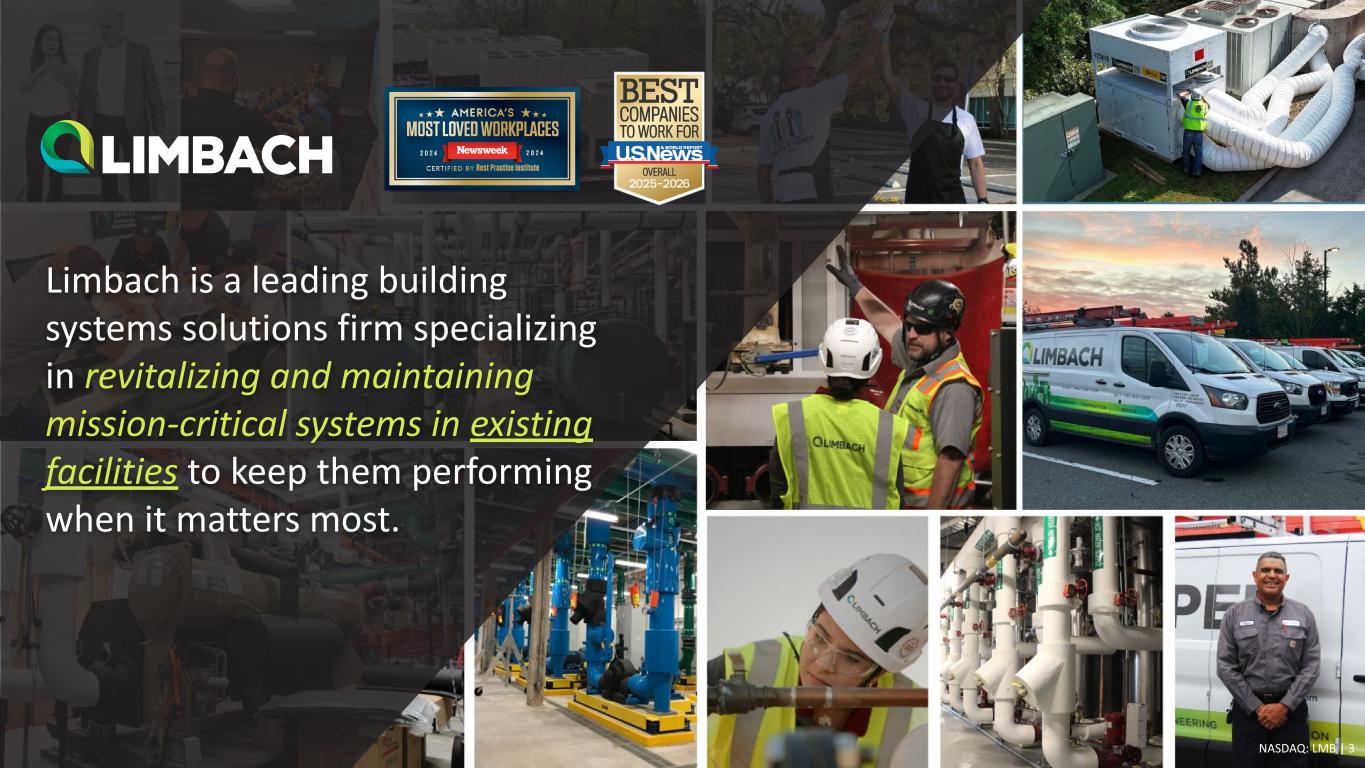
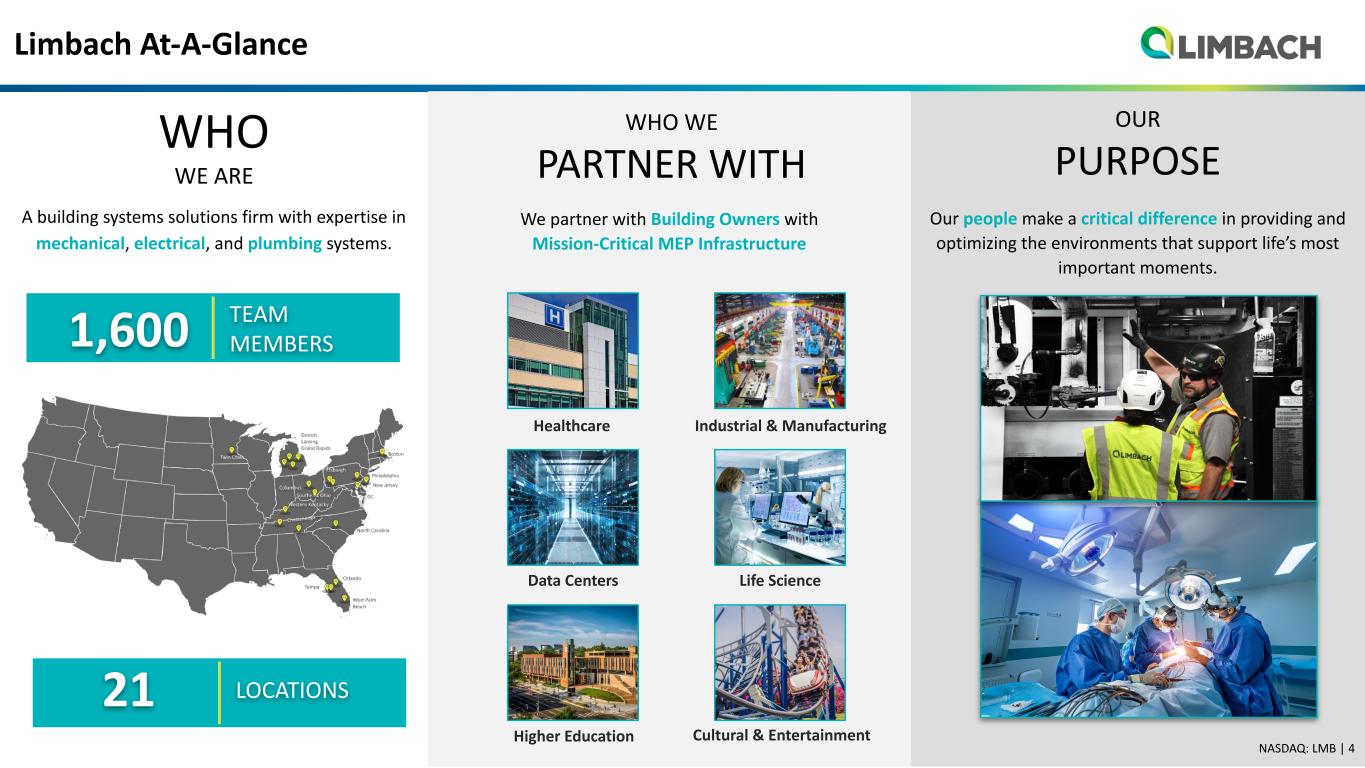
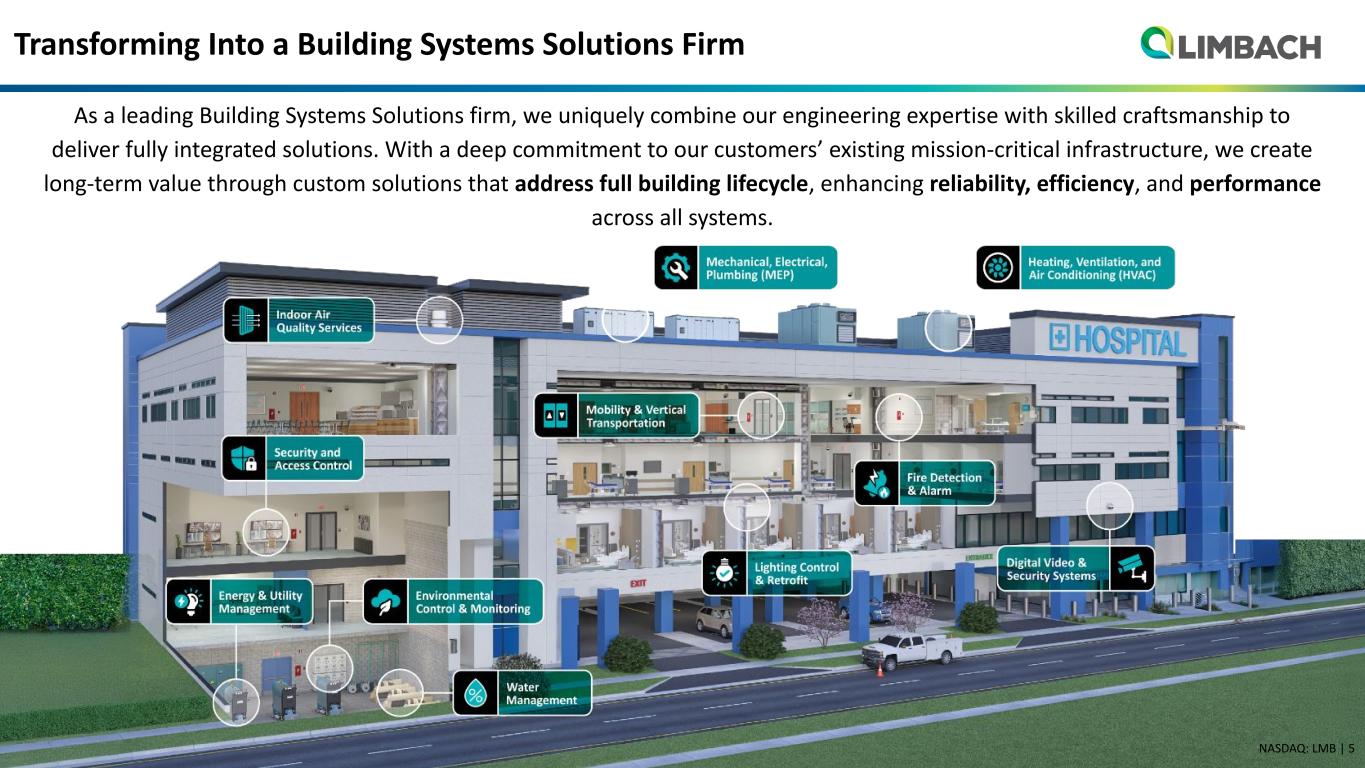
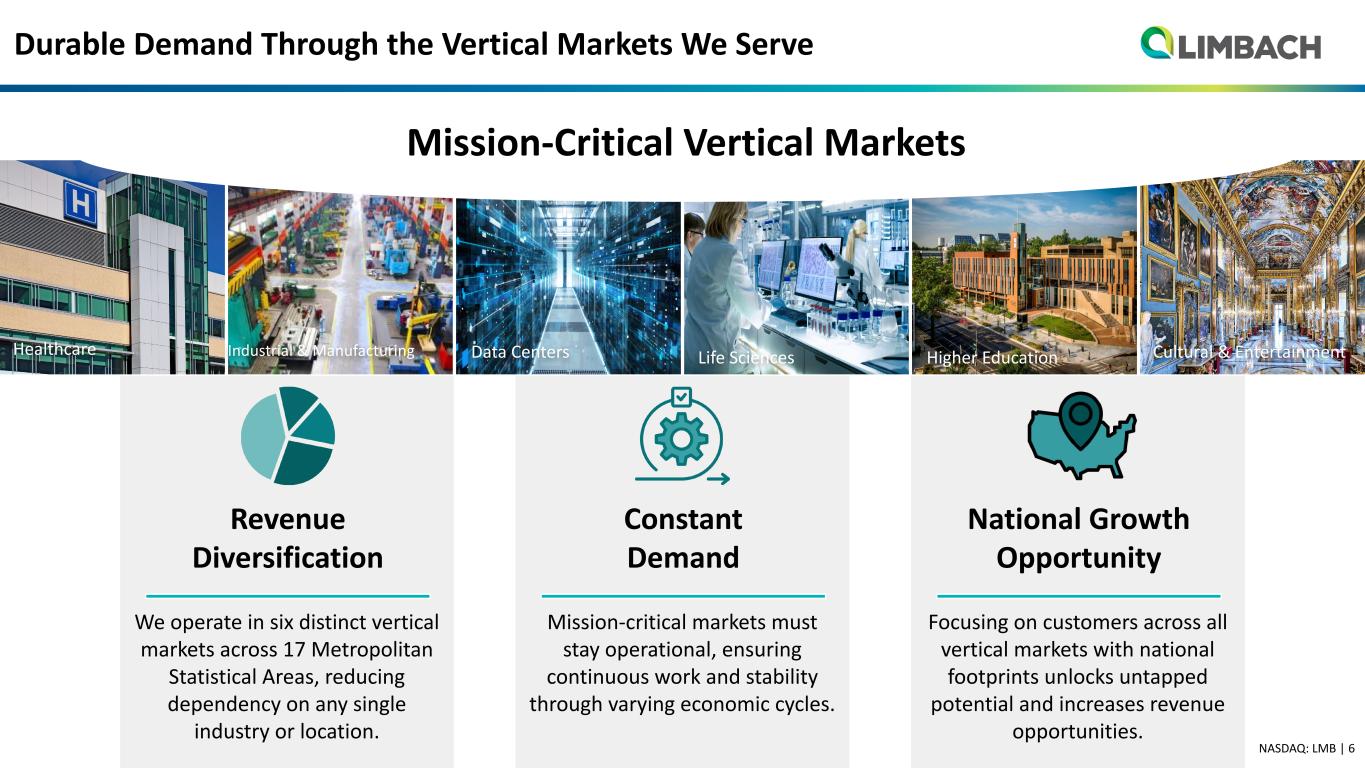
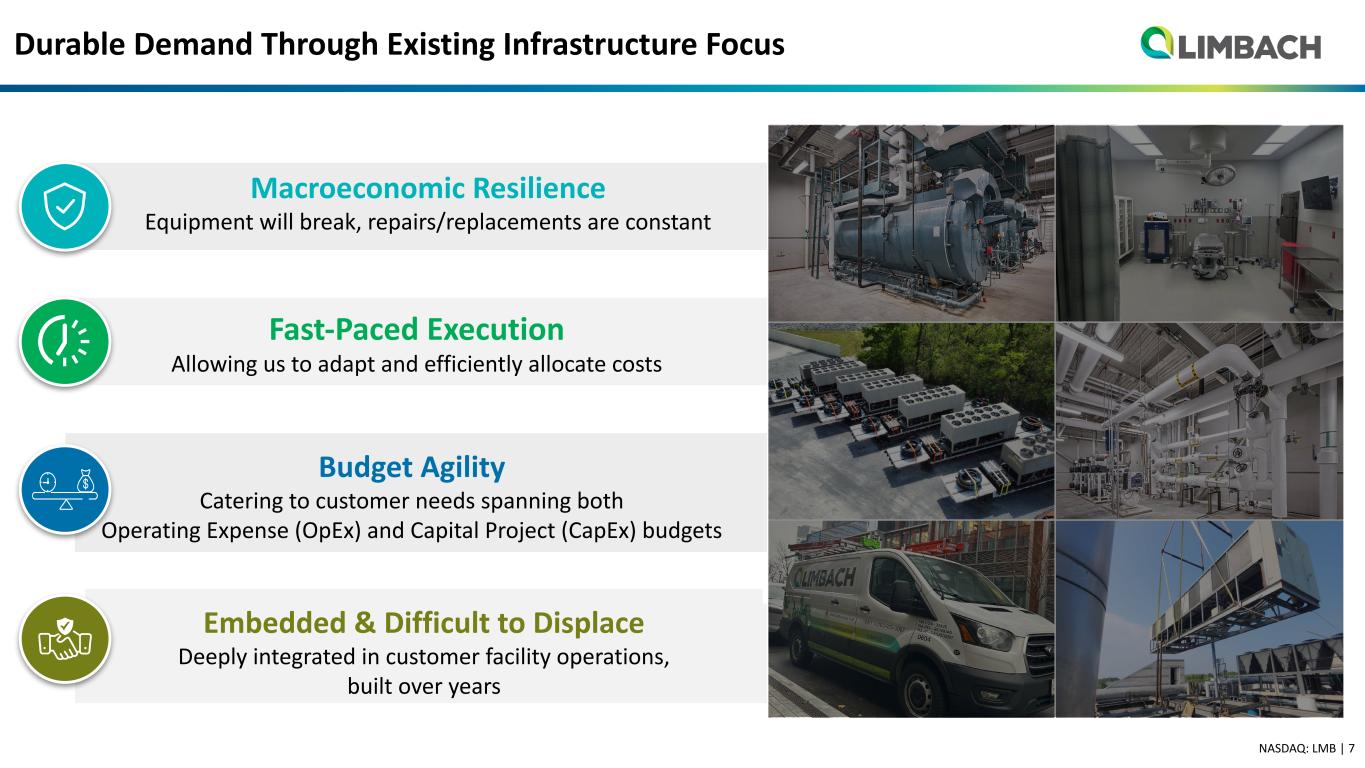
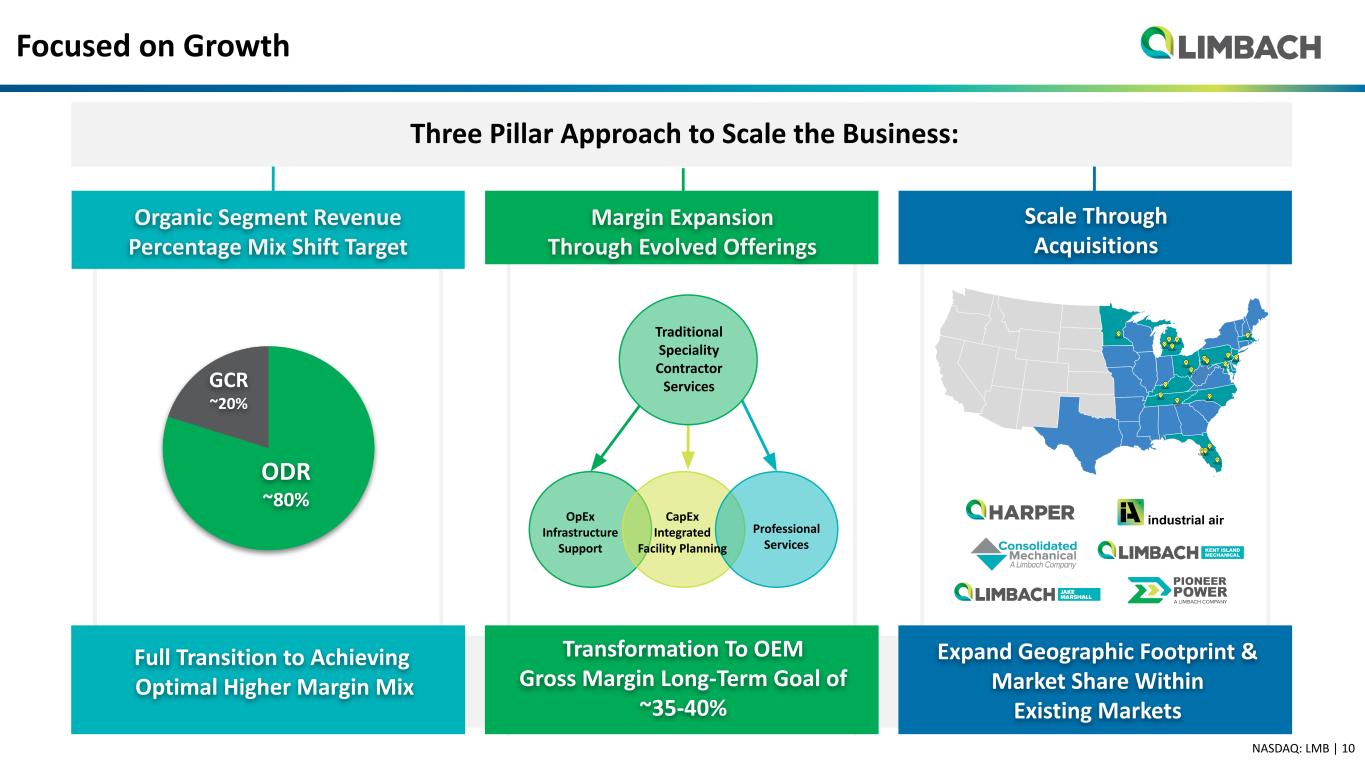
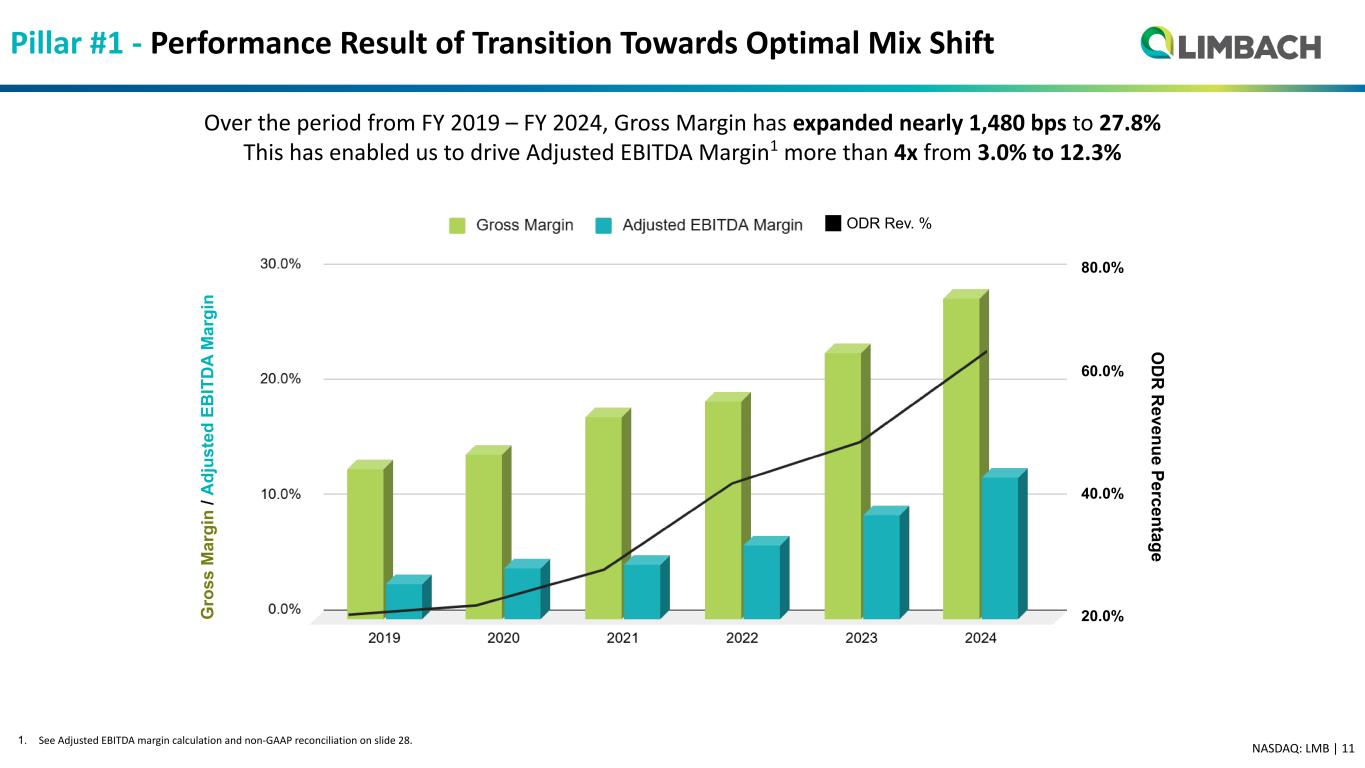
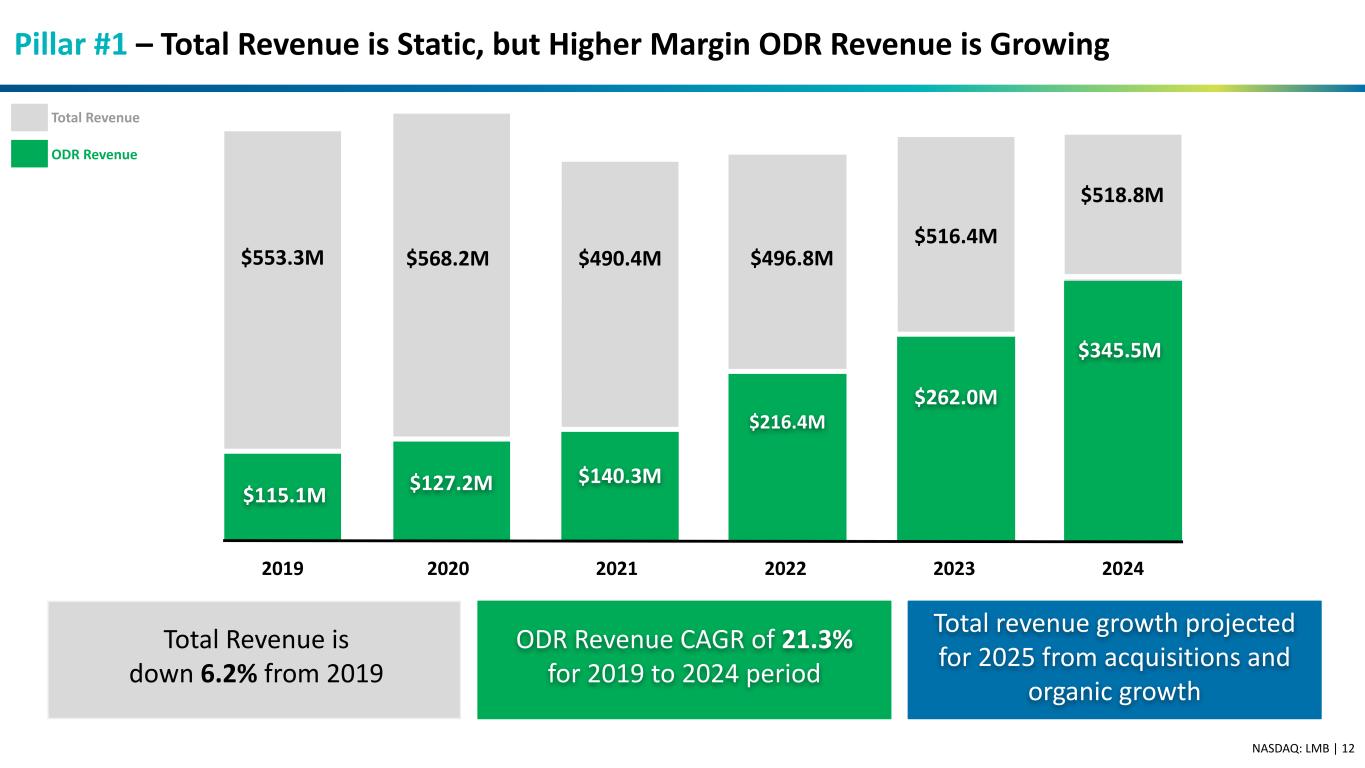
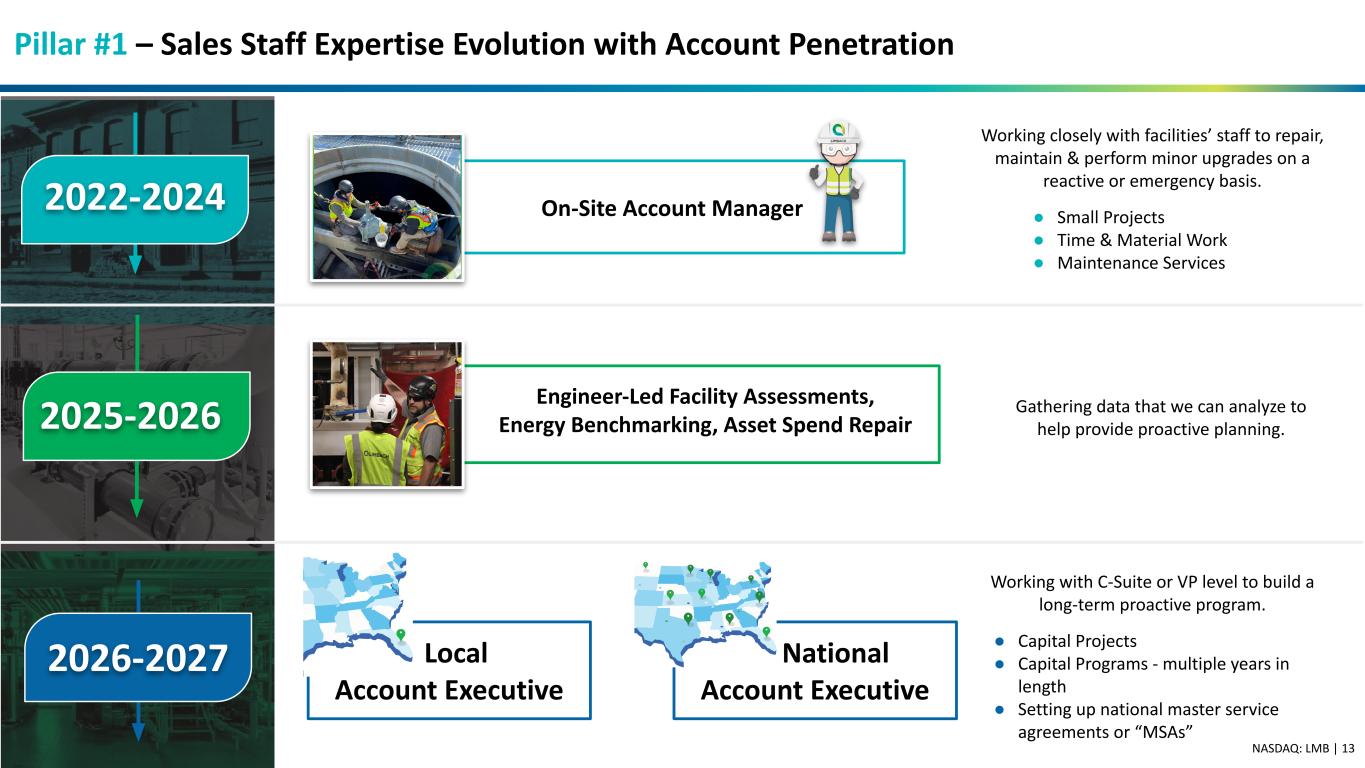
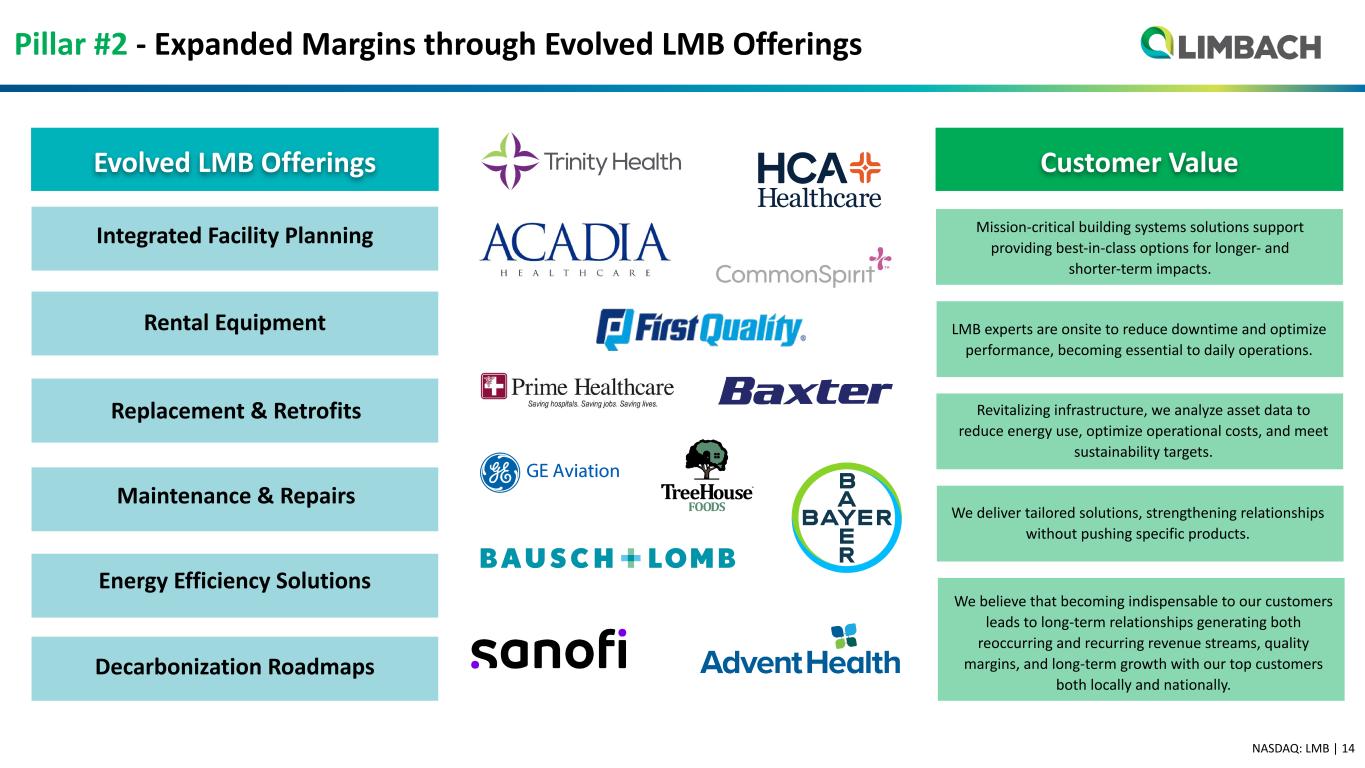
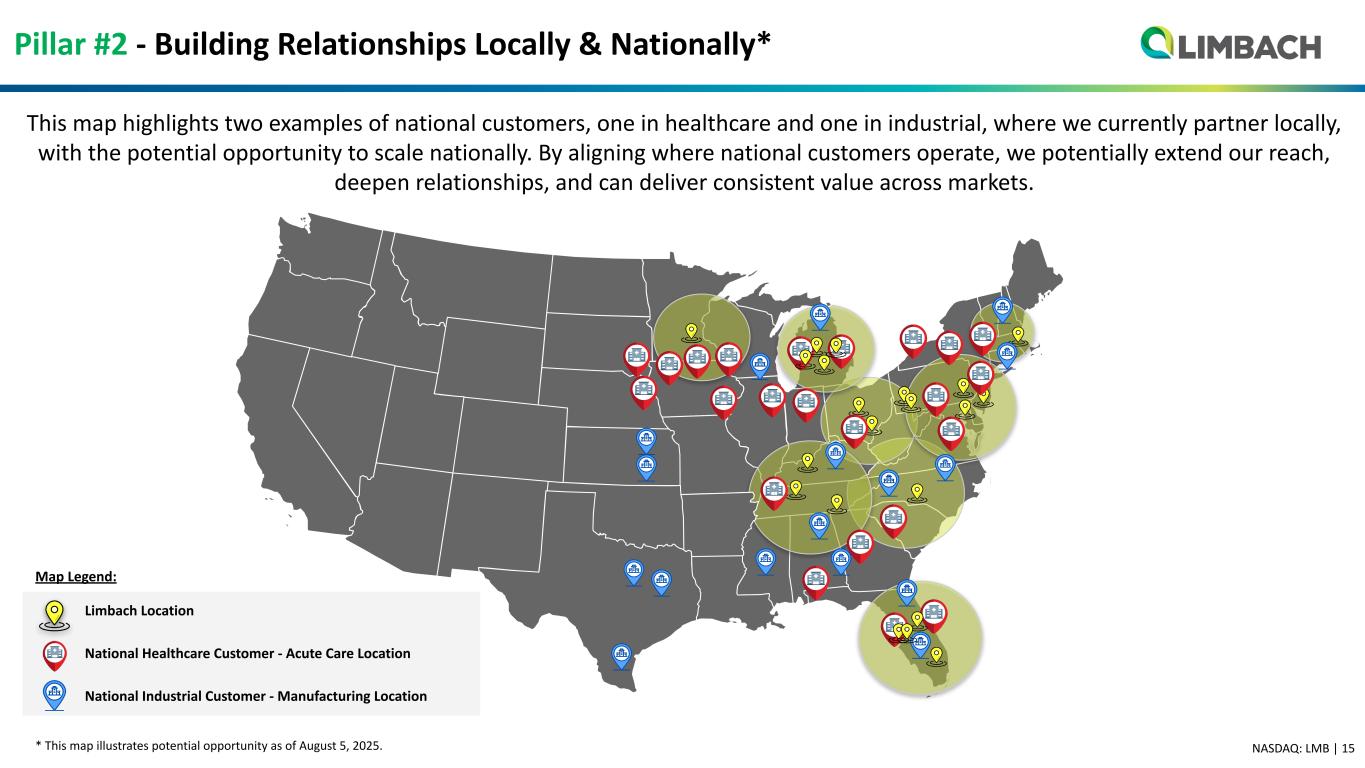
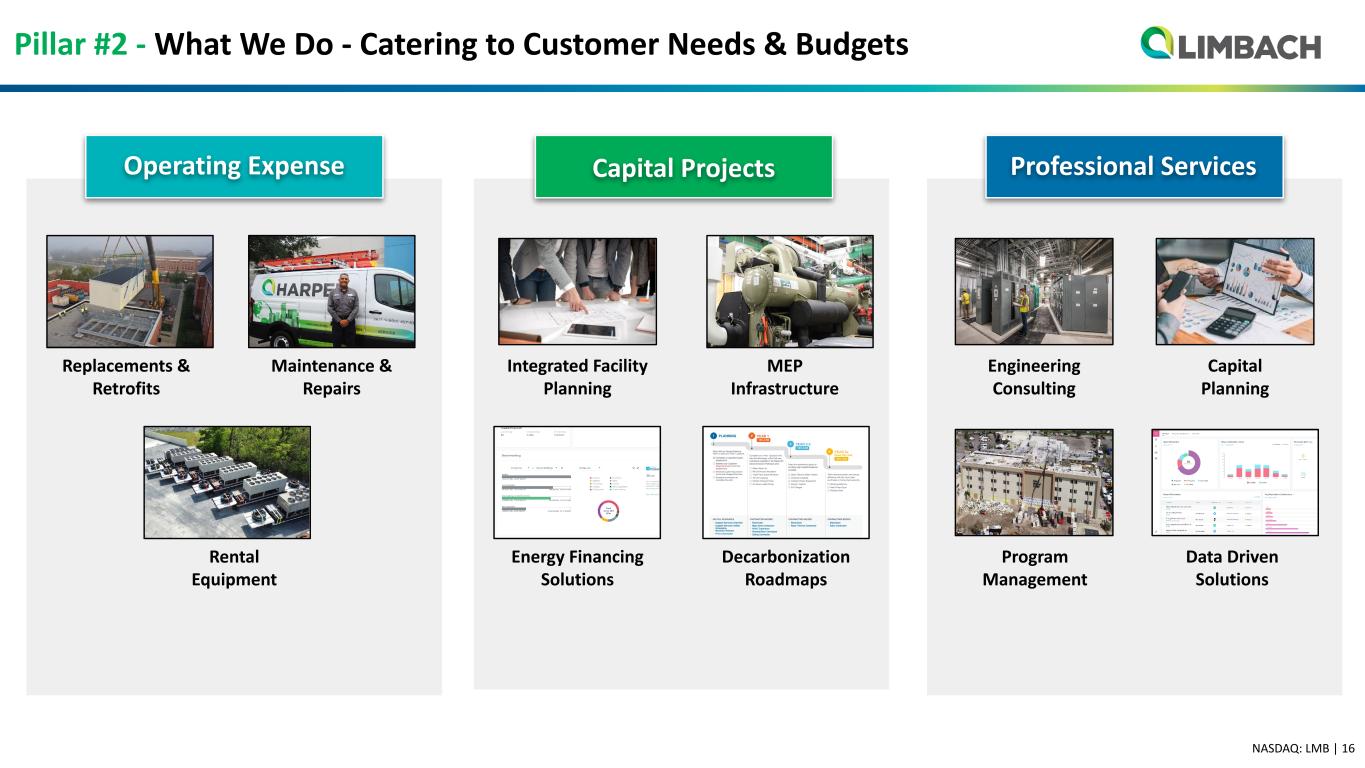
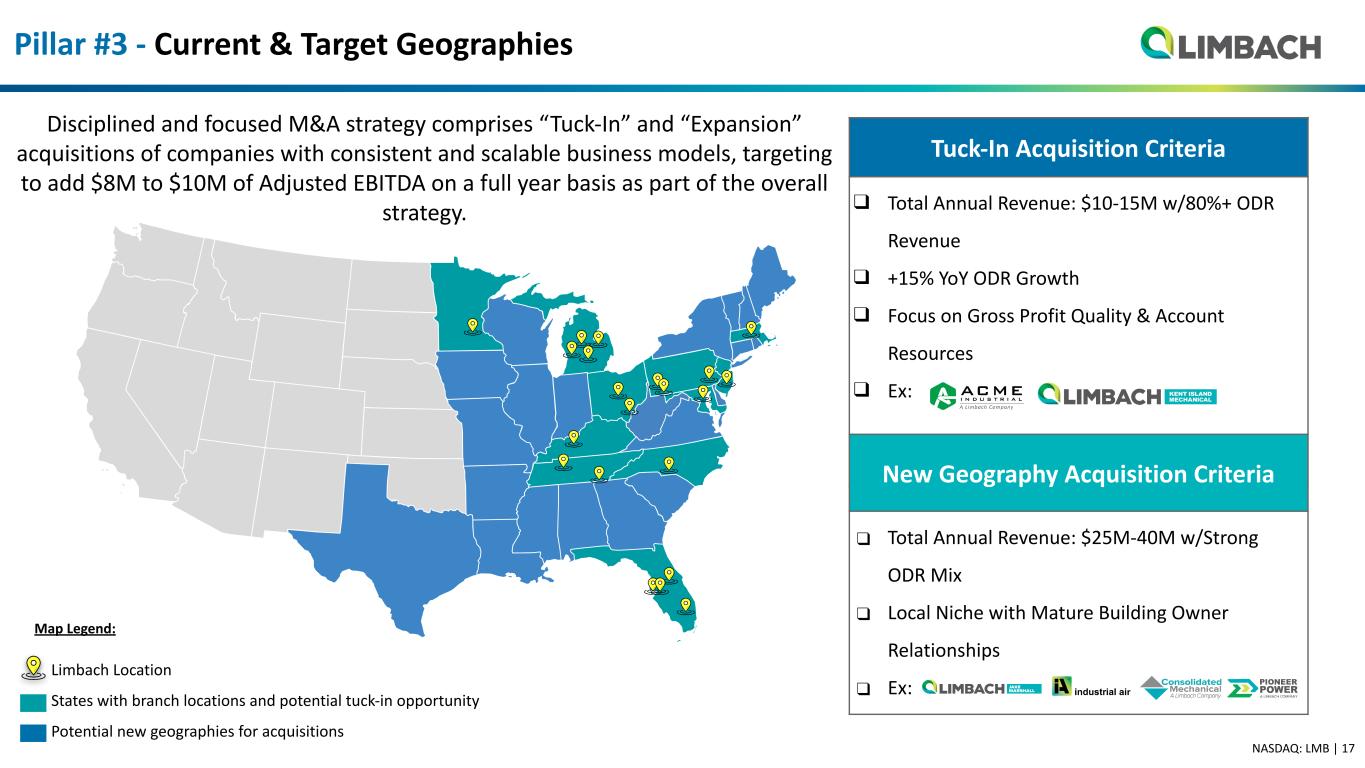
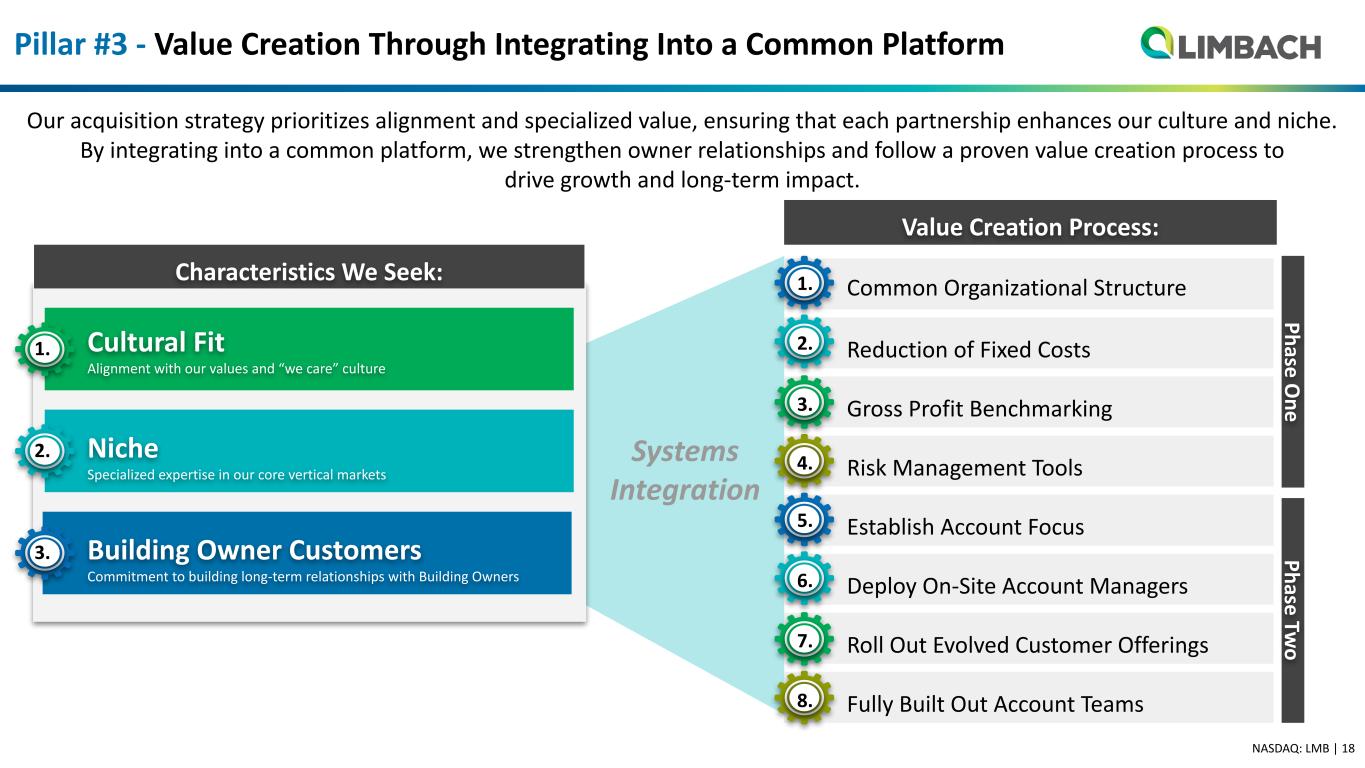
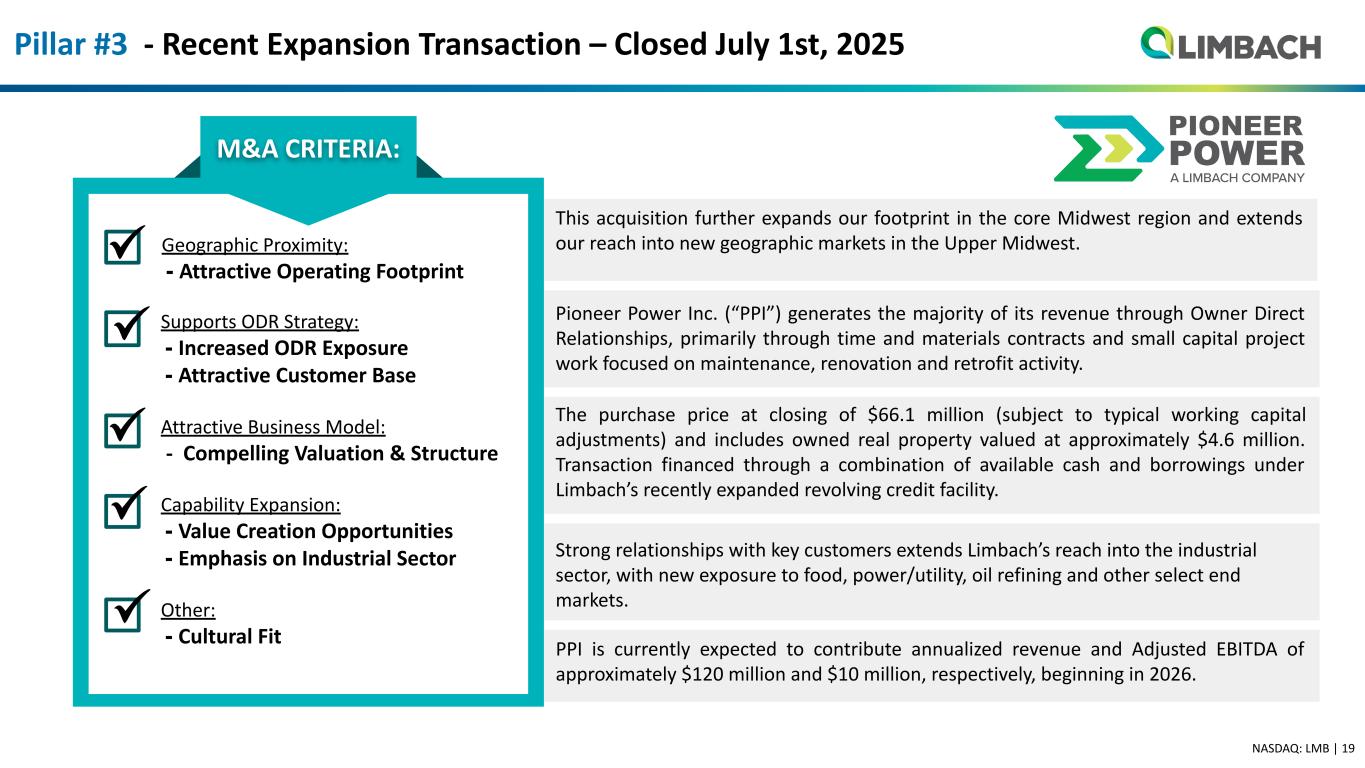
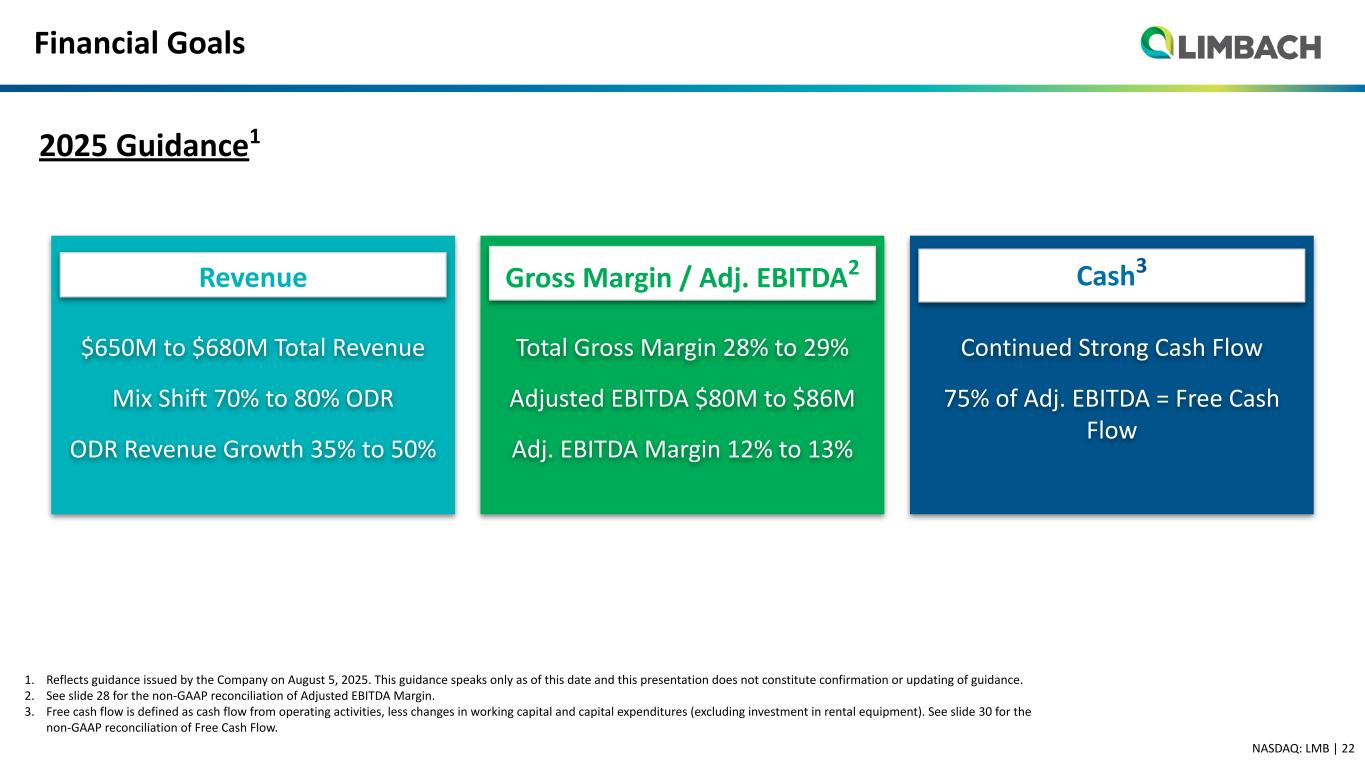
Good morning and welcome, everyone. Thank you for joining us today. Limbock plays a critical role in ensuring the reliability of mission-critical infrastructure within our customers' buildings and facilities. Our expertise lies in optimizing and sustaining the performance of existing systems so they function flawlessly, especially when the stakes are high. As we've consistently noted before, our growth and expansion strategy is anchored by three key initiatives. Number one, scaling our ODR business organically as we become a trusted partner to our customers. Number two, driving profitability through enhanced product and service offerings. And number three, making strategic acquisitions that expand our market presence and brand. Since we started our shift from GCR to ODR, ODR revenue as a percentage of total revenue has increased from 21% in the second quarter of 2019 to 76.6% in the second quarter of 2025. For the first half of 2025, ODR represented 72.4% of total revenue, which is in line with our 2025 guidance of between 70% and 80%. This strategy is driving margin expansion and earnings growth, while also enhancing our risk profile. Over the past year, we have begun to implement this land and expand strategy, which we believe will fuel Limbock's next phase of growth. As a result of organic growth and strategic acquisitions over the past several years, we now have 21 locations and customers in 17 metropolitan service areas, or MSAs. This includes several national customers with multiple locations across different states and complex maintenance needs, given the mission-critical nature of their businesses. Our results continue to reflect the meaningful progress we've made in this transformation. Compared to the year-ago period, second quarter 2025 total revenue grew 16.4 percent, ODR revenue rose 31.7 percent, gross profit increased by 18.9 percent, and adjusted EBITDA grew 30%. Damon will go into more details on the financials shortly, but we're pleased with the strong, consistent momentum we've achieved over the past six years. Turning to the broader environment, we continue to navigate ongoing macroeconomic uncertainty with performance varying across end markets, operating primarily across six distinct verticals, provides diversification that helps us mitigate volatility and reduces reliance on any single industry. Next, I'd like to provide a quick update of what we are currently seeing in some of the key verticals we serve. In health care, deferred maintenance is driving quick or emergency repair replacement work. We are starting to have proactive discussions with customers to avoid emergencies. The goal is that even if some customers are reluctant to spend immediate dollars on short-term capital projects, we are helping them plan their spending for future years, and this gives us visibility into their future requirements. For industrial manufacturing customers, we are performing upgrades to existing manufacturing lines and providing labor for industrial shutdowns. These shutdowns are being performed as planned, and customers continue to invest in their facilities. In a life science and higher education, we primarily support our customers by maintaining essential systems, upgrading critical infrastructure, and minimizing downtime, especially in mission-critical environments. In higher education, we are currently seeing the majority of our revenue in laboratory-building environments. To support the ongoing expansion of ODR business, we've scaled our sales organization over the last year with the addition of 40 new salespeople, which primarily consists of on-site account managers. This marks a pivotal evolution in our go-to-market strategy and how we engage with customers, emphasizing a deeper understanding of their facilities and anticipating their operational needs. To support our expanding sales team, we recently hired Amy Dorsett as Senior Vice President of Sales. Amy brings over 20 years of experience as a strategic, results-driven sales leader with expertise in business development and client relationship management. She has a proven track record of expanding business portfolios and strengthening existing relationships to drive sustainable growth. Her prior roles include sales leader positions for major OEMs, including Honeywell, Crane, and Johnson Controls, while consistently delivering high-impact results. We're excited to welcome Amy to the Limbaugh team. This type of expertise will be instrumental in advancing our national account capture strategy and enhancing the capabilities of our existing sales staff, particularly in developing capital plans with building owners and driving proactive sales and training. AMU will also play a key role in supporting our vertical market focus. Our sales efforts are intentionally concentrated on existing customers that have complex, high-demand facilities that require ongoing system enhancements and continuous upkeep. We believe our current footprint represents just a fraction of the total opportunity within these environments. Importantly, our growth isn't dependent on new construction. It's driven by the reoccurring needs of longstanding customers. These relationships offer the greatest potential for organic growth, and our account teams are committed to strengthening them further through reliable service, proactive engagement, and high-impact solutions. One of our major initiatives for 2025 is strategically expanding from a reactive support model to a proactive partnership approach. Our goal is to play a more strategic role in shaping customer budgets ahead of the next planning cycle to turn OPEX spend or small, quick-hitting or emergency projects into proactive capital programs. We believe this evolution will not only deepen our customer relationships, but also enhance visibility and predictability to our sales pipeline. Transitioning from an OPEX-type spend to a capital program isn't an immediate and could take typically 6 to 12 months. It could require a facility assessment, energy benchmarking, and or asset spend analysis. Additionally, these capital programs are typically sold to the C-suite or VP level within an organization as part of an overall budget, as opposed to OpEx spend, which is sold at the facility manager level based on existing budget. Our approach is to have a local and or national account exec working with the on-site account managers to develop the program, deliver this financial sale to the customer. With Amy's executive presence and sales expertise, we are confident in our ability to help coach our sales team to turn a technical sale into a financial sale. As an example, we were recently hired by a national healthcare owner to perform energy and facility assessments for over 20 different properties. Our sales team will conduct the assessments and then present capital project solutions that help build this customer's long-term spending program. Projects won't be immediate, but this important work should set up for several years of spend that will be more predictable than OpEx reactive spend. The second element of our growth strategy, focusing on broadening our service portfolio to position Limbock as a one-stop shop for building owners to capture rising customer demand and tap into higher margin opportunities. Last quarter, we invested approximately $2 million to expand our climate control rental fleet, positioning ourselves to meet seasonal demand as temperatures climb. This initiative represents a growth opportunity and highlights our commitment to evolving beyond conventional service lines. We continue to make investments to drive ODR revenue growth and increase our value to these customers. Offering such as digital solutions that manage and monitor the performance of building systems, including data analytics, energy consumption, and sustainability, will allow us to develop new revenue streams, leverage our professional service capabilities to support multi-location regional and national customers in core and markets, and drive energy retrofit and performance optimization for building owners. The third part of our strategy is M&A. We remained active. In July, we completed our largest acquisition to date with the addition of Pioneer Power. As a reminder, Pioneer provides industrial and institutional mechanical solutions to the healthcare, food, power, utility, and oil overfinding, and other verticals in the greater Twin Cities region in the upper Midwest. This transaction directly aligned with our discipline acquisition criteria. Pioneer brings specialized expertise in our core verticals, and the majority of their business is already focused on working directly with building owners. Additionally, Pioneer expands our footprint in the core Midwest and extends our reach into a new geographic market in the upper Midwest, bringing our MSAs to 17. Its technical capabilities and service offerings complement ours, and we see strong cultural compatibility between our teams. We are excited to welcome Pioneer's approximately 300 colleagues to our family. The integration process is well underway in terms of systems and operational processes, and our teams are already working together. Since going public in 2016, we have completed six highly selective acquisitions, each the result of discipline diligence and strategic fit analysis. and have continuously fine-tuned our integration process with every transaction. Behind those six deals are dozens of opportunities we have deliberately passed on, whether due to valuation, limit of strategic alignment, or concerns around cultural fit. Our proven integration playbook unfolds in two distinct phases. Phase one focuses on system integration, driving fixed cost reduction, and leveraging a unified organizational structure and common platform. In addition, we apply gross profit benchmarking and implement robust risk management tools in an effort to ensure operational efficiency and financial discipline. This is typically a one-to-two-year process. During Phase 2, we establish targeted account strategies, deploy on-site account managers, and introduce involved Limbox offerings. We also complete the full build-out of dedicated account teams to deepen customer engagement. The duration of Phase 2 can take between two to four years. Through these ever-evolving value creation actions, our goal is to enhance Pioneer's performance and eventually bring its margins in line with ours, ultimately creating additional stockholder value by acquiring a scalable business and an attractive multiple. We are prioritizing the successful integration of Pioneer while we continue to build and monitor an active M&A pipeline for the future. Overall, our acquisition strategy is grounded in a thoughtful, methodical approach, targeting high-quality companies that align with our values and we-care culture that are committed to building long-term relationships with building owners and delivering essential solutions. This strategy has yielded meaningful results for us. At the same time, we've worked to build the Limbock brand in the market as a trustworthy and principled partner. Our goal is to become the first choice for distinguished enterprises looking to join a bigger platform. With a strong pipeline of opportunities, we expect strategic M&A will continue to play an important role and our growth strategy, I would now like to turn to guidance, where we have revised our 2025 outlook. For the full year, we anticipate generating between $650 and $680 million in revenue, with adjusted EBITDA projected in the range of $80 to $86 million. While integration efforts remain on track with Pioneer, this represents the largest acquisition in our history as a public company. We are approaching our initial projections with a conservative measured outlook. As we gain greater visibility over the coming months as we work through Phase 1, of the integration of Pioneer, we expect to provide an update on the next quarterly call. Additionally, revenue-adjusted EBITDA contributions for the company are not expected to be evenly distributed between the third and fourth quarters, as we anticipate a heavier weighting towards Q4. In summary, we are gaining strong momentum and remain committed to creating long-term value for building owners by fostering enduring relationships and becoming an indispensable partner in managing their mission-critical systems. Once again, by operating at 17 MSAs and six independent verticals, we ensure there's no single market defines our trajectory. This structure enables us to absorb location or sector-specific fluctuations while sustaining consistent performance across cycles. For the balance of 2025, our key priorities are threefold. First, drive top-line revenue growth. Second, expand relationships through evolved solutions, which requires training of the Salesforce to evolve a technical sale into a financial sale. And number three, continue the execution of phase one of the Pioneer integration and building our acquisition pipeline. Now I'll turn over to Jamie to walk through the financials.
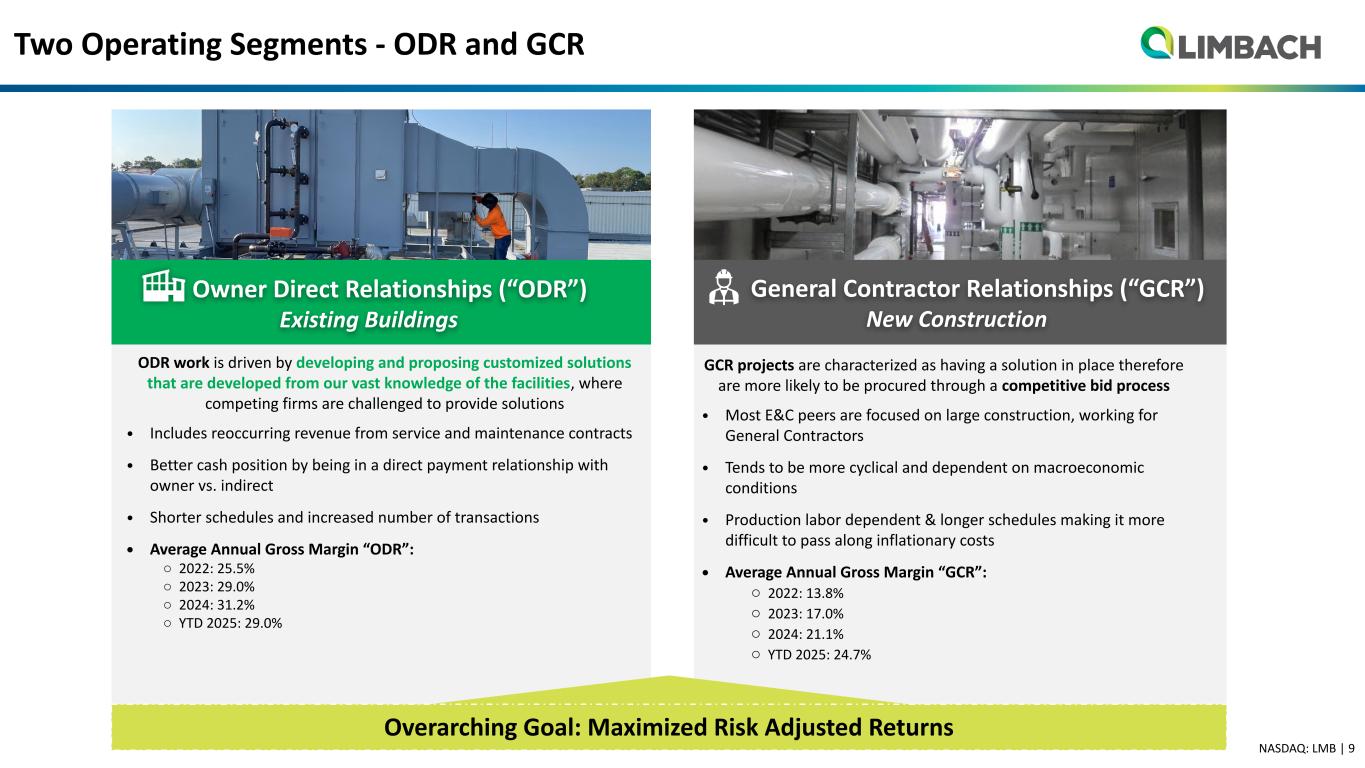
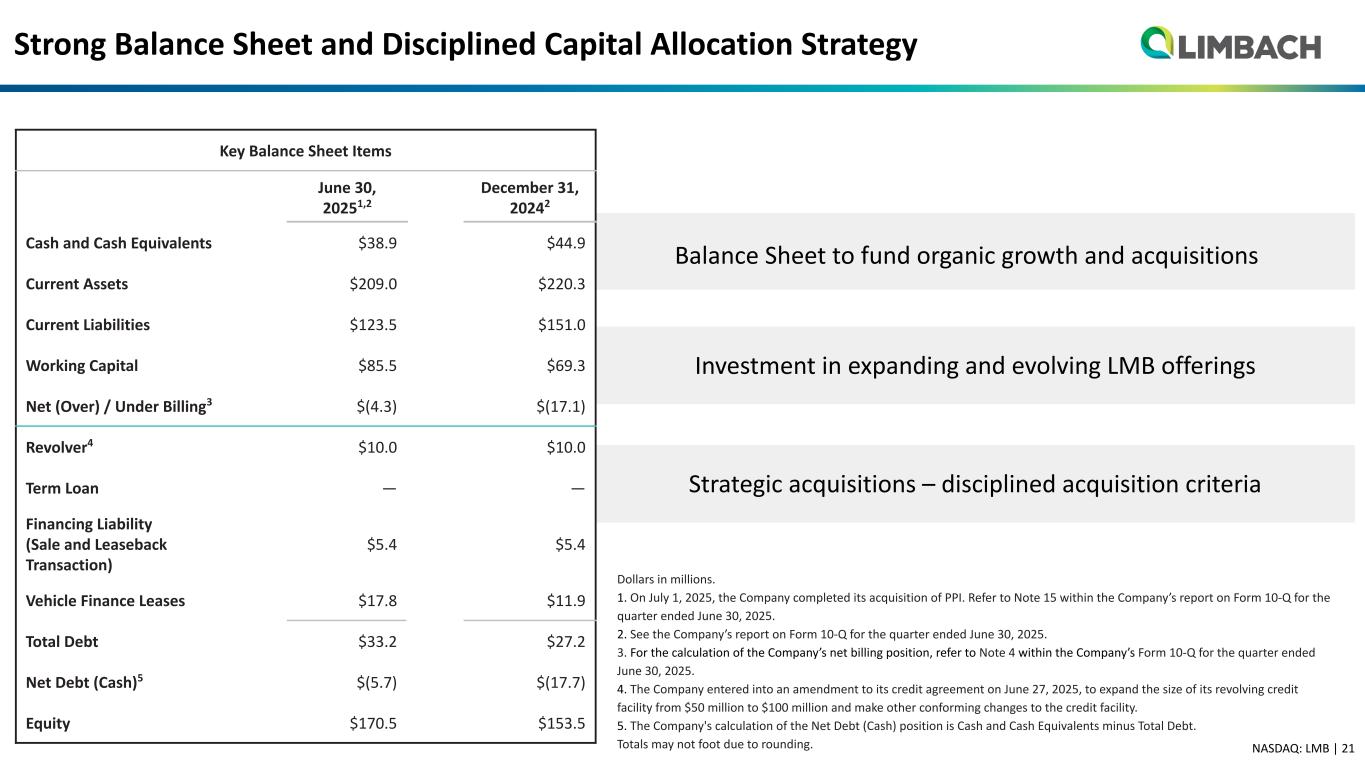
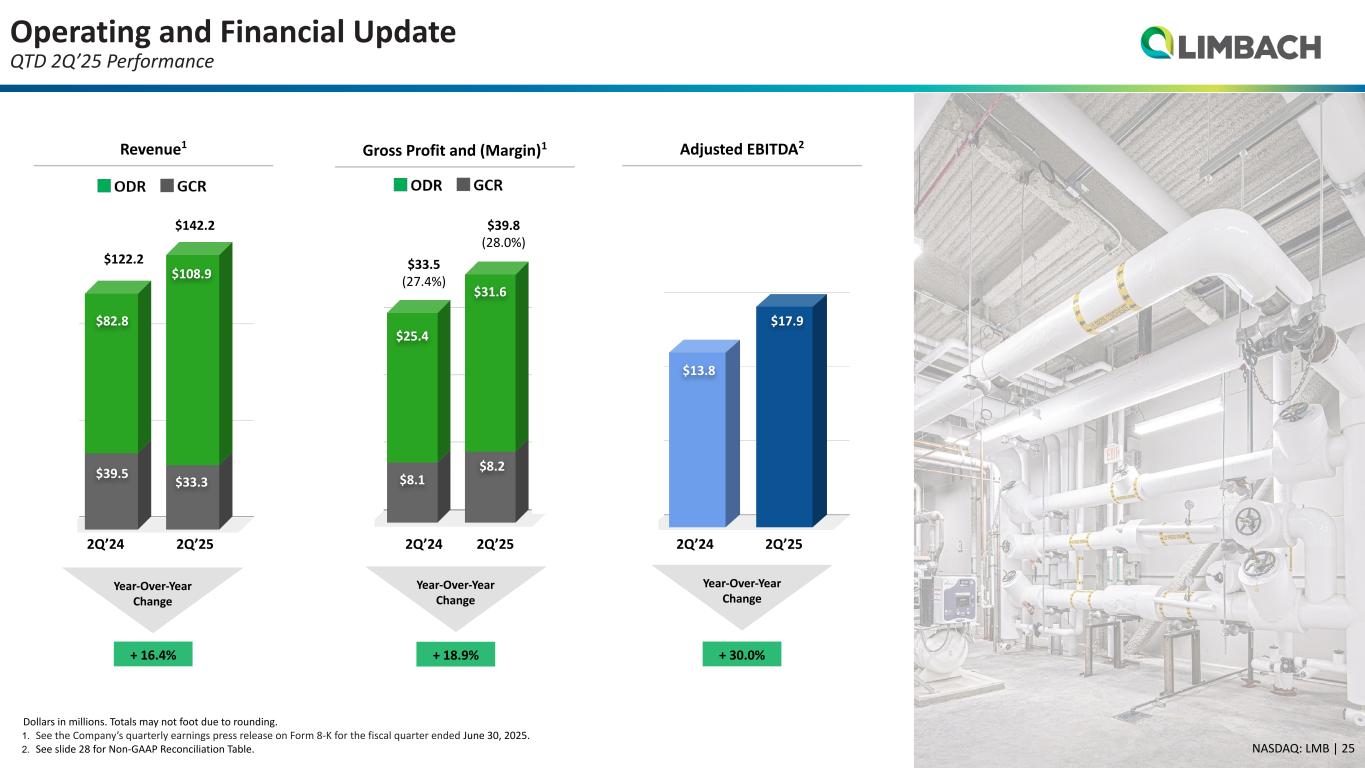
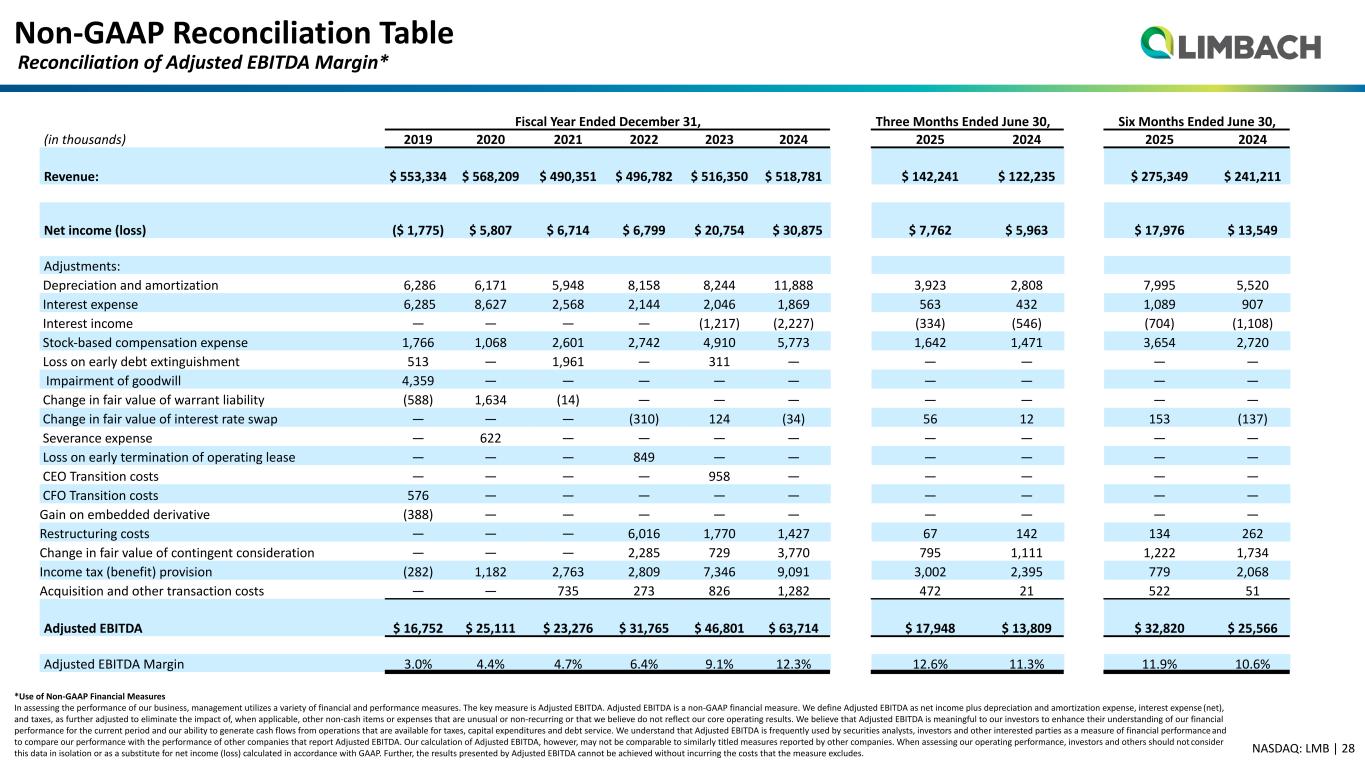
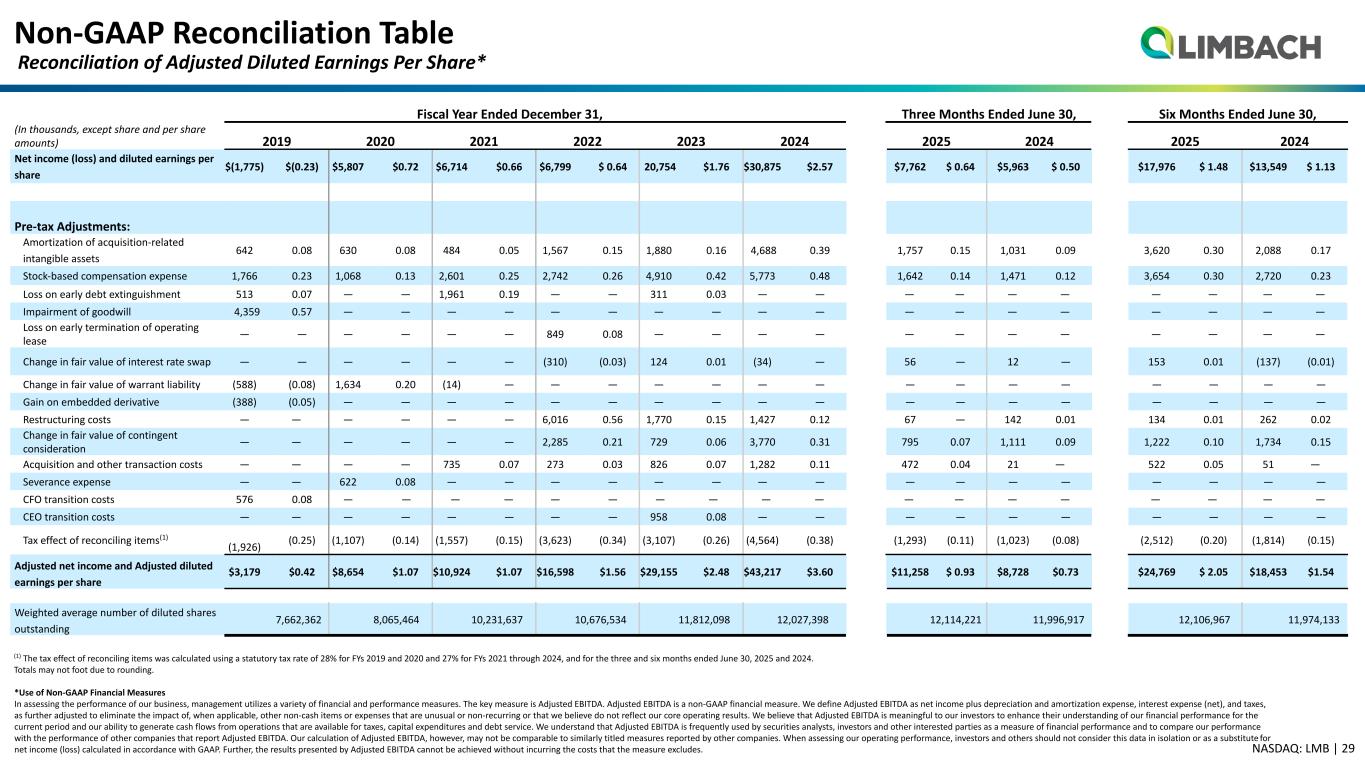
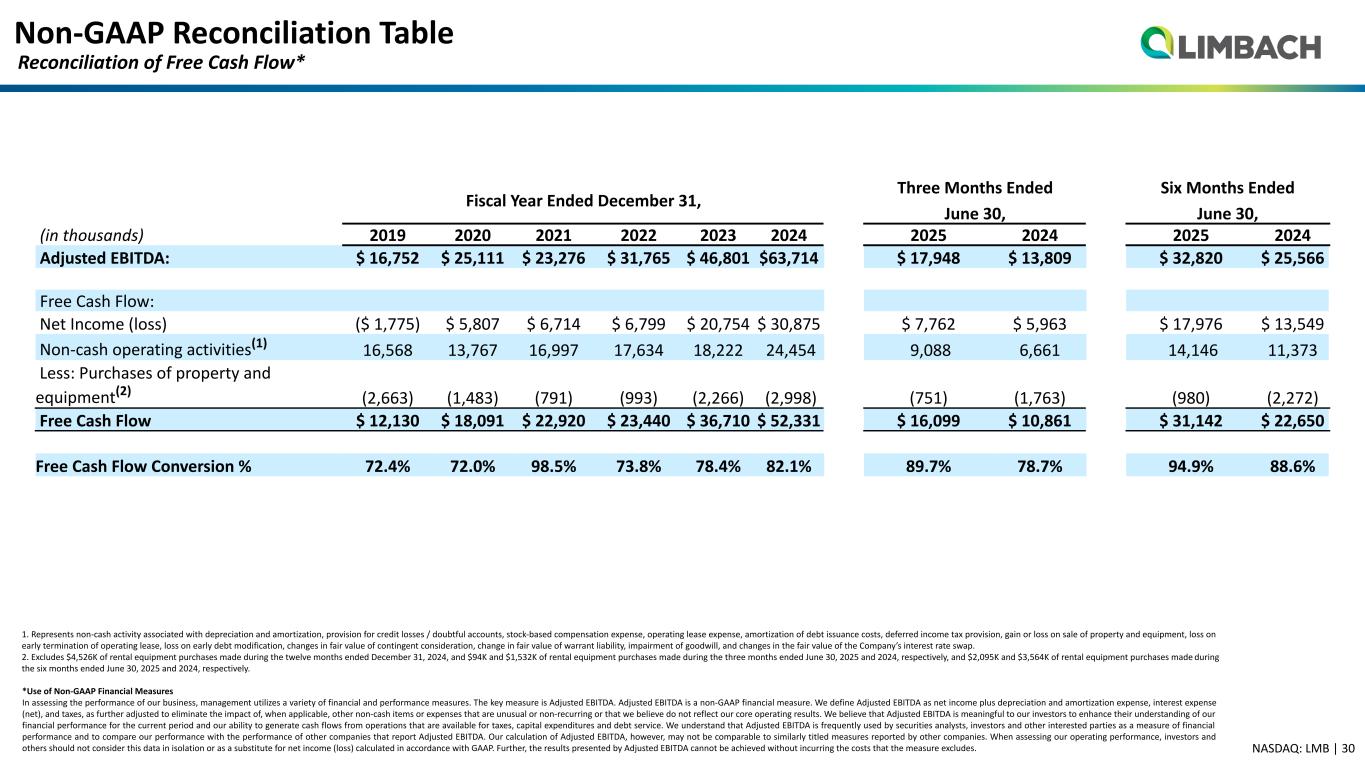
Thank you, Mike. Our Form 10-Q and earnings press release filed yesterday provide comprehensive details of our finance results, so I will focus on the highlights of the second quarter all comparisons are second quarter 2025 versus second quarter 2024 unless otherwise noted in the second quarter we generated total revenue of 142.2 million compared to 122.2 million in 2024. total revenue growth was 16.4 percent while ODR revenue grew 31.7% to a quarterly record of $108.9 million and GCR revenue declined 15.7%. As we have said before, the GCR revenue decline is intentional as we execute our makeshift strategy towards ODR. ODR revenue accounted for 76.6% of total revenue for the second quarter, up from 67.7% in Q2 2024. Total gross profit for the quarter increased 18.9% from $33.5 million to $39.8 million, reflecting the ongoing growth of our ODR segment. Total gross margin on a consolidated basis for the quarter was 28%, up from 27.4% in 2024, driven by the combination of higher-margin ODR revenue and higher-quality GCR projects. ODR gross profit comprise 79.3% of the total gross profit dollars, or a quarterly record of $31.6 million. ODR gross profit increased $6.2 million, or 24.6%, driven by higher revenue, despite lower ODR segment margins of 29% compared to 30.6%, resulting from certain ODR-related project write-ups recognized in the period last year that did not recur in the current period. BCR gross profit increased 0.1 million, or 1.1%, due to higher margins of 24.7% compared to 20.6%, driven by our focus on higher quality projects despite lower revenue. SG&A expense for the second quarter was $26.6 million, an increase of approximately $3.5 million from $23.2 million. This increase includes the addition of the 40 new salespeople Mike mentioned earlier and SG&A associated with Kent Island and Consolidated Mechanical that were not part of the company during the second quarter of 2024. As a percentage of revenue, SG&A expense was 18.7%, down from 19% in the same period last year. We continue to currently expect SG&A for 2025 to be in the target range of 18 to 19% of revenue due to our ongoing investment in growing the ODR business. Adjusted EBITDA for the quarter was $17.9 million, up 30% from $13.8 million in Q2 2024. Adjusted EBITDA margin was 12.6% compared to 11.3% in Q2 last year. Net income for the quarter increased 30.2% from $6 million to $7.8 million and earnings per diluted share grew 28% from $0.50 to $0.64. Adjusted net income grew 29% from $8.7 million to $11.3 million, and adjusted earnings per diluted share grew 27.4% from $0.73 to $0.93. Turning to cash flow, our operating cash inflow during the second quarter was $2 million compared to $16.5 million during the second quarter last year, primarily due to the timing of billings that impacted changes in working capital. Free cash flow, defined as cash flow from operating activities, less changes in working capital and capital expenditures, excluding our investment in additional rental equipment, was $16.1 million in the second quarter compared to $10.9 million in Q2 last year, representing a $5.2 million increase. The free cash flow conversion of adjusted EBITDA for the quarter was 89.7% versus 78.7%. For full year 25, we currently continue to target a free cash flow conversion rate of at least 75 percent and expect capex to have a run rate of approximately four million dollars primarily due to the acceleration of our odr strategy this amount excludes an additional investment of 3.5 million in rental equipment for 2025 of which 2.1 million occurred in the first half of the year turning to our balance sheet As of June 30th, we had $38.9 million in cash and cash equivalents, and total debt of $33.2 million, which includes $10 million borrowed on our revolving credit facility at a hedge rate of 5.37%. At the end of June, we expanded our revolving credit facility from $50 million to $100 million and utilized our expanded credit facility as part of the Pioneer acquisition on July 1st. With the expanded facility and our expected cash generation from the business, we believe our balance sheet remains strong, and we believe we are well-positioned to support our community organic growth initiatives and strategic M&A transactions. That concludes our prepared remarks. I'll now ask the operators to begin Q&A.
Speaker 0
Thank you. Ladies and gentlemen, we will now be conducting a question and answer session. If you would like to ask a question, please press star and 1 on your telephone keypad. A confirmation tone will indicate your line is in the question queue. You may press star and 2 if you would like to remove your question from the queue. For participants using speaker equipment, it may be necessary to pick up your answer before pressing the star keys. Ladies and gentlemen, we will wait for a moment while we poll for questions. Our first question comes from Chris Moore with CJS Securities.
Please go ahead. Hey, good morning, guys. Thanks for taking a couple. Maybe we can start with gross margins, so specifically on the GCR side, I think 24.7% the last two quarters. I was modeling a pretty good decline moving forward, and I know you've got higher quality projects. I just wonder how we should be thinking about them, you know, this year and next year, you know, kind of ultimately, what's a normalized level there?
Yeah, just from a high-level perspective, we've been really focused, like you said, on the quality to make sure that whatever work that gets sold from a GCR perspective, those opportunities are embedded.
They make sense for the overall business as well, too. proper risk management a lot of stuff that we've learned over the years as well too said that's part of obviously from a margin perspective but kim do you want to touch upon long term yeah i mean yeah if you look back over the you know the past year it'll ebb and flow by each quarter um so from a you know a long-term perspective we really only guide to the total to the total revenue as a gross profit line of being that 20 to 29 percent for 2025. And so, you know, you'll just see it as a flow based on how the projects burn in each quarter.
Got it. And I appreciate that. And maybe staying with that theme for a second. Pioneer now being in the mix, it's fair to say that the – I don't think you've broken out the ODR versus GCR. I think they're both significant. The gross margins contribution from Pioneer, at least for the next few quarters, would be diluted to gross margins overall.
Yes, so Pioneer definitely, that's how we do our value creation is adding, you know, going in and being able to increase those gross margins. So, yes, compared to where we're at, you could expect that in the, you know, short term as we're going through our integration process and then rolling out our strategy.
And, Chris, I think, you know, we're really, you know, obviously we're in our first little bit more than 30 days at this point. We're really focused on that phase one integration piece, which goes into getting our systems in place, gross profit benchmarking, getting everybody on that first standard platform as well, too. We're taking a real measured approach from that perspective and applying all of our lessons learned as well, too. So, you know, every time we do a deal, we continue to tweak and learn from them and think about from that value creation process. And that's definitely the stage that we're at with Pioneer right now.
Perfect. Maybe I'll sneak just one last one in more big picture. Mike, you walked through the verticals. Obviously, healthcare, key driver, industrial manufacturing. You know, I think Pioneer brings much there. Is there one vertical, you know, that has a chance to become much more important beyond those two over the next two to three years?
Yeah, I mean, we've learned that it's even within these verticals, it's got to be mission critical. So I think that's almost like when I think about like what the expansion beyond, you know, we're really focused on these six. It's really the mission criticality nature of it. You know, we've really taken a super measured approach from that perspective. Healthcare is important from every single, from a marketplace perspective, but I would also say as we continue to kind of look forward to future acquisitions, Pioneer provides us from a manufacturer industrial. I think as we look for different acquisitions, whether in the Midwest or Southeast, they're going to give us some additional exposure from a footprint, from a vertical market perspective. So, definitely the mission criticality nature of working with customers, a lot of our big push right now is trying to transition, you know, that short-term OPEC spend into long-term capital programs, and that's going to really allow us to have a lot of visibility going forward. I think that's really going to be across, you know, all six verticals, but those three that I mentioned in the prepared marks are really our focus.
Got it. I appreciate it. I'll jump back in line. Thanks, Chris.
Speaker 0
Thank you. Our next question comes from Rob Brown with Lake Street Capital. Please go ahead.
Hi, good morning. I just wanted to get your kind of sense on the demand environment, how it's trending and sort of where you're seeing some of the strength.
Yeah, so maybe just to kind of look back from a vertical market perspective, you know, our model, and I think we've learned this more and more, is really about employing proactive sales. There's, you know, we're working with customers that have to spend money. They have to repair. Getting them to think not just reactive, but proactive, I think that's one thing that we are really super focused. So you think about it from a healthcare perspective, they have to make the repair. But discussing with them, setting up from a capital program perspective, that's something that we really have to work with. And just an example that we gave them prepared remarks was we had a national health care customer that we're doing assessments on 20, you know, about 20 locations. And this is when I think the combination from a local relationship turns into a national relationship and really expands from a capital program. That's 20 different locations across our footprint and nationally that allows us to have access in the future. So, so much of our strategy really relies on short-term actions turning into long-term demand. And those type of relationships, I think, are really going to allow us to really capitalize that and to have a sustainable long-term revenue source from these customers.
Okay, great. And then on the GCR kind of declines, I know that's been part of your strategy. But, you know, going forward, do you continue to see that business declining, or does that level off at some point and really maintain at this level?
You know, this year we're guiding to our 70% to 80% ODR, which obviously is 20% to 30% GCR. So we're really pushing the business to go to the higher margin owner direct business. You know, like anything, a lot of our locations, they're all on a different journey. as we bring in acquisitions, they may have a component of GCR as well too. So our goal is always to push towards owner direct, but depending on future acquisitions, stages of the business, that will kind of ebb and flow a little bit. But the focus has not changed and will not change to push towards owner direct.
Speaker 0
Okay, great. Thank you. Thank you. Our next question comes from Brian Brophy with Stiefel. Please go ahead.
Yeah, thanks. Good morning, everybody. Just a quick question on the guidance. Does the change only reflect the contribution from PPI, or was the organic kind of base number tweaked a little bit lower here as well? And if so, what drove the organic change?
Yeah, so from the guidance perspective, a lot of this has to do from a pioneer power. You know, it's our largest acquisition as a public company, so we want to make sure the initial projections are conservative and from a measured perspective. And I think as we go from kind of continue from a phase one perspective and kind of the steps that I talked about before, we're going to kind of take a look at that as we go forward.
And then I guess on the ODR backlog, it fell a little bit sequentially here. Is there anything to call out as notable drivers and just curious if you're seeing any sort of change in the demand environment or if this is more of just kind of a timing issue on the backlog?
Yeah, no, I think it's really timing based. You know, I think we have, you know, the backlog is a component of it. It's not the only component because we could end up burning work. It could be time of material work that goes very quickly through. I think what we're seeing is, again, I feel like it's our ability with customers that have to spend. That doesn't mean that it automatically translates to revenue from us, from our perspective. So I definitely think from a sales perspective, we're continuing to learn. I think one thing, too, that from our team, we've recently hired our Senior Vice President of Sales, Amy Dorsett. So I think our ability to translate OPEX into CAPEX, this hire has been a long time coming, but I think that's going to be something that's really pivotal from a go-to-market perspective as well, to using her expertise from various OEMs companies and to add a different element. I think a lot of times with customers, it's translating that technical type sale into a financial sale that involves return on investment type calculations. It's almost like a different language for our sales team. So, I think that's going to be a big thing, you know, as we go to 26 and 27 looking ahead from a sales perspective.
Okay. And you touched on some of this already, but in regards to some of the sales folks you've hired over the past couple of quarters, particularly the on-site account managers, just curious how that ramp up is going relative to expectations in terms of their contribution.
Yeah, I think anytime we bring somebody on, there's always a ramp up time. Occasionally, we'll be in a situation where we'll have somebody that perfectly lines up where their account is ready to go. I think as we learn going forward, we hope that that ramp-up time shortens. From what we've seen, I think relatively from an expectation perspective, the hires that we make to kind of get those true contributions, it takes a decent amount of time. So it's almost like you're making hires for really full-year contributions for the following year. So, we've done that the last three years and made a real big investment from a sales perspective. So, you know, as those accounts mature, as those salespeople mature in their experience level with the company, that's going to lead to a better return. And I think also it will help us from a ramp-up period. But generally, they performed where we thought they were going to perform.
Speaker 0
Thanks. Thank you. Ladies and gentlemen, as there are no further questions, I would now like to hand the conference over to Mike McCann for closing comments.
Thank you for listening today and for your continued interest in Limbock. We look forward to connecting with many of you soon. Coming up in September, we are attending the Lake Street Big Nine Conference in New York and the D.A. Davidson Diversified Industrials and Service Conference in Nashville. Have a great rest of your day.
Speaker 0
Thank you. This concludes today's teleconference. You may disconnect your lines at this time. Thank you for your participation.