Operator
Good morning and welcome to the LXP Industrial Trust fourth quarter earnings call and webcast. All lines have been placed on mute to prevent any background noise. After the speaker's remarks, there will be a question and answer session. If you'd like to ask a question during this time, simply press star followed by the number one on your telephone keypad. If you would like to withdraw your question, press star one again. I would like to turn the call over to Heather Gentry, IR. Please go ahead, Heather.
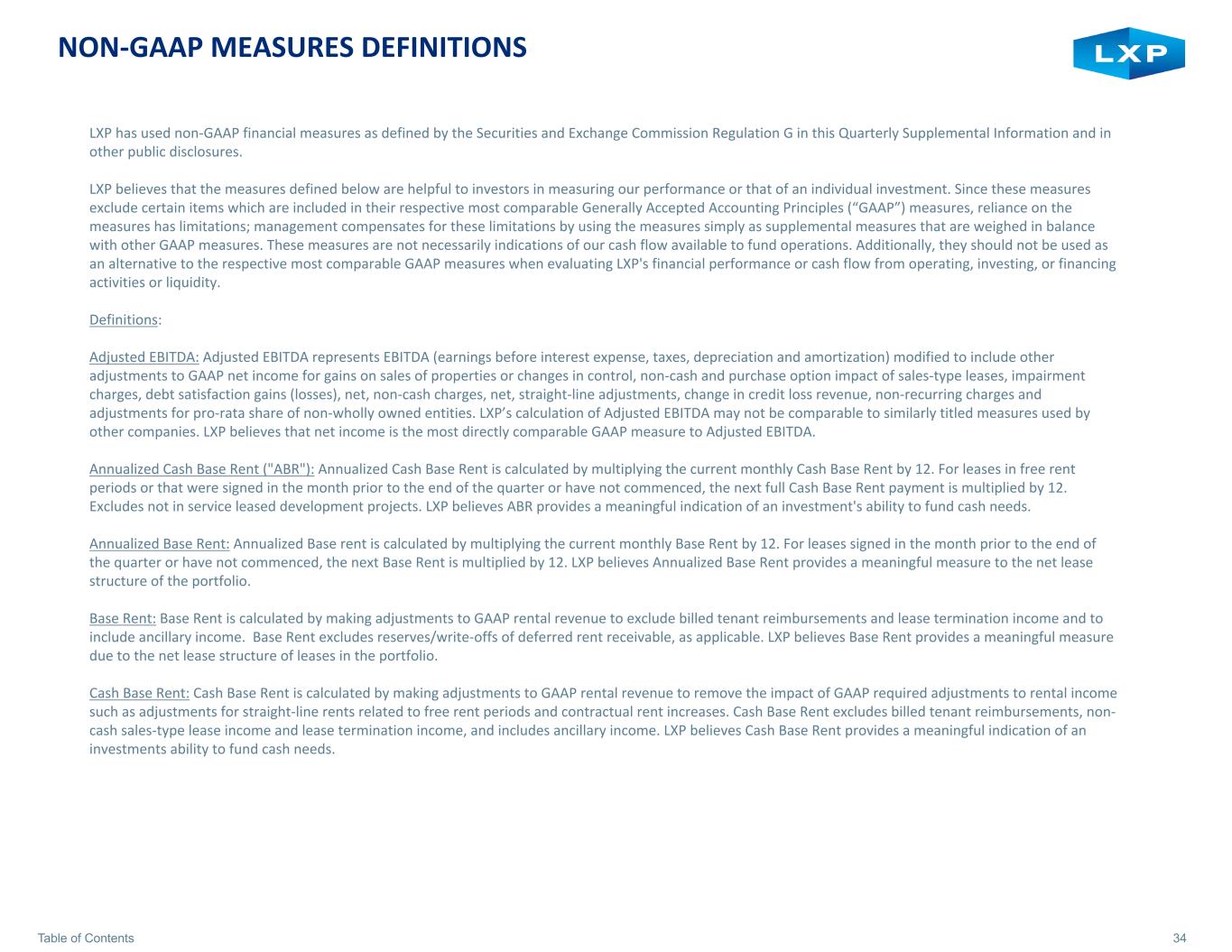
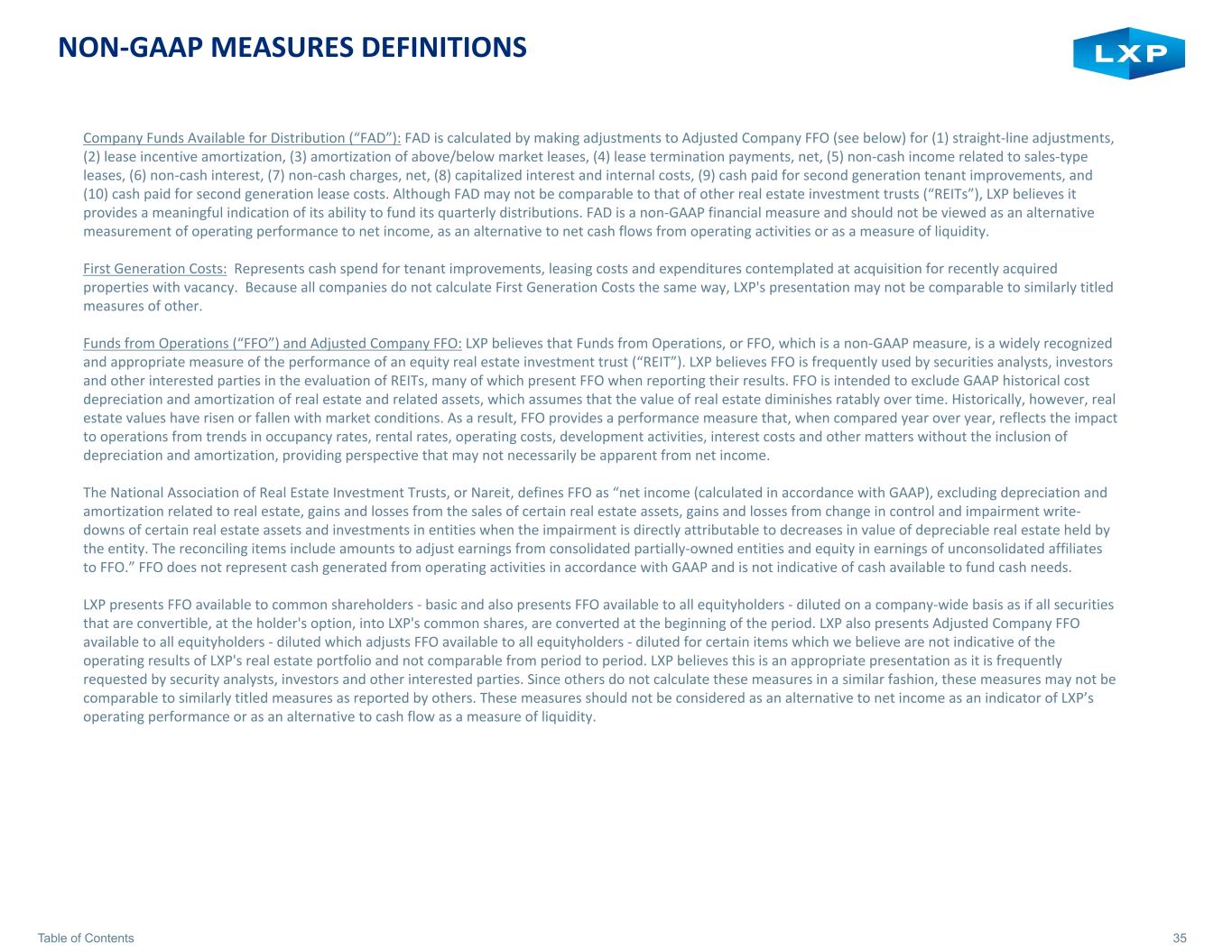
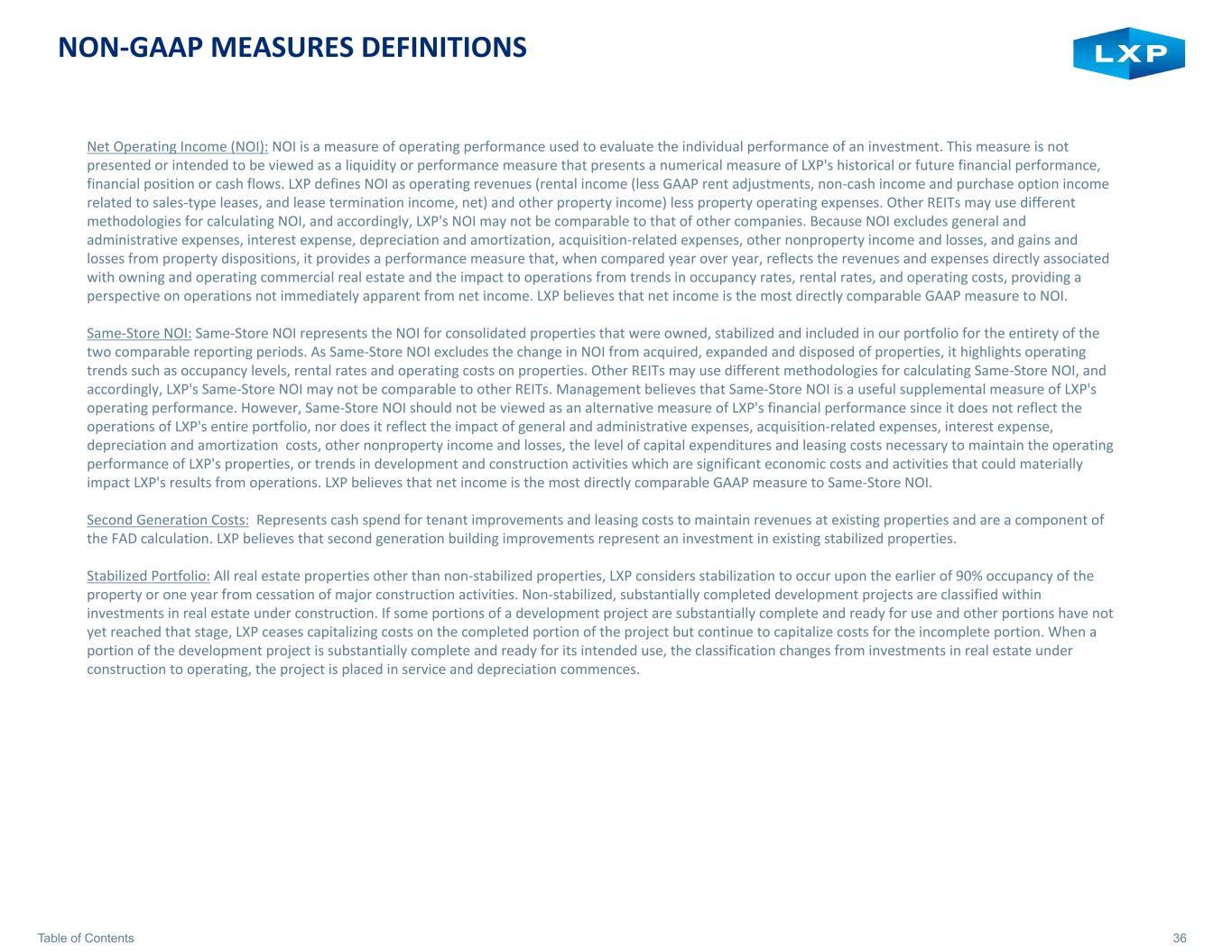
Thank you, operator. Welcome to LXP Industrial Trust's fourth quarter 2024 earnings conference call and webcast. The earnings release was distributed this morning and both the release and quarterly supplemental are available on our website in the investor section and will be furnished to the SEC on a form 8k. Certain statements made during this conference call regarding future events and expected results may constitute forward-looking statements within the meaning of the Private Securities Litigation Reform Act of 1995. LXP believes that these statements are based on reasonable assumptions. However, certain factors and risks, including those included in today's earnings press release and those described in reports that LXP files with the SEC from time to time could cause LXP's actual results to differ materially from those expressed or implied by such statements. Except as required by law, LXP does not undertake a duty to update any forward-looking statements. In the earnings press release and quarterly supplemental disclosure package, LXP has reconciled all non-GAAP financial measures to the most directly comparable GAAP measure. Any references in these documents to adjusted company FFO refer to adjusted company funds from operations available to all equity holders on a fully diluted basis. Operating performance measures of an individual investment are not intended to be viewed as presenting a numerical measure of LXC's historical or future financial performance, financial position, or cash flows. On today's call, Will Eglin, Chairman and CEO, Beth Bulleris, CFO, Brendan Mullins, CIO, and Executive Vice President James Dudley will provide a recent business update and commentary on fourth quarter results. I will now turn the call over to Will.
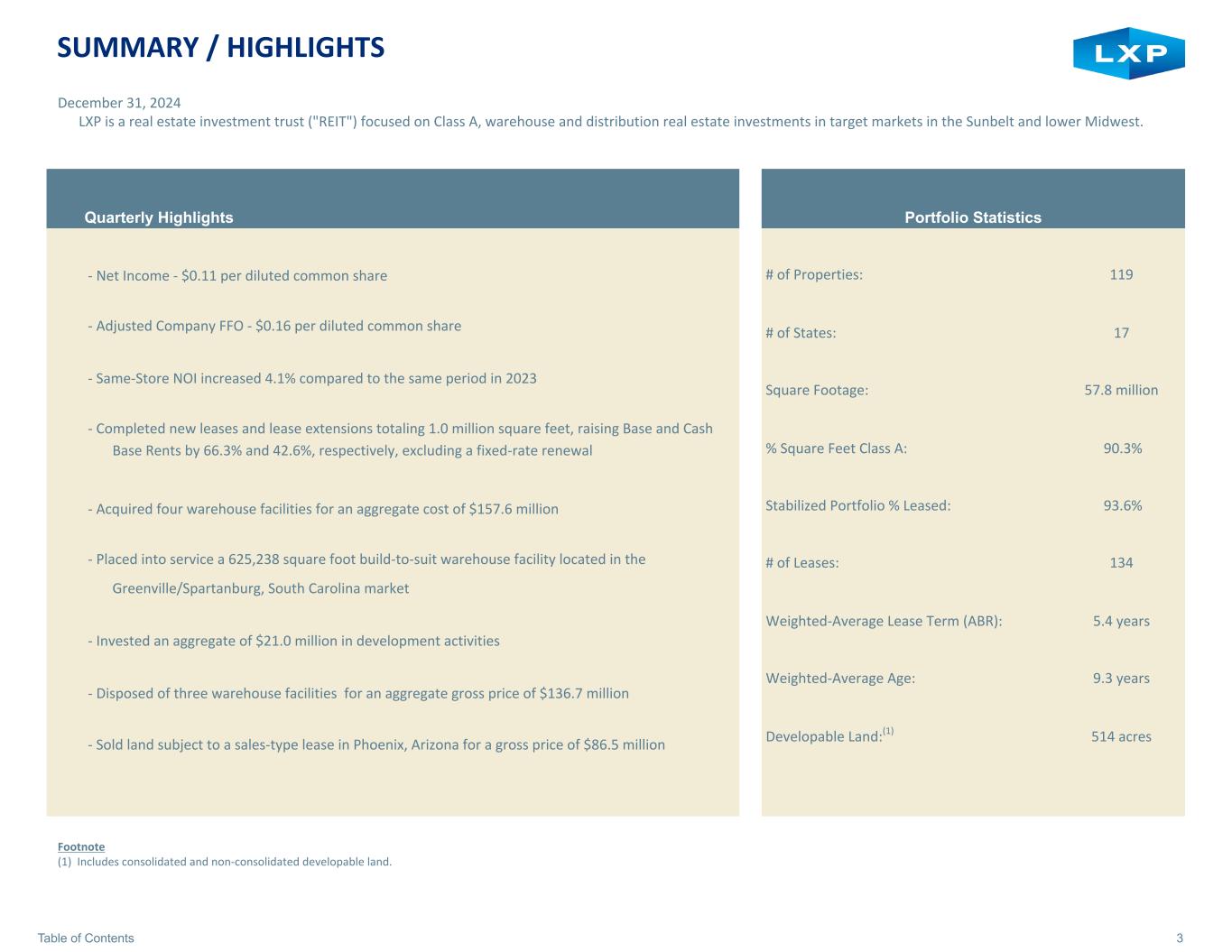
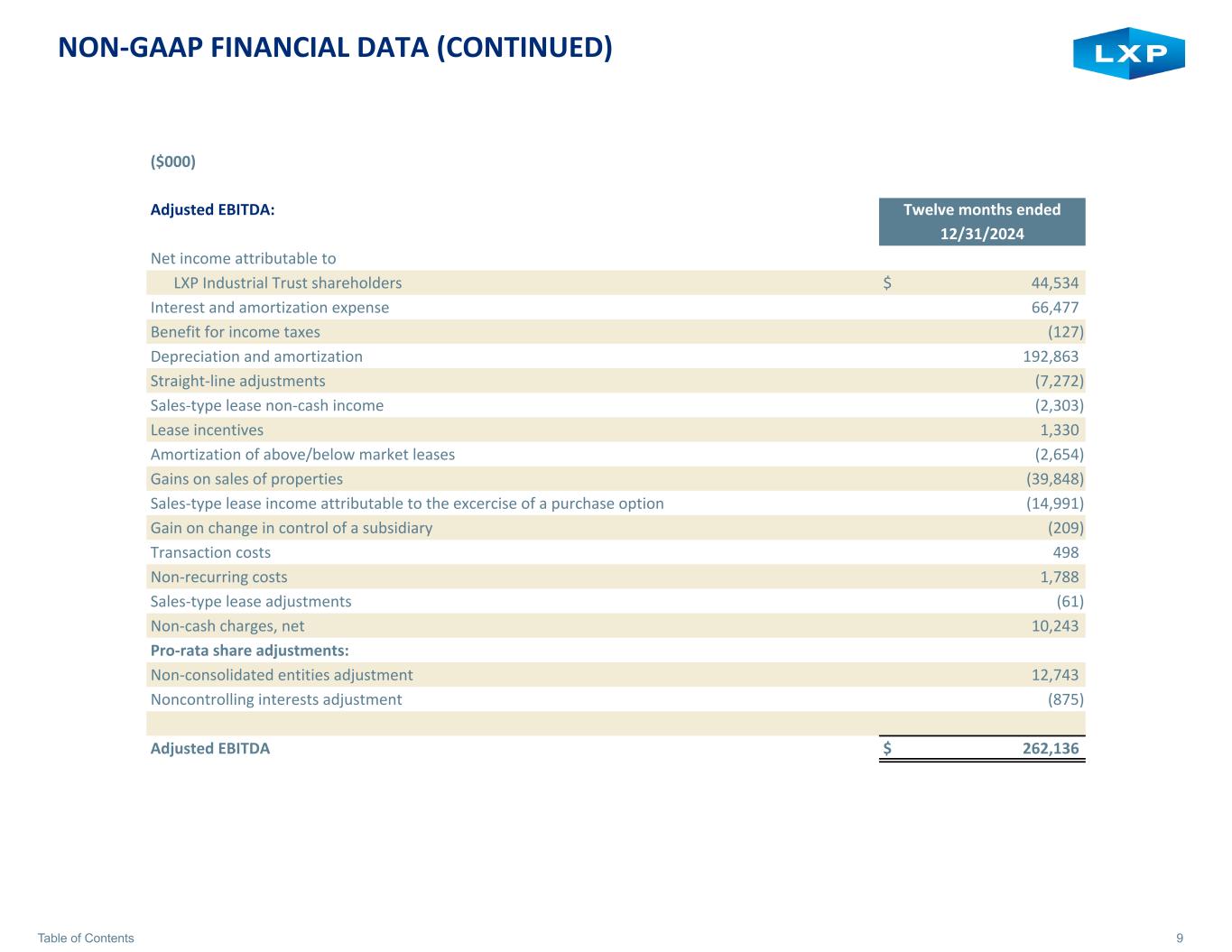
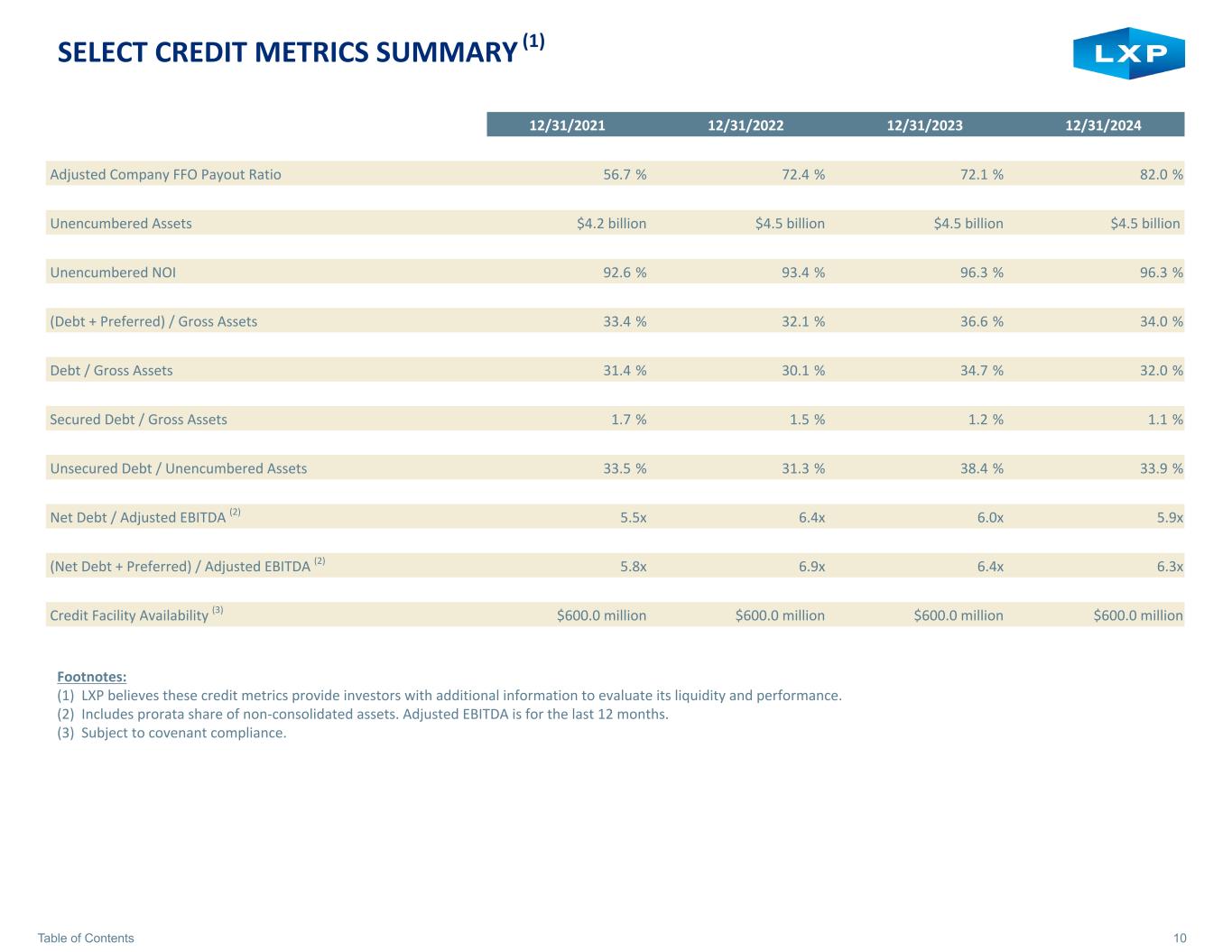
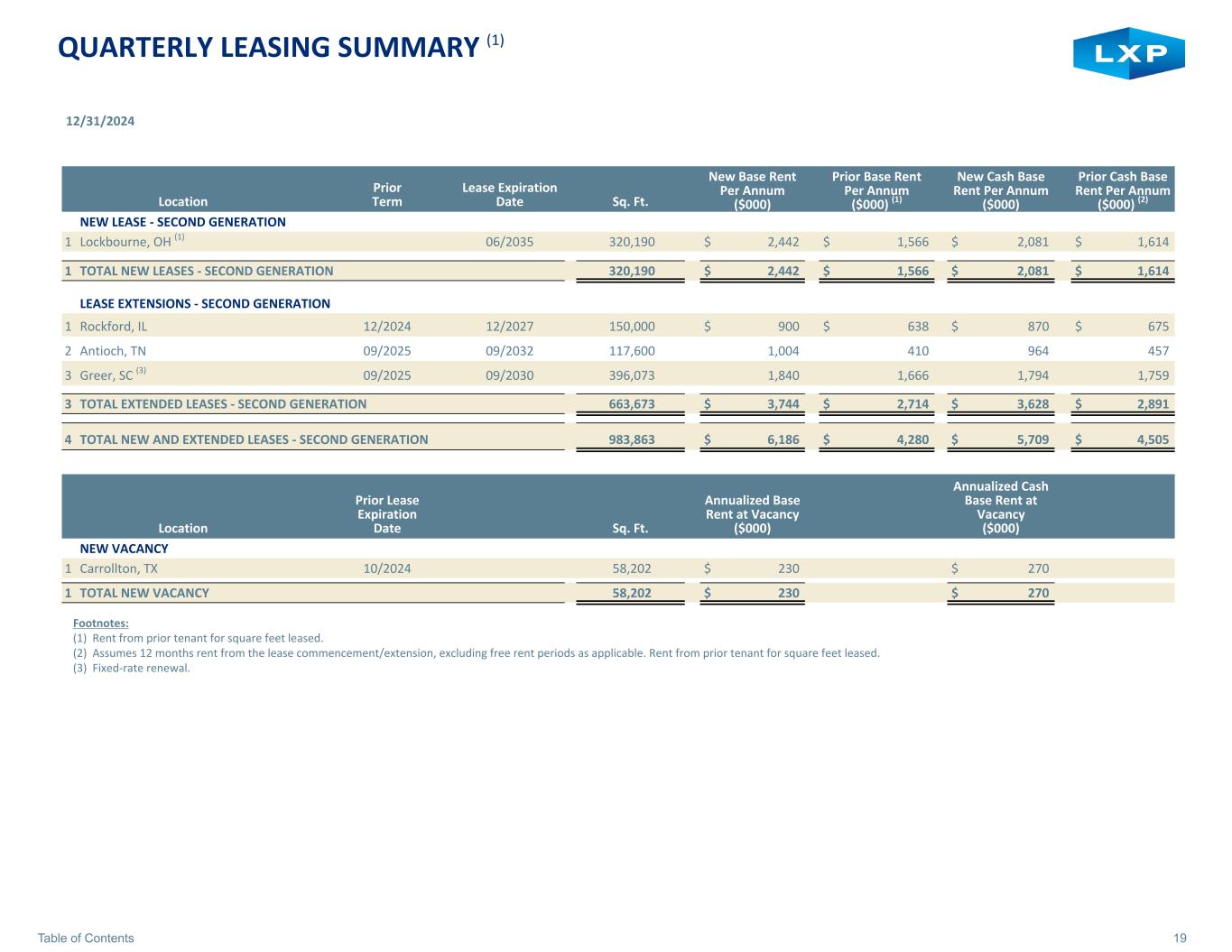
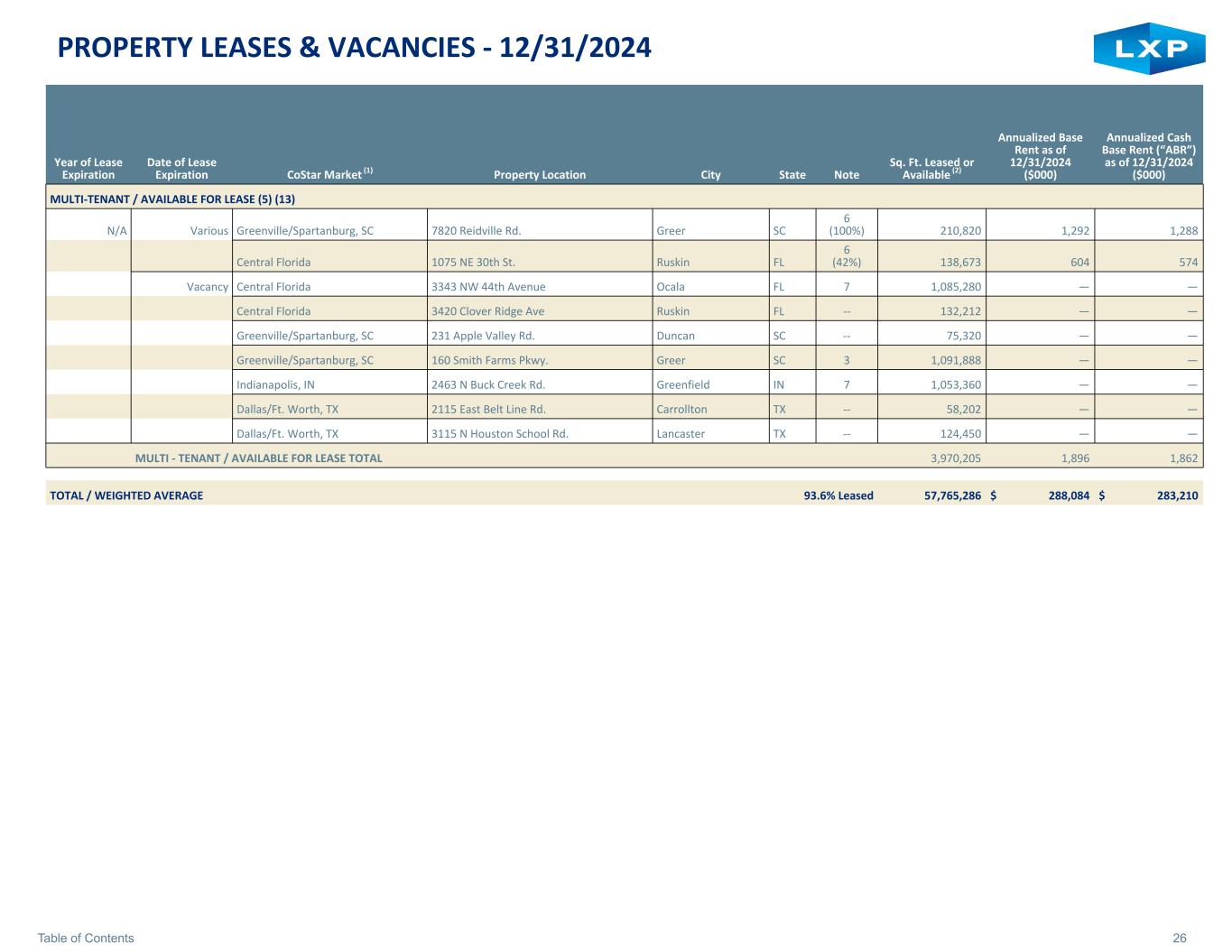
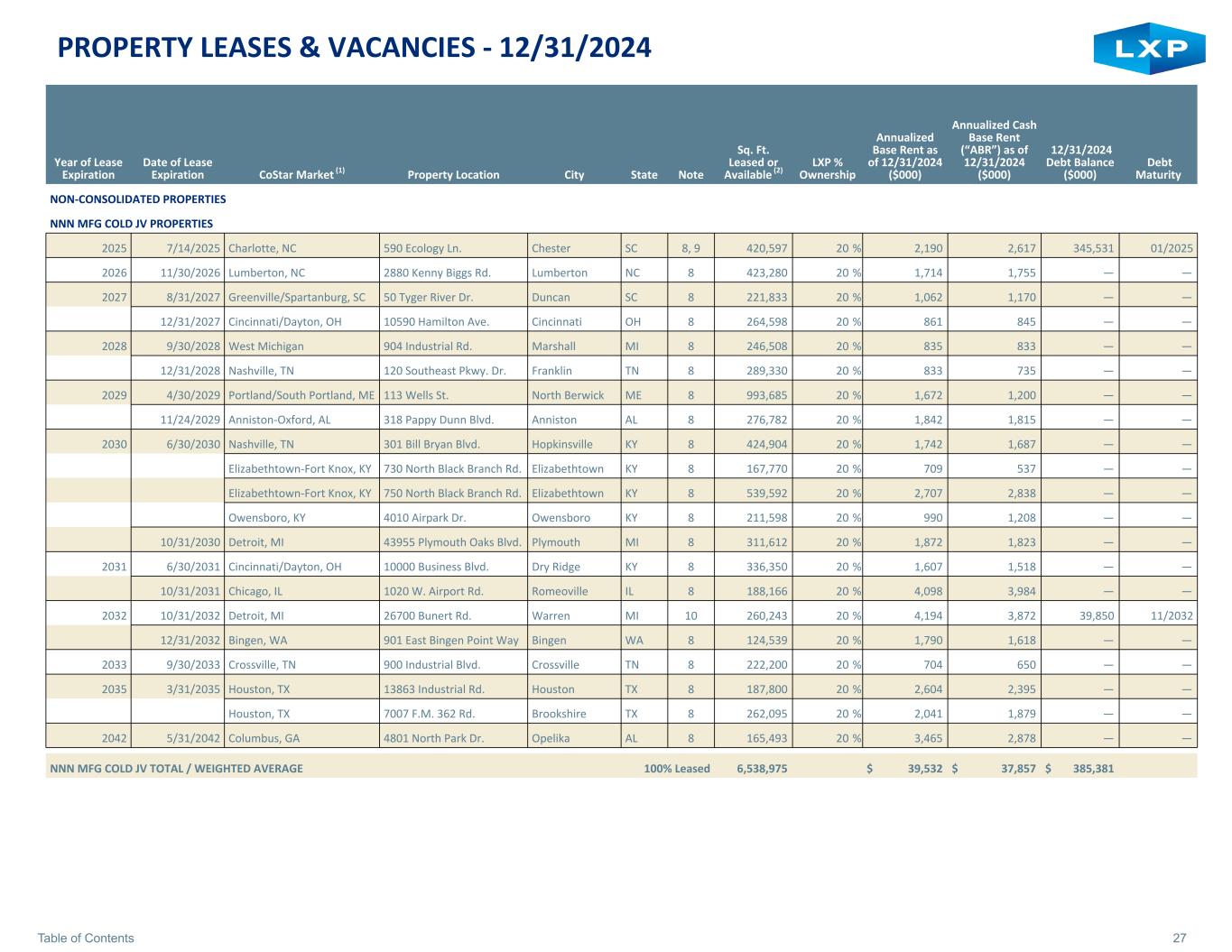
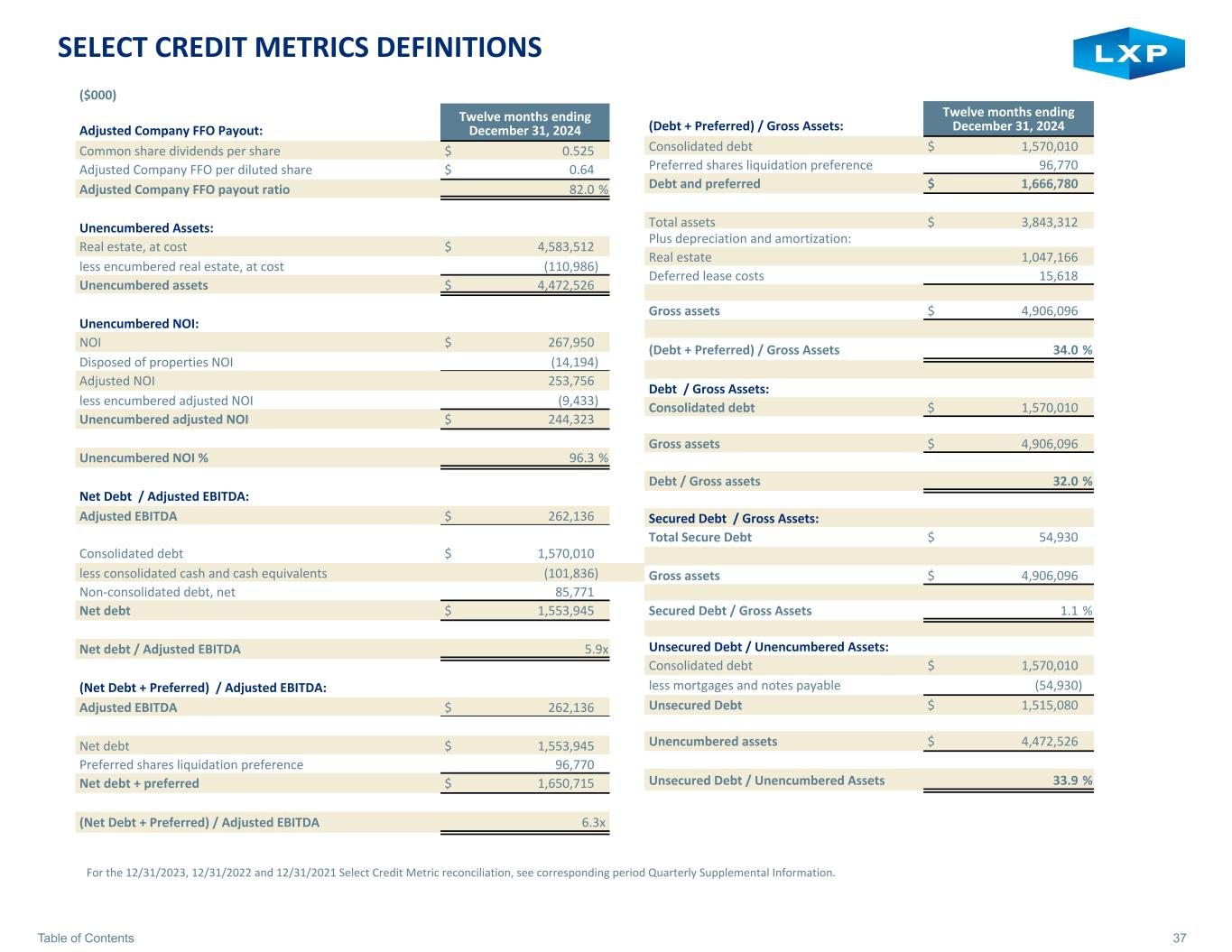
Thanks Heather. Good morning everyone. Our fourth quarter results were highlighted by continued favorable leasing outcomes and solid same-store NOI growth. Leasing volume in the quarter of nearly 1 million square feet produced exceptionally strong base and cash-based rental increases of approximately 66% and 43%, respectively, excluding a fixed-rate renewal. Our fourth quarter performance capped off a great year of accomplishment in our business. On the investment side, we sold our remaining consolidated office assets, opportunistically divested of four industrial assets, and sold our ground lease property in Phoenix, resulting in considerable value creation. We redeployed most of the proceeds into a build-the-suit and four Class A properties in our Sunbelt markets at attractive pricing. Moving to leasing, we completed 4.5 million square feet of volume and continued to post exceptional mark-to-market outcomes, increasing base and cash base rents approximately 46% and 40% respectively, excluding TI amortization in one prior lease and one fixed rate renewal. Additionally, our average annual escalators continue to trend higher, reaching 2.8% at year-end, and we achieved strong same-store NOI growth of 5% for the year. These results demonstrate the strength of our leasing team and the value of owning high-quality assets in our target market. On the balance sheet front, in the third quarter, we capitalized on a favorable market window and executed forward interest rate swap agreements on $333 million of floating rate debt. These transactions, combined with the repayment of $50 million of floating rate term loan debt after quarter end, effectively locked in fixed rates on 97% of our debt through year-end 2026. Further, we reduced leverage to 5.9 times net debt to adjusted EBITDA year-end, down from 6.1 times at the end of the third quarter. We are focused on reducing leverage over time by growing EBITDA through the lease up of vacant assets, marking rents to market, and increasing rents with annual escalators. Regarding big box development leasing, in early December, we disclosed that our negotiations with a full building user did not result in a lease at our 1.1 million square foot facility in Ocala, Florida. While this area of our business was slow in 2024, tenant interest seems to have picked up recently, and we believe some of the uncertainty around space use decisions may be receding. We currently have activity at all three of our large vacancies for both full and partial users. As industrial fundamentals begin to show signs of improvement, our 2025 outlook remains cautiously optimistic. The markets we operate in, primarily the Sunbelt and Lower Midwest, have experienced more resilient industrial fundamentals relative to select coastal markets we are also encouraged that u.s manufacturing activity expanded in january after 26 consecutive months of contraction while we are still operating in an uncertain environment our below market rents and predominantly class a portfolio characteristics are positive factors that we expect will continue to enable us to drive strong mark-to-market rental increases in a market environment characterized by a flight to quality Finally, this morning we announced full year 2025 adjusted company FFO guidance in the range of $0.61 to $0.65 per diluted common share. This guidance, among other factors, is reflective of the disproportionate impact big box leasing has on funds from operations. The low end of this guidance assumes we do not lease any of the big boxes in 2025, and the high end represents all three big box leases executed in the second half of the year. Resolving remaining vacancies is a key operational objective for us that will add considerable earnings growth. The building blocks to sustained FFO growth remain intact, including the lease-up of 3.7 million square feet, 2.8% average annual rental escalations, mark-to-market of in-place rents, and a core portfolio positioned in markets that stand to benefit from long-term demographic trends, advanced manufacturing investment, business-friendly regulatory environments, and logistics infrastructure. Before I turn the call over to Brendan, I'd like to extend our heartfelt thanks to Beth, who has made immeasurable contributions to our company's success during her tenure as our Chief Financial Officer and in other capacities since joining LXV in 2007. As previously announced, Nathan Brunner, who is currently our Executive Vice President of Capital markets, we'll assume the CFO role on March 1st of this year. Nathan has already proven himself as a tremendous addition to our team, and we are confident that he will hit the ground running in his new role. With that, Brendan will now discuss investment activity in more detail.
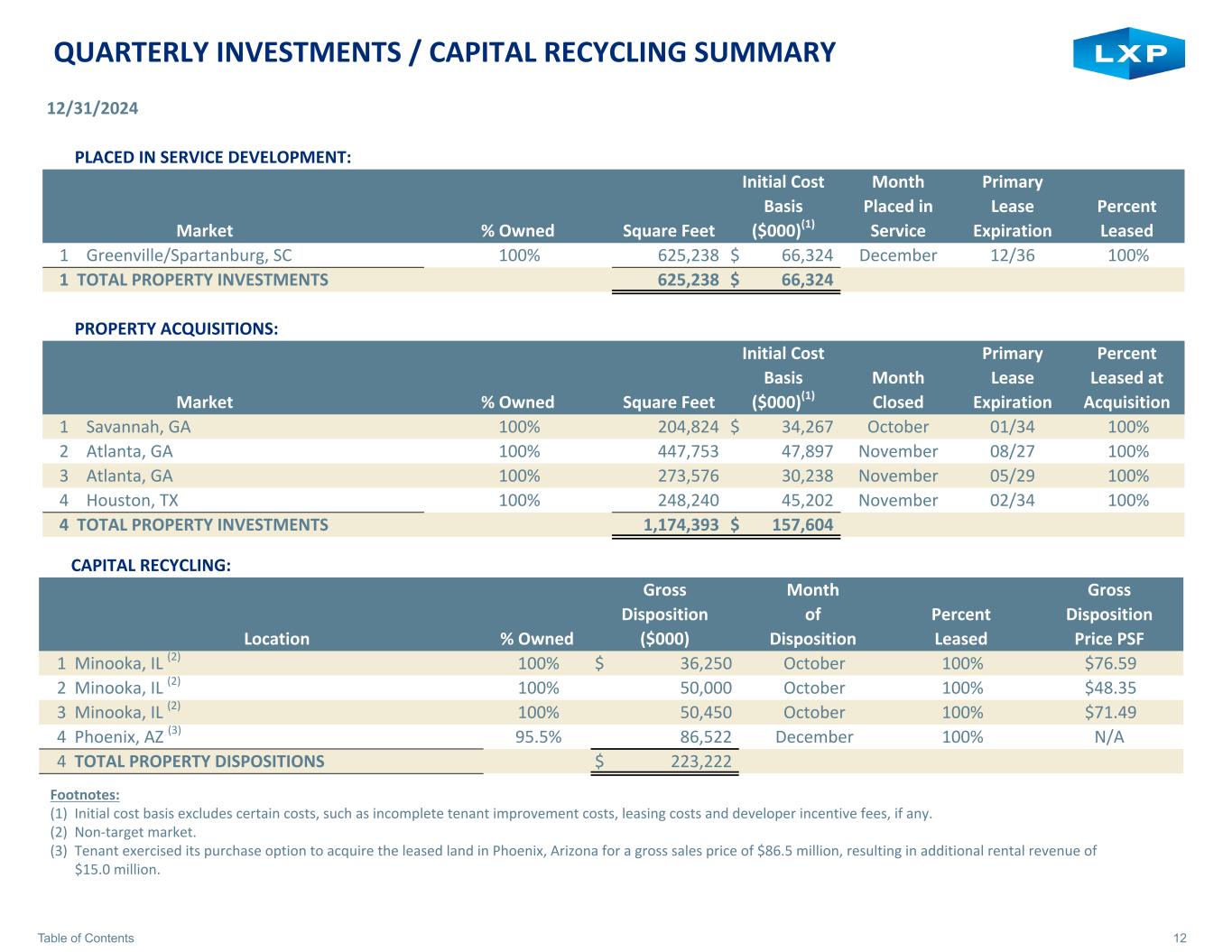
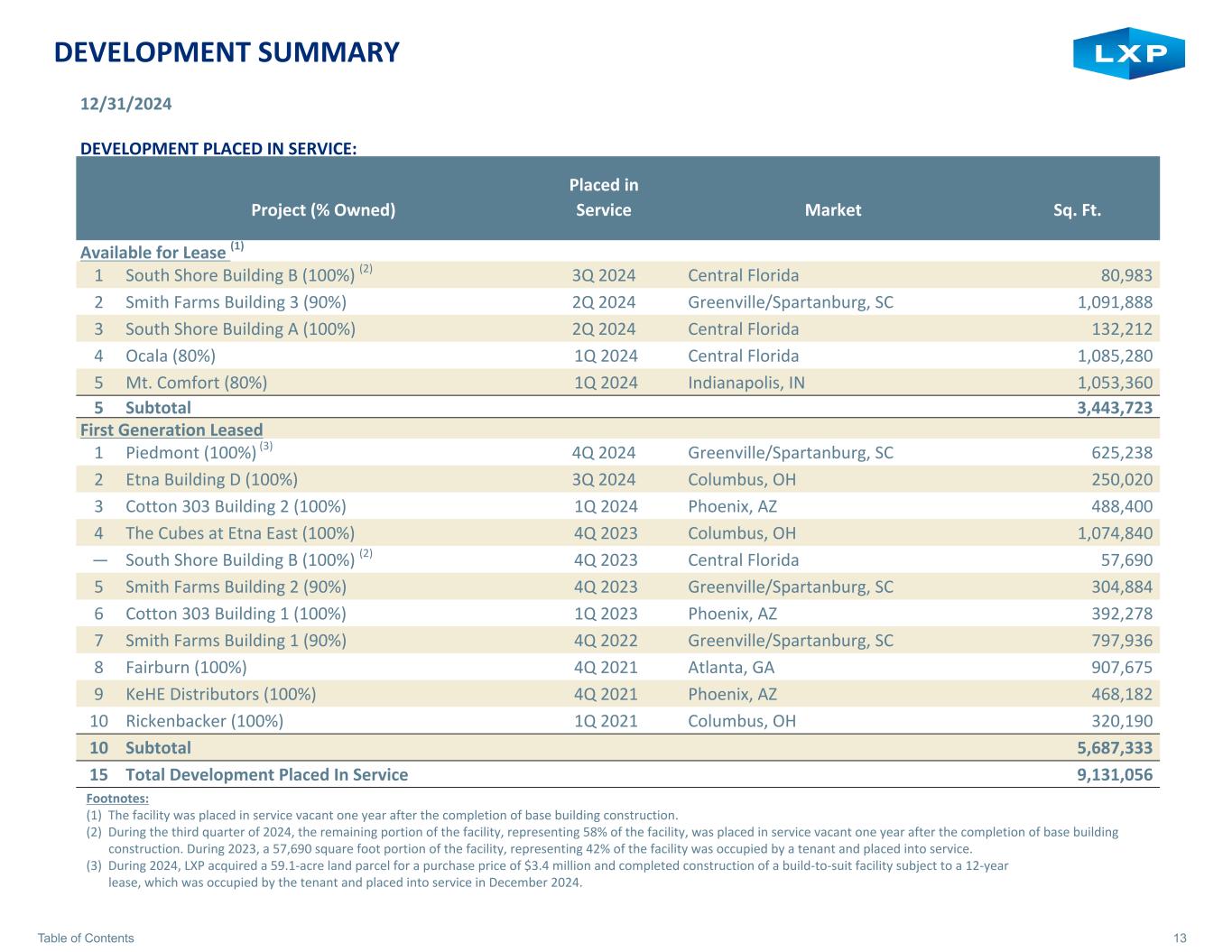
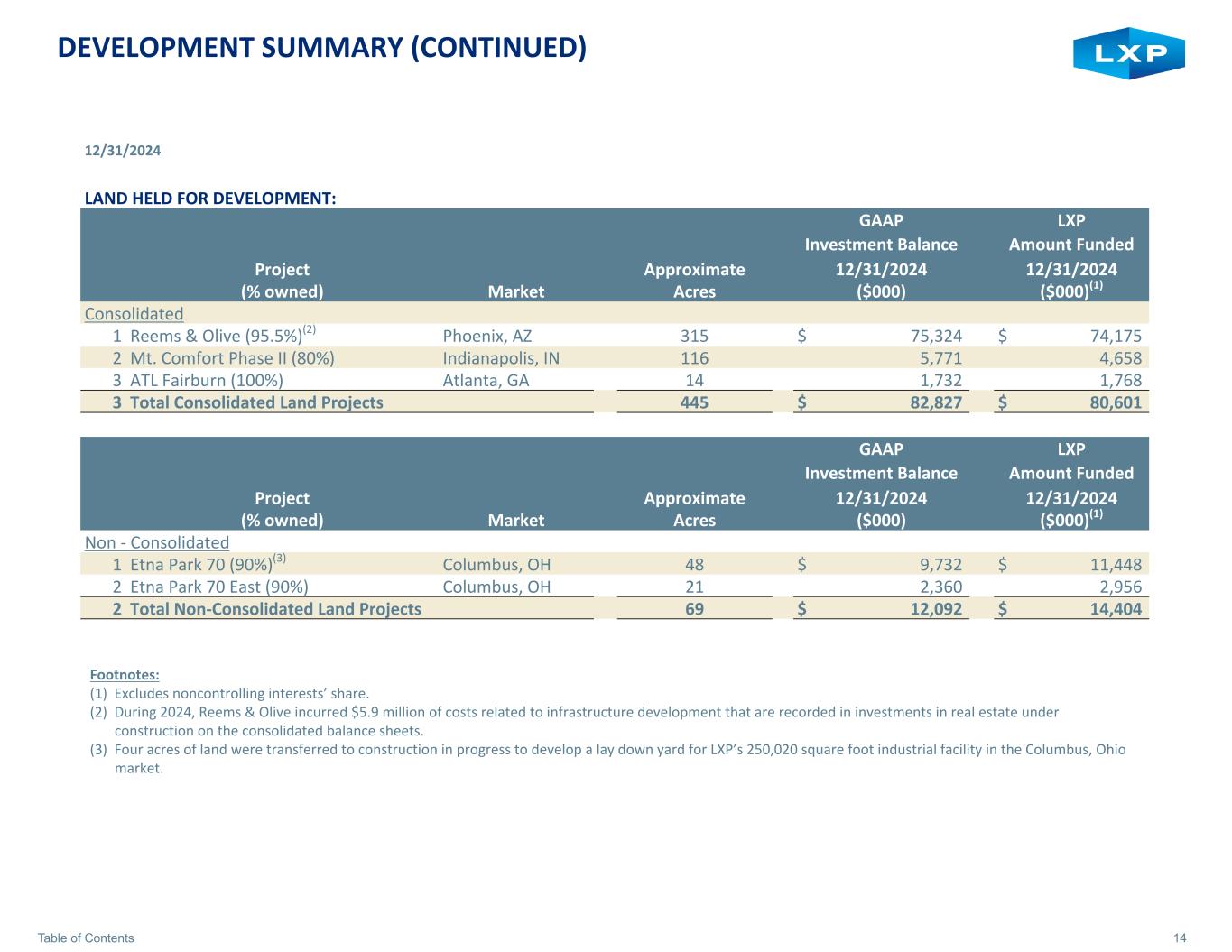
Thanks, Will. During the fourth quarter, we acquired four industrial assets for approximately 158 million dollars in atlanta houston and savannah the class a facilities have an average initial yield of six percent with the weighted average lease term of 6.3 years and 3.6 percent average annual escalators the properties were built to modern specs with an average age of two years and a building size of approximately 294 000 square feet these three markets in the sun belt have continued to experience positive net absorption and are benefiting from investment in transportation infrastructure and on-shoring trends with significant investment in advanced manufacturing facilities, including several large projects nearing completion and operations. Our 625,000-square-foot Class A build-to-suit in the Greenville-Spartenburg market substantially completed late in the fourth quarter, with an aggregate estimated investment of approximately $74 million and an estimated cash cap rate of a little over 7%. The facility is leased for 12 years with 3% escalations and was built to modern specs including 40-foot clear height and the capacity to expand by an additional 174,000 square feet. Rent commenced with a substantial completion of the building in December. Mark. While we are being selective with respect to new investments, we will evaluate opportunities to unlock value in properties outside of our target markets to make strategic investments in our target markets, as we did in 2024. Finally, we sold our interest in the approximately 100-acre Phoenix ground leaf land parcel upon the exercise of the tenant's purchase option late in the fourth quarter. Our share of the sales proceeds was approximately $83 million, or $871,000 per acre, representing an approximately $60 million profit over our initial investment in just under three years. As a reminder, we acquired the original 415 acre site in the West Valley of Phoenix in 2021 for $101 million for approximately $243,000 an acre. The recent sale of the 100 acres unlocked considerable value and we believe demonstrates the potential to produce additional value from the site over time. The remaining 315 acres can support as much as approximately 5 million square feet of future industrial spec development and build-to-suit opportunities, with Build-to-Soup projects currently our focus. With that, I'll turn the call over to James to discuss leasing.
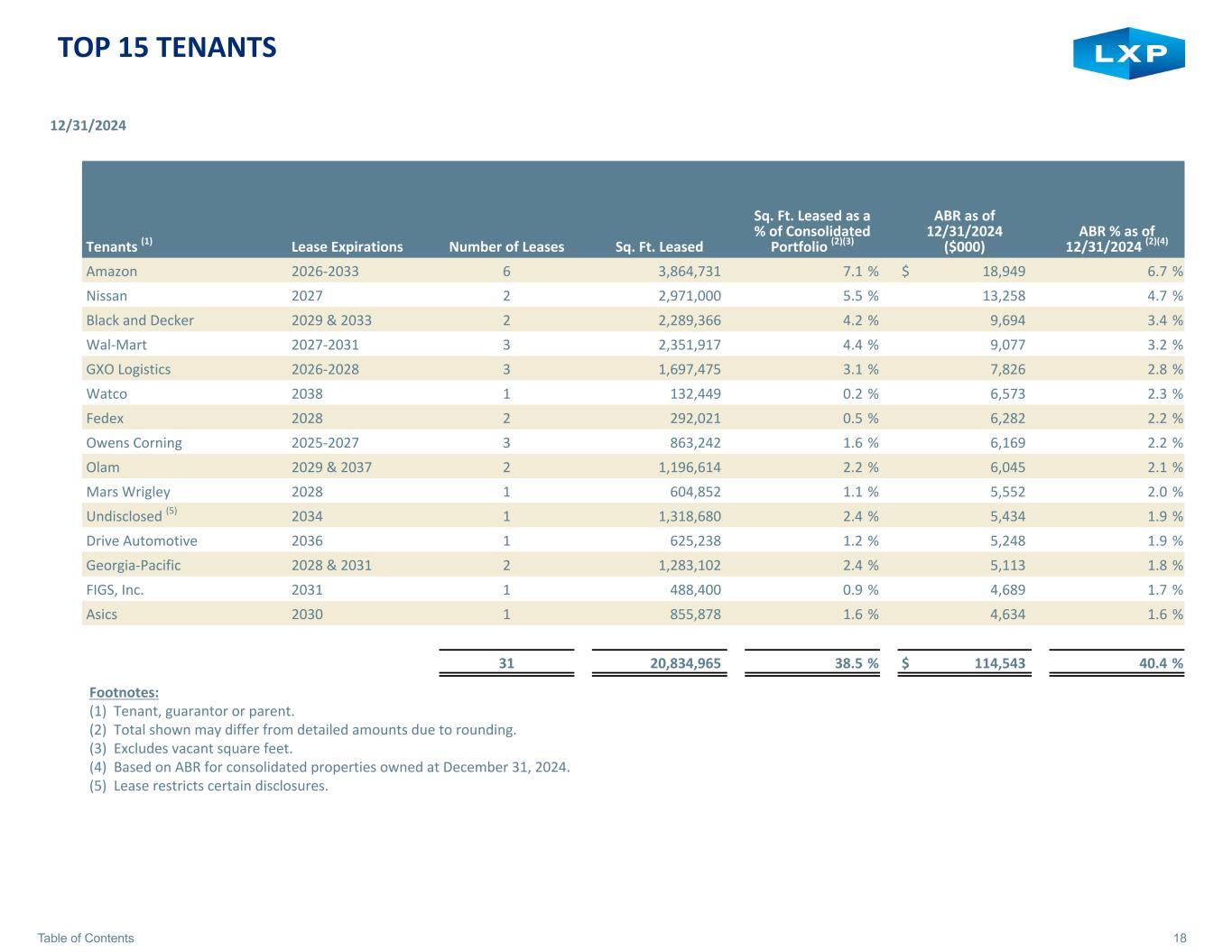
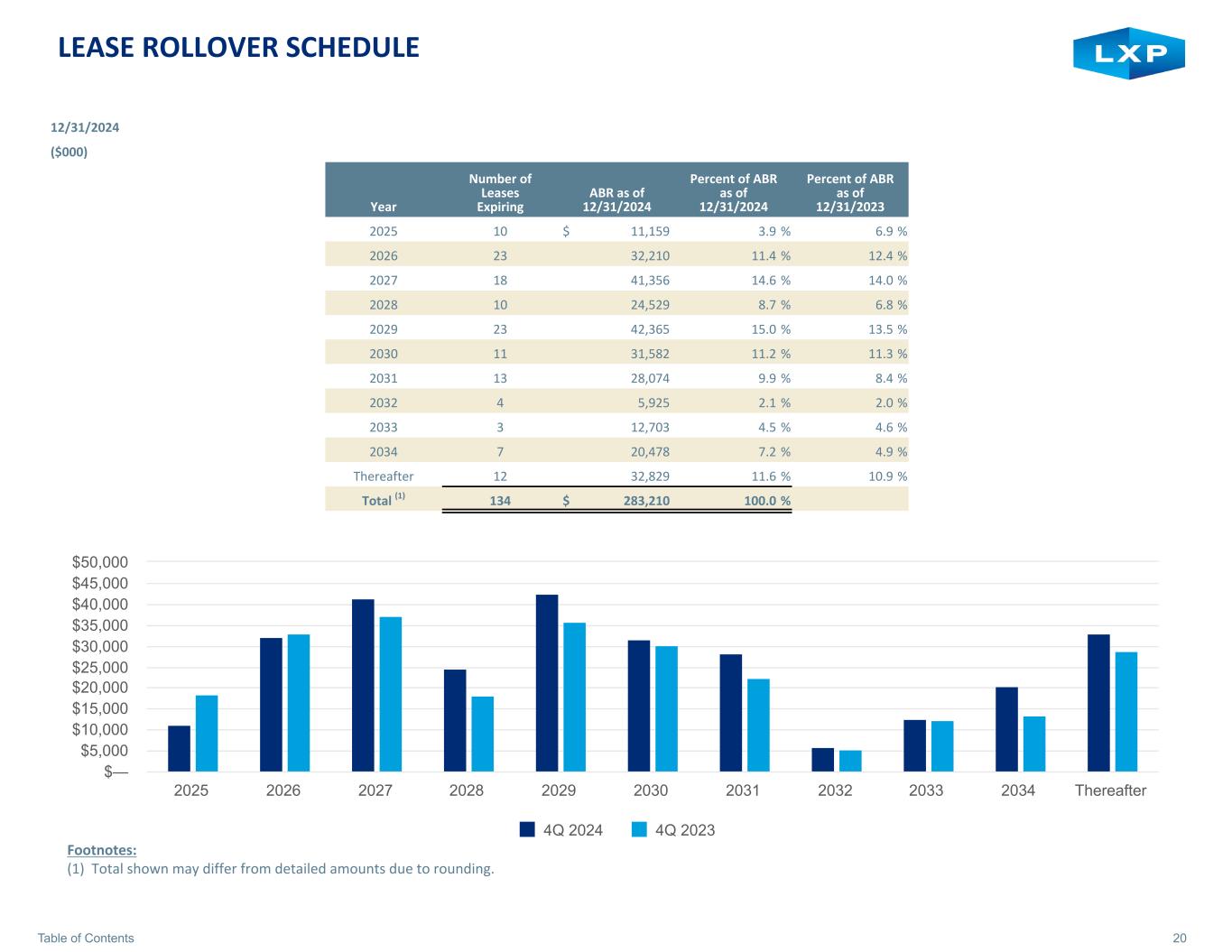
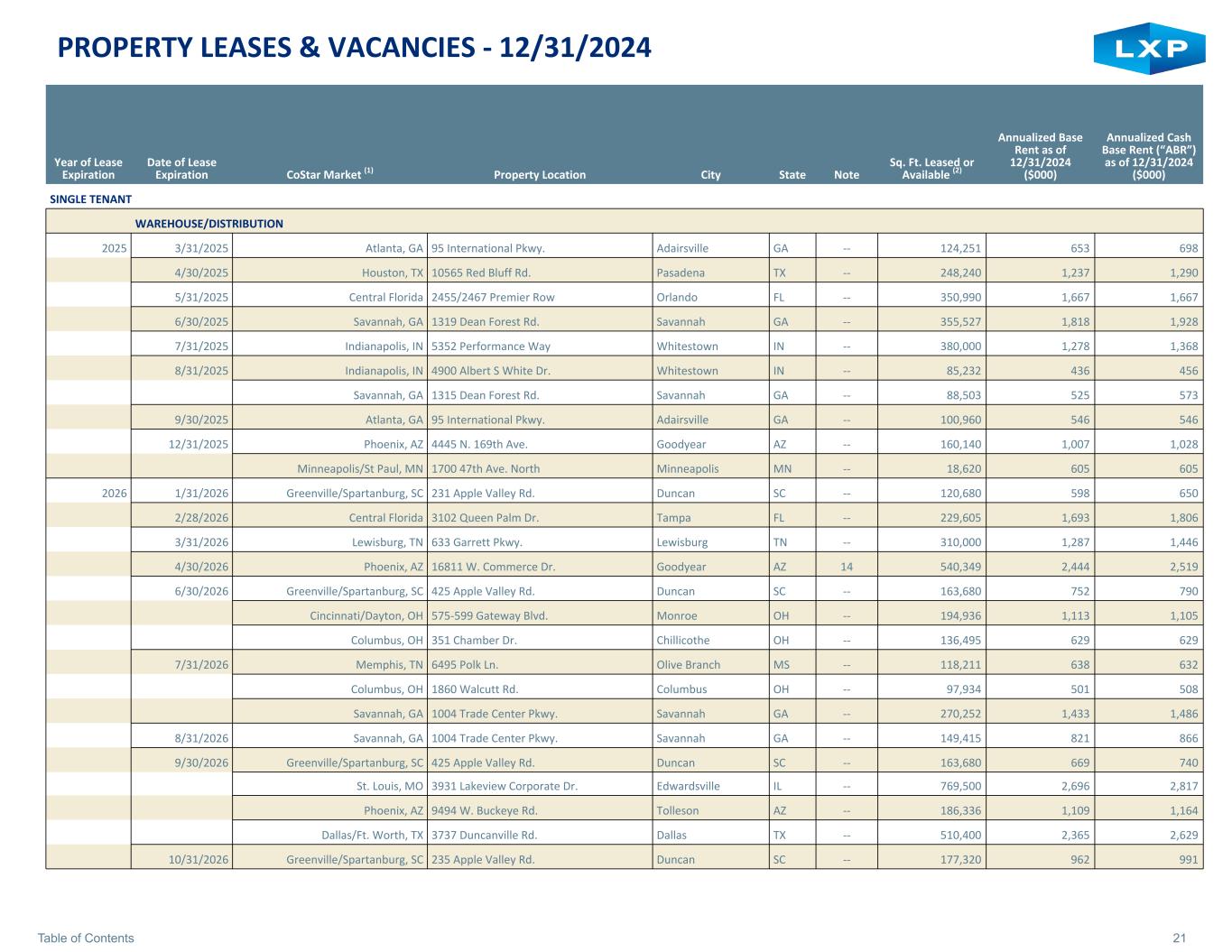
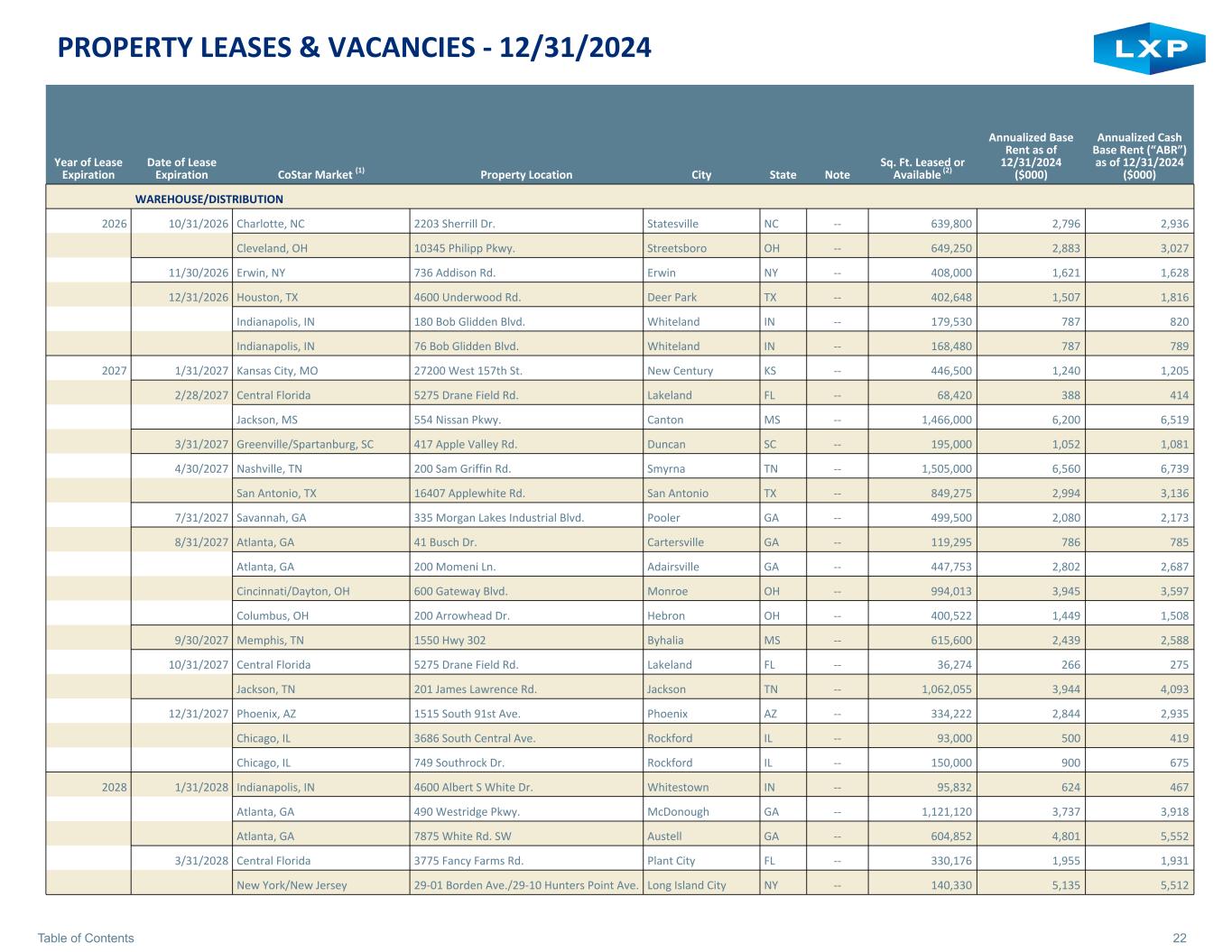
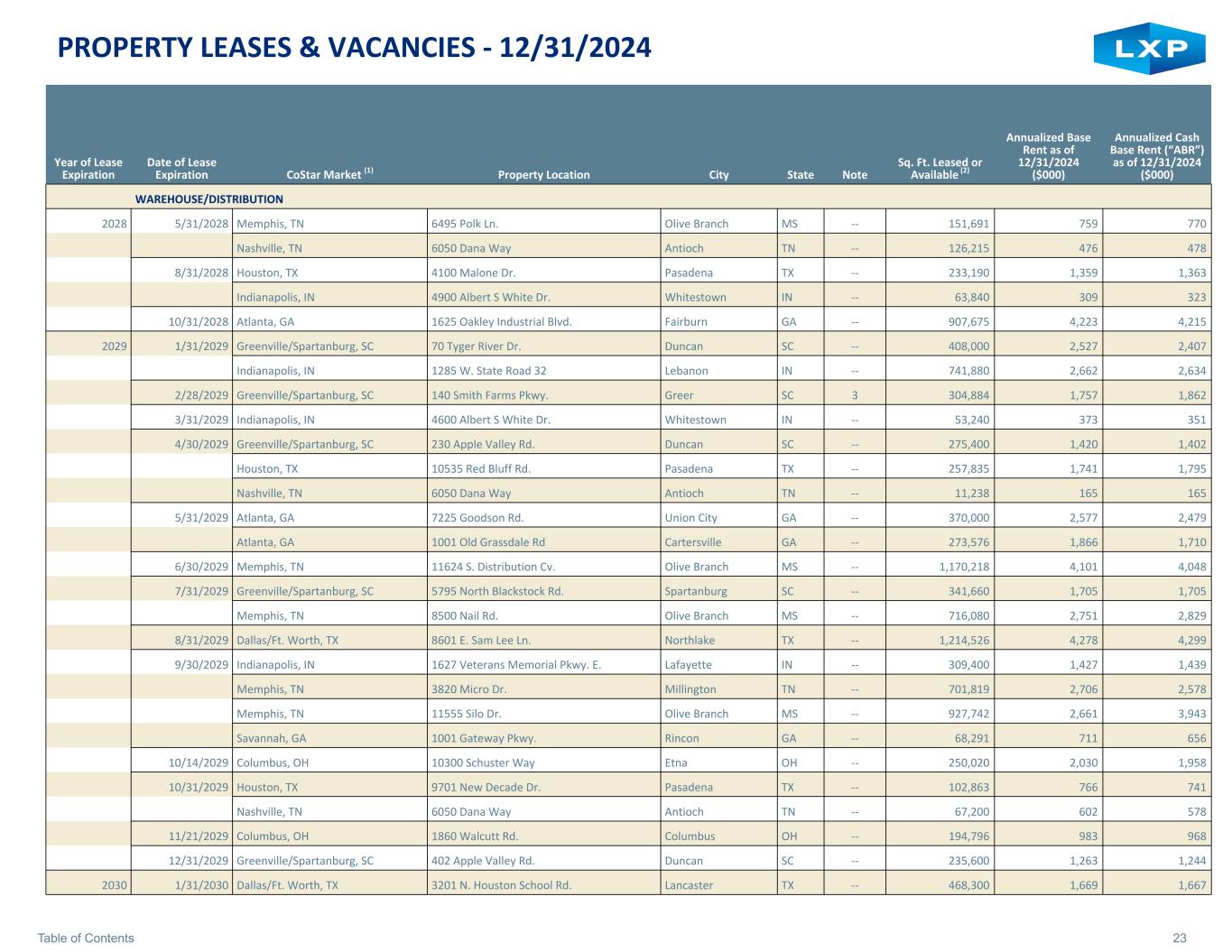
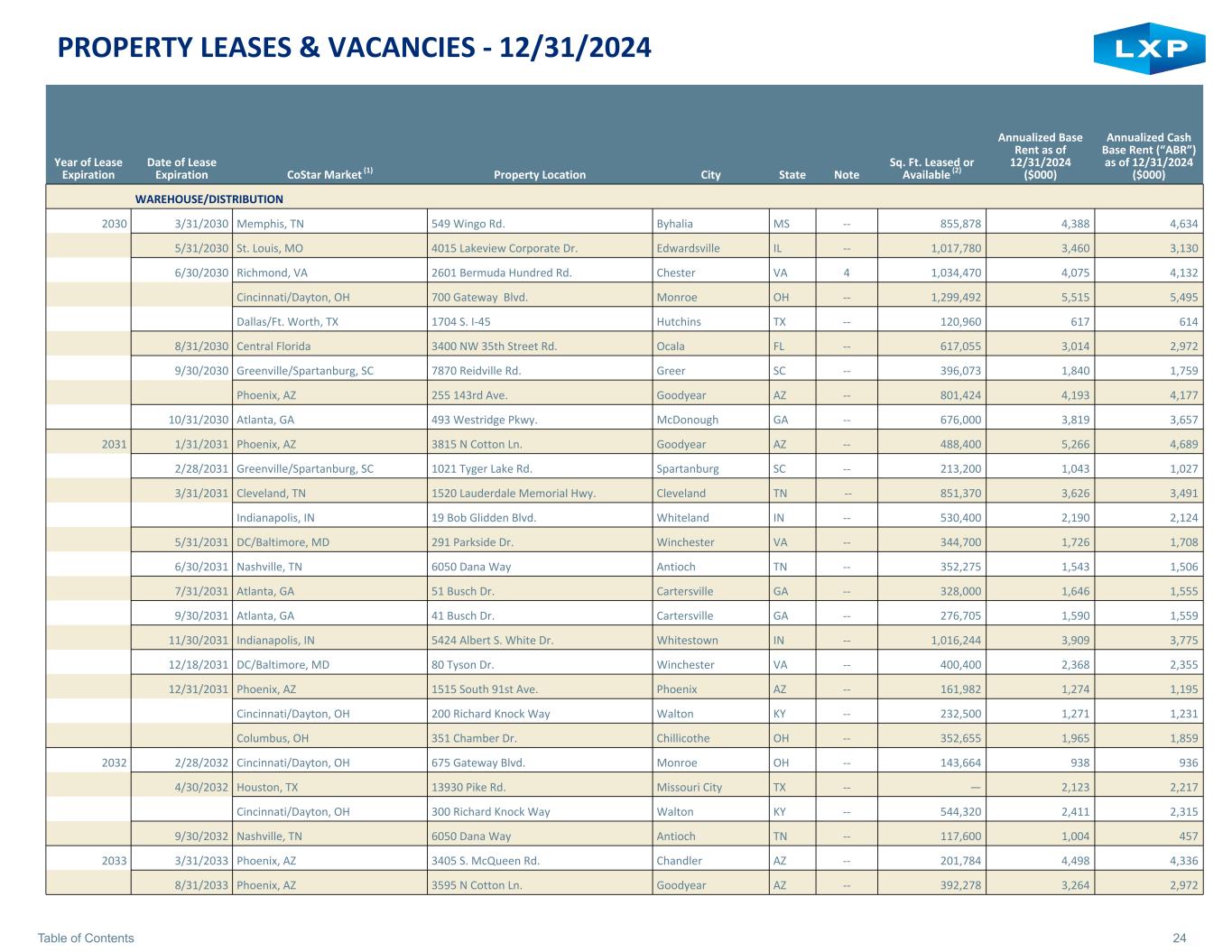
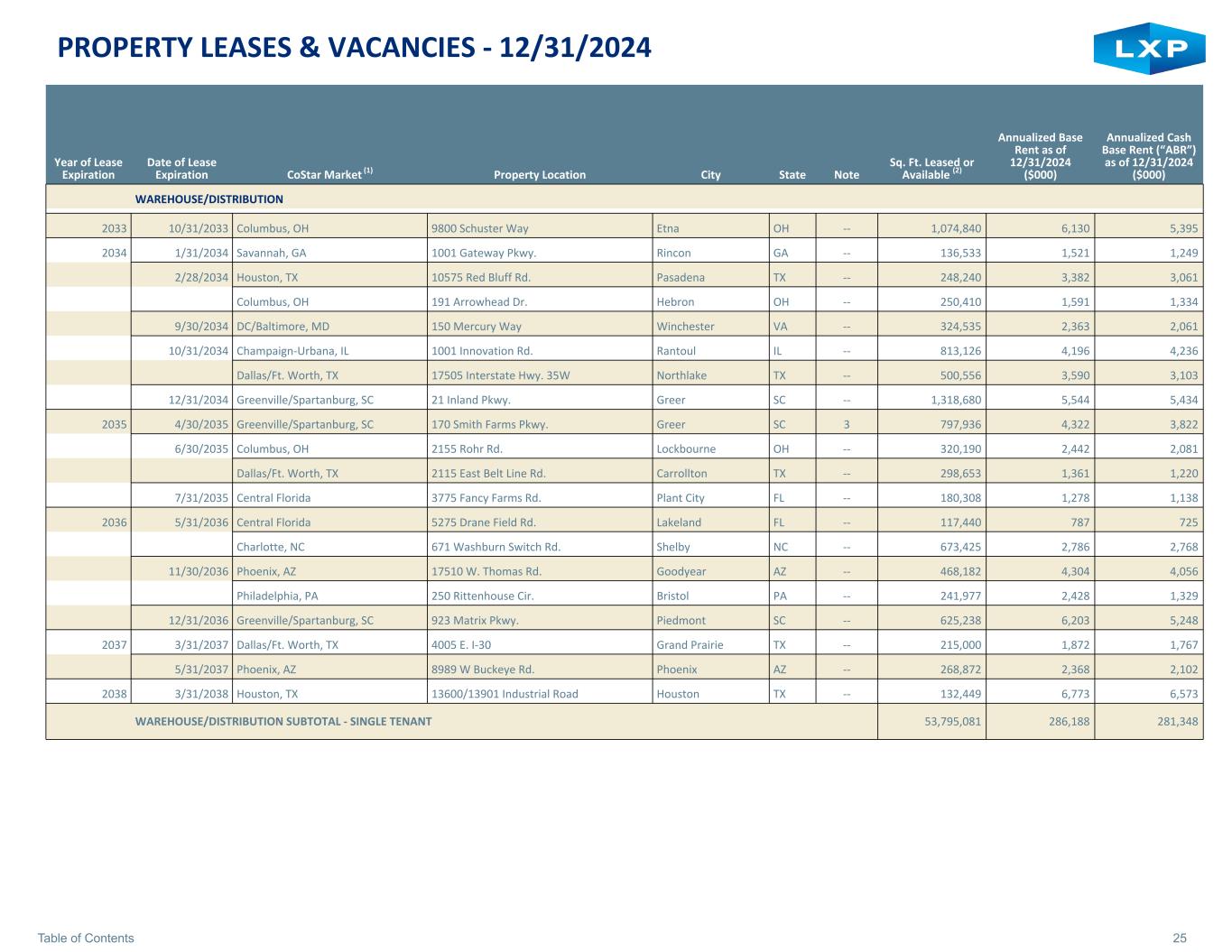
Thanks, Brendan. We're pleased to see that the overall industrial leasing market is beginning to show signs of improvement post-election. Tushman reported the U.S. net absorption increased a little over 10 percent quarter over quarter nationally as construction deliveries continue to decelerate. Our top 12 markets, which comprise less than 30 percent of total inventory nationwide experienced net absorption of approximately 32 million square feet, making up a significant portion of U.S. net absorption in the fourth quarter. National vacancy ticked up slightly in the fourth quarter, but appears to be slowing when compared to the first half of 2024, potentially indicating vacancy could reach peak levels by mid-year 2025. Average national asking rents ticked slightly higher in the quarter, with annual rent growth relatively flat. Rent growth in our top 12 markets grew on average just over one percent in the quarter. Tenant activity is increasing across our markets, although final decision making remains slow. During the quarter, we addressed our remaining 2024 lease expiration, except for two small vacancies in DFW and Greenville-Spartanburg markets, posting final cash rental growth of approximately 28 percent, excluding fixed-rate renewals, on all leases that expired in 2024. With respect to vacancies, we expect both facilities to lease in 2025 as they are well positioned in their respective markets and anticipate the average mark-to-market on these assets to be approximately 45%. We achieved excellent leasing outcomes during the quarter and subsequently, illustrating the portfolio's asset quality and value of owning Class A newer product. on the renewal side we leased our 150 000 square foot facility in the chicago market for three years with four percent average annual rental bumps and 118 000 square feet of space at our multi-tenanted facility in nashville for seven years with 3.5 percent annual escalators a cash rental increases of approximately 29 percent and 111 respectively we also had the tenant in our approximately 400 000 square foot facility in greenville spartanburg exercise their five-year fixed rate renewal at two percent increase over the prior rent in columbus we signed a new lease at our 320 000 square foot facility for 10 years with 3.5 rental bumps which represents a 29 cash rental increase over the prior rent finally after quarter end we renewed a 2026 expiring lease at our 540 000 square foot facility in phoenix for five years with 3.25 annual rental bumps representing a 59 cash rental increase over the prior rent. We continue to see attractive mark-to-market opportunities in our portfolio, with the current mark-to-market estimated to be approximately 20% through 2030, based on broker's estimates. And looking more specifically at 2025, we've already addressed about 37% of the role. On the remaining 2025 expirations, which represents a little less than 4% of our ABR, we estimate the current mark-to-market to be in the range of 30% to 35%. We're in current negotiations on several 2025 expiration, but in an environment of uncertainty and delayed decision-making, tenant retention could be lower this year, and realizing market rents may involve greater periods of downtime. We're positioned well to benefit from the potentially more stable leasing environment as we move into 2026 and 2027, where we have a significantly higher percentage of leases expiring. With that, I'll turn the call over to Beth to discuss financial results.
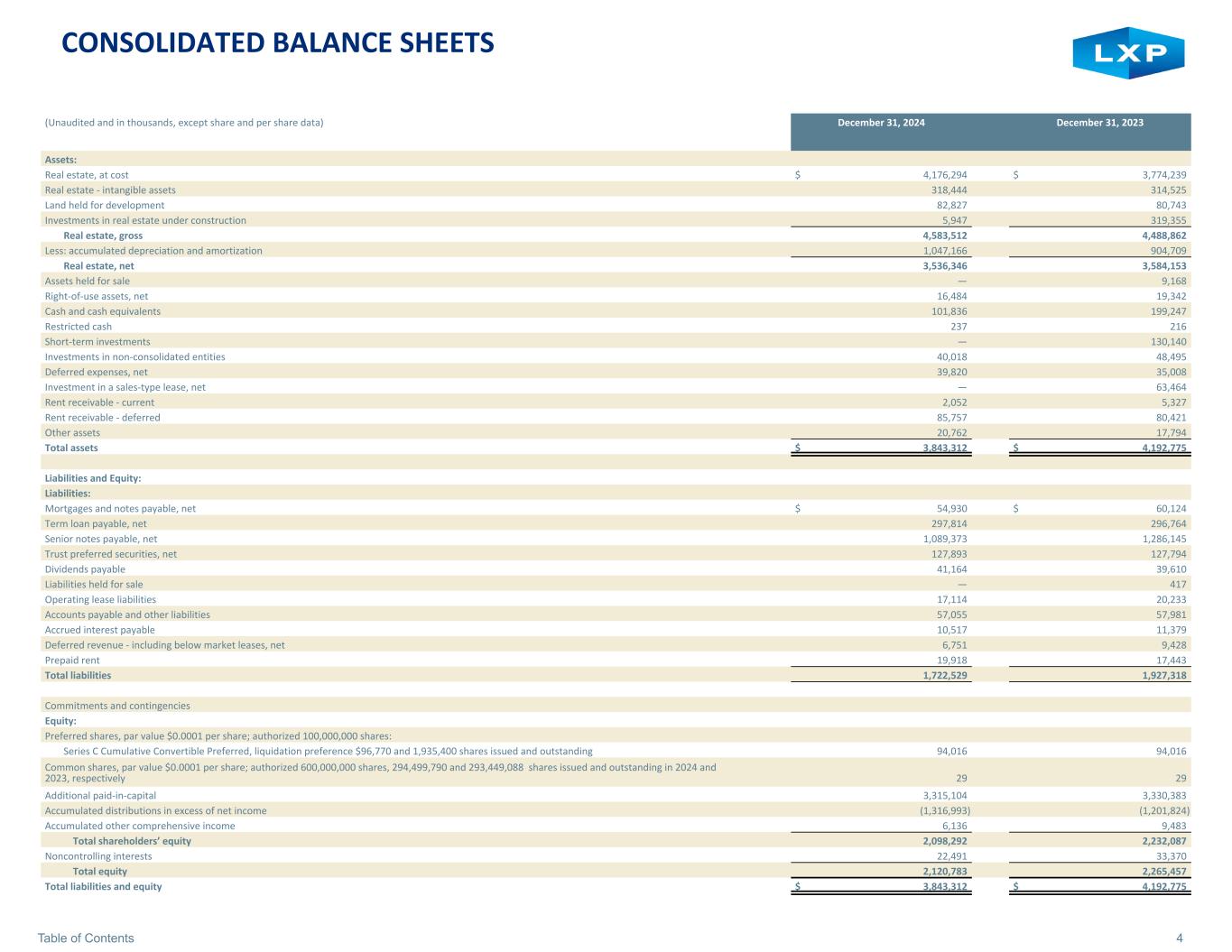
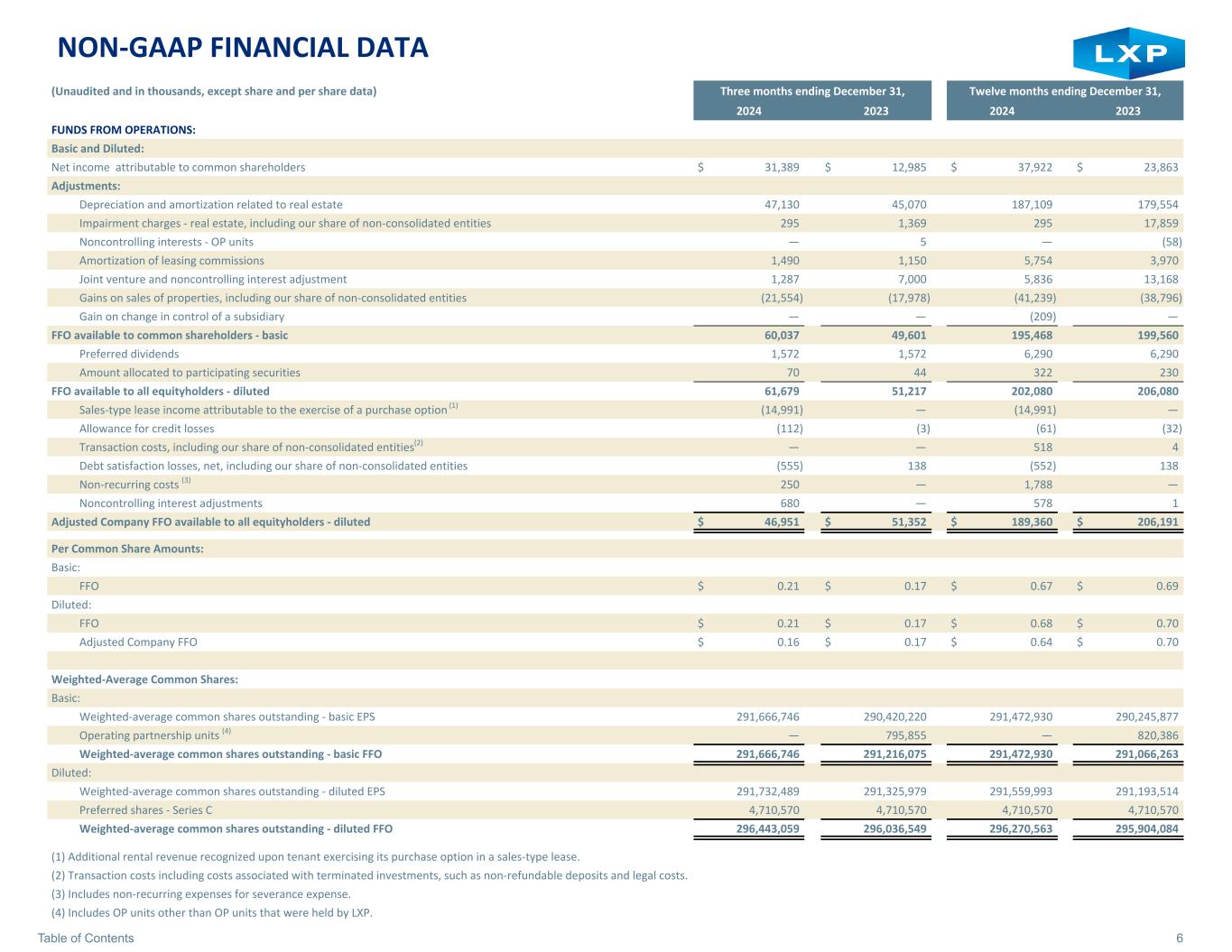
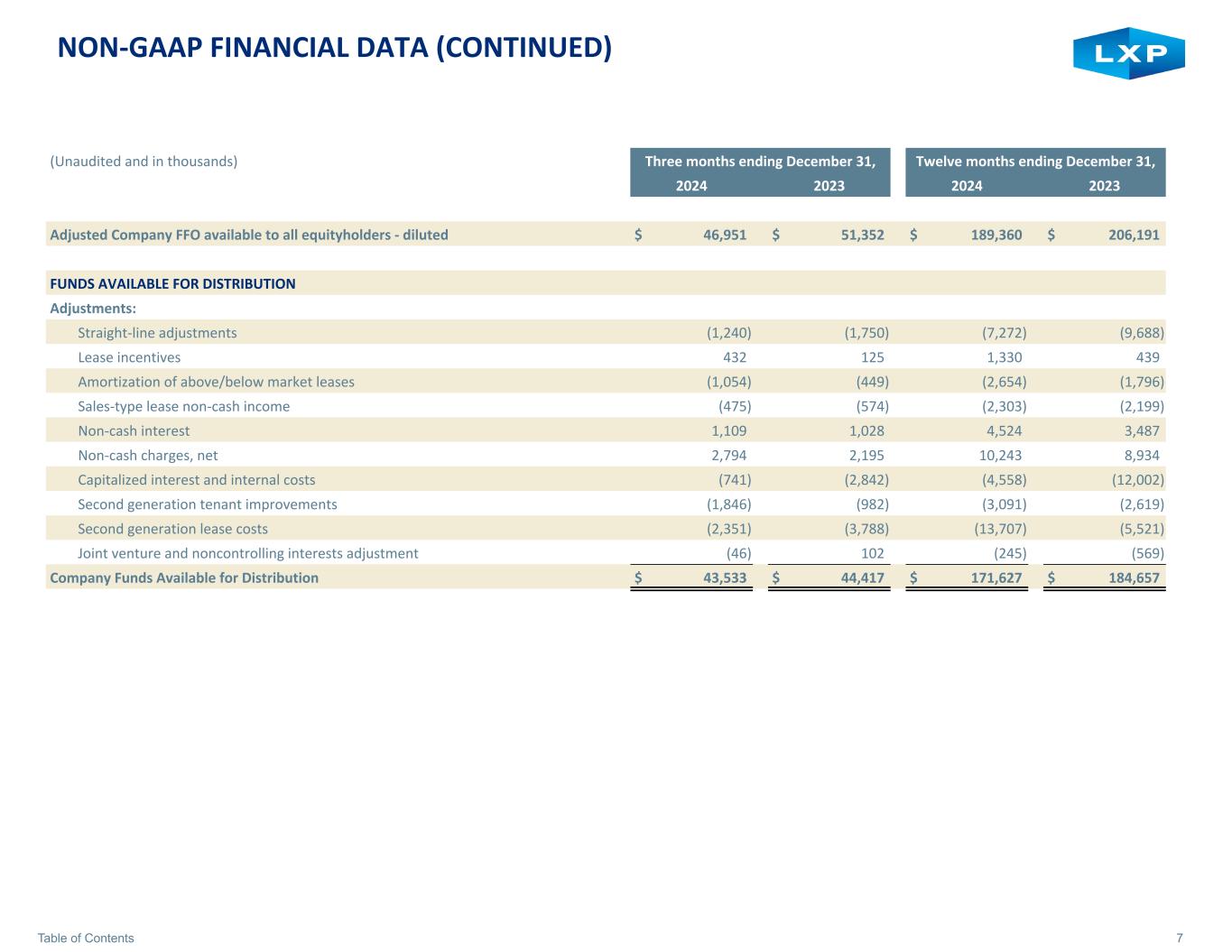
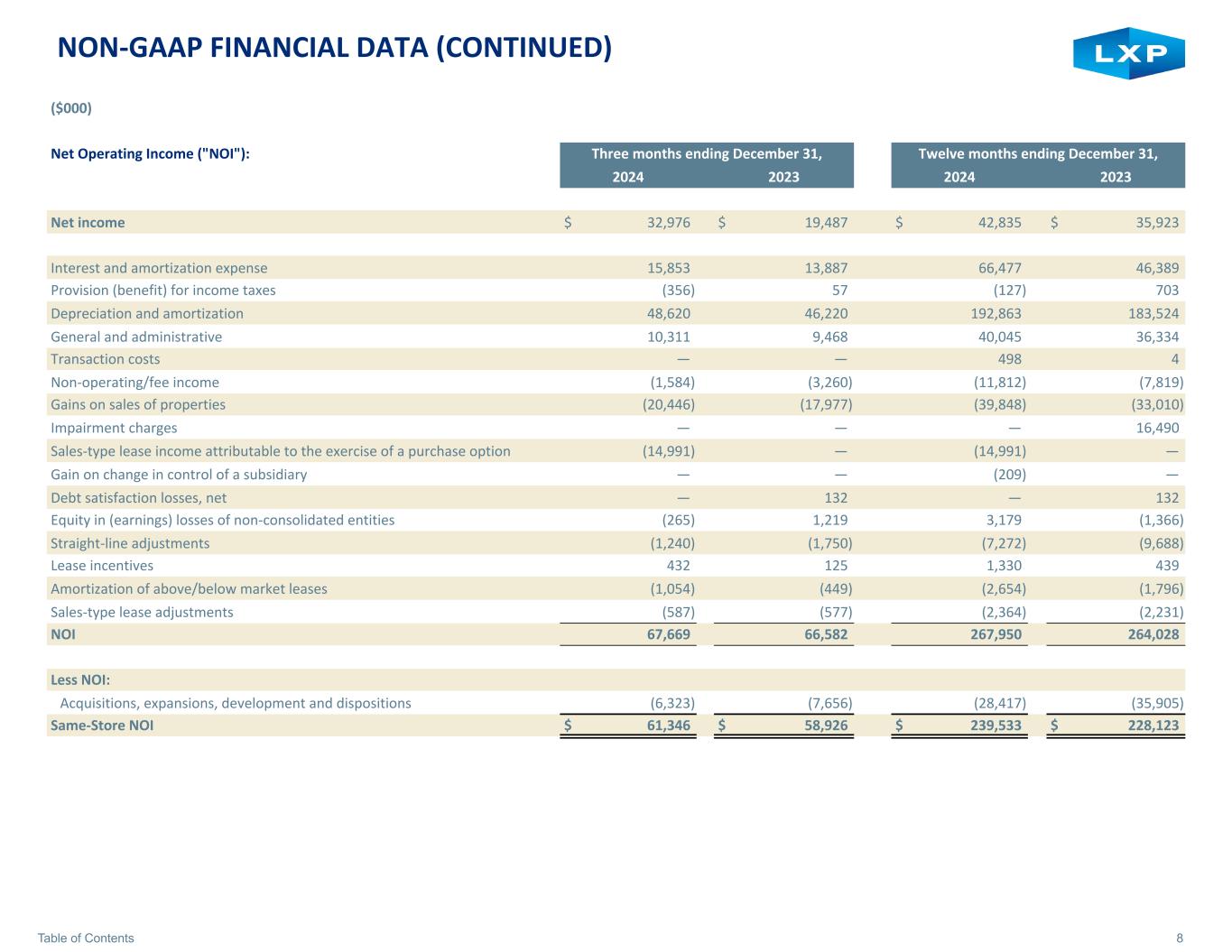
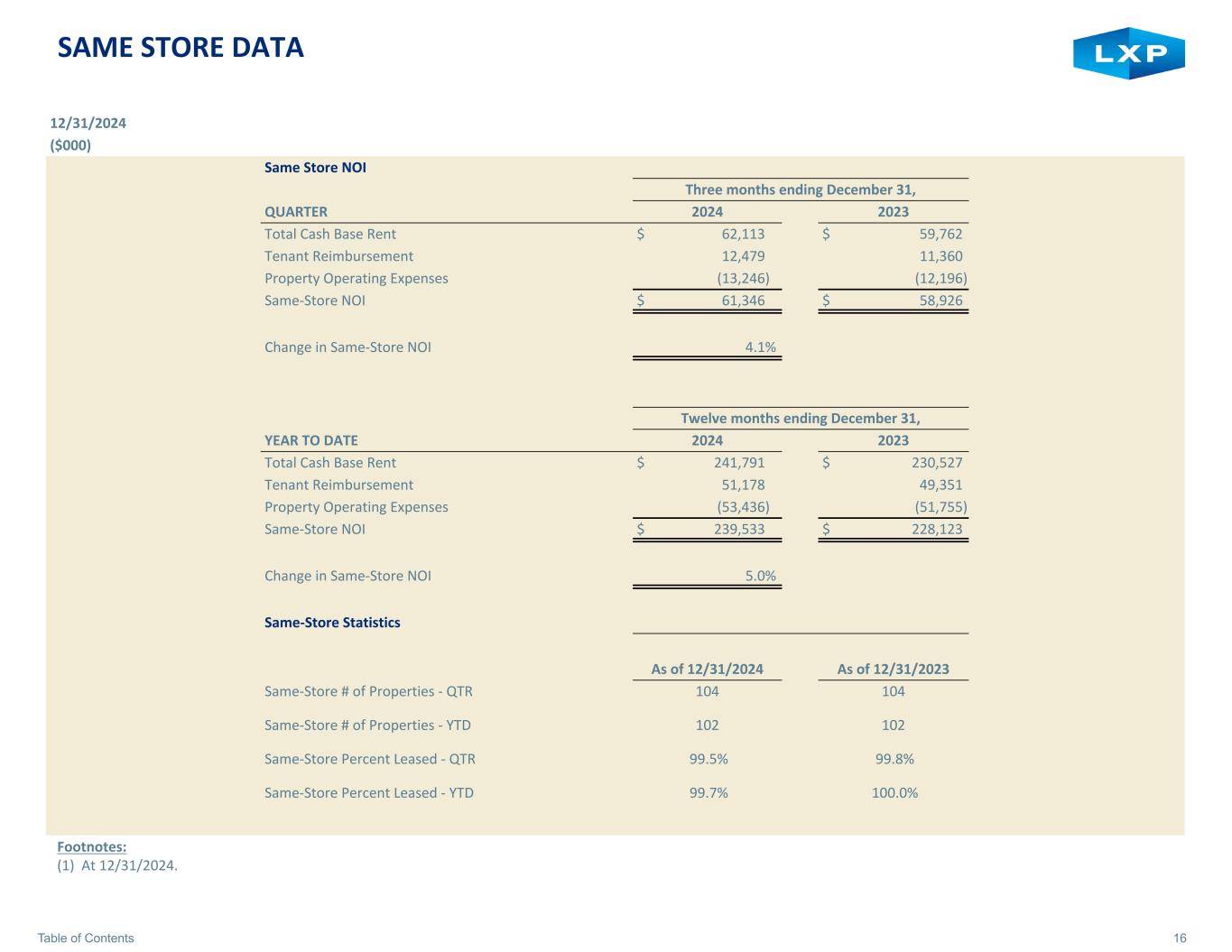
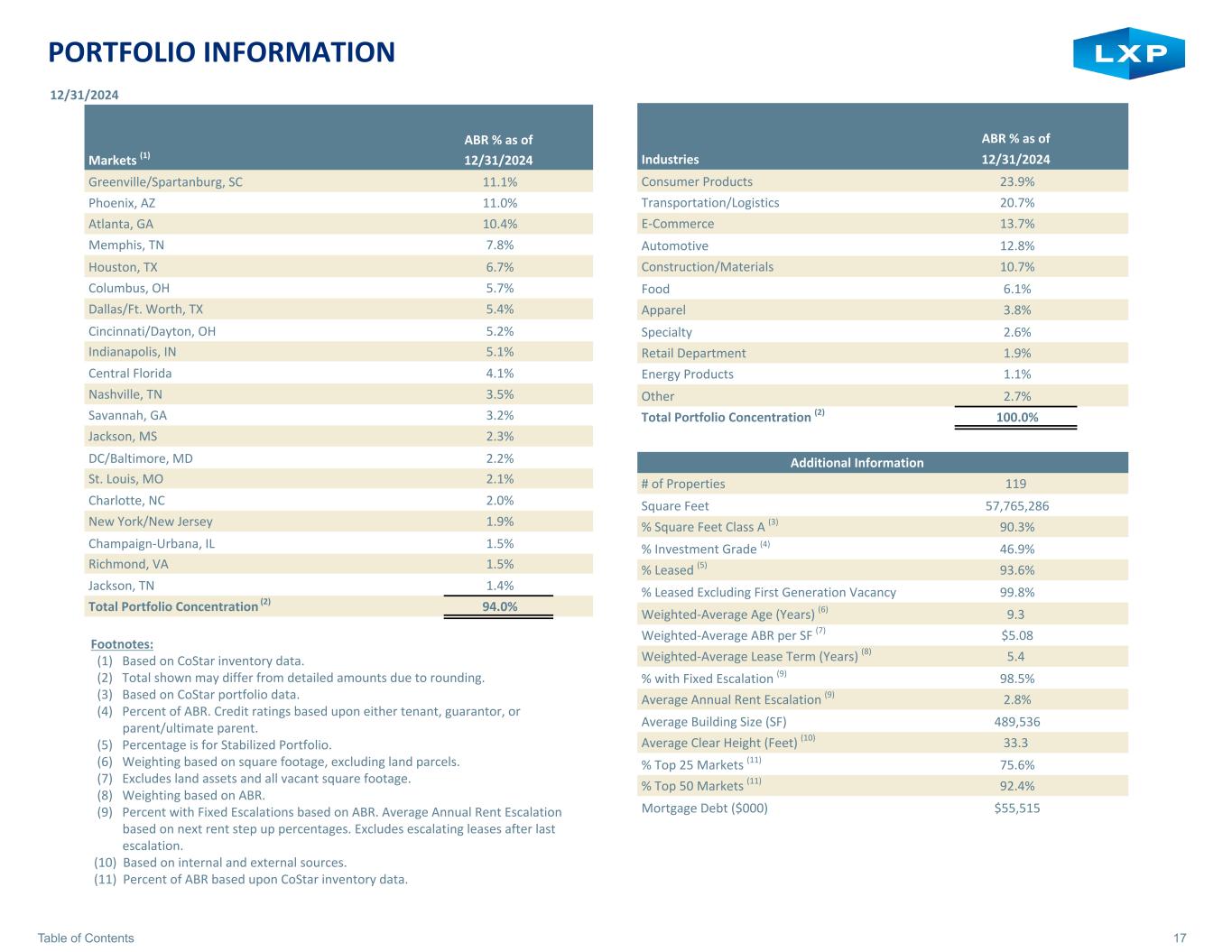
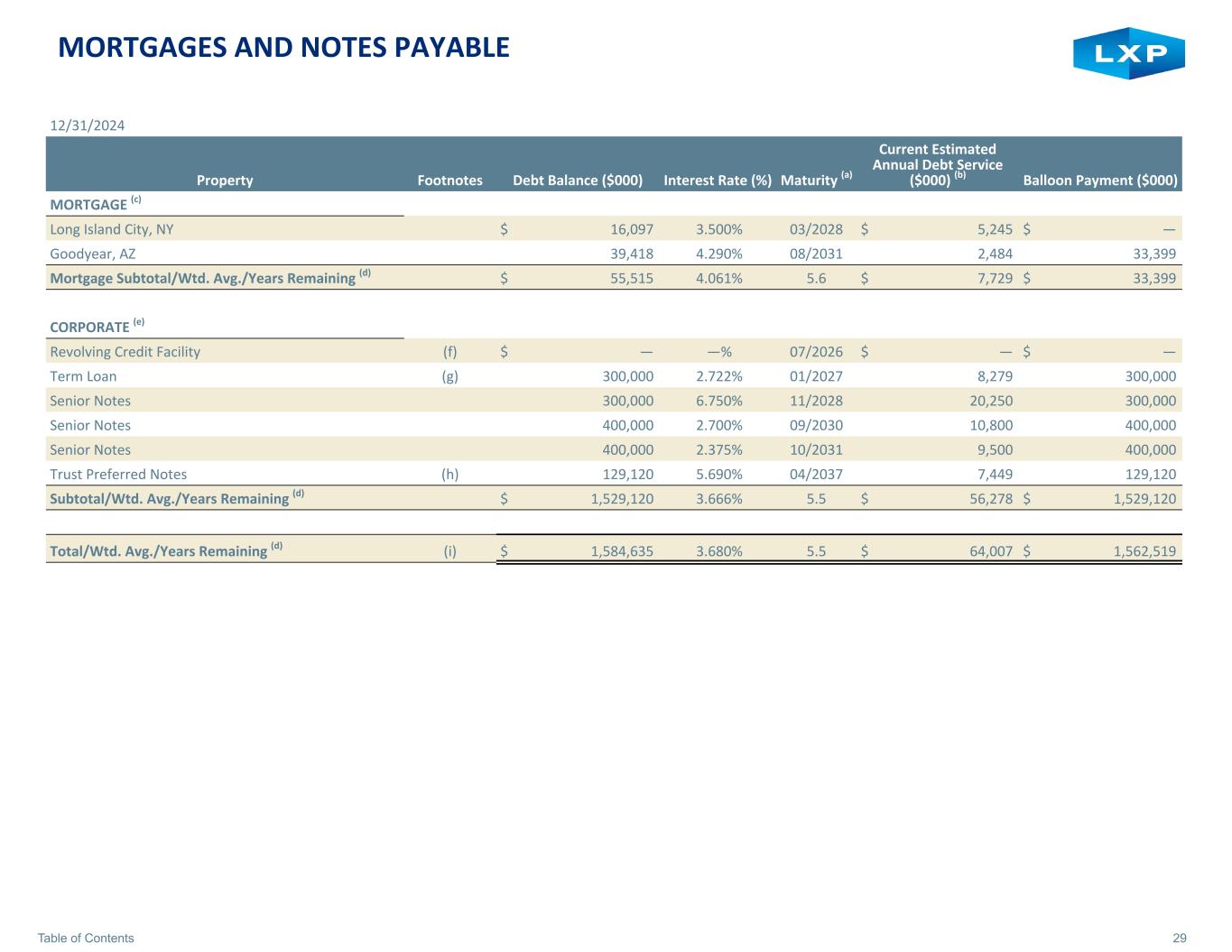
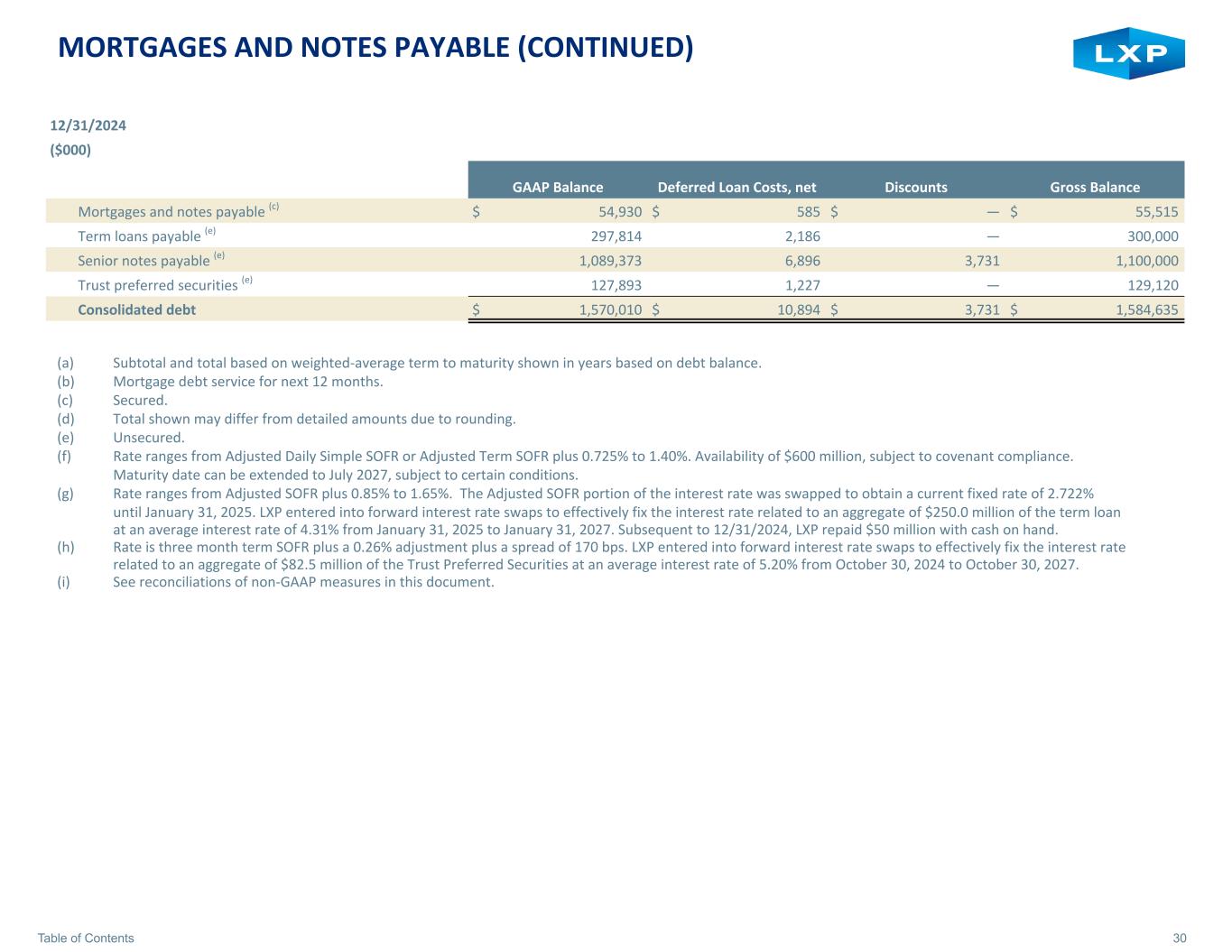
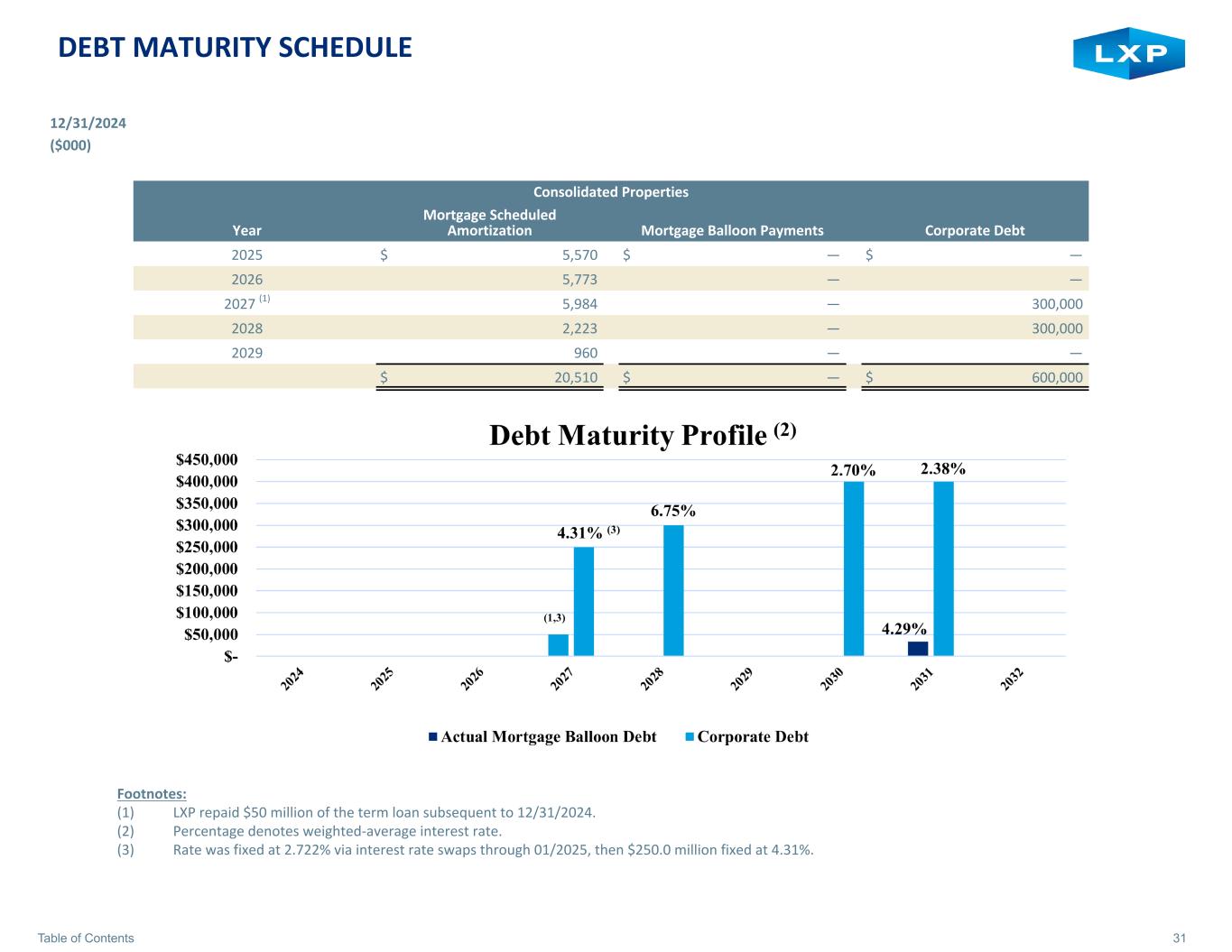
Thanks, James. Total gross revenues in the fourth quarter were approximately $101 one million dollars which included 15 million dollars of additional revenue from a sales type lease due to the exercise of the purchase option at our phoenix ground leased asset our fourth quarter property operating expenses were about 15 million dollars of which 89 was attributable to tenant reimbursement adjusted company ffo in the fourth quarter was 16 cents per diluted common share or approximately 47 million dollars with full year 2024 adjusted company ffo of 64 cents per diluted common share as mentioned earlier our 2025 adjusted company ffo guidance range is 61 cents to 65 cents per diluted common share in addition to leasing assumptions this guidance includes the impact of higher interest expense on our term loans with the all-in rate increasing from approximately 2.7 percent to approximately 4.3 percent lower interest income on cash on the balance sheet and less benefit from the capitalization of interest given the substantial completion of our development projects in 2024. dna was approximately 10 million dollars in the quarter with our 2024 gna coming in within our expected range at 40 million dollars we expect 2025 gna to be within a range of 39 to 41 million dollars our same store portfolio was 99.5 percent leased at quarter end and same store noi increased 4.1 percent in the fourth quarter when compared to the same period in 2023 at quarter end approximately 98.5 percent of our portfolio leases had escalation with an average annual rate of 2.8 percent with respect to 2025 we We are estimating same-store NOI growth to be within a range of 3-4%, which considers a range of leasing assumptions. At year-end, our total consolidated debt outstanding was approximately $1.6 billion, with a weighted average interest rate of 3.68% and a weighted average term to maturity of 5.5 years.
Operator
Subsequent to year-end, we repaid $50 million on our term loan, and our $600 million unsecured credit facility remains fully available with that i'll turn the call back over to the operator who will conduct the question and answer portion of this call thank you we will now begin the question and answer session again if you'd like to ask a question this time simply press star followed by the number one on your telephone keypad and our first question comes from the line of todd thomas with keybank capital markets todd please go ahead hi good morning um i just wanted to touch on some of the larger boxes, the developments.
Sounds like there's some additional interest there. Can you just elaborate a little bit further and discuss the environment a little bit and whether the type of users interested has changed?
And then also through this cycle, are you seeing any change in the stabilized yield expectations relative to the six to six and a half percent i think that you were uh previously that you that you've been targeting for those projects morning todd this is james i'll take the first part of that question and let uh brendan touch on the uh the yield piece but we we were very excited to see the activity that we've seen in january you know looking back to last year activity was really slow kind of across the markets through mid-february and for example in indy we had three tours over two days in early January and it seems like there are a lot more tire kickers we still need to see leases get signed there was one lease that got signed recently in that market that sub market in particular we've seen a couple of transactions in the Greenville market too that give us hope that you know they're real and that we're going to move some transit transactions along as far as the type of tenants it's still pretty broad we have some construction based tenants we have some e-commerce tenants we've got three PL's kicking the tires. So again, kind of a broad range of different types of tenants looking at the space. But it does feel different than last year in the back half of last year as far as activity. And as these deals start to get signed in the markets, hopefully it pushes some of these tenants that have been waiting to make a decision off the sidelines into making a decision.
And then with respect to yield expectations, you know, as was just discussed, the balance of what remains to to lease in the development pipeline is really concentrated in these larger buildings, which remains a more competitive part of the market from a supply standpoint. I would estimate that this remaining balance to lease these larger buildings stabilized around 6 percent, and that prior guidance, too, I'll note, also included the stabilization of the Aetna project that we recently stabilized at much higher yields too. Okay.
That's helpful. And then I wanted to just ask about the comments around lower tenant retention. You talked about, I think previously, you know, a move out early in the year, I think around 125,000 square feet and then another larger July 1st. Is that what you're referring to, or is there some additional known move-out activity, non-renewals, that you're aware of, or is that just some additional conservatism that's sort of embedded in the guidance? I mean, what kind of renewal rate are you assuming as you work through the balance of the 25 expirations?
So, a couple things. One, there is one known move-out that we would add to that list. You mentioned the 124 that's in Northwest Atlanta. There's also a 248 in Houston that's currently leased to a 3PL through April that we know is going to move out. We've had some good activity on that space. And then you referred to the contraction option that we have in Richmond with Philip Morris, and we're working through getting that property ready to go back and lease. The good news is on the Houston asset and on the Philip Morris asset, we expect really strong mark to market on both of those and then the balance of the commentary is just really about being conservative um the majority of what we have is in the back half of the year and you know we're not exactly sure how it's going to play out but we we don't have the same certainty that we had on on some of the 2024 outcomes uh going into 2025. okay all right thank you and our next question comes from the line of vincent tipon with queen street vincent please go ahead hi good morning Could you elaborate a little bit further on just a competitive landscape for each of your million-square-foot development projects?
Like, specifically, you know, how many buildings are you really competing against for tenants in each market, sub-market? You know, any further color there would be very helpful.
Sure, Vince. This is James again. So going to Indy first, there are 10 buildings over 500 – we call it 550,000 square feet in our sub-market, four over 944. So it's really, if we're competing for a single tenant million square footer, we have four other competitors, so we're one of five. And if we're kind of looking at cutting the building, then it jumps up to being one of 11. Greenville, the market's a little bit tighter there from a competitive perspective. And we did have a couple of good outcomes there where we had a 3PL lease, one of our million square foot competitors in Gaffney, and we had another competitor come off the market that sold to a tenant. So real competition there is only a handful. if you're talking about a million square foot users, call it being one of five. There is some sublease space on the market that would add to that, but it's got some functional obsolescence and we don't really consider it to be competition. And then kind of looking into central Florida, it really depends on how big of a geography you want to look at there. But again, it's a handful of buildings.
In our direct market, we really only have one that we compete with, but if you expand it and kind of take in plant city in the i4 corridor then it grows to be about five no that's super oval color i appreciate that um maybe just switching gears uh can you just talk about kind of what's the near-term capital allocation plan just given you know the discount nav currently just how are you thinking about you know buying and selling capital recycling any additional development potentially um yeah just love to get your thoughts there sure well last year we did some sales out of non-core markets.
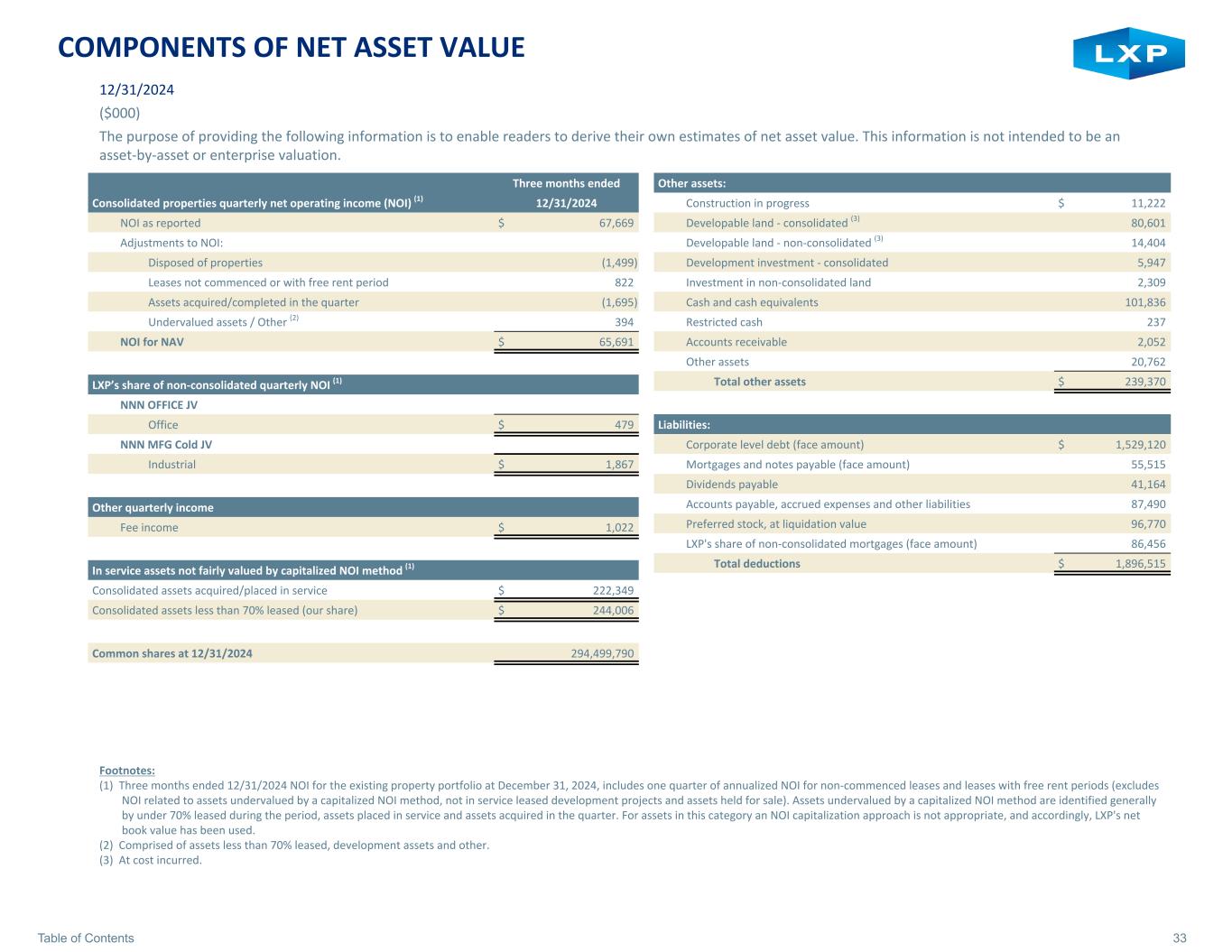
There may be a little bit of that going forward where we are focused on the 12 markets that we would expect to put more capital to work in. With respect to land that we own, we would be interested in build a suit because there's a yield premium there. But beyond that, it's a priority for us to work our leverage down to five times. We think that that's you know key in terms of improving our valuation.
Operator
Thank you. Again if you'd like to ask a question simply press star followed by the number one on your telephone keypad. And your next question comes from the lineup James Cameron with Evercore ISI. James please go ahead.
Thank you. Good morning. Will your comment that obviously the low end of guidance there's no presuming leasing on the recently developed properties and then are you into maybe half sort of lease up to get to the higher end of guidance and more in the second half of the year is that a reasonable assumption um yes jim that's exactly right okay and then um you know i was also just trying to think you've got 14 cents pardon me 16 cents coming run right out of the fourth quarter you know 64 annualized i realize they're offsets but you know how much i guess you know relating to the earlier question um sort of headwind to get kind of lower into your guidance
you know are you you know what are some of those bigger headwinds just remind me because it seems like a fairly sharp drop off just trying to make sure i've got all the pieces hey jam it's best uh sure uh one of the things is interest expense so our net interest expense is is going up a little over a penny relating to the 2024 bond refi and also due to the step-up in the swap on our term loan. If you remember, our term loan was at 2.7, and now it's going up to 4.3. So there's a spread there. And also capitalized interest of about a penny is also being reflected in the guidance that's coming down because we did the substantial completion of our development projects last year. So that's the other piece that I think maybe you didn't have.
Yeah, no, that's helpful. Appreciate it.
Operator
And your next question comes from the line of Mitch Germain with Citizen JMP. Mitch, please go ahead.
Judy
Analyst — Citizens JMP
Hi, this is Judy on for Mitch. Just a quick question here. Now that the Phoenix purchase option is exercised, what are the discussions around the land bank? I think you mentioned Build-to-Suit there.
Yeah, that's correct. As we've said, the focus remains on bill to suit so in phoenix we've continued to respond to to build the suit inquiries there and i would say of uh of the entirety of the land bank there's the most activity uh has been there in phoenix and that's where i would anticipate our our next bill to see wicker thank you again if you'd like to ask a question simply press star followed by the number one on your telephone keep ahead there's no further question at this time i will now turn the call over to will eglin
for closing remarks will okay well thanks to all of you for joining us this morning please visit our website or contact heather gentry if you would like to receive our quarterly materials and in addition as always you may contact me or the other members of our senior management team with any questions thanks again and have a great day that concludes today's call Thank you all for joining PMA Now Disconnect.