Operator
Greetings and welcome to the LSI Industries Third Quarter 2025 Results Conference Call. At this time all participants are in a listen-only mode. A question-and-answer session will follow the formal presentation. As a reminder, this conference is being recorded. It is now my pleasure to introduce your host, Jim Galeese. Please go ahead.
Speaker 1
Welcome, everyone, and thank you for joining today's call. We issued a press release before the market opened this morning detailing our fiscal '25 third quarter results. In addition to this release, we also posted a conference call presentation in the Investor Relations section of our corporate website. Information contained in this presentation will be referenced throughout today's conference call. Included are certain non-GAAP measures for improved transparency of our operating results. A complete reconciliation of GAAP and non-GAAP results is contained in our press release and 10-Q. Please note that management's commentary and responses to questions on today's conference call may include forward-looking statements about our business outlook. Such statements involve risks and opportunities, and actual results could differ materially. I refer you to our safe harbor statement, which appears in this morning's press release, for more details. Today's call will begin with remarks summarizing our fiscal second quarter results. At the conclusion of these prepared remarks, we will open the line for questions. With that, I'll turn the call over to LSI President and Chief Executive Officer, Jim Clark.
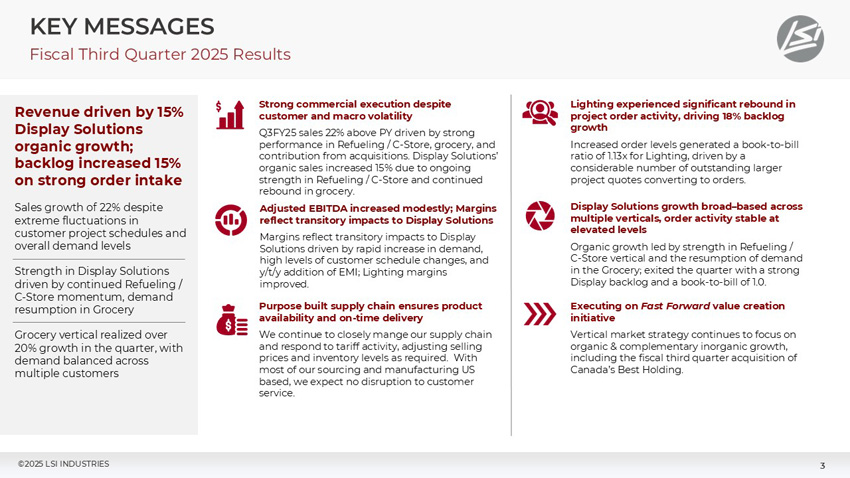
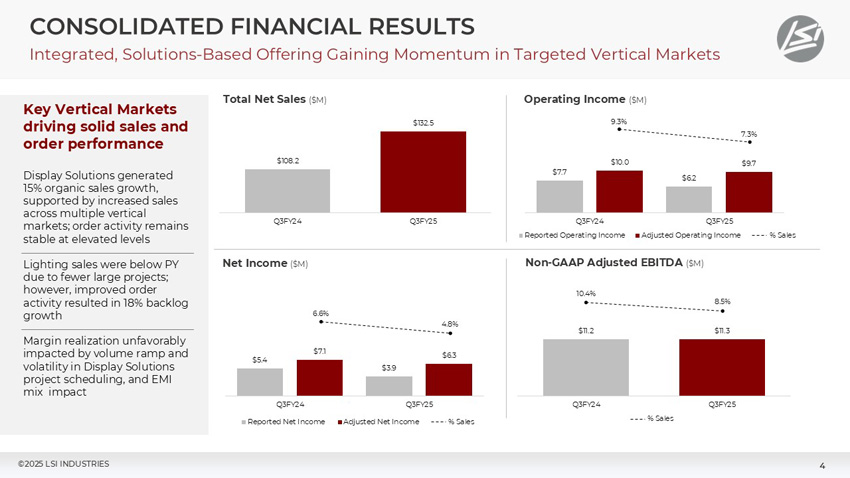
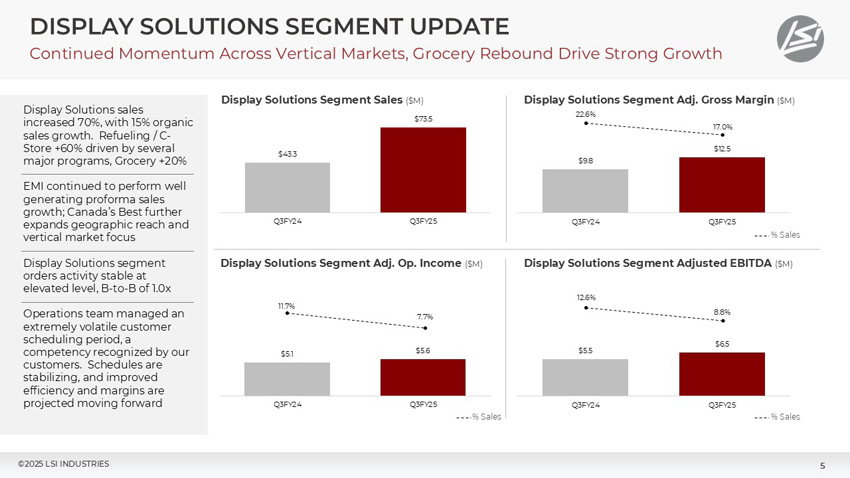
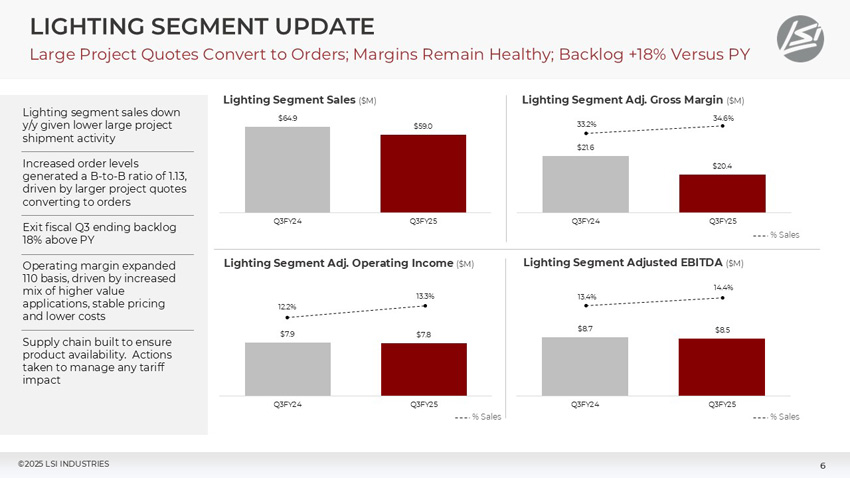
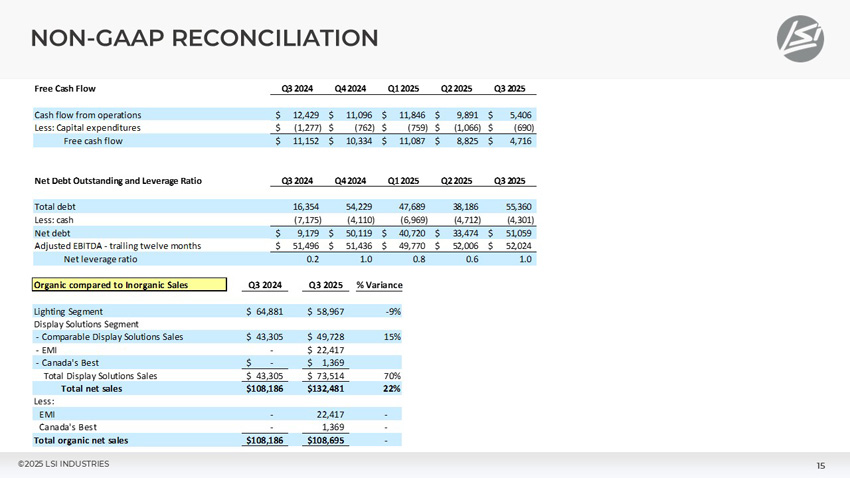
Thank you, Jim, and good morning, all. Thank you for joining us this morning. Today, we'll be discussing our third quarter 2025 earnings results. First, let me say we had a very busy quarter. The entire LSI team delivered some very solid results. We achieved sales growth of 22% through some very choppy customer demand schedules. Although our margin was impacted by manufacturing and logistics inefficiencies created by these choppy schedules, our team has been able to serve our customers well and I'm confident we will regain this margin as things stabilize. The service levels we are able to provide to our customers continue to demonstrate why our vertical model and full-service approach is such a compelling benefit. One-stop shopping with a partner you can trust. In the quarter, we completed the acquisition of Canada's Best Store Fixtures in Ontario, Canada, and we welcome the entire team into the LSI family. We held our national sales meeting in February in Cincinnati, where we brought all our LSI sales, marketing, and product development folks together for four days, introducing our new products, discussing customer and market opportunities, and developing strategies to retain existing customers and pursue new business opportunities. All these efforts resulted in net sales for the quarter of $132.5 million; that is sales growth of 22% year-over-year, driven by strong performance in the Display Solutions business. Total sales in Display Solutions increased by 70% versus the prior year, including 15% organic growth in the segment with 20% growth in Grocery and some strong long-term projects in the petroleum/convenience store market space. Last Friday, we celebrated the one-year anniversary of EMI joining LSI and the business continues to perform very well as we've worked on cross-selling opportunities and overall margin improvements in the EMI business. Very encouraging. Lighting sales lagged a bit on a year-over-year basis, but margins continue to do very well with a 110 basis point improvement in operating margins. Most of the headwinds in Lighting sales have been driven by a slowdown in large project activities, whereas these sales haven't been lost, but they have frequently been put on pause with various construction delays and other factors. The good news in Lighting is we've seen a strong rebound in the third quarter with large project order activity, and our book-to-bill ratio for the third quarter being better than 1.13 times as we've seen a number of larger project activities and quotes convert to orders. We're exiting the quarter with a lighting backlog of 18% above the prior year. This is very encouraging on the large project front, and it's a trend we would like to see continue. Jim Galeese will provide additional financial details in a minute. Now let me change gears and turn to the remainder of our fiscal year 2025 and the remaining part of our calendar year 2025. Back in 2019, LSI as a company was highly dependent on foreign-sourced products and components, particularly in our Lighting segment. At that time, we were approximately 80% foreign-sourced and 20% domestic-sourced. In that same year 2019, we made the decision to onshore and reshore a lot of our manufacturing and sourcing activities. Today, we stand at about 70% domestic product and components and 30% foreign-sourced. The reason I bring this up is the trade and tariff activities. While no one is immune from the impact of this ongoing trade war, I do believe LSI will have an advantage over many of our competitors who rely solely on or heavily on foreign-sourced products. We believe suppliers from China who provide direct imports of finished goods will be heavily impacted and that should bode well for our value-oriented products and create an opportunity for some new customers to experience the LSI difference. Lastly, on the subject of procurement, our team has been working for the past few months to identify alternative sources for foreign-sourced items that could be impacted, and they continue to look for ways in which we can leverage our current position. More to come on this, but again, I think this could provide an advantage for our company and we look forward to seeing how it will play out. The most important message I'm trying to convey is we have a plan. We cannot control tariffs, how they'll be applied and to whom; we can't control the amount of the tariffs or how other countries will react, but we do have a team of folks that are committed to minimizing the impact to our customers and trying to turn this situation into an advantage for our company, our customers, our partners, and our shareholders. We accomplished a lot in this quarter. We continue to build a stronger, more capable business with a strong platform equipped to deliver profitable growth consistent with our objectives outlined in our Fast Forward plan. We're using the experiences of our management team to effectively integrate Canada's Best Store Fixtures and continue our work with EMI. We believe that we have significant growth opportunities in front of us, and we remain committed to growing our business while balancing the needs of our customers, shareholders, and employees alike. With that, I'll turn the call over to Jim Galeese for a closer look at our financials. Jim?
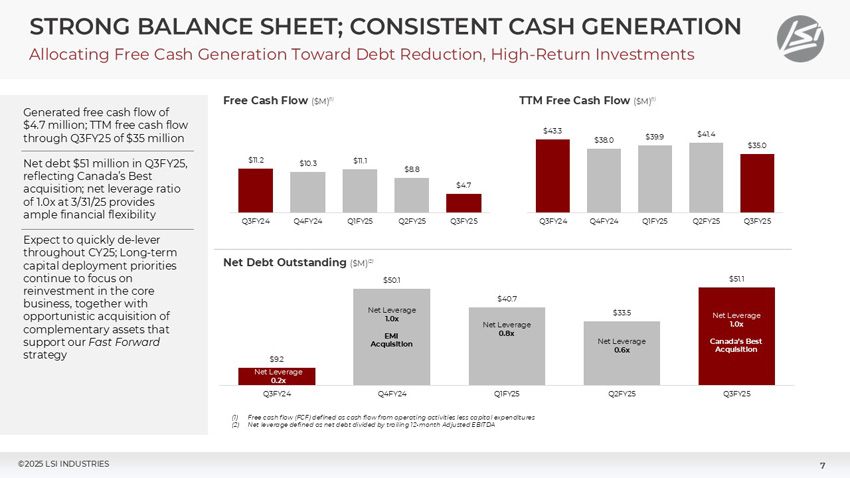
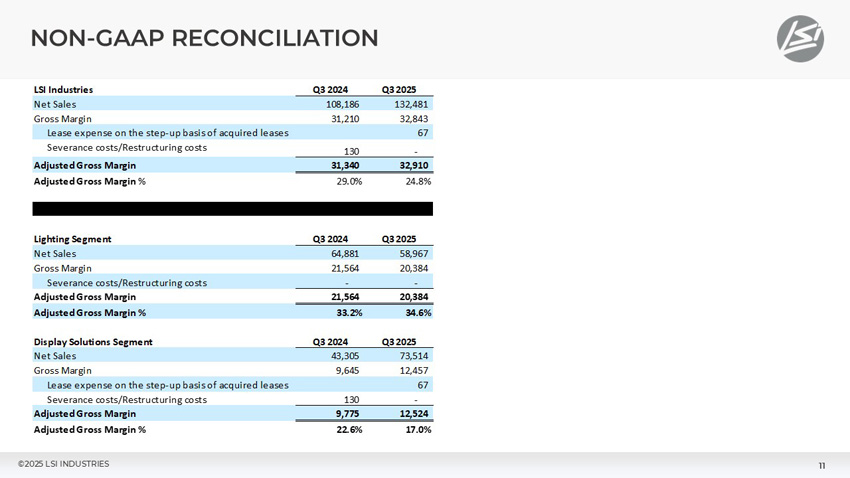
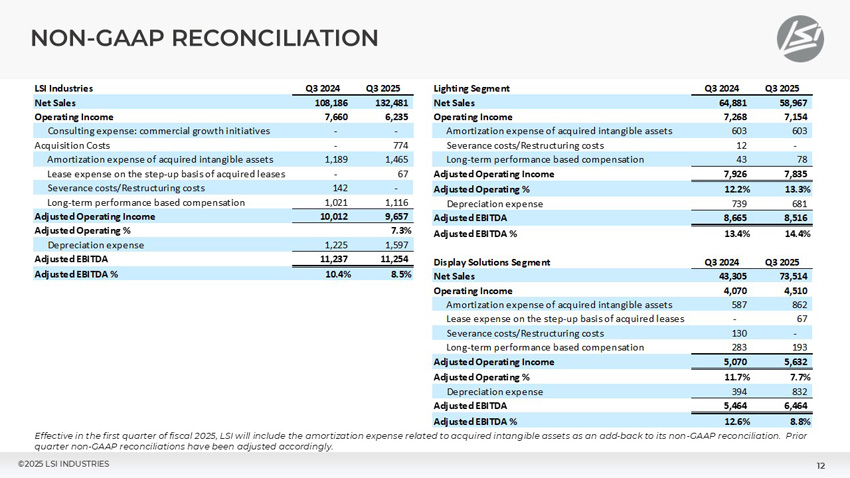
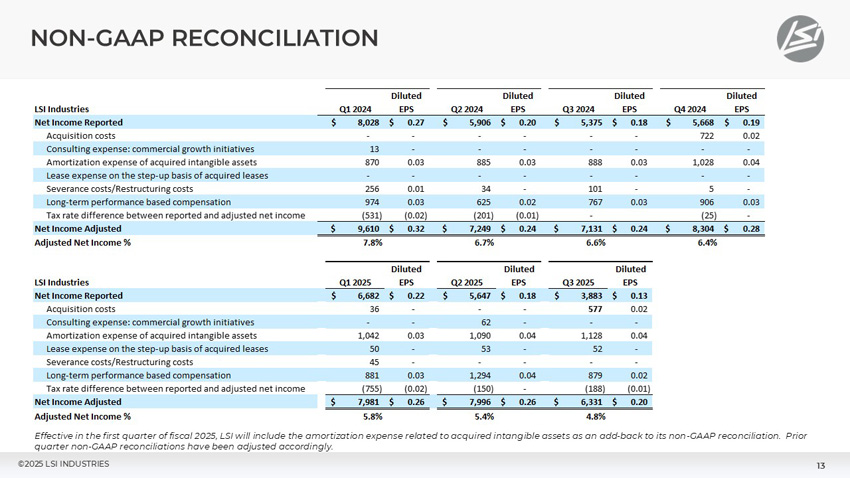
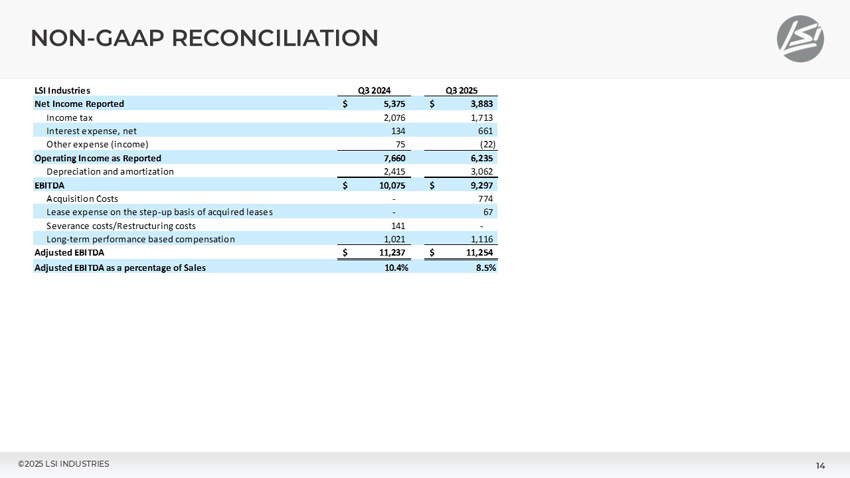
Thank you, Jim. Our focus in fiscal Q3 was effective execution, operating in an environment with significant variability in customer delivery requirements. We engaged in high levels of customer collaboration to manage the ongoing schedule changes, and site release activity steadied as the quarter progressed. Our operations teams did a notable job pivoting to shift production in process from one project to another, a strong competency in a custom project job environment. The focused effort generated third quarter sales of $132 million, or growth of 22% over the prior year, and adjusted EBITDA of $11.3 million, while attaining adjusted earnings per share of $0.20. Also in the quarter, we announced the acquisition of Toronto-based Canada's Best Holdings. Canada's Best was acquired for an all-cash purchase price of $24 million with a $7 million performance-based earn-out potential. LSI generated cash flow of $4.7 million in the third quarter, increasing our TTM cash flow to approximately $35 million. The company's balance sheet after the acquisition of Canada's Best remains strong with net debt of $51 million or a ratio of net debt to trailing 12 months adjusted EBITDA of 1 times. Looking forward, it was a solid orders quarter for the business, and we exit the third quarter with a backlog of 15% above last year. Our 22% sales growth was led by the Display Solutions segment, which realized Q3 sales growth of 70% with organic sales growth of 15%. Growth was led by the Refueling/convenience store vertical and continued recovery in Grocery. Refueling/convenience store sales increased 60% versus prior year, led by multiple ongoing customer graphics programs. Sales of refrigerated and non-refrigerated display case products to the Grocery vertical generated a substantial growth of 20%. Despite the vertical incurring the highest level of order fulfillment changes in the quarter. EMI continued its solid performance, generating year-over-year pro-forma growth and integration activities are progressing ahead of schedule. Display Solutions adjusted operating income increased 11% compared to the prior year, while the rapid increase in demand, high level of scheduling disruptions, together with the mix impact of EMI resulted in a lower margin rate. We continue to collaborate closely with major customers and expect scheduling to further stabilize, improving efficiency and operating margin performance. Display Solutions order activity remained at a high level with orders matching a strong sales quarter. Subsequently, a large order was booked in early April, further increasing our backlog. The $5 plus million order from a large grocer is for refrigerated display cases, more indication of the resumption in planned store renovation activity. The project will be produced and shipped to customer sites across the country over the next five months. For the Lighting segment, adjusted operating income was approximately flat to the prior year on lower sales. Operating margins increased 110 basis points over the prior year quarter, led by project pricing aligned with current material input costs as well as project mix. While large project shipment activity was lower in Q3, we realized a stair-step improvement in Lighting order levels. The increased order levels generated a book-to-bill of 1.1 times as numerous large project quotes converted to orders. We've discussed previously the lengthening quote to order conversion process for larger projects and are encouraged by the improved release levels. The increased order activity occurred in verticals, which had been soft for several quarters, including warehousing. We believe favorable order rates will continue, but performance for any one period will be choppy due to the lengthened quote to order conversion cycle. In summary, our business is built to be effective in demanding environments, and our high-level execution in Q3 generates repeat business as customers recognize our capabilities and value as a partner. Led by favorable third-quarter orders and increased backlog, we expect to generate both reported and comparable sales growth in the fiscal fourth quarter. I'll now turn the call back to the moderator for the question-and-answer session.
Operator
Thank you. We will now be conducting a question-and-answer session. First question comes from Aaron Spychalla with Craig-Hallum. Please go ahead.
Speaker 3
Yes, good morning, Jim and Jim. Thanks for taking the questions. Maybe first for me on just the fluctuating demand levels and changing customer schedules, can you just give a little bit more color on any certain verticals or examples of some of those changes? It sounds like some grocery, but just curious if there are others? And then you noted stability exiting the quarter. It sounds like that's continued, but just wanted to make sure I understand those dynamics since early April.
Yes, good morning. The fluctuating demand is mainly related to Grocery. This is largely due to the end of the merger and the industry trying to adjust quickly, which caused some chaos at the beginning of this year. However, I feel we are returning to normal regarding store additions, construction schedules, and timing. It was a bit disorganized, and there were too many people involved, which affected our usual efficiency. You accurately described the situation with the word stability. We believe things are now much more stable and predictable in terms of scheduling.
Speaker 3
All right. Thanks for that. And then maybe second on Display margins. Can you just quantify maybe the margin impact from those scheduling and inefficiencies on the production side versus the EMI mix and just how you see those margins trending moving forward the next handful of quarters?
Yes, I believe the most significant challenges are in the Grocery area. The mix is one aspect, while our delivery priorities are another. We've observed a notable recovery with more staff returning. I often liken this to a professional athlete who has been away for a time; when they come back to training, their performance may not be at its peak immediately. However, I think we've regained much of that efficiency over the last quarter, and I expect to see greater stability as we approach the fourth quarter and into next year overall.
Yes, Aaron, Jim Galeese here. Just to add to Jim's comments, the disruption was pretty large when you combine again the rapid increase in volume requirements of bringing people on board and getting our processes established but then getting calls to halt the status of certain orders and replacing them with another. Those interruptions were considerable. So I assess that to be 200 basis points - 250 basis points that we're going to recover as we stabilize here.
Speaker 3
Thanks for that, Jim. Just to clarify, is the 200 to 250 basis points referring to EBITDA margins or gross margins? I want to make sure I understand correctly.
That would be gross margin, Aaron. Yes.
Speaker 3
Okay. And then maybe one last one, just on the tariffs. I appreciate the color. You noted continuing to adjust pricing and sourcing decisions depending on how that progresses. Maybe just talk a little bit about what you've done thus far on pricing, anything still to come down the pipe and what changes you could potentially make on sourcing and any timing or investments that might be needed there would be helpful.
Yes. Well, let me break that into two. In terms of the planning and alternative sources and locations, this is something we've been working on for years. Most of that is locked and loaded. We know our alternative sources, who we are going to keep buying from, the decision on what we will pay for tariffs and what we will not pay, all of that type of thing. I think a lot of that groundwork is done and we'll continue to monitor it. In terms of pricing, what we're doing, most of our activity is around awareness to our customers and our agents. We are not trying to take the tariff situation and leverage it against any of our customers or anything like that. We're taking real cost impacts and passing them on when we feel them. So in some cases, we have inventory that's going to buffer us from any type of tariff, even if it is a direct import product. In other cases, we have things that we are feeling almost immediately. So I would say that from a workload perspective, our job is to make sure we're properly applying the tariffs and capturing that cost in the areas that we are experiencing them and then carefully monitoring what our buffers look like and what those things will look like to the customer in terms of the end-use delivery. The challenging thing is the stops and starts, as the tariff being on and off. The strategic decisions about where we relocate sourcing, what we don't want to do is end up with a 50% increase in the price of a component due to a tariff. If we go to an alternative source, we could have a 20% increase in the price of that component. But if the tariff goes away, then we have a 20% premium. It's all about balancing. I have a lot of confidence. We've demonstrated our ability to work through this before. I have a lot of confidence in our procurement and operations teams. But it's just a lot to consider regarding where to put our focus, what's the current message, and what's the current tariff. It would be hard to describe specific components where we've increased price today or where we may increase, but I underscore that we will be very diligent about looking at those prices and ensuring we're capturing costs that impact us.
Speaker 3
Understood. Thanks for taking the questions. I'll turn it over.
Operator
Next question, Amit Dayal with H.C. Wainwright. Please go ahead.
Speaker 4
Thank you. Good morning, everyone. I appreciate you taking my questions. So, you talked about potential opportunities to increase sales within existing customers. Is this mostly on the Display side, Jim, or is it possible with the Lighting segment as well?
Yes, it typically works both ways. We see many of our lighting customers as potential clients for our Display Solutions, especially in the vertical markets we serve. For instance, in the Petroleum sector, a customer may fully utilize our Lighting Solutions and our outdoor Display Solutions, yet we haven't engaged much with them indoors. These situations present ongoing opportunities that we actively pursue. Additionally, I want to highlight products like beverage centers and food-grade countertops and cabinetry. Conversely, among our Display Solution customers, many do not take full advantage of our Lighting Solutions, or only utilize certain aspects of them. Some might focus on interior solutions but have transitioned to outdoor needs. Therefore, I believe the potential for cross-selling across these markets remains significant. We are making progress, but there is still much opportunity ahead of us.
Speaker 4
Understood. Thank you for that. I know it looks like you have a pretty solid plan to manage the tariff environment and you've already migrated a lot of the manufacturing and sourcing to US suppliers. But in terms of customer exposure, given where the majority of the revenues come from, what is the risk on that side? Are these also mostly domestic customers that are not really directly impacted by the tariffs? I know everybody will be impacted in some fashion, but just trying to get a sense of what the customer's exposure may be as far as you know through the tariff environment?
Yes. We can observe that nearly all of our customers could potentially be affected, even those mainly sourcing domestically, especially regarding construction activities. For instance, a customer might currently be getting a microwave oven from an international supplier subject to tariffs. They could opt to switch to a domestic supplier or remain with their international one, potentially constrained by their existing relationship. The extent of the impact on their business and future plans is unclear across our entire customer base, but it’s something we need to monitor. Initially, we believe that the effect on the core operations of most of our customers will be minimal. However, certain areas like construction remodels could experience significant impacts. The automotive sector is crucial for us. Recently, I spoke to 70 of our Automotive representatives. They indicated that they do not foresee much change in the short term, likely through the end of this calendar year. However, if tariffs on imported cars lead to a market slowdown, it could slow things down, or on the flip side, it might prompt them to be more proactive with remodels during that time. Ultimately, we need to see how this unfolds before forming a definitive opinion. Overall, we remain optimistic about the market, especially with the strong building backlog and the recovery in lighting since February. Internally, all indicators suggest positive momentum, so we need to be patient and observe how things develop.
Speaker 4
No. Really appreciate that color. That was very helpful. Thank you, Jim. Just last one from me. You're creating this niche or carving out a niche in this Lighting and Display segment. Do you think you are one of the bigger players in that niche with a focus — in a specialty focus sort of in that space and what are your thoughts in terms of continuing to maybe find relevant acquisitions that allow you to dominate?
Yeah. I think our market space is unique in the way we deliver it. I don't think a lot of people are packaging it the same way or representing or selling and integrating it into the company in the same way. I think any of our competitors that we deal with usually have to take a piece of that type of product and source the solution from someone else for the other part. I think it creates a unique opportunity in how we interface with our customers and the way we talk with them. We believe there's a tremendous benefit to really combining the lighting aspect into the display along with the colors and shapes that we have. We think it's pretty unique. It's a solution sale as opposed to a component sale. I think most of our competitors approach it from a parts and pieces perspective, whereas we're offering a true solution set. I do think we stand alone in the way we go to market and it really moves us from being a supplier to more of a partner. I think it's unique, and we're enjoying some opportunities there. In terms of what this does for M&A or growth activities, I don't think it diminishes our opportunities at all because we can pick up the pieces, and it's unique. Once we get them into our family, it becomes part of that; it shifts from a supplier or component provider to a solution provider. I think our opportunities increase in size from an M&A perspective rather than decreasing.
Speaker 4
Understood. Thank you for that. That's all I have. Thank you.
Operator
Next question, Leanne Hayden with Canaccord Genuity. Please go ahead.
Speaker 5
Good morning, everyone. Thanks so much for taking my questions. Just to start, can you please discuss your acquisition strategy going forward and, do you anticipate any additional acquisitions in specific markets or geographies? And in addition to that, how important do you expect future acquisitions to be in reaching your 2028 Fast Forward targets?
Okay. So there's a lot there. We're mostly focused on M&A and I'll just say that, yeah, we remain very active in the M&A space. I've talked about this before. We have many known players that provide us opportunities. We also do a lot of work to self-originate, creating relationships with customers and companies where we feel we have a unique position. We do a lot of work around LSI, and we're continuing to do that. So we look at M&A in two flavors, one being incremental M&A that we can execute consistently, taking something like a $50 million, $60 million, $80 million, or $100 million business that is underperforming in terms of margins or EBITDA performance or maybe we see things that we can help move or consolidate. We're going to continue to look for those types of opportunities. Then on the other side of that coin, we have what we call transformational opportunities, something that might add $200 million of revenue or might really add a whole new segment for us, whether it's a new vertical market or entirely different solution set. We're just as active in that space. We just haven't been able to cross the finish line with any of those projects due to meeting our requirements or other factors. But we're very active in both of those areas and intend to keep being very active. I think we have a good demonstrated track record of being able to bring in those companies, integrate them very well, make them part of the team, part of the story, and then provide back to them resources, whether it's procurement, operational support, or processes around selling. We like that equation, and we're going to keep doing that.
Speaker 5
Got it. Thank you. That's very helpful. Just one quick one from me. How has the velocity of demand been since its launch? And do you anticipate any future Lighting or Display segment products going forward?
Yes, I've noticed this in my recent discussions with our Lighting agents. We're still on track to release over 20 new products each year, and we've never dipped below that figure. In fact, my product development team emphasizes that we actually introduce more than 30 products annually and have consistently maintained this pace. The velocity of our releases has met or even exceeded our initial expectations. When launching a new category, predicting short-term demand can be challenging, but we've been pleasantly surprised by the immediate interest, indicating that we've designed the product well. Customers and our agents see its versatility and know how to use it effectively. I'm very pleased with our progress. We will keep releasing a significant number of new products each year, as maintaining product vitality is crucial for us moving forward.
Speaker 5
Got it. Thanks so much. Thanks for taking my questions. I'll jump back in queue.
Thank you, everyone, for taking the time to call in. As I said, it was a very busy quarter. There are a lot of external elements that everybody is facing right now, but I think the team is doing an exceptional job of managing them. The majority of our customers have been very transparent and have done an excellent job of communicating with us. I feel good about the quarter we just had, and I feel even better about the upcoming quarter. There's going to be a lot of noise that'll continue to impact the markets in general. But I think that we have a very good plan about how to navigate those choppy waters, and I'm looking forward to a good strong finish to our fiscal year as we're well into our Q4. With that, I'll just say thank you for taking the time and thank you for your continued interest in LSI.
Operator
This concludes today's teleconference. You may disconnect your lines at this time, and thank you for your participation.