Operator
Greetings, and welcome to the LSI Industries Fiscal 2026 First Quarter Results Conference At this time, all participants are in a listen-only mode. A brief question and answer session will follow the formal presentation. Should anyone require operator assistance during the conference, please press star zero on your telephone keypad. As a reminder, this conference is being recorded. It is now my pleasure to introduce your host, Jim Gillis, Chief Financial Officer. You may begin.
Welcome, everyone, and thank you for joining today's call. We issued a press release before the market opened this morning detailing our fiscal 26 first quarter results. In addition to this release, we also posted a conference call presentation in the investor relations section of our corporate website. Information contained in this presentation will be referenced throughout today's conference call. Included are certain non-GAAP measures for improved transparency of our operating results A complete reconciliation of GAAP and non-GAAP results is contained in our press release and 10Q Please note that management's commentary and responses to questions on today's conference call May include forward-looking statements about our business outlook Such statements involve risks and opportunities and actual results could differ materially I refer you to our Safe Harbor Statement, which appears in this morning's press release, for more details. Today's call will begin with remarks summarizing our fiscal first quarter results. At the conclusion of these prepared remarks, we will open the line for questions. With that, I'll turn the call over to LSI President and Chief Executive Officer Jim Clark.
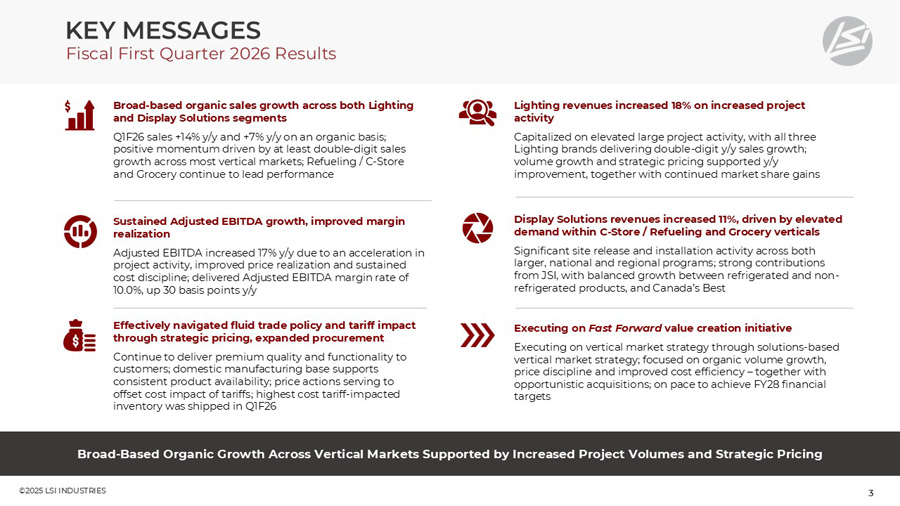
Thank you, Jim, and good morning, everyone. I appreciate you taking the time to join us today. This morning, we're going to be reviewing our first quarter results for fiscal year 2026. As you likely saw in our earnings release, we closed the first quarter with strong performance across the board. Both our display solutions and lighting businesses achieved double-digit growth, and I'm very pleased with our continued momentum and encouraged by our robust pipeline of opportunities in both new construction and remodels as we move towards calendar year 2026. products. LSI has established a solid footing in the vertical markets we serve. We continue to broaden our portfolio of products and services while building stronger awareness of our capabilities across these markets. There's a lot to cover in terms of our Q1 performance, and Jim Glees will walk through the specifics and the financials in a few minutes. But before we do that, I wanted to shift to two topics that have been on the top of my mind over the past year. First, our investor outreach. Over the past several months, LSI has expanded our engagement with the investment community, attending more conferences than usual, including a major industrial conference in Chicago next week and another in California shortly after. These events bring together investors with varying familiarity with LSI, and what stands out to me most is how much that understanding and misunderstanding of LSI has evolved over the last five years. Today, even those new to LSI have a much clearer picture of what we do, the customers we serve, and the opportunities ahead. In the past, many thought of us as only a lighting company. We'd spend much of our time explaining our broader capabilities, such as refrigeration, print and digital menu boards, in-store kiosks, countertops, checkout stands, beverage centers, bakery cases, and so much more. The conversation is easier today, but I can still sense curiosity about the full scope of what LSI offers and why I believe we're creating an entirely new category of integrated solutions for our customers. Six years ago, LSI made a strategic decision to focus on a select group of vertical markets. We chose those vertical markets based on our existing strengths and on the disruption within those markets that we expected would create long-term growth opportunities. Today, we serve a number of evolving markets, including grocery, convenience stores, refueling, quick-serve restaurants, sports lighting, warehousing, automotive, and a dozen or so others. In each of these markets, our goal is simple, to offer a comprehensive range of products and services that makes LSI a true one-stop partner for our customers. Think of us as the Home Depot or Lowe's of the vertical markets we serve. A customer may reach out to us for lighting, much like a shopper goes into Home Depot for a gallon of paint. But we can provide far more, and that's where the real opportunity lies. Very few competitors can match the breadth and depth of what LSI offers. For example, a grocery customer might contact us about indoor lighting or open-air refrigerated displays. That initial discussion often expands to include other areas such as bakery cases, checkout counters, produce displays, aisle markers, deli counters, beverage centers, etc. The same is true in gas stations and convenience stores and quick-serve restaurants and others. What begins as a single product or solution, offer grows into multiple opportunities. Now, I realize that most of you on the call today understand this well, but I wanted to take a moment to just reinforce how much potential this model continues to create for us. Our vertical markets are growing, our offerings are expanding, and because of this, I see significant runway ahead of us. The second topic I wanted to touch on is seasonality and the year-over-year comparisons that arise from time to time. Last year, around this time, the grocery industry was navigating uncertainty surrounding a proposed merger between two of the largest U.S. grocery chains. When that merger was ultimately abandoned in Q2, the grocery sector resumed its expansion and renovation activities. That shift, along with other activity and opportunities in our refueling markets, created a surge of demand for LSI in Q2 of last year, particularly in our display solutions. It resulted in more than 100% growth in our display solution segments during Q2. About half of that growth was organic, driven largely by over 60% organic growth in the grocery segment alone. I mention this not to provide guidance or caution, but simply to note that Q2 comparisons this year will naturally reflect that extraordinary period of growth last year. And year-over-year results may not match last year's exceptional levels. I'm bringing it up early, just in case it comes up later. lastly a few words on our integration progress as i shared last quarter both emi and canada's best store fixtures are exceeding our expectations from an integration standpoint i'm very pleased with our progress and with the progress we have underway alan harville who leads emi and nelson wesley of jsi are currently developing a plan to align our entire sales and manufacturing operations across both platforms. That effort will take time, likely the better part of a year, but it will drive significant efficiencies and unlock new opportunities for those businesses and our broader business. Canada's Vest, which joined us just over six months ago, delivered one of their strongest quarters in their company's history. The integration has been strong and seamless, and we're thrilled with their performance. As always, the foundation of LSI success lies in our culture, a culture that's built on accountability, adaptability, and what we call a high say-do ratio. This mindset continues to drive our growth and our execution excellence, and I want to sincerely thank the entire LSI for their commitment and focus. Looking ahead to fiscal and calendar year 26, we remain dedicated to advancing our fast-forward strategic plan. Internally, this will be a year of focus on our people, developing talent from within, optimizing our processes, and finding new ways to improve our day-to-day operations while continuing to provide superior service to our customers. Again, I just think there's a lot of opportunity in front of us, and I'm thrilled. In closing, I want to thank you for your continued confidence in LSI. We have tremendous opportunities ahead of us. I'm excited about what we'll achieve together. With that, I'll turn the call back over to Jim Gilles for a more detailed look at our financial performance.
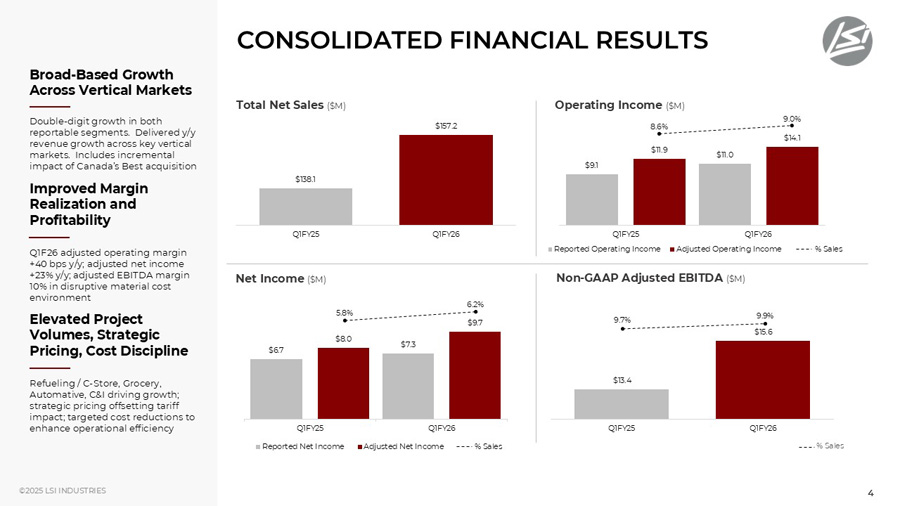
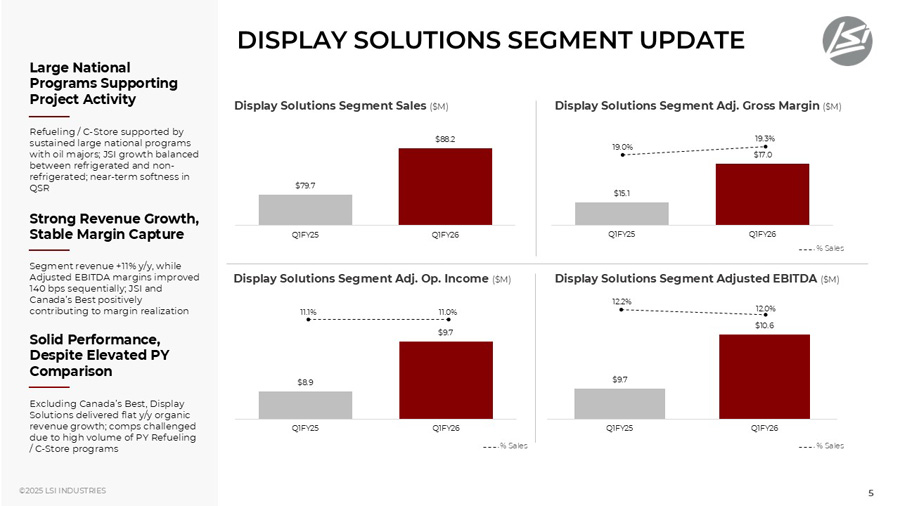
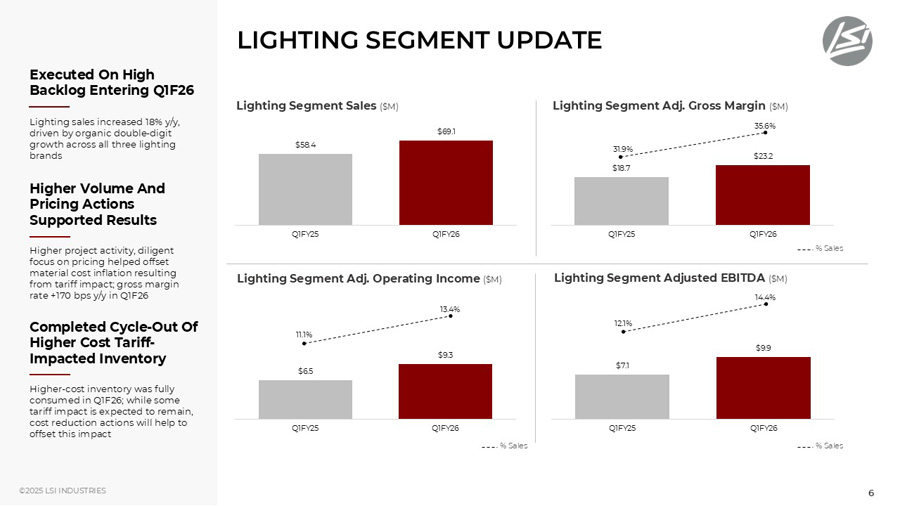
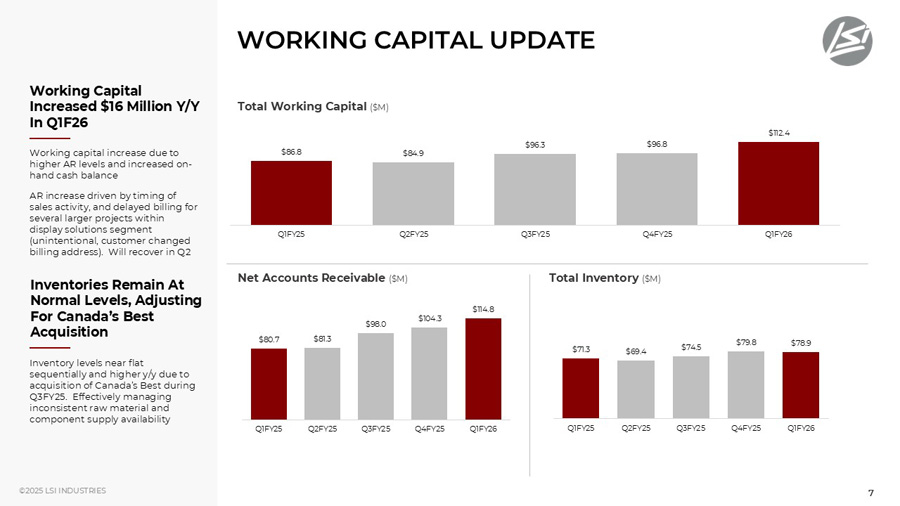
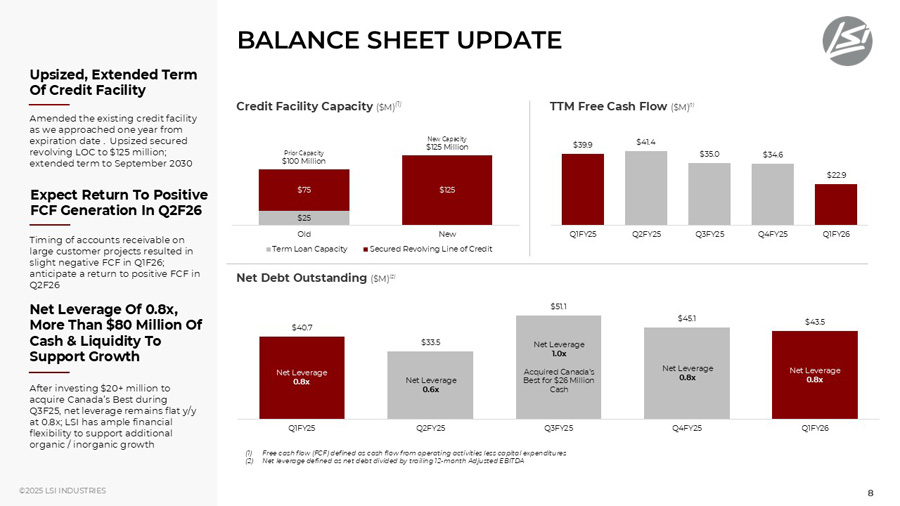
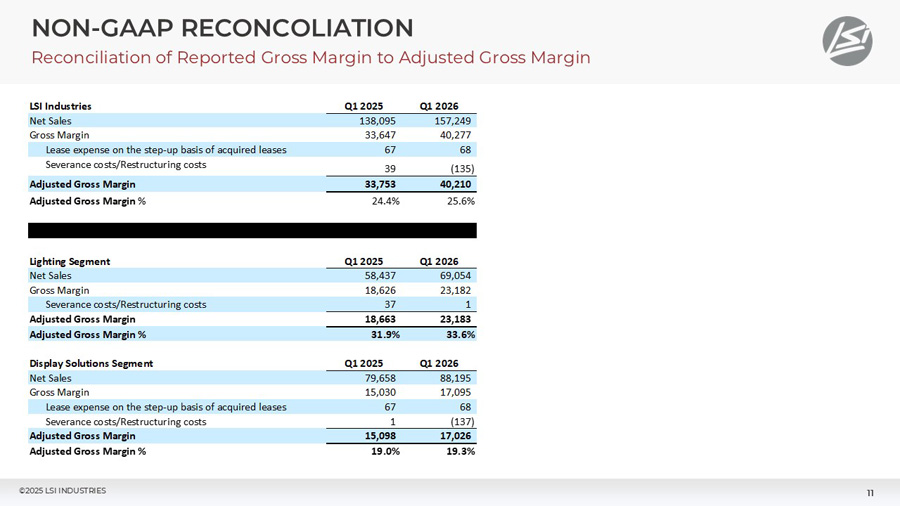
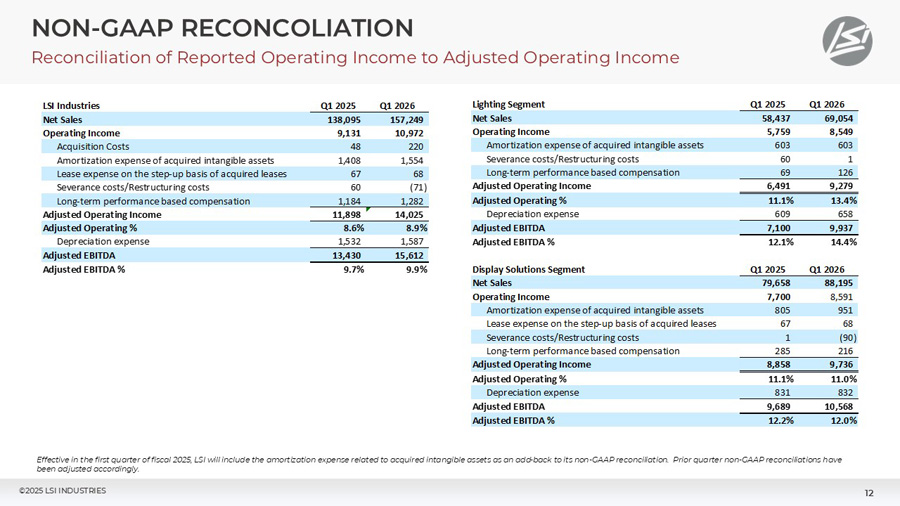
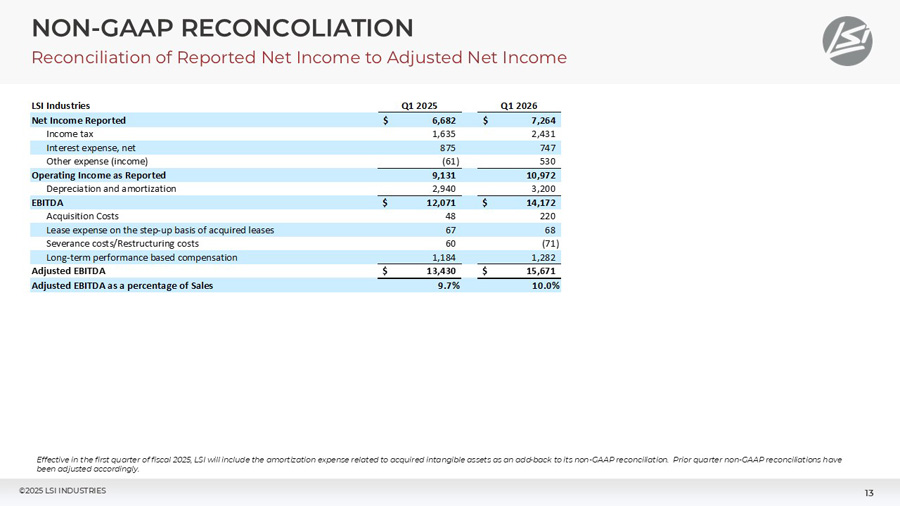
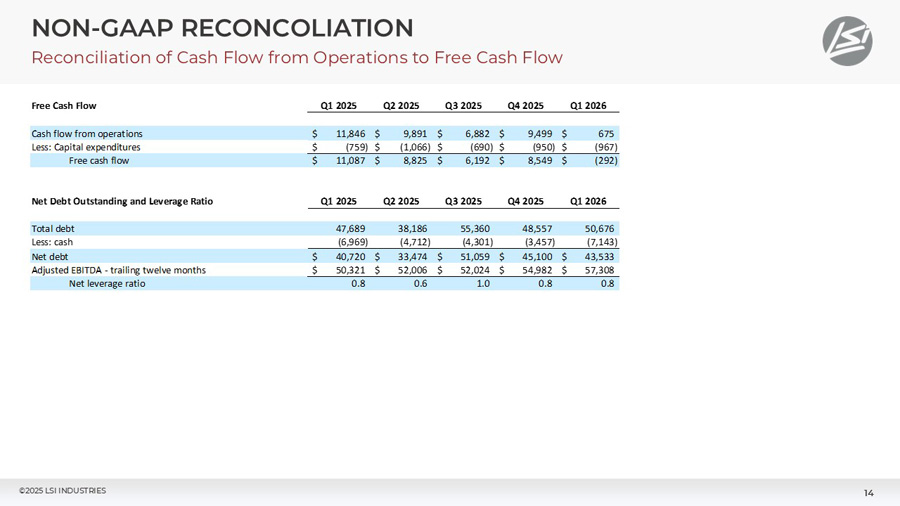
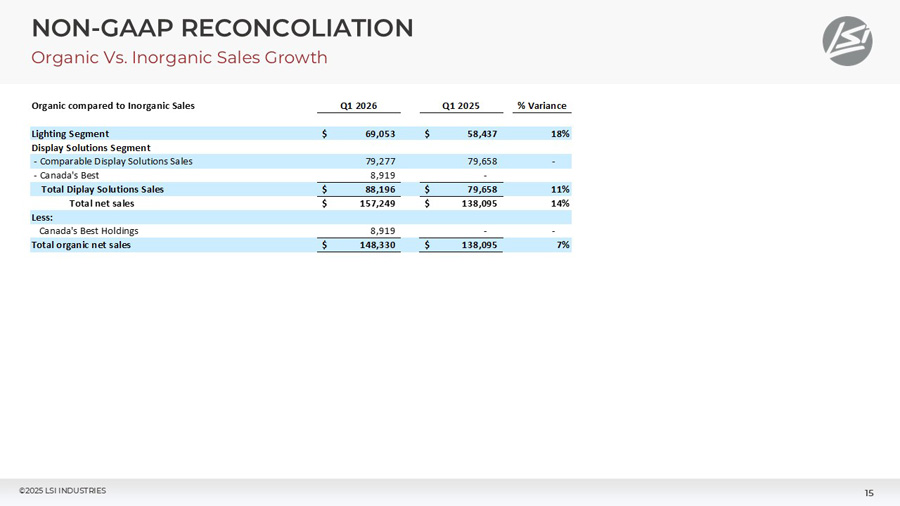
Good morning, all. Q1 was a solid start to our fiscal 26th year, with sales of $157 million, adjusted EBITDA of $15.7 million, at an EBITDA margin rate of 10%. Adjusted earnings per share improved to $0.31 compared to $0.26 in the prior year quarter, an increase of 19%. All achieved while successfully managing a challenging environment of tariffs, material input cost fluctuations, and component availability. Sales of $157 million represents a 14% increase versus Q1 last year, with organic or comparable sales increasing 7% in the quarter, driven by continued growth in lighting and sustained high-performance and display solutions. Sales also increased modestly sequentially, carrying forward the momentum from our strong fourth quarter of fiscal 25. Next, a few comments on the performance of each of our two reportable segments. Lighting first quarter sales increased 18% versus prior year, following fourth quarter fiscal 25 sales growth of 12%. Several areas are contributing to the double-digit growth rate, starting with our vertical market approach. Our priority verticals are outperforming broader, non-resi construction indices, providing a larger market opportunity. Secondly, we believe we are gaining market share, as our purpose-built products provide features and functions which outperform competitive products. This, combined with our domestic production, lead time, and delivery capability, provides a competitive advantage. We have converted multiple end customer accounts to LSI in recent months, and we are aware of at least one competitor who has experienced significant delivery issues. Recent lighting order levels suggest year-over-year sales growth will continue in the fiscal second quarter. Our team has been successful in managing the broader supply chain challenges, impacting primarily the lighting segment. Our strong focus on margin management along with increased volume generated a 170 basis point improvement in gross margin and 43 percent increase in adjusted operating income. Moving to display solutions, demand activity remains at a high level with total sales increasing 11 percent in the first quarter. Performance was led by the continued recovery in the grocery vertical and sustained program site release activity in refueling C-STOR. Multiple programs continue in refueling C-STOR, including a large national program projected to continue through the end of calendar year 26. As mentioned in the press release, proposal and concept work for future programs continues with multiple customers. In October, the largest C-store chain in the U.S. published plans to build hundreds of new stores over the next several years, deploying a larger store footprint and focus on in-store and beverage sales. The secular growth outlook for the refueling C-store vertical remains favorable. Steady demand patterns continued in Q1 for refrigerated and non-refrigerated display cases in the grocery vertical. Grocery customers continue to formulate their go-forward investment plans, but planning guidance remains short-term. We continue to effectively manage demand with the guidance provided. Our focus on designing products for specific applications applies to display solutions in addition to lighting. In the first quarter, we were awarded a multimillion-dollar display case project for a large national grocer based on the quality and functionality of our products, as we were not the low-cost bid on the project. Canada's Best Holdings, acquired in March of this calendar year, delivered an exceptional quarter. We remain excited about the opportunities within the growing Canadian market, where we serve multiple verticals, including our strong, established presence serving banking and financial institution customers. LSI has produced solid cash generation in the last several years, and we expect to deliver solid cash flow again in fiscal 26. Free cash flow for Q1 was slightly negative, however, as improved earnings were offset by an increase in working capital, specifically an increase in accounts receivable. The receivables increase was driven by two factors, timing of sales in the quarter, and secondly, an inadvertent delay in project billing for two large accounts. The delay was a result of these customers changing their invoicing address and the change not properly communicated and processed. These are large, longstanding, blue-chip customers, and the invoicing has been updated. These receivables will be current in Q2. Lastly, with our current credit facility approaching one year before expiration, we amended and extended the existing facility. The amended facility increases our availability to $125 million and extends the term for five additional years to September 2030. This further ensures we have the liquidity to support the strategic growth of the business moving forward. Exiting the quarter, we have more than $80 million of available liquidity, while net leverage remains below one times. I'll now turn the call back to the moderator for the question and answer session.
Operator
Thank you. We will now be conducting a question and answer session. If you would like to ask a question, please press star 1 on your telephone keypad. A confirmation tone will indicate your line is in the question queue. You may press star 2 if you would like to remove your question from the queue. For participants using speaker equipment, it may be necessary to pick up your handset before pressing the star keys. One moment, please, while we poll for questions. The first question is from Aaron Spicella from Craig Hallam Capital Group. Please go ahead.
Yeah, good morning, Jim and Jim. Thanks for taking the questions. First, you know, on our end, maybe just starting with lighting. Obviously, good quarter sounds like the outlook's good there, and most of it seems like it's coming from volume. Can you just maybe talk about volume versus price there, and then just how you're thinking about growth and kind of margins in that business as we look towards fiscal 2026? How does that pipeline and kind of book-to-bill look in that business?
Yeah, Aaron, Jim Clark here. Thanks for the question. Thanks for joining the call. Yeah, I mean, it's almost exclusively volume. Our pricing has been fairly stable here for at least a couple quarters, a little bit incrementally up, but for the most part, it's been stable. The majority of that increase you're seeing in lighting is definitely volume. We've benefited from a couple of very large opportunities that we've gotten pieces of over the last two quarters, and I think that we're going to see even more in the coming quarters. Jim, I don't know if you want to talk.
Yeah, Aaron, Jim G here, just to add on to what, you know, Jim said. Yes, we feel very confident about our lighting business, where it's positioned. We referenced that we've been successful in several key account conversions, you know, that's going to provide a nice, stable business moving forward. And our team, I got to give our team credit. They're doing an excellent job managing the whole tariff and some instability in the supply chain driven by tariffs. We have a very strong focus on our project quotation process, ensuring we're referencing the most current costs, et cetera. You know, so this effective project quotation process, along with the volume, is what allowed us to achieve this, you know, 170 basis point improvement, you know, in gross margin. And as we, as I mentioned in my comments, that, you know, we see this growth carrying forward into Q2.
All right. Thank you for that color. And then, you know, appreciate the commentary on seasonality and kind of, you know, the rapid snapback we saw on grocery last year. But still sounds like the pipeline is strong there. You're expecting growth, you know, for the full fiscal year. Can you maybe just, you know, talk a little bit about what you're seeing there? Is it kind of more, you know, rational, you know, measured spend from your grocery customers? Yeah, just some color there would be helpful.
Yeah. So, you know, two things on that. And I thought we would be, you know, kind of proactive on our comments relative to that, just to reset the stage a little bit. Number one, Q2 of last year, we had growth in grocery, obviously, because of the settlement on the merger, on the proposed merger. And there was all that pent up demand. And as you know, when we got that slug of business, we had to staff up, we had to bring materials in quickly, and we made a strategic decision back then to do that and serve the customers based on a number of the quotes they had in front of them and a number of the commitments we had made. And I think it's served us well because I do feel as though a lot of that has stabilized now and our order patterns are getting back to much more normality, a greater deal of normality in terms of customer request and demands for delivery and that type of thing. remember that typically in our grocery segment, the time between November 1st and we'll say Valentine's Day is kind of a hands-off. The stores want to focus on stocking up their stores, being ready for Thanksgiving, Christmas, New Year's holiday, and that goes right on through basically Valentine's Day and some a little bit longer. Last year, all of that was ignored because they had deferred a lot of maintenance and they had, you know, across the industry, by the way, it's not just one or two customer, it was across the whole segment. The next thing I wanted to say about that was we also had a pretty good jump in some of our C-Store and petroleum in display solutions right at that same time last year. I think this year is a more normal rhythm, although we still have growth in it. So I'm very encouraged about the direction we're going. I'm just trying to call out the fact that if you look at Q2 of last year compared to Q2 of this year, we're likely not to have 100 percent growth.
Right. Fifty percent of which was organic. And, Aaron, I'll just add to that, you know, our best forward indicator, you know, about activities and so forth is our involvement in proposal and concept work, you know, with these companies. And I think we mentioned in the press release and our comments both that that activity remains very healthy. So that's a pretty good barometer as to how we see these markets develop over the next 12, 24 months.
Appreciate that. And then maybe just one more, if I could, on operational efficiency and kind of capabilities. Jim, see, you kind of touched on staffing up and bringing materials in. I mean, can you just kind of talk about some of the priorities, you know, from an operational standpoint here in FY26, you know, maybe in the coming quarters?
Yeah, well, I did make comment in my prepared remarks that, you know, and I've made this, you know, in our last quarter call, too. We're putting a lot of time and effort into our people this year. I mean, we always take care of our people. It's a people first business. You know, we don't make anything that other companies don't make. We just think that we deliver it in a much better and more efficient manner, and that starts with our people. And, you know, we are looking for that operational efficiency. We are turning the dial in collection with our people to look for ways that we can be more operationally efficient. And that's part of that story on our way to 12.5%. EBITDA, that efficiency has to be there, and we are putting that time and effort in there, and I'm very happy with the progress we continue to make.
Understood. Thanks for taking the questions. I'll turn it over.
Operator
The next question is from Alex Reigel from Texas Capital. Please go ahead.
Thank you. Good morning, gentlemen. Nice quarter. As it relates to lighting, you mentioned that it could be up in the second quarter. How are you thinking about growth for the balance of the year in lighting?
We feel encouraged. We think that, you know, there's a lot more. Jim just mentioned a minute ago, a lot of our business, you know, it has a 18 to 24 month development cycle. And so things that we have been working on for the better part of a year, in some cases longer, you know, those are really starting to materialize now. And we look at that along with our what we'll call our kind of flow business, the business that comes in through our agency network and that type of thing. And we're very encouraged by what we see in lighting. You know, I don't want to get too far out over my skis, but I anticipate that we'll continue to see growth in lighting through the year.
Yeah, and I'll just add to Jim's comments, and we had commented in the prepared remarks, you know, that our primary verticals where we focus lighting, you know, they are healthier than the broader, you know, non-residential or commercial market. You know, so number one, that provides opportunity. And then secondly, you know, we are making we continue because our products are built for specific applications, not just general applications, continuing to make share inroads, you know, with certain key accounts to enable us then to improve and grow our share position. So the combination of both gives us a, you know, we're, as Jim said, we're optimistic about the lighting projection for the balance of the fiscal year. And I would say I'm enthusiastic on top of it.
So we'll, you know, we'll see how that plays out, but we feel pretty good.
And then as it relates to the C-Store Outlook, you know, it included the possibility of rolling out of one large project and into another fairly large program pretty smoothly in 2026. Is this still tracking, or could you possibly stack the second one?
Well, we have the capability to stack the second one, and in almost all cases, we're working multiple projects. You know, this is not one project to another. We always have overlap. In some cases, you know, we have three or four projects simultaneously going on. One may be a smaller project. One's rolling off the end of their large remodel, the new big ones coming in, and then we have two or three that are infill there. But I'd say from a capacity standpoint, we have at least 20% capacity to take on additional projects, and we have a whole kind of second rung to the ladder, if you will, that we're able to enable if the projects take off beyond that. We work a first and skeleton second shift right now. So from a utilization standpoint, just staffing up our second shift gives us another 20% on top of the 20 we have right now. So we have the capability to kind of expand. A lot of it's timing and the way it tends to work out. You know, I don't know how these guys know what each other is doing, but I will tell you that, you know, and I'm talking about a subset of, you know, 20 plus customers. They all kind of know when somebody is making a big program investment, and it's just kind of interesting how they layer in. I'm not concerned about our capacity capability.
And if I could ask one last question, grocery is down in the second quarter yet up for the year. Can you talk about your confidence and visibility into achieving this growth for 2026?
yeah well i mean i think what we were pointing out in terms of second quarter is just that there's some seasonality that was uh you know that was unique last year um they you know they the grocery industry as a whole tends to really monitor what's going on in the stores during you know november december january those time frames are very busy for them they put a lot of inventory on the floor uh you know to to deal with the rush that comes in they really don't want a lot of construction going on inside the store during that time. And last year represented kind of an anomaly. That doesn't mean that the business just goes to zero. We still have a lot of kind of stock and flow business that we're doing. And I mean that in the sense that, you know, we've got orders and we've got pre-scheduled installation and we're doing things at night and we're, you know, all of that. But if you look at it on a comparative basis to last year, I just want to kind of remind everybody that there was a slug of business that came in last year that was pent up demand. Overall, we think the demand is higher than prior year's levels. And in Q2, we anticipate that if you normalize last year, you would see continued growth in Q2. You're just not going to see the 100% growth and the 50% organic growth, which grocery made up almost 60% of that organic grows. So I just want to kind of temper everybody.
Operator
Very helpful. Thank you.
Operator
The next question is from Amit Dayal from H.C. Wainwright. Please go ahead.
Thank you. Good morning, everyone. Most of my questions have been already discussed, guys. But, you know, from a pricing improvement perspective, are we getting close to being capped on that front? And, you know, what potentially could be the impact on future margins, you know, if that were to play out?
Amit, you were saying, are we getting, I missed that one word, are we getting to the top of our pricing? Or I guess I missed that.
Yeah, at least for the near term, do you feel like you may be sort of being constrained at this point, given sort of inflationary hesitancy in the market from being able to raise prices, maybe the way you have been able to over the last 18 months?
I mean, I think that, you know, we brought this up before. We're the best partner our customer is going to have because we're not trying to over leverage the inflation or materials pricing going up. We work very hard to be fair and deliver a fair product for a fair price. It's interesting to see the variability in terms of the actual effects that flow through on tariffs and all of that. So the agreements that we have with the majority of our customers is if the material input price goes up, you know, our selling price is going to go up. But if it goes down or if it's holding, we're going to hold that with the customer. So, I mean, I think that there's still going to be some price variations going on driven by input costs. But, you know, I mean, I think we're holding a fair price. I think we're going to hold it. I don't think that our customers are going to be pressuring us for lower prices. I think we're competitive, but I think we're delivering a fair price, a fair product, a good product, a great product for a fair price right now.
And, Amit, I would just add that, as you know, we're principally a project business, right? And I commented then on our quotation process and so forth and how, therefore, we can adapt quickly to any changes in things such as material input costs, as Jim mentioned. Looking forward here, tariffs and other things have become more stable. So we do look in the near term for things to be stable along the pricing front. Right now, we don't see a need to make any kind of sizable changes there. However, we remain very alert, you know, to any changes that may occur, you know, in our cost structure, particularly around material input costs. Teams doing a good job, as I mentioned before.
Yeah, and I think that Aaron had the first question was asking about, you know, what's volume and what's price. And you're seeing, you know, I'd say the majority of what you're seeing in increased sales is volume, you know, where, you know, the pricing, we remain alert to it, as Jim was just saying. But, you know, we're taking we continue to take share and in our I was trying to underline a little bit in my prepared comments was the the whole theme of us being able to be a one stop shop and offer more continues to take hold. And that, you know, and that represents volume for us. So we're very happy about it.
That is very helpful, guys. Thank you. And just the recent re-emergence of these headlines around some consumer softness, some of these retail-oriented stocks have pulled back quite substantially. You play into some of these sectors. Any view on how the macro environment for you is looking like? I mean, it seems you seem pretty positive about the next few quarters at least. But any sense of whether there is some hesitancy with customers in terms of how they are planning future investments given some of this recent softness? If you can share any call on that, I think that would be helpful for everyone.
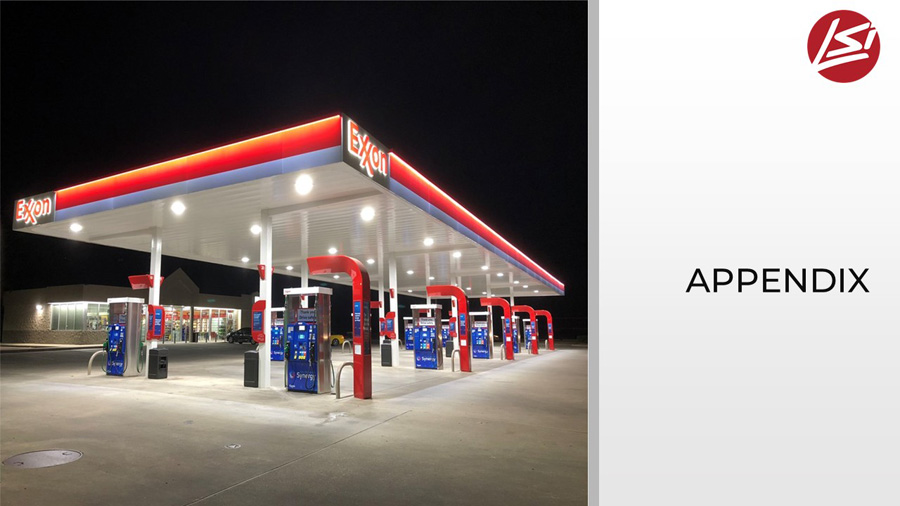
Yeah, well, as we were just mentioning a minute ago, a lot of our business is project-based business, right? So these projects tend to, you know, be well thought out, you know, 18 to 24-month development cycle, and then in some cases, you know, anywhere between 6 and 18 months of a deployment cycle, in some cases longer. We have not picked up on anything that will disrupt that. But I will tell you that if they are facing headwinds, we are part of the solution. We're not just an expense. We're an investment. Because when they're investing in their stores, when they're investing in the environment that their customers are engaging in their stores, there is a direct correlation between increased sales and the products and the services we deliver. When a customer makes a decision to invest in the aesthetics of their location, when they make the decision to invest in the feel and the look and feel of their location, those all translate to increased sales for them. So, you know, we're part of the solution as opposed to being, you know, part of the burden or part of the caustic equation. We see, you know, the petroleum market and the C-Store market continuing to grow. When you look at entrants like Wawa's and Sheets and Buc-ee's and, you know, Circle K and all of these folks that are, you know, real leaders in that C-store market, we see continued growth. We see continued growth in the, you know, big oil locations, Texaco, Exxon, Mobil, these guys that are now competing with these new entrants. You know, they want to make sure they maintain their position and share. Grocery continues to grow. I mean, you know, grocery has, you know, had some pent up demand, like I said, overall, the industry did through those merger discussions. And it was mostly around if you were a competitor to any one of those two that were thinking of merging, you were like, OK, where am I going to have to compete and where am I going to have to invest? With better clarity around that right now, I think that we continue to see growth and investment in that. And in QSR, you know, we're seeing, you know, maybe that one's a little disrupted. You know, you're seeing spurts, what I'll say is spurts. You know, one guy's up and investing and another guy is staying, you know, holding steady. So maybe within those top three in, you know, as it relates to display a solution, we're seeing a little bit more, you know, disruption there. But again, nothing that causes us great concern. The other markets, we see a lot of growth in our sports court. Warehousing is actually recovering. I would say that a year and a half ago, there was kind of more headwinds and warehousing is picking up activity again. So overall, if I look at a broad swath of our markets, I feel pretty good.
Thank you for that, Jim. That's all I appreciate.
Operator
it. The next question is from George Janarikas from Canaccord Genuity. Please go ahead.
Thank you for fitting me in. I appreciate it. I just had one question and any thoughts on the M&A environment. Thanks. George, good to hear you. And yeah, I mean, we remain very active. I do think that, you know, as we benefited over the last few years of the successful acquisitions we've done. I think every time we're able to talk about an acquisition, in this case, Canada's Best had almost a record-setting quarter for them. I think that that bodes well for us. It talks to the market. It talks to the owners of these businesses that like to hear that success story. I think that the interest rates have helped clip the wings a little bit of the PE multiples that sometimes are out there. We heard a comment the other day that there's more PE firms in the U.S. right now than there are McDonald's franchises. And, you know, why that's important to us is because, you know, in many cases, those are competitors of ours, you know, when we're looking at different opportunities, different acquisition opportunities. I think we remain well invested. We spend a lot of time doing our own self-origination, meaning creating relationships with businesses that we think would be a synergistic fit with LSI. We try to engage owners, you know, maybe before they're even thinking of selling. We try to create those relationships. And, you know, it's just investment kind of like planting a seed. So I think our pipeline looks very good right now. I think that we've demonstrated to our shareholders and our employees and our customers that we're good stewards and we execute well at this. We respect the cultures of the businesses we look to acquire. So I feel pretty good about our pipeline, and I'm hopeful that our fiscal year, 2026, will yield some benefits in terms of the M&A side.
And as you know, George, ours is a vertical market-based strategy versus a product strategy approach. So as a result in M&A, we cast a wide net, right? And, you know, so through the years you've seen that, us acquiring companies that get us into product segments that we were not in previously. And why is that? Because it fits so well into our vertical market strategy approach.
Operator
There are no further questions at this time. I'd like to turn the floor back over to Jim Clark for closing comments.
Well, I just want to say thank you again for everybody taking the time to, you know, remain invested and connected with LSI and what we're doing. I feel very good about fiscal year 26. I think we have a lot of runway in front of us. I really feel like we're, you know, we continue to gain traction in our whole vertical market thesis. Our customer base, our competitors are, you know, better understand how we compete and how we work in the market. And I believe all of those things bode well for us. Even I just said I mentioned competitors on purpose because they understand that we're we're competing quite differently. Right. It's not just in there competing on one product we have or one element that we're manufacturing. It's more of a true solution set. And I think that that drives higher value for our customers and higher value for our shareholders and our companies. So I'm very encouraged about what the future holds. And, you know, I'm hopeful that here on our next quarter we'll even have more good news to share. So with that, I'll say thank you and good day.
Operator
This concludes today's teleconference. You may disconnect your lines at this time. Thank you for your participation.