Speaker 0
Hello, everyone, and welcome to the MercadoLibre Earnings Conference Call for the quarter ended June 30, 2025. Thank you for joining us. I am Richard Cathcart, MercadoLibre's Investor Relations Officer. Today, we will share our quarterly highlights on video, after which we will begin our live Q&A session with our management. Before we go on to discuss our results of the second quarter of 2025, I remind you that management may make or refer to this presentation, which may contain forward-looking statements and non-GAAP measures. So please refer to the disclaimer on screen, which will also be available in our earnings materials on our Investor Relations website. Please note that this call is being recorded, and a replay will be made available on our Investor Relations website as well. As we continue to evolve our communications with investors, we have decided to launch our quarterly product update video after earnings rather than together with our results call. So watch out for this coming to your inboxes in the weeks after our results disclosure. With that, let's begin with a short message from our CFO.
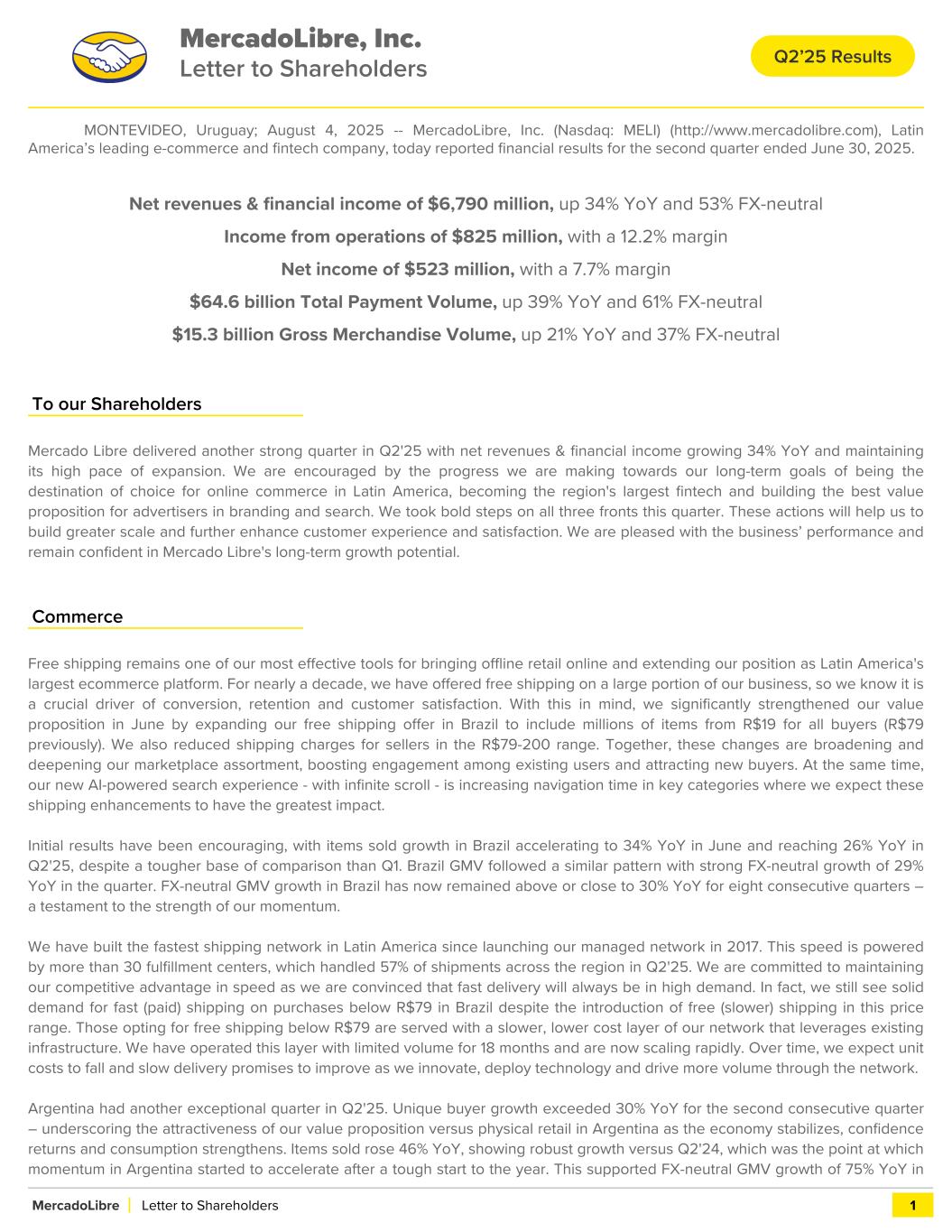
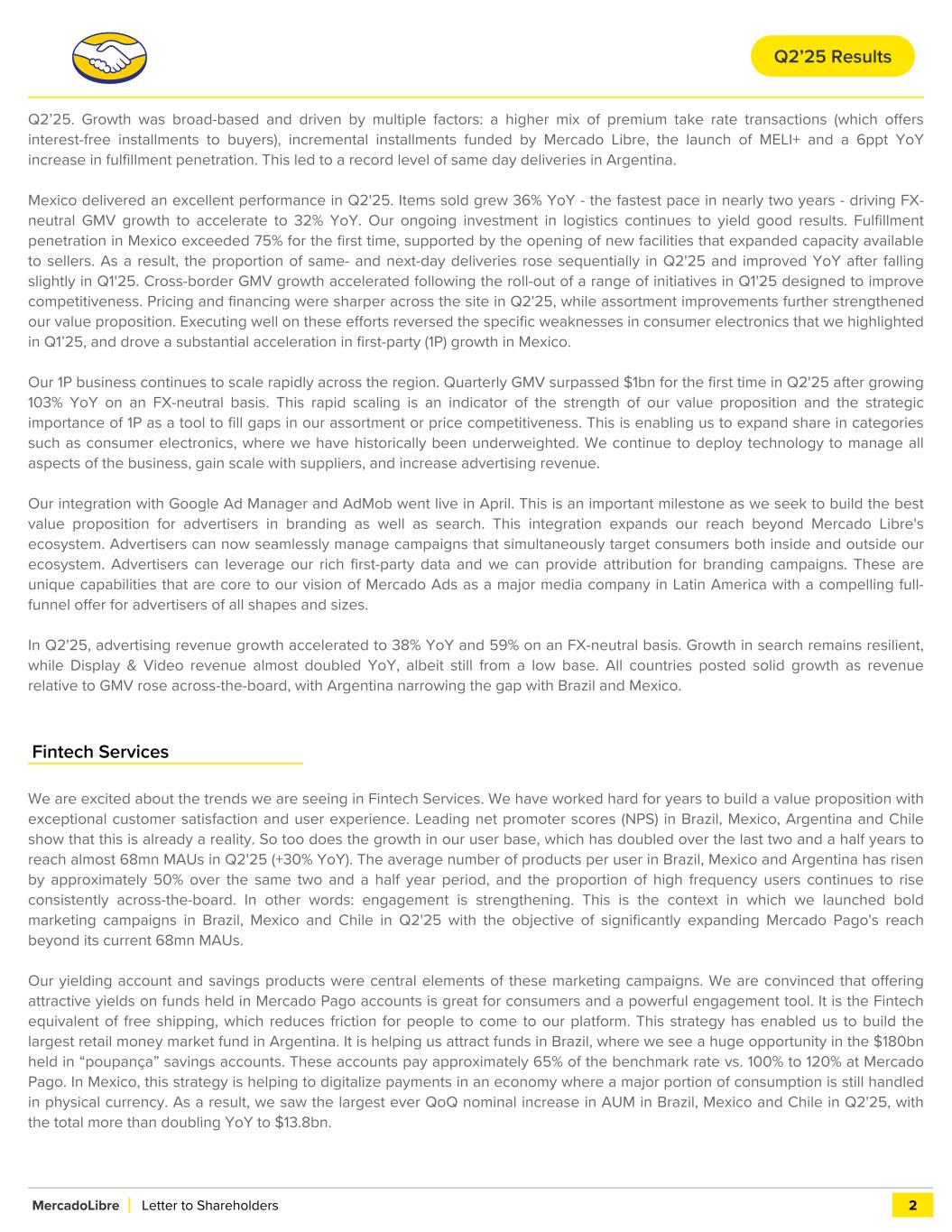
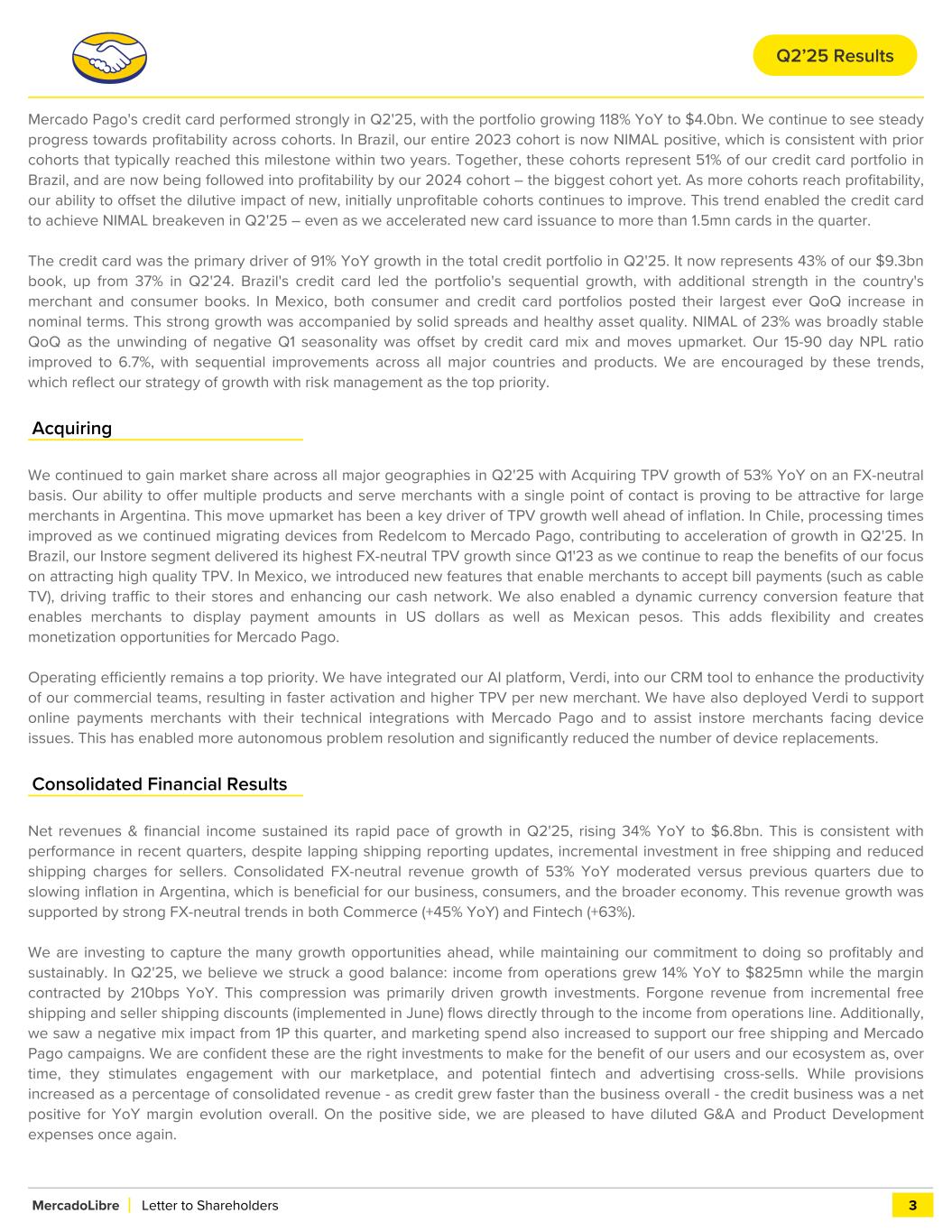
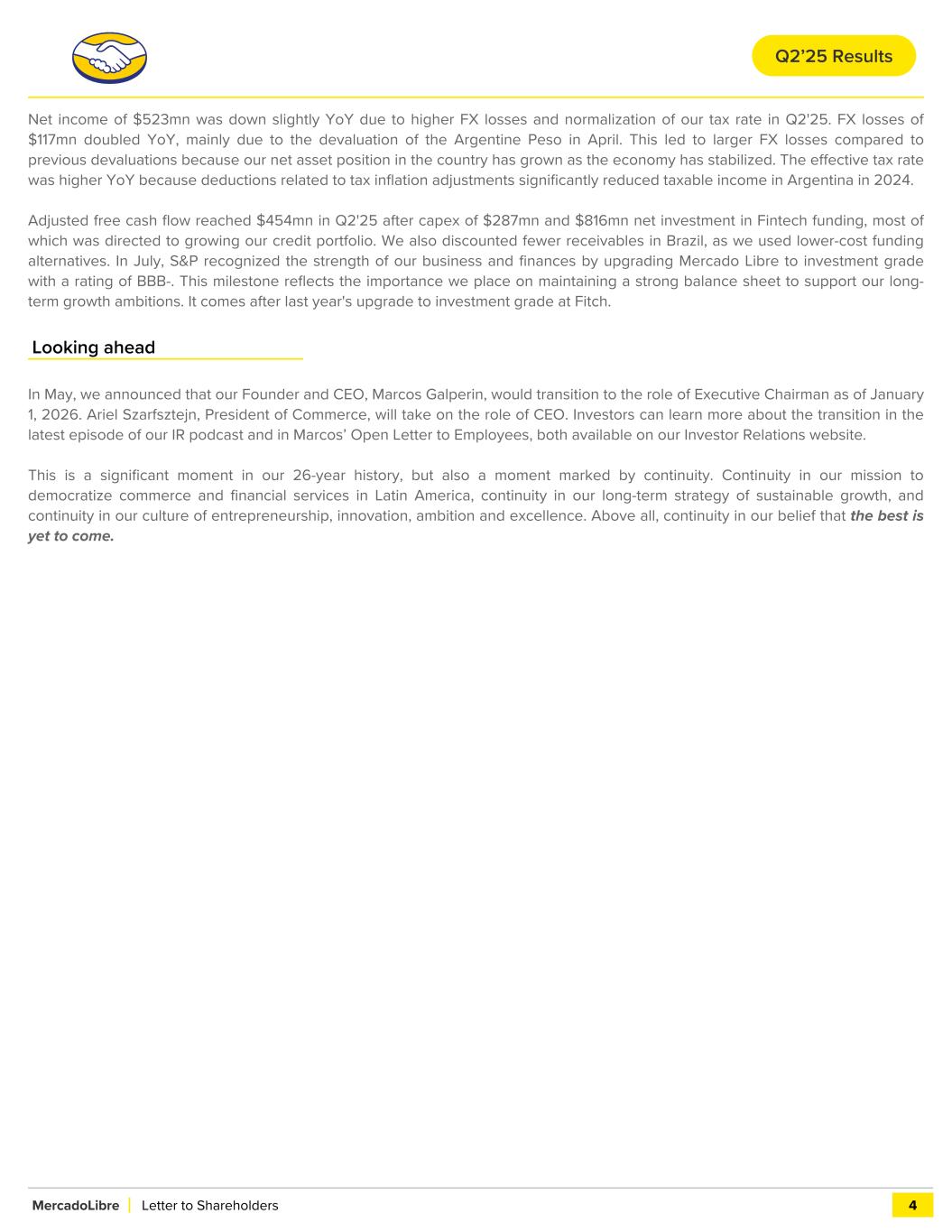
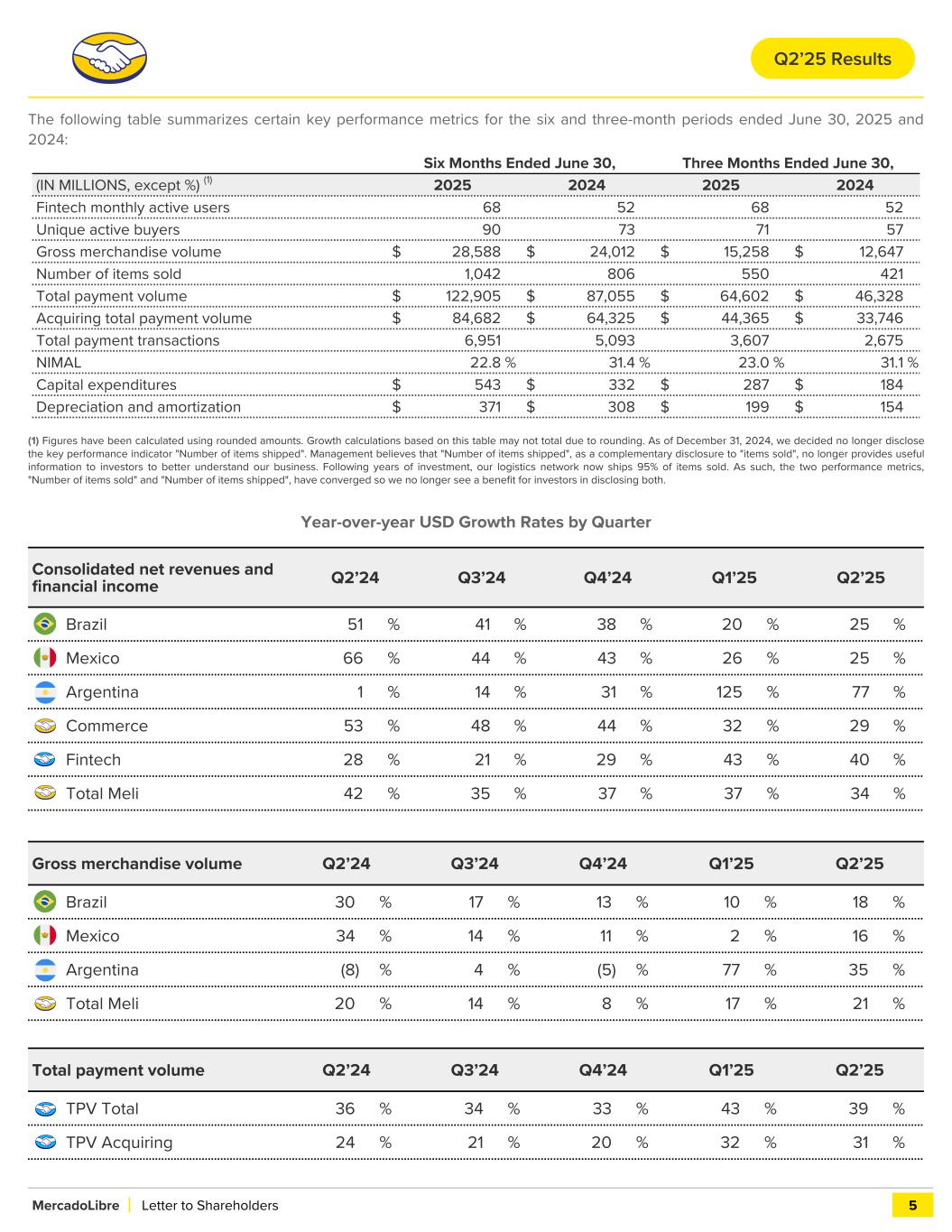
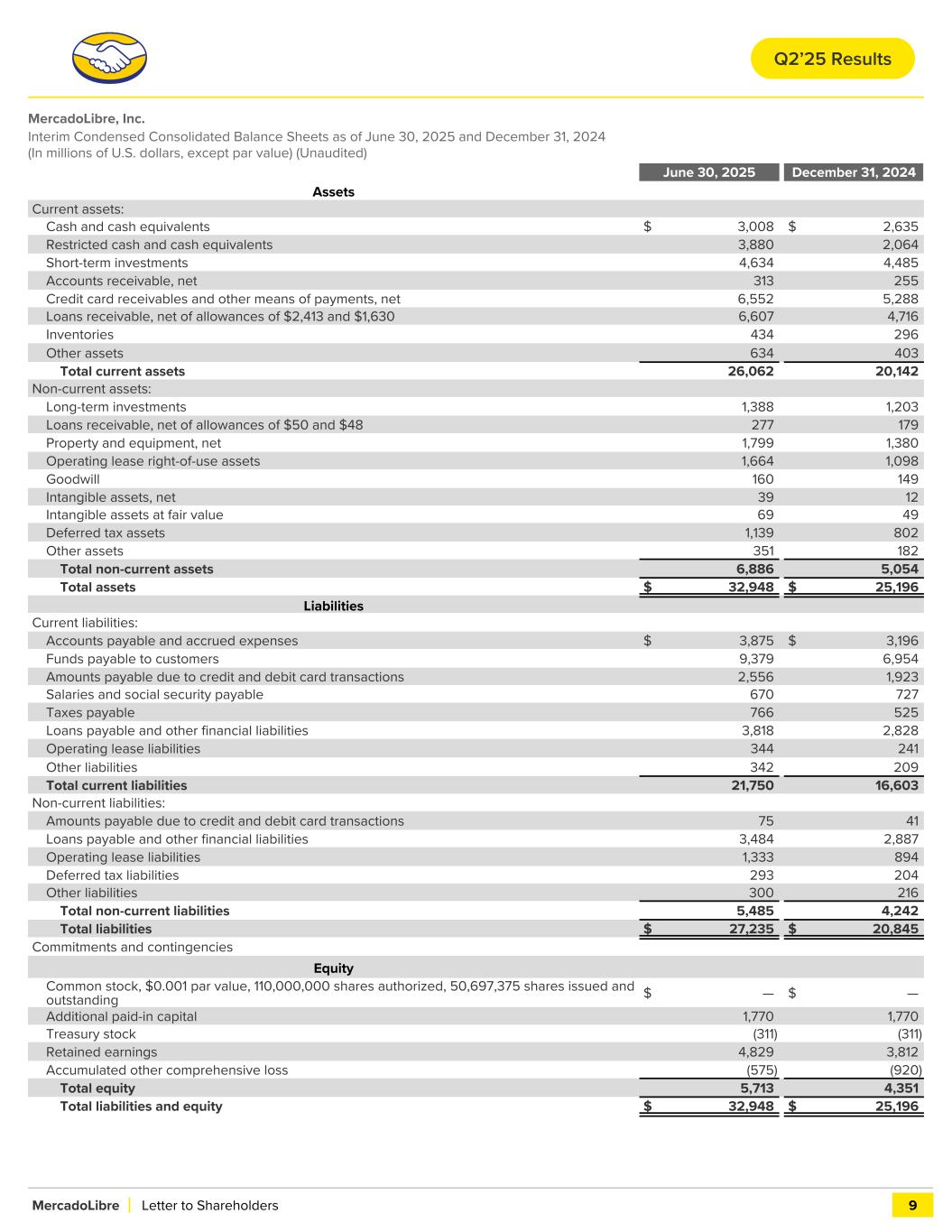
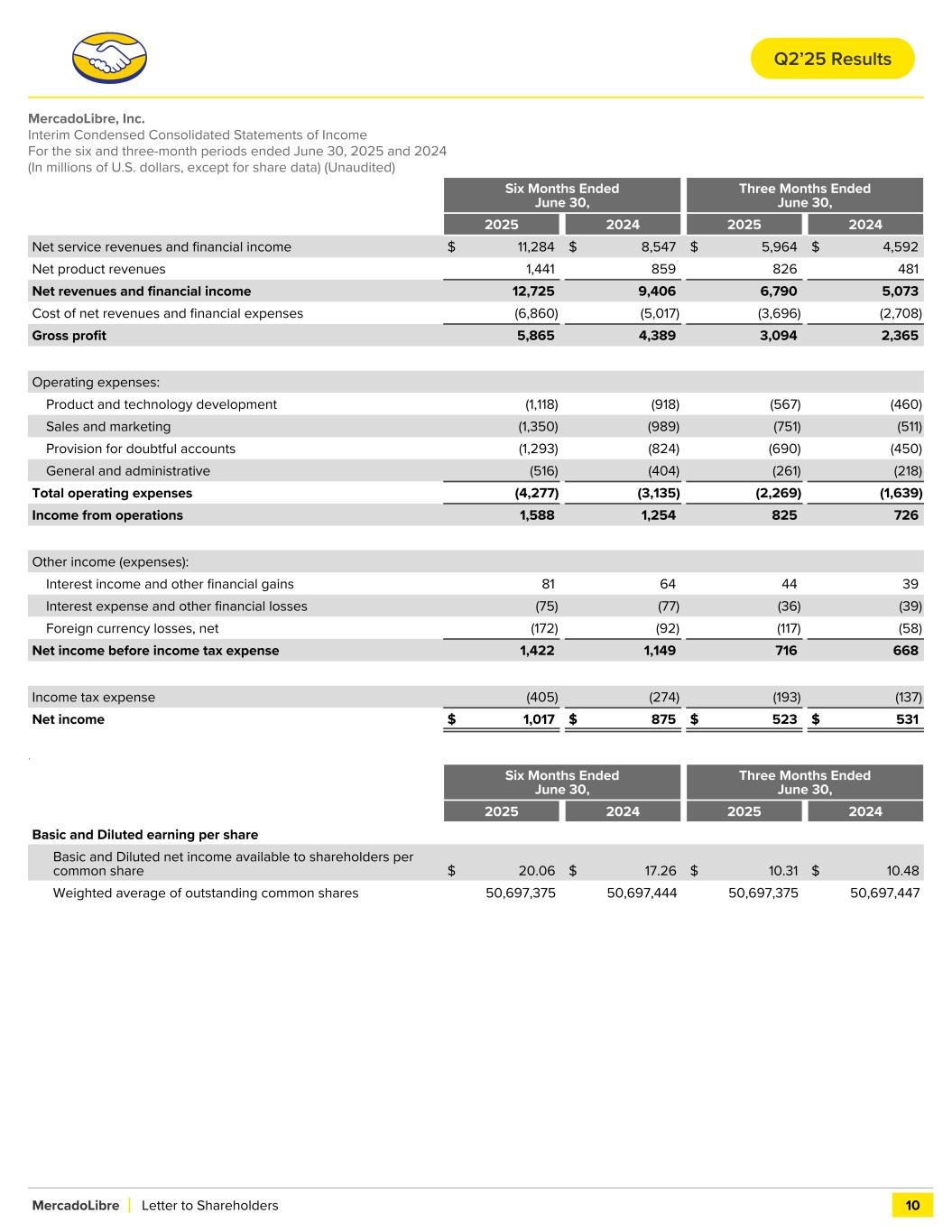
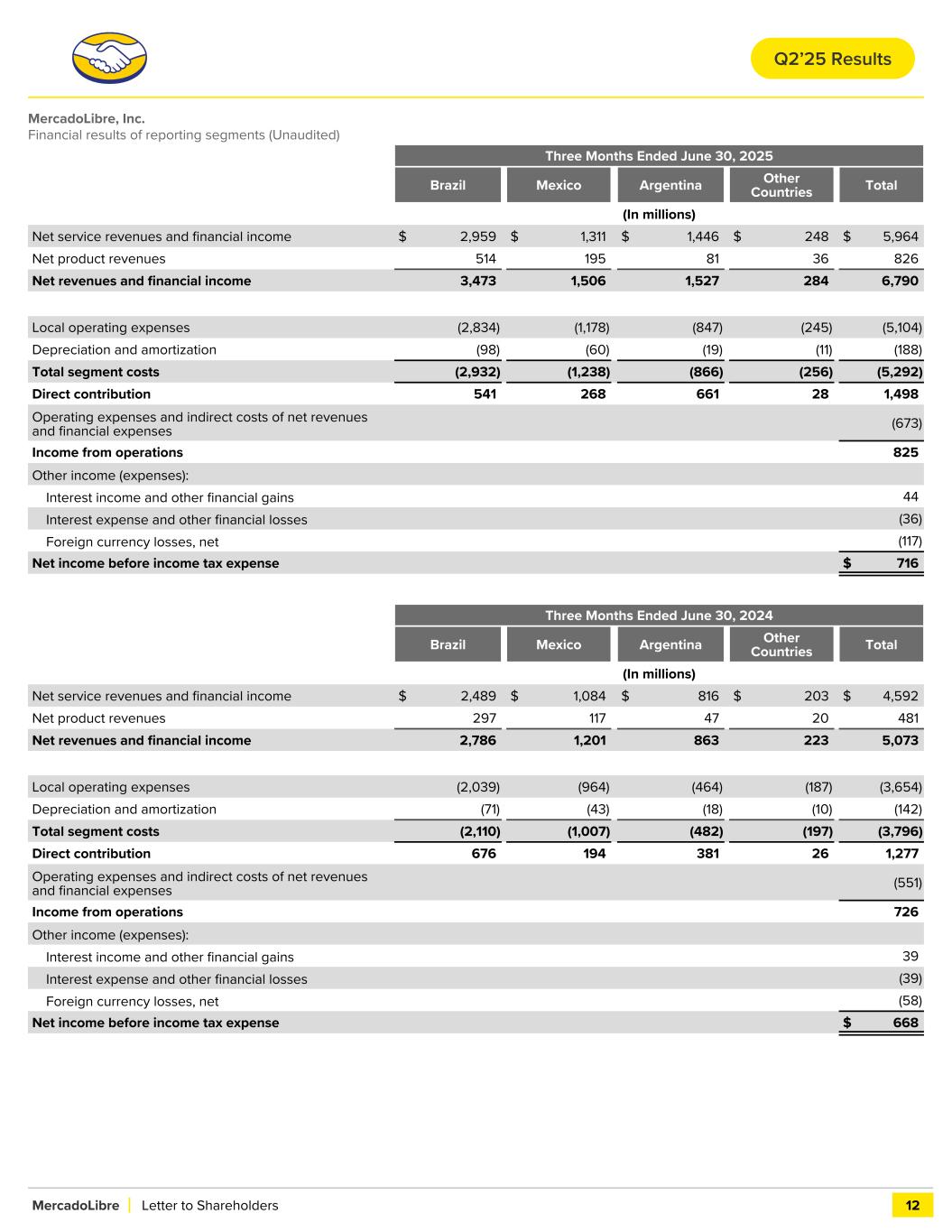
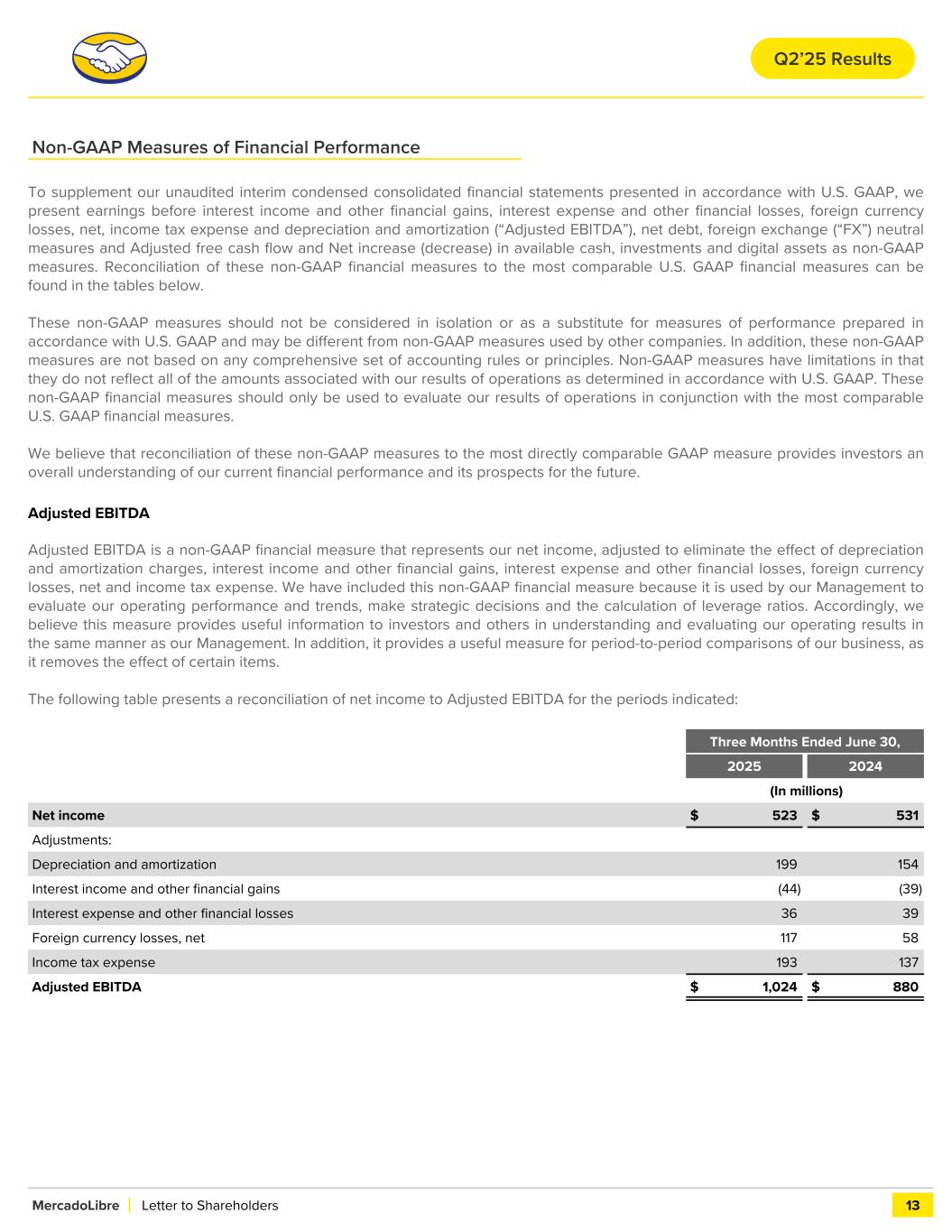
Hello, everyone. In Q2, MercadoLibre delivered another quarter of strong financial performance with revenues growing over 30% year-on-year and record income from operations of $825 million. These results reflect the strength and consistency of our execution as we continue to invest with discipline to advance our long-term ambitions in commerce, fintech, and advertising. In Brazil, we lowered our free shipping threshold for the third time in 5 years as part of our objective of bringing offline retail online by removing frictions. This strategic initiative is attracting new users to our e-commerce platform, increasing engagement among existing buyers, and expanding our assortment. The enhanced value proposition resulted in accelerated GMV growth in June following the implementation of the new pricing. Mexico was another standout in Q2. GMV growth accelerated sharply, and the number of items sold on the platform increased at the fastest pace in almost 2 years, driven by strong performance across both our 1P and cross-border businesses. Advertising revenue grew 38% year-on-year. In Q2, we launched our integration with Google Manager, an important milestone in positioning Mercado Ads as a key strategic partner for brand-focused advertisers. FinTech services continued to gain strong traction in Q2. Monthly active users of Mercado Pago reached 68 million, reflecting rapid user growth and increasing engagement across our ecosystem. Assets under management more than doubled year-on-year once again. Our credit portfolio surpassed $9.3 billion, growing by 91% year-on-year. We're also encouraged by the quality of our credit business, NIMAL remaining broadly stable quarter-over-quarter and 50 to 90 days NPLs falling below 7% for the first time since we began reporting the metric. Our credit card business continues to perform well in both Brazil and Mexico. Strong asset quality and ongoing enhancements to our credit models enabled us to issue 1.5 million new cards in Q2. We're also seeing consistent improvements in cohort profitability with more than half of our portfolio in Brazil already being NIMAL positive. We are pleased with our performance in Q2 as the benefits of years of disciplined investments continue to compound. Engagement is rising across all areas of our ecosystem, reinforcing the strength of our platform and the long-term potential ahead. Thank you for your continued support. Our first question today is from Andrew Ruben with Morgan Stanley.
Operator
Our first question today is from Andrew Ruben with Morgan Stanley.
Speaker 3
Congratulations as well on the CEO transition announcement. I'm curious around the shipping changes. I see you mentioned the lower free shipping minimum, but also the cut in seller fees between BRL 79 and about BRL 200. I'm curious on the seller side, what kind of return you see when you reduce the fees for sellers if it gets reinvested into price and how to understand the dynamic between that part of the shipping investment.
Speaker 4
Andrew, Ariel here. So before the change in pricing, you could see that there was a kind of a cliff edge in the take rate from below BRL 79 to above BRL 79, which basically led to a steep increase in fees, both in absolute terms, but more importantly, as a percentage of GMV. So basically, with this adjustment, we are lowering that cliff, smoothing the curve from BRL 79 upward. And we think this is the right thing to do. Let me step back for a second. We tested and learned from executing this last year in a few categories, and our experience actually shows that this initiative has a positive impact. And it comes from, a, merchants lowering prices; and b, bringing more selection to our platform. More importantly, those impacts are not necessarily perceived at the moment when we execute the changes, but they strengthen over time. So overall, I would say this was a positive change for us. We are happy with the early results we've seen, and we are encouraged by the fact that from our experience, we are expecting even more of a positive impact in the near future.
Operator
The next question is from Irma Sgarz with Goldman Sachs.
Speaker 5
I wanted to discuss the increased sales and marketing expenditures this quarter, which, excluding provisions, rose nearly 50% in U.S. dollar terms. We know you conducted two notable high-profile campaigns in Brazil this quarter, and you mentioned campaigns in Argentina and Mexico as well. Should we consider this quarter’s spending as somewhat of an exception, or do you anticipate more opportunities to invest in the second half of the year? Additionally, do you see potential for AI to enhance both the effectiveness and efficiency of your advertising spend, as well as the ad inventory you present to your clients? Or is it still too early to gauge that?
It's Martin here. Thank you for your question. It's correct that we've indicated in our investor presentation that we compressed our margin by 1 percentage point this quarter compared to last year in sales and marketing. This is due to several factors. In Mercado Pago, we initiated various campaigns in different countries featuring celebrities to promote our platform, resulting in very positive outcomes, including significant user growth and a doubling of assets under management in Brazil, Chile, and Mexico. Downloads have also improved markedly from previous quarters. While the campaign was very successful, it does exert some short-term pressure on margins. On the commerce side, we executed a campaign akin to a Black Friday promotion to highlight our free shipping service, which we launched in June. This initiative also involved investment to lower the free shipping threshold in Brazil, which has similarly impacted our margins. Furthermore, we've slightly increased our paid advertising to attract more users, which continues to yield positive returns relative to last year. Lastly, we've invested more in our social strategy by supporting affiliate and content creator programs, which will yield results over time but currently add pressure to margins. Overall, it's a mix of ongoing investments in user acquisition and downloads, along with several specific campaigns, particularly in Mercado Pago and the free shipping threshold reduction in Brazil this quarter.
Speaker 4
Irma, Ariel here. To the second part of your question, we definitely think there is huge room for AI to help us improve both our marketing execution and our ad spend as well. So on the marketing side, I think there are many dimensions in which we are testing and learning about AI. Just to bring one example out there. For instance, when we think about branding and creatives, AI brings us the opportunity to produce multiple creatives for any given campaign and start testing and learning those creatives across the board, with that deciding who we want to show what in the online world. Producing content online instead of in the physical world is another thing that we are working on. So many dimensions in which we think AI will add value. The same is happening with advertising. We are using AI today in order to help our sellers better understand our ad stack to have them onboarded into our ad technology to optimize their bidding, and so on. So yes, we are bullish with the impact that AI will bring into this environment.
Operator
Next question is from Robert Ford with Bank of America.
Speaker 6
I was curious, where are you in terms of your low ASP selection versus your longer-term plan in the Shopee assortment? How long is it going to take you to get to where you want to be? And how is your low ASP strategy different from that of Shopee in Brazil?
Speaker 4
Bob, this is Ariel. Let me answer this differently. We are convinced that we have, in general terms, the widest selection available out there in Brazil. I think there is opportunity for us to continue increasing the number of live listings in low ASPs, and part of what we are doing today in Brazil is related to that. We are already seeing good traction on new sellers and new live listings on low-ticket items coming into our platform. Bear in mind that in this quarter, you only see 4 weeks of the new free shipping policy in place in our results. So overall, we are positive with everything we've seen so far, and we are encouraged with the seller reaction to the program and with the number of listings that we see every day coming into our platform.
Operator
Next question is from Marcelo Santos with JPMorgan.
Speaker 7
I wanted to ask a bit about the change in shipping strategy. Would it make sense to apply this to other countries like Argentina and Mexico? I mean, I think you also have the same problem in terms of the step change in take rate after the free shipping threshold. Could you discuss the elements that would be important to consider in these other countries?
Speaker 4
Marcelo, Ariel here. So let me break this down into different parts. In Brazil, we implemented 2 different things. On the one hand, the lowering of the shipping fees for merchants, which is the one I was referring to about the cliff and the take rates. Then we lowered the free shipping policy for Brazil, in particular, from BRL 39 to BRL 19. Regarding bringing those policies into Mexico or Argentina, I would say that every market is different, right? And we don't have the exact same policy and the exact same value proposition in each one of our operations. For instance, we don't have the same level of cash backs in our Meli Más program in Brazil and in Mexico. We also don't have the same level of fulfillment penetration in the different countries, Mexico being the highest, Brazil probably in the middle, and Argentina the lowest, and so on. So while we don't give guidance on our policies looking forward, what I can say is that as we always do, we will learn, we will evaluate, and we will decide eventually which policies we want to bring where, but there's no hard commitment on executing one thing in the other place.
Operator
Next question is from Rodrigo Gastim with Itau BBA.
Speaker 8
Just on Brazil, GMV, you mentioned the latter items acceleration in Brazil after the free shipping campaign. And you say that you saw GMV following a similar pattern. So just to make it clear here, guys, can we understand that GMV in Brazil also accelerated after the free shipping campaign so far? It is very important for us to understand, given all the investments that have done. So anything here would be very appreciated.
Speaker 4
So let me try to answer that one. We are very happy with the results that we are seeing in Brazil, particularly items sold in Brazil accelerated to 34% growth year-over-year in June. So that's a major acceleration. Of course, given the fact that we are accelerating in the segment where the ASP is the lowest, the impact on overall GMV growth is smaller, but both accelerated. You should bear in mind that Q2 is actually comparing to a Q2 last year in which we had a very, very strong performance. On top of that, we see that the program we've put in place also has generated impact on traffic, in buyer acquisition, new buyers, engagement, and so on. More importantly, I think it deserves a kind of a step back, right? We are doing this because we think and we are committed to bringing offline retail to the online world. We have proven over and over since 2017 that offering more free shipping to our buyers has a direct impact on customer satisfaction, retention, and frequency, creating long-term value for us. We've done the lowering of the free shipping threshold 3 times already. We moved from BRL 120 to BRL 99, then from BRL 99 to BRL 79, and this time from BRL 79 to BRL 19. We are excited because we see all the key KPIs trending in the right direction. It's too early to give you details on the numbers beyond what I've just said, but everything is pointing in the direction we wanted.
Operator
Next question is from Neha Agarwala with HSBC.
Speaker 9
On the commerce side, how much of the lower pricing that you have for the sellers is being passed on to the consumers eventually in your view? And on the fintech side, the early delinquencies have been coming down quite swiftly, but the NPL ratio remains elevated and picked up sequentially. If you can give us some color on that, when can we see NPLs actually stabilize? And how has the asset quality evolved in the 3 geographies?
Speaker 4
So on the first part of your question, I would say that given the mechanics with which we implemented the reduction in fees and the way sellers operate in MercadoLibre, most of the lowering in take rates was passed into pricing. We saw a clear reduction of prices in MercadoLibre after the implementation of the changes in take rate. I will let Osvaldo and Martin answer the second part of your question.
Speaker 10
So Neha, regarding NPLs, what we're seeing is a sequential reduction in NPLs between 15 and 90 days. There was a slight increase in over 90 days, but it's roughly in line with what it was before. It was 18.5% a year ago, and it's 18.5% now, sequentially up 0.5 percentage point from 18% to 18.5%. But we don't have a concern regarding NPLs. Actually, we are very happy with how they are evolving, and we have been able to reaccelerate the issuance of cards given that the malls are performing very well.
Just to complement, Neha, if you look at the other side of the business, which is the revenues that we generate through our portfolio, the actual profitability of most of our portfolios has improved sequentially and year-over-year. So we are very satisfied, and this is the reason why you see an increase, an acceleration in the growth rates of portfolios. The overall credit portfolio grew at 91% year-on-year, and the credit card specifically grew 118% year-on-year. As we mentioned earlier, because it's becoming a lot more profitable, we are very satisfied with the results of our credit card. So I think you should look not only at NPLs, which are coming down in the short term, but it's true that the longer NPLs are slightly up, but the profitability is in pretty good shape, and all metrics are pointing in the right direction.
Operator
The next question is from Deepak Mathivanan with Cantor Fitzgerald.
Speaker 11
This is Jack on for Deepak. So you saw nice growth in advertising this quarter. Can you share a bit more color on how off-platform ads are trending in the early days? And then related, you mentioned Argentina is narrowing the ad revenue gap with Brazil and Mexico. What specific levers are driving this catch-up?
Speaker 4
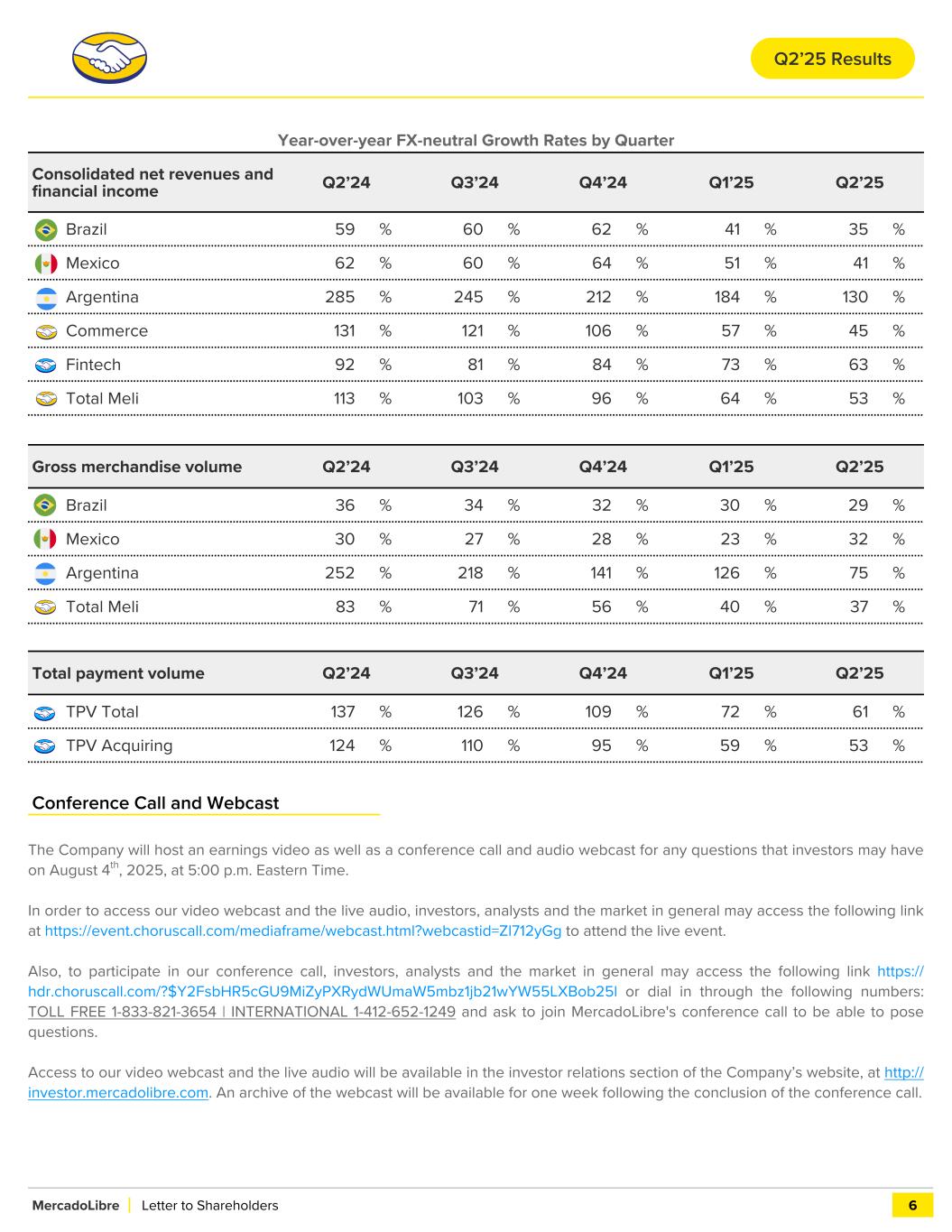
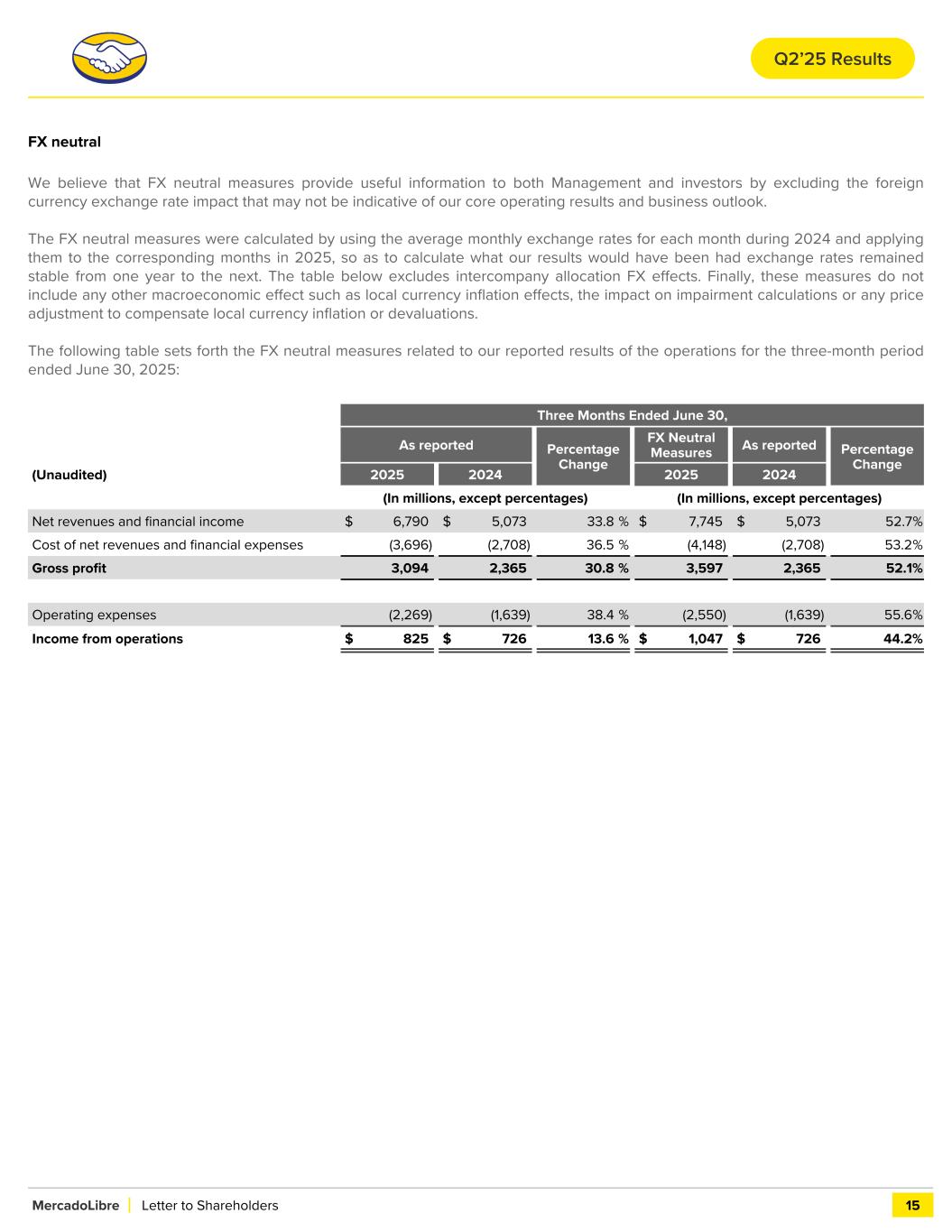
Jack, Ariel here. So yes, we had a great quarter in ads. Revenues grew by 38% year-over-year in dollars and 59% year-over-year on an FX-neutral basis. Argentina is growing particularly well, I would say, as a result of both macro conditions and team execution. So lower inflation, more stock on the hands of sellers, and so on is kind of giving them the space and the oxygen to be able to invest to promote sales. Also, our team has done a tremendous job in explaining the value proposition and helping sellers understand the value that our tech stack can bring to them. Going back to ads performance in general, display and video have nearly doubled year-over-year. I know we are starting from a low base, but still, triple-digit growth is nice to see. Product ads are performing well across countries and sites and not only in Argentina, and this is on the back of improved UX and tools for sellers, such as a new question flow focused on the benefits of advertising, smarter item selection, improved budget recommendation using AI, and some of the things that I was mentioning before. Yes, overall, very positive on everything we are doing on ads. We see ads as a percentage of GMV accelerating this quarter, so good news, but still, the opportunity is huge ahead of us. So excited, but cautious. We need to continue executing.
Operator
Next question is from Jamie Friedman with Susquehanna.
Speaker 12
I have questions about Slides 13 and 14. Can you clarify the mix shift to credit cards and its impact on the NIMAL? It was still solid at 23%, but I’m interested in your perspective on that. Additionally, the top of the funnel looks promising at 6.7%, down from 8.2% regarding NPLs. What is your overall outlook on credit and credit quality?
Speaker 10
With regards to NIMAL, I think there are several effects working at the same time. On the one hand, the most obvious ones with regards to credit card is that NIMAL for credit card is lower than for the other products, and the credit card is growing significantly faster than the credit book. As Martin was saying, it's growing at over 100% year-on-year. That's why even though the NIMAL for the credit card remains, I would say, rather flat for new segments and it has been improving for all the segments as the portfolio grows, that has an impact on the overall NIMAL. The other factor I would mention is that is relevant is Argentina, where inflation is coming down rapidly, and how NIMAL last year was extremely high, I would say. But still, it's super profitable. To counterbalance that to some degree, the other thing happening with Argentina is that the size of Argentina within all of the loan portfolio has increased. Even though the NIMAL has come down a little bit, overall, the impact continues to be relevant because of this increase in weight in the portfolio. Regarding the overall credit quality, I would say we are very bullish on how we are issuing credit. If you recall, a couple of quarters ago at the end of the fourth quarter, early first quarter, we were a little bit more cautious, particularly in Brazil because we saw concerns about increasing interest rates in general and in the market, NPLs increasing. Nonetheless, we have continued to improve our models, and we felt comfortable increasing the speed of issuing cards in Brazil and in Mexico, but mostly in Brazil. We continue to see that cohorts that are 2 years or older, almost all of them have NIMAL positive. For example, all pretty much all of the 2023 cohorts are already NIMAL positive, and some of the early 2024 cohorts also. We continue to be bullish with how we are issuing credit.
Operator
The next question is from Trevor Young with Barclays.
Speaker 13
Great. Just sticking with credit card for a second and the comment in the letter around NIMAL. Just to be clear, is the entire credit card business now NIMAL breakeven? Or was that a comment around some subset of the business? And then relatedly, should we assume that the credit card NIMAL will remain breakeven or even positive from here over the medium term, particularly as you look to launch credit cards in Argentina soon?
Speaker 10
Yes. So NIMAL is breakeven in Brazil, which is the country where we have been issuing cards for the longest and is the largest market for us. It's not yet the case in Mexico. Whenever we start in Argentina, initially, it will be negative, but we expect that within a few years, it should achieve breakeven. What we should forecast moving forward, I would say, some of the large cohorts were issued in 2023 and 2024. Assuming there is a decrease in the speed at which we issued, those will have an impact in the coming years, but Brazil is already positive.
Operator
The next question is from Geoffrey Elliott with Autonomous.
Speaker 11
Thanks very much for the question. The credit portfolio is growing quickly; as it grows, how do you expect the funding mix behind that to evolve? And what are the implications on NIMAL? Specifically, will you shift away from using your own funds to more external funding, and will that weigh on the NIMAL?
It's Martin here. I think if you look at the different credit portfolios that we have, the more mature portfolios, consumer credits and merchant credits, we have been funding through third parties. The majority of the funding comes through third parties, and you see that as part of the cost in NIMAL, correct? The credit card has been funded by us so far. We're starting to fund it with third parties. As we extend more funding to the credit card via third parties, that will have an effect on NIMAL in the way we account for that cost within NIMAL. But that's something that will come in the future.
Operator
The next question is from Joao Soares with Citigroup.
Speaker 14
You mentioned in the release how you're scaling faster infrastructure and adapting to the expected increased mix of lower ASPs. I wanted to hear more about this adaptation. Imagine, expanding this low shipping is one component, but also expanding probably higher transit points. So I just wanted to understand how you're adapting the infrastructure? And how should we think about the profitability of these lower ASP products and the free shipping? How should we think about when or if it can match the margin of your higher ticket items?
Speaker 4
Okay, Joao, this is Ariel here. When thinking about unit economics and profitability of the lower ticket items in which we are now offering free shipping, the mindset with which we approach this problem is broad. We think about relationships with our users and not just transactions, meaning that when evaluating the profitability of the initiative, you also need to consider the downstream impact that the higher engagement and frequency can generate in the context of this big opportunity we have ahead of us of bringing retail offline to online in a country where we only have 15% of e-commerce penetration. Our slow delivery with wider delivery promises has just started. We have not done that before. So we have ample room to continue improving economics there. In the long run, we do expect that the additional scale will help us reduce unit shipping economics, plus capturing the productivity opportunities that the slow methods also bring to the table. So if you look at purchases between BRL 19 and BRL 79 on a stand-alone basis, there will be a range of margins. Not all of them will be positive, not all of them will be negative. But even so, we expect this to be net positive for the P&L in the longer term. Importantly, we are convinced that this is the right investment to make to extend our position as the destination of choice for e-commerce in Latin America.
Operator
The next question is from Kaio Prato with UBS.
Speaker 15
I would like to explore a little bit more the credit operations in Argentina, if I may, please. Last quarter, you mentioned that we grew 4x the portfolio in dollars. So just wondering if you can share more details about the growth pace this quarter as well. We have been seeing a sharp increase in NPLs for traditional banks in Argentina, especially in the consumer portfolio. I would like to understand what you can say about the asset quality for your operations, if there is any concern and the strategy going forward. Finally, we saw some change regarding the reserve requirements on money market funds in Argentina. As your remunerated accounts are in money market funds, if I'm not wrong, I was wondering if that could impact your FinTech operations there at some point as well.
Speaker 10
So yes, we have increased significantly the portfolio in Argentina. Basically, we were coming from a very, very small basis. If you were to look at credit to the private sector in Argentina, it was single digits as a percentage of GDP. It's very, very small, so there was plenty of room to grow. We grew a lot. We have seen a worsening condition in the market; it has not been our case. We believe that part of that is that we have very strong principles in Argentina. People use Mercado Pago daily, and therefore, that could help us in people paying us back first rather than other debt they might have. So we are not seeing significant impacts in terms of NPLs. Regarding the change in reserve requirements for money market funds, that happened last week. There was a change in reserves for pretty much all of the banks and also money market funds. Quick and dirty, we expect the impact in what we pay to users to be around 2%, meaning we were paying close to 30%, 27% roughly to customers before. With this change, the impact will be roughly 2 percentage points and will be around 25%.
Operator
The next question is from Marvin Fong with BTIG.
Speaker 16
I know it's only been a few months since the lower free shipping threshold was implemented, but I'm curious about the purchasing behavior for orders under BRL 79. Are you noticing many purchases close to that free shipping limit? Do you anticipate that behavior will change over time? Would you expect the average order size to grow for new customers starting to shop at MercadoLibre who may become more comfortable buying multiple items? Additionally, I would appreciate your thoughts on your comfort with maintaining the current rate of credit card issuance in Brazil, considering the recent tightening in the market. There seems to be a slowdown in consumer spending, so any insights would be valuable.
Speaker 4
Marvin, so let me answer your question in a slightly different way. We would not be a $50-plus billion GMV company today per year if it were not for building our logistics infrastructure and launching our free shipping program back in 2017. We think this is the same case now. We are convinced that the best way to serve our customers in Brazil is by offering more free shipping, and that's basically what we are doing. Within that range, many things are happening simultaneously. We just launched this only a few weeks back. So it's a bit early, but we definitely expect the trend we see in traffic increases, conversion rates increasing, more engagement, and more frequency to continue in the future. With that, we expect to see orders going up, order sizes increasing, and so on. This is not a marketing investment that we are doing to generate transactions from one day to the next. This is a long-term play in which we think this is the best way to serve our customers.
Speaker 10
And Marvin, when it comes to credit cards, I'll say that what we have been doing consistently is improving our models and issuing cards at a pace that allows us to have payback periods of roughly between 2 and 3 years, and that we will continue to do that. We cannot be sure about what that pace will be in the future. But we do know that if you look at our market share today in credit cards in Brazil, it's roughly 2%. We believe there's plenty of opportunity to continue growing.
Just to complement, as we have done in the past, if we see something that we do not like in the market or in our models, we will be willing to slow down just like we did in the past. So far, we're very comfortable with the models, the collections, NPLs, and the performance of the credit card. We will continue to grow as long as we can guarantee that we have a healthy book and a profitable book in the medium to long term.
Operator
This concludes our question-and-answer session. I would like to turn the conference back over to Martin de los Santos for any closing remarks.
Thank you all for joining today on the call, and thank you for your questions. We're very pleased with our results in Q2, where once again, we saw our businesses accelerating growth, both in commerce and FinTech, and we look forward to engaging again in October with you when we present our Q3 results. In the meantime, the Investor Relations team will be available for any further questions. Thank you again, and good night.
Operator
The conference has now concluded. Thank you for attending today's presentation. You may now disconnect.