Operator
Welcome to the NN Inc. Second Quarter 2025 Earnings Call. At this time, all participants are in a listen-only mode. Later, we will conduct a question-and-answer session. I would now like to turn the call over to your host, Stephen Poe, Investor Relations. You may begin, sir.
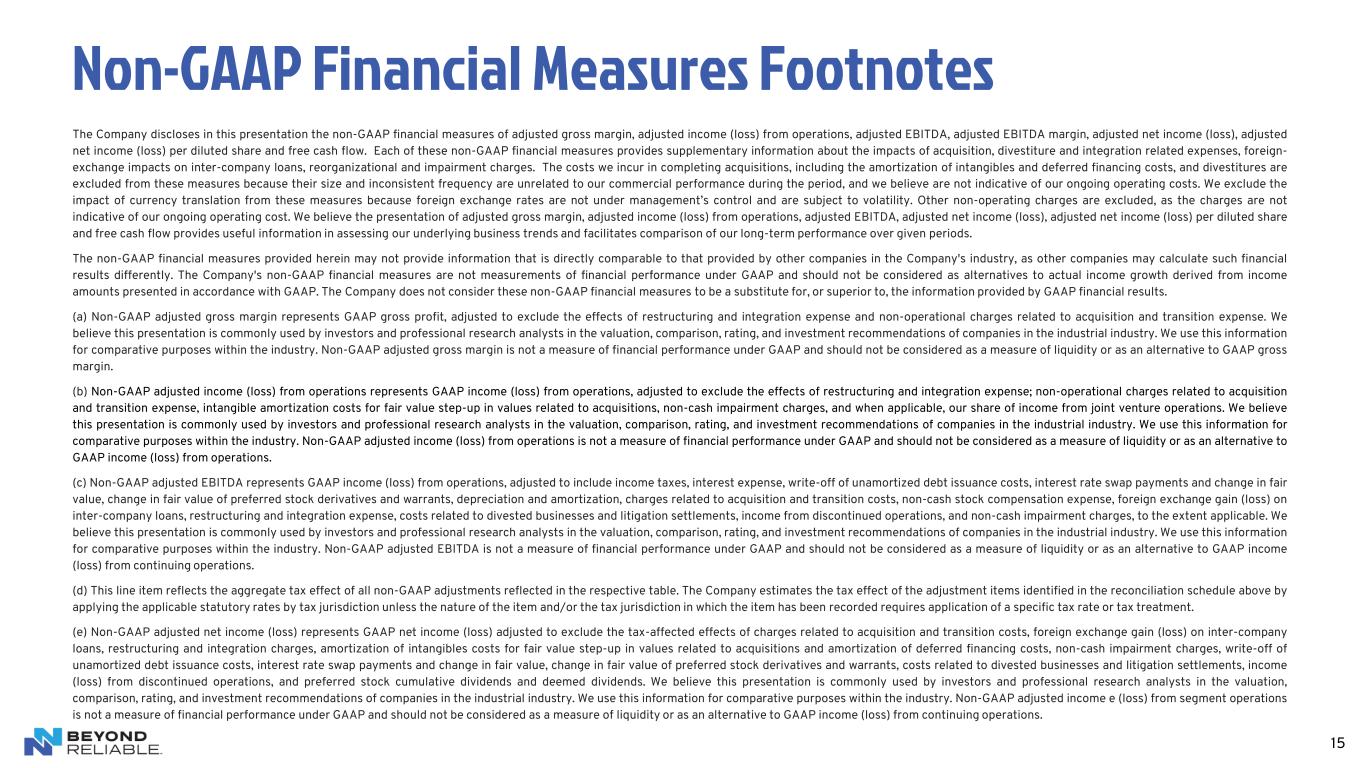
Thank you, Operator. Good morning, everyone, and thanks for joining us. I'm Stephen Poe with NN Inc.'s Investor Relations team, and I'd like to thank you for attending today's earnings call and business update. Last evening, we issued a press release announcing our financial results for the second quarter ended June 30, 2025, as well as a supplemental presentation, which has been posted on the investor relations section of our website. If anyone needs to copy the press release or the supplemental presentation, you may contact Alpha IR Group at nnbr at alpha-ir.com. Joining us from NN Management today are Harold Bevis, President and Chief Executive Officer, Chris Bonner, Senior Vice President and Chief Financial Officer, and Tim French, our Senior Vice President and Chief Operating Officer. Please turn to slide two where you'll find our forward-looking statements and disclosure information. Before we begin, I'd ask that you take note of the cautionary language regarding forward-looking statements contained in today's press release, supplemental presentation, and in the risk factors section in the company's quarterly report on Form 10-Q for the fiscal quarter ended June 30, 2025. Same language applies to comments made on today's conference call, including the Q&A session, as well as the live webcast. Our presentation today will contain forward-looking statements regarding sales, margins, inflation, supply chain constraints, foreign exchange rates, cash flow, tax rates, acquisitions and divestitures, synergies, cash and cost savings, feature operating results, performance of our worldwide markets, general economic conditions and economic conditions in the industrial sector, including the potential impacts and ramifications of tariffs, the impacts of pandemics, and other public health crises and military conflicts on the company's financial condition, among other topics. These statements should be used with caution and are subject to various risks and uncertainties, many of which are outside of the company's control, which may cause actual results to be materially different from such forward-looking statements. The presentation The reconciliation also includes certain non-GAAP measures as defined by SEC rules. The reconciliation of such non-GAAP measures is contained in the tables in the final section of the press release and the supplemental presentation. Please turn to slide three, and I'd like to turn the call over to our CEO, Harold Bevis.
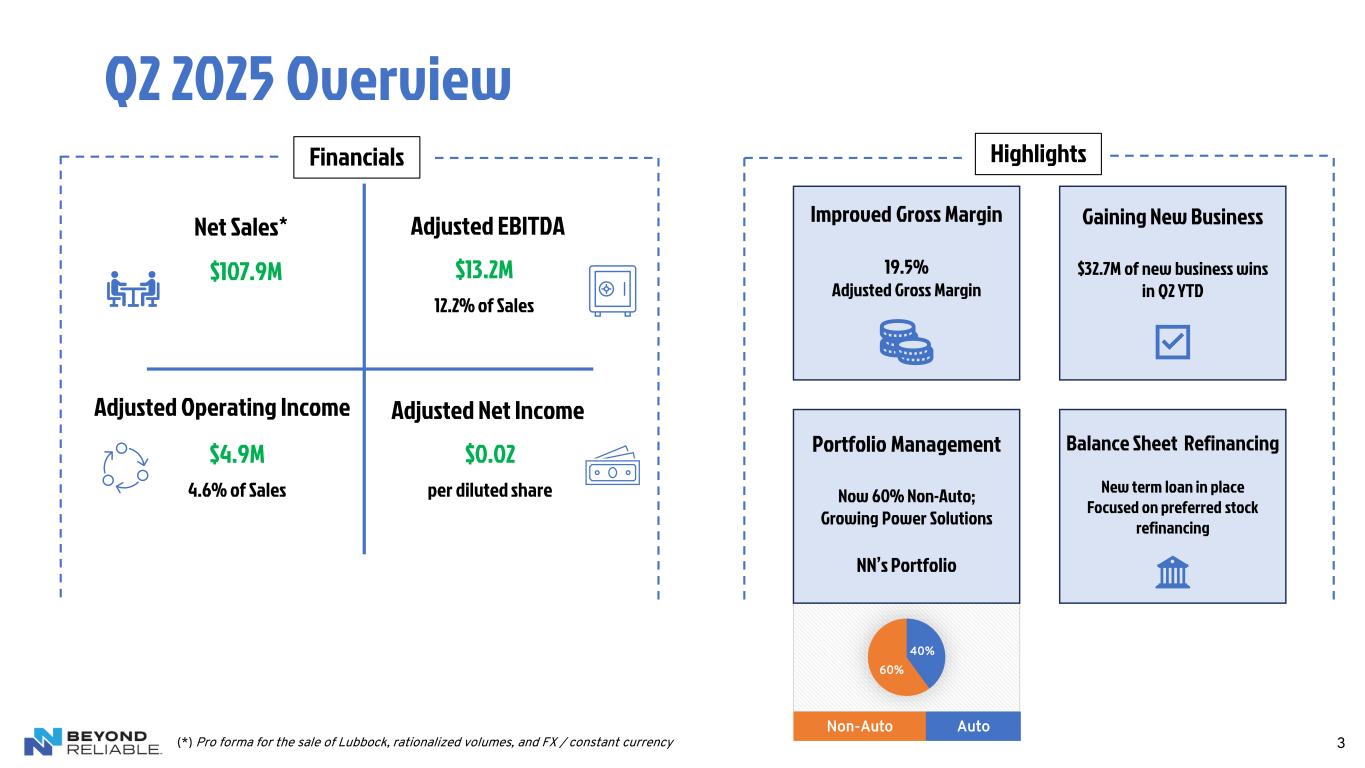
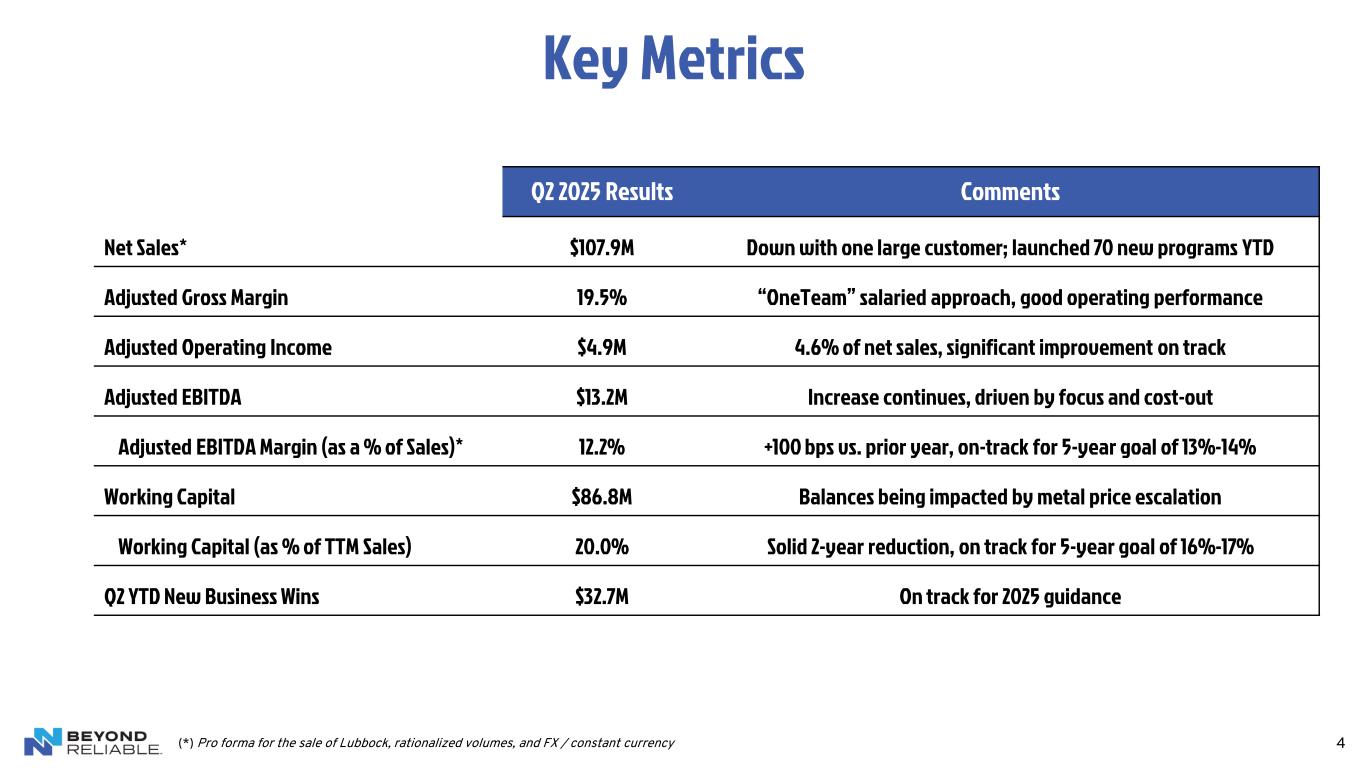
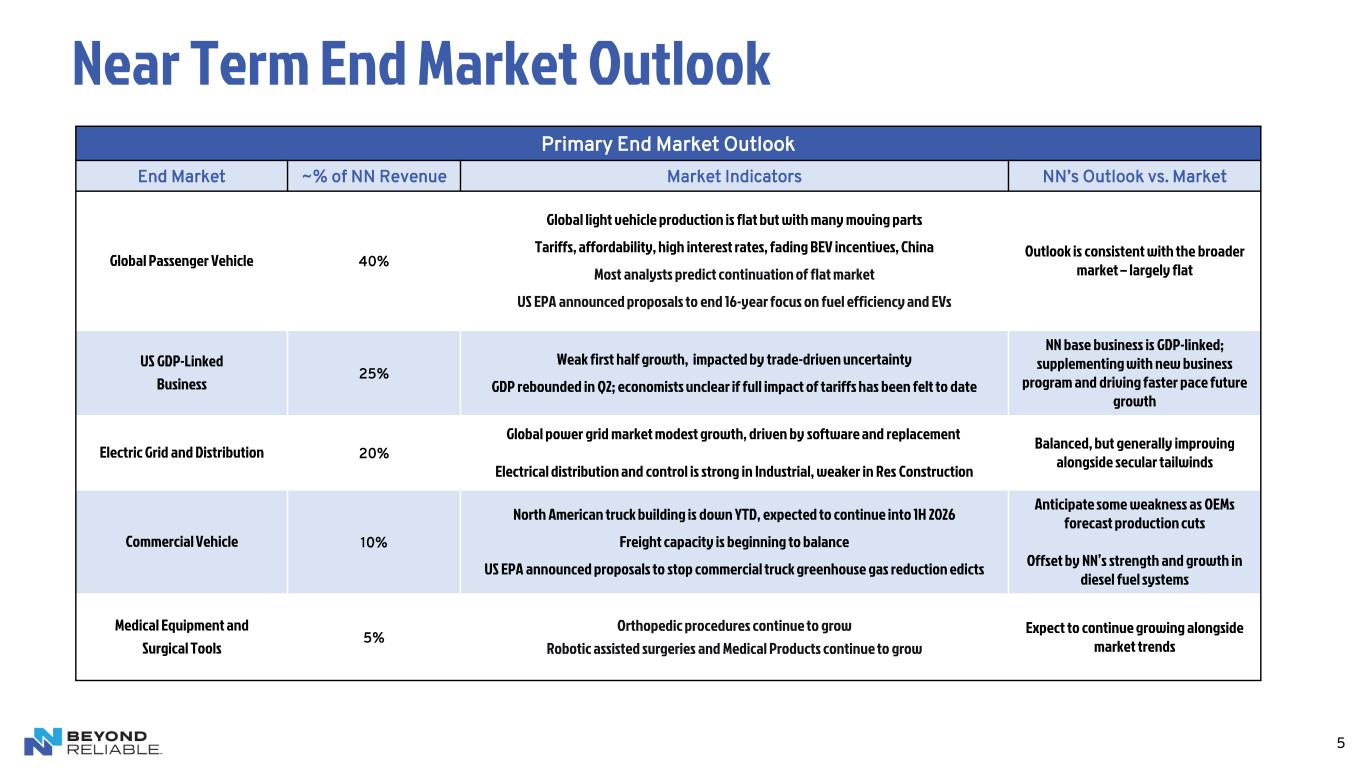
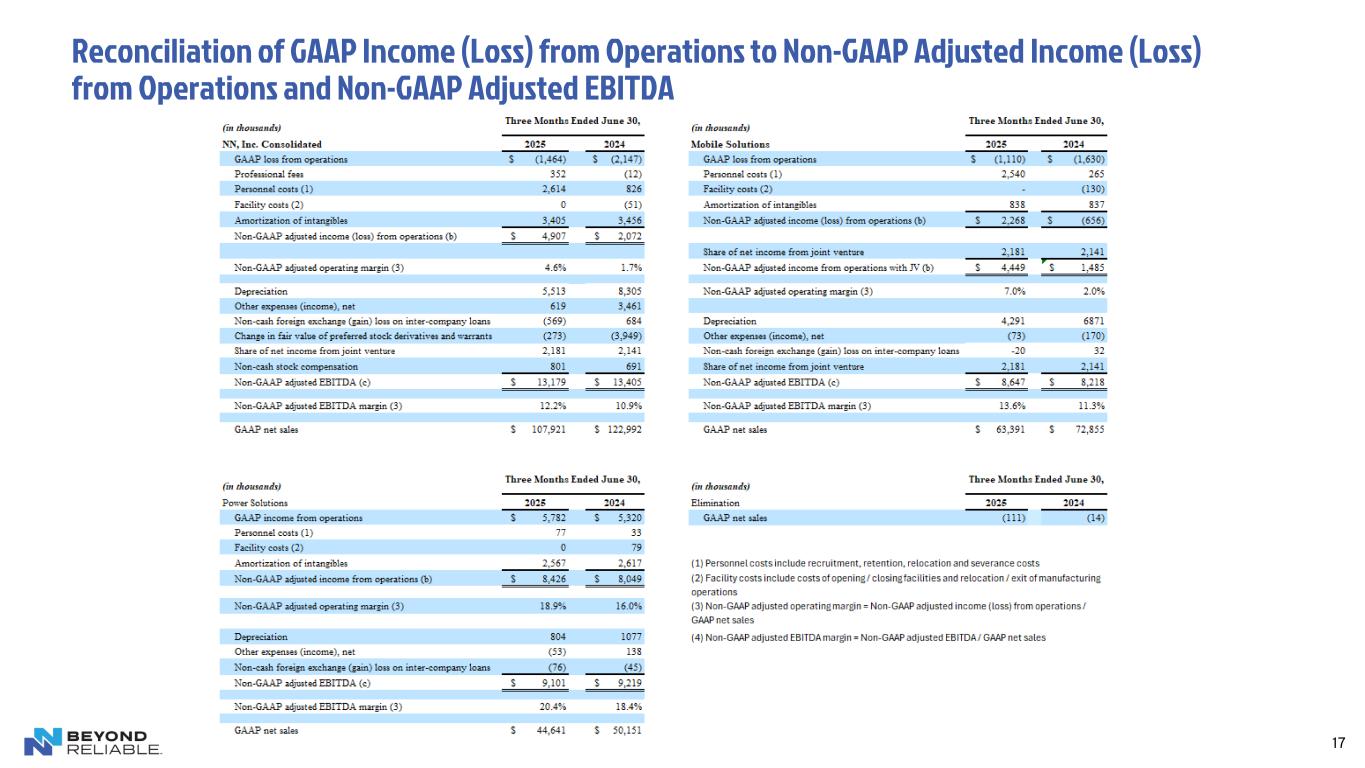
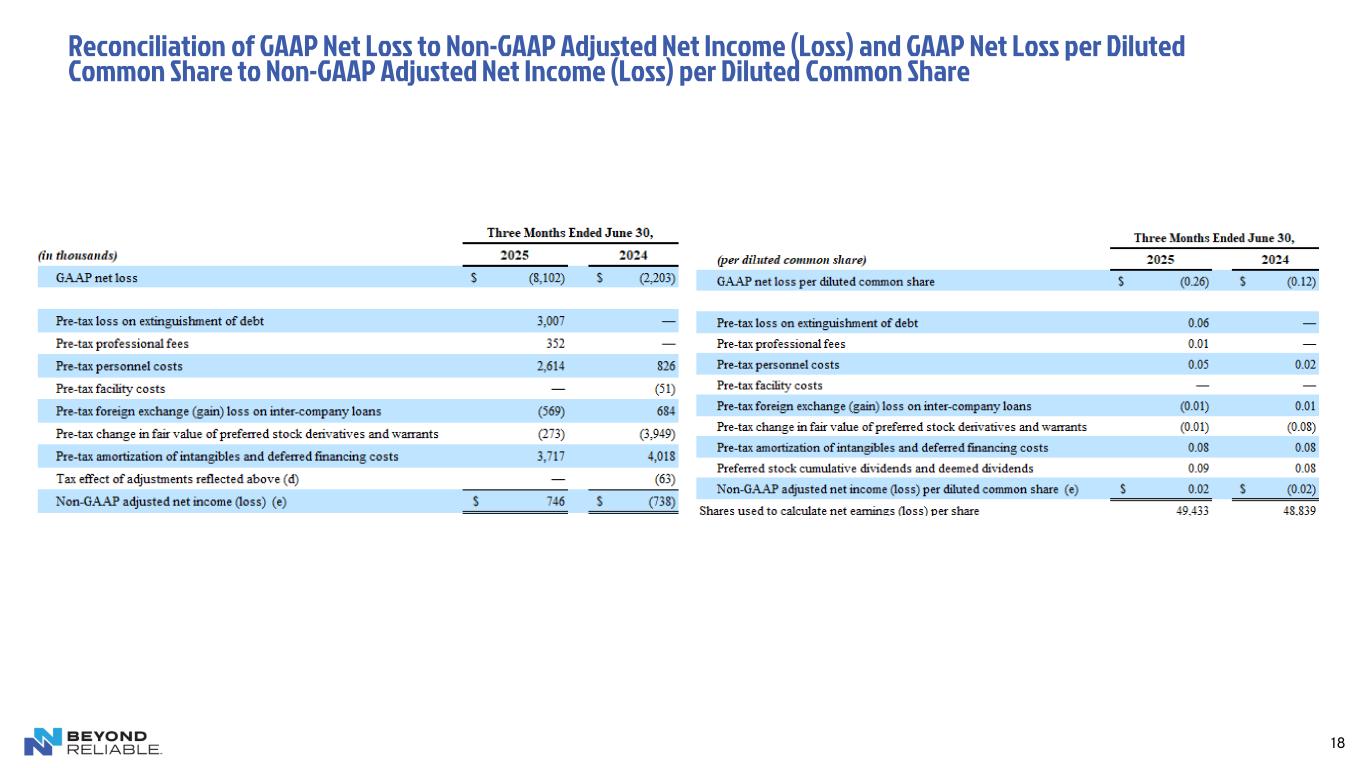
Thank you, Stephen. Good morning, everyone. I wanted to just start off with an overview of the quarter. We had a pretty solid quarter. Our sales were right at $107.9 million. That's adjusted for the sale of Lubbock last year. Our adjusted EVDA came in at 13.2, which was 12.2% of sales. Our adjusted operating income came in at $4.9 million, and our adjusted net income was $0.02 per diluted share. On the right-hand side of this slide, if you're looking at the deck with me on page 3, what drove that performance? First was our improved gross margins. We got really close to 20%, 19.5% adjusted gross margins. We gained a lot of new business for future periods, $32.7 million year-to-date, which put us on pace for our annual goal this year of $65 million. On the portfolio side, we had 39% of our sales was in automotive and 61% non-automotive. So that's a strategic goal of ours is to balance our portfolio. And on the balance sheet side, we did previously announce that we refinanced our term loan, and we're now focused fully on reducing the cost of our term loan as well as refinancing our preferred stock. So overall, it was a quarter that was in line with our expectations. Just a few more comments on the key metrics. So if you'll turn the page, if you're following along to page four, on the net sales side, the automotive industry is obviously going through some turmoil globally. And our year-over-year deviation was mainly with one large tier one customer in Europe, which caused most of our sales shortfall, over 100% actually. But to offset it, we have launched over 70 new programs year-to-date and have more to go, and we have a slide on that to show you here in a minute. And on the gross margin side, how are we doing that? We're really putting in place a one-team, sourd approach and sharing people across plants and across functions. And we continue to have really good operating performance on time and complete with minimal quality problems. So that really lets us run the plant in an efficient manner, and Tim's going to talk about that a little bit further. We do have a program in place to increase our operating income, and we're on track with it, and turned in almost $5 million in the quarter. Adjusted EVA DA, we continue to increase, and we've increased here over the last two years and year-to-date. And it's really driven by a focus of our sales portfolio, rationalizing undesirable business and going for more TAM of good business and continuous cost outs. Our EBITDA margins, adjusted EBITDA margins as a percentage of sales were almost, they were up 100 basis points over a prior year. We're on track for our five-year goal. Working capital has been sticky for us. We've been getting our unit volumes down, but our balances are being impacted by metal price escalation. Gold, silver, steel, aluminum, copper, all of our metals are up. And that's primarily what we buy. We buy metals and make products from those metals. And so we have higher balances that have kept the numbers kind of sticky, even though we've become more efficient. As a percentage of sales, we've decreased it to 20%, and we have plans to further reduce it. And we're on track for guidance with new business wins and have some stretch goals inside also in a couple areas. On the next page, I just wanted to talk about our markets for a minute. We serve five primary markets. The passenger vehicle market is 39% of our revenue, as I mentioned. And overall, globally, light vehicle production is flat, but there's moving parts in the countries and amongst the OEs and a decent amount of cloudiness or uncertainty with the tariffs, vehicle affordability, high interest rates, fading electric vehicle incentives, and the emergence of China as a global exporter of choice. Most analysts in the industry predict a continuation of a flat market in the second half. the trump administration also has announced proposals to end a 16-year focus on fuel efficiencies and subsidizing evs and what that has caused to happen in the industries that this industry is that ice internal combustion engine has resurged in prominence and many of the oes and tier ones have kicked off next generation programs to keep up with the joneses So the idea that ice was going to fade into the sunset is now being rebalanced amongst the powertrain choices. And that rebalancing is good for NN. And our outlook is consistent with the analyst outlooks for our industry. Second biggest market is United States GDP-linked businesses. We make components that go into smoke detectors, fire alarms, industrial lasers, that kind of thing. And it's really tied to GDP. There was a weak first half that was impacted by trade uncertainty. There has been a rebound in the second quarter. Analysts are unclear what the full impact of the tariffs are going to do to the economy. Generally speaking, it's not positive, though. It's a muting of demand. Our base business is GDP-linked. And we are supplementing our base business performance with our new business program to be able to offset or add to whatever the base business does. Third market is electrical grid and distribution. Really, it's been impacted modestly by what's been happening in the United States. We primarily serve that market in the United States. But if you look at some of the public filers, they're doing okay in this arena because data centers are surging and strong for everyone, including us, so we're benefiting from that. Our fourth market is commercial vehicles on highway and off highway. The North American industry is down year-to-date and expected to be sequentially down a little bit more in the second half and into the first half of next year. freight capacities are beginning to balance and again the US EPA has announced proposals to stop commercial truck greenhouse gas reduction efforts. Commercial vehicle business is actually up in this down market and it's because we're very focused on fuel efficiency and those are the engines that are going into the vehicles that are being bought. And then medical equipment, surgical tools in the market we re-entered about a year and a half ago that the base market is growing in our participation and it really is much much higher than market growth because we're trying to build back positions for metal parts and have a recently added more talent to do that. So overall our markets are okay. There's uncertainty in the global vehicle market but we're in China and participating in the China resurgence while other markets are suffering a little bit. So overall, I'd just like you to have a takeaway here that our markets are going through some changes, but overall are doing okay. On the next page, I'm going to turn it over to Tim to talk about for just a minute.
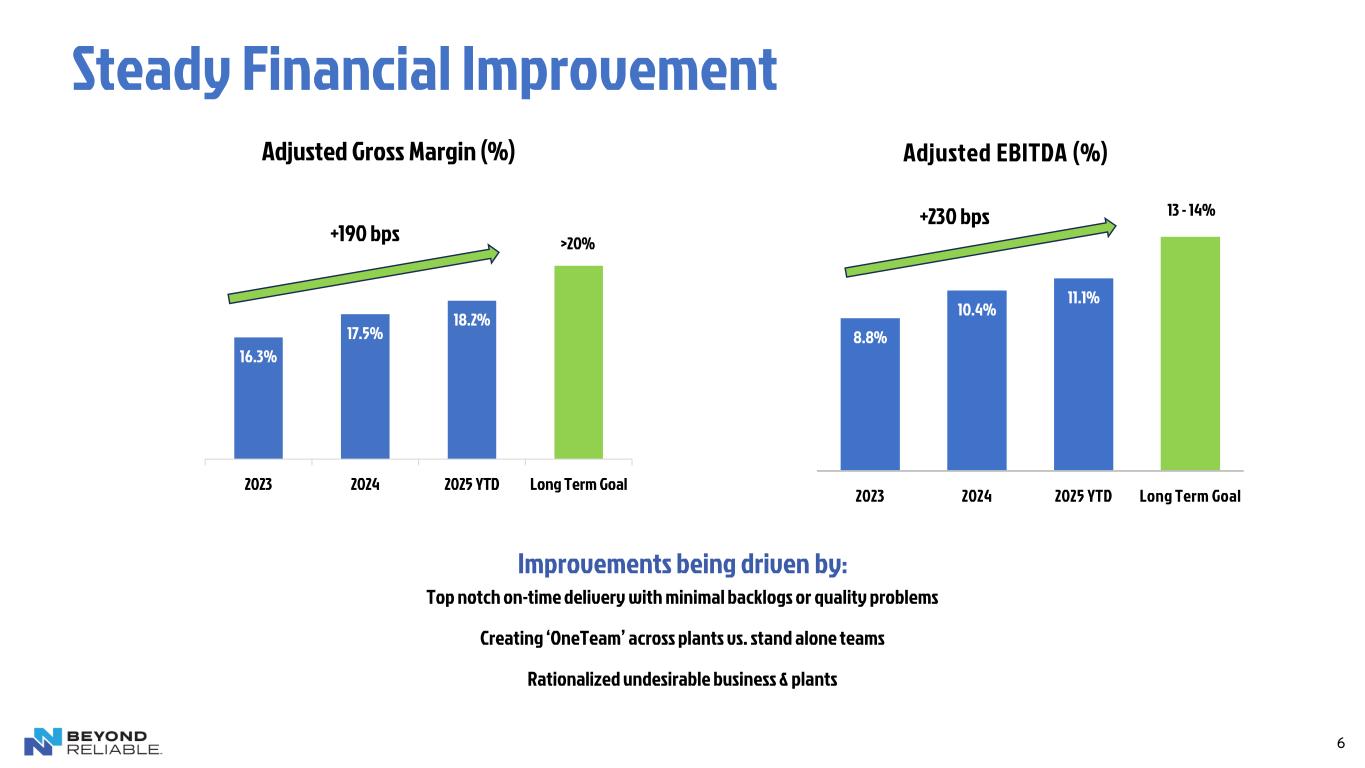
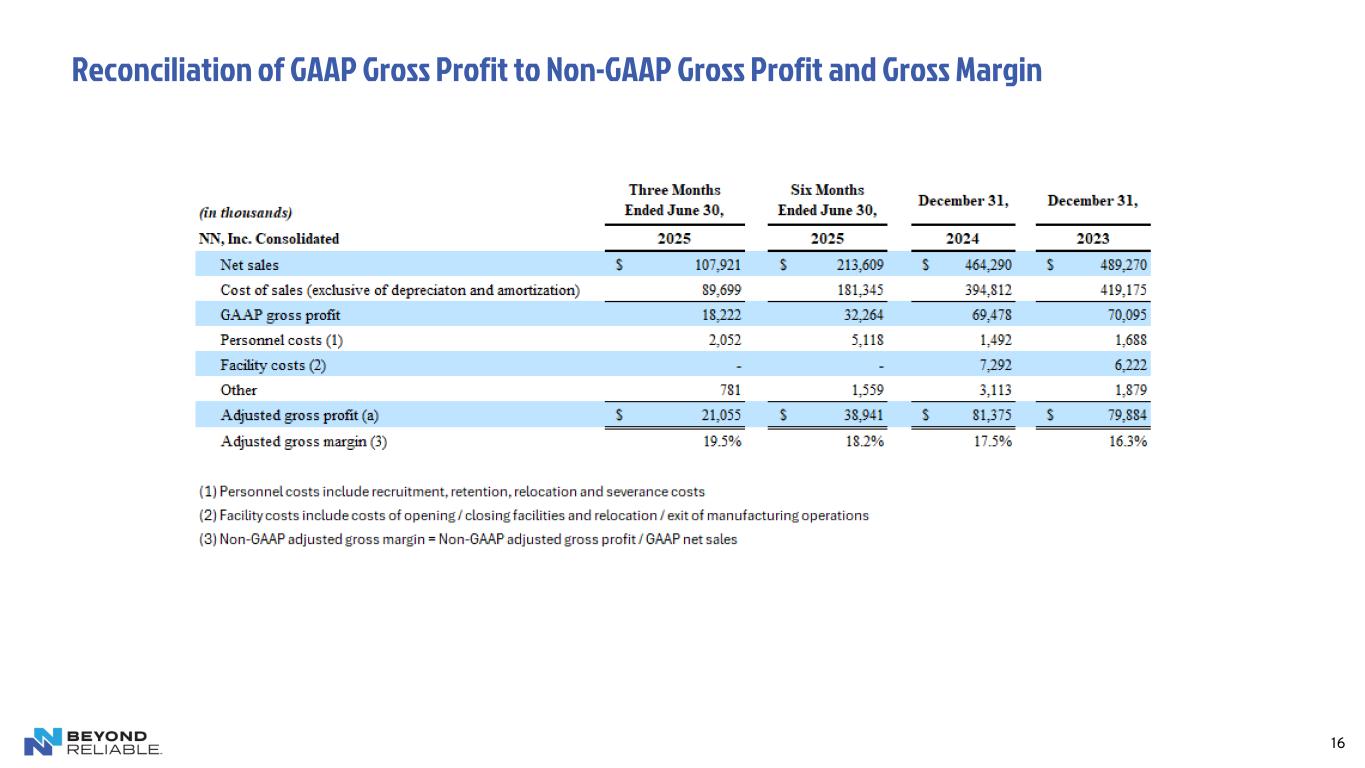
Thank you, Harold. Good morning, everyone. I'll walk you through our transformational progress and the steady improvements to the financial performance that has been the result. One critical area of focus in the multi-year transformation has been to grow our profits on our existing sales through stronger cost reduction initiatives, resulting in an overall lift to the margin of our business. Our initial focus was identifying sales that have historically diluted our profits. This resulted in the rationalization of some business and ultimately the closure of two underperforming facilities, Duajiac and Juarez. This and other overhauls have resulted in a much improved fixed and variable cost structure, which will begin to have an even more pronounced effect when our top line begins to meaningfully reflect the continued ramp-up of new business programs, one over the trailing two years. When you're looking at slide six, we've provided charts on the two main categories that we track most closely, adjusted gross margin and adjusted EBITDA margin, both of which have shown consistent and steady improvement over the last two years. We launched our transformation program mid-2023, completing that fiscal year with 16.3% adjusted gross margins. Year-to-date, our 18.2% adjusted gross margin is an expansion of 190 basis points. We'll continue to focus on further margin expansion. As part of our longer-term plan, we have an internal goal to achieve approximately 20% gross margin, which, based on our current results, we believe is achievable. Our adjusted EBITDA margins have also seen meaningful improvement. Over the same time frame, margins have expanded 230 basis points, trending in over 11% year-to-date. We expect to continue our strong cadence of improved margin capture in the back half of the year, particularly as we begin launching additional new business programs and enact additional cost measures at both the plant and corporate level. We remain on track with our stated multi-year goal of achieving 13% to 14% adjusted EBITDA margins, which is an increase from previously stated objectives there have been multiple drivers who are demonstrated improvements as harold mentioned there was a step change in our on-time delivery and reduction of backlogs all with a continued focus on quality which nn is known for we've also initiated a one-team approach across facilities this is the implementation of a shared operational structure moving away from standalone teams were practical this program has been instrumental as we continue to focus on cost reduction and optimization Since June 2023, we reduced our staffing by more than 600, or approximately 20%. However, this is not exclusively about reduction. Although we reduced by more than 700, we also strategically added approximately 80 people in those areas. We are seeing the most growth and to also increase our talent base in areas of the company, such as sales and engineering. The focus is to improve the overall strength of NN. As mentioned earlier, we rationalized our operational footprint with the closure of Duajiac and Juarez. Manufacturing and both those operations concluded this calendar year with a portion of the business being redistributed to our Marshall and Wellington facilities. These results demonstrate the early progress we have made in improving our operations, lowering our overall cost structure, and setting forth a stronger pathway for improved profitability and sustainable value creation. With that, I'll turn the call over to our CFO, Chris Bonnert, who will walk us through our financial performance for the quarter. Chris. Thank you, Tim. Good morning, everyone.
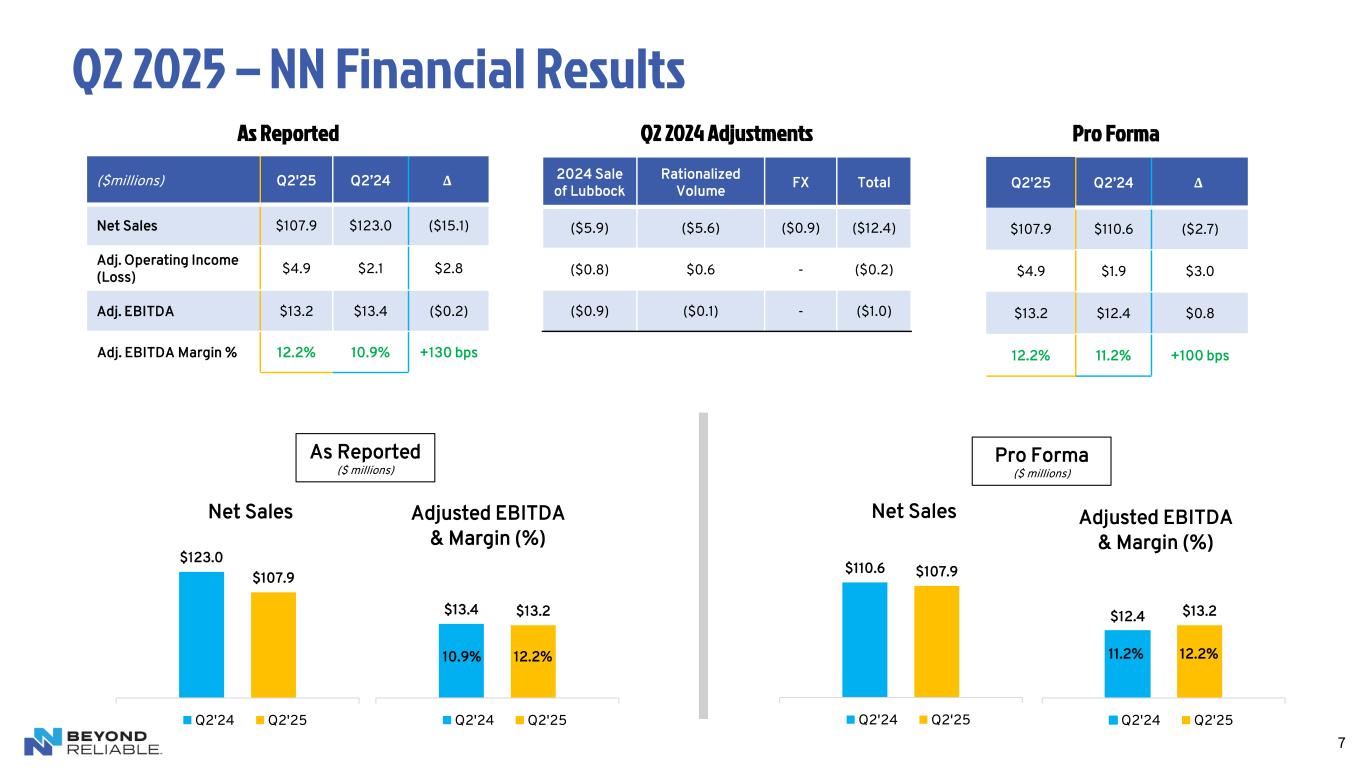
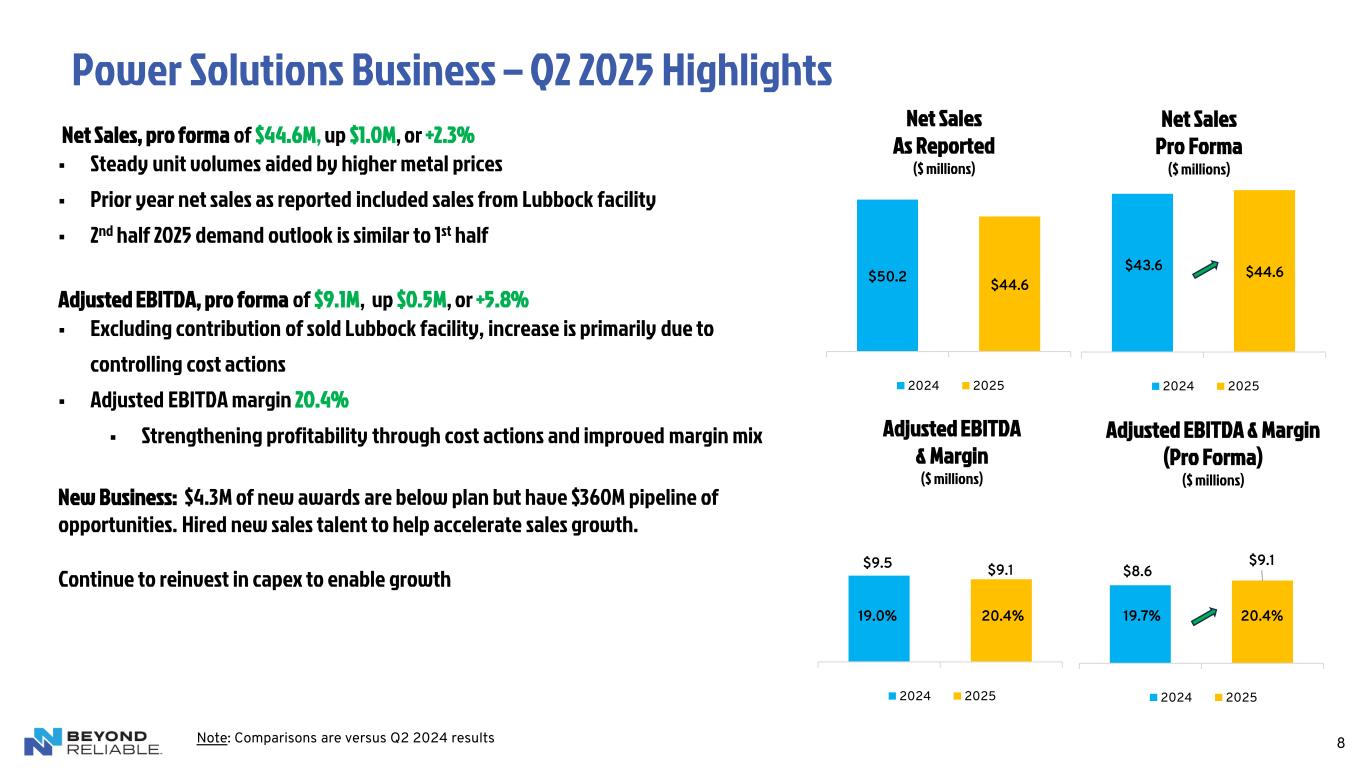
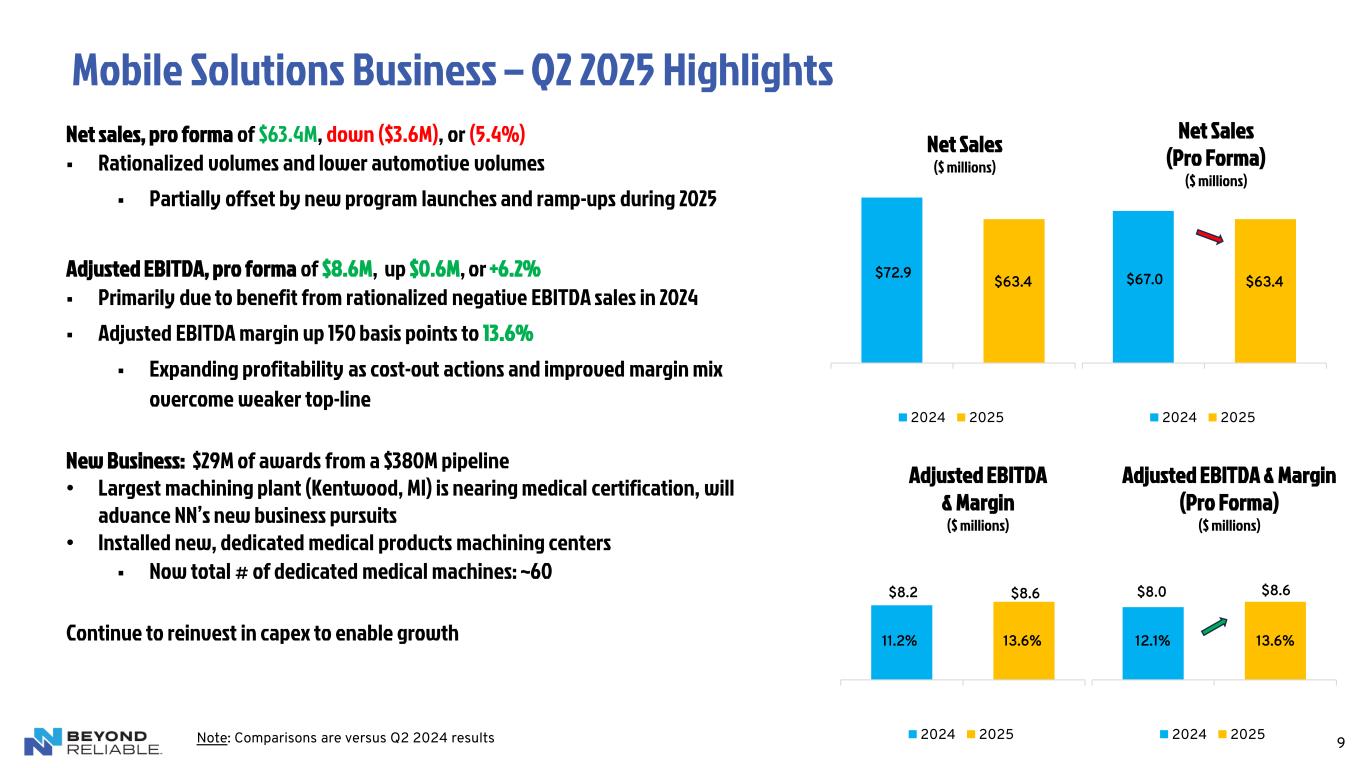
Today I'll be presenting information on both a GAAP and pro forma basis to provide transparency into our operating results due to changes such as the sale of the Lubbock facility last year and the exit of certain unprofitable business. We hope this presentation will be indicative of how we're making decisions to transform NN over time. So with that, I'll start on slide 7, where we'll detail our financial results for the second quarter. This slide shows our as-reported GAAP and non-adjusted numbers on the left side. We again lined out the pro forma adjustments to our quarterly results in the table in the middle with our quarterly pro forma results on the right side of the table. The pro forma adjustments include last year's contribution from the Lubbock plant, which was sold in early July 2024, rationalized sales volumes, and the impacts of foreign currency translation year on year. Last year's second quarter included $5.9 million of net sales and $0.9 million of adjusted EBITDA associated with the Lubbock plant business. strategically rationalized volumes of unprofitable business that totaled $5.6 million in the prior year period, and about $900,000 of impact from foreign currency translation versus last year's exchange rates. On an as-reported basis, net sales for the quarter were $107.9 million, declining about $15.1 million versus last year's second quarter. On a pro forma basis, accounting for the adjustments I noted earlier, net sales modestly declined 2.4% or $2.7 million. Our adjusted operating income for the second quarter was $4.9 million, marking a strong increase of $2.8 million compared to the $2.1 million in the prior year second quarter. On an adjusted pro forma basis, operating income increased $3 million. Adjusted EBITDA results for the quarter were $13.2 million compared to $13.4 million in the prior year period. On a pro forma basis, inclusive of the impacts outlined earlier, our adjusted EBITDA increased 6.5%, or $0.8 million compared to the prior year's second quarter, as we have been able to continue driving improvements to our profitability through solid operational execution and transformational actions taken to improve our returns. These effects were further evidenced in our adjust even on margin performance, as margins of 12.2% of net sales expanded by 130 basis points on an as-reported basis, and by 100 basis points, inclusive of pro-forma adjustments. I'll now turn to some discussion on our segment results, starting in slide 8. In our power solution segment, where our business consists largely of stamped products, net sales results for the quarter were $44.6 million, down $5.5 million, compared to $50.2 million in the prior year period, primarily due to the sale of the Lubbock operations in 2024, lower volumes, and unfavorable foreign exchange effects of about half a million dollars. These three decreases were partially offset by higher precious metals pass-through pricing. When compared on a pro forma basis, excluding the contribution from Lubbock, the first quarter net sales increased $1 million, or 2.3%, as noted in the charts on the right. Our solution sales reflected steady unit volumes supported by higher precious metals pricing. We expect demand in our stamp products business to be similar to what we've seen thus far in the first half of the year, and this is reflected in our net sales current outlook. Power Solutions Adjusted EBITDA, as reported, of $9.1 million, a decline of $0.4 million versus last year's second quarter of $9.5 million, was driven by the non-recurrence of Lubbock's contribution and some unfavorable mix. On a pro forma basis, our Power Solutions Adjusted EBITDA results grew 0.5 million or 5.8 percent compared to last year's second quarter, with strengthening profitability through effective cost-controlling actions and improved margin mix. As a function of this improved adjusted EBITDA, we have seen stronger margin pull-through, with quarterly adjusted EBITDA margins representing 20.4% of net sales, up 70 basis points versus the prior year period. It's also worth noting that during the quarter, we bolstered our Power Solutions sales team, strengthening it with additional sales talent with industry expertise. And thus far, we have seen immediate increases in our new business pipeline for industrial stampings. Our team has achieved multiple new wins this year through July, a number of which have immediate launches this year. In order to support our continued progress and new business growth, we have been strategically investing our CapEx to continue this pace as we go forward and enable further growth. Now turning to slide nine, our mobile solutions segment, which covers our machine products business. Net sales for the second quarter were $63.4 million for the period, compared to $72.9 million in last year's second quarter. Net sales comparisons were impacted by rationalized business, slightly lower automotive volume, and unfavorable foreign exchange effects of $2.2 million. On a pro forma basis, net sales of $63.4 million were down $3.4 million, or 5.4%, compared to pro forma net sales of $67 million in last year's second quarter. The decline was driven by strategically rationalized sales volumes and by softer than anticipated, concentrated primarily at one global Tier 1 customer. This softness was partially offset by new program launches and ramp-ups during 2025. Our second quarter adjusted EBITDA in the mobile solutions segment was $8.6 million, up $0.4 million from last year's second quarter on an as-reported and pro-forma basis. This slight year-over-year growth reflects the impacts from rationalizing sales that carried a negative EBITDA impact in 2024. Our focus on cost-out actions and the ongoing reprofiling of our sales mix drove a notable increase in our just-eventa margins, which climbed to 13.6%, marking a 150 basis point increase year-over-year. The margin expansion is also supported by the right-sizing of our cost structure. Looking ahead, our new business momentum remains strong. At mid-year, we secured $29 million of new awards across a number of individual programs spanning auto, medical, electrical, industrial, and commercial vehicle. Our $380 million of new business pipeline for this segment continues to reflect very solid opportunities going forward. Additionally, we are enhancing our commercial programs with some key developments. We're nearing the necessary certifications to manufacture medical and medical technology products at our Kentwood, Michigan plant, which will further strengthen our ability to achieve new business and grow as we expand in this market. We're also installing additional new machining centers for dedicated medical products, bringing our total number of dedicated medical parts machines to approximately 60. Consistent with our strategic growth efforts, we are continuing to reinvest our cash flows into growth into this segment as well. With that, I'll turn the call back over to Tim. Tim?
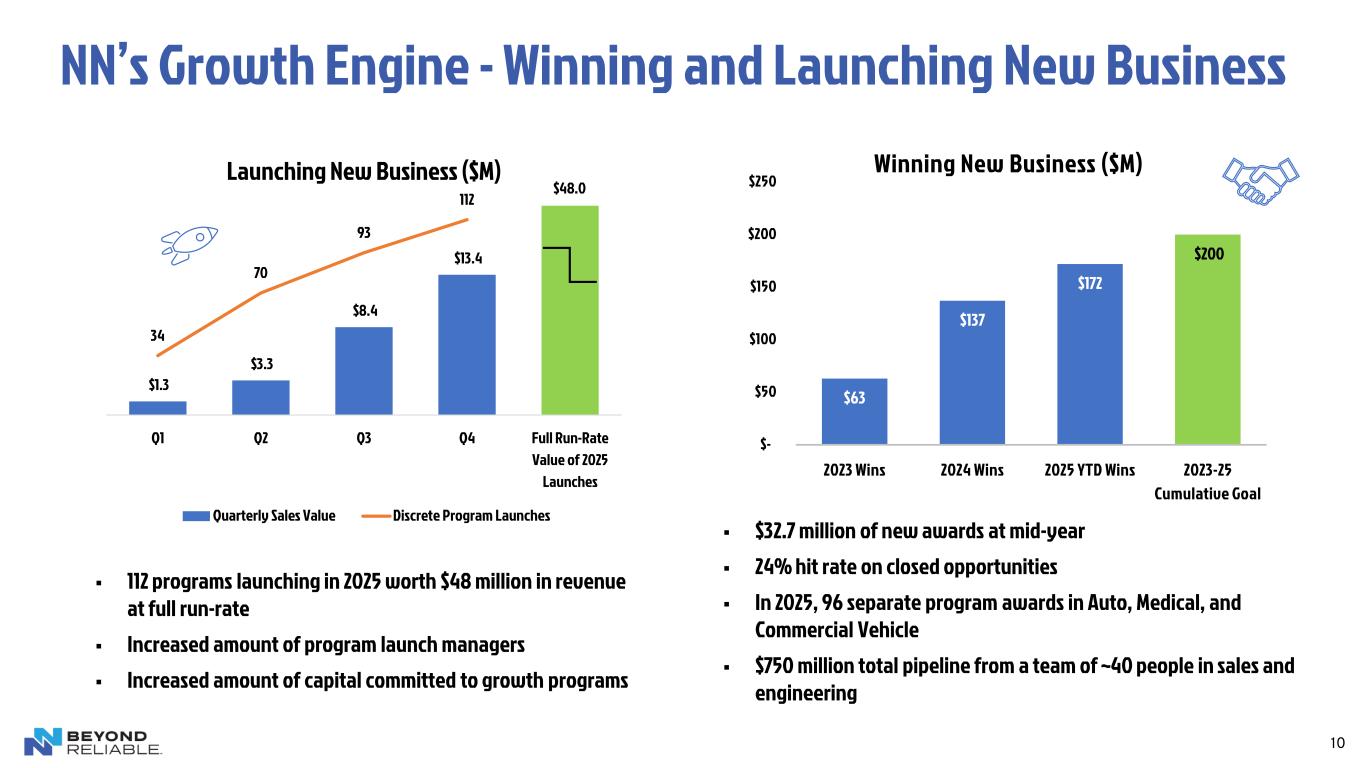
Thank you, Chris. Slide 10 highlights the success of our new business win program and gives insight into our program launch sequence and its impact on NN's top line. 2025, we anticipate launching approximately 112 new programs with approximately 70 programs launched year-to-date. These programs are forecasted to contribute approximately $26 million to our 2025 top line and an estimated $48 million in annual revenue at peak run rate. Our new business wins continue to expand. Year-to-date, we have increased our cumulative wins to approximately $172 million. To support this growth, we have made significant capital investment globally. We've invested in dedicated equipment for medical, as well as the China auto markets. In addition, we are actively relocating capacity from previously rationalized automotive programs to meet upcoming industrial demand. In addition, the pipeline has grown to a solid $750 million. This is driven by our approximately 40 people in sales and engineering and is perfect for us to continue to drive to our goal of $200 million in cumulative new business wins. With that, I'll turn the call back over to Harold.
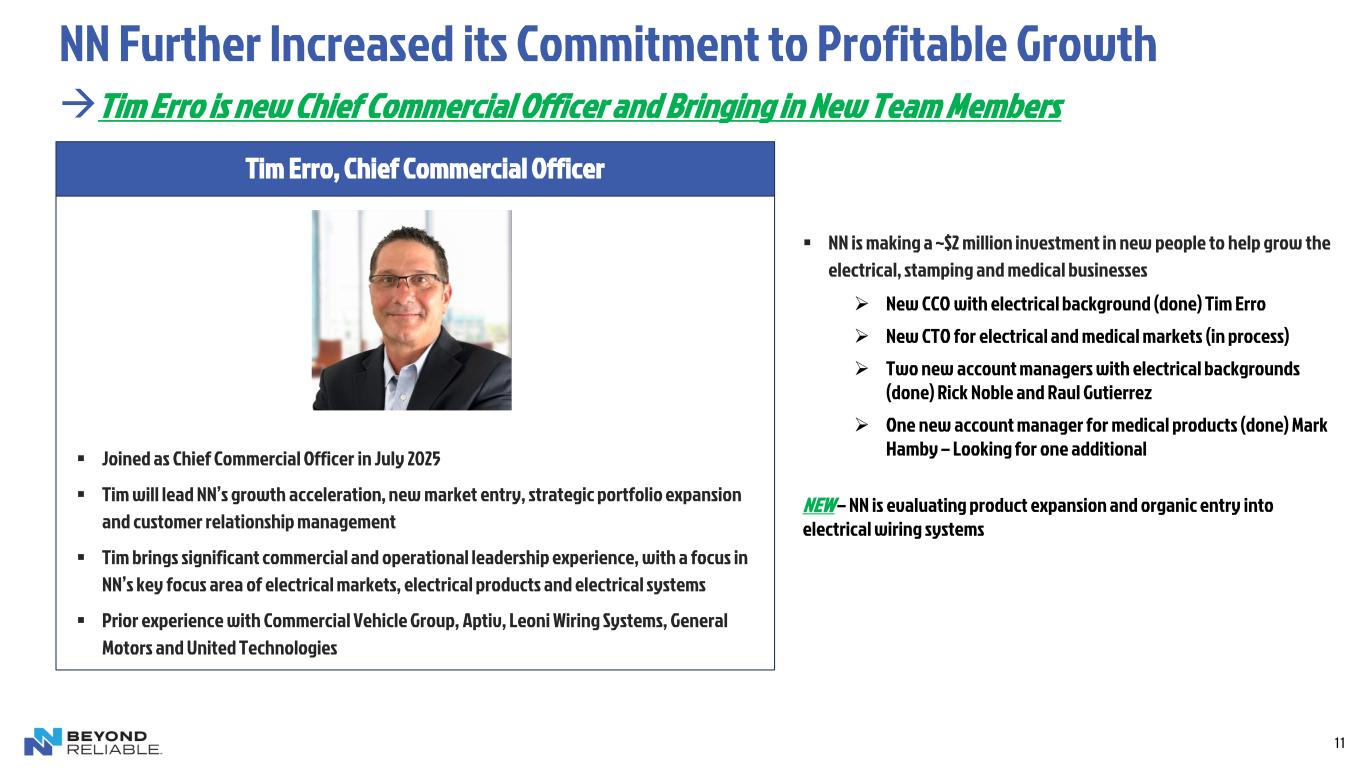
Thank you. I wanted to point out that during the quarter we made a commitment to increase the amount of people that we have in the specialized areas where we're trying to grow disproportionately higher. We did bring in a new chief commercial officer, Tim Arrow. Tim and I worked together previously in our prior life. Some of you might know I had a two-year non-compete, non-hire, non-solicit kind of standstill that ended. And in this quarter, I behaved appropriately and hired Tim. And Tim has already hit the ground running. He's brought in some new people already. He has an electrical background. and entered eight new markets when he was at CVG, and we worked together there. He's really excited to be here and brought in two top people with him day one, and we had an acceptance of an engineering manager yesterday who has an electrical and medical equipment background. So we had in the quarter, we have a new subsequent. We had a new CCO, a new CTO, two new account managers with electrical backgrounds, and a new account manager for medical, looking for one additional medical, and two account managers in the stampings business. So a new thing I wanted to say regarding the future for us is that we now have a core team who understands electrical cable assemblies, and we're evaluating an organic entry into that market, just as we've done for medical products. And some of you may know I was previously the CEO of Electrical Harness Business. So we have a core team here, and that will really help us with our forward growth objectives. I'll now hand it over to Chris, who will give an update on our outlook and guidance.
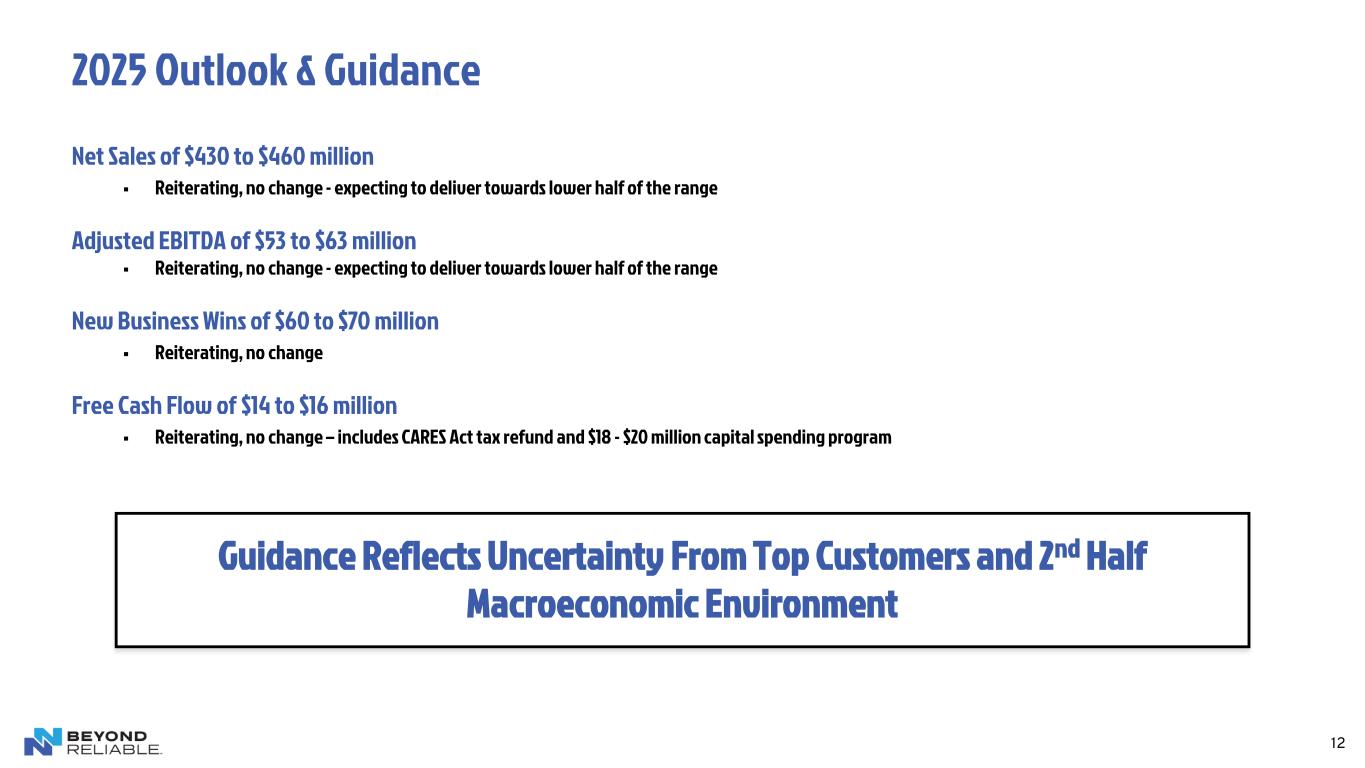
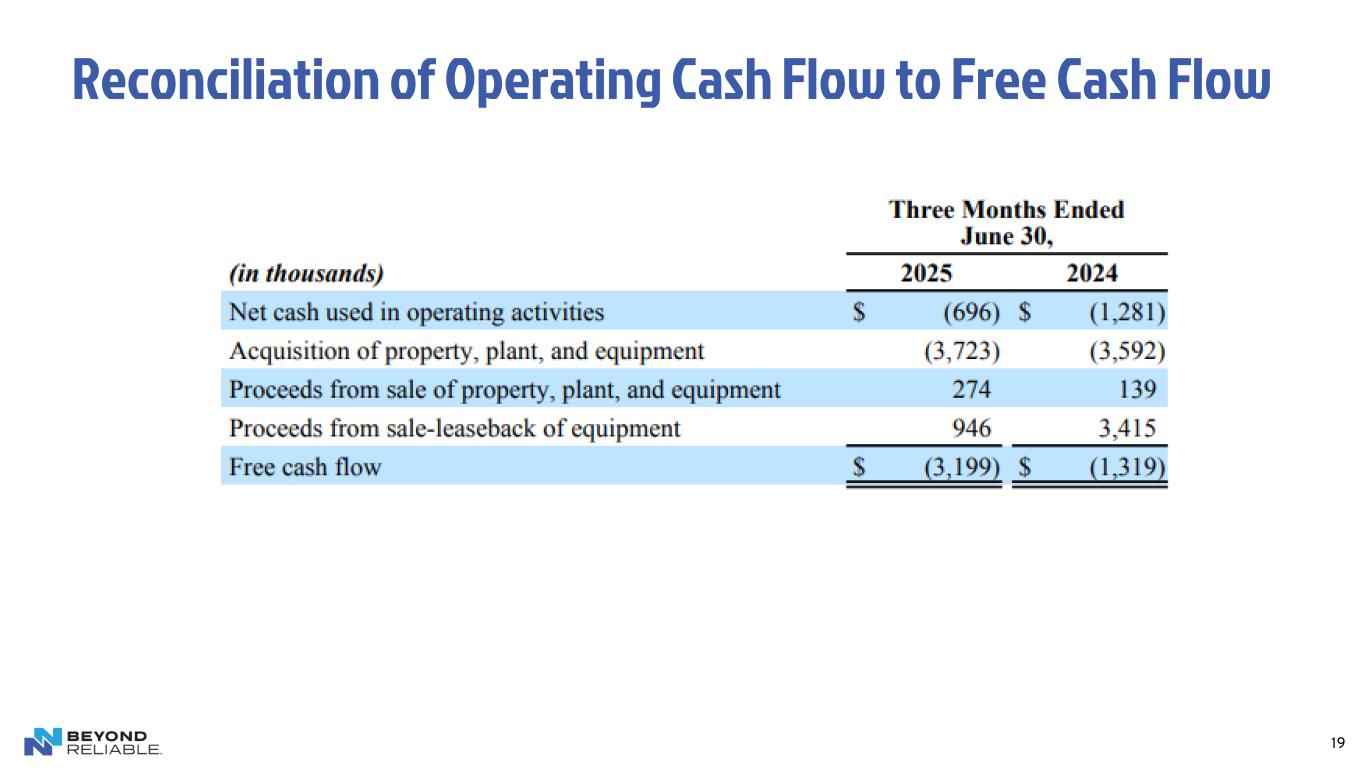
Thank you, Harold. We're reiterating our guidance for the remainder of the year on slide 12. So, net sales, we're still expecting in the range of $430 to $460 million, adjusted EBITDA of $53 to $63 million. However, we are leaning toward the lower half of the range on both those guidances. New business wins, again, no change, $60 to $70 million, and free cash flow of approximately $14 to $16 million. That does include the CARES Act refund, as well as our investment of approximately $18 million to $20 million in overall capital investment. So, this guidance, obviously, reflects the uncertainty from some of our top customers that we're hearing in the marketplace, as well as the unstable macroeconomic environment. But we are holding our guidance at this point. With that, I'd also like to comment that we are planning an investor day in December 2025, and we'll look forward to putting out some more information on the exact date and time of that investor day. With that, I'll turn the call back over to Harold.
Thank you. And, Paul, operator, we're now ready to receive any questions that people may have on the phone.
Operator
Thank you, sir. at this time we will conduct the question and answer session if you would like to ask a question please press star 1 on your phone now and you'll be placed into the queue in the order received once again to ask a question please press star 1 on your phone now and our first question comes from Rob Brown of lake street capital uh good morning congratulations and all the progress thank you uh first on kind of the new business win uh activity uh could you remind us again and kind of the incremental margin
that that group of wins has over your base and and then maybe some of the i think you highlighted some of the verticals you were seeing but but what's sort of the kind of the impetus to some of these new wins in terms of ability to kind of take share in those markets?
Yes. So for new business wins, there's a few categories. One is if we have existing open capacity and our costs are fully covered in the plants and we price that to win, we'll go down to 15% on that type of a business. The second category is if we don't have open equipment, then those quotes usually have to bear the brunt of an equipment charge in an ROI analysis. And for any new investments, we have our floor at 25% ROI for the investments. Any exceptions to that? Tim, myself, personally, have to bless them with the teams. we've had a couple exceptions that actually did not end up being wins in the end so the in terms of the wind basket that we actually have it's accretive by three or four points on the EBITDA line overall in terms of the areas where we're trying to get after rob we have it's also in a couple buckets if we have open capacity to serve a certain market where we're trying to get more of that type of business and differentially out we're trying to grow faster and electrical and medical and we don't necessarily have a lot of open capacity for that and so that has led us to add equipment and be very deliberate about our quoting and our activities. Tim maintains a 12 quarter forward look at capital that's tethered to our growth program. And so to some extent we have capital spending boundaries around the new areas.
Okay, great. And then I appreciate your comments on the auto market uncertainty but on the electrical market and some of the grid and data center markets, you know, what are you sort of seeing there in terms of growth opportunities and demand changes?
Yeah, so we are a big, big supplier to Cummins, and if you follow Cummins at all, they have several segments of their market, and one of them is power generation. And we're participating in their good business growth that they're having, which is approaching 10%. And then on the distribution on the control side, we participate with people like Siemens, Square D, circuit breaker type of contacts. And we have a product mix that's skewed towards residential, the smaller type of circuitry versus the higher voltages. So on the residential side, it's been a little soft in home building in the United States. so our distribution and control customers are kind of flat-ish. On the power generation side, where we directly participate in that, we have been growing. So overall, it's a growth area for our company.
Okay, thanks for the cover. I'll turn it over. Thank you.
Operator
Thank you. And our next question comes from John Franzreb. of Sadati & Company.
Good morning, everyone, and thanks for taking the questions. I guess I'd like to start with the guidance. The first half kind of suggests that you need to generate better revenues in the second half than you did in the first, which I just want you to maybe bridge in light of Chris's comments about the stamp being kind of similar in the second half versus the first. What are the key drivers to make that lower end with the revenue guidance?
Yeah, so we expect our base business to perform consistently in the second half with the first. We're going to be benefiting, though, from our new business launches. And if you look at that on page 10, that's quarterly revenue contributions. So we will be progressively benefiting from the accumulation of the launch programs. So we're counting on those programs not getting pushed out, John. So this is based on the dates that we have. It's possible that if people get nervous, they can push out launch dates on us, and we've had a little bit of that this year, which we commented on last time. We're not counting on a rebound in any markets, per se. We're counting on a continuation of current events, and that's pretty much what the public filers are saying. It's really an automotive comment, given that that's a big part of our revenue profile. So we've read what GM, Ford, Tesla, BYD, all these people are saying, and they're expecting that the difficulties are going to be just a little bit harder in the second half due to having a full half of tariffs versus in the first half it was mainly the second quarter. And so, we are counting on similar base markets added to from our new program launches. So, that's what it takes for us to hit the guidance.
John, I'll just add that we did guide toward the low end of the range in the first quarter and, again, this quarter. And we did add some commentary in the earnings release around macroeconomic events that could be impactful to our estimates as well.
Okay. I just wanted to make sure I knew what the bridge was there. It's going to be new product introductions. Yep. And to support that, it looks like there's going to be a meaningful step up in capital expenditures. You did $7.6 million in the first half, but you're still going $18 to $20. Is that all to support new programs, or is there anything else embedded in that number?
Yeah. Tim, you want to take that one? Sure. Sure. Thanks, John. The bulk of it is in new business programs. It's to support the growth. Obviously, there's always going to be an element of regular CapEx investment, but the vast majority of it is to support the growth.
Good. Understood. And I didn't hear any commentary, maybe an update on what we'll call the group of five now, Tim. How do those facilities stand as far as profitability contribution relative to expectations?
They remain on track. We're still dealing with some volume requirements within the Wellington facility, which was one of the group of seven. Two of them, obviously, were part of the rationalized, so that's what makes them the group of five, as you mentioned. But, no, they're all on track to be profitable this year, to be at a run rate profitability in Wellington by the end of the year and profitable at all the remaining ones.
Okay. And one last question. I'll get back into Q. You're entering the electrical wiring systems market. Is there a specific end market that you envision that provides an opportunity for you, or are you just dipping your toes in right now to see where your competitive advantage may be?
Well, there are several niches that are differentially better. We are ITAR certified, so we're a certified defense contractor. We're ATF certified. So we have some unique sort of, we're FDA certified. We have some unique certifications here as a company, and we have not, we're evaluating this right now, and so we haven't determined a launch plan yet, John.
Okay. Fair enough, Harold. Thank you. I'll get back in the queue.
Operator
Thank you. Our next question comes from Mike Crawford of B. Riley Securities.
Thank you. You talked about your step change and on-time delivery. Can you just go into some more specifics regarding prior performance in that regard and what you're achieving now?
Well, I'm assuming, Harold, you'd like me to take that one?
Early on, and we talked about this on earlier earnings calls, we had red scorecards with multiple customers going back as little as 18 months ago, 18 to 24 months ago. And those are usually predicated on less than optimal on-time delivery and in full. And it also prevents you from being awarded new business wins with those organizations. And a compounding factor of it is increased past-due backlog. So we focused extensively in that area over the last 18 months, reducing the backlog significantly, increasing our on-time delivery. And what it's allowed us to do is we now have green scorecards with all of our customers, meaning that we are a supplier in good standing and in some cases identified as a preferred supplier. And that allows us to be awarded new business, which has helped open the door for our new business wins program. So we've addressed it in prior calls, but it was basic blocking and tackling, focusing on the issues of the day to make sure that we achieve the goals that the customer is looking for. But it's been very successful so far, and now we're a supplier in good standing across the board with our customers.
Okay, thank you. Then just regarding these 60 dedicated medical machines, are any of those in Kentwood just awaiting certification there? And then kind of related, is there a way to think about potential revenue per machine, including by in-market, if that makes a difference?
Go ahead, Tim. Yeah, there are a couple of those. The bulk of those machines are sitting in Attleboro Medical, but there are several machines sitting in Kentwood that are awaiting certification, but they are dedicated for medical. If we remember, we talked about our investment in the nine-axis lathes. One of those went to Kentwood as well. So as far as identifying the equipment for the market, the equipment, the reason why we're segregating medical is you have a different requirement as far as cutting fluids, cleanliness, and isolation from the rest of the building. As far as the remaining equipment, we don't isolate it by market. We isolate it or we identify it by capability, whether it's a milling machine or a lathe. So, all the equipment really has got potential to supply multiple markets, but segregating medical is strictly because of the ISO 13485 certification requirements.
I'll add on to that. I think I know what your question is, Mike. We have those dedicated machines in Attleboro and Kentwood. We have a couple that arrived in the quarter, too. they're currently going through final checkoffs and and machine approval so they're not producing production for us yet we run one shift the business right now is 15 to 18 million run rate so we're to shift is normal for us so right away just in terms of normal we have doubled the amount of sales possibility there, 30 to 35 million. And then we have the two high-speed machines, which haven't started yet. So I'd say, Tim, probably 40 million of capacity right now, running 15 to 18. And we're building dedicated pipelines for those new machines, specifically targeting robotic surgery equipment.
Yeah, as far as available capacity, yeah, the $40 million is easily achievable with the equipment we have.
Yeah. Okay, just two more quick ones from me. One, is there a specific time you expect to get this tax refund, and what are the risks or probability that that doesn't happen?
Yeah, there is a good update. for you. Yeah, there is a good update. We did get a letter and notification from the IRS that our tax returns have been completed, and we expect that refund here in the next few weeks. We did get one letter that's confirmed one year. We're waiting on the second letter, so things have actually progressed quite a bit in the past few weeks. Great.
And then finally, we did get We did get a communication this week that for the first return, which was $6 million, we got the comical, the check is in the mail, email. So it's imminent. We expect it in this quarter.
Okay, great. And then the final one for me is, is there any specific things you need to execute on, given this decision to look at the electrical harness market, in addition to, you know, this motion towards medical?
Is the question have to do, are you wondering about our capacity and equipment, Mike?
Well, I mean, I think your quote is that you're evaluating an organic entry into this new market.
Right. So that would be the type of equipment is COMEX, wire strippers, wiring boards, termination equipment. It's very, very affordable compared to the machining centers that we buy that cost a million dollars each. It would be remarkably higher ROI than entering medical. The medical entry is based upon high-end machine parts and is largely requiring us to buy new, really good equipment to be equivalent to the competition as we enter that market. And on the harness side, what is needed to be equivalent to the competition is much lower cost. We have the factory footprints we need. We just didn't have a sales team or an engineering team to be able to quote properly, and now we do. We have a full electrical team here, and we hired it during Q3, basically, so subsequent to the Q2 end. And so we intend to do it. But we're not – I can – if John asked a question about what markets are we looking at, I can tell you we're not looking at automotive. We're looking at other markets that are more niche-y and will give us the returns we want.
So wouldn't it necessarily be ITAR and, like, data center-focused?
Yeah, data center, defense, medical, some off-road or commercial vehicles, low volume, hard-to-make kind of products where you need a team that knows what they're doing, and we have a veteran team we've pulled in. And one of the account managers that we just hired worked for 26 years at Aptiv. So we're bringing in people that really know what they're doing and engineering as well as selling. So we look forward to reporting out on that progress as we make it. All right. Thank you very much. It's also an area, Mike, where we're looking at M&A.
Operator
Thank you. And as a reminder for our audience, if you would like to ask a question, please press star and one on your phone now. And our next question comes from Hans Baldau of Noble Capital Markets.
Hi, I'm on for Joe. Thanks for taking my question. So you noted in the press release that the M&A program has been kicked off. Can you provide a little more color on that?
Yes. We are being very specific. I'm leading it myself personally. We're being very specific with the type of acquisitions we're looking at. We have several active processes underway. A couple of the companies were for sale and had processes, and a couple of them were not for sale, but we approached them. We are looking to advance the strategy that we're on, so we're not looking at anything, you know, odd or weird that hasn't been in the dialogue around our company. and we are serious about it we the board is very focused on this too we are are a big goal we have on the balance sheet is to refinance our preferred stock and we need a little bit lower leverage to do that so we're been looking at areas where we have synergies that are immediate and natural because of the commonality and redundancy between the companies so synergies are important here and we have several that make sense our main term loan supplier partner excuse me is Marathon Capital we've been very open and transparent with them and so it's a very active process and we're very much focused on having outcomes here you know within a few quarters so it's going to make us a bigger and stronger to you know the way that we feel about what we're doing here at the companies in three phases the first phase is really to fix fix the core business and then that we're kind of entering that second phase of scaling up and growing and this is going to be a nice growth year for us if you can see from the launching the new business program from winning business previous year and then the third phase is optimizing the portfolio so we're really entering that second phase of scaling up growing and refining the preferred stock and um i'm spending a decent amount of my time on it and then dragging tim into it to do the the plant operations and then chris to to do the pro forma of business models financially. So I can tell you that we're, it's not a casual comment. We haven't bought a company in six or seven years here. So it's a new effort here at the company that we've launched.
And, you know, kind of along that line of growth, can you talk a little bit about the lower program launch guidelines from this quarter? Like last quarter, it was 120 new programs worth $55 million, and now it's 112 programs worth 48. Can you talk about what was driving that, like timing, cancellations?
Yep. We've had some push-outs in the automotive arena. So we haven't had cancellations, but we have had push-outs, and that's mainly what it is, pushing into the beginning of 26.
And then lastly, you mentioned that the China operations are going well. Can you add a little bit more detail on that?
Yes, we're a main partner to the tier ones in China, both the Chinese ones as well as the multinationals in the country, and then we're serving BYD directly for steering and braking. And the China auto market is very fluid also, and there's overcapacity really for the amount of car makers that are in the country. We're camped out with a couple top what's called COEMs and China Tier 1s. And BYD is competing based on features and the big feature we're tied into is rear-wheel steering or all-wheel steering and so they are trying to win the battle not on who can have the lowest price but who has the best features that's value if you will with features so they're feature oriented and so it has caused us to bring in new equipment we're leasing equipment the the guidance that Tim gave on 18 to 20 million involves a decent amount of leased equipment. We can lease equipment for seven to eight percent. That is very favorable compared to our term loan interest rate. So we're not we're not paying cash for all of this equipment. We're leasing also and we still have leased capacity and it continues to build back as we amortize our leases. So leasing is a big part of that and in China specifically we can lease equipment for three percent so we're funding the growth locally either cash capex or lease capex it's focused in on the highest end parts that we can make which is steering and braking so that's that business is going well it grew in the quarter year-over-year about 6%, and we won new business in the quarter. So our China business is quite healthy. Great.
That was very helpful. That's everything from me. Thank you. Thank you.
Operator
And our next question comes from Barry Hames of Sage Asset Management.
Thanks very much for taking the question. I had a question on the new business pipeline in terms of what you're seeing. So, you know, we had, you know, reshoring before the Trump tariffs, and then, of course, we've had the Trump tariffs, and everybody is rethinking their supply chains, and a lot of companies are trying to move things around and some to the U.S. So I'm just curious, you know, if we were to look at your opportunity set now compared with, you know, three, six months ago, just kind of what you're seeing given all the turmoil in supply chain world.
Yep, Barry, that's a good question. We originally had a page in the deck on that and pulled it. We didn't know if there would be interest on it. But it is exactly what you're saying, that initially when the Trump administration came in, kind of had a flurry of what we call tariff RFQs, of people just trying to get their options lined up in case they wanted to change their supply chains. Not too much happened. People were eating tariffs and whatnot. We as a company have pass-through agreements commercially, so we're not being stung by that, but we have a little bit of a timing thing of scooting it along. In the quarter, in the second quarter, for instance, we took a little bit of margin compression because we had a decent-sized customer who would not agree to the tariff pass-through until Q3, so a little bit of a timing hit. But now on the RFQs, you see people are getting a little bit more solid in their opinions about what they need to do in order to make the most money in this tariff environment. And there now are pretty decent-sized RFQs that we're participating in. And they're really in two buckets. People that are trying to get their UMCA compliance up to 75%. And then European customers who are trying to lower their cost of production by moving supply chains to China from Europe. So we have a decent amount of RFQs that are in Germany, where traditionally we would have quoted on those out of our France and Poland plants. They're saying, hey, we would like to see what it is getting this from China, because they don't have the tariff barriers that are happening in the United States. And then in the U.S. and in Mexico, we're seeing opportunities to bring in imported parts and make them in China or Mexico, and we can – excuse me, in the U.S. or Mexico, and we can do either one. It's lower cost to make them in Mexico, so it boils down to what the end customer wants to do. But we have quite large RFQs right now. It's helping bring opportunities to our prospecting. especially for automotive. Great. Thank you so much. Appreciate it.
Operator
And at this time, we have no further questions. I will now turn the call back over to your host for any closing remarks.
Thank you. I appreciate it. And thank you for the good Q&A that we had here today. Our company is quite optimistic about our future. We have a decent amount of one business that's not yet launched and not in the figures we've shown you. So we have another batch on the way that we're readying for launching in the 26th, and we got a good carry-in in the 26th already. So the base markets that we're in are kind of flat and nervous, but we're using the opportunity to accelerate our new business program. Hire people, spend a little bit more money, not a lot, mainly leasing, but to accelerate the transformation plan of the company. Our transformation plan remains intact. We're not deviating from it, and it's working fine for us. And we look forward to speaking about our progress in the next call. Thank you for spending some time with us this morning.
Operator
And this concludes today's conference call. Thank you for attending.