Orchestra BioMed Holdings, Inc 8-K, filed Jun 11, 2024
Orchestra BioMed Holdings, Inc. (OBIO)
About this 8-K
Orchestra BioMed Holdings, Inc filed this 8-K on June 11, 2024.
Items reported
- Item 7.01: Regulation FD disclosure
- Item 9.01: Financial statements and exhibits
UNITED STATES
SECURITIES AND EXCHANGE COMMISSION
Washington, D.C. 20549
FORM
CURRENT REPORT
PURSUANT TO SECTION 13 OR 15(d)
OF THE SECURITIES EXCHANGE ACT OF 1934
Date of Report (Date of earliest event reported):
(Exact name of registrant as specified in its charter)
(State or other jurisdiction of incorporation) |
(Commission File Number) |
(IRS Employer Identification No.) |
|
| ||
Check the appropriate box below if the Form 8-K filing is intended to simultaneously satisfy the filing obligation of the registrant under any of the following provisions:
| Written communications pursuant to Rule 425 under the Securities Act (17 CFR 230.425) | |
| Soliciting material pursuant to Rule 14a-12 under the Exchange Act (17 CFR 240.14a-12) | |
| Pre-commencement communications pursuant to Rule 14d-2(b) under the Exchange Act (17 CFR 240.14d-2(b)) | |
| Pre-commencement communications pursuant to Rule 13e-4(c) under the Exchange Act (17 CFR 240.13e-4(c)) |
Securities registered pursuant to Section 12(b) of the Act:
|
Title of each class |
Trading Symbol(s) |
Name of each
exchange on which |
Indicate by check mark whether the registrant is an emerging growth company as defined in Rule 405 of the Securities Act of 1933 (§230.405 of this chapter) or Rule 12b-2 of the Securities Exchange Act of 1934 (§240.12b-2 of this chapter).
Emerging growth company
If an emerging growth company, indicate by check mark if the registrant
has elected not to use the extended transition period for complying with any new or revised financial accounting standards provided pursuant
to Section 13(a) of the Exchange Act.
| Item 7.01. | Regulation FD Disclosure. |
A copy of a slide presentation that Orchestra BioMed Holdings, Inc. (the “Company”) uses at investor and industry conferences and presentations is attached to this Current Report on Form 8-K (“Current Report”) as Exhibit 99.1 and is incorporated herein solely for purposes of this Item 7.01 disclosure.
The information in Item 7.01 of this Current Report, including Exhibit 99.1 attached hereto, is being furnished and shall not be deemed “filed” for purposes of Section 18 of the Securities Exchange Act of 1934, as amended (the “Exchange Act”), or otherwise subject to the liabilities of such section. The information in Item 7.01 of this Current Report, including Exhibit 99.1, shall not be incorporated by reference into any filing under the Securities Act of 1933, as amended, or the Exchange Act, regardless of any incorporation by reference language in any such filing.
| Item 9.01. | Financial Statements and Exhibits. |
(d) Exhibits.
|
Exhibit |
Description | |
| 99.1 | Investor Presentation. | |
| 104 | Cover Page Interactive Data File (formatted as Inline XBRL and contained in Exhibit 101). |
2
SIGNATURES
Pursuant to the requirements of the Securities Exchange Act of 1934, the registrant has duly caused this report to be signed on its behalf by the undersigned hereunto duly authorized.
| ORCHESTRA BIOMED HOLDINGS, INC. | ||
| By: | /s/ Andrew Taylor | |
| Name: | Andrew Taylor | |
| Title: | Chief Financial Officer | |
| Date: June 11, 2024 | ||
3
| Bringing medical inn vation to life Orchestra BioMed AVIM Therapy R&D DAY June 11, 2024 |
| 2 | Orchestra BioMed R&D Day 2024 This presentation has been prepared for informational purposes only from information supplied by Orchestra BioMed Holdings, Inc., referred to herein as “we,” “our,” “Orchestra BioMed,” and “the Company,” and from third-party sources indicated herein. Such third-party information has not been independently verified. Orchestra BioMed makes no representation or warranty, expressed or implied, as to the accuracy or completeness of such information. Certain statements included in this document that are not historical facts are forward-looking statements for purposes of the safe harbor provisions under the United States Private Securities Litigation Reform Act of 1995. Forward-looking statements generally are accompanied by words such as “believe,” “may,” “will,” “estimate,” “continue,” “anticipate,” “intend,” “expect,” “should,” “would,” “plan,” “predict,” “potential,” “seem,” “seek,” “future,” “outlook” and similar expressions that predict or indicate future events or trends or that are not statements of historical matters. These forward-looking statements include, but are not limited to, statements relating to the potential safety and efficacy of our product candidates, the initiation and timing of our planned pivotal trials and reporting of top-line results, expected market sizes for our product candidates, the ability of our partnerships to accelerate clinical development, and our estimated future financial performance and financial position. These statements are based on various assumptions, whether or not identified in this document, and on the current expectations of the Company’s management and are not predictions of actual performance. These forward-looking statements are provided for illustrative purposes only and are not intended to serve as and must not be relied on as a guarantee, an assurance, a prediction, or a definitive statement of fact or probability. Actual events and circumstances are difficult or impossible to predict and may differ from assumptions. Many actual events and circumstances are beyond the control of the Company. These forward-looking statements are subject to a number of risks and uncertainties, including changes in domestic and foreign business, market, financial, political, and legal conditions; risks related to regulatory approval of the Company’s product candidates; the timing of, and the Company’s ability to achieve expected regulatory and business milestones; the impact of competitive products and product candidates; and the risk factors discussed under the heading “Item 1A. Risk Factors” in the Company’s annual report on Form 10-K filed with the U.S. Securities and Exchange Commission on March 27, 2024 as updated by any risk factors disclosed under the heading “Item 1A. Risk Factors” in the Company’s subsequently filed quarterly reports on Form 10-Q. The Company operates in a very competitive and rapidly changing environment. New risks emerge from time to time. Given these risks and uncertainties, the Company cautions against placing undue reliance on these forward-looking statements, which only speak as of the date of this presentation. The Company does not plan and undertakes no obligation to update any of the forward-looking statements made herein, except as required by law. Forward-Looking Statements |
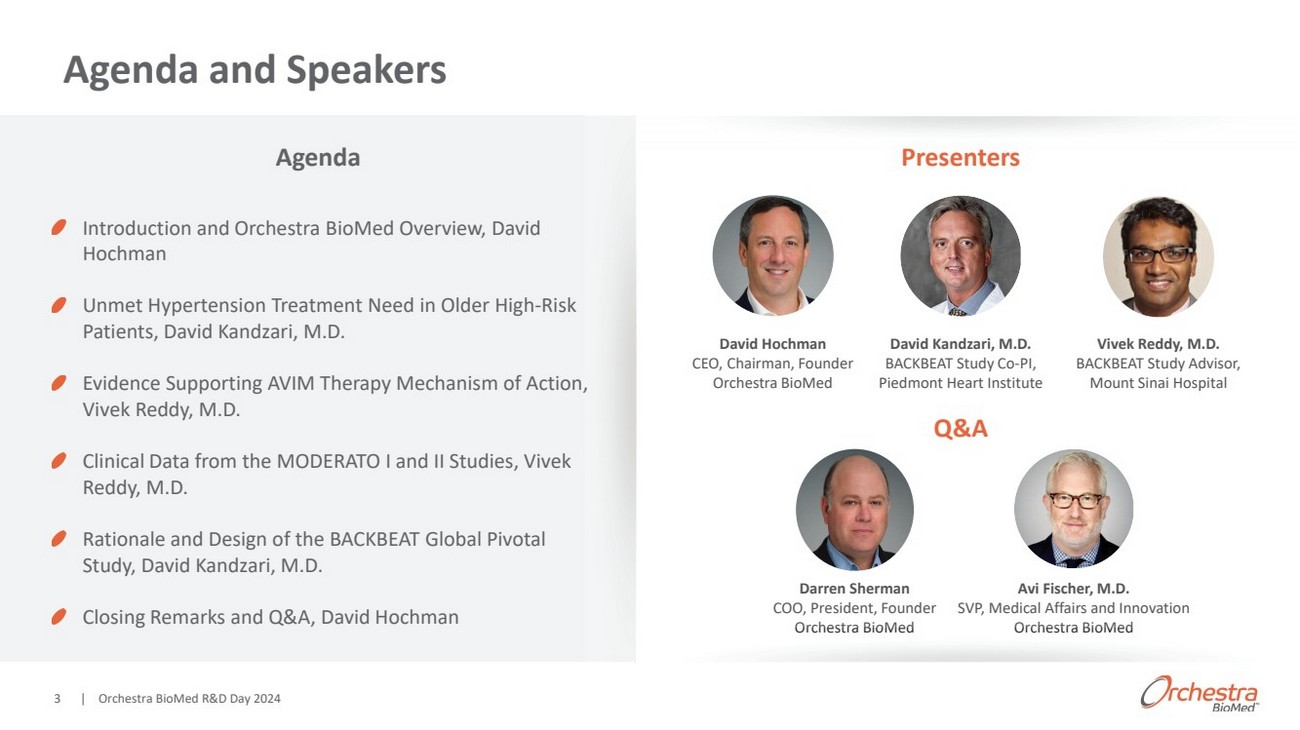
| Agenda and Speakers 3 | Orchestra BioMed R&D Day 2024 Introduction and Orchestra BioMed Overview, David Hochman Unmet Hypertension Treatment Need in Older High-Risk Patients, David Kandzari, M.D. Evidence Supporting AVIM Therapy Mechanism of Action, Vivek Reddy, M.D. Clinical Data from the MODERATO I and II Studies, Vivek Reddy, M.D. Rationale and Design of the BACKBEAT Global Pivotal Study, David Kandzari, M.D. Closing Remarks and Q&A, David Hochman Agenda Presenters David Hochman CEO, Chairman, Founder Orchestra BioMed David Kandzari, M.D. BACKBEAT Study Co-PI, Piedmont Heart Institute Vivek Reddy, M.D. BACKBEAT Study Advisor, Mount Sinai Hospital Darren Sherman COO, President, Founder Orchestra BioMed Avi Fischer, M.D. SVP, Medical Affairs and Innovation Orchestra BioMed Q&A , P t Orchestra BioMed Orchestra BioMed |
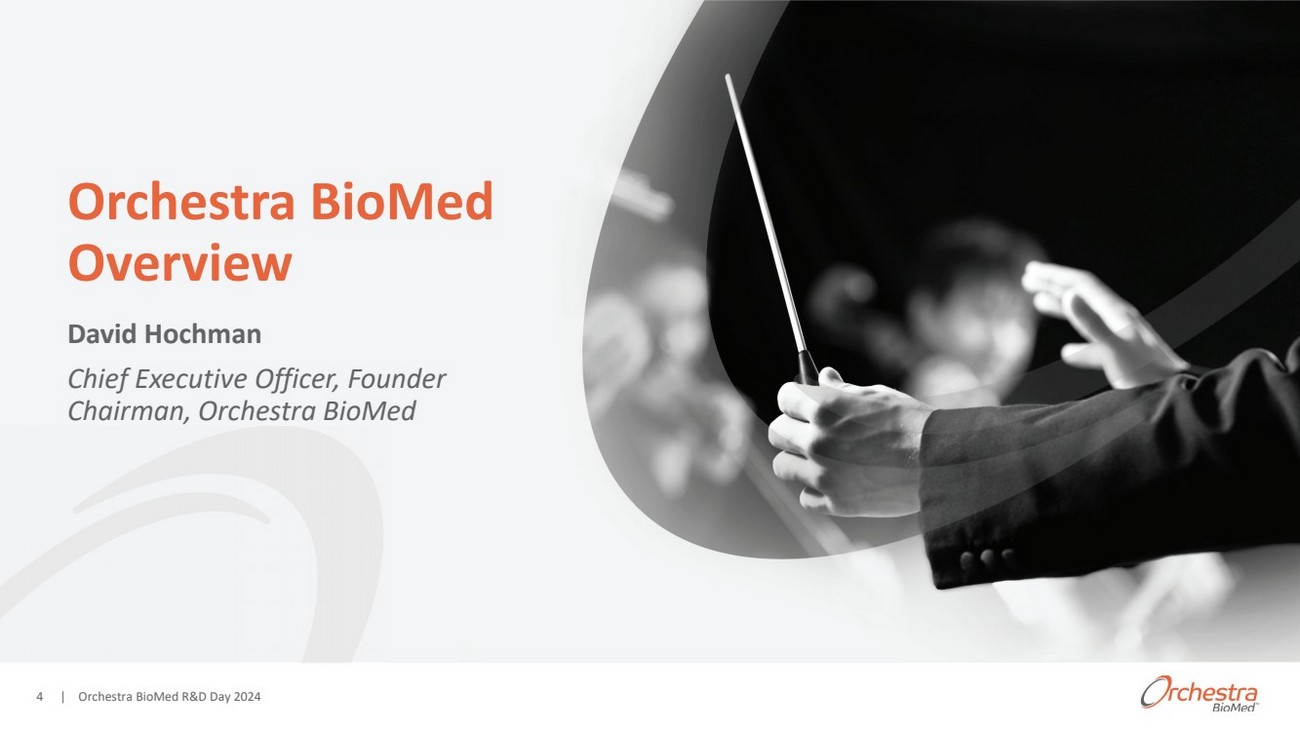
| Orchestra BioMed Overview David Hochman Chief Executive Officer, Founder Chairman, Orchestra BioMed 4 | Orchestra BioMed R&D Day 2024 |
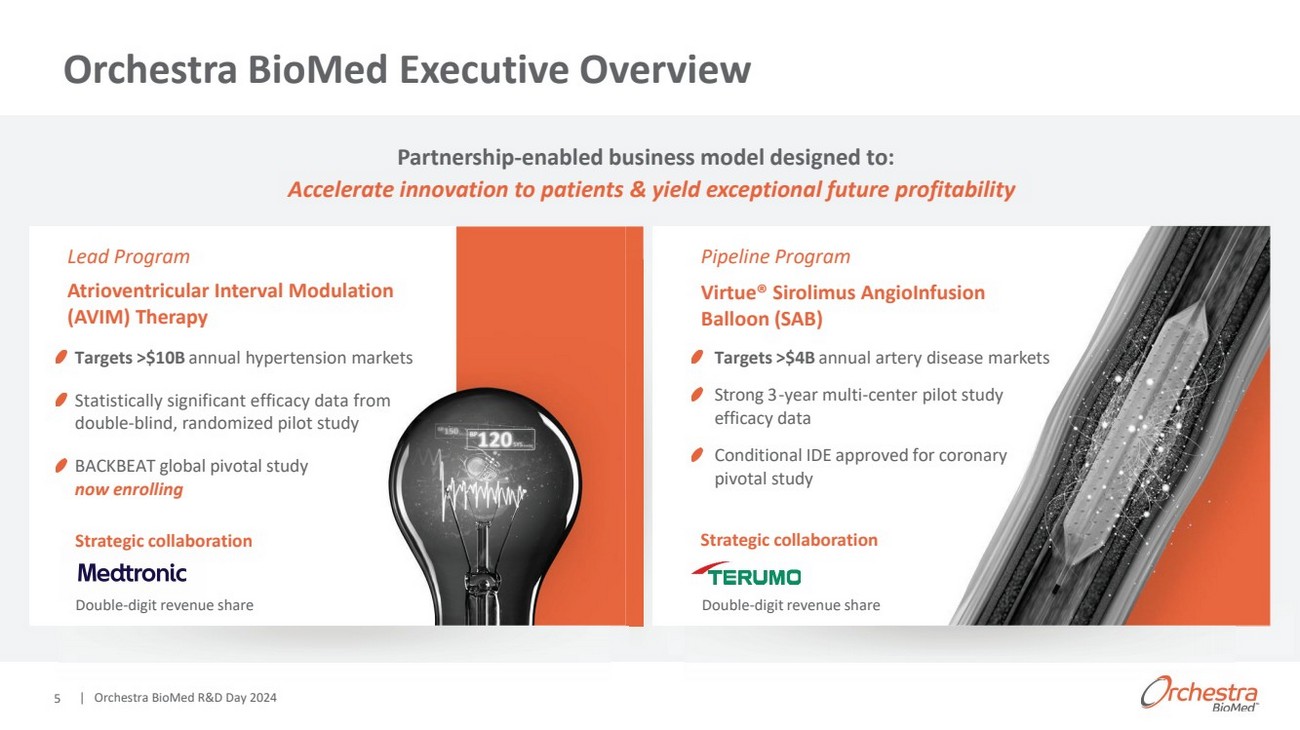
| Orchestra BioMed Executive Overview Targets >$10B annual hypertension markets Statistically significant efficacy data from double-blind, randomized pilot study BACKBEAT global pivotal study now enrolling Lead Program Atrioventricular Interval Modulation (AVIM) Therapy Strategic collaboration Pipeline Program Virtue® Sirolimus AngioInfusion Balloon (SAB) Partnership-enabled business model designed to: Accelerate innovation to patients & yield exceptional future profitability Strategic collaboration Double-digit revenue share Double-digit revenue share ngioInfusion n e arkets om on Targets >$4B annual artery disease markets Strong 3-year multi-center pilot study efficacy data Conditional IDE approved for coronary pivotal study 5 | Orchestra BioMed R&D Day 2024 |
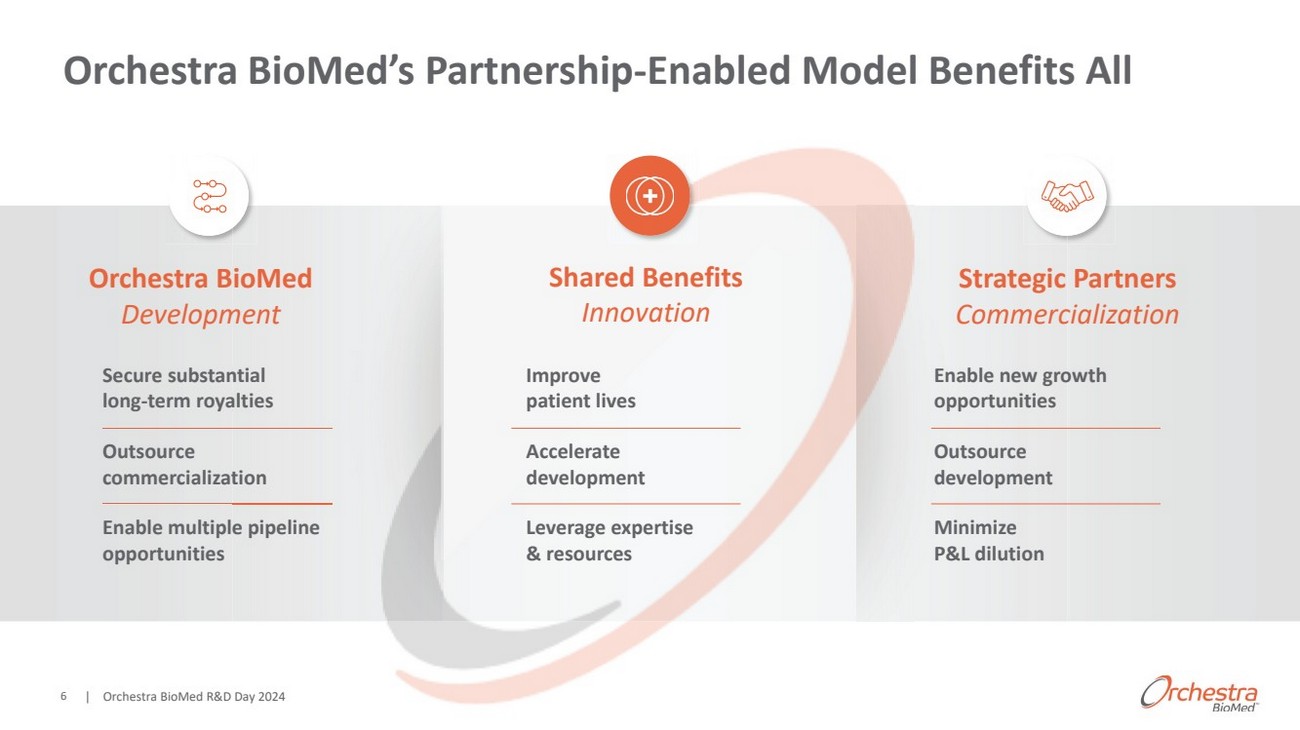
| Orchestra BioMed Development Commercialization Shared Benefits Strategic Partners Innovation Secure substantial long-term royalties Outsource commercialization Enable multiple pipeline opportunities Improve patient lives Accelerate development Leverage expertise & resources Enable new growth opportunities Outsource development Minimize P&L dilution ioMed ment ntial alties tion e pipeline Orchestra BioMed’s Partnership-Enabled Model Benefits All 6 | Orchestra BioMed R&D Day 2024 |
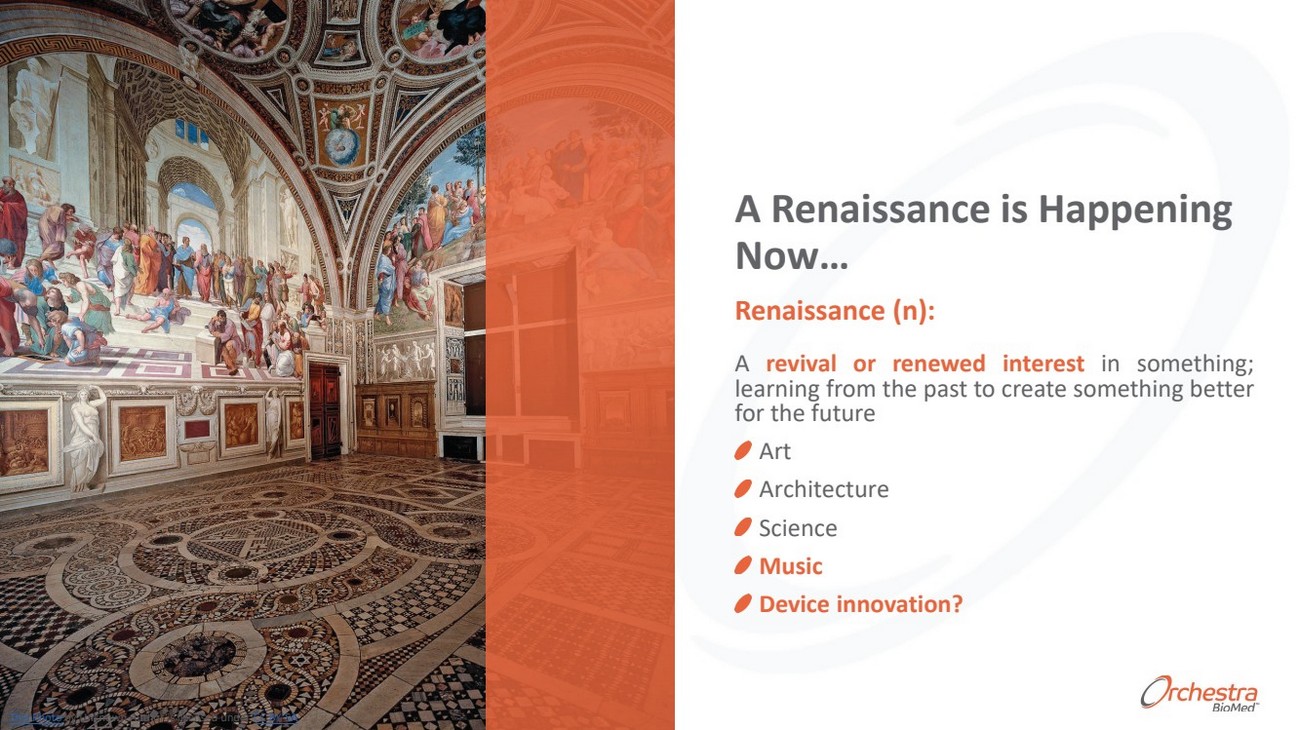
| A revival or renewed interest in something; learning from the past to create something better for the future Art Architecture Science Music Device innovation? Renaissance (n): A Renaissance is Happening Now… This Photo by Unknown Author is licensed under CC BY-SA |
| The Renaissance of Orchestra ŽƌĐŚۼƐƚƌĂ Ancient Greece: the circular space in front of the stage where the chorus performed Orchestra Renaissance Italy: a group of musicians performing a composition with pre-specified instrumentation 8 | Orchestra BioMed R&D Day 2024 The chorus in Classical Greek drama was a group of actors who described and commented upon the main action of a play with song, dance, and recitation Claudio Monteverdi (1567-1643) The “Father” of the Symphony Orchestra In order for his music to be replicated exactly as he composed it; he required it be played with specific instrumentation: 15 viols of different sizes; 2 violins; 4 flutes, 2 large and 2 medium; 2 oboes, 2 cornetts, 4 trumpets, 5 trombones, a harp, 2 harpsichords, and 3 small organs. “In the history of Western musical tradition, the evolution of symphony orchestra to its modern form can be seen as an apotheosis of instrumental music.” |
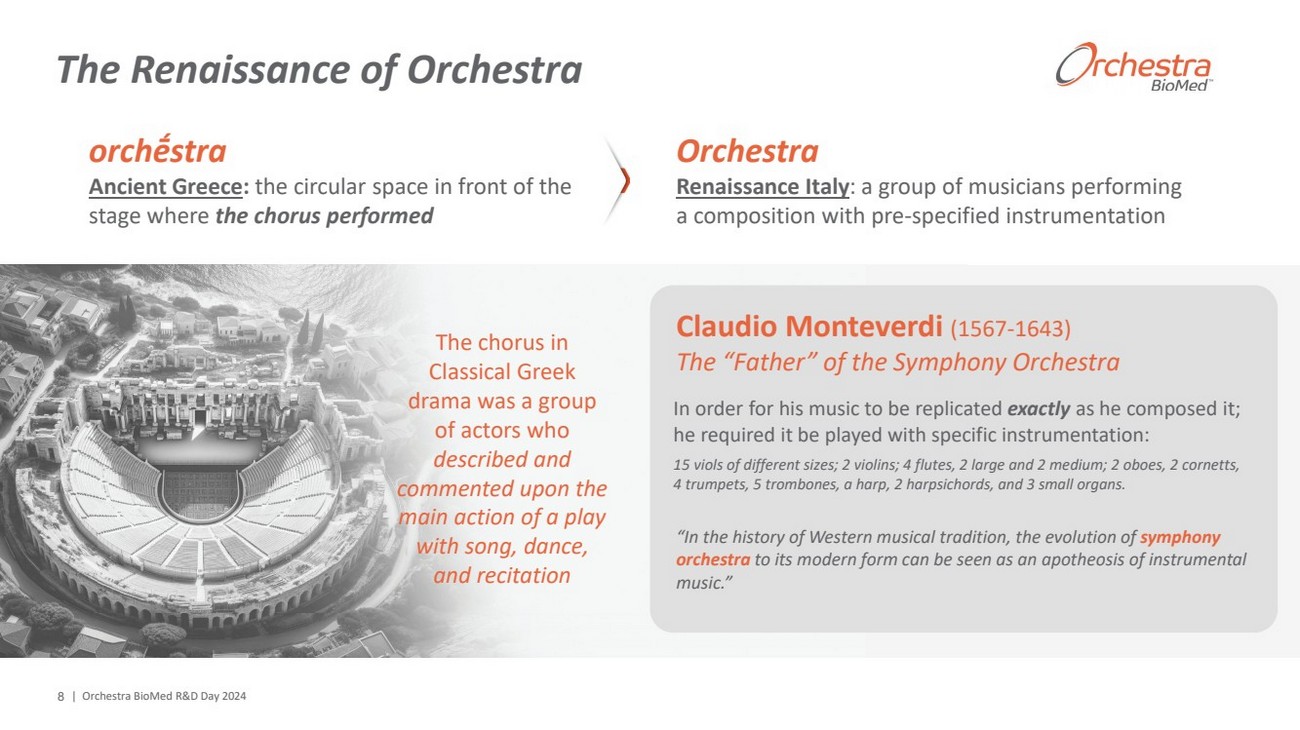
| An Orchestra Succeeds Through Collaboration What more miraculous creation of mankind is there than the symphony orchestra — a hundred musicians collaborating flawlessly in the creation of a single sonority from moment to moment… We tend to take for granted the skill and sensitivity of such a performing organism, and we should take time to marvel afresh that such a joint effort is possible for human beings, so rich in communication, beauty and meaning. Klaus George Roy 9 | Orchestra BioMed R&D Day 2024 |
| Orchestra BioMed Our Symphony is 10 | Orchestra BioMed R&D Day 2024 Orchestra BioMed 10 | Orchestra BioMed R&D Day 2024 |
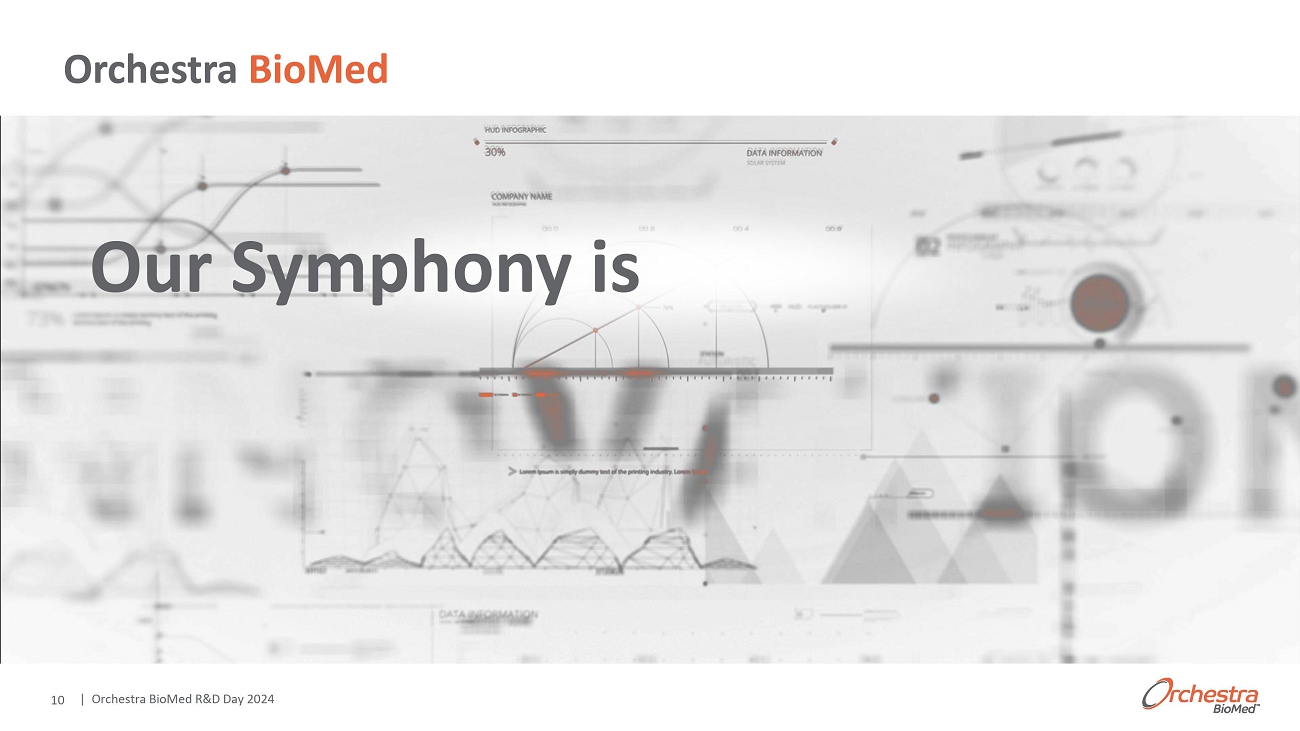
| The Current Renaissance in Cardiac Pacing and Balloon Angioplasty 11 | Orchestra BioMed R&D Day 2024 AVIM Therapy Virtue® SAB Our large, established target markets, built on foundational technologies introduced 50+ years ago, are experiencing a RENAISSANCE, enhancing the opportunity for our innovative technologies 1st pacemaker implanted in 1958 by Senning Leadless and conduction system pacing opening potential for expanded clinical use AVIM therapy driving potential use of pacemakers for treatment of hypertension and possible expanded indications 1st balloon angioplasty performed in 1977 by Grüntzig Drug-coated angioplasty balloons are becoming the preferred treatment for artery disease Virtue SAB expands the paradigm as the only non-coated angioplasty balloon that delivers extended-release sirolimus (SirolimusEFR) performed y balloons rred sease e paradigm angioplasty tended-musEFR) |
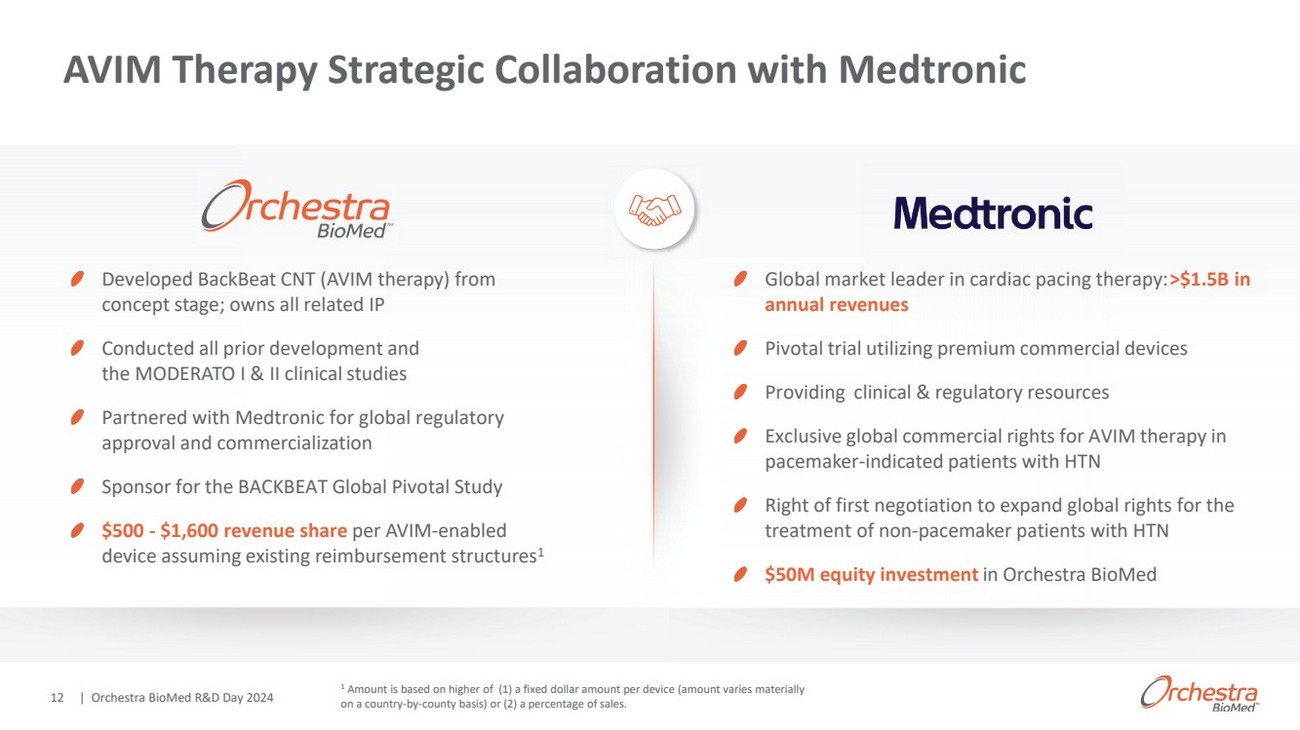
| Developed BackBeat CNT (AVIM therapy) from concept stage; owns all related IP Conducted all prior development and the MODERATO I & II clinical studies Partnered with Medtronic for global regulatory approval and commercialization Sponsor for the BACKBEAT Global Pivotal Study $500 - $1,600 revenue share per AVIM-enabled device assuming existing reimbursement structures1 Global market leader in cardiac pacing therapy: >$1.5B in annual revenues Pivotal trial utilizing premium commercial devices Providing clinical & regulatory resources Exclusive global commercial rights for AVIM therapy in pacemaker-indicated patients with HTN Right of first negotiation to expand global rights for the treatment of non-pacemaker patients with HTN $50M equity investment in Orchestra BioMed 1 Amount is based on higher of (1) a fixed dollar amount per device (amount varies materially on a country-by-county basis) or (2) a percentage of sales. AVIM Therapy Strategic Collaboration with Medtronic 12 | Orchestra BioMed R&D Day 2024 |
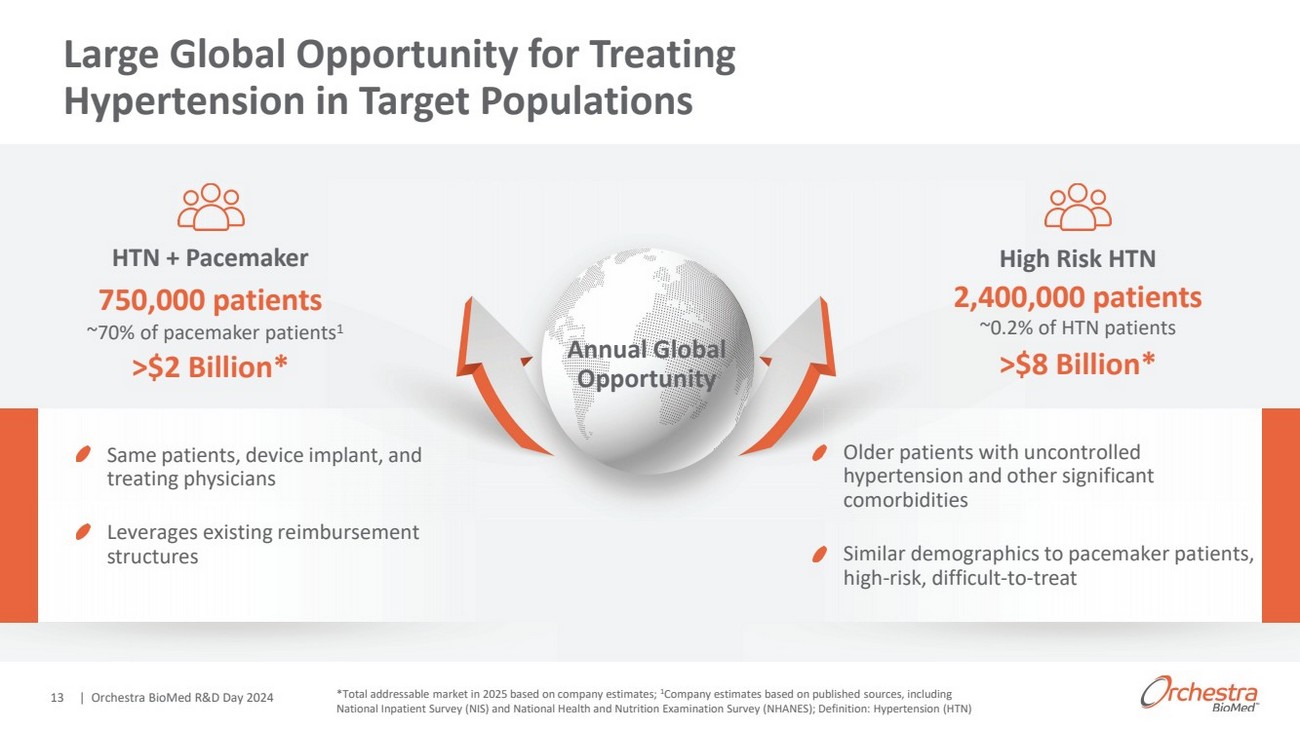
| *Total addressable market in 2025 based on company estimates; 1Company estimates based on published sources, including National Inpatient Survey (NIS) and National Health and Nutrition Examination Survey (NHANES); Definition: Hypertension (HTN) Annual Global Opportunity Large Global Opportunity for Treating Hypertension in Target Populations HTN + Pacemaker ~70% of pacemaker patients1 750,000 patients >$2 Billion* High Risk HTN ~0.2% of HTN patients 2,400,000 patients >$8 Billion* Same patients, device implant, and treating physicians Leverages existing reimbursement structures Older patients with uncontrolled hypertension and other significant comorbidities Similar demographics to pacemaker patients, high-risk, difficult-to-treat 13 | Orchestra BioMed R&D Day 2024 |
| The Unmet Treatment Need for Hypertension in Older High-Risk Patients David Kandzari, M.D., FACC, FSCAI Chief, Piedmont Heart Institute and Cardiovascular Services Chief Scientific Officer, Piedmont Healthcare Director, Interventional Cardiology, Piedmont Heart Institute Co-principal investigator of the BACKBEAT Study 14 | Orchestra BioMed R&D Day 2024 |
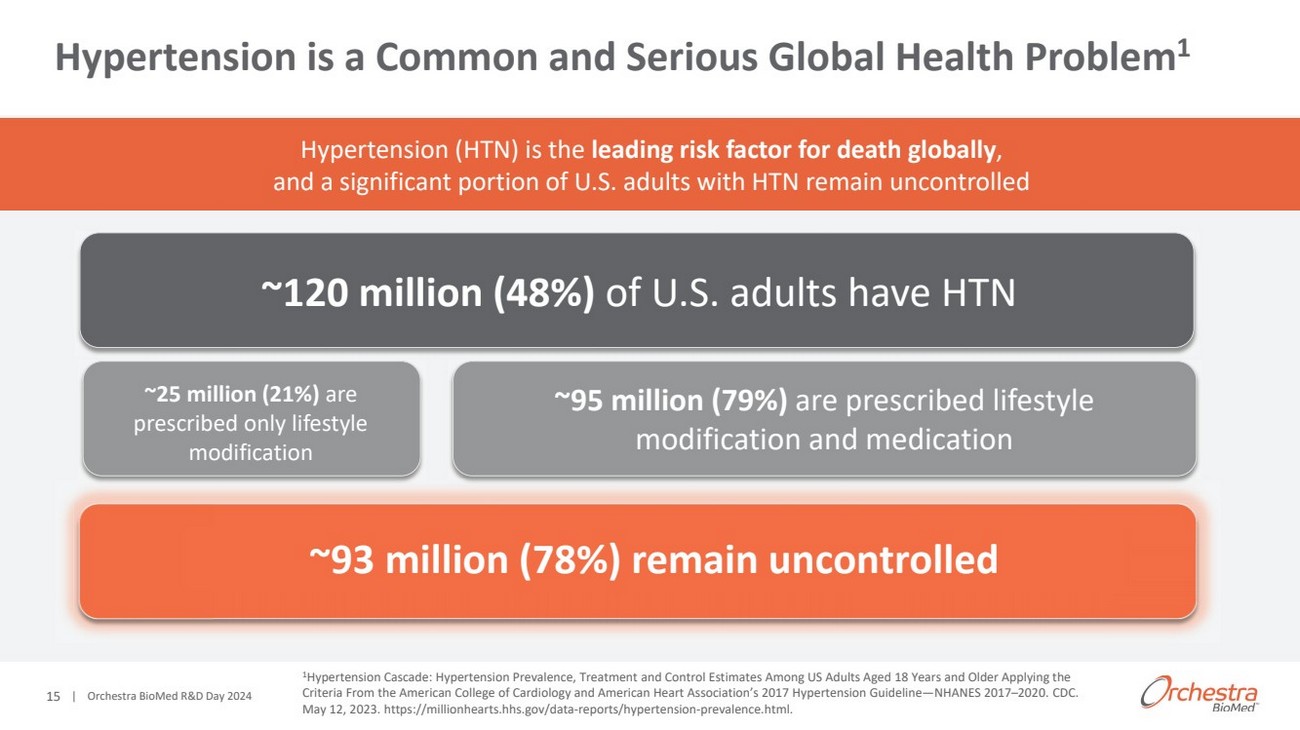
| 1Hypertension Cascade: Hypertension Prevalence, Treatment and Control Estimates Among US Adults Aged 18 Years and Older Applying the Criteria From the American College of Cardiology and American Heart Association’s 2017 Hypertension Guideline—NHANES 2017–2020. CDC. May 12, 2023. https://millionhearts.hhs.gov/data-reports/hypertension-prevalence.html. Hypertension is a Common and Serious Global Health Problem1 Hypertension (HTN) is the leading risk factor for death globally, and a significant portion of U.S. adults with HTN remain uncontrolled ~120 million (48%) of U.S. adults have HTN ~95 million (79%) are prescribed lifestyle modification and medication ~25 million (21%) are prescribed only lifestyle modification ~93 million (78%) remain uncontrolled 15 | Orchestra BioMed R&D Day 2024 |
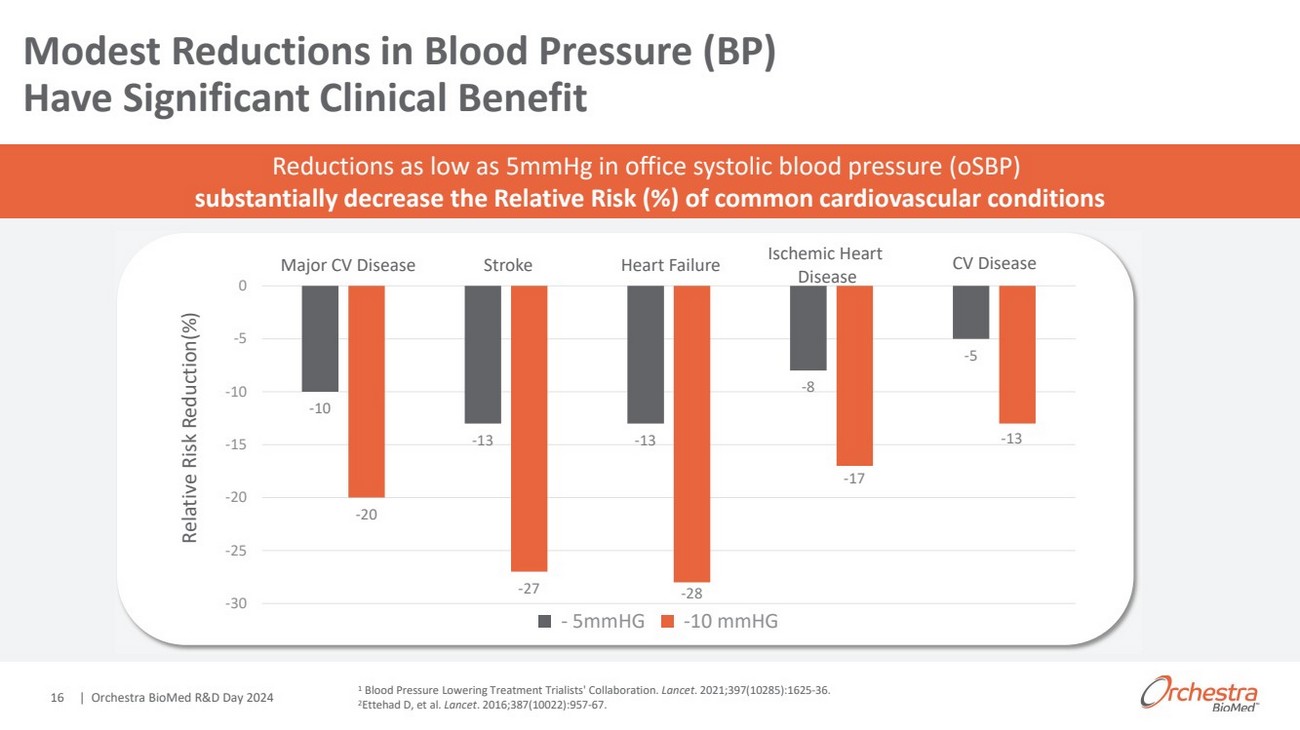
| Modest Reductions in Blood Pressure (BP) Have Significant Clinical Benefit 16 | Orchestra BioMed R&D Day 2024 1 Blood Pressure Lowering Treatment Trialists' Collaboration. Lancet. 2021;397(10285):1625-36. 2Ettehad D, et al. Lancet. 2016;387(10022):957-67. -10 -13 -13 -8 -5 -20 -27 -28 -17 -13 -30 -25 -20 -15 -10 -5 0 - 5mmHG -10 mmHG Major CV Disease Stroke Heart Failure Ischemic Heart Disease CV Disease Relative Risk Reduction(%) Reductions as low as 5mmHg in office systolic blood pressure (oSBP) substantially decrease the Relative Risk (%) of common cardiovascular conditions |
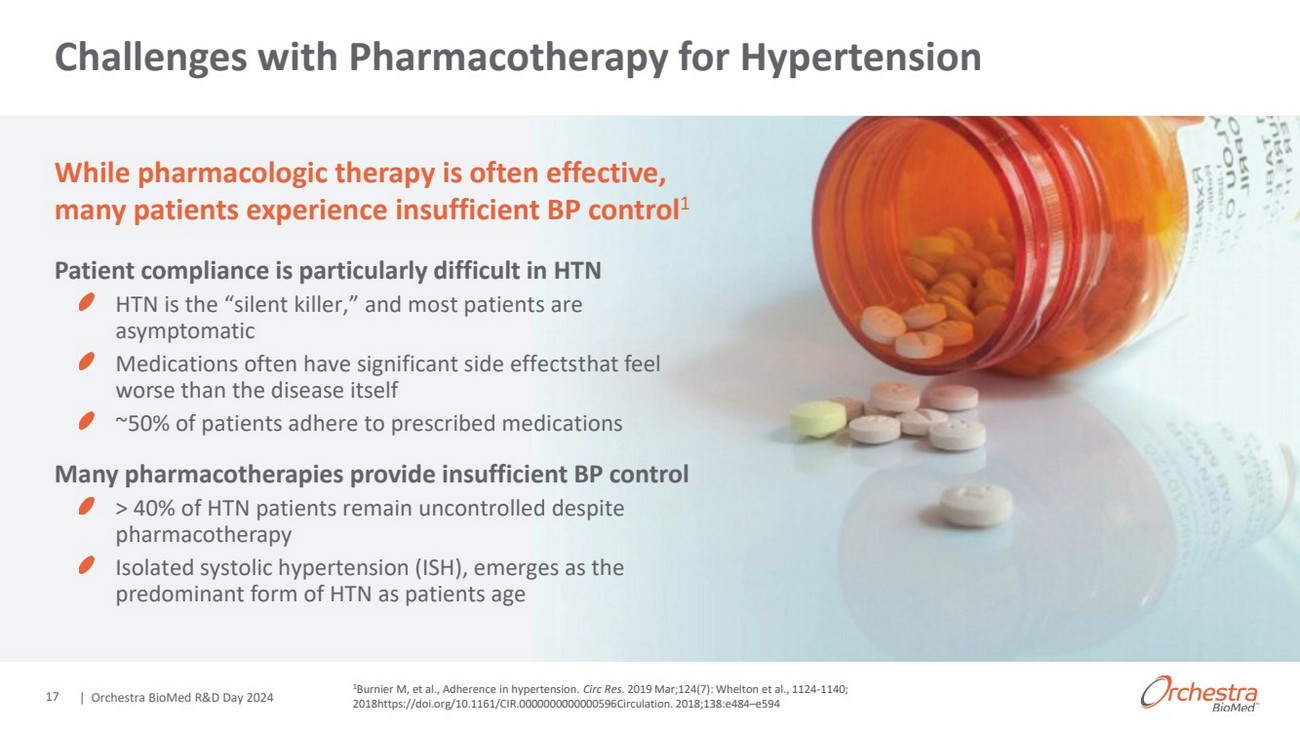
| While pharmacologic therapy is often effective, many patients experience insufficient BP control1 Challenges with Pharmacotherapy for Hypertension Patient compliance is particularly difficult in HTN HTN is the “silent killer,” and most patients are asymptomatic Medications often have significant side effectsthat feel worse than the disease itself ~50% of patients adhere to prescribed medications Many pharmacotherapies provide insufficient BP control > 40% of HTN patients remain uncontrolled despite pharmacotherapy Isolated systolic hypertension (ISH), emerges as the predominant form of HTN as patients age 1Burnier M, et al., Adherence in hypertension. Circ Res. 2019 Mar;124(7): Whelton et al., 1124-1140; 2018https://doi.org/10.1161/CIR.0000000000000596Circulation. 2018;138:e484–e594 17 | Orchestra BioMed R&D Day 2024 |
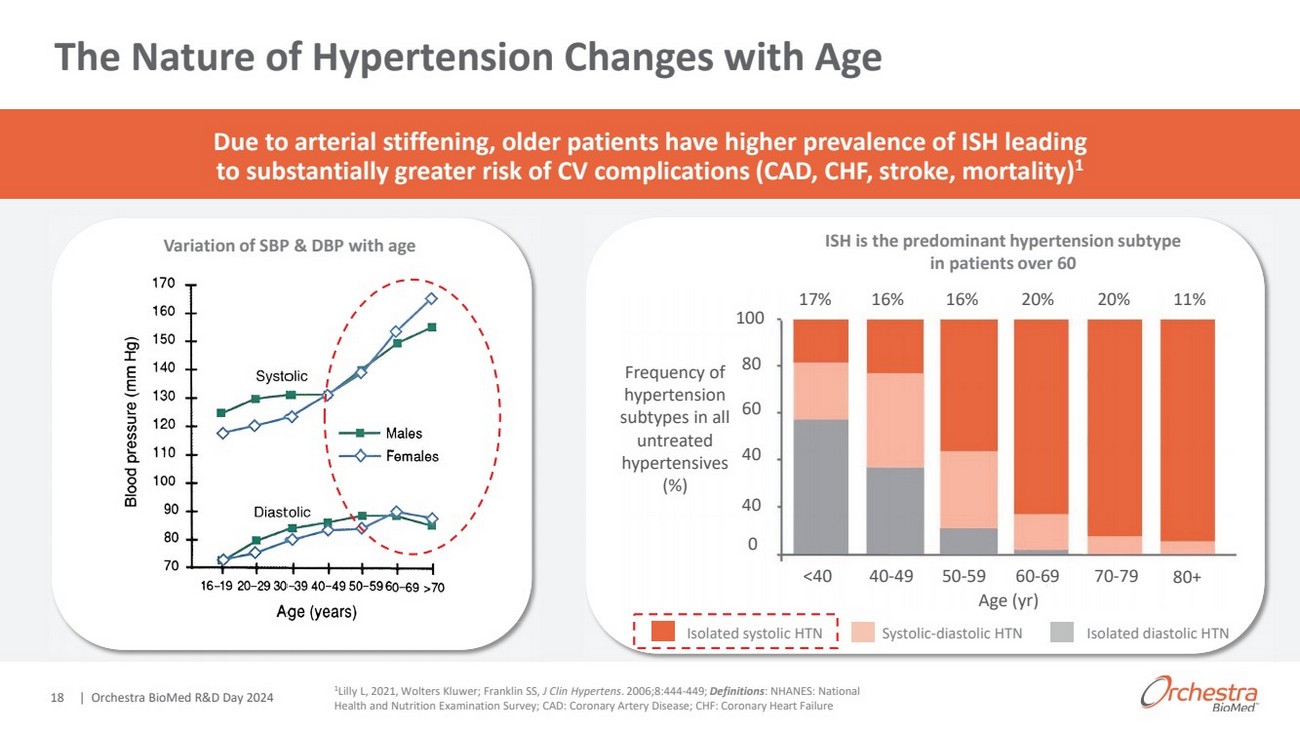
| Due to arterial stiffening, older patients have higher prevalence of ISH leading to substantially greater risk of CV complications (CAD, CHF, stroke, mortality)1 The Nature of Hypertension Changes with Age 1Lilly L, 2021, Wolters Kluwer; Franklin SS, J Clin Hypertens. 2006;8:444-449; Definitions: NHANES: National Health and Nutrition Examination Survey; CAD: Coronary Artery Disease; CHF: Coronary Heart Failure ISH is the predominant hypertension subtype in patients over 60 Variation of SBP & DBP with age 100 80 60 40 40 0 17% 16% 16% 20% 20% 11% <40 40-49 50-59 60-69 70-79 80+ Age (yr) Frequency of hypertension subtypes in all untreated hypertensives (%) Isolated systolic HTN Systolic-diastolic HTN Isolated diastolic HTN 18 | Orchestra BioMed R&D Day 2024 |
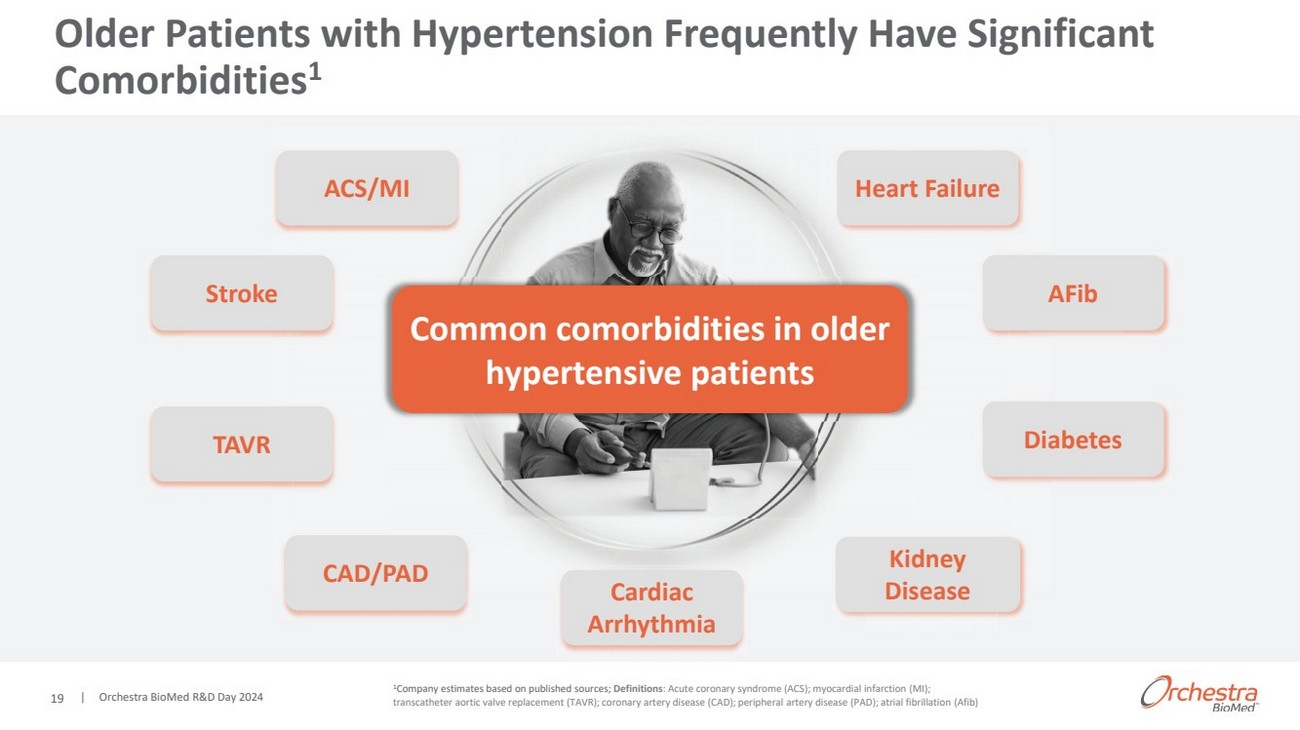
| Older Patients with Hypertension Frequently Have Significant Comorbidities1 19 | Orchestra BioMed R&D Day 2024 Common comorbidities in older hypertensive patients Stroke TAVR CAD/PAD Heart Failure AFib Diabetes Kidney Disease ACS/MI 1Company estimates based on published sources; Definitions: Acute coronary syndrome (ACS); myocardial infarction (MI); transcatheter aortic valve replacement (TAVR); coronary artery disease (CAD); peripheral artery disease (PAD); atrial fibrillation (Afib) Cardiac Arrhythmia |
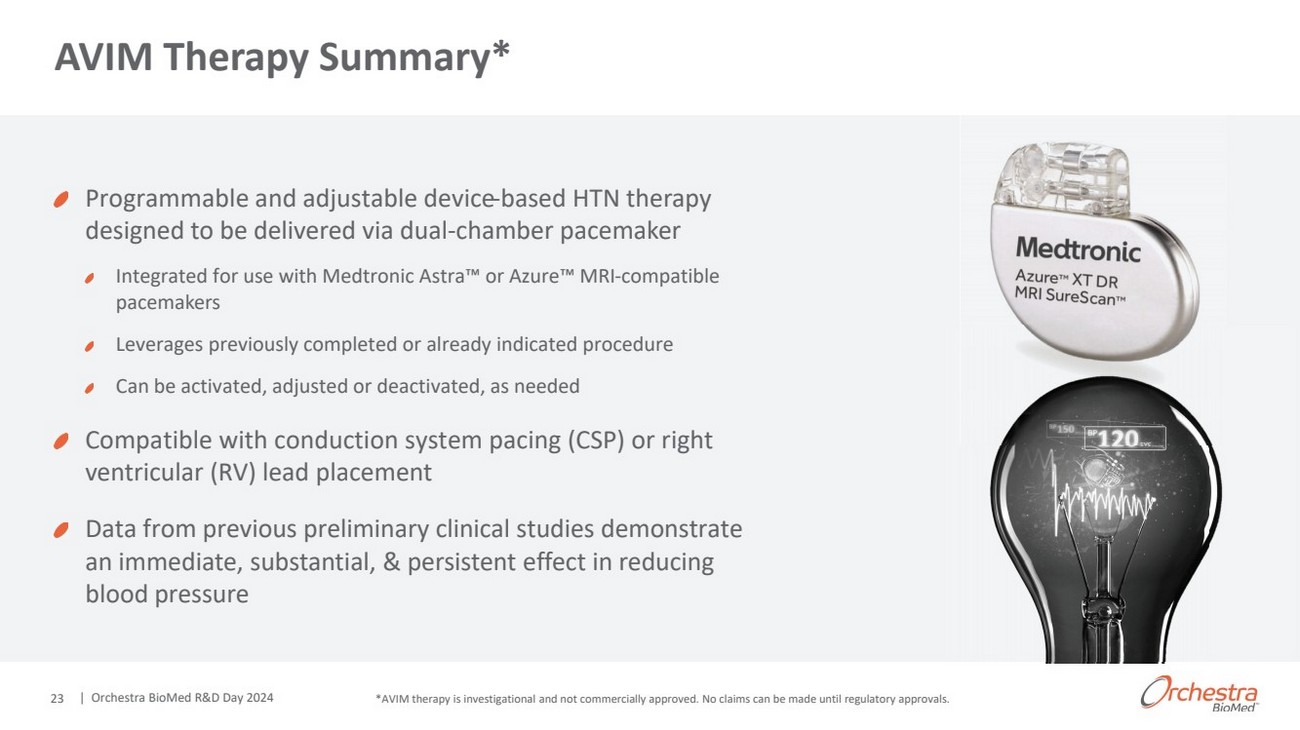
| Hypertensive Patients with Pacemakers: An Older, Higher Risk Population in Need of Better Treatment Options1 20 70% of patients with pacemakers also have HTN 73 years average age Frequent additional comorbidities: atherosclerosis, hyperlipidemia, diabetes mellitus, and chronic kidney disease More likely to have ISH – a type of HTN for which there are limited therapeutic options Over 750K new HTN + PPM patients annually worldwide | Orchestra BioMed R&D Day 2024 HTN + PPM 1Company estimates based on published sources; Definition: Permanent pacemaker (PPM) |
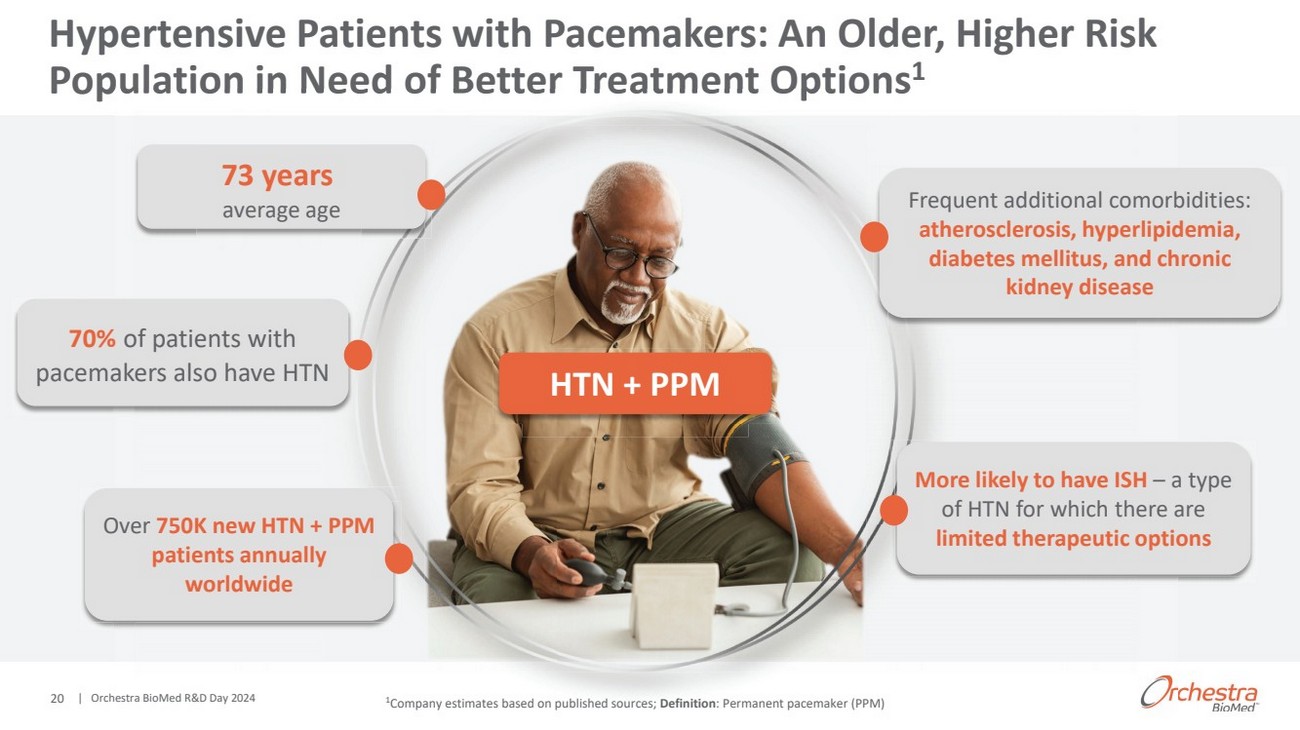
| Compelling Opportunity to Evaluate AVIM Therapy Evaluating a novel investigational hypertension therapy that takes advantage of existing pacemaker Same device implant and treating physicians No additional daily compliance requirements for patients BACKBEAT IDE Pivotal study: currently enrolling Pilot study data show AVIM therapy drives robust reduction in 24-hr aSBP in high-risk patient population with high rates of ISH, HFpEF, and other comorbidities 21 | Orchestra BioMed R&D Day 2024 Definitions: Heart failure with preserved ejection fraction (HFpEF) |
| 22 Evidence in Support of AVIM Therapy Mechanism of Action Vivek Reddy, M.D. Director, Cardiac Arrhythmia Services at Mount Sinai Hospital Director, Electrophysiology at Mount Sinai Health System Professor of Medicine, The Icahn School of Medicine at Mount Sinai BACKBEAT Study Clinical Steering Committee Member | Orchestra BioMed R&D Day 2024 |
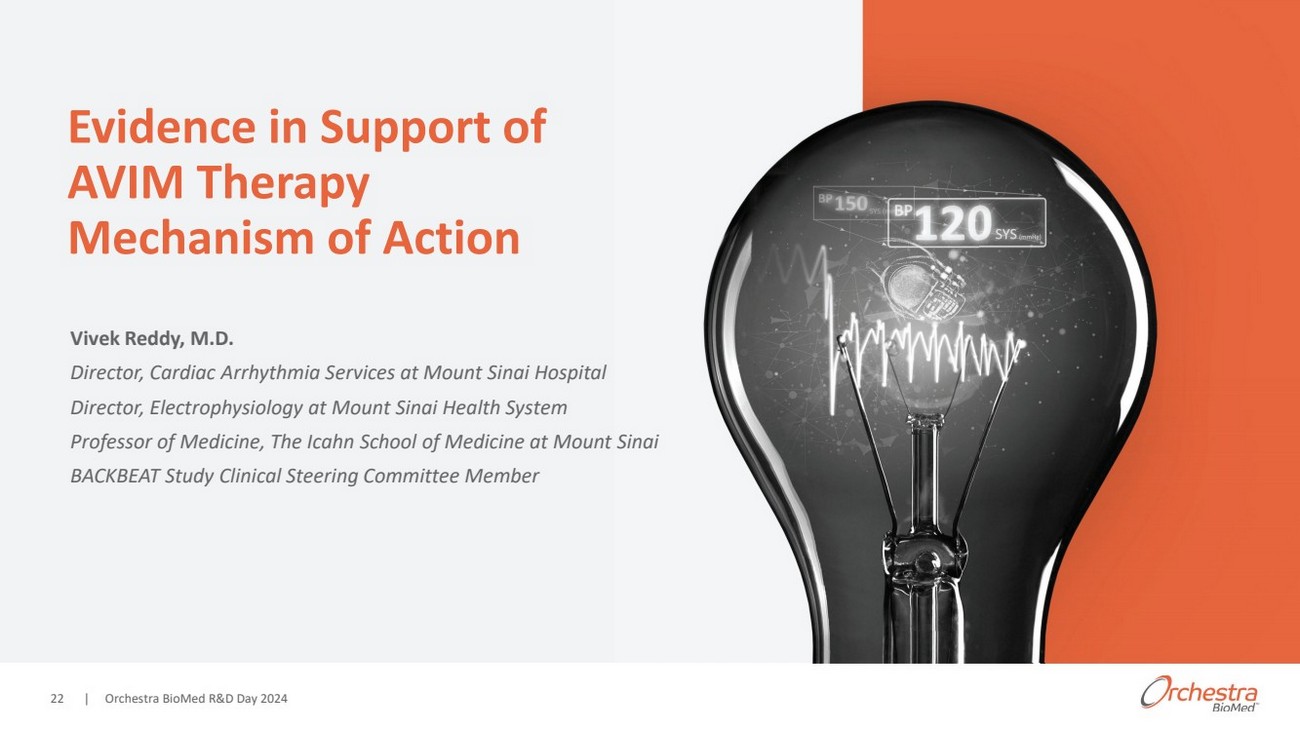
| Programmable and adjustable device-based HTN therapy designed to be delivered via dual-chamber pacemaker Integrated for use with Medtronic Astra™ or Azure™ MRI-compatible pacemakers Leverages previously completed or already indicated procedure Can be activated, adjusted or deactivated, as needed Compatible with conduction system pacing (CSP) or right ventricular (RV) lead placement Data from previous preliminary clinical studies demonstrate an immediate, substantial, & persistent effect in reducing blood pressure AVIM Therapy Summary* 23 | Orchestra BioMed R&D Day 2024 *AVIM therapy is investigational and not commercially approved. No claims can be made until regulatory approvals. |
| Novel AVIM Therapy Mechanism of Action Designed to Substantially and Persistently Reduce Blood Pressure 24 | Orchestra BioMed R&D Day 2024 AVIM therapy uses a dual-chamber pacemaker to deliver programmed sequences of short AV intervals interspersed with longer AV intervals designed to reduce blood pressure by: Reducing cardiac preload Modulating autonomic nervous system (ANS) response Reducing afterload Designed to utilize well characterized physiologic mechanisms, including the Frank-Starling law, to improve circulatory hemodynamics: Reduced intra-cardiac volumes and pressures Improved cardiovascular efficiency No adverse impact on contractility Compatible with conduction system pacing (CSP) lead placements or traditional pacing lead locations Designed to Substantially Lower Blood Pressure (BP) & Maintain Reduction 1. Reducing Preload Lowers BP 2. Modulating ANS Response & Reducing Afterload Maintains Reduction in BP SBP (mmHg) Time (s) 155 150 145 140 135 130 |
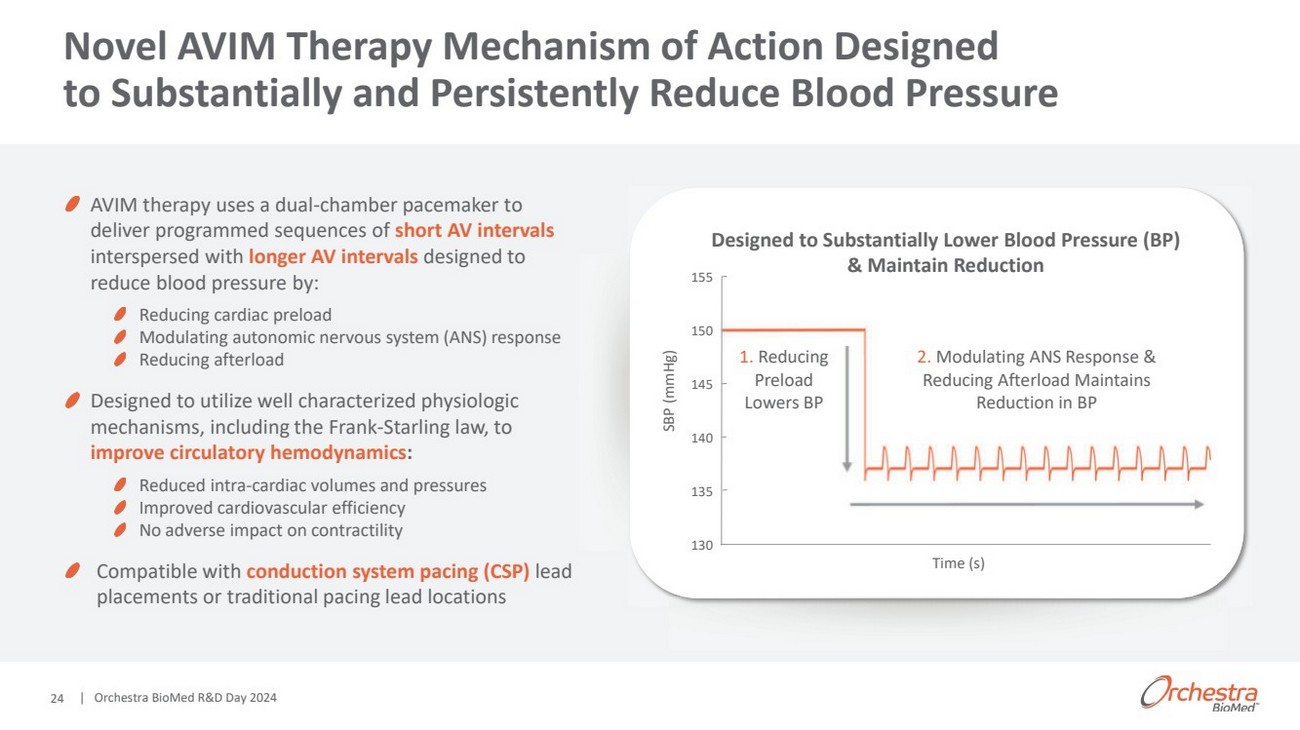
| Emerging Role of Conduction System Pacing in Cardiac Pacing Therapy Cardiac rhythm market rapidly adopting CSP via left bundle branch area pacing (LBBAP) LBBAP is a pacing approach that taps into the heart's natural electrical system, helping ensure pacing closely mimics physiologic contractions, allowing the ventricles to work in coordination Clinical data demonstrate AVIM compatibility with CSP Traditional RV/Apex Left Bundle Branch Area 25 | Orchestra BioMed R&D Day 2024 |
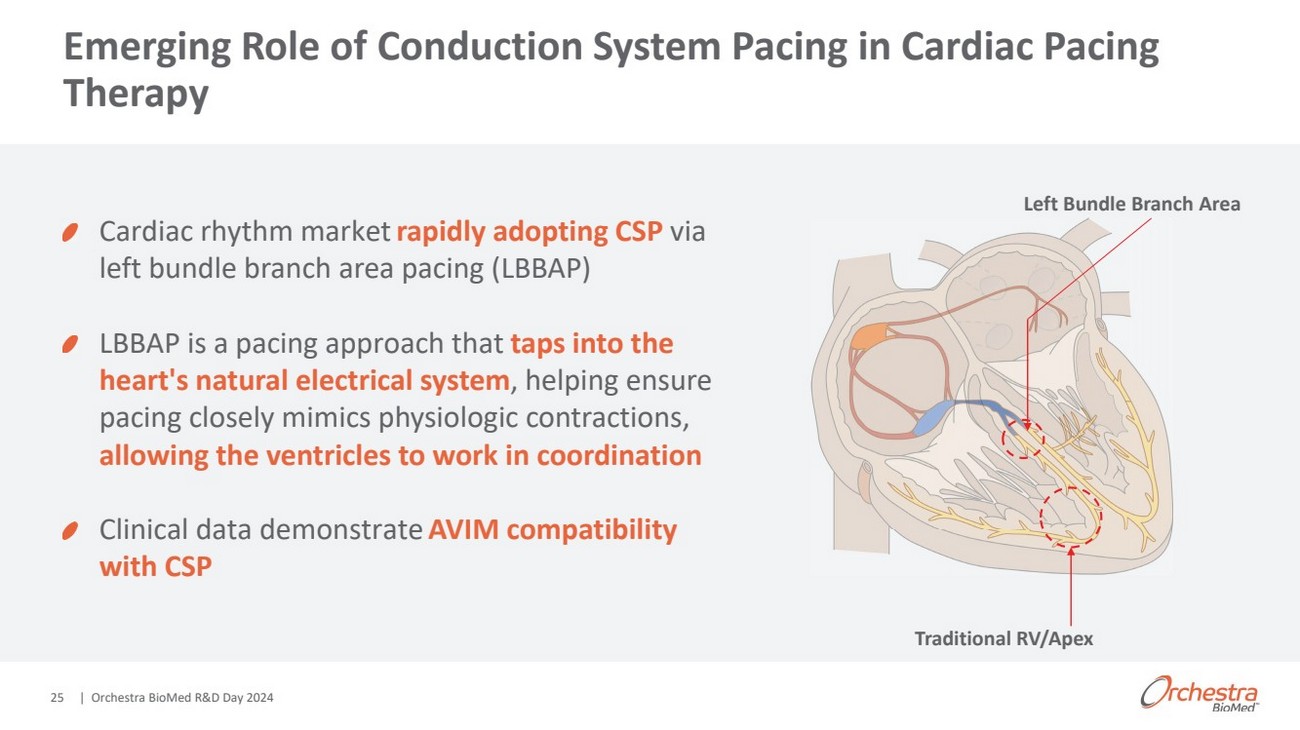
| Invasive Pressure Volume (PV) Loop Study Shows Favorable Acute Hemodynamics from AVIM Therapy1 Data on file with Orchestra BioMed. 1Kuck, Hemodynamics Effects of AVIM Therapy, THT’24. Definitions: EDV (end-diastolic volume), ESV (end-systolic volume), LVP (left ventricular pressure). 26 Decreases systolic blood pressure ;љWͿ Decreases intra-cardiac volume & pressure ;љs͕љs͕ΘљSBP) Decreases total peripheral resistance ;љdWZͿ • N = 16 subjects indicated for a pacemaker with uncontrolled hypertension despite medical therapy • Paired data (baseline vs. AV Sequential pacing or baseline vs. AVIM) reported | Orchestra BioMed R&D Day 2024 AVIM CSP Baseline LV Pressure (mmHg) LV Volume (ml) AVIM – CSP Lead Location sљ Wљ sљ dWZљ |
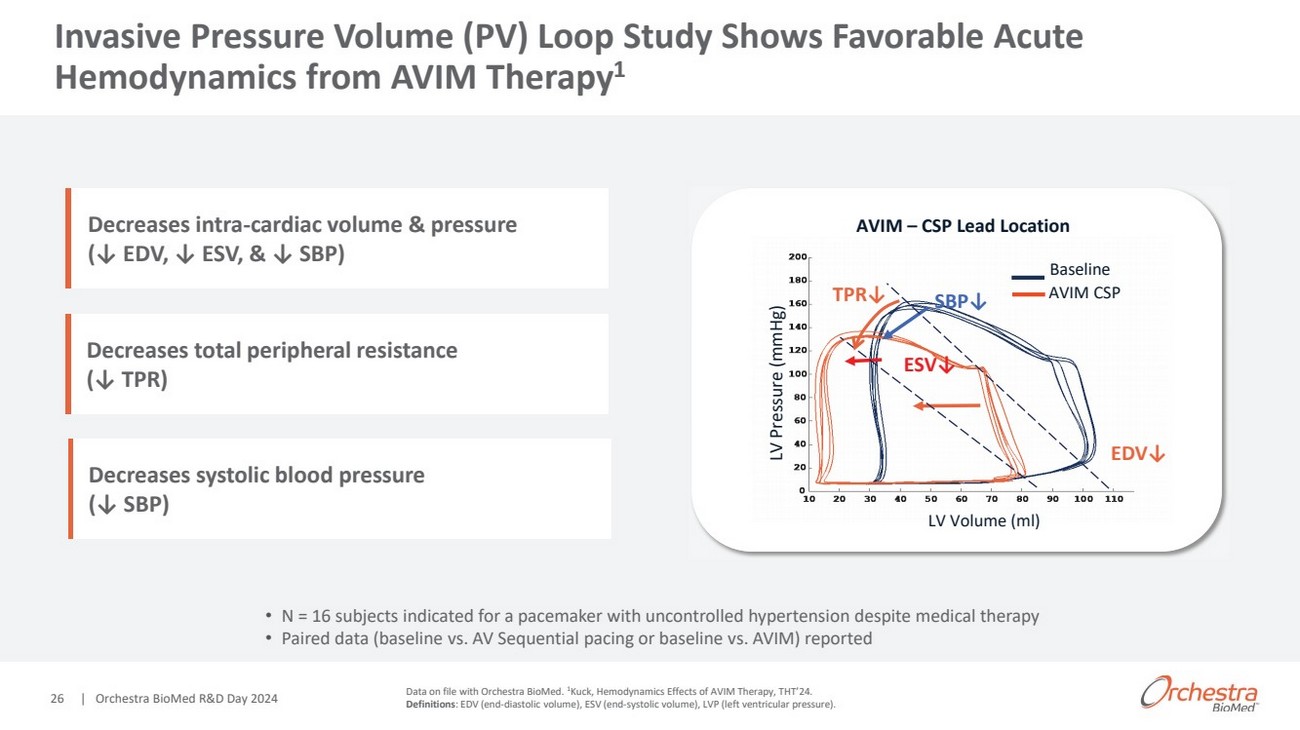
| AVIM Therapy Reduces Systolic Blood Pressure1 1 27 Kuck, Hemodynamics Effects of AVIM Therapy, THT’24. Significant reduction in SBP with AVIM therapy and no significant difference between right ventricular (RV) and conduction system pacing (CSP) lead placement -25.0 -20.0 -15.0 -10.0 -5.0 0.0 AV Pacing AVIM RV AVIM CSP ѐW;ŵŵ,ŐͿ -17.1 ± 2.5 (-12%) -19.2 ± 3.2 (-13%) -1.6 ± 3 (-2%) * * *P < 0.05 (compared to baseline); no significant difference between AVIM RV & AVIM CSP N=16 | Orchestra BioMed R&D Day 2024 Significant Reduction in SBP |
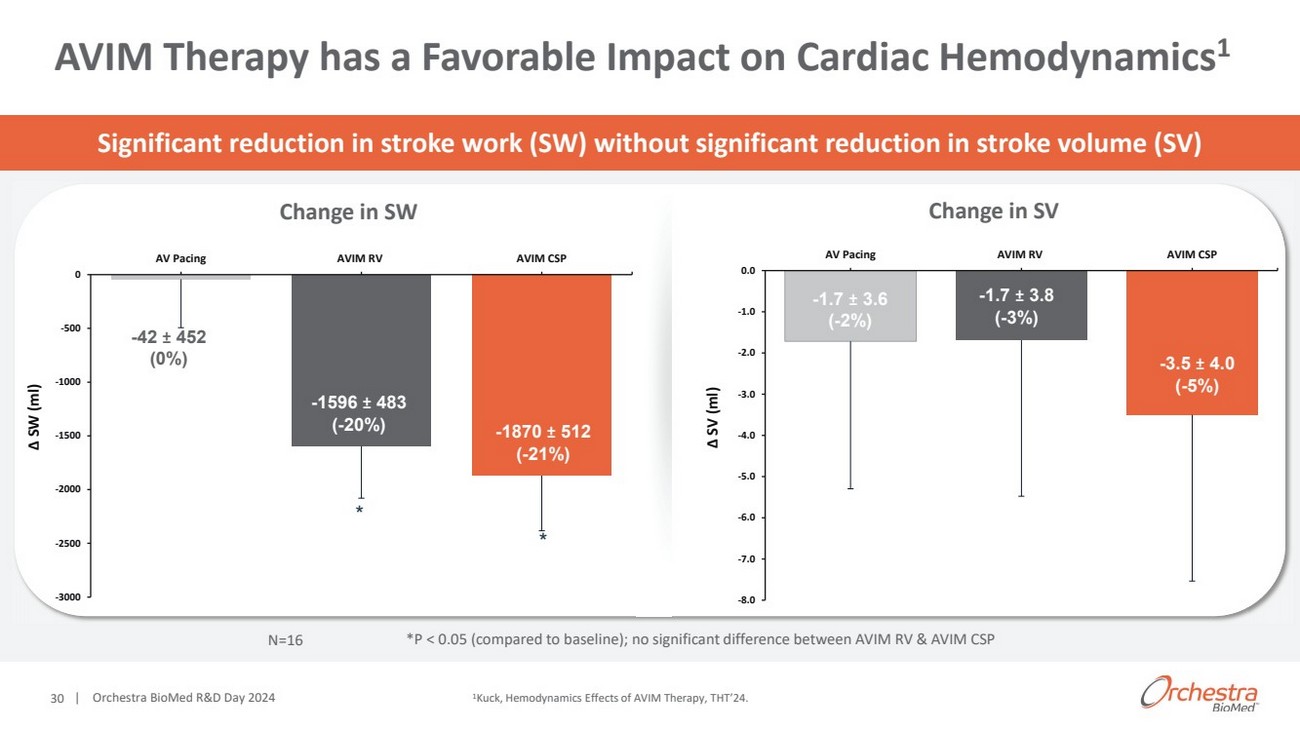
| AVIM Therapy has a Favorable Impact on Cardiac Hemodynamics1 1 28 Kuck, Hemodynamics Effects of AVIM Therapy, THT’24. Significant reductions in EDV, PED & ESV N=16 *P < 0.05 (compared to baseline); no significant difference between AVIM RV & AVIM CSP -7.0 -6.0 -5.0 -4.0 -3.0 -2.0 -1.0 0.0 1.0 2.0 AV Pacing AVIM RV AVIM CSP ѐW;ŵŵ,ŐͿ -20.0 -15.0 -10.0 -5.0 0.0 5.0 10.0 AV Pacing AVIM RV AVIM CSP ѐs;ŵůͿ -25.0 -20.0 -15.0 -10.0 -5.0 0.0 AV Pacing AVIM RV AVIM CSP ѐs;ŵůͿ -12.6 ± 14 (-11%) -18.6 ± 16 (-16%) -1.4 ± 1 (-1%) * * -11.0 ± 11 (-15%) -14.1 ± 15 (-16%) 1.8 ± 11 (4%) * * -2.3 ± 1.0 (-16%) -3.6 ± 2.3 (-23%) 0.3 ± 0.6 (3%) * Change in End-Diastolic Volume (EDV) | Orchestra BioMed R&D Day 2024 Change in End-Diastolic Pressure (PED) Change in End-Systolic Volume (ESV) |
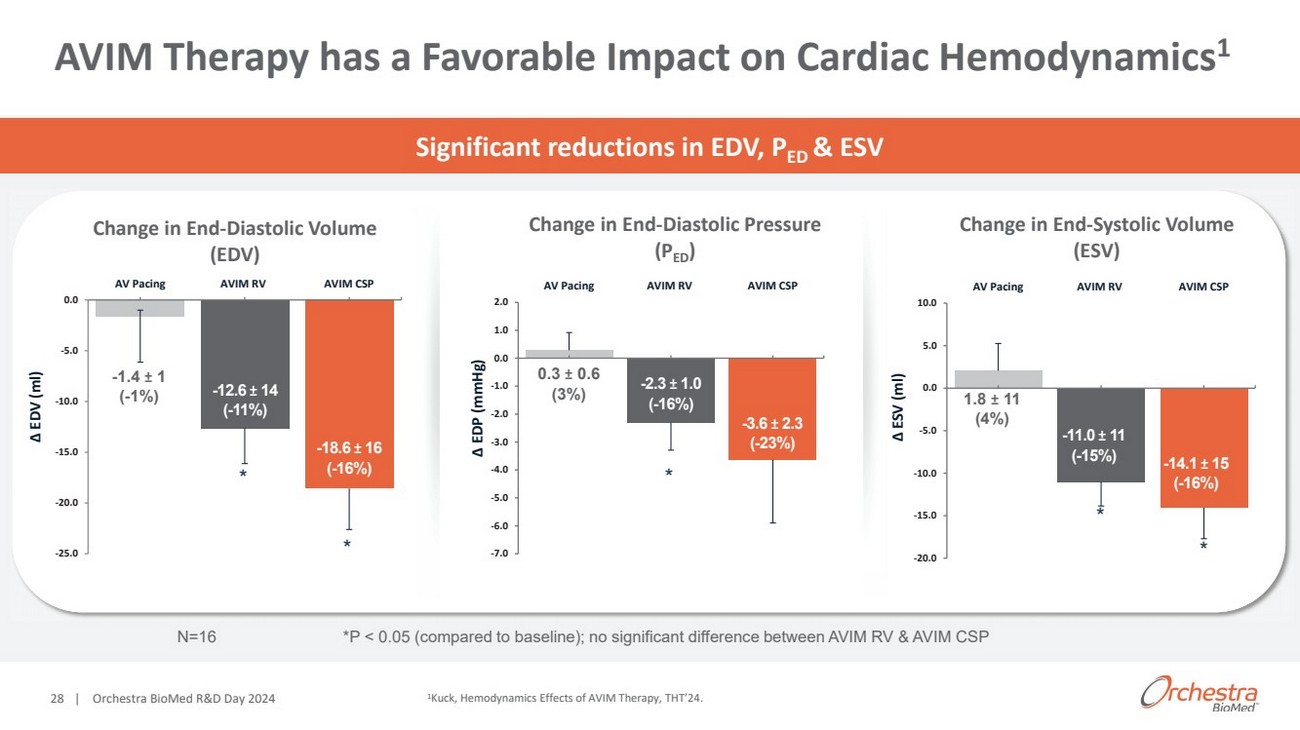
| AVIM Therapy has a Favorable Impact on Cardiac Hemodynamics1 1Kuck, Hemodynamics Effects of AVIM Therapy, THT’24; Definitions: Ea (arterial elastance) (Ees (end-systolic elastance, which is a measure of contractility) 29 Reduction in total peripheral resistance (Ea) & no change in contractility (Ees) N=16 *P < 0.05 (compared to baseline); no significant difference between AVIM RV & AVIM CSP -0.50 -0.40 -0.30 -0.20 -0.10 0.00 0.10 0.20 AV Pacing AVIM RV AVIM CSP ѐĂ;ŵŵ,ŐͬŵůͿ -0.150 -0.100 -0.050 0.000 0.050 0.100 0.150 AV Pacing AVIM RV AVIM CSP ѐĞƐ;ŵŵ,ŐͬŵůͿ 0.02 ± 0.05 (2%) -0.02 ± 0.1 (-1%) 0.02 ± 0.07 (1%) * -0.31 ± 0.1 (-14%) -0.04 ± 0.1 (2%) -0.23 ± 0.1 (-11%) * | Orchestra BioMed R&D Day 2024 Change in Effective Arterial Elastance (Ea) Change in Contractility (Ees) |
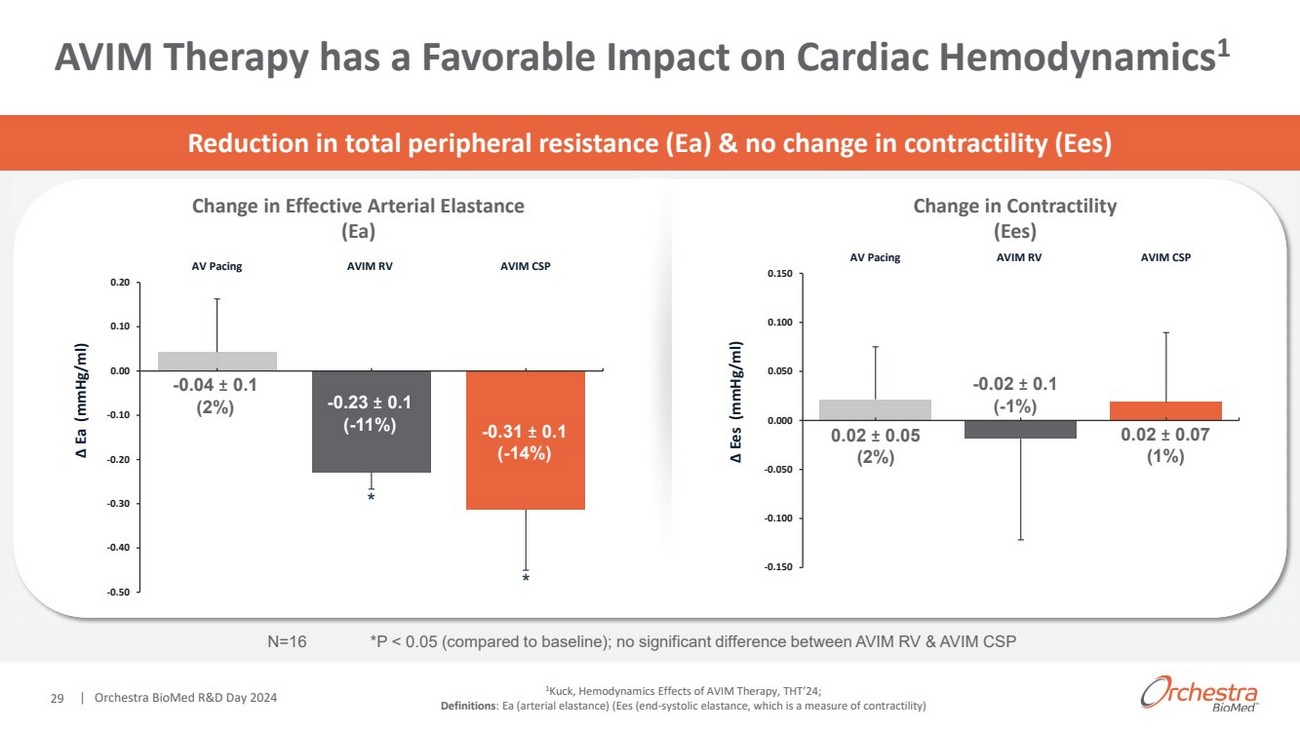
| AVIM Therapy has a Favorable Impact on Cardiac Hemodynamics1 1 30 Kuck, Hemodynamics Effects of AVIM Therapy, THT’24. Significant reduction in stroke work (SW) without significant reduction in stroke volume (SV) N=16 *P < 0.05 (compared to baseline); no significant difference between AVIM RV & AVIM CSP -3000 -2500 -2000 -1500 -1000 -500 0 AV Pacing AVIM RV AVIM CSP ѐt;ŵůͿ -8.0 -7.0 -6.0 -5.0 -4.0 -3.0 -2.0 -1.0 0.0 AV Pacing AVIM RV AVIM CSP ѐs;ŵůͿ -1870 ± 512 (-21%) -1596 ± 483 (-20%) -1.7 ± 3.8 (-3%) -3.5 ± 4.0 (-5%) -1.7 ± 3.6 (-2%) * -42 ± 452 (0%) * | Orchestra BioMed R&D Day 2024 Change in SW Change in SV |
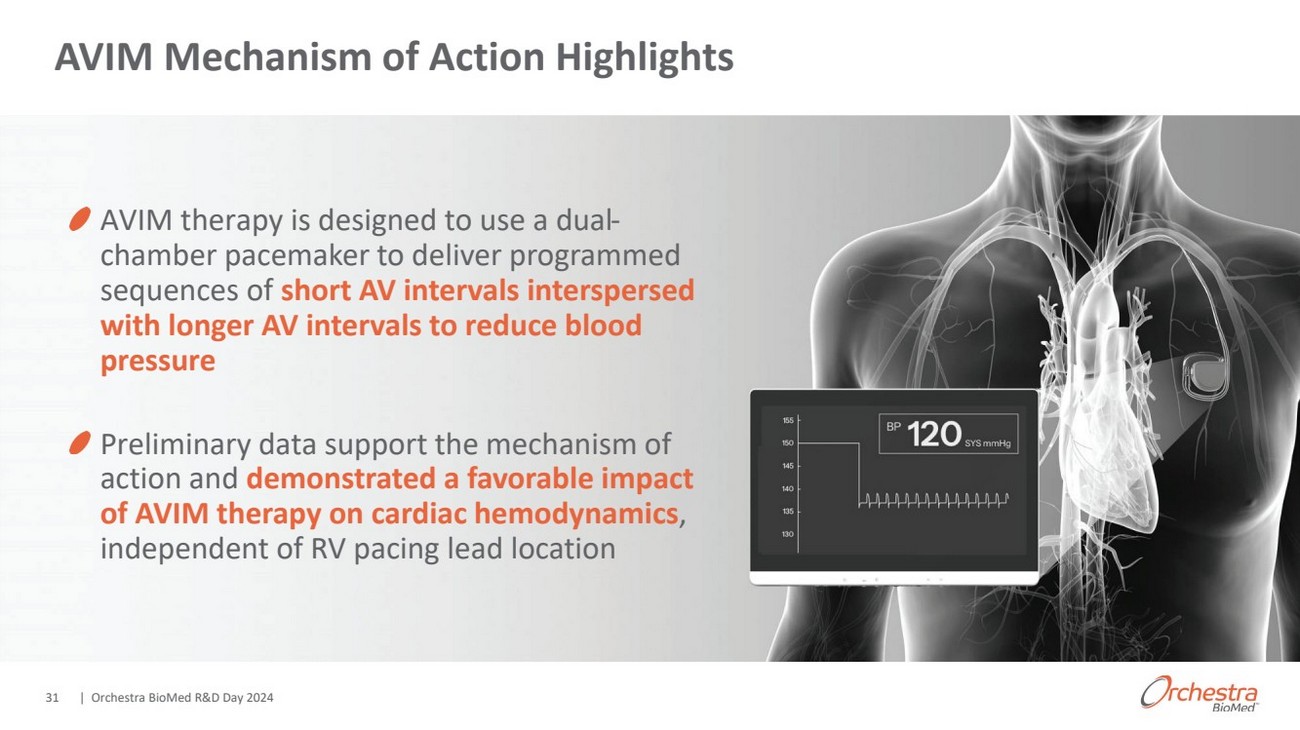
| AVIM therapy is designed to use a dual-chamber pacemaker to deliver programmed sequences of short AV intervals interspersed with longer AV intervals to reduce blood pressure Preliminary data support the mechanism of action and demonstrated a favorable impact of AVIM therapy on cardiac hemodynamics, independent of RV pacing lead location 31 | Orchestra BioMed R&D Day 2024 AVIM Mechanism of Action Highlights |
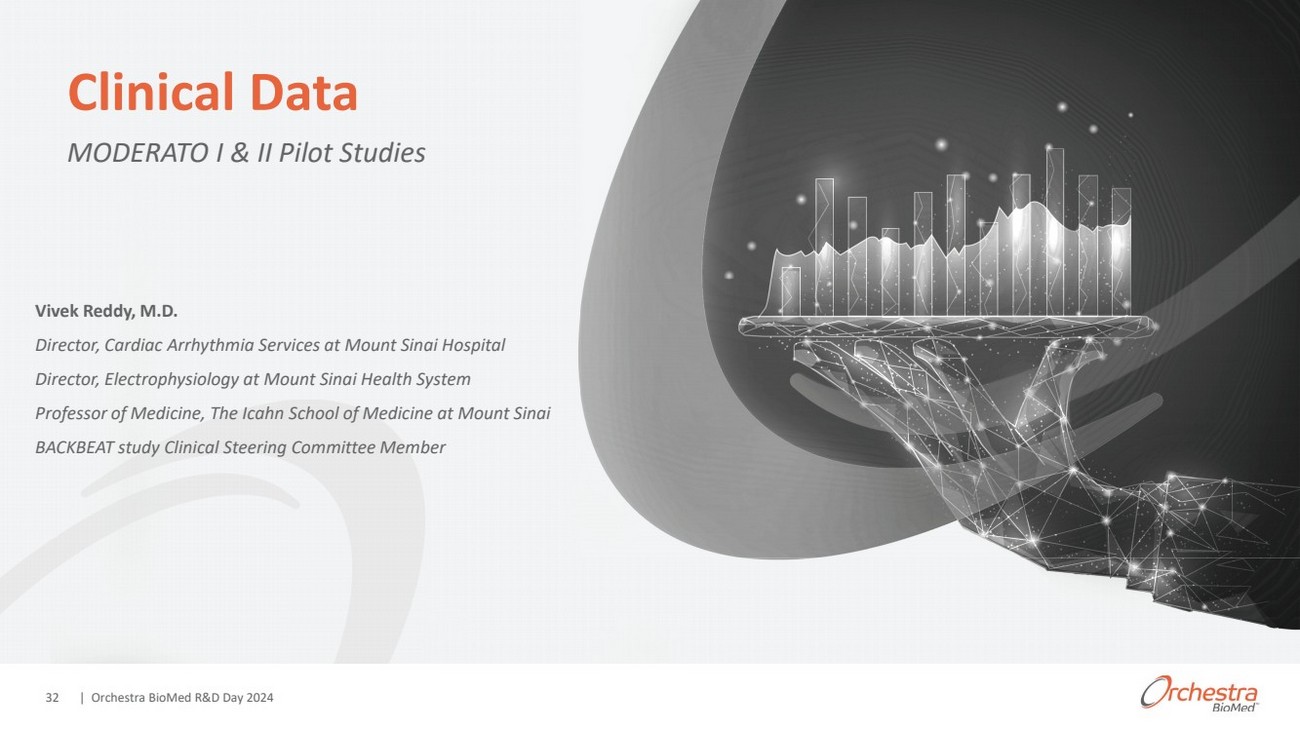
| Clinical Data Vivek Reddy, M.D. Director, Cardiac Arrhythmia Services at Mount Sinai Hospital Director, Electrophysiology at Mount Sinai Health System Professor of Medicine, The Icahn School of Medicine at Mount Sinai BACKBEAT study Clinical Steering Committee Member MODERATO I & II Pilot Studies 32 | Orchestra BioMed R&D Day 2024 |
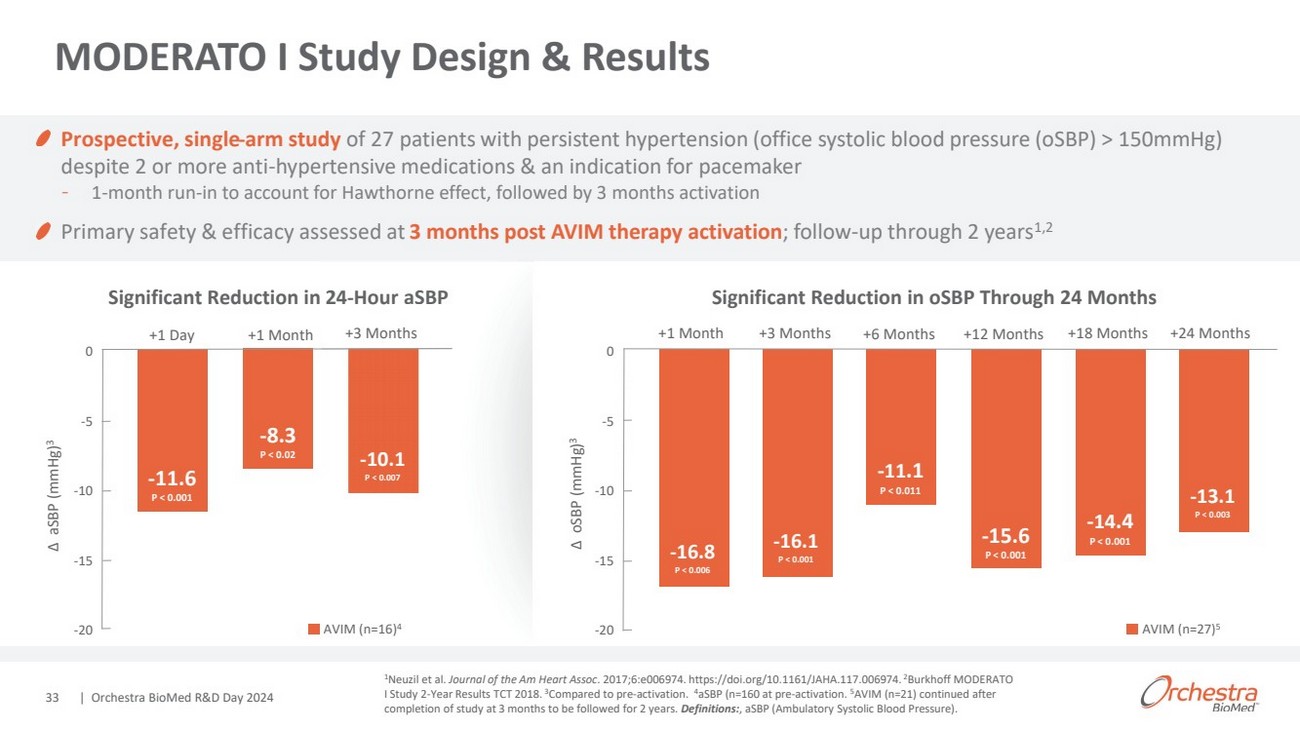
| Prospective, single-arm study of 27 patients with persistent hypertension (office systolic blood pressure (oSBP) > 150mmHg) despite 2 or more anti-hypertensive medications & an indication for pacemaker 1-month run-in to account for Hawthorne effect, followed by 3 months activation Primary safety & efficacy assessed at 3 months post AVIM therapy activation; follow-up through 2 years1,2 Significant Reduction in 24-Hour aSBP Significant Reduction in oSBP Through 24 Months ȴ aSBP (mmHg)3 +1 Day +1 Month +3 Months 0 -5 -10 -15 -20 AVIM (n=16)4 -10.1 P < 0.007 -8.3 P < 0.02 -11.6 P < 0.001 ȴ oSBP (mmHg)3 +1 Month +3 Months +24 Months 0 -5 -10 -15 -20 AVIM (n=27)5 -11.1 P < 0.011 +6 Months +12 Months +18 Months -16.1 P < 0.001 -16.8 P < 0.006 -15.6 P < 0.001 -14.4 P < 0.001 -13.1 P < 0.003 24-Hour aSBP +3 Months AVIM (n=16)4 -10.1 P < 0.007 1Neuzil et al. Journal of the Am Heart Assoc. 2017;6:e006974. https://doi.org/10.1161/JAHA.117.006974. 2Burkhoff MODERATO I Study 2-Year Results TCT 2018. 3Compared to pre-activation. 4aSBP (n=160 at pre-activation. 5AVIM (n=21) continued after completion of study at 3 months to be followed for 2 years. Definitions:, aSBP (Ambulatory Systolic Blood Pressure). 33 | Orchestra BioMed R&D Day 2024 MODERATO I Study Design & Results |
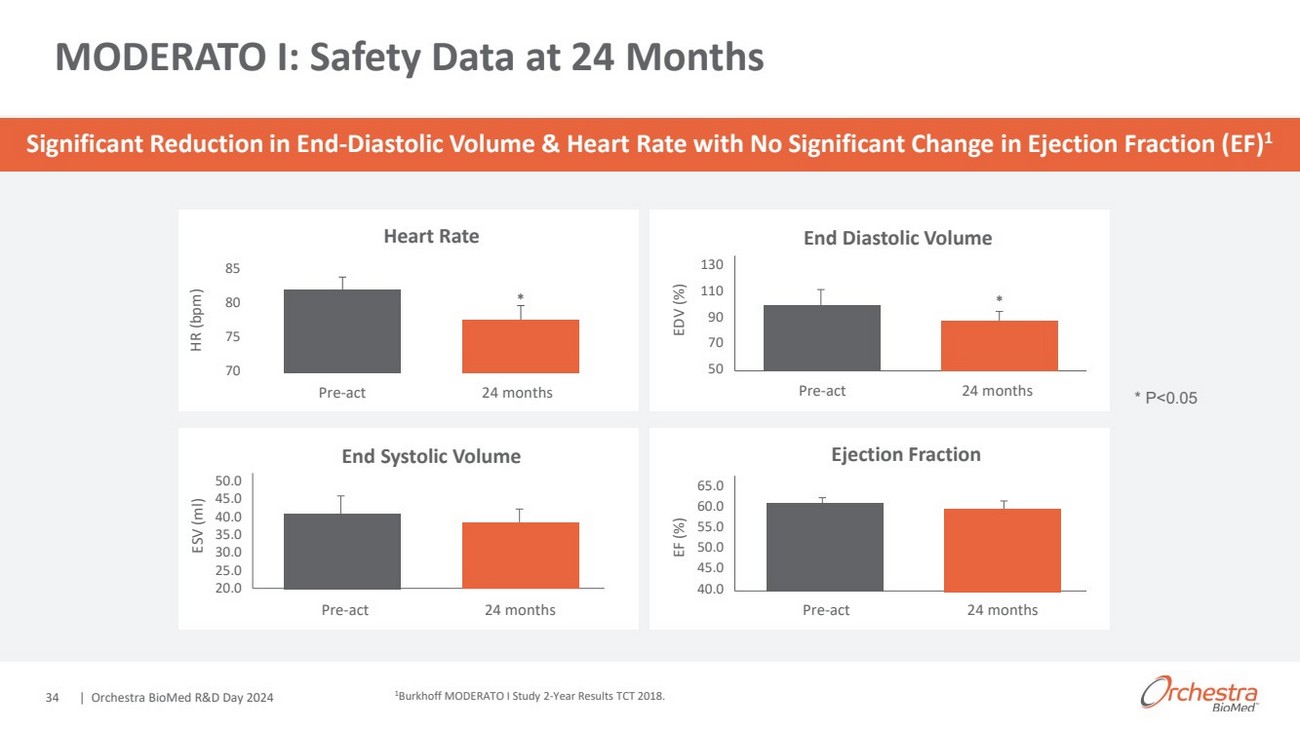
| MODERATO I: Safety Data at 24 Months 85 80 75 70 HR (bpm) Pre-act 24 months Heart Rate * Ejection Fraction EF (%) Pre-act 24 months 65.0 60.0 55.0 50.0 45.0 40.0 * P<0.05 Pre-act 24 months EDV (%) 130 110 90 70 50 End Diastolic Volume * Pre-act 24 months ESV (ml) 50.0 45.0 40.0 35.0 30.0 25.0 20.0 End Systolic Volume Significant Reduction in End-Diastolic Volume & Heart Rate with No Significant Change in Ejection Fraction (EF)1 1 34 | Orchestra BioMed R&D Day 2024 Burkhoff MODERATO I Study 2-Year Results TCT 2018. |
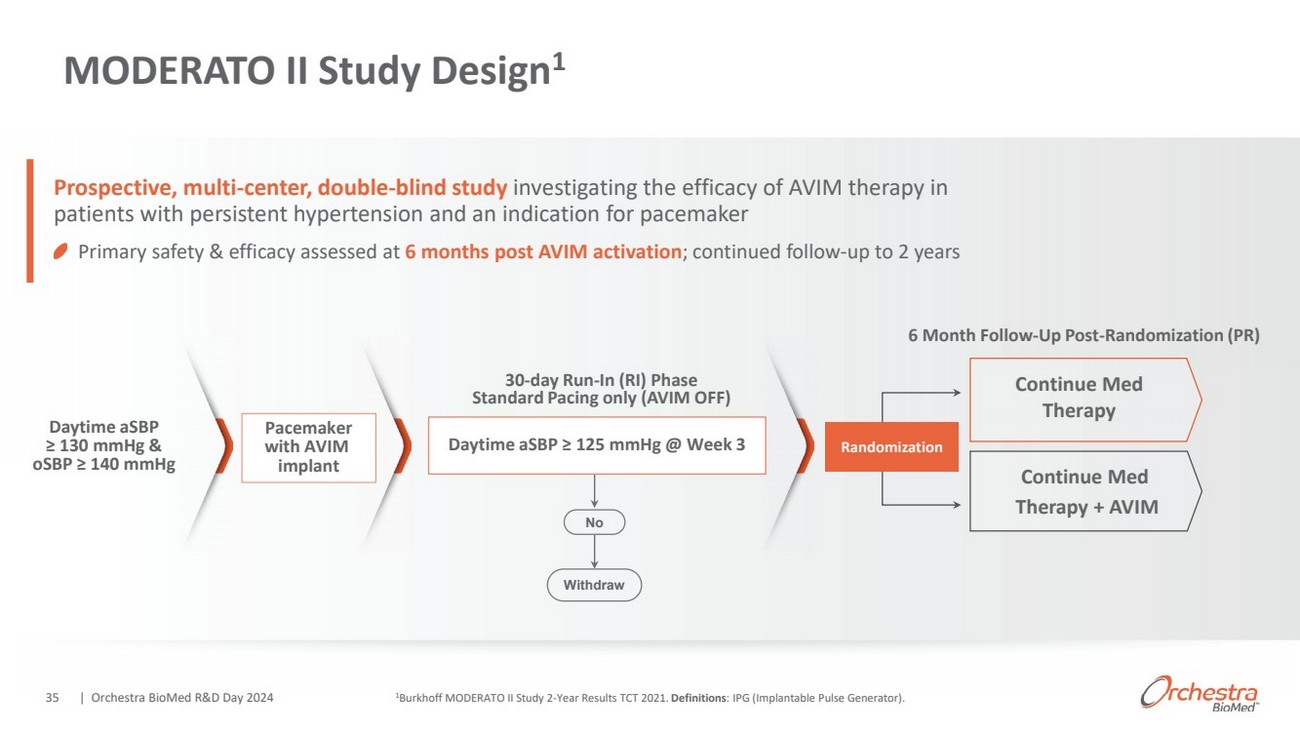
| Daytime aSBP шϭϯϬŵŵ,ŐΘ oSBP шϭϰϬŵŵ,Ő Continue Med Therapy Continue Med Therapy + AVIM Withdraw No Pacemaker with AVIM implant ĂLJƚŝŵĞĂWшϭϮϱŵŵ,ŐΛtĞĞŬϯ 30-day Run-In (RI) Phase Standard Pacing only (AVIM OFF) 6 Month Follow-Up Post-Randomization (PR) Randomization Prospective, multi-center, double-blind study investigating the efficacy of AVIM therapy in patients with persistent hypertension and an indication for pacemaker Primary safety & efficacy assessed at 6 months post AVIM activation; continued follow-up to 2 years 1 35 | Orchestra BioMed R&D Day 2024 Burkhoff MODERATO II Study 2-Year Results TCT 2021. Definitions: IPG (Implantable Pulse Generator). MODERATO II Study Design1 |
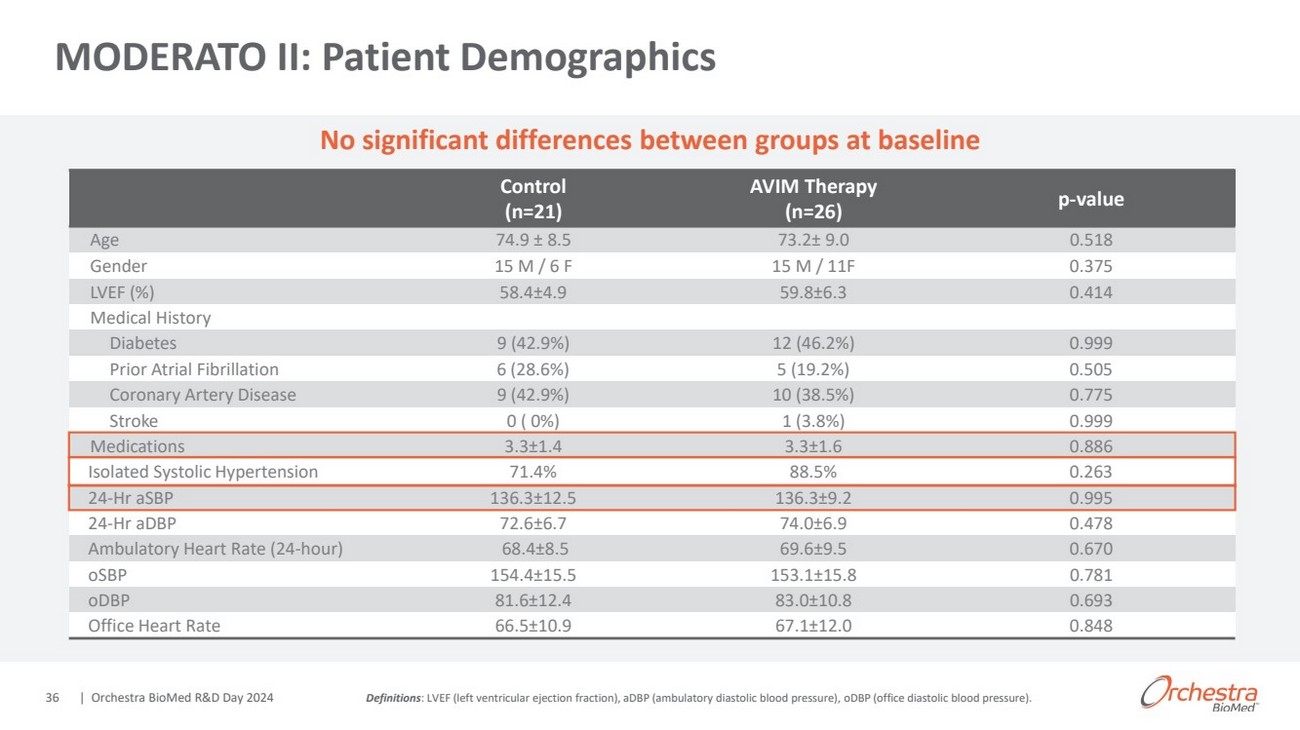
| No significant differences between groups at baseline Control (n=21) AVIM Therapy (n=26) p-value Age 74.9 ± 8.5 73.2± 9.0 0.518 Gender 15 M / 6 F 15 M / 11F 0.375 LVEF (%) 58.4±4.9 59.8±6.3 0.414 Medical History Diabetes 9 (42.9%) 12 (46.2%) 0.999 Prior Atrial Fibrillation 6 (28.6%) 5 (19.2%) 0.505 Coronary Artery Disease 9 (42.9%) 10 (38.5%) 0.775 Stroke 0 ( 0%) 1 (3.8%) 0.999 Medications 3.3±1.4 3.3±1.6 0.886 Isolated Systolic Hypertension 71.4% 88.5% 0.263 24-Hr aSBP 136.3±12.5 136.3±9.2 0.995 24-Hr aDBP 72.6±6.7 74.0±6.9 0.478 Ambulatory Heart Rate (24-hour) 68.4±8.5 69.6±9.5 0.670 oSBP 154.4±15.5 153.1±15.8 0.781 oDBP 81.6±12.4 83.0±10.8 0.693 Office Heart Rate 66.5±10.9 67.1±12.0 0.848 36 | Orchestra BioMed R&D Day 2024 MODERATO II: Patient Demographics Definitions: LVEF (left ventricular ejection fraction), aDBP (ambulatory diastolic blood pressure), oDBP (office diastolic blood pressure). |
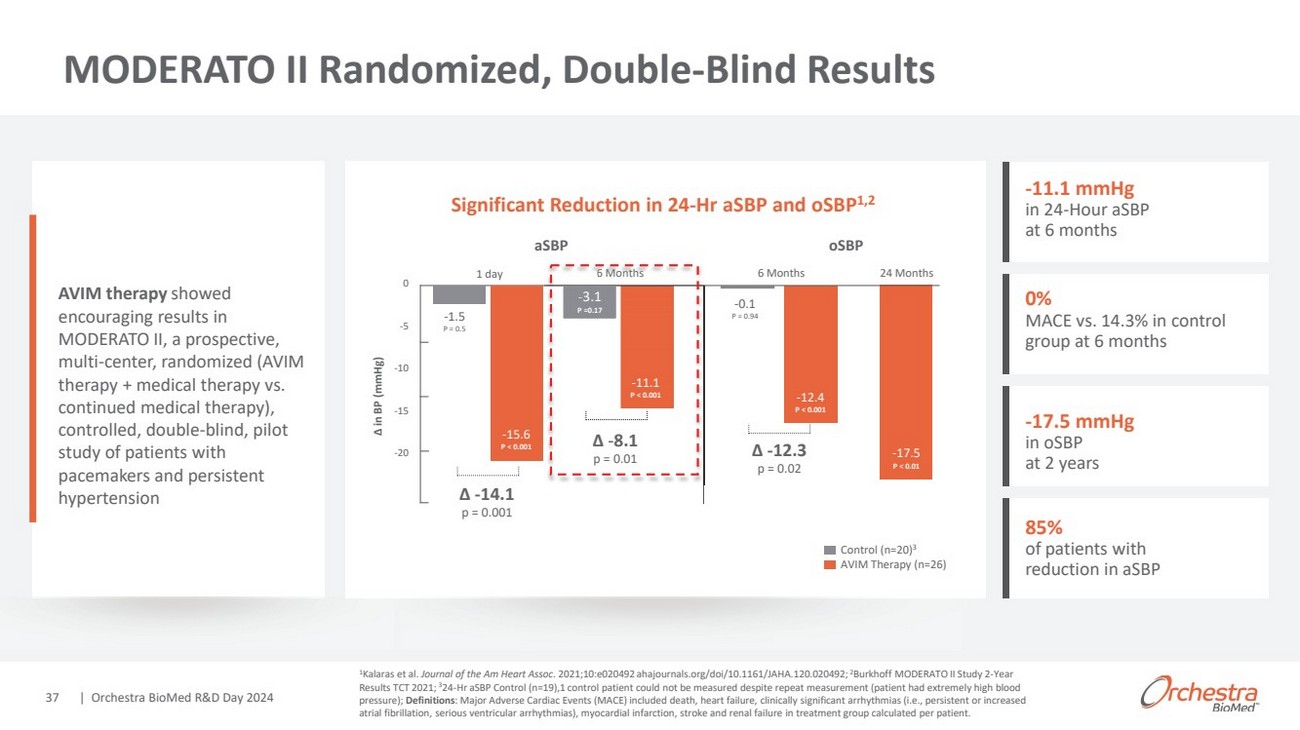
| Significant Reduction in 24-Hr aSBP and oSBP1,2 Control (n=20)3 AVIM Therapy (n=26) -11.1 mmHg in 24-Hour aSBP at 6 months -17.5 mmHg in oSBP at 2 years 0% MACE vs. 14.3% in control group at 6 months 85% of patients with reduction in aSBP 6 Months 24 Months aSBP oSBP 6 Months 0 -5 -10 -15 -20 -11.1 P < 0.001 -12.4 P < 0.001 -0.1 P = 0.94 -17.5 P < 0.01 ȴ-12.3 p = 0.02 ȴ-8.1 p = 0.01 ȴŝŶW;ŵŵ,ŐͿ -3.1 P =0.17 -15.6 P < 0.001 -1.5 P = 0.5 1 day ȴ-14.1 p = 0.001 AVIM therapy showed encouraging results in MODERATO II, a prospective, multi-center, randomized (AVIM therapy + medical therapy vs. continued medical therapy), controlled, double-blind, pilot study of patients with pacemakers and persistent hypertension 6 Months -11.1 P < 0.001 ȴ -8.1 p = 0.01 -3.1 P =0.17 1Kalaras et al. Journal of the Am Heart Assoc. 2021;10:e020492 ahajournals.org/doi/10.1161/JAHA.120.020492; 2Burkhoff MODERATO II Study 2-Year Results TCT 2021; 324-Hr aSBP Control (n=19),1 control patient could not be measured despite repeat measurement (patient had extremely high blood pressure); Definitions: Major Adverse Cardiac Events (MACE) included death, heart failure, clinically significant arrhythmias (i.e., persistent or increased atrial fibrillation, serious ventricular arrhythmias), myocardial infarction, stroke and renal failure in treatment group calculated per patient. 37 | Orchestra BioMed R&D Day 2024 MODERATO II Randomized, Double-Blind Results |
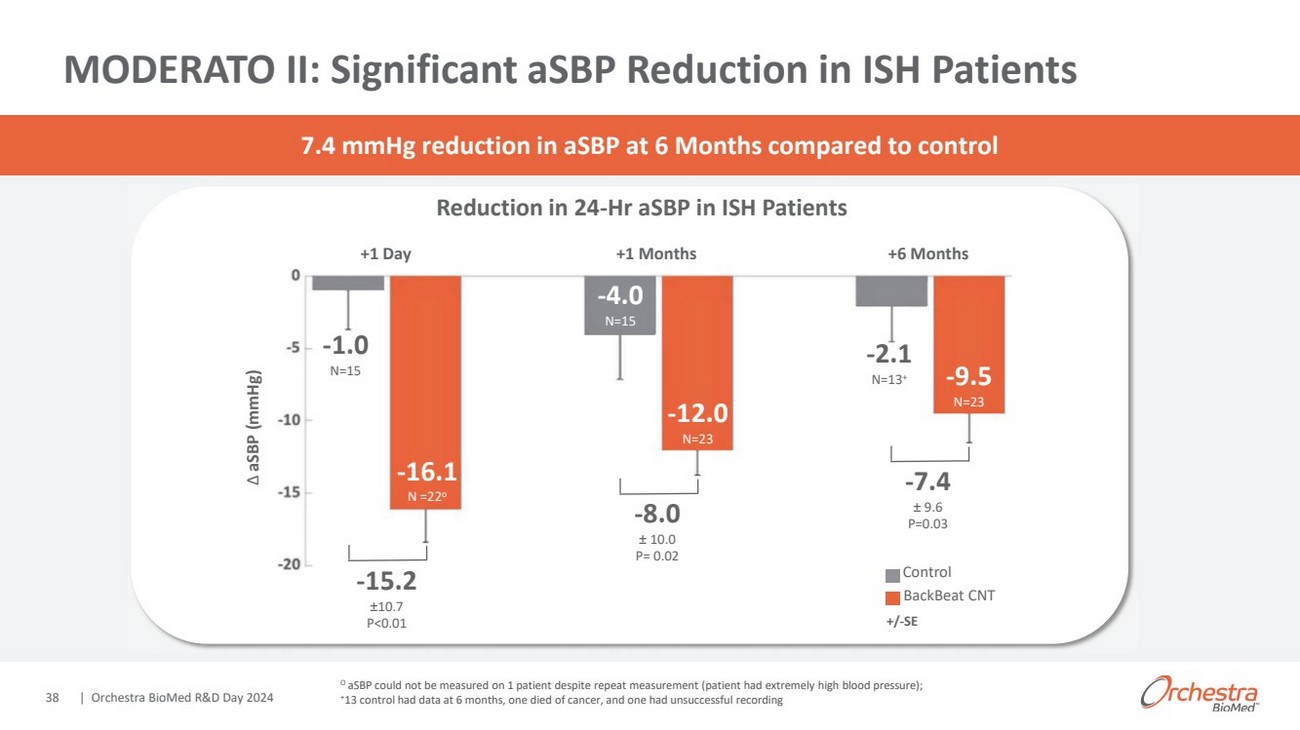
| MODERATO II: Significant aSBP Reduction in ISH Patients 7.4 mmHg reduction in aSBP at 6 Months compared to control -4.0 N=15 ȴ aSBP (mmHg) -1.0 N=15 -2.1 N=13+ -16.1 N =22o -12.0 N=23 -9.5 N=23 -15.2 ±10.7 P<0.01 -8.0 ± 10.0 P= 0.02 -7.4 ± 9.6 P=0.03 +1 Day +1 Months +6 Months Control BackBeat CNT +/-SE Reduction in 24-Hr aSBP in ISH Patients O aSBP could not be measured on 1 patient despite repeat measurement (patient had extremely high blood pressure); + 38 | Orchestra BioMed R&D Day 2024 13 control had data at 6 months, one died of cancer, and one had unsuccessful recording |
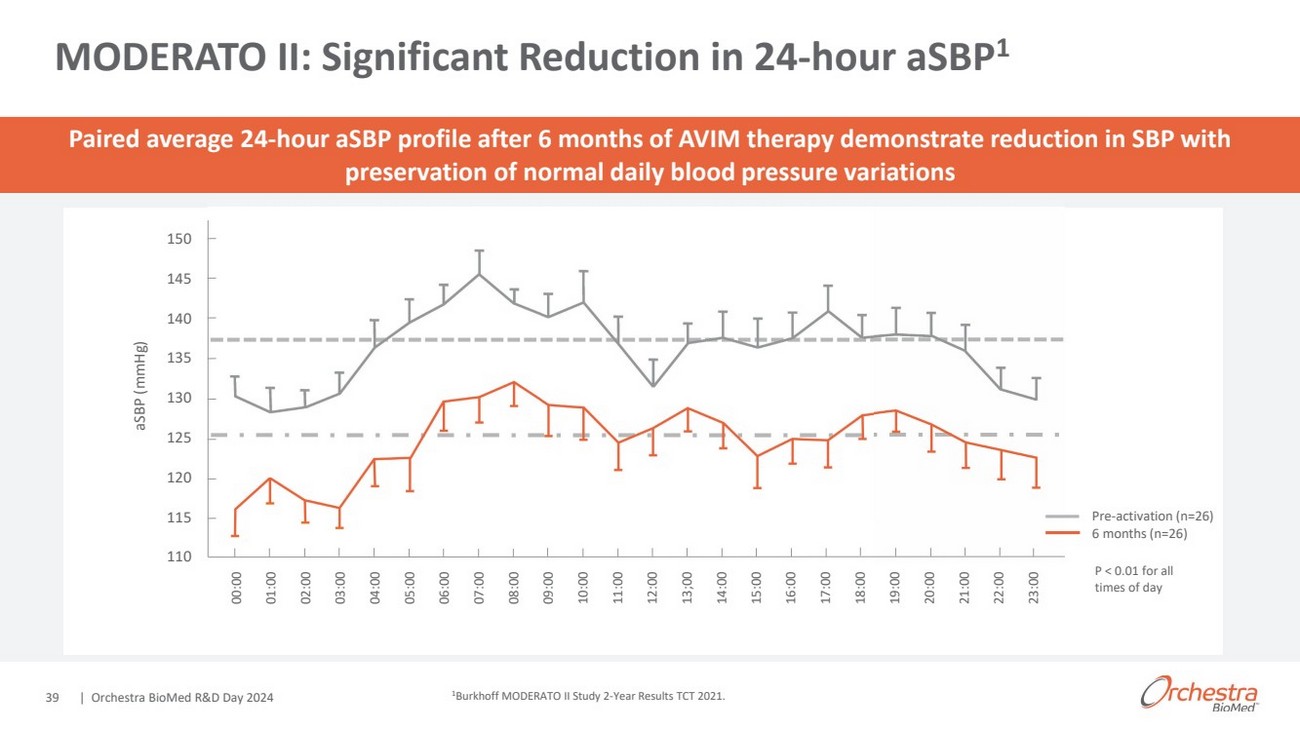
| MODERATO II: Significant Reduction in 24-hour aSBP1 1Burkhoff MODERATO II Study 2-Year Results TCT 2021. aSBP (mmHg) P < 0.01 for all times of day 00:00 01:00 02:00 03:00 04:00 05:00 06:00 07:00 08:00 09:00 10:00 11:00 12:00 13;00 14:00 15:00 16:00 17:00 18:00 19:00 20:00 21:00 22:00 23:00 150 145 140 135 130 125 120 115 110 Pre-activation (n=26) 6 months (n=26) Paired average 24-hour aSBP profile after 6 months of AVIM therapy demonstrate reduction in SBP with preservation of normal daily blood pressure variations 39 | Orchestra BioMed R&D Day 2024 |
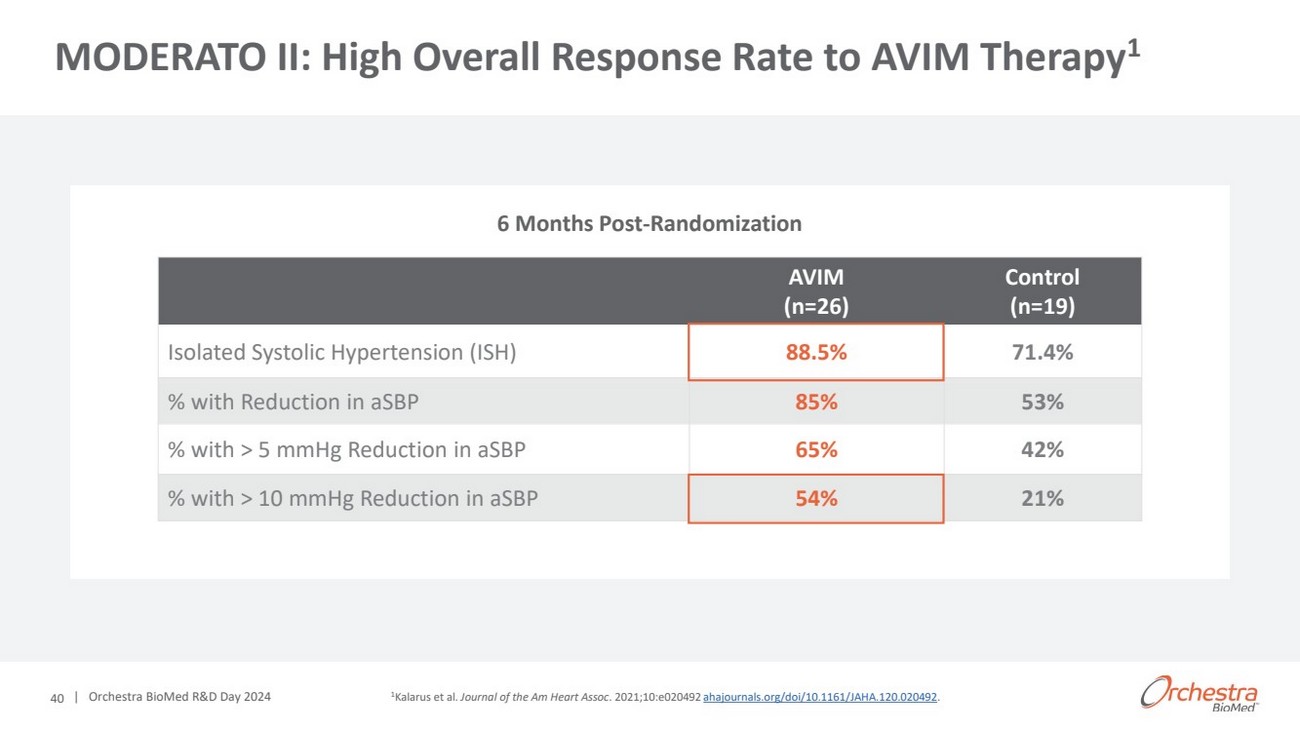
| MODERATO II: High Overall Response Rate to AVIM Therapy1 1 40 Kalarus et al. Journal of the Am Heart Assoc. 2021;10:e020492 ahajournals.org/doi/10.1161/JAHA.120.020492. AVIM (n=26) Control (n=19) Isolated Systolic Hypertension (ISH) 88.5% 71.4% % with Reduction in aSBP 85% 53% % with > 5 mmHg Reduction in aSBP 65% 42% % with > 10 mmHg Reduction in aSBP 54% 21% 6 Months Post-Randomization | Orchestra BioMed R&D Day 2024 |
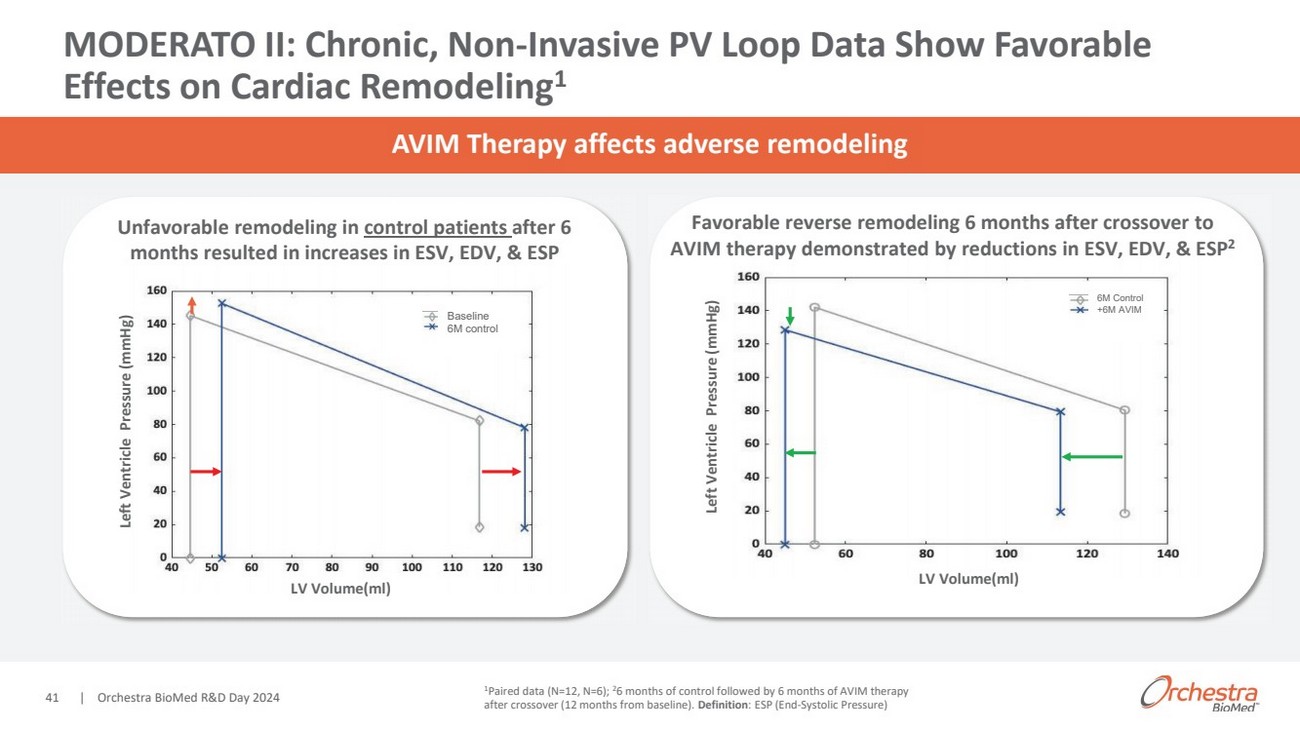
| MODERATO II: Chronic, Non-Invasive PV Loop Data Show Favorable Effects on Cardiac Remodeling1 AVIM Therapy affects adverse remodeling LV Volume(ml) Unfavorable remodeling in control patients after 6 months resulted in increases in ESV, EDV, & ESP Left Ventricle Pressure (mmHg) LV Volume(ml) Favorable reverse remodeling 6 months after crossover to AVIM therapy demonstrated by reductions in ESV, EDV, & ESP2 Left Ventricle Pressure (mmHg) 1Paired data (N=12, N=6); 26 months of control followed by 6 months of AVIM therapy after crossover (12 months from baseline). Definition: ESP (End-Systolic Pressure) 6M Control +6M AVIM Baseline 6M control 41 | Orchestra BioMed R&D Day 2024 |
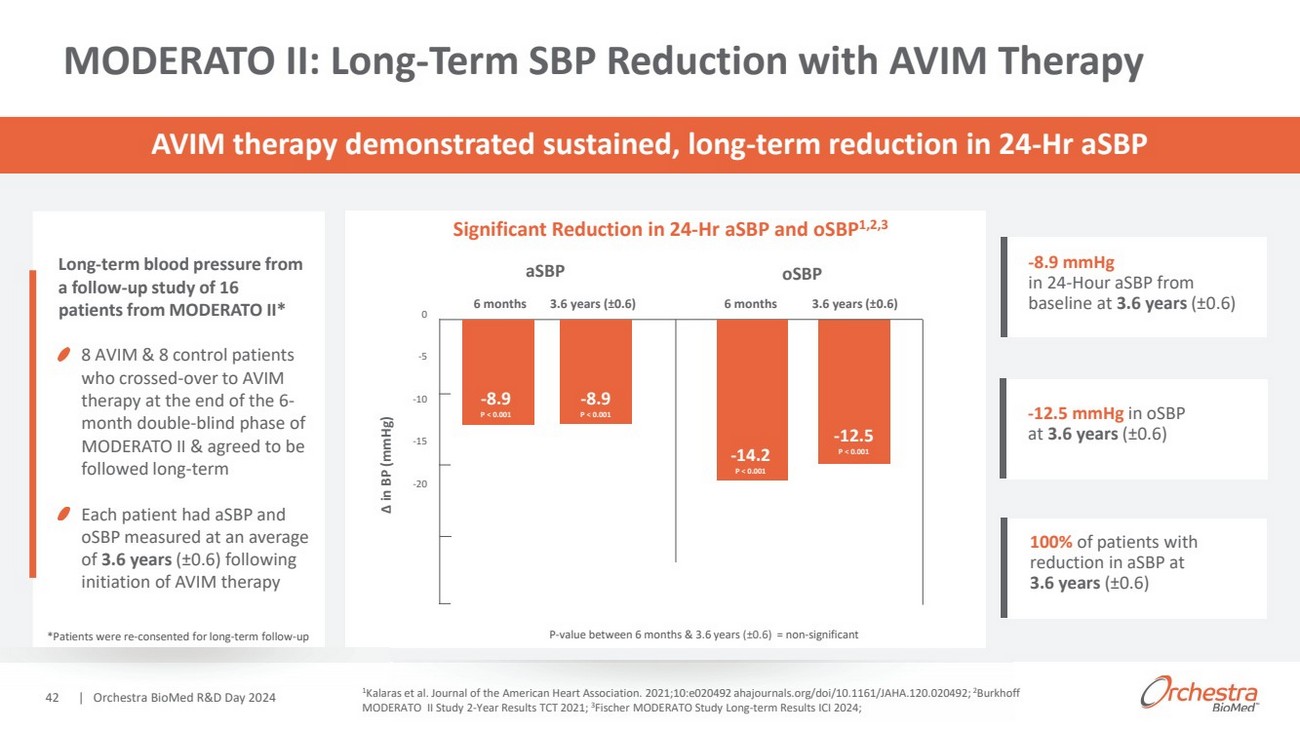
| * -8.9 mmHg in 24-Hour aSBP from baseline at 3.6 years (±0.6) -12.5 mmHg in oSBP at 3.6 years (±0.6) 100% of patients with reduction in aSBP at 3.6 years (±0.6) Long-term blood pressure from a follow-up study of 16 patients from MODERATO II* 8 AVIM & 8 control patients who crossed-over to AVIM therapy at the end of the 6- month double-blind phase of MODERATO II & agreed to be followed long-term Each patient had aSBP and oSBP measured at an average of 3.6 years (±0.6) following initiation of AVIM therapy MODERATO II: Long-Term SBP Reduction with AVIM Therapy Significant Reduction in 24-Hr aSBP and oSBP1,2,3 aSBP 0 -5 -10 -15 -20 ȴŝŶW;ŵŵ,ŐͿ 6 months 3.6 years (±0.6) 6 months oSBP P-value between 6 months & 3.6 years (±0.6) = non-significant -8.9 P < 0.001 3.6 years (±0.6) -8.9 P < 0.001 -14.2 P < 0.001 -12.5 P < 0.001 AVIM therapy demonstrated sustained, long-term reduction in 24-Hr aSBP *Patients were re-consented for long-term follow-up 1Kalaras et al. Journal of the American Heart Association. 2021;10:e020492 ahajournals.org/doi/10.1161/JAHA.120.020492; 2Burkhoff MODERATO II Study 2-Year Results TCT 2021; 3Fischer MODERATO Study Long-term Results ICI 2024; 42 | Orchestra BioMed R&D Day 2024 |
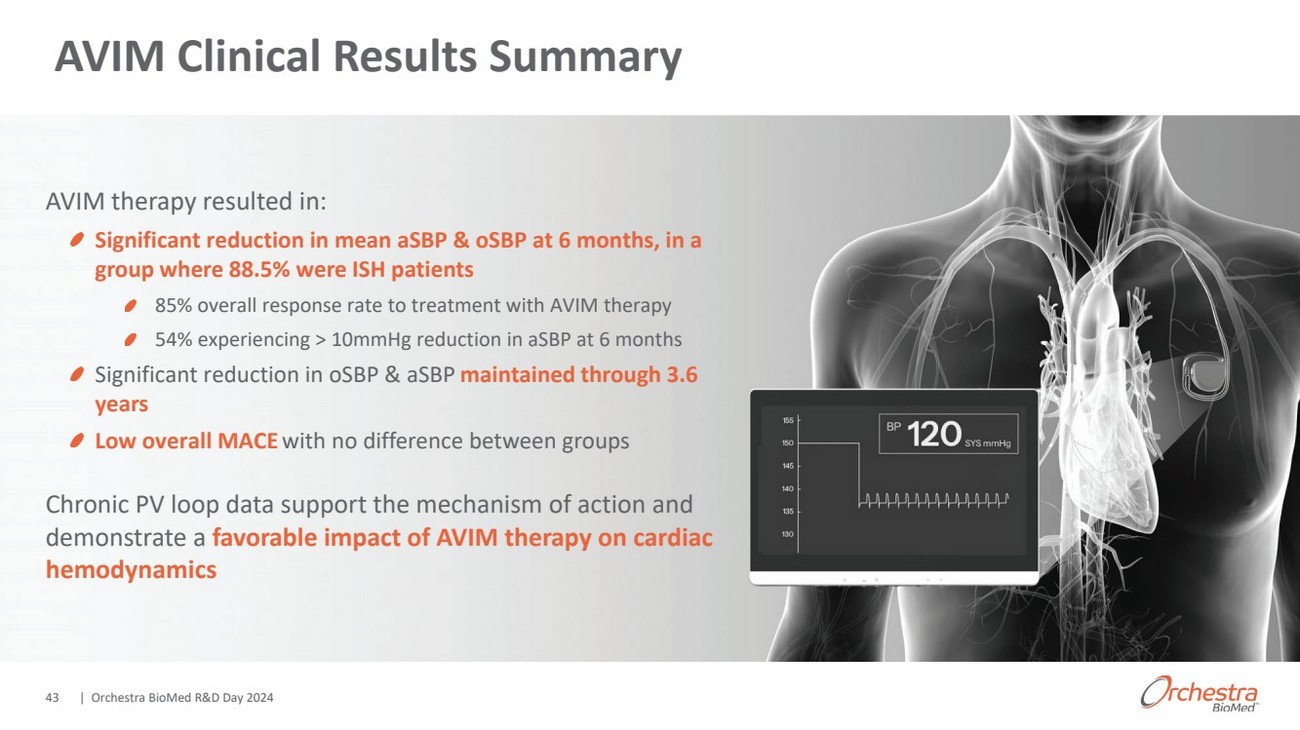
| AVIM Clinical Results Summary AVIM therapy resulted in: Significant reduction in mean aSBP & oSBP at 6 months, in a group where 88.5% were ISH patients 85% overall response rate to treatment with AVIM therapy 54% experiencing > 10mmHg reduction in aSBP at 6 months Significant reduction in oSBP & aSBP maintained through 3.6 years Low overall MACE with no difference between groups Chronic PV loop data support the mechanism of action and demonstrate a favorable impact of AVIM therapy on cardiac hemodynamics 43 | Orchestra BioMed R&D Day 2024 |
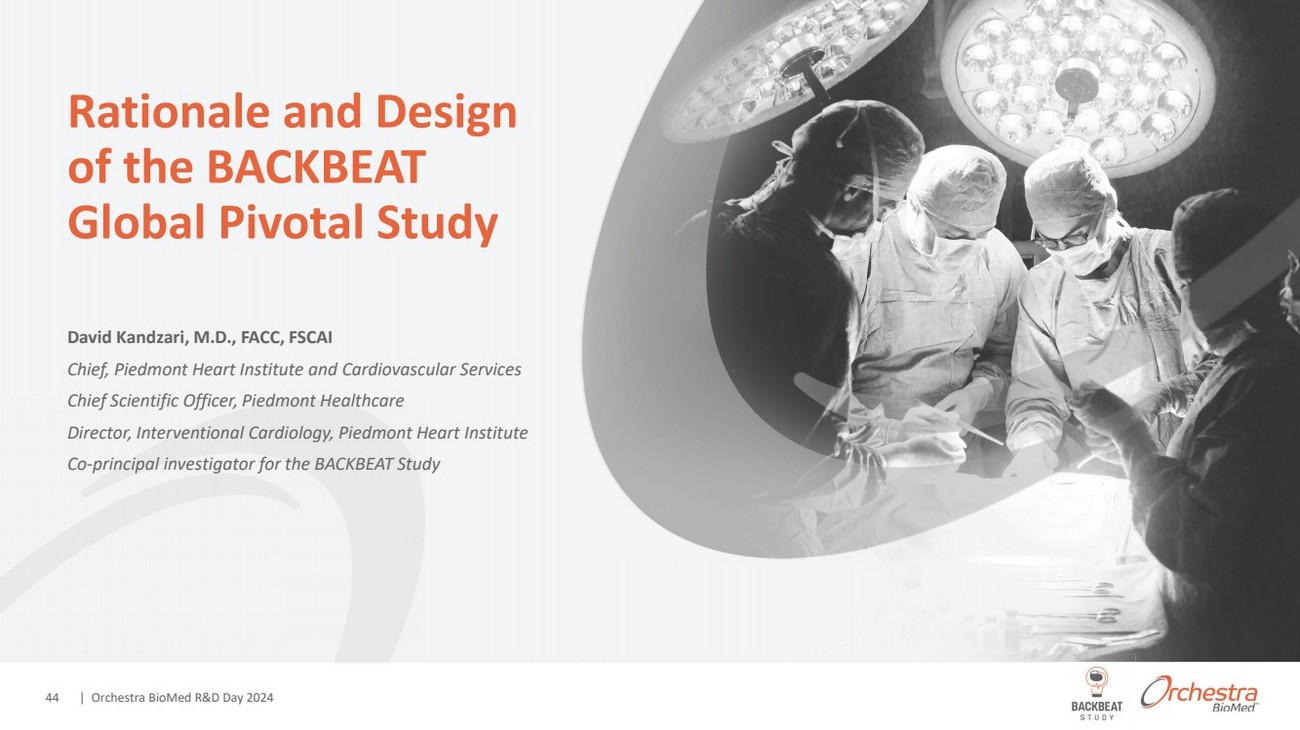
| Rationale and Design of the BACKBEAT Global Pivotal Study David Kandzari, M.D., FACC, FSCAI Chief, Piedmont Heart Institute and Cardiovascular Services Chief Scientific Officer, Piedmont Healthcare Director, Interventional Cardiology, Piedmont Heart Institute Co-principal investigator for the BACKBEAT Study 44 | Orchestra BioMed R&D Day 2024 |
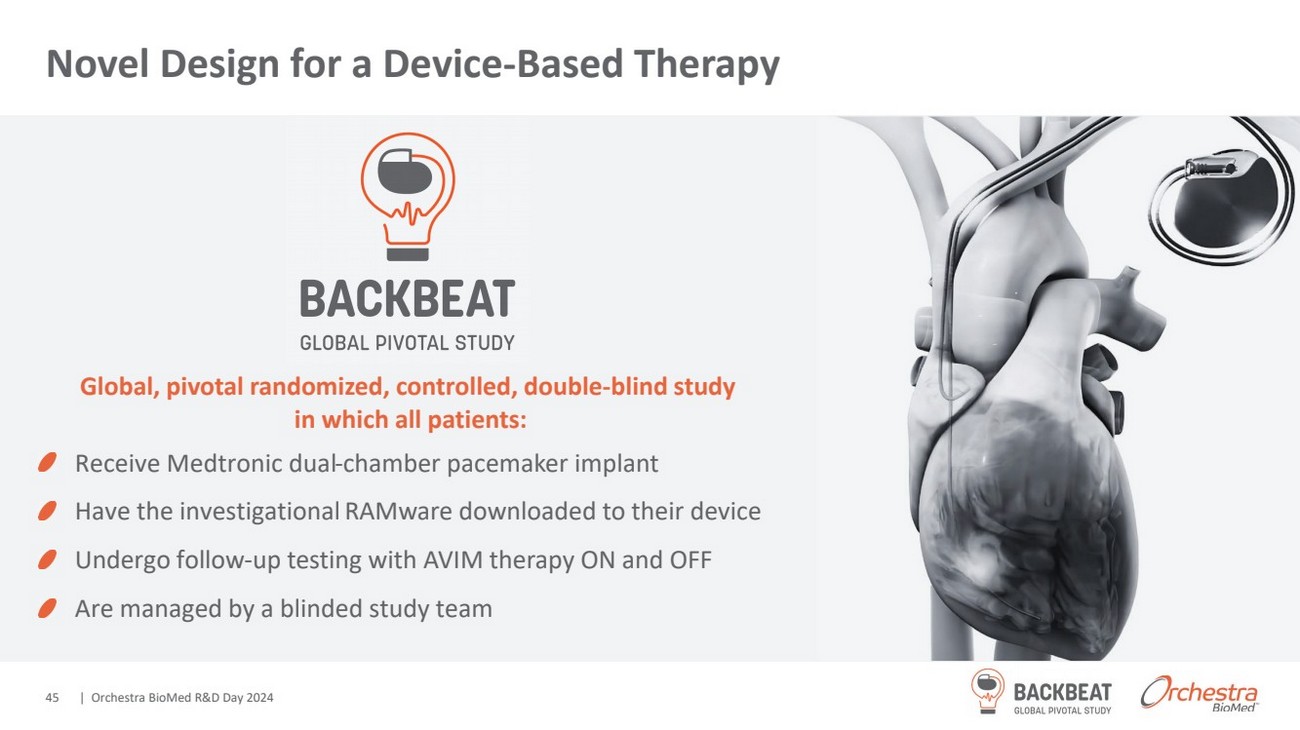
| Novel Design for a Device-Based Therapy Global, pivotal randomized, controlled, double-blind study in which all patients: Receive Medtronic dual-chamber pacemaker implant Have the investigational RAMware downloaded to their device Undergo follow-up testing with AVIM therapy ON and OFF Are managed by a blinded study team 45 | Orchestra BioMed R&D Day 2024 |
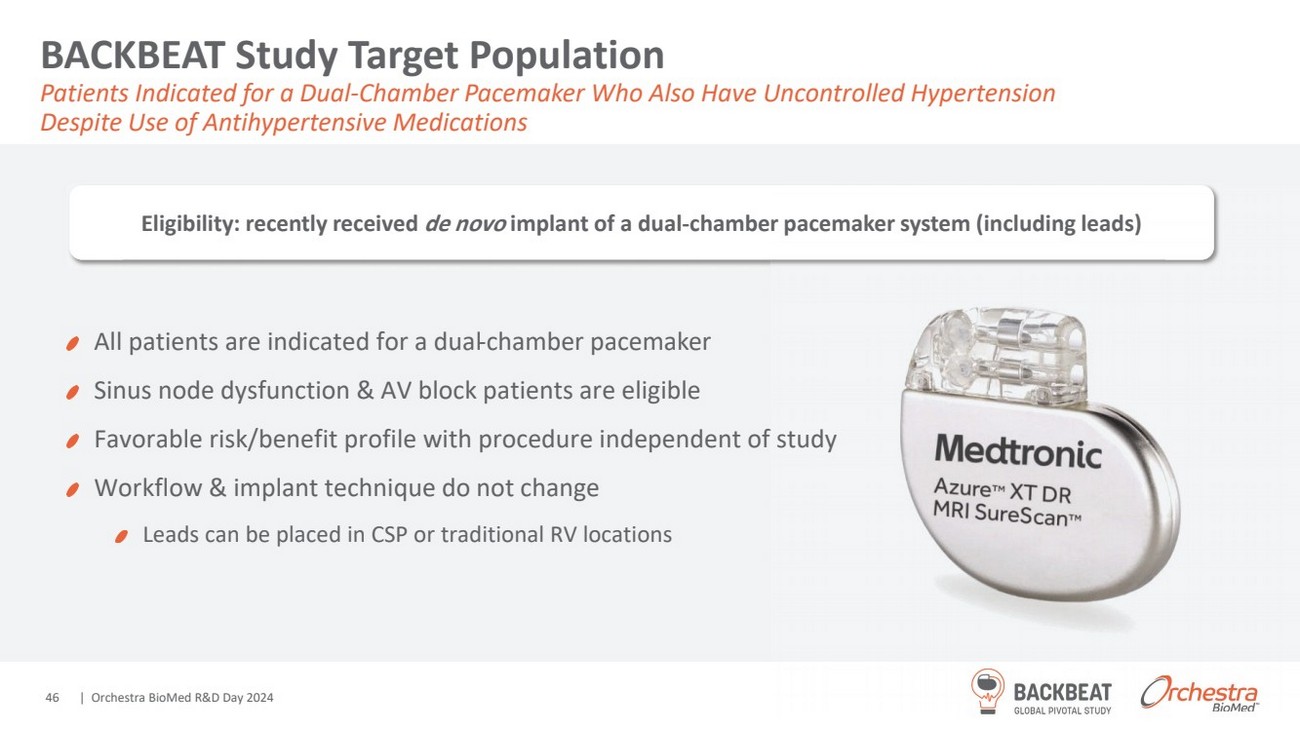
| BACKBEAT Study Target Population Patients Indicated for a Dual-Chamber Pacemaker Who Also Have Uncontrolled Hypertension Despite Use of Antihypertensive Medications All patients are indicated for a dual-chamber pacemaker Sinus node dysfunction & AV block patients are eligible Favorable risk/benefit profile with procedure independent of study Workflow & implant technique do not change Leads can be placed in CSP or traditional RV locations Eligibility: recently received de novo implant of a dual-chamber pacemaker system (including leads) f study r pacemaker system (including leads) 46 | Orchestra BioMed R&D Day 2024 |
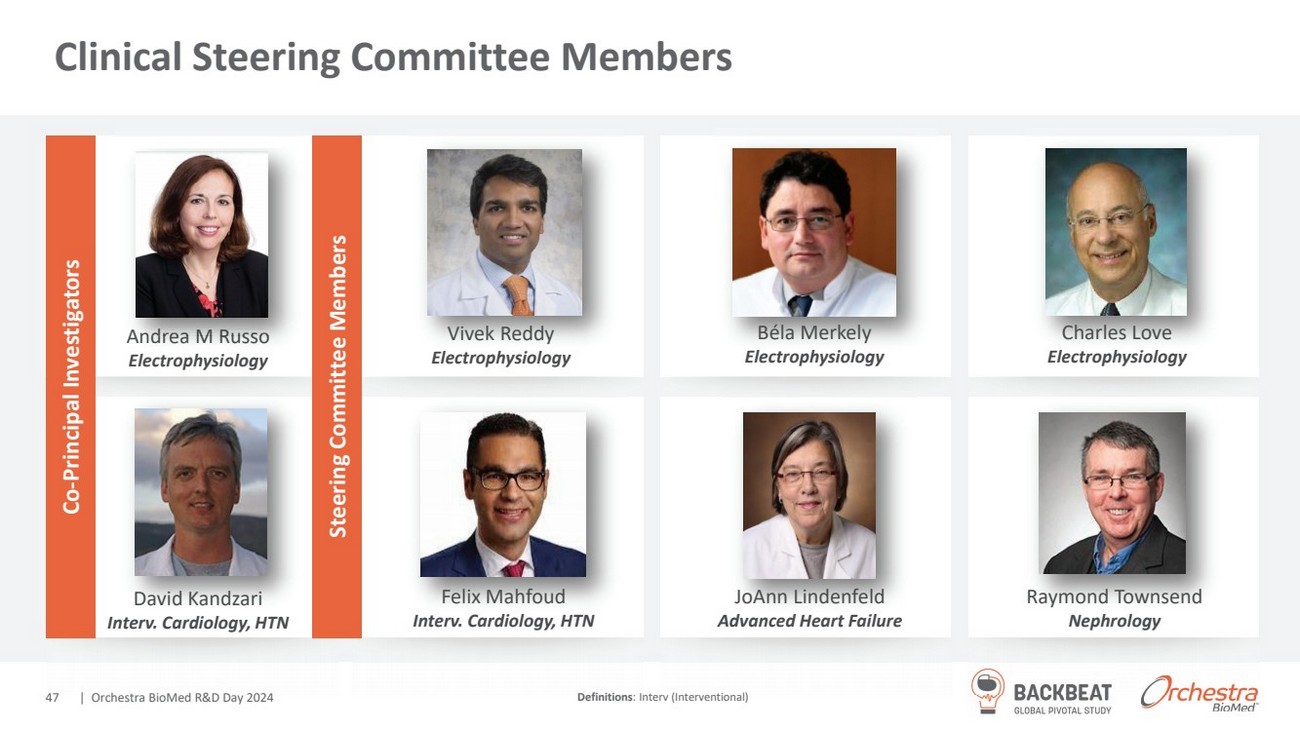
| Clinical Steering Committee Members Definitions: Interv (Interventional) Andrea M Russo Electrophysiology Andrea M Russo Electrophysiology David Kandzari Interv. Cardiology, HTN Co-Principal Investigators Steering Committee Members JoAnn Lindenfeld Advanced Heart Failure Felix Mahfoud Interv. Cardiology, HTN Raymond Townsend Nephrology Béla Merkely Electrophysiology Charles Love Electrophysiology Vivek Reddy Electrophysiology 47 | Orchestra BioMed R&D Day 2024 |
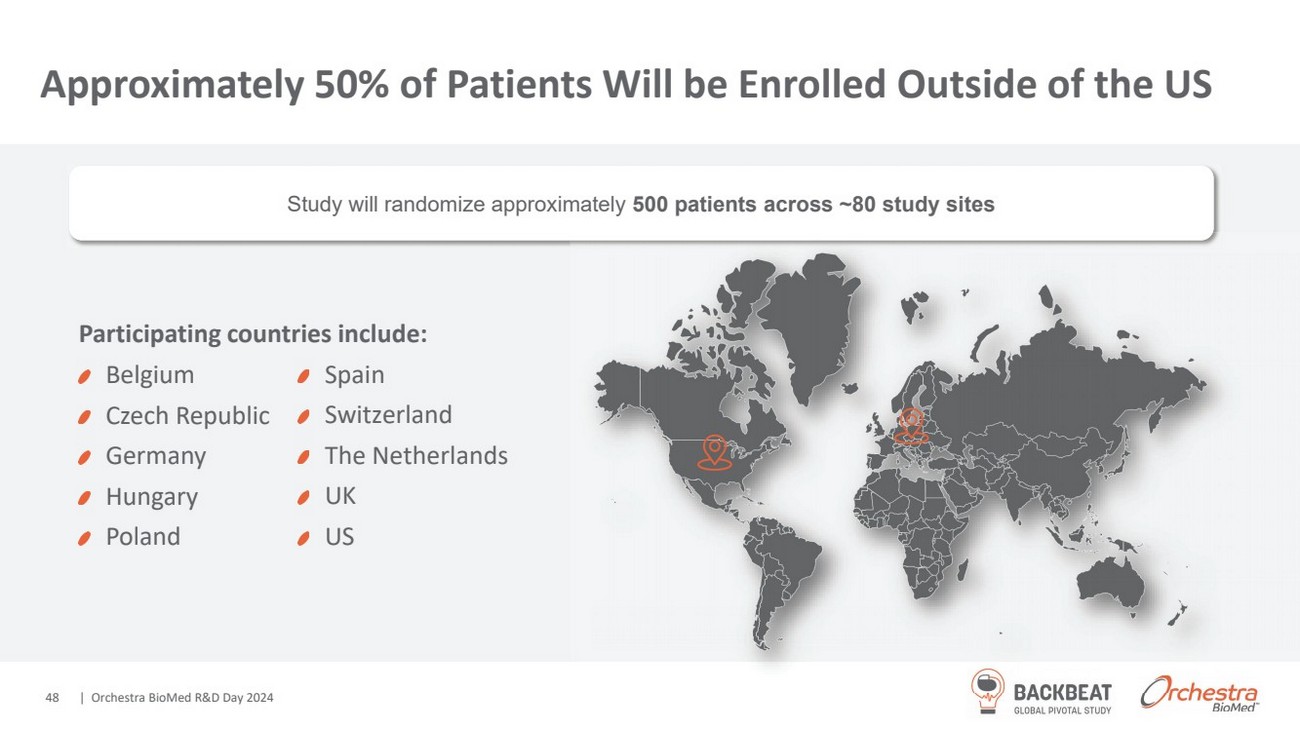
| Approximately 50% of Patients Will be Enrolled Outside of the US Study will randomize approximately 500 patients across ~80 study sites Participating countries include: Belgium Czech Republic Germany Hungary Poland Spain Switzerland The Netherlands UK US 48 | Orchestra BioMed R&D Day 2024 |
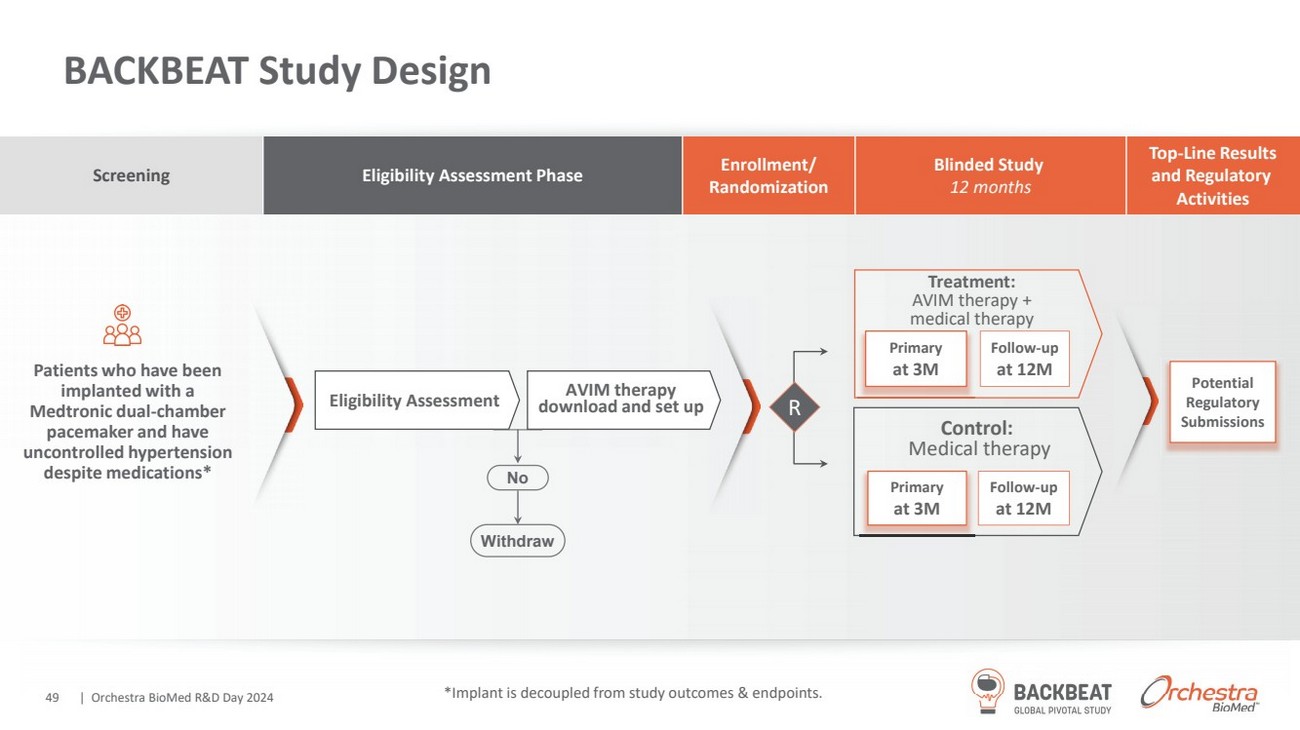
| Patients who have been implanted with a Medtronic dual-chamber pacemaker and have uncontrolled hypertension despite medications* R Treatment: AVIM therapy + medical therapy Primary at 3M Control: Medical therapy Follow-up at 12M AVIM therapy download and set up Eligibility Assessment Screening Eligibility Assessment Phase Enrollment/ Randomization Blinded Study 12 months Top-Line Results and Regulatory Activities Primary at 3M Follow-up at 12M BACKBEAT Study Design Potential Regulatory Submissions Withdraw No *Implant is decoupled from study outcomes & endpoints. 49 | Orchestra BioMed R&D Day 2024 |
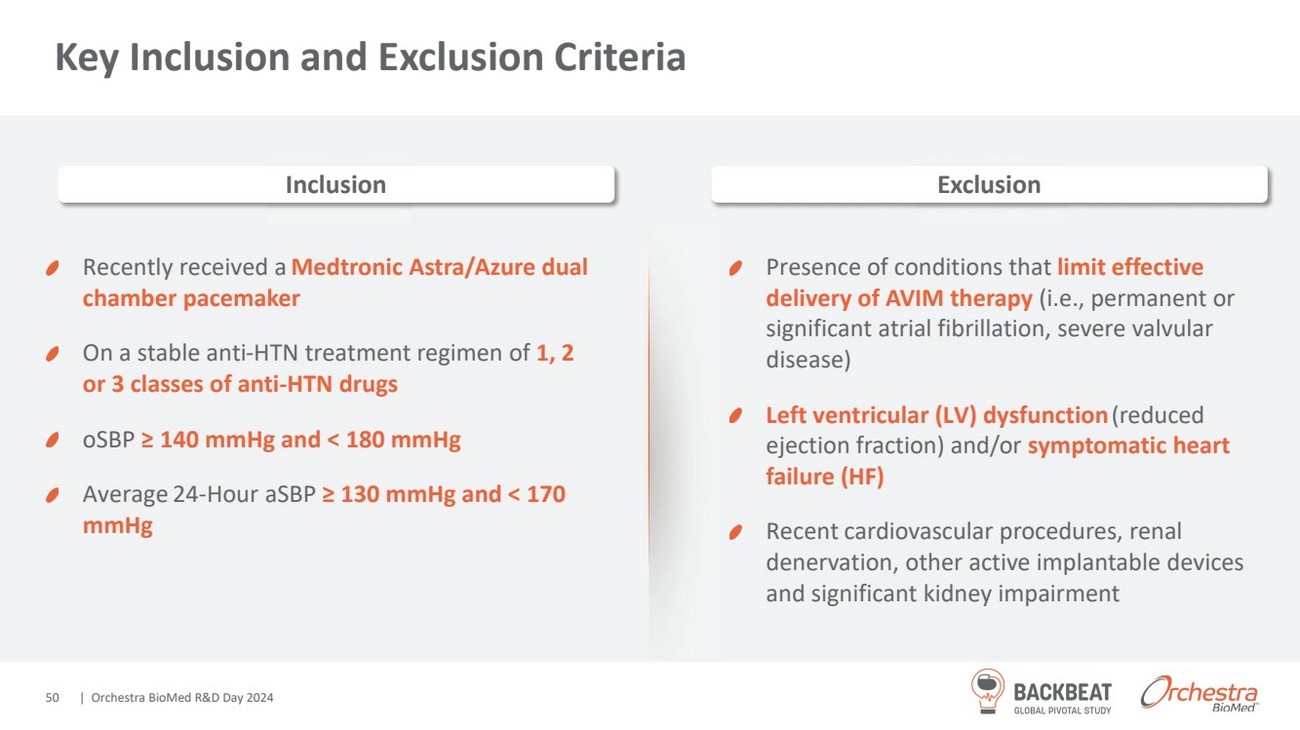
| Recently received a Medtronic Astra/Azure dual chamber pacemaker On a stable anti-HTN treatment regimen of 1, 2 or 3 classes of anti-HTN drugs oSBP шϭϰϬŵŵ,ŐĂŶĚфϭϴϬŵŵ,Ő Average 24-Hour aSBP шϭϯϬŵŵ,ŐĂŶĚфϭϳϬ mmHg Key Inclusion and Exclusion Criteria Presence of conditions that limit effective delivery of AVIM therapy (i.e., permanent or significant atrial fibrillation, severe valvular disease) Left ventricular (LV) dysfunction (reduced ejection fraction) and/or symptomatic heart failure (HF) Recent cardiovascular procedures, renal denervation, other active implantable devices and significant kidney impairment Inclusion Exclusion 50 | Orchestra BioMed R&D Day 2024 |
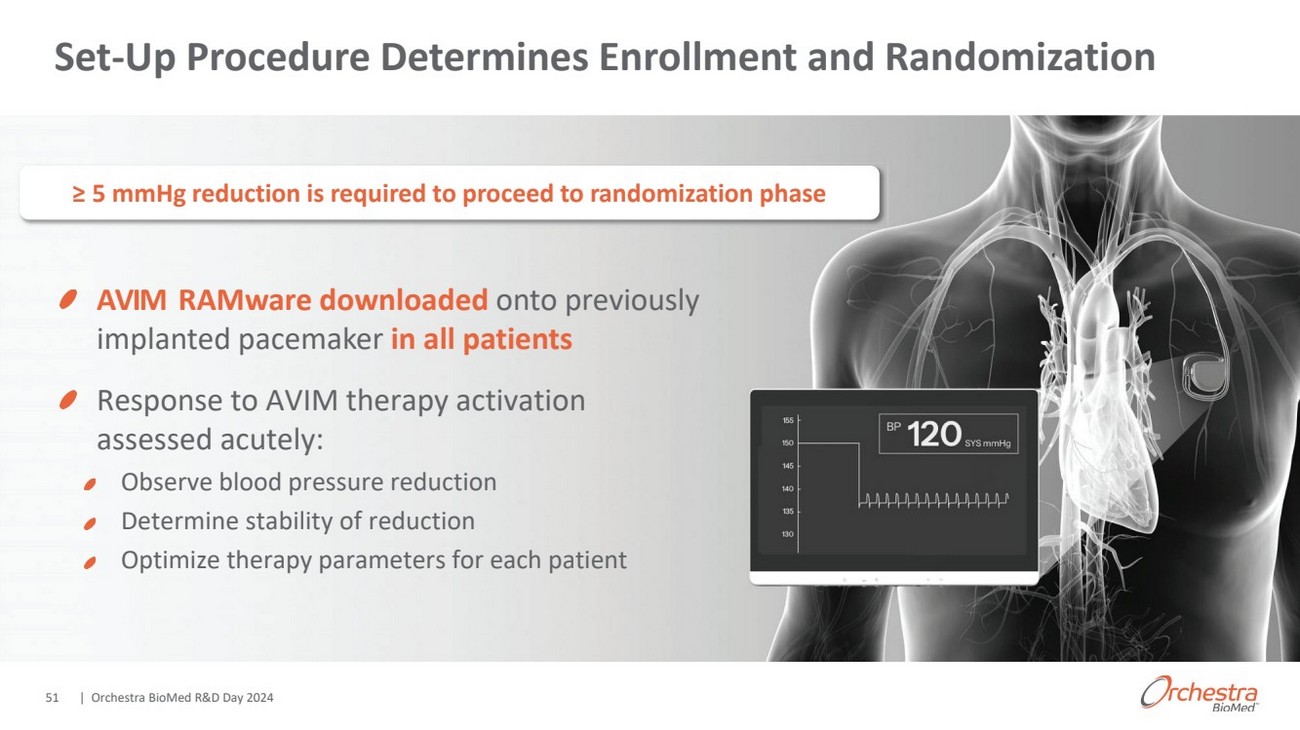
| Set-Up Procedure Determines Enrollment and Randomization AVIM RAMware downloaded onto previously implanted pacemaker in all patients Response to AVIM therapy activation assessed acutely: Observe blood pressure reduction Determine stability of reduction Optimize therapy parameters for each patient шϱŵŵ,ŐƌĞĚƵĐƚŝŽŶŝƐƌĞƋƵŝƌĞĚƚŽƉƌŽĐĞĞĚƚŽƌĂŶĚŽŵŝnjĂƚŝŽŶƉŚĂƐĞ 51 | Orchestra BioMed R&D Day 2024 |
| Primary Efficacy Endpoint: Between group difference in the change of mean 24-hour ambulatory systolic blood pressure (aSBP) at 3 months post-randomization Primary Safety Endpoint Freedom from unanticipated serious adverse device events at 3 months post-randomization Double Blind Phase: Primary Endpoints aSBP is the gold-standard measurement of blood pressure 3 months is the standard duration to demonstrate efficacy in HTN studies Balances time needed to demonstrate efficacy with ability to maintain medication regimens Potential complications of pacemaker implant & follow-up are well-established Aims to identify unique & unexpected adverse events directly related to AVIM therapy (treatment group only) 52 | Orchestra BioMed R&D Day 2024 |
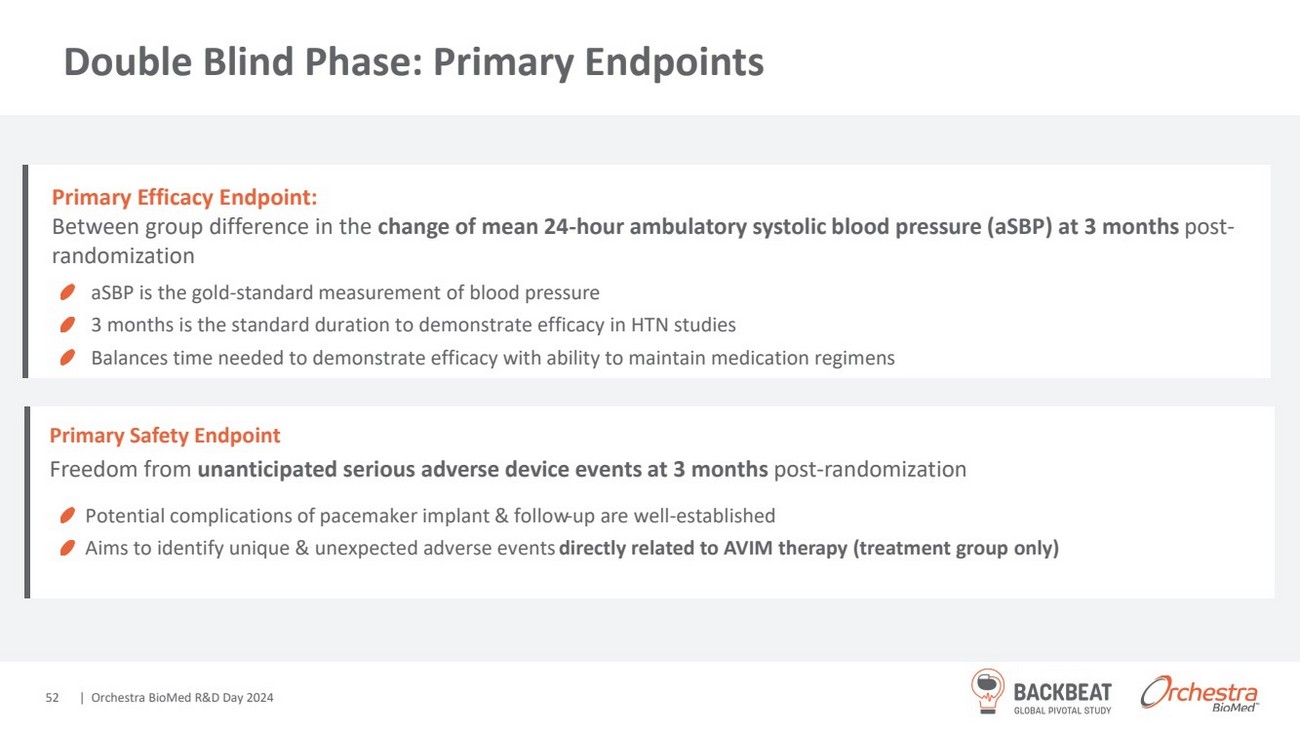
| Double-Blind Follow-up Through 12-Months to Collect Additional Data Hypertension Adverse Events Medications Between-group difference in: Mean Change of 24-hour aSBP immediately after randomization Mean change in 24-hour ambulatory pulse pressure (aPP) Mean reduction of oSBP at 3 months post-randomization Between group comparison: Freedom from the composite cardiovascular adverse events (CCAE) rate 12 months post-randomization Including mortality, stroke, MI, HF, AFib, HTN crisis, decline in eGFR Between group comparison: Reduction in anti-hypertensive medication burden at 3-months Medication dose, number, and/or class 53 | Orchestra BioMed R&D Day 2024 Definition: Estimated glomerular filtration rate (eGFR) |
| Key Takeaways and Q&A 54 | Orchestra BioMed R&D Day 2024 |
| Key Takeaways Hypertension is the leading risk factor for death & most common comorbidity in patients with pacemakers globally AVIM therapy is an investigational, programmable & adjustable treatment developed by Orchestra BioMed AVIM therapy is designed to have an immediate, substantial, & persistent effect in reducing blood pressure Invasive PV loop studies support the mechanism of action and demonstrate a favorable impact of AVIM therapy on cardiac hemodynamics, when pacing from traditional RV lead locations or left bundle branch area Data from the MODERATO I & II studies demonstrated a favorable efficacy and safety profile BACKBEAT global pivotal study is being conducted in collaboration with Medtronic, the global leader in cardiac pacing therapy 55 | Orchestra BioMed R&D Day 2024 |
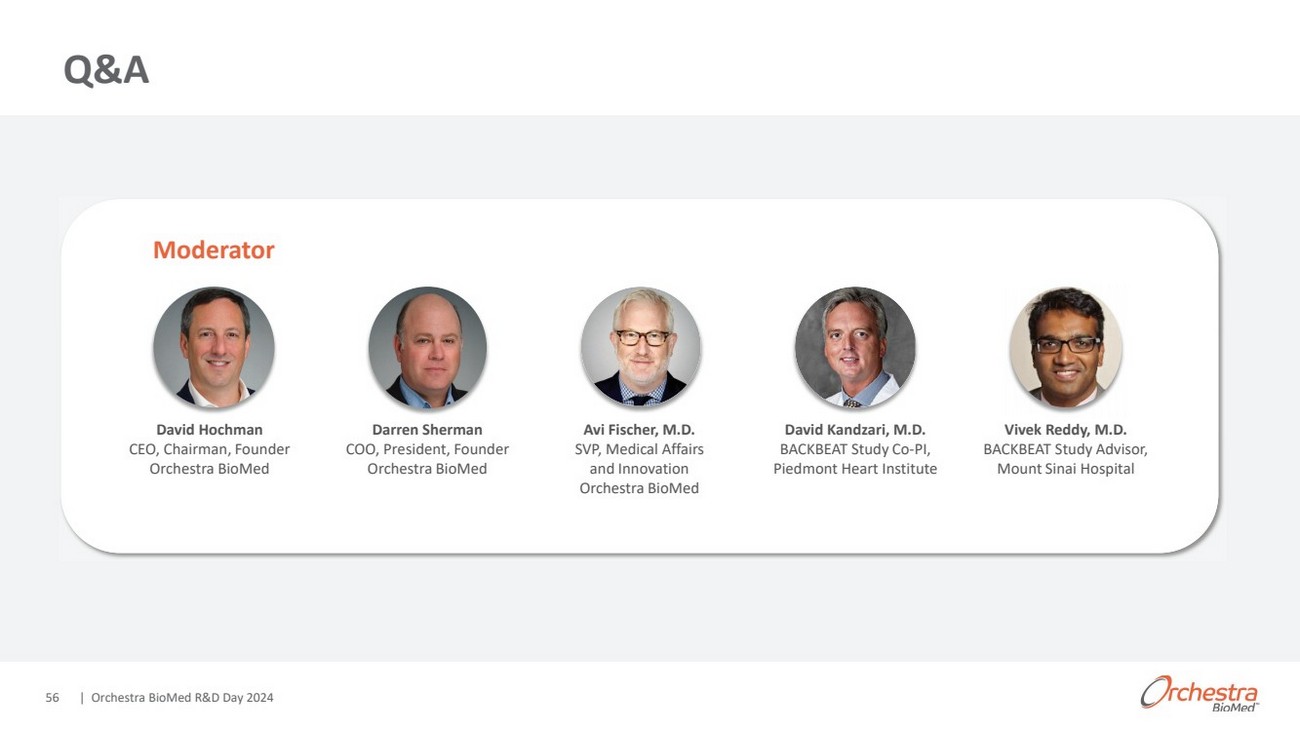
| Q&A David Hochman CEO, Chairman, Founder Orchestra BioMed David Kandzari, M.D. BACKBEAT Study Co-PI, Piedmont Heart Institute Vivek Reddy, M.D. BACKBEAT Study Advisor, Mount Sinai Hospital Darren Sherman COO, President, Founder Orchestra BioMed Avi Fischer, M.D. SVP, Medical Affairs and Innovation Orchestra BioMed Moderator 56 | Orchestra BioMed R&D Day 2024 |