Operator
Good day, and welcome to OPENLANE's First Quarter 2025 Earnings Call. All participants will be in a listen-only mode. After today's presentation, there will be an opportunity to ask questions. Please note that this event is being recorded. I would now like to turn the conference over to Jared Harnish. Please go ahead.
Speaker 1
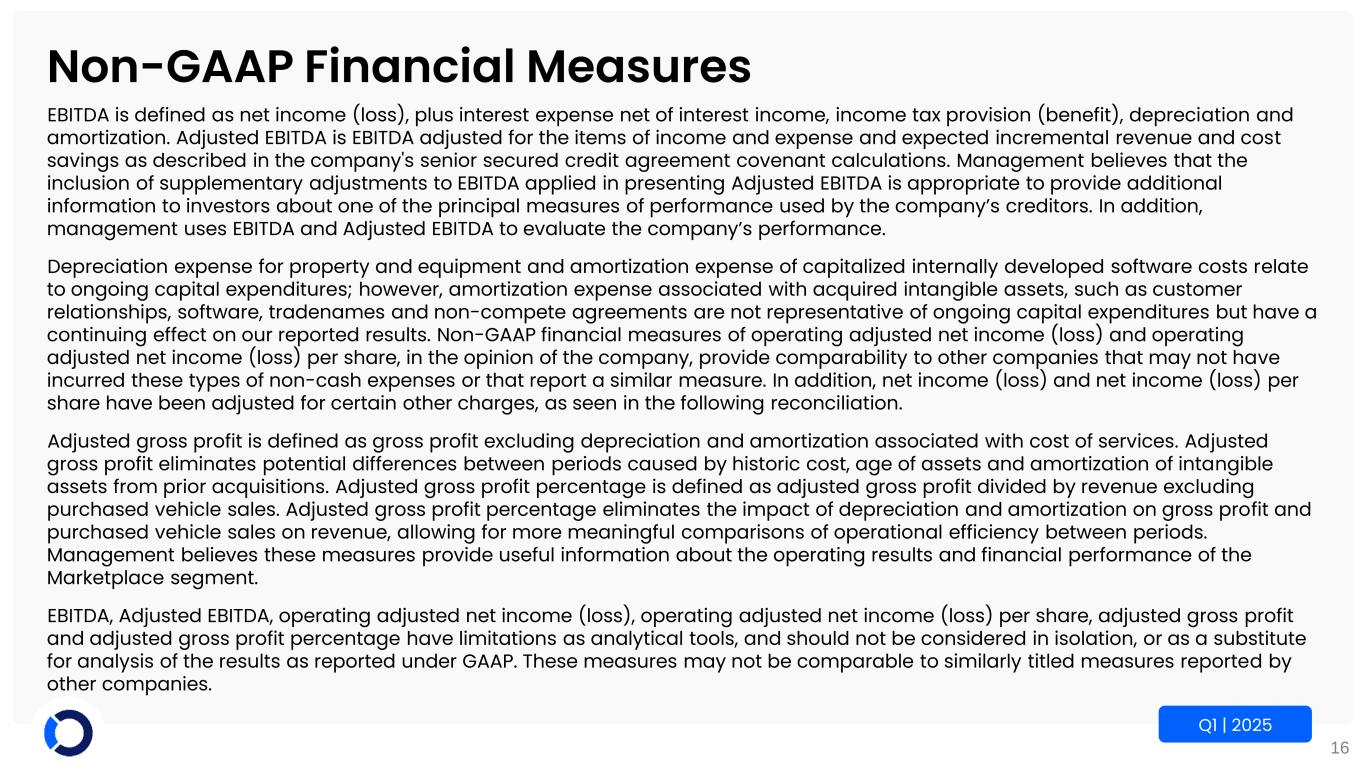
Thank you, operator. Good afternoon, everyone. Welcome to OPENLANE's first quarter 2025 earnings call. With me today are Peter Kelly, CEO of OPENLANE; and Ryan Miller, OPENLANE's Vice President of Finance for the Marketplace business. Our remarks today include forward-looking statements within the meaning of the Private Securities Litigation Reform Act of 1995. Such forward-looking statements involve risks and other uncertainties that may cause our actual results or performance to differ materially from such statements. Factors that could cause such differences include those discussed in our press release issued today and in our SEC filings. Certain non-GAAP financial measures as defined under the SEC rules will be discussed on this call. Reconciliations of GAAP to non-GAAP measures are provided in our earnings material and available in the Investor Relations section of our website. With that, I'll turn the call over to Peter. Peter?
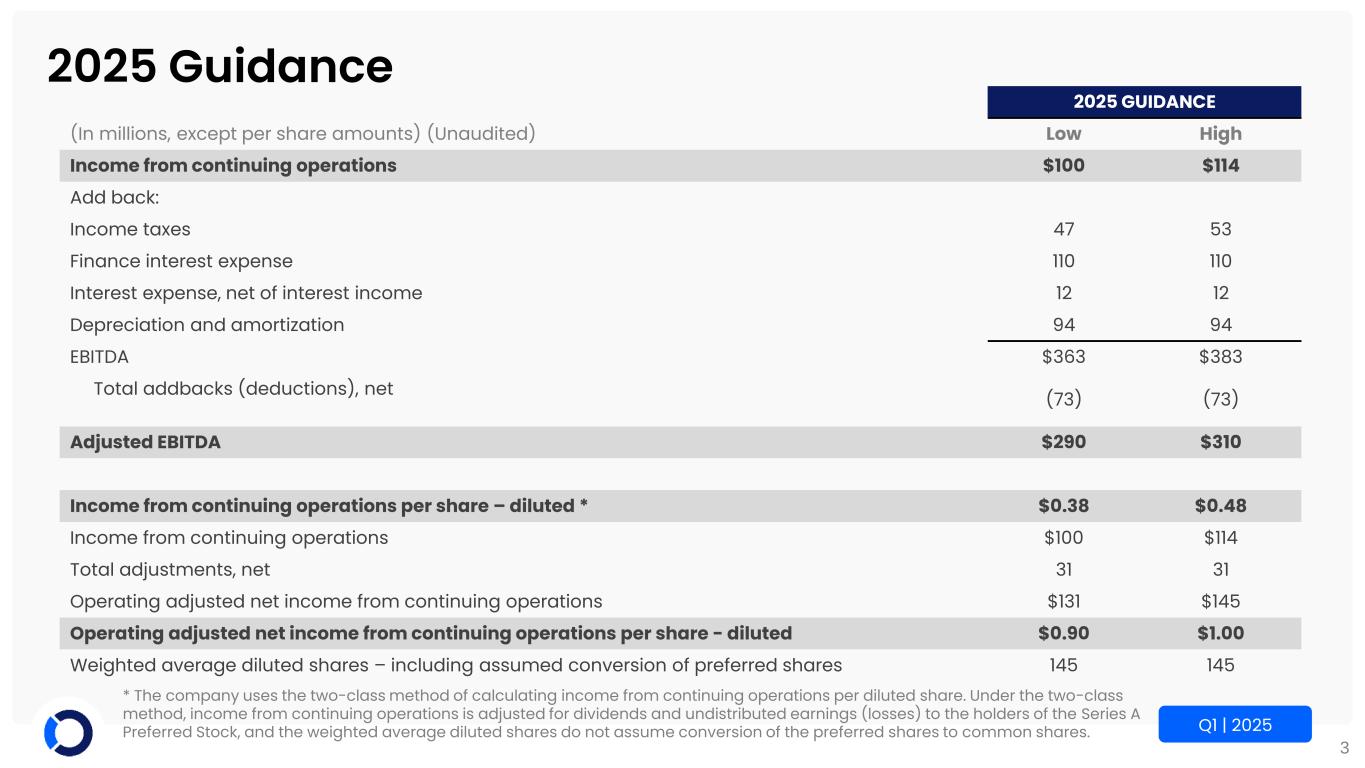
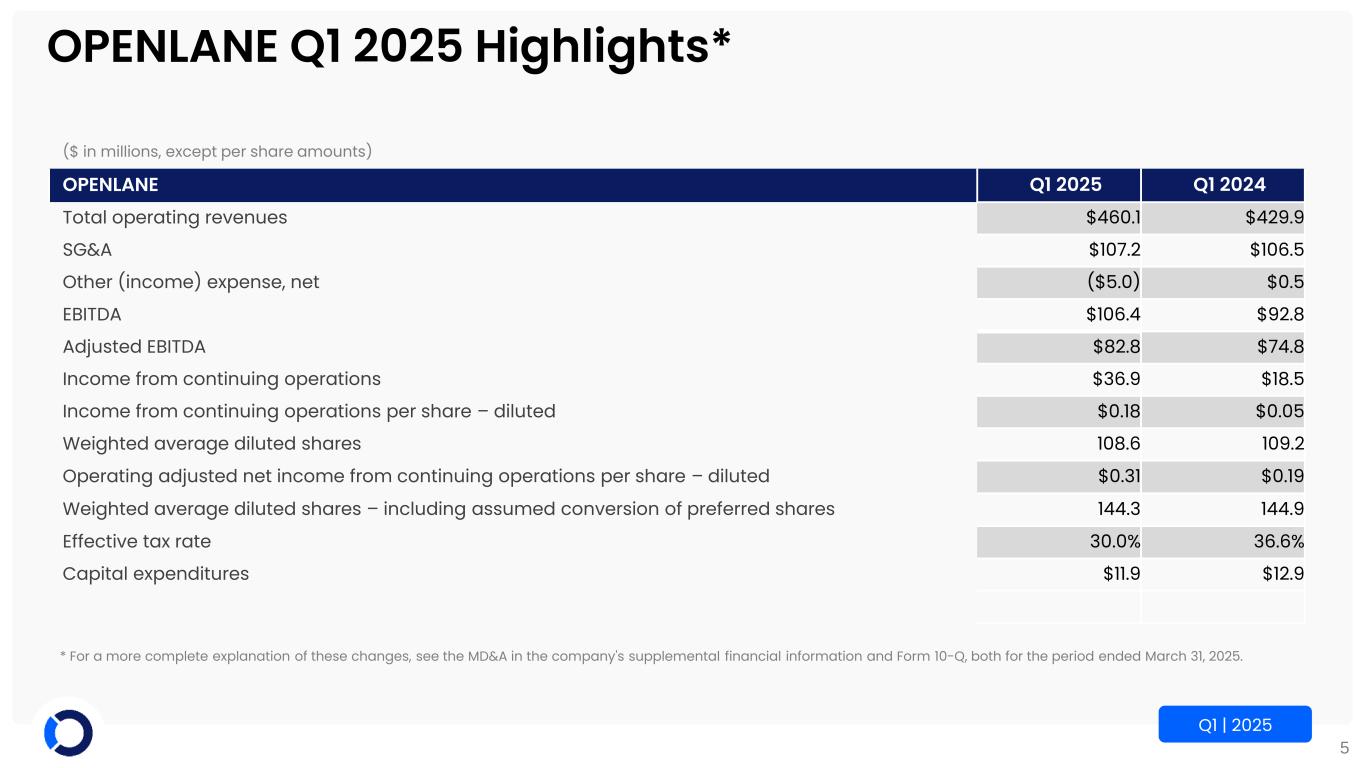
Thank you, Jared, and good afternoon, everyone. I'm pleased to be here today to share OPENLANE's strong results from the first quarter. I'll start with a few highlights, but spend the majority of my time discussing our strategy and our perspectives on the overall market environment, including tariffs. But first, I hope you saw our recent announcement naming Brad Herring as our new Executive Vice President and Chief Financial Officer. I look forward to welcoming Brad to our team later this month. Today, the financial portion of our call will be led by Ryan Miller, OPENLANE's Vice President of Finance for the Marketplace business. Turning to the quarter. OPENLANE delivered a very strong start to 2025, building on our positive momentum and delivering record performance in many areas, particularly within the marketplace business. It's clear that the OPENLANE brand is becoming more differentiated and valued in the eyes of our expanding customer base. And the strong scalability characteristics of our asset-light digital operating model are increasingly apparent in our financial results. During the first quarter, we grew consolidated revenue by 7% and delivered $83 million in adjusted EBITDA, both achieved against a prior year that included contributions from the automotive keys business that we divested during the fourth quarter of last year. We also generated $123 million in cash flow from operations. In the Marketplace segment, while commercial vehicle volumes were down as expected, we increased our dealer-to-dealer volumes by 15% year-over-year, the second straight quarter of double-digit growth. This resulted in solid growth in auction fee revenue and adjusted EBITDA. Our Finance segment also had a great quarter, growing total loan transaction units, holding the loan-loss rate to 1.5%, which is the lowest since Q4 of 2022, and increasing adjusted EBITDA by 15% over the prior year. So, in summary, OPENLANE is advancing our strategy with focus and with precision, and producing positive consistent results. And despite the current noise in the market, I remain confident in OPENLANE's positioning for long-term growth and our ability to deliver sustained shareholder value. As a signal of that confidence, the OPENLANE Board of Directors has replaced our prior $100 million share repurchase authorization with the new larger $250 million authorization that will extend through the end of 2026. With that, let me turn to our strategy and how we are positioning OPENLANE for the future. As a reminder, our strategy for growth is anchored in our purpose, which is to make wholesale easy so our customers can be more successful. And we're making wholesale easy by focusing on three enabling priorities. First, by delivering the best marketplace, expanding to more buyers and more sellers and offering the most diverse commercial and dealer inventory available. Second, by delivering the best technology. Innovative products and services to help our customers make informed decisions and achieve better outcomes. And third, by delivering the best customer experience, keeping our marketplace fast, fair and transparent, making it easier for customers to transact and making OPENLANE the most preferred marketplace. So let's start with more detail on the marketplace. While overall volumes were slightly down, this was entirely attributed to the decline in commercial off-lease volume that we've discussed during previous calls. The Q1 decline in off-lease volume was in line with our expectations and we still anticipate those volumes to recover beginning in 2026. I won't repeat all of my commentary from prior calls other than to reinforce that OPENLANE remains a clear market leader in the commercial off-lease space, representing the majority of OEM and financial institution programs across North America. When the commercial volumes return in 2026 and beyond, OPENLANE is best positioned to capture that opportunity given our long-standing customer relationships, our deep system integrations, and the tailwinds generated from continued migration from physical to digital channels. And with new lease originations up for the eighth straight quarter in Q1, this will be another positive tailwind for OPENLANE's longer-term growth opportunity. In dealer-to-dealer, I was very encouraged by our strong results, which were broad-based and included volume growth contributions from the United States, Canada and Europe. This growth was primarily driven by solid gains in new buyer and new seller participation in the marketplace. The investments we've made over the last several years to promote the OPENLANE brand, attract new buyers and sellers, increase our share and bring a differentiated offering to the market are clearly delivering results. This was particularly true in the US marketplace where we had the best dealer-to-dealer quarter since the divestiture of the US physical auction business. We beat all previous daily, weekly, monthly, and quarterly sales records, recorded the highest number of unique visitors to openlane.com and achieved double-digit growth in dealer inspections and listings, total new dealer registrations, and total active buyers and sellers. We also drove double-digit sales growth from several of the top major public dealer groups, a testament to our focus and success growing wallet share with the country's largest franchise dealers. We did see some increased dealer volumes and demand in late March carrying into early Q2 after the tariffs were announced. And I'll speak more to that in a few minutes. But I want to stress that OPENLANE's strong first quarter performance was defined well before those announcements and included monthly year-over-year dealer growth throughout the entire quarter. And based on our analysis of industry data for dealer-to-dealer, we outperformed the physical auction industry during this heightened period as well as for the full quarter. In fact, our year-over-year dealer volumes grew at nearly double the rate of the broader industry, and we gained market share. I think this is very compelling evidence that OPENLANE's advantages in terms of speed, ease, and better outcomes are resonating with customers and gaining traction across our markets. Also, our data indicates that in Q1, approximately 30% of the US dealer-to-dealer market was digital, with 70% still physical. Meaning, there is potential for significant share gains as more and more of this volume moves to digital where OPENLANE is a leader. So, from a marketplace perspective, the total addressable market (TAM) and thereby OPENLANE's opportunity remains very large. We are driving the secular shift from physical to digital in dealer-to-dealer and we are well prepared for the commercial off-lease return in 2026 and beyond. Ultimately, this scale and diversity of inventory of buyers and sellers will power the future of our marketplace and serve as a core differentiator for OPENLANE. Another core differentiator is our technology. We’re focused on making the buying and selling experience faster, smarter, easier, and more transparent for our customers. We are self-funding our innovation agenda and our platform consolidation efforts have enabled a rapid acceleration of new products, features, and functionality across all of OPENLANE. On the last call, I spoke to the launch of our One App in the US, and I'm pleased to say it is achieving all of its intended goals. We are already enrolling crossover private label franchise buyers into our open marketplace through a process that formally took five to eight days but can now be completed in just minutes. At the same time, our independent buyer base is increasingly purchasing commercial vehicles that flow from the private label sites directly into the open marketplace. We are also very active on the innovation front in Canada. Our Canadian OPENLANE Pro subscription programs are gaining momentum as we enhance them with additional data insights and new exclusive pro-only features. These programs increase the stickiness of our marketplace with customers and also expand our revenue streams. And just last week, we launched our tariff filter technology that allows Canadian dealers to quickly and easily search, filter and bid on tariff-exempt automobiles. And then finally, all of these things combined are helping us deliver an improved customer experience. As I've said before, OPENLANE is a digital marketplace in a relationship business. And the relationships that our customers have with our people and our products are critical to our long-term success. And I was very pleased to see that in Q1, all OPENLANE transactional Net Promoter Score (NPS) scores improved compared to one year ago and now sits squarely in the great to excellent range across all geographies. Based on these results and on the positive feedback we're getting from dealers, we are continuing to invest in our sales, marketing, call center, logistics, arbitration, and title teams to keep making wholesale easy for our customers. I'd also like to spend a few moments on AFC, where we posted another very solid quarter growing total loan transaction volumes, reducing SG&A costs, controlling the loan-loss rate, and contributing double-digit year-on-year growth in adjusted EBITDA. AFC is a high-performing business with a leading market position. It has a broad, loyal customer base, a healthy mix of both fee and interest revenue, and a best-in-class risk management program. And it continues to deliver superior performance on core specialty finance metrics of net interest margin, return on assets, and return on equity. But one of AFC's greatest contributions to OPENLANE is its synergistic connection with the marketplace, strategies we have been advancing over the past several quarters. AFC's local presence and trusted reputation with dealers makes it an easy introduction point into the OPENLANE marketplace and well-positioned to cross-pollinate dealer registrations. Additionally, every time an independent dealer pays off an AFC loan, we have an opportunity to offer them another vehicle for their inventory via the OPENLANE marketplace. So we continue to integrate these two business units and are expanding customer bases to help further accelerate our growth. So, in summary, our Q1 results build on OPENLANE's consistent pattern of growth and financial performance. They set new records for our overall performance and clearly demonstrate the strong scalability characteristics of our asset-light digital model. We are executing well on our strategy and investing in solutions that delight our customers and make wholesale easy. All of this fuels my optimism for our long-term growth in volume, market share, and profitability. I'd now like to discuss tariffs and their potential impact on the automotive wholesale market. I won't detail the tariffs specifically as they have been covered extensively in the press. And I'm not going to speculate too much on the what-ifs, given the many outstanding questions and unknowns. But I am confident in OPENLANE's ability to navigate this uncertainty. And at this point, there is nothing we have heard or analyzed that causes us to adjust our 2025 guidance. We were pleased with last week's announcement regarding some degree of tariff relief for automotive manufacturers. We're also mindful that these or other new tariffs could be announced, increased, decreased, paused or rescinded at any time. So we continue to operate under the assumption that some tariffs will remain in effect, and we're actively planning for multiple scenarios to ensure that we are prepared for a range of possible outcomes. Overall, we view the potential impacts of tariffs as a mix of both positives and negatives. On the near-term positive side, if demand stays high and prices increase, this could benefit OPENLANE through higher volumes and fees in the marketplace and more revenue and interest with lower loan losses at AFC. However, if North American new car supply is meaningfully disrupted, the longer-term impact on vehicles traded in, new lease originations, and the volatility of used vehicle values could create headwinds for the entire industry. To be clear, these are things that could happen, but for the most part, they have not yet happened. So we are monitoring all of this very closely and in close communication with our customers to understand their approach and to stay true to our purpose of making our customers more successful. For OPENLANE, we are operating with discipline, and there are many compelling factors that position us well to continue advancing our strategy for growth, a strategy that is clearly resonating with our customers. First, we are more asset-light than we were in 2020 without the cost overhang of US physical auctions and with very little debt. Our platform consolidation work has made us more agile, and we can quickly respond to changing environments and deploy new solutions for our customers more effectively. Our technology is a competitive differentiator, and we will continue to invest in innovation. We are generating very strong cash flows from operations. We have a strong management team with a proven ability to adapt and lead change while keeping our plan, our strategy, and our company moving forward. So, once again, we are mindful of the increased uncertainty that exists compared to 90 days ago, and we'll need to see what ultimately remains in place. But considering all of these factors and what we know today, we are maintaining our 2025 adjusted EBITDA guidance of $290 million to $310 million. Further details for these guidance metrics are available in our earnings release published earlier today. Looking ahead, I remain very confident that OPENLANE will be able to adapt, react, and succeed in this environment. That confidence and my confidence in OPENLANE's ability to invest in growth, execute our strategy, and deliver shareholder value is shared by our management team, by our employees, and also by our Board of Directors. And again, the Board has authorized a $250 million share repurchase authorization that will extend through the end of 2026 as a signal of that confidence. So with that, I'll turn things over to Ryan Miller before we go to Q&A.
Speaker 3
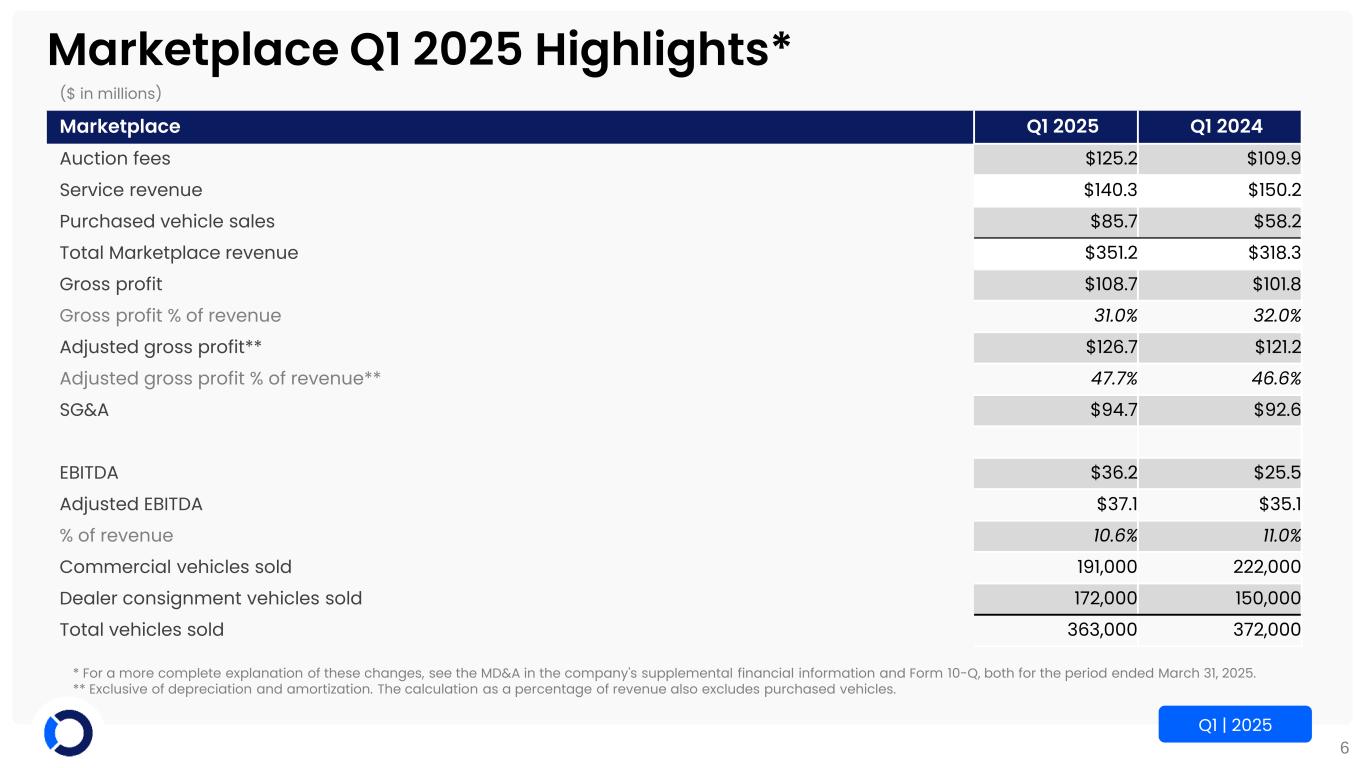
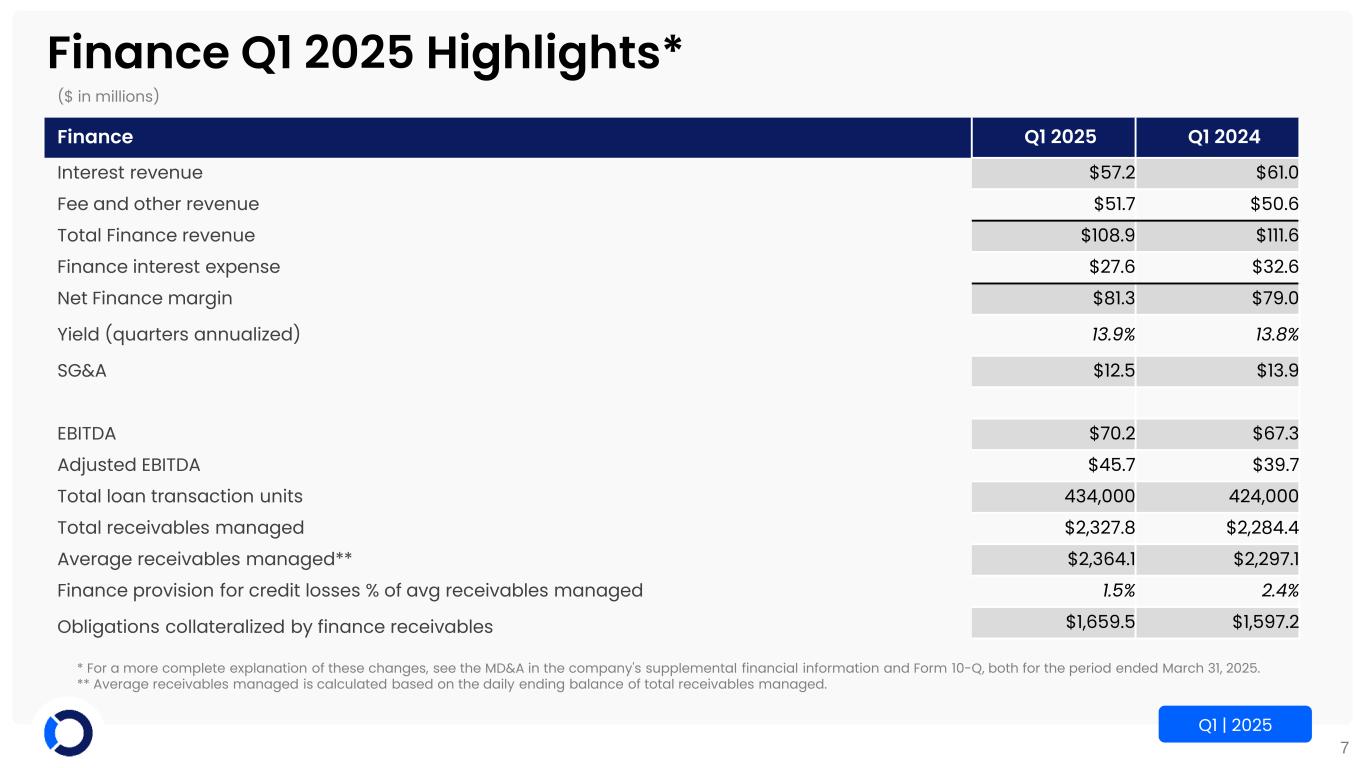
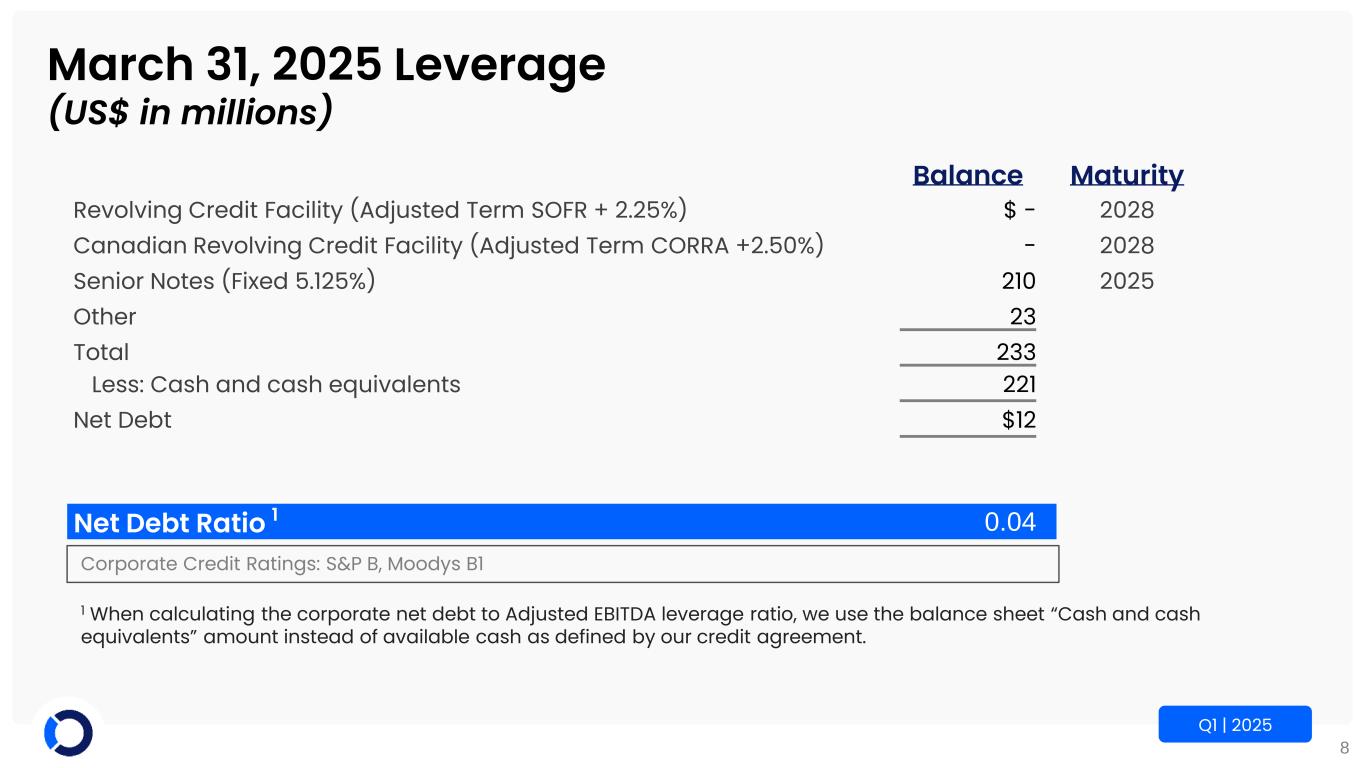
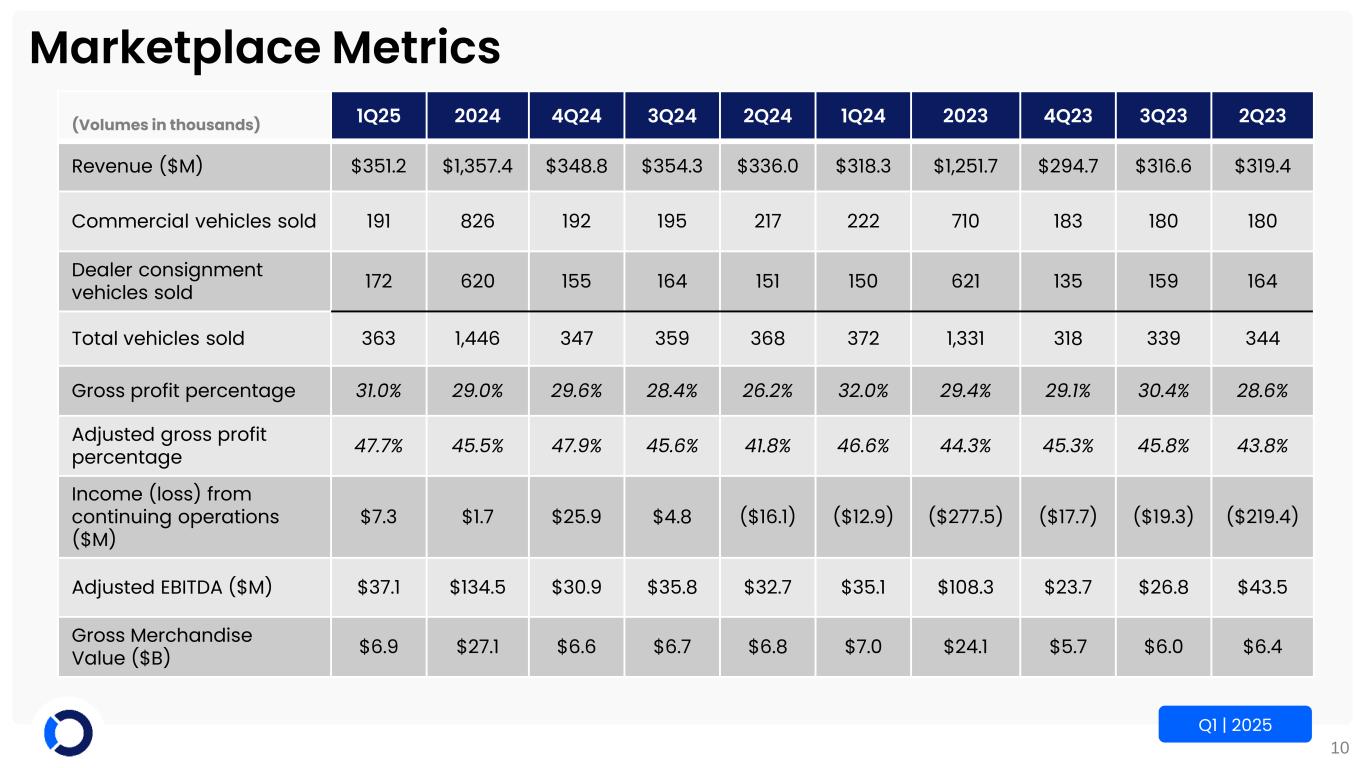
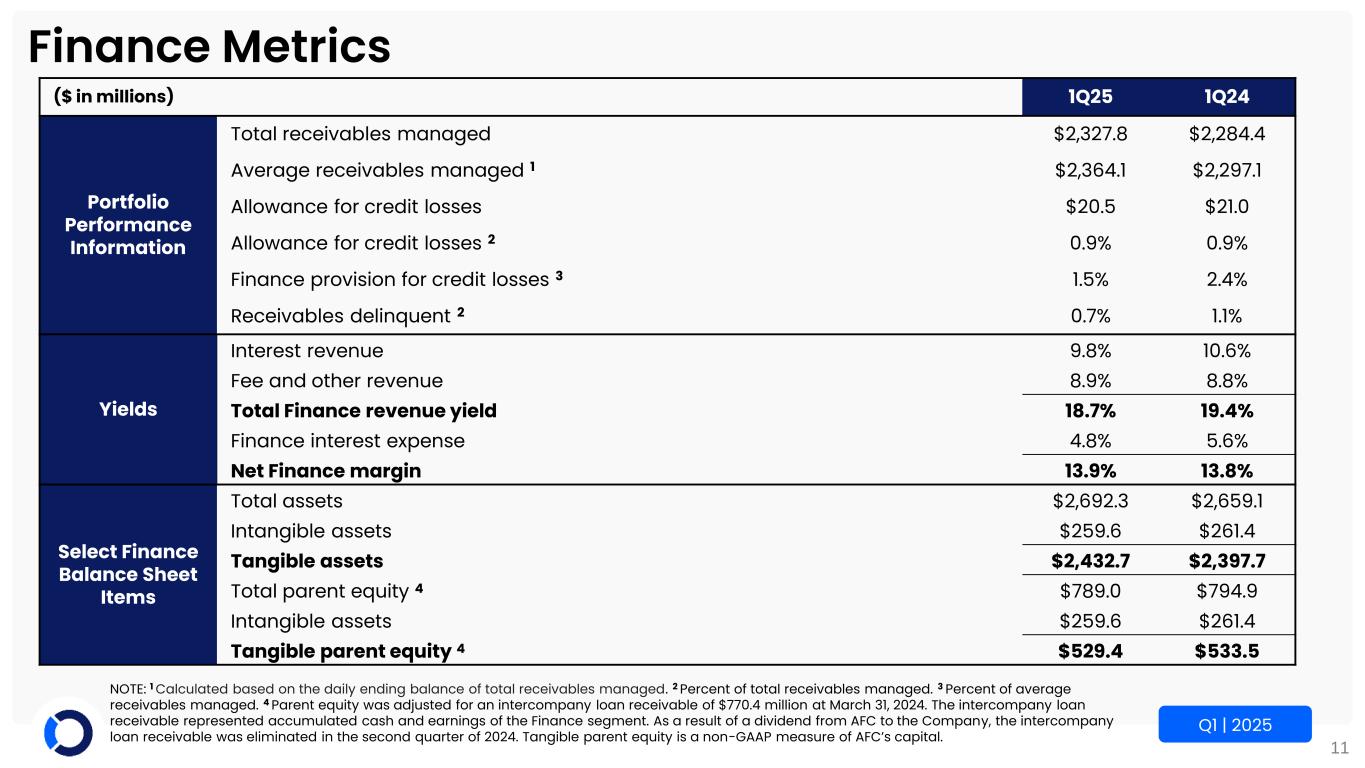
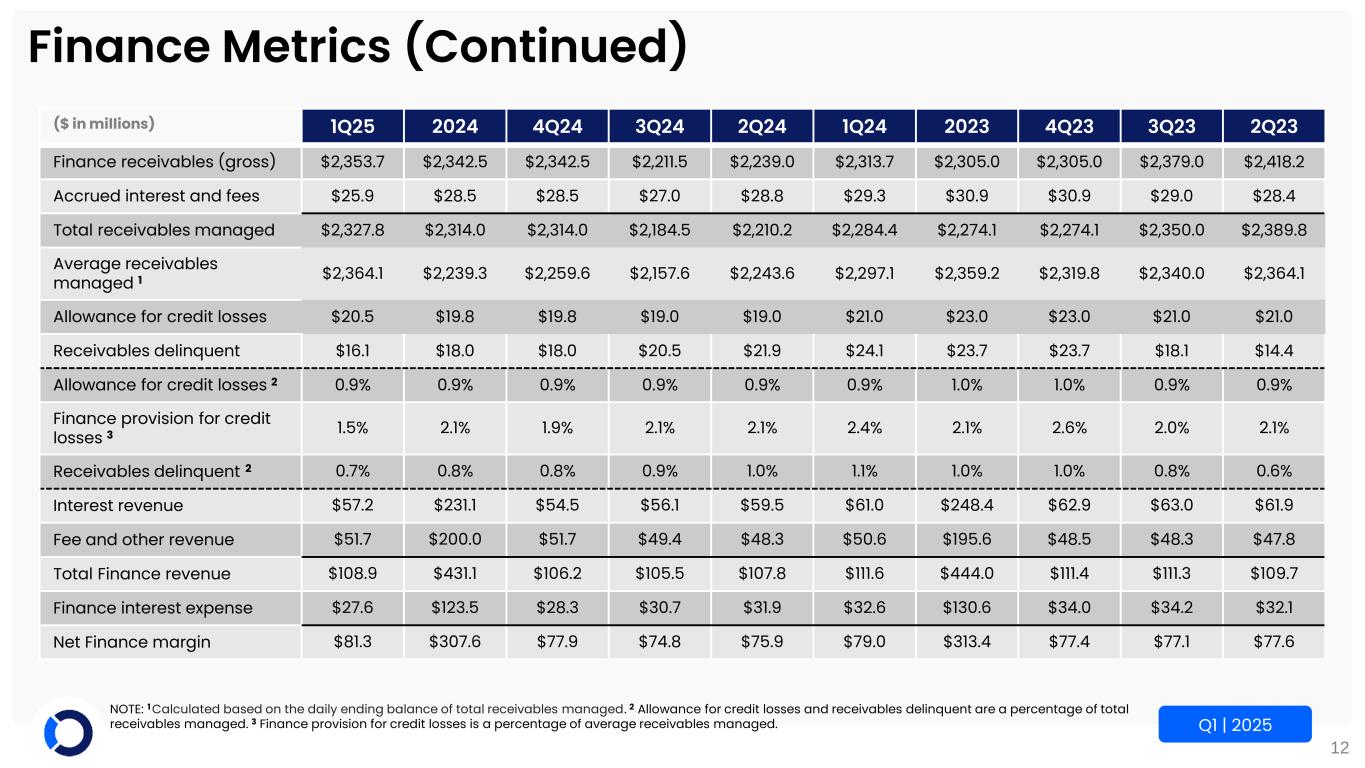
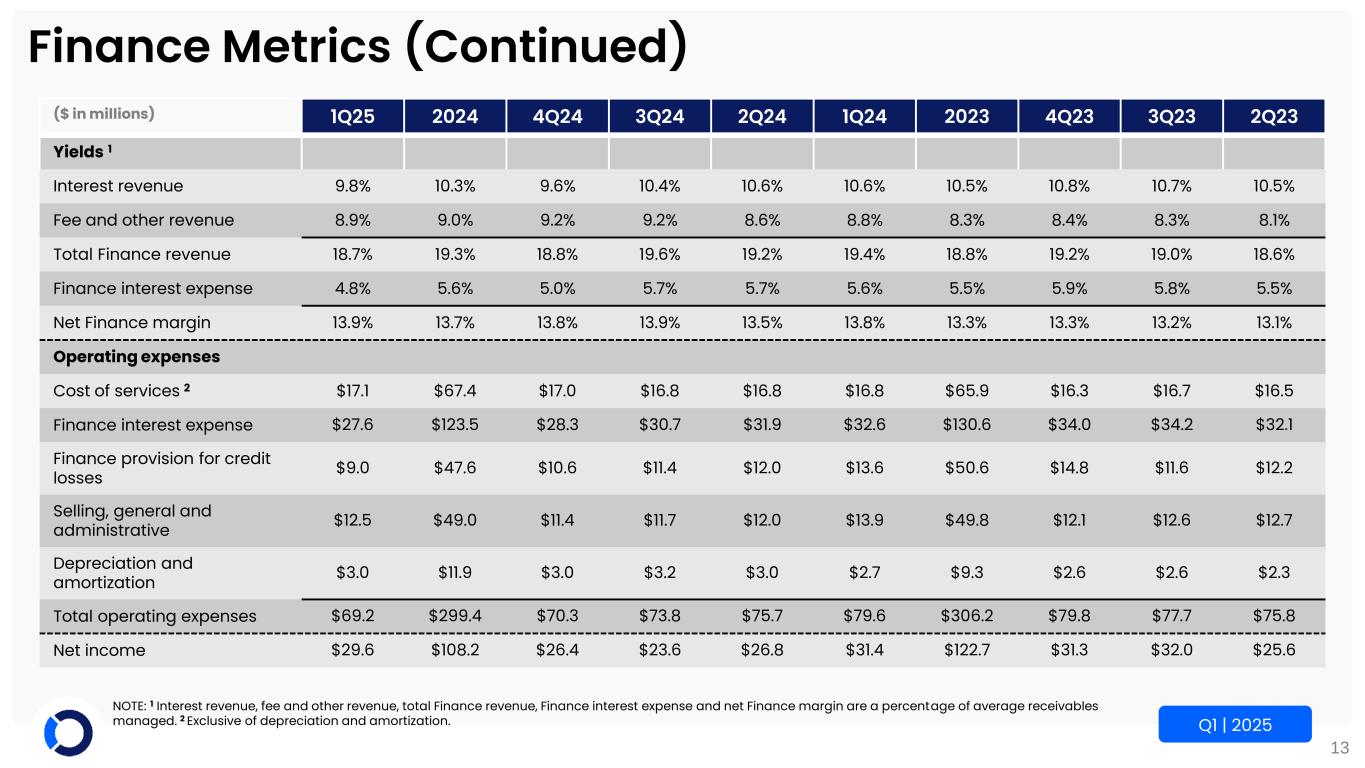
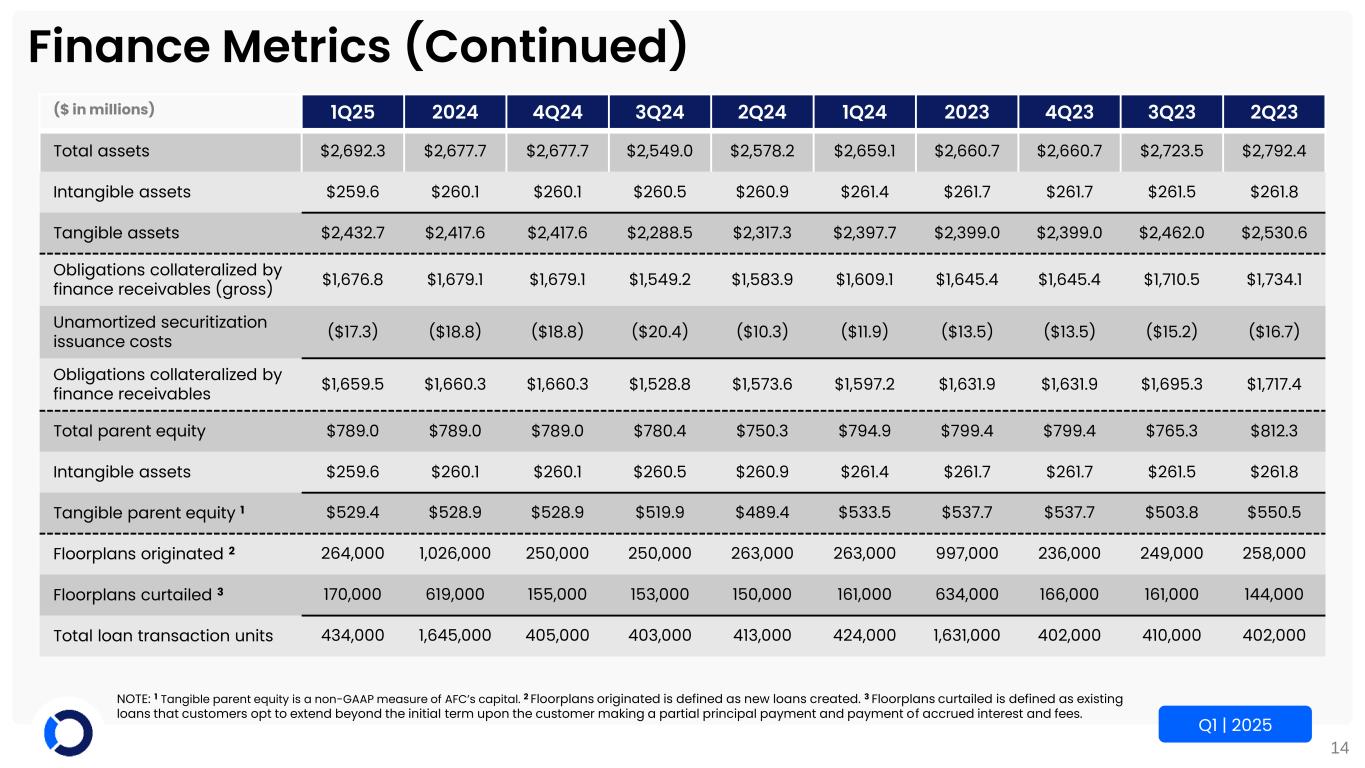
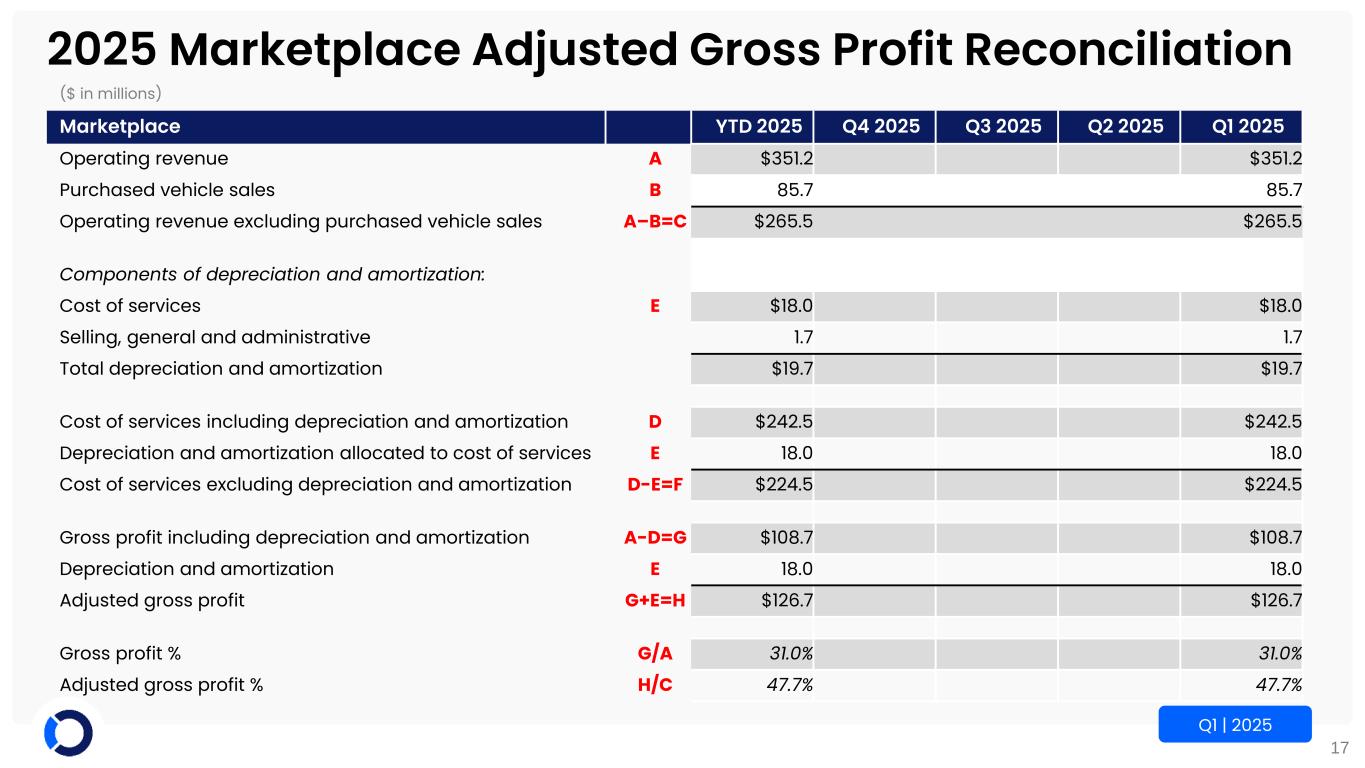
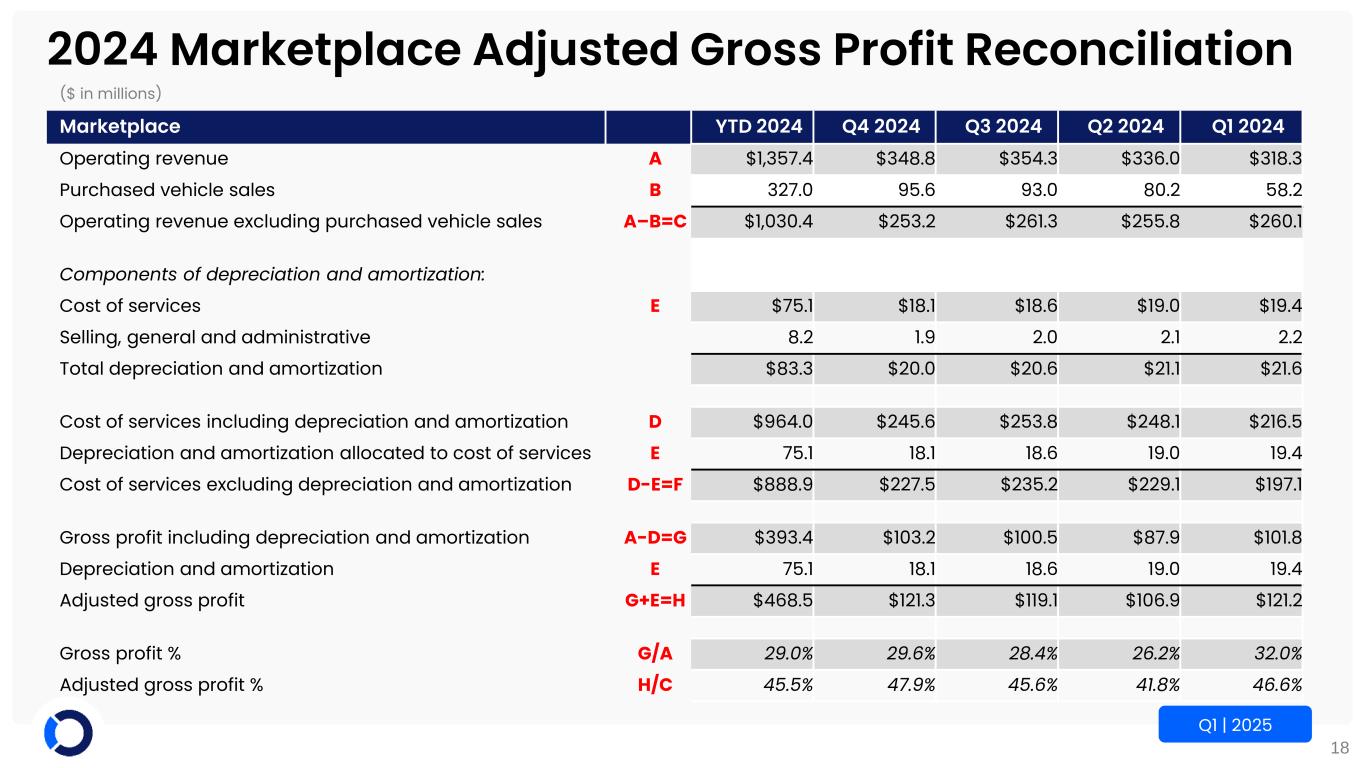
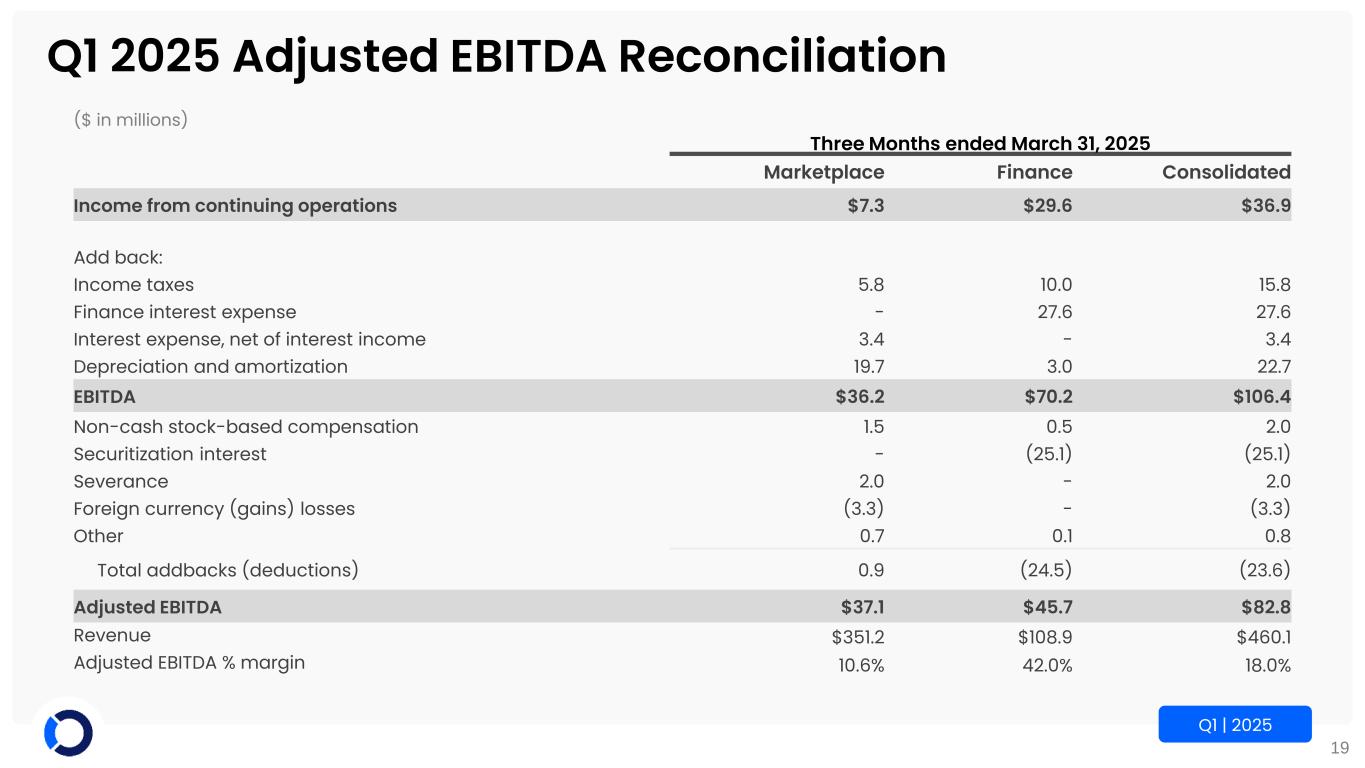
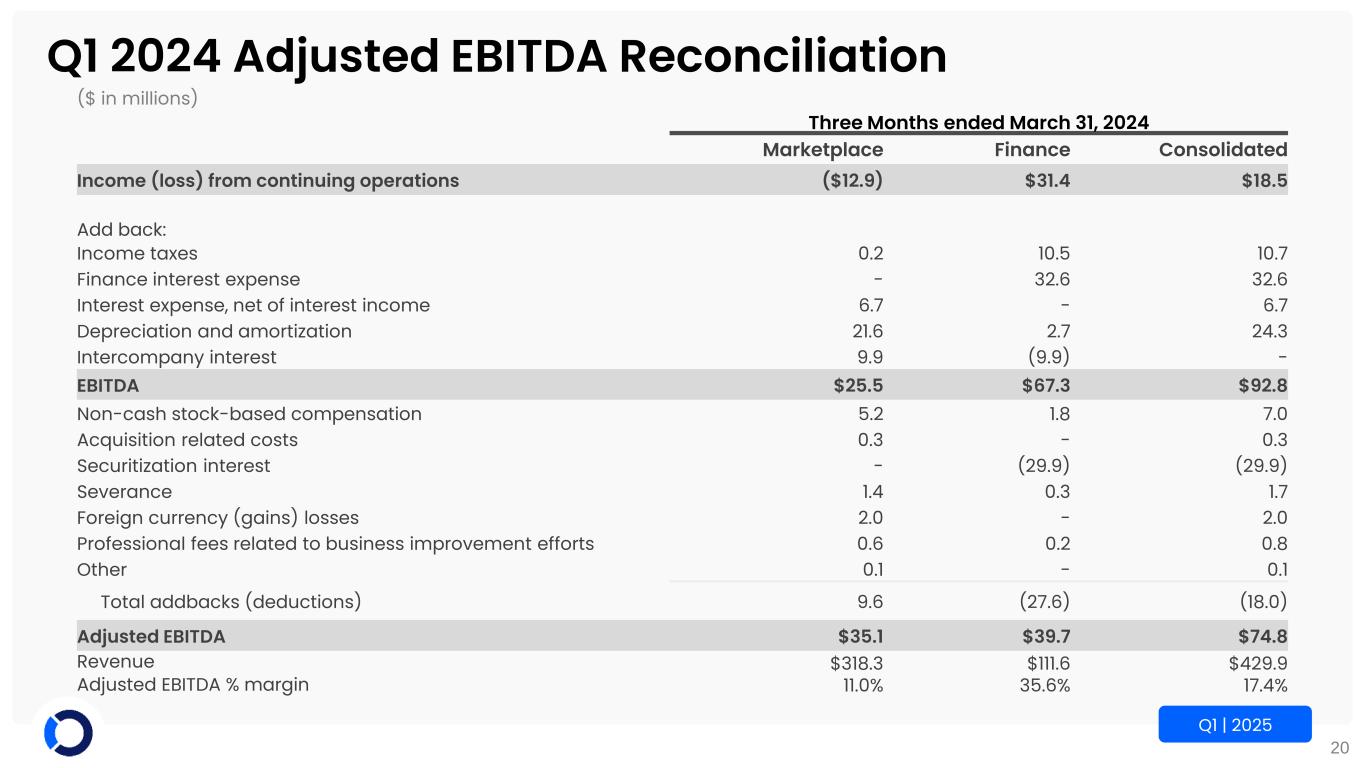
Thank you, Peter, and good afternoon, everyone. I appreciate you joining the call today and the opportunity to speak with all of you. OPENLANE delivered another strong quarter by executing on the fundamentals of our business, focusing on our customers, and advancing our strategy for growth. Our results reflect the output of strategic investments we've made in both people and technology and clearly evidence the underlying strength of our asset-light digital business model. Before I begin, my comments will be on a first quarter year-over-year basis, unless I state otherwise. And for comparability purposes, please recall that prior year results include the Automotive Keys business, which was divested as of Q4 of 2024. As previously disclosed, this business represented 2% to 3% of prior year revenue and adjusted EBITDA. Consequently, our reported year-over-year growth rates understate the underlying performance of our continuing operations. Moving to consolidated results. Revenue was $460 million, up 7%, the fourth consecutive quarter of year-over-year top line growth, reflecting the continued momentum across both the OPENLANE Marketplace and AFC Finance segments. Total cost of services was $242 million, up 13%, primarily due to increased marketplace dealer volumes and mix shift. Consolidated SG&A for the quarter was $107 million, essentially flat year-over-year. This reflects the successful execution of enterprise cost savings initiatives and includes the incremental technology and go-to-market investments made throughout 2024 and into 2025. We are very pleased to see that our revenue growth is outpacing our SG&A growth, and we continue leaning on our culture of cost discipline to create the financial headroom for further investments in technology, innovation, and growth. Together, these factors combined drove consolidated adjusted EBITDA to $83 million, an 11% increase over the prior year. This improvement reflects the operating leverage and scalability characteristics inherent in our digital business, our expanding customer base, and the differentiated products and services OPENLANE offers for its customers. Turning to the Marketplace segment. Total volumes were down 2%, driven entirely by a 14% decrease in commercial volumes. That decline was largely offset by double-digit growth in the dealer volumes, which increased 15% during the quarter. As Peter mentioned earlier, the commercial decline was directly in line with our expectations, and we remain well positioned to capture the opportunity of increased off-lease return volumes in 2026 and beyond. On the dealer side, our growth was fueled by the go-to-market investments we have discussed on previous calls, namely additional sales and customer support roles as well as expanded marketing capabilities. I also want to point out that our volume growth included positive contributions from the United States, Canada and Europe. This volume growth drove a marketplace revenue increase of 10% to $351 million. Auction fee revenue increased by 14%, driven by sales mix and auction fee price increases. Gross profit was up 7% due to strategic pricing actions, product mix, and productivity initiatives. The marketplace SG&A increased by 2%, driven by incremental go-to-market investments in the first quarter. All of this led to a marketplace adjusted EBITDA of $37 million, a 6% increase. Excluding the divested Automotive Key business, marketplace adjusted EBITDA would have increased 12%. As Peter stated, we are very pleased with the ongoing strength and continued growth in our Marketplace business. Our dealer business is highly differentiated, offering a better, faster, higher-value solution at a lower cost. And this has helped drive an expansion in our franchise and independent buyer and seller base. And this, combined with the diversity of our inventory, our deep pipeline of innovation, and our leading marketplace technology positions us well for continued profitable growth. Turning to our Finance segment. Floorplan origination volumes were stable year-over-year, while floor plan curtailments increased 6%, and total loan transactions increased by 2%. The resulting Finance segment revenues were down 2%, primarily due to lower interest rates in the first quarter. Net finance margin was $81 million, reflecting an annualized yield of 13.9%, up 10 basis points. And we were pleased with the success and completion of several strategic cost initiatives, which helped decrease SG&A by 10%. From a risk management perspective, we are very pleased with the first quarter provision for credit losses of 1.5%, reflecting our industry-leading proprietary risk management capability. We continue to target a long-term loss rate of 1.5% to 2%, and we expect the second quarter to be consistent with that target. All of the factors I discussed led to a very strong quarter for the finance business, which contributed $46 million in adjusted EBITDA, an impressive 15% increase over the prior year. Looking ahead, AFC remains a robust, high-performing business and a key strategic asset to OPENLANE. It provides dealer liquidity in our marketplace and enhances customer loyalty. It generates superior results in terms of net interest margin, return on assets and return on equity. And we are advancing multiple strategies to further connect and engage with our marketplace customers through AFC. Moving on to the balance sheet and capital allocation. Strong cash generation is an important and differentiating attribute of the OPENLANE business, and this was evident again in Q1. In the quarter, we generated approximately $123 million of cash flow from operations, and our consolidated net leverage is near zero. This level of cash generation demonstrates the powerful combination of our Marketplace and Floorplan business segments. Overall, the core of our capital allocation framework remains the same. We continue to prioritize funding of organic investments while ensuring flexibility for both high-return complementary strategic opportunities and shareholder returns. Our CapEx investments are funded through cash generated by the business and are expected to be in line with prior year. As mentioned on prior calls, we remain on track to repay the $210 million of senior notes due in June of this year, utilizing cash flow from operations and available liquidity. In addition, as Peter mentioned, the Board has approved a new $250 million share repurchase program through 2026, replacing the $100 million program expiring later this year. Our philosophy on share repurchases will remain principal and opportunistic. Summarizing the many highlights of the first quarter results, dealer volumes grew by 15% in the quarter, the second straight quarter of double-digit growth. Consolidated adjusted EBITDA grew 11% with strong contributions from both our Marketplace and Finance segments. AFC continues to be a major contributor to our overall financial performance and is an enabling connector for the marketplace business. OPENLANE continued its consistent track record of strong cash generation during the quarter, delivering $123 million of cash flow from operations. We believe our strong performance in the first quarter reinforces the soundness of our strategy, the value we deliver to our customers, and the strong scalability characteristics of our digital operating model. As the dealer industry increasingly trends towards digital and as the off-lease volumes return in 2026 and beyond, OPENLANE is well positioned to continue delivering growth and shareholder value. With that, I will turn the call over to the operator for questions.
Operator
And your first question today will come from Craig Kennison with Baird. Please go ahead.
Speaker 4
Hey, thank you. Question just on the current dynamic with respect to tariffs and the used environment. Have you seen any pull forward in activity at auction or among your dealer partners as a result of customers trying to get ahead of price increases?
Yeah. Thank you, Craig, for that question. I guess the key thing I'd want to leave you with, with that question is that the strong performance in Q1 was well in place and locked in place well ahead of any pull forward. We did see increased activity at the retail level. It's been reported in the press, I would say, starting like the 20th of March, something like that, the last 10 days of the quarter and extending into April. So that is true, and that was an added benefit. But I would say, Craig, that was incremental to the broader story. The broader story is this was a very strong quarter, where we grew our dealer business 15% organically year-on-year, growing the seller base, the buyer base, the vehicles listed, the vehicles sold, all by double-digit volumes, setting new records, et cetera. So, very strong performance in D2D. I think a strong performance in commercial as well, although volumes were down, that was well telegraphed and well communicated for the past number of earnings calls. That's a known fact. So those volumes were very much in line. And then a strong performance on the finance business. So three strong pillars to this business, all, I think, performed well in Q1. I'd say the pull ahead that's been reported was a slight added benefit late in the day, but very much incremental to the overall story of the quarter.
Speaker 4
Thanks. And with respect to that dealer volume growth, I think, 15%, to what extent do you attribute that to better awareness of OPENLANE? I think you've been under the OPENLANE brand as a unified brand for about two years now. And I'm curious whether you start to feel some traction there?
Yeah. Thanks, Craig. Listen, I think you're hitting on an important point. I think it's multifaceted, but I think that's one key point. I think the combination of the platforms, one brand simplifies the equation for the customer, consolidating the marketplace with commercial and dealer inventory creates a unique mix of inventory on this marketplace that no other operator has of high-value compelling vehicles for a broad universe of buyers. So, I think that's part of it. As you know, we also made investments in the middle of last year where we sort of increased our go-to-market investments, particularly in the US, and we're seeing those pay off. So I guess when I look at that dealer business, again, 15% organic growth in dealer volumes. That's our second consecutive quarter back to back where we've had double-digit growth or basically the same growth level. We believe we're gaining share, okay? We believe we're outperforming other parts of the industry. We're growing with major dealers, some of the biggest dealers choosing OPENLANE. So that's great to see. And again, I think if we look at this big picture overall, this digital dealer-to-dealer market is still, I would say, 30% or less of the overall dealer market. So 70% of dealer volume is still physical, although the digital section is taking a little bit more share every year that goes by. And obviously, we're benefiting from that. So I think we're one of the drivers of that as well. So listen, we're pleased with the results. We're pleased with the strategy. We're pleased with the execution. We're going to keep executing hopefully at the same high level and keep trying to drive that secular shift. And as customers become more and more aware of what we offer, I think the more they like it.
Speaker 4
That's helpful. Thank you.
Operator
Your next question today will come from Rajat Gupta with JPMorgan. Please go ahead.
Speaker 5
Hey, great. Thanks for taking the questions. I just had one, first one on Canada. Can you give us a sense of what percentage of vehicles transacted on your platform in Canada or just the industry overall, how many of those vehicles or what percentage typically then get exported to the US? And just how do you think you navigate the impact to the industry from that in this new tariff regime? That was my first question. Just have a quick follow-up on AFC.
Great. Thanks, Rajat. I'll attempt to answer that here. It's a good question. Obviously, Canada is an important market for us. We don't disclose US versus Canada volumes, but you know Canada is an important market for us. We're the market leader up there in commercial and in dealer. It's an important part of our business. And performance in Canada was strong in Q1 as well. As I said, we were strong in all our geographies in Q1. So in Canada, I would say a meaningful percentage, but it's certainly less than 20%. And in most periods, it's less than 15% of the volume we sell, we believe, is purchased by exporters who then import those used vehicles into the US. So to put a wide range on it, Rajat, 10% to 20% in most quarters. And sometimes that the activity dries up and it drops below that, but that's kind of typical. But we've analyzed this quite carefully. So a few things are interesting to me. One is, if we look at new car retail sales in Canada, about half of those are built in the US, okay? And if we look at the majority, and I'm talking about the significant majority of vehicles that have been exported from Canada into the US, there are vehicles that are originally built in the US, and you can tell that by the VIN. So they're not subject to these tariffs. So we've had pretty active open discussions with some of our big customers who operate in this business. Their volumes are strong. They continue to be strong. I mentioned in my remarks, we've built a tariff filter. That's to enable buyers in our Canadian market to quickly see it and say what vehicles are not subject to tariffs. So I guess that's kind of a long way of saying, Rajat, it's something we're paying attention to, but it looks like the majority of vehicles that are currently being exported are not and will not be subject to tariffs. And this business, at least today, continues at its sort of normal robust pace.
Speaker 5
Understood. That's helpful color. And just the second question was on AFC. I was surprised to see the sharp drop in provisioning there. Just curious what happened. Is this like a new level going forward? Was there any one-time stuff that influenced that because a pretty strong number there? So any thoughts on the cadence outlook there would be helpful.
Yeah. Thanks, Rajat. Listen, AFC had a very good quarter. I was very pleased with the results, volume growth, strong revenue performance, albeit a slight decline in revenue was really driven by where interest rates are at relative to a year ago and then very strong risk management that delivered the overall result. I guess, Rajat, if you look at the risk management stats over the last, I don't know, four quarters, they have been steadily improving. So, I think Q1 was just another data point along that curve, although the improvement relative to Q4 was quite strong. So we were pleased with that. When I put it down to listen, I think AFC has the industry leading risk management kind of approach, I believe, in the industry. And also, I'd say generally in an environment when used vehicle prices are not depreciating or are appreciating, that typically reduces the risk at AFC a little bit because vehicles are holding their value and that diminishes risk. So, listen, I feel really good about the performance there. I guess what do we see going forward, we're in the 1.5% to 2% range. That's the range we typically target the business to be in. So I don't really expect it to be below that range for any sort of significant period of time. We were targeted being in that range for 2025 overall and likely for the coming few quarters. Ryan, is there anything you want to add to that or?
Speaker 3
No, I think that's correct.
Yeah, okay. So I think we feel good about the 1.5% to 2% range, Rajat.
Speaker 5
Awesome. Great. Thanks for all the color and good luck.
Operator
Your next question today will come from Bob Labick with CJS Securities. Please go ahead.
Speaker 6
Hi, this is Will on for Bob. Can you add some color to the key measures you're taking to gain share independent of industry volumes? And are you continuing to add to the sales force or is that on pause with tariffs?
Thank you, Will, for that. I'm pleased with the outcomes we're seeing, and I think the investments we made in the middle of last year contributed to that. While they weren't the only factor, the combination of various elements has been positive. As a data-driven company, we track the performance of our new investments, and we now have 90 days of data on these. I feel good about what we've observed so far, and I believe these investments are still ramping up to their full potential, but they are progressing well. Regarding further investments, we are considering them. I see our dealer-to-dealer business as one of the three key pillars for overall profitability at OPENLANE. This sector offers an opportunity to shift an industry that is heavily physical into a more digital space, where we are a leader. We are investing in this area and are seeing promising results. Therefore, we will continue to make appropriate investments without letting tariffs hold us back. We will be strategic, assessing what the right investment is for our current environment. Additionally, our commercial business is poised for growth, especially with anticipated volume increases in 2026 and 2027. It has been and will remain a strong business for us as a market leader. Our finance business also had an excellent quarter and holds great prospects. Overall, I believe we are making the right investments, executing well, and measuring the outcomes effectively across all three segments of our business.
Speaker 6
Thank you. And then just one more. Can you add some color to the key learnings from the single platform off leases and dealer car auctions on OPENLANE?
Speaker 3
That's a great question, Will. Some of the observations are based on anecdotal evidence and others are a bit more difficult to quantify. However, since our merger, we've noticed accelerated growth in our direct-to-dealer sales. There have been additional investments made as well, which makes it challenging to pinpoint specific impacts. We've seen an increase in our Net Promoter Scores, and I’m pleased about that because it reflects how well we are meeting our mission—making wholesale processes easier and ensuring our customers achieve success. Our customers are affirming that we are indeed fulfilling those goals. Additionally, customer brand recognition has grown; there's growing awareness of OPENLANE, and we are receiving more referrals. In the NPS surveys, I've noticed positive feedback from dealers who state that OPENLANE is their preferred marketplace, and they appreciate the ease of our processes. This is very rewarding for me, and our team is also inspired by this feedback. I believe that the consolidation of our platform is a key factor in all this, and I'm proud of our brand’s clarity and simplicity. It has brought our team together, and we are all passionate about our mission and excited for the future of OPENLANE.
Operator
And your next question today will come from Jeff Lick with Stephens. Please go ahead.
Speaker 7
Good afternoon, everyone. Thank you for taking my question and congratulations on a great quarter. I wanted to discuss the auction fees per vehicle sold, which have seen a significant increase. I understand there was pricing in Canada and that you are the low-cost provider. Could you provide some insights on the pricing environment and what is influencing the fee per unit? That would be appreciated.
Thanks, Jeff. I appreciate those comments, and I'll try to answer your question here. You mentioned OPENLANE is a low-cost provider. Here's the way I like to think about it. I think OPENLANE is a high-quality provider. We provide excellent outcomes for customers, and we do that at a reasonable price. So I think we're sort of very much on the sort of cost-quality frontier in terms of offering a superior excellent sort of technology digitally driven service and outcome at a very reasonable price. That's kind of how I think about it. And I do think, big picture, we have pricing opportunity in this business, but I also think we're focused on growing our volumes and growing our share. And I think we saw evidence of all of that in Q1. So to get into the specifics, listen, we did see, I think, 14% growth in auction fee revenue. So maybe that's where pricing has shown up the most. I feel good about that. There was a pricing increase in Canada, Jeff, we did a relatively modest one. We did it at the beginning of the quarter. I think that is delivering all of its intended outcomes. So we didn't see any erosion or loss from that. So that's been effective. But also, what I'm really happy to see in Canada is our NPS scores went up, right? So the increase in pricing wasn't a negative in any of the sort of customer perception or the relationship we have with our customers. So we did that in Canada. I guess what I'd say overall, Jeff, is I like how we're positioned from a price perspective. Dealers recognize that our fees are very reasonable in an environment where not all of their providers would have the same reasonable fees, let's say. And I think we have opportunity over time. So I think we're well positioned there. Pricing, I would say, is a lever of future growth, but it's not going to be the most important lever. The other levers would be obviously volume, I think, is the important one, volume and share, pricing, and then cost management and the scalability of the platform, which obviously, I think the digital platform has that in spades as well.
Speaker 7
Well, I certainly didn't mean to imply by saying you're the low-cost provider that you were the low-quality provider. I was just more implying that there's a gap there that maybe you could close a little bit in terms of pricing if you wanted. And just a follow-up on the service revenue, I'm assuming that that's perhaps a little more tied to the commercial units because that was down. Any color you could add there?
I appreciate your comment, Jeff. I wasn't suggesting you did that; I just wanted to clarify my perspective. The main reason for the decline in service volume and service revenue was the divestiture of the keys business. Last year, the keys business represented about 2% to 3% of our revenue and EBITDA, all of which was included in the Marketplace segment. If you consider it as a portion of marketplace revenue and EBITDA, it significantly impacted those figures. We haven't shared the exact details, but this was the primary factor. The second factor, which you mentioned, was that as commercial volumes decreased, there were fewer off-lease vehicles inspected and delivered, which also affected service revenue. However, this was somewhat balanced out by an increase in the volume of dealer vehicles inspected and delivered. So, the keys business was the first reason, and the point you brought up was the second.
Speaker 7
Great. Well, congratulations and I'll get back in the queue.
Operator
And your next question today will come from Bret Jordan with Jefferies. Please go ahead.
Speaker 8
Hey, good evening, guys.
Speaker 8
On the topic of pricing, you mentioned that auction fee revenues increased by 14% and gross profit was up by 7%. In your prepared remarks, you referred to pricing investments related to that change, and noted a price increase in Canada. Was there any price change in the US market that contributed to the share gain, or is pricing becoming more competitive?
Thanks, Bret. We didn’t make any changes to our pricing in the US market during the quarter, but we did raise our prices in the US market, which I believe occurred in the fourth quarter, specifically in the latter part of last year. This pricing increase in Q4 would have contributed to growth in auction revenue in Q1 compared to the previous year. In the US D2D market for Q1, we saw healthy volume growth, and revenue per unit also increased. We did make some additional investments in Q2 and Q3 of last year, but these were balanced by efficiencies in other areas of the business. Overall, we experienced healthy volume growth, indicating we are increasing our market share organically. Additionally, we are seeing growth in both the number of active sellers and active buyers, which, along with an improvement in customer experience and eNPS, is quite significant.
Speaker 8
Okay. And then I have a broader question related to the tariffs and possibly connecting back to 2022 when we faced another external factor affecting used car values. If new car average selling prices increase and used cars become more desirable, will dealers consign fewer vehicles? Or will this lead to a higher turnover of used vehicles as everyone competes for inventory?
It's a good question, Bret. I don't think we're in a situation like 2022. Each situation is unique, but there are several factors to consider. A key aspect is the inventory level, especially the new car stock that dealers have compared to demand. If dealers have a lot full of cars, they'll be more likely to wholesale a significant percentage of the trade-ins when selling new retail cars. However, if their new car inventory is low, they'll notice those empty spaces and realize they need to enhance their used car business. We did notice a slight decline in dealer inventory due to a surge in retail sales towards the end of March and early April. Really, it went from about a 55-day supply down to around 51 days, though I'm not entirely sure about those exact numbers. It's essential to keep an eye on the total volume of new car sales and the fullness of dealers' lots, as that will influence how many vehicles they put into the wholesale market.
Speaker 8
Great. Thank you.
Operator
This concludes our question-and-answer session. I would like to turn the conference back over to Peter Kelly for any closing remarks.
Thank you, Nick, and thank you to everyone on the call for joining us today and for your interest in our company. Looking ahead, I believe OPENLANE is well-positioned to navigate the current environment, advance our growth strategy, and deliver sustained shareholder value. Our Q1 results clearly show that our Marketplace and Finance business are performing exceptionally well, generating strong cash flows, and we currently have very little debt. Based on our knowledge of the industry and our performance, we are maintaining our 2025 guidance. Additionally, we discussed the increase of our share repurchase authorization to $250 million. I look forward to updating you on OPENLANE's strategy, innovation, and performance during our next quarterly call in about 90 days. Thank you all. Have a great evening.
Operator
Conference has now concluded. Thank you for attending today's presentation. You may now disconnect.