Operator
Good morning, everyone. Welcome to OPENLANE's Second Quarter 2025 Earnings Call. With me today are Peter Kelly, CEO of OPENLANE; and Brad Herring, EVP and CFO of OPENLANE. Our remarks today include forward-looking statements within the meaning of the Private Securities Litigation Reform Act of 1995. Such forward-looking statements involve risks and uncertainties that may cause our actual results or performance to differ materially from such statements. Factors that could cause such differences include those discussed in our press release issued today and in our SEC filings. Certain non-GAAP financial measures as defined under SEC rules will be discussed on this call. Reconciliations of GAAP to non-GAAP measures are provided in our earnings materials and available in the Investor Relations section of our website. Please note that all financial and operational metrics presented during this call are on a year-over-year basis, unless otherwise specifically noted. With that, I'll turn the call over to Peter. Peter?
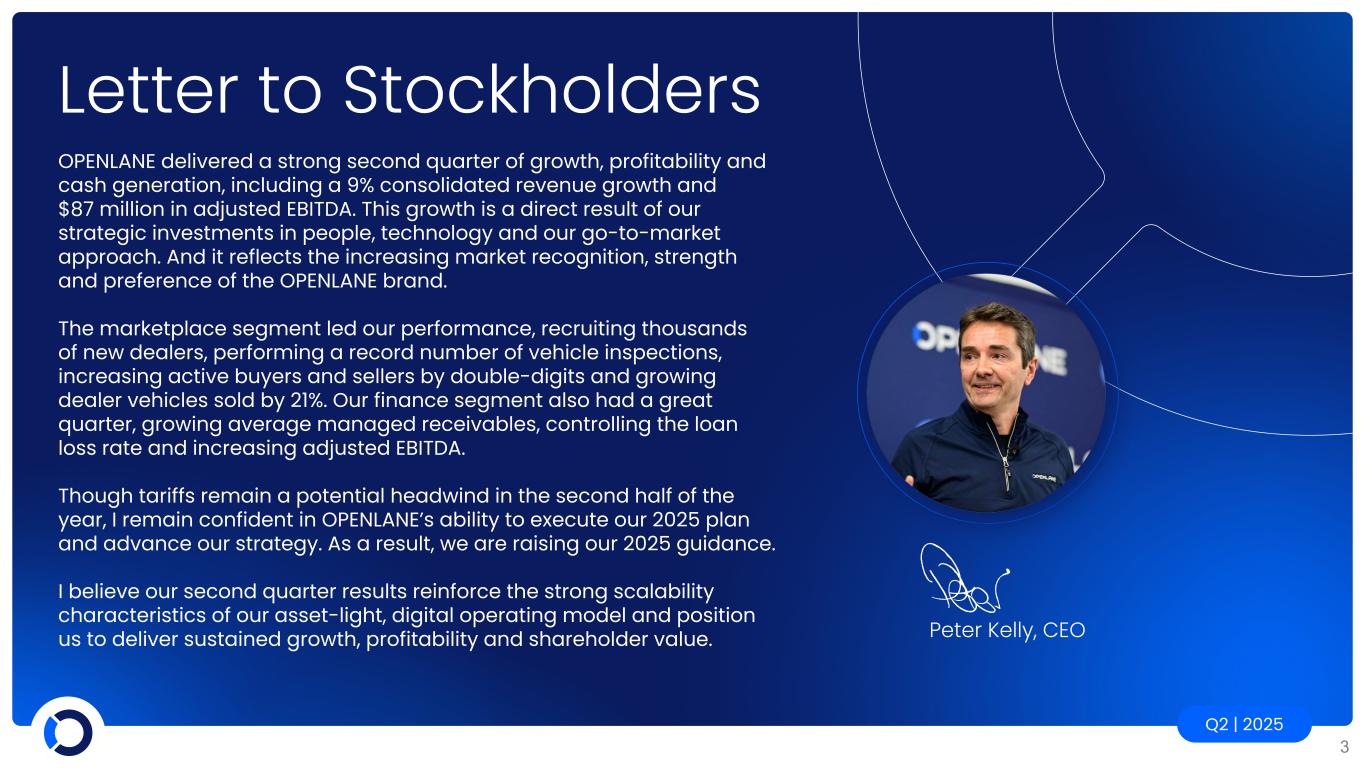
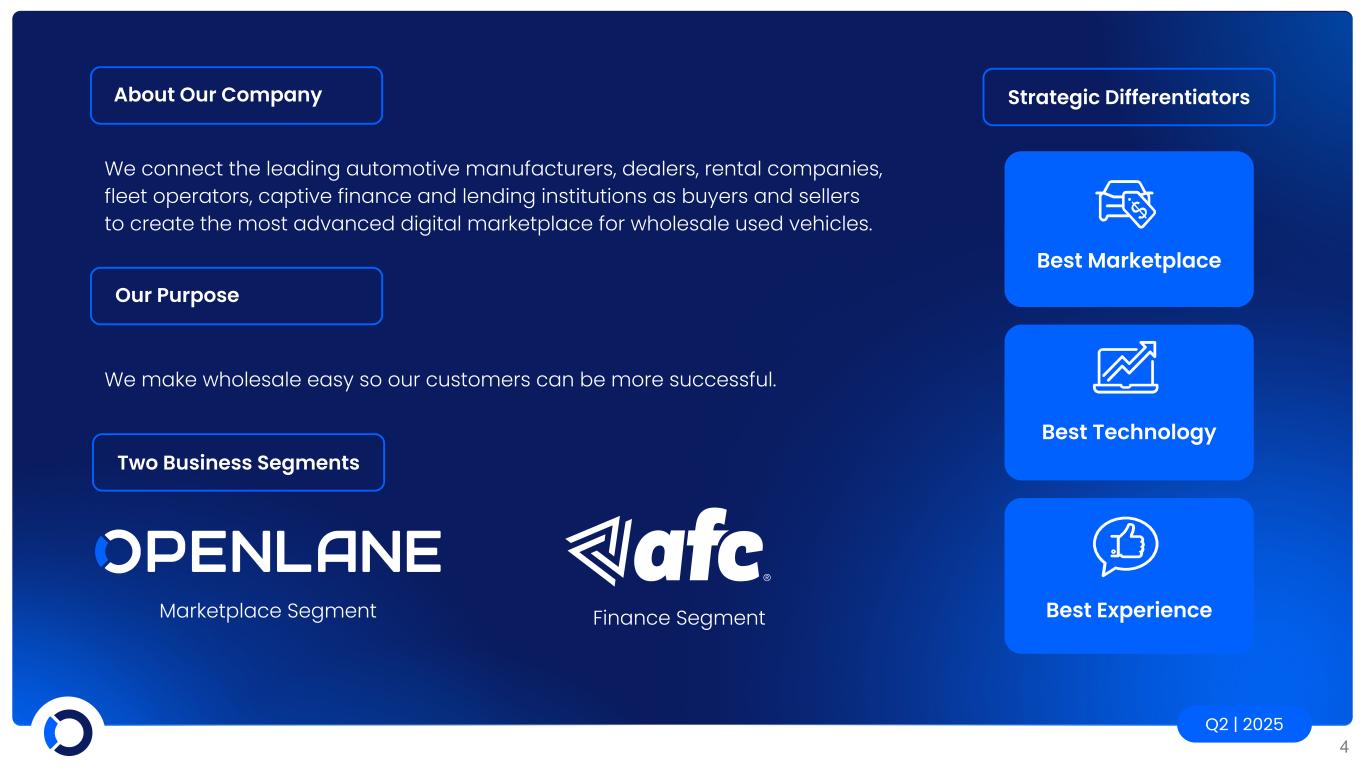
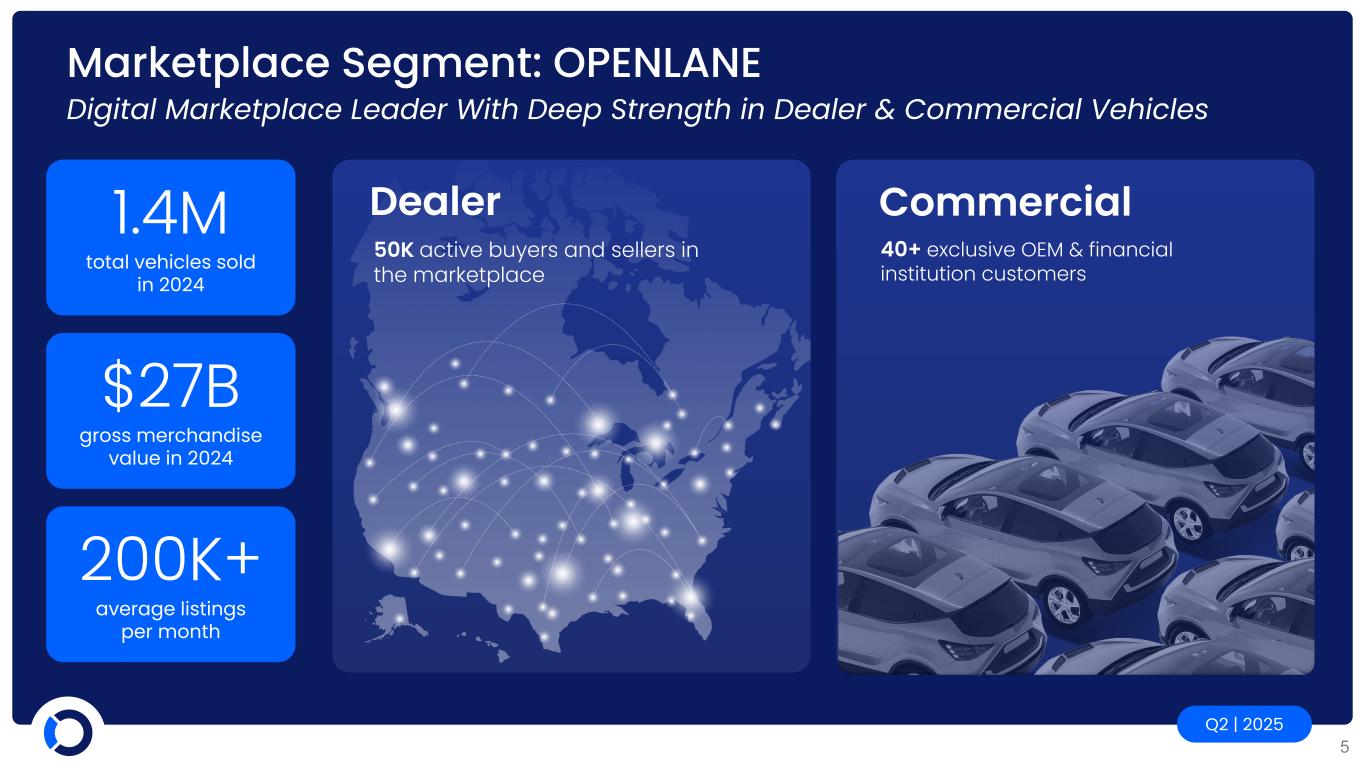
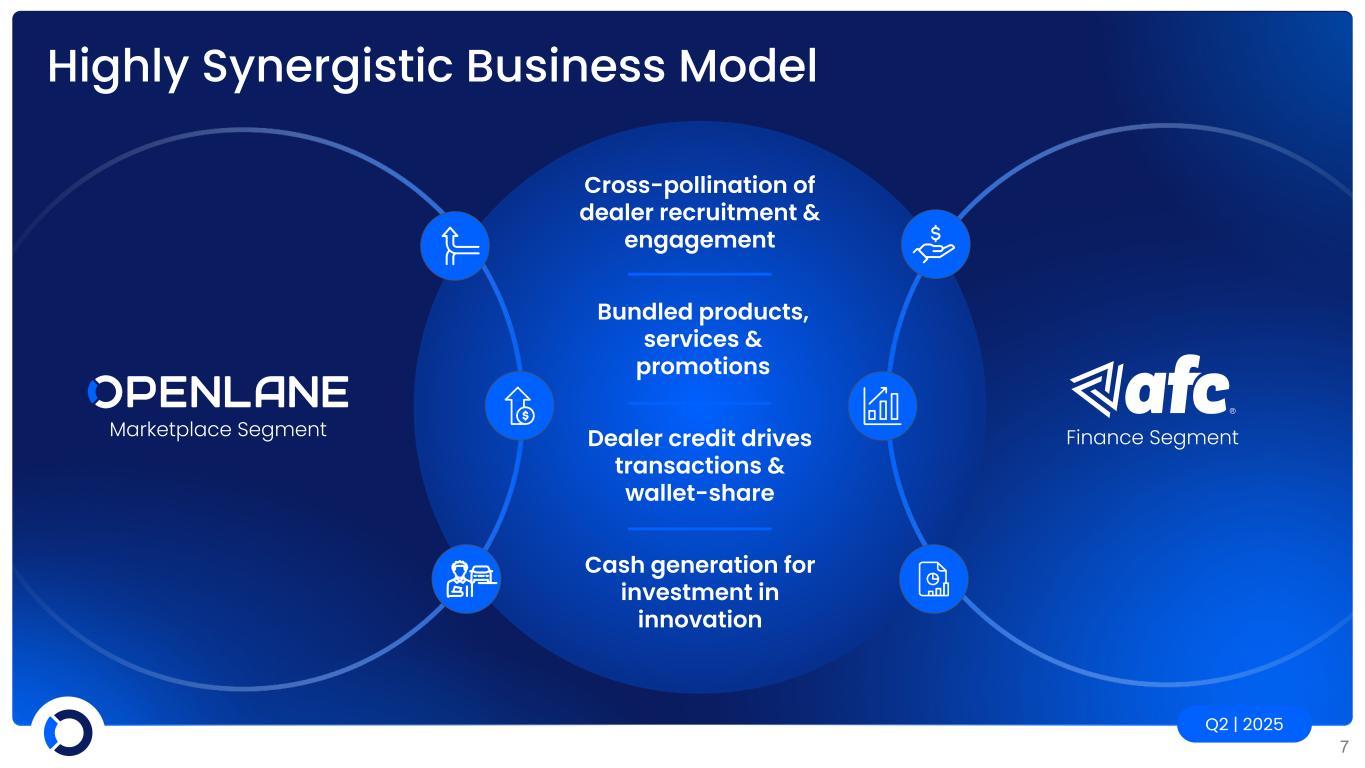
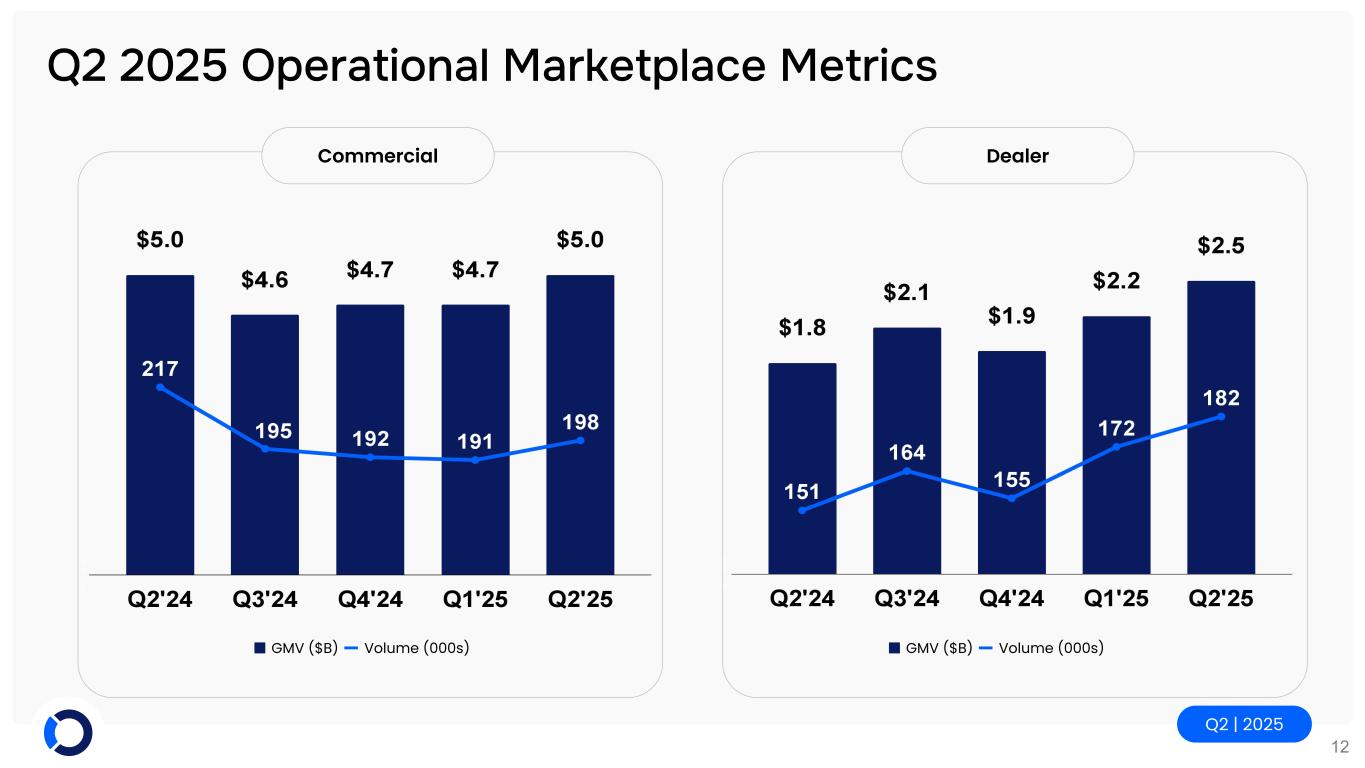
Thank you, Itunu, and good morning, everyone. I'm pleased to be here today to share OPENLANE's strong second quarter results. I'll start with a few highlights before updating you on our strategy and our perspectives on the market environment. But first, I'd like to officially welcome Brad Herring, OPENLANE's Chief Financial Officer, to his first quarterly earnings call. Brad joined the company in May and is already making positive contributions to our executive leadership team and to our finance functions across the company. Brad will cover our detailed financials later in this call, and we'll also share a little more about himself and what you can expect from a reporting and investor perspective. Turning now to our results. OPENLANE delivered a strong second quarter of growth, profitability and cash generation. This growth, all of which was organic, is a direct result of the strategic investments we've made in people, technology and our go-to-market approach, and it reflects the increasing market recognition, strength and preference of the OPENLANE brand. On a consolidated basis, we grew revenue by 9%, delivered $87 million in adjusted EBITDA, representing 21% growth and generated very strong cash flow. As a reminder, these results were achieved against the prior year that included contributions from the automotive keys business that we divested during the fourth quarter of last year. In the Marketplace segment, while commercial vehicle volumes were down as expected, we grew dealer-to-dealer volumes by 21%, representing the third straight quarter of double-digit volume increases. We also generated a 24% increase in auction fee revenue and a 36% increase in marketplace adjusted EBITDA. Our Finance segment also had a great quarter, growing average managed receivables, holding the loan loss rate to 1.5% and increasing adjusted EBITDA by 9%. In summary, OPENLANE is successfully executing our 2025 plan and longer-term strategy. I believe our second quarter results further reinforce the strong scalability characteristics of our asset-light digital operating model and help position us to deliver sustained growth, profitability and shareholder value. Based on all of those factors, we are raising our 2025 guidance, and Brad will walk through the details of that later in this call. So let me turn to OPENLANE's strategy and our outlook for our business and for the broader industry. As a reminder, our strategy for growth is anchored in our purpose, which is to make wholesale easy so our customers can be more successful. And we're making wholesale easy by focusing on three enabling priorities: First, by delivering the best marketplace, expanding to more buyers and more sellers and offering the most diverse commercial and dealer inventory available. Second, by delivering the best technology, innovative products and services that help our customers make informed decisions and achieve better outcomes. And third, by delivering the best customer experience, keeping our marketplace fast, fair and transparent, making it easy for customers to transact and making OPENLANE the most preferred marketplace. So let's start with more detail on the marketplace, where we increased our gross merchandise value to $7.5 billion, while organically growing overall volumes, auction fee revenue and gross profit. This was driven by our standout performance in dealer-to-dealer. But first, there is no change in the commercial business story. The Q2 decline in off-lease volume was in line with our expectations. When off-lease volumes begin increasing in 2026, as we anticipate that they will, OPENLANE is best positioned to capture that opportunity given our clear market leadership position, our long-standing customer relationships and our deep system integrations. Additionally, the continued industry migration from physical to digital, along with another strong quarter of new car lease originations in Q2 represent compounding tailwinds for OPENLANE's longer-term growth opportunity in commercial. In dealer-to-dealer, OPENLANE executed very well across the business. We continue to expand our customer base, enrolling thousands of new dealers and capturing volume opportunities with some of North America's largest franchise dealer groups. We saw a double-digit increase in unique buyers and sellers active on the marketplace, which drove higher demand and engagement. And we conducted a record number of vehicle inspections, leading to double-digit increases in dealer vehicles offered for sale and in vehicles sold. When we add all of this up, our analysis shows that our North American dealer growth meaningfully outpaced the industry during the quarter and that OPENLANE gained in dealer market share. I attribute this success to our focus and commitment to the strategic priorities that I mentioned earlier, delivering the best marketplace, the best technology and the best customer experience. From a marketplace perspective, we are clearly demonstrating the impact of our brand and operational consolidation to OPENLANE and our go-to-market investments. We have more sales leaders on the ground and on the phones, new digital marketing capabilities to streamline recruitment and engagement and enhanced analytic capabilities around pricing and customer behavior. All of this is driving growth in our customer network, in our wallet share and overall volumes transacted. And it's clear to me the growth in our buyer and seller network, coupled with our unique selection of commercial off-lease and dealer inventory is making OPENLANE an increasingly differentiated marketplace for all of our customers. In terms of technology leadership, we continue to execute a multi-year plan to simplify our technology, reduce costs and increase speed to market. We have a deep pipeline of innovation that will help make buying and selling faster, smarter and more transparent. Our one app in the United States is cross-pollinating commercial sellers and dealers and helped drive a double-digit increase in commercial vehicles sold in our open sale channel during the quarter. In addition, our Absolute Sale feature now supports the majority of our U.S.-based dealer transactions and is generating an average of $800 in additional value per vehicle for the sellers. And we will be extending our leadership in AI-driven inspection technology with several new releases in the near future. And finally, there is clear evidence that our commitment to delivering an exceptional customer experience is also becoming a competitive differentiator. OPENLANE is a digital marketplace in a relationship business, and we're highly focused on building and maintaining every customer relationship no matter the size or geography. Buyer and seller feedback through our transactional NPS surveys continues to rate OPENLANE in the great to excellent range. And a recent third-party survey showed OPENLANE had significantly improved its preference ranking among franchise dealers and is now the most preferred pure-play digital marketplace in the U.S. So, as I think about the marketplace performance in the first half of 2025, I feel really good about what the OPENLANE team has accomplished and how that positions the company for further success. As we look to the second half of this year, I'm also pleased that we now have more clarity on the tariff situation than we had 90 days ago, particularly related to many of the largest automotive trading nations. I still believe tariffs may be a potential headwind to total new vehicle retail sales in the second half of this year, and our projections do reflect that possibility. However, I continue to have very strong conviction as it relates to OPENLANE's strategic path, reflecting a technology leader in an industry that will continue to migrate to digital solutions, a commercial vehicle volume recovery starting early next year and extending through 2027 and beyond, a fast-growing dealer business that is becoming more recognized, more differentiated and preferred in the market. And finally, a highly scalable business model with excellent cash flow characteristics. Another area that fuels my confidence for growth is the increasing connection between our marketplace business and our finance business, AFC. As I mentioned earlier, AFC posted another excellent quarter showing growing managed receivables, controlling the loan loss rate and increasing adjusted EBITDA. It is a high-performing business with a leading market position and a broad and loyal customer base. And I believe an even deeper integration between these businesses and their respective offerings and customers continues to be one of the best opportunities that we have to further accelerate our growth. During the last call, I spoke about our ongoing efforts to cross-pollinate OPENLANE and AFC dealer registrations and to serve each AFC dealer another OPENLANE vehicle whenever an AFC loan is paid off. Based on their early successes, these programs are expanding across North America. We are also developing additional approaches, including cross-customer research, two-way promotions, bundled pricing structures, aligned sales and branch manager incentives, and potential user experience integrations. I look forward to leveraging the people, technology, brand equity and the extraordinary industry expertise that exists across these market-leading businesses. And I'm confident this connection will be positive for our customers and help generate results that exceed the sum of the parts. So just to summarize, we had another strong quarter of financial and operating results. We are executing our strategy with focus and discipline, and that strategy is resonating with our customers. Because of that, I believe the key elements of our value proposition for investors remain very compelling. OPENLANE is an asset-light, highly scalable digital marketplace leader focused on making wholesale easy for automotive dealers, manufacturers, and other commercial sellers. There is a large addressable market in North America and Europe, and we are uniquely well positioned in both dealer and commercial. Our technology advantage is a competitive differentiator. Our floorplan finance business is a category leader that is highly synergistic with our marketplace. We are cash flow positive with a strong balance sheet and no debt. And we believe our business has the capability to deliver meaningful growth, profitability, and cash generation over the next several years. So with that, I will now turn the call over to Brad. Brad?
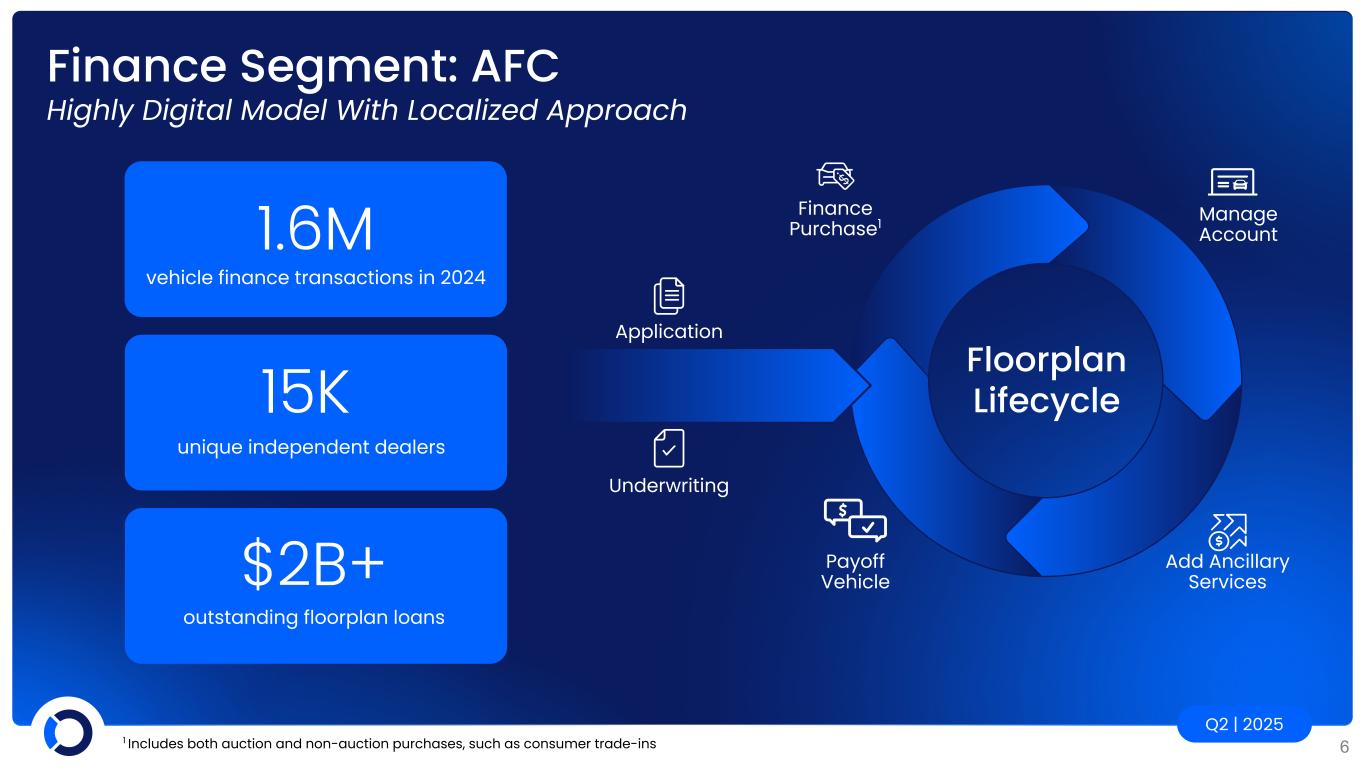
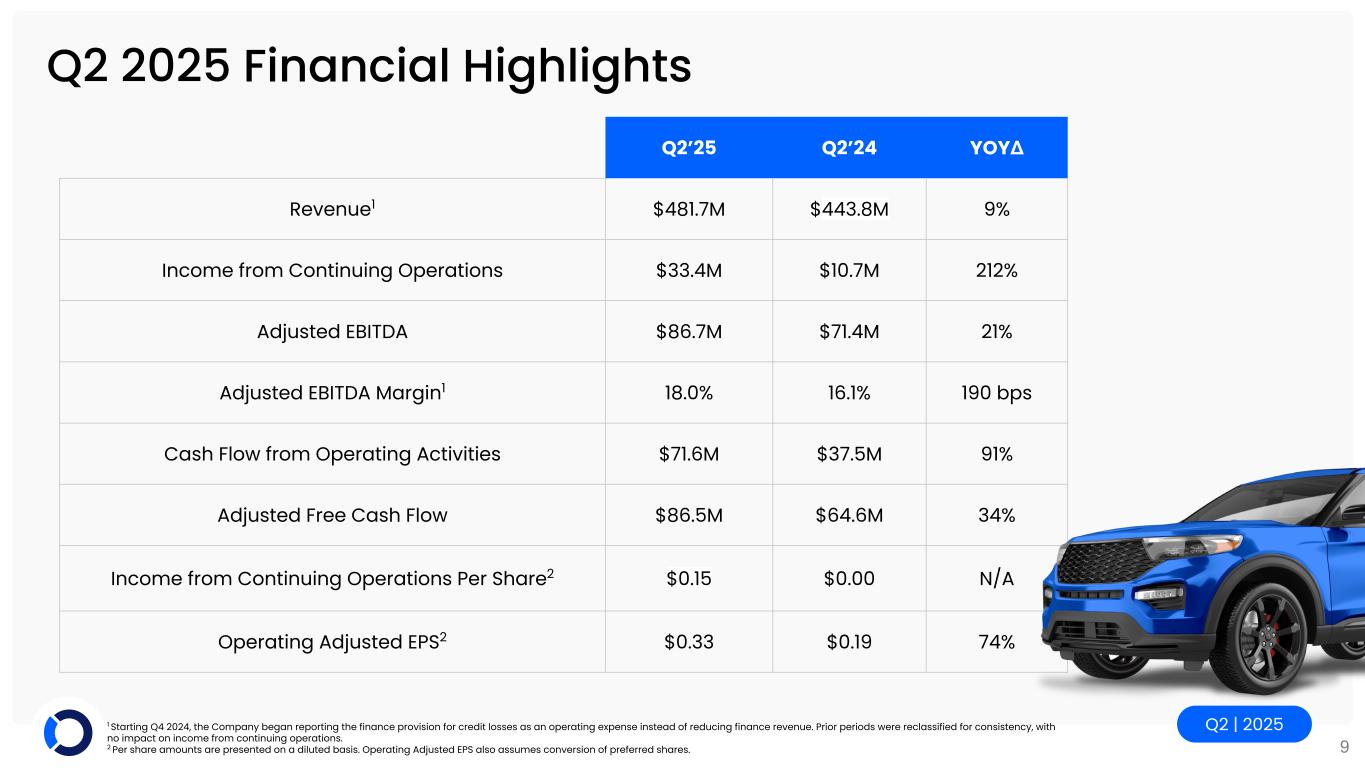
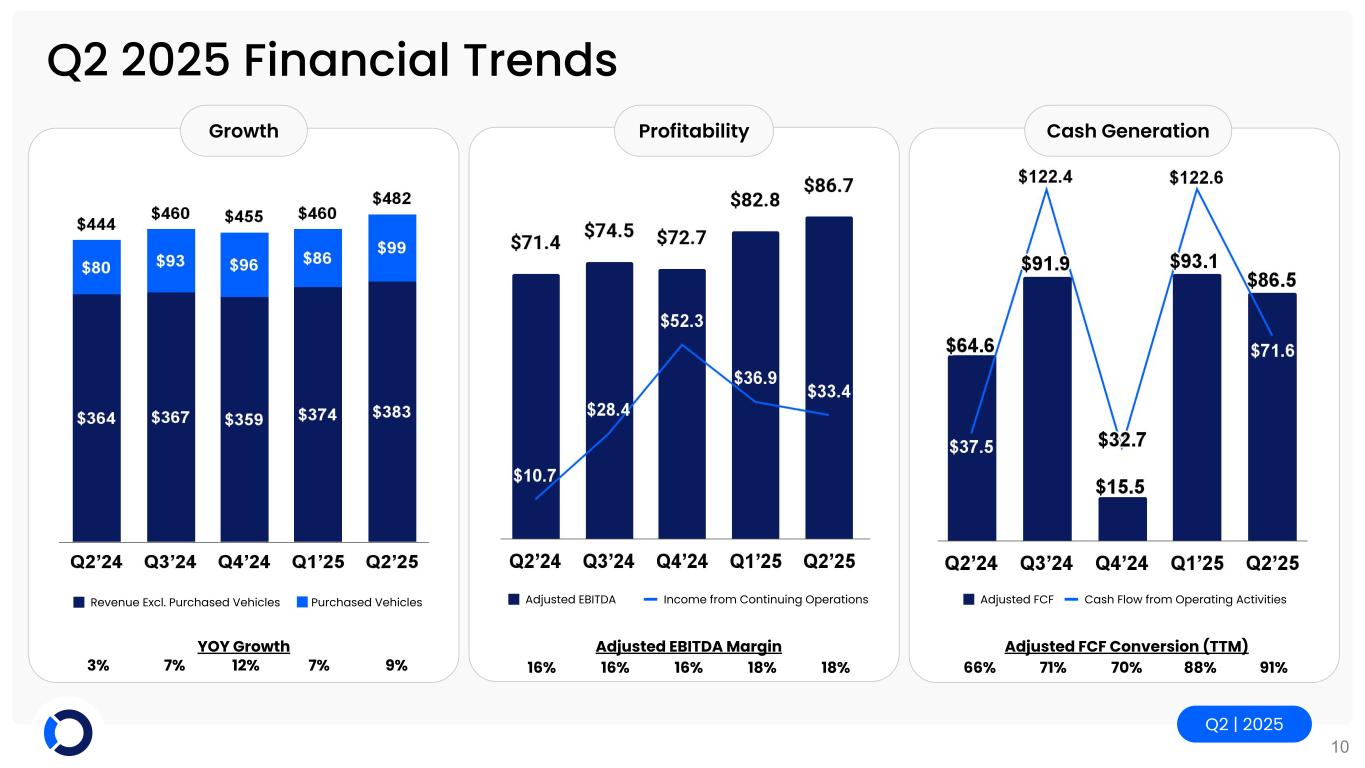
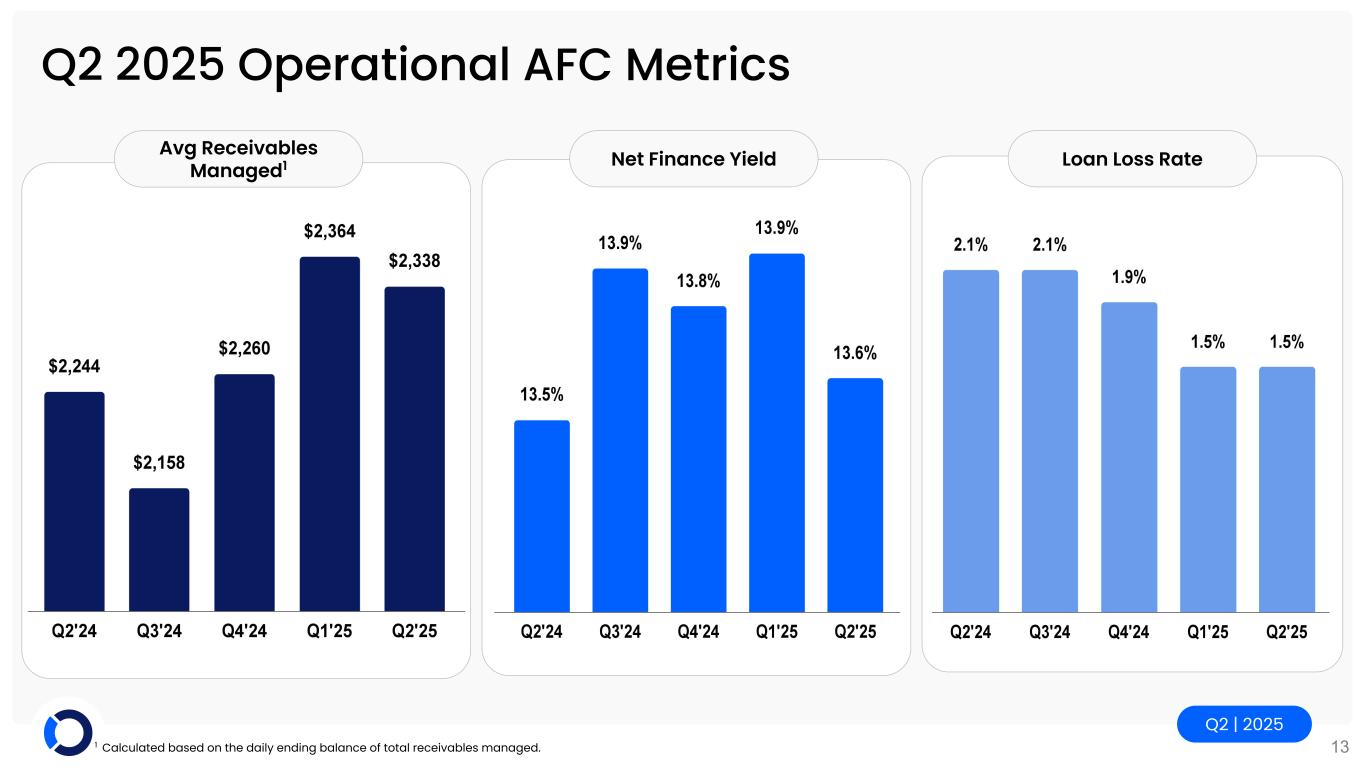
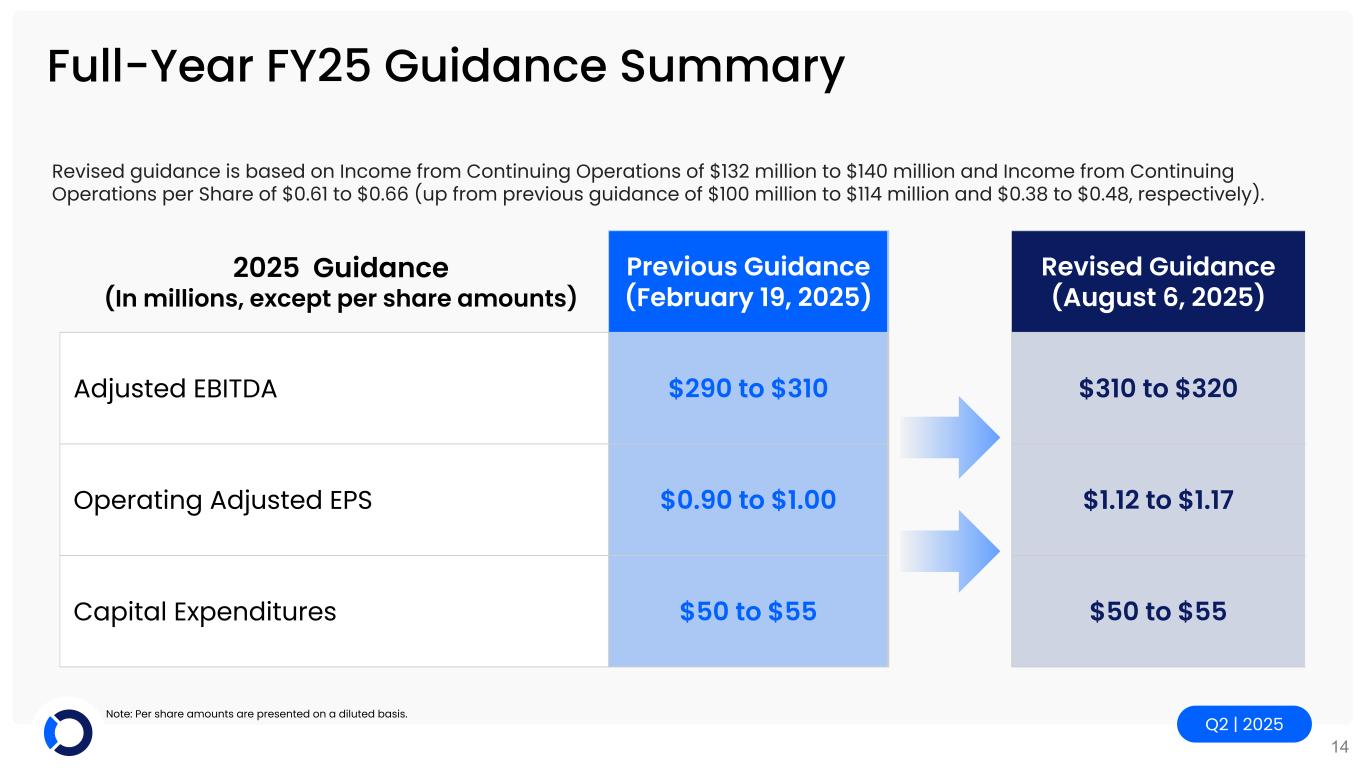
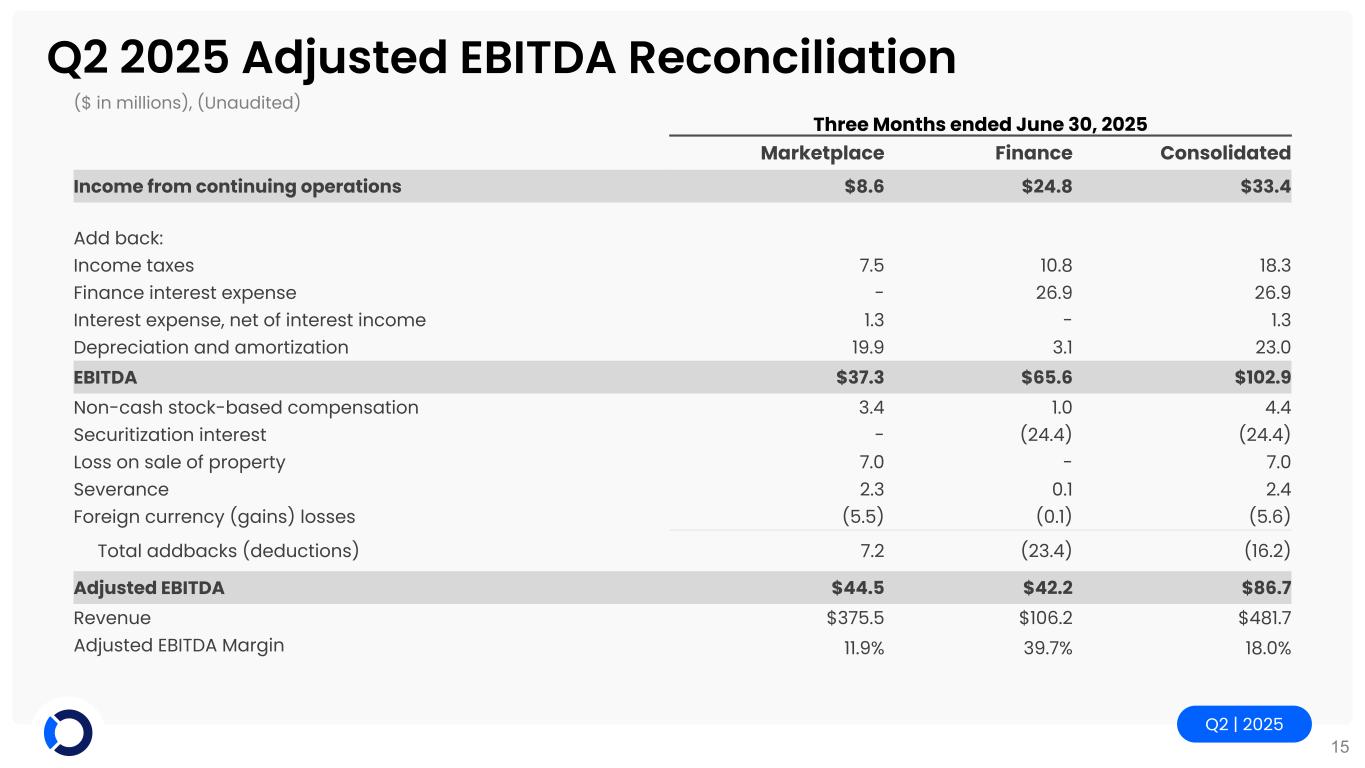
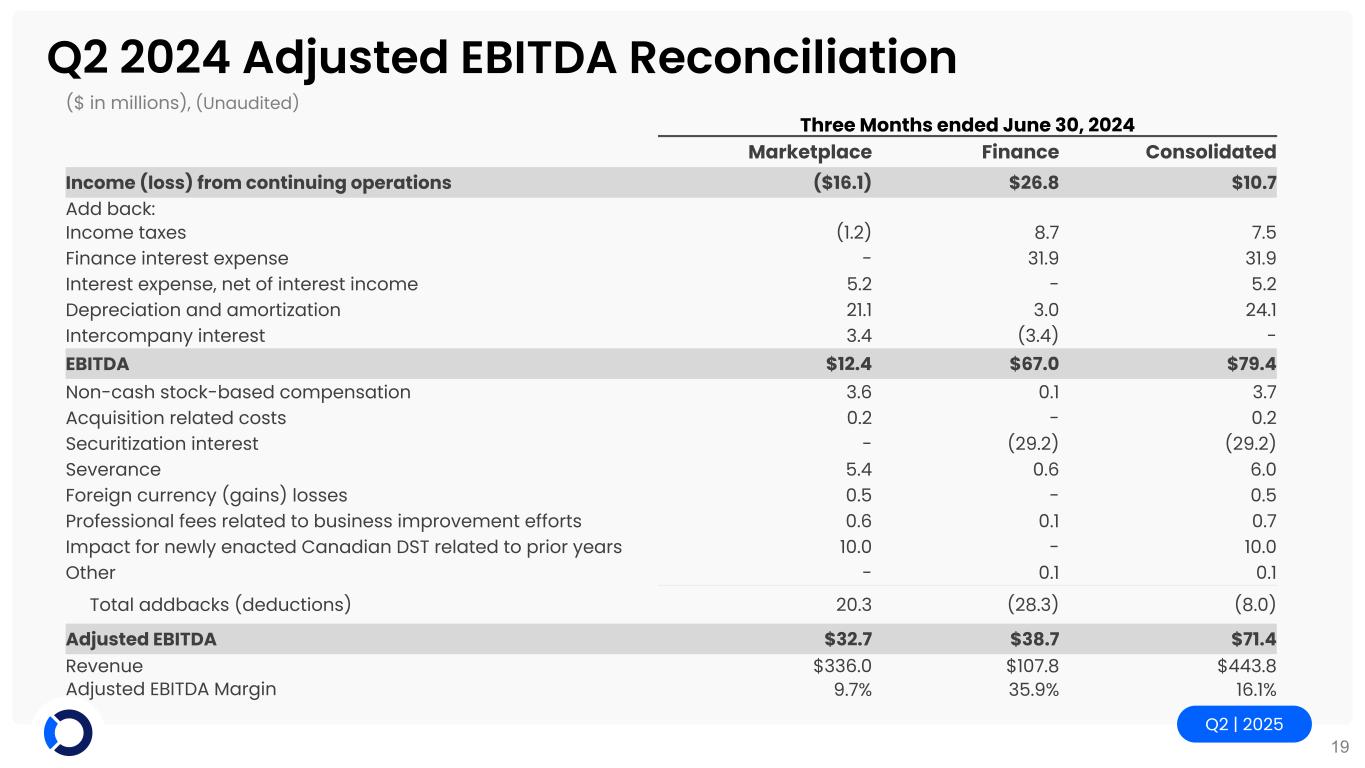
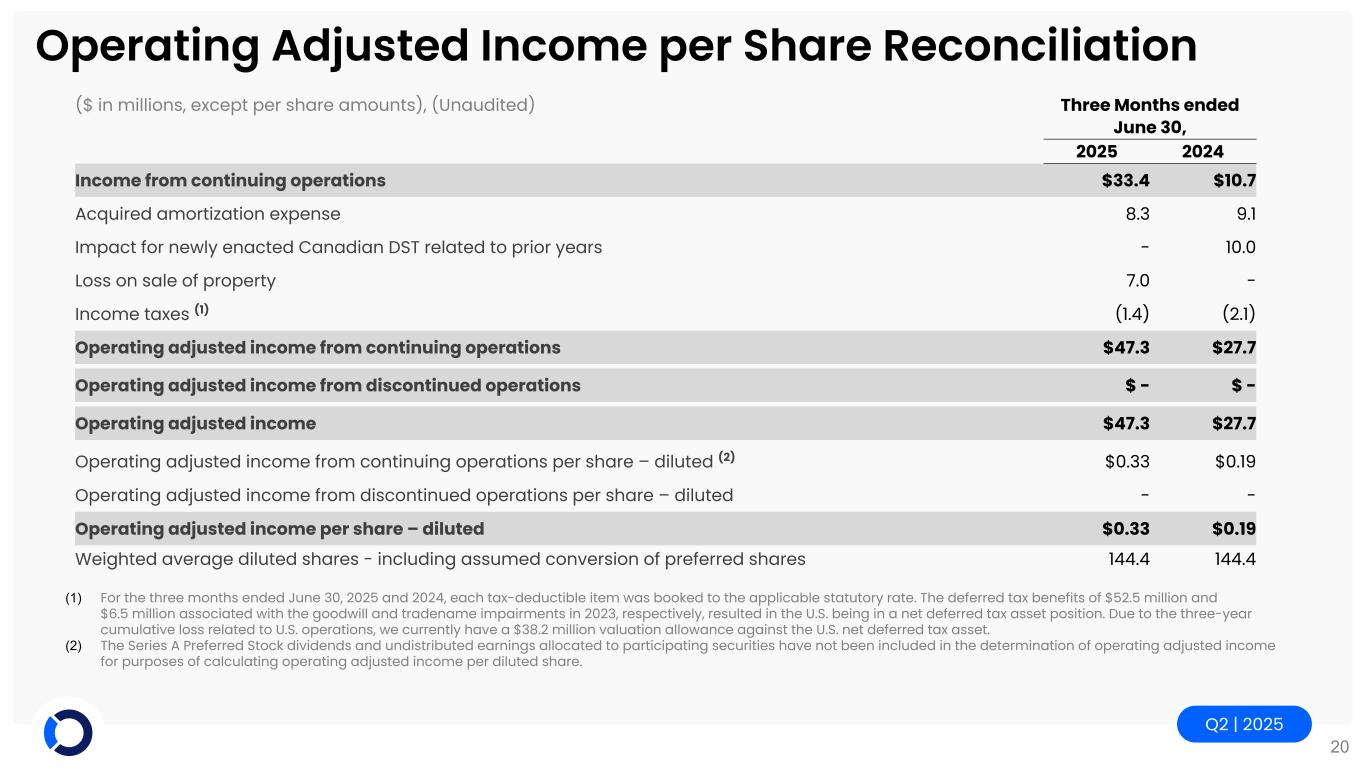
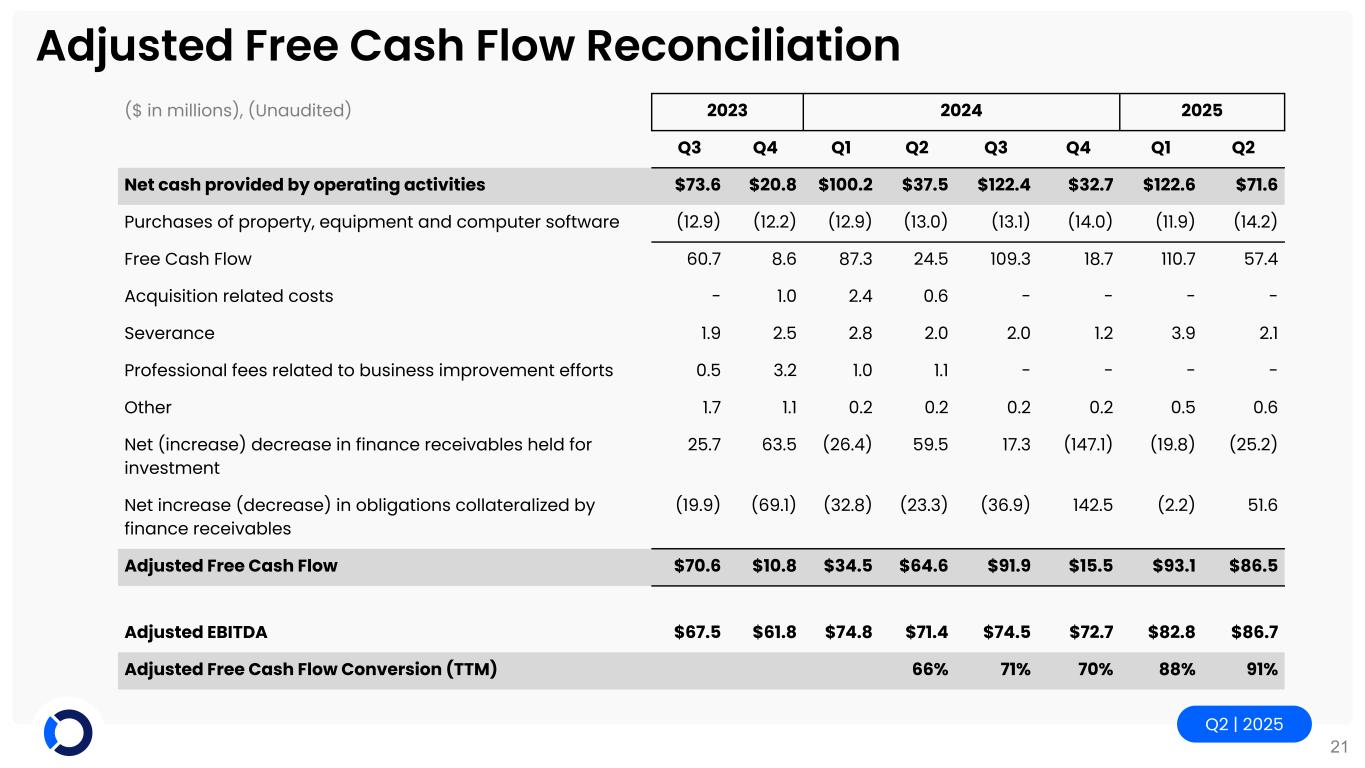
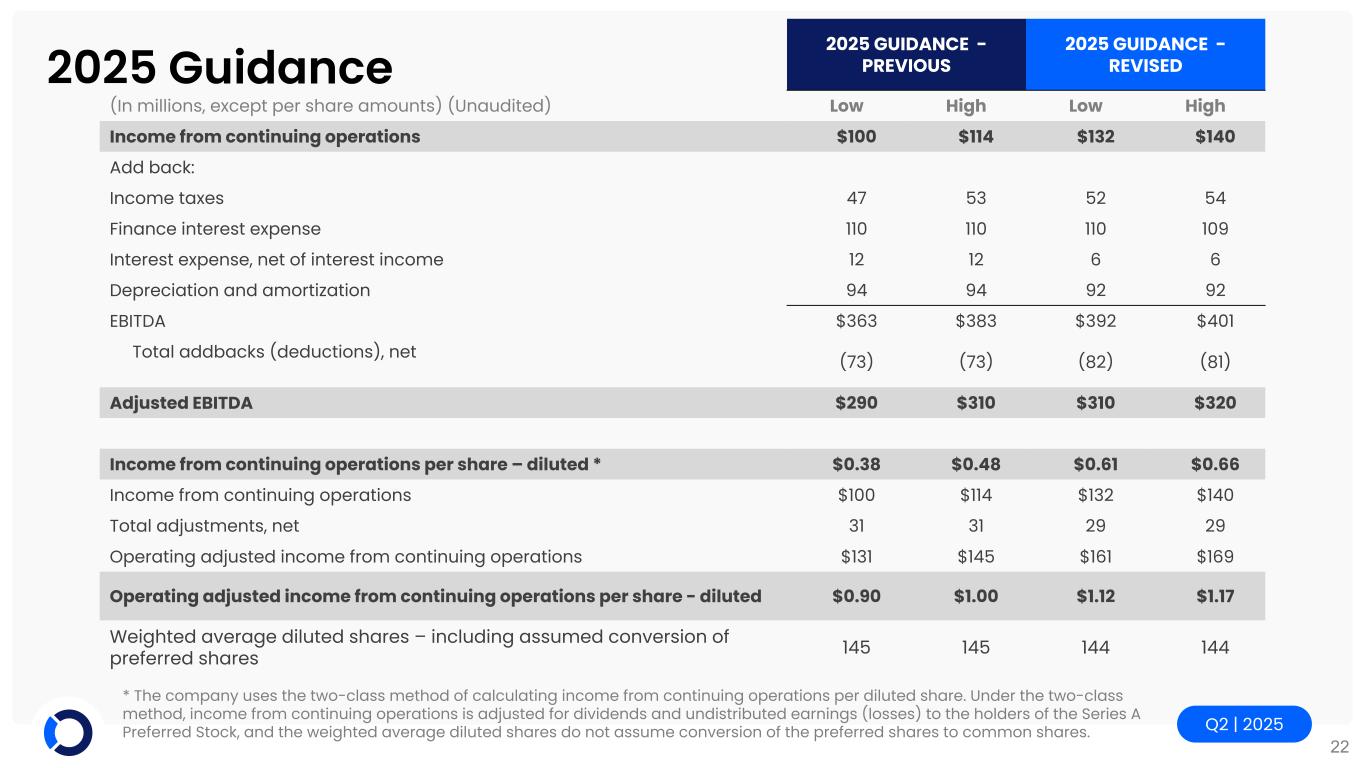
Thanks, Peter, and good morning to everyone on the call. Before I get into reviewing our financial results for the quarter, I want to take a quick minute to introduce myself and talk about how excited I am about joining Peter and the team here at OPENLANE. My background is made up of three decades of corporate finance in such notable organizations as Delta Airlines, Equifax, and Fiserv, as well as more recent tours as public company CFO with Shift4 Payments and Enfusion. My decision to join OPENLANE was driven by three key factors. First, I see OPENLANE as a top-tier participant in an industry that will continue to move in our direction as digital solutions continue displacing the legacy physical auctions. Second, following numerous discussions with Peter, the leadership team, and the Board, I'm convinced that this is the right group to lead OPENLANE on this exciting journey. And finally, as a car enthusiast myself, I'm fortunate to have the unique opportunity to work in an industry that overlaps heavily with my own personal interests. I also want to take a minute to talk about my approach on how we will be discussing OPENLANE's financial performance going forward. The focus of our discussions will be on three key elements: growth, profitability, and cash generation. Years of experience have taught me that when organizations focus and deliver on these key measures, positive results materialize for our shareholders, our customers, and our employees. Second, in response to OPENLANE's ongoing transformation into a leader in the digital Marketplace segment, we have started an extensive review of how we present our financial performance and underlying operational drivers with the intent of providing improved transparency and comparability of our results. You will notice the output of some of these efforts in our supplemental earnings materials filed this morning with additional updates coming over the subsequent quarters. Now on to our quarterly results. Starting with consolidated revenues, we are proud to report that revenues for the quarter were $482 million, which represent growth of 9%. The key driver of this growth was in the Marketplace segment, which I'll talk about more in a few moments. Consolidated SG&A for the quarter was $114 million, which is up 9%. This increase is primarily due to higher incentives that are tied to our 2025 year-to-date performance. Excluding the increase in incentives, our SG&A for the quarter would have been up 1% and reflects our expectations that revenue growth will continue to outpace increases in SG&A despite continued investments in sales and go-to-market. Consolidated adjusted EBITDA for the quarter was $87 million, which represents an increase of 21%. The resulting adjusted EBITDA margin for the quarter was 18%, which reflects margin expansion of 190 basis points. This expansion reflects the ongoing scalability of our cost structure across both the marketplace and AFC. One new measure we are going to be discussing going forward is adjusted free cash flow. A full reconciliation, including descriptions of any adjustments we are making, is provided in the appendix of our earnings materials. Consolidated adjusted free cash flow for the quarter was $87 million, which represents a conversion rate of 100%. Because of some inherent timing swings in our settlement and funding processes, it is more appropriate to look at our conversion rate on a rolling 12-month basis. For the 12 months ending June of 2025, our conversion rate was 91% compared to 66% for the same trailing 12 months in 2024. The increase in conversion rate was primarily driven by a combination of growth and high pass-through rates in our Marketplace segment. Going forward, I anticipate a consolidated trailing 12-month conversion rate at 75% or higher. Moving to the results in our business segments, I'll start with the marketplace. Total GMV processed over our digital platform was $7.5 billion, which represents a 10% increase. Inside of that figure was 32% growth in our dealer GMV, while commercial GMV was essentially flat. Our growth in dealer GMV reflects further market penetration made evident by the increase in buyer and seller counts, as well as our continued focus on moving share from physical to digital. Auction fees in the marketplace grew by 24%, driven by a sales mix and auction fee price increases, while service revenues decreased by 3%. Adjusted EBITDA for the Marketplace segment was $45 million, representing an adjusted EBITDA margin of 12%. This reflects growth of 36% and 220 basis points of margin expansion. Excluding the divestiture of our keys business in Q4 of 2024, the year-over-year comparisons would have been slightly higher with 42% growth and 260 basis points of margin expansion. Turning to our Finance segment. Our average outstanding receivables managed in the quarter was $2.3 billion, which is up 4%. The average balance per transaction increased by 5%, while total vehicle finance transactions were down 1%. Net yield for the quarter was 13.6%, which is consistent with last year. The Q2 provision for credit losses was 1.5%, which is consistent with our results from last quarter and 60 basis points lower than last year. Our expectation for the provision remains in the 1.5% to 2% range for the foreseeable future. However, we expect to remain on the lower side of that range for the remainder of 2025. The resulting adjusted EBITDA for the Finance segment was $42 million, which was up 9%. Moving to capital considerations. We had a few items to highlight in the quarter. First, you may have seen that during the quarter, we used $210 million of our existing cash balances to pay off our outstanding senior notes. This leaves our net debt position at $0 at the end of the quarter. You may also recall that in Q1, our Board approved an increased share repurchase program through 2026. As of the end of July, under this program, we have repurchased approximately 1.3 million shares at a total cost of approximately $31 million. With regard to liquidity, we ended the quarter with a cash balance of $119 million and capacity of $411 million on our existing revolver facilities. Now on to guidance. As Peter mentioned in his remarks, there's still a fair amount of uncertainty in our markets that could drive variability in our results for the back half of the year. However, our strong performance in the first half of 2025 has given us sufficient confidence to increase our expectations for the full year. We are, therefore, revising our full year guidance for adjusted EBITDA from a range of $290 million to $310 million to a revised range of $310 million to $320 million. This revision reflects a refreshed view of back half volumes as well as some additional investments to build out our buyer and seller networks. We are also increasing our full year guidance for operating adjusted EPS from a range of $0.90 to $1 per share to a revised range of $1.12 to $1.17 per share. Our CapEx guidance for the year remains the same at a range of $50 million to $55 million. In summary, I'm very privileged to be part of this organization and have great confidence in our mission, our strategy and the over 4,500 employees who execute on a daily basis. The proof points in our ability to execute are evidenced in our results for the quarter, which I would summarize as follows: better-than-market growth from the dealer component of our Marketplace segment and a TAM that remains rich with opportunity and steady growth with exemplary risk management from our Finance segment. Going forward, we are confident that the execution of our strategy will continue to produce results that are headlined by a growing top line, expanding profitability, and high cash flow conversion. Now I'll pass the call back to the operator for questions.
Operator
And your first question comes from Bob Labick with CJS Securities.
Speaker 3
Congratulations on strong results, and welcome to Brad to OPENLANE.
Speaker 3
Certainly. So really strong dealer volumes. And so I want to kind of dig down on that a little bit too. How are the volumes impacted kind of by the broader macro tariffs, et cetera? Was there a pull forward? Has there been delays? The industry is moving around a lot based on the macro. So maybe how did it impact the quarter? And how do you see that playing out for dealer volumes in the second half as well?
Thank you for the question. I was very pleased with the dealer volume this quarter, showing 21% year-on-year growth, which marks our third consecutive quarter of double-digit growth in that area. Although we don't report results by region, we see strong performance across all markets. I'm happy with this quarter's results and attribute the growth to our strategy. The effective execution of our strategy, as we've previously discussed, the consolidation of our brand to OPENLANE, and making it easier for customers to do business with us, along with a focus on enhancing customer experience and our technology investments, have all contributed positively. Our customers tell us how much they appreciate these improvements. We also increased our go-to-market resources about a year ago, and we are seeing positive outcomes from those investments. We will continue being proactive and invest further to boost volume and market share. I feel confident about that. This is a significant category, representing about 50% of the total addressable market in dealer-to-dealer transactions, which remains largely physical. However, I believe that our digital platform provides substantial value to our customers, who recognize that daily. Despite our strong volume this quarter, we are still a relatively small player in the overall dealer-to-dealer market, at around 10%, so there are plenty of opportunities for growth ahead. Regarding the quarter's results, I want to highlight two key points. At the start of the quarter, there was a noticeable surge in retail volume due to the announcement of tariffs, leading consumers to rush to dealerships to purchase new cars, which resulted in strong retail sales from late March to mid-April. We gained a small advantage from that. Additionally, last year, there was an outage with CDK that depressed volumes in late Q2, so we benefited slightly from both situations this quarter, potentially accounting for about 2% or 3% of our growth. However, even without these factors, our dealer volume growth was exceptionally strong, driven primarily by our strategic initiatives rather than external industry influences.
Speaker 3
Yes. No, that's great. And I think you just answered that you don't really break it out. But maybe in terms of U.S. versus international growth, were both growing double digits because it was so strong at 20% across? Or any further color on how kind of Canada and European volumes were impacted kind of in this, again, global tariff?
Yes, I would say the growth rates are quite comparable. More than 90% of our volume comes from North America, so I'm focusing on that region. The dealer volume in Europe isn't significant enough to impact the dealer-to-dealer dynamics. We experienced similar growth rates in both Canada and the United States. It's important to note that we have a larger presence in Canada, resulting in greater market share. Therefore, the long-term growth potential for us in Canada in terms of dealer-to-dealer transactions is different; we are not at just 10% of the total addressable market there. While there may be less upside in that particular market, we still maintain a strong position with robust volumes and profitability.
Speaker 3
Okay. Great. And then just last one, I'll get back in queue. You already talked about this, so maybe just dig a little further. The increase in kind of SG&A, the selling, the feet on the street, you said obviously benefited you with new accounts. Maybe where are you in that process? And how much longer do you expect kind of outsized benefits from that investment? Are you done investing, but you still have three more quarters of benefits because of the comp? Or how should we think about how that increase in your selling capacity impacts the P&L? Yes.
Thank you, Bob. It's clear to me as I observe these results how scalable the business is. We understand that tech platforms are inherently scalable, especially with cloud technologies, and they're more scalable than ever. Our platform is inherently scalable, and our capacity to expand our inspector network is also highly scalable. Our sales investments align well with this environment. A year ago, we identified areas where we lacked presence, particularly in certain cities where we were operating telephonically. We decided to place people in the field, and we are now reaping the benefits of that decision. In the U.S., we've observed sales growth, but the volume consigned has increased even faster. Our investments have primarily been on the seller side of the equation. Currently, we are refocusing on the demand side by enhancing the buyer network, as our supply side investments have proven successful. Our AFC business supports this strategy well since it caters to the independent dealer network. In the dealer-to-dealer market, the main buying audience consists of independent dealers. At present, only about 40% of AFC's dealers are registered and purchasing in the OPENLANE marketplace, indicating a substantial opportunity to engage the remaining 60%. We are concentrating on this in collaboration with the OPENLANE and AFC teams.
Operator
And your next question comes from Rajat Gupta with JPMorgan.
Speaker 4
Congrats on the strong execution here. I had a question just on the second half guidance. I understand in the past you've taken a conservative approach. It still looks like you've maintained that approach. But I was curious with the deceleration embedded in the guidance on EBITDA, could you frame for us what you're expecting from a market standpoint? Are you expecting like a meaningful deceleration in growth? I know there's some tougher comparisons in the second half year-over-year. But curious if you could frame that for us? And also embedded in that, do you expect this double-digit type share gain trajectory to continue in that context? I have a quick follow-up.
Rajat, I'll take the first part of that, and I'll pass the share part over to Peter. So I appreciate the question on guidance. So yes, we did a lot of work sitting down doing our projections for the back half, and I mentioned in my prerecorded remarks. There's still a fair amount of uncertainty, even though some of that certainty has been decided in the first half. We looked out at a lot of the general consensus in the analyst community, and there's still a lot of expectations that there's some form of a slowdown in the back half coming. So we certainly wanted to factor that in as we sat down and projected our back half. There's another element that has to do with a little bit of a Q4 seasonality component. We'll typically see a little bit of a slowdown just based on the calendar in Q4. So between those two factors, that really drove what our top line and what our volume expectations look like for the back half. And then on top of that, I mentioned in my remarks, we are continuing to make some more of these investments in the back half. Peter just got done talking about some of our investments to fill out the buyer network. Yes, this is a great opportunity. We're getting a lot of traction out of those investments. So we want to keep that momentum going with those investments. So at the end of the day, we do see some form of deceleration in terms of EBITDA in the back half, but we think it's grounded in some pretty fundamental and pretty widely agreed upon expectations for volume in the back half, combined with us continuing to make some investments for the future. And I'll turn Peter over for the share gain question.
Thank you, Brad. Rajat, I appreciate your question. I want to express how pleased I am with the progress we've made over the last four quarters in the D2D area. Your question concerns whether we can maintain our share growth at the double-digit rate we've discussed. In response, I want to highlight the differences between the U.S. and Canada. The growth potential and ability to sustain a double-digit growth rate is much stronger for us in the U.S. compared to Canada, where we seem to have reached a ceiling earlier in our journey. The U.S. market is certainly our core and the larger of the two. There’s theoretically a significant opportunity to maintain high growth rates in D2D in the U.S. over the long term as the industry shifts toward digital. We have a leading digital solution that caters to these types of vehicles. Industry volumes can fluctuate, so I compare our performance with dealer-to-dealer volumes in the broader industry. I believe we can exceed those growth rates. If the industry is flat, I’m optimistic we can achieve mid to high single-digit growth. If the industry grows by 5%, I think we could outperform that as well, aiming for mid to high single-digit growth. However, I want to temper those aspirations with caution. Seeing strong performance over three or four quarters is great, but we must continue to execute. The team is doing an excellent job, and our customer feedback has never been stronger. I'm particularly encouraged by the JPMorgan survey of franchise dealers, which showed a significant increase in our brand recognition as the preferred wholesale marketplace. We are making great strides. While I can't confidently say we will consistently outpace the industry by 10 points each quarter, our goal is to grow faster than the industry, and that's what our team is focused on.
Speaker 4
Understood. I have a clarification regarding the second quarter. You mentioned in the shareholder update that your share gains were higher than 10% in that quarter. Is that correct? Additionally, did you observe any significant increase in digital adoption during the second quarter, or do you believe that was primarily due to your strategy for gaining market share? I have just one last follow-up.
Yes. Looking at U.S. dealer volumes for the quarter, I believe they grew by around 10%. Our growth was approximately double that, indicating a solid quarter based on the data I'm reviewing, Rajat. As for whether there was an inflection point in the industry, it's too soon to determine and I doubt there was one. This industry typically doesn't experience those types of changes. However, I do sense a shift in dealers' understanding and appreciation of OPENLANE. This relates back to our unified brand as we lead in the commercial off-lease programs. Most franchise dealers are already our customers, although they may not have realized it a few years ago as they interacted with a private labeled program developed by OPENLANE through an OEM branded interface. As dealers become aware that OPENLANE is behind this program, they begin to see the benefits: it’s straightforward to work with us, we just need to inspect the cars, and they recognize the value in selling the cars through us. Therefore, I perceive a shift in how OPENLANE is perceived and what we can offer dealerships to help them succeed. This is central to our purpose, and I believe we're seeing positive results from that. As for the broader industry trends, we will have to wait and see. I'm cautious about labeling any changes as inflection points; sustained performance over time, a unified team and culture, strong technology, and an excellent customer experience are what we are concentrating on.
Speaker 4
Got it. Got it. And just last one on pricing. I mean, where do you think your pricing is today relative to the more mature physical players? How much do you think the gap is still there? And are you seeing any increased competitive push from some of the more legacy players like Manheim or if that's on just the digital side and the way you are doing the transaction?
I believe our pricing strategy is to provide a high-value service at a reasonable cost, allowing our customers to clearly see the advantage compared to alternative options. This means we are competitively priced, but I wouldn't classify us as a low-price leader. Instead, I view us as offering high value for a reasonable price. Our fees are definitely lower than many physical auctions, particularly compared to the leading brand, indicating a long-term pricing opportunity. In the short term, our main focus is on increasing volume, market share, net promoter scores, and customer adoption. Although we do occasionally adjust pricing, like a small change we made in the second quarter, our priority remains on what we deliver to our customers. Our customer base is experiencing double-digit growth in dealer-to-dealer volumes, sellers, and buyers. I noticed that the largest physical auction chain recently acquired two new physical auctions, so they seem to be continuing to invest in that space, while we are primarily focused on digital.
Operator
And your next question comes from Craig Kennison with Baird.
Speaker 5
A lot of talk about inflections. I wanted to talk about 2026. I'm curious when you think we might see that inflection in off-lease activity on your platform just based on what you've seen in terms of historical lease activity and then what you're currently seeing in terms of consumer buyout trends?
Thank you, Craig, for your question. Looking at our current year's performance, commercial volumes have decreased as anticipated, and they are within our expected range, albeit at the lower end. Specifically, in the quarter, commercial volumes were down about 9%, which aligns with my expectations that they could range from 9% to 15%. Moving forward into 2027, I am confident that we will see an increase in commercial volumes from Q2 onwards. There is a chance that we might see a year-over-year increase starting in Q1, but I'm hesitant to commit fully to that, as the scenario could vary. However, I am quite certain about the upward trend from Q2. The growth will be fueled by more off-lease maturities beginning in Q2 and a slow decline in consumer payoff percentages. Many EV leases in our portfolios will contribute to a low consumer buyout percentage since these vehicles tend to be heavily out of equity, as evident in our customers' data. We can also expect a similar decline for internal combustion engine vehicles due to changes in residual equity. As these percentages decrease, this creates an opportunity for these vehicles to move deeper into our sales funnel, where we generally see higher revenue per unit. Additionally, despite the 9% drop in commercial volumes in Q2, the commercial volumes sold through our open sale increased. Therefore, although we experienced lesser volume at the start, we successfully converted more vehicles in our open sale, which is our most profitable channel for commercial vehicles. This upward trend in the open sale, despite reduced top-of-funnel volumes, reinforces my confidence in how these dynamics will unfold in 2027 and beyond. I'm excited about our prospects for commercial and believe we are moving past this U-shaped decline towards a more positive outlook as we approach 2026.
Speaker 5
Yes. Just to clarify, are you saying Q2 2026 is where you have confidence in the inflection?
Yes. Sorry, my bad. I've got my math. 2026, let me be very clear. 2026. Yes.
Speaker 5
Great. That's very clear.
Speaker 5
Yes, of course. And one other question, if I could. Maybe just share an update or maybe just add more color on some of these cross-pollinization projects between AFC and OPENLANE. How would you frame the value you think you could unlock if you get some of these projects right?
We believe we have two exceptional businesses. AFC is a leader in its industry, boasting unparalleled customer relationships and impressive NPS scores. Their risk management is solid, and they excel in many areas. This strong partnership with customers is a major advantage for our company. Similarly, OPENLANE represents a top-tier digital marketplace with excellent technologies and great NPS scores. We're aiming to achieve the positive sentiments that AFC's customers have towards OPENLANE. Beyond having two great businesses, they complement each other. For instance, AFC offers liquidity to buyers in the OPENLANE marketplace, and every transaction on OPENLANE sold to an independent dealer creates potential floorplan opportunities for AFC. We aspire to go beyond just simple synergies; we want to create even more value together. Earlier this year, we introduced a feature on the AFC digital solution, allowing dealers to see potential vehicle replacements when they pay off a car. This initiative has shown promising results and is now a national program. Additionally, when AFC registers a dealer, it collects extensive information that exceeds OPENLANE's requirements, allowing us to streamline the registration process for AFC dealers wanting to join OPENLANE. We're also focused on aligning internal incentives between the AFC and OPENLANE teams, encouraging collaboration despite them being distinct teams. These are a few examples, and we're excited about the potential opportunities ahead.
Operator
And your next question comes from Jeff Lick with Stephens.
Speaker 6
Congrats, Brad, welcome. Peter, could you provide an update on the win-back customer you're onboarding? How is that progressing? Is it going according to plan? Also, Brad or Peter, could you discuss your thoughts on the Series A preferred and what options you might consider to address this?
Jeff, thank you. I appreciate that. Let me take the first part. Brad can handle the second. In short, that project is progressing well and is on schedule. We aim to launch that program around the end of the year, and I feel optimistic about it. Naturally, there are always risks involved in such projects, so we’re not entirely out of the woods yet, but it currently has a green light status, which is encouraging. Additionally, if we do launch the program by year-end, it significantly increases the chances of us seeing commercial volume growth in Q1 of 2026. I previously made an error earlier this year, so I wanted to mention that as another important aspect in the overall picture. However, my earlier comments focused on the underlying trends without considering that element. I’ll let Brad address the second part of your question.
Jeff, thanks for that question on the preferred. So obviously, it comes due in June of next year. It's approximately 36 million shares upon conversion. They are in the money now. It's something that's certainly on our radar. We're not ready to give an update on our path. But what I look at from my seat is I like a clean balance sheet, and I like a lot of cash production. It certainly opens doors for opportunities, but we're not ready at this point to kind of publicly talk about the plan for that Series A preferred other than it is certainly on our radar and certainly something that we will be addressing over the next 12 months.
Speaker 6
And I guess maybe just thinking out loud on that one, the nominal value or the amount coming due is about $612 million. I mean, is it fair just to kind of say, well, look, they could convert. But if they convert, then they have shares and the only way they can get liquidity is through the open market, and it's a lot of shares relative to what you trade versus there could be an agreement struck where it's like, look, we could give you liquidity for everything right now at a discount, which would be the effective equivalent of you being able to buy back a big chunk of shares at a discount. Is that at least in concept a fair way to look at it?
No, I appreciate the comments, Jeff. We're not commenting any deeper than my comments before.
Operator
And your next question comes from Gary Prestopino with Barrington Research.
Speaker 7
Peter, can you maybe directionally give us some guidance in terms of with the consignment vehicles up 20.5% in the dealer space, how much of that growth was generated through same-store versus new dealer customers coming into the fold?
That's a good question, Gary. I don't have the answer to that. What I can say is that the growth is underpinned by several factors. We observed a similar, if not slightly more significant, growth in consigned vehicles, along with comparable growth in the number of sellers and buyers. However, new sellers typically do not convert as well as our established sellers during the initial months after signing up, and the same applies to new buyers; they don't purchase as actively as existing buyers initially. They need time to establish a track record and feel comfortable. This suggests that the growth was driven by a combination of new seller sign-ups and growth within our existing network. Unfortunately, I don't have the exact statistic, so I don't want to elaborate further on that. I will mention that I monitor our major dealer accounts, which include networks of 20, 40, 50, or even 100 stores. It seems we have been gaining both share and volume with many of those groups. This indicates same-store growth since we had relationships with those stores a year ago, and we're conducting more business with them now. So, thank you for your question, Gary. I'll look into it further, but I don’t have an exact answer at this moment.
Speaker 7
Okay. And then just looking at the commercial vehicles sold, it looks like it was down about 8.8% year-over-year. Q1, it was down 14%. Are your expectations that for an improvement in that decline for the back half of the year? And then I just want to get it straight. Q1 of '26, you would expect commercial vehicle increases as because of more lease cars coming through the pipe?
We expect commercial volumes to begin increasing from the second quarter of 2026 with a high degree of confidence. There is a chance that we could see some increase in the first quarter, but I am less confident about that. The first quarter is too close to call; it could go either way. However, for the second quarter of 2026, I am confident that commercial volumes will rise, and we anticipate further increases in the third and fourth quarters. Also, regarding the decline, it appeared to follow a U-shaped pattern, so we don’t expect it to worsen significantly. I would project declines similar to the 9% we reported in the second quarter, or perhaps even slightly less, in the third and fourth quarters as part of our planning scenario.
Speaker 7
Okay. All right. And then just as I look at the floorplans curtailed, it was down about 3.3%, and that's indicative of, I guess, solid sell-through at the dealership level. Would that indicate that we're getting more to an equilibrium of a normal market in terms of new supply versus demand?
Your observation about the curtailments being down is accurate. This indicates a strong retail environment with vehicles selling well and not needing to be curtailed. I would describe the market as normal to somewhat robust this quarter, leaning towards the stronger side of normal. The tariff situation has created some pressure to motivate consumers to act sooner, which has led to an increase in used and new car prices. Overall, while it hasn't been an explosive market, it has been reasonably strong.
Operator
And the next question comes from Bret Jordan with Jefferies.
Speaker 8
On the dealer-to-dealer share gain, back in the old days when TradeRev was being rolled out, a lot of the conversation was these were cars that weren't seeing an auction. They were sold that wholesalers or direct dealer-to-dealer phone calls. Is the share gain you're seeing cars that didn't previously go to auction? Or is this share coming from other auction platforms?
Good question, Bret. When I talk about share, I'm referring to numbers from reliable third-party data sources that I can reference. I look at AuctionNet, our volumes, and some competitors’ volumes as well to do the math. My main perspective is that we are observing a shift from physical to digital. In the U.S., the industry has moved from being 100% physical to around 25% digital, and that percentage has been increasing over the years. We plan to capture a larger share of that growth. In the last quarter, physical auction dealer-to-dealer volumes also grew, but at about half the rate of our growth. There are additional dealer-to-dealer vehicles sold through informal channels, which are harder to track, so I don't estimate those figures. When I discuss our share or total addressable market, I rely on published and firm numbers. However, it is reasonable to believe that the actual market size is somewhat larger than what we can measure.
Speaker 8
Okay. Great. And then in your prepared remarks, you mentioned an $800 increase in yield. Could you give us more detail on that? Is there something in the process that's improving the yield? Or I guess, a little bit of color because it seems like a fairly significant uptick.
Yes. This is a feature of our Absolute Sale format in the marketplace, which we launched in the first quarter of 2024. With Absolute Sale, a seller lists a vehicle and a certain amount of bidding activity occurs. For example, 20 buyers might view the car, and four or five may place bids, driving the price up. Once there is enough activity and the price reaches a level where the seller is confident in selling the vehicle, they can activate the Absolute Sale feature. At that moment, we assess the bidding price and communicate to interested dealers that the vehicle is now classified as an Absolute Sale. This means that if a buyer searches for Absolute Sale vehicles, this car will appear and is guaranteed to sell by 4:00 p.m. Eastern Time. This certainty attracts more buyer interest because they prefer cars they know will sell. We track the additional bids and the extra revenue generated from the moment the seller activates the feature. When we initially launched this program 1.5 years ago, the average incremental revenue was about $450 when the button was pressed. That number has steadily increased, reaching closer to $800 in the second quarter. This metric highlights the success and growing adoption of this feature, as sellers appreciate it and buyers value the assurance it provides. This is the essence of the $800 increase in yield. So essentially, it's the increase after the reserve comes off on the auction?
Speaker 8
Exactly. Yes. And by the way, we didn't take the old one away, like the sellers can still use the old approach, too, and many do. So today, in our U.S. D2D, I'd say about 60-ish percent, 50% to 60% of the cars we sell are sold through Absolute Sale and 40% to 50% are sold through the more legacy marketplace tool set. And that percentage has been moving more and more towards Absolute Sale over the last 18 months as well. Well, Bret, I think that's all we have time for. So again, thanks, everybody, for your time today and your interest in our company. I just want to close by saying I think our performance in the second quarter and the investments that we continue to make in the company are helping position OPENLANE to deliver sustained long-term growth. Our marketplace and finance businesses are executing well. We continue to generate very strong cash flows, $0 debt. As I look ahead, I believe OPENLANE's value proposition for investors remains very compelling. Look forward to speaking to you again in 90 days and updating you on our third quarter. Have a great rest of your day.
Operator
The conference has now concluded. Thank you for attending today's presentation. You may now disconnect.