Operator
Good morning, and welcome to Blue Owl Capital's third quarter 2025 earnings call. During the presentation, your lines will remain on listen only. After the presentation, there will be a question and answer session. To ask a question, please press star 1 on your telephone keypad. I'd like to advise all parties that this conference call is being recorded. I will now turn the call over to Anne Dye, Head of Investor Relations for Blue Owl.
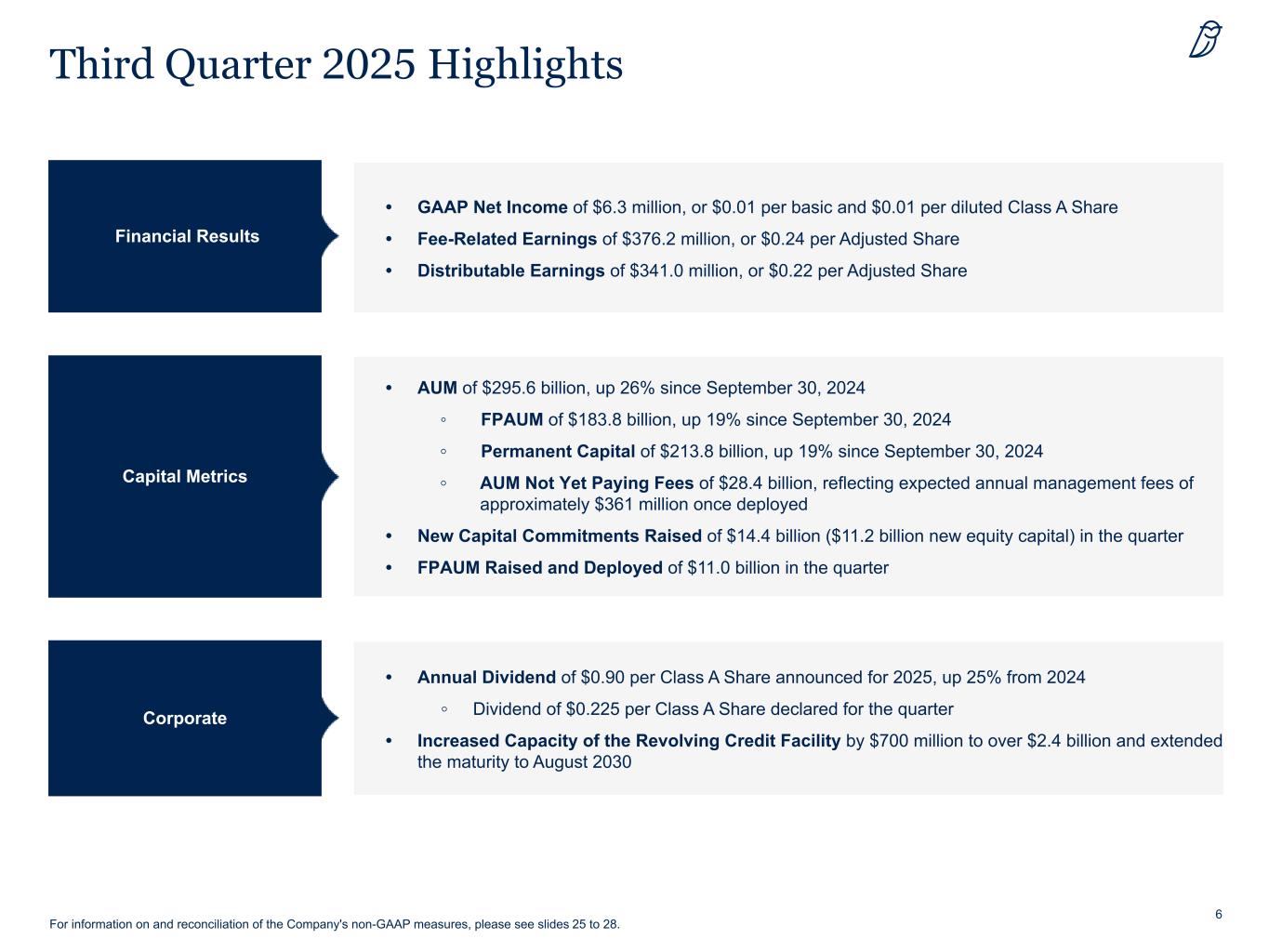
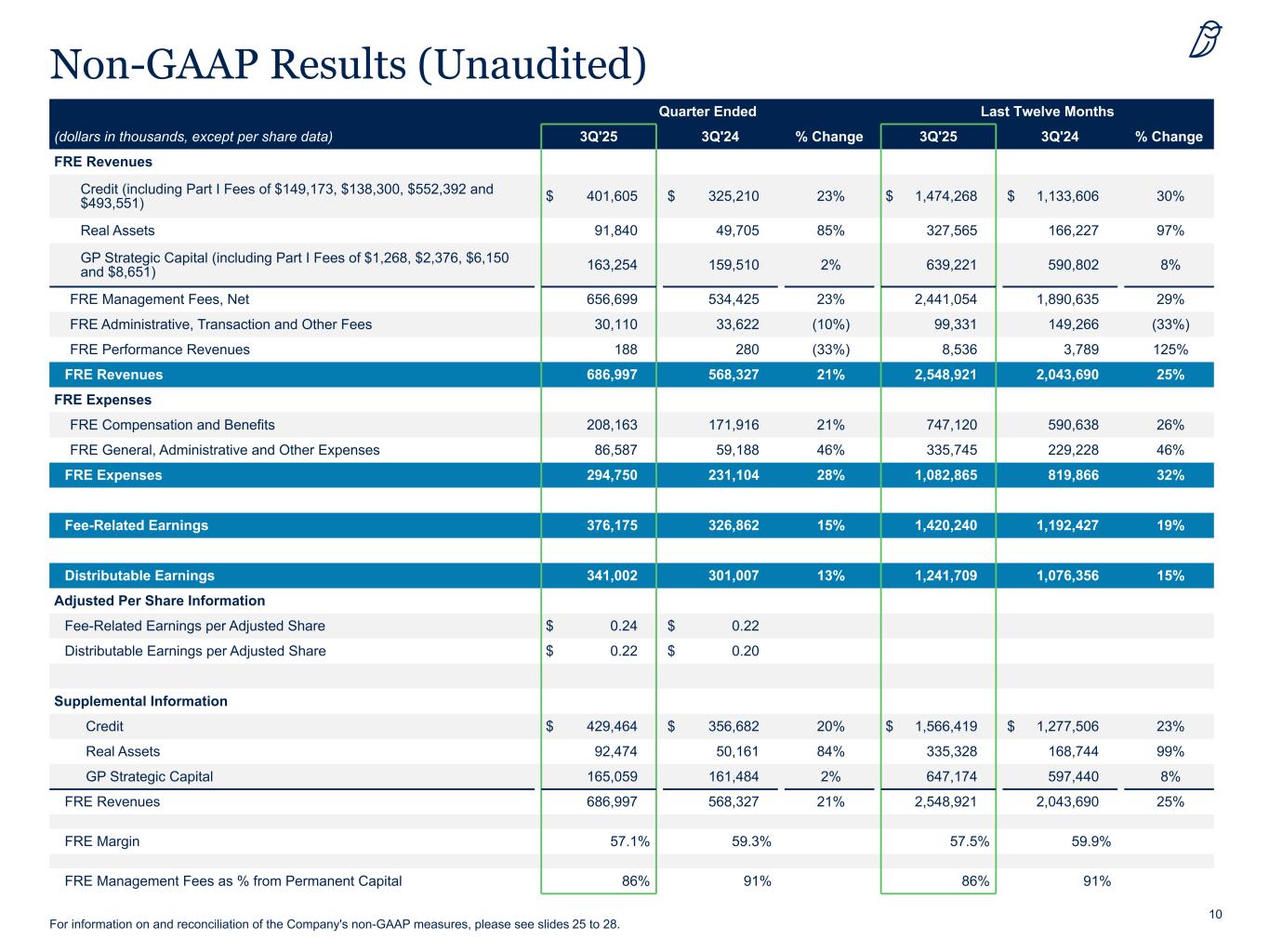
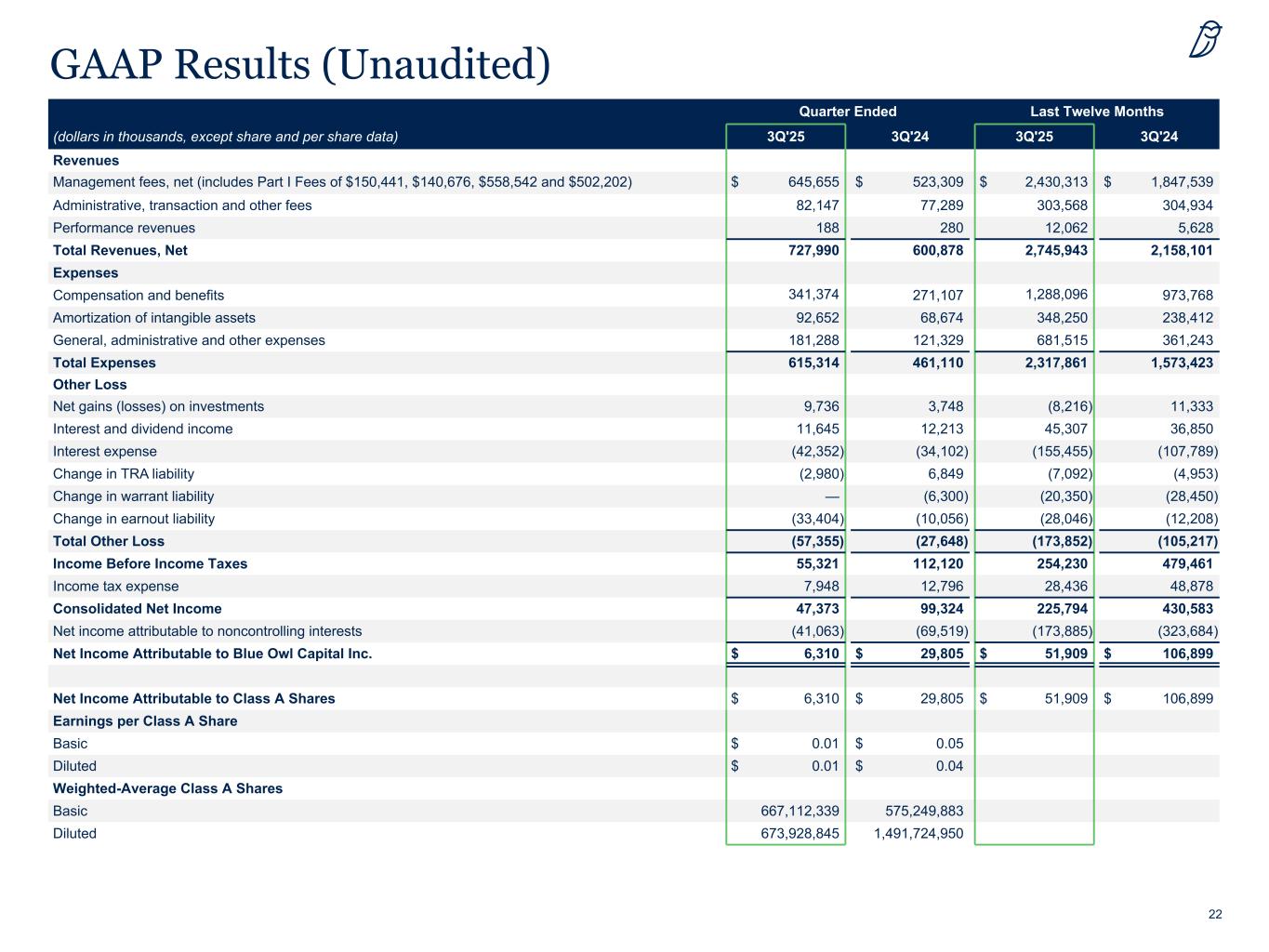
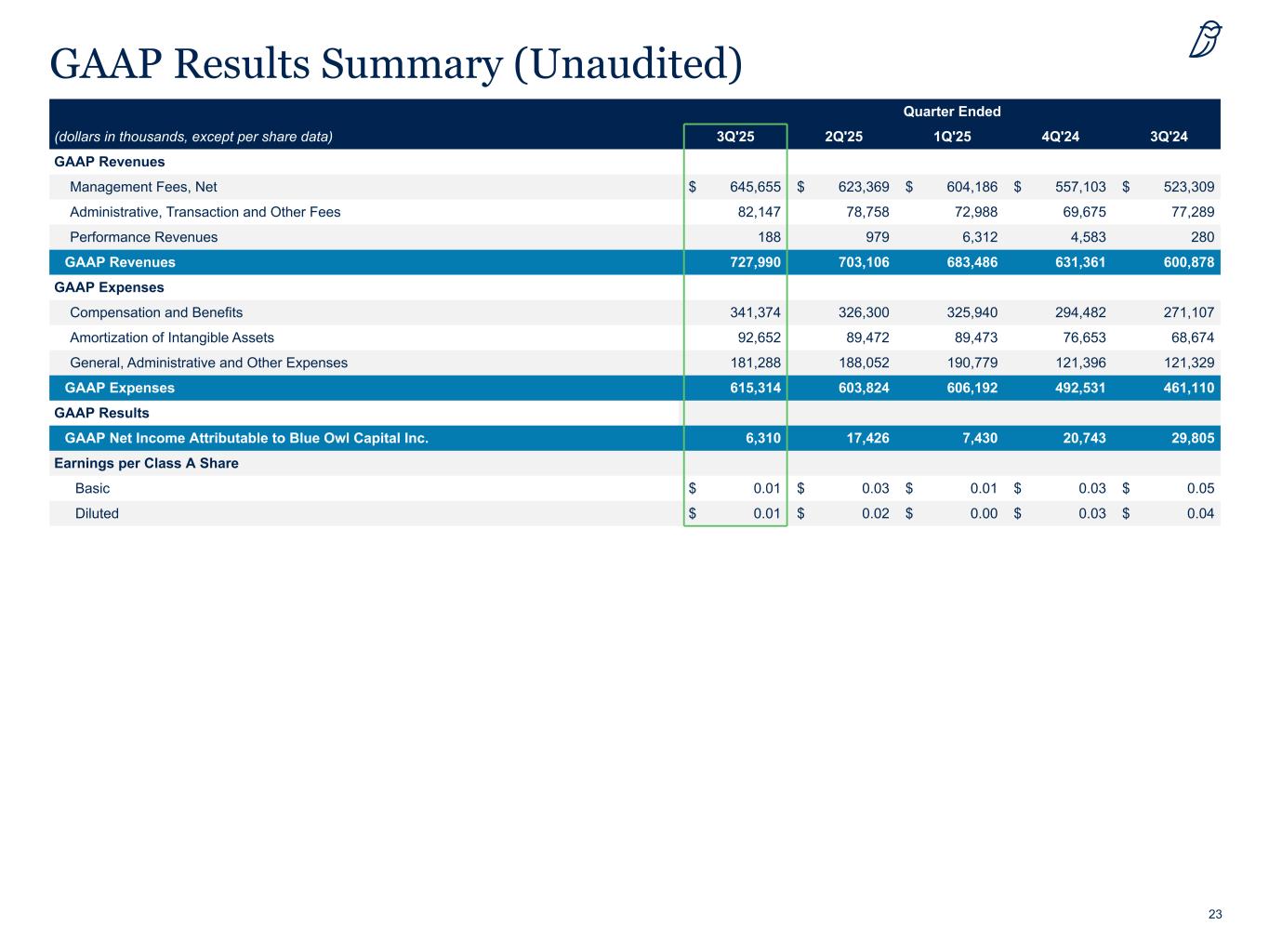
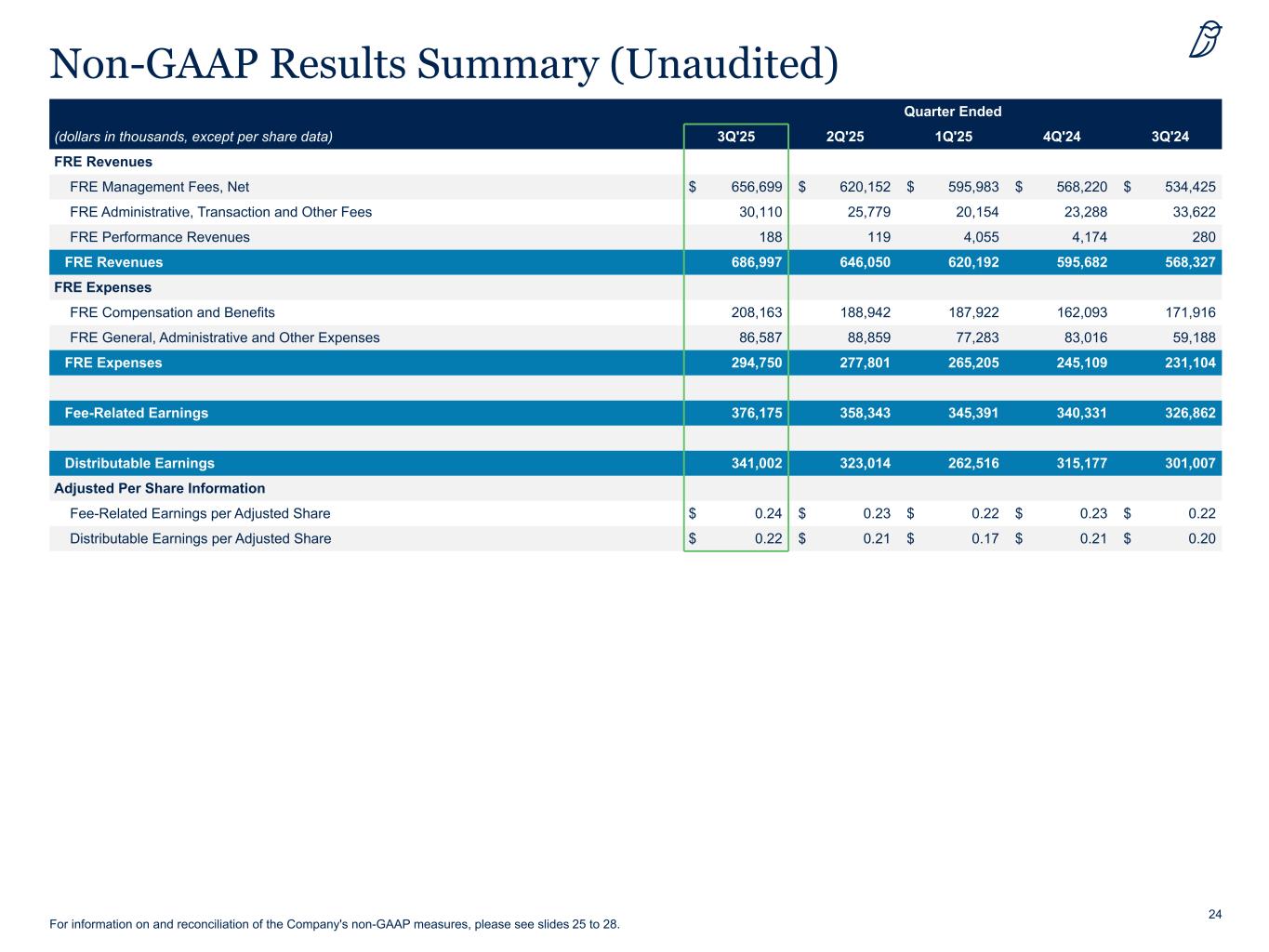
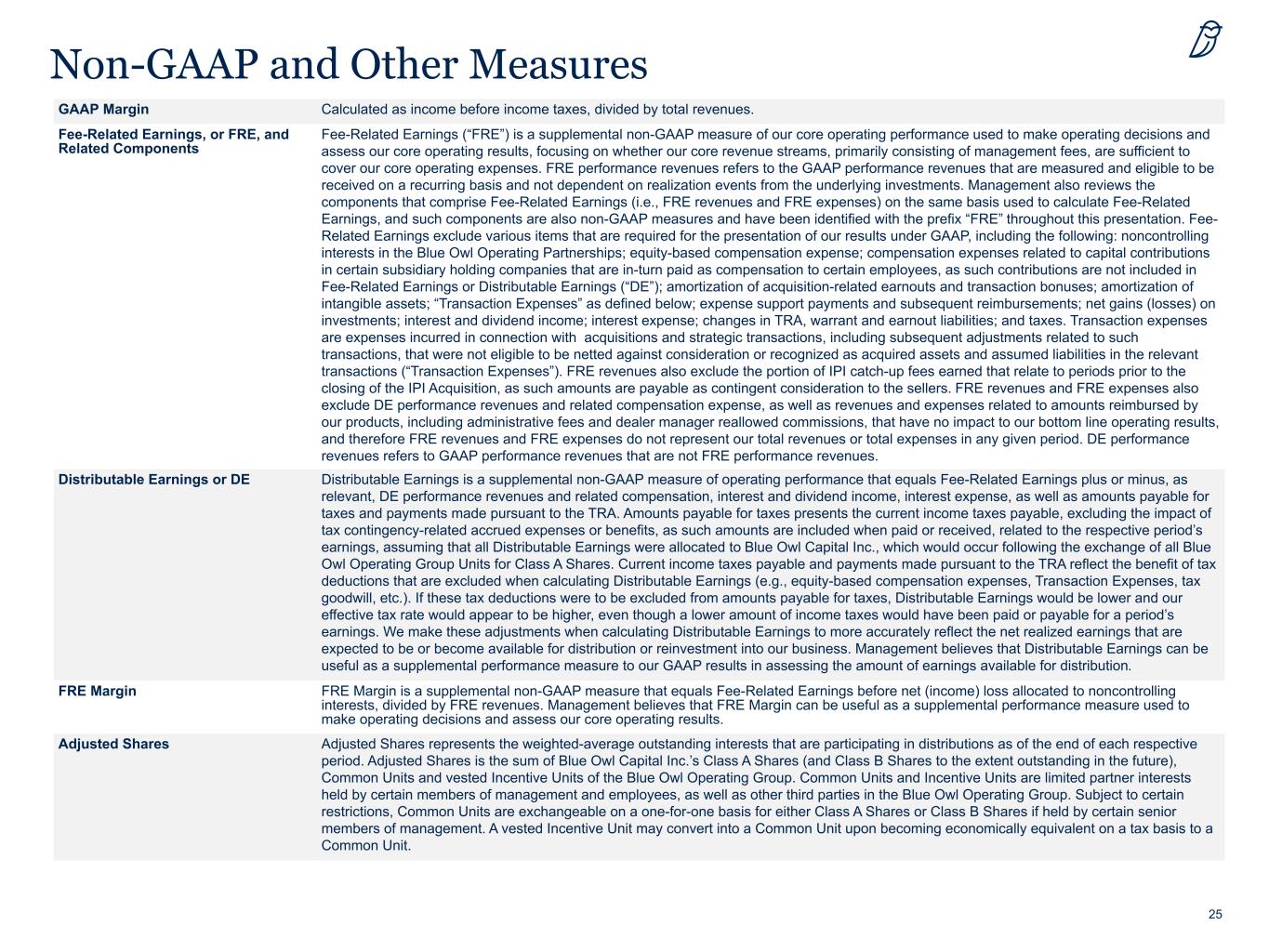
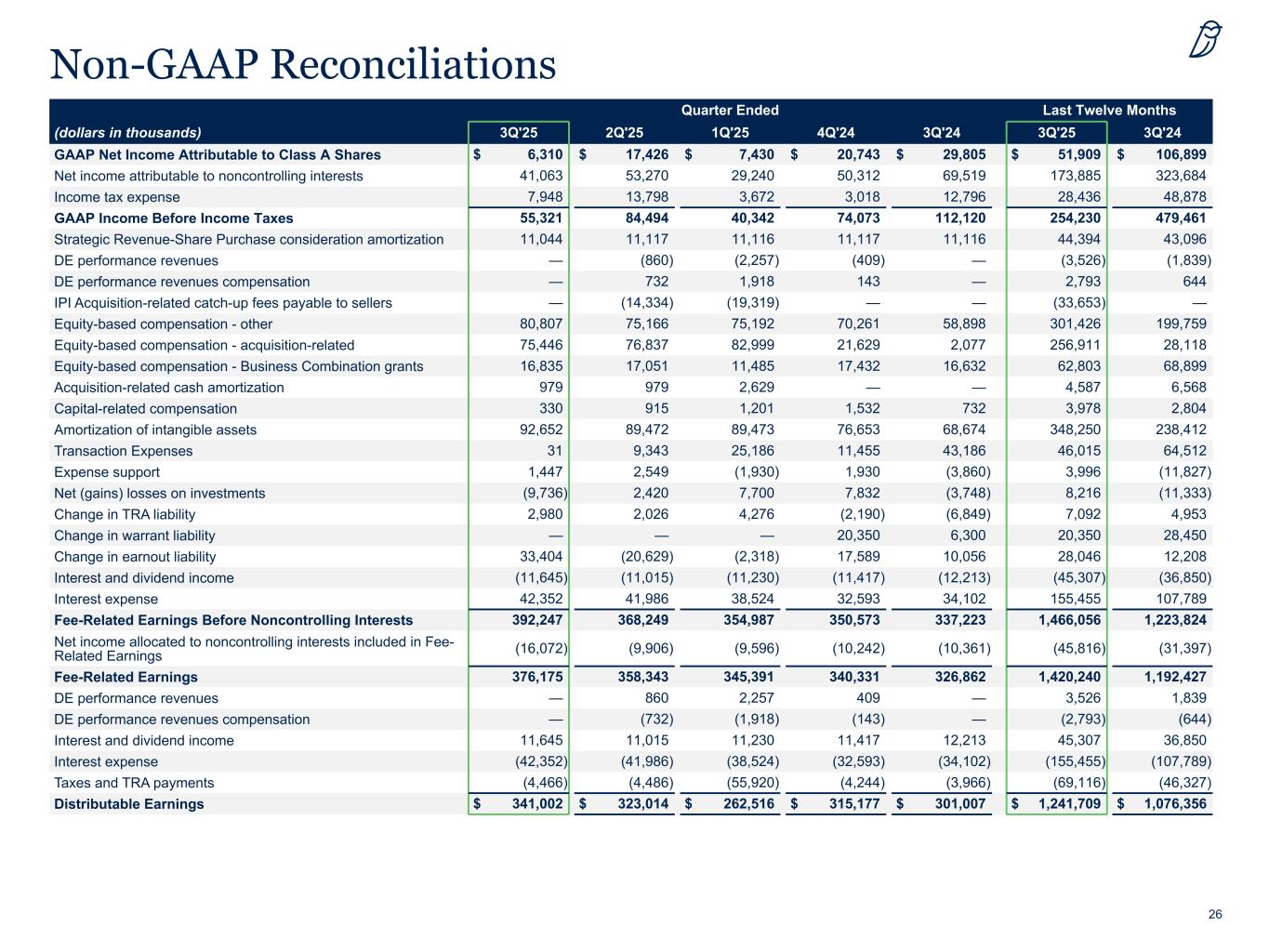
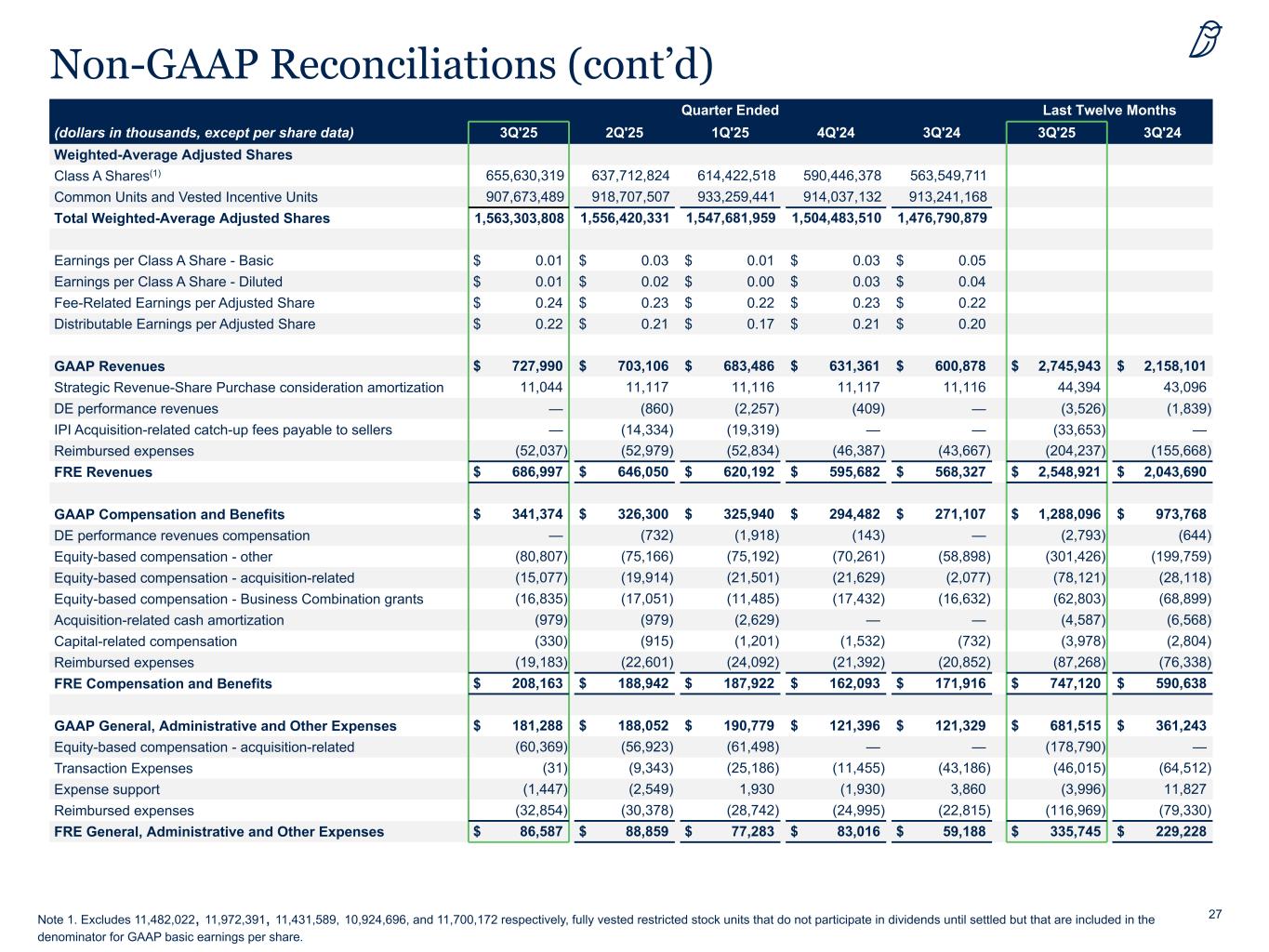
Thanks, Operator, and good morning to everyone. Joining me today are Mark Lipschultz, our co-chief executive officer, and Alan Herschenbaum, our chief financial officer. I'd like to remind our listeners that remarks made during the calls may contain forward-looking statements which are not a guarantee of future performance or results and involve a number of risks and uncertainties that are outside the company's control. Actual results may differ materially from those in forward-looking statements as a result of a number of factors, including those described from time to time in Blue Owl Capital's filings with the Securities and Exchange Commission. The company assumes no obligation to update any forward-looking statements. We'd also like to remind everyone that we'll refer to non-gap measures on the call, which are reconciled to gap figures in our earnings presentation, available on the shareholders section of our website at blueowl.com. Please note that nothing on this call constitutes an offer to sell or a solicitation of an offer to purchase an interest in any Blue Owl Fund. This morning, we issued our financial results for the third quarter of 2025, reporting fee-related earnings, or FRE, of $0.24 per share and distributable earnings, or DE, of $0.22 per share. We declared a dividend of $0.22.5 per share for the third quarter, payable on November 24th to holders of record as of November 10th.
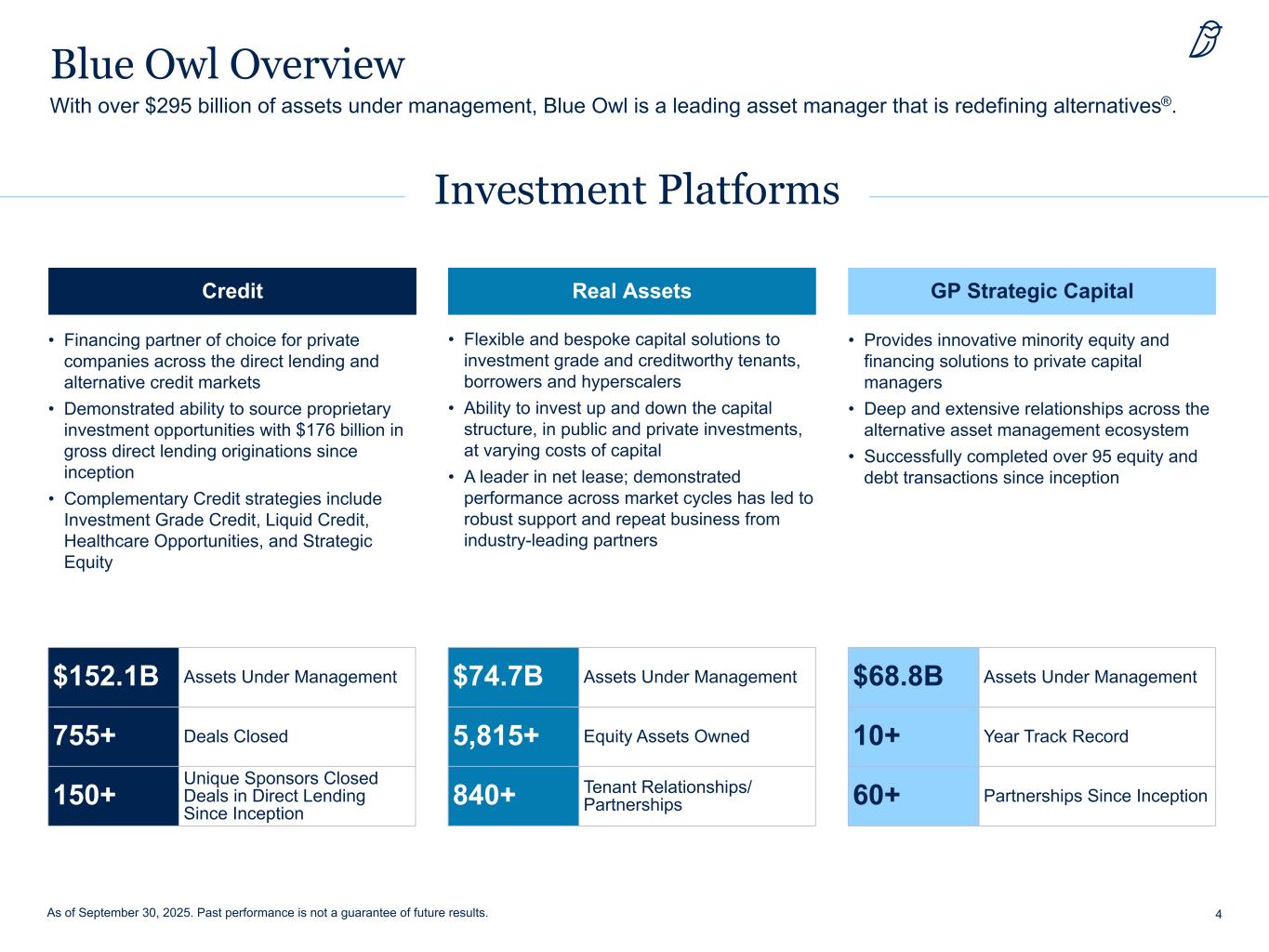
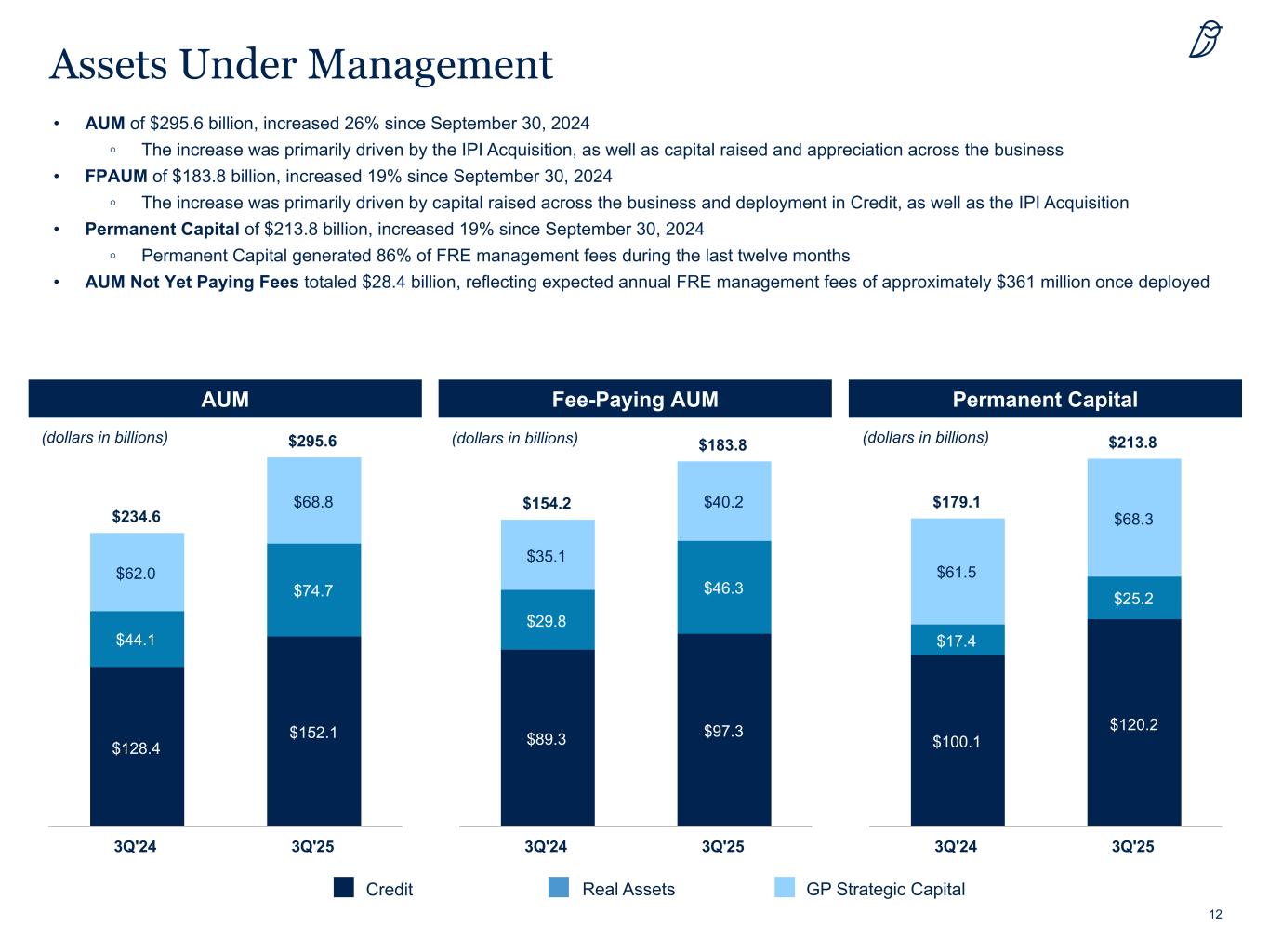
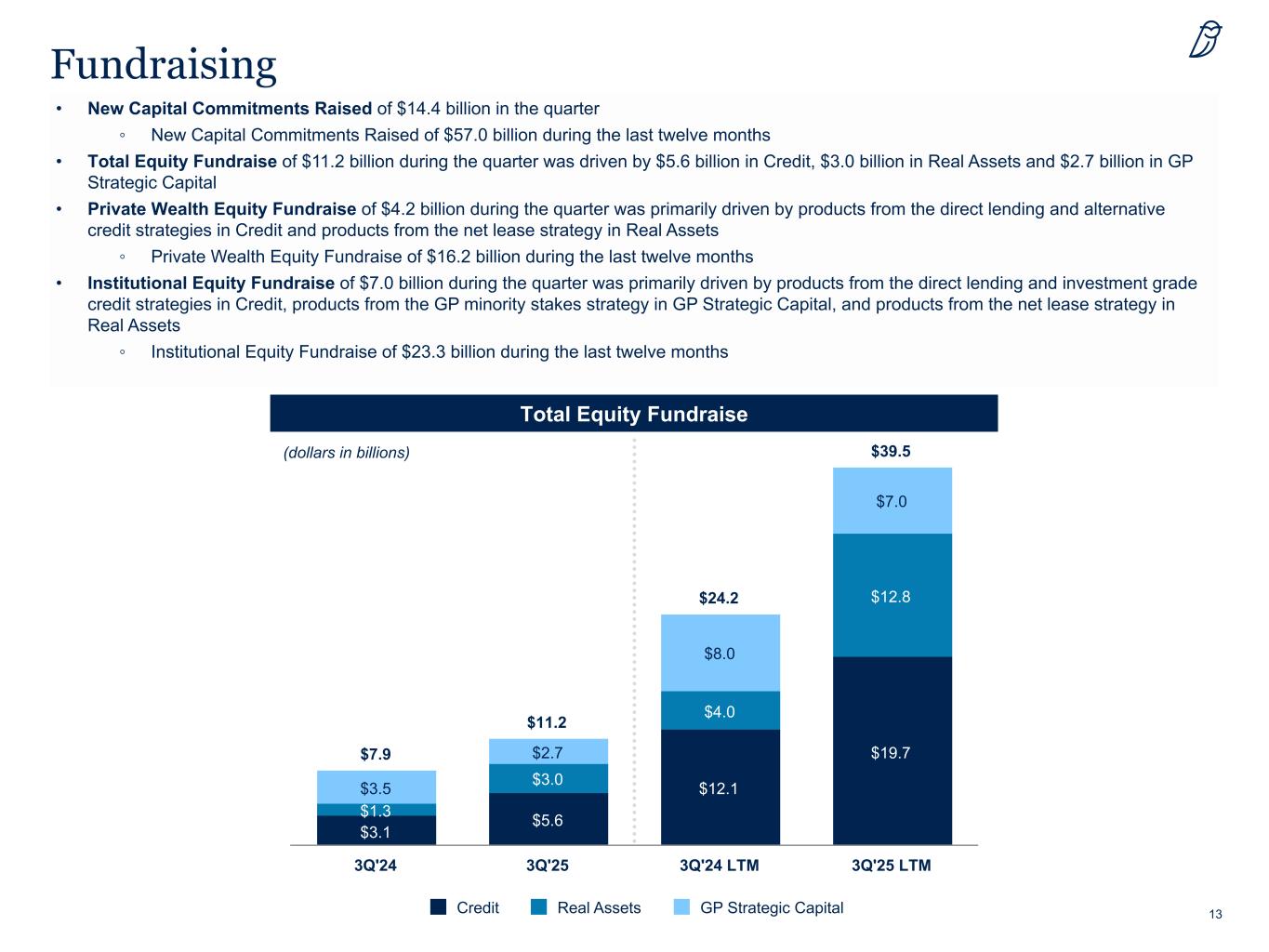
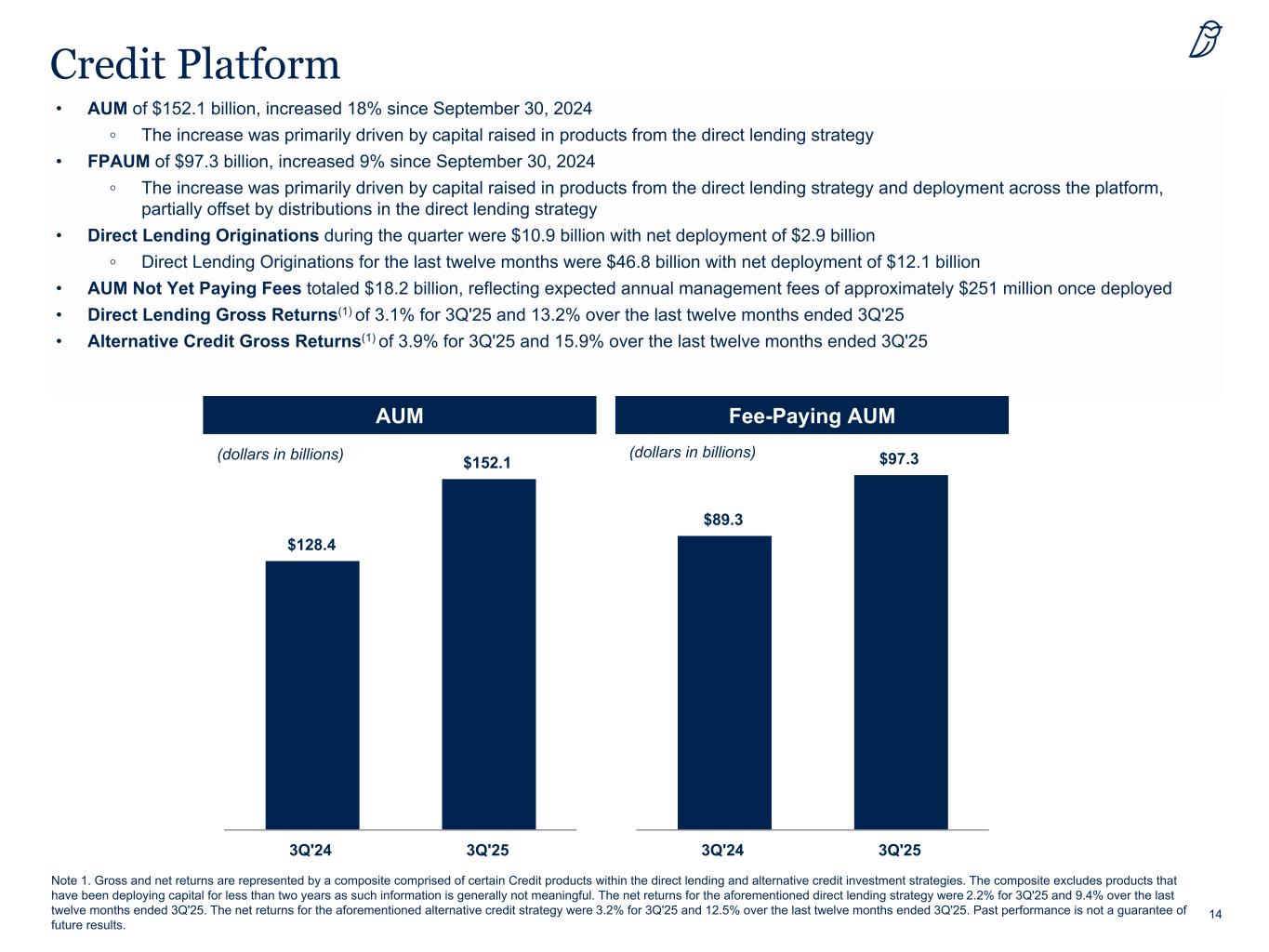
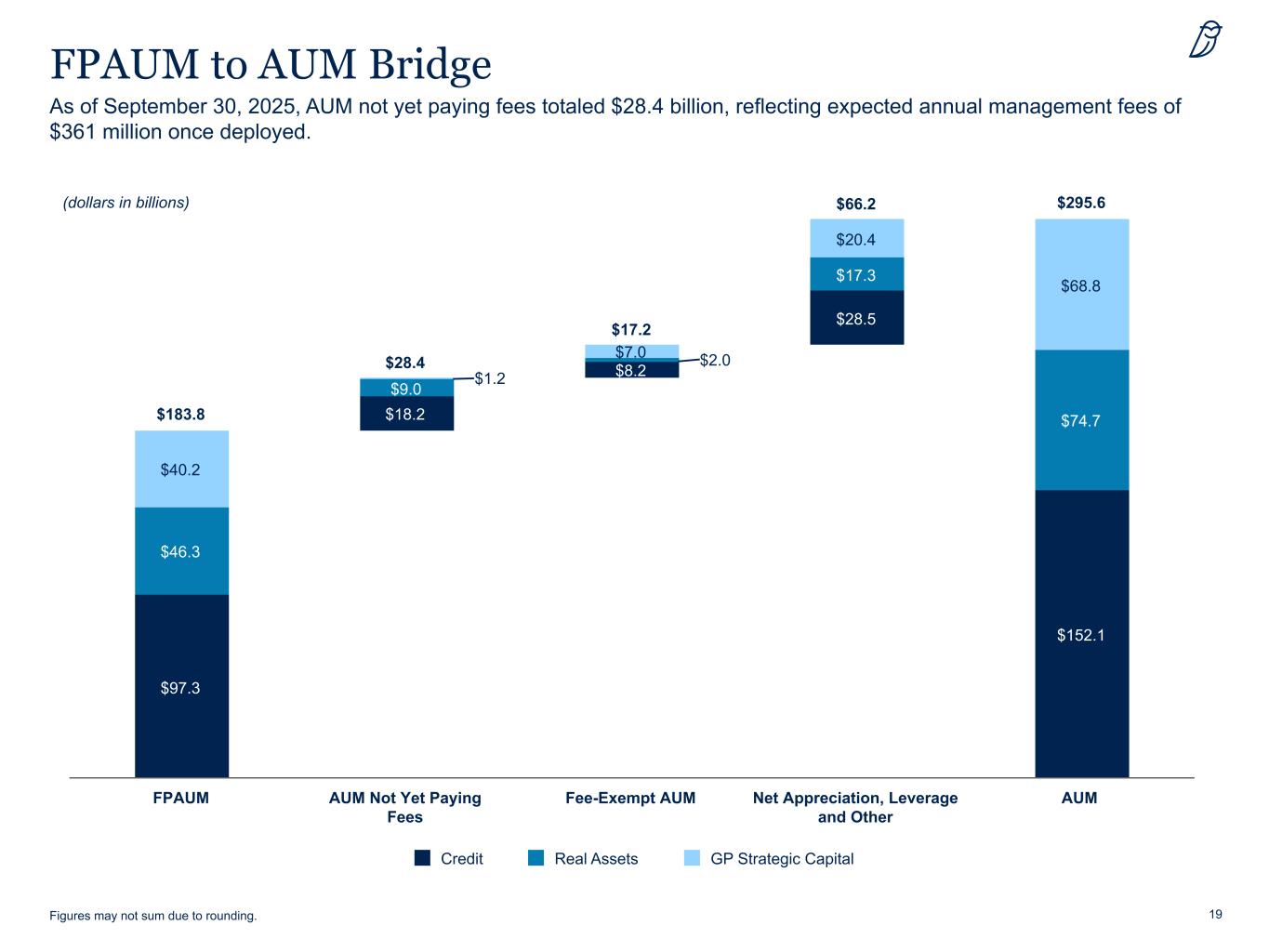
During the call today, we'll be referring to the earnings presentation which we posted to our website this morning so please have that on hand to follow along with that i'd like to turn the call over to mark great thank you so much and the results we reported for the third quarter of 2025 reflects strong growth and business performance across an increasingly diversified set of investment platforms not only are we beginning to see the benefits of the ongoing investments being made across our institutional and private wealth distribution channels, we have also had early successes in new product expansion efforts. We continue to see a comprehensive shift in how assets are being financed globally. Financing offered by the private markets is, more and more so, being recognized by borrowers as a compelling solution that offers the ability to execute with certainty and at scale and with terms tailored to the specific counterparty. This is a structural evolution for which Blue Owl is particularly well-positioned given our leading franchises and one that we are increasingly able to meet in a cross-asset class fashion as a result of our acquisitions. Concurrently, investor focus has continued to shift toward credit and digital infrastructure, which are taking greater market share away from legacy categories. We're seeing this play out broadly across institutional insurance and private wealth channels and have already strategically positioned Blue Owl to be a beneficiary of these trends. We've skated to where the puck is going, and our investors are benefiting from that. Of course, in any period of meaningful structural change within markets, there's always a concern that some participants may act irresponsibly, resulting in negative outcomes. There have been some headlines over the past month detailing idiosyncratic credit issues, which have led to broader questions about the health of the corporate and asset-backed credit markets. Let me start by saying that Blue has no exposure to tricolor or first brands. And broadly speaking, we do not view the events that have unfolded for those companies as canaries in the coal mine for the health of the private credit markets. However, we do believe that these two situations are reminders that vigilance is required in credit investing. As we have highlighted in previous earnings calls and continue to call out, the health of our credit portfolios remains excellent, with an average annual realized loss of just 13 basis points and no signs of meaningful stress. In direct lending, the modest level of non-accruals we have seen are not thematic in nature, and there has not been an uptick in our watchlist levels. Similarly, in alternative credit, we're not seeing anything that would indicate weakness in consumer credit. In fact, you've heard numerous banks highlight the resilience of their consumer portfolios during recent earnings calls, despite some of the financial press headlines. The reaction that we have seen in public equity markets has not been consistent with the strong fundamental performance we see in our portfolios. And our software loans have remained the best sector performer with our direct lending portfolio, and we are very pleased with the credit quality and ongoing health of the underlying borrowers there. Moving on to business performance. During the quarter, we saw over $14 billion of new capital commitments, bringing us to another record last 12-month capital raise of $57 billion, the equivalent of 24% of our assets under management a year ago. This capital raising does not yet reflect any contributions from our acquisitions, from which we are anticipating significant growth over the next couple of years. And notably, we have a growing base of AUM not yet paying fees, $28 billion as of the third quarter, which we expect to largely deploy over the next couple of years and drive over $360 million of management fees upon deployment. In direct lending, we're seeing an uptick in the pipeline for deployment and continue to find high-quality investment opportunities, generally underwriting to a high single-digit unlevered return despite tighter spread dynamics industry-wide. With the risk-free rate expected to end the year below 4%, and with leveraged loan and high yield currently offering 6% to 7%, we believe our direct lending strategy continues to offer meaningful spread premium and an attractive risk return versus other asset classes. Gross origination in the third quarter was roughly $11 billion, and net deployment increased to $3 billion, bringing last 12-month gross and net originations to $47 and $12 billion, respectively. In alternative credit, we continue to demonstrate scale benefits, deploying approximately $5 billion over the last 12 months, primarily focused on small business, equipment leasing, aviation, and consumer transactions. This is consistent with our broader asset-backed strategy of financing the Main Street economy. The team continues to make meaningful progress, capitalizing on longstanding relationships to deliver for our insurance clients, for whom we have originated several billion dollars this year with a robust forward pipeline. and we continue to see the power of the integrated platform more broadly as the alternative credit team works closely with direct lending, real assets, and insurance to build focused efforts in areas such as equipment leasing. During the quarter, we announced a forward flow agreement with PayPal, their first partnership of this sort in the U.S. We thought it'd be worth spending a moment on how we structure forward flow agreements to create downside protection for our investors and why they're so compelling. One of the most important elements is the dynamic nature of these agreements, meaning we monitor performance of the portfolio on a daily basis, and we can turn off the flow if the assets are not performing as expected. In addition, our team is focused on partnering with best-in-class originators where we have a high degree of alignment. In other words, the originators are at a minimum owning risk side-by-side with us through their balance sheets and are often the first loss risk. Finally, these assets are typically shorter-lived, self-amortized assets with a duration of two years or less. This means that if there is weakness by vintage or originator, it runs off relatively quickly compared to other forms of credit. We underwrite the severely challenged economic conditions, and when we buy or lend, our starting point is to assume that credit will get worse. To reiterate my earlier comments, we see no weakness of note. In real assets, we have continued to execute across a record pipeline of capital demand in the data center space specifically, with over $50 billion of investment announced over the past two months across two transactions, including $30 billion of capital investment with Meta in Louisiana, and over $20 billion of capital investment with Oracle in New Mexico. This is in addition to the previously announced development with Oracle in Abilene, Texas, where Blue All has anchored the financing of approximately $15 billion of project value through phase two. We are fortunate to be in the position to offer the scale of capital and deep sector expertise that together make Blue All the preferred partner for the hyperscalers representing the forefront of cloud and AI innovation, as highlighted by our leadership role in all three of the largest financings in the space. Across our diversified net lease and digital infrastructure strategies, we have raised more than $15 billion in aggregate capital over the past two years, reflecting strong interest for investors for what we're offering. And this only includes $1 billion of the $7 billion digital infrastructure fund we just finished raising. In diversified net lease alone, the $14 billion we have raised over that period compares to $26 billion of total AUM for that strategy two years ago. This includes the largest real estate fund raised in 2024, the top real estate product in private wealth on a net capital raised basis, and over $4 billion raised toward our next vintage and associated co-invest. To add to that, during the third quarter, we announced a substantial strategic partnership with QIA, one of the largest sovereign wealth funds, with a shared goal of further scaling and expanding BlueWall's digital infrastructure business. Extending our progress on this front, subsequent to quarter end, we launched our digital infrastructure semi-liquid product ahead of schedule and anticipate a first close in December with significant investor interest already observed. We have built what we think is an outstanding business in private wealth, where we have raised over $16 billion over the last 12 months, more than doubling our fundraising pace from two years ago. I believe the strength of our results is indicative of the durable partnerships we've built over time and a long track record of bringing innovative solutions to market. Today, we have an installed base of over 160,000 individual investors in Blue Owl products and are adding highly complementary new products in digital infrastructure and alternative credit to the lineup. We're very excited about the runway for these new initiatives and look forward to providing more detail in the coming quarters. In GP Stakes, we closed on two investments during the third quarter, bringing us to over 35% invested on our target size for our latest flagship vintage. We also completed our largest strip sale to date, selling about 18% of the assets in Fund 4 for proceeds of over $2.5 billion, delivering a 3.2x gross return on the assets sold across two transactions. As you've seen over the past year, we have been successful in delivering liquidity to the investors in these funds while introducing innovative paths for new investors to participate in the strategy. In total, our GP Stakes flagship funds have distributed more than $5.5 billion over the last 18 months in a market increasingly focused on DPI, or distributions to pay it in, situating our funds squarely within the top quartile on this important metric. In considering the strong results we reported for the third quarter and the ongoing momentum across Ploisle, we continue to center around a few guiding principles that anchor our accomplishments to date and inform our path forward. First, performance remains key. If we do right by our investors, growth will follow, and so our focus is always, first and foremost, on delivering exceptional return per unit of risk and protecting the downside. Second, duration of Permanent capital is highly important to achieve positive investment outcomes over time. And we have an embedded base of permanent capital that not only supports the investors in our funds, but also creates meaningful visibility in earnings for the investors in our stock. And finally, we are hyper-vigilant to the notion of complacency. We always look to be skating to where the puck is going, not where it has been. This focus on innovation and being ahead of the curve has brought us to our current position at the intersection of many of the largest secular trends happening across alternatives, and we believe it will continue to serve our investors well going forward. With that, let me turn it to Alan to discuss our financial results.
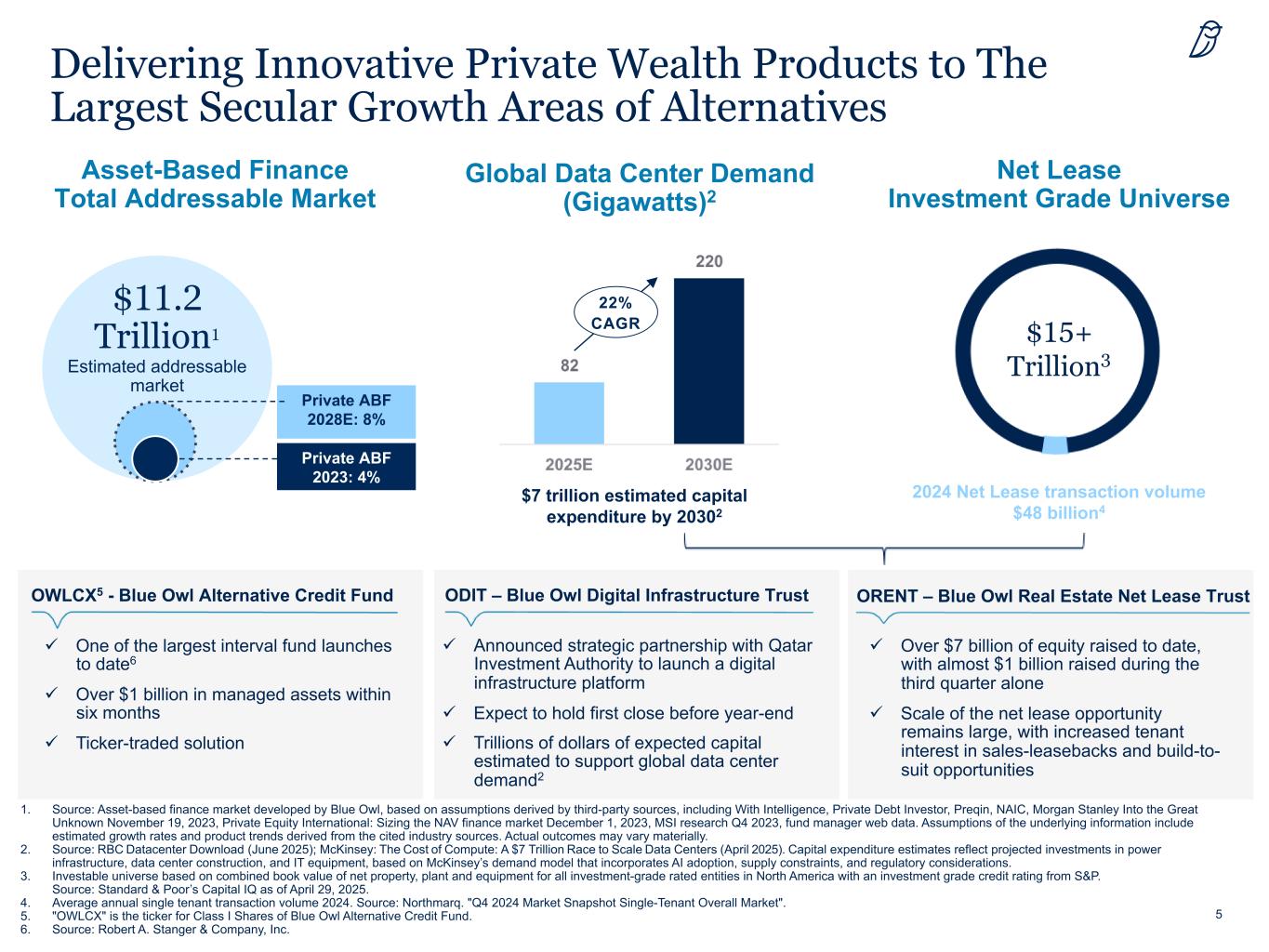
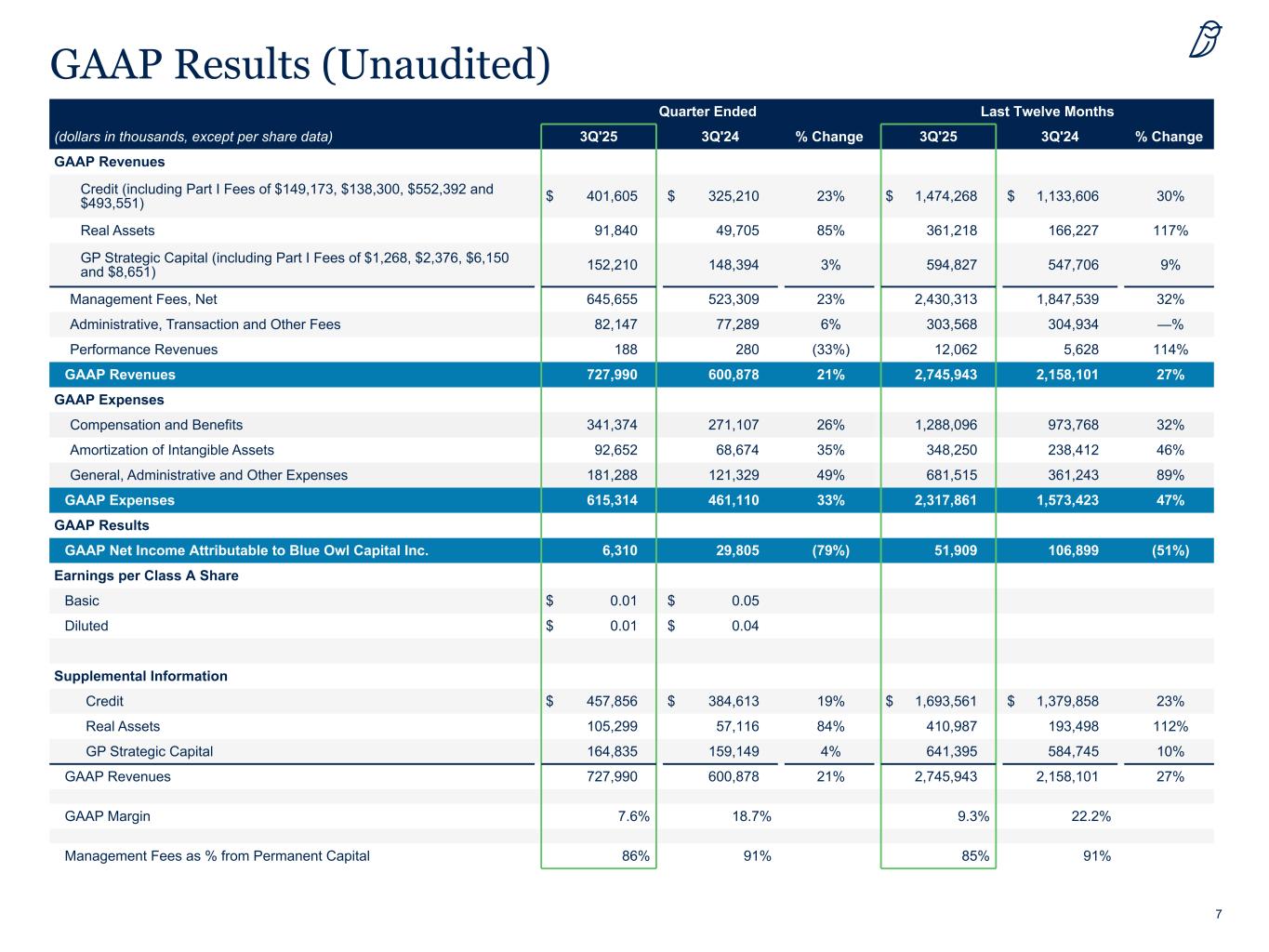
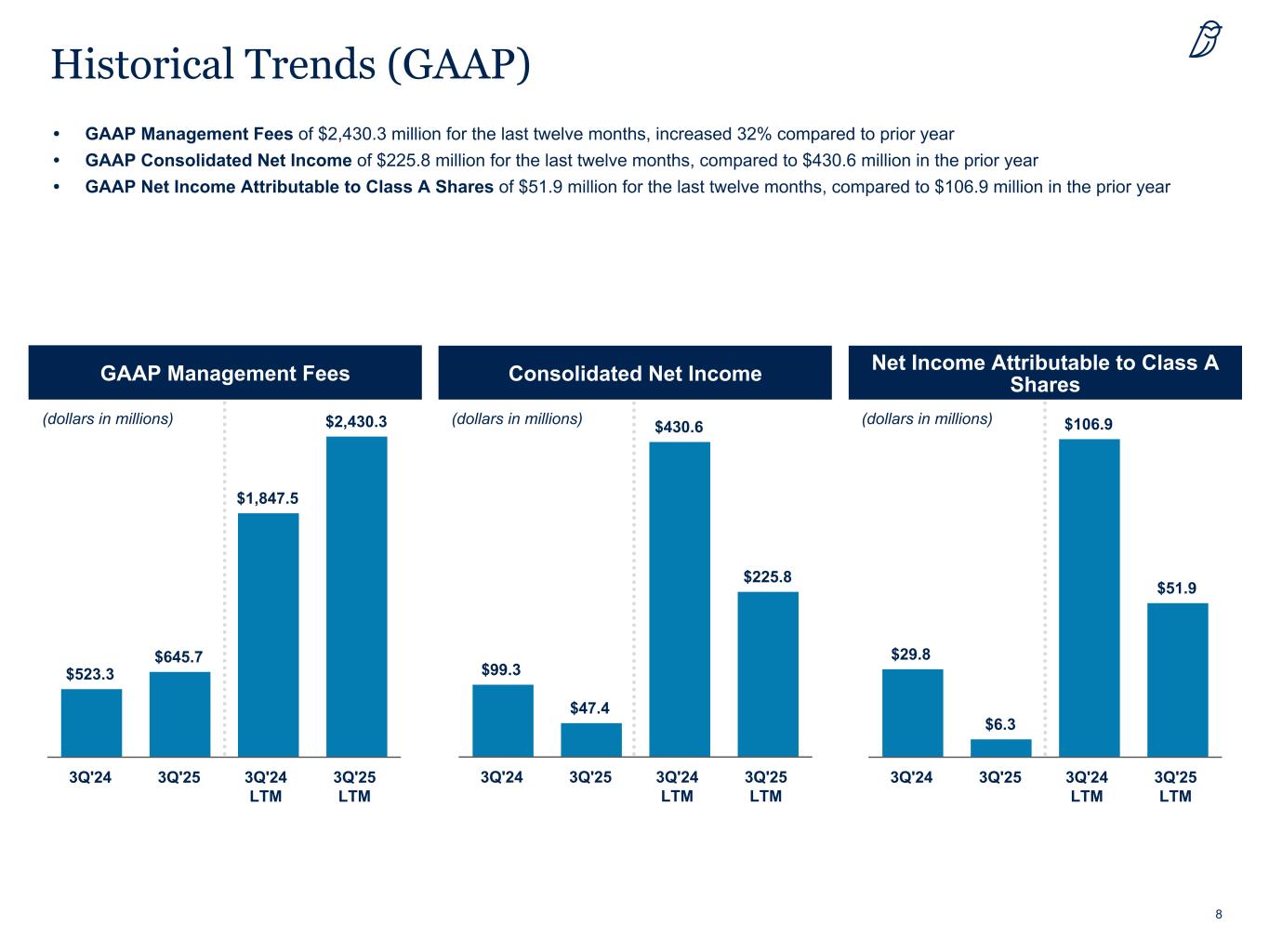
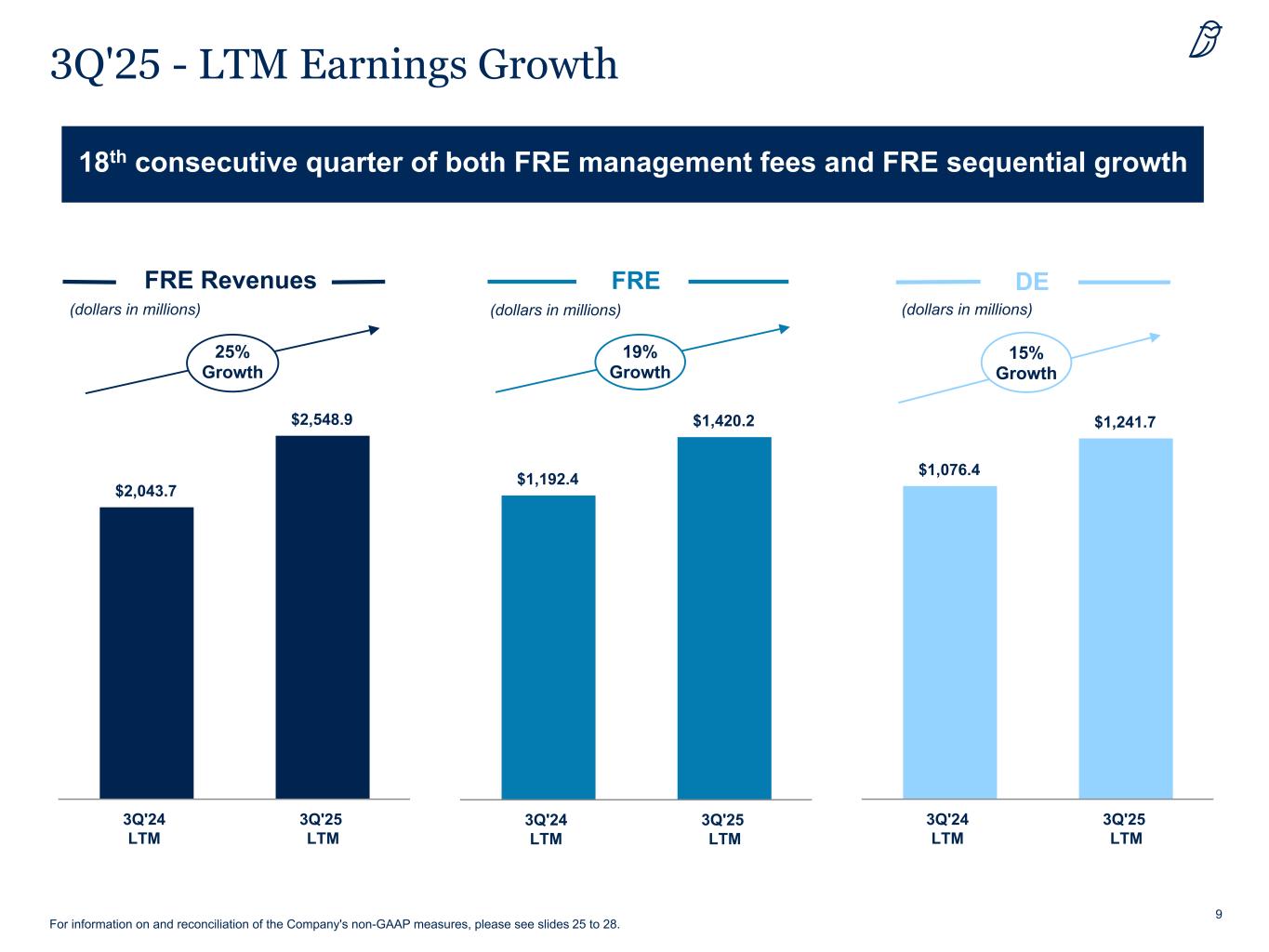
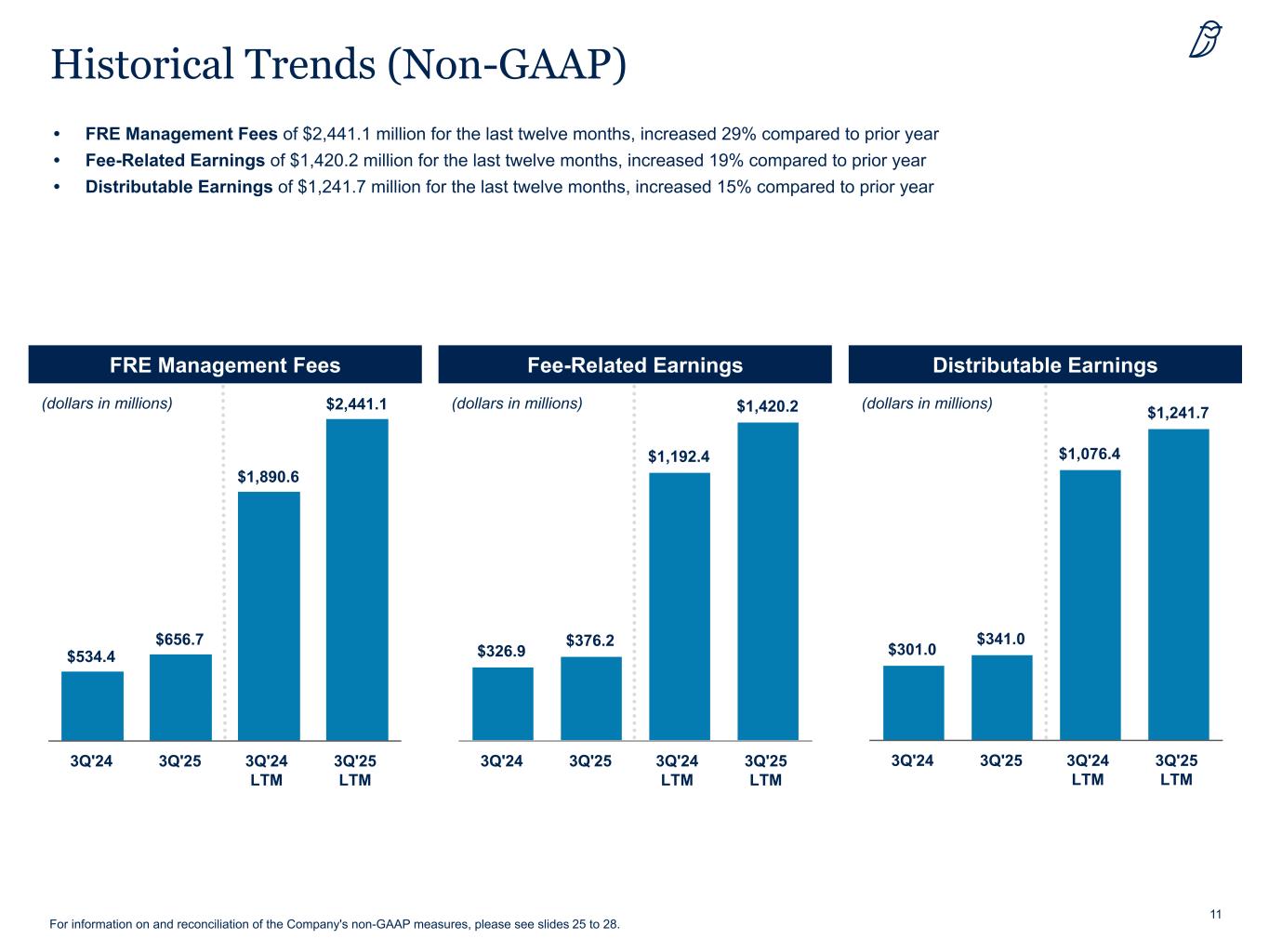
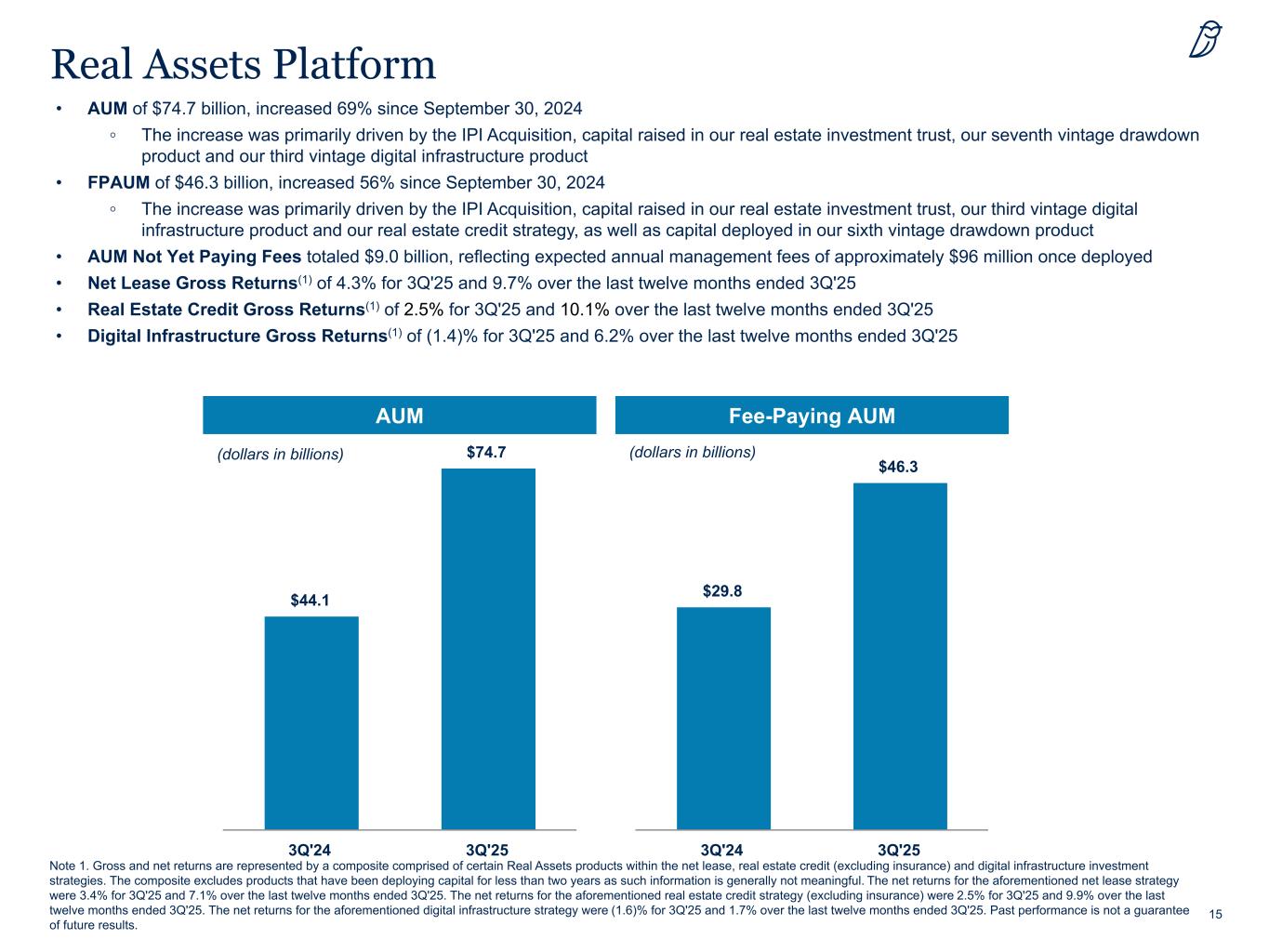
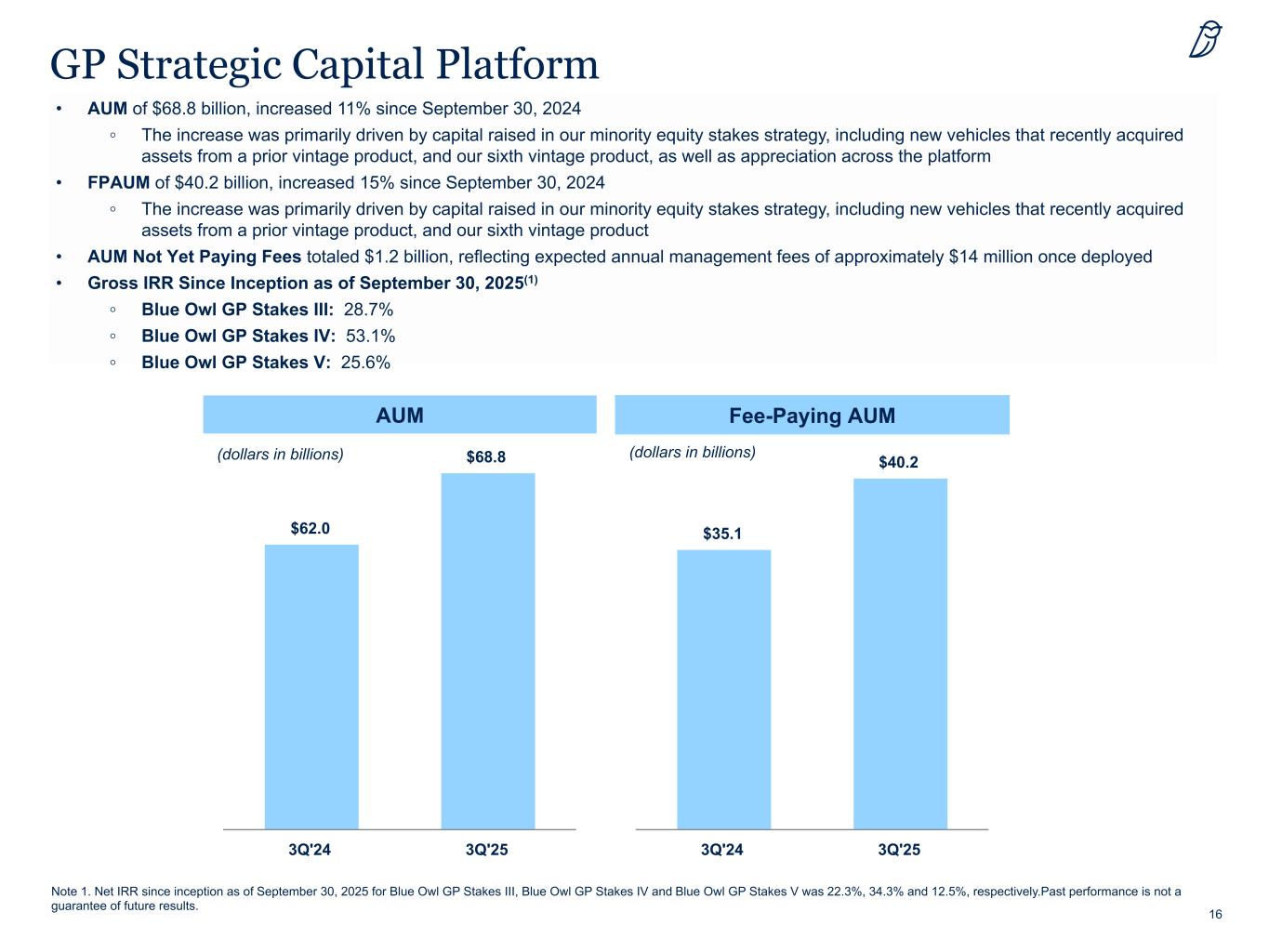
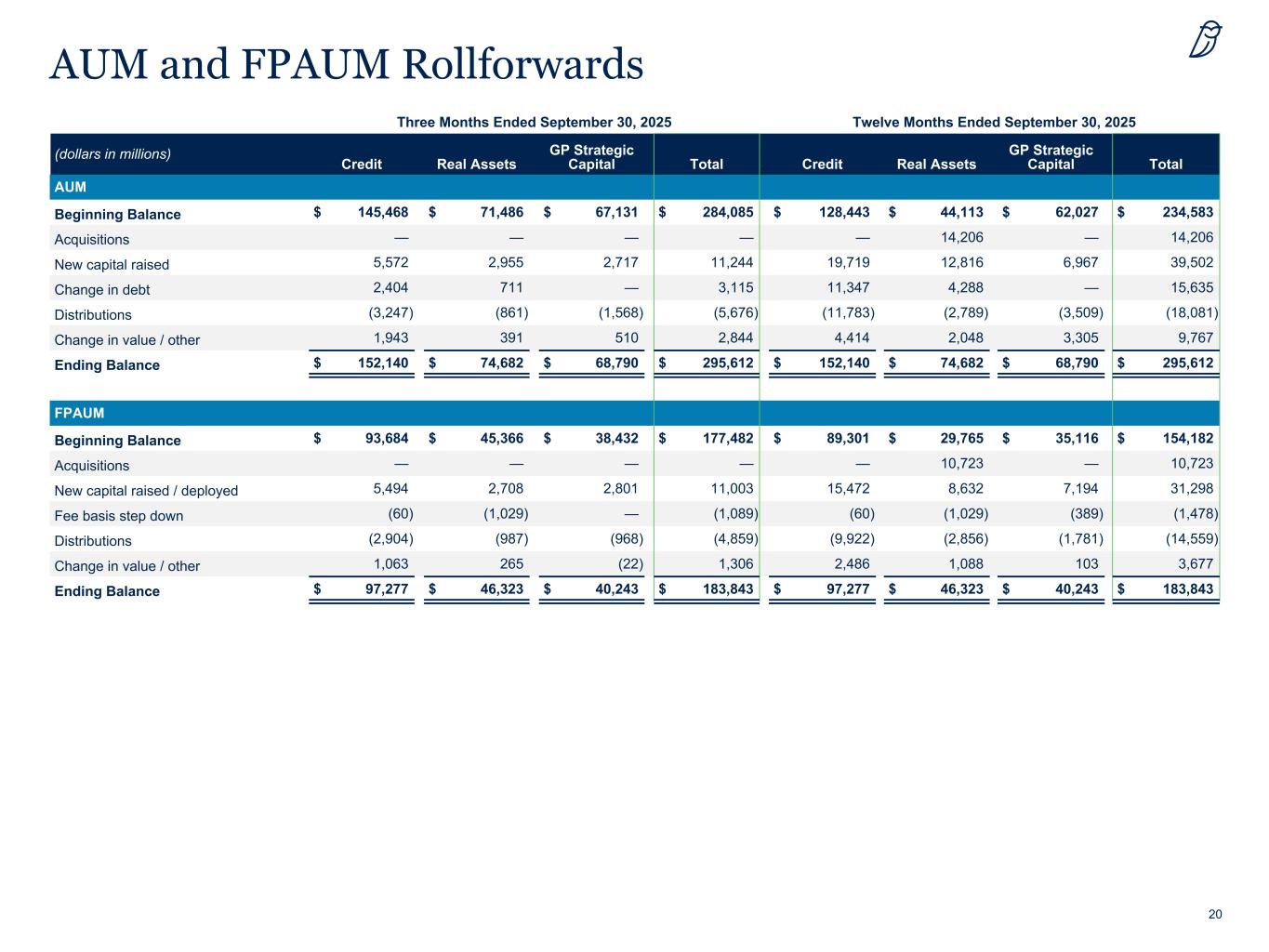
Thank you, Mark, and good morning, everyone. We are very pleased with the results we reported this quarter, marking our 18th consecutive quarter of management fee and FRE growth. Over the last 12 months, management fees increased by 29%, and 86% was from permanent capital vehicles. FRE was up 19%, and DE was up 15%. We had another very strong quarter of fundraising, taking in over $11 billion of equity in the third quarter, and nearly $40 billion over the last 12 months, an increase of over 60% from the prior year, and another record for Blue Owl. Of that $40 billion, $23 billion, or roughly 60% came from institutional clients, reflecting an increase of over 100% versus the per year period. And in private wealth, we have gotten off to a great start with two new wealth-focused vehicles with significant interest in our alternative credit interval funds and our new digital infrastructure funds. And we continue to see a growing breadth of interest in our existing product lineup. We highlight the massive secular trends in play for these strategies on slide five of our earnings presentation. To break down the third quarter fundraising numbers across our strategies and products, in credit, we raised $5.6 billion, a near record quarter for our credit platform. $3 billion was raised in direct lending, of which $2.4 billion came from our non-traded BDCs, OCIC and OTIC. The remainder was primarily raised across our newly launched interval funds and other alternative credit funds, various diversified lending funds and SMAs, and investment-grade credit. In real assets, we raised $3 billion. $1 billion was raised from O-Rent, with another $1 billion raised for the seventh vintage of our flagship net lease strategy. The remainder was primarily raised in insurance-focused products and co-invest dollars. And in GP Strategic Capital, we raised $2.7 billion, with most of this due to the strip sales that Mark referenced earlier. The latest vintage of our large-cap GP stake strategy is now up to $8 billion raised towards our $13 billion goal. And from a forward-looking fundraise perspective here, as we commented on last quarter's call, we expect a fourth-quarter fundraise to come in at similar levels for the second and third quarters. Turning to our platforms, in credit, our direct lending strategy gross returns were approximately 3% in the third quarter and 13% over the last 12 months. Weighted average LTVs remains in the high 30s across direct lending and in the low 30s specifically in our software lending portfolios. On average, underlying revenue and EBITDA growth across our portfolios was in the high single digits. And as Mark mentioned earlier, credit quality remains very strong. In light of the most recent 25-base-to-point rate cut, we wanted to refresh the framework of how rate cuts impact Blue Owl and underscore the resiliency of our Part 1 fees. So for every 100 basis points of rate cuts, the impact of Part 1 fees is approximately $60 million or a modest 2% of our third quarter revenues annually. So now with that refresher, first let's look backwards and then we're going to look forward. Over the last 12 months, we have grown total direct lending management fees by 18% and Part 1 fees by 12% during a period that included 100 basis points of rate cuts and relatively modest sponsor M&A activity, reflecting the advantages of incumbency and scale in this business. Sitting here today, looking at the forward SOFR curve, which shows approximately 100 basis points of average rate decline in 2026 over 2025, and incorporating our current expectations around fundraising and deployment in direct lending, we anticipate continued growth in Part 1 fees in 2026. Turning to alternative credit now, our strategy growth returns were approximately 4% in the third quarter and 16% over the last 12 months. The vast majority of portfolio returns in this strategy have historically been generated by contractual yield and principal recapture with relatively short duration compared to corporate credit. Over the past two quarters, we held one of the largest first closes for an interval fund at $850 million and has subsequently raised an additional $150 million to date, bringing us to over $1 billion raised for this new product, an incredibly strong start. We are now onboarding at a number of the major custodians, enabling a broader swath of platforms to distribute the product on a continuously offered basis, and we continue to add large distribution platforms to the pipeline for onboarding. And we have deployed the majority of this initial fundraise already by upsizing existing partnerships and transactions as we had more demands for capital than we were able to fill previously. In real assets, you heard about the strength of our data center pipeline from Mark just now. Combining the demand for capital in this area with robust opportunities we've seen logistics and manufacturing unshoring, we continue to expect that Net Lease Fund 6 will have committed nearly all of its available capital for investment by year-end. Through September 30th, we have deployed roughly 50% of this fund, with much of the remains of slated for deployment over the next 12 to 18 months as various build-to-suit projects reach completion. Our Net Lease Pipeline continues to grow, with over $50 billion of transaction volume under Letter of Intent for a contract to close. With regards to performance, gross returns in net lease were approximately 4% for the third quarter and 10% over the last 12 months. In GP Strategic Capital, we have now closed on four investments to date in the latest vintage of our GP stake strategy. Year-to-date, we have deployed more than $5 billion of equity in our large-cap strategy, slightly above the average annual deployment over the past few years. Performance in these funds remain strong, with a net IRR of 22% for Fund 3, 34% for Fund 4, and 13% for Fund 5. A few items remaining here that I wanted to cover with everyone. First, during the quarter, we saw a fee step down on a portion of the AUM in net lease Fund 6 that paid fees on committed capital. This resulted in very modest management fee growth in our real assets platform for the third quarter. As we look ahead, we anticipate a meaningful acceleration in management C growth for real assets, given our robust fundraising momentum and the strong pipeline we just discussed. With the anticipated mid-single-digit growth for the fourth quarter, quarter over quarter, which annualizes to about 20% growth, and further acceleration expected into 2026. As a reminder, we've committed 90% of Fund 6 to be invested, but have only deployed roughly 50% of capital out of that fund, providing visibility into management fee growth as those projects reach completion. Second, in GP states, there's a fee step down for Fund 2 that is occurring at the end of October and will result in an annual management fee impact of about $22 million. And finally, when we look at our most important key metrics, like FRE growth and FRE per share growth, or DE growth and DE per share growth, due to the timing of when shares are issued for each of our acquisitions, shares are issued at close, there can be a natural, very short-term divergence between something like FRE growth and FRE per share growth. So to see the best indicator of our current EPS growth rates, we can look at our quarter-over-quarter growth for, say, 1Q to 2Q25 or 2Q to 3Q25. Since we closed our last acquisition at the beginning of January, these are clean quarters, meaning each quarter has full share count and full P&L from all acquisitions. What you see in quarter-over-quarter growth for these recent quarters is a meaningful closing of the gap between FRE and FRE per share, as well as an acceleration in FRE per share growth. So to wrap up, I think you've seen from our business performance that nothing has changed fundamentally across Blue Owl, despite the acute reaction we've seen in all stocks over the past month or so. One of the benefits of our model is that we have very high visibility into future earnings, given the recurring nature of our revenues, reflecting our very durable business model. Portfolio quality has remained very strong across the board. Fundraising has been very robust and we continue to lean into our incumbency and scale to drive positive outcomes for our shareholders and investors. Thank you very much for joining us this morning. Operator, can we please open the line for questions?
Operator
Thank you. If you would like to ask a question, please press star 1 on your telephone keypad. If you would like to withdraw your question, simply press star one again. Please ensure your phone is not on mute when called upon. We ask that you please limit yourself to one question and please rejoin the queue if needed. Thank you. Your first question comes from Glenn Shore of Evercore ISI. Your line is open.
Hi, thanks very much. Maybe I'll just try to get a summary with your last commentary on the acceleration. So I think I'm okay with, I am okay with some dilution that gets Blue Owl into these key growth markets. And maybe it offsets any pressures from any lower rates and maturation of any of your legacy businesses. So the question I have is we're trying to solve, I think we're all trying to solve for the magnitude and the timing of the growth investments when they stopped having any dilution and improved the FRE growth, FRE per margin per share growth and the margin. So maybe just big picture, 26 and 27, are we back on track? Do you see 20 plus percent FRE growth, FRE per share matching that? And do we see margin stabilization and improvement from here?
Just trying to get to the summary of it all because I think that's where you're getting at yeah thanks Glenn I appreciate the question the answer is yes across the board we expect over time to continue to have margin expansion from where we are today as we get into 26 27 and certainly our 2029 goals we will expect to see meaningful accretion meaningful acceleration, excuse me, of metrics like FRE per share, DE per share, as we look 25 to 26. And again, as we look 26 to 27, each of those years builds on each other. We are from everything we see sitting here right on track with what we call our North Star, our investor day goals of 20 plus percent growth for management fees for revenues for 20% growth on metrics like FRE per share.
You know, I'll just add, you know, taking the numbers that Alan just said, I, you know, take a step back for a moment. And, well, to be clear, we understand why people ask questions about acquisitions because this is an industry that hasn't always done them well. But, you know, I say this all due humility. We've done them phenomenally well. I mean, think about where we are and how we've positioned for where the real opportunities going forward are, both for our investors in our funds and for our shareholders. You know, our position in digital infrastructure is, you know, is veritably monumental. You know, we have this incredibly successful integral fund already in Asset Fact, and Asset Fact is growing. These are capabilities that are fully integrated, and in fact, you're already seeing. If you look at the metatransaction, we had about 100 people working across the firm on that. That never could have been done, absent the capabilities that we have both built organically and added. And so, you know, this sort of recurring, not your mathematical question, because I absolutely understand there's the mathematical reality that if you issue shares and have less than a year of earnings, then, I mean, obviously the per share effect won't show up until you get a year out. Or if you look at our annualized numbers, look quarter over quarter and analyze them, you can already see what we're talking about. This isn't a, you know, we can see it on the come. Just look at the quarter over quarter numbers, annualize them, and you can see, you know, the acceleration coming back to the levels, you know, that we're all anticipating. So, you know, from where we sit today, just so everyone knows it, those acquisitions are done, dusted, and thriving. And we view that as having been no small part of our success. Let's look at O-Rent. O-Rent today is by far the leader in net fundraising, net flows in real estate continuously offered. Our fund, our real estate traditional flagship fund, as you know, we've already raised nearly half of our target fund size just out of the blocks. We've already committed, I think we're now 90% committed in fund six. I mean, so we are, we're really thriving, not just in our core businesses that we already had, like direct lending, but these additions. So, you know, absolutely, we need to, you know, deliver it through to the numbers. That's just math, thankfully. It's not operational. It's not execution. It's not strategic. But that math will show through.
And maybe one other thing to add. When folks are looking for early measures of success, right, it takes years to ramp products, ramp strategies to get a good level of AUM that we're working off of. When you think of early measures of success, it could take 9 to 12 months to roll out an organic brand-new product, a brand-new strategy within your business. Think about what we've done with our acquisitions. The interval fund was out in market in less than 12 months. ODIT, which is our digital infrastructure, wealth-dedicated product we've talked a lot about here, we're going to have our first close in less than 12 months from when we closed the acquisition. So when folks are looking for, you know, how much are we going to raise, what's going to happen over time, it takes time. But when you look for those early measures of success, are they on the right track? I couldn't agree more with Mark. Wow, we're hitting on all cylinders, and things are pointing up and to the right for us with all of these acquisitions.
Appreciate that perspective. Thank you.
Operator
The next question comes from Patrick Davitt with Autonomous Research. Your line is open.
Hey, good morning, everyone. I have a question on retail flows, I guess, through the lens of the volatility in August. It looks like October 1st subscriptions were still quite strong. Do you have any early view on how the credit volatility we've seen, the news flow has or has not impacted the numbers we're going to see for November 1st? Thank you.
Thanks, Patrick. Appreciate the question. We're coming off just for credit, just focusing on what we're doing there, but I'm going to pull the lens back a little. Very strong flows. We're coming off of a record quarter in our wealth dedicated products for 3Q. We have continued momentum this month. We should build on what we did last month for products like OCIC. We had a record quarter, I'm sorry, a record month with Orent. We broke over $300 million, we are well on our way to one of our goals, one of our many goals that we're on track with, of hitting a billion dollar a quarter run rate for Orent by the end of this year. So we're very encouraged by what we see, and we see a lot of resiliency in the channel for what we've been doing.
Orent and OCIC, you know, just very particularly the way you phrased it, to be clear, they're accelerating this month. Accelerating. So, you know, I have to add it to the list of imaginary problems, you know, that people are concerned about. You know, and maybe it speaks to this point. Sometimes we get this issue of, you know, oh gosh, individual investors, are they more volatile? They're going to be fickle. Actually, the evidence to us is there's certainly no evidence that it might be to the contrary, that institutions actually can sometimes be much more herd-like and can hit, you know, odd, rigid barriers or, you know, someone on their board calls and says, gosh, I read an article. I don't really know. But actually, the evidence we have doesn't suggest that individuals, in fact, seems like they're grasping the reality that these strategies are working really, really well, perhaps better than, you know, the media and maybe some institutions, although we're doing quite well with institutions now as well.
Operator
The next question comes from Brian McKenna with Citizens. Your line is open.
Thanks. Good morning, everyone. So if I look at all of your public companies, that includes OWL, OBDC, OTF, all three continue to deliver pretty strong results across the board. You look at the underlying fundamentals. They remain some of the best in the industry. And even for your public BDCs, they are really the best in the industry. And then you look at direct lending, gross returns that you're reported today. It should be another strong quarter for your BDC. So, you know, fundamentals remain really strong. But you look at all the stocks and they're trading at pretty meaningful discounts appear. So what do you think is still misunderstood about your businesses within the market today? And what are you doing as a management team to change these perceptions and ultimately get these stock prices higher? And then does there come a point when, you know, insiders start to step in and they ultimately start buying some of these stocks?
So as to what investors don't understand, it's probably hard for us to give you a comprehensive answer. In fact, you obviously talk to a lot of investors. We can offer some theories. I can certainly tell you what we're doing. We're doing two things that I think at the end of the day will solve this problem. One, we are executing, executing, executing. Business is good. business is continuing to be good and we're focused on continuing to deliver you know we haven't seen an opportunity as good for investors and by extension for blue owl as the digital infrastructure um investment cycle that we're in and so we're just going to continue to you know deliver results for investors and continue to you know deliver frankly we're short capital in an arena like that. So I think that execution is the name of the game internal for us. And then communication. We are out on the road talking to shareholders all the time. Everyone in the senior team here is, by the way, happy to do it. We like spending time with shareholders and we're out on the road and we'll answer any question anybody has. So I think we can communicate. We're trying to spend time answering questions as best we can in the media as well. So we're going to communicate and execute. And to what you just said, look to our way of thinking. It couldn't be better said. I mean, the reality is we and every one of these vehicles, they're an incredible value. So rather than complain about it, which I know is a natural tendency we can have, that seems kind of pointless. Rather, we're just going to continue to deliver spectacular results. Look at where we are compared to where we were when we set up our investor day. We're tracking right along. Look at like RDE this year versus what people thought a year ago and compare that to what the revisions happened with our peers. I mean, we're in a different category as we should be because we have a highly predictable fee stream. So I don't know. We'll take advice from anyone on how better to do either of those things or crack the code, but history as a guide, you know, those who join us now, I think, are going to be the beneficiaries of, you know, of the upside from here, which we think of as substantial.
Thanks so much. Thanks, Brian.
Operator
The next question comes from Craig Siegenfeller with Bank of America. Your line is open.
Hey, good morning, Mark, Alan. Hope everyone's doing well. My question is on the digital infrabusiness. So we've seen these large deals recently, like the $27 billion deal with Meta to develop the Hyperion Data Center. And I'm sorry, I'm losing my voice a little bit here, but I believe the underlying leases have maturities of about 15 to 20 years. So my question is, under what scenarios can Meta terminate or walk away from the lease earlier than 15 years, and if they do that, what compensation would they owe Blue Owls funds, and how would that impact the IR for Blue Owls LPs on that investment? Thank you.
Yeah, so the leases, first of all, let's step back. The leases are designed to function for 20 plus years. So just to start, to level set to your point, there is a, it is, and this is part of the the skill and art that both meta and I think we brought to it either designed in a very bespoke way to create elements of flexibility for meta of course as you know they're actually just yesterday we're talking about how they're actually rapidly accelerating their spend so I think this this is more about having a flexibility which I give them full credit for than having anything that's likely to be used. But just to cut through it all, because I don't want to lose the forest for the trees, if there were an early termination, there is a perfectly mathematical make-hole where we make, the debt makes all its money, we make a spectacular equity return under every circumstance. So it is really – it doesn't – we expect it will end up being a 20-plus year undertaking, but it actually, call it what it is, doesn't matter. If it terminated anywhere along where they have the options to do it, there is a value guarantee on the assets. So we make a great return under any one of those conditions. So there's – we're happy any which way.
Operator
The next question comes from Bill Katz with TD Cowan. Your line is open.
Okay, thank you. I wish there was a day we could ask more than one. Maybe sticking with the digital story, I was wondering if you could help us understand how quickly you might be able to absorb the most recent flagship fundraising given the size of the pipeline. And then secondarily, despite the strong macro dynamics, the fund performance has been pretty weak two quarters in a row. I was wondering if you could help us unpack why that's the case and would that be a hindrance to drive growth from here.
Yeah, let's first just clear up the accounting, therefore kind of misunderstanding, not your misunderstanding, but understandable misunderstanding of the return point. So, Al, why don't you cover that first and then I'll talk about the fund.
Sure. Thanks, Bill. This quarter we saw some mark-to-market on swaps that we have around debt that's in place. So when we look at this, we see these are very long-term projects. When you look at the underlying performance of the data centers, they are very strong. And I'll tell you, on average across our digital infrastructure funds, Fund 1, 2, and 3, we have IRRs in the high teens. So we're experiencing great IRRs for our investors. This is short-term noise.
Yeah. And just to frame that in a way that will be apparent to everyone, I'm sure it's already apparent to you. These are very long dated leases with rent escalators. Not to be lost, by the way, that escalator is very powerful over time. But to match, we swap debt in many cases against them. So we've locked in our returns, and our returns are outstanding. But as an accounting matter, the swap itself gets marked for accounting purposes, unrelated to the fact that really it's just serving to create this fixed income stream. So it's just an accounting quirk. In terms of the absorption of the fund, yeah, listen, we are heavily committed already through Fund 3, and so we will be back with Fund 4 in the 2026. And at this point, as I said, the demand for capital, given the partnerships we have and the capabilities we have, vastly exceeds our current capital on hand. So that's a great opportunity for, you know, our LPs, I know, frankly, others that, you know, may join us in other strategic roles, take like QIA, who joined us as a strategic partner in our continuously offered product, a billion-dollar commitment to help anchor that product. and, you know, we're going to continue to grow that partnership. They've been a fantastic strategic partner and they, you know, they picked this platform because they see the scale and quality of the opportunity. So, you know, we're going to continue to develop these both strategic partnerships and we're already seeing really great fund flows, you know, in uptake rates, speeds, you know, of adoption we've not seen before in continuously offered world. So, you know, we're trying to gather the capital, but it's still very imbalanced. We need much more than we have to capture, you know, what we may think are once-in-generation opportunities.
When you think of the momentum we have here, Bill, you think about Fund 3 closed at the end of April. And within 12 or 18 months, we should be out, and we expect we will be out with our first close, not just marketing, but our first close for Fund 4. and the digital infrastructure wealth product I mentioned a few minutes ago our plans were to launch that in early 2026 we're ahead of that plan we have so much momentum we have two of our biggest distribution partners live in the system we expect our first close to be December 1st and we are really encouraged by the early signs we're seeing in the channels there thanks for the good of tape thank you the next question comes from Benjamin Budish with Barclays.
Operator
Your line is open.
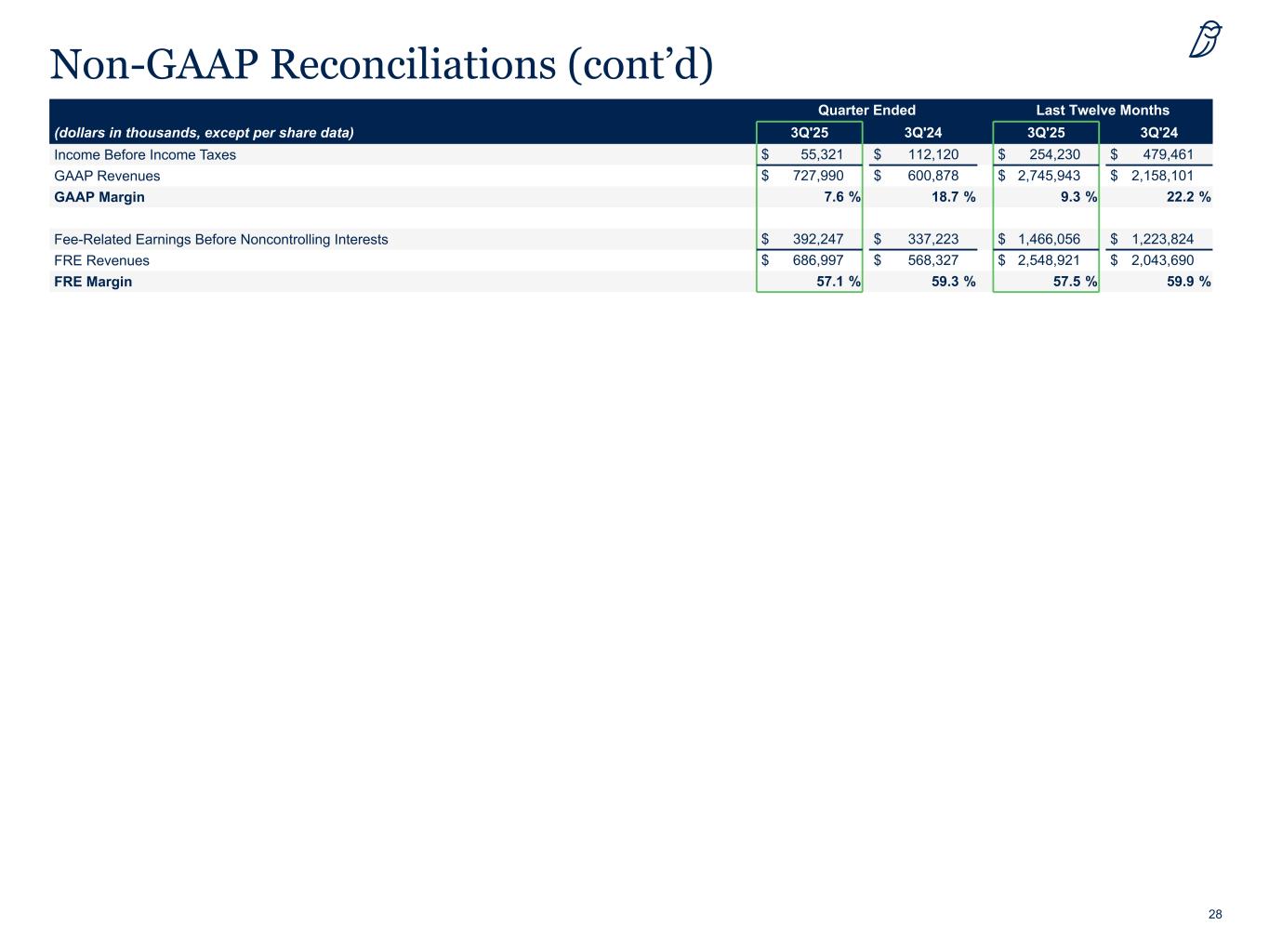
Hi, good morning, and thanks for taking my question. I wanted to ask about operating leverage in the business. You indicated, I think, earlier in the Q&A that you do expect FRE acceleration in the next few years. Curious, if I just look at this quarter, you did have a big step up in credit management fees, I think driven by the listing of OTF, but margins are still sort of that low 57% range. I guess that was presumably embedded into your prior full-year guidance, but can you just remind Just like, why wasn't there more in the quarter? And as we think about the next several years, obviously a lot going on in the top line and from a fundraising perspective, but how else are you thinking about, you know, expanding FRE margins and what that may look like?
Sure. You know, there's a reason that we're, there's a reason that we grow faster and more predictably than anyone in our industry. And there's a reason that we get to strategic places like digital infrastructure and alternative credit. And I want to say that other people are doing a phenomenal job. They are. But there's a reason when you just step back and put the numbers on a piece of paper. We are, you know, kind of in a category of our own. And it's because we invest in continuing that track forward. So, you know, we will continue, of course, to be a highly profitable business. You continue to see our margin this, you know, this quarter at 57% plus. Sure, there's some operating leverage in the business over the, you know, over the medium term. But just from our point of view, that is not where you make money in our business. If we had 30 more basis points of margin and gave up investing in the thing that's going to be the continuation of this accelerated growth two years from now, it'd be a really terrible trade. So, you know, we don't find the idea of trying to squeeze a penny out of our margin versus invested in the future a worthwhile trade. So, yeah, there's operating leverage, but you should expect, you should, I mean, I don't want to tell you what you should want us to do. That's obviously your call, but I would proffer. You should want us to continue to invest in this dramatic outperformance over the long term versus, you know, trying to optimize the last dollar of margin today. And so that's where we are. We will continue to make growth investments. So I'd rather have you think about us as, you know, growing for a very, very long time at a very high margin with the highest fee rate, by the way, which we do have in the industry. But whether, you know, we take the last 50 basis points of margin to the bottom line or put it into the business, pun intended, on the margin, you should expect we want to put that in the business so we continue to outperform so dramatically. And, you know, North Star, $5 billion of revenue, $3 billion of FRE. That's where we're going. All right.
Operator
The next question comes from Chris Finluff with Piper Sandler. Your line is open.
Thank you. Good morning, everyone. I want to go back to digital infrastructure. Definitely had some meaningful announcements recently, the Qatar Investment Authority Partnership, the MetaJV. When you think of upcoming data center opportunities, what type of pipeline are you looking at? Are you able to put a dollar value on that? And then as well as just expected structures for these types of investments, could structures evolve? And then just on the meta-JV, why do you think the JV structure made the most sense for that one?
Yeah, it's a wonderful question about the structures, because if you look at the three largest data center complexes, financings, done, which, you know, no surprise, I'll note all three are ours, each one is a different structure. And I think this is really an important point to understand. In the hundreds and hundreds of billions, and to quantify, I don't even quite know how to quantify the pipeline because it's so vast in terms of the number of projects that we've already signed or that we're advanced on or that we're talking about. And remember, the size of each one is just so massive, but in excess of $100 billion, for sure, in terms of the way we would look at our pipeline. So let's call the pipeline or adjustable market, for practical purposes, kind of infinite. It doesn't really matter. That's not the constraint. And by the way, I'm sure we all did look at the numbers from yesterday from all the big hyper, three of the big hyperscalers and the articles in the journal. And it was funny, I was reading the journal, three articles in a row all talk about one very core theme from Google, from Meta, from Microsoft, dramatic acceleration in capital spending beyond what the big numbers are, people already thought and had. And if you actually, I think, talked to a lot of folks, they'd say we're underspending the opportunity, not over. Now, I don't want to be in the position and we're not in the position to take that risk. We do things under long dated contracts with exceptionally high quality companies where we earn these really, really strong and growing yields. So that's our part. We're the picks and shovels. We're the infrastructure of that part. But with that said, there are multiple structures, and this is part of the strength we can deliver at Blue Owl. I think the reason that we are prevailing in this market is because we can serve as that one-stop shop, depending on what kind of solution you want. And I'm going to just quickly take you through this. If you look at the Abilene, Texas, or Stargate project as sometimes referred to, so that project we're developing in partnership with a fantastic company, Crusoe, who recently just announced their own actual financing, which we're a part of. But that really reflects the strategic partnership we have with Crusoe. They're outstanding in what they do. They've been a pioneer in this business. They have big projects they're working on, and we're working together on how we look. They're in the development business, and we're in the own the capital business. It's a wonderful complement. So in that case, they're the developer, and we're the owner, and Oracle is the tenant. So that's one structure. In the case of the BorderPlex project, which is now, and that one, by the way, phase one and two, that was a $15 billion project. In BorderPlex, that's a $22 billion project. In BorderPlex, we're the developer. Remember, we have a business called Stack. Stack has about 1,000 people in it. This is another one of the, well, may or may not be fully understood, but the gigantic barriers to entry here is there's everyone's happy to own a data center um we just took one of our data centers we had created organically and you know today we're creating our data centers at seven eight cap rates we just agreed to sell one at a 5.25 cap rate so everyone liked to own them the question is how do you get to own them at seven and eight cap rates well you have to have the partnerships and be able to either with a crusoe or on your own in the case of this on our own develop so stack we of a thousand people that do design build operate and it's not about what you did today it's about what you did two years ago to position yourself with the right land the right power and right understanding of the regulatory frameworks and how to actually get this done because getting it done it matters as much as the capital and we do both and then the third iteration is meta meta develops and is very good at developing their own data centers so they say okay well i don't need the development, what I need is someone that can deliver $27 billion of capital that understands my business and understands all the nuances that are going to go into developing this project. So our expertise isn't like we need to build it away from them, but rather expertise allows us to structure in partnership with Meta in a way that meets their needs. So they say, oh yeah, like it's great. We get to work with someone that understands what we're doing. And so Meta is building that project so what i like about that just so happens that all three you see three different all good flavors depending on what the user of the data center wants and we're we're positioned to do all three and we're happy to do all three great uh thank you mark i appreciate the detailed answer of course thank you the next question comes from brennan hawken with bmo your line is open good morning thanks for taking my question um wanted to ask a clarifying question and then and then one uh a little bit more forward looking so i think alan in your prepared remarks you you were
you were talking about the gp stakes business and then you went into fundraising expectations so i was a little unsure about whether or not i thought those fundraising expectations were firm wide and not narrowly to the gp stakes business where you expect 4q to be equal to 2q and 3q levels, but just want to confirm that. And then you also highlighted expectation for management fee acceleration in the real asset business. Does that mean that the fee rate step down that we saw this quarter should recover, or are you going to be seeing strong revenue growth despite the lower fee rate?
Thanks, Brandon. Good questions. I appreciate you asking. I'm sorry. I have an opportunity to clarify. On the first question, 4Q similar to 3Q, 2Q, that was a comment out of this prepared remark, the same comment as last quarter, strictly related to sixth vintage of GP6. So that's what I was focused on in that comment, narrowly, not broadly frowl. And on the real asset side, yes, the answer is yes. So the fee rate looks lower this quarter. it's a little bit of a mixed shift. It's a little bit of a Fund 6 fee step down, but the fees for Fund 7 haven't really fully kicked in. We've caught a little bit of capital, but not that much. And so that's the dynamic you're seeing. We've raised money for O-RENT. Fees are coming down a little here because of the Fund 6 step down. So it's very, very modest growth there. You're going to see an acceleration of growth and continued fee expansion for real assets. Great. Thank you for the clarifications. Thank you, Brandon.
Operator
The next question comes from Stephen Chubac with Wolf Research. Your line is open.
Hi, good morning, and thanks for taking my questions.
Hope you're both doing well. Mark, you provide some really helpful detail on the forward flow agreements and your approach to underwriting and structuring these deals, certainly growing area of focus among investors, and I was hoping to delve a little bit deeper. There's like four subcomponents I was hoping to unpack. First, if you could talk about the quality of the underlying credits. Second, the amount of subordination you build into these structures. Third is the volume it's expected to produce in a typical quarter. And then the appetite to afford similar agreements.
So I know that was quite a bit, but credit quality, subordination volume and appetite for more partnerships um sure so let us tackle all and they're all good they're all good questions they're all highly salient these flow partnerships you know are something we very much like because what we're doing again it's kind of a theme no surprise in the blue all system which is we like to find the people that are best at what they do work with them in the case of, say, a Meta, work with them in the case of, say, a PayPal, buy them when it's something that is an internal asset management capability that we need to, should have, a la IPI or Adelaya. So I think the theme you're going to always see is we're looking for best of breed. And we are very keenly aware of what we are great at and not great at, to put another way, when you focus, you tend to be really great at things. There's a reason that we are outperforming for our LPs in almost everything we do is because we focus. We don't have that many strategies. There's a reason we win partnerships that I think many would love to have because we're more focused in a few core areas that really work. And so the flow partnerships are part of that. So let's start with quality. Well, quality, what you see is we're looking, and this is quite important too, even with all the noise in the market, we work with prime. We're not in the subprime business. And so we're talking about prime credit points. That is why you'll see partnerships of people like PayPal or SoFi who have strong prime flows in what they take in. So that's a logical starting point. So quality, very high. We don't play in the edges. we don't do anything meaningful and subprime, we do prime. And then, of course, a lot of it's just business finance, business lease finance, and otherwise. So high credit quality by individual credit, and then obviously, of course, it gets down to the packaging, the diligence, and then to your second point, subordination. In everything we do in these partnerships, either the person we're partnered with is owning part of the same risk we are owning on their balance sheet or in most cases, subordinating. Now, the amount of subordination, I can't really, I can't give you a numeric answer because obviously that depends on the exact credit quality, how much, what controls there are, what can go into the box. But important to understand, we're not buying a package of things and saying, well, good luck with that. They're keeping a parallel piece or usually a subordinated piece. And the flow agreements, we can shut them off. You know, we're doing daily feeds. This is a very data intensive business. We're doing daily feeds between them and us. We see everything that's processing. And so these flow agreements can be shut off if there's deterioration around parameters, in which case, you know, they actually run off quite rapidly. One of the beauties of alternative credit and flow arrangements is the duration per package per month is very fast. So in a world of liquidity, if people want liquidity or strategy where you can get to liquidity as an answer to a change in the world or a change in preference, this is the best match, which is why we put the interval structure, interval fund structure here. You know, you got to match structure to strategy if you really want to deliver for investors. And so that's on On subordination, you know, there is most often subordination, there's always at least parallel ownership, and there's tremendous day-to-day controls through data and tech integration with these big platforms. Volume. So you've seen some of the announcements we have. Now, remember, it's important when we talk about $7 billion, for example. It's not that we put out $7 billion, right? That is going to be deployed over a couple-year period in this sort of running cycle of take receivables, and then they get quickly paid down, and then you add more receivables. So we can take you through, and we can certainly try to make sure people understand going forward a bit of, like, what's the deployment – peak deployment or deployment pace. But it really gives us what is a lot of visibility and optionality, maybe for lack of a better term. But it's not like we put $7 billion to work in any given moment. Divide that over a couple of years, effectively. And then on doing similar partnerships, absolutely. Again, what we want are the best originators in the world and leverage their capabilities and will be the best capital partner they can have, partner of choice. So, you know, that marries with a lot of what we do. Same thing we do in the world of direct lending, right? We're not in the private equity business. You know, we don't compete with our borrowers. They're in the business. They're great at it. They originate, if you will, and then we support their purchases. So, yes, we'll absolutely continue to see similar partnerships formed.
That's great, Mark. Thanks for the comprehensive response. Really appreciate it.
Operator
The next question comes from Alex Bloskin with Goldman Sachs. Your line is open.
Hey, everybody. Another one for you guys related to credit. And while the three instances that occurred a few weeks ago all seem to be related to fraud and sounds like there's another one this morning with HPS and kind of that those headlines coming out in the last hour or so here. But I guess as you look at the credit exposures broadly across your platform and acknowledging that those four are not really related to you guys, and it sounds like it was all related to fraud. But how are you addressing potential fraud risks across the platform? Is there anything differently that you're starting to look at? Is there extra diligence you're starting to look at throughout the portfolios? And ultimately, will that require any incremental spend if these instances start to kind of percolate throughout the industry?
Yeah, thanks. And I think maybe want to take a slight step back and just, you know, try to comprehensively address the overall credit theme question and, you know, well phrased. So I think it's actually important to level set at one place to begin with, which is credit quality here, our peers, and at the banks for that matter, you know, despite some tempests and teapots, you know, is very strong, very strong. You know, the, I'm going to come back to us, but let's just start with the ecosystem in total. It's very healthy. The ecosystem, the credit ecosystem is extremely well capitalized. It's trillions and trillions of dollars. And, you know, and then you have a problem. And in this case, as you point out, a handful of problems that appear to be rooted in fraud, which is kind of the least relevant indicative issue when it comes to credit quality or systemic problems, and yet has garnered extraordinary amounts of attention. Banks do a very good job. I don't want this to be misunderstood. We're all part of a common ecosystem. We have a different approach. But take banks like Wells Fargo. You know, they do a phenomenal job. J.P. Morgan, phenomenal job. These are great institutions and we work with them all the time. And so I think we should start with there's almost like I don't know if you're all familiar with the Mandela effect. This is like the Mandela effect of finance, which is this just common population collective misimpression, you know, of what's going on. You know, and for those who don't know, the Mandela effect is where there's these, like, people imagine that the Monopoly guy had a monocle. He didn't. Or that Pikachu's tail has a black tip. It doesn't. You know, there's just these common misunderstandings and misimaginations. And I can do a list so everyone has one. Fruit of the loom doesn't have a cornucopia. So in any case, the point being, like, somehow by just talking about this enough, people have worked themselves into this imaginary world where there's some big or potential credit problem. And from where we sit, now I'm going to be a little more parochial. There's definitely not. You know, when I now look at our book, performance remains extremely strong. You know, we've originated over $150 billion in credit over the last decade, and we're still running at 13 basis point loss rates. And it'll be higher than that over time. Like, that's too low. I mean, that's not the right rate. We don't suggest it is or should be. And in any given quarter, we have a company that has its challenges. We'll have it every quarter. We'll have some company that has a challenge. We have 400 of them. But the key is to have very few. When you have them, get a good recovery. And all of that is working. And we are not seeing anything in our portfolio that is thematically problematic. We're not seeing anything that suggests a shift in overall credit quality or yellow lights or anything like it. We're still seeing growth. And I'm not trying to be a Pollyanna. Like I said, of course, there are going to be companies that get in trouble. We've had them and we will have them. And so will our peers and so will the banks. That's the nature of being a lender. But the key is, is it thematic? Does it suggest anything greater? Or does it even really matter much to the net result when you talk about such small numbers of defaults with any reasoned recovery? And the answer is it doesn't. And so I'm not by any measure trying to be dismissive, but I do think like a little bit of a step back because now it's like this daily rhythm of, you know, of like everyone saying, oh, what about this thing? What about that thing? You know, as for the items you mentioned, now let me just tie it back again. Now I'll just be parochial again, rather than, you know, try to speak so broadly. Actually, the strength of what we do in asset-backed is exactly what you described, the thoroughness with which we tie in with the originators, the quality of the originators. Like, just like we do and sponsor finance, we care who the partner is. We care who that originator is. And I have to tell you that there's a lot of reasons to think that SoFi and PayPal are really well-run companies that aren't, you know, I hope God willing, you know, companies like that are not any part of the problems that we're talking about. And so that is part of selection. Then there's how you do it. there are tools that can be deployed and we deploy in this business. You know, you do use third-party servicers. That's a way to have someone else looking. You do field checks. And by the way, if you do field checks in some of these circumstances, you see red flags. If you look at platforms, you see red flags. Like it is very, A, a lot of work can be done even to confront fraud and prevent it or at least prevent it from getting into your portfolio. And then once you're in any credit, let's forget fraud. Let's just talk about deteriorating performance. Daily data ties. We have a whole data science team here. That's why I get asset-backed. It ought to be done by professionals and asset-backed, part of why we acquired one of the best in the business, because this is a very different business from what many people in credit do. It does have many, many more line items and flows. So do we do anything new? Well, listen, any time there's a problem anywhere in the financial markets, of course, our job is to instantly go back and look and say, does this suggest there's anything else we should have been doing or could be doing? And the comforting answer for you will be, we went back, we looked, and no, there's nothing that we missed. There's nothing we would change. We think we have fantastic controls. That doesn't mean no one could ever defraud us. Anybody could be defrauded. But I would tell you that, no, we actually looked and, you know, when we study what did happen and study, you know, how we approach it and, frankly, what we even knew about maybe were, you know, having looked at some of these companies over time, no, I think we feel great about how our process works, but we will always be vigilant about it. But again, I think everyone is maybe not everyone. I think we're a little careful of just kind of this churning and churning and churning. I think the credit system, banks and private lenders think we're in a really, really healthy place. And last thing I'll say, if someone's looking around for, oh, you know what, there's really some problem in the world of credit, then I would tell you that people should take the flight to quality and get into our BDCs and get into our real estate products, all of which are designed to be defensive and take credit. it's the senior part of the equity capital stacks. The last point I'll make, and I don't mean to drone on about this, but I know it's a really important topic to the market right now, and I understand that. If you're actually concerned about the broad credit industry banks, private lenders included, I mean, people need to take a pause and think about what that means for their equity books. We are the senior parts of hundreds and hundreds and hundreds of companies, and by the way, many favorably selected by sector, by sponsor, by capital structure. So if you really are watching this problem, we ought to all collectively turn our attention to, in that case, wildly overvalued equity markets. And we ought to have people moving into credit, not out of credit. And that's not my opinion that we have wildly overvalued.
I think we actually have a really healthy economy and a really healthy ecosystem and we'll ask I see it with our portfolio we continue to see great strength great thanks for all the background there Mike of course thank you Alex the next question comes from Chris Kotowski with Oppenheimer your line is open yeah good morning and thank you so I'm trying to think about going back to the data center financing space and trying to think about how when we see these, you know, press reports about financing, how to translate it into what it means for your AUM and fee-paying AUM, you know, when, where, and how much. So, you know, thinking about Hyperion, for example, the reports I saw were that you put in about $2.5 billion of equity, there was $27 billion of debt, and that the lease terms go to 2049. So three-part question, then. One, I assume what's AUM for you is the 2.5, not the 27. Two, I assume that that 2.5 is primarily spoken by NetLease 6 or by NetLease 6 and Infra 3. And as such, it would already be in the fee-paying AUM, but it would explain why you're coming back to market so soon. And then thirdly, does this stay fee-paying AUM for you until 2049, or are there step-downs before then?
Yeah, so a few things, and Al and I will cover both parts of this. So our investment in meta equities, roughly $3 billion, just to use the right number between us, That is deployed by us over time into, and therefore to, I think, the point you raised, it's commitments today that fund over time, but it's therefore a use of capital. We have several strategies, and one of the hallmarks of Blue Owl has been this drive to make sure that individual investors and institutions get treated as true peers. And so, you know, we have multiple vehicles, depending on how you choose to participate, that will have a strategy that will participate in this product. And so, you know, while $3 billion is a gigantic number, right, remember we have multiple strategies that participate in that. So you said you named two of them very much correctly. Our net lease product, for sure, is a relevant piece. Our digital infrastructure is the lead horse, if you will, right? This is an example of a digital infrastructure-originated product, which, by the way, wouldn't have if we didn't have IPI, which therefore benefits the NetLease Fund. Back to our point, remember, NetLease has participated. Oh, by the way, NetLease is where originated Oracle, so that can be a benefit for digital infrastructure. So these aren't coincidental combinations. Then, and very importantly, we have our O-RENT, triple net lease product, and our now ODIT, our digital infrastructure trust. And those are the wealth access channels. Those participate. So it isn't a matter of, I wonder if I picked the right fund. It's really, did I pick the right firm? And investors picked the right firm. And so we have homes for that equity. And it's great. It's great equity. So that's really how we approach it. And then just to close out your point, yes, there will be gaps between the time we commit and the time we deploy. So that does, in part, explain if people are trying to reconcile drawdown to when we'll be back in market. Obviously, once we commit to Meta, whether we funded it today or two years from now, you have to have that money on hand. As for assets under management. Well, of course, it depends on the vehicle, but it is the case that within a perpetual product, you know, we're talking about long periods of time, about 20-something years, but yeah, that asset could just stay there, could stay there forever. I mean, in that sense of the word, 20 plus years. So we would get, you know, paid continuously. That, again, is the beauty of matching capital structure to asset. No, in our funds, it won't stay forever, right? In our funds, like our real estate funds, we will often buy and then we'll sell at nice premiums, you know, the results. And in fact, that's kind of a thing we were talking about just the other day, actually, like our real estate product. So you want to invest in real estate and you want to make, you know, well risk managed returns, you know, you look at our, we've now fully invested and exited our first three real estate funds. And that's a 24% in that IRR doing business with IG companies. And that has to do with the difference between the running, you know, kind of double digit hold forever kinds of returns to, you know, if you buy, if you create things at seven and And if you want to sell some of them at fives to sixes, you know, you generate very high IRR. So the beauty is we have the ability to do all of the above. And whoever joins us, they can pick their entry path and participate in this digital transformation.
Okay. Thank you. That's it for me.
Operator
The next question comes from Brian Bedell with Deutsche Bank. Your line is open.
Thanks for taking my question. Maybe just continuing on that line of that question, just extending that to maybe tying it back to some comments you made earlier in the call, Mark, about the supply of capital for digital infrastructure versus the deployment opportunities being very vast over a long period of time. How do you think about sort of the, you know, the strategy of fundraising to try to match that deployment in the future? I know we have, of course, IPI4 coming up and, you know, the real estate seven is still in the market. But as we think, as you think about that timeline over the next one to two and even three years in terms of trying to match that demand, if you think that's still going to be there, What are the strategies to either launch new funds or use the retail markets maybe as a more major fundraiser for those projects?
Yeah, so look, I think what I had mentioned, and I appreciate the question, look, we have great homes for a lot of capital. And by the way, we're open to very creative approaches also on top of what I'm going to describe. But we have four entry points that, you know, allow you to participate in this digital transformation depending on exactly what assets you want and what type of structure you want. And that's like, again, this is very driven around meeting our investors where they live. So I'm not going to repeat it all, but we have our real estate product, as you said, real estate seven in the market. Real Estate 7 is a diversified triple net lease product that owns a variety of different kinds of real estate projects with really strong tenants and 15- and 20-year leases. I think we're running in our product right now close to an eight average cap in those real estate products. We have a long history of stability and great results, and that's a great institutional entry into real estate. And in fact, if you're doing real estate, it's a little hard for us to see why that wouldn't be the way you'd want to do real estate, period, with that word stopping there. Now, if you want a vertical exposure into the data centers, which is this moment in time, generational, we think, opportunity. I think, by the way, it's years to run. Again, just go read the headlines. Everyone keeps announcing bigger numbers, not smaller numbers, and they're mind-bending numbers. Then we have our digital infrastructure business, where once again, we have an unparalleled history. We've done over 100 different data centers. I think today we already have our building 10 gigawatts, and I know that's not an intuitive term, but if you think about a gigawatt is the amount of power that a typical sizable city in America consumes. So when you think about it, we're talking about like right now we have built or are building 10 cities worth of data center capability. And of course, that's a fraction of the market. So you can participate in, and those are both drawdown funds. So if you are comfortable and like that structure, you'll be in a drawdown fund. It obviously therefore means it's more about money going in and ultimately cycling back out, but it's drawdown and it has all the positive and negative attributes of that structure. The exact parallel to that is you can participate in O-Rent, which is obviously our continuously offered version that allows you to participate in triple net leased assets. And each one has a slight nuance in the kinds of projects. One is built more for hold and collecting yields. One is built more for sort of that drawdown and ultimate exit. But they're participating in the same origination engine. So you can participate there. And then on the digital infrastructure side, as an individual, if you prefer to have the semi-liquid option where you can get your yields and then come and redeem the capital, seek redemption on a quarterly basis, then you come into ODIT. So if I put those four together, we have the horizontal real estate solution and the vertical data center solution. We have the drawdown entry point and the continuously offered semi-liquid entry point. So I think we have everything you need, and we welcome anybody anywhere. QIA is anchoring and coming into the continuously offered product. So I even think this idea that people like, it is an institutional product, we've never ascribed to that, but now more than ever, that isn't the right way to think about it. It's about creating structures and matching them to people's preferences about the kinds of assets and access to capital and holds and the like that they have in mind. So QIA, you know, is in Odin. So that's really how we've laid out our system. We don't have as many products as most people. We won't have as many products as most people. We are open to, of course, doing SMAs and customized solutions. But, you know, we're really trying to make sure we have the right entry points and that they're all scaled.
And so you think the fundraising for those products can accelerate given the deployment opportunities? I guess that's sort of the punchline of the overall question was.
Oh, yes. I think we'll see. We'll continue to, you know, our target for real estate seven, remember, at seven and a half billion. And that's triple what it was two funds ago, right? So they are scaling and scaling into, frankly, an ever better market for us to deploy. Digital infra already was a gigantic step up Fund 3 from Fund 2. We haven't set a target, obviously, for Fund 4 yet. So those will scale. But then the continuously offered, of course, are the ones that people can really, you know, they can participate tomorrow in these assets. And, of course, that, therefore, is a highly flexible way to introduce capital, you know, into this, you know, accelerating demand.
I would only add to that, that it's not just the supply that's driving the demand, it's the amazing risk-adjusted returns that we're seeing when we make these investments that are driving the investor demand. This is a generational opportunity that we're seeing, and I think that's a big part of what's driving the demand on the investor side.
That's all great, Culler. Thank you so much, guys.
Operator
Thanks, Brian. for you the next question comes from wilma burtus with raymond james your line is open morning wilma we can't hear you wilma we'll put wilma back put wilma back in the queue and just go to okay this will conclude the q a session i'll turn the call to mark lipschitz for closing remarks Great.
Thank you very much. You know, look, I think we covered a lot of ground, and, you know, we are trying to figure out the right way to balance the sort of bigger picture with the results, but I'll tell you that it was a great quarter. We're really happy with, most importantly, you know, the performance of the products, which in turn leads to, importantly, great performance at the Blue Owl level, bang on track, you know, with durability and predictability. We're feeling very good that we skated to where, you know, the puck has gone, and we'll continue to do that. We'll always be vigilant. Don't take, you know, anything away from the fact that we understand people, and we do too. We always are on the lookout. But sitting here today, we, you know, we love the position, and we're quite positive about the future ahead for both Blue Owl and our Blue Owl products. So we appreciate your time, and we will keep executing, and we'll keep communicating.
Operator
This concludes today's conference call. Thank you for joining. You may now disconnect.