Operator
Thank you for standing by. My name is Frilla and I will be your conference operator today. At this time, I would like to welcome everyone to the Patterson UTI 4th Quarter 2025 earnings conference call. All lines have been faced on mute to prevent any background noise. After the speaker's remarks, there will be a question and answer session. If you would like to ask a question during this time, simply press the star followed by the number one on your telephone keypad. If you would like to withdraw your question, please press the star one again. Thank you. I would now like to turn the conference over to Mike Sabella, Vice President of Investor Relations. You may begin.
Thank you, Operator. Good morning, and welcome to Patterson UTI's earnings conference call to discuss our fourth quarter 2025 results. With me today are Andy Hendricks, President and Chief Executive Officer, and Andy Smith, Chief Financial Officer. As a reminder, statements that are made in this conference call that refer to the company's or management's plans, intentions, targets, beliefs, expectations, or predictions for the future are considered forward-looking statements. These forward-looking statements are subject to risks and uncertainties as disclosed in the company's SEC filings, which could cause the company's actual results to differ materially. The company takes no obligation to publicly update or advise any forward-looking statements. Statements made in this conference call include non-GAAP financial measures. The The required reconciliations to GAAP financial measures are included on our website at patenergy.com and in the company's press release issued prior to this conference call. I will now turn the call over to Andy Hendricks, Patterson UTI's Chief Executive Officer.
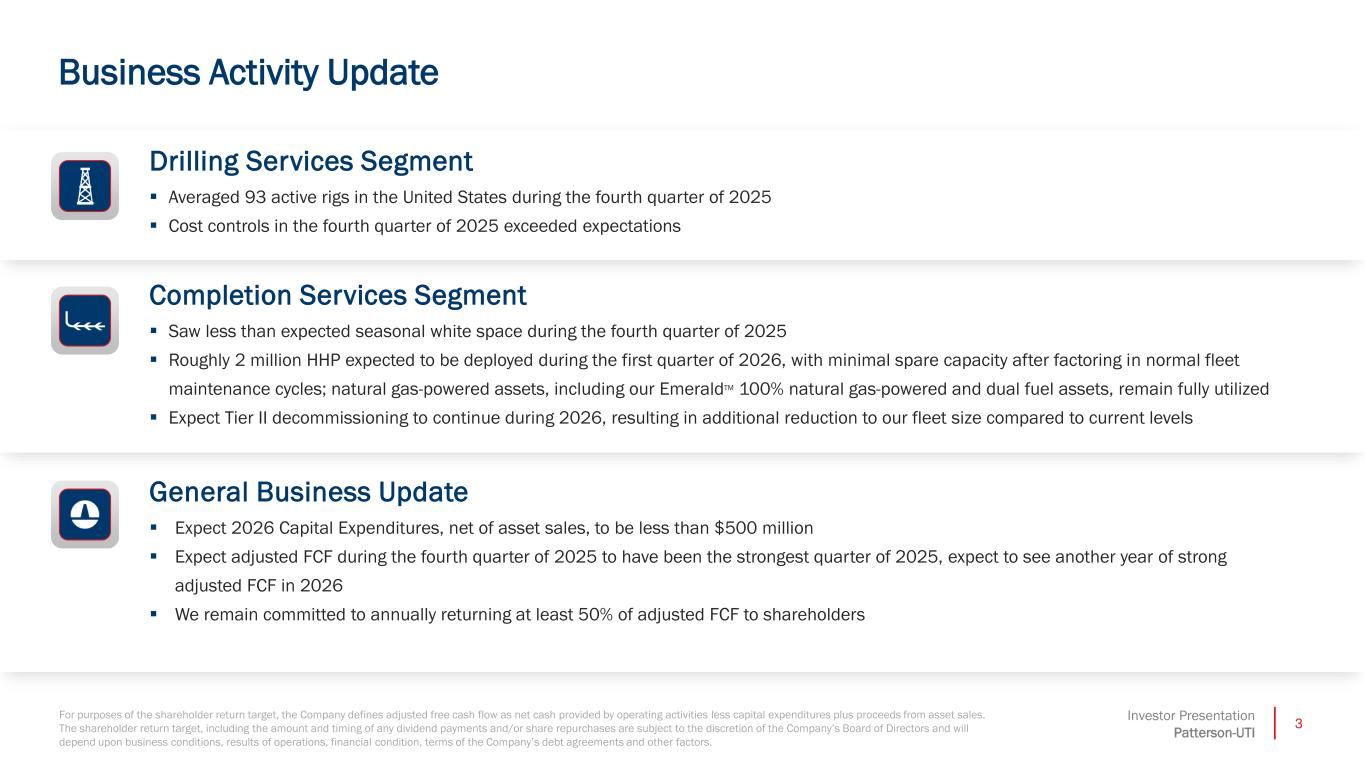
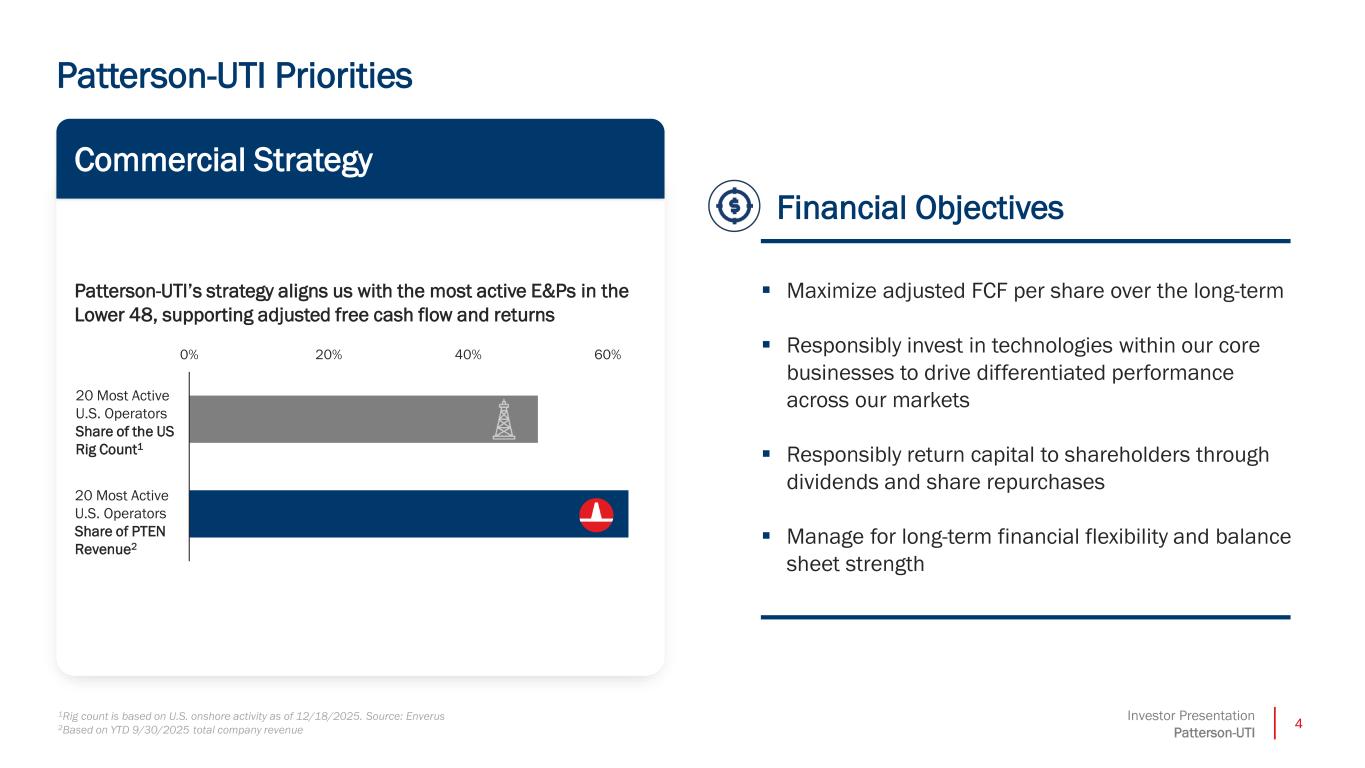
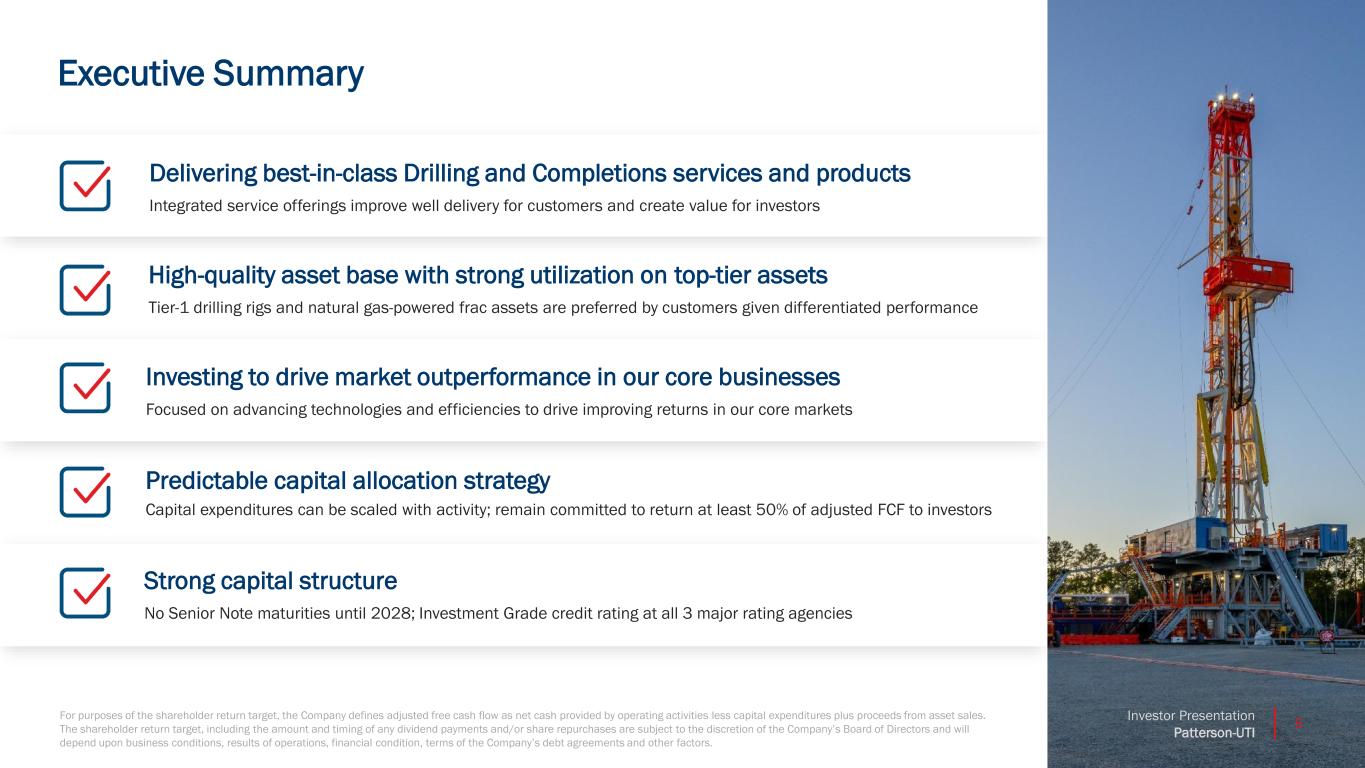
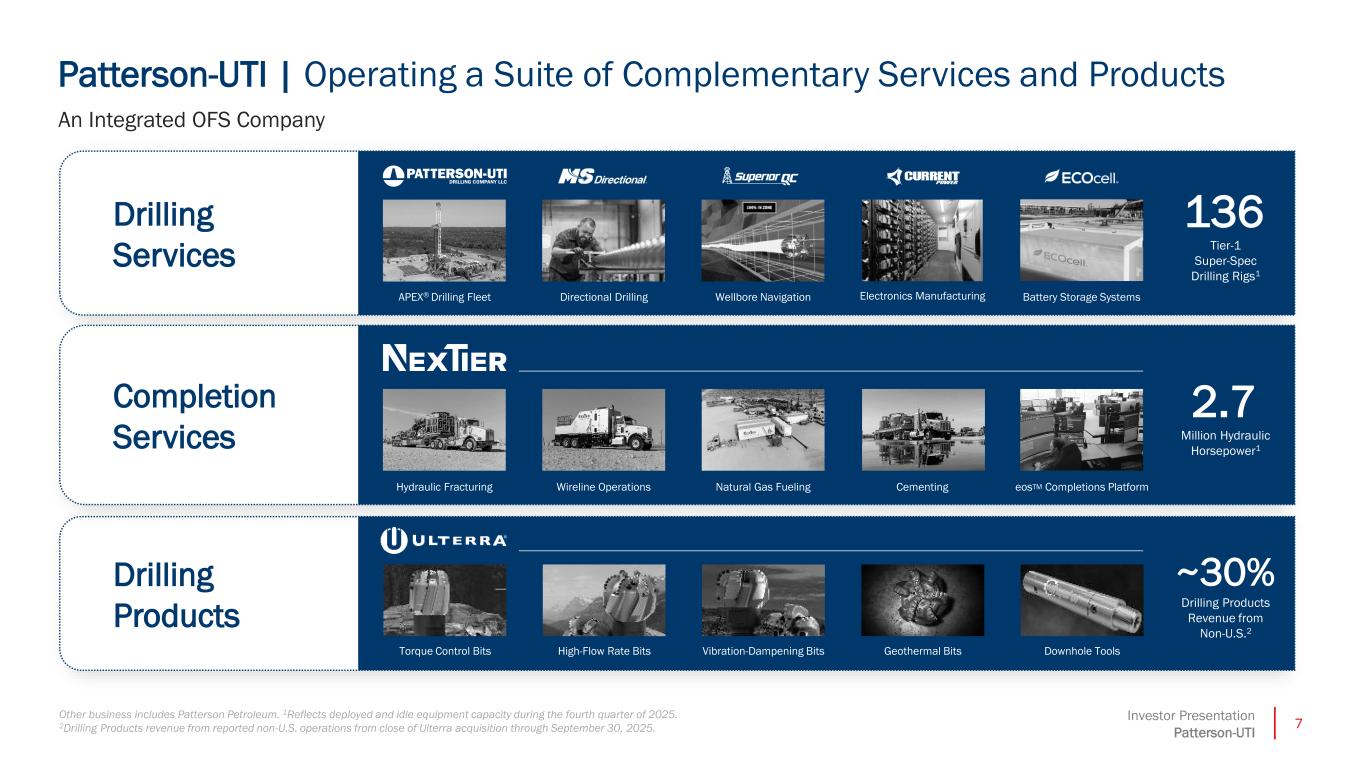
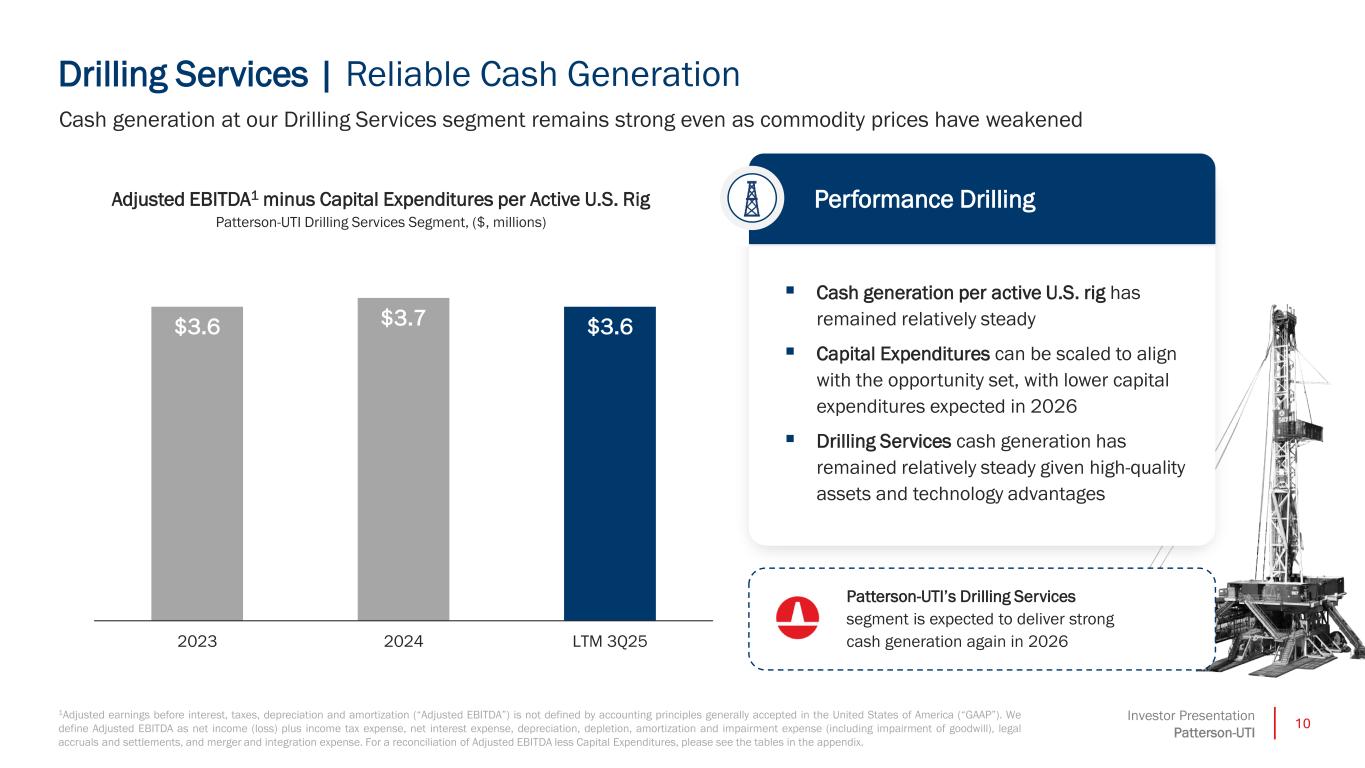
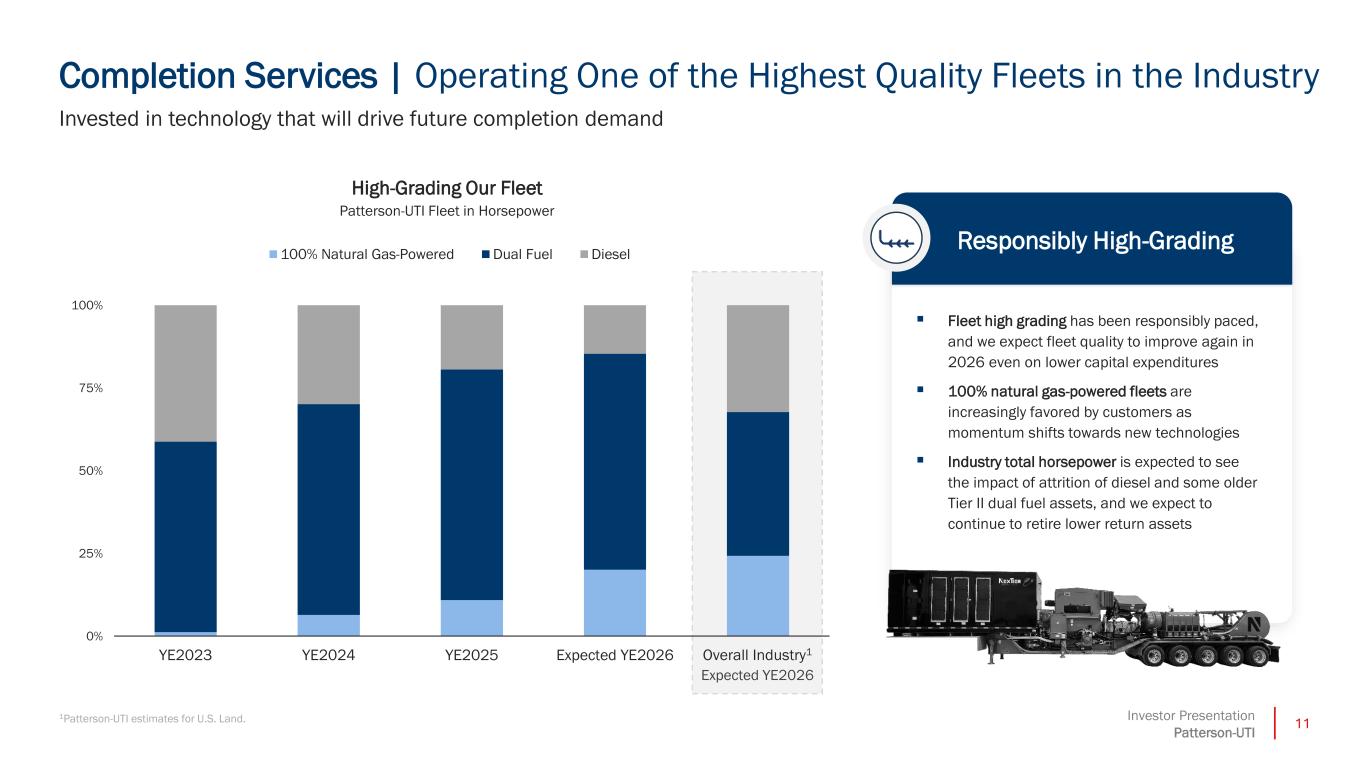
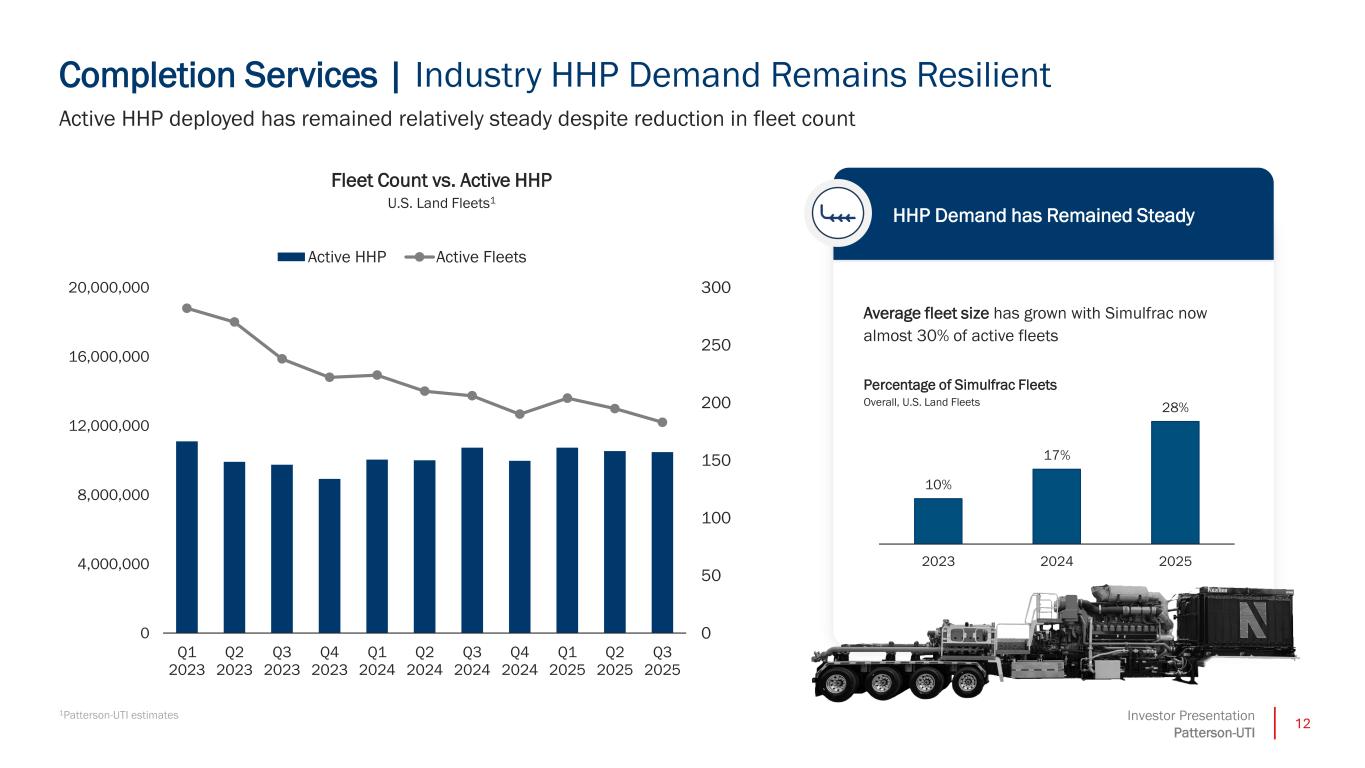
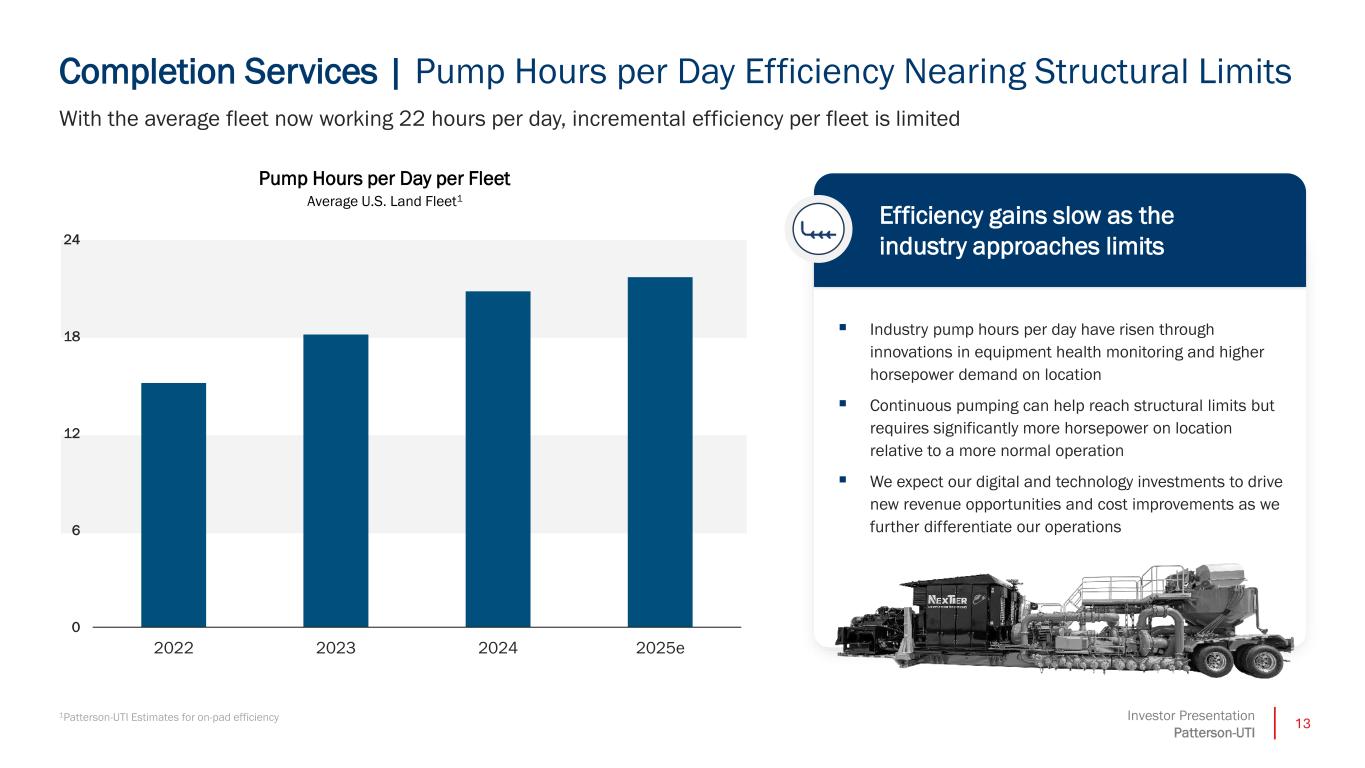
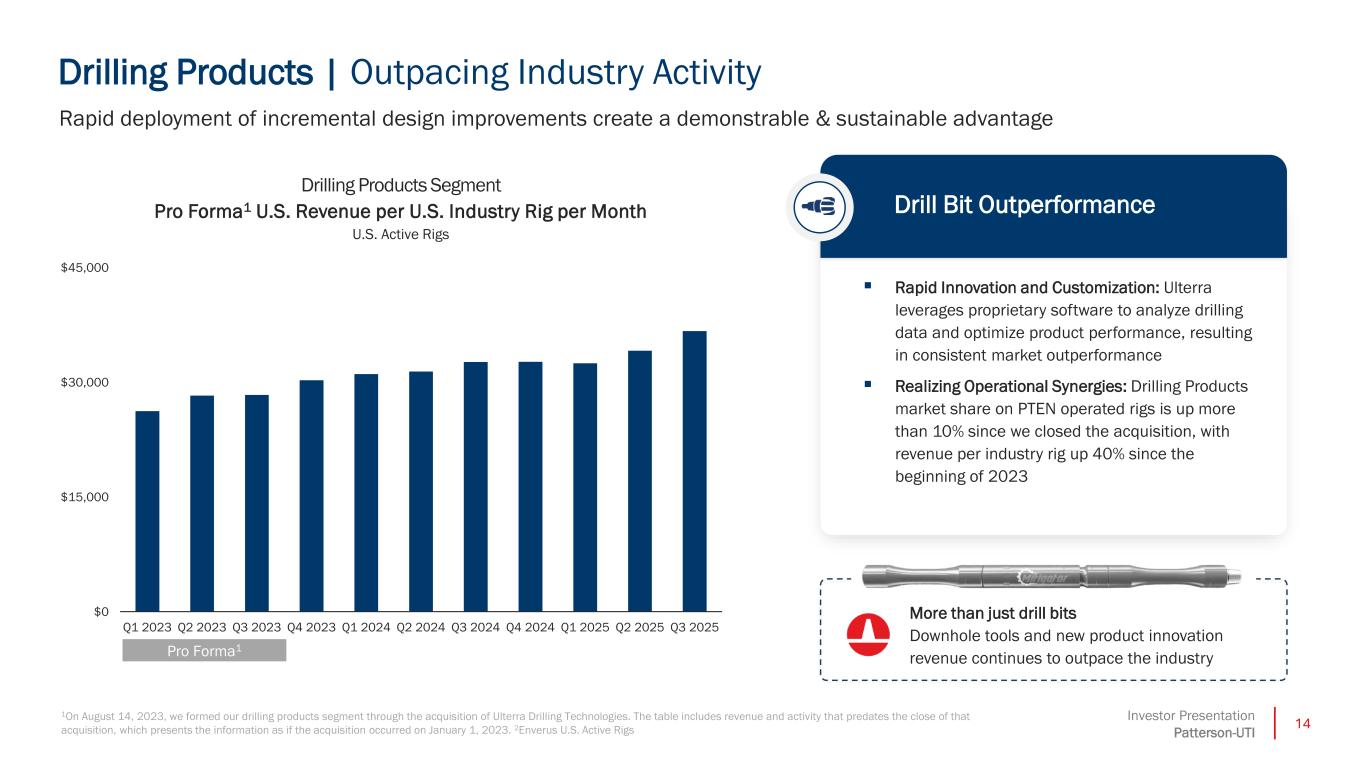
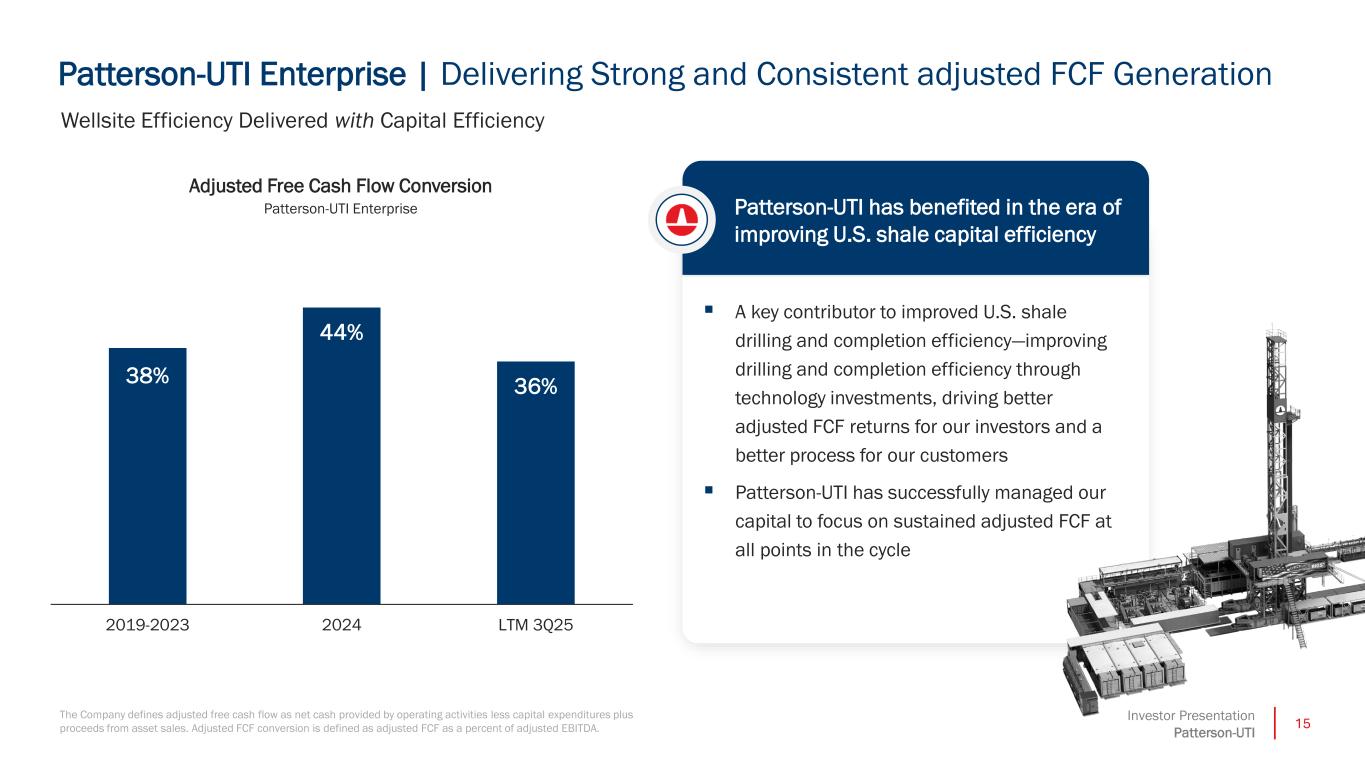
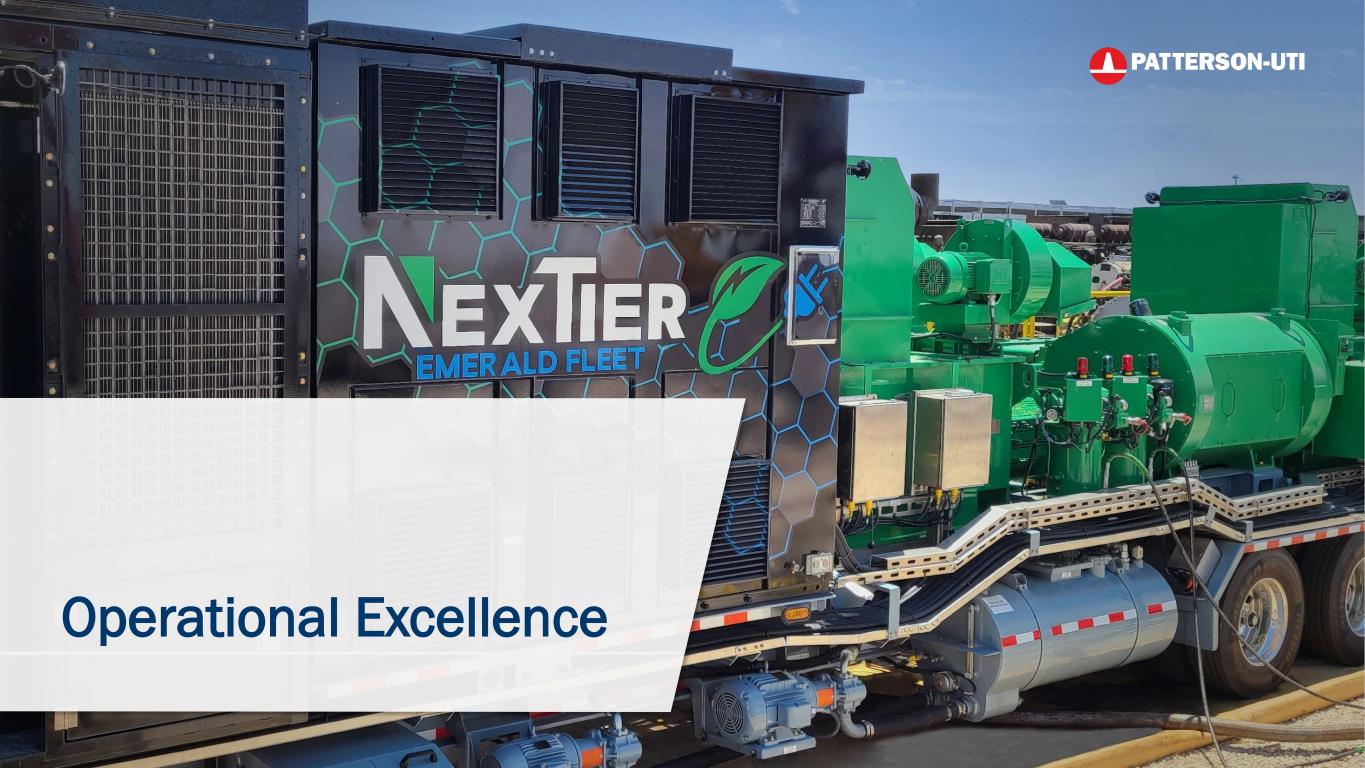
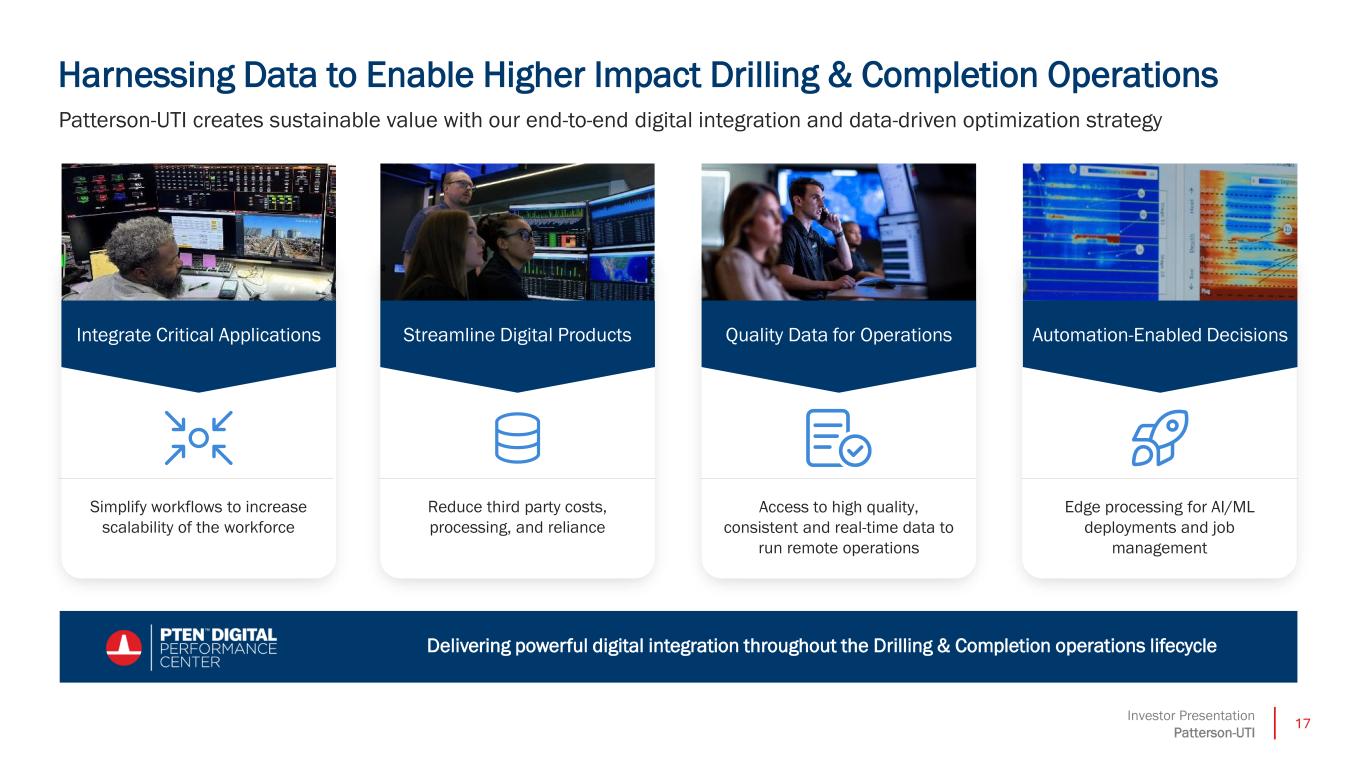
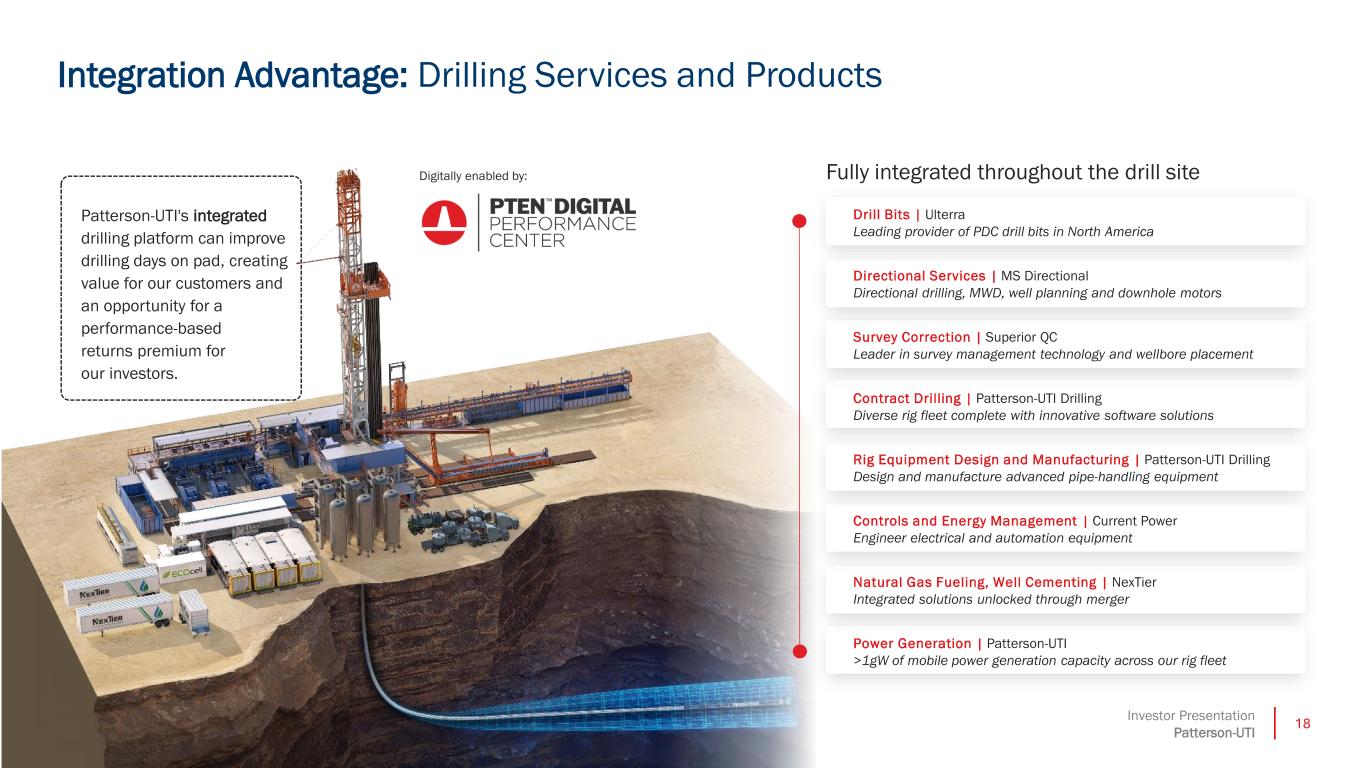
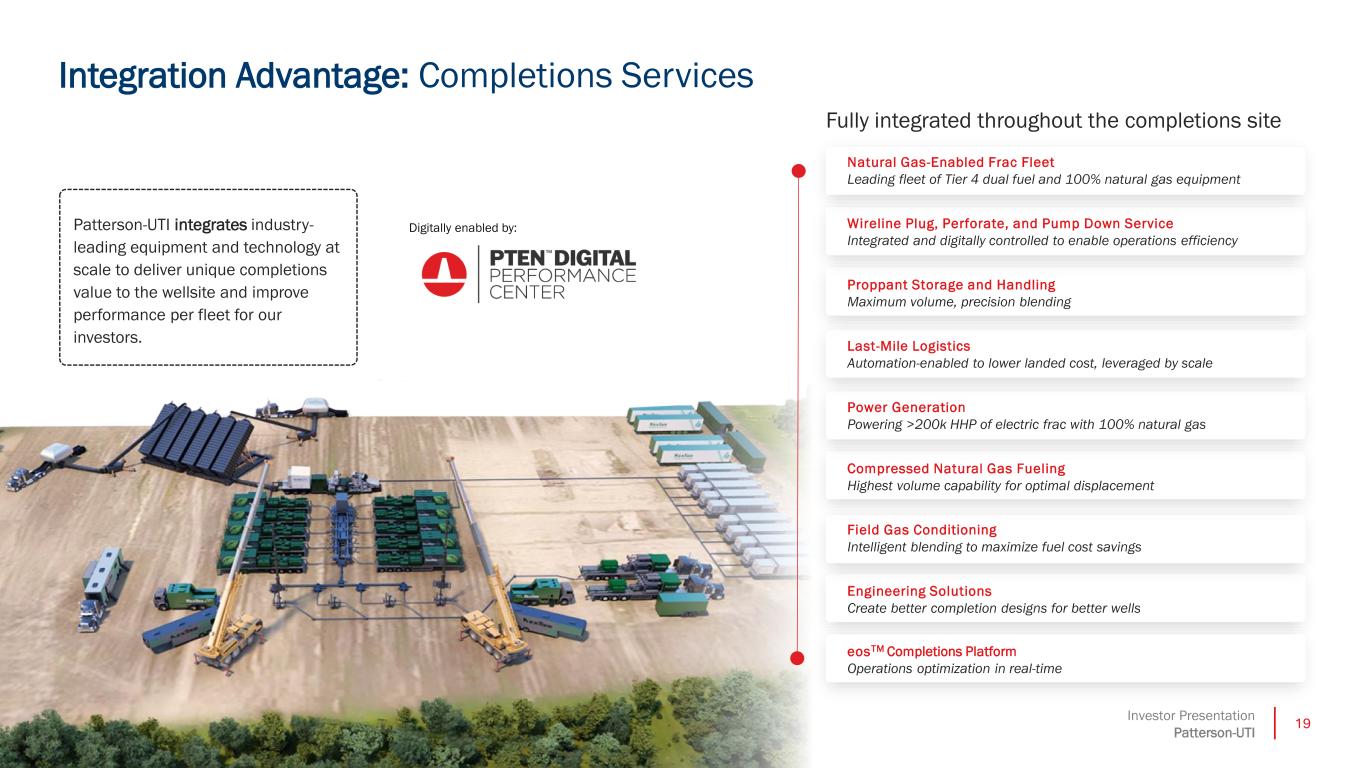
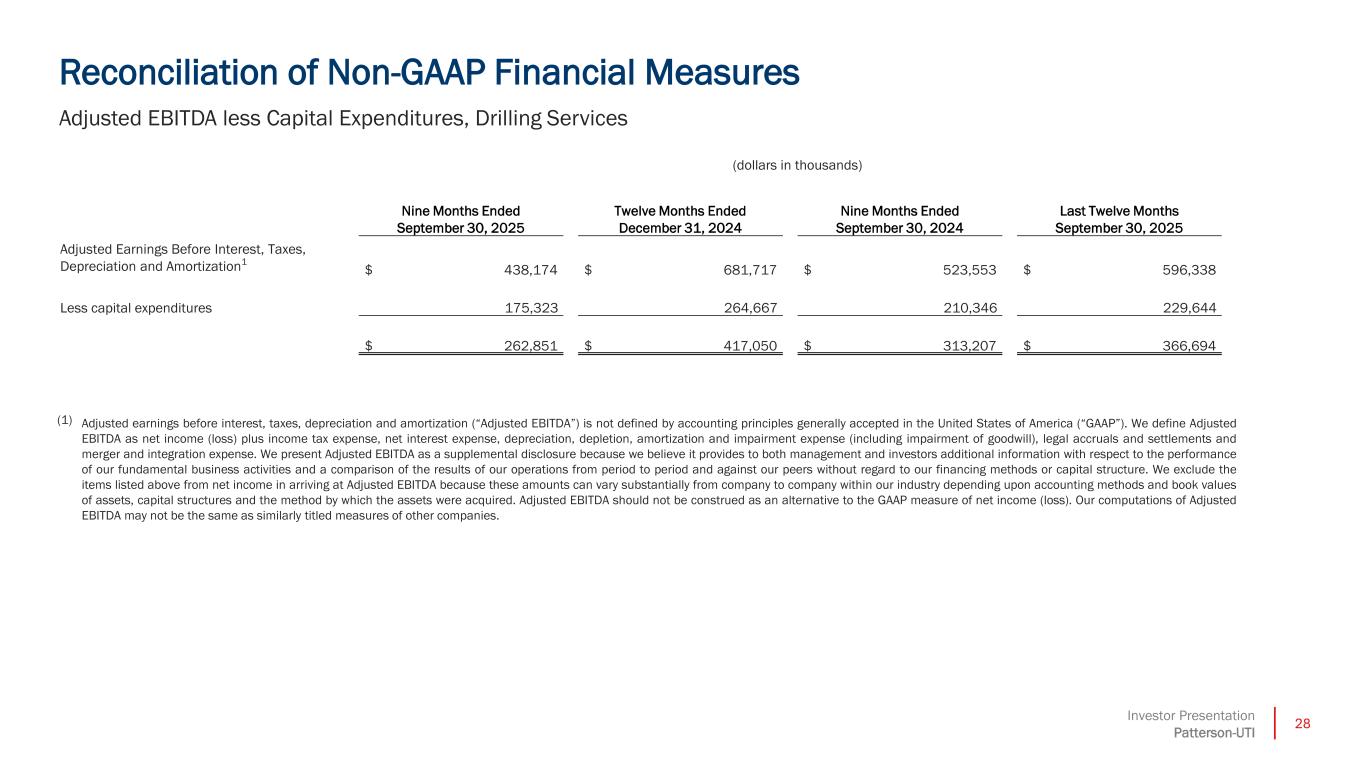
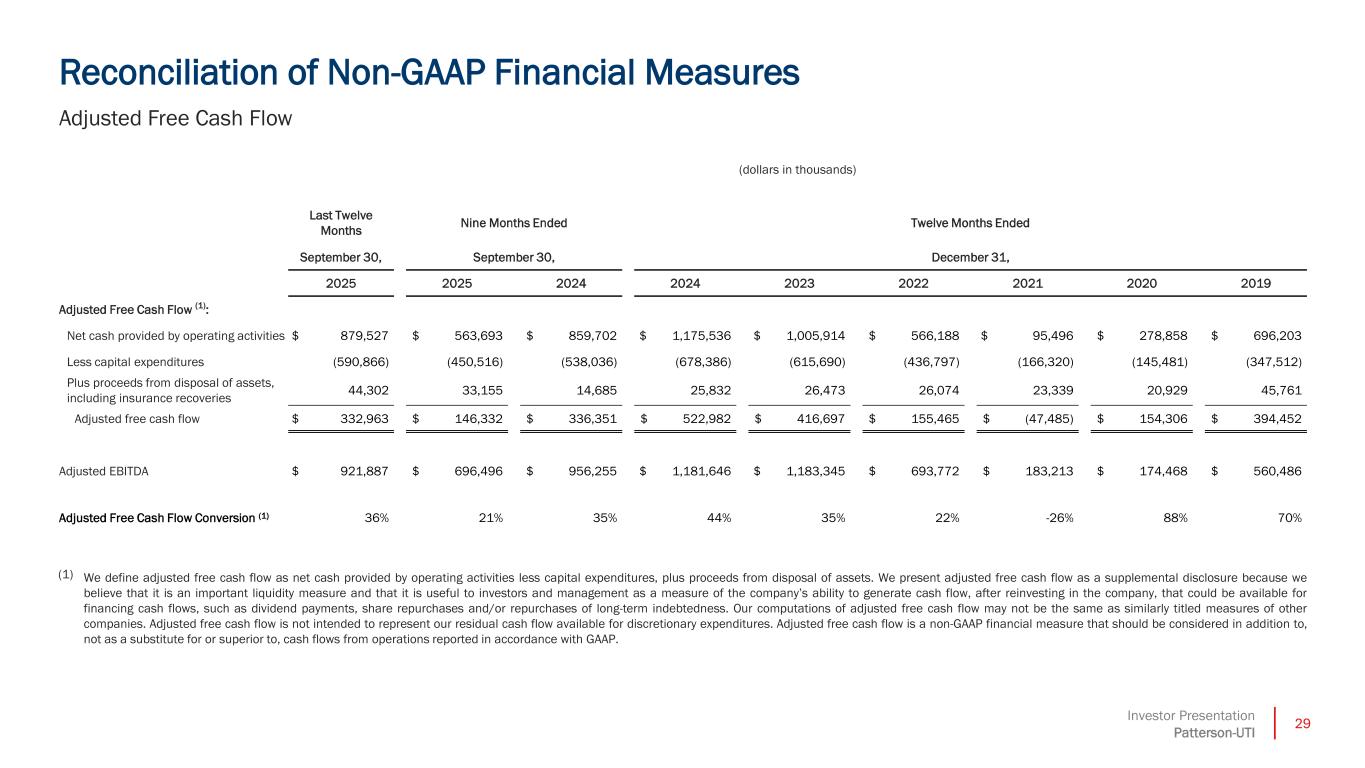
Thank you, and welcome to our fourth quarter earnings conference call. We closed 2025 with a strong fourth quarter, delivering steady results through what is typically a seasonally soft period. Our teams remain highly disciplined, with strong operational execution of the field and a focus on cost controls. We are pleased with the performance across all our businesses during 2025, particularly given the challenging commodity environment we face throughout. Patterson-UTI once again demonstrated its ability to generate strong free cash flow, delivering $416 million in adjusted free cash flow in 2025. five. Notably, the fourth quarter marked our highest adjusted free cash flow quarter since we completed our strategic transformation in 2023. This achievement highlights our ability to adapt to changing market conditions and underscores the effectiveness of our teams in maximizing our potential throughout all phases in the cycle. We are showing greater resilience to market fluctuations as we use our technology edge to deliver operational excellence. I'd like to extend my sincere appreciation to all our employees for their hard work and dedication throughout 2025. Your efforts were instrumental in our success and we look forward to moving Patterson UTI forward again in 2026. The industry overcame numerous challenges in 2025, including an increase in OPEC plus supply and ongoing macroeconomic uncertainties. Despite these pressures, the oil market has remained resilient with crude prices today at a similar similar level to those on our last quarterly earnings call although commodity prices remain unpredictable in any scenario at patterson uti we will remain committed to our core principles delivering safe and efficient execution for our customers investing capital responsibly in differentiated technologies and maximizing returns while generating substantial adjusted free cash flow for our investors. Our free cash flow profile continues to be robust, which gives us confidence to increase our quarterly dividend by 25% to $0.10 per share in the first quarter. We are confident that our free cash flow will exceed our dividend commitments, providing the opportunity for additional share repurchases or other investments aimed at creating further shareholder value. From a macro perspective, uncertainties remain regarding the sustainability of U.S. oil production at the current pace of activity. Recent data suggests that reduced drilling and completion programs in 2025 are beginning to impact production figures. The industry is likely approaching a point where it will need to decide between declining production volumes or increased drilling activity to maintain production trends. Although there may be a moderate decrease in U.S. oil activity in the near term, we do not believe that the industry can continue operating at lower drilling levels without causing a more significant impact to production than what has been seen so far. We remain optimistic about the long-term prospects for natural gas, and we anticipate that a multi-year increase in drilling and completion activity will be needed to meet future demand. While there have been some incremental increases in natural gas-focused activity, and natural gas prices have rebounded sharply due to winter weather demand we expect most large customers will wait for clear commodity price signals after peak winter demand before making changes to their plans as physical demand for natural gas for both lng and power generation grows we expect to see additional demand for our services in response to the macro environment we have reduced our gross capex budget by around 15 percent to roughly 500 million dollars in 2026 after accounting for the expected proceeds from a typical cadence of asset sales during 2026 we continue to expect that our capex net of asset sales will be below 500 million dollars this year it made significant progress in lowering our unit level maintenance capex requirements we continue to successfully implement new digital processes that improve preventive maintenance, high-grade our asset base with new technologies, and consolidate facilities as we move further through the integration process of our businesses. Importantly, our 2026 CapEx budget reflects funding for high-return projects that will further enhance the quality of our operations and ensure we are well-positioned with new technology that supports the next leg of customer demand. while we are substantially reducing our overall capex budget we fully expect to exit 2026 with a more advanced and higher quality asset base than at the fourth quarter our u.s contract drilling business saw relatively steady activity and pricing compared to late third quarter levels and this stability continued into 2026 focus remains on identifying investing in assets and technologies that bifurcate drilling performance and create unique value for both our customers and investors. Of note, we have seen increasing acceptance of performance-based commercial agreements, and this shift reflects growing customer interest in partnering with service providers who can enhance operational efficiency. Our ability to deploy advanced APEX rig technology that enables faster drilling of more complicated wells is resonating with our customers. We're also seeing strong results from the broader adoption of our drilling automation packages. Nearly all of our rigs are now equipped with our proprietary Cortex automation applications, and demand remains high as we continue to develop new software applications to further improve drilling operations, with many of these in partnership with our customers. Looking ahead, the evolving shale landscape is characterized by more complex well designs, requiring rigs with increased load capacity that can drill deeper geological formations, as well as longer and more complex laterals into higher pressure zones. Future demand will increasingly favor differentiated rig technology, positioning Patterson UTI and our fleet of advanced assets and technology with a distinct advantage over much of the competition. The benefit of this differentiation has already been reflected in our ability to sustain margins at higher levels than we have seen during periods of activity moderation in prior cycles. As the market continues to favor high-quality drilling solutions, we anticipate that our advanced technology will further strengthen our position as we aim to sustain pricing and margins as customers seek out the best available drilling contractor to meet their increasingly complex needs. In Argentina, we are excited with our recent agreement to lease two high-spec rigs for work in the Vaca Muerta field. The multi-year agreement is a capital-efficient way for us to put idle assets in the U.S. The opportunity in Argentina is one of the most promising that we see to put our idle assets to work globally, and our fleet of rigs in the U.S. are well-suited to meet the region's growing demand for unconventional drilling over the next few years. The expansion also complements our established position in drilling products, including Altera drill bits in Argentina. We believe that further planned increases in drilling activity in Argentina will reduce available supply, and the education services segment delivered strong results in the fourth quarter. Segment adjusted EBITDA for the second half of the year was higher than the first half, reflecting the quality of our operations and the steps we have taken over the past year to add new technology to our portfolio, streamline operations through our digital platform, and improve our cost structure. Our team effectively managed holiday downtime across several of our larger fleets, successfully securing work to maintain high utilization. Pricing in that activity remains steady compared to our frack assets remain highly utilized in the first quarter, with almost 2.5 million horsepower either deployed in the field or in normal maintenance cycles. We have very little spare capacity of diesel equipment that is not as we direct our capital towards high-grading our asset base with additional Emerald 100% natural gas equipment, we are likely to have fewer fleets in operation as we continue to idle lower quality diesel assets and focus on the premium market. Our equipment that can utilize natural gas as a fuel is fully used. Our asset base will continue to reflect this high-grading strategy. Our nameplate horsepower totaled $2.7 million at the close of 2025, which is down more than 600,000 horsepower, and we are likely to see a further reduction this year. Within our completion services segment, we continue to see growth opportunities in high-end natural gas-powered frack equipment in our industry-leading and proprietary digital completions platform, which we call HEALS. Our Emerald 100% natural gas-powered footprint will grow again in 2026, and by the end of the year, we expect that more than 85% of our assets will be capable of using natural gas as a fuel in some capacity. We believe our asset quality is among the best in the industry, and the strong demand and returns for our high-end equipment position us to maintain resilient margins across our higher technology assets, capacity of our older assets, and we believe the industry is also doing the same. Although public estimates of U.S. industry fleet count shows a decline, the total horsepower deployed has not declined and has remained roughly consistent. The frack industry is evolving towards larger fleets at the well site, a trend that we believe is being overlooked by public industry data on the number of active fleets, resulting in the frack fleet count becoming less of a reliable metric to determine industry completion activity. At the same time, the significant increase in pumping hours per day over the past several years has likely run its course. Some providers are encountering technical limitations on most of their fleets, with our average frack fleet now pumping over 22 hours per day with continuous pumping our team has been leaders in executing on the growing trend to achieve 24-hour operations but continuous pumping fleets require significantly more equipment on location relative to a more normal operation which increases the cost of continuous pumping and further restricts supply we have successfully executed several continuous pumping currently evaluating whether the incremental increase in uptime justifies the addition. In the fourth quarter, we launched our proprietary EOS Completions Digital Platform. EOS connects our customers directly with their live field data, our completions teams, to improve real-time decision-making on the same platform. Our customers can eliminate the need for multiple third-party software platforms in their data flow and improve their overall data quality with a direct link to our digital performance The EOS platform is hardware agnostic, allowing our completions data and also third-party data sets to be delivered to customers on the same platform with no delays. The EOS platform includes our advanced Vertex automated frack controls, which to date have been deployed across most of our active fleets, and regardless of frack power type. EOS also supports our other services such as wireline, pump down, natural gas delivery, and profit logistics. This takes our completion segment to the ultimate goal of push-button frack and soon with closed-loop decision-making, which will deliver more consistent completions to our customers and over time and lower our operating and equipment maintenance costs. We have revenue-generating agreements in place now and are seeing increased customer interest for deploying this platform. Our drilling product segment delivered another strong quarter in North America. Revenue per industry rig remained close to company record levels in both the U.S. and Canada. underscoring our robust market position in drill bits. Additionally, we are having continued success with new downhole tool product innovations, helping us to maintain relative... Internationally, revenue experienced a slight decline from the third quarter, primarily on lower-than-expected revenue in the Middle East. However, we achieved revenue growth in several important regions, including Latin America and Asia Pacific. Looking ahead, we remain optimistic that the international outlook for our drilling product segment will improve as we progress through 2026. We have opened a new manufacturing facility in Saudi Arabia and are now manufacturing drill bits in country, which should give us an advantage as growth resumes in the middle. Patterson UTI continues to look to extend our leadership position, while the U.S. shale industry undergoes significant changes. The company's operational excellence within both the drilling and completion segments has provided a competitive advantage, enabling effective navigation through the current commodity. Targeted investments across businesses will remain. These strategic efforts are evident in the company's ability to generate robust free cash flow and maintain relatively resilient margins, even through periods of activity moderation. Even with ongoing commodity volatility, we are well positioned to deploy capital in ways that add value for shareholders, including through additional shareholder returns. We will continue to be flexible with capital deployment and evaluate a mix of dividends, buybacks, and other potential growth opportunities. I'll now turn it over to Andy Smith, who will review the financial results.
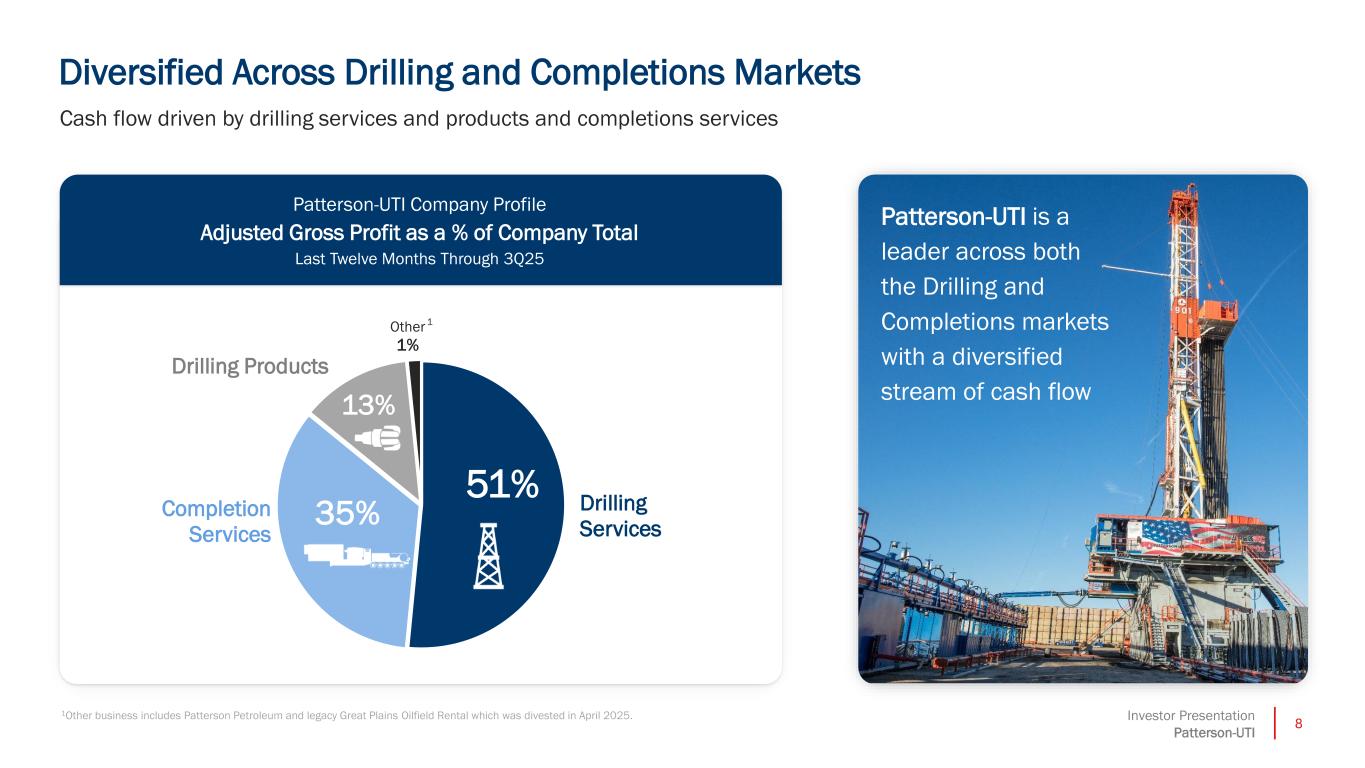
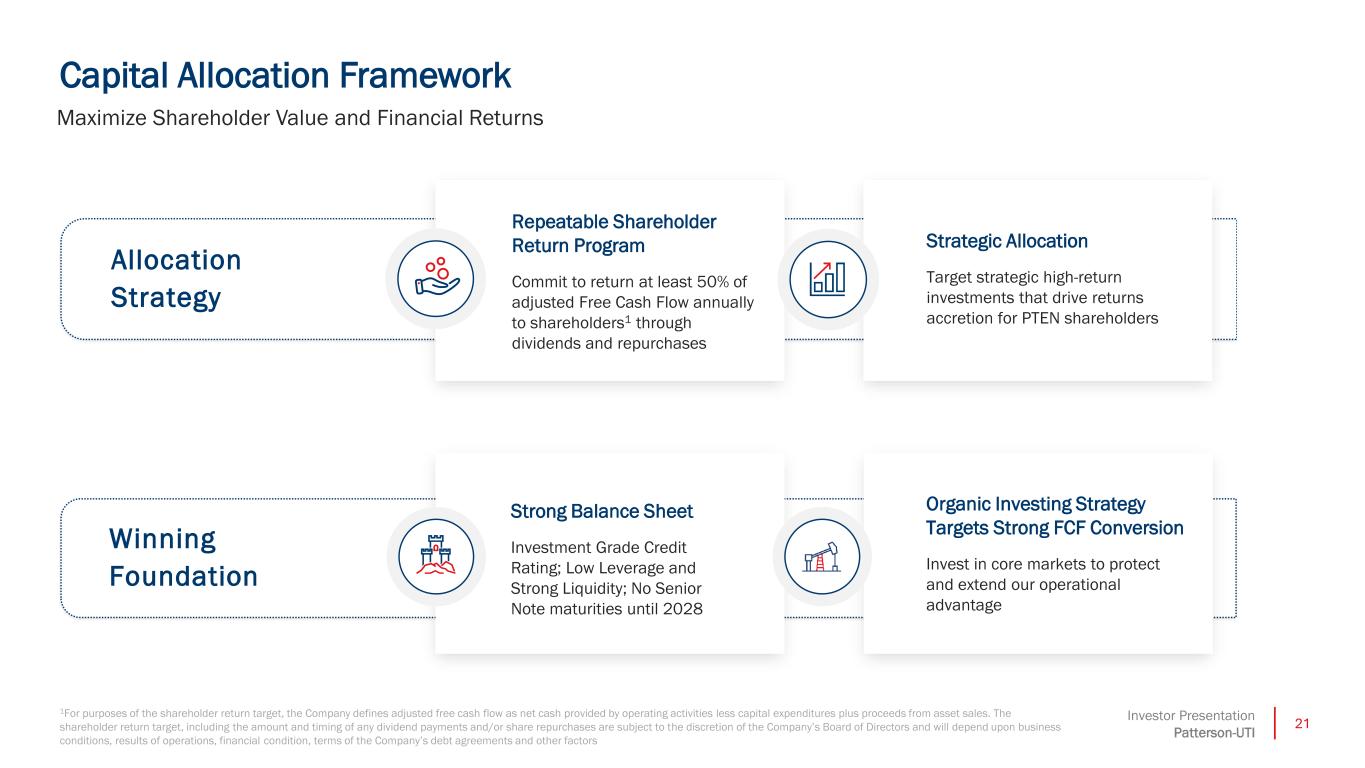
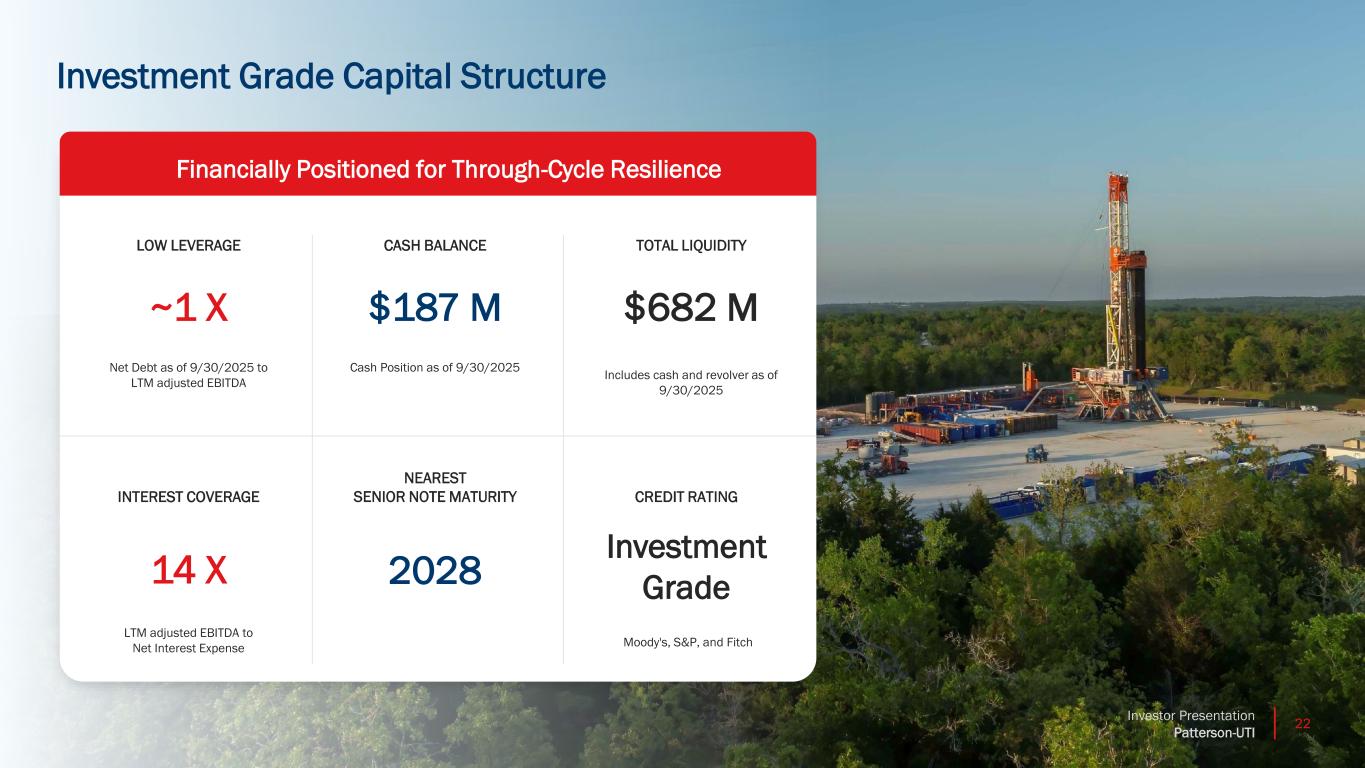
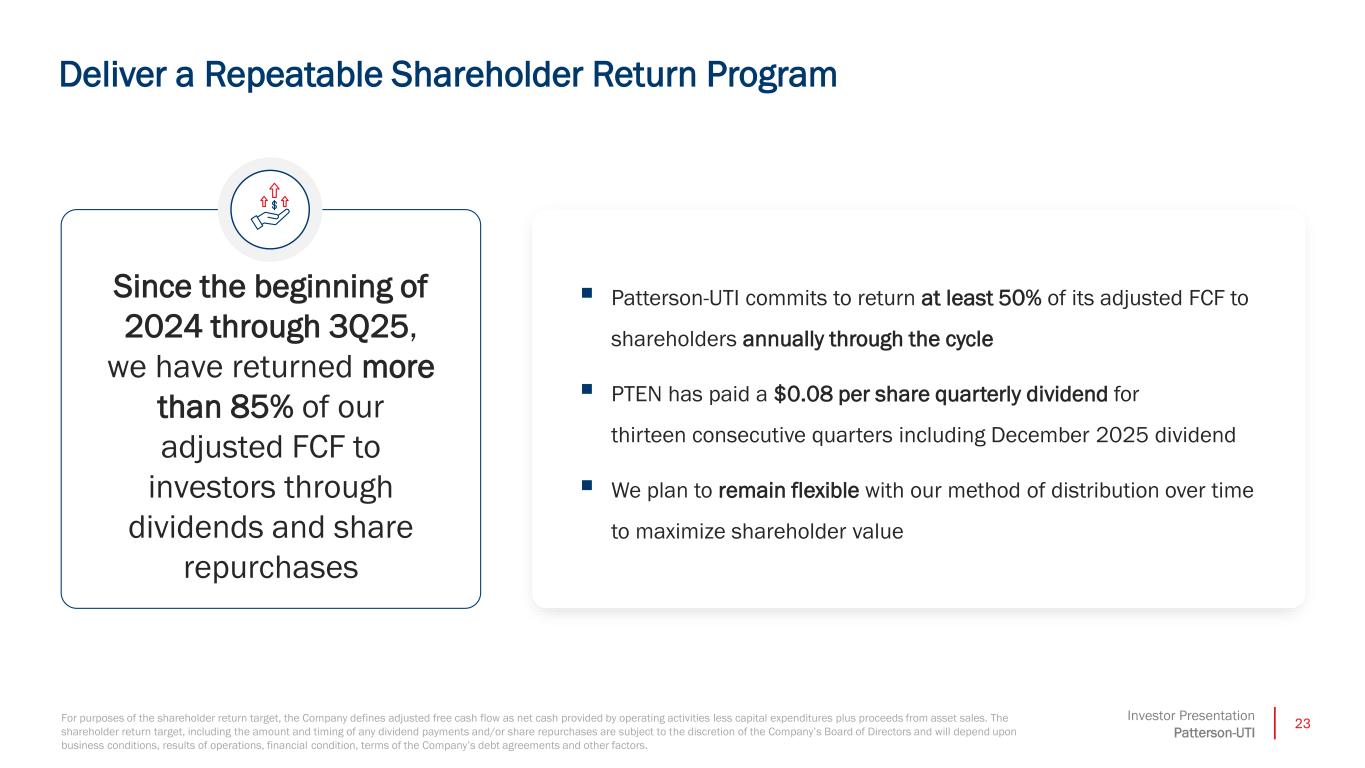
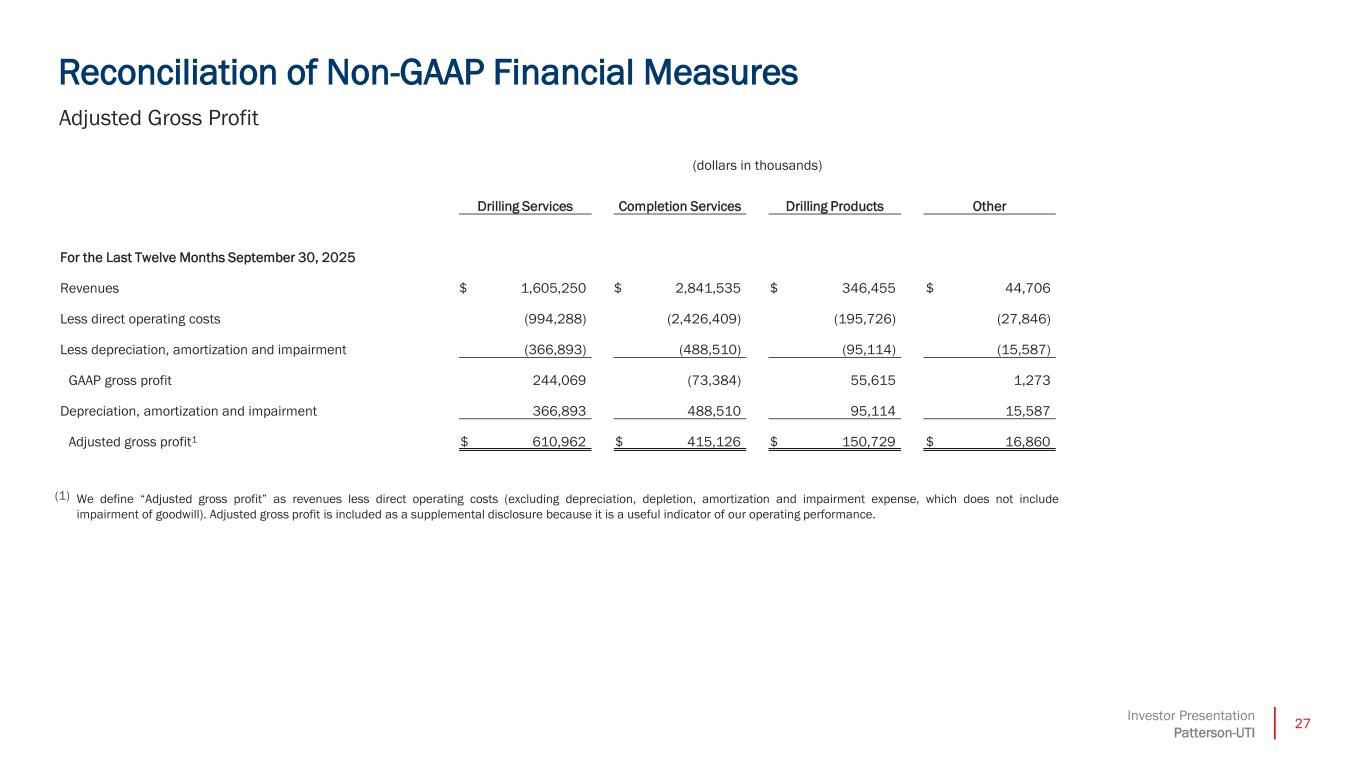
Total reported revenue for the quarter was $1,151,000,000. We reported a net loss attributable to common shareholders of $9,000,000, or $0.02 per share. Adjusted EBITDA for the quarter totaled $221,000,000. dollars. Our weighted average share count was 379 million shares during Q4. During 2025, we once again showed the cash generation potential of our company, with adjusted pre-cash flow totaling 416 million dollars for the year. As expected, the fourth quarter was the strongest cash generating quarter of the year by a wide margin. It is important to remember that given the timing of some working capital items, including significant customer prepayments that we typically receive in the fourth quarter for work to be performed during the first half of the following year, it is far more meaningful to analyze our free cash flow on a full-year basis as the quarterly results can show greater variability. For year-over-year comparisons, the customer prepayments we received in the fourth quarter of 2025 were roughly $15 million higher than those we received in the fourth quarter of 2024 before we get into the segment discussion in the outlook i want to give an update regarding the impact from severe winter weather that has already occurred during the first quarter the january 2026 winter storm disrupted large portions of our operations for several days and we believe the full impact of the disruption will have a negative impact on our first quarter adjusted gross profit particularly in our completion services segment The estimated impact of this event is included in the quarterly guidance numbers we will discuss. In our drilling services segment, fourth quarter revenue was $361 million and adjusted gross profit totaled $132 million. In U.S. contract drilling, we totaled 8,596 operating days for an average operating rig count of 93 rigs. Our successful cost reduction measures mostly offset the revenue decrease during the quarter. For the first quarter in drilling services, we expect our average rig count to be in the low to mid-90. We expect adjusted gross profit within the drilling services segment will decline by less than 5% from the fourth quarter. Revenue for the fourth quarter in our completion services segment totaled $702 million with an adjusted gross profit of $111 million. Activity and pricing were mostly steady compared to the third quarter, with minimal seasonal For the first quarter, we expect completion services adjusted gross profit to be approximately $95 million, with slightly lower activity given the impact of the first quarter winter Fourth quarter drilling products revenue totaled $84 million with an adjusted gross profit of $34 million. Revenue per industry rig in the U.S. remained near company record levels. We saw a decrease in revenue from our international operations, mostly from lower-than-expected sales in the Middle East, although we did see revenue growth in several markets, including Latin America and Asia Pacific. For the first quarter, we expect drilling products adjusted gross profit to improve slightly, with slightly lower revenue in the U.S., offset by an increase in activity and revenue from our international business. As we move through 2026, we expect to see an improvement in international revenue in the drilling product segment as activity improves, primarily in Saudi Arabia. We also expect to see growth in downhole tools and new product development. Other revenue totaled $5 million for the quarter with $1 million in adjusted gross profit. We expect other adjusted gross profit in the first quarter to be steady compared to the fourth quarter. Selling general and administrative expenses in the fourth quarter were $62 million. For Q1, we expect SG&A expenses will be approximately $65 million. On a consolidated basis for the fourth quarter, depreciation, depletion, amortization, and impairment expense totaled $221 million, and for the first quarter, we expect it will be approximately $225 million. During Q4, total CapEx was $139 million, including $61 million in drilling services, $59 million in completion services, $15 million in drilling products, and $4 million in other and corporate. For 2026, we expect gross CapEx to approximate $500 million and to be below $500 million net of asset sales. We expect CapEx will be weighted towards the first half of the year as we bring in new technologies into both the drilling and completion services business. We closed Q4 with $421 million in cash on hand, and we did not have anything drawn on our $500 million revolving credit facility. We did not have any senior note maturities until 2028. During 2025, we returned $192 million to shareholders through dividends and share repurchases. Since the start of 2024, we have returned roughly two-thirds of our adjusted free cash flow to shareholders for dividends and buybacks, and we remain committed to returning at least 50 percent of our adjusted free cash flow to shareholders. Our board has approved a 25 percent increase in our quarterly dividend to 10 cents per share, payable on March 16th to holders of record as of March 2nd. I'll now turn it back to Andy Hendricks for closing remarks.
Thanks Andy. I want to close the call with some comments on our company and the industry. I'm very pleased with how our segments performed in the fourth quarter where we were able to show improvements in controlling costs and keeping them in line with the activity changes. This is a testament to focusing on what we do best, providing products and services to efficiently drill and complete wells. The result is that we were able to generate strong free cash flow to close out 2025. As well, I'm pleased to see this stable activity continue into the first quarter of 2026. The outlook for 2026 has the challenge of some commodity uncertainty. With oil prices trading near $60 per barrel, my expectation is that activity in oil basins remains relatively steady. Oil markets have remained resilient, looking ahead to continuing economic growth along with some geopolitical unrest. gas markets remain steady and have the potential for some activity upside later in the year it's early to predict how 2026 will play out but i'm encouraged by our current activity levels so far in the first quarter we continue to invest in new technology in both drilling and completions where we are seeing strong returns on our capital investments in drilling services we are being asked for new cortex automation applications by our customers along with upgrades to our apex rig structures to drill deeper geological horizons and longer laterals in completion services we will continue to add new emerald 100 natural gas fuel technology to our fleets and continue the roll out of the eos platform which includes the vertex automated frack system in saudi arabia altera manufactured their first drill bit in country in december and this new manufacturing capacity combined with our strong performance in the region and the planned increase in drilling in saudi Arabia gives our drill bit business some international upside this year these technology and manufacturing investments allow us to continue to differentiate ourselves versus our competitors and maximize the margins we were able to earn and we're doing all this while reducing our overall capital expenditures in 2026 and focused on generating strong free cash flow for our shareholders and over the last year we have a higher level of cash than what is currently required to sustain our business given our cash generation potential i am pleased that our board has approved a 25 increase in our quarterly dividend as part of our overall commitment to return cash to shareholders with our current cash position and after capital expenditures we will continue to repurchase shares in the market where it makes sense and also continue to look for growth opportunities once again i'd like to thank the men and women men and women of patterson UTI Energy for their outstanding performance in 2025 and for helping to responsibly provide energy to the world. Thank you for joining us today for our Q4 2025 earnings call. We'd now like to open the lines for Q&A.
Operator
Thank you. We will now begin the question and answer session. If you have dialed in and would like to ask a question, simply press star 1 on your telephone keypad to raise your hand and join the queue. If you would like to withdraw your question, simply press star 1 again. And as a reminder, please limit yourself up to one question and one follow-up. Your first question comes from the line of Scott Gruber with Citi. Please go ahead.
Yes, good morning. Good morning, Scott. Good morning. Andy, I appreciate all the color on the dynamics at play in the frack market today. How do you see the U.S. frack supply-demand balance today, given the enlargement of the average fleet. It's grown a long way here the last couple years. Do you have a sense of, you know, roughly fleet utilization for the market? And can nutrition alone drive us back to a relatively tight market balance in the not-too-distant future?
Yeah, you know, in terms of fleet activity, it's really an interesting situation. We've been trying to explain, you know, for a while now the dynamics in the data that you're getting from various public sources you know if you look at what we did across 2025 last year you know public data is showing a reduction in our fleet count but at the same time the size of our fleets the amount of horsepower on location it's just been continuing to grow you know we're doing more simul frac we're doing more trimal frac and even on the same simul frac we're getting requests for higher so that's caused when we do put more or but they're getting a cost benefit you know they've done their you know what it takes to maximize production out of their world war and that's what they've determined so you know in some ways it's been a win-win but but you know the challenge you know for people trying to understand the business is that while the fleet count looks like it's going down we've actually remained really relatively steady in the amount of horsepower that's been deployed so we've been you know we've been moving you know horsepower around to different places and growing and you know i see that trend continuing you know maybe a measured pace you see that trend continuing and what that means is it continues to reduce overall supply in the frack market and uh you know all the equipment that we have that can burn natural gas is certainly out working and that has a cost benefit to operators when they can burn natural gas so that market still remains very tight because I appreciate all that.
And then I think your current power business is looking at some opportunities to supply energy storage systems at data centers and other applications outside of oil and gas. Can you provide some color on that initiative?
Yeah, you know, we do have an electrical engineering division that's called Current Power, and they engineer very specific, mainly our drilling rigs. You know, there may be an opportunity in the future for them to do some, you know, technology there that could be interesting, but.
Okay. Well, watch. Appreciate the color.
Operator
Your next question comes from the line of Saurabh Pant with Bank of America. Please go ahead.
Hi. Good morning, Andy and Andy. Morning, Saurabh. Andy, maybe I'll just start with a bigger picture question. I think you were talking about increasing differentiation in your prepared remarks. And honestly, I see that in the Kimberlite data as well, right? I think your performance, your value proposition seems to be improving in the eyes of the customers in both drilling and completion. As I think about what it means for financials, it seems to me like the gap between the top two, three, call it four players, including yourself, and the other small, medium-sized providers is actually increasing, right?
So it should be good for your pricing power in the market. so maybe just talk to that dynamic a little bit differentiation and pricing power and how pricing has held up a lot better yeah i appreciate that question and thanks for noticing uh you know some third-party data that shows that we continue to improve our our operations really pleased with you know how the teams have improved execution over the years and also you know it gives us confidence to continue to fund them with capital for a new technology and we do think that that continues to differentiate us in the market you know both on drilling services and completion services so uh you know really pleased with the performance overall for the teams you know we're working for some of the biggest emps uh you know in the us in both drilling and completions and it's you know the size and scale of the operations it's a breadth of services that we can provide the level of technology the execution that we're providing in the field that's it's not just one thing in particular but it's multiple factors and just really pleased with how that's been you know in terms of pricing you know one of the things that we've shown here over the last couple years is even though you've seen especially in drilling a decline in the rig count you haven't seen compression and margins like you've seen in previous years and technology is a big part of that driver where we can differentiate certainly from much smaller companies and it you know helps to, you know, really kind of, you know, our business is certainly still competitive in nature, especially in West Texas, where you've seen, you know, a little bit more slowdown in the oil markets versus the gas market. So there's still competitive market out there, but really pleased with how we're performing in general, and also very pleased at how well we've been able to.
No, that's fantastic, Andy. Thank you. And then maybe just a quick follow-up on what Scott was asking on the supply demand side of things i know it's very early to asking about pricing power coming back to the market but i know it will at some point right so in some ways uh randy how should we think about how much incremental demand maybe on the rig side and on the frat side would it take for some pricing power to come back to the industry now i don't know when it happens but just some some some sense of uh what kind of demand pull we might need for that yeah it's a really interesting situation especially for us where all of our equipment that can burn natural gas is out working today and so you know if we see the activity increase in the natural gas basins
towards the end of this year to supply you know both lng demand initially and over time you know increasing you know that draw on natural gas is going to cause an increase in activity in both drilling and completion and we are essentially sold out of all of our when you're working in those gas markets, you know, the operators, the EMPs certainly want to fuel that equipment with a significant inflection in pricing. We see an activity increase.
Right, right. No, I think things move pretty quickly on both sides, right?
So we should not forget that.
And a very quick follow-up for Andy, Andy Smith, if you don't mind. Andy, you were talking about some weather impact on your first quarter guidance.
Did you quantify the impact, if I miss that, if you have any color on how big that impact We didn't quantify it, but it's in the range of $5 to $10 million. it's included in our guidance so okay it's currently not incremental to anything it's already included but it's probably in the five to ten million dollar range okay i got it okay andy thank you thanks a lot i'll turn it back thanks rob and your next question comes from the line of jim braleson with raymond james please go ahead hey good morning guys good morning jim andy you you kind of talked about the the demand side with your technology and and all the things you've been doing through this kind of market over the last couple of years you know one of the things that's really been pretty notable here over the last uh at least the back half of 25 if not longer is what you guys have been doing on the cost side it showed up you know really in completion services kind of first it certainly showed up in drilling services this quarter maybe just spend a minute on kind of you know what all you're doing to to bring your cost structure down and kind of what inning you might be in just as we think about you know and maybe a stable market not that that happens but you know how margins proceed in both those businesses going forward yeah so you know my hats off to the teams they've really been digging in hard as to you know how we're spending every dollar out there both in opex and capex and you know you look at things like
maintenance capex uh you know what are we spending our money on uh you know are there things that we can do to refurb versus buy new parts are there things that we can do to negotiate with some of our suppliers given the state of the market there's just a number of efforts out there efficient so they can do more with the same amount of people and get more accomplished from a maintenance standpoint so maintenance has been a big driver in the cost savings in both you know the drilling services and completion services segments both op-ex and capex yeah Jim I would add to that
so yeah as Andy said you know you know crew sizes particularly around in the completion services area as well as the support structure footprint as we have consolidated these businesses over time you know we've looked to co-locate where we can or slim down sort of our our fixed asset footprint in terms of our of our support facilities and then on the SG&A side as we've gone through and tried to integrate the back office even more consolidate centralized it allows us to control some of those costs, get them out of the businesses and let them be managed quite honestly from the corporate side. So we turn the business units loose to sort of focus on their operations more so than kind of what they're doing on the back office side. So I would say all of those things have an effect and we'll continue to do more on those. But yeah, it's been a real focused effort over the last year or two.
Yeah, well, it's been impressive. And then just as a follow-up, you kind of took upon this path of returning at least half your free cash flow a couple of years or so back, and you've obviously exceeded that number pretty handily each year. You just raised the dividend by 25%, and I presume with all the things going on, your free cash flow conversion rate should probably be pretty stable at least. just curious you didn't buy a whole lot of stock back in 4q and even with the dividend hike uh and kind of where numbers are you you have quite a bit of room to be able to buy back stock throughout 2026 and just maybe your philosophy on that given that you know your share price hasn't ripped but it's it's certainly improved a little bit from from where it was at the bottom so i'm just kind of curious the philosophy there yeah i would say that nothing has really changed philosophically for us, Jim.
You know, look, it's pretty clear for those that have been following us for a while that we run this company to maximize free cash flow. And so as we look at anything on the capital allocation front, that's kind of our primary focus, whether it's, you know, looking at, you know, investing, reinvesting into our fleet, whether it's looking at buying back shares, whether it's looking at M&A, we kind of look at them all in terms of how much cash flow per share accretion can we get out of those opportunities? And I would say in the fourth quarter, the reason there was a little bit of pause on the buyback was more about lumpiness of working capital and things like that. And it kind of came in late in the quarter. And so nothing really has changed. But we continue to look at all of our capital allocation priorities through that sort of free cash flow per share metric.
And, you know, we ultimately think that in the end that that serves us pretty well and that's how we run the business so again i i wouldn't i wouldn't say to read too much into that i don't think anything has really changed in terms of our philosophy yeah i agree i don't think anything's changed in how we look at that uh but one thing you know when you look at you know the bigger macro and you look at what's happened in the industry over the last couple years and you know the market's softened over the last couple years but yet we're still generating strong free cash flow you know that's our focus and so So, you know, that gave us the confidence to go in a softer Porsche cash flow.
Absolutely. It makes perfect sense. Appreciate the answer.
Operator
And your next question comes from the line at Berwick Podheiser with Piper Sandler. Please go ahead.
Hey, good morning, all. You mentioned some of the comments around Argentina and sending some of your idle rigs down there. Maybe just give us a sense of you walk around the world or seeing all this unconventional development pick up. I'm thinking specifically about your Turnwell JV over in the UAE. What can we think about you guys exploring these international regions, you know, starting with Argentina, maybe UAE, anywhere else? Just some comments and thoughts around that.
Yeah, you know, we've looked at these markets for, you know, more than a decade to try to make sense. And, you know, these markets have, you know, various competitors, but they also have – the interesting thing about Argentina, it's almost an identical rig specification to what we're from and even a capital efficiency. And so, uh, you know, as the Baca Muerta activity, continues to grow, continue to use, they're looking to the U.S. to bring rigs down from barriers. This agreement worked out for us, looking for, you know, some, uh, to go down there and, you know, while it's only two rigs leaving, I think everybody who's been following Argentina knows that you.
Got it. Um, very helpful color. And then, um, just thinking about the frack side of things, you know, appreciate the comments, quantifying some of the impact here in the first quarter due to winter. But maybe you can take a chance on walking through second quarter, third quarter, what you see out there, your customer conversations, you know, when we get a snapback in utilization, just trying to think through the different crosswinds around pricing resetting. Just maybe some help understanding as we move through the year, what we could see out of the completion side of the business.
Yeah, you know, we were really EMPs. We're working on their budgets.
Thanks, Andy. I'll turn it back.
Operator
And your next question comes from the line of Stephen Gingaro at Steeple. Please go ahead.
Thanks. Good morning, everybody. I guess on the FRAC side, I'm just curious what your view is on two things. One is, if you think we'll see further consolidation in the business and maybe tied to that, do you feel like over the last six months or a year that the behavior of the industry and the peers has been fairly good, or do you still see some people who are underpricing the market?
So I think the frack market has been evolving from, and I think that you're seeing differentiation with the top three or four players, where I think that continues. You can certainly see it in where we're investing dollars. So we continue to invest in 100% now, and so we're going to continue to grow probably higher than and then you see digital digital is and so you know we announced where our teams rolled out the new eos platform for digital it allows you know our customers to do what they need to do with it but that platform is not just about data aggregation and moving data it's also about the working with the control systems that and i think that okay now thank you that that's
helpful. And just the other quick question, just on the rig side, just in the North American market, do you feel like pricing has stabilized?
You know, I think where we are today, you've got some availability, but I'm pleased with ours.
Okay, great. Thanks for your help.
Operator
Thank you. And your next question comes from the line of Arun J. Aram with J.P. Morgan. Please go ahead.
Yeah, good morning, gentlemen. I was wondering if we could start with the CapEx. You mentioned how you're reducing capex by around 15 percent to less than 500 million i was wondering if you'd maybe unpack um the year-over-year declines with that kind of represents maybe a little bit of a mix between drilling and completions and uh perhaps you know how much of the capex is going to be uh earmarked for the emerald uh direct drive uh kind of horsepower yeah so i can give a little bit of color on that.
So of our tone, about 40 percent of it is going to drilling. About 45 percent of it's going to completion services. A little over 10 is going to drilling products and the rest is sort of corporate another on a percentage basis.
And in completions of that 45 percent, about gross dollars, about 65 million dollars or so is going to new emerald uh equipment um that'll be coming into the fleet over the course of the year that's super helpful uh andy for you i wondered if you could maybe elaborate on this trend you're seeing with continuous pumping um you know i think in one of your previous slides i've seen that you've you've talked about how simul frack now is representing about 30 percent of frack activity today where are we in terms of continuous pumping um and is
it advantageous uh for operators such as patterson um with the uh to pursue uh continuous pumping just you know obviously i assume you're getting paid for the extra horsepower um you know on site yeah continuous pumping is interesting in that you know there's certain advantages for the emp to if they don't have to stop you know you're basically pulling production forward so there's a value to the emp to do that and the emp has to like what that value is because on average if we're pumping you know 22 hours per day to deploy you know to be able to have a system out and so So the EMPs, and we charge for all that equipment when it goes on location. So the EMPs have to do their own, you know, earnings math to decide, you know, is that worth the extra equipment that's on location to be able to accomplish that? You know, is that value of bringing production forward? What we see today is we see a number of EMPs that are trialing it to see. And we're working with, you know, so it's all evolving at the same time. At the end of the day, it's going to be up to the EMP to decide, does it make economic sense? know how to do it, we impede economic decisions.
Andy, you said it's 20 to 30 percent more horsepower at the well site to do that?
I would say 20 to 30 percent more cap up equipment you've got because...
Yep. Okay. If I could just sneak in one more, Andy, I believe you were anticipating running around 2 million horsepower plus or minus in 1Q or currently. What is your average fleet size in terms of horsepower today?
You know, there's no average. I can tell you every fleet that we have deployed is a different saw. Is it pumping in the Haynesville? Fractop today, they want to do it at higher rates and higher pressures. It even changes from pad to customer. It moves and it shrinks.
Great. Nice results, Andy. We'll talk soon.
Operator
And your next question comes from the line of Ati Modek with Goldman Sachs. Please go ahead.
Hey, good morning, team. Andy, I was wondering if you could give us color on the private versus public customer conversations as we think about your exposure in the U.S.
Hey, Adi, good morning. So, you know, we work for some of the biggest publics, and we also work for some of the biggest privates in the U.S., and I would say that the large things long-term, just like the large public, we do some work for some of the small private equity-backed privates, but that's a very small percentage of what we, you know, the largest.
Got it. And the Saudi opportunity, it sounded like it's mostly on the bit size because of in-country value. Is that the right way to think about it, or are there other strategic opportunities for you down the road?
Saudi for now is focused on drill bits for us, and you're absolutely right. It's the in-country value equation. If you're manufacturing in-country and exporting out to other countries in the region, that improves your system. We think that our team's done a great job.
Operator
And your next question comes from the line of Keith Mackey with RBC Capital Markets. Please go ahead.
Hey, good morning. Good morning. Morning. Just wanted to start out on the rig side. Can you just talk through some of the technology offerings on your rigs? How has that changed? And what sort of revenue or just net benefit uplift do you get from the technology in this market? And finally to that, more of your customers are starting to talk about robotics on the rig floor. What's your view there?
So, you know, our Cortex automation is, you know, a number of applications, systems. And we've developed, because as you start to develop applications with what-ifs, we can either improve the existing applications, you know, where you tweak them some more, where our data analytics team will, you know, look at the data in different ways to fine-tune these applications or the customer works with you to come up with a new application that they see as benefit. And over the years, we've continued to develop those out. And revenue involved, we certainly charge for these, but, you know, it also means that we, you know, become more important for that. During these applications, the drill bit, go back to the pressure they want to maintain. And so, you know, it just allows us to, you know, be closer with the customers. In terms of robotics, our teams have certainly been looking at it. There are some advantages. There are also some big done, a lot of the groundwork to deploy that over time.
Got it. Thanks for the color. And just finally, Q4, we were expecting a lot more seasonality from you and several of your peers. Can you just give us a little bit more color on really why you think that didn't happen and things were a lot more resilient? You know, is there some element of the E&Ps just not being able to slow down given where current activity levels are or their pricing incentives given to keep fleets going? Just what is your sense of really why activity was so resilient to Q4?
I think for us, it was a combination of two main things. It was our customer base. You know, as I've mentioned before, we worked for some of the largest customers, you know, in the U.S. Some of those customers it certainly wasn't. You know, again, I think.
Operator
And your next question comes from the line of Eddie Kim with Barclays.
Hi, good morning. I just wanted to dig into the completion services guide for the first quarter. You said you expected gross profit of around $95 million, which represents about a 14% sequential decline. At the same time, you said you expected activity to decline only slightly in the first quarter due to winter weather. I mean, that would seem to imply not insignificant pricing decline from fourth quarter to first quarter. Is that a fair assessment, and should we expect that to be sort of a headwind for you as your fleets move on to this lower pricing level as we move throughout the year?
No, not at all. I wouldn't say this is any significant pricing decline by any means. I think this is all more activity-related. You can go back and look at the number of days below freezing in the Permian or the number of days that Pennsylvania had heavy snow held up in activity in the first quarter. So that's just pushing revenue from the first quarter than what we've said before, even at the last earnings, because of various...
Got it. Got it. Okay. Thanks for clarifying my understanding there. A follow-up is just you opened up a new manufacturing facility in Saudi. You said you're manufacturing drill bits in the country. Could you sort of talk about the growth ramp-up you expect in Saudi maybe this year and next? And do you think Saudi demand is going to be sufficient to absorb all that capacity coming out of that new facility, or is there going to be opportunity to sell drill bits into other countries in that region in a couple years?
Yeah, you know, we've seen, you know, of course we follow the rig count and the announcements on increasing rig count in Saudi because that's what drives our drill bit business. You know, they've had a big slowdown, but real pleased with, you know, what the team did, given some of the constraints and challenges we had over there. We've been doing remanufacturing in Saudi for years.
Great. Thanks for that, caller. I'll turn it back.
Operator
And we'll take our last question come from Jeff Bellman with Daniel Energy Partners. Please go ahead.
Hi. Good morning, everybody. Andy, a bit of a high-level question and definitely related to some of what you've already addressed, but I wanted to get your take. Like if I had a thesis that the U.S. industry has gone a long way working through their tier one inventory and activity is going to have to increasingly shift towards, let's say, more complex or tier two resources. How do you view that transition for Patterson, and how does your asset base help operators kind of extend their economic life and expand their resource base if that shift actually has to occur?
Tier one to tier two, and I really think that's operating. Some EMPs that tell us, some EMPs that say, for us to do that, that's fine.
Operator
And that concludes our question and answer session. I would like to hand it back to Andy Hendricks for closing remarks.
Thank you. I appreciate everybody dialing in today, and we'll wrap up this call for the Q4 2025, and look forward to talking to you again in April. Thank you.
Operator
Thank you, presenters. And this concludes today's conference call. Thank you all for joining. You may now disconnect.