
Rocket Pharmaceuticals, Inc 8-K, filed Sep 9, 2022
Rocket Pharmaceuticals, Inc. (RCKT)
8-K
2022-09-09
For: 2022-09-09
View Original
Added on
April 11, 2026
About this 8-K
Rocket Pharmaceuticals, Inc filed this 8-K on September 9, 2022.
Items reported
- Item 8.01: Other events
- Item 9.01: Financial statements and exhibits
UNITED STATES
SECURITIES AND EXCHANGE COMMISSION
Washington, DC 20549
FORM 8-K
CURRENT REPORT
Pursuant to Section 13 OR 15(d) of The Securities Exchange Act of 1934
Date of Report (Date of earliest event reported): September 9, 2022
(Exact name of registrant as specified in its charter)
|
|
|
|
|
(State or other jurisdiction of incorporation)
|
(Commission File Number)
|
(IRS Employer Identification No.)
|
|
|
|
|
|
(Address of principal
executive offices)
|
(Zip Code)
|
Registrant’s telephone number, including area code: (646 )
440-9100
Not applicable
(Former name or former address, if changed since last report)
Check the appropriate box below if the Form 8-K filing is intended to simultaneously satisfy the filing obligation of the registrant under any of the
following provisions (see General Instruction A.2):
|
Written communications pursuant to Rule 425 under the Securities Act (17 CFR 230.425)
|
|
Soliciting material pursuant to Rule 14a-12 under the Exchange Act (17 CFR 240.14a-12)
|
|
Pre-commencement communications pursuant to Rule 14d-2(b) under the Exchange Act (17 CFR 240.14d-2(b))
|
|
Pre-commencement communications pursuant to Rule 13e-4(c) under the Exchange Act (17 CFR 240.13e-4(c))
|
Securities registered pursuant to Section 12(b) of the Act:
|
Title of each class
|
Trading
Symbol(s)
|
Name of each exchange on which
registered
|
||
|
|
|
|
Indicate by check mark whether the registrant is an emerging growth company as defined in Rule 405 of the Securities Act of 1933 (§ 230.405 of this
chapter) or Rule 12b-2 of the Securities Exchange Act of 1934 (§ 240.12b-2 of this chapter).
Emerging growth company ☐
If an emerging growth company, indicate by check mark if the registrant has elected not to use the extended transition period for complying with any
new or revised financial accounting standards provided pursuant to Section 13(a) of the Exchange Act. ☐
| Item 8.01. |
Other Events.
|
On September 9, 2022, Rocket Pharmaceuticals, Inc. (the “Company”) updated information reflected in a slide presentation, which is attached as
Exhibit 99.1 to this Current Report on Form 8-K and is incorporated herein by reference. Representatives of the Company intend to use the updated presentation in meetings with investors from time to time.
| Item 9.01. |
Financial Statements and Exhibits.
|
| (d) |
Exhibits.
|
|
Investor Presentation of Rocket Pharmaceuticals, Inc.
|
|
|
104
|
Cover Page Interactive Data File (embedded within the Inline XBRL document).
|
SIGNATURES
Pursuant to the requirements of the Securities Exchange Act of 1934, the registrant has duly caused this report to be signed on its
behalf by the undersigned hereunto duly authorized.
|
Rocket Pharmaceuticals, Inc.
|
||
|
Date: September 9, 2022
|
By:
|
/s/ Gaurav Shah, MD
|
|
Gaurav Shah, MD
|
||
|
Chief Executive Officer and Director
|
||

INVESTOR DECK INVESTOR DECK INVESTOR DECK SEEKING GENE THERAPY CURES
DISCLAIMER Various statements in this release concerning Rocket's future expectations, plans and
prospects, including without limitation, Rocket's expectations regarding its guidance for 2022 in light of COVID-19, the safety, effectiveness and timing of product candidates that Rocket may develop, to treat Fanconi Anemia (FA), Leukocyte
Adhesion Deficiency-I (LAD-I), Pyruvate Kinase Deficiency (PKD), and Danon Disease, and the safety, effectiveness and timing of related pre-clinical studies and clinical trials and related data readouts, may constitute forward-looking
statements for the purposes of the safe harbor provisions under the Private Securities Litigation Reform Act of 1995 and other federal securities laws and are subject to substantial risks, uncertainties and assumptions. You should not place
reliance on these forward-looking statements, which often include words such as "believe," "expect," "anticipate," "intend," "plan," "will give," "estimate," "seek," "will," "may," "suggest" or similar terms, variations of such terms or the
negative of those terms. Although Rocket believes that the expectations reflected in the forward-looking statements are reasonable, Rocket cannot guarantee such outcomes. Actual results may differ materially from those indicated by these
forward-looking statements as a result of various important factors, including, without limitation, Rocket's ability to monitor the impact of COVID-19 on its business operations and take steps to ensure the safety of patients, families and
employees, the interest from patients and families for participation in each of Rocket’s ongoing trials, our expectations regarding when clinical trial sites will resume normal business operations, our expectations regarding the delays and
impact of COVID-19 on clinical sites, patient enrollment, trial timelines and data readouts, our expectations regarding our drug supply for our ongoing and anticipated trials, actions of regulatory agencies, which may affect the initiation,
timing and progress of pre-clinical studies and clinical trials of its product candidates, Rocket's dependence on third parties for development, manufacture, marketing, sales and distribution of product candidates, the outcome of litigation,
and unexpected expenditures, as well as those risks more fully discussed in the section entitled "Risk Factors" in Rocket’s Annual Report on Form 10-K for the year ended December 31, 2021, filed February 28, 2022 with the SEC and subsequent
filings with the SEC including our Quarterly Reports on Form 10-Q. Accordingly, you should not place undue reliance on these forward-looking statements. All such statements speak only as of the date made, and Rocket undertakes no obligation
to update or revise publicly any forward-looking statements, whether as a result of new information, future events or otherwise.
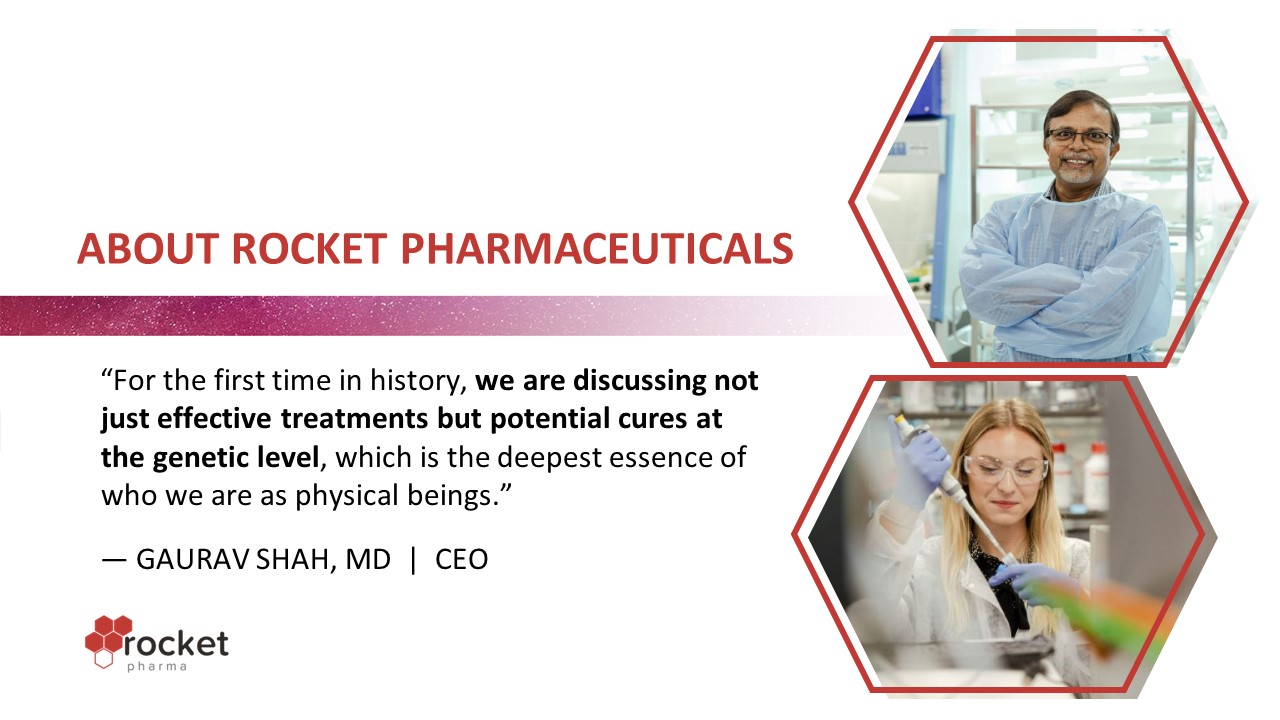
ABOUT ROCKET PHARMACEUTICALS “For the first time in history, we are discussing not just effective
treatments but potential cures at the genetic level, which is the deepest essence of who we are as physical beings.” — GAURAV SHAH, MD | CEO
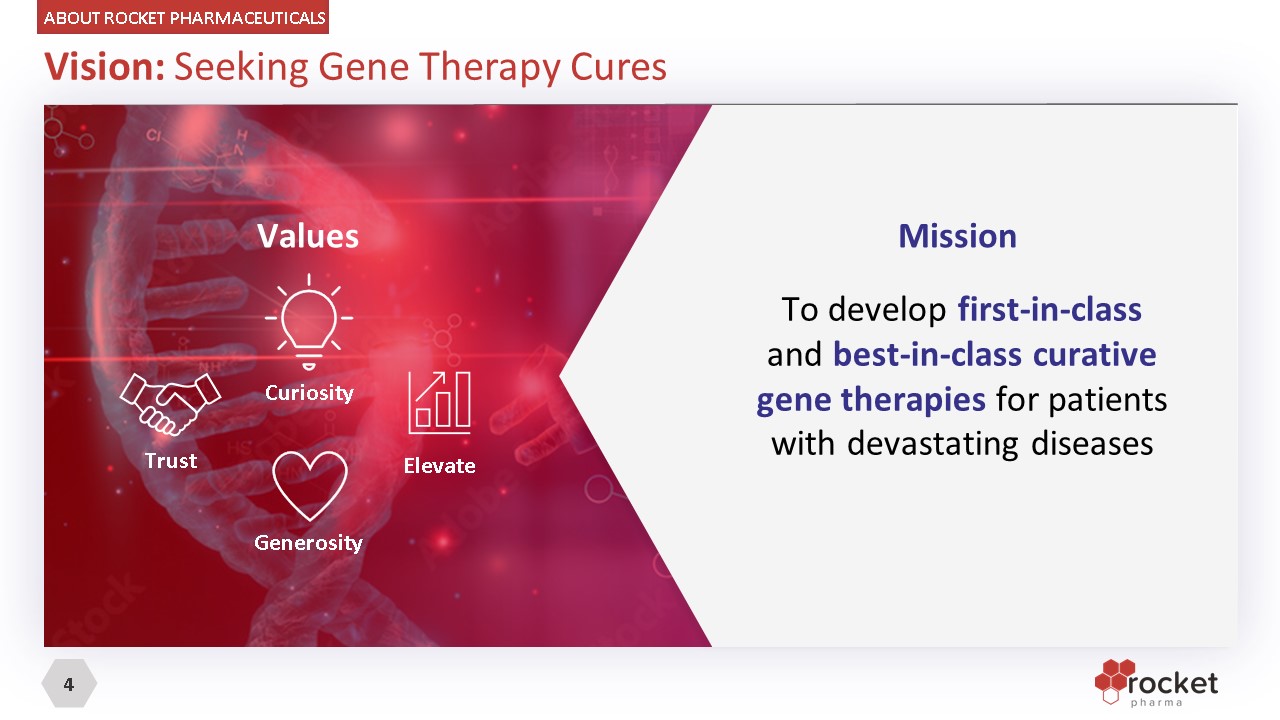
v Vision: Seeking Gene Therapy Cures To develop first-in-class and best-in-class curative gene
therapies for patients with devastating diseases Generosity Trust Elevate Values Mission Curiosity ABOUT ROCKET PHARMACEUTICALS
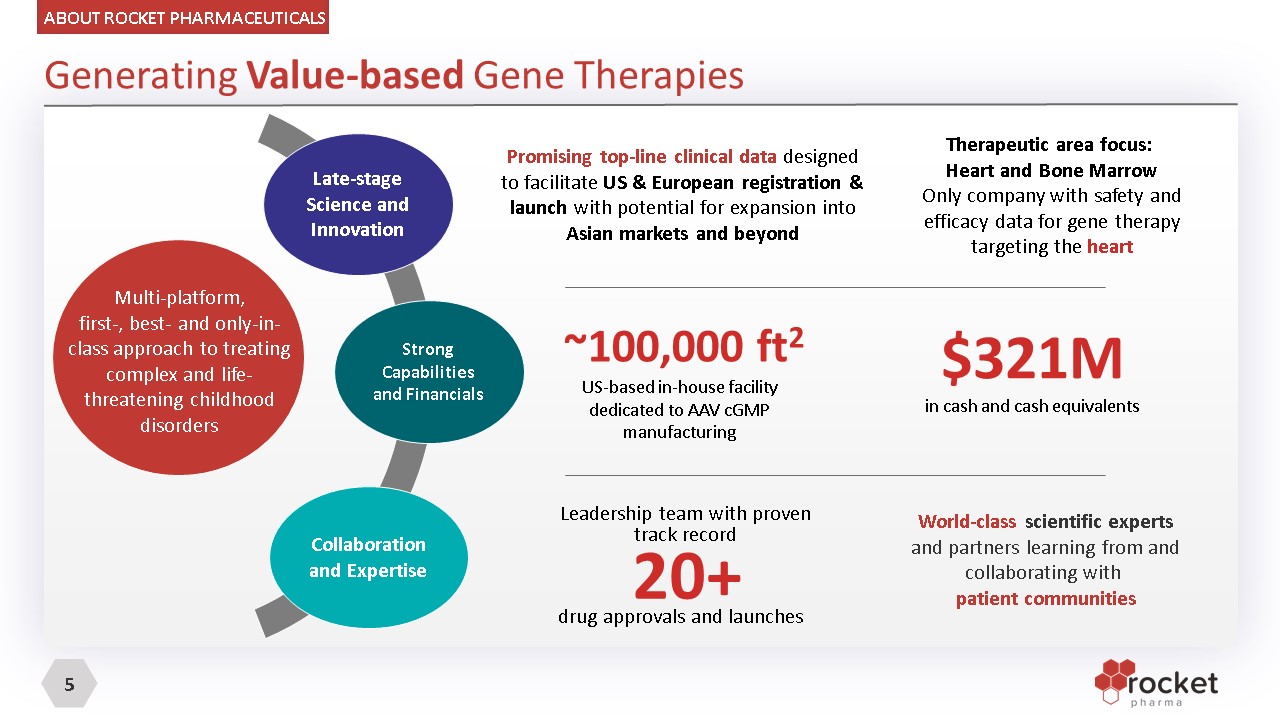
ABOUT ROCKET PHARMACEUTICALS Multi-platform, first-, best- and only-in-class approach to treating
complex and life-threatening childhood disorders ???? Generating Value-based Gene Therapies Late-stage Science and Innovation Strong Capabilities and Financials Collaboration and Expertise Promising top-line clinical data designed to
facilitate US & European registration & launch with potential for expansion into Asian markets and beyond Therapeutic area focus: Heart and Bone Marrow Only company with safety and efficacy data for gene therapy targeting the
heart US-based in-house facility dedicated to AAV cGMP manufacturing ~100,000 ft2 $321M in cash and cash equivalents Leadership team with proven track record drug approvals and launches 20+ World-class scientific experts and
partners learning from and collaborating with patient communities
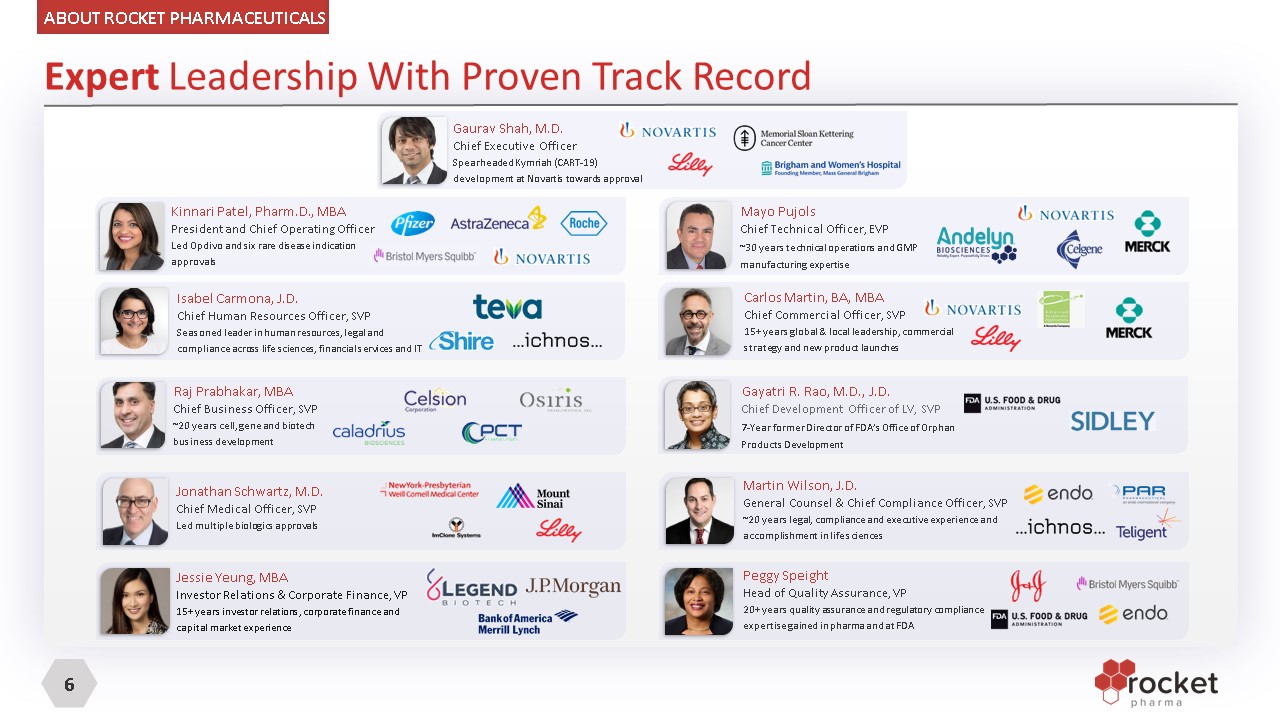
Expert Leadership With Proven Track Record ABOUT ROCKET PHARMACEUTICALS Raj Prabhakar, MBA Chief
Business Officer, SVP ~20 years cell, gene and biotech business development Jonathan Schwartz, M.D. Chief Medical Officer, SVP Led multiple biologics approvals Kinnari Patel, Pharm.D., MBA President and Chief Operating Officer Led
Opdivo and six rare disease indication approvals Isabel Carmona, J.D. Chief Human Resources Officer, SVP Seasoned leader in human resources, legal and compliance across life sciences, financial services and IT Gayatri R. Rao, M.D.,
J.D. Chief Development Officer of LV, SVP 7-Year former Director of FDA’s Office of Orphan Products Development Carlos Martin, BA, MBA Chief Commercial Officer, SVP 15+ years global & local leadership, commercial strategy and new
product launches Mayo Pujols Chief Technical Officer, EVP ~30 years technical operations and GMP manufacturing expertise Martin Wilson, J.D. General Counsel & Chief Compliance Officer, SVP ~20 years legal, compliance and executive
experience and accomplishment in life sciences Jessie Yeung, MBA Investor Relations & Corporate Finance, VP 15+ years investor relations, corporate finance and capital market experience Peggy Speight Head of Quality Assurance,
VP 20+ years quality assurance and regulatory compliance expertise gained in pharma and at FDA Gaurav Shah, M.D. Chief Executive Officer Spearheaded Kymriah (CART-19) development at Novartis towards approval
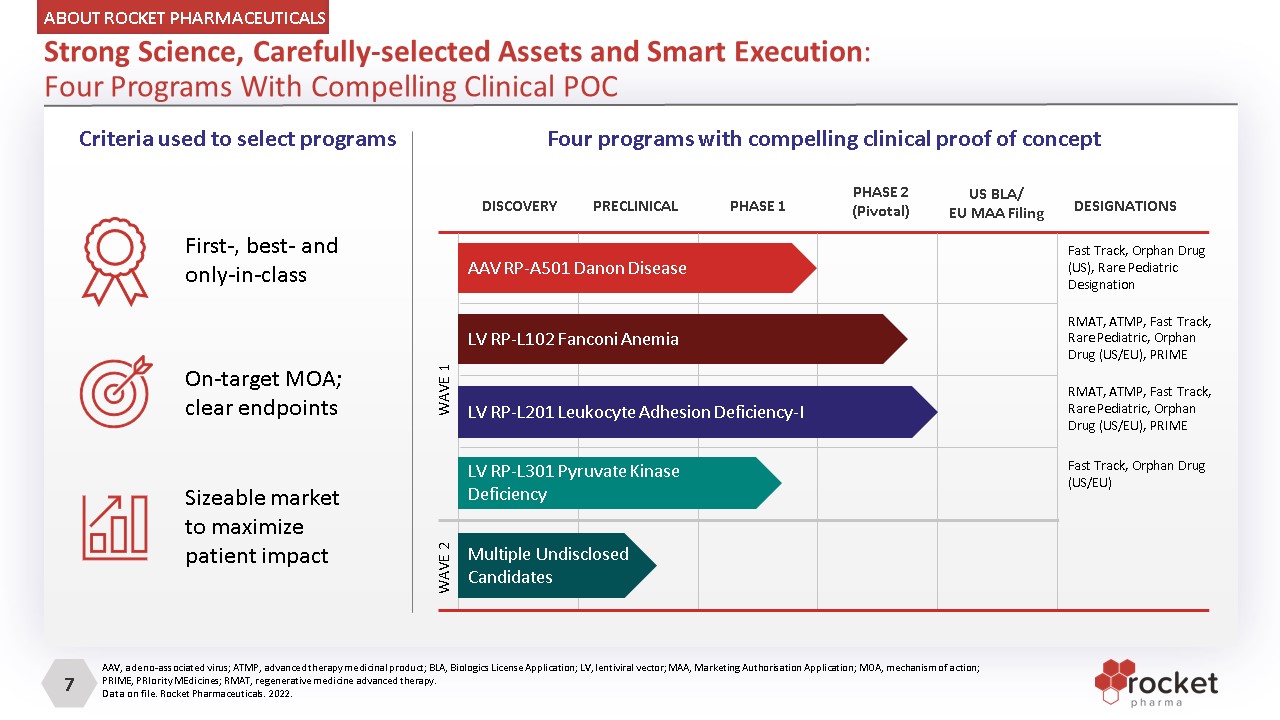
On-target MOA; clear endpoints Sizeable market to maximize patient impact First-, best- and
only-in-class Criteria used to select programs Four programs with compelling clinical proof of concept Fast Track, Orphan Drug (US), Rare Pediatric Designation RMAT, ATMP, Fast Track, Rare Pediatric, Orphan Drug (US/EU), PRIME RMAT,
ATMP, Fast Track, Rare Pediatric, Orphan Drug (US/EU), PRIME Fast Track, Orphan Drug (US/EU) WAVE 1 WAVE 2 DISCOVERY PRECLINICAL PHASE 1 PHASE 2 (Pivotal) US BLA/ EU MAA Filing DESIGNATIONS AAV RP-A501 Danon Disease LV RP-L102
Fanconi Anemia LV RP-L201 Leukocyte Adhesion Deficiency-I LV RP-L301 Pyruvate Kinase Deficiency Multiple Undisclosed Candidates AAV, adeno-associated virus; ATMP, advanced therapy medicinal product; BLA, Biologics License Application;
LV, lentiviral vector; MAA, Marketing Authorisation Application; MOA, mechanism of action; PRIME, PRIority MEdicines; RMAT, regenerative medicine advanced therapy. Data on file. Rocket Pharmaceuticals. 2022. ABOUT ROCKET
PHARMACEUTICALS Strong Science, Carefully-selected Assets and Smart Execution:Four Programs With Compelling Clinical POC
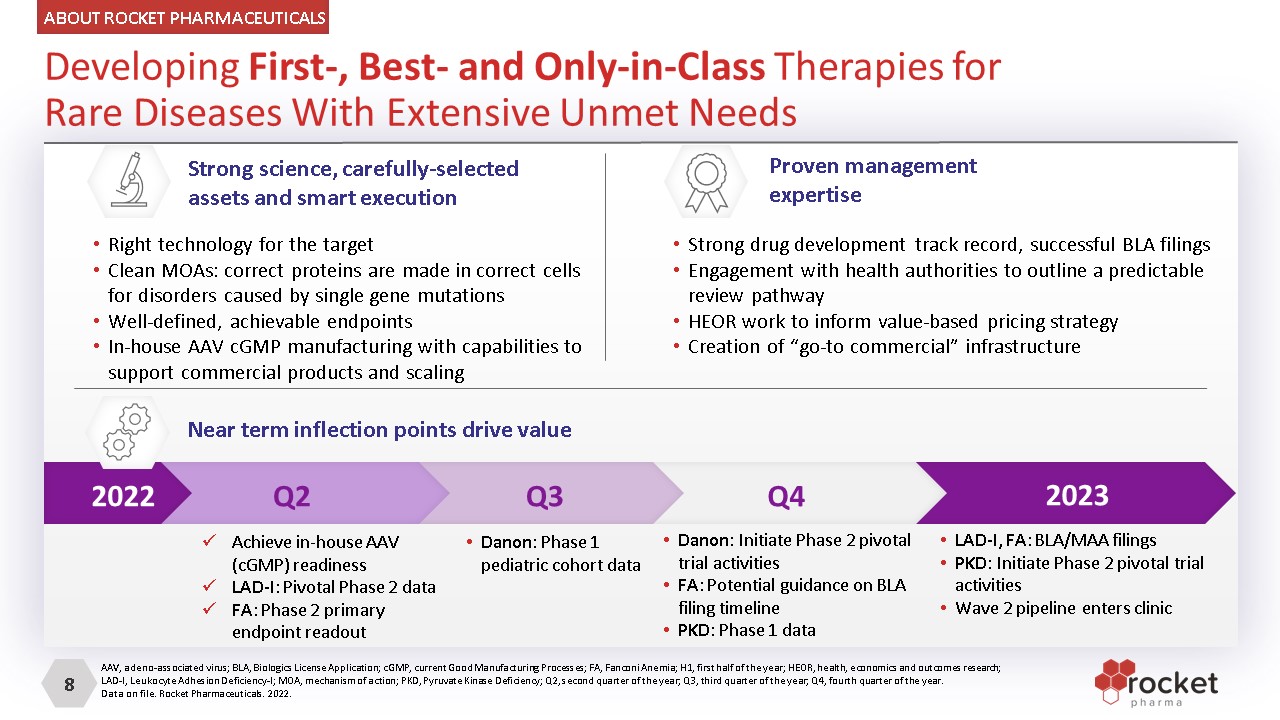
2023 Developing First-, Best- and Only-in-Class Therapies for Rare Diseases With Extensive Unmet
Needs Right technology for the target Clean MOAs: correct proteins are made in correct cells for disorders caused by single gene mutations Well-defined, achievable endpoints In-house AAV cGMP manufacturing with capabilities to support
commercial products and scaling Strong drug development track record, successful BLA filings Engagement with health authorities to outline a predictable review pathway HEOR work to inform value-based pricing strategy Creation of “go-to
commercial” infrastructure Strong science, carefully-selected assets and smart execution Proven management expertise Near term inflection points drive value AAV, adeno-associated virus; BLA, Biologics License Application; cGMP, current
Good Manufacturing Processes; FA, Fanconi Anemia; H1, first half of the year; HEOR, health, economics and outcomes research; LAD-I, Leukocyte Adhesion Deficiency-I; MOA, mechanism of action; PKD, Pyruvate Kinase Deficiency; Q2, second quarter
of the year; Q3, third quarter of the year; Q4, fourth quarter of the year. Data on file. Rocket Pharmaceuticals. 2022. 2022 Achieve in-house AAV (cGMP) readiness LAD-I: Pivotal Phase 2 data FA: Phase 2 primaryendpoint
readout Q2 Q3 Q4 Danon: Phase 1 pediatric cohort data Danon: Initiate Phase 2 pivotal trial activities FA: Potential guidance on BLA filing timeline PKD: Phase 1 data LAD-I, FA: BLA/MAA filings PKD: Initiate Phase 2 pivotal trial
activities Wave 2 pipeline enters clinic ABOUT ROCKET PHARMACEUTICALS
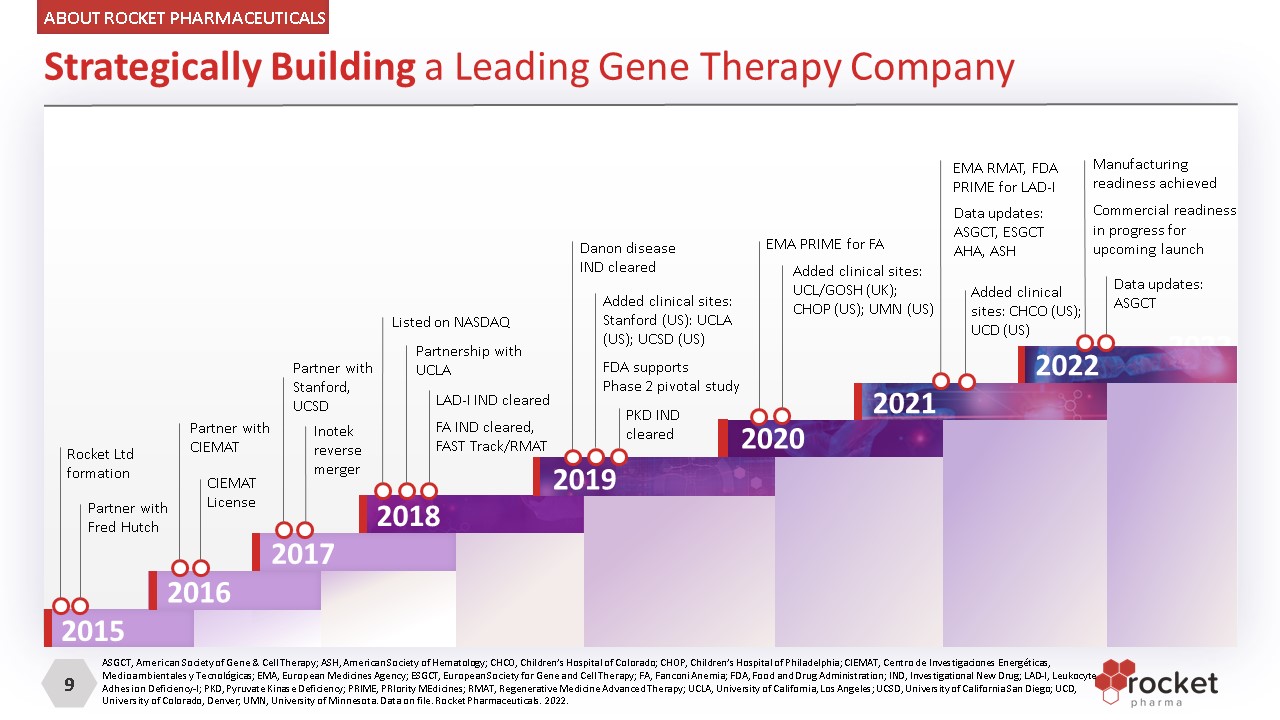
Strategically Building a Leading Gene Therapy Company ASGCT, American Society of Gene & Cell
Therapy; ASH, American Society of Hematology; CHCO, Children’s Hospital of Colorado; CHOP, Children’s Hospital of Philadelphia; CIEMAT, Centro de Investigaciones Energéticas, Medioambientales y Tecnológicas; EMA, European Medicines Agency;
ESGCT, European Society for Gene and Cell Therapy; FA, Fanconi Anemia; FDA, Food and Drug Administration; IND, Investigational New Drug; LAD-I, Leukocyte Adhesion Deficiency-I; PKD, Pyruvate Kinase Deficiency; PRIME, PRIority MEdicines; RMAT,
Regenerative Medicine Advanced Therapy; UCLA, University of California, Los Angeles; UCSD, University of California San Diego; UCD, University of Colorado, Denver; UMN, University of Minnesota. Data on file. Rocket Pharmaceuticals.
2022. Rocket Ltd formation Partner with Fred Hutch Partner with CIEMAT CIEMAT License Partner with Stanford, UCSD Inotek reverse merger LAD-I IND cleared FA IND cleared, FAST Track/RMAT Partnership with UCLA Danon disease IND
cleared Added clinical sites: Stanford (US): UCLA (US); UCSD (US) FDA supports Phase 2 pivotal study PKD IND cleared EMA PRIME for FA Added clinical sites: UCL/GOSH (UK); CHOP (US); UMN (US) Data updates: ASGCT, ESGCT AHA, ASH EMA
RMAT, FDA PRIME for LAD-I 2015 2016 2017 2018 2019 2020 2021 Listed on NASDAQ 2022 Manufacturing readiness achieved Commercial readiness in progress for upcoming launch 2022 Data updates: ASGCT ABOUT ROCKET
PHARMACEUTICALS Added clinical sites: CHCO (US); UCD (US)
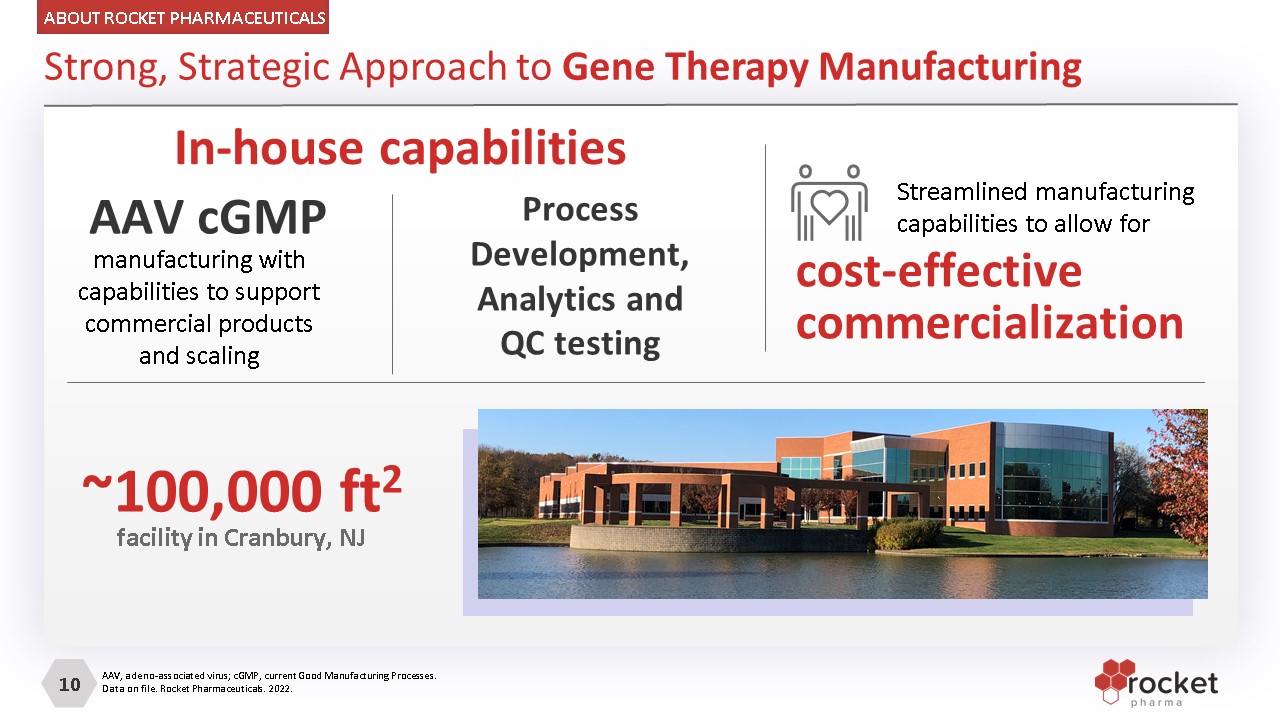
Strong, Strategic Approach to Gene Therapy Manufacturing facility in Cranbury, NJ ~100,000
ft2 In-house capabilities manufacturing with capabilities to support commercial products and scaling Streamlined manufacturing capabilities to allow for cost-effective commercialization AAV, adeno-associated virus; cGMP, current Good
Manufacturing Processes. Data on file. Rocket Pharmaceuticals. 2022. ABOUT ROCKET PHARMACEUTICALS AAV cGMP Process Development, Analytics and QC testing
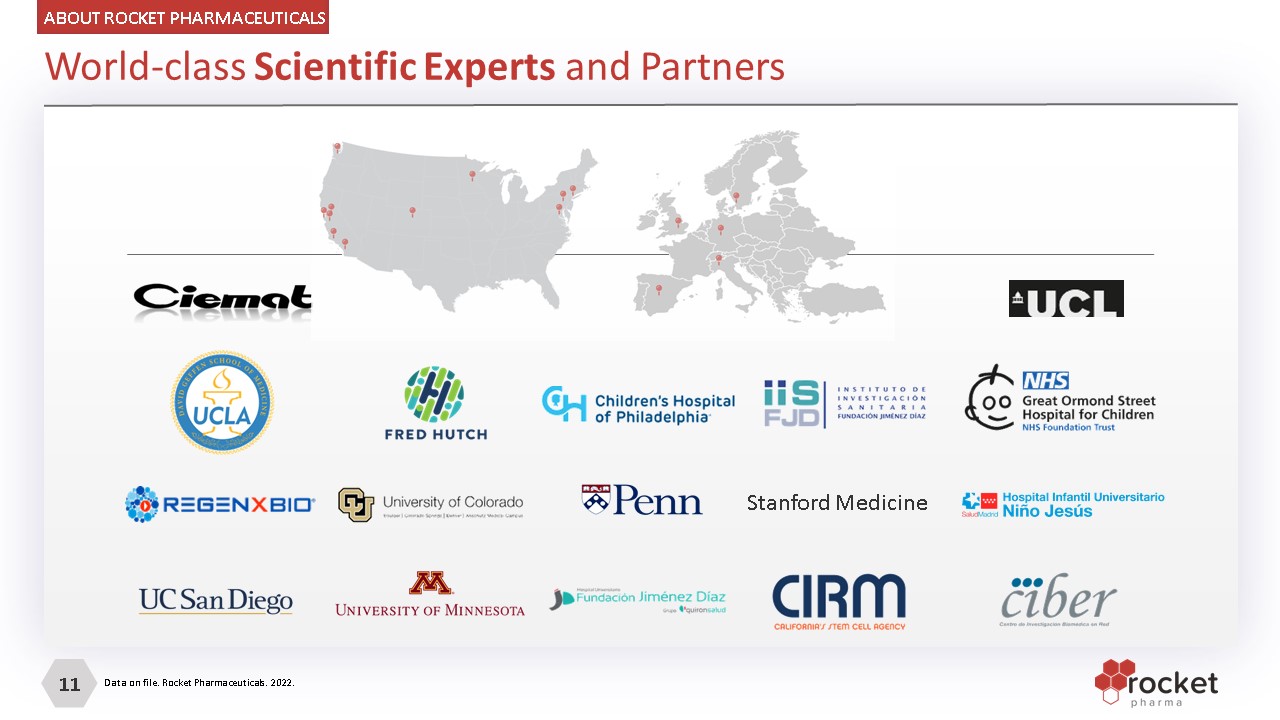
World-class Scientific Experts and Partners Data on file. Rocket Pharmaceuticals. 2022. ABOUT ROCKET
PHARMACEUTICALS Stanford Medicine
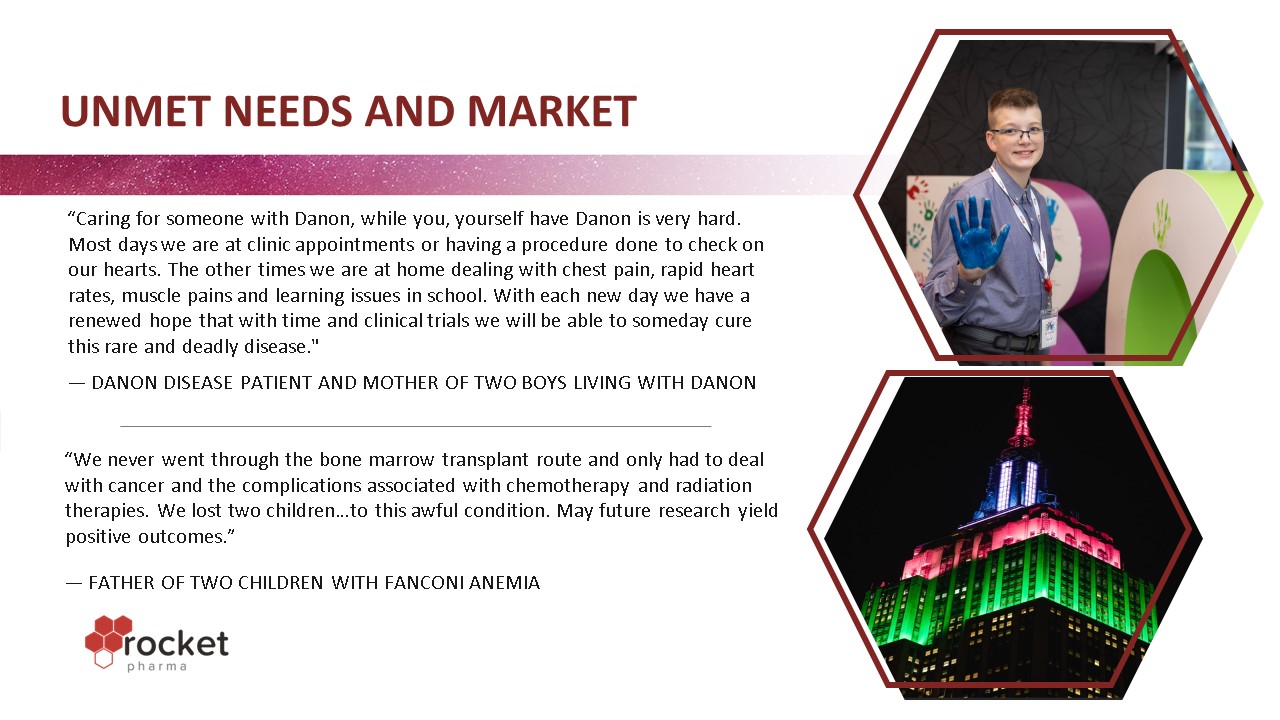
UNMET NEEDS AND MARKET “We never went through the bone marrow transplant route and only had to deal
with cancer and the complications associated with chemotherapy and radiation therapies. We lost two children…to this awful condition. May future research yield positive outcomes.” — FATHER OF TWO CHILDREN WITH FANCONI ANEMIA “Caring for
someone with Danon, while you, yourself have Danon is very hard. Most days we are at clinic appointments or having a procedure done to check on our hearts. The other times we are at home dealing with chest pain, rapid heart rates, muscle
pains and learning issues in school. With each new day we have a renewed hope that with time and clinical trials we will be able to someday cure this rare and deadly disease." — Danon disease PATIENT AND MOTHER OF TWO BOYS LIVING WITH
DANON
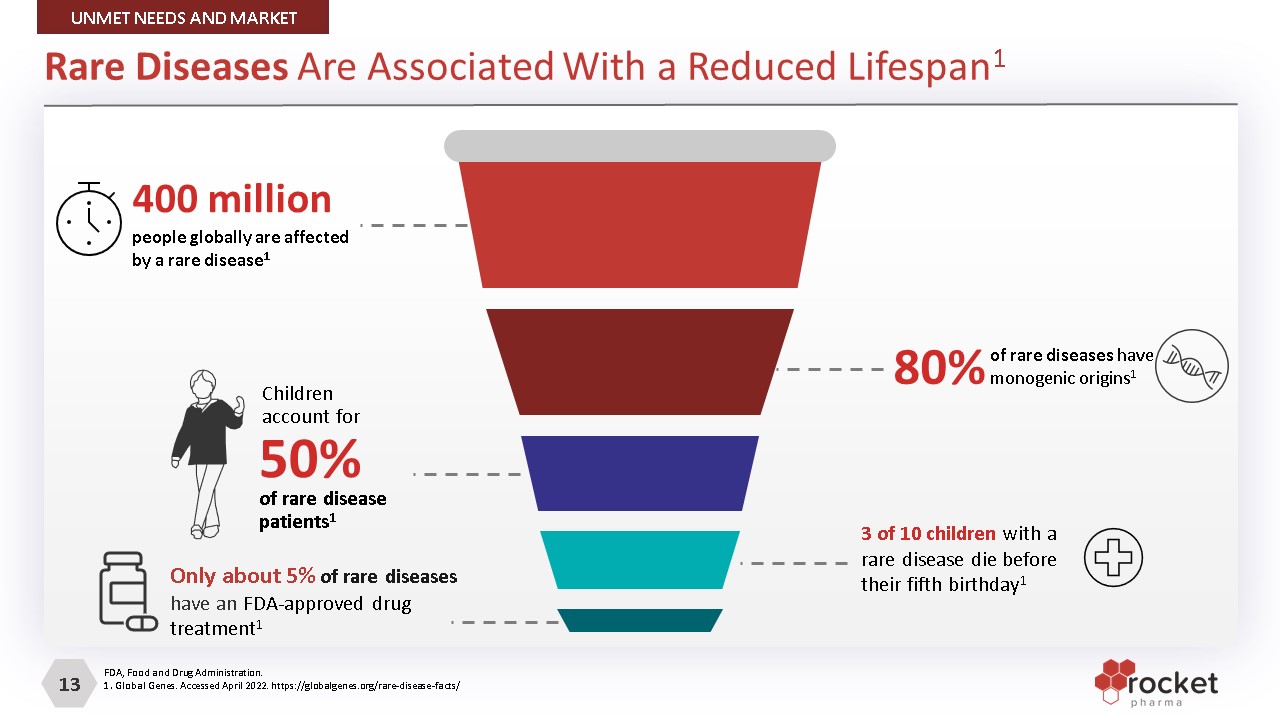
Rare Diseases Are Associated With a Reduced Lifespan1 UNMET NEEDS AND MARKET FDA, Food and Drug
Administration.1. Global Genes. Accessed April 2022. https://globalgenes.org/rare-disease-facts/ people globally are affected by a rare disease1 400 million of rare diseases have monogenic origins1 80% of rare disease
patients1 50% Children account for 3 of 10 children with a rare disease die before their fifth birthday1 Only about 5% of rare diseases have an FDA-approved drug treatment1
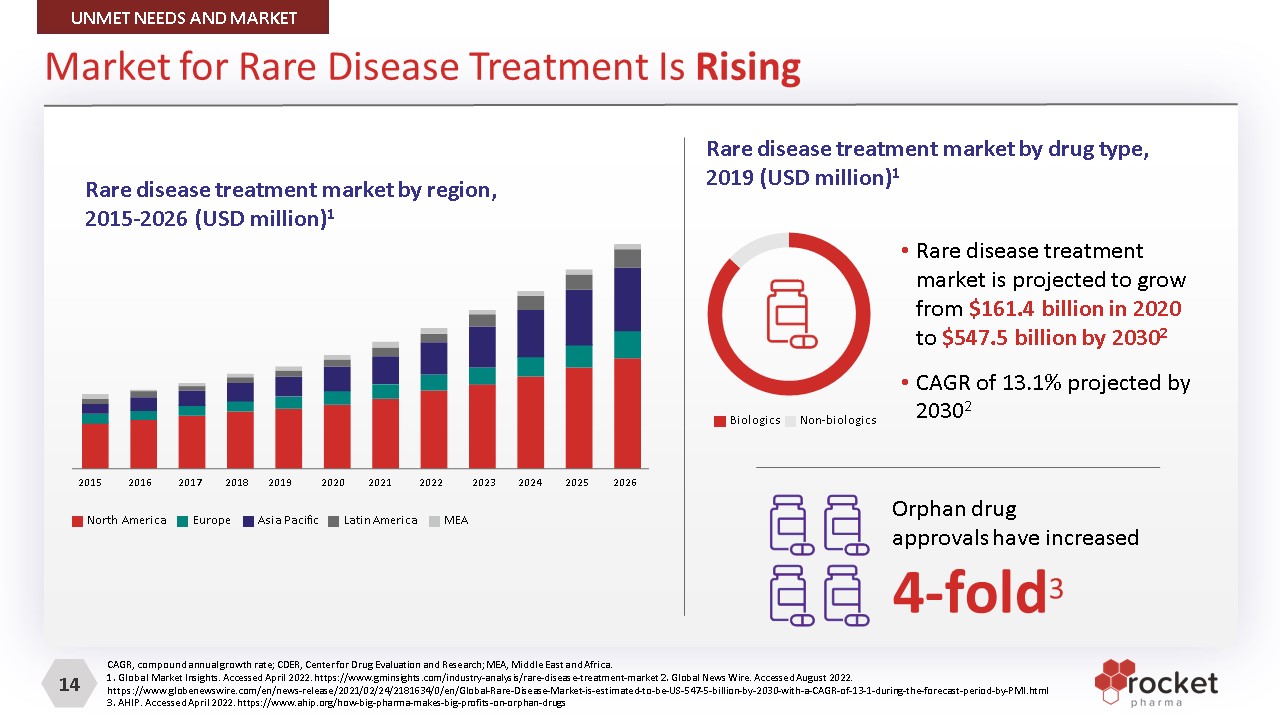
Market for Rare Disease Treatment Is Rising Rare disease treatment market is projected to grow from
$161.4 billion in 2020 to $547.5 billion by 20302 CAGR of 13.1% projected by 20302 Rare disease treatment market by region, 2015-2026 (USD million)1 2015 2026 2025 2024 2023 2022 2021 2020 2019 2018 2017 2016 North
America Europe Asia Pacific Latin America MEA Rare disease treatment market by drug type, 2019 (USD million)1 Biologics Non-biologics Orphan drug approvals have increased 4-fold3 CAGR, compound annual growth rate; CDER, Center for
Drug Evaluation and Research; MEA, Middle East and Africa.1. Global Market Insights. Accessed April 2022. https://www.gminsights.com/industry-analysis/rare-disease-treatment-market 2. Global News Wire. Accessed August
2022.https://www.globenewswire.com/en/news-release/2021/02/24/2181634/0/en/Global-Rare-Disease-Market-is-estimated-to-be-US-547-5-billion-by-2030-with-a-CAGR-of-13-1-during-the-forecast-period-by-PMI.html 3. AHIP. Accessed April 2022.
https://www.ahip.org/how-big-pharma-makes-big-profits-on-orphan-drugs UNMET NEEDS AND MARKET
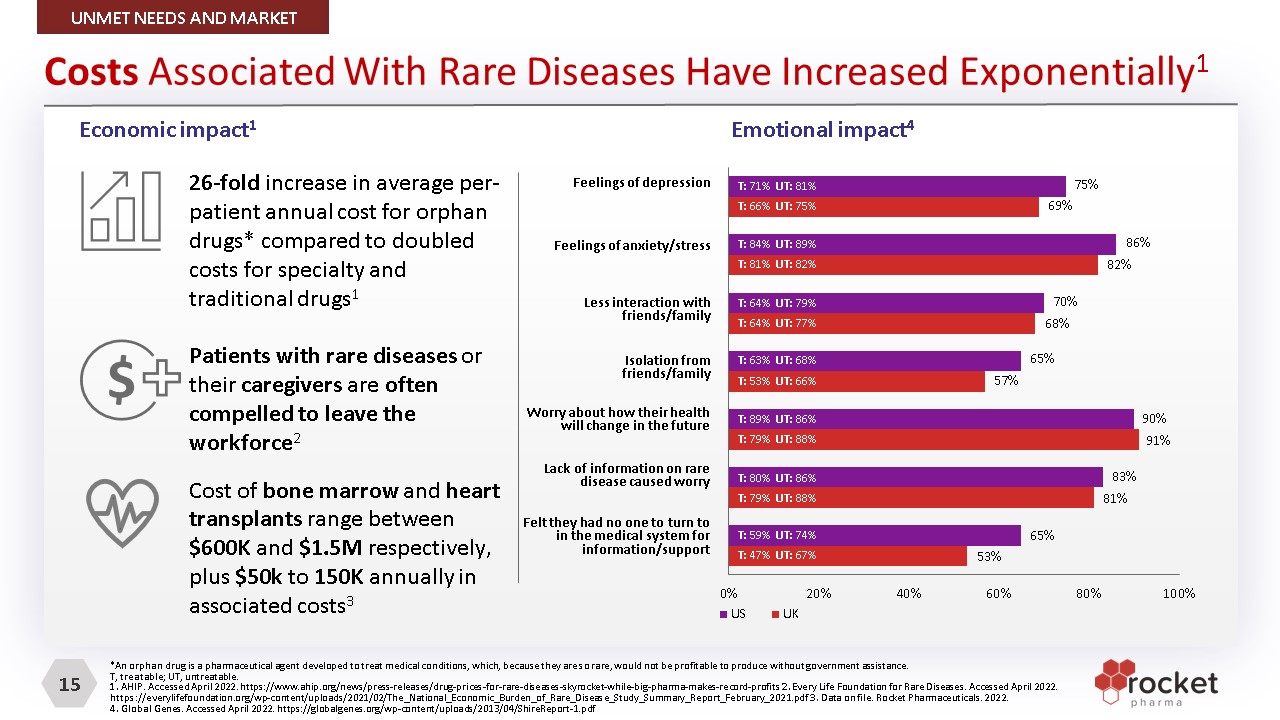
Feelings of depression Feelings of anxiety/stress Less interaction with friends/family Isolation
from friends/family Worry about how their health will change in the future Lack of information on rare disease caused worry Felt they had no one to turn to in the medical system for information/support T: 71% UT: 81% T: 66% UT: 75% T:
84% UT: 89% T: 81% UT: 82% T: 64% UT: 79% T: 64% UT: 77% T: 63% UT: 68% T: 53% UT: 66% T: 89% UT: 86% T: 79% UT: 88% T: 80% UT: 86% T: 79% UT: 88% T: 59% UT: 74% T: 47% UT:
67% 75% 69% 86% 82% 70% 68% 65% 57% 90% 91% 83% 81% 65% 53% Costs Associated With Rare Diseases Have Increased Exponentially1 26-fold increase in average per-patient annual cost for orphan drugs* compared to doubled costs for
specialty and traditional drugs1 Patients with rare diseases or their caregivers are often compelled to leave the workforce2 Cost of bone marrow and heart transplants range between $600K and $1.5M respectively, plus $50k to 150K annually in
associated costs3 Economic impact1 Emotional impact4 *An orphan drug is a pharmaceutical agent developed to treat medical conditions, which, because they are so rare, would not be profitable to produce without government assistance. T,
treatable; UT, untreatable. 1. AHIP. Accessed April 2022. https://www.ahip.org/news/press-releases/drug-prices-for-rare-diseases-skyrocket-while-big-pharma-makes-record-profits 2. Every Life Foundation for Rare Diseases. Accessed April 2022.
https://everylifefoundation.org/wp-content/uploads/2021/02/The_National_Economic_Burden_of_Rare_Disease_Study_Summary_Report_February_2021.pdf 3. Data on file. Rocket Pharmaceuticals. 2022. 4. Global Genes. Accessed April 2022.
https://globalgenes.org/wp-content/uploads/2013/04/ShireReport-1.pdf UNMET NEEDS AND MARKET
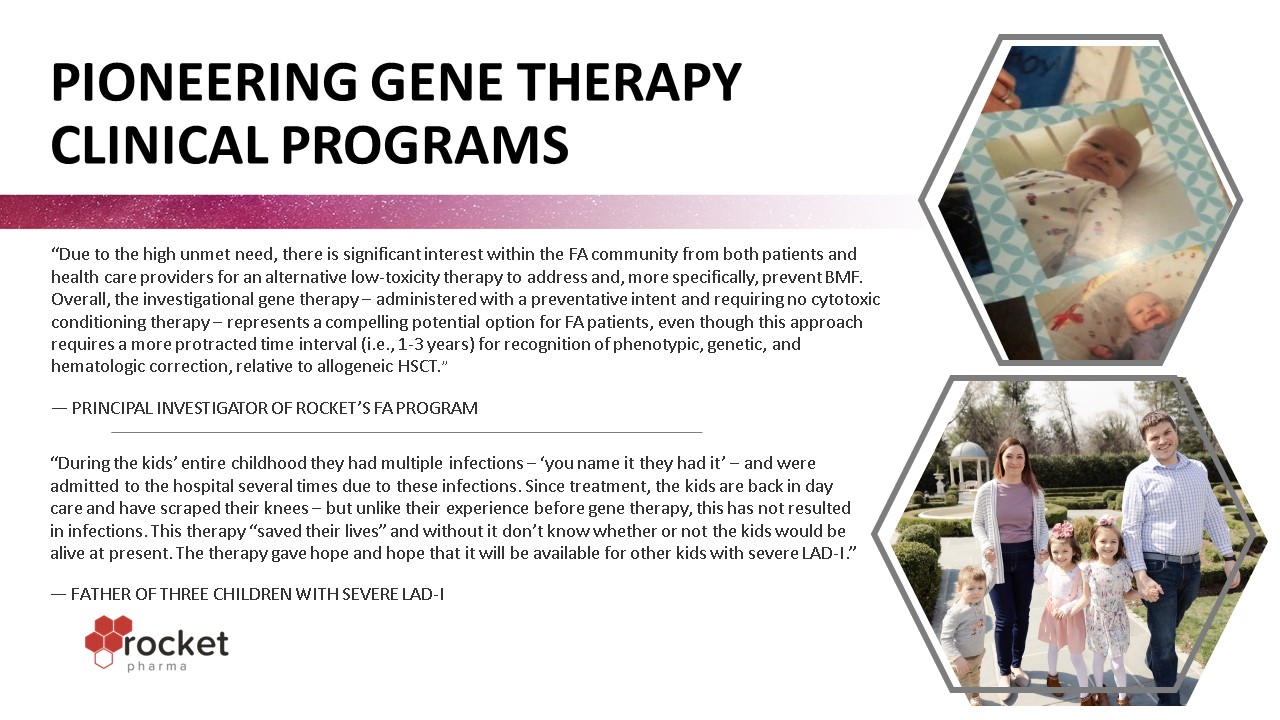
PIONEERING GENE THERAPY CLINICAL PROGRAMS “During the kids’ entire childhood they had multiple
infections – ‘you name it they had it’ – and were admitted to the hospital several times due to these infections. Since treatment, the kids are back in day care and have scraped their knees – but unlike their experience before gene therapy,
this has not resulted in infections. This therapy “saved their lives” and without it don’t know whether or not the kids would be alive at present. The therapy gave hope and hope that it will be available for other kids with severe LAD-I.”
— FATHER OF THREE CHILDREN WITH SEVERE LAD-I “Due to the high unmet need, there is significant interest within the FA community from both patients and health care providers for an alternative low-toxicity therapy to address and, more
specifically, prevent BMF. Overall, the investigational gene therapy – administered with a preventative intent and requiring no cytotoxic conditioning therapy – represents a compelling potential option for FA patients, even though this
approach requires a more protracted time interval (i.e., 1-3 years) for recognition of phenotypic, genetic, and hematologic correction, relative to allogeneic HSCT.” — PRINCIPAL INVESTIGATOR OF ROCKET’S FA PROGRAM
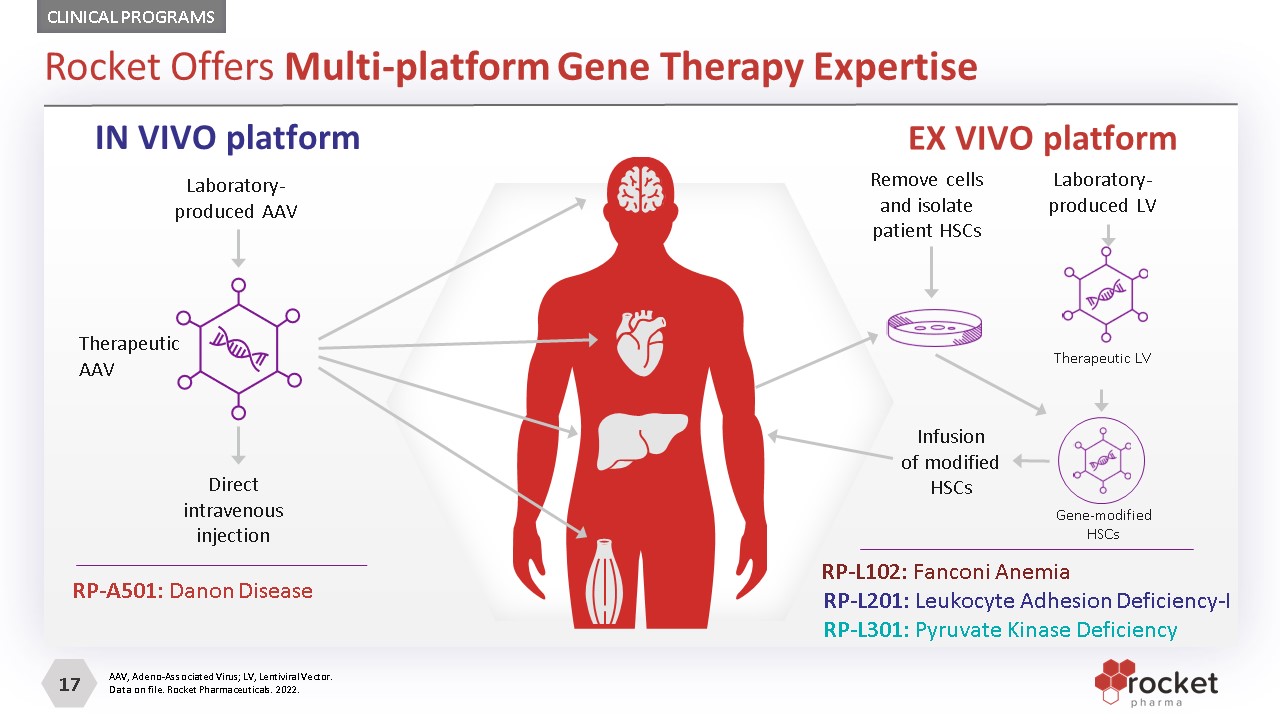
Rocket Offers Multi-platform Gene Therapy Expertise IN VIVO platform EX VIVO platform RP-A501: Danon
Disease RP-L102: Fanconi Anemia RP-L201: Leukocyte Adhesion Deficiency-I RP-L301: Pyruvate Kinase Deficiency CLINICAL PROGRAMS AAV, Adeno-Associated Virus; LV, Lentiviral Vector. Data on file. Rocket Pharmaceuticals.
2022. Laboratory- produced AAV Direct intravenous injection Therapeutic AAV Remove cells and isolate patient HSCs Infusion of modified HSCs Therapeutic LV Laboratory-produced LV Gene-modified HSCs
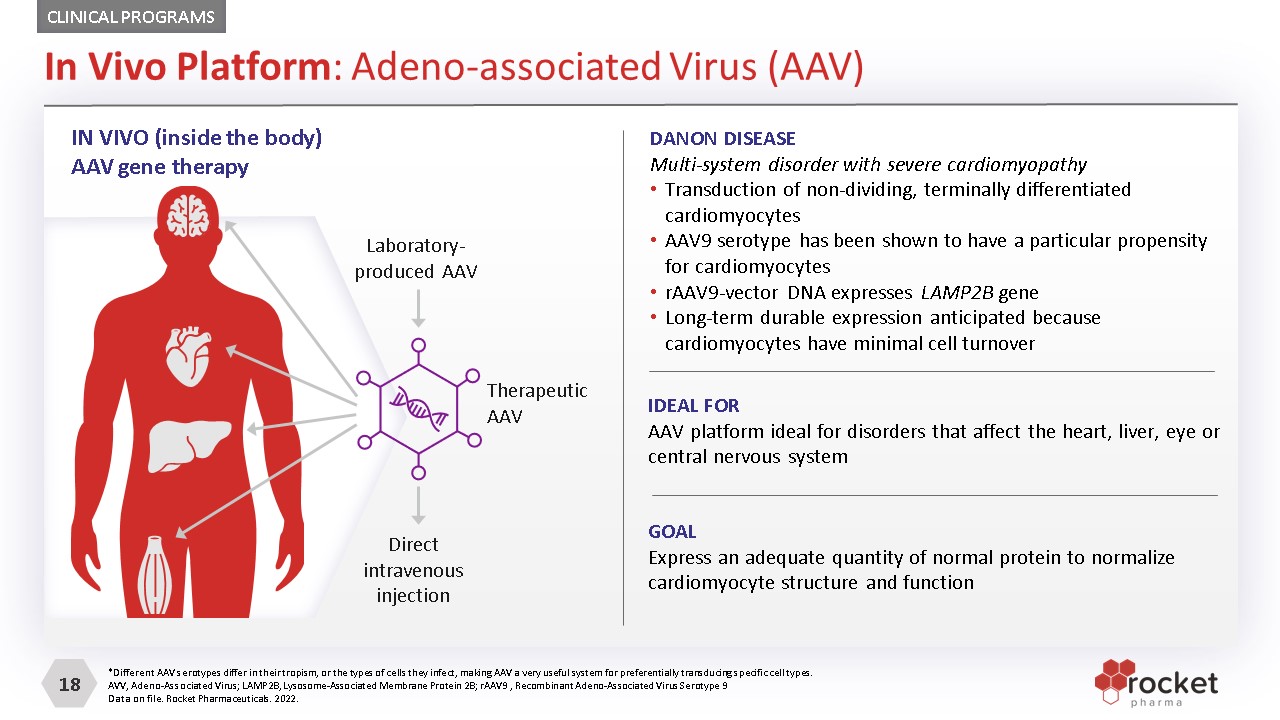
In Vivo Platform: Adeno-associated Virus (AAV) GOAL Express an adequate quantity of normal protein to
normalize cardiomyocyte structure and function IDEAL FOR AAV platform ideal for disorders that affect the heart, liver, eye or central nervous system DANON DISEASE Multi-system disorder with severe cardiomyopathy Transduction of
non-dividing, terminally differentiated cardiomyocytes AAV9 serotype has been shown to have a particular propensity for cardiomyocytes rAAV9-vector DNA expresses LAMP2B gene Long-term durable expression anticipated because cardiomyocytes
have minimal cell turnover IN VIVO (inside the body) AAV gene therapy Laboratory- produced AAV Direct intravenous injection Therapeutic AAV *Different AAV serotypes differ in their tropism, or the types of cells they infect, making AAV
a very useful system for preferentially transducing specific cell types. AVV, Adeno-Associated Virus; LAMP2B, Lysosome-Associated Membrane Protein 2B; rAAV9 , Recombinant Adeno-Associated Virus Serotype 9 Data on file. Rocket
Pharmaceuticals. 2022. CLINICAL PROGRAMS
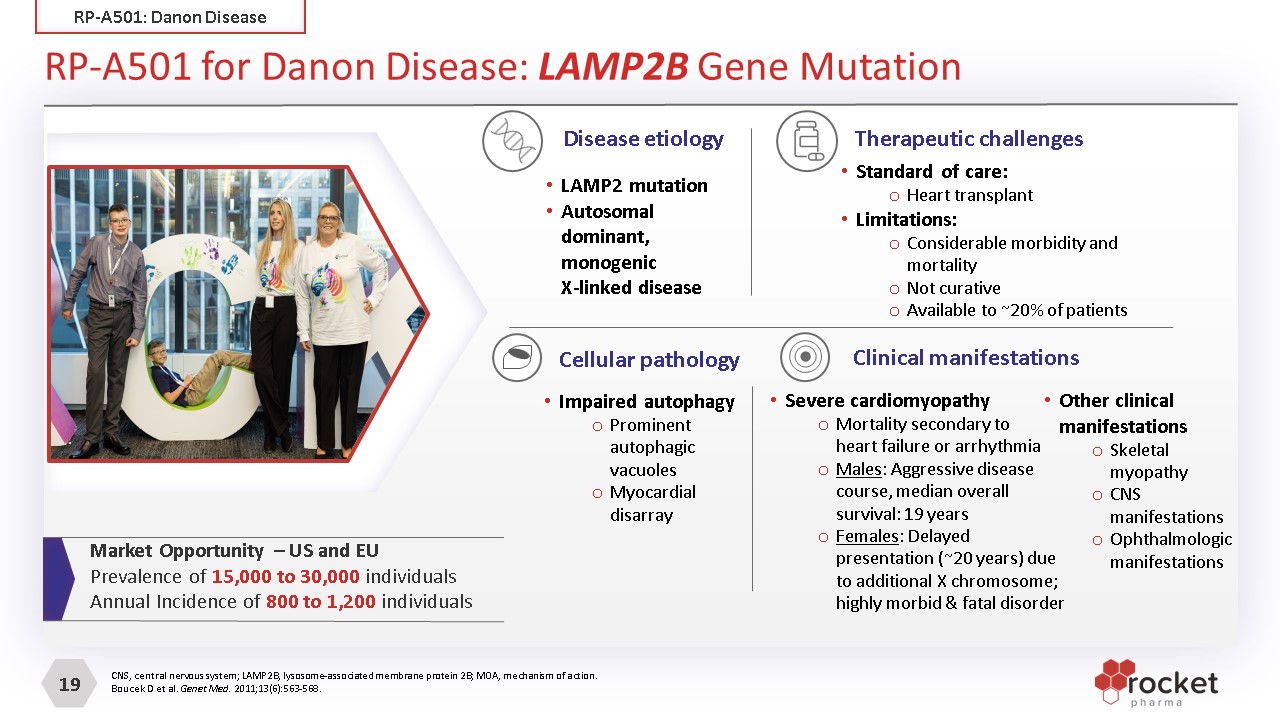
Standard of care: Heart transplant Limitations: Considerable morbidity and mortality Not curative
Available to ~20% of patients Therapeutic challenges LAMP2 mutation Autosomal dominant, monogenic X-linked disease Disease etiology RP-A501 for Danon Disease: LAMP2B Gene Mutation Impaired autophagy Prominent autophagic
vacuoles Myocardial disarray Clinical manifestations CNS, central nervous system; LAMP2B, lysosome-associated membrane protein 2B; MOA, mechanism of action. Boucek D et al. Genet Med. 2011;13(6):563-568. Market Opportunity – US and
EU Prevalence of 15,000 to 30,000 individuals Annual Incidence of 800 to 1,200 individuals Severe cardiomyopathy Mortality secondary to heart failure or arrhythmia Males: Aggressive disease course, median overall survival: 19
years Females: Delayed presentation (~20 years) due to additional X chromosome; highly morbid & fatal disorder Other clinical manifestations Skeletal myopathy CNS manifestations Ophthalmologic manifestations Cellular
pathology RP-A501: Danon Disease
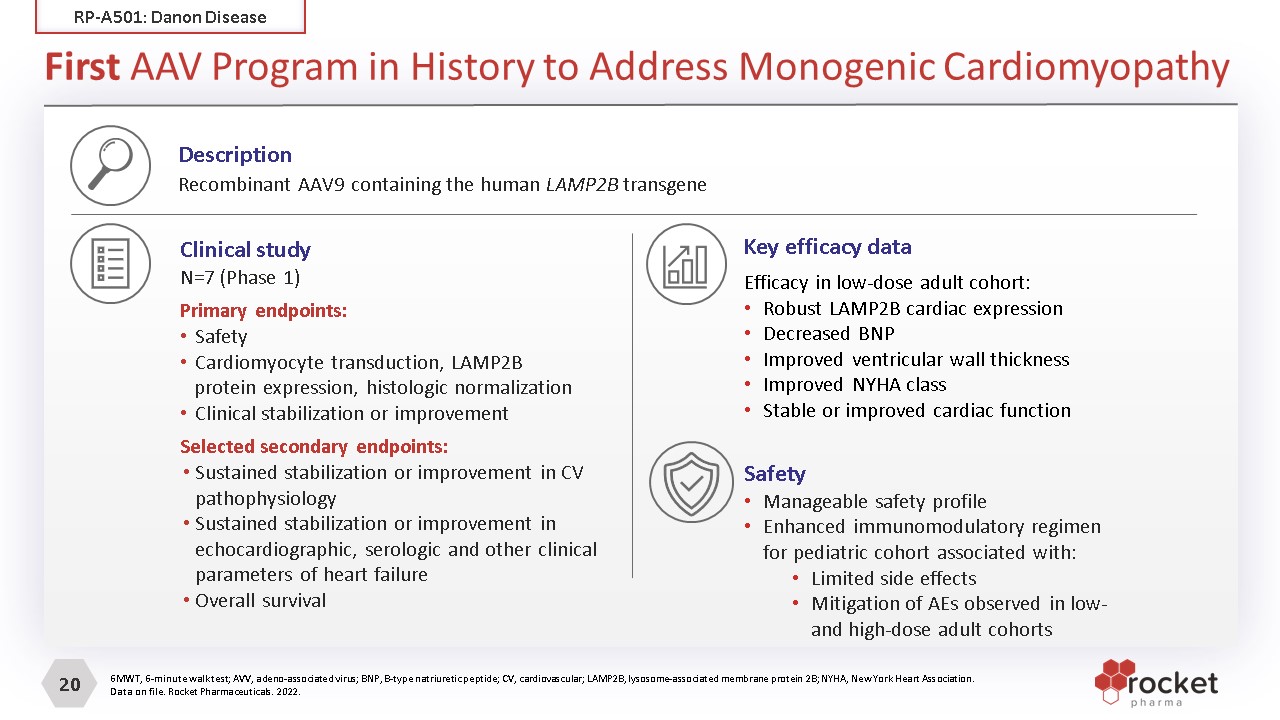
First AAV Program in History to Address Monogenic Cardiomyopathy Clinical study N=7 (Phase
1) Primary endpoints: Safety Cardiomyocyte transduction, LAMP2B protein expression, histologic normalization Clinical stabilization or improvement Selected secondary endpoints: Sustained stabilization or improvement in CV
pathophysiology Sustained stabilization or improvement in echocardiographic, serologic and other clinical parameters of heart failure Overall survival Key efficacy data Recombinant AAV9 containing the human LAMP2B
transgene Description 6MWT, 6-minute walk test; AVV, adeno-associated virus; BNP, B-type natriuretic peptide; CV, cardiovascular; LAMP2B, lysosome-associated membrane protein 2B; NYHA, New York Heart Association. Data on file. Rocket
Pharmaceuticals. 2022. Efficacy in low-dose adult cohort: Robust LAMP2B cardiac expression Decreased BNP Improved ventricular wall thickness Improved NYHA class Stable or improved cardiac function RP-A501: Danon
Disease Safety Manageable safety profile Enhanced immunomodulatory regimen for pediatric cohort associated with: Limited side effects Mitigation of AEs observed in low- and high-dose adult cohorts
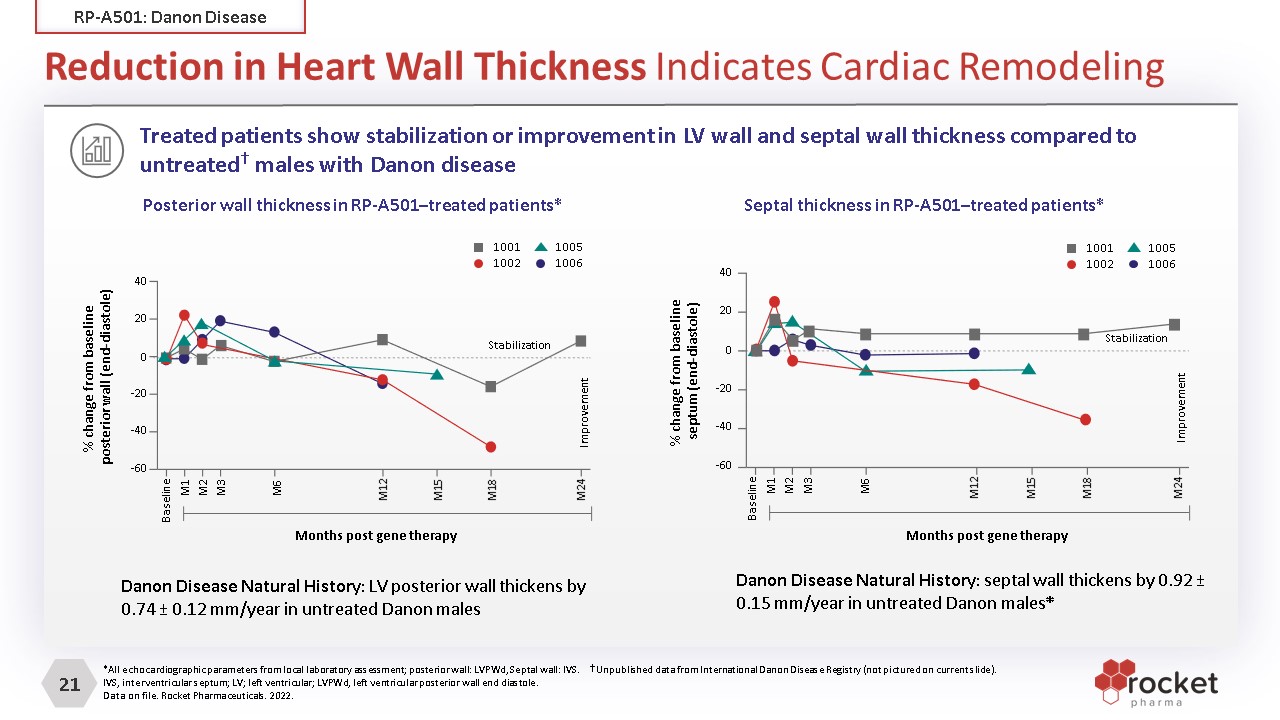
40 20 0 -20 -40 -60 Baseline M1 M2 M3 M6 M12 M15 M18 M24 % change from baseline septum
(end-diastole) Months post gene therapy Stabilization Improvement Danon Disease Natural History: septal wall thickens by 0.92 ± 0.15 mm/year in untreated Danon males* Danon Disease Natural History: LV posterior wall thickens by 0.74 ±
0.12 mm/year in untreated Danon males Reduction in Heart Wall Thickness Indicates Cardiac Remodeling Treated patients show stabilization or improvement in LV wall and septal wall thickness compared to untreated† males with Danon
disease 40 20 0 -20 -40 -60 Baseline M1 M2 M3 M6 M12 M15 M18 M24 % change from baseline posterior wall (end-diastole) Months post gene therapy Stabilization Improvement *All echocardiographic parameters from local
laboratory assessment; posterior wall: LVPWd, Septal wall: IVS. †Unpublished data from International Danon Disease Registry (not pictured on current slide). IVS, interventricular septum; LV; left ventricular; LVPWd, left ventricular
posterior wall end diastole. Data on file. Rocket Pharmaceuticals. 2022. 1001 1002 1005 1006 1001 1002 1005 1006 Posterior wall thickness in RP-A501–treated patients* Septal thickness in RP-A501–treated patients* RP-A501: Danon
Disease
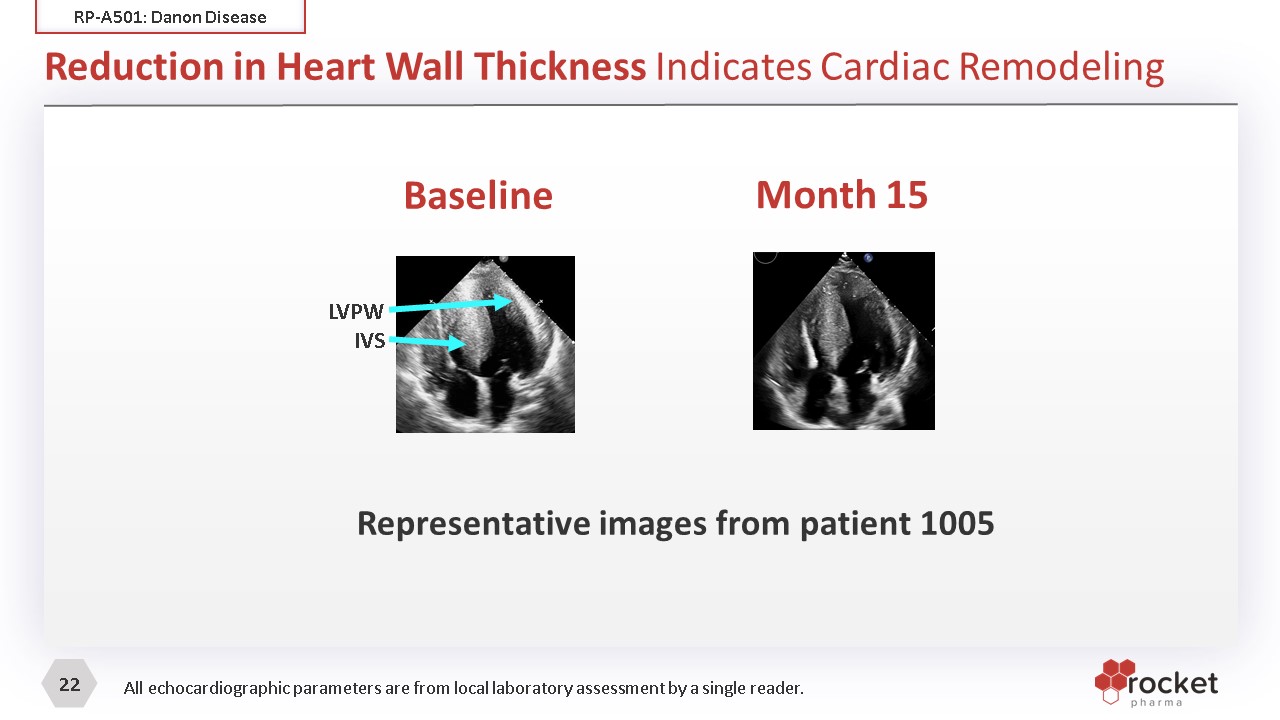
RP-A501: Danon Disease All echocardiographic parameters are from local laboratory assessment by a
single reader. LVPW IVS Representative images from patient 1005 Month 15 Baseline Reduction in Heart Wall Thickness Indicates Cardiac Remodeling
Cohort Patient ID Age at enrollment (years) Variable Baseline Most recent follow-up Time of
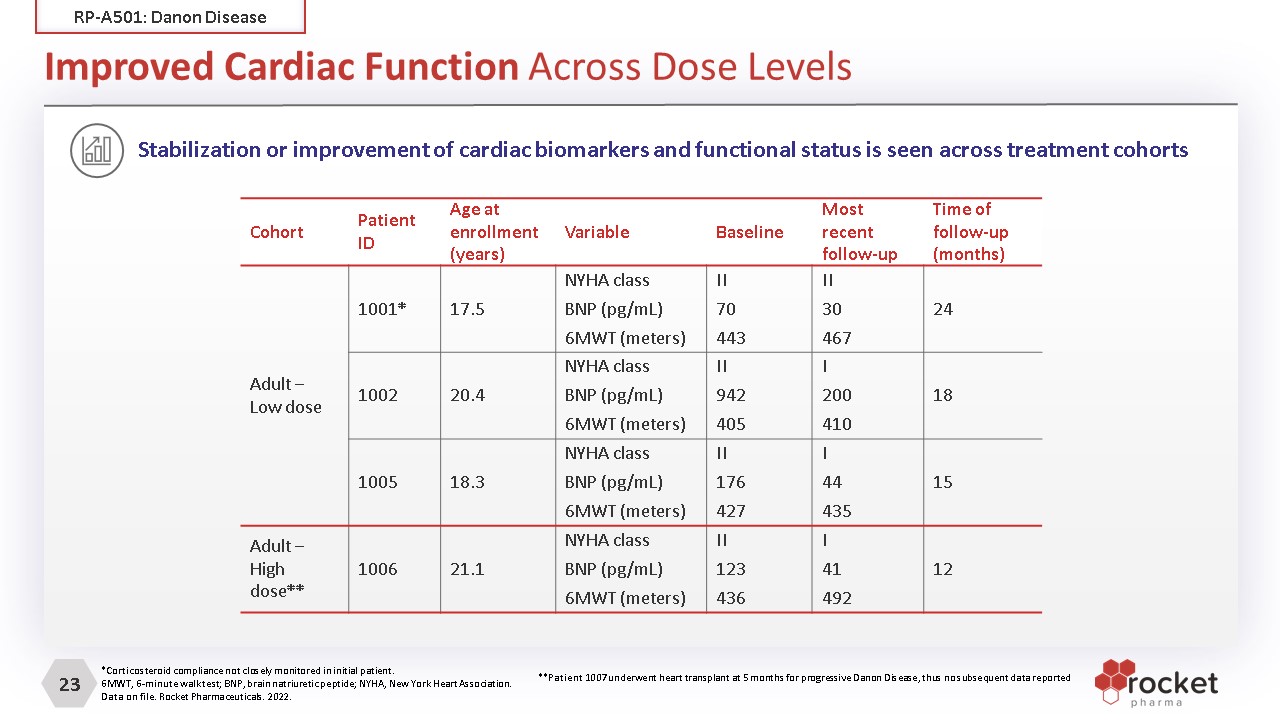
follow-up (months) Adult – Low dose 1001* 17.5 NYHA class II II 24 BNP (pg/mL) 70 30 6MWT (meters) 443 467 1002 20.4 NYHA class II I 18 BNP (pg/mL) 942 200 6MWT (meters) 405 410 1005 18.3 NYHA
class II I 15 BNP (pg/mL) 176 44 6MWT (meters) 427 435 Adult – High dose** 1006 21.1 NYHA class II I 12 BNP (pg/mL) 123 41 6MWT (meters) 436 492 Improved Cardiac Function Across Dose Levels Stabilization or improvement
of cardiac biomarkers and functional status is seen across treatment cohorts *Corticosteroid compliance not closely monitored in initial patient. 6MWT, 6-minute walk test; BNP, brain natriuretic peptide; NYHA, New York Heart
Association. Data on file. Rocket Pharmaceuticals. 2022. RP-A501: Danon Disease **Patient 1007 underwent heart transplant at 5 months for progressive Danon Disease, thus no subsequent data reported
Cohort Patient ID LAMP2B protein expression (by IHC)* Month 12 LAMP2B protein expression (by
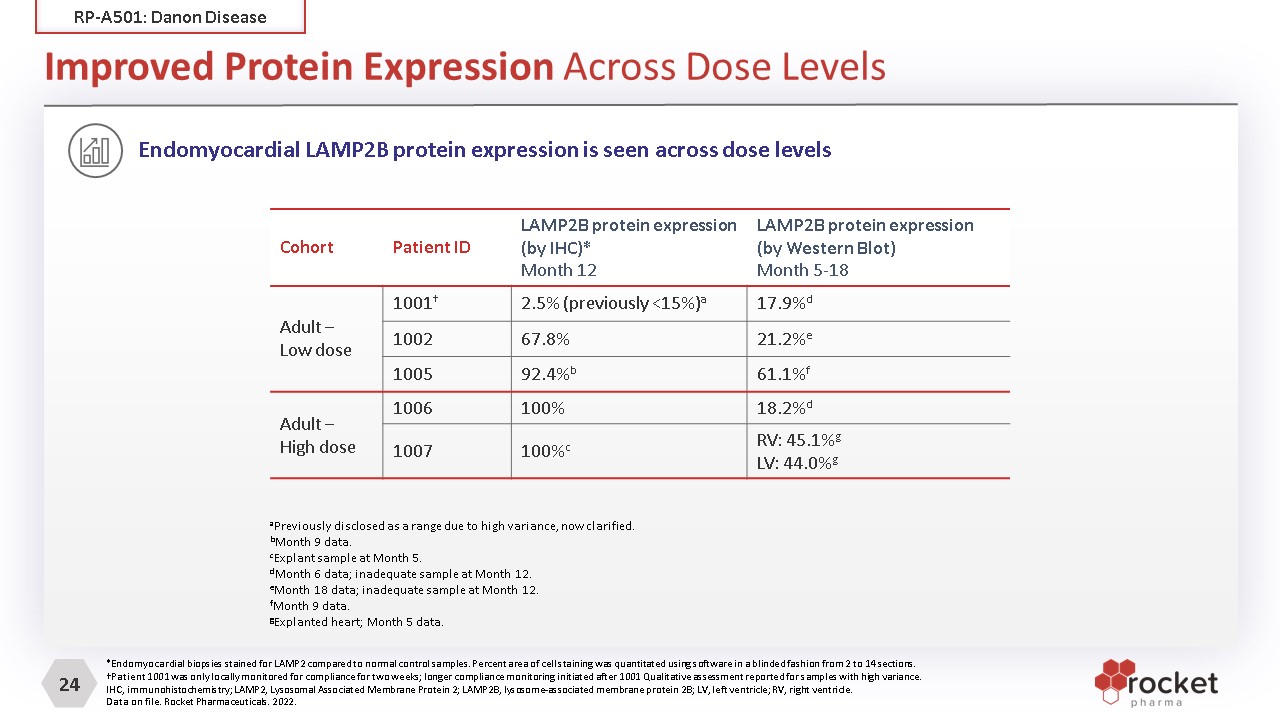
Western Blot) Month 5-18 Adult – Low dose 1001† 2.5% (previously <15%)a 17.9%d 1002 67.8% 21.2%e 1005 92.4%b 61.1%f Adult – High dose 1006 100% 18.2%d Adult – High dose 1007 100%c RV: 45.1%g LV: 44.0%g Improved Protein
Expression Across Dose Levels Endomyocardial LAMP2B protein expression is seen across dose levels aPreviously disclosed as a range due to high variance, now clarified. bMonth 9 data. cExplant sample at Month 5. dMonth 6 data;
inadequate sample at Month 12. eMonth 18 data; inadequate sample at Month 12. fMonth 9 data. gExplanted heart; Month 5 data. *Endomyocardial biopsies stained for LAMP2 compared to normal control samples. Percent area of cell staining
was quantitated using software in a blinded fashion from 2 to 14 sections. †Patient 1001 was only locally monitored for compliance for two weeks; longer compliance monitoring initiated after 1001 Qualitative assessment reported for samples
with high variance. IHC, immunohistochemistry; LAMP2, Lysosomal Associated Membrane Protein 2; LAMP2B, lysosome-associated membrane protein 2B; LV, left ventricle; RV, right ventricle. Data on file. Rocket Pharmaceuticals. 2022. RP-A501:
Danon Disease
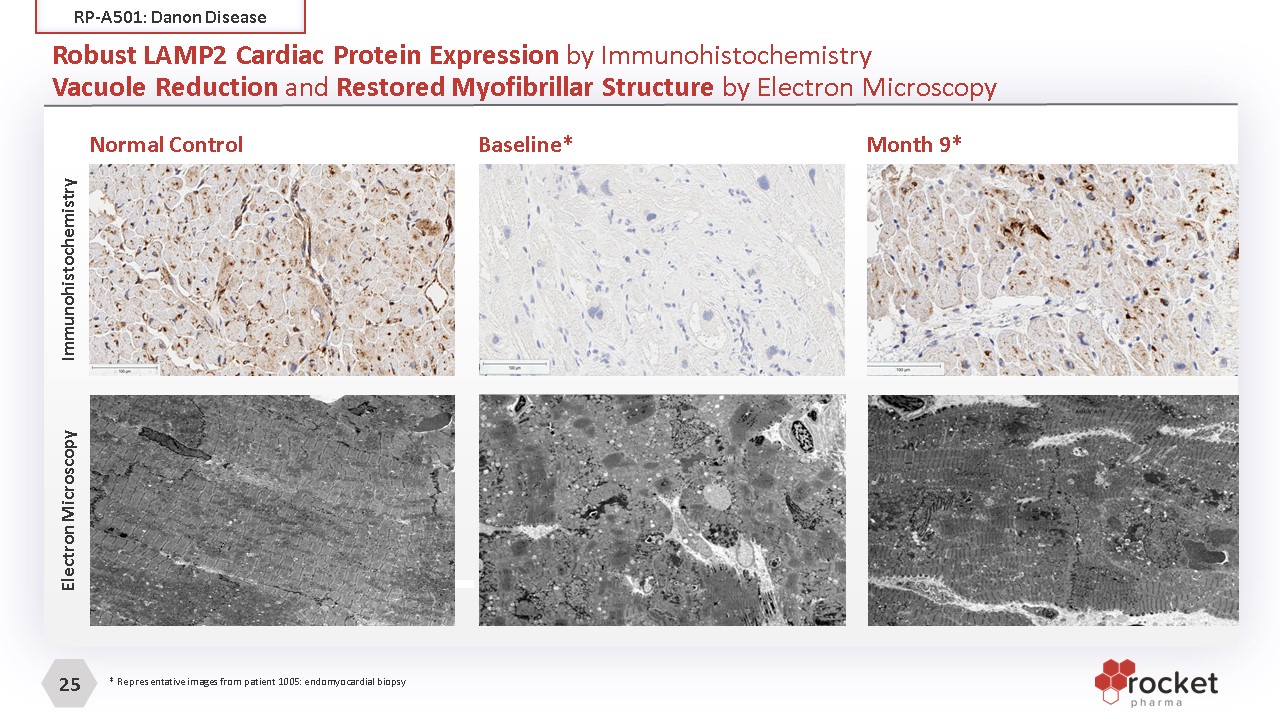
* Representative images from patient 1005: endomyocardial biopsy Baseline* Month 9* Normal
Control Immunohistochemistry Electron Microscopy RP-A501: Danon Disease Robust LAMP2 Cardiac Protein Expression by Immunohistochemistry Vacuole Reduction and Restored Myofibrillar Structure by Electron Microscopy
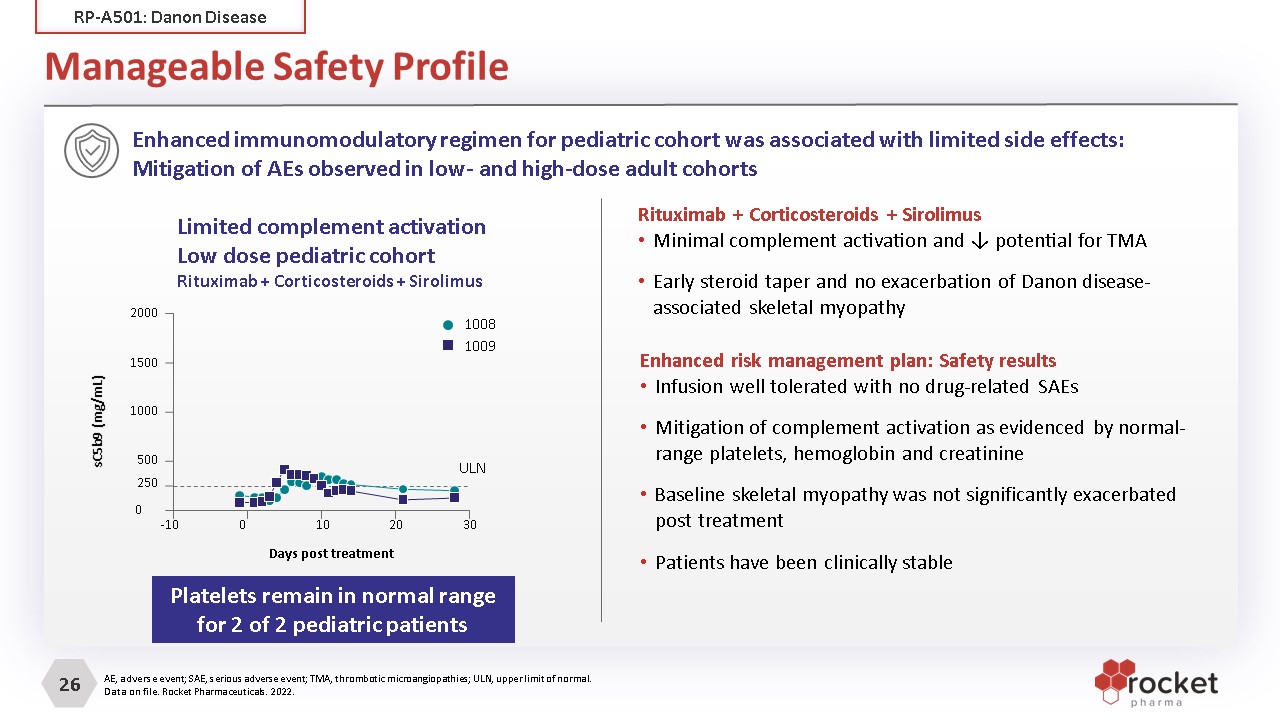
Rituximab + Corticosteroids + Sirolimus Minimal complement activation and ↓ potential for TMA Early
steroid taper and no exacerbation of Danon disease-associated skeletal myopathy Enhanced risk management plan: Safety results Infusion well tolerated with no drug-related SAEs Mitigation of complement activation as evidenced by
normal-range platelets, hemoglobin and creatinine Baseline skeletal myopathy was not significantly exacerbated post treatment Patients have been clinically stable Manageable Safety Profile Enhanced immunomodulatory regimen for pediatric
cohort was associated with limited side effects: Mitigation of AEs observed in low- and high-dose adult cohorts AE, adverse event; SAE, serious adverse event; TMA, thrombotic microangiopathies; ULN, upper limit of normal. Data on file.
Rocket Pharmaceuticals. 2022. Platelets remain in normal range for 2 of 2 pediatric patients Limited complement activation Low dose pediatric cohort Rituximab + Corticosteroids + Sirolimus Days post
treatment -10 0 10 20 30 0 250 500 1000 1500 2000 1008 1009 sC5b9 (mg/mL) ULN RP-A501: Danon Disease
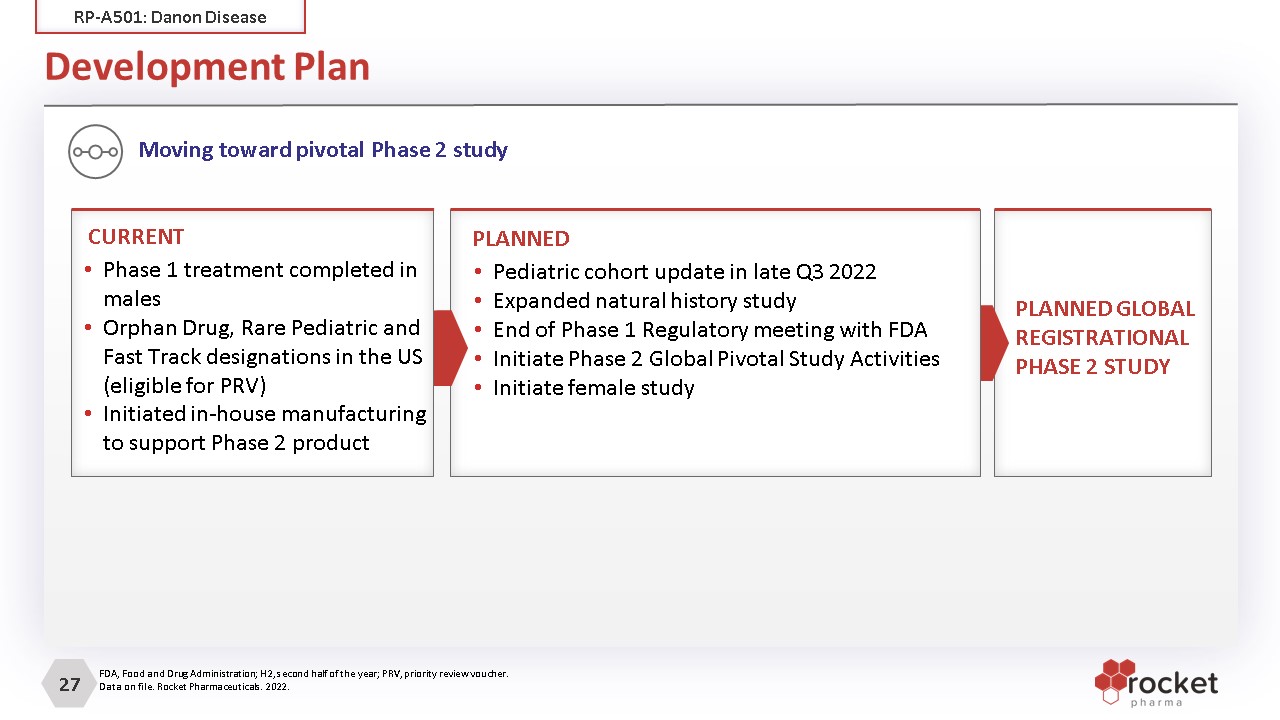
Development Plan Moving toward pivotal Phase 2 study PLANNED GLOBAL REGISTRATIONAL PHASE 2
STUDY Pediatric cohort update in late Q3 2022 Expanded natural history study End of Phase 1 Regulatory meeting with FDA Initiate Phase 2 Global Pivotal Study Activities Initiate female study PLANNED Phase 1 treatment completed in
males Orphan Drug, Rare Pediatric and Fast Track designations in the US (eligible for PRV) Initiated in-house manufacturing to support Phase 2 product CURRENT FDA, Food and Drug Administration; H2, second half of the year; PRV, priority
review voucher. Data on file. Rocket Pharmaceuticals. 2022. RP-A501: Danon Disease
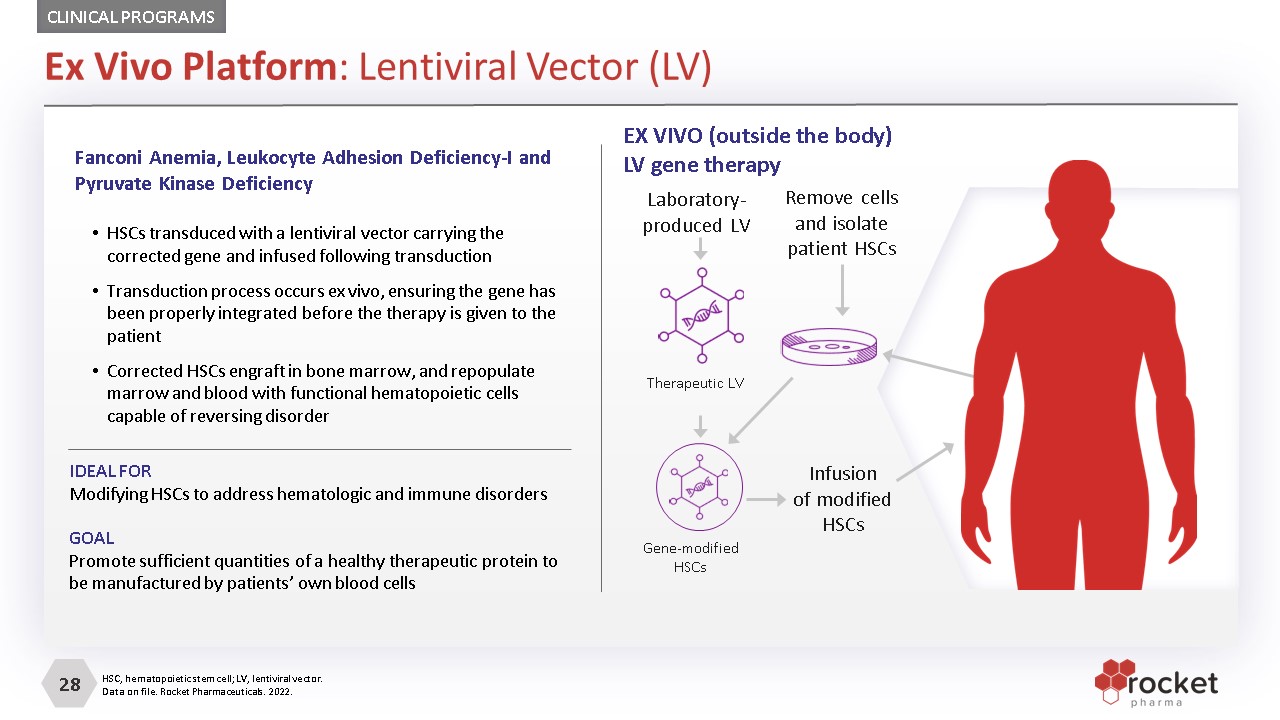
Ex Vivo Platform: Lentiviral Vector (LV) EX VIVO (outside the body) LV gene therapy IDEAL
FOR Modifying HSCs to address hematologic and immune disorders GOAL Promote sufficient quantities of a healthy therapeutic protein to be manufactured by patients’ own blood cells HSCs transduced with a lentiviral vector carrying the
corrected gene and infused following transduction Transduction process occurs ex vivo, ensuring the gene has been properly integrated before the therapy is given to the patient Corrected HSCs engraft in bone marrow, and repopulate marrow
and blood with functional hematopoietic cells capable of reversing disorder Fanconi Anemia, Leukocyte Adhesion Deficiency-I and Pyruvate Kinase Deficiency Remove cells and isolate patient HSCs Infusion of modified HSCs Therapeutic
LV Laboratory-produced LV Gene-modified HSCs HSC, hematopoietic stem cell; LV, lentiviral vector. Data on file. Rocket Pharmaceuticals. 2022. CLINICAL PROGRAMS
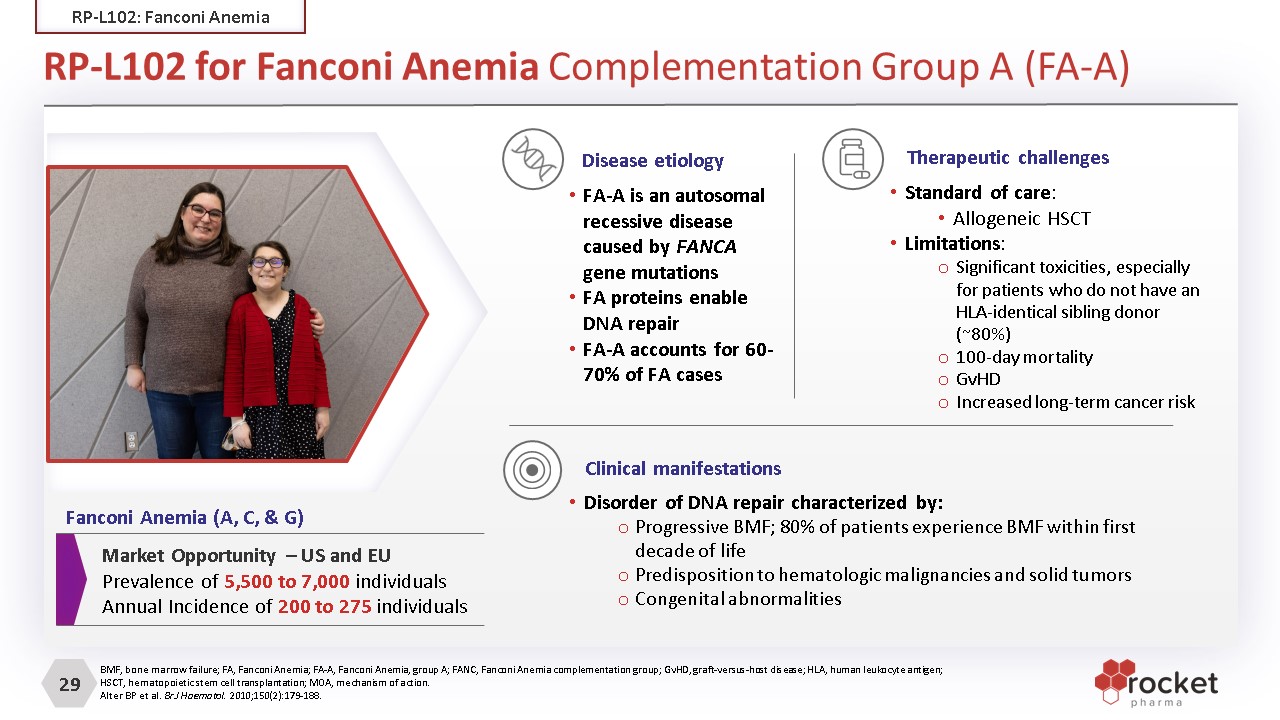
FA-A is an autosomal recessive disease caused by FANCA gene mutations FA proteins enable DNA
repair FA-A accounts for 60-70% of FA cases Disease etiology RP-L102 for Fanconi Anemia Complementation Group A (FA-A) BMF, bone marrow failure; FA, Fanconi Anemia; FA-A, Fanconi Anemia, group A; FANC, Fanconi Anemia complementation
group; GvHD, graft-versus-host disease; HLA, human leukocyte antigen; HSCT, hematopoietic stem cell transplantation; MOA, mechanism of action. Alter BP et al. Br J Haematol. 2010;150(2):179-188. Disorder of DNA repair characterized
by: Progressive BMF; 80% of patients experience BMF within first decade of life Predisposition to hematologic malignancies and solid tumors Congenital abnormalities Clinical manifestations Standard of care: Allogeneic HSCT
Limitations: Significant toxicities, especially for patients who do not have an HLA-identical sibling donor (~80%) 100-day mortality GvHD Increased long-term cancer risk Therapeutic challenges PROGRAM 2: RP-L102 for FA RP-L102:
Fanconi Anemia Market Opportunity – US and EU Prevalence of 5,500 to 7,000 individuals Annual Incidence of 200 to 275 individuals Fanconi Anemia (A, C, & G)
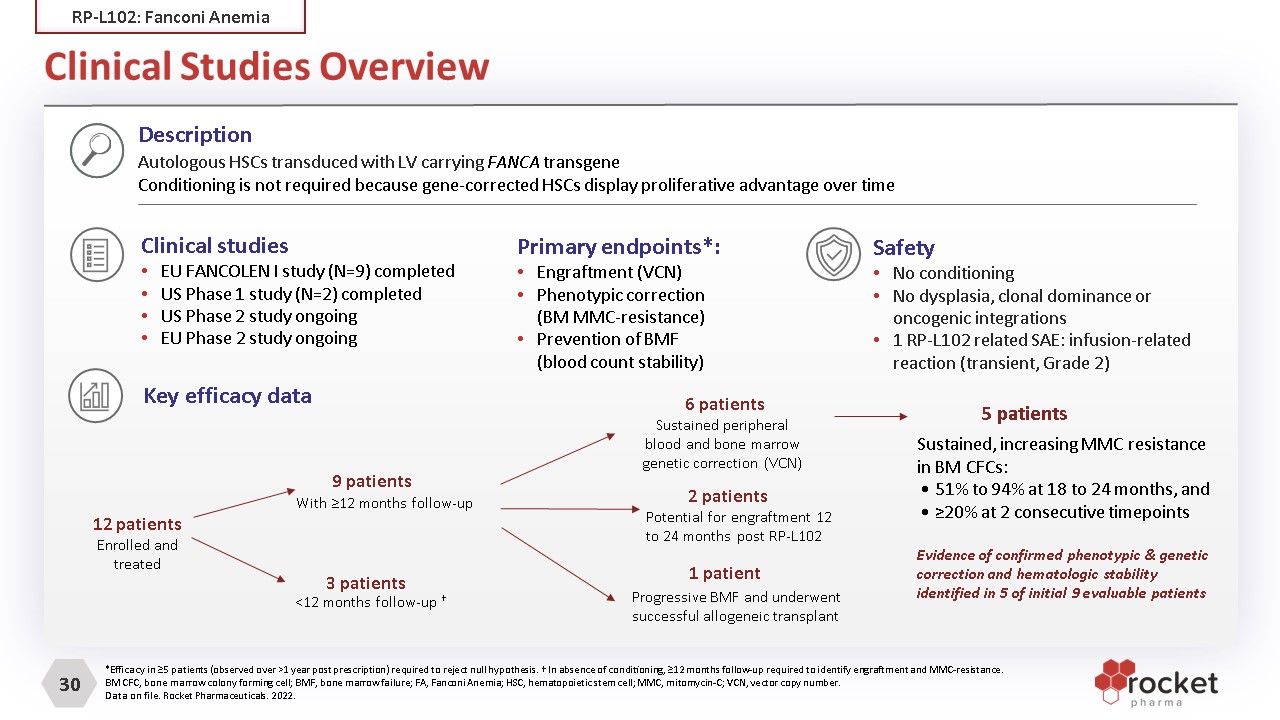
Clinical Studies Overview Autologous HSCs transduced with LV carrying FANCA transgeneConditioning is
not required because gene-corrected HSCs display proliferative advantage over time Description Clinical studies EU FANCOLEN I study (N=9) completed US Phase 1 study (N=2) completed US Phase 2 study ongoing EU Phase 2 study
ongoing Safety No conditioning No dysplasia, clonal dominance or oncogenic integrations 1 RP-L102 related SAE: infusion-related reaction (transient, Grade 2) Key efficacy data *Efficacy in ≥5 patients (observed over >1 year post
prescription) required to reject null hypothesis. † In absence of conditioning, ≥12 months follow-up required to identify engraftment and MMC-resistance.BM CFC, bone marrow colony forming cell; BMF, bone marrow failure; FA, Fanconi Anemia;
HSC, hematopoietic stem cell; MMC, mitomycin-C; VCN, vector copy number.Data on file. Rocket Pharmaceuticals. 2022. Primary endpoints*: Engraftment (VCN) Phenotypic correction (BM MMC-resistance) Prevention of BMF (blood count
stability) 12 patients 9 patients With ≥12 months follow-up Enrolled and treated 3 patients <12 months follow-up † 6 patients Sustained peripheral blood and bone marrow genetic correction (VCN) 5 patients Sustained,
increasing MMC resistance in BM CFCs: • 51% to 94% at 18 to 24 months, and • ≥20% at 2 consecutive timepointsEvidence of confirmed phenotypic & genetic correction and hematologic stability identified in 5 of initial 9 evaluable
patients Potential for engraftment 12 to 24 months post RP-L102 2 patients 1 patient Progressive BMF and underwent successful allogeneic transplant PROGRAM 2: RP-L102 for FA RP-L102: Fanconi Anemia
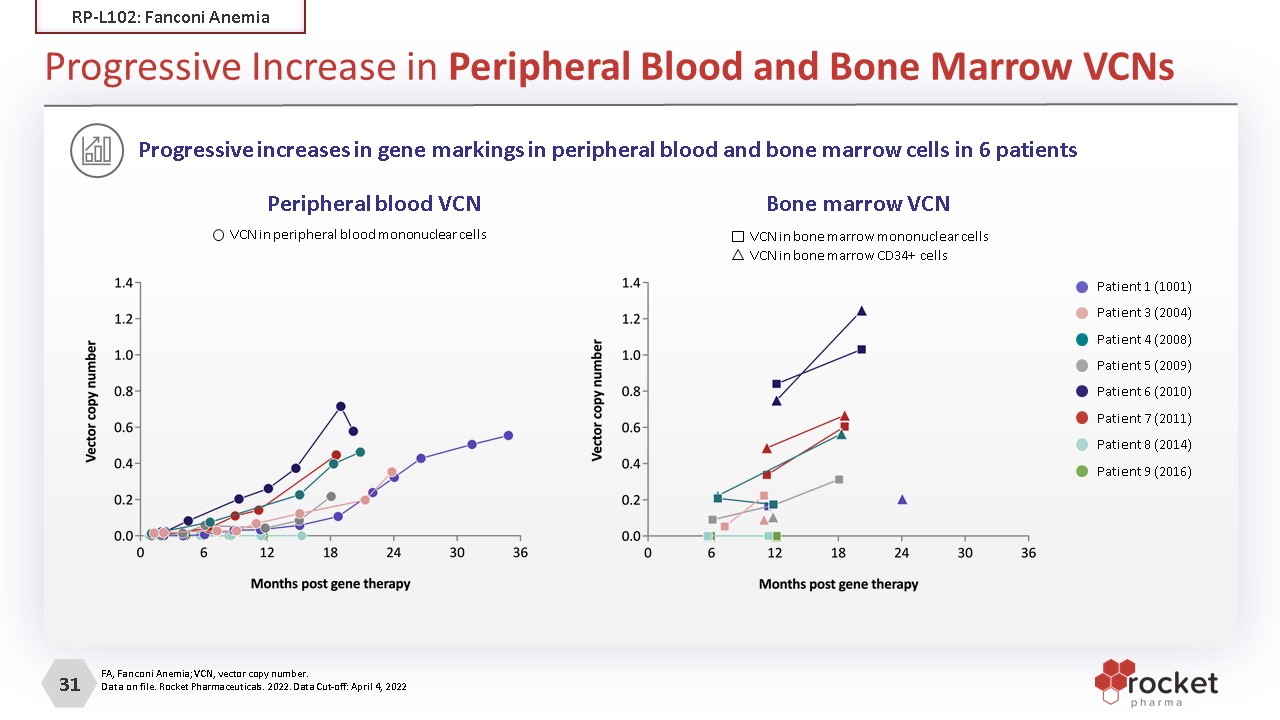
Progressive Increase in Peripheral Blood and Bone Marrow VCNs Progressive increases in gene markings
in peripheral blood and bone marrow cells in 6 patients FA, Fanconi Anemia; VCN, vector copy number.Data on file. Rocket Pharmaceuticals. 2022. Data Cut-off: April 4, 2022 Peripheral blood VCN Bone marrow VCN VCN in bone marrow
mononuclear cells VCN in bone marrow CD34+ cells VCN in peripheral blood mononuclear cells Patient 1 (1001) Patient 3 (2004) Patient 4 (2008) Patient 5 (2009) Patient 6 (2010) Patient 7 (2011) Patient 8 (2014) Patient 9
(2016) PROGRAM 2: RP-L102 for FA RP-L102: Fanconi Anemia
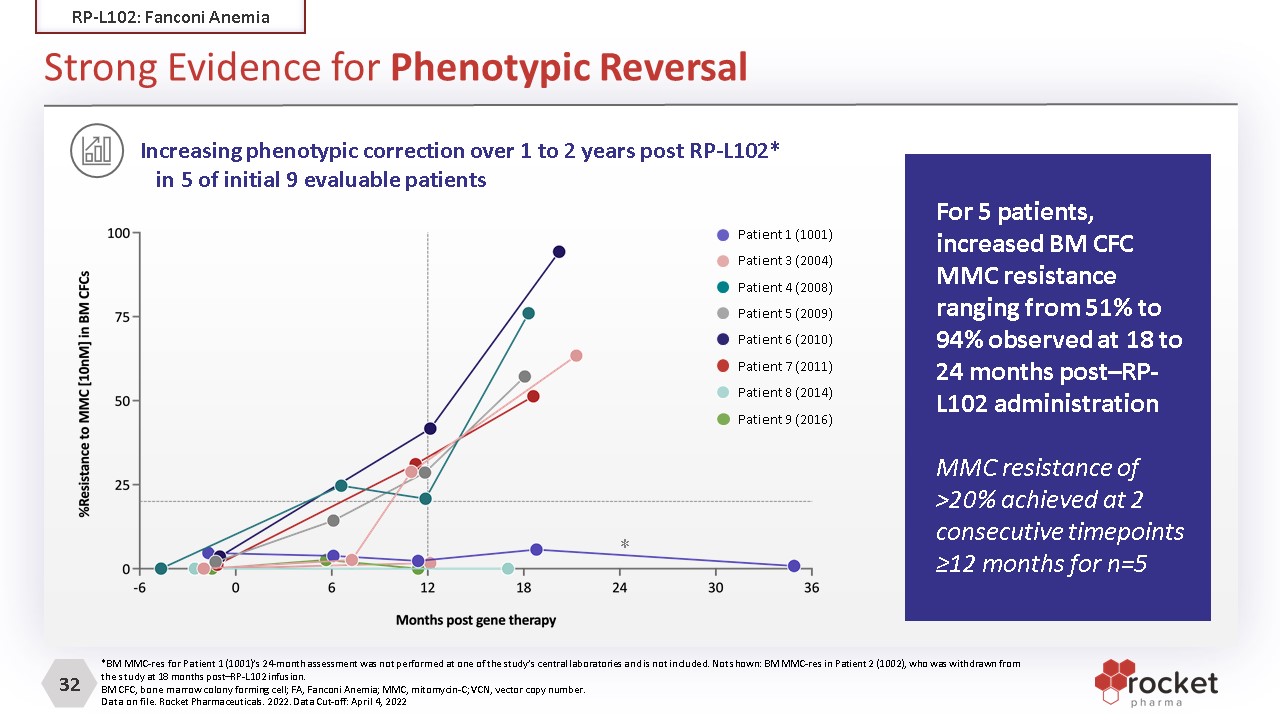
Strong Evidence for Phenotypic Reversal Increasing phenotypic correction over 1 to 2 years post
RP-L102* in 5 of initial 9 evaluable patients For 5 patients, increased BM CFC MMC resistance ranging from 51% to 94% observed at 18 to 24 months post–RP-L102 administration MMC resistance of >20% achieved at 2 consecutive timepoints ≥12
months for n=5 *BM MMC-res for Patient 1 (1001)’s 24-month assessment was not performed at one of the study’s central laboratories and is not included. Not shown: BM MMC-res in Patient 2 (1002), who was withdrawn from the study at 18 months
post–RP-L102 infusion. BM CFC, bone marrow colony forming cell; FA, Fanconi Anemia; MMC, mitomycin-C; VCN, vector copy number.Data on file. Rocket Pharmaceuticals. 2022. Data Cut-off: April 4, 2022 * Patient 1 (1001) Patient 3
(2004) Patient 4 (2008) Patient 5 (2009) Patient 6 (2010) Patient 7 (2011) Patient 8 (2014) Patient 9 (2016) PROGRAM 2: RP-L102 for FA RP-L102: Fanconi Anemia
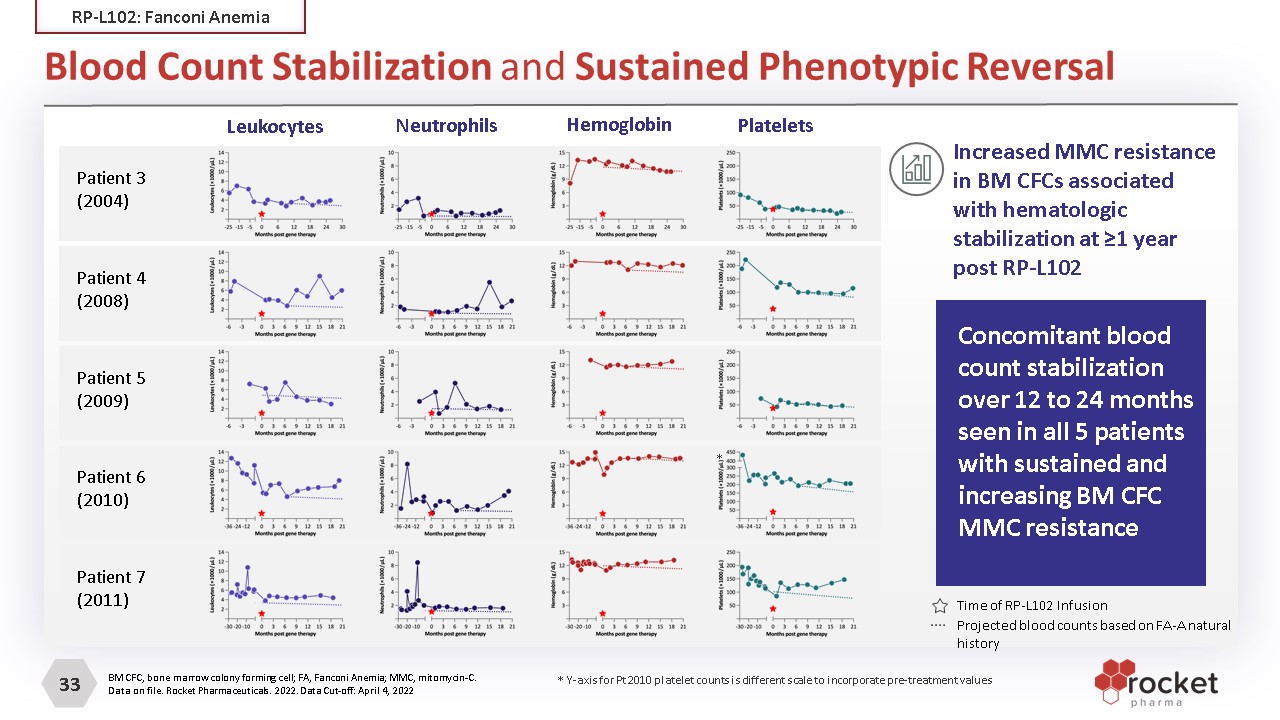
Blood Count Stabilization and Sustained Phenotypic Reversal Increased MMC resistance in BM CFCs
associated with hematologic stabilization at ≥1 year post RP-L102 BM CFC, bone marrow colony forming cell; FA, Fanconi Anemia; MMC, mitomycin-C. Data on file. Rocket Pharmaceuticals. 2022. Data Cut-off: April 4, 2022 Patient 4
(2008) Patient 5 (2009) Patient 6 (2010) Patient 7 (2011) Patient 3 (2004) Concomitant blood count stabilization over 12 to 24 months seen in all 5 patients with sustained and increasing BM CFC MMC resistance PROGRAM 2: RP-L102 for
FA RP-L102: Fanconi Anemia Leukocytes Neutrophils Hemoglobin Platelets Time of RP-L102 Infusion Projected blood counts based on FA-A natural history * * Y-axis for Pt 2010 platelet counts is different scale to incorporate
pre-treatment values
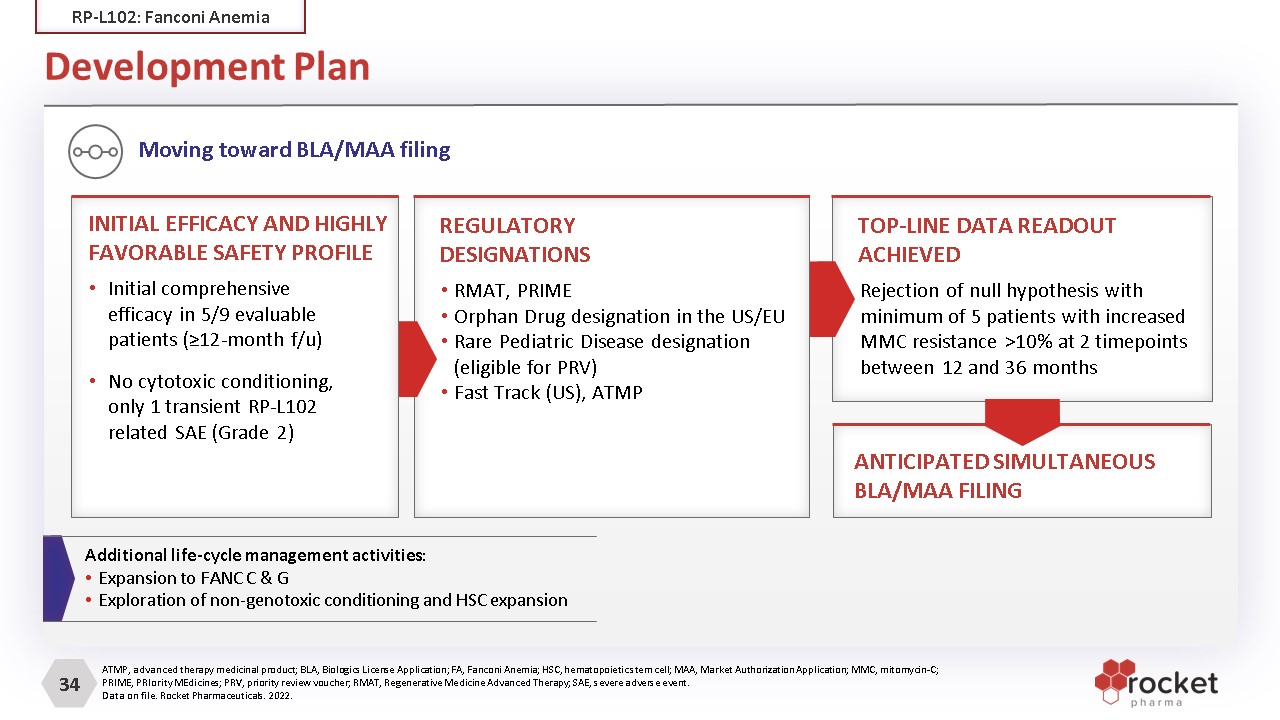
Development Plan Moving toward BLA/MAA filing Additional life-cycle management activities: Expansion
to FANC C & G Exploration of non-genotoxic conditioning and HSC expansion Rejection of null hypothesis with minimum of 5 patients with increased MMC resistance >10% at 2 timepoints between 12 and 36 months Initial comprehensive
efficacy in 5/9 evaluable patients (≥12-month f/u) No cytotoxic conditioning, only 1 transient RP-L102 related SAE (Grade 2) INITIAL EFFICACY AND HIGHLY FAVORABLE SAFETY PROFILE RMAT, PRIME Orphan Drug designation in the US/EU Rare
Pediatric Disease designation (eligible for PRV) Fast Track (US), ATMP REGULATORY DESIGNATIONS TOP-LINE DATA READOUT ACHIEVED ANTICIPATED SIMULTANEOUS BLA/MAA FILING ATMP, advanced therapy medicinal product; BLA, Biologics License
Application; FA, Fanconi Anemia; HSC, hematopoietic stem cell; MAA, Market Authorization Application; MMC, mitomycin-C; PRIME, PRIority MEdicines; PRV, priority review voucher; RMAT, Regenerative Medicine Advanced Therapy; SAE, severe adverse
event. Data on file. Rocket Pharmaceuticals. 2022. PROGRAM 2: RP-L102 for FA RP-L102: Fanconi Anemia
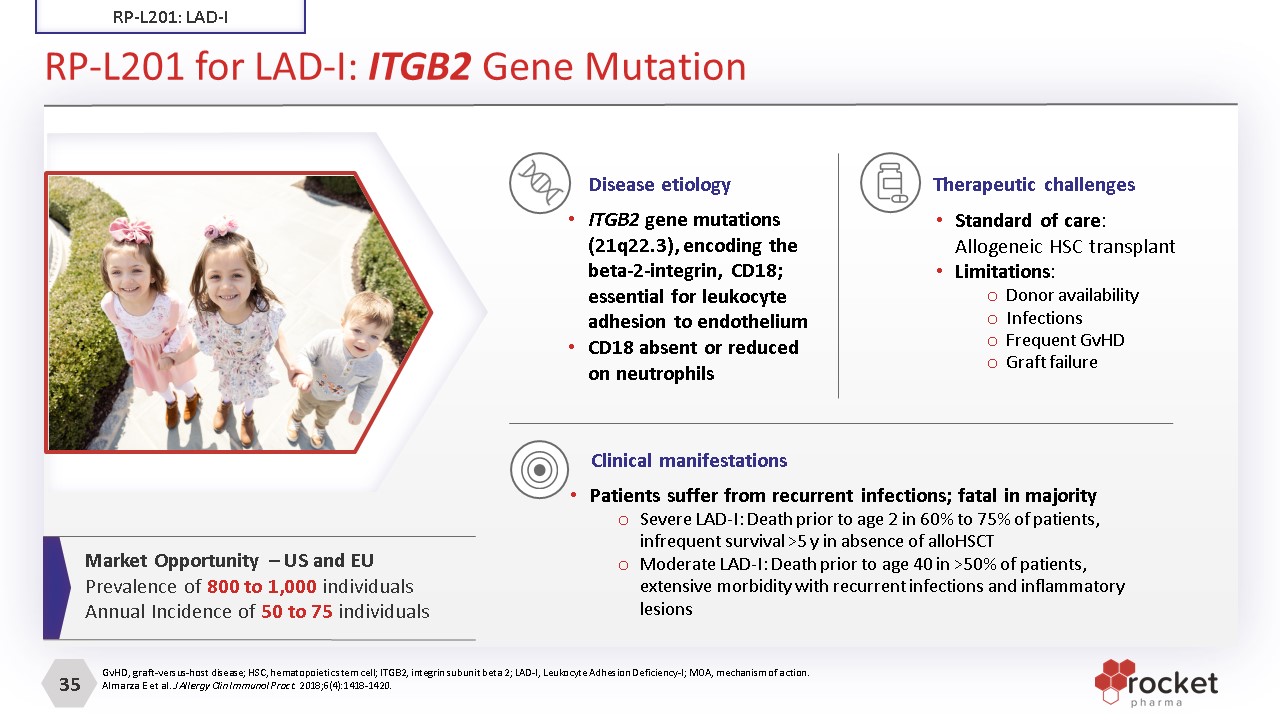
Patients suffer from recurrent infections; fatal in majority Severe LAD-I: Death prior to age 2 in 60%
to 75% of patients, infrequent survival >5 y in absence of alloHSCT Moderate LAD-I: Death prior to age 40 in >50% of patients, extensive morbidity with recurrent infections and inflammatory lesions Clinical manifestations ITGB2 gene
mutations (21q22.3), encoding the beta-2-integrin, CD18; essential for leukocyte adhesion to endothelium CD18 absent or reduced on neutrophils Disease etiology Standard of care: Allogeneic HSC transplant Limitations: Donor availability
Infections Frequent GvHD Graft failure Therapeutic challenges RP-L201 for LAD-I: ITGB2 Gene Mutation GvHD, graft-versus-host disease; HSC, hematopoietic stem cell; ITGB2, integrin subunit beta 2; LAD-I, Leukocyte Adhesion
Deficiency-I; MOA, mechanism of action. Almarza E et al. J Allergy Clin Immunol Pract. 2018;6(4):1418-1420. Market Opportunity – US and EU Prevalence of 800 to 1,000 individuals Annual Incidence of 50 to 75 individuals PROGRAM 2:
RP-L102 for FA RP-L201: LAD-I
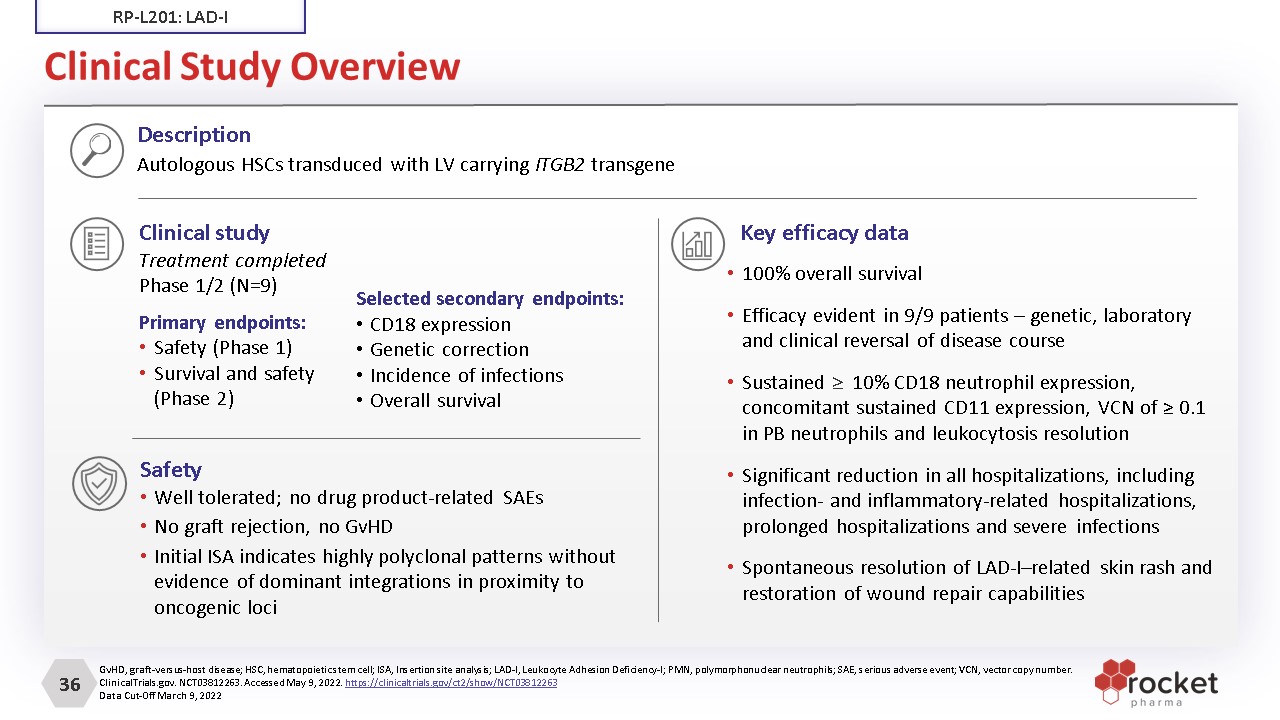
Clinical Study Overview Autologous HSCs transduced with LV carrying ITGB2 transgene
Description Clinical study Treatment completed Phase 1/2 (N=9) Primary endpoints: Safety (Phase 1) Survival and safety (Phase 2) Safety Well tolerated; no drug product-related SAEs No graft rejection, no
GvHD Initial ISA indicates highly polyclonal patterns without evidence of dominant integrations in proximity to oncogenic loci 100% overall survival Efficacy evident in 9/9 patients – genetic, laboratory and clinical reversal of disease
course Sustained ≥ 10% CD18 neutrophil expression, concomitant sustained CD11 expression, VCN of ≥ 0.1 in PB neutrophils and leukocytosis resolution Significant reduction in all hospitalizations, including infection- and
inflammatory-related hospitalizations, prolonged hospitalizations and severe infections Spontaneous resolution of LAD-I–related skin rash and restoration of wound repair capabilities Key efficacy data GvHD, graft-versus-host disease;
HSC, hematopoietic stem cell; ISA, Insertion site analysis; LAD-I, Leukocyte Adhesion Deficiency-I; PMN, polymorphonuclear neutrophils; SAE, serious adverse event; VCN, vector copy number. ClinicalTrials.gov. NCT03812263. Accessed May 9,
2022. https://clinicaltrials.gov/ct2/show/NCT03812263 Data Cut-Off March 9, 2022 Selected secondary endpoints: CD18 expression Genetic correction Incidence of infections Overall survival RP-L201: LAD-I
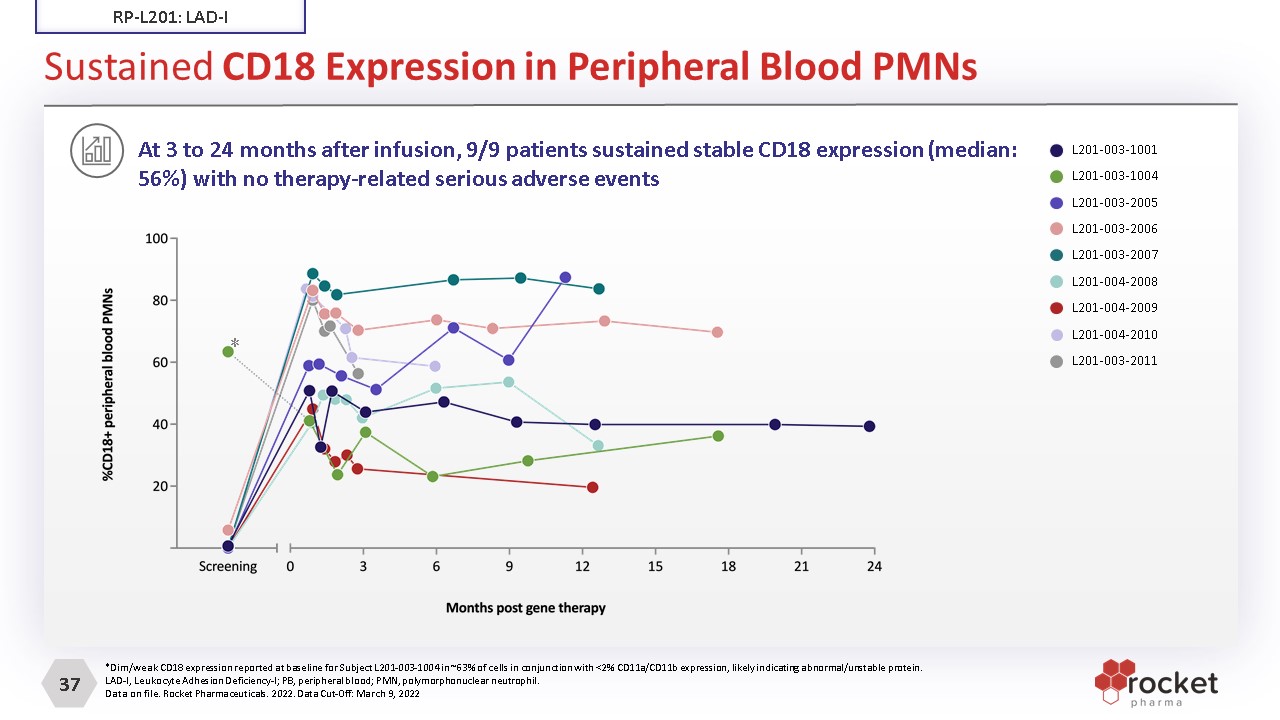
Sustained CD18 Expression in Peripheral Blood PMNs At 3 to 24 months after infusion, 9/9 patients
sustained stable CD18 expression (median: 56%) with no therapy-related serious adverse events *Dim/weak CD18 expression reported at baseline for Subject L201-003-1004 in ~63% of cells in conjunction with <2% CD11a/CD11b expression, likely
indicating abnormal/unstable protein. LAD-I, Leukocyte Adhesion Deficiency-I; PB, peripheral blood; PMN, polymorphonuclear neutrophil. Data on file. Rocket Pharmaceuticals. 2022. Data Cut-Off: March 9,
2022 * L201-003-1001 L201-003-1004 L201-003-2005 L201-003-2006 L201-003-2007 L201-004-2008 L201-004-2009 L201-004-2010 L201-003-2011 RP-L201: LAD-I
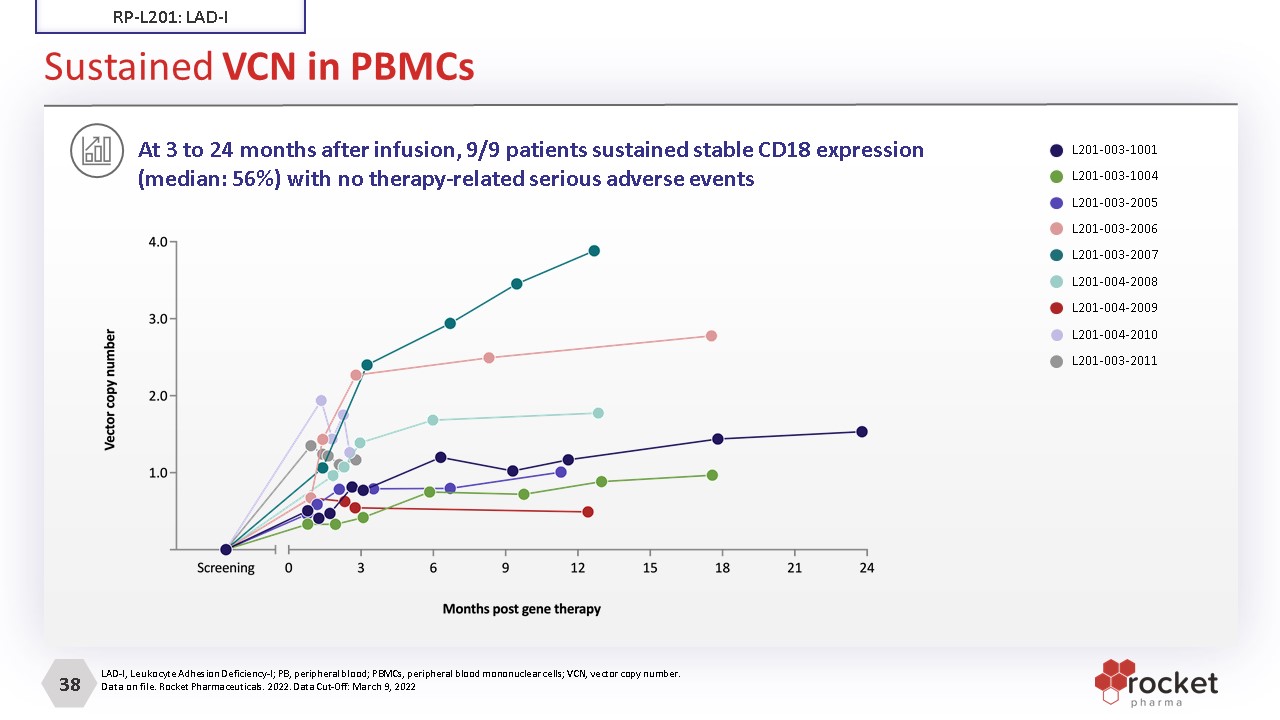
Sustained VCN in PBMCs At 3 to 24 months after infusion, 9/9 patients sustained stable CD18
expression (median: 56%) with no therapy-related serious adverse events LAD-I, Leukocyte Adhesion Deficiency-I; PB, peripheral blood; PBMCs, peripheral blood mononuclear cells; VCN, vector copy number. Data on file. Rocket Pharmaceuticals.
2022. Data Cut-Off: March 9, 2022 L201-003-1001 L201-003-1004 L201-003-2005 L201-003-2006 L201-003-2007 L201-004-2008 L201-004-2009 L201-004-2010 L201-003-2011 RP-L201: LAD-I
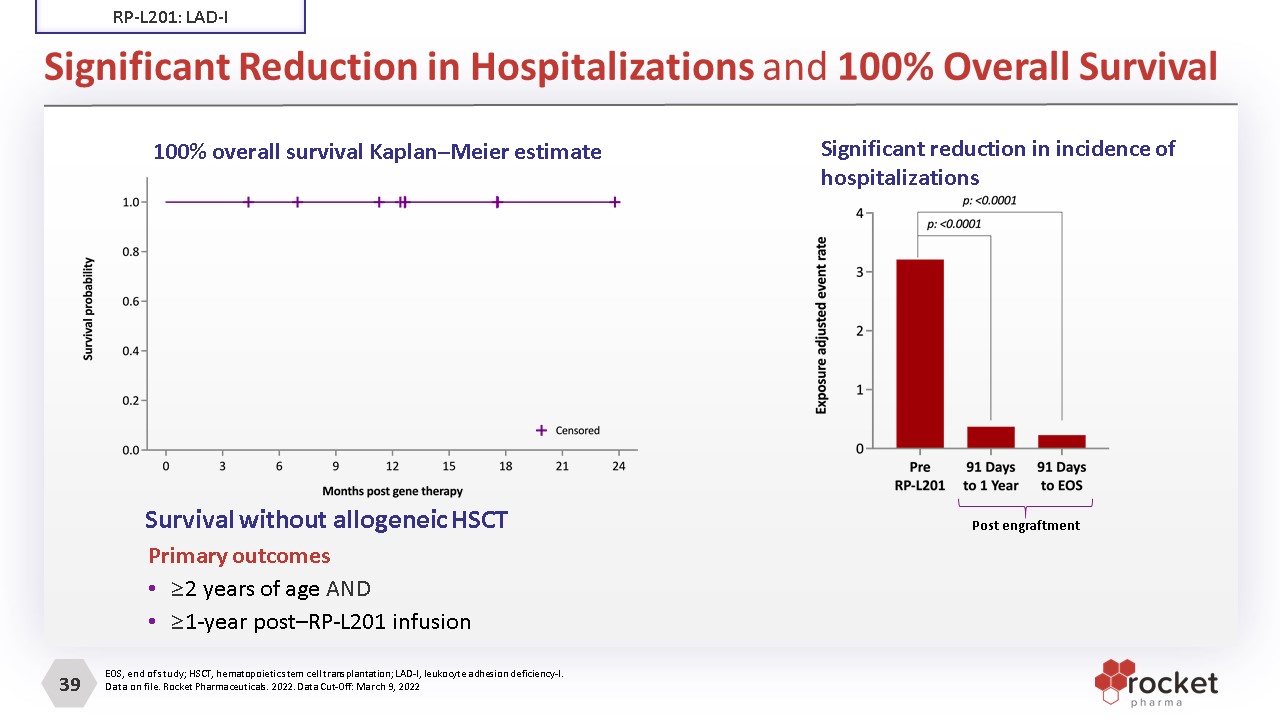
Significant Reduction in Hospitalizations and 100% Overall Survival Survival without allogeneic
HSCT Primary outcomes ≥2 years of age AND ≥1-year post–RP-L201 infusion 100% overall survival Kaplan–Meier estimate Significant reduction in incidence of hospitalizations Post engraftment EOS, end of study; HSCT, hematopoietic stem
cell transplantation; LAD-I, leukocyte adhesion deficiency-I. Data on file. Rocket Pharmaceuticals. 2022. Data Cut-Off: March 9, 2022 RP-L201: LAD-I
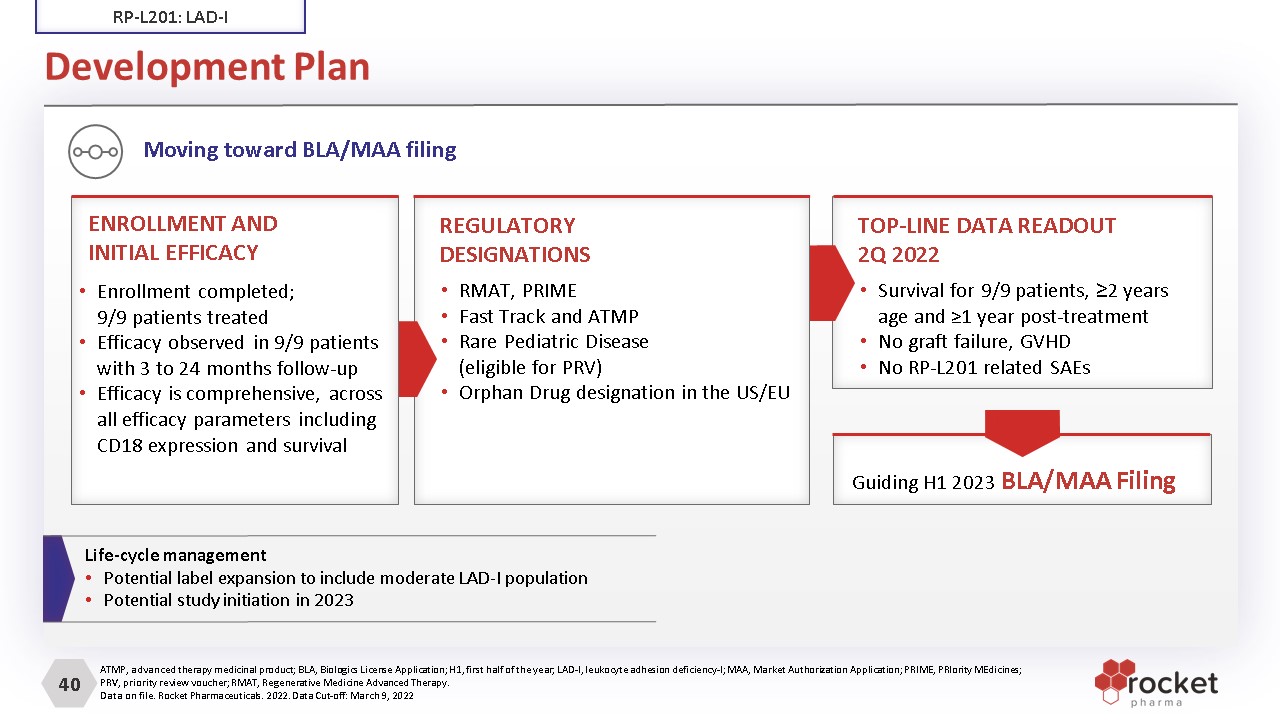
Development Plan Moving toward BLA/MAA filing Life-cycle management Potential label expansion to
include moderate LAD-I population Potential study initiation in 2023 ATMP, advanced therapy medicinal product; BLA, Biologics License Application; H1, first half of the year; LAD-I, leukocyte adhesion deficiency-I; MAA, Market Authorization
Application; PRIME, PRIority MEdicines; PRV, priority review voucher; RMAT, Regenerative Medicine Advanced Therapy. Data on file. Rocket Pharmaceuticals. 2022. Data Cut-off: March 9, 2022 Survival for 9/9 patients, ≥2 years age and ≥1 year
post-treatment No graft failure, GVHD No RP-L201 related SAEs Enrollment completed; 9/9 patients treated Efficacy observed in 9/9 patients with 3 to 24 months follow-up Efficacy is comprehensive, across all efficacy parameters including
CD18 expression and survival ENROLLMENT AND INITIAL EFFICACY RMAT, PRIME Fast Track and ATMP Rare Pediatric Disease (eligible for PRV) Orphan Drug designation in the US/EU REGULATORY DESIGNATIONS TOP-LINE DATA READOUT 2Q 2022 Guiding
H1 2023 BLA/MAA Filing RP-L201: LAD-I
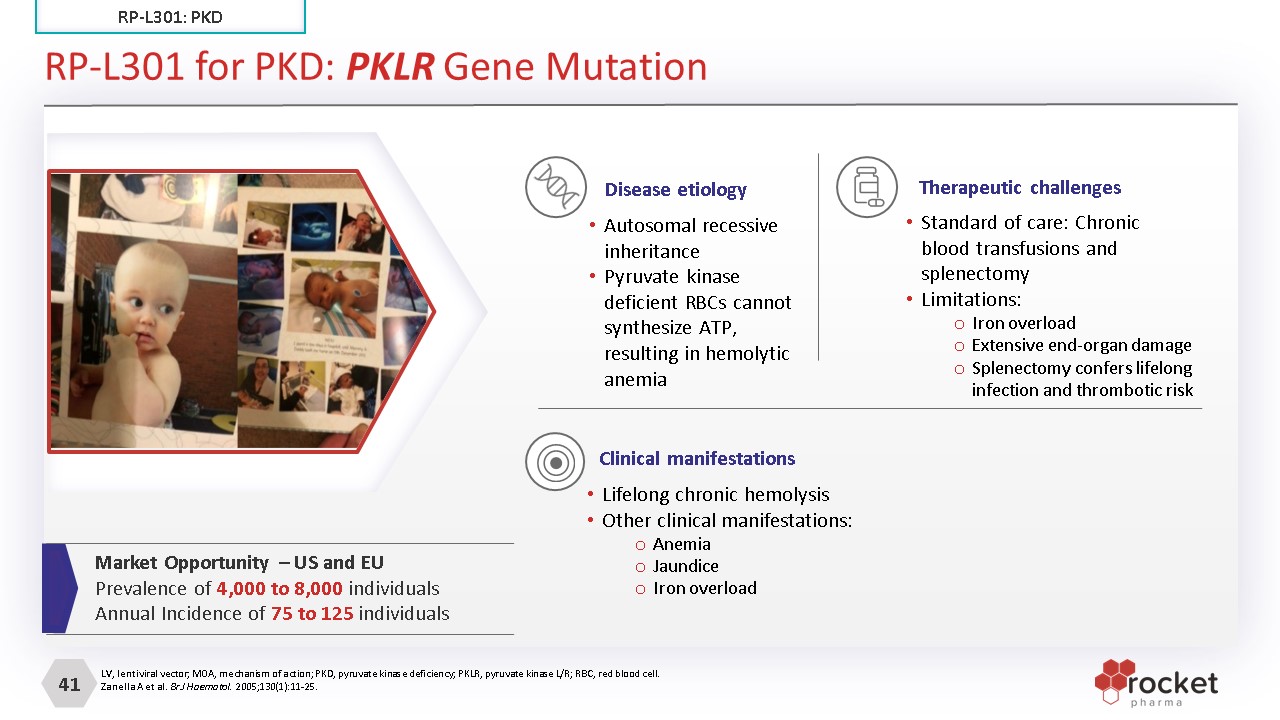
Lifelong chronic hemolysis Other clinical manifestations: Anemia Jaundice Iron overload Clinical
manifestations Standard of care: Chronic blood transfusions and splenectomy Limitations: Iron overload Extensive end-organ damage Splenectomy confers lifelong infection and thrombotic risk Therapeutic challenges Autosomal recessive
inheritance Pyruvate kinase deficient RBCs cannot synthesize ATP, resulting in hemolytic anemia Disease etiology RP-L301 for PKD: PKLR Gene Mutation LV, lentiviral vector; MOA, mechanism of action; PKD, pyruvate kinase deficiency; PKLR,
pyruvate kinase L/R; RBC, red blood cell. Zanella A et al. Br J Haematol. 2005;130(1):11-25. Market Opportunity – US and EU Prevalence of 4,000 to 8,000 individuals Annual Incidence of 75 to 125 individuals PROGRAM 4: RP-L301 for
PKD RP-L301: PKD
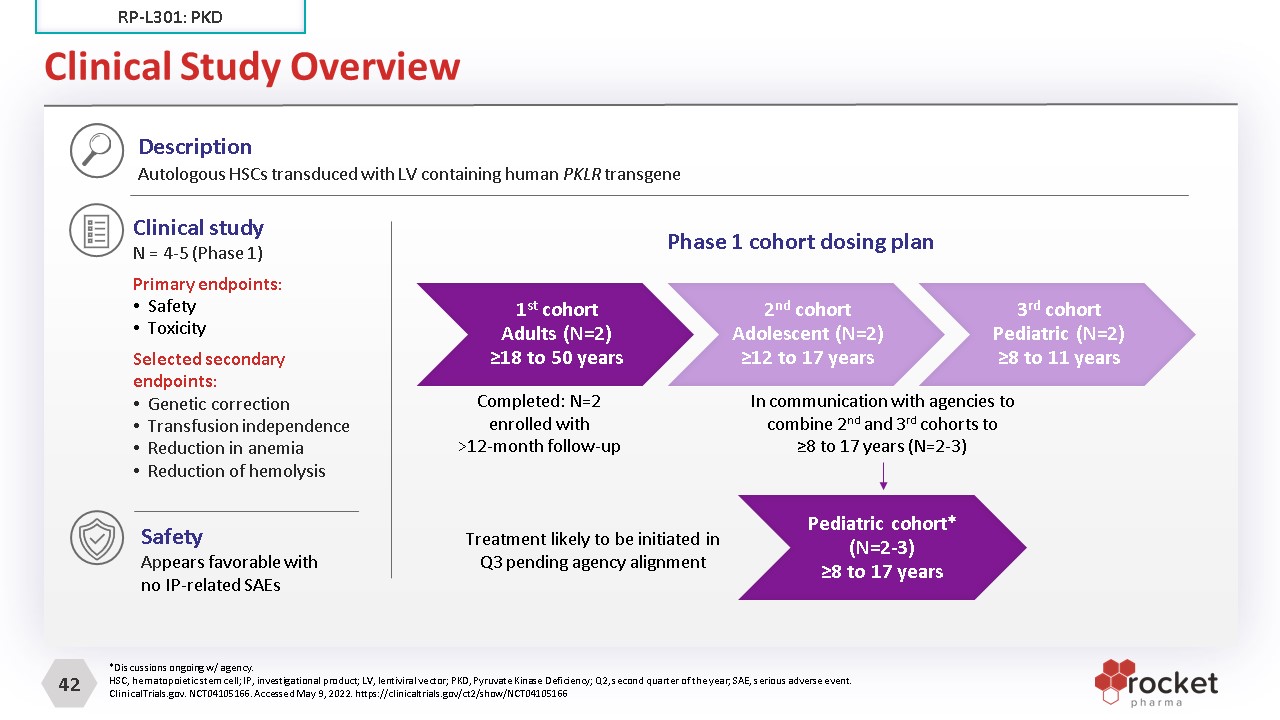
Clinical Study Overview Autologous HSCs transduced with LV containing human PKLR
transgene Description Clinical study N = 4-5 (Phase 1) Primary endpoints: Safety Toxicity Selected secondary endpoints: Genetic correction Transfusion independence Reduction in anemia Reduction of hemolysis Safety Appears
favorable with no IP-related SAEs *Discussions ongoing w/ agency. HSC, hematopoietic stem cell; IP, investigational product; LV, lentiviral vector; PKD, Pyruvate Kinase Deficiency; Q2, second quarter of the year; SAE, serious adverse
event. ClinicalTrials.gov. NCT04105166. Accessed May 9, 2022. https://clinicaltrials.gov/ct2/show/NCT04105166 Phase 1 cohort dosing plan Completed: N=2 enrolled with >12-month follow-up In communication with agencies to combine 2nd
and 3rd cohorts to ≥8 to 17 years (N=2-3) Pediatric cohort* (N=2-3) ≥8 to 17 years Treatment likely to be initiated in Q3 pending agency alignment PROGRAM 4: RP-L301 for PKD RP-L301: PKD
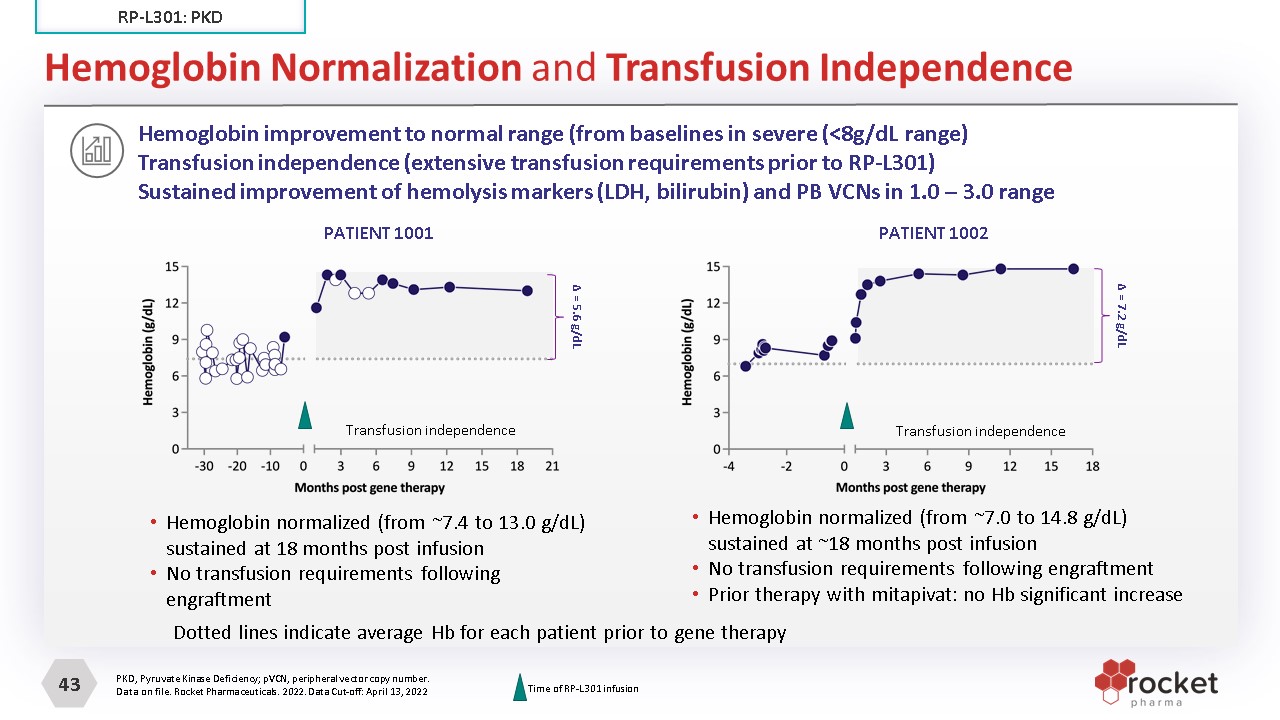
Hemoglobin normalized (from ~7.4 to 13.0 g/dL) sustained at 18 months post infusion No transfusion
requirements following engraftment PATIENT 1001 PATIENT 1002 Dotted lines indicate average Hb for each patient prior to gene therapy Hemoglobin normalized (from ~7.0 to 14.8 g/dL) sustained at ~18 months post infusion No transfusion
requirements following engraftment Prior therapy with mitapivat: no Hb significant increase Hemoglobin improvement to normal range (from baselines in severe (<8g/dL range)Transfusion independence (extensive transfusion requirements prior
to RP-L301) Sustained improvement of hemolysis markers (LDH, bilirubin) and PB VCNs in 1.0 – 3.0 range Hemoglobin Normalization and Transfusion Independence PKD, Pyruvate Kinase Deficiency; pVCN, peripheral vector copy number. Data on
file. Rocket Pharmaceuticals. 2022. Data Cut-off: April 13, 2022 Δ = 5.6 g/dL Δ = 7.2 g/dL Transfusion independence Transfusion independence Time of RP-L301 infusion PROGRAM 4: RP-L301 for PKD RP-L301: PKD
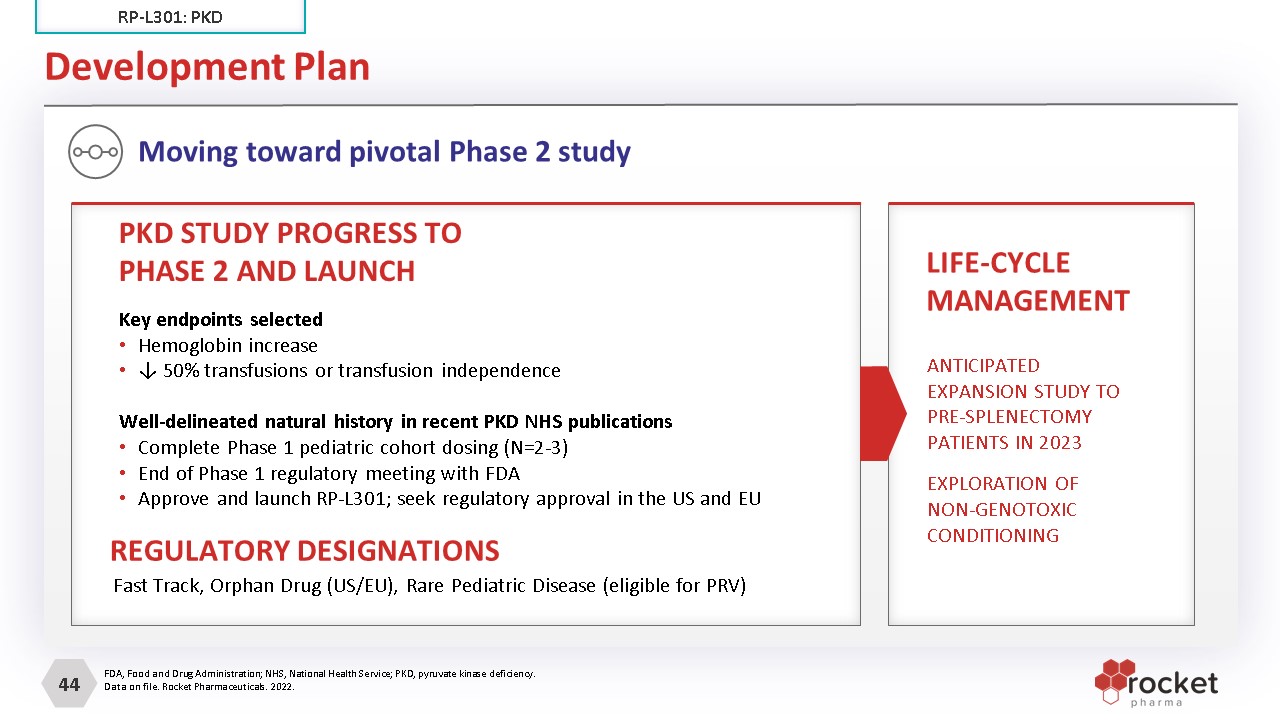
Development Plan Moving toward pivotal Phase 2 study Key endpoints selected Hemoglobin increase ↓
50% transfusions or transfusion independence Well-delineated natural history in recent PKD NHS publications Complete Phase 1 pediatric cohort dosing (N=2-3) End of Phase 1 regulatory meeting with FDA Approve and launch RP-L301; seek
regulatory approval in the US and EU PKD STUDY PROGRESS TO PHASE 2 AND LAUNCH ANTICIPATED EXPANSION STUDY TO PRE-SPLENECTOMY PATIENTS IN 2023 EXPLORATION OF NON-GENOTOXIC CONDITIONING LIFE-CYCLE MANAGEMENT FDA, Food and Drug
Administration; NHS, National Health Service; PKD, pyruvate kinase deficiency. Data on file. Rocket Pharmaceuticals. 2022. PROGRAM 4: RP-L301 for PKD RP-L301: PKD REGULATORY DESIGNATIONS Fast Track, Orphan Drug (US/EU), Rare Pediatric
Disease (eligible for PRV)

FUTURE DIRECTIONS
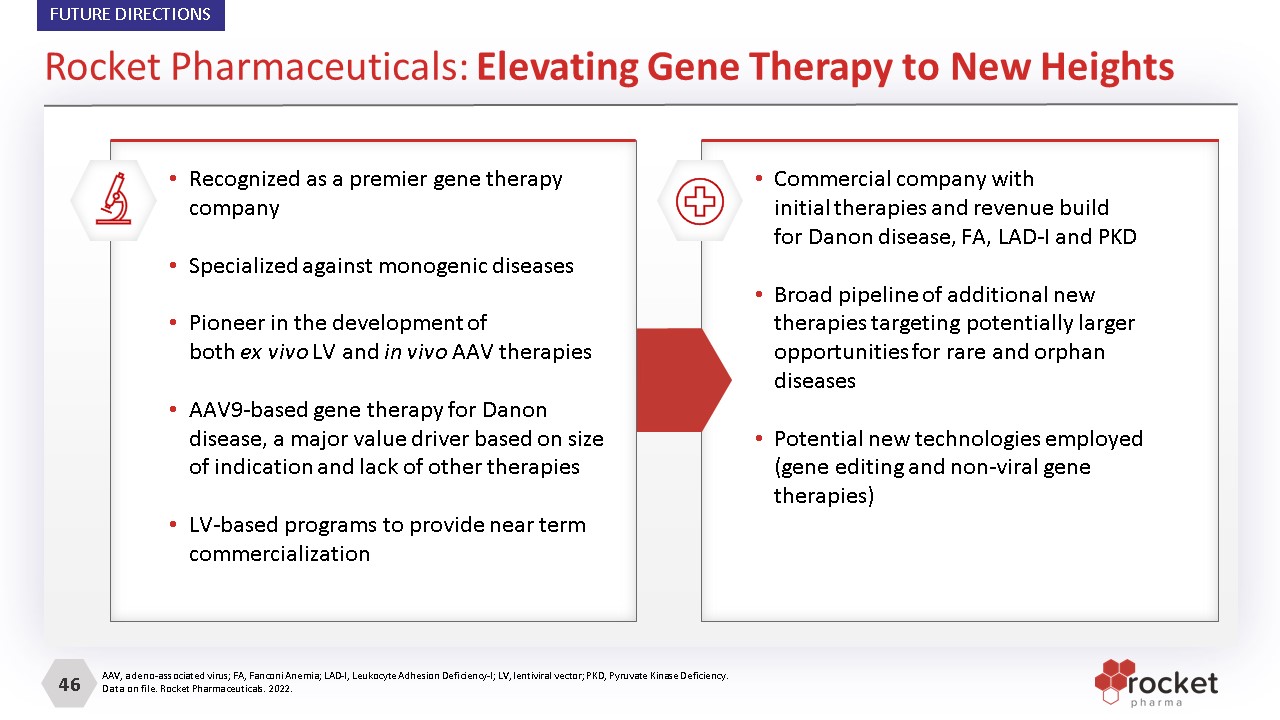
Recognized as a premier gene therapy company Specialized against monogenic diseases Pioneer in the
development of both ex vivo LV and in vivo AAV therapies AAV9-based gene therapy for Danon disease, a major value driver based on size of indication and lack of other therapies LV-based programs to provide near term
commercialization Commercial company with initial therapies and revenue build for Danon disease, FA, LAD-I and PKD Broad pipeline of additional new therapies targeting potentially larger opportunities for rare and orphan diseases Potential
new technologies employed (gene editing and non-viral gene therapies) Rocket Pharmaceuticals: Elevating Gene Therapy to New Heights AAV, adeno-associated virus; FA, Fanconi Anemia; LAD-I, Leukocyte Adhesion Deficiency-I; LV, lentiviral
vector; PKD, Pyruvate Kinase Deficiency.Data on file. Rocket Pharmaceuticals. 2022. FUTURE DIRECTIONS
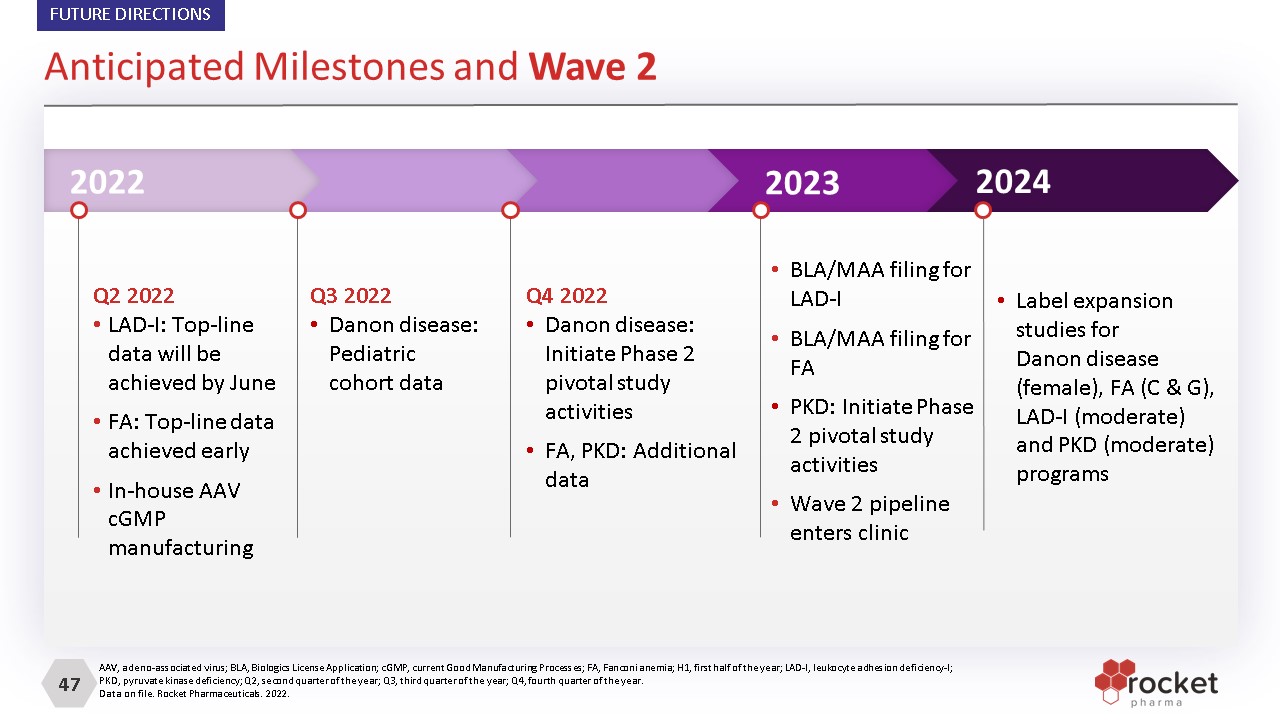
Anticipated Milestones and Wave 2 Q2 2022 LAD-I: Top-line data will be achieved by June FA: Top-line
data achieved early In-house AAV cGMP manufacturing Q3 2022 Danon disease: Pediatric cohort data Q4 2022 Danon disease: Initiate Phase 2 pivotal study activities FA, PKD: Additional data BLA/MAA filing for LAD-I BLA/MAA filing for
FA PKD: Initiate Phase 2 pivotal study activities Wave 2 pipeline enters clinic 2022 2023 AAV, adeno-associated virus; BLA, Biologics License Application; cGMP, current Good Manufacturing Processes; FA, Fanconi anemia; H1, first half of
the year; LAD-I, leukocyte adhesion deficiency-I; PKD, pyruvate kinase deficiency; Q2, second quarter of the year; Q3, third quarter of the year; Q4, fourth quarter of the year. Data on file. Rocket Pharmaceuticals. 2022. 2024 Label
expansion studies for Danon disease (female), FA (C & G), LAD-I (moderate) and PKD (moderate) programs FUTURE DIRECTIONS
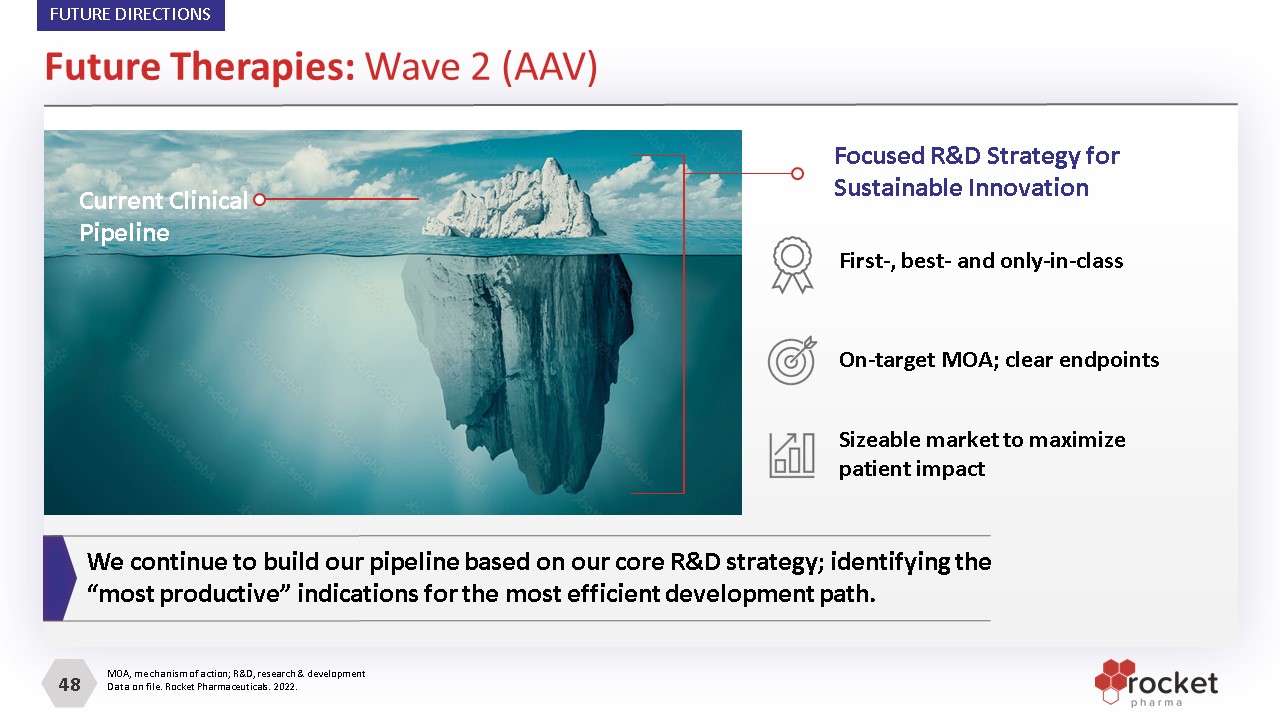
Future Therapies: Wave 2 (AAV) We continue to build our pipeline based on our core R&D strategy;
identifying the “most productive” indications for the most efficient development path. MOA, mechanism of action; R&D, research & development Data on file. Rocket Pharmaceuticals. 2022. On-target MOA; clear endpoints Sizeable
market to maximize patient impact First-, best- and only-in-class Current Clinical Pipeline Focused R&D Strategy for Sustainable Innovation FUTURE DIRECTIONS
THANK YOU!