
RoyaLand Co Ltd F-1/A, filed Nov 30, 2023
RoyaLand Co Ltd. (RLNDF)
As submitted to the Securities and Exchange Commission on November 30, 2023
Registration No. 333-273097
UNITED STATES
SECURITIES AND EXCHANGE COMMISSION
WASHINGTON, D.C. 20549
Amendment No. 3 to
FORM
F-1
REGISTRATION STATEMENT UNDER
THE SECURITIES ACT OF 1933
THE ROYALAND COMPANY LTD.
(Exact name of Registrant as specified in its charter)
Not Applicable
(Translation of Registrant’s Name into English)
| Bermuda | 7372 | Not Applicable | ||
| (State or other jurisdiction of incorporation or organization) |
(Primary Standard Industrial Classification Code Number) | (I.R.S. Employer Identification Number) |
Clarendon House, 2 Church Street
Hamilton, Pembroke, HM11
Bermuda
+1 441 295 1422
(Address, including zip code, and telephone number, including area code, of Registrant’s principal executive offices)
Cogency Global Inc.
122 East 42nd Street, 18th Floor
New York, NY 10168
(800) 221-0102
(Names, address, including zip code, and telephone number, including area code, of agent for service)
| Copies to: | |
Louis A. Bevilacqua, Esq. Bevilacqua PLLC 1050 Connecticut Avenue, NW, Suite 500 Washington, DC 20036 (202) 869-0888 |
Benjamin A. Tan, Esq. Sichenzia Ross Ference Carmel LLP 1185 Avenue of the Americas, 31st Floor New York, NY 10036 (212) 930-9700 |
Approximate date of commencement of proposed sale to public: As soon as practicable after this Registration Statement becomes effective.
If any of the securities being registered on this Form are to be offered on a delayed or continuous basis pursuant to Rule 415 under the Securities Act of 1933, check the following box. ☒
If this Form is filed to register additional securities for an offering pursuant to Rule 462(b) under the Securities Act, check the following box and list the Securities Act registration statement number of the earlier effective registration statement for the same offering. ☐
If this Form is a post-effective amendment filed pursuant to Rule 462(c) under the Securities Act, check the following box and list the Securities Act registration statement number of the earlier effective registration statement for the same offering. ☐
If this Form is a post-effective amendment filed pursuant to Rule 462(d) under the Securities Act, check the following box and list the Securities Act registration statement number of the earlier effective registration statement the same offering. ☐
Indicate by check mark whether the registrant is an emerging growth company as defined in Rule 405 of the Securities Act of 1933.
Emerging growth company ☒
If an emerging growth company that prepares its financial statements in accordance with U.S. GAAP, indicate by check mark if the registrant has elected not to use the extended transition period for complying with any new or revised financial accounting standards provided pursuant to Section 7(a)(2)(B) of the Securities Act. ☐
The Registrant hereby amends this Registration Statement on such date or dates as may be necessary to delay its effective date until the Registrant shall file a further amendment which specifically states that this Registration Statement shall thereafter become effective in accordance with Section 8(a) of the Securities Act or until the Registration Statement shall become effective on such date as the Commission, acting pursuant to said Section 8(a), may determine.
EXPLANATORY NOTE
This registration statement contains two prospectuses, as set forth below.
| ● | Public Offering Prospectus. A prospectus to be used for the public offering of Class B Common Shares through the underwriter named on the cover page of this prospectus, which we refer to as the Public Offering Prospectus. |
| ● | Resale Prospectus. A prospectus to be used for the resale by selling shareholders of up to 4,915,000 Class B Common Shares, consisting of (i) 3,665,000 Class B Common Shares held by selling shareholders and (ii) 1,250,000 Class B Common Shares issuable upon the exercise of warrants issued to the selling shareholders, which we refer to as the Resale Prospectus. |
The Resale Prospectus is substantively identical to the Public Offering Prospectus, except for the following principal points:
| ● | they contain different front covers; |
| ● | they contain different “Offering” sections in the Prospectus Summary; |
| ● | they contain different “Use of Proceeds” sections; |
| ● | the “Capitalization” and “Dilution” sections are deleted from the Resale Prospectus; |
| ● | a “Selling Shareholders” section is included in the Resale Prospectus; |
| ● | the “Underwriting” section from the Public Offering Prospectus is deleted from the Resale Prospectus and a “Plan of Distribution” section is inserted in its place; and |
| ● | the “Legal Matters” section in the Resale Prospectus deletes the reference to counsel for the underwriters. |
The registrant has included in this registration statement a set of alternate pages after the back cover page of the Public Offering Prospectus, which we refer to as the Alternate Pages, to reflect the foregoing differences in the Resale Prospectus as compared to the Public Offering Prospectus. The Public Offering Prospectus will exclude the Alternate Pages and will be used for the public offering by the registrant. The Resale Prospectus will be substantively identical to the Public Offering Prospectus except for the addition or substitution of the Alternate Pages and will be used for the resale offering by the selling shareholders.
For the avoidance of doubt, any offer of securities (within the meaning of the Prospectus Regulation (EU) 2017/1129 (the “Prospectus Regulation”)) contained in this prospectus is addressed to less than 150 natural or legal persons per member state of the European Union and accordingly, there is no legal obligation or requirement to publish this prospectus in the European Union in accordance with the provisions of the Prospectus Regulation.
The information in this preliminary prospectus is not complete and may be changed. We may not sell these securities until the registration statement filed with the Securities and Exchange Commission is effective. This preliminary prospectus is not an offer to sell these securities and it is not soliciting an offer to buy these securities in any state where the offer or sale is not permitted.
SUBJECT TO COMPLETION, DATED NOVEMBER 30, 2023
PRELIMINARY PROSPECTUS

The RoyaLand Company Ltd.
1,250,000 Class B Common Shares
This is the initial public offering of our class B common shares of par value $0.0002 each, or the Class B Common Shares. We currently estimate that the initial public offering price will be between $5.00 and $6.00 per share. We have selected the lower price point of $5.00 per share for use herein as the estimated actual sales price for our shares, given recent market volatility, for purposes of calculation of estimated use of proceeds, estimated dilution and other matters in this prospectus.
We are also seeking to register the issuance of warrants to purchase 100,625 Class B Common Shares (the “representative’s warrants”) to the underwriters (assuming the exercise of the over-allotment option by the underwriters in full) as well as the 100,625 Class B Common Shares issuable upon exercise by the underwriters of the representative’s warrants at an exercise price of $5.00 per share, based on the assumed public offering price of $5.00 per share, which is the low point of the estimated offering range set forth above.
Prior to the offering, there has been no public market for our shares. We have applied to list our Class B Common Shares on Cboe BZX Exchange, Inc., or Cboe, under the symbol “RLND”. We believe that upon the completion of this offering, we will meet the standards for listing, and the closing of this offering is contingent upon such listing.
We have two classes of authorized common shares, class A common shares of par value $0.0002 each, or the Class A Common Shares, and Class B Common Shares. The rights of the holders of Class A Common Shares and Class B Common Shares are identical, except with respect to voting and conversion. Each Class A Common Share is entitled to twenty votes and is convertible into one Class B Common Share. Each Class B Common Share is entitled to one vote.
As of the date of this prospectus, Emanuele Filiberto di Savoia, our Chief Executive Officer and a member of our board of directors, held approximately 62.4% of the voting power of our outstanding share capital and therefore is our controlling shareholder. Following this offering, based on an assumed public offering price of $5.00 per Class B Common Share (which is the low point of the estimated range of the initial public offering price shown above), and assuming that the underwriters do not exercise the over-allotment option, Mr. di Savoia will retain controlling voting power in the Company based on having approximately 62.0% of all voting rights. As a result, we will be a “controlled company” under Cboe’s rules, although we do not intend to avail ourselves of the corporate governance exemptions afforded to a “controlled company” under the rules of Cboe. See “Risk Factors—Risks Related to This Offering and Ownership of Our Class B Common Shares—As a ‘controlled company’ under the rules of Cboe, we may choose to exempt our company from certain corporate governance requirements that could have an adverse effect on our public shareholders.” for more information.
We are an “emerging growth company,” as that term is used in the Jumpstart Our Business Startups Act of 2012, and as such, have elected to comply with certain reduced public company reporting requirements for this prospectus and future filings. See “Prospectus Summary—Implications of Being an Emerging Growth Company.”
We are a “foreign private issuer” as defined under the U.S. federal securities laws and, as such, may elect to comply with certain reduced public company reporting requirements for this and future filings. See “Prospectus Summary—Implications of Being a Foreign Private Issuer.”
Investing in our securities involves a high degree of risk. Before buying any shares, you should carefully read the discussion of the material risks of investing in our securities under the heading “Risk Factors” beginning on page 13 of this prospectus.
Neither the U.S. Securities and Exchange Commission nor any state securities commission has approved or disapproved of these securities or determined if this prospectus is truthful or complete. Any representation to the contrary is a criminal offense.
| Per Share | Total | |||||||
| Initial public offering price | $ | $ | ||||||
| Underwriting discounts and commissions (1) | $ | $ | ||||||
| Proceeds to us, before expenses | $ | $ | ||||||
| (1) | Does not include additional compensation payable to the underwriters. We have agreed to reimburse Revere Securities, LLC, as representative of the underwriters, or the representative, for certain expenses, and will receive compensation in addition to underwriting discounts and commissions. See “Underwriting” for additional information regarding underwriters’ compensation and offering expenses. |
This offering is being conducted on a firm commitment basis. The underwriters are obligated to take and purchase all of the Class B Common Shares offered under this prospectus if any such shares are taken.
We have granted a 45-day option to the underwriters to purchase up to 187,500 additional Class B Common Shares, representing 15% of the Class B Common Shares sold in this offering, solely to cover over-allotments, if any. If the underwriters exercise the option in full, the total underwriting discounts, commissions and non-accountable expenses payable, not including other offering expenses, will be $575,000, based on the initial public offering price of $5.00 per share and the total proceeds to us, before expenses, will be $6,612,500.
We have agreed to issue to the representative of the underwriters warrants to purchase the number of Class B Common Shares equal to 7% of the aggregate number of shares sold in this offering. The representative’s warrants will be exercisable at any time and from time to time, in whole or in part, during the period commencing 180 days from the commencement of trading of the Company’s securities on Cboe and ending five years from the commencement date of sales in this offering. The exercise price of the representative’s warrants will equal 100% of the public offering price per share of the Class B Common Shares sold in this offering (subject to adjustments) and will have a cashless exercise provision, registration rights, and customary anti-dilution provisions. See “Underwriting” for more information.
Delivery of the Class B Common Shares is expected to be made on or about , 2023.
Revere Securities, LLC
The date of this prospectus is , 2023

TABLE OF CONTENTS
You should rely only on the information contained in this prospectus or in any free writing prospectus we may authorize to be delivered or made available to you. Neither we, nor the underwriters have authorized anyone to provide you with different information. The information in this prospectus is accurate only as of the date of this prospectus, regardless of the time of delivery of this prospectus, or any free writing prospectus, as the case may be, or any sale of Class B Common Shares.
We are incorporated under the laws of Bermuda. Under the rules of the U.S. Securities and Exchange Commission (the “SEC”), we are currently eligible for treatment as a “foreign private issuer.” As a foreign private issuer, we will not be required to file periodic reports and financial statements with the SEC as frequently or as promptly as domestic registrants whose securities are registered under the Securities Exchange Act of 1934, as amended. See “Prospectus Summary—Implications of Being a Foreign Private Issuer.”
For investors outside the United States: Neither we, nor the underwriters have done anything that would permit this offering or possession or distribution of this prospectus in any jurisdiction where action for that purpose is required, other than in the United States. Persons outside the United States who come into possession of this prospectus must inform themselves about, and observe any restrictions relating to, the offering of the Class B Common Shares and the distribution of this prospectus outside the United States.
i
NOTES ON PROSPECTUS PRESENTATION
We are responsible for the information contained in this prospectus. Certain market data and other statistical information contained in this prospectus are based on information from independent industry organizations, publications, surveys and forecasts. Some market data and statistical information contained in this prospectus are also based on management’s estimates and calculations, which are derived from our review and interpretation of the independent sources listed above, our internal research and our knowledge of the video game industry. While we believe such information is reliable, we have not independently verified any third-party information and our internal data has not been verified by any independent source.
For the avoidance of doubt, any offer of securities (within the meaning of the Prospectus Regulation (EU) 2017/1129 (the “Prospectus Regulation”)) contained in this prospectus is addressed to less than 150 natural or legal persons per member state of the European Union and accordingly, there is no legal obligation or requirement to publish this prospectus in the European Union in accordance with the provisions of the Prospectus Regulation.
We own or have rights to various trademarks, service marks and trade names that we use in connection with the operation of our business. This prospectus may also contain trademarks, service marks and trade names of third parties, which are the property of their respective owners. Our use or display of third parties’ trademarks, service marks and trade names or products in this prospectus is not intended to, and does not imply a relationship with, or endorsement or sponsorship by us. Solely for convenience, the trademarks, service marks and trade names referred to in this prospectus may appear without the ®, TM or SM symbols, but the omission of such references is not intended to indicate, in any way, that we will not assert, to the fullest extent under applicable law, our rights or the right of the applicable owner of these trademarks, service marks and trade names.
Throughout this prospectus, we refer to the following terms:
| ● | “TheRoyal.Land” is the name of our mobile-first massively multiplayer online role-playing game which will have the characters classes of “Queen,” “King,” “Duke,” “Duchess,” “Count,” “Countess,” “Marquis,” “Marquise,” “Baron,” “Baroness,” “Knight,” “Dame,” “Solider,” “Squire,” “Artisan,” “Farmer,” and “Prisoner” within the Realm and which are further defined under “Business – The Royal.Land Characters.” |
| ● | “MMORPG” means massively multiplayer online role-playing game. |
| ● | “myRoyal.World” is the name of our immersive, fantasy-based royalty-themed experience, both online, through TheRoyal.Land and our social media sites, and offline. |
| ● | “Realm” refers to the world of TheRoyal.Land. |
| ● | “Royal Families” refers to the royal families and families with legal, hereditary or historically based claims to royal positions in Italy, Russia, Albania, France, Bulgaria, Yugoslavia, Lesotho, and Mecklenburg. |
| ● | “Ten Lands” or “Lands” are the ten regions within the Realm. |
| ● | “Divine Artifacts” are artifacts in the form of amazon, desert, earth, fire, forest, hybrid, ice, ocean, sky or underground that are derived from Queen Saël Demidea and exist within the Realm. |
| ● | “Test of the Forge” or “Test” is the test that those seeking royal status must pass by plunging a Divine Artifact in the “Forge,” a fiery hearth fueled by eternal flames that exists within the Realm. |
| ● | “Royal Court” is the entourage of the Queen and King comprised of the nobility within the Realm. |
| ● | “$Royal” is the currency used within the Realm. |
| ● | “AI” means artificial intelligence. |
ii
This summary highlights selected information contained elsewhere in this prospectus. This summary is not complete and does not contain all of the information that you should consider before deciding whether to invest in our Class B Common Shares. You should carefully read the entire prospectus, including the risks associated with an investment in our company discussed in the “Risk Factors” section of this prospectus, before making an investment decision. Some of the statements in this prospectus are forward-looking statements. See the section titled “Cautionary Statement Regarding Forward-Looking Statements.”
In this prospectus, unless the context indicates otherwise, “we,” “us,” “our,” “our company,” “the Company,” “RoyaLand,” and similar references refer to The RoyaLand Company Ltd., an exempted company incorporated in Bermuda with limited liability, and its consolidated subsidiaries.
Our Company
Overview
RoyaLand is a Bermuda holding company focused on creating an online and offline immersive, fantasy-based royalty-themed experience called myRoyal.World, primarily centered around a mobile-first massively multiplayer online role-playing game, or MMORPG, called TheRoyal.Land. We are actively focused on developing a novel, interactive and immersive game based on a player-empowered design. We plan to build proprietary digital avatars and provide opportunities to players to earn in-game reward currency, build virtual land, and own their online assets while enhancing all of these features with premium incremental in-game content.
We are developing TheRoyal.Land and myRoyal.World in collaboration with our founder, the Monaco-based grandson of the last King of Italy, Emanuele Filiberto di Savoia, who claims the titles of His Royal Highness, Prince of Venice, and Prince of Piedmont and is also referred to in this prospectus as the hereditary “Prince of Italy.” In addition, with the support of and affiliation with seven other royal families and families with legal, hereditary or historically based claims to royal positions in Russia, Albania, France, Bulgaria, Yugoslavia, Lesotho, and Mecklenburg collectively referred to as the Royal Families, TheRoyal.Land is intended to deliver this unique past-meets-future entertainment experience.
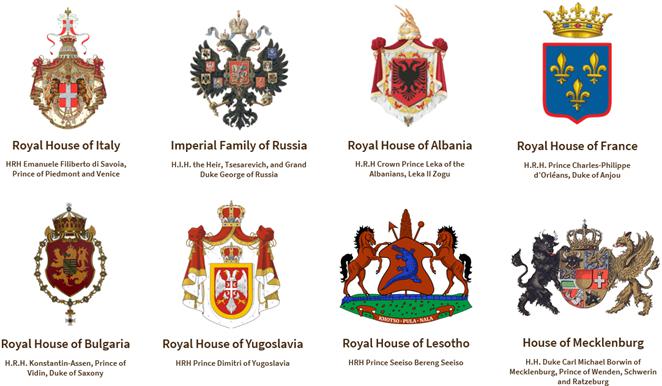
We believe that TheRoyal.Land will introduce the first historically inspired monarchy-based MMORPG, founded by the Prince of Italy and reinforced by the Royal Families.
Our objective is to connect and engage with players from around the world through epic royalty-themed entertainment by becoming a worldwide leader in the development, publishing, and distribution of high-quality interactive entertainment content and services, as well as related media, that deliver engaging entertainment experiences to our network of connected players on a year-round basis. Players, in their selected roles, will represent every part of TheRoyal.Land society. From the Artisans that guide the skilled trades of old to the Knights and Squires that guard the Realm. From Prisoner to Prince, each role will hold specific purposes, abilities, skills, chances for advancement, and adventures.
To that end, we expect to capitalize on the expanding video games market, with worldwide revenue expected to grow to approximately $366 billion in 2023 according to Statista, and the increased interest in the world of royalty to expand our brand and our products worldwide (Statista, Video Games – Worldwide, November 2022).
1
We are currently in the development phase for TheRoyal.Land and myRoyal.World. On June 30, 2023, we entered into a project agreement with Neosperience S.p.A., or Neosperience, pursuant to which Neosperience will design and develop TheRoyal.Land using AI enabled technology. The first phase of the project agreement shall commence upon the pricing of the Company’s initial public offering. Neosperience plans to use AI models to create complex and dynamic in-game environments and realistic and emotive characters and to assist with dynamically adjusting the difficulty level and game balance in real time based on player behavior and performance to keep the game challenging yet rewarding. For example, Neosperience’s AI enabled technology can imbue non-player characters, or NPCs, with various behaviors, which we believe makes them seem more lifelike and responsive thereby enhancing player immersion and creating a more engaging gameplay experience. Additionally, Neosperience intends to use advanced modeling and rendering techniques to create realistic player characters and NPCs that dynamically interact utilizing a full range of human-like emotions, reactions and movements giving them a depth of character which we believe is rarely seen in video games.
As of the date of this prospectus, the expected cost to ready the game for beta version release is approximately $3 to $5 million. As indicated under “Use of Proceeds”, we expect the proceeds of this offering will be used primarily to finance game development and related products and services. The pre-production playable beta version of TheRoyal.Land is expected to be released within approximately twelve months after the proceeds are received from this offering. Unforeseen delays in product development, turnover of resources and lack of capital may impact our delivery timeline. In addition, we have secured the domains, TheRoyaLand.online and TheRoyaLand.io, on which we expect to host TheRoyal.Land, and have finished website development for TheRoyal.Land. We are also in the early stages of discussions with media companies to develop myRoyal.World media assets for various streaming platforms. We plan to add additional internal resources to ensure the quality and timely delivery of TheRoyal.Land and myRoyal.World’s assets and experiences.
Our Historical Performance
The Company’s independent registered public accounting firm has expressed substantial doubt as to the Company’s ability to continue as a going concern. As of June 30, 2023, we had cash (including cash in escrow) and total assets of $134,543 and $192,233, respectively, and we had an accumulated deficit of $1,071,997. We estimate we will be able to conduct our planned operations using currently available capital resources, including resources received from our July private placements, for the next five months. However, in order to meet our growth expectations, we will need to raise funds beyond our current working capital balance in order to finance future development of TheRoyal.Land and myRoyal.World and meet any debt obligations until such time as future profitable revenues are achieved. We will seek to fund our operations through public offerings, including this offering, private equity offerings, debt financings, and government or other third-party funding. However, the Company may not be able to raise adequate funds for capital expenditures, working capital and other cash requirements from capital markets on acceptable terms, or at all. Advances from an officer or shareholder may likewise be unavailable. The Company’s failure to raise capital as and when needed and generate significantly higher revenues than operating expenses to achieve profitability would impact its going concern status and would have a negative impact on its financial condition and its ability to pursue its business strategy and continue as a going concern. For further discussion, see “Management’s Discussion and Analysis of Financial Condition and Results of Operations – Liquidity and Capital Resources – Going Concern”.
Our Market Opportunity and Business Model
We believe that royal families and their societies remain of great interest to the public, as reflected in popular Netflix series with royalty-related themes such as “Downton Abbey” and “The Crown.” The passing in September 2022 of Her Majesty Queen Elizabeth II of England and the transition to her son, King Charles III, has also brought heightened attention and relevance to the royalty market. Additionally, TheRoyal.Land lies at the nexus of several expanding markets in the video games market, with worldwide revenue expected to grow to approximately $366 billion in 2023.
Through TheRoyal.Land, we are seeking to build a strong, established franchise through compelling content and expanding our community to reach as many consumers as possible by offering our content on multiple platforms, particularly mobile, the largest and fastest growing platform, and delivering compelling experiences across multiple business models (e.g., premium, free-to-play, subscription-based). We plan to derive revenue through business-to-consumer and business-to-business opportunities:
| ● | Consumers. We plan to derive revenue from selling premium accessories, such as unique skins, weapons, and tools, and access to more quests, missions, and areas within TheRoyal.Land, and from sales to players of plots of virtual land, buildings, and other structures in TheRoyal.Land, which is designed to replicate real-world venues and other related locations portrayed in TheRoyal.Land. |
| ● | Businesses. We plan to derive revenue from working with other businesses to extend their brands inside TheRoyal.Land by offering in-game advertising and virtual land purchases, and we expect to develop further collaborative relationships with them. |
Through myRoyal.World, we are seeking to partner with the Royal Families to jointly promote a royal experience by creating television shows and movies in collaboration with streaming platforms, offering TheRoyal.Land themed merchandise, and selling tickets to TheRoyal.Land based events.
2
Our Competitive Strengths
We believe that the following competitive strengths contribute to our success and differentiate us from our competitors:
| ● | Unique video game experience. We intend to provide authentic and unique royalty-based digital and physical products and experiences, including TheRoyal.Land, an MMORPG with experiences and fun game mechanics that immerse the player at any game stage, whether they are just starting or have already logged hundreds of hours of gameplay. TheRoyal.Land is being planned by the Royal Families to be an immersive, strategic, role-playing action game within a historically based setting. |
| ● | Solid community. A game without a community has no future, which is why we are endeavoring to develop a stable game community and video game that connects game creators and game players. We believe this enthusiastic community will be what constantly improves the gaming experience. We envision the game creators and developers interacting with the players to continuously receive feedback so we can offer players a game that better meets our founders’ goals and the expectations of the players. We plan to enable players to communicate with each other, help each other, form coalitions, and elect the Queen or King for the game’s upcoming months/seasons. |
| ● | Actual ownership. We plan to enable a player to be the owner of their avatar representing their digital identity utilizing traditional in-game purchase methods customary for MMORPGs. |
Our Growth Strategies
The key elements of our strategy to expand our business include the following:
| ● | Utilizing the brands of the Royal Families. We plan to capitalize on the brand rights relating to the legacies of the Royal Families mentioned above, including any currently held royal titles, followers, and brands, by enabling them to transition to the virtual worlds we intend to create together. |
| ● | Developing unique, player-owned, and tradeable avatars. We plan to create engaging, attractive, functional, and, ultimately, purchasable and tradable avatars for TheRoyal.Land for our players and community. |
Our Risks and Challenges
Our prospects should be considered in light of the risks, uncertainties, expenses, and difficulties frequently encountered by similar companies. Our ability to realize our business objectives and execute our strategies is subject to risks and uncertainties, including, among others, the following:
| ● | Our independent registered public accounting firm has expressed substantial doubt as to our ability to continue as a going concern in its report. |
| ● | We have a limited operating history, which may make it difficult to evaluate our business and prospects. |
| ● | We had a concentration of credit risk because we derived our revenue from a limited number of customers. |
| ● | If we do not consistently deliver popular, high-quality content in a timely manner, our business may be negatively impacted. |
| ● | If we do not attract, retain, and motivate skilled personnel, we will be unable to effectively conduct our business. |
| ● | We source our services from a limited number of service suppliers. If we lose one or more of the service suppliers, our operation may be disrupted, and our results of operations may be adversely and materially impacted. |
| ● | If we fail to properly manage our anticipated growth, our business could suffer. |
| ● | If we are unable to maintain, train and build an effective international sales and marketing infrastructure, we will not be able to commercialize and grow our brand, products and services successfully. |
| ● | Attracting, managing and retaining our talent is critical to our success. |
3
| ● | Our industry is intensely competitive. We may not deliver a successful and engaging game, or customers may prefer our competitors’ products over our own. |
| ● | If demand for our products and services does not develop as expected our projected revenues and profits will be affected. |
| ● | Our company may not be able to create and maintain a competitive advantage, given the rapid technological and other competitive changes affecting all markets nationally and worldwide. Our company’s success will depend on our ability to keep pace with any such changes. |
| ● | Due to our reliance on third party platforms, platform providers are frequently able to influence our products and costs. |
| ● | Our business depends on a strong brand, and if we are not able to maintain and enhance our brand, our ability to expand our customer base will be impaired and our business and operating results will be harmed. |
| ● | We may have difficulty scaling and adapting our existing IT infrastructure to accommodate a larger customer base, technology advances or customer requirements. |
| ● | We use open source software in connection with our planned game and services, which may pose particular risks to our proprietary software, products, and services in a manner that could have a negative impact on our business. |
| ● | We rely on tools and technologies owned by third parties. |
| ● | We may experience disruption to our servers or our software which could cause us to lose customers. |
| ● | A failure or breach of our security systems or infrastructure as a result of cyberattacks could disrupt our business, result in the disclosure or misuse of confidential or proprietary information, damage our reputation, increase our costs and cause losses. |
| ● | The COVID-19 pandemic may cause a material adverse effect on our business. |
| ● | Changes to taxation or the interpretation or application of tax laws could have an adverse impact on our results of operations and financial condition. |
In addition, we face other risks and uncertainties that may materially affect our business prospects, financial condition, and results of operations. You should consider the risks discussed in “Risk Factors” and elsewhere in this prospectus before investing in our common shares.
Implications of Being an Emerging Growth Company
Upon the completion of this offering, we will qualify as an “emerging growth company” under the Jumpstart Our Business Act of 2012, as amended, or the JOBS Act. As a result, we will be permitted to, and intend to, rely on exemptions from certain disclosure requirements. These provisions include exemption from the auditor attestation requirement under Section 404 of the Sarbanes-Oxley Act of 2002, or the Sarbanes-Oxley Act, in the assessment of the emerging growth company’s internal control over financial reporting. In addition, Section 107 of the JOBS Act also provides that an emerging growth company can take advantage of the extended transition period provided in Section 7(a)(2)(B) of the Securities Act of 1933, as amended, or the Securities Act, for complying with new or revised accounting standards. In other words, an emerging growth company can delay the adoption of certain accounting standards until those standards would otherwise apply to private companies. We have elected to take advantage of the benefits of this extended transition period. Our financial statements may therefore not be comparable to those of companies that comply with such new or revised accounting standards.
We will remain an emerging growth company until the earliest of (i) the last day of the fiscal year during which we have total annual gross revenues of at least $1.235 billion; (ii) the last day of our fiscal year following the fifth anniversary of the completion of this offering; (iii) the date on which we have, during the preceding three year period, issued more than $1.0 billion in non-convertible debt; or (iv) the date on which we are deemed to be a “large accelerated filer” under the Securities Exchange Act of 1934, as amended, or the Exchange Act, which could occur if the market value of our Class B Common Shares that are held by non-affiliates exceeds $700 million as of the last business day of our most recently completed second fiscal quarter. Once we cease to be an emerging growth company, we will not be entitled to the exemptions provided in the JOBS Act discussed above.
4
Implications of Being a Foreign Private Issuer
Once the registration statement of which this prospectus is a part is declared effective by the U.S. Securities and Exchange Commission, or the SEC, we will become subject to the information reporting requirements of the Exchange Act that are applicable to “foreign private issuers,” and under those requirements we will file certain reports with the SEC. As a foreign private issuer, we will not be subject to the same requirements that are imposed upon U.S. domestic issuers by the SEC. Under the Exchange Act, we will be subject to reporting obligations that, in certain respects, are less detailed and less frequent than those of U.S. domestic reporting companies. For example, we will not be required to issue quarterly reports, proxy statements that comply with the requirements applicable to U.S. domestic reporting companies, or individual executive compensation information that is as detailed as that required of U.S. domestic reporting companies. We also will have four months after the end of each fiscal year to file our annual reports with the SEC and we will not be required to file current reports as frequently or promptly as U.S. domestic reporting companies. We also present our financial statements pursuant to International Financial Reporting Standards, or IFRS, as issued by the International Accounting Standards Board, instead of pursuant to U.S. generally accepted accounting principles. Furthermore, our officers, directors and principal shareholders will be exempt from the requirements to report transactions in our equity securities and from the short-swing profit liability provisions contained in Section 16 of the Exchange Act. As a foreign private issuer, we will also not be subject to the requirements of Regulation FD (Fair Disclosure) promulgated under the Exchange Act. In addition, as a foreign private issuer, we will be permitted to follow certain home country corporate governance practices instead of those otherwise required under the listing rules of Cboe for domestic U.S. issuers. We may take advantage of these home country exemptions, including the following:
| ● | Exemption from filing quarterly reports on Form 10-Q, from filing proxy solicitation materials on Schedule 14A or 14C in connection with annual or special meetings of shareholders, from providing current reports on Form 8-K disclosing significant events within four days of their occurrence, and from the disclosure requirements of Regulation FD. |
| ● | Exemption from Section 16 rules regarding sales of common shares by insiders, which will provide less data in this regard than shareholders of U.S. companies that are subject to the Exchange Act. |
| ● | Exemption from the Cboe rules applicable to domestic issuers requiring disclosure within four business days of any determination to grant a waiver of the code of business conduct and ethics to directors and officers. Although we will require director approval of any such waiver, we may choose not to disclose the waiver in the manner set forth in the Cboe rules, as permitted by the foreign private issuer exemption. |
| ● | Exemption from the requirement that our board of directors have a compensation committee that is composed entirely of independent directors with a written charter addressing the committee’s purpose and responsibilities. |
| ● | Exemption from the requirements that director nominees are selected, or recommended for selection by our board of directors, either by (i) independent directors constituting a majority of our board of directors’ independent directors in a vote in which only independent directors participate, or (ii) a committee comprised solely of independent directors, and that a formal written charter or board resolution, as applicable, addressing the nominations process is adopted. |
See “Management – Foreign Private Issuer Exemption” for more information. These exemptions and leniencies will reduce the frequency and scope of information and protections available to you in comparison to those applicable to U.S. domestic reporting companies.
5
Dual Class Structure
Under our bye-laws, we are authorized to issue two classes of common shares, Class A Common Shares and Class B Common Shares, and any number of classes of preference shares. Class A Common Shares are entitled to twenty votes per share on proposals requiring or requesting shareholder approval, and Class B Common Shares are entitled to one vote on any such matter. Class A Common Shares may be voluntarily converted into Class B Common Shares on a one-to-one basis. A transfer of Class A Common Shares will result in their automatic conversion into Class B Common Shares upon such transfer, except that the transfer of Class A Common Shares to another holder of Class A Common Shares will not result in such automatic conversion. Class B Common Shares are not convertible. Other than as to voting and conversion rights, Class A Common Shares and Class B Common Shares have the same rights and preferences and rank equally.
In this offering, we are offering Class B Common Shares. Emanuele Filiberto di Savoia, our founder, Chief Executive Officer and a member of our board of directors, owns 6,000,000 of our outstanding Class A Common Shares, which amounts to 120,000,000 votes. As of the date of this prospectus, there are 9,400,000 Class A Common Shares outstanding representing voting power of 188,000,000 votes, 4,175,000 Class B Common Shares outstanding representing voting power of 4,175,000 votes, and no preference shares outstanding. As a result, out of a total of 13,575,000 outstanding common shares representing total voting power of 192,175,000 votes, Mr. di Savoia is expected to control approximately 62.4% of the voting power before this offering. Following this offering, taking into consideration the Class B Common Shares expected to be offered hereby, based on an assumed public offering price of $5.00 per share, which is the low point of the estimated range of the initial public offering price shown on the cover page of this prospectus, and assuming that the underwriters do not exercise the over-allotment option, even if 100% of such shares are sold, Mr. di Savoia will retain controlling voting power in the Company based on having approximately 62.0% of all voting rights. This concentrated control may limit or preclude the ability of others to influence corporate matters including significant business decisions for the foreseeable future.
Our Corporate History and Structure
We were incorporated under the laws of Bermuda as The RoyaLand Company Ltd., an exempted company with limited liability, on October 18, 2022. On January 28, 2022, RoyaLand Company, a Nevada corporation, or RoyaLand Company, was formed, and subsequently conducted private placements of shares of Class B Common Stock, $0.001 par value per share, or the Class B Common Stock. On November 28, 2022, we acquired RoyaLand Company in a share exchange transaction in which its shareholders became our shareholders and RoyaLand Company became our wholly-owned subsidiary. OAPLT, a French joint stock company (société par actions simplifiée), or OAPLT, was formed on November 24, 2017. On November 29, 2022, OAPLT was acquired by us from its shareholders and became our wholly-owned subsidiary.
Our corporate address and registered office are located at c/o Conyers Corporate Services (Bermuda) Limited, Clarendon House, 2 Church Street, Hamilton, Pembroke, HM11, Bermuda. The phone number of our registered office is +1 441 295 1422.
Our agent for service of process in the United States is Cogency Global Inc.,122 East 42nd Street, 18th Floor, New York, NY 10168, (800) 221-0102.
Our website can be found at www.theroyaland.net. The information contained on our websites is not a part of this prospectus, nor is such content incorporated by reference herein, and should not be relied upon in determining whether to make an investment in our common shares.
6
The Offering
| Shares offered: | 1,250,000 Class B Common Shares (or 1,437,500 shares if the underwriters exercise the over-allotment in full). | |
| Offering price: | We currently estimate that the public offering price will be between $5.00 and $6.00 per share. | |
| Shares to be outstanding after this offering: (1) | 9,400,000 Class A Common Shares and 5,425,000 Class B Common Shares (or 5,612,500 shares if the underwriters exercise the over-allotment option in full). | |
| Over-allotment option: | We have granted a 45-day option to the underwriters to purchase up to 187,500 additional Class B Common Shares, representing 15% of the Class B Common Shares sold in this offering, at the public offering price, less the underwriting discount and commissions. | |
| Use of proceeds: | We expect to receive net proceeds of approximately $5.3 million from this offering (or $6.1 million if the underwriters exercise the over-allotment option in full), assuming an initial public offering price of $5.00 per share, which is the low point of the estimated range of the initial public offering price shown on the cover page of this prospectus, no exercise of the representative’s warrants, and after deducting estimated underwriting discounts and commissions and estimated offering expenses payable by us.
We intend to use the net proceeds from this offering for development of our planned online video game and related products and services, sales and marketing, and working capital and general corporate purposes. See “Use of Proceeds” for more information. | |
| Risk factors: | Investing in our Class B Common Shares involves a high degree of risk. As an investor, you should be able to bear a complete loss of your investment. You should carefully consider the information set forth in the “Risk Factors” section beginning on page 13 before deciding to invest in our Class B Common Shares. | |
| Representative’s warrants: | We have agreed to issue to the representative of the underwriters warrants to purchase the number of Class B Common Shares equal to 7% of the aggregate number of shares sold in this offering. The representative’s warrants will be exercisable at any time and from time to time, in whole or in part, during the period commencing 180 days from the commencement of trading of the Company’s securities on Cboe and ending five years from the commencement date of sales in this offering. The exercise price of the representative’s warrants will equal 100% of the public offering price per share of the Class B Common Shares sold in this offering (subject to adjustments) and will have a cashless exercise provision and customary anti-dilution provisions. The registration statement of which this prospectus forms a part also registers the Class B Common Shares issuable upon exercise of the representative’s warrants. See “Underwriting” for more information. | |
| Lock-up: | We, all of our directors and officers, and the holders of 10% or more of our outstanding common shares have agreed with the underwriters, subject to certain exceptions, not to sell, transfer or dispose of, directly or indirectly, any of our common shares or securities convertible into or exercisable or exchangeable for our common shares for a period of 12 months after the date of this prospectus. For additional information regarding our arrangement with the underwriters, please see “Underwriting.” | |
| Trading market and symbol: | We have applied to list our Class B Common Shares on Cboe BZX Exchange, Inc. under the symbol “RLND”. The closing of this offering is contingent upon such listing. |
| (1) | The number of common shares outstanding immediately following this offering is based on 9,400,000 Class A Common Shares and 4,175,000 Class B Common Shares outstanding as of the date of this prospectus and excludes: |
| ● | 1,825,000 Class B Common Shares that are reserved for issuance under The RoyaLand Company Ltd. 2023 Equity Incentive Plan, or the 2023 Plan; |
| ● | 1,250,000 Class B Common Shares issuable upon exercise of outstanding warrants issued to private placement investors at an exercise price of $1.00 per share; |
| ● | 92,750 Class B Common Shares issuable upon exercise of placement agent’s warrants; and |
| ● | up to 100,625 Class B Common Shares issuable upon exercise of the representative’s warrants issued in connection with this offering. |
Unless otherwise indicated, this prospectus reflects and assumes no exercise by the underwriters of their over-allotment option.
7
Summary Consolidated Financial Information
The following summary historical financial information should be read in conjunction with our consolidated financial statements and related notes included elsewhere in the prospectus and the information contained in “Management’s Discussion and Analysis of Financial Condition and Results of Operations” below.
Our summary financial data for the years ended June 30, 2023 and 2022 is derived from our audited consolidated financial statements included elsewhere in this prospectus.
All financial statements included in this prospectus are prepared and presented in accordance with IFRS. Our historical results for any period are not necessarily indicative of our future performance.
| Statements of Operations Data | The RoyaLand Company Ltd. Period from November 29, 2022 to June 30, 2023 | RoyaLand Nevada Period from July 1, 2022 to November 28, 2022 | OAPLT Period from July 1, 2022 to November 28, 2022 | Pro Forma Combined Year Ended June 30, 2023 (Unaudited) | ||||||||||||||||
| (Successor) | (Successor) | (Predecessor) | Amount | % of Revenue | ||||||||||||||||
| Revenue | - | - | 4,869 | 4,869 | 100 | % | ||||||||||||||
| Cost of revenue | - | - | - | - | - | |||||||||||||||
| Impairment of goodwill | 149,369 | - | - | 149,369 | 3,068 | % | ||||||||||||||
| General and administrative expenses | 500,368 | 253,126 | 7,144 | 760,638 | 15,622 | % | ||||||||||||||
| Operating loss | (649,737 | ) | (253,126 | ) | (2,275 | ) | (905,138 | ) | (18,589 | )% | ||||||||||
| Other income (expense) | 1,986 | (37 | ) | 1,948 | 40 | % | ||||||||||||||
| Loss before income taxes | (647,751 | ) | (253,126 | ) | (2,312 | ) | (903,190 | ) | (18,549 | )% | ||||||||||
| Provision for income taxes | - | - | - | - | - | |||||||||||||||
| Net loss | (647,751 | ) | (253,126 | ) | (2,312 | ) | (903,190 | ) | (18,549 | )% | ||||||||||
| Statements of Operations Data | OAPLT Year Ended June 30, 2022 | RoyaLand | Pro Forma Combined Year Ended June 30, 2022 (Unaudited) | |||||||||||||
| (Predecessor) | (Successor) | Amount | % of Revenue | |||||||||||||
| Revenue | 29,925 | - | 29,925 | 100 | % | |||||||||||
| Cost of revenue | - | - | - | - | ||||||||||||
| General and administrative expenses | 63,514 | 171,120 | 234,634 | 784 | % | |||||||||||
| Operating loss | (33,589 | ) | (171,120 | ) | (204,709 | ) | (684 | )% | ||||||||
| Other income (expense) | 4,080 | - | 4,080 | 14 | % | |||||||||||
| Loss before income taxes | (29,509 | ) | (171,120 | ) | (200,629 | ) | (670 | )% | ||||||||
| Provision for income taxes | - | - | - | - | ||||||||||||
| Net loss | (29,509 | ) | (171,120 | ) | (200,629 | ) | (670 | )% | ||||||||
| Balance Sheet Data | As of June
30, 2023 (Successor) | As of June
30, 2022 (Predecessor) | |||||
| Cash (including cash in escrow) | $ | 134,543 | $ | 5,544 | |||
| Current assets | 192,233 | 9,315 | |||||
| Total assets | 192,233 | 9,315 | |||||
| Shareholders’ equity (deficit) | 16,277 | (14,237 | ) | ||||
| Current liabilities | 175,956 | 23,552 | |||||
| Total liabilities | 175,956 | 23,552 | |||||
| Total liabilities and shareholders’ deficit | $ | 192,233 | $ | 9,315 | |||
8
Summary of Risk Factors
An investment in our securities involves a high degree of risk. You should carefully consider the risks summarized below. These risks are discussed more fully in the “Risk Factors” section immediately following this Prospectus Summary. These risks include, but are not limited to, the following:
Risks Related to Our Business and Industry
| ● | Our independent registered public accounting firm has expressed substantial doubt as to our ability to continue as a going concern in its report. |
| ● | We have a limited operating history, which may make it difficult to evaluate our business and prospects. |
| ● | We had a concentration of credit risk because we derived our revenue from a limited number of customers. |
| ● | If we do not consistently deliver popular, high-quality content in a timely manner, our business may be negatively impacted. |
| ● | If we do not attract, retain, and motivate skilled personnel, we will be unable to effectively conduct our business. |
| ● | If we fail to properly manage our anticipated growth, our business could suffer. |
| ● | If we are unable to maintain, train and build an effective international sales and marketing infrastructure, we will not be able to commercialize and grow our brand, products and services successfully. |
| ● | Attracting, managing and retaining our talent is critical to our success. |
| ● | Our industry is intensely competitive. We may not deliver a successful and engaging game, or customers may prefer our competitors’ products over our own. |
| ● | If demand for our products and services does not develop as expected our projected revenues and profits will be affected. |
| ● | We will be subject to risk associated with the development of new products or services based on a new and unproved market. |
| ● | Our company may not be able to create and maintain a competitive advantage, given the rapid technological and other competitive changes affecting all markets nationally and worldwide. Our company’s success will depend on our ability to keep pace with any such changes. |
| ● | Due to our reliance on third party platforms, platform providers are frequently able to influence our products and costs. |
| ● | Our business depends on a strong brand, and if we are not able to maintain and enhance our brand, our ability to expand our customer base will be impaired and our business and operating results will be harmed. |
| ● | We may have difficulty scaling and adapting our existing IT infrastructure to accommodate a larger customer base, technology advances or customer requirements. |
| ● | We use open source software in connection with our planned game and services, which may pose particular risks to our proprietary software, products, and services in a manner that could have a negative impact on our business. |
| ● | We rely on tools and technologies owned by third parties. |
| ● | If the Company fails to develop or protect its intellectual property adequately, the Company’s business could suffer. |
| ● | The Company’s products, services or processes could be subject to claims of infringement of the intellectual property of others. |
| ● | We may experience disruption to our servers or our software which could cause us to lose customers. |
9
| ● | A failure or breach of our security systems or infrastructure as a result of cyberattacks could disrupt our business, result in the disclosure or misuse of confidential or proprietary information, damage our reputation, increase our costs and cause losses. |
| ● | We are subject to the risks and uncertainties of conducting business outside the U.S. |
| ● | Our results of operations or reputation may be harmed as a result of objectionable consumer or other third-party created content. |
| ● | Exchange rate fluctuations could negatively affect our financial condition. |
| ● | The COVID-19 pandemic may cause a material adverse effect on our business. |
| ● | Because purchases of our products and services are discretionary spending, if general economic conditions decline, demand for our products and services could decline. |
| ● | Industry and other market data used in this prospectus or in periodic reports that we may file in the future with the SEC, including those undertaken by us or our engaged consultants, may not prove to be representative of current and future market conditions or future results. |
Risks Related to Government Regulation and Being a Public Company
| ● | We are subject to data privacy governmental regulations, which can change, and any failure to comply with these regulations may have a material negative effect on our business and results of operations. |
| ● | Our business, products, and distribution will be subject to increasing regulation in key territories. If we do not successfully respond to these regulations, our business could be negatively impacted. |
| ● | Our business depends on our customers’ continued and unimpeded access to the Internet and the development and maintenance of Internet infrastructure. Internet access providers may be able to block, degrade or charge for access to certain of our services, which could lead to additional expenses and the loss of customers. |
| ● | Our business could be affected by new governmental regulations regarding the Internet. |
| ● | We operate in non-U.S. markets and are subject to the U.S. Foreign Corrupt Practices Act, or the FCPA, as well as anti-corruption laws and regulations in other countries. Violations of these laws and regulations could have a material adverse effect on our business, financial condition and results of operations. |
| ● | The requirements of being a public company may strain our resources. |
| ● | Our internal controls over financial reporting currently may not meet all of the standards contemplated by Section 404 of the Sarbanes-Oxley Act, and failure to achieve and maintain effective internal controls over financial reporting in accordance with Section 404 could impair our ability to produce timely and accurate financial statements or comply with applicable regulations and have a material adverse effect on our business. |
| ● | We will incur increased costs as a result of operating as a public company, and our management will be required to devote substantial time to new compliance initiatives and corporate governance practices. |
| ● | Our management team has limited experience managing a public company. |
10
Risks Related to This Offering and Ownership of Our Class B Common Shares
| ● | Our dual class voting structure has the effect of concentrating the voting control to holders of our Class A Common Shares, which will limit or preclude your ability to influence corporate matters, and your interests may conflict with the interests of these shareholders. It may also adversely affect the trading market for our Class B Common Shares due to exclusion from certain stock market indices. |
| ● | There has been no prior public market for our Class B Common Shares and an active and liquid market may fail to develop, which could harm the market price of our Class B Common Shares. |
| ● | We may not be able to maintain a listing of our Class B Common Shares on Cboe. |
| ● | A significant portion of our Class B Common Shares may be sold into the public market in the near future, which could cause the market price of our Class B Common Shares to drop significantly, even if our business is doing well. |
| ● | You will incur immediate and substantial dilution as a result of this offering. |
| ● | Future issuances of our Class B Common Shares or securities convertible into, or exercisable or exchangeable for, our Class B Common Shares, or the expiration of lock-up agreements that restrict the issuance of new common shares or the trading of outstanding common shares, could cause the market price of our Class B Common Shares to decline and would result in the dilution of your holdings. |
| ● | Future issuances of debt securities, which would rank senior to our Class B Common Shares upon our bankruptcy or liquidation, and future issuances of preference shares, which could rank senior to our Class B Common Shares for the purposes of dividends and liquidating distributions, may adversely affect the level of return you may be able to achieve from an investment in our Class B Common Shares. |
| ● | Our operating results and share price may be volatile, and the market price of our Class B Common Shares after this offering may drop below the price you pay. |
| ● | Certain recent initial public offerings of companies with relatively small public floats comparable to our anticipated public float have experienced extreme volatility that was seemingly unrelated to the underlying performance of the respective company. Our Class B Common Shares may potentially experience rapid and substantial price volatility, which may make it difficult for prospective investors to assess the value of our Class B Common Shares. |
| ● | If securities or industry analysts either do not publish research about us or publish inaccurate or unfavorable research about us, our business or our market, if they adversely change their recommendations regarding our Class B Common Shares, or if our operating results do not meet their expectations or any financial guidance we may provide, the trading price or trading volume of our Class B Common Shares could decline. |
| ● | We have broad discretion in the use of the net proceeds from the offering and may not use them effectively. |
| ● | We have never paid cash dividends on our securities and do not intend to pay dividends for the foreseeable future. |
| ● | Changes to taxation or the interpretation or application of tax laws could have an adverse impact on our results of operations and financial condition. |
| ● | We intend to be treated exclusively as a resident of Bermuda for tax purposes, but French tax authorities may seek to treat us as a tax resident of another jurisdiction as a result of which we could be subject to increased and/or different taxes. |
| ● | If a United States person is treated as owning at least 10% of any class of our common shares, such holder may be subject to adverse U.S. federal income tax consequences. |
11
| ● | We are a Bermuda company, and it may be difficult for you to enforce judgments against us or certain of our directors or officers. |
| ● | Our bye-laws restrict shareholders from bringing legal action against our officers and directors. |
| ● | We have provisions in our bye-laws that may discourage a change of control. |
| ● | Legislation enacted in Bermuda as to economic substance may affect our operations. |
| ● | We may need or be required to have employees in Bermuda but may not be able to obtain the required work permits under Bermuda law. |
| ● | As a foreign private issuer, we are permitted to rely on exemptions from certain Cboe corporate governance standards applicable to domestic U.S. issuers. This may afford less protection to holders of our shares. |
| ● | We are a foreign private issuer within the meaning of the rules under the Exchange Act, and as such we are exempt from certain provisions applicable to U.S. domestic public companies. |
| ● | We may lose our foreign private issuer status in the future, which could result in significant additional costs and expenses. |
| ● | There is a risk that we will be a passive foreign investment company for any taxable year, which could result in adverse U.S. federal income tax consequences to U.S. investors in our shares. |
| ● | We will be subject to ongoing public reporting requirements that are less rigorous than Exchange Act rules for companies that are not “emerging growth companies,” and our shareholders could receive less information than they might expect to receive from more mature public companies. |
| ● | As a “controlled company” under the rules of Cboe, we may choose to exempt our company from certain corporate governance requirements that could have an adverse effect on our public stockholders. |
| ● | Certain of our major shareholders may have interests that are different from the interests of our other shareholders. |
| ● | If our Class B Common Shares become subject to the penny stock rules, it would become more difficult to trade our shares. |
12
An investment in our Class B Common Shares involves a high degree of risk. You should carefully consider the following risk factors, together with the other information contained in this prospectus, before purchasing our Class B Common Shares. We have listed below (not necessarily in order of importance or probability of occurrence) what we believe to be the most significant risk factors applicable to us, but they do not constitute all of the risks that may be applicable to us. Any of the following factors could harm our business, financial condition, results of operations or prospects, and could result in a partial or complete loss of your investment. Some statements in this prospectus, including statements in the following risk factors, constitute forward-looking statements. Please refer to the section titled “Cautionary Statement Regarding Forward-Looking Statements”.
Risks Related to Our Business and Industry
Our independent registered public accounting firm has expressed substantial doubt as to our ability to continue as a going concern in its report.
We had minimal cash and cash equivalents as of June 30, 2023, and had a net loss for the year ended June 30, 2023. As of June 30, 2023, we had cash (including cash in escrow) and total assets of $134,543 and $192,233, respectively, and we had an accumulated deficit of $1,071,997. We will seek to fund our operations through revenue generated from our products, services, bank borrowings and private placements and equity financing arrangements. Adequate additional financing may not be available to us on acceptable terms, or at all. Our failure to raise capital as and when needed would impact our going concern status and would have a negative impact on our financial condition and our ability to pursue our business strategy and continue as a going concern. Management’s plans to address this need for capital through this offering and through private placement offerings are discussed elsewhere in this prospectus. We cannot assure you that our plans to raise sufficient capital will be successful. These factors, among others, raise substantial doubt about our ability to continue as a going concern. The financial statements contained elsewhere in this prospectus do not include any adjustments that might result from our inability to consummate this offering or our inability to continue as a going concern.
We have a limited operating history, which may make it difficult to evaluate our business and prospects.
We are an early, startup stage entity with little operating history. We only have nominal cash as of the date of commencement of this offering. The revenue and income potential of our business and market are unproven. Our limited operating history makes an evaluation of our company and its prospects difficult and highly speculative. There can be no assurances that: (a) we will be able to develop products or services on a timely and cost effective basis; (b) we will be able to generate any increase in revenues; (c) we will have adequate financing or resources to continue operating our business and to provide services to customers; (d) we will earn a profit; (e) we can raise sufficient capital to support operations by attaining profitability; or (f) we can satisfy future liabilities.
We had a concentration of credit risk because we derived our revenue from a limited number of customers.
For the year ended June 30, 2022, five of our customers accounted for 94.1% of our revenue with one customer accounting for 30.2% of our revenue. For the year ended June 30, 2023, our revenue, all of which was recorded by OAPLT, was accounted for by two customers with one of the customers accounting for 62.5%. In order to minimize the credit risk, our management has created a team responsible for the determination of credit limits and credit approvals for our customers. We cannot assure you that we will not see concentration of accounts receivable from a small number of customers in the future. In such case, if any of these customers defaults on its payment obligations to us, we will not be able to recover the related accounts receivable, and our business, financial condition and results of operations may be materially and adversely affected.
If we do not consistently deliver popular, high-quality content in a timely manner, our business may be negatively impacted.
Consumer preferences for video games are usually cyclical and difficult to predict. Even the most successful games can lose consumer audiences over time, and remaining popular is increasingly dependent on the games being refreshed with new content or other enhancements. In order to remain competitive and maximize the chances that consumers select our planned game as opposed to the various entertainment options available to them and with which we compete, we must continuously develop related products or new content for, or other enhancements to, our planned game. These products or enhancements may not be well-received by consumers, even if well-reviewed and of high quality.
13
Additionally, consumer expectations regarding the quality, performance, and integrity of our products and services are high. Consumers may be critical of our brands, game, services, and/or business practices for a wide variety of reasons, and such negative reactions may not be foreseeable or within our control to manage effectively. For example, if we fail to create fun, fair, and safe playing environments, consumers may engage less with our games. All of this may negatively impact our business.
Our planned game and related services are expected to be complex software programs. We have quality controls in place to detect defects, “bugs,” or other errors in our products and services before they are released. Nonetheless, these quality controls are subject to human error, overriding, and resource or technical constraints. As such, these quality controls and preventative measures may not be effective, and at times have not been successful, in detecting all defects, bugs, or errors in our products and services before they have been released into the marketplace. Our planned game is expected to have online features that will be frequently updated, increasing the risk that a game may contain errors. If any of these issues occur, consumers may stop playing the game and may be less likely to return to the game as often in the future, which may negatively impact our business. If our game or services do not function as consumers expect, whether because they fail to function as advertised or otherwise, or if our online features fail to consistently satisfy ongoing game stability expectations, which we may not be able to consistently satisfy, our sales may suffer.
Negative reactions to our products and services may not be foreseeable. We also may not effectively manage or respond to these negative perceptions for reasons within or outside of our control. We expect to continue to expend resources to address concerns with our products and services. Negative perceptions could arise despite our efforts, though, and may result in loss of engagement with our products and services, increased scrutiny from government bodies and consumer groups, and/or litigation, any of which could negatively impact our business.
Further, delays in product releases or disruptions following the commercial release of one or more new products have negatively impacted, and could in the future negatively impact, our business and reputation and could cause our results of operations to be materially different from expectations. Our ability to meet development schedules depends on numerous factors, some of which are outside of our control, including our ability to attract and retain qualified personnel, the time-intensive nature of creative processes, the coordination of large and often dispersed development teams, the complexity of our products and the platforms for which they are developed, and third-party approvals. If we fail to release our products in a timely manner, or if we are unable to continue to extend the life of our planned game by adding features and functionality that will encourage continued engagement with the game, our business may be negatively impacted.
Additionally, the amount of lead time and cost involved in the development of high-quality products is increasing, and the longer the lead time involved in developing a product and the greater the allocation of financial resources to such product, the more critical it is that we accurately predict consumer demand for such product. If our future products do not achieve expected consumer acceptance or generate sufficient revenues upon introduction, we may not be able to recover the substantial up-front development and marketing costs associated with those products.
If we do not attract, retain, and motivate skilled personnel, we will be unable to effectively conduct our business.
Our success depends significantly on our ability to identify, attract, hire, retain, motivate, and utilize the abilities of qualified personnel which includes both our direct employees and talent from other employers such as consultants, agencies, and external developers. This particularly pertains to personnel with the specialized skills needed to create and deliver high-quality, well-received content upon which our business will be substantially dependent, as well as to ensure business continuity in areas such as risk management, information security, human resources, and compliance. Our industry is generally characterized by a high level of employee mobility, competitive compensation programs, and aggressive recruiting among competitors for employees with technical, marketing, sales, engineering, product development, creative, and/or management skills, all of which is magnified for us because of our leading position within the industry. If we are unable to attract additional qualified personnel or retain and utilize the services of key personnel, we can expect this would adversely affect our business.
We are dependent on the continued services and performance of our senior management and other key officers, the loss of any of whom could adversely affect our business, operating results and financial condition.
Our future performance depends on the continued services and contributions of our senior management and other key officers, including: Emanuele Filiberto di Savoia, our Chief Executive Officer; Bryan Elbez, our Chief Financial Officer; Jean-Claude Sindres, our Chief Strategy and Creative Officer; Soheil Raissi, our Chief Technology Officer; and Daniel Joseph McClory, our Executive Chairman. Without these key executives and officers, we may not have the ability to execute on our business plans and to identify and pursue new opportunities and products. The loss of services of senior management or other key officers could significantly delay or prevent the achievement of our development and strategic objectives. The loss of the services of our senior management or other key officers for any reason could adversely affect our business, financial condition and operating results. We do not presently maintain any key man life insurance policies.
14
If we fail to properly manage our anticipated growth, our business could suffer.
The planned growth of our commercial operations may place a significant strain on our management and on our operational and financial resources and systems. To manage growth effectively, we will need to maintain a system of management controls, and attract and retain qualified personnel, as well as develop, train and manage management-level and other employees. Failure to manage our growth effectively could cause us to over-invest or under-invest in infrastructure, and result in losses or weaknesses in our infrastructure, which could have a material adverse effect on our business, results of operations, financial condition and cash flow. Any failure by us to manage our growth effectively could have a negative effect on our ability to achieve our development and commercialization goals and strategies.
If we are unable to maintain, train and build an effective international sales and marketing infrastructure, we will not be able to commercialize and grow our brand, products and services successfully.
As we grow, we may not be able to secure sales personnel or organizations that are adequate in number or expertise to successfully market and sell our brand, products and services on a global scale. If we are unable to expand our sales and marketing capability, train our sales force effectively or provide any other capabilities necessary to commercialize internationally, we will need to contract with third parties to market and sell our products and services. If we are unable to establish and maintain compliant and adequate sales and marketing capabilities, we may not be able to increase our revenue, may generate increased expenses, and may not continue to be profitable.
Attracting, managing and retaining our talent is critical to our success.
Our business depends on our ability to attract, train, motivate and retain executive, technical, creative, marketing and other personnel that are essential to the development, marketing and support of our products and services. The market for highly skilled workers and leaders in our industry is extremely competitive and has recently intensified further due to industry trends. If we cannot successfully recruit, train, motivate and retain qualified employees, develop and maintain a diverse, equitable, inclusive and safe work environment, or replace key employees following their departure, our reputation and brand may be negatively impacted and our ability to develop and manage our business will be impaired.
Our industry is intensely competitive. We may not deliver a successful and engaging game, or customers may prefer our competitors’ products over our own.
Competition in the gaming industry is intense. Many new products will be introduced, but we anticipate that only a relatively small number of products will drive significant engagement and account for a significant portion of total revenue. If we do not develop consistent high-quality, well-received and engaging products that are of interest to players, the lack of interest will adversely affect our business objectives.
Our competitors include very large corporations with significantly greater financial, marketing, and product development resources than we have – and increasingly include technology companies entering, or expanding their investment in, interactive entertainment. Our larger competitors may be able to leverage their greater financial, technical, personnel, and other resources to provide larger budgets for development and marketing and make higher offers to licensors and developers for commercially desirable properties, as well as adopt more aggressive pricing policies to develop more commercially successful video game products than we do. The proliferation of companies developing for mobile platforms creates similar risks.
Competitors may develop content that imitates or competes with our planned game, potentially reducing our sales or our ability to charge the same prices we have expect to charge for our game and related services. These competing products may take a larger share of consumer spending than anticipated, which could cause product sales to fall below expectations. If we do not continue to develop consistently high-quality and well-received new content for or enhancements to our game, if our marketing fails to resonate with our consumers, or if consumers lose interest in our game, our revenues and profit margins could decline. Further, a failure by us to develop a high-quality product, or our development of a product that is otherwise not well-received, could potentially result in additional expenditures to respond to consumer demands, harm our reputation, and increase the likelihood that our future products will not be well-received. As we expect to focus on one game product, The RoyaLand, the increased importance of add-on content to our business amplifies these risks, as add-on content for poorly-received games typically generates lower-than-expected sales. The increased demand for consistent new content releases for, and enhancements to, our products also requires a greater allocation of financial resources to those products.
15
If demand for our products and services does not develop as expected our projected revenues and profits will be affected.
Our future profits are influenced by many factors, including economics, technology advancements, world events and changing customer preferences. We believe that the markets for our products and services will continue to grow and that we will be successful in marketing our products and services in these markets. If our expectations as to the size of these markets and our ability to sell our products and services in this market are not correct, our revenue may not materialize, and our business will be adversely affected.
We will be subject to risk associated with the development of new products or services based on a new and unproved market.
Our business objectives contemplate ongoing development of new processes, products, services and applications. There can be no assurance that we will have sufficient funds available to fund any of these projects or that the projects will be completed on time or within budget. It is likely that certain, if not many, of the aspects of the business objectives will not proceed as contemplated.
Because our business is also based on new technologies, we are subject to risks of failure that are particular to new technologies, including the possibility that:
| ● | our new approach will not result in any products or services that gain market acceptance; |
| ● | our products or services could be restricted; |
| ● | proprietary rights of third parties may preclude us from marketing our new products and services; or |
| ● | third parties may market superior or more cost-effective products or services. |
As a result, our activities may not result in a commercially viable product or service, which would harm our sales, revenue and financial condition.
Our company may not be able to create and maintain a competitive advantage, given the rapid technological and other competitive changes affecting all markets nationally and worldwide. Our company’s success will depend on our ability to keep pace with any such changes.
The potential markets for our products and services, including software-driven products and services, are characterized by rapidly changing technology, evolving industry standards, frequent enhancements to existing services, the introduction of new services and products, and changing customer demands. Our products and services may require continual improvement in order to satisfy the demand by our customers for new features and capabilities. Our company’s success could depend on our ability to respond to changing standards and technologies on a timely and cost-effective basis, to introduce new products and services and to add new features and enhancements that keep pace with technological and market developments. In addition, any failure by us to anticipate or respond adequately to changes in technology and customer preferences could have a material adverse effect on its financial condition, operating results and cash flow.
For example, we are investing in a PC and mobile game as the basis for our business model. Successfully monetizing PC and mobile games is difficult and requires that we deliver valuable and entertaining player experiences that engage a significant number of players. The success of our game depends, in part, on unpredictable and volatile factors beyond our control including consumer preferences, competing games, new PC or mobile platforms and the availability of other entertainment experiences. Additionally, the development of new services and products and the enhancement of existing services and products entail significant technical risks. There can be no assurance that we will be successful in (i) developing, maintaining and improving one or more products; (ii) effectively using new technologies; (iii) adapting its services and products to emerging industry standards; or (iv) developing, introducing and marketing service and product enhancements or new services and products.
Furthermore, there can be no assurance that we will not experience difficulties that could delay or prevent the successful development, introduction or marketing of these services and products, or that its new service and product enhancements will adequately satisfy the requirements of the marketplace and achieve market acceptance. Our reputation and brand could also be adversely affected. If our company is unable, for technical or other reasons, to develop and introduce new services and products or enhancements of existing services and products in a timely manner in response to changing market conditions or customer requirements, or if new services and products do not achieve market acceptance, our business, results of operations or financial condition could be materially and adversely affected.
16
Due to our reliance on third-party platforms, platform providers are frequently able to influence our products and costs.
We expect to eventually derive significant revenues from distribution on third-party mobile and web platforms, such as the Apple App Store, the Google Play Store, Decentraland, Otherside, and The Sandbox, which will also be our direct competitors, and in some cases the exclusive means through which our content reaches gamers on those platforms. These platforms will also serve as significant online distribution platforms for, and/or provide other services critical for the operation of, our planned game. If these platforms deny access to our games, modify their current discovery mechanisms, communication channels available to developers, operating systems, terms of service, or other policies (including fees), our business could be negatively impacted. Additionally, if these platform providers change how they label a game’s business model, such as free-to-play, change how they apply content ratings to a game, or change how the personal information of consumers is made available to developers, our business could be negatively impacted. These platform providers or their services may be unavailable or may not function as intended or may experience issues with their in-app purchasing functionality. As has sometimes happened in the past, if any of these events occurs on a prolonged, or even short-term, basis or other similar issues arise that impact players’ ability to access our planned game, access social features, or make purchases, it may result in lost revenues and otherwise negatively impact our business.
Our business depends on a strong brand, and if we are not able to maintain and enhance our brand, our ability to expand our customer base will be impaired and our business and operating results will be harmed.
We believe that the development of our brand identity will be critical to the success of our business. Maintaining and enhancing our brand may require us to make substantial investments, and these investments may not be successful. If we fail to establish and promote the brand, or if it incurs excessive expenses in this effort, our business, operating results and financial condition will be materially and adversely affected.
We may have difficulty scaling and adapting our existing IT infrastructure to accommodate a larger customer base, technology advances or customer requirements.
In the future, advances in technology, increases in traffic, and new customer requirements may require us to change our IT infrastructure, expand our IT infrastructure or replace our IT infrastructure entirely. Scaling and adapting our IT infrastructure are likely to be complex and require additional technical expertise. If we are required to make any changes to our IT infrastructure, we may incur substantial costs and experience delays or interruptions in our service. These delays or interruptions may cause customers to become dissatisfied with our service and move to competing service providers. Our failure to accommodate increased traffic, increased costs, inefficiencies or failures to adapt to new technologies or customer requirements and the associated adjustments to our IT infrastructure could harm our business, financial condition and results of operations.
We use open source software in connection with our planned game and services, which may pose particular risks to our proprietary software, products, and services in a manner that could have a negative impact on our business.
We use open source software in connection with the game and services that we intend to offer. Some open source software licenses require users who distribute open source software as part of their software to publicly disclose all or part of the source code to such software or make available any derivative works of the open source code on unfavorable terms or at no cost. The terms of various open source licenses have not been interpreted by courts, and there is a risk that such licenses could be construed in a manner that imposes unanticipated conditions or restrictions on our use of the open source software. Were it determined that our use was not in compliance with a particular license, we may be required to release our proprietary source code, pay damages for breach of contract, re-engineer our games or products, discontinue distribution in the event re-engineering cannot be accomplished on a timely basis, or take other remedial action that may divert resources away from our game development efforts, any of which could negatively impact our business. Additionally, the shared nature of open source software may increase the ability of cyber-attackers to discover and exploit vulnerabilities, which may increase the likelihood of a data breach, ransomware, network interruption, or other type of cyber-attack against us or against third parties who may use open source software, such as our platform partners or key vendors, any of which could negatively impact our business.
17
We rely on tools and technologies owned by third parties.
In developing our games, we often use tools and technologies owned by third parties. If entities that own the tools and technologies we use are acquired by our competitors we may lose access to such resources. Further, the third-party tools and technologies we use might be “sunsetted” or modified in such a way that would require us to engineer a workaround. Such events could cause delays in our production schedule, and we may incur time and cost as we acquire or develop alternative assets.
If the Company fails to develop or protect its intellectual property adequately, the Company’s business could suffer.
The Company has attempted, and may attempt, to develop certain intellectual property of its own, but cannot assure that it will be able to obtain exclusive rights in trade secrets, patents, trademark registrations and copyright registrations. At this time, the Company is unsure of what types of intellectual property might be developed. The cost of developing, applying for and obtaining such enforceable rights is expensive. Even after such enforceable rights are obtained, there are significant costs for maintaining and enforcing them. The Company may lack the resources to put in place exclusive protection and enforcement efforts. Also, certain of the Company’s service offerings draw from publicly available technology in the marketplace. The Company’s failure to obtain or maintain adequate protection of its intellectual property rights for any reason could have a material adverse effect on its business, financial condition and results of operations.
If the Company were to develop intellectual property, the Company may seek to enforce its intellectual property rights on others through litigation. The Company’s claims, even if meritorious, may be found invalid or inapplicable to a party the Company believes infringes or has misappropriated its intellectual property rights. In addition, litigation can:
| ● | be expensive and time-consuming to prosecute or defend; |
| ● | result in a finding that the Company does not have certain intellectual property rights or that such rights lack sufficient scope or strength; |
| ● | divert management’s attention and resources; or |
| ● | require the Company to license its intellectual property. |
The Company may rely on trademarks or service marks to establish a market identity for its products or services. To maintain the value of the Company’s trademarks or service marks, the Company might have to file lawsuits against third parties to prevent them from using marks confusingly similar to or dilutive of the Company’s registered or unregistered trademarks or service marks. The Company also might not obtain registrations for its pending or future trademark or service marks applications and might have to defend its registered trademarks or service marks and pending applications from challenge by third parties. Enforcing or defending the Company’s registered and unregistered trademarks or service marks might result in significant litigation costs and damages, including the inability to continue using certain marks.
The laws of foreign countries in which the Company may contemplate doing business in the future may not recognize intellectual property rights or protect them to the same extent as do the laws of the United States or the European Union. Adverse determinations in a judicial or administrative proceeding could prevent the Company from offering or providing its products or services or prevent the Company from stopping others from offering or providing competing services, and thereby have a material adverse effect on the Company’s business, financial condition, and results of operations.
The Company’s products, services or processes could be subject to claims of infringement of the intellectual property of others.
Claims that the Company’s products, services, business methods, or processes infringe upon the proprietary rights of others may not be asserted until after commencement of commercial sales of its offerings. Significant litigation regarding intellectual property rights exists in the Company’s industry. Third parties may make claims of infringement against the Company in connection with the use of its technology. Any claims, even those without merit, could:
| ● | be expensive and time consuming to defend; |
| ● | cause the Company to cease making, licensing, or using services that incorporate the challenged intellectual property; |
| ● | divert management’s attention and resources; or |
| ● | require the Company to enter into royalty or licensing agreements in order to obtain the right to use a necessary feature of any proposed mobile app or other product or service. |
18
The Company cannot be certain of the outcome of any litigation. Any royalty or licensing agreement, if required, may not be available to the Company on acceptable terms or at all. The Company’s failure to obtain the necessary licenses or other rights could prevent the development or distribution of the Company’s products and services and, therefore, could have a material adverse effect on the Company’s business.
We may experience disruption to our servers or our software, which could cause us to lose customers.
Our ability to successfully create, manage and deliver our products and services will depend in large part on the capacity, reliability and security of our networking hardware, software and telecommunications infrastructure. Failures of our network infrastructure could result in unanticipated expenses to address such failures and could prevent our customers from effectively utilizing our products or services, which could prevent us from retaining and attracting customers. We currently have a limited disaster recovery plan in place. Our system will be susceptible to natural and man-made disasters, including global pandemics, war, terrorism, earthquakes, fires, floods, power loss and vandalism. Further, telecommunications failures, computer viruses, electronic break-ins or other similar disruptive problems could adversely affect the operation of our systems. Such a disruption could cause us to lose customers and possibly subject our company to litigation, any of which could have a material adverse effect on our business. Our insurance policies may not adequately compensate us for any losses that may occur due to any damages or interruptions in our systems. Accordingly, we could incur capital expenditures in the event of unanticipated damage. In addition, our customers will depend on Internet service providers, or ISPs, for access to our website, and our PC and mobile game. In the past, ISPs, websites and mobile apps and games have experienced significant system failures and could, in the future, experience outages, delays and other difficulties due to system failures unrelated to our systems. These problems could harm our business by preventing our customers from effectively utilizing our services.
A failure or breach of our security systems or infrastructure as a result of cyberattacks could disrupt our business, result in the disclosure or misuse of confidential or proprietary information, damage our reputation, increase our costs and cause losses.
Information security risks for technology companies have significantly increased in recent years in part because of the proliferation of new technologies, the use of the Internet and telecommunications technologies to conduct financial transactions, and the increased sophistication and activities of organized crime, hackers, terrorists and other external parties. These threats may derive from fraud or malice on the part of our employees or third parties or may result from human error or accidental technological failure. These threats include cyberattacks, such as computer viruses, malicious code, phishing attacks or information security breaches.
Our operations will, in part, rely on the secure processing, transmission and storage of confidential proprietary and other information in our computer systems and networks. Our customers will rely on our digital technologies, computer, email and messaging systems, software and networks to conduct their operations or to utilize our products or services. In addition, to access our products and services, our customers will use personal smartphones, tablet computers and other mobile devices that may be beyond our control.
If a cyberattack or other information security breach occurs, it could lead to security breaches of the networks, systems or devices that our customers use to access our products and services which could result in the unauthorized disclosure, release, gathering, monitoring, misuse, loss or destruction of confidential, proprietary and other information (including account data information) or data security compromises. Such events could also cause service interruptions, malfunctions or other failures in the physical infrastructure or operations systems that will support our business and customers, as well as the operations of our customers or other third parties. Any actual attacks could lead to damage to our reputation with our customers and other parties and the market, additional costs to our company (such as repairing systems, adding new personnel or protection technologies or compliance costs), regulatory penalties, financial losses to both us and our customers and partners and the loss of customers and business opportunities. If such attacks are not detected immediately, their effect could be compounded.
Although we will attempt to mitigate these risks, there can be no assurance that we will be immune to these risks and not suffer losses in the future.
19
We are subject to the risks and uncertainties of conducting business outside the U.S.
We expect to conduct business throughout the world and may derive a substantial amount of our revenues and profits from international trade, particularly from Europe and Asia. We expect that non-U.S. sales will account for all of our total revenues and profits and, moreover, that sales in emerging markets in Asia and elsewhere will be an important part of our international sales. As such, we are, and may be increasingly, subject to risks inherent in foreign trade generally, as well as risks inherent in doing business in non-U.S. markets, including increased tariffs and duties, compliance with economic sanctions, fluctuations in currency exchange rates, shipping delays, increases in transportation costs, international political, regulatory and economic developments, unexpected changes to laws, regulatory requirements, and enforcement on us and our platform partners and differing local business practices, all of which may impact profit margins or make it more difficult, if not impossible, for us to conduct business in foreign markets.
A deterioration in relations with any country in which we have significant operations or sales, or the implementation of government regulations in such a country, could result in the adoption or expansion of trade restrictions, including economic sanctions or absolute prohibitions, that could have a negative impact on our business. For instance, to operate in China, all games must have regulatory approval. A decision by the Chinese government to revoke its approval for our planned game or to decline to approve any product we desire to sell in China in the future could have a negative impact on our business, as could delays in the approval process. Additionally, legislation may be implemented in China that may require modifications to our products and our business model to satisfy regulatory requirements, such as Chinese regulations that limit the number of hours per week children under the age of 18 can play video games. The future implementation of similar or new laws or regulations in China or any other country in which we have operations or sales may restrict or prohibit the sale of our products or may require engineering modifications to our products and our business model that are not cost-effective, if even feasible at all, or could degrade the consumer experience to the point where consumers cease to purchase such products. Changes in Chinese game approval procedures in 2018 have resulted in reduced rates of approval for games and unclear approval timeframes, making it uncertain as to if and when new products will be approved for release in China. Further, the continued enforcement of regulations relating to mobile and other games with an online element in China could have a negative impact on our business in China.
The laws of some countries either do not protect our products, brands, and intellectual property to the same extent as the laws of the U.S. or are inconsistently enforced. Legal protection of our rights may be ineffective in countries with weaker intellectual property enforcement mechanisms.
In addition, cultural differences may affect consumer preferences and limit the international popularity of games that might be popular in Europe or other western markets or require us to modify the content of the games or the method by which we charge our customers for the games to be successful. If we do not correctly assess consumer preferences in the countries in which we sell our products, it could negatively impact our business.
We are also subject to risks that our operations outside the U.S. could be conducted by our employees, contractors, third-party partners, representatives, or agents in ways that violate the Bermuda Anti-Bribery Act or other similar anti-bribery laws, as well as the Bermuda Proceeds of Crime Act or other similar financial crime laws. While we have policies, procedures, and training for our employees, intended to secure compliance with these laws, our employees, contractors, third-party partners, representatives, or agents may take actions that violate our policies. Moreover, it may be more difficult to oversee the conduct of any such persons who are not our employees, potentially exposing us to greater risk from their actions.
Our results of operations or reputation may be harmed as a result of objectionable consumer- or other third-party-created content.
Our planned games will support collaborative online features that allow consumers to communicate with one another and post narrative comments, in real time, that are visible to other consumers. Additionally, our game will allow consumers to create and share “user-generated content” that is visible to other consumers. From time to time, objectionable and offensive consumer content may be distributed within our game through these features or to gaming websites or other sites or forums with online chat features or that otherwise allow consumers to post comments. Although we expect to expend resources to promote positive play, our efforts may not be successful due to scale, limitations of existing technologies, or other factors. We may be subject to lawsuits, governmental regulation or restrictions, and consumer backlash (including decreased sales and harmed reputation), as a result of consumers posting offensive content.
Additionally, we expect to generate revenue through offering advertising within our game. The content of in-game advertisements may be created and delivered by third-party advertisers without our pre-approval, and, as such, objectionable content may be published in our games. This objectionable third-party-created content may expose us to regulatory action or claims related to content, or otherwise negatively impact our business. We may also be subject to consumer backlash from comments made in response to postings we make on social media sites such as Facebook, YouTube, and Twitter.
20
Exchange rate fluctuations could negatively affect our financial condition.
We operate and plan to sell products globally, and, as a result, we expect to generate a significant portion of our revenues and incur a significant portion of our expenses in currencies other than our functional currency, the U.S. dollar, including the euro and, to a lesser extent, various other currencies. We are particularly exposed to fluctuations in the exchange rate of the U.S. dollar to the euro as a result of our French subsidiary and expected sales in the European market. Our subsidiary’s assets and liabilities are converted based on the exchange rate on the balance sheet date, and income statement items are converted based on the average exchange rate during the relevant financial period. Exchange rates have seen significant fluctuation in recent years, and significant increases in the value of the U.S. dollar relative to such currencies could have a material adverse effect on our reported financial results. As a result, any fluctuations in currency exchange rates could have a negative effect on our business, financial condition and results of operations.
The COVID-19 pandemic may cause a material adverse effect on our business.
The COVID-19 pandemic continues to rapidly evolve. At this time, there continues to be significant volatility and uncertainty relating to the full extent to which the COVID-19 pandemic and the various responses to it will impact our business, operations and financial results. The global deterioration in economic conditions, which may have an adverse impact on discretionary consumer spending or investing, could also impact our business and demand for our services. For instance, consumer spending and investing may be negatively impacted by general macroeconomic conditions, including a rise in unemployment, and decreased consumer confidence resulting from the pandemic. Changing consumer and investor behaviors as a result of the pandemic may also have a material impact on our revenue.
The spread of COVID-19 has also adversely impacted global economic activity and has contributed to significant volatility and negative pressure in financial markets. The pandemic has resulted, and may continue to result, in a significant disruption of global financial markets, which may reduce our ability to access capital in the future and could negatively affect our liquidity. As a result of a resurgence in COVID-19, such as the Omicron variant, our business could be subject to additional governmental regulations, including updated COVID-19 protocols, which could have a material impact on our business.
If the COVID-19 pandemic does not continue to slow and the spread of COVID-19 is not contained, our business operations could be delayed or interrupted. We expect that government and health authorities may announce new or extend existing restrictions, which could require us to make further adjustments to our operations in order to comply with any such restrictions. We may also experience limitations in employee resources. In addition, our operations could be disrupted if any of our employees were suspected of having COVID-19, which could require quarantine of some or all such employees or closure of our facilities for disinfection. The duration of any business disruption cannot be reasonably estimated at this time but may materially affect our ability to operate our business and result in additional costs.
The extent to which the pandemic may impact our results will depend on future developments, which are highly uncertain and cannot be predicted as of the date of this prospectus, including the effectiveness of vaccines and other treatments for COVID-19, and other new information that may emerge concerning the severity of the pandemic and steps taken to contain the pandemic or treat its impact, among others. Nevertheless, the pandemic and the current financial, economic and capital markets environment, and future developments in the global supply chain and other areas present material uncertainty and risk with respect to our performance, financial condition, results of operations and cash flows. To the extent the COVID-19 pandemic adversely affects our business and financial results, it may also have the effect of heightening many of the other risks described in this “Risk Factors” section.
Because purchases of our products and services are discretionary spending, if general economic conditions decline, demand for our products and services could decline.
Purchases of our planned products and services involve discretionary spending on the part of consumers. Consumers are generally more willing to make discretionary purchases, including purchases of products and services like ours, during periods in which favorable economic conditions prevail. As a result, our planned products and services are sensitive to general economic conditions and economic cycles. A reduction or shift in domestic or international consumer spending could result in an increase in our selling and promotional expenses, in an effort to offset that reduction, and could negatively impact our business.
21
Industry and other market data used in this prospectus or in periodic reports that we may file in the future with the SEC, including those undertaken by us or our engaged consultants, may not prove to be representative of current and future market conditions or future results.
This prospectus includes or refers to, and periodic reports that we may in the future file with the SEC may include or refer to, statistical and other industry and market data that we obtained from industry publications and research, surveys and studies conducted by third parties and surveys and studies that we undertook ourselves regarding the market potential for our current products. Although we believe that such information has been obtained from reliable sources, the sources of such data have not guaranteed the accuracy or completeness of such information. While we believe these industry publications and third-party research, surveys and studies are reliable, we have not independently verified such data. The results of this data represent various methodologies, assumptions, research, analysis, projections, estimates, composition of respondent pool, presentation of data and adjustments, each of which may ultimately prove to be incorrect, and cause actual results and market viability to differ materially from those presented in any such report or other materials.
Risks Related to Government Regulation and Being a Public Company
We are subject to data privacy governmental regulations, which can change, and any failure to comply with these regulations may have a material negative effect on our business and results of operations.
We are subject to substantial governmental regulations affecting our business. These include, but are not limited to, data privacy and protection laws, regulations, policies and contractual obligations that apply to the collection, transmission, storage, processing and use of personal information or personal data, which, among other things, impose certain requirements relating to the privacy and security of personal information. The variety of laws and regulations governing data privacy and protection, and the use of the Internet as a commercial medium are rapidly evolving, extensive, and complex, and may include provisions and obligations that are inconsistent with one another or uncertain in their scope or application.
In the ordinary course of our business, we might collect and store in our internal and external data centers, cloud services and networks sensitive data, including our proprietary business information and that of our customers, suppliers and business collaborators, as well as personal information of our customers and employees. The secure processing, maintenance and transmission of this information is critical to our operations and business strategy. The number and sophistication of attempted attacks and intrusions that companies have experienced from third parties has increased over the past few years. Despite our security measures, it is impossible for us to eliminate this risk.
A number of U.S. states have enacted data privacy and security laws and regulations that govern the collection, use, disclosure, transfer, storage, disposal, and protection of personal information, such as social security numbers, financial information and other sensitive personal information. For example, all 50 states and several U.S. territories now have data breach laws that require timely notification to affected individuals, and at times regulators, credit reporting agencies and other bodies, if a company has experienced the unauthorized access or acquisition of certain personal information. Other state laws, such as the California Consumer Privacy Act, as amended, or the CCPA, among other things, contain disclosure obligations for businesses that collect personal information about residents in their state and affords those individuals new rights relating to their personal information that may affect our ability to collect and/or use personal information. The California Privacy Rights Act, which expands upon the consumer data use restrictions, penalties and enforcement provisions under the CCPA, and Virginia’s Consumer Data Protection Act, another comprehensive data privacy law, will become effective January 1, 2023. The Colorado Privacy Act and Connecticut’s An Act Concerning Personal Data Privacy and Online Monitoring, which are also comprehensive consumer privacy laws, will become effective July 1, 2023. The Utah Consumer Privacy Act, regarding business handling of consumers’ personal data, becomes effective December 31, 2023. In addition, several other states and the federal government have considered or are considering privacy laws like the CCPA. Although we do not intend to carry out any substantial business activities in the United States or to become subject to these laws, we must continue to monitor and assess the impact of these laws, which may impose substantial penalties for violations, impose significant costs for investigations and compliance, allow private class-action litigation and carry significant potential liability for our business.
Outside of the U.S., data protection laws, including the EU General Data Protection Regulation, or the GDPR, also might apply to some of our operations or business collaborators. Legal requirements in these countries relating to the collection, storage, processing and transfer of personal data/information continue to evolve. The GDPR imposes, among other things, data protection requirements that include strict obligations and restrictions on the ability to collect, analyze and transfer EU personal data/information, a requirement for prompt notice of data breaches to data subjects and supervisory authorities in certain circumstances, and possible substantial fines for any violations (including possible fines for certain violations of up to the greater of 20 million euros or 4% of total company revenue). Other governmental authorities around the world have enacted or are considering similar types of legislative and regulatory proposals concerning data protection.
New and evolving regulations and compliance standards for cybersecurity, data protection, privacy, and internal IT controls are often created in response to a major cyberattack and will increasingly impact organizations like our company. Regulatory and policy-driven obligations may occur unexpectedly and require our company to divert substantial resources to meet expensive and time-consuming compliance measures. The interpretation and enforcement of the laws and regulations described above are uncertain and subject to change and may require substantial costs to monitor and implement and maintain adequate compliance programs. Failure to comply with U.S. and international data protection laws and regulations could result in government enforcement actions (which could include substantial civil and/or criminal penalties), private litigation and/or adverse publicity and could negatively affect our operating results and business.
22
The fear of non-compliance, failed audits, and material findings may compel us to spend more to ensure we are in compliance, which may result in costly, one-off implementations to mitigate potential fines or reputational damage. The high costs associated with failing to meet regulatory requirements, combined with the risk of fallout from security breaches, has elevated this topic from IT staff up to the executive and board level. We may therefore spend additional time and money ensuring we will meet possible or unforeseeable future data protection regulations.
Our business, products, and distribution will be subject to increasing regulation in key territories. If we do not successfully respond to these regulations, our business could be negatively impacted.
The video game industry continues to evolve, and new and innovative business opportunities are often subject to new attempts at regulation. As such, legislation is continually being introduced, and litigation and regulatory enforcement actions are taking place, that may affect the way in which we, and other industry participants, may offer content and features, and distribute and advertise our products. These laws, regulations, and investigations are related to protection of minors, gambling, screen time, business models, consumer privacy, cybersecurity, data protection, accessibility, advertising, taxation, payments, intellectual property, distribution, and antitrust, among others.
For example, many foreign countries have laws that permit governmental entities to restrict or prohibit marketing or distribution of interactive entertainment software products because of the content therein. In addition, certain jurisdictions have laws that restrict or prohibit marketing or distribution of interactive entertainment software products with random digital item mechanics, which we expect our planned game to include, or subject such products to additional regulation and oversight, such as reporting to regulators, mandatory disclosure to consumers of item drop rates, and higher age ratings for products that contain such mechanics.
Further, the growth and development of electronic commerce, virtual items, and currency may prompt calls for more stringent consumer protection laws that may impose additional burdens or limitations on operations of companies such as ours conducting business through the Internet and mobile devices, including related to screen time. Also, existing laws or new laws regarding the marketing of in-app purchases, regulation of currency, banking institutions, unclaimed property, and money laundering may be interpreted to cover virtual currency or goods. Additionally, laws may limit or prevent the auto-renewal of contracts and subscriptions. Further, the European Commission has recently imposed a large antitrust fine on a number of other game publishers who had been geoblocking certain EU countries. In addition, in 2019 the World Health Organization included “gaming disorder” in the 11th Revision of the International Classification of Diseases (ICD-11), leading some countries to consider legislation and policies aimed at addressing this issue. Moreover, the public dialogue concerning interactive entertainment may have an adverse impact on our reputation and consumers’ willingness to purchase our products.
The adoption and enforcement of legislation that restricts the marketing, content, business model, or sales of our products in countries in which we do business may harm the sales of our products, as the products we are able to offer to our customers and the size of the potential audience for our products may be limited. We may be required to modify certain product development processes or products or alter our marketing strategies to comply with regulations, which could be costly or delay the release of our products. In addition, the laws and regulations affecting our products vary by territory and may be inconsistent with one another, imposing conflicting or uncertain restrictions. Failure to comply with any applicable legislation may also result in government-imposed fines or other penalties, as well as harm to our reputation.
Our business depends on our customers’ continued and unimpeded access to the Internet and the development and maintenance of Internet infrastructure. Internet access providers may be able to block, degrade or charge for access to certain of our services, which could lead to additional expenses and the loss of customers.
Our services depend on the ability of our customers to access the Internet. Currently, this access is provided by companies having significant market power in the broadband and Internet access marketplace, including incumbent telephone companies, cable companies, mobile communications companies and government-owned service providers. Some of these providers have the ability to take measures including legal actions that could degrade, disrupt or increase the cost of user access to certain of our services by restricting or prohibiting the use of their infrastructure to support our services, charging increased fees to our users, or regulating online speech. Such interference could result in a loss of existing users, advertisers and goodwill, could result in increased costs and could impair our ability to attract new users, thereby harming our revenue and growth. Moreover, the adoption of any laws or regulations adversely affecting the growth, popularity or use of the Internet, including laws impacting Internet neutrality, could decrease the demand for our services and increase our operating costs. The legislative and regulatory landscape regarding the regulation of the Internet and, in particular, Internet neutrality, in the U.S. is subject to uncertainty.
23
To the extent any laws, regulations or rulings permit Internet service providers to charge some users higher rates than others for the delivery of their content, Internet service providers could attempt to use such laws, regulations or rulings to impose higher fees or deliver our content with less speed, reliability or otherwise on a non-neutral basis as compared to other market participants, and our business could be adversely impacted. Internationally, government regulation concerning the Internet, and in particular, network neutrality, may be developing or non-existent. Within such a regulatory environment, we could experience discriminatory or anticompetitive practices impeding both our and our customers’ domestic and international growth, increasing our costs or adversely affecting our business. Additional changes in the legislative and regulatory landscape regarding Internet neutrality, or otherwise regarding the regulation of the Internet, could harm our business, operating results and financial condition.
Our business could be affected by new governmental regulations regarding the Internet.
To date, government regulations have not materially restricted use of the Internet in most parts of the world. However, the legal and regulatory environment relating to the Internet is uncertain, and governments may impose regulation in the future. New laws may be passed, courts may issue decisions affecting the Internet, existing but previously inapplicable or unenforced laws may be deemed to apply to the Internet or regulatory agencies may begin to more rigorously enforce such formerly unenforced laws, or existing legal safe harbors may be narrowed, both by U.S. federal or state governments and by governments of foreign jurisdictions. The adoption of any new laws or regulations, or the narrowing of any safe harbors, could hinder growth in the use of the Internet and online services generally, and decrease acceptance of the Internet and online services as a means of communications, e-commerce and advertising. In addition, such changes in laws could increase our costs of doing business or prevent us from delivering our products and services over the Internet or in specific jurisdictions, which could harm our business and our results of operations.
We operate in non-U.S. markets and are subject to the U.S. Foreign Corrupt Practices Act, or the FCPA, as well as anti-corruption laws and regulations in other countries. Violations of these laws and regulations could have a material adverse effect on our business, financial condition and results of operations.
We may be or become subject to various United States and non-U.S. anti-corruption laws, or Anti-Corruption Laws, including the FCPA and the Bermuda Bribery Act 2016 in Bermuda. These laws generally prohibit companies and their intermediaries from engaging in bribery or making other improper payments of cash (or anything else of value) to government officials and other persons in order to obtain or retain business. Our business operations also must be conducted in compliance with applicable economic sanctions laws and regulations, or Trade Controls, including rules administered by the United States Department of the Treasury’s Office of Foreign Assets Control, the United States Department of State, the United States Department of Commerce, the United Nations Security Council and other relevant authorities.
We strive to conduct our business activities in compliance with applicable Anti-Corruption Laws and Trade Controls, and we are not aware of issues of historical noncompliance. However, we cannot guarantee full compliance currently or in the future. Violations of Anti-Corruption Laws or Trade Controls, or even allegations of such violations, could result in civil or criminal penalties, as well as adversely affect our business, financial condition and results of operations. Further, changes to the applicable laws and regulations, and/or significant business growth, may result in the need for increased compliance-related resources and costs.
Adverse developments affecting the financial services industry, such as actual events or concerns involving liquidity, defaults, or non-performance by financial institutions or transactional counterparties, could adversely affect our current and projected business operations and our financial condition and results of operations.
Actual events involving limited liquidity, defaults, non-performance or other adverse developments that affect financial institutions, transactional counterparties or other companies in the financial services industry or the financial services industry generally, or concerns or rumors about any events of these kinds or other similar risks, have in the past and may in the future lead to market-wide liquidity problems. For example, on March 10, 2023, Silicon Valley Bank, or SVB, was closed by the California Department of Financial Protection and Innovation, which appointed the Federal Deposit Insurance Corporation, or the FDIC, as receiver. Similarly, on March 12, 2023, Signature Bank Corp., or Signature, and Silvergate Capital Corp. were each swept into receivership. Additionally, on March 19, 2023, Credit Suisse collapsed and was bought by UBS. Although a statement by the Department of the Treasury, the Federal Reserve and the FDIC indicated that all depositors of SVB would have access to all of their money after only one business day of closure, including funds held in uninsured deposit accounts, borrowers under credit agreements, letters of credit and certain other financial instruments with SVB, Signature or any other financial institution that is placed into receivership by the FDIC may be unable to access undrawn amounts thereunder. Although we are not a borrower under or party to any material letter of credit or any other such instruments with SVB, Signature or any other financial institution currently in receivership, if we enter into any such instruments and any of our lenders or counterparties to such instruments were to be placed into receivership, we may be unable to access such funds. In addition, if any of our partners, suppliers or other parties with whom we conduct business are unable to access funds pursuant to such instruments or lending arrangements with such a financial institution, such parties’ ability to pay their obligations to us or to enter into new commercial arrangements requiring additional payments to us could be adversely affected. In this regard, counterparties to credit agreements and arrangements with these financial institutions, and third parties such as beneficiaries of letters of credit (among others), may experience direct impacts from the closure of these financial institutions and uncertainty remains over liquidity concerns in the broader financial services industry. Similar impacts have occurred in the past, such as during the 2008-2010 financial crisis.
24
Inflation and rapid increases in interest rates have led to a decline in the trading value of previously issued government securities with interest rates below current market interest rates. Although the U.S. Department of Treasury, FDIC and Federal Reserve Board have announced a program to provide up to $25 billion of loans to financial institutions secured by certain of such government securities held by financial institutions to mitigate the risk of potential losses on the sale of such instruments, widespread demands for customer withdrawals or other liquidity needs of financial institutions for immediately liquidity may exceed the capacity of such program.
Our access to funding sources and other credit arrangements in amounts adequate to finance or capitalize our current and projected future business operations could be significantly impaired by factors that affect us, any financial institutions with which we enter into credit agreements or arrangements directly, or the financial services industry or economy in general. These factors could include, among others, events such as liquidity constraints or failures, the ability to perform obligations under various types of financial, credit or liquidity agreements or arrangements, disruptions or instability in the financial services industry or financial markets, or concerns or negative expectations about the prospects for companies in the financial services industry. These factors could involve financial institutions or financial services industry companies with which we have financial or business relationships, but could also include factors involving financial markets or the financial services industry generally.
The results of events or concerns that involve one or more of these factors could include a variety of material and adverse impacts on our current and projected business operations and our financial condition and results of operations. These risks include, but may not be limited to, the following:
| ● | delayed access to deposits or other financial assets or the uninsured loss of deposits or other financial assets; |
| ● | inability to enter into credit facilities or other working capital resources; |
| ● | potential or actual breach of contractual obligations that require us to maintain letters of credit or other credit support arrangements; or |
| ● | termination of cash management arrangements and/or delays in accessing or actual loss of funds subject to cash management arrangements. |
In addition, investor concerns regarding the U.S. or international financial systems could result in less favorable commercial financing terms, including higher interest rates or costs and tighter financial and operating covenants, or systemic limitations on access to credit and liquidity sources, thereby making it more difficult for us to acquire financing on acceptable terms or at all. Any decline in available funding or access to our cash and liquidity resources could, among other risks, adversely impact our ability to meet our operating expenses or other obligations, financial or otherwise, result in breaches of our financial and/or contractual obligations, or result in violations of federal or state wage and hour laws. Any of these impacts, or any other impacts resulting from the factors described above or other related or similar factors, could have material adverse impacts on our liquidity and our current and/or projected business operations and financial condition and results of operations.
Any further deterioration in the macroeconomic economy or financial services industry could lead to losses or defaults by our partners, vendors or suppliers, which in turn, could have a material adverse effect on our current and/or projected business operations and results of operations and financial condition. For example, a partner may fail to make payments when due, default under their agreements with us, become insolvent or declare bankruptcy, or a supplier may determine that it will no longer deal with us as a customer. In addition, a vendor or supplier could be adversely affected by any of the liquidity or other risks that are described above as factors that could result in material adverse impacts on us, including but not limited to delayed access or loss of access to uninsured deposits or loss of the ability to draw on existing credit facilities involving a troubled or failed financial institution. The bankruptcy or insolvency of any partner, vendor or supplier, or the failure of any partner to make payments when due, or any breach or default by a partner, vendor or supplier, or the loss of any significant supplier relationships, could cause us to suffer material losses and may have a material adverse impact on our business.
The requirements of being a public company may strain our resources.
As a public company, we will be subject to the reporting requirements of the Exchange Act, the Sarbanes-Oxley Act, and the listing standards of Cboe. We expect that the requirements of these rules and regulations will continue to increase our legal, accounting and financial compliance costs, make some activities more difficult, time-consuming and costly, and place significant strain on our personnel, systems and resources. Management’s attention may be diverted from other business concerns, which could adversely affect our business and operating results.
25
The Exchange Act requires that we file annual and other material reports with respect to our businesses, financial condition, and results of operations. In addition, we must establish the corporate infrastructure necessary for operating a public company, which may divert our management’s attention from implementing our growth strategy, which could delay or slow the implementation of our business strategies, and in turn, negatively impact our financial condition and results of operations.
Our internal controls over financial reporting currently may not meet all of the standards contemplated by Section 404 of the Sarbanes-Oxley Act, and failure to achieve and maintain effective internal controls over financial reporting in accordance with Section 404 could impair our ability to produce timely and accurate financial statements or comply with applicable regulations and have a material adverse effect on our business.
As a public company, we will have significant requirements for enhanced financial reporting and internal controls. The process of designing and implementing effective internal controls is a continuous effort that will require us to anticipate and react to changes in our business and the economic and regulatory environments and to expend significant resources to maintain a system of internal controls that is adequate to satisfy our reporting obligations as a public company. If we are unable to establish or maintain appropriate internal financial reporting controls and procedures, it could cause us to fail to meet our reporting obligations on a timely basis, result in material misstatements in our consolidated financial statements, and harm our operating results. In addition, we will be required, pursuant to Section 404 of the Sarbanes-Oxley Act, to furnish a report by management on, among other things, the effectiveness of our internal control over financial reporting in the second annual report on Form 20-F following the completion of this offering. This assessment will need to include disclosure of any material weaknesses identified by our management in our internal control over financial reporting. The rules governing the standards that must be met for our management to assess our internal control over financial reporting are complex and require significant documentation, testing, and possible remediation through the implementation of new internal controls and procedures and hiring accounting or internal audit staff. Testing and maintaining internal controls may divert management’s attention from other matters that are important to our business. If we are not able to complete our initial assessment of our internal controls and otherwise implement the requirements of Section 404 in a timely manner or with adequate compliance, we may not be able to certify as to the adequacy of our internal controls over financial reporting.
Matters impacting our internal controls may cause us to be unable to report our financial information on a timely basis and thereby be required to restate our financial statements or otherwise be subject to adverse regulatory consequences, including sanctions by the SEC or violations of applicable stock exchange listing rules, which may result in a breach of the covenants under future financing arrangements. If we fail to meet our public reporting obligations, investors could lose confidence in us and the reliability of our financial statements, which could have a negative effect on the trading price of our Class B Common Shares. Confidence in the reliability of our financial statements also could suffer if we report a material weakness in our internal controls over financial reporting. This could materially adversely affect us and lead to a decline in the market price of our Class B Common Shares.
We will incur increased costs as a result of operating as a public company, and our management will be required to devote substantial time to new compliance initiatives and corporate governance practices.
As a public company, we will incur significant legal, accounting and other expenses. The Sarbanes-Oxley Act, the Dodd-Frank Wall Street Reform and Consumer Protection Act, the listing requirements of Cboe and other applicable securities rules and regulations impose various requirements on public companies, including the establishment and maintenance of effective disclosure and financial controls and corporate governance practices. We expect that we will need to hire additional accounting, finance and other personnel in connection with our becoming, and our efforts to comply with the requirements of being, a public company, and our management and other personnel will need to devote a substantial amount of time towards maintaining compliance with these requirements. These requirements will increase our legal and financial compliance costs and will make some activities more time-consuming and costly. For example, we expect that the rules and regulations applicable to us as a public company may make it more difficult and more expensive for us to obtain director and officer liability insurance, which could make it more difficult for us to attract and retain qualified members of our board. We are currently evaluating these rules and regulations and cannot predict or estimate the amount of additional costs we may incur or the timing of such costs. These rules and regulations are often subject to varying interpretations, in many cases due to their lack of specificity, and, as a result, their application in practice may evolve over time as new guidance is provided by regulatory and governing bodies. This could result in continuing uncertainty regarding compliance matters and higher costs necessitated by ongoing revisions to disclosure and governance practices.
26
Our management team has limited experience managing a public company.
Most members of our management team have limited experience managing a publicly traded company, interacting with public company investors and complying with the increasingly complex laws pertaining to public companies. Our management team may not successfully or efficiently manage our transition to being a public company that is subject to significant regulatory oversight and reporting obligations under the federal securities laws and the continuous scrutiny of securities analysts and investors. These new obligations and constituents will require significant attention from our senior management and could divert their attention away from the day-to-day management of our business, which could harm our business, financial condition and results of operations.
Risks Related to This Offering and Ownership of Our Class B Common Shares
Our dual class voting structure has the effect of concentrating the voting control to holders of our Class A Common Shares, which will limit or preclude your ability to influence corporate matters, and your interests may conflict with the interests of these shareholders. It may also adversely affect the trading market for our Class B Common Shares due to exclusion from certain stock market indices.
We adopted a dual class voting structure such that our common shares consist of Class A Common Shares and Class B Common Shares, and we are authorized to issue any number of classes of preference shares. Class A Common Shares are entitled to twenty votes per share on proposals requiring or requesting shareholder approval, and Class B Common Shares are entitled to one vote on any such matter. Class A Common Shares may be voluntarily converted into Class B Common Shares. A transfer of Class A Common Shares will result in their automatic conversion into Class B Common Shares upon such transfer, except that the transfer of Class A Common Shares to another holder of Class A Common Shares will not result in such automatic conversion. A transfer of Class A Common Shares from one holder of Class A Common Shares to another holder of Class A Common Shares may have the effect of further concentrating control or permitting the transfer of control of the company to such holder. Class B Common Shares are not convertible.
In this offering, we are offering Class B Common Shares. Emanuele Filiberto di Savoia, our Chief Executive Officer and a member of our board of directors, owns 6,000,000 of our outstanding Class A Common Shares, which amounts to 120,000,000 votes. As of the date of this prospectus, there are 9,400,000 Class A Common Shares outstanding representing voting power of 188,000,000 votes, 4,175,000 Class B Common Shares outstanding representing voting power of 4,175,000 votes, and no preference shares outstanding. As a result, out of a total of 13,575,000 outstanding common shares representing total voting power of 192,175,000 votes, Mr. di Savoia controls approximately 62.4% of the voting power before this offering.
Following this offering, taking into consideration the Class B Common Shares expected to be offered hereby, even if 100% of such shares are sold, Mr. di Savoia will retain controlling voting power in our company based on having approximately 62.0% of the combined voting power of our outstanding common shares. Mr. di Savoia will have the ability to control the outcome of most matters requiring shareholder approval, including:
| ● | the election of our board and, through our board, decision-making with respect to our business direction and policies, including the appointment and removal of our officers; |
| ● | mergers, de-mergers and other significant corporate transactions; |
| ● | changes to our constitution; and |
| ● | our capital structure. |
This voting control and influence may discourage transactions involving a change of control of our company, including transactions in which you, as a holder of our Class B Common Shares, might otherwise receive a premium for your shares.
S&P Dow Jones and FTSE Russell have implemented changes to their eligibility criteria for inclusion of shares of public companies on certain indices to partially or fully exclude companies with multiple classes of shares from being added to such indices. In addition, several shareholder advisory firms have announced their opposition to the use of multiple class structures. As a result, the dual class structure of our common shares may prevent the inclusion of the Class B Common Shares in such indices and may cause shareholder advisory firms to publish negative commentary about our corporate governance practices or otherwise seek to cause us to change our capital structure. Any such exclusion from indices could result in a less active trading market for our Class B Common Shares. Any actions or publications by shareholder advisory firms critical of our corporate governance practices or capital structure could also adversely affect the value of the Class B Common Shares.
27
There has been no prior public market for our Class B Common Shares and an active and liquid market may fail to develop, which could harm the market price of our Class B Common Shares.
Prior to this offering, there has been no public market for our Class B Common Shares. We have applied to list our Class B Common Shares on Cboe under the symbol “RLND”. The closing of this offering is contingent upon such listing. Although we anticipate our Class B Common Shares being approved for listing on Cboe, an active trading market for our Class B Common Shares may never develop or be sustained following this offering. The initial public offering price of our Class B Common Shares will be based and determined through negotiations between us and the underwriters. This initial public offering price may not be indicative of the market price of our Class B Common Shares after this offering. In the absence of an active trading market for our Class B Common Shares, investors may not be able to sell their Class B Common Shares at or above the initial public offering price or at the time that they would like to sell. An inactive market may also impair our ability to raise capital to continue to fund operations by selling shares and may impair our ability to acquire other companies or assets by using our shares as consideration.
We may not be able to maintain a listing of our Class B Common Shares on Cboe.
Assuming that our Class B Common Shares are listed on Cboe, we must meet certain financial and liquidity criteria to maintain such listing. If we violate Cboe’s listing requirements, or if we fail to meet any of Cboe’s listing standards, our Class B Common Shares may be delisted. In addition, our board of directors may determine that the cost of maintaining our listing on a national securities exchange outweighs the benefits of such listing. A delisting of our Class B Common Shares from Cboe may materially impair our shareholders’ ability to buy and sell our Class B Common Shares and could have an adverse effect on the market price of, and the efficiency of the trading market for, our Class B Common Shares.
In addition, the permission of the Bermuda Monetary Authority is required, under the provisions of the Exchange Control Act 1972 and related regulations, for all issuances and transfers of shares (including the common shares) of Bermuda companies to or from a non-resident of Bermuda for exchange control purposes, other than in cases where the Bermuda Monetary Authority has granted a general permission. The Bermuda Monetary Authority, in its notice to the public dated June 1, 2005, has granted a general permission for the issue and subsequent transfer of any securities of a Bermuda company from and/or to a non-resident of Bermuda for exchange control purposes for so long as any “Equity Securities” of the company (which would include our company’s common shares) are listed on an “Appointed Stock Exchange” (which would include Nasdaq or the New York Stock Exchange but does not include Cboe). As the general permission does not apply to the Company’s Class B Common Shares, the Company has requested specific permission from the Bermuda Monetary Authority for the issue and transfer of our Class B Common Shares to and between non-residents of Bermuda for exchange control purposes provided our Class B Common Shares remain listed on Cboe. In granting such specific permission, the Bermuda Monetary Authority accepts no responsibility for our company’s financial soundness or the correctness of any of the statements made or opinions expressed in this prospectus. Consequently, if our company’s Class B Common Shares are delisted from Cboe, it will be necessary to obtain the prior permission of the Bermuda Monetary Authority to transfer such common shares to any transferee, subject to any applicable general permissions issued by the Bermuda Monetary Authority.
If our Class B Common Shares are delisted from Cboe, we expect our Class B Common Shares would be quoted on an over-the-counter market. If this were to occur, our shareholders could face significant material adverse consequences, including the need to receive permission from the Bermuda Monetary Authority to transfer their Class B Common Shares, limited availability of market quotations for the Class B Common Shares, and reduced liquidity for the trading of the Class B Common Shares. In addition, we could experience a decreased ability to issue additional securities and obtain additional financing in the future.
The delisting of our Class B Common Shares could therefore significantly impair our ability to raise capital and the value of your investment.
A significant portion of our Class B Common Shares may be sold into the public market in the near future, which could cause the market price of our Class B Common Shares to drop significantly, even if our business is doing well.
Future sales of our Class B Common Shares in the public market after this offering and the availability of Class B Common Shares for future sale could adversely affect the market price of our Class B Common Shares prevailing from time to time. Certain of our Class B Common Shares currently outstanding will not be available for sale shortly after this offering due to contractual restrictions on transfers of our Class B Common Shares under certain lock-up agreements. Upon the expiration of these lock-up agreements, Class B Common Shares will be eligible for sale 180 days after the date of this prospectus, provided that Class B Common Shares held by our affiliates will remain subject to volume, manner of sale, and other resale limitations set forth in Rule 144 under the Securities Act, or Rule 144. Furthermore, under our bye-laws, we will be authorized to issue up to 430,000,000 Class B Common Shares, of which 5,425,000 shares will be outstanding following this offering. Twelve (12) months following the date of this prospectus, we will no longer be restricted under the terms of our underwriting agreement from issuing or offering additional Class B Common Shares. Sales of substantial numbers of Class B Common Shares, or the perception that these sales could occur, could adversely affect prevailing market prices for our Class B Common Shares and could impair our future ability to raise equity capital.
28
In addition, the Class B Common Shares subject to our 2023 Plan and the Class B Common Shares reserved for future delivery under the 2023 Plan will become eligible for sale in the public market in the future, subject to certain legal and contractual limitations. Following this offering, we intend to file one or more registration statements on Form S-8 with the SEC, covering our Class B Common Shares available for future issuance under the Plan. Upon effectiveness of such registration statements, any Class B Common Shares subsequently issued under such Plan will be eligible for sale in the public market, except to the extent that they are restricted by the lock-up agreements referred to above and subject to compliance with Rule 144 in the case of our affiliates. Sales of a large number of the Class B Common Shares issued under the Plan in the public market could have an adverse effect on the market price of our Class B Common Shares. If these additional Class B Common Shares are sold, or if it is perceived that they will be sold in the public market, the trading price of our Class B Common Shares could decline substantially.
You will incur immediate and substantial dilution as a result of this offering.
If you purchase shares in this offering, you will pay more for your Class B Common Shares than the amount paid by our existing shareholders for their shares on a per share basis. As a result, you will experience immediate and substantial dilution in net tangible book value per share in relation to the price that you paid for your shares. We expect the dilution as a result of the offering to be $4.58 per share to new investors purchasing our shares in this offering if the maximum number of shares being offered are sold, assuming a public offering price of $5.00 per share. In addition, you will experience further dilution to the extent that our shares are granted as awards under or issued upon the exercise of share options under our 2023 Plan. All of the shares issuable under the 2023 Plan will be issued at a purchase price on a per share basis that is less than the assumed public offering price per share in this offering. For more information on the dilution you may suffer as a result of investing in this offering, see the section of this prospectus titled “Dilution.”
Future issuances of our Class B Common Shares or securities convertible into, or exercisable or exchangeable for, our Class B Common Shares, or the expiration of lock-up agreements that restrict the issuance of new common shares or the trading of outstanding common shares, could cause the market price of our Class B Common Shares to decline and would result in the dilution of your holdings.
Future issuances of our Class B Common Shares or securities convertible into, or exercisable or exchangeable for, our Class B Common Shares, or the expiration of lock-up agreements that restrict the issuance of new common shares or the trading of outstanding common shares, could cause the market price of our Class B Common Shares to decline. We cannot predict the effect, if any, of future issuances of our securities, or the future expirations of lock-up agreements, on the price of our Class B Common Shares. In all events, future issuances of our common shares would result in the dilution of your holdings. In addition, the perception that new issuances of our securities could occur, or the perception that locked-up parties will sell their securities when the lock-ups expire, could adversely affect the market price of our Class B Common Shares. In connection with this offering, we will become subject to a lock-up requirement that prevents us, subject to certain exceptions, from offering additional shares for up to 365 days after the date of this prospectus, as further described in the section titled “Underwriting.” In addition to any adverse effects that may arise upon the expiration of these lock-up agreements and provisions, these lock-up agreements and provisions may be waived by our underwriters at any time and without notice. If any lock-up restrictions are waived, our Class B Common Shares may become available for resale, subject to applicable law, including without notice, which could reduce the market price for our Class B Common Shares.
Future issuances of debt securities, which would rank senior to our Class B Common Shares upon our bankruptcy or liquidation, and future issuances of preference shares, which could rank senior to our Class B Common Shares for the purposes of dividends and liquidating distributions, may adversely affect the level of return you may be able to achieve from an investment in our Class B Common Shares.
In the future, we may attempt to increase our capital resources by offering debt securities. Upon bankruptcy or liquidation, holders of our debt securities, and lenders with respect to other borrowings we may make, would receive distributions of our available assets prior to any distributions being made to holders of our Class B Common Shares. Moreover, if we issue preference shares, the holders of such preference shares could be entitled to preferences over holders of Class B Common Shares in respect of the payment of dividends and the payment of liquidating distributions. Because our decision to issue debt or preference shares in any future offering, or borrow money from lenders, will depend in part on market conditions and other factors beyond our control, we cannot predict or estimate the amount, timing or nature of any such future offerings or borrowings. Holders of our Class B Common Shares must bear the risk that any future offerings we conduct or borrowings we make may adversely affect the level of return, if any, they may be able to achieve from an investment in our Class B Common Shares.
29
Our operating results and share price may be volatile, and the market price of our Class B Common Shares after this offering may drop below the price you pay.
Our operating results are likely to fluctuate in the future as a publicly traded company. In addition, securities markets worldwide have experienced, and are likely to continue to experience, significant price and volume fluctuations. This market volatility, as well as general economic, market, or political conditions, could subject the market price of our shares to wide price fluctuations regardless of our operating performance. You may not be able to resell your shares at or above the initial public offering price or at all. Our operating results and the trading price of our Class B Common Shares may fluctuate in response to various factors, including:
| ● | market conditions in the broader stock market; |
| ● | actual or anticipated fluctuations in our financial and operating results; |
| ● | introduction of new products or services by us or our competitors; |
| ● | issuance of new or changed securities analysts’ reports or recommendations; |
| ● | changes in debt ratings; |
| ● | results of operations that vary from expectations of securities analysts and investors; |
| ● | guidance, if any, that we provide to the public, any changes in this guidance or our failure to meet this guidance; |
| ● | strategic actions by us or our competitors; |
| ● | announcement by us, our competitors, or our vendors of significant contracts or acquisitions; |
| ● | sales, or anticipated sales, of large blocks of our Class B Common Shares; |
| ● | additions or departures of key personnel; |
| ● | regulatory, legal, or political developments; |
| ● | public response to press releases or other public announcements by us or third parties, including our filings with the SEC; |
| ● | litigation and governmental investigations; |
| ● | changing economic conditions; |
| ● | changes in accounting principles; and |
| ● | other events or factors, including those from natural disasters, pandemics, wars, acts of terrorism, or responses to these events. |
These and other factors, many of which are beyond our control, may cause our operating results and the market price and demand for our Class B Common Shares to fluctuate substantially. While we believe that operating results for any particular period are not necessarily a meaningful indication of future results, fluctuations in our operating results could limit or prevent investors from readily selling their shares and may otherwise negatively affect the market price and liquidity of our shares. In addition, in the past, when the market price of a stock has been volatile, holders of that stock have sometimes brought securities class action litigation against the company that issued the stock. If any of our shareholders brought a lawsuit against us, we could incur substantial costs defending the lawsuit. Such a lawsuit could also divert the time and attention of our management from our business, which could significantly harm our profitability and reputation.
Certain recent initial public offerings of companies with relatively small public floats comparable to our anticipated public float have experienced extreme volatility that was seemingly unrelated to the underlying performance of the respective company. Our Class B Common Shares may potentially experience rapid and substantial price volatility, which may make it difficult for prospective investors to assess the value of our Class B Common Shares.
In addition to the risks addressed above under “—Our operating results and share price may be volatile, and the market price of our Class B Common Shares after this offering may drop below the price you pay,” our Class B Common Shares may be subject to rapid and substantial price volatility. Recently, companies with comparably small public floats and initial public offering sizes have experienced instances of extreme stock price run-ups followed by rapid price declines, and such stock price volatility was seemingly unrelated to the relevant company’s underlying performance. Although the specific cause of such volatility is unclear, our anticipated public float may amplify the impact the actions taken by a few shareholders have on the price of our Class B Common Shares, which may cause our share price to deviate, potentially significantly, from a price that better reflects the underlying performance of our business. Our Class B Common Shares may experience run-ups and declines that are seemingly unrelated to our actual or expected operating performance and financial condition or prospects, making it difficult for prospective investors to assess the rapidly changing value of our Class B Common Shares. In addition, investors in our Class B Common Shares may experience losses, which may be material, if the price of our Class B Common Shares declines after this offering or if such investors purchase our Class B Common Shares prior to any price decline.
30
If securities or industry analysts either do not publish research about us or publish inaccurate or unfavorable research about us, our business or our market, if they adversely change their recommendations regarding our Class B Common Shares, or if our operating results do not meet their expectations or any financial guidance we may provide, the trading price or trading volume of our Class B Common Shares could decline.
The trading market for our Class B Common Shares will depend, in part, on the research and reports that securities or industry analysts publish about us or our business. We do not have any control over independent analysts. If we obtain independent securities or industry analyst coverage and if one or more of the analysts who covers us downgrades our Class B Common Shares, changes their opinion of our Class B Common Shares or publishes inaccurate or unfavorable research about our business, our share price would likely decline. If one or more of these analysts ceases coverage of us or fails to publish reports on us regularly, demand for our Class B Common Shares could decrease and we could lose visibility in the financial markets, which could cause our Class B Common Shares and trading volume to decline. In addition, we may be expected to provide various measures of financial guidance, and, if we do not meet any financial guidance that we may provide to the public, if we do not meet expectations of securities analysts or investors, or if our guidance is misunderstood by securities analysts or investors, the trading price of our Class B Common Shares could decline significantly. Our operating results may fluctuate significantly from period to period as a result of changes in a variety of factors affecting us or our industry, many of which are difficult to predict. As a result, we may experience challenges in forecasting our operating results for future periods.
We have broad discretion in the use of the net proceeds from the offering and may not use them effectively.
Our board will have broad discretion in applying the net proceeds of this offering and investors will be relying on our judgment regarding the application of the net proceeds of this offering. See “Use of Proceeds.” Pending their use, we may invest the net proceeds from the offering in a manner that does not produce income or that loses value. These investments may not yield a favorable return to our investors.
Based on our planned use of the net proceeds of the offering and our current cash, cash equivalents and current financial assets, we estimate that such funds will be sufficient to enable us to fund our operating expenses and capital expenditure requirements through at least the next 12 months from the date of this prospectus. We have based this estimate on assumptions that may prove to be incorrect, and we could use our available capital resources sooner than we currently expect. The failure by our management to apply these funds effectively could harm our business and financial condition.
We have never paid cash dividends on our securities and do not intend to pay dividends for the foreseeable future.
We have paid no cash dividends on any class of our common shares to date, and we do not anticipate paying cash dividends in the near term. For the foreseeable future, we intend to retain any earnings to finance the development and expansion of our business, and we do not anticipate paying any cash dividends on our common shares. Accordingly, investors must be prepared to rely on sales of their Class B Common Shares after price appreciation to earn an investment return, which may never occur. Investors seeking cash dividends should not purchase our Class B Common Shares. Any determination to pay dividends in the future will be made at the discretion of our board of directors and will depend on our results of operations, financial condition, contractual restrictions, restrictions imposed by applicable law and other factors our board deems relevant.
Changes to taxation or the interpretation or application of tax laws could have an adverse impact on our results of operations and financial condition.
Our business is subject to various taxes in different jurisdictions (mainly France), which include, among others, the French corporate income tax (“IS”), local economic contribution tax (“CET”), value added tax (“VAT”), excise duty, registration tax and other indirect taxes. We are exposed to the risk that our overall tax burden may increase in the future.
Changes in tax laws or regulations, or in the position of the relevant French and non-French authorities regarding the application, administration or interpretation of these laws or regulations, particularly if applied retroactively, could have a material adverse effect on our business, results of operations and financial condition. These changes include the introduction of a global minimum tax at a rate of 15% under the Two-Pillar Solution to Address the Tax Challenges of the Digitalisation of the Economy, agreed upon by over 130 jurisdictions under the Organisation for Economic Co-operation and Development/G20 Inclusive Framework on Base Erosion and Profit Shifting and to be implemented as from January 1, 2024.
31
In addition, tax laws are complex and subject to subjective valuations and interpretive decisions, and we periodically may be subject to tax audits aimed at assessing our compliance with direct and indirect taxes. The tax authorities may not agree with our interpretations of, or the positions we have taken or intend to take on, tax laws applicable to our ordinary activities and extraordinary transactions. In case of challenges by the tax authorities to our interpretations, we could face long tax proceedings that could result in the payment of additional tax and penalties, with potential material adverse effects on our business, results of operations and financial condition.
If a United States person is treated as owning at least 10% of any class of our common shares, such holder may be subject to adverse U.S. federal income tax consequences.
If a United States person is treated as owning (directly, indirectly or constructively) at least 10% of the value or voting power of any class of our common shares, such person may be treated as a “United States shareholder” with respect to each “controlled foreign corporation” in our group (if any). Our group includes one or more U.S. subsidiaries, and, as a result, certain of our non-U.S. subsidiaries could be treated as controlled foreign corporations, regardless of whether we are treated as a controlled foreign corporation (although recent regulations significantly limit the application of these rules). A U.S. shareholder of a controlled foreign corporation may be required to report annually and include in its U.S. taxable income its pro rata share of “Subpart F income,” “global intangible low-taxed income” and investments in U.S. property by controlled foreign corporations, regardless of whether the controlled foreign corporation makes any distributions. Failure to comply with these reporting obligations may subject U.S. shareholders to significant monetary penalties and may prevent the statute of limitations with respect to their U.S. federal income tax return for the year for which reporting was due from starting. An individual who is a U.S. shareholder with respect to a controlled foreign corporation generally would not be allowed certain tax deductions or foreign tax credits that would be allowed to a U.S. shareholder that is a U.S. corporation. We cannot provide any assurances that we will assist investors in determining whether any of our non-U.S. subsidiaries are treated as a controlled foreign corporation or whether such investor is treated as a U.S. shareholder with respect to any of such controlled foreign corporations or furnish to any U.S. shareholders information that may be necessary to comply with the aforementioned reporting and tax paying obligations. U.S. investors should consult their advisors regarding the potential application of these rules to an investment in our Class B Common Shares.
We are a Bermuda company, and it may be difficult for you to enforce judgments against us or certain of our directors or officers.
We are a Bermuda exempted company. As a result, the rights of holders of our common shares will be governed by Bermuda law and our memorandum of association and bye-laws. The rights of shareholders under Bermuda law may differ from the rights of shareholders of companies incorporated in other jurisdictions. Many of our directors are not residents of the United States, and a substantial portion of our assets are located outside the United States. As a result, it may be difficult for investors to effect service of process on those persons in the United States or to enforce in the United States judgments obtained in U.S. courts against us or those persons based on the civil liability provisions of the U.S. securities laws. It is doubtful whether courts in Bermuda will enforce judgments obtained in other jurisdictions, including the United States, against us or our directors or officers under the securities laws of those jurisdictions or entertain actions in Bermuda against us or our directors or officers under the securities laws of other jurisdictions.
With respect to any complaint asserting a cause of action arising under the Securities Act, the Exchange Act, or the rules and regulations promulgated thereunder, we note, however, that Section 22 of the Securities Act provides jurisdiction for U.S. federal courts over offenses and violations under the Securities Act or the rules and regulations thereunder and generally provides concurrent jurisdiction for U.S. federal and state courts over all suits brought to enforce any duty or liability created by the Securities Act or the rules and regulations thereunder, and Section 27 of the Exchange Act creates exclusive U.S. federal jurisdiction over all suits brought to enforce any duty or liability created by the Exchange Act or the rules and regulations thereunder.
Our bye-laws restrict shareholders from bringing legal action against our officers and directors.
Our bye-laws contain a broad waiver by our shareholders of any claim or right of action, both individually and on our behalf, against any of our officers or directors. The waiver applies to any action taken by an officer or director, or the failure of an officer or director to take any action, in the performance of his or her duties, except with respect to any matter involving any fraud or dishonesty on the part of the officer or director. This waiver limits the right of shareholders to assert claims against our officers and directors unless the act or failure to act involves fraud or dishonesty.
32
With respect to any complaint asserting a cause of action arising under the Securities Act, the Exchange Act, or the rules and regulations promulgated thereunder, we note, however, that there is uncertainty as to whether a court would enforce this provision and that investors cannot waive compliance with the federal securities laws and the rules and regulations thereunder. Section 22 of the Securities Act provides jurisdiction for federal courts over offenses and violations under the Securities Act or the rules and regulations thereunder and generally provides concurrent jurisdiction for federal and state courts over all suits brought to enforce any duty or liability created by the Securities Act or the rules and regulations thereunder, and Section 27 of the Exchange Act creates exclusive federal jurisdiction over all suits brought to enforce any duty or liability created by the Exchange Act or the rules and regulations thereunder. In addition, section 14 of the Securities Act and section 29(a) of the Exchange provide that any “condition, stipulation, or provision” waiving compliance with any provision of either act is void.
The provisions of our bye-laws described above will not apply to suits brought to enforce any liability or duty created by the Securities Act, the Exchange Act or any other claim for which the federal district courts of the United States of America are the sole and exclusive forum.
We have provisions in our bye-laws that may discourage a change of control.
Our bye-laws contain provisions that could make it more difficult for a third party to acquire us without the consent of our board of directors. These provisions include, among others:
| ● | restrictions on the time period in which directors may be nominated; |
| ● | the prohibition of cumulative voting in the election of directors, which prevents a shareholder from casting all the votes to which the shareholder is entitled on a single director; |
| ● | the requirement for shareholders wishing to propose a person for election as a director (other than persons proposed by our board of directors) to give advance written notice of nominations for the election of directors; |
| ● | directors only to be removed for cause; and |
| ● | our board of directors to determine the powers, preferences and rights of our preference shares and to issue the preference shares without shareholder approval. |
These provisions could make it more difficult for a third party to acquire us, even if the third party’s offer may be considered beneficial by many shareholders. As a result, shareholders may be limited in their ability to obtain a premium for their shares. See “Description of Share Capital and Bye-Laws.”
Legislation enacted in Bermuda as to economic substance may affect our operations.
Pursuant to the Economic Substance Act 2018 (as amended) of Bermuda (the “ES Act”) that came into force on January 1, 2019, a registered entity other than an entity which is resident for tax purposes in certain jurisdictions outside Bermuda (“non-resident entity”) that carries on as a business any one or more of the “relevant activities” referred to in the ES Act must comply with economic substance requirements. The ES Act may require in-scope Bermuda entities which are engaged in such “relevant activities” to be directed and managed in Bermuda, have an adequate level of qualified employees in Bermuda, incur an adequate level of annual expenditure in Bermuda, maintain physical offices and premises in Bermuda or perform core income-generating activities in Bermuda. The list of “relevant activities” includes carrying on any one or more of: banking, insurance, fund management, financing, leasing, headquarters, shipping, distribution and service centre, intellectual property and holding entities.
Based on the ES Act as currently understood, for so long as our company is a non-resident entity, it is not required to satisfy any such economic substance requirements other than providing the Bermuda Registrar of Companies annually information on the jurisdiction in which it claims to be resident for tax purposes together with sufficient evidence to support that tax residence. Although it is presently anticipated that the ES Act will have little material impact on our company or its operations, as the legislation is new and remains subject to further clarification and interpretation, it is not currently possible to ascertain the precise impact of the ES Act on our company.
33
We may need or be required to have employees in Bermuda but may not be able to obtain the required work permits under Bermuda law.
Under Bermuda law, non-Bermudians (other than spouses of Bermudians, holders of Permanent Residents’ Certificates and holders of Working Residents’ Certificates) may not engage in any gainful occupation in Bermuda without a valid government work permit. A work permit may be granted or renewed upon showing that, after proper public advertisement, no Bermudian, spouse of a Bermudian, or holder of a Permanent Resident’s or Working Resident’s Certificate who meets the minimum standards reasonably required by the employer has applied for the job. A work permit is issued with an expiry date (up to five years) and no assurances can be given that any work permit will be issued or, if issued, renewed upon the expiration of the relevant term. Although we currently have no employees in Bermuda, in the future our success may depend in part on the service of key employees in Bermuda, including if the Bermudian authorities were to find that the ES Act (described above) applies to our business. Should we not be able to recruit suitable Bermudian employees, or obtain work permits for prospective non-Bermudian employees, we may not be able to use their services, which could have a material adverse effect on our business, financial condition and results of operations.
As a foreign private issuer, we are permitted to rely on exemptions from certain Cboe corporate governance standards applicable to domestic U.S. issuers. This may afford less protection to holders of our shares.
We are exempted from certain corporate governance requirements of Cboe by virtue of being a foreign private issuer. As a foreign private issuer, we are permitted to follow the governance practices of our home country in lieu of certain corporate governance requirements of Cboe. As result, the standards applicable to us are considerably different than the standards applied to domestic U.S. issuers. For instance, we are not required to:
| ● | have a majority of the board be independent (although all of the members of the audit committee must be independent under the Exchange Act); or |
| ● | have a compensation committee and a nominating committee to be comprised solely of “independent directors”. |
We may take advantage of these home country exemptions. See “Management – Foreign Private Issuer Exemption” for more information. As a result, our shareholders may not be provided with the benefits of certain corporate governance requirements of Cboe.
For an overview of our corporate governance principles, see “Description of Share Capital and Bye-Laws.” Accordingly, in the future, you may not have the same protections afforded to shareholders of other companies that are subject to these Cboe requirements.
We are a foreign private issuer within the meaning of the rules under the Exchange Act, and as such we are exempt from certain provisions applicable to U.S. domestic public companies.
Because we qualify as a foreign private issuer under the Exchange Act, we are exempt from certain provisions of the securities rules and regulations in the United States that are applicable to U.S. domestic issuers, including:
| ● | the rules under the Exchange Act requiring the filing with the SEC of quarterly reports on Form 10-Q or current reports on Form 8-K; |
| ● | the sections of the Exchange Act regulating the solicitation of proxies, consents, or authorizations in respect of a security registered under the Exchange Act; |
| ● | the sections of the Exchange Act requiring insiders to file public reports of their stock ownership and trading activities and liability for insiders who profit from trades made in a short period of time; and |
| ● | the selective disclosure rules by issuers of material nonpublic information under Regulation FD. |
Upon the completion of this offering, we will be required to file an annual report on Form 20-F within four months of the end of each fiscal year. In addition, we intend to publish our results on a quarterly basis as press releases and material events will also be furnished to the SEC on Form 6-K. However, the information we are required to file with or furnish to the SEC will be less extensive and less timely compared to that required to be filed with the SEC by U.S. domestic issuers. As a result, you may not be afforded the same protections or information that would be made available to you were you investing in a U.S. domestic issuer.
34
We may lose our foreign private issuer status in the future, which could result in significant additional costs and expenses.
While we currently qualify as a foreign private issuer, the determination of foreign private issuer status is made annually on the last business day of an issuer’s most recently completed second fiscal quarter. In the future, we would lose our foreign private issuer status if we fail to meet the requirements necessary to maintain our foreign private issuer status as of the relevant determination date. For example, if more than 50% of our securities are held by U.S. residents and more than 50% of either our directors or executive officers are residents or citizens of the United States, we could lose our foreign private issuer status.
The regulatory and compliance costs to us under U.S. securities laws as a U.S. domestic issuer may be significantly more than costs we may incur as a foreign private issuer. If we are not a foreign private issuer, we will be required to file periodic reports and registration statements on U.S. domestic issuer forms with the SEC, which are more detailed and extensive in certain respects than the forms available to a foreign private issuer. We would be required under current SEC rules to prepare our financial statements in accordance with U.S. GAAP, rather than IFRS. Such conversion of our financial statements to U.S. GAAP would involve significant time and cost, and we would still be required to prepare financial statements in accordance with IFRS as required by Bermudian law. In addition, we may lose our ability to rely upon exemptions from certain corporate governance requirements on U.S. stock exchanges that are available to foreign private issuers such as the ones described above and exemptions from procedural requirements related to the solicitation of proxies.
There is a risk that we will be a passive foreign investment company for any taxable year, which could result in adverse U.S. federal income tax consequences to U.S. investors in our shares.
In general, a non-U.S. corporation is a passive foreign investment company, or PFIC, for any taxable year in which (i) 75% or more of its gross income consists of passive income or (ii) 50% or more of the average quarterly value of its assets consists of assets that produce, or are held for the production of, passive income. For purposes of the above calculations, a non-U.S. corporation that owns at least 25% by value of the shares of another corporation is treated as if it held its proportionate share of the assets of the other corporation and received directly its proportionate share of the income of the other corporation. Passive income generally includes dividends, interest, rents, royalties and certain gains. Cash is a passive asset for these purposes.
Based on the expected composition of our income and assets and the value of our assets, including goodwill, which is based on the expected price of the shares in this offering, we do not expect to be a PFIC for our current taxable year. However, the proper application of the PFIC rules to a company with a business such as ours is not entirely clear. Because we will hold a substantial amount of cash following this offering, and because our PFIC status for any taxable year will depend on the composition of our income and assets and the value of our assets from time to time (which may be determined, in part, by reference to the market price of our shares, which could be volatile), there can be no assurance that we will not be a PFIC for our current taxable year or any future taxable year.
If we were a PFIC for any taxable year during which a U.S. investor holds shares, certain adverse U.S. federal income tax consequences could apply to such U.S. investor. See “Material United States and Bermuda Income Tax Considerations—U.S. Federal Income Taxation Considerations—Passive Foreign Investment Company Consequences” for additional information.
We will be subject to ongoing public reporting requirements that are less rigorous than Exchange Act rules for companies that are not “emerging growth companies,” and our shareholders could receive less information than they might expect to receive from more mature public companies.
Upon the completion of this offering, we will qualify as an “emerging growth company” under the Jumpstart Our Business Startups Act, or JOBS Act. As a result, we will be permitted to, and intend to, rely on provisions providing for certain exemptions from certain disclosure requirements. These provisions include exemption from the auditor attestation requirement under Section 404 of the Sarbanes-Oxley Act of 2002 in the assessment of an emerging growth company’s internal control over financial reporting. In addition, Section 107 of the JOBS Act also provides that an emerging growth company can take advantage of the extended transition period provided in Section 7(a)(2)(B) of the Securities Act for complying with new or revised accounting standards. In other words, an emerging growth company can delay the adoption of certain accounting standards until those standards would otherwise apply to private companies. We have elected to take advantage of the benefits of this extended transition period. Our financial statements may therefore not be comparable to those of companies that comply with such new or revised accounting standards.
We will remain an emerging growth company until the earliest of (i) the last day of the fiscal year during which we have total annual gross revenues of at least $1.235 billion; (ii) the last day of our fiscal year following the fifth anniversary of the completion of this offering; (iii) the date on which we have, during the preceding three-year period, issued more than $1.0 billion in non-convertible debt; or (iv) the date on which we are deemed to be a “large accelerated filer” under the Exchange Act, which could occur if the market value of our common shares that are held by non-affiliates exceeds $700 million as of the last business day of our most recently completed second fiscal quarter. Once we cease to be an emerging growth company, we will not be entitled to the exemptions provided in the JOBS Act discussed above.
Because we will be subject to ongoing public reporting requirements that are less rigorous than Exchange Act rules for companies that are not emerging growth companies, our shareholders could receive less information than they might expect to receive from more mature public companies. We cannot predict if investors will find our common shares less attractive if we elect to rely on these exemptions, or if taking advantage of these exemptions would result in less active trading or more volatility in the price of our common shares.
35
As a “controlled company” under the rules of Cboe, we may choose to exempt our company from certain corporate governance requirements that could have an adverse effect on our public stockholders.
Under Cboe’s rules, a company of which more than 50% of the voting power is held by an individual, group or another company is a “controlled company” and may elect not to comply with certain corporate governance requirements, including, without limitation, (i) the requirement that a majority of the board of directors consist of independent directors, (ii) the requirement that the compensation of our officers be determined or recommended to our board of directors by a compensation committee that is comprised solely of independent directors, and (iii) the requirement that director nominees be selected or recommended to the board of directors by a majority of independent directors or a nominating committee comprised solely of independent directors.
Emanuele Filiberto di Savoia, our Chief Executive Officer and a member of our board of directors, owns 6,000,000 of our outstanding Class A Common Shares, which amounts to 120,000,000 votes. As of the date of this prospectus, there are 9,400,000 Class A Common Shares outstanding representing voting power of 188,000,000 votes, 4,175,000 Class B Common Shares outstanding representing voting power of 4,175,000 votes, and no preference shares outstanding. As a result, out of a total of 13,575,000 outstanding common shares representing total voting power of 192,175,000 votes, Mr. di Savoia controls approximately 62.4% of the voting power before this offering. Following this offering, taking into consideration the Class B Common Shares expected to be offered hereby and certain restricted share grants that we expect to make in connection with the 2023 Plan upon the closing of this offering, even if 100% of such shares are sold, Mr. di Savoia will retain controlling voting power in our company based on having approximately 62.0% of all voting rights. As a result, we will be a “controlled company” under Cboe’s rules.
Although we currently do not intend to rely on the “controlled company” exemption, we could elect to rely on this exemption in the future if we are a controlled company after this offering. If we elected to rely on the “controlled company” exemption, a majority of the members of our board of directors might not be independent directors and our nominating and corporate governance and compensation committees might not consist entirely of independent directors. Our status as a controlled company could cause our Class B Common Shares to look less attractive to certain investors or otherwise harm our trading price.
Certain of our major shareholders may have interests that are different from the interests of our other shareholders.
Certain of our major shareholders may have interests that are different from, or are in addition to, the interests of our other shareholders. In particular, Emanuele Filiberto di Savoia, our Chief Executive Officer and a member of our board of directors, may be deemed to beneficially own approximately 62.0% of the total voting power of our issued and outstanding shares after giving effect to this offering, Daniel Joseph McClory, our Executive Chairman and a member of our board of directors, may be deemed to beneficially own approximately 25.9% of the total voting power of our issued and outstanding shares after giving effect to this offering, and Jean-Claude Sindres, our Chief Strategy and Creative Officer, may be deemed to beneficially own approximately 9.3% of the total voting power of our issued and outstanding shares after giving effect to this offering. There may be real or apparent conflicts of interest with respect to matters affecting such shareholders and their affiliates whose interests in some circumstances may be adverse to our interests.
For so long as such shareholders continue to own a significant percentage of the voting power of our common shares, they will be able to significantly influence the composition of our board of directors and the approval of actions requiring shareholder approval through their voting power. Accordingly, for such period of time, they will have significant influence with respect to our management, business plans and policies, including the appointment and removal of our officers. In particular, for so long as such shareholders continue to own a significant percentage of the voting power of our common shares, they may be able to cause or prevent a change of control of our company or a change in the composition of our board of directors and could preclude any unsolicited acquisition of our company. The concentration of ownership could deprive you of an opportunity to receive a premium for your Class B Common Shares as part of a sale of our company and ultimately might affect the market price of our Class B Common Shares.
If our Class B Common Shares become subject to the penny stock rules, it would become more difficult to trade our shares.
The SEC has adopted rules that regulate broker-dealer practices in connection with transactions in penny stocks. Penny stocks are generally equity securities with a price of less than $5.00, other than securities registered on certain national securities exchanges or authorized for quotation on certain automated quotation systems, provided that current price and volume information with respect to transactions in such securities is provided by the exchange or system. If we do not retain a listing on Cboe or another national securities exchange and if the price of our Class B Common Shares is less than $5.00, our Class B Common Shares could be deemed a penny stock. The penny stock rules require a broker-dealer, before a transaction in a penny stock not otherwise exempt from those rules, to deliver a standardized risk disclosure document containing specified information. In addition, the penny stock rules require that before effecting any transaction in a penny stock not otherwise exempt from those rules, a broker-dealer must make a special written determination that the penny stock is a suitable investment for the purchaser and receive (i) the purchaser’s written acknowledgment of the receipt of a risk disclosure statement; (ii) a written agreement to transactions involving penny stocks; and (iii) a signed and dated copy of a written suitability statement. These disclosure requirements may have the effect of reducing the trading activity in the secondary market for our Class B Common Shares, and therefore shareholders may have difficulty selling their shares.
36
CAUTIONARY STATEMENT REGARDING FORWARD-LOOKING STATEMENTS
This prospectus contains forward-looking statements that are based on our management’s beliefs and assumptions and on information currently available to us. All statements other than statements of historical facts are forward-looking statements. The forward-looking statements are contained principally in, but not limited to, the sections entitled “Prospectus Summary,” “Risk Factors,” “Management’s Discussion and Analysis of Financial Condition and Results of Operations” and “Business.” These statements relate to future events or to our future financial performance and involve known and unknown risks, uncertainties and other factors that may cause our actual results, levels of activity, performance or achievements to be materially different from any future results, levels of activity, performance or achievements expressed or implied by these forward-looking statements. Forward-looking statements include, but are not limited to, statements about:
| ● | our goals and strategies; |
| ● | our future business development, financial condition and results of operations; |
| ● | our projected revenues, profits, earnings and other estimated financial information; |
| ● | our ability to secure additional funding necessary for the expansion of our business; |
| ● | the growth of and competition trends in our industry; |
| ● | our expectations regarding the popularity, demand for, and market acceptance of, our products and of our game; |
| ● | our ability to maintain strong relationships with our customers, clients and service suppliers; |
| ● | our ability and third parties’ abilities to protect intellectual property rights; |
| ● | our expectation regarding the use of proceeds from this offering; |
| ● | fluctuations in general economic and business conditions in the markets in which we operate; and |
| ● | relevant government policies and regulations relating to our industry. |
In some cases, you can identify forward-looking statements by terms such as “may,” “could,” “will,” “should,” “would,” “expect,” “plan,” “intend,” “anticipate,” “believe,” “estimate,” “predict,” “potential,” “project” or “continue” or the negative of these terms or other comparable terminology. These statements are only predictions. You should not place undue reliance on forward-looking statements because they involve known and unknown risks, uncertainties and other factors, which are, in some cases, beyond our control and which could materially affect results. Factors that may cause actual results to differ materially from current expectations include, among other things, those listed under the heading “Risk Factors” and elsewhere in this prospectus. If one or more of these risks or uncertainties occur, or if our underlying assumptions prove to be incorrect, actual events or results may vary significantly from those implied or projected by the forward-looking statements. No forward-looking statement is a guarantee of future performance.
In addition, statements that “we believe” and similar statements reflect our beliefs and opinions on the relevant subject. These statements are based upon information available to us as of the date of this prospectus, and while we believe such information forms a reasonable basis for such statements, such information may be limited or incomplete, and our statements should not be read to indicate that we have conducted an exhaustive inquiry into, or review of, all potentially available relevant information. These statements are inherently uncertain and investors are cautioned not to unduly rely upon these statements.
You should read this prospectus and the documents that we reference in this prospectus and have filed as exhibits to the registration statement of which this prospectus forms a part with the understanding that our actual future results, levels of activity, performance and achievements may be materially different from what we expect. We qualify all of our forward-looking statements by these cautionary statements.
37
After deducting the estimated underwriters’ discounts, commissions and offering expenses payable by us, and assuming no exercise of the representative’s warrants, we expect to receive net proceeds of approximately $5.3 million from this offering (or approximately $6.1 million if the underwriters exercise the over-allotment option in full), based on an assumed initial public offering price of $5.00 per share, which is the low point of the estimated range of the initial public offering price shown on the cover page of this prospectus.
We intend to use the net proceeds from this offering as follows:
| ● | 60% of the net proceeds for development of TheRoyal.Land and related products and services; |
| ● | 20% of the net proceeds for sales and marketing; and |
| ● | 20% of the net proceeds for working capital and general corporate purposes. |
Each $1.00 increase or decrease in the assumed initial public offering price of $5.00 per share, which is the low point of the estimated range of the initial public offering price shown on the cover page of this prospectus, would increase or decrease the net proceeds that we receive from this offering by approximately $1.2 million, assuming that the number of shares offered by us, as set forth on the cover page of this prospectus, remains the same and after deducting the estimated underwriting discounts and commissions payable by us.
The foregoing represents our current intentions to use and allocate the net proceeds of this offering based upon our present plans and business conditions. Our management, however, will have broad discretion in the way that we use the net proceeds of this offering. Pending the final application of the net proceeds of this offering, we intend to invest the net proceeds of this offering in short-term, interest-bearing, investment-grade securities. See “Risk Factors—Risks Related to This Offering and Ownership of Our Class B Common Shares—We have broad discretion in the use of the net proceeds from the offering and may not use them effectively.”
38
We have never declared or paid cash dividends on our common shares. We currently intend to retain all available funds and any future earnings for use in the operation of our business and do not anticipate paying any cash dividends in the near future. We may also enter into credit agreements or other borrowing arrangements in the future that will restrict our ability to declare or pay cash dividends. Any future determination to declare dividends will be made at the discretion of our board of directors and will depend on our financial condition, operating results, capital requirements, contractual restrictions, general business conditions and other factors that our board of directors may deem relevant, and will be subject to compliance with applicable laws. Under Bermuda law, a company may not declare or pay a dividend if there are reasonable grounds to believe that: (i) the company is, or would after the payment be, unable to pay its liabilities as they become due, or (ii) the realizable value of its assets would thereby be less than its liabilities. Under our bye-laws, each Class A Common Share and Class B Common Share will be entitled to dividends, pari passu, if, as and when dividends are declared by our board of directors, subject to any preferred dividend right of the holders of any preference shares. See also “Risk Factors—Risks Related to This Offering and Ownership of Our Class B Common Shares— We have never paid cash dividends on our securities and do not intend to pay dividends for the foreseeable future.”
39
The following table sets forth our cash and capitalization as of June 30, 2023:
| ● | on an actual basis (including cash in escrow and related Class B Common Shares to be issued); |
| ● | on a pro forma basis to give effect to (i) the receipt of the remaining funds and issuance of shares from the sale of 150,000 Class B Common Shares for $1.00 per share for total net proceeds of $138,000 after deducting the placement agent commission and non-accountable expense allowance pursuant to our June 2023 private placement; (ii) the sale of 375,000 Class B Common Shares for $1.00 per share for total net proceeds of $345,000 after deducting the placement agent commission and non-accountable expense allowance pursuant to our July 2023 private placements; and (iii) the issuance of 500,000 units, consisting of one Class B Common Share and a three-year-term warrant to purchase 2.5 Class B Common Shares, for $1.00 per unit for total net proceeds of $460,000 after deducting the placement agent commission and non-accountable expense allowance pursuant to our July 2023 private placement; and |
| ● | on a pro forma as adjusted basis to reflect pro forma adjustment as described above and the sale of 1,250,000 Class B Common Shares by us in this offering at an assumed initial public offering price of $5.00 per share, which is the low point of the estimated range of the initial public offering price shown on the cover page of this prospectus, resulting in net proceeds to us of $5,269,528 after deducting (i) underwriter commissions, discounts and non-accountable expenses of $500,000 and (ii) our estimated other offering expenses of $480,472 (assuming no exercise of the over-allotment option and assuming no exercise of the representative’s warrants). |
The pro forma information below is illustrative only and our capitalization following the completion of this offering is subject to adjustment based on the initial public offering price of our common shares and other terms of this offering determined at pricing. You should read this table together with our financial statements and the related notes included elsewhere in this prospectus and the information under “Management’s Discussion and Analysis of Financial Condition and Results of Operations.”
| June 30, 2023 | ||||||||||||
| Actual | Pro Forma | Pro Forma As Adjusted | ||||||||||
| $ | $ | $ | ||||||||||
| Cash (including cash in escrow) | 134,543 | 952,543 | 6,222,071 | |||||||||
| Total long-term obligations | - | - | - | |||||||||
| Shareholders’ equity (deficit) | ||||||||||||
| Share capital | ||||||||||||
| Class A Common Shares of par value $0.0002 each, 20,000,000 Class A Common Shares authorized, 9,400,000 shares issued and outstanding | 1,880 | 1,880 | 1,880 | |||||||||
| Class B Common Shares of par value $0.0002 each, 430,000,000 Class B Common Shares authorized, 3,150,000 shares issued and outstanding | 630 | 835 | 1,085 | |||||||||
| Class B Common Shares to be issued, 125,000 shares | 25 | - | - | |||||||||
| Additional paid-in capital | 1,086,122 | 1,913,942 | 7,183,220 | |||||||||
| Subscription receivable | (200 | ) | (200 | ) | (200 | ) | ||||||
| Other comprehensive loss | (183 | ) | (183 | ) | (183 | ) | ||||||
| Accumulated deficit | (1,071,997 | ) | (1,071,997 | ) | (1,071,997 | ) | ||||||
| Total shareholder’s equity | 16,277 | 844,277 | 6,113,805 | |||||||||
| Total capitalization | 16,277 | 844,277 | 6,113,805 | |||||||||
If the underwriters exercise the over-allotment option in full, each of our as adjusted cash, share capital, total shareholders’ equity and total capitalization would be $7,084,571, $3,003, $6,976,305 and $6,976,305, respectively.
Each $1.00 increase or decrease in the assumed initial public offering price of $5.00 per share, assuming no change in the number of shares to be sold, would increase or decrease the net proceeds that we receive in this offering and each of total shareholders’ equity and total capitalization by approximately $1,150,000 (or $1,322,500 if the underwriters exercise the over-allotment option in full), after deducting (i) estimated underwriter commissions and (ii) offering expenses, in each case, payable by us.
The table above excludes the following shares:
| ● | 1,825,000 Class B Common Shares that are reserved for issuance under the 2023 Plan; |
| ● | 1,250,000 Class B Common Shares issuable upon exercise of outstanding warrants issued to private placement investors at an exercise price of $1.00 per share; |
| ● | 92,750 Class B Common Shares issuable upon exercise of placement agent’s warrants; and |
| ● | up to 100,625 Class B Common Shares issuable upon exercise of the representative’s warrants issued in connection with this offering. |
40
If you invest in our Class B Common Shares, your interest will be diluted to the extent of the difference between the initial public offering price per common share and our net tangible book value per common share after this offering. Dilution results from the fact that the assumed initial public offering price per common share is substantially in excess of the net tangible book value per common share attributable to the existing shareholders for our presently outstanding common shares.
Our net tangible book value was approximately $(41,413), or approximately $(0.00) per Class A Common Share and Class B Common Share, as of June 30, 2023. Our net tangible book value represents the amount of our total consolidated tangible assets (which is calculated by subtracting intangible assets and deferred tax assets from our total consolidated assets), less the amount of our total consolidated liabilities. Dilution is determined by subtracting net tangible book value per share after giving effect to this offering.
After giving effect to our sale of 1,250,000 of our Class B Common Shares in this offering at an assumed initial public offering price of $5.00 per share, which is the low point of the estimated range of the initial public offering price shown on the cover page of this prospectus, and adjusting for the change in our pro forma net tangible book value subsequent to June 30, 2023 due to (i) the receipt of the remaining funds and issuance of shares from the sale of 150,000 Class B Common Shares for $1.00 per share for total net proceeds of $138,000 after deducting the placement agent commission and non-accountable expense allowance pursuant to our June 2023 private placement, (ii) the sale of 375,000 Class B Common Shares for $1.00 per share for total net proceeds of $345,000 after deducting the placement agent commission and non-accountable expense allowance pursuant to our July 2023 private placements, and (iii) the issuance of 500,000 units, consisting of one Class B Common Share and a three-year-term warrant to purchase 2.5 Class B Common Shares, for $1.00 per unit for total net proceeds of $460,000 after deducting the placement agent commission and non-accountable expense allowance pursuant to our July 2023 private placement and after deducting the estimated underwriting discounts and commissions and estimated offering expenses (assuming no exercise of the over-allotment option and assuming no exercise of the representative’s warrants), our pro forma as adjusted net tangible book value as of June 30, 2023 would have been approximately $6,070,896, or approximately $0.42 per share. This amount represents an immediate increase in pro forma net tangible book value of $0.42 per share to existing shareholders and an immediate dilution in pro forma net tangible book value of $4.58 per share to purchasers of our Class B Common Shares in this offering, as illustrated in the following table.
| Assumed initial public offering price per Class B Common Share | $ | 5.00 | ||
| Historical net tangible book value per common share as of June 30, 2023 | $ | (0.00 | ) | |
| Pro forma as adjusted net tangible book value per common share as of June 30, 2023 | $ | 0.42 | ||
| Increase in net tangible book value per common share attributable to new investors | $ | 0.42 | ||
| Dilution per share to new investors purchasing Class B Common Shares in this offering | $ | 4.58 |
If the underwriters exercise their over-allotment option in full, the pro forma as adjusted net tangible book value per common share, as adjusted to give effect to this offering, would be $0.47 per share, and the dilution in pro forma net tangible book value per share to new investors purchasing Class B Common Shares in this offering would be $4.53 per share.
A $1.00 increase or decrease in the assumed initial public offering price of $5.00 per share would increase or decrease the net tangible book value per share after giving effect to this offering by $0.08 per share and the dilution in net tangible book value per share to new investors in this offering by $1.00 per share, assuming no change to the number of Class B Common Shares offered by us as set forth on the cover page of this prospectus, no exercise of over-allotment option and after deducting underwriting commissions and estimated offering expenses payable by us.
The pro forma information discussed above is illustrative only. Our net tangible book value following the completion of this offering is subject to adjustment based on the actual initial public offering price of our Class B Common Shares and other terms of this offering determined at pricing.
41
The following table sets forth on a pro forma as adjusted basis as of June 30, 2023, the total number of common shares previously issued and sold to existing investors, the total consideration paid for the foregoing and the average price per share paid, or to be paid, by existing owners and by the new investors. The calculation below is based on the assumed initial public offering price of $5.00 per share, which is the low point of the estimated range of the initial public offering price shown on the cover page of this prospectus, before deducting estimated underwriter commissions and offering expenses, in each case payable by us, and assumes no exercise of the over-allotment option or representative’s warrants.
| Shares Purchased | Total Consideration | Average Price Per | ||||||||||||||||||
| Number | % | Amount | % | Share | ||||||||||||||||
| Existing shareholders | 13,575,000 | 91.6 | % | $ | 1,863,570 | 23.0 | % | $ | 0.14 | |||||||||||
| New investors | 1,250,000 | 8.4 | % | $ | 6,250,000 | 77.0 | % | $ | 5.00 | |||||||||||
| Total | 14,825,000 | 100.0 | % | $ | 8,113,570 | 100.0 | % | $ | 0.55 | |||||||||||
The outstanding share information in the table above is based on 9,400,000 of our Class A Common Shares and 4,175,000 of our Class B Common Shares outstanding as of June 30, 2023 on a pro forma as adjusted basis and excludes:
| ● | 1,825,000 Class B Common Shares that are reserved for issuance under the 2023 Plan; |
| · | 1,250,000 Class B Common Shares issuable upon exercise of outstanding warrants issued to private placement investors at an exercise price of $1.00 per share; |
| ● | 92,750 Class B Common Shares issuable upon exercise of placement agent’s warrants; and |
| ● | up to 100,625 Class B Common Shares issuable upon exercise of the representative’s warrants issued in connection with this offering. |
To the extent that any outstanding options or warrants are exercised, new options, restricted shares or other securities are issued under our share-based compensation plans, or new preference shares are issued, or we issue additional Class A Common Shares or Class B Common Shares in the future, there will be further dilution to investors participating in this offering.
42
MANAGEMENT’S
DISCUSSION AND ANALYSIS OF FINANCIAL
CONDITION AND RESULTS OF OPERATIONS
The following discussion and analysis summarizes the significant factors affecting our operating results, financial condition, liquidity and cash flows of our company as of and for the periods presented below. The following discussion and analysis should be read in conjunction with our financial statements and the related notes thereto included elsewhere in this prospectus. The discussion contains forward-looking statements that are based on the beliefs of management, as well as assumptions made by, and information currently available to, our management. Actual results could differ materially from those discussed in or implied by forward-looking statements as a result of various factors, including those discussed below and elsewhere in this prospectus, particularly in the sections titled “Risk Factors” and “Cautionary Statement Regarding Forward-Looking Statements.”
The consolidated financial statements for the periods ended June 30, 2023 and 2022 are prepared pursuant to IFRS. As permitted by the rules of the SEC for foreign private issuers, we do not reconcile our financial statements to U.S. generally accepted accounting principles.
Overview
RoyaLand is a Bermuda holding company focused on creating an online and offline immersive, fantasy-based royalty-themed experience called myRoyal.World, primarily centered around a mobile-first massively multiplayer online role-playing game, or MMORPG, called TheRoyal.Land. We are actively focused on developing a novel, interactive and immersive game based on a player-empowered design. We plan to build proprietary digital avatars and provide opportunities to players to earn in-game reward currency, build virtual land, and own their online assets while enhancing all of these features with premium incremental in-game content.
We are developing TheRoyal.Land and myRoyal.World in collaboration with our founder, the Monaco-based grandson of the last King of Italy, Emanuele Filiberto di Savoia, who claims the titles of His Royal Highness, Prince of Venice, and Prince of Piedmont and is also referred to in this prospectus as the hereditary “Prince of Italy.” In addition, with the support of and affiliation with seven other royal families and families with legal, hereditary or historically based claims to royal positions in Russia, Albania, France, Bulgaria, Yugoslavia, Lesotho, and Mecklenburg collectively referred to as the Royal Families, TheRoyal.Land is intended to deliver this unique past-meets-future entertainment experience.
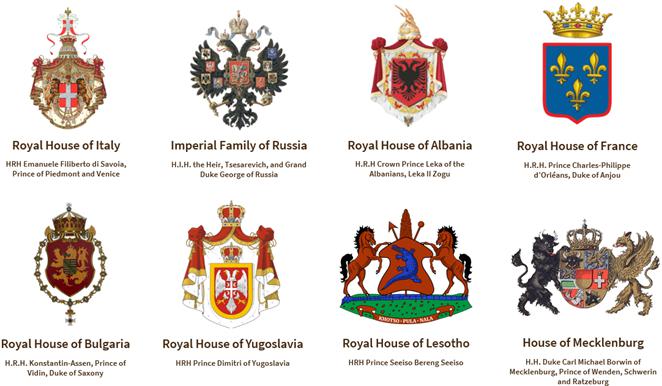
We believe that TheRoyal.Land will introduce the first historically inspired monarchy-based MMORPG, founded by the Prince of Italy and reinforced by the Royal Families.
Our objective is to connect and engage with players from around the world through epic royalty-themed entertainment by becoming a worldwide leader in the development, publishing, and distribution of high-quality interactive entertainment content and services, as well as related media, that deliver engaging entertainment experiences to our network of connected players on a year-round basis. Players, in their selected roles, will represent every part of TheRoyal.Land society. From the Artisans that guide the skilled trades of old to the Knights and Squires that guard the Realm. From Prisoner to Prince, each role will hold specific purposes, abilities, skills, chances for advancement, and adventures.
To that end, we expect to capitalize on the expanding video games market, with worldwide revenue expected to grow to approximately $366 billion in 2023 according to Statista, and the increased interest in the world of royalty, to expand our brand and our products worldwide (Statista, Video Games – Worldwide, November 2022).
43
We are currently in the development phase for TheRoyal.Land and myRoyal.World. On June 30, 2023, we entered into a project agreement with Neosperience S.p.A., or Neosperience, pursuant to which Neosperience will design and develop TheRoyal.Land using AI enabled technology. The first phase of the project agreement shall commence upon the pricing of the Company’s initial public offering. Neosperience plans to use AI models to create complex and dynamic in-game environments and realistic and emotive characters and to assist with dynamically adjusting the difficulty level and game balance in real time based on player behavior and performance to keep the game challenging yet rewarding. For example, Neosperience’s AI enabled technology can imbue non-player characters, or NPCs, with various behaviors, which we believe makes them seem more lifelike and responsive thereby enhancing player immersion and creating a more engaging gameplay experience. Additionally, Neosperience intends to use advanced modeling and rendering techniques to create realistic player characters and NPCs that dynamically interact utilizing a full range of human-like emotions, reactions and movements giving them a depth of character which we believe is rarely seen in video games.
As of the date of this prospectus, the expected cost to ready the game for beta version release is approximately $3 to $5 million. As indicated under “Use of Proceeds”, we expect the proceeds of this offering will be used primarily to finance game development and related products and services. The pre-production playable beta version of TheRoyal.Land is expected to be released within approximately twelve months after the proceeds are received from this offering. Unforeseen delays in product development, turnover of resources and lack of capital may impact our delivery timeline. In addition, we have secured the domains, TheRoyaLand.online and TheRoyaLand.io, on which we expect to host TheRoyal.Land, and have finished website development for TheRoyal.Land. We are also in the early stages of discussions with media companies to develop myRoyal.World media assets for various streaming platforms. We plan to add additional internal resources to ensure the quality and timely delivery of TheRoyal.Land and myRoyal.World’s assets and experiences.
As we launch our initial products over the next twelve months, our revenue will depend on our ability to successfully assemble an engaged community around TheRoyal.Land, who we believe will become long-term players of our mobile and online games. We expect that our future revenues will depend on our ability to monetize the game-playing environment of TheRoyal.Land, as well as potential ancillary products, services, and events.
Our Historical Performance
The Company’s independent registered public accounting firm has expressed substantial doubt as to the Company’s ability to continue as a going concern. As of June 30, 2023, we had cash (including cash in escrow) and total assets of $134,543 and $192,233, respectively, and we had an accumulated deficit of $1,071,997. We estimate we will be able to conduct our planned operations using currently available capital resources, including resources received from our July private placements, for the next five months. However, in order to meet our growth expectations, we will need to raise funds beyond our current working capital balance in order to finance future development of TheRoyal.Land and myRoyal.World and meet any debt obligations until such time as future profitable revenues are achieved. We will seek to fund our operations through public offerings, including this offering, private equity offerings, debt financings, and government or other third-party funding. However, the Company may not be able to raise adequate funds for capital expenditures, working capital and other cash requirements from capital markets on acceptable terms, or at all. Advances from an officer or shareholder may likewise be unavailable. The Company’s failure to raise capital as and when needed and generate significantly higher revenues than operating expenses to achieve profitability would impact its going concern status and would have a negative impact on its financial condition and its ability to pursue its business strategy and continue as a going concern. For further discussion, see “Management’s Discussion and Analysis of Financial Condition and Results of Operations – Liquidity and Capital Resources – Going Concern”.
Recent Developments
Private Placements
On July 14, 2023 and July 18, 2023, we conducted private placements of Class B Common Shares and entered into certain subscription agreements with a number of (i) accredited investors as defined in Section 2(a)(15) of the Securities Act, and Rule 501 promulgated thereunder, in reliance upon the exemption contained in Section 4(a)(2) of the Securities Act, and Rule 506(b) of Regulation D promulgated thereunder, and applicable state securities laws or (ii) non-U.S. persons made in compliance with the provisions of Regulation S promulgated under the Securities Act. Pursuant to the agreements, we issued 375,000 Class B Common Shares at $1.00 per share for a total of $375,000. The shares are subject to certain lockup provisions until 180 days after the commencement of trading of our Class B Common Shares, subject to certain exceptions. See “Shares Eligible For Future Sale—Lock-Up Agreements”. Boustead Securities, LLC, or Boustead, acted as placement agent in these private placements. Pursuant to our engagement letter agreement with Boustead, in addition to payments of a success fee of $26,250, or 7% of the total purchase price of the shares sold in the private placement, and a non-accountable expense allowance of $3,750, or 1% of the total purchase price of the shares sold in the private placement, we agreed to issue Boustead five-year warrants to purchase up to 26,250 Class B Common Shares in aggregate, exercisable on a cashless basis, with an exercise price of $1.00 per share, subject to adjustment.
On July 21, 2023, we conducted a private placement of units of securities, consisting of (i) one Class B Common Share and (ii) a three-year-term warrant to purchase 2.5 Class B Common Shares (the “Units”), and entered into certain subscription agreements with a number of (i) accredited investors as defined in Section 2(a)(15) of the Securities Act, and Rule 501 promulgated thereunder, in reliance upon the exemption contained in Section 4(a)(2) of the Securities Act, and Rule 506(b) of Regulation D promulgated thereunder, and applicable state securities laws or (ii) non-U.S. persons made in compliance with the provisions of Regulation S promulgated under the Securities Act. Pursuant to the agreements, we issued 500,000 Units at $1.00 per Unit for a total of $500,000. The Units are subject to certain lockup provisions until 180 days after the commencement of trading of our Class B Common Shares, subject to certain exceptions. See “Shares Eligible For Future Sale—Lock-Up Agreements”. Boustead acted as placement agent in this private placement. Pursuant to our engagement letter agreement with Boustead, in addition to payments of a success fee of $35,000, or 7% of the gross amount actually received by the Company in the private placement, and a non-accountable expense allowance of $5,000, or 1% of the gross amount actually received by the Company in the private placement, we agreed to issue Boustead five-year warrants to purchase up to 35,000 Class B Common Shares in aggregate, exercisable on a cashless basis, with an exercise price of $1.00 per share, subject to adjustment.
44
Impact of COVID-19 Pandemic
In December 2019, a novel strain of coronavirus was reported to have surfaced in Wuhan, China. On March 11, 2020, the World Health Organization declared the outbreak a pandemic. To date, there have been a large number of temporary business closures, quarantines and a general reduction in consumer activity around the world.
The spread of the virus in many countries continues to adversely impact global economic activity and has contributed to significant volatility and negative pressure in financial markets and supply chains. The pandemic has had, and could have a significantly greater, material adverse effect on the Italian economy as a whole, as well as the local economy where we conduct our operations. The pandemic has resulted, and may continue to result for an extended period, in significant disruption of global financial markets, which may reduce our ability to access capital in the future, which could negatively affect our liquidity.
If the COVID-19 pandemic does not continue to slow and the spread of COVID-19 is not contained, our business operations, could be further delayed or interrupted. We expect that government and health authorities may announce new or extend existing restrictions, which could require us to make further adjustments to our operations in order to comply with any such restrictions. We may also experience limitations in employee resources. In addition, our operations could be disrupted if any of our employees were suspected of having COVID-19, which could require quarantine of some or all such employees or closure of our facilities for disinfection. The duration of any business disruption cannot be reasonably estimated at this time but may materially affect our ability to operate our business and result in additional costs.
The extent to which the pandemic may impact our results will depend on future developments, which are highly uncertain and cannot be predicted as of the date of this prospectus, including the effectiveness of vaccines and other treatments for COVID-19, and other new information that may emerge concerning the severity of the pandemic and steps taken to contain the pandemic or treat its impact, among others. Nevertheless, the pandemic and the current financial, economic and capital markets environment, and future developments in the global supply chain and other areas present material uncertainty and risk with respect to our performance, financial condition, results of operations and cash flows. See also “Risk Factors” for more information.
Principal Factors Affecting Our Financial Performance
Our operating results are primarily affected by the following factors:
| ● | our ability to acquire and retain new customers and users; |
| ● | our ability to offer competitive pricing; |
| ● | our ability to broaden product or service offerings; |
| ● | industry demand and competition; |
| ● | our ability to leverage technology and use and develop efficient processes; |
| ● | our ability to attract and retain talented employees and contractors; and |
| ● | market conditions and our market position. |
45
Emerging Growth Company
Upon the completion of this offering, we will qualify as an “emerging growth company” under the JOBS Act. As a result, we will be permitted to, and intend to, rely on exemptions from certain disclosure requirements. These provisions include exemption from the auditor attestation requirement under Section 404 of the Sarbanes-Oxley Act of 2002 in the assessment of the emerging growth company’s internal control over financial reporting. In addition, Section 107 of the JOBS Act also provides that an emerging growth company can take advantage of the extended transition period provided in Section 7(a)(2)(B) of the Securities Act for complying with new or revised accounting standards. In other words, an emerging growth company can delay the adoption of certain accounting standards until those standards would otherwise apply to private companies. We have elected to take advantage of the benefits of this extended transition period. Our financial statements may therefore not be comparable to those of companies that comply with such new or revised accounting standards.
We will remain an emerging growth company until the earliest of (i) the last day of the fiscal year during which we have total annual gross revenues of at least $1.235 billion; (ii) the last day of our fiscal year following the fifth anniversary of the completion of this offering; (iii) the date on which we have, during the preceding three year period, issued more than $1.0 billion in non-convertible debt; or (iv) the date on which we are deemed to be a “large accelerated filer” under the Exchange Act, which could occur if the market value of our Common shares that are held by non-affiliates exceeds $700 million as of the last business day of our most recently completed second fiscal quarter. Once we cease to be an emerging growth company, we will not be entitled to the exemptions provided in the JOBS Act discussed above.
Results of Operations
Comparison of Years Ended June 30, 2023 and 2022
The financial statements presented in this filing include the consolidated financial statements of the Company and the separate financial statements of OAPLT, a predecessor company, which was acquired on November 29, 2022. The consolidated financial statements presented in this filing are expressed in U.S. dollars which is our functional currency.
The following table sets forth key components of the consolidated results of operations of The RoyaLand Company Ltd. (“Successor”) and of OAPLT (“Predecessor”), for the period from November 29, 2022 to June 30, 2023 (Successor), the period from July 1, 2022 to November 28, 2022 (Predecessor), and for the year ended June 30, 2022 (Predecessor).
| Statements of Operations Data | Period from November 29, 2022 to June 30, 2023 (Successor) | %
of Revenue | Period from July 1, 2022 to November 28, 2022 (Predecessor) | % of Revenue | Year Ended June 30, 2022 (Predecessor) | % of Revenue | ||||||||||||||||||
| Revenue | $ | - | N/A | $ | 4,869 | 100 | % | $ | 29,925 | 100 | % | |||||||||||||
| Cost of revenue | - | N/A | - | - | % | - | - | % | ||||||||||||||||
| Impairment of goodwill | 149,369 | N/A | - | - | % | - | - | % | ||||||||||||||||
| General and administrative expenses | 500,368 | N/A | 7,144 | 147 | % | 63,514 | 212 | % | ||||||||||||||||
| Operating loss | (649,737 | ) | N/A | (2,275 | ) | (47 | )% | (33,589 | ) | (112 | )% | |||||||||||||
| Other income (expense) | 1,986 | N/A | (37 | ) | - | % | 4,080 | 14 | % | |||||||||||||||
| Loss before income taxes | (647,751 | ) | N/A | (2,312 | ) | (47 | )% | (29,509 | ) | (99 | )% | |||||||||||||
| Provision for income taxes | - | N/A | - | - | % | - | - | % | ||||||||||||||||
| Net loss | $ | (647,751 | ) | N/A | $ | (2,312 | ) | (47 | )% | $ | (29,509 | ) | (99 | )% | ||||||||||
While the above table reflects amounts reported in our accompanying consolidated financial statements, we believe that a review of operating results which combine entire amounts for the Successor and Predecessor companies is more useful in discussing our overall operating performance amounts when comparing the years ended June 30, 2023 and 2022.
46
The following tables reflect unaudited pro forma combined results for the years ended June 30, 2023 and 2022, both in U.S. dollars and as a percentage of revenue.
| Statements of Operations Data | The RoyaLand Company Ltd. Period from November 29, 2022 to June 30, 2023 (Successor) | RoyaLand Nevada Period from July 1, 2022 to November 28, 2022 (Successor) | OAPLT Period from July 1, 2022 to November 28, 2022 (Predecessor) | Pro Forma Combined Year Ended June 30, 2023 (Unaudited) | ||||||||||||||||
| Amount | %
of Revenue | |||||||||||||||||||
| Revenue | - | - | 4,869 | 4,869 | 100 | % | ||||||||||||||
| Cost of revenue | - | - | - | - | - | |||||||||||||||
| Impairment of goodwill | 149,369 | - | - | 149,369 | 3,068 | % | ||||||||||||||
| General and administrative expenses | 500,368 | 253,126 | 7,144 | 760,638 | 15,622 | % | ||||||||||||||
| Operating loss | (649,737 | ) | (253,126 | ) | (2,275 | ) | (905,138 | ) | (18,589 | )% | ||||||||||
| Other income (expense) | 1,986 | (37 | ) | 1,948 | 40 | % | ||||||||||||||
| Loss before income taxes | (647,751 | ) | (253,126 | ) | (2,312 | ) | (903,190 | ) | (18,549 | )% | ||||||||||
| Provision for income taxes | - | - | - | - | - | |||||||||||||||
| Net loss | (647,751 | ) | (253,126 | ) | (2,312 | ) | (903,190 | ) | (18,549 | )% | ||||||||||
| Statements of Operations Data | OAPLT Year Ended June 30, 2022 (Predecessor) | RoyaLand Nevada Period from January 28, 2022 (Inception) to June 30, 2022 (Successor) | Pro Forma Combined Year Ended June 30, 2022 (Unaudited) | |||||||||||||
| Amount | %
of Revenue | |||||||||||||||
| Revenue | 29,925 | - | 29,925 | 100 | % | |||||||||||
| Cost of revenue | - | - | - | - | ||||||||||||
| General and administrative expenses | 63,514 | 171,120 | 234,634 | 784 | % | |||||||||||
| Operating loss | (33,589 | ) | (171,120 | ) | (204,709 | ) | (684 | )% | ||||||||
| Other income (expense) | 4,080 | - | 4,080 | 14 | % | |||||||||||
| Loss before income taxes | (29,509 | ) | (171,120 | ) | (200,629 | ) | (670 | )% | ||||||||
| Provision for income taxes | - | - | - | - | ||||||||||||
| Net loss | (29,509 | ) | (171,120 | ) | (200,629 | ) | (670 | )% | ||||||||
47
Revenue
Revenue for the years ended June 30, 2023 and 2022 was $4,869 and $29,925, respectively, representing a decrease of 83.7%. All revenue was generated from OAPLT for both periods. The principal activities of OAPLT for the periods presented above were the conception, development and management of a digital and artistic creation studio, and included the creation of apps, websites, the hosting of web products and the provision of services in relation thereto. The decrease in revenue was due to fewer client engagements.
For the year ended June 30, 2023, two customers accounted for 100% of net revenue. For the year ended June 30, 2022, five customers accounted for 94.1% of net revenue with one customer accounting for 30.2% of net revenue. Each of the customers contracted OAPLT to perform certain graphic design and web development services for discrete projects. OAPLT had no written agreements with these customers and the agreements are not ongoing. OAPLT had no material relationships with these customers. We do not expect to generate recurring revenue from these customers in future periods due to the change of our business strategy from contract design and development work to the design, development and promotion of TheRoyal.Land and myRoyal.World. The following table sets forth a summary of the material terms of the verbal agreements with these customers.
| Date of Invoice |
Hours | Amount of Invoice |
Percent of Yearly Revenue |
Type of Service | ||||||||||||
| Year ended June 30, 2023 | ||||||||||||||||
| Customer #1 | 10/04/22 | 6 | $ | 3,264 | 62.5 | % | Graphic design and web development | |||||||||
| Customer #2 | 11/22/22 | 3 | $ | 1,958 | 37.5 | % | Graphic design and web development | |||||||||
| Year ended June 30, 2022 | ||||||||||||||||
| Customer #1 | 2/18/2022 | 4 | $ | 2,256 | 30.2 | % | Graphic design and web development | |||||||||
| 3/26/2022 | 6 | $ | 3,383 | |||||||||||||
| 6/10/2022 | 6 | $ | 3,383 | |||||||||||||
| Customer #2 | 9/3/2021 | 10 | $ | 5,075 | 29.0 | % | Graphic design and video production | |||||||||
| 12/17/2021 | 10 | $ | 3,609 | |||||||||||||
| Customer #3 | 5/30/2022 | 7 | $ | 3,947 | 13.2 | % | Graphic design | |||||||||
| Customer #4 | 3/26/2022 | 6 | $ | 3,383 | 11.3 | % | Graphic design and web development | |||||||||
| Customer #5 | 9/28/2021 | 5 | $ | 3,102 | 10.4 | % | Web development | |||||||||
Impairment of Goodwill
On November 29, 2022, The RoyaLand Company Ltd. acquired 100% of the issued and outstanding shares of OAPLT. The acquisition was accounted for as a purchase business combination in accordance with IFRS 3, Business Combinations, whereby the purchase price paid to effect the acquisition was allocated to recognize the acquired assets and liabilities at fair value. In allocating the purchase price, The RoyaLand Company Ltd. recognized initial goodwill of $149,369. The goodwill consisted primarily of intangible assets related to the knowhow, design and merchandising of OAPLT’s brands that do not qualify for separate recognition in accordance with IFRS 3. At the time of our acquisition, OAPLT had a relationship with a game developer, which relationship was a significant reason for making the acquisition and for our determination of value of OAPLT’s brand. In December 2022, it became unclear how much of the work performed by the game developer, if any, we would be able to use in our game development, calling into question the value of the relationship with the game developer. As a result, there were uncertainties as to the future financial performance of OAPLT. Given these circumstances, we recorded an operating expense of $149,369 during the period November 29, 2022 to June 30, 2023 as an impairment of the goodwill asset.
48
General and Administrative Expenses
General and administrative expenses for the years ended June 30, 2023 and 2022 was $760,638 and $234,634, respectively, representing an increase of 224.2%. For the year ended June 30, 2023, our general and administrative expenses principally consisted of consulting fees ($386,182) and legal and accounting costs ($344,605). The consulting fees include, among other things, $175,000 cost of common shares issued to advisors and $35,095 in expenses relating to our Chief Financial Officer and Chief Technology Officer. Consulting fees also include $170,087 paid to a previous game developer with which we no longer have a business relationship. Legal and accounting costs are associated with our investor offerings discussed in Note 7 to the accompanying consolidated financial statements.
For the year ended June 30, 2022, our general and administrative expenses mainly consisted of consulting fees ($166,193), wages and benefits ($45,983), and legal and accounting costs ($11,122). The consulting fees were amounts paid to the previous game developer mentioned above. Wages and benefits were amounts paid to employees of OAPLT, while legal and accounting costs are associated with our investor offerings discussed in Note 7 to the accompanying consolidated financial statements.
Operating Loss
Operating loss for the years ended June 30, 2023 and 2022 was $905,138 and $204,709, respectively, representing an increase of 342.2%. Operating loss for the years ended June 30, 2023 and 2022 resulted from the factors discussed above.
Other Income (Expense)
Other income for the years ended June 30, 2023 and 2022 was $1,948 and $4,080, respectively, representing a decrease of 52.3%. Other income for the year ended June 30, 2023 represents the collection of certain OAPLT amounts receivable written off in previous periods offset by interest expense of $60. Other income for the year ended June 30, 2022 mainly consisted of operating grants.
Net Loss
Net loss for the years ended June 30, 2023 and 2022 was $903,190 and $200,629, respectively, representing an increase of 350.2%. These losses resulted from the factors discussed above.
Liquidity and Capital Resources
As of June 30, 2023, we had a consolidated cash balance (including cash in escrow) and total assets of $134,543 and $192,233, respectively, and we had an accumulated deficit of $1,071,997. To date, we have financed our operations primarily through revenue generated from operations and sales of our common shares.
Management has prepared estimates of operations and believes that sufficient funds will be generated from operations and equity financings, including funding from this offering, to fund our operations for at least the next twelve months. During July 2023, we raised $875,000 in private placements of our Class B Common Shares. If we are unable to raise the additional funds, our currently available cash resources will be sufficient to fund our operations for at least the next five months. The Company’s founders have verbally agreed to support the Company if there is any deficit until the funds are raised. In the future, we may require additional cash resources due to changing business conditions, implementation of our strategy to expand our business, or other investments or acquisitions we may decide to pursue. If our own financial resources are insufficient to satisfy our capital requirements, we may seek to sell additional equity or debt securities or obtain additional credit facilities. The sale of additional equity securities could result in dilution to our shareholders. The incurrence of indebtedness would result in increased debt service obligations and could require us to agree to operating and financial covenants that would restrict our operations. Financing may not be available in amounts or on terms acceptable to us, if at all. Any failure by us to raise additional funds on terms favorable to us, or at all, could limit our ability to expand our business operations and could harm our overall business prospects.
49
The impact of COVID-19 on our business has been considered in these assumptions; however, it is too early to know the full impact of COVID-19 or its timing on a return to more normal operations.
The accompanying consolidated financial statements have been prepared on a going concern basis under which we are expected to be able to realize our assets and satisfy our liabilities in the normal course of business.
Going Concern
The accompanying consolidated financial statements for the Company have been prepared assuming that we will continue as a going concern. However, our independent registered public accounting firm has expressed substantial doubt as to the Company’s ability to continue as a going concern. We have incurred net losses since our inception, and as of June 30, 2023, we have minimal cash and an accumulated deficit of $1,071,997. As a result, there is substantial doubt about the Company’s ability to continue as a going concern.
Our ability to continue as a going concern is dependent upon our ability to generate profitable operations in the future and/or obtain the necessary financing to meet our obligations and repay our liabilities arising from normal business operations when they come due. Management has plans to seek additional capital through public offerings, including this offering, private equity offerings, debt financings, and government or other third-party funding. These plans, if successful, will mitigate the factors which raise substantial doubt about our ability to continue as a going concern.
However, the sale of additional equity securities could result in dilution to our shareholders. The incurrence of indebtedness would result in increased debt service obligations and could require us to agree to operating and financial covenants that would restrict our operations. Financing may not be available in amounts or on terms acceptable to us, if at all. Any failure by us to raise additional funds on terms favorable to us, or at all, could limit our ability to expand our business operations and could harm our overall business prospects.
Summary of Cash Flow
The following tables provide detailed information about our net cash flow for all financial statement periods presented in this prospectus.
Years Ended June 30, 2023 and 2022
The following table sets forth key components of the Company’s cash flow during the period from November 29, 2022 to June 30, 2023 (Successor), the period from July 1, 2022 to November 28, 2022 (Predecessor), and for the year ended June 30, 2022 (Predecessor).
| Period from November 29, 2022 to June 30, 2023 (Successor) |
Period from July 1, 2022 to November 28, 2022 (Predecessor) |
Year Ended July 1, 2021 to June 30, 2022 (Predecessor) |
||||||||||
| Net cash used in operating activities | $ | (424,740 | ) | $ | (3,330 | ) | $ | (27,028 | ) | |||
| Net cash provided by (used in) investing activities | - | - | - | |||||||||
| Net cash provided by (used in) financing activities | 413,336 | (19 | ) | 21 | ||||||||
| Net increase (decrease) in cash | (11,404 | ) | (3,349 | ) | (27,007 | ) | ||||||
| Cash, beginning of year | 146,130 | 5,292 | 34,665 | |||||||||
| Foreign currency translation adjustment | (183 | ) | 119 | (2,114 | ) | |||||||
| Cash, including cash in escrow, end of year | 134,543 | 2,062 | 5,544 | |||||||||
50
While the above table reflects amounts reported in our accompanying consolidated financial statements, we believe that a review of cash flow results which combine entire amounts for the Successor and Predecessor companies is more useful in discussing our overall cash flow changes when comparing the years ended June 30, 2023 and 2022.
The following tables reflect unaudited pro forma combined results for the years ended June 30, 2023 and 2022.
| Cash Flow Data | The RoyaLand Company Ltd. Period
from November 29, 2022 to June 30, 2023 (Successor) | RoyaLand Nevada Period from July 1, 2022 to November 28, 2022 (Successor) | OAPLT Period from July 1, 2022 to November 28, 2022 (Predecessor) | Pro Forma Combined (Unaudited) | ||||||||||||
| Net cash used in operating activities | (424,740 | ) | (66,915 | ) | 19 | (491,636 | ) | |||||||||
| Net cash used in investing activities | - | (132,989 | ) | - | (132,989 | ) | ||||||||||
| Net cash provided by financing activities | 413,336 | 275,000 | (19 | ) | 688,317 | |||||||||||
| Increase (decrease) in cash | (11,404 | ) | 75,096 | - | 63,692 | |||||||||||
| Cash, beginning of period | 146,130 | (75,096 | ) | - | 71,034 | |||||||||||
| Currency translation adjustment | (183 | ) | - | - | (183 | ) | ||||||||||
| Cash, end of period, including cash in escrow | 134,543 | - | - | 134,543 | ||||||||||||
| Cash Flow Data | OAPLT Period from July 1, 2022 to November 28, 2022 (Predecessor) | RoyaLand Nevada Period from January 28, 2022 (Inception) to June 30, 2022 (Successor) | Pro Forma Combined (Unaudited) | |||||||||
| Net cash used in operating activities | (27,028 | ) | (155,966 | ) | (182,994 | ) | ||||||
| Net cash provided by financing activities | 21 | 227,000 | 227,021 | |||||||||
| Increase (decrease) in cash | (27,007 | ) | 71,034 | 44,027 | ||||||||
| Cash, beginning of period | 34,665 | - | 34,665 | |||||||||
| Currency translation adjustment | (2,114 | ) | - | (2,114 | ) | |||||||
| Cash, end of period | 5,544 | (71,034 | ) | 76,578 | ||||||||
To date, the Company has financed its operations primarily through customer revenue and sales of its shares.
Net cash used in operating activities was $491,636 and $182,994 for the years ended June 30, 2023 and 2022, respectively. The increase was primarily due to the increase in the net loss during the year ended June 30, 2023 as compared to the year ended June 30, 2022.
Net cash used in investing activities was $132,989 and $0 for the years ended June 30, 2023 and 2022, respectively. The increase was primarily due to the cash paid for the acquisition of OAPLT.
Net cash provided by financing activities was $688,317 and $227,021 for the years ended June 30, 2023 and 2022, respectively. The increase was primarily due to an increase in the net proceeds from the sale of our common shares during the year ended June 30, 2023 as compared to the year ended June 30, 2022.
51
Founder Share Issuances
On January 28, 2022, RoyaLand Company issued 100,000 shares of common stock in connection with the incorporation of the RoyaLand Company, at an issue price of $0.001 per share, for a total consideration of $100. On March 1, 2022, the RoyaLand Company amended its articles of incorporation to authorize 300,000,000 shares of stock, consisting of (i) 250,000,000 shares of Common Stock, $0.001 par value per share, of which, 20,000,000 shares were designated Class A Common Stock, par value $0.001 per share, or the Class A Common Stock, and 230,000,000 shares were designated as Class B Common Stock, $0.001 par value per share, or the Class B Common Stock, and (ii) 50,000,000 shares of Preferred Stock, $0.001 par value per share; and effected a 100 to 1 forward stock split resulting in issued and outstanding shares of 6,500,000 of Class A Common Stock and 3,500,000 shares of Class B Common Stock.
The following table presents all of the shares owned before and after the forward stock split.
Shareholder | Common Stock Before Split | Class
A Common Stock After Split | Class
B Common Stock After Split | Aggregate Purchase Price Paid | ||||||||||||
| Emanuele Filiberto di Savoia, Chief Executive Officer and Director | 65,000 | 6,500,000 | - | $ | 65 | |||||||||||
| Pinehurst Partners LLC (1) | 25,000 | - | 2,500,000 | $ | 25 | |||||||||||
| Jean-Claude Sindres, Chief Strategy and Creative Officer | 10,000 | - | 1,000,000 | $ | 10 | |||||||||||
| (1) | Pinehurst Partners LLC is a Colorado limited liability company, 100% owned by the Roth individual retirement account of Daniel Joseph McClory. Pinehurst Partners LLC’s managing member is Daniel Joseph McClory, our Executive Chairman and Director. Daniel Joseph McClory is deemed to beneficially own the Class A Common Shares owned by Pinehurst Partners LLC and has sole voting and dispositive powers over its shares. Pinehurst Partners LLC’s business address is 6525 Gunpark Drive, Suite 370-103, Boulder, CO 80301. |
On October 25, 2022, we issued 1,000,000 Class A Common Shares in connection with the incorporation of The RoyaLand Company Ltd., at an issue price of $0.0002 per share, for a total consideration of $200. All of the shares were sold to members of our board of directors, executive officers or their affiliates and beneficial owners of more than 5% of our outstanding share capital, in reliance upon (i) the exemption contained in Section 4(a)(2) of the Securities Act, and Rule 506(b) of Regulation D promulgated thereunder, and applicable state securities laws, or (ii) the provisions of Regulation S promulgated under the Securities Act.
The following table presents the amounts of Class A Common Shares issued and aggregate purchase prices paid by the members of our board of directors, executive officers or their affiliates and beneficial owners of more than 5% of our outstanding share capital. The terms of these purchases were the same for all purchasers of our common shares.
Shareholder | Class
A Common Shares | Aggregate Purchase Price Paid | ||||||
| Emanuele Filiberto di Savoia, Chief Executive Officer and Director | 650,000 | $ | 130 | |||||
| Pinehurst Partners LLC (1) | 250,000 | $ | 50 | |||||
| Jean-Claude Sindres, Chief Strategy and Creative Officer | 100,000 | $ | 20 | |||||
| (1) | Pinehurst Partners LLC is a Colorado limited liability company, 100% owned by the Roth individual retirement account of Daniel Joseph McClory. Pinehurst Partners LLC’s managing member is Daniel Joseph McClory, our Executive Chairman and Director. Daniel Joseph McClory is deemed to beneficially own the Class A Common Shares owned by Pinehurst Partners LLC and has sole voting and dispositive powers over its shares. Pinehurst Partners LLC’s business address is 6525 Gunpark Drive, Suite 370-103, Boulder, CO 80301. |
52
Private Placements
On August 12, 2022 and September 30, 2022, RoyaLand Company conducted private placements of shares of Class B Common Stock and entered into certain subscription agreements with a number of (i) “accredited investors” as defined in Section 2(a)(15) of the Securities Act, and Rule 501 promulgated thereunder, in reliance upon the exemption contained in Section 4(a)(2) of the Securities Act, and Rule 506(b) of Regulation D promulgated thereunder, and applicable state securities laws or (ii) non-U.S. persons made in compliance with the provisions of Regulation S promulgated under the Securities Act. Pursuant to the agreements, RoyaLand Company issued 2,000,000 shares of Class B Common Stock at $0.25 per share for a total of $500,000. The shares were subsequently exchanged for Class B Common Shares as described below under “—Share Exchange Agreements”. The Class B Common Shares that the private placement investors now hold as a result of these transactions are subject to certain lockup provisions until 180 days after the commencement of trading of our Class B Common Shares, subject to certain exceptions. See “Shares Eligible For Future Sale—Lock-Up Agreements”.
On March 3, 2023, March 28, 2023, May 4, 2023, and June 30, 2023, we conducted private placements of Class B Common Shares and entered into certain subscription agreements with a number of (i) accredited investors as defined in Section 2(a)(15) of the Securities Act, and Rule 501 promulgated thereunder, in reliance upon the exemption contained in Section 4(a)(2) of the Securities Act, and Rule 506(b) of Regulation D promulgated thereunder, and applicable state securities laws or (ii) non-U.S. persons made in compliance with the provisions of Regulation S promulgated under the Securities Act. Pursuant to the agreements, we issued 450,000 Class B Common Shares at $1.00 per share for a total of $450,000. The shares are subject to certain lockup provisions until 180 days after the commencement of trading of our Class B Common Shares, subject to certain exceptions. See “Shares Eligible For Future Sale—Lock-Up Agreements”. Boustead Securities, LLC, or Boustead, acted as placement agent in these private placements. Pursuant to our engagement letter agreement with Boustead, in addition to payments of a success fee of $31,500, or 7% of the total purchase price of the shares sold in the private placement, and a non-accountable expense allowance of $4,500, or 1% of the total purchase price of the shares sold in the private placement, we agreed to issue Boustead five-year warrants to purchase up to 31,500 Class B Common Shares in aggregate, exercisable on a cashless basis, with an exercise price of $1.00 per share, subject to adjustment.
Share Exchange Agreements
On November 28, 2022, we entered into a share exchange agreement with RoyaLand Company and its stockholders, pursuant to which all the stockholders of RoyaLand Company exchanged their shares for an equal number of shares in the Company, except for Emanuele Filiberto di Savoia, Pinehurst Partners, LLC, and Jean-Claude Sindres, who received the amount of shares they had in RoyaLand Company minus the amount of Company shares they subscribed for on October 25, 2022. As a result, the share exchange became effective under Nevada and Bermuda law, and RoyaLand Company became our wholly-owned subsidiary.
On November 29, 2022, we entered into a share purchase agreement as buyer with the shareholders of OAPLT as sellers, pursuant to which we purchased all of OAPLT’s share capital for cash of $132,988 and the option for the sellers to subscribe for up to 75,000 Class B Common Shares of the Company at a maximum price of $0.50 per share. As a result, the share purchase became effective under French law, and OAPLT became our wholly-owned subsidiary. On November 29, 2022, the sellers exercised their option to subscribe for 75,000 Class B Common Shares for $0.50 per share in reliance upon the provisions of Regulation S promulgated under the Securities Act.
Share Transfer
On January 6, 2023, Emanuele Filiberto di Savoia, our Chief Executive Officer and director, transferred 500,000 Class A Common Shares to Arturo Barone, which upon transfer were automatically converted to 500,000 Class B Common Shares.
On March 23, 2023, Jean Claude Sindres, our Chief Strategy and Creative Officer, transferred 100,000 Class A Common Shares to Neurosciences Research International - FZCO, which upon transfer were automatically converted to 100,000 Class B Common Shares.
On June 14, 2023, Daniel Joseph McClory, our Executive Chairman and director, transferred 180,000 Class B Common Shares to each of Grant McClory, Pierce McClory, and Shaye McClory and 60,000 Class B Common Shares to Alberto Libanori, our director.
Restricted Share Issuance Under Equity Incentive Plan
On May 31, 2023, we entered into advisor agreements with seven consultants, pursuant to which we issued 25,000 Class B Common Shares under the 2023 Plan as compensation for services, for a total issuance of 175,000 Class B Common Shares.
53
Contractual Obligations
None
Capital Expenditures
None
Lease Commitments
None
Contingencies
We are currently not a defendant in any material legal proceedings, investigation, or claims.
Off-Balance Sheet Arrangements
We have no off-balance sheet arrangements that have or are reasonably likely to have a current or future effect on our financial condition, changes in financial condition, revenues or expenses, results of operations, liquidity, capital expenditures or capital resources.
Quantitative and Qualitative Disclosures about Market Risk
Risk Management Overview
Market risk represents the risk of loss that may impact our financial position due to adverse changes in financial market prices and rates. Our market risk exposure is primarily the result of fluctuations in foreign exchange rates as well as, to a lesser extent, inflation and credit and concentration risks. This note provides information about our exposure to each of these risks, our objectives, policies and processes for measuring and managing risk. Further quantitative disclosures are included throughout these consolidated financial statements.
Financial Risk Factors (the Company)
We believe our activities do not expose us to any market, credit or liquidity risk. We estimate that we will receive net proceeds of approximately $5.3 million in this offering, based upon an assumed initial public offering price of $5.00 per share, which is the low point of the estimated range of the initial public offering price shown on the cover page of this prospectus, assuming no exercise of the over-allotment option and after deducting underwriting discounts and commissions and the estimated offering expenses payable by us.
Financial Risk Factors (OAPLT)
Given the short-term nature of OAPLT’s assets and liabilities and the stability of the markets in which it operates, we believe its exposure to be minimal. The exposure to credit risk is influenced mainly by the individual characteristics of each customer and the concentration of risk from the top few customers. Given that OAPLT’s customer agreements generally consist of one performance obligation, its exposure to credit risk is also not significant. With respect to liquidity, OAPLT’s ability to meet its obligations on time is dependent on the success of its operations, which to date have given it adequate liquidity to meet our obligations.
With respect to concentration risks, for the year ended June 30, 2023, two customers accounted for 100% of net revenues with one customer accounting for 62.5% of net revenues and for the year ended June 30, 2022, five customers accounted for 94.1% of net revenues with one customer accounting for 30.2% of net revenues.
OAPLT’s functional currency is the euro but its results and financial positions are translated into U.S. dollars as follows:
| (i) | Assets and liabilities are translated at the current exchange rate at the balance sheet date and historical rates for equity; |
| (ii) | Revenue and expenses are translated at the weighted average closing exchange rate for the period reported in the consolidated statement of profit or loss. When the average exchange rate does not provide a reasonable approximation of the cumulative effect of the rates prevailing on the transaction date, the Company utilizes the closing exchange rate on the date of the transaction. |
| (iii) | Gains and losses resulting from foreign currency translation are included as a component of stockholders’ equity. Foreign currency transaction gains and losses are included in the results of operations. |
54
Critical Accounting Policies and Estimates
The following discussion relates to critical accounting policies for our company. The preparation of financial statements in conformity with IFRS requires our management to make assumptions, estimates and judgments that affect the amounts reported, including the notes thereto, and related disclosures of commitments and contingencies, if any. We have identified certain accounting policies that are significant to the preparation of our financial statements. These accounting policies are important for an understanding of our financial condition and results of operation. Critical accounting policies are those that are most important to the portrayal of our financial condition and results of operations and require management’s difficult, subjective, or complex judgment, often as a result of the need to make estimates about the effect of matters that are inherently uncertain and may change in subsequent periods. Certain accounting estimates are particularly sensitive because of their significance to financial statements and because of the possibility that future events affecting the estimate may differ significantly from management’s current judgments. We believe the following critical accounting policies involve the most significant estimates and judgments used in the preparation of our financial statements:
Use of Estimates and Judgments
The preparation of financial statements in conformity with IFRS requires management to make estimates, judgements and assumptions that affect the application of accounting policies and the reported amounts of assets, liabilities, revenues, and expenses during the period. Estimates and underlying assumptions are reviewed on an ongoing basis. Revisions to accounting estimates are recognized in the period in which the estimates are revised and in any future periods affected. Areas in which management has made critical judgments in the process of applying accounting policies and that have the most significant effect on the amounts recognized in the consolidated financial statements include the determination of our Company’s functional currencies and the collectability of our accounts receivable and other current assets. Information about key assumptions and estimation uncertainties that have a significant risk of resulting in a material adjustment to the carrying amount of assets and liabilities within the next financial year are included in the notes to the financial statements included with this prospectus.
Fair Value of Financial Instruments
Fair value is defined as the exchange price that would be received for an asset or paid to transfer a liability (an exit price) in the principal or most advantageous market for the asset or liability in an orderly transaction between market participants as of the measurement date. Applicable accounting guidance provides an established hierarchy for inputs used in measuring fair value that maximizes the use of observable inputs and minimizes the use of unobservable inputs by requiring that the most observable inputs be used when available. Observable inputs are inputs that market participants would use in valuing the asset or liability and are developed based on market data obtained from sources independent of our Company. Unobservable inputs are inputs that reflect our Company’s assumptions about the factors that market participants would use in valuing the asset or liability. The fair value hierarchy consists of the following three levels of inputs that may be used to measure fair value:
| Level 1 | — | Observable inputs that reflect quoted prices (unadjusted) for identical assets or liabilities in active markets.
| |||
| Level 2 | — | Inputs other than quoted prices included in Level 1 that are observable in the marketplace either directly (i.e., as prices) or indirectly (i.e., derived from prices).
| |||
| Level 3 | — | Unobservable inputs which are supported by little or no market activity. |
Revenue Recognition
We recognize revenue in OAPLT under the guidance of IFRS 15, Revenue from Contracts with Customers. Under this guidance, revenue is recognized upon the application of the following steps:
| 1. | Identification of the contract with a customer; |
| 2. | Identification of the performance obligations in the contract; |
| 3. | Determination of the transaction price; |
| 4. | Allocation of the transaction price to the performance obligations in the contract; and |
| 5. | Recognition of revenue when, or as, the performance obligation is satisfied. |
55
Our revenue arrangements with customers predominantly involve a single performance obligation related to the creation and delivery of apps, websites, the hosting of web products and the provision of services in relation thereto. A payment obligation is established at the time we transfer control of the product or service to the customer.
We exclude from the measurement of each transaction price, if applicable, all taxes imposed on and concurrent with a specific revenue-producing transaction and collected by us from a customer. Such taxes collected are included in accounts payable on the balance sheets as they would ultimately be remitted to governmental authorities.
Income Taxes
Income tax expense comprises current and deferred taxes. Current taxes and deferred taxes are recognized in profit or loss except to the extent that they relate to a business combination, or items recognized directly in equity or in other comprehensive loss.
Current taxes are the expected tax receivable or payable on the taxable income or loss for the year, using tax rates enacted or substantively enacted at the reporting date, and any adjustment to tax receivable or payable in respect of previous years. Deferred taxes are recognized in respect of temporary differences between the carrying amounts of assets and liabilities for financial reporting purposes and the amounts used for taxation purposes.
Deferred taxes are not recognized for the following temporary differences: the initial recognition of assets or liabilities in a transaction that is not a business combination and that affects neither accounting nor taxable profit or loss, and differences relating to investments in subsidiaries and jointly controlled entities to the extent that it is probable that they will not reverse in the foreseeable future.
In addition, deferred taxes are not recognized for taxable temporary differences arising on the initial recognition of goodwill. Deferred taxes are measured at the tax rates that are expected to be applied to temporary differences when they reverse, based on the tax laws that have been enacted or substantively enacted by the reporting date. Deferred tax assets and liabilities are offset if there is a legally enforceable right to offset current tax assets and liabilities, and they relate to income taxes levied by the same tax authority on the same taxable entity, or on different tax entities, but they intend to settle current tax assets and liabilities on a net basis or their tax assets and liabilities will be realized simultaneously. A deferred tax asset is recognized for unused tax losses, tax credits and deductible temporary differences, to the extent that it is probable that future taxable profits will be available against which they can be utilized. Deferred tax assets are reviewed at each reporting date and are reduced to the extent that it is no longer probable that the related tax benefit will be realized.
Net Income/Loss Per Share
We compute net income (loss) per share, or EPS for our shares. Basic EPS is calculated by dividing the profit or loss attributable to our capital shareholders by the weighted average number of capital shares outstanding during the period. Diluted EPS is computed similar to basic EPS except that the weighted average shares outstanding are increased to include additional shares for the assumed exercise of any exercisable instruments, if dilutive. The number of additional shares is calculated by assuming that outstanding exercisable instruments were exercised and that the proceeds from such exercise were used to acquire capital shares at the average market price during the reporting periods. As of June 30, 2023 and 2022, we had no potentially dilutive shares.
56
Overview
RoyaLand is a Bermuda holding company focused on creating an online and offline immersive, fantasy-based royalty-themed experience called myRoyal.World, primarily centered around a mobile-first massively multiplayer online role-playing game, or MMORPG, called TheRoyal.Land. We are actively focused on developing a novel, interactive and immersive game based on a player-empowered design. We plan to build proprietary digital avatars and provide opportunities to players to earn in-game reward currency, build virtual land, and own their online assets while enhancing all of these features with premium incremental in-game content.

(This is a pre-launch screenshot from TheRoyal.Land which is subject to change prior to release.)
We are developing TheRoyal.Land and myRoyal.World in collaboration with our founder, the Monaco-based grandson of the last King of Italy, Emanuele Filiberto di Savoia, who claims the titles of His Royal Highness, Prince of Venice, and Prince of Piedmont and is also referred to in this prospectus as the hereditary “Prince of Italy.” In addition, with the support of and affiliation with seven other royal families and families with legal, hereditary or historically based claims to royal positions in Russia, Albania, France, Bulgaria, Yugoslavia, Lesotho, and Mecklenburg collectively referred to as the Royal Families, TheRoyal.Land is intended to deliver this unique past-meets-future entertainment experience.
57
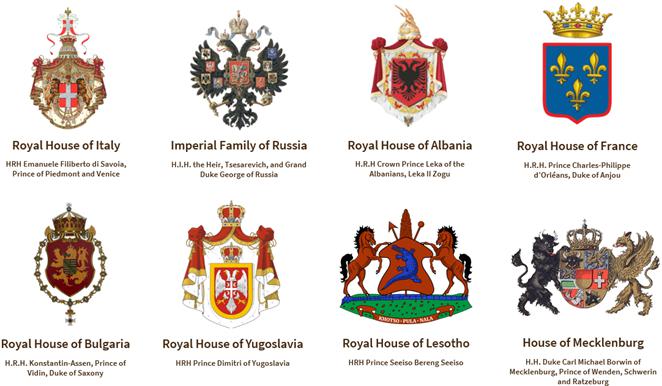
We believe that TheRoyal.Land will introduce the first historically inspired monarchy-based MMORPG, founded by the Prince of Italy and reinforced by the Royal Families.
Our objective is to connect and engage with players from around the world through epic royalty-themed entertainment by becoming a worldwide leader in the development, publishing, and distribution of high-quality interactive entertainment content and services, as well as related media, that deliver engaging entertainment experiences to our network of connected players on a year-round basis. Players, in their selected roles, will represent every part of TheRoyal.Land society. From the Artisans that guide the skilled trades of old to the Knights and Squires that guard the Realm. From Prisoner to Prince, each role will hold specific purposes, abilities, skills, chances for advancement, and adventures.
We are currently in the development phase for TheRoyal.Land and myRoyal.World. On June 30, 2023, we entered into a project agreement with Neosperience S.p.A., or Neosperience, pursuant to which Neosperience will design and develop TheRoyal.Land using AI enabled technology. The first phase of the project agreement shall commence upon the pricing of the Company’s initial public offering. Neosperience plans to use AI models to create complex and dynamic in-game environments and realistic and emotive characters and to assist with dynamically adjusting the difficulty level and game balance in real time based on player behavior and performance to keep the game challenging yet rewarding. For example, Neosperience’s AI enabled technology can imbue non-player characters, or NPCs, with various behaviors, which we believe makes them seem more lifelike and responsive thereby enhancing player immersion and creating a more engaging gameplay experience. Additionally, Neosperience intends to use advanced modeling and rendering techniques to create realistic player characters and NPCs that dynamically interact utilizing a full range of human-like emotions, reactions and movements giving them a depth of character which we believe is rarely seen in video games.
As of the date of this prospectus, the expected cost to ready the game for beta version release is approximately $3 to $5 million. As indicated under “Use of Proceeds”, we expect the proceeds of this offering will be used primarily to finance game development and related products and services. The pre-production playable beta version of TheRoyal.Land is expected to be released within approximately twelve months after the proceeds are received from this offering. Unforeseen delays in product development, turnover of resources and lack of capital may impact our delivery timeline. In addition, we have secured the domains, TheRoyaLand.online and TheRoyaLand.io, on which we expect to host TheRoyal.Land, and have finished website development for TheRoyal.Land. We are also in the early stages of discussions with media companies to develop myRoyal.World media assets for various streaming platforms. We plan to add additional internal resources to ensure the quality and timely delivery of TheRoyal.Land and myRoyal.World’s assets and experiences.
58

(This is a pre-launch screenshot from TheRoyal.Land which is subject to change prior to release.)
Our Corporate History and Structure
We were incorporated pursuant to the laws of Bermuda as The RoyaLand Company Ltd., an exempted company with limited liability, on October 18, 2022. On January 28, 2022, RoyaLand Company, a Nevada corporation, or RoyaLand Company, was formed, and subsequently conducted private placements, as described below. On November 28, 2022, we acquired RoyaLand Company in a share exchange transaction in which its shareholders became our shareholders and RoyaLand Company became our wholly-owned subsidiary, as described below. OAPLT, a French joint stock company (société par actions simplifiée), or OAPLT, was formed on November 24, 2017. On November 29, 2022, OAPLT was acquired by us from its shareholders and became our wholly-owned subsidiary, as described below.
On August 12, 2022 and September 30, 2022, RoyaLand Company conducted private placements of shares of Class B Common Stock, and entered into certain subscription agreements with a number of (i) “accredited investors” as defined in Section 2(a)(15) of the Securities Act, and Rule 501 promulgated thereunder, in reliance upon the exemption contained in Section 4(a)(2) of the Securities Act, and Rule 506(b) of Regulation D promulgated thereunder, and applicable state securities laws or (ii) non-U.S. persons made in compliance with the provisions of Regulation S promulgated under the Securities Act. Pursuant to the agreements, RoyaLand Company issued 2,000,000 shares of Class B Common Stock at $0.25 per share for a total of $500,000. The shares were subsequently exchanged for Class B Common Shares as described below. The Class B Common Shares that the private placement investors now hold as a result of these transactions are subject to certain lockup provisions until 180 days after the commencement of trading of our Class B Common Shares, subject to certain exceptions. See “Shares Eligible For Future Sale—Lock-Up Agreements”.
On October 25, 2022, we issued 1,000,000 Class A Common Shares in connection with the incorporation of The RoyaLand Company Ltd., at an issue price of $0.0002 per share, for a total consideration of $200. All of the shares were sold to members of our board of directors, executive officers or their affiliates and beneficial owners of more than 5% of our outstanding share capital, in reliance upon (i) the exemption contained in Section 4(a)(2) of the Securities Act, and Rule 506(b) of Regulation D promulgated thereunder, and applicable state securities laws, or (ii) the provisions of Regulation S promulgated under the Securities Act.
On November 28, 2022, we entered into a share exchange agreement with RoyaLand Company and its stockholders, pursuant to which all the stockholders of RoyaLand Company exchanged their shares for an equal number of shares in the Company, except for Emanuele Filiberto di Savoia, Pinehurst Partners, LLC, and Jean-Claude Sindres, who received the amount of shares they had in RoyaLand Company minus the amount of Company shares they subscribed for on October 25, 2022. As a result, the share exchange became effective under Nevada and Bermuda law, and RoyaLand Company became our wholly-owned subsidiary.
On November 29, 2022, we entered into a share purchase agreement as buyer with the shareholders of OAPLT as sellers, pursuant to which we purchased all of OAPLT’s share capital for cash of $132,988 and the option for the sellers to subscribe for up to 75,000 Class B Common Shares of the Company at a maximum price of $0.50 per share. As a result, the share purchase became effective under French law, and OAPLT became our wholly-owned subsidiary. On November 29, 2022, the sellers exercised their option to subscribe for 75,000 Class B Common Shares for $0.50 per share in reliance upon the provisions of Regulation S promulgated under the Securities Act.
59
On January 6, 2023, Emanuele Filiberto di Savoia, our Chief Executive Officer and director, transferred 500,000 Class A Common Shares to Arturo Barone, which upon transfer were automatically converted to 500,000 Class B Common Shares.
On March 23, 2023, Jean Claude Sindres, our Chief Strategy and Creative Officer, transferred 100,000 Class A Common Shares to Neurosciences Research International - FZCO, which upon transfer were automatically converted to 100,000 Class B Common Shares.
On June 14, 2023, Daniel Joseph McClory, our Executive Chairman and director, transferred 180,000 Class B Common Shares to each of Grant McClory, Pierce McClory, and Shaye McClory and 60,000 Class B Common Shares to Alberto Libanori, our director.
On March 3, 2023, March 28, 2023, May 4, 2023, June 30, 2023, July 14, 2023 and July 18, 2023, we conducted private placements of Class B Common Shares and entered into certain subscription agreements with a number of (i) accredited investors as defined in Section 2(a)(15) of the Securities Act, and Rule 501 promulgated thereunder, in reliance upon the exemption contained in Section 4(a)(2) of the Securities Act, and Rule 506(b) of Regulation D promulgated thereunder, and applicable state securities laws or (ii) non-U.S. persons made in compliance with the provisions of Regulation S promulgated under the Securities Act. Pursuant to the agreements, we issued 825,000 Class B Common Shares at $1.00 per share for a total of $825,000. The shares are subject to certain lockup provisions until 180 days after the commencement of trading of our Class B Common Shares, subject to certain exceptions. See “Shares Eligible For Future Sale—Lock-Up Agreements”. Boustead acted as placement agent in these private placements. Pursuant to our engagement letter agreement with Boustead, in addition to payments of a success fee of $57,750, or 7% of the total purchase price of the shares sold in the private placement, and a non-accountable expense allowance of $8,250, or 1% of the total purchase price of the shares sold in the private placement, we agreed to issue Boustead five-year warrants to purchase up to 57,750 Class B Common Shares in aggregate, exercisable on a cashless basis, with an exercise price of $1.00 per share, subject to adjustment.
On May 31, 2023, we entered into advisor agreements with seven consultants, pursuant to which we issued 25,000 Class B Common Shares under the 2023 Plan as compensation for services, for a total issuance of 175,000 Class B Common Shares.
On July 21, 2023, we conducted a private placement of units of securities, consisting of (i) one Class B Common Share and (ii) a three-year-term warrant to purchase 2.5 Class B Common Shares (the “Units”), and entered into certain subscription agreements with a number of (i) accredited investors as defined in Section 2(a)(15) of the Securities Act, and Rule 501 promulgated thereunder, in reliance upon the exemption contained in Section 4(a)(2) of the Securities Act, and Rule 506(b) of Regulation D promulgated thereunder, and applicable state securities laws or (ii) non-U.S. persons made in compliance with the provisions of Regulation S promulgated under the Securities Act. Pursuant to the agreements, we issued 500,000 Units at $1.00 per Unit for a total of $500,000. The Units are subject to certain lockup provisions until 180 days after the commencement of trading of our Class B Common Shares, subject to certain exceptions. See “Shares Eligible For Future Sale—Lock-Up Agreements”. Boustead acted as placement agent in this private placement. Pursuant to our engagement letter agreement with Boustead, in addition to payments of a success fee of $35,000, or 7% of the gross amount actually received by the Company in the private placement, and a non-accountable expense allowance of $5,000, or 1% of the gross amount actually received by the Company in the private placement, we agreed to issue Boustead five-year warrants to purchase up to 35,000 Class B Common Shares in aggregate, exercisable on a cashless basis, with an exercise price of $1.00 per share, subject to adjustment.
The following diagram depicts our organizational structure, including our subsidiaries, following the completion of this offering. This diagram includes our controlling shareholders of Class A Common Shares, as a group, current shareholders of Class B Common Shares, as a group, and the public shareholders that will receive Class B Common Shares in this offering, as a group. The Class A Common Shares and Class B Common Shares holdings of these shareholders is also depicted.

60
Our Industry
TheRoyal.Land lies at the nexus of several expanding markets in the video games market, with worldwide revenue expected to grow to approximately $366 billion in 2023 according to Statista (Statista, Video Games – Worldwide, November 2022). The most relevant segments of the video games market to our business are mobile games and online games.
Mobile Games
Mobile games are gaming applications for smart devices such as smartphones and tablets. Leading app stores like Google’s Play Store and Apple’s App Store offer paid app downloads (single purchases) and freemium games that are free to download but usually allow in-app purchases for more or special content or access. Physical games for mobile consoles/handhelds and free-to-play gaming apps are not included.
| ● | Revenue in the mobile games segment is projected to reach approximately $316 billion in 2023. | |
| ● | Revenue is expected to show a compound annual growth rate, or CAGR, of approximately 7.36% from 2023 to 2027, resulting in a projected market volume of approximately $420 billion by 2027. | |
| ● | In the mobile games segment, the number of users is expected to amount to approximately 2.3 billion users by 2027. | |
| ● | User penetration will be approximately 25.1% in 2023 and is expected to hit approximately 29.2% by 2027. | |
| ● | In a global comparison, most revenue will be generated in China (approximately $97 billion in 2023). | |
| ● | The average revenue per user, or ARPU, in the mobile games segment is projected to amount to approximately $164.00 in 2023. |
(Statista, Mobile Games – Worldwide, November 2022)
61
Online Games
Online games include massively multiplayer online games, or MMOGs, and casual and social games that can be played directly in the internet browser or with software that is installed on the user’s device. This category covers subscription-based games, e.g., World of Warcraft, and free-to-play games with in-game purchases for additional premium content or functionalities, e.g., Fortnite.
| ● | Revenue in the online games segment is projected to reach approximately $26 billion in 2023. | |
| ● | Revenue is expected to show a CAGR of approximately 5.64% from 2023 to 2027, resulting in a projected market volume of approximately $33 billion by 2027. | |
| ● | In the online games segment, the number of users is expected to amount to approximately 1.2 billion by 2027. | |
| ● | User penetration will be approximately 14.7% in 2023 and is expected to hit approximately 15.8% by 2027. | |
| ● | In a global comparison, most revenue will be generated in China (approximately $6.1 billion in 2023). | |
| ● | The ARPU in the online games segment is projected to amount to approximately $23.11 in 2023. |
(Statista, Online Games – Worldwide, November 2022)
Our Market Opportunity
We believe that royal families and their societies remain of great interest to the public, as reflected in popular Netflix series with royalty-related themes such as “Downton Abbey” and “The Crown.” The passing in September 2022 of Her Majesty Queen Elizabeth II of England and the transition to her son, King Charles III, has also brought heightened attention and relevance to the royalty market. We plan on relying on the following marketing campaigns and approaches to penetrate the market:
| ● | Hosting Twitter Spaces on Gaming: We will host real-time conversations using Twitter Spaces, a feature within Twitter that allows for live audio conversations, for our followers and players to discuss the state of gaming, primarily MMORPGs and mobile games. |
| ● | Releasing Video Teasers: We plan to release short video teasers to develop and solidify interest in our suite of experiences, which will include in-game cut scenes and gameplay. |
| ● | Hosting contests: We plan to develop strong communities, both online and offline, and plan to keep these communities engaged by hosting a variety of contests involving TheRoyal.Land. |
| ● | Utilizing Twitter and Instagram Ads: We plan to utilize ads on social media, such as Twitter and Instagram, to increase awareness of TheRoyal.Land and build a loyal following in collaboration with key vendors and advertising experts. |
| ● | Developing YouTube Sponsorships: We believe influencers have been essential for brands and we plan to curate our social media influencers for TheRoyal.Land, with a particular focus on YouTube. |
62
Our Business Model and Revenue Drivers
We will offer players many ways to experience our bona fide royalty-centered world and adventures and interact with our community.
TheRoyal.Land
We seek to build a strong, established franchise through compelling content and by expanding our community to reach as many consumers as possible by offering our content on multiple platforms, particularly mobile, the largest and fastest growing platform, and delivering compelling experiences across multiple business models, including premium, free-to-play, and subscription-based.
Our main planned product is TheRoyal.Land. We expect players to be attracted to its novel game mechanics and the community we are actively developing. Also, we plan on providing creative tools for the community to engage more deeply with our content and experiences. We plan to use these attributes to enable an engaged community, a fluid gaming experience, and tight cybersecurity.
As part of this experience, we believe it would enable two types of business opportunities:
Business-to-Consumer Opportunities
Our business-to-consumer strategy will center on our players, their needs and feelings, once they come into contact with our user-centered game and immersive royal experience. We plan to derive revenue from selling premium accessories, such as unique skins, weapons, and tools, and access to more quests, missions, and areas within TheRoyal.Land. Additionally, we plan to derive revenue from sales to players of plots of virtual land, buildings, and other structures in TheRoyal.Land, which is designed to replicate real-world venues and other related locations portrayed in TheRoyal.Land. We will have a set number of plots, buildings and other structures that are scheduled to be sold.
Business-to-Business Opportunities
Our business-to-business strategy will focus on onboarding large brands and companies so that they can deploy their digital strategy and product marketing around TheRoyal.Land, reaching what we believe will be our diverse and dynamic community. We plan to work with other businesses to extend their brands inside TheRoyal.Land, and we expect to develop further collaborative relationships with them. Currently, we plan to offer in-game advertising and virtual land sales to businesses as TheRoyal.Land is being designed to be an immersive world. While traversing our game, players may see products and stores from real-life companies or brands. We expect to be able to sell these brands advertising space and virtual land in TheRoyal.Land.
myRoyal.World
We plan to provide real-life experiences to complement TheRoyal.Land and our virtual engagement with our customers to immerse them in a royal experience; hence, myRoyal.Land would provide the following offline experiences:
| ● | Media production: Utilizing our partnerships with the Royal Families, we plan to jointly promote our royal experience by creating television shows and movies in collaboration with leading streaming platforms, such as Netflix, Amazon Prime or Disney, and are in the early stages of discussions with media companies. |
| ● | Merchandise: We plan to offer TheRoyal.Land themed merchandise, such as t-shirts, hats and caps and hoodies, and tickets to TheRoyal.Land based events, such as virtual and live appearances with the Royal Families and the launches of our mobile and online games. We do not currently have any merchandise or events scheduled. |
63
Competitive Strengths
We believe that the following competitive strengths contribute to our success and differentiate us from our competitors:
| ● | Unique video game experience. We intend to provide authentic and unique royalty-based digital and physical products and experiences, including TheRoyal.Land, an MMORPG with experiences and fun game mechanics that immerse the player at any game stage, whether they are just starting or have already logged hundreds of hours of gameplay. TheRoyal.Land is being planned by the Royal Families to be an immersive, strategic, role-playing action game within a historically based setting. |
| ● | Solid community. A game without a community has no future, which is why we are endeavoring to develop a stable game community and video game that connects game creators and game players. We believe this enthusiastic community will be what constantly improves the gaming experience. We envision the game creators and developers interacting with the players to continuously receive feedback so we can offer players a game that better meets our founders’ goals and the expectations of the players. We plan to enable players to communicate with each other, help each other, form coalitions, and elect the Queen or King for the game’s upcoming months/seasons. |
| ● | Actual ownership. We plan to enable a player to be the owner of their avatar representing their digital identity utilizing traditional in-game purchase methods customary for MMORPGs. |
Growth Strategies
The key elements of our strategy to expand our business include the following:
| ● | Utilizing the brands of the Royal Families. We plan to capitalize on the brand rights relating to the legacies of the Royal Families mentioned above, including any currently held royal titles, followers, and brands, by enabling them to transition to the virtual worlds we intend to create together. |
| ● | Developing unique, player-owned, and tradeable avatars. We plan to create engaging, attractive, functional, and, ultimately, purchasable and tradable avatars for TheRoyal.Land for our players and community. |
64
Our Game – TheRoyal.Land
Game Synopsis
In the Year 500, the Realm was split into the Ten Lands. Each Land, in turn, was gifted with a part of the divinely protected Queen Saël Demidea in the form of a Divine Artifact. These ten Divine Artifacts imbue each Land with its own identity and birthright.
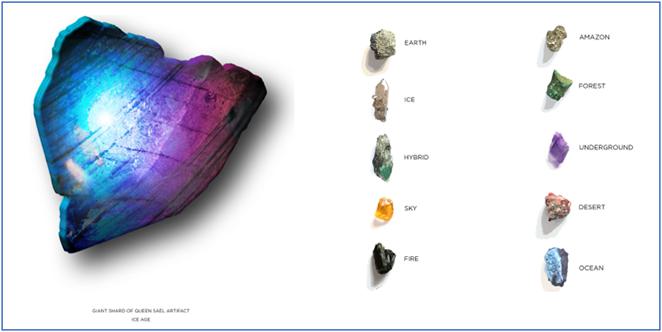
(This is a pre-launch screenshot from TheRoyal.Land which is subject to change prior to release.)
For another 808 years, Queen Saël ruled over these Lands, and she brought peace, prosperity, and order.
But now? Chaos and division rule. A shattered monarchy, spoiled by savagery, awaits either divine deliverance or destruction. With Queen Saël’s unexpected death and loss of her divine protection, the Ten Lands have fallen into turmoil and rivalry. And Saël’s heirs contemplate their path to the vacant seat of power.
Some may be worthy, and some may not. Only the Test of the Forge will decide each fate: To pass the Test, a royal claimant must find and plunge a Divine Artifact into the eternal flames of the Forge. Either wisdom and worth or madness and destruction may follow. Both legitimate and illegitimate heirs plot to ascend to the throne, but at what cost to themselves or the people of TheRoyal.Land?
But what of you? You are the people. Be you Duke, Duchess, Farmer, or Artisan - the choice is yours. You ply the earth or wield the sword to further yourself, your people, and your Land.
Countess, Duke, Baroness, or Marquis. You are the nobility of TheRoyal.Land. In service to Queen Saël, your charge is to aid the Royal Court. To rule in the Queen’s name and carry out the royal charge. But now? To whom shall you pledge your loyalty?
65
Dame or Knight. Your mission is simple: To serve and defend the Royal Court and the people. But you have yet much work to do. The wastelands crawl with vile beasts and strange creatures. And nothing but a shadow rests upon the throne. And if there is to be war? Where would your loyalty lie then?
Farmer and Artisan. You are the providers. You feed, clothe, and fend for the people. Your work is hard but profitable. Through your trades, you earn $Royal with which to support your family. You pay your taxes. You are the wealth of the Realm. But whose Realm will it be now?
And the Prisoners, you are too in the Realm. You are the rogue—the liar and a thief. Your disloyalty and dishonesty have cost you your freedom but haven’t hampered your ambition. Will you do your penance for liberty... Or to whom shall you lie, cheat, or steal to alter your present condition? The darkest souls are the most difficult to see in a fallen world. Atonement, however, always offers a path to honor and redemption should that road be chosen.
MMORPG with Universal Appeal
TheRoyal.Land is intended to merge conventional MMORPG experiences with the dynamics of offline events and interactions, providing a full royal-themed experience. Players are expected to be able to select from various preferred roles in TheRoyal.Land social structure, from farming to royalty. Each avatar is planned to offer specialized skills and attributes. Each character class is designed to have its unique way of earning TheRoyal.Land in-game currencies as the game is played.
Experienced PC and console gamers are expected to revel in this rich fantasy world. We are designing TheRoyal.Land to enable players to explore, quest, compete, and collaborate with others across the Ten Lands. We expect that players will be able to build, craft, sell, and command to expand their wealth, reputation, and experience.
We are developing a framework for an MMORPG and the licensing of its real-world merchandise with the Royal Families, while building TheRoyal.Land community with a series of initiatives, including:
| ● | Twitter “Ask Management Anything” online chat sessions and community hub introducing TheRoyal.Land concept, experiences, and the ability to interact directly with the Royal Families in this leading social media communications environment. |
| ● | Discord site and community hub furthering TheRoyal.Land concept, experiences, and planned MMORPG environment. |
Planned Features
Based on a mythical monarchy inspired by the Royal Families, TheRoyal.Land is planned for launch with the following planned features:
| ● | Play to earn in-game reward currency. This is planned to be the primary medium of exchange between players and is expected to serve as the principal source of rewards, potentially allowing them to buy premium accessories. |
| ● | Premium incremental in-game content. We plan to offer players enhanced experiences and customization opportunities by releasing premium total in-game content in character accessories such as unique skins, weapons, and tools; access to more quests, missions, and areas within TheRoyal.Land game, and mor building and design options. We expect that these digital revenue streams will be more recurring and have relatively higher profit margins. |
Essential Design Elements
TheRoyal.Land is currently in development, but we expect it to have the following essential design. At the beginning of the game, the player will choose which character class they would like to be, ranging from a prisoner to a duke. This choice will decide which quests and missions the player will be given. The character’s quests can vary from simple actions to economic and social interactions with other players in the community. Every six months, the community of players can elect their Queen or King. The status of Queen or King will give access to powerful advantages in TheRoyal.Land, such as greater decision-making power, receiving accessories for one’s character, receiving a plot of land or castle, buying or trading more raw materials, and more.
66
TheRoyal.Land is planned to offer immersive play-and-earn opportunities through trades, collecting taxes, completing specific tasks, and building prosperous TheRoyal.Land related careers, players are expected to be able to earn valuable in-game currencies to deepen and extend their gameplay.
We believe that TheRoyal.Land will introduce the first historically inspired monarchy-based MMORPG, founded by the Prince of Italy and reinforced the Royal Families. Players, in their selected roles, will represent every part of TheRoyal.Land society. From the Artisans that guide the skilled trades of old to the Knights and Squires that guard the Realm. From Prisoner to Prince, each role will hold specific purposes, abilities, skills, chances for advancement, and adventures.
From farming to fiefdoms, TheRoyal.Land is expected to create an enchanting world for gamers to master. Players are expected to be able to make their way through these lands, participate in deep storylines and enjoy distinctive graphic designs.
TheRoyal.Land Characters
QUEEN/KING: The Queen and King will be elected by popular vote of the community every six months. This will be a title that any other character class can be elected to and will give access to powerful advantages in TheRoyal.Land, such as greater decision-making power, receiving accessories for one’s character, receiving a plot of land or castle, buying or trading more raw materials, and more.
PRINCE/PRINCESS: The Prince/Princess will be in charge of one of the Ten Lands and will give the military, judicial and financial directives to the Marquis/Marquise, Count/Countess and Duke/Duchess, respectively. They will rule over their Land with divine wisdom and must be level-headed in their decisions, lest they succumb to madness.
DUKE/DUCHESS: The Duke/Duchess will be in charge of royal finances. The Duke/Duchess must manage all financial aspects of their domains. They will be in direct contact with the Prince/Princess, the citizens creating the natural wealth, and the Barons/Baronesses. They must be strategic in prioritizing construction and the distribution of men, materials, and gold. They will have only one goal, that their people prosper against the enemy.
COUNT/COUNTESS: The Count/Countess will be the great administrator of royal justice. Exercising the functions of witness, lawyer respectively, and judge to apply the divine laws of the kingdom, they will monitor the populations in search of misdeeds, treacheries, impostors, scammers, spies, and conspiracies to have these perpetrators brought to justice and locked up. They will have the heavy task of assigning roles to each new prisoner according to his abilities.
MARQUIS/MARQUISE: The Marquis/Marquise will carry out their military duties on the lands of TheRoyal.Land and report directly to the Prince/Princess. As the possessor of territory, their title of nobility will place them above that of the Knight/Dame. They will also rank as generals in TheRoyal.Land army thanks to their military power and ability to master the art of war.
BARON/BARONESS: The Baron/Baroness will owe homage to the Duke/Duchess and Count/Countess. They must be elegant and refined and carry the kingdom’s colors beyond its borders. Diplomatic missions, espionage, commodities exchanges, materials, techniques, or tough negotiations will be within their role, so the Baron must know how to be versatile. Master of arms by education, they will also vigorously defend the wealth and international stature of the kingdom.
KNIGHT/DAME: The Knight/Dame will be known for bravery, power, and courage. When admitted into the order of chivalry, they will acquire a title of nobility of a higher degree than that of Soldier, with a fitting combat mount. They must use their expertise in mounted combat, hand-to-hand combat skills, and other armed interventions to extend the kingdom’s influence. The Knight/Dame will protect the kingdom mostly outside its walls.
SOLDIER: The Soldier will come from the people. Selected and trained very young in the royal army, their commitment will be nurtured into their convictions. The barracks will be their home, iron their tool, and the regiment their family. They will be equipped and educated to defend their kingdom at the cost of their life. With catapults, knives, bows, halberds, and other weaponry, the Soldier will be called on to use their skills to defend the kingdom.
SQUIRE: The Squire will be a Gentleman or Lady in the service of the Knights, the equipment of war, and the Barons or Baronesses. Managing the equestrian staff, they must train and care for the beasts ridden by the Knights/Dames and refurbish the equipment of the royal army in combat situations. The Squire must be brave, quick, and resourceful in a conflict zone. They must act according to alliances under the orders of the Baron/Baroness.
67
ARTISAN: The Artisan will be a legal status awarded by a kingdom to a person experienced in manual work. The Artisan must be gifted with their art, the practice of crafting materials into tools. They will be invested in the knowledge and conventional techniques specific to their city. A central figure in the kingdom’s development, they will be the only class with knowledge of technology. Exercising their qualities in the service of the Duke/Duchess, they must also develop infrastructure within the kingdom and outside.
FARMER: The Farmer will be vital to the longevity of a kingdom. They must manage both the kingdom’s agricultural needs and community health. Their farms must produce the livestock and agricultural commodities that will feed and enable the kingdom to thrive. They will be under the protection and supervision of the Marquis/Marquise.
PRISONER: The Prisoner will be anonymous; they have lost their rank and honor. Fallen into the hands of the enemy during a war or punished by their nation, they will find themselves in the common jails among the poor. Their main objective is to regain freedom. They must prove their worth by rendering community services to earn it honorably. For some, being held by the enemy will be fatal, while for others, those with enough patience and intelligence, it will be an opportunity to prove their worth in other ways.
Development Timeline
| ● | Phase One: This is the preproduction phase where we intend to complete the scripting of the story around the game, develop and draw the game environment elements and the scenery, the different characters, and the details of the gameplay features. We have engaged Neosperience to complete the storyboard of TheRoyal.Land which shall commence upon the pricing of the Company’s initial public offering and to move the game into production and development under Phase Two. |
| ● | Phase Two: In this phase, we plan to start the production and development of the first prototype, which includes the different characters, whether they are playable or just decorative. We will also plan the production of the various sets, animations, and voice-overs and produce the game interactions, as well as the production and development of the online pipeline. We expect this phase of development to take a minimum of nine months. |
| ● | Phase Three: In this phase, we will be testing the prototype version with the debugging process. At the same time, we will be deploying our marketing for our beta launch. Our beta launch will include a carefully curated process to select the demographics we wish to introduce to this version of the game in order to gather the most relevant feedback. We expect this phase of development to take approximately four months. |
| ● | Phase Four: In this phase, we will release the game worldwide accessible by mobile and desktop browsers and start the maintenance system. The game will be accessible while online after following a simple registration process. We believe we will be able to release TheRoyal.Land within the next twenty-four months. |
Unforeseen delays in product development, turnover of resources and lack of capital may impact our delivery timeline. We plan to add additional internal resources to ensure high quality and timely delivery of TheRoyal.Land and TheRoyal.Land-themed media assets.
Competition
Competition in the entertainment software industry is based on innovation, features, playability, product quality, brand name recognition, compatibility with popular platforms, access to distribution channels, price, marketing, and customer service. We compete for the leisure time and discretionary spending of consumers with other interactive entertainment companies and software competitors, as well as with providers of different forms of entertainment, such as film, television, social networking, music, and other consumer products. Our main competitors are:
| ● | Minecraft: Minecraft is a multi-platform “sandbox” adventure game, like a virtual 3D Lego-like building game, which gives players a practically infinite hollow virtual world with which they can discover and extract raw materials, craft tools, and items, and builds structures, earthworks, and simple machines. |
| ● | Elden Ring: In Elden Ring, players control a customizable player character on a journey to repair the Elden Ring and become the new Elden Lord. The game is presented from a third-person perspective, with players roaming its interactive open world. Gameplay elements include combat using several weapons and magic spells, horseback riding and crafting. |
| ● | World of Warcraft: World of Warcraft is an MMORPG. Like other MMORPGs, the game allows players to create a character avatar and explore an open game world in third- or first-person view, exploring the landscape, fighting various monsters, completing quests, and interacting with non-player characters or other players. The game encourages players to work together to complete quests, enter dungeons and engage in player versus player combat; however, the game can also be played solo without interacting with others. The game primarily focuses on character progression, in which players earn experience points to level up their character to make them more powerful and buy and sell items using in-game currency to acquire better equipment, among other game systems. |
68
We believe that we have competitive strengths, some of which are discussed above, that position us in each aspect of our business favorably. However, the technology industry is evolving rapidly and is increasingly competitive. Our success depends, in part, on our ability to be efficient in all aspects of the business and achieve the appropriate cost structure. Some of our competitors have economic resources more significant than ours. They may have lower cost structures allowing them to withstand volatility within the industry better and throughout the economy as a whole while retaining significantly greater operating and financial flexibility than our company.
Intellectual Property
The protection of our intellectual property and all corresponding rights throughout the world, including our trademarks, service marks, trade dress, logos, trade names, domain names, goodwill, patents, copyrights, works of authorship (whether or not copyrightable), software and trade secrets, know-how, and proprietary and other confidential information, together with all applications, registrations, renewals, extensions, improvements and counterparts in connection with any of the preceding, is essential to the success of our business. We will seek to protect our intellectual property rights by filing applications in various copyright, patent, trademark, and other government offices, as applicable, and relying on applicable laws and regulations in the U.S. and internationally, as well as a variety of administrative procedures. We are seeking to register our core brands as domain names, trademarks, and service marks in the U.S. and many other jurisdictions. We will also have a program to continue to secure, police, and enforce trademarks, service marks, trade dresses, logos, trade names, and domain names that correspond to our brands in markets of interest. We may file patent applications in the U.S. and extend them into international jurisdictions covering specific aspects of our proprietary technology and innovations. We also rely on contractual restrictions to protect our proprietary rights where appropriate when offering or procuring products and services. We have routinely entered into confidentiality, invention disclosure, assignment agreements with our employees and contractors, and non-disclosure agreements with external parties with whom we conduct business to control access to and use and disclosure of our proprietary information.
Facilities
Our Bermuda holding company’s registered office is located at c/o Conyers Corporate Services (Bermuda) Limited, Clarendon House, 2 Church Street, Hamilton, Pembroke, HM11, Bermuda.
Our subsidiary OAPLT’s corporate office is located at 60 rue Francois 1er, 75008 Paris, France. We lease this facility pursuant to a one-year lease agreement, dated February 17, 2023, which will renew for subsequent one-year terms until terminated by either party upon three months’ notice. The lease provides for a base rent of €300 annually, subject to yearly increases.
We believe that all our properties have been adequately maintained, are generally in good condition, and are suitable and adequate for our businesses.
Employees
As of September 30, 2023, we had no full-time or part-time employees and three independent contractors. None of our contractors are represented by labor unions, and we believe that we have an excellent relationship with our contractors.
Legal Proceedings
From time to time, we may become involved in various lawsuits and legal proceedings which arise in the ordinary course of business. However, litigation is subject to inherent uncertainties and an adverse result in these or other matters may arise from time to time that may harm our business. We are currently not aware of any such legal proceedings or claims that we believe will have a material adverse effect on our business, financial condition or operating results.
69
Our Privacy Policy
We recognize that gamers care deeply about how their personal information is collected, used and shared.
When gamers use our game, they will be required to provide us with certain personal information. We intend to take commercially reasonable and appropriate measures to protect this personal information from accidental loss, misuse, and unauthorized access, disclosure, alteration, or destruction, taking into account the risks involved in processing and the nature of such data, and comply with applicable laws and regulations. We do not intend to transfer any personal information to third-parties that do not act on our behalf, and should we intend to do so, we will only do so with users’ consent. Similarly, we do not intend to collect sensitive personal information from users.
We may disclose personal information to certain types of third-party companies, but only to the extent needed to enable them to provide such services. The types of companies that may receive personal information and their functions are: marketing assistance, analytics and reporting, customer support, email and SMS delivery, cloud infrastructure, and systems monitoring. All such third parties function as our agents, performing services at our instruction and on our behalf pursuant to contracts which require them to provide at least the same level of privacy protection as is required by our privacy policy. In addition, we may be required to disclose personal information in response to lawful requests by public authorities, including for the purpose of meeting national security or law enforcement requirements. We may also disclose personal information to other third parties when compelled to do so by government authorities or required by law or regulation including, but not limited to, in response to court orders and subpoenas.
Laws and Regulations
We will be subject to various laws and regulations that affect companies conducting business on the Internet and mobile platforms, including those relating to privacy, use and protection of player and employee personal information and data (including the collection of data from minors), the Internet, behavioral tracking, mobile applications, content, advertising and marketing activities and anti-corruption. Additional laws in all of these areas are likely to be passed in the future, which could result in significant limitations on or changes to the ways in which we can collect, use, host, store or transmit the personal information and data of our customers or employees, communicate with our players and deliver products and services, which may significantly increase our compliance costs.
Data Protection and Information Security Regulations
We may be subject to a number of laws, rules, directives, and regulations (or privacy and data protection laws) relating to the collection, use, retention, security, processing, and transfer of personally identifiable information about our customers, users, and employees, or personal data, in the countries where we operate. Our business relies on the processing of personal data in many jurisdictions and the movement of data across national borders. As a result, much of the personal data that we process, which may include certain financial information associated with individuals, is subject to one or more privacy and data protection laws in one or more jurisdictions. In many cases, these laws apply not only to third-party transactions, but also to transfers of information between or among us, our subsidiaries, and other parties with which we have commercial relationships.
In the United States, privacy and information safeguarding requirements under privacy laws include the Gramm-Leach-Bliley Act, the Telephone Consumer Privacy Act, and the California Consumer Privacy Act, which requires privacy protections comparable to those afforded by the GDPR, as well as the maintenance of a written, comprehensive information security program. The California Privacy Rights Act, which expands upon the consumer data use restrictions, penalties and enforcement provisions under the CCPA, and Virginia’s Consumer Data Protection Act, another comprehensive data privacy law, will become effective January 1, 2023. The Colorado Privacy Act and Connecticut’s An Act Concerning Personal Data Privacy and Online Monitoring, which are also comprehensive consumer privacy laws, will become effective July 1, 2023. The Utah Consumer Privacy Act, regarding business handling of consumers’ personal data, becomes effective December 31, 2023. In addition, several other states and the federal government have considered or are considering privacy laws like the CCPA. Although we do not intend to carry out any substantial business activities in the United States or to become subject to these laws, we must continue to monitor and assess the impact of these laws, which may impose substantial penalties for violations, impose significant costs for investigations and compliance, allow private class-action litigation and carry significant potential liability for our business.
Outside of the United States, data protection laws, including the EU General Data Protection Regulation, or the GDPR, also might apply to some of our operations or business collaborators. Legal requirements in these countries relating to the collection, storage, processing and transfer of personal data/information continue to evolve. The GDPR imposes, among other things, data protection requirements that include strict obligations and restrictions on the ability to collect, analyze and transfer EU personal data/information, a requirement for prompt notice of data breaches to data subjects and supervisory authorities in certain circumstances, and possible substantial fines for any violations (including possible fines for certain violations of up to the greater of 20 million euros or 4% of total company revenue). Other governmental authorities around the world have enacted or are considering similar types of legislative and regulatory proposals concerning data protection.
Regulatory scrutiny of privacy, data protection, cybersecurity practices, and the processing of personal data is increasing around the world. Regulatory authorities are continuously considering numerous legislative and regulatory proposals and interpretive guidelines that may contain additional privacy and data protection obligations. In addition, the interpretation and application of these privacy and data protection laws in the United States, Europe, and elsewhere are often uncertain and in a state of flux.
70
Laws and Regulations Relating to E-Commerce
Our business will be subject to a variety of laws and regulations applicable to companies conducting business on the Internet. Jurisdictions vary as to how, or whether, existing laws governing areas such as personal privacy and data security, consumer protection or sales and other taxes, among other areas, apply to the Internet and e-commerce, and these laws are continually evolving. For example, certain applicable privacy laws and regulations require us to provide users with our policies on sharing information with third parties, and advance notice of any changes to these policies. Related laws may govern the manner in which we store or transfer sensitive information or impose obligations on us in the event of a security breach or inadvertent disclosure of such information. Additionally, tax regulations in jurisdictions where we do not currently collect state or local taxes may subject us to the obligation to collect and remit such taxes, or to additional taxes, or to requirements intended to assist jurisdictions with their tax collection efforts.
New legislation or regulation, the application of laws from jurisdictions whose laws do not currently apply to our business, or the application of existing laws and regulations to the Internet and e-commerce generally could result in significant additional taxes on our business. Further, we could be subject to fines or other payments for any past failures to comply with these requirements. The continued growth and demand for e-commerce is likely to result in more laws and regulations that impose additional compliance burdens on e-commerce companies.
Foreign Corrupt Practices Laws
We may be subject to various United States and non-U.S. anti-corruption laws, or Anti-Corruption Laws, including the FCPA in the United States and the Bermuda Bribery Act 2016 in Bermuda. These laws generally prohibit companies and their intermediaries from engaging in bribery or making other improper payments of cash (or anything else of value) to government officials and other persons in order to obtain or retain business. Our business operations also must be conducted in compliance with applicable economic sanctions laws and regulations, or Trade Controls, including rules administered by the United States Department of the Treasury’s Office of Foreign Assets Control, the United States Department of State, the United States Department of Commerce, the United Nations Security Council and other relevant authorities.
We strive to conduct our business activities in compliance with applicable Anti-Corruption Laws and Trade Controls, and we are not aware of issues of historical noncompliance. However, we cannot guarantee full compliance currently or in the future. Violations of Anti-Corruption Laws or Trade Controls, or even allegations of such violations, could result in civil or criminal penalties, as well as adversely affect our business, financial condition and results of operations. Further, changes to the applicable laws and regulations, and/or significant business growth, may result in the need for increased compliance-related resources and costs.
Tax Laws and Regulations
Changes in tax laws or regulations in the jurisdictions in which we do business, or changes in how the tax laws are interpreted, could further impact our effective tax rate, further restrict our ability to repatriate undistributed offshore earnings, or impose new restrictions, costs or prohibitions on our current practices and reduce our net income and adversely affect our cash flows.
We are also subject to tax audits and our tax positions may be challenged by tax authorities. Although we believe that our current tax provisions are reasonable and appropriate, there can be no assurance that these items will be settled for the amounts accrued, that additional tax exposures will not be identified in the future or that additional tax reserves will not be necessary for any such exposures. Any increase in the amount of taxation incurred as a result of challenges to our tax filing positions could result in a material adverse effect on our business, results of operations and financial condition.
Other Regulations
We will also be subject to international, federal, national, regional, state, local and other laws and regulations affecting our business, including Cboe’s rules, various labor, workplace and related laws, and environmental laws and regulations. Failure to comply with such laws and regulations may expose us to potential liability and have an adverse effect on our results of operations.
71
Directors and Executive Officers
The following table sets forth certain information regarding our directors and executive officers.
| NAME | AGE | POSITION | ||
| Emanuele Filiberto di Savoia | 51 |
Chief Executive Officer and Director | ||
| Bryan Elbez | 33 | Chief Financial Officer | ||
| Jean-Claude Sindres | 50 | Chief Strategy and Creative Officer | ||
| Soheil Raissi | 67 | Chief Technology Officer | ||
| Daniel Joseph McClory | 64 | Executive Chairman and Director | ||
| Alberto Libanori | 34 | Director | ||
| Nicole Holden | 50 | Director Nominee (1) | ||
| Pierre Galoppi | 63 | Director Nominee (1) |
| (1) | To be appointed to our board of directors effective automatically upon the effectiveness of the registration statement of which this prospectus forms a part. |
Emanuele Filiberto di Savoia has served as our Chief Executive Officer and as a member of our board of directors since October 2022. Mr. di Savoia is the grandson of Umberto II, the last reigning king of Italy who was deposed in 1946 and whose heirs could not set foot on Italian soil until 2002, and is considered the Prince of Italy. Mr. di Savoia worked as a hedge fund manager at Republic National Bank of New York from 1993 to 1996 and at Syz Bank from 1996 to 2005, both located in Geneva, Switzerland. Mr. di Savoia created the Altin Fund in 1997, the first hedge fund listed on the Zurich Stock Exchange. In 2003, Mr. di Savoia established the Emanuele Filiberto Charity Fund Foundation, which supports Italian nonprofits in such areas as health, education and poverty. Mr. di Savoia created his production company “AristoCrazy” in 2014 and has appeared on various television programs since 1994, including serving as a co-host on the talent show “Ciak... si Canta! (“Cut... the Singer!”) and competing on “Ballando con le Stelle,” the Italian version of “Dancing with the Stars,” which he won. In 2014, Mr. di Savoia created his own fashion brand called “PrinceTees” introducing a line of exclusive t-shirts made of cotton and cashmere. In 2017, Mr. di Savoia created Prince of Venice restaurants, a fast casual concept of fresh homemade pasta and Roman-style pizza. Mr. di Savoia has also written two books, Sognando L’Italia (Dreaming of Italy), a memoir about growing up in exile published in 1998, and the novel Mi Fai Stare Bene (You Make Me Feel Good), a fictional love story published in 2022 about the exploits of a well-known Italian radio DJ. Mr. di Savoia earned a bachelor’s degree in Political Science from the University of Geneva.
Bryan Elbez has served as our Chief Financial Officer since April 2023. Since September 2016, Mr. Elbez has been at Malom Consulting, a CPA firm in the U.S., beginning as an accountant and becoming a Certified Public Accountant in 2021, specializing in international taxation with a particular focus on the French-U.S. tax treaty. From August 2021 to December 2022, Mr. Elbez served as the Chief Financial Officer of Emets Management, an installation company, and supported their administrative and financial departments. Mr. Elbez has extensive expertise in accounting, corporate finance, corporate tax, management and administration consultancy and corporate services. Mr. Elbez earned a bachelor’s degree in Accounting from Enoes – Ecole Expertise Comptable et Audit and a master’s degree in Accounting from Ines Expertise. Since July 2018, Mr. Elbez has been licensed as a Certified Public Accountant. Mr. Elbez is fluent in English, French and Spanish.
Jean-Claude Sindres has served as our Chief Strategy and Creative Officer since February 2023. Since 1999, Mr. Sindres has been working as a musician and DJ with a focus on electro music and is currently focused on personal passion projects under the name SINDRES. Mr. Sindres created the group Bel Amour in 2000, whose song “bel amour” ended up in the EMI UK top charts in 2000. In 2001, he became the executive producer and director of Barfly, a compilation CD of electronic dance music, and he also produced tracks for the Buddha Bar compilation CDs from 2001 to 2007. Mr. Sindres collaborated with David Guetta and Sandy Vee on David Guetta’s album One Love in 2009, which won International Album of the Year at the 11th NRJ Music Awards. From 2010 to 2013, Mr. Sindres worked with RedOne as a songwriter on “Live My Life” by Far East Movement, “Name of Love” by French DJ Jean-Roch, and “Flashing Lights” and “We Run The Night (RedOne Remix)” by Havana Brown. Mr. Sindres worked on the French movies “Babysitting,” “Babysitting 2” and “The New Adventures of Aladdin” as a music consultant and composer from 2014 to 2016.
Soheil Raissi has served as our Chief Technology Officer since February 2023. Mr. Raissi has also served as the Chief Technology Officer of MarginPoint, a software development company focused on inventory management and field service solutions, since May 2018. Since July 2007, Mr. Raissi has been the Managing Principal and Chief Technology Strategist at Maptics, a digital transformation and software development company focused on blockchain, machine learning and artificial intelligence. From January 2016 to December 2017, Mr. Raissi was the Chief Information & Technology Officer at A-Mark Precious Metals, Inc. (Nasdaq: AMRK), a Fortune-500 precious metal trading company. Prior to working at A-Mark, Mr. Raissi was the Founder and Chief Executive Officer of FastPoint Technologies, a SaaS solution provider in the pharmaceutical market that linked manufacturers, distributors, and pharmacies to secure the supply chain and improve product security and patient safety between March 2010 and December 2015. Mr. Raissi is an active member of the Southern California Society of Information Management (SCSIM) and serves on the advisory boards of several technology companies. From 2002 to 2005, Mr. Raissi was an Advisory Committee Member of World Wide Web Consortium (W3C) and MIT Auto ID Labs. Mr. Raissi earned a bachelor’s degree in Computer Science from California State University.
Daniel Joseph McClory has served as our Executive Chairman and as a member of our board of directors since October 2022. Mr. McClory has also served as Executive Chairman and a member of the board of directors of Brera Holdings PLC (Nasdaq: BREA) since July 2022. Mr. McClory is a co-founder and has been the Chief Executive Officer and Chairman of Boustead & Company Limited, a non-bank financial institution, since July 2016. He has also been at its wholly owned subsidiary Boustead Securities, LLC and served as the Managing Director, Head of Equity Capital Markets and Head of China since July 2016. Prior to working at Boustead, Mr. McClory held Managing Director positions at Bonwick Capital Partners, LLC, Burnham Securities Inc. and at Hunter Wise Financial Group, LLC between May 2003 and July 2016. Mr. McClory’s teams have ranked in the Top Ten of League Tables for placement agents, won “Deal of the Year” at the M&A Advisor Awards, and completed IPOs and transactions for clients listed on Nasdaq, the NYSE, the London Stock Exchange, Toronto Stock Exchange, the Stock Exchange of Hong Kong, and the Irish Stock Exchange. Mr. McClory serves on the boards of the USA Track & Field Foundation, the Eastern Michigan University Champions Advisory Board, and the Alder Foundation, where he listed the first-ever foreign-funded, venture philanthropy-backed IPO on Bovespa’s Social Stock Exchange in Brazil. Mr. McClory earned a bachelor’s degree in English and a master’s degree in Language and International Trade from Eastern Michigan University. In 2010, Eastern Michigan University awarded Mr. McClory an honorary Doctor of Public Service degree.
72
Dr. Alberto Libanori has served as a member of our board of directors since October 2022. Since April 2022, Dr. Libanori has served as a Senior Advisor of Boustead & Company Limited. Dr. Libanori has also been a member of the board of directors for Mainz Biomed N.V. (Nasdaq: MYNZ) since November 2021 and Brera Holdings PLC (Nasdaq: BREA) since July 2022. Previously, Dr. Libanori founded and helped with the strategic exits of a number of technology start-ups including Atelier Mnemist SAS and Cutech, which was acquired by Symrise. He also has 10 years’ work experience at the science-business interface in venture capital, business development & licensing, M&A and IPOs, focusing on life-sciences, med-tech and cosmeceuticals, working with L’Oréal Research and Innovation, M-Ventures, and Novartis Venture Funds. Dr. Libanori has published more than 30 peer-reviewed articles in journals including Nature Electronics, Advanced Materials, and ACS Nano, and is the holder of two patents. Dr. Libanori holds a PhD and MS in Bioengineering from UCLA, with focus on wearable and implantable bioelectronics and biomaterials for regenerative medicine, an MPhil in Bioscience Enterprise from Cambridge University, and a bachelor’s in Bimolecular Sciences (Hons) from St Andrews University. Dr. Libanori is fluent in English, French, Spanish, Mandarin Chinese and Portuguese, alongside his native Italian.
Nicole Holden has been nominated to serve as a member of our board of directors effective as of the effective date of the registration statement of which this prospectus forms a part. Ms. Holden has more than 20 years of accounting advisory experience for large publicly traded and privately held clients and advises clients in matters involving SEC reporting, complex financial transactions, and various technical accounting matters. Since November 2021, Ms. Holden has been the Audit Committee Chair for Mainz Biomed B.V. (Nasdaq: MYNZ), and from November 2018 to August 2023, she was the Audit Committee Chair for Nerds On Site, Inc. (CSE: NERD). Ms. Holden has served as the Vice President in the Advisory Service practice for The Alliance Group, a staffing and recruiting firm, since January 2021. From March 2017 to June 2018, Ms. Holden was an Assistant Controller for Enviva LP (NYSE: EVA), prior to which she served as a Director in the Professional Practice for the Center for Audit Quality from April 2015 to January 2017. Ms. Holden served as a Senior Manager in the Office of Research and Analysis and Assistant Chief Auditor in the Office of the Chief Auditor for the Public Company Accounting Oversight Board (PCAOB) from September 2009 to April 2015, which she transitioned to after serving as a Director in the Transaction Services practice at KPMG LLP from April 2008 to September 2009. Between November 2003 and January 2007, Ms. Holden was a Staff Accountant in the Corporate Finance division of the SEC. Ms. Holden is a licensed Certified Public Accountant in Washington, DC. Ms. Holden received a Master of Accounting from the American University, Kogod School of Business. We believe that Ms. Holden is qualified to serve on our board of directors due to her record of executive and board experience.
Pierre Galoppi has been nominated to serve as a member of our board of directors effective as of the effective date of the registration statement of which this prospectus forms a part. Since June 2023, Mr. Galoppi has served as the Chief Executive Officer, Interim Chief Financial Officer, and a member of the board of directors of Brera Holdings PLC (Nasdaq: BREA). Mr. Galoppi has served as the Managing Director of 1st PMG Capital Corporation, which provides consulting services in the areas of capital markets entry, fundraising, strategic partnerships, mergers and acquisitions and financial services, since February 2007. Through 1st PMG Capital Corporation, Mr. Galoppi has worked with a number of companies in the preparation of U.S. Securities and Exchange Commission registration statements, as well as the filings associated with their public listing requirements. Mr. Galoppi has more than 30 years of experience with strategic business and financial services across a number of industries in the mid-level capital markets segment, including natural resources, aviation, cybersecurity, telecommunications, tourism, and international marketing. Mr. Galoppi’s transactional experience extends to Latin America, the Caribbean, Canada, Europe, and the United States. Mr. Galoppi was born and raised in Rome, Italy, and is a dual citizen of Canada and Italy. Mr. Galoppi is fluent in English, Spanish, Portuguese, Italian, and French. Mr. Galoppi earned a Bachelor of Commerce degree and a Master of Business Administration degree from Concordia University in Montreal, Canada. We believe that Mr. Galoppi is qualified to serve on our board of directors due to his extensive business and financial services experience.
No family relationships exist between any of our directors and executive officers. There are no arrangements or understandings with major shareholders, customers, suppliers or others pursuant to which any person referred to above was selected as a director or member of senior management.
Board of Directors
Cboe’s listing rules generally require that a majority of an issuer’s board of directors must consist of independent directors. Our board of directors currently consists of three directors, one of whom is independent within the meaning of Cboe’s rules. We expect to enter into an independent director agreement with each of Nicole Holden and Pierre Galoppi, pursuant to which they will be appointed to serve as an independent director effective automatically upon the effectiveness of the registration statement of which this prospectus forms a part. As a result of these expected appointments, our board of directors will consist of five (5) directors, three (3) of whom will be independent within the meaning of the Cboe’s rules.
A director is not required to hold any shares in our company to qualify to serve as a director. Our board of directors may exercise all the powers of our company to borrow money, mortgage or charge its undertaking, property and uncalled capital, and to issue debentures, bonds and other securities, subject to applicable stock exchange limitations, if any, whenever money is borrowed or as security for any debt, liability or obligation of our company or of any third-party.
Board Committees
Prior to the effective date of the registration statement of which this prospectus forms a part, we plan to establish a standing audit committee, compensation committee and nominating and corporate governance committee of our board of directors. We intend to adopt a charter for each of the three committees. Each committee’s members and functions are described below.
Audit Committee
Our audit committee will consist of Alberto Libanori, Nicole Holden and Pierre Galoppi, each of whom will satisfy the “independence” requirements of Rule 10A-3 under the Exchange Act and Cboe’s rules, with Ms. Holden serving as chair of the audit committee. Our board has determined that Ms. Holden qualifies as an “audit committee financial expert.” The audit committee will oversee our accounting and financial reporting processes and the audits of the financial statements of our company.
73
The audit committee will be responsible for, among other things: (i) retaining and overseeing our independent accountants; (ii) assisting the board in its oversight of the integrity of our financial statements, the qualifications, independence and performance of our independent auditors and our compliance with legal and regulatory requirements; (iii) reviewing and approving the plan and scope of the internal and external audit; (iv) pre-approving any audit and non-audit services provided by our independent auditors; (v) approving the fees to be paid to our independent auditors; (vi) reviewing with our chief executive officer and chief financial officer and independent auditors the adequacy and effectiveness of our internal controls; (vii) reviewing and approving related party transactions (viii) reviewing hedging transactions; and (ix) reviewing and assessing annually the audit committee’s performance and the adequacy of its charter.
Compensation Committee
Our compensation committee will consist of Alberto Libanori, Nicole Holden and Pierre Galoppi, each of whom will satisfy the “independence” requirements of Rule 10A-3 under the Exchange Act and Cboe’s rules, with Mr. Galoppi serving as chair of the compensation committee. The compensation committee will assist the board in reviewing and approving the compensation structure, including all forms of compensation, relating to our directors and executive officers.
The compensation committee will be responsible for, among other things: (i) reviewing and approving the remuneration of our executive officers; (ii) making recommendations to the board regarding the compensation of our independent directors; (iii) making recommendations to the board regarding equity-based and incentive compensation plans, policies and programs; and (iv) reviewing and assessing annually the compensation committee’s performance and the adequacy of its charter.
Nominating and Corporate Governance Committee
Our nominating and corporate governance committee will consist of Alberto Libanori, Nicole Holden and Pierre Galoppi, each of whom will satisfy the “independence” requirements of Rule 10A-3 under the Exchange Act and Cboe’s rules, with Mr. Libanori serving as chair of the nominating and corporate governance committee. The nominating and corporate governance committee will assist the board of directors in selecting individuals qualified to become our directors and in determining the composition of the board and its committees.
The nominating and corporate governance committee will be responsible for, among other things: (i) identifying and evaluating individuals qualified to become members of the board by reviewing nominees for election to the board submitted by shareholders and recommending to the board director nominees for each annual meeting of shareholders and for election to fill any vacancies on the board; (ii) advising the board with respect to board organization, desired qualifications of board members, the membership, function, operation, structure and composition of committees (including any committee authority to delegate to subcommittees), and self-evaluation and policies; (iii) advising on matters relating to corporate governance and monitoring developments in the law and practice of corporate governance; and (iv) overseeing compliance with the our code of ethics.
The nominating and corporate governance committee’s methods for identifying candidates for election to our board of directors will include the solicitation of ideas for possible candidates from a number of sources - members of our board of directors, our executives, individuals personally known to the members of our board of directors, and other research. The nominating and corporate governance committee may also, from time-to-time, retain one or more third-party search firms to identify suitable candidates.
In making director recommendations, the nominating and corporate governance committee may consider some or all of the following factors: (i) the candidate’s judgment, skill, experience with other organizations of comparable purpose, complexity and size, and subject to similar legal restrictions and oversight; (ii) the interplay of the candidate’s experience with the experience of other board members; (iii) the extent to which the candidate would be a desirable addition to the board and any committee thereof; (iv) whether or not the person has any relationships that might impair his or her independence; and (v) the candidate’s ability to contribute to the effective management of our company, taking into account the needs of our company and such factors as the individual’s experience, perspective, skills and knowledge of the industry in which we operate.
Code of Ethics
We have adopted a code of ethics that applies to all of our directors, officers and employees, including our principal executive officer, principal financial officer and principal accounting officer. Such code of ethics addresses, among other things, honesty and ethical conduct, conflicts of interest, compliance with laws, regulations and policies, including disclosure requirements under the federal securities laws, and reporting of violations of the code.
A copy of the code of ethics has been filed as an exhibit to the registration statement of which this prospectus is a part. We are required to disclose any amendment to, or waiver from, a provision of our code of ethics applicable to our principal executive officer, principal financial officer, principal accounting officer, controller, or persons performing similar functions. We intend to use our website as a method of disseminating this disclosure as well as by SEC filings, as permitted or required by applicable SEC rules. Any such disclosure will be posted to our website within four (4) business days following the date of any such amendment to, or waiver from, a provision of our code of ethics.
74
Foreign Private Issuer Exemption
Once the registration statement of which this prospectus is a part is declared effective by the SEC, we will become subject to the information reporting requirements of the Exchange Act that are applicable to “foreign private issuers,” and under those requirements we will file certain reports with the SEC. As a foreign private issuer, we will not be subject to the same requirements that are imposed upon U.S. domestic issuers by the SEC. Under the Exchange Act, we will be subject to reporting obligations that, in certain respects, are less detailed and less frequent than those of U.S. domestic reporting companies. For example, although we report our financial results on a quarterly basis, we will not be required to issue quarterly reports, proxy statements that comply with the requirements applicable to U.S. domestic reporting companies, or individual executive compensation information that is as detailed as that required of U.S. domestic reporting companies. We also will have four months after the end of each fiscal year to file our annual reports with the SEC and we will not be required to file current reports as frequently or promptly as U.S. domestic reporting companies. We also present our financial statements pursuant to IFRS as issued by the International Accounting Standards Board, instead of pursuant to U.S. generally accepted accounting principles. Furthermore, our officers, directors and principal shareholders will be exempt from the requirements to report transactions in our equity securities and from the short-swing profit liability provisions contained in Section 16 of the Exchange Act. As a foreign private issuer, we will also not be subject to the requirements of Regulation FD (Fair Disclosure) promulgated under the Exchange Act.
Furthermore, Cboe Rule 14.10(e)(1)(C) provides that a foreign private issuer, such as us, may rely on our home country corporate governance practices in lieu of the requirements of the Cboe Rule 14.10, the Direct Registration Program requirement set forth in Cboe Rules 14.3(b)(3) and 14.7, and the requirement to distribute annual and interim reports set forth in Cboe Rule 14.16(d), provided that we nevertheless comply with Cboe’s Notification of Material Noncompliance requirement (Cboe Rule 14.10(g)), the Voting Rights requirement (Cboe Rule 14.10(j)), have an audit committee that satisfies Cboe Rule 14.10(c)(3)(C), and ensure that such audit committee’s members meet the independence requirements of Cboe Rule 14.10(c)(2). If we rely on our home country corporate governance practices in lieu of certain of the rules of Cboe, our shareholders may not have the same protections afforded to shareholders of companies that are subject to all of the corporate governance requirements of Cboe. If we choose to do so, we may utilize these exemptions for as long as we continue to qualify as a foreign private issuer.
The following are some of the home country corporate governance exemptions that we may apply as a foreign private issuer instead of those otherwise required under the Exchange Act and the listing rules of Cboe for domestic U.S. issuers:
| ● | Exemption from filing quarterly reports on Form 10-Q, from filing proxy solicitation materials on Schedule 14A or 14C in connection with annual or special meetings of shareholders, from providing current reports on Form 8-K disclosing significant events within four days of their occurrence, and from the disclosure requirements of Regulation FD. |
| ● | Exemption from Section 16 rules regarding sales of equity securities by insiders, which will provide less data in this regard than shareholders of U.S. companies that are subject to the Exchange Act. |
| ● | Exemption from the Cboe rules applicable to domestic issuers requiring disclosure within four business days of any determination to grant a waiver of the code of business conduct and ethics to directors and officers. Although we will require director approval of any such waiver, we may choose not to disclose the waiver in the manner set forth in the Cboe rules, as permitted by the foreign private issuer exemption. |
| ● | Exemption from the requirement that our board of directors have a compensation committee that is composed entirely of independent directors with a written charter addressing the committee’s purpose and responsibilities. |
| ● | Exemption from the requirements that director nominees are selected, or recommended for selection by our board of directors, either by (i) independent directors constituting a majority of our board of directors’ independent directors in a vote in which only independent directors participate, or (ii) a committee comprised solely of independent directors, and that a formal written charter or board resolution, as applicable, addressing the nominations process is adopted. |
These exemptions and leniencies will reduce the frequency and scope of information and protections available to you in comparison to those applicable to a U.S. domestic reporting company.
75
Duties of Directors
Under Bermuda common law, members of the board of directors of a Bermuda company owe a fiduciary duty to the company to act in good faith in their dealings with or on behalf of the company and exercise their powers and fulfill the duties of their office honestly. This duty includes the following essential elements:
| ● | a duty to act in good faith in the best interests of the company; |
| ● | a duty not to make a personal profit from opportunities that arise from the office of director; |
| ● | a duty to avoid conflicts of interest; and |
| ● | a duty to exercise powers for the purpose for which such powers were intended. |
The Companies Act imposes a duty on directors of a Bermuda company to act honestly and in good faith with a view to the best interests of the company, and to exercise the care, diligence and skill that a reasonably prudent person would exercise in comparable circumstances. In addition, the Companies Act imposes various duties on directors and officers of a company with respect to certain matters of management and administration of the company. Directors and officers generally owe fiduciary duties to the company, and not to the company’s individual shareholders. Our shareholders may not have a direct cause of action against our directors.
Terms of Directors and Officers
Our bye-laws provide for a minimum of one director and not more than the maximum number of directors as our board of directors may from time to time determine. Directors shall hold office for such terms as the shareholders determine or, in absence of such determination, until the next annual general meeting or until their successors are elected or appointed or their office is otherwise vacated.
Employment and Indemnification Agreements
We expect we will enter into employment or consulting agreements with certain of our executive officers. Each of these agreements will provide for an initial salary and bonus. Some of our executive officers may agree to covenants not to compete against us or solicit our employees or customers during their service period and for a period of up to 12 months following termination.
Provisions in our bye-laws provide that we shall indemnify our officers and directors in respect of their actions and omissions, except in respect of their fraud or dishonesty. Our bye-laws provide that the shareholders waive all claims or rights of action that they might have, individually or in right of the Company, against any of our directors or officers for any act or failure to act in the performance of such director’s or officer’s duties, except in respect of any fraud or dishonesty of such director or officer. However, these bye-law provisions will not apply to suits brought to enforce any liability or duty created by the Securities Act, the Exchange Act or any other claim for which the federal district courts of the United States of America are the sole and exclusive forum. Section 98A of the Companies Act permits us to purchase and maintain insurance for the benefit of any officer or director in respect of any loss or liability attaching to him in respect of any negligence, default, breach of duty or breach of trust, whether or not the Company may otherwise indemnify such officer or director.
Additionally, we intend to enter into agreements to indemnify our directors and our executive officers to the maximum extent allowed under applicable law. These agreements, among other things, will provide that we will indemnify our directors and executive officers for certain expenses (including attorneys’ fees), judgments, fines and settlement amounts reasonably incurred by such person in any action or proceeding, including any action by or in our right, on account of any services undertaken by such person on our behalf or that person’s status as our director or executive officer.
Compensation of Directors and Executive Officers
We recorded $35,095 in total compensation to directors and executive officers for the year ended June 30, 2023, consisting of $24,645 in paid fees and $10,450 in accrued fees, to Bryan Elbez, our Chief Financial Officer, and Soheil Raissi, our Chief Technology Officer, as consulting fees paid through their respective companies. We have not set aside or accrued any additional amount to provide pension, retirement or other similar benefits to our directors and executive officers. Our board of directors may determine compensation to be paid to the directors and the executive officers. The compensation committee will assist the directors in reviewing and approving the compensation structure for the directors and the executive officers. In connection with this offering, we intend to adopt an equity incentive plan, see “—Equity Incentive Plan” below.
Under our consulting agreement with our Chief Financial Officer, Bryan Elbez, effective as of April 27, 2023, we agreed that, for a 7-month term, unless terminated earlier in accordance with its terms, we will pay to Mr. Elbez a monthly fee of $3,000. The Company will also provide standard indemnification and directors’ and officers’ insurance as of the effective date of the registration statement of which this prospectus forms a part. Mr. Elbez is also subject to certain confidentiality and non-competition provisions.
Under our consulting agreement with our Chief Technology Officer, Soheil Raissi, effective as of February 1, 2023, we agreed that, until December 31, 2023, unless terminated earlier in accordance with its terms, we will pay to Mr. Raissi a monthly fee of $7,000. The Company will also provide standard indemnification and directors’ and officers’ insurance as of the effective date of the registration statement of which this prospectus forms a part. Mr. Raissi is also subject to certain confidentiality and non-competition provisions.
Under their independent director agreements with us, each independent director will receive an annual cash fee and an initial stock option award upon the effective date of the registration statement of which this prospectus forms a part, or the Effective Time. We will pay the annual cash compensation fee to each independent director in four equal installments no later than the fifth business day of each calendar quarter commencing in the quarter following the Effective Time. The cash fee to be paid to each director nominee will be $51,000 as to Mr. Alberto Libanori, $51,000 as to Mr. Pierre Galoppi, and $56,000 as to Ms. Nicole Holden. Under their agreements, each independent director shall be granted a share option, with an exercise price equal to $2.00, to purchase 50,000 Class B Common Shares. The share option will vest over a three (3) year period beginning at the Effective Time at a rate of 1/3 per year. We will also reimburse each independent director for pre-approved reasonable business-related expenses incurred in good faith in connection with the performance of the independent director’s duties for us. As also required under the independent director agreements, we have separately entered into a standard indemnification agreement with each of our independent directors, the term of which will begin at the Effective Time.
76
Equity Incentive Plan
Our board of directors approved The RoyaLand Company Ltd. 2023 Equity Incentive Plan, or the 2023 Plan, on January 13, 2023, which was ratified by the majority of our shareholders on February 6, 2023.
Purpose of the 2023 Plan: The purpose of the 2023 Plan is to advance our interests and the interests of our shareholders by providing an incentive to attract, retain and reward persons performing services for us and by motivating such persons to contribute to our growth and profitability. The maximum number of Class B Common Shares that may be issued pursuant to awards granted under the 2023 Plan will be 2,000,000 Class B Common Shares. Cancelled and forfeited share options and share awards may again become available for grant under the 2023 Plan. As of the date of this prospectus, we have granted 175,000 Class B Common Shares under the 2023 Plan and 1,825,000 Class B Common Shares remain available for issuance under the 2023 Plan. We expect to grant awards for a total of 150,000 Class B Common Shares under the 2023 Plan upon the consummation of the Company’s initial public offering. We intend that awards granted under the 2023 Plan be exempt from or comply with Section 409A of the Internal Revenue Code, or the Code (including any amendments or replacements of such section), and the 2023 Plan shall be so construed.
The following summary briefly describes the principal features of the 2023 Plan and is qualified in its entirety by reference to the full text of the 2023 Plan.
Awards that may be granted include: (a) Incentive Share Options, or ISO (b) Non-qualified Share Options, (c) Share Appreciation Rights, (d) Restricted Shares, (e) Restricted Share Units, or RSUs, (f) Shares granted as a bonus or in lieu of another award, and (g) Performance Awards. These awards offer us and our shareholders the possibility of future value, depending on the long-term price appreciation of Class B Common Shares and the award holder’s continuing service with us.
Share options give the option holder the right to acquire from us a designated number of Class B Common Shares at a purchase price that is fixed at the time of the grant of the option. The exercise price will not be less than the market price of the Class B Common Shares on the date of grant. Share options granted may be either incentive share options or non-qualified share options.
Share appreciation rights, or SARs, which may be granted alone or in tandem with options, have an economic value similar to that of options. When an SAR for a particular number of shares is exercised, the holder receives a payment equal to the difference between the market price of the shares on the date of exercise and the exercise price of the shares under the SAR. Again, the exercise price for SARs normally is the market price of the shares on the date the SAR is granted. Under the 2023 Plan, holders of SARs may receive this payment – the appreciation value – either in cash or Class B Common Shares valued at the fair market value on the date of exercise. The form of payment will be determined by us.
Restricted shares are awards of a right to receive Class B Common Shares on a future date. Restricted Share Unit Awards are evidenced by award agreements in such form as our board of directors shall from time to time establish. Restricted shares can take the form of awards of restricted shares, which represent issued and outstanding Class B Common Shares subject to vesting criteria, or restricted share units, which represent the right to receive Class B Common Shares subject to satisfaction of the vesting criteria. Restricted shares are forfeitable and non-transferable until the shares vest. The vesting date or dates and other conditions for vesting are established when the shares are awarded.
Our board of directors may grant Class B Common Shares to any eligible recipient as a bonus, or to grant shares or other awards in lieu of obligations to pay cash or deliver other property under the 2023 Plan or under other plans or compensatory arrangements.
The 2023 Plan also provides for performance awards, representing the right to receive a payment, which may be in the form of cash, Class B Common Shares, or a combination, based on the attainment of pre-established goals.
All of the permissible types of awards under the 2023 Plan are described in more detail below.
77
Administration of the 2023 Plan: The 2023 Plan is currently administered by our board of directors. All questions of interpretation of the 2023 Plan, of any award agreement or of any other form of agreement or other document employed by us in the administration of the 2023 Plan or of any award shall be determined by the board of directors, and such determinations shall be final, binding and conclusive upon all persons having an interest in the 2023 Plan or such award, unless fraudulent or made in bad faith. Any and all actions, decisions and determinations taken or made by the board of directors. in the exercise of its discretion pursuant to the 2023 Plan or award agreement or other agreement thereunder (other than determining questions of interpretation pursuant to the preceding sentence) shall be final, binding and conclusive upon all persons having an interest therein.
Eligible Recipients: Persons eligible to receive awards under the 2023 Plan will be those employees, consultants and directors of us or of any of our subsidiaries.
Shares Available Under the 2023 Plan: The maximum aggregate number of Class B Common Shares that may be issued under the 2023 Plan shall be 2,000,000 Class B Common Shares and shall consist of authorized but unissued or reacquired Class B Common Shares or any combination thereof, subject to adjustment for certain corporate changes affecting the shares, such as share splits, merger, consolidation, reorganization, reincorporation, recapitalization, reclassification, or share dividend. Shares subject to an award under the 2023 Plan for which the award is canceled, forfeited, surrendered or expires again become available for grants under the 2023 Plan.
Share Options and Share Appreciation Rights:
General. Share options and SARs shall be evidenced by award agreements specifying the number of Class B Common Shares covered thereby, in such form as the board of directors shall from time to time establish. Each share option grant will identify the option as an ISO or Non-qualified Share Option. Subject to the provisions of the 2023 Plan, the administrator has the authority to determine all grants of share options. That determination will include: (i) the number of shares subject to any option; (ii) the exercise price per share; (iii) the expiration date of the option; (iv) the manner, time and date of permitted exercise; (v) other restrictions, if any, on the option or the shares underlying the option; and (vi) any other terms and conditions as the administrator may determine.
Option Price. The exercise price for each share option or SAR shall be established in the discretion of the board of directors; provided, however, that the exercise price per share for the share option or SAR shall be not less than the fair market value of a Class B Common Share on the effective date of grant of the share option or SAR. Notwithstanding the foregoing, a share option or SAR may be granted with an exercise price lower than the minimum exercise price set forth above if such share option or SAR is granted pursuant to an assumption or substitution for another option in a manner qualifying under the provisions of Section 424(a) of the Code.
Exercise of Options. Share options may be immediately exercisable but subject to repurchase or may be exercisable at such time or times, or upon such event or events, and subject to such terms, conditions, performance criteria and restrictions as shall be determined by the board of directors and set forth in the award agreement evidencing such share option. No share option or SAR shall be exercisable after the expiration of ten (10) years after the effective date of grant of such share option or SAR. Subject to the foregoing, unless otherwise specified by the board of directors in the grant of a share option or SAR, any share option or SAR granted hereunder shall terminate ten (10) years after the effective date of grant of the share option or SAR, unless earlier terminated in accordance with its provisions. The board of directors may set a reasonable minimum number of Class B Common Shares that may be exercised at any one time.
Expiration or Termination. Options, if not previously exercised, will expire on the expiration date established by the administrator at the time of grant. In the case of incentive share options, such term cannot exceed seven years provided that in the case of holders of more than 10% of our total combined voting shares, such term cannot exceed five years. Options will terminate before their expiration date if the holder’s service with our company or a subsidiary terminates before the expiration date. The option may remain exercisable for specified periods after certain terminations of employment, including terminations as a result of death, disability or retirement, with the precise period during which the option may be exercised to be established by the administrator and reflected in the grant evidencing the award.
Incentive Share Options. Share options intending to qualify as ISOs may only be granted to employees, as determined by the board of directors. No ISO shall be granted to any person if immediately after the grant of such award, such person would own common shares, including Class B Common Shares subject to outstanding awards held by him or her under the 2023 Plan or any other plan established by the Company, amounting to more than ten percent (10%) of the total combined voting power or value of all classes of common shares of the Company. To the extent that the award agreement specifies that an Option is intended to be treated as an ISO, the Option is intended to qualify to the greatest extent possible as an “incentive stock option” within the meaning of Section 422 of the Code, and shall be so construed; provided, however, that any such designation shall not be interpreted as a representation, guarantee or other undertaking on the part of the Company that the Option is or will be determined to qualify as an ISO. If and to the extent that any shares are issued under a portion of any Option that exceeds the $100,000 limitation of Section 422 of the Code, such Class B Common Shares shall not be treated as issued under an ISO notwithstanding any designation otherwise.
78
Restricted Share Awards: Share awards can also be granted under the 2023 Plan. A share award is a grant of Class B Common Shares or of a right to receive shares in the future. These awards will be subject to such conditions, restrictions and contingencies as the administrator shall determine at the date of grant. Those may include requirements for continuous service and/or the achievement of specified performance goals.
Restricted Share Units: RSU Awards shall be evidenced by award agreements in such form as the board of directors shall from time to time establish. The purchase price for shares issuable under each RSU Award shall be established by the board of directors in its discretion. Except as may be required by Applicable Law or established by the board of directors, no monetary payment (other than applicable tax withholding) shall be required as a condition of receiving an RSU Award. Shares issued pursuant to any RSU Award may (but need not) be made subject to vesting conditions based upon the satisfaction of such Service requirements, conditions, restrictions or Performance Criteria, as shall be established by the board of directors and set forth in the award agreement evidencing such award.
Performance Criteria: Under the 2023 Plan, Performance Criteria means business criteria including, but not limited to: revenue; revenue growth; earnings before interest and taxes; earnings before interest, taxes, depreciation and amortization; earnings per share; operating income; pre- or after-tax income; net operating profit after taxes; economic value added (or an equivalent metric); ratio of operating earnings to capital spending; cash flow (before or after dividends); cash-flow per share (before or after dividends); net earnings; net sales; sales growth; share price performance; return on assets or net assets; return on equity; return on capital (including return on total capital or return on invested capital); cash flow return on investment; total shareholder return; improvement in or attainment of expense levels; and improvement in or attainment of working capital levels or Performance Criteria. Any Performance Criteria may be used to measure the Company’s performance as a whole or any of the Company’s business units and may be measured relative to a peer group or index.
Performance Awards. Performance awards shall be evidenced by award agreements in such form as the board of directors shall from time to time establish. Each performance award shall entitle the participant to a payment in cash or Class B Common Shares upon the attainment of Performance Criteria and other terms and conditions specified by the board of directors. Notwithstanding the satisfaction of any Performance Criteria, the amount to be paid under a performance award may be adjusted by the board of directors on the basis of such further consideration as the board of directors in its sole discretion shall determine. The board of directors may, in its discretion, substitute actual Class B Common Shares for the cash payment otherwise required to be made to a participant pursuant to a performance award.
Bonus Shares and Awards in Lieu of Obligations. The board of directors may grant Class B Common Shares to any eligible recipient as a bonus, or to grant Class B Common Shares or other awards in lieu of obligations to pay cash or deliver other property under the 2023 Plan or under other plans or compensatory arrangements, provided that, in the case of participants subject to Section 16 of the Exchange Act, the amount of such grants remains within the discretion of the board of directors to the extent necessary to ensure that acquisitions of Class B Common Shares or other awards are exempt from liability under Section 16(b) of the Exchange Act. Class B Common Shares or awards granted hereunder shall be subject to such other terms as shall be determined by the board of directors.
Other Material Provisions: Awards will be evidenced by a written agreement, in such form as may be approved by the administrator. In the event of various changes to the capitalization of our company, such as share splits, share dividends and similar re-capitalizations, an appropriate adjustment will be made by the administrator to the number of shares covered by outstanding awards or to the exercise price of such awards. The administrator is also permitted to include in the written agreement provisions that provide for certain changes in the award in the event of a change of control of our company, including acceleration of vesting. Except as otherwise determined by the administrator at the date of grant, awards will not be transferable, other than by will or the laws of descent and distribution. Prior to any award distribution, we are permitted to deduct or withhold amounts sufficient to satisfy any employee withholding tax requirements. Our board of directors also has the authority, at any time, to discontinue the granting of awards. The board of directors also has the authority to alter or amend the 2023 Plan or any outstanding award or may terminate the 2023 Plan as to further grants, provided that no amendment will, without the approval of our shareholders, to the extent that such approval is required by law or the rules of an applicable exchange, increase the number of shares available under the 2023 Plan, change the persons eligible for awards under the 2023 Plan, extend the time within which awards may be made, or amend the provisions of the 2023 Plan related to amendments. No amendment that would adversely affect any outstanding award made under the 2023 Plan can be made without the consent of the holder of such award.
79
The following table sets forth certain information with respect to the beneficial ownership of our common shares as of the date of this prospectus for (i) each of our executive officers and directors; (ii) all of our executive officers and directors as a group; and (iii) each other shareholder known by us to be the beneficial owner of more than 5% of a class of our voting securities. The following table assumes that the underwriters have not exercised the over-allotment option.
Beneficial ownership is determined in accordance with SEC rules and generally includes voting or investment power with respect to securities. For purposes of this table, a person or group of persons is deemed to have “beneficial ownership” of any common shares that such person or any member of such group has the right to acquire within sixty (60) days of the date of this prospectus. For purposes of computing the percentage of outstanding shares held by each person or group of persons named below, any shares that such person or persons has the right to acquire within sixty (60) days of the date of this prospectus are deemed to be outstanding for such person, but not deemed to be outstanding for the purpose of computing the percentage ownership of any other person. The inclusion herein of any shares listed as beneficially owned does not constitute an admission of beneficial ownership by any person.
Unless otherwise indicated, the address of each beneficial owner listed in the table below is c/o our company, The RoyaLand Company Ltd., Clarendon House, 2 Church Street, Hamilton, Pembroke, HM11, Bermuda.
| Common
Shares Beneficially Owned Prior to this Offering (1) | Common
Shares Beneficially Owned After this Offering (2) | |||||||||||||||||||||||||||||||||||||||
| Name of Beneficial Owner | Class A Common Shares | Percent of Class A Common Shares (%) | Class B Common Shares | Percent of Class B Common Shares (%) | Total (%) | Class A Common Shares | Percent of Class A Common Shares (%) | Class B Common Shares | Percent of Class B Common Shares (%) | Total (%) | ||||||||||||||||||||||||||||||
| Emanuele Filiberto di Savoia, Chief Executive Officer and Director | 6,000,000 | 63.8 | - | - | 62.4 | 6,000,000 | 63.8 | - | - | 61.6 | ||||||||||||||||||||||||||||||
| Bryan Elbez, Chief Financial Officer | - | - | - | - | - | - | - | - | - | - | ||||||||||||||||||||||||||||||
| Daniel Joseph McClory, Executive Chairman and Director (4) | 2,500,000 | 26.6 | - | - | 26.0 | 2,500,000 | 26.6 | - | - | 25.7 | ||||||||||||||||||||||||||||||
| Jean-Claude Sindres, Chief Strategy and Creative Officer | 900,000 | 9.6 | - | - | 9.4 | 900,000 | 9.6 | - | - | 9.3 | ||||||||||||||||||||||||||||||
| Soheil Raissi, Chief Technology Officer | - | - | - | - | - | - | - | - | - | - | ||||||||||||||||||||||||||||||
| Alberto Libanori, Director (5) | - | - | 60,000 | 1.4 | * | - | - | 60,000 | * | * | ||||||||||||||||||||||||||||||
| Nicole Holden, Director Nominee (6) | - | - | - | - | - | - | - | - | - | - | ||||||||||||||||||||||||||||||
| Pierre Galoppi, Director Nominee (7) | - | - | - | - | - | - | - | - | - | - | ||||||||||||||||||||||||||||||
| All directors and executive officers as a group (6 persons) (8) | 9,400,000 | 100.0 | 60,000 | 1.4 | 97.9 | 9,400,000 | 100.0 | 60,000 | * | 96.6 | ||||||||||||||||||||||||||||||
| Pinehurst Partners LLC (4) | 2,500,000 | 26.6 | - | - | 26.0 | 2,500,000 | 26.6 | - | - | 25.7 | ||||||||||||||||||||||||||||||
| Latigo Partners, LLC(9) | - | - | 425,000 | 10.2 | * | - | - | - | - | - | ||||||||||||||||||||||||||||||
| Keith C. Moore | - | - | 625,000 | (10) | 15.0 | * | - | - | - | - | - | |||||||||||||||||||||||||||||
| BaseStones, Inc. (11) | - | - | 300,000 | 7.2 | * | - | - | - | - | - | ||||||||||||||||||||||||||||||
| Arturo Barone | - | - | 300,000 | 7.2 | * | - | - | - | - | - | ||||||||||||||||||||||||||||||
| GMS Sovereign Plus Fund SPC Ltd. (12) | - | - | 250,000 | 6.0 | * | - | - | - | - | - | ||||||||||||||||||||||||||||||
| Wing Kai Lam | - | - | 375,000 | (13) | 8.2 | * | - | - | - | - | - | |||||||||||||||||||||||||||||
| Rui Wu | - | - | 225,700 | (14) | 5.1 | * | - | - | - | - | - | |||||||||||||||||||||||||||||
| Eternal Horizon International Company Limited (15) | - | - | 349,300 | (15) | 7.7 | * | - | - | - | - | - | |||||||||||||||||||||||||||||
| Robert Smith | - | - | 364,600 | (16) | 8.5 | * | - | - | - | - | - | |||||||||||||||||||||||||||||
| Vertical Holdings, LLC (17) | - | - | 635,400 | (17) | 14.5 | * | - | - | - | - | - | |||||||||||||||||||||||||||||
| * | Less than 1% |
| (1) | Based on 9,400,000 Class A Common Shares, 3,400,000 (36.2%) of which are held in the United States by two shareholders, and 4,175,000 Class B Common Shares, 2,675,000 (64.1%) of which are held in the United States by twenty shareholders, issued and outstanding as of the date of this prospectus. |
80
| (2) | Based on 9,400,000 Class A Common Shares and 6,675,000 Class B Common Shares issued and outstanding after the Company’s initial public offering, assuming no exercise of the underwriters’ over-allotment option and assuming an initial public offering price of $5.00 per share (which is the low point of the estimated range of the initial public offering price shown on the cover page of this prospectus), and further assuming, at the time of the initial public offering, the exercise of certain warrants of the Company to purchase 1,250,000 Class B Common Shares. Immediately after the consummation of this offering, we will file a Registration Statement on Form S-8 with the SEC to register Class B Common Shares and restricted shares that were issued or that we plan to issue to certain of our employees, consultants, officers and directors pursuant to the Equity Incentive Plan. See “Business—Our Corporate History and Structure” and “Management—Equity Incentive Plan”. |
| (3) | The holders of Class A Common Shares are entitled to twenty (20) votes for each Class A Common Share held of record, and the holders of Class B Common Shares are entitled to one (1) vote for each Class B Common Share held of record, on all matters submitted to a vote of the shareholders. A total of 13,575,000 common shares representing total voting power of 192,175,000 votes are outstanding as of the date of this prospectus. |
| (4) | The 2,500,000 Class A Common Shares beneficially owned by Daniel Joseph McClory are held by Pinehurst Partners LLC. Pinehurst Partners LLC is a Colorado limited liability company, 100% owned by the Roth individual retirement account of Daniel Joseph McClory. Pinehurst Partners LLC’s managing member is Daniel Joseph McClory, our Executive Chairman and director. Pinehurst Partners LLC’s business address is 6525 Gunpark Drive, Suite 370-103, Boulder, CO 80301, USA. |
| (5) | Under the independent director agreement between Alberto Libanori and the Company, Dr. Libanori will be granted a share option, with an exercise price equal to $2.00, to purchase 50,000 Class B Common Shares, which will vest over a three (3) year period at a rate of 1/3 per year following the effectiveness of his independent director agreement upon the effectiveness of the registration statement of which this prospectus forms a part. |
| (6) | Under the independent director agreement between Nicole Holden and the Company, Ms. Holden will be granted a share option, with an exercise price equal to $2.00, to purchase 50,000 Class B Common Shares, which will vest over a three (3) year period at a rate of 1/3 per year following the effectiveness of his independent director agreement upon the effectiveness of the registration statement of which this prospectus forms a part. |
| (7) | Under the independent director agreement between Pierre Galoppi and the Company, Mr. Galoppi will be granted a share option, with an exercise price equal to $2.00, to purchase 50,000 Class B Common Shares, which will vest over a three (3) year period at a rate of 1/3 per year following the effectiveness of his independent director agreement upon the effectiveness of the registration statement of which this prospectus forms a part. |
| (8) | The number of executive officers and directors will increase to 8 persons upon the consummation of this initial public offering. |
| (9) | Latigo Partners, LLC is a Nevada limited liability company. Latigo Partners, LLC’s managing member is Keith C. Moore. Keith C. Moore is deemed to beneficially own the Class B Common Shares owned by Latigo Partners, LLC and has sole voting and dispositive powers over its shares. Latigo Partners, LLC’s business address is 318 N Carson Street, Suite 208, Carson City, NV 89701, USA. |
| (10) | Consists of (i) 425,000 Class B Common Shares held by Latigo Partners, LLC; and (ii) 200,000 Class B Common Shares held by Keith C Moore Consulting, Inc., both of which are beneficially owned by Mr. Moore who has sole voting and dispositive power over them. |
| (11) | BaseStones, Inc. is a Nevada corporation. BaseStones, Inc.’s president is Mohammad Ansari. Mohammad Ansari is deemed to beneficially own the Class B Common Shares owned by BaseStones, Inc. and has sole voting and dispositive powers over its shares. BaseStones, Inc.’s business address is 1901 Avenue of the Stars, #200, Los Angeles, CA 90067, USA. |
| (12) | GMS Sovereign Plus Fund SPC Ltd. is a British Virgin Islands company. GMS Sovereign Plus Fund SPC Ltd.’s directors are Sukru Evrengun and Angelo Galli. Each of them is deemed to beneficially own the Class B Common Shares owned by GMS Sovereign Plus Fund SPC Ltd. and has shared voting and dispositive powers over its shares. GMS Sovereign Plus Fund SPC Ltd.’s business address is Sea Meadow House, PO Box 116, Road Town, British Virgin Islands. |
| (13) | Consists of 375,000 Class B Common Shares issuable upon exercise of a warrant within 60 days of the date of this prospectus. |
| (14) | Consists of 225,700 Class B Common Shares issuable upon exercise of a warrant within 60 days of the date of this prospectus. |
| (15) | Consists of 349,300 Class B Common Shares issuable upon exercise of a warrant within 60 days of the date of this prospectus. Jie Xu has sole voting and dispositive power over the shares held by Eternal Horizon International Company Limited. Eternal Horizon International Company Limited’s business address is 30 de Castro St, PO Box 4518, Wickams Cay, British Virgin Islands. |
| (16) | Consists of (i) 276,400 Class B Common Shares and (ii) 88,200 Class B Common Shares issuable upon exercise of a warrant within 60 days of the date of this prospectus. |
| (17) | Consists of (i) 423,600 Class B Common Shares and (ii) 211,800 Class B Common Shares issuable upon exercise of a warrant within 60 days of the date of this prospectus. Kevan Casey has sole voting and dispositive power over the shares held by Vertical Holdings, LLC. Vertical Holdings, LLC’s business address is 9337B Katy Freeway #296, Houston, TX 77024, USA. |
We are not aware of any arrangement that may, at a subsequent date, result in a change of control of our company.
81
In addition to the compensation arrangements discussed under “Management,” the following is a description of the material terms of those transactions with related parties to which we are party and which we are required to disclose pursuant to the disclosure rules of the SEC.
Corporate Reorganization
On November 28, 2022, we entered into a share exchange agreement with RoyaLand Company and its stockholders, pursuant to which all the stockholders of RoyaLand Company exchanged their shares for an equal number of shares in the Company, except for Emanuele Filiberto di Savoia, Pinehurst Partners, LLC, and Jean-Claude Sindres, who received the amount of shares they had in RoyaLand Company minus the amount of Company shares they subscribed for on October 25, 2022. As a result, the share exchange became effective under Nevada and Bermuda law, and RoyaLand Company became our wholly-owned subsidiary.
Sales of Securities
Founder Share Issuances
On January 28, 2022, RoyaLand Company issued 100,000 shares of common stock in connection with the incorporation of the RoyaLand Company, at an issue price of $0.001 per share, for a total consideration of $100. On March 1, 2022, the RoyaLand Company amended its articles of incorporation to authorize 300,000,000 shares of stock, consisting of (i) 250,000,000 shares of Common Stock, $0.001 par value per share, of which, 20,000,000 shares were designated Class A Common Stock, par value $0.001 per share, or the Class A Common Stock, and 230,000,000 shares were designated as Class B Common Stock, $0.001 par value per share, or the Class B Common Stock, and (ii) 50,000,000 shares of Preferred Stock, $0.001 par value per share; and effected a 100 to 1 forward stock split resulting in issued and outstanding shares of 6,500,000 of Class A Common Stock and 3,500,000 shares of Class B Common Stock.
The following table presents all of the shares owned before and after the forward stock split.
| Shareholder | Common Stock Before Split | Class A Common Stock After Split | Class B Common Stock After Split | Aggregate Purchase Price Paid | ||||||||||||
| Emanuele Filiberto di Savoia, Chief Executive Officer and Director | 65,000 | 6,500,000 | - | $ | 65 | |||||||||||
| Pinehurst Partners LLC (1) | 25,000 | - | 2,500,000 | $ | 25 | |||||||||||
| Jean-Claude Sindres, Chief Strategy and Creative Officer | 10,000 | - | 1,000,000 | $ | 10 | |||||||||||
| (1) | Pinehurst Partners LLC is a Colorado limited liability company, 100% owned by the Roth individual retirement account of Daniel Joseph McClory. Pinehurst Partners LLC’s managing member is Daniel Joseph McClory, our Executive Chairman and Director. Daniel Joseph McClory is deemed to beneficially own the Class A Common Shares owned by Pinehurst Partners LLC and has sole voting and dispositive powers over its shares. Pinehurst Partners LLC’s business address is 6525 Gunpark Drive, Suite 370-103, Boulder, CO 80301. |
On October 25, 2022, we issued 1,000,000 Class A Common Shares in connection with the incorporation of The RoyaLand Company Ltd., at an issue price of $0.0002 per share, for a total consideration of $200. All of the shares were sold to members of our board of directors, executive officers or their affiliates and beneficial owners of more than 5% of our outstanding share capital, in reliance upon (i) the exemption contained in Section 4(a)(2) of the Securities Act, and Rule 506(b) of Regulation D promulgated thereunder, and applicable state securities laws, or (ii) the provisions of Regulation S promulgated under the Securities Act.
82
The following table presents the amounts of Class A Common Shares issued and aggregate purchase prices paid by the members of our board of directors, executive officers or their affiliates and beneficial owners of more than 5% of our outstanding share capital. The terms of these purchases were the same for all purchasers of our common shares.
| Shareholder | Class A Common Shares | Aggregate Purchase | ||||||
| Emanuele Filiberto di Savoia, Chief Executive Officer and Director | 650,000 | $ | 130 | |||||
| Pinehurst Partners LLC (1) | 250,000 | $ | 50 | |||||
| Jean-Claude Sindres, Chief Strategy and Creative Officer | 100,000 | $ | 20 | |||||
| (1) | Pinehurst Partners LLC is a Colorado limited liability company, 100% owned by the Roth individual retirement account of Daniel Joseph McClory. Pinehurst Partners LLC’s managing member is Daniel Joseph McClory, our Executive Chairman and Director. Daniel Joseph McClory is deemed to beneficially own the Class A Common Shares owned by Pinehurst Partners LLC and has sole voting and dispositive powers over its shares. Pinehurst Partners LLC’s business address is 6525 Gunpark Drive, Suite 370-103, Boulder, CO 80301. |
Under our bye-laws, we are authorized to issue two classes of common shares, Class A Common Shares and Class B Common Shares, and any number of classes of preference shares. Class A Common Shares are entitled to twenty votes per share on proposals requiring or requesting shareholder approval, and Class B Common Shares are entitled to one vote on any such matter. Class A Common Shares may be voluntarily converted into Class B Common Shares. A transfer of Class A Common Shares will result in their automatic conversion into Class B Common Shares upon such transfer, except that the transfer of Class A Common Shares to another holder of Class A Common Shares will not result in such automatic conversion. Class B Common Shares are not convertible. Other than as to voting and conversion rights, Class A Common Shares and Class B Common Shares have the same rights and preferences and rank equally.
As a result of the above share issuances and the share transfers discussed in “Business–Our Corporate History and Structure,” our founders, some of whom are, or are beneficially owned by, our officers and directors, own 9,400,000 Class A Common Shares, which amounts to 188,000,000 votes out of a total of 192,175,000 votes held by our outstanding common shares.
Private Placements
On August 12, 2022 and September 30, 2022, RoyaLand Company conducted private placements of shares of Class B Common Stock, and entered into certain subscription agreements with a number of (i) “accredited investors” as defined in Section 2(a)(15) of the Securities Act, and Rule 501 promulgated thereunder, in reliance upon the exemption contained in Section 4(a)(2) of the Securities Act, and Rule 506(b) of Regulation D promulgated thereunder, and applicable state securities laws or (ii) non-U.S. persons made in compliance with the provisions of Regulation S promulgated under the Securities Act. Pursuant to the agreements, RoyaLand Company issued 2,000,000 shares of Class B Common Stock at $0.25 per share for a total of $500,000. The shares were subsequently exchanged for Class B Common Shares as described above under “—Corporate Reorganization”. The Class B Common Shares that the private placement investors now hold as a result of these transactions are subject to certain lockup provisions until 180 days after the commencement of trading of our Class B Common Shares, subject to certain exceptions. See “Shares Eligible For Future Sale—Lock-Up Agreements”. Daniel Joseph McClory, our Executive Chairman and Director, purchased 600,000 shares of Class B Common Stock for $150,000.
On March 3, 2023, March 28, 2023, May 4, 2023, June 30, 2023, July 14, 2023 and July 18, 2023, we conducted private placements of Class B Common Shares and entered into certain subscription agreements with a number of (i) accredited investors as defined in Section 2(a)(15) of the Securities Act, and Rule 501 promulgated thereunder, in reliance upon the exemption contained in Section 4(a)(2) of the Securities Act, and Rule 506(b) of Regulation D promulgated thereunder, and applicable state securities laws or (ii) non-U.S. persons made in compliance with the provisions of Regulation S promulgated under the Securities Act. Pursuant to the agreements, we issued 825,000 Class B Common Shares at $1.00 per share for a total of $825,000. The shares are subject to certain lockup provisions until 180 days after the commencement of trading of our Class B Common Shares, subject to certain exceptions. See “Shares Eligible For Future Sale—Lock-Up Agreements”. Boustead acted as placement agent in these private placements. Pursuant to our engagement letter agreement with Boustead, in addition to payments of a success fee of $57,750, or 7% of the total purchase price of the shares sold in the private placement, and a non-accountable expense allowance of $8,250, or 1% of the total purchase price of the shares sold in the private placement, we agreed to issue Boustead five-year warrants to purchase up to 57,750 Class B Common Shares in aggregate, exercisable on a cashless basis, with an exercise price of $1.00 per share, subject to adjustment.
83
On July 21, 2023, we conducted a private placement of units of securities, consisting of (i) one Class B Common Share and (ii) a three-year-term warrant to purchase 2.5 Class B Common Shares (the “Units”), and entered into certain subscription agreements with a number of (i) accredited investors as defined in Section 2(a)(15) of the Securities Act, and Rule 501 promulgated thereunder, in reliance upon the exemption contained in Section 4(a)(2) of the Securities Act, and Rule 506(b) of Regulation D promulgated thereunder, and applicable state securities laws or (ii) non-U.S. persons made in compliance with the provisions of Regulation S promulgated under the Securities Act. Pursuant to the agreements, we issued 500,000 Units at $1.00 per Unit for a total of $500,000. The Units are subject to certain lockup provisions until 180 days after the commencement of trading of our Class B Common Shares, subject to certain exceptions. See “Shares Eligible For Future Sale—Lock-Up Agreements”. Boustead acted as placement agent in this private placement. Pursuant to our engagement letter agreement with Boustead, in addition to payments of a success fee of $35,000, or 7% of the gross amount actually received by the Company in the private placement, and a non-accountable expense allowance of $5,000, or 1% of the gross amount actually received by the Company in the private placement, we agreed to issue Boustead five-year warrants to purchase up to 35,000 Class B Common Shares in aggregate, exercisable on a cashless basis, with an exercise price of $1.00 per share, subject to adjustment.
Restricted Share Issuance Under Equity Incentive Plan
On May 31, 2023, we entered into advisor agreements with seven consultants, pursuant to which we issued 25,000 Class B Common Shares under the 2023 Plan as compensation for services, for a total issuance of 175,000 Class B Common Shares.
Indemnification Agreements
We have adopted provisions in our bye-laws that provide that we shall indemnify our officers and directors in respect of their actions and omissions, except in respect of their fraud or dishonesty. We intend to enter into indemnification agreements with our directors and our executive officers which will provide, among other things, that we will indemnify our directors and executive officers against any liability brought against them by reason of their service as directors, except in cases where such liability arises from fraud, dishonesty, bad faith, gross negligence, willful default or willful misfeasance. Subject to Section 14 of the Securities Act, which renders void any waiver of the provisions of the Securities Act, our bye-laws provide that our shareholders waive all claims or rights of action that they might have, individually or in right of the company, against any of our directors or officers for any act or failure to act in the performance of such director’s or officer’s duties, except in respect of any fraud or dishonesty of such director or officer. However, these bye-law provisions will not apply to suits brought to enforce any liability or duty created by the Securities Act, the Exchange Act or any other claim for which the federal district courts of the United States of America are the sole and exclusive forum. Section 98A of the Companies Act permits us to purchase and maintain insurance for the benefit of any officer or director in respect of any loss or liability attaching to him in respect of any negligence, default, breach of duty or breach of trust, whether or not we may otherwise indemnify such officer or director. In order to attract and retain qualified directors and officers, we expect to purchase and maintain customary directors’ and officers’ liability insurance and other types of comparable insurance.
Other Agreements
At the time of incorporation of RoyaLand Company, Daniel Joseph McClory, our Executive Chairman and Director, made advances totaling $2,000 to open two bank accounts. In addition, during the year ended June 30, 2023, Mr. McClory made additional advances of $8,500, such that as of June 30, 2023, the amount due to Mr. McClory was $10,500, which amount carried no interest and was due on demand.
From time to time, OAPLT made advances to and received advances from the former owners, Thibault Cazin and Gaultier Cazin. As of June 30, 2023, the amount due to Mr. Gaultier Cazin of $1,876 carried no interest.
Related Party Transaction Policy
Prior to the consummation of this offering, we intend to enter into a new related party transaction policy. Pursuant to such related party transaction policy, any related party transaction must be approved or ratified by our board of directors or a designated committee thereof. In determining whether to approve or ratify a transaction with a related party, our board of directors or the designated committee will consider all relevant facts and circumstances, including without limitation the commercial reasonableness of the terms, the benefit and perceived benefit, or lack thereof, to us, opportunity costs of alternate transactions, the materiality and character of the related party’s direct or indirect interest and the actual or apparent conflict of interest of the related party. Our board of directors or the designated committee will not approve or ratify a related party transaction unless it has determined that, upon consideration of all relevant information, such transaction is in, or not inconsistent with, our best interests and the best interests of our shareholders.
84
DESCRIPTION OF SHARE CAPITAL AND BYE-LAWS
General
The following is a description of the material terms of our bye-laws and memorandum of association as will be in effect upon the completion of this offering. The following description may not contain all of the information that is important to you and we therefore refer you to our bye-laws and memorandum of association, copies of which are filed with the SEC as exhibits to the registration statement of which this prospectus is a part.
We are a Bermuda exempted company with limited liability. We are registered with the Registrar of Companies in Bermuda under registration number 202201824. We were incorporated on October 18, 2022, under the name The RoyaLand Company Ltd. Our registered office is located at c/o Conyers Corporate Services (Bermuda) Limited, Clarendon House, 2 Church Street, Hamilton HM11, Bermuda. Our affairs are governed by our memorandum of association and bye-laws and the Companies Act 1981 of Bermuda, or the Companies Act, and the common law of Bermuda.
The objects of our business are unrestricted, and the company has the capacity of a natural person. We can therefore undertake activities without restriction on our capacity.
A register of holders of the common shares will be maintained by Conyers Corporate Services (Bermuda) Limited in Bermuda, and a branch register will be maintained in the United States by Transhare Corporation, who will serve as branch registrar and transfer agent. The authorized share capital of the Company currently consists of 20,000,000 Class A Common Shares of par value $0.0002 each, 430,000,000 Class B Common Shares of par value $0.0002 each, and 50,000,000 undesignated preference shares of par value $0.0002 each.
Pursuant to our bye-laws, subject to any resolution of the shareholders to the contrary, our board of directors is authorized to issue any of our authorized but unissued shares. There are no limitations on the right of non-Bermudians or non-residents of Bermuda to hold or vote our shares.
As of the date of this prospectus, we have 9,400,000 Class A Common Shares, 4,175,000 Class B Common Shares, and no preference shares issued and outstanding.
Share Capital
Common Shares
General
All of our issued and outstanding common shares are fully paid and non-assessable. Certificates representing our issued and outstanding common shares are generally not issued and legal title to our issued shares is recorded in registered form in the register of members. Our issued and outstanding common shares consist of Class A Common Shares and Class B Common Shares. Holders of Class A Common Shares and Class B Common Shares have the same rights other than with respect to voting and conversion rights. Holders of our common shares have no preemptive, redemption, conversion or sinking fund rights (except as described below under the heading “—Conversion”). If we issue any preference shares, the rights, preferences and privileges of holders of our Class A Common Shares and Class B Common Shares will be subject to, and may be adversely affected by, the rights of the holders of such preference shares.
Dividends
The holders of our common shares will be entitled to such dividends as may be declared by our board of directors, subject to the Companies Act and our bye-laws. Dividends and other distributions on issued and outstanding shares may be paid out of the funds of the Company lawfully available for such purpose, subject to any preference of any issued and outstanding preference shares. Dividends and other distributions will be distributed among the holders of our common shares on a pro rata basis.
Under Bermuda law, we may not declare or pay any dividends if there are reasonable grounds for believing that (i) we are, or after the payment of such dividends would be, unable to pay our liabilities as they become due, or (ii) the realizable value of our assets would thereby be less than our liabilities. There are no restrictions on our ability to transfer funds (other than funds denominated in Bermuda dollars) in and out of Bermuda or to pay dividends to U.S. residents who are holders of our common shares.
85
Voting Rights
Under our bye-laws, each holder of Class A Common Shares is entitled to twenty (20) votes per Class A Common Share held and each holder of Class B Common Shares is entitled to one (1) vote per Class B common share held.
Under our bye-laws, the quorum required for a general meeting of shareholders to consider any resolution or take any action, including with respect to any meeting convened to consider or adopt a resolution required for an amalgamation or merger of the Company, is two or more persons present at the start of the meeting and representing in person or by proxy in excess of 50% of the total voting rights of all issued and outstanding shares in the Company.
Subject to the Companies Act and our bye-laws, to be passed at a general meeting of the Company, a resolution requires the affirmative vote of at least a majority of the votes cast at such meeting.
At any general meeting of the Company a resolution put to the vote of the meeting shall in the first instance be by a show of hands. A poll may be demanded by (i) the chairman of the meeting; (ii) at least three shareholders present or voting by proxy or (iii) one or more shareholders present or represented by proxy holding not less than one-tenth of the total voting rights of the shareholders holding all of the issued and outstanding Class A Common Shares and Class B Common Shares and any other shares of the Company or not less than one-tenth of the aggregate sum paid up on all issued and outstanding Class A Common Shares and Class B Common Shares and any other shares of the Company having the right to attend and vote.
Conversion
Each Class A Common Share is convertible into one Class B Common Share at any time at the option of the holder of such Class A Common Share. Any Class A Common Shares that are converted into Class B Common Shares may not be reissued. The disparate voting rights of our Class A Common Shares will not change upon transfer unless such Class A Common Shares are first converted into our Class B Common Shares. A transfer of Class A Common Shares will result in their automatic conversion into Class B Common Shares upon such transfer, except that the transfer of Class A Common Shares to another holder of Class A Common Shares will not result in such automatic conversion.
Variation of Rights
As a matter of Bermuda law, the holders of one class of shares may not vary the voting rights of such class of shares relative to another class of shares, without the approval of the holders of each other class of our voting shares then in issue. As such, if at any time we have more than one class of shares, the rights attaching to any class, unless otherwise provided for by the terms of issue of the relevant class, may be varied either: (i) with the consent in writing of the holders of three-fourths of the issued shares of that class; or (ii) with the sanction of a resolution passed by a majority of the votes cast at a separate general meeting of the relevant class of shareholders at which a quorum consisting of two persons at least holding or representing by proxy one-third of the issued shares of the class is present. In addition, as the rights attaching to any class of shares are set forth in our bye-laws, a resolution of a general meeting of the Company would generally be required to be passed to amend the bye-laws to vary such rights. For purposes of the Class A Common Shares or Class B Common Shares, the only rights specifically attaching to such shares that may be varied as described in this paragraph are the voting, dividend and liquidation rights.
Our bye-laws specify that the creation or issue of shares ranking equally with existing shares will not, unless expressly provided by the terms of issue of existing shares, vary the rights attached to existing shares. In addition, the creation or issue of preference shares ranking prior to common shares will not be deemed to vary the rights attached to common shares or, subject to the terms of any other series of preference shares, to vary the rights attached to any other series of preference shares.
Transfer of Shares
Our board of directors may in its absolute discretion and without assigning any reason refuse to register the transfer of a share that is not fully paid. Our board of directors may also refuse to recognize an instrument of transfer of a share unless it is accompanied by the relevant share certificate and such other evidence of the transferor’s right to make the transfer as our board of directors shall reasonably require. Subject to these restrictions, a holder of common shares may transfer the title to all or any of its common shares by completing a form of transfer in the form set out in our bye-laws (or as near thereto as circumstances admit) or in such other common form as the board may accept. The instrument of transfer must be signed by the transferor and transferee, although in the case of a fully paid share our board of directors may accept the instrument signed only by the transferor.
86
Liquidation
In the event of our liquidation, dissolution or winding up, the holders of our Class A Common Shares and Class B Common Shares are entitled to share equally and ratably in our assets, if any, remaining after the payment of all of our debts and liabilities, subject to any liquidation preference on any issued and outstanding preference shares.
Election and Removal of Directors
Our bye-laws provide that our board of directors shall consist of such number of directors being not less than one director and not more than such maximum number of directors as the board of directors may from time to time determine.
Our bye-laws provide that only persons who are proposed or nominated in accordance with our bye-laws shall be eligible for election as directors. Any shareholder or the board of directors may propose any person for election as a director. Where any person, other than a director retiring at the meeting or a person proposed for re-election or election as a director by the board of directors, is to be proposed for election as a director, notice must be given to the Company of the intention to propose him and of his willingness to serve as a director. If a director is to be elected at an annual general meeting, such notice must be given not less than 90 days nor more than 120 days before the anniversary of the last annual general meeting or, in the event the annual general meeting is called for a date that is not 30 days before or after such anniversary, the notice must be given not later than 10 days following the earlier of the date on which notice of the annual general meeting was posted to shareholders or the date on which public disclosure of the date of the annual general meeting was made. If a director is to be elected at a special general meeting, such notice must be given not later than 10 days following the earlier of the date on which notice of the special general meeting was posted to shareholders or the date on which public disclosure of the date of the special general meeting was made.
Our bye-laws provide that shareholders entitled to vote for the election of directors may, at any special general meeting convened and held in accordance with our bye-laws, remove a director only with cause, provided that the notice of any such meeting convened for the purpose of removing a director shall contain a statement of the intention so to do and be served on such director not less than 14 days before the meeting and at such meeting the director shall be entitled to be heard on the motion for such director’s removal.
Proceedings of Board of Directors
Our bye-laws provide that our business is to be managed and conducted by our board of directors. Bermuda law permits individual and corporate directors and there is no requirement in our bye-laws or Bermuda law that directors hold any of our shares.
The remuneration of our directors is determined by our board of directors, and there is no requirement that a specified number or percentage of “independent” directors must approve any such determination. Our directors may also be paid all travel, hotel and other expenses properly incurred by them in connection with our business or their duties as directors.
Provided a director discloses a direct or indirect interest in any contract or arrangement with us as required by Bermuda law, such director is entitled to vote in respect of any such contract or arrangement in which he or she is interested unless he or she is disqualified from voting by the chairman of the relevant board meeting.
Preference Shares
Pursuant to Bermuda law and our bye-laws, our board of directors may establish by resolution one or more series of preference shares in such number and with such designations, dividend rates, relative voting rights, conversion or exchange rights, redemption rights, liquidation rights and other relative participation, optional or other special rights, qualifications, limitations or restrictions as may be fixed by the board without any further shareholder approval. Such rights, preferences, powers and limitations could have the effect of discouraging an attempt to obtain control of the Company.
Representative’s Warrants
Upon the closing of this offering, there will be up to 100,625 Class B Common Shares issuable upon exercise of the representative’s warrants. See “Underwriting—Representative’s Warrants” below for a description of the representative’s warrants.
Share Options
On January 13, 2023, we adopted The RoyaLand Company Ltd. 2023 Equity Incentive Plan, or the 2023 Plan. The purpose of the 2023 Plan is to grant restricted share and share options to our officers, employees, directors, advisors and consultants. The maximum number of Class B Common Shares that may be issued pursuant to awards granted under the 2023 Plan will be 2,000,000 Class B Common Shares. Cancelled and forfeited share options and share awards may again become available for grant under the 2023 Plan. The 2023 Plan will expire on January 13, 2033. For further information, please see “Management—Equity Incentive Plan”.
87
Capitalization of Profits and Reserves
Pursuant to our bye-laws, our board of directors may (i) capitalize any part of the amount of our share premium or other reserve accounts or any amount credited to our profit and loss account or otherwise available for distribution by applying such sum in paying up unissued shares to be allotted as fully paid bonus shares pro rata (except in connection with the conversion of shares) to the shareholders; or (ii) capitalize any sum standing to the credit of a reserve account or sums otherwise available for dividend or distribution by paying up in full, partly paid or nil paid shares of those shareholders who would have been entitled to such sums if they were distributed by way of dividend or distribution.
Meetings of Shareholders
Subject to the provisions of the Companies Act, the Company shall not be required to hold an annual general meeting in each year. Where the Company elects to hold an annual general meeting, such meeting shall be held at such time and place as the president or the chairman of the Company (if any) or any two directors or any director and the secretary or the board of directors shall appoint.
The president or the chairman of the Company (if any) or any two directors or any director and the secretary or the board of directors may convene a special general meeting whenever in their judgment such a meeting is necessary.
The quorum required for a general meeting of shareholders to consider any resolution or take any action is two or more persons present at the start of the meeting and representing in person or by proxy in excess of 50% of the total voting rights of all issued and outstanding shares in the Company.
Under Bermuda law, shareholders may, as set forth below and at their own expense (unless the company otherwise resolves), require the company to: (i) give notice to all shareholders entitled to receive notice of the annual general meeting of any resolution that the shareholders may properly move at the next annual general meeting; and/or (ii) circulate to all shareholders entitled to receive notice of any general meeting a statement (of not more than one thousand words) in respect of any matter referred to in the proposed resolution or any business to be conducted at such general meeting. The number of shareholders necessary for such a requisition is either: (i) any number of shareholders representing not less than 10% of the total voting rights of all shareholders entitled to vote at the meeting to which the requisition relates; or (ii) not less than 100 shareholders.
Certain Provisions of Bermuda Law
We have been designated by the Bermuda Monetary Authority as a non-resident for Bermuda exchange control purposes. This designation allows us to engage in transactions in currencies other than the Bermuda dollar, and there are no restrictions on our ability to transfer funds (other than funds denominated in Bermuda dollars) in and out of Bermuda or to pay dividends to United States residents who are holders of our common shares.
Consent under the Exchange Control Act 1972 (and its related regulations) has been requested from the Bermuda Monetary Authority for the issue and transfer of our Class B Common Shares to and between non-residents of Bermuda for exchange control purposes provided our Class B Common Shares remain listed on Cboe. Approvals or permissions given by the Bermuda Monetary Authority do not constitute a guarantee by the Bermuda Monetary Authority as to our performance or our creditworthiness. Accordingly, in giving such consent or permissions, the Bermuda Monetary Authority shall not be liable for the financial soundness, performance or default of our business or for the correctness of any opinions or statements expressed in this prospectus. Certain issues and transfers of common shares involving persons deemed resident in Bermuda for exchange control purposes require the specific consent of the Bermuda Monetary Authority.
In accordance with Bermuda law, share certificates are only issued in the names of companies, partnerships or individuals. In the case of a shareholder acting in a special capacity (for example as a trustee), certificates may, at the request of the shareholder, record the capacity in which the shareholder is acting. Notwithstanding such recording of any special capacity, we are not bound to investigate or see to the execution of any such trust. We will take no notice of any trust applicable to any of our shares, whether or not we have been notified of such trust.
History of Securities Issuances
In the past three years, we have issued the following securities.
Private Placements
On August 12, 2022 and September 30, 2022, RoyaLand Company conducted private placements of shares of Class B Common Stock, and entered into certain subscription agreements with a number of (i) “accredited investors” as defined in Section 2(a)(15) of the Securities Act, and Rule 501 promulgated thereunder, in reliance upon the exemption contained in Section 4(a)(2) of the Securities Act, and Rule 506(b) of Regulation D promulgated thereunder, and applicable state securities laws or (ii) non-U.S. persons made in compliance with the provisions of Regulation S promulgated under the Securities Act. Pursuant to the agreements, RoyaLand Company issued 2,000,000 shares of Class B Common Stock at $0.25 per share for a total of $500,000. The shares were subsequently exchanged for Class B Common Shares as described below under “—Share Exchange Agreements”. The Class B Common Shares that the private placement investors now hold as a result of these transactions are subject to certain lockup provisions until 180 days after the commencement of trading of our Class B Common Shares, subject to certain exceptions. See “Shares Eligible For Future Sale—Lock-Up Agreements”.
88
On March 3, 2023, March 28, 2023, May 4, 2023, June 30, 2023, July 14, 2023 and July 18, 2023, we conducted private placements of Class B Common Shares and entered into certain subscription agreements with a number of (i) accredited investors as defined in Section 2(a)(15) of the Securities Act, and Rule 501 promulgated thereunder, in reliance upon the exemption contained in Section 4(a)(2) of the Securities Act, and Rule 506(b) of Regulation D promulgated thereunder, and applicable state securities laws or (ii) non-U.S. persons made in compliance with the provisions of Regulation S promulgated under the Securities Act. Pursuant to the agreements, we issued 825,000 Class B Common Shares at $1.00 per share for a total of $825,000. The shares are subject to certain lockup provisions until 180 days after the commencement of trading of our Class B Common Shares, subject to certain exceptions. See “Shares Eligible For Future Sale—Lock-Up Agreements”. Boustead acted as placement agent in these private placements. Pursuant to our engagement letter agreement with Boustead, in addition to payments of a success fee of $57,750, or 7% of the total purchase price of the shares sold in the private placement, and a non-accountable expense allowance of $8,250, or 1% of the total purchase price of the shares sold in the private placement, we agreed to issue Boustead five-year warrants to purchase up to 57,750 Class B Common Shares in aggregate, exercisable on a cashless basis, with an exercise price of $1.00 per share, subject to adjustment.
On July 21, 2023, we conducted a private placement of units of securities, consisting of (i) one Class B Common Share and (ii) a three-year-term warrant to purchase 2.5 Class B Common Shares (the “Units”), and entered into certain subscription agreements with a number of (i) accredited investors as defined in Section 2(a)(15) of the Securities Act, and Rule 501 promulgated thereunder, in reliance upon the exemption contained in Section 4(a)(2) of the Securities Act, and Rule 506(b) of Regulation D promulgated thereunder, and applicable state securities laws or (ii) non-U.S. persons made in compliance with the provisions of Regulation S promulgated under the Securities Act. Pursuant to the agreements, we issued 500,000 Units at $1.00 per Unit for a total of $500,000. The Units are subject to certain lockup provisions until 180 days after the commencement of trading of our Class B Common Shares, subject to certain exceptions. See “Shares Eligible For Future Sale—Lock-Up Agreements”. Boustead acted as placement agent in this private placement. Pursuant to our engagement letter agreement with Boustead, in addition to payments of a success fee of $35,000, or 7% of the gross amount actually received by the Company in the private placement, and a non-accountable expense allowance of $5,000, or 1% of the gross amount actually received by the Company in the private placement, we agreed to issue Boustead five-year warrants to purchase up to 35,000 Class B Common Shares in aggregate, exercisable on a cashless basis, with an exercise price of $1.00 per share, subject to adjustment.
Restricted Share Issuance Under Equity Incentive Plan
On May 31, 2023, we entered into advisor agreements with seven consultants, pursuant to which we issued 25,000 Class B Common Shares under the 2023 Plan as compensation for services, for a total issuance of 175,000 Class B Common Shares.
Founder Share Issuances
On January 28, 2022, RoyaLand Company issued 100,000 shares of common stock in connection with the incorporation of the RoyaLand Company, at an issue price of $0.001 per share, for a total consideration of $100. On March 1, 2022, the RoyaLand Company amended its articles of incorporation to authorize 300,000,000 shares of stock, consisting of (i) 250,000,000 shares of Common Stock, $0.001 par value per share, of which, 20,000,000 shares were designated Class A Common Stock, par value $0.001 per share, or the Class A Common Stock, and 230,000,000 shares were designated as Class B Common Stock, $0.001 par value per share, or the Class B Common Stock, and (ii) 50,000,000 shares of Preferred Stock, $0.001 par value per share; and effected a 100 to 1 forward stock split resulting in issued and outstanding shares of 6,500,000 of Class A Common Stock and 3,500,000 shares of Class B Common Stock.
The following table presents all of the shares owned before and after the forward stock split.
| Shareholder | Common Stock Before Split | Class A Common Stock After Split | Class B Common Stock After Split | Aggregate Purchase Price Paid | ||||||||||||
| Emanuele Filiberto di Savoia, Chief Executive Officer and Director | 65,000 | 6,500,000 | - | $ | 65 | |||||||||||
| Pinehurst Partners LLC (1) | 25,000 | - | 2,500,000 | $ | 25 | |||||||||||
| Jean-Claude Sindres, Chief Strategy and Creative Officer | 10,000 | - | 1,000,000 | $ | 10 | |||||||||||
| (1) | Pinehurst Partners LLC is a Colorado limited liability company, 100% owned by the Roth individual retirement account of Daniel Joseph McClory. Pinehurst Partners LLC’s managing member is Daniel Joseph McClory, our Executive Chairman and Director. Daniel Joseph McClory is deemed to beneficially own the Class A Common Shares owned by Pinehurst Partners LLC and has sole voting and dispositive powers over its shares. Pinehurst Partners LLC’s business address is 6525 Gunpark Drive, Suite 370-103, Boulder, CO 80301. |
On October 25, 2022, we issued 1,000,000 Class A Common Shares in connection with the incorporation of The RoyaLand Company Ltd., at an issue price of $0.0002 per share, for a total consideration of $200. All of the shares were sold to members of our board of directors, executive officers or their affiliates and beneficial owners of more than 5% of our outstanding share capital, in reliance upon (i) the exemption contained in Section 4(a)(2) of the Securities Act, and Rule 506(b) of Regulation D promulgated thereunder, and applicable state securities laws, or (ii) the provisions of Regulation S promulgated under the Securities Act.
89
The following table presents the amounts of Class A Common Shares issued and aggregate purchase prices paid by the members of our board of directors, executive officers or their affiliates and beneficial owners of more than 5% of our outstanding share capital. The terms of these purchases were the same for all purchasers of our common shares.
| Shareholder | Class A Common Shares | Aggregate Purchase Price Paid | ||||||
| Emanuele Filiberto di Savoia, Chief Executive Officer and Director | 650,000 | $ | 130 | |||||
| Pinehurst Partners LLC (1) | 250,000 | $ | 50 | |||||
| Jean-Claude Sindres, Chief Strategy and Creative Officer | 100,000 | $ | 20 | |||||
| (1) | Pinehurst Partners LLC is a Colorado limited liability company, 100% owned by the Roth individual retirement account of Daniel Joseph McClory. Pinehurst Partners LLC’s managing member is Daniel Joseph McClory, our Executive Chairman and Director. Daniel Joseph McClory is deemed to beneficially own the Class A Common Shares owned by Pinehurst Partners LLC and has sole voting and dispositive powers over its shares. Pinehurst Partners LLC’s business address is 6525 Gunpark Drive, Suite 370-103, Boulder, CO 80301. |
Share Exchange Agreements
On November 28, 2022, we entered into a share exchange agreement with RoyaLand Company and its stockholders, pursuant to which all the stockholders of RoyaLand Company exchanged their shares for an equal number of shares in the Company, except for Emanuele Filiberto di Savoia, Pinehurst Partners, LLC, and Jean-Claude Sindres, who received the amount of shares they had in RoyaLand Company minus the amount of Company shares they subscribed for on October 25, 2022. As a result, the share exchange became effective under Nevada and Bermuda law, and RoyaLand Company became our wholly-owned subsidiary.
On November 29, 2022, we entered into a share purchase agreement as buyer with the shareholders of OAPLT as sellers, pursuant to which we purchased all of OAPLT’s share capital for cash of $132,988 and the option for the sellers to subscribe for up to 75,000 Class B Common Shares of the Company at a maximum price of $0.50 per share. As a result, the share purchase became effective under French law, and OAPLT became our wholly-owned subsidiary. On November 29, 2022, the sellers exercised their option to subscribe for 75,000 Class B Common Shares for $0.50 per share in reliance upon the provisions of Regulation S promulgated under the Securities Act.
Limitation of Liability and Indemnification of Directors and Officers
We have adopted provisions in our bye-laws that provide that we shall indemnify our officers and directors in respect of their actions and omissions, except in respect of their fraud or dishonesty. We intend to enter into indemnification agreements with our directors and our executive officers which will provide, among other things, that we will indemnify our directors and executive officers against any liability brought against them by reason of their service as directors, except in cases where such liability arises from fraud, dishonesty, bad faith, gross negligence, willful default or willful misfeasance. Subject to Section 14 of the Securities Act, which renders void any waiver of the provisions of the Securities Act, our bye-laws provide that our shareholders waive all claims or rights of action that they might have, individually or in right of the company, against any of our directors or officers for any act or failure to act in the performance of such director’s or officer’s duties, except in respect of any fraud or dishonesty of such director or officer. However, these bye-law provisions will not apply to suits brought to enforce any liability or duty created by the Securities Act, the Exchange Act or any other claim for which the federal district courts of the United States of America are the sole and exclusive forum. Section 98A of the Companies Act permits us to purchase and maintain insurance for the benefit of any officer or director in respect of any loss or liability attaching to him in respect of any negligence, default, breach of duty or breach of trust, whether or not we may otherwise indemnify such officer or director. In order to attract and retain qualified directors and officers, we expect to purchase and maintain customary directors’ and officers’ liability insurance and other types of comparable insurance.
At present, we are not aware of any pending or threatened litigation or proceeding involving any of our directors, officers, employees or agents in which indemnification would be required or permitted.
Listing
We have applied to list our common shares on Cboe BZX Exchange, Inc. under the symbol “RLND”. The closing of this offering is contingent upon such listing.
Transfer Agent and Registrar
The transfer agent and registrar for our common shares in the United States is Transhare Corporation, located at Bayside Center 1, 17755 US Highway 19N, Suite 140, Clearwater, Florida 33764. Transhare’s phone number is 303-662-1112 and its website is www.transhare.com.
90
MATERIAL DIFFERENCES BETWEEN BERMUDA LAW AND DELAWARE GENERAL CORPORATION LAW
Our corporate affairs will be governed by our bye-laws and applicable Bermuda law, including the Bermuda Companies Act. Bermuda laws differ from the various state laws applicable to U.S. corporations and their stockholders. The following is a summary of the material differences between the Companies Act (including modifications adopted pursuant to our bye-laws) and Bermuda common law applicable to us and our shareholders and the provisions of the Delaware General Corporation Law, or DGCL, applicable to U.S. companies organized under the laws of Delaware and their stockholders. This summary is qualified in its entirety by reference to the DGCL, the Bermuda laws and our governing corporate instruments. Before investing, you should consult your legal advisor regarding the impact of Bermuda corporate law on your specific circumstances and reasons for investing.
Duties of Directors
Our bye-laws provide that our business is to be managed and conducted by our board of directors. Under Bermuda common law, members of the board of directors of a Bermuda company owe a fiduciary duty to the company to act in good faith in their dealings with or on behalf of the company and exercise their powers and fulfill the duties of their office honestly. This duty includes the following essential elements:
| ● | a duty to act in good faith in the best interests of the company; |
| ● | a duty not to make a personal profit from opportunities that arise from the office of director; |
| ● | a duty to avoid conflicts of interest; and |
| ● | a duty to exercise powers for the purpose for which such powers were intended. |
The Companies Act imposes a duty on directors and officers of a Bermuda company to act honestly and in good faith with a view to the best interests of the company, and to exercise the care, diligence and skill that a reasonably prudent person would exercise in comparable circumstances. In addition, the Companies Act imposes various duties on directors and officers of a company with respect to certain matters of management and administration of the company. Directors and officers generally owe fiduciary duties to the company, and not to the company’s individual shareholders. Our shareholders may not have a direct cause of action against our directors.
Under Delaware law, the business and affairs of a corporation are managed by or under the direction of its board of directors. In exercising their powers, directors are charged with a fiduciary duty of care to protect the interests of the corporation and a fiduciary duty of loyalty to act in the best interests of its stockholders. The duty of care requires that directors act in an informed and deliberative manner and inform themselves, prior to making a business decision, of all material information reasonably available to them. The duty of care also requires that directors exercise care in overseeing and investigating the conduct of corporate employees. The duty of loyalty may be summarized as the duty to act in good faith, not out of self-interest, and in a manner that the director reasonably believes to be in the best interests of the stockholders.
Delaware law provides that a party challenging the propriety of a decision of a board of directors bears the burden of rebutting the applicability of the presumptions afforded to directors by the “business judgment rule.” The business judgment rule is a presumption that in making a business decision, directors acted on an informed basis and that the action taken was in the best interests of the company and its stockholders, and accordingly, unless the presumption is rebutted, a board’s decision will be upheld unless there can be no rational business purpose for the action or the action constitutes corporate waste. If the presumption is not rebutted, the business judgment rule attaches to protect the directors and their decisions, and their business judgments will not be second guessed. Where, however, the presumption is rebutted, the directors bear the burden of demonstrating the entire fairness of the relevant transaction. Notwithstanding the foregoing, Delaware courts may subject directors’ conduct to enhanced scrutiny in respect of defensive actions taken in response to a threat to corporate control or the approval of a transaction resulting in a sale of control of the corporation.
Interested Directors
Bermuda law and our bye-laws provide that if a director has an interest in a material transaction or proposed material transaction with us or any of our subsidiaries or has a material interest in any person that is a party to such a transaction, the director must disclose the nature of that interest at the first opportunity either at a meeting of directors or in writing to the directors. Our bye-laws provide that, after a director has made such a declaration of interest, he is allowed to be counted for purposes of determining whether a quorum is present and to vote on a transaction in which he has an interest, unless disqualified from doing so by the chairman of the relevant board meeting.
91
Under Delaware law, such transaction would not be voidable if (i) the material facts as to such interested director’s relationship or interests are disclosed or are known to the board of directors and the board in good faith authorizes the transaction by the affirmative vote of a majority of the disinterested directors, (ii) such material facts are disclosed or are known to the stockholders entitled to vote on such transaction and the transaction is specifically approved in good faith by vote of the majority of shares entitled to vote thereon or (iii) the transaction is fair as to the company as of the time it is authorized, approved or ratified. Under Delaware law, such interested director could be held liable for a transaction in which such director derived an improper personal benefit.
Voting Rights and Quorum Requirements
Under Bermuda law, the voting rights of our shareholders are regulated by our bye-laws and, in certain circumstances, the Companies Act. Under our bye-laws, the quorum required for a general meeting of shareholders to consider any resolution or take any action is two or more persons present at the start of the meeting and representing in person or by proxy in excess of 50% of the total voting rights of all issued and outstanding shares in the Company.
Any individual who is our shareholder and who is present at a meeting and entitled to vote at such meeting, may vote in person, as may any corporate shareholder that is represented by a duly authorized representative at a meeting of shareholders. Our bye-laws also permit attendance at general meetings by proxy, provided the instrument appointing the proxy is in the form specified in the bye-laws or such other form as the board may determine. Under our bye-laws, each holder of Class A Common Shares is entitled to twenty (20) votes per Class A Common Share held and each holder of Class B Common Shares is entitled to one (1) vote per Class B common share held.
Under Delaware law, unless otherwise provided in a company’s certificate of incorporation, each stockholder is entitled to one vote for each share of stock held by the stockholder. Delaware law provides that unless otherwise provided in a company’s certificate of incorporation or by-laws, a majority of the shares entitled to vote, present in person or represented by proxy, constitutes a quorum at a meeting of stockholders. In matters other than the election of directors, with the exception of special voting requirements related to extraordinary transactions, and unless otherwise provided in a company’s certificate of incorporation or by-laws, the affirmative vote of a majority of shares present in person or represented by proxy at the meeting entitled to vote is required for stockholder action, and the affirmative vote of a plurality of shares is required for the election of directors.
Dividend Rights
Under Bermuda law, a company may not declare or pay dividends if there are reasonable grounds for believing that: (i) the company is, or after the payment of such dividends would be, unable to pay its liabilities as they become due, or (ii) the realizable value of its assets would thereby be less than its liabilities. Under our bye-laws, our Class A Common Shares and Class B Common Shares are entitled to dividends if, as and when dividends are declared by our board of directors on such classes, subject to any preferred dividend right of the holders of any preference shares. See “Description of Share Capital and Bye-laws—Common Shares—Dividends” above.
Under Delaware law, subject to any restrictions contained in the company’s certificate of incorporation, a company may pay dividends out of surplus or, if there is no surplus, out of net profits for the fiscal year in which the dividend is declared and for the preceding fiscal year. Delaware law also provides that dividends may not be paid out of net profits if, after the payment of the dividend, capital is less than the capital represented by the outstanding stock of all classes having a preference upon the distribution of assets.
Amalgamations and Mergers
The amalgamation or merger of a Bermuda company with another company or corporation requires the amalgamation or merger agreement to be approved by the company’s board of directors and by its shareholders.
Under Bermuda law, in the event of an amalgamation or merger of a Bermuda company with another company or corporation, a shareholder of the Bermuda company who did not vote in favor of the amalgamation or merger and is not satisfied that fair value has been offered for such shareholder’s shares may, within one month of notice of the shareholders meeting, apply to the Supreme Court of Bermuda to appraise the fair value of those shares.
Under Delaware law, with certain exceptions, a merger, consolidation or sale of all or substantially all the assets of a corporation must be approved by the board of directors and a majority of the issued and outstanding shares entitled to vote thereon. Under Delaware law, a stockholder of a corporation participating in certain major corporate transactions may, under certain circumstances, be entitled to appraisal rights pursuant to which such stockholder may receive cash in the amount of the fair value of the shares held by such stockholder (as determined by a court) in lieu of the consideration such stockholder would otherwise receive in the transaction.
92
Compulsory Acquisition of Shares Held by Minority Holders
An acquiring party is generally able to acquire compulsorily the common shares of minority holders of a Bermuda company in the following ways:
| ● | By a procedure under the Companies Act known as a “scheme of arrangement.” A scheme of arrangement could be effected by obtaining the agreement of the holders of shares the subject of the scheme, representing in the aggregate a majority in number and at least 75% in value of the shareholders present and voting at a court ordered meeting held to consider the scheme of arrangement. The scheme of arrangement must then be sanctioned by the Bermuda Supreme Court. If a scheme of arrangement receives all necessary agreements and sanctions, upon the filing of the court order with the Registrar of Companies in Bermuda, all holders of common shares the subject of the scheme could be compelled to sell their common shares under the terms of the scheme of arrangement. |
| ● | If the acquiring party is a company it may compulsorily acquire all the shares of the target company, by acquiring pursuant to a tender offer 90% of the shares or class of shares not already owned by, or by a nominee for, the acquiring party (the offeror), or any of its subsidiaries. If an offeror has, within four months after the making of an offer for all the shares or class of shares not owned by, or by a nominee for, the offeror, or any of its subsidiaries, obtained the approval of the holders of 90% or more of all the shares to which the offer relates, the offeror may, at any time within two months beginning with the date on which the approval was obtained, require by notice any nontendering shareholder to transfer its shares on the same terms as the original offer. In those circumstances, nontendering shareholders will be compelled to sell their shares unless the Supreme Court of Bermuda (on application made within a one-month period from the date of the offeror’s notice of its intention to acquire such shares) orders otherwise. |
| ● | Where the acquiring party or parties hold not less than 95% of the shares or a class of shares of the company, such holder(s) may, pursuant to a notice given to the remaining shareholders or class of shareholders, acquire the shares of such remaining shareholders or class of shareholders. When this notice is given, the acquiring party is entitled and bound to acquire the shares of the remaining shareholders on the terms set out in the notice, unless a remaining shareholder, within one month of receiving such notice, applies to the Supreme Court of Bermuda for an appraisal of the value of their shares. This provision only applies where the acquiring party offers the same terms to all holders of shares whose shares are being acquired. |
Delaware law provides that a parent corporation, by resolution of its board of directors and without any stockholder vote, may merge with any subsidiary of which it owns at least 90% of each class of its capital stock. Upon any such merger, dissenting stockholders of the subsidiary would have appraisal rights.
Shareholders’ Suits
Class actions and derivative actions are generally not available to shareholders under Bermuda law. The Bermuda courts would, however, permit a shareholder to commence an action in the name of a company to remedy a wrong to the company where the act complained of is alleged to be beyond the corporate power of the company or illegal, or would result in the violation of the company’s memorandum of association or bye-laws. Furthermore, consideration would be given by a Bermuda court to acts that are alleged to constitute a fraud against the minority shareholders or, for instance, where an act requires the approval of a greater percentage of the company’s shareholders than that which actually approved it.
When the affairs of a company are being conducted in a manner that is oppressive or prejudicial to the interests of some part of the shareholders, one or more shareholders may apply to the Supreme Court of Bermuda, which may make such order as it sees fit, including an order regulating the conduct of the company’s affairs in the future or ordering the purchase of the shares of any shareholders by other shareholders or by the company.
Subject to Section 14 of the Securities Act, which renders void any waiver of the provisions of the Securities Act, our bye-laws contain a provision by virtue of which our shareholders waive any claim or right of action that they have, both individually and on our behalf, against any director or officer in relation to any action or failure to take action by such director or officer, except in respect of any fraud or dishonesty of such director or officer. This bye-law provision will not apply to suits brought to enforce any liability or duty created by the Securities Act, the Exchange Act or any other claim for which the federal district courts of the United States of America are the sole and exclusive forum.
Class actions and derivative actions generally are available to shareholders under Delaware law for, among other things, breach of fiduciary duty, corporate waste and actions not taken in accordance with applicable law. In such actions, the court generally has discretion to permit the winning party to recover attorneys’ fees incurred in connection with such action.
93
Indemnification of Directors and Officers
Section 98 of the Companies Act provides generally that a Bermuda company may indemnify its directors, officers and auditors against any liability which by virtue of any rule of law would otherwise be imposed on them in respect of any negligence, default, breach of duty or breach of trust, except in cases where such liability arises from fraud or dishonesty of which such director, officer or auditor may be guilty in relation to the company.
Section 98 further provides that a Bermuda company may indemnify its directors, officers and auditors against any liability incurred by them in defending any proceedings, whether civil or criminal, in which judgment is awarded in their favor or in which they are acquitted or granted relief by the Supreme Court of Bermuda pursuant to section 281 of the Companies Act.
We have adopted provisions in our bye-laws that provide that we shall indemnify our officers and directors in respect of their actions and omissions, except in respect of their fraud or dishonesty. We will also enter into agreements with our directors, pursuant to which we have agreed to indemnify them against any liability brought against them by reason of their service as directors, except in cases where such liability arises from fraud, dishonesty, bad faith, gross negligence, willful default or willful misfeasance. Subject to Section 14 of the Securities Act, which renders void any waiver of the provisions of the Securities Act, our bye-laws provide that our shareholders waive all claims or rights of action that they might have, individually or in right of the company, against any of our directors or officers for any act or failure to act in the performance of such director’s or officer’s duties, except in respect of any fraud or dishonesty of such director or officer. However, these bye-law provisions will not apply to suits brought to enforce any liability or duty created by the Securities Act, the Exchange Act or any other claim for which the federal district courts of the United States of America are the sole and exclusive forum. Section 98A of the Companies Act permits us to purchase and maintain insurance for the benefit of any officer or director in respect of any loss or liability attaching to him in respect of any negligence, default, breach of duty or breach of trust, whether or not we may otherwise indemnify such officer or director. We expect to purchase and maintain a directors’ and officers’ liability policy for such a purpose.
Under Delaware law, a corporation may indemnify a director or officer of the corporation against expenses (including attorneys’ fees), judgments, fines and amounts paid in settlement actually and reasonably incurred in defense of an action, suit or proceeding by reason of such position if (i) such director or officer acted in good faith and in a manner he reasonably believed to be in or not opposed to the best interests of the corporation and (ii) with respect to any criminal action or proceeding, such director or officer had no reasonable cause to believe his conduct was unlawful.
Access to Books and Records and Dissemination of Information
Members of the general public have a right to inspect the public documents of a company available at the office of the Registrar of Companies in Bermuda. These documents include the company’s memorandum of association, including its objects and powers, and certain alterations to the memorandum of association. The shareholders have the additional right to inspect the bye-laws of the company, minutes of general meetings and the company’s audited financial statements, which must be presented to the annual general meeting. The register of members of a company is also open to inspection by shareholders and by members of the general public without charge. The register of members is required to be open for inspection for not less than two hours in any business day (subject to the ability of a company to close the register of members for not more than thirty days in a year). A company is required to maintain its share register in Bermuda but may, subject to the provisions of the Companies Act, establish a branch register outside of Bermuda. A company is required to keep at its registered office a register of directors and officers that is open for inspection for not less than two hours in any business day by members of the public without charge. A company is also required to file with the Registrar of Companies in Bermuda a list of its directors to be maintained on a register, which register will be available for public inspection subject to such conditions as the Registrar may impose and on payment of such fee as may be prescribed. Bermuda law does not, however, provide a general right for shareholders to inspect or obtain copies of any other corporate records.
Delaware law permits any stockholder to inspect or obtain copies of a corporation’s stockholder list and its other books and records for any purpose reasonably related to such person’s interest as a stockholder.
94
Shareholder Proposals
Under Bermuda law, shareholders may, as set forth below and at their own expense (unless the company otherwise resolves), require the company to: (i) give notice to all shareholders entitled to receive notice of the annual general meeting of any resolution that the shareholders may properly move at the next annual general meeting; and/or (ii) circulate to all shareholders entitled to receive notice of any general meeting a statement (of not more than one thousand words) in respect of any matter referred to in the proposed resolution or any business to be conducted at such general meeting. The number of shareholders necessary for such a requisition is either: (i) any number of shareholders representing not less than 10% of the total voting rights of all shareholders entitled to vote at the meeting to which the requisition relates; or (ii) not less than 100 shareholders.
Delaware law provides that stockholders have the right to put any proposal before the annual meeting of stockholders, provided it complies with the notice provisions in the governing documents. A special meeting may be called by the board of directors or any other person authorized to do so in the governing documents, but stockholders may be precluded from calling special meetings.
Calling of Special Shareholders’ Meetings
Under our bye-laws, a special general meeting may be called by the chairman of the board or by any two directors or any director and the secretary. Bermuda law also provides that a special general meeting must be called upon the request of shareholders holding not less than 10% of the paid-up capital of the company carrying the right to vote at general meetings.
Delaware law permits the board of directors or any person who is authorized under a corporation’s certificate of incorporation or bye-laws to call a special meeting of stockholders.
Amendment of Memorandum of Association and Bye-laws
Under our bye-laws, the memorandum of association may be amended by a resolution passed at a general meeting of the Company. Our bye-laws provide that no bye-law shall be rescinded, altered or amended, and no new bye-law shall be made, unless it shall have been approved by a resolution of our board of directors and by a resolution of our shareholders at a general meeting of the Company.
Under Bermuda law, the holders of an aggregate of not less than 20% in par value of a company’s issued share capital or any class thereof have the right to apply to the Supreme Court of Bermuda for an annulment of any amendment of the memorandum of association adopted by shareholders at any general meeting, other than an amendment that alters or reduces a company’s share capital as provided in the Companies Act. Where such an application is made, the amendment becomes effective only to the extent that it is confirmed by the Bermuda court. An application for an annulment of an amendment of the memorandum of association must be made within 21 days after the date on which the resolution altering the company’s memorandum of association is passed and may be made on behalf of persons entitled to make the application by one or more of their number as such holders may appoint in writing for such purpose. No application may be made by the shareholders voting in favor of the amendment.
Under Delaware law, amendment of the certificate of incorporation, which is the equivalent of a memorandum of association, of a company must be made by a resolution of the board of directors setting forth the amendment, declaring its advisability, and either calling a special meeting of the stockholders entitled to vote or directing that the proposed amendment be considered at the next annual meeting of the stockholders. Delaware law requires that, unless a different percentage is provided for in the certificate of incorporation, a majority of the voting power of the corporation is required to approve the amendment of the certificate of incorporation at the stockholders meeting. If the amendment would alter the number of authorized shares or par value or otherwise adversely affect the rights or preference of any class of a company’s stock, the holders of the issued and outstanding shares of such affected class, regardless of whether such holders are entitled to vote by the certificate of incorporation, are entitled to vote as a class upon the proposed amendment. However, the number of authorized shares of any class may be increased or decreased, to the extent not falling below the number of shares then issued and outstanding, by the affirmative vote of the holders of a majority of the stock entitled to vote, if so provided in the company’s certificate of incorporation that was authorized by the affirmative vote of the holders of a majority of such class or classes of stock.
Under Delaware law, unless the certificate of incorporation or by-laws provide for a different vote, holders of a majority of the voting power of a corporation and, if so provided in the certificate of incorporation, the directors of the corporation have the power to adopt, amend and repeal the by-laws of a corporation. Those by-laws dealing with the election of directors, classes of directors and the term of office of directors may only be rescinded, altered or amended upon approval by a resolution of the directors and by a resolution of shareholders carrying not less than a majority of all shares entitled to vote on the resolution.
95
SHARES ELIGIBLE FOR FUTURE SALE
Before this offering, there has not been a public market for our common shares. Future sales of substantial amounts of Class B Common Shares, including shares issued upon the conversion of convertible notes, the exercise of outstanding options and warrants, in the public market after this offering, or the possibility of these sales occurring, could cause the prevailing market price for our Class B Common Shares to fall or impair our ability to raise equity capital in the future.
Immediately following the closing of this offering, we will have 5,425,000 Class B Common Shares issued and outstanding, based on an assumed initial public offering price of $5.00 per share, which is the low point of the estimated range of the initial public offering price shown on the cover page of this prospectus. In the event the underwriters exercise the over-allotment option in full, we will have 5,612,500 Class B Common Shares issued and outstanding. The Class B Common Shares sold in this offering will be freely tradable without restriction or further registration or qualification under the Securities Act.
Previously issued common shares that were not offered and sold in this offering, as well as shares issuable upon the exercise of warrants and subject to employee stock options, are or will be upon issuance, “restricted securities,” as that term is defined in Rule 144 under the Securities Act. These restricted securities are eligible for public sale only if such public resale is registered under the Securities Act or if the resale qualifies for an exemption from registration under Rule 144 or Rule 701 under the Securities Act, which are summarized below.
Rule 144
In general, a person who has beneficially owned restricted common shares for at least twelve months, or at least six months in the event we have been a reporting company under the Exchange Act for at least ninety (90) days before the sale, would be entitled to sell such securities, provided that such person is not deemed to be an affiliate of ours at the time of sale or to have been an affiliate of ours at any time during the ninety (90) days preceding the sale. A person who is an affiliate of ours at such time would be subject to additional restrictions, by which such person would be entitled to sell within any three-month period only a number of shares that does not exceed the greater of the following:
| ● | 1% of the number of common shares then outstanding; or |
| ● | 1% of the average weekly trading volume of our common shares during the four calendar weeks preceding the filing by such person of a notice on Form 144 with respect to the sale; |
provided that, in each case, we are subject to the periodic reporting requirements of the Exchange Act for at least 90 days before the sale. Rule 144 trades must also comply with the manner of sale, notice and other provisions of Rule 144, to the extent applicable.
Rule 701
In general, Rule 701 allows a shareholder who purchased shares pursuant to a written compensatory plan or contract and who is not deemed to have been an affiliate of ours during the immediately preceding 90 days to sell those shares in reliance upon Rule 144, but without being required to comply with the public information, holding period, volume limitation or notice provisions of Rule 144. All holders of Rule 701 shares, however, are required to wait until ninety (90) days after the date of this prospectus before selling shares pursuant to Rule 701.
Lock-Up Agreements
We, all of our directors and officers, and holders of 10% or more of our outstanding common shares have agreed with the underwriters, subject to certain exceptions, not to sell, transfer or dispose of, directly or indirectly, any of our common shares or securities convertible into or exercisable or exchangeable for our common shares for a period of 12 months from the date on which the trading of our Class B Common Shares commences. See “Underwriting—Company Lock-Up.”
Registration Rights of the Representative’s Warrants
The representative’s warrants carry certain registration rights. The registration statement of which this prospectus forms a part registers the representative’s warrants and the Class B Common Shares issuable upon exercise of the representative’s warrants. For a description of the terms of the representative’s warrants, see “Underwriting – Representative’s Warrants”.
96
MATERIAL UNITED STATES AND BERMUDA INCOME TAX CONSIDERATIONS
The following summary contains a description of material Bermuda and U.S. federal tax consequences of the acquisition, ownership and disposition of our Class B Common Shares. This summary should not be considered a comprehensive description of all the tax considerations that may be relevant to the decision to acquire Class B Common Shares in this offering. Potential investors should consult their tax advisers regarding the U.S. federal, state, local and non-U.S. tax consequences of owning and disposing of our common shares in their particular circumstances.
Bermuda Tax Considerations
At the present time, there is no Bermuda income or profits tax, withholding tax, capital gains tax, capital transfer tax, estate duty or inheritance tax payable by us or by our shareholders in respect of our common shares. We have obtained an assurance from the Minister of Finance of Bermuda under the Exempted Undertakings Tax Protection Act 1966 that, in the event that any legislation is enacted in Bermuda imposing any tax computed on profits or income, or computed on any capital asset, gain or appreciation or any tax in the nature of estate duty or inheritance tax, such tax shall not, until March 31, 2035, be applicable to us or to any of our operations or to our shares, debentures or other obligations except insofar as such tax applies to persons ordinarily resident in Bermuda or is payable by us in respect of real property owned or leased by us in Bermuda.
U.S. Federal Income Taxation Considerations
The following discussion describes the material U.S. federal income tax consequences relating to the ownership and disposition of our common shares by U.S. Holders (as defined below). This discussion applies to U.S. Holders that purchase our common shares pursuant to this prospectus and hold such common shares as capital assets. This discussion is based on the U.S. Internal Revenue Code of 1986, as amended, or the Code, U.S. Treasury regulations promulgated thereunder and administrative and judicial interpretations thereof, all as in effect on the date hereof and all of which are subject to change, possibly with retroactive effect. This discussion does not address all of the U.S. federal income tax consequences that may be relevant to specific U.S. Holders in light of their particular circumstances or to U.S. Holders subject to special treatment under U.S. federal income tax law (such as certain financial institutions, insurance companies, currency or securities dealers, traders in securities or other persons that generally mark their securities to market for U.S. federal income tax purposes, tax-exempt entities, retirement plans, regulated investment companies, real estate investment trusts, certain former citizens or residents of the United States, persons who hold our common shares as part of a “straddle,” “hedge,” “conversion transaction,” “synthetic security” or integrated investment, persons that have a “functional currency” other than the U.S. dollar, persons that own directly, indirectly or through attribution 10% or more of the voting power of our shares, corporations that accumulate earnings to avoid U.S. federal income tax, persons subject to special tax accounting rules under Section 451(b) of the Code, partnerships and other pass-through entities, and investors in such pass-through entities). This discussion does not address any U.S. state or local or non-U.S. tax consequences or any U.S. federal estate, gift or alternative minimum tax consequences.
As used in this discussion, the term “U.S. Holder” means a beneficial owner of our common shares that is, for U.S. federal income tax purposes, (i) an individual who is a citizen or resident of the United States, (ii) a corporation (or entity treated as a corporation for U.S. federal income tax purposes) created or organized in or under the laws of the United States, any state thereof, or the District of Columbia, (iii) an estate the income of which is subject to U.S. federal income tax regardless of its source or (iv) a trust (x) with respect to which a court within the United States is able to exercise primary supervision over its administration and one or more United States persons have the authority to control all of its substantial decisions or (y) that has elected under applicable U.S. Treasury regulations to be treated as a domestic trust for U.S. federal income tax purposes.
If an entity treated as a partnership for U.S. federal income tax purposes holds our common shares, the U.S. federal income tax consequences relating to an investment in our common shares will depend in part upon the status and activities of such entity and the particular partner. Any such entity should consult its own tax advisor regarding the U.S. federal income tax consequences applicable to it and its partners of the purchase, ownership and disposition of our common shares. Persons considering an investment in our common shares should consult their own tax advisors as to the particular tax consequences applicable to them relating to the purchase, ownership and disposition of our common shares, including the applicability of U.S. federal, state and local tax laws and non-U.S. tax laws.
97
Passive Foreign Investment Company Consequences
In general, a corporation organized outside the United States will be treated as a passive foreign investment company, or PFIC, for any taxable year in which either (1) at least 75% of its gross income is “passive income” or (2) on average at least 50% of its assets, determined on a quarterly basis, are assets that produce passive income or are held for the production of passive income. Passive income for this purpose generally includes, among other things, dividends, interest, royalties, rents, and gains from the sale or exchange of property that gives rise to passive income. Assets that produce or are held for the production of passive income generally include cash, even if held as working capital or raised in a public offering, marketable securities, and other assets that may produce passive income. Generally, in determining whether a non-U.S. corporation is a PFIC, a proportionate share of the income and assets of each corporation in which it owns, directly or indirectly, at least a 25% interest (by value) is taken into account.
Because PFIC status is determined on an annual basis and generally cannot be determined until the end of the taxable year, there can be no assurance that we will not be a PFIC for the current taxable year, ending June 30, 2023. Because we may continue to hold a substantial amount of cash and cash equivalents, and because the calculation of the value of our assets may be based in part on the value of our common shares, which may fluctuate considerably, we may be a PFIC in future taxable years. Even if we determine that we are not a PFIC for a taxable year, there can be no assurance that the IRS will agree with our conclusion and that the IRS would not successfully challenge our position. Our status as a PFIC is a fact-intensive determination made on an annual basis.
If we are a PFIC in any taxable year during which a U.S. Holder owns our common shares, the U.S. Holder could be liable for additional taxes and interest charges under the “PFIC excess distribution regime” upon (1) a distribution paid during a taxable year that is greater than 125% of the average annual distributions paid in the three preceding taxable years, or, if shorter, the U.S. Holder’s holding period for our common shares, and (2) any gain recognized on a sale, exchange or other disposition, including a pledge, of our common shares, whether or not we continue to be a PFIC. Under the PFIC excess distribution regime, the tax on such distribution or gain would be determined by allocating the distribution or gain ratably over the U.S. Holder’s holding period for our common shares. The amount allocated to the current taxable year (i.e., the year in which the distribution occurs or the gain is recognized) and any year prior to the first taxable year in which we are a PFIC will be taxed as ordinary income earned in the current taxable year. The amount allocated to other taxable years will be taxed at the highest marginal rates in effect for individuals or corporations, as applicable, to ordinary income for each such taxable year, and an interest charge, generally applicable to underpayments of tax, will be added to the tax.
If we are a PFIC for any year during which a U.S. Holder holds our common shares, that U.S. Holder must generally continue to treat us as a PFIC for all succeeding years during which the U.S. Holder holds our common shares, unless we cease to meet the requirements for PFIC status and the U.S. Holder makes a “deemed sale” election with respect to our common shares. If the election is made, the U.S. Holder will be deemed to sell our common shares it holds at their fair market value on the last day of the last taxable year in which we qualified as a PFIC, and any gain recognized from such deemed sale would be taxed under the PFIC excess distribution regime. After the deemed sale election, the U.S. Holder’s common shares would not be treated as shares of a PFIC unless we subsequently again become a PFIC.
If we are a PFIC for any taxable year during which a U.S. Holder holds our common shares and one of our non-U.S. corporate subsidiaries is also a PFIC (i.e., a lower-tier PFIC), such U.S. Holder would be treated as owning a proportionate amount (by value) of the shares of the lower-tier PFIC and would be taxed under the PFIC excess distribution regime on distributions by the lower-tier PFIC and on gain from the disposition of shares of the lower-tier PFIC even though such U.S. Holder would not receive the proceeds of those distributions or dispositions. U.S. Holders are advised to consult their tax advisors regarding the application of the PFIC rules to our non-U.S. subsidiaries.
If we are a PFIC, a U.S. Holder will not be subject to tax under the PFIC excess distribution regime on distributions or gain recognized on our common shares if such U.S. Holder makes a valid “mark-to-market” election for our common shares. A mark-to-market election is available to a U.S. Holder only for “marketable stock”.
Our common shares will be marketable stock so long as they remain listed on Cboe and are regularly traded, other than in de minimis quantities, on at least 15 days during each calendar quarter. If a mark-to-market election is in effect, a U.S. Holder generally would take into account, as ordinary income each year, the excess of the fair market value of our common shares held at the end of such taxable year over the adjusted tax basis of such common shares. The U.S. Holder would also take into account, as an ordinary loss each year, the excess of the adjusted tax basis of such our common shares over their fair market value at the end of the taxable year, but only to the extent of the excess of amounts previously included in income over ordinary losses deducted as a result of the mark-to-market election. The U.S. Holder’s tax basis in our common shares would be adjusted to reflect any income or loss recognized as a result of the mark-to-market election. Any gain from a sale, exchange or other disposition of our common shares in any taxable year in which we are a PFIC would be treated as ordinary income and any loss from such sale, exchange or other disposition would be treated first as ordinary loss (to the extent of any net mark-to-market gains previously included in income) and thereafter as capital loss.
98
A mark-to-market election will not apply to our common shares for any taxable year during which we are not a PFIC, but it will remain in effect with respect to any subsequent taxable year in which we become a PFIC. Such an election will not apply to any non-U.S. subsidiaries that we may organize or acquire in the future. Accordingly, a U.S. Holder may continue to be subject to tax under the PFIC excess distribution regime with respect to any lower-tier PFICs that we may organize or acquire in the future notwithstanding the U.S. Holder’s mark-to-market election for our common shares.
The tax consequences that would apply if we are or become a PFIC would also be different from those described above if a U.S. Holder were able to make a valid qualified electing fund, or QEF, election. At this time, we do not expect to provide U.S. Holders with the information necessary for a U.S. Holder to make a QEF election. Consequently, prospective investors should assume that a QEF election will not be available.
U.S. persons who are investors in a PFIC are generally required to file an annual information return on IRS Form 8621 containing such information as the U.S. Treasury Department may require. The failure to file IRS Form 8621 could result in the imposition of penalties and the extension of the statute of limitations with respect to U.S. federal income tax.
The U.S. federal income tax rules relating to PFICs are very complex. Prospective U.S. investors are strongly urged to consult their own tax advisors with respect to the impact of PFIC status on the purchase, ownership and disposition of our common shares, the consequences to them of an investment in a PFIC, any elections available with respect to our common shares and the IRS information reporting obligations with respect to the purchase, ownership and disposition of the common shares of a PFIC.
Distributions
Subject to the discussion above under “—Passive Foreign Investment Company Consequences”, a U.S. Holder that receives a distribution with respect to our common shares generally will be required to include the gross amount of such distribution in gross income as a dividend when actually or constructively received to the extent of the U.S. Holder’s pro rata share of our current and/or accumulated earnings and profits (as determined under U.S. federal income tax principles). To the extent a distribution received by a U.S. Holder is not a dividend because it exceeds the U.S. Holder’s pro rata share of our current and accumulated earnings and profits, it will be treated first as a tax-free return of capital and reduce (but not below zero) the adjusted tax basis of the U.S. Holder’s common shares. To the extent the non-dividend portion of the distribution exceeds the adjusted tax basis of the U.S. Holder’s common shares, the remainder will be taxed as capital gain. Because we may not account for our earnings and profits in accordance with U.S. federal income tax principles, U.S. Holders should expect all distributions to be reported to them as dividends. Distributions on our common shares that are treated as dividends generally will constitute income from sources outside the United States for foreign tax credit purposes and generally will constitute passive category income. Such dividends will not be eligible for the “dividends received” deduction generally allowed to corporate shareholders with respect to dividends received from U.S. corporations.
Dividends paid by a “qualified foreign corporation” are eligible for taxation for certain non-corporate U.S. Holders at a reduced capital gains rate rather than the marginal tax rates generally applicable to ordinary income provided that certain requirements are met. However, if we are a PFIC for the taxable year in which the dividend is paid or the preceding taxable year (see discussion above under “—Passive Foreign Investment Company Consequences”), we will not be treated as a qualified foreign corporation, and therefore the reduced capital gains tax rate described above will not apply. Each U.S. Holder is advised to consult its tax advisors regarding the availability of the reduced tax rate on dividends with regard to its particular circumstances.
99
A non-U.S. corporation (other than a corporation that is classified as a PFIC for the taxable year in which the dividend is paid or the preceding taxable year) generally will be considered to be a qualified foreign corporation (a) if it is eligible for the benefits of a comprehensive tax treaty with the United States which the U.S. Secretary of the Treasury determines is satisfactory for purposes of this provision and which includes an exchange of information provision, or (b) with respect to any dividend it pays on common shares that are readily tradable on an established securities market in the United States. No treaty exists between the United States and Bermuda that satisfies condition (a). However, subject to the discussion above under “—Passive Foreign Investment Company Consequences,” we believe that so long as our common shares are readily tradable on Cboe, which is an established market in the United States, we will be a qualified foreign corporation and any dividends that we pay will be “qualified dividend income” in the hands of individual U.S. Holders, provided that certain conditions are met, including holding period and the absence of certain risk reduction transactions.
Sale, Exchange or Other Disposition of Our Common Shares
Subject to the discussion above under “—Passive Foreign Investment Company Consequences”, a U.S. Holder generally will recognize capital gain or loss for U.S. federal income tax purposes upon the sale, exchange or other taxable disposition of our common shares in an amount equal to the difference, if any, between the amount realized (i.e., the amount of cash plus the fair market value of any property received) on the sale, exchange or other taxable disposition and such U.S. Holder’s adjusted tax basis in our common shares. Such capital gain or loss generally will be long-term capital gain taxable at a reduced rate for noncorporate U.S. Holders or long-term capital loss if, on the date of sale, exchange or other taxable disposition, our common shares were held by the U.S. Holder for more than one year. Any capital gain of a non-corporate U.S. Holder that is not long-term capital gain is taxed at ordinary income rates. The deductibility of capital losses is subject to limitations. Any gain or loss recognized from the sale or other disposition of our common shares will generally be treated as gain or loss from sources within the United States for U.S. foreign tax credit purposes.
Medicare Tax
Certain U.S. Holders that are individuals, estates or trusts and whose income exceeds certain thresholds generally are subject to a 3.8% tax on all or a portion of their net investment income, which may include their gross dividend income and net gains from the disposition of our common shares. If you are a United States person that is an individual, estate or trust, you are encouraged to consult your tax advisors regarding the applicability of this Medicare tax to your income and gains in respect of your investment in our common shares.
Information Reporting
U.S. Holders may be required to file certain U.S. information reporting returns with the IRS with respect to an investment in our common shares, including, among others, IRS Form 8938, Statement of Specified Foreign Financial Assets. As described above under “—Passive Foreign Investment Company Consequences,” each U.S. Holder who is a shareholder of a PFIC must file an annual report containing certain information. U.S. Holders paying more than $100,000 to acquire our common shares are required to file IRS Form 926, Return by a U.S. Transferor of Property to a Foreign Corporation, reporting this payment. Substantial penalties may be imposed upon a U.S. Holder that fails to comply with the required information reporting.
U.S. Holders should consult their own tax advisors regarding the information reporting rules.
ALL PROSPECTIVE INVESTORS ARE URGED TO CONSULT THEIR OWN TAX ADVISORS ABOUT THE TAX CONSEQUENCES TO THEM OF AN INVESTMENT IN OUR COMMON SHARES IN LIGHT OF THE INVESTOR’S OWN CIRCUMSTANCES.
100
ENFORCEABILITY OF CIVIL LIABILITIES
We are incorporated as an exempted company with limited liability pursuant to the laws of Bermuda. Some of our directors and officers reside outside of the United States. Service of process upon such persons may be difficult or impossible to effect within the United States. Furthermore, because most of our assets, and most of the assets of our directors and officers, are located outside of the United States, any judgment obtained in the United States, including a judgment based upon the civil liability provisions of United States federal securities laws, against us or any of such persons may not be collectible within the United States.
We have been advised that there is no treaty in force between the United States and Bermuda providing for the reciprocal recognition and enforcement of judgments in civil and commercial matters. As a result, whether a U.S. judgment would be enforceable in Bermuda against us or our directors and officers depends on whether the U.S. court that entered the judgment is recognized by the Bermuda court as having jurisdiction over us or our directors and officers, as determined by reference to Bermuda conflict of law rules. A judgment debt from a U.S. court that is final and for a sum certain based on U.S. federal securities laws will not be automatically enforceable in Bermuda unless the judgment debtor had submitted to the jurisdiction of the U.S. court, and the issue of submission and jurisdiction is a matter of Bermuda (not U.S.) law.
In addition, and irrespective of jurisdictional issues, the Bermuda courts will not enforce a U.S. federal securities law that is either penal or contrary to Bermuda public policy. We have been advised that an action brought pursuant to a U.S. public or penal law, the purpose of which is the enforcement of a sanction, power or right at the instance of the state in its sovereign capacity, will not be entertained by a Bermuda court. Certain remedies available under the laws of U.S. jurisdictions, including certain remedies under U.S. federal securities laws, would not be available under Bermuda law or enforceable in a Bermuda court, as they would be contrary to Bermuda public policy. Further, no claim may be brought in Bermuda against us or our directors and officers in the first instance for violation of U.S. federal securities laws because these laws have no extraterritorial jurisdiction under Bermuda law and do not have force of law in Bermuda. A Bermuda court may, however, impose civil liability on us or our directors and officers if the facts alleged in a complaint constitute or give rise to a cause of action under Bermuda law.
Our agent for service of process in the United States is Cogency Global Inc.,122 East 42nd Street, 18th Floor, New York, NY 10168, (800) 221-0102.
101
In connection with this offering, we expect to enter an underwriting agreement with Revere Securities, LLC (who we refer to as the representative), as the representative of the underwriters named in this prospectus, with respect to the Class B Common Shares in this offering. Under the terms and subject to the conditions contained in the underwriting agreement, the representative will agree to purchase from us on a firm commitment basis the respective number of Class B Common Shares at the public price less the underwriting discounts set forth on the cover page of this prospectus, and each of the underwriters has severally and not jointly agreed to purchase, and we have agreed to sell to the underwriters, at the public offering price per shares less the underwriting discounts set forth on the cover page of this prospectus, the number of Class B Common Shares listed next to its name in the following table:
Underwriter | Number of Class B Common Shares | |||
| Revere Securities, LLC | ||||
| Total | ||||
The Class B Common Shares sold by the underwriters to the public will initially be offered at the initial public offering price range set forth on the cover page of this prospectus. Any Class B Common Shares sold by the underwriters to securities dealers may be sold at a discount from the initial public offering price not to exceed $[ ] per share. If all of the shares are not sold at the initial offering price, the representative may change the offering price and the other selling terms. The representative has advised us that the underwriters do not intend to make sales to discretionary accounts.
If the underwriters sell more Class B Common Shares than the total number set forth in the table above, we have granted to the representative an option, exercisable for 45 days from the date of this prospectus, to purchase up to 187,500 additional Class B Common Shares at the public offering price less the underwriting discount, constituting 15% of the total number of Class B Common Shares to be offered in this offering (excluding shares subject to this option). The representative may exercise this option solely for the purpose of covering over-allotments in connection with this offering. This offering is being conducted on a firm commitment basis. Any Class B Common Shares issued or sold under the option will be issued and sold on the same terms and conditions as the other Class B Common Shares that are the subject of this offering.
In connection with this offering, the underwriters may engage in stabilizing transactions, over-allotment transactions, syndicate covering transactions and penalty bids in compliance with Regulation M under the Exchange Act, as described below:
| ● | Stabilizing transactions permit bids to purchase securities so long as the stabilizing bids do not exceed a specified maximum. |
| ● | Over-allotment transactions involve sales by the underwriters of securities in excess of the number of securities the underwriters are obligated to purchase, which creates a syndicate short position. The short position may be either a covered short position or a naked short position. In a covered short position, the number of securities over-allotted by the underwriters is not greater than the number of securities that they may purchase in the over-allotment option. In a naked short position, the number of securities involved is greater than the number of securities in the over-allotment option. The underwriters may close out any covered short position by either exercising their over-allotment option and/or purchasing securities in the open market. |
| ● | Syndicate covering transactions involve purchases of securities in the open market after the distribution has been completed in order to cover syndicate short positions. In determining the source of securities to close out the short position, the underwriters will consider, among other things, the price of securities available for purchase in the open market as compared to the price at which they may purchase securities through the over-allotment option. A naked short position occurs if the underwriters sell more securities than could be covered by the over-allotment option. This position can only be closed out by buying securities in the open market. A naked short position is more likely to be created if the underwriters are concerned that there could be downward pressure on the price of the securities in the open market after pricing that could adversely affect investors who purchase in this offering. |
| ● | Penalty bids permit the underwriters to reclaim a selling concession from a syndicate member when securities originally sold by the syndicate member are purchased in a stabilizing or syndicate covering transaction to cover syndicate short positions. |
102
These stabilizing transactions, syndicate covering transactions and penalty bids may have the effect of raising or maintaining the market price of our securities or preventing or retarding a decline in the market price of the securities. As a result, the price of our Class B Common Shares may be higher than the price that might otherwise exist in the open market. These transactions may be discontinued at any time.
Discounts and Expenses
The following table shows the underwriting discounts payable to the underwriters by us in connection with this offering (assuming both the exercise and non-exercise of the over-allotment option that we have granted to the representative), based on the assumed initial public offering price of $5.00 per share, which is the low point of the estimated range of the initial public offering price shown on the cover page of this prospectus:
| Per Share | Total
Without Over-Allotment Option |
Total
With Entire Over-Allotment Option |
||||||||||
| Public offering price | $ | 5.00 | $ | 6,250,000 | $ | 7,187,500 | ||||||
| Underwriting discounts and commissions (7%) | $ | 0.35 | $ | 437,500 | $ | 503,125 | ||||||
| Non-accountable expense allowance (1%) | $ | 0.05 | $ | 62,500 | $ | 71,875 | ||||||
| Proceeds, before expenses, to us | $ | 4.60 | $ | 5,750,000 | $ | 6,612,500 | ||||||
We have agreed to pay a non-accountable expense allowance to the representative equal to one percent (1%) of the gross proceeds received at the closing of the offering.
We have agreed to pay the representative the reasonable out-of-pocket expenses incurred by the representative in connection with this offering up to $200,000. The representative’s reimbursable out-of-pocket expenses include but are not limited to: (i) reasonable fees of representative’s legal counsel, (ii) due diligence and other expenses incurred prior to completion of this offering, and (iii) road show, travel, platform on-boarding fees, and other reasonable out-of-pocket accountable expenses. As of the date of this prospectus, we have not paid the representative any advances for its anticipated out-of-pocket costs. Such advance payments will be returned to us to the extent such out-of-pocket expenses are not actually incurred in accordance with FINRA Rule 5110(g)(4)(A).
Representative’s Warrants
We have agreed to issue warrants to the representative to purchase a number of Class B Common Shares equal to seven percent (7%) of the total number of shares sold in this offering at an exercise price equal to 100% of the public offering price of the shares sold in this offering. The representative’s warrants will be exercisable at any time and from time to time, in whole or in part, during the period commencing 180 days from the commencement of trading of the Company’s securities on Cboe, will have a cashless exercise provision and will terminate on the fifth anniversary of the commencement date of sales in this offering. Any shares purchased under the representative’s warrants may not be sold until at least 180 days from the commencement date of sales in the offering. The representative’s warrants will not be exercisable or convertible for more than five years from the commencement date of sales in this offering. The representative’s warrants will provide for immediate “piggyback” registration rights with respect to the registration of the common shares underlying the warrants. The representative’s warrants will also provide for customary anti-dilution provisions for stock dividends, splits, mergers, and any future issuance of common shares or common shares equivalents at prices (or with exercise and/or conversion prices) below the exercise price. The representative’s warrants shall also provide for automatic exercise immediately prior to expiration. The representative’s warrants shall not be callable or cancellable. We are registering the sale of the representative’s warrants and the shares underlying the representative’s warrants in this offering.
The representative’s warrants and the underlying shares may be deemed to be compensation by FINRA, and therefore will be subject to FINRA Rule 5110(e)(1). In accordance with FINRA Rule 5110(e)(1), neither the representative’s warrants nor any of our common shares issued upon exercise of the representative’s warrants may be sold, transferred, assigned, pledged or hypothecated, or be the subject of any hedging, short sale, derivative, put or call transaction that would result in the effective economic disposition of such securities by any person, for a period of 180 days immediately following the commencement date of sales in this offering, subject to certain exceptions. The representative’s warrants to be received by the representative and related persons in connection with this offering: (i) fully comply with lock-up restrictions pursuant to FINRA Rule 5110(e)(1); and (ii) fully comply with transfer restrictions pursuant to FINRA Rule 5110(e)(2).
103
Determination of Offering Price
In determining the initial public offering price, we and the representative have considered a number of factors, including:
| ● | the information set forth in this prospectus and otherwise available to the representative; |
| ● | our prospects and the history and prospects for the industry in which we compete; |
| ● | an assessment of our management; |
| ● | our prospects for future revenue and earnings; |
| ● | the recent prices of, and demand for, shares sold by us prior to this offering; |
| ● | the general condition of the securities markets at the time of this offering; |
| ● | the recent market prices of, and demand for, publicly traded securities of generally comparable companies; and |
| ● | other factors deemed relevant by the representative and us. |
The estimated initial public offering price set forth on the cover page of this preliminary prospectus is subject to change as a result of market conditions and other factors. Neither we nor the representative can assure investors that an active trading market will develop for our common shares, or that the shares will trade in the public market at or above the initial public offering price.
We have agreed to indemnify the representative and the other underwriters against certain liabilities, including liabilities under the Securities Act. If we are unable to provide this indemnification, we will contribute to payments that the representative and the other underwriters may be required to make for these liabilities.
Right of First Refusal
We have agreed to provide the representative the right of first refusal for six (6) months following the consummation of this offering to act as sole book-running manager, sole underwriter or sole placement agent on any public offering or private placement or any other capital-raising financing of equity, equity-linked or debt securities that uses an underwriter or placement agent. In the event that we engage the representative to provide such services, the representative will be compensated consistent with our engagement agreement with the representative, unless we mutually agree otherwise.
Company Lock-Up
We will not, without the prior written consent of the representative, from the date of execution of the Underwriting Agreement and continuing for a period of 12 months from the date on which the trading of our Class B Common Shares commences (the “Lock-Up Period”), (i) offer, pledge, announce the intention to sell, sell, contract to sell, sell any option or contract to purchase, purchase any option or contract to sell, change the terms of or grant any option, right or warrant to purchase or otherwise transfer or dispose of, directly or indirectly, or file with the Commission a registration statement under the Securities Act relating to, our common shares or any securities convertible into or exercisable or exchangeable for our common shares, or (ii) enter into any swap or other agreement that transfers, in whole or in part, any of the economic consequences of ownership of the common shares or any such other securities, whether any such transaction described in clause (i) or (ii) above is to be settled by delivery of common shares or such other securities, in cash or otherwise. We will agree not to accelerate the vesting of any option or warrant or the lapse of any repurchase right prior to the expiration of the Lock-Up Period.
Our executive officers and directors and the holders of 10% or more of our outstanding common shares have agreed to a 12 month “lock-up,” during which, without the prior written consent of the representative, they shall not, directly or indirectly, (i) offer, pledge, assign, encumber, announce the intention to sell, sell, contract to sell, sell any option or contract to purchase, purchase any option or contract to sell, grant any option, right or warrant to purchase, or otherwise transfer or dispose of, any common shares or any securities convertible into or exercisable or exchangeable for common shares, owned either of record or beneficially by any signatory of the lock-up agreement on the date of the prospectus or thereafter acquired; (ii) enter into any swap or other agreement that transfers, in whole or in part, any of the economic consequences of ownership of the common shares or any securities convertible into or exercisable or exchangeable for common shares, whether any such transaction described in clause (i) or (ii) above is to be settled by delivery of common shares or such other securities, in cash or otherwise, or publicly announce an intention to do any of the foregoing; (iii) make any demand for or exercise any right with respect to, the registration of any common shares or any security convertible into or exercisable or exchangeable for common shares, or (iv) publicly announce an intention to effect any transaction described in clauses (i), (ii), or (iii). The underwriters have agreed to waive the lock-up requirement for Class B Common Shares being sold by the selling shareholders named in the Resale Prospectus.
104
The restrictions described in the immediately preceding paragraph and contained in the lock-up agreements do not apply to, subject in certain cases to various conditions, the following: (a) transfers (i) as a bona fide gift or gifts, provided that the donee or donees thereof agree to be bound in writing by the above restrictions, or (ii) to any trust for the direct or indirect benefit of the locked-up person or the immediate family of the locked-up person, provided that the trustee of the trust agrees to be bound in writing by the above restrictions, and provided further that any such transfer shall not involve a disposition for value; (b) the acquisition or exercise of any warrant issued by the Company, including any exercise effected by the delivery of common shares held by the locked-up person; (c) the vesting, exercise, exchange or conversion by or on behalf of the locked-up person of any securities exercisable or exchangeable for or convertible into common shares, as applicable; provided that the locked-up person does not transfer the common shares acquired on such exercise, exchange or conversion during the lock-up period, unless otherwise permitted pursuant to the terms of the lock-up agreement; or (d) the purchase or sale of the Company’s securities pursuant to a plan, contract or instruction that satisfies all of the requirements of Rule 10b5-1(c)(1)(i)(B) of the Exchange Act.
Affiliations
Each underwriter and its respective affiliates are full-service financial institutions engaged in various activities, which may include securities trading, commercial and investment banking, financial advisory, investment management, investment research, principal investment, hedging, financing and brokerage activities. The underwriters may in the future engage in investment banking and other commercial dealings in the common course of business with us or our affiliates. The underwriters may in the future receive customary fees and commissions for these transactions. We do not have any agreement to engage the underwriters to perform any services for us in the future, subject to the right to act as an advisor as described above.
In the common course of its various business activities, each underwriter and its respective affiliates may make or hold a broad array of investments and actively trade debt and equity securities (or related derivative securities) and financial instruments (including bank loans) for its own account and for the accounts of its customers, and such investment and securities activities may involve securities and/or instruments of our company. Each underwriter and its respective affiliates may also make investment recommendations and/or publish or express independent research views in respect of such securities or instruments and may at any time hold, or recommend to clients that they acquire, long and/or short positions in such securities and instruments.
Electronic Offer, Sale and Distribution of Common Shares
A prospectus in electronic format may be made available on the websites maintained by the representative. In addition, Class B Common Shares may be sold by the representative to securities dealers who resell Class B Common Shares to online brokerage account holders. Other than the prospectus in electronic format, the information on the representative’s website and any information contained in any other website maintained by the representative is not part of the prospectus or the registration statement of which this prospectus forms a part, has not been approved and/or endorsed by us or the representative in its capacity as representative and should not be relied upon by investors.
Selling Restrictions
No action has been taken in any jurisdiction (except in the United States) that would permit a public offering of the Class B Common Shares, or the possession, circulation or distribution of this prospectus or any other material relating to us or the Class B Common Shares, where action for that purpose is required. Accordingly, the Class B Common Shares may not be offered or sold, directly or indirectly, and neither this prospectus nor any other offering material or advertisements in connection with the Class B Common Shares may be distributed or published, in or from any country or jurisdiction except in compliance with any applicable rules and regulations of any such country or jurisdiction.
Offer Restrictions Outside the United States
Other than in the United States, no action has been taken by us or the underwriters that would permit a public offering of the securities offered by this prospectus in any jurisdiction where action for that purpose is required. The securities offered by this prospectus may not be offered or sold, directly or indirectly, nor may this prospectus or any other offering material or advertisements in connection with the offer and sale of any such securities be distributed or published in any jurisdiction, except under circumstances that will result in compliance with the applicable rules and regulations of that jurisdiction. Persons into whose possession this prospectus comes are advised to inform themselves about and to observe any restrictions relating to this offering and the distribution of this prospectus. This prospectus does not constitute an offer to sell or a solicitation of an offer to buy any securities offered by this prospectus in any jurisdiction in which such an offer or a solicitation is unlawful.
For the avoidance of doubt, any offer of securities (within the meaning of the Prospectus Regulation (EU) 2017/1129 (the “Prospectus Regulation”)) contained in this prospectus is addressed to less than 150 natural or legal persons per member state of the European Union and accordingly, there is no legal obligation or requirement to publish this prospectus in the European Union in accordance with the provisions of the Prospectus Regulation.
105
EXPENSES RELATED TO THIS OFFERING
Set forth below is an itemization of our total expenses, excluding underwriting discounts and commissions, which are expected to be incurred in connection with the offer and sale of the common shares by us. With the exception of the SEC registration fee, the FINRA filing fee and the Cboe listing fee, all amounts are estimates.
| Amount | ||||
| SEC registration fee | $ | 3,555.67 |
||
| FINRA filing fee | 5,339.84 | |||
| Cboe listing fee | 50,000.00 | |||
| Accounting fees and expenses | 70,000.00 | |||
| Legal fees and expenses | 300,000.00 | |||
| Transfer agent fees and expenses | 25,000.00 | |||
| Printing fees and expenses | 5,000.00 | |||
| Miscellaneous | 21,576.79 |
|||
| TOTAL | $ | 480,472.30 | ||
106
Certain legal matters as to the United States federal and New York law in connection with this offering will be passed upon for us by Bevilacqua PLLC. Certain legal matters as to the United States federal and New York law in connection with this offering will be passed upon for the underwriters by Sichenzia Ross Ference LLP. The validity of the Class B Common Shares offered in this offering and certain other legal matters as to Bermuda law will be passed upon for us by Conyers Dill & Pearman Limited.
Our consolidated financial statements appearing elsewhere in this prospectus have been audited by TAAD LLP, an independent registered public accounting firm, as stated in their report appearing herein. Such financial statements are included in reliance upon the report of such firm given upon their authority as experts in accounting and auditing. The offices of TAAD LLP are located at 20955 Pathfinder Rd, Suite 370, Diamond Bar, CA 91765.
WHERE YOU CAN FIND MORE INFORMATION
We have filed with the SEC a registration statement on Form F-1, including relevant exhibits and schedules, under the Securities Act with respect to the common shares to be sold in this offering. This prospectus, which constitutes a part of the registration statement, does not contain all of the information contained in the registration statement. You should read the registration statement on Form F-1 and its exhibits and schedules for further information with respect to us and the common shares.
Immediately upon completion of this offering, we will become subject to periodic reporting and other informational requirements of the Exchange Act as applicable to foreign private issuers. Accordingly, we will be required to file reports, including annual reports on Form 20-F, and other information with the SEC. The SEC maintains a website that contains reports, proxy and information statements and other information regarding registrants that file electronically with the SEC. The address of the website is www.sec.gov. Additionally, we will make these filings available, free of charge, on our website at www.theroyaland.net as soon as reasonably practicable after we electronically file such materials with, or furnish them to, the SEC. The information on our website, other than these filings, is not, and should not be, considered part of this prospectus and is not incorporated by reference into this document.
As a foreign private issuer, we will be exempt from the rules of the Exchange Act prescribing the furnishing and content of proxy statements to shareholders, and our executive officers, directors and principal shareholders are exempt from the reporting and short-swing profit recovery provisions contained in Section 16 of the Exchange Act. In addition, we will not be required under the Exchange Act to file periodic reports and financial statements with the SEC as frequently or as promptly as U.S. companies whose securities are registered under the Exchange Act.
107
Index to Consolidated Financial Statements
F-1

REPORT OF INDEPENDENT REGISTERED PUBLIC ACCOUNTING FIRM
To the Board of Directors and Shareholders of The RoyaLand Company Ltd.
Opinion on the Consolidated Financial Statements
We have audited the accompanying balance sheets of The RoyaLand Company Ltd. and its subsidiaries (the “Company”) as of June 30, 2023 (Successor) and 2022 (Predecessor), and the related consolidated statements of operations, comprehensive loss, stockholders’ equity (deficit), and cash flows for the year ended June 30, 2022 (Predecessor) and for the period from July 1, 2022 to November 28, 2022 (Predecessor) and the period from November 29, 2022 to June 30, 2023 (Successor), and the related notes (collectively referred to as the “consolidated financial statements”). In our opinion, the consolidated financial statements present fairly, in all material respects, the financial position of the Company as of June 30, 2023 and 2022, and the results of its operations and its cash flows for the for the year ended June 30, 2022 (Predecessor), for the period from July 1, 2022 to November 28, 2022 (Predecessor), and for the period from November 29, 2022 to June 30, 2023 (Successor), in conformity with the International Financial Reporting Standards as issued by the International Accounting Standards Board.
Substantial Doubt about the Company’s Ability to Continue as a Going Concern
The accompanying consolidated financial statements contemplate continuation of the Company as a going concern. As discussed in Note 2 of the consolidated financial statements, the Company’s operating losses raise substantial doubt about its ability to continue as a going concern. Management’s plans in regard to these matters are also described in Note 2. The consolidated financial statements do not include any adjustments that might result from the outcome of this uncertainty.
Basis for Opinion
These consolidated financial statements are the responsibility of the Company’s management. Our responsibility is to express an opinion on the Company’s consolidated financial statements based on our audits. We are a public accounting firm registered with the Public Company Accounting Oversight Board (United States) (PCAOB) and are required to be independent with respect to the Company in accordance with the U.S. federal securities laws and the applicable rules and regulations of the Securities and Exchange Commission and the PCAOB.
We conducted our audits in accordance with the standards of the PCAOB. Those standards require that we plan and perform the audit to obtain reasonable assurance about whether the consolidated financial statements are free of material misstatement, whether due to error or fraud. The Company is not required to have, nor were we engaged to perform, an audit of its internal control over financial reporting. As part of our audits, we are required to obtain an understanding of internal control over financial reporting, but not for the purpose of expressing an opinion on the effectiveness of the Company’s internal control over financial reporting. Accordingly, we express no such opinion.
Our audits included performing procedures to assess the risks of material misstatement of the consolidated financial statements, whether due to error or fraud, and performing procedures that respond to those risks. Such procedures included examining, on a test basis, evidence regarding the amounts and disclosures in the consolidated financial statements. Our audits also included evaluating the accounting principles used and significant estimates made by management, as well as evaluating the overall presentation of the consolidated financial statements. We believe that our audits provide a reasonable basis for our opinion.
| /s/ TAAD LLP. |
| We have served as the Company’s auditor since 2022. |
| Diamond Bar, CA |
| October 18, 2023 |
F-2
CONSOLIDATED BALANCE SHEETS
| As of June 30, | ||||||||
| 2023 | 2022 | |||||||
| (Successor) | (Predecessor) | |||||||
| ASSETS | ||||||||
| Current assets: | ||||||||
| Cash on hand | $ | 9,543 | $ | 5,544 | ||||
| Cash in escrow | 125,000 | — | ||||||
| Accounts receivable | — | 3,771 | ||||||
| Deferred offering costs | 57,690 | — | ||||||
| Total current assets | 192,233 | 9,315 | ||||||
| Total assets | $ | 192,233 | $ | 9,315 | ||||
| LIABILITIES AND SHAREHOLDERS’ EQUITY (DEFICIT) | ||||||||
| Shareholders’ equity (deficit): | ||||||||
| Preference shares (Successor), par value $0.0002 per share, 50,000,000 shares authorized; no shares issued and outstanding at June 30, 2023 | $ | — | $ | — | ||||
| Common shares – Class A (Successor), par value $0.0002 per share, 20,000,000 shares authorized; 9,400,000 shares issued and outstanding at June 30, 2023 | 1,880 | — | ||||||
| Common shares – Class B (Successor), par value $0.0002 per share, 430,000,000 shares authorized; 3,150,000 shares issued and outstanding at June 30, 2023 | 630 | — | ||||||
| Common shares – Class B to be issued (Successor), 125,000 shares at June 30, 2023 | 25 | — | ||||||
| Share capital (Predecessor), nominal value €10 per share, 800 shares authorized; 800 shares issued and outstanding at June 30, 2022 | — | 9,545 | ||||||
| Legal reserves (Predecessor) | — | 955 | ||||||
| Additional paid-in capital | 1,086,122 | — | ||||||
| Subscription receivable | (200 | ) | — | |||||
| Other comprehensive loss | (183 | ) | (173 | ) | ||||
| Accumulated deficit | (1,071,997 | ) | (24,564 | ) | ||||
| Total shareholders’ equity (deficit) | 16,277 | (14,237 | ) | |||||
| Current liabilities: | ||||||||
| Accounts payable and accrued liabilities | 13,274 | 10,109 | ||||||
| Accrued legal and accounting | 132,036 | — | ||||||
| Accrued wages and benefits | — | 9,821 | ||||||
| Accrued taxes | — | 2,660 | ||||||
| Other current liabilities | 18,216 | 943 | ||||||
| Due to related parties | 12,430 | 19 | ||||||
| Total current liabilities | 175,956 | 23,552 | ||||||
| Total liabilities | 175,956 | 23,552 | ||||||
| Total liabilities and shareholders’ equity (deficit) | $ | 192,233 | $ | 9,315 | ||||
See accompanying Notes to the Consolidated Financial Statements
F-3
CONSOLIDATED STATEMENTS OF OPERATIONS AND COMPREHENSIVE LOSS
| Period from November 29, 2022 to June 30, 2023 | Period from July 1, 2022 to November 28, 2022 | Year Ended June 30, 2022 | ||||||||||
| (Successor) | (Predecessor) | (Predecessor) | ||||||||||
| Net revenues | $ | — | $ | 4,869 | $ | 29,925 | ||||||
| Operating expenses: | ||||||||||||
| Impairment of goodwill | 149,369 | — | — | |||||||||
| General and administrative: | ||||||||||||
| Consulting (includes $175,000 in stock-based compensation for the period November 29, 2022 to June 30, 2023) | 216,095 | |||||||||||
| Legal and accounting | 259,808 | 3,483 | 7,207 | |||||||||
| Wages and benefits | — | 1,353 | 45,983 | |||||||||
| Bad debts | — | 1,240 | 1,340 | |||||||||
| All other | 24,465 | 1,068 | 8,984 | |||||||||
| Total operating expenses | 649,737 | 7,144 | 63,514 | |||||||||
| Operating loss | (649,737 | ) | (2,275 | ) | (33,589 | ) | ||||||
| Other income (expense): | ||||||||||||
| Interest expense, net | (22 | ) | (37 | ) | (107 | ) | ||||||
| Other income | 2,008 | — | 4,187 | |||||||||
| Total other income (expense) | 1,986 | (37 | ) | 4,080 | ||||||||
| Loss before provision for income taxes | (647,751 | ) | (2,312 | ) | (29,509 | ) | ||||||
| Provision (benefit) for income taxes | — | — | — | |||||||||
| Net loss | $ | (647,751 | ) | $ | (2,312 | ) | $ | (29,509 | ) | |||
| Other Comprehensive Income (Loss): | ||||||||||||
| Currency translation adjustment | (183 | ) | 115 | 364 | ||||||||
| Comprehensive loss | $ | (647,934 | ) | $ | (2,197 | ) | $ | (29,145 | ) | |||
| Weighted average shares outstanding: | ||||||||||||
| Capital shares – basic and diluted | — | 800 | 800 | |||||||||
| Common shares – basic and diluted | 12,225,350 | — | — | |||||||||
| Weighted average net loss per share: | ||||||||||||
| Per capital share – basic and diluted | $ | — | $ | (2.89 | ) | $ | (36.89 | ) | ||||
| Per common share – basic and diluted | $ | (0.05 | ) | $ | — | $ | — | |||||
See accompanying Notes to the Consolidated Financial Statements
F-4
CONSOLIDATED STATEMENTS OF SHAREHOLDERS’ EQUITY (DEFICIT)
Successor
Preference Stock | Common Stock Class A | Common Stock Class B | Common Stock Class B To Be Issued | Additional Paid-In | Subscription | Other Comprehensive | Accumulated | Total
Shareholders’ | ||||||||||||||||||||||||||||||||||||||||||||
| Shares | Amount | Shares | Amount | Shares | Amount | Shares | Amount | Capital | Receivable | Loss | Deficit | Equity | ||||||||||||||||||||||||||||||||||||||||
| Balance – November 28, 2022 | – | $ | – | 10,000,000 | $ | 2,000 | 2,000,000 | $ | 400 | $ | 497,800 | $ | (200 | ) | $ | – | $ | (424,246 | ) | $ | 75,754 | |||||||||||||||||||||||||||||||
| Net proceeds from sale of shares | – | – | – | – | 300,000 | 60 | 250,940 | – | – | – | 251,000 | |||||||||||||||||||||||||||||||||||||||||
| Net proceeds in escrow from sale of shares | – | – | – | – | – | – | 125,000 | $ | 25 | 124,975 | – | – | – | 125,000 | ||||||||||||||||||||||||||||||||||||||
| Issuance of shares to Advisors | – | – | – | – | 175,000 | 35 | 174,965 | – | – | – | 175,000 | |||||||||||||||||||||||||||||||||||||||||
| Exercise of stock options | – | – | – | – | 75,000 | 15 | 37,442 | – | – | – | 37,457 | |||||||||||||||||||||||||||||||||||||||||
| Transfer of shares | – | – | (600,000 | ) | (120 | ) | 600,000 | 120 | – | – | – | – | – | |||||||||||||||||||||||||||||||||||||||
| Currency translation adjustment | – | – | – | – | – | – | – | – | (183 | ) | – | (183 | ) | |||||||||||||||||||||||||||||||||||||||
| Net loss | – | – | – | – | – | – | – | – | – | (647,751 | ) | (647,751 | ) | |||||||||||||||||||||||||||||||||||||||
| Balance – June 30, 2023 | – | $ | – | 9,400,000 | $ | 1,880 | 3,150,000 | $ | 630 | 125,000 | $ | 25 | $ | 1,086,122 | $ | (200 | ) | $ | (183 | ) | $ | (1,071,997 | ) | $ | 16,277 | |||||||||||||||||||||||||||
Predecessor
Share Capital | Legal | Other Comprehensive | Retained Earnings | Total Shareholders’ Equity | ||||||||||||||||||||
| Shares | Amount | Reserves | Loss | (Deficit) | (Deficit) | |||||||||||||||||||
| Balance – June 30, 2022 | 800 | $ | 9,545 | $ | 955 | $ | (173 | ) | $ | (24,564 | ) | $ | (14,237 | ) | ||||||||||
| Currency translation adjustment | — | — | — | 115 | — | 115 | ||||||||||||||||||
| Net loss | — | — | — | — | (2,312 | ) | (2,312 | ) | ||||||||||||||||
| Balance – November 28, 2022 | 800 | $ | 9,545 | $ | 955 | $ | (58 | ) | $ | (26,876 | ) | $ | (16,434 | ) | ||||||||||
Predecessor
Share Capital | Legal | Other Comprehensive | Retained Earnings | Total Shareholders’ Equity | ||||||||||||||||||||
| Shares | Amount | Reserves | Loss | (Deficit) | (Deficit) | |||||||||||||||||||
| Balance – June 30, 2021 | 800 | $ | 9,545 | $ | 955 | $ | (537 | ) | $ | 4,945 | $ | 14,908 | ||||||||||||
| Currency translation adjustment | — | — | — | 364 | — | 364 | ||||||||||||||||||
| Net income | — | — | — | — | (29,509 | ) | (29,509 | ) | ||||||||||||||||
| Balance – June 30, 2022 | 800 | $ | 9,545 | $ | 955 | $ | (173 | ) | $ | (24,564 | ) | $ | (14,237 | ) | ||||||||||
See accompanying Notes to the Consolidated Financial Statements
F-5
CONSOLIDATED STATEMENTS OF CASH FLOWS
| Period November 29, 2022 to June 30, 2023 | Period July 1, 2022 to November 28, 2022 | For the Year Ended June 30, 2022 | ||||||||||
| (Successor) | (Predecessor) | (Predecessor) | ||||||||||
| Cash flows from operating activities: | ||||||||||||
| Net income loss | $ | (647,751 | ) | $ | (2,312 | ) | $ | (29,509 | ) | |||
| Adjustment to reconcile net loss to net cash used in operating activities: | ||||||||||||
| Impairment of goodwill | 149,369 | — | — | |||||||||
| Stock-based compensation for Advisor shares | 175,000 | — | — | |||||||||
| Changes in operating assets/liabilities: | ||||||||||||
| Accounts receivable | — | 3,652 | 3,925 | |||||||||
| Accounts payable and accrued liabilities | (101,412 | ) | (4,670 | ) | (1,444 | ) | ||||||
| All other | 54 | — | — | |||||||||
| Net cash used in operating activities | (424,740 | ) | (3,330 | ) | (27,028 | ) | ||||||
| Cash flows from financing activities: | ||||||||||||
| Net proceeds from sale of common stock | 251,000 | — | — | |||||||||
| Proceeds in escrow from sale of common stock | 125,000 | |||||||||||
| Cash proceeds from exercise of stock options | 37,457 | — | — | |||||||||
| Deferred offering costs | (10,551 | ) | — | — | ||||||||
| Borrowings from related parties | 10,430 | — | 21 | |||||||||
| Repayments to related parties | — | (19 | ) | — | ||||||||
| Net cash provided by investing activities | 413,336 | (19 | ) | 21 | ||||||||
| Net change in cash | (11,404 | ) | (3,349 | ) | (27,007 | ) | ||||||
| Currency translation adjustment | (183 | ) | 119 | (2,114 | ) | |||||||
| Cash, beginning of period | 146,130 | 5,292 | 34,665 | |||||||||
| Cash, including cash in escrow, end of period | $ | 134,543 | $ | 2,062 | $ | 5,544 | ||||||
| Supplemental disclosures of cash flow information | ||||||||||||
| Cash paid during the period for: | ||||||||||||
| Interest | $ | — | $ | — | $ | — | ||||||
| Taxes | $ | — | $ | — | $ | — | ||||||
See accompanying Notes to the Consolidated Financial Statements
F-6
NOTES TO CONSOLIDATED FINANCIAL STATEMENTS
| 1. | Organization and Business |
Organization and Business
The RoyaLand Company Ltd. (“RoyaLand Ltd.”, “we” and “Successor”), an exempted company with limited liability, was incorporated on October 18, 2022, under the laws of Bermuda. Under our bye-laws, we are authorized to issue 50,000,000 undesignated preference shares, 20,000,000 Class A Common Shares and 430,000,000 Class B Common Shares. Concurrent with our formation, we issued 650,000 Class A Common Shares to our Chief Executive Officer (“CEO”), the majority owner, and 350,000 Class A Common Shares to two other individuals at an issue price of $0.0002 per share, their par value, for a total consideration of $200.
On November 28, 2022, we entered into a share exchange agreement (the “SEA”) with RoyaLand Company (“RoyaLand Company”), a United States company incorporated in the state of Nevada. At the time of the SEA, the majority of our shares were owned by our CEO and, as a result, we determined this to be a common control acquisition.
On November 29, 2022, we acquired 100% of the issued and outstanding shares of OAPLT (the “Acquisition”). OAPLT (the “Predecessor”) is a French joint stock company formed on November 24, 2017, whose main activities consist of the conception, development and management of a digital and artistic creation studio, and include the creation of apps, websites, the hosting of web products and the provision of services in relation thereto.
The accompanying consolidated financial statements are presented for two periods: Successor (RoyaLand Ltd.), relating to the period succeeding the Acquisition, and Predecessor (OAPLT), relating to the periods preceding the Acquisition with a black line differentiating periods that are not comparable.
RoyaLand Ltd. is a company focused on creating an online and offline immersive, fantasy-based royalty-themed experience called myRoyal.World, primarily centered around the mobile-first massively multiplayer online role-playing game, or MMORPG, called TheRoyal.Land. We intend for TheRoyaLand to be a novel interactive, immersive game based on a player-empowered design. The plan is to build proprietary digital avatars, provide opportunities to players to earn in-game reward currency, build virtual Land in the metaverse to empower users to own their online assets and enhance all of these features with premium incremental in-game content. TheRoyaLand game is currently in development.
See Notes 3 and 4 for further information regarding the SEA and the Acquisition.
| 2. | Summary of Significant Accounting Policies |
Basis of Presentation and Consolidation
These consolidated financial statements, including comparatives, have been prepared in accordance with International Financial Reporting Standards (“IFRS”) as issued by the International Accounting Standards Board (“IASB”) and interpretations issued by the International Financial Reporting Interpretations Committee (“IFRIC”). Our year-end is June 30.
These consolidated financial statements include the accounts of the registrant, RoyaLand Ltd., and its wholly owned subsidiaries, RoyaLand Company and OAPLT. All intercompany transactions and balances have been eliminated. The SEA was accounted for as a common control acquisition while the acquisition of OAPLT was accounted for as a business combination.
F-7
Functional and Presentation Currency
These consolidated financial statements are prepared in the U.S. dollar, which is RoyaLand Ltd.’s functional currency. RoyaLand Company’s functional currency is the U.S. dollar and OAPLT’s functional currency is the euro. All financial information has been rounded to the nearest dollar except where indicated otherwise.
Going Concern Considerations
The accompanying consolidated financial statements contemplate continuation of our Company as a going concern. We have incurred net losses since our inception and we have an accumulated deficit of $1,071,997 at June 30, 2023. The continuation of our Company as a going concern is dependent upon our ability to raise additional funds and/or through the attainment of profitable operations. There are no assurances that we will be successful in obtaining sufficient capital to continue as a going concern.
On May 1, 2022, our wholly owned subsidiary RoyaLand Company entered into an agreement with Boustead Securities LLC (“Boustead”) under which Boustead agreed to provide certain services to us with respect to corporate financing transactions, including the private placement of securities. See Note 7 for further information. While we are confident we will be able to raise additional capital through this process, there are no assurances that we will be successful in obtaining such additional capital to continue as a going concern. If our working capital needs are not met and we are unable to obtain adequate capital, we could be forced to cease operations. The accompanying financial statements do not include any adjustments that might be necessary if our Company is unable to continue as a going concern.
Foreign Currency
Items included in the financial statements of each of our Company’s subsidiaries are measured using the currency of the primary economic environment in which each subsidiary operates (the functional currency). The financial statements are presented in U.S. dollars, the functional currency of RoyaLand Ltd.
The results and financial position of OAPLT, our Company’s subsidiary that has a different functional currency, are translated from euros into U.S. dollars as follows:
| (i) | Assets and liabilities are translated at the current exchange rate at the balance sheet date and historical rates for equity; |
| (ii) | Revenue and expenses are translated at the weighted average closing exchange rate for the period reported in the consolidated statement of profit or loss. When the average exchange rate does not provide a reasonable approximation of the cumulative effect of the rates prevailing on the transaction date, the Company utilizes the closing exchange rate on the date of the transaction. |
| (iii) | Gains and losses resulting from foreign currency translation are included as a component of stockholders’ equity. Foreign currency transaction gains and losses are included in the results of operations. |
F-8
Use of Estimates
The preparation of the consolidated financial statements in conformity with IFRS requires management to make estimates, judgements and assumptions that affect the application of accounting policies and the reported amounts of assets, liabilities, revenues, and expenses during the period. Estimates and underlying assumptions are reviewed on an ongoing basis. Revisions to accounting estimates are recognized in the period in which the estimates are revised and in any future periods affected. Areas in which management has made critical judgments in the process of applying accounting policies and that have the most significant effect on the amounts recognized in the consolidated financial statements include the determination of our Company’s functional currencies, the collectability of our accounts receivable and the realization of our deferred offering costs. Information about key assumptions and estimation uncertainties that have a significant risk of resulting in a material adjustment to the carrying amount of assets and liabilities within the next financial year are included in the following notes to the financial statements for the periods presented.
Cash and Cash Equivalents
We consider all short-term investments readily convertible to cash, without notice or penalty, with an initial maturity of 90 days or less to be cash equivalents.
Fair Value of Financial Instruments
Fair value is defined as the exchange price that would be received for an asset or paid to transfer a liability (an exit price) in the principal or most advantageous market for the asset or liability in an orderly transaction between market participants as of the measurement date. Applicable accounting guidance provides an established hierarchy for inputs used in measuring fair value that maximizes the use of observable inputs and minimizes the use of unobservable inputs by requiring that the most observable inputs be used when available. Observable inputs are inputs that market participants would use in valuing the asset or liability and are developed based on market data obtained from sources independent of our Company. Unobservable inputs are inputs that reflect our Company’s assumptions about the factors that market participants would use in valuing the asset or liability. The fair value hierarchy consists of the following three levels of inputs that may be used to measure fair value:
| Level 1 | — | Observable inputs that reflect quoted prices (unadjusted) for identical assets or liabilities in active markets. | |
| Level 2 | — | Inputs other than quoted prices included in Level 1 that are observable in the marketplace either directly (i.e., as prices) or indirectly (i.e., derived from prices). | |
| Level 3 | — | Unobservable inputs which are supported by little or no market activity. |
For assets and liabilities, such as cash, accounts receivable and accounts payable/accrued liabilities maturing within one year from the balance sheet date, the carrying amounts approximate fair value due to the short maturity of these instruments.
Fair Value Hierarchy of liabilities that are recognized and measured at fair value in the consolidated financial statements as of June 30, 2023 (Successor) and 2022 (Predecessor) are shown below (level 3 inputs are not applicable):
| Fair Value Measurement Using | ||||||||
| Level 1 | Level 2 | |||||||
| LIABILITIES | ||||||||
| June 30, 2023 (Successor): | ||||||||
| Due to related party – recognized at fair value (1) | $ | — | $ | 12,430 | ||||
| June 30, 2022 (Predecessor): | ||||||||
| Due to related party – recognized at fair value (1) | — | 19 | ||||||
| (1) | The amounts due to related party contain no interest provision. Any imputed interest is immaterial. |
During the periods presented, there were no transfers between Levels 1, 2 or 3.
F-9
Financial Risk Factors
Our activities expose us to a variety of financial risks: market risk, credit risk and liquidity risk. Our primary focus is to foresee the unpredictability of financial markets and seek to minimize potential adverse effects on our financial performance.
The primary market risk to the Company is foreign exchange risk. Given the stability of the markets in which we operate, we believe our exposure to be minimal. Our exposure to credit risk is influenced mainly by the individual characteristic of each customer and the concentration of risk from the top few customers. Given that our customer agreements generally consist of one performance obligation, we are paid based on milestones reached, typically within a short timeframe. As such, we believe that our exposure to credit risk is also not significant. With respect to liquidity, our ability to meet our obligations on time is dependent on the success of our operation and the support of our related party partners, which to date have given us adequate liquidity to meet our obligations.
Deferred Offering Costs
Deferred offering costs consist of underwriting, legal, accounting, and other expenses incurred through the balance sheet date that are directly related to our investor offering described in Notes 7 and 9. Deferred offering costs will be charged to shareholders’ equity upon the completion of the offering. Should the offering prove to be unsuccessful, these deferred costs, as well as additional expenses to be incurred, will be charged to operations.
Income Taxes
Income tax expense comprises current and deferred taxes. Current taxes and deferred taxes are recognized in profit or loss except to the extent that they relate to a business combination, or items recognized directly in equity or in other comprehensive loss.
Current taxes are the expected tax receivable or payable on the taxable income or loss for the year, using tax rates enacted or substantively enacted at the reporting date, and any adjustment to tax receivable or payable in respect of previous years. Deferred taxes are recognized in respect of temporary differences between the carrying amounts of assets and liabilities for financial reporting purposes and the amounts used for taxation purposes.
Deferred taxes are not recognized for the following temporary differences: the initial recognition of assets or liabilities in a transaction that is not a business combination and that affects neither accounting nor taxable profit or loss, and differences relating to investments in subsidiaries and jointly controlled entities to the extent that it is probable that they will not reverse in the foreseeable future.
In addition, deferred taxes are not recognized for taxable temporary differences arising on the initial recognition of goodwill. Deferred taxes are measured at the tax rates that are expected to be applied to temporary differences when they reverse, based on the tax laws that have been enacted or substantively enacted by the reporting date. Deferred tax assets and liabilities are offset if there is a legally enforceable right to offset current tax assets and liabilities, and they relate to income taxes levied by the same tax authority on the same taxable entity, or on different tax entities, but they intend to settle current tax assets and liabilities on a net basis or their tax assets and liabilities will be realized simultaneously. A deferred tax asset is recognized for unused tax losses, tax credits and deductible temporary differences, to the extent that it is probable that future taxable profits will be available against which they can be utilized. Deferred tax assets are reviewed at each reporting date and are reduced to the extent that it is no longer probable that the related tax benefit will be realized.
Net Income/Loss Per Share
Under the provisions of IAS 33, Earnings per Share, basic loss per common share is computed by dividing net loss available to each class of common shareholders by the weighted average number of shares of common stock outstanding for the period presented for their respective class. Diluted net loss per share reflects the potential dilution that could occur if securities or other contracts to issue common stock were exercised or converted into common stock or resulted in the issuance of common stock that would then share in the income of our Company, subject to anti-dilution limitations. As of June 30, 2023 and 2022, we had no potentially dilutive shares.
F-10
The table below presents the computation of the Successor’s basic and diluted loss per share for the period November 29, 2022 to June 30, 2023:
| For the Period November 29, 2022 to
June 30, 2023 | ||||
| Numerator: | ||||
| Net loss | $ | (647,751 | ) | |
| Denominator: | ||||
| Weighted average common shares outstanding—basic | ||||
| Class A common shares | 9,607,009 | |||
| Class B common shares | 2,618,341 | |||
| Total weighted average common shares outstanding - basic | 12,225,350 | |||
| Dilutive common share equivalents | - | |||
| Weighted average common shares outstanding—diluted | 12,225,350 | |||
| Net loss per share: | ||||
| Basic | $ | (0.05 | ) | |
| Diluted | $ | (0.05 | ) | |
The table below presents the computation of the Predecessor’s basic and diluted loss per share for the periods July 1, 2022 to November 28, 2022 and for the twelve months ended June 30, 2022:
| For the Period July 1, 2022 to November 28, 2022 | For the Twelve Months Ended June 30, 2022 | |||||||
| Numerator: | ||||||||
| Net loss | $ | (2,312 | ) | $ | (29,509 | ) | ||
| Denominator: | ||||||||
| Weighted average capital shares outstanding—basic | 800 | 800 | ||||||
| Dilutive common stock equivalents | - | - | ||||||
| Weighted average common shares outstanding—diluted | 800 | 800 | ||||||
| Net loss per share: | ||||||||
| Basic | $ | (2.89 | ) | $ | (36.89 | ) | ||
| Diluted | $ | (2.89 | ) | $ | (36.89 | ) | ||
New Accounting Pronouncements
We have reviewed all accounting pronouncements recently issued by the IAS and have determined that they are either not applicable or are not believed to have a material impact on our present or future consolidated financial statements.
| 3. | SEA with RoyaLand Nevada |
As mentioned in Note 1, on November 28, 2022, we entered an SEA with RoyaLand Company. At the time of the SEA, RoyaLand Company had the following shares issued and outstanding: 6,500,000 shares of Class A common stock, all of which were owned by our CEO, and 5,500,000 shares of Class B common stock owned by 9 different shareholders. Under the SEA, the shareholders of RoyaLand Company exchanged 100% of their shares of Class A and Class B common stock for a total of 9,000,000 Class A common shares and 2,000,000 Class B common shares of RoyaLand Ltd. As a result of the SEA, the issued and outstanding shares of RoyaLand Ltd. consisted of 10,000,000 Class A common shares, 6,500,000 of which are owned by our CEO, and 2,000,000 Class B common shares.
F-11
The SEA with RoyaLand Company resulted in the following shares being exchanged:
| RoyaLand Ltd. (Registrant) | RoyaLand Company | ||||||||||||||||
| Name of Shareholder | Class A Shares Received | Class B Shares Received | Class A Shares Exchanged | Class B Shares Exchanged | |||||||||||||
| CEO (1) | 5,850,000 | 6,500,000 | |||||||||||||||
| Shareholder #1 (2) | 2,250,000 | 2,500,000 | |||||||||||||||
| Shareholder #2 (3) | 900,000 | 1,000,000 | |||||||||||||||
| Shareholder #3 | 200,000 | 200,000 | |||||||||||||||
| Shareholder #4 | 100,000 | 100,000 | |||||||||||||||
| Shareholder #5 | 600,000 | 600,000 | |||||||||||||||
| Shareholder #6 | 200,000 | 200,000 | |||||||||||||||
| Shareholder #7 | 400,000 | 400,000 | |||||||||||||||
| Shareholder #8 | 200,000 | 200,000 | |||||||||||||||
| Shareholder #9 | 100,000 | 100,000 | |||||||||||||||
| Shareholder #10 | 200,000 | 200,000 | |||||||||||||||
| Total | 9,000,000 | 2,000,000 | 6,500,000 | 5,500,000 | |||||||||||||
| (1) | The CEO was issued 650,000 Class A common shares of RoyaLand Ltd. upon its formation on October 18, 2022, resulting in total ownership of 6,500,000 Class A common shares after the completion of the SEA. |
| (2) | Shareholder #1 was issued 250,000 Class A common shares of RoyaLand Ltd. upon its formation on October 18, 2022, resulting in total ownership of 2,500,000 Class A common shares after the completion of the SEA. |
| (3) | Shareholder #2 was issued 100,000 Class A common shares of RoyaLand Ltd. upon its formation on October 18, 2022, resulting in total ownership of 1,000,000 Class A common shares after the completion of the SEA. |
| 4. | Acquisition of OAPLT |
As mentioned in Note 1, on November 29, 2022, we acquired 100% of the issued and outstanding shares of OAPLT. The Acquisition was accounted for as a purchase business combination in accordance with IFRS 3, Business Combinations, whereby the purchase price paid to effect the Acquisition was allocated to recognize the acquired assets and liabilities at fair value. The allocation of purchase price is as follows:
| Purchase price | $ | 132,988 | ||
| Purchase price allocation at fair value: | ||||
| Cash | 2,055 | |||
| Accounts payable and accrued liabilities | (11,446 | ) | ||
| Other current liabilities | (6,990 | ) | ||
| Goodwill | 149,369 | |||
| Total purchase price | $ | 132,988 |
Goodwill consists primarily of intangible assets related to the know-how, design and merchandising of OAPLT’s brands that do not qualify for separate recognition in accordance with IFRS 3. At the time of our acquisition, OAPLT had a relationship with a game developer, which relationship was a significant reason for making the acquisition and for our determination of value of OAPLT’s brand. In December 2022, it became unclear how much of the work performed by the game developer, if any, we would be able to use in our game development, calling into question the value of the relationship with the game developer. As a result, there were uncertainties as to the future financial performance of OAPLT. Given these circumstances, we recorded an operating expense of $149,369 during the period November 29, 2022 to June 30, 2023 as an impairment of the goodwill asset.
| 5. | Related Party Transactions |
From time to time, our officers and shareholders have made advances to us. As of June 30, 2023, the amount due to related parties of $12,430 consisted primarily of amounts advanced to us by our officers. The advances carry no interest and are due on demand. Imputed interest is immaterial.
F-12
| 6. | Share Capital |
SUCCESSOR
Preference Shares
We are authorized to issue 50,000,000 undesignated preference shares, par value of $0.0002 each. Our board of directors will have the authority to determine the rights, preferences and designations of each series of preference shares to be issued including voting powers, dividend rights, conversion rights, and redemption/liquidation privileges, all as permitted by Bermuda law and our bye-laws. As of June 30, 2022, no series of preference shares has been designated by our board of directors and no preference shares have been issued.
Common Shares
We are authorized to issue 450,000,000 common shares, par value of $0.0002 each, and have designated two series of common shares whose rights are described below:
Class A Common Shares – we have designated and authorized 20,000,000 Class A common shares. Each Class A common share is entitled to 20 votes on all matters subject to a vote of shareholders and to such dividends as our board may from time to time declare. Each Class A common share may be converted at any time into one (1) Class B common share. There are 9,400,000 Class A common shares issued and outstanding at June 30, 2023, 6,000,000 of which are owned by our CEO.
Class B Common Shares – we have designated 430,000,000 Class B common shares. Each Class B common share is entitled to one (1) vote on all matters subject to a vote of shareholders. There are 3,150,000 Class B common shares issued and outstanding at June 30, 2023.
Concurrent with our formation, we issued a total of 1,000,000 Class A common shares to three individuals, one of which was our CEO who received 650,000 shares. Under the SEA described in Note 3, we exchanged 9,000,000 additional Class A common shares. Our CEO is currently our largest shareholder owning 6,000,000 Class A common shares. The 9,400,000 Class A shares issued and outstanding as of June 30, 2023 resulted from the SEA (9,000,000 shares), the issuance of Founders’ shares (1,000,000 shares) and the transfer of 600,000 shares discussed below.
Prior to the SEA, we sold 2,000,000 Class B common shares to various shareholders for $0.25 per share and received proceeds of $500,000. Additionally, we issued 75,000 shares to the former owners of OAPLT upon the exercise of their share options. The Class B common shares that these shareholders now hold as a result of these transactions are subject to certain lockup provisions until 180 days after the commencement of trading of our Class B common shares, subject to certain exceptions.
During the period November 29, 2022 to June 30, 2023, there was the following additional activity in connection with our common stock:
Sales of Shares
During the period November 29, 2022 to June 30, 2023, we conducted private placements of our Class B common shares and issued 300,000 Class B common shares to three investors at $1.00 per share for a total of $300,000. Gross proceeds from the sale were reduced by $49,000 representing placement agent fees paid to Boustead Securities, LLC in accordance with the agreement disclosed in Note 7, resulting in net proceeds of $251,000. In addition, $125,000 of proceeds were received into escrow for 125,000 shares subscribed as of June 30, 2023. These shares are reflected in Common shares – Class B to be issued on the accompanying consolidated balance sheet. As of June 30, 2023, we had received a subscription agreement for 25,000 Class B common shares at $1,00 per share, but funds had not yet been received. The shares are subject to the same lockup provisions described above.
Issuance of Advisor Shares
In May 2023, we issued a total of 175,000 Class B common shares to seven individuals. The shares were issued under the 2023 Equity Incentive Plan described below. We valued the shares at $175,000, or $1.00 per share, which represents the most recent sale price for our Class B common shares. We recorded a general and administrative expense for that amount in connection with these issuances.
Transfer of Shares
In January 2023, our CEO transferred 500,000 of his Class A common shares to an individual, at which time the shares were converted to Class B common shares. In March 2023, a shareholder transferred 100,000 of his Class A common shares to a company, at which time the shares were converted to Class B common shares.
F-13
Warrants
In connection with the sales of Class B common shares described above, we issued Boustead 5-year warrants to purchase a total of 21,000 Class B common shares which is equal to seven percent (7%) of the transaction share amounts. The warrants expire 5 years from the date of issuance. We valued the warrants using the Black-Scholes option pricing model at a value of $21,000. The assumptions used in determining the fair value of the warrants were as follows:
| June 30, 2023 | ||||
| Expected term in years | 5 years | |||
| Risk-free interest rate | 3.29% to 4.26% | |||
| Annual expected volatility | 300.0% | |||
| Dividend yield | 0.00% | |||
Risk-free interest rate: We use the risk-free interest rate of a U.S. Treasury Bill with a similar term on the date of the option grant.
Volatility: We estimate the expected volatility of the stock price based on the corresponding volatility of our historical stock price.
Dividend yield: We use a 0% expected dividend yield as we have not paid dividends to date and do not anticipate declaring dividends in the near future.
Remaining term: The remaining term is based on the remaining contractual term of the warrant.
Activity related to the warrants for the period November 29, 2022 through June 30, 2023 is as follows:
| Shares | Weighted Average Exercise Price | Weighted Average Remaining Contractual Life in Years | Aggregate Intrinsic Value | |||||||||||||
| Outstanding, beginning | — | $ | ||||||||||||||
| Granted during the period November 29, 2022 through June 30, 2023 | 21,000 | $ | 1.00 | |||||||||||||
| Outstanding, June 30, 2023 | 21,000 | $ | 1.00 | |||||||||||||
| Exercisable, end of period | 21,000 | $ | 1.00 | 4.8 | $ | 0 | ||||||||||
Equity Incentive Plan
In February 2023, we adopted the 2023 Equity Incentive Plan under which 2,000,000 Class B common shares are reserved for issuance of grants, awards and options.
PREDECESSOR
As stated in Note 1, OAPLT was formed on November 24, 2017 and at which time 400 shares of its share capital were issued to each of its two owners for a total of 800 shares issued and outstanding. Each share has a nominal value of $11.93 (ten euros). Under French law, 5% of net income must be transferred to the legal reserve until the legal reserve reaches 10% of the nominal value of the share capital. This reserve cannot be distributed to the shareholders other than upon liquidation but can be used to offset losses.
| 7. | Agreements |
On May 1, 2022, our wholly owned subsidiary RoyaLand Company entered into an agreement with Boustead Securities, LLC (“Boustead”) under which Boustead agreed to provide certain services to us with respect to corporate financing transactions, including the private placement of securities and the IPO of our common shares that will be applied for listing on NASDAQ/NYSE, and any post-IPO financings we may complete from time to time. Under the agreement, we agreed to pay certain other fees and warrants as described in the agreement. For financing transactions, we agreed to pay a success fee equal to seven percent (7%) of the transaction amount and a non-accountable expense allowance equal to one percent (1%) of the transaction amount. In addition, we agreed to issue warrants equal to seven percent (7%) of the transaction amount. On August 10, 2023, we entered into an amendment to the agreement removing all references to “IPO” or “initial public offering” in the agreement and stating that Boustead would not serve or act as a managing underwriter or in any similar capacity with the IPO, either as underwriter or otherwise, and will not, and has not, be engaged to “participate” in connection with the IPO. Additionally, Boustead acknowledged that Revere Securities, LLC with whom the Company entered into an engagement letter on November 29, 2022 would act as the exclusive agent, advisor or underwriter in connection with the IPO.
F-14
| 8. | Income Taxes |
SUCCESSOR
Our consolidated tax provision includes tax provisions for RoyaLand Ltd. and each of its wholly owned subsidiaries, RoyaLand Company and OAPLT.
RoyaLand Ltd. is a corporation formed under the laws of Bermuda which currently levies no taxes on individuals or corporations based upon profits. OAPLT is a French joint stock company (société par actions simplifiée) which is subject to the tax laws of France. For the period November 29, 2022 to June 30, 2023, OAPLT reported a loss. For the tax year ended June 30, 2022, OAPLT reported a tax loss and owed no income tax. Accordingly, as in prior periods, no income tax provision was recorded for OAPLT.
A portion of our net loss was generated by RoyaLand Company which is a U.S. company subject to income taxes in the United States. The RoyaLand Company tax return for tax year ended December 31, 2022 reflected losses as start-up costs since the company had not yet begun operation. The start-up costs will be amortized over 15 years once operations commence. As such, RoyaLand Company has no operating loss carryovers.
The following table presents the current income tax provision for federal and state income taxes for the period November 29, 2022 through June 30, 2023:
| November 29, 2022 Through June 30, 2023 | ||||
| Current tax provision (benefit): | ||||
| U.S. federal | $ | – | ||
| U.S. state | – | |||
| Total current tax provision (benefit) | – | |||
| Deferred tax provision (benefit): | ||||
| U.S. federal | (4,240 | ) | ||
| U.S. state, net of federal benefit | – | |||
| Increase in valuation allowance | 4,240 | |||
| Total deferred tax provision (benefit) | – | |||
| Total provision (benefit) for income taxes | $ | – | ||
Reconciliation of the U.S. federal statutory rate to the actual tax rate for the period ended June 30, 2023:
| 2023 | ||||
| U.S. federal statutory income tax rate | 21.0 | % | ||
| U.S. state income tax, net of federal benefit | 0.0 | % | ||
| Increase in valuation reserve | -21.0 | % | ||
| Total provision for income taxes | – | % | ||
The components of our deferred tax assets as of June 30, 2023, all of which arises from RoyaLand Company, consisted of the following:
| 2023 | ||||
| Start-up costs | $ | 93,332 | ||
| Less: valuation allowance | (93,332 | ) | ||
| Net deferred tax assets | $ | – | ||
The valuation allowance increased $57,397 since June 30, 2022.
F-15
PREDECESSOR
OAPLT is a French joint stock company (société par actions simplifiée) which is subject to the tax laws of France. For the tax year ended June 30, 2022, OAPLT reported a tax loss and owed no income tax. As such OAPLT has not recorded an income tax provision for either the period July 1, 2022 to November 28, 2022 or for the twelve months ended June 30, 2022.
In assessing the realizability of deferred tax assets, management considers whether it is more likely than not that some portion or all the deferred tax assets will be realized. The ultimate realization of deferred tax assets is dependent upon the generation of future taxable income during the periods in which those temporary differences will become deductible. The Company considers the scheduled reversal of deferred tax liabilities, projected future taxable income and tax planning strategies in making this assessment. The Company has recorded a full valuation allowance against its net deferred tax assets because management has determined that it is more likely than not that these assets will not be realized.
| 9. | Subsequent Events |
Private Placements
Subsequent to June 30, 2023, proceeds of $25,000 for shares subscribed as of June 30, 2023 were received in escrow, and the entire $150,000, net of issuance costs, was transferred to our Company.
Subsequent to June 30, 2023, we conducted private placements of our Class B common shares and entered into certain subscription agreements with a number of investors. Pursuant to the agreements, we issued 375,000 Class B common shares at $1.00 per share for gross proceeds in the total of $375,000. The shares are subject to the same lockup provisions described in Note 6.
Also subsequent to June 30, 2023, we conducted private placements of units of securities, consisting of (i) one Class B common share and (ii) a three-year-term warrant to purchase 2.5 Class B common shares (the “Units”), and entered into certain subscription agreements with a number. Pursuant to the agreements, we issued 500,000 Units at $1.00 per Unit for a total of $500,000. The shares are subject to the same lockup provisions described in Note 6.
Boustead Securities, LLC acted as placement agent in these private placements. As discussed in Note 7, we paid Boustead a placement agent fee totaling $82,000 representing 8% of the gross proceeds received (7% success fee and 1% non-accountable expense allowance). In addition, we paid Boustead an additional $91,000 in reimbursement of direct expenses incurred in connection with the private placements.
Neosperience Agreement
In July 2023, we signed an agreement with Neosperience S.p.A. under which Neosperience agreed to provide consulting and development services (the “Project”) with respect to our MMORPG, called TheRoyal.Land. As compensation for their services, we agreed to pay Neosperience a total amount ranging from €625,000 to €675,000, the exact amount to be determined after partial completion of the Project. The agreement specifies that €250,000 shall be paid on certain dates through September 5, 2023, of which €100,000 has been paid, and that the remaining amount will be split into five milestones, payable on the completion of each milestone.
F-16
1,250,000 Shares
The Royaland company LTD.
Class B Common Shares
PROSPECTUS
, 2023
The information in this preliminary prospectus is not complete and may be changed. We may not sell these securities until the registration statement filed with the Securities and Exchange Commission is effective. This preliminary prospectus is not an offer to sell these securities and it is not soliciting an offer to buy these securities in any state where the offer or sale is not permitted.
SUBJECT TO COMPLETION, DATED NOVEMBER 30, 2023
PRELIMINARY PROSPECTUS
The RoyaLand Company Ltd.
4,915,000 Class B Common Shares
This prospectus relates to the resale of up to 4,915,000 class B common shares, par value $0.0002 per share, or the Class B Common Shares, of The RoyaLand Company Ltd. that may be sold from time to time by the selling shareholders named in this prospectus, which includes:
| ● | 3,665,000 Class B Common Shares held by the selling shareholders; and |
| ● | 1,250,000 Class B Common Shares issuable upon the exercise of warrants issued to the selling shareholders. |
We will not receive any proceeds from the sales of outstanding Class B Common Shares by the selling shareholders.
Prior to the offering, there has been no public market for our shares. We have applied to list our Class B Common Shares on Cboe BZX Exchange, Inc., or Cboe, under the symbol “RLND”. Cboe might not approve such application, and if our application is not approved, this offering cannot be completed.
We have two classes of authorized common shares, class A common shares of par value $0.0002 each, or the Class A Common Shares, and Class B Common Shares. The rights of the holders of Class A Common Shares and Class B Common Shares are identical, except with respect to voting and conversion. Each Class A Common Share is entitled to twenty votes and is convertible into one Class B Common Share. Each Class B Common Share is entitled to one vote.
As of the date of this prospectus, Emanuele Filiberto di Savoia, our Chief Executive Officer and a member of our board of directors, held approximately 62.4% of the voting power of our outstanding share capital and therefore is our controlling shareholder. Following the initial public offering, taking into consideration the Class B Common Shares expected to be offered therein, even if 100% of such shares are sold, Mr. di Savoia will retain controlling voting power in the Company based on having approximately 62.0% of all voting rights. As a result, we will be a “controlled company” under Cboe’s rules, although we do not intend to avail ourselves of the corporate governance exemptions afforded to a “controlled company” under the rules of Cboe. See “Risk Factors—Risks Related to This Offering and Ownership of Our Class B Common Shares—As a ‘controlled company’ under the rules of Cboe, we may choose to exempt our company from certain corporate governance requirements that could have an adverse effect on our public shareholders.” for more information.
We are an “emerging growth company,” as that term is used in the Jumpstart Our Business Startups Act of 2012, and as such, have elected to comply with certain reduced public company reporting requirements for this prospectus and future filings. See “Prospectus Summary—Implications of Being an Emerging Growth Company.”
We are a “foreign private issuer” as defined under the U.S. federal securities laws and, as such, may elect to comply with certain reduced public company reporting requirements for this and future filings. See “Prospectus Summary—Implications of Being a Foreign Private Issuer.”
The selling shareholders may offer and sell the Class B Common Shares being offered by this prospectus from time to time in public or private transactions, or both. These sales will occur at a fixed price of $5.00 per share until our Class B Common Shares are quoted on the OTCQB or OTCQX marketplace, or listed on a national securities exchange. Thereafter, these sales will occur at fixed prices, at market prices prevailing at the time of sale, at prices related to prevailing market prices, or at negotiated prices. The selling shareholders may sell shares to or through underwriters, broker-dealers or agents, who may receive compensation in the form of discounts, concessions or commissions from the selling shareholders, the purchasers of the shares, or both. Any participating broker-dealers and any selling shareholders who are affiliates of broker-dealers may be deemed to be “underwriters” within the meaning of the Securities Act of 1933, as amended, and any commissions or discounts given to any such broker-dealer or affiliates of a broker-dealer may be regarded as underwriting commissions or discounts under the Securities Act of 1933, as amended. The selling shareholders have informed us that they do not have any agreement or understanding, directly or indirectly, with any person to distribute their Class B Common Shares. See “Plan of Distribution” for a more complete description of the ways in which the shares may be sold.
Investing in our securities involves a high degree of risk. Before buying any shares, you should carefully read the discussion of the material risks of investing in our securities under the heading “Risk Factors” beginning on page 13 of this prospectus.
Neither the U.S. Securities and Exchange Commission nor any state securities commission has approved or disapproved of these securities or determined if this prospectus is truthful or complete. Any representation to the contrary is a criminal offense.
The date of this prospectus is , 2023
[Alternate Page for Resale Prospectus]
The Offering
| Class B Common Shares offered by the selling shareholders: | This prospectus relates to 4,915,000 Class B Common Shares that may be sold from time to time by the selling shareholders named in this prospectus, which includes: | ||
| ● | 3,665,000 Class B Common Shares held by the selling shareholders; and | ||
| ● | 1,250,000 Class B Common Shares issuable upon the exercise of warrants issued to the selling shareholders. | ||
| Shares outstanding (1): | 9,400,000 Class A Common Shares and 5,425,000 Class B Common Shares (or 5,612,500 Class B Common Shares if the underwriters exercise the over-allotment option described in the Public Offering Prospectus, as defined below, in full). | ||
| Use of proceeds: | We will not receive any proceeds from the sales of outstanding Class B Common Shares by the selling shareholders. | ||
| Risk factors: | Investing in our Class B Common Shares involves a high degree of risk. As an investor, you should be able to bear a complete loss of your investment. You should carefully consider the information set forth in the “Risk Factors” section beginning on page 13 before deciding to invest in our Class B Common Shares. | ||
| Trading market and symbol: | We have applied to list our Class B Common Shares on Cboe BZX Exchange, Inc. under the symbol “RLND”. The closing of this offering is contingent upon such listing. | ||
| (1) | The number of Class B Common Shares outstanding immediately following the initial public offering assumes the issuance by us of Class B Common Shares pursuant to the prospectus to be used for the public offering of Class B Common Shares through the underwriter named on the cover page of such prospectus filed contemporaneously herewith, or the Public Offering Prospectus, is based on 9,400,000 of our Class A Common Shares and 4,175,000 of our Class B Common Shares outstanding as of the date of this prospectus, and excludes: |
| ● | 1,825,000 Class B Common Shares that are reserved for issuance under The RoyaLand Company Ltd. 2023 Equity Incentive Plan, or the 2023 Plan; |
| ● | 1,250,000 Class B Common Shares issuable upon exercise of outstanding warrants issued to private placement investors at an exercise price of $1.00 per share; |
| ● | 92,750 Class B Common Shares issuable upon exercise of placement agent’s warrants; and |
| ● | up to 100,625 Class B Common Shares issuable upon exercise of warrants to be issued to the underwriters pursuant to the Public Offering Prospectus. |
Alt-1
[Alternate Page for Resale Prospectus]
USE OF PROCEEDS
We will not receive any proceeds from the sale of Class B Common Shares by the selling shareholders.
The selling shareholders will pay any underwriting discounts and commissions and expenses incurred by them for brokerage, accounting, tax or legal services or any other expenses incurred by them in disposing of the shares. We will bear all other costs, fees and expenses incurred in effecting the registration of the shares covered by this prospectus, including, without limitation, all registration and filing fees and fees and expenses of our counsel and our accountants.
Alt-2
[Alternate Page for Resale Prospectus]
SELLING SHAREHOLDERS
We are registering the Class B Common Shares in order to permit the selling shareholders to offer the shares for resale from time to time. Except for the ownership of these securities or as otherwise disclosed below, the selling shareholders have not had any position, office, or other material relationship with us or any of our predecessors or affiliates within the past three years, and based on the information provided to us by the selling shareholders, no selling shareholder is a broker-dealer or an affiliate of a broker-dealer.
Beneficial ownership is determined in accordance with the rules of the Securities and Exchange Commission and generally includes voting or investment power with respect to securities. For purposes of this table, a person or group of persons is deemed to have “beneficial ownership” of any common shares that such person or any member of such group has the right to acquire within sixty (60) days of the date of this prospectus. For purposes of computing the percentage of outstanding Class B Common Shares held by each person or group of persons named below, any shares that such person or persons has the right to acquire within sixty (60) days of the date of this prospectus are deemed to be outstanding for such person, but not deemed to be outstanding for the purpose of computing the percentage ownership of any other person. The inclusion herein of any shares listed as beneficially owned does not constitute an admission of beneficial ownership by any person.
The table below lists the selling shareholders and other information regarding the beneficial ownership of the Class B Common Shares by each of the selling shareholders. The second column lists the number of Class B Common Shares beneficially owned by each selling shareholder, based on its ownership of Class B Common Shares and the exercise prior to or upon the consummation of the Company’s initial public offering of the warrants issued to the selling shareholders, without regard to any limitations on conversions and exercises. The third column lists the Class B Common Shares being offered by this prospectus by the selling shareholders.
The selling shareholders can offer all, some or none of their Class B Common Shares. See “Plan of Distribution.” We therefore have no way of determining the number of Class B Common Shares each selling shareholder will hold after this offering. Therefore, the fourth and fifth columns assume that each selling shareholder will sell all Class B Common Shares covered by this prospectus.
Alt-3
[Alternate Page for Resale Prospectus]
Unless otherwise indicated, the address of each selling shareholder listed in the table below is c/o our company, The RoyaLand Company Ltd., Clarendon House, 2 Church Street, Hamilton, Pembroke, HM11, Bermuda.
| Class B Common Shares Beneficially Owned Prior to this | Number of Shares Being | Class B Common Shares Beneficially Owned After this Offering | ||||||||||||||
| Name of Selling Shareholder | Offering | Offered | Shares | Percent(1) | ||||||||||||
| Arturo Barone | 300,000 | 300,000 | — | — | ||||||||||||
| BaseStones, Inc. (2) | 300,000 | 300,000 | — | — | ||||||||||||
| Chris Etherington | 50,000 | (3) | 25,000 | — | — | |||||||||||
| Giacomo Valentini | 200,000 | 200,000 | — | — | ||||||||||||
| GMS Sovereign Plus Fund SPC Ltd. (4) | 250,000 | 250,000 | — | — | ||||||||||||
| Grant McClory | 180,000 | 180,000 | — | — | ||||||||||||
| Keith Moore Consulting, Inc. (5) | 200,000 | 200,000 | — | — | ||||||||||||
| Latigo Partners, LLC (6) | 425,000 | 425,000 | — | — | ||||||||||||
| Mark Olivier | 25,000 | 25,000 | — | — | ||||||||||||
| Michael Gatto and Danielle Gatto | 25,000 | 25,000 | — | — | ||||||||||||
| Neurosciences Research International – FZCO (7) | 100,000 | 100,000 | — | — | ||||||||||||
| Pierce McClory | 180,000 | 180,000 | — | — | ||||||||||||
| Robert Smith | 364,600 | (8) | 364,600 | — | — | |||||||||||
| Serge Karageorgevitch | 100,000 | 100,000 | — | — | ||||||||||||
| Shaye McClory | 180,000 | 180,000 | — | — | ||||||||||||
| Varkes Churukian | 25,000 | 25,000 | — | — | ||||||||||||
| Wing Kai Lam | 375,000 | (9) | 375,000 | — | — | |||||||||||
| Clayton Adams | 25,000 | 25,000 | — | — | ||||||||||||
| John Dodero | 25,000 | 25,000 | — | — | ||||||||||||
| Oleta Investments, LLC (10) | 25,000 | 25,000 | — | — | ||||||||||||
| Adewale Adegbenro | 200,000 | 200,000 | — | — | ||||||||||||
| Michael T. Rich Jr. | 25,000 | 25,000 | — | — | ||||||||||||
| Louis Sanzo | 25,000 | 25,000 | — | — | ||||||||||||
| Neosperience S.p.A. (11) | 125,000 | 125,000 | — | — | ||||||||||||
| Eternal Horizon International Company Limited (12) | 349,300 | (13) | 349,300 | — | — | |||||||||||
| Rui Wu | 225,700 | (14) | 225,700 | — | — | |||||||||||
| Vertical Holdings, LLC (15) | 635,400 | (16) | 635,400 | — | — | |||||||||||
| (1) | Applicable percentage ownership after this offering is based on 4,175,000 Class B Common Shares deemed to be outstanding as of the date of this prospectus and 6,675,000 Class B Common Shares issued and outstanding after the Company’s initial public offering which will occur contemporaneously with the resale offering, assuming no exercise of the underwriters’ over-allotment option and assuming an initial public offering price of $5.00 per share (which is the low point of the estimated range of the initial public offering price shown on the cover page of the initial public offering prospectus filed contemporaneously with this prospectus), and further assuming, at the time of the initial public offering, the exercise of certain warrants of the Company to purchase 1,250,000 Class B Common Shares. As noted above, for purposes of computing percentage ownership after this offering, we have assumed that any Class B Common Shares being offered will be sold in this offering, and any Class B Common Shares issuable upon exercise of a warrant that are being offered will be sold immediately following the exercise of the warrant under which such Class B Common Shares are issuable. |
Alt-4
[Alternate Page for Resale Prospectus]
| (2) | Mohammad Ansari has sole voting and dispositive power over the shares held by BaseStones, Inc. BaseStones, Inc.’s business address is 1901 Avenue of the Stars, #200, Los Angeles, CA 90067, USA. |
| (3) | Consists of (i) 25,000 Class B Common Shares held by Chris Etherington; and (ii) 25,000 Class B Common Shares held by Oleta Investments, LLC, of which Mr. Etherington has sole voting and dispositive power. |
| (4) | Sukru Evrengun and Angelo Galli have shared voting and dispositive powers over shares held by GMS Sovereign Plus Fund SPC Ltd. GMS Sovereign Plus Fund SPC Ltd.’s business address is Sea Meadow House, PO Box 116, Road Town, British Virgin Islands. |
| (5) | Keith C. Moore has sole voting and dispositive power over the shares held by Keith C Moore Consulting, Inc. Keith C. Moore is the Chief Executive Officer of Boustead Securities, LLC, a broker-dealer which was engaged by the Company to act as placement agent and financial advisor. Keith C Moore Consulting, Inc. purchased its Class B Common Shares in the ordinary course of business, and at the time of the purchase of such shares, had no agreements or understandings, directly or indirectly, with any person to distribute the Class B Common Shares. Keith C Moore Consulting, Inc.’s business address is 318 N Carson St, Suite 208, Carson City, NV 89701, USA. |
| (6) | Keith C. Moore has sole voting and dispositive power over the shares held by Latigo Partners, LLC. Keith C. Moore is the Chief Executive Officer of Boustead Securities, LLC, a broker-dealer which was engaged by the Company to act as placement agent and financial advisor. Latigo Partners, LLC purchased its Class B Common Shares in the ordinary course of business, and at the time of the purchase of such shares, had no agreements or understandings, directly or indirectly, with any person to distribute the Class B Common Shares. Latigo Partners, LLC’s business address is 318 N Carson St, Suite 208, Carson City, NV 89701, USA. |
| (7) | David Lefrançois has sole voting and dispositive power over the shares held by Neurosciences Research International – FZCO. Neurosciences Research International – FZCO’s business address is WHP2-Block-A Commercial, Saih Shuaib 3, Dubai, UAE. |
| (8) | Consists of (i) 276,400 Class B Common Shares and (ii) 88,200 Class B Common Shares issuable upon exercise of a warrant. |
| (9) | Consists of 375,000 Class B Common Shares issuable upon exercise of a warrant. |
| (10) | Chris Etherington has sole voting and dispositive powers over the shares held by Oleta Investments, LLC. Oleta Investments, LLC’s business address is 318 N Carson Street, Suite 208, Carson City, NV 89701, USA. |
| (11) | Neosperience S.p.A. is a widely held public company listed on the Euronext Growth Milan segment of the Italian Stock Exchange (NSP.MI). As of May 30, 2023, Neos S.r.l. owned approximately 34.4% of Neosperience S.p.A.’s share capital. Neosperience S.p.A.’s business address is Via Orzinuovi, 20, 25125 Brescia, Italy. |
| (12) | Jie Xu has sole voting and dispositive power over the shares held by Eternal Horizon International Company Limited. Eternal Horizon International Company Limited’s business address is 30 de Castro St, PO Box 4518, Wickams Cay, British Virgin Islands. |
| (13) | Consists of 349,300 Class B Common Shares issuable upon exercise of a warrant. |
| (14) | Consists of 225,700 Class B Common Shares issuable upon exercise of a warrant. |
| (15) | Kevan Casey has sole voting and dispositive power over the shares held by Vertical Holdings, LLC. Vertical Holdings, LLC’s business address is 9337B Katy Freeway #296, Houston, TX 77024, USA. |
| (16) | Consists of (i) 423,600 Class B Common Shares and (ii) 211,800 Class B Common Shares issuable upon exercise of a warrant. |
Alt-5
[Alternate Page for Resale Prospectus]
PLAN OF DISTRIBUTION
Each selling shareholder and any of their pledgees, assignees and successors-in-interest may, from time to time, sell any or all of their securities covered hereby on any stock exchange, market or trading facility on which the securities are traded or in private transactions. These sales will occur at a fixed price of $5.00 per share until our Class B Common Shares are quoted on the OTCQB or OTCQX marketplace, or listed on a national securities exchange. Thereafter, these sales will occur at fixed prices, at market prices prevailing at the time of sale, at prices related to prevailing market prices, or at negotiated prices. A selling shareholder may use any one or more of the following methods when selling securities:
| ● | ordinary brokerage transactions and transactions in which the broker-dealer solicits purchasers; |
| ● | block trades in which the broker-dealer will attempt to sell the securities as agent but may position and resell a portion of the block as principal to facilitate the transaction; |
| ● | purchases by a broker-dealer as principal and resale by the broker-dealer for its account; |
| ● | an exchange distribution in accordance with the rules of the applicable exchange; |
| ● | privately negotiated transactions; |
| ● | settlement of short sales; |
| ● | in transactions through broker-dealers that agree with the selling shareholders to sell a specified number of such securities at a stipulated price per security; |
| ● | through the writing or settlement of options or other hedging transactions, whether through an options exchange or otherwise; |
| ● | a combination of any such methods of sale; or |
| ● | any other method permitted pursuant to applicable law. |
The selling shareholders may also sell securities under Rule 144 or any other exemption from registration under the Securities Act of 1933, as amended, or the Securities Act, if available, rather than under this prospectus.
Broker-dealers engaged by the selling shareholders may arrange for other brokers-dealers to participate in sales. Broker-dealers may receive commissions or discounts from the selling shareholders (or, if any broker-dealer acts as agent for the purchaser of securities, from the purchaser) in amounts to be negotiated, but, except as set forth in a supplement to this prospectus, in the case of an agency transaction not in excess of a customary brokerage commission in compliance with FINRA Rule 2121; and in the case of a principal transaction a markup or markdown in compliance with FINRA Rule 2121.
In connection with the sale of the securities or interests therein, the selling shareholders may enter into hedging transactions with broker-dealers or other financial institutions, which may in turn engage in short sales of the securities in the course of hedging the positions they assume. The selling shareholders may also sell securities short and deliver these securities to close out their short positions, or loan or pledge the securities to broker-dealers that in turn may sell these securities. The selling shareholders may also enter into option or other transactions with broker-dealers or other financial institutions or create one or more derivative securities which require the delivery to such broker-dealer or other financial institution of securities offered by this prospectus, which securities such broker-dealer or other financial institution may resell pursuant to this prospectus (as supplemented or amended to reflect such transaction).
The selling shareholders and any broker-dealers or agents that are involved in selling the securities may be deemed to be “underwriters” within the meaning of the Securities Act in connection with such sales. In such event, any commissions received by such broker-dealers or agents and any profit on the resale of the securities purchased by them may be deemed to be underwriting commissions or discounts under the Securities Act. Each selling shareholder has informed us that it does not have any written or oral agreement or understanding, directly or indirectly, with any person to distribute the securities.
We are required to pay certain fees and expenses incurred by us incident to the registration of the securities. We have agreed to indemnify the selling shareholders against certain losses, claims, damages and liabilities, including liabilities under the Securities Act.
The resale securities covered hereby will be sold only through registered or licensed brokers or dealers if required under applicable state securities laws. In addition, in certain states, the resale securities covered hereby may not be sold unless they have been registered or qualified for sale in the applicable state or an exemption from the registration or qualification requirement is available and is complied with.
Under applicable rules and regulations under the Securities Exchange Act of 1934, as amended, or the Exchange Act, any person engaged in the distribution of the resale securities may not simultaneously engage in market making activities with respect to the Class B Common Shares for the applicable restricted period, as defined in Regulation M, prior to the commencement of the distribution. In addition, the selling shareholders will be subject to applicable provisions of the Exchange Act and the rules and regulations thereunder, including Regulation M, which may limit the timing of purchases and sales of the Class B Common Shares by the selling shareholders or any other person. We will make copies of this prospectus available to the selling shareholders and have informed them of the need to deliver a copy of this prospectus to each purchaser at or prior to the time of the sale (including by compliance with Rule 172 under the Securities Act).
Alt-6
[Alternate Page for Resale Prospectus]
LEGAL MATTERS
Certain legal matters as to the United States federal and New York law in connection with this offering will be passed upon for us by Bevilacqua PLLC. The validity of the Class B Common Shares offered in this offering and certain other legal matters as to Bermuda law will be passed upon for us by Conyers Dill & Pearman Limited.
Alt-7
PART II
INFORMATION NOT REQUIRED IN THE PROSPECTUS
Item 6. Indemnification of Directors and Officers.
Section 98 of the Companies Act provides generally that a Bermuda company may exempt or indemnify its directors, officers and auditors against any liability which by virtue of any rule of law would otherwise be imposed on them in respect of any negligence, default, breach of duty or breach of trust, except in cases where such liability arises from fraud or dishonesty of which such director, officer or auditor may be guilty in relation to the company. Section 98 further provides that a Bermuda company may indemnify its directors, officers and auditors against any liability incurred by them in defending any proceedings, whether civil or criminal, in which judgment is awarded in their favor or in which they are acquitted or granted relief by the Supreme Court of Bermuda pursuant to section 281 of the Companies Act.
Provisions in the Company bye-laws provide that it shall indemnify its officers and directors in respect of their actions and omissions, except in respect of their fraud or dishonesty. The Company bye-laws provide that the shareholders waive all claims or rights of action that they might have, individually or in right of the Company, against any of the Company’s directors or officers for any act or failure to act in the performance of such director’s or officer’s duties, except in respect of any fraud or dishonesty of such director or officer. However, these bye-law provisions will not apply to suits brought to enforce any liability or duty created by the Securities Act, the Exchange Act or any other claim for which the federal district courts of the United States of America are the sole and exclusive forum. Section 98A of the Companies Act permits the Company to purchase and maintain insurance for the benefit of any officer or director in respect of any loss or liability attaching to him in respect of any negligence, default, breach of duty or breach of trust, whether or not the Company may otherwise indemnify such officer or director.
The indemnification rights set forth above shall not be exclusive of any other right which an indemnified person may have or hereafter acquire under any statute, provision of the Company bye-laws, agreement, vote of shareholders or disinterested directors or otherwise.
The Company expects to maintain standard policies of insurance that provide coverage (1) to its directors and officers against loss arising from claims made by reason of breach of duty or other wrongful act and (2) to the Company with respect to indemnification payments that it may make to such directors and officers.
The Company will enter into indemnification agreements with its directors and executive officers. These agreements require the Company to indemnify these individuals to the fullest extent permitted under Bermuda law against liabilities that may arise by reason of their service to the Company, and to advance expenses incurred as a result of any proceeding against them as to which they could be indemnified. Insofar as indemnification for liabilities arising under the Securities Act may be permitted to directors or executive officers, the Company has been informed that, in the opinion of the SEC, such indemnification is against public policy and is therefore unenforceable.
Item 7. Recent Sales of Unregistered Securities.
In the past three years, we have issued and sold the securities described below without registering the securities under the Securities Act.
On August 12, 2022 and September 30, 2022, RoyaLand Company conducted private placements of shares of Class B Common Stock, and entered into certain subscription agreements with a number of (i) “accredited investors” as defined in Section 2(a)(15) of the Securities Act, and Rule 501 promulgated thereunder or (ii) non-U.S. persons made in compliance with the provisions of Regulation S promulgated under the Securities Act. Pursuant to the agreements, RoyaLand Company issued 2,000,000 shares of Class B Common Stock at $0.25 per share for a total of $500,000. The shares were subsequently exchanged for Class B Common Shares as described below. The Class B Common Shares that the private placement investors now hold as a result of these transactions are subject to certain lockup provisions until 180 days after the commencement of trading of our Class B Common Shares, subject to certain exceptions. See “Shares Eligible For Future Sale—Lock-Up Agreements”.
On January 28, 2022, RoyaLand Company issued 100,000 shares of common stock in connection with the incorporation of the RoyaLand Company, at an issue price of $0.001 per share, for a total consideration of $100. On March 1, 2022, the RoyaLand Company amended its articles of incorporation to authorize 300,000,000 shares of stock, consisting of (i) 250,000,000 shares of Common Stock, $0.001 par value per share, of which, 20,000,000 shares were designated Class A Common Stock, par value $0.001 per share, or the Class A Common Stock, and 230,000,000 shares were designated as Class B Common Stock, $0.001 par value per share, or the Class B Common Stock, and (ii) 50,000,000 shares of Preferred Stock, $0.001 par value per share; and effected a 100 to 1 forward stock split resulting in issued and outstanding shares of 6,500,000 of Class A Common Stock and 3,500,000 shares of Class B Common Stock.
II-1
The following table presents all of the shares owned before and after the forward stock split.
Shareholder | Common Stock Before Split | Class A Common Stock After Split | Class B Common Stock After Split | Aggregate
Purchase Price Paid | ||||||||||||
| Emanuele Filiberto di Savoia, Chief Executive Officer and Director | 65,000 | 6,500,000 | - | $ | 65 | |||||||||||
| Pinehurst Partners LLC (1) | 25,000 | - | 2,500,000 | $ | 25 | |||||||||||
| Jean-Claude Sindres, Chief Strategy and Creative Officer | 10,000 | - | 1,000,000 | $ | 10 | |||||||||||
| (1) | Pinehurst Partners LLC is a Colorado limited liability company, 100% owned by the Roth individual retirement account of Daniel Joseph McClory. Pinehurst Partners LLC’s managing member is Daniel Joseph McClory, our Executive Chairman and Director. Daniel Joseph McClory is deemed to beneficially own the Class A Common Shares owned by Pinehurst Partners LLC and has sole voting and dispositive powers over its shares. Pinehurst Partners LLC’s business address is 6525 Gunpark Drive, Suite 370-103, Boulder, CO 80301. |
On October 25, 2022, we issued 1,000,000 Class A Common Shares in connection with the incorporation of The RoyaLand Company Ltd., at an issue price of $0.0002 per share, for a total consideration of $200. All of the shares were sold to members of our board of directors, executive officers or their affiliates and beneficial owners of more than 5% of our outstanding share capital.
The following table presents the amounts of Class A Common Shares issued and aggregate purchase prices paid by the members of our board of directors, executive officers or their affiliates and beneficial owners of more than 5% of our outstanding share capital. The terms of these purchases were the same for all purchasers of our common shares.
Shareholder | Class A Common Shares | Aggregate
Purchase Price Paid | ||||||
| Emanuele Filiberto di Savoia, Chief Executive Officer and Director | 650,000 | $ | 130 | |||||
| Pinehurst Partners LLC (1) | 250,000 | $ | 50 | |||||
| Jean-Claude Sindres, Chief Strategy and Creative Officer | 100,000 | $ | 20 | |||||
| (1) | Pinehurst Partners LLC is a Colorado limited liability company, 100% owned by the Roth individual retirement account of Daniel Joseph McClory. Pinehurst Partners LLC’s managing member is Daniel Joseph McClory, our Executive Chairman and Director. Daniel Joseph McClory is deemed to beneficially own the Class A Common Shares owned by Pinehurst Partners LLC and has sole voting and dispositive powers over its shares. Pinehurst Partners LLC’s business address is 6525 Gunpark Drive, Suite 370-103, Boulder, CO 80301. |
On November 28, 2022, we entered into a share exchange agreement with RoyaLand Company and its stockholders, pursuant to which all the stockholders of RoyaLand Company exchanged their shares for an equal number of shares in the Company, except for Emanuele Filiberto di Savoia, Pinehurst Partners, LLC, and Jean-Claude Sindres, who received the amount of shares they had in RoyaLand Company minus the amount of Company shares they subscribed for on October 25, 2022. As a result, the share exchange became effective under Nevada and Bermuda law, and RoyaLand Company became our wholly-owned subsidiary.
II-2
On November 29, 2022, we entered into a share purchase agreement as buyer with the shareholders of OAPLT as sellers, pursuant to which we purchased all of OAPLT’s share capital for cash of $132,988 and the option for the sellers to subscribe for up to 75,000 Class B Common Shares of the Company at a maximum price of $0.50 per share. As a result, the share purchase became effective under French law, and OAPLT became our wholly-owned subsidiary. On November 29, 2022, the sellers exercised their option to subscribe for 75,000 Class B Common Shares for $0.50 per share in reliance upon the provisions of Regulation S promulgated under the Securities Act.
On March 3, 2023, March 28, 2023, May 4, 2023, June 30, 2023, July 14, 2023 and July 18, 2023, we conducted private placements of Class B Common Shares and entered into certain subscription agreements with a number of (i) accredited investors as defined in Section 2(a)(15) of the Securities Act, and Rule 501 promulgated thereunder, in reliance upon the exemption contained in Section 4(a)(2) of the Securities Act, and Rule 506(b) of Regulation D promulgated thereunder, and applicable state securities laws or (ii) non-U.S. persons made in compliance with the provisions of Regulation S promulgated under the Securities Act. Pursuant to the agreements, we issued 825,000 Class B Common Shares at $1.00 per share for a total of $825,000. The shares are subject to certain lockup provisions until 180 days after the commencement of trading of our Class B Common Shares, subject to certain exceptions. See “Shares Eligible For Future Sale—Lock-Up Agreements”. Boustead acted as placement agent in these private placements. Pursuant to our engagement letter agreement with Boustead, in addition to payments of a success fee of $57,750, or 7% of the total purchase price of the shares sold in the private placement, and a non-accountable expense allowance of $8,250, or 1% of the total purchase price of the shares sold in the private placement, we agreed to issue Boustead five-year warrants to purchase up to 57,750 Class B Common Shares in aggregate, exercisable on a cashless basis, with an exercise price of $1.00 per share, subject to adjustment.
On May 31, 2023, we entered into advisor agreements with seven consultants, pursuant to which we issued 25,000 Class B Common Shares under the 2023 Plan as compensation for services, for a total issuance of 175,000 Class B Common Shares.
On July 21, 2023, we conducted a private placement of units of securities, consisting of (i) one Class B Common Share and (ii) a three-year-term warrant to purchase 2.5 Class B Common Shares (the “Units”), and entered into certain subscription agreements with a number of (i) accredited investors as defined in Section 2(a)(15) of the Securities Act, and Rule 501 promulgated thereunder, in reliance upon the exemption contained in Section 4(a)(2) of the Securities Act, and Rule 506(b) of Regulation D promulgated thereunder, and applicable state securities laws or (ii) non-U.S. persons made in compliance with the provisions of Regulation S promulgated under the Securities Act. Pursuant to the agreements, we issued 500,000 Units at $1.00 per Unit for a total of $500,000. The Units are subject to certain lockup provisions until 180 days after the commencement of trading of our Class B Common Shares, subject to certain exceptions. See “Shares Eligible For Future Sale—Lock-Up Agreements”. Boustead acted as placement agent in this private placement. Pursuant to our engagement letter agreement with Boustead, in addition to payments of a success fee of $35,000, or 7% of the gross amount actually received by the Company in the private placement, and a non-accountable expense allowance of $5,000, or 1% of the gross amount actually received by the Company in the private placement, we agreed to issue Boustead five-year warrants to purchase up to 35,000 Class B Common Shares in aggregate, exercisable on a cashless basis, with an exercise price of $1.00 per share, subject to adjustment.
No underwriters were involved in these issuances. Unless otherwise stated above, the above issuances were exempt from registration under the Securities Act as they were issued to (i) “accredited investors” as defined in Section 2(a)(15) of the Securities Act, and Rule 501 promulgated thereunder, in reliance upon the exemption contained in Section 4(a)(2) of the Securities Act, and/or Rule 506(b) of Regulation D promulgated thereunder, or (ii) non-U.S. persons made in compliance with the provisions of Regulation S promulgated under the Securities Act.
II-3
Item 8. Exhibits and Financial Statement Schedules.
(a) Exhibits
| † | Executive compensation plan or arrangement. |
| (b) | Financial Statement Schedules |
Schedules have been omitted because the information required to be set forth therein is not applicable or is shown in the financial statements or the notes thereto.
II-4
Item 9. Undertakings.
The undersigned registrant hereby undertakes to provide to the underwriters at the closing specified in the underwriting agreement, certificates in such denominations and registered in such names as required by the underwriters to permit prompt delivery to each purchaser.
Insofar as indemnification for liabilities arising under the Securities Act may be permitted to directors, officers and controlling persons of the registrant pursuant to the foregoing provisions, or otherwise, the registrant has been advised that in the opinion of the SEC such indemnification is against public policy as expressed in the Securities Act and is, therefore, unenforceable. In the event that a claim for indemnification against such liabilities (other than the payment by the registrant of expenses incurred or paid by a director, officer or controlling person of the registrant in the successful defense of any action, suit or proceeding) is asserted by such director, officer or controlling person in connection with the securities being registered, the registrant will, unless in the opinion of its counsel the matter has been settled by controlling precedent, submit to a court of appropriate jurisdiction the question whether such indemnification by it is against public policy as expressed in the Securities Act and will be governed by the final adjudication of such issue.
The undersigned registrant hereby undertakes that:
| (1) | For purposes of determining any liability under the Securities Act, the information omitted from the form of prospectus filed as part of this registration statement in reliance upon Rule 430A and contained in a form of prospectus filed by the registrant pursuant to Rule 424(b)(1) or (4) or 497(h) under the Securities Act shall be deemed to be part of this registration statement as of the time it was declared effective. |
| (2) | For purposes of determining any liability under the Securities Act, each post-effective amendment that contains a form of prospectus shall be deemed to be a new registration statement relating to the securities offered therein, and the offering of such securities at that time shall be deemed to be the initial bona fide offering thereof. |
II-5
SIGNATURES
Pursuant to the requirements of the Securities Act of 1933, the registrant certifies that it has reasonable grounds to believe that it meets all of the requirements for filing on Form F-1 and has duly caused this registration statement to be signed on its behalf by the undersigned, thereunto duly authorized, in Monte Carlo, Monaco on November 30, 2023.
|
The RoyaLand Company Ltd. | |
| By: | /s/ Emanuele Filiberto di Savoia | |
| Name: | Emanuele Filiberto di Savoia | |
| Title: | Chief Executive Officer | |
Pursuant to the requirements of the Securities Act of 1933, this registration statement has been signed by the following persons in the capacities and on the dates indicated.
| Signature | Title | Date | ||
| /s/ Emanuele Filiberto di Savoia | Chief Executive Officer (Principal Executive
Officer) and Director |
November 30, 2023 | ||
| Emanuele Filiberto di Savoia | ||||
| * | Chief Financial Officer (Principal Financial Officer and Principal Accounting Officer) |
November 30, 2023 | ||
| Bryan Elbez | ||||
| * | Executive Chairman and Director | November 30, 2023 | ||
| Daniel Joseph McClory | ||||
| * | Director | November 30, 2023 | ||
| Alberto Libanori |
| *By: | /s/ Emanuele Filiberto di Savoia | |
| Emanuele Filiberto di Savoia | ||
| Attorney-In-Fact |
II-6
SIGNATURE OF AUTHORIZED REPRESENTATIVE IN THE UNITED STATES
Pursuant to the Securities Act of 1933, the undersigned, the duly authorized representative in the United States of The RoyaLand Company Ltd. has signed this registration statement or amendment thereto in New York on November 30, 2023.
Cogency Global Inc. Authorized U.S. Representative | ||
| By: | /s/ Colleen A. De Vries | |
| Name: | Colleen A. De Vries | |
| Title: | Senior Vice President on behalf of Cogency Global Inc. | |
II-7
Exhibit 1.1
UNDERWRITING AGREEMENT
[ ], 2023
Revere Securities, LLC
The representative of the
Underwriters listed on Schedule 1 hereto.
650 Fifth Ave., 35th Floor
New York, NY 10019
Ladies and Gentlemen:
The undersigned, The RoyaLand Company Ltd., an exempted company incorporated in Bermuda with limited liability (the “Company”), hereby confirms its agreement (this “Agreement”) with Revere Securities, LLC together with its subsidiaries and affiliates (collectively “Revere,” hereinafter referred to as “you” or the “Representative”) and with the other underwriters named on Schedule 1 hereto for which the Representative is acting as representative (the Representative and such other underwriters being collectively called the “Underwriters” or, individually, an “Underwriter”) as follows:
| 1. | Purchase and Sale of Shares. |
| 1.1. | Firm Shares. |
| 1.1.1. | Nature and Purchase of Firm Shares. |
| (i) | On the basis of the representations and warranties herein contained, but subject to the terms and conditions herein set forth, the Company agrees to issue in the aggregate Class B Common Shares of the Company, par value $0.0002 per share (the “Class B Shares”), and each Underwriter agrees to purchase by way of subscription, severally and not jointly, at the Closing, an aggregate of Class B Shares (“Firm Shares”). The offering and subscription of the Firm Shares are herein referred to as the “Offering.” |
| (ii) | The Firm Shares are to be offered together to the public at the offering price per one Firm Share as set forth on Schedule 2 hereto (the “Purchase Price”). The Underwriters, severally and not jointly, agree to purchase by way of subscription from the Company the number of Firm Shares set forth opposite their respective names on Schedule 1 attached hereto and made a part hereof at the purchase price for one Firm Share of $ (or 93% of the Purchase Price). |
| 1.1.2. | Firm Shares Payment and Delivery. |
| (i) | Delivery and payment for the Firm Shares shall be made no later than 1:00 p.m., Eastern time, on the second (2nd) Business Day following the effective date (the “Effective Date”) of the Registration Statement (as defined in Section 2.1 below) (or the third (3rd) Business Day following the Effective Date if the Registration Statement is declared effective after 4:01 p.m., Eastern time) or at such earlier time as shall be agreed upon by the Representative and the Company, at the offices of Sichenzia Ross Ference LLP, 1185 Avenue of the Americas, 31st Floor, New York, NY 10036 (“Representative’s Counsel”), or at such other place (or remotely by facsimile or other electronic transmission) as shall be agreed upon by the Representative and the Company. The hour and date of delivery and payment for the Firm Shares are called the “Closing Date.” |
| (ii) | Payment for the Firm Shares shall be made on the Closing Date by wire transfer in U.S. dollars (same day) funds, payable to the order of the Company upon delivery of the certificates (in form and substance satisfactory to the Underwriters) representing the Firm Shares (or through the facilities of the Depository Trust Company (“DTC”)) for the account of the Underwriters. The Firm Shares shall be registered in the register of members of the Company in such name or names and in such authorized denominations as the Representative may request in writing prior to the Closing Date. The Company shall not be obligated to sell or deliver the Firm Shares except upon tender of payment by the Representative for all of the Firm Shares. The term “Business Day” means any day other than a Saturday, a Sunday or a legal holiday or a day on which banking institutions are authorized or obligated by law to close in New York, New York. |
| 1.2. | Over-allotment Option. |
| 1.2.1. | Option Shares. For the purposes of covering any over-allotments in connection with the subscription of the Firm Shares, the Company hereby grants to the Underwriters an option (the “Over-allotment Option”) to purchase by way of subscription, in the aggregate, up to additional Class B Shares (the “Option Shares,” and along with the Firm Shares, the “Shares”), representing fifteen percent (15%) of the Firm Shares issued in the offering, from the Company. The purchase price to be paid per Option Share shall be equal to the price per Option Share set forth in Schedule 2. The Shares shall be issued directly by the Company and shall have the rights and privileges described in the Registration Statement, the Pricing Disclosure Package and the Prospectus referred to below. The offering and sale of the Shares are herein referred to as the “Offering.” |
| 1.2.2. | Exercise of Option. The Over-allotment Option granted pursuant to Section 1.2 hereof may be exercised by the Representative as to all (at any time) or any part (from time to time) of the Option Shares within forty-five (45) days after the Effective Date. The Underwriters shall not be under any obligation to purchase by way of subscription any of the Option Shares prior to the exercise of the Over-allotment Option. The Over-allotment Option granted hereby may be exercised by the giving of written notice to the Company from the Representative, setting forth the number of the Option Shares to be purchased by way of subscription and the date and time for delivery of and payment for the Option Shares (the “Option Closing Date”), which shall not be later than five (5) full Business Days after the date of the notice or such other time as shall be agreed upon by the Company and the Representative, at the offices of Representative’s Counsel or at such other place (including remotely by facsimile or other electronic transmissions) as shall be agreed upon by the Company and the Representative. If such delivery and payment for the Option Shares do not occur on the Closing Date, the Option Closing Date will be as set forth in the notice. Upon exercise of the Over-allotment Option with respect to all or any portion of the Option Shares subject to the terms and conditions set forth herein, (i) the Company shall become obligated to issue to the Underwriters the number of the Option Shares specified in such notice and (ii) each of the Underwriters, acting severally and not jointly, shall purchase by way of subscription that portion of the total number of the Option Shares then being purchased as set forth in Schedule 1 opposite the name of such Underwriter. |
| 1.2.3. | Payment and Delivery. Payment for the Option Shares shall be made on the Option Closing Date by wire transfer in U.S. dollars (same day) funds, payable to the order of the Company upon delivery to you of certificates (in form and substance satisfactory to the Underwriters) representing the Option Shares (or through the facilities of DTC or via DWAC transfer) for the account of the Underwriters. The Option Shares shall be registered in the register of members of the Company in such name or names and in such authorized denominations as the Representative may request in writing prior to the Option Closing Date. The Company shall not be obligated to issue or deliver the Option Shares except upon tender of payment by the Representative for applicable Option Shares. |
2
| 1.3. | Representative’s Warrants. |
| 1.3.1. | Purchase Warrants. The Company hereby agrees to issue and sell to the Representative (and/or its designees) on the Closing Date (“Representative’s Warrants”) five-year warrants for the purchase of a number of the Shares equal to seven percent (7.0%) of the number of the sum of the Firm Shares and Option Shares, if any, issued in the Offering (the “Representative Warrant Shares”), pursuant to a warrant in the form attached hereto as Exhibit A, at an initial exercise price of $ (or 100% of the public offering price per Share). The Representative’s Warrants and the Representative Warrant Shares are hereinafter collectively referred to together as the “Representative’s Securities.” The Representative understands and agrees that there are significant restrictions pursuant to Rule 5110 of the Financial Industry Regulatory Authority, Inc. (“FINRA”) against transferring the Representative’s Warrants and the Representative Warrant Shares during the one hundred eighty (180) day period after the commencement of sales in the Offering and by its acceptance thereof shall agree that it will not sell, transfer, assign, pledge or hypothecate the Representative’s Warrants, or any portion thereof, or be the subject of any hedging, short sale, derivative, put or call transaction that would result in the effective economic disposition of such securities for a period of one hundred eighty (180) days following the commencement of sales in the Offering to anyone other than (i) an Underwriter or a selected dealer in connection with the Offering, or (ii) an officer, partner, registered person or affiliate of the Representative or of any such Underwriter or selected dealer; and only if any such transferee agrees to the foregoing lock-up restrictions. |
| 1.3.2. | Delivery. Delivery of the Representative’s Warrants shall be made on the Closing Date and shall be issued in the name or names and in such authorized denominations as the Representative may request. |
| 2. | Representations and Warranties of the Company. The Company represents and warrants to the Underwriters as of the Applicable Time (as defined below), as of the Closing Date and as of the Option Closing Date, if any, as follows: |
| 2.1. | Filing of Registration Statement. |
| 2.1.1. | Pursuant to the Securities Act. The Company has filed with the U.S. Securities and Exchange Commission (the “Commission”) a registration statement, and an amendment or amendments thereto, on Form F-1 (File No. ), including any related prospectus or prospectuses, for the registration of the Shares and the Representative’s Securities under the Securities Act of 1933, as amended (the “Securities Act”), which registration statement and amendment or amendments have been prepared by the Company in all material respects in conformity with the requirements of the Securities Act and the rules and regulations of the Commission under the Securities Act (the “Securities Act Regulations”) and will contain all material statements that are required to be stated therein in accordance with the Securities Act and the Securities Act Regulations. Except as the context may otherwise require, such registration statement, as amended, on file with the Commission at the time the registration statement became effective (including the Preliminary Prospectus included in the registration statement, financial statements, schedules, exhibits and all other documents filed as a part thereof and all information deemed to be a part thereof as of the Effective Date pursuant to paragraph (b) of Rule 430A of the Securities Act Regulations (the “Rule 430A Information”)), is referred to herein as the “Registration Statement.” If the Company files any registration statement pursuant to Rule 462(b) of the Securities Act Regulations, then after such filing, the term “Registration Statement” shall include such registration statement filed pursuant to Rule 462(b). The Registration Statement has been declared effective by the Commission on the date hereof. |
3
Each prospectus used prior to the effectiveness of the Registration Statement, and each prospectus that omitted the Rule 430A Information that was used after such effectiveness and prior to the execution and delivery of this Agreement, is herein called a “Preliminary Prospectus.” The Preliminary Prospectus, subject to completion, dated January 10, 2023, that was included in the Registration Statement immediately prior to the Applicable Time is hereinafter called the “Pricing Prospectus.” The final prospectus in the form first furnished to the Underwriters for use in the Offering is hereinafter called the “Prospectus.” Any reference to the “most recent Preliminary Prospectus” shall be deemed to refer to the latest Preliminary Prospectus included in the Registration Statement.
“Applicable Time” means 5:00 p.m., Eastern time, on the date of this Agreement.
“Issuer Free Writing Prospectus” means any “issuer free writing prospectus,” as defined in Rule 433 of the Securities Act Regulations (“Rule 433”), including without limitation any “free writing prospectus” (as defined in Rule 405 of the Securities Act Regulations) relating to the Shares that is (i) required to be filed with the Commission by the Company, (ii) a “road show that is a written communication” within the meaning of Rule 433(d)(8)(i), whether or not required to be filed with the Commission, or (iii) exempt from filing with the Commission pursuant to Rule 433(d)(5)(i) because it contains a description of the Shares or of the Offering that does not reflect the final terms, in each case in the form filed or required to be filed with the Commission or, if not required to be filed, in the form retained in the Company’s records pursuant to Rule 433(g).
“Issuer General Use Free Writing Prospectus” means any Issuer Free Writing Prospectus that is intended for general distribution to prospective investors (other than a “bona fide electronic road show,” as defined in Rule 433 (the “Bona Fide Electronic Road Show”)), as evidenced by its being specified in Schedule 3 hereto.
“Issuer Limited Use Free Writing Prospectus” means any Issuer Free Writing Prospectus that is not an Issuer General Use Free Writing Prospectus.
“Pricing Disclosure Package” means any Issuer General Use Free Writing Prospectus issued at or prior to the Applicable Time, the Pricing Prospectus and the information included on Schedule 3 hereto, all considered together.
“Securities” means the Firm Shares, Option Shares, Representative’s Warrants and Representative Warrant Shares.
| 2.2. | Pursuant to the Exchange Act. The Company has filed with the Commission a Form 8-A (File No: 001-41 ) providing for the registration pursuant to Section 12(b) under the Securities Exchange Act of 1934, as amended (the “Exchange Act”), of the Class B Shares. The registration of the Class B Shares under the Exchange Act has become effective on or prior to the date hereof. The Company has taken no action designed to, or likely to have the effect of, terminating the registration of the Class B Shares under the Exchange Act, nor has the Company received any notification that the Commission is contemplating terminating such registration. |
| 2.3. | Share Exchange Listing. The Shares and the Representative Warrant Shares have been approved for listing on Cboe BZX Exchange, Inc. (the “Exchange”), and the Company has taken no action designed to, or likely to have the effect of, delisting of the Shares or the Representative Warrants Shares from the Exchange, nor has the Company received any written notification that the Exchange is contemplating terminating such listing. |
| 2.4. | No Stop Orders, etc. Neither the Commission nor, to the Company’s knowledge, any state regulatory authority has issued any written order preventing or suspending the use of the Registration Statement, any Preliminary Prospectus or the Prospectus or has instituted or, to the Company’s knowledge, threatened to institute, any proceedings with respect to such an order. The Company has complied with each request (if any) from the Commission for additional information. |
4
| 2.5. | Disclosures in Registration Statement. |
| 2.5.1. | Compliance with Securities Act and 10b-5 Representation. |
| (i) | Each of the Registration Statement and any post-effective amendment thereto, at the time it became effective, complied in all material respects with the requirements of the Securities Act and the Securities Act Regulations. Each Preliminary Prospectus, including the prospectus filed as part of the Registration Statement as originally filed or as part of any amendment or supplement thereto, and the Prospectus, at the time each was filed with the Commission, complied in all material respects with the requirements of the Securities Act and the Securities Act Regulations. Each Preliminary Prospectus delivered to the Underwriters for use in connection with this Offering and the Prospectus was or will be identical to the electronically transmitted copies thereof filed with the Commission pursuant to EDGAR, except to the extent permitted by Regulation S-T. |
| (ii) | Neither the Registration Statement nor any amendment thereto, at its effective time, as of the Applicable Time, at the Closing Date or at any Option Closing Date (if any), contained, contains or will contain an untrue statement of a material fact or omitted, omits or will omit to state a material fact required to be stated therein or necessary to make the statements therein not misleading. |
| (iii) | The Pricing Disclosure Package, as of the Applicable Time, at the Closing Date or at any Option Closing Date (if any), did not, does not and will not include an untrue statement of a material fact or omit to state a material fact necessary in order to make the statements therein, in the light of the circumstances under which they were made, not misleading; and each Issuer Limited Use Free Writing Prospectus, if any, does not conflict with the information contained in the Registration Statement, any Preliminary Prospectus, the Pricing Prospectus or the Prospectus, and each such Issuer Limited Use Free Writing Prospectus, if any, as supplemented by and taken together with the Pricing Prospectus as of the Applicable Time, did not include an untrue statement of a material fact or omit to state a material fact necessary in order to make the statements therein, in light of the circumstances under which they were made, not misleading; provided, however, that this representation and warranty shall not apply to statements made in reliance upon and in conformity with written information furnished to the Company in writing with respect to the Underwriters by the Representative expressly for use in the Registration Statement, the Pricing Prospectus or the Prospectus or any amendment thereof or supplement thereto. The parties acknowledge and agree that such information provided by or on behalf of any Underwriter consists solely of the disclosure contained in the information in the tables set forth in the “Underwriting” section, and the disclosure contained in the “Underwriting” subsections “Discounts and Expenses,” “Representative’s Warrants,” “Right of First Refusal,” “Tail Rights,” “Affiliations,” and “Electronic Offer, Sale and Distribution of Common Shares,” and applicable disclosure contained in “Determination of Offering Price,” “Selling Restrictions,” and “Offer Restrictions Outside the United States” of the Prospectus (the “Underwriters’ Information”). |
| (iv) | Neither the Prospectus nor any amendment or supplement thereto (including any prospectus wrapper), as of its issue date, at the time of any filing with the Commission pursuant to Rule 424(b), at the Closing Date or at any Option Closing Date (if any), included, includes or will include an untrue statement of a material fact or omitted, omits or will omit to state a material fact necessary in order to make the statements therein, in the light of the circumstances under which they were made, not misleading; provided, however, that this representation and warranty shall not apply to the Underwriters’ Information. |
5
| 2.5.2. | Disclosure of Agreements. The agreements and documents described in the Registration Statement, the Pricing Disclosure Package and the Prospectus conform in all material respects to the descriptions thereof contained therein and there are no agreements or other documents required by the Securities Act and the Securities Act Regulations to be described in the Registration Statement, the Pricing Disclosure Package and the Prospectus or to be filed with the Commission as exhibits to the Registration Statement, that have not been so described or filed. Each agreement or other instrument (however characterized or described) to which the Company is a party or by which it is or may be bound or affected and (i) that is referred to in the Registration Statement, the Pricing Disclosure Package and the Prospectus, or (ii) is material to the Company’s business, has been duly authorized and validly executed by the Company, is in full force and effect in all material respects and is enforceable against the Company and, to the Company’s knowledge, the other parties thereto, in accordance with its terms, except (x) as such enforceability may be limited by bankruptcy, insolvency, reorganization or similar laws affecting creditors’ rights generally, (y) as enforceability of any indemnification or contribution provision may be limited under the U.S. federal and state securities laws, and (z) that the remedy of specific performance and injunctive and other forms of equitable relief may be subject to the equitable defenses and to the discretion of the court before which any proceeding therefor may be brought. None of such agreements or instruments has been assigned by the Company, and neither the Company nor, to the Company’s knowledge, any other party is in default thereunder and, to the Company’s knowledge, no event has occurred that, with the lapse of time or the giving of notice, or both, would constitute a default thereunder, except for any default or event which would not reasonably be expected to result in a Material Adverse Change (as defined below). To the Company’s knowledge, performance by the Company of the material provisions of such agreements or instruments will not result in a violation of any existing applicable law, rule, regulation, judgment, order or decree of any governmental agency or court, domestic or foreign, having jurisdiction over the Company or any of its assets or businesses (each, a “Governmental Entity”), including, without limitation, those relating to environmental laws and regulations, except for any violation which would not reasonably be expected to result in a Material Adverse Change (as defined below). |
| 2.5.3. | Prior Securities Transactions. During the past three (3) years from the date of this Agreement, no securities of the Company have been sold by the Company or by or on behalf of, or for the benefit of, any person or persons controlling, controlled by or under common control with the Company, except as disclosed in the Registration Statement, the Pricing Disclosure Package and any Preliminary Prospectus. |
| 2.5.4. | Regulations. The disclosures in the Registration Statement, the Pricing Disclosure Package and the Prospectus concerning the effects of U.S. federal, state, local and all foreign regulation on the Offering and the Company’s business as currently contemplated are correct in all material respects and no other such regulations are required to be disclosed in the Registration Statement, the Pricing Disclosure Package and the Prospectus which are not so disclosed. |
| 2.6. | Changes after Dates in Registration Statement. |
| 2.6.1. | No Material Adverse Change. Since the respective dates as of which information is given in the Registration Statement, the Pricing Disclosure Package and the Prospectus, except as otherwise specifically stated therein: (i) there has been no material adverse change in the financial position or results of operations of the Company or its Subsidiaries taken as a whole, nor any change or development that, singularly or in the aggregate, would involve a material adverse change in or affecting the condition (financial or otherwise), results of operations, business, or assets of the Company or its Subsidiaries taken as a whole (a “Material Adverse Change”); (ii) there have been no material transactions entered into by the Company or its Subsidiaries, other than as contemplated pursuant to this Agreement; and (iii) no officer or director of the Company has resigned from any position with the Company. |
| 2.6.2. | Recent Securities Transactions, etc. Subsequent to the respective dates as of which information is given in the Registration Statement, the Pricing Disclosure Package and the Prospectus, and except as may otherwise be indicated or contemplated herein or disclosed in the Registration Statement, the Pricing Disclosure Package and the Prospectus, the Company has not: (i) issued any securities or incurred any liability or obligation, direct or contingent, for borrowed money; or (ii) declared or paid any dividend or made any other distribution on or in respect to its share capital. |
6
| 2.7. | Independent Accountants. To the knowledge of the Company, TAAD LLP (“Auditor”), whose report is filed with the Commission as part of the Registration Statement, the Pricing Disclosure Package and the Prospectus, is an independent registered public accounting firm as required by the Securities Act and the Securities Act Regulations and the Public Company Accounting Oversight Board. The Auditor has not, during the periods covered by the financial statements included in the Registration Statement, the Pricing Disclosure Package and the Prospectus, provided to the Company any non-audit services, as such term is used in Section 10A(g) of the Exchange Act. |
| 2.8. | Financial Statements, etc. The financial statements, including the notes thereto and supporting schedules, if any, included in the Registration Statement, the Pricing Disclosure Package and the Prospectus, fairly present in all material respects the financial position and the results of operations of the Company at the dates and for the periods to which they apply; and such financial statements have been prepared in conformity with International Financial Reporting Standards (“IFRS”) as issued by International Accounting Standards Board (“IASB”), consistently applied throughout the periods involved); and any supporting schedules included in the Registration Statement present fairly in all material respects the information required to be stated therein. Except as included therein, no historical or pro forma financial statements are required to be included in the Registration Statement, the Pricing Disclosure Package or the Prospectus under the Securities Act or the Securities Act Regulations. The pro forma and pro forma as adjusted financial information and the related notes, if any, included in the Registration Statement, the Pricing Disclosure Package and the Prospectus have been properly compiled and prepared in all material respects in accordance with the applicable requirements of the Securities Act and the Securities Act Regulations and present fairly in all material respects the information shown therein, and the assumptions used in the preparation thereof are reasonable and the adjustments used therein are appropriate to give effect to the transactions and circumstances referred to therein. All disclosures contained in the Registration Statement, the Pricing Disclosure Package or the Prospectus regarding “non-GAAP financial measures” (as such term is defined by the rules and regulations of the Commission), if any, comply with Regulation G of the Exchange Act and Item 10 of Regulation S-K of the Securities Act, to the extent applicable. Each of the Registration Statement, the Pricing Disclosure Package and the Prospectus discloses all material off-balance sheet transactions, arrangements, obligations (including contingent obligations), and other relationships of the Company with unconsolidated entities or other persons that may have a material current or future effect on the Company’s financial condition, changes in financial condition, results of operations, liquidity, capital expenditures, capital resources, or significant components of revenues or expenses. Except as disclosed in the Registration Statement, the Pricing Disclosure Package and the Prospectus, (a) neither the Company nor any of its subsidiaries listed in Exhibit 21.1 to the Registration Statement (each, a “Subsidiary” and, collectively, the “Subsidiaries”), has incurred any material liabilities or obligations, direct or contingent, or entered into any material transactions other than in the ordinary course of business, (b) the Company has not declared or paid any dividends or made any distribution of any kind with respect to its Class A Common Shares, par value $0.0002 per share (the “Class A Shares”), Class B Shares or other share capital (if any) (c) there has not been any change in the capital of the Company or any of its Subsidiaries, or, other than in the course of business, any grants under any stock compensation plan, and (d) there has not been any Material Adverse Change in the Company’s long-term or short-term debt. The Company represents that it has no direct or indirect subsidiaries other than those listed in Exhibit 21.1 to the Registration Statement. |
| 2.9. | Authorized Capital; Options, etc. The Company had, at the date or dates indicated in the Registration Statement, the Pricing Disclosure Package and the Prospectus, the duly authorized, issued and outstanding capitalization as set forth therein. Based on the assumptions stated in the Registration Statement, the Pricing Disclosure Package and the Prospectus, the Company will have on the Closing Date the adjusted capitalization set forth therein. Except as set forth in, or contemplated by, the Registration Statement, the Pricing Disclosure Package and the Prospectus, on the Effective Date, as of the Applicable Time and on the Closing Date or at any Option Closing Date, there will be no options, warrants, or other rights to purchase or otherwise acquire any authorized, but unissued Class A Shares or Class B Shares or any security convertible or exercisable into Class A Shares or Class B Shares, or any contracts or commitments to issue or sell Class A Shares or Class B Shares or any such options, warrants, rights or convertible securities. |
7
| 2.10. | Valid Issuance of Securities, etc. |
| 2.10.1. | Outstanding Securities. All issued and outstanding securities of the Company issued prior to the transactions contemplated by this Agreement have been duly authorized and validly issued and are fully paid and non-assessable; the holders thereof have no rights of rescission with respect thereto, and are not subject to personal liability by reason of being such holders; and none of such securities were issued in violation of the preemptive rights of any holders of any security of the Company or similar contractual rights granted by the Company. The Class A Shares, Class B Shares and any other securities outstanding or to be outstanding upon consummation of the Offering conform in all material respects to all statements relating thereto contained in the Registration Statement, the Pricing Disclosure Package and the Prospectus. The offers and sales of the outstanding Class A Shares and Class B Shares were at all relevant times either registered under the Securities Act and the applicable state securities or “blue sky” laws or, based in part on the representations and warranties of the purchasers of such shares, exempt from such registration requirements. |
| 2.10.2. | Securities Sold Pursuant to this Agreement. |
| (i) | The Shares have been duly authorized for issuance and sale and, when issued and paid for, will be validly issued, fully paid and non-assessable; the holders thereof are not and will not be subject to personal liability by reason of being such holders. |
| (ii) | When issued, the Representative’s Warrants will constitute valid and binding obligations of the Company to issue and sell, upon exercise thereof and payment of the exercise price therefor, the number and type of securities of the Company called for thereby in accordance with the terms thereof and the Representative’s Warrants will be enforceable against the Company in accordance with their terms; provided, however, that the enforceability thereof may be limited by bankruptcy, insolvency, fraudulent transfer, reorganization, moratorium, and similar laws relating to or affecting creditors’ rights generally and by general principles of equity (regardless of whether such enforceability is considered a proceeding in equity or at law). |
| (iii) | The Shares and Representative’s Warrants are not and will not be subject to the preemptive rights of any holders of any security of the Company or similar contractual rights granted by the Company; and all corporate action required to be taken for the authorization, issuance and sale of the Shares and Representative’s Warrants has been duly and validly taken. |
| (iv) | The Representative Warrant Shares have been duly authorized and reserved for issuance by all necessary corporate action on the part of the Company and when issued in accordance with such Representative’s Warrants, such Representative Warrant Shares will be validly issued, fully paid and non-assessable. |
| (v) | The Securities conform in all material respects to all statements with respect thereto contained in the Registration Statement, the Pricing Disclosure Package and the Prospectus. |
| 2.11. | Registration Rights of Third Parties. Except as set forth in the Registration Statement, the Pricing Disclosure Package and the Prospectus, no holders of any securities of the Company or any rights exercisable for or convertible or exchangeable into securities of the Company have the right to require the Company to register any such securities of the Company under the Securities Act or to include any such securities in a registration statement to be filed by the Company. |
| 2.12. | Validity and Binding Effect of Agreements. This Agreement and the Representative’s Warrants have been duly and validly authorized by the Company, and, when executed and delivered, will constitute, the valid and binding agreements of the Company, enforceable against the Company in accordance with their respective terms, except: (i) as such enforceability may be limited by bankruptcy, insolvency, reorganization or similar laws affecting creditors’ rights generally; (ii) as enforceability of any indemnification or contribution provision may be limited under the U.S. federal and state securities laws; and (iii) that the remedy of specific performance and injunctive and other forms of equitable relief may be subject to the equitable defenses and to the discretion of the court before which any proceeding therefor may be brought. |
8
| 2.13. | No Conflicts, etc. The execution, delivery and performance by the Company of this Agreement and all ancillary documents, the consummation by the Company of the transactions herein and therein contemplated and the compliance by the Company with the terms hereof and thereof do not and will not, with or without the giving of notice or the lapse of time or both: (i) result in a material breach of, or conflict with any of the terms and provisions of, or constitute a material default under, or result in the creation, modification, termination or imposition of any lien, charge or encumbrance upon any property or assets of the Company pursuant to the terms of any agreement or instrument to which the Company is a party; (ii) result in any violation of the provisions of the Company’s Bye-laws (as the same may be amended or restated from time to time, the “Charter”); or (iii) violate any existing applicable law, rule, regulation, judgment, order or decree of any Governmental Entity as of the date hereof; except with respect to (i) and (iii) above for any such breach, conflict, violation, default, lien, charge or encumbrance that would not reasonably be expected to result in, individually or in the aggregate, a Material Adverse Change. |
| 2.14. | No Defaults; Violations. No material default exists in the due performance and observance of any term, covenant or condition of any material license, contract, indenture, mortgage, deed of trust, note, loan or credit agreement, or any other agreement or instrument evidencing an obligation for borrowed money, or any other material agreement or instrument to which the Company is a party or by which the Company may be bound or to which any of the properties or assets of the Company is subject. The Company is not (i) in violation of any term or provision of its Charter, or (ii) in violation of any franchise, license, permit, applicable law, rule, regulation, judgment or decree of any Governmental Entity, except in the cases of clause (ii) for such violations which would not reasonably be expected to cause a Material Adverse Change. |
| 2.15. | Corporate Power; Licenses; Consents. |
| 2.15.1. | Conduct of Business. Except as described in the Registration Statement, the Pricing Disclosure Package and the Prospectus, the Company has all requisite corporate power and authority, and has all necessary authorizations, approvals, orders, licenses, certificates and permits of and from all governmental regulatory officials and bodies that it needs as of the date hereof to conduct its business purpose as described in the Registration Statement, the Pricing Disclosure Package and the Prospectus, except for the absence of which would not reasonably be expected to result in a Material Adverse Change. |
| 2.15.2. | Transactions Contemplated Herein. The Company has all corporate power and authority to enter into this Agreement and to carry out the provisions and conditions hereof, and all consents, authorizations, approvals and orders required in connection therewith have been obtained. No consent, authorization or order of, and no filing with, any court, government agency, the Exchange or other body is required for the valid issuance, sale and delivery of the Shares and the consummation of the transactions and agreements contemplated by this Agreement and the delivery of the Representative’s Warrants and as contemplated by the Registration Statement, the Pricing Disclosure Package and the Prospectus, except with respect to applicable Securities Act Regulations, state securities laws and the rules and regulations of FINRA. |
| 2.16. | D&O Questionnaires. To the Company’s knowledge, all information contained in the questionnaires (the “Questionnaires”) completed by each of the Company’s directors and officers immediately prior to the Offering (the “Insiders”) as supplemented by all information concerning the Company’s directors, officers and principal shareholders as described in the Registration Statement, the Pricing Disclosure Package and the Prospectus, as well as in the Lock-Up Agreement (as defined in Section 2.26 below), provided to the Underwriters, is true and correct in all material respects and the Company has not become aware of any information which would cause the information disclosed in the Questionnaires to become materially inaccurate and incorrect. |
| 2.17. | Litigation; Governmental Proceedings. There is no material action, suit, proceeding, inquiry, arbitration, investigation, litigation or governmental proceeding pending or, to the Company’s knowledge, threatened against, or involving the Company or, to the Company’s knowledge, any executive officer or director that is required to be disclosed in the Registration Statement, the Pricing Disclosure Package and the Prospectus which has not been disclosed. |
9
| 2.18. | Due Incorporation; Good Standing. The Company has been duly incorporated and is validly existing as a corporation and is in good standing under the laws of its formation as of the date hereof, and is duly qualified to do business and is in good standing in each other jurisdiction in which its ownership or lease of property or the conduct of business requires such qualification, except where the failure to qualify, singularly or in the aggregate, would not have or reasonably be expected to result in a Material Adverse Change. |
| 2.19. | Subsidiaries. All Subsidiaries of the Company are duly organized and in good standing under the laws of the place of organization or incorporation, and each Subsidiary is in good standing in each jurisdiction in which its ownership or lease of property or the conduct of business requires such qualification, except where the failure to qualify would not have a Material Adverse Change. The Company’s ownership and control of each Subsidiary is as described in the Registration Statement, the Pricing Disclosure Package and the Prospectus. |
| 2.20. | Insurance. The Company carries or is entitled to the benefits of insurance, (including, without limitation, as to directors and officers insurance coverage), with, to the Company’s knowledge, reputable insurers, in such amounts and covering such risks which the Company believes are adequate, and all such insurance is in full force and effect. The Company has no reason to believe that it will not be able (i) to renew its existing insurance coverage as and when such policies expire or (ii) to obtain comparable coverage from similar institutions as may be necessary or appropriate to conduct its business as now conducted and at a cost that would not result in a Material Adverse Change. |
| 2.21. | Transactions Affecting Disclosure to FINRA. |
| 2.21.1. | Finder’s Fees. Except as described in the Registration Statement, the Pricing Disclosure Package and the Prospectus, there are no claims, payments, arrangements, agreements or understandings relating to the payment of a finder’s, consulting or origination fee by the Company or any Insider with respect to the sale of the Shares hereunder or any other arrangements, agreements or understandings of the Company or, to the Company’s knowledge, any of its shareholders that may affect the Underwriters’ compensation, as determined by FINRA. |
| 2.21.2. | Payments within Six (6) Months. Except as described in the Registration Statement, the Pricing Disclosure Package and the Prospectus, the Company has not made any direct or indirect payments (in cash, securities or otherwise) to: (i) any person, as a finder’s fee, consulting fee or otherwise, in consideration of such person raising capital for the Company or introducing to the Company persons who raised or provided capital to the Company; (ii) any FINRA member; or (iii) any person or entity that has any direct or indirect affiliation or association with any FINRA member, within the six (6) months immediately prior to the original filing of the Registration Statement, other than the payment to the Underwriters as provided hereunder in connection with the Offering. |
| 2.21.3. | Use of Proceeds. None of the net proceeds of the Offering will be paid by the Company to any participating FINRA member or its affiliates, except as specifically authorized herein. |
| 2.21.4. | FINRA Affiliation. To the Company’s knowledge, and except as may otherwise be disclosed in FINRA questionnaires provided to the Representative’s Counsel, there is no (i) officer or director of the Company, (ii) beneficial owner of 5% or more of any class of the Company’s securities or (iii) beneficial owner of the Company’s unregistered equity securities which were acquired during the 180-day period immediately preceding the filing of the Registration Statement that is an affiliate or associated person of a FINRA member participating in the Offering (as determined in accordance with the rules and regulations of FINRA). |
| 2.21.5. | Information. All information provided by the Company in its FINRA questionnaire to the Representative’s Counsel specifically for use by the Representative’s Counsel in connection with its Public Offering System filings (and related disclosure) with FINRA is true, correct and complete in all material respects. |
10
| 2.22. | Foreign Corrupt Practices Act. None of the Company and its Subsidiaries or, to the Company’s knowledge, any director, officer, agent, employee or affiliate of the Company and its Subsidiaries or any other person acting on behalf of the Company and its Subsidiaries, has, directly or indirectly, given or agreed to give any money, gift or similar benefit (other than legal price concessions to customers in the ordinary course of business) to any customer, supplier, employee or agent of a customer or supplier, or official or employee of any governmental agency or instrumentality of any government (domestic or foreign) or any political party or candidate for office (domestic or foreign) or other person who was, is, or may be in a position to help or hinder the business of the Company (or assist it in connection with any actual or proposed transaction) that (i) might subject the Company to any damage or penalty in any civil, criminal or governmental litigation or proceeding, (ii) if not given in the past, might have had a Material Adverse Change or (iii) if not continued in the future, might adversely affect the assets, business, operations or prospects of the Company. The Company has taken reasonable steps to ensure that its accounting controls and procedures are sufficient to cause the Company to comply in all material respects with the Foreign Corrupt Practices Act of 1977, as amended. |
| 2.23. | Compliance with OFAC. None of the Company and its Subsidiaries or, to the Company’s knowledge, any director, officer, agent, employee or affiliate of the Company and its Subsidiaries or any other person acting on behalf of the Company and its Subsidiaries, is currently subject to any U.S. sanctions administered by the Office of Foreign Assets Control of the U.S. Department of the Treasury (“OFAC”), and the Company will not, directly or indirectly, use the proceeds of the Offering hereunder, or lend, contribute or otherwise make available such proceeds to any subsidiary, joint venture partner or other person or entity, for the purpose of financing the activities of any person currently subject to any U.S. sanctions administered by OFAC. |
| 2.24. | Money Laundering Laws. The operations of the Company and its Subsidiaries are and have been conducted at all times in compliance with applicable financial recordkeeping and reporting requirements of the Currency and Foreign Transactions Reporting Act of 1970, as amended, the money laundering statutes of all jurisdictions, the rules and regulations thereunder and any related or similar rules, regulations or guidelines, issued, administered or enforced by any Governmental Entity (collectively, the “Money Laundering Laws”); and no action, suit or proceeding by or before any Governmental Entity involving the Company with respect to the Money Laundering Laws is pending or, to the best knowledge of the Company, threatened. |
| 2.25. | Officers’ Certificate. Any certificate signed by any duly authorized officer of the Company and delivered to you or to Representative’s Counsel shall be deemed a representation and warranty by the Company to the Underwriters as to the matters covered thereby. |
| 2.26. | Lock-Up Agreements. Schedule 5 hereto contains a complete and accurate list of the Company’s officers, directors and certain owners of record of the Company’s outstanding Class B Shares (or securities convertible or exercisable into Class B Shares, including, without limitation, any Class A Shares) (collectively, the “Lock-Up Parties”) to deliver to the Representative an executed Lock-Up Agreement, in a form substantially similar to that attached hereto as Exhibit B (the “Lock-Up Agreement”), prior to the execution of this Agreement. |
| 2.27. | Related Party Transactions. There are no business relationships or related party transactions involving the Company or any other person required to be described in the Registration Statement, the Pricing Disclosure Package and the Prospectus that have not been described as required by the Securities Act Regulations. |
| 2.28. | Board of Directors. Upon the effectiveness of the Offering, the Board of Directors of the Company will be comprised of the persons set forth under the heading of the Pricing Prospectus and the Prospectus captioned “Management.” The qualifications of the persons serving as board members and the overall composition of the board comply with the Exchange Act, the Exchange Act Regulations, the Sarbanes-Oxley Act of 2002 and the rules promulgated thereunder (the “Sarbanes-Oxley Act”) applicable to the Company and the listing rules of the Exchange. At least one member of the Audit Committee of the Board of Directors of the Company qualifies as an “audit committee financial expert,” as such term is defined under Regulation S-K and the listing rules of the Exchange. In addition, at least a majority of the persons serving on the Board of Directors qualify as “independent,” as defined under the listing rules of the Exchange. |
11
| 2.29. | Sarbanes-Oxley Compliance. |
| 2.29.1. | Disclosure Controls. Except as disclosed in the Registration Statement, Pricing Disclosure Package and the Prospectus, the Company has developed and currently maintains disclosure controls and procedures that will comply with Rule 13a-15 or 15d-15 under the Exchange Act Regulations, and such controls and procedures are effective to ensure that all material information concerning the Company will be made known on a timely basis to the individuals responsible for the preparation of the Company’s Exchange Act filings and other public disclosure documents. |
| 2.29.2. | Compliance. The Company is, or at the Applicable Time and on the Closing Date will be, in material compliance with the provisions of the Sarbanes-Oxley Act applicable to it, and has implemented or will implement such programs and has taken reasonable steps to ensure the Company’s future compliance (not later than the relevant statutory and regulatory deadlines therefor) with all of the material provisions of the Sarbanes-Oxley Act. |
| 2.30. | Accounting Controls. Except as disclosed in the Registration Statement, Pricing Disclosure Package and the Prospectus, the Company maintains systems of “internal control over financial reporting” (as defined under Rules 13a-15 and 15d-15 under the Exchange Act Regulations) that comply in all material respects with the requirements of the Exchange Act and have been designed by, or under the supervision of, its respective principal executive and principal financial officers, or persons performing similar functions, to provide reasonable assurance regarding the reliability of financial reporting and the preparation of financial statements for external purposes in accordance with IFRS, including, but not limited to, internal accounting controls sufficient to provide reasonable assurance that (i) transactions are executed in accordance with management’s general or specific authorizations; (ii) transactions are recorded as necessary to permit preparation of financial statements in conformity with IFRS and to maintain asset accountability; (iii) access to assets is permitted only in accordance with management’s general or specific authorization; and (iv) the recorded accountability for assets is compared with the existing assets at reasonable intervals and appropriate action is taken with respect to any differences. Except as disclosed in the Registration Statement, the Pricing Disclosure Package and the Prospectus, the Company is not aware of any material weaknesses in its internal control over financial reporting, and, if applicable, with respect to such remedial actions disclosed in the Registration Statement, the Pricing Disclosure Package and the Prospectus, the Company represents that it has taken all remedial actions set forth in such disclosure. The Company’s auditors and the Audit Committee of the Board of Directors of the Company have been advised of: (i) all significant deficiencies and material weaknesses in the design or operation of internal controls over financial reporting which are known to the Company’s management and that have adversely affected or are reasonably likely to adversely affect the Company’ ability to record, process, summarize and report financial information; and (ii) any fraud known to the Company’s management, whether or not material, that involves management or other employees who have a significant role in the Company’s internal controls over financial reporting. |
| 2.31. | No Investment Company Status. The Company is not and, after giving effect to the Offering and the application of the proceeds thereof as described in the Registration Statement, the Pricing Disclosure Package and the Prospectus, will not be, required to register as an “investment company,” as defined in the Investment Company Act of 1940, as amended. |
| 2.32. | No Labor Disputes. No labor dispute with the employees of the Company or any of its Subsidiaries exists or, to the knowledge of the Company, is imminent. |
12
| 2.33. | Intellectual Property Rights. The Company and each of its Subsidiaries owns or possesses or has valid rights to use all patents, patent applications, trademarks, service marks, trade names, trademark registrations, service mark registrations, copyrights, licenses, inventions, trade secrets and similar rights (“Intellectual Property Rights”) necessary for the conduct of the business of the Company and its Subsidiaries as currently carried on and as described in the Registration Statement, the Pricing Disclosure Package and the Prospectus. To the knowledge of the Company, no action or use by the Company or any of its Subsidiaries necessary for the conduct of its business as currently carried on and as described in the Registration Statement and the Prospectus will involve or give rise to any infringement of, or license or similar fees for, any Intellectual Property Rights of others. Neither the Company nor any of its Subsidiaries has received any written notice alleging any such infringement, fee or conflict with asserted Intellectual Property Rights of others. Except as would not reasonably be expected to result, individually or in the aggregate, in a Material Adverse Change (A) to the knowledge of the Company, there is no infringement, misappropriation or violation by third parties of any of the Intellectual Property Rights owned by the Company; (B) there is no pending or, to the knowledge of the Company, threatened action, suit, proceeding or claim by others challenging the rights of the Company in or to any such Intellectual Property Rights, and the Company is unaware of any facts which would form a reasonable basis for any such claim, that would, individually or in the aggregate, together with any other claims in this Section 2.33, reasonably be expected to result in a Material Adverse Change; (C) the Intellectual Property Rights owned by the Company and, to the knowledge of the Company, the Intellectual Property Rights licensed to the Company have not been adjudged by a court of competent jurisdiction invalid or unenforceable, in whole or in part, and there is no pending or, to the Company’s knowledge, threatened action, suit, proceeding or claim by others challenging the validity or scope of any such Intellectual Property Rights, and the Company is unaware of any facts which would form a reasonable basis for any such claim that would, individually or in the aggregate, together with any other claims in this Section 2.33, reasonably be expected to result in a Material Adverse Change; (D) there is no pending or, to the Company’s knowledge, threatened action, suit, proceeding or claim by others that the Company infringes, misappropriates or otherwise violates any Intellectual Property Rights or other proprietary rights of others, the Company has not received any written notice of such claim and the Company is unaware of any other facts which would form a reasonable basis for any such claim that would, individually or in the aggregate, together with any other claims in this Section 2.33, reasonably be expected to result in a Material Adverse Change; and (E) to the Company’s knowledge, no employee of the Company is in or has ever been in violation in any material respect of any term of any employment contract, patent disclosure agreement, invention assignment agreement, non-competition agreement, non-solicitation agreement, nondisclosure agreement or any restrictive covenant to or with a former employer where the basis of such violation relates to such employee’s employment with the Company, or actions undertaken by the employee while employed with the Company and could reasonably be expected to result, individually or in the aggregate, in a Material Adverse Change. To the Company’s knowledge, all material technical information developed by and belonging to the Company which has not been patented has been kept confidential. The Company is not a party to or bound by any options, licenses or agreements with respect to the Intellectual Property Rights of any other person or entity that are required to be set forth in the Registration Statement, the Pricing Disclosure Package and the Prospectus and are not described therein. The Registration Statement, the Pricing Disclosure Package and the Prospectus contain in all material respects the same description of the matters set forth in the preceding sentence. None of the technology employed by the Company has been obtained or is being used by the Company in violation of any contractual obligation binding on the Company or, to the Company’s knowledge, any of its officers, directors or employees, or otherwise in violation of the rights of any persons. |
| 2.34. | Taxes. Each of the Company and its Subsidiaries has filed all returns (as hereinafter defined) required to be filed with local taxing authorities prior to the date hereof or has duly obtained extensions of time for the filing thereof, except in any case in which the failure so to file would not reasonably be expected to cause a Material Adverse Change. Each of the Company and its Subsidiaries has paid all taxes (as hereinafter defined) shown as due on such returns that were filed and has paid all taxes imposed on or assessed against the Company or such respective Subsidiary, except for any such taxes that are currently being contested in good faith or as would not reasonably be expected to cause a Material Adverse Change. The provisions for taxes payable, if any, shown on the financial statements filed with or as part of the Registration Statement are sufficient for all accrued and unpaid taxes, whether or not disputed, and for all periods to and including the dates of such consolidated financial statements. Except as disclosed in writing to the Underwriters, (i) no issues have been raised (and are currently pending) by any taxing authority in connection with any of the returns or taxes asserted as due from the Company or its Subsidiaries, and (ii) no waivers of statutes of limitation with respect to the returns or collection of taxes have been given by or requested from the Company or its Subsidiaries. The term “taxes” means all U.S. federal, state, local, foreign and other net income, gross income, gross receipts, sales, use, ad valorem, transfer, franchise, profits, license, lease, service, service use, withholding, payroll, employment, excise, severance, stamp, occupation, premium, property, windfall profits, customs, duties or other taxes, fees, assessments or charges of any kind whatever, together with any interest and any penalties, additions to tax or additional amounts with respect thereto. The term “returns” means all returns, declarations, reports, statements and other documents required to be filed in respect to taxes. |
13
| 2.35. | ERISA Compliance. The Company is not subject to the Employee Retirement Income Security Act of 1974, as amended, or the regulations and published interpretations thereunder. |
| 2.36. | Compliance with Laws. Except as otherwise disclosed in the Registration Statement, Pricing Disclosure Package and Prospectus and as could not, individually or in the aggregate, be expected to result in a Material Adverse Change, each of the Company and each Subsidiary: (A) is and at all times has been in compliance with all statutes, rules, or regulations applicable to the services provided by the Company (“Applicable Laws”), except as could not, individually or in the aggregate, reasonably be expected to have a Material Adverse Change; (B) has not received any warning letter, untitled letter or other correspondence or notice from any other governmental authority alleging or asserting noncompliance with any Applicable Laws or any licenses, certificates, approvals, clearances, authorizations, permits and supplements or amendments thereto required by any such Applicable Laws (“Authorizations”); (C) possesses all material Authorizations and such material Authorizations are valid and in full force and effect and are not in material violation of any term of any such Authorizations; (D) has not received written notice of any claim, action, suit, proceeding, hearing, enforcement, investigation, arbitration or other action from any governmental authority or third party alleging that any product operation or activity is in violation of any Applicable Laws or Authorizations and has no knowledge that any such governmental authority or third party is considering any such claim, litigation, arbitration, action, suit, investigation or proceeding that if brought would result in a Material Adverse Change; (E) has not received written notice that any Governmental Authority has taken, is taking or intends to take action to limit, suspend, modify or revoke any Authorizations and has no knowledge that any such Governmental Authority is considering such action ; (F) has filed, obtained, maintained or submitted all material reports, documents, forms, notices, applications, records, claims, submissions and supplements or amendments as required by any Applicable Laws or Authorizations and that all such reports, documents, forms, notices, applications, records, claims, submissions and supplements or amendments were complete and correct in all material respects on the date filed (or were corrected or supplemented by a subsequent submission); and (G) has not, either voluntarily or involuntarily, initiated, conducted, or issued or caused to be initiated, conducted or issued, any recall, market withdrawal or replacement, safety alert, post-sale warning, or other notice or action relating to the alleged lack of safety of any product or any alleged product defect or violation and, to the Company’s knowledge, no third party has initiated, conducted or intends to initiate any such notice or action. |
| 2.37. | Intentionally omitted. |
| 2.38. | Real Property. Except as set forth in the Registration Statement, the Pricing Disclosure Package and the Prospectus, the Company and its Subsidiaries have good and marketable title in fee simple to, or have valid rights to lease or otherwise use, all items of real or personal property which are material to the business of the Company and its Subsidiaries taken as a whole, in each case free and clear of all liens, encumbrances, security interests, claims and defects that do not, singly or in the aggregate, materially affect the value of such property and do not interfere with the use made and proposed to be made of such property by the Company or its Subsidiaries; and all of the leases and subleases material to the business of the Company and its Subsidiaries, considered as one enterprise, and under which the Company or any of its Subsidiaries holds properties described in the Registration Statement, the Pricing Disclosure Package and the Prospectus, are in full force and effect, and neither the Company nor any Subsidiary has received any written notice of any material claim of any sort that has been asserted by anyone adverse to the rights of the Company or any Subsidiary under any such leases or subleases, or affecting or questioning the rights of the Company or such Subsidiary to the continued possession of the leased or subleased premises under any such lease or sublease, which would result in a Material Adverse Change. |
| 2.39. | Contracts Affecting Capital. There are no transactions, arrangements or other relationships between and/or among the Company, any of its affiliates (as such term is defined in Rule 405 of the Securities Act Regulations) and any unconsolidated entity, including, but not limited to, any structured finance, special purpose or limited purpose entity that could reasonably be expected to materially affect the Company’s or its Subsidiaries’ liquidity or the availability of or requirements for their capital resources required to be described or incorporated by reference in the Registration Statement, the Pricing Disclosure Package and the Prospectus which have not been described or incorporated by reference as required. |
14
| 2.40. | Loans to Directors or Officers. There are no outstanding loans, advances (except normal advances for business expenses in the ordinary course of business) or guarantees or indebtedness by the Company or its Subsidiaries to or for the benefit of any of the officers or directors of the Company, its Subsidiaries or any of their respective family members, except as disclosed in the Registration Statement, the Pricing Disclosure Package and the Prospectus. |
| 2.41. | Industry Data; Forward-Looking Statements. The statistical and market-related data included in each of the Registration Statement, the Pricing Disclosure Package and the Prospectus are based on or derived from sources that the Company reasonably and in good faith believes are reliable and accurate or represent the Company’s good faith estimates that are made on the basis of data derived from such sources. No forward-looking statement (within the meaning of Section 27A of the Securities Act and Section 21E of the Exchange Act) contained in the Prospectus has been made or reaffirmed without a reasonable basis or has been disclosed other than in good faith. |
| 2.42. | Testing-the-Waters Communications. The Company has not (i) alone engaged in any Testing-the-Waters Communications and (ii) authorized anyone to engage in Testing-the-Waters Communications. The Company confirms that the Representative has been authorized to act on its behalf in undertaking Testing-the-Waters Communications. The Company has not distributed any Written Testing-the-Waters Communications other than those listed on Schedule 4 hereto. “Written Testing-the-Waters Communication” means any Testing-the-Waters Communication that is a written communication within the meaning of Rule 405 under the Securities Act; “Testing-the-Waters Communication” means any oral or written communication with potential investors undertaken in reliance on Section 5(d) of the Securities Act. |
| 2.43. | Emerging Growth Company. From the time of the initial confidential submission of the Registration Statement to the Commission (or, if earlier, the first date on which the Company engaged directly in or through any Person authorized to act on its behalf in any Testing-the Waters Communication) through the date hereof, the Company has been and is an “emerging growth company,” as defined in Section 2(a) of the Securities Act. |
| 2.44. | Electronic Road Show. If applicable, the Company has made available a Bona Fide Electronic Road Show in compliance with Rule 433(d)(8)(ii) of the Securities Act Regulations such that no filing of any “road show” (as defined in Rule 433(h) of the Securities Act Regulations) is required in connection with the Offering. |
| 2.45. | Margin Securities. The Company owns no “margin securities” as that term is defined in Regulation U of the Board of Governors of the Federal Reserve System (the “Federal Reserve Board”), and none of the proceeds of the Offering will be used, directly or indirectly, for the purpose of purchasing or carrying any margin security, for the purpose of reducing or retiring any indebtedness which was originally incurred to purchase or carry any margin security or for any other purpose which might cause any of the Class A Shares to be considered a “purpose credit” within the meanings of Regulation T, U or X of the Federal Reserve Board. |
| 2.46. | Dividends and Distributions. Except as disclosed in the Pricing Disclosure Package, Registration Statement and the Prospectus, no Subsidiary of the Company is currently prohibited or restricted, directly or indirectly, from paying any dividends to the Company, from making any other distribution on such Subsidiary’s share capital or capital stock, from repaying to the Company any loans or advances to such Subsidiary from the Company or from transferring any of such Subsidiary’s property or assets to the Company or any other Subsidiary of the Company. |
| 2.47. | Lending Relationships. Except as disclosed in the Pricing Disclosure Package, Registration Statement and the Prospectus, the Company (i) does not have any material lending or other relationship with any bank or lending affiliate of the Underwriters and (ii) does not intend to use any of the proceeds from the sale of the Securities hereunder to repay any outstanding debt owed to any affiliate of the Underwriters. |
| 2.48. | Foreign Private Issuer. The Company is a “foreign private issuer” as defined in Rule 405 of the Securities Act. |
15
| 2.49. | Passive Foreign Investment Company Status. Based on the Company’s current estimates of its gross income and the value of its gross assets (including goodwill) and the manner in which the Company conducts its business, the Company was not a Passive Foreign Investment Company within the meaning of Section 1297 of the Code (a “PFIC”) for the taxable year ended December 31, 2022 and does not expect that it will become a PFIC for the taxable year ending December 31, 2023. |
| 2.50. | Bermuda Legal Matters. |
| 2.50.1. | Subject to conducting the Offering as provided for in the section titled “Underwriting” in the Preliminary Prospectus, the Company is not required to publish a prospectus in Bermuda under Bermuda law with respect to the offer and sale of the Shares. |
| 2.50.2. | There are no proceedings that have been instituted in Bermuda for the dissolution of the Company. |
| 2.50.3. | Assuming that the Underwriters do not maintain a permanent establishment in Bermuda, are not otherwise subject to taxation in Bermuda, or are exempt therefrom, the issuance, delivery and sale to the Underwriters of the Shares to be sold by the Company hereunder are not subject to any tax imposed by Bermuda or any political subdivision thereof. |
| 2.50.4. | Neither the Company nor any of its properties or assets has any immunity from the jurisdiction of any court or from any legal process (whether through service or notice, attachment prior to judgment, attachment in aid of execution or otherwise) under the laws of Bermuda. |
| 2.50.5. | The Company has duly designated Cogency Global Inc. as its authorized agent to receive service of process as set forth in Section 9.6.2 below. |
| 2.50.6. | No stamp duty or similar tax or duty is payable under applicable laws or regulations of Bermuda in connection with the allotment, issuance or delivery of the Shares. |
| 2.50.7. | Subject to the conditions, exceptions and qualifications set forth in the Registration Statement, and the Preliminary Prospectus, the courts of Bermuda would recognize as a valid judgment, a final and conclusive judgment in personam obtained in the New York Supreme Court, County of New York or the United States District Court for the Southern District of New York against the Company based upon this Agreement under which a sum of money is payable (other than a sum of money payable in respect of multiple damages, taxes or other charges of a like nature or in respect of a fine or other penalty) and would give a judgment based thereon provided that (a) such courts had proper jurisdiction over the parties subject to such judgment; (b) such courts did not contravene the rules of natural justice of Bermuda; (c) such judgment was not obtained by fraud; (d) the enforcement of the judgment would not be contrary to the public policy of Bermuda; (e) no new admissible evidence relevant to the action is submitted prior to the rendering of the judgment by the courts of Bermuda; and (f) there is due compliance with the correct procedures under the laws of Bermuda. |
| 2.50.8. | The choice of the laws of the State of New York as the governing law of this Agreement is a valid choice of law and would be recognized and given effect to in any action brought before a court of competent jurisdiction in Bermuda, except for those laws (i) which such court considers to be procedural in nature, (ii) which are revenue or penal laws or (iii) the application of which would be inconsistent with public policy, as such term is interpreted under the laws of Bermuda. |
16
| 3. | Covenants of the Company. The Company covenants and agrees as follows: |
| 3.1. | Amendments to Registration Statement. The Company shall deliver to the Representative, prior to filing, any amendment or supplement to the Registration Statement or Prospectus proposed to be filed after the Effective Date and not file any such amendment or supplement to which the Representative shall reasonably object in writing. |
| 3.2. | Federal Securities Laws. |
| 3.2.1. | Compliance. The Company, subject to Section 3.2.2, shall comply with the requirements of Rule 430A of the Securities Act Regulations, and will notify the Representative promptly, and confirm the notice in writing, (i) when any post-effective amendment to the Registration Statement shall become effective or any amendment or supplement to the Prospectus shall have been filed; (ii) of the receipt of any comments from the Commission; (iii) of any request by the Commission for any amendment to the Registration Statement or any amendment or supplement to the Prospectus or for additional information; (iv) of the issuance by the Commission of any stop order suspending the effectiveness of the Registration Statement or any post-effective amendment or of any order preventing or suspending the use of any Preliminary Prospectus or the Prospectus, or of the suspension of the qualification of the Shares and the Representative’s Warrants for offering or sale in any jurisdiction, or of the initiation or threatening of any proceedings for any of such purposes or of any examination pursuant to Section 8(d) or 8(e) of the Securities Act concerning the Registration Statement and (v) if the Company becomes the subject of a proceeding under Section 8A of the Securities Act in connection with the Offering of the Shares and Representative’s Warrants. The Company shall effect all filings required under Rule 424(b) of the Securities Act Regulations, in the manner and within the time period required by Rule 424(b) (without reliance on Rule 424(b)(8)), and shall take such steps as it deems necessary to ascertain promptly whether the form of prospectus transmitted for filing under Rule 424(b) was received for filing by the Commission and, in the event that it was not, it will promptly file such prospectus. The Company shall use its reasonable best efforts to prevent the issuance of any stop order, prevention or suspension and, if any such order is issued, to obtain the lifting thereof at the earliest possible moment. |
| 3.2.2. | Continued Compliance. The Company shall comply with the Securities Act, the Securities Act Regulations, the Exchange Act and the Exchange Act Regulations so as to permit the completion of the distribution of the Shares as contemplated in this Agreement and in the Registration Statement, the Pricing Disclosure Package and the Prospectus. If at any time when a prospectus relating to the Shares is (or, but for the exception afforded by Rule 172 of the Securities Act Regulations (“Rule 172”), would be) required by the Securities Act to be delivered in connection with sales of the Shares, any event shall occur or condition shall exist as a result of which it is necessary, in the opinion of counsel for the Underwriters or for the Company, to (i) amend the Registration Statement in order that the Registration Statement will not include an untrue statement of a material fact or omit to state a material fact required to be stated therein or necessary to make the statements therein not misleading; (ii) amend or supplement the Pricing Disclosure Package or the Prospectus in order that the Pricing Disclosure Package or the Prospectus, as the case may be, will not include any untrue statement of a material fact or omit to state a material fact necessary in order to make the statements therein not misleading in the light of the circumstances existing at the time it is delivered to a purchaser or (iii) amend the Registration Statement or amend or supplement the Pricing Disclosure Package or the Prospectus, as the case may be, in order to comply with the requirements of the Securities Act or the Securities Act Regulations, the Company will promptly (A) give the Representative notice of such event; (B) prepare any amendment or supplement as may be necessary to correct such statement or omission or to make the Registration Statement, the Pricing Disclosure Package or the Prospectus comply with such requirements and, a reasonable amount of time prior to any proposed filing or use, furnish the Representative with copies of any such amendment or supplement and (C) file with the Commission any such amendment or supplement; provided that the Company shall not file or use any such amendment or supplement to which the Representative or Representative’s Counsel shall reasonably object. The Company will furnish to the Underwriters such number of copies of such amendment or supplement as the Underwriters may reasonably request. The Company has given the Representative notice of any filings made pursuant to the Exchange Act or the Exchange Act Regulations within 48 hours prior to the Applicable Time. The Company shall give the Representative notice of its intention to make any such filing from the Applicable Time until the later of the Closing Date and the exercise in full or expiration of the Over-allotment Option specified in Section 1.2 hereof and will furnish the Representative with copies of the related document(s) a reasonable amount of time prior to such proposed filing, as the case may be, and will not file or use any such document to which the Representative or counsel for the Underwriters shall reasonably object. |
17
| 3.2.3. | Exchange Act Registration. Until three (3) years after the date of this Agreement, the Company shall use its commercially reasonable efforts to maintain the registration of the Class B Shares under the Exchange Act. |
| 3.2.4. | Free Writing Prospectuses. The Company agrees that, unless it obtains the prior consent of the Representative, it shall not make any offer relating to the Shares that would constitute an Issuer Free Writing Prospectus or that would otherwise constitute a “free writing prospectus,” or a portion thereof, required to be filed by the Company with the Commission or retained by the Company under Rule 433; provided that the Representative shall be deemed to have consented to each Issuer General Use Free Writing Prospectus set forth in Schedule 3. The Company represents that it has treated or agrees that it will treat each such free writing prospectus consented to, or deemed consented to, by the Underwriters as an “issuer free writing prospectus,” as defined in Rule 433, and that it has complied and will comply with the applicable requirements of Rule 433 with respect thereto, including timely filing with the Commission where required, legending and record keeping. If at any time following issuance of an Issuer Free Writing Prospectus there occurred or occurs an event or development as a result of which such Issuer Free Writing Prospectus conflicted or would conflict with the information contained in the Registration Statement or included or would include an untrue statement of a material fact or omitted or would omit to state a material fact necessary in order to make the statements therein, in the light of the circumstances existing at that subsequent time, not misleading, the Company will promptly notify the Underwriters and will promptly amend or supplement, at its own expense, such Issuer Free Writing Prospectus to eliminate or correct such conflict, untrue statement or omission. |
| 3.2.5. | Testing-the-Waters Communications. If at any time following the distribution of any Written Testing-the-Waters Communication there occurred or occurs an event or development as a result of which such Written Testing-the-Waters Communication included or would include an untrue statement of a material fact or omitted or would omit to state a material fact necessary in order to make the statements therein, in the light of the circumstances existing at that subsequent time, not misleading, the Company shall promptly notify the Representative and shall promptly amend or supplement, at its own expense, such Written Testing-the-Waters Communication to eliminate or correct such untrue statement or omission. |
| 3.3. | Delivery to the Underwriters of Registration Statements. The Company has delivered or made available or shall deliver or make available to the Representative and Representative’s Counsel, without charge, signed copies of the Registration Statement as originally filed and each amendment thereto (including exhibits filed therewith) and signed copies of all consents and certificates of experts, and upon request will also deliver to the Underwriters, without charge, a conformed copy of the Registration Statement as originally filed and each amendment thereto (without exhibits) for each of the Underwriters. The copies of the Registration Statement and each amendment thereto furnished to the Underwriters will be identical to the electronically transmitted copies thereof filed with the Commission pursuant to EDGAR, except to the extent permitted by Regulation S-T. |
| 3.4. | Delivery to the Underwriters of Prospectuses. The Company has delivered or made available or will deliver or make available to each Underwriter, without charge, as many copies of each Preliminary Prospectus as such Underwriter reasonably requested, and the Company hereby consents to the use of such copies for purposes permitted by the Securities Act. The Company will furnish to each Underwriter, without charge, during the period when a prospectus relating to the Shares is (or, but for the exception afforded by Rule 172, would be) required to be delivered under the Securities Act, such number of copies of the Prospectus (as amended or supplemented) as such Underwriter may reasonably request. The Prospectus and any amendments or supplements thereto furnished to the Underwriters will be identical to the electronically transmitted copies thereof filed with the Commission pursuant to EDGAR, except to the extent permitted by Regulation S-T. |
18
| 3.5. | Effectiveness and Events Requiring Notice to the Representative. The Company shall use its commercially reasonable efforts to cause the Registration Statement covering the issuance of the Class B Shares underlying the Representative’s Warrants to remain effective with a current prospectus for at least nine (9) months after the Applicable Time, and shall notify the Representative immediately and confirm the notice in writing: (i) of the cessation of the effectiveness of the Registration Statement and any amendment thereto; (ii) of the issuance by the Commission of any stop order or of the initiation, or the threatening, of any proceeding for that purpose; (iii) of the issuance by any state securities commission of any proceedings for the suspension of the qualification of the shares underlying the Representative’s Warrants for offering or sale in any jurisdiction or of the initiation, or the threatening, of any proceeding for that purpose; (iv) of the mailing and delivery to the Commission for filing of any amendment or supplement to the Registration Statement or Prospectus; (v) of the receipt of any comments or request for any additional information from the Commission; and (vi) of the happening of any event during the period described in this Section 3.5 that, in the judgment of the Company, makes any statement of a material fact made in the Registration Statement, the Pricing Disclosure Package or the Prospectus untrue or that requires the making of any changes in (a) the Registration Statement in order to make the statements therein not misleading, or (b) in the Pricing Disclosure Package or the Prospectus in order to make the statements therein, in light of the circumstances under which they were made, not misleading. If the Commission or any state securities commission shall enter a stop order or suspend such qualification at any time, the Company shall make every reasonable effort to obtain promptly the lifting of such order. |
| 3.6. | Review of Financial Statements. For a period of three (3) years after the date of this Agreement, so long as the Company is subject to the reporting requirements of either Section 13 or Section 15(d) of the Exchange Act, the Company, at its expense, shall use its commercially reasonable efforts to cause its regularly engaged independent registered public accounting firm to review (but not audit) the Company’s financial statements for each of the three fiscal quarters immediately preceding the announcement of any quarterly financial information. |
| 3.7. | Listing. The Company shall use its commercially reasonable efforts to maintain the listing of the Class B Shares and the Class B Shares underlying the Representative’s Warrant on the Exchange for at least three (3) years from the date of this Agreement. |
| 3.8. | Payment of Expenses. |
| 3.8.1. | General Expenses Related to the Offering. The Company hereby agrees to pay on each of the Closing Date and the Option Closing Date, if any, to the extent not paid at the Closing Date, all expenses incident to the performance of the obligations of the Company under this Agreement, including, but not limited to: (a) all filing fees and communication expenses relating to the registration of the Shares to be sold in the Offering (including the Over-allotment Option) with the Commission; (b) all Public Filing System filing fees associated with the review of the Offering by FINRA; (c) all fees, expenses and disbursements relating to the registration, qualification or exemption of the Shares under the securities laws of such foreign jurisdictions as the Representative may reasonably designate; (d) all fees, expenses and disbursements relating to background checks of the Company’s officers and directors and other due diligence expenses; (e) the costs associated with receiving commemorative mementos and lucite tombstones; (f) fees and expenses of the Representative’s Counsel; (g) the Underwriters’ due diligence expenses; and (h) the Underwriters’ “road show” expenses for the Offering, with all of the Underwriters’ actual out-of-pocket expenses under subsections 3.8.1(d)-(h) not to exceed $200,000. The Representative may deduct from the net proceeds of the Offering payable to the Company on the Closing Date or the Option Closing Date, if any, the expenses set forth herein to be paid by the Company to the Underwriters; provided, however, that in the event that the Offering is terminated, the Company agrees to reimburse the Underwriters pursuant to Section 8.3 hereof. |
19
| 3.8.2. | Non-Accountable Expense Allowance. The Company further agrees that, in addition to the expenses payable pursuant to Section 3.8.1, on the Closing Date, it shall pay to the Representative, by deduction from the net proceeds of the Offering contemplated herein, a non-accountable expense allowance equal to one percent (1.0%) of the gross proceeds received by the Company from the sale of the Shares. |
| 3.9. | Application of Net Proceeds. The Company shall apply the net proceeds from the Offering received by it in a manner consistent with the application thereof described under the caption “Use of Proceeds” in the Registration Statement, the Pricing Disclosure Package and the Prospectus. |
| 3.10. | Delivery of Earnings Statements to Security Holders. The Company will timely file such reports pursuant to the Exchange Act as are necessary in order to make generally available to its security holders as soon as practicable, an earnings statement (which need not be certified by an independent registered public accounting firm unless required by the Securities Act or the Securities Act Regulations, but which shall satisfy the provisions of Rule 158(a) under Section 11(a) of the Securities Act) covering a period of at least twelve (12) consecutive months beginning after the date of this Agreement. |
| 3.11. | Stabilization. Neither the Company nor, to its knowledge, any of its employees, directors or shareholders has taken or shall take, directly or indirectly, any action designed to or that has constituted or that might reasonably be expected to cause or result in, under Regulation M of the Exchange Act, or otherwise, stabilization or manipulation of the price of any security of the Company to facilitate the sale or resale of the Shares. |
| 3.12. | Internal Controls. Except to the extent disclosed in the Registration Statement, Pricing Disclosure Package and Prospectus, the Company shall maintain a system of internal accounting controls sufficient to provide reasonable assurances that: (i) transactions are executed in accordance with management’s general or specific authorization; (ii) transactions are recorded as necessary in order to permit preparation of financial statements in accordance with GAAP and to maintain accountability for assets; (iii) access to assets is permitted only in accordance with management’s general or specific authorization; and (iv) the recorded accountability for assets is compared with existing assets at reasonable intervals and appropriate action is taken with respect to any differences. |
| 3.13. | Accountants. As of the date of this Agreement, the Company has retained an independent registered public accounting firm reasonably acceptable to the Representative, and the Company shall continue to retain a nationally recognized independent registered public accounting firm for a period of at least three (3) years after the date of this Agreement. The Representative acknowledges that the Auditor is acceptable to the Representative. |
| 3.14. | FINRA. For a period of ninety (90) days from the later of the Closing Date or the Option Closing Date, the Company shall advise the Representative (who shall make an appropriate filing with FINRA) if it is or becomes aware that (i) any officer or director of the Company, (ii) any beneficial owner of 5% or more of any class of the Company’s securities or (iii) any beneficial owner of the Company’s unregistered equity securities which were acquired during the 180 days immediately preceding the filing of the original Registration Statement is or becomes an affiliate or associated person of a FINRA member participating in the Offering (as determined in accordance with the rules and regulations of FINRA). |
| 3.15. | No Fiduciary Duties. The Company acknowledges and agrees that the Underwriters’ responsibility to the Company is solely contractual in nature and that none of the Underwriters or their affiliates or any selling agent shall be deemed to be acting in a fiduciary capacity, or otherwise owes any fiduciary duty to the Company or any of its affiliates in connection with the Offering and the other transactions contemplated by this Agreement. |
20
| 3.16. | Company Lock-Up. The Company, on behalf of itself and any successor entity, agrees that, without the prior written consent of the Representative, it will not, for a period of twelve (12) months after the date of this Agreement (the “Lock-Up Period”), (i) offer, pledge, sell, contract to sell, sell any option or contract to purchase, purchase any option or contract to sell, change the terms of, or grant any option, right or warrant to purchase, lend, or otherwise transfer or dispose of, directly or indirectly, any share capital of the Company or any securities convertible into or exercisable or exchangeable for share capital of the Company; (ii) file or cause to be filed any registration statement with the Commission relating to the offering of any share capital of the Company or any securities convertible into or exercisable or exchangeable for share capital of the Company (other than pursuant to a registration statement on Form S-8 for employee benefit plans); or (iii) enter into any swap or other arrangement that transfers to another, in whole or in part, any of the economic consequences of ownership of share capital of the Company, whether any such transaction described in clause (i), (ii) or (iii) above is to be settled by delivery of share capital of the Company or such other securities, in cash or otherwise. The restrictions contained in this section shall not apply to (i) the Shares and the Representative’s Warrants and Representative Warrant Shares to be sold hereunder; (ii) the issuance by the Company of Class A Shares or Class B Shares upon the exercise of an outstanding option or warrant or the conversion of a security outstanding on the date hereof or disclosed in the Registration Statement and the Pricing Disclosure Package; (iii) the issuance of Class A Shares or Class B Shares pursuant to the Company’s existing stock option or bonus plans as disclosed in the Registration Statement and the Pricing Disclosure Package; (iv) Class A Shares or Class B Shares, options or convertible securities issued to banks, equipment lessors or other financial institutions, or to real property lessors, pursuant to an equipment leasing or real property leasing transaction approved by a majority of the disinterested directors of the Company; or (v) Class A Shares or Class B Shares, options or convertible securities issued in connection with sponsored research, collaboration, technology license, development, marketing, investor relations or other similar agreements or strategic partnerships approved by a majority of the disinterested directors of the Company, provided the recipient of any such Class A Shares or Class B Shares or other securities issued or granted pursuant to clause (iv), or (v) of this Section 3.16 during the Lock-Up Period shall enter into a Lock-Up Agreement. The Company agrees not to accelerate the vesting of any option or warrant or allow the lapse of any repurchase right prior to the expiration of the Lock-Up Period. |
| 3.17. | Release of Lock-up Period. If the Representative, in its sole discretion, agrees to release or waive the restrictions set forth in the Lock-Up Agreements described in Section 2.26 hereof for an officer, director or shareholder of the Company and provides the Company with notice of the impending release or waiver at least three (3) Business Days before the effective date of the release or waiver, the Company agrees to announce the impending release or waiver by a press release through a major news service at least two (2) Business Days before the effective date of the release or waiver. |
| 3.18. | Blue Sky Qualifications. The Company shall use its commercially reasonable efforts, in cooperation with the Underwriters, if necessary, to qualify the Shares for offering and sale under the applicable securities laws of such states and other jurisdictions (domestic or foreign) as the Representative may designate and to maintain such qualifications in effect so long as required to complete the distribution of the Shares; provided, however, that the Company shall not be obligated to file any general consent to service of process or to qualify as a foreign corporation or as a dealer in securities in any jurisdiction in which it is not so qualified or to subject itself to taxation in respect of doing business in any jurisdiction in which it is not otherwise so subject. |
| 3.19. | Reporting Requirements. The Company, during the period when a prospectus relating to the Shares is (or, but for the exception afforded by Rule 172, would be) required to be delivered under the Securities Act, will file all documents required to be filed with the Commission pursuant to the Exchange Act within the time periods required by the Exchange Act and Exchange Act Regulations. Additionally, the Company shall report the use of proceeds from the issuance of the Shares as may be required under Rule 463 under the Securities Act Regulations. |
21
| 3.20. | Tail Financing. If the Company consummates any public or private offering, capital raising transaction or other financing of any kind (a “Tail Financing”) during the 12-month period following the completion of the Offering (the “Tail Term”), to the extent any such Tail Financing is provided to the Company, in whole or in part, by investors whom Revere had contacted or introduced to the Company (the “Revere Contacts”) during the Tail Term, then the Company shall, in connection with each Tail Financing during the Tail Term, (i) pay to Revere a cash fee, or as to an underwritten offering an underwriting discount, equal to 7.0% of the aggregate gross proceeds raised from the Revere Contacts (and if a Tail Financing includes an over-allotment option or other additional investment component, 7.0% of the aggregate gross proceeds of such proportional number of ordinary shares attributable to the Representatives Contacts participating in such Tail Financing and sold pursuant to such over-allotment option or other investment component) and (ii) issue to Revere or its designees warrants (“Tail Warrants”) to purchase that number of Class B Shares equal to 7.0% of the aggregate number of Class B Shares (or Class B Share equivalents, if applicable) placed or sold to, or received by, the Revere Contacts (and if a Tail Financing includes an over-allotment option or other additional investment component, Tail Warrants equal to 7.0% of such proportional number of Class B Shares attributable to the Revere Contacts participating in such Tail Financing and sold pursuant to such over-allotment option or other investment component). The Tail Warrants shall be in a customary form reasonably acceptable to Revere, have a term of five (5) years, contain and piggyback registration rights, and have an exercise price equal to 100% of the offering price per share (or unit, if applicable) in the applicable Tail Financing and if such offering price is not available, the market price of the Class B Shares or other securities offered on the date a Tail Financing is commenced (the “Tail Offer Price”). If Tail Warrants are issued to investors in a Tail Financing, the Tail Warrants shall have the same terms as the warrants issued to investors in the applicable Tail Financing, except that such Tail Warrants shall have an exercise price equal to 100% of the Tail Offer Price. |
| 4. | Conditions of Underwriters’ Obligations. The obligations of the Underwriters to purchase and pay for the Shares, as provided herein, shall be subject to (i) the continuing accuracy of the representations and warranties of the Company as of the date hereof and as of each of the Closing Date and the Option Closing Date, if any, (ii) the accuracy of the statements of officers of the Company made pursuant to the provisions hereof; (iii) the performance by the Company of its obligations hereunder; and (iv) the following conditions: |
| 4.1. | Regulatory Matters. |
| 4.1.1. | Effectiveness of Registration Statement; Rule 430A Information. The Registration Statement has become effective not later than 5:00 p.m., Eastern time, on the date of this Agreement or such later date and time as shall be consented to in writing by you, and, at the Closing Date and the Option Closing Date, if any, no stop order suspending the effectiveness of the Registration Statement or any post-effective amendment thereto has been issued under the Securities Act, no order preventing or suspending the use of any Preliminary Prospectus or the Prospectus has been issued and no proceedings for any of those purposes have been instituted or are pending or, to the Company’s knowledge, contemplated by the Commission. The Company has complied with each request (if any) from the Commission for additional information. The Prospectus containing the Rule 430A Information shall have been filed with the Commission in the manner and within the time frame required by Rule 424(b) (without reliance on Rule 424(b)(8)) or a post-effective amendment providing such information shall have been filed with, and declared effective by, the Commission in accordance with the requirements of Rule 430A. |
| 4.1.2. | FINRA Clearance. On or before the date of this Agreement, the Representative shall have received clearance from FINRA as to the amount of compensation allowable or payable to the Underwriters as described in the Registration Statement. |
| 4.1.3. | Exchange Share Market Clearance. On the Closing Date, the Firm Shares shall have been approved for listing on the Exchange, subject only to official notice of issuance. On the first Option Closing Date (if any), the Option Shares shall have been approved for listing on the Exchange, subject only to official notice of issuance. |
22
| 4.2. | Company Counsel Matters. |
| 4.2.1. | Closing Date Opinions of Counsels. On the Closing Date, the Representative shall have received the favorable opinion of Bevilacqua PLLC, U.S. counsel for the Company, Conyers Dill & Pearman Limited, Bermuda counsel for the Company, and Garry Arneton, French counsel for the Company, in form and substance reasonably satisfactory to Representative’s Counsel addressed to the Representative and stating that such opinions may be relied upon Representative’s Counsel. |
| 4.2.2. | Option Closing Date Opinion of Counsel. On the Option Closing Date, if any, the Representative shall have received the favorable opinions, Bevilacqua PLLC, U.S. counsel for the Company, Conyers Dill & Pearman Limited, Bermuda counsel for the Company, and Garry Arneton, French counsel for the Company, addressed to the Representative and in form and substance reasonably satisfactory to the Representative, confirming as of the Option Closing Date, the statements made by such counsel in their opinions delivered on the Closing Date. |
| 4.2.3. | Reliance. In rendering such opinions, such counsel may rely: (i) as to matters involving the application of laws other than the laws of the United States and jurisdictions in which they are admitted, to the extent such counsel deems proper and to the extent specified in such opinion, if at all, upon an opinion or opinions (in form and substance reasonably satisfactory to the Representative) of other counsel reasonably acceptable to the Representative, familiar with the applicable laws; and (ii) as to matters of fact, to the extent they deem proper, on certificates or other written statements of officers of the Company and officers of departments of various jurisdictions having custody of documents respecting the corporate existence or good standing of the Company, provided that copies of any such statements or certificates shall be delivered to Representative’s Counsel if requested. |
| 4.3. | Comfort Letters. |
| 4.3.1. | Cold Comfort Letter. At the time this Agreement is executed, the Representative shall have received a cold comfort letter containing statements and information of the type customarily included in accountants’ comfort letters with respect to the financial statements and certain financial information contained in the Registration Statement, the Pricing Disclosure Package and the Prospectus, addressed to the Representative and in form and substance satisfactory in all respects to the Representative, dated as of the date of this Agreement. |
| 4.3.2. | Bring-down Comfort Letter. At each of the Closing Date and the Option Closing Date, if any, the Representative shall have received from the Auditor a letter, dated as of the Closing Date or the Option Closing Date, as applicable, to the effect that the Auditor reaffirms the statements made in the letter furnished pursuant to Section 4.3.1, except that the specified date referred to shall be a date not more than three (3) Business Days prior to the Closing Date or the Option Closing Date, as applicable. |
| 4.4. | Officers’ Certificates. |
| 4.4.1. | Officers’ Certificate. The Company shall have furnished to the Representative a certificate, dated the Closing Date and any Option Closing Date (if such date is other than the Closing Date), of its Chief Executive Officer and its Chief Financial Officer stating that (i) such officers have carefully examined the Registration Statement, the Pricing Disclosure Package, any Issuer Free Writing Prospectus and the Prospectus and, in their opinion, the Registration Statement and each amendment thereto, as of the Applicable Time and as of the Closing Date (or any Option Closing Date if such date is other than the Closing Date) did not include any untrue statement of a material fact and did not omit to state a material fact required to be stated therein or necessary to make the statements therein not misleading, and the Pricing Disclosure Package, as of the Applicable Time and as of the Closing Date (or any Option Closing Date if such date is other than the Closing Date), any Issuer Free Writing Prospectus as of its date and as of the Closing Date (or any Option Closing Date if such date is other than the Closing Date), the Prospectus and each amendment or supplement thereto, as of the respective date thereof and as of the Closing Date, did not include any untrue statement of a material fact and did not omit to state a material fact necessary in order to make the statements therein, in the light of the circumstances in which they were made, not misleading, (ii) since the effective date of the Registration Statement, no event has occurred which should have been set forth in a supplement or amendment to the Registration Statement, the Pricing Disclosure Package or the Prospectus, (iii) to the best of their knowledge after reasonable investigation, as of the Closing Date (or any Option Closing Date if such date is other than the Closing Date), the representations and warranties of the Company in this Agreement are true and correct in all material respects (except for those representations and warranties qualified as to materiality, which shall be true and correct in all respects and except for those representations and warranties which refer to facts existing at a specific date, which shall be true and correct as of such date) and the Company has complied with all agreements and satisfied all conditions on its part to be performed or satisfied hereunder at or prior to the Closing Date (or any Option Closing Date if such date is other than the Closing Date), and (iv) there has not been, subsequent to the date of the most recent audited financial statements included or incorporated by reference in the Pricing Disclosure Package, a Material Adverse Change. |
23
| 4.4.2. | Secretary’s Certificate. At each of the Closing Date and the Option Closing Date, if any, the Representative shall have received a certificate of the Company signed by the Secretary of the Company, dated the Closing Date or the Option Date, as the case may be, respectively, certifying: (i) that the Charter is true and complete, has not been modified and is in full force and effect; (ii) that the resolutions of the Company’s Board of Directors (and any pricing committee thereof) relating to the Offering are in full force and effect and have not been modified; (iii) as to the accuracy and completeness of all correspondence between the Company or its counsel and the Commission; and (iv) as to the incumbency of the officers of the Company. The documents referred to in such certificate shall be attached to such certificate. |
| 4.5. | No Material Changes. Prior to and on each of the Closing Date and each Option Closing Date, if any: (i) there shall have been no Material Adverse Change in the condition or prospects or the business activities, financial or otherwise, of the Company from the latest dates as of which such condition is set forth in the Registration Statement, the Pricing Disclosure Package and the Prospectus; (ii) no action, suit or proceeding, at law or in equity, shall have been pending or threatened against the Company or any Insider before or by any court or U.S. federal or state commission, board or other administrative agency wherein an unfavorable decision, ruling or finding may reasonably be expected to cause a Material Adverse Change, except as set forth in the Registration Statement, the Pricing Disclosure Package and the Prospectus; (iii) no stop order shall have been issued under the Securities Act and no proceedings therefor shall have been initiated or threatened by the Commission; and (iv) the Registration Statement, the Pricing Disclosure Package and the Prospectus and any amendments or supplements thereto shall contain all material statements which are required to be stated therein in accordance with the Securities Act and the Securities Act Regulations and shall conform in all material respects to the requirements of the Securities Act and the Securities Act Regulations, and neither the Registration Statement, the Pricing Disclosure Package nor the Prospectus nor any amendment or supplement thereto shall contain any untrue statement of a material fact or omit to state any material fact required to be stated therein or necessary to make the statements therein, in light of the circumstances under which they were made, not misleading. |
| 4.6. | Delivery of Agreements. |
| 4.6.1. | Lock-Up Agreements. On or before the date of this Agreement, the Company shall have delivered to the Representative executed copies of the Lock-Up Agreements by the parties listed on Schedule 5 hereto. |
| 4.6.2. | Representative’s Warrant. On the Closing date, the Company shall have delivered to the Representative an executed copy of the Representative’s Warrant. |
| 4.7. | Additional Documents. At the Closing Date and at each Option Closing Date (if any), Representative’s Counsel shall have been furnished with such documents and opinions as they may require for the purpose of enabling Representative’s Counsel to deliver an opinion to the Underwriters, or in order to evidence the accuracy of any of the representations or warranties, or the fulfillment of any of the conditions, herein contained; and all proceedings taken by the Company in connection with the issuance and sale of the Shares and the Representative’s Warrants as herein contemplated shall be satisfactory in form and substance to the Representative and Representative’s Counsel. |
24
| 5. | Indemnification. |
| 5.1. | Indemnification of the Underwriters. |
| 5.1.1. | General. Subject to the conditions set forth below, the Company agrees to indemnify and hold harmless to the fullest extent permitted by applicable law each Underwriter, its affiliates and each of its and their respective directors, officers, members, employees, representatives, partners, shareholders, affiliates, counsel, and agents and each person, if any, who controls any such Underwriter within the meaning of Section 15 of the Securities Act or Section 20 of the Exchange Act (collectively the “Underwriter Indemnified Parties,” and each an “Underwriter Indemnified Party”), against any and all loss, liability, claim, damage and expense whatsoever (including but not limited to any and all legal or other expenses reasonably incurred in investigating, preparing or defending against any litigation, commenced or threatened, or any claim whatsoever, whether arising out of any action between any of the Underwriter Indemnified Parties and the Company or between any of the Underwriter Indemnified Parties and any third party, or otherwise) to which they or any of them may become subject under the Securities Act, the Exchange Act or any other statute or at common law or otherwise or under the laws of foreign countries (a “Claim”), arising out of or based upon any untrue statement or alleged untrue statement of a material fact contained, or the omission or alleged omission therefrom of a material fact required to be stated therein or necessary to make the statements therein, in the light of the circumstances under which they were made, not misleading, in (A) the Registration Statement, the Pricing Disclosure Package, any Preliminary Prospectus, the Prospectus, or in any Issuer Free Writing Prospectus or in any Written Testing-the-Waters Communication (as from time to time each may be amended and supplemented); (B) any materials or information provided to investors by, or with the approval of, the Company in connection with the marketing of the Offering, including any “road show” or investor presentations made to investors by the Company (whether in person or electronically); or (C) any application or other document or written communication (in this Section 5, collectively called “application”) executed by the Company or based upon written information furnished by the Company in any jurisdiction in order to qualify the Shares and Representative’s Warrants under the securities laws thereof or filed with the Commission, any state securities commission or agency, the Exchange or any other national securities exchange; unless, with respect to each subsection (A) through (C), such statement or omission was made in reliance upon, and in conformity with, the Underwriters’ Information. With respect to any untrue statement or omission or alleged untrue statement or omission made in the Registration Statement, Pricing Disclosure Package or Prospectus, the indemnity agreement contained in this Section 5.1.1 shall not inure to the benefit of any Underwriter Indemnified Party to the extent that any loss, liability, claim, damage or expense of such Underwriter Indemnified Party results from the fact that a copy of the Prospectus was not given or sent to the person asserting any such loss, liability, claim or damage at or prior to the written confirmation of sale of the Shares to such person as required by the Securities Act and the Securities Act Regulations, and if the untrue statement or omission has been corrected in the Prospectus, unless such failure to deliver the Prospectus was a result of non-compliance by the Company with its obligations under Section 3.3 hereof. The Company also agrees that it will reimburse each Underwriter Indemnified Party for all reasonable fees and expenses (including but not limited to any and all legal or other expenses reasonably incurred in investigating, preparing or defending against any litigation, commenced or threatened, or any claim whatsoever, whether arising out of any action between any of the Underwriter Indemnified Parties and the Company or between any of the Underwriter Indemnified Parties and any third party, or otherwise) (collectively, the “Expenses”), and further agrees wherever and whenever possible to advance payment of Expenses as they are incurred by an Underwriter Indemnified Party in investigating, preparing, pursuing or defending any Claim. |
25
| 5.1.2. | Procedure. If any action is brought against an Underwriter Indemnified Party in respect of which indemnity may be sought against the Company pursuant to Section 5.1.1, such Underwriter Indemnified Party shall promptly notify the Company in writing of the institution of such action and the Company shall assume the defense of such action, including the employment and fees of counsel (subject to the approval of such Underwriter Indemnified Party (which approval shall not be unreasonably delayed or withheld)) and payment of actual expenses if an Underwriter Indemnified Party requests that the Company do so. Such Underwriter Indemnified Party shall have the right to employ its or their own counsel in any such case, and the fees and expenses of such counsel shall be at the expense of the Company and shall be advanced by the Company; provided, however, that the Company shall not be obligated to bear the reasonable fees and expenses of more than one firm of attorneys selected by the Underwriter Indemnified Party (in addition to local counsel). Notwithstanding anything to the contrary contained herein, and provided that the Company has timely honored its obligations under Section 5, the Underwriter Indemnified Party shall not enter into any settlement without the prior written consent (which shall not be unreasonably delayed or withheld) of the terms of any settlement by the Company. The Company shall not be liable for any settlement of any action effected without its prior written consent (which shall not be unreasonably delayed or withheld). In addition, the Company shall not, without the prior written consent of the Underwriters (which consent shall not be unreasonably delayed or withheld), settle, compromise or consent to the entry of any judgment in or otherwise seek to terminate any pending or threatened action in respect of which advancement, reimbursement, indemnification or contribution may be sought hereunder (whether or not such Underwriter Indemnified Party is a party thereto) unless such settlement, compromise, consent or termination (i) includes an unconditional release of each Underwriter Indemnified Party, acceptable to such Underwriter Indemnified Party, from all liabilities, expenses and claims arising out of such action for which indemnification or contribution may be sought and (ii) does not include a statement as to or an admission of fault, culpability or a failure to act, by or on behalf of any Underwriter Indemnified Party. |
| 5.2. | Indemnification of the Company. Each Underwriter, severally and not jointly, agrees to indemnify and hold harmless the Company, its directors, its officers who signed the Registration Statement and persons who control the Company within the meaning of Section 15 of the Securities Act or Section 20 of the Exchange Act against any and all loss, liability, claim, damage and expense described in the foregoing indemnity from the Company to the several Underwriters, as incurred, but only with respect to such losses, liabilities, claims, damages and expenses (or actions in respect thereof) which arise out of or are based upon untrue statements or omissions, or alleged untrue statements or omissions made in the Registration Statement, any Preliminary Prospectus, the Pricing Disclosure Package or Prospectus or any amendment or supplement thereto or in any application, in reliance upon, and in conformity with, the Underwriters’ Information. In case any action shall be brought against the Company or any other person so indemnified based on any Preliminary Prospectus, the Registration Statement, the Pricing Disclosure Package or Prospectus or any amendment or supplement thereto or any application, and in respect of which indemnity may be sought against any Underwriter, such Underwriter shall have the rights and duties given to the Company, and the Company and each other person so indemnified shall have the rights and duties given to the several Underwriters by the provisions of Section 5.1. The Company agrees promptly to notify the Representative of the commencement of any litigation or proceedings against the Company or any of its officers, directors or any person, if any, who controls the Company within the meaning of Section 15 of the Securities Act or Section 20 of the Exchange Act, in connection with the issuance and sale of the Shares or in connection with the Registration Statement, the Pricing Disclosure Package, the Prospectus, or any Issuer Free Writing Prospectus or any Written Testing-the-Waters Communication. |
26
| 5.3. | Contribution. If the indemnification provided for in this Section 5 shall for any reason be unavailable to or insufficient to hold harmless an indemnified party under Section 5.1 or Section 5.2 in respect of any liabilities and Expenses referred to therein, then each indemnifying party shall, in lieu of indemnifying such indemnified party, contribute to the amount paid or payable by such indemnified party as a result of such liabilities and Expenses, (i) in such proportion as shall be appropriate to reflect the relative benefits received by the Company, on the one hand, and each of the Underwriters, on the other hand, from the Offering, or (ii) if the allocation provided by clause (i) above is not permitted by applicable law, in such proportion as is appropriate to reflect not only the relative benefits referred to in clause (i) above but also the relative fault of the Company, on the one hand, and the Underwriters, on the other hand, in connection with the matters as to which such liabilities or Expenses relate, as well as any other relevant equitable considerations. The relative benefits received by the Company, on the one hand, and the Underwriters, on the other, with respect to such Offering shall be deemed to be in the same proportion as the total net proceeds actually received by the Company from the Offering of the Shares purchased under this Agreement (before deducting expenses) received by the Company bear to the total underwriting discounts and commissions actually received by the Underwriters in connection with the Offering, in each case as set forth in the table on the cover page of the Prospectus. The relative fault of the Company, on the one hand, and the Underwriters, on the other, shall be determined by reference to, among other things, whether the untrue or alleged untrue statement of a material fact or the omission or alleged omission to state a material fact relates to information supplied by the Company, on the one hand, or the Underwriters, on the other, and the parties’ relative intent, knowledge, access to information and opportunity to correct or prevent such untrue statement, omission, act or failure to act; provided that the parties hereto agree that the written information furnished to the Company through the Representative by or on behalf of any Underwriter for use in any Preliminary Prospectus, any Registration Statement or the Prospectus, or in any amendment or supplement thereto, consists solely of the Underwriters’ Information. The Company and the Underwriters agree that it would not be just and equitable if contributions pursuant to this Section 5.3 were determined by pro rata allocation (even if the Underwriters were treated as one entity for such purpose) or by any other method of allocation which does not take into account the equitable considerations referred to above in this Section 5.3. Notwithstanding the above, no person guilty of fraudulent misrepresentation within the meaning of Section 11(f) of the Securities Act shall be entitled to contribution from a party who was not guilty of such fraudulent misrepresentation. |
| 5.4. | Limitation. The Company also agrees that no Underwriter Indemnified Party shall have any liability (whether direct or indirect, in contract or tort or otherwise) to the Company for or in connection with advice or services rendered or to be rendered by any Underwriter Indemnified Party pursuant to this Agreement, the transactions contemplated thereby or any Underwriter Indemnified Party’s actions or inactions in connection with any such advice, services or transactions, except to the extent that a court of competent jurisdiction has made a finding that liabilities (and related Expenses) of the Company have resulted from such Underwriter Indemnified Party’s fraud, bad faith, gross negligence or willful misconduct in connection with any such advice, actions, inactions or services or such Underwriter Indemnified Party’s breach of this Agreement or any obligations of confidentiality owed to the Company. |
| 5.5. | Survival & Third-Party Beneficiaries. The advancement, reimbursement, indemnity and contribution obligations set forth in this Section 5 shall remain in full force and effect regardless of any termination of, or the completion of any Underwriter Indemnified Party’s services under or in connection with, this Agreement. Each Underwriter Indemnified Party is an intended third-party beneficiary of this Section 5, and has the right to enforce the provisions of Section 5 as if he/she/it was a party to this Agreement. |
27
| 6. | Default by an Underwriter. |
| 6.1. | Default Not Exceeding 10% of Firm Shares or Option Shares. If any Underwriter or Underwriters shall default in its or their obligations to purchase the Firm Shares or the Option Shares, if the Over-allotment Option is exercised hereunder, and if the number of the Firm Shares or Option Shares with respect to which such default relates does not exceed in the aggregate 10% of the number of Firm Shares or Option Shares that all Underwriters have agreed to purchase hereunder, then such Firm Shares or Option Shares to which the default relates shall be purchased by the non-defaulting Underwriters in proportion to their respective commitments hereunder. |
| 6.2. | Default Exceeding 10% of Firm Shares or Option Shares. In the event that the default addressed in Section 6.1 relates to more than 10% of the Firm Shares or Option Shares, you may in your discretion arrange for yourself or for another party or parties to purchase such Firm Shares or Option Shares to which such default relates on the terms contained herein. If, within one (1) Business Day after such default relating to more than 10% of the Firm Shares or Option Shares, you do not arrange for the purchase of such Firm Shares or Option Shares, then the Company shall be entitled to a further period of one (1) Business Day within which to procure another party or parties satisfactory to you to purchase said Firm Shares or Option Shares on such terms. In the event that neither you nor the Company arrange for the purchase of the Firm Shares or Option Shares to which a default relates as provided in this Section 6, this Agreement will automatically be terminated by you or the Company without liability on the part of the Company (except as provided in Section 5 and Section 8.4 hereof) or the several Underwriters (except as provided in Section 5 hereof); provided, however, that if such default occurs with respect to the Option Shares, this Agreement will not terminate as to the Firm Shares; and provided, further, that nothing herein shall relieve a defaulting Underwriter of its liability, if any, to the other Underwriters and to the Company for damages occasioned by its default hereunder. |
| 6.3. | Postponement of Closing Date. In the event that the Firm Shares or Option Shares to which the default relates are to be purchased by the non-defaulting Underwriters, or are to be purchased by another party or parties as aforesaid, you or the Company shall have the right to postpone the Closing Date or Option Closing Date for a reasonable period, but not in any event exceeding five (5) Business Days, in order to effect whatever changes may thereby be made necessary in the Registration Statement, the Pricing Disclosure Package or the Prospectus or in any other documents and arrangements, and the Company agrees to file promptly any amendment to the Registration Statement, the Pricing Disclosure Package or the Prospectus that in the opinion of counsel for the Underwriter may thereby be made necessary. The term “Underwriter” as used in this Agreement shall include any party substituted under this Section 6 with like effect as if it had originally been a party to this Agreement with respect to such Firm Shares or Option Shares. |
| 7. | [INTENTIONALLY OMITTED.] |
| 8. | Effective Date of this Agreement and Termination Thereof. |
| 8.1. | Effective Date. This Agreement shall become effective when both the Company and the Representative have executed the same and delivered counterparts of such signatures to the other party. |
| 8.2. | Termination. The Representative shall have the right to terminate this Agreement at any time prior to any Closing Date, (i) if any domestic or international event or act or occurrence has materially disrupted, or in your opinion will in the immediate future materially disrupt, general securities markets in the United States; or (ii) if trading on the New York Stock Exchange, The Nasdaq Stock Market LLC or Cboe BZX Exchange, Inc. shall have been suspended or materially limited, or minimum or maximum prices for trading shall have been fixed, or maximum ranges for prices for securities shall have been required by FINRA or by order of the Commission or any other government authority having jurisdiction; or (iii) if the United States shall have become involved in a new war or an increase in major hostilities as in the reasonable judgment of the Representative is material and adverse and would make it impracticable to proceed with the Offering, sale and/or delivery of the Shares or to enforce contracts made by the Underwriters for the sale of the Shares; or (iv) if a banking moratorium has been declared by a New York State or U.S. federal authority; or (v) if a moratorium on foreign exchange trading has been declared which materially adversely impacts the United States securities markets; or (vi) if the Company shall have sustained a material loss by fire, flood, accident, hurricane, earthquake, theft, sabotage or other calamity or malicious act which, whether or not such loss shall have been insured, will, in your opinion, make it inadvisable to proceed with the delivery of the Firm Shares or Option Shares; or (vii) if the Company is in material breach of any of its representations, warranties or covenants hereunder; or (viii) if the Representative shall have become aware after the date hereof of such a Material Adverse Change, or such adverse material change in general market conditions as in the Representative’s judgment would make it impracticable to proceed with the offering, sale and/or delivery of the Shares or to enforce contracts made by the Underwriters for the sale of the Shares. |
28
| 8.3. | Expenses. Notwithstanding anything to the contrary in this Agreement, except in the case of a default by the Underwriters pursuant to Section 6.2 above, in the event that this Agreement shall not be carried out for any reason whatsoever, within the time specified herein or any extensions thereof pursuant to the terms herein, the Company shall be obligated to pay to the Underwriters their actual and accountable out-of-pocket expenses related to the transactions contemplated herein then due and payable up to the amounts set forth in Section 3.8 and upon demand the Company shall pay such amount thereof to the Representative on behalf of the Underwriters; provided, however, that such expense cap in no way limits or impairs the indemnification and contribution provisions of this Agreement. Notwithstanding the foregoing, any advance received by the Representative will be reimbursed to the Company to the extent not actually incurred in compliance with FINRA Rule 5110(g)(4)(A). |
| 8.4. | Indemnification. Notwithstanding any contrary provision contained in this Agreement, any election hereunder or any termination of this Agreement, and whether or not this Agreement is otherwise carried out, the provisions of Section 5 shall remain in full force and effect and shall not be in any way affected by, such election or termination or failure to carry out the terms of this Agreement or any part hereof. |
| 8.5. | Representations, Warranties, Agreements to Survive. All representations, warranties and agreements contained in this Agreement or in certificates of officers of the Company submitted pursuant hereto, shall remain operative and in full force and effect regardless of (i) any investigation made by or on behalf of any Underwriter or its Affiliates or selling agents, any person controlling any Underwriter, its officers or directors or any person controlling the Company or (ii) delivery of and payment for the Shares. |
| 9. | Miscellaneous. |
| 9.1. | Notices. All communications hereunder, except as herein otherwise specifically provided, shall be in writing and shall be mailed (registered or certified mail, return receipt requested), emailed, personally delivered or sent by facsimile transmission and confirmed and shall be deemed given when so delivered or faxed and confirmed or if mailed, two (2) days after such mailing. |
If to the Representative:
Revere Securities, LLC
650 Fifth Ave., 35th Floor
New York, NY 10019
Attn: Kyle Wool, President
Email: kwool@reversecurities.com
With a copy (which shall not constitute notice) to:
Sichenzia Ross Ference LLP
1185 Avenue of the Americas, 31st Floor
New York, NY 10036
Attention: Benjamin Tan, Esq.
Email: btan@srf.law
29
If to the Company:
The RoyaLand Company Ltd.
Clarendon House, 2 Church Street
Hamilton, Pembroke, HM11
Bermuda
Attention: Daniel J. McClory, Executive Chairman
Email: dan@theroyal.land
With a copy (which shall not constitute notice) to:
Bevilacqua PLLC
1050 Connecticut Avenue, NW, Suite 500
Washington, DC 20036
Attention: Louis A. Bevilacqua, Esq.
Email: lou@bevilacquapllc.com
| 9.2. | Headings. The headings contained herein are for the sole purpose of convenience of reference, and shall not in any way limit or affect the meaning or interpretation of any of the terms or provisions of this Agreement. |
| 9.3. | Amendment. This Agreement may only be amended by a written instrument executed by each of the parties hereto. |
| 9.4. | Entire Agreement. This Agreement (together with the other agreements and documents being delivered pursuant to or in connection with this Agreement) constitutes the entire agreement of the parties hereto with respect to the subject matter hereof and thereof, and supersedes all prior agreements and understandings of the parties, oral and written, with respect to the subject matter hereof. Notwithstanding anything to the contrary set forth herein, it is understood and agreed by the parties hereto that all other terms and conditions of that certain engagement letter between the Company and Representative dated as of November 29, 2022 shall remain in full force and effect. |
| 9.5. | Binding Effect. This Agreement shall inure solely to the benefit of and shall be binding upon the Representative, the Underwriters, the Company and the controlling persons, directors and officers referred to in Section 5 hereof, and their respective successors, legal representatives, heirs and assigns, and no other person shall have or be construed to have any legal or equitable right, remedy or claim under or in respect of or by virtue of this Agreement or any provisions herein contained. The term “successors and assigns” shall not include a purchaser, in its capacity as such, of securities from any of the Underwriters. |
| 9.6. | Governing Law; Consent to Jurisdiction; Trial by Jury. |
| 9.6.1. | This Agreement shall be governed by and construed and enforced in accordance with the laws of the State of New York, without giving effect to conflict of laws principles thereof. To the extent that the Company has or hereafter may acquire any immunity (on the grounds of sovereignty or otherwise) from the jurisdiction of any court or from any legal process with respect to itself or its property, the Company irrevocably waives, to the fullest extent permitted by law, such immunity in respect of any such suit, action or proceeding. |
30
| 9.6.2. | By the execution and delivery of this Agreement, the Company hereby irrevocably designates and appoints Cogency Global Inc., located at 122 East 42nd Street, 18th Floor, New York, NY 10168 as its authorized agent upon whom process may be served in any suit, proceeding or other action against it instituted by any Underwriter or by any person controlling an Underwriter as to which such Underwriter or any such controlling person is a party and based upon this Agreement, or in any other action against the Company in the New York Supreme Court, County of New York or the United States District Court for the Southern District of New York, arising out of the offering made by the Preliminary Prospectus, the Prospectus, the Registration Statement or any purchase or sale of Shares in connection therewith. The Company expressly accepts jurisdiction of any such court in respect of any such suit, proceeding or other action and, without limiting other methods of obtaining jurisdiction, expressly submits to nonexclusive personal jurisdiction of any such court in respect of any such suit, proceeding or other action. Such designation and appointment shall be irrevocable, unless and until a successor authorized agent in the County and State of New York reasonably acceptable to the Representative shall have been appointed by the Company, such successor shall have accepted such appointment and written notice thereof shall have been given to the Underwriters. The Company further agrees that service of process upon its authorized agent or successor shall be deemed in every respect personal service of process upon the Company in any such suit, proceeding or other action. In the event that service of any process or notice of motion or other application to any such court in connection with any such motion in connection with any such action or proceeding cannot be made in the manner described above, such service may be made in the manner set forth in conformance with the Hague Convention on the Service Abroad of Judicial and Extrajudicial Documents on Civil and Commercial Matters or any successor convention or treaty. The Company hereby irrevocably waives any objection that it may have or hereafter have to the laying of venue of any such action or proceeding arising out of or based on the Shares or this Agreement or otherwise relating to the offering, issuance and sale of the Shares in any U.S. federal or state court sitting in the County of New York and hereby further irrevocably waives any claim that any such action or proceeding in any such court has been brought in an inconvenient forum. The Company agrees that any final judgment after exhaustion of all appeals or the expiration of time to appeal in any such action or proceeding arising out of the sale of the Shares or this Agreement rendered by any such U.S. federal court or state court shall be conclusive and may be enforced in any other jurisdiction by suit on the judgment or in any other manner provided by law. Nothing contained in this Agreement shall affect or limit the right of the Underwriters or any person controlling an Underwriter to serve any process or notice of motion or other application in any other manner permitted by law or limit or affect the right of the Underwriters or any person controlling an Underwriter to bring any action or proceeding against the Company or any of its properties in the courts of any other jurisdiction. The Company further agrees to take any and all action, including the execution and filing of all such instruments and documents, as may be necessary to continue such designations and appointments or such substitute designations and appointments in full force and effect. The Company hereby agrees with the Underwriters to the exclusive jurisdiction of the New York Supreme Court, County of New York or the United States District Court for the Southern District of New York in connection with any action or proceeding arising from the sale of the Shares or this Agreement brought by the Company, the Underwriters or any person controlling an Underwriter. The Company (on its behalf and, to the extent permitted by applicable law, on behalf of its shareholders and affiliates) and each of the Underwriters hereby irrevocably waives, to the fullest extent permitted by applicable law, any and all right to trial by jury in any legal proceeding arising out of or relating to this Agreement or the transactions contemplated hereby. |
31
| 9.6.3. | The Company agrees that in any suit (whether in a court in the United States or elsewhere) seeking enforcement of this Agreement or provisions of this Agreement, if the plaintiffs therein seek a judgment in either United States dollars or EUR euros, the Company will not interpose any defense or objection to or otherwise oppose judgment, if any, being awarded in such currencies. The Company agrees that it will not initiate or seek to initiate any action, suit or proceeding, in any other jurisdiction other than in the United States, seeking damages in respect of or for the purpose of obtaining any injunction or declaratory judgment against the enforcement of, or a declaratory judgment concerning any alleged breach by the Company or other claim by the Underwriters, or any person controlling an Underwriter in respect of this Agreement or any of the Underwriters’ rights under this Agreement, including without limitation any action, suit or proceeding challenging the enforceability of or seeking to invalidate in any respect the submission by the Company hereunder to the jurisdiction of the courts or the designation of the laws as the law applicable to this Agreement, in each case as set forth herein. |
| 9.6.4. | The Company agrees that if any payment of any sum due under this Agreement from the Company is made to or received by the Underwriters or any controlling person of any Underwriter in a currency other than freely transferable United States dollars, whether by judicial judgment or otherwise, the obligations of the Company under this Agreement shall be discharged only to the extent of the net amount of freely transferable United States dollars that the Underwriters or such controlling persons, as the case may be, in accordance with normal bank procedures, are able to lawfully purchase with such amount of such other currency. To the extent that the Underwriters or such controlling persons are not able to purchase sufficient United States dollars with such amount of such other currency to discharge the obligations of the Company to the Underwriters or such controlling persons, the obligations of the Company shall not be discharged with respect to such difference, and any such undischarged amount will be due as a separate obligation and shall not be affected by payment of or judgment being obtained for any other sums due under or in respect of this Agreement. |
| 9.6.5. | The Company agrees that the prevailing party(ies) in any such action shall be entitled to recover from the other party(ies) all of its reasonable attorneys’ fees and expenses relating to such action or proceeding and/or incurred in connection with the preparation therefor. |
| 9.7. | Execution in Counterparts. This Agreement may be executed in one or more counterparts, and by the different parties hereto in separate counterparts, each of which shall be deemed to be an original, but all of which taken together shall constitute one and the same agreement, and shall become effective when one or more counterparts has been signed by each of the parties hereto and delivered to each of the other parties hereto. Delivery of a signed counterpart of this Agreement by facsimile or email/pdf transmission shall constitute valid and sufficient delivery thereof. |
| 9.8. | Waiver, etc. The failure of any of the parties hereto to at any time enforce any of the provisions of this Agreement shall not be deemed or construed to be a waiver of any such provision, nor to in any way effect the validity of this Agreement or any provision hereof or the right of any of the parties hereto to thereafter enforce each and every provision of this Agreement. No waiver of any breach, non-compliance or non-fulfillment of any of the provisions of this Agreement shall be effective unless set forth in a written instrument executed by the party or parties against whom or which enforcement of such waiver is sought; and no waiver of any such breach, non-compliance or non-fulfillment shall be construed or deemed to be a waiver of any other or subsequent breach, non-compliance or non-fulfillment. |
[Signature Page Follows]
32
If the foregoing correctly sets forth the understanding between the Underwriters and the Company, please so indicate in the space provided below for that purpose, whereupon this letter shall constitute a binding agreement between us.
| Very truly yours, | |||
| THE ROYALAND COMPANY LTD. | |||
| By: | |||
| Name: | Daniel J. McClory | ||
| Title: | Executive Chairman | ||
Confirmed as of the date first written above mentioned, on behalf of itself and as Representative of the several Underwriters named on Schedule 1 hereto:
| REVERE SECURITIES, LLC | ||
| By: | ||
| Name: | Arthur DeFilippo | |
| Title: | Managing Director | |
SCHEDULE 1
UNDERWRITERS
| Underwriter | Total Number of Firm Shares to be Purchased | Number of Additional Option Shares to be Purchased if the Over- Allotment Option is Fully Exercised | ||||||
| Revere Securities, LLC | ||||||||
| TOTAL | ||||||||
SCHEDULE 2
Pricing Information
| Number of Firm Shares: | ||||
| Number of Option Shares: | ||||
| Public Offering Price per Firm Share: | $ | |||
| Public Offering Price per Option Share: | $ | |||
| Underwriting Discount per Firm Share: | $ | |||
| Underwriting Discount per Option Share: | $ | |||
| Proceeds to Company per Firm Share (before expenses): | $ | |||
| Proceeds to Company per Option Share (before expenses): | $ |
SCHEDULE 3
Issuer General Use Free Writing Prospectuses
None.
SCHEDULE 4
Written Testing-the-Waters Communications
None.
SCHEDULE 5
List of Lock-Up Parties1
| 1 | NTD: subject to the inclusion of additional parties based on completed F-1 beneficial ownership table. |
EXHIBIT A
Form of Representative’s Warrant
THE REGISTERED HOLDER OF THIS WARRANT BY ITS ACCEPTANCE HEREOF, AGREES THAT IT WILL NOT SELL, TRANSFER, OR ASSIGN THIS WARRANT EXCEPT AS PROVIDED HEREIN AND IN THE UNDERWRITING AGREEMENT (AS DEFINED BELOW) AND THE REGISTERED HOLDER OF THIS WARRANT AGREES THAT IT WILL NOT SELL, TRANSFER, ASSIGN, PLEDGE, OR HYPOTHECATE THIS WARRANT FOR A PERIOD OF ONE HUNDRED EIGHTY (180) DAYS FOLLOWING______, 2023 (THE “EFFECTIVE DATE”) TO ANYONE OTHER THAN (I) REVERE SECURITIES, LLC (“REVERE”) OR A MEMBER OF THE FINANCIAL INDUSTRY REGULATORY AUTHORITY, INC. (“FINRA”) PARTICIPATING IN THE OFFERING FOR WHICH THIS WARRANT WAS ISSUED TO THE UNDERWRITER OF SUCH OFFERING AS CONSIDERATION (THE “OFFERING”), OR (II) AN OFFICER, PARTNER REGISTERED PERSON OR AFFILIATE OF REVERE OR OF ANY SUCH UNDERWRITER OR SELECTED DEALER, EACH OF WHOM SHALL HAVE AGREED TO THE RESTRICTIONS CONTAINED HEREIN, IN THE UNDERWRITING AGREEMENT, AND IN ACCORDANCE WITH FINRA RULE 5110(E)(1).
THIS WARRANT IS NOT EXERCISABLE PRIOR TO_______, 2023. VOID AFTER 5:00 P.M., EASTERN TIME, ________, 2028.
CLASS B COMMON SHARE PURCHASE WARRANT
THE ROYALAND COMPANY LTD.
| Warrant Shares: | Issue Date: _______, 2023 |
Initial Exercise Date: _______, 2023
THIS CLASS B COMMON SHARE PURCHASE WARRANT (the “Warrant”) certifies that for value received, Revere Securities, LLC, or its assignees (the “Holder”) is entitled, upon the terms and subject to the limitations on exercise and the conditions hereinafter set forth, at any time on or after the initial exercise date set forth above (the “Initial Exercise Date”) and on or prior to 5:00 p.m. (Eastern Time) on _______, 2028 (the “Termination Date”) but not thereafter, to subscribe for and purchase up to _______ Class B Common Shares, par value $0.0002 per share (the “Class B Shares”), of The RoyaLand Company Ltd., an exempted company incorporated in Bermuda with limited liability (the “Company”), subject to adjustment hereunder (the “Warrant Shares”). The purchase price of one share of Warrant Share under this Warrant shall be equal to the Exercise Price, as defined in Section 2(b). This Warrant is being issued pursuant to the terms of the Underwriting Agreement (as defined in Section 1). Capitalized terms used herein and not otherwise defined in this Warrant shall have the meanings set forth in the Underwriting Agreement.
Section 1. Definitions. In addition to the terms defined elsewhere in this Warrant, the following terms have the meanings indicated in this Section 1:
“Affiliate” means any Person that, directly or indirectly through one or more intermediaries, controls or is controlled by or is under common control with a Person, as such terms are used in and construed under Rule 405 under the Securities Act.
“Business Day” means any day except any Saturday, any Sunday, any day which is a federal legal holiday in the United States or any day on which banking institutions in the State of New York are authorized or required by law or other governmental action to close.
“Commission” means the United States Securities and Exchange Commission.
“Class A Shares” means the Class A Common Shares of the Company, nominal value $0.0002 per share.
“Class B Shares” means the Class B Common Shares of the Company, nominal value $0.0002 per share.
Ex A-1
“Exchange Act” means the Securities Exchange Act of 1934, as amended, and the rules and regulations promulgated thereunder.
“Common Shares” means the Class A Shares and the Class B Shares.
“Person” means an individual or corporation, partnership, trust, incorporated or unincorporated association, joint venture, limited liability company, joint stock company, government (or an agency or subdivision thereof) or other entity of any kind.
“Securities Act” means the Securities Act of 1933, as amended, and the rules and regulations promulgated thereunder.
“Trading Day” means a day on which the Class B Shares are traded on a Trading Market.
“Trading Market” means any of the following markets or exchanges on which the Class B Shares are listed or quoted for trading on the date in question: Cboe BZX Exchange, Inc., the Nasdaq Capital Market, the Nasdaq Global Market, the Nasdaq Global Select Market, the New York Stock Exchange, or the NYSE American (or any successors to any of the foregoing).
“Transfer Agent” means the SEC registered transfer agent of the Company.
“Underwriting Agreement” means that certain underwriting agreement entered into by and between Revere Securities, LLC, as the representatives of the underwriters, if any, listed on Schedule 1 thereto, and the Company, dated as of ________________, 2023.
Section 2. Exercise.
(a) Exercise of Warrant. Exercise of the purchase rights represented by this Warrant may be made, in whole or in part, at any time or times on or after the Initial Exercise Date and on or before 5:00 P.M. (Eastern Time) on the Termination Date by delivery to the Company of a duly executed PDF copy submitted by e-mail (or e-mail attachment) of the Notice of Exercise in the form of Exhibit A attached hereto (the “Notice of Exercise”). Within the earlier of (i) two (2) Trading Days and (ii) the number of Trading Days comprising the Standard Settlement Period (as defined in Section 2(c)(i) herein) following the date of exercise as aforesaid, the Holder shall deliver the aggregate Exercise Price for the Warrant Shares specified in the applicable Notice of Exercise by wire transfer or cashier’s check drawn on a United States bank. No ink-original Notice of Exercise shall be required, nor shall any medallion guarantee (or other type of guarantee or notarization) of any Notice of Exercise be required. Notwithstanding anything herein to the contrary, the Holder shall not be required to physically surrender this Warrant to the Company until the Holder has purchased all of the Warrant Shares available hereunder and the Warrant has been exercised in full, in which case, the Holder shall surrender this Warrant to the Company for cancellation within three (3) Trading Days of the date on which the final Notice of Exercise is delivered to the Company. Partial exercises of this Warrant resulting in purchases of a portion of the total number of Warrant Shares available hereunder shall have the effect of lowering the outstanding number of Warrant Shares purchasable hereunder in an amount equal to the applicable number of Warrant Shares purchased. The Holder and the Company shall maintain records showing the number of Warrant Shares purchased and the date of such purchases. The Company shall deliver any objection to any Notice of Exercise within one (1) Trading Day of receipt of such notice. The Holder and any assignee, by acceptance of this Warrant, acknowledge and agree that, by reason of the provisions of this paragraph, following the purchase of a portion of the Warrant Shares hereunder, the number of Warrant Shares available for purchase hereunder at any given time may be less than the amount stated on the face hereof.
(b) Exercise Price. The exercise price per share of Class B Shares under this Warrant shall be $_____ subject to adjustment hereunder (the “Exercise Price”).
Ex A-2
(c) Mechanics of Exercise.
(i) Delivery of Warrant Shares Upon Exercise. The Company shall cause the Warrant Shares purchased hereunder to be allotted and issued in the register of members of the Company and transmitted by the Transfer Agent to the Holder by crediting the account of the Holder’s or its designee’s balance account with The Depository Trust Company through its Deposit or Withdrawal at Custodian system (“DWAC”) if the Company is then a participant in such system and either (A) there is an effective registration statement permitting the issuance of the Warrant Shares to or resale of the Warrant Shares by the Holder or (B) the Warrant Shares are eligible for resale by the Holder without volume or manner-of-sale limitations pursuant to Rule 144, and otherwise by physical delivery of a certificate in the name of the Holder or its designee, for the number of Warrant Shares to which the Holder is entitled pursuant to such exercise to the address specified by the Holder in the Notice of Exercise by the date that is the earliest of (i) two (2) Trading Days after the delivery to the Company of the Notice of Exercise, (ii) one (1) Trading Day after delivery of the aggregate Exercise Price to the Company and (iii) the number of Trading Days comprising the Standard Settlement Period after the delivery to the Company of the Notice of Exercise (such date, the “Warrant Share Delivery Date”). Upon delivery of the Notice of Exercise, the Holder shall be deemed for all corporate purposes to have become the holder of record of the Warrant Shares with respect to which this Warrant has been exercised, irrespective of the date of delivery of the Warrant Shares, provided that payment of the aggregate Exercise Price is received by the Warrant Share Delivery Date. The Company agrees to maintain a transfer agent that is a participant in the FAST program so long as this Warrant remains outstanding and exercisable. As used herein, “Standard Settlement Period” means the standard settlement period, expressed in a number of Trading Days, on the Company’s primary Trading Market with respect to the Class B Shares as in effect on the date of delivery of the Notice of Exercise.
(ii) Delivery of New Warrants Upon Exercise. If this Warrant shall have been exercised in part, the Company shall, at the request of a Holder and upon surrender of this Warrant certificate, at the time of delivery of the Warrant Shares, deliver to the Holder a new Warrant evidencing the rights of the Holder to purchase the unpurchased Warrant Shares called for by this Warrant, which new Warrant shall in all other respects be identical with this Warrant.
(iii) Rescission Rights. If the Company fails to cause the Transfer Agent to transmit to the Holder the Warrant Shares pursuant to Section 2(c)(i) by the Warrant Share Delivery Date (subject to receipt of the aggregate Exercise Price for the applicable exercise, then the Holder will have the right to rescind such exercise.
(iv) No Fractional Shares or Scrip. No fractional shares or scrip representing fractional shares shall be issued upon the exercise of this Warrant. As to any fraction of a share which the Holder would otherwise be entitled to purchase upon such exercise, the Company shall, at its election, either pay a cash adjustment in respect of such final fraction in an amount equal to such fraction multiplied by the Exercise Price or round up to the next whole share.
(v) Charges, Taxes and Expenses. Issuance of Warrant Shares shall be made without charge to the Holder for any issue or transfer tax or other incidental expense in respect of the issuance of such Warrant Shares, and such Warrant Shares shall be issued in the name of the Holder or in such name or names as may be directed by the Holder; provided, however, that in the event that Warrant Shares are to be issued in a name other than the name of the Holder, this Warrant when surrendered for exercise shall be accompanied by the Assignment Form attached hereto duly executed by the Holder and the Company may require, as a condition thereto, the payment of a sum sufficient to reimburse it for any transfer tax incidental thereto. The Company shall pay all Transfer Agent fees required for same-day processing of any Notice of Exercise and all fees to the Depository Trust Company (or another established clearing corporation performing similar functions) required for same-day electronic delivery of the Warrant Shares.
(vi) Closing of Books. The Company will not close its register of members or records in any manner which prevents the timely exercise of this Warrant, pursuant to the terms hereof.
Ex A-3
(d) Holder’s Exercise Limitations. The Company shall not effect any exercise of this Warrant, and a Holder shall not have the right to exercise any portion of this Warrant, pursuant to Section 2 or otherwise, to the extent that after giving effect to such issuance after exercise as set forth on the applicable Notice of Exercise, the Holder (together with the Holder’s Affiliates, and any other Persons acting as a group together with the Holder or any of the Holder’s Affiliates (such Persons, “Attribution Parties”)), would beneficially own in excess of the Beneficial Ownership Limitation (as defined below). For purposes of the foregoing sentence, the number of shares of Class B Shares beneficially owned by the Holder and its Affiliates and Attribution Parties shall include the number of Class B Shares issuable upon exercise of this Warrant with respect to which such determination is being made but shall exclude the number of Class B Shares which would be issuable upon (i) exercise of the remaining, nonexercised portion of this Warrant beneficially owned by the Holder or any of its Affiliates or Attribution Parties and (ii) exercise or conversion of the unexercised or non-converted portion of any other securities of the Company (including, without limitation, any other Class B Share Equivalents) subject to a limitation on conversion or exercise analogous to the limitation contained herein beneficially owned by the Holder or any of its Affiliates or Attribution Parties. Except as set forth in the preceding sentence, for purposes of this Section 2(d), beneficial ownership shall be calculated in accordance with Section 13(d) of the Exchange Act and the rules and regulations promulgated thereunder, it being acknowledged by the Holder that the Company is not representing to the Holder that such calculation is in compliance with Section 13(d) of the Exchange Act and the Holder is solely responsible for any schedules required to be filed in accordance therewith. To the extent that the limitation contained in this Section 2(d) applies, the determination of whether this Warrant is exercisable (in relation to other securities owned by the Holder together with any Affiliates and Attribution Parties) and of which portion of this Warrant is exercisable shall be in the sole discretion of the Holder, and the submission of a Notice of Exercise shall be deemed to be the Holder’s determination of whether this Warrant is exercisable (in relation to other securities owned by the Holder together with any Affiliates and Attribution Parties) and of which portion of this Warrant is exercisable, in each case subject to the Beneficial Ownership Limitation, and the Company shall have no obligation to verify or confirm the accuracy of such determination. In addition, a determination as to any group status as contemplated above shall be determined in accordance with Section 13(d) of the Exchange Act and the rules and regulations promulgated thereunder. For purposes of this Section 2(d), in determining the number of outstanding Class B Shares, a Holder may rely on the number of outstanding Class B Shares as reflected in (A) the Company’s most recent periodic or annual report filed with the Commission, as the case may be, (B) a more recent public announcement by the Company or (C) a more recent written notice by the Company or the Transfer Agent setting forth the number of Class B Shares outstanding. Upon the written or oral request of a Holder, the Company shall within one (1) Trading Day confirm orally and in writing to the Holder the number of Class B Shares then outstanding. In any case, the number of outstanding Class B Shares shall be determined after giving effect to the conversion or exercise of securities of the Company, including this Warrant, by the Holder or its Affiliates or Attribution Parties since the date as of which such number of outstanding Class B Shares was reported. The “Beneficial Ownership Limitation” shall be 4.99% of the number of Class B Shares outstanding immediately after giving effect to the issuance of Class B Shares issuable upon exercise of this Warrant. The Holder, upon notice to the Company, may increase or decrease the Beneficial Ownership Limitation provisions of this Section 2(d), provided that the Beneficial Ownership Limitation in no event exceeds 9.99% of the number of Class B Shares outstanding immediately after giving effect to the issuance of Class B Shares upon exercise of this Warrant held by the Holder and the provisions of this Section 2(d) shall continue to apply. Any increase in the Beneficial Ownership Limitation will not be effective until the 61st day after such notice is delivered to the Company. The provisions of this paragraph shall be construed and implemented in a manner otherwise than in strict conformity with the terms of this Section 2(d) to correct this paragraph (or any portion hereof) which may be defective or inconsistent with the intended Beneficial Ownership Limitation herein contained or to make changes or supplements necessary or desirable to properly give effect to such limitation. The limitations contained in this paragraph shall apply to a successor holder of this Warrant.
Ex A-4
Section 3. Certain Adjustments.
(a) Stock Dividends and Splits. If the Company, at any time while this Warrant is outstanding: (i) pays a stock dividend or otherwise makes a distribution or distributions on Class B Shares or any other equity or equity equivalent securities payable in Class B Shares (which, for avoidance of doubt, shall not include any Class B Shares issued by the Company upon exercise of this Warrant), (ii) subdivides outstanding Class B Shares into a larger number of shares, (iii) combines (including by way of reverse stock split) outstanding Class B Shares into a smaller number of shares, or (iv) issues by reclassification of Class B Shares any shares of the Company, then in each case the Exercise Price shall be multiplied by a fraction of which the numerator shall be the number of Class B Shares (excluding treasury shares, if any) outstanding immediately before such event and of which the denominator shall be the number of Class B Shares outstanding immediately after such event, and the number of shares issuable upon exercise of this Warrant shall be proportionately adjusted such that the aggregate Exercise Price of this Warrant shall remain unchanged. Any adjustment made pursuant to this Section 3(a) shall become effective immediately after the record date for the determination of shareholders entitled to receive such dividend or distribution and shall become effective immediately after the effective date in the case of a subdivision, combination or re-classification.
(b) Subsequent Rights Offerings. In addition to any adjustments pursuant to Section 3(a) above, if at any time the Company grants, issues or sells any Class B Share Equivalents or rights to purchase stock, warrants, securities or other property pro rata to the record holders of any class of common shares (the “Purchase Rights”), then the Holder will be entitled to acquire, upon the terms applicable to such Purchase Rights, the aggregate Purchase Rights which the Holder could have acquired if the Holder had held the number of Class B Shares acquirable upon complete exercise of this Warrant (without regard to any limitations on exercise hereof, including without limitation, the Beneficial Ownership Limitation) immediately before the date on which a record is taken for the grant, issuance or sale of such Purchase Rights, or, if no such record is taken, the date as of which the record holders of Class B Shares are to be determined for the grant, issue or sale of such Purchase Rights (provided, however, that to the extent that the Holder’s right to participate in any such Purchase Right would result in the Holder exceeding the Beneficial Ownership Limitation, then the Holder shall not be entitled to participate in such Purchase Right to such extent (or beneficial ownership of such Class B Shares as a result of such Purchase Right to such extent) and such Purchase Right to such extent shall be held in abeyance for the Holder until such time, if ever, as its right thereto would not result in the Holder exceeding the Beneficial Ownership Limitation).
(c) Pro Rata Distributions. During such time as this Warrant is outstanding, if the Company shall declare or make any dividend (other than cash) or other distribution of its assets (or rights to acquire its assets) to holders of Class B Shares, by way of return of capital or otherwise (including, without limitation, any distribution of stock or other securities, property or options by way of a dividend, spin off, reclassification, corporate rearrangement, scheme of arrangement or other similar transaction) (a “Distribution”), at any time after the issuance of this Warrant, then, in each such case, the Holder shall be entitled to participate in such Distribution to the same extent that the Holder would have participated therein if the Holder had held the number of Class B Shares acquirable upon complete exercise of this Warrant (without regard to any limitations on exercise hereof, including without limitation, the Beneficial Ownership Limitation) immediately before the date of which a record is taken for such Distribution, or, if no such record is taken, the date as of which the record holders of Class B Shares are to be determined for the participation in such Distribution (provided, however, that to the extent that the Holder’s right to participate in any such Distribution would result in the Holder exceeding the Beneficial Ownership Limitation, then the Holder shall not be entitled to participate in such Distribution to such extent (or in the beneficial ownership of any Class B Shares as a result of such Distribution to such extent) and the portion of such Distribution shall be held in abeyance for the benefit of the Holder until such time, if ever, as its right thereto would not result in the Holder exceeding the Beneficial Ownership Limitation). To the extent that this Warrant has not been partially or completely exercised at the time of such Distribution, such portion of the Distribution shall be held in abeyance for the benefit of the Holder until the Holder has exercised this Warrant.
Ex A-5
(d) Fundamental Transaction. If, at any time while this Warrant is outstanding, (i) the Company, directly or indirectly, in one or more related transactions effects any merger or consolidation of the Company with or into another Person, (ii) the Company (and all of its Subsidiaries, taken as a whole), directly or indirectly, effects any sale, lease, exclusive license, assignment, transfer, conveyance or other disposition of all or substantially all of its assets in one or a series of related transactions, (iii) any, direct or indirect, purchase offer, tender offer or exchange offer (whether by the Company or another Person) is completed pursuant to which holders of Common Shares are permitted to sell, tender or exchange their shares for other securities, cash or property and has been accepted by the holders of 50% or more of the outstanding Common Shares, (iv) the Company, directly or indirectly, in one or more related transactions effects any reclassification, reorganization or recapitalization of the Common Shares or any compulsory share exchange pursuant to which the Common Share is effectively converted into or exchanged for other securities, cash or property, or (v) the Company, directly or indirectly, in one or more related transactions consummates an common share purchase agreement or other business combination (including, without limitation, a reorganization, recapitalization, spin-off, merger or scheme of arrangement) with another Person or group of Persons whereby such other Person or group acquires more than 50% of the outstanding Common Shares (not including any Common Shares held by the other Person or other Persons making or party to, or associated or affiliated with the other Persons making or party to, such stock or share purchase agreement or other business combination) (each a “Fundamental Transaction”), then, upon any subsequent exercise of this Warrant, the Holder shall have the right to receive, for each Warrant Share that would have been issuable upon such exercise immediately prior to the occurrence of such Fundamental Transaction, at the option of the Holder (without regard to any limitation in Section 2(d) on the exercise of this Warrant), the number of Class B Shares of the successor or acquiring corporation or of the Company, if it is the surviving corporation, and any additional consideration (the “Alternate Consideration”) receivable as a result of such Fundamental Transaction by a holder of the number of Class B Shares for which this Warrant is exercisable immediately prior to such Fundamental Transaction (without regard to any limitation in Section 2(d) on the exercise of this Warrant). For purposes of any such exercise, the determination of the Exercise Price shall be appropriately adjusted to apply to such Alternate Consideration based on the amount of Alternate Consideration issuable in respect of one Class B Share in such Fundamental Transaction, and the Company shall apportion the Exercise Price among the Alternate Consideration in a reasonable manner reflecting the relative value of any different components of the Alternate Consideration. If holders of Class B Shares are given any choice as to the securities, cash or property to be received in a Fundamental Transaction, then the Holder shall be given the same choice as to the Alternate Consideration it receives upon any exercise of this Warrant following such Fundamental Transaction. Notwithstanding anything to the contrary, in the event of a Fundamental Transaction, the Company or any Successor Entity (as defined below) shall, at the Holder’s option, exercisable at any time concurrently with, or within 30 days after, the consummation of the Fundamental Transaction (or, if later, the date of the public announcement of the applicable Fundamental Transaction), purchase this Warrant from the Holder by paying to the Holder an amount of cash equal to the Black Scholes Value (as defined below) of the remaining unexercised portion of this Warrant on the date of the consummation of such Fundamental Transaction; provided, however, that if the Fundamental Transaction is not within the Company’s control, including not approved by the Company’s Board of Directors, Holder shall only be entitled to receive from the Company or any Successor Entity the same type or form of consideration (and in the same proportion), at the Black Scholes Value of the unexercised portion of this Warrant, that is being offered and paid to the holders of Class B Shares in connection with the Fundamental Transaction, whether that consideration be in the form of cash, share or any combination thereof, or whether the holders of Class B Shares are given the choice to receive from among alternative forms of consideration in connection with the Fundamental Transaction; provided, further, that if holders of Class B Shares are not offered or paid any consideration in such Fundamental Transaction, such holders of Class B Shares will be deemed to have received common shares (or equivalent thereof) of the Successor Entity (which Entity may be the Company following such Fundamental Transaction) in such Fundamental Transaction. “Black Scholes Value” means the value of this Warrant based on the Black and Scholes Option Pricing Model obtained from the “OV” function on Bloomberg, L.P. (“Bloomberg”) determined as of the day of consummation of the applicable Fundamental Transaction for pricing purposes and reflecting (A) a risk-free interest rate corresponding to the U.S. Treasury rate for a period equal to the time between the date of the public announcement of the applicable Fundamental Transaction and the Termination Date, (B) an expected volatility equal to the 100 day volatility obtained from the HVT function on Bloomberg as of the Trading Day immediately following the public announcement of the applicable Fundamental Transaction, (C) the underlying price per share used in such calculation shall be the greater of (i) the sum of the price per share being offered in cash, if any, plus the value of any non-cash consideration, if any, being offered in such Fundamental Transaction and (ii) the greater of (x) the last VWAP immediately prior to the public announcement of such Fundamental Transaction and (y) the last VWAP immediately prior to the consummation of such Fundamental Transaction and (D) a remaining option time equal to the time between the date of the public announcement of the applicable Fundamental Transaction and the Termination Date. The payment of the Black Scholes Value will be made by wire transfer of immediately available funds (or by delivery of such other consideration, as applicable) within five (5) Trading Days of the Holder’s election (or, if later, on the effective date of the Fundamental Transaction). The Company shall cause any successor entity in a Fundamental Transaction in which the Company is not the survivor (the “Successor Entity”) to assume in writing all of the obligations of the Company under this Warrant in accordance with the provisions of this Section 3(a) pursuant to written agreements in form and substance reasonably satisfactory to the Holder and approved by the Holder (without unreasonable delay) prior to such Fundamental Transaction and shall, at the option of the Holder, deliver to the Holder in exchange for this Warrant a security of the Successor Entity evidenced by a written instrument substantially similar in form and substance to this Warrant which is exercisable for a corresponding number of shares of such Successor Entity (or its parent entity) equivalent to the Class B Shares acquirable and receivable upon exercise of this Warrant (without regard to any limitations on the exercise of this Warrant) prior to such Fundamental Transaction, and with an exercise price which applies the exercise price hereunder to such shares (but taking into account the relative value of Class B Shares pursuant to such Fundamental Transaction and the value of such shares, such number of shares and such exercise price being for the purpose of protecting the economic value of this Warrant immediately prior to the consummation of such Fundamental Transaction), and which is reasonably satisfactory in form and substance to the Holder. Upon the occurrence of any such Fundamental Transaction, the Successor Entity shall succeed to, and be substituted for (so that from and after the date of such Fundamental Transaction, the provisions of this Warrant referring to the “Company” shall refer instead to the Successor Entity), and may exercise every right and power of the Company and shall assume all of the obligations of the Company under this Warrant with the same effect as if such Successor Entity had been named as the Company herein.
Ex A-6
(e) Calculations. All calculations under this Section 3 shall be made to the nearest cent or the nearest 1/100th of a share, as the case may be. For purposes of this Section 3, the number of Class B Shares deemed to be issued and outstanding as of a given date shall be the sum of the number of Class B Shares (excluding treasury shares, if any) issued and outstanding.
(f) Notice to Holder.
(i) Adjustment to Exercise Price. Whenever the Exercise Price is adjusted pursuant to any provision of this Section 3, the Company shall promptly deliver to the Holder by email a notice setting forth the Exercise Price after such adjustment and any resulting adjustment to the number of Warrant Shares and setting forth a brief statement of the facts requiring such adjustment.
(ii) Notice to Allow Exercise by Holder. If (A) the Company shall declare a dividend (or any other distribution in whatever form) on Common Shares, (B) the Company shall declare a special nonrecurring cash dividend on or a redemption of the Common Shares, (C) the Company shall authorize the granting to all holders of Common Share rights or warrants to subscribe for or purchase any shares of any class or of any rights, (D) the approval of any shareholders of the Company shall be required in connection with any reclassification of the Company’s Common Shares, any consolidation or merger to which the Company is a party, any sale or transfer of all or substantially all of the assets of the Company, or any compulsory share exchange whereby the Class B Shares are converted into other securities, cash or property, or (E) the Company shall authorize the voluntary or involuntary dissolution, liquidation or winding up of the affairs of the Company, then, in each case, the Company shall cause to be delivered by email to the Holder at its last email address as it shall appear upon the Warrant Register of the Company, at least 20 calendar days prior to the applicable record or effective date hereinafter specified, a notice stating (x) the date on which a record is to be taken for the purpose of such dividend, distribution, redemption, rights or warrants, or if a record is not to be taken, the date as of which the holders of the Common Shares of record to be entitled to such dividend, distributions, redemption, rights or warrants are to be determined or (y) the date on which such reclassification, consolidation, merger, sale, transfer or share exchange is expected to become effective or close, and the date as of which it is expected that holders of Common Shares of record shall be entitled to exchange their Common Shares for securities, cash or other property deliverable upon such reclassification, consolidation, merger, sale, transfer or share exchange; provided that the failure to deliver such notice or any defect therein or in the delivery thereof shall not affect the validity of the corporate action required to be specified in such notice. To the extent that any notice provided in this Warrant constitutes, or contains, material, non-public information regarding the Company or any of the Subsidiaries, the Company shall simultaneously file such notice with the Commission pursuant to a Current Report on Form 6-K. The Holder shall remain entitled to exercise this Warrant during the period commencing on the date of such notice to the effective date of the event triggering such notice except as may otherwise be expressly set forth herein.
Section 4. “Piggy-Back” Registration.
(a) Grant of Right. Unless a registration statement covering the exercise of this Warrant and the sale of the Warrant Shares by the Holder is in effect and available, the Holder shall have the right to include the Warrant Shares as part of any other registration of securities filed by the Company (other than in connection with a transaction contemplated by Rule 145(a) promulgated under the Securities Act, or pursuant to Form S-8 or any equivalent form) for a period of seven (7) years from the commencement of sales of the public offering pursuant to which this Warrant is being issued, pursuant to FINRA Rule 5110(g)(8)(D); provided, however, that if, solely in connection with any primary underwritten public offering for the account of the Company, the managing underwriter(s) thereof shall, in its reasonable discretion, impose a limitation on the number of Class B Shares which may be included in the registration statement because, in such underwriter(s)’ judgment, marketing or other factors dictate such limitation is necessary to facilitate public distribution, then the Company shall be obligated to include in such registration statement only such limited portion of the Warrant Shares with respect to which the Holder requested inclusion hereunder as the underwriter shall reasonably permit. Any exclusion of Warrant Shares shall be made pro rata among the Holders seeking to include registrable securities in proportion to the number of Warrant Shares sought to be included by such Holders; provided, however, that the Company shall not exclude any Warrant Shares unless the Company has first excluded all outstanding securities, the holders of which are not entitled to the inclusion of such securities in such registration statement or are not entitled to pro rata inclusion with the Warrant Shares. Notwithstanding the foregoing, the Company shall not be required to register any Warrant Shares pursuant to this Section 4(a) that are subject of a then effective registration statement.
(b) Terms. The Company shall bear all fees and expenses attendant to registering the Warrant Shares pursuant to Section 4(a) hereof, but the Holders shall pay any and all underwriting commissions and the expenses of any legal counsel selected by the Holders to represent them in connection with the sale of the Warrant Shares. In the event of such a proposed registration, the Company shall furnish the then Holders of outstanding Warrant Shares with not less than fifteen (15) days written notice prior to the proposed date of filing of such registration statement. Such notice to the Holders shall continue to be given for each registration statement filed by the Company until such time as all of the Warrant Shares have been sold by the Holder. The Holders of the Warrant Shares shall exercise the “piggy-back” rights provided for herein by giving written notice within five (5) days of the receipt of the Company’s notice of its intention to file a registration statement. Except as otherwise provided in this Warrant, there shall be no limit on the number of times the Holder may request registration under this Section 4(b)
Ex A-7
Section 5. Transfer of Warrant.
(a) Transferability. Pursuant to FINRA Rule 5110(e)(1), neither this Warrant nor any Warrant Shares issued upon exercise of this Warrant shall be sold, transferred, assigned, pledged or hypothecated, or be the subject of any hedging, short sale, derivative, put or call transaction that would result in the effective economic disposition of the securities by any person for a period of 180 days immediately following the commencement of sales of the offering pursuant to which this Warrant is being issued, except the transfer of any security:
(i) by operation of law or by reason of reorganization of the Company;
(ii) to any FINRA member firm participating in the offering and the officers and partners thereof, if all securities so transferred remain subject to the lock-up restriction in this Section 5(a) for the remainder of the time period;
(iii) if the aggregate amount of securities of the Company held by the underwriter and related persons do not exceed 1% of the securities being offered;
(iv) that is beneficially owned on a pro-rata basis by all equity owners of an investment fund, provided that no participating member manages or otherwise directs investments by the fund, and participating members in the aggregate do not own more than 10% of the equity in the fund; or
(v) the exercise or conversion of any security, if all securities received remain subject to the lock-up restriction in this Section 5(a) for the remainder of the time period.
Subject to the foregoing restrictions and subject to compliance with any applicable securities laws and the conditions set forth in Section 5(d) hereof, this Warrant and all rights hereunder (including, without limitation, any registration rights) are transferable, in whole or in part, upon surrender of this Warrant at the principal office of the Company or its designated agent, together with a written assignment of this Warrant substantially in the form attached hereto as Exhibit B, duly executed by the Holder or its agent or attorney and funds sufficient to pay any transfer taxes payable upon the making of such transfer. Upon such surrender and, if required, such payment, the Company shall execute and deliver a new Warrant or Warrants in the name of the assignee or assignees, as applicable, and in the denomination or denominations specified in such instrument of assignment, and shall issue to the assignor a new Warrant evidencing the portion of this Warrant not so assigned, and this Warrant shall promptly be cancelled. Notwithstanding anything herein to the contrary, the Holder shall not be required to physically surrender this Warrant to the Company unless the Holder has assigned this Warrant in full, in which case, the Holder shall surrender this Warrant to the Company within three (3) Trading Days of the date on which the Holder delivers an assignment form to the Company assigning this Warrant in full. The Warrant, if properly assigned in accordance herewith, may be exercised by a new holder for the purchase of Warrant Shares without having a new Warrant issued.
(b) New Warrants. This Warrant may be divided or combined with other Warrants upon presentation hereof at the aforesaid office of the Company, together with a written notice specifying the names and denominations in which new Warrants are to be issued, signed by the Holder or its agent or attorney. Subject to compliance with Section 5(a) as to any transfer which may be involved in such division or combination, the Company shall execute and deliver a new Warrant or Warrants in exchange for the Warrant or Warrants to be divided or combined in accordance with such notice. All Warrants issued on transfers or exchanges shall be dated the Issue Date of this Warrant and shall be identical with this Warrant except as to the number of Warrant Shares issuable pursuant thereto.
(c) Warrant Register. The Company shall register this Warrant, upon records to be maintained by the Company for that purpose (the “Warrant Register”), in the name of the record Holder hereof from time to time. The Company may deem and treat the registered Holder of this Warrant as the absolute owner hereof for the purpose of any exercise hereof or any distribution to the Holder, and for all other purposes, absent actual notice to the contrary.
Ex A-8
(d) Transfer Restrictions. If, at the time of the surrender of this Warrant in connection with any transfer of this Warrant, the transfer of this Warrant shall not be either (i) registered pursuant to an effective registration statement under the Securities Act and under applicable state securities or blue sky laws or (ii) eligible for resale without volume or manner-of-sale restrictions or current public information requirements pursuant to Rule 144, the Company may require, as a condition of allowing such transfer, that the Holder or transferee of this Warrant, as the case may be, to provide to the Company an opinion of counsel, the form and substance of which opinion shall be reasonably satisfactory to the Company to the effect that the transfer of this Warrant does not require registration under the Securities Act.
(e) Representation by the Holder. The Holder, by the acceptance hereof, represents and warrants that it is acquiring this Warrant and, upon any exercise hereof, will acquire the Warrant Shares issuable upon such exercise, for its own account and not with a view to or for distributing or reselling such Warrant Shares or any part thereof in violation of the Securities Act or any applicable state securities law, except pursuant to sales registered or exempted under the Securities Act.
Section 6. Miscellaneous.
(a) No Rights as Shareholder Until Exercise; No Settlement in Cash. This Warrant does not entitle the Holder to any voting rights, dividends or other rights as a shareholder of the Company prior to the exercise hereof as set forth in Section 2(c)(i), except as expressly set forth in Section 3. In no event will the Company be required to net cash settle an exercise of this Warrant.
(b) Loss, Theft, Destruction or Mutilation of Warrant. The Company covenants that upon receipt by the Company of evidence reasonably satisfactory to it of the loss, theft, destruction or mutilation of this Warrant or any stock certificate relating to the Warrant Shares, and in case of loss, theft or destruction, of indemnity or security reasonably satisfactory to it (which, in the case of the Warrant, shall not include the posting of any bond), and upon surrender and cancellation of such Warrant or stock certificate, if mutilated, the Company will make and deliver a new Warrant or stock certificate of like tenor and dated as of such cancellation, in lieu of such Warrant or stock certificate.
(c) Saturdays, Sundays, Holidays, etc. If the last or appointed day for the taking of any action or the expiration of any right required or granted herein shall not be a Trading Day, then, such action may be taken or such right may be exercised on the next succeeding Trading Day.
(d) Authorized Shares.
(i) The Company covenants that, during the period the Warrant is outstanding, it will reserve from its authorized and unissued common shares a sufficient number of shares to provide for the issuance of the Warrant Shares upon the exercise of any purchase rights under this Warrant. The Company further covenants that its issuance of this Warrant shall constitute full authority to its officers who are charged with the duty of issuing the necessary Warrant Shares upon the exercise of the purchase rights under this Warrant. The Company will take all such reasonable action as may be necessary to assure that such Warrant Shares may be issued as provided herein without violation of any applicable law or regulation, or of any requirements of the Trading Market upon which the Class B Shares may be listed. The Company covenants that all Warrant Shares which may be issued upon the exercise of the purchase rights represented by this Warrant will, upon exercise of the purchase rights represented by this Warrant and payment for such Warrant Shares in accordance herewith, be duly authorized, validly issued, fully paid and nonassessable and free from all taxes, liens and charges created by the Company in respect of the issue thereof (other than taxes in respect of any transfer occurring contemporaneously with such issue).
(ii) Except and to the extent as waived or consented to by the Holder, the Company shall not by any action, including, without limitation, amending its certificate of incorporation or through any reorganization, transfer of assets, consolidation, merger, dissolution, issue or sale of securities or any other voluntary action, avoid or seek to avoid the observance or performance of any of the terms of this Warrant, but will at all times in good faith assist in the carrying out of all such terms and in the taking of all such actions as may be necessary or appropriate to protect the rights of Holder as set forth in this Warrant against impairment. Without limiting the generality of the foregoing, the Company will (i) not increase the par value of any Warrant Shares above the amount payable therefor upon such exercise immediately prior to such increase in par value, (ii) take all such action as may be necessary or appropriate in order that the Company may validly and legally issue fully paid and nonassessable Warrant Shares upon the exercise of this Warrant and (iii) use commercially reasonable efforts to obtain all such authorizations, exemptions or consents from any public regulatory body having jurisdiction thereof, as may be, necessary to enable the Company to perform its obligations under this Warrant.
Ex A-9
(iii) Before taking any action which would result in an adjustment in the number of Warrant Shares for which this Warrant is exercisable or in the Exercise Price, the Company shall obtain all such authorizations or exemptions thereof, or consents thereto, as may be necessary from any public regulatory body or bodies having jurisdiction thereof.
(e) Jurisdiction. All questions concerning the construction, validity, enforcement and interpretation of this Warrant shall be governed by and construed and enforced in accordance with the internal laws of the State of New York, without regard to the principles of conflict of laws thereof. Each party agrees that all legal proceedings concerning the interpretation, enforcement and defense of this Warrant (whether brought against a party hereto or their respective affiliates, directors, officers, shareholders, partners, members, employees or agents) shall be commenced exclusively in the state and federal courts sitting in the City of New York, New York County (the “New York Courts”). Each party hereto hereby irrevocably submits to the exclusive jurisdiction of the New York Courts for the adjudication of any dispute hereunder or in connection herewith or with any transaction contemplated hereby or discussed herein, and hereby irrevocably waives, and agrees not to assert in any suit, action or proceeding, any claim that it is not personally subject to the jurisdiction of such New York Courts, or such New York Courts are improper or an inconvenient venue for such suit, action or proceeding. Each party hereby irrevocably waives personal service of process and consents to process being served in any such suit, action or proceeding by mailing a copy thereof via registered or certified mail or overnight delivery (with evidence of delivery) to such party at the address in effect for notices to it under this Warrant and agrees that such service shall constitute good and sufficient service of process and notice thereof. Nothing contained herein shall be deemed to limit in any way any right to serve process in any other manner permitted by law. If either party shall commence an action, suit or proceeding to enforce any provisions of this Warrant, the prevailing party in such action, suit or proceeding shall be reimbursed by the other party for their reasonable attorneys’ fees and other costs and expenses incurred with the investigation, preparation and prosecution of such action or proceeding.
(f) Restrictions. The Holder acknowledges that the Warrant Shares acquired upon the exercise of this Warrant, if not registered, will have restrictions upon resale imposed by state and federal securities laws.
(g) Nonwaiver and Expenses. No course of dealing or any delay or failure to exercise any right hereunder on the part of Holder shall operate as a waiver of such right or otherwise prejudice the Holder’s rights, powers or remedies, notwithstanding the fact that the right to exercise this Warrant terminates on the Termination Date. Without limiting any other provision of this Warrant, if the Company willfully and knowingly fails to comply with any provision of this Warrant, which results in any material damages to the Holder, the Company shall pay to the Holder such amounts as shall be sufficient to cover any costs and expenses including, but not limited to, reasonable attorneys’ fees, including those of appellate proceedings, incurred by the Holder in collecting any amounts due pursuant hereto or in otherwise enforcing any of its rights, powers or remedies hereunder.
(h) Notices. Any and all notices or other communications or deliveries to be provided by the Holder hereunder including, without limitation, any Notice of Exercise, shall be in writing and delivered personally, email, or sent by a nationally recognized overnight courier service, addressed to the Company, Clarendon House, 2 Church Street, Hamilton, Pembroke, HM11, Bermuda, Attention: Chief Executive Officer, with a copy (which shall not constitute notice hereunder) to Bevilacqua PLLC, 1050 Connecticut Avenue, NW, Suite 500, Washington, DC 20036, Attn: Louis A. Bevilacqua, Esq. All notices or other communications or deliveries to be provided by the Company hereunder shall be in writing and delivered personally, by email, or sent by a nationally recognized overnight courier service addressed to each Holder at the email address or address of such Holder appearing on the books of the Company. Any notice or other communication or deliveries hereunder shall be deemed given and effective on the earliest of (i) the date of transmission, if such notice or communication is delivered via email at the email address set forth in this Section 6(h) prior to 5:30 p.m. (Eastern Time) on any date, (ii) the next Trading Day after the date of transmission, if such notice or communication is delivered via email at the email address set forth in this Section 6(h) on a day that is not a Trading Day or later than 5:30 p.m. (Eastern Time) on any Trading Day, (iii) the second Trading Day following the date of mailing, if sent by U.S. nationally recognized overnight courier service, or (iv) upon actual receipt by the party to whom such notice is required to be given; provided, however, that notice given by email will not be effective unless either (A) a duplicate copy of such email notice is promptly given by one of the other methods described in this Section 6(h) or (B) the receiving party delivers a written confirmation of receipt of such notice either by email or any other method described in this Section 6(h) (excluding “out of office” or other automated replies). To the extent that any notice provided hereunder constitutes, or contains, material, non-public information regarding the Company or any subsidiaries, the Company shall simultaneously file such notice with the Commission pursuant to a Report on Form 6-K.
Ex A-10
(i) Limitation of Liability. No provision hereof, in the absence of any affirmative action by the Holder to exercise this Warrant to purchase Warrant Shares, and no enumeration herein of the rights or privileges of the Holder, shall give rise to any liability of the Holder for the purchase price of any Class B Shares or as a shareholder of the Company, whether such liability is asserted by the Company or by creditors of the Company.
(j) Remedies. The Holder, in addition to being entitled to exercise all rights granted by law, including recovery of damages, will be entitled to specific performance of its rights under this Warrant. The Company agrees that monetary damages would not be adequate compensation for any loss incurred by reason of a breach by it of the provisions of this Warrant and hereby agrees to waive and not to assert the defense in any action for specific performance that a remedy at law would be adequate.
(k) Successors and Assigns. Subject to applicable securities laws, this Warrant and the rights and obligations evidenced hereby shall inure to the benefit of and be binding upon the successors and permitted assigns of the Company and the successors and permitted assigns of Holder. The provisions of this Warrant are intended to be for the benefit of any Holder from time to time of this Warrant and shall be enforceable by the Holder or holder of Warrant Shares.
(l) Amendment. This Warrant may be modified or amended or the provisions hereof waived with the written consent of the Company, on the one hand, and the Holder of this Warrant, on the other hand.
(m) Severability. Wherever possible, each provision of this Warrant shall be interpreted in such manner as to be effective and valid under applicable law, but if any provision of this Warrant shall be prohibited by or invalid under applicable law, such provision shall be ineffective to the extent of such prohibition or invalidity, without invalidating the remainder of such provisions or the remaining provisions of this Warrant.
(n) Headings. The headings used in this Warrant are for the convenience of reference only and shall not, for any purpose, be deemed a part of this Warrant.
********************
(Signature Page Follows)
Ex A-11
IN WITNESS WHEREOF, the Company has caused this Warrant to be executed by its officer thereunto duly authorized as of the date first above indicated.
| THE ROYALAND COMPANY LTD. | ||
| By: | ||
| Name: | Emanuele Filiberto di Savoia | |
| Title: | Chief Executive Officer | |
[SIGNATURE PAGE OF REPRESENTATIVE WARRANT]
Ex A-12
EXHIBIT A
NOTICE OF EXERCISE
TO: The RoyaLand Company Ltd.
| (1) | The undersigned hereby elects to purchase ________________ Warrant Shares of the Company pursuant to the terms of the attached Warrant (only if exercised in full), and tenders herewith payment of the exercise price in full, together with all applicable transfer taxes, if any. |
| (2) | Payment shall take the form of in lawful money of the United States. |
| (3) | Please issue said Warrant Shares in the name of the undersigned or in such other name as is specified below: |
| Name(s): | ||
| Account Number for Delivery of Warrant Shares: |
| (4) | Accredited Investor. The undersigned is an “accredited investor” as defined in Rule 501(a) of Regulation D promulgated under the Securities Act of 1933, as amended. |
[SIGNATURE OF HOLDER]
Name: __________________________________________________________________
Signature: __________________________________________________________________
Date: __________________________________________________________________
If Warrant Shares are to be Held Jointly:
Name: __________________________________________________________________
Signature: __________________________________________________________________
Date: __________________________________________________________________
If Holder is an Entity:
Name of Investing Entity: ______________________________________________________
Signature of Authorized
Signatory of Investing Entity: ______________________________________________________
Name of Authorized Signatory: ____________________________________________________
Title of Authorized Signatory: _____________________________________________________
Date: ________________________________________________________________________
Ex A-13
EXHIBIT B
ASSIGNMENT FORM
(To assign the foregoing Warrant, execute this
form and supply the required information.)
(Do not use this form to exercise the Warrant to purchase shares.)
FOR VALUE RECEIVED, the foregoing Warrant and all rights evidenced thereby are hereby assigned to:
If Warrant is Held by an Individual:
| Name: | ||
| (Please Print) | ||
| Signature: | ||
| Dated: | ||
| Address: | ||
| Phone Number: | ||
| Email Address: |
If Warrant is Held Jointly:
| Name: | ||
| (Please Print) | ||
| Signature: | ||
| Dated: | ||
| Address: | ||
| Phone Number: | ||
| Email Address: |
If Holder is an Entity:
| Name of Entity: | ||
| Authorized Signature Name: | ||
| (Please Print) | ||
| Authorized Signatory’s Signature: | ||
| Title: | ||
| Date: | ||
| Address: | ||
| Phone Number: | ||
| Email Address: |
Ex A-14
EXHIBIT B
Form of Lock-Up Agreement
Exhibit 5.2

| E: | lou@bevilacquapllc.com |
| T: | 202.869.0888 |
| W: | bevilacquapllc.com |
November 29, 2023
The RoyaLand Company Ltd.
Clarendon House, 2 Church Street
Hamilton, Pembroke, HM11
Bermuda
| Re: | Securities Being Registered Under Registration Statement on Form F-1 |
Ladies and Gentlemen:
We have acted as United States counsel to The RoyaLand Company Ltd., an exempted company incorporated in Bermuda with limited liability (the “Company”), in connection with the registration by the Company with the United States Securities and Exchange Commission (the “Commission”) pursuant to a Registration Statement on Form F-1 (File No. 333-273097) initially filed by the Company with the Commission on June 30, 2023 (as amended, the “Registration Statement”) under the Securities Act of 1933, as amended (the “Securities Act”), of (i) the proposed underwritten public offering of 1,437,500 of the class B common shares with a par value of $0.0002 each of the Company (collectively, the “Class B Common Shares”), including 187,500 Class B Common Shares that may be issued upon the full exercise of the underwriters’ over-allotment option, (ii) warrants to purchase 100,625 Class B Common Shares (the “Underwriter’s Warrants”), including 13,125 Class B Common Shares that may be purchased upon the full exercise of the underwriters’ over-allotment option, issuable to the representative of the underwriters of such offering or its designees, (iii) the Class B Common Shares issuable upon exercise of the Underwriter’s Warrants, and (iv) an aggregate of 4,915,000 Class B Common Shares held by or issuable to the selling shareholders listed in the Registration Statement (the “Selling Shareholders”), consisting of 3,665,000 Class B Common Shares held by the Selling Shareholders and 1,250,000 Class B Common Shares issuable upon the exercise of warrants issued to the Selling Shareholders. This opinion is being given in accordance with the Legal Matters section of the Registration Statement, as it pertains to the portions of New York law set forth below. This opinion does not cover the authorization and valid issuance or execution and delivery of the Class B Common Shares or Underwriter’s Warrants under Bermuda law, which are the subject of opinion of other counsel.
We have examined such documents and considered such legal matters as we have deemed necessary and relevant as the basis for the opinion set forth below. In rendering the opinion expressed herein, we have, without independent inquiry or investigation, assumed (i) the legal capacity of all natural persons executing documents, (ii) the genuineness of all signatures, (iii) the authenticity, accuracy and completeness of all documents submitted to us as originals and the conformity to authentic original documents submitted to us as certified, conformed or reproduced copies. We have relied upon the accuracy and completeness of the information, factual matters, representations, and warranties contained in such documents. We have also assumed that the persons identified as officers of the Company are actually serving in such capacity and that the Registration Statement will be declared effective. In our examination of documents, we have assumed that the parties thereto had the power, corporate or other, to enter into and perform all obligations thereunder and the due authorization by all requisite action, corporate or other, the execution and delivery by all parties of the documents, and the validity and binding effect thereof on such parties.
As to questions of fact material to this opinion, we have, to the extent deemed appropriate, relied upon certain representations of certain officers and employees of the Company.
1050 Connecticut Ave., NW, Suite 500
Washington, DC 20036
|
PG. 2 November 29, 2023 |
 |
Based upon and subject to the foregoing, we are of the opinion that, assuming the Underwriter’s Warrants have been duly authorized, executed and delivered by the Company in accordance with the laws of Bermuda, when the Registration Statement becomes effective under the Securities Act, and when such Underwriter’s Warrants are duly executed and authenticated in accordance with their terms and issued and delivered, as contemplated by the Registration Statement and the underwriting agreement to be entered into by and between the Company and the representative of the underwriters in the form filed as Exhibit 1.1 to the Registration Statement, such Underwriter’s Warrants will constitute the valid and legally binding obligations of the Company, enforceable in accordance with their terms, except: (a) as such enforceability may be limited by bankruptcy, insolvency, reorganization or similar laws affecting creditors’ rights generally and by general equitable principles (regardless of whether enforceability is considered in a proceeding in equity or at law); (b) as enforceability of any indemnification or contribution provision may be limited under the federal and state securities laws, and (c) that the remedy of specific performance and injunctive and other forms of equitable relief may be subject to the equitable defenses and to the discretion of the court before which any proceeding therefor may be brought, and provided that we express no opinion as to the validity, legally binding effect or enforceability of any provision in the Underwriter’s Warrants that requires or relates to adjustments to the exercise price at a price or in an amount that a court would determine in the circumstances under applicable law to be commercially unreasonable or a penalty or forfeiture.
Notwithstanding anything in this letter which might be construed to the contrary, our opinion expressed herein is limited to the laws of the State of New York. We express no opinion with respect to the applicability to, or the effect on, the subject transaction of the laws of any other jurisdiction or as to any matters of municipal law or the laws of any local agencies within any state other than the State of New York. The opinion expressed herein is based upon the law of the State of New York in effect on the date hereof and as of the effective date of the Registration Statement, and we assume no obligation to revise or supplement this opinion after the effective date of the Registration Statement should such law be changed by legislative action, judicial decision, or otherwise. Except as expressly set forth in our opinion above: (i) we express no opinion as to whether the laws of any other jurisdiction are applicable to the subject matter hereof, and (ii) we express no opinion as to compliance with any other federal or state law, rule or regulation relating to securities, or to the sale or issuance thereof.
We hereby consent to the use of this opinion as an exhibit to the Registration Statement, to the use of our name as the Company’s United States counsel and to all references made to us in the Registration Statement and in the prospectuses forming a part thereof. In giving this consent, we do not hereby admit that we are in the category of persons whose consent is required under Section 7 of the Securities Act, or the rules and regulations promulgated thereunder. This opinion is given as of the effective date of the Registration Statement, and we are under no duty to update the opinions contained herein.
| Very truly yours, | |
| /s/ Bevilacqua PLLC | |
| Bevilacqua PLLC |
Exhibit 23.1

Consent of Independent Registered Public Accounting Firm
To the Board of Directors of The RoyaLand Company Ltd.
We consent to the inclusion in this Registration Statement of The RoyaLand Company Ltd. (the “Company”) on Form F-1 of our report dated October 17, 2023, with respect to the consolidated financial statements of the Company as of June 30, 2023 and 2022 and for the Successor period November 29, 2022 through June 30, 2023 and the Predecessor periods July 1, 2022 through November 28, 2022, and year ended June 30, 2022, which appear in this Registration Statement on Form F-1. Our report dated October 17, 2023, relating to the consolidated financial statements includes an emphasis paragraph relating to an uncertainty as to the Company’s ability to continue as a going concern.
We also consent to the reference to us under the caption “Experts” in the Registration Statement.
 |
|
| Diamond Bar, California | |
| November 30, 2023 |
Exhibit 99.1
The RoyaLand Company Ltd.
AUDIT COMMITTEE CHARTER
| I. | Purpose. |
The Audit Committee (the “Committee”) is appointed by the Board of Directors (the “Board”) of The RoyaLand Company Ltd. (the “Company”) as a committee of the Board. The purpose of the Committee is to assist the Board in fulfilling its oversight responsibility relating to (i) the monitoring of the integrity of the Company’s and its subsidiaries’ financial statements and financial reporting process and the Company’s and its subsidiaries’ systems of internal accounting and financial controls, (ii) the monitoring of the effectiveness of and performance of the internal and external audit services function, (iii) the monitoring of the annual independent audit of the Company’s and subsidiaries’ financial statements, the engagement of the independent auditors and the evaluation of the independent auditors’ qualifications, independence and performance, (iv) the compliance by the Company with legal and regulatory requirements, including the Company’s disclosure of controls and procedures, (v) the compliance with the Company’s Code of Ethics and Business Conduct and conduct of the Company’s officers and directors, (vi) the evaluation of enterprise risk issues, and (vii) the fulfillment of the other responsibilities set out herein.
The Audit Committee shall prepare the report required by the U.S. Securities and Exchange Commission (the “SEC”) to be included in the Company’s public filing.
| II. | Membership, Structure and Qualifications. |
Membership and Structure. The Committee shall not consist of fewer than three (3) or more than seven (7) directors. The Committee members shall be elected by the Board, upon the recommendation of the Nominating and Corporate Governance Committee, on such terms as may be specified by the Board.
Qualifications. All Committee members shall meet all applicable independence requirements of Cboe BZX Exchange, Inc. and any successor thereto (“Cboe”) and of Rule 10A-3(b)(1) of the Securities Exchange Act of 1934, as amended (the “Exchange Act”), subject to the exemptions provided in Rule 10A-3(c) under the Exchange Act, and other applicable rules and regulations of the SEC. Additionally, no member of the Committee shall have participated in the preparation of the financial statements of the Company or any current subsidiary of the Company at any time during the preceding three (3) years and all members of the Committee must be able to read and understand fundamental financial statements, including a balance sheet, income statement, and cash flow statement.
Chairman. Unless the Chairman of the Committee (the “Chairman”) is elected by the full Board, the Committee members may designate a Chairman consistent with any recommendation of the Nominating and Corporate Governance Committee.
Resignation, Removal and Replacement. Any director may resign from the Committee at any time upon notice of such resignation to the Company. An independent director who ceases to be independent under Cboe requirements shall promptly resign to the extent required for the Company to comply with applicable laws, rules and regulations. The Board shall have the power at any time to remove a member of the Committee with or without cause, to fill all vacancies, and to designate alternate members, upon the recommendation of the Committee, to replace any absent or disqualified members, so long as the Committee shall at all times have at least three (3) members and be composed solely of independent board members.
Financial Expert. As a matter of best practices, the Committee will endeavor to have at least one of its members with the requisite qualifications to be designated by the Board as an “audit committee financial expert,” as such term is defined by Item 407(d)(5) of Regulation S-K as promulgated by the SEC (“Regulation S-K”). The Committee shall report to the Board for further action as appropriate, including, but not limited to, a determination by the Board that the Committee membership includes or does not include one or more “audit committee financial experts” and any related disclosure to be made concerning this matter. The designation of a member of the Committee as an “audit committee financial expert” will not increase the duties, obligations or liability of the designee as compared to the duties, obligations and liability imposed on the designee as a member of the Committee and of the Board. If the Committee does not have an “audit committee financial expert,” then, in accordance with Cboe requirements, at least one member of the Committee must be financially sophisticated, in that he or she has past employment experience in finance or accounting, requisite professional certification in accounting, or any other comparable experience or background which results in the individual’s financial sophistication, including but not limited to being or having been a chief executive officer, chief financial officer, other senior officer with financial oversight responsibilities.
| III. | Meetings and Other Actions. |
All meetings of and other actions by the Committee shall be held and taken pursuant to the bye-laws of the Company (as may be amended from time to time, the “Bye-laws”), including provisions governing notice of meetings and waiver thereof, the number of Committee members required to take action at meetings and by written consent, and other related matters. The Committee may invite any director who is not a member of the Committee, management, counsel, representatives of service providers or other persons to attend meetings and provide information as the Committee, in its sole discretion, considers appropriate.
Unless otherwise authorized by the Board, the Committee shall not delegate any of its authority to any subcommittee.
| IV. | Goals, Responsibilities and Authority. |
The function of the Committee is to oversee the Company’s management and independent accountants in the production of the Company’s financial statements, as well as all controls and procedures relating thereto. The Company’s management is primarily responsible for the preparation and presentation of the Company’s financial statements and for maintaining appropriate systems for accounting and financial reporting principles and policies and internal controls and procedures that provide for compliance with accounting standards and applicable laws and regulations. The Company’s independent accountants are primarily responsible for planning and carrying out a proper audit of the Company’s annual financial statements, reviewing the Company’s unaudited interim financial statements and auditing management’s assessment of effectiveness of internal control over financial reporting in accordance with the standards of the Public Company Accounting Oversight Board (the “PCAOB”), Bermuda law, and other procedures. The independent accountants are accountable to the Board and the Committee, as representatives of the Company’s shareholders. The Board and the Committee have the ultimate authority and responsibility to select, evaluate and, where appropriate, replace the Company’s independent accountants. For purposes of this Charter, the term “management” means the appropriate officers of each of the Company and its subsidiaries and the phrase “internal accounting staff” means the appropriate officers and employees of each of the Company and its subsidiaries.
In fulfilling their responsibilities hereunder, it is recognized that members of the Committee are not full-time employees of the Company or members of management and are not, and do not represent themselves to be, accountants or auditors by profession. As such, it is not the duty or the responsibility of the Committee or its members to conduct “field work” or other types of auditing or accounting reviews or procedures to determine if the financial statements are complete and accurate and whether they have been prepared in accordance with International Financial Reporting Standards (“IFRS”), as issued by the International Accounting Standards Board, or to set auditor independence standards.
2
Each member of the Committee shall be entitled to rely on (i) the integrity of those persons within and outside the Company and management from which it receives information, (ii) the accuracy of the financial and other information provided to the Committee absent actual knowledge to the contrary (which shall be promptly reported to the Board), and (iii) statements made by the officers and employees of the Company and its subsidiaries or other third parties as to any information technology, internal and external audit and other non-audit services provided by the independent accountants to the Company. In carrying out its responsibilities, the Committee’s policies and procedures shall be adapted, as appropriate, to best react to changing markets and regulatory environments.
Nothing in this Charter shall be interpreted as diminishing or derogating the duties, responsibilities or obligations of the Board. Subject to the requirements of the Bye-laws, the Committee shall:
Retention of Independent Accountants and Approval of Services
1. Select or retain each year a firm or firms of independent accountants to audit the accounts and records of the Company and its subsidiaries, to approve the terms of compensation of such independent accountants (including negotiating and executing on behalf of the Company engagement letters) and to terminate such independent accountants as it deems appropriate.
2. Pre-approve any independent accountants’ engagement to render audit and/or permissible non-audit services (including the fees charged and proposed to be charged by the independent accountants), subject to the de minimus exceptions under Section 10A(i)(1)(B) of the Exchange Act, and as otherwise required by law.
3. The Committee may delegate its pre-approval responsibilities to one (1) or more of its members. The member(s) to whom such responsibility is delegated must report, for informational purposes only, any pre-approval decisions to the Committee at its next scheduled meeting.
Oversight of the Independent Accountants
4. Obtain and review a report from the independent accountants at least annually regarding:
| (a) | the independent accountants’ internal quality-control procedures; |
| (b) | any material issues raised by the most recent internal quality-control review, peer review, or review by the PCAOB, of the firm, or by any inquiry or investigation by governmental or professional authorities within the preceding five (5) years respecting one (1) or more independent audits carried out by the firm; |
| (c) | any steps taken with regard to the issues identified in (a) or (b) above; and |
| (d) | all relationships between the independent accountants and the Company and its subsidiaries. |
5. Obtain from the independent accountants annually a formal written statement of the fees billed in each of the last two (2) fiscal years for each of the following categories of services rendered by the independent accountants:
| (a) | the audit of the Company’s annual financial statements and the reviews of the financial statements included in the Company’s interim reports or services that are normally provided by the independent accountants in connection with statutory or regulatory filings or engagements; |
3
| (b) | that are reasonably related to the performance of the audit or review of the Company’s financial statements, in the aggregate and by each service; |
| (c) | tax compliance, tax advice and tax planning services, in the aggregate and by each service; and |
| (d) | all other products and services rendered by the independent accountants, in the aggregate and by each service. |
6. Evaluate the qualifications, performance and independence of the independent accountants, including the following:
| (a) | evaluating the performance of the lead (or coordinating) audit partner, and the quality and depth of the professional staff assigned to the Company and its subsidiaries; |
| (b) | considering whether the accountant’s quality controls are appropriate and adequate in light of the standards and requirements established by the PCAOB and under applicable law at such time; and |
| (c) | considering whether the provision of permitted non-audit services is compatible with maintaining the accountant’s independence. |
7. Consider the opinions of management and the internal accounting staff in connection with the foregoing responsibilities. The Committee shall present its conclusions with respect to the independent accountants to the Board.
8. Monitor the rotation required by Section 10A(j) of the Exchange Act of the lead (or coordinating) audit partner having primary responsibility for the audit and the audit partner responsible for reviewing the audit.
9. Oversee compliance with the following guidelines relating to the Company’s hiring of employees or former employees of the independent accountants:
| (a) | no member of the audit team that is auditing the Company can be hired by the Company in a financial reporting oversight role (as defined in the SEC’s Regulation S-X) for a period of one (1) year following association with that audit; and |
| (b) | the Company’s Chief Financial Officer shall report annually to the Committee the profile of the preceding year’s hires from the independent accountants. |
10. Consider the effect on the Company of:
| (a) | any changes in accounting principles or practices proposed by management or the independent accountants; |
| (b) | any changes in service providers, such accountants, that could impact the Company’s internal control over financial reporting; and |
4
| (c) | any changes in schedules (such as fiscal or tax year-end changes) or structures or transactions that require special accounting activities, services or resources. |
11. Review any presentations or reports prepared by the independent accountants with respect to any applicable tax matters.
12. Annually review a formal written statement from the independent accountants delineating all relationships between the independent accountants and the Company, consistent with applicable requirements and standards of the SEC and the PCAOB, and discuss with the independent accountants their methods and procedures for ensuring independence.
13. Evaluate the efficiency and appropriateness of the services provided by the independent accountants, including any significant difficulties with the audit or any restrictions on the scope of their activities or access to required records, data and information.
14. Interact with the independent accountants, including reviewing and, where necessary, resolving any problems or difficulties the independent accountants may have encountered in connection with the annual audit or otherwise, any management letters provided to the Committee and the Company’s responses. Such review shall address any difficulties encountered in the course of the audit work, including any restrictions on the scope of activities or access to required information, any disagreements that have arisen between management and the independent accountants regarding financial reporting.
15. Review with the independent accountants the effect of regulatory and accounting initiatives, as well as off-balance sheet structures, on the financial statements of the Company.
Financial Statements and Disclosure Matters
16. Review and discuss with management and the independent accountants the annual audited financial statements, including disclosures made in management’s discussion and analysis of financial condition and results of operations, and recommend to the Board whether the audited financial statements should be included in the Company’s Annual Report on Form 20-F.
17. Review and discuss with management and the independent accountants the Company’s interim financial statements, including disclosures made in management’s discussion and analysis of financial condition and results of operations, prior to the filing of its reports on Form 6-K, including the results of the independent accountants’ reviews of the interim financial statements.
18. Review with the Company’s Chief Executive Officer, Chief Financial Officer and independent accountants, the adequacy and effectiveness of the Company’s and its subsidiaries’ internal control over financial reporting and review periodically, but in no event less frequently than semiannually, management’s conclusions about the effectiveness of such internal control over financial reporting, including any significant deficiencies and material weaknesses in, or material non-compliance with, such internal control.
19. Review with the Company’s Chief Executive Officer, Chief Financial Officer and independent accountants, the adequacy and effectiveness of the Company’s and its subsidiaries’ disclosure controls and procedures and review periodically, but in no event less frequently than semiannually, management’s conclusions about the effectiveness of such disclosure controls and procedures, including any significant deficiencies in, or material non-compliance with, such controls and procedures.
5
20. Review disclosures made to the Committee by the Company’s Chief Executive Officer and Chief Financial Officer, or persons performing similar roles, during their certification process for the Company’s Annual Report on Form 20-F and reports on Form 6-K concerning any significant deficiencies in the design or operation of disclosure controls and procedures and, when applicable, internal control over financial reporting, or material weaknesses in such control, and any fraud involving management or other employees who have a significant role in the Company’s disclosure controls and procedures and internal control over financial reporting.
21. Review and discuss the types of information to be disclosed and the types of presentation to be made in connection with earnings releases by the Company and its subsidiaries.
22. Review and discuss the types of financial and non-financial information and earning guidance to be provided to analysts and ratings agencies.
23. Meet with the Company’s independent accountants at least four times during each fiscal year, including private meetings, and review written materials prepared by the independent accountants, as appropriate. At these meetings, the Committee shall:
| (a) | review the arrangements for and the scope of the annual audit and any special audits or other special permissible services; |
| (b) | review the Company’s financial statements and to discuss any matters of concern arising in connection with audits of such financial statements, including any adjustments to such statements recommended by the independent accountants or any other results of the audits; |
| (c) | consider and review, as appropriate and in consultation with the independent accountants, the appropriateness and adequacy of the Company’s financial and accounting policies, internal control over financial reporting and, as appropriate, the internal controls of key service providers, and to review management’s responses to the independent accountants’ comments relating to those policies, procedures and controls, and to take any necessary action in light of material control deficiencies; |
| (d) | review with the independent accountants their opinions as to the fairness of the financial statements; and |
| (e) | review and discuss semiannual reports from the independent accountants relating to: (1) all critical accounting policies and practices to be used; (2) all alternative treatment of financial information within IFRS that have been discussed with management, ramifications of the use of such alternative disclosures and treatments and the treatment preferred by the independent accountants; and (3) other material written communications between the independent accountant and management, such as any management letter or schedule of unadjusted differences. |
24. Prepare the report required by the SEC to be included in the Company’s public filing.
Compliance Oversight
25. Administer the following procedures relating to the receipt, retention and treatment of complaints received by the Company regarding questionable accounting, internal accounting controls over financial reporting or auditing matters, and the confidential, anonymous submission by employees of the Company of concerns regarding questionable accounting or auditing matters:
| (a) | the Company shall forward to the Committee any complaints or concerns that it has received regarding questionable financial statement disclosures, accounting, internal accounting controls or auditing matters; |
6
| (b) | the Company shall establish and publish on its website an e-mail address for receiving anonymous complaints or concerns related to questionable financial statement disclosures, accounting, internal accounting controls or auditing matters, provided that the Company may engage the services of a third-party service provider to receive such complaints on behalf of the Company via telephone, email or other appropriate method; |
| (c) | any employee of the Company may submit, on a confidential, anonymous basis if the employee so desires, any concerns regarding questionable financial statement disclosures, accounting, internal accounting controls or auditing matters by setting forth such concerns in writing and forwarding them in a sealed envelope to the Chairman of the Committee, such envelope to be labeled with a legend such as “To be opened by the Committee only” (employees may deposit such envelope in the Company’s internal mail system or deliver it by hand to a member of the Committee and if an employee would like to discuss any matter with the Committee, the employee should indicate this in the submission and include a telephone number at which he or she might be contacted if the Committee deems it appropriate); |
| (d) | the Committee shall review and consider any such complaints and concerns that it has received and take any action that it deems appropriate in order to respond thereto; |
| (e) | the Committee may request special treatment for any complaint or concern, including the retention of outside counsel or other advisors; and |
| (f) | the Committee shall retain any such complaints or concerns for a period of no less than five (5) years. |
The Committee shall annually reassess the effectiveness of the procedures described immediately above and modify them as necessary.
26. The Committee will be designated as and serve as the Qualified Legal Compliance Committee for the Company in accordance with the provisions of Section 307 of Sarbanes-Oxley Act of 2002. Upon receipt of a report of evidence of a material legal violation, the Committee will notify the Board of such report, investigate and recommend appropriate measure to the Board. If the Company does not appropriately respond, the Committee may take further appropriate action, including notification to the SEC.
27. Review with management or any external counsel as the Committee considers appropriate, any legal matters (including the status of pending litigation) that may have a material impact on the Company and any material reports or inquiries from regulatory or governmental agencies.
28. Review with management the adequacy and effectiveness of the Company’s procedures to ensure compliance with its legal and regulatory responsibilities.
29. Oversee compliance with the Company’s Code of Ethics and Business Conduct.
7
30. Discuss with management, the independent accountants, outside counsel, as appropriate, and, in the judgment of the Committee, such special counsel, separate accounting firm and other consultants and advisors as the Committee deems appropriate, any correspondence with regulators or governmental agencies and any published reports which raise material issues regarding the Company’s financial statements, accounting policies or internal control over financial reporting.
31. Obtain reports from management, the internal or external auditor or internal or external audit service provider, as the case may be, and the independent auditor regarding compliance with applicable legal and regulatory requirements.
Oversight of Company’s Internal and External Audit Function
32. The internal and external auditor or internal and external audit service provider, as the case may be, shall report periodically to the Committee regarding any significant deficiencies in the design or operation of the Company’s and its subsidiaries’ internal control over financial reporting, material weaknesses in the internal control over financial reporting and any fraud (regardless of materiality) involving persons having a significant role in the internal control over financial reporting, as well as any significant changes in internal control over financial reporting implemented by management during the most recent reporting period of the Company.
33. Discuss with management, the internal and external auditor or internal and external audit service provider, as the case may be, and the independent accountant the Company’s major risk exposures (whether financial, operations or both) and the steps management has taken to monitor and control such exposures, including the Company’s risk assessment and risk management policies.
34. With respect to any internal and external audit services that may be outsourced, engage, evaluate and terminate internal and external audit service providers and approve fees to be paid to such internal and external audit service providers.
Financial Oversight
35. Review and approve decisions by the Company and its subsidiaries to enter into derivative transactions (including, but limited to, swaps, put and call options or combinations thereof, caps, floors, collars, and forward or spot exchanges) and related matters, as appropriate, as well as non-cleared swaps that are exempt from the clearing and trade execution requirements established under applicable federal law, rules and regulations, including swaps that are entered into in reliance upon the “end-user exceptions” to the mandatory execution and clearing requirements of the Dodd-Frank Wall Street Reform and Consumer Protection Act and related regulations. The Committee may review and approve swap transactions submitted to it by management on (a) an individual transaction basis or (b) a blanket basis, with respect to all non-cleared swaps that are exempt from the federal clearing and trade execution requirements, which approval must be reviewed at least annually.
36. Periodically review, at least on an annual basis, or more often (particularly in the event of a material change in hedging strategy) and approve the Company’s policies for the use of swaps that are entered into in reliance upon the end-user exceptions.
Other
37. Prepare the disclosure required by Item 407(d)(3)(i) of Regulation S-K.
8
38. Report its activities to the Board on a regular basis and to make such recommendations with respect to the matters described above and other matters as the Committee may deem necessary or appropriate.
39. Perform an annual self-evaluation of the Committee’s performance and annually review and reassess the adequacy of and, if appropriate, propose to the Board, any desired changes in, this Charter, all to supplement the oversight authority by the Nominating and Corporate Governance Committee with respect to such matters.
40. The Committee shall have such further responsibilities as are given to it from time to time by the Board. The Committee shall consult, on an ongoing basis, with management, the independent accountants and counsel as to legal or regulatory developments affecting its responsibilities, as well as relevant tax, accounting and industry developments.
The foregoing list of duties is not exhaustive, and the Committee may, in addition, perform such other functions as may be necessary or appropriate for the performance of its duties.
| V. | Additional Resources. |
The Committee shall have the right to use reasonable amounts of time of the Company’s independent accountants, outside lawyers and other internal staff and also shall have the right to hire independent experts, lawyers and other consultants to assist and advise the Committee in connection with its responsibilities. The Committee shall also be given the resources, as determined by the Committee, for payment of (i) compensation to any registered independent public accounting firm engaged for the purpose of preparing or issuing an audit report or performing other audit, review or attest services for the Company, (ii) compensation to any independent experts, lawyers and other consultants hired to assist and advise the Committee in connection with its responsibilities, and (iii) ordinary administrative expenses of the Committee that are necessary or appropriate in carrying out its duties. The Committee shall keep the Company’s Chief Financial Officer advised as to the general range of anticipated expenses for outside consultants, and shall obtain the concurrence of the Board in advance for any expenditures.
| VI. | Amendments. |
Any amendments to this Charter must be approved or ratified by a majority vote of the Company’s Board, including a majority of independent directors.
| VII. | Disclosure of Charter. |
This Charter will be made available on the Company’s website.
Adopted by the Board of Directors on November 29, 2023.
9
Exhibit 99.2
THE ROYALAND COMPANY LTD.
COMPENSATION COMMITTEE CHARTER
| I. | Purpose. |
The Compensation Committee (the “Committee”) is established by the Board of Directors (the “Board”) of The RoyaLand Company Ltd. (the “Company”) as a committee of the Board. The purpose of the Committee is to assist the Board in fulfilling its oversight responsibilities related to the Company’s compensation structure and compensation, including equity compensation, and other remunerations paid by the Company.
The Committee has overall responsibility for (i) reviewing and approving the remuneration of the Company’s Chief Executive Officer, Chief Financial Officer and any other executive officers that serve in executive officer capacities for the Company, (ii) evaluating and making recommendations to the Board regarding the compensation of the directors of the Company; (iii) evaluating and making recommendations to the Board regarding equity-based and incentive-compensation plans, policies and programs that are subject to Board approval; and (iv) the fulfillment of the other responsibilities set out herein.
| II. | Membership, Structure and Qualifications. |
Membership and Structure. The Committee shall consist of three (3) or more independent directors. The Committee members shall be elected by the Board, upon the recommendation of the Nominating and Corporate Governance Committee, on such terms as may be specified by the Board.
Qualifications. All Committee members shall meet all applicable independence requirements of Cboe BZX Exchange, Inc. and any successor thereto (“Cboe”) and applicable rules and regulations of the U.S. Securities and Exchange Commission (the “SEC”). In addition, each member of the Committee also shall satisfy all requirements necessary from time to time to be “non-employee directors” under Rule 16b-3 of the Exchange Act of 1934, as amended.
Chairman. Unless the Chairman of the Committee (the “Chairman”) is elected by the full Board, the Committee members may designate a Chairman consistent with any recommendation of the Nominating and Corporate Governance Committee.
Resignation, Removal and Replacement. Any director may resign from the Committee at any time upon notice of such resignation to the Company. An independent director who ceases to be independent under Cboe requirements shall promptly resign to the extent required for the Company to comply with applicable laws, rules and regulations. The Board shall have the power at any time to remove a member of the Committee with or without cause, to fill all vacancies, and to designate alternate members, upon the recommendation of the Committee, to replace any absent or disqualified members, so long as the Committee shall at all times have at least three (3) members and be composed solely of independent board members.
| III. | Meetings and Other Actions. |
All meetings of and other actions by the Committee shall be held and taken pursuant to the bye-laws of the Company (as may be amended from time to time, the “Bye-laws”), including provisions governing notice of meetings and waiver thereof, the number of Committee members required to take action at meetings and by written consent, and other related matters. The Committee may invite any director who is not a member of the Committee, management, counsel, representatives of service providers or other persons to attend meetings and provide information as the Committee, in its sole discretion, considers appropriate.
Unless otherwise authorized by the Board, the Committee shall not delegate any of its authority to any subcommittee.
| IV. | Goals, Responsibilities and Authority. |
The following are the general goals, responsibilities and authority of the Committee and are set forth only for its guidance. The Committee, however, may diverge from these responsibilities and/or may assume such other responsibilities as the Board may delegate from time to time and/or as the Committee may deem necessary or appropriate from time to time in performing its functions in accordance with the Bye-laws and other governance documents of the Company and with applicable law (it being understood that the Committee may condition its approval of any compensation on Board ratification to the extent so required to comply with applicable tax law).
Nothing in this Charter shall be interpreted as diminishing or derogating the duties, responsibilities or obligations of the Board. Subject to the requirements of the Bye-laws, the Committee shall:
Executive Compensation
1. Review from time to time, modify if necessary, and approve the Company’s corporate goals and objectives relevant to compensation and the Company’s executive compensation structure and compensation range to ensure that it is designed to achieve the objectives of rewarding the Company’s executive officers appropriately for their contributions to corporate growth and profitability.
2. Evaluate the Chief Executive Officer’s performance in light of such goals and objectives and, either as a Committee or together with the other independent directors (as directed by the Board), determine and approve the Chief Executive Officer’s compensation based on this evaluation. The Chief Executive Officer may not be present during voting or deliberations on his or her compensation.
3. Upon the engagement of and annually thereafter, determine and approve the compensation paid to the Company’s Chief Financial Officer and any other executive officers that serve in executive officer capacities for the Company.
Director Compensation
4. Select peer groups of companies that shall be used for purposes of determining competitive director compensation packages.
5. Periodically evaluate and make recommendations to the Board concerning the reimbursement of directors’ expenses, if any, for attendance of each meeting of the Board.
6. Periodically evaluate and make recommendations to the Board concerning the total compensation package for directors including, without limitation, the annual retainer fee, the meeting fee, incentives, equity-based compensation and other benefits paid to directors, taking into account the compensation of directors at selected peer groups of companies. The Committee shall recommend to the Board any adjustments in director compensation that the Committee considers appropriate.
7. Recommend to the Board the terms and awards of any share compensation for members of the Board.
2
Long-Term Incentive Plans
8. Approve all long-term incentive awards for the executive officers of the Company and its subsidiaries.
9. Periodically evaluate (and approve any proposed amendments to) the terms and administration of the Company’s and its subsidiaries’ annual and long-term incentive plans to assure that they are structured and administered in a manner consistent with the Company’s and its subsidiaries’ goals and objectives as to participation in such plans, target annual incentive awards, corporate financial goals, actual awards paid to the executive officers of the Company’s subsidiaries, and total funds reserved for payment under the compensation plans.
10. Determine when it is necessary (based on advice of counsel) or otherwise desirable: (a) to modify, discontinue or supplement any such plans; or (b) to submit such amendment or adoption to a vote of the full Board and/or the Company’s shareholders to the extent required by law.
11. Evaluate and make recommendations to the Board concerning the adoption of any new equity-based and incentive-compensation plan.
12. Oversee the administration of any equity incentive plans of the Company in accordance with their terms, construe all terms, provisions, conditions and limitations of such plan and make factual determinations required for the administration of such plans. The Committee may amend or terminate such plans at any time, subject to the terms of the plans.
Compensation Advisers
13. In its sole discretion, retain or obtain the advice of a compensation consultant, independent legal counsel or other adviser.
14. Have the direct responsibility for the appointment, compensation and oversight of the work of any compensation consultant, independent legal counsel or other adviser retained by the Committee. The Company must provide for appropriate funding, as determined by the Committee, for payment of reasonable compensation to a compensation consultant, independent or legal counsel that is not independent or any other adviser retained by the Committee.
15. Prior to retaining or obtaining any compensation consultant, independent legal counsel or other adviser (other than in-house legal counsel), the Committee must conduct an independence assessment of such compensation consultant, legal counsel or other adviser, including the consideration of all relevant factors to that person’s independence from management. Such factors include, but are not limited to, the following: (a) the provision of other services to the Company by the person that employs the compensation consultant, legal counsel or other adviser; (b) the amount of fees received from the Company by the person that employs the compensation consultant, legal counsel or other adviser, as a percentage of the total revenue of the person that employs the compensation consultant, legal counsel or other adviser; (c) the policies and procedures of the person that employs the compensation consultant, legal counsel or other adviser that are designed to prevent conflicts of interest; (d) any business or personal relationship of the compensation consultant, legal counsel or other adviser with a Committee member; (e) any shares of the Company owned by the compensation consultant, legal counsel or other adviser; and (f) any business or personal relationship of the compensation consultant, legal counsel, other adviser or the person employing the adviser with an executive officer of the Company. Only after the Committee has considered the preceding independence factors, the Committee may select or receive advice from any compensation advisor they prefer, including those who are not independent. The Committee is not required to conduct any independence assessment if, pursuant to Item 407 of Regulation S-K as promulgated by the SEC (“Regulation S-K”), disclosure of the engagement of such compensation consultant, legal counsel or other adviser is not required.
3
Other
16. Fulfill any disclosure, reporting or other requirements imposed on or required of the Committee by the SEC, Cboe or other applicable laws, rules and regulations, as the forgoing may be amended from time to time.
17. Review organizational and staffing matters with respect to the Company.
18. Prepare the disclosure required by Item 407(e)(5) of Regulation S-K.
19. Grant the right to receive indemnification and right to be paid by the Company the expenses incurred in defending any proceeding in advance to its disposition, to any employees in their capacity as officer, director employee or agent of the Company, any of directors the Company and any of the Company’s and its subsidiaries’ executive officers to the fullest extent of the provisions of the Bye-laws.
20. Perform an annual self-evaluation of the Committee’s performance and annually review and reassess the adequacy of and, if appropriate, propose to the Board, any desired changes in, the Committee’s Charter, all to supplement the oversight authority by the Nominating and Corporate Governance Committee with respect to such matters.
21. Perform such other duties and responsibilities as may be assigned to the Committee, from time to time, by the Board of the Company and/or the Chairman of the Board, or as designated in plan documents.
22. Make regular reports to the Board and propose any necessary action to the Board. Such reports shall provide information with respect to any delegation of authority by the Committee to the Company and its subsidiaries’ executive officers or to a third party.
The foregoing list of duties is not exhaustive, and the Committee may, in addition, perform such other functions as may be necessary or appropriate for the performance of its duties.
| V. | Additional Resources. |
Subject to the approval of the Board, the Committee shall have the right to use reasonable amounts of time of the Company’s independent accountants, outside lawyers and other internal staff to assist and advise the Committee in connection with its responsibilities. The Committee shall keep the Company’s Chief Financial Officer informed as to the general range of anticipated expenses for outside consultants.
| VI. | Amendments. |
Any amendments to this Charter must be approved or ratified by a majority vote of the Company’s Board, including a majority of independent directors.
| VII. | Disclosure of Charter. |
This Charter will be made available on the Company’s website.
Adopted by the Board of Directors on November 29, 2023.
4
Exhibit 99.3
THE ROYALAND COMPANY LTD.
NOMINATING AND CORPORATE GOVERNANCE COMMITTEE CHARTER
| I. | Purpose. |
The Nominating and Corporate Governance Committee (the “Committee”) is appointed by the Board of Directors (the “Board”) of The RoyaLand Company Ltd. (the “Company”) as a committee of the Board. The purpose of the Committee is to assist the Board in fulfilling its oversight responsibility to assure that the Company is governed in a manner consistent with the interests of the Company’s shareholders and in compliance with applicable laws, regulations, rules and orders.
The Committee has overall responsibility for: (i) identifying and evaluating individuals qualified to become members of the Board by reviewing nominees for election to the Board submitted by shareholders and recommending to the Board director nominees for election to fill any vacancies on the Board at an annual general meeting or special general meeting of shareholders, (ii) advising the Board with respect to Board organization, desired qualifications of Board members, the membership, function, operation, structure and composition of committees (including any committee authority to delegate to subcommittees), and self-evaluation and policies, (iii) advising on matters relating to corporate governance, in each case subject to the requirements of the bye-laws of the Company (as may be amended from time to time, the “Bye-laws”) and monitoring developments in the law and practice of corporate governance, and (iv) approving any related party transactions.
| II. | Membership, Structure and Qualifications. |
Membership and Structure. The Committee shall consist of three (3) or more independent directors. The Committee members shall be elected by the Board, upon the recommendation of the Committee, on such terms as may be specified by the Board.
Qualifications. All Committee members shall meet all applicable independence requirements of Cboe BZX Exchange, Inc. (“Cboe”) and applicable rules and regulations of the U.S. Securities and Exchange Commission (the “SEC”).
Chairman. Unless the Chairman of the Committee (the “Chairman”) is elected by the full Board, the Committee members may designate a Chairman consistent with any recommendation of the Committee.
Resignation, Removal and Replacement. Any director may resign from the Committee at any time upon notice of such resignation to the Company. An independent director who ceases to be independent under Cboe requirements shall promptly resign to the extent required for the Company to comply with applicable laws, rules and regulations. The Board shall have the power at any time to remove a member of the Committee with or without cause, to fill all vacancies, and to designate alternate members, upon the recommendation of the Committee, to replace any absent or disqualified members, so long as the Committee shall at all times have at least three (3) members and be composed solely of independent board members.
| III. | Meetings and Other Actions. |
All meetings of and other actions by the Committee shall be held and taken pursuant to the Bye-laws, including provisions governing notice of meetings and waiver thereof, the number of Committee members required to take actions at meetings and by written consent, and other related matters. The Committee may invite any director who is not a member of the Committee, management, counsel, representatives of service providers or other persons to attend meetings and provide information as the Committee, in its sole discretion, considers appropriate.
Unless otherwise authorized by the Board, the Committee shall not delegate any of its authority to any subcommittee.
In the event that the Committee’s Chairman is unable to perform any of his or her functions or obligations hereunder, the Chairman of the Company’s Compensation Committee is hereby authorized and directed to act in the place and stead of the Chairman of this Committee and fulfill any and all functions or obligations that would otherwise be the responsibility of the Chairman of this Committee, without any further action or authorization by this Committee.
| IV. | Goals, Responsibilities and Authority. |
The following are the general goals, responsibilities and authority of the Committee and are set forth only for its guidance. The Committee, however, may diverge from these responsibilities and/or may assume such other responsibilities as the Board may delegate from time to time and/or as the Committee may deem necessary or appropriate from time to time in performing its functions in accordance with the Bye-laws and other governance documents of the Company with applicable law.
Nothing in this Charter shall be interpreted as diminishing or derogating the duties, responsibilities or obligations of the Board. Subject to the requirements of the Bye-laws, the Committee shall:
Nominating Directors
1. Evaluate periodically the desirability of and recommend to the Board any changes in the size and composition of the Board or the qualifications for Board membership.
2. Select and evaluate nominated directors, nominated either by the Board or the shareholders, in accordance with the general and specific considerations set forth below:
(a) General Considerations. The Board shall be comprised of at least enough independent directors to comply with Cboe requirements as well as applicable rules and regulations of the SEC (each such independent director, an “Independent Director” and collectively, the “Independent Directors”). In making its recommendations, the Committee may consider some or all of the following factors:
1. the candidate’s judgment, skill, experience with other organizations of comparable purpose, complexity and size, and subject to similar legal restrictions and oversight;
2. the interplay of the candidate’s experience with the experience of other Board members;
3. the extent to which the candidate would be a desirable addition to the Board and any committee thereof;
4. whether or not the person has any relationships that might impair his or her independence, including, but not limited to, business, financial or family relationships with the Company’s management; and
5. the candidate’s ability to contribute to the effective management of the Company, taking into account the needs of the Company and such factors as the individual’s experience, perspective, skills and knowledge of the industries in which the Company’s subsidiaries operate.
2
(b) Specific Considerations. In addition to the foregoing general considerations, the Committee shall develop, reevaluate at least annually and modify as appropriate a set of specific considerations outlining the skills, experiences (whether in business or in other areas such as public service, academia or scientific communities), particular areas of expertise, specific backgrounds, and other characteristics for which there is a specific need on the Board and which would enhance the effectiveness of the Board and its committees given its current composition.
3. Evaluate each new director candidate and each incumbent director before recommending that the Board nominate or re-nominate such individual for election or reelection (or that the Board elect such individual on an interim basis) as a director based upon the extent to which such individual satisfies the general criteria above and will contribute significantly to satisfying the overall mix of specific criteria identified above. Each decision to re-nominate an incumbent director should be based upon a careful consideration of such individual’s contributions, including the value of his or her experience as a director of the Company, the availability of new director candidates who may offer unique contributions and the Company’s changing needs.
4. Seek to identify potential director candidates who will strengthen the Board and will contribute to the overall mix of considerations identified above. This process should include establishing procedures for soliciting and reviewing potential nominees from directors and shareholders and for notifying those who suggest nominees of the outcome of such review. The Committee shall have sole authority to retain and terminate any third-party search firms to be used to identify director candidates, including sole authority to approve any such search firm’s fees and other terms of retention.
5. Submit to the Board the candidates for director to be recommended by the Board for election at an annual general meeting or special general meeting of shareholders and to be added to the Board at any other times due to any expansion of the Board, director resignations or retirements or otherwise.
6. In the event of a vacancy on the Board, following determination by the Board that such vacancy shall be filled, identify candidates for director qualified to fill such vacancy that satisfies the general criteria above.
Board of Directors
7. Monitor performance of the Board and its individual members based upon the general criteria and the specific criteria applicable to the Board and each of its members. If any serious issues are identified with any director, work with such director to resolve such issues or, if necessary, seek such director’s resignation or recommend to the Board such person’s removal.
8. Review director compensation process, self-evaluation and policies.
9. Develop and periodically evaluate initial orientation guidelines and continuing education guidelines for each member of the Board and each member of each committee thereof regarding his or her responsibilities as a director generally and as a member of any applicable committee of the Board, and monitor and evaluate annually (and at any additional time a new member joins the Board or any committee thereof).
Board Committees
10. Review and evaluate at least annually the adequacy of the Committee’s own performance and Charter and provide a report on such evaluation and recommended proposed changes to the Charter to the Board.
11. Evaluate at least annually the performance, authority, operations, charter and composition of each standing or ad hoc committee of the Board (including any authority of a committee to delegate to a subcommittee) and the performance of each committee member and recommend any changes considered appropriate in the authority, operations, charter, number or membership of each committee.
3
12. Submit to the Board annually (and at any additional times that any committee members are to be selected) recommendations regarding candidates for membership on each committee of the Board.
Evaluation of and Succession Planning for Executive Officers
13. Assist the Board in evaluating the performance of and other factors relating to the retention of executive officers.
14. Develop and periodically review and revise as appropriate a management succession plan and related procedures. Consider and recommend to the Board candidates for successor to executive officers.
Corporate Governance
15. Develop, monitor and make recommendations to the Board on matters of Company policies and practices relating to corporate governance, including the Company’s corporate governance guidelines.
16. Review and make recommendations to the Board regarding proposals of shareholders that relate to corporate governance.
17. Oversee the evaluation of the Board.
18. Review and approve any related party transactions.
Other Matters
19. Perform such other duties and responsibilities as may be assigned to the Committee, from time to time, by the Board and/or the Chairman of the Board, or as designated in the Bye-laws or by applicable law.
The forgoing list of duties is not exhaustive, and the Committee may, in addition, perform such other functions as may be necessary or appropriate for the performance of its duties.
| V. | Additional Resources. |
Subject to the approval of the Board, the Committee shall have the right to use reasonable amounts of time of the Company’s independent accountants, outside lawyers and other internal staff and also shall have the right to hire independent experts, lawyers and other consultants to assist and advise the Committee in connection with its responsibilities. The Committee shall keep the Company’s Chief Financial Officer informed as to the general range of anticipated expenses for outside consultants, and shall obtain the approval of the Board in advance for any expenditures.
| VI. | Amendments. |
Any amendments to this Charter must be approved or ratified by a majority vote of the Company’s Board, including a majority of independent directors.
| VII. | Disclosure of Charter. |
This Charter will be made available on the Company’s website.
Adopted by the Board of Directors on November 29, 2023.
4