Operator
Good day everyone. My name is Kate and I will be your conference operator today. At this time, I would like to welcome everyone to the 2025 SOBRA first quarter earnings call. All lines have been placed on mute to prevent any background noise. After the speaker's remarks, there will be a question and answer session. If you would like to ask a question during this time, simply press star. I will be the number one on your telephone keypad. If you would like to withdraw your question, press the pound key. I would now like to turn the call over to Lucas Hartwich, EVP Finance. Please go ahead, Mr. Hartwich.
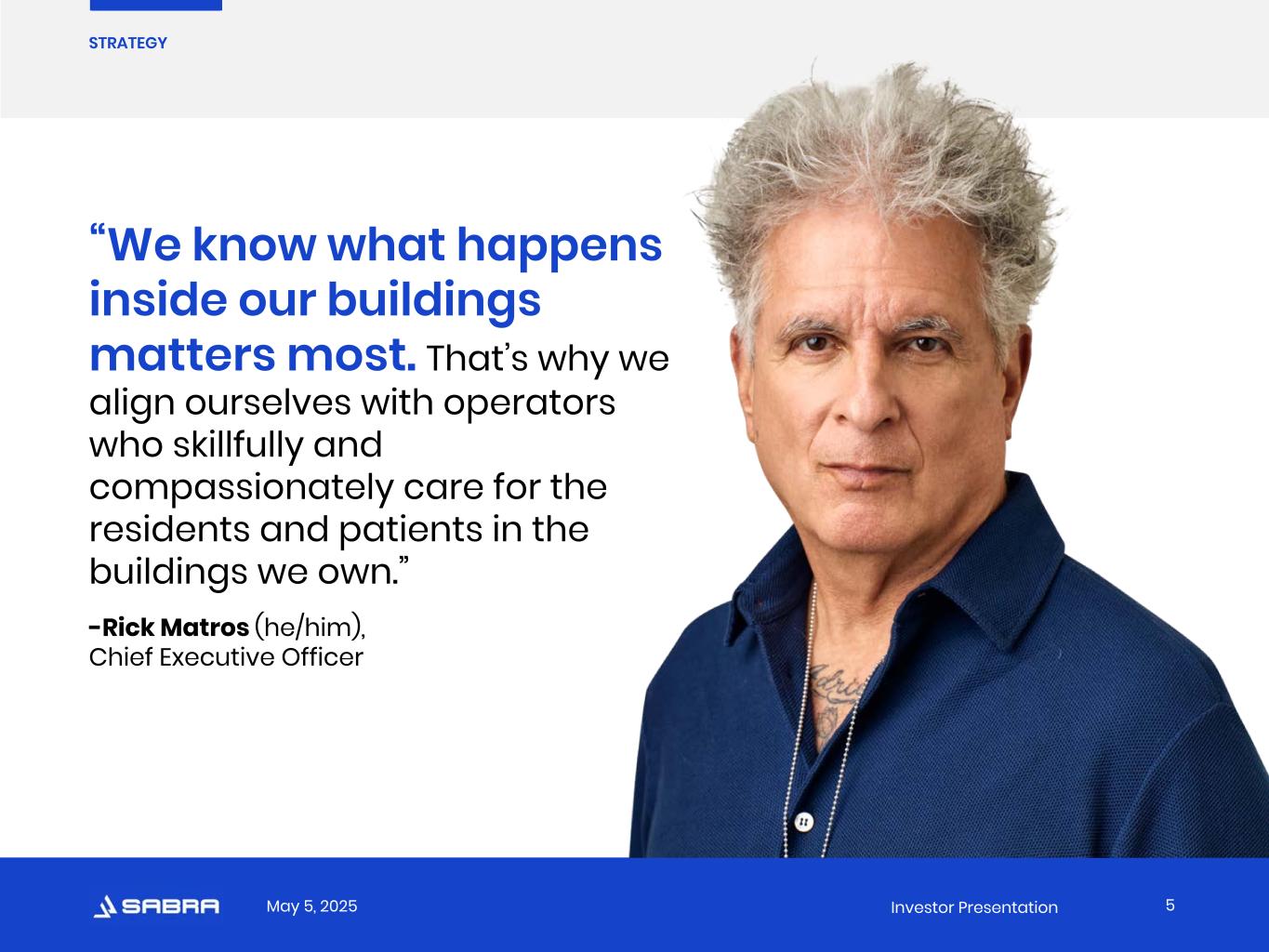
Thank you and good morning. Before we begin, I want to remind you that we will be making forward-looking statements in our comments and in response to your questions concerning our expectations regarding our future financial position and results of operations, including our earnings guidance for 2025 and our expectations regarding our tenants and operators, and our expectations regarding our acquisition, disposition, and investment plans. These forward-looking statements are based on management's current expectations and are subject to risks and uncertainties that could cause actual results to differ materially, including the risks listed in our Form 10-K for the year-ended December 31, 2024, as well as in our earnings press release included as Exhibit 99.1 to the Form 8K we furnished the SEC yesterday. We undertake no obligation to update our forward-looking statements to reflect subsequent events or circumstances, and you should not assume later in the quarter that the comments we make today are still valid. In addition, references will be made during this call to non-GAAP financial results. Investors are encouraged to review these non-GAAP financial measures, as well as the explanation and reconciliation of these measures to the comparable gap results included on the financials page of the investor section of our website at CyberHealth.com. Our Form 10-Q, earnings release, and supplement can also be accessed in the investor section of our website. And with that, let me turn the call over to Rick Matros, CEO, President, and Chair of CyberHealth Care E. Thanks, Lucas, and thanks, everybody, for joining us today.
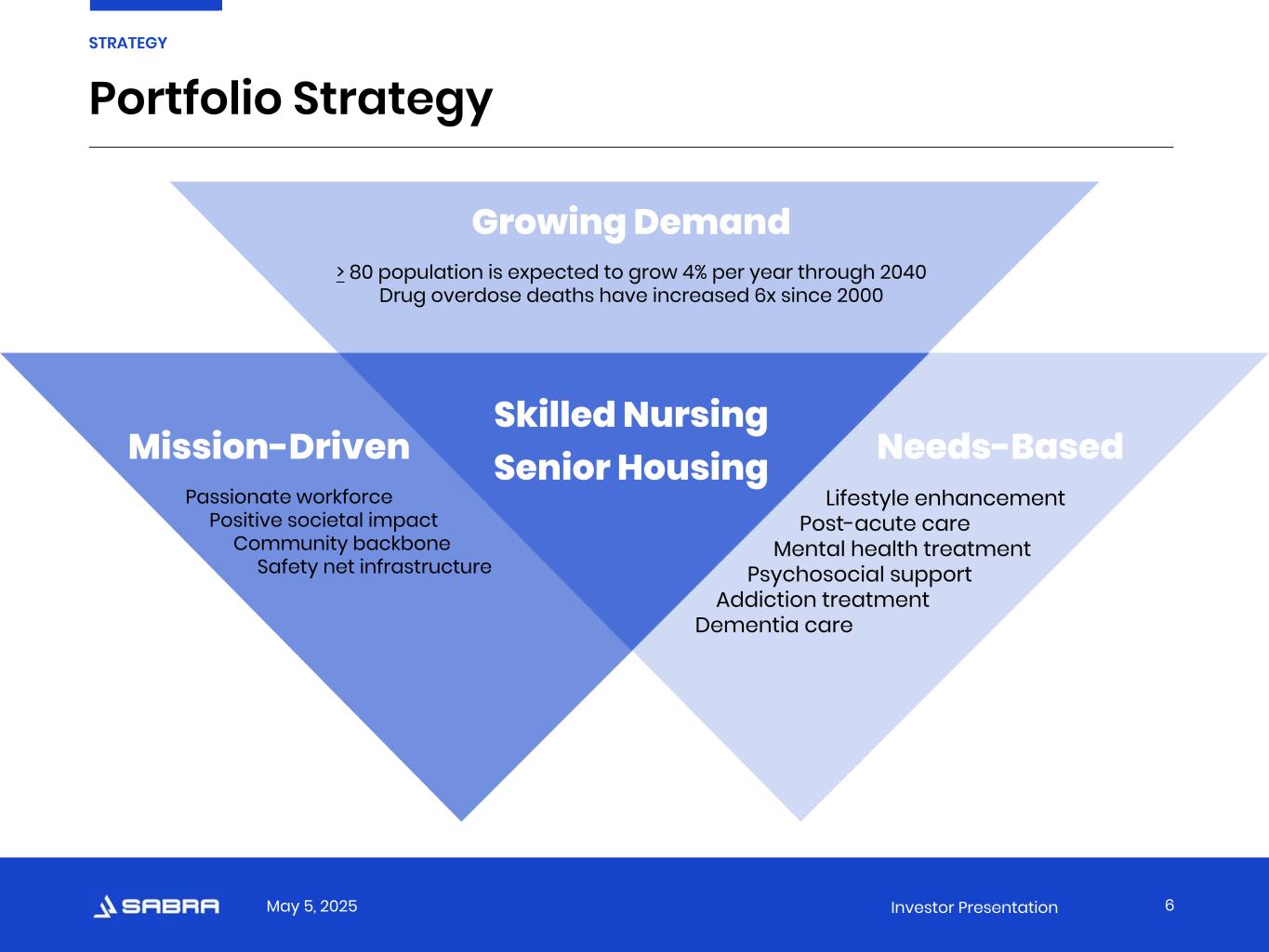
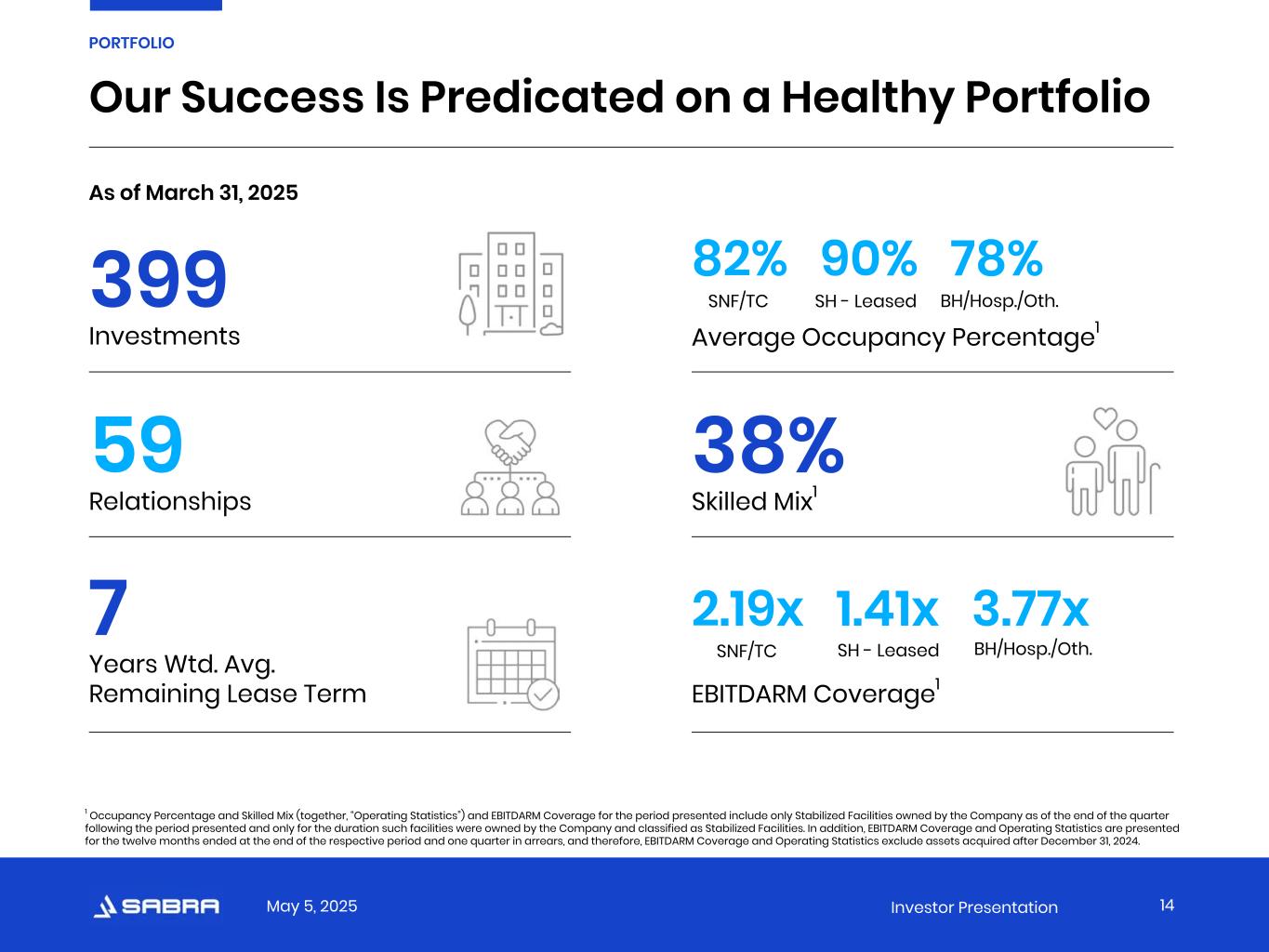
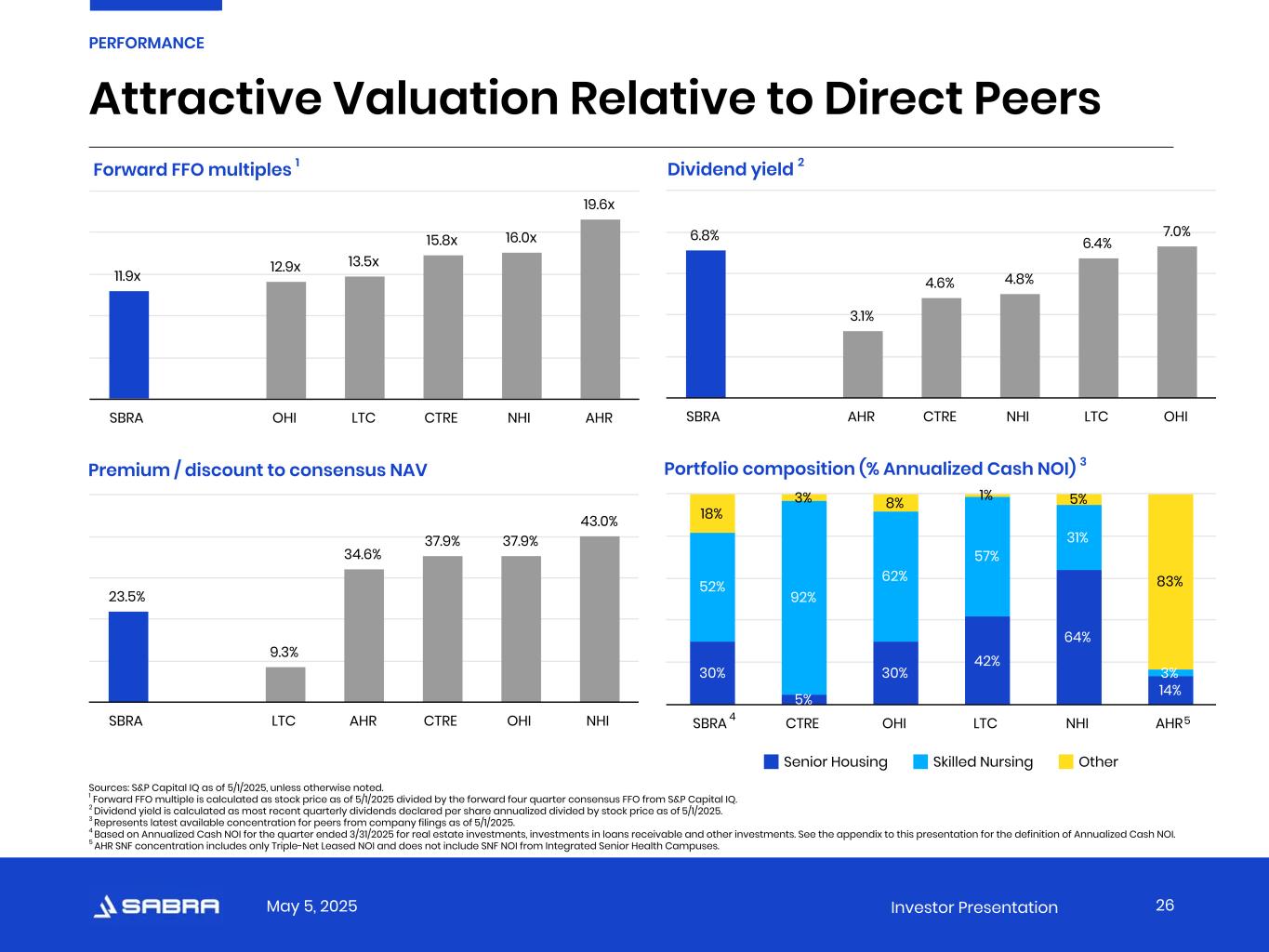
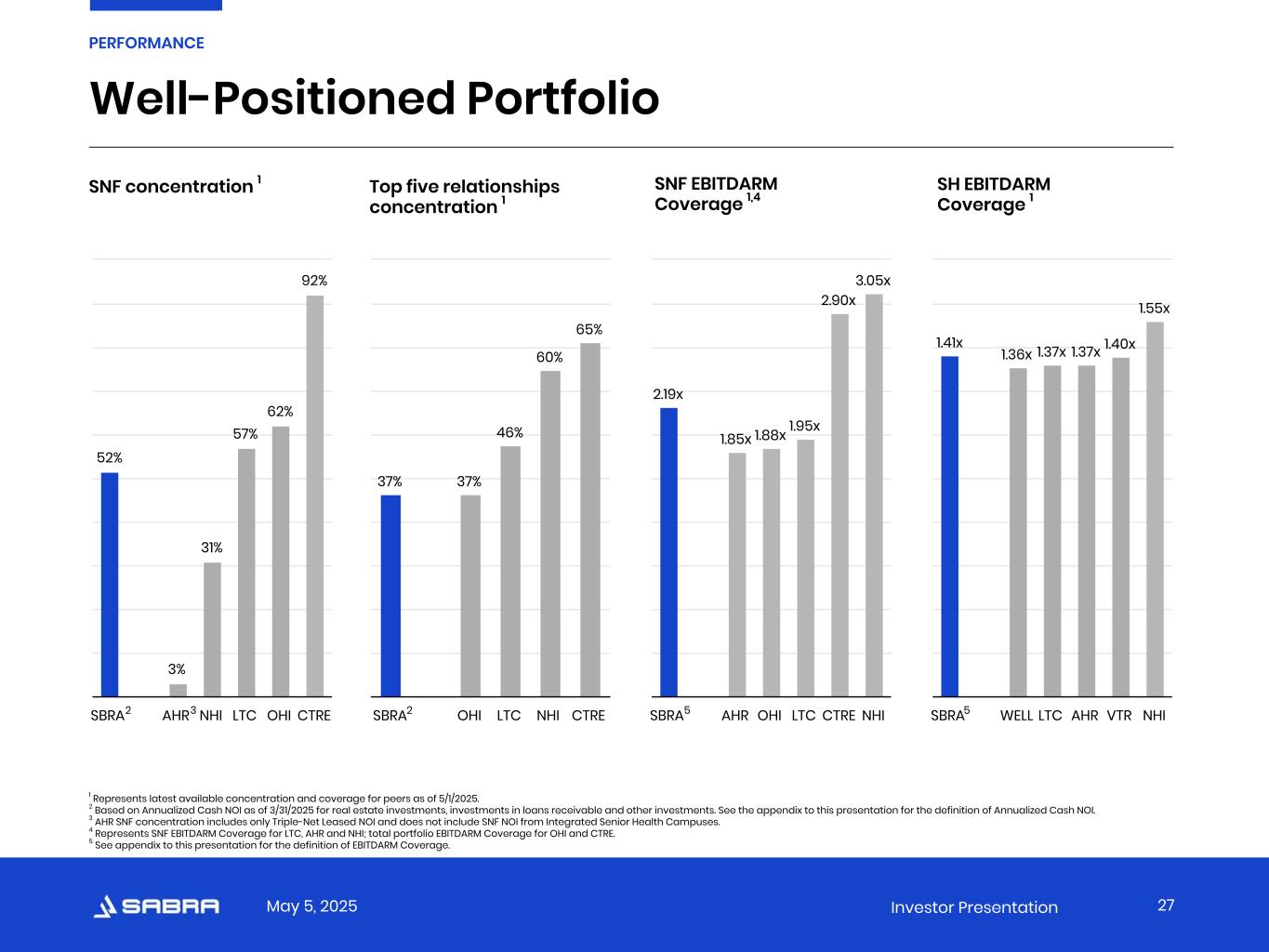
Our skilled nursing and triple-net senior housing EBITDA-RM-RED coverage continued to set new highs at 2.19 and 1.41, respectively, with behavioral hitting its highest level since year-end 2023 at 3.77. On average, coverage for our top 10 relationships was up sequentially, and while not all of them were up, there are none that we have concerns about. Specifically, as it relates to McGuire, about a year ago, they had a pretty large one-time Medicaid pickup due to some underpayments from the Michigan Medicaid system. In the absence of that, their coverage would not have would not show a drop in the current period. While contract labor continues to improve, while not quite down to pre-pandemic levels, it is lower than it's been in four and a half years. Labor still is difficult, but certainly moderating at a much quicker pace than we would have anticipated. Our skilled occupancy is up 80 basis points sequentially, with our skilled mix up 10 basis points. Our triple net senior housing occupancy is up 50 basis points sequentially. Talia will discuss shop results in detail. Our deal pipeline continues to be busier than in a very long time, still primarily shop, but with enough opportunities that we're able to bid on newer vintage assets with attractive yields. We have a mix of deals with existing operators and are also entering into new relationships with proven operators we've been cultivating relationships with. While we don't usually comment on awarded deals, given our experience in closing awarded deals, we wanted to provide a sense of the volume we hope to close on this quarter by noting the more than $200 million which have been awarded to us. That's more than we did in all of 2024, with more coming as we speak. There's nothing new to note as it pertains to Medicaid, other than we're looking forward to this summer's Medicaid rate increases. And with that, I'll turn the poll over to Talia.
Thank you, Rick. Sober's managed senior housing portfolio held up well in the first quarter of 2025. Despite an expectation that seasonality would be back and would drive a dip in operating results, Revenue, cash NOI, and margin were flat on a sequential basis for the total managed portfolio, including non-stabilized communities and joint ventures at share. The senior housing industry continues to gain ground post-pandemic, with more units occupied than ever before, according to Nick, having absorbed significant inventory that came online starting just before and continuing during the pandemic. With little new supply expected to be delivered in the next few years, we see continued opportunities for internal as well as external growth in senior housing. Sabra's same-store managed senior housing portfolio, including joint ventures at share and excluding non-stabilized assets, continued its strong performance in the first quarter. The key numbers are revenue for the quarter grew 6.3% year over year. First quarter occupancy in our same store portfolio was 85.4% compared to 82.6% in the first quarter of 2024. Notably, our domestic portfolio occupancy was 83%, gaining 340 basis points of occupancy during that period, while our Canadian portfolio occupancy was 90.9%, adding 140 basis points of occupancy in the same period, having ramped up occupancy ahead of our U.S. portfolio. Rev Poor in the first quarter of 2025 increased 2.8% year over year for the same period. In our Canadian portfolio, where occupancy has been in the low 90% for a few quarters, RevPor grew 4.9% this quarter on a year-over-year basis, demonstrating the impact of scarcity value. Importantly, as RevPor and occupancy continued to rise, export declined 1.1% across the same store portfolio. Cash NOI for the quarter grew 16.9% year-over-year in the same store portfolio. In our U.S. communities, cash NOI grew 14.4% on a year-over-year basis, while in our Canadian communities, cash NOI in the quarter increased 24.7% over the same period, demonstrating the power of operating leverage. The trends that we have been seeing for the past year continue. Senior housing operators are tactically deploying the levers of occupancy and rate to maximize revenue, and expenses remain steady, causing NOI to grow and export to decline. Our net lease stabilized senior housing portfolio continues to do well with continued solid rent coverage reflecting the underlying operational recovery. And with that, I will turn the call over to Michael Costa, Sabra's Chief Financial Officer.
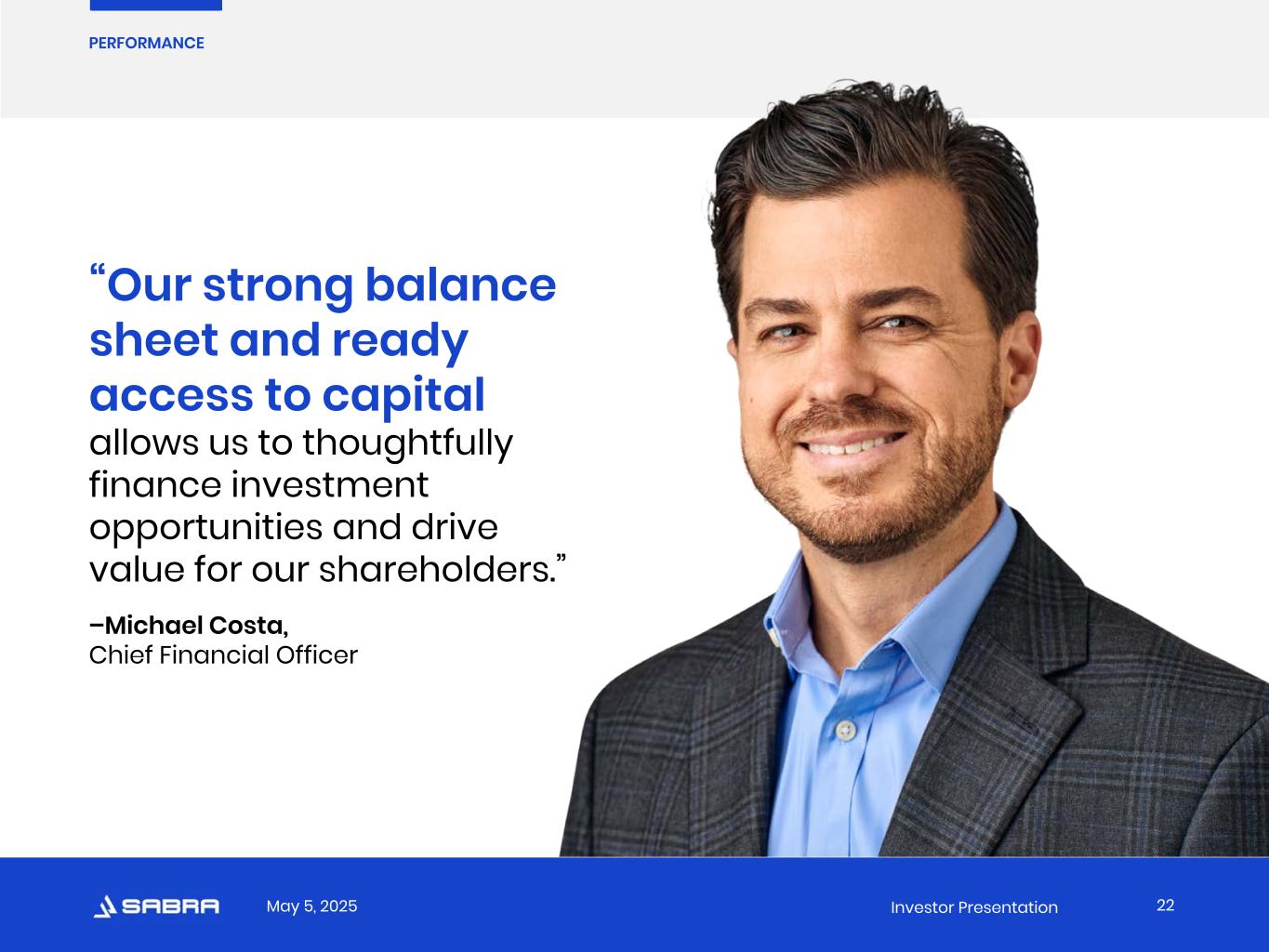
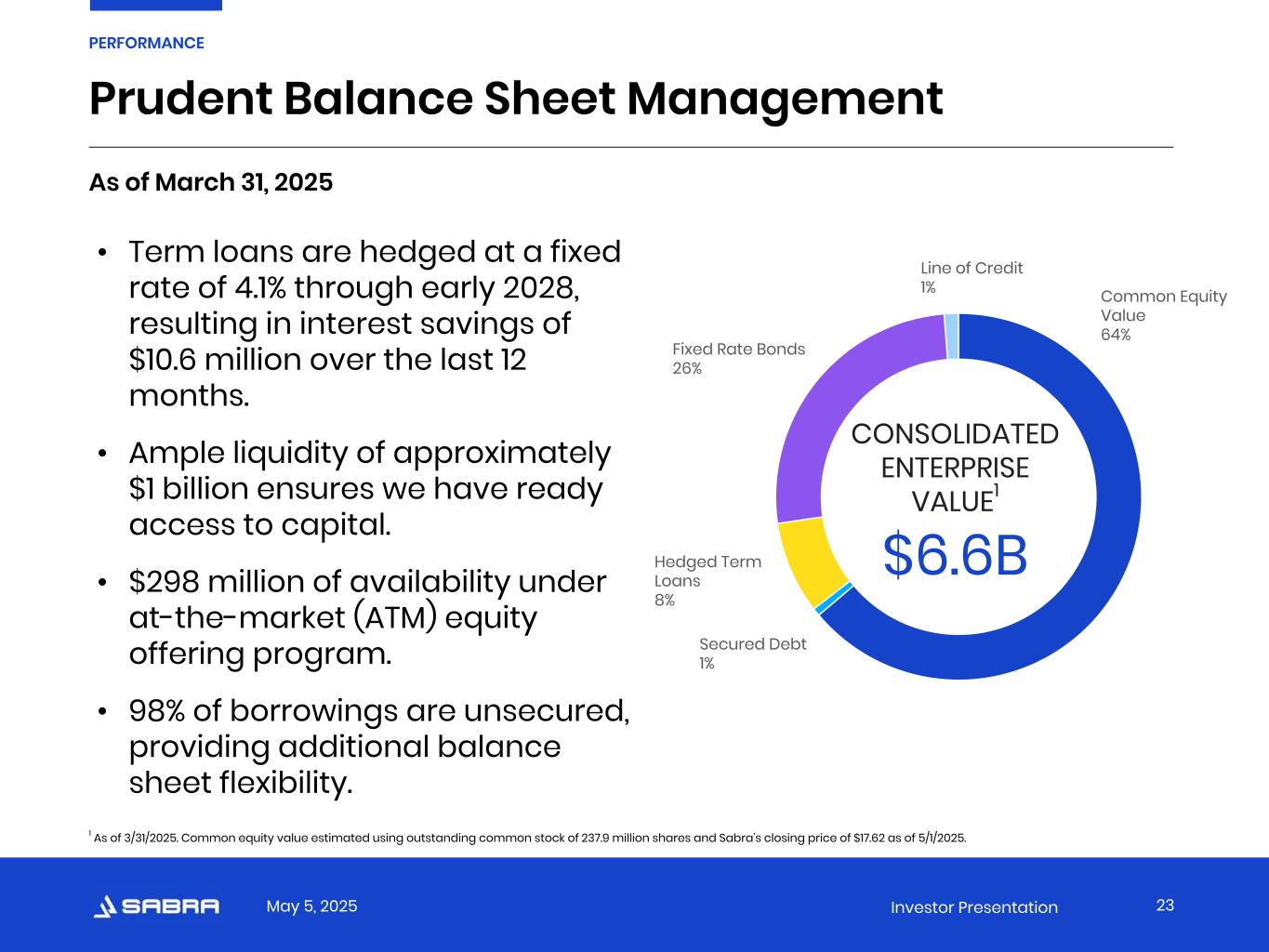
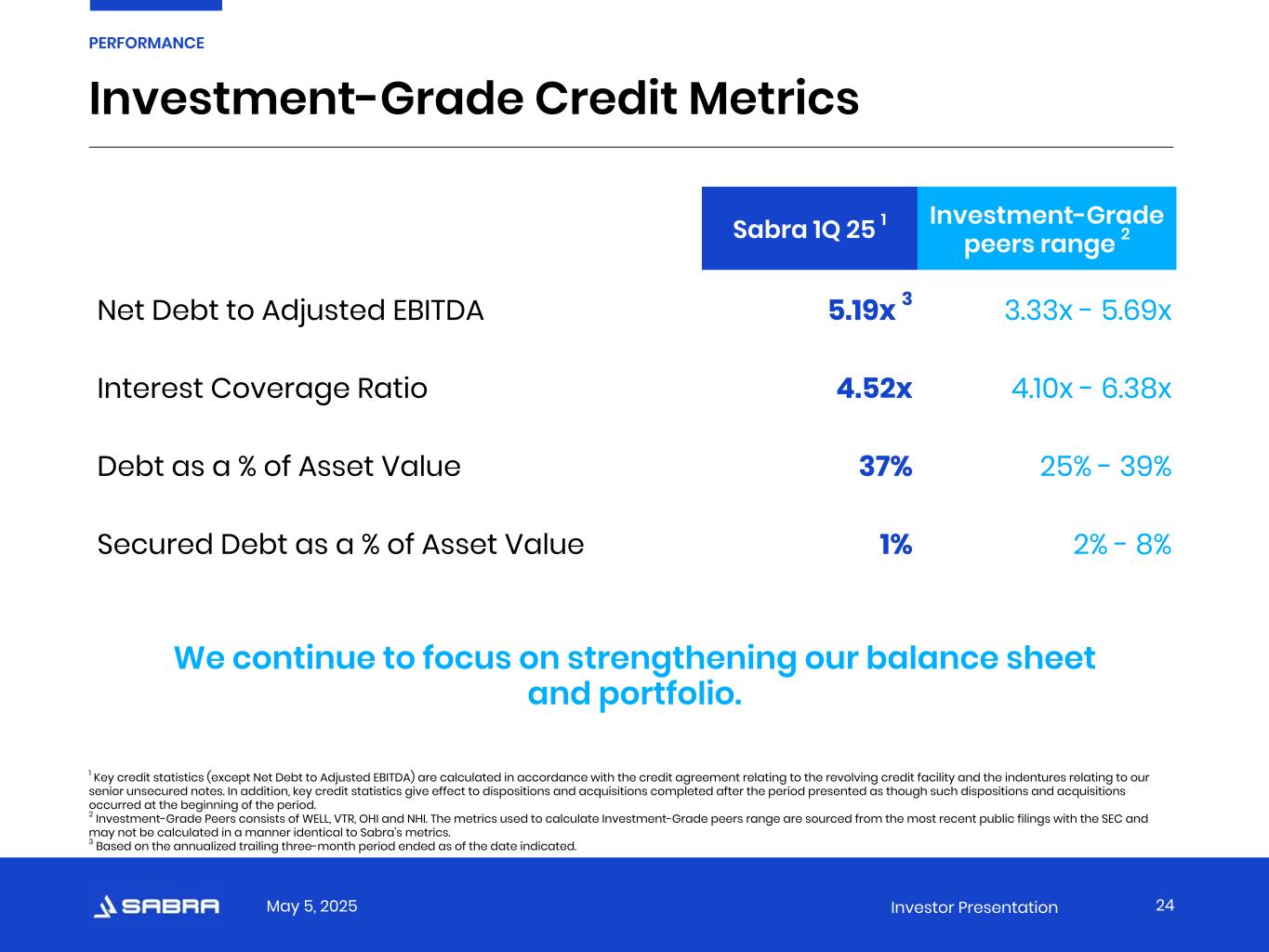
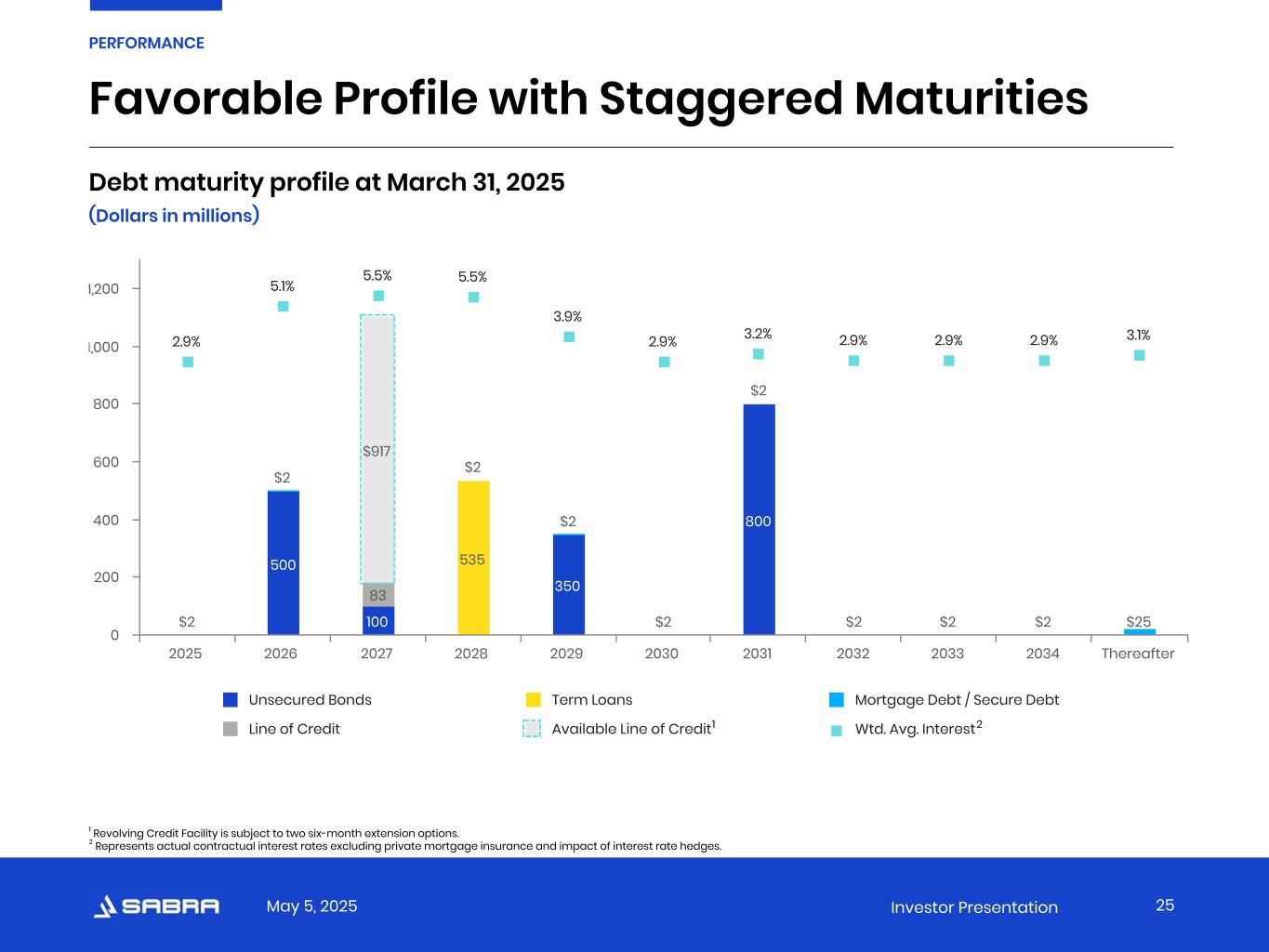
Thanks, Talia. For the first quarter of 2025, we recognized normalized FFO per share of $0.35 and normalized ASFO per share of $0.37, cents, compared to $0.34 and $0.35 respectively for the first quarter of 2024. Normalized FFO and Normalized AFFO totaled $85.2 million and $88.2 million this quarter respectively, which represents a year-over-year increase of 7% and 9% for Normalized FFO and Normalized AFFO respectively. I would like to highlight a few key components of this quarter's earnings. Cash rental income from our triple net portfolio totaled $90 million for the quarter, up from $89 million in the first quarter of 2024, despite disposing of $115 million of real estate from our triple net portfolio last year. Cash NOI from our managed senior housing portfolio totaled $24.1 million for the quarter, compared to $19.1 million in the first quarter of 2024. This increase was driven primarily by strong occupancy, NOI, and margin gains in our same-store portfolio, as well as the impact of our addition of eight properties to this portfolio in 2024 through acquisitions and transitions. Interest in other income was $10.1 million for the quarter, compared to $8.9 million in the first quarter of 2024. Cash interest expense was $25.4 million, in line with the first quarter of 2024 and our 2025 guidance run rate. Recurring cash G&A was $10 million this quarter, which matches our 2025 guidance run rate. As noted in our earnings release, we have reaffirmed our previously issued 2025 earnings guidance, and the results for this quarter are in line with our assumptions underlying that guidance. Now briefly turn to the balance sheet. Our net debt to adjusted EBITDA ratio was 5.19 times as of March 31, 2025, a decrease of 0.08 times from December 31, 2024, and a decrease of 0.36 times from March 31, 2024. This improvement or leverage is driven primarily by the continued NOI growth in our managed senior housing portfolio, accretive capital recycling, and prudent use of our ATM to fund growth. We have been proactively using the forward feature under our ATM to raise equity when our share price presents an attractive opportunity to lock in an accretive cost of capital to fund the deal flow we see in our pipeline. During the quarter, we issued $84.3 million on a forward basis at an average price of $17.32 per share after commissions, and in total, we currently have $110.5 million outstanding under forward contracts at an average price of $17.32 per share after commissions. We expect to use the proceeds to close on the investments we have been awarded and to do so on a leveraged neutral basis. As of March 31st, 2025, we were in compliance with all of our debt covenants and have ample liquidity of over $1 billion, consisting of unrestricted cash and cash equivalents of $22.7 million, available borrowings under our revolving credit facility of $917.3 million, and the $110.5 million outstanding under afford sales agreements under our ATM program. As of March 31st, 2025, we also had $297.7 million available under our ATM program. Finally, on May 5th, 2025, Sauber's board of directors declared a quarterly cash dividend of $0.30 per share of common stock. The dividend will be paid on May 30th, 2025, to common stockholders of record as of the close of business on May 16th, 2025. The dividend is adequately covered and represents a payout of 81% of our first quarter normalized AFFO per share. And with that, we'll open up the lines for Q&A.
Operator
At this time, I would like to remind everyone, in order to ask a question, press star, then the number one on your telephone keypad. We'll pause for just a moment to compile the Q&A roster. Your first question comes from the line of Nick Yolico with Scotiabank. Your line is open.
Hi, this is Elmer Chang on with Nick. Thanks for the questions, and congrats, Talia, on the upcoming retirement. My first question is on how you're thinking about dispositions throughout the year. I think you expected a $50 million skilled nursing facility sale in the near term from last quarter's call. Is that still on the table?
And if so, when would you expect that to close, and maybe how has delayed timing put pressure on the pricing for that sale? and we still expect that to close it's just in a state that there's a lot more regulatory hoops to jump through and there won't be any change on the proceeds that we're expecting so it's going to just be one of those it'll happen when it happens but it's on course to happen beyond that um it's just ordinary course of business stuff for us like it used to be which could be sort of 50 to 100 million a year um but we don't have much in the way that's targeted right now okay thank you and and then second question just on chop i'm just wondering how you're thinking about the
trajectory of rev for an expense growth throughout the year as the portfolio approaches that high 80 percent occupancy level given operators emphasize growing occupancy during the quarter and and it sounded like uh it seems like the u.s business may have you know less pricing power so So how are you just thinking about how those two levers are trending? What will trend throughout the year?
What we're seeing, what we expect, subject to whatever might happen in the political arena right now, labor, which is the largest expense, is stable. And as a function of export, it's decreasing because occupancy is increasing. I actually think that as occupancy continues to rise, and we expect it to rise across all the spectrum of senior housing, both in the U.S. and Canada, pricing is going to also get increased, just because that's the lever that's going to be available, too. because the higher the occupancy, the higher the price you can actually start to demand once you cross a certain threshold. So I think there are significant tailwinds on both occupancy and rev poor. And I think expenses right now, I'd say, hold as they are subject to unknowns.
Operator
Your next question comes from the line of federal grants with Bank of America. Your line is open.
Jeff
Analyst — Bank of America
Thank you so much for taking my question. My first one is about your guidance, reiterating guidance. I know you made commentary about a deal awarded, so I wanted to just touch on, is any of that being contemplated, and also on the shop guidance, just given the execution this quarter, which tends to be seasonally softer, keeping the low to mid-teens cash in a wide growth for the year.
Yeah. So in terms of the acquisitions that we announced that we're working on, those are not included in our guidance. We'll include those in our guidance once they've closed. So you could expect when we get into our second quarter call, once those deals and potentially other ones have closed um you know we'll incorporate that into our thoughts around guidance so short answer is no they're not incorporating to the guidance currently um on your second question we reaffirmed guidance and all the assumptions underneath it so that same that same sort of growth that we the guidance that we gave of you know low to mid teams still stands look we we want to be we want to be moderate here so we just want to give ourselves a little bit more time if we have a reason to revisit from second quarter we'll do that okay thank you and also just generally in what you're seeing in the
Jeff
Analyst — Bank of America
transaction market especially with your ability to enter into a 200 million dollar portfolio deal what are you seeing as in terms of deal flow are you seeing that increase and also the sellers and buyers entering into this space happy to take that and by the way The $200 million that we've been awarded are actually not a single portfolio, but there are multiple transactions in there, just for clarity's sake.
We're seeing a very robust pipeline of deals come to us. It's heavily biased to senior housing, which we're entirely viewing as shop, with rare exceptions. The assets we're seeing are primarily either single assets or a few assets that can be bundled or not. We have started to see some large portfolios. They're kind of outliers. Oftentimes, there are portfolios we've seen before. They are of less interest to us at the moment because we're seeing the best opportunities for us, for multiple reasons, to be in these onesie-twosie situations. What's interesting about what we're seeing is that the sellers are frequently private equity firms that either provide a development capital or bought assets early stage, and they're at fund life and want to sell. The assets recovered enough from COVID that they can exit at an okay multiple, but they need to get capital back to their LPs so that they can launch their next fund. And that's really the recycling of capital issue that's driving quite a bit of sales. There are occasionally situations where we're seeing some sellers who are unsuccessful come back to the market again. And it's right now it's a timing. It's been a timing issue of getting good execution or decent execution. Sometimes it's just sufficient execution for these sellers. But assets now in the senior housing arena have recovered enough, even though cap rates have risen for people to get out without having to oftentimes put additional cash into pay off debt.
Jeff
Analyst — Bank of America
And has that increased competition that you've seen as well?
The private equity buyers are already out as buyers. There are a few that are tiptoeing around. We've seen one that's been more active. We are seeing the public REITs be active, as you have seen that as well. Sometimes we actually overlap with groups that we haven't typically overlapped with in the past. But pricing has remained pretty tight from our perspective on deals where we've bid.
Jeff
Analyst — Bank of America
Great. I really appreciate it. Thanks.
Operator
Your next question comes from the line of Austin Worthsmith with KeyBank Capital Markets. Your line is open.
Thanks, and good morning, everybody. On the $200 million senior housing acquisitions, are these all deals in the U.S.? And can you just give us a sense of kind of the operating metrics where they sit today and what sort of, you know, that may imply for kind of the future growth profile?
Well, I'm going to be cautious here in terms of giving you hard numbers, because these are deals that we've been awarded and we haven't closed on them quite yet. So, first of all, they're all domestic. They're biased towards the eastern half of the United States, if that gives you an addition to any, like, good color. They all have growth embedded in them, because while they are decently occupied, there is still room for growth, and there is still room for rev poor increases.
They're also a little, they're more heavily weighted towards AL memory care than IL.
Did you want to add something, Talia?
Okay. And then just following up, Rick, you kind of referenced you haven't historically disclosed deals until they've closed.
I guess what led you to break that practice with this $200 million, and should we expect you'll continue to announce deals that have been awarded or under LOI? uh we did it because one our track record when we get deals awarded is we is that we get them closed and we felt like we've got so much great activity now um that we didn't want another quarter to go by without making sure that you all were up to speed on what we expect to see happen because we had been saying even earlier in the year that we expected to do quite a bit more than we did last year, and that was certainly our target. So it was really specifically for that reason.
And we may or may not do it. We may or may not do it going forward, because we'll have closed deals to announce at the rate things are going.
Operator
Your next question comes from the line of Juan Sanabria with BMO Capital Markets. Your line is open.
Hi, good morning. Talia, congratulations. First question just on Genesis, I know you guys were super proactive trying to reduce exposure over the years, but if you could just remind us on how much NOI you're getting from Genesis, I know it's out of your top 10 list, and kind of the structure that's in place and the credit behind that lease, and obviously if you've been in your paid rents to date through, I guess, May.
Yeah. So we sold all but eight of the original 86. Last year, because we wanted to have more security going forward, we decided to sublease those eight assets to a trusted operator. um their their rent was slightly less than genesis but because of the genesis guarantee genesis makes up the stub um it's not material so um that's been going really well for us no missed payments um they will be our operator going forward after the lease expires the operations have improved materially uh since they started um but with really that many facilities It's a pretty negligible impact on our NOI, but yeah, so we're good there.
And secondly, just on shop, could you just remind us kind of the deferred or kind of revenue-generating CapEx that we should be thinking about this year for the in-place portfolio, and if we should be thinking about incremental kind of capex spend on the pipeline over and above traditional maintenance capex well mike's pulling that up i would say that because of the vintage of the assets that we that we acquired last year and that we're currently in the process of acquiring they're really new they're new assets they're less than 10 years old most of them are you know five, six, seven years old.
So the CapEx requirements for the stuff that we're buying just isn't material. And when we were asked earlier about competition, we've got so much in the pipeline that we've really been able to be extremely selective about the assets that we want to buy. So that regardless of what happens with competition in any of the geographic areas, any of the markets that we're buying, we've got really new, good-looking assets to compete with anybody.
Yeah, and in terms of the dollars, Juan, so in terms of, like, regular maintenance CapEx, we've been spending on, you know, an average somewhere between, call it a million and a half to $2 million a quarter on our consolidated portfolio. On larger projects, you know, it's going to be very community-specific. We spent a lot last year, as we've talked about in the past. There's some deferred projects that got delayed because of the pandemic. That number was over $30 million that we spent across our entire portfolio. But we expect that number to be quite a bit lower in 2025 because of the fact that we caught up last year, as well as what Rick pointed out with the newer vintage assets that we've been adding to our portfolio, just naturally require less capex.
Operator
Your next question comes from the line of Seth Berge with Citigroup. Please go ahead.
Hi, thanks for taking my question. I guess just going back to the pipeline, kind of, you know, as you have been proving outlets for shops, it sounds like there may be a little bit more competition out there for deals. Has there been any change to your underwriting criteria in terms of the type of assets you're looking at, geographies, or kind of your return expectations?
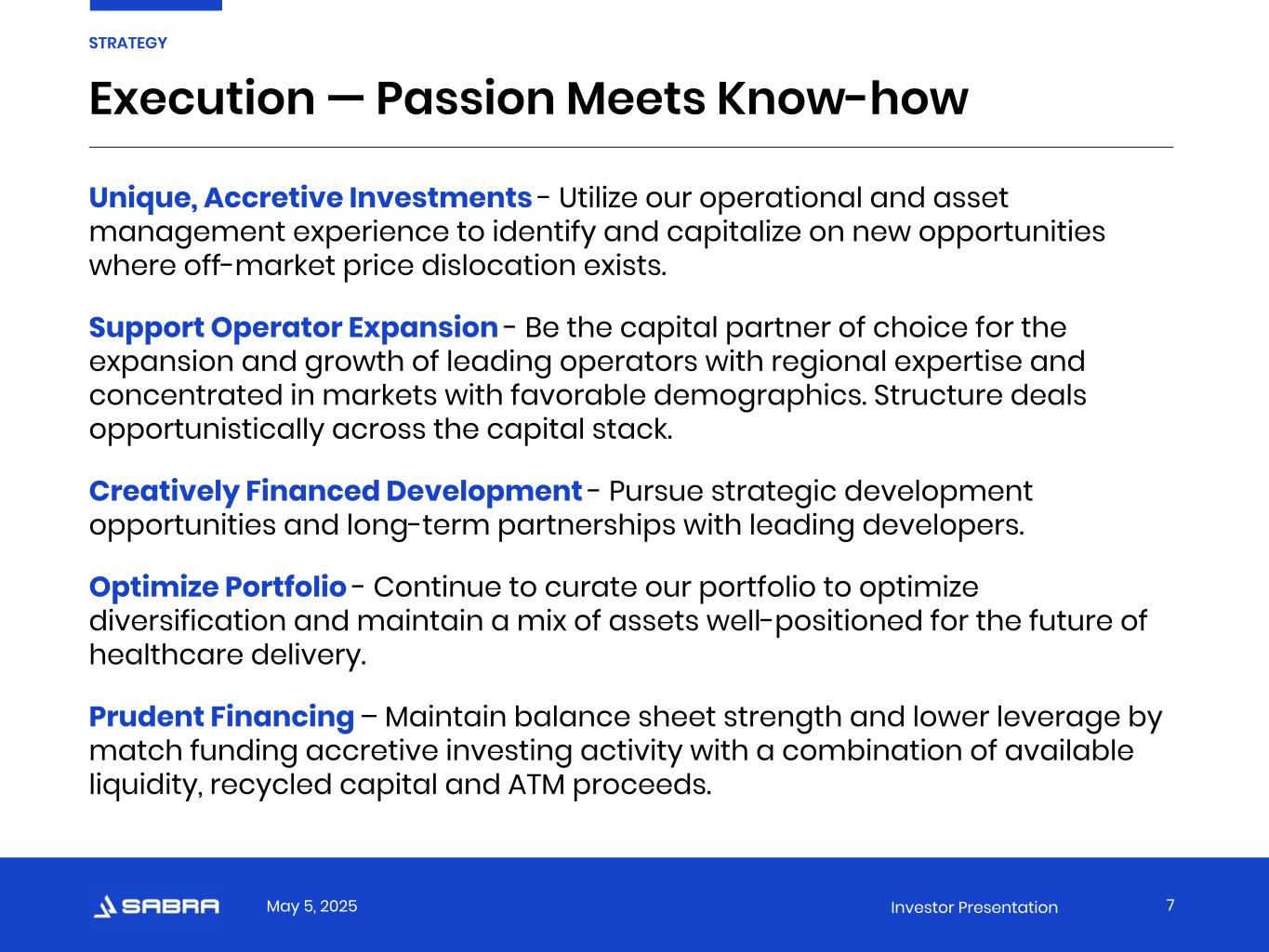
So I actually think that the competition has just shifted to being actually a smaller pool of buyers for the most part on the assets that we see in general. And then, as Rick said, we're being very deliberate and picky about what we're pursuing for all the reasons that were outlined. In terms of underwriting, really nothing has changed. We're really focused on our cost of capital and looking at making sure that how we underwrite leads us to get deals that are accretive. The other element that is relevant to us when we're looking at transactions. And believe me, we're looking at a lot. I probably clear 10 CONFI agreements a week just to give you a sense of scale. So that's a lot of deals. We look at situations where we have an opportunity to buy at maybe not the highest price because either we have a relationship and history with an operator who's involved in the deal and has an ability to effect or impact how the sale happens. And we're also looking at working with operators that have a pipeline of assets that are expected to come to market in some fashion and potentially even develop an opportunity someday in the future when that might make sense. We're not counting on development today, trust me. But there's, so it's the assets themselves matter, but there are strategic reasons also for these specific investments in terms of the relationships and the future of our organization and opportunity to buy and invest.
Great, that's helpful. And then I guess just for the second one, you know, your coverage levels continue to improve, but are there any changes to your watch Yes, with respect to operators.
Operator
Your next question comes from the line of Georgie Denkov with Ms. Duhu Securities. Your line is open.
Hey, this is Georgie on from Vikram. Just in the press release, you mentioned that you're not seeing many attractive SNF opportunities. Can you just provide more color on what makes the SNF acquisition unattractive? Like, is it a location, operator, anything else that you can share? Thank you.
Losing a lot of money is a good starting point, and we see a fair amount of those, because oftentimes what we're seeing is a nonprofit that's divesting because they're bleeding cash on the asset. So that's tough because it's really tough to structure a lease around an asset that doesn't have the ability to pay rent, because it's going to take time, Even if you get the most fantastic operator in there and the asset is fundamentally well-situated and all that, it's going to be a while before they're able to turn the facility around so that they can pay rent. So that's the challenge of the math around lease. We're not doing managed assets in the SNF space.
We're really not seeing anybody else get much done, too. Hopefully, there's a Medicaid overhang, obviously, on this space. So I think we're hopeful that as there's clarity on Medicaid, that more assets will come into the market. I mean, people can go ahead and do deals and assume nothing's going to happen. But, you know, we prefer to be a little bit cautious about how we underwrote a SNP deal, not knowing what's going to happen with their Medicaid revenue stream.
That's helpful. Thank you. And just a second question on the shop portfolio. Can you just provide more color on, like, what do you expect in terms of occupancy cadence throughout the year? And what are the trends that are you seeing so far in the second quarter?
Well, we're a month into the second quarter, so I hesitate to extrapolate too much. I think the first quarter was flat sequentially, as I said, which is kind of the new seasonality. at least for this year. I expect things will pick up. If you think about where assets are located, let's just say, let's talk about our Canadian assets. It's unlikely, people are less likely to move in during January, February, and March when there are snowstorms and it's negative 20 degrees outside, right? So I think having, we were at Vancouver last week, the skies were sunny and bright, nicer than Southern California. Toronto is getting better as well. I think the mood increases and move-ins will increase even just in our Canadian portfolio for those reasons. And of course, any of our assets that are in the northern part of the U.S. have the same issue with winter. It's just hard to be in Minnesota and think you're going to move in January and February and Great.
Thank you for taking my questions.
Operator
Your next question comes from the line of Richard Anderson with Redbush. Your line is open.
Thanks. Thank you. I guess we'll get to the portfolios. Rick, is that because of the portfolios or is it all of us to sort of keep it simple and not, you know, get into it?
Yeah, it's really that commitment, as you know very well because you've covered us for so long. So we did a lot of things that we felt we had to do at the time that created a lot of noise, but it effectively repositioned us to be strong going forward. Nevertheless, it takes some time to get past that in people's minds and be an organization that is dependable and people can sort of predict more where things are going to be going. And so, you know, we articulated that in 23 coming out of the pandemic, and we've stuck to it. So, you know, there's so much activity out there for us to take advantage of. We don't need any big swings. When we repositioned the company with the merger and really exiting Genesis, we didn't need to do it again. and we still don't need to do we've got a really strong portfolio we had less sniff operator issues than i think pretty much everybody during the pandemic um and um and so we just want to be predictable and keep it simple and we can do hundreds of millions of dollars of deals and do them with with deals that are under a hundred million dollars so um and none of the deals in this sort of basket of 200 plus are close to 100 million. So that's our commitment to you all and a commitment to ourselves. We're going to be very laser focused on it. You know, will we be willing to do something larger next year or whatever? Yeah, of course, we might be willing to do that. But right now, we're able to have a better balance in our portfolio between senior housing and skill than we've ever had. It drives our growth better. We still want to do skill deals. We love the space. And obviously, it'll increase our average weighted yield. But we want to have that balance in the portfolio. We want to have a component of our asset base that is a strong driver of earnings, stronger driver of earnings than the 2.25 to 2.5 percent bumps you get on a triple net. So, not so. I'm belaboring it probably a little bit, Rich, but, yeah.
Yeah, we're hearing some of your...
We did a bunch of that and some of it during the pandemic. There's not much left for us to do there. I mean, coverage is great. we've got some legacy assets in there that are doing really well and the operators are happy so there might be a little bit here or there but it's not going to be anything significant we got um i think we reduced our triple net senior housing portfolio over the last several years by a third or something like that so um this there's not much left there and obviously as we continue to grow shop you'll see the triple net senior housing portfolio drop as a percentage of our exposure and then behavioral obviously will drop as well because we're going to be allocating our capitals to the two spaces that have the tailwinds, senior housing and skilled nursing.
Okay. And last for me, you know, and then you have, and you.
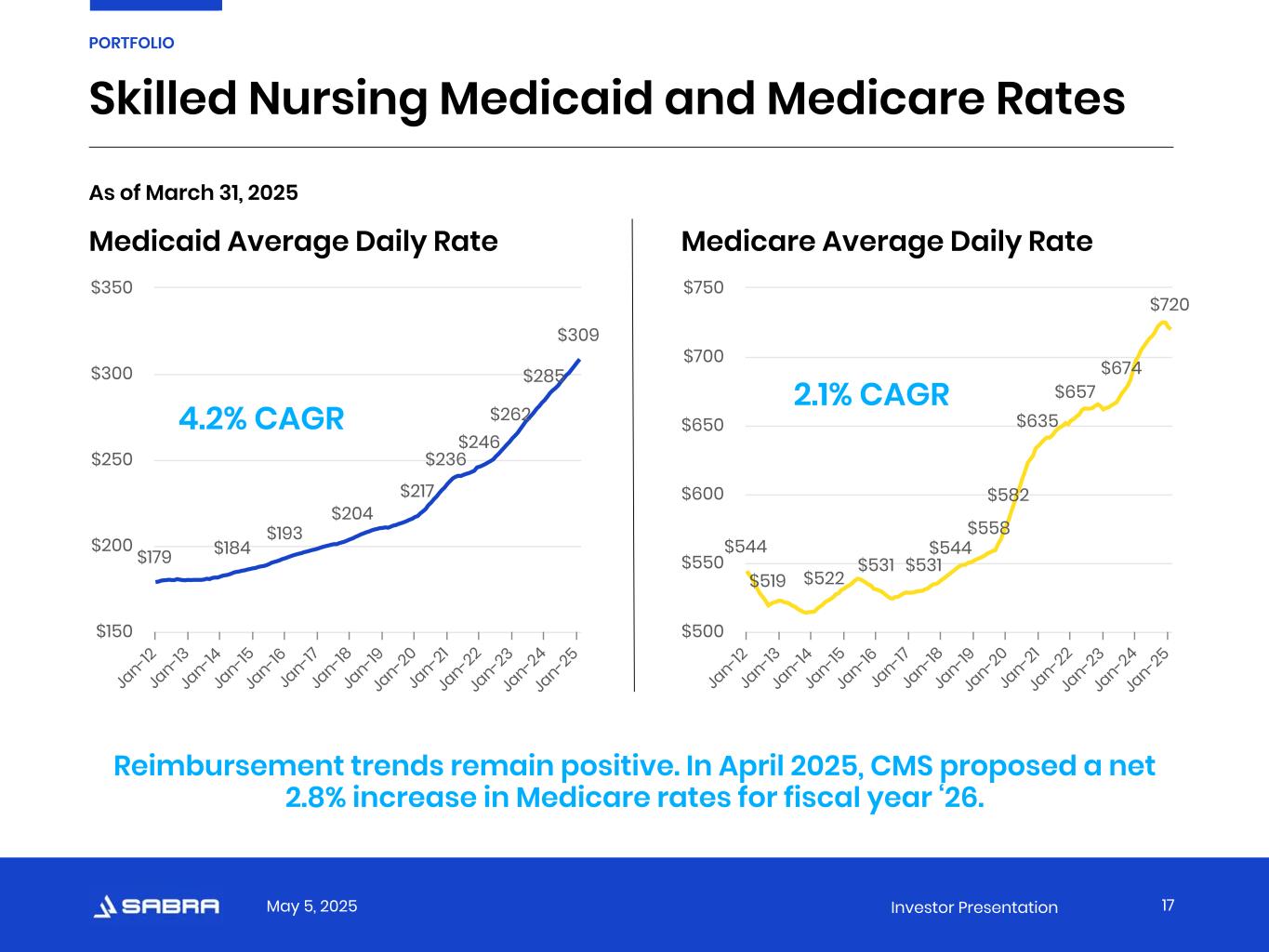
Yeah, no, it's a good question. I don't think we're going to be sideways for a while for a couple of reasons. One, and we talked about this in the past, this was the year we expected to see Medicare rate and Medicaid rate increases come down. Just formulaically, they're encompassing periods of time where inflation started coming down. And the 2.8 is still about a full point or so higher than it was historically, what we saw historically every year. And while we expect Medicaid certainly not to be at the seven plus percent we saw last year we still think it's going to be outsized so i think given given um occupancy continuing to grow um giving given the moderation in labor and given another set of outsized based on historical outside medicaid rate increases this summer about 70 percent of our buildings get their medicaid rate increases in july and august we still should see improved coverage for a while. Now, something should happen with provider taxes that could mitigate that somewhat. So that remains to be seen. But I think, you know, it'll have a relatively negligible impact for us because there's going to be a cost offset as well if the ceiling comes down. And then you'll see it start picking up again once the Medicaid rate increases get baked in. So I think we still have some room to grow there over the course of this year, Rich.
Operator
Your next question comes from the line of Alex Fagan with Bayard Equity Research. Your line is open.
Hi, thank you for taking my question. So kind of speaking for the $200 million set of deals, and Tal, you kind of talked about maybe the strategic relationship angle, but maybe any more details with, are these operators that you'd like to grow? Are they new operators into the portfolio? And kind of what do you expect that shadow pipeline to kind of be after these deals close?
So the answer to question number one is yes, yes, yes, yes, all of the above. The answer to number The two is tougher to assess, and I think we'd rather close the deals and then be able to report further detail on the additional opportunities that we're looking at.
And then secondly, you provide some details in the maybe kind of steady decline in occupancy in the behavioral health and specialty hospitals and other segment, kind of what are the prospects for releasing those spaces if they do go dark and at what rents you know it's it's um it's a very different business than senior housing and skilled nursing obviously the uh break-even point is is it a pretty low level of occupancy like under 60 percent um the coverage went up pretty nicely actually because revenue revenue for patient day went up and um so but it's a very very dynamic business. In skilled and senior housing, your occupancy is pretty predictable for the most part. It doesn't change dramatically. That's not the same with the behavioral space. So you've got very short lengths to stay. It's a very dynamic business. The holidays and shortly right after the holidays, you always see pretty significant drops because no one's coming in for rehab, typically during the holidays, and that carries a little bit over into the early part of the year. So there may be some recovery on that. So it's just something, the coverage is so strong. It's just a 3.77. It's just not something that we're concerned about. It's just a different kind of business. And so for us, we're used to kind of seeing these ups and downs.
All right, thank you for that.
Operator
Again, if you would like to ask a question, Rastar, then the number one on your telephone keypad. Your next question comes from Delaney Omotayo Okusanya with Deutsche Bank. Your line is open.
Sam
Analyst — Deutsche Bank
Yeah, hey, guys. This is Sam on for Tayo. I was just wondering if you guys could give some updated thoughts on how Medicare reimbursement for skilled nursing could be impacted by the current attempts by the U.S. government to establish a new federal budget.
Well, what we're hearing on the Hill is that they're not going to touch Medicare. And the president has said the same thing about Medicaid, but as we've talked about, I think the last couple of quarters, we think there is some exposure on provider taxes, but we're not seeing or hearing anything in any of the discussions that our lobbyists are having on the Hill relative to Medicare, and I'm not sure that the proposed rule would have come out the way it did if that was an issue. So the comment period, once the post-rule came out, everything's happening like it normally happens there. And we're not hearing anything from inside CMS along those lines, either. So, look, we're in an environment where things change every hour, apparently. But that said, so I'm not making light of anything because we have our antenna up on the Medicaid stuff. but we feel pretty comfortable with Medicare.
Sam
Analyst — Deutsche Bank
Got it. That's very helpful, and that's all I have on my end. Thanks, Gus, for the time.
Operator
There are no further questions at this time. I turn the call back over to Rick Mattress.
Thanks, everybody, for joining us. We're available, as always, if you want to reach out and have additional discussions. And otherwise, we'll see a bunch of you folks at NABRE. Look forward to it. Thanks, everyone.
Operator
This concludes today's conference call. you may now disconnect.