Operator
Good morning, and welcome to the Signet Jewelers 4th Quarter Fiscal 2025 Earnings Call. Please note that this event is being recorded. Joining us today on the call are Rob Ballew, Senior Vice President of Investor Relations, Casey Semencik, Chief Executive Officer, Joan Hilson, Chief Operating and Financial Officer. At this time, I would like to turn the call over to Rob. Please go ahead.
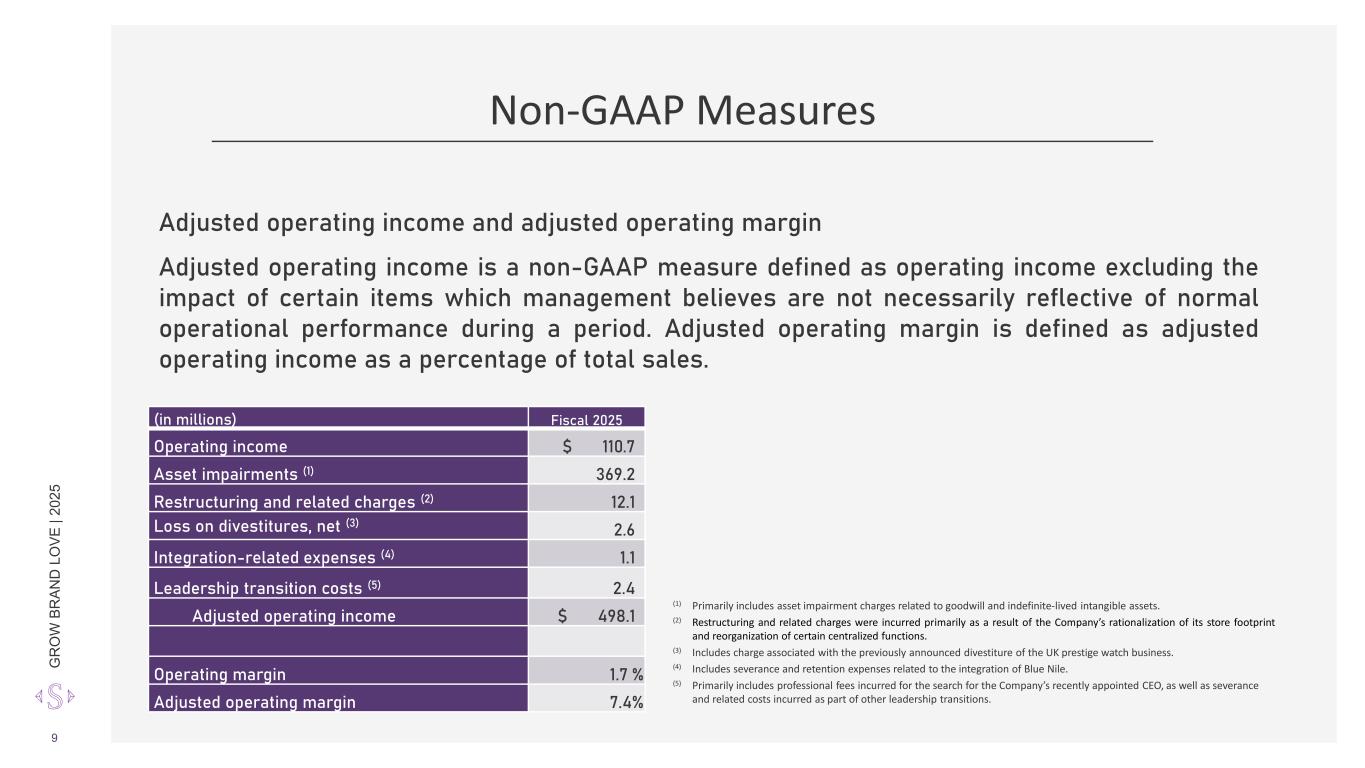
Good morning. Welcome to Signet Jewelers 4th Quarter Fiscal 2025 Earnings Conference Call. During today's discussion, we will make certain forward-looking statements. Any statements that are not historical facts are subject to a number of risks and uncertainties. Actual results may differ materially. We urge you to read the risk factors, cautionary language, and other disclosures in our annual reports on Form 10 , quarterly reports on Form 10 , and current reports on Form 8 . Except as required by law, we undertake no obligation to revise or publicly update forward-looking statements in light of new information or future events. During the call, we will discuss certain non-GAAP financial measures. Further discussion of the non-GAAP financial measures, as well as reconciliation of the non-GAAP financial measures to the most directly comparable GAAP measures, investors should review the news release we posted on our website at ir.signatjewelers.com. With that, I'll turn the call over to JK.
Thanks, Rob, and good morning, everyone. I'd first like to thank our Signet team. Your efforts positioned us well to deliver positive same-store sales over the last three months, including Valentine's Day. Thank you for all your hard work. Alongside my remarks, we've provided a summary presentation on our website to accompany what I'm covering today. Before we talk about the year ahead and my observations on the business, let's quickly recap the holidays and the actions we've taken since. Bridal and services were in line with our expectations over the holidays. However, key gifting price points underperformed in the two weeks before Christmas, leading to a softer fashion performance. While we saw 40% growth in lab-grown diamond fashion, we didn't have enough of the right inventory to meet demand, particularly at the $200 to $500 price points. Since the holidays, the team has been focused on filling these assortment gaps and expanding the availability of on-trend merchandise. Clearly, there's more progress to be made, but I'm pleased with the team's quick adjustments, which delivered positive comp sales in January and quarter to date in both bridal and fashion. We will continue to make changes to our assortment this spring to drive improvement for the next two major gifting seasons, Mother's Day and the winter holidays, and we are tracking to deliver relevant products throughout the coming months. Now, looking to the future with an eye toward driving organic growth, I've immersed myself in the business over these last few months working alongside Signet's leaders to understand our challenges and opportunities. We met with critical stakeholders, including strategic vendors, jewelry industry leaders, and customers. Now, more than ever, I have clear conviction in the upside for Signet and believe in the strong foundation to build on while fully leveraging the benefits of scale that have not been maximized under our current structure.
Our overall Q4 performance and lack of growth over the past several quarters informed our new strategy to grow our business.
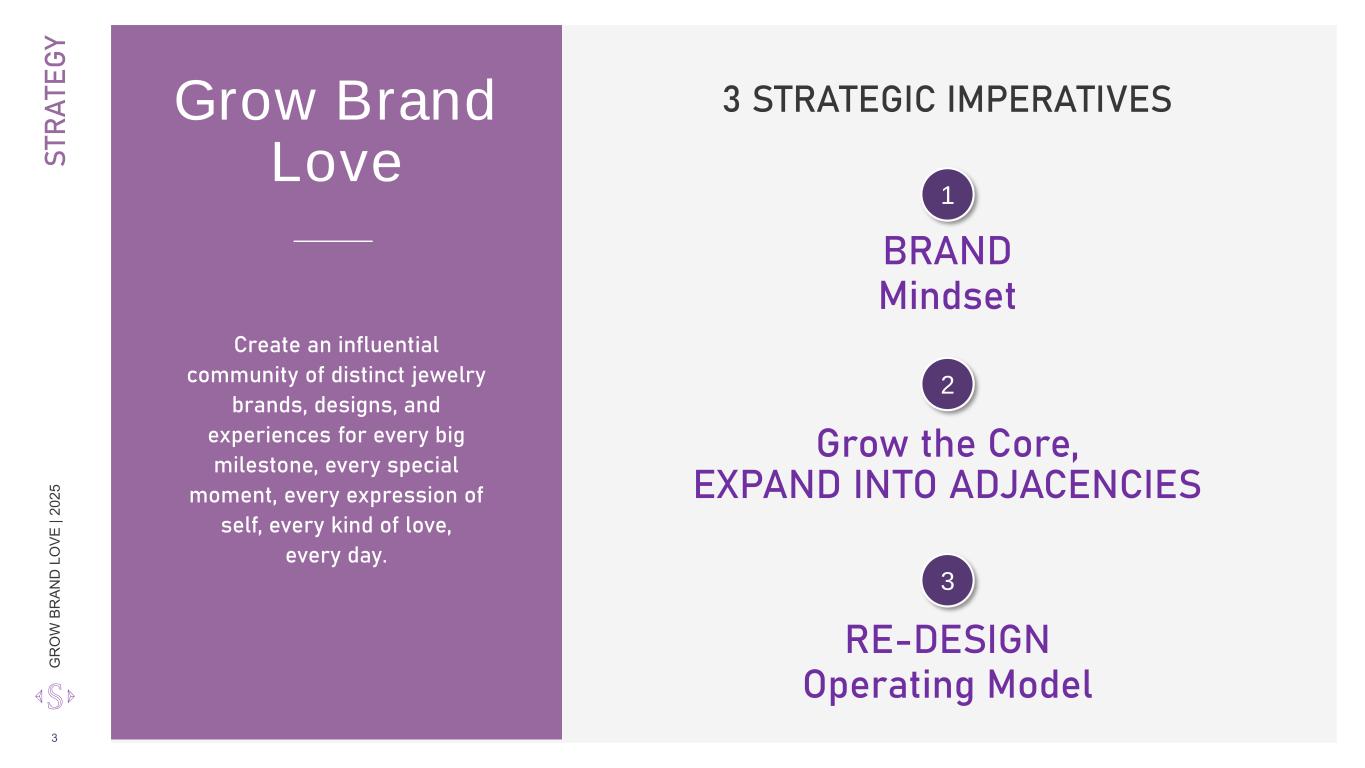
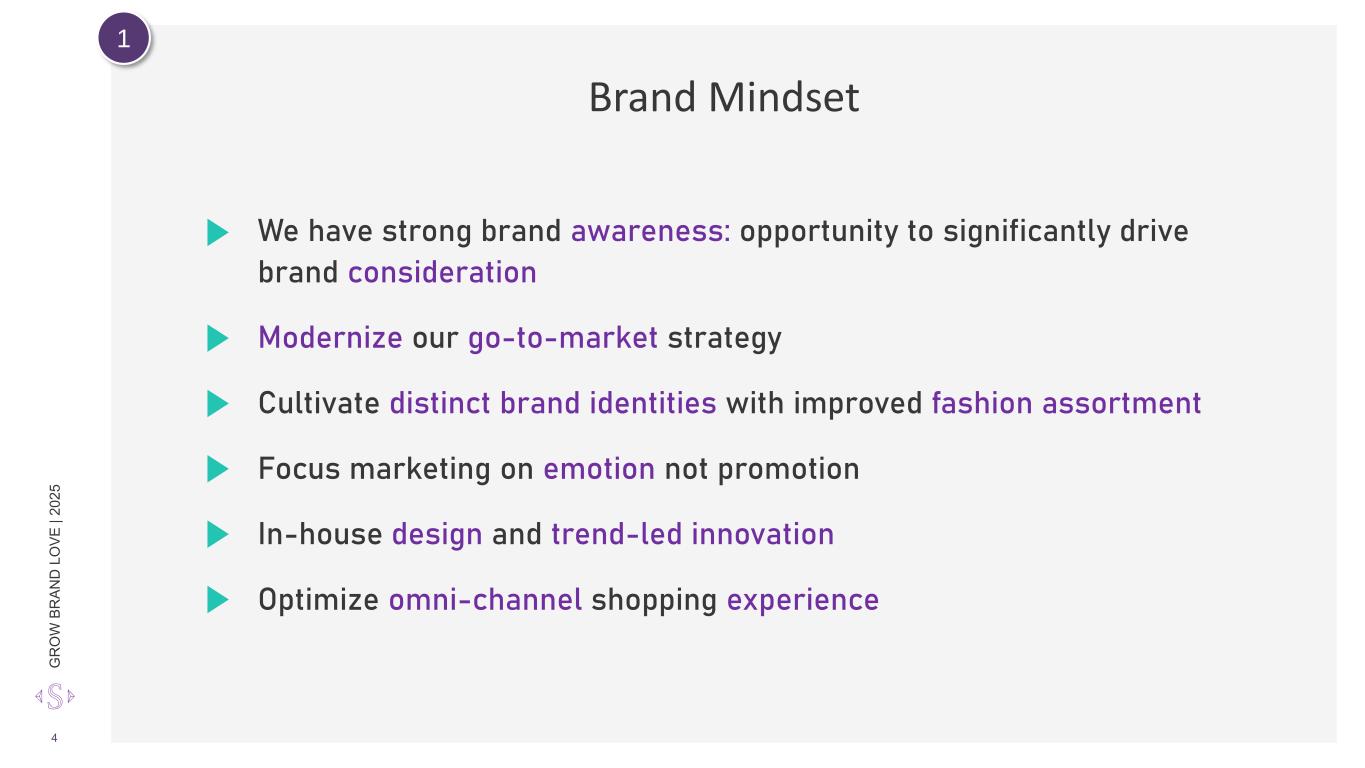
This strategy, Grow Brand Love, is transformative and focuses on accelerating growth and builds on a strong core foundation to create shareholder value. It requires a relentless focus by our team to grow through style and product innovation, captivating experiences, and building brand loyalty while harnessing centralized core capabilities. In working with our senior team, we've developed three imperatives to drive shareholder value. First, we are moving to a brand mindset rather than banners. This is a critical distinction that I will explain in a moment. Second, we will be relentless in gaining share in the core business and growing in adjacent areas where we have a right to play. And finally, we are changing our operating model and real estate portfolio to accelerate our execution of the first two imperatives.
Now, let me take you through them in detail.
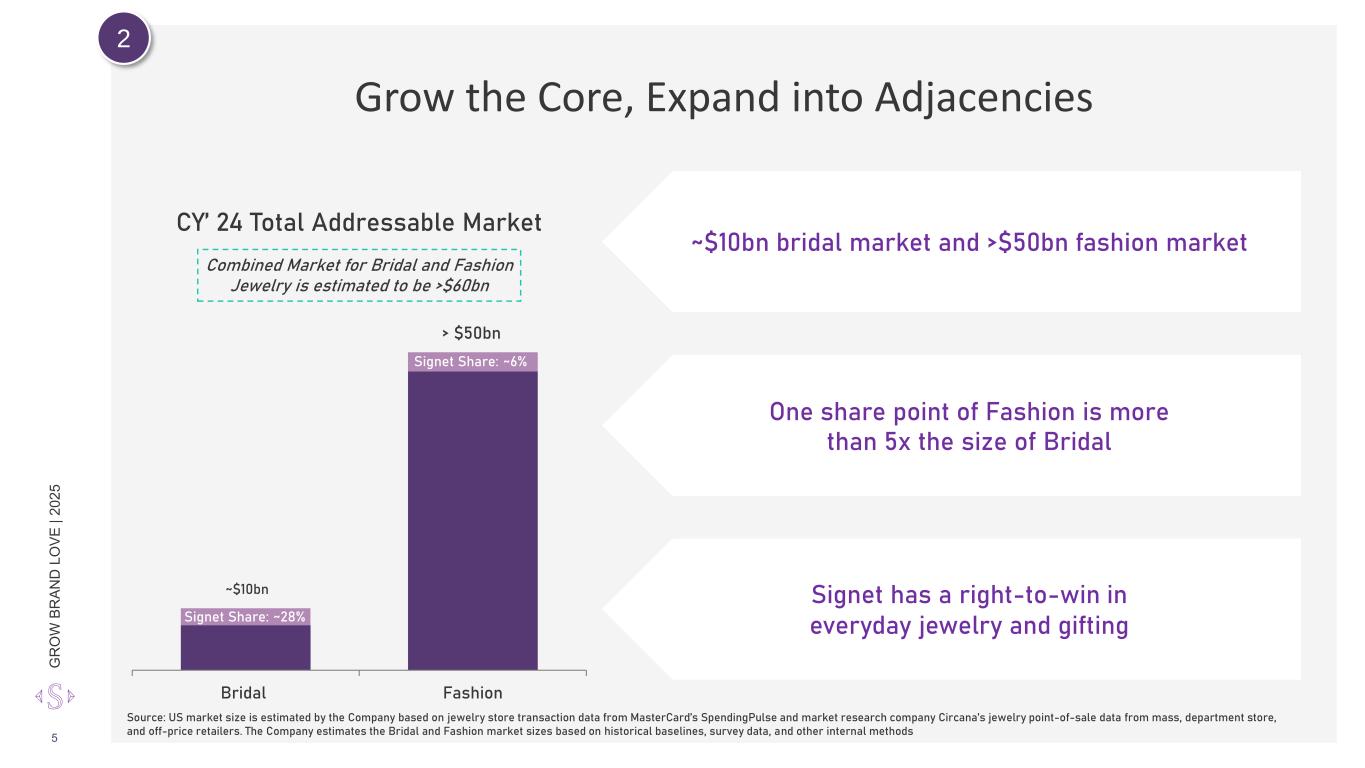
First, brands build loyalty with customers through emotional and engaging connections, while banners are transactional, literally a static nameplate on the door. Fortunately, our brand portfolio, especially our three largest brands, Kay, Zales, and Jared, all have high consumer awareness and a leading position in the industry. However, growth has been elusive in recent years, reflecting lower consideration. Building brand loyalty, we believe we can drive brand consideration with just a five-point increase worth approximately $500 million in revenue. To this end, we are launching a full modernization of our go-to-market strategy. We're creating a clearer distinction between brands to attract new and loyal consumers that see themselves reflected in the DNA of each brand. To achieve this, our marketing, product, and experiences will invite consumers to follow the stories of our new design collections and collaborations across relevant media channels to drive emotional and everyday connections. rather than primarily relying on promotion. Alongside our strategic vendors, we are building in-house design and trend capabilities that will leverage fashion as a differentiator by brand, all with increased speed to market. The first example of this is our Blue Nile by Jared collection. It was developed and released to market in less than half the normal time with a strategic vendor. This collection was one of the best new performers across the holiday. This puts style and innovation in the hands of our brand ambassadors, backed by industry voices, designers, and the creator community. Another example, we created a natural diamond collection called Unspoken at Jared last year. This collection comprised of 14-karat gold infinity-inspired designs that wrap around a brilliant center diamond, infusing style, storytelling, and innovation into a new and unique product. It was one of the stronger introductions over the holidays and gained traction into Valentine's Day. Finally, to round out our go-to-market strategy, we will create a captivating and more modern shopping experience for our customers. Our focus will be an experience reflecting each brand identity. This ranges from new store designs to product presentation, as well as e-commerce for storytelling of style introductions. We are also realigning our real estate footprint to support the positioning of our brands and modernizing our stores through capital improvements. We plan to make meaningful progress this year. Our second strategic imperative is to grow our share in our core, bridal and gold as an example, and further expand into adjacent categories such as self-purchase and gifting. Signet is by far the leader in the U.S. bridal jewelry market today, representing roughly half of our merchandise sales. The total bridal jewelry market in the U.S. is around $10 billion, and we have a nearly 30% dollar share. We believe we can grow our share in this category through assortment and price point architecture, along with more modern design enhancements. We will leverage our in-house design and strategic vendor partners in bridal, as well to bring to market a more timely pipeline of new and trending designs in a range of price points. The U.S. fashion jewelry market is over $50 billion, of which we have a mid-single-digit share. In everyday jewelry, we have only a low single-digit share. Put another way, growing our bridal share by one point is worth $100 million in revenue, while one point of fashion is more than five times the impact. Given our high brand awareness and the significance of our scale, I believe we have the right to win here through both milestone gifting and self-purchase. We're opening our aperture to an opportunity to drive more everyday shopping, making us less reliant on key holidays, diamond pricing, and the bridal market. That said, everyday jewelry is also the fastest-growing part of the industry, and we believe will continue to grow for the foreseeable future. Our third and final strategic imperative is to redesign our operating model to better support the execution of our strategy, Grow Brand Love. We will simplify how we work, increase efficiencies, improve accountability, and reduce costs, all in support of future sales and profit growth. We expect this reorganization to transition over the next quarter, and I am setting higher expectations for the brand leaders to move with greater speed. We're creating an executive leadership team predominantly with the brands, merchandising, marketing, and corporate functions reporting to me and most of operational teams reporting to Joan in addition to Blue Nile and James Allen in her role as chief operating and financial officer. We're also streamlining the organization to speed up decision making and enable an action orientation for our new go-to-market strategies. Our new model includes reducing the number of our senior leadership team members by roughly 30%.
Let me further explain this reorganization.
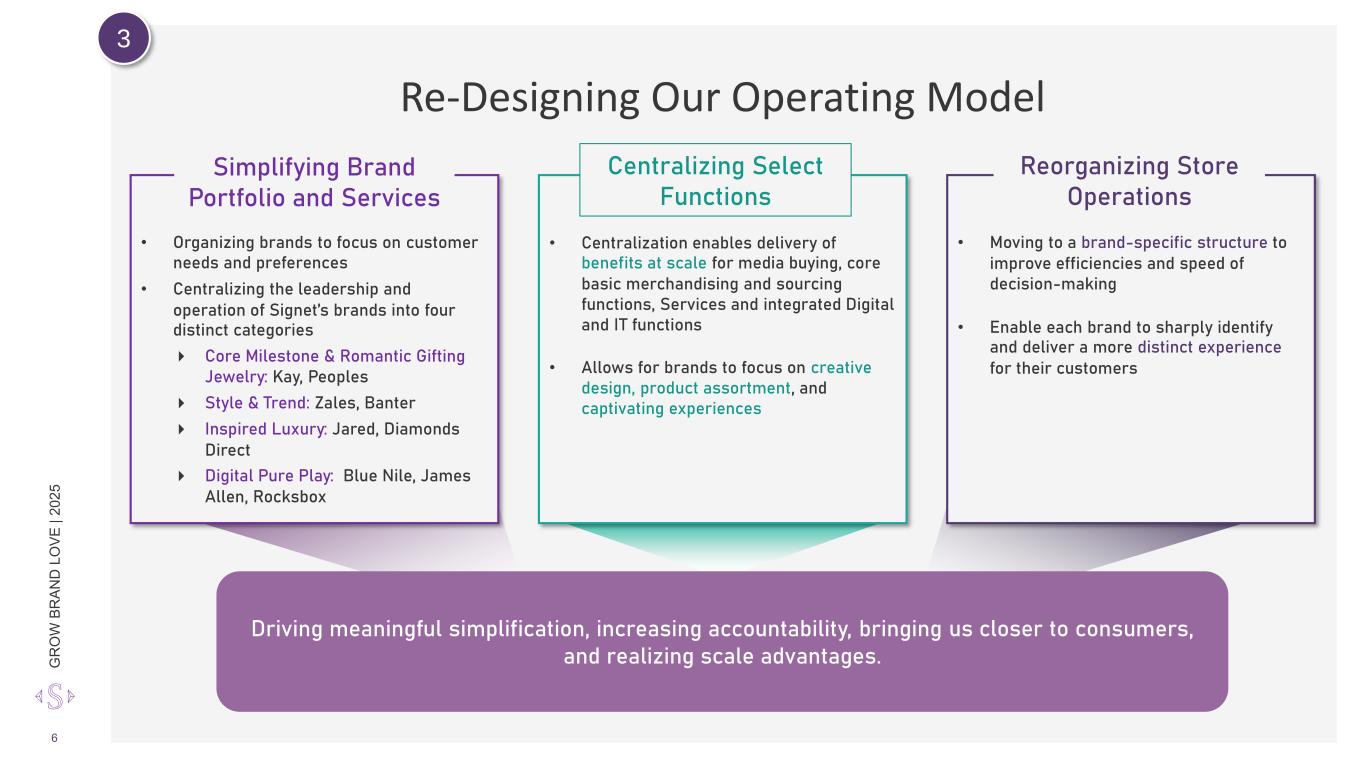
First, we will simplify the structure underlying our brand portfolio and services. Organizationally, we will centralize the leadership and operation of Cygnet's brands into four distinct customer families. First, core milestone in romantic gifting jewelry, reflecting K and peoples. Second, style and trend composed of zales and banter third inspired luxury made up of jared and diamonds direct and fourth digital pure play including blue nile james allen and roxbox second we will be centralizing a number of functions in order to maximize benefits of scale and optimize spend this includes media buying certain core basic merchandising and sourcing functions services, and an integrated digital and IT function. In marketing, we've begun a search for a new chief marketing officer who will be tasked to deliver on the benefits at scale by allocating ad spend to the highest returns for the company while working with the brands to develop creative content and storytelling. Within merchandising, we have many products that we consider core across most of our brands, including solitaires, pendants, stud earrings, and some gold merchandise. Centralizing the buying of this core product will realize sourcing savings and operational efficiencies while allowing the brands to focus on creative design, product assortment, and fashion innovation. This change will also simplify the processes for our strategic vendors. It will enable continued improvements in working capital as we believe we will be able to rationalize the assortment and lower our inventory levels over time. In services, we'll centralize all repair capabilities under one leader to expand opportunities and accelerate growth in mail-in repair, business-to-business, and personalization. Next, we're going to maximize our technology investments by combining and aligning our digital and IT teams into an integrated function. Again, streamlining the organization to gain speed and improve efficiencies. Finally, we will be reorganizing our store operations team to a brand specific structure to manage efficiencies and improve speed of decision-making and execution. This will also enable each brand to sharply identify and deliver more distinct experiences for their customers. These changes will allow us to adapt to evolving market conditions through meaningful simplification and increased accountability while bringing us closer to consumers and realizing the scale advantages that Cignet is capable of achieving. I also wanted to discuss our position and more proactive strategy relative to the diamond category. We recognize it's been a dynamic time in the diamond industry, one that we have a good track record of navigating. In my experience, companies that focus solely on risk or solely on opportunities during times of disruption underperform. Companies that aggressively pursue opportunities while considering risk mitigation tactics, I believe, can thrive in dynamic times. To this end, we will work to protect the allure and value of natural stones and engagement rings while pursuing the significant opportunity lab diamonds provide to grow fashion, particularly within self-purchase and gifting. We're evaluating our brand architecture across our portfolio to be more intentional about diamond assortment mix. Additionally, Signet intends to collaborate with De Beers and other industry leaders on more effective marketing, enhanced traceability, and delivering more dynamic consumer education this year. Critically, fashion lab-grown diamonds carry a significant AUR premium within our assortment at attractive margins. As an example, LGD fashion sales are up 60% in our big three brands quarter today, driving fashion AUR growth, margin expansion, and five points of penetration growth in the category to low double digits. We expect this trend to continue bolstering AUR and margin while providing customers new styles and trends, encouraging our customers to trade up from gold jewelry, melee, natural diamonds, and cubic zirconium pieces. I'd like to sum up with my key takeaways today before turning it over to Joan. First, we are pivoting from a banner mindset to a relentless focus on our brands. Second, we will focus on growing the core business, bridal and gold, while expanding into adjacent areas where we have a right to win, like self-purchase, gifting, and e-commerce. And third, we are realigning our organization to achieve our objectives, increase accountability, and realize economies of scale. We're excited to execute our Grow Brand Love plan as we reorganize the company to deliver on a framework that can support sustainable profit growth and shareholder value creation in the years ahead. We will have an outsized focus on our big three brands, Kay, Zales, and Jared, while evaluating the role and potential of the other brands in our portfolio. My intention is to keep a sharp eye on their contributions to shareholder value and position within our portfolio. I look forward to updating you as we execute against this strategy. Joan?
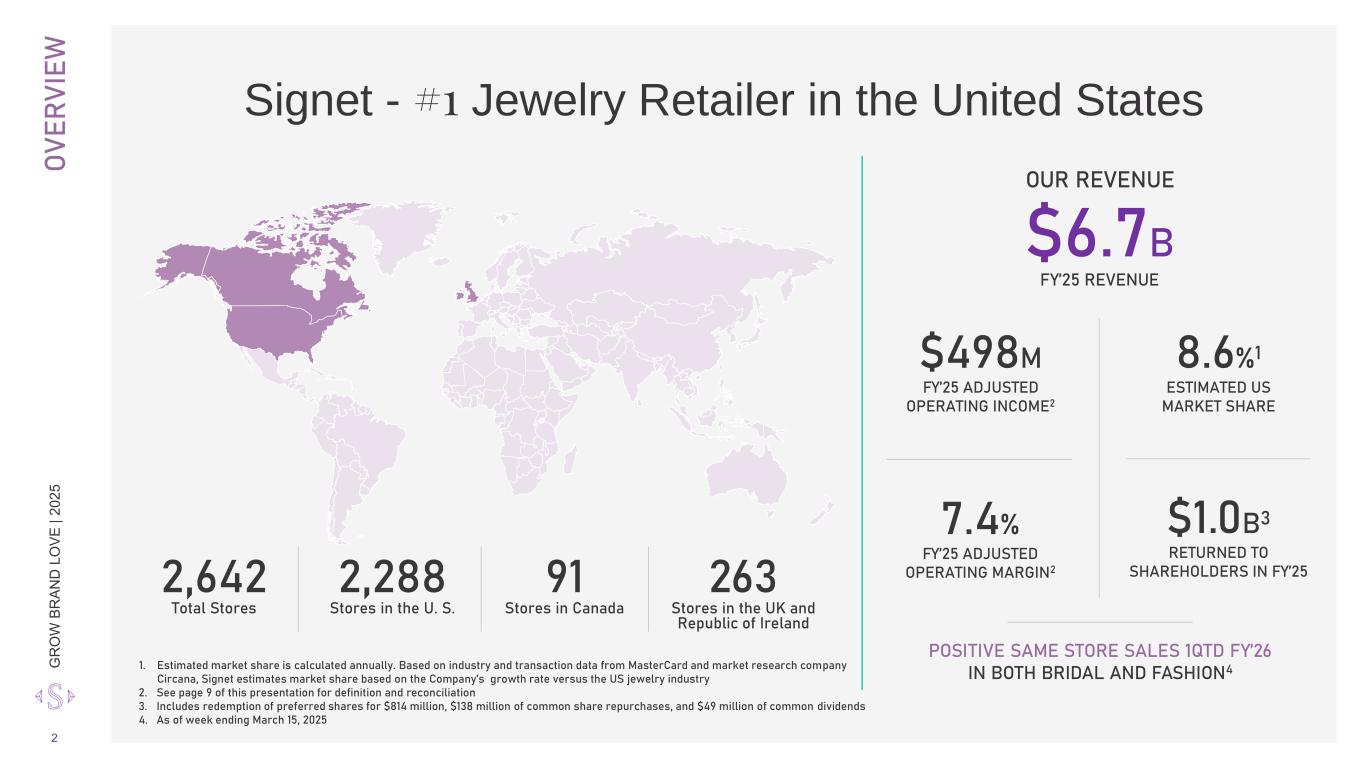
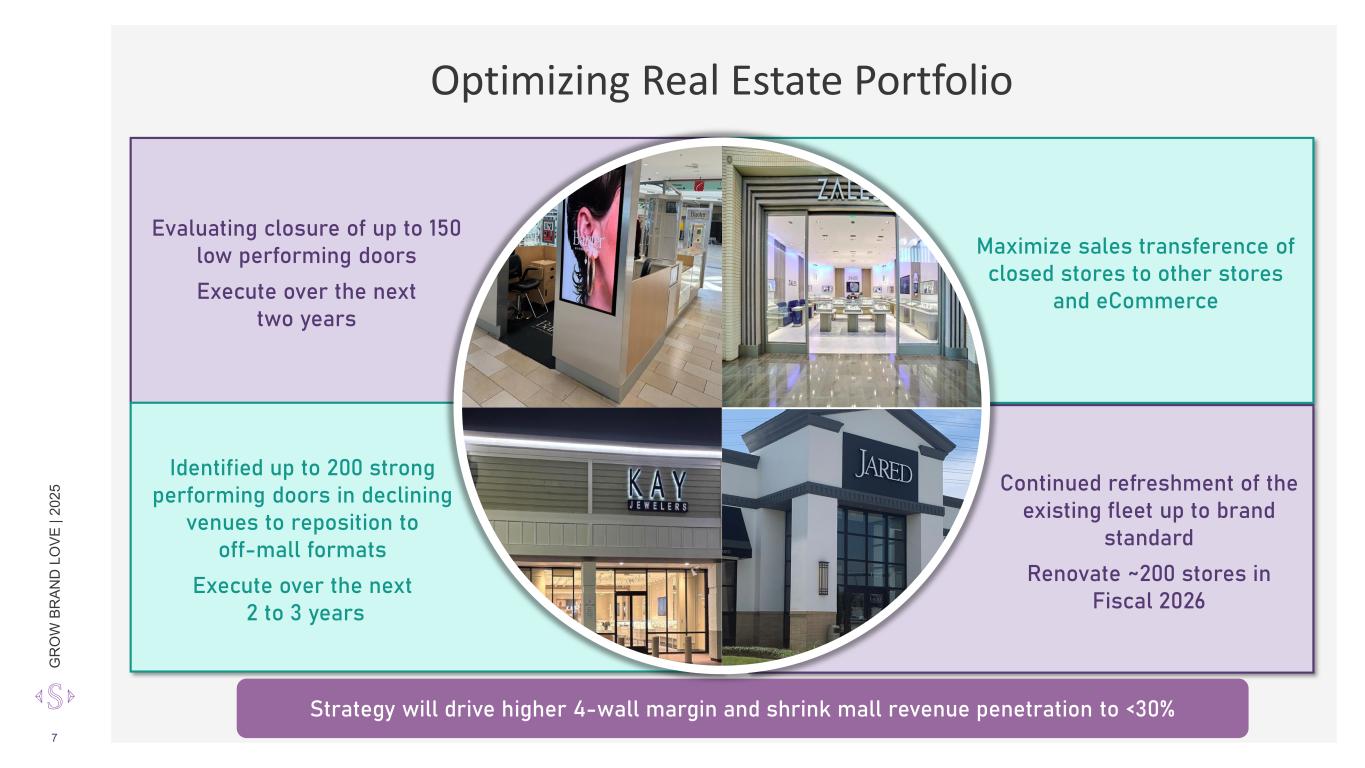
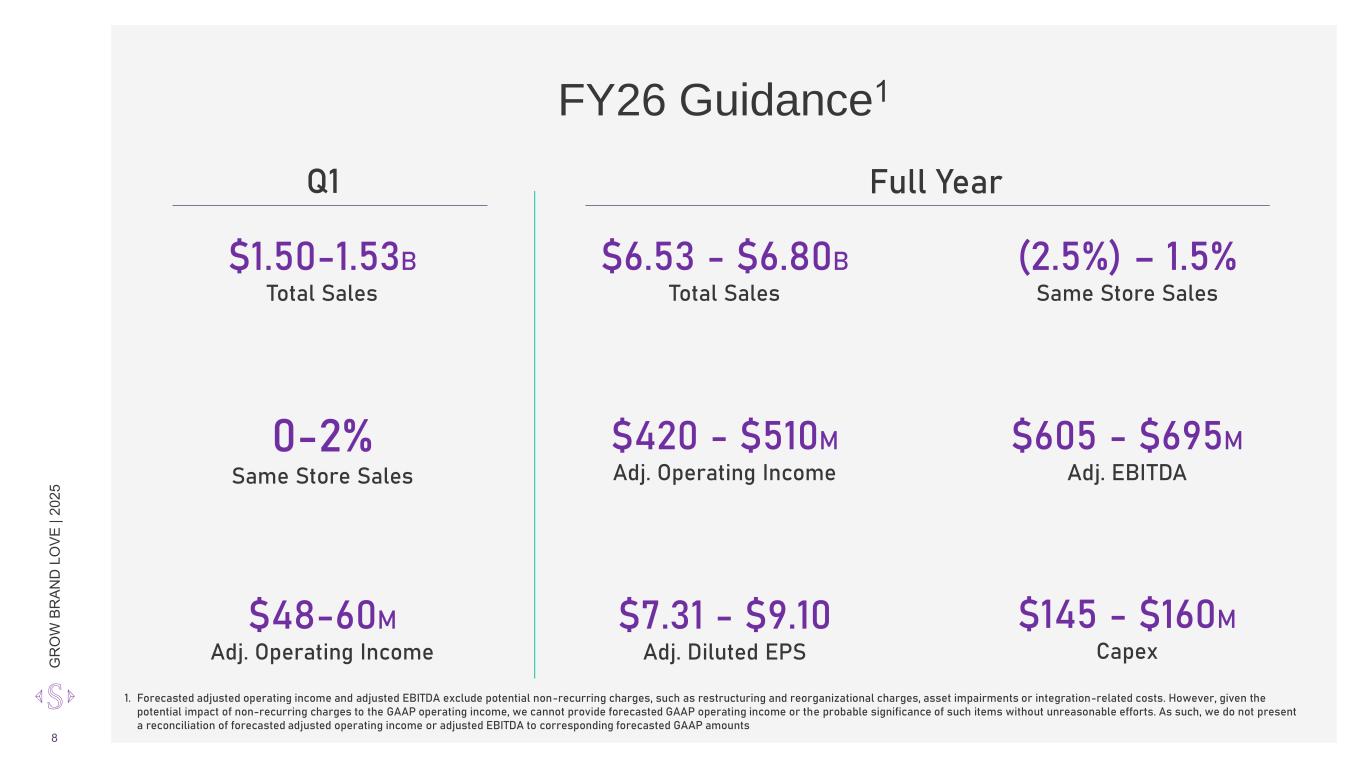
Thanks, JK, and good morning, everyone. Revenue for the quarter was down 6% to last year, but finished ahead of our updated guidance. Same-store sales were down 1.1%. Recall that the larger gap between total sales and same-store sales reflects the cycling of the 53rd week in the prior year, representing about 4 points. Our stronger January performance reflects landed product at key price points and engagements that have their strongest months for the fiscal year. Merchandise AUR grew 7%, with bridal AUR up 2%, the best quarter performance in two years. Fashion AUR was up 8%, although this is higher than expected due to the underperformance of key gifting price points over the holiday season. Turning to gross margin, adjusted gross margin of $1 billion, or 42.6% of sales this quarter, was down 70 basis points to last year, reflecting modest merchandise margin expansion that was more than offset by fixed cost leverage. items related to year-end adjustments in our digital brands and overhead allocations. Turning to SG&A, adjusted expense was down $32 million to $638 million for the quarter. At 27.1% of sales, SG&A rate was up 30 basis points, related to somewhat higher advertising, partially offset by store labor efficiency. Adjusted operating income was $356 million for the quarter, ahead of our updated expectations but below the prior year. Adjusted EPS was $6.62, nearly in line with last year, as we benefited from a significantly lower diluted share count. Turning to the balance sheet and cash flow, inventory continues to be healthy, ending the year at $1.9 billion, or roughly flat to last year, while bringing in newer styles to support our first quarter. Capital expenditures for the year were $153 million, reflecting a lower number of new store openings and renovations as we work to ensure alignment with our new strategy. Both of these are reflected in our FY25 free cash flow of $438 million, or approximately 88% cash conversion of adjusted operating income. Our cash flow enabled us to reduce Signet's diluted share count nearly 20% last year by returning approximately $1 billion to shareholders, including the preferred share retirement. Further, we're raising our quarterly dividend by 10% to $0.32 per share, Signet's fourth consecutive annual increase. We ended the year with $1.7 billion in total liquidity. Before turning to guidance, I'd like to touch on some additional factors within our new strategy. Regarding sourcing, we are fully centralizing our sourcing practices to leverage the scale of our buying power and deep market expertise. The newly chartered Signet Diamond Sourcing Team will negotiate pricing across our portfolio and improve our agility as a large buyer in the marketplace for both loose diamonds and finished diamond jewelry. Further, we believe this will provide greater transparency of true demand in the market. This all-encompassing approach, combined with our integrated retail agreement as a DeBeer siteholder, makes us confident we can bring the highest quality, responsibly sourced diamonds at the most competitive pricing. Turning to real estate, our strategy is a four-pronged approach to optimize the fleet. First, we'll close negative contributing doors. While this is a small portion of our fleet, it's the lowest hanging fruit. There are 150 underperforming doors we are evaluating for potential improvement or ultimately closure over the next two years, leveraging our shorter lease terms primarily in mall locations. Second, we'll optimize sales transference following closures by shifting sales to remaining doors and to our e-commerce channel allowing us to further leverage fixed costs we believe that loyalty to brand and unique product assortment is a key factor to driving transference to new and repositioned locations as well as e-commerce third nearly 200 doors in our fleet have healthy performance but are in venues that we believe are in decline Over the next two to three years, we expect to reposition many of these stores to off-mall locations. This will also allow us to create an experience in primarily Kay, Zales, and Jared that aligns to our Grow Brand Love strategy. Lastly, we'll continue to refresh our existing fleet, bringing more stores to brand standard. We expect to renovate approximately 200 stores this year. We've seen our reposition and renovation investments deliver a low to mid-single-digit lift in sales once normalized. Collectively, we believe these actions will deliver a roughly one-point margin improvement in four-wall contribution and reduce our North American mall revenue penetration to under 30% over the next three years from mid-30s today. Now turning to guidance. Q1 to date reflects positive comps as we landed product and key price points in both gifting and bridal. We've also seen higher AUR and merchandise margin expansion resulting from balanced overall pricing architecture. We expect total sales in the range of $1.5 billion to $1.53 billion, with same-store sales in the range of flat to up 2%, and are at the high end of this range quarter to date. We expect adjusted operating income between $48 to $60 million in the quarter. For the year, we expect total sales between $6.53 to $6.8 billion, with same-store sales in the range of down 2.5% to up 1.5%. The sales range anticipates a measured consumer environment, providing for variability in consumer spending over the year. Our gross merchandise margin outlook includes moderate expansion for the year and does not assume any further improvement from recent performance. Our guidance excludes the potential for any significant impact resulting from new tariffs and regulations. We have a team that actively manages tariffs and we will work closely with vendors as needed. At the high end of our guide, we expect SG&A as a percentage of sales to be slightly higher year over year. We expect 50 to 60 million dollars in savings this year from the reorganization. This will largely offset the reset of incentive compensation and normal levels of inflation. We expect the annualized impact of the reorganization to be at least 100 million dollars, most of which will be in SG&A. We are still evaluating one-time costs related to this reorganization and we expect the majority to be excluded from adjusted operating income. We expect adjusted operating income between 420 to 510 million dollars our capital allocation priorities are organic growth and return of excess cash to shareholders while maintaining a conservative balance sheet we expect capex to be largely flat to last year in a range of 145 to 160 million dollars including 10 to 15 new store openings and approximately 15 repositioning. We expect EPS in the range of $7.31 to $9.10 per diluted share. We expect EPS for the year to be impacted by a roughly six-point tax rate increase, primarily related to the change in Bermuda regulation, which is non-cash. As such, we expect cash taxes to be below financially reported tax. Our guidance includes share repurchases to date, and we will be opportunistic in repurchasing shares throughout the year, especially at recent share price. As a reminder, liquidity over $1.5 billion at the end of the year is what we consider available for capital returns to shareholders. We will continue to show the same inventory discipline we've shown in the past as we infuse style and innovation into our product assortment. Before we turn to Q&A, I'd like to thank our Signet team for driving the trend shift we've seen in our business since holiday. I truly appreciate the commitment of our team to deliver experiences for our customers that drive customer loyalty and shareholder value.
Operator
I'd like to turn the call over for questions. Thank you. Ladies and gentlemen, if you do have any questions at this time, please press star followed by one on your touchtone phone. You will then hear a prompt that your hand has been raised. Should you wish to decline from the polling process, please press star followed by two. And if you're using a speakerphone, you will need to lift the handset first before pressing any keys. Please go ahead and press star one now if you have any questions. First, we will hear from Ike Borchow at Welsh Fargo.
Please go ahead. Good morning, everyone. Thank you for taking my question. This is Juliana on for Ike. First, maybe for JK, maybe a question on strategy. Given the relative size of the opportunities of each that you mentioned, how do you think of the current mix of bridal versus fashion, and could you see this shifting over the next few years? And then maybe for Joan, in this new guide, What are you baking in for holiday and 4Q coming this year, given what we've seen this past quarter? And how are you thinking of the comp cadence for the rest of the year? Thank you.
Yeah, thanks, Juliana. Thanks for the question. I think the right way to think about it is not so much a penetration or mixed question. It's how do we delineate the growth of both? As we said in the script, I think there is opportunity for us to grow, share, and bridle. And I think one of the key deliverables for us to do that is to have a sharper point of view around the role that natural plays and really reinvigorating the natural diamond penetration in that mix, also sharpening our assortment architecture and modernizing that assortment by brand. On the fashion side of the house, Lab Grown Diamonds plays a little bit more of a role there because it really does create growth opportunity at lower price points, which really do, I guess, create expansion opportunities for us from a category standpoint. It's not a mixed shift, nor is it a trade. It is a new customer. And, you know, probably one thing that we could delineate a little bit better is it also opens the door for expanded digital commerce for us. That everyday purchase and the growth that's happening there, much of it's happening online, we're seeing that pull through in our mix. And so while our penetrations may change a little bit, it's because you're changing both the numerator and the denominator by tapping into that opportunity for growth.
Juliana, with respect to our guidance, you know, as we mentioned, our quarter-to-date sales are, you know, running positive. That said, as we look at the full year, our guide anticipates a measured consumer environment, you know, providing for variability in consumer spending. And with that, we, at the midpoint of our guide, site and store sales is slightly negative. and we don't believe, we haven't positioned it as a hockey stick, if you will, you know, as we approach holiday, and so we've remained measured throughout the balance of the year in our view of same store sales. Thank you so much.
Operator
Thank you. Next question will be from Lorraine Hutchinson at Bank of America. Please go ahead.
Thank you. Good morning. Just to follow up on the comp question, are there any headwinds that you anticipate? Is there anything in the quarter-to-date number that you think is one time on the same store sales? It just seems like a pretty sharp deceleration for the rest of the year, particularly when you have some learnings to fix in the important fourth quarter. It seems like you have an opportunity there to do even better.
Operator
So just any other context there would be helpful.
Thanks, Lorraine. Our position is that We believe it will serve us well to remain, you know, prudent and conservative in our outlook as we, you know, think about the consumer backdrop and the environment that the dynamic environment that we're in today. The Q1 performance, to your point, we're pleased with that performance. We saw the teams bring in, you know, land product post-holiday that filled in the assortment gaps. for key gifting periods and, you know, still more work to do, but with the quarter, you know, running positive, we're seeing bridal recovery occur. So we are, you know, really managing our business against, you know, a continued, you know, improvement in bridal as expected, but we're not, you know, including that in any large way in our guidance. So good news on AUR, good news on bridal performance, good news on the fashion response, and we feel that we're positioned properly as we look to the balance of the year. Thank you. And then the strategy that you laid out is focusing on natural diamonds for engagement and lab-grown for fashion. What is the customer saying to you about lab-grown and engagement? And is there risk that as prices for lab-grown fall, it could cause some longer-term challenges to the business?
Thanks for the question. I actually might reframe the summary a bit. It's really about having the right roles by brand and the right assortment architecture in place by brand to recognize what the consumer is telling us, which is there is a place for both in their life. And, you know, we think the growth opportunities for lab are more well-positioned given price point and design capabilities for fashion. And also because of the dynamic you mentioned as it relates to what's the consumer viewpoint on value, et cetera. In natural, we are seeing a return to growth there in engagement. And I think what you'll see us talk about a little more so is what roles do each play in our engagement assortment by brand in a higher tier, more luxury inspired brand like Jared or Diamonds Direct, where you still have a prevalent customization percentage of your mix, where you're still doing more loose stones and selling higher price point. Natural should be a stronger part of our assortment. When you're looking at a brand like K, which really speaks to a much broader cross-section of customers, there's a little more balance there between the role that lab-grown plays at maybe a lower price point for a more budget-conscious consumer, but you still see healthy growth in our natural diamond business. So I think part of what we tried to articulate is just a stronger point of view around how we want to serve customers, meet the demand on both sides, but also be good stewards of the category, and also take our responsibility of educating consumers really well. I still think there's a lot of, you know, miseducation or maybe confusion over what each is and being able to make sure that we're connecting customers to what they're looking for and that that investment is something they feel confident about and can, you know, can look at that piece of jewelry and celebrate all the emotion that they're trying to celebrate is, you know, And without that question in their mind is really what's driving that set of choices.
Operator
Thank you. Thank you. Next question will be from Polish Way at Citi. Please go ahead.
Hey, thanks, guys. Can you talk about what your expectations are for the engagement category overall at a market level this upcoming year that are built into your guidance? And I'm also curious if you can talk about the promotional environment in both bridal and fashion and how that translates into what you assume for AURs in each of those categories this year.
Thanks, Paul. So as we think of the engagement category, our guidance assumes a range of up low single digit to down low single digit. But as we think of AUR, we would expect it to be, you know, down low single digits to flat, just recognizing the thinking around the mix of the product, lab-grown, carrying, you know, a nice, you know, average unit retail, and frankly, the experience we've seen overall in natural as we reported, you know, what we've seen in January through first quarter today. So feeling confident about our ability to manage the bridal AUR effectively. And then when we think about fashion, we are flattish in fashion on a unit basis, if you will. But the AUR is where we would expect to see some growth as we've been experiencing growth, maybe even a little higher than we had expected in January. But we would expect it to, based on the composition, including more lab-grown diamonds into fashion product, we would expect to see AUR growth there. So within our guide for the year, you know, we've given a range, you know, down those single digits to up. But at the midpoint, you know, as I mentioned, it's, you know, slightly negative. And it's really pointing out some of the variability between those two categories. But, you know, we believe based on what we've seen to date that we have the ability to manage, you know, both. So that answers the question.
I think it does. I think the second part of that about promotional environment is we're really not seeing a different approach in that space right now. We do have some modest margin expansion built in. That is really more about execution on our end. It's not, I think, a reflection of a change in the promotional environment one way or the other. It's about tighter assortment architecture and really controlling what we can control, Paul. But, you know, we set in a category that is a measured and considered purchase, which, you know, means it's got a little bit different profile as it relates to consumer responsiveness. This isn't a category like maybe some other apparel others that is quite as responsive to disposable income changes and therefore ramps up or ramps down phone cadence in response to the outside world quite on the same arc. I think we see some predictability there, feel like we've got the right plans to manage it, and feel like the choices that we're making around how we drive mix and assortment better position us to be able to deliver that. And as Joan said, we're also watching what's going on with consumer to make sure that we're responding accordingly.
Yeah, got it. Thank you. And then just one follow-up, Joan, free cash flow target for the year, maybe tie that into how you plan to manage inventory things.
So we haven't given a free cash flow target per se, Paul, for the year, but our inventory management continues to be a strength for us as we reported our year-end inventory was flat as we brought in, flat to last year, as we brought in new products and new styles in January to support our first quarter. So the teams are focused on turning our inventory at least in line with last year and believe that, you know, that will serve us well as we manage our cash flow go forward, which, as you are aware, is our single biggest lever outside of, you know, operating income within our cash flow.
Thank you, guys. Yeah, thanks.
Operator
Next question will be from Dana Telsey at Telsey Group. please go ahead.
Hi, good morning, everyone, and nice to see the progress. JK, as you've made this pivot with the AUR improving, how you're thinking about fashion versus bridal. Any thoughts as to the cadence through the year about how you're thinking about it and where you would have the most traction? And then, Joan, with the up to 150 store closures, how do you think of the timing of determining, yes, these 10 will close, these 50 will close, and what are the markers that you're looking at. Thank you.
Sure. Dana, I appreciate the question and the comment. I guess the way that I would think about the year is we should continue to build progress. I think the first half of the year is, you know, and even what you've seen in results in Q1 is about an increased focus on execution and really a better focus on how we allocate inventory to meet customer demand and, you know, sort of read and react to the market. Over time, our work around refining assortments and really clarifying the role of each brand in our portfolio to get better differentiation should help us continue to expand into those adjacent growth categories. And, you know, ultimately the indicator there is going to be same-store sales. And, you know, how do we take a set of brands that have really, really high awareness and really get traction as it relates to consideration and conversion? That, you know, I'm realistic about the fact that, you know, you behave your way into that outcome. And we've got lot of work to do across the assortment, work to do in terms of how we better tell stories and connect with customers. But the nice thing about it is I think, you know, from maybe the spirit of your question, I think there's near-term things that are execution-related that allow us to drive improvement, like you're seeing in these results, while we build towards the longer-term, larger opportunities in our business.
Dana, with respect to store closures, we will evaluate the locations based on what even though they're negative contributors at at this moment we see some traction in our business and we really want to understand the potential of the store based on the market and what the opportunity is you know is it within the four walls or is it the real estate location itself and we're really leaning in with the the source teams to understand what they believe the opportunity can be for us. So our marker will be top-line performance, our ability to drive that four-wall contribution, and then evaluate where we think, is there a better location within the market for us for that store or elsewhere, or does it shift to our e-commerce channel as an example? I think it's important to note, Dana, that we will also evaluate sales transference as an opportunity to drive profitability. And we know that our jewelry consultants, our brand ambassadors, are very important to the loyal customer base, as well as the unique product offering that Signet brands can bring. So we'll put that in the context of a strategy as well to really evaluate the upside potential for all of our locations. And then with respect to the repositions, we have very strong performing stores, and we want to anticipate properly what the potential decline of those malls might be, and we want to be ahead of any downturn potential in sales given a mall performance overall. And so we're getting ahead of that over the next, and we expect over the next two to three years to evaluate that, and we're in a good position to do that economically because of our average lease term is just over two years. So I really like the approach that we have to really improve our real estate position, the appearance of our fleet to match the brand strategy that we're laying out under Grow Brand Love.
Operator
Thank you. Thank you. Next question will be from Mauricio Serna at UBS Financial. Please go ahead.
Great. Good morning. Thanks for taking my questions. First, could you give us a range of where the first quarter-to-date comp sales are at? And also, we'd be very interested in seeing, sorry, getting more details on how was the performance over Valentine's and kind of like the cadence after that. We saw like any changes in behavior. And another follow-up on that, what are your expectations for the total industry, the jewelry industry in the U.S. for this year in terms of growth? Thank you.
Well, I'll take the first two. So for the quarter, we're pleased with the performance on a comm sales basis. And we're, quarter to date, we're at near the high end of our guidance range. so pleased with that we saw a nice holiday as well uh the new product landed in time for the holiday build and we were able to fortify key price points for gifting and in bridal and so we've seen improved levels uh related to both those factors and i i'd say throughout um the quarter you know it's you know quarter to date that's what we're saying is you know towards the high high uh end of our guide so um feel you know pleased with where we're positioned currently
yeah and i'd say from industry standpoint um you know within our guide we see it uh flattish you know um plus or minus those single digits i i think that's you know the consensus read you'd see out there and that's that's kind of the way we baked it into our guide great and just another follow up on on gross margin like how should we think about that for for the year uh you know i think you uh alluded some uh modest merchandise margin expansion but uh on a gross margin basis how should we think about that and any details on like the cadence of what could that look like for for the year thank you we have um experienced in a moderate you know gmm expansion you know to
date within our first quarter, and we're pleased with that. We have not assumed an increase in that expansion throughout the balance of the year within our guidance. So we expect to continue with a moderate expansion throughout the year.
Got it. And sorry, one very last one. As you think about just like the high end and low end of the sales guide, like from, I guess, like what are like the put intakes that, you know, get you from like the low end to the high end on, you know, yeah, essentially that's the question. Thank you.
So, as I mentioned earlier, Mauricio, if I'm understanding your question, I apologize. I think that the voice was a bit garbled. I mentioned the bridal units and bridal AUR were really in a range of, you know, low single digit increase to low single digit decrease and really looking at a range within bridal and fashion that balance each other we're pleased with the aur that we're seeing in bridal to date very pleased with the fashion aur that we're seeing and so we're we're really toggling that being download single to upload single in a unit basis and then really working through our sort and then driving aur got it uh
Thank you very much, and good luck. Thanks, Maurice.
Operator
And last question will be from Jim Sanderson at North Coast Research. Please go ahead.
Hey, good morning. Thanks for the question. I wanted to go back to the many changes you outlined in process of Cigna. I wonder, how do you see the Cigna profit model evolving in terms of flow through on incremental sales assuming business normalizes and you start to see some improvement on your sales trends and this is in the context of the let's say seven percent uh margin you've been reporting the past couple fiscal years so um as we you know navigate the operating model change we've we've noted jim that there's 50 to 60 million dollars of costs out largely um in sgna offsetting most of the reset incentive comp.
So as we think of driving comps in our core banners, we believe that that's the most efficient flow through that we can expect. And then we will balance performance, as JK mentioned in his remarks, with the other brands within our portfolio to ensure that they're contributing. So our model is designed to continue to drive merchandise margin expansion and continue to leverage SG&A with that comp start growth. So we would expect a range of 30% to 35% flow through overall as we see comps increase. That's our goal, and believe that the operating structure that we're putting forward, that we should be able to achieve that over time.
Yeah, Joan nailed it. The only other thing I'd add to it maybe to build on is I think having an outsized focus on our largest brands is the best way to pull that through. We're certainly evaluating the total portfolio, but for the most part, they're accretive. They just don't generate the same kind of top-line impact to help pull it through. And so by maintaining that outsized focus on really, you know, Kay Zales, Jared, and then the continued improvement and growth of our digital business, that really is the best way to maximize that opportunity. That's where our efforts are focused, and really, when you look at the lion's share of the strategic impact and the work that, you know, we've engaged in and continue to push through, it really is that outsized focus to make sure that we can pull it through.
All right, and just a quick follow-up question on the engagement category. Your range, I think, of low single-digit negative to positive, is that a reflection of you thinking you need to capture market share in order to achieve growth in the category? Or is the backdrop that the industry trend is flattish to declining? Just kind of how that range reflects what's going on with consumer demand. Pardon me.
You know, we're seeing consumer demand for engagements, you know, up in January and, you know, as well as in February. And, you know, clearly our goal, Jim, is to drive, you know, market share gain in the engagement category at what we're positioning is a, you know, conservative view within our own model and within our guidance this year, but certainly our intention is to drive market share gain as we see engagements continue to recover, you know, over the course of the year.
And you still see that recovery in process industry-wide? Is that the right way to look at that?
We believe in the engagement recovery and directionally, and we are positioning our business within our guidance to, you know, capture that engagement recovery as it occurs.
All right. Thank you very much.
Operator
Thank you. At this time, I would like to turn the call back over to Mr. Szymanski for closing remarks.
Okay. Thank you, everybody, for your time today. This company has clear runway ahead, and I believe we have the right strategy with Grow Brand Love in place, along with the strategic advantages to grow market share and drive shareholder value. Really thank you for joining us today, and I look forward to sharing more of our progress as we move through the year. Thanks. Goodbye.
Operator
Thank you, sir. Ladies and gentlemen, this does indeed conclude your conference call for today. Once again, thank you for attending. At this time, we ask that you please disconnect your