Operator
Thank you for standing by. My name is Kate and I will be your conference operator today. At this time, I would like to welcome everyone to the Sky Harbor 2026 First Quarter Earnings Call and Webinar. All lines have been placed on mute to prevent any background noise. After the speaker's remarks, there will be a question and answer session. In order to ask a question, you can send via webcast in the Q&A box. Thank you. I would now like to turn the call over to Francisco Gonzalez, CFO. Please go ahead.
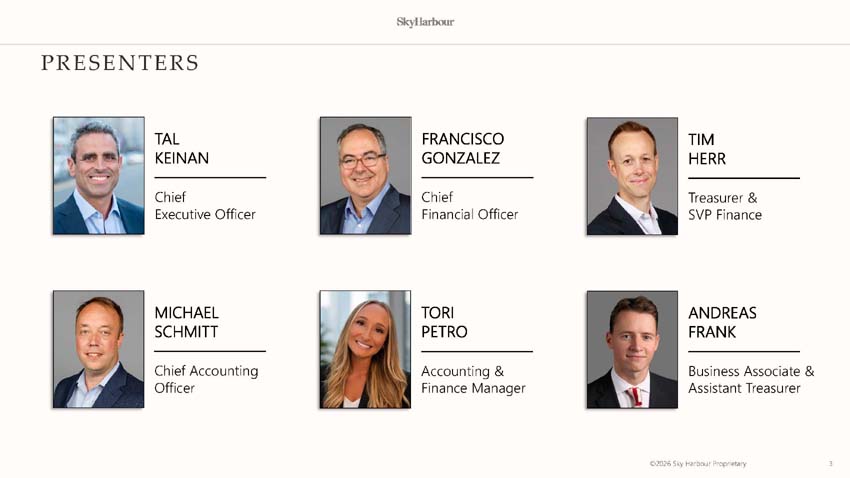
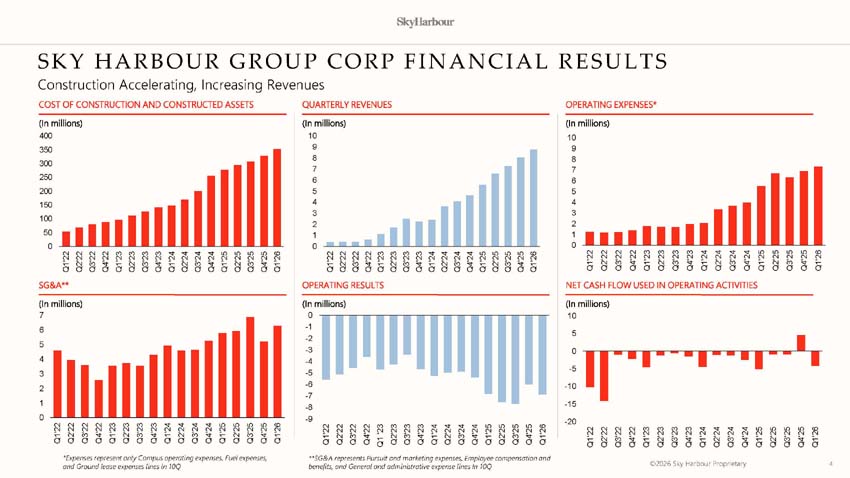
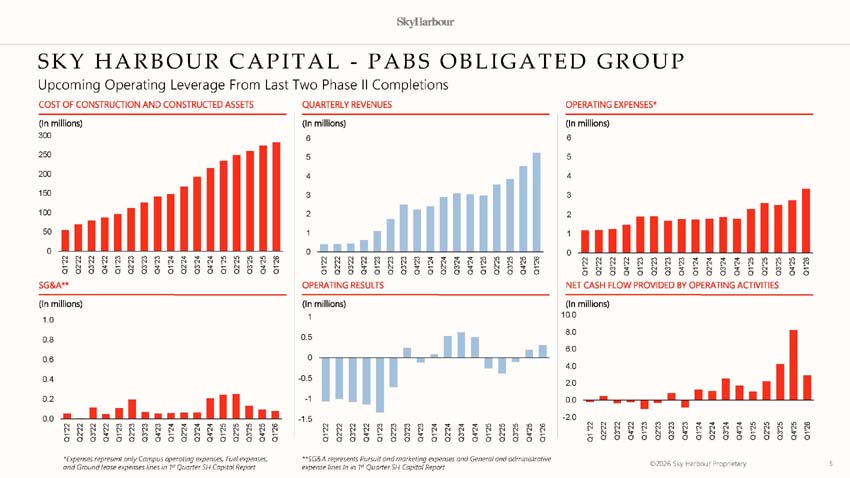
Thank you, Kate. And hello and welcome to the 2026 First Quarter Investor Conference Call and webcast for the Sky Harbor Group Corporation. We have also invited our bondholder investors and lenders in a borrowing subsidiary Sky Harbor Capital, Sky Harbor Capital II, and Sky Harbor Capital III to join and participate on this Before we begin, I've been asked by Council to note that on today's call, the company will address certain factors that may impact this and next year's earnings. Some of the information that will be discussed today contains forward-looking statements. These statements are based on management assumptions which may or may not come true, and you should refer to the language on Slides 1 and 2 of this presentation, as well as our SEC filings for the description of the factors that may cause actual results to differ from our forward-looking statements. All forward-looking statements are made as of today and we assume no obligation to update any such statements. So now let's get started. The team with us this afternoon you know from our prior webcast our CEO and Chair of the Board Tal Kanan, our Treasurer Tim Hur, our Chief Accounting Officer Mike Schmidt, our Accounting Manager Tori Petro, and our Assistant Treasurer Andreas Frank. We have a few slides we will want to review with you before we open into questions. These were filed with the SEC an hour ago in Form 8K, along with our 10Q, and will also be available on our website later this evening. We also filed our first quarter Sky Harbor Capital Obligated Group Financials with MSRB EMMA an hour ago. As Kay mentioned, you may have submitted written questions during the webcast, during the Q4 platform, using the Q4 platform, and we will address them shortly after our prepared remarks. Let's get started. At the end of the first quarter, on a consolidated basis, assets under construction and completed construction reached over $352 million, that is a $75 million increase from a year ago. Let me highlight that the pace of investment and new construction at Sky Harbor is accelerating and this column will continue to grow at a higher rate. Revenues experienced an increase of 56% year-over-year and 8% sequentially, given the new campus opening during the past year and increases in occupancy and rental rates. Operating expenses in Q1 continue to increase in tandem with new campus openings impacted in particular by increases in campus headcount and the cash and non-cash expense accruals of new ground leases entering into the past year which are not yet in construction or in operations. More than half of the increase in OPEX quarter over quarter or quarter sequentially is related to the signing of these new grant leases at the end of the year, and within that expense, more than half of that is non-cash accruals of payments that will be made in the future. We look forward to benefiting from the operating leverage of our phases two, both in Miami or Paloca, we just opened, and in early 2027 with the opening of Addison 2 Phase 2. We expect gross profit margin expansion with these two Phase 2s with the same people and fuel trucks basically serving a doubling of hangar campuses. In terms of SG&A, we strive to keep this in check as we grow, keeping frugality front and center in our expense and cost management initiatives. Cash flow used in operations moved higher than and last quarter of 2025, which usually happens in each of our first quarters, given the seasonality of our cash performance, Bormel says paid to our employees in February, the annual increases in base salaries that occur as of January 1st, and also some minor items related to 401 corporate matches, social security employer contributions, and the lie that they all tend to be concentrated in Q1. If you look historically, that pattern It has been the case in terms of Q1, the prior Q1 quarters in prior years. Also the figure in Q4 had the non-recurrent benefit of the $5.9 million offering payment we received by one tenant in terms of a lease renegotiation in Miami. On a normalized basis, as we have disclosed previously, we have reached cash over achievement at the operating level. So, more on this when we talk about our guidance for 2026 shortly. Next slide, please. This slide is a summary of the financial results of our wholly owned subsidiary, Sky Harbor Capital, and its operating projects that formed the obligated group. Assets under construction are still growing as we complete Opaloka Phase II and will only stabilize once we complete Addison Phase II at the end of the year. This will constitute the last projects of the obligated group's first vintage of campuses that were financed primarily by the 2021 series bonds. Revenues at the obligated group in Q1 increased 76% year-over-year and 15% sequentially. We expect another step-function increase in revenues in Q2 and Q3 of this year following the opening of phase two in Apoloca and then in Q1 and Q2 of 2027 after the opening of phase two in Addison. As I mentioned earlier, we expect a significant increase in the obligated group's gross profit and EBITDA margins given the additional revenues of these two phases with limited increases in operating costs given the ability to use the same personnel and equipment with an expanded campus doubling in size, both in Dallas and in Miami. Cash flow from operations and the OVD group reached $2.9 million, almost tripling of the same amount of, I'm sorry, of a million dollars a year ago, and a 14% increase from the prior quarter after adjusting for that non-recurrent $5.9 million influx in the prior quarter with the prepaid rent that we discussed also earlier. So at this point, let me pass it on to Tal to provide a leasing and development update. Tal? Thanks, Francisco.
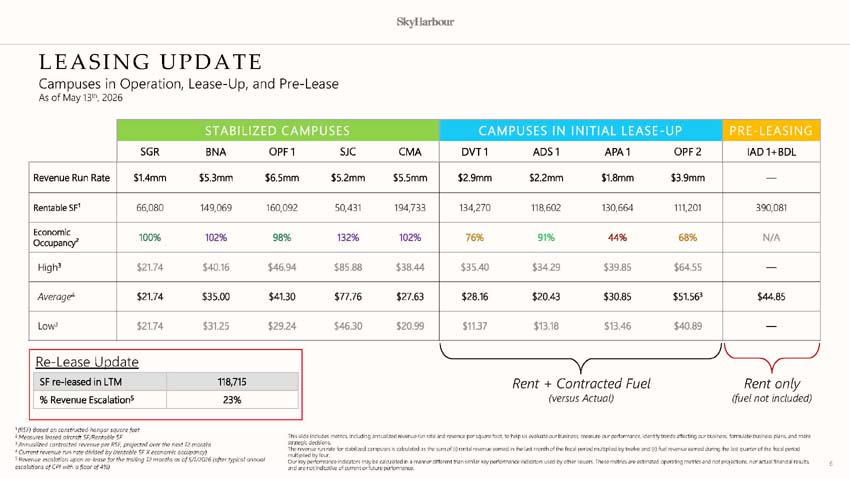
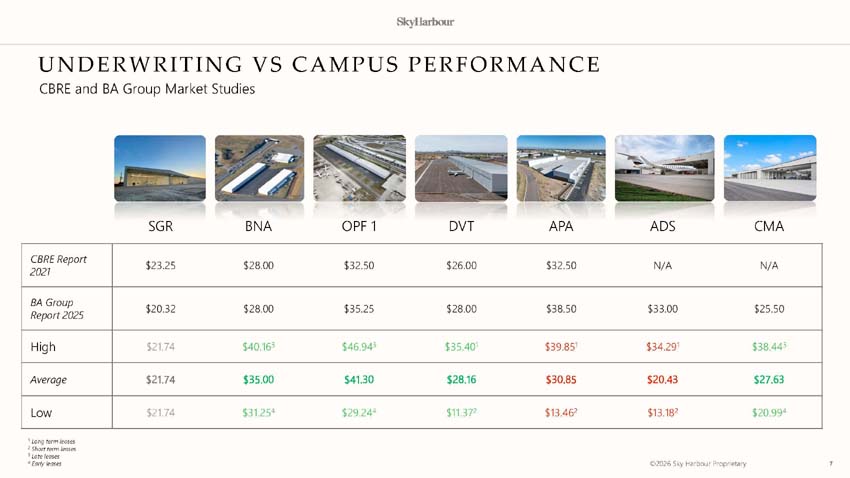
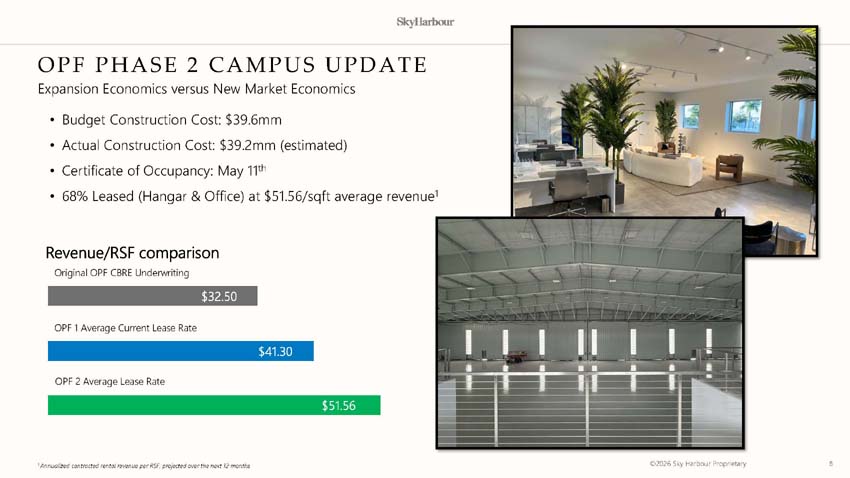
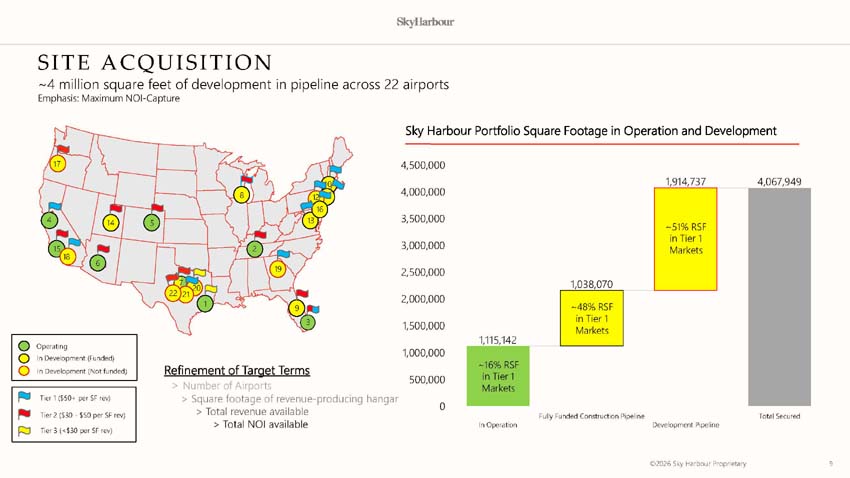
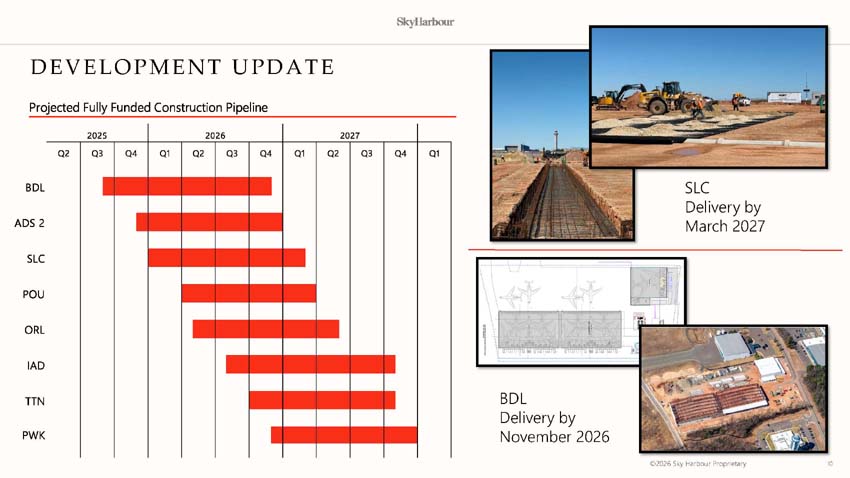
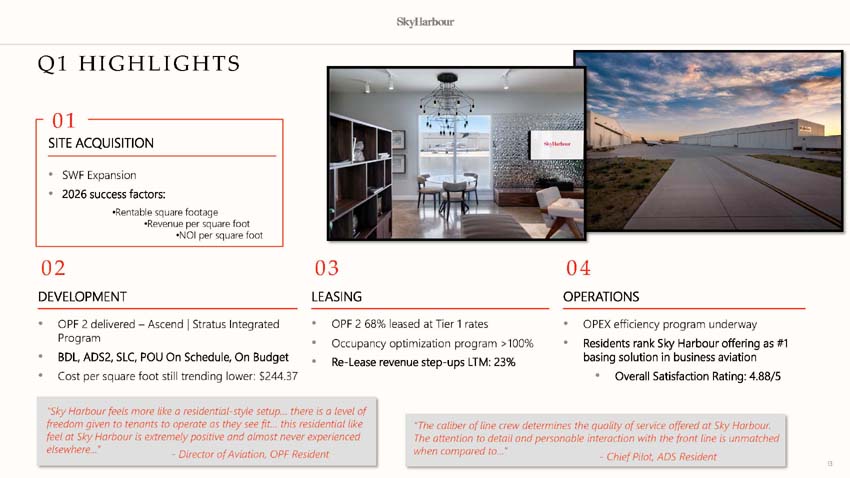
So the slide is self-explanatory and it's the same format we've been using in the last few earnings calls. So I think I'm just going to highlight a few specific rubrics here for people's attention. Starting with the campuses that are in initial lease-up, we'll speak specifically about opalaka miami phase two uh in a later slide uh i i think our what i just call attention to is is denver uh apa phase one where we're only 40 44 percent least uh at this point sometimes they go a little bit slower than others this one is uh has definitely lagged a bit but again that's uh you know i think nashville looked quite similar uh uh six months after it opened so we we don't really we don't really attach that much significance to it and obviously we wish everything moved a little bit faster and then on the left side you can see the economic occupancy which now on all but one campus is at 100% or above you what what's the upper limit of that I'm gonna have going on limit say San Jose is probably somewhere near the upper limit of that we might find a few more creative ways to increase actually beyond 130 percent uh but that's it it's probably not going to go much beyond that however i what i really want to point out is the lower left hand corner of the slide that release updates so in the last 12 months we have released about 119 000 square feet of hangar, meaning leases that have come to term and either been renewed by the existing resident or taken over by a new resident, the average escalation between one lease and the next is 23%. By the way, that's up from 22% in the last quarter. All of this is on top of the annual escalators, the contractual escalators that feature in all of our leases, which escalate at CPI with a floor of 4%. Anyone who is running a model for Sky Harbor knows that your inflation assumption is one of the most sensitive inputs in the entire model. I don't want to make a claim here that we'll always be getting 23% escalations, but for the time being at least, I think what we're seeing is more or less what we forecast a couple years ago on these calls, which is that hangar inflation has nothing to do with CPI. We are on the island of Manhattan from a real estate perspective. You just cannot build new airports and we think that this scarcity is one of the key components of driving the value on macro level in this company going forward next slide a little bit of kind of forecast versus actual so again things that I'll point out you've got two rows here of a third party forecast for revenue per square foot on different campuses what we're showing right now is whatever is gray is going to be within the range of those forecasts whatever is green is going to be above both forecasts whatever is red is going to be below uh both forecasts so you know what you see at first blush might might look like a mixed bag to us it does not because that high range if you look you know we've got high average and low the high range in the campuses that are in lease up okay so look at dvt apa and ads the high range are the long-term leases okay and i think as people might remember our strategy on initial lease up this is before we move to the pre-leasing strategy which we'll get to soon has been to get these campuses to 100 as quickly as possible so if somebody wants to come in on a six-month lease at some you know very low introductory rate we're fine with that we want to start actually negotiating in earnest with our long-term tenants on the basis of 100% occupancy or higher so rather than let these hangers ride empty for the for the month that it takes to to to get to 100% and surpass it we rent them out like this which skews your averages so all of those higher the green numbers on those lease up campuses are long-term leases that that's what that looks like and then another thing I'll call everyone's attention to is if you look at the legacy campuses, we call those stabilized campuses. So BNA, that's Nashville, OPF1, that's Miami phase one, even Camarillo, CMA at the end, what you'll see is the lows are the first leases that we signed. In fact, if you take BNA, that might actually be the very first lease we signed at B&A. And the highs tend to be the last leases that we signed, which, again, I think corroborates the trend that we're talking about, that 23% release rate. As time goes by, these leases go up, which is why we're getting a lot of demand from new residents, especially long-term residents, to maximize the term of their leases because there's an increasing appreciation that this inflation trend is is here to stay in business okay next slide a little bit about pre-leasing so Miami phase two is the first campus that we've the first campus on which we've applied this pre-leasing strategy where we're going out and offering people certain incentives to sign leases before we even open the doors which has resulted in what we consider a pretty significant success, we're 68% leased in Miami Phase 2 the day we open the doors. That means we're leaving some money on the table, no question. We think, all things considered, this is probably the right way for us to continue. A few things that we learned from Opelaka Phase 2, I'm starting at the top of the slide. Number one, this is the first, at least partial trial of the ASCEND integrated construction program that we have in place. We're using the prototype hanger. It's a derivative of the SH-37, the SH-34 hanger. We're using stratus construction. That steel that you see in the picture is our stratus steel. We're using ASCEND construction management. What we don't have yet here is, number one, our GMP was priced before we implemented the program, before Ascend came in. So that budget construction cost is what it is. And number two, we're using a third-party general contractor in Miami. But other than that, this is the Ascend integrated construction program. We're very happy to demonstrate an on-time, on-budget delivery. The next thing I think it's worth understanding is you'll see this in some of the upcoming slides same campus expansion can be a lot more valuable than putting a new dot on the map in that we know the market we'll take Miami in this case as sort of the first example of this we know the market and even more partly the market knows us okay we're it's not like we're getting more speculative when we increase the size, and you'll see when we talk about Stewart and Dulles, that's exactly what we're doing. It's just that we know the battle space a lot better. And again, our counterparties know us better. There's a lot of pent-up demand in Miami. There's about to be a lot of pent-up demand in Dallas. Once people experience the Sky Harbor model, the churn is extremely low. People tend not to leave us. Most of those 23% markups are to existing residents who just understand that you know there's a market this is what people are paying now uh if i want to stay that that's what i have to pay so the churn has been extremely low so look out for a lot more of that going forward and and we'll show as we know people have already seen our press release uh but the guidance that we're putting forward is based a lot more on that meaning more dots on the map is not really what we're going after and i'll explain more in the next in the coming slides okay next slide okay so a few things that jump out on site acquisition uh you'll start conspicuously to perhaps some of you uh up in seattle a dot has been removed so uh you might remember we had a one-year lease at boeing field in seattle we allowed that lease to lapse we were not happy enough with the terms of the long-term lease that was that was put in front of us and add to that some macro trends on wealth flight from Washington state made us say listen let's let's let's allow that lease to lapse we can be on the fence for a little while there are other opportunities other avenues of attack at Boeing field we still like the airport a lot but we don't think that that's the right entry point so we will hopefully come back to that at some point but it's not not going me right now uh and then just to help people understand what we're what we're looking at um and we've had a lot of questions over this about this over the last quarter or so is uh is tiering okay what do we mean when we say tier one which i'm glad we got the questions because kind of for us it was a little bit less structured internally so we put some pretty rigid criteria down i think that that's going to work really well what we call a tier one airport is airport that's going to deliver us fifty dollars per square foot or better that's sky harbor's internal underwriting that's not what any third party is telling us that's our internal underwriting but again if you can compare it to uh what we showed in some of the previous slides we tend to undershoot on uh on what we attribute to a field meaning we're making more per square foot on the field than even we uh forecast so we think it's it's a pretty solid number it's the same methodology. Tier 2 is airports where we think we're going to be making $30 to $50 a square foot in revenue. And then Tier 3 is below $30. Just to be clear, Tier 2 is good. It's great. Look at Miami. Look at Nashville. These are healthy, double-digit, unlevered yield-on-cost airports, and they're Tier 2. Tier 1 is great, obviously. Your denominator in yield-on-cost is relatively static. And then tier three, construction costs continue to come down. As Francisco and the finance team get our cost of capital down over time, many, many more airports in the country become viable. And those tier three yields on cost. A couple things to point out, the green dot in the beginning, we started out with a relative portfolio of airports, became comfortable that the model is working and it's established. We could build these things at the cost that we thought we could build them we could lease them at the at the rate that we thought we could lease them we can see we actually tabulated it here 48% of the rentable square footage that is currently 48% of that square footage is if you express that in dollars it would be obviously much get into that yourself that will be increasingly the are coming into tier 1 territory but on average we're still tier two um but our second phase okay so a little bit about development the projected should jump out as kind of some of the more astute observers number one bradley's going to get delivered in in thing in the interim right there are nashville hangers that are going step ups or every time a project here as well if she on the start is in order you know we're not going to make huge forecasts for the years ahead uh just understand that the intention is to do another order of magnitude.
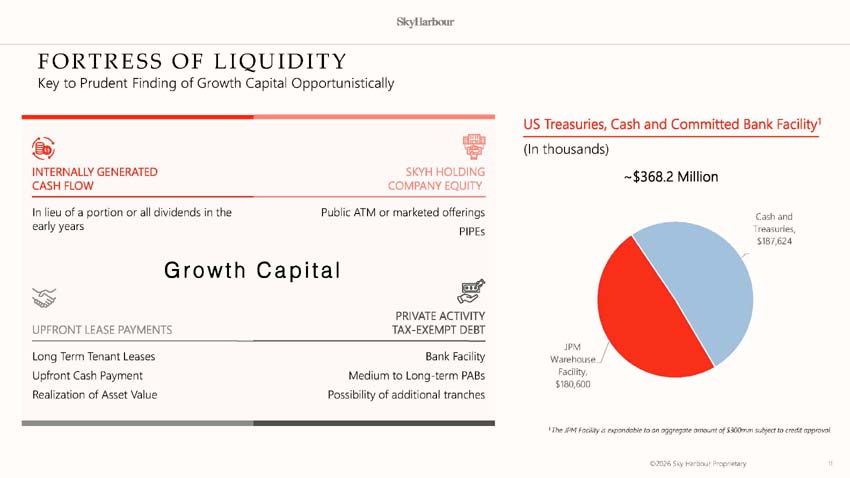
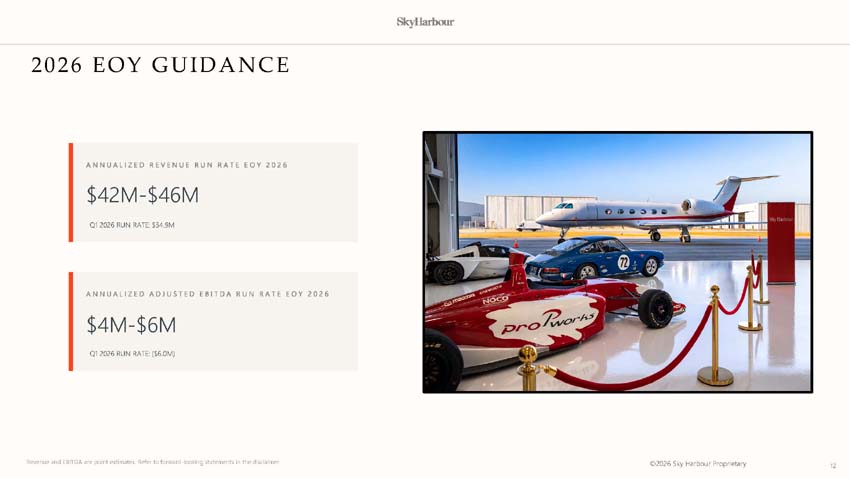
Thank you, Tal. We have been focused on creating a fortress last September and the $150 million taxes. This amount, $187 million, is in cash and U.S. treasuries sitting on our balance sheet. A strategy led by our treasurer, Tim Herr, of rolling out. We also have drawn only $19 million of the GPM1 facilities so far and have $181 million left of committed available capacity. In terms of capital formation, we now have a significant runway ahead of us and are fully funded, as Tal mentioned, to weigh in advance for the time that we need it. For the past, we've avoided doing so until today. It's part of our business and the variability of our outlook driven by, you know, past Tal mentioned, now that we have everything in place, we have the capital funding in place, future teams, our results. Unfortunately, I cannot give guidance but for this year, which is, you know, again, similar to what Tal mentioned in 2027 and really 2028 calendar years. which we were able to show the results of all these projects that are now in the And instead of that, provide today formal guidance in terms of revenues with annualized runs will be driven by the incremental revenues of the Similarly, we are introducing guidance for an estimated adjusted EBITDA from the annualized run rate of negative 6. This guidance, as you may, it is guidance which And second, it does not include any revenues or EBITDA from the Brasley end of the year. Which, from a timing perspective, those future revenues and EBITDA are... Let me now pass it back to Tal for some final comments regarding highlights and next steps of our four pillars of our business model. Land acquisition, development, construction, leasing, and operations. Thanks, Francisco.
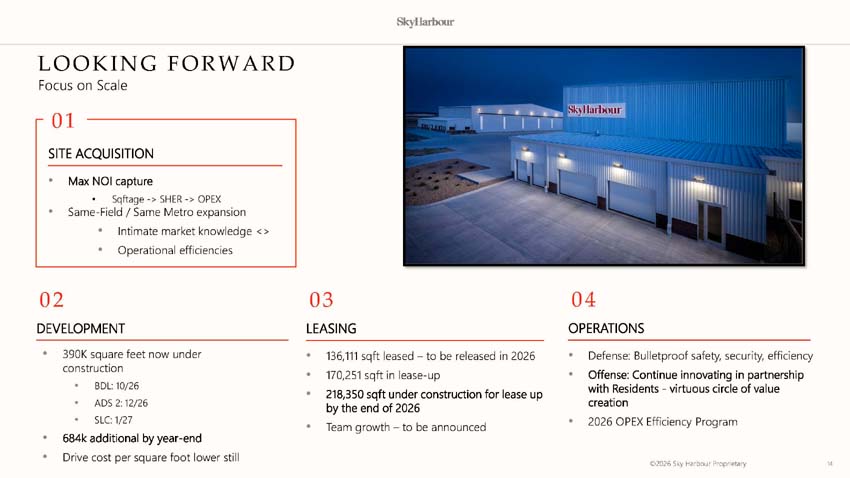
Uh, so on site acquisition, uh, Stuart expansion, I think people might remember cause the port authority announced it in Q four, but we only executed it in, in Q one, uh, we doubled the, our footprint at, in New York, uh, tier one market, I mean, hundreds of thousands of square feet of hangar. We're actually considering at this point, uh, going straight to developing the entire, uh, project rather than doing it in phases, uh, uh, in the demand and the New York market. 2026 in site acquisition, again, it's not any more targets on that basis. On development, we talked about Miami Phase 2, which is delivered, and the Ascent platform in action. Connecticut, the regional, all of those are under construction. We're in the time being in Trenton, New Jersey, Orlando. For square foot, last time we reported it was $253. dollars and gmps that are unleashing optimization program occupies 10 000 square feet meaning length times wingspan but doesn't actually occupy that entire rectangle this is a convention in the industry that you know we didn't invent the corners now beginning to introduce temporal occupancy programs right so some may have noticed the opalaka phase two we have uh treated that as uh but again that's the small side uh we discussed the opex efficiency we use it mainly all of our residents or familiar testimonials on the bottom of the page okay so looking ahead uh like i said we feel like the model is on site acquisition it's not on the map anymore it's the same field expansion is going to be a theme you know the market and the market knows you very well it gives you a massive head start on the development side uh again we've seen this in different charts i won't go through them all. And then on the leasing side, is that last bullet on boarding.
Depensive side of operations, operator, please go ahead with a cue for the question.
Operator
At this time, I would like to remind everyone in order to ask a question, you can send via webcast in the Q&A box. Your first question comes from Ryan Mayers with Lake Street Capital Markets. How are lease up and pricing trends progressing at the newer campuses, and what evidence today best demonstrates the operating leverage in the model?
Okay, that second question is interesting. Thanks, Ryan, for that. So, I think the lease-up and pricing trends, you may have logged us before we went through the presentation, so my understanding is the presentation probably answered your question there. what evidence best demonstrates the operating leverage in the model um you know it it's an interesting question look first of all you know time has been our friend here uh in that our our major capital investment is up front right this is a high capex low opex business uh Once you lock in a price per square foot or a cost per square foot on a campus, that's it forever. However, the revenue that's associated with that, that numerator in your yield on cost, has been growing at really gratifying rates, much higher than we thought. That's maybe one piece of evidence that I think demonstrates the operating leverage. You can go around the table here if anyone else has a good example of that.
Operator
Your next question comes from Michael Thompson with BTIG. During the 4Q25 call, you mentioned prioritizing site acquisition targets based on those with the highest NOI generation potential.
How many locations would be on the top tier of your wish list, and how many of these are you actively pursuing ground leases on? okay so by top tier what we're calling tier one meaning airports with with 50 uh and up a foot rent so we we for you know competitive reasons don't provide any kind of list or even number of airports there what i will say you you can see on the map that we showed the site acquisition map more or less where those airports tend to be concentrated uh how many are we going after all of them every airport that's in that space is something that we're now the last thing i think that's worth saying about that is uh we feel that the number of airports that are crossing into tier one territory is going up right so i think a good example of that is opalaka where phase one is still solidly in tier two phase two is solidly in tier one your next question comes from day storms with Stonegate Capital Partners.
Operator
Based on your properties and development table on page 25 of the 10Q, it is estimated that your rentable square feet pair hanger is expected to grow by 8,000 feet over the next three years. Can you break out this growth between growing our square footage versus increased occupancy efficiency? Also, marketing expense took a step up this quarter. Can you speak to what this looks like on the ground and what the expectations are here?
Can you reread the second part of that question? We didn't hear that.
Operator
Also marketing expense took a step up this quarter. Can you speak to what this looks like on the ground and what the expectations are here?
Okay, thank you. All right, so if I understand correctly, the first part of the question is about growing rentable square footage while also increasing occupancy efficiency. So we don't see a tension there, right? The demand is there. You know, in most of the airports that we're at, we need to get very creative about accommodating new residents, right? Once you get deep into that, you know, above 100 percent occupancy category, it becomes a little bit tricky fitting in new residents. So fundamentally, if we could be growing square footage at a faster rate, we would be. We think it's totally fullable. So I don't think there's really a tension between those. And then the question about marketing expense, what does it look like on the ground? Well, look, first of all, we have more and more people in leasing, and we need even more to pursue that. We don't advertise – I don't know if this is where you're going with the question. I think I would say most of our marketing is really existing residents bringing in friends and colleagues and advocating for us. I hope that answers the question about marketing.
Operator
Your next question comes from John. What are annual rent escalators in the leases, and is the 23% re-lease tap compared to the initial rent, or the rent accounting for annual rent increases?
Okay, so the annual increases in our standard tenant leases are CPI, Consumer Price Index, with a floor of 4%. And it's actually a very good nuanced question. And that 23% step up between leases is after the 4% escalators, meaning if a three-year lease ends, it will have escalated twice by the time it ends, the 23% increases after those escalations, right? So if your lease ended December 31st, the new lease starts January 1st, it's 23% on average higher than it was on December 31st.
Operator
Your next question for Mike, what's the tenant retention rate for the portfolio?
Retention rate. I don't know that we've actually ever compiled those statistics. I would say the vast majority of our residents whose leases come to term are the next resident, right? That's really – but I don't think we actually have those numbers. Let's talk about that.
You know, as we grow and time passes, we're going to be providing a lot of statistics on vintages and our various, you know, vintages of faces and so on and so forth. I think it's still too early, but as Tal mentioned, you know, again, renewals are mostly with our existing tenants. Obviously, there's a back and forth that starts several months before their term ends. and then they know that obviously there's people out there that we could replace them with at higher rents and that creates competitive tension for that increase in rates for that renewal. Next question.
Operator
Your next question from CK. Can you speak about your recent investor relations initiatives and conversations you're having with potential investors or partners?
I'm not sure which initiatives you're referring to specifically.
So let me just mention the following. You know, from now, after having completed the two debt financings, we have increased our activities in terms of outreach to investors, existing and potential. We're attending more conferences going forward. Tim and I are going to be next week at the B-Rally Conference in Mariana Ray, California. Then a couple weeks later, we're going to be at the RBC conference here in New York and so on and so forth. And we're going to be more active, you will see, both in person and in virtual conferences going forward in terms of, you know, our outreach to investors. Next question.
Operator
Your next question from Steve. What's your GNA expectations as you grow the company?
Yes, listen, one of the most important things at Sky Harbor, as you know, is that, as most of you know, is our ability to have operating leverage, and not just as we move from phase one to phase two, but in general, in terms of the scale of the company. We are looking to, yes, we're increasing the leasing team, but we look to basically after those people are onboarded to basically limit the amount of SG&A that will grow at this company. And as we scale, as we scale, we'll be able to basically generate significant EBITDA expansion and so on on the back of that fixed, very fixed SG&A, you know, next question.
Operator
Your next question from Jack. What are annual rent escalators in the leases? and is the 23% really stopped compared to the initial rent or the rent accounting for annual rent increases?
Yeah, I think we answered that one already.
Operator
I'd now like to hand over the call to Francisco Gonzalez.
Oprah, I think there are more questions here still.
Yeah, we just had a repeat of a question, but let's see if I think there are others now.
Operator
We'll wait for a moment for the next question. Your next question from CK. Hey, I noticed you issued some shares using your ATM facility. Why was this needed given the robust liquidity you have? Do you expect this to continue?
Thanks for the question. As some of you may be aware, we enter into a facility with Yorkville Securities late December, early January. And that facility also, as part of that facility, or separate from that facility, we also added them to our ATM program that is also run with B. Riley, and we basically, in Q1, we test drove Yorkville as an ATM agent on a few days during the quarter.
Operator
Can you, this is the next question. Can you provide details on economic occupancy that is 103% for campuses open for more than six months? How high can economic occupancy go?
Yeah, okay. So I addressed this a little bit during the presentation. Look, San Jose is probably somewhere near the limit. We're at 132% in San Jose. We never want to – and remember, you can only exceed 100% on a semi-private hangar. A fully private hangar is what it is. you right you take the entire square footage of the hangar uh irrespective of the square footage of aircraft that's actually in the hangar so it's only semi-private hangars that were that we're doing it we never wanted to get crowded we never wanted to get too busy in these hangars so i think san jose is probably approaching the top of that range maybe if we introduce some temporal like we're talking about those seasonal residents like we have in miami we can go a little bit higher than that, but I don't think it's going much higher. One of the things that we're seeing, though, and this is maybe combined two of these questions here, is a trend of people going from semi-private to fully private hangers. Once they experience it and understand exactly what the service offering is, we do see people saying, right, I'm willing to spring for a fully private hangar. And those are happening, of course, at significantly higher rents. So that trend is going on. We're always going to, I think, keep some sort of a balance between private and semi-private hangers.
Operator
Your next question comes from Joe. Can you talk about the competitive landscape? Have there been additional competitors entering the market?
So we still haven't seen anyone who does exactly what we do. The FBO company's signature in Atlantic, we cooperate with as much as we compete with, and it's kind of, as I said, the Venn diagram has just not that much overlap between what we do to the extent that, you know, one of them actually refers residents to us sometimes, which has been great. So we haven't seen that. We have seen people come and acquire hanger assets. That is going on. Again, I think many of the people on the call understand, we don't acquire assets because we think the economics of acquiring raw land and building them, especially when you get to this scale, are just so much better than acquiring them. We just don't want to be on that side of the trade. So we like where we are there.
Operator
Your next question from Mr. DeHolt. On an occupied square feet basis, optics per square feet is running around $15 for the obligated group. Why should future properties be any different?
Yes, thanks for the question. You know, one of the things we mentioned, you know, the two remaining campuses at the obligated group is this Opaloka Phase 2 that just opened this week and then ADS II in Dallas that will open at the end of the year. We expect these campuses to run basically with the same personnel, the same fuel trucks, and then just a marginal increase in OPEX expenses. So that will allow us to really expand the operating margin, the gross profit and EBITDA margin of the obligated group as those two campuses come into being. And similarly, as we finish leasing both Phoenix and Denver, we'll also see the expansion in the gross profit margin of the obligatory group.
Yeah, I'll say in addition, first, you're welcome to email your numbers. That's not the numbers that we come up with, So you're happy to look at your logic, and if it's worth putting out a clarification, we'll happily do that. But we're not at $15 a square foot. What I can say is, you know, when we started this, there was a very deliberate decision to over-equip, over-staff all of our – wanted to do was car the best service offering in business aviation uh and then with a scalpel go back and you know and make it efficient so we're exactly that that's what that opex efficiency program is about is how do we become more efficient on opex without without touching the magic right without without compromising the the service level we have so that's ongoing and again we'll we'll start putting out numbers on that as we go forward. But, you know, welcome to email your numbers to us.
Operator
Your next question from Dave. The conflict in the Middle East has impacted fuel prices. Do you anticipate this impacts being immaterial, providing a tailwind or creating headwinds for fuel revenue on the income statement?
Yeah, I'd say probably immaterial. I don't think it helps, it doesn't hurt. Remember, what drives our business is the existence of aircraft square footage. We really don't care how much you fly. As long as you exist, you've got to be housed somewhere. The FBO model is a little bit different. Fuel is the major source of revenue for the FBO industry. I think even in the FBO industry, you haven't seen an incredibly material impact. This is obviously a very economically resilient cut of the population uh if they have to get somewhere they're going to get there if they cost them a bit more with uh on fuel to do it uh that's you know so be it um now i you know this remains protracted maybe that changes a little bit on the fbo side from our perspective again unless this becomes a permanent you know So, you know, higher than $100 about, you know, aviation just kind of falls out of favor over time. Yeah, I suppose that could happen, but I don't foresee it.
Operator
Your next question from Pete. What are the 2026 guidance assumptions to achieve revenues of $42 million to $46 million and adjusted EBITDA of $4 million to $6 million?
Yes, thanks for the question. Yes, our main assumptions is that Opaloka phase two that just opened this week, it will continue to move from the 68% occupancy towards 100% occupancy. So we're not including revenues beyond that 100% occupancy, which obviously. And then we also are including in the assumptions that both Denver and Phoenix will continue the trajectory towards 100 percent occupancy as well by the end of the year. And again, as I mentioned in the paper remarks, we're not including their contributions from Bradley or Addison, too. And one last comment just to reiterate what I said earlier, that, you know, we in finance are, you know, if the lawyers allow us to give 2007 and 28 guidance, we'll provide that. Because this company, and with all the projects that we have broken ground on and are about to break ground, as Tal showed in the picture, are going to be in construction in the next, you know, year and a half, it's really 2027 revenues and 28 revenues. and EBITDA that really are the things that people need to be focused on and not what happens in 2026. Obviously, trajectory matters, and keeping these guidances and these milestones makes sense, but in terms of the cash flow potential of this platform, it's really going to be shown in 2027 and 2028, both on the back of the scaling of all these projects.
Operator
I'd now like to turn your call over to Francisco Gonzalez for closing remarks.
Thank you, operator. It's clear that there were more questions on the queue and that we ran out of time. Please, please reach out to us through investors at Sky Harbor.group. I will be happy to answer them either via email or with a follow-up call. Also, additional information is available on our website at www.scaragor.group. And again, we want to thank you for your participation this afternoon. We have concluded our webcast operator.
Operator
Ladies and gentlemen, that concludes today's call. Thank you all for joining.