Operator
Thank you for standing by. Hello, and welcome to the Summit Therapeutics Q1 2025 Earnings Conference Call. I would now like to turn the call over to our Chief Business and Strategy Officer, Dave Gancars. Please go ahead, sir.
Good afternoon, and thank you for joining us. A press release was issued earlier this afternoon and is available on the homepage of our website. Our Form 10-Q was also filed and is available on our website. Today's call is being simultaneously webcast, and an archived replay will also be made available later today on our website, www.smmttx.com. Joining me on the call today is Bob Duggan, our Chairman of the Board and Co-Chief Executive Officer, Dr. Maki Zonganai, our Co-Chief Executive Officer and President, Manmeet Soni, our Chief Operating Officer and Chief Financial Officer, Dr. Alan Yang, our Chief Medical Officer, and Dr. Jack West, Vice President and our Thoracic Oncology TA Head. Before we get started with the rest of the call, I would like to note that some of the statements made by our management team and some responses to questions that we make today may be considered forward-looking statements based on our current expectations. Summit cautions that these forward-looking statements are subject to risks and uncertainties that may cause actual results to differ materially from those indicated in the forward looking statements. Please refer to our SEC filings for information about these risks and uncertainties. Summit undertakes no obligation to update these forward looking statements except as required by law. Following comments from Bob, McKee, and Manmeet, we will take questions. With that, I would like to turn the call over to Bob.
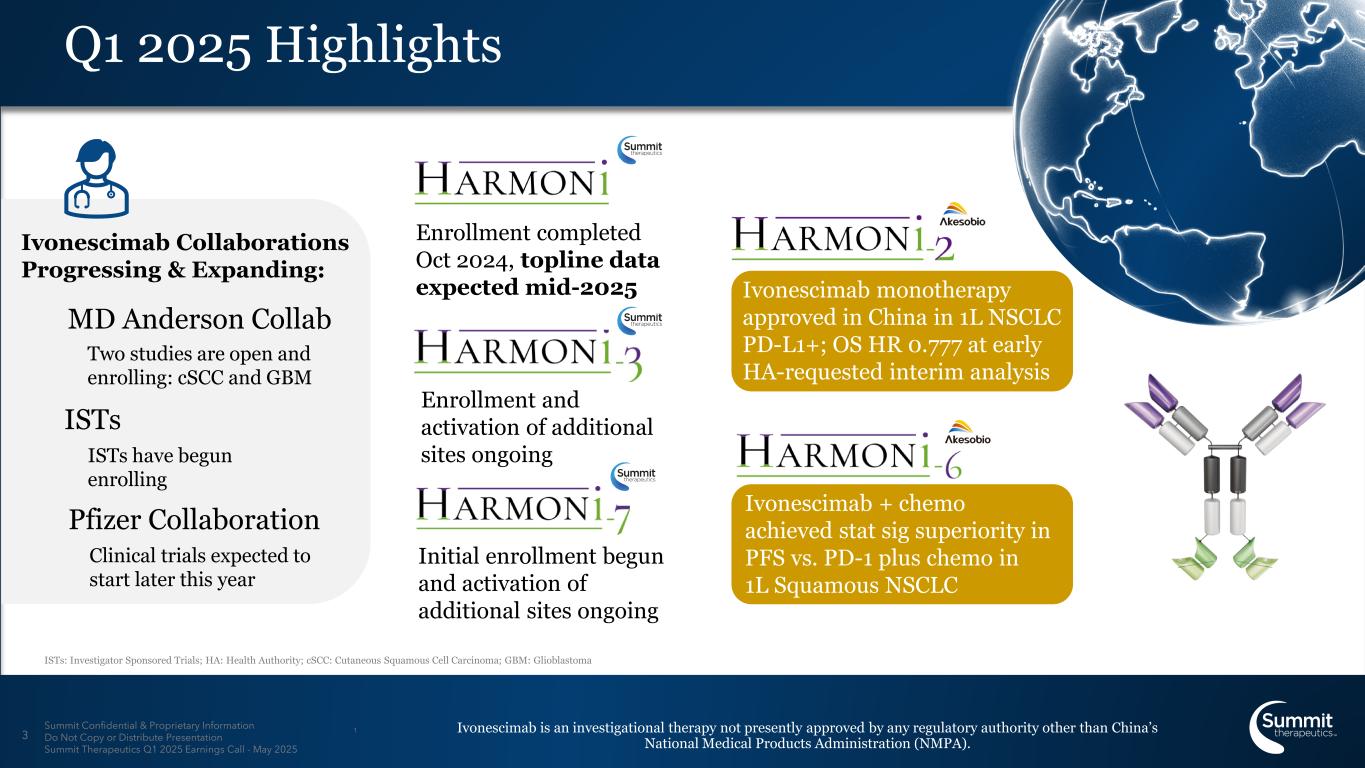
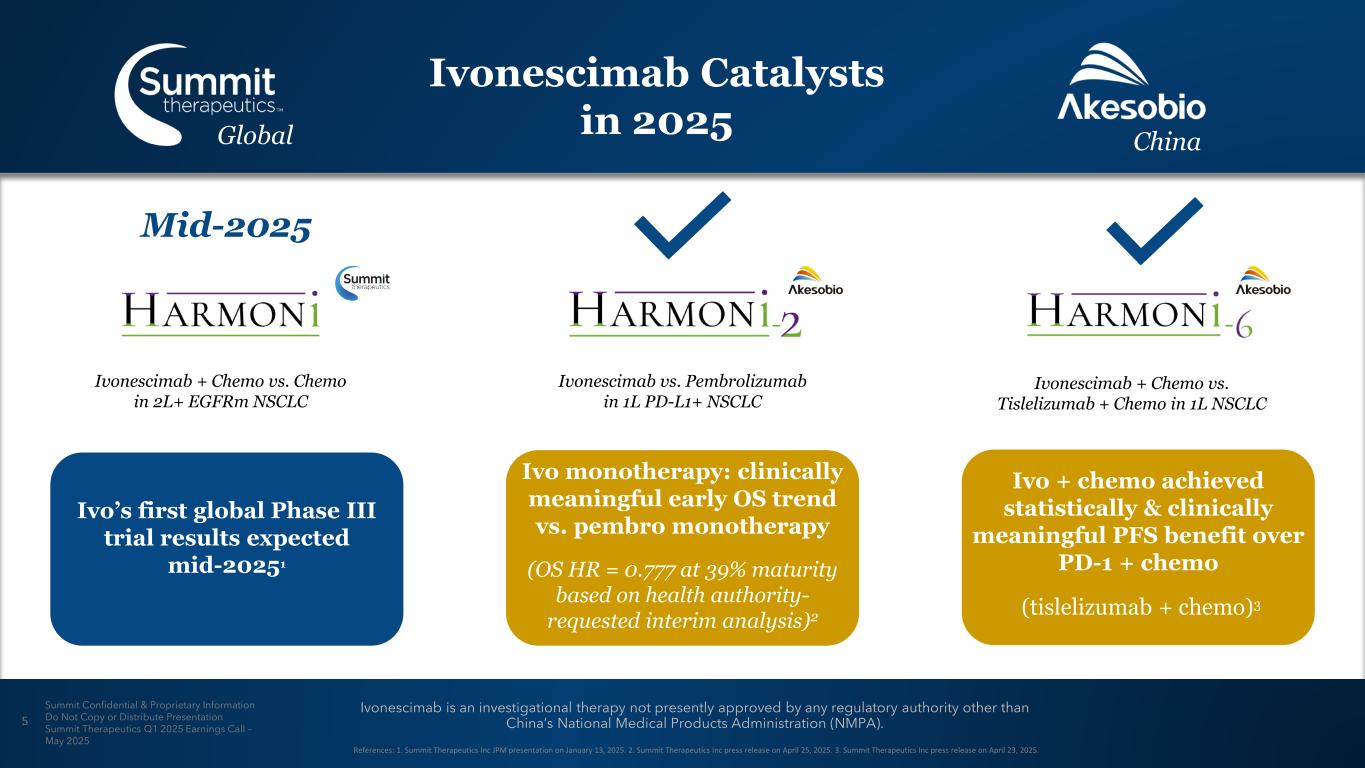
Thank you Jay. Good afternoon everyone and thank you for joining us today. As you can imagine, I'm very proud of the ongoing accomplishments of Team Summit and the continuing positive information and enthusiasm surrounding ibanissimab, our lead medicinal investigational asset. We have begun 2025 with excellent progress and continue to take meaningful steps. We continue to advance our mission of building a viable organization, making a significant positive difference in serious unmet medical needs. Specifically, last week, I've received approval from NMPA, the health authority in China, as frontline monotherapy treatment for patients with tumors have positive PD-L1 expression. I've been ismab's difference potential to make a significant difference in the lives of patients. On behalf of the summit team, we want to extend our congratulations to our partners at Akeso for this achievement and our gratitude for our strong on- This approval was based on positive PFS results from Akeso's Harmony II trial, which was disclosed at last year's World Conference on Lung Cancer. Additionally, to supplement this groundbreaking PFS data that represented the first drug to achieve a statistically significant benefit over pembrolizumab in a Phase III clinical trial, the NM Ikeso performed an interim analysis of overall survival. Last week, Ikeso reported on the health authority requested, the analysis showed a clinically meaningful and strongly positive trend favoring Ivanissimab at 39% data maturity with a hazard ratio of 0.777, implying a potential 22% reduction in the risk of death compared to Pembro. To be clear at some of this remarkable outcome, McKee will discuss this a little further in a few moments. Additionally, a three clinical trial met its primary endpoint at a pre-specified interim analysis conducted by an independent data monitoring committee. This trial evaluated Ivanizumab in combination with chemotherapy against Zizlizumab, a PD-1 inhibitor, in combination with chemotherapy in patients with small cell lung cancer. Conducted in China by our partners at Akeso, the significant and clinical regression-free survival for Ivanizumab plus Akeso noted that no new safety signals were identified. This marks the first known phase of the L1 inhibitor combined with chemo following the success of the Kessler's Harmony II study, this is the second instance where Ivinizumab-based regimens have demonstrated significant benefits in frontline treatment in non-small cell lung cancer. The full data set for Harmony VI is planned to be presented at an upcoming major medical conference later this year. Turning to our own global Phase III trials, we expect top-line data in mid-2025 from Harmony, are a global Phase III trial in patients with EGFR-mutated advanced non-small cell lung cancer who have progressed after treatment with a third-generation EGFR tyrosine kinase inhibitor. As a reminder, HARMONY is Summit's first global registrational Phase III trial and received from the U.S. FDA. We are also excited to see progress in the expansion of avonizumab studies through collaborations with leading organizations for which McKee will provide additional data. We will provide details in the future on additional catalysts, including top-line results from our first registrational Phase III Harmony trial and beyond non-small cell lung cancer, both of which will be provided later in 2025. McKee will further discuss these accomplishments, driving our strong, unyielding belief in what can be accomplished by Team Summit and our conviction in the potential of Ivanissimab. We are a mission and purpose-driven organization with a collective goal, potential duration of life, and resolve the right team, ESO team, to conduct a head-to-head and well-deserved second approval for Ivanissimab in China. To demonstrate and have tried to, but failed. To McKee for additional context and recent highlights for your consideration. McKee, you ready to jump in?
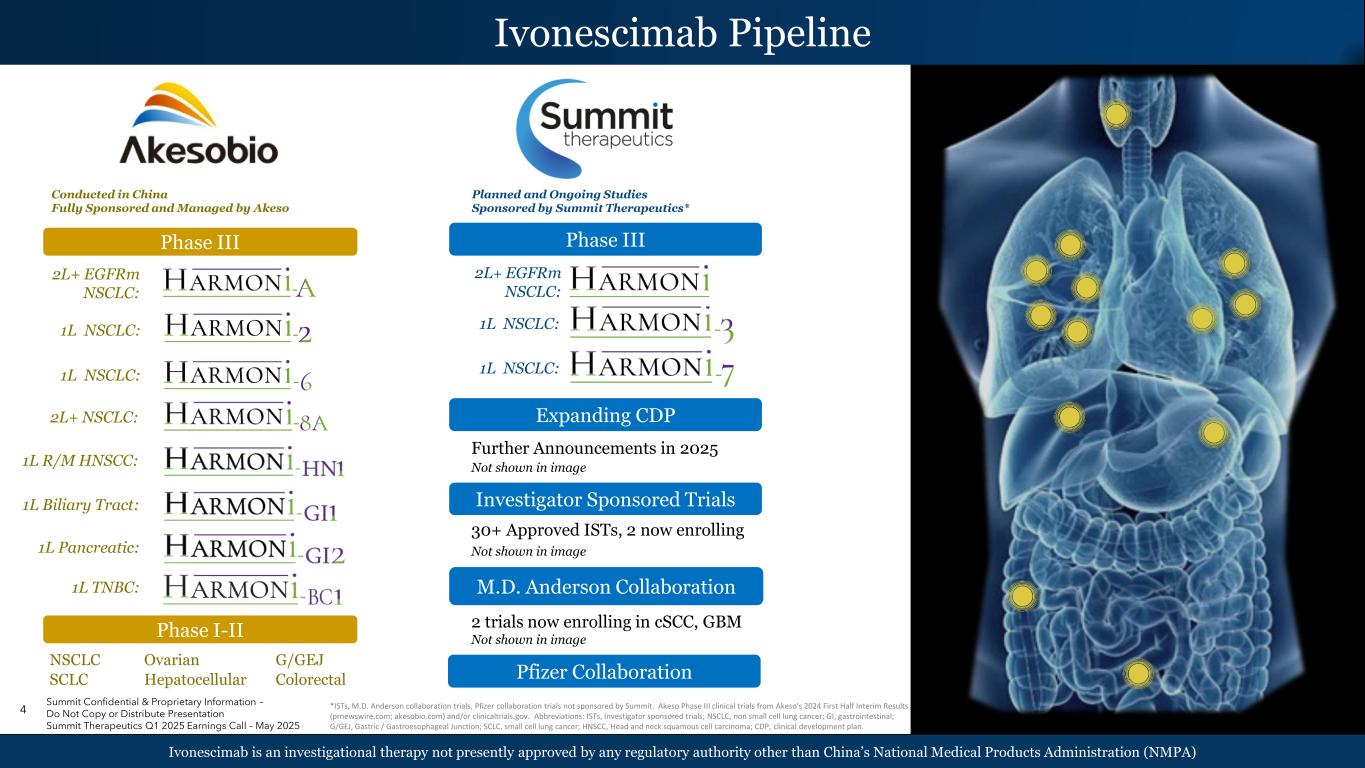
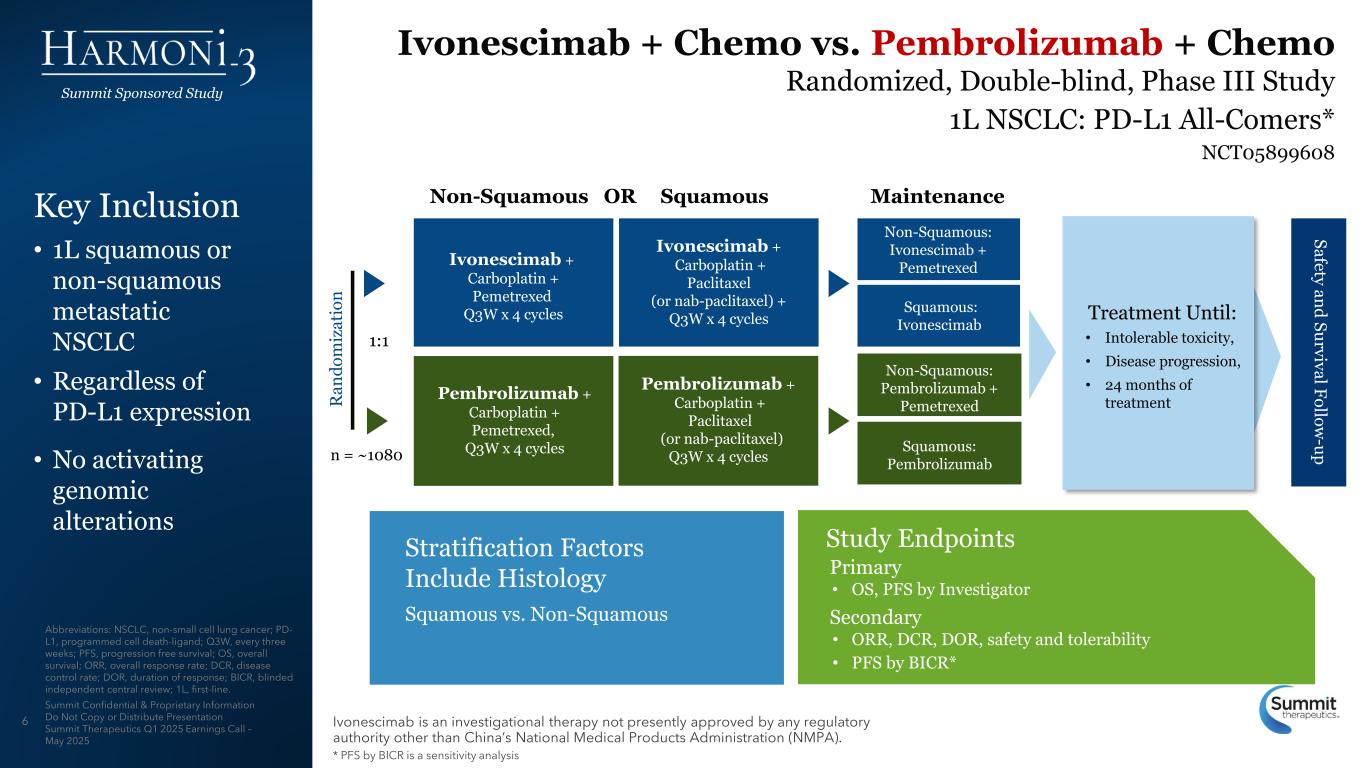
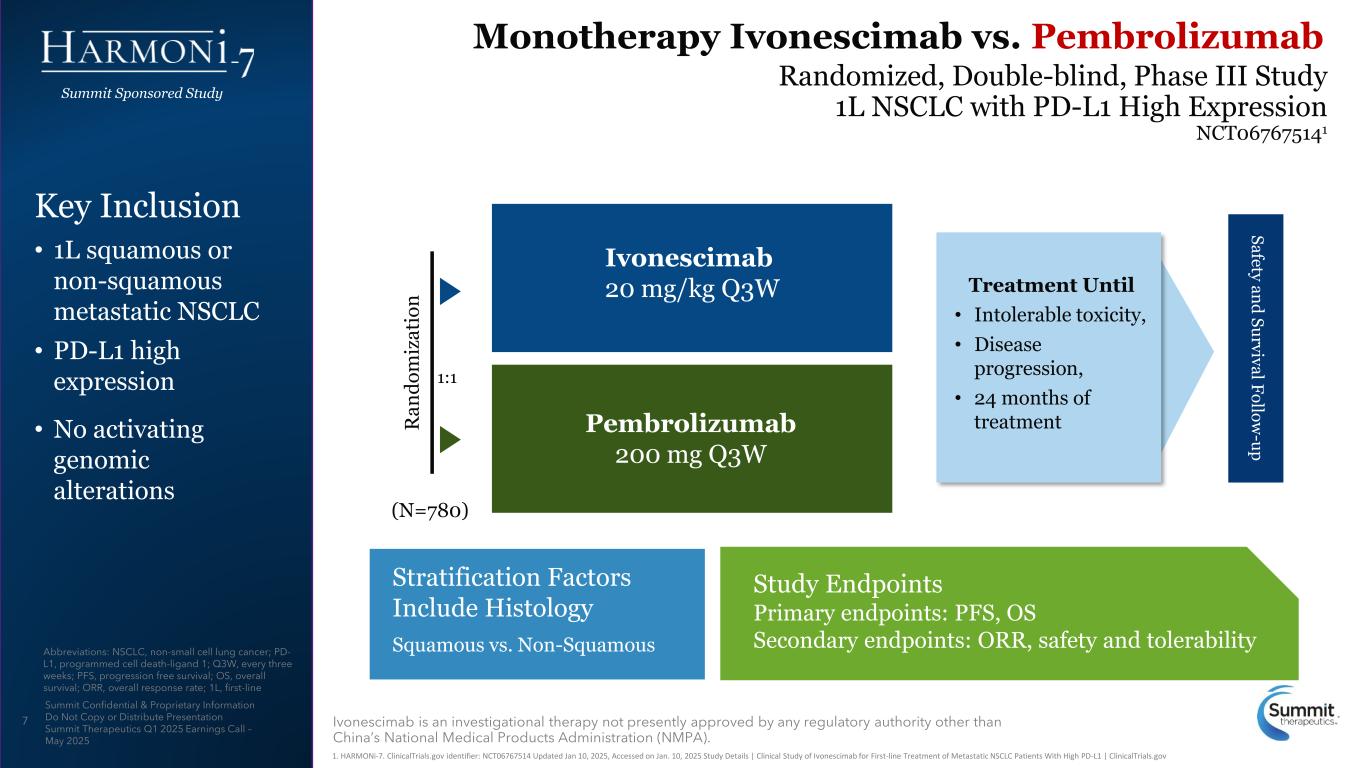
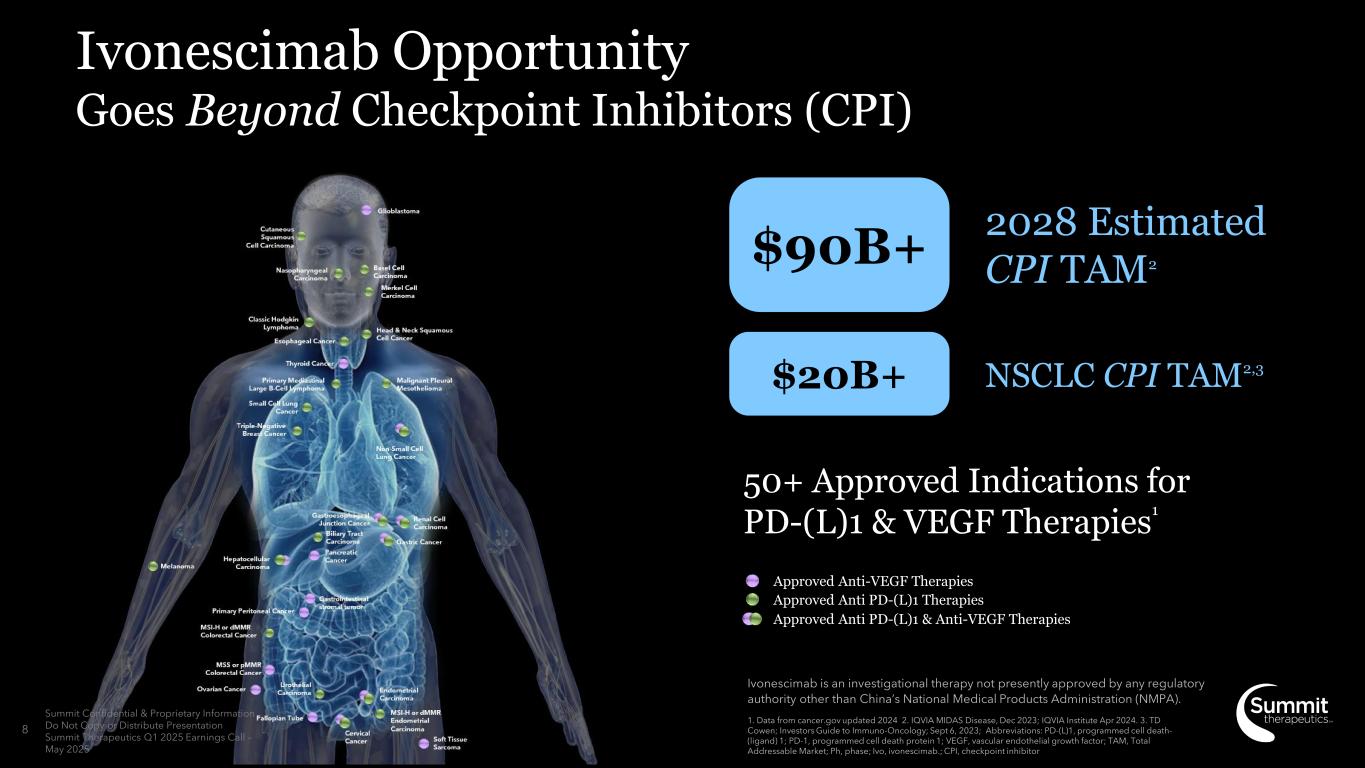
Yes. Thank you, Bob, and good afternoon, everyone. As Bob said, I remain incredibly enthusiastic about the future of Summit and the possibilities of what can be accomplished with our lead candidate, Ibanezimab, especially as we approach our first global phase three readout and begin to grow our commercial team. Before providing some additional details and reviewing the current pipeline, I would like to highlight our current progress in developing ibanesimab and dive a bit deeper on a few concepts that Bob touched on. Since 2019, more than 2,300 patients have been treated in clinical trials with ibanesimab. Currently, combined between our partners at ECESO and our team at Summit, four Phase 3 trials have completed enrollment, three of which have had top-line data read out and the other, the Summit-sponsored Harmony trial, we expect top-line data in the middle of this year. Five Phase III trials are currently ongoing. Two of these are summit-sponsored trials in first-line non-sponsored lung cancer and three are E-CASO-sponsored trials studying ibanissimab in head and neck, vialy, tract, and triple negative breast cancers. E-CASO has also announced its intention to conduct Phase III clinical trials in pancreatic cancer, as well as immunotherapy refractory non-small cell lung cancer patients. With the addition of these trials, the cumulative number of phase 3 trials for ivenezimab that have been announced, are ongoing, or have completed is now 11. On top of this, a significant amount of relevant data is being generated in additional indications, including colorectal cancer, ovarian cancer, gastric cancer, and hepatocellular carcinoma to further support our broad-platform cancer program. Turning specifically to the summit-sponsored pipeline, our first global phase 3 trial, HARMONY, is evaluating ibanesimab in patients with EGFR mutant non-small cell lung cancer after progressing on a third-generation TKI, such as osimertinib, While this is a limited market opportunity compared to frontline treatment for non-small cell lung cancer, Harmony represents our initial fast-to-market strategy with Ibanezimab. Historically, PD-1 inhibitors, including PEMBRO, have tried and failed to demonstrate a benefit in PFS or OS in the EGFR-meter non-small cell lung cancer setting. This provides Igonisimab the opportunity to differentiate itself from current PD-1 therapies, as well as a novel mechanism and a new treatment option for patients. The enrollment for the HARMONY trial completed in October of last year and top-line data is expected mid-2025. This data is expected to contain data associated with both primary endpoints, progression-free survival and overall survival. Subsequently, we started two additional global phase 3 studies, HARMONY-3 and HARMONY-7, which both evaluate ibanissimab head-to-head versus PEMBRO, either with or without chemotherapy, in frontline non-small cell lung cancer. HARMONY-3 evaluate ibanissimab in combination with chemotherapy and HARMONY-7 evaluate ibanissimab as monotherapy. Last October, HARMONY-3 was amended by significantly expanding the addressable patient population to include all frontline metastatic non-small cell lung cancer patients without driver mutations by including patients with non-squamous tumors in addition to squamous tumors. With this amendment, HARMONY-3 is now an all-comer study from a histology perspective and a PD-L1 expression perspective in frontline non-small cell lung cancer, covering an addressable patient population two to three times larger than prior to the amendment. As a reminder, this trial enrolls patients irrespective of PD-L1 expression, including those patients whose tumors do not express PD-L1. Additionally, we have now begun enrolling patients in Harmony 7 as we continue to activate clinical trial sites in the United States and will expand beyond the U.S. in the coming months. Later this year, we expect to announce additional details expanding our clinical development plan around ibanesimab, including beyond lung cancer. We continue to receive strong interest for investigator-sponsored trials, including the most recent open window which closed just two weeks ago. To date, we have approved over 30 ISDs with a review of meaningful submissions from the last window to be performed shortly. These collaborations enhance our sponsored clinical development activities and can show signals in settings where ibanissimab has not yet been explored. Our strategic collaboration with MD Anderson, which commenced in July 2024, now has two studies that are activated and are enrolling in Houston with either cutaneous squamous cell carcinoma or glioblastoma. We committed $15 million to this collaboration to quickly discover additional opportunities for ibanesimab including several tumor settings outside of this current development plan as well as the possibility of identifying biomarkers through additional research activities. Separately, we continue to support investigator-sponsored trials or ISDs, two of which have begun enrolling at the Memorial Sloan Catering Cancer Center and then a Farber Cancer Institute. We are also looking forward to the initiation of clinical trials as part of our collaboration with Pfizer, which are expected later this year. This collaboration allows us to quickly advance beyond our current promising late-stage development plan to evaluate ibanissimab in combination with some of the most innovative ADCs from Pfizer. Pfizer will be responsible for the operations and costs associated with this trial. Summit will provide ibanissimab and both parties will jointly oversee the studies. As you recall, ibanissimab brings two highly validated targets together into one novel bispecific antibody that targets both PD-1 and VGEF and holds a meaningful lead in terms of time and data generation in the clinical development of this novel class of compounds. Next, I would like to review some of the catalysts that we previously announced for this year. As we touched on a moment ago, we are anticipating Harmony top-line data in mid-2025, which we expect will include data related to both primary endpoints of progression-free survival and overall survival. This will be the first global Phase III clinical trial readout for ivenesimab, which will provide information related to clinical profile of ivenesimab beyond China, as well as data that may lead to a potential path to applying for marketing authorization in our territories, including the United States. As we stated previously, this trial was conducted with patients whose non-small cell lung cancer was positive for EGFR mutations and had progressed after third-generation TKI therapy. This is a setting where PD-1 inhibitors, including PEMBRO, had failed to show an improvement in either progression-free survival or overall survival, providing an opportunity to demonstrate the differentiated mechanism of action for ibanesimab beyond currently available immunotherapy options. As a reminder, this study contains a subset of patients from the HARMONY-A study conducted by ACESO in China who received a third-generation EGFR TKI. HARMONY-A led the first approval and commercial launch of ibanesimab in China in patients with EGFR mutant non-small cell lung cancer. Additionally, HARMONY-6, as a catalyst event, is intended to answer a proposed question as to whether the PFS benefits seen with ibanesimab monotherapy compared to PD-1 monotherapy would carry over to chemo combination settings, in this case in frontline non-small cell lung As was announced last week, in HARMONY-6, ibanesimab, in combination with chemotherapy, achieves statistically clinically meaningful PFS benefit over tislezimumab in combination with chemotherapy in frontline patients with squamous non-small cell lung cancer patients. Tislezimumab is a standard of care anti-PD-1 therapy in China and Europe, and PD-1 or PD-L1 therapy plus chemotherapy is standard of care for first-line patients without driver mutations in a non-small cell lung cancer in nearly all major markets globally. The full Harmony 6 data set is planned to be presented at a major medical meeting later this year. Finally, data from the Harmony 2 trial conducted by our partners at Ekeso in China provide insights regarding how the benefits seen with ibanesimab in progression-free survival can translate to overall survival. After its groundbreaking PFS benefit over monotherapy PEMBRO, an early look at OS requested by the health authorities in China showed a strongly positive overall survival trend with a hazard ratio of 0.777 at 39% data maturity, implying a potential decrease of more than 22% in the risk of death for those patients receiving ibanesimab compared to Pembro. I would like to pause a moment to expand on these results. The early interim analysis for Harmony 2 was conducted at the request of the Chinese health authorities during the review of the study overall, which led to the second approval and label expansion for ibanesimab in China. This early look was conducted at just 39 percent data maturity in the trial. Because it was conducted at the request of the health authorities and had so few total events, the alpha allocated to this analysis was minimal at 0.0001. When we say alpha, this is statistical nuance, but effectively the goal was to provide the planned interim analysis and final analysis with the best statistical chance of success. Recall as well that this trial was sufficiently powered to show a statistically significant PFS benefit in order to gain approval in China, which it has already done. It was not powered, and the design was not intended to show a statistically significant OS benefit. When considering what an early look at OS requested by the Chinese health authorities with few relative events in the trial not powered for overall survival means, statistical significance was not part of our consideration, focus, or expectation, as indicated by a case of minimal alpha spent. As we previously announced, a planned interim analysis is expected roughly by the end of this year, which will have a greater number of OS events. Note that Harmony 7, our global study of frontline patients with PD-L1 high-expressing non-small cell lung cancer, which intends to enroll 780 patients, nearly double the enrollment of Harmony 2 is sufficiently powered to show a benefit in both PFS and OS. Context matters here. What this health authority requested interim analysis did show was that at this early stage, an early look at the data, if you will, overall survival already shows a strongly positive trend that is clinically meaningful. If Harmony 7 were to show similar results at its final OS analysis, it is highly probable that this would result in a statistically significant overall survival benefit being achieved. This first look at overall survival data for Harmony 2, combined with the strong PFS result in Harmony 6, is remarkable. This data, in total with previously disclosed data for Harmony A and PFS data for Harmony as well as the earlier phase trials in and outside of non-small cell lung cancer conducted by ECSO, further validate that Ivanicimab is mechanistically distanced from PD-1 inhibitors and has the potential to make a meaningful positive impact for patients facing difficult cancer diagnosis. We are thrilled with the data released last week in both the statistically significant PFS results from the first interim analysis in Harmony 6 and the early look requested by NMPA at Survival in Harmony 2. In speaking with the key opinion leaders, we have received very positive feedback. Our KOLs are highly encouraged by the potential ivanizumab. This is consistent with the published feedback of multiple top thoracic KOL in media articles over the past week. Additionally, AKSO continues to enroll multiple Phase III clinical trials, including coronary tract cancer, pancreatic cancer, triple negative breast cancer, and head and neck cancer, and intends to launch an additional Phase III study in second-line or later non-small cell lung cancer after progression on immunotherapy. Now, I would like to take a moment to review study design for our two ongoing Global Phase III trials, HARMONY III and HARMONY VII. For those on the webcast, the slide shows the study design for HARMONY III. Harmony 3 is a randomized, double-blind, global phase 3 clinical trial evaluating abanesimab in combination with chemotherapy against PEMBRO in combination with chemotherapy as first-line treatment for patients with metastatic non-small cell lung cancer. This trial includes patients with squamous or non-squamous histology with no activating genomic alteration regardless of PD-L1 expression, including high, low, and negative PD-L1 expressing tumors. Dual primary endpoints for Harmony 3 include progression-free survival and overall survival and results will be stratified by squamous and non-squamous histology. As we have discussed, Harmony 6 from our partner Ekeso in China made its primary endpoint achieving statistically significant and clinically meaningful improvement in progression-free survival for ivanesimab with chemotherapy against PD-1 therapy with chemotherapy in frontline treatment of patients with squamous non-small cell lung cancer regardless of PD-L1 expression. These results from a case of trial conducted in China further validate our conviction in the potential for this study. We look forward to the full HARMONY-6 data set being presented at a major medical conference later this year. Next, we have the study designed for HARMONY-7, a randomized double Blind Global Phase III clinical trial evaluating avanesimab monotherapy against PEMBRO monotherapy as first-line treatment for metastasic non-small cell lung cancer patients with tumors with high PD-L1 expression. Dual primary endpoint for HARMONY-7 includes progression-free survival, and overall survival and results will be stratified by squamous and non-squamous histologies. As a reminder, our HARMONY-7 study shares similarity with the ECESO-sponsored HARMONY-2 phase three trial, but focuses on those patients whose tumors have a high PD-L1 expression for which monotherapy PEMBRO is a current standard of care in the United States and other major Western markets. Turning to the market opportunity, ibanissimab has the potential to be a platform blockbuster drug and is well positioned to make a significant impact across the treatment landscape of non-small cell lung cancer and beyond. In non-small cell lung cancer alone, there are combined seven announced or ongoing Phase III study conducted by either ECESO or Summit. According to third-party research, including TD Cohen and others, the non-small-cell lung cancer addressable market is expected to approach $20 billion for checkpoint inhibitors. With the recent data announced by our partner, ECESO, in China, our belief is further validated in the potential for ibanissimab to make a significant difference for patients with non-small-cell lung cancer. Beyond non-small cell lung cancer, across all checkpoint inhibitor in indications, the addressable market approaches $90 billion globally in future years, according to IQVIA research. But as we have been discussing, while the checkpoint inhibitor market opportunity is significant, the potential opportunity that I just mentioned does not include the full impact that iwanisimab could have, given it has shown promising data in multiple tumor types where checkpoint inhibitors have not been effective. This includes macrosatellite stable colorectal cancer, PD-L1 low and negative triple negative breast cancer, and EGFR mutant non-small cell lung cancer after targeted therapy based on the phase 2 studies conducted by ECESO. In total, there are more than 50 indications where PD-1, PD-L1, or VGIS therapies have approved all areas for ibanesimab to potentially offer patients with cancer and improved treatment options. Ibanesimab will continue to be appropriately rapidly tested and developed beyond non-small cell lung cancer. I continue to applaud the work of the summit and its rapid advancement in the development of ibanesimab, which only two years ago began to open the first clinical site ever in the United States for ibanesimab. We persistently evaluate opportunities to accelerate our timeline in bringing additional therapeutic options to patients with high unmet cancer needs and look forward to upcoming announcements regarding expansions to our clinical development pipeline. With that update, I would now ask Manmeet to provide details on our financial and operational updates.
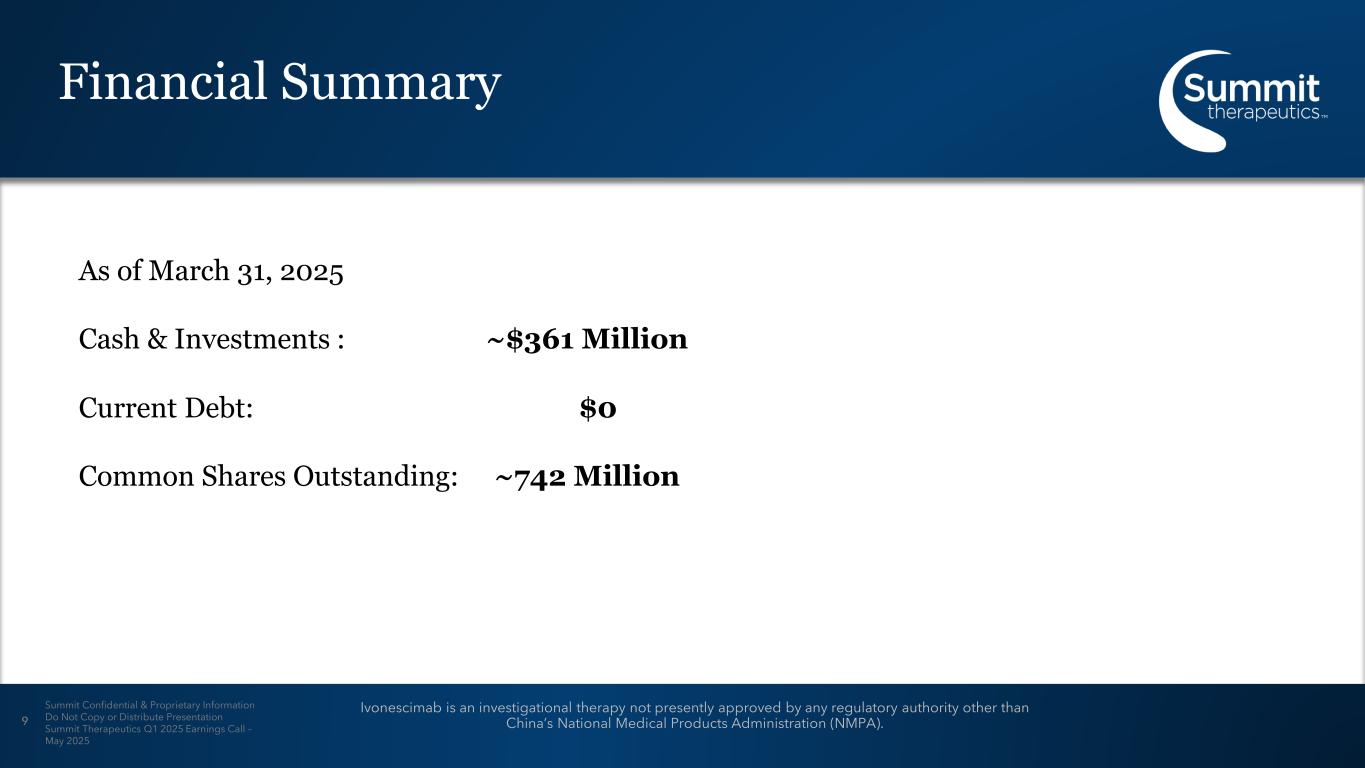
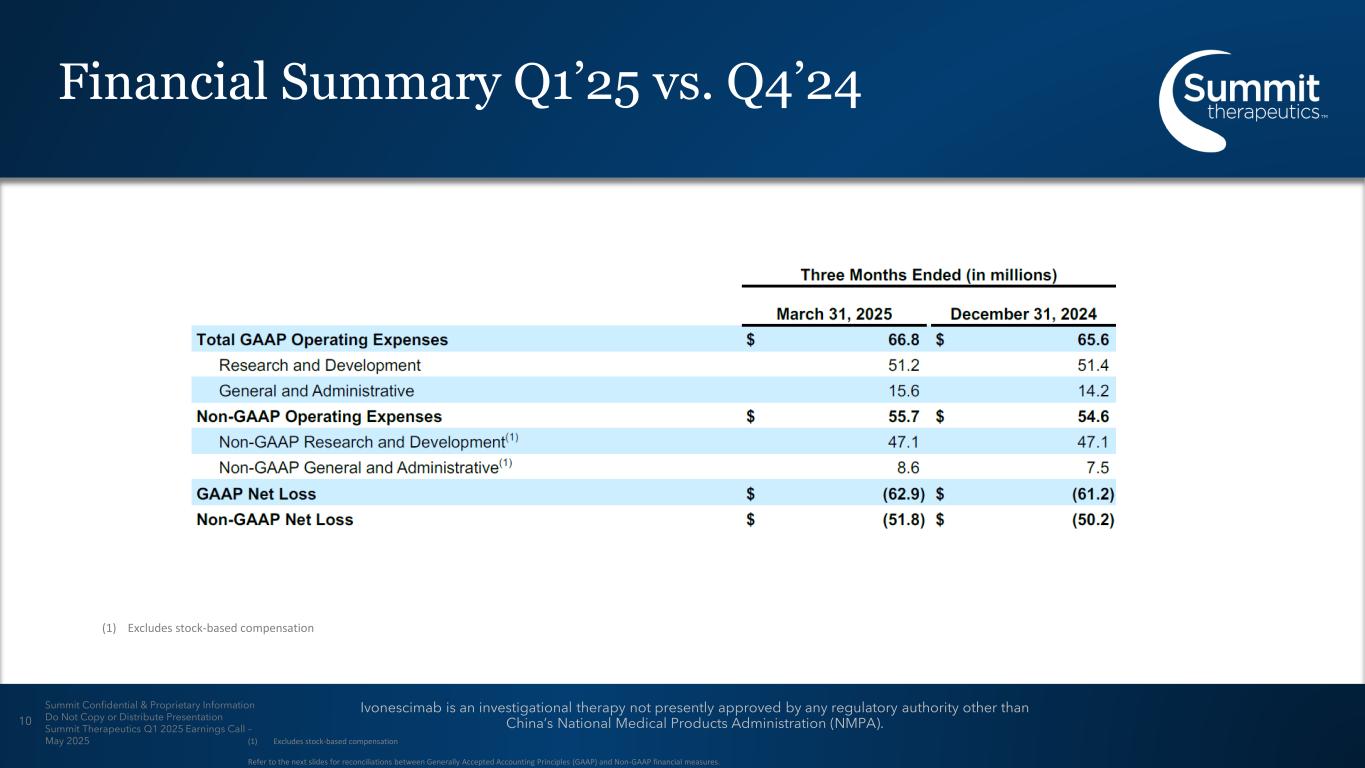
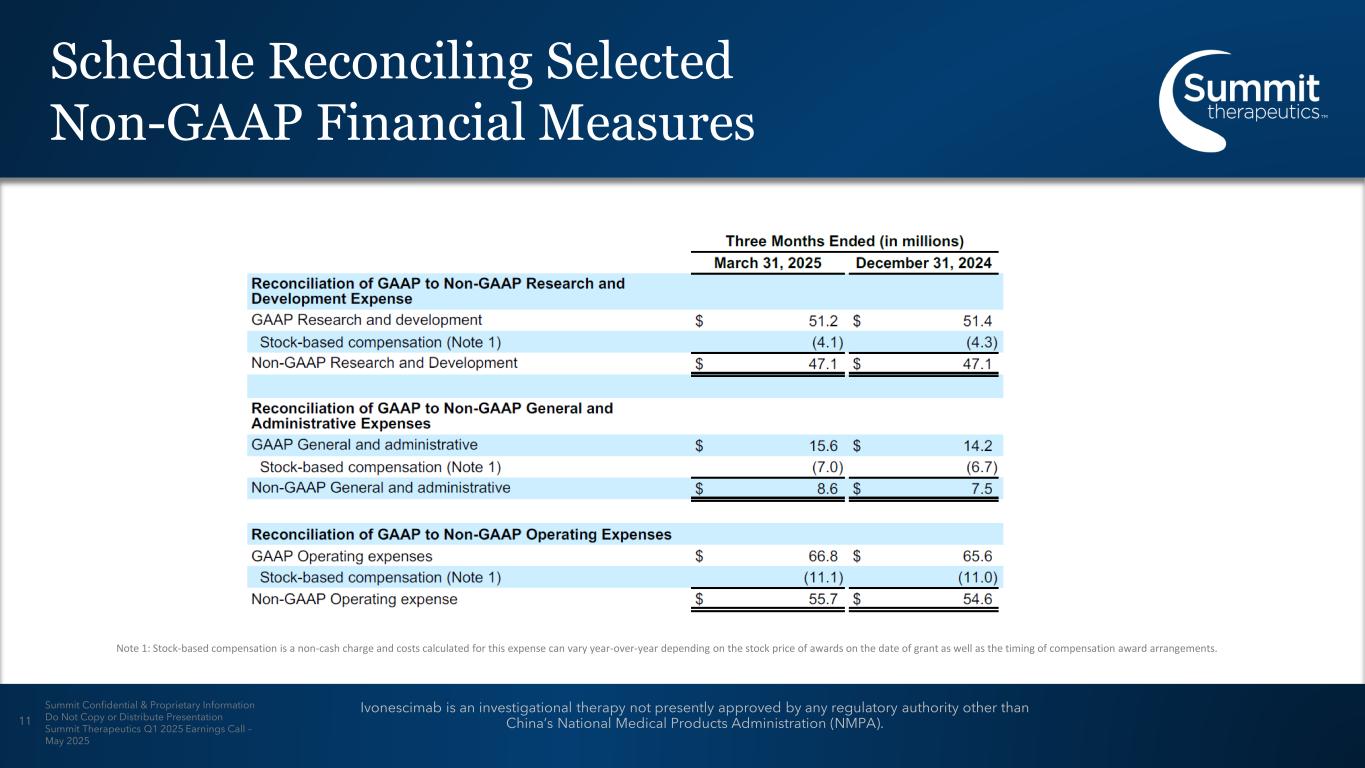
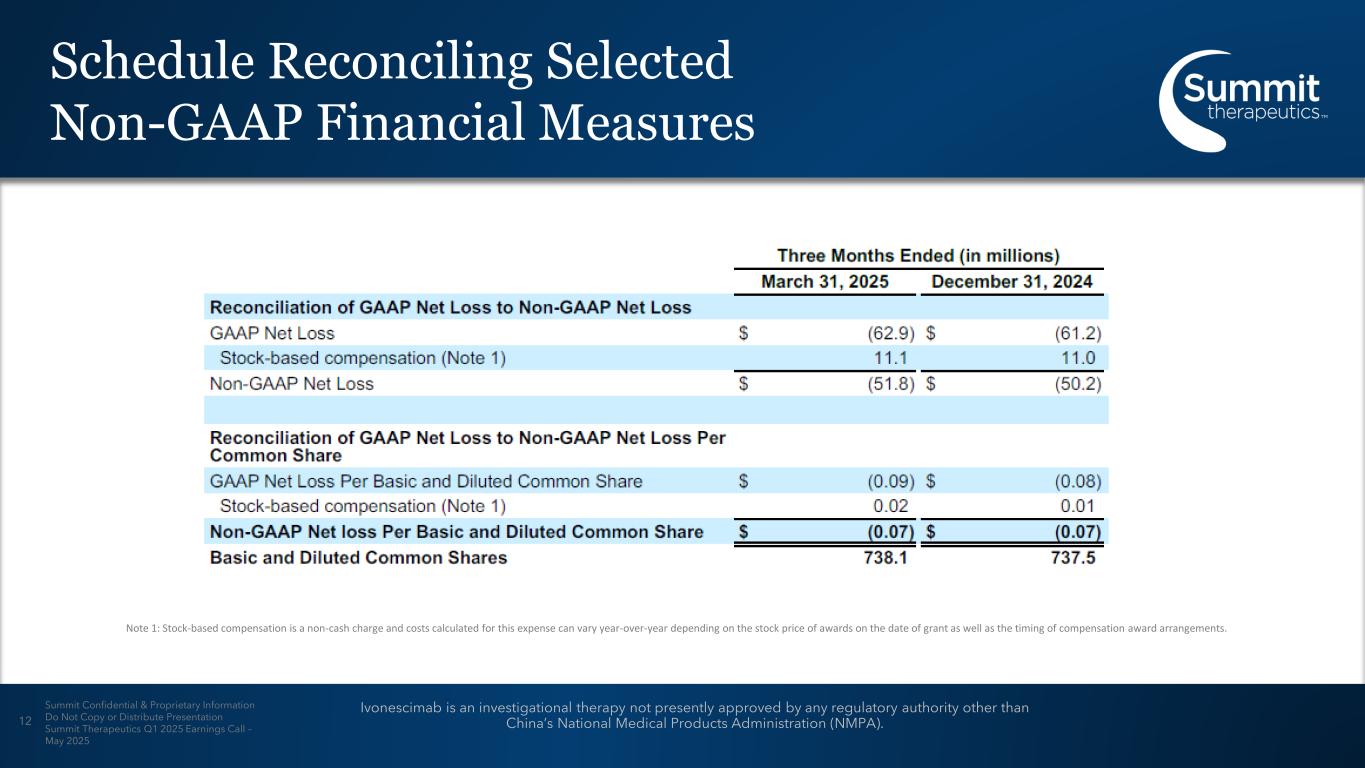
Thank you, Maki, and good afternoon, everyone. We issued this afternoon our earnings release for the first quarter of 2025. Today, in addition to providing you with an update on our cash position and operating expenses, I will also provide you color on our clinical, commercial, and manufacturing operations. Let me start with an update on the clinical operations front. As Mickey mentioned earlier, we expanded Harmony III clinical trial during the fourth quarter of 2024 to add non-squamous patients. We are very pleased with the rate of enrollment across the Harmony III trial for both squamous and non-squamous patients in the United States and Europe. In addition, very recently in 2025, we have initiated enrollment for patients in Harmony VII clinical trial in the United States. We expect to initiate enrollment for the other regions during the next quarter, based on the regulatory clearances to begin activating sites later this quarter. With our expected top-line results from Harmony trial during middle of this year, we have initiated preparations for our first potential commercial launch of Avanosimab. We recently strengthened our leadership team with the appointment of Robert Lataez as our Chief Commercial Officer. Robert is a seasoned biopharmaceutical executive with over 30 years of extensive leadership experience in commercial strategy and execution. Prior to joining Summit, he held senior positions at major pharmaceutical companies, including Bayer Healthcare and Bristol Myers. With a proven track record of launching and growing blockbuster oncology franchises, Robert joins our team at the right time as we continue to refine our commercial strategy and expand our capabilities. In addition to Robert, we have also hired key hires for market access, marketing, and sales to optimize the commercial launch strategy. On the drug manufacturing front, in addition to our current supply source for Avanacimab from Acaso, our collaboration partner, we have made significant progress in transferring relevant know-how to certain third-party contract manufacturers in our licensed territory. Also, we are very pleased with the first approval of ACASOS PD-1 inhibitor Penpul Limab by the U.S. FDA, which demonstrates ACASOS capability to adhere to global manufacturing and quality standards. On the financial front, let me start with our cash position. We ended the first quarter of 2025 with a strong cash position of approximately $361 million. dollars. Let me remind you that we paid off our debt in entirety during the fourth quarter of 2024 and are now debt-free. Turning to operating expenses, I'll provide details on both GAAP and non-GAAP numbers. You can refer to our press release issued this afternoon for a reconciliation of GAAP to non-GAAP financial measures. As a reminder, non-GAAP expenses exclude stock-based compensation expenses. Our GAAP R&D expenses during the first quarter of 2025 were $51.2 million compared to $51.4 million for the fourth quarter of 2024. And non-GAAP R&D expenses were $47.1 million for both first quarter 2025 and for the fourth quarter of 2024. Our GAAP R&D expenses for the first quarter of 2025 remained flat as compared to the last quarter of 2024. Our GAAP GNA expenses during the first quarter of 2025 were $15.6 million compared to $14.2 million for the fourth quarter of 2024. And non-GAAP GNA expenses were $8.6 million during the first quarter of 2025 compared to $7.5 million for the fourth quarter of 2024. Our GAAP GNA expenses primarily increased due to an increase in professional services to support the development of Avinasumab. Overall, our non-GAAP operating expenses during the first quarter of 2025 were $55.7 million compared to $54.6 million for the previous quarter. The increase in non-GAAP operating expenses were primarily related to an increase in GNA expenses as noted above. And with that, I'll hand it back over to Dave.
Thank you, Bob, Maki, and Mamid. We will now see if there are any questions that our team can help answer. Dustin, please open the line for questions.
Operator
Thank you. As a reminder, if you'd like to ask a question, please press star and the number one on your telephone keypad. Again, that is star and the number one on your telephone keypad. And with our first question comes from the line of Salvin Richard from Goldman Sachs. The line's open.
Mark
Analyst — Goldman Sachs
Hey, team. This is Mark on First of all, I mean, thank you so much for taking our question, and congrats on the quarter. A couple questions on the upcoming Harmony EGFR data set. So I think everyone's going to be focused on sort of the subgroup data to confirm if the Kezo's prior data generated in China translates to Western regions. So what do you believe the bar for success here is in this context? Like, how closely does the data have to mirror Harmony A to support the translatability? And also, in the context of Ribervant's approval on Mariposa 2, what profile are you hoping to see from Harmony? And sort of what level of benefit do you believe would convince docs to use IVO and second-line EGFR?
Thanks, Mark, for the question. I'll give a couple words, and then I'm going to hand it over to Jack West, our thoracic oncology lead. I think in terms of your first question, we're not going to necessarily prescribe a bar or a specific number that we're looking to achieve. I think the overall data package consistency, or the data package and the general consistency with the data that comes from China will be the important piece, the global consistency, if you will. We're not interested in setting a bar. That'll be part of the discussions with the agency. But with respect to the second part of the question, I'll hand that over to Jack.
Hi, this is Jack West. So I would comment that Obviously, the entire field of EGFR mutation positive non-small cell has become much more complex over the last couple of years with a lot of new options, but that still leaves plenty of open space for new choices. One would be that with the potential for amivantimab and lizertinib to be used in the first blind setting, that leaves a need for another option that is very appropriate for the Harmony platform to fill. Obviously, that's not going to be everybody, and there's going to be patients who get osimertinib monotherapy or the Flora 2 approach with a combination of chemotherapy But obviously, amivantimab with chemo has a combination of efficacy with toxicity liabilities that looks very different from what chemo and ivanesimab offers. I have had extensive discussions with clinicians in all sorts of settings, academic and community-based, and there's really a strong sense that there's a value and a great need for alternatives that have a very different and potentially less challenging toxicity profile. while obviously efforts are made in ways to ameliorate the toxicities with amivantumab, but there will always be a value in choices.
Mark
Analyst — Goldman Sachs
That makes sense. Thank you.
Operator
Thank you. Our next question comes from the line of Egal Achomatis from C.E. Group. The line's open.
Hi. Hi, everyone. Thank you very much for taking the questions, and congrats on the very positive recent developments. My question also on Harmony, could you just be more specific in terms of what will we see with respect to the geographic data, meaning China versus ex-China patients? Are we going to be getting separate hazard ratios on PFS and OS for each of these geographies? Would it be something in the form of a forest plot, or would it just be some kind of a more qualitative statement around potential comparability? That's my first question.
Thanks, Egal. This is Dave. I think I would break that down into two points, one of which is the true top line data, if you will. That typically will be a little bit more qualitative, right? Major medical conferences, that presentation obviously will have a bit more detail. It'll certainly give some context to geographic breakdowns, and a forest plot is certainly one way to do that. We'll make those final decisions, but the goal will be to give appropriate context with respect to the breakdowns between North American and European patients as compared to those enrolled in China.
Okay, thanks. And then two more on Harmony. With respect to timing, you consistently said mid-2025, is it fair to assume that we would see Harmony before we see harmony two and harmony six which you alluded to would be at the fall medical meetings and and then also with harmony what is your view on on whether you need os to be stat sig for competitive filing in the united states thanks uh with with respect to the timing of the excuse me the timing of the data releases that will that'll come down ultimately to which conference uh especially in the fall, you know, takes which presentation and whatnot and some of that strategic in terms of where and when that'll be, you know, displayed.
In terms of the timing across them, I don't know that we have a specific order in terms of one versus the other. What I would say is we would expect top line data for Harmony in the middle of 2025. You know, I would think by the time you get into, you know, ESMO, that's more in October, so you're a little later there. So I can't give you, Egal, yet which conference different data will go where, but there should certainly be at least top line before we get to, you know, the end of Q3, beginning of Q4. Hopefully that's helpful. Can you repeat your second question, Egal?
I was just curious about the relative importance of hitting on OS in harmony to have a competitive BLA filing.
Yeah, I think at this point it's important to say, you know, we have two primary endpoints. We want to be clear on that. I think the other piece becomes the totality of the package. You know, importantly, I'll ask Jack or Alan to add any context here, But in the second-line EGFR mutant non-small cell lung cancer space post the TKI, overall survival hasn't been, you know, seen at this point to show a statistically significant benefit in any regimen. And so that would be part of the context. But importantly, you know, as you noted, we have two primary endpoints. So it'll be a total package consideration there.
Yeah, this is Alan Yang, Egal. I don't have much to add except that, you know, the precedent in this space has not been, it's not been needed to hit OS to get an approval. Of course, we would like to show clear benefit for ibanesimab in this space, but I think, you know, it's wonderful for patients that there's going to be multiple choices for them, as Jack alluded to. I think this is, unfortunately, a palliative setting, so I think a lot of things will go into the physician's mind about what to use, efficacy as well as toxicity profiles and so forth.
And maybe if I could just squeeze one in, maybe for you, Alan, maybe Jack, you know, obviously the Pfizer partnership for the ADCs is great. However, that one is missing some of the, you know, the more perhaps relevant targets in non-small cell lung cancer, such as a Trope 2 or HER2 or HER3. So, how are you thinking about that aspect of a longer-term strategy in lung cancer to combine potentially down the road with with those types of ADCs?
Yeah, that's a great question. So again, I think the landscape of cancer is changing very quickly, which is terrific. I think Pfizer is a great partnership. They have a great pipeline of ADCs. We're not sort of wedded to the pipeline. We're open to it. You know, Ivanesimab is our only child, really. And so we are open to other collaborations as well. And so we continue to follow the lung cancer landscape, and we're open to whatever is the best treatment for our patients.
And we, and this is Jack West, we do have other combinations that are being evaluated in potential development in settings like ISTs and even cooperative group efforts. So, we're quite open to an array of options that will give us a lot of combination opportunities.
Operator
Thank you. Our next question comes from the line of Corey Casemar from Evercore. The line's open.
Hey, good afternoon, guys. Thanks for taking the questions. I'll stick to two of them. I guess first one is for Harmony 2, you obviously showed pretty profound PFS benefits across all cuts of the data and histologies, everything else. Would you expect that to broadly hold for overall survival as well? And then I'll have a follow-up.
Hey, Corey, great question. This is Dave. At this point, the only data that's been released publicly from our partners at Acaso has been the top-line hazard ratio for Harmony 2. So to your point, you were correct in the consistency of the PFS data within Harmony 2, but I don't want to get in front of our partners in terms of data release with respect to subgroups or anything like that, but going beyond the top-line overall survival hazard ratio that they provided.
Okay, understood. And then a question we get a lot I wanted to ask you is, do you expect safety trends in the global population, whether it's the Harmony study or some of your following ones, to match what's been seen in the data sets coming out of China? What would be the rationale as to why it could be different?
I just want to make sure I understand your question. You're asking for the rationale in terms of why the data would be different between China?
Yeah, on the safety front.
Okay, I'll hand that one over to Jack if you want to, you know, speak to that at all.
Yeah, this is Alan Yang. Corey, you know, I think I understand the question. So, let me say one thing first. So, there's now at least two randomized data sets that have been publicly disclosed, the Harmony A and the Harmony II, in terms of safety. And we're really happy with the safety profile reported to Ivan S.M.M. This is against double blind. One is placebo-controlled, and the other one is against pembrolizumab. So we believe that the safety profile looks really good, especially since the investigators didn't know which drug they're getting, and so they're reporting the adverse events sort of, you know, in an unbiased approach. In terms of differences in safety reporting in China versus the U.S., I don't think there's going to be anything significant. Remember, even in global studies today, especially in lung cancer, a large proportion of the studies report data from China. The investigators are Chinese, and now they're being significant contributors to those global studies. You know, there are slight differences in standard of care or cultural differences in reporting AEs. We've noticed that in the Harmony A study, a lot of lab values were reported. The Chinese investigators seem to be more conservative and reporting lab value abnormalities as adverse events, even though there may not be clinically significant or meaningful adverse events associated with those lab value abnormalities. So with that said, I don't expect there to be differences, but there are some sort of cultural or minor differences, but I don't think that they will be impactful on the data.
And I would also just add, Jack West, that, you know, the things that to the clinicians are going to be of greatest concern are serious bleeding issues or things that are not nuanced questions that would be subject to that kind of interpretation. I think and the data that we've seen have been so well ensconced in a place where clinicians are happy that it would have to be a very notable departure from anything that's been seen at this point in larger trial settings prospectively moving forward.
Okay. Yeah, we found the safety language in the Kezo press release on Harmony 6 to be very reassuring. But that answer is very helpful. I appreciate it, guys. Thank you.
Operator
Thank you. Our next question comes from the line of Kelly Shi from Jefferies. The line's open.
Congrats on the progress. And my first question is for Harmony 3, the chemo combo trial in front line. Do you set the enrollment target for squamous and non-squamous versus non-squamous patients? Is it expected to be split equally across two subtypes and also have follow-up?
Alan, do you want to take that question?
Yeah, we do have sort of enrollment objectives for both the pathologies, so that we would have enough scientific information to have an informed decision on both histologies. We haven't disclosed the exact numbers, and they're not precise, they're sort of ranges of the expectation, so there ought to be equal amounts of squamous and non-squamous at the end of the study.
Great. And also for Harmony 7, the global trial running by Summit in the PD-L1 positive patient, what kind of media overall survival benefit in terms of like how many months of improvement over PD-1 would be considered transformative and replace PD-1 standard of care in its front line settings?
Hey, Kelly. This is Dave. I would just want to say we haven't given our statistical plan yet in terms of this. I'll let the physicians comment on the clinically meaningful threshold and whatnot, but in terms of what we're gearing the trial for and whatnot, that's not necessarily a plan we've given. The only thing I would say from a top line perspective, I think we've been pretty clear publicly that as we look at overall survival, being around or under the 0.80 hazard ratio has been a focus for us. But I'll let Jack, if there's anything else, or Alan, you want to add to that.
Yeah, this is Jack West. I think that Dave underscored all the right points. In general, I would say that if it is statistically significant to make this a positive trial, it is extremely likely that it will be more than sufficient from a clinician standpoint to be clinically significant and revise the standard of care. I would say that the statistical plan is likely to be more stringent than what clinicians or patients are looking for as a clinically meaningful improvement. And as a general statement that most clinicians are looking for two or three months at least of an improvement in overall survival. But that's not specific to this trial that just is a general benchmark of practice changing.
Yeah, I just underscore what Jack said, you know, that we haven't really released those specifics around our statistical analysis plan, but if the Harmony 7 study is positive as designed, it would be very clinically meaningful and an important change in the standard of care. I'd also add, like, if you look at the Harmony 2 data presented to date, if those numbers hold up, I think that's very clinically meaningful and important data.
Operator
Thank you. Our next question comes from the line of Asuka Gunwarden from True Securities. The line's open.
Karina
Analyst — Truist Securities
Hi, this is Karina for Asuka. Thanks for taking the question. Congrats on the progress. First one is, when do you guys expect the Chinese and MPA label to be publicly available by KISO for Harmony 2? And have you seen what the OS curves look like And since it's now approved in China, can you tell if they show consistent or widening separation all the time?
Hey, Karina, this is Dave. So in terms of label being available from the NMPA, typically it's a little bit different in terms of how it works from the U.S. perspective. It's not necessarily, you know, published on the, in the U.S. case, the FDA website. So it becomes part of the next round of shipment in the physical product is kind of the official update. But it typically will be, you know, made available in a period of time shorter than that. But it's the short-term aspect from that perspective. With respect, could you repeat your second question, Karina?
Karina
Analyst — Truist Securities
Yeah. If you've seen the OS curves, what they look like, and since it's already approved in China, can you tell, like, whether they're consistent or they're writing over time?
Yeah, and so similar to what I mentioned before, this is Dave again. The trial was sponsored and conducted by our partners at Aquesa, so we're going to allow them to release, you know, the information with respect to their clinical trials, so we're not going to get into the specifics of things that they haven't yet disclosed publicly. But I appreciate the interest, and that would, you know, likely come when they choose to disclose that, you know, at a medical meeting or otherwise.
Karina
Analyst — Truist Securities
Okay. And also one more on Harmony 3. Have you guys had discussions with FDA about leveraging Project Frontrunner for Accelerate Approval?
I didn't care. You cut out when you said Project. Sorry. Sorry, Karina, do you mind repeating the project?
Karina
Analyst — Truist Securities
I am bad, sorry. Project Frontrunner for Accelerate Conditional Filing.
So, in general, we don't typically get too far into our, you know, discussions with the agency. We want to respect, you know, what the agency, you know, and we talk about in general. We have had conversations with the agency multiple times with respect to Harmony 3, just to be clear. And we align, you know, our trials based on feedback from the agency. But we don't necessarily want to get into, you know, the individual details of the conversations per se. I appreciate the question.
Karina
Analyst — Truist Securities
All right. Thank you.
Operator
Thank you. Our next question comes from the line of Mohit Bansal from Wells Fargo. The line's open.
Great. Thank you very much for taking my question and congrats on all the progress. I have two questions. I'll start one by one. So regarding Harmony 2, is it fair to assume that the majority of the OS events would have happened only among the low PD-1 patients, given that OS for TRUDA tends to be significantly longer for PD-1 high patients and by extension Ivanizumab?
Hey, Mohit, this is Dave. I very much appreciate that question in the sense of, you know, the expectation that you set there. And your baseline, you know, comment is true in the sense of the difference in the medians on the femoralizumab side. But at this point, that becomes kind of a subgroup analysis piece. And so again, we'll defer to our partners at Acaso in terms of the timing of the detailed releases there.
Got it. Okay. So let me ask you other ones. Thank you. I appreciate that. So look, I mean, in the lung cancer, especially non-sponsored lung cancer, you are going after an indication where PAMBRO is pretty strong. Are there other indications where the Delta for VAGF-PD-1 combination could be much more pronounced versus a PD-1 inhibitor where, you know, VAGF could add a lot more value than just lung cancer. And then where are you in terms of pursuing those indications outside of lung cancer? Thank you.
Thanks, Valhia. Yeah, and I'll take the first part of that and then I'll hand it over to Alan for some details there. But I think I would, what I'd probably refer you to is the ESMO 2024 Phase II data that was published by ACESO. And so there are indications or tumor settings, more appropriately there, that would not typically be places where PD-1 inhibitors in and of themselves have been particularly successful. Examples of that include microsatellite-stable colorectal cancer, as well as the PD-L1 low and negative triple negative breast cancer tumor settings. In terms of, you know, the more specifics on, you know, our development plan, you know, I think as McKee mentioned in the prepared remarks, we do plan on giving a little bit more context over the course of this year as opposed to kind of the individual, you know, leaking out of or dripping of details. But, you know, we want to make sure we have the right alignment with the agencies and so on. But maybe biologically or whatnot, Alan, if you want to add any context to that.
Well, I think it's a good question. You know, again, we sort of boil the ocean. We've looked at the PD-1 approvals. We've looked at the VEGF approvals. And then there's clearly tumors where the VEGF and PD-1 activity overlap, and we're looking at those. You know, the things to consider about that is, you know, what would be the control arm for that study? What regions are those tumor types more prevalent in? And I think you can sort of guess what I'm alluding to if you look at the specific tumor types. And then what is the phase two data that a casso generates? That's probably the most important thing in how we're thinking about which tumor types to go into next. So, we do have a very clear plan of where we want to go next, and we're very excited about the IVO data. And all of those considerations, including the PD-1 and VEGF activity, are taken into consideration.
I would just potentially add that in addition to specifically the VEGF component, the cooperative binding is relevant here. If we look at settings where we've demonstrated success, you have EGFR mutation positive. It's a setting, yes, where VEGF may be particularly relevant. It's also a setting where other PD-1 inhibitors have not proven successful. You can also look at Harmony 2 and see that in the setting of high PD-L1 where PEMBRO has been very favorable, we also saw great success for IVO relative to PEMBRO, but also see benefit for ibanesimab in the low PD-L1 setting against PEMBRO, where PEMBRO has not been as commanding of a choice. And so, I think that that can be extrapolated potentially into other settings, whether that is because specifically of the VEGF component that it brings, but it also may be because of the cooperative binding that may render ibanesimab a more effective immunotherapy.
Operator
Thank you. Next question comes from Mitchell Kapoor from H.E. Wainwright. The line's open.
Hey, team. Congrats on the recent progress, and thank you for taking the questions. I wanted to ask, so the NMPA granted the first-line approval in PD-L1 positive non-small cell lung cancer patients in China based on Harmony 2, but wanted to understand what it's going to take to get approval in the PD-L1 low patients? Why didn't they grant this approval? Did they indicate anything like they need to see more data, or is that indicative of anything they're seeing in the Harmony 2 trial so far?
Hey, Mitchell, it's Dave. Let me clarify that because I just want to make sure this is clear. So we generally break down PD-L1 expression by negative, less than one, low, one to 49, or high, 50 plus. And then in the case of Harmony 2, when we say PD-L1 positive, that was really one plus, if you will. So the high and the low, but not the negative. So the approval, as we understand it in China from the NMPA, was in PD-L1 positive. So PD-L1 expression, you know, greater than one, if you will, if you use the TPS scoring system. And so that is what the Harmony 2 trial was designed as, PD-L1 positive. For Harmony 7, because of the standard of care in the Western markets, our trial is designed, it is a PD-L1 high-expressing patient population. Just want to clarify and make sure that's clear, Mitchell.
Yeah, thank you. Sorry. So what I meant to ask is that PD-L1 negative patients? Is there, you know, something that needs to be shown there that would be able to gain approval in that population?
So, that wasn't part of the Harmony 2 study. And so, what would need to be shown there is really a separate trial, for lack of a better way of putting it. So, the other thing that's important is if you look at the Harmony 6 data that Akeso announced top-line results for, that is PD-L1 all-comers. So, that would have the PD-L1 negative for the less than 1% if you use the TPS score. And that's a chemo combination study, right? And so I think, and I'll hand this over to Jack to comment next, but if you look at the PD-L1 negative population, you really, that's more of a chemo combination or something else akin to either our Harmony 3 squamous and non-squamous or Kessos Harmony 6 and squamous only.
Yeah. Yeah, thank you, Jack.
Yeah, I just think Dave articulated it very well. That's Harmony 2 just doesn't speak to that population. It's not clinically, that's just not clinically what it would cover, but Harmony 6, as well as our own data, Harmony 3 would, and Harmony, well, Harmony 3 in particular would be very relevant there. So that's just what it's going to take to be able to answer that question.
Yeah, and this is Alan Mitchell. So just to be clear, there is some variability in what physicians do based on the PD-L1 expression levels, but to be clear, Harmony 3 and Harmony 7 will cover the whole gamut of metastatic and advanced non-small cell lung cancer.
Perfect. I appreciate that. And then last one for me, just on the next update for Harmony 2, are you able to, you know, appreciate the nominal alpha, but are you able to say if we'll be able to see P value reported along with that nominal alpha level?
Just to make sure I'm clear, Mitchell, you're asking when the next analysis would be or when when the more detailed data for the NMPA requested analysis would be?
Sorry, yeah, so then basically the next overall survival update, obviously you're at 30, you know, the 39% data maturity, but at the next update, would you be able to see the p-value in addition to that nominal alpha level, you know, trying to search for statistical significance?
Yeah, I think what I would – so a bit of that does come down to the choice by Aqueso, given it's their trial. But I think the – if you will, the next analysis would be more of the planned analysis in the intent. So it would be more likely – it would be more likely mature data, right? And so you'd have a little bit more alpha spend that would come with that as well.
Operator
Thank you. Our next question comes from the line of Eric Schmidt from Cancer Fitzgerald. The line's open.
Thank you for taking my questions. One on Harmony and one on Harmony 2. First, on Harmony, when we see the data in mid-2025 on overall survival, will the OS result be a mature one?
And what is required via your conversations with the FDA around the U.S. approval? either in terms of what you need to see with os or pfs in the western population yeah i think eric this is dave i think what we had said earlier i think i'll kind of stick to to that in terms of you know we won't get into the the explicit details back and forth of of the discussions but you know i'd remind you that we have you know two primary endpoints and so i think it'll become a total package review irrespective of anything in terms of what the you know decisions would be but yeah I think I'd leave it there and the OS maturity so we haven't commented on that Eric so what we've said is and I think in McKee's prepared or remarks they were you know we will have data associated with with both primary endpoints but in terms of the the specifics on how much maturity on different points, we haven't really disclosed that just yet. But we're doing data on both endpoints.
Great. Thank you for that. Second question on the Harmony 2 HR that you've given .7777 at the pre-end-term analysis, let's call it. I guess the number one question I get is whether with time that hazard ratio is likely to mature in a favorable or unfavorable direction. Do you have a view on that?
I think, and I'll ask, you know, Jack to comment on this in terms of different trials that he's seen as well, but, you know, a lower side of maturity, I think part of, you know, from a statistical perspective is there's a little bit more variability that exists there, but I certainly wouldn't expect there's only one direction it can go, And I certainly – what I wouldn't do in particular is I would not analogize from the Harmony A data that I think, you know, occasionally we hear some chatter on with respect to, you know, the initial NMPA request, you know, showed a 0.72 and then a follow-up with 0.80 on the OS there. There's some very clear differences between these trials, second line versus first line, AGA positive, EGFR specifically, versus non-deriver mutation positive, combination with chemotherapy versus monotherapy. So very important that we've seen, if we look at the PD-1 inhibitors as a whole, if you will, for example, we've seen you know, movements up and, you know, higher or lower in terms of more maturity. But I think, you know, the point that we take here is that, you know, this early on in the overall maturity to see a clinically meaningful, you know, strongly positive trend is very encouraging from our perspective.
Jack, any additional color that you'd add there? add that speaking with clinicians extensively since the initial release, that essentially that clinicians don't consider the OS to be as binary as that, especially so when it's in the setting of early preliminary data, but that recognizing that this is going against pembrolizumab, which is an extremely respected comparator that has good activity. So if you are seeing just a nominal hazard ratio of 0.78 or better against a comparator that is active and respected without the significant notable difference in toxicity this is something that clinicians are are absolutely welcoming and seeing in a very positive light both for this particular setting and for what it may well represent outside of this particular test of monotherapy and PD-L1 positive. But just for given the breadth of where pembrolizumab has historically been used in lung cancer and elsewhere, showing an improvement against that with a hazard ratio below 0.8, especially in a preliminary setting, has really gotten people's notice. And they are not remotely deterred by the statistical issues or the preliminary nature. For where it is and where it should be, I think that the clinicians, by and large, are quite impressed and happy with that.
Very helpful. Thank you both.
Operator
Thank you. And our last question comes from the line of Ren Benjamin from Citizens. Lines open.
Hey, good afternoon. Thanks for taking the questions. I guess one, in the Harmony study, is the PFS and OS going to be evaluated as a co-primary endpoint or, as McKee mentioned with Harmony 3 and 7, dual endpoints? And can you remind us why, you know, you'd favor, let's say, one over the other?
And a more broader question, you know, just given recent geopolitical tensions, can you kind of give us your thoughts on how you're thinking about potential impact of tariffs, how you're thinking about... manufacturing uh and and any ip and api uh you know base scenarios thanks ren uh so for the first question i think um i think we look at them more as dual um primary endpoints in terms of uh passing the alpha um in hierarchical testing um pfs first and and then os um with respect to uh the second In question, I will hand that over to Manmeet to speak to. This is Manmeet.
On manufacturing front, as I mentioned earlier on the call, right, we already have our current supply source from our partner, Acaso, but in addition to that, we have made significant progress in starting our transferring the know-how to certain, you know, CMOs, contract manufacturers in our territories, which is U.S. and Europe and other territories, which is continuing over there, and, you know, that covers our concern on the manufacturing part. In regard to IP, as you mentioned, we have, you know, our IP continues until, like, late 2039, 2040s, right? So, we have no concern even on the IP part, and we believe pretty good on that perspective, too.
And just as a follow-up, I mean, the manufacturing, you know, from the CDMOs, will that product find its way into the Harmony 3 and Harmony 7 trials so that, you know, upon potential approval, this is going to be quite kind of seamless in terms of the, you know, utilizing the material or will there need to be a bridging study? How do we think about that?
No, it's like any, you know, because every, I would say, manufacturer or any pharma company will have multiple sources of production, and we are also planning to add, right? Okay, so it's one source. We'll have another source from our contract manufacturers, and you will have to do certain regulatory filings in order to, not bridging studies, but filings to compare the production batches and all those things that how they are comparing the batches with the specifications, and that would be required to do, done. And, you know, obviously, yes, first would be to use them in clinical supplies, but those happen on a very regular basis for all the pharma companies.
Great. Thanks for taking the questions.
Operator
Thank you. If there are no further questions, I turn the call back over to Dave Gancars for final remarks.
Thank you, Justin. And thank you, everyone, for the amount of interesting questions. I think the last thing I'd like to do just to make sure we fully address I'll hand it over to Jack West for, you know, just given his extensive experience, obviously, in thoracic oncology and whatnot. Any final comments, Jack, that you have with respect to the announcement with respect to the hazard ratio and the overall survival of the early look for Harmony 2?
Yeah, I have had the opportunity over the last three to six months to have dozens and dozens of conversations with various thought leaders in thoracic oncology. Obviously, some of the biggest questions, the biggest questions for Ivanesimab after a great year last year was, how does this look outside of China? We will see information about that in the next several months, as well as does the benefit hold up when added to chemo, or how much does the addition of chemo to both arms kind of aggregate the difference? Harmony 6 is going to address that, and we already know that's in a favorable way, that that's not mitigated clearly, just it's not a phenomenon of monotherapy. And then the bigger question, and we'll be able to speak to this somewhat with Harmony and Harmony 2, now we have some insights about PFS to OS. That's always a question in lung cancer and other tumor types. It's always a question with various treatment approaches, but that's been a particular thorn in the side of VEGF inhibition, bevacizumab. And my colleagues and I have really thought about it that regardless of that specific p-value associated, especially early and especially in a trial like Harmony 2 that was not powered for overall survival, the key thing is, is that hazard ratio for OS after that PFS that we saw, is that going to be 0.7 something or 0.9 something? That's really exactly what I've been saying with them. And nobody knew until we saw that press release where that was, but it is in the 0.7 something range. And that is what people have been looking for, just to get a sense of, does this track or does it not? And the answer is it absolutely does track. So to me, that addresses that question and allays some of those, many of those concerns, just we'll get more details. But this in broad strokes was what we were hoping to clarify, if it gives it back or if it doesn't. Of course, it's likely to erode somewhat with subsequent treatments, but I and my colleagues prospectively have been looking for 0.7 something is exactly what we've been hoping to see.
Really appreciate it, Jack, and I want to take the time to thank everybody for attending today's earnings call. We are unfortunately out of time now at this point. But I want to say thank you. And an archived version of this webcast will be available on our website, www.smmttx.com. Thank you very much and enjoy your evening.
Operator
The meeting is now concluded. Thank you all for joining. Have a pleasant day. You may now disconnect.