Operator
Greetings and welcome to the Simpson Manufacturing Co., Inc. First Quarter 2025 Earnings Conference Call. At this time, all participants are in a listen-only mode. A question-and-answer session will follow the formal presentation. It is now my pleasure to introduce your host, Kim Orlando with Investor Relations. Thank you, Kim. You may begin.
Good afternoon, ladies and gentlemen, and welcome to Simpson Manufacturing Company's first quarter 2025 earnings conference call. Any statements made on this call that are not statements of historical facts are forward-looking statements. Such statements are based on certain estimates and expectations and are subject to a number of risks and uncertainties. Actual future results may vary materially from those expressed or implied by the forward-looking statements. We encourage you to read the risks described in the Company's public filings and reports, which are available on the SEC's or the Company's corporate website. Except to the extent required by applicable securities laws, we undertake no obligation to update or publicly revise any of the forward-looking statements that we make here today, whether as a result of new information, future events, or otherwise. On this call, we will also refer to non-GAAP measures such as adjusted EBITDA, which is reconciled to the most comparable GAAP measure of net income in the Company's earnings press release. Please note that the earnings press release was issued today at approximately 4:15 p.m. Eastern Time. The earnings press release is available on the Investor Relations page of the Company's website at ir.simpsonmfg.com. Today's call is being webcast, and a replay will also be available on the Investor Relations page of the Company's website. Now, I would like to turn the conference over to Michael Olosky, Simpson's President and Chief Executive Officer.
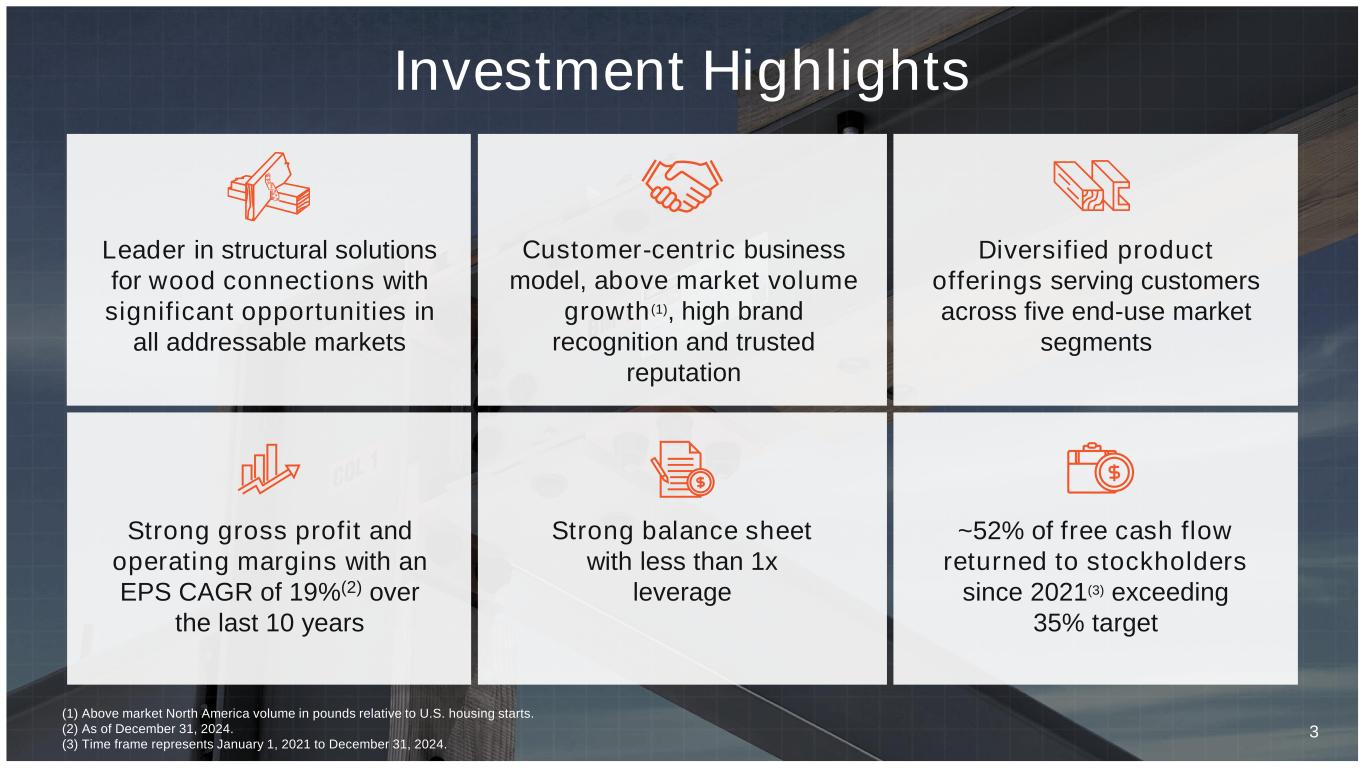
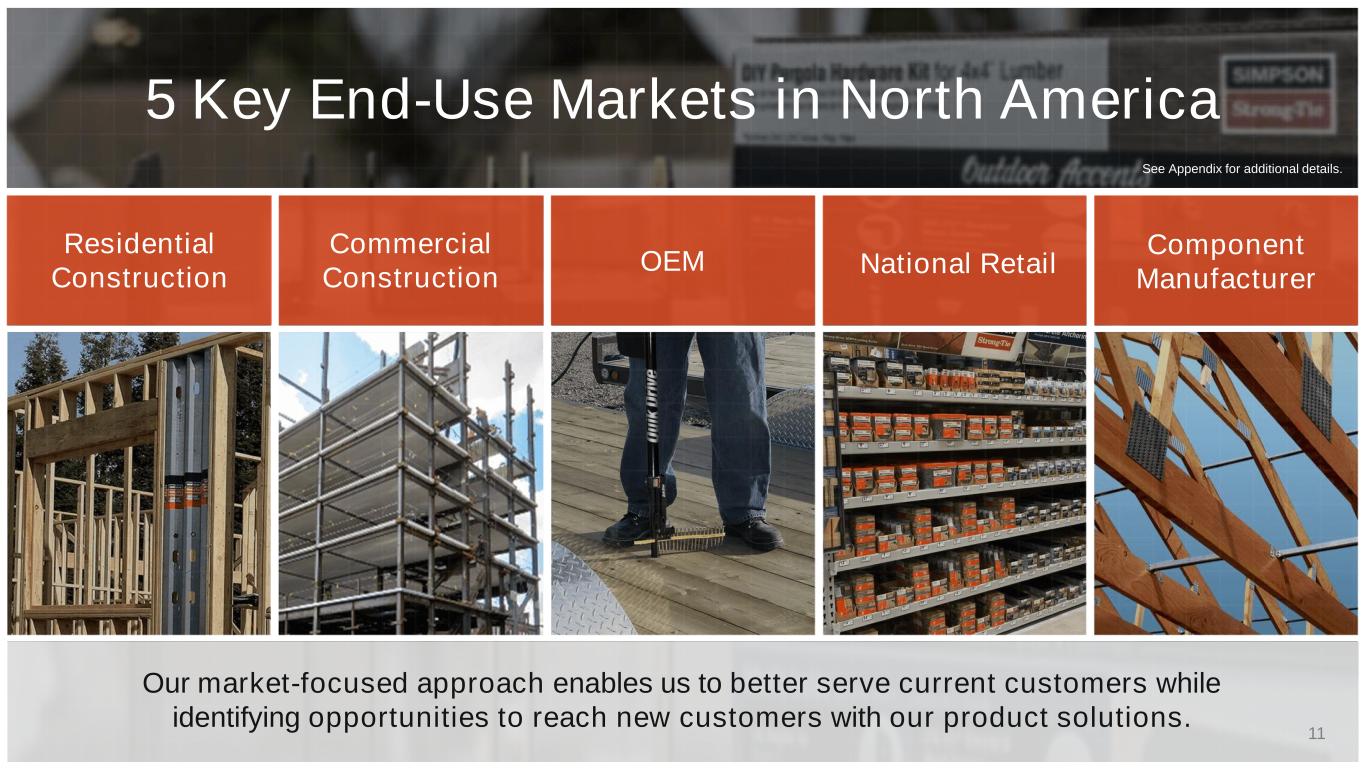
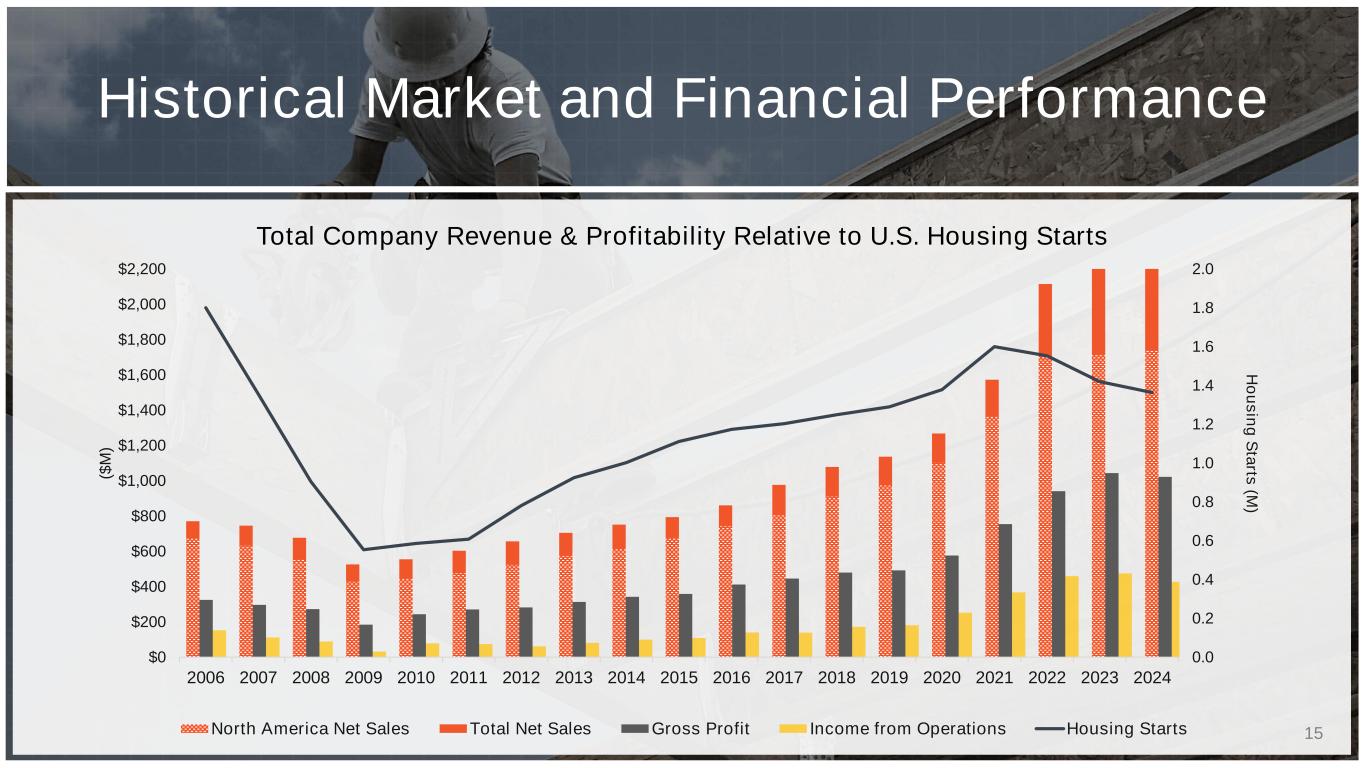
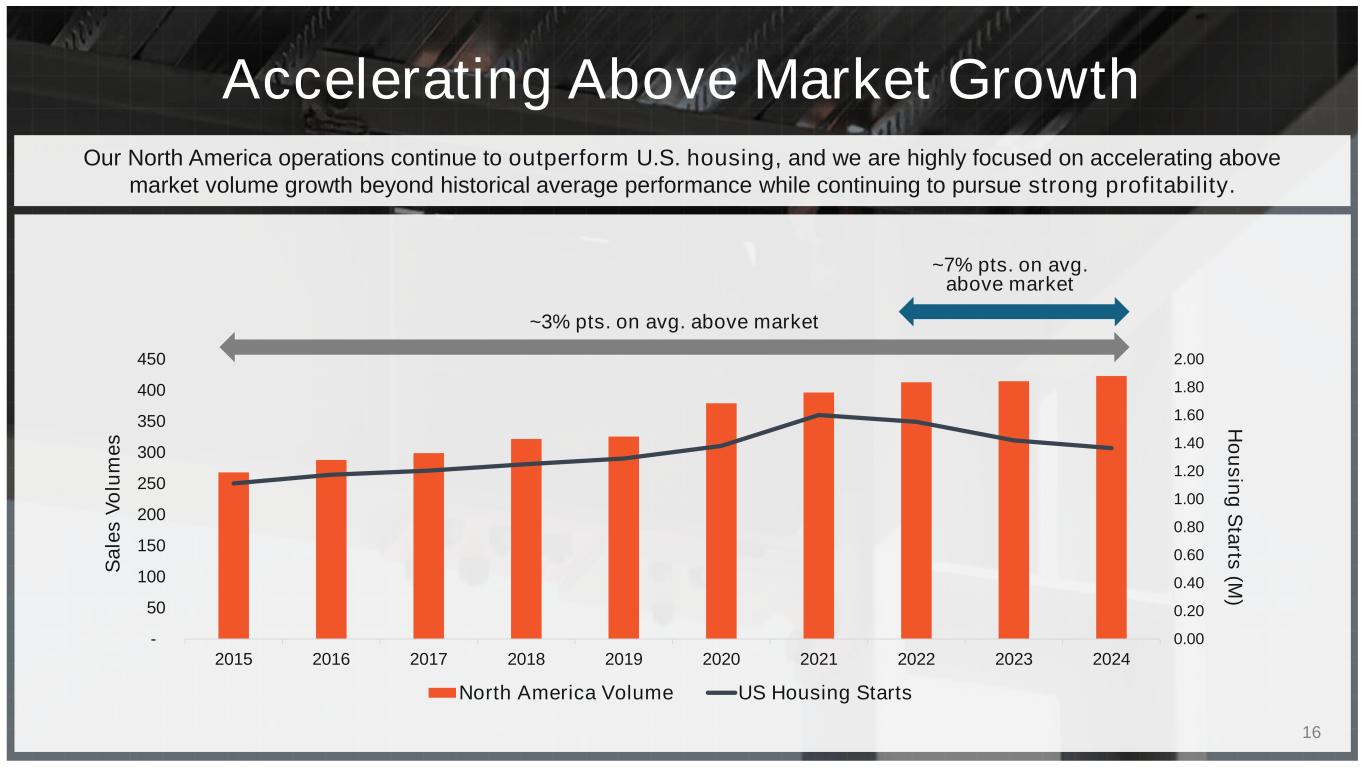
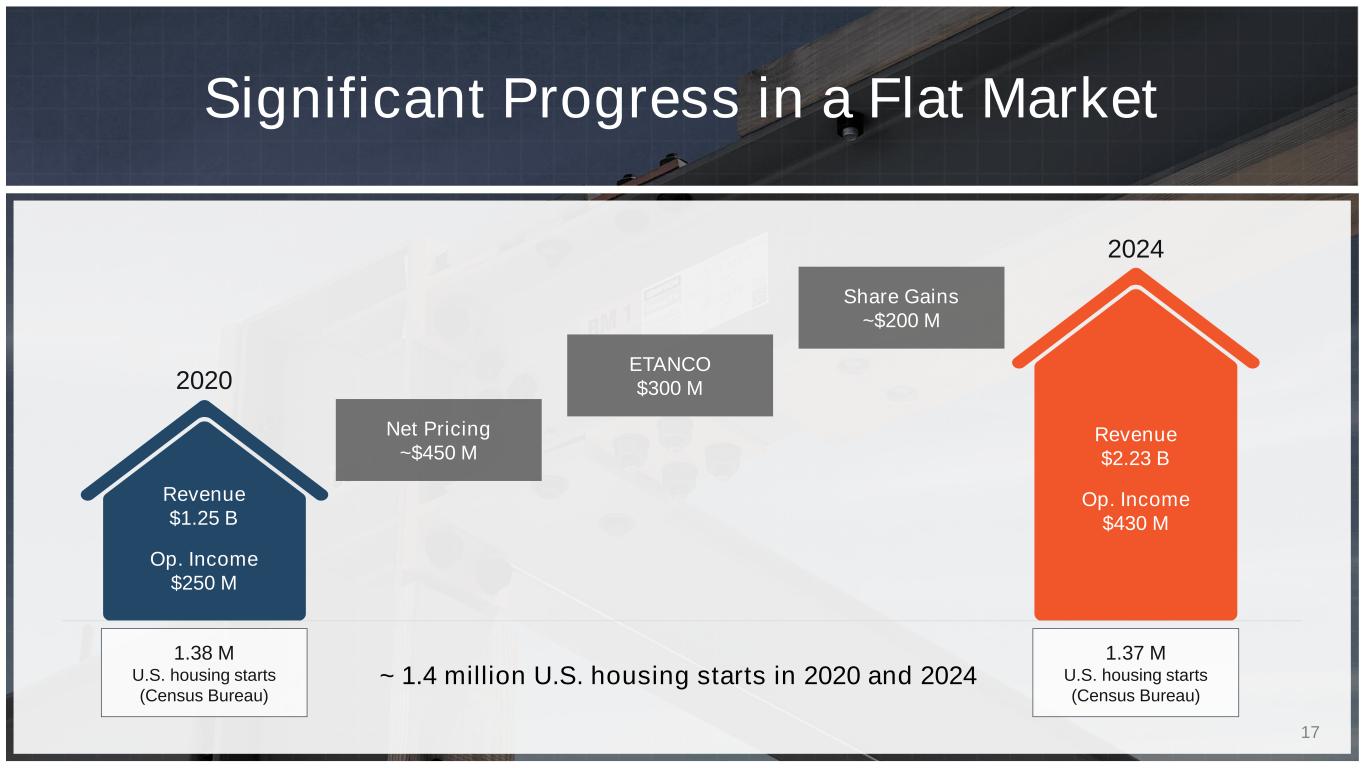
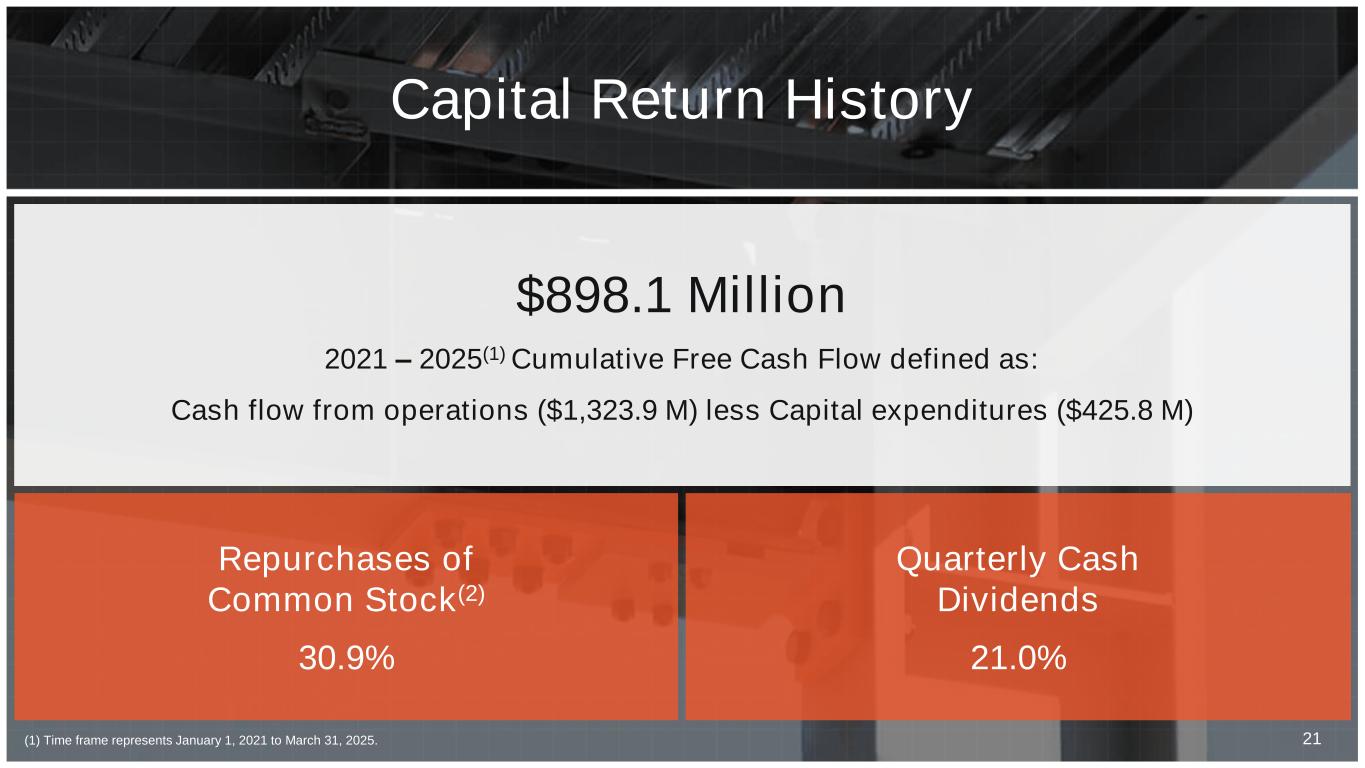
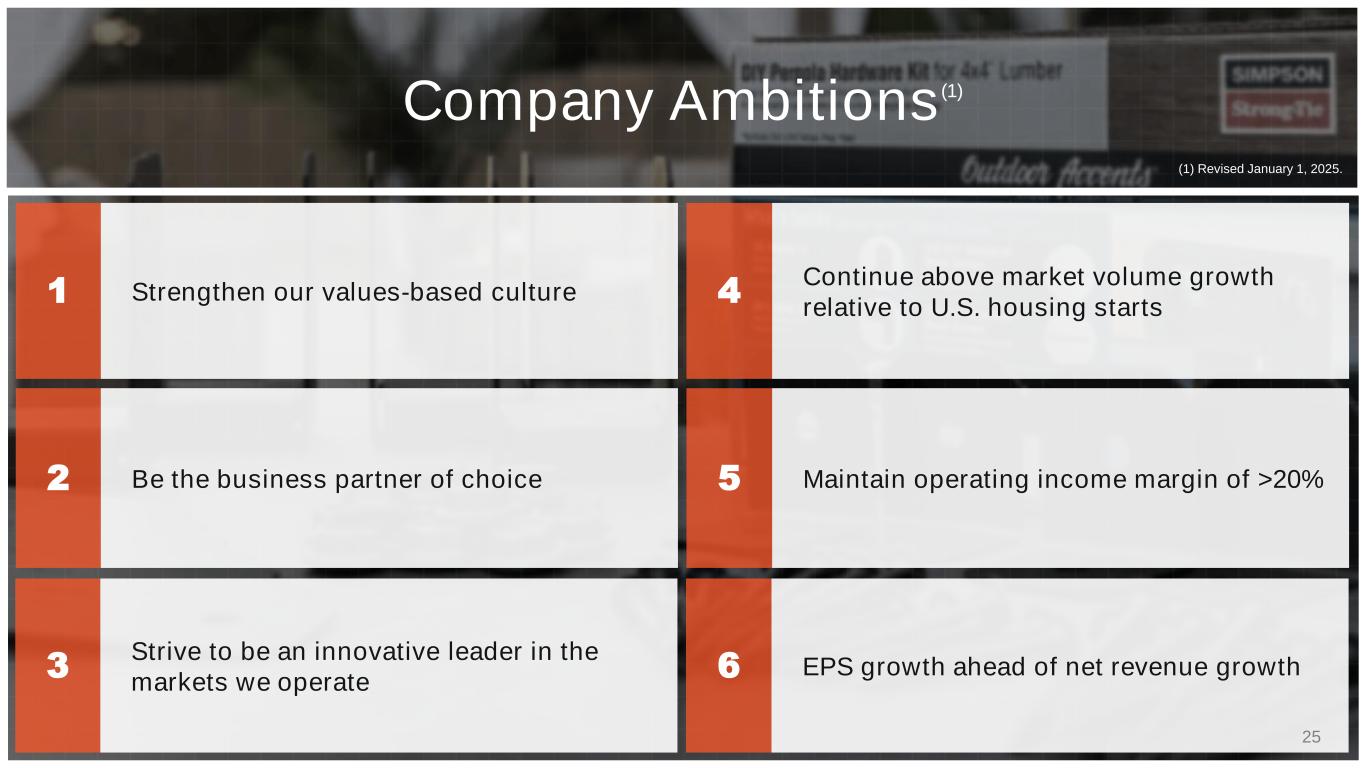
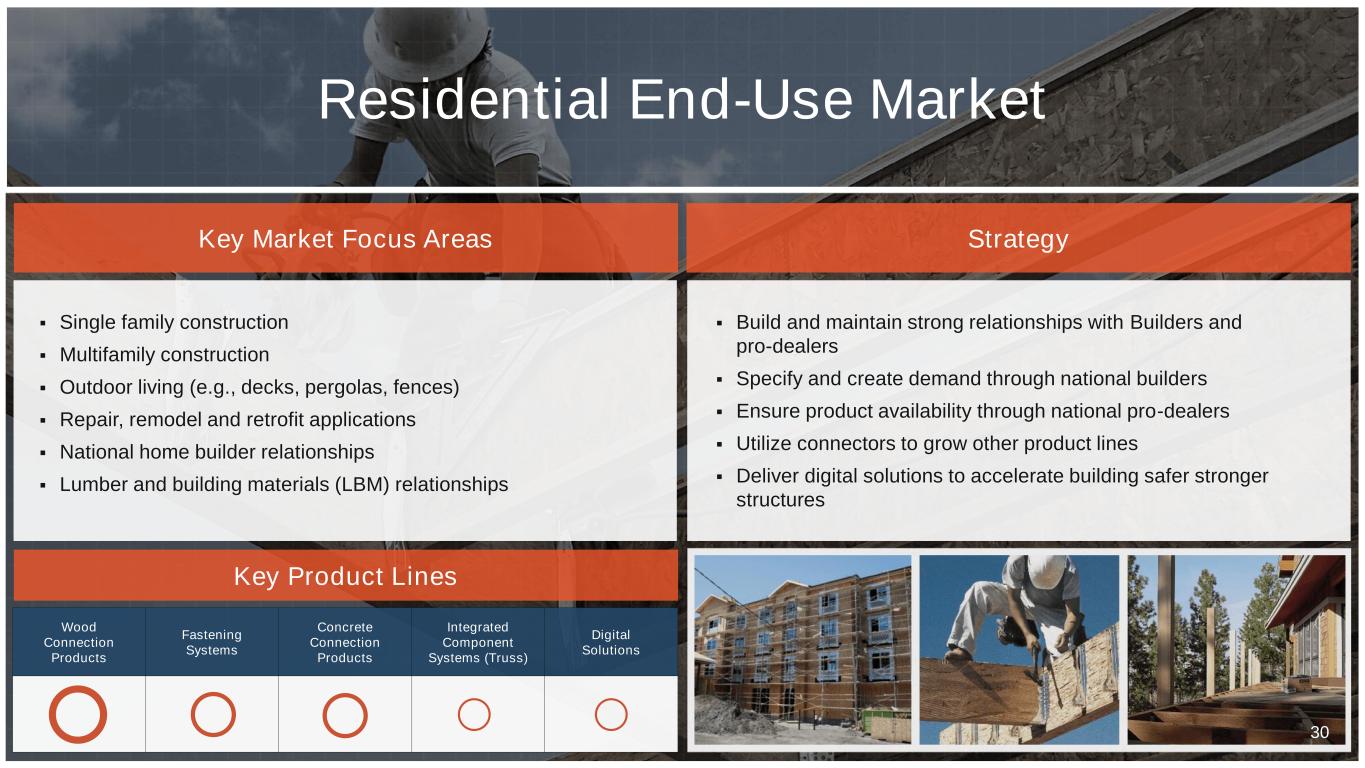
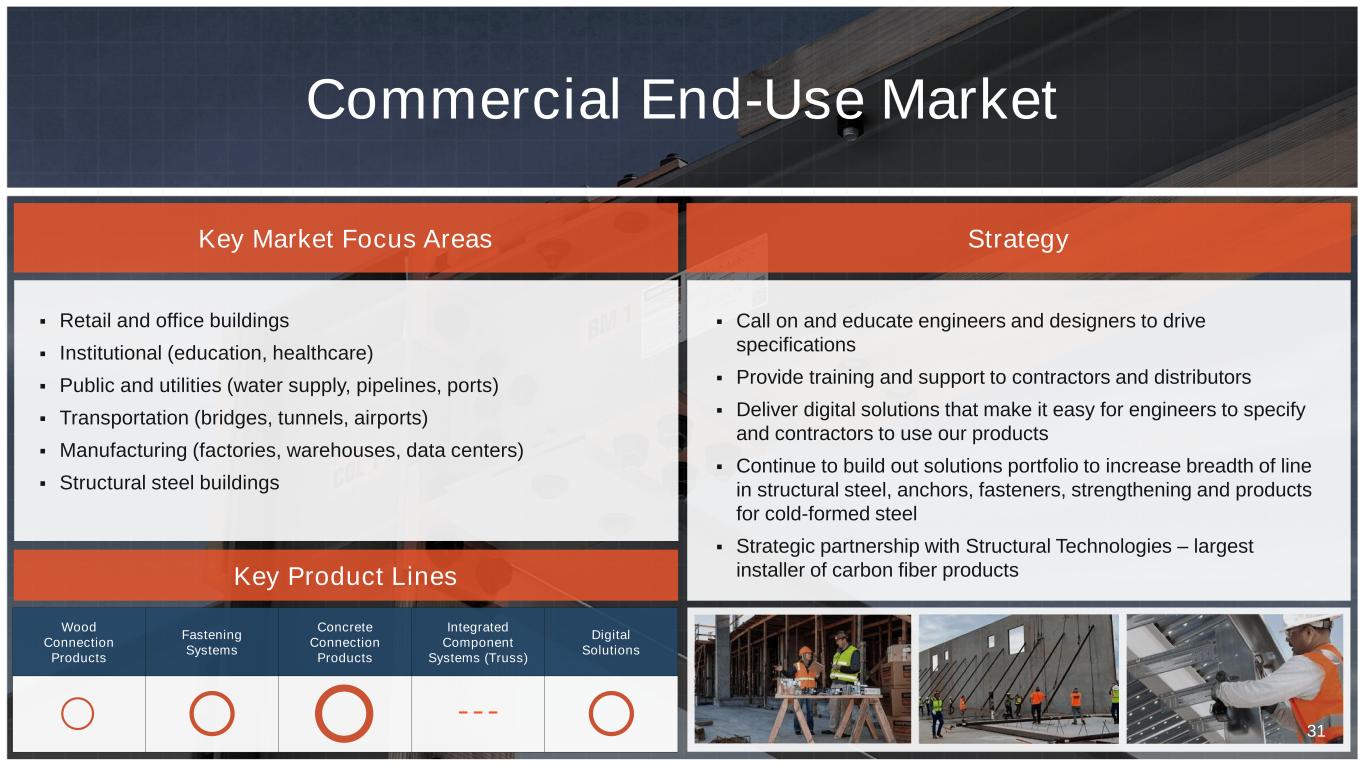
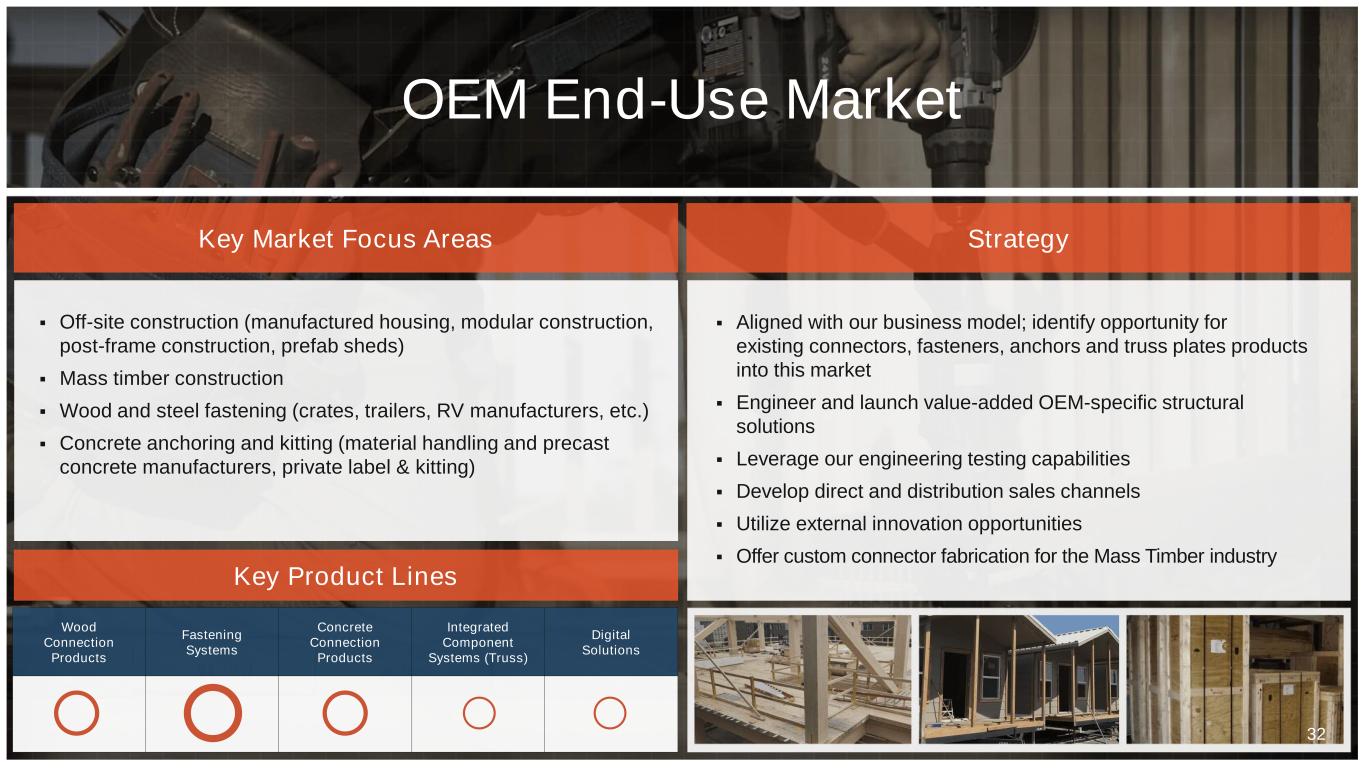
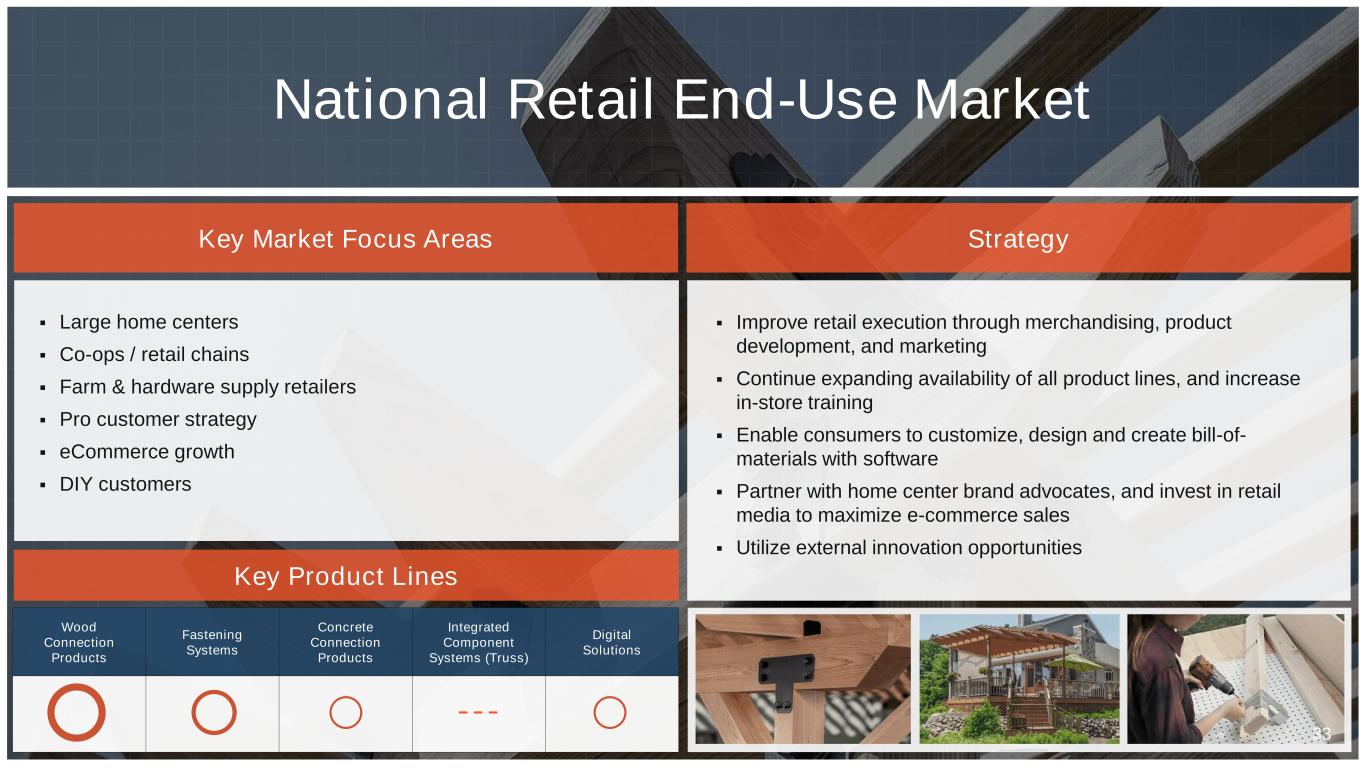
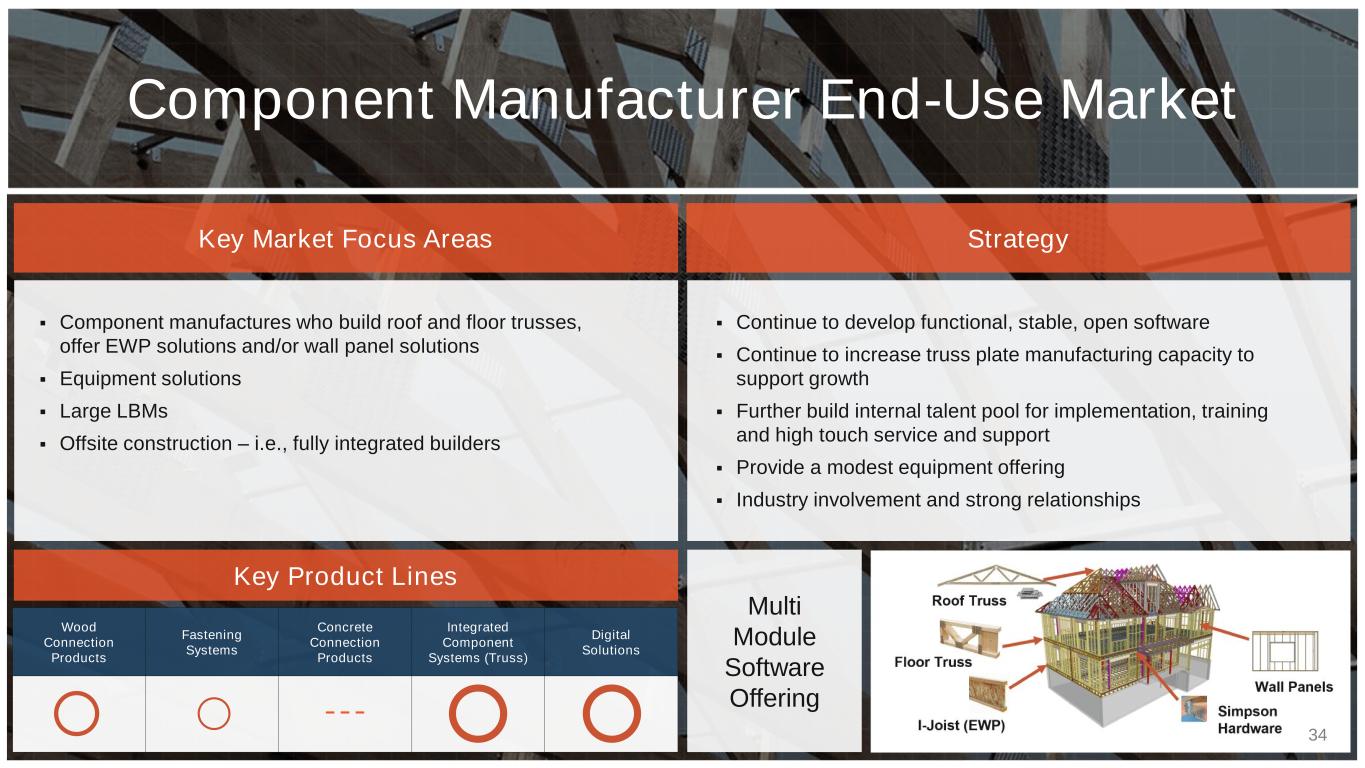
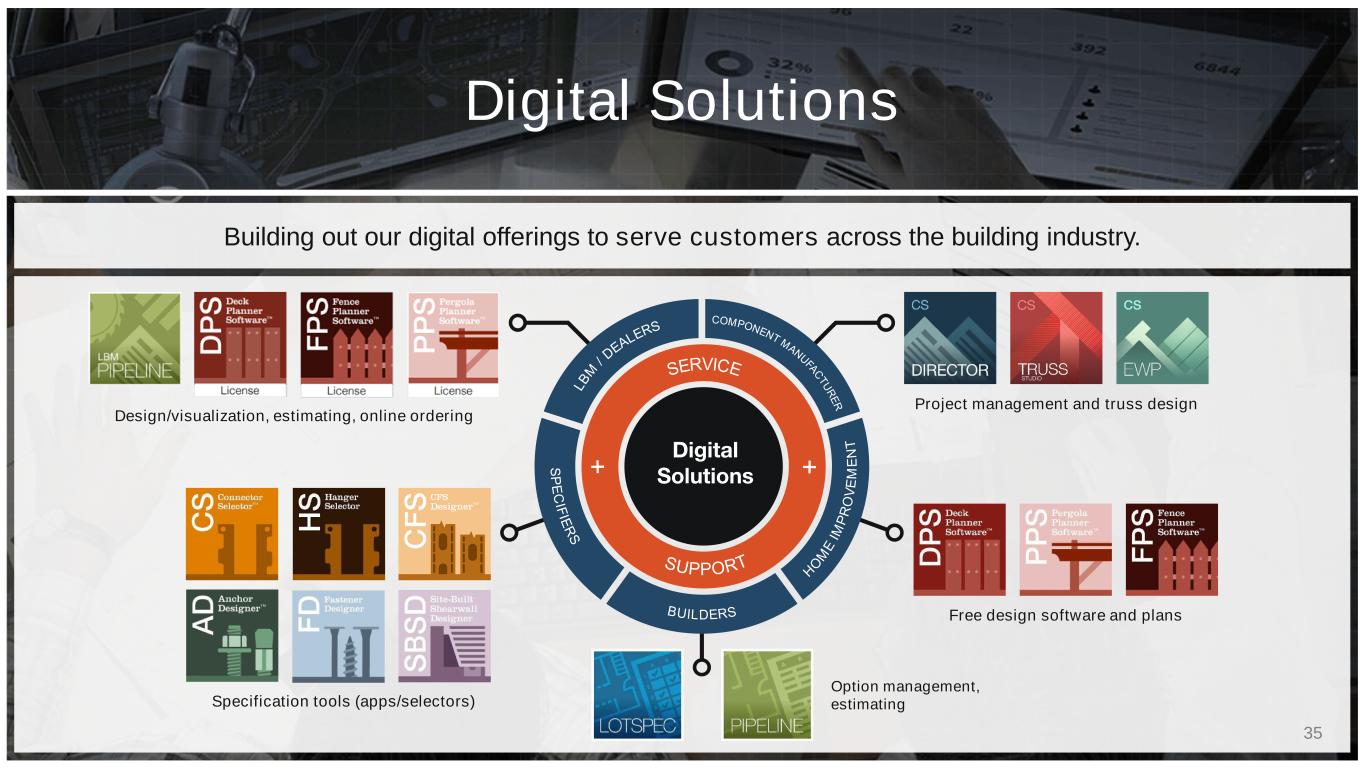
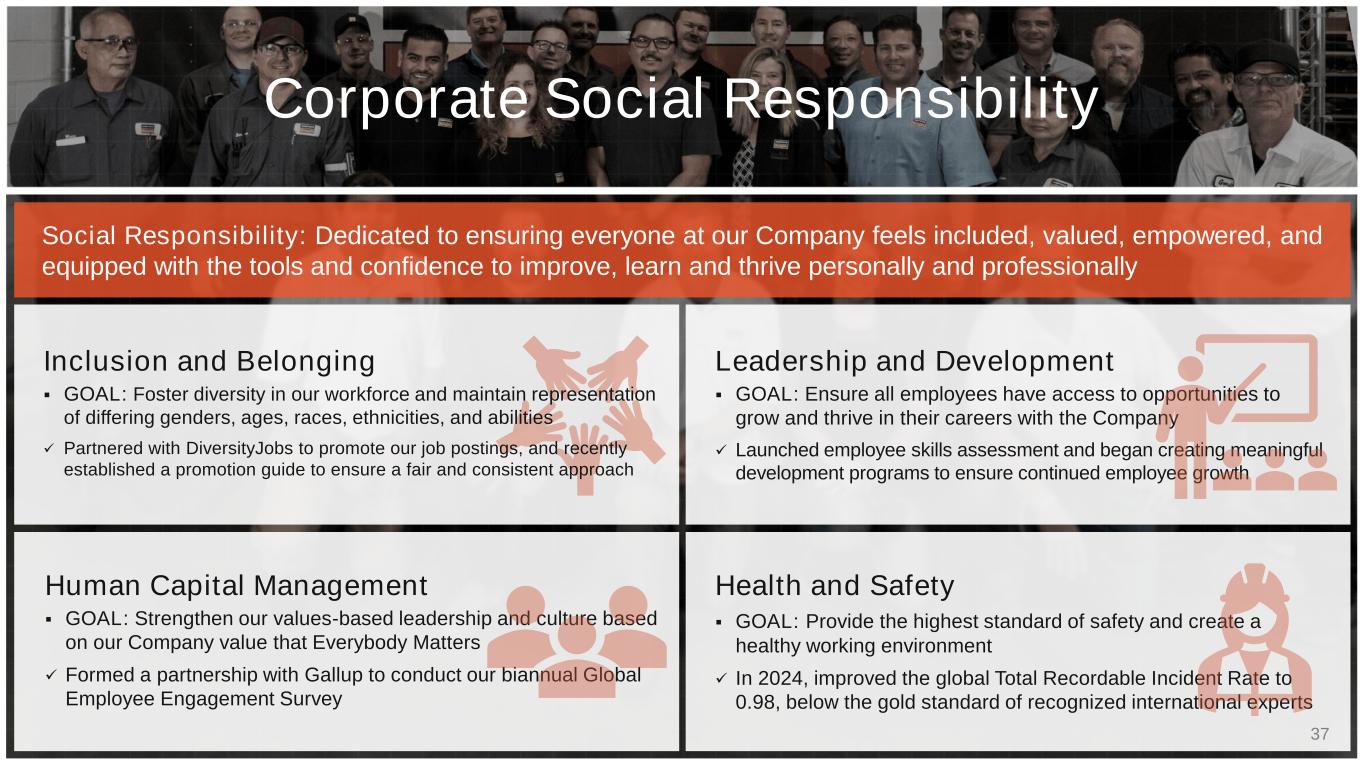
Thanks, Kim. Good afternoon, everyone, and thank you for joining today's call. With me today is Matt Dunn, our Chief Financial Officer. Today, my remarks will provide an overview of our first quarter performance and highlights from our end-markets. Matt will then walk you through our financials and fiscal 2025 outlook in greater detail. Now turning to our results. Our net sales of $538.9 million reflected modest growth over the prior year in a highly uncertain macroeconomic environment in both the U.S. and Europe. Over the past 12 months, I'm pleased to report that our volume performance in North America, once again, exceeded U.S. housing starts by approximately 420 basis points. Net sales in North America totaled $420.7 million, up 3.4% from $406.7 million last year. Results included a contribution of roughly $9 million from our 2024 acquisitions and a favorable comparison to prior-year net sales, which were negatively affected by the timing of volume discount estimates. Collectively, these items more than offset a modest decline in our volumes. Absent these factors, North American sales were relatively flat year-over-year. As a reminder, software services and equipment are not included in our volume calculations. Our North American volume results were mixed in the first quarter, though sales to all end-markets continue to demonstrate above-market growth on a trailing 12-month basis. In the component manufacturing market, volumes declined slightly versus last year. We saw solid results from our acquisition of Calculated Structure Designs and made progress aligning operations and sales to prepare for the scalability of our broadened digital solutions offering. We continue to execute our digital solutions roadmaps to satisfy key component manufacturing customers and leverage our equipment offerings to reach opportunities in this market. This has resulted in the conversion of several small to mid-sized trust manufacturing customers in the first quarter. In Residential, volume performance was down modestly. We continue to focus on conversions and line expansions while also deepening builder partnerships through professional services, digital solutions, and equipment. Additionally, our outdoor living category had low-double-digit growth over the prior year, showing a strong start to the spring building season. We attribute this to our growing product offering and intentional marketing sales efforts to reach Pro and DIY customers. The National Retail market saw mid-single-digit decreases. We offset a slow market by driving growth in e-commerce, new anchor product listings introduced last year, and additional retail space gains in our two largest retailers. In OEM, we delivered high-single-digit volume growth year-over-year with strong sales growth in mass timber and offsite construction solutions. OEM remains a relatively small contributor to our overall revenue with significant opportunity for share gains. And finally, in the commercial market, we improved volumes broadly across the business, resulting in low-single-digit growth over last year, despite a challenging commercial market. This momentum was driven by the strong performance of our anchor and cold-formed steel product lines. Turning to Europe. Our net sales of $113.9 million decreased 5.1% compared to the prior year and decreased by $1.3 million on a local currency basis. On a volume basis, we believe our European business has continued to outperform the local markets, supported by new applications and customer wins. Consolidated gross margin modestly improved to 46.8% from 46.1% in Q1 2024, despite higher input and labor costs. Additionally, the timing of volume discount estimates just discussed had an unfavorable impact in the prior year. When excluding this factor, gross margin would have been relatively flat year-on-year. Further product and customer mix have and will continue to be a gross margin headwind. Next, I'd like to take a moment to discuss some recent pricing dynamics in the marketplace. As previously announced, in early April, we implemented target price increases at a weighted average rate of approximately 8% across certain wood connectors, fasteners, and mechanical anchor products in the U.S. Since our last pricing change, which was a decrease a few years back, we have experienced significant increases in our costs, from our cost of goods to labor, energy, transportation, and equipment. Additionally, while we are largely domestically sourced, we procure fasteners and a limited number of other products from countries that are subject to the recently announced tariffs. Accordingly, the price increases were an effort to offset both rising costs across non-material and material categories, as well as a portion related to the current trade policy actions. The increases will go into effect on June 2, following a 60-day notice period to our customers. We understand that rising prices are especially challenging in a construction market where affordability remains a key concern. Therefore, we have and will continue to minimize additional increases. These price increases, combined with strong cost discipline and productivity improvements, will help us generally maintain our current gross margins and make selective investments to provide even better customer service. Our first quarter operating margin expanded by 90 basis points to 19% over last year, reflecting investments that were more commensurate with our volumes and overall market performance in 2025. Consolidated adjusted EBITDA totaled $121.8 million, an increase of 3.8% year-over-year. Looking ahead, we will remain disciplined in cost management to protect our margins while prioritizing the retention of our valued customers and highly skilled workforce to support long-term execution. Next, I'd like to highlight our strategic growth plan in the context of our three financial ambitions, which are continuing above-market growth relative to U.S. housing starts, maintaining an operating income margin at or above 20%, and driving EPS growth ahead of net revenue growth. We believe our business can deliver a 20% operating margin in a growing market environment. For 2025, our outlook for U.S. housing starts is to remain flat-to-up in the low-single-digit range from 2024 levels with growth weighted towards the second half of the year. In Europe, housing starts are expected to remain broadly in line with 2024 with more substantial recovery anticipated in 2026 and beyond. As a growth-focused company with industry-leading margins, we believe we can consistently drive EPS growth ahead of net revenue growth. We also remain committed to returning at least 35% of our free cash flow to shareholders, reinforcing our balanced approach to capital allocation. Before I conclude, I'm proud to share that both customer and employee engagement remain strong, as evidenced by recent survey results, showing high levels of satisfaction and connection across both groups. These findings reflect the success of our strategy to inspire our employees and relentlessly serve our customers while also advancing our first two company ambitions, strengthening our values-based culture, and being the business partner of choice. In summary, we were pleased to deliver above-market growth in a challenging environment. Our focus on cost discipline, while improving our position in diversified end-markets, has strengthened our business through the cycle, particularly in a soft housing market. We remain confident in the mid- to long-term housing outlook and believe Simpson is well positioned to capitalize on future growth. With that, I'd like to turn the call over to Matt, who will discuss our financial results and outlook in greater detail.
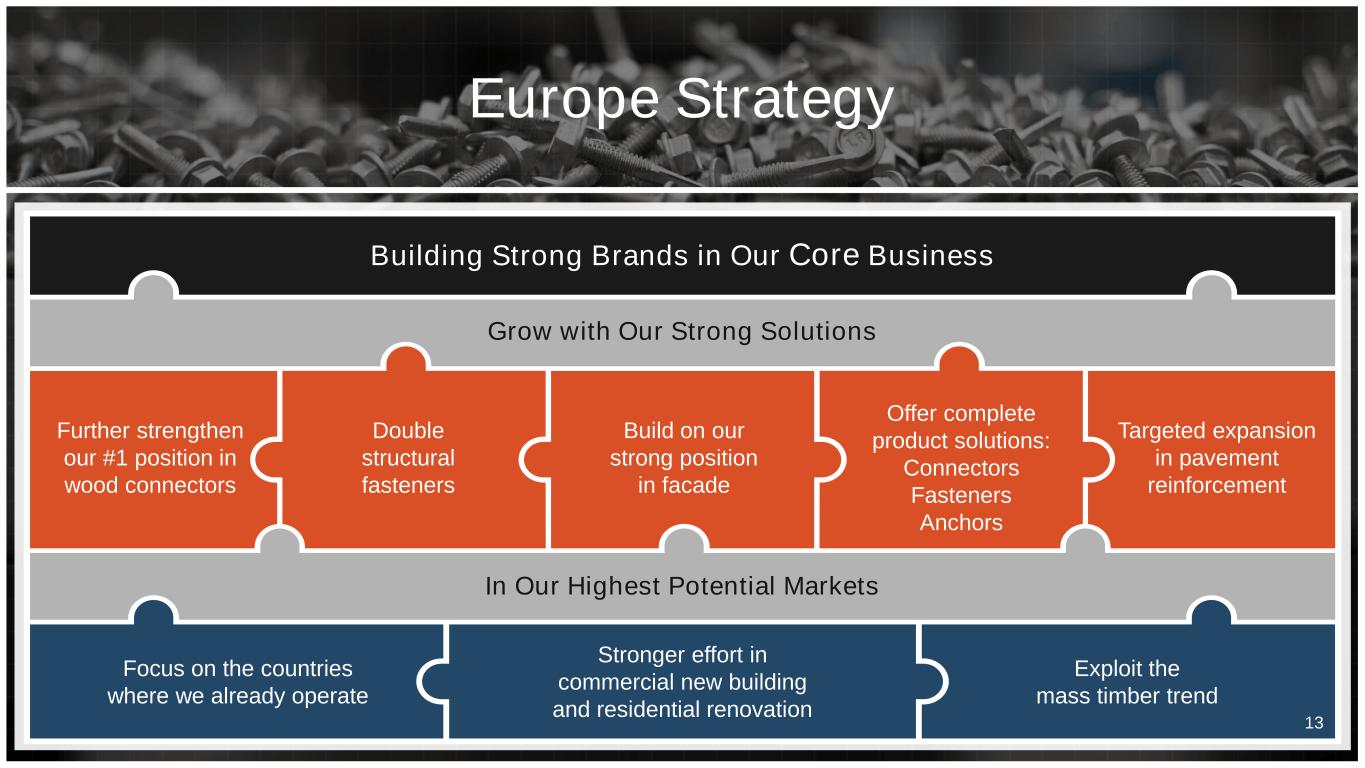
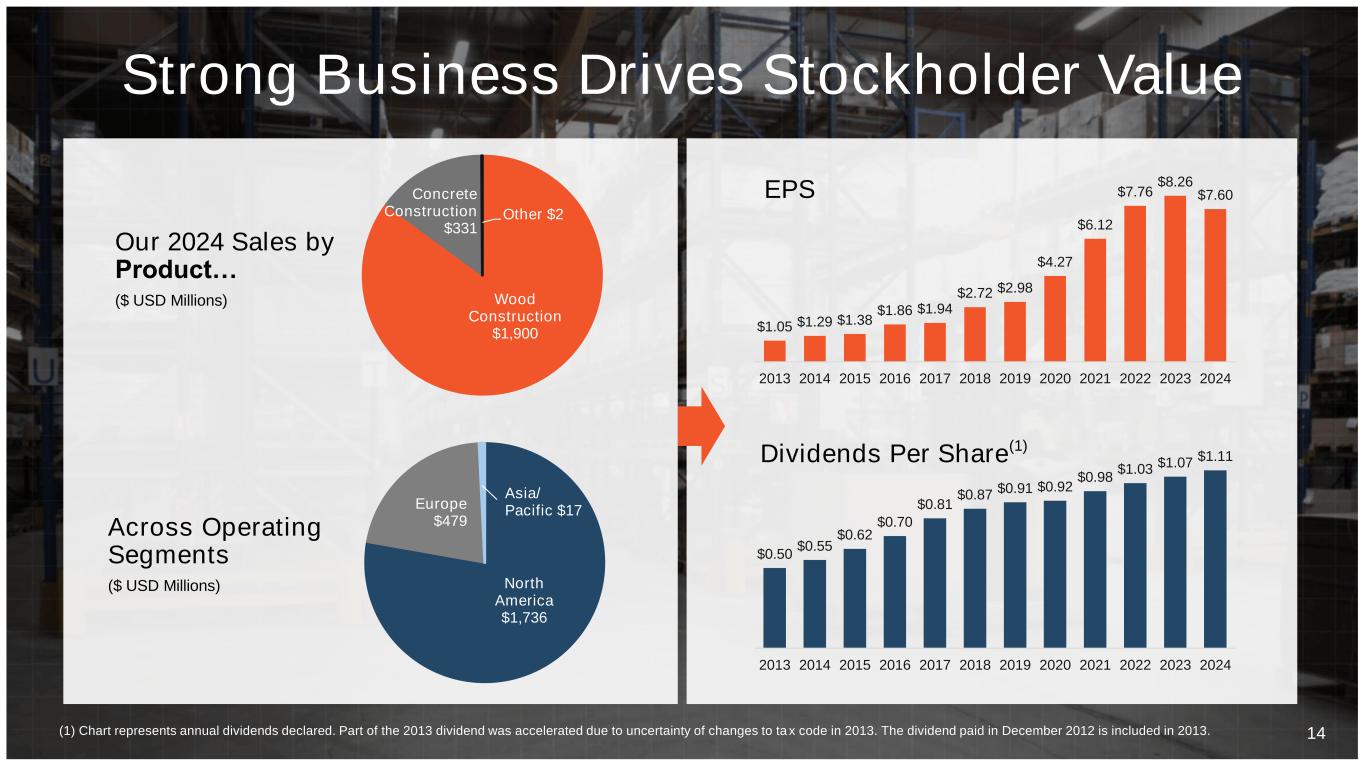
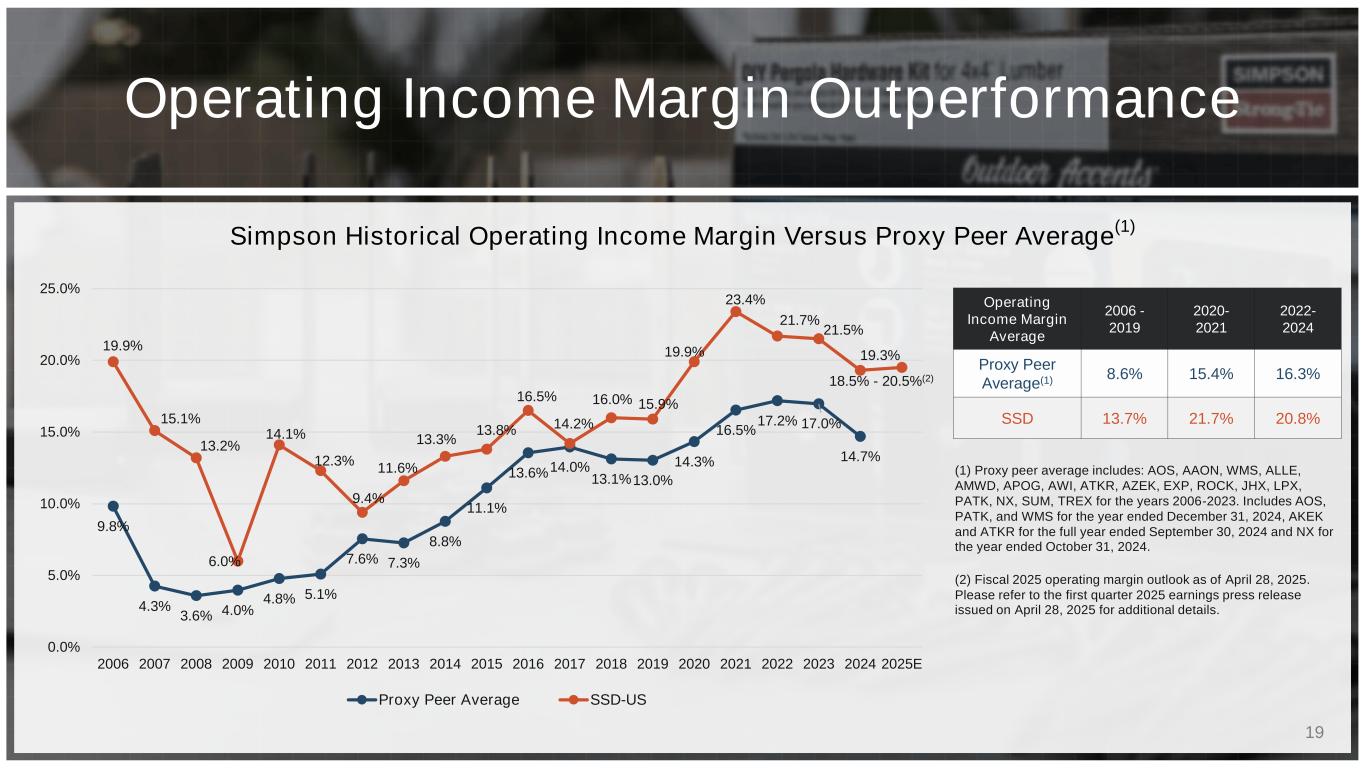
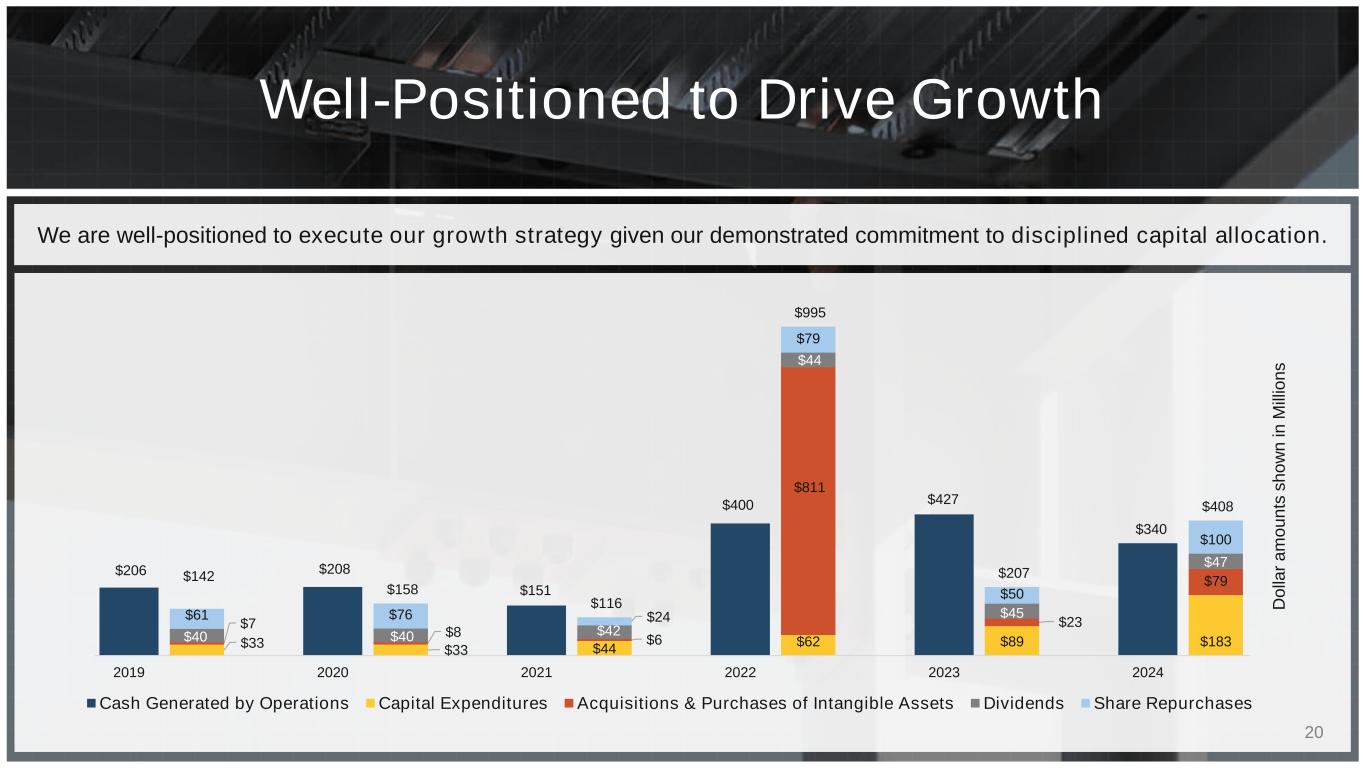
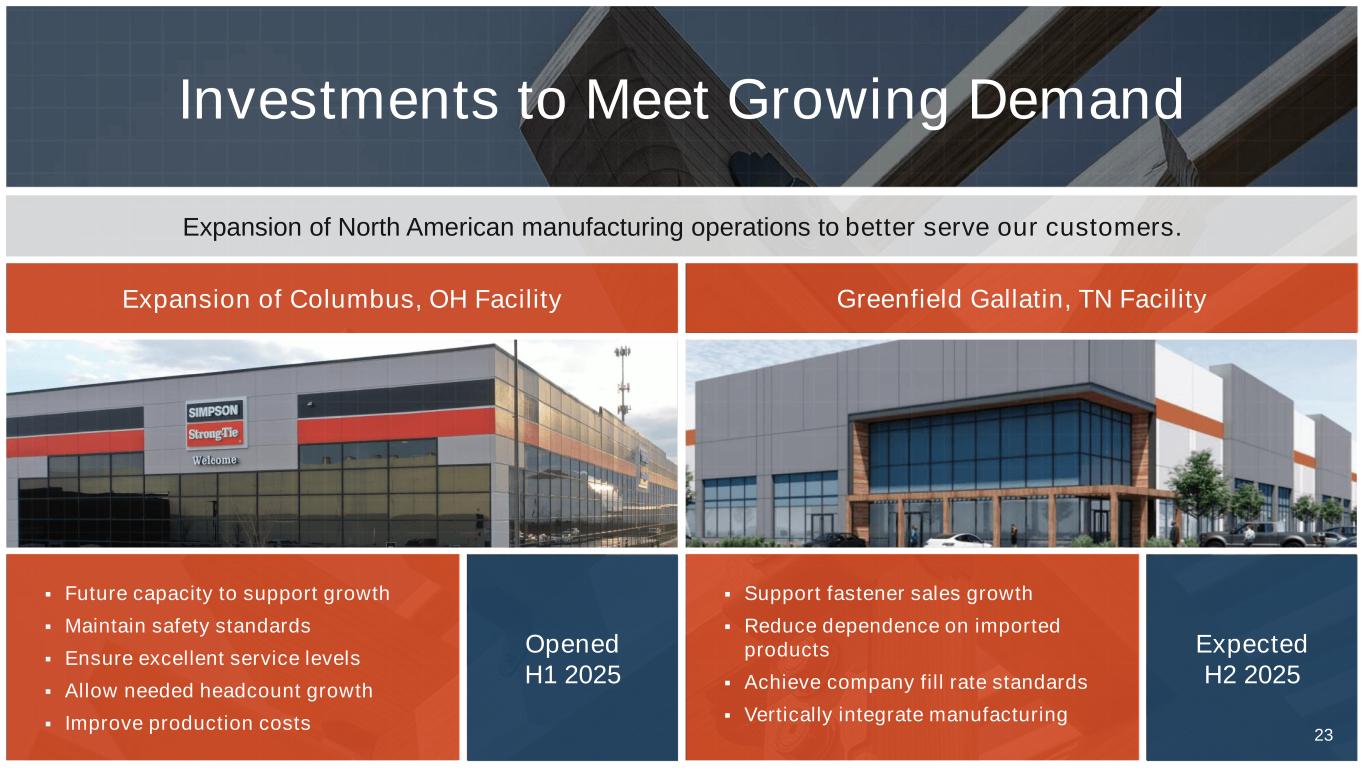
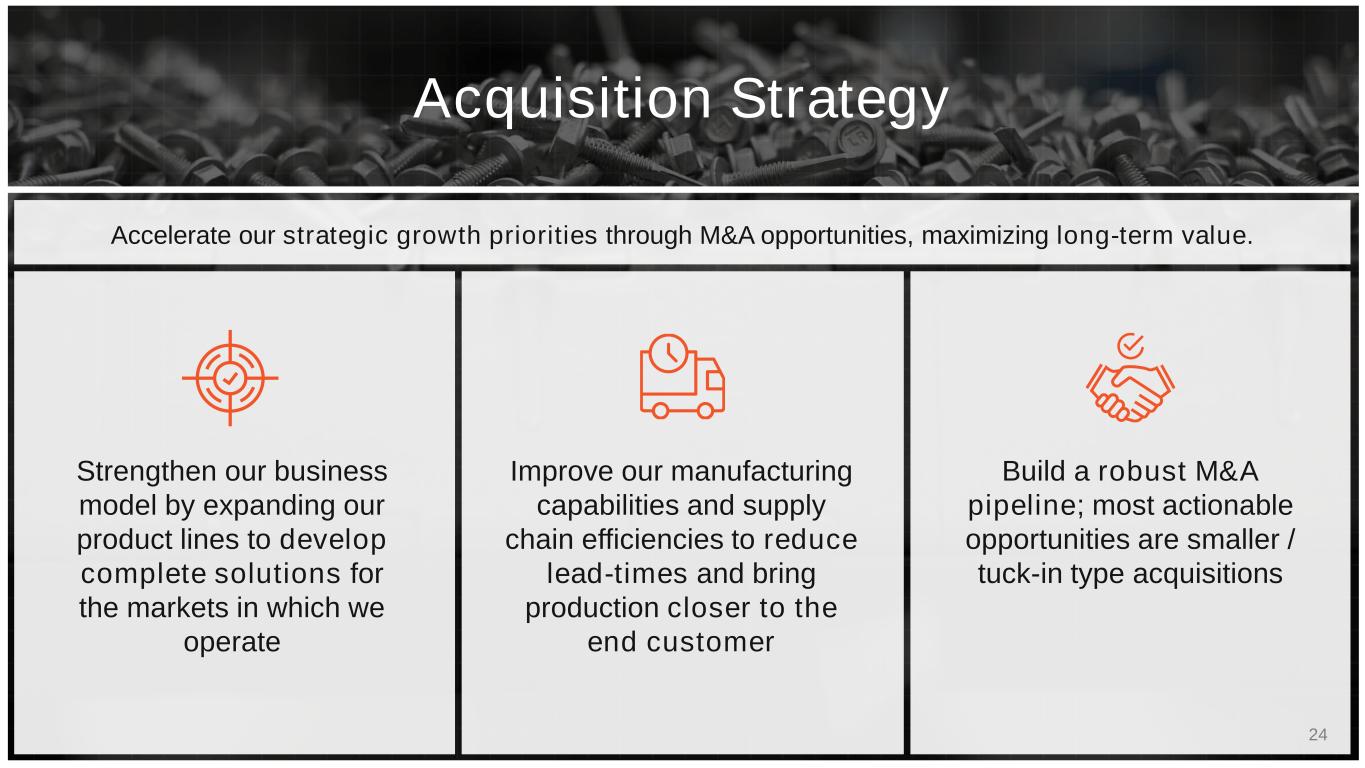
Good afternoon, everyone. Thank you for joining us on our earnings call today. Before I begin, I'd like to mention that, unless otherwise stated, all financial measures discussed in my prepared remarks refer to the first quarter of 2025, and all comparisons will be year-over-year comparisons versus the first quarter of 2024. Now, turning to our results. Our consolidated net sales increased 1.6% year-over-year to $538.9 million. Within the North America segment, net sales increased 3.4% to $420.7 million, which includes approximately $1.5 million in negative foreign currency translation. In Europe, net sales declined 5.1% to $113.9 million, primarily due to the unfavorable effect of approximately $4 million in foreign currency translation. Globally, Wood Construction product sales were up 1.7%, and Concrete Construction product sales were down 1.3%. Consolidated gross profit increased 3.1% to $252 million, resulting in a gross margin of 46.8% compared to 46.1%. On a segment basis, our gross margin in North America was 50%, marginally higher than the 49.3% reported in the prior year, due primarily to the timing of volume discounts adversely affecting net sales and gross profit in the prior year. Without the benefit from the absence of these discounts, gross margins would have been flat. Our gross margin in Europe decreased to 35.2% from 36.5%, primarily due to higher factory and overhead costs as well as labor and warehouse costs, which were partly offset by lower material costs, all as a percentage of net sales. From a product perspective, our first quarter gross margin was relatively flat at 46% for Wood products and was 49.5% for Concrete products compared to 46.5%. Now turning to expenses. Total Q1 operating expenses were $149.7 million, an increase of 2.1%, primarily due to higher personnel costs and variable compensation. As a percentage of net sales, Q1 2025 operating expenses were 27.8%, compared to 27.6%. As Mike indicated, we have seen increases in our major input costs over the past several years. Further, the current tariffs and trade policy, coupled with a run-up in both non-material and material input costs led us to enact price increases on our products effective June 2, the impact of which will be partly reflected in our Q2 results. In recognizing, price increases are generally not welcomed, we have worked to minimize them as much as possible by passing on only a portion of the anticipated tariff impacts. Additionally, we are evaluating sourcing options to mitigate the potential effects of tariffs. We will continue to monitor the market in 2025, and we'll be limiting incremental investments in the business until we see a more meaningful improvement in the housing market. To further detail our first quarter SG&A, our research and development and engineering expenses decreased 9.5% to $19.8 million, primarily due to a reorganization of our IT group, which resulted in the movement of approximately $3.4 million expense from R&D to general and administrative expense. Selling expenses decreased modestly by 0.6% to $54.2 million, primarily due to reduced personnel costs, which were partly offset by higher travel costs. On a segment basis, selling expenses in North America were up approximately 0.7%, and in Europe, they were down approximately 5%. General and administrative expenses increased by 7.8% to $75.7 million, largely as a result of the reallocation of IT group expenses I just discussed and higher personnel costs of $3.9 million. As a result, our first quarter consolidated income from operations totaled $102.3 million, an increase of 6.5% from $96.1 million. Our consolidated operating income margin was 19%, up from 18.1%. In North America, income from operations increased 5.4% to $104.2 million, primarily due to higher gross profit, which was partly offset by increased personnel costs and variable incentive compensation. In Europe, income from operations increased 12.7% to $9.3 million due to reduced operating expenses, including variable compensation costs. And operating income margin of 15% in Europe remains our mid-term goal. As a reminder, this target is predicated on various assumptions, including improved economic conditions and starts in Europe, the realization of offensive synergies, the continuation of secular trends toward greater wood construction, and more stringent environmental regulations in Europe. Our first-quarter effective tax rate was 25.5%, approximately 210 basis points above the prior year period. Accordingly, net income totaled $77.9 million or $1.85 per fully diluted share compared to $75.4 million or $1.77 per fully diluted share. Adjusted EBITDA for the first quarter was $121.8 million, an increase of 3.8%, resulting in a margin of 22.6%. Now turning to our balance sheet and cash flow. Our balance sheet remained healthy with cash and cash equivalents totaling $150.3 million at March 31, 2025, down $89.1 million from our balance at December 31, 2024, due primarily to capital investments and working capital increases. Our debt balance was approximately $379.8 million, net of capitalized finance costs, and our net debt position was $229.5 million. We have $450 million remaining available for borrowing on our primary line of credit. Our inventory position as of March 31, 2025, was $618.8 million, which was up $25.6 million compared to our balance as of December 31, 2024, mostly as a result of the higher price per pound from inventory on hand, overall pounds in inventory were mostly flat. We generated cash flow from operations of $7.6 million for the first quarter. With regard to capital allocation, our disciplined strategy remains focused on both growth and shareholder returns. In the first quarter, we invested $50.5 million for capital expenditures, including our investments for facility upgrades and expansions. We paid $11.7 million in dividends to our stockholders and paid down $6.8 million in debt. In addition, we repurchased 146,640 shares of common stock at an average price of $170.48 per share for a total of $25 million. As of March 31, $75 million remained available for repurchases through year-end 2025 under our $100 million authorization. In regard to our growth investments, both the Columbus, Ohio, and Gallatin, Tennessee projects remain on time and on budget. As a reminder, these two investments expand our warehouse and manufacturing capacity, ensuring we continue to provide industry-leading service and support to our valued customers. The grand opening of our Columbus facility is scheduled for May. Gallatin's new facility is anticipated to open in the second half of 2025. Gallatin will play a strategic role in optimizing our fastener sourcing model. Currently, we manufacture approximately one-third of our fasteners in Gallatin with the remaining two-thirds sourced from Taiwan. The new Greenfield operation will improve this mix closer to 50/50 and allow us to insource key third-party processes such as heat treating and coatings. This initiative is expected to reduce tariff exposure and gives a significant advantage in terms of inventory lead times. Separately, we are continuing to integrate our recent 2024 acquisitions, which have been performing in line with our expectations. At the same time, we will continue to actively evaluate potential M&A opportunities that accelerate progress on our key growth initiatives and improve our overall operating efficiencies. Next, I'll turn to our 2025 financial outlook. Based on business trends and conditions as of today, April 28, we are reaffirming our guidance for the full year ending December 31, 2025 as follows. We expect our operating margin to be in the range of 18.5% to 20.5%. Additional key assumptions include U.S. housing starts to be flat-to-up low-single digits from 2024 levels. As a reminder, if housing starts are up low single-digits, we'd expect to trend toward the higher end of the range. If the market growth is flat or slightly down, we would expect to be closer to the mid- and low-end of the range, respectively. Additionally, we are expecting a slightly lower overall gross margin based on the addition of new warehouses as well as increases in labor, factory, and tooling as a percentage of net sales, which we anticipate will be partly offset by the price increases that will go into effect on June 2, and an ongoing mix headwind from products and customers that continues to impact our margins. Further, our margin guidance includes a projected benefit of $10 million to $12 million from the sale of the property based on a contracted sales price of $19.1 million. Next, interest expense on our term loan, which had borrowings of $379.8 million as of March 31, 2025, is expected to be approximately $0.4 million, including the benefit from interest rate and cross currency swaps, mitigating substantially all of the volatility from changes in interest rates. Interest on our cash and money markets is expected to offset this expense. Our effective tax rate is estimated to be in the range of 25.5% to 26.5%, including both federal and state income tax rates based on current tax laws. And finally, our capital expenditures are estimated to be in the range of $150 million to $170 million, which includes approximately $75 million for the completion of both the Columbus facility expansion and the new Gallatin and Faster facility. In closing, Simpson had a solid start to 2025. We continue to believe Simpson is poised to execute our strategic plan for the balance of 2025, through ongoing macroeconomic uncertainty. As part of that plan, we will work diligently to ensure that our expense base and investments are aligned with market conditions to ensure the delivery of a strong operating income margin. As always, we will continue to provide our customers with unparalleled service and support. As a result of our significant investments in growth, Simpson is well-positioned to continue above-market growth. With that, I will now turn the call over to the operator to begin the Q&A session.
Operator
Thank you. We will now start the question-and-answer session. Our first question comes from Daniel Moore with CJS Securities. Please go ahead with your question.
Speaker 4
Good afternoon, Mike and Matt. Thanks for taking the questions as always. Maybe just start with the outlook; I think obviously, the guidance is unchanged. How is all the tariff noise and related impact to consumer confidence impacted, I guess, either the range or your outlook in general for US housing starts? I know you mentioned unchanged a couple of times. Is it just more a function of maybe the visibility has changed a bit or relative likelihood of kind of the top, bottom end of the range? Just how are you thinking about housing relative to maybe 60 days ago?
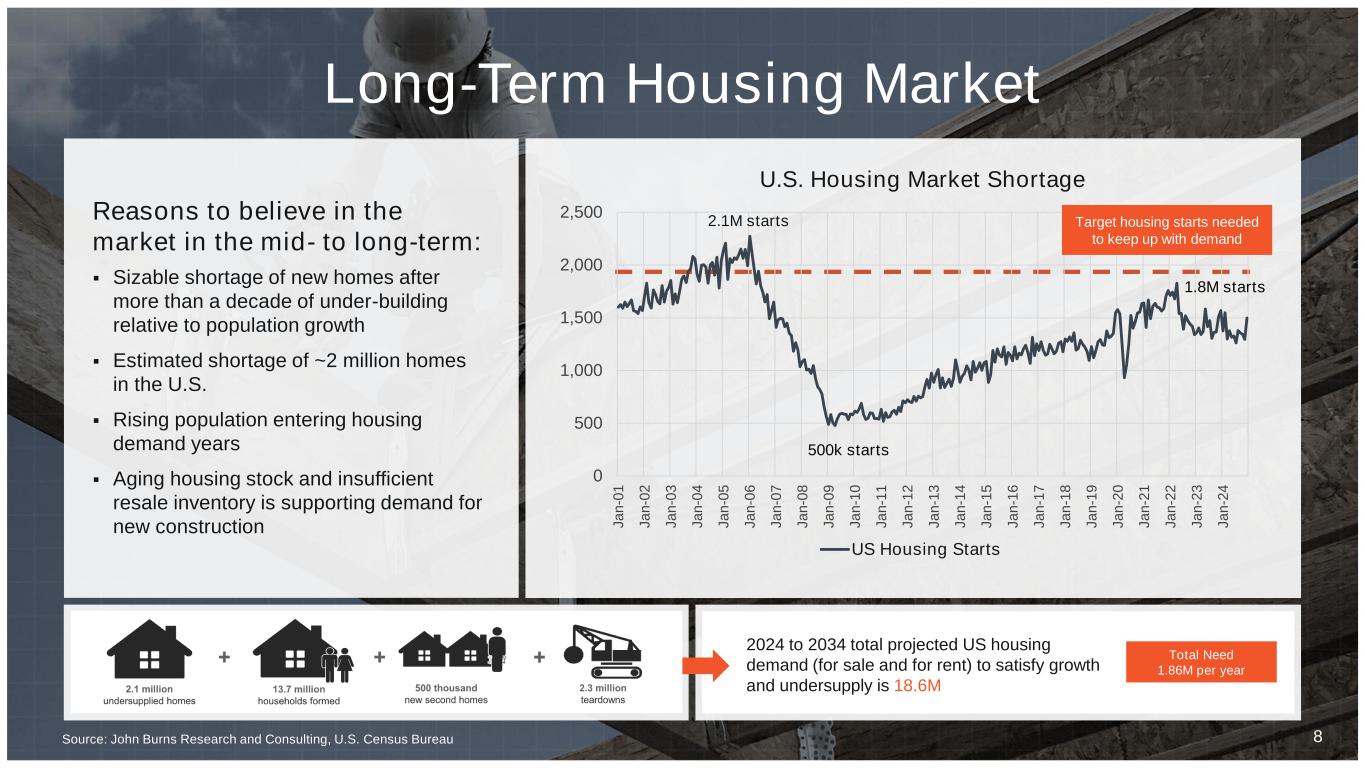
Yes. Good question, Dan. So we're obviously talking with our customers, getting a lot of info from them, and then we're spending a lot of time with the people that are building market forecasts, and you still got a lot of different mixed views. I think consistently everybody believes the first half is going to be a little bit softer than the second half, with the hopes that things pick up, and I think the big driver that we keep hearing from our customers is maybe the possibility of increased interest rate cuts. So when you add it all up, when we came into the year, we were thinking low-single-digits. We put in there now our estimates flat to low-single digits is kind of how we're thinking about it from a market perspective. Matt, do you want to talk about how that impacts our guidance?
Yes. So in terms of our guidance, Dan, we still feel comfortable with the outlook that we provided in Q1. Looking at the latest forecast outlook, flat to maybe slightly up, as we said from a market perspective, but we still feel we can be in that range and obviously, the pricing impact that we announced gives us some flexibility that we didn't have visibility of where that was going to be when we gave guidance before. So still feel very confident in the range and the middle of the fairway, so to speak.
Speaker 4
That's really helpful. And then I appreciate all the color on the price increases. I'm just wondering, what feedback you've gotten at this point, just given the general macro uncertainty, any more pushback than usual? I guess I'm thinking particularly from big box retailers, or you've always had been able to push through when needed. So just to see if there's any change there in terms of the tone of conversations with customers.
Yes. I mean, Dan, we tried very hard to have a fair price for our products. As you know, that's typically 1% of the billable material of the house. We like to think we add a lot of value in service and support through our engineering teams, our innovation teams, our sales teams out in the field, and everything we do to provide great service in the field. So we're working hard to make sure that our customers understand the value that we bring, and we're doing our best to try to offset as much of these costs as we can so that we've got a reasonable premium that allows us to invest back into the business to better support our customers.
And I would add, Dan, this is Matt. In terms of our price increase, as we mentioned, we've seen our cost inputs going up over the last couple of years and then obviously, with the recent tariff announcements, but I think just to be clear, we're not passing through the full dollar impact of the tariff because we recognize market conditions, the affordability challenges, some of our competitors in terms of where they source from. And so, I've been very thoughtful in where we've adjusted the prices and have not passed fully through the tariff impact. Obviously, we'll see where that all nets out after negotiations on tariffs with the governments that are involved. But just being very thoughtful of where we take those price increases, because we do need to offset the costs that have gone up over the last several years, including the tariff impacts most recently.
Speaker 4
It certainly makes sense. You mentioned a couple of things. You potentially freezing capital investments until housing improves. I assume that's, obviously, post the Gallatin and Tennessee projects, or should say the Ohio and Tennessee projects, which are already underway. Any other kind of steps to mitigate potential tariffs or exposure that you're contemplating beyond the pricing that you described?
Yes. If you look at our single biggest investment, the Gallatin facility, so that certainly is going to help us strike a better balance of locally produced fasteners and eventually some anchors compared to where we are today. So there's some work that we're trying to do there. We're trying to accelerate some equipment that we put in that facility. We also had the option of maybe importing some products from Europe. But I think the thing that we want to do, Dan, is we're picking mid and long-term on this story as well as trying to balance the short-term costs because we don't want to make a bunch of changes and just have everything undue and then maybe the business case doesn't work out as well as we had hoped originally. So we're looking at all kinds of options and doing everything we can to manage both the short-term and the long-term.
Speaker 4
Perfect. And last for me, and I'll jump back in queue. But just given the strength of the balance sheet and the pullback in share price, obviously, you were active in Q1. Any changes in terms of the relative order of capital allocation? And how aggressively are you likely to be buying back stock versus maybe looking at M&A, and at least in the near term? Thanks again.
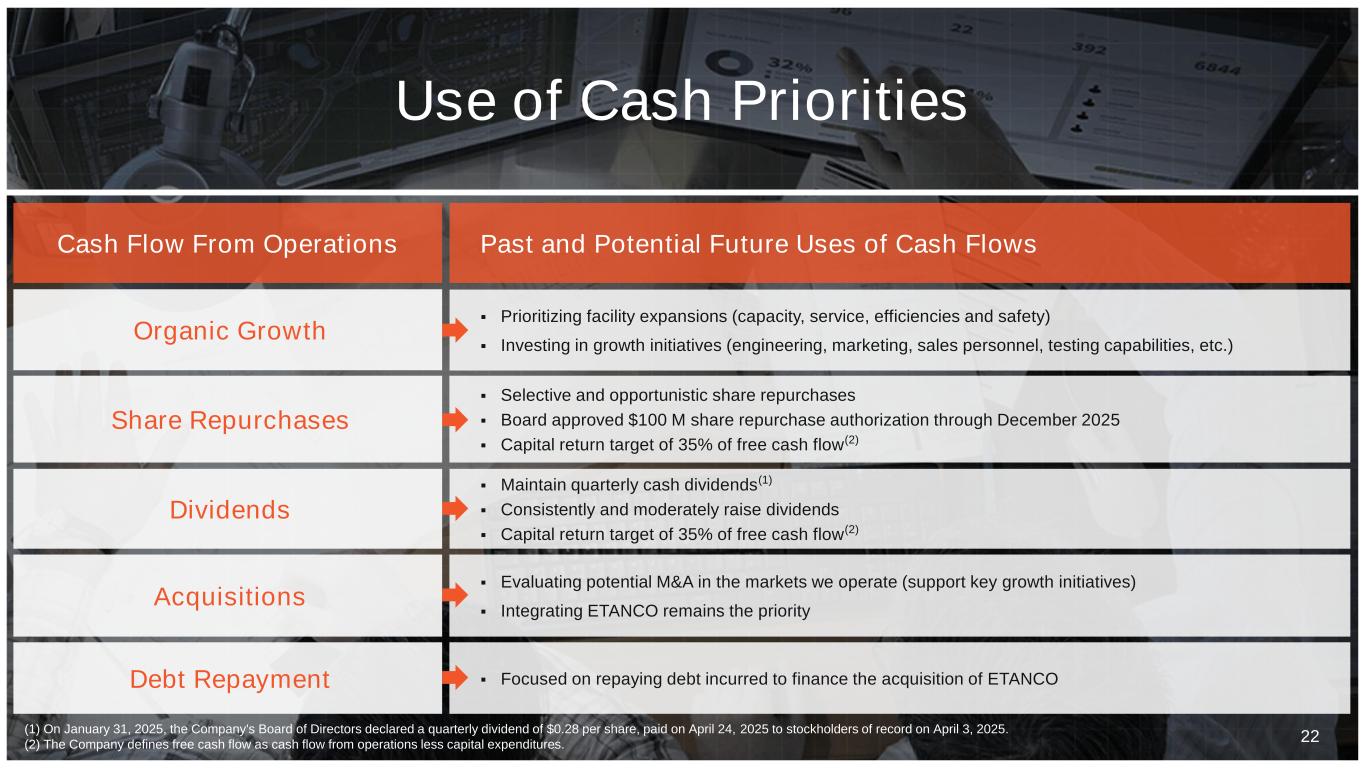
Yes, Dan, we were active in the first quarter. We bought back $25 million against our $100 million authorization for 2025, so $75 million left. So we continue to be desiring to return capital to shareholders via share repurchase. I think you'll see us kind of stay the course like we've been on the last two years. I don't know that we would jump into any significant opportunistic repurchase versus what we've already sort of announced as part of the authorization.
Speaker 4
Perfect. I'll jump back with any follow-ups. Thanks again.
Operator
Thank you. Our next question comes from the line of Tim Wojs with Baird. Please proceed with your question.
Speaker 5
Hey, guys. Good afternoon. Nice job. Maybe just for what is the annualized tariff impact that you guys have to absorb without any sort of mitigation?
Yes. When we examine the business, we import a relatively small percentage of our costs from Asia, so we are not disclosing the exact number. The price increase we mentioned is a weighted average of 8%. This helps us manage the cost increases we've experienced over the last three years in nearly everything except steel. We are now seeing steel prices rise as well. This also helps us offset some of the tariff costs. Just to clarify, we are not passing all the tariff-related costs on to our customers. Overall, a relatively small percentage of the goods we sell today come from Asia.
Speaker 5
I understand. That's helpful. I want to clarify something regarding pricing. All costs, except for tariffs, were included in the original guidance, and now we have pricing adjustments in place. It seems tariffs are not a significant part of the overall figure. All the costs related to inflation and similar factors were mostly accounted for in the previous guidance, correct?
Yes, I would say there are three factors to consider. The costs were already incorporated into the guidance, but the pricing was not, and we have now announced the pricing. The tariffs were also not included in the guidance. We are partly offsetting that with the new pricing. When we initially provided our guidance, we offered a range: the high end was clarified based on low single-digit housing starts in the market, the middle was expected to be flat, and the lower end would reflect a decline. Given the current state of housing starts, the first quarter has been a bit soft, but we see potential for improvement in the second half, and we believe we can still reach low single-digit housing starts, based on conversations with our customers and various forecasters. However, we have adjusted our outlook slightly to project flat to slightly increasing U.S. housing starts. Overall, most factors were already factored into our guidance except for pricing and tariffs.
Speaker 5
Okay. Got you. And then just that the gain that you have coming through with Gallatin, is that going to hit in a specific quarter? I just want to make sure that, if that's kind of running through the P&L that we get the modeling right on that.
Yes. It should hit in the third quarter, Tim.
Speaker 5
Okay. Got you. All right. I'll hop back in queue. Thanks a lot, guys.
Operator
Thank you. Our next question comes from the line of Kurt Yinger with D.A. Davidson. Please proceed with your question.
Speaker 6
Great. Thanks and good afternoon, everyone. I just wanted to start off on the demand side. I was hoping you could talk about kind of the seasonal progression of volumes, maybe moving into March, and what you've seen here in early April, as well as, how consistent that is with kind of what you would expect normally with seasonality, and maybe on a year-over-year basis as well.
Yes. Good question, Kurt. So as you know, pre-COVID, there was a fairly significant difference in seasonality between the second, third quarter, and the first and the fourth. During the COVID times, that kind of evened out a little bit, and now we're trending back towards that more traditional seasonality split. I think if we look at it this year and actually the second half of last year and into this year, we're still not seeing big trends one way or another. October last year was a pretty good month for us, November, December wasn't, January and February were not particularly good months. March was okay. On April, let's see how that plays out. So we're not seeing any consistent pickup in the business yet. We do believe that's going to come going forward.
Yes. From a year-over-year perspective, Kurt, our volume in Q1 last year increased by about 8%. This year, Q1 volume is slightly down, which makes for a tough comparison against last year's volume. As you know, the rest of last year softened both in the market and in our volume. However, being nearly flat in volume this Q1 compared to Q1 last year is notable, considering what Mike mentioned about January and February being a bit weak, unusual weather conditions like snow in the Southeast, and the fact that it wasn’t a leap year, which led to one less shipping day. Overall, it was a solid volume quarter in light of a challenging comparison. Additionally, as Mike pointed out, Q1 generally tends to be a bit lower than the core two quarters, Q2 and Q3.
Speaker 6
Right. Okay. That's helpful. And then just going back to gross margin…
Kurt, usually it's 22, 28, 28, 22 is typically.
Speaker 6
Right. Okay. That's helpful. Going back to gross margin, in Q2, obviously, you only get pricing benefits for part of the quarter. Typically, we see some seasonal uplift, which is beneficial there as well. I guess as we get into the back half and think about some of these additional costs and inventory starting to roll through, I guess, how would you have us think about kind of the trajectory of gross margins, Q3 to Q4, and maybe even kind of a jumping off point into early next year, all considered.
Yes, there are many factors at play. Kurt, you're correct that the pricing will take effect in June. This will provide a small increase for one month in Q2 to help mitigate some of the costs we are already experiencing. We are starting to receive shipments of goods with tariffs as of April, meaning those costs are beginning to come in. I believe we will gain some leverage from the higher volumes in Q2 and Q3. However, we expect our gross margin for the year to remain approximately flat. Our aim is to maintain our gross margin despite some costs that have been increasing over the last few years. We are not fully passing through the tariff costs in a dollar-for-dollar manner. Thus, our target is to keep our gross margin similar to last year's figures throughout the entire year. We had an unusual comparison in Q1, as we discussed the timing of volume discounts that negatively affected last year's Q1 results. This is why the gross margin appears more favorable in this year's Q1 than it would on an adjusted basis.
Speaker 6
Okay. And maybe just a point of clarification to make sure I understand it right. When you're talking about not fully offsetting the additional tariff increases, that conversation would also kind of incorporate the other cost inflation the last couple of years, right? If we were just to kind of isolate that weighted average 8% increase, that itself would offset the tariffs? Or am I maybe misunderstanding that?
Yes. So we've got a tariff impact, Kurt. We have impact from increasing costs that we've seen over the last three years. We've got productivity that we're trying to drive. We've got additional investments into the business in terms of the factories you talked about, but also additional warehouses to provide even better support to our customers. Add all that up, the target, as Matt said, is to keep gross margins flat, and ultimately, the target here is to be that 20% operating income driving solid above US housing starts volume growth.
Speaker 6
Okay. All right. Just last one, you talked about some small and medium-sized kind of conversions in the component manufacturer space. I think you alluded to some expanded shelf space in the national retail side. Any way you can kind of roughly maybe size those opportunities as we look out over the next kind of 12 to 18 months?
Well, that is what is helping us achieve that 420 basis points above US housing starts, Kurt. I think I've mentioned before that it's typically a lot of singles and doubles, and that's what has driven that above-market growth.
Speaker 6
Okay. Thank you very much.
Operator
Thank you. And we have reached the end of the question-and-answer session. And this also concludes today's conference. You may disconnect your lines at this time. Thank you for your participation.