Operator
Thank you for standing by. My name is Celine, and I will be your conference operator today. At this time, I would like to welcome everyone to the Tribe First Quarter 2025 earnings call. All lines have been placed on mute to prevent any background noise. After the speaker remarks, there will be a question and answer session. If you would like to ask a question during this time, simply press star followed by the number one on your telephone keypad. If you would like to withdraw your question, press star 1 again. Thank you. I would now like to turn the call over to Mr. Cameron Lossard. Please go ahead.
Good morning, and thank you for joining us for Thrive's first quarter 2025 earnings conference call. With me today are Joe Walsh, Chairman and Chief Executive Officer, Grant Freeman, President, and Paul Rouse, Chief Financial Officer. During this call, we will make forward-looking statements that are subject to various risks and uncertainties. Actual results may differ materially from these statements. The discussion of these risks and uncertainties is included in our earnings release and SEC filings. Today's presentation will also include non-GAAP financial measures, which should be considered in addition to, but not as a substitute for, our GAAP results. Reconciliation of these measures can be found in our earnings release. As a reminder, on this call, SAS revenue reflects the combined performance of Thrive and Keep. We will only specify KEEP's performance when discussing its revenue contribution for the quarter and fiscal year. With that, I'll turn the call over to Joe Walsh, Chairman and CEO.
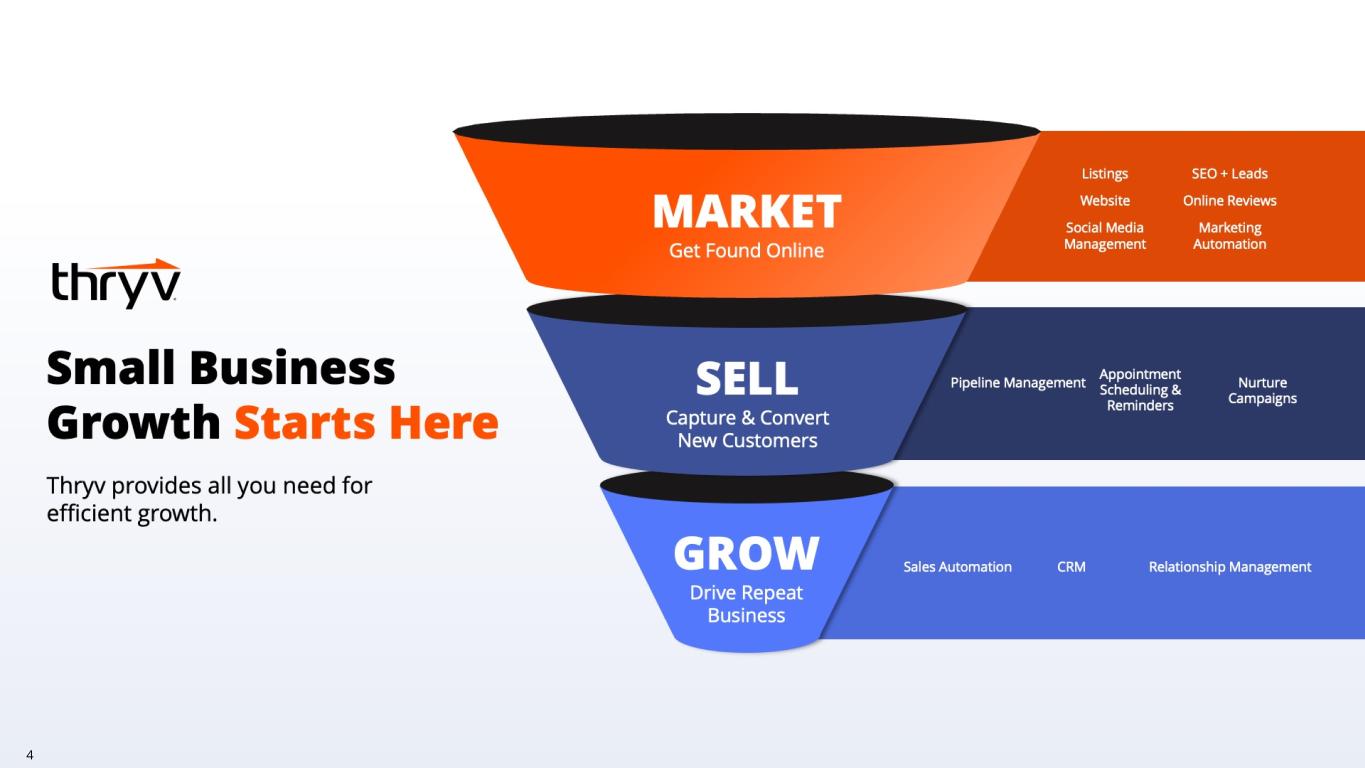
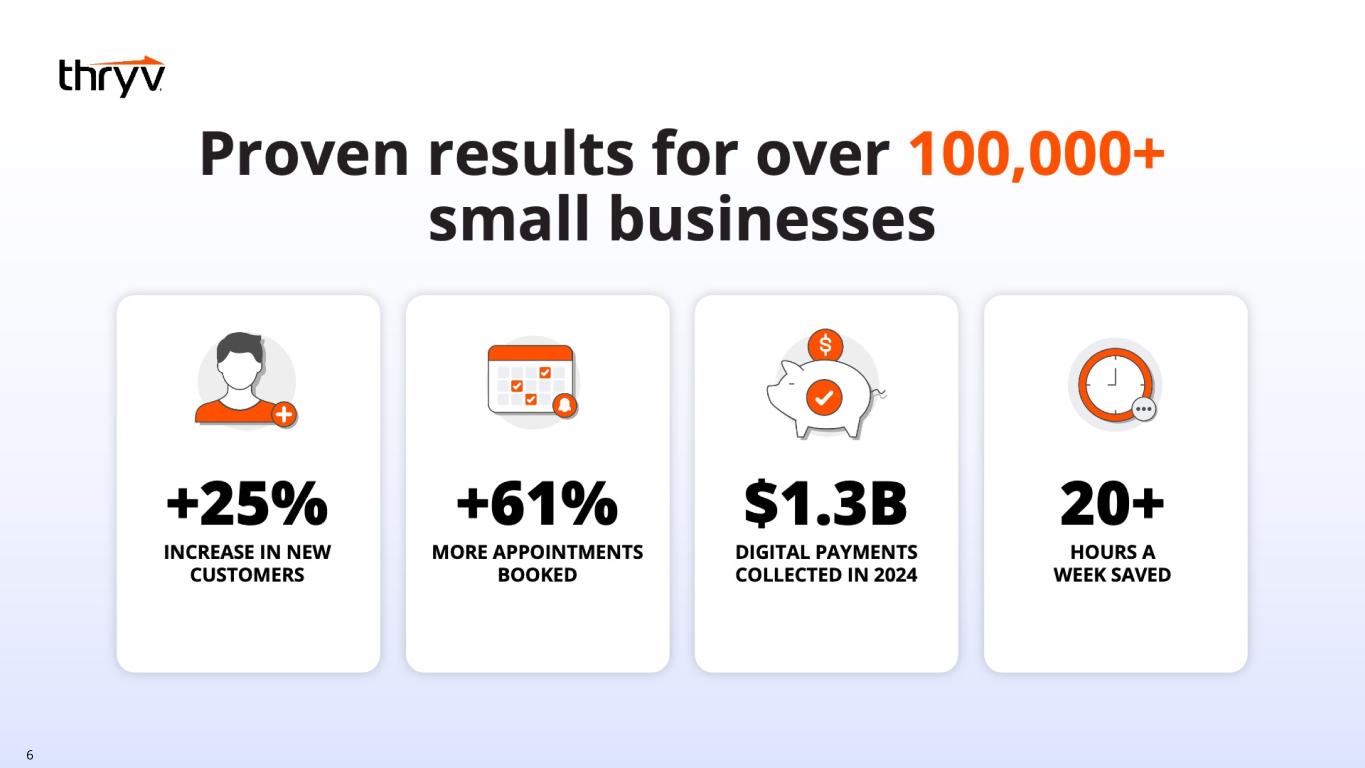
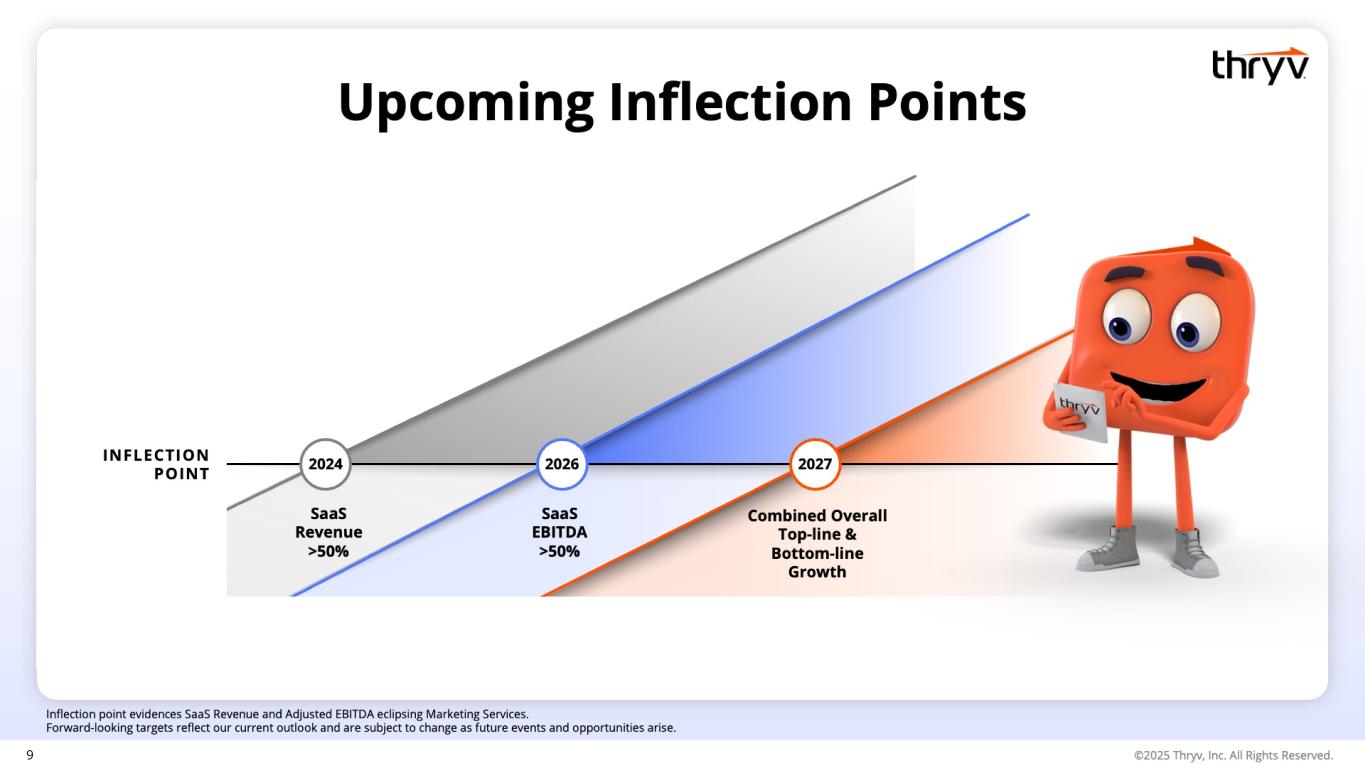
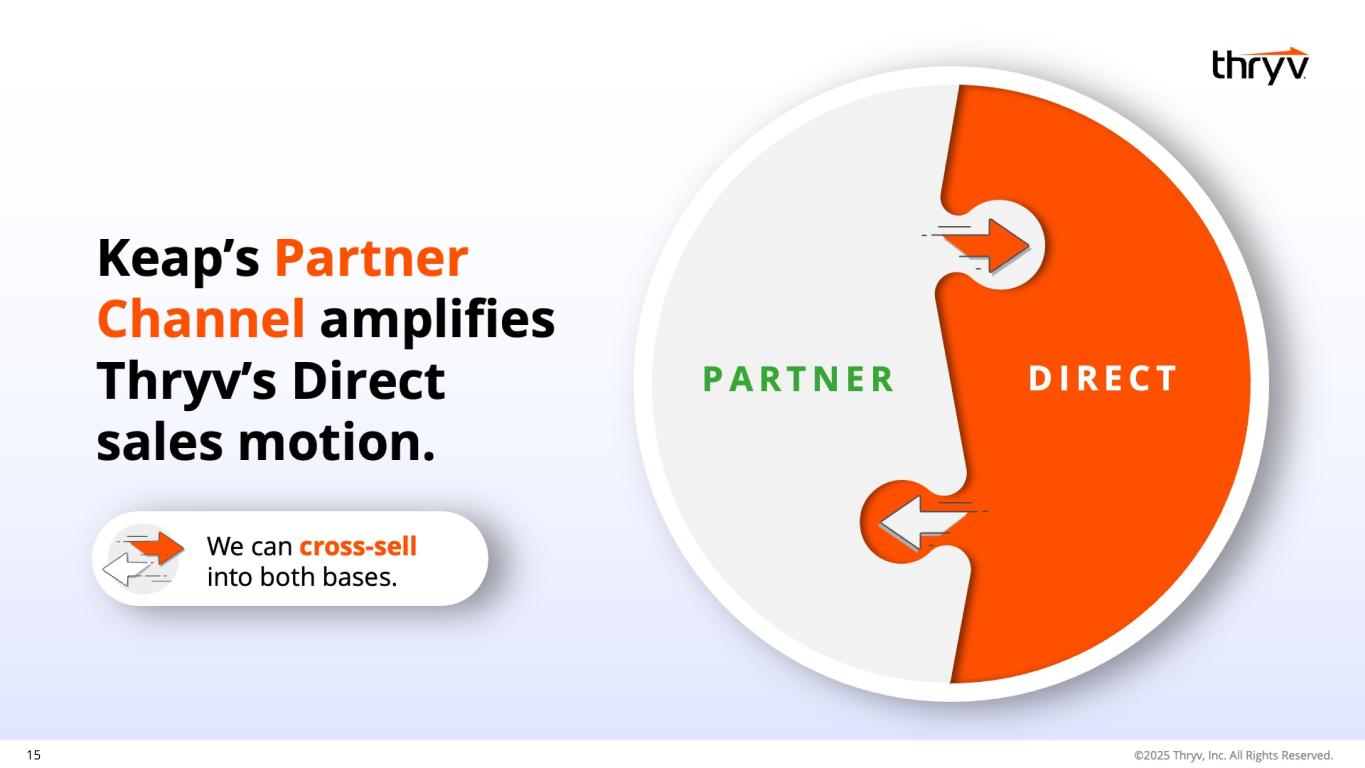
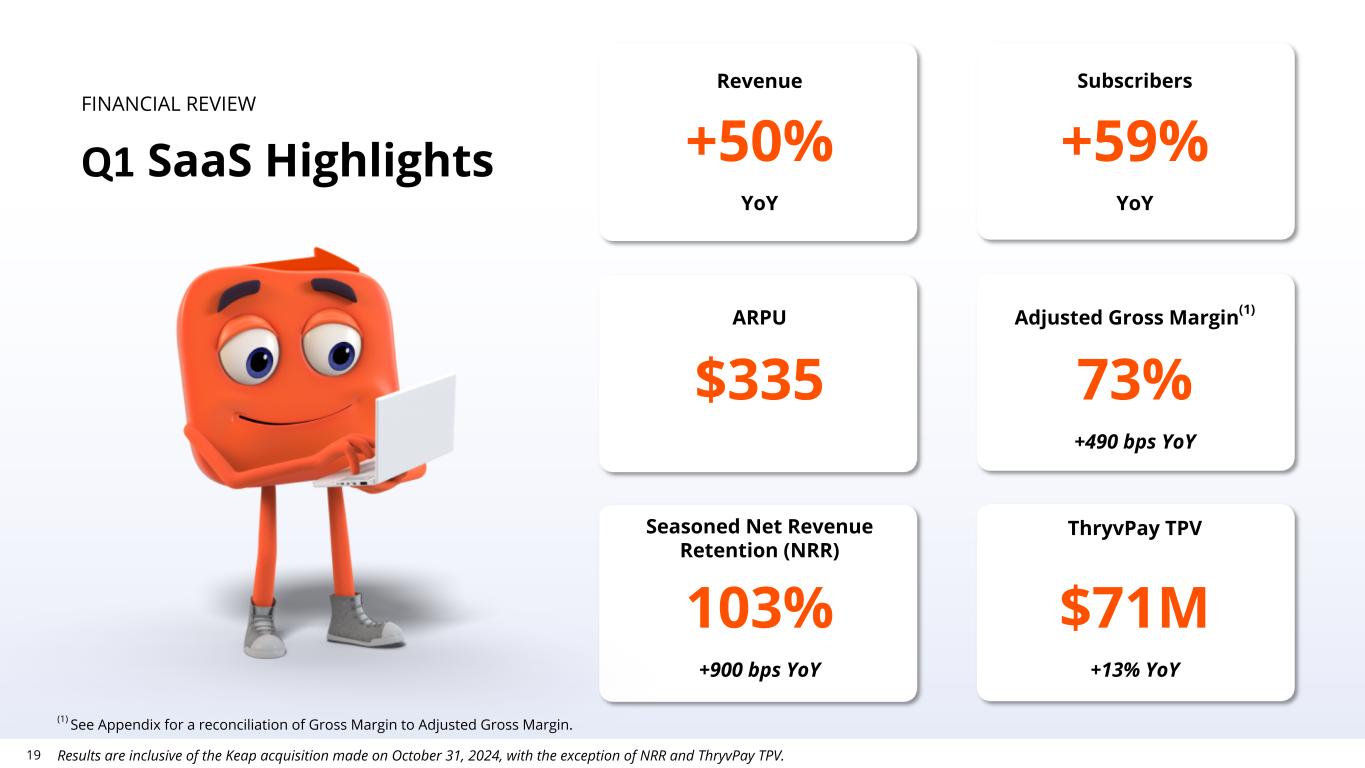
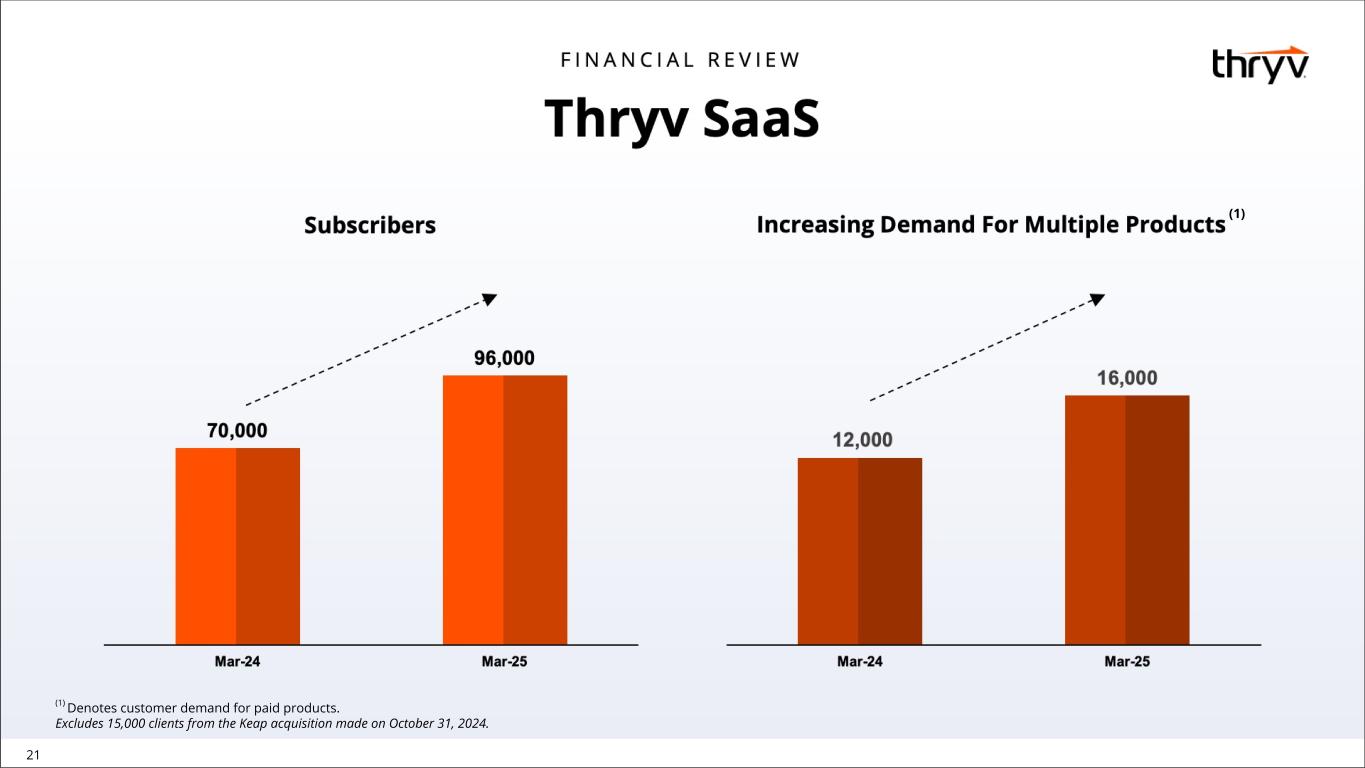
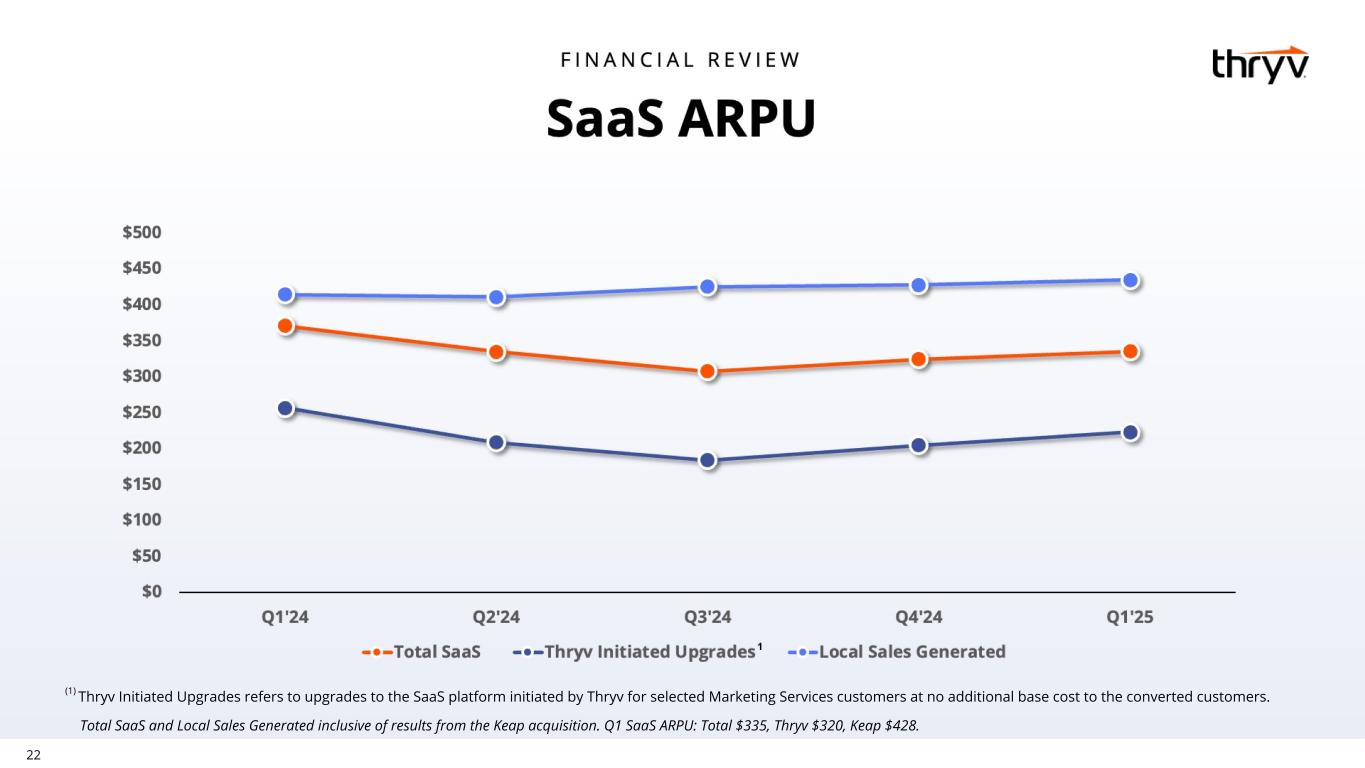
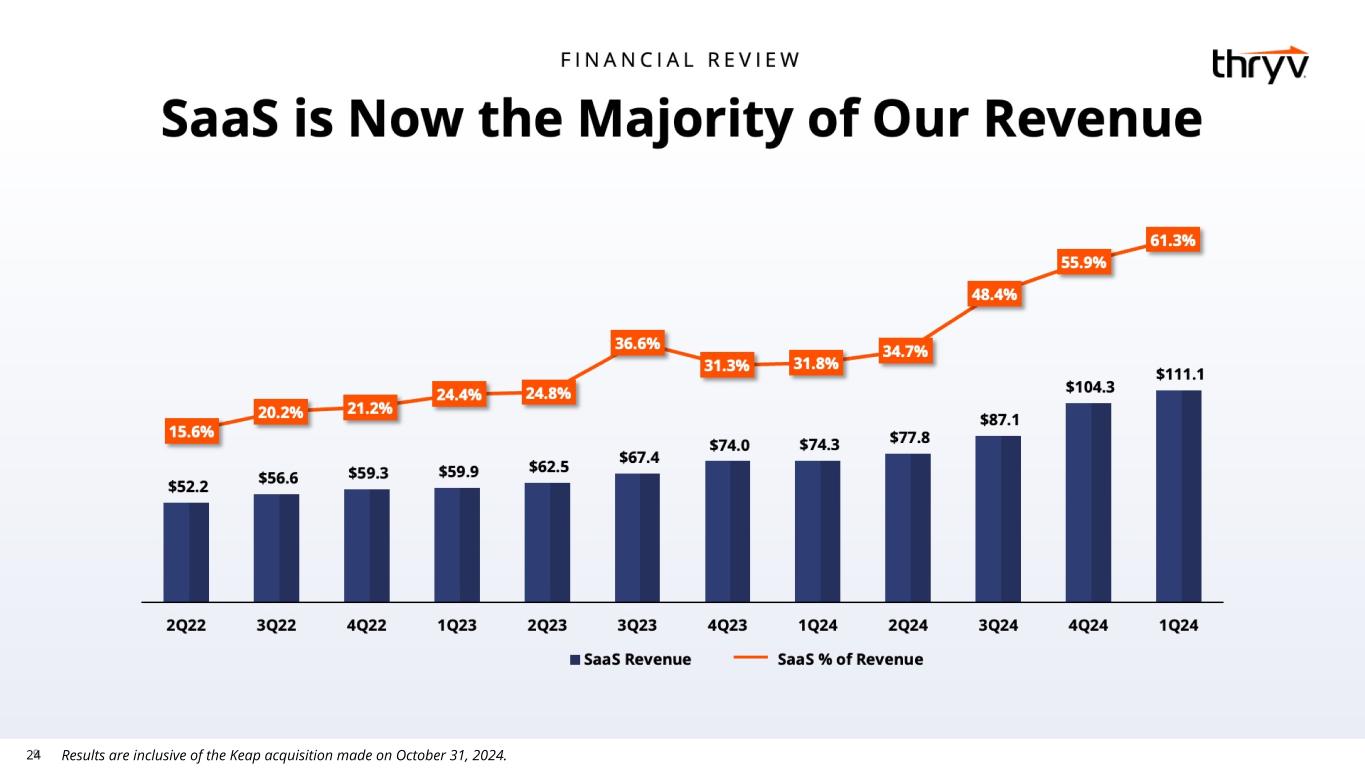
Thank you, Cameron, and good morning, everyone. You know, Thrive started 2025 on really good footing, just continuing the momentum that we had in 2024. And for the first quarter, we delivered both a top and bottom line guidance beat. So we're really proud of that. Our execution has been excellent. Our team are working really hard to develop additional products and additional services, and the marketplace is responding well to them. So pretty happy with what's happening with Thrive as we continue to develop as a software platform. When we look at the actual results for the first quarter, we had 50% year-over-year revenue growth. And when you normalize for the Keep acquisition, we had 24% growth. So, SaaS EBITDA margin expanded at 10%. SaaS revenue is now 61% of revenue for this quarter. So, you think about that. We are transforming this business from marketing services to SaaS. And I know there are a lot of people waiting for us to become completely SaaS. We're just about there. I mean, we're majority SaaS revenue now. And that's a big, big milestone for us as a business. Another thing that happened is our ARPU increased. $335 a month was the ARPU that we delivered up nicely from the last period. I think you're gonna see that trend throughout this year as we continue to go back to existing customers and add more products on. Our season net revenue retention reflected that motion too, 103%, so pretty solid outcome there for net revenue retention, we're pleased with that. Subscriber growth is 37%, bringing the Thrive total to 96,000, and if you include the Keep subscribers in there, it's 111,000 overall. You know, one of the key drivers in acquiring Keep was the partner channel. They have an excellent partner channel. They've been at it for a long time. A few weeks ago, I was able to attend our PartnerCon conference out in Arizona, which was a combined Thrive and Keep partner conference with more than 100 of our partners in attendance, some from as far away as Europe and Australia. It was great to have a chance to talk to them about what they're thinking. And what they're thinking is they want to sell the full Thrive product catalog. The idea that they can add the top of the funnel or thrive is really good at helping you build your list, helping you meet new customers, helping you be found to the very strong key product in the middle and bottom of the funnel where you nurture your list and convert sales and then follow up post-sale for more business in the future kind of gives them a more complete marketing funnel. And they feel like it's going to help them grow their business, and they're excited about that. So it gives me a lot of hope for what 26 and 27 are going to look like in terms of us beginning to really build out that partner channel as they have the full, you know, catalog of Thrive and Keep products to sell. So to tell you more about the progress of our business, I'm going to bring Grant Freeman on, our president.
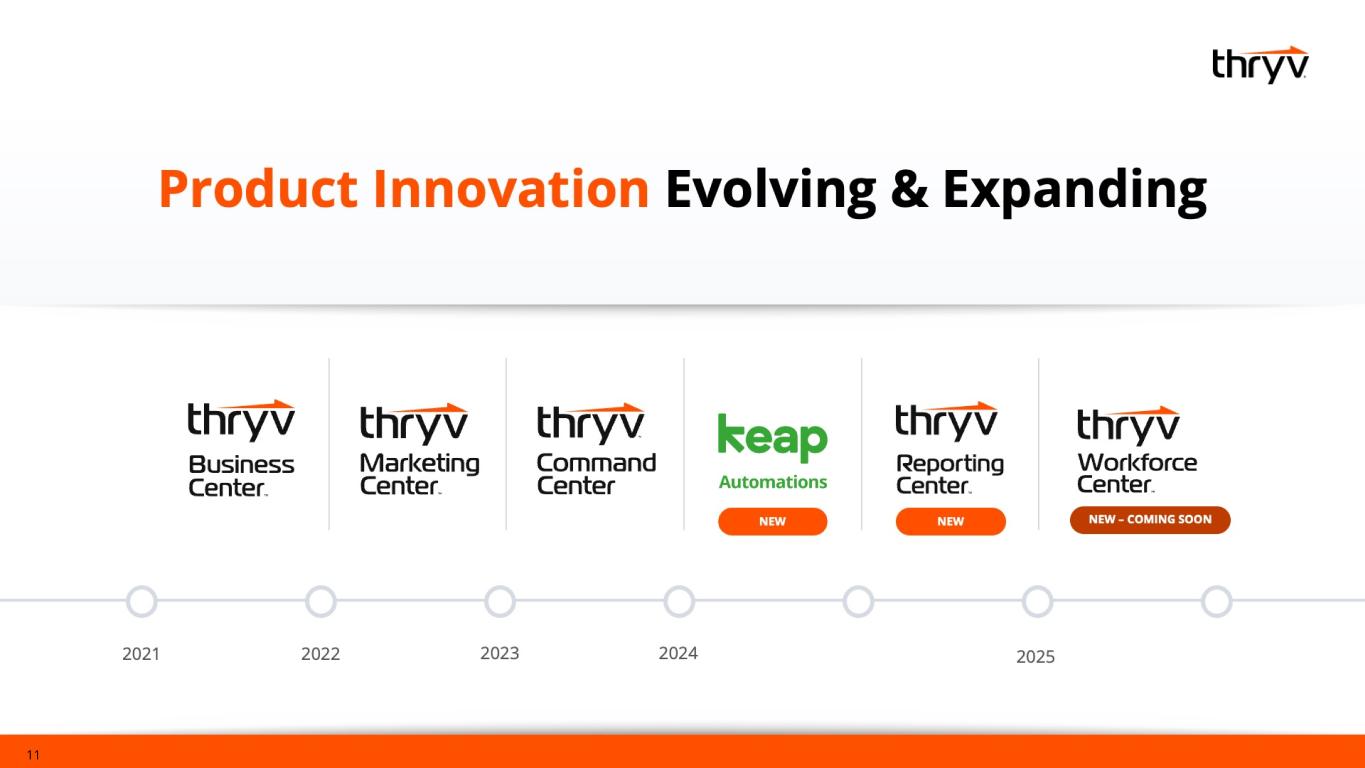
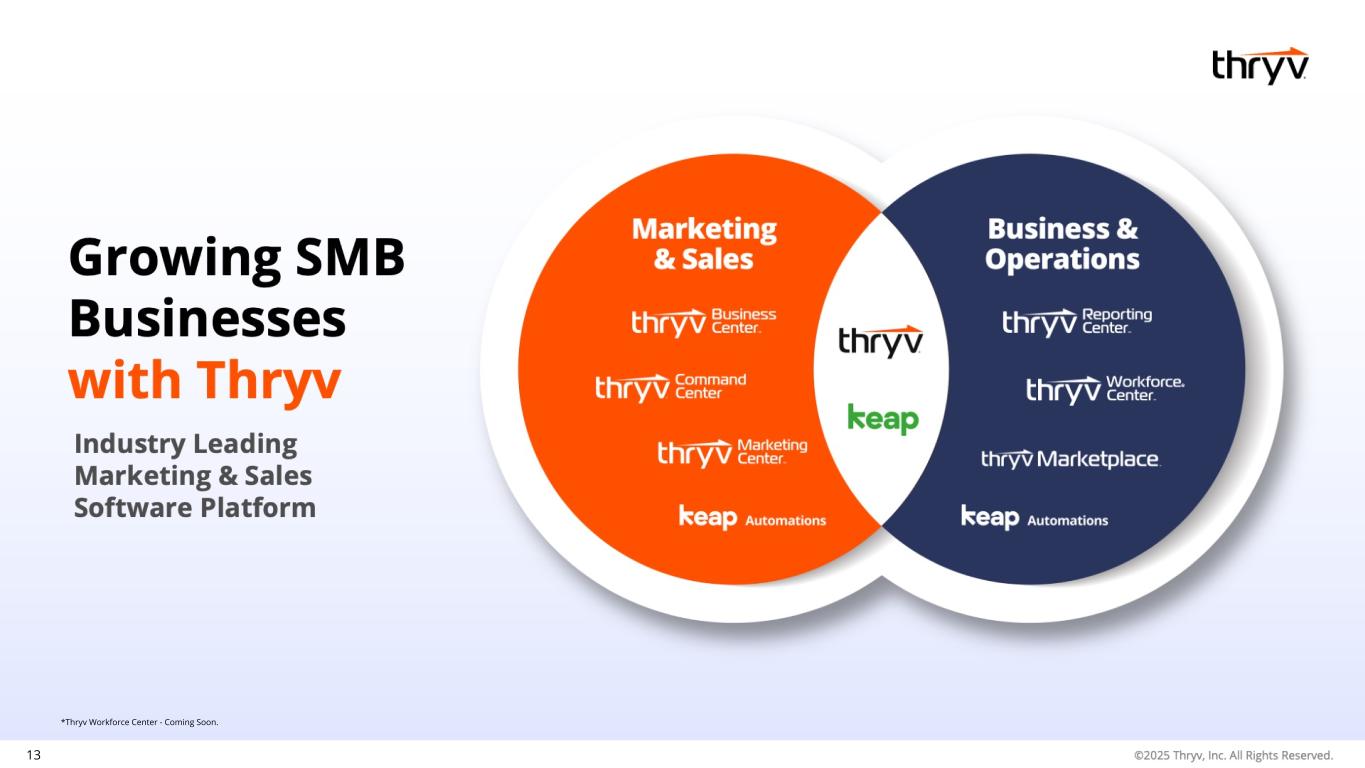
Thanks, Joe, and thank you all for joining us. You know, in 2025, we're entering a new chapter of growth for our SaaS business. Many of you have tracked our progress cross-selling and upgrading marketing services customers to SaaS products. As you probably know, most of the legacy customers we converted to SaaS were upgraded to our marketing center product, which, as you probably remember, helps clients boost their online presence, gives them lead attribution tools so they know what marketing and advertising is working, and also helps them manage their social media posting across multiple platforms in addition to other features that are tied to growth. Our sales strategy will remain focused on growing our SaaS subscriber base through upgrades, cross-sales, and new sales. Of course, our most efficient path forward is deepening relationships within our existing software base and expanding their spend. As of the end of the first quarter, 17.2% of our SaaS subscribers use multiple paid products, a nice increase from where we were. As we've analyzed retention trends across our customer base, one thing has become glaringly clear. Expansion within our existing clients is one of our most compelling opportunities. When a customer adopts a second paid product, their churn rate drops significantly. Recently, we see it dropping as much as in half compared to just those with one product. Not only does this increase revenue per account, but it dramatically extends customer lifetime, making expansion a far more efficient growth lever than relying solely on net new customer acquisition. At the start of the year, we reoriented our sales organization around growing monthly recurring revenue rather than prioritizing new account acquisition. Each business advisor now manages a large book of business with improved cadences, better automations, and enablement tools to help the rep efficiently increase average spend for each account. The result is a more consultative, value-led approach that has meaningfully improved per rep productivity in recent quarters. This shift was deliberate, and the results are really encouraging. We did things like overhauling the compensation to reward MRR and expansion. We've encouraged reps to focus less narrowly on selling individual centers and more broadly on selling the full scope of SaaS solutions that may benefit a given customer. And we encourage reps to focus on existing customers where wallet share expansion is more efficient. The strategy is working. Our productivity is improving, and importantly, we spend less to acquire higher quality growth from within our existing SaaS client base. Customers are responding positively to our growth-oriented tools like marketing center, growth packages, and other customer acquisition add-ons that we offer. These products serve as a natural springboard for introducing CRM and workflow automation later on in the journey. We're also seeing encouraging results moving upmarket with modestly growing average customer size and higher ACVs through more consultative sales approaches and multi-center deals. This is particularly important as we go deeper into specific verticals and higher performing SMB segments. Maybe what's most gratifying is that our clients are happy and they are bringing their friends to learn about our platform, so we have a large referral flow. As such, a large portion of our new clients come via these referrals, which continues to be a strong motion for our business advisors. On the product side, we built five robust centers and added more product to bring to market with the introduction of Keep Automations. This phase focuses on deepening adoption rather than just expanding subscribers. Finally, you know, Keep provides strategic advantages through its automation engine, its partner network, and R&D capabilities. We're just beginning to explore cross-selling opportunities between our customer bases. And at the end of the day, when we help clients do more, they stay longer, creating compounding growth. With that, I'd like to introduce Mr. Paul Rouse.
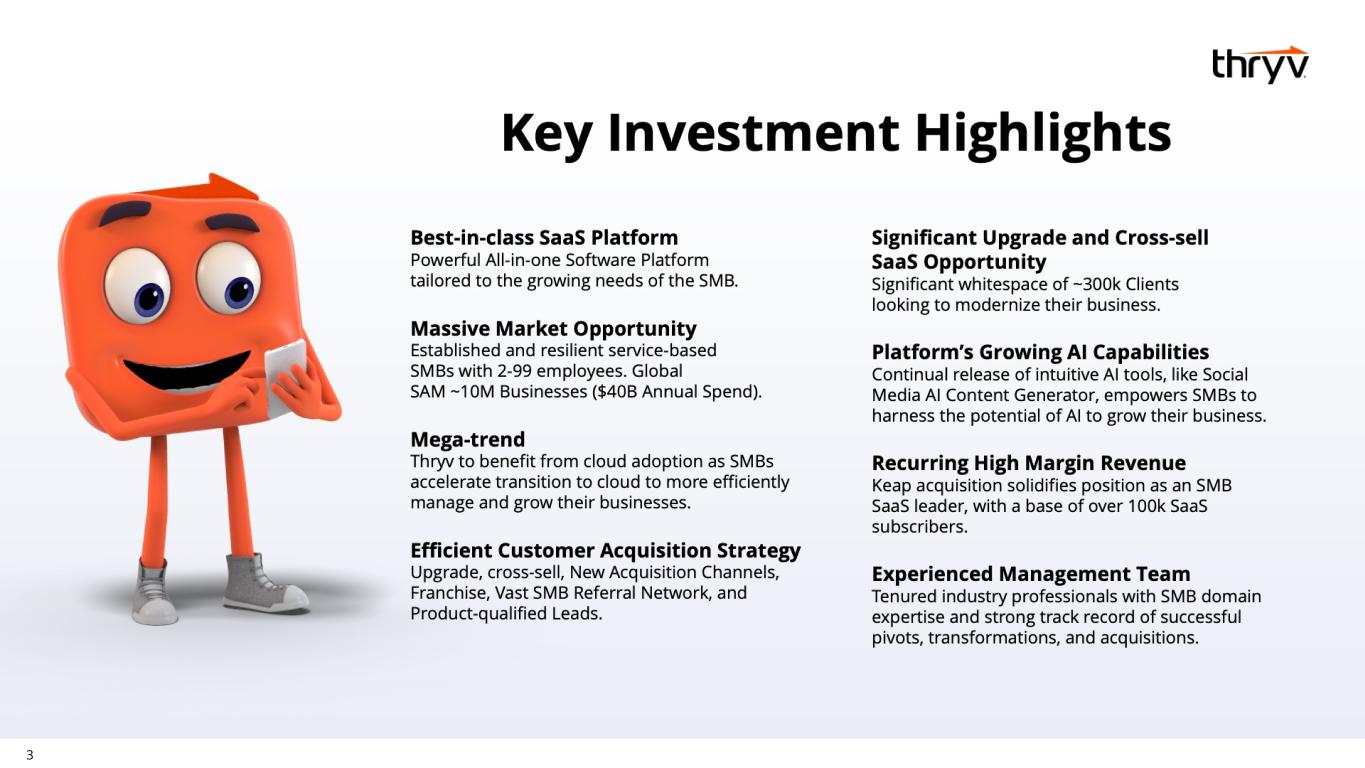
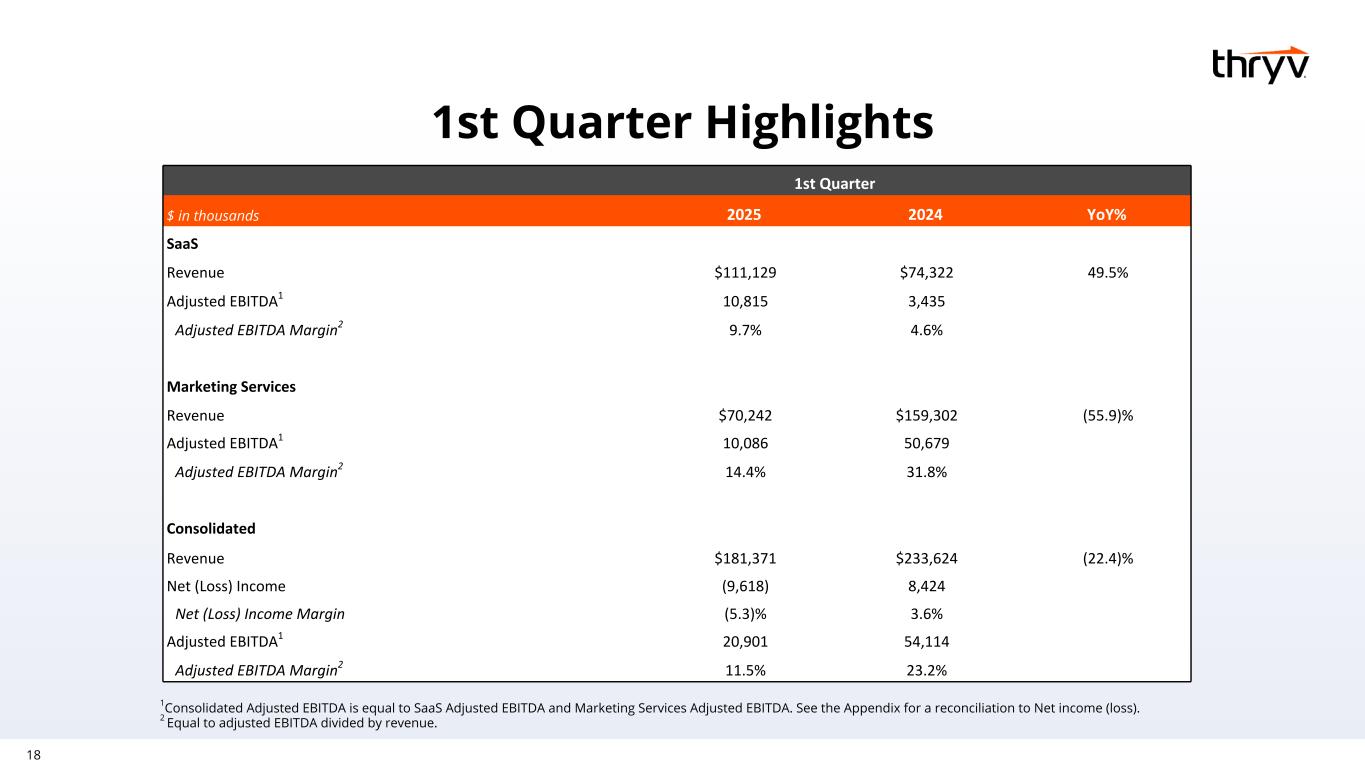
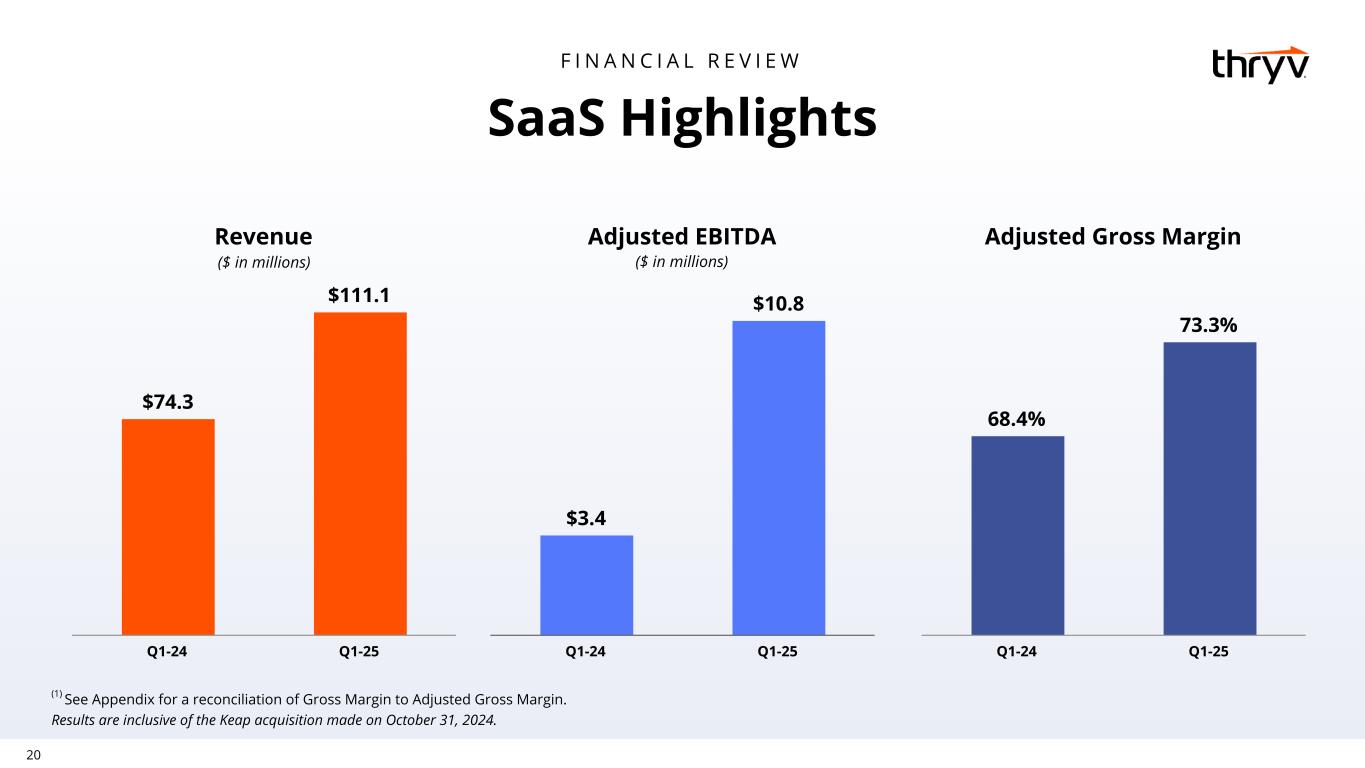
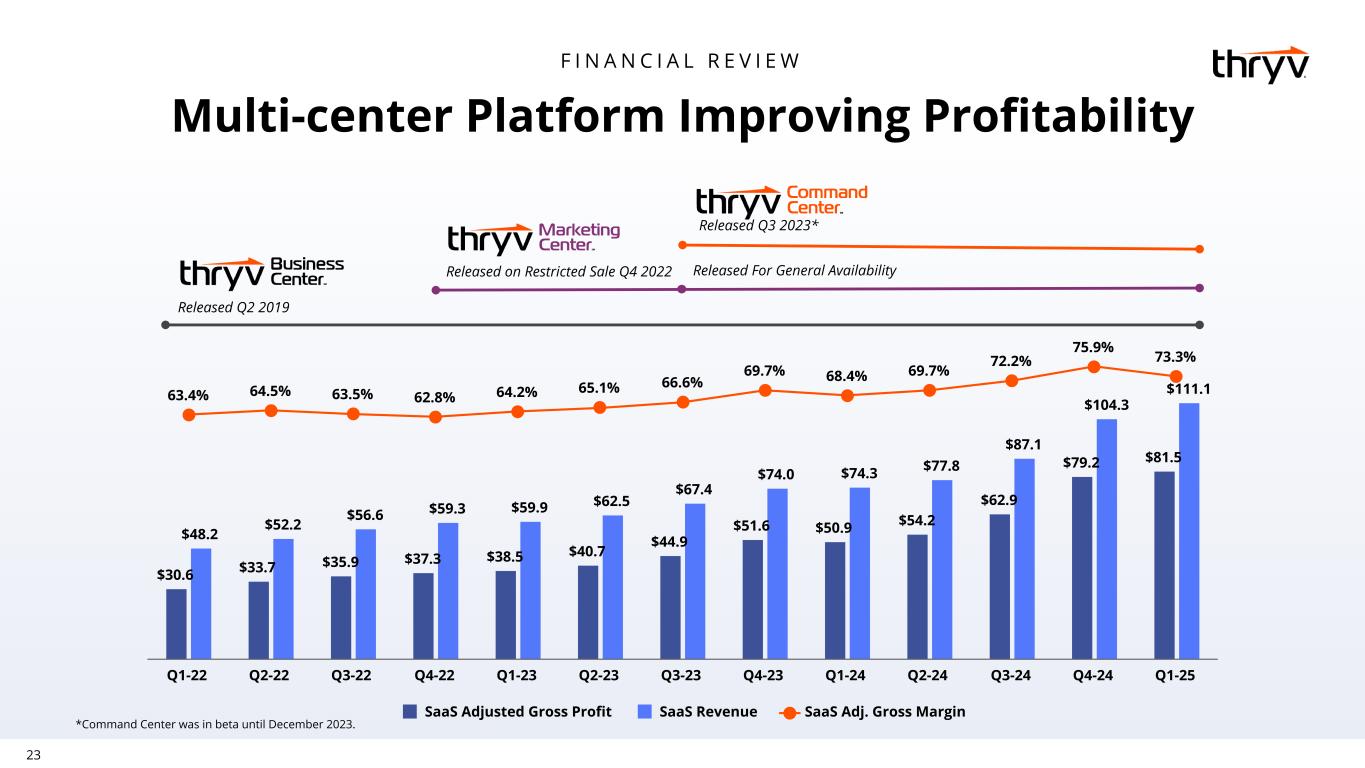
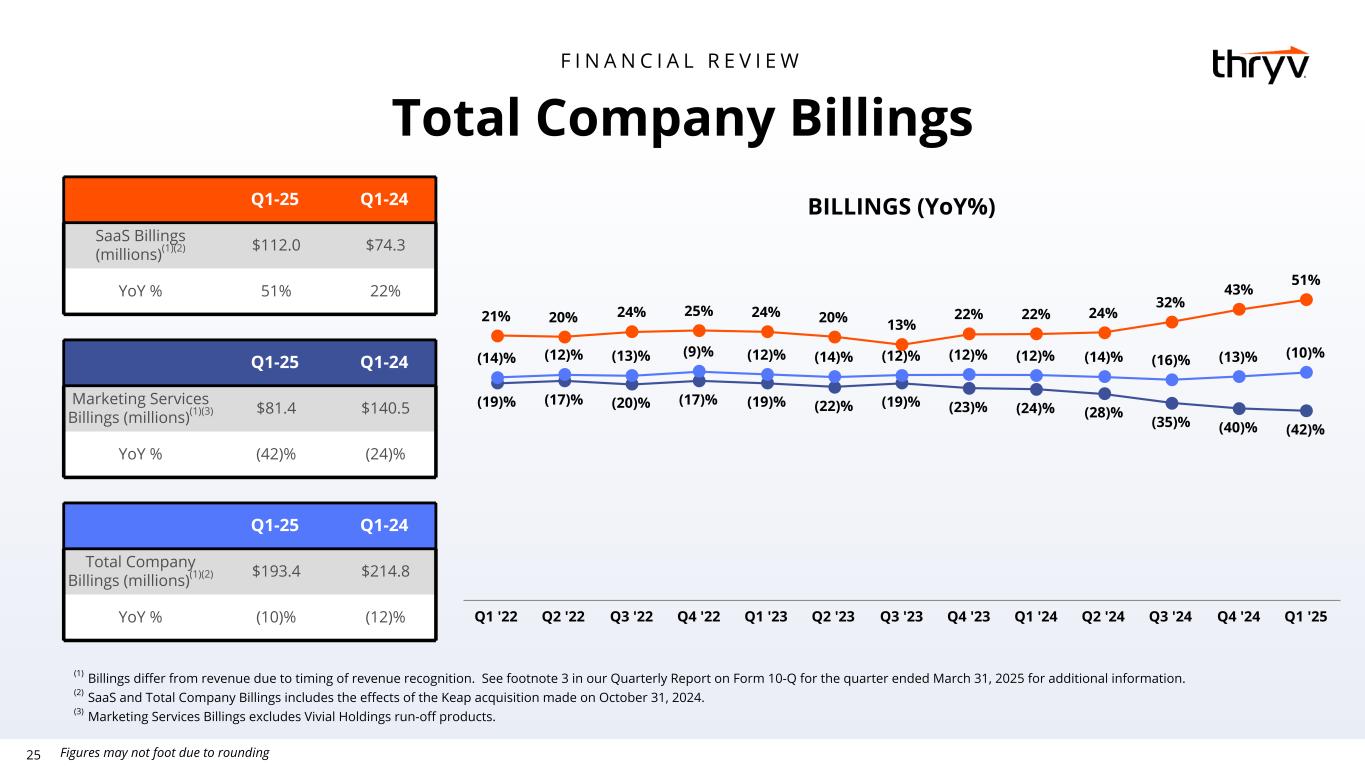
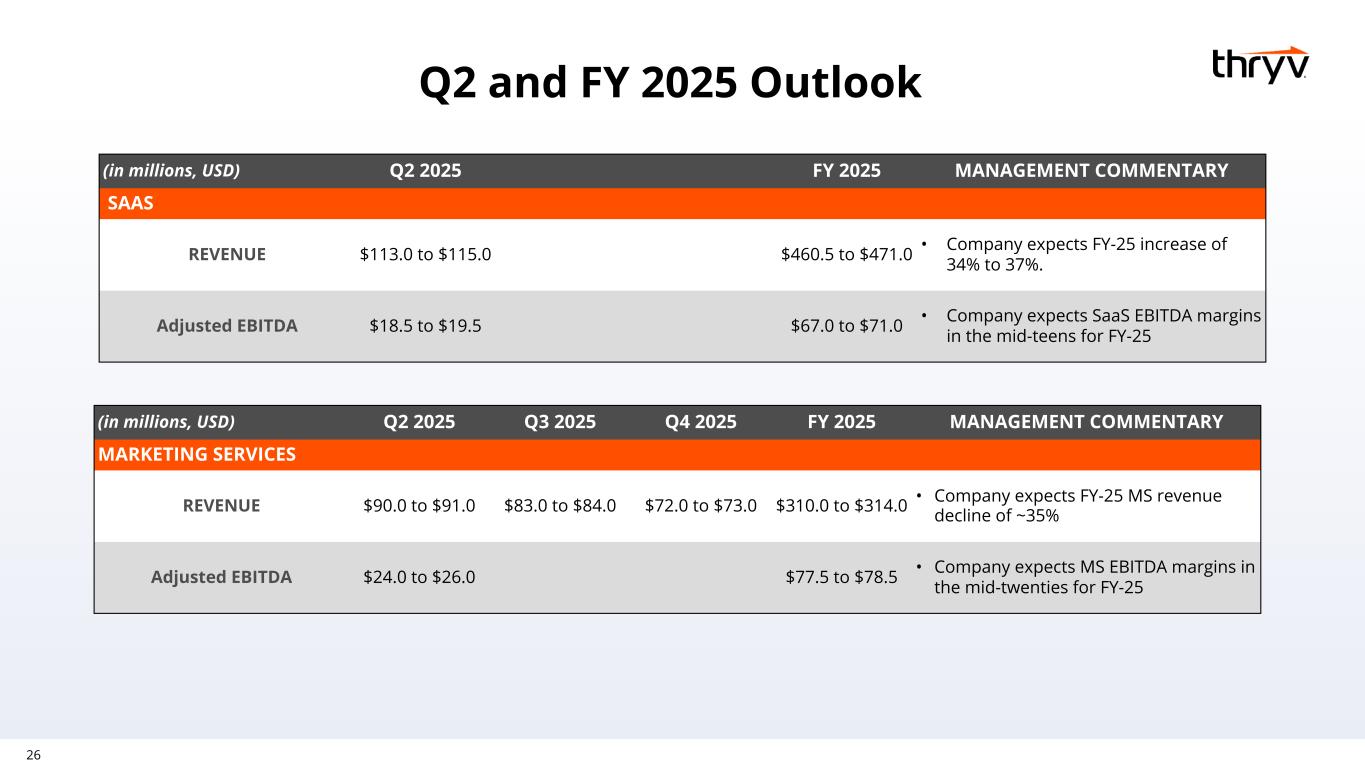
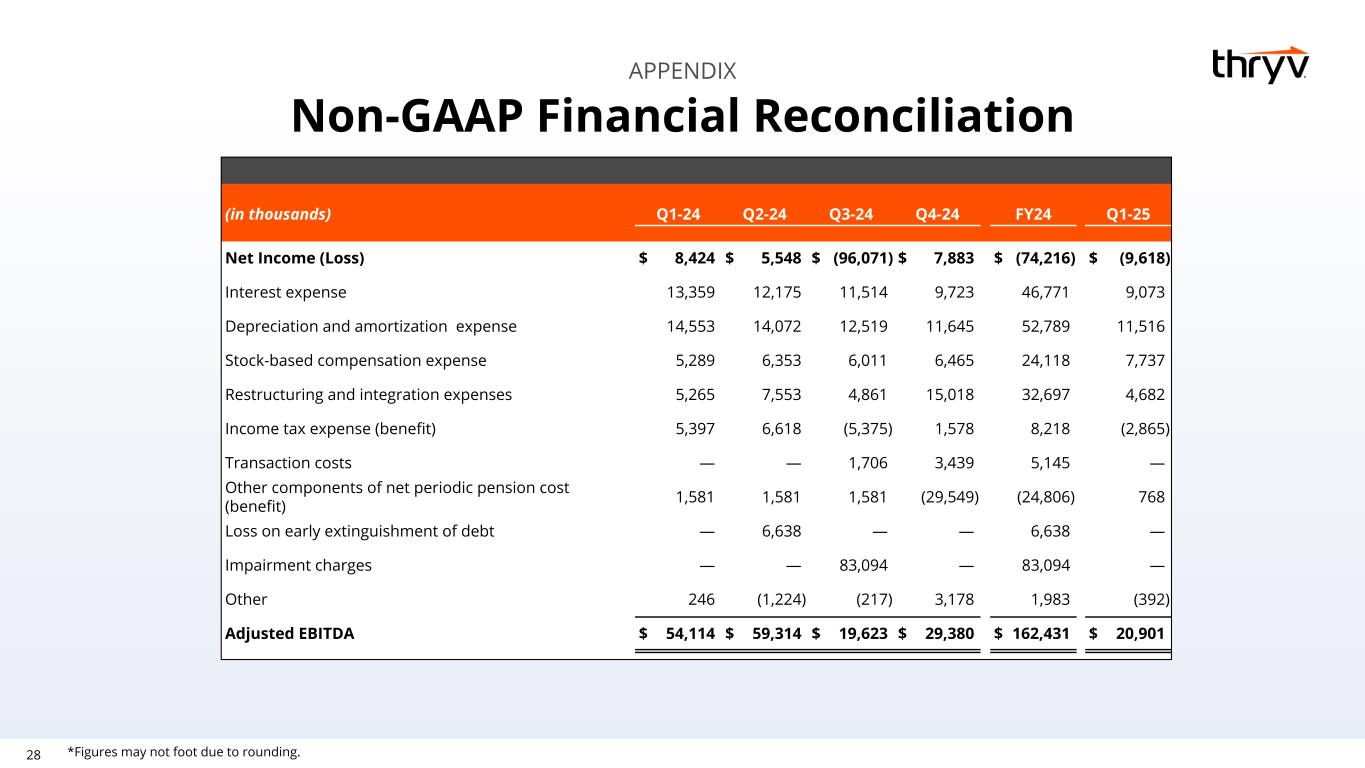
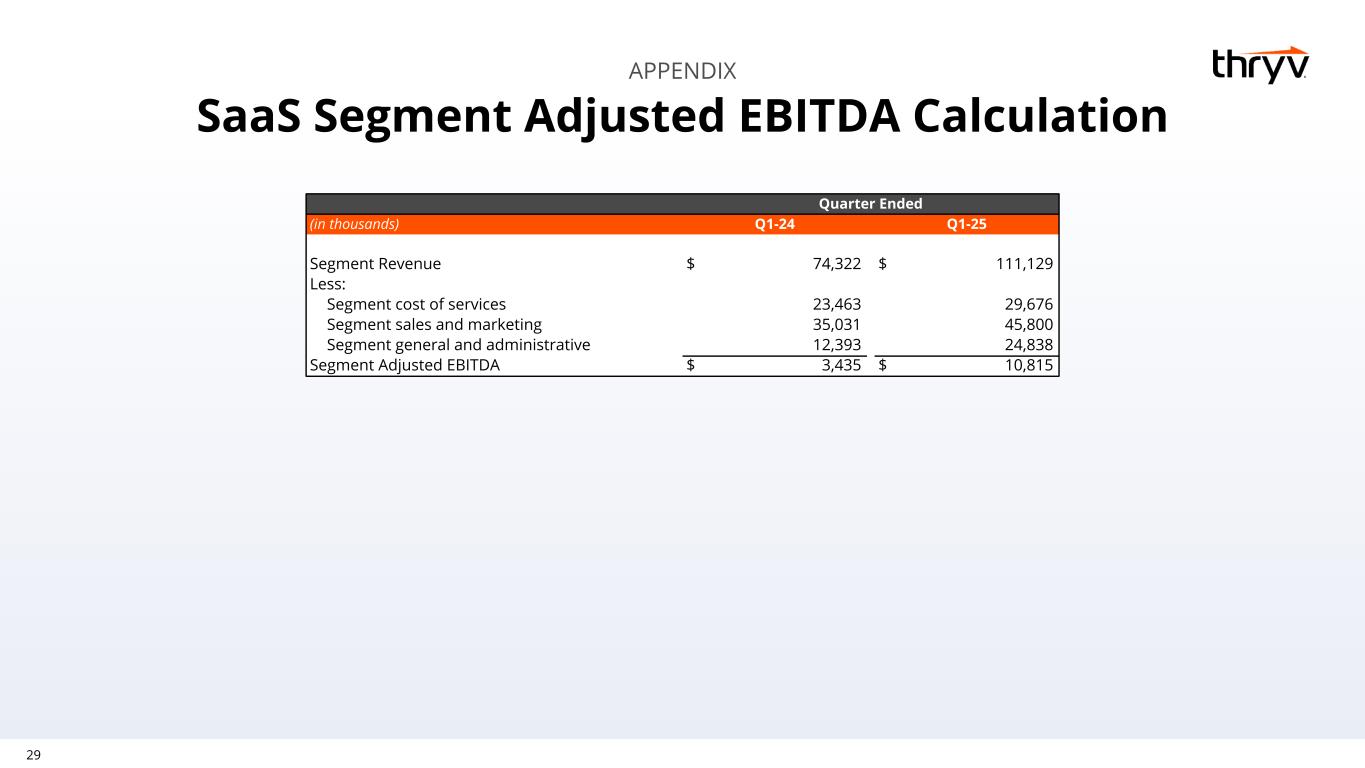
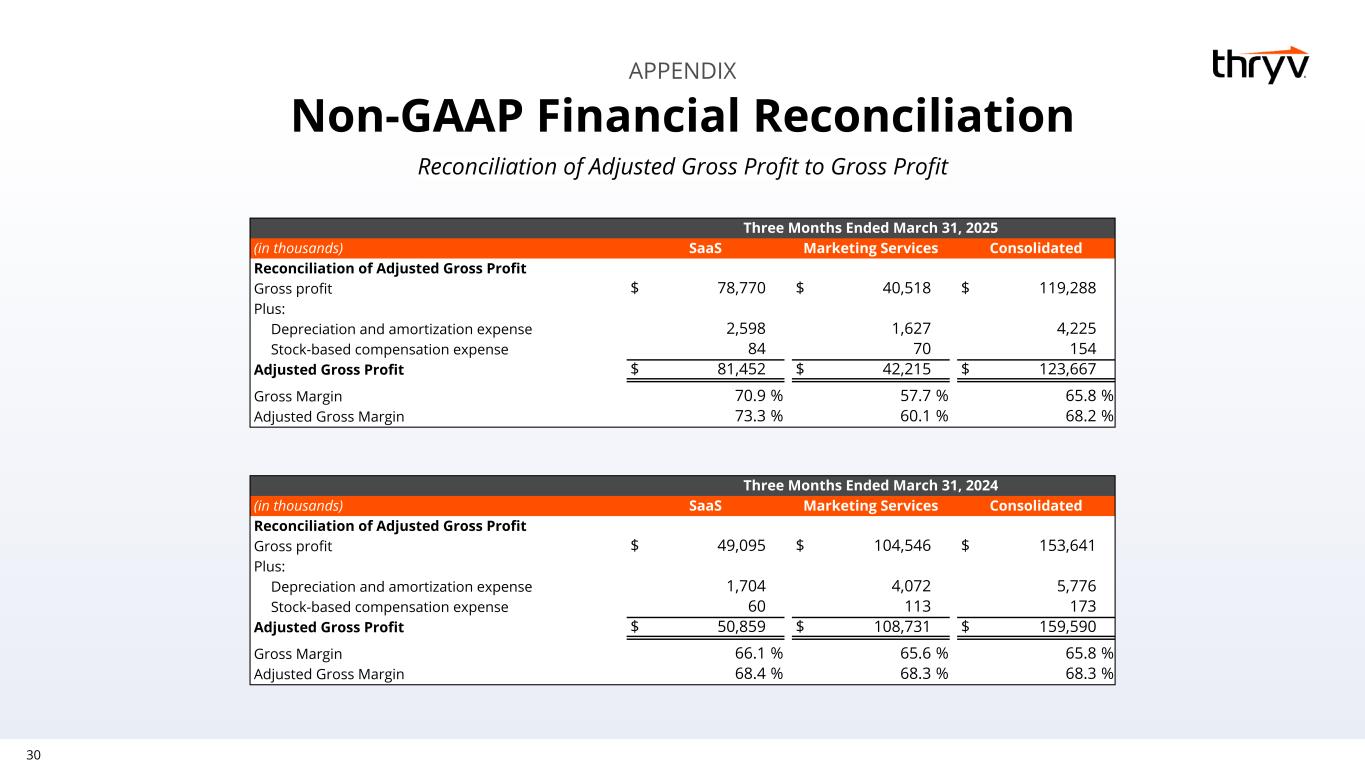
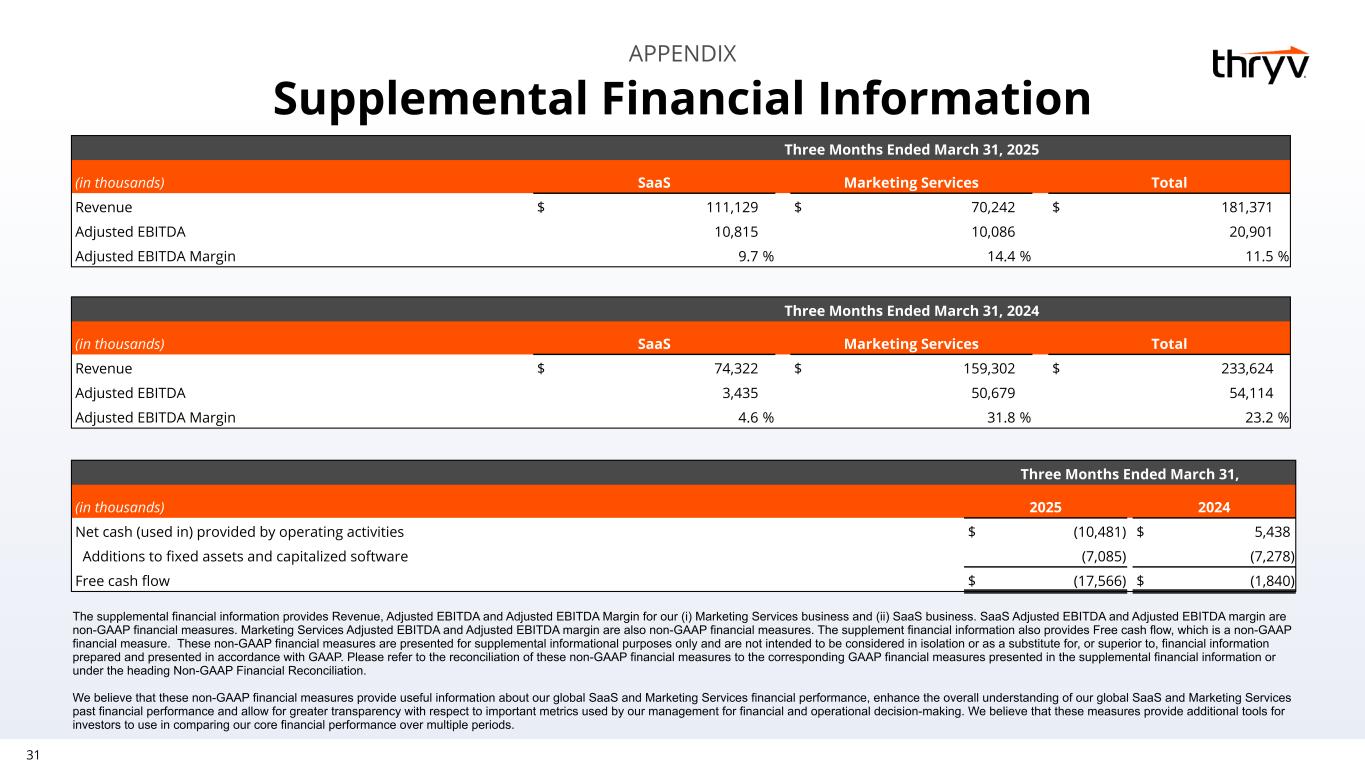
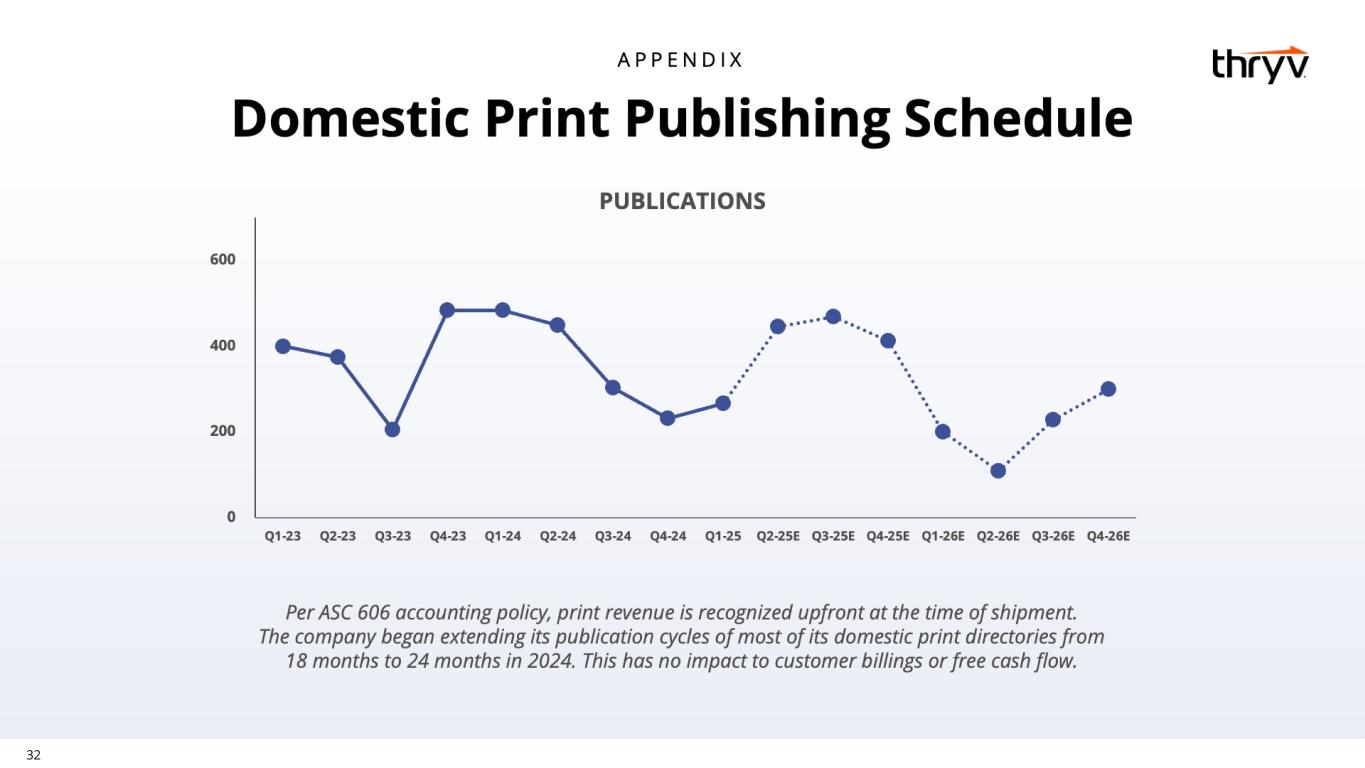
Thanks, Grant. Let's dive into the numbers. SaaS reported revenue was $111.1 million in the first quarter and above guidance, representing an increase of 50% year-over-year and up 7% sequentially. Keep contributed $18.9 million in the first quarter. Excluding Keep, Thrive SaaS business grew 24% year-over-year. SAS Adjusted Gross Margin increased 490 basis points year-over-year, reaching 73%. The first quarter total SAS Adjusted EBITDA increased to $10.8 million, exceeding our guidance range and resulting in an adjusted EBITDA margin of 10%. This performance underscores the progress we're making in scaling our profitable and durable software business. As we noted last quarter, first quarter included a temporary headwind of approximately $2 to $3 million tied to shared cost allocations. With fewer print publications scheduled in the beginning of the year, a greater portion of operating expenses were attributed to the SAS segment under our current allocation methodology, which follows revenue activity. This dynamic will begin to reverse in the second quarter as print revenue recognition ramps, shifting these costs back to the marketing services segment. Importantly, this will also begin to smooth out for the remainder of the year and beyond, as we extend the majority of our print publications onto a 24-month cycle. That change improves visibility and leads to a more consistent cost attribution across the business. We remain focused on driving profitable growth in SaaS, balancing top-line expansion with disciplined cost management and we expect continued adjusted EBITDA margin improvements as we move through the year we concluded the first quarter with 111,000 SAS subscribers including 15,000 keep subscribers this reflects a substantial 59% increase in our subscriber base year-over-year. As Grant mentioned in his remarks, a key element of our go-forward strategy involves focused effort on our existing customer base to drive increased value and revenue. With a significant portion of our current subscribers utilizing only one paid product, we are strategically positioned to expand their engagement and adoption of our broader offerings. This initiative to drive greater spend within our existing customer base is not only a pathway to ARPU expansion throughout 2025, but also represents a more efficient and significant contributor to our bottom line profitability. In the first quarter, our overall SAS ARPU reached $335. Thrive contributed an ARPU of $320, showcasing positive quarter-over-quarter growth. Keep-specific ARPU was a robust $428, similar to last quarter. Looking ahead, we have good line of sight for continued ARPU expansion throughout the year. Driven by the inherent strength of our software platform with its multiple adoptable products, as well as our recently updated compensation plan designed to incentivize and drive increased MRR. We reached our highest reported seasoned net revenue retention this quarter of 103%, emphasizing the differentiated value we create and the sustained return our clients experience. We've discussed previously that our long-term goal is to maintain retention near 100%, which we expect to continue to achieve. Additionally, clients with two or more Thrive SaaS products grew to 16,000 at the end of the quarter, compared to 12,000 in the prior year, further highlighting the expansion we are seeing with existing clients. Thrive centers per client also grew to 14% at the end of the quarter, compared to 8% in the prior year, further highlighting the traction we are seeing with existing clients. Moving over to marketing services, first quarter revenue was $70.2 million and above guidance. First quarter marketing services adjusted EBITDA was $10.1 million, resulting in an adjusted EBITDA margin of 14% and just above guidance. As anticipated, this quarterly performance is subject to the dynamics of the print schedule, and we project a return to normalized levels starting in the second quarter. First quarter marketing services billings were $81.4 million, reflecting a 42% year-over-year decline. This trend more closely aligns with our strategic direction for marketing services, as we continue to convert many of our legacy marketing services clients to our SaaS offerings. The pace of this transition impacts the rate of decline in marketing services billings. As previously disclosed, we are exiting the marketing services business by 2028, with cash flows from the business extending into 2030. This will provide the company with ample liquidity to meet its obligations during the transition to a fully SaaS-focused model. First quarter consolidated adjusted gross margin was 68%. First quarter consolidated adjusted EBITDA was $20.9 million, representing an adjusted EBITDA margin of 12%. Finally, our net debt position was $298 million at the end of the first quarter. Our leverage ratio was 2.2 times net debt to EBITDA, in line with our expectations. Net debt increased primarily due to planned upfront vendor payments, the timing of corporate bonus payouts, and the extension of our print directory assets to 24 months. This lengthening of a directory cycle is a component of our previously communicated strategic plan to exit the marketing services business by 2028. As we've previously discussed, the aforementioned factors are expected to result in peak leverage during the second quarter on a trailing 12-month basis. Notwithstanding our anticipated strong EBITDA generation in that period, we expect a substantial deleveraging in the back half of the year as these impacts normalize. Turning to our outlook for 2025, for the second quarter, we expect SAS revenue in the range of $113 million to $115 million. For the full year, we expect SAS revenue to be in the range of $460.5 million to $471 million. The second quarter, we expect SAS adjusted EBITDA in the range of $18.5 million to $19.5 million. For the full year, we expect SAS adjusted EBITDA in the range of $67 million to $71 million, which implies fast-adjusted EBITDA margin of 15%. The adjustment is related to projected traffic costs. For the full year, we are confirming our marketing services adjusted EBITDA guidance range to be $77.5 million to $78.5 million. Now, back to Joe.
Thank you, Paul. Well, we've got a good start to the year, as you've heard. Strong core metrics, healthy customer spending. We're doing well. But we do read the same headlines that you do that, you know, awful times are ahead and it's going to be tough and so on. And I wanted to spend a minute speaking to that. Our customers do break-fix stuff. They're the guys that show up when you have a broken window or your roof's leaking or your car, the check engine light comes on, or you break a tooth and you've got to go to the dentist. They solve all those non-discretionary problems, and they are therefore very resilient. We don't have any luxury stuff. We don't have any discretionary stuff in our customer base. No little blue boxes, no fine dining. Our customers are very resilient. And so I've been working with small businesses for a long time. I would expect they will be very resilient going through a recession if one is in the offering for us. What I'm finding is that we're in kind of a Goldilocks moment, meaning sometimes when things are too good and expectations are too high, small businesses can be, you know, a little slow to invest in marketing tools and doing stuff. Right now, they are concerned about making sure their order book is full, making sure they know where the next jobs are coming from. And accordingly, they are buying Marketing Center and buying a lot of its growth package add-ons, so much so that we're seeing additional traffic expense because of that. And so I consider that a really good thing. There's a little bit of additional cost to that, but it's a real good thing to see that small businesses want to meet with us. they want to buy Marketing Center and they want to buy add-ons. So I think that's, you know, a real positive. Just my final comment here on the guidance that we've taken for the year. We've taken a very conservative view in light of all the headlines and all the things that we're hearing and seeing out there. We want to make sure that we can continue to fully deliver on our promises. And we don't actually see any big problems at the moment. Maybe it's out of an abundance of caution, but we feel very confident in the results we've had to date and very confident in the products that we have that they're appropriate for this time. So with that operator, we can turn it for questions.
Operator
Thank you. We will now begin the question and answer session. If you have dialed in and would like to ask a question, please press star 1 on your telephone keypad to raise your head and join the queue. If you would like to withdraw your question, simply press star 1 again. If you are called upon to ask your question and are listening by a loud speaker on your device, please pick up your handset and ensure that your phone is not on mute when asking your question. Your first question comes from the line of Arjun Fata. With William Blair, please go ahead.
Perfect. Thank you, guys, and congrats on a nice, strong start to the year here. So, Joe, one of the things that stuck out to me this quarter was the net retention rate that you called out at 103%, and it sounds like that was a record high. It seems like the priority on cross-sell and expansion is working already, but can you maybe just elaborate a little bit on that? What are customers buying in addition to their core Thrive SaaS implementations? Which new products are you seeing traction for? And then for either your grant, I'd be curious to hear just in terms of how Salesforce readiness is playing out to be able to kind of sell these newer products that you've launched relatively recently.
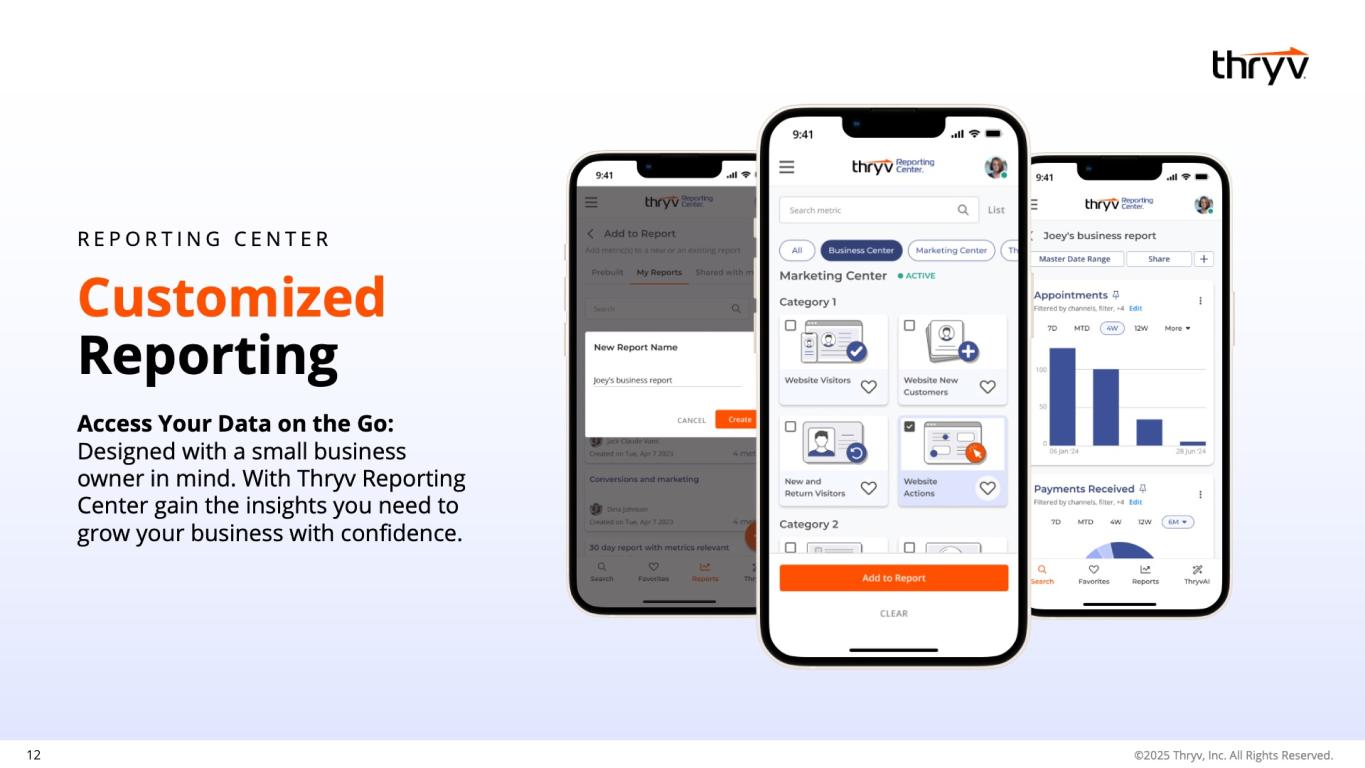
Thanks for the question, Arjun. And we have been investing the last couple of years, not just in developing new software centers to build out the platform, but also in our actual go-to-market motion. We've been doing a lot of work on go-to-market. And, you know, we're able to give the sales reps in their Salesforce automation tools and, you know, each morning, you know, go call on this customer and have this conversation and here's why. And I think you're seeing a lot of that come through. And you might say, well, haven't you always had that? We haven't. We've worked really hard on that the last couple of years. And we're seeing the fruit to that. But in terms of, you know, what those plays are, we are running very specific plays against the base and, you know, with good effect. So the simplest one is adding additional centers. So, you know, they'll have business center, we'll add marketing center, or they'll have marketing center, we'll add business center, or, you know, we'll put reporting center and adding additional full-on centers. But even shy of that, you know, we have been also developing some simple add-ons to help boost the amount of new businesses that they meet, basically boost their presence in the market and help, you know, drive additional leads to additional new customers. As I mentioned on the call, that's been really strong lately. And I think and, you know, I know we're supposed to be crying in our beer about the economy. It's supposed to be terrible. But our guys are chugging along doing fine. We aren't we aren't really experiencing a whole bunch of macro issues. We're chugging along. And I can't really point to anything that's happening there. about. We're sort of, I guess, you know, bracing for all that we're reading about, but we're just not seeing it. And I mentioned on the prepared remarks, I mean, our customers break everything or fix everything that breaks in your life. When that stuff breaks, you're still going to fix it, even if, you know, the economy is a little softer. So they're definitely, you know, interested in trying to make sure their order books are full. So I hope that helps.
Yep. Yeah, very helpful. Then the second question, you mentioned an increased traffic expense from, I think, customers seeing or you guys seeing elevated demand for marketing center. Is that largely just kind of your inbound marketing costs, your lead gen costs? What's exactly going into the incremental traffic expense you're seeing here?
You know, one of the tools that is an add-on to Marketing Center. So, you know, Marketing Center is a platform that instruments all your marketing, allows you to make data-driven decisions. You can manage your social in there. There's a whole bunch of good things you can do. We've added on top of it now some add-on tools where we'll help you, you know, optimize your position of your website to help you show up better and more organic results. And we've also added some things that have traffic in that. So we're actually, you know, driving some search into your business as well. And, you know, that product has continued to sell well. It's actually sort of, you know, in the mix of things, outstripped actually what we thought it would do. So we had planned for a little bit of tack in there. There's just a little bit more. So it's not a giant thing. I just wanted to bring it up as, you know, one of the moving parts. And it's sort of contrary to, at least what I read sometimes in the media, that, you know, small businesses are going to just roll over and stop. uh yeah we're finding that they're marketing they're out there doing their thing um you know looking ahead uh trying to make sure their order books are full okay yep that's super helpful perfect thank you guys thanks arjun your next question comes from the line of scott bridge with nether please go ahead hi everyone pardon me nice uh nice quarter here everyone um thanks for taking my questions uh i guess a couple questions joe let's start with the keep uh
partner conference it was your first one um my guess is that you've been to uh obviously with the acquisition just uh less than six months ago now but um or almost exactly six months ago now but what were your takeaways from that conference what were you hearing from partners um of that platform you know with regards to you know how they think this you know combination can work going forward?
Well, first of all, thank you for attending. Appreciate that. The partners have been thrilled with Keeps Automations and the way they're flexible, the way they're able to put them in. And it's a key part of the service they provide to various customers. And I'll just illustrates this. A lot of our partners are people that, you know, will specialize maybe in a particular vertical. So maybe they help, you know, wellness people, or maybe they help dentists, or maybe they help, you know, gyms, you know, stay packed, stay full, and they help them with all their marketing and so on. And what they do is they use the key tools to build automation, not, you know, for their marketing, in some cases, not even for their marketing, for other things like hiring automation for service fulfillment. But one of the things that Keepe never did and doesn't do is it doesn't help you build your list. If you have a list, it nurtures the list and it helps you work your way through. So they're super excited about Thrive's ability to help them build that list, meet new people, add new people to the top of the funnel. So if you picture a marketing funnel where you meet people and they start the process, Thrive is really good up at the top of the funnel and Keep is really good in the middle and bottom of the funnel, the nurture and convert and then follow-up, follow-up, follow-up stuff. So for them, it's just the completion of that funnel. And they're super excited because they feel like for a very high percentage of their customers, they're going to be able to add some of the Thrive offering. So they're very anxious to get, you know, the full Thrive catalog at their disposal. And like any acquisition, we didn't instantly have all the, you know, back office plumbing done so that they could do that. So they're sort of, you know, you know, how quick can we have it? We want to go right now. And, you know, happily, you know, the teams have worked really hard and that's beginning to come together. So I think they're going to be pretty happy about that. The other thing that they wanted is that, you know, toward the tail end of the prior administration in Keith, they were in kind of a little bit of a harvest mode. They weren't really growing. They weren't really investing a lot in nourishing their partner channel or even innovating their product as much as they had in previous years. And so a lot of the partners have got lists of apps, of things that they would like from Keep that they're waiting for. And immediately when we got the keys, we leaned into trying to speed some of that up. And we were able at the partner conference to unveil some things that are now done and then to make some near-term promises for additional improvements, API hooks, other things that they're, you know, some technical things they're looking for um that will make their experience with keep better and so i think there's pretty high morale i mentioned they traveled in from all over the world so uh we we needed to give them something and they would have they would have flown back to italy or wherever they came from pretty disappointed so um we feel like it was a real success and um the sense of community that they have built a lot of these people have been coming working with Keep and coming to these conferences for, you know, more than a decade. So there's a real, there's a lot of people that are personal friends, you know, a lot of the, and the other thing we did that they did, it was really cool, was a networking session where they, where they had people sit at a big table and kind of move every three minutes and just meet all these different people that they hadn't known before. If you kind of scoot it along, almost like speed dating.
And I think they really appreciate the power of networking that happened there as well so anyway the conference was a big success and um we're planning a customer event in the fall that that will be many many times what partner con was which was just for partners understood helpful and thank you for that joe i guess that last question for me is your um your sas customer additions were down 3 000 in the quarter looks like it's kind of related to the core Thrive customer base there is I guess maybe can you add a little color in terms of why that's done quarter over quarter I know you're focusing a little bit more on expansion activities than top of the funnel and bringing you know customers in but I would have thought maybe even with with that focus we'd see something that was closer to flat quarter over quarters?
Yeah, good question. Look, the holiday season is always tough for us. You know, in Q4, you know, we're usually doing fine in the beginning of Q4, but as we get to, you know, that Thanksgiving to New Year's, you know, even a little past New Year's run here in the U.S., it's harder to get small businesses to sit down and have a conversation with us. You know, They're doing their own lives, they're taking vacations, they're doing their own things, trying to finish up home services jobs for customers under a lot of stress and ready for the holidays. And then our own employees a lot of times have personal plans to take extended trips because it is a soft period, so it seems to feed on itself. That's here. When you get over to Australia and New Zealand, it's next level because it's the middle of summer for them, and it's their big mid-year break. And, you know, they pretty much, you know, pull the ripcord a week or so before the Christmas holiday break. And they show back up in late January. I mean, they're gone for a while. They do a lot of international travel. They live life to its fullest, which is great. We love them. But it just makes that period a little softer always. And if you go back and you look at prior years, we've been soft there, you know, relative. so our business isn't seasonal other than just the ability to sit down and talk to people and get it done so i think you know that's always always a part of it and then the second thing is we really put an enormous amount of emphasis on running these plays into our base like on purpose and so we've kind of eaten up some of the available sales time that they might have spent you know out prospecting uh you know with going into the base now the thing that's an energizer bunny that always keeps going for our business advisors is referrals. So we're always getting more and more referrals. And they serve those referrals whenever they come in. But even that motion flows a little bit during the holidays, just on top of mind always to add new software. Hey, it's Christmas, I'm going to add new software. So anyway, that was sort of the problem. I wouldn't get overly alarmed about it. Keep in mind how huge the gains were coming into that and we were anxious to get to those you know uh new customers and talk to them about more stuff understood thanks for taking my questions thank you your next question comes from the line of jason craier with craig hollow please go ahead great thank you guys um maybe i'll start with grant you know you'd highlighted some some changes in the sales motion. Just curious, you know, if we go into a more challenging macro environment, is there a different product suite that you think resonates better with your customers that you would try to lean into? Well, you know, it's funny. There have been times in recent memory when the economy was so hot that our guys were booked solid. So when you would go to them and talk to them about you know putting in additional marketing instrumentation or better ways to run their social media or just different things that would be marketing oriented and help them grow they weren't necessarily at the very top of their list um and if if there's a threat that things are going to slow down or let's say things even do slow down a little bit they're much more anxious to prioritize meeting with you about that stuff and and focusing on that stuff so they can get work so i mentioned i i almost feel like the current environment is sort of goldilocks because it's not bad at all it's more than it's supposed to get that in the future um and and i think it's that supposed to get bad in the future things um that's causing them to really pay attention so um yeah i guess the answer to your question is answered directly is you know all of the grow-your-business type stuff that we offer, particularly in demand if things slow down, you know, and then when things are hot as a firecracker, you know, we maybe are leaning a little bit more into the run-your-business stuff, you know, getting into the, you know, I sometimes use the expression, the broccoli, you know, stuff you should be doing, you know, CRM type stuff, working on your schedule or your estimates, invoices, billing, working on your ratings and reviews, all that stuff. And at the moment, the marketing and sales kind of stuff is really in both. Appreciate that. Just wanted to see if you can unpack. You gave a lot of good commentary on what you're seeing right now. You haven't seen incremental pressure, things like that. But can you maybe pair that with how you're thinking about the guide, your decision to to maybe pull back on expectations for SAS revenue this year?
Is it just cautionary for what may come? Or just any more thoughts there?
Yes, you just answered your own question. That's exactly what it is. We feel like a more cautious stance is appropriate, given really just the tremendous uncertainty that's in the market. You know, I mentioned before our guys fix the broken things in the world, but they have to get sub-zero refrigerators from somewhere. They have to get fancy window packages. They have to get stuff that potentially gets affected by tariffs, so there's lots of concerns about that. And then there's just overall economic noise and scary media headlines. So I think it was just prudent, in all honesty. It's not linked to anything specific that we're seeing. We delivered, I think, nicely on our first quarter, and we have great line of sight into the next quarter. But the whole rest of the year is a long time. And with all the prognostication, so if you've read some of them about, you know, recessions and other things, it just seemed prudent to back off a smidge. We didn't move it very much, in all honesty, but we just thought it seemed to make sense to take a little bit more of a cautious stance. That makes sense to me. Appreciate it.
Speaker 3
Thank you. your next question comes from the line of zap comments would be riley securities please go ahead um thanks good morning and appreciate you taking my questions um you know i wanted to ask about uh just retention of many of these marketing services customers that are moving over to the sas customer base i mean can you talk about i know you had a huge influx of those customers coming over in 2024. So you just talk about the initial conversations and kind of the success you have of maintaining those customers for kind of a year plus after bringing them over last year.
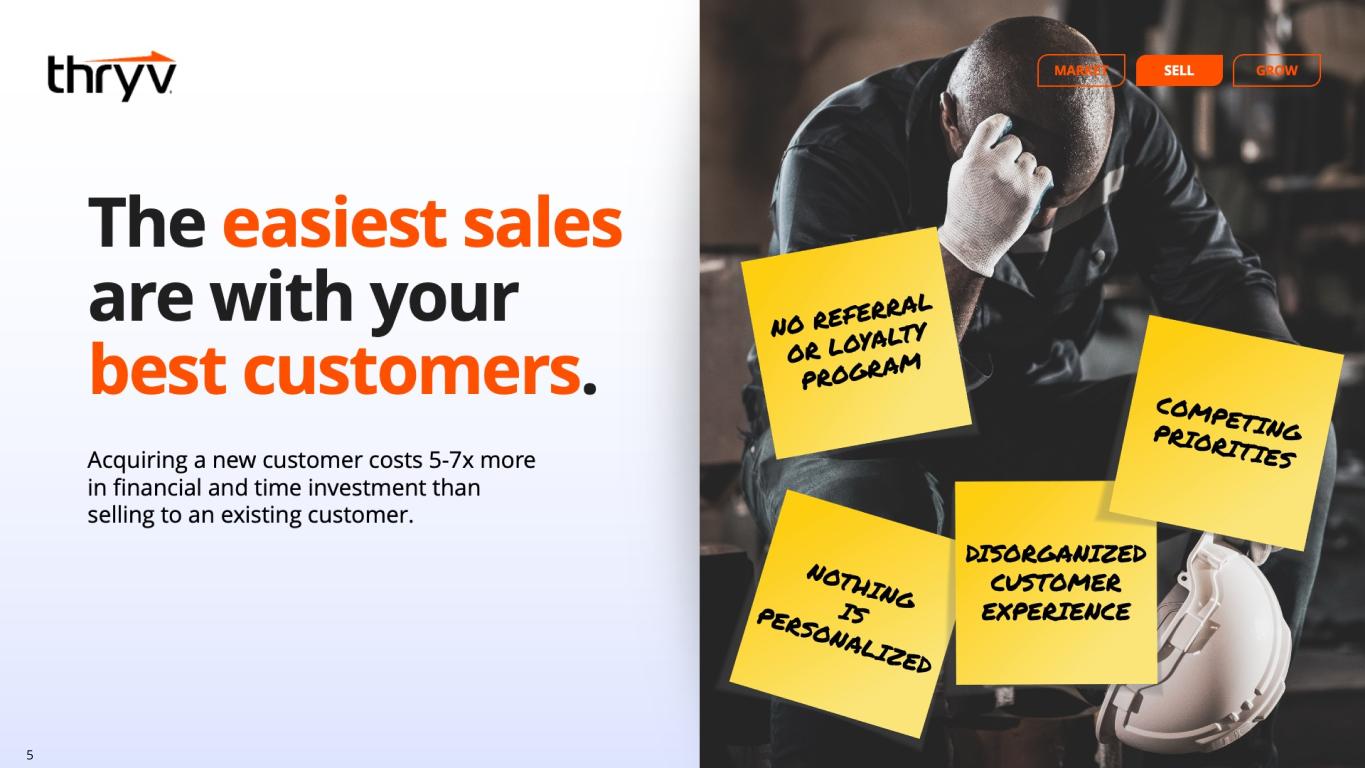
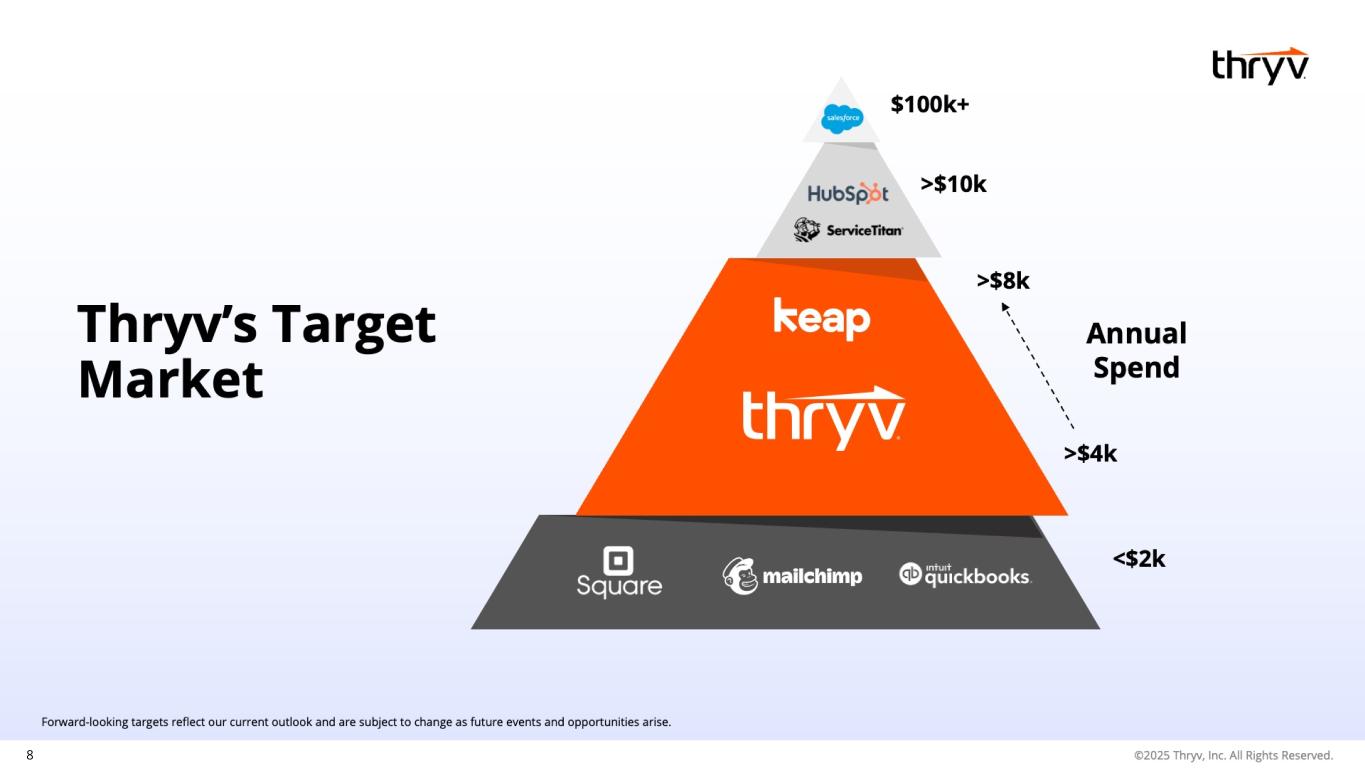
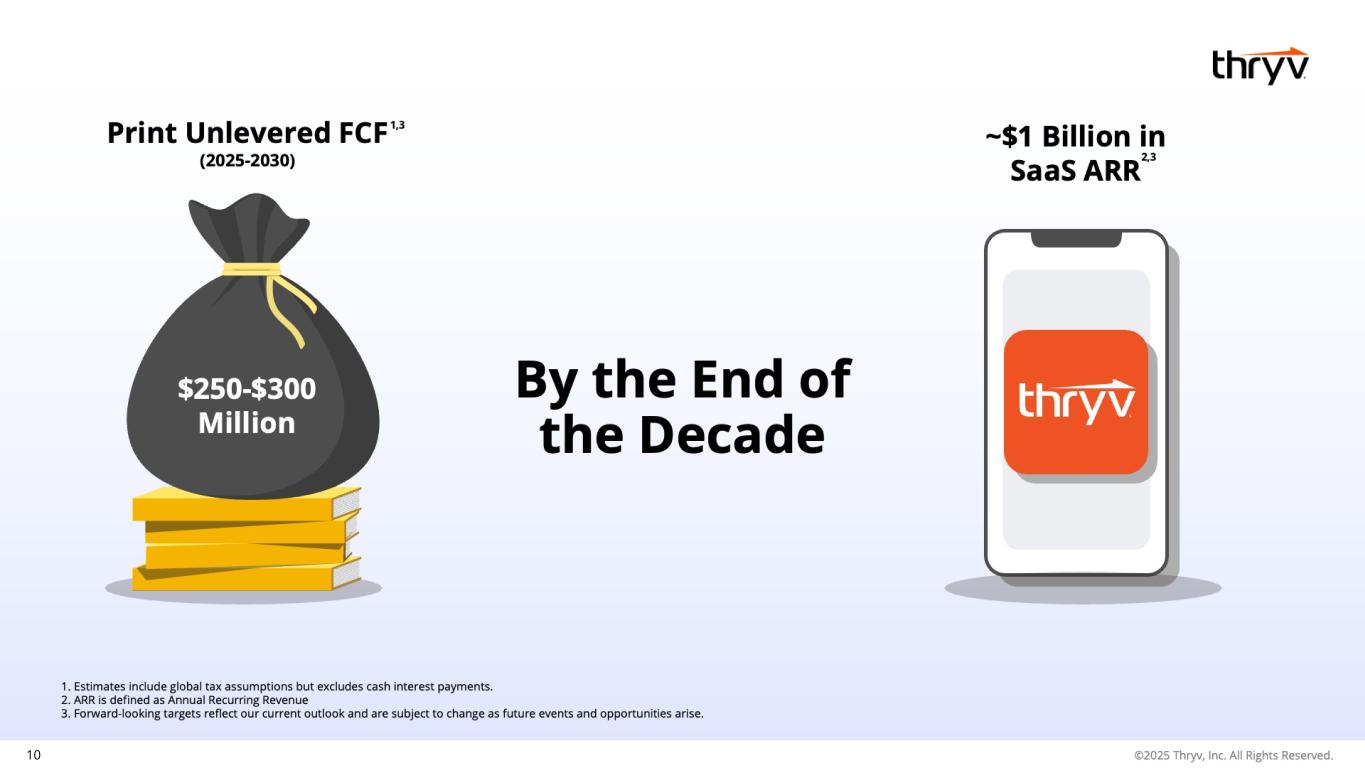
Yes, thanks. That's a wonderful question. Same. We haven't been able to tease out any difference in the churn rate. I mean, it's the same um you know the same as as the other customers that we're selling that we've sold before you know it's the same um you know uh we we are dealing with very small businesses so you know when you're dealing with vscs you're going to have a little higher churn and yeah i think we've talked about that we've established that but we're not seeing any difference in churn with the folks that you know we've selected and brought over from marketing services and furthermore what we are seeing is good strong add-on and spending habits when you look out six months a year you look at that second year. We're having success adding additional things. And as Grant said in the prepared remarks, when customers buy more products, more than one product, they end up having a few different things. Their churn profile meaningfully comes down. And the most recent data that we were looking at, it's like it's cut in half kind of thing. So we're really optimistic that we've moved them from a legacy old platform that we want to shut down, that we're trying to turn off, that we've been maintaining for years, that probably came through an acquisition somewhere, and had limited capabilities. And we're giving them a real improvement where they're getting a lot more functionality, a lot more capability, a lot more value for money in the change. And they are responding by beginning to use some of it and access some of that and being receptive to have conversations about adding more products. So I think that's the big success story that, you know, of the last, you know, recent period is the success we've had with those. Now, you know, obviously on the map, if you're adding big numbers like that, you know, you are, you know, you are going to have a little bit more churn. You're poking the bear, right? You're taking money and you're moving them over and you're moving big numbers over. So, we have to outrun that a little bit. And you saw a little of that in the last quarter, where between seasonality and just that big quantity, we were sequentially down a little bit. And I've said very clearly that we don't expect this year to be anywhere near like last year in terms of a big surge in subs. It's going to come more from expansion to spend this year. Our long-term guide on this is that our roughly $4,000 per customer will expand to $8,000 over the next couple of years now that the platform is more close to being built out. And a lot of our energies and attentions are going to go into expanding that spend. And quite frankly, as investors, you should love that because that's a more efficient motion than out-prospecting. You know, you get your return on your time is better. your return on the investment of energy is better when you're selling to existing customers rather than having a prospect. So I hope that answers the question.
Speaker 3
Absolutely. Really, really helpful on that front. And my one follow-up question, I know your core Thrive SaaS customer base and just all of those customers tend to be pretty resilient despite whatever the macro environment is. I was just curious if there's any meaningful contrast with the KEEP customer base and really, as we think about the updated guidance, are there any changes and assumptions for the core SaaS business versus maybe what KEEP is going to be contributing this year?
Yeah, the KEEP acquisition is going really well. I mentioned before, you know, we had some promises around synergies in the combining of the businesses. And we, you know, crystallized those and feel really good about delivering on the profitability and EBITDA there coming out of the KEEP business. And operationally, all the things that matter when you're running a business, like, you know, people, you know, computers, their email sign on and their phone systems and their benefits. And, you know, we've gotten all that stuff, you know, sorted out in a great big hurry. So we're really proud of that. And I think we're also proud of the cultural merger and integration that we've had. We spent time talking with those folks about the mission they were on, the mission that we were on previously, and how those missions together are stronger and better. And we've had very little turnover, you know, people leaving or something like that, not excited about the future. And so it's really set us up very, very well. So we're excited about the Keep acquisition. I spoke at length before about the channel partner, you know, approach and all that stuff. Looking deeper, then, into your question, into the customer base, you know, Keeps customers tend to be more online businesses. They tend to be more coaches, consultants, you know, guides, people that, you know, do things on the web, or, as I mentioned, some agencies that then help terrestrial businesses with their business. And, you know, it's not a lot of overlap. There are only 50 customer overlaps between the entire two customer bases. So there's a precious little overlap. But so far, their customer base has proven to be very strong and resilient, too. And they also are not involved in too much discretionary stuff, you know, fine dining or whatever. I did meet at the partner conference a few travel-related partners, you know, that conduct specialty trips for certain demographic groups or certain niches, you know. So, you know, maybe there's a little bit of that, but I think it's a handful of people. And none of them indicated any problems. They seem to be – actually, one of them was a speaker up on stage talking about the growth that she's experienced year over year and is planning for this year based on all the automations and the power of them and what she's learned from the partner network about how to market her travel offerings and so on. So, no, I'm at least not yet looking for anything. And, again, they have 15,000 customers, so it is a smaller part of our base. I don't have as much experience with this group yet. I'll certainly keep you posted in the coming quarters. But so far, I don't see any, you know, there's not a whole bunch of high-end restaurants in it or something like that.
Operator
Well, your next question comes from the line of Daniel Moore with CJS Securities. Please go ahead.
Will
Analyst — CJS Securities
Hi, this is Will on for Dan. I think you said that your long-term net revenue retention goal is staying at 100%. As you shift your sales focus to recurring revenue and increasing average spend per account, would you evaluate raising that goal?
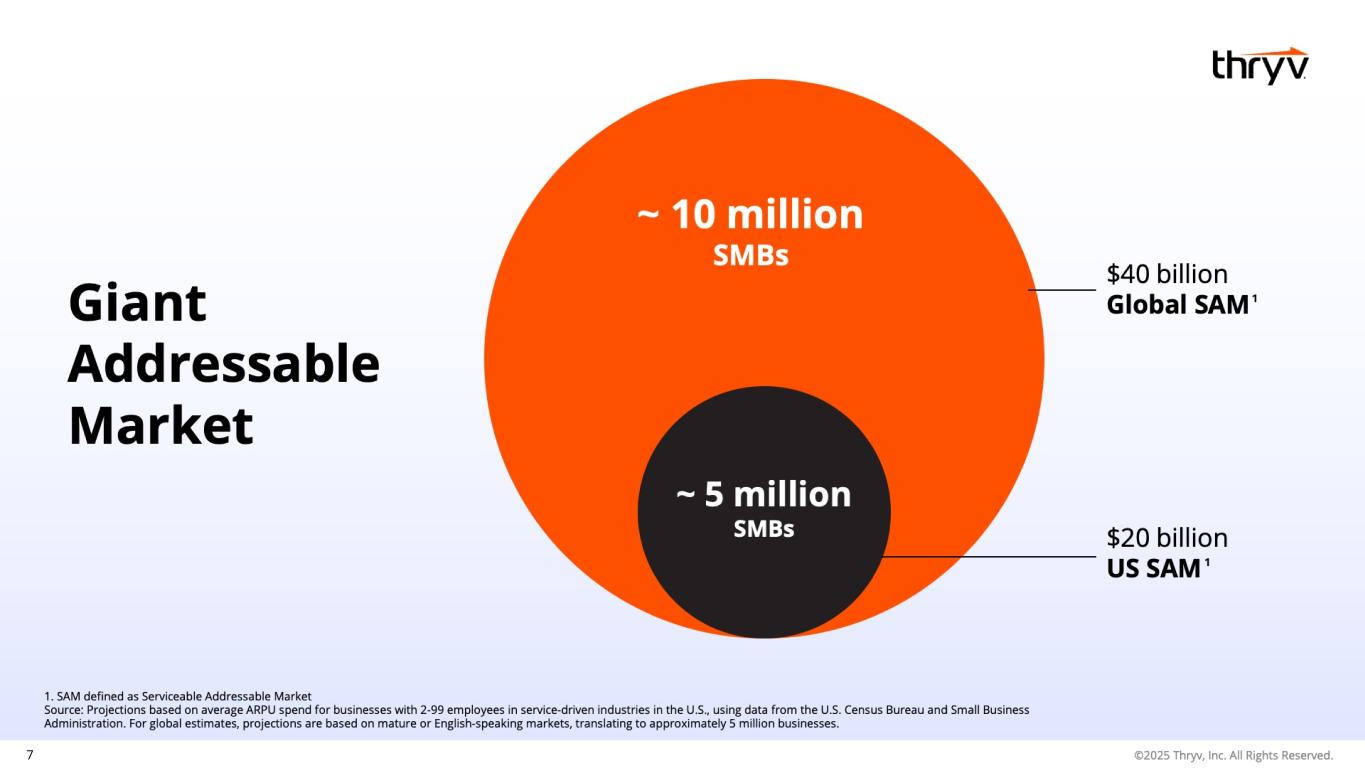
That's a really good question. I think there's going to be ebbs and flows to where our focus is. Because we had a massive ad last year of new subs as we selected marketing services people to come over, you know, to have these upgraded experiences I spoke about earlier. And, you know, the job now is to sort of bed them down, go see them, talk to them about how to use it, what they can do, and all that's going on. We invest a lot in taking care of these customers and making sure they have a great experience after they've migrated over. And that's just a real point of focus. But there could come a fiscal period of the future where the focus is more on bringing new people on or whatever. That's just the focus, you know, during kind of 2025. apply. So I think what in our investor day guidance and in our investor materials, we've sort of talked about, think of us as around 100% net revenue retention business, because we wanted to underscore that we're selling to VFBs. You know, these aren't enterprises. Some of them do actually go out of business. Some of them do actually fail. And there's some uncontrollable loss that's always going to be in our numbers. That's offset by the fact that there's such a gigantic supply of them. You know, our AM in the markets that we're trying to serve, like eight million businesses. So we've got, you know, we can very easily on fairly short sales cycles replace one that leads. And the VSP segment is just now migrating to the cloud. It's still pretty new for them. So I think it's a wonderful market. I think, in a lot of ways, a better market than enterprise. And I know you're probably, you know, putting your eyebrows up on that but it's just so big and it's just so early there's just so much growth there it's so exciting but it comes with you know a little bit higher churn and a little lower net revenue retention so um it's not a crazy question at all and you know we probably will have some pretty high stepping on net revenue retention you know over the next you know couple fiscal periods just because we're putting such focus in the base but that focus could also swing you know much more to expansion in the future at some point. So I think I'll stick with the guide that we're going to be there, thereabouts, around 100. And, you know, if we keep blowing it away every period, you can ask that question again in a couple of quarters, and we'll have the champagne conversation about, yeah, maybe we should raise it, you know. But right now, I think I'll hold where we are just out of conservatism.
Will
Analyst — CJS Securities
Thanks for that. And then just one more, you know, So now that you've accelerated the migration to a fully SaaS-based business, what is your target leverage range over the next two to three years?
Paul, why don't you take that one?
Yeah, right now, we're in a leverage. We plan to continue to pay down debt. So I think you would expect leverage to improve consistently as we go out in time. That's our plan at the moment.
Will
Analyst — CJS Securities
Thank you.
Operator
And your last question comes from the line of Matt Watson with RBC. Please go ahead.
Yeah, great. Thanks for taking my questions, and congrats on a strong start to the year. Joe, as you see more success for off-selling, can you just talk a little bit about how you're working to kind of ensure that continued success post-implementation and make sure customers are seeing kind of the compounding value of the combined platform?
Yes. Thanks for the question. That's a good question. That's probably one of our number one areas of investment. Because if you look at the profile of our base, you'll see that it's been getting bigger. There's a lot to take care of. So we really prioritize their experience. And we go at it with a CX, a customer experience team that uses a variety of tactics. I mean, they literally are calling them. They're on Zooms with them. They have what we call tech touch meetings. They're sending them in-app messages. They're sending them emails. So we're reaching out to them. And it's in the hundreds of thousands of, you know, reach outs kind of things. just to make sure, and then we will schedule time with them. We'll jump on Zoom with them, share the screen with them, go through it, so that's happening. And then our business advisors are, you know, visiting them in person and spending time with them trying to do the same thing. So small businesses are busy, and honestly, their lives are hectic, and they, you know, to be honest, they sometimes break appointments with some things like that because a truck broke down or, You know, they have an emergency on a job. So it sometimes can be a little scattered. You've got to really work at it. But we are really working at it. And I think for evidence of that, you know, I would look at the fact that, you know, the churn profile of these people that have been, you know, upgraded to other stuff has been similar, and they're spending more when you look back six months, a year later. So that's really important. And then once they, you know, do engage with us, they do dig in, and hopefully they add something to it, then we see the churn profile really improve. So that's a point of focus for the company, has been in the recent past, and will be this year, and a place that I think we're good in getting better at. We're becoming more and more innovative in how we do it, and I think we're doing a really good job of it.
That's really helpful, color and then we we've mentioned a couple times on the call the the goldilocks moment uh for the customers but i guess just maybe acknowledging like how your customers see the same news articles we do like does this change your go to motion go to market motion at all maybe like emphasizing the roi of the platform more or is there any any way you can kind of incorporate that into actually like a positive or a tailwind for the company?
Yes, it's a wonderful question because there's different flavors for different days. And I sometimes liken the growth aspect of our software to piping hot french fries and the kind of run your business aspects of our software to steamed broccoli. We all know that steamed broccoli is really good for you and you should eat it and you'll be healthier and better and so on but it's sometimes not as fun and exciting um there have been periods where we were out there slinging the broccoli you're really doing a lot of work on how your scheduler runs you know just in in your in your operating your business you know crm in the back um at the moment the flavor that is uh really hunting is talking to people about growth and we're seeing a lot of uh a lot of updates growth and that's where the goldilocks comment came from. I remember in the period when the government kind of took a helicopter and threw money at people right after COVID, you know, every one of our guys that built decks was booked out for a year for decks. And if they built swimming pools, they were booked out for a whole year and so on and so forth. Everything was just, they were so full, it was hard to talk to them about anything marketing. And so the thing that you did is talk to them about operating stuff. But right now there's more trepidation about that order book into the future. And so they're really anxious to take a meeting, keep the meeting, and really focus on you on how can I make sure I've got the work going forward. And so that's my comment around Goldilocks. They're not broke where they can't write a check and buy it. They're still doing all right but but they're they read these headlines and it causes them to be more focused on their marketing that that resonate with you that concludes my question and answer session ladies and gentlemen that concludes today's call thank you all for joining you may now disconnect