Operator
Good afternoon and welcome to WEC Energy Group's conference call for fourth quarter and year-end 2025 results. This call is being recorded for rebroadcast and all participants are in a listen only mode at this time. After the presentation, the conference will be open to analysts for questions and answers. In conjunction with this call, a package of detailed financial information is posted at wecenergygroup.com. A replay will be available approximately two hours after the conclusion of this call. Before the conference call begins, please note that all statements in the presentation, other than historical facts, are forward-looking statements that involve risks and uncertainties that are subject to change at any time. Such statements are based on management's expectations at the time they are made. In addition to the assumption and other factors referred to in connection with the statements, factors described in WEC Energy Group's latest form 10K and subsequent reports filed with the Securities and Exchange Commission could cause actual results to differ materially from those contemplated. During the discussions, referenced earnings per share will be based on diluted earnings per share unless otherwise noted. This call also will include non-GAAP financial information. The company has provided reconciliations to the most directly comparable GAAP measures in the materials posted on its website for this conference call. And now it's my pleasure to introduce Scott Lauber, President and Chief Executive Officer of WEC Energy Group.
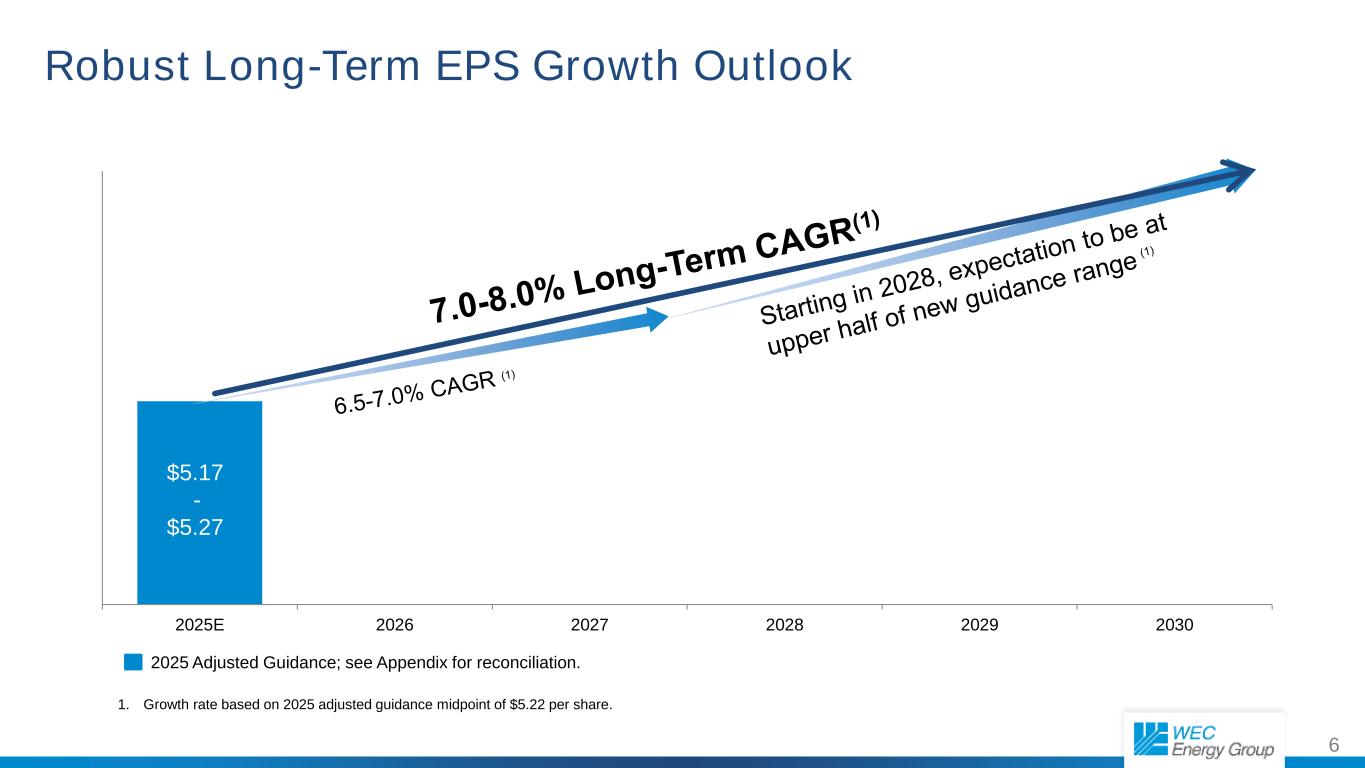
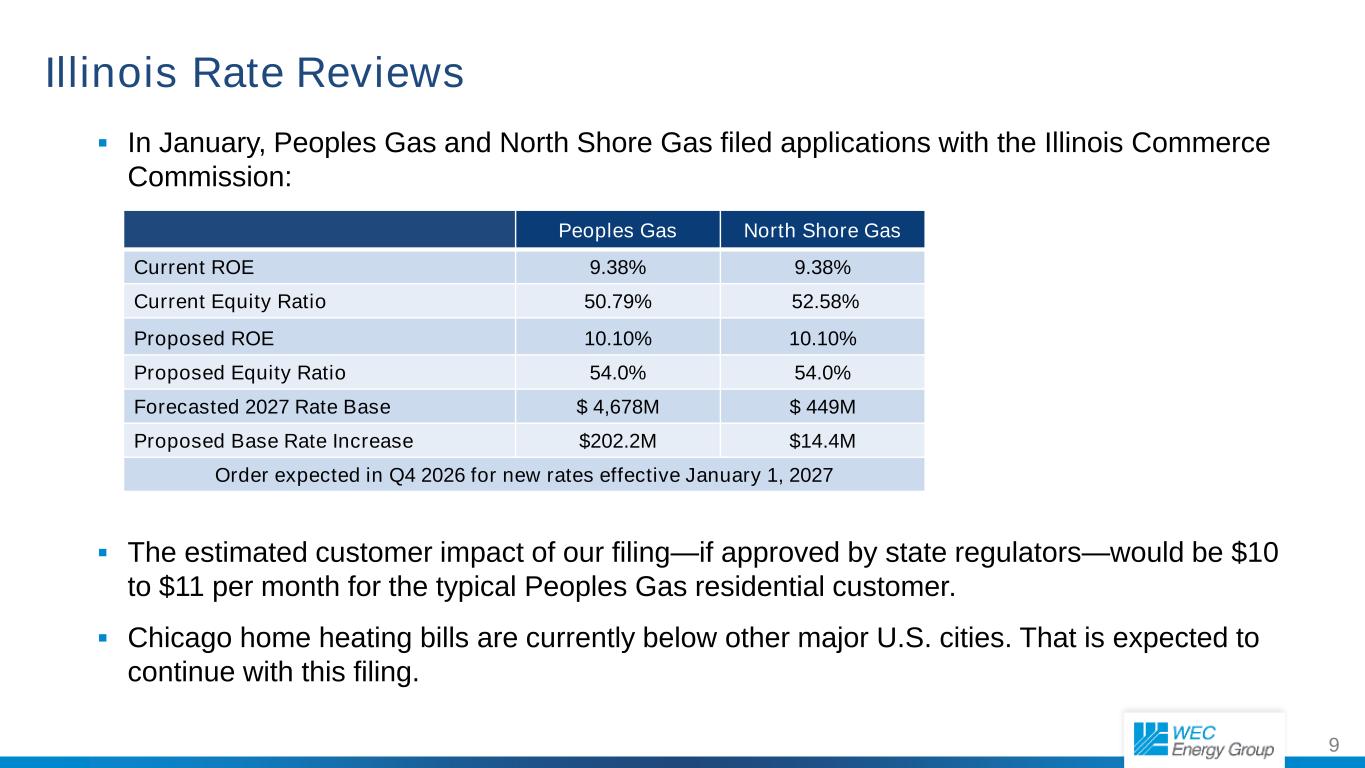
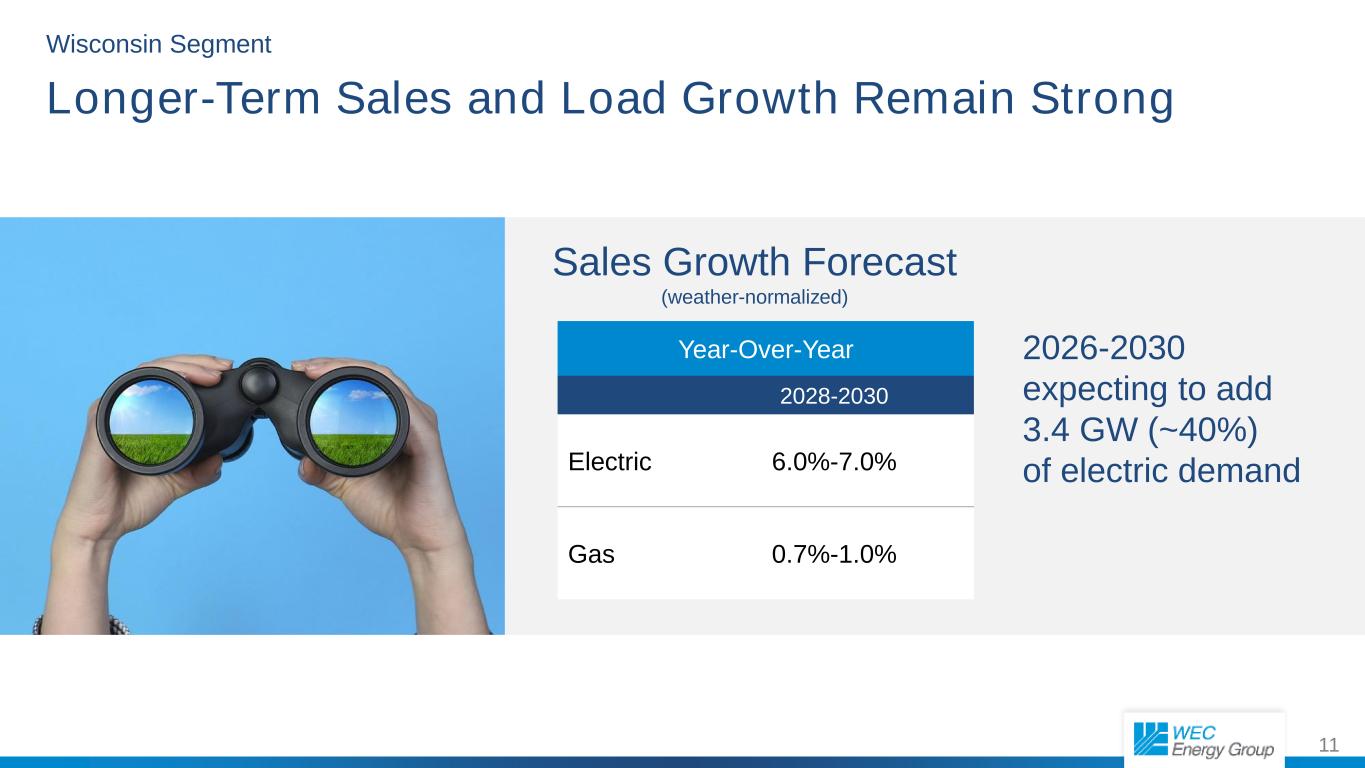
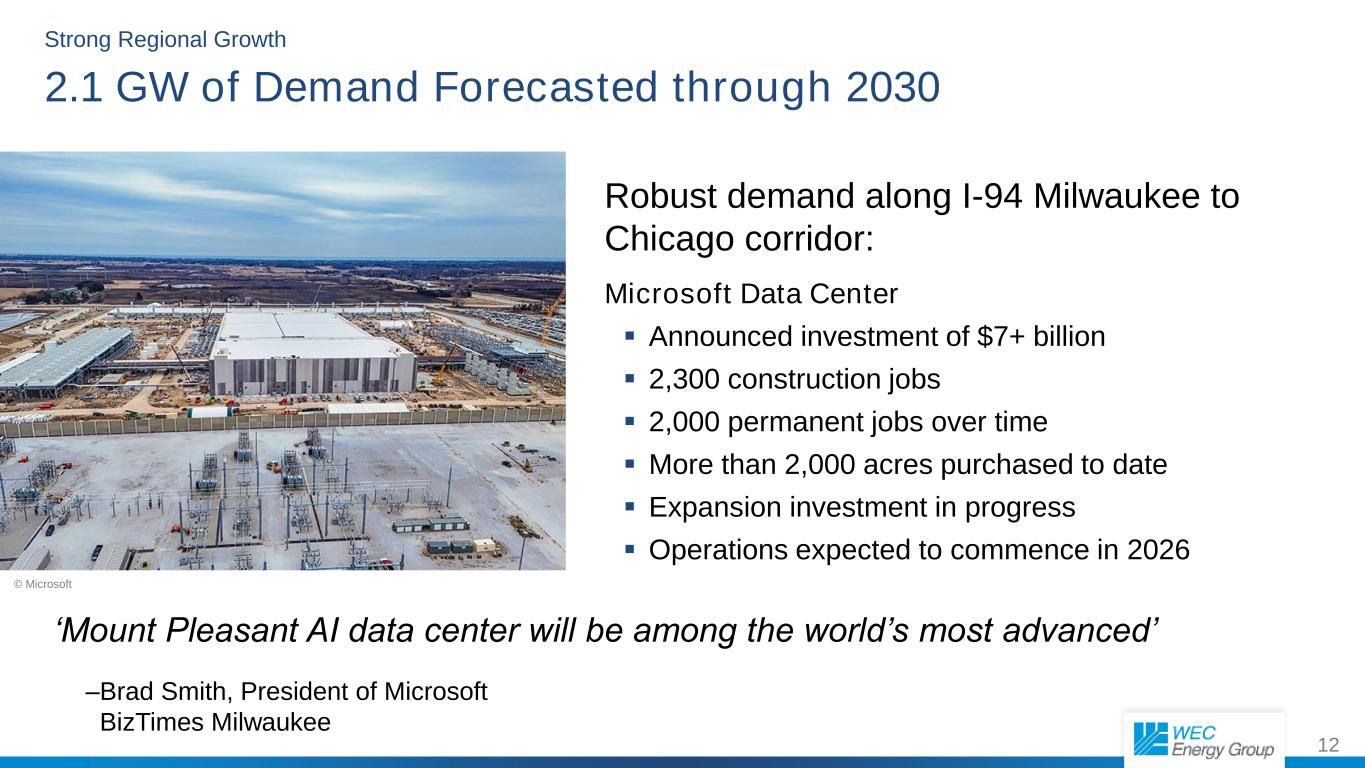
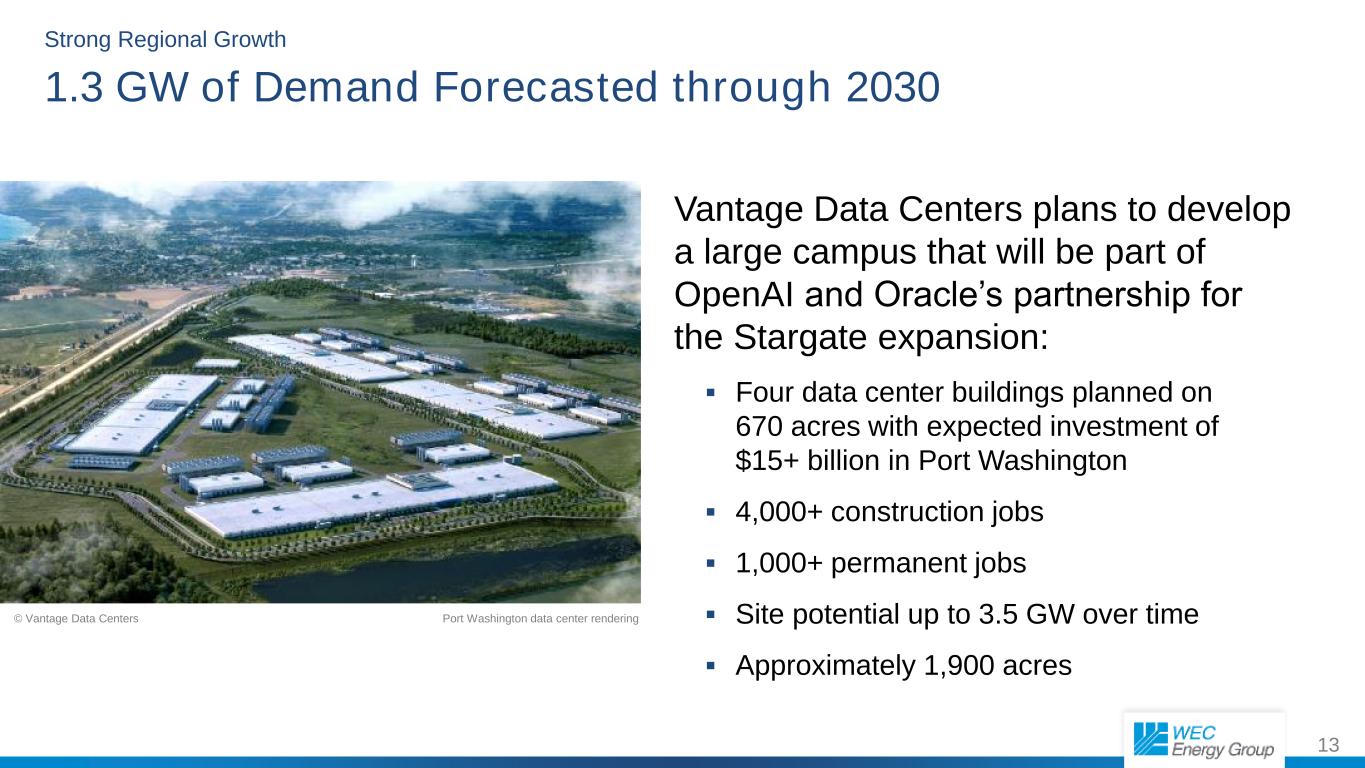
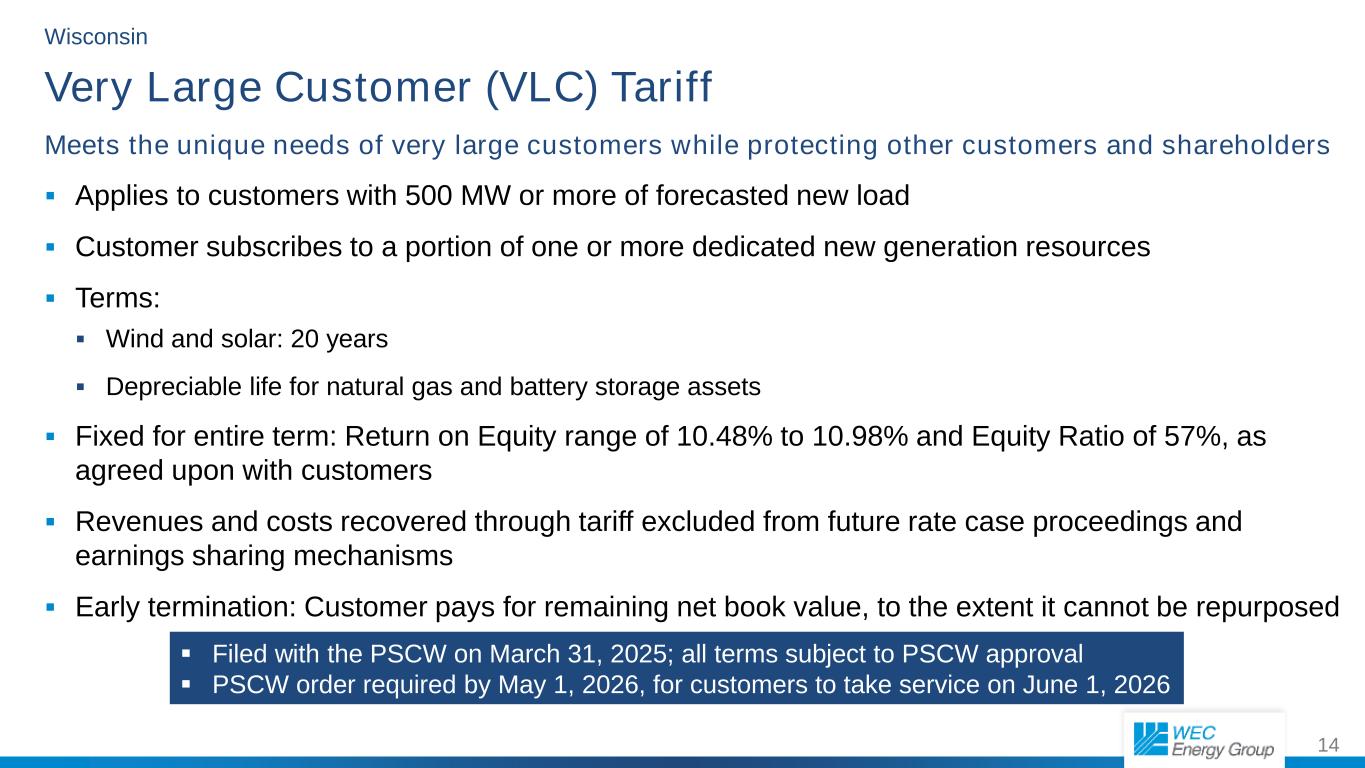
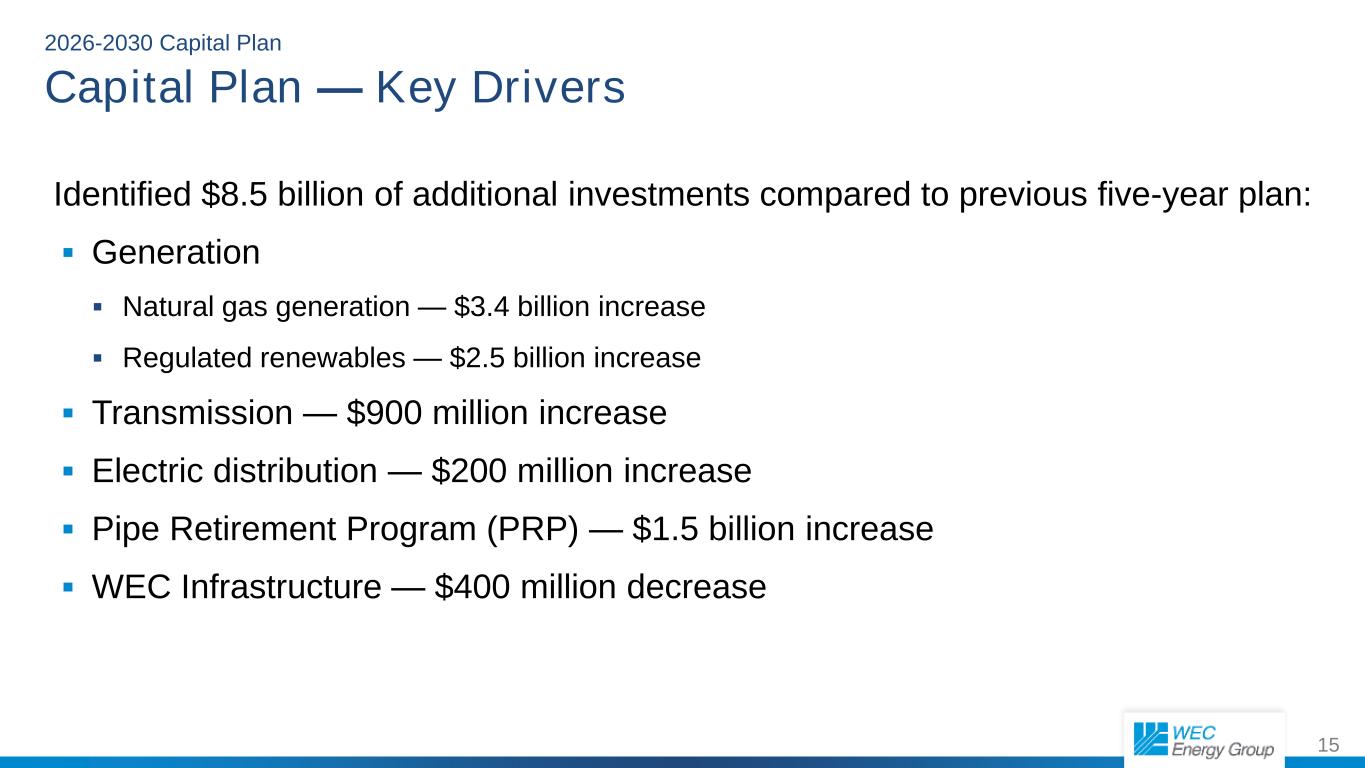
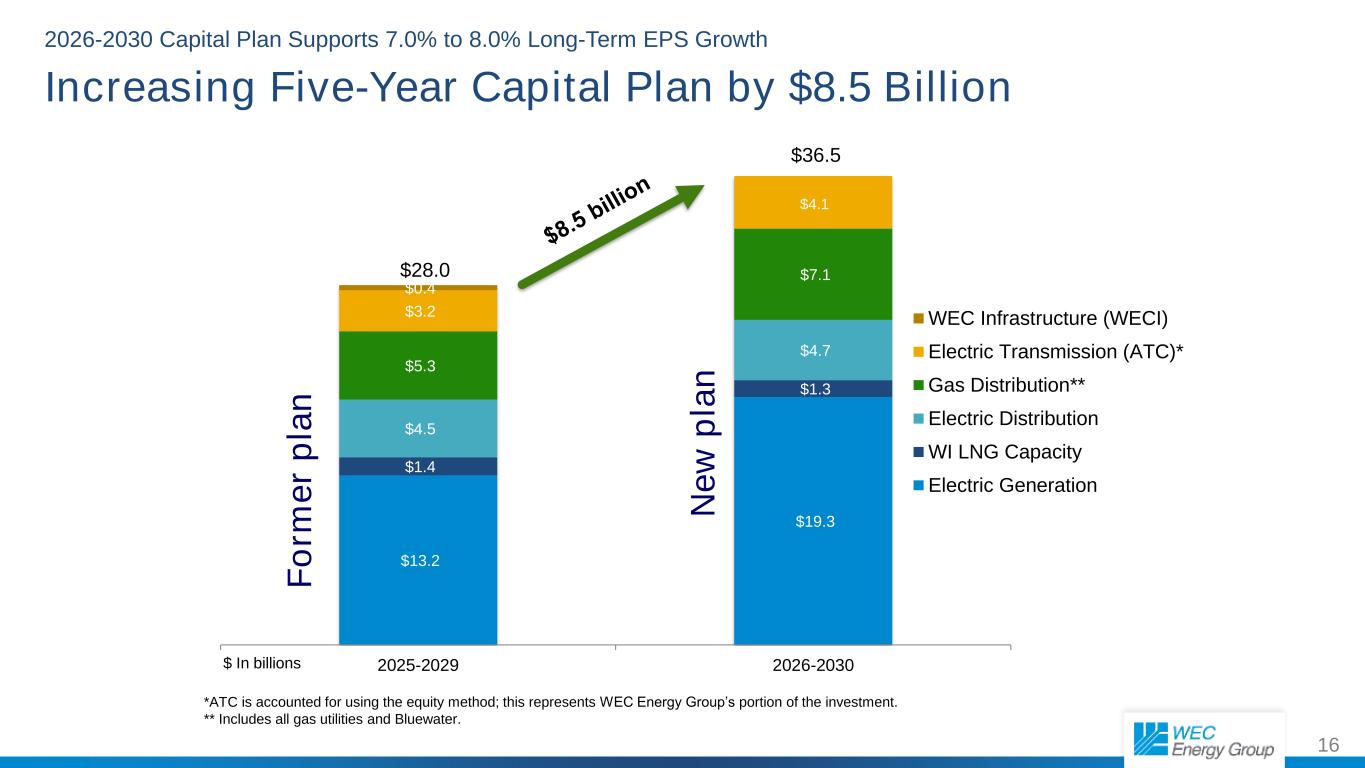
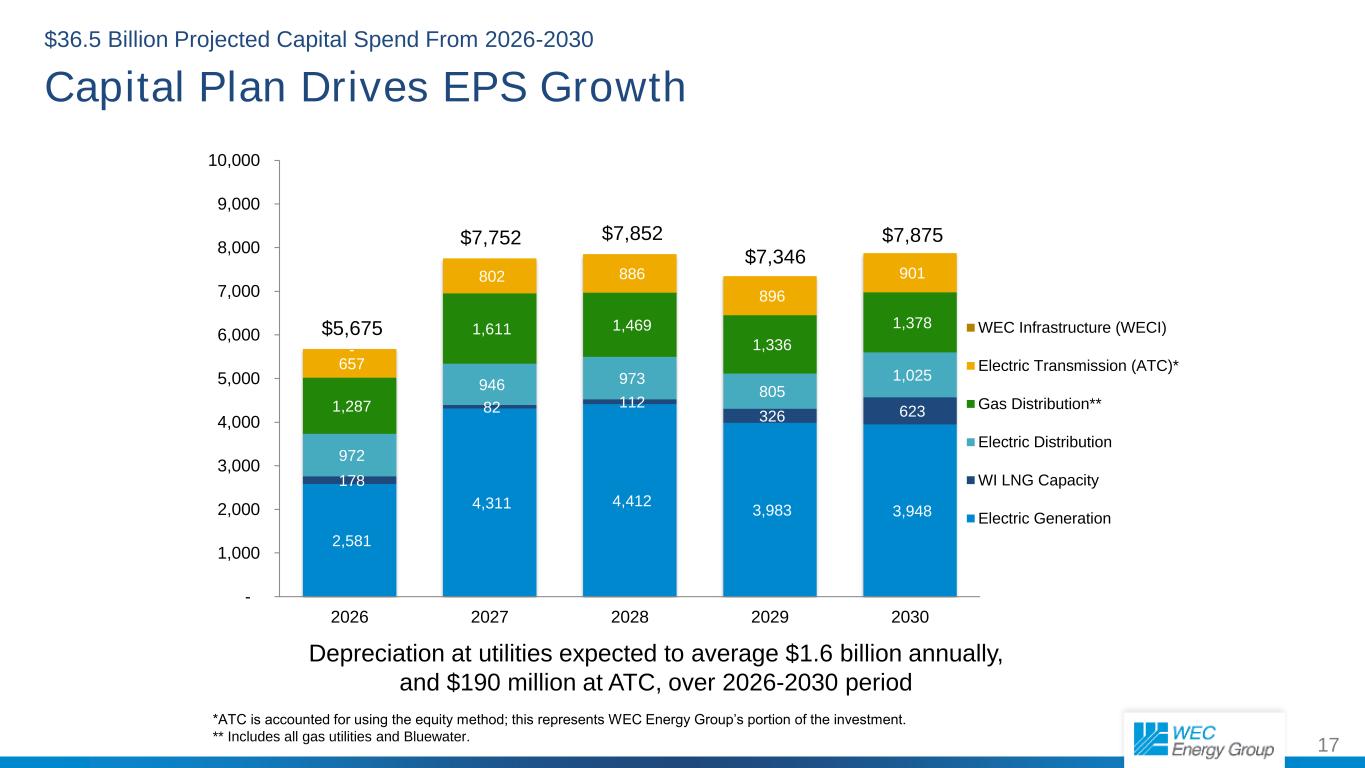
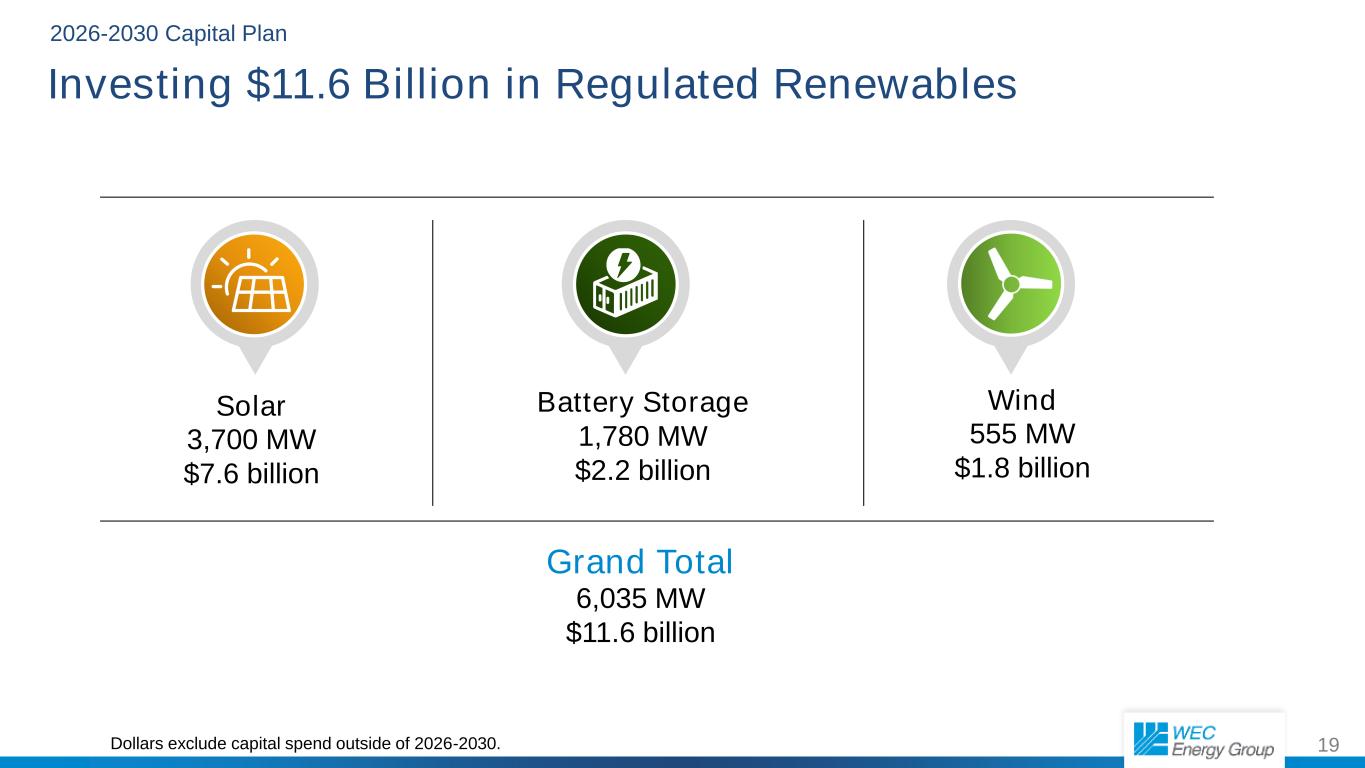
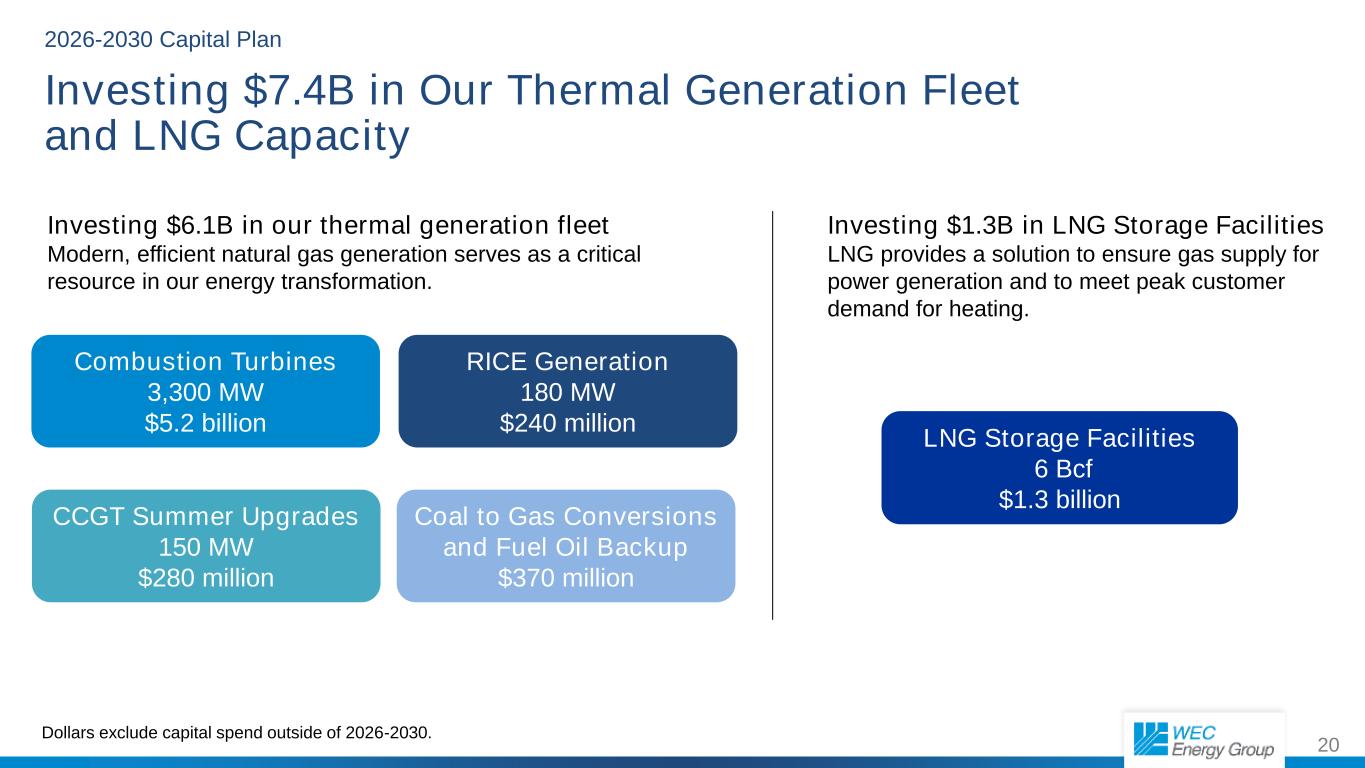
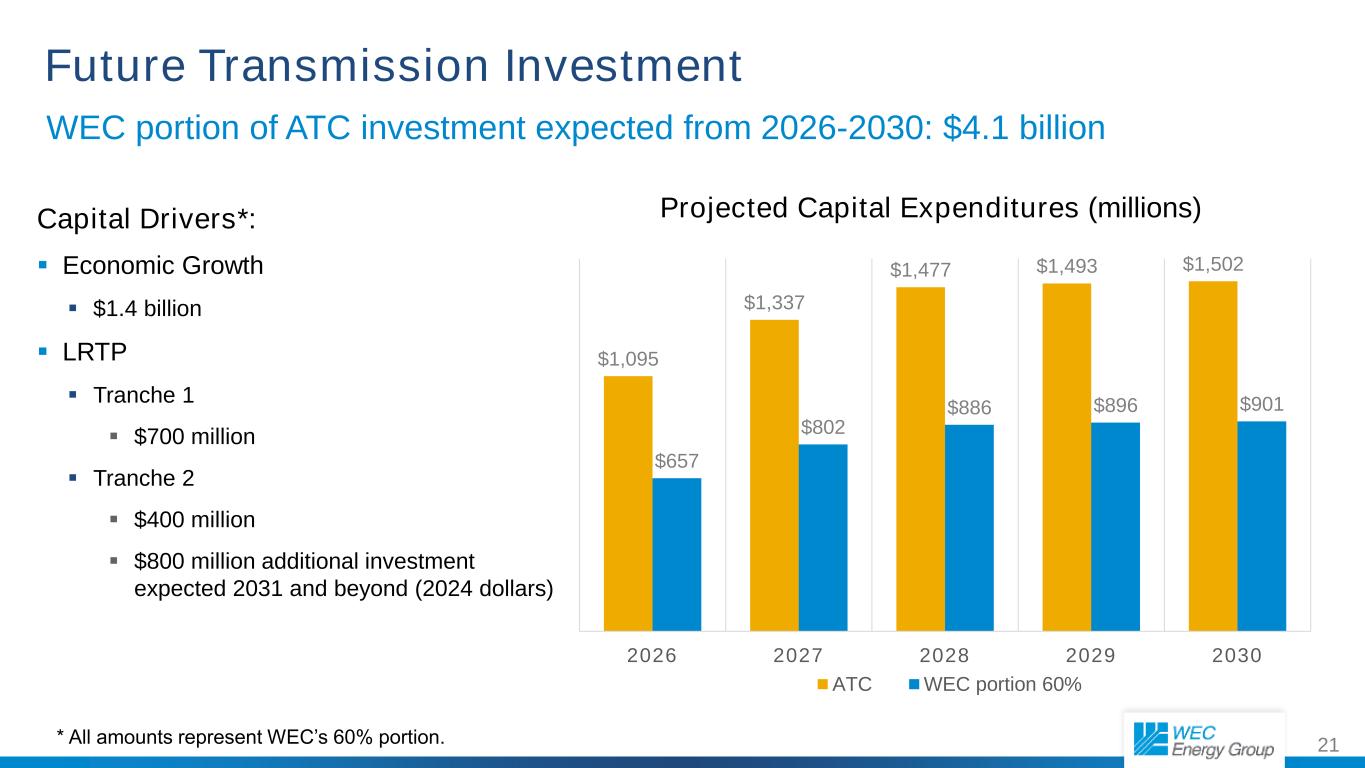
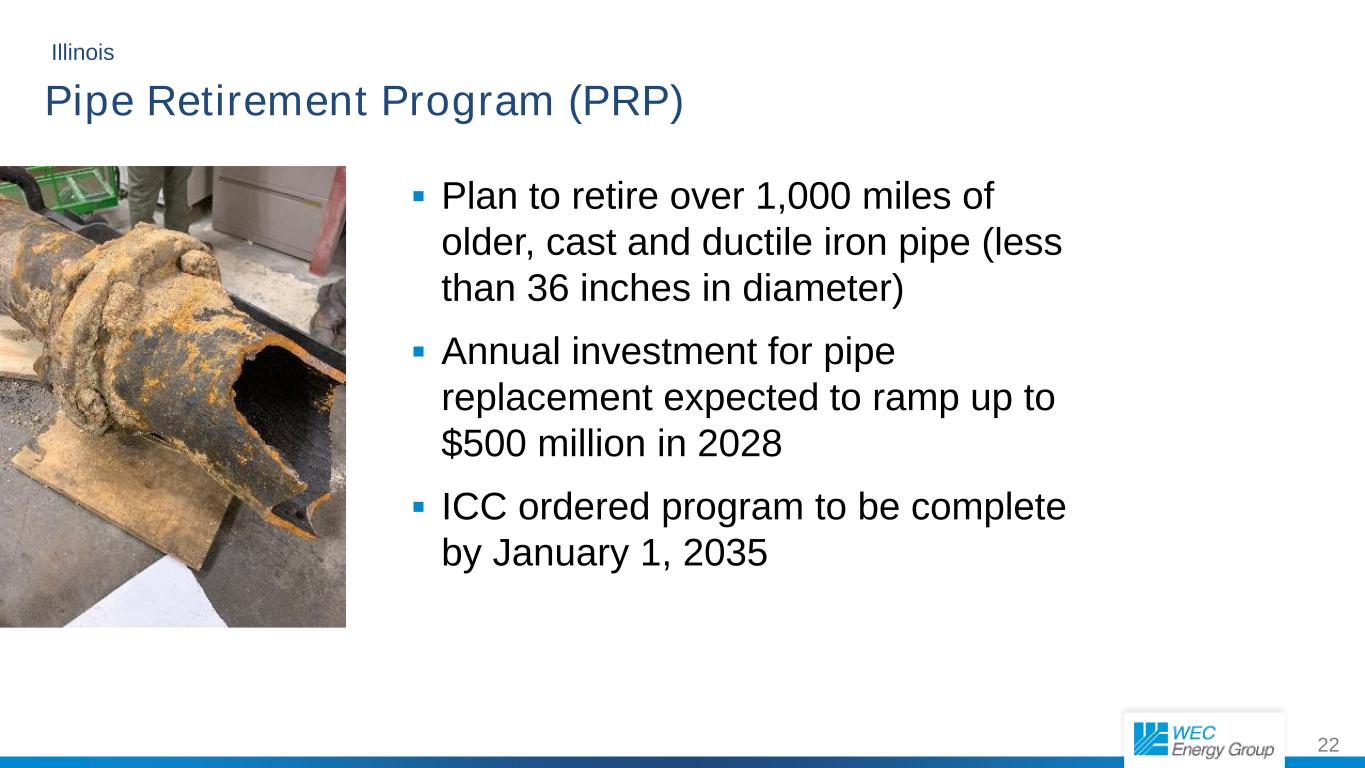
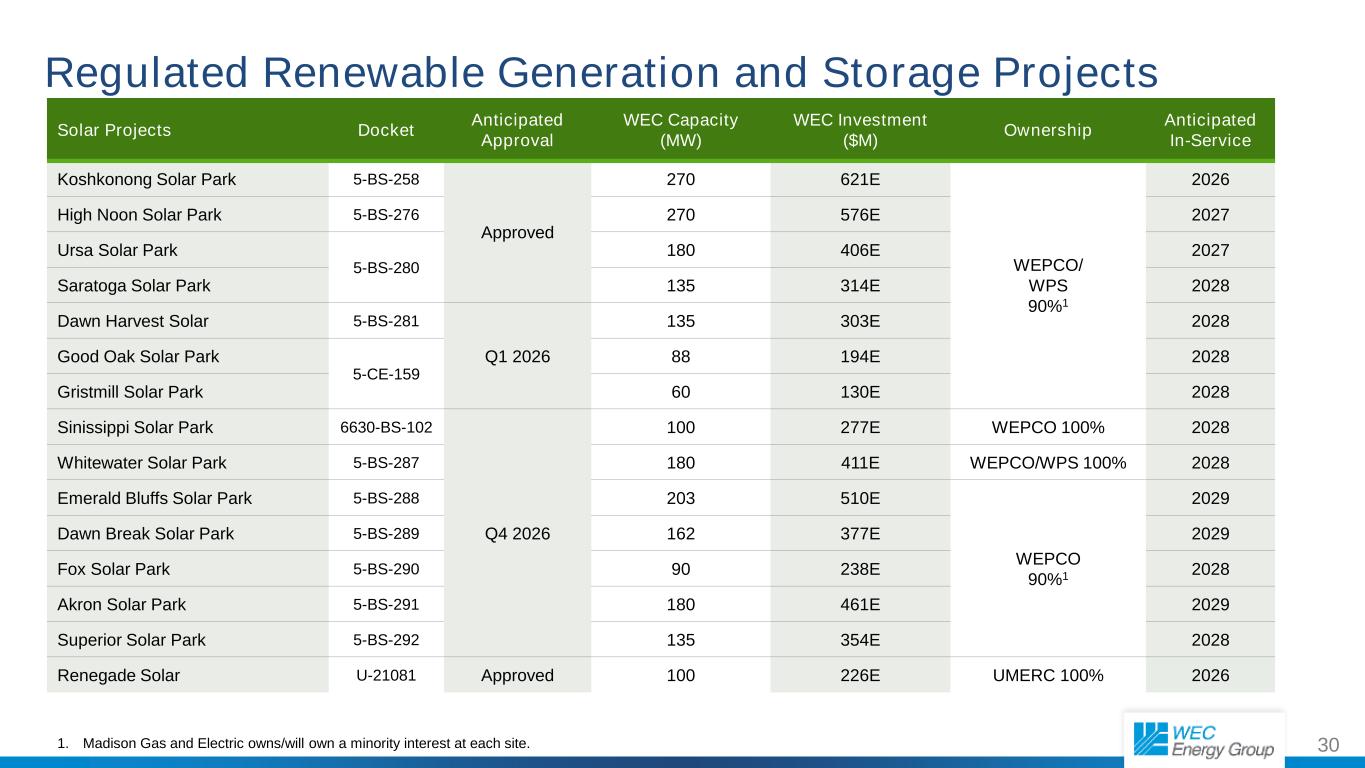
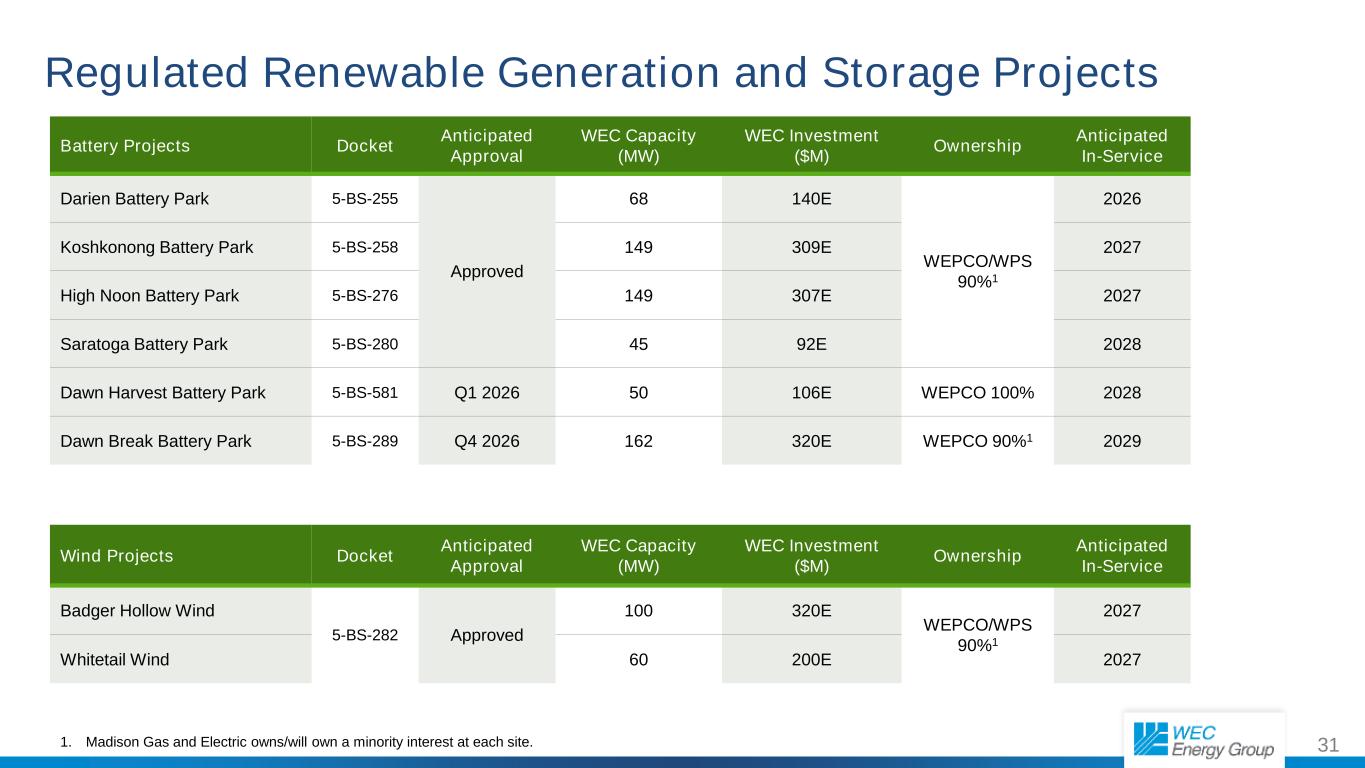
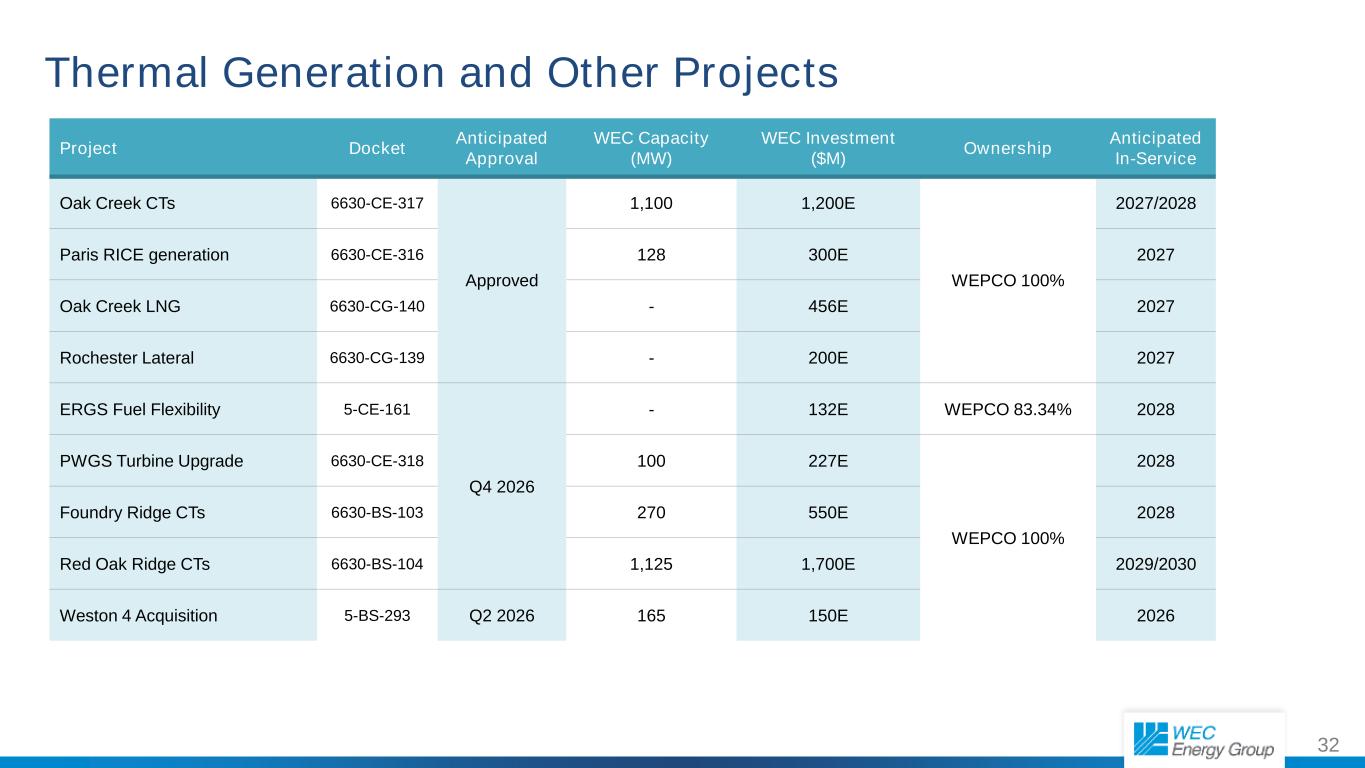
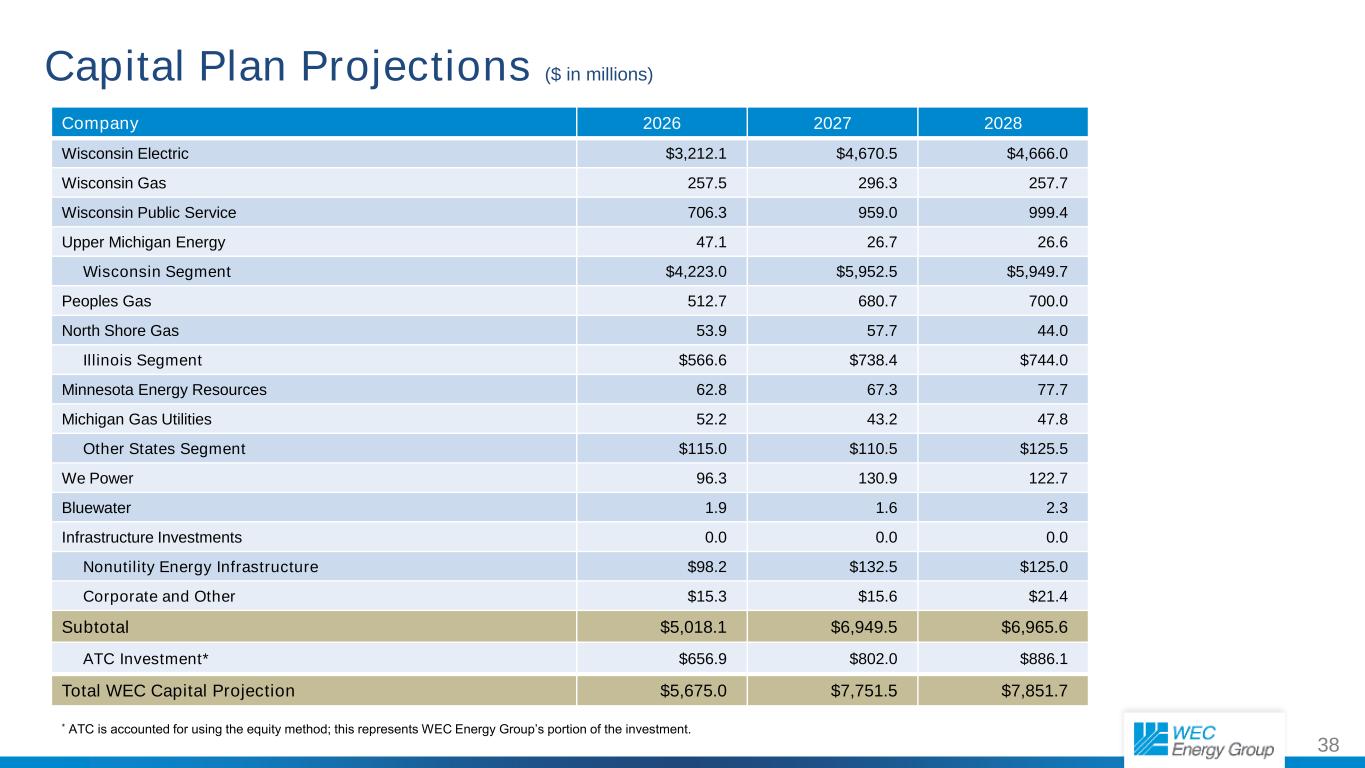
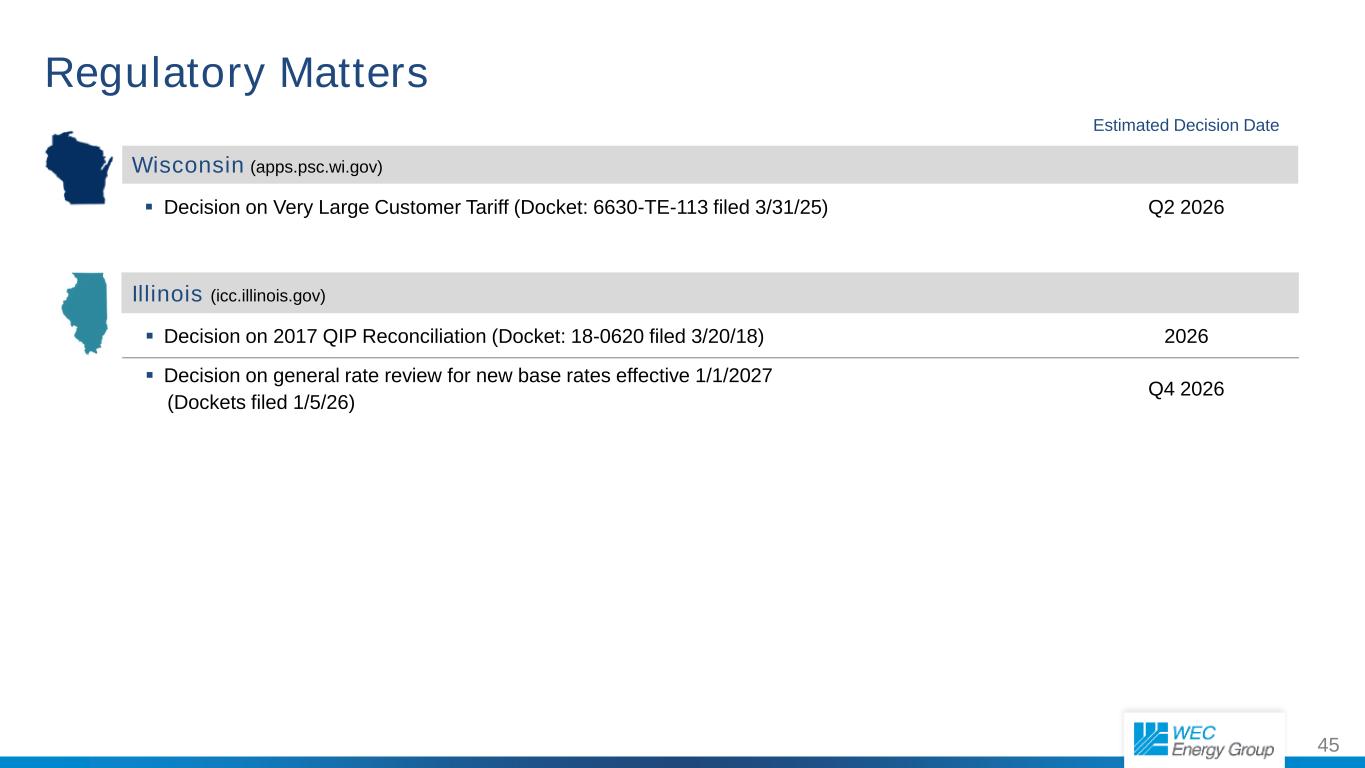
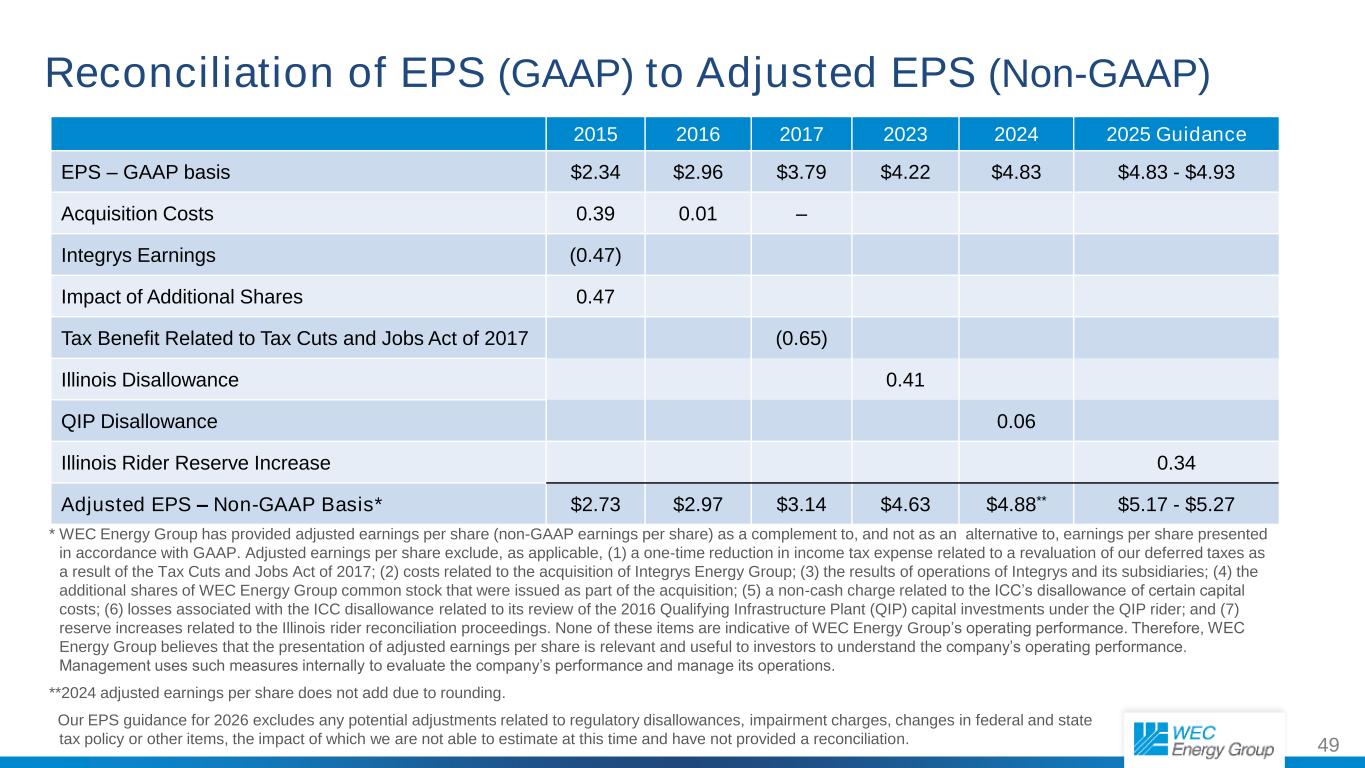
Good afternoon, everyone, and thank you for joining us today as we review our results for the calendar year 2025. Here with me are Shaw Liu, our Chief Financial Officer, and Beth Strakka, Senior Vice President, Corporate Communications and Investor Relations. As you saw from our news release this morning, we reported full year 2025 adjusted earnings of $5.27 a share. This excludes a one-time charge of 46 cents per share related to a proposed settlement in illinois we expect the settlement will fully resolve all open reconciliation dockets on rider qip spending from 2017 to the rider sunset in 2023 it will also resolve all open reconciliations for the uncollectible rider for the period 2019 through 2023. I'll provide more details on this in a few minutes. Across the company, I'm pleased to report that we delivered another year of solid results in virtually every meaningful measure, from customer satisfaction to financial performance to steady execution of our capital plan. In just a few minutes, Shaw will provide more details on financial results and outlook but first let me highlight the strong economic growth in our region that's driving our robust capital plan there have been many exciting announcements and developments in our state microsoft is making good progress on its large data center complex with more than 2 000 acres purchased to date we have energy flowing to the site and the first phase of the project is expected to go online this year just last week microsoft received approval from local officials to expand the campus further with 15 additional data center buildings based on their updating plan we are adding 500 megawatts of custard customer demand to the forecast this is resulting in an estimated 1 billion dollars of additional incremental capital to our capital plan. This brings our forecasted demand in the I-94 corridor up to 2.6 gigawatts through 2030. Microsoft continues to be a great partner to work with. In a January statement referred to as its community-first AI infrastructure plan, Microsoft pledged to be a good neighbor where it's building data centers. This includes paying its share for electricity, minimize water use creating jobs adding to the tax base and investing in the community and to the north we have another great partner you'll recall that vantage data centers has signed on to develop facilities for oracle and open ai on approximately 1900 acres in december vantage broke ground on the initial phase of the project which is planned for 670 acres Vantage has stated that it expects to invest $15 billion to complete this phase in 2028. The first facility could come online late next year. We currently have 1.3 gigawatts of demand for this Vantage site in our forecast over the next five years, and looking to the future, this site has the potential to reach 3.5 gigawatts of demand over time. We are seeing an increase in local investments by other large businesses as well. For example, south of Milwaukee, Foxconn has announced new plans to renovate and expand its Racine County campus with a focus on manufacturing data center components. Foxconn expects to invest more than a half billion dollars in this expansion and add more than 1,300 jobs at the site. In addition, Rockwell Automation plans in November to build a new manufacturing site in southeastern Wisconsin. The facility is expected to span more than a million square feet, and Rockwell announced this site could potentially become the company's largest manufacturing campus globally. And Uline, the leading North American distributor of shipping, industrial, and packaging materials, completed yet another large land purchase to further expand its business operations in southeast Wisconsin. In summary, with the expansion of Microsoft, we are now projecting 2.6 gigawatts of growth in the I-94 corridor and 1.3 gigawatts to the north of Milwaukee for a total of 3.9 gigawatts of electric demand growth in our five-year plan. And to meet our region's growing energy needs, we are focused on executing our updated $37.5 billion capital plan over the next five years. We are projecting long-term earnings per share growth of 7% to 8% a year on a compound annual basis between 2026 and 2030. This is based on the midpoint of our 2025 adjusted guidance. We expect that growth to accelerate to the upper half the range starting in 2028 as we put more projects into service our electric utilities need to maintain a reliable balance generation mix between 2026 and 2030 we expect to invest a total of 7.4 billion dollars in modern efficient natural gas generation and lng storage this includes combustion turbines rice units and upgrades to existing facilities we have a strong labor force lined up to bring our projects online at our oak creek site construction and our new five unit 1100 megawatt combustion turbine project is well underway we also broke ground on a large 2bcf lng facility and our seven unit paris rice generation site in the fourth quarter in renewables over the next five years we expect to invest 12.6 billion dollars to add 6,500 megawatts to our generation fleet. We currently have seven renewable generation projects and two battery storage facilities under construction, including two solar facilities expected to come online later this year. Overall, we have a lot of confidence in our ability to execute on our capital plan and continue our growth trajectory. Turning to regulatory matters, I have a few updates on current and upcoming rate reviews. First, let's update you on our Wisconsin and our proposed Very Large Customer Tariff. As we discussed before, this tariff is designed to meet the needs of our Very Large Load customers while protecting all of our other customers and investors. The proposed tariff remains at the Public Service Commission for review. Staff and intervener testimony was submitted in January. a commission order is expected in early May for customers to take service under the tariff in June. In April, we plan to file rate reviews in Wisconsin for forward-looking test years 2027 and 2028. We are currently pulling that filing together. And in Illinois, as I mentioned earlier, People's Gas and North Shore Gas reach agreements on the terms of a proposed settlement with the Illinois Attorney General that, if approved by the Illinois Commerce Commission, would resolve all issues related to 12 pending cases that these cases represent approximately $2.3 billion of open dockets and include the Rider QIP reconciliation from 2017 to 2023 and the uncollectible Rider cases from 2019 through 2023. The proposed settlement terms calls for a $130 million dollar rate-based reduction, which would be prospective with new rates in the pending people's gas case. In addition, customers would receive $125 million over three years. This settlement is subject to commission approval, which we anticipate requesting in the coming weeks. In early January, we filed a rate request in Illinois for test year 2027. A key driver of this request is to support the pipe retirement program in Chicago. As you'll recall, the company ordered all cast iron and ductile iron pipe under 36 inches in diameter to be retired by the end of 2034. We expect the commission's review of our filing to last 11 months with new rates starting January 1st, 2027. Of course, we'll keep you updated on any future developments. Next up, shall provide you with more details on our financials.
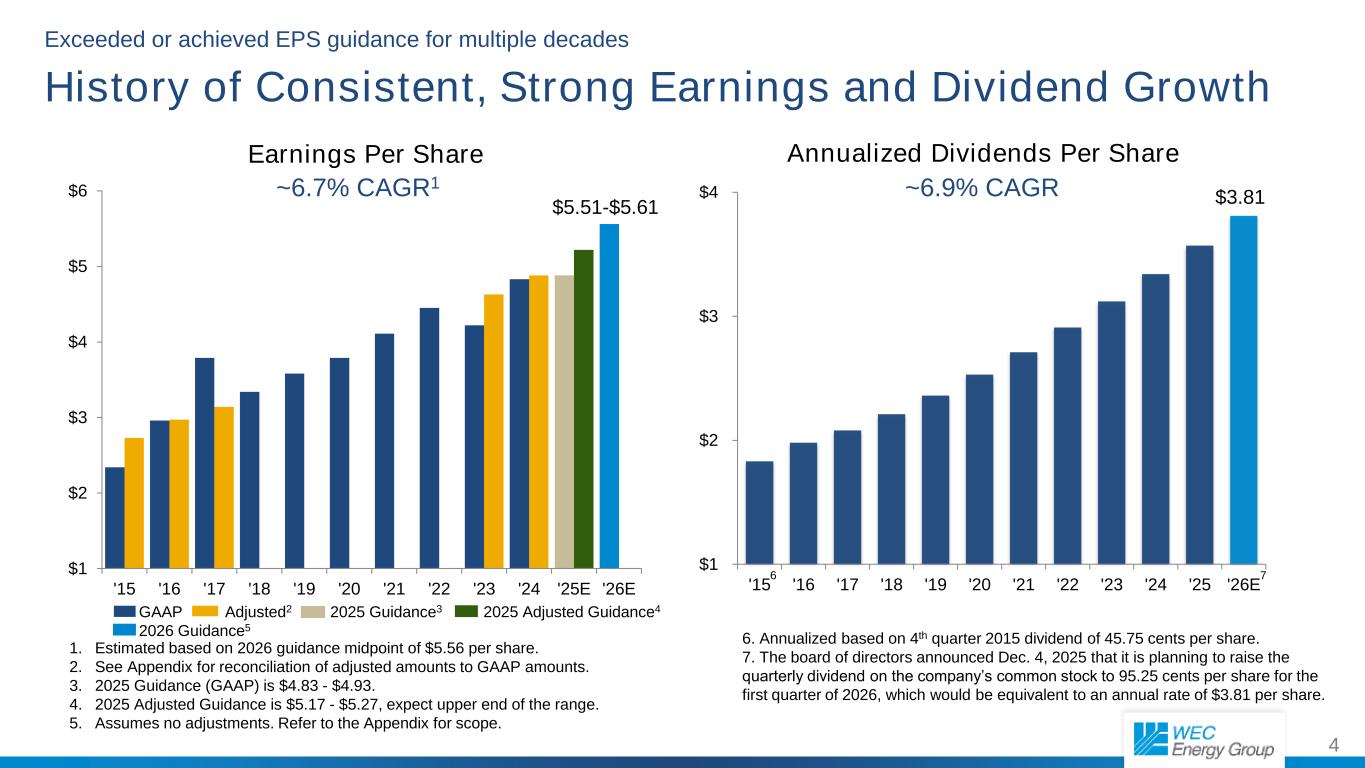
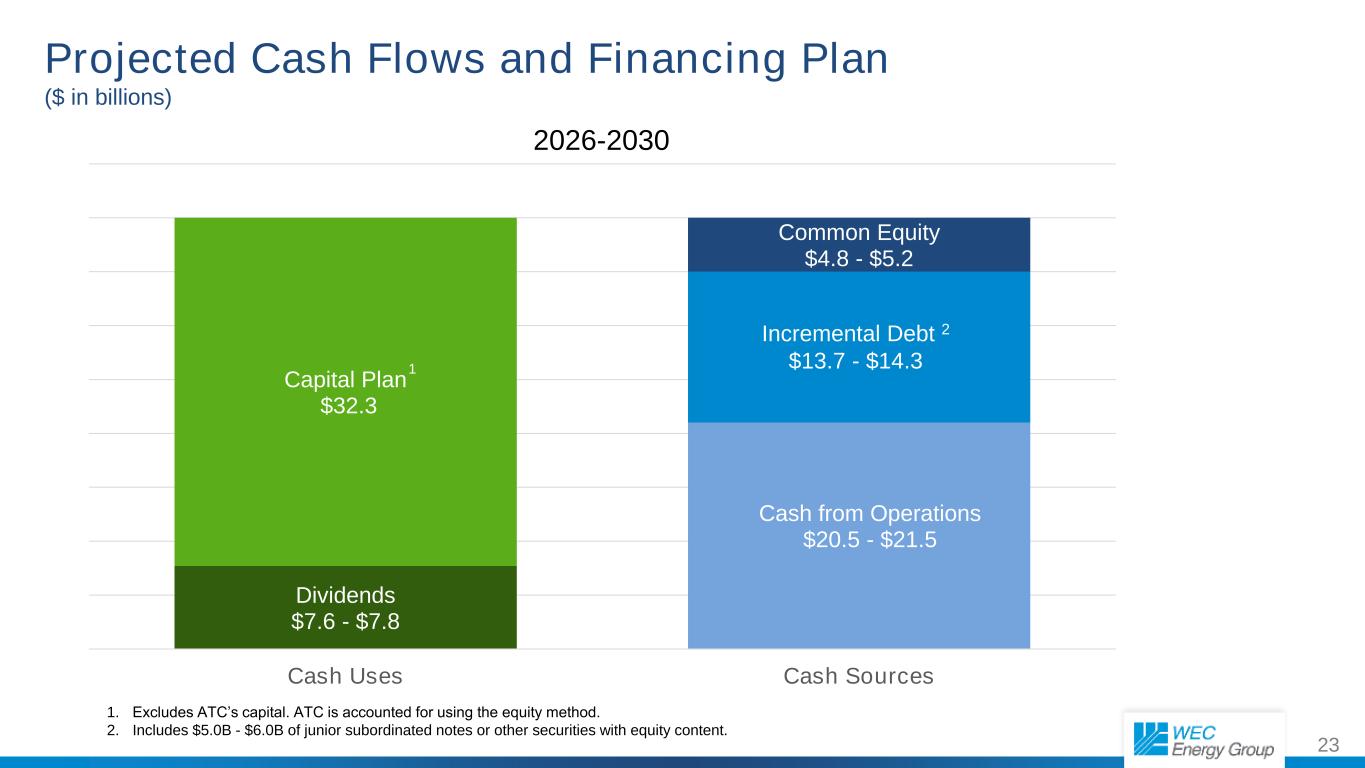
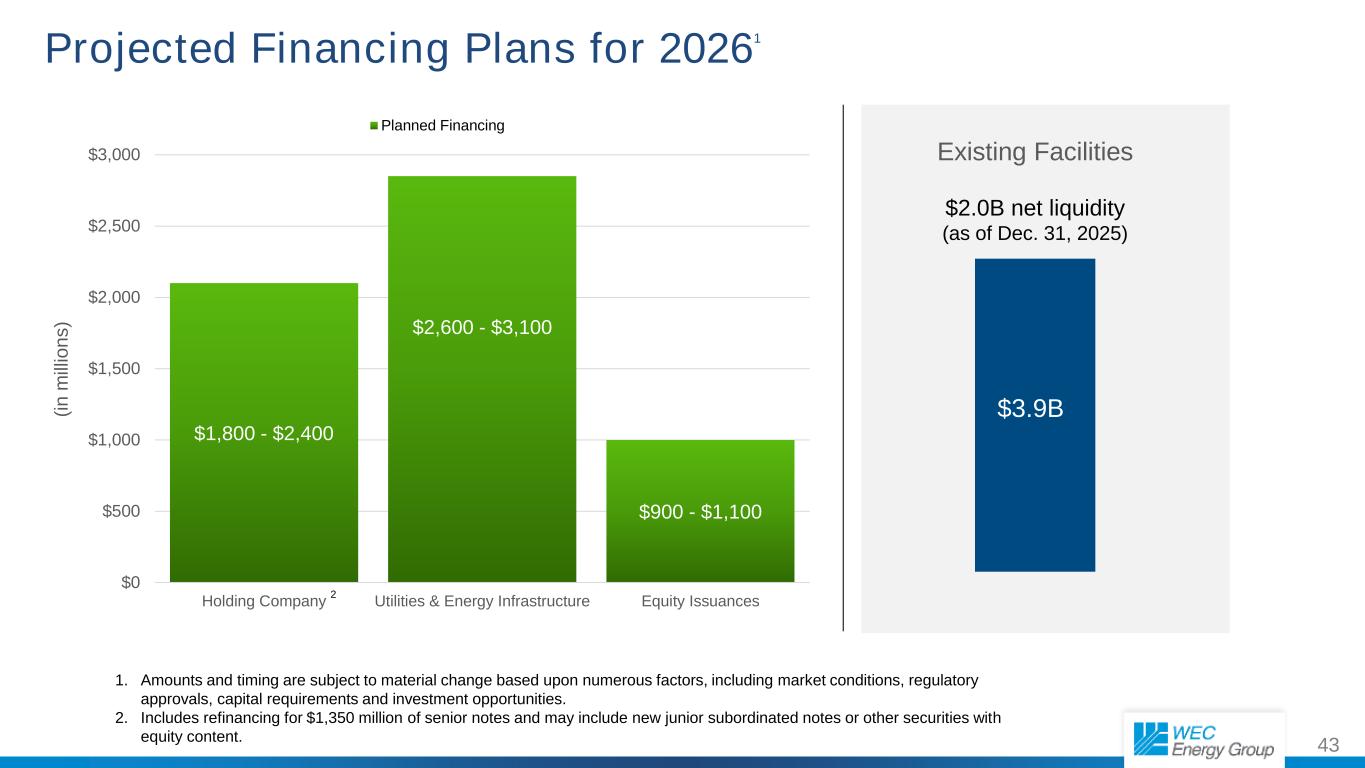
Thanks, Scott. Turning now to earnings, our 2025 adjusted earnings were $5.27 per share, an increase of $0.39 per share over 2024 adjusted earnings. Now let's take a closer look at our year-over-year variances. basis. Our earnings package includes a comparison of adjusted full-year results on page 17. I'll walk through the significant drivers. Starting with our utility operations, adjusted earnings were 63 cents higher in 2025 compared to 2024. Weather positively impacted utility earnings by approximately $0.35 relative to last year. Compared to normal conditions, we estimate that weather had a $0.10 favorable impact in 2025 compared to a $0.25 unfavorable impact in 2024. Rate-based growth contributed $0.74 more to earnings. This was largely driven by the Wisconsin rate review outcomes that were effective on January 1, 2025. It also includes 12 cents of incremental AFUDC equity from projects under construction. These positive drivers were partially offset by 46 cents from higher depreciation and amortization expense, day-to-day O&M, as well as tax and other items. Now, before I discuss earnings comparisons at the other segments, let me briefly comment on our weather normal electric sales. For 2025, retail electric deliveries in Wisconsin, excluding the iron ore mine, increased 1.1% year over year. We were slightly ahead of our forecast in every segment. For 2026, we're projecting weather normal retail electric sales in Wisconsin to grow 1.6 percent from 2025 levels. I'll note that we expect the large commercial and industrial segment to grow 5.8 percent, fueled by our forecasted data center load. Now, back to our earnings comparison. Regarding our investment in American Transmission Company, earnings increased two cents compared to 2024, driven by a six cent increase from continued capital investment to meet demand growth and maintain reliability partially offset by a one-time gain we recognized in 2024 and at our energy infrastructure segment earnings increased 10 cents in 2025 from higher production tax credits associated with the acquisition of additional solar generation projects in late 2024, and early 2025. Finally, you'll see a 24-cent variance at our corporate and other segment. This was driven by higher interest expense resulting from higher debt balances, gains recorded in 2024 from early debt retirement, and a few other items. In terms of common equity, Consistent with our plan, we issued approximately $800 million in 2025. Overall, we grew our EPS by $0.39 per share, or 8% year-over-year on an adjusted basis. Next, let's look at our earnings guidance. For the first quarter this year, we project to earn in the range of $2.27 per share to $2.37 per share. This forecast takes into account January weather and assumes normal weather for the rest of the quarter. And for the full year 2026, we're reaffirming our annual guidance of $5.51 to $5.61 per share. Of course, this assumes normal weather for the rest of the year. Finally, some comments on financing. In 2026, we expect debt funding to be in the range of $4 to $5 billion. This includes refinancing for $1.4 billion of senior notes that mature this year. And consistent with previous disclosures, we plan to issue between $900 million and $1.1 billion of common equity this year via our ATM program as well as the Dividend Reinvestment and Employee Benefit Plan. As we have mentioned before, we expect any incremental capital will be funded with 50% equity content. This applies to the incremental $1 billion of investment that Scott mentioned a few minutes ago. We don't expect it to impact our funding plans for the near term, as the spending is projected to be in 2029 and beyond. With that, I'll turn it back to Scott.
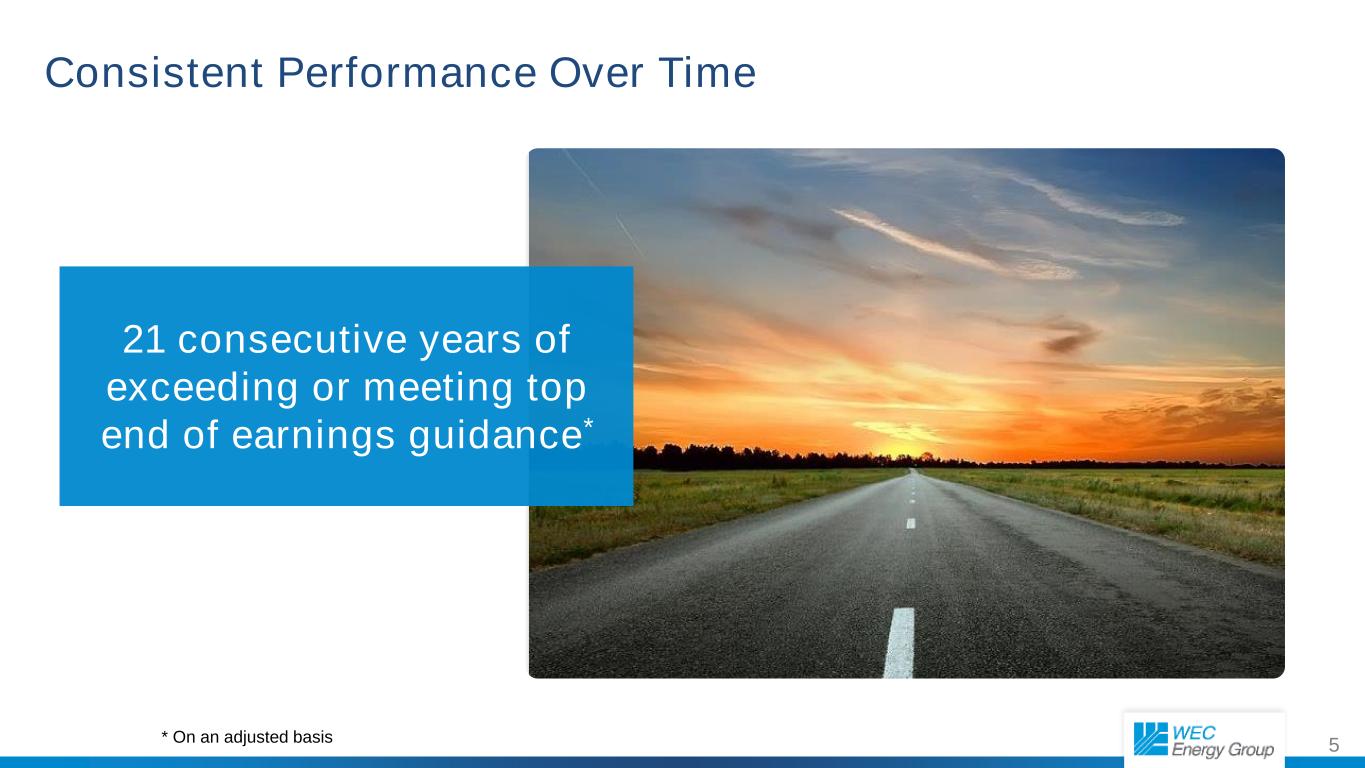
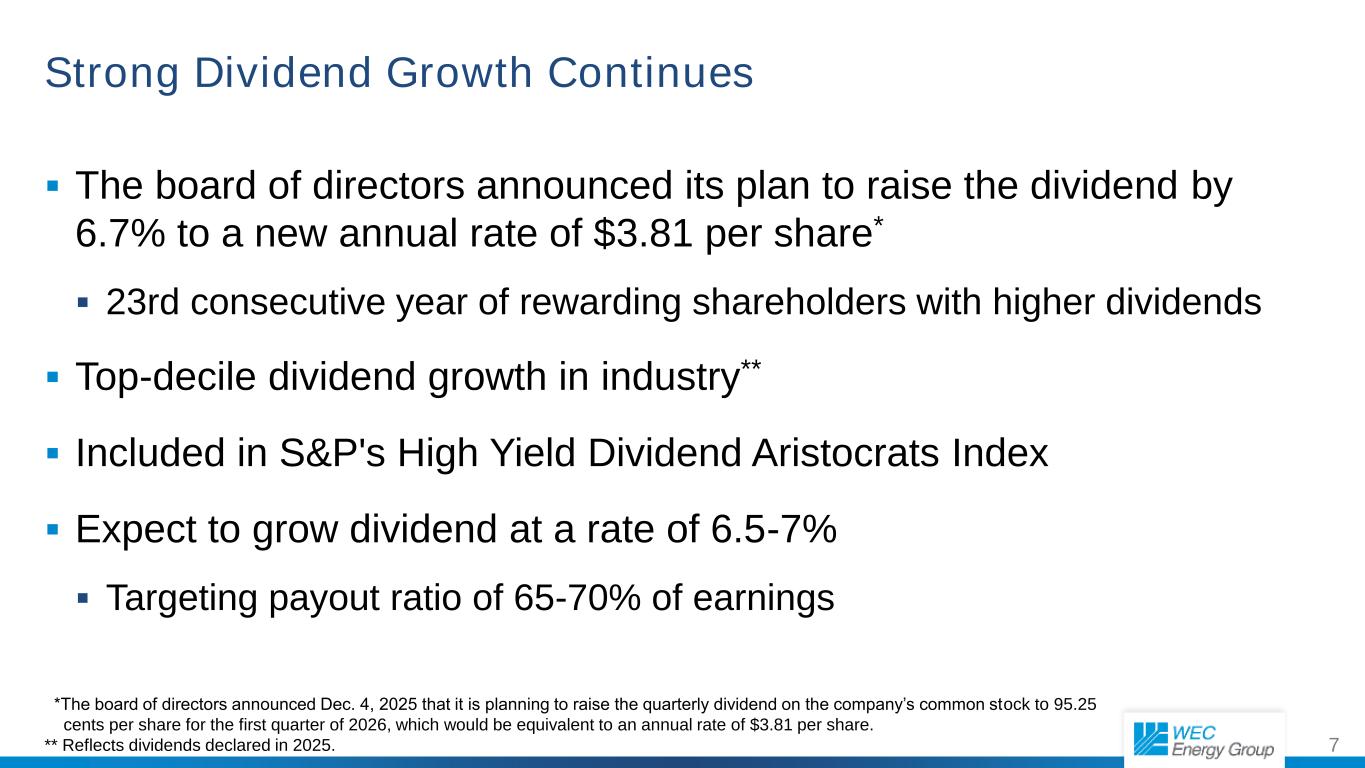
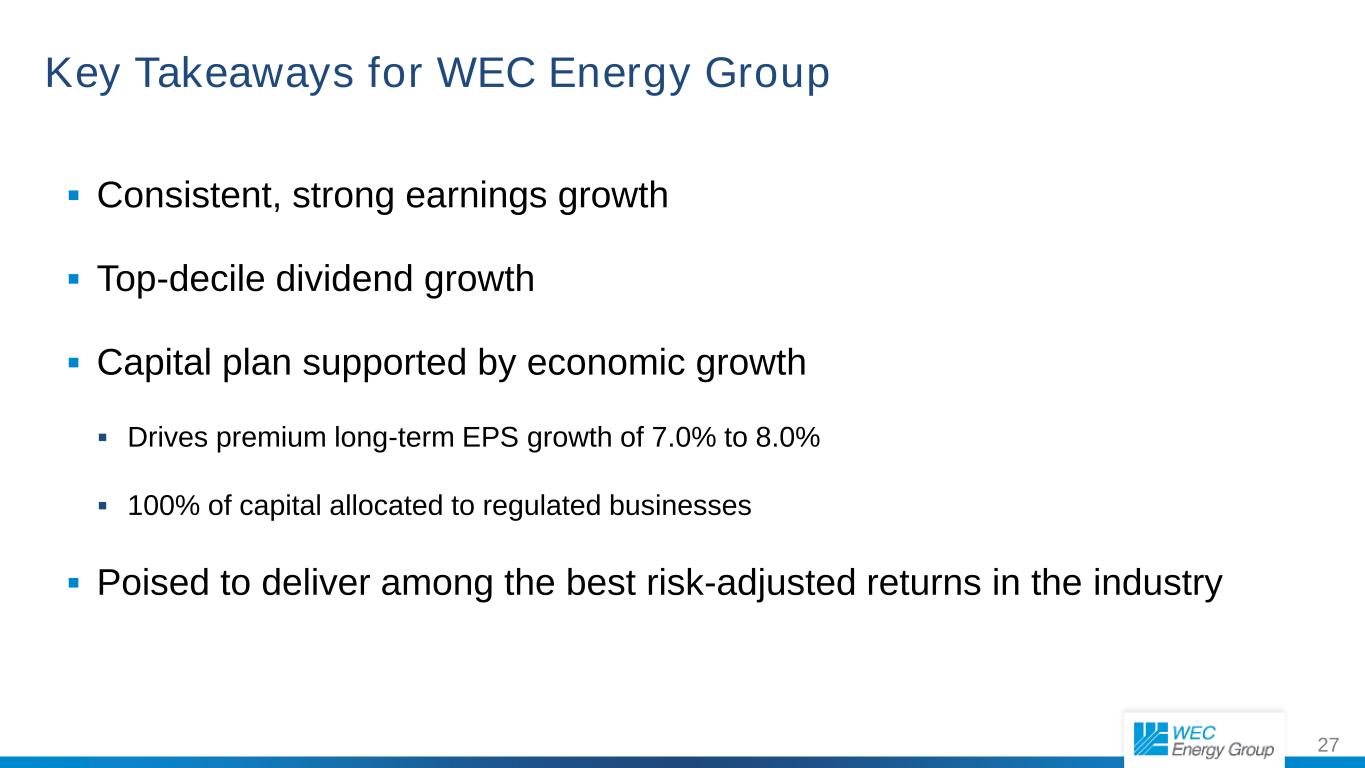
Thank you, Shaw. As you may have seen, our board at its January meeting increased the dividend by 6.7% to an annualized $3.81 per share. This will mark the 23rd consecutive year that our shareholders will be rewarded with higher dividends. The increase is consistent with our policy of paying out 65-70% of our earnings in dividends. Before I open up for Q&A, I want to summarize some of the highlights of the call. We are at the top end of the 2025 earnings guidance on an adjusted basis. We reached an agreement with the Illinois Attorney General on the terms of a proposed settlement that would allow us to put 12 historical reconciliation dockets behind us so we can now focus on the future. Economic growth is driving another 500 megawatts of forecasted demand for a total of 3.9 gigawatt increase in our five-year plan. This growth is adding $1 billion to our five-year capital plan, which is now at $37.5 billion. All of these developments give us even more confidence in our 7% to 8% long-term EPS compound annual growth rate, with acceleration to the upper half of the range starting in 2028. Overall, we're on track and focused on providing value for our customers and our stockholders. Operator, we are now ready for the question and answer portion of the call.
Operator
Now, we will take your questions. The question and answer session will be conducted electronically. To ask a question, please press the star key followed by the digit 1 on your phone. If you are using a speakerphone, turn off your mute function to allow your signal to reach our equipment. We will take as many questions as time permits. Once again, press star and then one on your phone to ask a question. Your first question comes from the line of Julianne Domolin-Smith with Jefferies. Your line is now open. Please get ahead.
Hey, good afternoon, team. Nicely done. Got to say, a bevy of updates here today, no doubt, nonetheless. I wanted to follow up on the commentary you guys started with at the top of the call on Microsoft here. Can you elaborate a little bit more about the 500 megawatts that you're putting in here now? I mean, to what extent is there even more beyond that, right? Every time you give us some, we're going to ask about the next piece. But also as it pertains to the CapEx, right? You talk about a billion dollars of additional CapEx. To what extent does that 500 megawatts or the billion dollars stretch beyond technically the five-year period as well? And what do you know about the further ramp there, too?
Sure, Julian. Thanks for the question. And when you look at it, Microsoft has been working on that first 1,364 acres. And we've always talked that the growth that we have has been started in that main spot. and now they're starting to add to the north of highway 11 locally it's that's a project north so that's where we added the 500. i think as you as we continue and when you listen to the microsoft conference call someone asked about the wisconsin development and they talked about that as a multi-year delivery um so i think there's gonna be a lot to come as we start thinking about 2031 in the future also and remember there's still more land that they are looking to purchase and haven't developed yet. So I think there's a lot of opportunities here.
Do you want to expand on that? I mean, it seems as if the other parcel here might even be bigger than the first one. Can you just elaborate a little bit about what we understand in sort of the multi-stage? I get maybe at times folks are shy to talk about the full extent of the opportunity. But still, you know, obviously phase one has been so large, 500 megawatts. Do we have any other further clues about just how big and how fast this could go? Sorry to press you so much on it, but it's tantalizing.
Yeah, I understand completely, and we're very excited about the development here, what they're doing here in Wisconsin. You know, I do not want to get out ahead of Microsoft and their plans. All I can really say is, you know, they're starting to do land at about 570 acres, and that's about where we put that 500 megawatts. There's more land. You know, that's just the start of that development when you think about the amount of megawatts people are now putting on land. and then I think there's at least another couple hundred or so that they haven't developed and they're looking for more land as we've talked to the paper they've been very transparent here in southeastern Wisconsin on their plan so more to come but and I don't want to get ahead of Microsoft by any means so just very positive as we continue to see their development grow awesome and then just then I'll bring up another subject real quickly on Point Beach how are the negotiations progressing?
And at what point do you need to make a decision about the 500 megawatts there for replacement power or what have you for the 2030 piece?
Yeah, it's a great question. And when we look at it, you know, those contracts end in 2030. And then the second one is in 2033, I think, at the beginning of 2033. So we have time, you know, we're still in communications with NextEra on the plant, we're going to factor all that in and what we need, which I only can see is potentially upside in our plan, in our fall update. So we're going through our planning process like we do every summer, looking at, you know, how did the winter, you know, this cold spell, how did the system perform? What do we look at in the future for additional growth, adding another year on to our sales forecast, and then, of course, factoring in this Point Beach PPA if we need to replace it with some other generation, you know, I see that as potential upside in the plan, but we'll factor that into the fall.
Awesome. Nicely done, guys. We'll talk to you soon. Take care.
Good luck. Thank you. Yep.
Operator
Your next question comes from the line of Char Peraza with Wells Fargo. Please go ahead.
Alex
Analyst — Wells Fargo
Hey, good afternoon, everyone. It's actually Alex on for Char. Thanks for taking it.
Alex
Analyst — Wells Fargo
So, you know, obviously you're see Microsoft and the Vantage projects, but can you maybe talk a little bit more, I mean, to the extent that you can, are you seeing additional interests from other hyperscaler customers? And if I could just add on, you know, there's been local opposition around data centers in other parts of the state, but can you just talk about your strategy and overall confidence level around attracting customers despite some of these headwinds we've seen recently?
Thanks. sure sure and and you have seen a little noise around the state i think you're seeing a couple things now and i'm very confident that other people are looking at opportunities in wisconsin and we have a lot of discussions and even microsoft has talked about even being more transparent so i think everyone understands they need to be more transparent working more with the communities being much more proactive than they were two years ago so i think that's all positive developments here. I think also our very large customer tariff that protects all our other customers. The hyperscalers understand it and like the fact that they can really point to something very transparent and protecting other customers. So, you know, we don't have a tendency to talk about a pipeline because we want to just talk about what's actually announced and developed, but there's other opportunities and we're in multiple discussions.
Alex
Analyst — Wells Fargo
Just sort of, you know, looking at obviously your sense on you know what could be holding you back from growing at that seven to eight in the first half of the plan is there anything uh you see out there that could potentially move the needle thanks yeah yeah that's a great question and you know we're six to a half to seven this year and we're consistent we talked about seven to eight in 27 and then
in the eight range after that it really just mirrors our capital plan and everyone's doing a great job getting projects identified and getting things staged it just takes a while for all those capital to get ramped up um but we're right on time and in fact we've even ramped up maybe even a little faster than we anticipated here in a couple projects which is good to see too early to do anything uh move anything but really positive and it really just mirrors our capital plan but adding this extra billion which is as shaw said probably in that 29 30 time frame just really is going to strengthen the long-term outlook for our capital plan.
Alex
Analyst — Wells Fargo
Thanks for the color. I'll leave it there.
Operator
Your next question comes from the line of Nicholas Campanella with Barclays. Please go ahead.
Hey, good afternoon, everyone. Hope everyone's well. Thanks for taking my questions.
Good afternoon to you, too. Yeah, absolutely. Good to get all the updates. just wanted to ask on regulatory just now that we kind of have you know all the testimonies out there on the vlc you know how do you feel about uh the potential to kind of settle this if if if that's important at all and if the window is open to do so and then i'm also just wondering the timing on the um on the grc filing if that's you know still on track for midway through this year Thanks.
Sure. Great question. And the very large customer tariff, I see that going the entire period that the commission makes a decision. And one of the items that we want to make sure we have when everyone talks about affordability and data center causing rate increases, this tariff is one of the best or the best out there, we think, to make sure the data centers pay their fair share. We want true transparency, and we want to go through the entire audit process and get all those questions out there. So remember, we filed it in conjunction, and Microsoft and Vantage have supported the tariff, and now we're just going through a very thorough vetting process. And I don't have any concerns going through the entire process, but once again, the goal of this is to make sure the customers pay their fair share and to make sure everyone understands how it's working so we have true transparency on our on our largest customers and then on the on the rate case filing we're on track filing in April we're still we're in the process of pulling the numbers together but you know on track they get that filing out there hey great thanks for thanks for that and then just maybe really quick on the financing just I know that there the comments around uh you know the 1 billion atm uh for 26 just any thoughts on you know further
de-risking the plan past that or you know could there be any downside to this number if you guys were to lean on some additional hybrids if there is capacity thank you yeah let's uh answer that one yeah absolutely we are all over that so we have very limited hybrid financing so far we had a six hundred million dollars issuance last year so we have a significant capacity for hybrids but this nine hundred to one point one billion dollars I talked about is for common equity financing and as I said we're relying on the ATM so we fully expect to get that executed throughout the year thank you
Operator
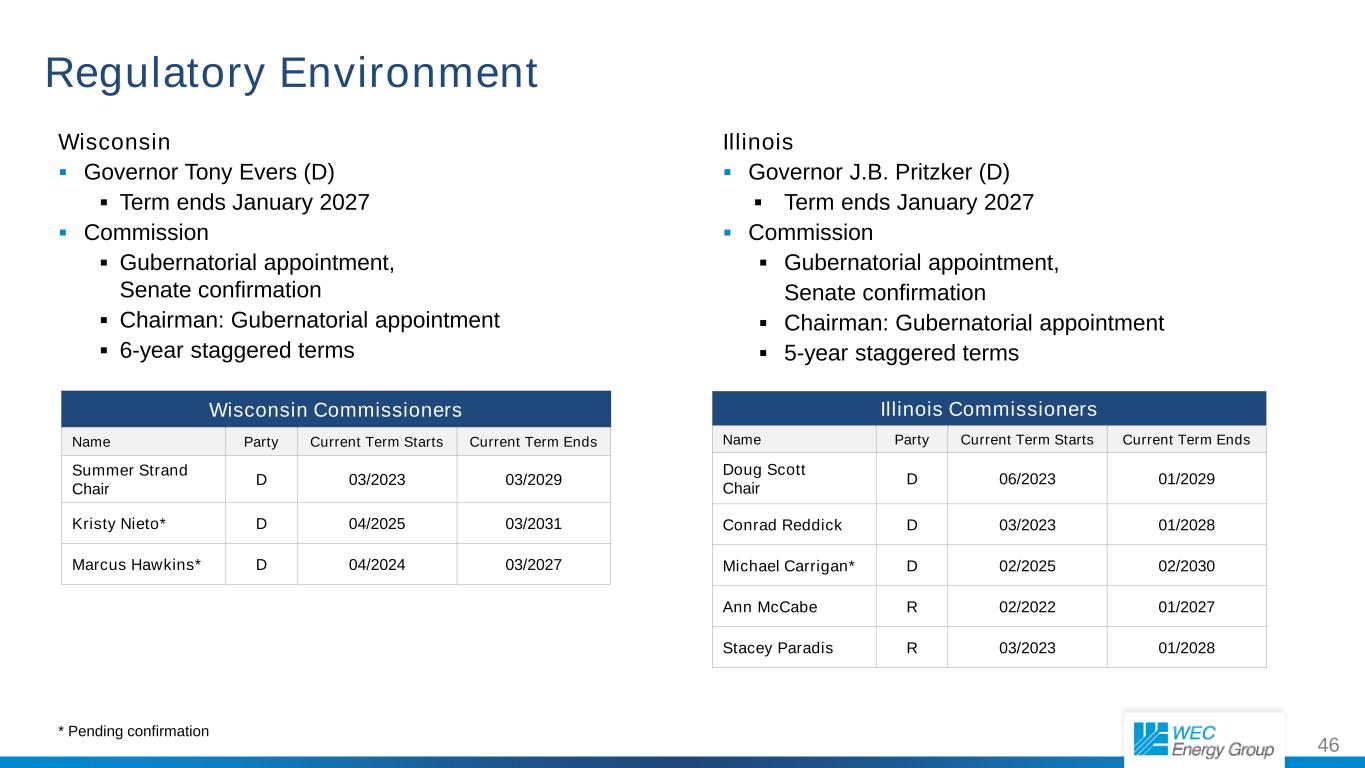
thank you your next question comes from the line of Carly Davenport with Goldman and sex please go ahead hey good afternoon thanks so much for taking the questions um maybe to to start just can you talk a bit about how you're thinking about potential election rhetoric around affordability just in the face of filing a rate case in wisconsin in the next couple of months and and just how that might inform your filing or the rate case process sure sure and you're you know across the country you're hearing affordability and in wisconsin here as you as you mentioned you
know we do have a governor's race it's a pretty open race our governor evers is not running again so there are several democrats who have thrown their hat in the ring we're really early in the process there's several issues that they're bringing up you know in addition to affordability and property taxes they're also looking at health care child care education so there's a lot of topics that are being floated around. But we're definitely aware of affordability and we continue to, we're pulling our numbers together, but we are doing a lot to try to keep our rates as low as possible, having a lot of initiatives to keep costs low. And in fact, as we closed the books this last year in Wisconsin Electric, when you look at the performance of our plants and the fuel costs, we were able to be in a positive fuel recovery. And because of the warmer weather, we got into a positive position on their sharing mechanism at Wisconsin Electric. The results are approximately $55 million that we'll be able to give back to customers. So we think about affordability every day, but that's how we're kind of factoring stuff in.
Operator
That's great. Thank you so much for the color there. And then the follow-up may be just on Illinois. I know you're still early stages on the PRP, but I guess are there any near-term milestones we should be watching there to gauge progress and also gauge the support from the commission for those investments?
Sure. Great question, and you are exactly right. We are in the early stages. This year, I think we're looking at retiring approximately 35 miles, and that's ramping up every year until we get to what we think is a run rate in 2028. we are you know this settlement is a big step forward as in we stopped to look looking backwards and now we're looking forward the early indications will be and we were working on the projects and soon starts to kick off with field work we've done a little bit last year laying out the plans but really in this test year we'll have forward-looking capital plans that the commission will also have a look at and we're working very closely now that the safety monitor is on is on staff and has been hired and laying out our plans of what we're doing and how we're
reporting to the safety monitor so i think the indication is going to be probably the first one is what happens in our rate case filing that we just filed which is really forward looking for 2027 and how we prioritize the projects got it great thanks so much for the updates thank you your next question comes up from the line of michael sullivan with wolf research please go ahead I'll just pick up on the last I'll just pick up on the last line of questions sticking with Illinois any chance you can settle these rate cases and then also as it relates to the riders you just settled on I mean it seems like the bill credits and rate-based reduction creates a little bit of a headwind so just how you're thinking about offsetting that sure sure Sure.
And it's really early to even think about settlements on the Illinois case yet. So we'll see where we get as we get through the audit and the staff audit and intervener. So a little bit too early on all of that. When you think about the settlement we just had in Illinois and you look at that, really look at the overall picture. That's why we reaffirmed our long-term growth rate of that 7% to 8% growth with the upper end of the range in 2028 and beyond i mean we factored all that in as we as we looked at that and as you heard on the call we just add another billion dollars of growth and remember that growth is really driven by the hyperscalers which are paying their share for the electricity cost so it doesn't have a burden on our other customers rate so you know we were able to offset it um very quickly here but a good spot to move forward in illinois okay great then maybe i'll just go there next in terms of the, what the Microsoft ramp could do, um, they're paying their fair
share. Is it possible they actually can lower rates for customers and maybe any sense of size you could give us on the upcoming Wisconsin rate case?
Yeah, sure. I mean, you think about it, they're paying their fair share, which includes corporate allocations and other common costs, But which eventually, and I think you're going to see more of this as that bill gets bigger, of course, the more corporate allocations you have, the less burden it is on all other customers. So it's hard to really quantify that until we start seeing actual real stuff go into service. Remember, their first site is just starting to go into service, and a lot of that capital spending is in the lighter part of the plan, but long-term, it's incrementally good for customers.
Operator
Your next question comes from the line of Stephen Dambresi with RBC Capital Markets. Please go ahead.
Hi, Scott. Hi, Shaw. Thanks very much for taking my question.
I just had a quick one. Congratulations on increasing the Microsoft load. But I really wanted to follow on to Julian's Point Beach questions and just quickly understand, you know, to the extent you do move forward with replacing the Point Beach PPA with generation, do you have generation interconnect agreements or slots in the MISOQ, or can you participate in the ERAS process? I think there's a rolling window where you can cycle in, and I just wasn't sure if you already had any slots or were looking to potentially add some, or if that's a place that we could watch to see potential activity on your end. Thanks.
Yeah, that's a good question. And we work alongside with a very good developer of energy as we develop our plans to make sure we have, you know, renewables, batteries, you know, natural gas generation. And, you know, I feel very confident in talking to our generation team, not to give you too many details here, that we can replace that power as we look at 2030 and 33. three, we're going to look, of course, at what's economic for our customers. So, we're going to really balance the economics of our customers and what makes sense as we look at Point Beach and we look at capital investments, what's overall best for our customers.
Operator
Your next question comes from the line of Andrew Wiesel with his Scotiabank. Please go ahead.
Hey, good afternoon, everybody. hey Andrew first just a quick one the gap charge you took related to Illinois is there a cash component to that or might there be one going forward sure there's there's two components and the total is that 46 cents as you saw on that adjustment the one component is 130 million dollar rate-based components that is forward-looking in perspective it'll be factored in in the final rate order. That's what we're anticipating will happen. And then there's 125 million of cash credits that go back to customers over the next three years. It's approximately 50 million in that first year, and then the last two years is split evenly for the remaining 75. So that's, it'll be a little cash. It'll be a little pressure, of course, on our FFO debt matrix, but good to get these old cases behind us. Got it. Thank you.
Next, I'm hoping you can clarify a little the interplay between the VLC tariff and the general rate case. I've been getting enough questions. I think there's some confusion. Firstly, can you preview when you file in April, just round numbers, what kind of rate impact should we expect for the general customers now that the data center customers are being separated?
Sure. And we're pulling those numbers together. So I really, there's a lot of stuff that has to happen and look at it, but we do keep affordability in our mind as we pull this case together. But just to give you a little color on how we're looking at it, the total company will be provided on what our total expenses, capital spending, and then we'll have separated, just like we do for our wholesale customers, separated for these very large customers, the wholesale customers, and then what's remaining for our general rate case. So it'll be very, once again, very transparent on all the assets that the very large customers are paying for in total. So that's kind of how it's going to be broken out. And of course, you know, how the bills and stuff are set up and all the costs will be allocated that are directly assigned or allocated to those very large customers. So we're in process of laying out how that will look right now. But that's the concepts.
Okay, fair enough. And then, you know, going one step further over the longer term, beyond 27 and 28 test period that will be addressed, how should we think about kind of this idea if data center activity exceeds expectations, would that help the rest of the customers by lowering their rates or just leave them unimpacted?
In other words, is the idea that data centers are completely independent or is the idea that excess data center activity should help the rest of the customers? in general as you look at it and it takes several years but a lot of corporate allocations are allocated on total rate base and cost so as you can imagine even like we went through the acquisition of integrus we are able to spread common cost across a bigger footprint having data centers will have significant rate base i think in our five-year plan we're looking at that rate base to be in the 14 to 15% of our earnings. So a significant part of that. So corporate allocations will get spread across a larger rate base. And you're going to see more of that as those assets continue to build. But that's, you know, more of it's going to be in service than that 28, 29, 30 timeframe.
Okay. Very good. One last. It does. Yeah. Thank you. One last one, just on timing.
My understanding is the VLC ruling should come pretty much around the same time as you're filing for the general rate case is it important that the first one concludes before the second one begins or do you think of them as independent tracks now i you know we're pulling it together assuming the filing that we have on the table right now and and will be too too independent because we would have to file most likely and like you said about the same time um or maybe a little before that final decision is made on the rate on the vlcs okay great thank you so much thank you your next question comes from the line
of Paul Freeman with Latin Berg please go ahead hey thank you very much and congratulations first question is the Microsoft and announcement should we think of that as the replacement for the canceled Caledonia project or are they still looking to do something uh to replace that so a great question that thanks thanks paul um when you look at it they had already purchased this land before that caledonia they they re they're looking for additional land beyond the caledonia so they're still looking for additional land to replace what they um decided to pull out or remove away from in caledonia right um and then And my next question has to do with sort of the pricing of Point Beach terminates around $120 per megawatt hour. I would think that new build would be a savings over sort of the last years of the contract pricing. um so why should we not assume that you would opt uh for new build versus recontracting i i think i think you're uh gluing it together a pretty good assumption there that those prices are pretty high and if and if those prices you know they think they should be that high a new build when you think about affordability probably makes sense but we're we got to run that analysis yet and more to come but i do think there's upside here okay and maybe last Sort of a quick follow-up to that, are there retired coal plant sites that could be sort of used for a new build?
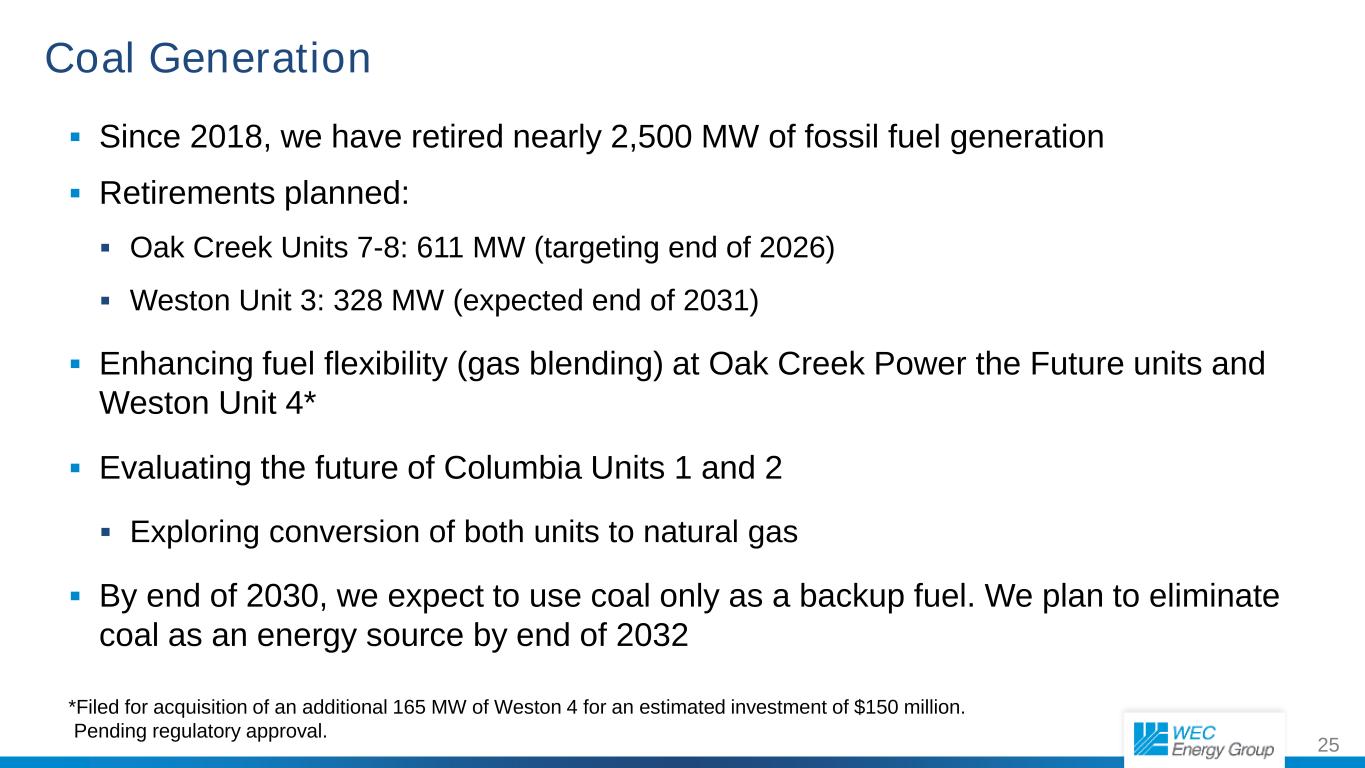
No, you know, right now, actually, the coal plant that we retired multiple years ago, that's actually an economic development used that site. So we've already developed some of those sites for other economic development, but we're looking at other locations and opportunities. Really, you've got to think of it now as where is the natural gas line for those gas pipes and how do you get that capacity in? So, more to come, but we have spots in mind.
Great. Thank you so much.
Operator
Your last question comes from the line of Paul Patterson with Glenrock Associates. Please go ahead.
Hey, Paul. just have a quick few um uh housekeeping items just uh whether the residential um number looks like you're you're planning on it going down in 2026 not by much but just in general is that because of energy efficiency or is there something else we should be thinking about uh we always try to be a little conservative in the forecast so the base assumption is we do see good customer growth but there's a little bit of a decline in use for customers overall it's a slight reduction but we try to be conservative in the forecast.
Speaker 9
And then just in terms of the the impairment on the Illinois thing I see the 130 million dollars I think in the income statement called out the other 75 million dollars just from a geography you know a a a income statement geography yeah the other 70 yeah the the other the the other amount goes through revenues for some accounting reasons okay yeah and we'll yep absolutely all right that concludes our
conference call for today thank you for participating if you have any more questions please feel free to contact Vestraka at 414-221-4639. Thank you.
Operator
Ladies and gentlemen, that concludes today's call. Thank you all for joining. You may now disconnect.