Operator
Thank you for standing by. My name is Kayla and I will be your conference operator today. At this time I would like to welcome everyone to the WEX First Quarter 2025 Earnings Call. All lines have been placed on mute to prevent any background noise. After the speaker's remarks, there will be a question and answer session. If you would like to ask a question during this time, simply press star followed by the number one on your telephone keypad. If you would like to withdraw your question, again, press the star and one. I would now like to turn the call over to Steve Elder. You may begin.
Thank you, Operator, and good morning, everyone. With me today is Melissa Smith, our Chair and CEO, and Jagtar Narula, our CFO. The press release and supplemental materials issued yesterday and a slide deck to walk through prepared remarks have been posted to the Investor Relations section of the website at wexinc.com. A copy of the press release and supplemental materials have been included in an 8K filed with the SEC yesterday afternoon. As a reminder, we will be discussing non-GAAP metrics, specifically adjusted net income, which we sometimes refer to as ANI, adjusted net income per diluted share, adjusted operating income and related margin, as well as adjusted free cash flow during our call. Please see exhibit one of the press release for an explanation and reconciliation of these non-GAAP measures. The company provides revenue guidance on a gap basis and earnings guidance on a non-gap basis due to the uncertainty and indeterminate amount of certain elements that are included in reported gap earnings. I would also like to remind you that we will discuss forward-looking statements under the Private Securities Litigation Reform Act of 1995. Actual results may differ materially from those forward-looking statements as a result of various factors, including those discussed in the press release, the supplemental materials, and the risk factors identified in the most recently filed annual report on Form 10-K and other subsequent SEC filings. While we may update forward-looking statements in the future, we disclaim any obligations to do so. We should not place undue reliance on these forward-looking statements, all of which speak only as of today. With that, I'll turn the call over to Melissa.
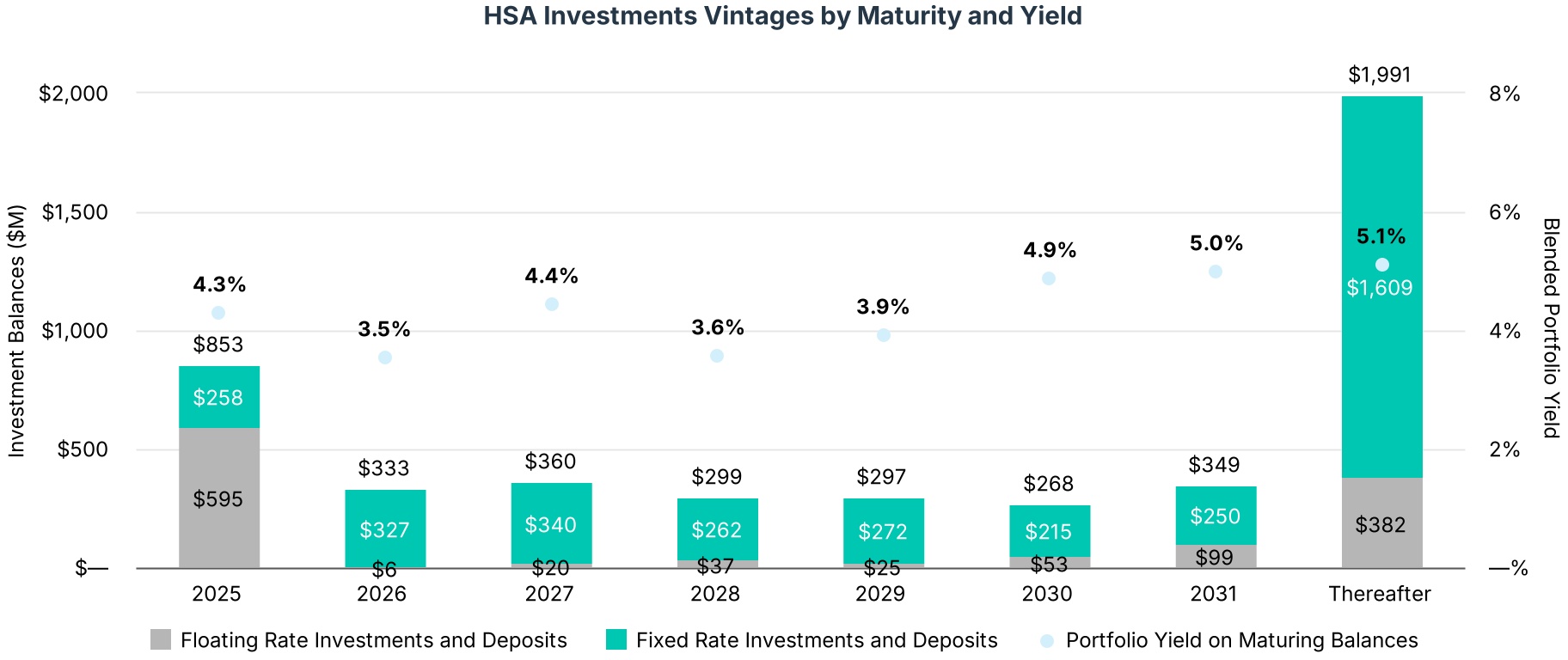
Thank you, Steve, and good morning, everyone. We appreciate you joining us today. Let me begin by addressing the current macroeconomic landscape. While recent U.S. tariff policy decisions have created uncertainty in the economy, they do not directly impact WEX's operations. That said, we recognize that these policies influence our customers' behavior. In response, we are proactively engaging with them to assess potential impacts and develop plans for a wide range of possible scenarios. In this ever-changing environment, our ability to adapt, innovate, and stay focused on what matters most has never been more important. The secular growth drivers in each of our segments remain highly relevant and very much intact, and WEX is well-positioned to continue advancing as an industry leader in our segments. We've also consistently maintained high customer retention, even during times of economic uncertainty, a testament to the strength of our value proposition and the trust we've built across our customer base. We believe that one of the advantages of WEX's business model is that our strong financial position in diversified segments provide a meaningful buffer against short-term softness in any one sector. Our segments each have different opportunities and risks through economic and business cycles, which helps position us well to navigate ongoing macro uncertainty. In addition, these segments can leverage common technology, resources, and investments, increasing our operating leverage and ability to scale quickly. I remain excited about the opportunities in front of us. We are committed to balancing our long-term investments while remaining disciplined and responsive to near-term macrodynamics. Now, turning to the first quarter results, we reported revenue of $636.6 million for the quarter, a decrease of 2.5% year-over-year, excluding the impact of fluctuations in fuel prices and foreign exchange rates. Q1 revenue was down 0.8% compared to the prior year. Adjusted net income for diluted share was $3.51, an increase of 1.4% compared to the same quarter last year. Excluding the impact of fluctuations in fuel prices and foreign exchange rates, Q1 adjusted EPS grew 5%. Revenue for the quarter exceeded the midpoint of our guidance, while adjusted EPS was above the range. Operationally, our results were consistent with our expectations, and we benefited from slightly higher than anticipated fuel prices. We remain laser-focused on the factors we can control, including executing against our strategy, delivering differentiated products and value to our customers, and driving long-term shareholder value through a disciplined, returns-driven approach to investment and capital allocation. At the same time, where we can, we're assessing and preparing for any financial impacts of policy and macroeconomic changes. Now let's turn to an overview of our segments and how they performed in Q1. WECS operates across three large and growing markets, mobility, benefits, and corporate payments, each of which we believe offers significant long-term secular growth opportunities where we hold distinct competitive advantages. Mobility, our largest segment at approximately 50% of total revenue, delivers fleet payment solutions, transaction processing, and data-driven insights to fleet operators and managers globally. Our proprietary closed-loop payment network provides customers with enhanced data capture, custom controls, and tailored economics, and covers approximately 90% of fuel stations and 80% of EV charging locations in the U.S. These capabilities help fleet managers optimize costs, detect misuse, improve operational efficiency, and support the complexity of operating a mixed-energy fleet. This segment has two primary categories. The first category, comprising roughly 70% of mobility revenue, is local fleets. The remaining 30% is driven by our over-the-road trucking customers. With more than 600,000 fleet customers globally, our competitive moat is built on being data-rich, capital-efficient, and deeply embedded in our customers' daily operations, delivering both functional value and long-term stickiness. Q1 results from the mobility segment were in line with expectations. Transaction levels were down slightly from the prior year, partly due to external factors, including a number of weather events across the U.S. Same-store sales growth for local fleets was down 3.9%. Commercially, over-the-road customers saw an uptick of approximately 2.6%. Our working thesis for same-store sales is that local fleets have been responding to the effects of a softening macro environment, while OTR benefited from a pull forward of trucking demand ahead of the implementation of tariffs. We're particularly pleased with our continued momentum in sales, renewals, and customer retention. In Q1, we successfully extended longstanding partnerships with several of the most respected names in the industry. including Circle K, Enterprise Fleet Management, and J.D. Hunt, a testament to the value we deliver and the trust we've earned in the marketplace. Turning now to our benefit segment, which simplifies the complex world of employee benefits administration and represents approximately 30% of total company revenue. Here we offer a comprehensive platform that spans HSAs, FSAs, HRAs, COBRA, and Benefit Enrollment and Administration, enabling both employers and partners to help their employees make more informed benefit decisions. WEX serves nearly 60% of the Fortune 1000 in this segment and manages more than 21 million SaaS accounts. This segment is sticky due to the deeply embedded nature of our offering. For partners, it's integrated into their platform. For direct customers, it serves as a critical employee benefit solution. For both customer sets, switching providers is complex and disruptive. The embedded nature of the platform, combined with high retention in predictable SaaS and custodial revenue streams, leads to attractive margins and long-term customer value. We had a very good open enrollment season, which sets us up well for the remainder of this year. We grew total HSA accounts on the WEX benefits platform by 7% in Q1, bringing us to more than 8.5 million HSA accounts. Overall, SaaS account growth was 6% for the quarter. According to the 2024 year-end debonier HSA research report, HSA industry account growth was 5% for the market, so our 7% organic growth compares very well and underscores our competitive strength. This performance was driven largely by a direct account, which grew nearly 10% compared to the prior year. As we discussed in February, this is one of the key areas where we are increasing sales investments this year. We believe the benefit segment is less sensitive to macroeconomic trends than the rest of the company and provides stability to wax during economic downturns. For example, during the COVID-19 pandemic, we saw the increase in unemployment have a modest impact to account growth, but this was partially offset by increasing usage of our COBRA product. As a result, total account growth remained fairly consistent despite the disruption. In addition, the interest income we earn is less sensitive to changes in interest rates as it is invested predominantly in fixed-rate products with maturities that vary and extend over several years. As I stated earlier, one of the strengths of the company is how diverse segments don't react in lockstep to macro events. In the case of our benefits segment, we value its long-term growth profile and stability. Moving now to our corporate payment segment, which represents approximately 20% of our revenue and includes two major offerings, Embedded Payments and Direct Accounts Payable. Embedded Payments represents the majority of the revenue in the Corporate Payments segment, including all of our travel-related customers. With this solution, we integrate virtual card payment capabilities into our customers' existing workflows. We combine highly customizable reconciliation benefits with a range of card products and currencies, an order of magnitude larger than most competitors. These capabilities are coupled with deep industry knowledge and experience and a best-in-class service approach. Our embedded payments offering has high operating leverage. Because the investment in the technology platform represents the majority of cost, it is a largely fixed cost base, and most incremental volume is accretive to our margins and cash flow. Our ability to compete and win here is built on our technical and domain expertise strengths, and our economic strength that stems from scale. Within our embedded payments offering, Q1 purchase volume was down, in line with our expectations. The large travel customer we've mentioned in recent quarters is nearing the end of their transition to a new operating model with us. We remain on track to lap this headwind that began in Q3 last year, and we continue to expect a return to growth in the second half of 2025. Switching gears to talk about the direct AP product with our corporate payment segment, which accounts for approximately 20% of segment revenue. This solution automates accounts payable by integrating with enterprise resource planning systems and accounting workflows to maximize virtual payment usage. During the quarter, direct AP volume grew nearly 25 percent compared to last year. We're seeing a contraction in spend per account in the face of a tougher economic environment similar to the market. That said, our new account growth is outweighing the slowdown in spending, which only bolsters our confidence that additional sales, marketing, and product investments we discussed last quarter will have a strong return, even in a diminished macroeconomic environment. From a macro perspective, I do want to provide some context on our corporate payment segment. We have deep relationships with our embedded payments customers. Our portfolio is skewed towards international hotel spend, and we appear to be holding up better than the noise we've heard in domestic travel. At this point, we have not seen signs of a slowdown in our travel volume, but we remain vigilant and will continue to monitor this given the rapidly evolving macroeconomic outlook. For our direct accounts payable product, we're monitoring business spending and usage trends, along with the credit health of our portfolio as we progress through 2025. During an economic downturn, middle market companies need a partner that will give them security, visibility, and control as it relates to their AP spend. As mentioned above, our intent here is to grow through a contraction in spend per account, being mindful of how we extend credit in a risk-tolerant fashion. I'd now like to provide an update on the growth initiatives we outlined last quarter. As a reminder, the incremental investments we discussed in February are being deployed across all of our segments, roughly in line with their size. While we are progressing as planned, we're also being mindful of the rapidly evolving economic landscape. We believe that the investments we're making will deliver strong ROIs and contribute to a re-acceleration of growth. At the same time, should external economic conditions deteriorate substantially from here, we will, of course, be thoughtful about our approach. Roughly 75% of our incremental Q1 investment within the mobility segment, where we've been deploying a multi-channel marketing strategy targeted at small business customers, we are seeing encouraging early results for our small business prospects. New application volumes are outperforming the prior year by 18%. These early results give us added confidence in the ROI of these investments, and I'm excited about how well we are positioned as we exit Q1. We're also making investments in sales headcount across the company, which will drive further impact as our pipeline gets onboarded and ramped later in the year. In closing, while we continue to monitor the broader macroeconomic environment, we remain focused on thoughtfully driving our strategic initiatives forward. Greater policy clarity will undoubtedly help our customers navigate the uncertainties they face, and we expect that resolving these uncertainties will lead to a return to more normal buying cycles and payment volumes. That said, I remain as confident as ever in WEX's competitive position across each of our markets. I think it's worth adding that our board regularly reviews the composition of our business portfolio. They balance the strategic advantages of diversity and scale with potential opportunities to acquire or dispose of businesses at attractive valuations, while factoring in hard costs that might be borne as a result of any strategic shifts. These reviews are conducted thoughtfully, on a regular basis, and when appropriate, with the assistance of independent advisors. While we believe our current configuration is attractive and there is value in our scale and diversification, we will continue to use our best judgment about our business composition, always with the goal of delivering great returns for our shareholders. I believe that WEX is better positioned than ever before to meet our customers' demands. The careful investments we're making in product, sales, and marketing will position us to be at the forefront of capturing this demand. We have a stable and experienced management team and a deep bench of talent that is focused on what we can control. I am confident WEX will navigate this period and ultimately emerge stronger, even better positioned to deliver value to our customers and shareholders. I want to thank our teams for their hard work and commitment as we kicked off 2025. We're pleased with our Q1 performance and the progress we're making on our strategic priorities. While there's more to do, we enter the rest of the year with strong momentum and clear focus. With that, I'll turn it over to Jagtar to walk you through our financial performance in more detail. Jagtar?
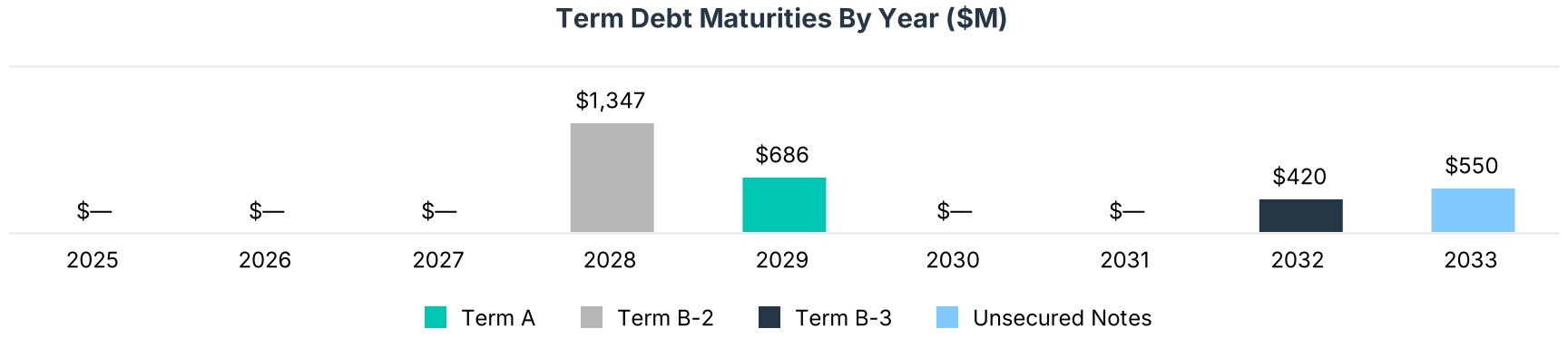
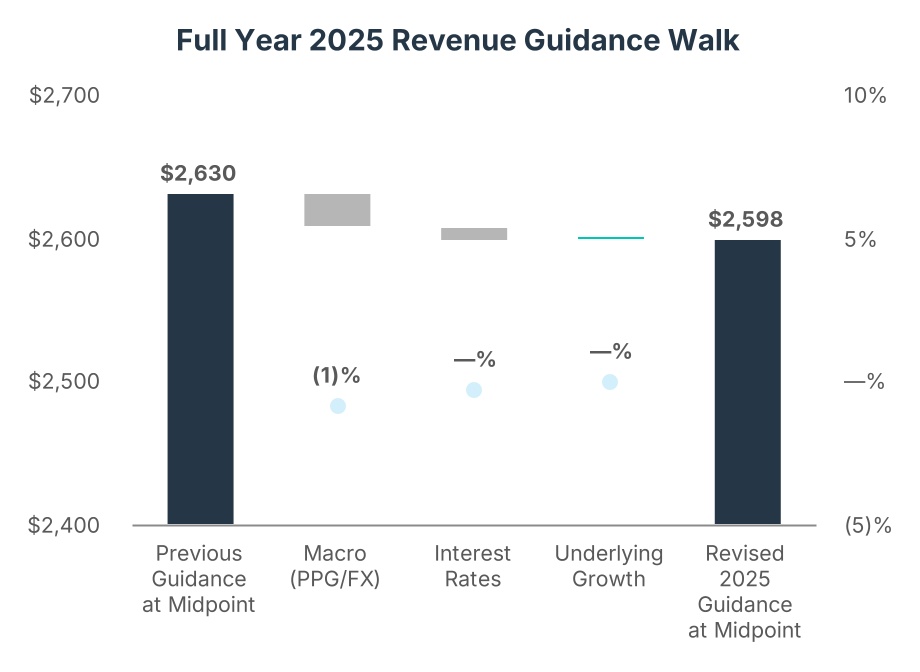
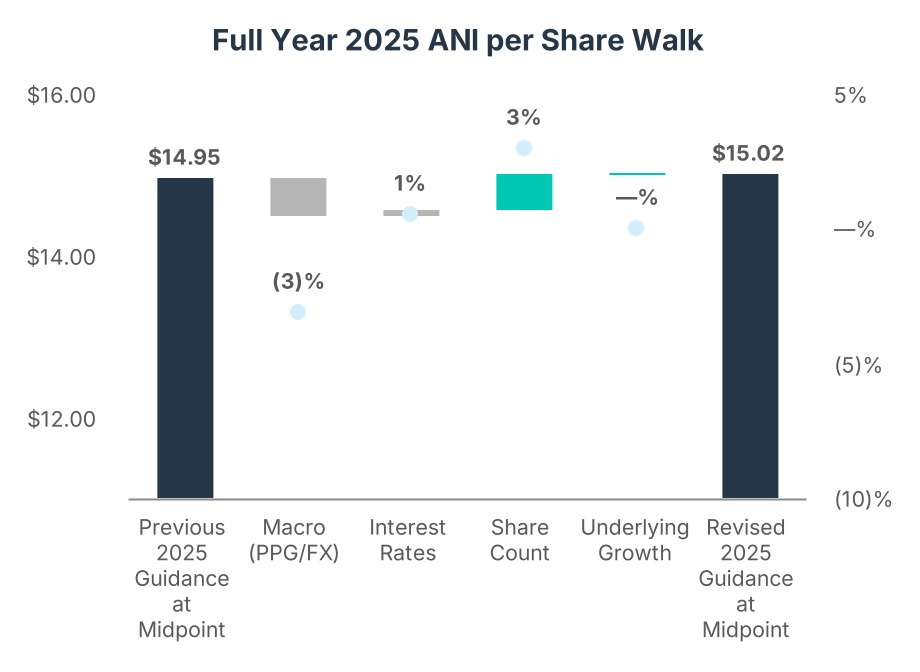
Thank you, Melissa, and good morning, everyone. In an effort to shift the focus of these earnings calls to our most strategic items, we have published a supplemental information deck with commentary that historically would have been included during my prepared remarks. So, similar to last quarter, I will keep my remarks brief. Total revenue in the quarter was $636.6 million, which is down 2.5% versus last year. The impact of foreign exchange rates and lower fuel prices reduced revenue growth by 1.7% year-over-year. Revenue was slightly ahead of the midpoint of the guidance range we provided last quarter, primarily due to higher fuel prices. Adjusted earnings per share of $3.51 was up 1.4% year-over-year, including a reduction of 3.7% from lower fuel prices in foreign exchange rates. Adjusted EPS was just above the high end of the guidance range we provided in February, rate, also due mostly to higher than expected fuel prices. In our mobility segment, revenue declined 1.5% during Q1 compared to the last year. This includes a drag of 2.9% due to lower fuel prices and foreign exchange rates. Our payment processing rate of 1.30% was flat year over year. In our benefit segment, total revenues of $199.3 million rose 4.2% on a year-over-year basis. Staff account growth of 6.1% was in line with our expectations coming out of the open enrollment season. Custodial investment revenue, which represents the interest we earn on the custodial cash balances we hold, rose 10.6% and was $55.8 million. This interest rate we earned has remained fairly steady with the yield rising five basis points from T1 last year. Turning to our corporate payments segment, revenues of $103.5 million declined 15.5% year-over-year, which was in line with our expectations. Purchase volume and corporate payments declined on a year-over-year basis, in large part due to a customer transition to a new operating model, which has progressed in line with our expectations. We will lap this difficult comparison starting in Q3 of this year. On a positive note, I'd like to call out that our direct purchase volume, which includes our AP automation solutions, grew nearly 25% versus last year this is one of the key focus areas that we discussed last quarter where we plan to invest more in the future let me transition now to the balance sheet our balance sheet and ability to generate cash more reliably remains a source of strength for us especially in periods of economic uncertainty our leverage ratio ends the quarter at 3.5 times which is at the high end of our long-term range of 2.5 to 3.5 times. This was driven by normal quarterly trends and our debt raise to fund the Dutch auction tender offer. During the first quarter, we returned $790 million to investors through share repurchases, including the Dutch auction tender offer, reducing share count by more than 5 million shares, or approximately 13.1% since the end of last year. For the remainder of the year, you should expect that we will use available cash flow to reduce leverage. As part of our growth acceleration actions we discussed last quarter, we are continuing to make investments in new product development and in sales and marketing. We are paying for some of these investments through efficiency measures and temporary cost actions across the business, but consistent with our commentary last quarter, we believe that the amount of incremental investment we are making will exceed these cost reduction measures. We are still planning for an approximate $25 million increase to our sales and marketing expenses, allocated to each segment roughly in line with its size, in addition to natural expense growth in the business. We are also continuing to closely and thoughtfully monitor the macro environment, and as conditions dictate, may choose to make adjustments to the plan. However, at this point, we believe these prudent investments make a lot of sense to help drive our long-term success. Now, let's move to earnings guidance for the second quarter and the full year. It's important to note that we are updating our full year 2025 guidance to account for the macro-related impacts of fuel prices, FX, and interest rates, plus our recently completed tender offer, with all other changes being minor in nature. To be clear, our guidance is based upon current trends and small but manageable incremental headwinds since providing our original outlook in February. The business environment is dynamic, and our guidance does not include the impact of a potential further slowdown in the economy. In Q2, we expect to report revenue in the range of $640 million to $660 million. We expected adjusted net income EPS to be between $3.60 and $3.80 per diluted share. For the full year, we expect to report revenue in the range of $2.57 billion to $2.63 billion. We expect adjusted net income ETS to be between $14.72 and $15.32 per deleted share. Our current assumption is that fuel prices, interest rates, and FX will drive a $31 million net negative impact to revenue for the full year, which accounts for nearly all of the change. The impact of these anticipated revenue changes should be more than offset by the reduced share count, leading to a seven-cent increase in adjusted EPS at the midpoint of guidance. To reiterate, our guidance is based on what we know today and does not consider a broader economic downturn. However, we continue to evaluate the impact of the macro environment and would like to provide additional insights to help you assess the impact to the company. We view a potential economic downturn impacting the company through three primary levers. The macro levers of fuel prices and interest rates, the business levers of volume, and the final lever of asset quality. We've provided details in the past on fuel price and interest rate impacts and continue to provide sensitivities in our earnings supplement posted on the investor relations section of our website. As a reminder, we estimate that a $0.10 change in average fuel prices on a full-year basis would result in an annual impact of approximately $20 million of revenue and $0.35 to EPS. A 100-basis point change in interest rates would result in an annualized $40 million change to revenue with an opposite impact of $0.30 to $0.35 in EPS. In other words, if revenue declines as a result of lower interest rates, adjusted earnings per share would increase. Note that both fuel and interest rate EPS impacts have increased due to the reduction in share count. Turning now to business volumes, starting with mobility. Over multiple economic cycles, we have observed that gallon volumes in our book are correlated with GDP. Generally, we see that a 1% change in U.S. GDP impacts gallons by 2% up or down. In our travel business, it is global in nature with two-thirds of the spending both originating and occurring outside of the U.S. and heavily weighted towards hotels. While travel spend can be impacted by economic activity, right now we expect a bit more resiliency given our exposure to international travelers versus U.S. domestics. On the non-travel side, about 20% of our volume is related to direct business, where we expect volume resiliency as we continue to add customers. On the remaining volumes, which are a mix of our embedded and partner channels, we have seen some impacts from business spending levels and what we know today has been factored into our guidance. As Melissa discussed earlier, our benefit segment is more resilient in the near term to economic cycles as changes in employees on benefit programs is typically at least partially replaced by COBRA-related revenue. The final impact of WECs is from asset quality, primarily our accounts receivable. We have previously seen short duration spikes in credit losses as business stress increases. In past severe recessionary periods, we have seen credit losses spike to 40 to 50 basis points of sped, which typically lasts only one quarter and then improves due to the short duration of our receivables, combined with proactive management of credit policies. I would also note that we have made significant investments in our credit tools over the years that would help to mitigate the magnitude of these losses. In closing, we recognize that we are in a period of economic uncertainty and that our customers may face challenges that may cause them to adjust their payment volumes in transactions with us. In these times, our financial stability, experience through economic cycles, and product strength help us to deliver tangible support to our customers. We remain focused on what we can control and are enthusiastic about the progress we've already made this year in helping WEX realize its full potential to drive long-term returns and growth. With that, operator, please open the line for questions.
Operator
At this time, I'd like to remind everyone in order to ask a question, press star, then the number one on your telephone keypad. Please limit to one question and one follow-up question. Our first question comes from the line of Sanjay Sakarni with KBW. Your line is open.
Thank you. Good morning. Melissa, you talked a little bit about the test. I was trying to sort of foot it, but maybe you could just talk before it doesn't reoccur.
Sure. Sure. There are two things that happens. If you look at the local part of the business, which is the majority of the business. We saw same-store sales were down 3.9%. So a piece of that we believe was weather-related. A piece of that we believe is more economic-related. And just to remind people, we measure same-store sales as similar volume from similar customer year over year. We separately measure retention, and our customer retention rates were very strong again this quarter across the board so we think that part of what we were seeing is again weather related some of it was a little bit more economic softness and then when you got to the over the road business we saw that positive in same store sales we believe both from the fact that that number was positive 2.6 percent and so it was up sequentially and because of the conversations were having our customers, that we saw a pull forward in that part of our business, which is the smaller part of that segment. We also sensed that point in time, and as we put together our guide, the first couple of weeks of April in the over-the-road business were quite strong in terms of volume. That had deteriorated over the last couple of weeks, had dropped off, which further substantiates this idea that there was a pull forward that was happening. We factored all of that softness, everything we're seeing the last couple of weeks in April and the continued softness in same-store sales we've seen with our local fleets into our guide. So I feel pretty good about the fact that we're holding the full-year guide, excluding the macro impacts and absorbing the softness that we're seeing that we hadn't contemplated when we put out the original guide at the beginning of the year. Sure. So if you look at our corporate payments business, which again is 20% of the total, about half of that revenue is outside of travel, so you get to about 10% of the company. If you look within that portfolio of customers, you get into a lot of different micro-accounts just because it's not that large. Some of the concentration, if you would call it that, we have cross-filled into our existing and customers. And so think of some of them in the mobility-related space. We've also in health care. We have fintechs that sit within that portfolio. So it is pretty broad brush. The places that we have seen softness in terms of same-store sales year over year are more where people are either spending in T&E or just more discretionary spending that's going across that portfolio. And, you know, again, if we look at where we're selling at our AP direct product offering, we've sold through that. So, we saw a 25% increase in spend volume year over year. But with the existing customer base outside of that part of the portfolio, there is some softness in spend volume year over year.
Operator
And your next question comes from the line of Nick Cremo with UBS. Your line is open.
Hey, good morning. Thanks for taking my question. First, I just wanted to go back to the mobility segment and good to see that that segment came in line with expectations. First, could you just provide some incremental color on the composition of the 70% of segment revenue from local fleets and how that split up between SMBs, enterprise-related local fleets? And I know there's a small international piece as well. And if you have information in front of you, just how same-source sales have trended across those three buckets of a local fleet business. Thank you.
So the way that we categorize same-store sales, it's actually by the different NAACS codes. So it's not by size. It was pretty mixed if you look across. And if you look at our portfolio, it really mimics what the market looks like in terms of small and large, and the majority of the market is small. And, you know, our average fleet vehicle size is a 15, 16 vehicle fleet, you know, as a result of that. So we do business with lots of large customers, but there's a mix across the portfolio. If you look at the NAACS codes, you know, one of the surprising things is that the public administration sector was actually up 2 percent year over year. But if you look across the rest of the portfolio, So you're not seeing huge deviations across the portfolio. The same-store sales were downed, you know, pretty radically. Construction fared slightly better. And if you think of construction within our portfolio, it's, you know, people who laid roads, you know, all the way up into what you would think is more traditional retail construction. So there's a really broad base of customers that sit across that. So if you look across the portfolio, I would say it's acting, you know, largely homogeneous. And we're not seeing big deviations in terms of, you know, for what we can see either in size or industry.
Thanks for all the increments.
The international part of the business is small, 10%.
100%. Got it. Okay, great. And for my follow-up, I just wanted to ask about the cadence of the remainder of the year for macro-neutral growth for the mobility segment. I know Q3 last year benefited from, I think, two extra business days. And then also just if you could put a finer point on how much the same-store sales trends slowed in the OTR segment in the last week of April relative to the strength you saw in the first part of the month. Thank you.
Yeah, so from a calendarization standpoint, Nick, I would say that, you know, we're expecting mobility growth rates to sort of be comparable to the first quarter as we go through the year. So, you know, we had outlined a range of 1% to 3% from a guidance perspective we put in the last guide. We're expecting kind of in the same range, low end of that guidance range we sort of expected even as we go through the year. um and then what was the second part of your question oh otr yeah so we saw uh you know uh two to three percentage point reduction in growth rates going into the last two weeks of april but i would also say there was also some noise there from the easter holiday so it's a little noisy uh like i like melissa said we factored that into the guide and we were watching it closely but there was some noise because we had a strong early part of april Okay, got it.
Operator
And your next question comes from the line of Dave Koning with Baird. Your line is open.
Yeah. Hey, guys. Thank you. I would like to just ask a couple of questions on corporate. So I thought it was encouraging, I guess, a couple of things. First of all, purchase volume after a few quarters of unnormal sequential patterns, Q1 returned to normal. And I guess, A, is that now in a sequential pattern basis going to be back to normal? And then B, yields were up a ton year over year. Are yields, you know, given a little bit of the change in composition, are yields stable from here going forward?
Yeah, from a sequential standpoint, I think Q1 was a bit more normalized. We had some noise last year, as we've talked about, with some, you know, particular customer movements. We're now getting past that, and I would expect things to more stabilize. On the corporate payments side, I would expect yields to be pretty stable for the rest of the year. Q1 is a little high. We tend to mix more heavily to travel as we progress, especially Q2, Q3, which with travel at lower yields than our direct corporate side tends to mix the toll rate down a little bit. But I expect on a full your basis will be at or slightly below the level that we saw in Q1.
Okay, good. And just a quick follow-up, just to make sure we're clear on debt rates or really interest expense going forward since there was the big borrowing and then the buyback, will Q2 kind of all-in interest expense be like mid-60s or so? Is that about right?
I think that's about right, yeah.
Operator
And your next question comes from the line of Ramsey Elisal with Barclays. Your line is open.
Thank you so much for taking my question this morning. I had a question about credit. And I know, Director, right at the end of your prepared comments, you talked about how credit could typically trend in a kind of a cyclical event. Right now, it feels like you guys just went through this process of exiting some of the smaller fleet exposure. It felt to me like maybe fortifying the mobility book, at least on the credit side a bit, relative to maybe going into a prior cycle. Is that a fair way to look at it? Should we expect now, given everything you've gone through with fleet, that you might fare a little better in the next cycle versus the last on the credit side?
Yeah, the last cycle, I'll add because was here in the last cycle. And we're going back to 2008 at that point in time. But in 2008, Jack had talked about what happened within that quarter. So he was referring back to 2008. The full year was still like mid-20s, like 25-ish basis points a lot. So it, you know, as he said, there was a kind of rapid spike and then it really moderated very quickly. And then the year after that was normal. We agreed 100%. We've, you know, invested a lot of time creating proprietary tools that we believe have been incredibly impactful over our ability to moderate fraud, but also make better decisions on their work and credit. And we're seeing the benefit of that right now, and our portfolios are holding up incredibly well. We're just trying to give people as much information as we have. So yes, we feel much more confident, you know, at this point in time going into any type of environment that we have tools that will help us with that.
That's great. And another follow-up on the credit side. I mean, when I think back to 2008, you know, that was, the business was a more simpler organism at that point. And I'm just curious if you compare and contrast sort of mobility to, you know, the corporate payments segment and the embedded payment segment within the core payment segment, where do you see sort of the greater risk in terms of credit exposure?
If you look across the business, the over-the-road business was a smaller part of our business at that point in time, although we were doing business with over-the-road customers and they tended to be smaller in size. So, and if you look across that portfolio, those are customers that are typically paying us quite rapidly. So they've already been modified from a risk perspective. The over-the-road customers, I'm sorry, the online travel agencies also pay us rapidly. And so, you know, if you think about areas where we would have exposure, we're, you know, we've done a lot over the years and through the different cycles that we've had to make sure that we're pretty balanced about the way that we're approaching extending credit across our customer base. I don't know that I would call out any one particular area is riskier than the other. I think that we've used tools to reduce risk in areas that are more naturally risk-prone. Great. Thank you so much.
Operator
And your next question comes from the line of Barron Peller with Wolf Research. Your line is open.
Guys, thanks. Can we just touch on the benefits statement for a minute? When we think about confidence to potentially outgrow the HSA market versus your guidance this year, roughly in line with the market growth? I mean, maybe just what are the drivers we should watch for that may display the differentiation effect of those products here going forward?
Yeah, when we went through this first open enrollment cycle this last year, we brought in 7% HSA accounts. If you look across the portfolio, we feel really good about that compared to Deveneer's report of market growth 5%. We also had really good success in our direct business within benefits, which is a place that we've looked across the company in terms of highest returns. It is the highest return in terms of LTV to CAC. So when we are adding in there, I'll give you an example of that. We added in some marketing dollars in 75% of our marketing, our incremental investment spend in the first quarter went into mobility, just to be clear. But we did add in a little bit into our benefit space, and we sourced the largest ever marketing-generated deal that we've ever had. And so it's a place that we feel as we're adding in that we're going to see benefits that comes out of that. I think net-net what we're looking at is we've got a huge market, this over $13.5 billion TAM that we're addressing with the products that we have. and we feel like we can continue to grow and outgrow in the HSA space, HSA account growth, and then on top of that, continue to build the presence we have in our BenAdmin product. And net of that, we're looking to the overall growth rate to be higher over time than the growth of the market. So I think it's like ultimately you're going to judge us on what we deliver in terms of revenue growth.
Okay. Thanks, Melissa. I guess just more broadly, I mean, anything change in your mind or the way you're approaching, you know, the review and just the portfolio of assets you have? I know you mentioned, obviously, being comfortable and liking the position you have in most of your assets. But, I mean, you know, that's obviously language you've used for some time now. And so I'd be curious if anything at all has changed from your perspective, whether it's in the backdrop of the market or in our valuations across the competitive landscape. Thanks.
Yeah, sure, sure. And we think our current configuration is attractive and that there's value around scale and diversification. They also mentioned on the call that our board regularly reviews the composition of our business portfolio. And so, you know, it's something that they obviously take quite seriously. They bring in outside advisors when appropriate and will continue to make a call around to do what's the best composition of our portfolio.
Operator
Your next question comes to the line of Andrew Bau with Wells Fargo. Your line is open.
Hey, good morning, and thanks for taking the question. It's encouraging to see the new application volumes on the small business side being up 18% year-over-year on the back of your investments. I guess my question is, though, it's like if we continue down this path of macro continuing to weaken, what are the trigger points that would kind of signal to you to pull your foot off the gas on those investments? Or if we stay in kind of a status quo macro environment and you're seeing good ROIs, like apparently that data point would suggest, that maybe you can even dial it back up?
Yeah, very fair question. Now, I'm very sensitive in the fact we're operating with a lot of uncertainty right now. We know historically that our products, because they help our customers save money and increase confidence in their decisions, we know that we typically actually sell really well through a period of downturn. So the way we think about the business is sales coming in the front door, customer retention, which is typically high during the course of a period of economic uncertainty, And then what happens with your kind of the back book, your same store sales. And so far, that front of the business, that funnels look really strong for us in the kind of across the board. And to your point, we've seen the 18% increase year over year in a mobility business in new applications. That's the, think of that as the top of the funnel. If we see that top of the funnel work its way through, that's obviously a really good sign. And so, you know, at this point in time, we're really bullish on what those returns are generating, but we'll continue to be, you know, really sensitive to what's happening in the external environment to make sure that those returns are paying off, because we have to balance, you know, both short-term and long-term expectations. The only other thing I'd say is if you go across the business and you think, again, we're allocating those investments pro rata, so the majority of that is going into our mobility business. We are seeing really great momentum also with the product rollouts that we've done in corporate payments. You know, it's early. We talked about the fact that we released new functionality into Europe and just most recently into the U.S. with our embedded payments products that create flexible funding capabilities that helps working capital of our customers. That's selling really well into the marketplace right now. So we're seeing, you know, pipeline expansion, deals closing, all things you'd want to see that leads, you know, leading indicators in terms of future growth for us, which we should see very end of this year in that product in going into 2026. So again, And I'd say all early indicators are actually really quite positive of the returns that we're generating, but we're going to continue to be mindful of how we're operating and accordingly make decisions real time based on that data.
The only thing I'd add, Andrew, is that we've built pretty good infrastructure in advance of making these investments. So as we invest, like the marketing dollars, mobility, for example, we have clear expectations of the metrics of how many applications we expect to come in, the credit quality of those applications, our approval rates, number of applications, how we expect those customers to ramp after they've been approved, and what the net result of that ROI is. And so we track each of those metrics not only from what we expect at the front end, but then what's actually happening on the back end. So, you know, the front end metric that Melissa mentioned, applications came in right at or above our exploitations and now we're tracking as the revenue flows in as we expect so i think all those things will right help us you know determine you know uh what the right investment is in those on those marketing investments understood and then on uh my follow-up uh it was also good to see that that the travel business was holding in fairly well despite some of the fear and headlines that have been created in the market but could you give us a finer point on the end mix of that market?
I know you said international hotels, a big chunk of the portfolio, but any other additional granularity you could provide there so that we could, you know, be vigilant as well in monitoring these trends?
So 2 thirds of the portfolio are originated and then activated. So think of these are customers that are booking outside the United States and actually traveling outside of the United States. So that is all internationally based. About 3% right now are originated outside of the United States and then traveled into the U.S. And about 15% are coming, think of that as people that are originating in the U.S., booking in the U.S. and traveling outside the U.S., and about 17% are traveling within the U.S., so booking and traveling. Very helpful. Okay, so I think that's part of why, like, you look across our book, and the majority of this is hotels, that, you know, we are seeing a lot of stability across, I think there's stability in general, anyway, you're hearing that from the online travel agencies, but in particular in our book, some of the negative sentiment that might be out there, we don't seem to be reflected in our portfolio.
Great, thank you, Melissa.
Operator
And your next question comes from the line of Mihir Bhatia with Bank of America. Your line is open.
Good morning. Thanks for taking my question. Mursa, I wanted to talk about the – you mentioned the portfolio review. And I understand this is somewhat routine, but it was somewhat new in the prepared remarks. So maybe just along those lines, just talk a little bit about the overlap in the businesses. Like how much overlap is there between the various segments? because I know you've had a few cross-sell initiatives along the way. So just trying to understand from a customer standpoint, but also from an internal operation standpoint, how much overlap is there between the various segments and businesses?
Sure. Sure. So if you look across the business, we do have cross-sell activity that happens. The biggest places of cross-sell have been between our mobility customer base and our benefit customer base. in particular where they're over-of-road customers. They tend to be more senior relationships. And so we've had success across that and continue to work cross-selling across the whole portfolio. If you look at the places where there's commonality, increasingly over time we've been focused around our technology stack and where we can create synergies across the portfolio. All of the, you know, the infrastructure is common. So think of that as a lot of like technical operations is common. And then some of the underlying apps that support it as well. And then from a treasury perspective, it, we're using our bank, you know, across both portfolios. So the bank being the depositor for our custodial accounts, as well as the issuer for the deposits that we have with our bank. And so there's a number of nuances around how the businesses have been integrated over time.
Okay. Thanks. And then, Joktar, this is a really helpful commentary about the impacts of a recession on the business in your remarks. I wanted to just take it a little bit more, just in terms of the levers that you would be able to pull if you started seeing the macro slow down. Are there, you know, obviously you're in the midst of this investment in sales. Would that be something that you would have to pull back on? Are there other discretionary items or areas where there could be some levers that WEX could pull if the macro was to slow down?
Yes, thanks to hear. So, you know, I would say we have some levers. I would, you know, I would point out that, you know, the revenue impacts to us will largely outweigh the levers that we have readily to pull because we are, to some degree, a highly fixed cost business. But, you know, at the same time, we would look at our hiring plans pretty in-depth, especially, you know, discretionary, non-critical hires that we have planned over the course of course the year and and put a high scrutiny on that and start to pull back on some of our hiring plans the the investment that that melissa's talked about obviously that's something that would be looked at i think we would look at that with you know really an eye of you know are we getting the roi um and then making a decision on what's best short-term versus long-term for the company. I don't want to be in a position, given the resiliency of WEX, of throwing the baby out with the bathwater and suspending investment that's going to put WEX in a strong position coming out of a recession, because we will come out at some point in time. So I think we'd look at discretionary spend, travel, a number of levers to contain the spend, and then the investment spending would really be kind of where, you know, where are we on the ROI view and what's the right for the short and long term of the company?
We're also very sensitive to the fact that, you know, there's a lot going on right now. And if you look across the portfolio, we've done a bunch of scenario planning. There's a couple of places, like Jack Tar talked about, you know, hiring. You know, we've been very selective around and will continue to be, around hiring through the end of this year. The other place that we had been focused, we've talked a lot about automation over the years. We haven't talked about it as much the last couple of calls, but it continues to be a big internal focus of ours, and particularly using AI tools in order to create automation. We're having continued success at that, and that's a place that we're looking at doubling down on our efforts as well. So looking for areas where we believe that you can actually create a better customer experience at lower cost and, you know, tightening the belt across the organization and trying to preserve as much as we can of these investments.
Operator
And your next question comes from the line of Shenzhen Wong with J.P. Morgan. Your line is open.
Hey, good morning. As always, just a couple of questions. Just on the enterprise client side, I know you talked about SMBs and new applications being up, but I'm just curious on the enterprise side, are you seeing any changes in sales cycles and pricing, that kind of thing? And also, just to ask together, the sensitivity of GDP that, Jack, you mentioned, with no cycles, of course, are comparable that way, but can we compare it to anything that you can recall? I know COVID feels different. We've seen some supply chain issues before. or I'm just curious if we can point back to something else to help us sensitize the business.
Yeah, so really great questions. I think you'll cross the two. I'll answer the last one first, the comparability. I think you've lived through these cycles, too. I don't know that there's anything quite comparable to what we're experiencing right now. I would go back to the Great Recession as kind of a shock if we had to do a comparison case. And, you know, we actually fared pretty well through that. And one of the things we learned from that, because we did see an uptick in demand from our customers that, and it continued to preserve, you know, the sales momentum and the product momentum was really important of how we came out of that, which I would argue we came out actually a lot stronger as a result. In terms of what we're seeing in pipelines right now, we're having a really strong sales first quarter across the board. And if you ask about mobility with our larger mobility customers, it's a very strong start to the year. So if you think about the products, because they're geared towards helping people save time, money, and increase confidence, Like, I think the period of uncertainty largely across our portfolio actually helps from a selling perspective.
The only thing I would add to that is because you brought up supply chain shock. You know, I think it's worth pointing out with our OTR segment, you know, there's a lot of questions around what is, you know, tariffs and supply chain shock due to the OTR segment. And there's ample data from the federal government around truck volume in the U.S. and what actually comprise the weight of what's moved around the country. And surprisingly, or maybe for people that haven't been immersed in it, calling the order of 10% of what's moved around from a volume basis is actually import-related. 90% of what's on trucks is commodities and agricultural items and minerals and stuff that we produce domestically. It's really on the order of 10% that's import-related. And when you think about China, which is where a lot of the focus is, it's really on the order of a third of that or less. So we think we have kind of our hands around what's the important impact, the tariff impact into our OTR business.
No, it sounds like that's the case. Still trying to learn, guys. Thank you very much. Thanks, Ginger.
Operator
Thanks, Ginger. And I would now like to turn the call back over to Steve Elder.
Yeah, I just wanted to wrap up and say thank you, everyone, for joining, and we'll look forward to speaking again in a quarter. Thank you.
Operator
And this concludes today's conference call. You may now disconnect.