Operator
Good day, and thank you for standing by. Welcome to the GeneDX 4th Quarter 2025 Earnings Conference Call. At this time, all participants are in listening mode. After the speaker's presentation, there will be a question and answer session. To ask a question during the session, you will need to press star 11 on your telephone. You will then hear an automated message advising your hand is raised. To withdraw your question, please press star 11 again. Please be advised that today's conference is being recorded. I would now like to hand the conference over to your speaker today, Sabrina Dunbar, Investor Relations. Please go ahead.
Thank you, Operator, and thank you to everyone for joining us today. On the call, we have Catherine Stuland, President and Chief Executive Officer, and Kevin Feely, Chief Financial Officer. Earlier today, GNDX released financial results for the fourth quarter ended December 31, 2025. Before we begin, please take note of our precautionary statements. We may make forward-looking statements on today's call, including about our business plans, guidance, and outlook. Forward-looking statements inherently involve risks and uncertainties and only reflect our view as of today, February 23rd, and we're under no obligation to update. When discussing our results, we refer to non-GAAP measures, which excludes certain items from imported results. Please refer to our fourth quarter 2025 earnings release and slides available at ir.gndx.com for definitions and reconciliations of non-GAAP measures and additional information regarding our results, including a discussion of factors that could cause actual results to materially differ from forward-looking statements. And with that, I'll turn the call over to Catherine.
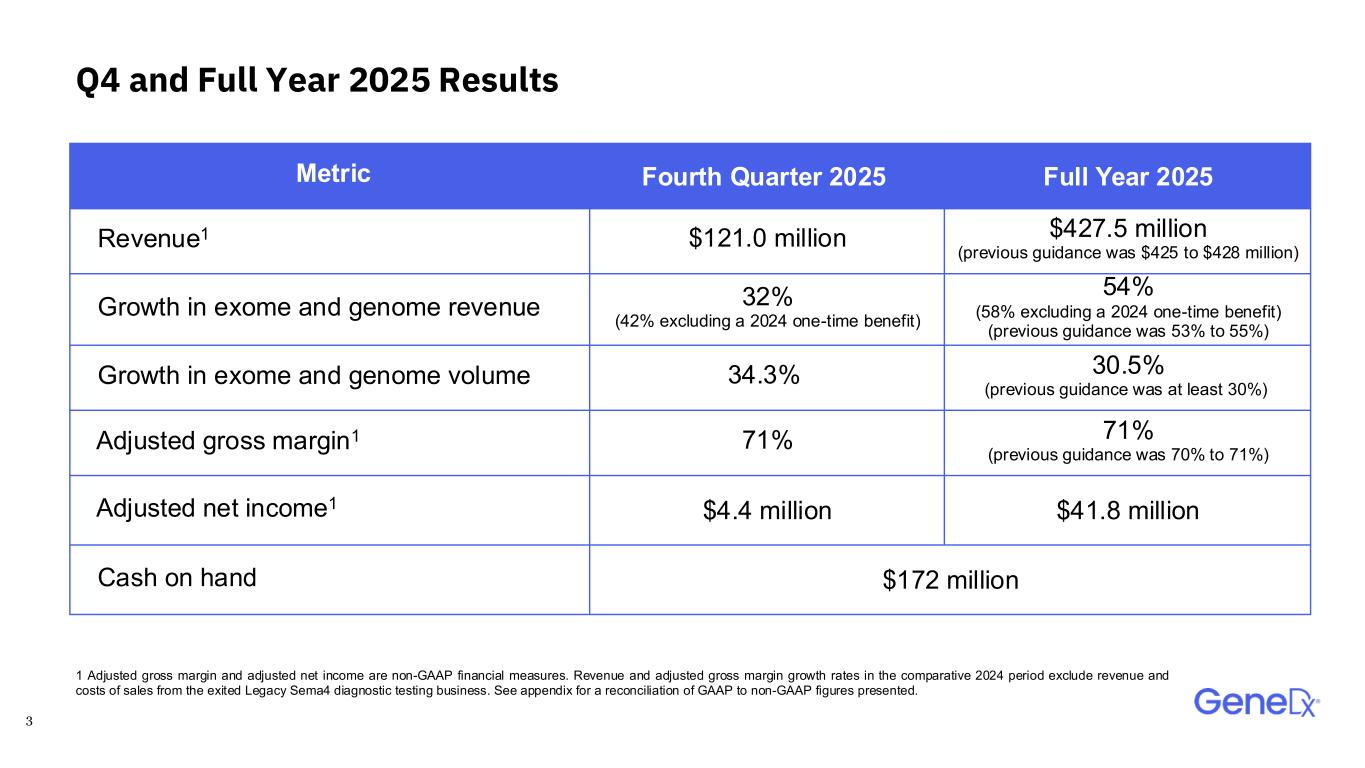
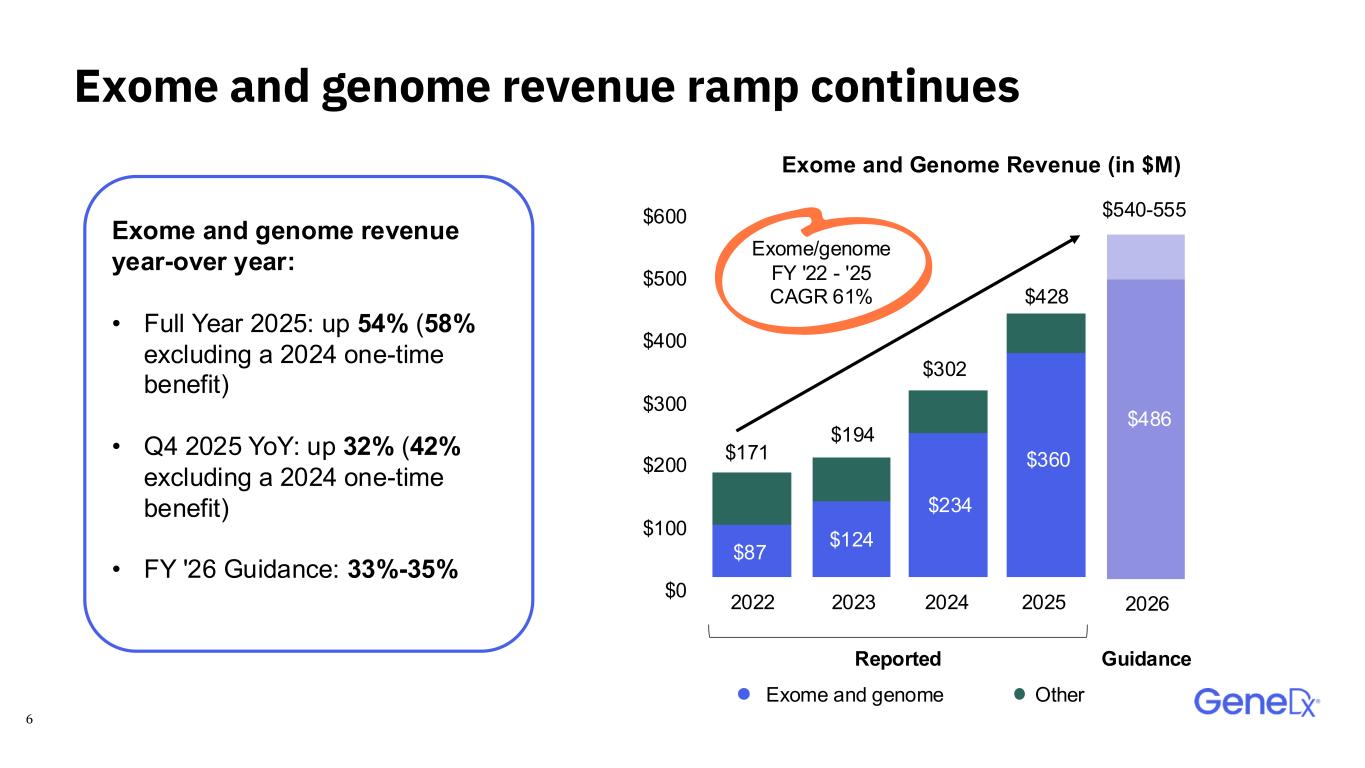
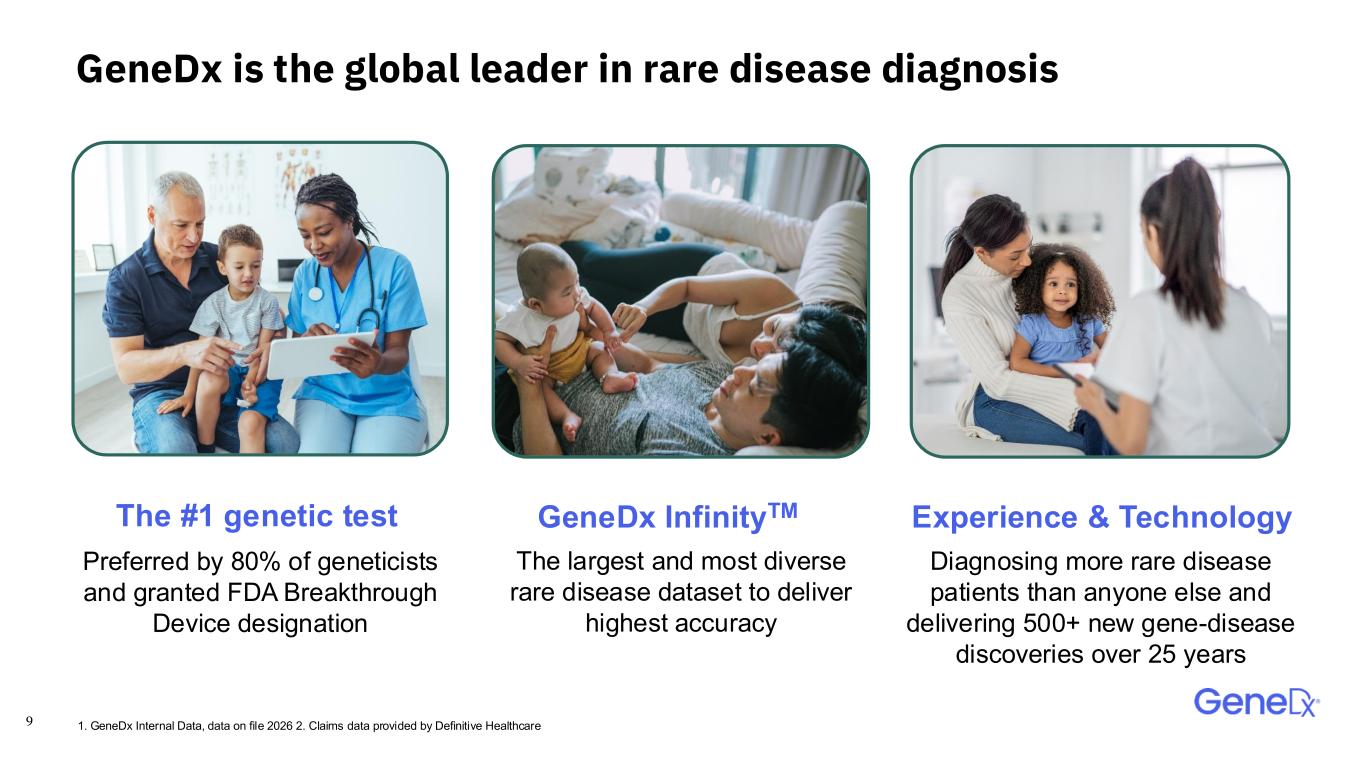
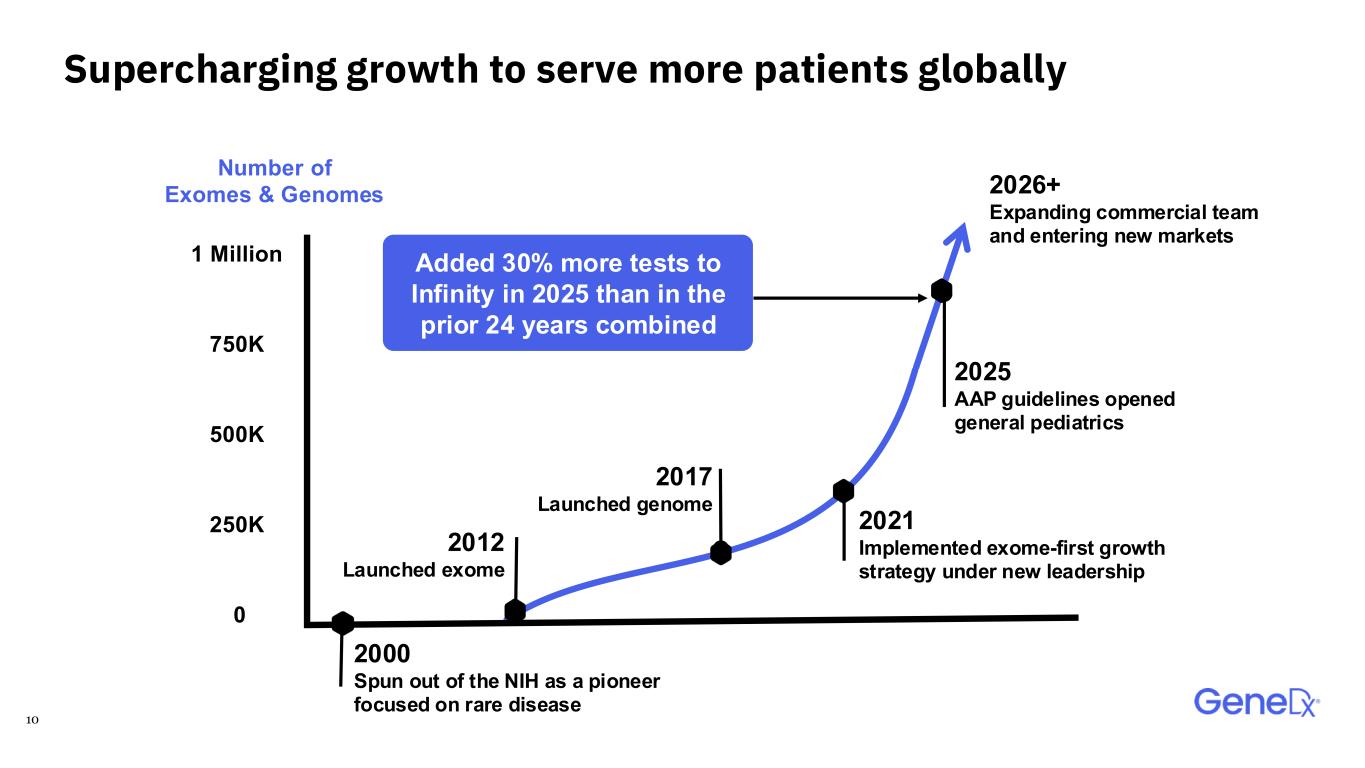
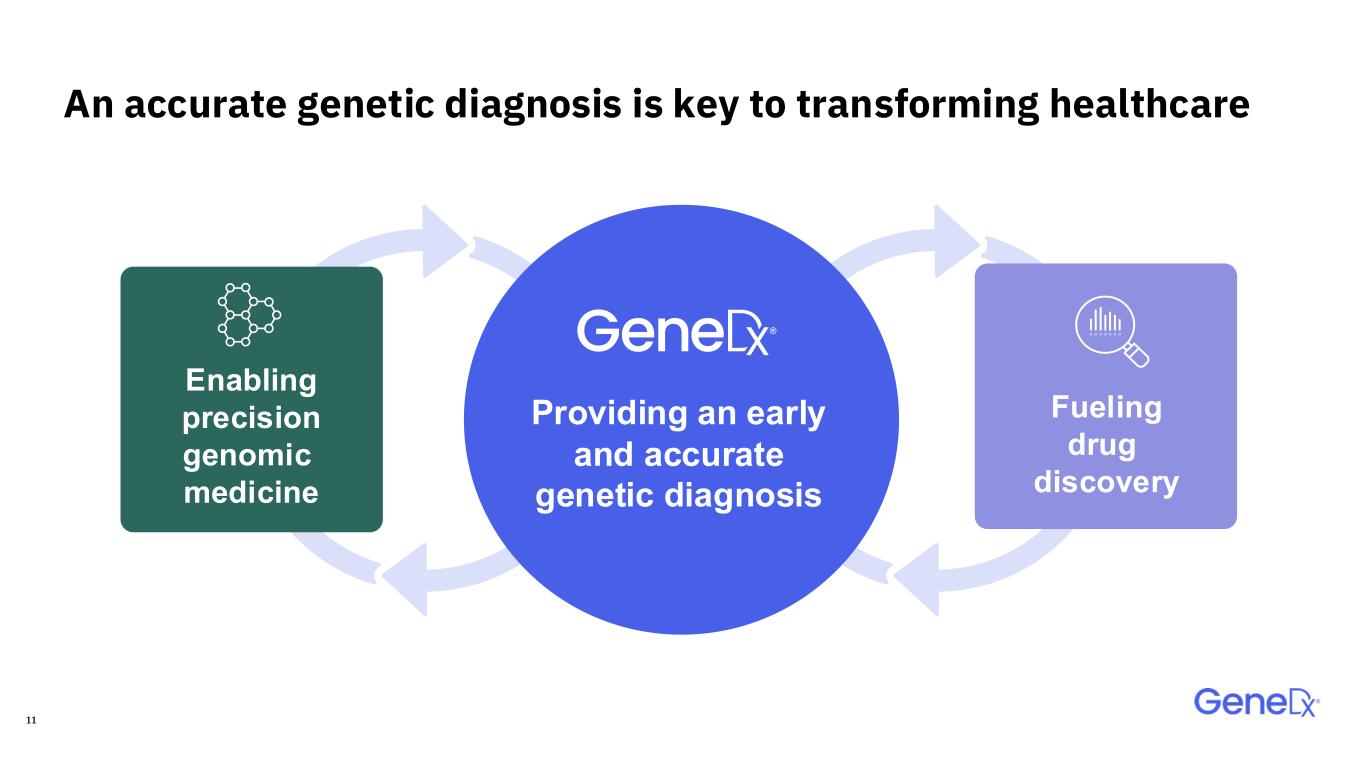
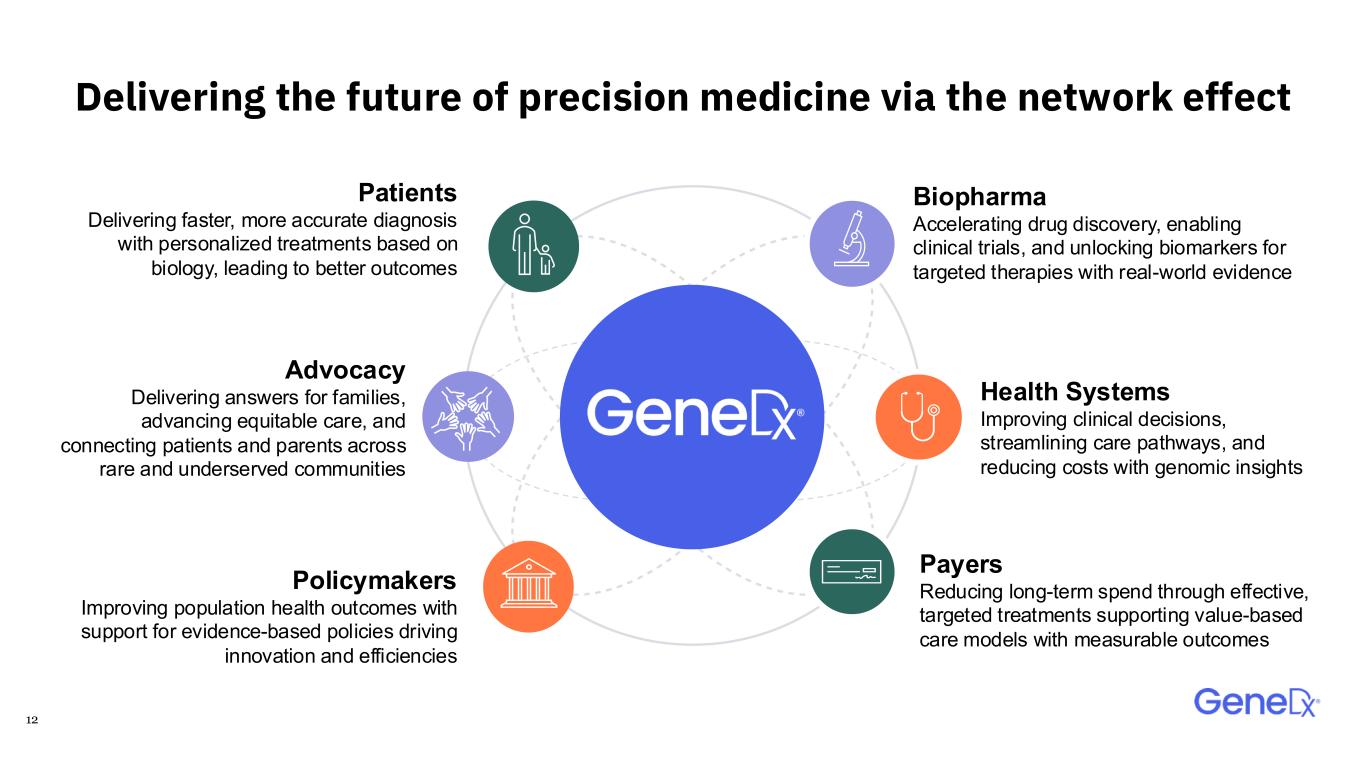
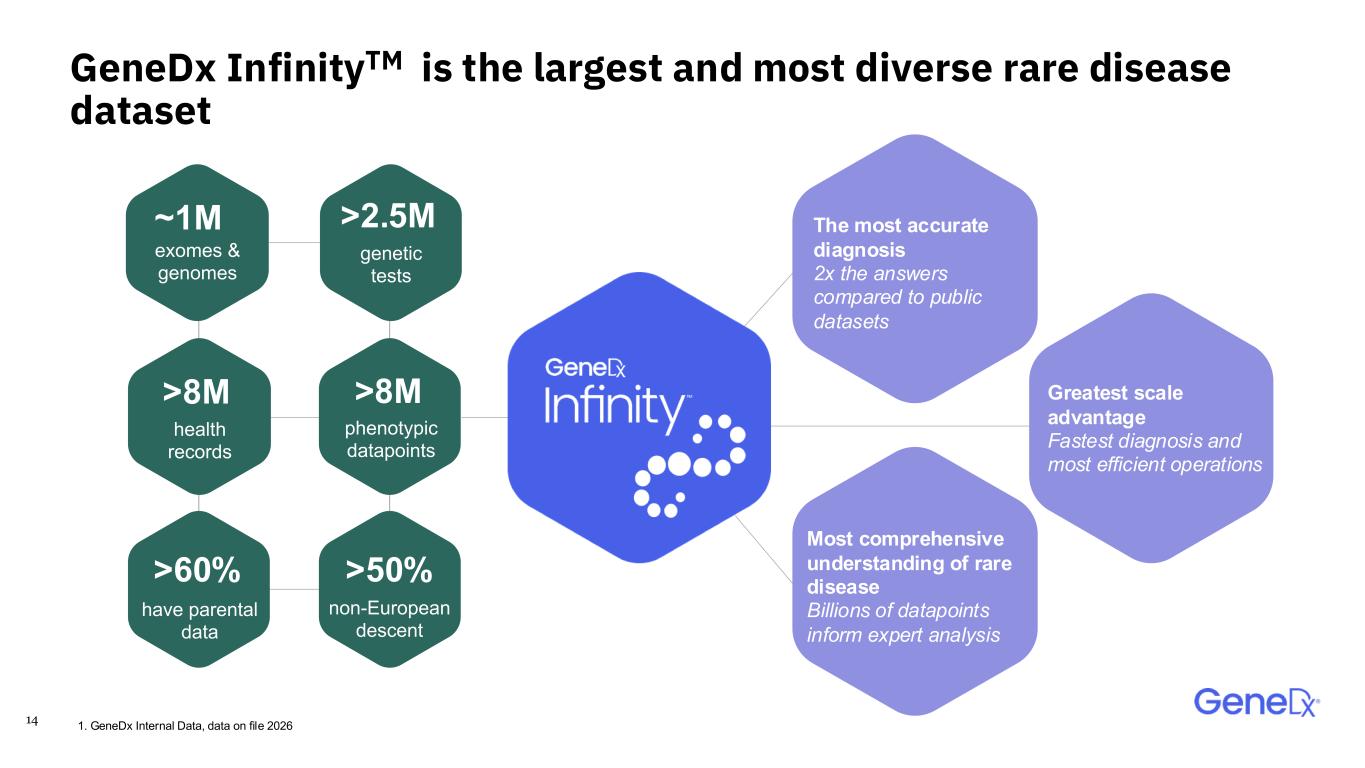
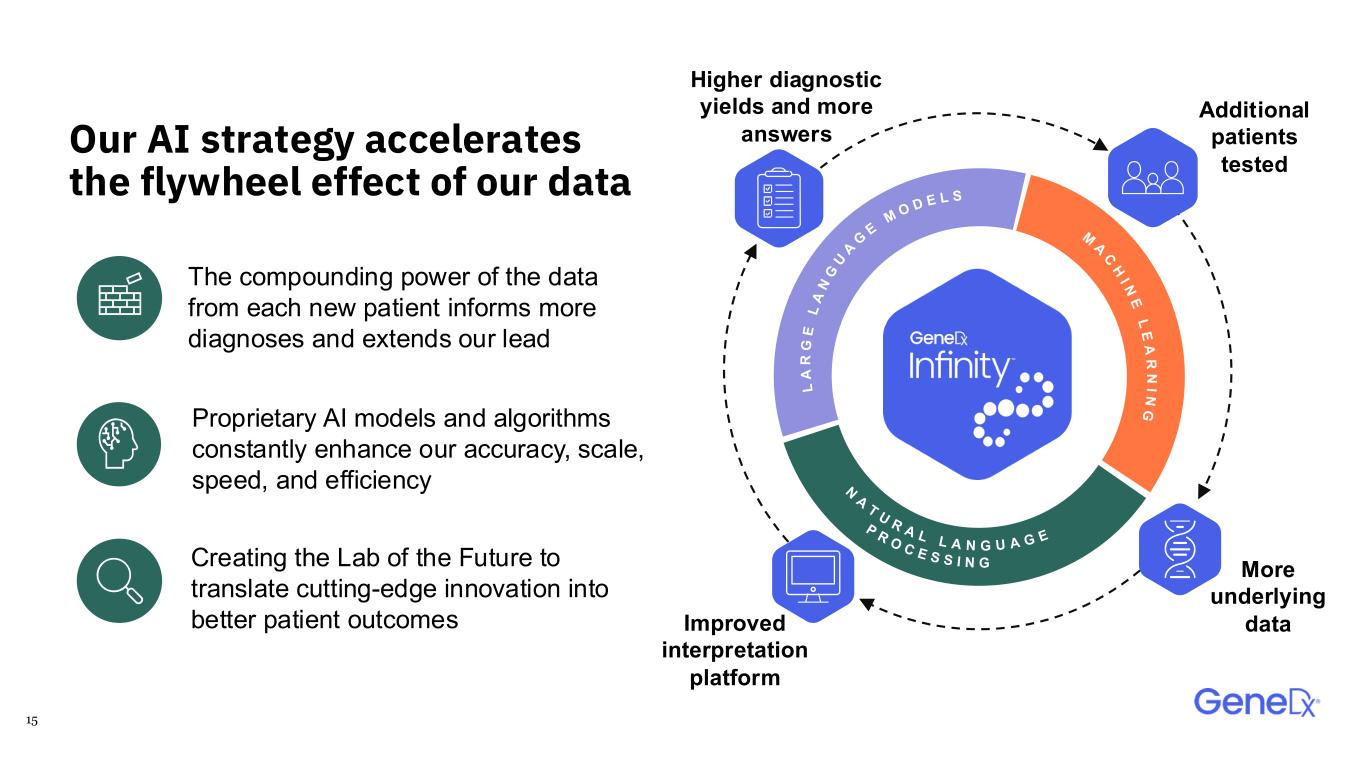
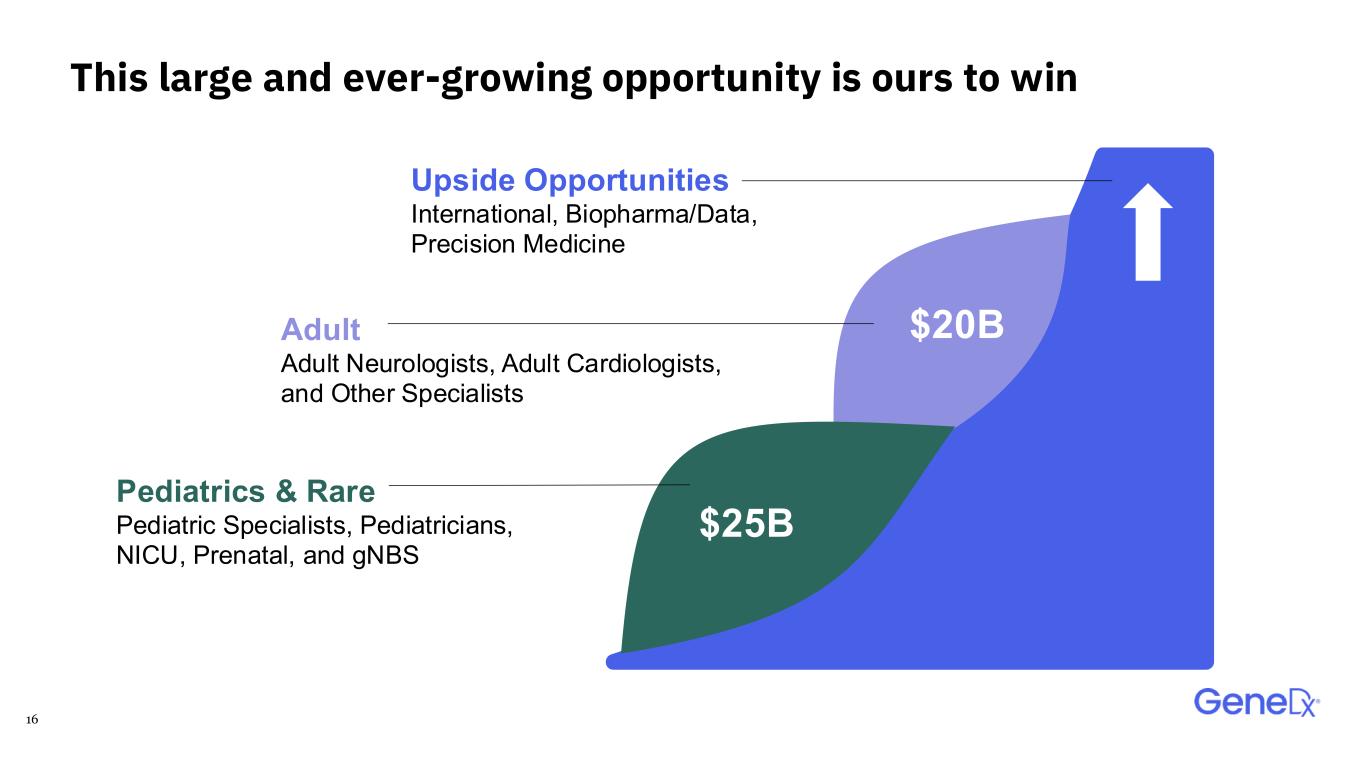
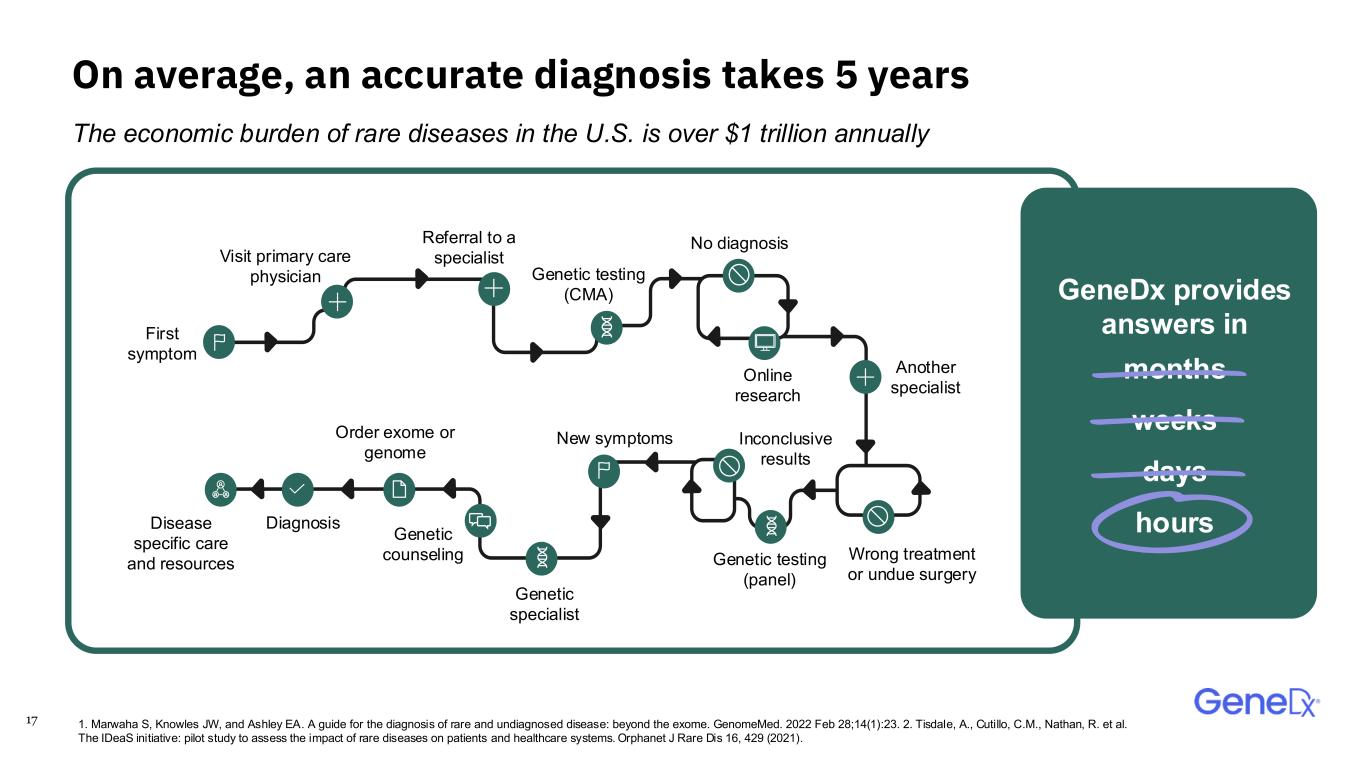
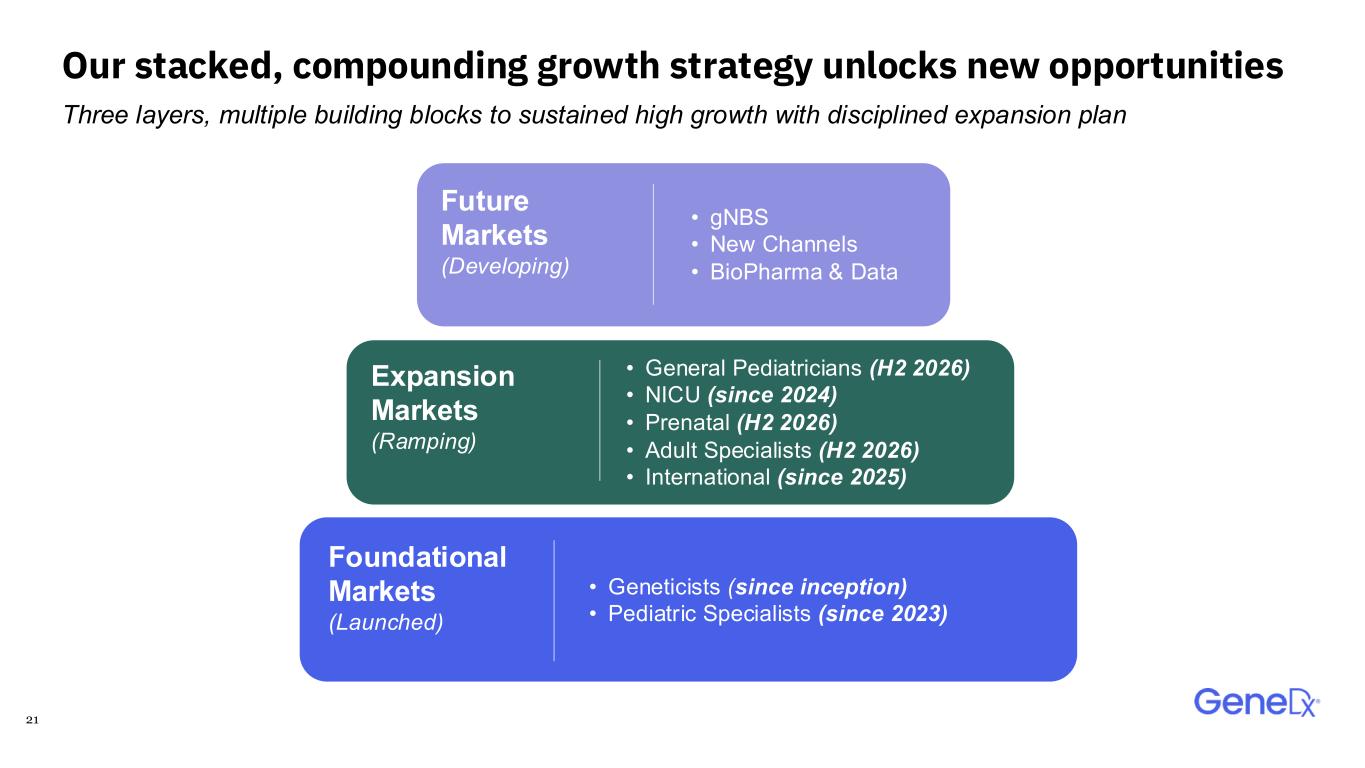
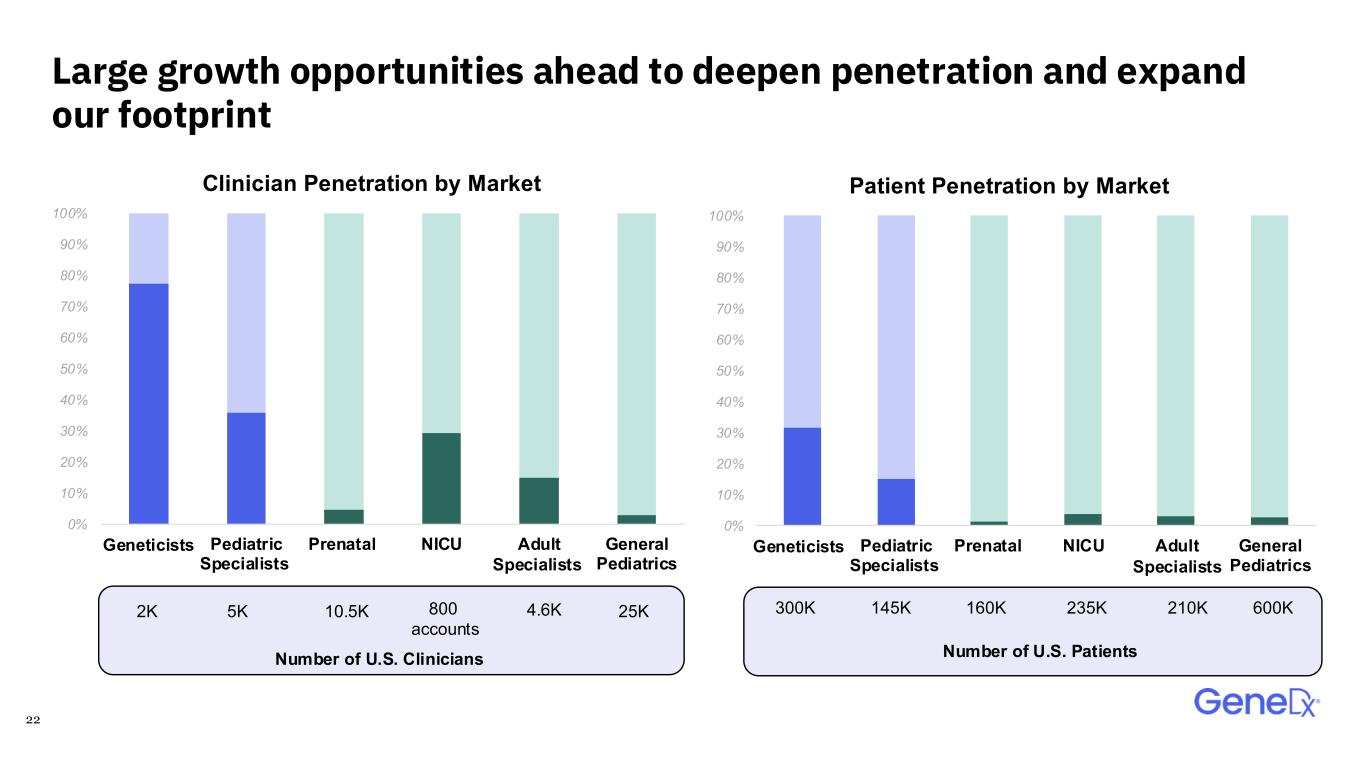
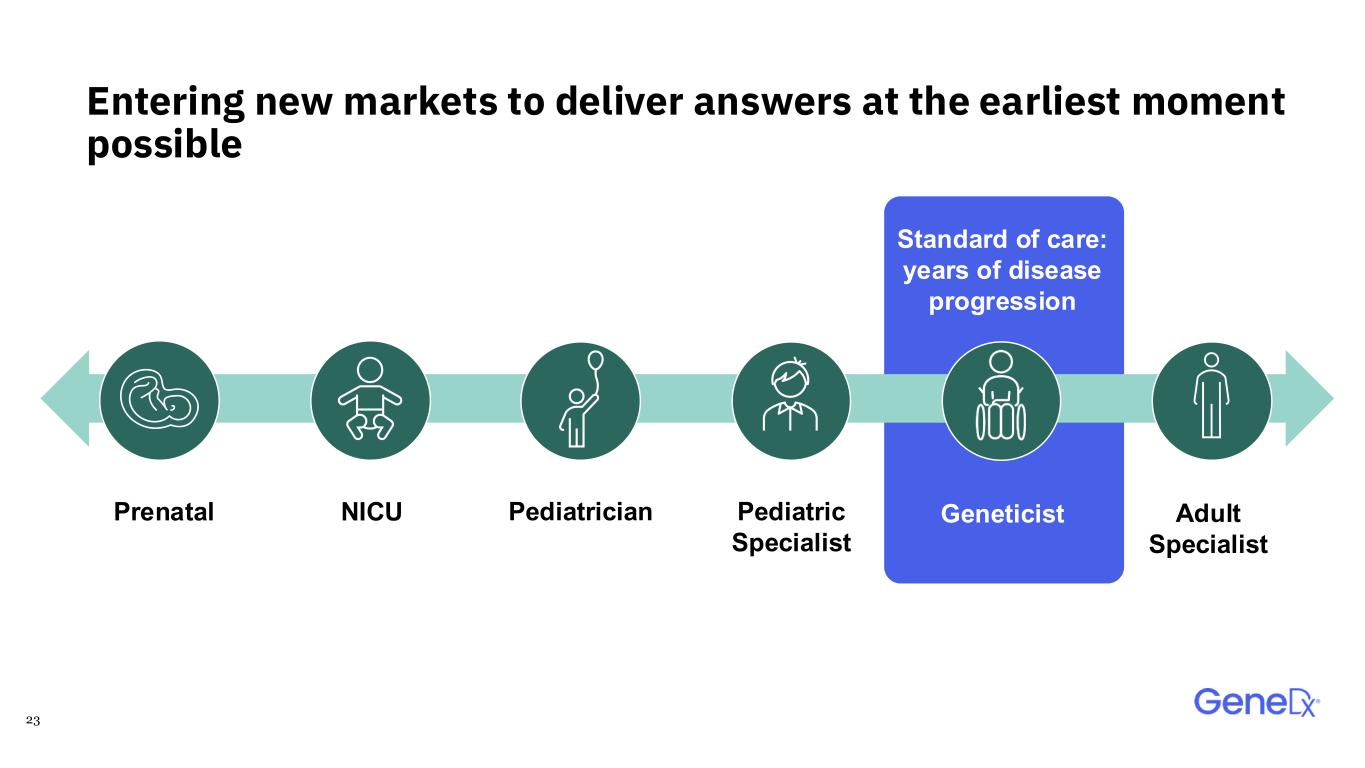
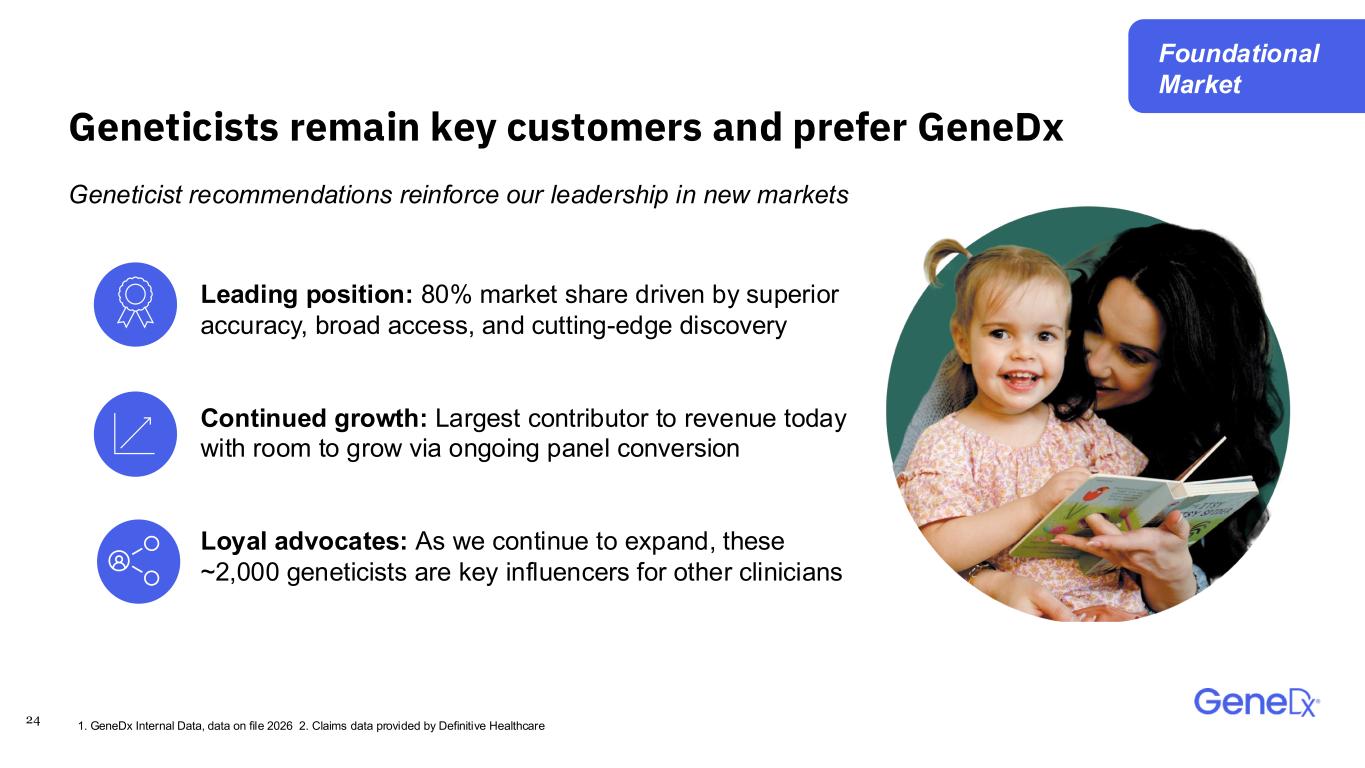
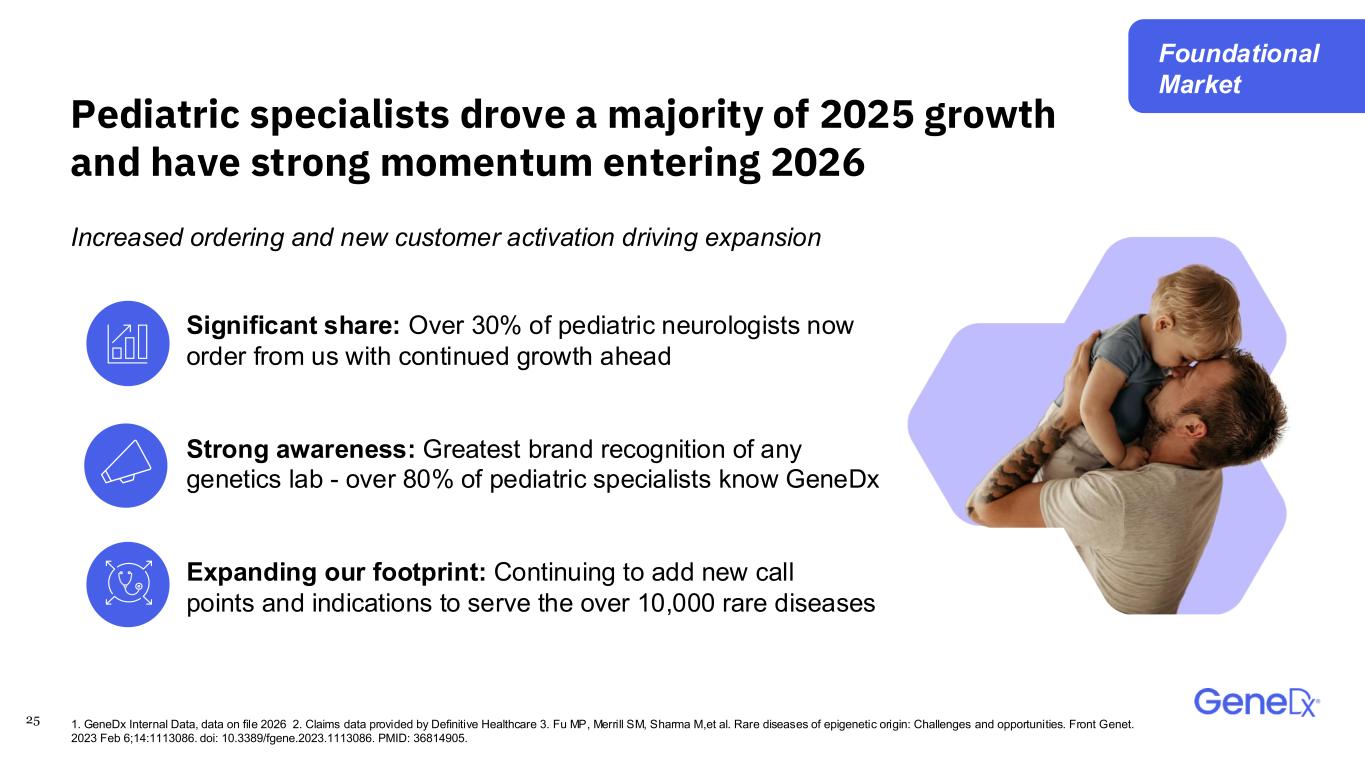
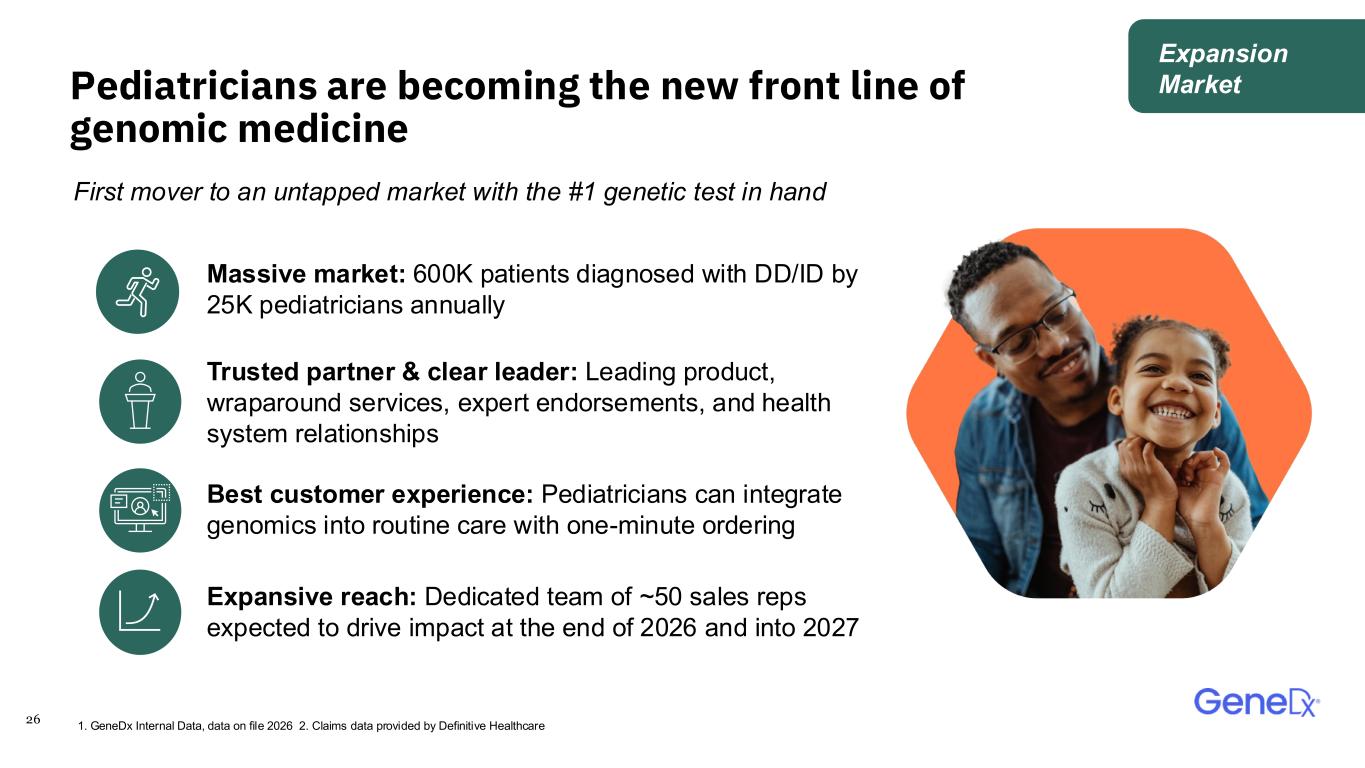
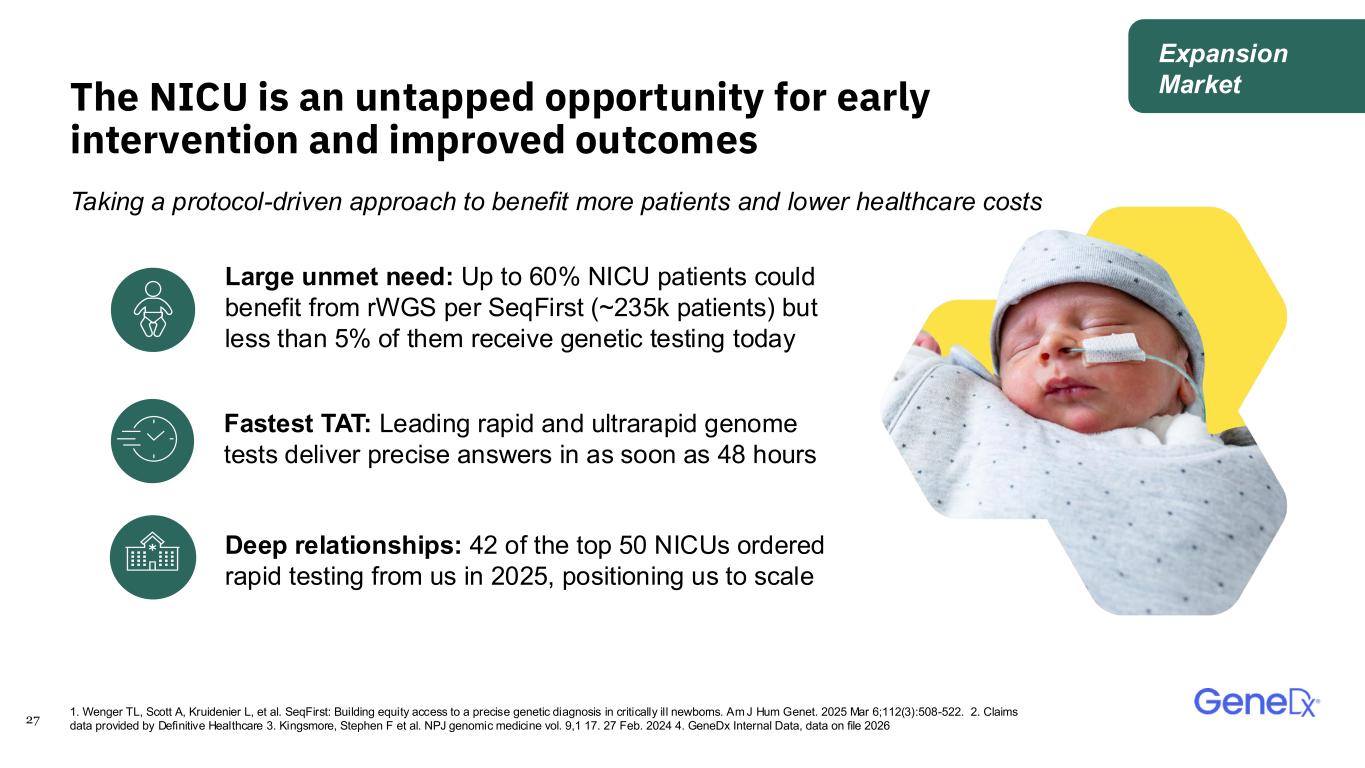
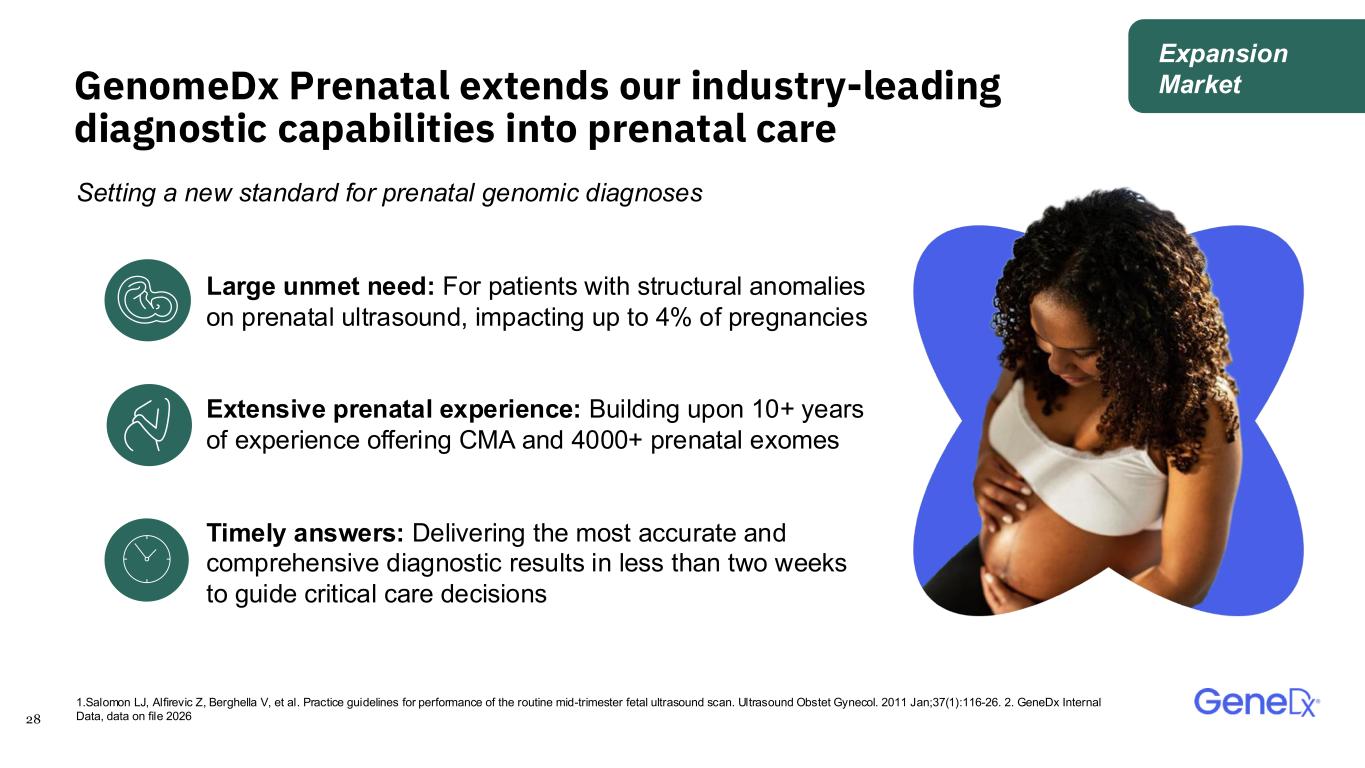
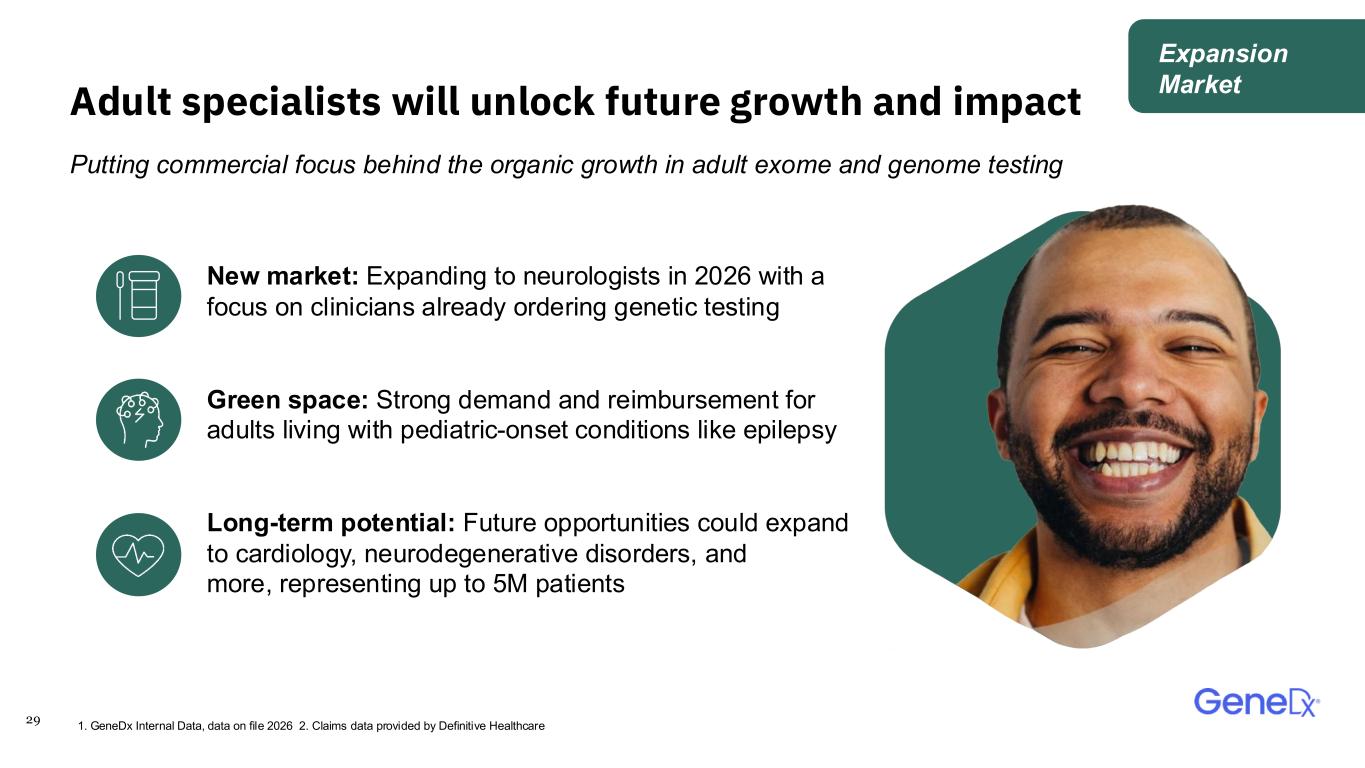
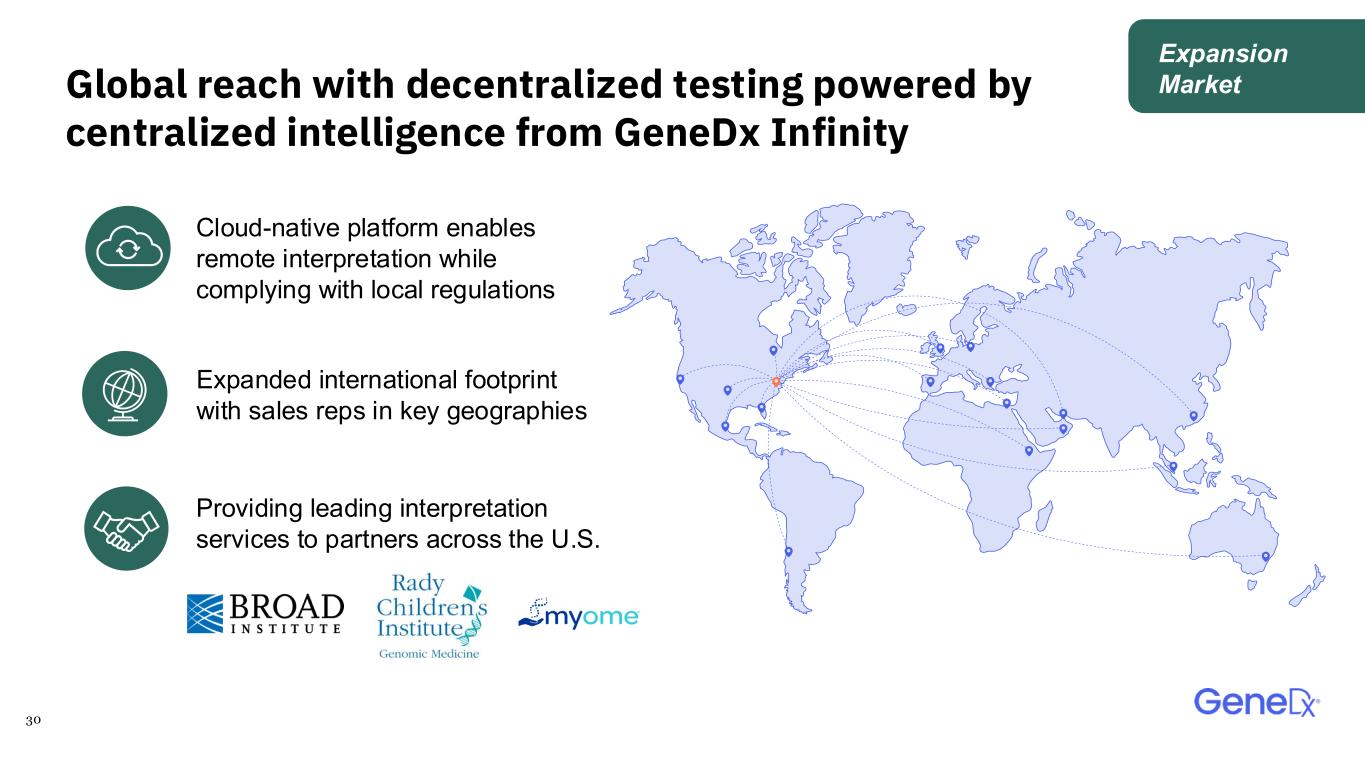
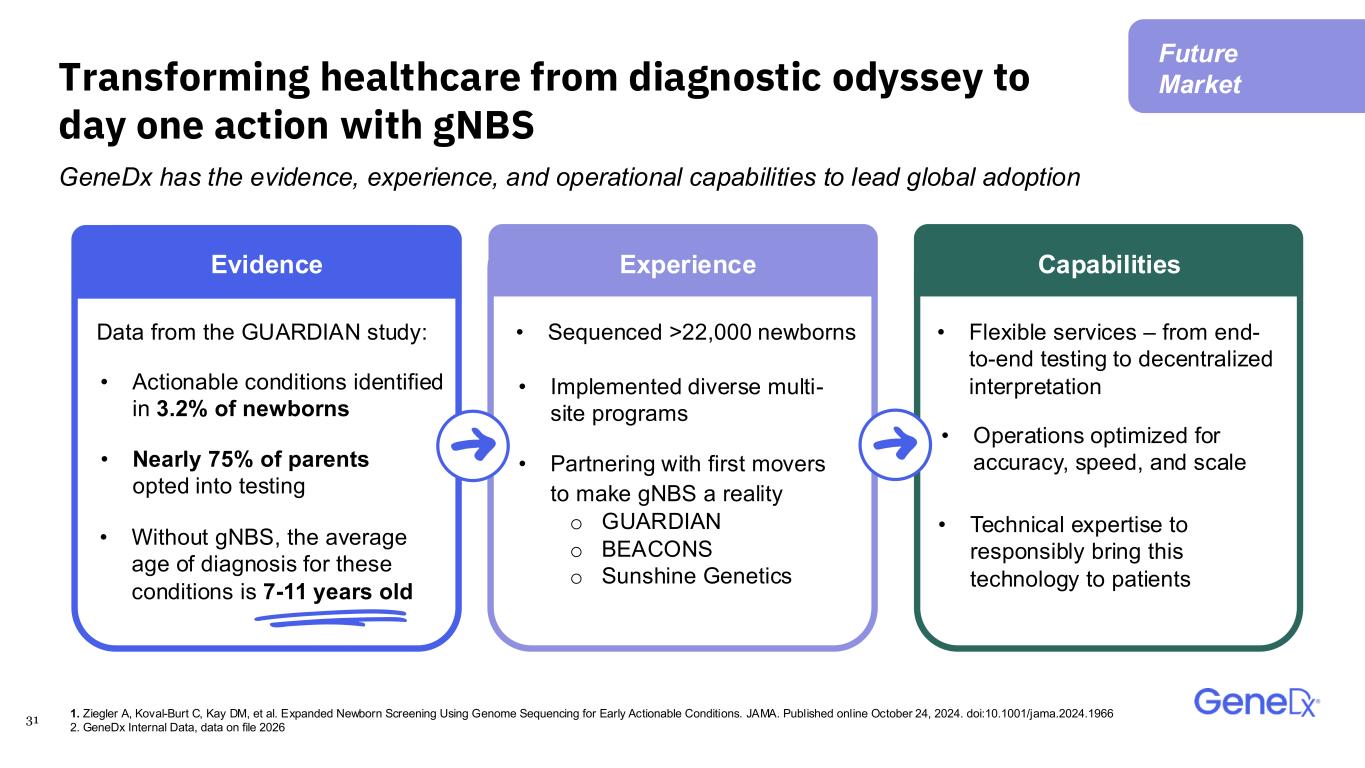
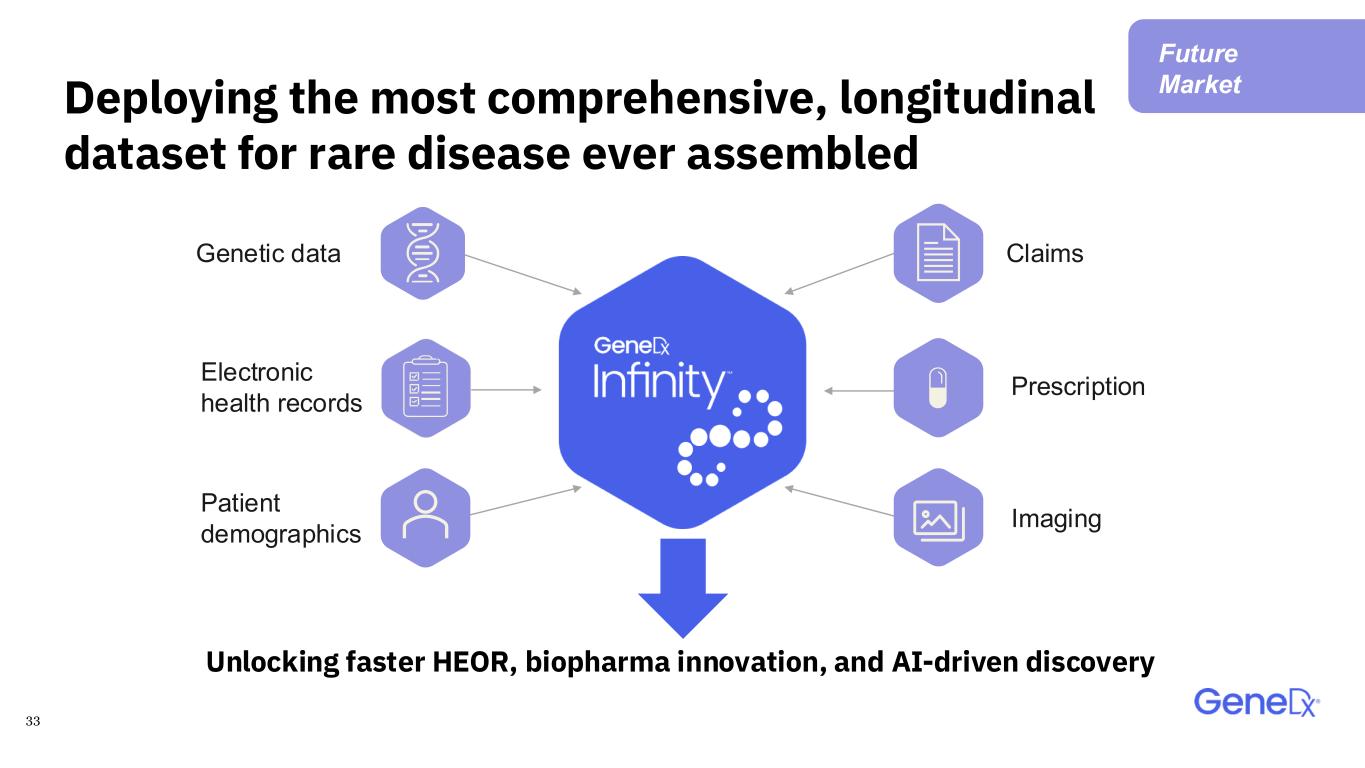
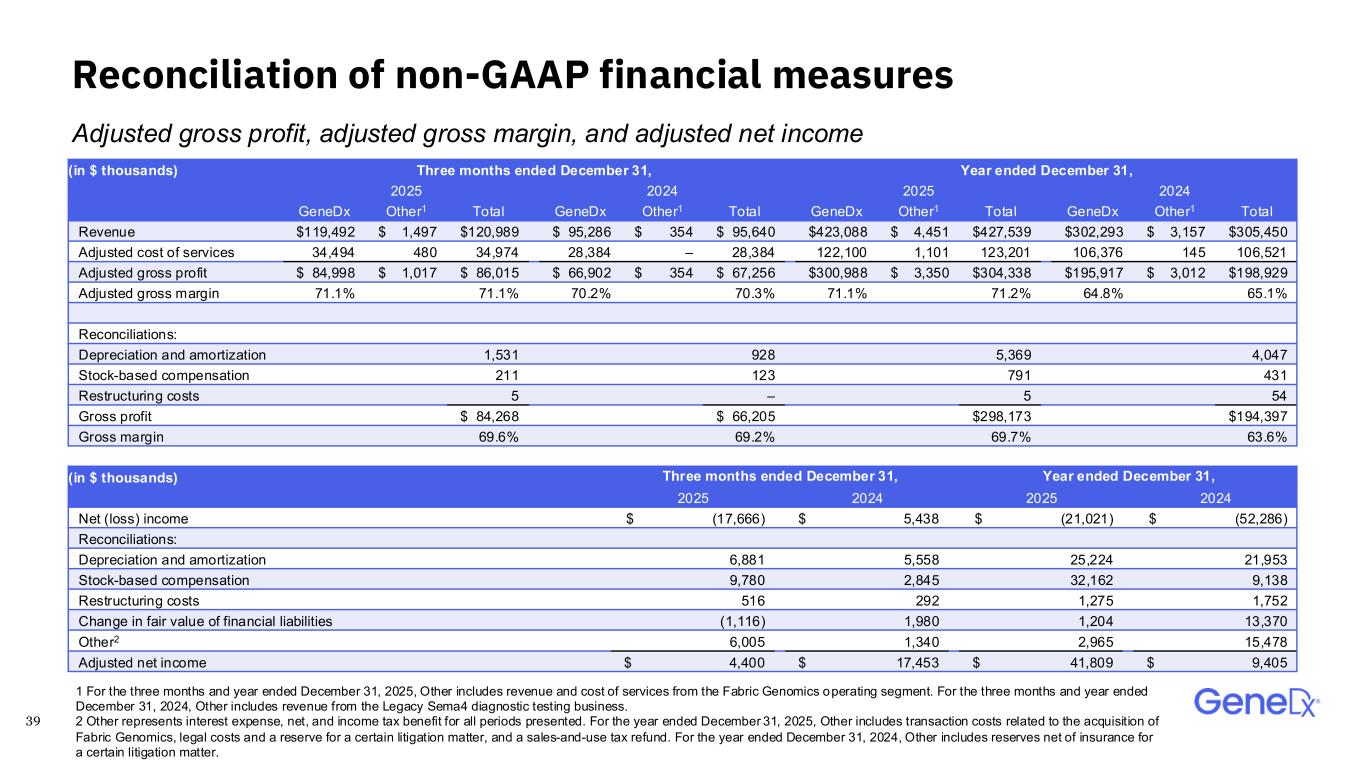
Catherine D' Thank you, Sabrina, and good morning, everyone. The fourth quarter was a strong finish to a transformative year for GNDX. We reported quarterly revenues of $121 million, bringing full-year revenues to $428 million, underpinned by 54% exome and genome revenue growth. We continue to balance high growth and profitability in service of a massive unmet need, delivering accurate genetic diagnosis to the millions of patients and families seeking and waiting for it. Today, we reaffirm our full year 2026 guidance, and we'll talk you through the elements of this growth that give us such confidence in our near and long-term targets. 2026 is going to be a breakout year for GeneDx. We're operating in an enormous and largely untapped market with a 25-year head start. We've cemented our position as the clear leader in rare by diagnosing more patients with exome and genome than anyone else in the world and we have the number one genetic test the largest and most diverse rare disease data set and the leading technology and team our leadership position was further reinforced by our recent fda breakthrough device designation which positions gene dx to become the first fda authorized comprehensive genomic solution in this category a meaningful long-term differentiator, particularly as we enter mainstream medicine. The clinical case, the economic case, and the policy case for exome and genome are converging, and GeneDx, alongside our patients, is shifting the power of genomics from promise to practice. Patients are the center of everything we do with GeneDx. Every test, every data point, and every partnership comes together to create a network effect in service of faster answers, deeper for understanding and expanded access to precision care. We're opening new markets like general pediatrics to reach patients at the earliest moment possible. Rare disease affects one in 10 Americans and it still takes an average of five years for a patient with a rare disease to receive an accurate diagnosis. The current standard of care often allows years of disease progression at a time when we can offer an accurate diagnosis in a matter of hours. There's a huge opportunity here that looks similar to where cancer diagnostics was 15 years ago. And DDX is best positioned to serve this massive unmet need. Diagnosing rare disease is fundamentally a scale problem. In cancer, the key genes are well characterized, but in rare disease, most patients carry genetic changes that have never been seen before. Novel variants aren't the exception, they're the norm. To diagnose these patients, you need to find others who share the same genetic change and the same symptoms. That means the size and diversity of your reference data set is everything. The larger your data set, the more matches you make, and the more diagnoses you deliver. No one does this at the scale we do, and that's because of GeneDxInfinity. Infinity is the world's largest and most diverse rare disease data set composed of more than 2.5 million rare genetic tests, over 1 million exomes and genomes, and over 8 million phenotypic data points. More than 60% of the exomes and genomes in Infinity have parental data, which is critical for interpretation, and over 50% are from patients of non-European descent, which improves their diagnostic capabilities across real world populations. While incredibly vast, Infinity is also deep structured and expertly annotated to enable fast and accurate diagnoses at scale and across clinical indications. As we test more patients, the power of Infinity compounds. With over a dozen exome and genome products currently on the market, GeneDx is still chosen 80% of the time by the most discerning specialists. And we've held that share through multiple competitive cycles. Infinity was built specifically for rare disease, patient by patient, year by year in the clinic. It would take decades to replicate what we have today. And by then, we'll be decades further ahead. AI models are only as good as the data they're trained on, and GNDX Infinity is the richest resource available. Our clinical experts and leading AI tools leverage infinity to surface insights hidden within complex clinical and genomic data, and we are constantly innovating to amplify this impact. For example, our proprietary AI gene maker, Multiscore, analyzes billions of internal and external data points to identify the most likely genes causing a patient's symptoms, improving our scale, efficiency, and turnaround times. AI is an enabler for us, and our team will remain at the forefront of leveraging this technology to improve outcome for patients. We are currently operating in six massive untapped markets, each of which will contribute to our accelerated growth in 2026, and we're nearly tripling what was already the largest sales force in rare disease to capture the wide open space ahead of us. We have multiple levers for growth, namely one activating new clinicians in our existing call points to driving higher utilization among clinicians already ordering from us and three introducing our industry leading testing to new markets even with geneticists our most established market we have 80 clinician penetration but still have room to grow by shifting more testing from single gene and panel approaches to exome and genome among pediatric specialists we've reached about 30 percent of clinicians and only 15 percent of eligible patients giving us two clear ways to grow establishing more doctors and increasing how often they order in our four newest newer u.s markets prenatal nicu adult specialists and general pediatricians there are over a million addressable patients and we've barely scratched the surface with clinician adoption still in the single digits our first mover position focus sales strategy, best-in-class products, geneticists endorsements, and experienced market access teams best position us to build these new markets and take dominant share early. With that in mind, I want to walk you through our building blocks of growth, each contributing to a stacking effect of revenue and volume that will compound over time. Our foundational markets, geneticists and pediatric specialists, delivered most of our growth in q4 and there's still significant runway ahead these markets drove nearly all of our growth in 2025 and have strong momentum entering 2026. we will continue to layer on new indications and call points to these specialist markets and we've expanded our dedicated sales team from approximately 50 reps in 2025 to 75 in 2026 to drive continued adoption on top of that foundation we're ramping and key expansion markets the largest of which is general pediatricians we're hearing positive feedback on our one minute ordering experience which is set to launch this summer and in combination with a dedicated 50-person sales force we're well positioned to begin seeing volumes really pick up in q4 the nicu remains another key element of our expansion strategy we know what good looks like here based on our experience with leading institutions like seattle children's and the recommendations outlined in the 2025 Seek First Study. This market takes longer to convert, but once it does, it's incredibly sticky and profitable. We have a team of 10 reps dedicated to the NICU and expect to see steady growth in 2026. We recently stepped into prenatal diagnostics with an exome and genome test intended for patients with abnormal ultrasomes. We're targeting maternal fetal medicine specialists with a small team of about 10 new reps to begin driving utilization to help clinicians deliver answers in these critical moments for families. Additionally, we began leveraging our specialist sales force to sell into adult neurologists, diagnosing patients with pediatric onset conditions that were missed as children. Lastly, we continue building an international strategy centered around software and interpretation patient as a service, and we have five reps executing in key geography. We also see three key future markets on the horizon, genomic newborn screening, new channels like telemedicine, and leveraging our data set for biopharma and service of patients in precision medicine, and are laying the groundwork to unlock each. As you can see, our growth is not dependent on any single market or a single bet. It's layered, it's compounding, and it's anchored in a strong and fast growing core. By introducing our services to mainstream clinicians, we're seizing a massive growth opportunity, and as the leader in RARE, we're setting the standard for what exome and genome testing should be. Accurate, fast, accessible, simple to order, and easy to understand, and we will continue to raise the bar. With that, I'll pass it over to Kevin.
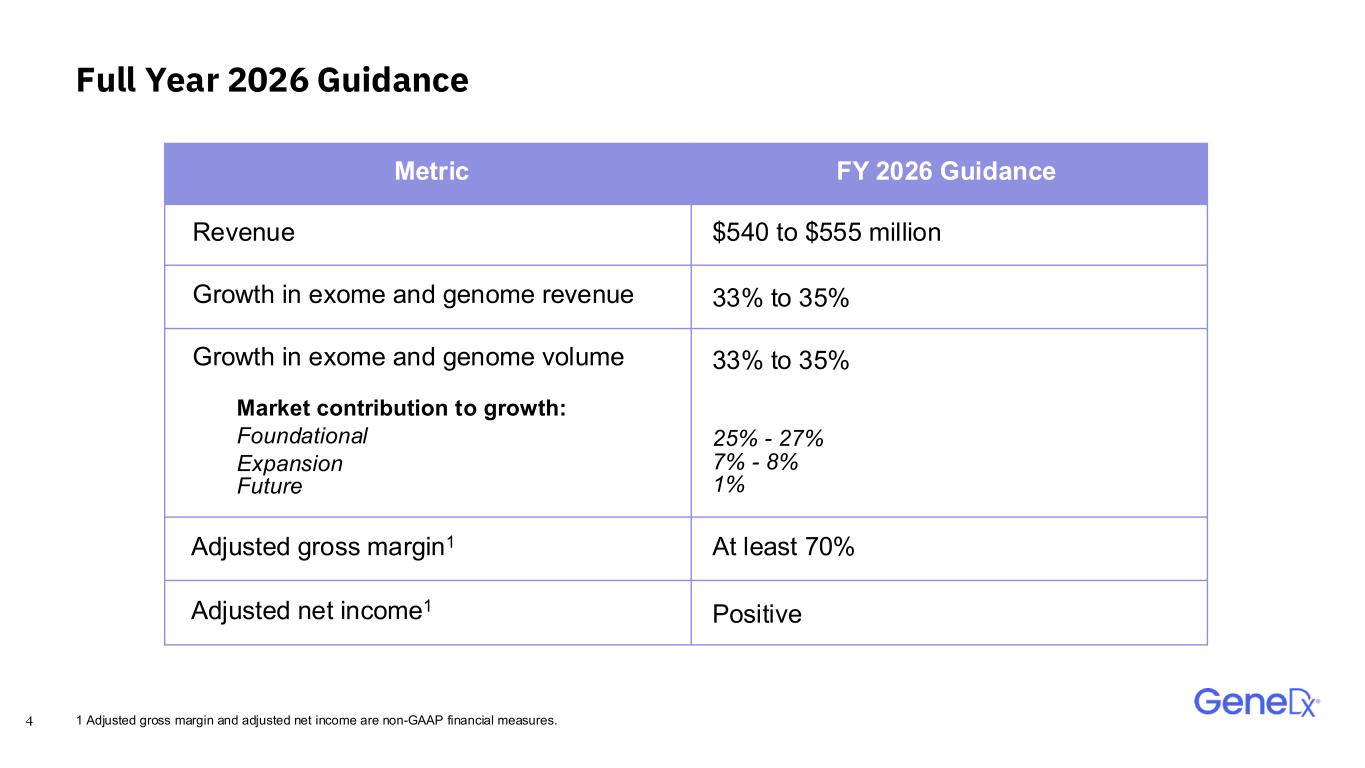
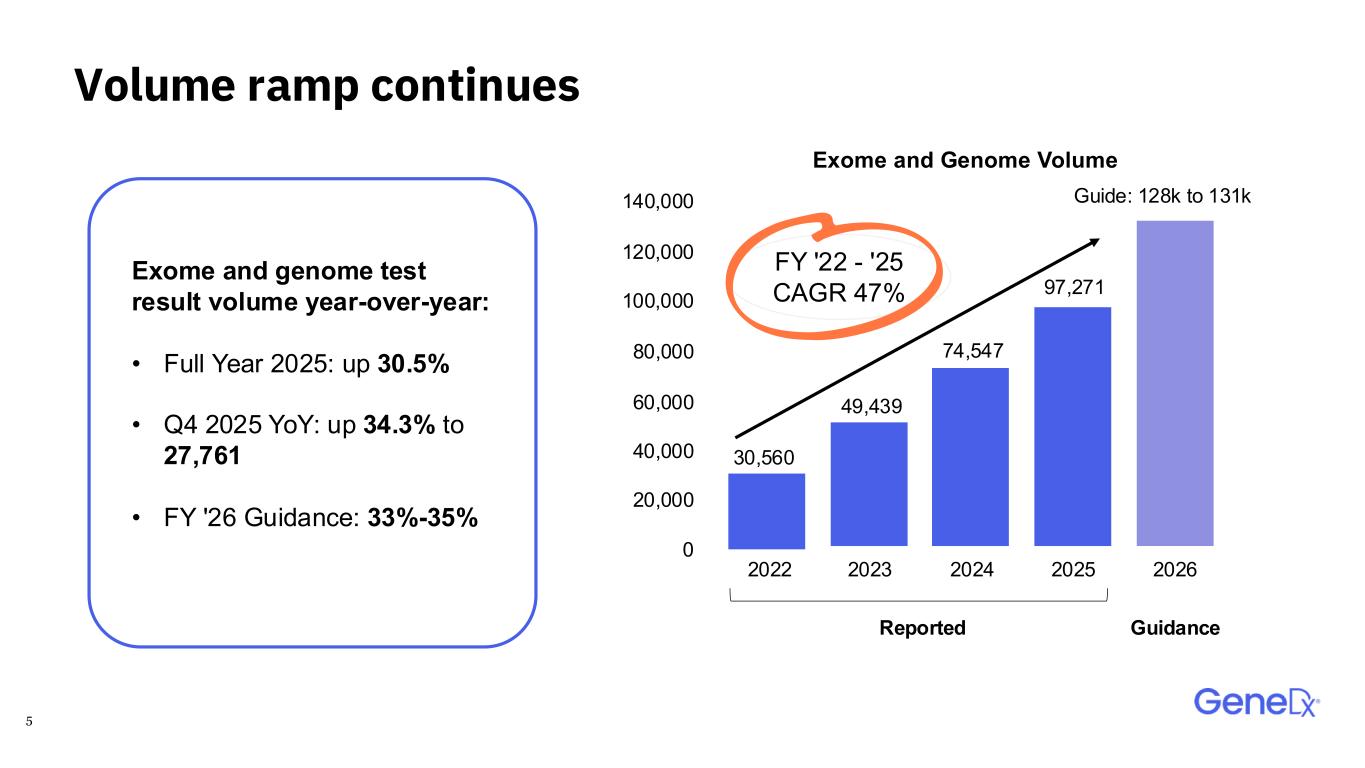
Thanks, and good morning, everyone. For the fourth quarter, total revenues were $121 million, up 27% year-over-year. Within that, though, exome and genome revenues were $104 million, an increase of 32% year-over-year. Excluding a $6.8 million one-time payer recovery in Q4 last year, our organic growth rate was 42% for exome and genome revenues. Turning to volume, we reported 27,761 exome and genome test results in the fourth quarter, capping a consistent trend of acceleration through the year. from 24 percent growth in Q1 to 29 percent in Q2, 33 percent in Q3, and now exiting the year at 34 percent. In the fourth quarter, we saw geneticists increasingly shift towards whole genome, signaling a desire among these experts to generate even more data for their hardest to diagnose patients. Our average reimbursement rate, or ARR, for eczema genome was approximately $3,750 in the quarter. As flagged on our last call, the rate fluctuated some in the fourth quarter due to mixed dynamics, but the long-term trend is up and durable. Full year, 2023, was $2,500, which went up to $3,000 in 2024, and now $3,750 in 2025. And while any mix towards genome over exome in the outpatient setting may introduce some short-term ARR variability, it's ultimately what is best for both patients and our business. Total company adjusted gross margin for the fourth quarter and full year 2025 was 71%. Genome costs more than exome today, but that's mostly a function of higher reagent costs, which we expect to continue to come down as the adoption curve ramps. Importantly, our dry side cost advantage applies equally between exome and genome. The annual trend demonstrates our proven ability to drive the cost curve down with scale over time. Full year 2023 gross margin was 45%, which went up to 65% in 2024, and now 71% in 2025. Moving to the bottom line, adjusted net income for the fourth quarter was $4.4 million and $4.8 million for the full year, demonstrating leverage in our business model. So, Catherine just laid out the strategic layers of our growth. To help you model the business, here's how we expect those layers to contribute to 2026. Let's first look at those foundational markets. First, we have deep penetration with approximately 80% share among clinical geneticists. We're still only ordering for about 30% of the patients, which we believe will grow over time. The go-get here is converting multi-gene panels into exome and genome, which we view as inevitable. Even within our own business, more than half of all tests are still single gene and multi-gene panels. Moving those patients from exome or genome to exome or genome materially improves diagnostic yield and reduces time to diagnosis. Conversion is driven by guidelines, education, sales coverage. Repetition is key. Conversion will continue to be a source of high-volume growth for years to come. And as it occurs, it will provide higher reimbursement and strong contribution margin tailwinds. Second, in February, we went live with an exome-to-genome reflex testing option, allowing clinicians to start with exome, if more data is needed, proceed to whole genome. This approach provides a faster, more cost-effective, and comprehensive diagnostic pathway. And third, nearly 30% of pediatric neurologists now order through us, and we've reached patient penetration in the mid-teens, all after just three years of targeting these clinicians. Growth here will come from both new clinician activation and increasing order rates per clinician for years to come. Moving to those expansion markets, first, the NICU remains a focus and we're convinced these institutions should be ordering over 200,000 tests a year to address the unmet need and provide better and more efficient patient care. Nearly 25% of the target accounts are existing customers, yet utilization remains in the single digits. As our efforts to push forward the standard of care and ease the implementation burden take hold, we aim to influence that utilization rate up to 60% over time. We're seeing early signs of improved utilization, but we'll remain conservative in our modeling assumption for the time being. second general pediatricians is a game changer following the mid-2026 launch of our custom design one-minute ordering workflow we expect volumes to pick up in the fourth quarter of 2026 and accelerate into 2027 third prenatal adults and international remain wide open we expect prenatal to begin to ramp in q2 and adults in the second half of the year internationally we're putting a small number of boots on the ground now to prepare for a broader expansion that will become a contributor in late 2026 and beyond. The primary product here will be software and interpretation as a service. And in all these new outpatient markets, we will remain conservative in our volume and ARR modeling assumptions until more history is built up. Now, in terms of operating expense, we're in a phase of deliberate investment to accelerate growth specifically we're deploying capital to nearly triple our commercial footprints in 2026 we're also investing in a next generation customer experience a portal designed by pediatricians for pediatricians which will launch later this summer and we're ramping our r d to support clinical research that underpins the commercial strategy that includes finding the right balance and market fit for things like supplementing short read with long read sequencing and other new technologies to increase diagnostic yield and reduce turnaround times. So with all that in mind, we're reaffirming our guidance to include total revenues in the range of 540 to 555 million dollars, exome and genome volume growth of 33 to 35 percent, with a baseline of 33 percent growth for Q1. We expect the foundational markets to contribute 25 to 27 percent towards the growth rate. We expect those expansion markets to contribute 7 to 8 percent towards the growth rate. And we're assuming a very modest second-half contribution from general pediatricians this The future markets are about 1%. So to put all that in context another way, 33% volume growth in 2026 would mean 32,000 tests on top of the fiscal 2025 count. In 2025, we were only really active across geneticists, diatric neurology, and the NICU, And those delivered the 23,000 tests of growth, all accelerating throughout the year. Given current penetration status, there's no reason to think those three markets would slow down. And on top of it, we're now adding 100 new sales reps, approaching new markets, launching a new customer experience, and doubling our marketing efforts. We're confident in our plan to deliver. We're expecting adjusted gross margin at approximately 70%, which takes mixed shift dynamics into considering. despite a heavy investment cycle we expect just a net income positive for the full year and each individual quarter the first quarter of 2026 in particular will be close to breakeven as we deliberately prioritize market capture over near-term margin optimization as these newly deployed territories activate and ramp towards full productivity we expect adjusted operating margin to build towards double digits by Q4 as these investments yield revenue. Before I move on, a few notes for your model. At this point in the quarter, volume is matching expectations. That huge storm in January did cost us a full day of volume, and we're experiencing another storm in the Northeast today. We've always built that level of impact into our Q1 projections. In our case, these children are sick and missed appointments are not typically lost so much they were rescheduled in the next quarter or maybe even two beyond that this business has a predictable seasonal rhythm in case clarification is required and i've been at the company for 10 years now q1 always steps down due to deductible reset dynamics all else equal in terms of underlying fundamentals volume in q1 is typically lighter by a couple days and underlying collection rates is typically down about 5% in Q1 compared to Q4 and then builds back up because of the impact of deductibles. We've factored this rhythm into our guidance. Last point, as a reminder, we wound down the hereditary cancer testing line in Q3 2025. So in terms of comps, that business line generated $2 million in Q1 of last year and $5 million in fiscal 2025. So before we move to Q&A, I do want to hit on something Catherine might be too humble to bring up. Last week, She was named to the 2026 Time 100 Health List. Catherine's been quick to transfer all credit to the GNDX team here, but on behalf of our 1,400 employees and countless families we serve, we want to offer our applause. But knowing Catherine, she would want me to point out who else was on that list because it validates exactly where this industry is going. She was honored alongside pioneers like Dr. Munsunuru, Dr. Aarons Nicholas from CHOP, who saved baby KJ with a world-first patient-tailored CRISPR therapy. There were several other honorees this year related to rare disease and the pioneering work to bring gene therapies forward. This all signals something important. Rare disease and genomic medicine are having their moment. we're decades behind oncology but we're coming fast in terms of diagnosis and eventual therapies now as an investor here's why you should care about that the evidence is clear the science is ready our technology is capable the therapies are coming and gene dx is the engine that finds the
Operator
patients who need them operator let's open up for q a thank you as a reminder to ask a question please press star one one on your telephone and wait for your name to be announced to withdraw your question please press star one one again our first question comes from the line of subunami with guggenheim your line is now open hey guys good morning firstly congratulations
Catherine on that achievement uh truly remarkable uh second i have a question on guidance let me start with some observations. Your guidance assumes 25,200 or so tests, 200 or so more foundational tests at the midpoint. This is impressive given that the number of foundational tests last year was 22,700 down from 25,000 in 2024. So your guidance reflects an assumption that a recent trend reverses. What is driving that and what gives you the confidence to
bake this assumption into the client? Yeah, I think, well, there's a lot of factors there, including the point we made on repetition. I think if you look at the overall amount of white space available in terms of penetration rates, there's just so much runway to activate new clinicians, to get them to order more, and frankly, continue the conversion cycle from single gene and multi-gene tests. For the past few years now, we've really just focused a few cohorts of doctors, outpatients, geneticists, and pediatric neurologists, and spent most of the last three years specifically talking just about a few indications, that being epilepsy, intellectual development delay, and autism. There's a far wider range of tests that will be ordered by those physicians over time. And I think some of the strength that I could point to there is if you look at the comment I made on even GeneDx's volume in the fourth quarter, still more than half of all tests we ran at GeneDx, despite our focus on exome or genome, is single gene and multi-gene panels. And so repetition is key. We've got a strong commercial team. We've got the largest rare disease sales team in the market. And as we said in the comments, we'll be nearly tripling the size of that team. There's still a lot of work to do to move the paradigm towards exome and genome being the test to diagnose all hereditary disease. And frankly, we're just in the early innings of
that. Well, thank you so much for that, Kevin. Could we also discuss the puts and takes for quarterly cadence this year on both volumes, ASPs, and maybe gross margins? Thank you so much.
Yeah, I mean, I think if you look at the cadence of any year here at GDX, you'd expect Q1 to be the low point in terms of volume and reimbursement rates, in particular, driven by those deductible factors I discussed, as well, of course, weather. With Q4 typically being on a per-day basis the strongest, there is variability in the number of operating days. You know, our business, if you look at the outpatient setting, does tend to follow or draw strength from the school calendar as well as the holiday calendar. And so to the extent you have quarters that are heavy on the inability for families to get into physician's offices, it obviously plays a factor. But we typically see Q1 as the low point, have that ramp throughout the year. From a seasonal strength perspective, Q4 the strongest, typically, followed by Q1, then Q3, and then Q4, then Q2, then Q3, and then Q1 from a strength perspective. And we see this year being no different.
Anything on gross margins, Kevin, as people ramp to newer call points, start to order a whole extra month, then I'll hop back in the queue. Thank you so much.
Yeah, I mean, I think overall where we ended the year around 71% for total company, underlying that the exome genome portfolio operates significantly stronger than that. The combined exome genome portfolio in the 80s in terms of gross margin. Now, the reality is we still have a long way to go to reduce cost per test. The past couple years, we've been optimizing for reimbursement and cost per test on Exome in particular. And now is our time to turn attention towards optimizing genome cost and reimbursement. I think we're well equipped to do that. We've got a proven playbook to do that. We're going to take many of the learnings from Exome. And invariably, genome COGS will be coming down as, I mean, we'd expect them to. as the utilization ramp increases. And in large part, the combination of that demand will put pressure on payers to open up access, will at the same time allow us to get even further economies of scale and buying power with respect to the use of genome. What we've taken is a fairly conservative view to gross margin in terms of the guide. We want to see how some of these new markets, volumes from new diagnosis codes play out and ensure that we have the ability to outperform in terms of cost and gross margin. But ultimately, as we see the conversion from panels into exome or genome, both are far more favorable, and we'd expect tailwinds from that
Operator
for many years to come. Thank you. Our next question comes from the line of Bill Bonello with Craig Callum. Your line is now open. Hey, great. I'm just going to push a little
bit more on the sequential just so we don't have kind of a repeat of last year, if you can help at all. But last year, I think we had cases down, you know, about 114 tests or so, so not a very significant sequential decline, and on the ASP side, we were just a little under 60 bucks down. Given what you talked about with weather and the big pop-up that we had in Q4 this year, should we be assuming a more significant sequential decline than 100 tests or so, maybe something more in the, you know, 400 to 500 range? Or how are you thinking about that?
Yeah. Hi, Bill. In the prepared remarks, I said the baseline expectation for Q1 should be 33%. So if you take the Q1 number at 33%, that would infer a decline of even 300 to 400 tests in Q1 off of q4 sequentially um would not be unexpected um like i said we lost a day of volume due to that uh storm we're actually providing our first virtual call today given the storm in the northeast um and so you know the guide is anchored in 33 to 35 percent because of the dynamic of both weather and the deductible reset, typical seasonal plays, would ask people to look to the 33% for Q1, and then we'll build back up off of that. The good news, bad news of it all, in terms of missed appointments from weather, is, as I said, in our space, if a family can't get to a physician because of weather impacts, if kids are sick, they're not going to skip the appointment, they're going to get back. But the unfortunate reality that we aim to solve here at GNDX is it might take a quarter or even two or sometimes nine months to get back into a specialist office. And so I think the way I'd point you to is 33% is the baseline expectation, and we'll try to beat that number. I'll get a little wonky on you, Bill, but in both 2025 and 2026, Q1 has 61 operating days. Q2 has 63. Q4 has 64. And Q4 has 62 days. And so right off the bat, just calendar-wise, there's one less day in Q1 available than Q4 sequentially. And then you layer on seasonable deductible impacts and the weather is the way we think about it.
Yep, that makes sense. And just to be clear, the 33%, you're talking about that for both volume and revenue as a good starting point? Yes. Okay, that's good. And then just one follow-up, if I could. You talked about nearly tripling the commercial footprint. What's sort of the base there? Is that from where you were before the heads that you were talking about in January that you've added, or triple relative to what?
Yeah, just call it the average through 2025. But if you look at the full year of 2025, frankly, we didn't add a lot to the base. You know, some reps come and go. But the way I think about it is the full size and scale of the team for the most of 2025 was about 50 sales reps calling on those outpatient markets of geneticists and pediatric neurologists. And then a small team, let's call it 10, focused on the NICU in particular. So 60 reps was really what we went to bat with for the balance of 2025. And we'll be adding about 100 on top of that to start the year.
Now, of course, there's a natural ramp, and that ramp has been contemplated in the guide. You know, we added 50 new sales reps to general pediatricians in January. We added 10 new prenatal reps in January. We're adding about 10 more reps for the NICU, but it's going to take a few quarters for those reps to get fully productive. Yep.
Operator
Thank you. Our next question comes from the line of Kyle Mixon with Canaccord Genuity. Your line is now open.
Hey, guys. Thanks for the questions. Congrats, Catherine, as well. I hope you're doing well in this storm in the Northeast. So just on the guidance, thanks for the 1Q framing, Kevin. But for the full year, it's helpful that you have this expansion in the future market and the current stable base assumptions and stuff. But as you think about upside and what you're not baking in and things like reimbursement that wasn't exactly called out. Can you just help contextualize that for us in terms of the excitement levels and what's actually possible to penetrate maybe in these newer areas?
Yeah, but obviously we've got greater ambitions than what is baked into the guide for the year. I think areas where we've stayed appropriately conservative but offer potential upside, You know, we've consistently said on general pediatricians, expect 18 to 24 months from guidelines to see volumes ramp. All interactions with pediatricians to date, including focus groups, extensive market research, were out in the field, extremely positive. I think we have immense confidence these physicians will order. The acumen and willingness to order will be there. But it's also told us we have to deliver the front end and back end experience that they said they would need in order to get comfortable ordering. And we launched that customer experience later this summer, the end of Q2 into Q3. And so we built some time for volumes to ramp following that launch. It's conceivable that that takes off immediately after that launch. we're putting in the groundwork and effort now. Those reps have started. But before we build in any upside to the guide ahead of what has always been our baseline expectation, we want to get that experience launched and into the hands of folks more than the focus groups that are building it. I think prenatal is another one. We started with a small team of 10. If you look at the size of the number of MFNs across the country. Certainly that team can and will be larger over time. But it's a new market. We started with a bit of a pilot team. We'll see how signals pull through in the next couple of months. And that may mean we have the ability to add to the sales force there. But we wanted to take a conservative approach and learn the market. those are just two, but I think there's plenty of areas in terms of volume that we've left out of the guide to be surprised with. And then in terms of reimbursement rate, as I said on the call, we're taking a fairly conservative view on what payment and denial rates will be in those outpatient markets that are new. There's no reason to see a vastly different reimbursement rate or payment denial rate in those markets. But history has told us that the first time we supply new diagnosis codes or physician types to payers, they often have an inherent reaction to auto-deny those, and you have to prove sustained demand and that the revenue cycle is going to keep coming back via appeal and further evidence. And so we think we've built in a fairly conservative view to reimbursement rate. It's an area where we tend to stay on that side of conservatism and we'll look for periodic updates throughout the year to see if we can't beat those numbers.
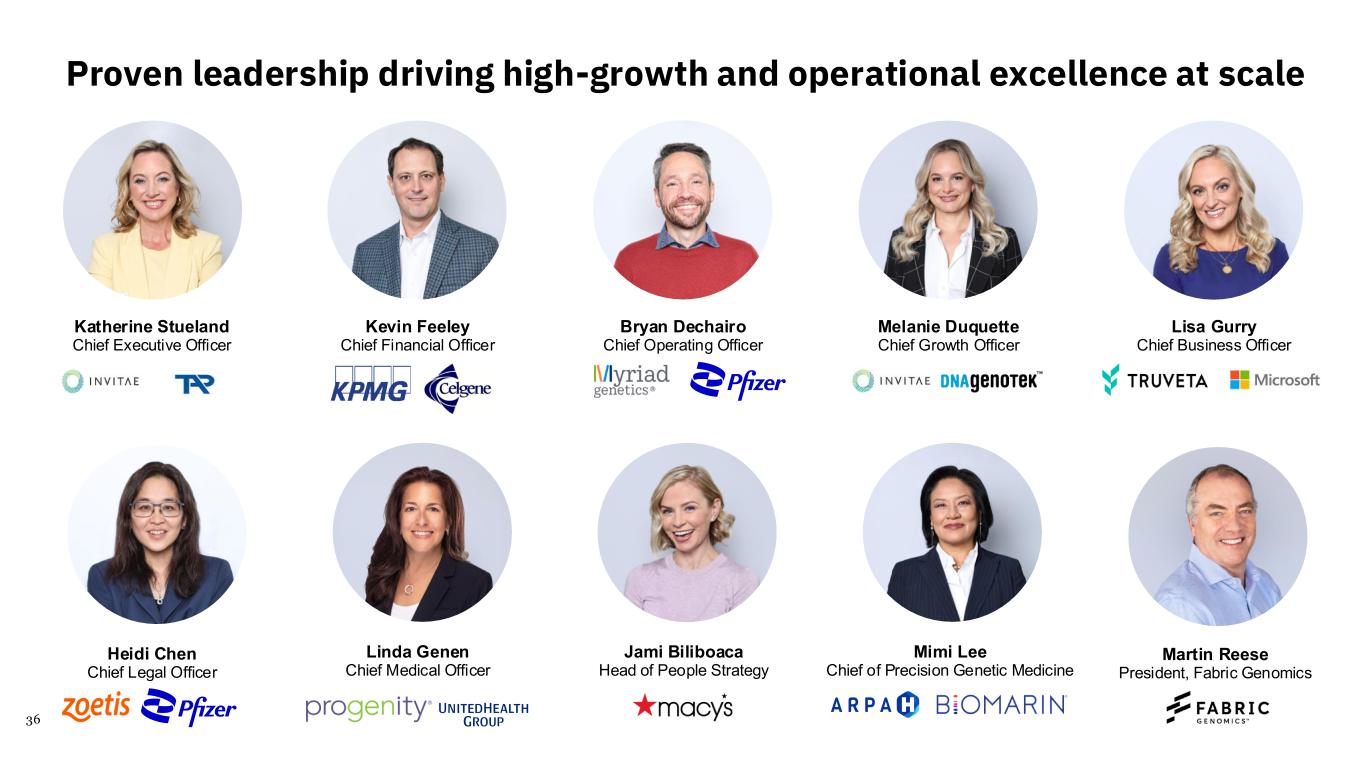
The only one I would add to that, Kyle, is the NICU setting. We've been, you know, I would say line of sight on NICU. Just given our experience in 2025, we did just bring on a new chief medical officer, Dr. Linda Gannon, who is a neonatologist who's also been in the business of practice management for the NICU. We have new commercial leadership, including a neonatal nurse leading the strategy and the go-to-market there that's driving more of a protocol approach in the NICU. So, you know, I think we kept a conservative view on the NICU, but we're keeping an eye on that because i would say you know six weeks into the year we're we're seeing some encouraging signs there so um that's another one where we're going to continue to to drive forward all right perfect
and then just a quick underlit follow-up on um test performance something that's been that's called out recently in our conversation so could you maybe talk about like a snapshot regarding how performance compares to some of the up-and-coming um you know tests uh in your view And could you maintain or accelerate market share if you, you know, don't really invest in or lean into, like, integrating long read or these other technologies to increase diagnostic yield?
Yeah. So, I think as we look at the strength of our test, we deliver two times the accuracy of another exome or genome out on the market today. And that is because of Infinity and that reference data that I spoke at length about in the prepared comments, because I think as competitors start to enter the market, they're going to, they and their customers will realize exactly how important it is to have the breadth and depth of both the genotypic and phenotypic data for your expert geneticists to be able to tap into. So I would say at a baseline, we're absolutely confident in the importance of accuracy of our testing, not to mention the fact that we also have the scale. The turnaround times for other competitors in our space are far longer. We have our turnaround times down to about two weeks for an exoma and a genome. So we're turning these around fast, and that matters to customers. And we're doing it cost-effectively, and we have the payer contracts, which, of course, is beneficial from the customer and from the patient standpoint. So we stand in a confident position in terms of our ability to continue to keep the competitive mode extraordinarily strong amidst competitors entering the market, which, again, is not a new phenomenon. There have been dozens of these tests on the market over the past decade plus. We are going to continue to invest in R&D. Kevin mentioned layering in long-read sequencing. We're also looking at additional technologies for, you know, really keeping an eye on how do we continue to have the best industry-leading diagnostic test out there. And if we're able to increase our diagnostic yield because of a new technology, you can bet that we're going to make sure that we're layering that in. I think interestingly, though, as we look at how far Infinity actually gets most patients, we actually do a pretty darn good job with Infinity alone and short read. but we're seeing some encouraging additional diagnostic yield that we can get out of long range. So, as new technologies come to bear, you can bet on us that we're going to have the highest diagnostic yield without a doubt. Perfect. Appreciate it, guys.
Operator
Thank you. Our next question comes from the line of David Westenberg with Piper Sandler.
Your line is now open. Hi. Thanks for the question, and I echo everybody's congratulations on all the work done in rare disease health. So I just wanted to talk about the general pediatrics. You've noted an 18- to 24-month adoption curve following the AAPA guidelines and deployed a 50-person sales force to target this. What specific indicators, I don't know if that would be like repeat testing, number of new positions ordering per quarter, utilization of a one-minute workflow, What are you tracking to gauge success in that market that that Salesforce expansion is working? At what point in 2026 or 2027 do you believe this translates into a material inflection in revenue?
Yeah, so you're hitting on all the right key metrics, Dave. So thank you. We want to see a number of new clinicians, and then we want to see time to ramp. So, you know, we're tracking, are they going to do one or two at a time just to kind of get some experience without the one-minute ordering? And then how much faster can we actually see the one-minute ordering start to accelerate utilization? So, those are the key metrics. We're obviously going to be tracking average reimbursement rates, so we want to make sure that we have our revenue cycle management team revved up and continuing to make sure that we're getting paid for those tests. Again, in the one-minute ordering, we are building in the opportunity for a parent to be able to upload their child's symptoms, so all the phenotypic information. We think that's going to be really powerful also in the appeals denial process. So those are the main metrics that we're looking for. And that Q4 inflection that we're anticipating, where we start to see reps get productive, we have one-minute ordering launched. And as I said in the prepared comments, the feedback on that one-minute ordering is really positive. It was designed by and for pediatricians. You know, we're going to keep an eye on that sales force and see, you know, we're looking routinely to figure out exactly when we can continue to add reps. We know that 50 is not going to be the right size forever, but it's a great, great size just to get some experience, get some data, and then really start to accelerate as we re-ramp into 2027.
perfect um thank you just one follow-up here on the on the NICU and q4 uh you know you mentioned a five percent penetration rate you know how do you grow on that uh penetration rate and um you know what what what is in within your control in terms of growing that um and then just again a reminder of how how it went in q4 and their opportunities to to try to ramp that throughout
this year. Thank you very much. Yeah, no, thank you. We learned a lot in the NICU, and we are, with our now 10 reps out there, really having them focus on selling directly to the neonatologists. Dr. Gannon is, she's been with us for about a month, but already has made an incredible impact. As I mentioned, we have a neonatal nurse who has helped us kind of refocused the go-to-market strategy. So, you know, we're eager to let that play out for a little bit. But early signs, I would say, are good in terms of this new strategy in place. And we'll keep you posted on what that momentum looks like.
Operator
Thank you. Thank you. Our next question comes from the line of Dan Brennan with TD Cowan. Your line is now open.
Great, thanks. Congrats on the quarter. Good close to the year. Maybe I said one on the growth drivers and one on pricing. Maybe I'll just start with pricing, Kevin. Implied in the guide, right, is flat pricing of exome genomes, but obviously you're talking about conservatism on some of the new markets. And in your prepared remarks, you talked about continued upside on pricing. So I guess the first question is just kind of, you know, where do we see really pricing going? Like kind of what's the headroom if we look out even beyond 26? And I know you had some comments in the preferred remarks on genomes and exomes. I'm wondering how those influence pricing, and is there anything baked in for Medi-Cal on pricing?
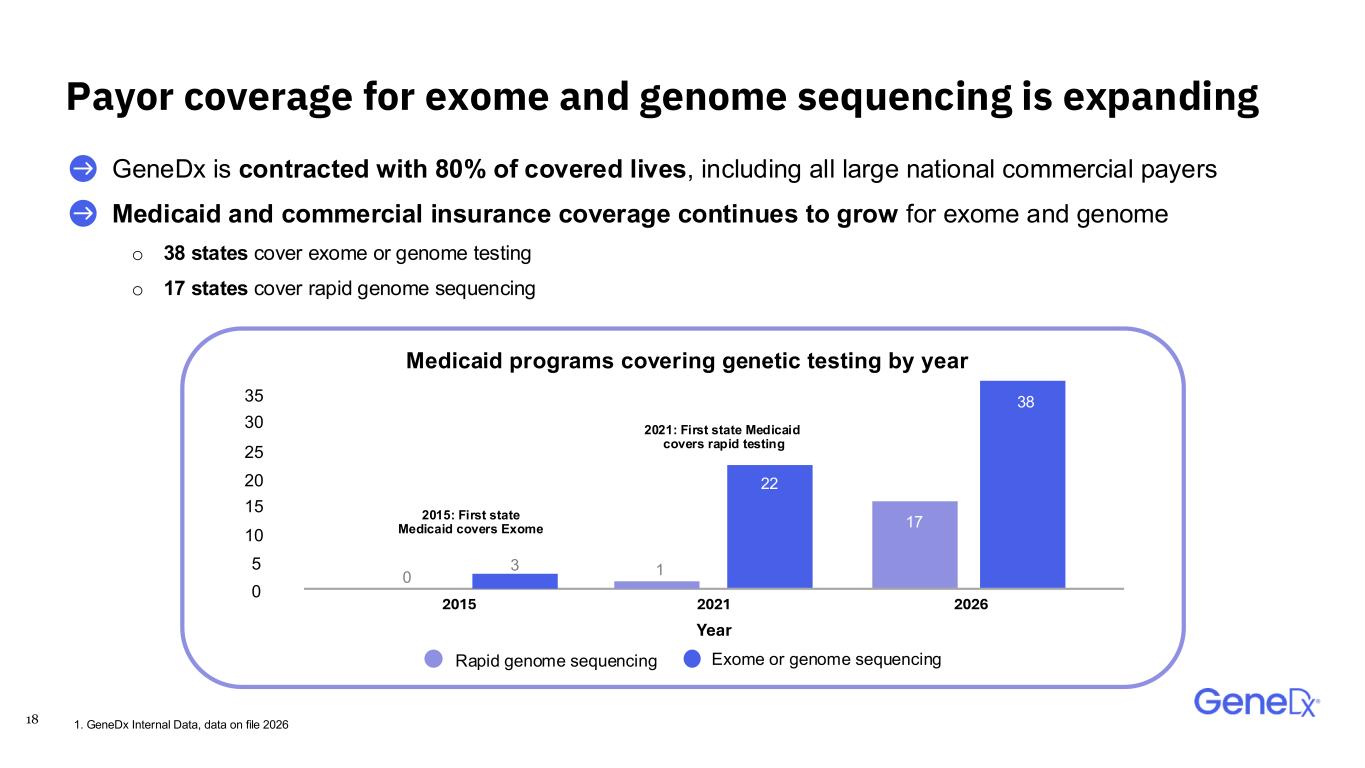
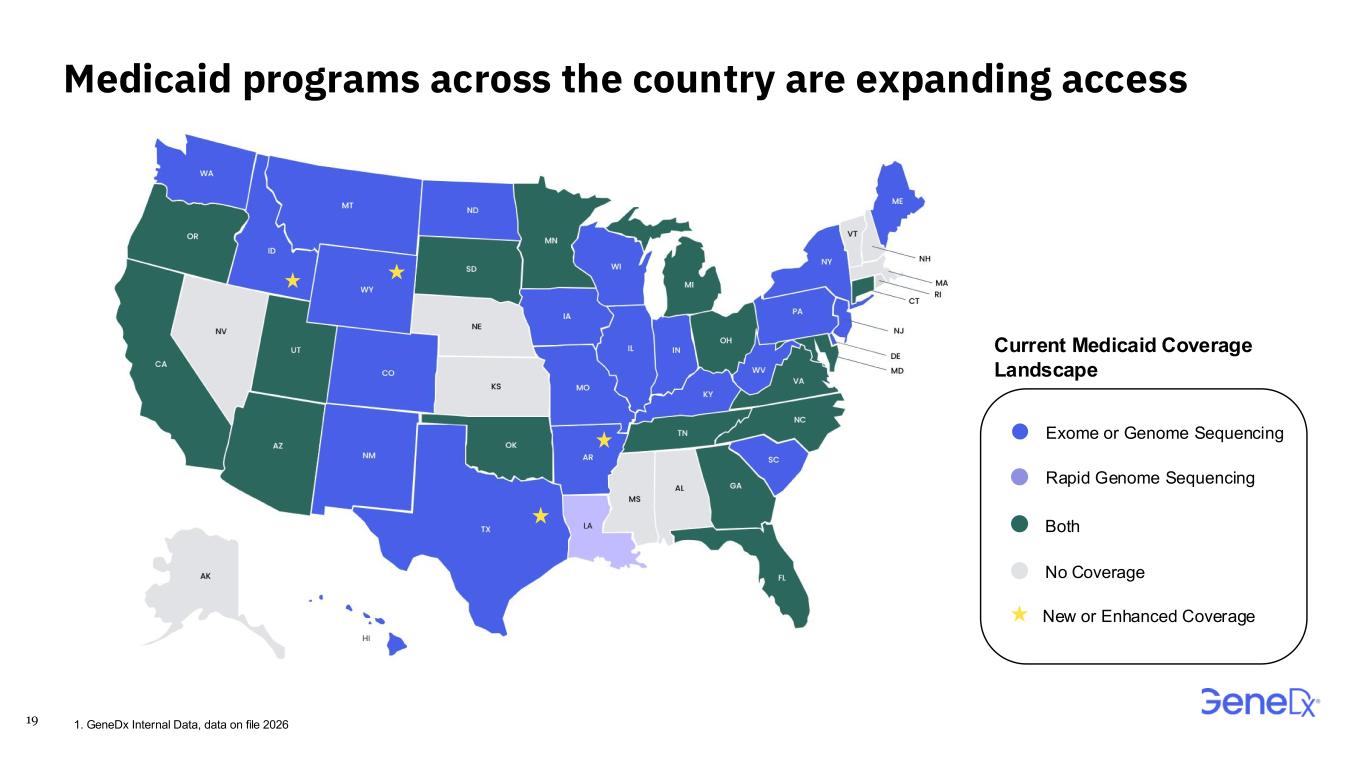
Yeah, there's nothing baked in yet with respect to Medi-Cal. In fact, although policy went effective November 1st, we still don't have a public price, which makes it hard to accrue and forecast. That's just working through the mechanics of the powers at Medi-Cal. And so continue to leave Medi-Cal out of the guide for now. And consistent with what's always been our approach, what we've left out of the guide, of course, is any new Medicaid state coming online as well. A lot of work to influence more Medicaid coverage expansion, but there's just so many factors out of our control. So the guide does effectively assume zero new Medicaid states this year. Do I think that that's reasonable to expect zero? I don't, but we'll always leave new Medicaid coverage out until proven otherwise. So, that's one I'd point to. And then, as I said, on the new markets, we've taken a fairly conservative view. What does that mean? Back in 2023, when we first launched into pediatric neurology, which was the first outpatient call point beyond geneticists, we saw for the first couple quarters, the denial rate elevate up to about 70%, so being paid about 30%. And as you know, over the past two years, we've now worked that down to the point where we're getting paid, you know, in the high 50s. And so we've taken that past experience and applied that level of expectation for the first few quarters out of the gate at those new outpatient call points. Now, again, if you look at underlying policy coverage in the markets and diagnosis codes that we're choosing to pull through, there's no reason that we should see that high of a denial rate, but want to let history build up. And so would be pleased to be surprised otherwise, but we built that level of conservatism into the ARR guide.
Great. And then maybe just on the 7% to 8% contribution from the new growth drivers, could you share a little bit of color between the PNORO and prenatal, since I'm assuming the PNORO and, yeah, prenatal and or NICU, just any relative contribution you can share with us and kind of want to inform that? Thanks a lot.
Yeah, if you had to rank order those, NICU is at the top of the pack there. I think as we talked about on this call, we're seeing great early signs to start the year in the NICU in terms of increased utilization rate. And if you look back at 2025, we actually activated more NICU accounts than what was in our original plan. Now, what offset that was we didn't see the quick ramp up that we expected in terms of ordering patterns. But if you look at where is that utilization rate gone in the past couple months? I think we've seen great signs to start off the year, but we've, like I said, we'll take a fairly modest approach in terms of modeling at this point until that really takes hold. But the NICU does provide significant growth out of that expansion market layer in 26. We think we've got all the pieces in place now, including a revamped approach on how to ease implementation burden from hospital systems. After that, prenatal, you know, we've got a team of 10. It's a big opportunity. We'll see how that ramps throughout the year. But with a launch in Q1 into that market, really expecting zero contribution in Q1, Very little in Q2, but some early volumes in Q2. And then Q3, the start of a nice ramp up. And then as we talked about pediatricians, we've taken a fairly modest view there. But just remember that in that expansion layer is the NICU, which will be the bulk of the growth here for that layer in 2026.
Great. Thanks a lot, Kevin.
Operator
Thank you. Our next question comes from the line of Tycho Peterson with Jeffries. Your line is now open. Tycho Peterson, your line is open. Please check your mute button.
Hey, can you guys hear me? Kevin, can you maybe, I appreciate all the color on ASPs. I mean, obviously, in the background here, you've got, you know, HR 7118, you know, the Genomic Answers for Children Act and Florida, you know, Sunshine Genetics Act. Can you maybe just talk about, you know, how you're thinking about these opportunities? He's obviously more of a 27 driver than 26 drivers, you know, if it does go through for HR 7118. But how are you kind of handicapping this over the next couple of years?
Yeah, clearly nothing in 2026 in terms of uplift expected from any national legislation. Look, it's exciting. And we're part of a group of about 30 influencing that bill to make its way through the process. Now, introducing a bill and getting it signed and across the president's desk is two very different things. I think what we're seeing is great reception across policymakers. acres, and it could be a big deal for us, but obviously something that we wouldn't build into our short-term expectation until we get a much clearer line of sight. So I've left anything off of that pending legislation out of the outlook for now, and we'll continue to do that until we get some more clarity. But overall, I'd say beyond the national stage, there continues to be great progress at state houses with respect to moving along both biomarker bills and expansion of Medicaid coverage for exome and genome. And we'd expect another great year there. We're just going to leave it out of the expectations until they hit. But I think more and more we're seeing policymakers understand not just that there's an unmet medical need, but it's really the best thing for them to spend their dollars wisely to prevent disease, to diagnose it early. And I don't think there's any slowing down of that.
And then that's helpful. Catherine, can you maybe touch on pharma? I know you're talking about doubling the business this year. You know, I guess any caller on just kind of what sort of contracts these are? Does their recent Komodo Health Partnership help pull through, you know, incremental demand there, or is that too early? I know you've, you know, hired a bit. You hired Lucy Gurry in September, so maybe just talk a little bit about, you know, where you are from scaling up on the pharma side, and is that mostly, you know, patient matching and longitudinal data for FDA submissions, or are you kind of expanding the scope of what you're doing with pharma, too?
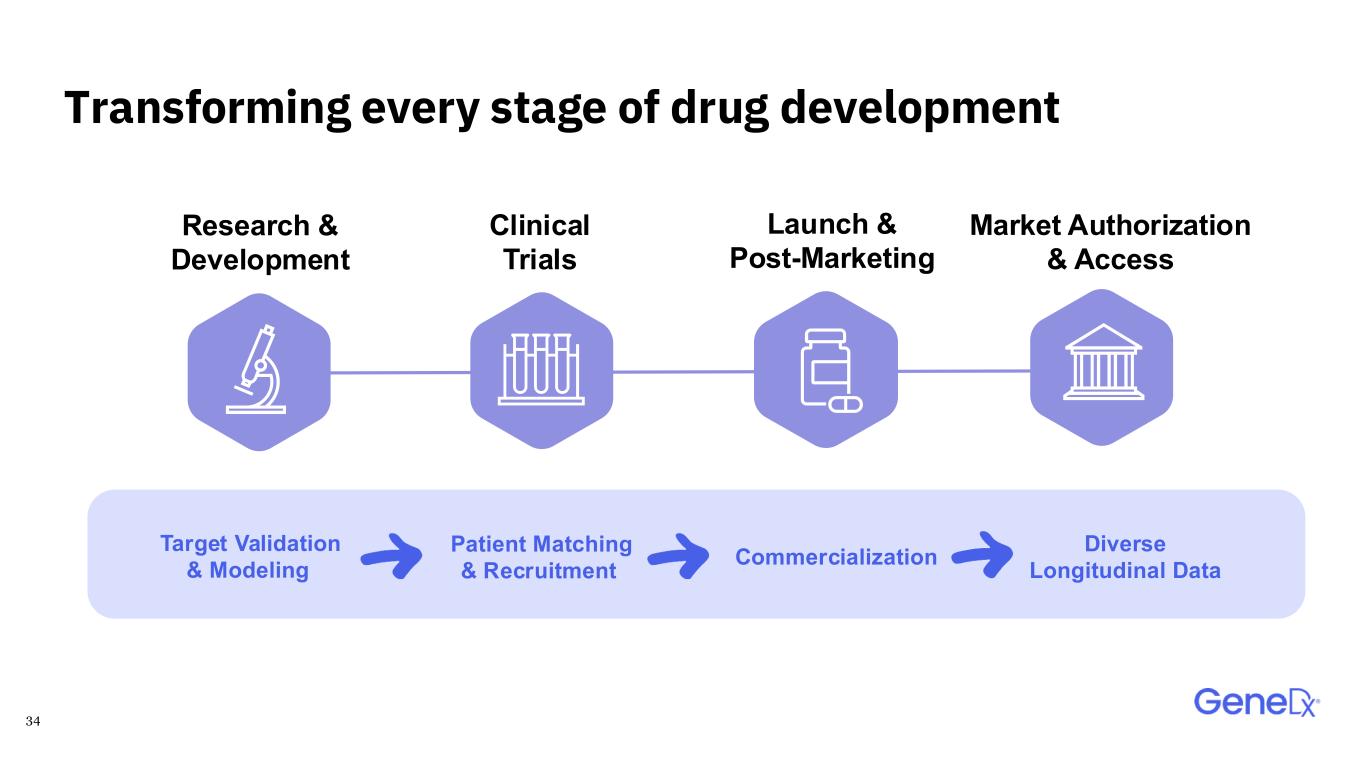
Yeah, thank you for that. So, we're encouraged, I would say, by the types of conversations we're having with pharma companies. I think one of the notable shifts in our go-to-market strategy is focusing on some of the adult onset conditions and and we feel like in focusing on adult onset conditions if it's sponsored testing or patient matching that gives us the opportunity to work really strategically with these companies as we've seen happen in the pediatric side of things to accelerate adoption of of these technologies generate a body of evidence to be able to go to payers And so, you know, we're thinking across both pediatric and adult, as well as many of these bespoke, we talked about CHOP and baby KJ, there are more and more, there's more and more organizing happening amongst these parents who are becoming biotech CEOs. So how do we really work in partnership with them to put our data to work for their families and for their businesses? So encouraged by, I think, the shift in thinking and the more expansive nature, it is everything from clinical trial matching to sponsor testing, just getting different types of docs using testing. And what's also really, I know we've talked about this in the past, Tycho, but it is true across every condition. The more you test, the higher the prevalence is of these diseases. And so, you know, we were sitting with a pharma company that was looking for 400 patients. We happen to have 2,300 of them in our database and really challenged the understanding of the prior limited prevalence. So I think it's going to change the equation for investors as well. The larger patient populations are going to make it much more compelling for investors to get involved in these companies. So more to come, but we're excited about what we're seeing and the conversations we're having and the opportunity that's ahead.
Great. And then maybe just one last one on competition. I mean, we haven't really touched on it on the call, but and you've always said competition validates the market size. It doesn't really threaten your leadership and, you know, new entrants can help educate payers and governments, but anything you can kind of flag here is that, you know, how you're thinking here has evolved. I mean, has it, are you going to have to counter detail more? Are you pulling forward any hiring? Just maybe just talk a little bit about the competitive environment because we're obviously all getting more questions on that too.
Yeah, yeah, no, and you're right. I think competition is a good thing. I think that more, it validates, as you said, but it also helps put more and different types of pressure on clinicians to start using this testing. So, you know, the sheer size of our sales force, I think our sales team is six times the next largest sales team. I think we have more reps in California than one company has for their entire sales team. So we've got a massive footprint for rare disease. We are always going to be looking to pull forward hiring. We talked about some encouraging signs in the NICU. That might be an area where we could pull forward some more hiring. We pulled forward hiring into our specialty sales team. So, you know, as a commercial person, I, of course, am always eager to see how do we continue to accelerate our growth. So I would say we're seeing positive signs across the board. But even if we were to not hire another person, which I feel confident will continue to strengthen that team, We have a monster-sized team compared to the next one out there. And, you know, I think more education on this is a good thing. There's plenty of wide open space. Infinity, as the reference data set, is going to continue to ensure that GNDX is delivering the most accurate information, which is, of course, what's most important to these clinicians in these families, but also the turnaround times. I said we're now at two weeks for exo and genome, just being able to do it better, faster, more cost-effectively. All of that means we can move faster and keep adding more clinicians along the way. Great. Thank you.
Operator
Thank you. Our next question comes from the line of Keith Hinton with Freedom Capital Markets. Your line is now open.
Great. Thank you. Can you hear me, Elka? We can.
Okay, great. Just one question, then a quick follow-up. Just in terms of the foundational market growth, obviously, as we've talked about, looking for a little bit of an acceleration here versus last year. So I just want to clarify, are there any sort of major new indications or disease areas you're launching in 2026 that fall into that foundational bucket, or is this just a natural reacceleration?
Now, we've got a multi-year roadmap for expansion of indication targets that we kicked off early 2025. As I said, we went the previous three years really just talking about three of what ultimately is a span of thousands of rare disease that our technology can diagnose. We've been taking a fairly disciplined approach to only target pulling through volumes where underlying guidelines and reimbursement policy would be secure to get paid. And the aperture of that continues to increase in large part because of our work, but also other evidence provided by many others. And so, yeah, underpinning those foundational markets is, of course, effort across the commercial engine, but there's a far larger set of diagnosis types or indications that we'll be targeting in those clinician offices.
got it okay and then just on the follow-up i'm looking at slide 22 of the deck here and you know looking at the 300k you know annual patients among geneticists penetration a little bit above 30 percent um you know kind of two ways to look at that on the positive side you know a lot of room for growth on the negative side you could say you guys have been at this a long time and it's only at 30%. So, my question is sort of more geared towards that more bearish look, which is, you know, obviously some portion of those patients may not have a best fit for getting an X-Gen versus a single or multi-gene panel. I'm thinking about a patient that has kind of strong suspicion for a particular rare disease based either on pheno or family history. So, do you have any sort of insight based on your market research into what percent of that 300K patients, you know, maybe the best clinical practice would not be an X-Gen, would be to start with something like a single or multi-gene panel and then flex to an X-Gen as needed? Yeah, look, I think our
position has always been and remains that ultimately there will be one test for all predatory disease diagnosis, and it will be a whole genome. I think if you look to say, well, we've activated 8 out of 10 clinical geneticists who've been ordering from GNDX, and we've held that share for at least the 10 years I've been with the company, I think proves the power of our service offering. You say, well, why are they only ordering for 30% of their patients? Um, like I said, we've not been attempting to pull through all volume types, um, in the fourth quarter and all periods prior, there's volume we've left on the table. Um, there would be demand out there for, uh, offering physicians a far better answer than multi-gene panels. If we were just willing to take all the volume and not get paid for it, we've been taking a fairly disciplined approach to step up those conversion rates over time in a way that's both good for patients and healthy for our business. I think we're going to continue to do so, but with the emergence of new guidelines, clinical evidence, economic support, there is and will continue to be a tidal wave of support in terms of adding exome and genome into reimbursement policy to replace those tests. All in, we still think we're in the very early days of a generational change to replace all multi-gene panels with exome, and eventually genome will be the one test that outlasts them all.
The only thing I would add to that is by continuing to utilize single gene or multi-gene panels, were just contributing to the diagnostic odyssey. So we've gotten the industrial strength of exome and genome to the point where multi-gene panels really should, for the most part, be retired. But their use in the settings that we're in are just continuing to proliferate the delayed diagnosis.
Understood. Thanks so much.
Operator
Thank you. Our next question comes from the line of Brandon Coulard with Wells Fargo. Your line is now open.
Hey, thanks. Thanks for squeezing me in. Kevin, just one for you. Given it sounds like you have front-end loaded the sales rep bill for the year, I think you talked about a double-digit operating margin by the fourth quarter. Should we expect a modest loss to start the year here on the operating line and just how we think about OPEX ramp moving through the year?
Yeah, not a loss, but as we said, expect Q1 to be right near break-even. So it will push the boundary there, but we expect to be able to hold it positive and then build up throughout the year as those reps in particular and some other factors start to earn their keep.
Operator
Thank you. Our next question comes from the line of Mark Massaro with BTIG. Your line is now open.
Hey, guys. Thank you for taking the questions, and congrats on a strong 2025, and congratulations, Catherine, for the award. I wanted to ask about, you know, I didn't hear a lot about EMRs or Epic Aura. Can you just speak about your EMR strategy in 26? Should we expect that to lift, and how do we think about EMRs going into the pediatrician
Yeah, and thank you, Mark. I'm glad you're asking this. So, last year we, you know, for better or for worse, we, I think we tied EMRs very much to the NICU and we learned a lot. What we learned is that clinicians who have been ordering testing from us like our portal. So, that's great. We continue to improve it and so they like that workflow. And so, and we've spent a lot of time with the team at Epic just to really understand where the opportunities are from their perspective. They obviously see a lot of this business. So, we really want to focus our Epic strategy on new customers. So, general pediatricians would be a great example of a new customer where Epic can be helpful. So, we are thinking about Epic as a driver for both outpatient and inpatient. So, really going in with health systems, we've been kind of reprioritizing which health systems we're going into. So, looking at it less as a current customer unlock and more as a future customer unlock. So, that has been, I think, a really healthy shift for us and very much in line with what Epic sees as kind of best in class moving forward. So, more to come on that and how it plays a part in unlocking new customer types. As we've talked about, we're also going to be releasing that one-minute ordering, so I think we can kind of see, like, in a sense, Epic is one-minute ordering, so we can see what's going to work better for different types of clinicians. So, I think we'll be tracking it. We'll share as we learn. And we're, without a doubt, enthusiastic about Epic being able to unlock more volumes, really focused on new customers who haven't had a prior experience
with us ordering. That's really helpful. And then last question for me, it looks like the NICU is going to likely be the largest source from that 7% to 8% growth from the expansion markets. I understand that you're adding 10 reps into the NICU, and you've talked about onboarding a neonatal nurse. You've talked about a lot of lessons learned last year. So it seems like this is an important initiative for 26. Is there anything else you could just speak to that gives you confidence about maybe some of the, you know, encouraging early performance you've seen here in Q1, but how you're thinking about this building throughout the year with respect
to the lessons you learned from last year? Yeah, so we're happy with what we're seeing from an ordering perspective year-to-date. So I think that's point one, and that's a great message to be able to deliver, so much so that we're taking a look at do we want to add more reps and at what point in time. The new leadership that we brought on, our chief medical officer, Dr. Gannon, she's super eager to be spending time in the field and to start a real peer-to-peer KOL strategy because her view is neonatologists are going to listen to other neonatologists. So we need to kind of break the pattern of the neonatologist constantly deferring to the geneticist. And so I think that the peer-to-peer work that we are going to be deploying this year, we feel like is going to be powerful. She's been making calls already, sharing great feedback on GNDX from those who are ordering, and then just in her network being able to already unlock some good opportunities for us to go get. And so with that, and then also with the Seek First Protocol as being a really important tool for us. I think it's really just trying to simplify the selling strategy so we're going right to those neonatologists and activating them more directly versus having to tackle it in a more systemic way.
That sounds great. Thanks for all the color, guys.
Operator
Thank you. And I'm currently showing no further questions at this time. This does conclude today's call. Thank you all for your participation. You may now disconnect.