Operator
Good day, and thank you for standing by. Welcome to the Absci second quarter business update. At this time, all participants are in a listen-only mode. After the speaker's presentation, there will be a question and answer session. To ask a question during the session, you will need to press star 11 on your telephone. You will then hear an automated message advising your hand is raised. To withdraw your question, please press star 11 again. Please be advised that today's conference is being recorded. I would now like to hand the conference over to your first speaker today, Alex Kahn, Corporate Vice President and Investor Relations. Please go ahead.
Earlier today, Absci released financial and operating results for the quarter ended June 30, 2026. If you haven't received this news release or if you'd like to be added to the company's distribution list, please send an email to investors at absci.com. An archived webcast of this call will be available for replay on Absize Investor Relations website at investors.absize.com for at least 90 days after this call. Joining me today are Sean McLean, Absize founder and CEO, Zach Jonathan, Chief Financial Officer and Chief Business Officer, and Ranti Somorodny, Chief Medical Officer, Head of R&D. Before we begin, I'd like to remind you that Manage will make statements during this call that are forward-looking within the meaning of the federal securities laws. These statements involve material risks and uncertainties that could cause actual results or events to materially differ from those anticipated, and you should not place undue reliance on forward-looking statements. These include statements regarding the development and clinical progress of our pipeline programs, including ABS-201, the design, enrollment, conduct, and timelines of our ongoing Phase 1-2A headline trial of ABS-201, the anticipated timing of an interim proof-of-concept data readout for ABS-201 in the second half of 2026, and full proof-of-concept data in early 2027, the potential advance of ABS-201 into Phase 3 development, the anticipated initiation of a Phase 2 clinical trial of ABS-21 for endometriosis in the fourth quarter of 2026, and potential proof of concept readout in the second half of 2027, anticipated characteristics and product profile of ABS-21 as a drug product, our target product profile and its attributes, the potential for an expedited development pathway, including the possibility of advancing directly from Phase 1, 2A into Phase 3, our planning engagement with the FDA regarding development strategy, our partnership with Eli Lilly, including anticipated benefits thereof Eli's participation on our Endometrius Advisory Board. The capabilities and anticipated benefits are about platform technologies such as Atlas and potential market opportunity and commercial prospects for ABS 201. Certain statements may also include projections regarding potential market opportunity. These estimates are based on various assumptions, including potential regulatory approval, final approved label, and the evolving competitive landscape, any of which could cause our actual addressable market to differ materially from these projections. In addition, certain research findings discussed today reflect participant responses to hypothetical medical product profile and do not represent clinical results for ABS-201. Additional information regarding the risks and uncertainties that could affect our forward-looking statements is set forth in the press release to Absci issue today. Our most recent annual report in Form 10-K and subsequent documents and reports filed by Absci from 9-9 with the SEC. Except, as required by law, Absci has claimed that he intends your obligation to update or revise any financial or product pipeline projections or other forward-looking statements either because of new information, future events, or otherwise. This conference call contains time-sensitive information and is accurate only as of the live broadcast, August 11, 2026. With that, I'll turn the call over to Sean.
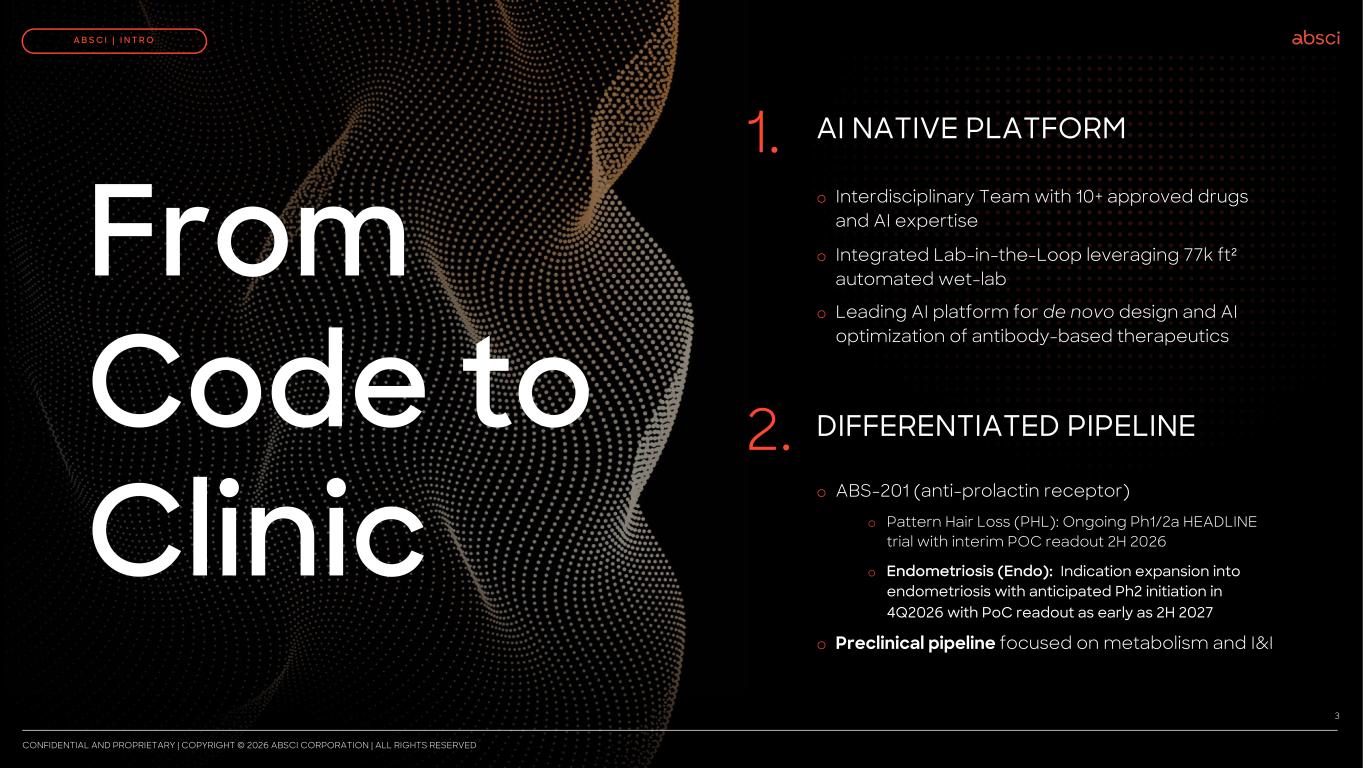
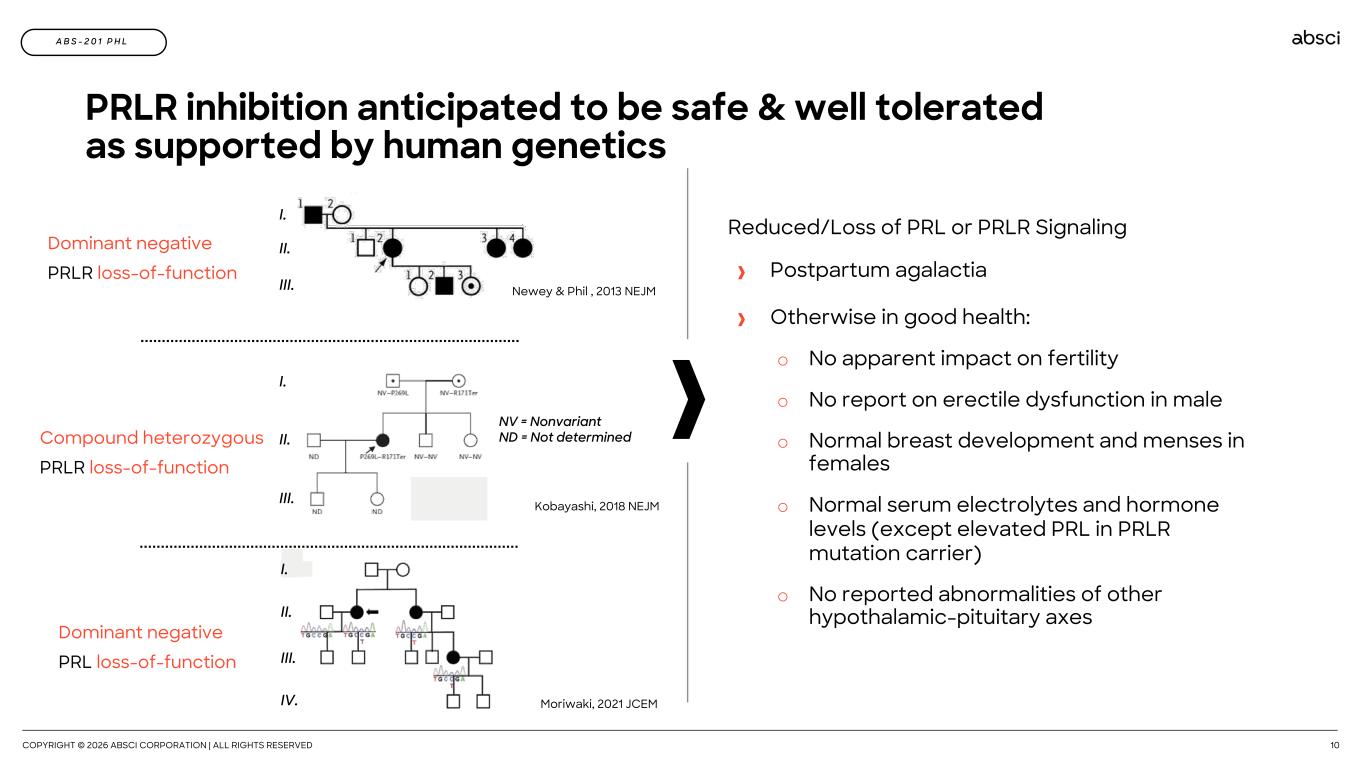
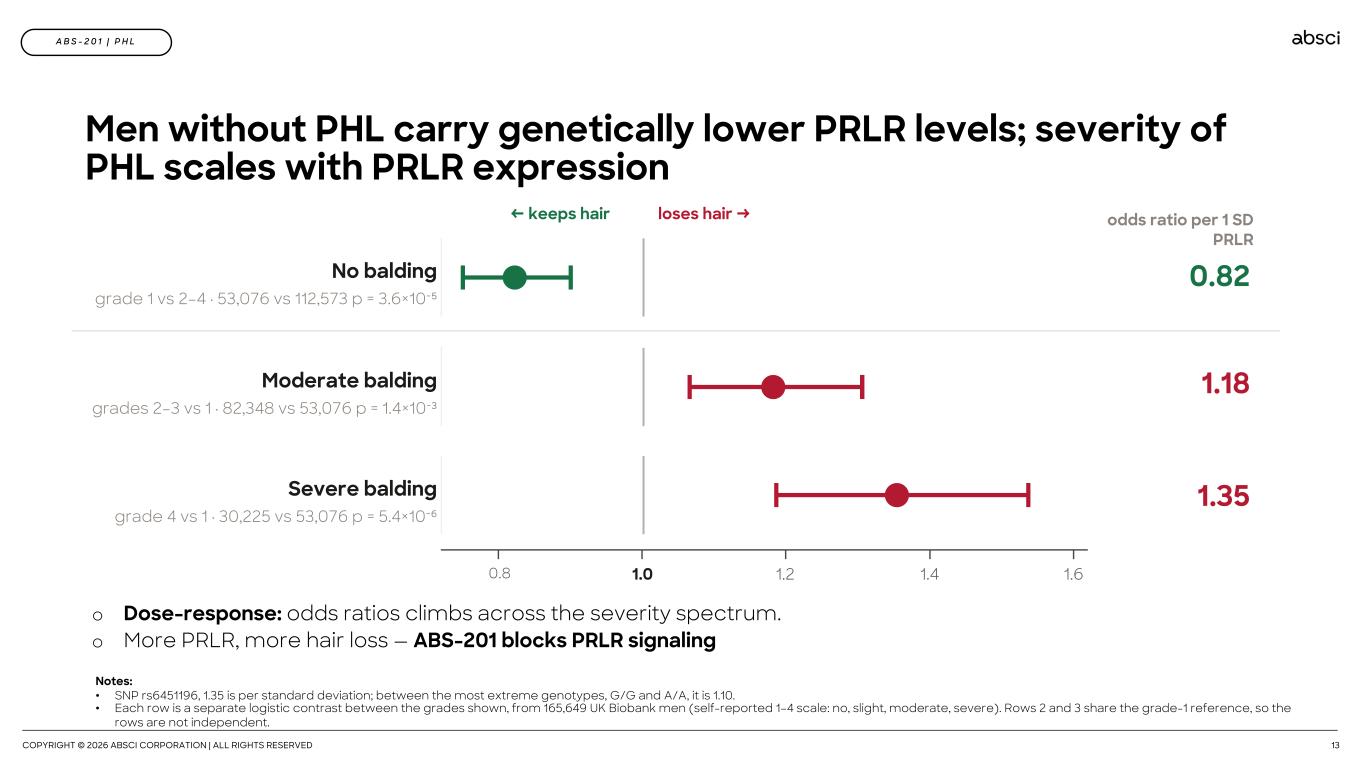
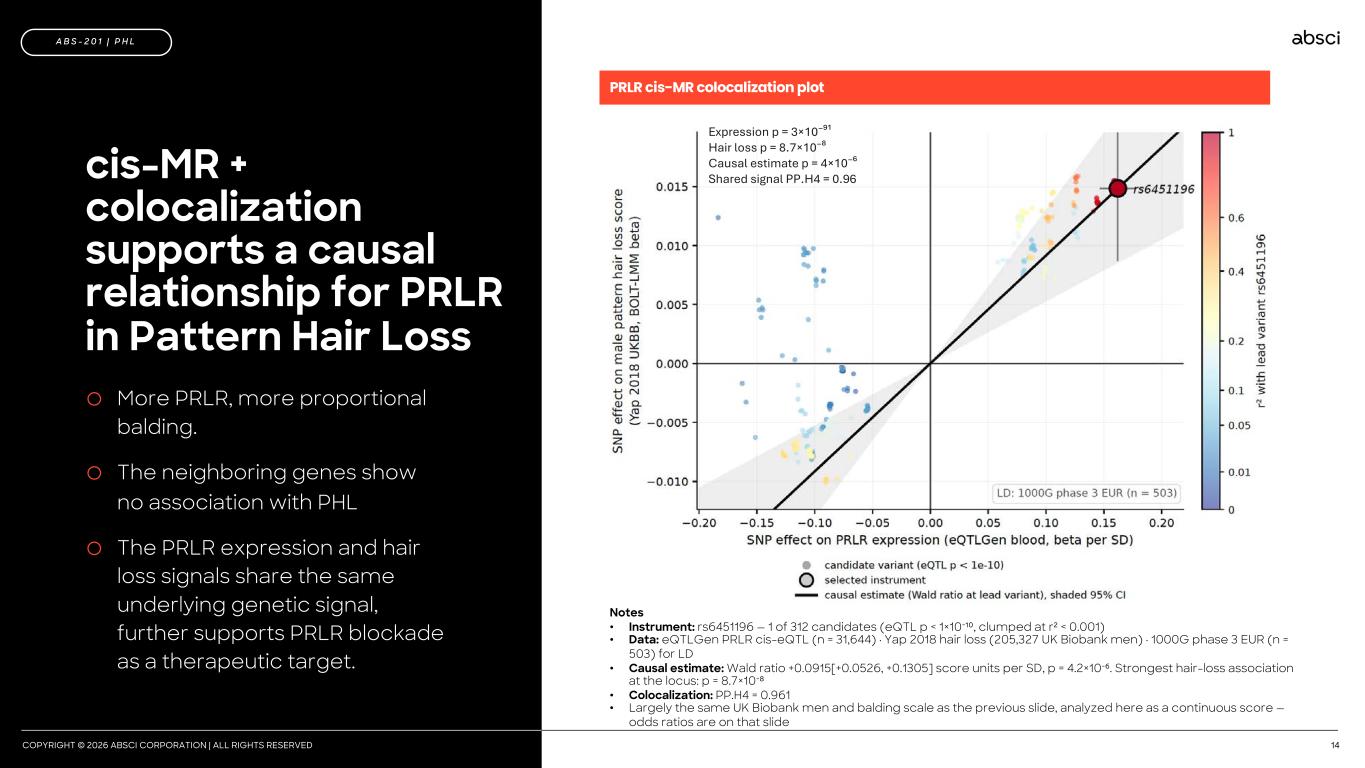
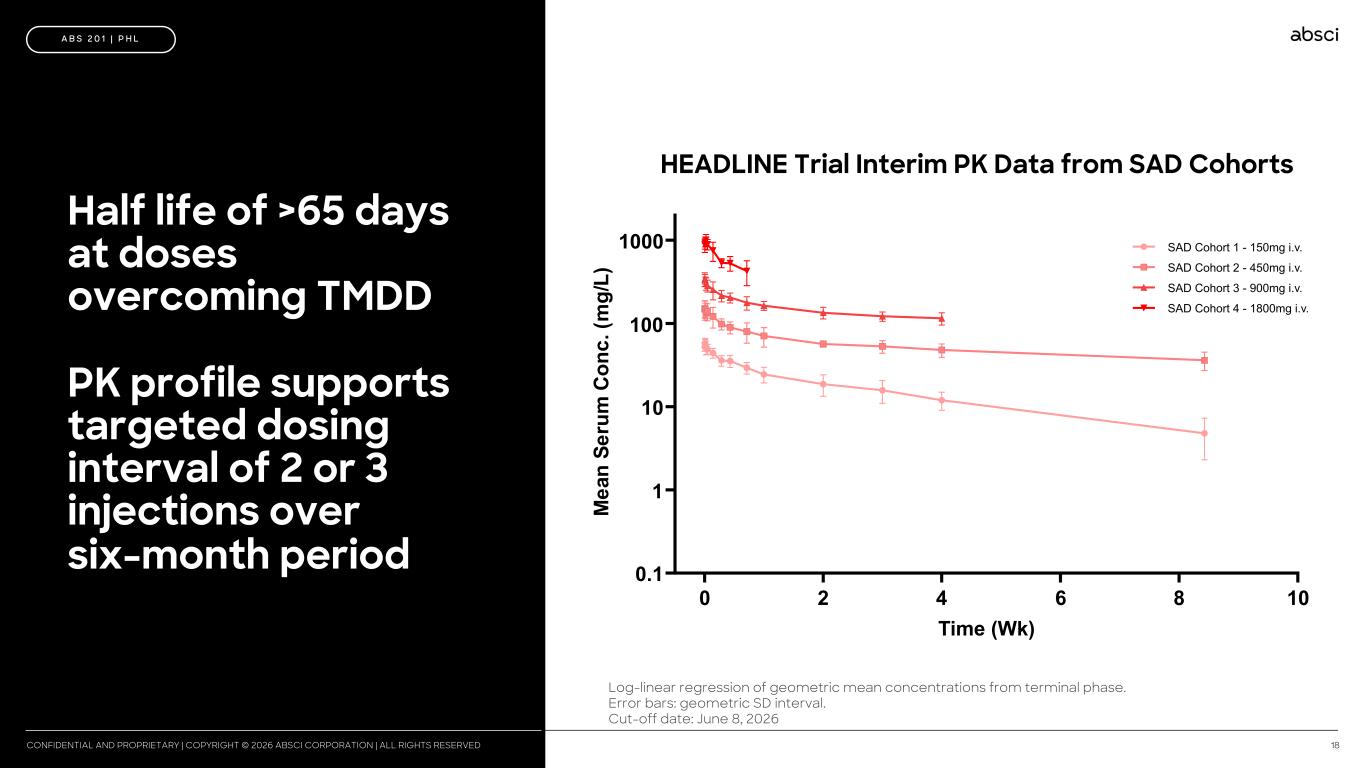
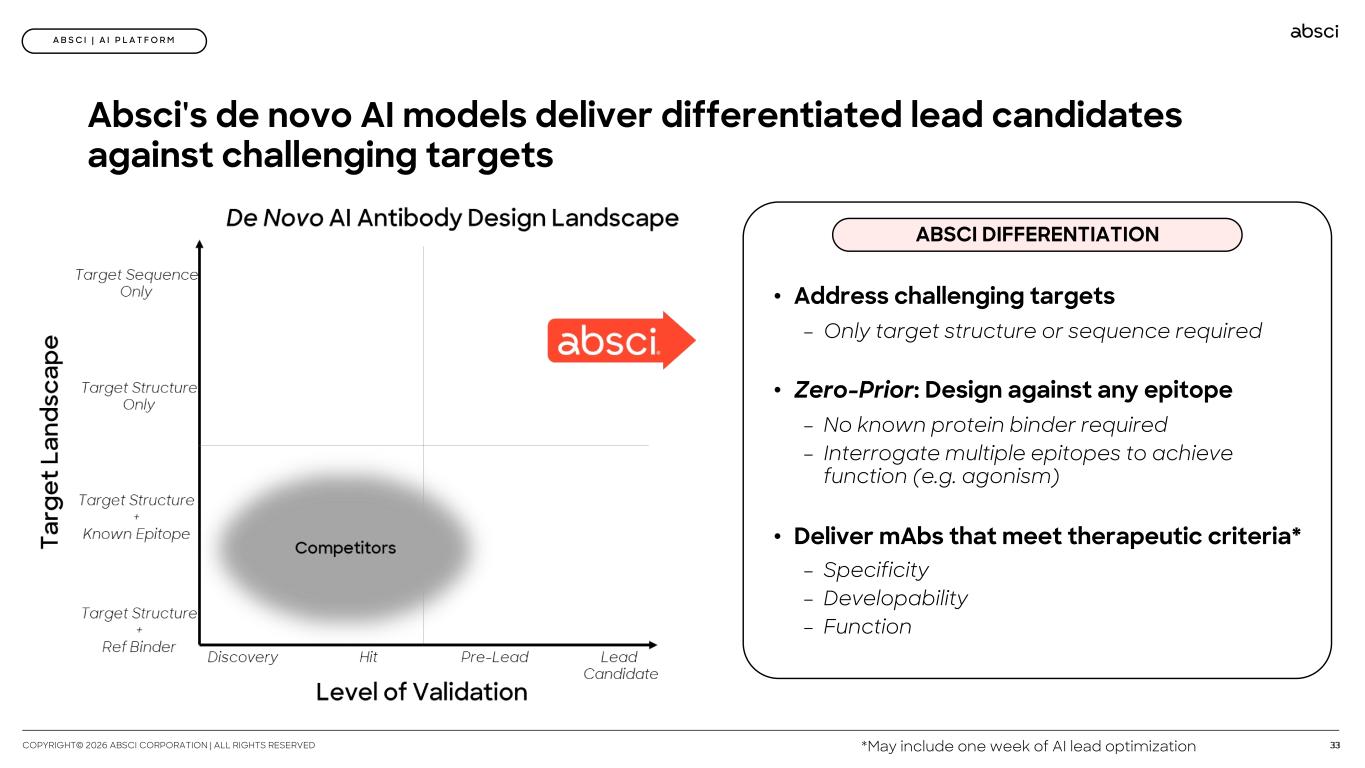
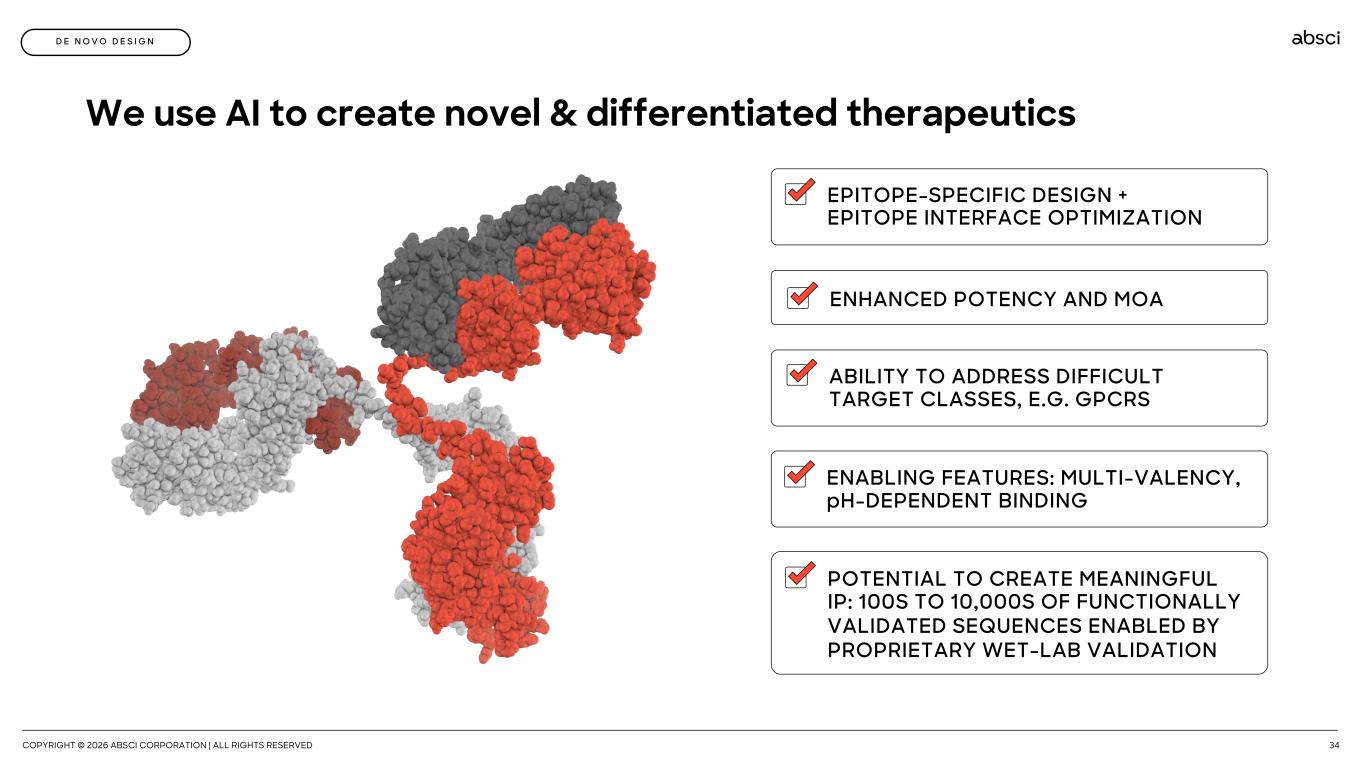
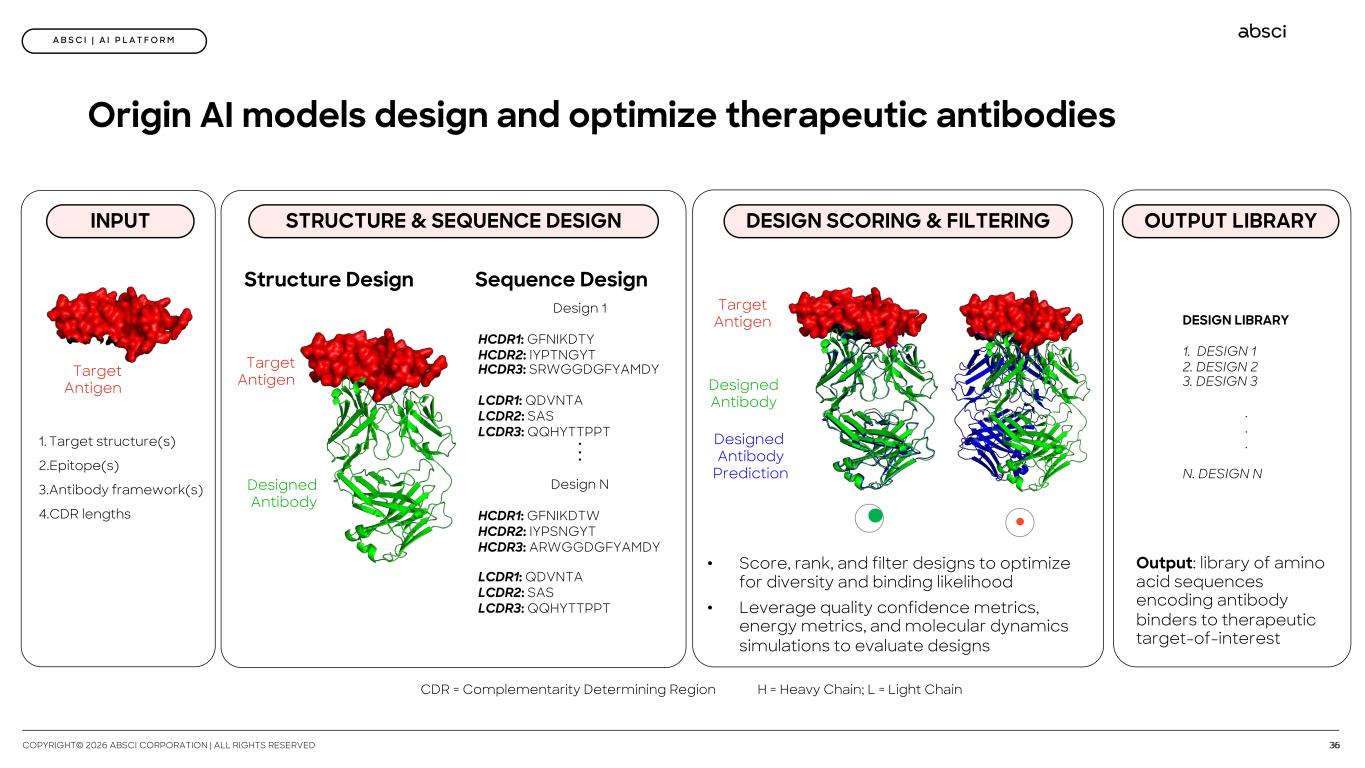
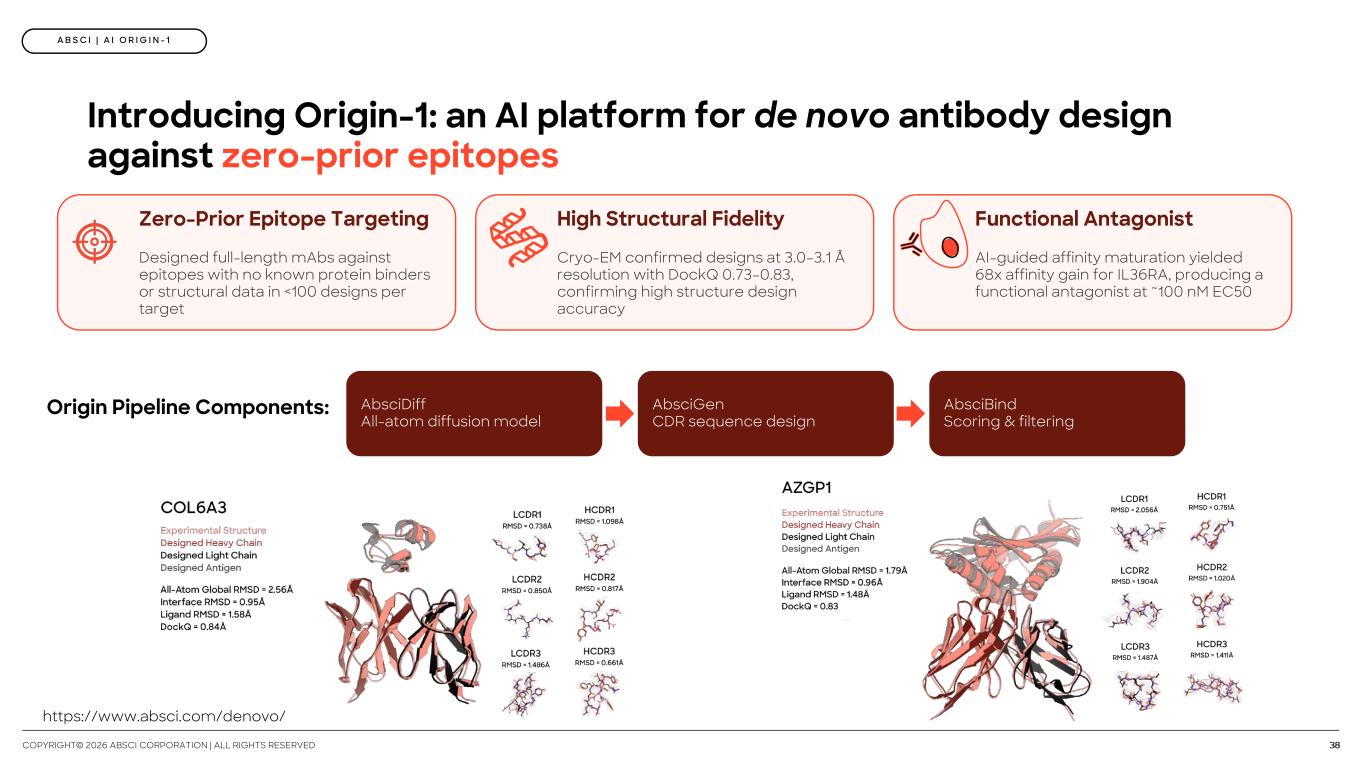
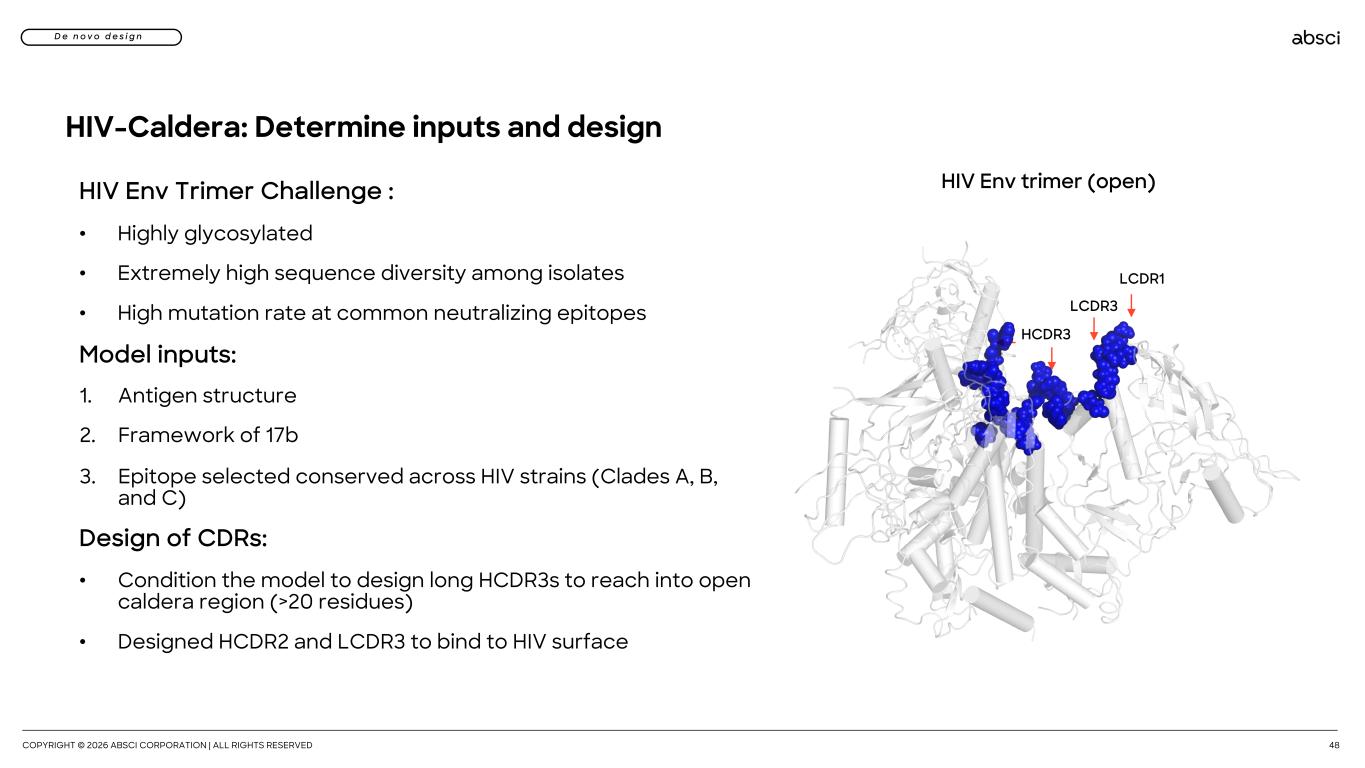
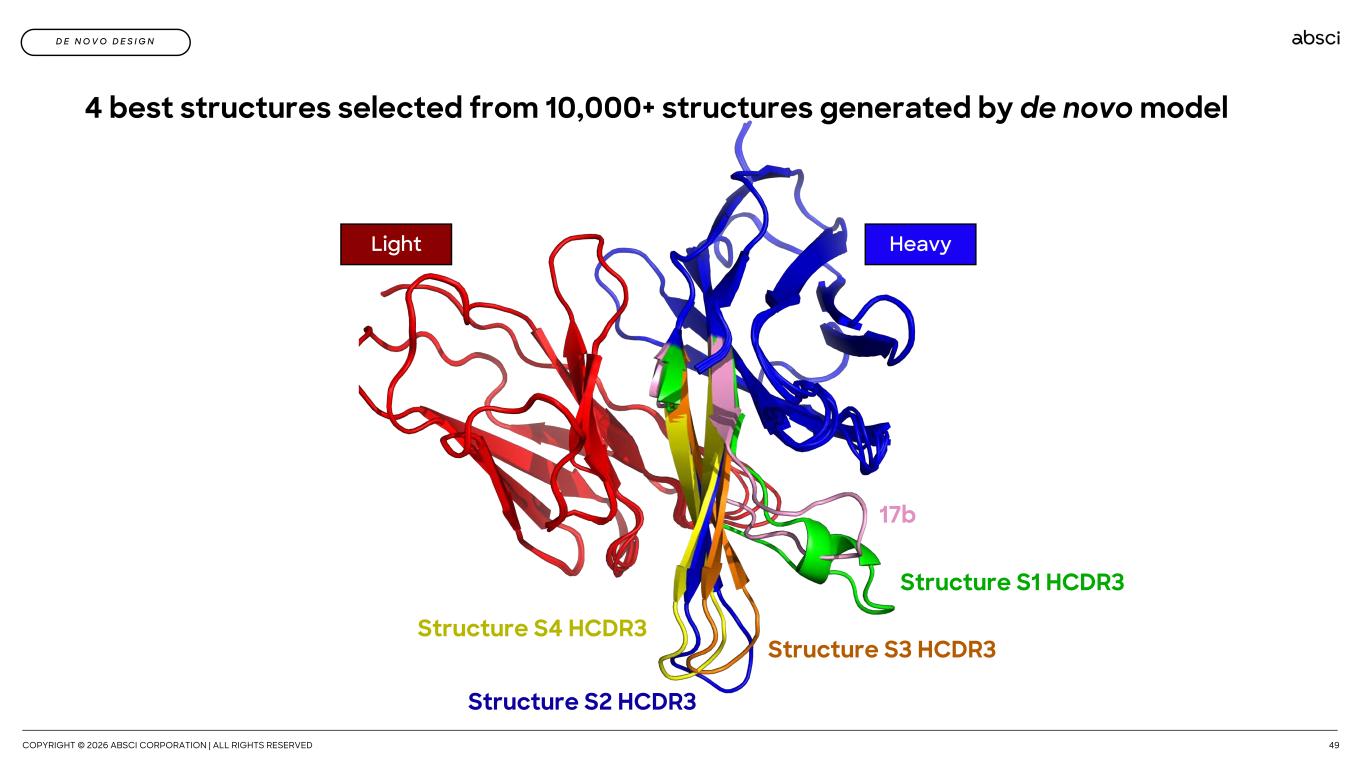
Thanks, Alex. Good afternoon, everyone. Thanks for joining us today. AppSite continues to execute, and I'll walk you through recent highlights, including key progress on ongoing headline trial, our new partnership with UI Willie, and our $100 million financing completed at the end of June. Starting with headlines, in June, we released positive interim phase one data. The data suggests the study drug was well tolerated with favorable safety and tolerability. And based on interim PK data, ABS-201's half-life supports the potential for just two to three injections over six months. This is exactly why we built our AI platform. To design molecules that meet our target product profile we set out from day one you've heard us say the prolactin mechanism is underappreciated everything we've learned has only strengthened that conviction and we believe targeting the prolactin receptor has the potential across numerous diseases and we are also excited to have a partner who shares in that vision As you saw in June, we announced that Eli Lilly made a $40 million strategic investment in AMSI. Our partnership with Eli Lilly is tailored around the clinical development strategy for AVS-201. And as a part of this collaboration, we are happy to be welcoming a representative from Lilly onto our endometriosis advisory board. Zach will provide more details of this partnership later in the call. In addition to Lilly, we've seen elevated interest from the investment community in prolapse and biology. In June, we completed $100 million financing, including the $40 million investment from Lilly from a group of blue-chip investors. We're grateful for this support, which enables the continued development of our existing programs as well as future expansion of our pipeline. ADS-201's progress is a testament to the platform and the team that created it. Building on that leadership in de novo antibody design with Origin, we've now extended the platform upstream with Atlas, ABSI's target to lead autonomous scientists. Atlas is a agentic discovery engine built to remove the bottleneck ahead of design, rapidly identifying and validating the right targets. Atlas integrates literature, genetics, and single-cell sequencing data to surface and triage novel target hypotheses. These flow directly into origin for epitope-specific de novo design and then into our in-house wet lab for characterization and pathway validation. This process closes a hypothesis-to-molecule loop and turns discovery into a high-throughput, fail-fast engine by having more shots on goal and better ones. We're already seeing this at work. Atlas has surfaced potential new indications for our prolactin receptor franchise and independently recovered genetic evidence linking this pathway to pattern hair loss and endometriosis. This is a powerful new tool that every drug hunter at ABCDE can now leverage. We'll continue deploying this AI-native platform to create therapeutics like ABS-201 with the potential to change the treatment paradigm for patients. With that, I'll turn it over to Ronzi to walk through the ABS-201 clinical program. Ronzi?
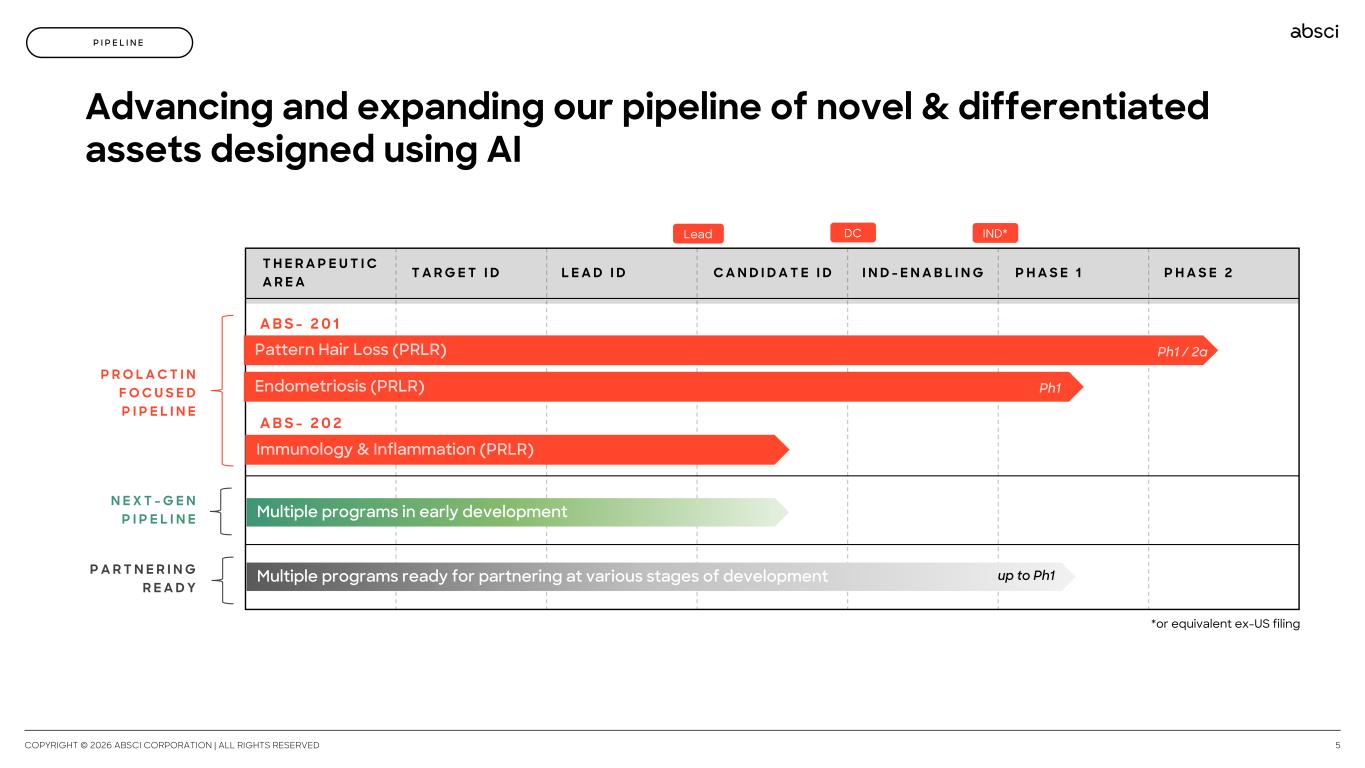
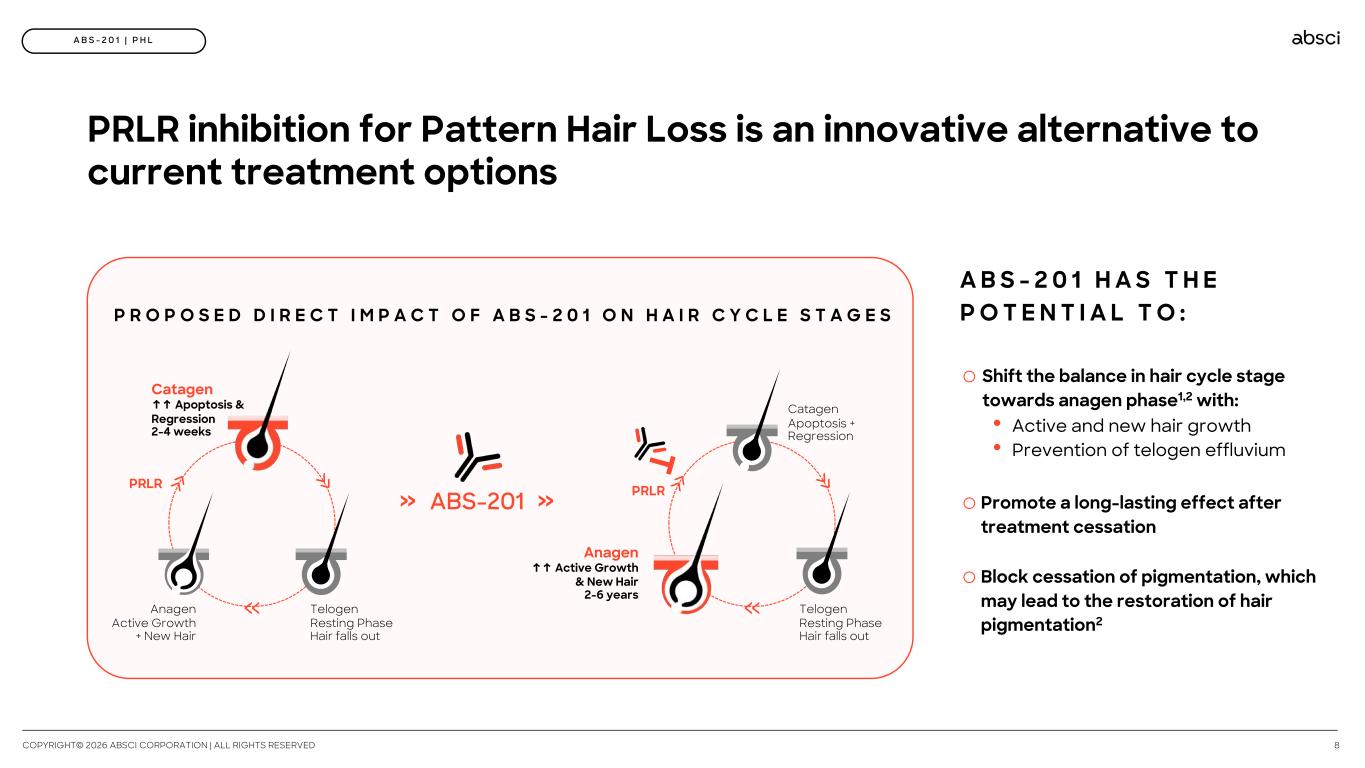
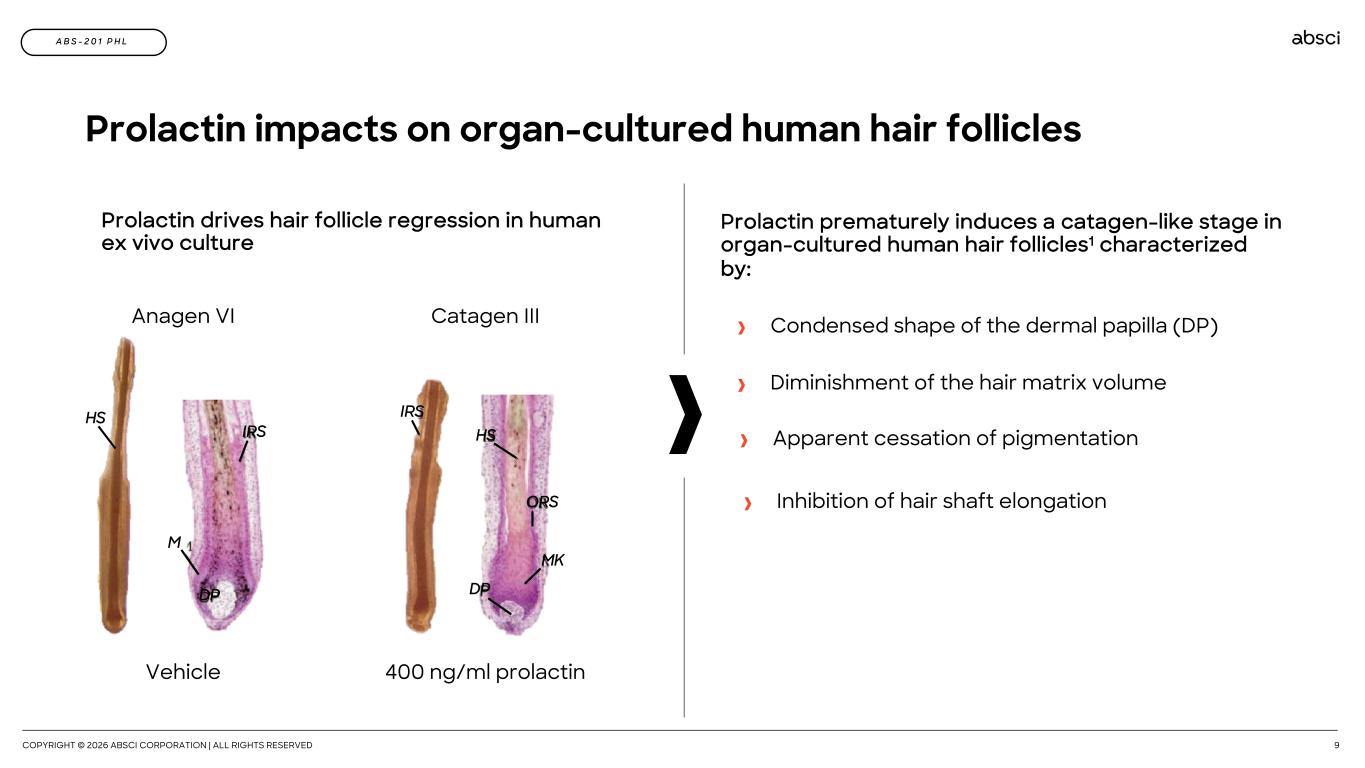
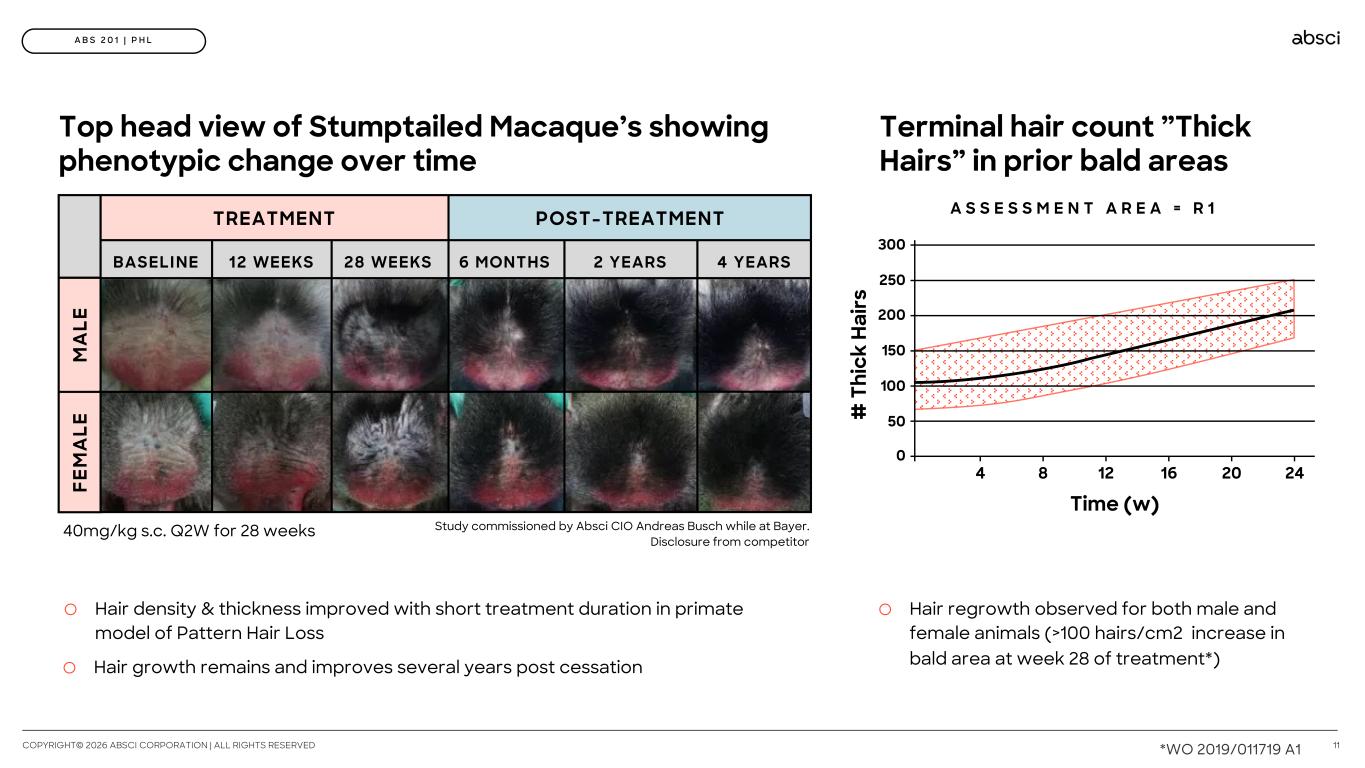
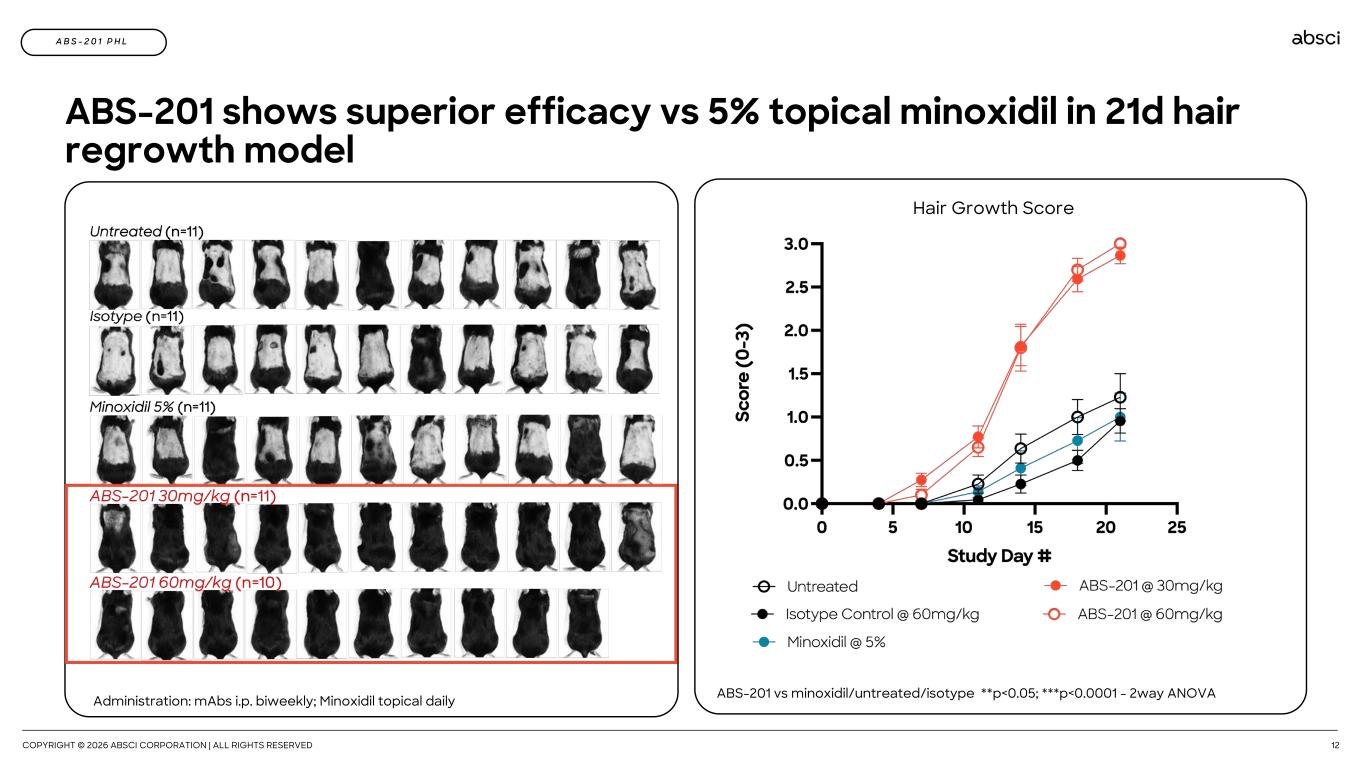
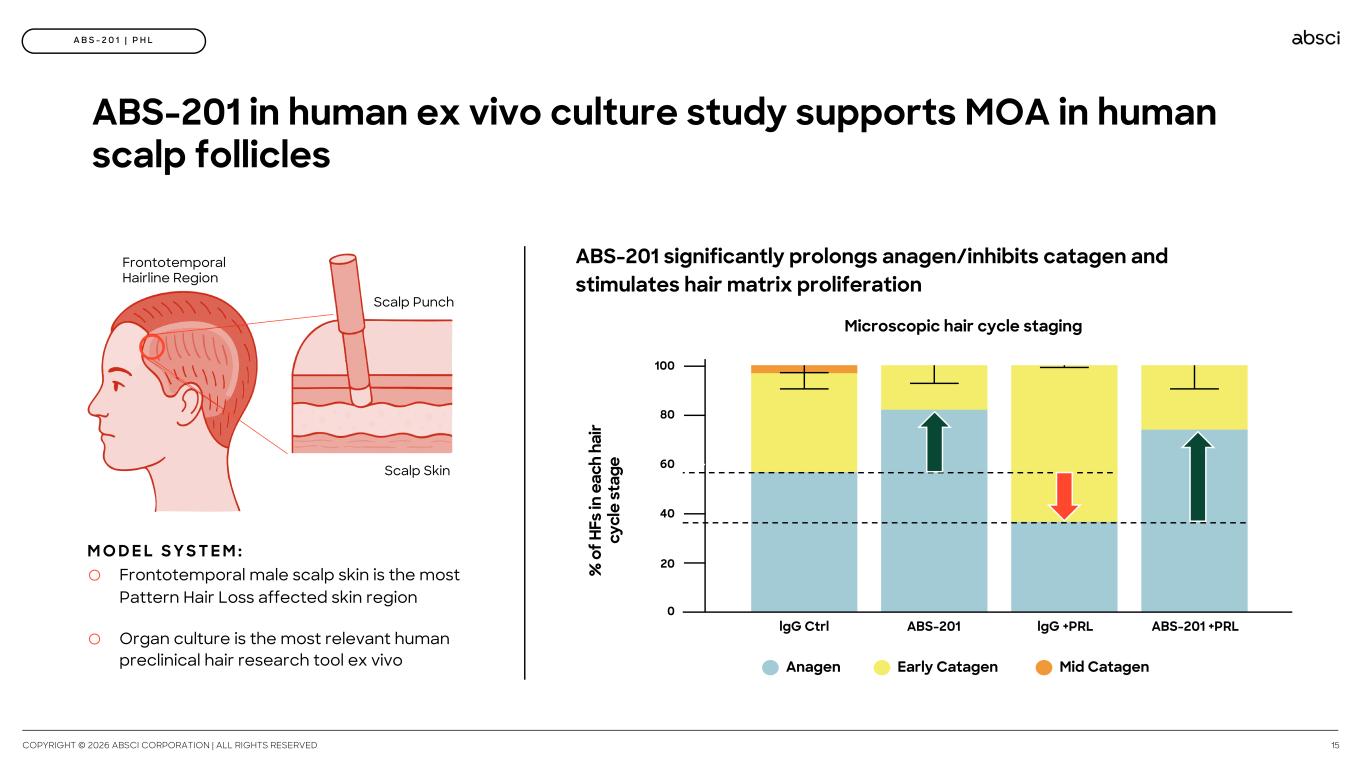
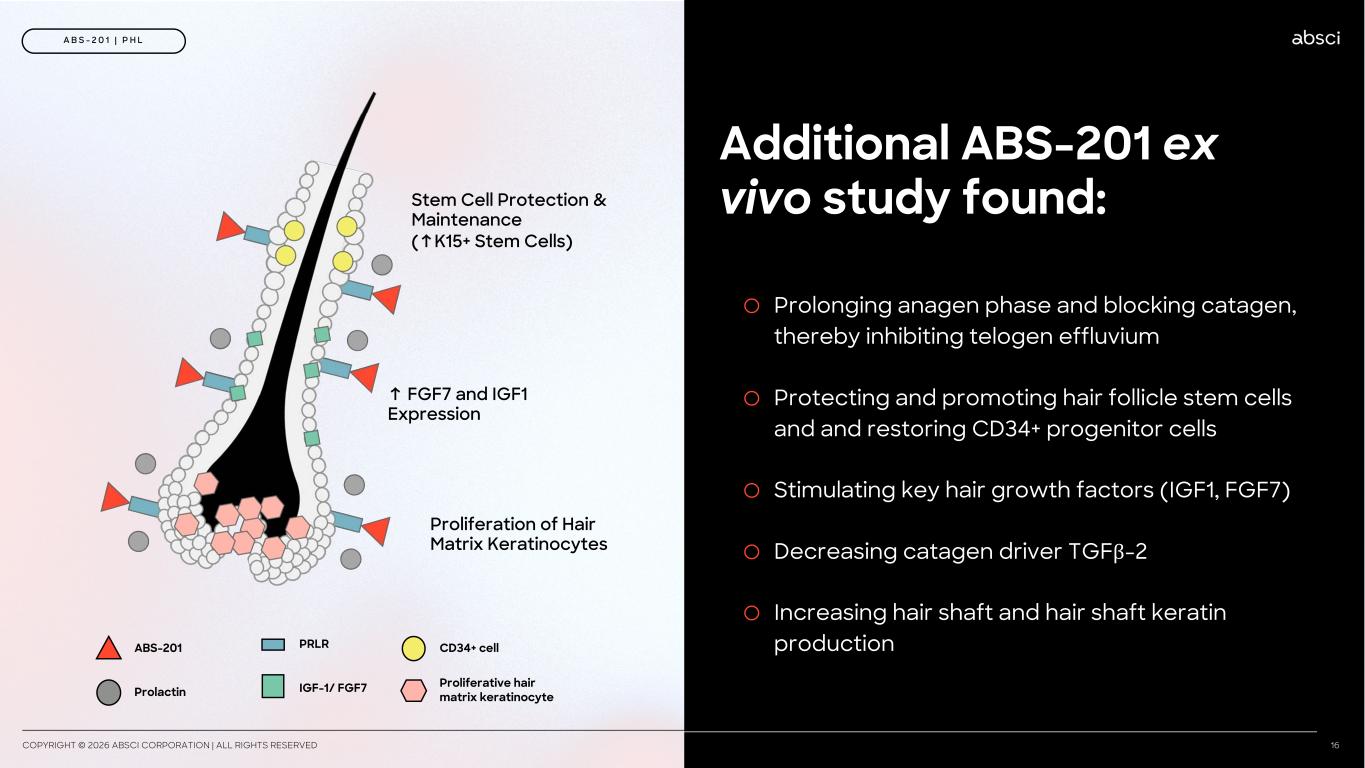
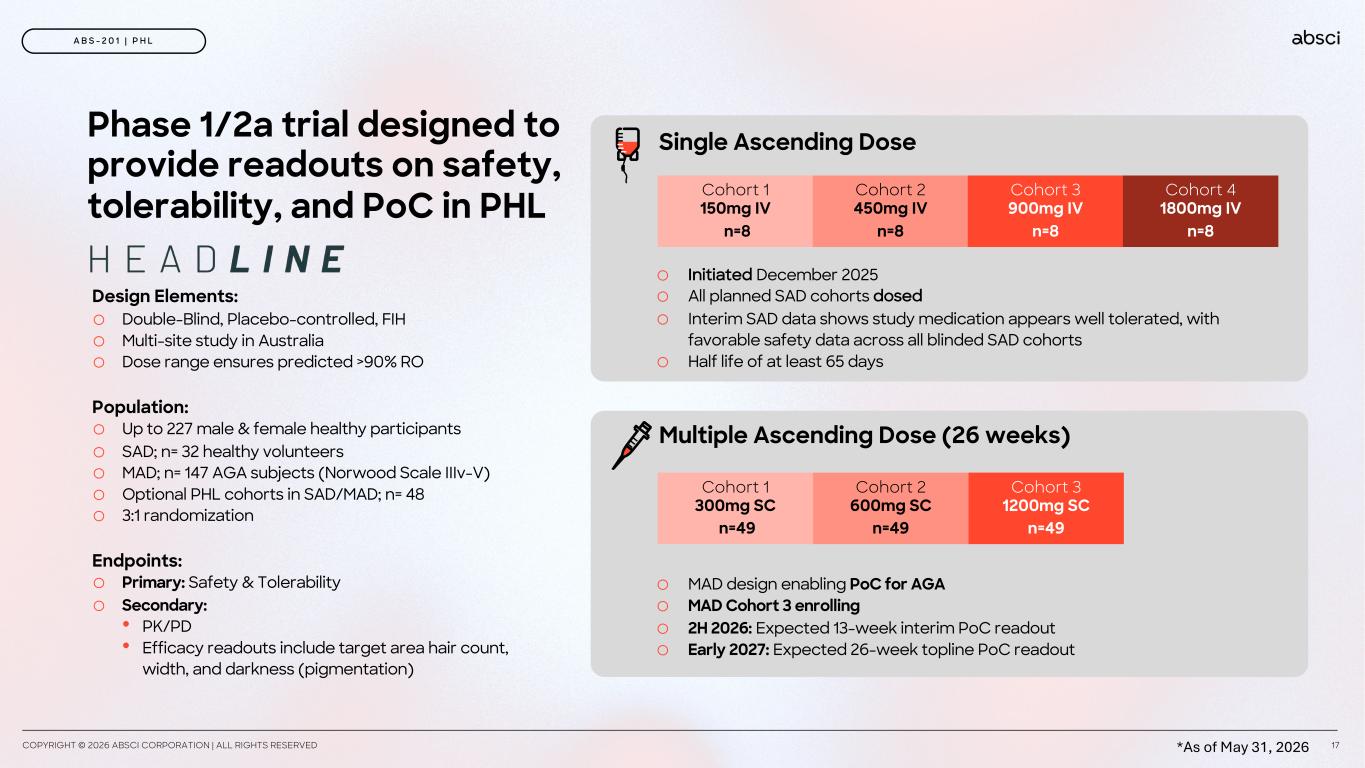
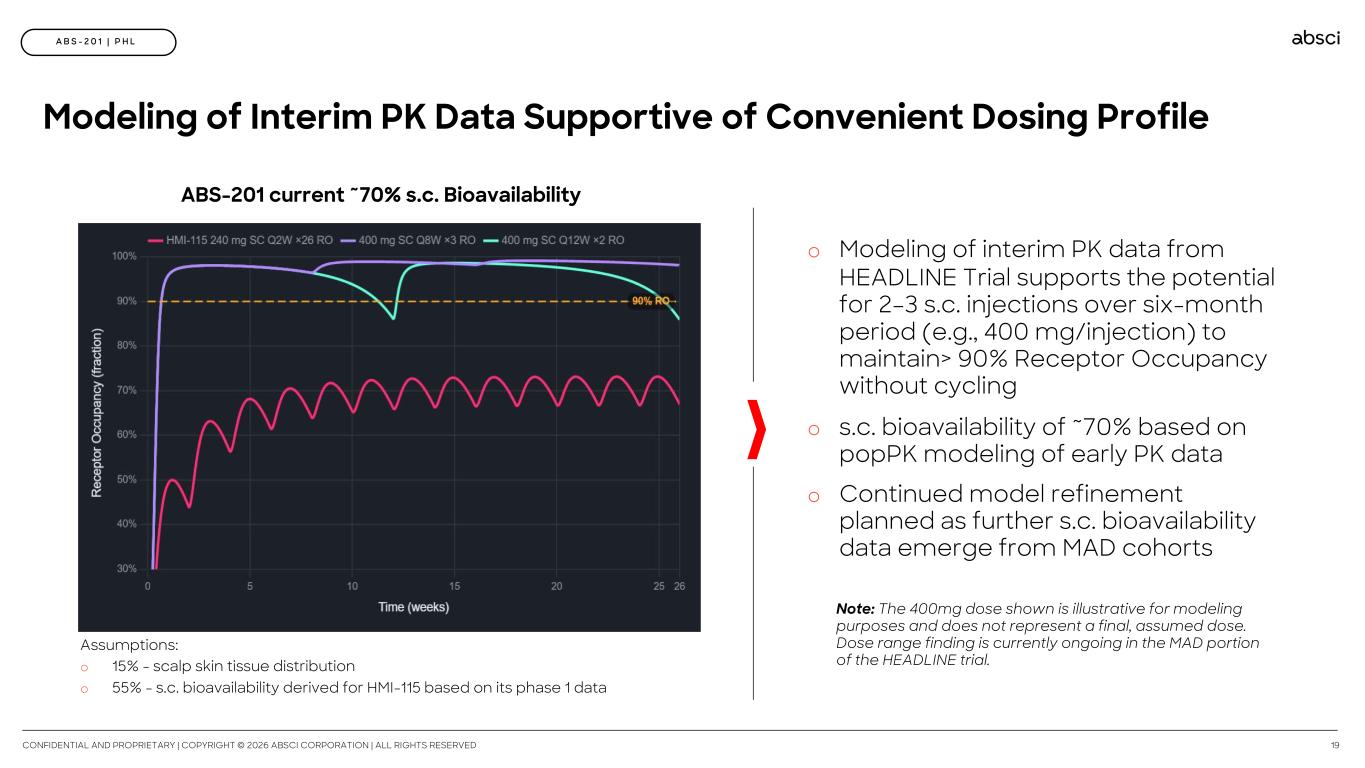
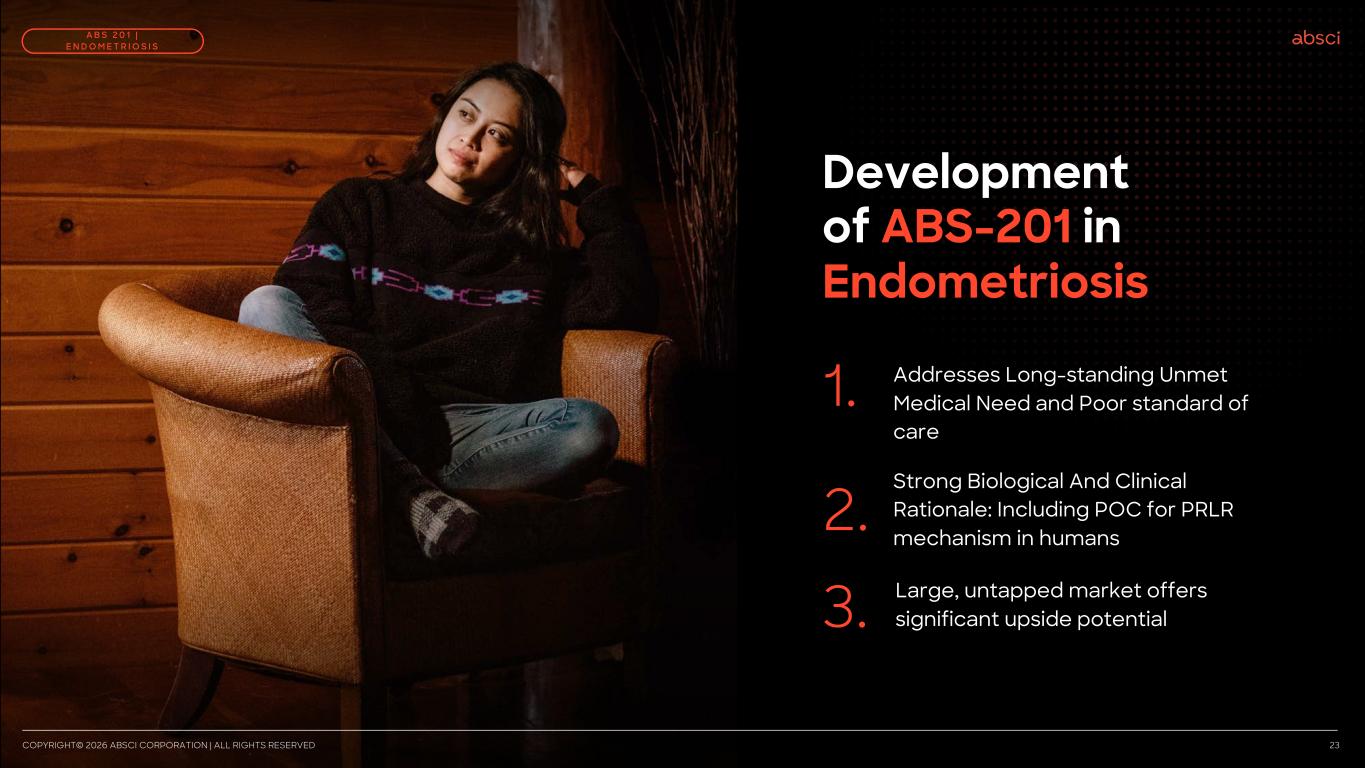
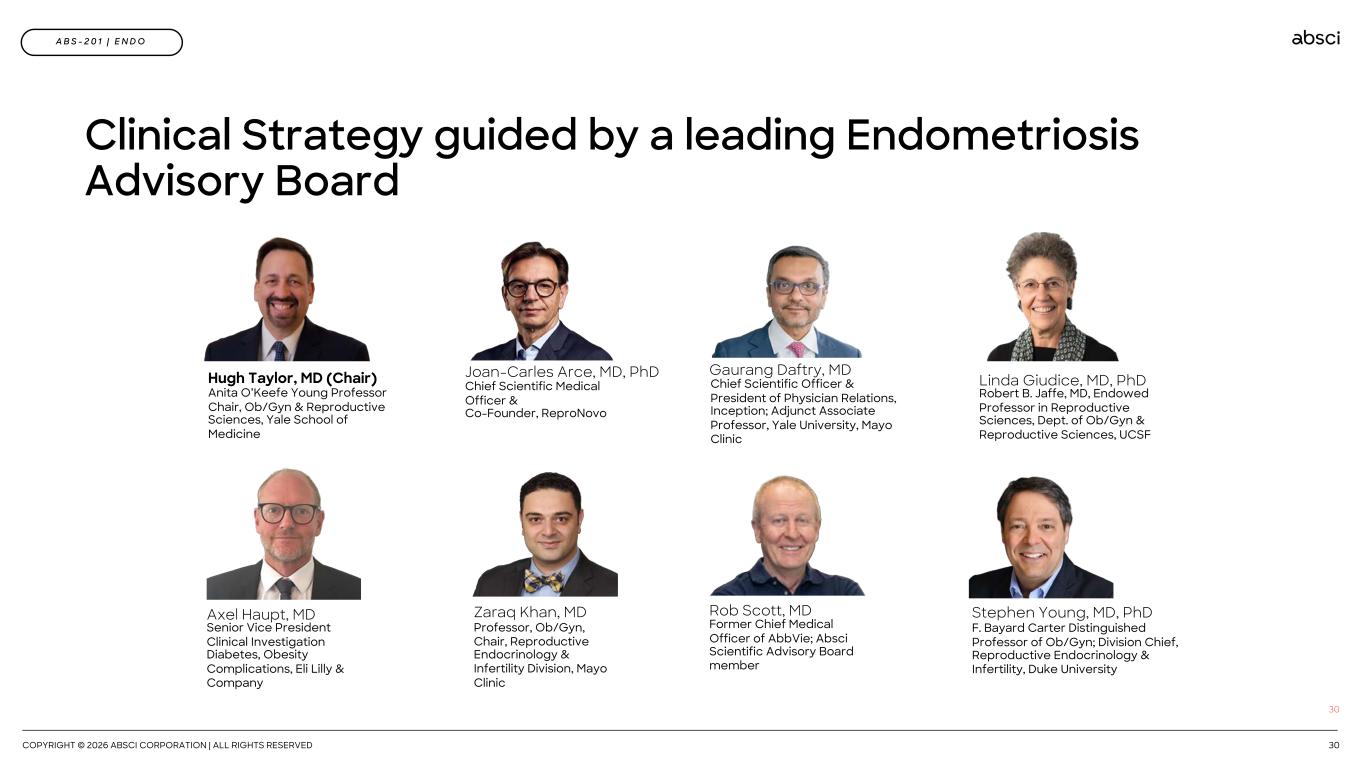
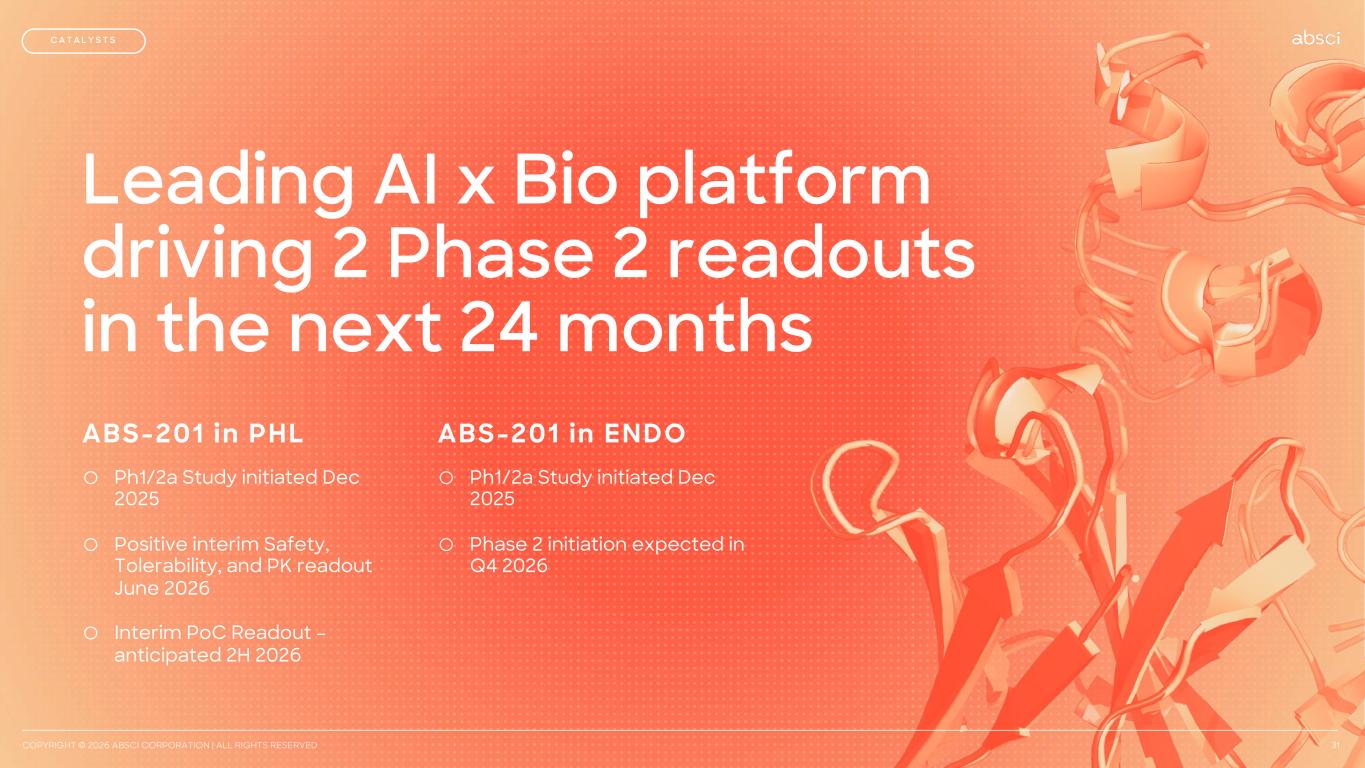
Thanks, Sean, and good afternoon, everyone. In June, we released positive interim phase one data from the ongoing headline trial of ABS-201. We continue to be encouraged by the emerging safety, pharmacokinetic, and immunogenicity profile observed to date. As we said in June, blinded aggregate interim data suggests that a drug was well-tolerated and exhibited a favorable safety and tolerability profile. Additionally, based on available interim pharmacokinetic data across all four single ascending dose cohorts, half-life for ABS-201 is estimated to be at least 65 days. These results support the potential for dosing two or three times over a six-month period, pending confirmation through continued follow-up across all cohorts. Additionally, new modeling continues to suggest that two to three doses of ABS-201 over six months would be able to achieve greater than 90 percent receptor occupancy, which we believe is a key driver of meaningful clinical efficacy for hair growth. These new data are available in the updated corporate deck published on our website today. today. We are very eager to share our clinical data with you once it's available. Today we are pleased to share that the multiple ascending dose portion of the study continues to enroll according to plan. We continue to anticipate an interim proof-of-concept readout in the form of 13-week data later this year. Then we anticipate our full proof-of-concept data in the form of 26-week data in early 2027. As a reminder, the headline trial is a randomized, double-blind, placebo-controlled study. The primary endpoints are safety and tolerability, while secondary endpoints include PK, PD, immunogenicity, target area hair count, target area hair width, and target area darkening pigmentation. We will also collect patient-reported outcomes data in this study. The prolaptin receptor mechanism for hair growth is unique. Unlike minoxidil, finasteride, or nutraceuticals, the mechanism underlying ABS-201 is regenerative for the hair follicle, protecting and promoting hair follicle stem cells, restoring CD34 progenitor cells, and stimulating key growth factors IGF-1 and FGF7 while decreasing the catagen-driving TGF-beta-2. This regenerative mechanism is unique to the antiprolactin receptor pathway and supports the significant durable effects with potential to grow new hair in dormant follicles. Our clinical study is designed to showcase this unique mechanism with our 13-week assessment, which is interim in nature, intended to provide a directionally positive signal. Has the mechanism begun to take hold? And is it building all the machinery and building blocks we see responsible for regenerating the hairs? A directionally positive signal of hair growth at 13 weeks would give us even further confidence in seeing more robust hair growth at 26 weeks and beyond, as is supported by preclinical data in the stump-tailed macaque. Altogether, the preclinical stump-tailed macaque data, as well as our human ex vivo data from skin biopsies of both male and female donors, provide robust support for this mechanism and its ability to provide durable hair growth. We are also excited to be progressing our ABS-201 program for endometriosis. As Sean mentioned earlier, we are pleased to be welcoming Axel Haupt, MD, Senior Vice president clinical investigation at Eli Lillian company onto our endometriosis advisory board and with the safety tolerability and pk data generated in the sad portion of the headline trial we anticipate initiating a phase 2 study for endometriosis in the fourth quarter of this year with that i'll pass it over to zach to discuss our business strategy and to provide an update on our financials.
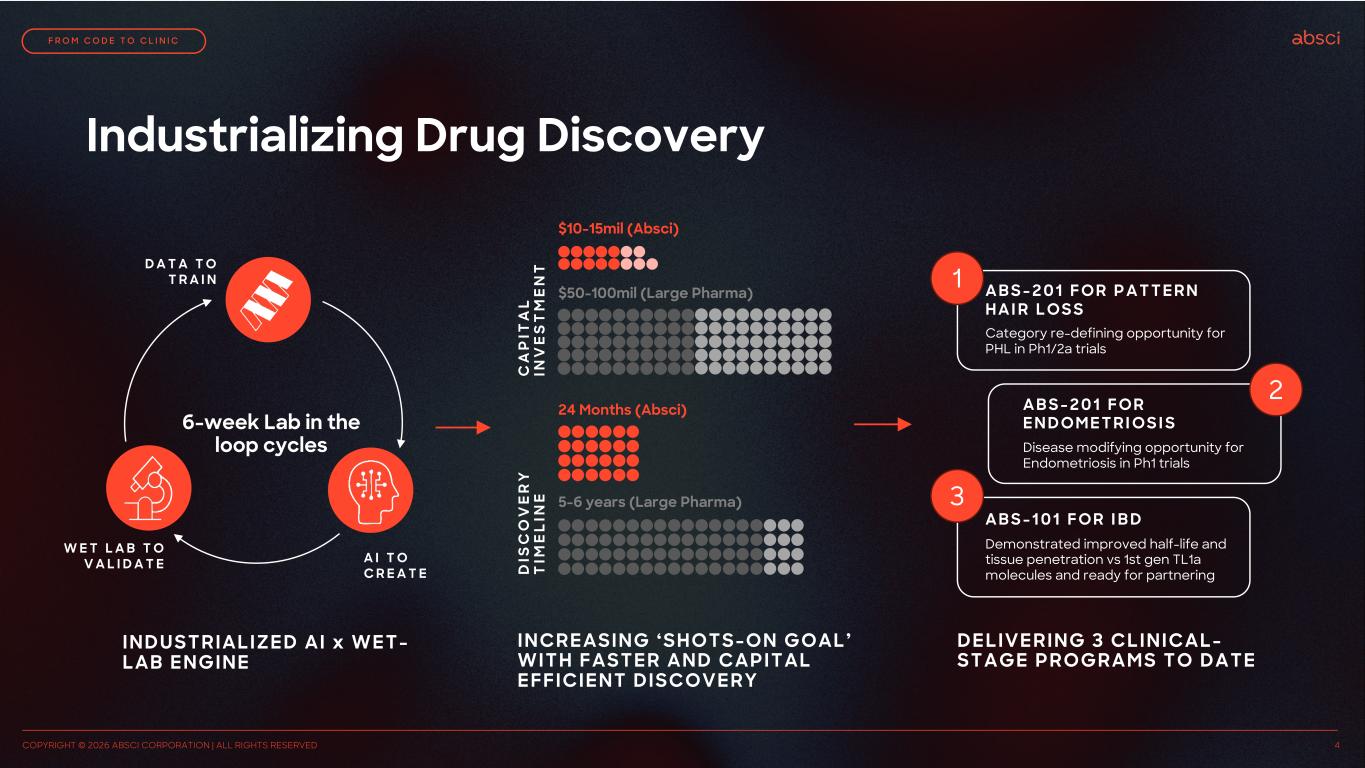
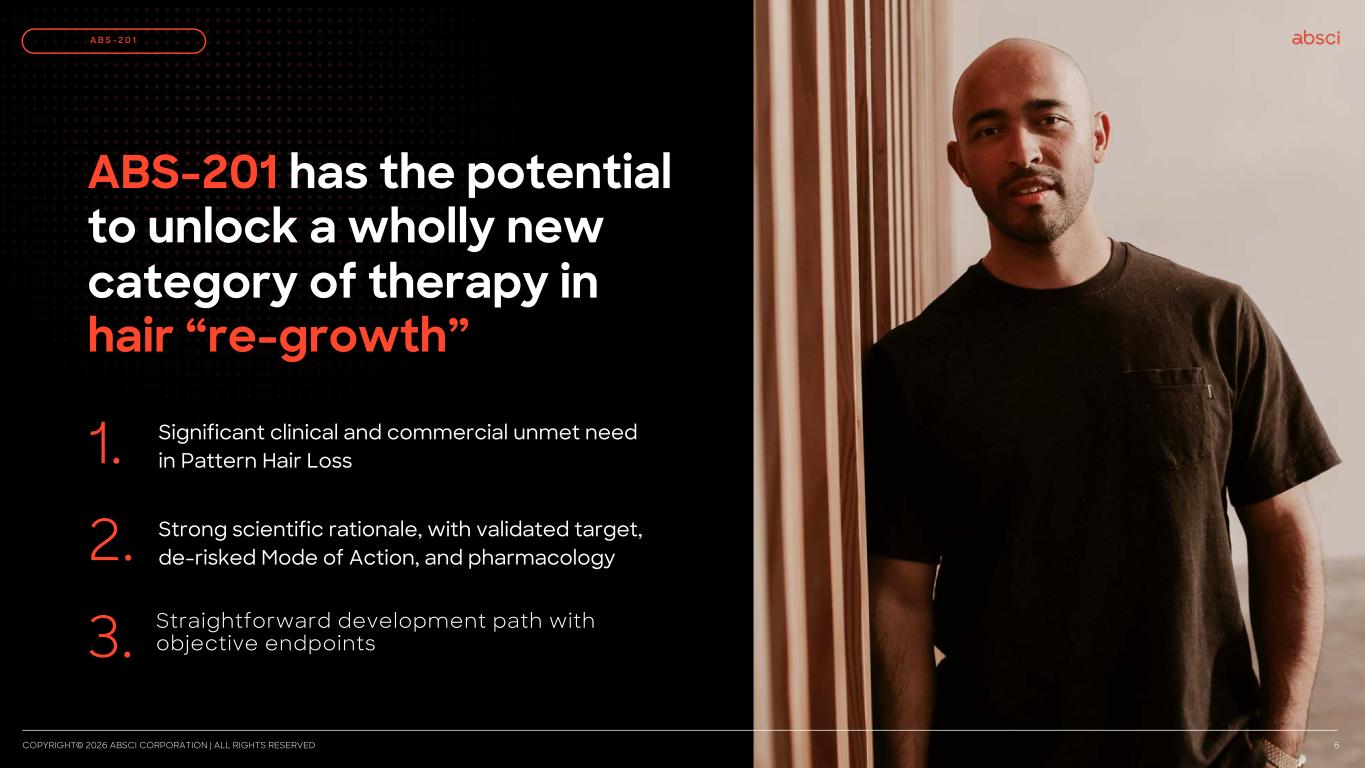
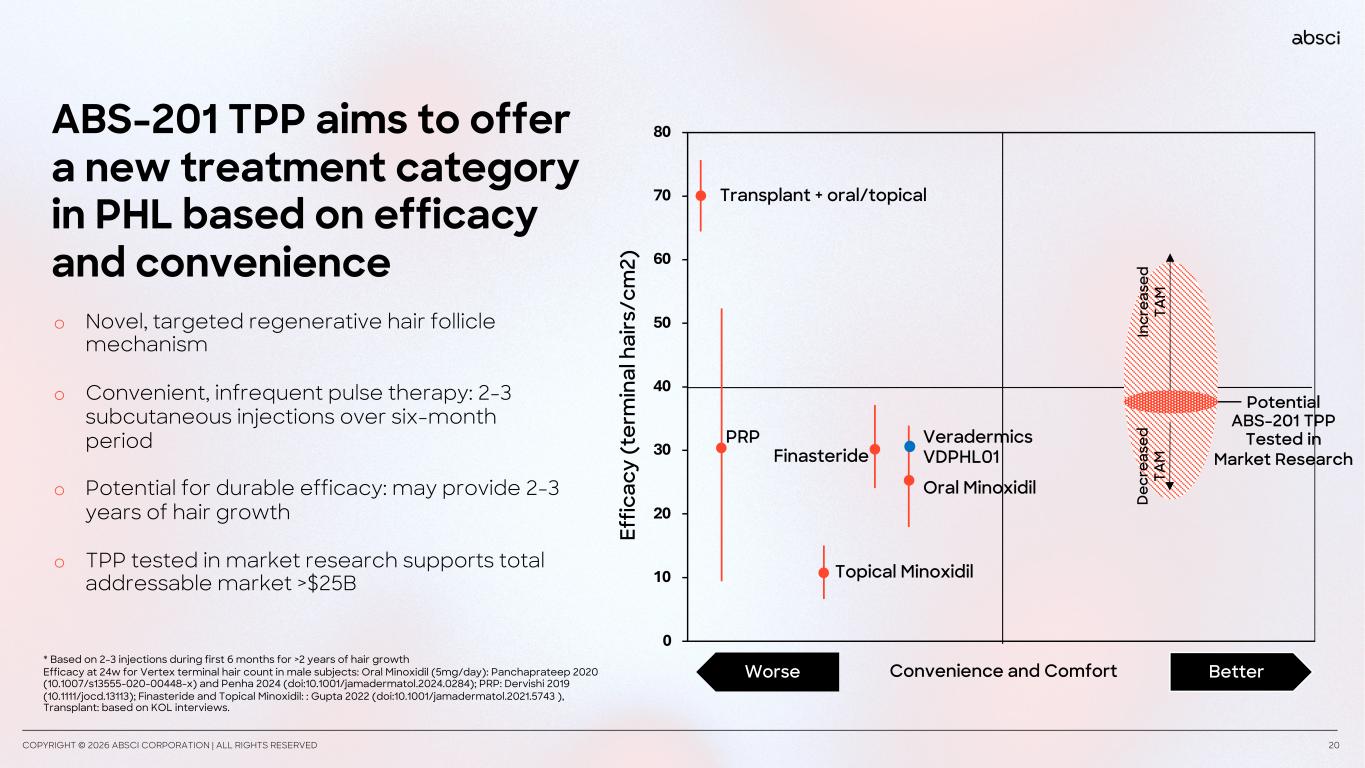
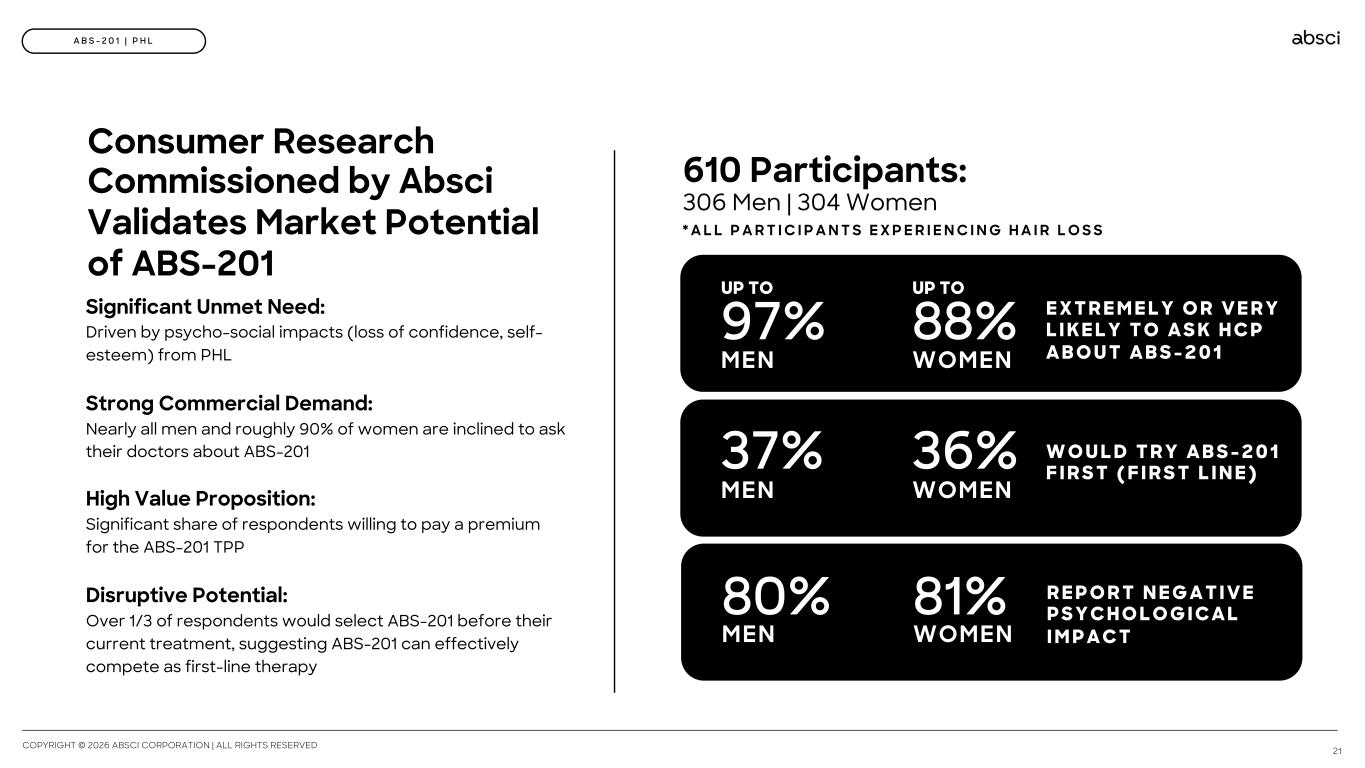
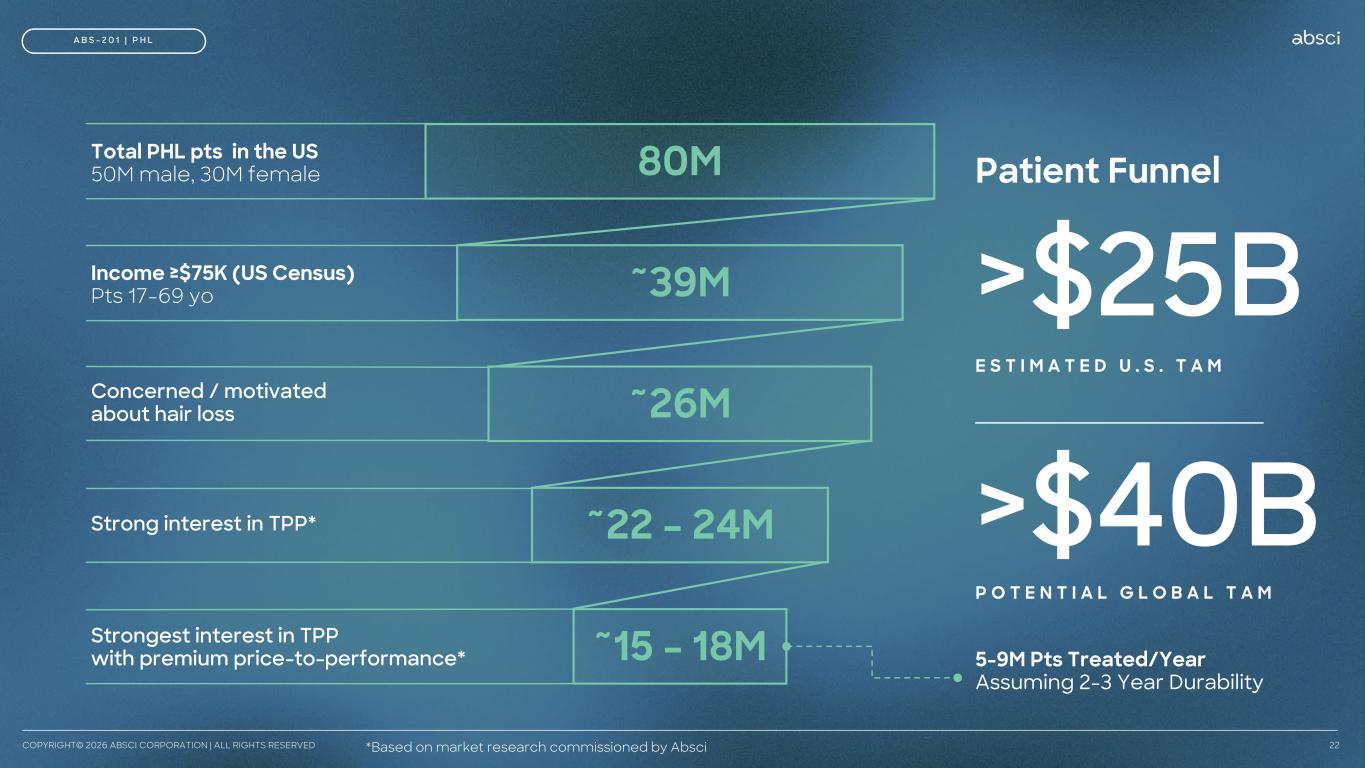
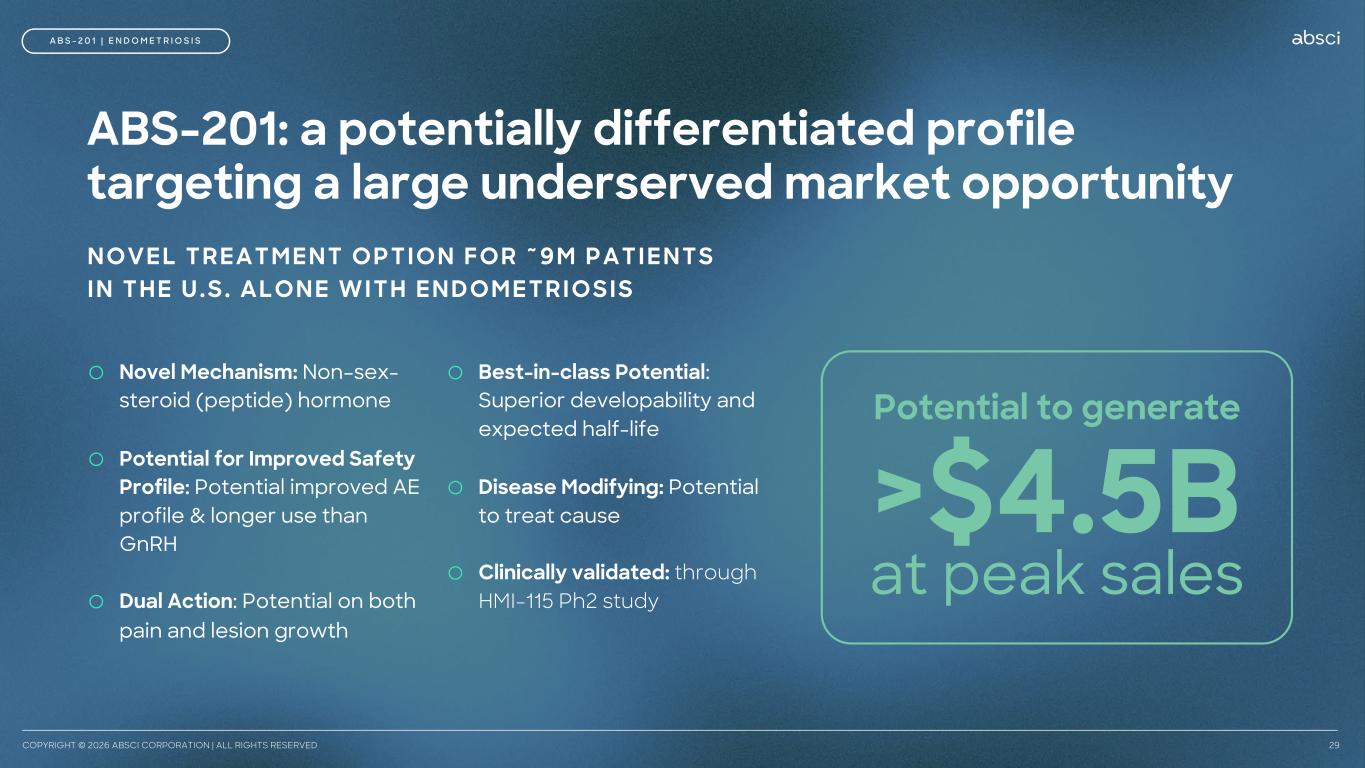
Zach? Thanks, Renzi. We continue to focus our strategy on creating and advancing high-value pipeline programs like ABS-201. Our primary objective today is the successful execution of our clinical trial for ABS-201 in male and female pattern hair loss and in endometriosis. We are also advancing a preclinical pipeline focused on immunological and inflammatory indications that fit into our broader strategy, including programs that can ultimately be commercialized direct-to-consumer. The clinical trial for ABS-201 continues to progress according to plan. We believe this program offers an outsized ROI based on its relatively capital-efficient clinical development plan and significant market opportunity. Based on our market research, we estimate a potential total available market greater than 25 billion dollars in the u.s alone in addition to pattern hair loss we also see a significant multi-billion dollar market for endometriosis with potential peak sales of over 4 billion dollars these programs are emblematic of how we prioritize and allocate our resources to programs that offer high rois based on addressing large underserved patient populations. We are leveraging our leadership in prolactin biology by advancing ABS-201 towards proof of concept in both pattern hair loss and endometriosis, and by progressing our preclinical anti-prolactin receptor program, ABS-202, in an undisclosed INI indication. We are also actively exploring other potential underserved indications for which prolactin receptor inhibition could offer a differentiated therapeutic mechanism. We look forward to sharing our interim proof-of-concept data in pattern hair loss later this year and our full proof-of-concept data early next year. As a reminder, our consumer research survey, as well as input from leading KOLs, inform our view that a 26-week increase in target area hair count of 30 to 35 hairs per centimeter or squared, roughly on par with high-dose oral minoxidil, would enable a home-run product. Our consumer and KOL research support an estimated $25 billion TAM associated with such a hair growth effect size, given ABS-201's expected unique durability and administration convenience. We believe a target area hair count result above that level would expand the market further, and that a less robust result would still unlock a multibillion-dollar market opportunity. AVS-201, with its novel prolactin receptor mechanism, is positioned to become a new premium category of pattern hair loss therapy, offering consumers convenient, durable, regenerative hair growth. Continuing to execute the development of this program remains our top strategic priority. Our platform continues to evolve and deliver new capabilities and efficiency gains. As you will recall, our first programs were advanced through IND enabling studies in under two and a half years and under 15 million dollars in total cost. Based on our current Origin model improvements in combination with our agentic Atlas platform, we believe we can significantly improve on these metrics for example our latest origin models allow for a 1000x reduction in library size for identification of high quality leads we are also finding ways to reduce ind enabling study timelines based on the quality of our ai design drug candidates which for example are well suited to high concentration formulation development we anticipate additional efficiency and capability improvements as we further advance our platform we are grateful for our partners new and existing for their support as discussed we are excited to be collaborating with eli lily and to welcome a member of their leadership team onto our endometriosis advisory board our partnership with eli lily is tailored around the clinical development strategy for abs 201 and does not confer rights to the program, which we plan to develop ourselves. We appreciate Eli Lilly's support, as well as their interest in prolactin biology within pattern hair loss, women's health, and beyond. Turning now to our financials. Research and development expenses were $22.6 million for the three months ending June 30, 2026, as compared to $20.5 million for the prior year period. this increase was primarily driven by advancement of absize internal programs including direct costs associated with external preclinical and clinical development of abs 201 offset by a decrease in personnel related costs selling general and administrative expenses were 9.2 million dollars for the three months ending June 30 2026 as compared to 8.5 million dollars for the prior year period this increase was primarily due to stock-based compensation and other administrative costs cash cash equivalents and marketable securities as of june 30 2026 were 201.1 million as compared to 125.7 million dollars as of march 31 2026. in june we completed an underwritten offering of common stock the net proceeds from the offering were approximately 93.6 million dollars our current balance sheet including this additional capital supports our execution of key upcoming catalysts and continued progress of our early stage pipeline as well as an expansion of our planned endometriosis clinical trial as we finalize our clinical trial design we anticipate sharing additional details of the endometriosis clinical development plan later in the third quarter. Based on our current projections, we now believe our cash, cash equivalents, and marketable securities will be sufficient to fund our operating plan into the second half of 2028. With that, I'll now turn it back to Sean.
Thanks, Zach. As always, I want to thank the Abside team for making all this possible. I'd also like to thank Eli Lilly for their partnership and all of our investors, both new and existing, for their support. We're fast approaching pivotal moments for Absci. Our first look at interim POC data for pattern hair loss is anticipated later this year. Our full 26-week POC data should follow early next year, where we anticipate showing robust hair regrowth from our regenerative prolactin mechanism. I'm incredibly excited for both of these readouts. We're energized for what we're building in our early stage pipeline. We see a huge opportunity to capitalize on the interest in total vitality, combined with consumer shift towards more direct-to-consumer and cash pay products. Our current and future pipeline focuses squarely on these emerging trends. We continue to fire on all cylinders, and I can't wait for everyone to see the results of our hard work in the coming months. Operator, let's open the call for questions.
Operator
Thank you. As a reminder, to ask a question, please press star 11 on your telephone and wait for your name to be announced. To withdraw your question, please press star 11 again. In the interest of time, we do ask that you please limit your questions to one question and one follow-up. Please stand by while we compile the Q&A roster. And our first question comes from Brian Cheng of JPMorgan. Your line is open.
Hey, guys. Thanks for taking our question this afternoon. Maybe just to start off, we noticed that your indication on your press release is now defined as pattern hair loss. And I think in the prior communication, you have been indicating that the lead indication as androgenetic alopecia. So is there any read in terms of how you're defining the target indication today? Is there any change in terms of the lead indication for 201? And then we have a quick follow-up. Thank you.
Yeah, thanks, Brian. It's a great question. So we decided to change the name for two reasons. First, if you think of androgenic alopecia, you know, it implies the the androgen receptor and we know that targeting the androgen receptor such as you know finasteride or other androgen receptor antagonists do not fully regrow hair and we do have evidence that does support that prolactin looks to sit upstream of the androgen receptor and and actually drives uh androgen uh receptor expression and so based on the underlying biology and the importance of of prolactin uh within um pattern hair loss we decided to uh you know switch the the name from androgenic alopecia uh to um patterned hair loss uh additionally we had gotten feedback from other KOLs that they thought that this was a more appropriate name. And the last piece is on the consumer front. We think that pattern hair loss is much better understood amongst consumers than androgenetic alopecia.
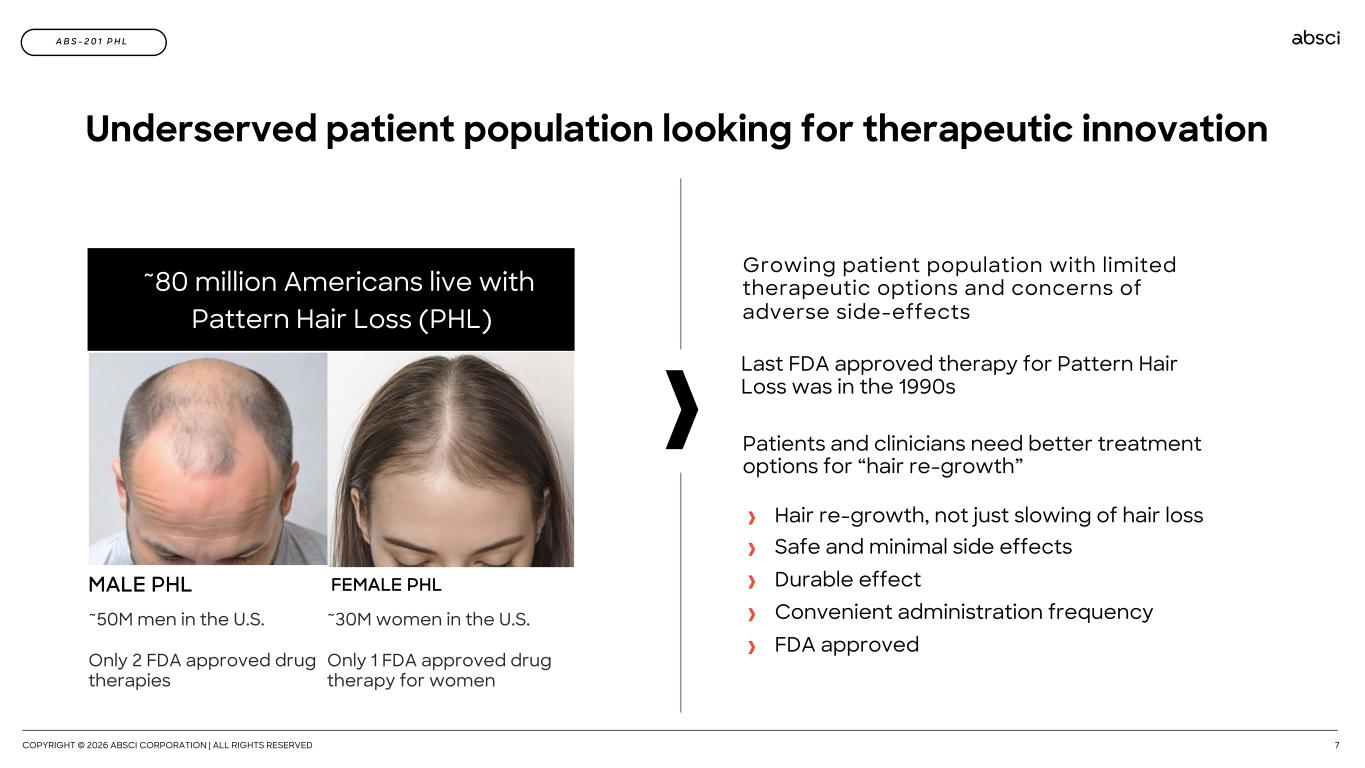
And so we, you know, for all of these reasons, you know, we have um changed the name but not the indication uh itself and uh bronzy and and uh zach please chime in if there's anything else i missed there yeah um thanks john so yeah i mean all right go ahead zach no no go ahead brancy i i i think the term uh pattern hair loss also encompasses the entire population like we're still studying the same population or indications that encompass the same population, but really, when you think about the disease state in the U.S., there's 80 million people, and 30 million of those are women, so we think the term pattern hair loss is more appropriate to describe who it is that we are targeting.
Thank you, Ramsey. I was just going to add, too, that the change in name does not have any impact on how we've assessed the market opportunity. it's still fundamentally the same market operating number of patients in our consumer surveys were focused on identifying that so this does not have any effect on on those estimates thank you that's very helpful and and as a follow-up i think you know in our prior discussions we all have a pretty good sense of what we want to see in terms of non-velous hair count at week 13 and week 26 from your mat portion. And just looking at other metrics, I think you have mentioned that the terminal to V-list ratio metric is also super important in terms of giving you a directional insight of whether APA-S-201 is giving you some benefits towards the goalpost. Can you help us think about what is the magnitude that you want to see in terms of T to V ratio And I'm also curious if you have a sense of what some of the current center of care can offer in terms of the racial changes at around week 13. Thanks for your help.
Yeah, Ronzi, do you want to take that one?
Yeah, so it's an interesting question. I think we're, at least for the interim, we're interested in a broad set of data.
I'm particularly not focused on a specific V to T ratio um and i honestly brian i'm not sure i've seen specific beauty ratios from other programs um so can't really answer that one for you yeah and i think how we're thinking about that the 13 week is really looking at not only the the terminal also v2t but also the potential to regrow hair in dormant follicles whether that comes up as a as a you know terminal hair a velous hair or you have more V to T transition, I think the key point with this readout is being able to show potentially new mechanisms that other drugs do not show. And I think regrowing that dormant follicle where you've been bald for many years, we start to see changes there. Again, whether it's on the velous hair or the terminal hair, we think that that's really exciting and could be a big game changer for this particular mechanism in addition to the regenerative aspect.
And, Brian, that's why we talked about total hair count in the past, and that encompasses what Sean was just talking about.
Operator
Thank you. And our next question comes from Brendan Smith of TD Cowan. Your line is open.
Great. Thanks for taking the questions, guys. I wanted to just first clarify quickly on 201. Is it maybe fair for us to assume, you know, you'll get the interim data in hand and put it out before initiating endometriosis study and then full POC hair loss data in Q1 thereafter? Is that kind of just fair assumption on the order of events coming up there? And then to follow up on the platform itself, it sounds like plan outside of prolactin receptors still largely, you know, develop targets out-licensed prior to entering the clinic on your own. So if that is the case, I guess, just wondering on a strategy level how we should think about potential cadence of new assets coming out of the platform, if you kind of have a target, you know, partner deal cadence in mind, just any color there on output that we should keep in mind over the next, I don't know, probably two months.
Yeah, thanks, Brandon. So to your first point, I think that that's a fair assumption. On the second point, we are planning on taking ABS-201 to market ourselves, and everything that we have coming behind ABS-201, we are looking at it from the lens of what could we commercialize ourselves, what could potentially be an ETC that you could sell alongside ABS-201, and then make the determination, you know, do we have the capital, is the cost capital right to continue to develop this ourselves or do we want to find a partner given the indication or the cash situation? But everything we are developing would be with that commercialization in mind. and then we have the optionality to to partner uh that is the the current uh strategy we have and exactly uh chime in as well yeah i think you said it well sean i think the only other point i would make is sean described some of the advances in our platform so we're becoming more and more efficient at generating new molecules and new programs and so i think we will be creating a of optionality for ourselves.
But to Sean's point, we're very rigorous about providing like a strategic and ROI-based perspective on which programs we will advance with our own balance sheet versus the ones we'll partner.
Operator
Thank you. And our next question comes from Vamaldivin of Guggenheim. Your line is open.
Great. Thanks for taking my question. Maybe one And then just a quick follow-up on the conversation around the partnerships. I think last year you guys had talked about likely signing a partnership by the end of And I don't know if that's happened or not. So, I'm curious, like, would all your partnerships be disclosed or have you signed any through since later last year that maybe just were not disclosed publicly? So, maybe any sort of update on that side would be helpful. And then the other question I have is just around this 13-week data, which obviously We're equally waiting for, and then just to maybe sort of level set expectations, if you can sort of share what you plan to disclose in the top line release so we all kind of know what to expect there. And sort of tied to that, I know one of the big potential selling points of 201 would be the durability of the hair that's regrown. We're not going to know that at 13 weeks, obviously, so I'm just trying to get a sense of how you think about sort of how long the duration of fall. what need to be before you start getting comfort that this dosing regimen that your target profile is, is the right dosing regimen for the durable response. Thanks.
Yeah, thanks, Vamo. So, in terms of partnership, you know, the partnership that we had inked with Eli Lilly, both the investment and, you know, the collaboration on AVS-201 on clinical development, we do see that as achieving that large pharma partnership. And with regards to the top-line readout for the 13 and 26 week, I'll hand that over to Ronzi.
Hey, Bonnell, thanks for the question. Yeah, so we're going to show the data that we think will give us that interim look, just sort of a status check on what the drug is doing. So we've talked about total area hair count, so that'll be there. Target area hair count, which is the terminal hairs. We'll get a look at target area hair width to see how wide the hair caliber is. And we'll be looking at darkness as well. So I think those are the big things. In addition, we'll have a look at the updated safety and tolerability data as well. Great question on the durability. We are actively working on trying to figure out how we can get that from this study. It's not going to be answered in the 13 or the 26 weeks. We do have a safety follow-up period after this trial, and that's probably the first indication of durability of effect, and we'll get the same duration of safety follow-up on the cohorts. It's based on PK. And we're looking at what to do thereafter in terms of describing the durability of effect. So, more to come on that.
Operator
Thank you. Thank you. And our next question comes from Kambiz Yazdi of BTIG. Your line is open.
Thank you so much for the question. So, it appears from your modeling that you confirmed ABS-201 can maintain greater than 90% prolactin receptor occupancy. without cycling, how should the greater, more sustained receptor occupancy impact efficacy compared to other prolactin receptor antibodies in pattern hair loss, and then secondarily as in endometriosis? Thank you so much. Yeah, it's a great question, and we actually just put out some modeling on the website today with the updated corporate bactin. I think it's a very clear illustration. If you look at HMI-115, the once every two week dosing at 240 milligrams, you saw this oscillation that occurred You know, between 60 and 70 percent receptor occupancy. And we know that the receptor occupancy for the prolactin receptor, you know, needs to be, you know, well above, you know, 90 percent to achieve, you know, the signal blocking that's necessary. even a little bit of receptor left can cause you know quite a bit of signaling through the prolactin receptor and essentially you know the HMI-115 molecule without oscillation and not achieving the receptor occupancy our belief is that they essentially weren't able to achieve the efficacy because they weren't able to get that prolonged antigen phase. And so that's what we believe that we are going to be able to achieve now. If you look at, again, the receptor occupancy, those, you know, two to three doses, we're well above 90%, and we can ensure that the follicle can stay in the prolonged antigen state. In order to rebuild that stem cell niche, hair growth doesn't happen overnight. overnight, you need that sustained period of blockade in order to get the regrowth. And I think the really exciting part is, look, if you look at the stump-tailed macaques, when you got the greater than 90 percent receptor occupancy, I mean, you saw a really, really robust efficacy there, and we're obviously targeting 30, but I do believe that if you get the mechanism uh if you hit the receptor you know appropriate here appropriately to stay in the antigen state i think you have the potential for even further upside than than what we've been discussing and so i think it's a you know really exciting opportunity with the with the pk profile that we've been able to achieve and then a quick follow-up how do you affect expect that to impact
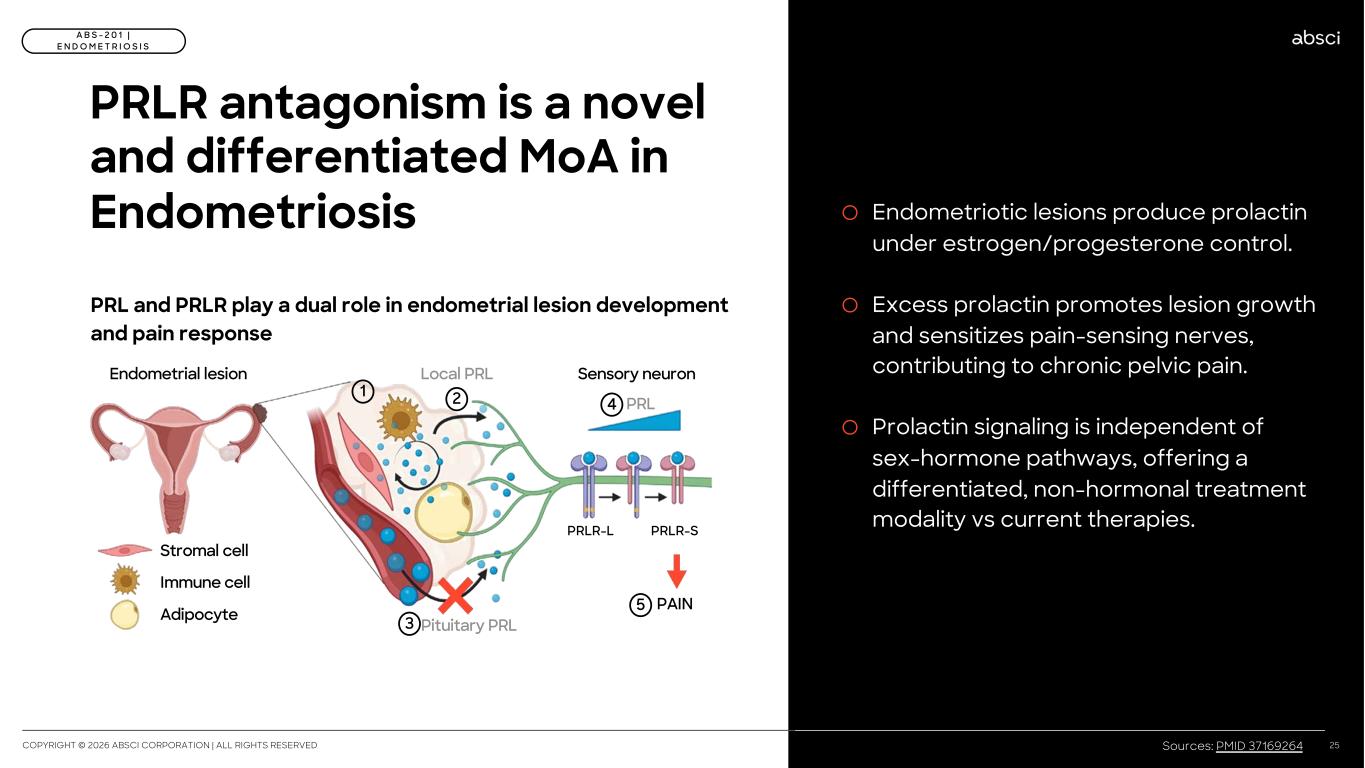
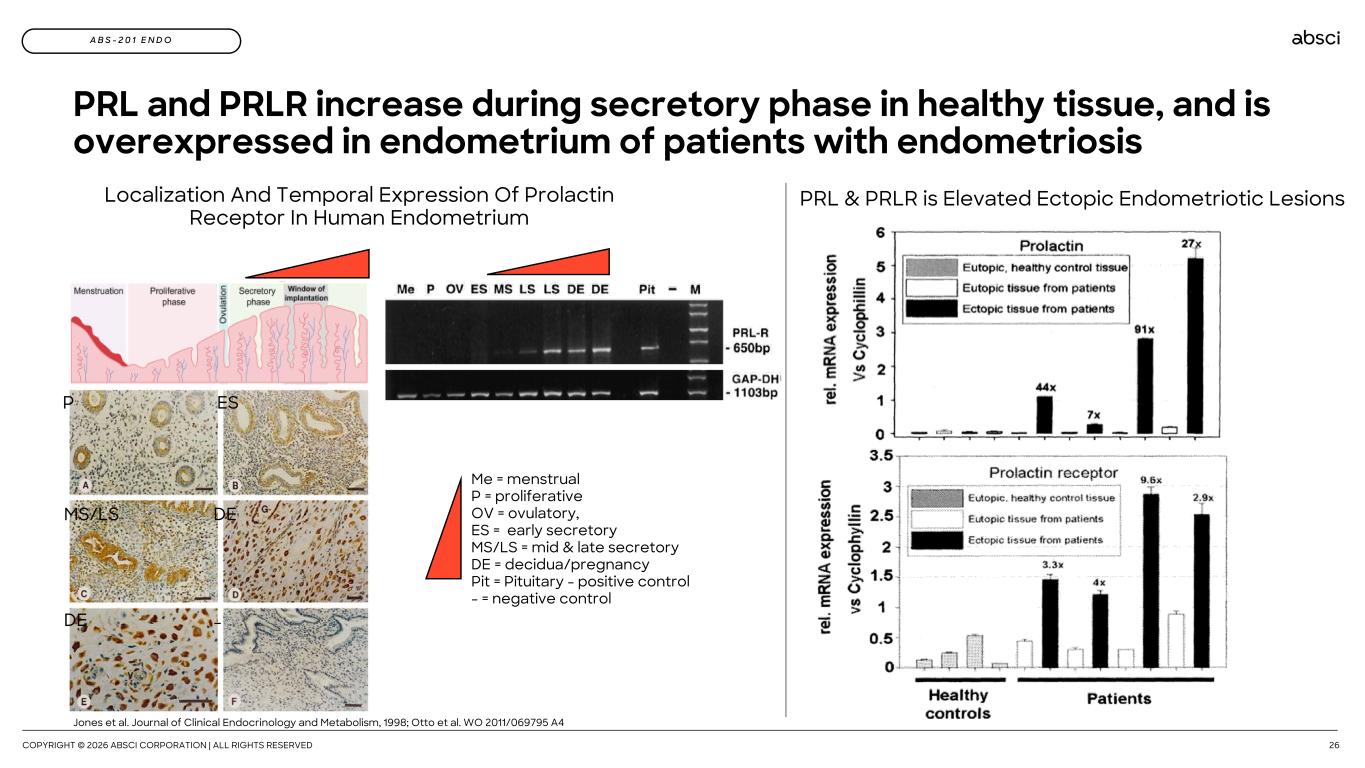
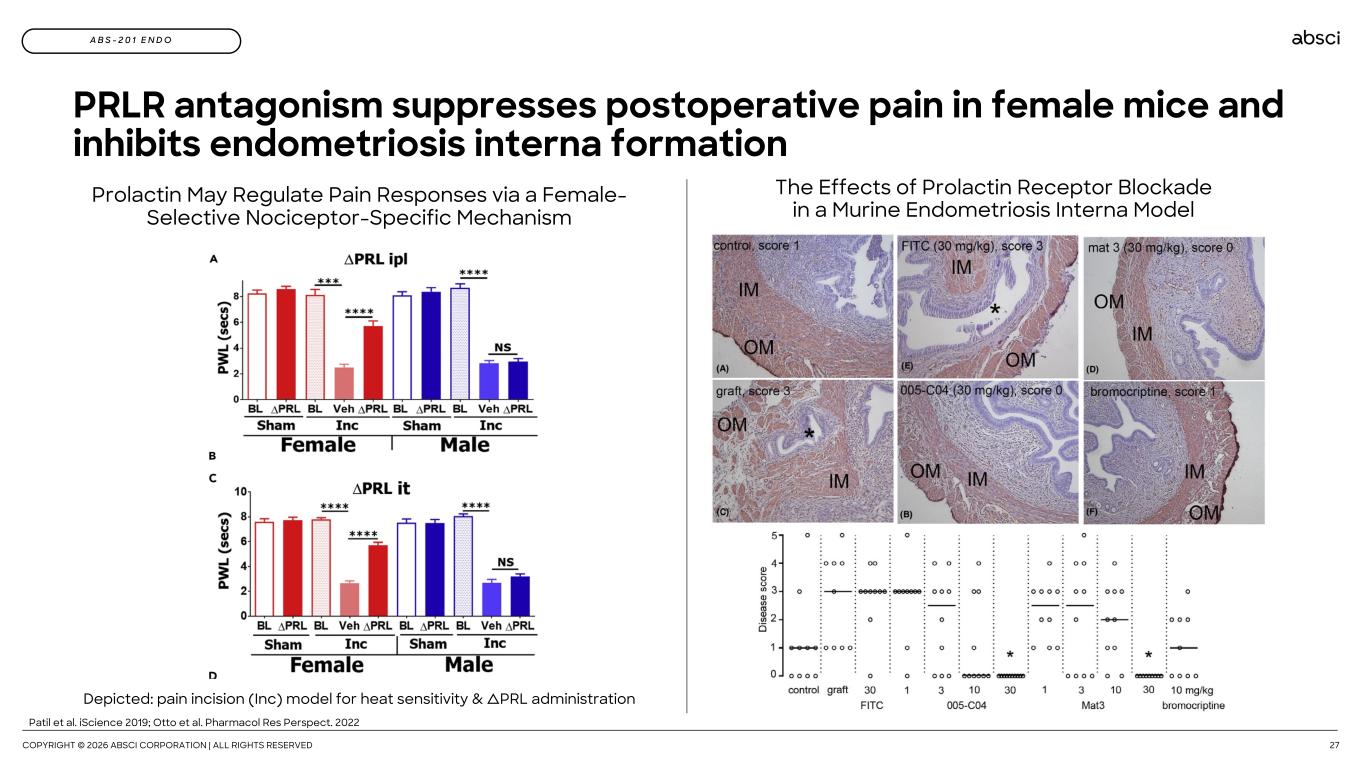
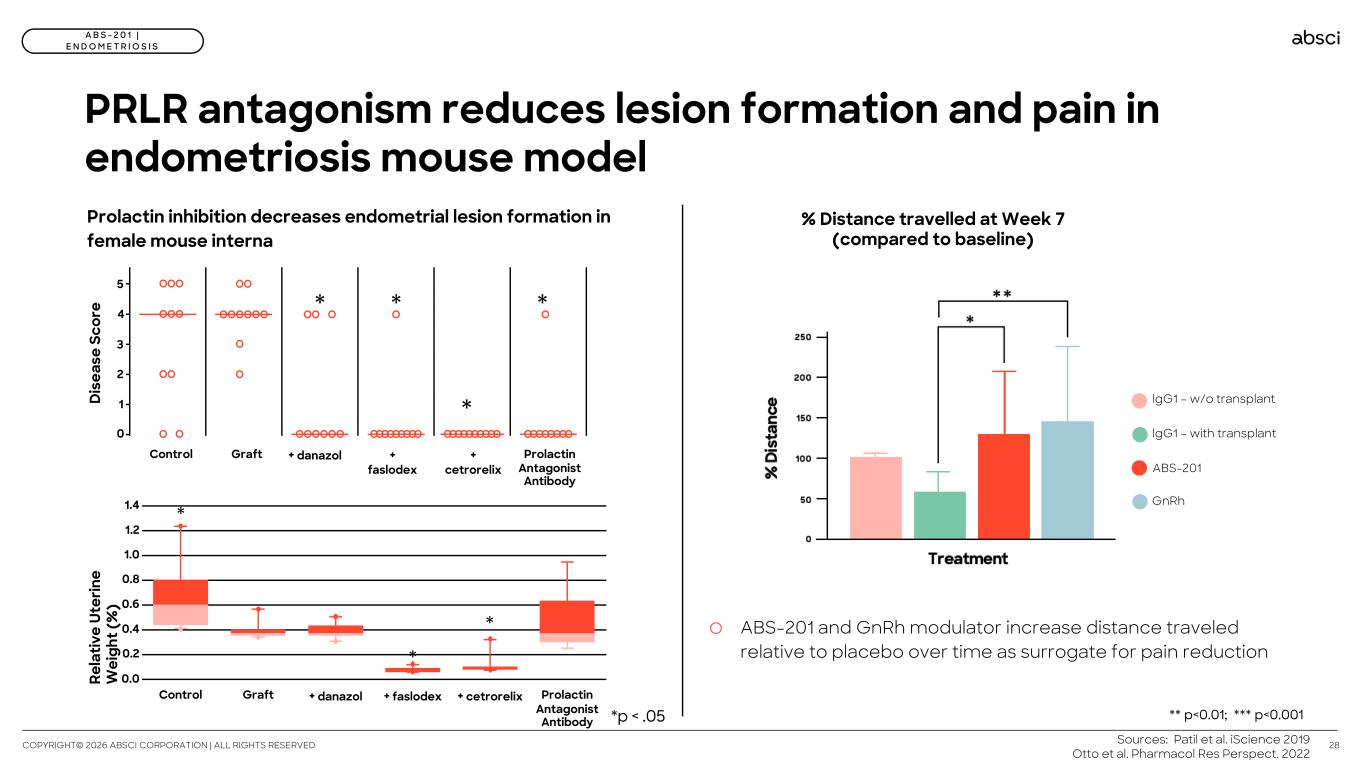
endometriosis bronze if you want to take that one yeah happy to I think it's it's it's the same philosophy canvas it's if you look at the other prolactin receptor antibody you know they publish their data in the Lancet and you saw that there was an effect on dysmenorrhea at the highest dose and I think the same principle applies and that you have to really achieve that high level of receptor occupancy to see efficacy there so even though it's a disease state that's quite different from pattern hair loss, we think the same principle is in play. Thank you so much.
Operator
Thank you. And as a reminder, if you have a question, please press star 11. And our next question comes from Gil Bloom of Needham. Your line is open.
Good afternoon, and thanks for squeezing me in. So we saw some interesting data for the oral minoxidil extended release from viridermics in women.
Do you think the data that they put out changes maybe where that bar is as it relates to hair regrowth, or it doesn't really matter as it relates to your own programs?
I mean, the data that they put out, I mean, clearly shows that standard of care is really poor, even with what they have. There's so much more room to improve from a standard of care perspective, and that is something we're very excited about. We recently showed the female ex vivo data. It looked very similar to what we saw in the males, and we're very excited to get this cohort kicked off in this study in female patients. And I think that there is a real exciting opportunity just due to the really, really poor standard of care out there.
Operator
Thank you. This concludes the question and answer session and also today's conference call. Thank you for participating, and you may now disconnect.