Operator
Good afternoon. Welcome to the Affirm Holdings First Quarter Fiscal 2026 Earnings Call. As a reminder, this conference call is being recorded, and a replay of the call will be available on our Investor Relations website for a reasonable period of time after the call. I'd like to turn the call over to Zane Keller, Head of Investor Relations. Thank you, and you may begin.
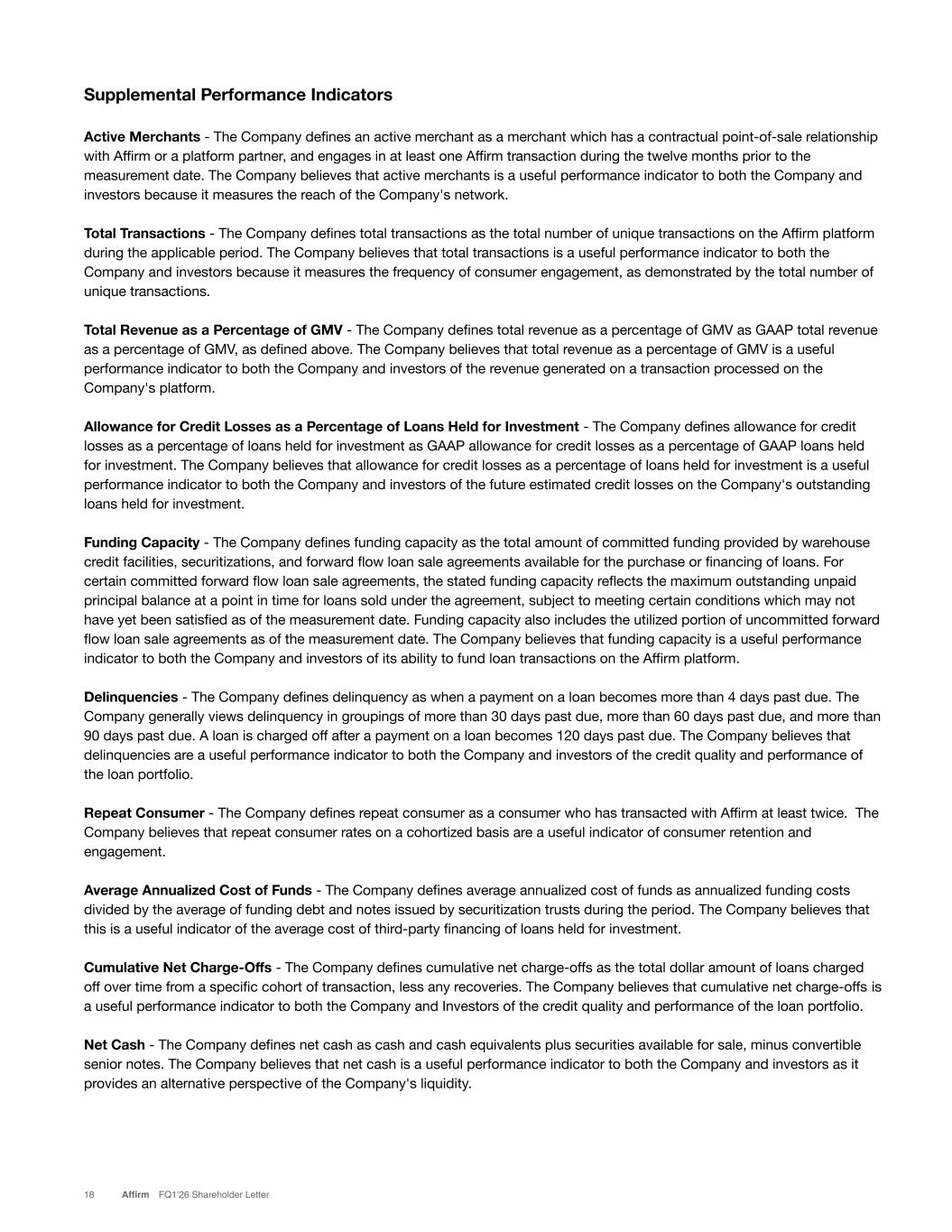
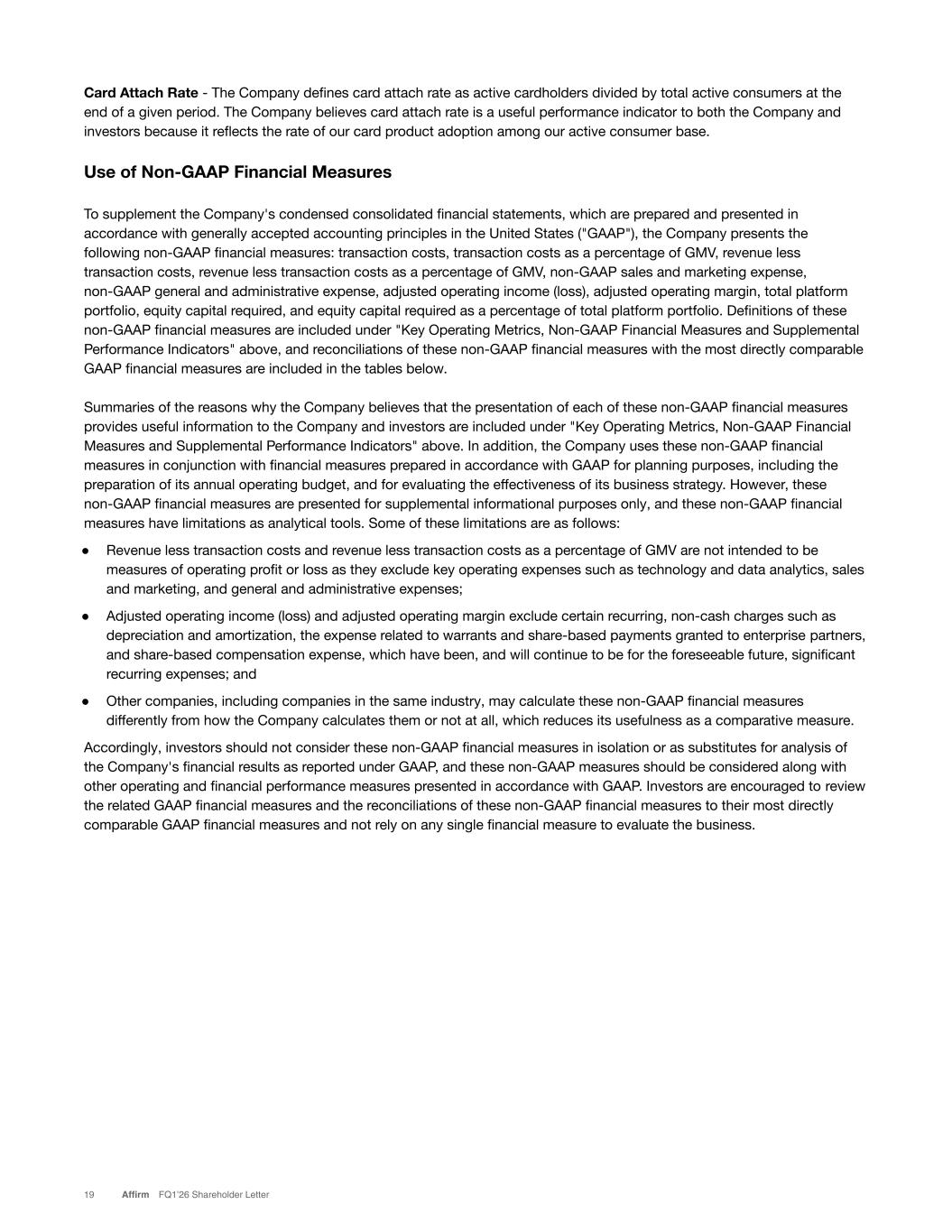
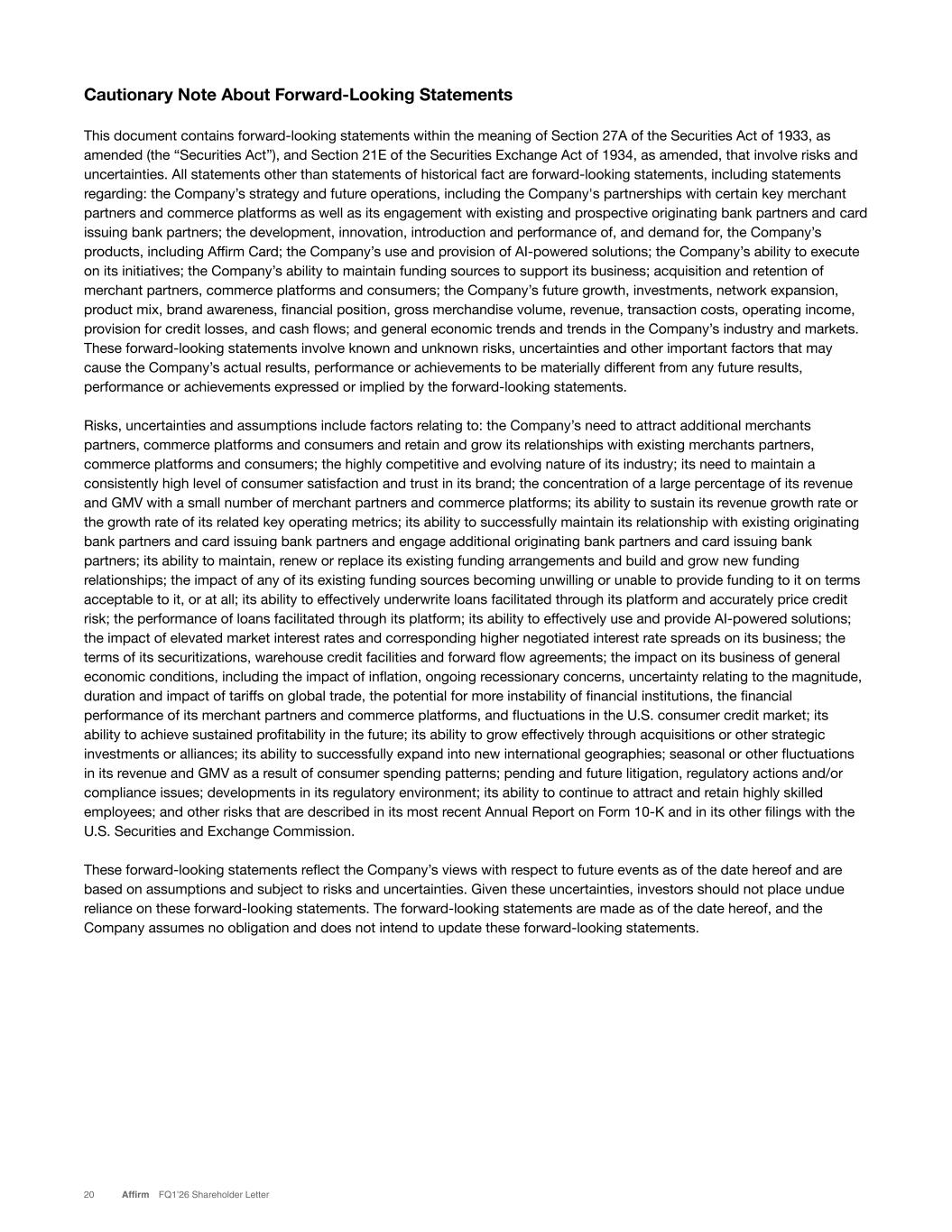
Thank you, operator. Before we begin, I would like to remind everyone listening that today's call may contain forward-looking statements. These forward-looking statements are subject to numerous risks and uncertainties, including those set forth in our filings with the SEC, which are available on our Investor Relations website. Actual results may differ materially from any forward-looking statements that we make today. These forward-looking statements speak only as of today, and the company does not assume any obligation or intent to update them, except as required by law. In addition, today's call may include non-GAAP financial measures. These measures should be considered as a supplement to and not a substitute for GAAP financial measures. For historical non-GAAP financial measures, reconciliations to the most directly comparable GAAP measures can be found in our earnings supplement slide deck, which is available on our Investor Relations website. Hosting today's call with me are Max Levchin, Affirm's Founder and Chief Executive Officer; Michael Linford, Affirm's Chief Operating Officer; and Robert O'Hare, Affirm's Chief Financial Officer. In line with our practice in prior quarters, we will begin with brief opening remarks from Max before proceeding immediately into your questions and answers. On that note, I'll turn the call over to Max to begin.
Thank you, Zane. As always, the better the quarter, the fewer the opening remarks, and this one was really great. So this is really all I got. Actually, no, I have one piece of breaking news, actual breaking news to report. Earlier this week, we extended our U.S. agreement with Amazon for an additional 5 years through January 2031. We look forward to serving these customers going forward. All right. Back to you, Zane.
Okay. Thank you, Max. With that, we will now take your questions. Operator, can you please open the line for our first question?
Operator
Our first question comes from Dan Dolev with Mizuho.
Speaker 3
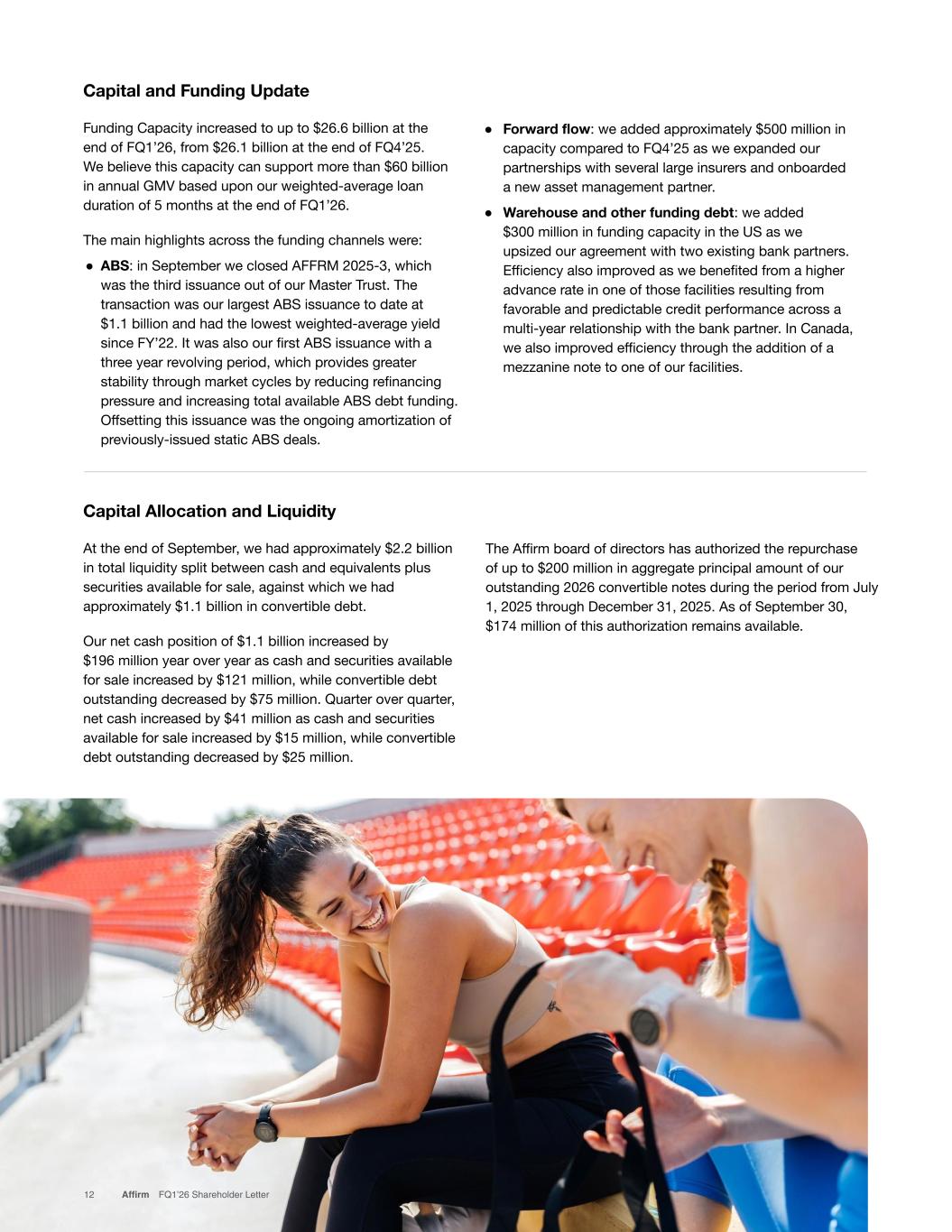
Great results. You forgot one chief, chief fan, which is me that's on the call, chief cheerleader. So guys, great quarter as always. Some companies are pointing towards the tricolor situation and are blaming that for poor execution in the funding markets, yet Affirm seems to be executing so well, including that ABS deal that you just priced. So maybe any thoughts on what's happening in the funding market and why you're still able to execute so well in the face of all these news and great stuff again.
Yes. Thanks for the question. Yes, we're really proud of our ability to execute in the ABS market and in the capital markets more broadly. We are expanding relationships with blue-chip forward flow buyers, increasing their exposure to Affirm while continuing to scale our ABS program. I think, obviously, the performance of the asset is a major driver of the market's appetite for what we produce. What we produce is something very special and unique, and it's highly valued in the debt capital markets. And I'd be remiss if I didn't also call out our team. We have, I think, the best team in the world who does this every day, and our ability to get in front of investors and make sure they understand what can be sometimes a complicated product and understand how it works and why our advantages are what they are really does set us apart.
Operator
Our next question comes from Nate Svensson from Deutsche Bank.
Speaker 5
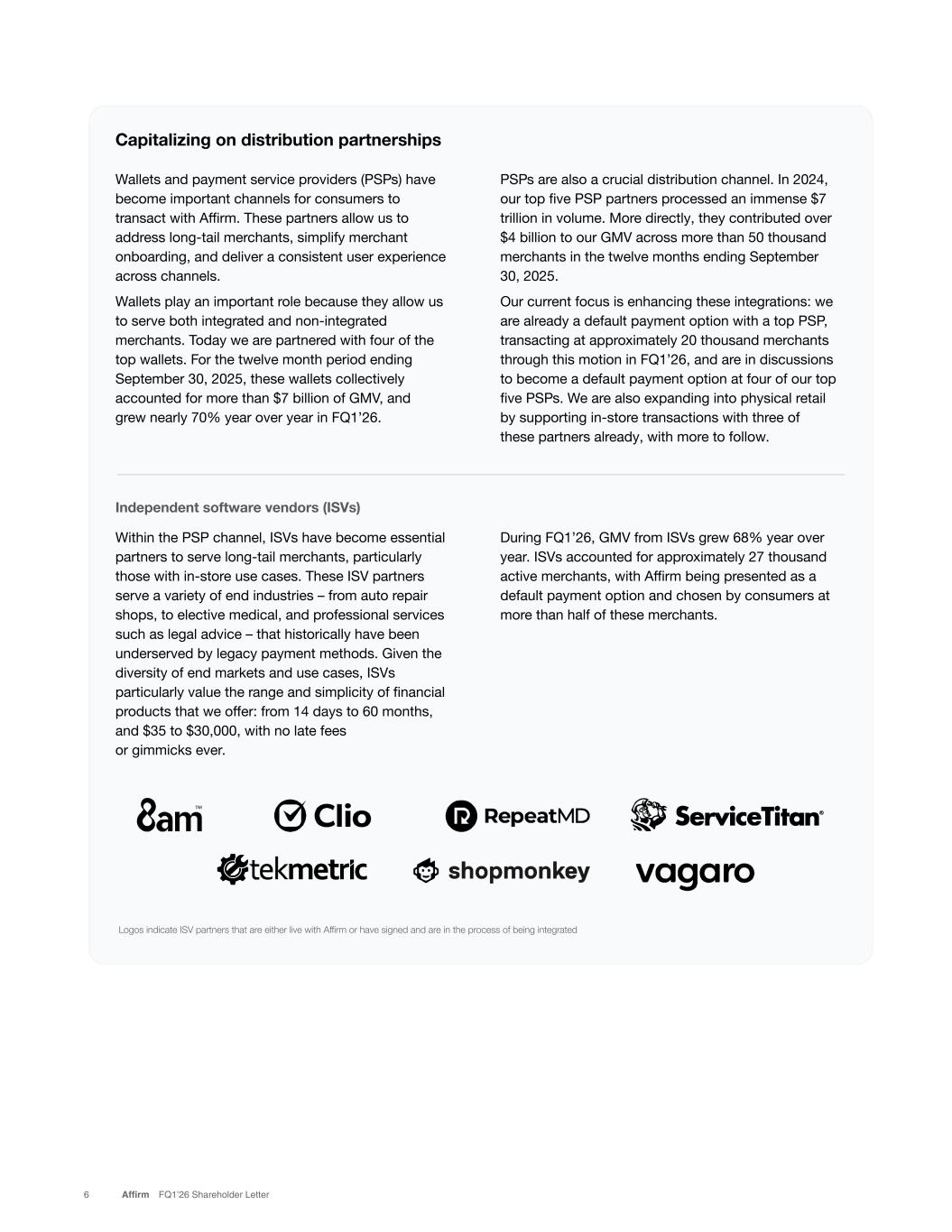
Nice results. I did want to ask about the PSP relationships. Obviously, you announced the Worldpay for platform signing. You had a nice little blurb in the letter on this. I think it would be helpful to hear a little bit more about how you're thinking about that PSP strategy holistically, what you're doing to expand those relationships, what we might expect to see in the future.
Thank you for the question. I believe that PSP is a crucial channel for us. We strongly support having many locations featuring the Affirm logo, allowing both merchants and consumers to choose their partners. We will always be there to assist them. We have previously announced and taken pride in various relationships, and this is just one of the recent agreements we've made this quarter, which is why we included it. It's important to highlight that they significantly aid in speeding up integration. PSP relationships are excellent for helping us gain access to more locations or merchants, and even into platforms within platforms. However, we still need to execute effectively on the front end. We need to maintain high consumer conversion rates, ensure approvals work, and credit performs well. Thus, while PSP relationships help us achieve faster integrations, the products remain just as essential and are as challenging to develop and deliver as those done through direct integrations. I'm not sure if Michael wants to add anything...
Yes, a really small thing to add. Oftentimes, the platforms for us are the way we integrate more than they are the way we acquire. Sometimes there's also an acquisition that happens there. But a pretty common mode is you're a top 100 e-commerce site and you leverage an existing platform partnership to get integrated. We're still highly involved in the sale, highly involved in the configuration of the financing program being offered on that site. But that's so important is our breadth of products requires and frankly, allows us to make more of those connections than what we think other people can do in the industry.
Operator
Our next question comes from Jason Kupferberg with Wells Fargo.
Speaker 6
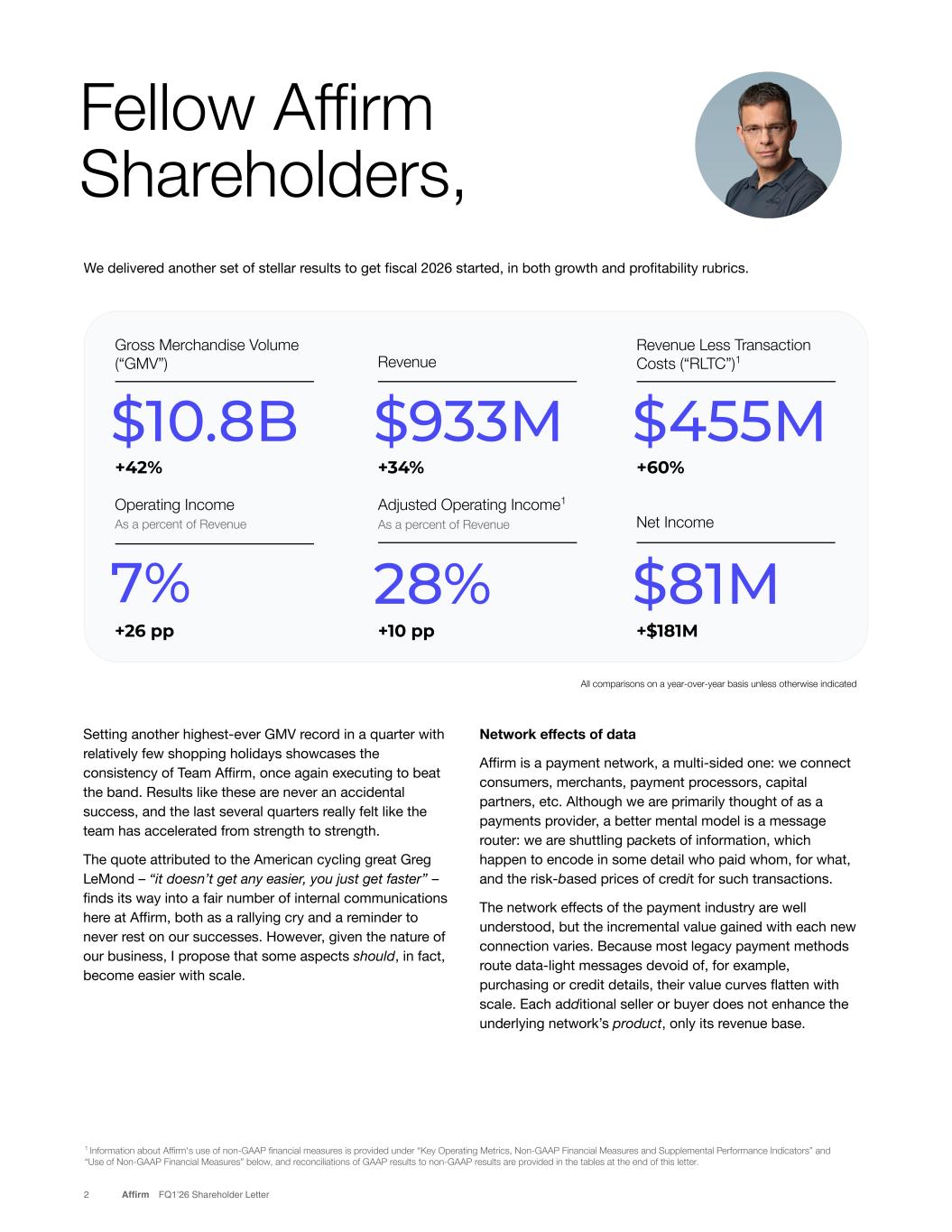
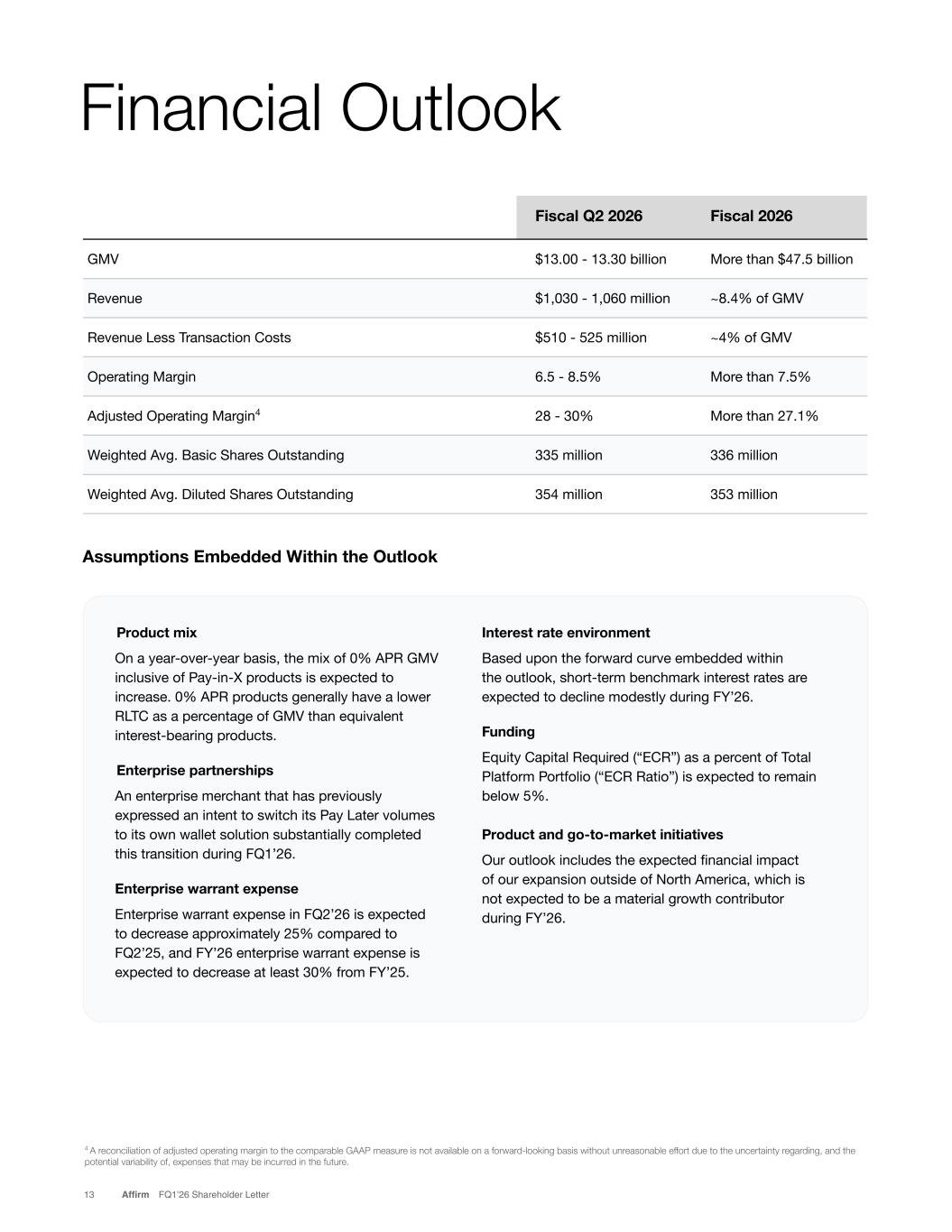
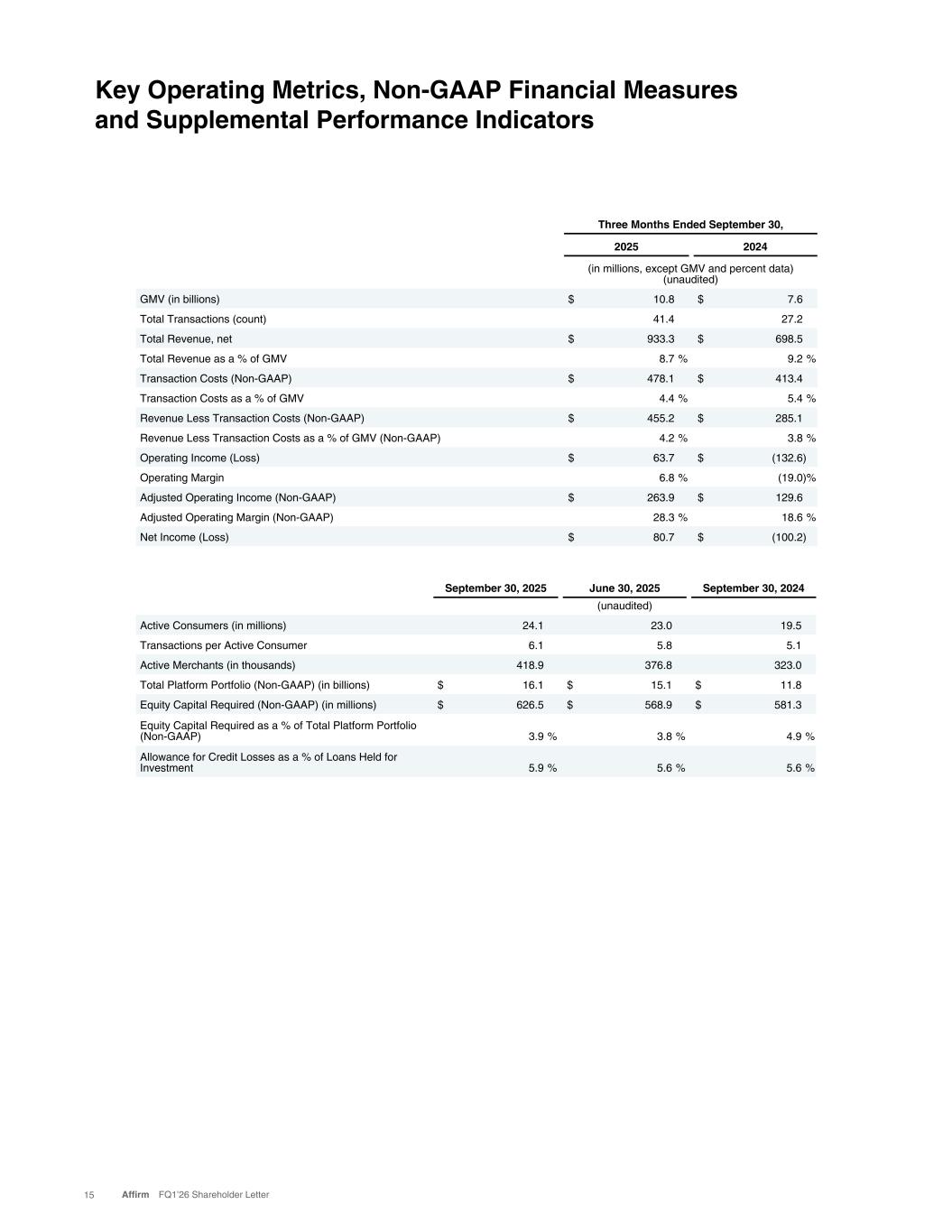
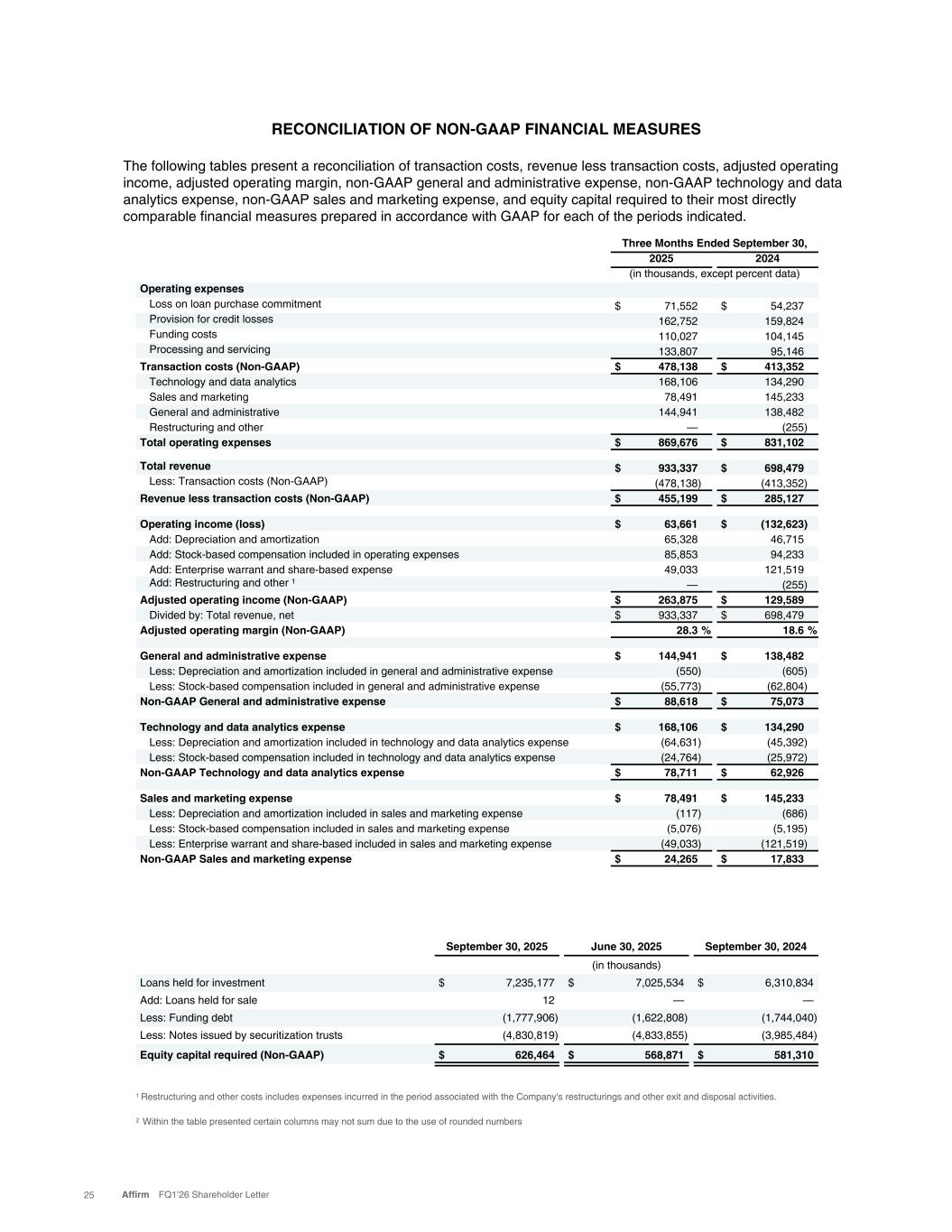
This is Kathy Chen filling in for Jason. I wanted to ask for clarification on the RLTC trend as a percentage of GMV. Firstly, you had a strong quarter with that metric around 4.2%. Could you explain why your full-year 2026 guidance remains unchanged for that figure? Additionally, based on your second quarter guidance, it seems you're anticipating that to be close to 4%. Should we assume that this is slowing down in the latter half of the year? Are there specific factors we should be aware of that might be influencing these trends, such as Walmart or a higher 0%?
Speaker 7
I think most broadly, we're really focused on 4% being an upper bound for revenue less transaction cost take rates. And I think when we're running consistently above 4%, we're always looking for ways to make sure that we're doing everything we can to expand the network, either through incremental GMV or incremental reach with users and with merchants. So I think it's really a philosophical target that we have that we stay pretty close to 4% on the high end. There will be puts and takes within given quarters just given different capital markets transactions and other sort of idiosyncratic things that can happen in a given quarter. But I think long term, we think 3% to 4% is the right range. And right now, with the setup that we have and the product mix that we have, we have been fortunate to run slightly above 4%. But really, that goal is to make sure that we're maximizing growth and profitability. And so that's why 4%, we think, is the right target for this year.
Operator
Our next question comes from Dan Perlin with RBC Capital Markets.
Speaker 8
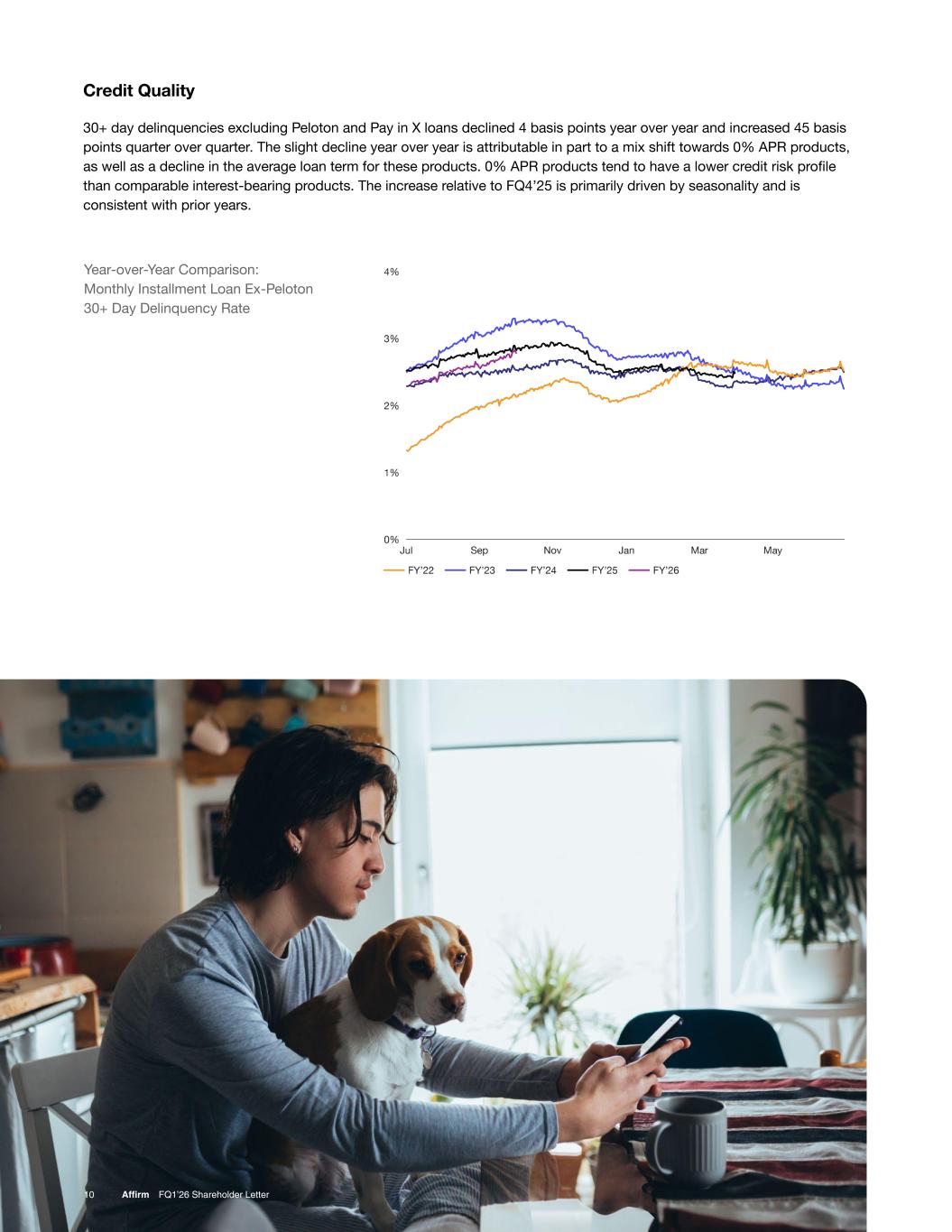
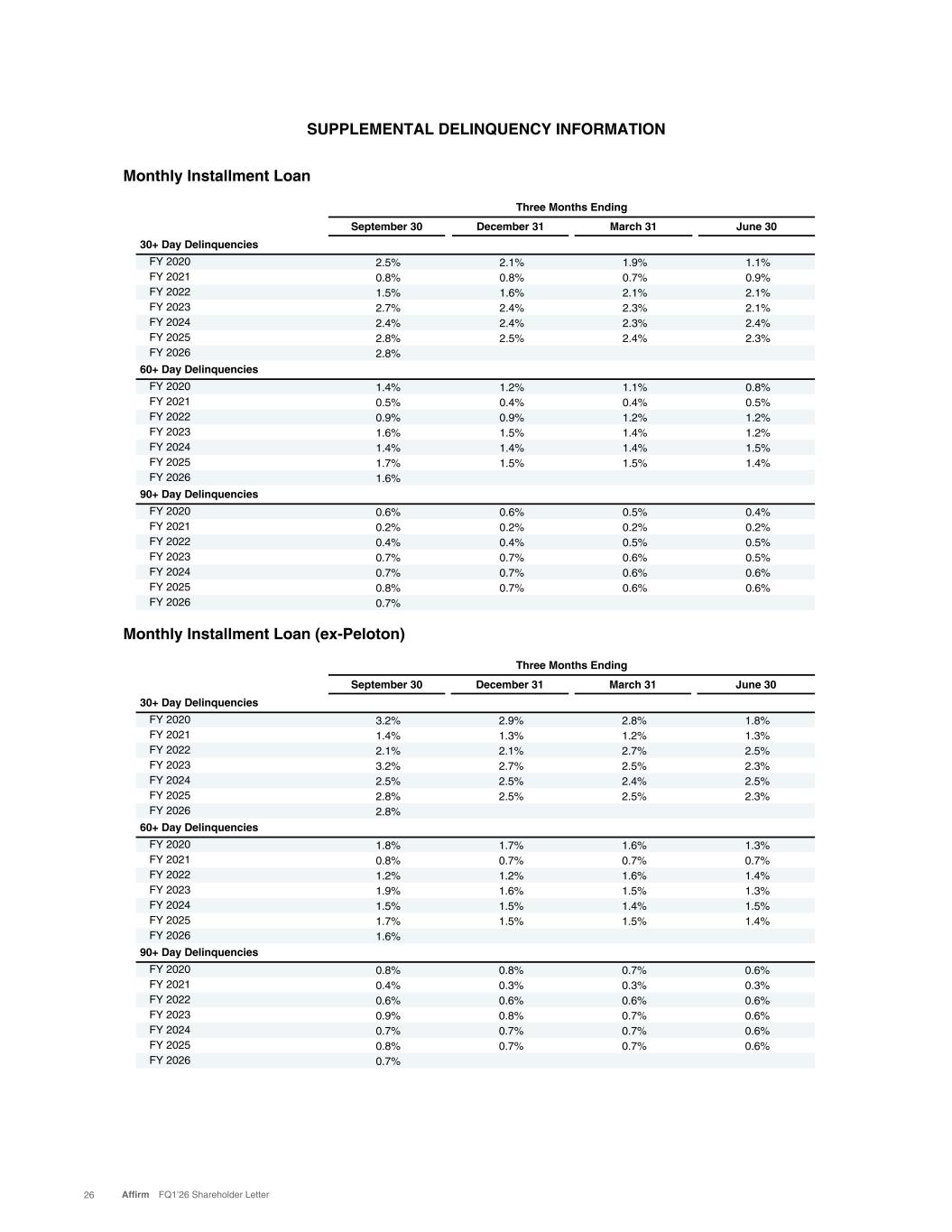
Great results. I just wanted to ask, clearly, the data seems to be suggesting at least your data is that the spending environment for the consumer remains pretty damn healthy. I know you called out sporting goods and outdoor and those kinds of things. But when you also look at the 30-day delinquency trends, it would just continue to suggest that they're relatively healthy. So the question really that I have is, is that a function more of natural selection for your underwriting and your technology that you're able to use per user? Or do you really think and see the overall health of kind of the less affluent consumer being as strong as what your data suggests?
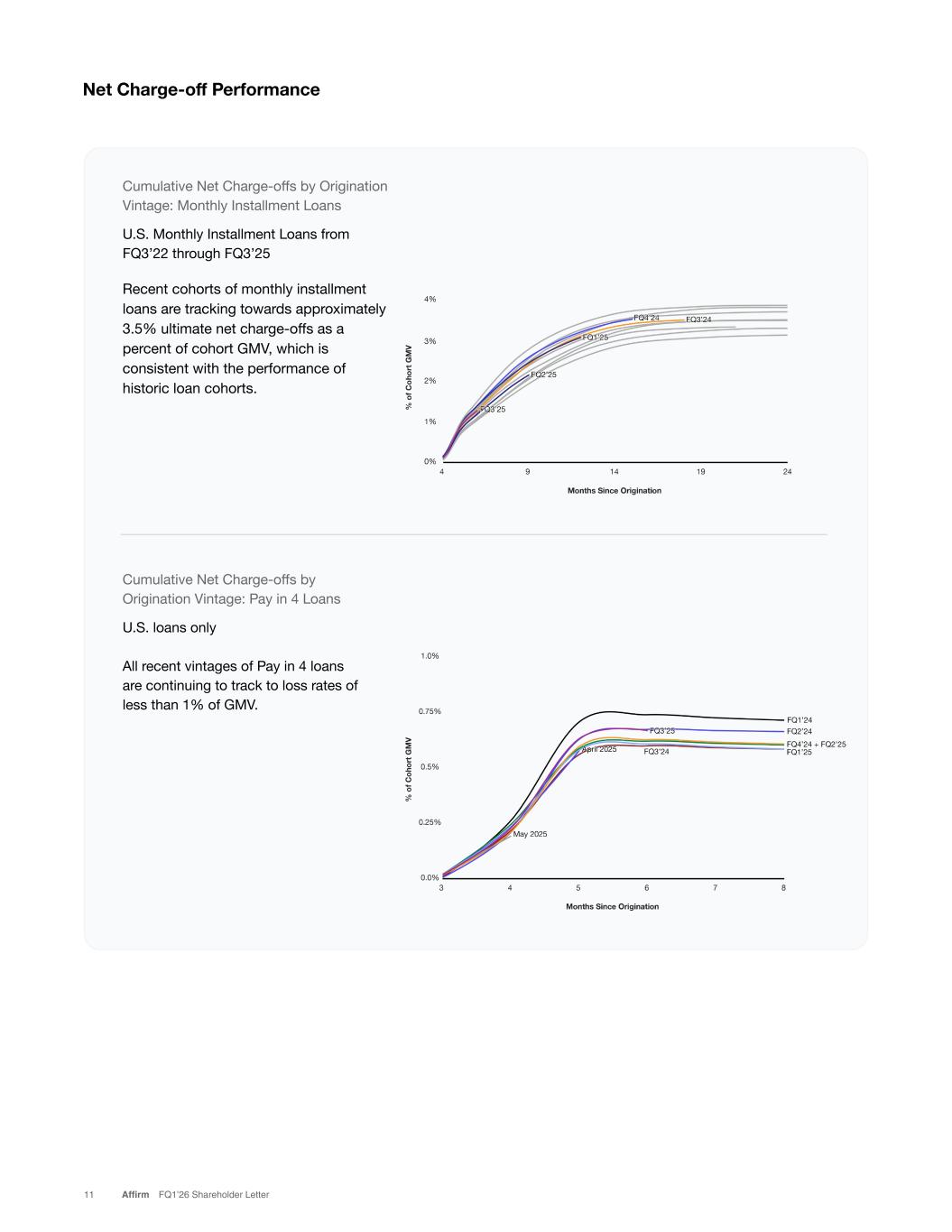
I would not call our underwriting practices natural selection just for the record. I think it's highly unnatural. It's very carefully constructed mathematically. We take a lot of pride in just how good it is. It's very hard to speak about kind of the broad universe in the sense that we're still a tiny, tiny percentage of the spend. So take this with a grain of salt. I'm sure soon enough, I'll be opining on the state of American shoppers on this TV show or another. And I always try to point out that statistically significant sample, but we're still a pretty tiny sample. That said, our consumer is borrowing, paying us back, shopping fairly healthily, et cetera. So generally speaking, everything you said is exactly as we see it. I have one fun factoid for you that may serve as a proof point that I probably know what I'm talking about. So we've been looking at data from government employees because of the shutdown to understand what it practically means for the ecosystem and us in particular. And we do not see any loss of repayment. In other words, the delinquencies and defaults in that group are just fine, like in line with the rest of the general population, but we see a few basis points of a demand slowdown. And given we're growing at 40% year-over-year, a couple of basis points is not a thing that I lose sleep over, but actually very gratifying to know that in a relatively small percentage of the population, given that how small percentage we are of the overall commerce, we can still detect that with reasonable statistical significance tells me that all the monitoring we're doing at the macro level to make sure that we don't miss some sort of a negative signal in the macro trends is going to be just fine. Like given it's a fairly small thing to notice, but we were able to ascertain it pretty clearly. So right now, things are fine. We're looking all the time, but maybe a little bit more carefully right now.
Operator
Our next question comes from Harry Bartlett with Rothschild & Co.
Speaker 9
Nice quarter. I just want to touch on PSPs. Perhaps maybe you could talk about the economics here, whether there's any difference between what you do with direct merchant integrations when you're enabled as default. And also, how you're thinking about PSPs as part of your international expansion and whether this kind of accelerates that process.
Speaker 7
Sure. Maybe on the first point, just around economics, I would say these end up being typically bespoke negotiations between us and the platform. And so it's hard to sort of encapsulate them in a single sentence or two. I think they're more different than they are similar, and we don't really want to get into the specifics of commercial deals here. In terms of expanding internationally, I mean, I think yes, obviously, Shopify, in a lot of ways, has been a huge distribution partner for us and really helps us access the long tail of smaller merchants in a really efficient and profitable way. So that's obviously a very key part of our international expansion. I'm not sure if you would count them as a PSP or not, but I think they bring a lot of the same benefits that we see with some of the PSP partnerships that we also have.
Operator
Our next question comes from Moshe Orenbuch with TD Cowen.
Speaker 10
Great. It's very gratifying to see another 0.5 million Affirm card members in the quarter. Could you talk a little bit about what the factors are that drive how rapidly that can penetrate? And maybe since you did mention that you're testing cash flow underwriting, what kind of impact that could have on your ability to approve transactions and see growth in volume per card?
Certainly, we want to avoid speculating about how significant this could become. However, it seems beneficial at the moment. Cash flow underwriting is particularly advantageous for younger consumers and those who are often overlooked by the broader financial ecosystem. It shouldn't be mistaken for merely increasing credit access. Traditionally, this approach has helped those who provide weak signals based on their credit history. This tends to be true for slightly older consumers in lower credit tiers, but it is especially pronounced for younger millennials and Gen Z. They usually hesitate to borrow, particularly with credit cards, making them ideal customers for us. On the other hand, they often don't borrow enough, which makes it challenging to interpret their credit profiles. This represents a key opportunity for us. Although it's still early days, we believe it will facilitate growth. The growth of the card is influenced by several aspects, including our marketing efforts. Currently, we are only marketing it internally. I've mentioned this repeatedly, but we haven't focused on external marketing for Affirm repeat customers, which provides us an advantage in identifying potential customers. We are still not rolling it out aggressively, not due to apathy, but because we are being very careful in making it accessible to various user segments, including those with slightly lower credit quality. We have maintained a relatively higher credit quality average for the card. As we gain more confidence in our underwriting capabilities for everyone, we view this as a newer product compared to the rest of our offerings. As we improve our underwriting and grow more confident across different cohorts—recognizing that these developments take time—we will broaden our marketing efforts to the general public. Ultimately, we envision the card being available to every user we have acquired at the point of sale and beyond, with adjustments to the product for different consumer segments. We are excited about the new features we haven't yet showcased, which will enhance the card's appeal to various customer segments. In general, I would assess the current active user base and our complete consumer profile as a natural benchmark for the card's potential size. We definitely aim for it to be the preferred method of engaging with our product.
Operator
Our next question comes from Rob Wildhack with Autonomous Research.
Speaker 11
Nice to see the Amazon agreement extended, including the 8-K. There's only a brief description in there. So I was just wondering if you could give us some more color on that extension broadly, how that conversation progressed and anything new or interesting that might have come out of the new agreement?
I think the biggest thing is that we are going to be able to continue to work with them over the next 5 years. That's a pretty long-term commitment from both companies. I think we both are really happy with the service we provide to those consumers and the value they get out of it. I know we are. And that's really the biggest thing for us. The conversation around our renewals and ongoing for the better part of the year, and we're just really happy to have this behind us and focus on serving these consumers now.
Speaker 11
Okay. And then the Slide 16 with the merchant fee rates, it does look like that the core 0% longer-term rate, so the yellow line is the only one that's trending a little bit lower the last few quarters. Could you just give us some more color on what's going on there?
Speaker 7
We did make an adjustment to a single merchant program that was a very high proportion of 0% loans and very long-dated as well. So I think that's a pretty one-off adjustment that happened in the book, but with a pretty significant merchant.
Operator
Our next question comes from Adam Frisch with Evercore ISI.
Speaker 12
Can you hear me?
Speaker 12
Okay. Great. Roughly half of the GMV growth this quarter came from direct point-of-sale merchant integrations and one-third from direct-to-consumer. So just wondering how you see that mix evolving through the next few quarters, particularly as wallet partners scale. Nice job on the quarter.
I said it before, and I'll repeat again, we love every door where the Affirm logo is visible, but we want to leave the choice of the wallet, the type of checkout to the end consumer and to some extent, to the merchant, but our job is to be available everywhere. That's why we integrate with every wallet basically out there and certainly love our direct integrations. I think we have been unashamed of our focus on direct-to-consumer products for quite some time. The card obviously is a really important piece of the ecosystem. But also, our app has served both as a way to plan loans in addition to servicing them, obviously, but also increasingly so as a promotional service for our merchant partners to advertise their reduced APRs or 0% APRs. Hopefully, some of you saw, we ran a major 3-day promo which we should have called the big nothing day, but I got overruled and it was called 0% Days, and we'll find out what that is named next time. But either way, it was an extravaganza of really great 0% offers by our many, many merchant partners. And so that growth, I don't think we're quoting it in the letter explicitly, but we're putting a fair amount of wood behind that ball. And so we'll continue doing so. I wouldn't be prepared to tell you the new breakdown x quarters from now, but we're certainly very much investing in engaging our consumers directly in every imaginable way. and there'll be both more events like the big nothing and new products and new features as well.
Operator
Our next question comes from James Faucette with Morgan Stanley.
Speaker 13
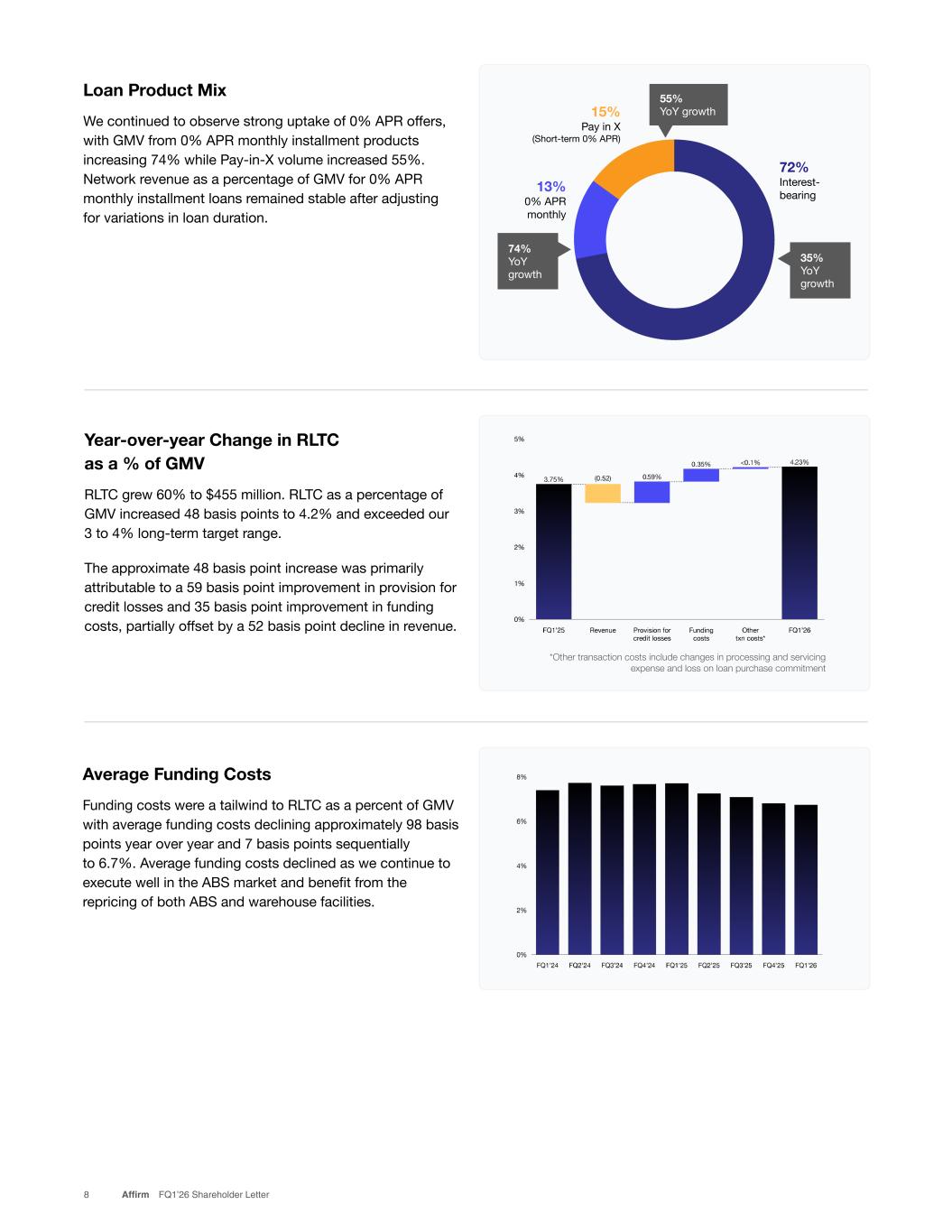
I wanted to follow up on that 0%. There were some interesting statistics in the release about the FICO uplift for new Affirm users who start with 0%. I would like to know how aggressively you plan to pursue this and what you envision the mix of 0% could be over the coming years. Additionally, could you share insights from your 0% Days learning, why you decided to hold that event, and what you aim to achieve?
I'll begin, although I’m sure my colleagues here have their own insights. A significant aspect of what sets the Affirm network apart is our ability to track what is being sold frequently, not just at the SKU level but even down to the color, and of course, we know the prices and what's included in the shopping cart, among other valuable data. Being able to use this information to determine the right financial offer for each borrower is quite powerful. It allows us to present that value to merchants in a way that is specifically personalized for each borrower at the time of Affirm checkout, which is an incredibly efficient method for driving sales for retailers. To provide a different perspective, the answer you might be searching for relates to consumer engagement, and I’m happy to discuss that. It's clear that 0% offers tend to attract higher credit quality customers, which leads to positive self-selection. We’ve observed the expected outcomes, including an increase in our FICO scores, along with heightened consumer activity. Perhaps the key goal behind what I like to call "big nothing days"—a term coined by Michael—is that we aimed to showcase Affirm's capability beyond just meeting demand at the lowest point of the sales funnel. We sought to raise awareness of the merchants offering these promotions among committed Affirm users through various wallet integrations. Our objective was to prove that we can positively impact the merchant ecosystem by using their marketing budgets in the most precise manner possible. The results from this quarter were quite promising, more so than before. We will compile all the outcomes and present a complete overview, but we achieved our goals and more. From my perspective, the most crucial takeaway was that these tailored direct deals with merchants, where they allow us to optimize their margins for targeted promotions, have been effective, and we plan to continue this strategy moving forward.
Two things to add. How aggressively we want to lean in, very. We've been talking about this for quite a while. You should expect us to continue to lean in here very heavily. We think this is a really important part of rounding out the consumer value proposition in the network. And second, and this is worth repeating over and over again. The reason we are a bit tongue-in-cheek with the name of things like the big nothing is because our 0% loans do not have anything else in them. There are no late fees. There's no reminder fees, there's no snooze fees. We're the only person who can stand up to and offer with the level of approvals that we do, an honest and true transparent 0% offering. That's a very unique thing, and we're big fans of doing more of the thing that you're best positioned, uniquely able to do, and this is that.
Operator
Our next question comes from John Hecht with Jefferies.
Speaker 14
Good quarter. I don't think you guys disclose as much on AOV as you used to, and maybe it's not as important of a factor. But I'm wondering, I know the transaction count per customer is up pretty meaningfully year-over-year. I'm wondering if you could just talk about kind of the interaction types or the characteristics of the transactions changing? Have they been consistent? I remember a couple of years back, you were talking about how, for instance, groceries was a growing element of what the customers were using. Any trends there that are worth just pointing out?
I believe we have nothing to conceal regarding the average order values, and they are evident. If I recall correctly from Page 7 of the supplement, there's been a slight decline quarter-over-quarter, but there was an increase last quarter compared to the one before that, with values hovering around the $270 to $260 range. Over the past two to three fiscal years, this has trended down a bit as we expanded into areas with naturally lower average order values. In this particular quarter, as I reviewed the results for discussion points with the media, I noticed some unexpected growth in categories like apparel and beauty products, which typically have slightly lower average order values. The fluctuations in average order values are always influenced by which industries are growing. For instance, fashion and beauty grew by 30% in this quarter, which is also detailed on Page 10 of the supplement. Therefore, the mix changes considerably depending on the prevailing consumer shopping trends.
And I think the question behind the question is really around what's the share of spend we're capturing with consumers. And with pretty stable AOVs and pretty meaningful growth and frequency, we feel really good that we're taking more meaningful share at consumer spend. We see that, obviously, mostly like the best example of that is the card, but we're seeing that even on the consumers who tend to use us, not through the direct-to-consumer channels, but through the other channels. And that's a really healthy sign for the resilience of the network and the loyalty that consumers are giving us.
Operator
Our next question comes from Jeff Cantwell with Seaport Research.
Speaker 15
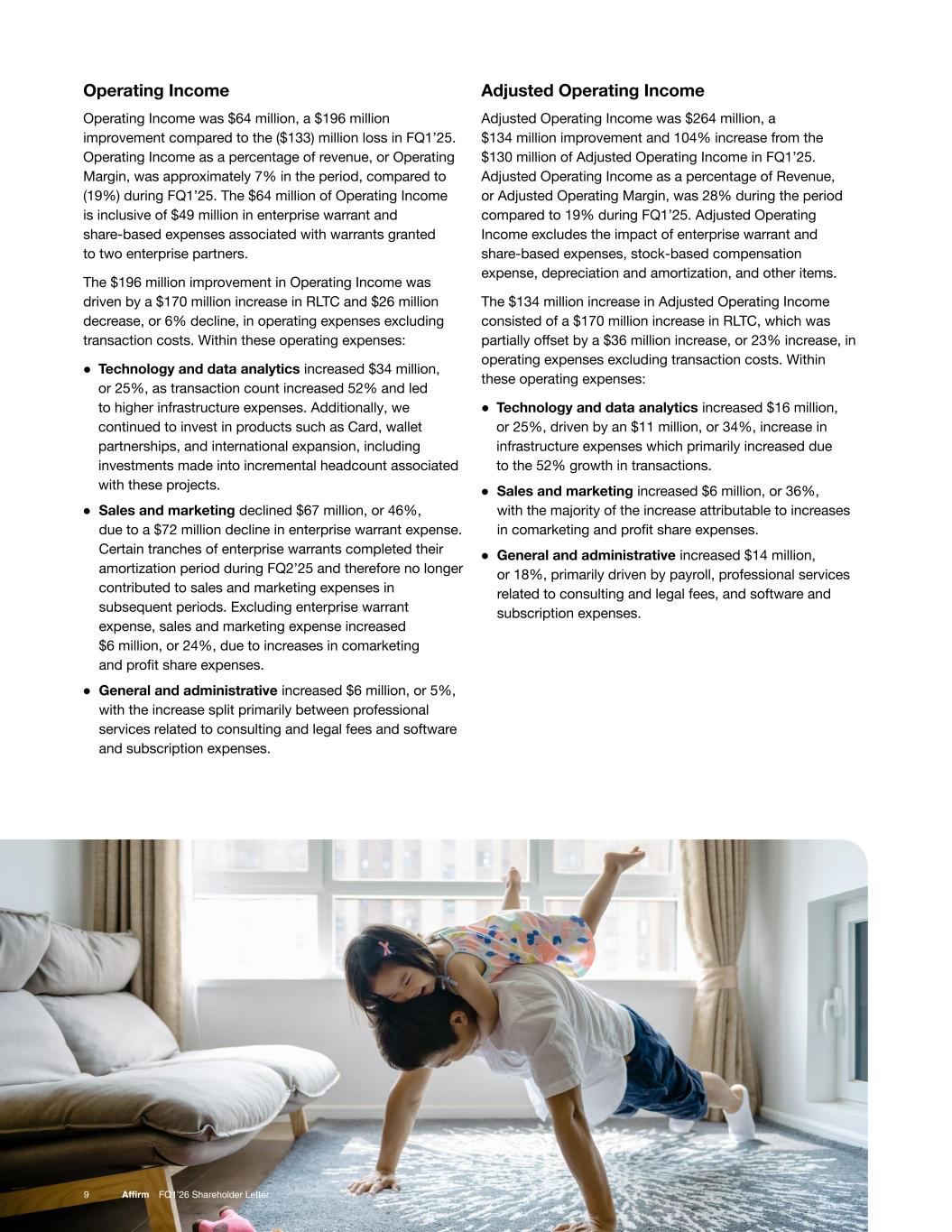
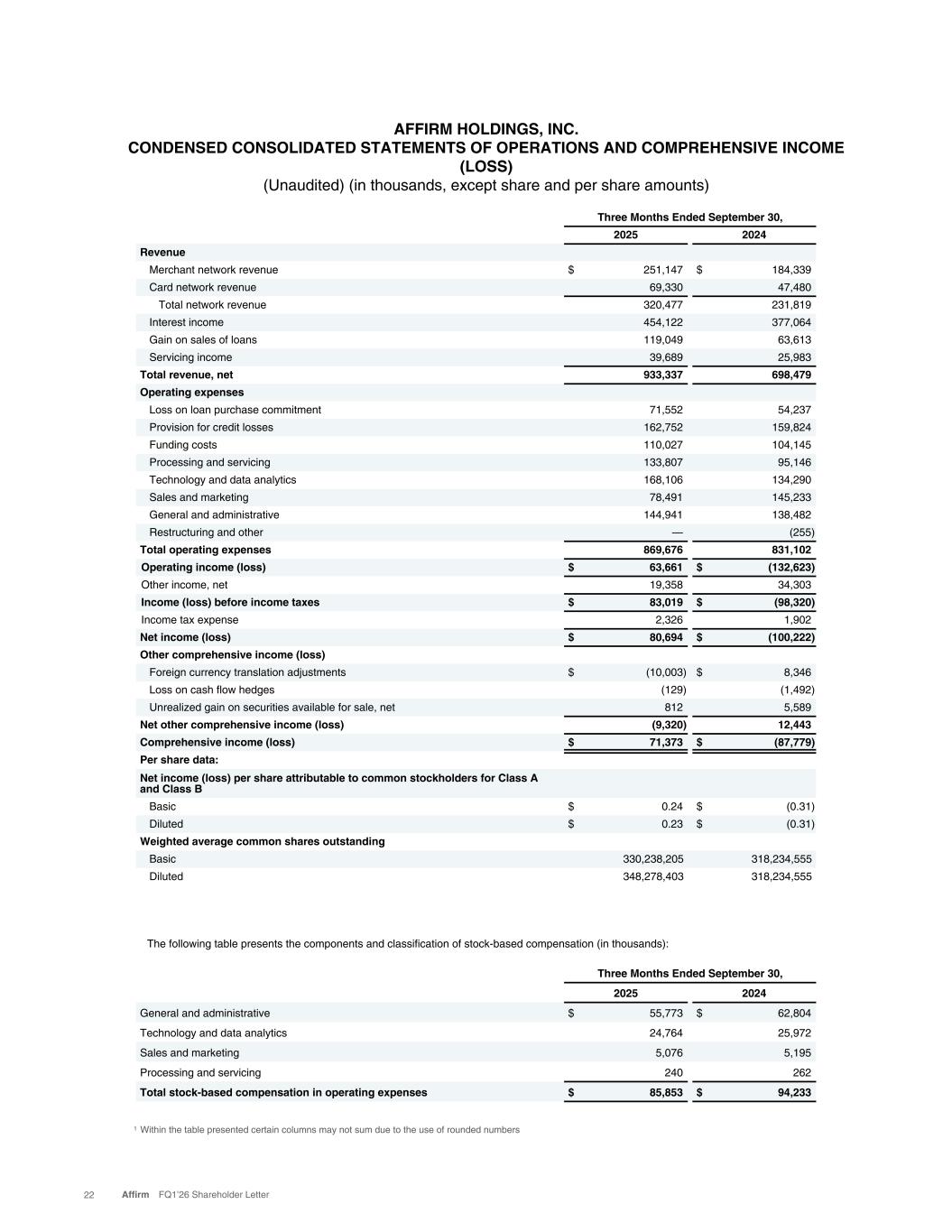
Most of have been asked. I just wanted to ask you, can you maybe talk about your operating margins. The full year guide is now more than 7.5%. Last quarter, you guided the full year is more than 6%. So that's coming up. My question is, where is the additional operating leverage coming from? What are you leaning into there? And then just wanted to ask you on the expenses. Do you mind giving us a feel for what to expect for G&A, sales and marketing, tech and data analytics and how those might look over the remainder of the year? I just want to make sure we have them right in our models.
Speaker 7
Thanks for the question. I mean in terms of where is the operating leverage coming from, really, it's a function of growth. You'll notice in our updated FY '26 outlook, we are taking revenue less transaction cost dollars up. And so those incremental dollars, a good portion of them are flowing down to the operating income line. And really, that's driving the leverage that you're seeing in the updated outlook. It's really not a function of any sort of cost cutting or anything else in the OpEx space. It's really a function of growth, which we think is a really healthy way to grow, and it's been a key driver for us over the last couple of years now as we've driven pretty incredible operating leverage. We typically stop short of giving details around the various OpEx lines individually. We like to just guide to a margin. There can be opportunities that arise for investment over the course of the year. So we typically haven't steered folks towards targets for those line items, and we're not going to start this quarter.
Speaker 15
Got it. Okay. I give it a shot. The related one on your GMV in Q2, the guidance range there, it's $13 billion to $13.3 billion. There's a lot of moving pieces to the business. So just a follow-up to Adam's question, maybe talk a little bit more about the GMV guide and how that might break out in terms of contribution from interest-bearing versus core X versus Pay in X, et cetera, where you're seeing growth the strongest right now as you think about the volumes this quarter? And any further thoughts on the remainder of the year would be great as well.
Speaker 7
Yes. We really, again, haven't gone into those details typically. I would say, obviously, we're talking a lot about leaning into 0% here on this call. We ran the 0% promotional days. So I would expect that 0% monthly installment loans continues to be our fastest-growing loan product. That's been true for a couple of quarters now. And so I think we would expect those trends to continue.
Operator
Our next question comes from Zachary Gunn with FT Partners.
Speaker 16
So I just wanted to ask on the product side. So we've seen some earned wage access companies talk about pushing into BNPL and that's a very logical area given the amount of overlap they see with customers using EWA and BNPL. And just given the focus and traction that you all have with the Affirm Card and these kind of consumer products, is there a world where Affirm could look at EWA as a potential product down the road? Or just curious if that's on the road map or something that's been thought about at all.
I've learned through experience that it's best not to mention specific products during these calls, as it often takes longer than expected. Therefore, I'll refrain from making any pre-announcements. However, I believe we have a strong competitive advantage when it comes to the data and the process of creating lending products. Early wage access can be seen as a type of lending, and it usually takes about 8 days, if I recall correctly. This makes it a somewhat simpler issue when lending without interest, late fees, or other revenue sources aside from merchant discounts over 36 months. You need to be quite confident in your understanding, not to mention having access to capital and effective balance sheet management. This positions us relatively well against that category of competition. I want to emphasize our long-standing mission, which hasn’t changed in 15 years: to create honest financial products that enhance lives. We will continue to explore the development of various financial products throughout our hopefully lengthy existence. So, stay tuned. We will announce some exciting initiatives soon.
Operator
Our next question comes from Joel Riechers with William Blair.
Speaker 17
A patch for the Affirm Card seems to be kind of steadily marching higher. And I was just kind of curious if you could give us some insight around what you're observing in terms of top-of-wallet behavior on the Affirm Card. And if there's any kind of like substitution dynamic that you're seeing versus traditional bank cards? That's my first question.
We're seeing really nice trends in both overall discretionary spend capture as well as a higher starting point for each new cohort. And I'll stop short of giving any specific answers to how we're doing relative to other bank cards. I think we're capturing spend in a rapid enough clip where I'm sure it's coming out of spend elsewhere. As I'm sure you know, it is not our business to push or even entice consumers into more spending. We are capturing the spend that wouldn't have happened because they're not willing to use credit cards and revolve and in some cases, perhaps cannibalizing existing credit card volume, although obviously, we would have to earn or keep with merchants if we were purely responsible for substitution. So I think we're doing really well there. I think the 2 or 3 quarters ago now, I said something along the lines of 10 million active cards, $7,500 per year of discretionary spend is the goal. We are roughly just under 1/3 of the way to the former and on the order of 1/3 to 1/2 of the way to the latter. So we're making great progress from my point of view, but we've got a pretty long way to go. And hopefully, by the time we get to the target number for the first of these 2 metrics, the overall consumer base of Affirm will be meaningfully larger, and so we can just move the goalpost.
Speaker 17
Awesome. And then just as a last question, and just as it relates to the Amazon partnership, and I guess, the Shopify partnership, are you able to quantify like what share of cart looks like today with those partners, just so we kind of have an idea of like what the upward potential looks like for those opportunities going forward?
We cannot provide specific breakdowns of those numbers at this time. However, we believe there is significant potential in both partnerships. They have both contributed positively to our growth, even as the company continues to expand rapidly. We see numerous opportunities for collaboration. It's important to note that the initiation of a partnership isn't an instant transition to volume; there is considerable investment needed for launching and optimizing these programs. This includes introducing new products like Boost.ai and connecting accounts to share user information that enables us to provide tailored solutions. These initiatives help us continue to increase our market share beyond just the benefits of scaling. For both partnerships, we see ample growth opportunities ahead.
Operator
Our next question comes from Reggie Smith with JPMorgan.
Speaker 18
Great quarter, guys. I'm multitasking tonight, so I apologize in advance if this question has been asked. But I was curious, as you guys move into, I guess, kind of different verticals, and you highlighted service titan and I guess, like automotive repair and things like that. As you move into services, how, if any way, does that change your underwriting? So obviously, you're underwriting the consumer, but I would imagine there's some risk related to the actual service provider as well. So I was curious how you guys think about that. Am I off base with that? Or just if there's any changes that need to happen with your underwriting as you consider those factors?
It's a great question. You're thinking about it exactly right. That's actually what makes this business defensible in at least a couple of different dimensions. It is not a guarantee. In fact, it's frequently a guarantee that it's not the case that a model that works for you in a specific type of or set of SKUs will work just as well in another. Part of our defensive moat or I hate the term secret sauce, but this is probably one way to refer to it. We don't just have great models that we build and great data to build them from. We have a really good, very robust process by which we build new models or modify existing ones, and the frequency with which we can ship these models and include new types of data so to incorporate new learnings from each new vertical is very, very quick now. And that's actually quite a difficult thing to reproduce. Even if tomorrow morning, somebody somehow got a hold of a significant amount of data without the process knowledge and the system development we've taken on over the last 15 years, it's very difficult to build these things quickly. And so we feel comfortable entering new verticals in part because we've gotten so good at just rigorously taking on board new data, new kinds of descriptors of merchandise being sold in the case of service, that's not merchandise; it's actually a service, et cetera, incorporating that signal into our models and reverting it back into the underwriting process and just improving returns. So 10 years ago, entering a new vertical would have been a lot more of a, hey, can we figure out how to underwrite as quickly enough? Will it start overwhelming our NACO or our delinquencies. We feel a lot more comfortable lay claim to services or elective medical or auto parts or auto repair because we feel very good about our ability to incorporate new data very quickly into our models, if necessary, break out new ones and bifurcate the underwriting process, et cetera, et cetera. So it's actually if anything, an infrastructure maturity marker that we can point at the fact that we are willing to enter these new businesses fairly quickly.
Speaker 18
Now that's kind of what I expected. Listen, great quarter, and I appreciate the insights as always, guys.
Operator
Our next question comes from Jamie Friedman with Susquehanna International.
Speaker 19
I wanted to ask about the ongoing significant growth in 0% APRs. Is there a way to observe not only where these are being used, such as for travel or larger purchases, but also to understand the characteristics of these customers? For example, were they using the platform before and shifted to this, or are they new users? Additionally, do you have any demographic information on them?
I think we will likely discuss the recent 3-day event we held. I will look into the demographics. The credit quality is generally higher due to a fair amount of self-selection in credit overall. Most participants in this event were existing consumers. We did market it significantly, mainly to our existing users, promoting the new offers available on the app. It's reasonable to assume that the information circulated within our community. I don't want to take away from the team's efforts; they put together a remarkable project that took time to develop. We started considering this over six months ago, possibly closer to nine months. It required a lot of innovation, especially in how we communicated the benefits to merchants. Many of our 0% offers are funded by merchants, and we aim for all of them to be merchant-funded. A lot of elements came together for this initiative to succeed. It went very well, and we plan to return to it in an even more impactful way. While I won't specify when, another initiative is on the way, and we will likely discuss our insights during the next earnings call.
Speaker 19
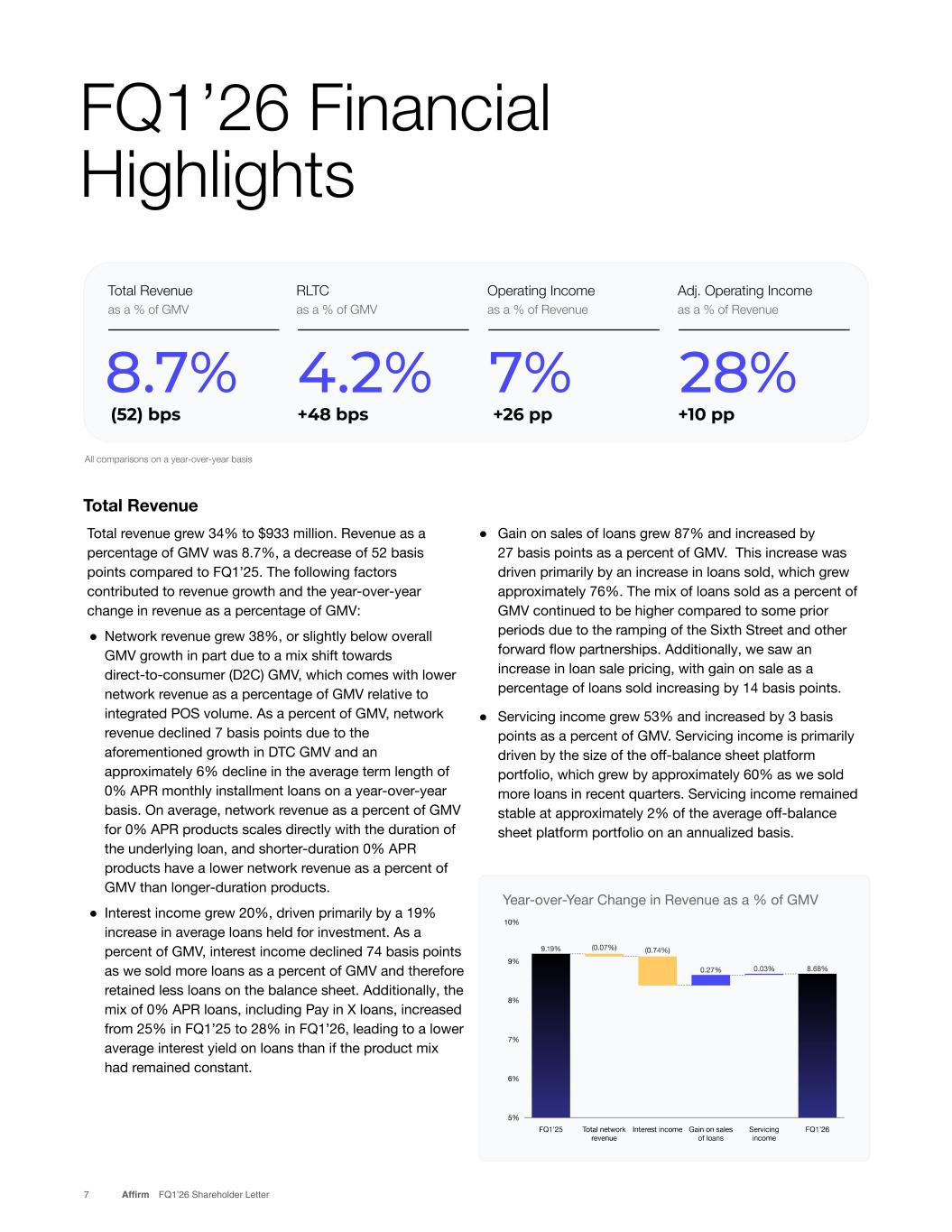
Okay. If I could ask about the RLTC rising 48 basis points to 4.2%. I know this was discussed earlier, and your goal is to reinvest that. However, some of it, according to the shareholder letter, was due to improved provision performance. So my question is, do you have any insight on when you'll return to your targeted range of 3% to 4%? That would be helpful.
Speaker 7
Yes. I mean we are maintaining our 4% target for fiscal '26, right? So I think that's an important marker. We tend to look at the business in longer time horizons than just these 90-day quarters that we all report on. And it's also important to remember that when we talk about provision being favorable to revenue less transaction cost, that's as a percentage of GMV. And so upstream of that, there's also a point around on-balance sheet versus off-balance sheet funding mix. And so changes there can have impacts in either direction, frankly, in terms of RLTC in a given quarter.
Operator
Our next question comes from Kyle Joseph with Stephens.
Speaker 20
Asking a little bit this afternoon, so apologies if you covered it. But just kind of looking for an update on the competitive environment kind of by product and seeing if you're seeing any sort of benefits from capital markets getting a little more.
We're mainly focused on our own product and initiatives, so there's not much to report regarding our competitors. Being live in the U.K. with Shopify and growing that successfully is likely causing some challenges for our competitors, but having multiple vendors in each market is beneficial for ensuring the best products succeed. Our performance metrics demonstrate that we are growing and maintaining profitability, which indicates we are executing well. Regarding capital markets, I think Michael or Rob can provide more detail, but our pricing for the deal was quite favorable.
Yes. I mean the capital markets probably continue to be very constructive for our asset. I think there was a lot of activity in the ABS market over the past 3 or 4 months, and we were really pleased with just the engagement that so many of our investors gave us and the flight to quality that we're seeing, where you've got a lot of investors dealing with a lot of headlines and a lot of going on. They want to focus in on names that they can trust to deliver the kind of results that we do. And that's why we get to partner with the blue-chip investors on what we consider to be best-in-class execution.
Operator
This now concludes our question-and-answer session. I would like to turn the floor back over to Zane Keller for closing comments.
Well, thank you, everyone, for your time today. We appreciate all the questions, and we'll speak to you again next quarter. Talk to you then.
Operator
Ladies and gentlemen, thank you for your participation. This does conclude today's teleconference. You may disconnect your lines, and have a wonderful day.