Operator
Greetings, and welcome to the Alkermes Second Quarter 2025 Financial Results Conference Call. My name is Rob, and I'll be your operator for today's call. Please note that this conference is being recorded. I'll now turn the call over to Sandra Coombs, Senior Vice President of Investor Relations and Corporate Affairs. Sandy, you may now begin.
Good morning. Welcome to the Alkermes plc conference call to discuss our financial results and business update for the quarter ended June 30, 2025. With me today are Richard Pops, our CEO; and Blair Jackson, our Chief Operating Officer; Todd Nichols, our Chief Commercial Officer; Dr. Craig Hopkinson, our Chief Medical Officer; and Dr. Markus Jans, Vice President of Clinical Development. A slide presentation along with our press release, related financial tables and reconciliations of the GAAP to non-GAAP financial measures that we'll discuss today are available on the Investors section of alkermes.com. We believe the non-GAAP financial results in conjunction with the GAAP results are useful in understanding the ongoing economics of our business. Our discussions during this conference call will include forward-looking statements. Actual results could differ materially from these forward-looking statements. Please see Slide 2 of the accompanying presentation, our press release issued this morning, and our most recent annual and quarterly reports filed with the SEC for important risk factors that could cause our actual results to differ materially from those expressed or implied in the forward-looking statements. We undertake no obligation to update or revise the information provided on this call or in the accompanying presentation as a result of new information or future results or developments. After our prepared remarks, we'll open the call for Q&A. And now I'll turn the call over to Richard for some opening remarks.
Thank you, Sandy, and good morning, everyone. We had a very successful second quarter. Our commercial and financial performance were strong. Last week, we took another major step forward in our pursuit of a medicine that has the potential to transform the treatment of narcolepsy. Now midway through 2025, we're on track to deliver on our key objectives across the business. In commercial, we had planned for strong sequential growth, and we exceeded our expectations in the second quarter. This result was driven by excellent operational execution by a seasoned commercial team. With sustained profitability now, no debt, and more than $1 billion of cash, we're in a strong financial position with significant optionality. It's clear to us now that the future growth of the business can be accelerated by the development candidates now in our pipeline. Last week, we reported positive top-line results from Vibrance 1. This was our first Phase II study of alixorexton, formerly known as ALK 2680, in narcolepsy type 1. Vibrance 1 was successful in a critical study in the development of our orexin portfolio. Obviously, the efficacy and safety data yield significant insights, but also provide the operational foundation for the Phase III program. Now if you think back a year ago, we had data from our Phase Ib study for alixorexton that suggested robust efficacy and a generally well-tolerated profile based on single-day exposures across a range of doses in small cohorts of patients with narcolepsy type 1, narcolepsy Type 2, and idiopathic hypersomnia. These data were critical in defining the initial clinical profile and dosing range for alixorexton. This was step 1. Step 2 is to confirm and extend these observations in multi-week, multi-dose Phase II outpatient studies. Vibrance 1 in patients with narcolepsy type 1 is the first of these studies. Now we have randomized placebo-controlled 6-week multi-dose data in hand from more than 90 patients with NT1. We've now answered key questions in Phase II with rigorous assays across larger cohorts of NT1 patients over a longer period of time. These data and insights will be fundamental in preparation for Phase III. So here are the key findings from the study at the top line. First, the results demonstrated a significant effect on wakefulness and a generally well-tolerated profile. This was our pretest hypothesis, and the data were in line with our expectations. Second, the study provided entirely new and exciting findings relating to fatigue and cognition. These are among the most disruptive symptoms that patients with narcolepsy experience, and they're distinct from excessive daytime sleepiness. In this study, alixorexton showed robust and clear improvements on validated patient-reported measures. Our view is that demonstrating effects in these domains establishes a new standard in the development of orexin 2 receptor agonists in narcolepsy. These emerging data also further support our hypothesis that the orexin system can be harnessed to address other neuropsychiatric and neurological conditions. We have two additional orexin candidates that we plan to develop for conditions beyond central disorders of hypersomnias. In Q2, we initiated first-in-human studies for one of these candidates, ALKS 4510, and we plan to advance the second candidate, ALKS 7290, into the clinic later this year. So for today, Craig and Markus will take you through the top line results of Vibrance 1 with significantly more detailed data to be presented at the upcoming World Sleep Meeting in September. But first, Blair and Todd will review the financial and commercial performance of the business for the second quarter. And with that, I'll hand the call over to Blair.
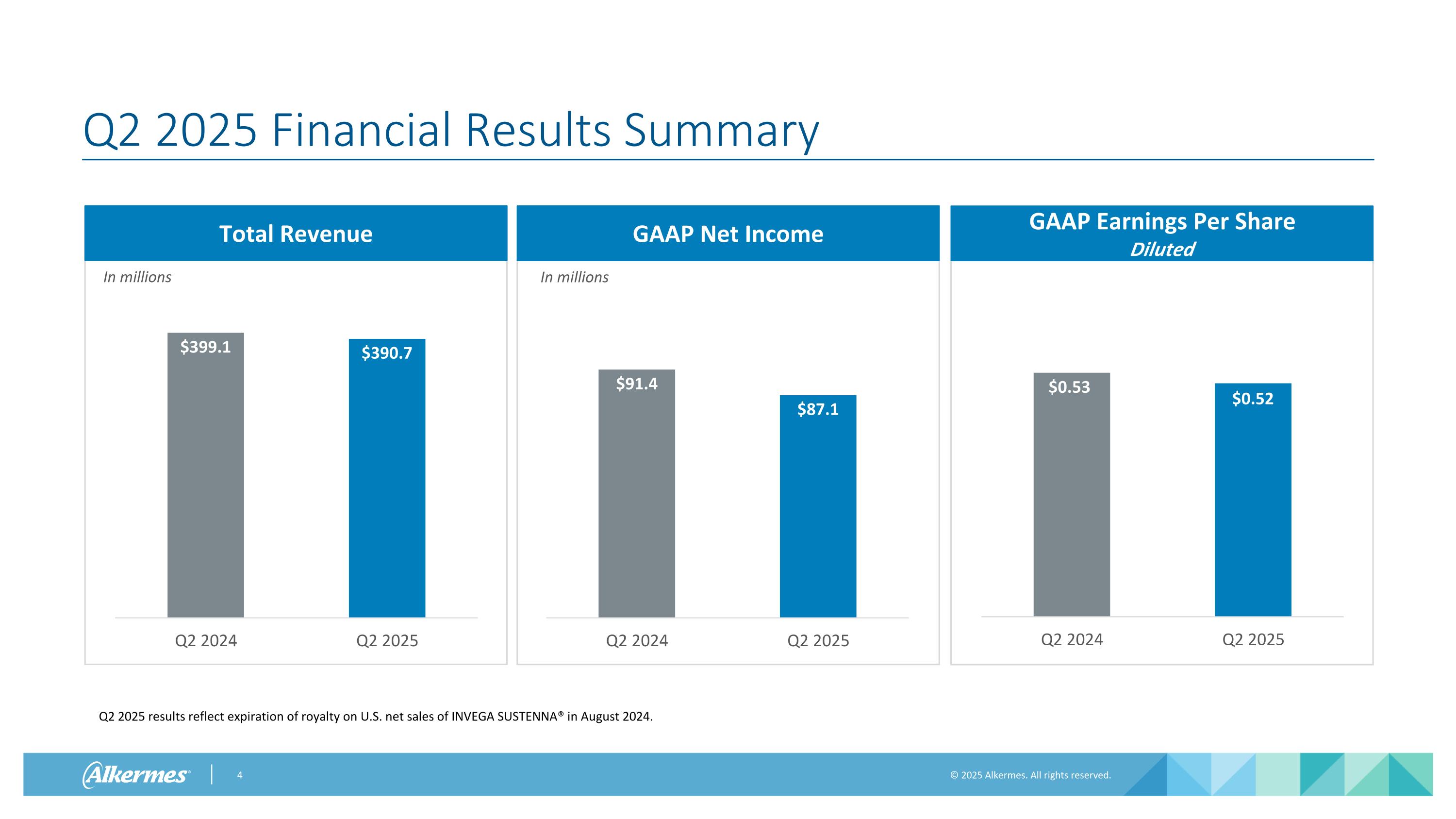
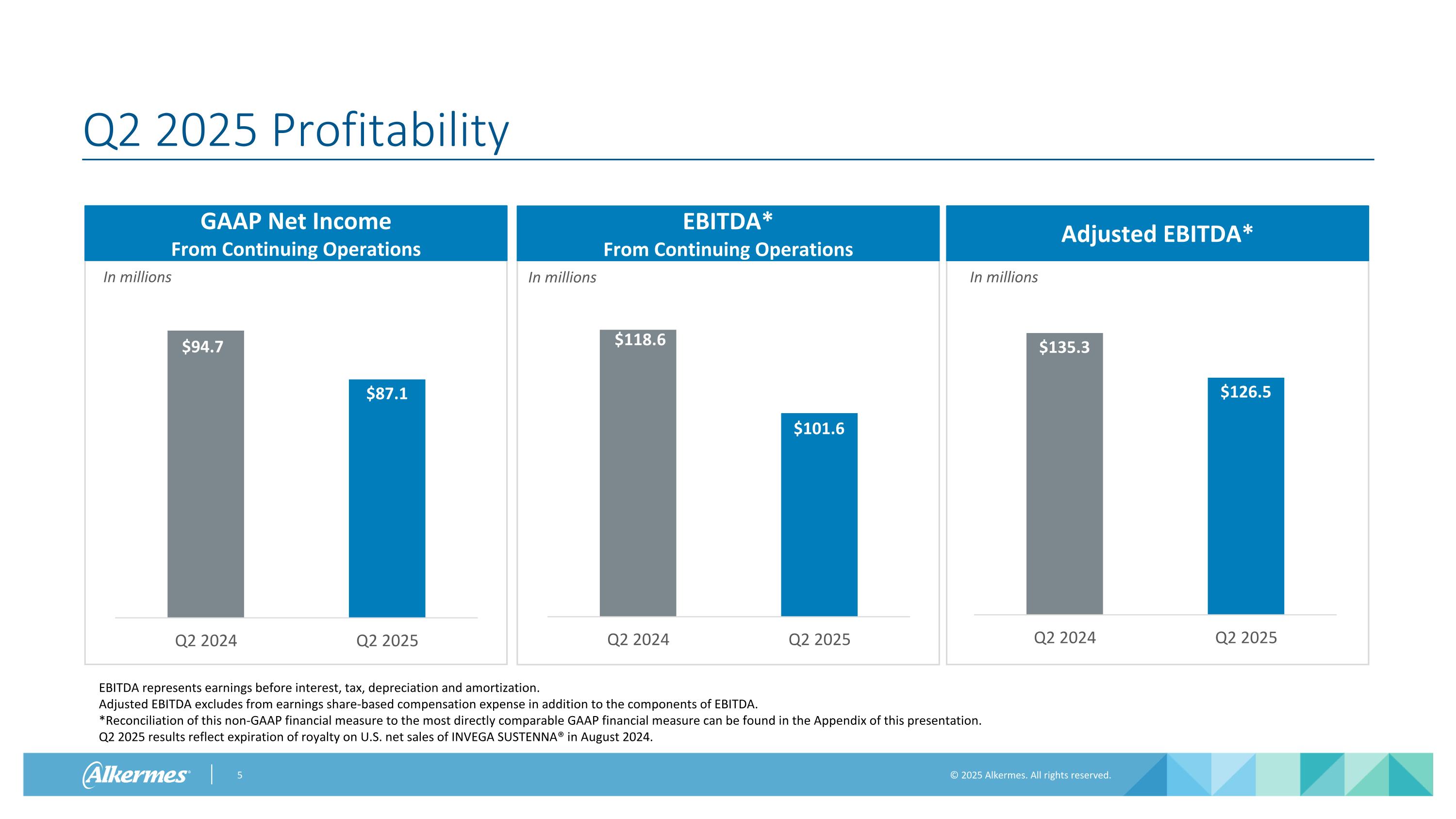
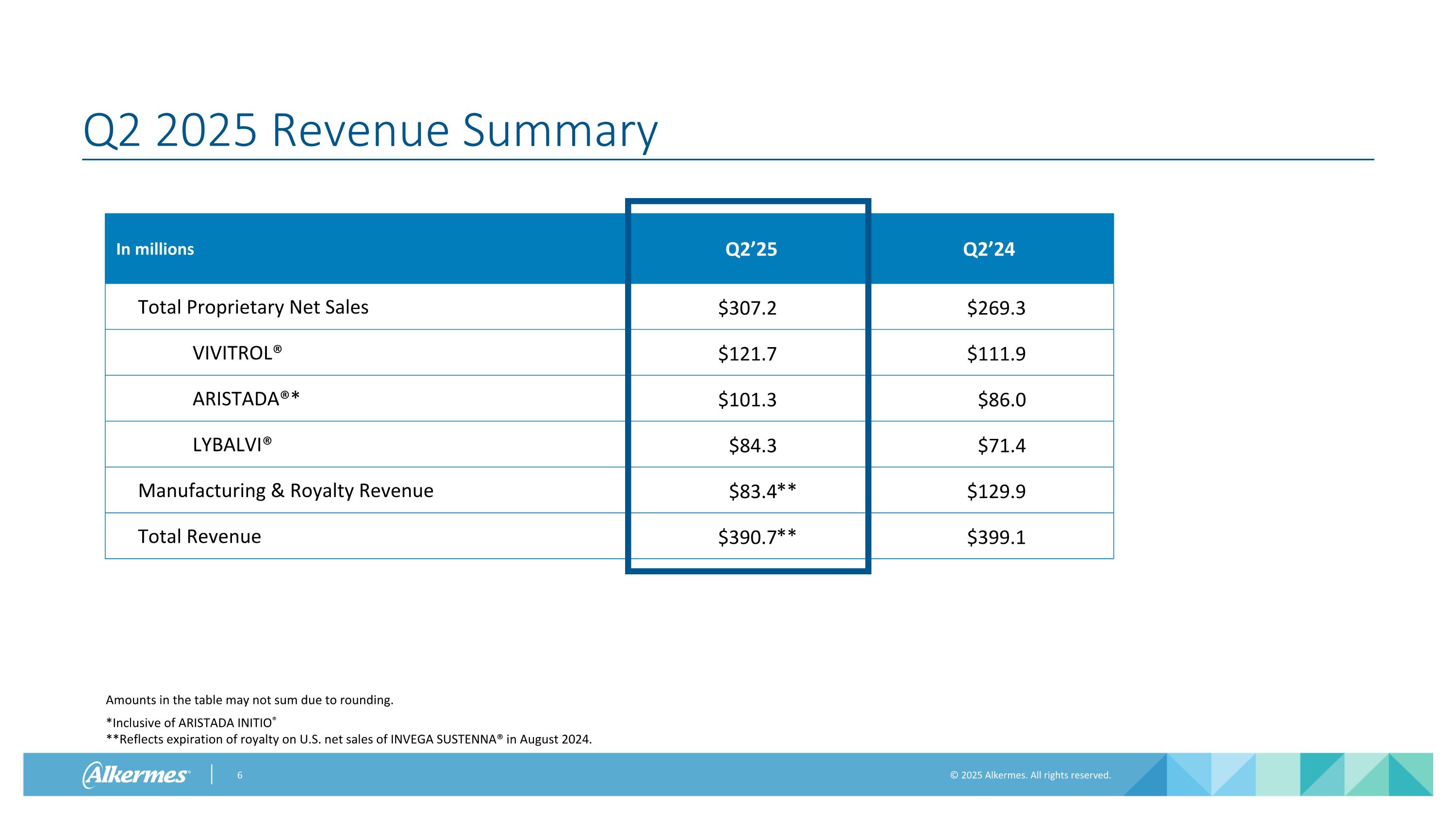
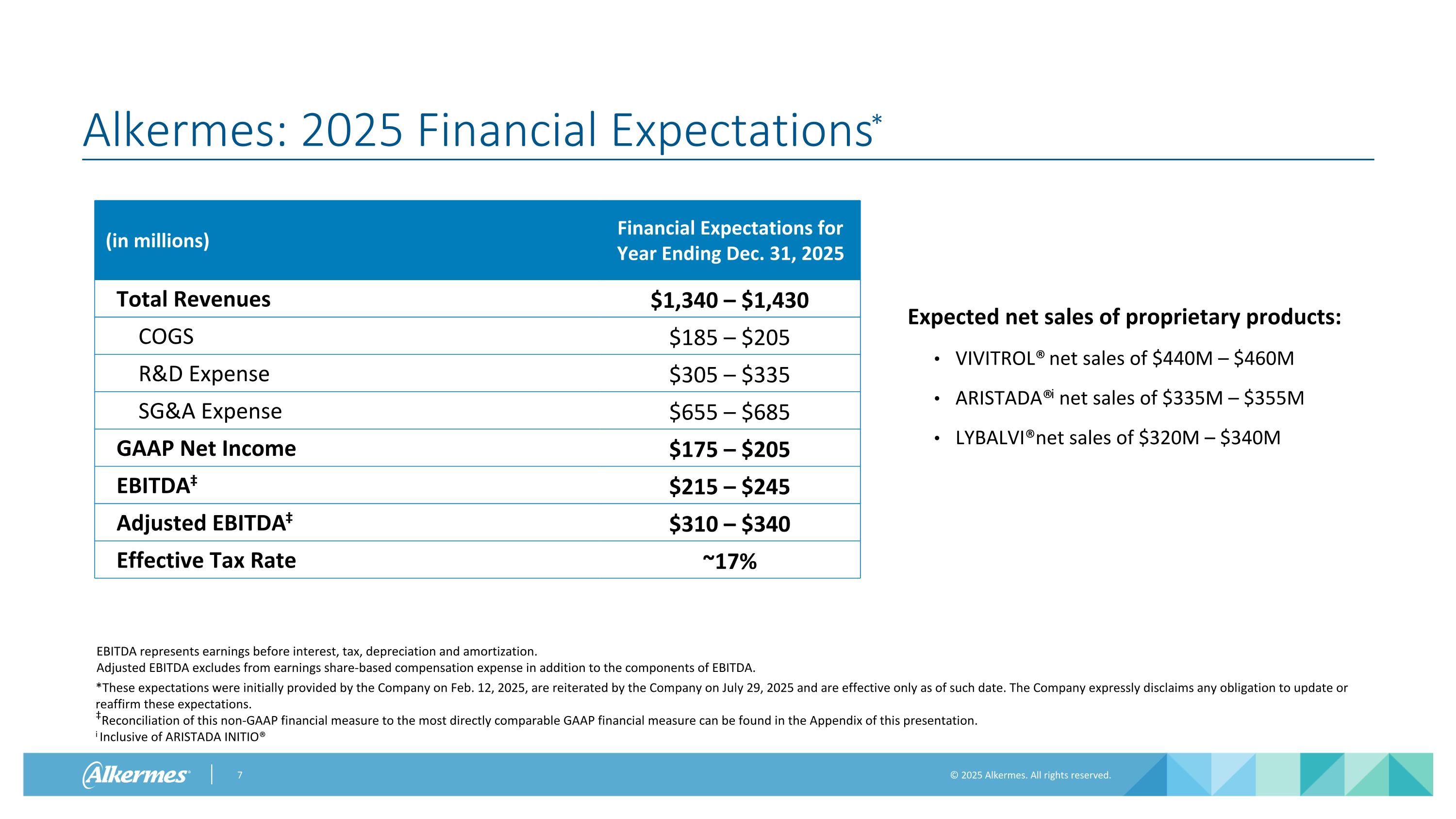
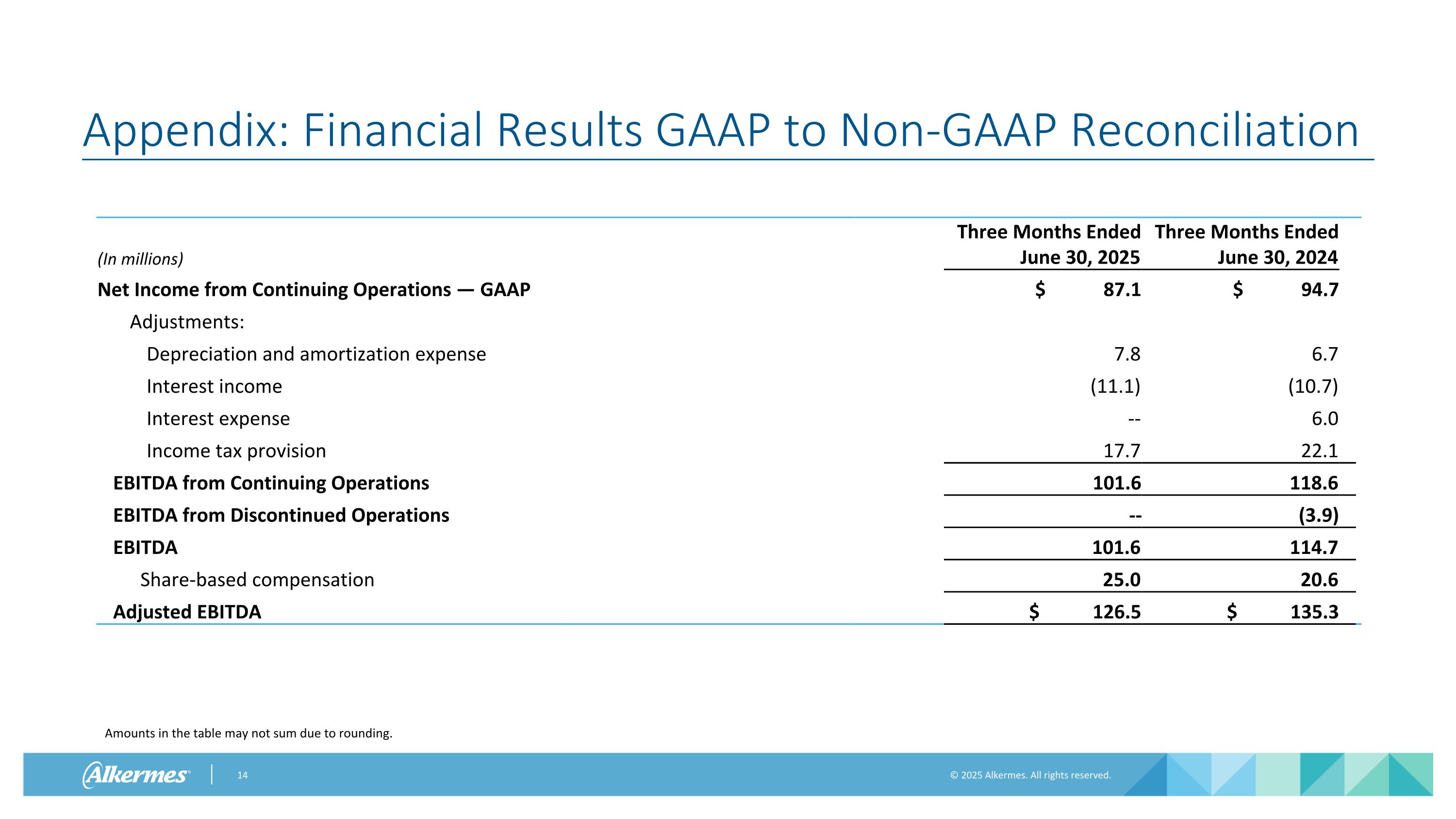
Thank you, Rich. Our second quarter financial results were strong and reflected solid commercial and operational execution. We had planned for accelerated growth from the first quarter, and we exceeded our expectations. Financially, the year is progressing nicely, and we remain well positioned to achieve our financial guidance for the full year, which we reiterated this morning. For the second quarter, we generated total revenues of $390.7 million. For our portfolio of proprietary products, we generated net sales of $307.2 million, reflecting 14% year-over-year growth. These results were driven by strong underlying demand, which Todd will address in his remarks, and gross to net favorability primarily related to Medicaid utilization rates and certain other credits during the quarter. These factors drove a one-time gross to net benefit of approximately $9 million for VIVITROL and approximately $11 million for ARISTADA. Taken together, these gross to net dynamics resulted in a proprietary product revenue tailwind of approximately $20 million in Q2. As we move into the third quarter, we expect Q3 net sales from this portfolio in the range of $280 million to $300 million. Manufacturing and royalty revenues were $83.4 million for the second quarter, including revenues of $39.4 million from VUMERITY and $30.3 million from the long-acting INVEGA products. Turning to expenses. Cost of goods sold were $49.5 million, which compared favorably to $61.5 million for Q2 last year, primarily reflecting efficiencies following the sale of our athalon-based manufacturing business last year. R&D expenses were $77.4 million, compared to $59.6 million for Q2 last year, reflecting investments in the vibrant Phase II studies of alixorexton across narcolepsy and idiopathic hypersomnia. We expect R&D expense to step up slightly in the second half of the year as we complete our Phase II studies in narcolepsy and continue to build momentum in our Phase II study in idiopathic hypersomnia. SG&A expenses were $170.8 million compared to $168.1 million for Q2 last year. For trending purposes, we expect SG&A expense to be fairly consistent in Q3 and a modest decrease in the fourth quarter of the year. This performance generated strong profitability of GAAP net income of $87.1 million, EBITDA of $101.6 million, and adjusted EBITDA of $126.5 million in the second quarter. Turning to our balance sheet. We ended the quarter in a strong financial position with $1.05 billion in cash and total investments. We continue to have $200 million of remaining share repurchase authorization. And going forward, we may opportunistically repurchase shares depending on market conditions and the capital needs of the business. As we look ahead, based on our performance during the first half of the year and the expected contribution from our expanded sales efforts, we are on track to deliver record revenues from our portfolio of proprietary products in 2025. As a result of this strong performance, we now anticipate finishing the year towards the higher end of our previously issued financial expectations in terms of both revenue and profitability. With that, I'll turn the call to Todd for a review of the proprietary portfolio.
Speaker 4
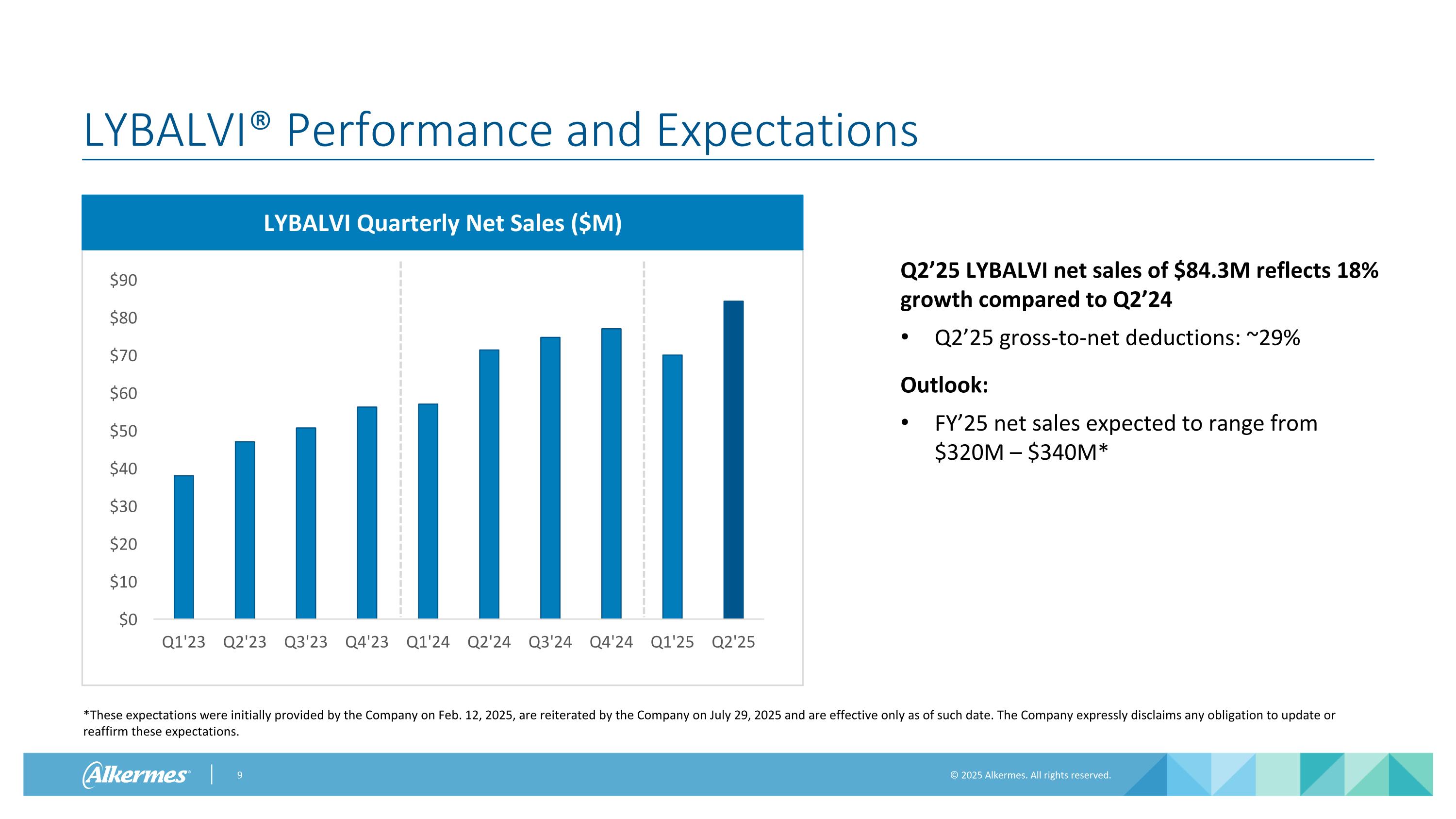
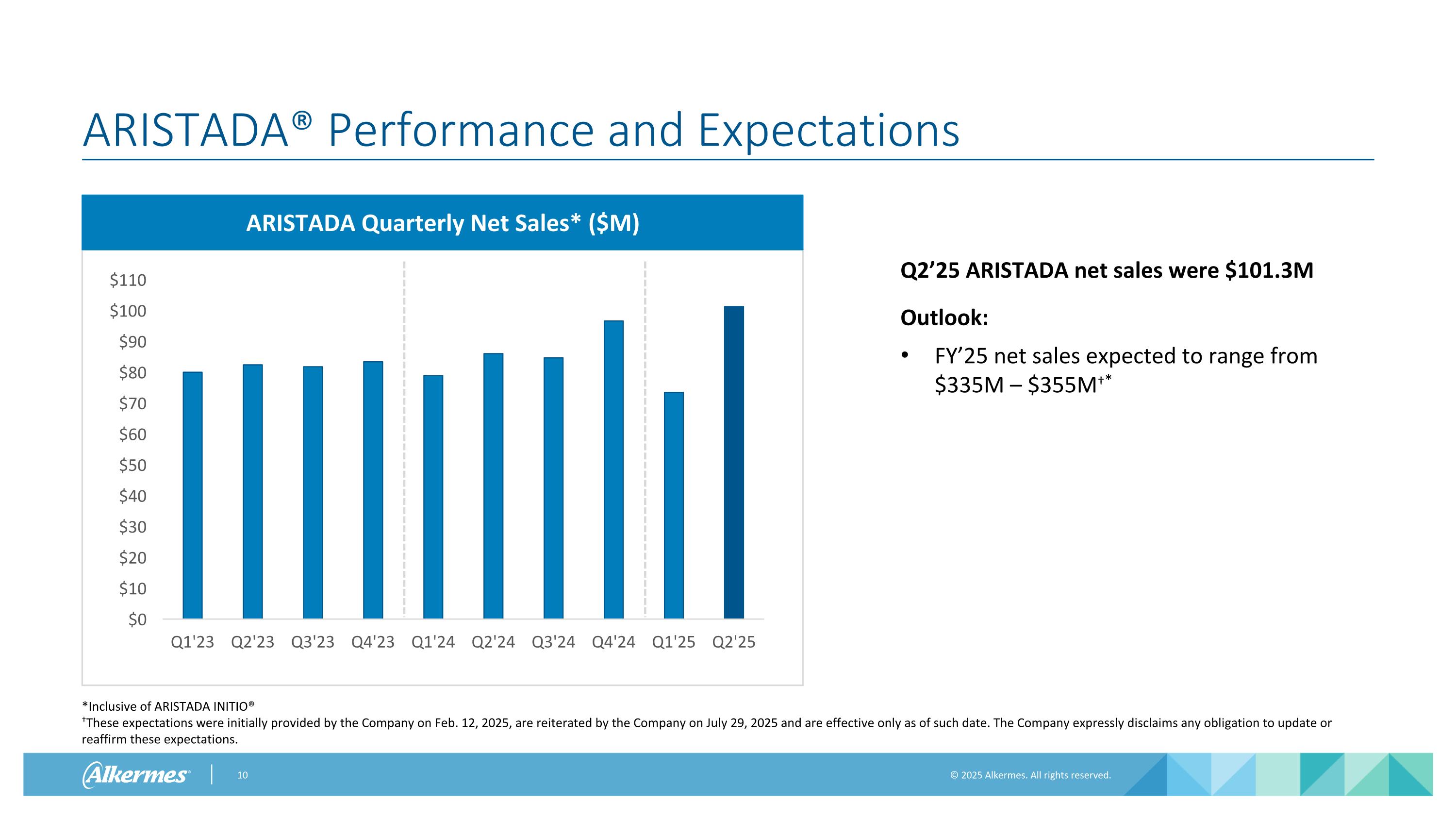
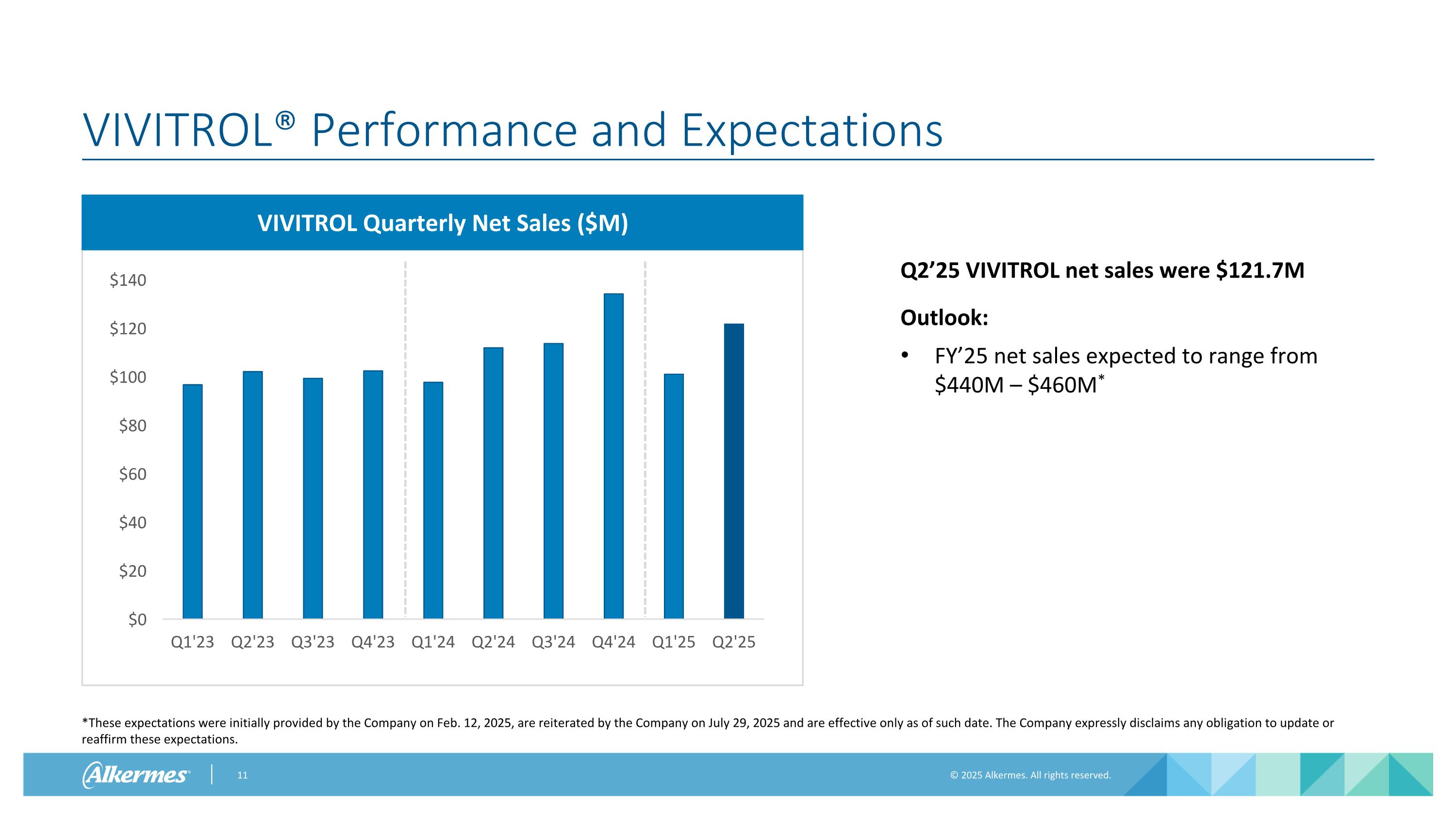
Thank you, Blair, and good morning, everyone. In the second quarter, we recorded net sales from our proprietary product portfolio of $307.2 million, reflecting 14% year-over-year growth. We drove strong end-market demand across VIVITROL, ARISTADA, and LYBALVI by executing targeted growth initiatives and delivered strong sequential growth from Q1 to Q2. Due to this demand growth and the gross to net favorability during the quarter that Blair outlined, our second quarter proprietary net sales of $307.2 million exceeded the expectations that we provided in May of net sales in the range of $260 million to $280 million. Starting with VIVITROL. Net sales in the second quarter were $121.7 million. VIVITROL performance continues to be driven by growth in the alcohol dependence indication market and our ability to capitalize on highly localized market dynamics in certain states and payer systems. Looking ahead, we continue to expect VIVITROL net sales for the full year 2025 in the range of $440 million to $460 million. Turning to our psychiatry franchise. The expansion of our psychiatry sales force completed earlier this year was an important element of our strategy to maintain a competitive share of voice for LYBALVI and reaccelerate growth for ARISTADA. The early returns from that expansion are encouraging, and we are pleased with our progress to date. For the ARISTADA product family, in the second quarter, net sales were $101.3 million. Leading indicators related to underlying demand were encouraging with increased prescriber breadth and strong new-to-brand prescriptions during the quarter. For the full year 2025, we continue to expect ARISTADA net sales in the range of $335 million to $355 million. Turning to LYBALVI. Net sales grew 18% year-over-year to $84.3 million. Underlying TRx growth was 22% year-over-year, driven by new patient starts and prescriber breadth. Gross to net adjustments were approximately 29% in the second quarter. We now expect gross to net adjustments for the full year will be approximately 30%. For the full year, we continue to expect LYBALVI net sales in the range of $320 million to $340 million. Across the portfolio, we are pleased with our second quarter performance and are focused on maintaining this momentum and driving demand in the second half of the year. With that, I will pass the call to Craig.
Speaker 5
Thank you, Todd. Last week, we announced positive top-line results from the Vibrance 1 Phase II study of alixorexton in patients with narcolepsy type 1. The data further characterize the clinical profile of alixorexton and demonstrated that once-daily alixorexton normalized wakefulness and excessive daytime sleepiness scores in highly symptomatic patients with narcolepsy type 1 and with a generally well-tolerated profile across all doses tested. These top-line results represent the first of a series of data sets that will emerge from the alixorexton Phase II program. The data are extensive and break new ground. We are looking forward to presenting the primary and key secondary endpoints related to wakefulness and cataplexy and the safety and tolerability profile observed in the 6-week double-blind period of the study in an oral presentation at the upcoming World Sleep meeting at the beginning of September. In addition to the top-line results, we'll also share data relating to the exploratory patient-reported outcomes collected in Vibrance 1, including the fatigue and cognition data outlined in our top-line press release last week. These data are truly exciting, not only in terms of the clinical profile for alixorexton, but also as we plan for additional clinical studies across our portfolio of investigational orexin 2 receptor agonists in disorders where impaired cognitive function and fatigue are key clinical features. Following World Sleep, we expect top-line results from Vibrance 2, our Phase II study in narcolepsy Type 2 in the fall. Enrollment in Vibrance 2 is going well, and we expect to complete that soon. Top-line data from Vibrance 3, our Phase II study in idiopathic hypersomnia, are expected to follow in mid-2026. Each of these studies provides a significant amount of data to analyze and will deepen our understanding of alixorexton's potential utility across central disorders of hypersomnia and its differentiating features in the competitive landscape. In parallel, we are preparing for key regulatory interactions and for the global Phase III program in narcolepsy that we plan to initiate as rapidly as possible following the top-line data from the narcolepsy Type 2 study. Alkermes is at the forefront of development in this exciting potential therapeutic category and the positive Vibrance 1 data represent an important stride forward for the alixorexton development program and our broader portfolio of orexin 2 receptor agonists. With that, I'd like to introduce Dr. Markus Jans to review the top-line data from the Vibrance 1 study. Markus is Vice President of Clinical Development and the clinical program lead for alixorexton here at Alkermes.
Speaker 6
Vibrance 1 is a 6-week, double-blind, placebo-controlled, parallel design study evaluating three different doses of alixorexton in patients with narcolepsy type 1 or NT1. The study enrolled a total of 92 patients, most of whom had moderate to severe disease at baseline. Patients were randomized to 1 of 3 once-daily dose levels of alixorexton, 4, 6 or 8 milligrams or placebo. The primary endpoint of Vibrance 1 was the change from baseline compared to placebo in the maintenance of wakefulness test or MWT. MWT is a standardized quantitative measure of how long patients can stay awake during a 40-minute test period when they're in an environment conducive to sleep. These tests are conducted at 2, 4, 6 and 8 hours post-dose. The mean score is calculated by averaging the results of these four tests. While the MWT is less frequently used in real-world clinical settings, it is an important objective endpoint commonly used for regulatory purposes. In Vibrance 1, alixorexton showed dose-dependent statistically significant and clinically meaningful increases in mean sleep latency at all doses tested at week 6. Importantly, all dose groups achieved normative wakefulness, applying the standard convention of a mean sleep latency on the MWT of 20 minutes or more. The study also evaluated key secondary endpoints including change from baseline on the Epworth Sleepiness Scale and weekly cataplexy rates compared to placebo. First, the Epworth Sleepiness Scale, or ESS, unlike the MWT, this scale is widely used in the clinic as a diagnostic tool to assess for excessive daytime sleepiness. The ESS is a patient-reported symptom questionnaire asking about the patient's likelihood of falling asleep across eight different scenarios such as watching TV, riding in a car, or reading a book over the last week. Higher scores indicate a greater likelihood of falling asleep, with a score of 10 and below considered normal. The ESS is useful in that the 7-day look-back period provides a holistic view of patient sleepiness beyond the 8-hour MWT test period. Here, across all doses tested, alixorexton demonstrated statistically significant and clinically meaningful improvement at week 6, with each dose group achieving normative levels. In addition to excessive daytime sleepiness, NT1 patients can experience a sudden involuntary loss of muscle tone called cataplexy. Vibrance 1 evaluated mean weekly cataplexy rates. To measure this endpoint, patients are asked to keep diaries of cataplexy events that they experience. The average number of weekly events across weeks 5 and 6 in the alixorexton-treated subjects were then compared to those experienced by the placebo group. Across all doses tested, alixorexton showed numerical and clinically meaningful improvements in cataplexy compared with placebo and met the threshold for statistical significance at the 6-milligram dose. We are confident in the effects of alixorexton on cataplexy and believe there are learnings here related to our implementation of this assay that we will apply in Phase III to reduce variability and the impact of outliers. We look forward to sharing additional analyses of these data at World Sleep. So while excessive daytime sleepiness is the hallmark symptom of narcolepsy, many patients also experience other symptoms, such as fatigue and cognitive dysfunction. This can result in significant morbidity as well as impaired quality of life. Our hypothesis has been, given the nature of the neurocircuitry affected, that alixorexton could have an impact on many of the aspects of this disease that affect patients' day-to-day functioning. The British Columbia cognitive complaints inventory or BCCI and the promised fatigue scales capture two of these common and often debilitating effects of narcolepsy. The BCCI evaluates concentration, memory, expressing thoughts, word finding, slow thinking, and difficulty solving problems. The promised fatigue measures patients' frequency as well as intensity of fatigue along with its impact on physical, mental, and social activities. It's important to note here that fatigue is a symptom that patients experience, which is distinct from sleepiness. While sleepiness is a general feeling of being tired and wanting to sleep, fatigue is a broader feeling of exhaustion that can be long-lasting and may not be resolved by sleep. We also looked at the narcolepsy severity scale. The NSS captures a holistic assessment of disease by evaluating five key narcolepsy symptoms: excessive daytime sleepiness, cataplexy, hallucinations, sleep paralysis, and disturbed nighttime sleep. On each of these exploratory patient-reported outcome scales, the BCCCI, the Promise fatigue, and the NSS, alixorexton demonstrated clinically meaningful improvements from baseline compared to placebo that were statistically significant. Of course, the p-values here are nominal due to the exploratory nature of these endpoints. So from a clinical perspective, these results are compelling due to the robustness and particularly the consistency across all doses of alixorexton, as well as across various complementary assays. This is the first time that we've seen data from the orexin class on these fatigue and cognition scales. We believe this differentiates alixorexton from other development programs and builds upon the evidence base that orexin 2 receptor agonists with appropriate pharmaceutical properties could have broad potential utility across a range of neurological or neuropsychiatric disorders. And now I'll turn to safety and tolerability. Overall, alixorexton was generally well-tolerated in this study. The majority of the treatment-emergent adverse events were mild to moderate in severity, and no treatment-emergent serious adverse events were seen. The TEAEs that did occur were generally consistent with the events we observed across the Phase I studies in healthy volunteers and in subjects with NT1, NT2, and IH. Among the many clinical safety assessments we conducted in the study, two of particular interest are hepatic labs and ophthalmic exams. Importantly, there were no treatment-emergent safety signals seen in these assessments. So overall, we are very pleased with the safety and efficacy profile thus far, and we look forward to presenting these data sets at World Sleep. I'll hand it back to you, Rich.
Well done. Thank you, Marcus. So that's a summary of the top-line findings. There's a lot more to come, and you'll begin to see it in a few weeks at World Sleep. These data in NT1 represent a meaningful step forward for alixorexton development program, and they provide a substantial new data set that significantly expands our understanding of orexin biology. Not just relevant in narcolepsy, but its potential across a broad range of neuropsychiatric and neurological disorders. We're now moving forward with confidence and a sense of urgency as we prepare for the initiation of our registrational program in narcolepsy. With clear findings now relating to cognition and fatigue, adding to what we've seen for excessive daytime sleepiness, we now have further data supporting development of additional orexin candidates in other disease states beyond sleep disorders. As you've heard throughout this call, the business is in a strong position. Our commercial team is on track to deliver proprietary product net sales in excess of $1 billion and robust profitability in 2025. Our balance sheet is strong and provides strategic optionality with more than $1 billion in cash. Our pipeline products are advancing. Alixorexton is the first major potential commercial opportunity to emerge from our orexin portfolio, but we also believe that sleep disorders are just the beginning for this exciting new therapeutic category. So thank you for your patience. With that, I'll turn the call back to Sandy to run the Q&A.
Great. Thanks, Rich. Rob will now open the call for Q&A, please.
Operator
Thank you, Sandy. We will now begin the question-and-answer session. Our first question today comes from Paul Matteis with Stifel.
Speaker 7
Congratulations on the progress made. I don't want to preempt the World Sleep presentation by asking a specific data question, but I want to address the focus on visual adverse events with the orexin program. First, do you believe the emphasis on visual issues is justified? Are we correctly assessing their clinical significance? Secondly, how would you differentiate between a benign visual adverse event signal that has little regulatory or commercial impact and one that is more serious and could necessitate additional studies or lead to restrictions on a drug's label?
Paul, let me start and then I'll hand it over to the experts, but I can just tell you, in my experience dealing both with clinicians and investigators and patient groups and dealing with Wall Street. The focus is almost entirely on the Wall Street side on the visual AEs. It’s an important contributor that we made in this particular study because, as I've said before, there was a reasonable scientific medical question at the beginning of this program about whether orexin 2 receptor agonists can have a direct effect on the eye. And so with this rigorous baseline sound examination at baseline that 6 weeks later having more than 90 patients' worth of data to establish now that we saw no changes was an important step forward in that. But I think from a clinical perspective, I'll let the team comment on that and what their experience has been. However, we won't provide any more specific AE data on this call other than what's in the press release, but I think they can give you some qualitative sense.
Speaker 8
Yes. Exactly as Rich pointed out, we're not providing additional AE data. But I think in general, we do feel that based on some of our discussions that mild adverse events that do not interfere with patients' daily activity are not likely to be overly concerning for both physicians and their patients.
Speaker 5
Yes. And maybe just to add to that. We had a Data Safety Monitoring Board in place overseeing all safety from the Vibrance program, and they've met a number of times and given us the green light to proceed. In addition to that, as Richard has pointed out, the ophthalmologic exams were normal. We established baseline. So that gives us some confidence there as well. And then, sort of directionally, as we've said in our disclosure, the adverse event profile is in line with what we saw across the Phase I healthy volunteer and patient cohorts from that Phase I program.
Paul, let me just add, because it might anticipate some other questions that we're going to get. Just as a matter of fact, the safety database is actually not even closed until probably mid-August because recall, we have a 7-week extension that follows the 6-week double-blind. So actually, we couldn't populate data tables with specific numbers until that database is locked. So part of the reason for the level of disclosure at the top line was simply to characterize accurately what we found in the 6-week double-blind period. We'll actually have very specific data for you by the time we come into World Sleep in September.
Speaker 9
Thanks so much for the question. This is Anna Sajan for Akash. So in Phase II, it looked like TAK-861 may have left some efficacy on the table in MWT versus 994. How confident are you that 2680 may be able to fully explore that exposure response range between 4 milligrams and 8 milligrams in NT1 and differentiate on efficacy versus Takeda?
Yes. We've always thought that a range of doses would be a competitive advantage. And I'm not going to comment on the competitive programs. I think that one of the features of this program has always been the ability to dose across a wide range in NT1 leading to NT2 and IH as well. So we'll wait to see the data from the NT2 and IH cohorts, but we're very pleased with the dose range that we selected for this NT1 study.
Speaker 10
Rich, I was just wondering if you might be willing to speak a little bit about how you're thinking about the regulatory path from here, recognizing you do still need to meet with the FDA, but is there the possibility that these Vibrance studies could serve as registrational trials? And if not, would you expect one registration-enabling trial per indication would be sufficient to support approval or would you need two for each?
Thank you for the question, Andrew. Currently, the FDA environment is quite dynamic, but I will address your inquiry based on our existing knowledge. Our plan is to complete the NT2 study, as we aim to obtain a label that covers narcolepsy broadly, including both T1 and T2 cases. We will wait for the results from the NT2 study before setting our formal end of Phase II meeting with the FDA, where we will finalize the Phase III study design. This approach is due to our unique position as the only company advancing in the NT2 study at this stage, which could significantly distinguish our product and its potential label. Once we have a clearer understanding of the NT2 doses in comparison to the NT1 doses, we can engage with the FDA to outline our Phase III plan. We currently expect our Phase III program to be quite similar to our competitors', involving a three-month study for NT1 and likely a comparable study for NT2, but we will confirm this in our end of Phase II meeting.
Speaker 11
Just two quick ones. One, could you confirm the dose response is, in fact, linear on MWT? And I ask because there's been some questions around the cataplexy observation. And my question is, I realize there's a numerical trend but it's not statistically significant at 8 milligrams. Is it reasonable to assume based on how the data and the variability looked that you guys tripped the threshold on p-values and ended up using negative binomial distribution to drive the p-value? And did that explain partially why p-value was broader for 8 milligrams?
We haven't talked anything specifically about the linearity or lack thereof of the dose response. You actually see all the by-dose information in just a few weeks' time at World Sleep. Your statistical question on cataplexy is impossible for me to answer, so I'll pass it to the pros.
Speaker 8
Sure. Yes, I can answer that. So we did use the negative binomial analysis, and that was actually prespecified for us in conjunction with discussions with the FDA. So we did use that analysis, and it was prespecified. Based on our data, that was the appropriate analysis to use.
Speaker 11
So can I just clarify then, p-values were not your base case? It went straight into negative binomial?
Speaker 8
That's correct. Yes.
Speaker 11
Wouldn't that create a discrepancy when we look at p-values for Takeda data set versus Alkermes data set? That wouldn't be apples-to-apples on a p-value basis?
Speaker 8
No, it's a good question. I mean we're not comparing apples-to-apples directly with their data set regardless. Obviously, they were different patient populations. So we wouldn't compare across trials directly. But this is the analysis that we used in a prespecified manner.
And I would say that's one statistic that you use as a lens to look at the data. When you go to World Sleep, you'll see other perspectives on that data that I think very clearly show alixorexton's effect on cataplexy at these doses. So for us, if we think of it as more of a methodological learning for Phase III, which statistic and which method are we going to apply in Phase III recognizing we see a very clear cataplexy signal.
Speaker 9
This is Adam on for Jess. I just wanted to ask about the alixorexton. Could you please remind us of the potency selectivity towards OX2R over the OX1R?
I thought you're going to ask how to pronounce alixorexton because it's not the easiest word to pronounce.
Speaker 12
When considering the complete safety profile of alixorexton, how can we apply that information to your subsequent compounds, 4510 and 7290? It seems that we are observing some common orexin-related side effects. Is there anything unique in the targeting or dosing of 4510 and 7290 that might lead to a different adverse event profile? Additionally, how much do you think the initial data from alixorexton will reduce risk for the follow-on compounds? We need to see the data, but how are you assessing the trends and potential liabilities in that regard?
Speaker 8
We think, yes, they're working on the same receptor. So we do think there will be some similarities. That being said, the molecules were purposely developed to have different pharmacokinetic profiles and different structures that could lead them to not look exactly the same on an AE profile. So of course, the human data will answer that question for us completely, and we hope to have that for you in the near future on both 4510 and 7290.
And Joe, if you don't mind, let me build on your question because we anticipate questions we've been getting from investors. How do the NT1 data anticipate what we receive for NT2? I think I just want to make clear our original hypothesis, which has been confirmed by our own data. We believe that there's actually a frame shift in terms of the tolerability and sensitivity to orexin agonists as you move from NT1 to NT2. Meaning you'll need higher doses to drive efficacy, and you'll need higher doses to drive the on-target side effects as well. So we imagine just the dose response curve shifting to the right in that. And that's what is consistent with the data we saw in our Phase Ib study. We'll know more definitively, obviously, when we get those data, but that's the pretest hypothesis.
Speaker 13
Given that the NT2 study, I guess, the primary endpoint is expected to complete in August. Just wondering, is there a good chance that you will also present the NT2 data at World Sleep?
So just to be clear, we should complete enrollment in the next couple of weeks, which then with a 2-month primary analysis puts us into the fall. So there won't be any NT2 data at World Sleep; there'll be plenty of NT1 to review. So you won't be hungry.
Speaker 14
So number one, are you planning to build in dosing flexibility or any sort of titration in the Phase III as a means of minimizing treatment-emergent adverse events? And secondly, this is a commercial question. It's not unheard of to have a wakefulness-promoting agent that does not have cataplexy in the label. I guess my question here is just given the wakefulness-promoting properties of alixorexton. How important is it to have cataplexy in the label in terms of commercial adoption perspective?
So David, I’ll share my perspective, and then I’ll let the others weigh in. We haven't yet made a decision on the Phase III dosing since we still need to complete the analysis, and we want to review the NT2 dosing data before determining the range of doses. So please stay tuned. What’s exciting about running Phase II at this level is that we now have data from 92 patients to work with. We believe this level of exposure time is crucial for making informed dosing decisions for the registrational program. So please wait for the study results. My opinion, which Todd can elaborate on, is that we think alixorexton will be included for a cataplexy claim because the signal is quite evident. It’s more about refining the assay to ensure we can detect this in the data. However, Todd, you can share your thoughts on the significance of cataplexy in the presentation.
Speaker 4
I agree. I think you captured it right.
Speaker 15
So I just wanted to ask about the upper dose in the NT2 and IH studies. I believe it's 18 milligrams. Could you just remind us how you landed on 18, specifically given 25 was used in the earlier Phase Ib? And what would be, I guess, the ideal number to take forward into Phase III?
Speaker 5
So we employed some sophisticated modeling basically taking into account all the data that we had collected from our healthy volunteer studies as well as our Phase Ib program and ultimately modeled out the doses for Phase II. And that's how we came to the dose selection.
Speaker 9
Going back to the focus on visual AEs. Can you give us sort of your high-level view on how important it is to avoid a dose that might have such an AE even if it were to be transient? And would you choose to take a dose into Phase III that might have seen a transient visual adverse event? And just separately speaking, do you think that that is an on-target effect of this class? And as you think about sort of your next-gen assets, do you think that it's broadly an on-target effect or is it more specific to the structure of a given drug?
Let me start by pulling you back up from the visual AE obsession to the question on AEs in general. What we're looking at in this data set is doses where we know they are on target A, namely insomnia that we and others have observed as on-target effects that could be limiting your dose. So I think the virtue of this program is we've run three different doses for 6-week periods of time, the outpatient setting will get a complete time course as well as severity map of those AEs. We have so much more data to look at together because, let's say, for example, if you have a numerical AE did happen every day over the 42 doses or did happen once in the first week and then went away. There's a lot of nuance to this. So I don't think it's easy to answer the question about what doses we would take forward because I think that there's a range of different AEs that we're going to be focusing on. We think our competitive advantage is going to be this range of doses because not all patients are the same, and people react to different doses. I think that will be true for efficacy as well as for AEs. Marcus, do you want to have your view on it?
Speaker 8
Yes. I would agree. We're as we speak, doing complicated modeling on exposure response, exposure safety analysis, and that's going to encompass everything we've seen. We're looking at this data and every way we can to help us determine what the best range of doses is going to be to move forward into Phase III. That's going to encompass efficacy as well as safety and even ease of dosing. We're thinking about all possible criteria when we think about dosing moving forward.
Speaker 16
Regarding the Phase II study, at what time of day are patients administered 2680? I understand it takes place in an outpatient setting, except for the MWT days, but what guidance do you provide to the patients? Additionally, about the visual disturbance you mentioned, the PR indicates you're not observing any signal; is that assessment based on a database you may have reviewed in and outside of the scheduled axes?
Speaker 8
Sure. I can answer the first part. So we tell them generally to take it in the morning. So roughly around 8 a.m. There's, of course, a window around that just to accommodate various lifestyles, but roughly 8 a.m. in the morning is when we ask them to dose.
We didn't make any specific AE table elements until the Phase II safety database is closed in mid-August. You'll see those data at World Sleep in September.
Speaker 17
I just want to ask on the endpoints. Just given what you've seen out of Vibrance 1, are you still thinking that MWT is the best way to go forward compared to ESS? And then both for as you think about the dual design for Vibrance 2 and then the ESS focus for Vibrance 3? And then related to that, given all the secondaries that you hit on and including some of the exploratories, how are you thinking about elevating some of those exploratory endpoints to secondaries or key secondaries for a Phase III program like cognition or fatigue? And would you try to aim to get those on the label?
Speaker 5
From our perspective, we believe both MWT and Epworth are really important measures. MWT is the more objective measure, whereas Epworth really expresses the patients’ subjective assessment. The reason that we elevated Epworth to dual primary in the NT2 study is because of our thought process around planning for regulatory interactions, really taking a look at the late-stage clinical trial landscape and planning for our Phase III programs. So yes, we believe both are important. I think the data from the NT2 study will help us plan for our Phase III program with the dual primary endpoints.
On the key secondaries, Marcus, you might want to comment on, but from my perspective, these were really exploratory. Some of these scales that I don't think have been used in narcolepsy studies at all. We were curious to see whether we would see movement. And boy, did we. I mean, we really saw clear signals, and you'll see more of those data at World Sleep, given the magnitude of the response and how clear it was. I think we have to do a lot of thinking now about how we might elevate those in the hierarchy. Please comment on that.
Speaker 8
Exactly right, Rich. The team is working diligently to look at exactly that, all of these various exploratory outcomes, the ones where we succeeded that again, were hypotheses that we've now shown significant data on. The team is really working on how do we pull these in through the Phase III and elevate them into the key secondary realm in a way that allows us to really test the aspects of this drug more thoroughly.
Speaker 18
Maybe just wanted to probe a little bit just your understanding of the relationship of PK and the weekly cataplexy endpoint and whether or not you feel comfortable enough to rule out QD versus BID approaches confirming any advantage in terms of the WCR measurement? I know you're not commenting on Phase III dosing plans yet, but I'm wondering if we can take from your comments that at least in the context of NT1, there's at least enough confidence in the tox profile of the high 8 mg dose that you could potentially push dose in future NT1 pivotal?
You guys want to talk about PK and WCR relationship?
Speaker 8
Sure. At this point, those analyses are ongoing. So we've reported, as you know, the top-line results, and we're really digging deeper into the PK, again, as I mentioned, exposure, exposure response, exposure safety. So that's going to be coming soon and possibly something you'll see in the future.
But is it fair to say, Mark, I don't think there's a QD versus BID difference that we think is meaningful?
Speaker 8
We don't. No, that's right.
And with respect to the Phase III dosing plan.
Speaker 8
Yes. At this point, for Phase III dosing, again, we're still making those determinations. So it's hard to speak to them. Have confidence fully in our regulatory profile at 8 milligrams. So there's no concern there. We're obviously taking that into account as well as everything else we've talked about to determine our Phase III doses.
Speaker 19
Sorry, I was on mute. Just a quick one for me. It looks like some nice step-ups in revenues across the board. Can you just talk about the relative contribution from inventory or seasonal dynamics as compared to underlying demand for the commercial portfolio?
Yes. This is Blair. I'll start with, on the number basis, and I'll turn it over to Todd to get into some detail. I think number one, as you look at our proprietary programs, we saw demand increase across all proprietary programs over the time period. We actually didn't have any inventory dynamics that contributed to this quarter. So this is in line with normal seasonal dynamics and a contribution of our strong commercial performance. Todd, anything you want to add?
Speaker 4
Yes. I would just agree with what Blair said. We saw strong demand for all three products. We're really pleased with Q2, which was really the step up in new patient starts, as we said earlier, exceeded our expectations. To Blair's point, nothing to look at with inventory. Inventories are growing with demand right now. So we're pleased with that. Thank you.
Speaker 20
Yes, just back on this cataplexy endpoint discussion, like when you talked about the learnings for the Phase III, are these learnings basically just the statistical methods that you were talking about? Or are you talking about using different assays? I'm a little confused. Maybe you can shine a little more light there. I mean we're all still a little confused about what happened with the cataplexy data. And we're wondering, are we even going to learn, like once we see the data in Singapore, will we feel much better about it? I mean, because you were talking about thesis significance and what needs to get on the label; doesn't it need to be statistically significant to get on the label? I mean, it's a pretty important part of the story, right? So maybe you could just give us a flavor for that. And then just since I'm on the last question, I'll ask as well. The working assumption is that insomnia is only seen at the very beginning. So should we still have that assumption that any type of insomnia is still seen in week 1?
Go ahead, Marcus, let's clear that up because it's important, and I think we have a really clear picture of this, Mark.
Speaker 8
Sure. We do think the cataplexy results have a lot of what we saw likely had to do with outliers that we saw in the Vibrance 1 study. We think some of that could have to do with the operational implementation of the assay. So particularly things like standardization of how patients are recording cataplexy at sites, and even across sites in what is a global study. These are the types of things that for Phase III are going to apply in attempts to reduce variability and minimize any outliers that we might see.
And to your point, of course, you'll need to see statistically significant results for an inclusion in the label, and that would be our objective. When you see the data at World Sleep, I think you can draw your own conclusions about the strength of the signal on cataplexy. We shouldn't be surprised if given all these other endpoints are moving so strongly toward normal; you wouldn't expect to see a whole lot of discordant data in the cataplexy. But the statistic itself, as you saw in the top line release, was significant at one dose and not at the other two doses. I think you'll have a little bit more understanding about why that might have happened when you see the variability. We're not going to comment on the time course of the various AEs. You'll see more of that at World Sleep as well.
At this time, we've reached the end of the question-and-answer session. I'll hand the floor back to Manager for closing remarks.
Thank you, everyone, for joining us on the call today. Please don't hesitate to reach out to the company if you have any follow-up questions. Thank you.
Operator
This will conclude today's conference. You may disconnect your lines at this time. Thank you for your participation. Have a wonderful day.