Operator
Hello, and welcome to Alkami's first quarter 2026 financial results conference call. My name is John, and I will be your operator for today's call. I would now like to turn the conference call over to Steve Calk. Steve, you may begin.
Speaker 1
Thank you, John. With me on today's call are Alex Shootman, Chief Executive Officer, and Cassandra Hudson, Chief Financial Officer. During today's call, we may make forward-looking statements about guidance and other matters regarding our future performance. These statements are based on management's current views and expectations and are subject to various risks and uncertainties. Our actual results may be materially different. For a summary of risk factors associated with our forward-looking statements, please refer to today's press release and the sections in our latest 10-K entitled Risk Factors and Forward-looking Statements. Statements made during the call are being made as of today. We undertake no obligation to update or revise these statements. Unless otherwise stated, financial measures discussed in this call will be on a non-GAAP basis. We believe these measures are useful to investors in understanding our financial results. A reconciliation of the comparable GAAP financial measures can be found in our earnings press release and in our filings with the SEC. Now I'd like to turn the call over to Alex.
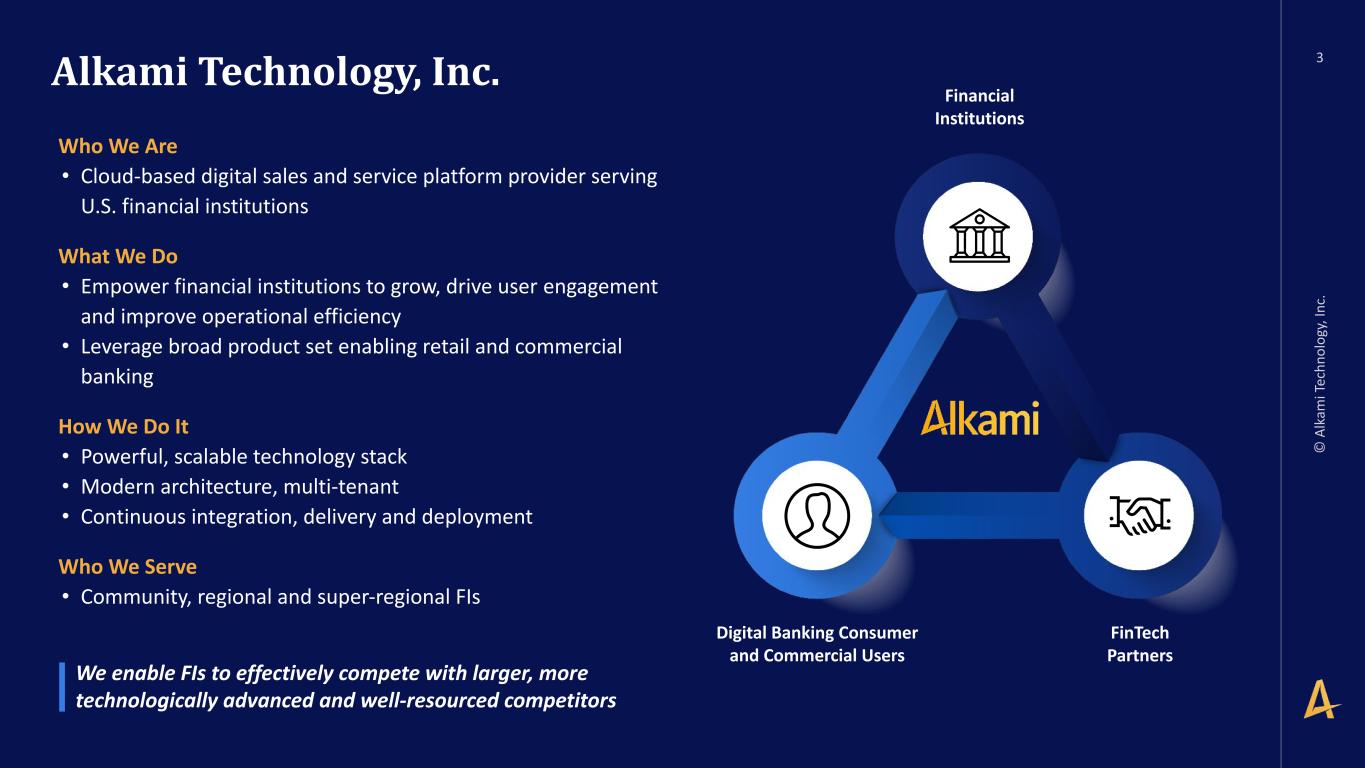
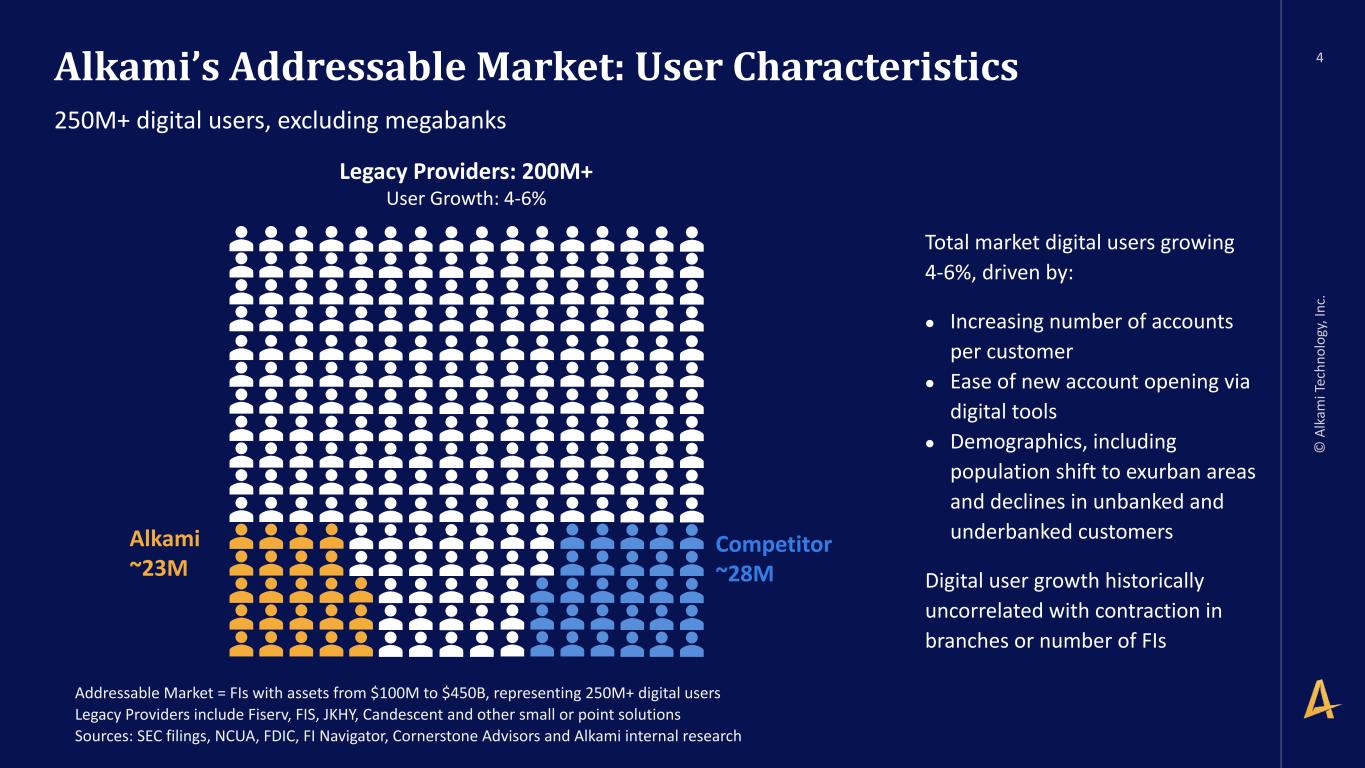
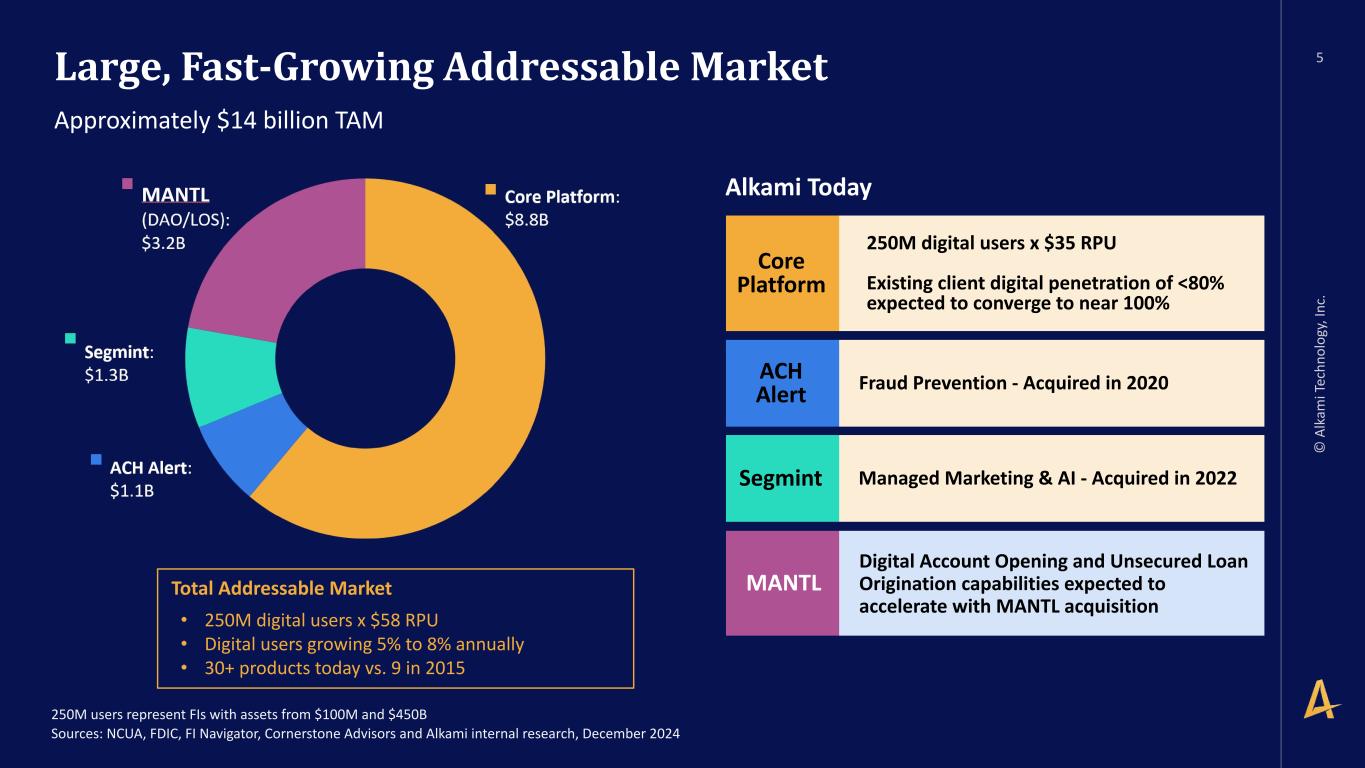
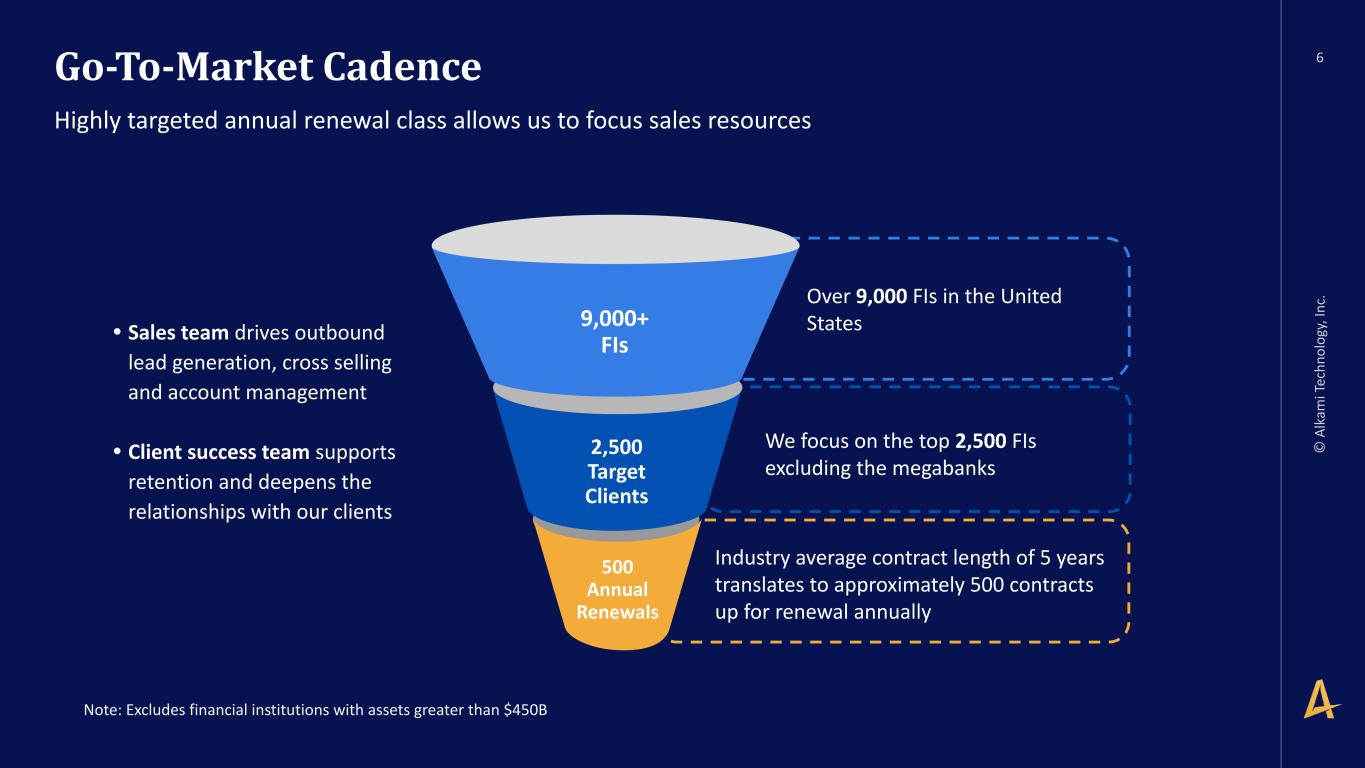
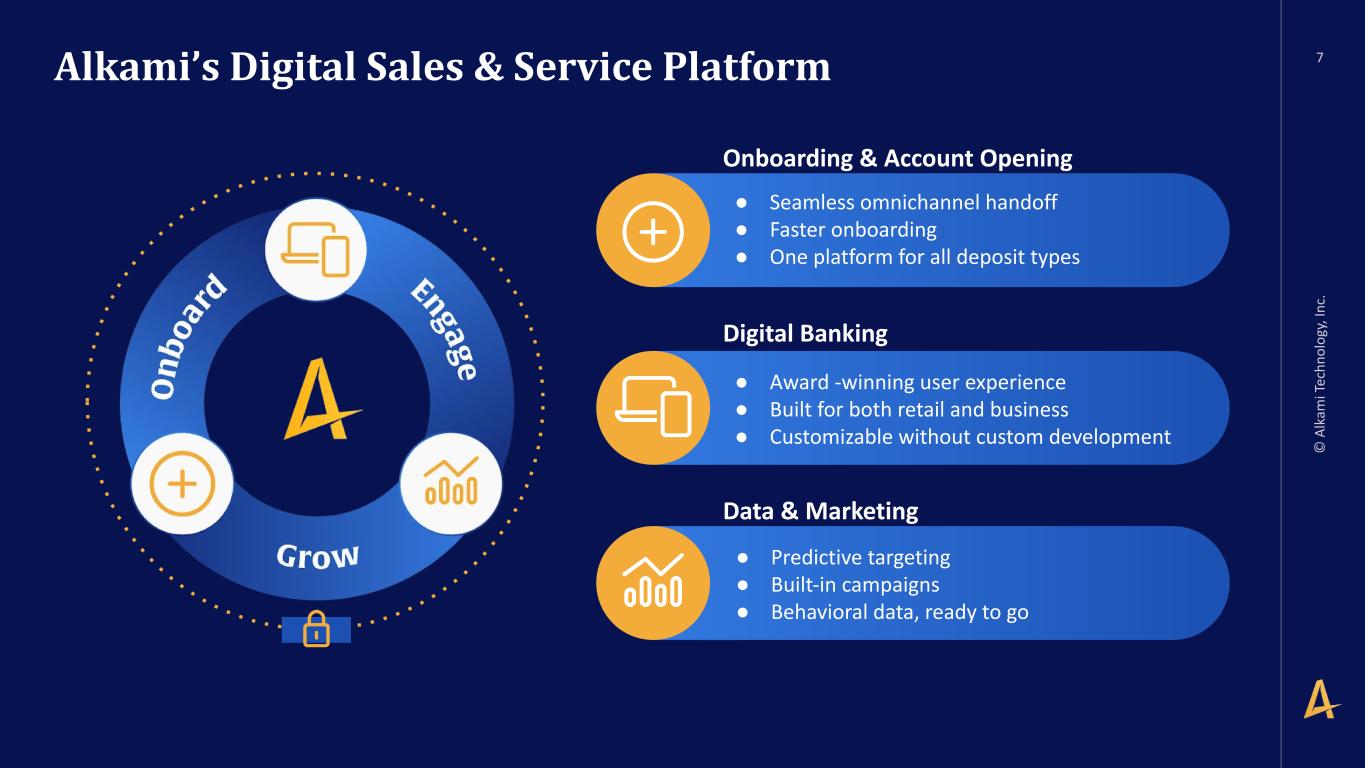
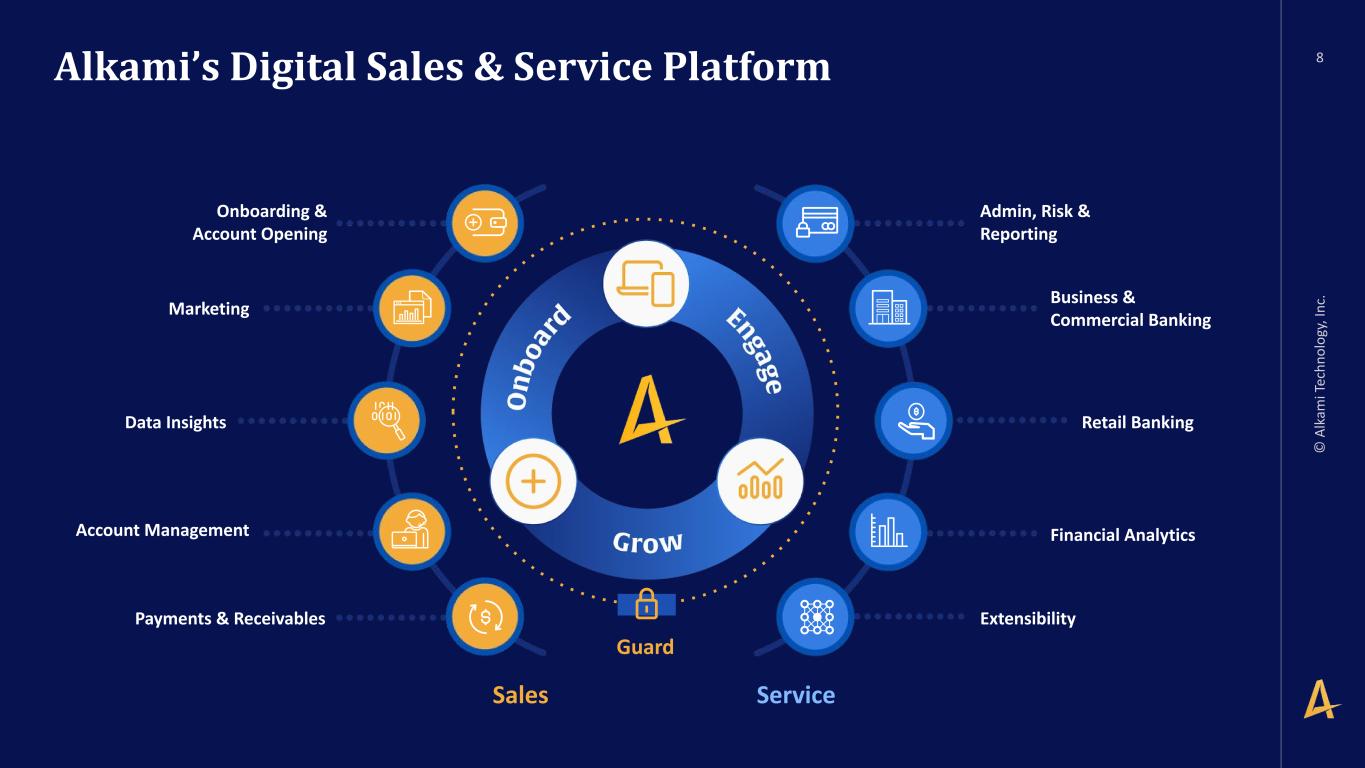
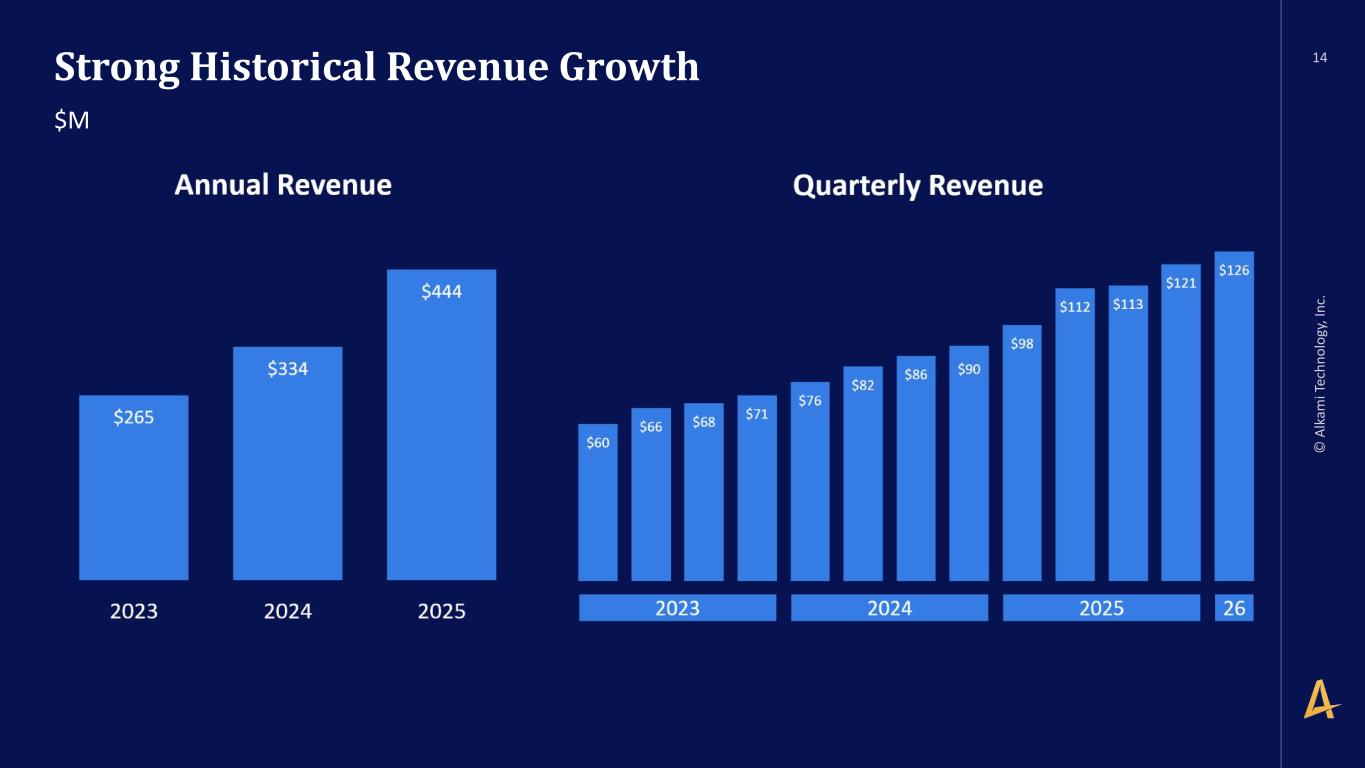
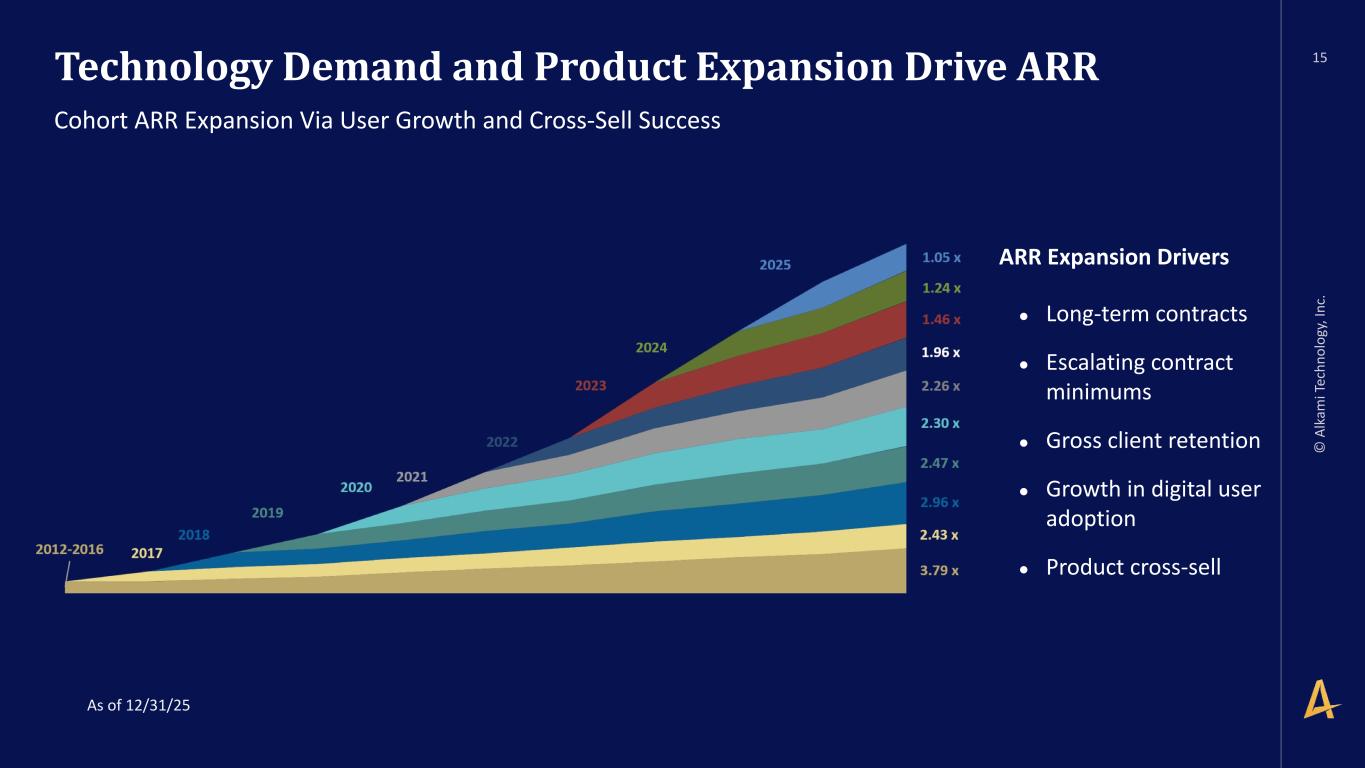
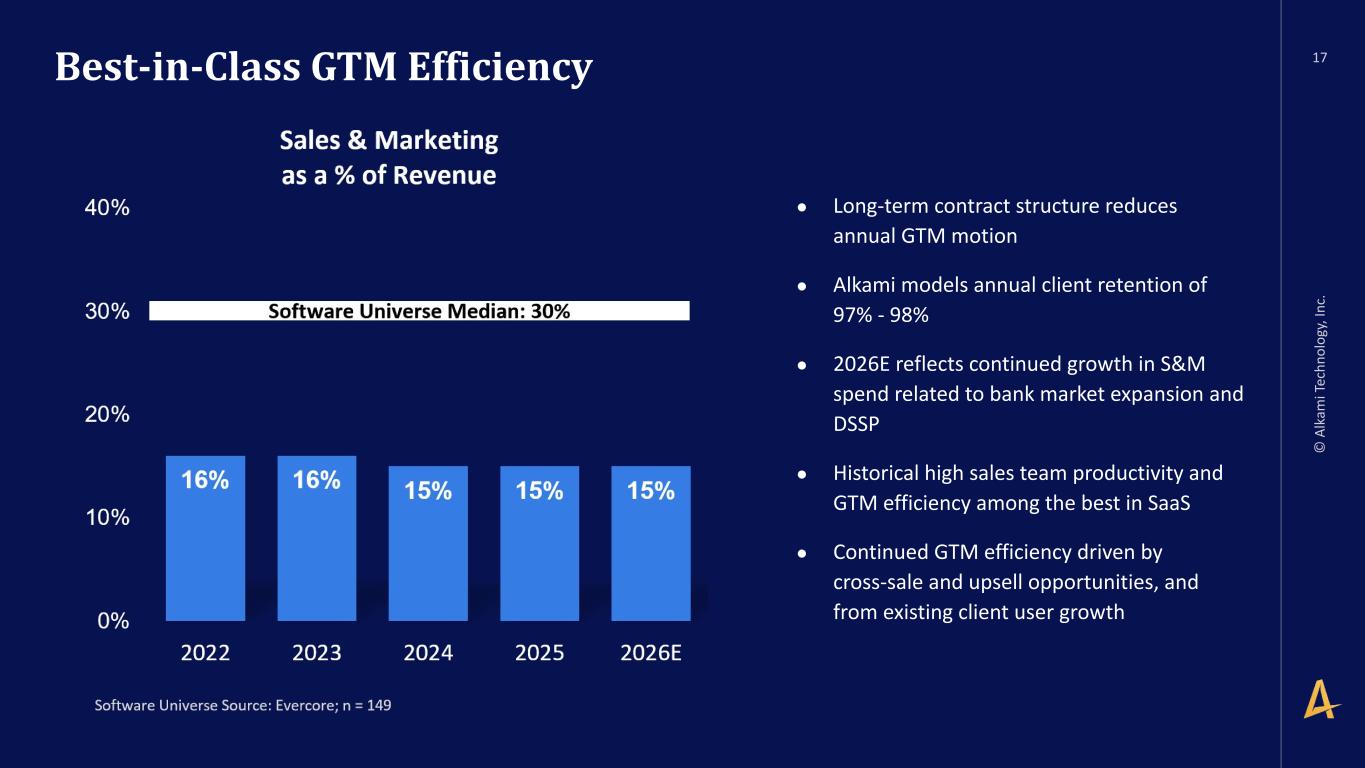
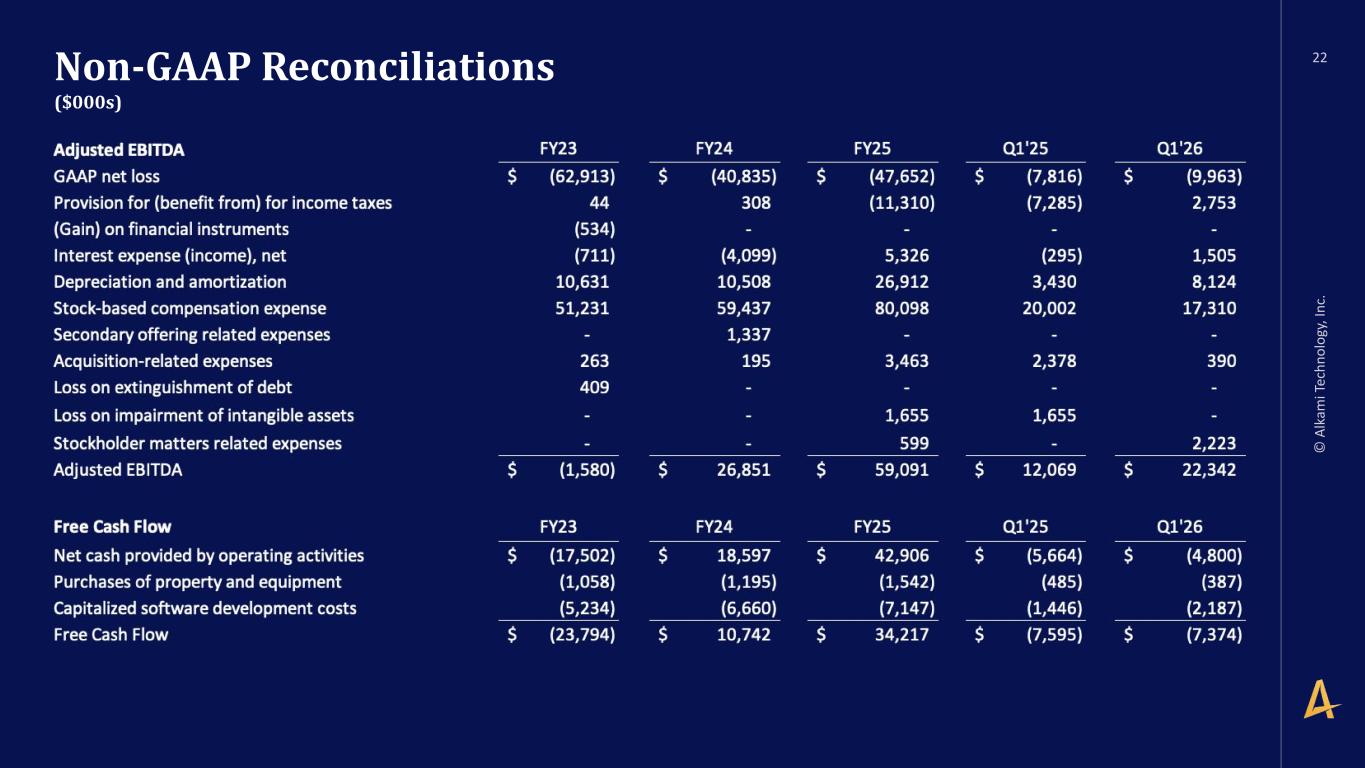
Good afternoon, and thank you for joining us. We delivered a strong first quarter, achieving 29% revenue growth and over $22 million in adjusted EBITDA, both above expectations. We closed 6 new digital banking relationships, including 2 banks and 3 Digital Sales & Service Platform clients. In addition, we introduced our first integrated capabilities for the Digital Sales & Service Platform and a new product called Alkami Engage. Our first quarter performance continues to demonstrate Alkami has the potential for long-term durable growth and increased operating leverage. Alkami operates an attractive and predictable business model in a resilient, large and growing market. Our target market is over 2,000 regional banks and credit unions that rely on legacy infrastructure incapable of providing a modern digital experience. A portion of growth comes from displacing these systems. Given industry-standard 5- to 7-year contracts combined with stable win rates, we maintain good visibility into the long-term ARR growth that comes from new logo additions. Once on the Alkami platform, our investments in service and reliability, the mission-critical nature of our platform and high switching cost drive gross retention rates 8 to 10 points above typical SaaS companies. High retention rates, combined with clients adding users and adopting more of the platform, results in reliable long-term client growth. Every 5 years, our clients grow by more than 100% of their original platform investment, with our 2021 through 2023 cohorts spending above 2x their landing ARR and clients 2016 and older spending close to 4x their landing ARR. Additive to the land, retain and growth algorithm for Alkami is our entry into the bank market. Four years ago, we launched an effort to use commercial banking capabilities built for large, complex credit unions to pursue market leadership serving community banks. At that time, banks represented 2% of our live online banking clients, and today banks are at 13%. Over this four-year period, we tripled revenue, expanded gross margin by over 700 basis points, and improved operating leverage by more than 2,000 basis points. Through different macroeconomic distractions and volatility in the financial services sector, Alkami has continued to deliver by adding new clients, keeping our clients, expanding our product offering and increasing margins. Client decision cycles create a unique characteristic for Alkami. Our online banking platform is in a replacement market with prospects on legacy platforms under long-term contracts. There are usually fewer than 300 potential clients in our target market that renew contracts in any given year. Within this group, a portion choose not to convert, given the effort and perceived risk. Among those who make a change, we consistently win 30 to 40 new clients per year. For example, the 6 new logos in Q1 is slightly above our historical Q1 average. New logo growth is consistent and will not spike unless customers choose to exit contracts early or see enough value to overcome conversion resistance. This consistency is a strength, but it also means the next phase of our growth will be driven by expanding the value we deliver within each financial institution. Increasing the value of the platform not only drives expansion, it also improves conversion, and this is why the MANTL acquisition was so strategic. The MANTL acquisition adds platform functionality to encourage conversions and expands our install base. Standalone MANTL new logo creation has been outstanding, with 61 clients added since the beginning of 2025. These are now Alkami clients we can target to cross-sell online banking. In addition to the new logos, at our recent customer conference we demonstrated differentiated capabilities that materially improve how financial institutions acquire and engage customers. Two weeks ago, we concluded Co:lab, our annual client conference. The conference continues to set records with over 600 customer attendees, of which 83 were prospects. Since the MANTL acquisition, we've been building deep technical connections between our online banking and origination platforms to deliver an integrated front end that enables our market to compete with mega banks and neo banks like Chase and Chime. We built this capability with seven clients as design partners, six of which have the code in production. We demonstrated live product with real results at Co:lab. In a side-by-side comparison against 2 leading mega banks and a digital-first fintech, we showed a complete customer journey from account opening through digital engagement. Using a live environment and real workflows, Alkami's Digital Sales & Service Platform, or DSSP, completed that experience in under 2 minutes compared to an industry benchmark of 5 minutes and to 3 contestants in the 3- to 4-minute range. DSSP has continued to perform for Alkami. Since the beginning of 2025, we've gone from 11 to 48 clients who have all 3 products that make up DSSP. Over half of all new logos since Q2 of last year have been DSSP. DSSP new logos see a 30% uplift in ARR versus our historic online banking offering. Our intent with DSSP is to increase the number of clients willing to convert, expanding our opportunity within the existing market constraints. We have not reflected this in our long-term model, and our outlook under current new logo assumptions continues to support attractive long-term growth for Alkami. Last quarter, we introduced a 2030 framework, and that model assumes 40% of ARR growth coming from new logo additions at numbers consistent with our historical average and 60% of ARR growth from expanding within our client base. Alkami is evolving from a vertical application in a replacement market to a vertical platform provider that drives growth for banks and credit unions, and this transition is occurring because the market demands it. Historically, community banking technology was defined by core providers that controlled the system of record. Everything else, digital banking, onboarding, payments, was built around that core. For years, that architecture defined how financial institutions operated. That reality has changed. Digital has become the primary way customers experience their financial institutions. Our clients need technology not just to process transactions, but to sell and service financial products in a digital-first world. This is the role of the Digital Sales & Service Platform, a platform that provides a long tail of growth opportunities for Alkami and positions us to become the new primary technology partner for community financial institutions. In this market, leadership will not be defined by the number of institutions served, but by generating the most economic value from each financial institution on the platform. The investments we've made to integrate our acquisitions create the functional capabilities of Alkami's DSSP that are winning in the market. However, the platform investments we've made create compounding value for Alkami and our clients. Alkami is a single instance, multi-tenant, industry-specialized platform, and this gives us the opportunity to provide AI capabilities our clients are requesting. For details on Alkami's AI perspective, please review my prepared comments from our last earnings call. In the February 25 call, I spent over 50% of my time on AI and Alkami. Since that earnings call, I've had 39 face-to-face customer meetings, and AI was discussed in every one of them. Not one client mentioned building their own digital banking or origination platform, but every client wanted to talk about AI as an enabler for personalization, underwriting, fraud management, customer service, analytics, offer management, and more. With over 23 million account holders on our platform, we have a unique foundation to apply AI capabilities at scale. At our customer conference, we demonstrated working AI prototypes built on this platform. These included capabilities that allow clients to tailor Alkami to their needs through prompt-driven development, use natural language to query platform data and better understand their account holders and operations, and deploy co-pilots that support both banker workflows and account holder experiences. These capabilities are powered by our platform, including our data infrastructure and telemetry from Alkami Engage, a new product which captures real-time user interaction data across the customer journey. Importantly, these are not conceptual demonstrations. We're actively working with a small group of clients to test these capabilities and determine the appropriate commercial models. Given our platform foundation, bringing these capabilities to market is less a technical challenge and more a question of how to package and price them effectively for our clients. In closing, we are pleased with the integrated product capabilities we built into Alkami's Digital Sales & Service Platform. The market reaction has been positive. DSSP provides a foundation we can continue to build upon to differentiate Alkami. We are evolving Alkami from a system of record to a system of action, delivering measurable outcomes for our clients and increasing the value we create within each financial institution relationship. I'm proud of our business results this quarter and grateful to more than 1,200 Alkamists who continue to get it done and do it right. I'll now hand the call to Cassandra to discuss our financial results.
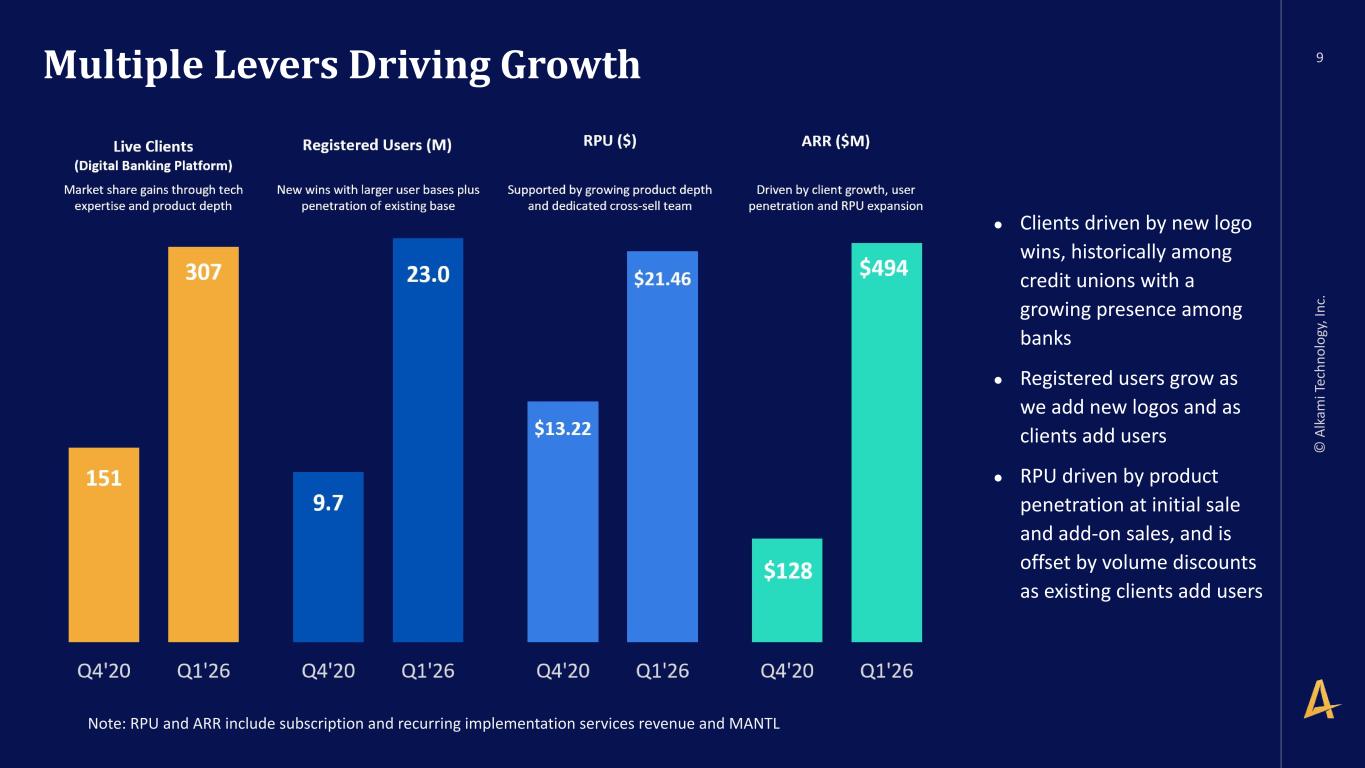
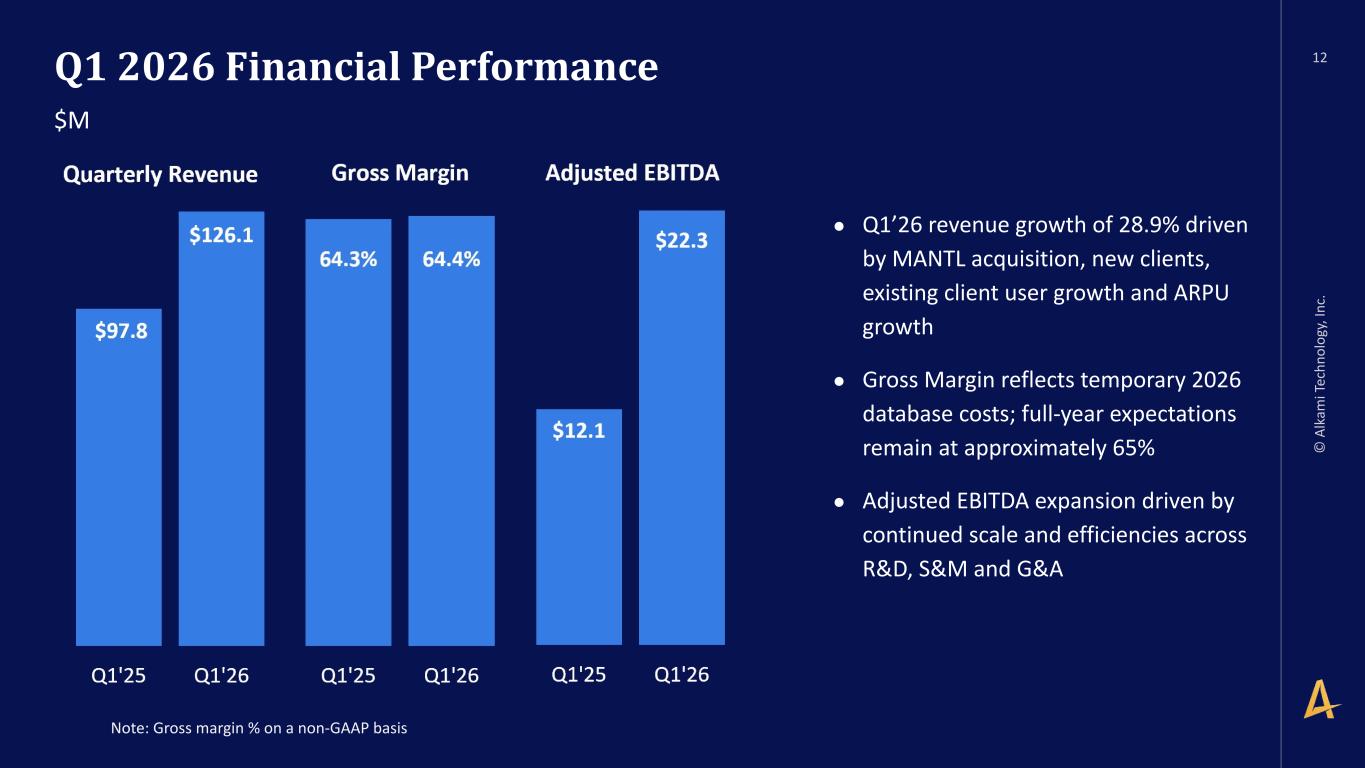
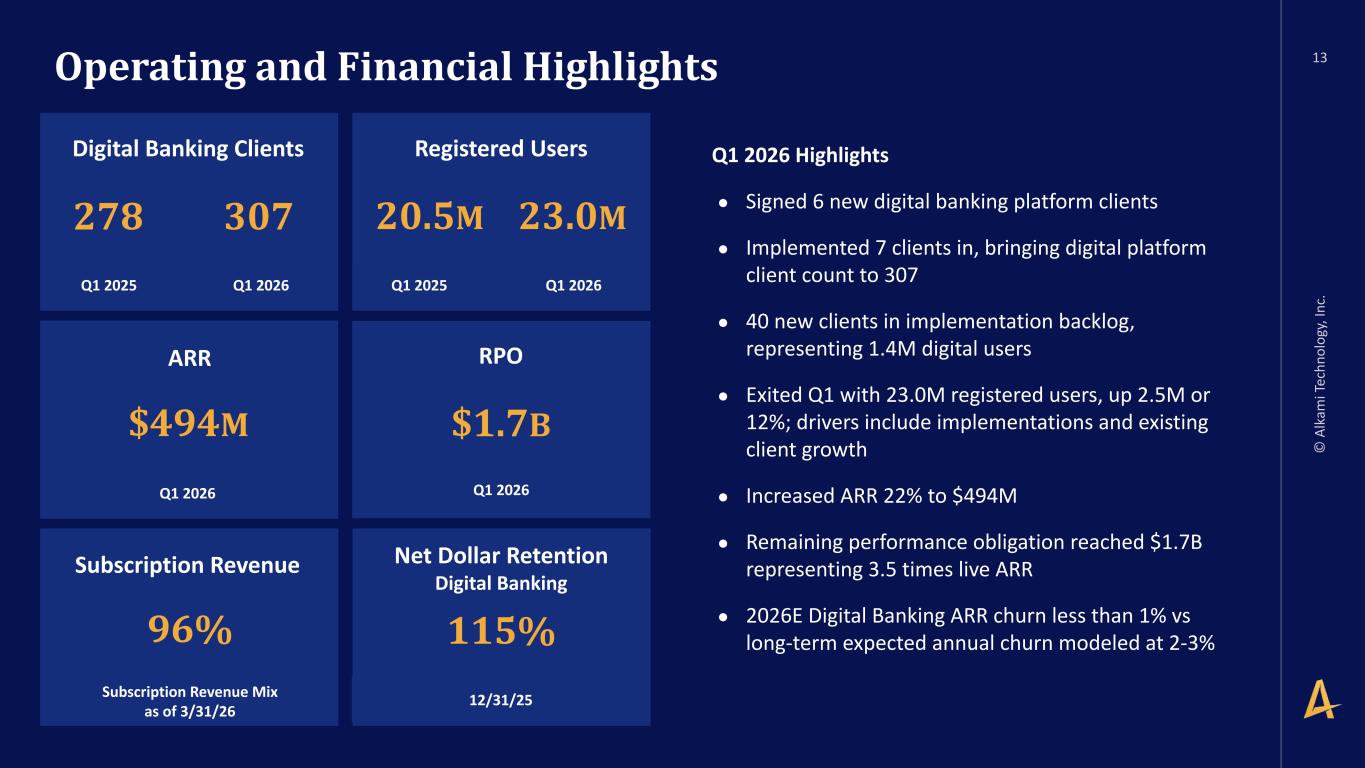
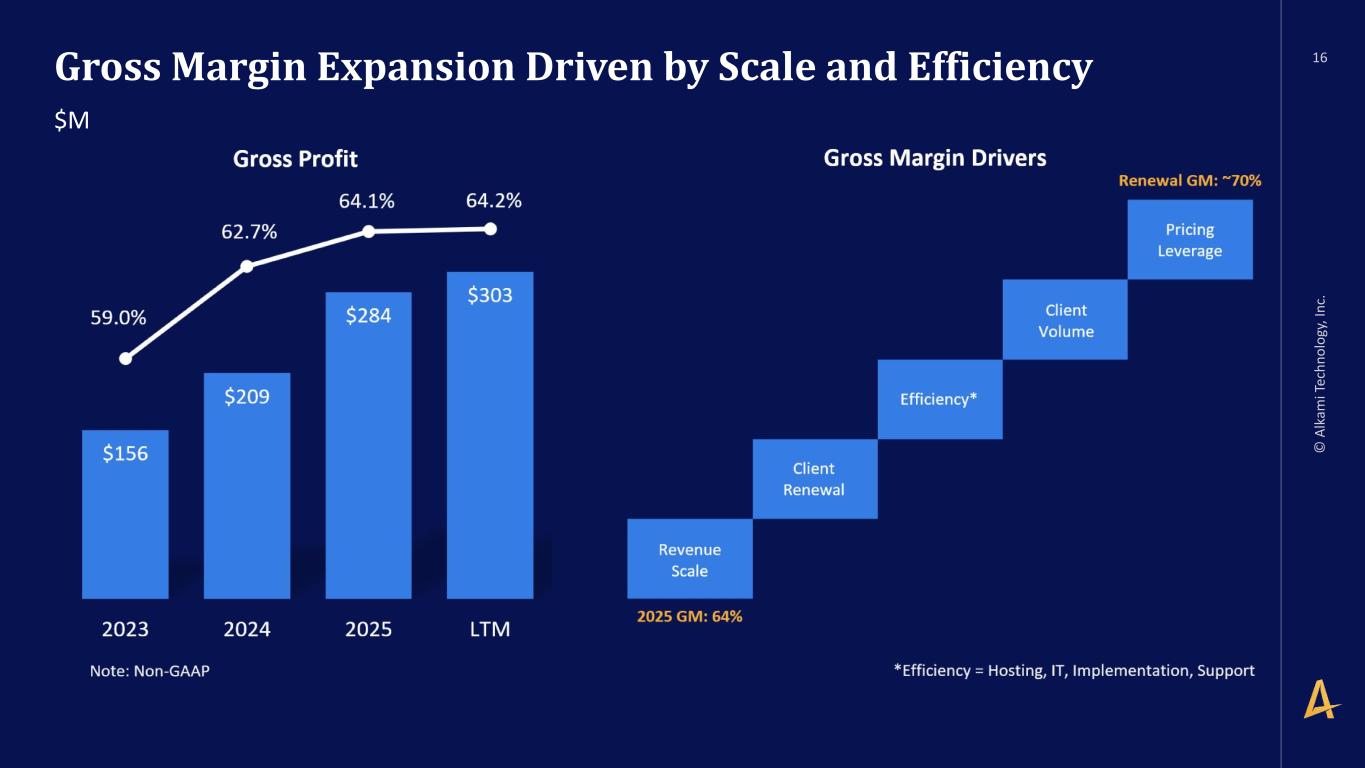
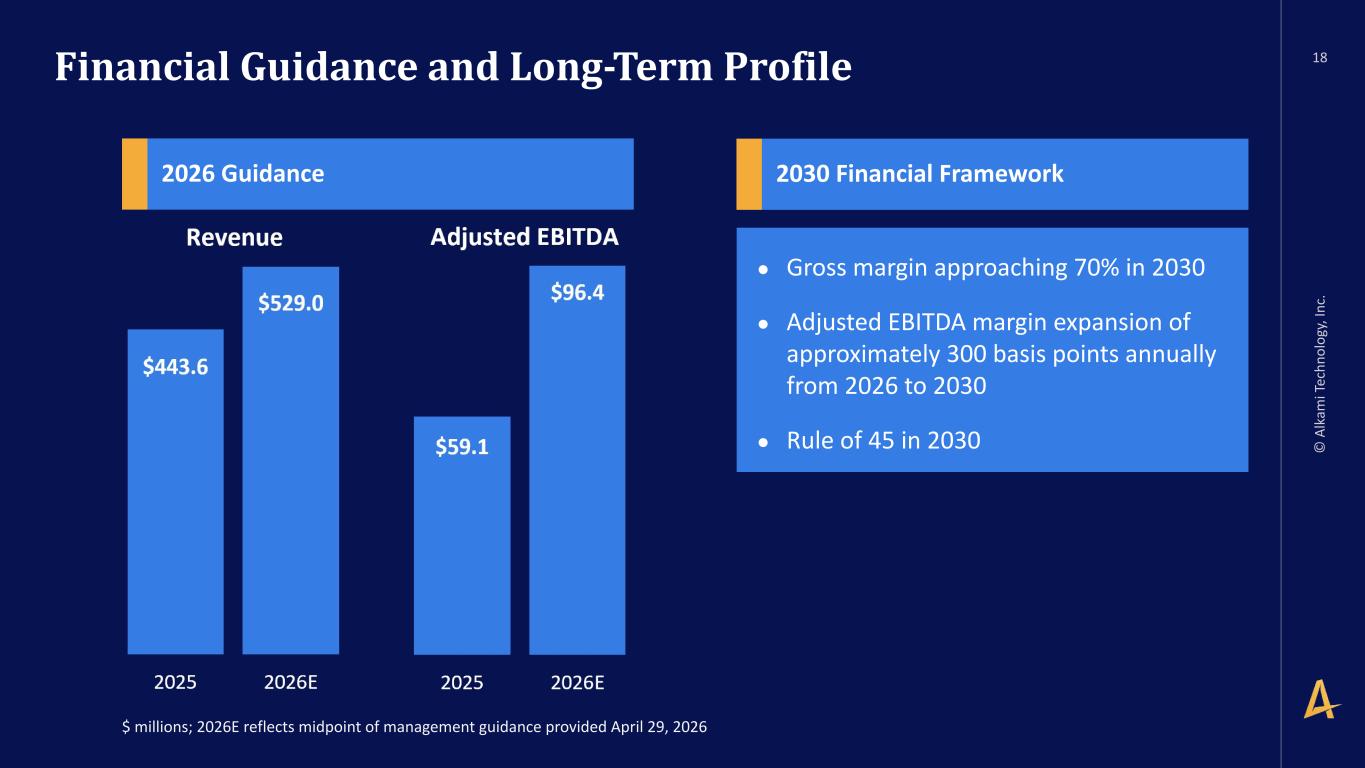
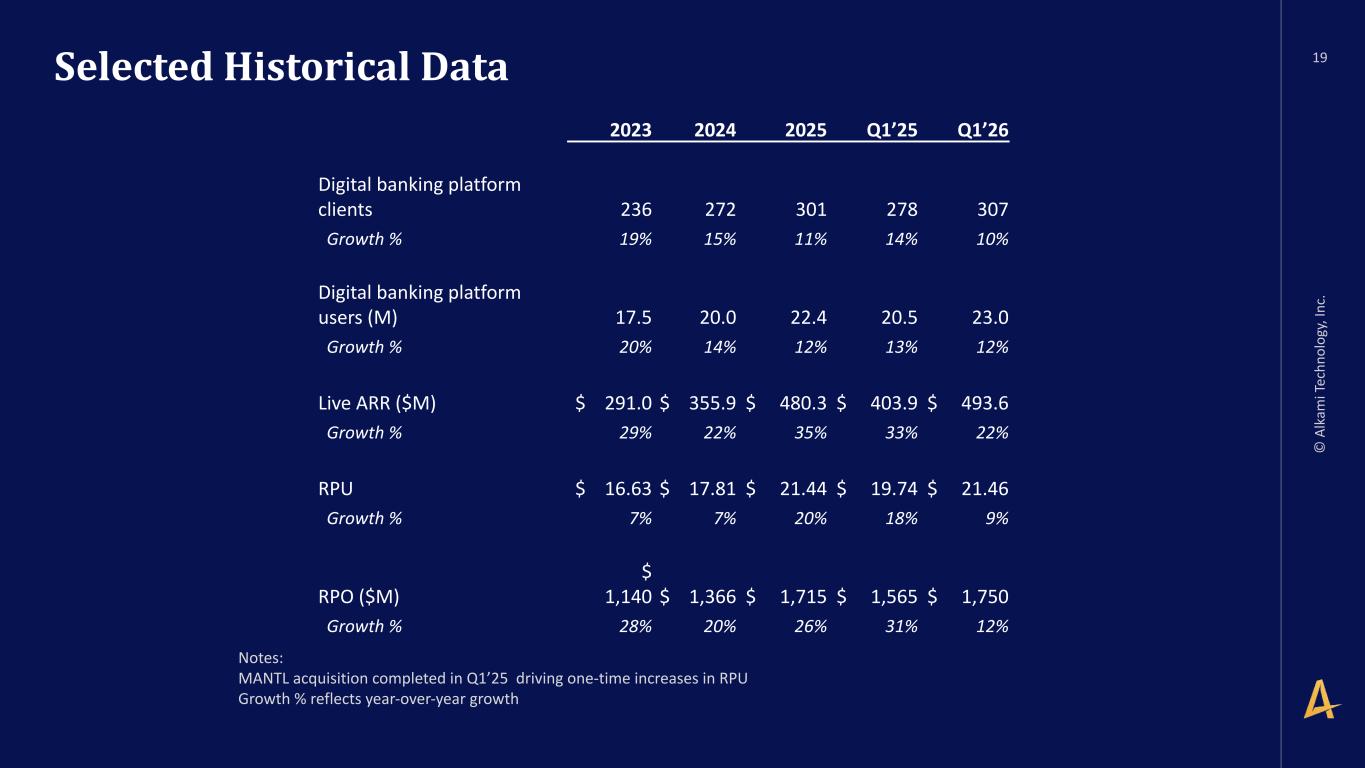
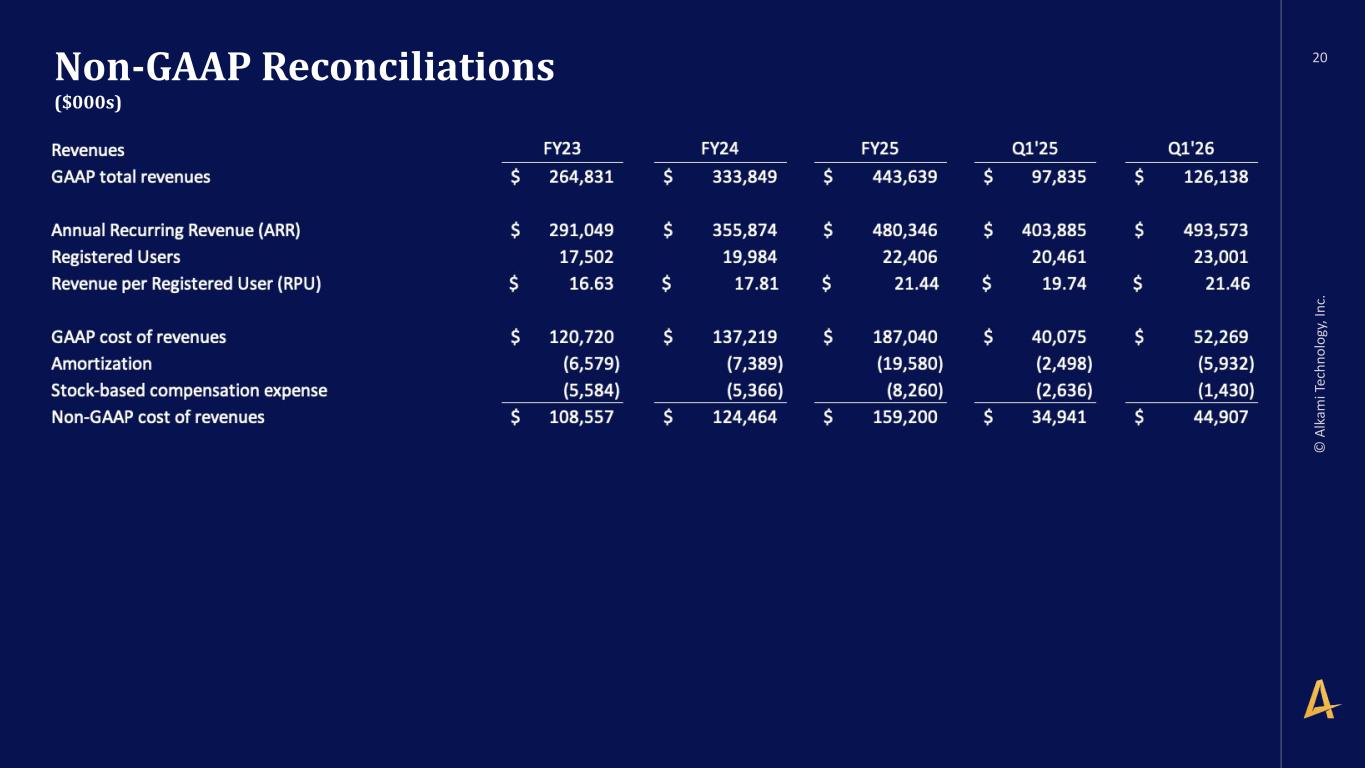
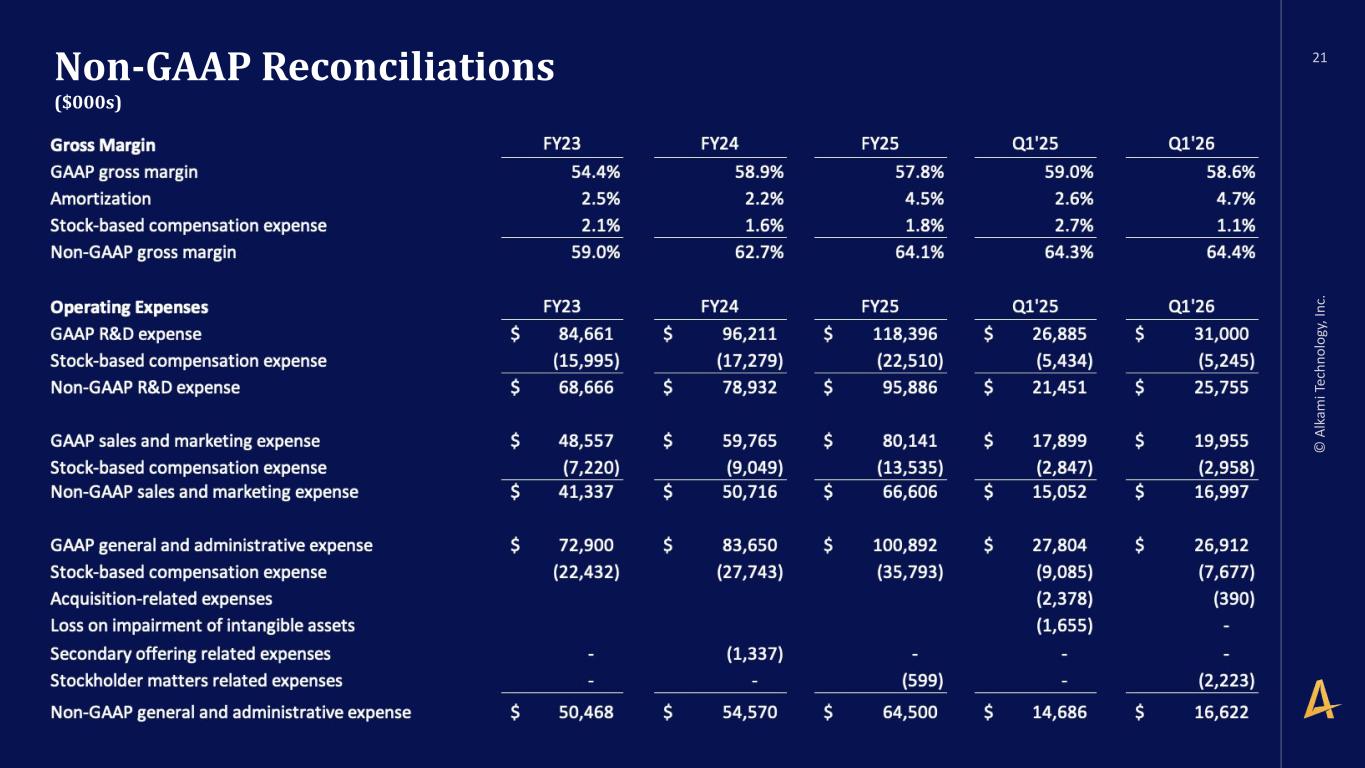
Thank you, Alex. Our first quarter results exceeded our expectations, highlighted by strong adjusted EBITDA performance that underscores the durability of our model and the progress we're making in driving operating leverage. We continue to execute with discipline, delivering consistent growth while expanding profitability and investing strategically to support long-term value creation. Let me start with our updated outlook. For the second quarter of 2026, we expect revenue of $128 million to $129 million, representing growth of 14.2% to 15.1%. As a reminder, our second quarter revenue outlook includes the impact of a sizable termination fee recognized in the second quarter of 2025, which represents an approximate 3 percentage point headwind to year-over-year growth in the quarter. In the second quarter, we also expect adjusted EBITDA of $17.9 million to $18.7 million or 14.3% margin at the midpoint. This outlook incorporates the impact of our annual user conference, which is reflected in our normal seasonal expense pattern. For the full year, we expect revenue of $527.1 million to $530.9 million, representing growth of 18.8% to 19.7% and adjusted EBITDA of $94.9 million to $97.9 million or 18.2% margin at the midpoint, reflecting continued operating leverage as we scale the business. Our revenue outlook reflects several underlying assumptions consistent with what we shared last quarter. We expect continued cross-sell momentum across the platform, along with a steady cadence of ARR launches throughout the year. We also expect high single-digit ARPU growth, reflecting strong expansion within the base, partially offset by a modest moderation in user growth among existing clients. We expect a meaningful decline in termination fee revenue in 2026, which will reduce reported growth by a few percentage points. This headwind is partially offset by the contribution from MANTL. We expect growth to moderately accelerate in the third quarter due to a more favorable year-over-year comparison. Turning to profitability, we expect a full year non-GAAP gross margin of approximately 65%. In the back half of 2026, we expect adjusted EBITDA margin to be north of 19%, weighted toward the fourth quarter and in line with our typical seasonal pattern. Overall, we expect approximately 500 basis points of margin expansion for the year, driven by operating leverage in the model, efficiencies from our offshore operations, and continued cost discipline while also funding targeted investments in AI that we believe will drive product innovation and long-term efficiency. Lastly, we expect stock-based compensation to be approximately 14% of revenue for the year. As we discussed last quarter, our long-term model framework reflects what we believe are achievable targets based on the strength of our business today and the visibility provided by our long-term contracts. We continue to expect to achieve Rule of 45 by 2030. From a growth perspective, we expect a gradual increase in bank new logo wins supported by our Digital Sales & Service Platform alongside continued leadership in credit unions, reflecting the replacement-driven nature of our market. We also expect consistent execution in our add-on sales efforts and volume growth from existing customers together driving ARPU expansion and contributing significantly to our long-term growth. We also expect total dollar churn of approximately 2% to 3% annually, with about half associated with our digital banking clients. Importantly, our long-term outlook does not assume incremental M&A. From a profitability standpoint, we expect non-GAAP gross margin approaching 70% over time as we improve execution on implementations and drive support efficiencies. Approximately 300 basis points of annual adjusted EBITDA margin expansion driven by scale and continued operational improvements, particularly across R&D and G&A, and stock-based compensation declining to approximately 10% of revenue. Turning to first quarter performance, revenue was $126.1 million, up 29% year-over-year. Subscription revenue grew 30% and represented 96% of our total revenue. As a reminder, we closed the MANTL acquisition on March 17, 2025. This timing contributed approximately 14 percentage points of year-over-year growth to Q1 2026. Growth rates will become fully comparable beginning in the second quarter. We increased ARR by 22% and exited the quarter at $494 million. Importantly, we have approximately $71 million of ARR in backlog pending implementation, representing 40 new clients and roughly 1.4 million digital users. We expect the majority of this backlog to go live over the next 12 months. As Alex highlighted, we continue to see strong momentum with our Digital Sales & Service Platform. From a financial perspective, DSSP is important because it is driving higher quality revenue across several dimensions. Clients adopting multiple components of the platform tend to have higher initial contract values, longer contract durations, and stronger retention profiles over time. This is already contributing to ARPU expansion and ARR we're seeing across the business. Additionally, as we integrate MANTL and expand our platform capabilities, we are increasing our ability to land with a broader set of products and expand within the client over time. This reinforces our land and expand model and supports the long-term durability of our revenue. We exited the quarter with 307 clients and 23 million registered users, an increase of 2.5 million users or 12% year-over-year. Over the past 12 months, we implemented 35 clients supporting 1.2 million digital users, and existing clients increased their digital adoption by 1.5 million users. Our contracts provide strong visibility into attrition, typically several quarters in advance. Over the past three years, we have churned less than 1% of our digital banking ARR annually. For 2026, we currently expect to churn four digital banking clients, which again represents less than 1% of ARR. This speaks to the mission-critical nature of our platform and the strength of our long-term client relationships. Revenue per user increased to $21.46, up 9% year-over-year, driven primarily by MANTL's contribution, strong cross-sell execution, and increased user adoption among existing clients. Remaining performance obligations were approximately $1.7 billion or 3.5x live ARR, providing strong visibility into long-term revenue. First quarter non-GAAP gross margin was 64.4%, roughly flat year-over-year, driven by the higher database technology costs we discussed last quarter. We view these costs as temporary and expect them to decline by the end of 2026. First quarter operating expenses were $59.4 million or 47.1% of revenue, representing 530 basis points of year-over-year improvement realized across all areas of operating expense. Adjusted EBITDA was $22.3 million above the high end of our expectations, with an Adjusted EBITDA margin of 17.7% and expansion of approximately 540 basis points year-over-year. We ended the quarter with $77.6 million in cash and marketable securities. In the first quarter, our operating cash flow improved 15% year-over-year. Free cash flow was consistent with prior year, and we repaid the remaining $15 million of our revolving loan. Finally, today we announced that the board of directors has approved our inaugural stock repurchase program of up to $100 million. This is an important milestone that reflects our confidence in both our long-term growth and our robust cash flow generation capabilities. We continue to believe in a disciplined and balanced approach to capital allocation that enables us to grow through additional acquisitions, delever the balance sheet through debt reduction, and opportunistically repurchase shares to deliver increased value to our shareholders. In closing, our results this quarter reflect continued execution against our strategic priorities and the strength of our platform. We are scaling with discipline, balancing growth and profitability while investing in the capabilities that we believe will further differentiate Alkami over time. The visibility in our model and continued momentum across the business position us to drive sustained long-term value. With that, operator, please open the line for questions.
Operator
Your first question comes from the line of Cristopher Kennedy from William Blair. Your line is now open.
Speaker 4
Cassandra, you have the growth outlook for the second quarter, but you also talked about accelerating growth in the third and fourth quarters. Can you provide more clarity on your confidence in accelerating growth?
Sure. Just to clarify, Cristopher, that growth acceleration will be in the third quarter in particular, and it is really driven by a more favorable year-over-year comparison and some timing dynamics that we experienced in 2025. As it relates to the headwind in the second quarter, that's really timing of termination fee revenue. We do have that headwind in quarters this year, but it is a little more pronounced in the second quarter in particular, which is why I called it out on the call.
Speaker 4
Okay. Got it. Understood. Alex, you mentioned it, but any additional takeaways or observations from Co:lab when you were talking to your customers and how they're viewing the current environment and AI? Thanks for taking the questions.
First of all, Co:lab was an amazing event. We set a record in terms of number of attendees. It was great to see 83 prospects, a good balance between credit union prospects and bank prospects. A couple of comments. There was no let up in digital transformation. This is a sizable market—over 2,000 credit union and bank customers that all have legacy technology. They are all aware of what they need to do but are somewhat captive to long-term contract dynamics. There is continued demand for digital transformation. What was really exciting to see for our market is what we've called an integrated front end, a digital front door. It is the integration of digital banking and a deposit origination platform and a loan origination platform to be able to attract a customer, convert them into a customer, have them in digital banking, and offer them additional products—all seamless so the customer does not know they are in multiple different products. That integration has been the benchmark these institutions have looked for, and that's what we showed from the stage. I was most pleased with the audience reaction to real technology that we showed that will make a real difference for this market.
Operator
Your next question comes from the line of Aaron Kimson from Citizens. Please go ahead.
Speaker 5
Alex, you spoke again today about more banks being open to separating online banking from their core provider. Can you talk about what's driving that willingness—whether it's increased acceptance that standalone digital providers like Alkami have the superior solution for online banking, the maturity of your solution with MANTL, a change in the ease of integrating a standalone digital provider solution into the core, or something else? Thanks.
Thanks. Let's talk about the difference between the bank market and the credit union market. In the credit union market, roughly 45% of customers have an online banking application supplied by their core provider. In the bank market, it's been north of 75%. That's beginning to unwind. I actually spoke with a prospect at Co:lab who is going to pay off four years of their remaining digital banking contract to move to a different digital banking platform from their core. I asked them why they were doing this. They said, 'In our market, we have to compete with Wells Fargo and KeyBank, and our digital capabilities are insufficient; if we don't make this change, it's going to impact the business of the bank.' You're starting to see that demand push create conversions. The flip side is that the more customers see successful conversions onto a platform like Alkami, the more willing they are to make the change. It's a decision of value versus risk. That's why the integration of the data marketing platform, the onboarding platform, and digital banking is critical—when a bank sees outcomes like speed to acquiring a new customer, reduced cost to onboard, and increased speed to cross-sell, they build conviction to make the change.
Speaker 5
That's really helpful. Thank you. The second question: you've incurred $2.8 million in shareholder matters-related expense over the prior two quarters with $2.2 million in Q1. Can you provide color on the nature of these expenses and if you anticipate them to be ongoing or settled for the near term after you added two new board members on March 31st? Thanks.
Sure. Those costs are really defense-related in nature. We do expect to incur additional costs related to this item. It is difficult to predict how much they will be, though I don't think we're going to be at $2.8 million every quarter from here on out. We saw a higher cost in Q1, and I would expect those to moderate going forward.
Operator
Your next question comes from the line of Jacob Stephan from Lake Street Capital Markets. Your line is now open.
Speaker 6
Maybe a bookkeeping question. Can you give a deeper dive into banks versus credit unions in the backlog?
Banks versus credit unions in the backlog is pretty evenly split in terms of size. Right now we have 13 banks in the backlog, and the rest are credit unions.
Speaker 6
Second one: you have given detail on user adds in the past. Can you help us think through the adds in the last quarter and over the last several quarters in terms of existing clients versus newly implemented customers and the trend?
Historically, you can think of the trend as roughly half and half new versus existing. In Q1 in particular, over the past 12 months we implemented 1.2 million digital users from new clients and had 1.5 million from existing clients—so a bit more weighted to existing clients over the past year.
Operator
Your next question comes from the line of Jeff Van Rhee from Craig-Hallum Capital Group. Please go ahead.
Speaker 7
This is Daniel on for Jeff. Just on MANTL and the pace of logo adds there—the 14 this quarter—how does that compare to previous quarters or expectations? How is MANTL tracking relative to expectations?
They continue to track very well. There is a bit of cyclicality to the sales cycles across our products. For us, Q1 tends to be a lighter quarter and Q4 tends to be our strongest quarter. We continued to see very good performance for MANTL coming off a record 2025.
I'd point to why we're pleased: since the beginning of 2025 our DSSP clients—those that have acquired MANTL—have gone from 11 to 48, and standalone MANTL new logo clients are 61 in the same period. That's over roughly five quarters. Considering integration needs and the work to unite digital banking and origination into one experience, I consider that outstanding performance. The acquisition closed in Q1, and during the integration we delivered strong new logo and cross-sell performance while also integrating the technologies into one front-end experience. I'm very proud of the team for that.
Speaker 7
Great. Alex, you said Alkami is evolving from a system of record to a system of action. Could you expand on what that means and give examples?
Historically, the digital part of a financial institution was somewhat passive, relying on the account holder to take action. Now institutions are asking us to use their data—transactional data, telemetry, core transaction data—to predict actions and then notify the account holder or banker to take action. That's the shift to a system of action. For example, if we see that at a certain time of the month a customer's balance drops and they may be at risk, the system can reach out and recommend an action to avoid a negative financial situation. That's the kind of proactive behavior we're enabling.
Operator
Your next question comes from the line of Andrew Schmidt from KeyBanc Capital Markets. Your line is now open.
Speaker 8
How has the sales force shift to separate bank and credit union sales forces evolved? Has that been effective in building the pipeline, particularly on the bank side? Thanks.
Our pipeline remains balanced, pretty evenly split between banks and credit unions. The transition has been effective, allowing us more specialization in the bank market, and we remain pleased with that decision.
Speaker 8
Is Alkami making any structural or process changes as a result of increases in model productivity from AI, for example to development or product delivery? Is it mainly increasing product velocity, or are there organizational changes to consider?
We are using many model providers across the organization today. We're not yet at a point where we can provide a specific productivity benchmark to investors. The biggest change we're seeing is in the front end of the software development life cycle. Whereas DevOps transformed the back end—testing, release, support—AI is accelerating how quickly we go from concept to fully functional prototype. What used to be a detailed PRD is increasingly becoming a working prototype we review with clients rather than discussions via PowerPoint. In support organizations, we've wired the company from a data perspective so support teams can access data to speed response times and reduce costs. We're seeing transformations in months that used to take years. It's an exciting time to be in a software company.
Speaker 8
Makes sense. If possible, could you provide a Q3 and Q4 revenue and EBITDA cadence to avoid surprises?
A couple of points: on revenue, the acceleration is very specific to Q3, due to a more favorable year-over-year comparison and timing elements from the prior year. Our model is predictable with a steady amount of ARR launches this year and consistent dynamics from existing customers and ARPU growth. You can calculate the implications for revenue from those assumptions. On adjusted EBITDA, we typically see adjusted EBITDA build each quarter throughout the year, with Q4 typically being the highest in dollars and EBITDA margin. We expect that trend to continue.
Andrew, because you've followed us for a while, I would encourage you to look back at our post-Q2 commentary from last year where we explained a Q3 impact driven by termination fee timing. That's the exact dynamic Cassandra is referring to.
Operator
Your next question comes from the line of Elyse Kanner from J.P. Morgan. Please go ahead.
Speaker 9
As banks grow as a share of your customer mix and backlog, are there unique challenges serving banks versus credit unions? What differences do you observe?
There are three main differences: product, technology, and skills. From a skills perspective, we have had to bring in people who understand commercial data conversion—converting complex business account data is very different from retail account data. From a product perspective, we've executed a three-phase treasury management build-out. The first phase was to position ourselves to move a bank from a legacy core platform into Alkami, which we've been doing over the last 12 months and expect largely to finish by the end of this quarter. From a technical perspective, bank cores operate more from a batch perspective while many credit union cores are real-time. The core integrations and the way Alkami interacts with bank cores need to ensure good performance for bank customers. So the three differences are the skills required, the application functionality needed, and the core integrations themselves.
Speaker 9
For Cassandra: are there unit economics considerations to be aware of if Alkami signs a DSSP client versus a regular new-logo digital banking client? Specifically, implications to revenue, ARR and profitability?
One of the big benefits of DSSP is that we typically see about 30% higher ARPU on DSSP deals compared to a traditional new logo. That leads to higher ARR over time as banks and credit unions grow their user base. These are very profitable customers for us. From an implementation cost perspective, the unit economics are relatively consistent—we implement all three products over the first 12-month term. The dynamics otherwise are similar.
What is untested but promising is that we've delivered the first phase of DSSP functionality and we will continue building. I'm excited about opportunities to create new products we could charge for if customers see value. Those would be added into DSSP with a lower incremental cost of sale because the customer is already buying the integrated platform. We don't yet have a long track record to definitively quantify changes in unit economics beyond what Cassandra noted.
Operator
Your next question comes from the line of Saket Kalia from Barclays. Please go ahead.
Speaker 10
Alex, on DSSP: as you look back, how is it performing versus expectations in terms of sales cycle length and conversion? You mentioned growth from 11 to 48 clients; is that about in line with expectations or faster or slower?
Completing an acquisition and then within about a year achieving that level of cross-sell exceeded my expectations. I'm pleasantly surprised. While we don't yet have enough data to be definitive, given the integrated customer experience we show—ability to attract new customers and sell more products—my hope is the sales cycle won't be longer and might be shorter. However, the market dynamics of long-term contracts govern the sales cycle more than anything else.
Speaker 10
Got it. Cassandra, a broader question: anything to keep in mind this year from a renewal perspective? Any potential tailwinds to ARPU or gross margins from renewals as the customer base matures?
Let me add: this is not included in our model. The most important thing for us is not simply winning against a competitor, but increasing the number of customers that decide to convert off legacy technology. We do not assume incremental conversion in the model, but if DSSP creates enough value to push more conversions, that would expand opportunity within our market constraints.
From a renewal perspective, higher levels of scale yield gross margin benefits. Many customers have been on the platform for some time, which improves gross margin. On renewal, customers typically increase contract value by buying additional products and growing their user base, which benefits ARPU and NRR trends. We don't have any large concentrations of renewals in one year; renewals are spread evenly given how long we've been operating.
Operator
Your next question comes from the line of Adam Hotchkiss from Goldman Sachs. Your line is now open.
Speaker 11
On Alkami Code Studio launch: it's early, but curious on initial customer and prospect reactions and any indications as to how you might charge for that going forward. Thank you.
Let me clarify: the product we announced is Alkami Engage, which captures account holder telemetry. The reference to Code Studio was a prototype technology demonstration. Code Studio is not a product we've decided to release yet; it was in our innovation studio and people enjoyed working with it. The commercial terms are the bigger question—do we price simply and take the cost risk, or do we introduce a usage metric that clients have little history with and that is hard for them to model? We demonstrated four different prototypes and are in discovery with customers. We have a handful using each prototype to understand the most effective commercial terms. Given our platform, the complication is not whether we can build AI capabilities, but how we monetize them in a way that's simple for customers and safe for company profitability.
Speaker 11
How might these launches and beta tests impact your three- to five-year view of the platform? Do you see Alkami becoming more customizable and adding features more quickly using AI and third parties, beyond the current DSSP roadmap?
All of our objective is to generate more revenue while lowering the cost to deliver it. We're not ready to change the long-term model Cassandra outlined for Rule of 45. If and when we have evidence—either revenue lift or cost efficiency—to modify that model, we will announce it and explain why. We don't yet have sufficient evidence to change the long-term model.
Operator
That concludes the Q&A portion of the call. Thank you for joining us today. You may now disconnect.