Operator
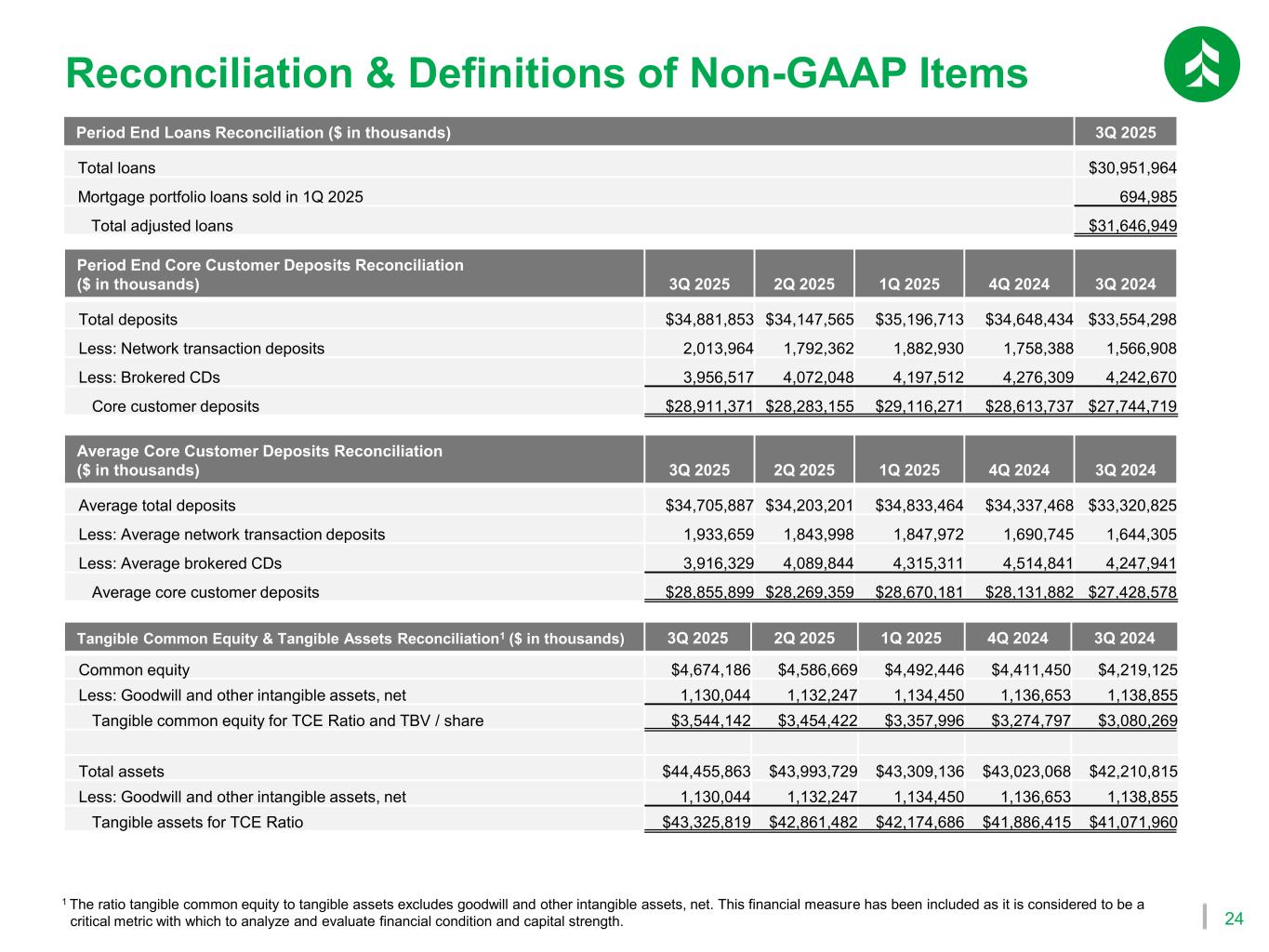
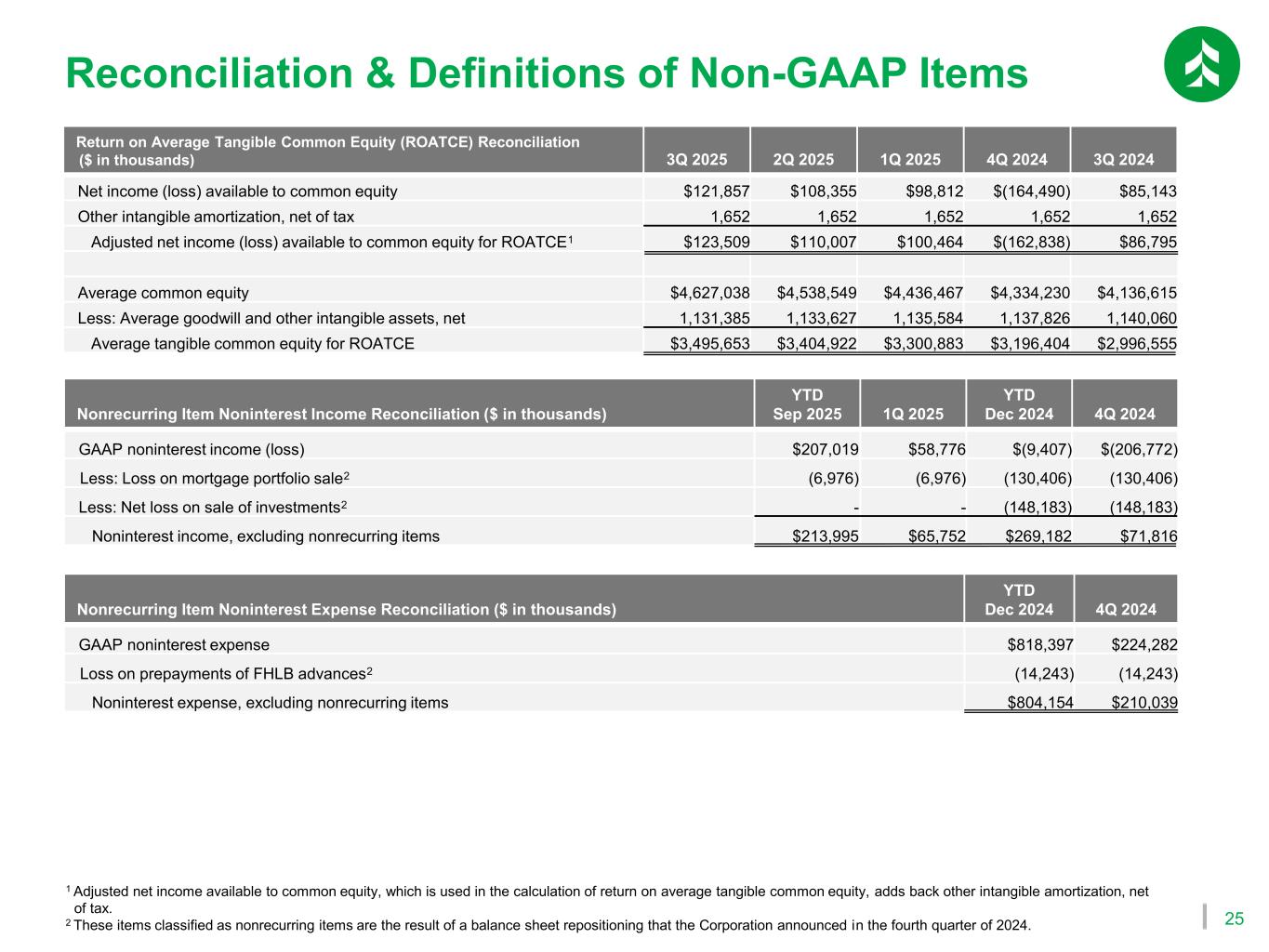
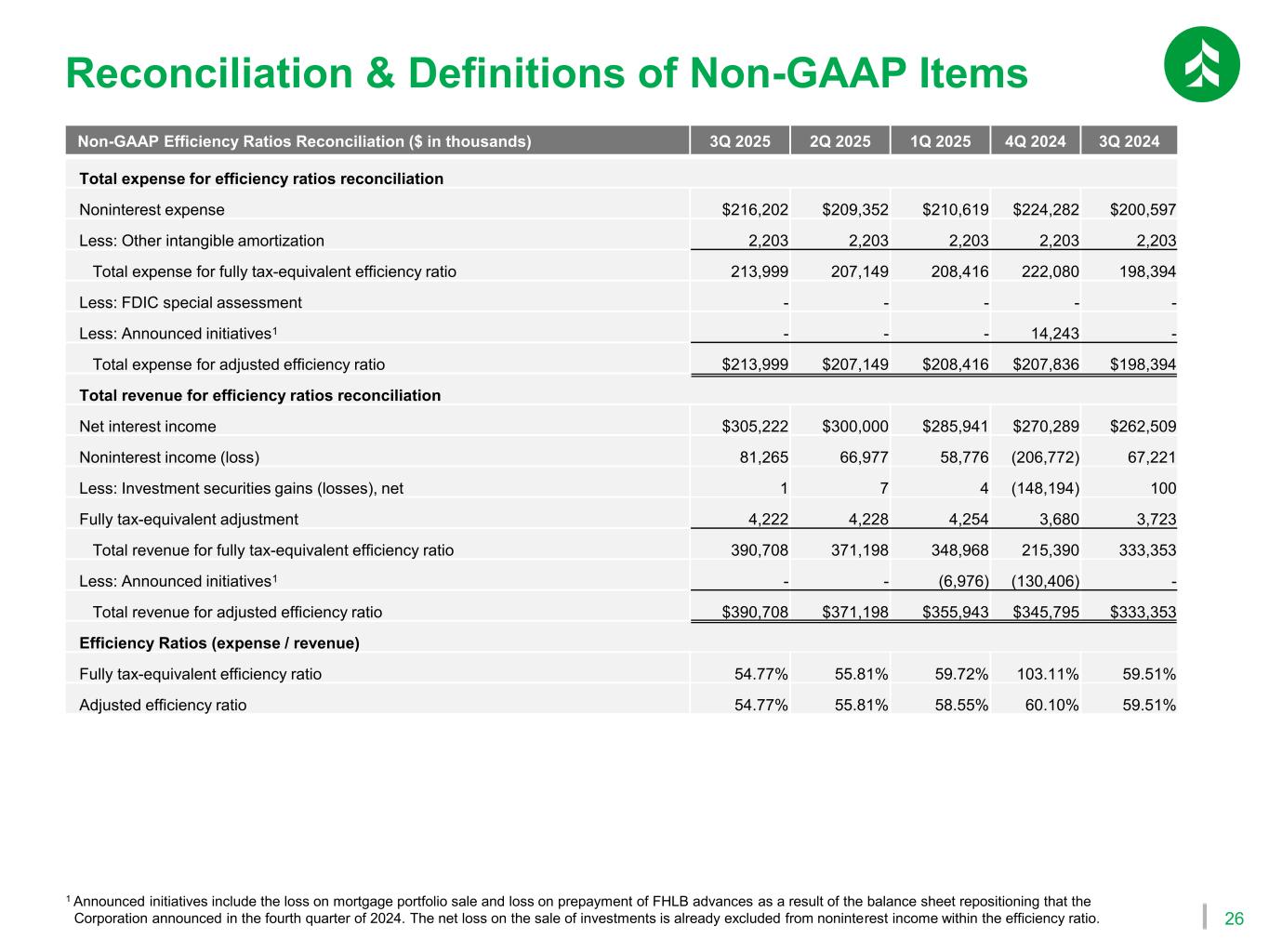
Good afternoon, everyone, and welcome to Associated Banc-Corp's Third Quarter 2025 Earnings Conference Call. My name is Diego, and I will be your operator today. Copies of the slides that will be referenced during today's call are available on the company's website at investor.associatedbank.com. As a reminder, this conference call is being recorded. As outlined on Slide 1, during the course of the discussion today, management may make statements that constitute projections, expectations, beliefs or similar forward-looking statements. Associated's actual results could differ materially from the results anticipated or projected in any such forward-looking statements. Additional detailed information concerning the important factors that could cause Associated's actual results to differ materially from the information discussed today is readily available on the SEC website in the Risk Factors section of Associated's most recent Form 10-K and subsequent SEC filings. These factors are incorporated herein by reference. For a reconciliation of the non-GAAP financial measures to the GAAP financial measures mentioned in this conference call, please refer to Pages 24 through 26 of the slide presentation and to Pages 10 and 11 of the press release financial tables. Following today's presentation, instructions will be given for the question-and-answer session. At this time, I would like to turn the conference over to Andy Harmening, President and CEO, for opening remarks. Please go ahead, sir.
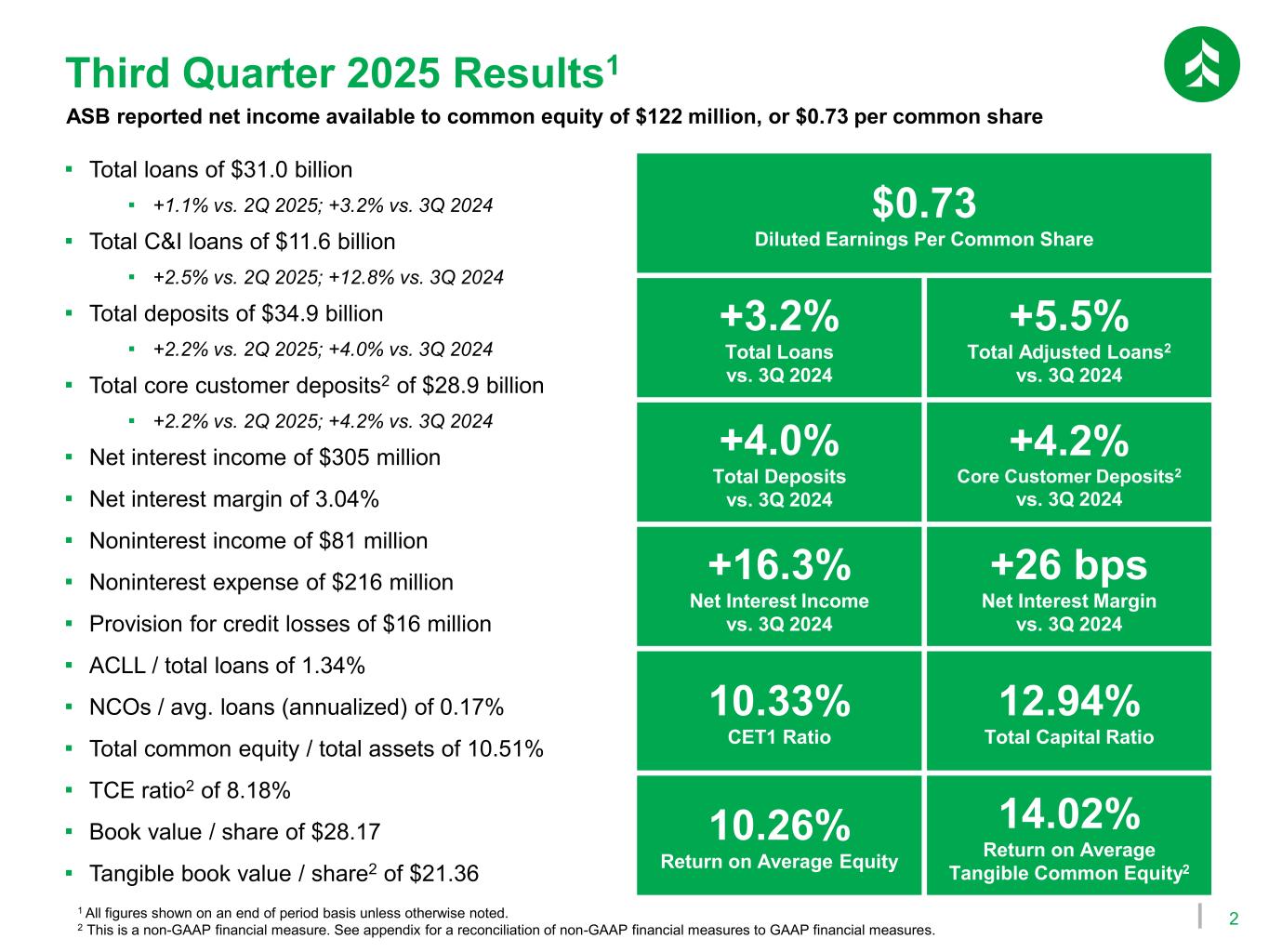
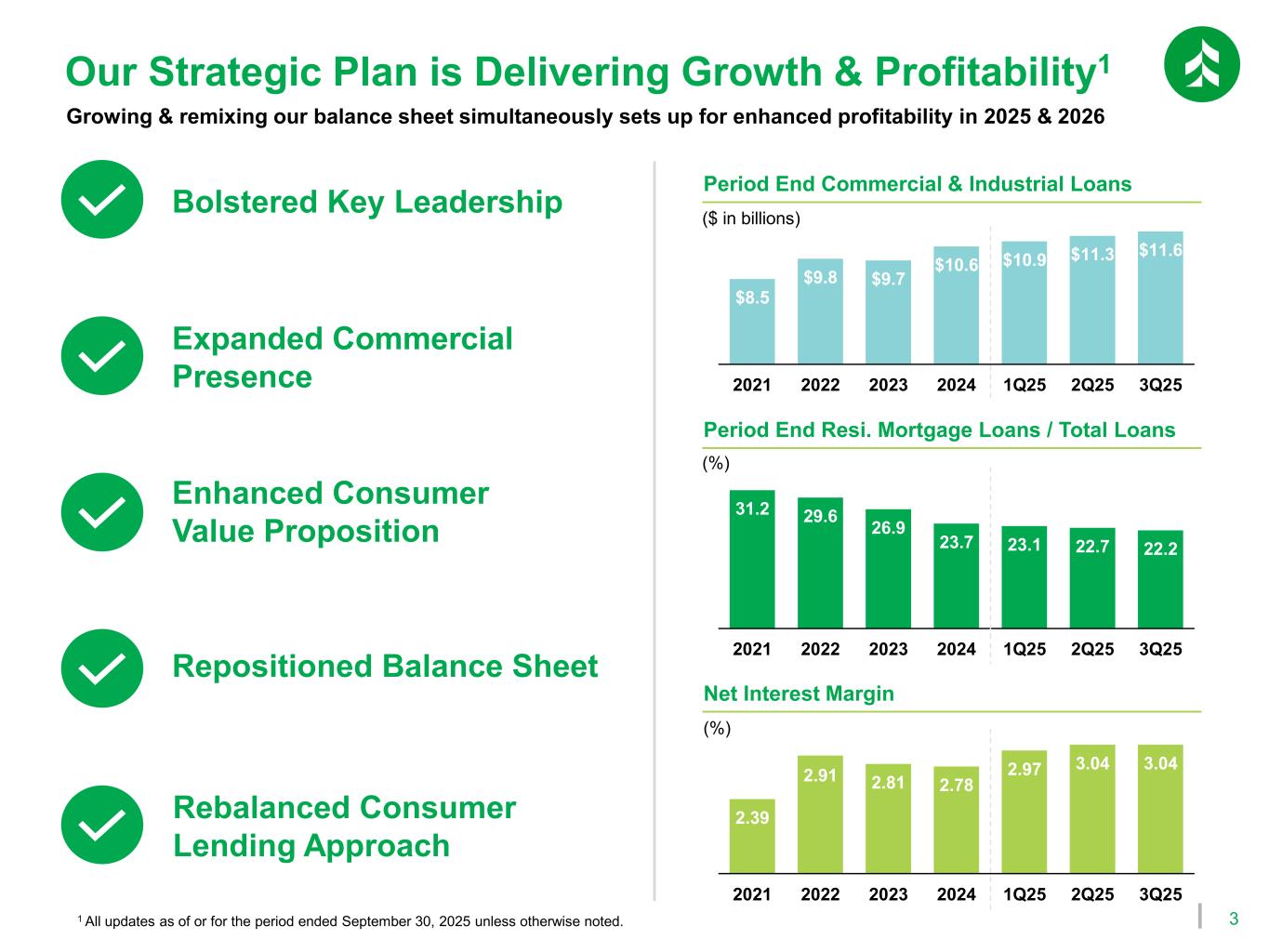
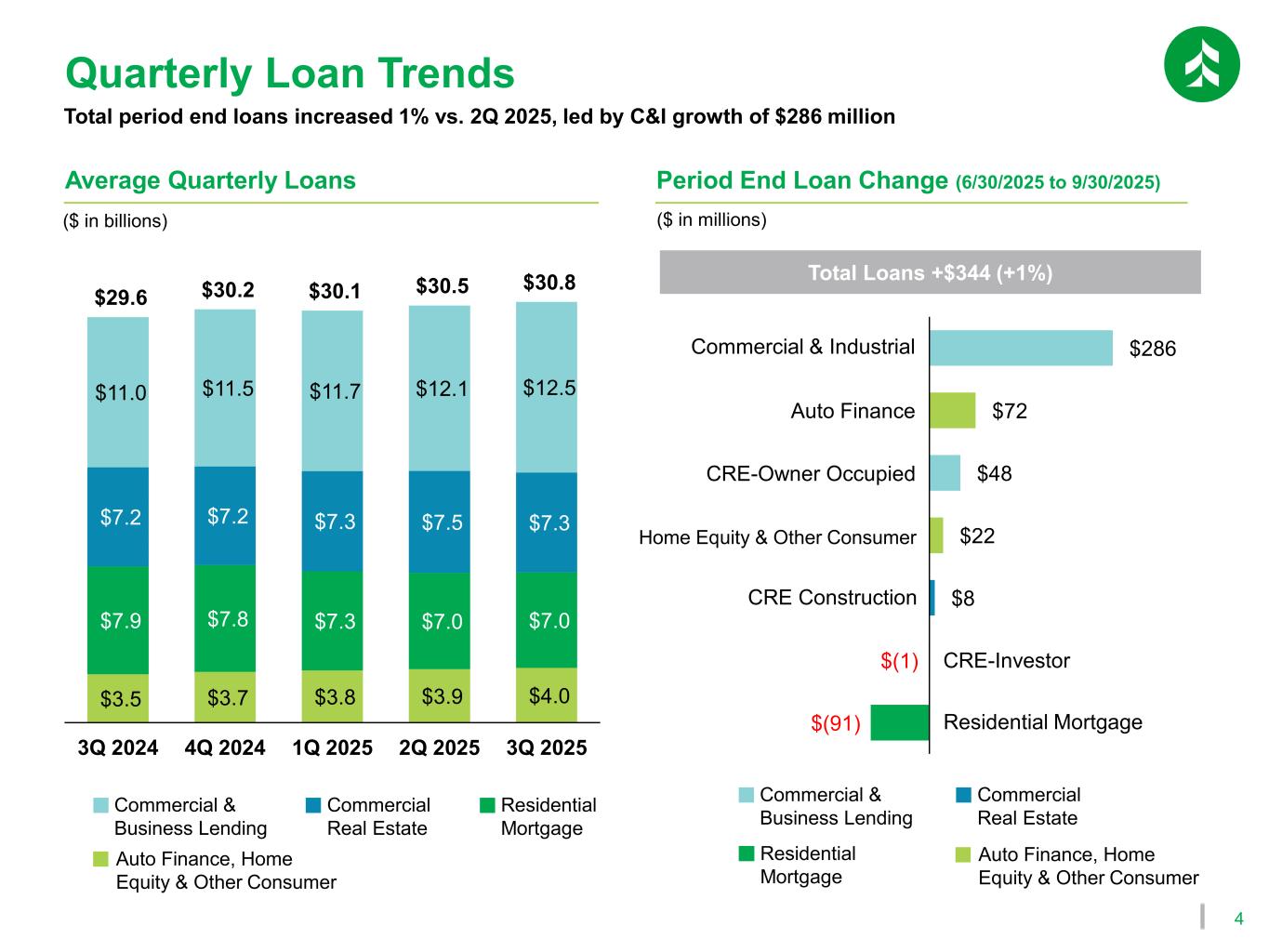
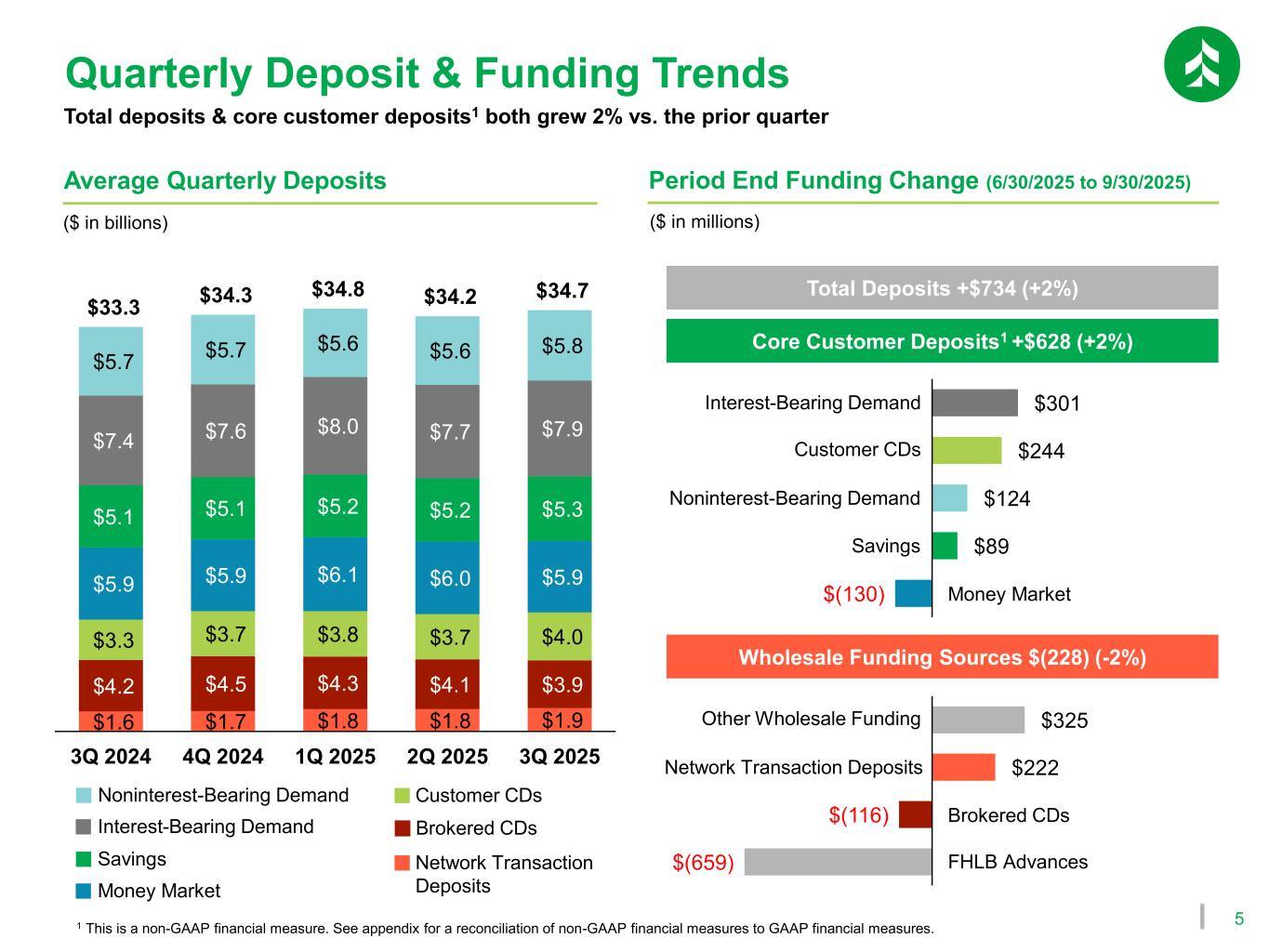
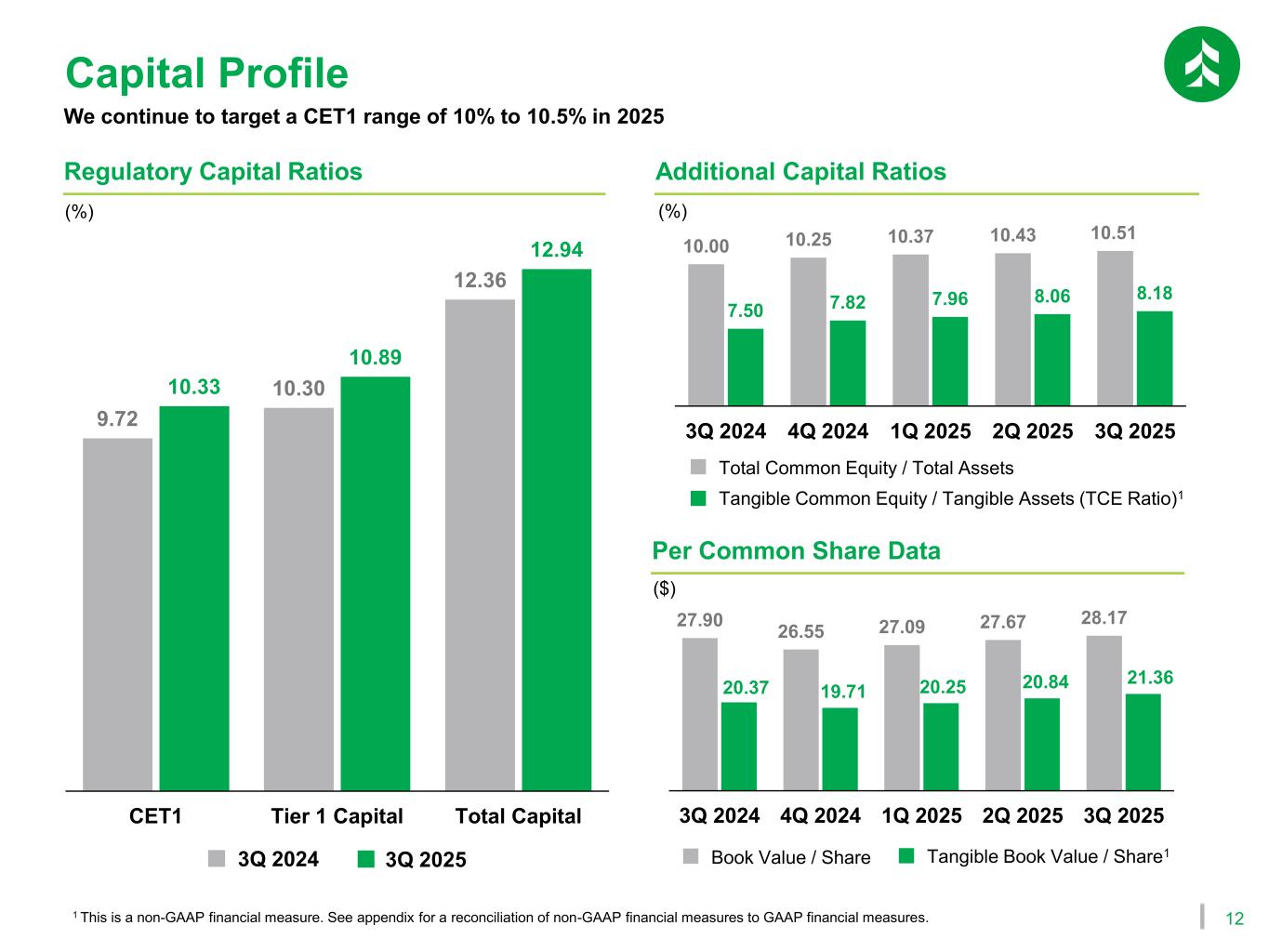
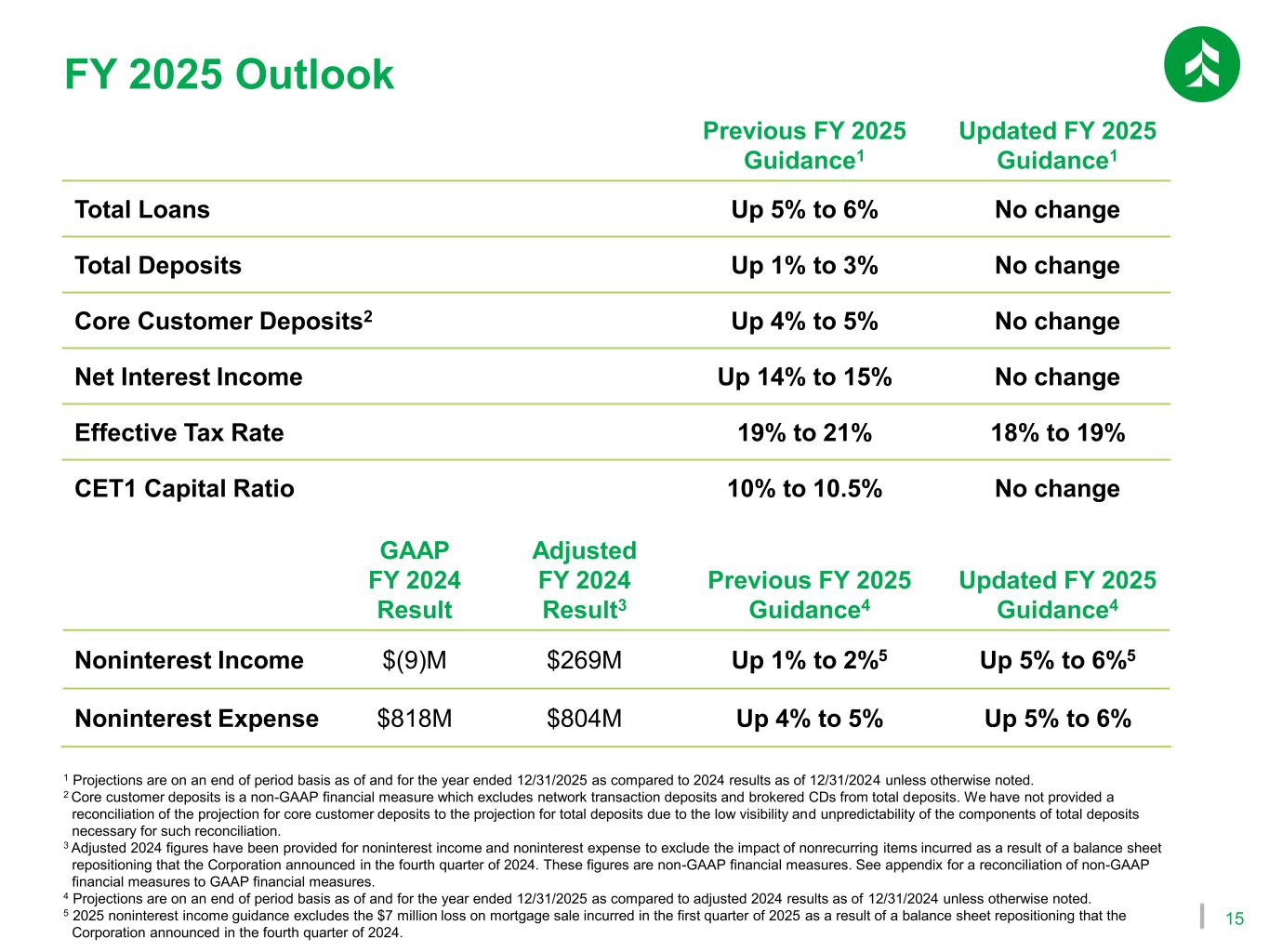
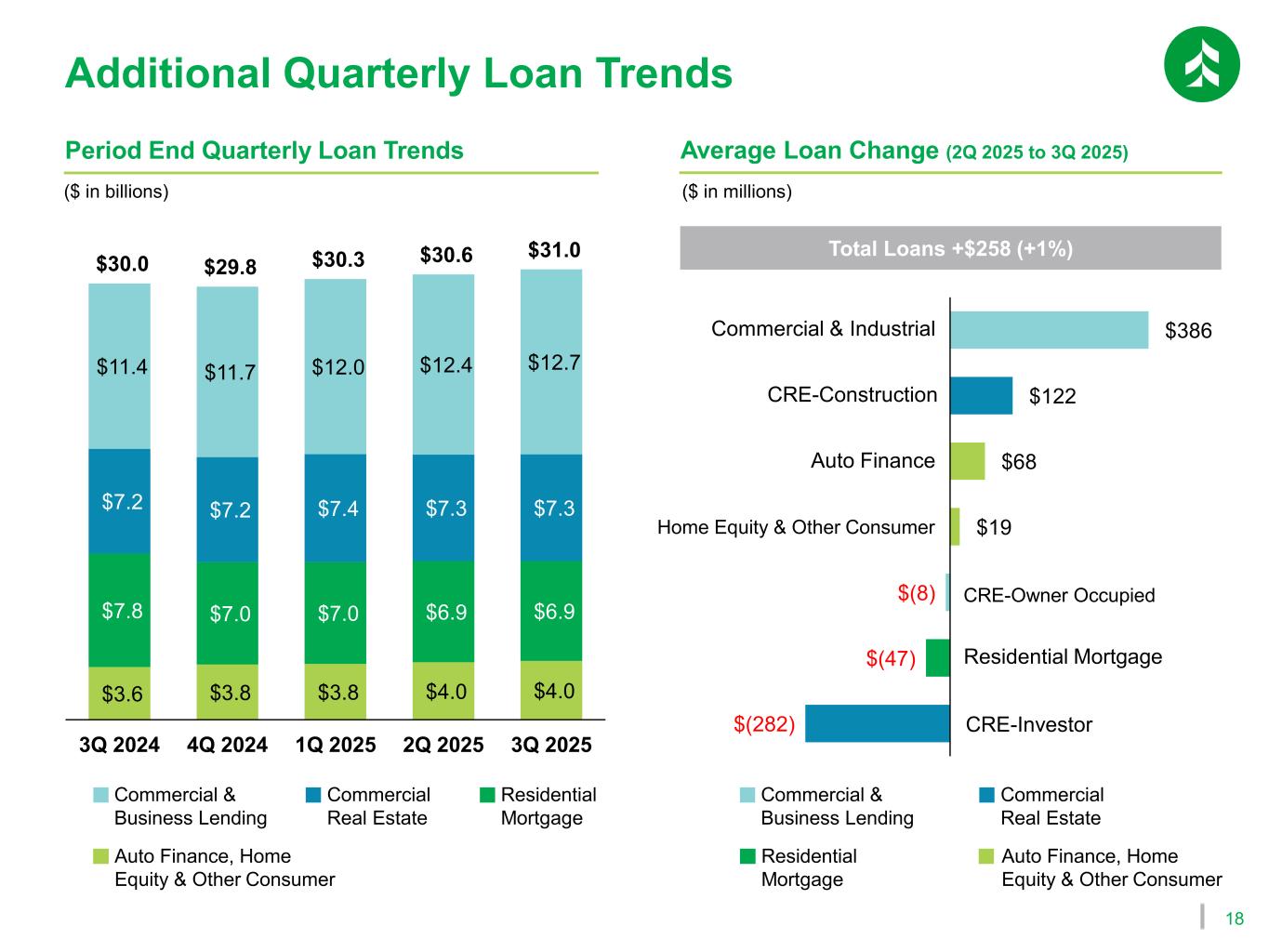
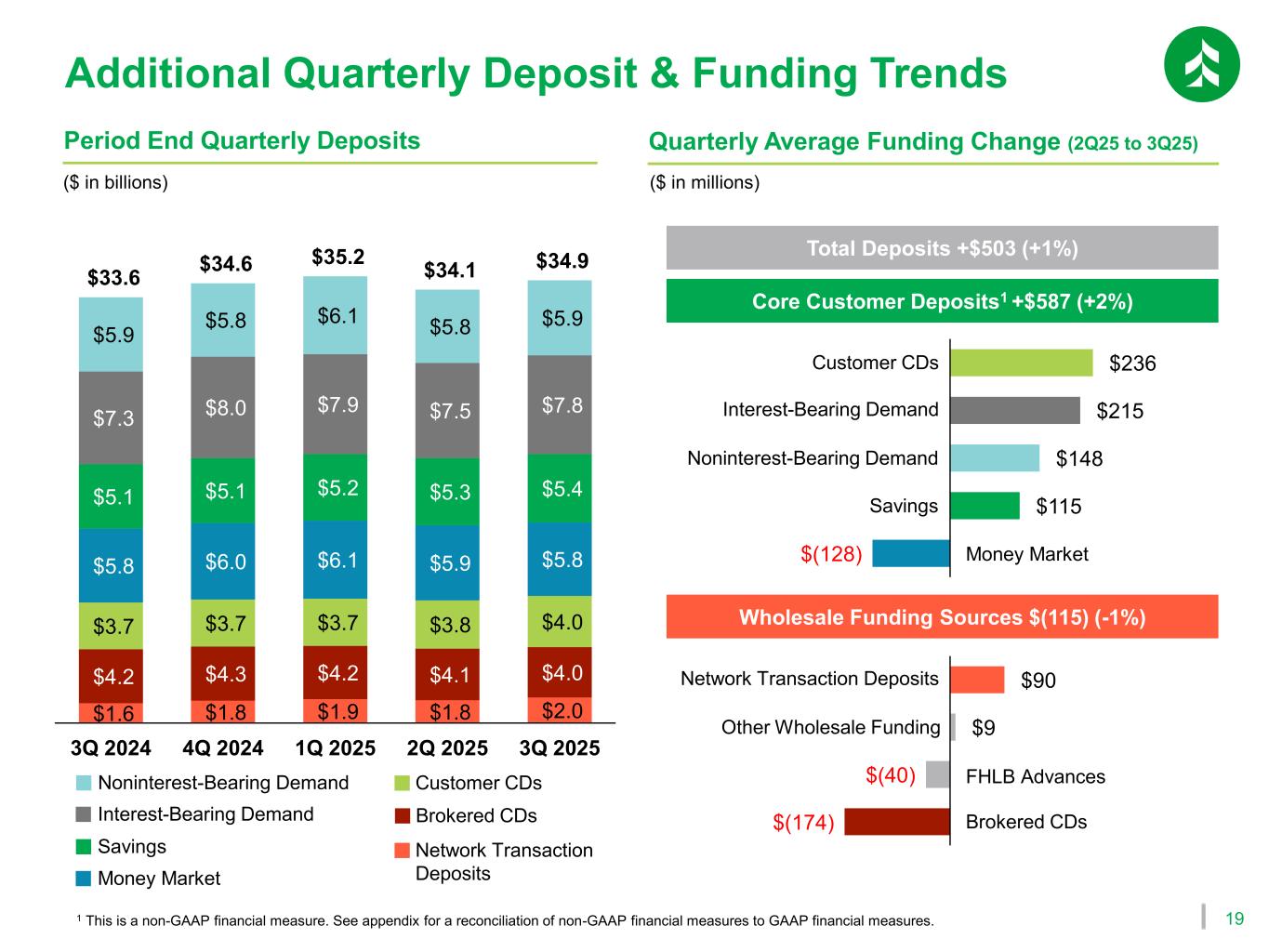
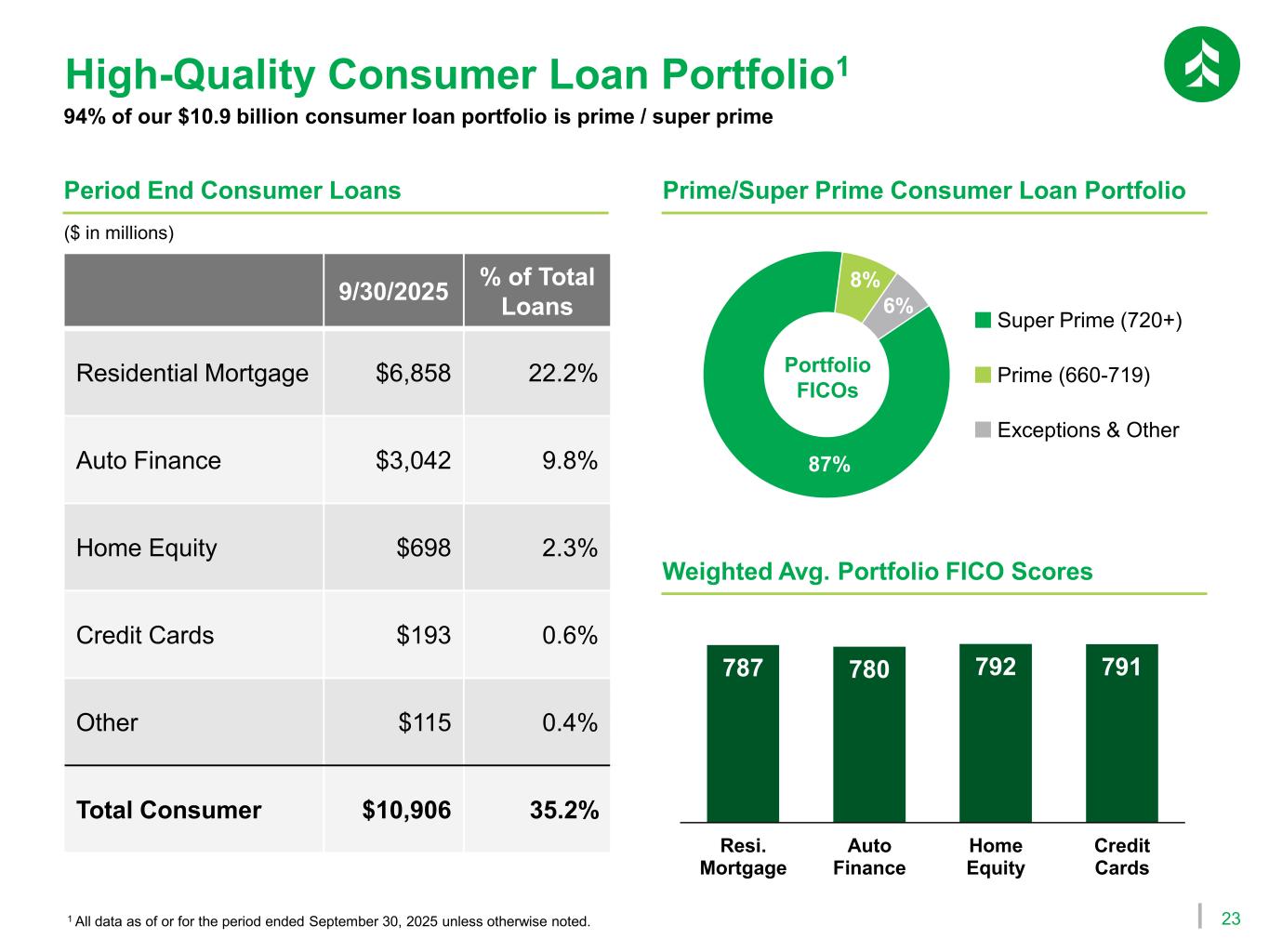
Well, good afternoon, everyone, and thank you for joining us for our third quarter earnings call. This is Andy Harmening. I am joined once again by our Chief Financial Officer, Derek Meyer; and our Chief Credit Officer, Pat Ahern. I'll start with some highlights of the quarter. Derek will cover the income statement and capital trends, and Pat will provide an update on credit quality. Over the course of 2025, we've been squarely focused on execution and delivering on the strategic growth investments we've made across our company. Nine months into the year, we continue to see several trends that are both leading to strong current results and positioning us for future performance. We're proving that we can grow and deepen our customer base organically. We've posted net household growth each quarter so far in '25 and are on pace to deliver our strongest year for organic checking household growth since we began tracking a decade ago. We're also proving that we can grow and remix our balance sheet simultaneously. On the asset side, we've added nearly $1 billion in high-quality C&I loans year-to-date while working down our mix of low-yielding, low-relationship value residential mortgages. On the liability side, we added over $600 million in core deposits in the third quarter, enabling us to work down our wholesale funding mix. As this mix shift continues, it enables us to drive stronger profitability after delivering quarterly net interest income of $300 million in the second quarter, a record for our company. We posted another record of $305 million in Q3. And with this enhanced profitability comes enhanced capital generation. We added another 13 basis points of CET1 capital in Q3 and have now added 30 basis points year-to-date. This capital generation enables us to support our growth while continuing to execute on our organic strategy. Now I'll remind you, just because we're growing assets doesn't mean we're stretching. Credit discipline remains foundational to our strategy, and our growth is focused on high-quality commercial relationships and prime/super prime consumer borrowers, which is consistent with our conservative credit culture built over the last 1.5 decades. We continue to manage our existing portfolios proactively and meet with our customers regularly to stay on top of emerging risks. As we look at the remainder of 2025 and '26, Associated Bank has strong momentum that continues to build. While we continue to monitor risks tied to macro uncertainty, our growth strategy puts us in a position to grow and deepen our customer base, take market share, remix our balance sheet and improve our return profile without having to rely strictly on a hot economy or a perfect rate environment. With that, I'd like to walk through some additional financial highlights on Slide 2. In Q3, we reported earnings of $0.73 per share. Total loans grew by another 1% versus the prior quarter and 3% versus Q3 of '24. Adjusting for the loan sale we completed in January, we've grown loans by 5.5% over that same time period. C&I lending has continued to lead the way as we deepen relationships across our markets and see noncompete agreements from our new RMs expire, we grew nearly $300 million of C&I loans, and we've now grown C&I loans by nearly $1 billion year-to-date. Shifting to the other side of the balance sheet, seasonal deposit positive inflows came back as expected during the quarter, with our core customer deposits up 2% or $628 million from Q2. With that said, we're seeing more than just seasonal strength; core customer deposits were also up over 4% or $1.2 billion relative to the same period a year ago. Moving to the income statement, our Q3 net interest income of $305 million set a new record as the strongest quarterly NII we've seen in our company's history. Our NII was up 16% relative to Q3 of 2024. We also saw strong quarterly noninterest income of $81 million in Q3, a 21% increase from the prior quarter. The increase was driven primarily by capital markets revenue, wealth fees, and a one-time asset gain of approximately $4 million tied to deferred compensation plans. Total noninterest expense was $216 million in Q3, up $7 million from the prior quarter. The quarterly increase was primarily driven by performance-based incentive programs, delivering positive operating leverage continues to help us post strong quarterly operating results and is a primary objective as we execute our plan. Managing credit risk is also a top priority, and we remain pleased with asset quality trends. In Q3, delinquencies were flat and nonaccruals were just 34 basis points of total loans. Net charge-offs were also flat at 17 basis points, and our ACLL decreased by 1 basis point to 1.34%. And finally, we posted a return on average tangible common equity of over 14% in Q3, a 250 basis point improvement from Q3 of last year. On Slide 3, we provide a reminder of how our strategic investments are transforming our return profile and setting us up for additional momentum over the remainder of this year and into 2026. First, we're positioned to take market share in commercial lending and deposit acquisition, thanks to a strategy predicated on hiring talented RMs in metro markets where we're underpenetrated. In fact, we've already seen results from our efforts. Through the first nine months of the year, we've already added nearly $1 billion in C&I loans to our balance sheet with pipelines remaining strong and several more noncompete set to roll up between now and the first quarter of next year. We expect our momentum to carry through '26. And as those relationship C&I balances come onto the books, they're replacing lower-yielding nonrelationship residential mortgage balances that are rolling off, positioning us to diversify our asset base more profitably without changing our conservative approach to credit. This mix shift is driving enhanced profitability. Over the past two quarters, we saw our margin climb above 3% and posted back-to-back quarters of record NII. As we continue to grow and remix our asset base and support it with low-cost core deposits, we see additional opportunity ahead. On Slide 4, we highlight our loan trends through Q3. On both an average and period-end basis, quarterly loans grew by 1% versus Q2. And that growth was once again led by the C&I category. On a spot basis, C&I loans grew by 3% or nearly $300 million versus the prior quarter. After adding nearly $1 billion in C&I balances to our balance sheet year-to-date, we feel very well positioned to meet or exceed the $1.2 billion growth target we originally set for ourselves in 2025, thanks to the strength of our pipelines and the additional lift from newly hired RMs as our noncompetes expire. Auto balances also grew by $72 million in the third quarter as we've continued to selectively add prime and super-prime balances to our book. Total CRE balances grew slightly for the quarter, but decreased by $160 million on a quarterly average basis. We expect elevated CRE payoff activity in the coming quarters as rates continue to fall. Overall, we continue to expect total bank loan growth of 5% to 6% for the year. Shifting to Slide 5, total deposits and core customer deposits both bounced back as expected in Q3 following Q2 seasonality. Core customer deposits increased by over $600 million point-to-point with gross spread across most key categories. Relative to the same period a year ago, core customer deposits were up 4% or $1.2 billion. And growth in our core deposit book has enabled us to work down our wholesale funding balances. Here in Q3, overall wholesale funding sources decreased by 2% versus Q2. Based on our latest forecast, we now expect core customer deposit growth to come in towards the lower end of our 4% to 5% growth range for the year, but we remain confident in our ability to grow granular, low-cost core customer deposits over time for two key reasons. First, our consumer value proposition stacks up well against any bank or fintech in the industry, and we have additional product upgrades planned for late Q4 of '25 and into 2026. This gives us an engine to attract and retain checking households over time, and it's already driving results. After posting the strongest organic primary checking household growth numbers we've seen since we began tracking a decade ago back in Q2, we followed that up with another quarter of solid growth in Q3. Second, we've refined our focus on commercial deposits by moving to a balanced scorecard, hiring relationship-focused RMs, launching a new deposit vertical, and most recently, hiring Eric Lien as our new Director of Treasury Management. With pipelines growing and several noncompetes set to expire in the coming months, we feel very well positioned for growth in 2026. We continue to expect that our efforts to drive growth in lower-cost core customer deposit categories will enable us to further decrease our reliance on wholesale funding sources over time. And with that, I'll pass it to Derek to discuss the income statement and capital trends.
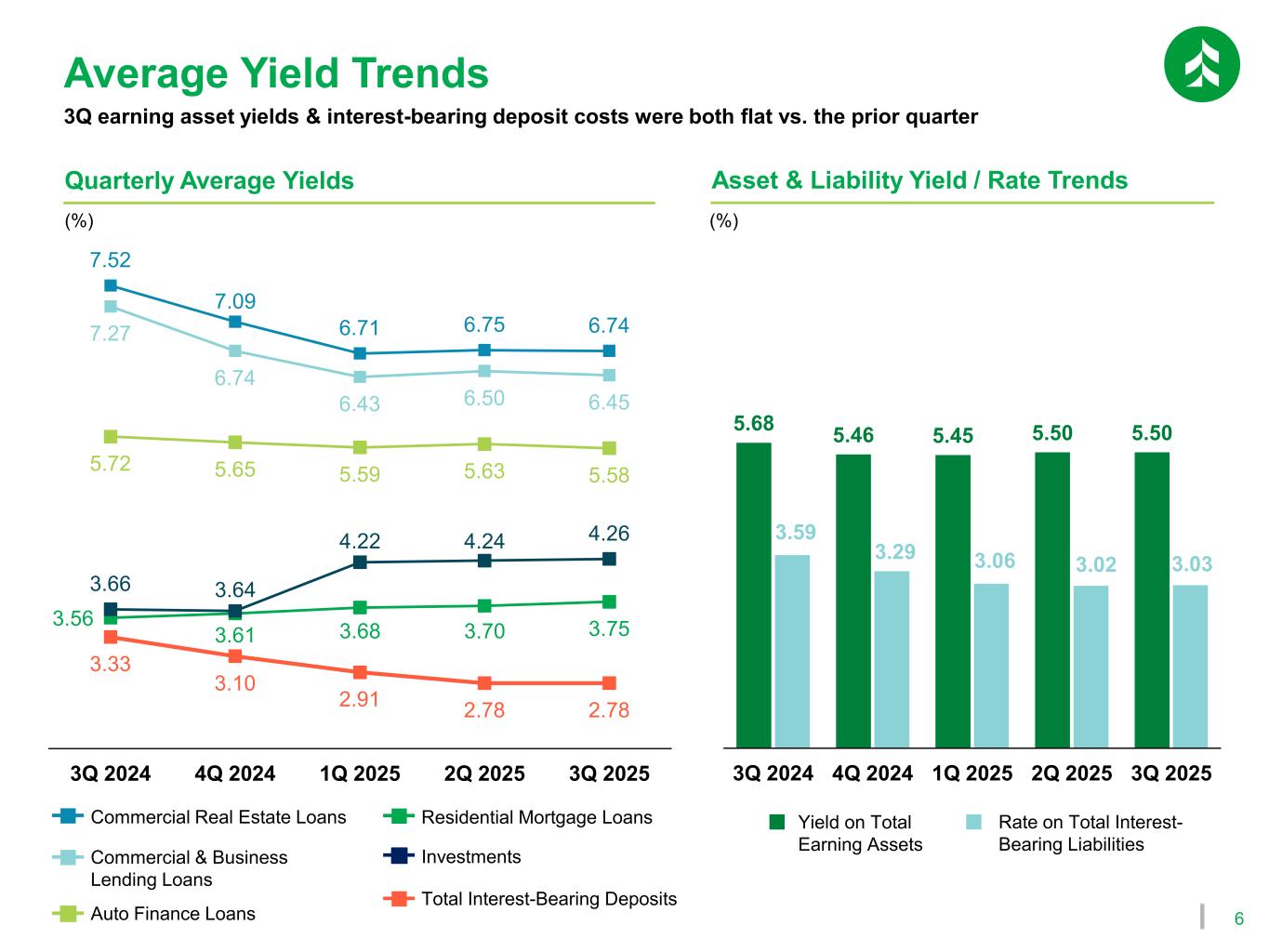
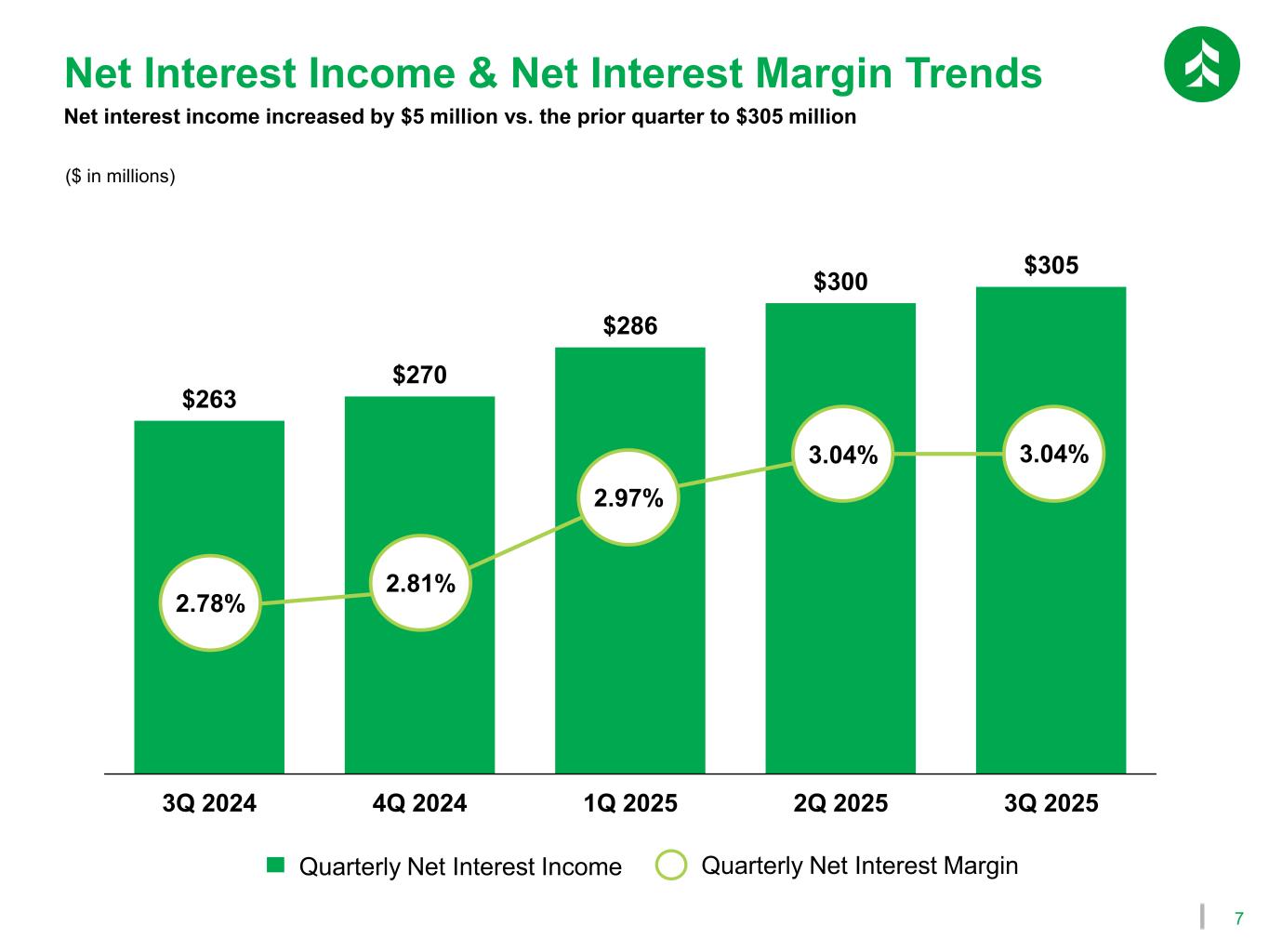
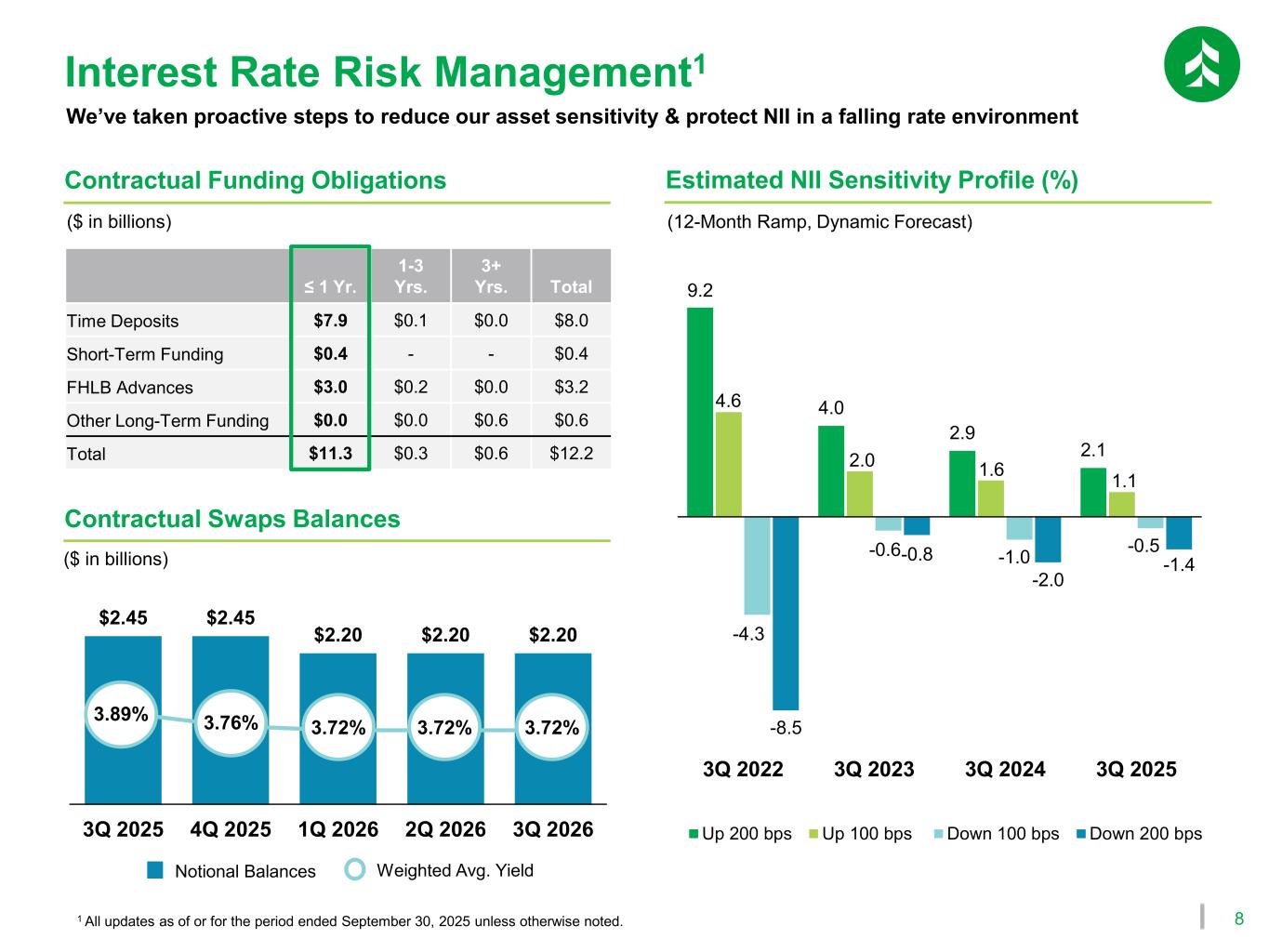
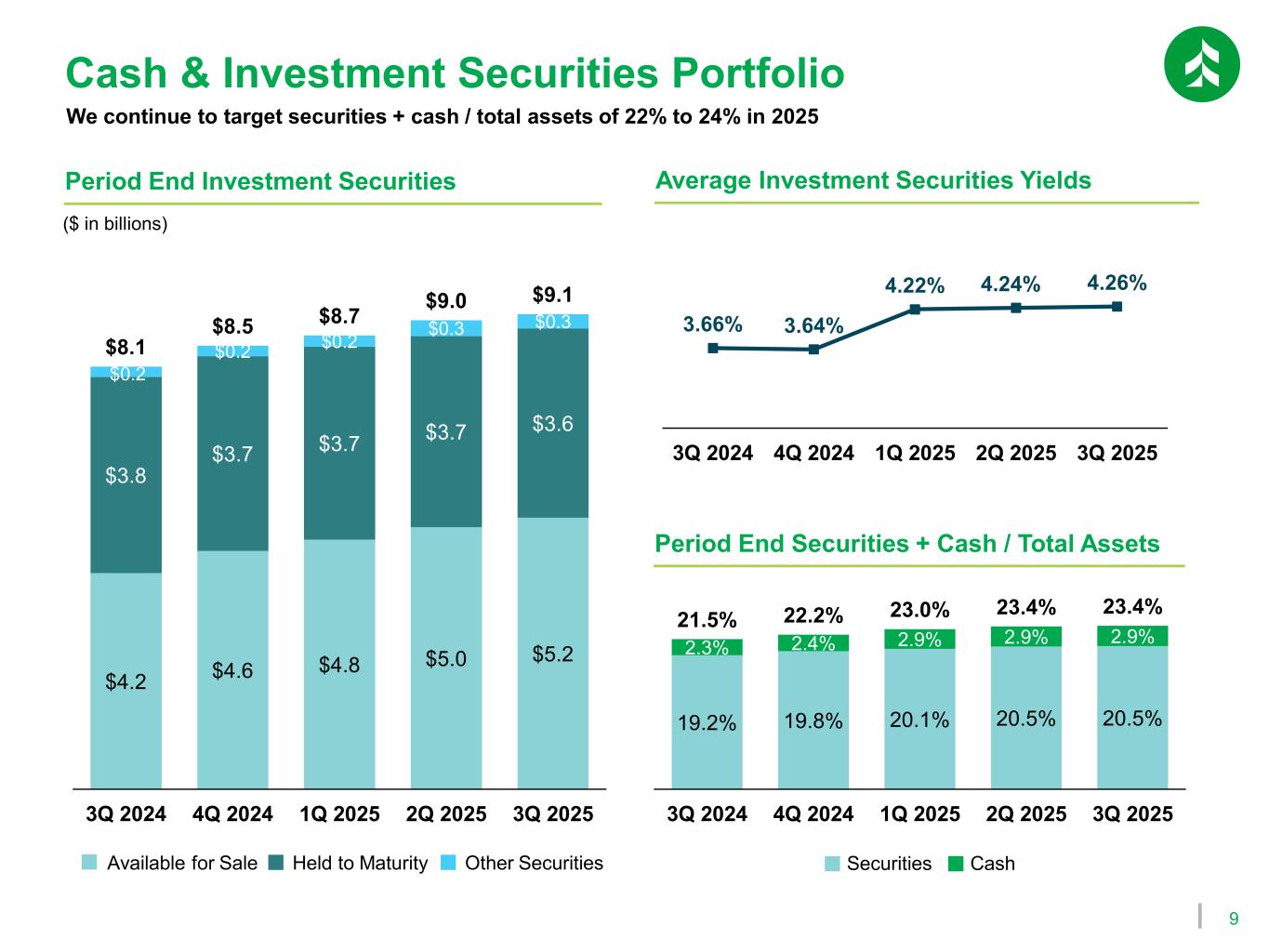
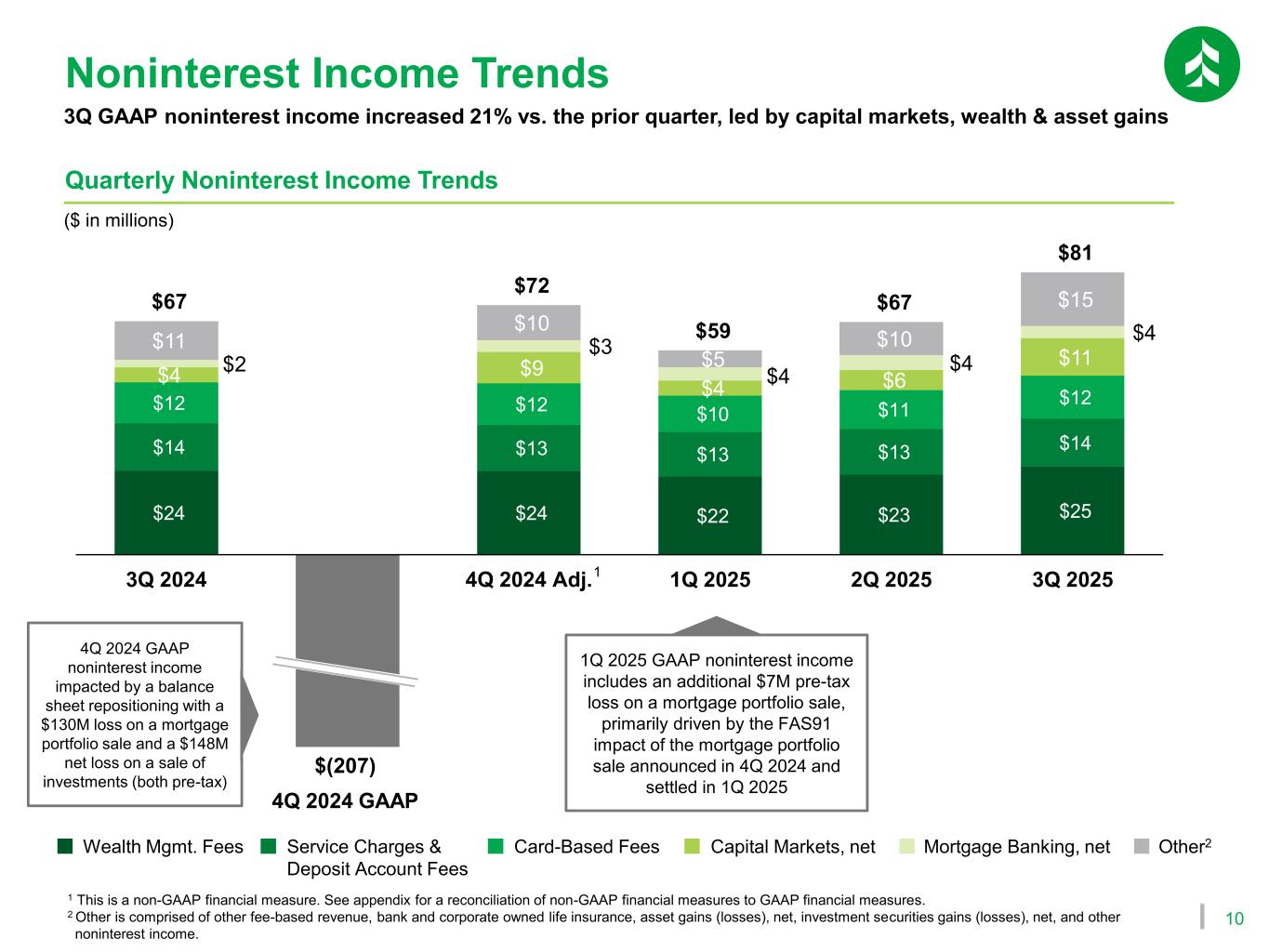
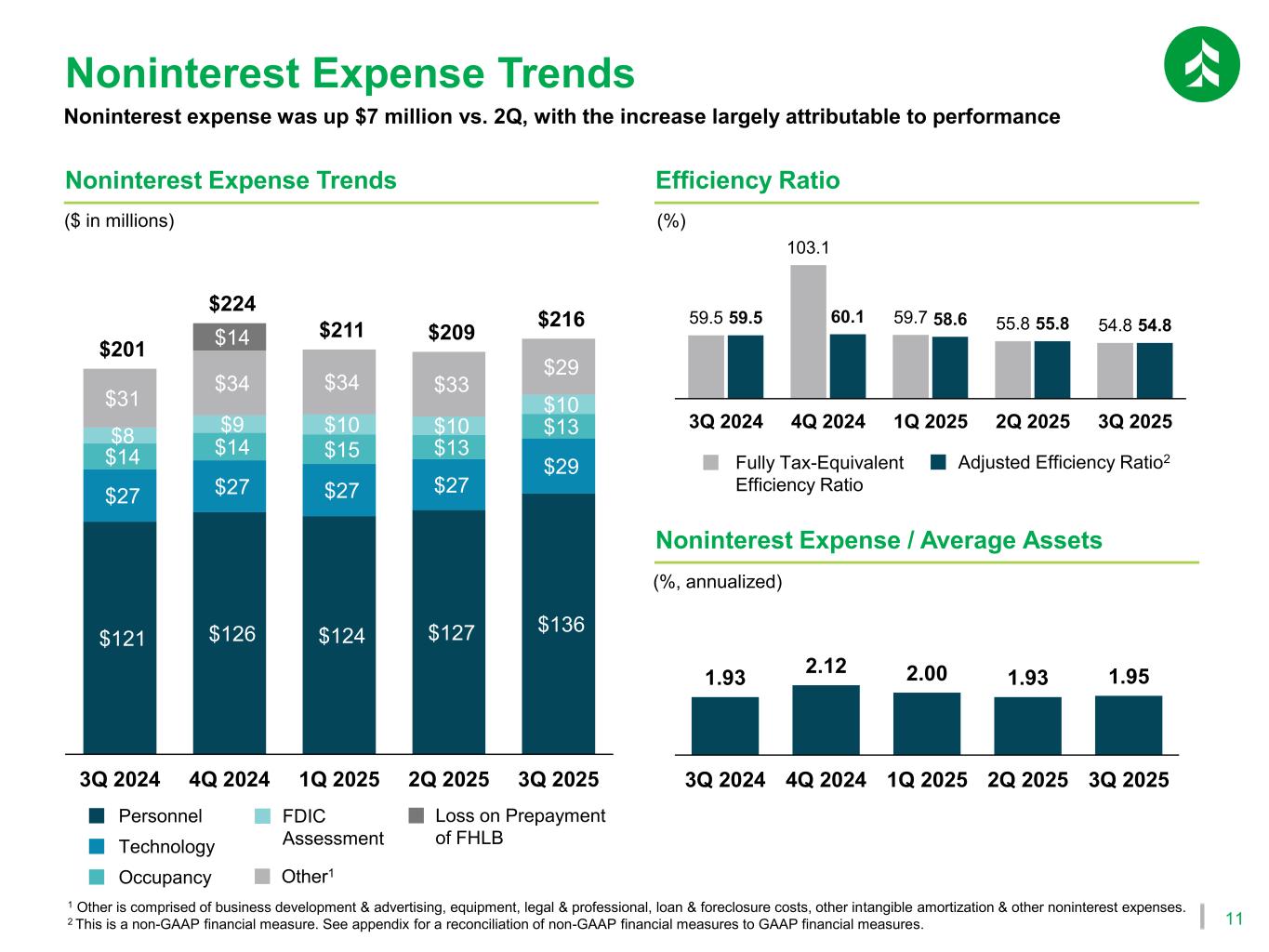
Thanks, Andy. I'll start on Slide 6 with our yield trends. In the third quarter, total earning asset yields remained steady at 5.5%, and interest-bearing deposit costs also stayed the same at 2.78%, while total interest-bearing liabilities increased by 1 basis point to 3.03%. In our main asset categories, small declines in commercial, CRE, and auto yields were balanced by slight increases in mortgage and investment yields. Although total interest-bearing deposit costs were unchanged from Q2, they decreased by 55 basis points compared to Q3 of 2024. Moving to Slide 7, third quarter net interest income was $305 million, an increase of $5 million from the previous quarter and $42 million compared to Q3 of 2024. The net interest margin for Q3 remained strong at 3.04%, flat from Q2 but 26 basis points higher than Q3 of 2024. Based on our latest outlook for balance sheet growth, deposit betas, and Federal Reserve actions, we expect to achieve net interest income growth of 14% to 15% in 2025. This forecast includes the assumption of two additional Fed rate cuts in 2025. Considering the potential for further rate changes, we're reminding everyone of the measures we've taken to reduce our asset sensitivity outlined on Slide 8. Over time, we've positioned ourselves to minimize interest rate risk while maintaining funding flexibility with shorter obligations. We've protected our variable rate loan portfolio with fixed swap balances of about $2.45 billion and have created a $3 billion fixed-rate auto book with low prepayment risk. Our moderate asset sensitivity means that a scenario involving a 100 basis point decrease now only impacts our NII by 0.5% as of Q3. We plan to keep this relatively neutral position moving forward. On Slide 9, total securities rose to $9.1 billion in Q3 as we gradually built our AFS book. Our securities plus cash to total assets ratio increased to 23.4% for the quarter, and we aim for a range of 22% to 24% for this ratio. On Slide 10, we discuss our noninterest income trends for the quarter. In Q3, total noninterest income was $81 million, up 21% compared to both the previous quarter and the same period last year. This increase was mainly driven by strong capital markets and wealth fees, along with nonrecurring asset gains. Particularly in the capital markets, the rise was due to heightened activity in our syndications and swaps businesses. The asset gain in this quarter was about $4 billion related to deferred compensation valuation adjustments. Given the strong performance, we now anticipate total noninterest income in 2025 to grow by 5% to 6% compared to 2024, excluding the nonrecurring items that affected our fourth quarter of 2024 and first quarter of 2025 due to the balance sheet repositioning we announced last December. Moving to Slide 11, third quarter expenses were $216 million, an increase of $7 million from Q2, mostly due to performance-related factors. This increase stemmed from personnel expenses, which included an additional $4 million related to the same deferred compensation valuation adjustment recognized as a gain in our noninterest income. Another significant factor was a $4 million rise in variable compensation expenses due to excellent execution of our strategic plans. During Q3, personnel costs were also affected by approximately $1 million in extra healthcare expenses compared to Q2. Additionally, we saw rises in technology, business development, and advertising expenses, offset by decreases in legal and professional fees, loan and foreclosure costs, and other noninterest expenses. As previously noted, we continue to invest to fuel growth, but achieving positive operating leverage is a top priority. In Q3, our efficiency ratio decreased for the third consecutive quarter, coming in below 55%. Based on our latest forecast, we now expect total noninterest expense growth to be between 5% and 6% in 2025 off our adjusted 2024 base.
Speaker 3
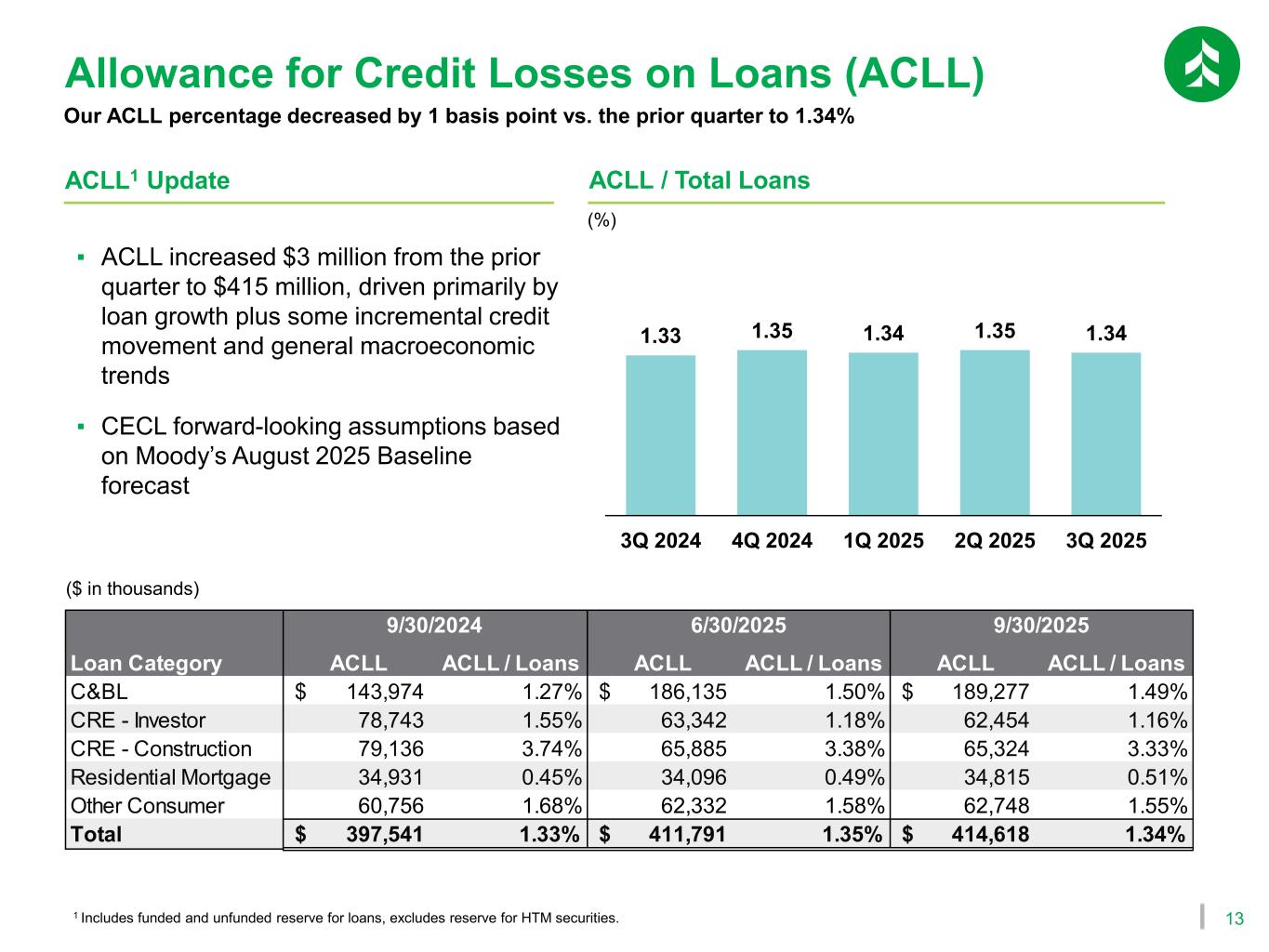
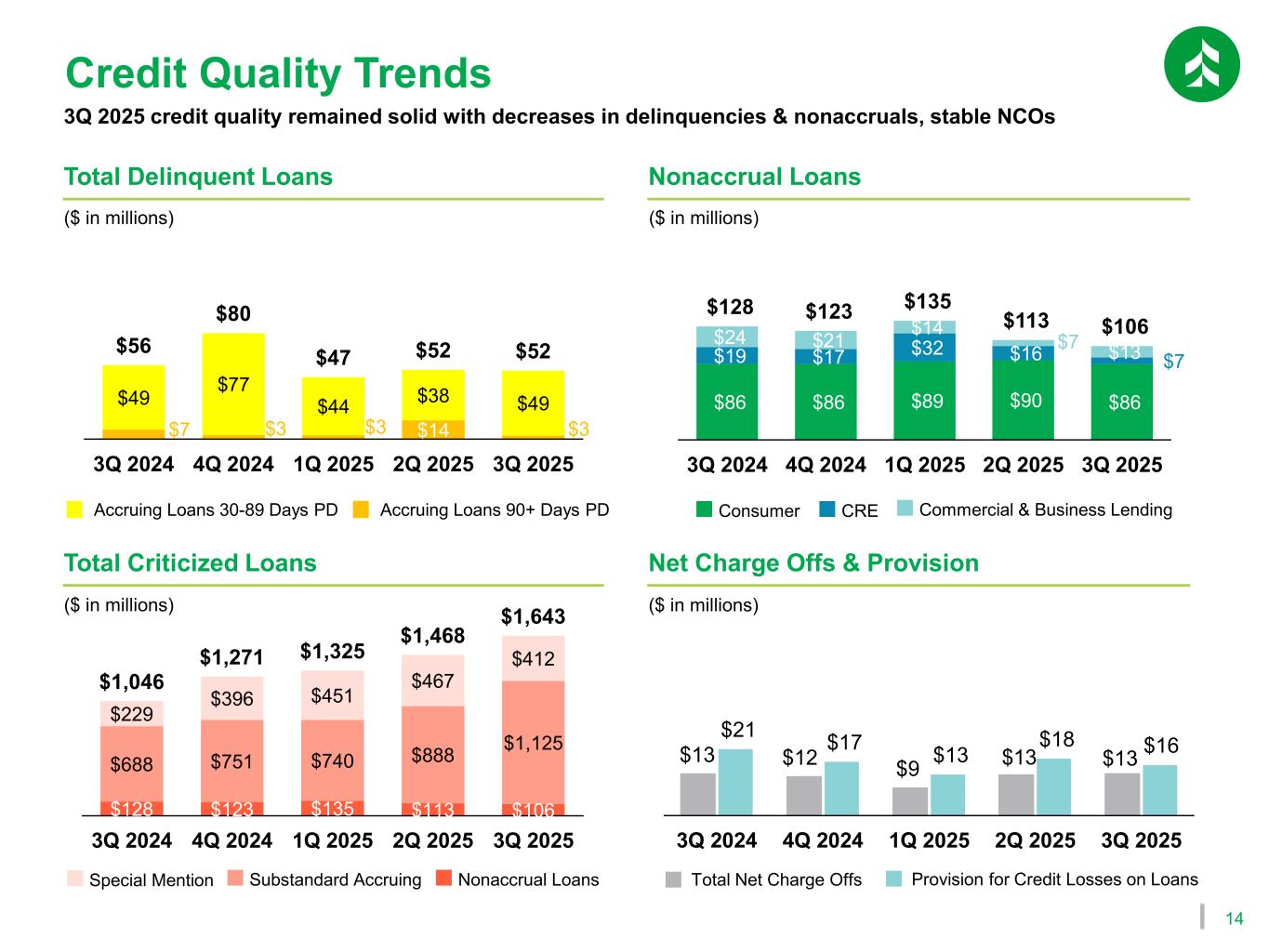
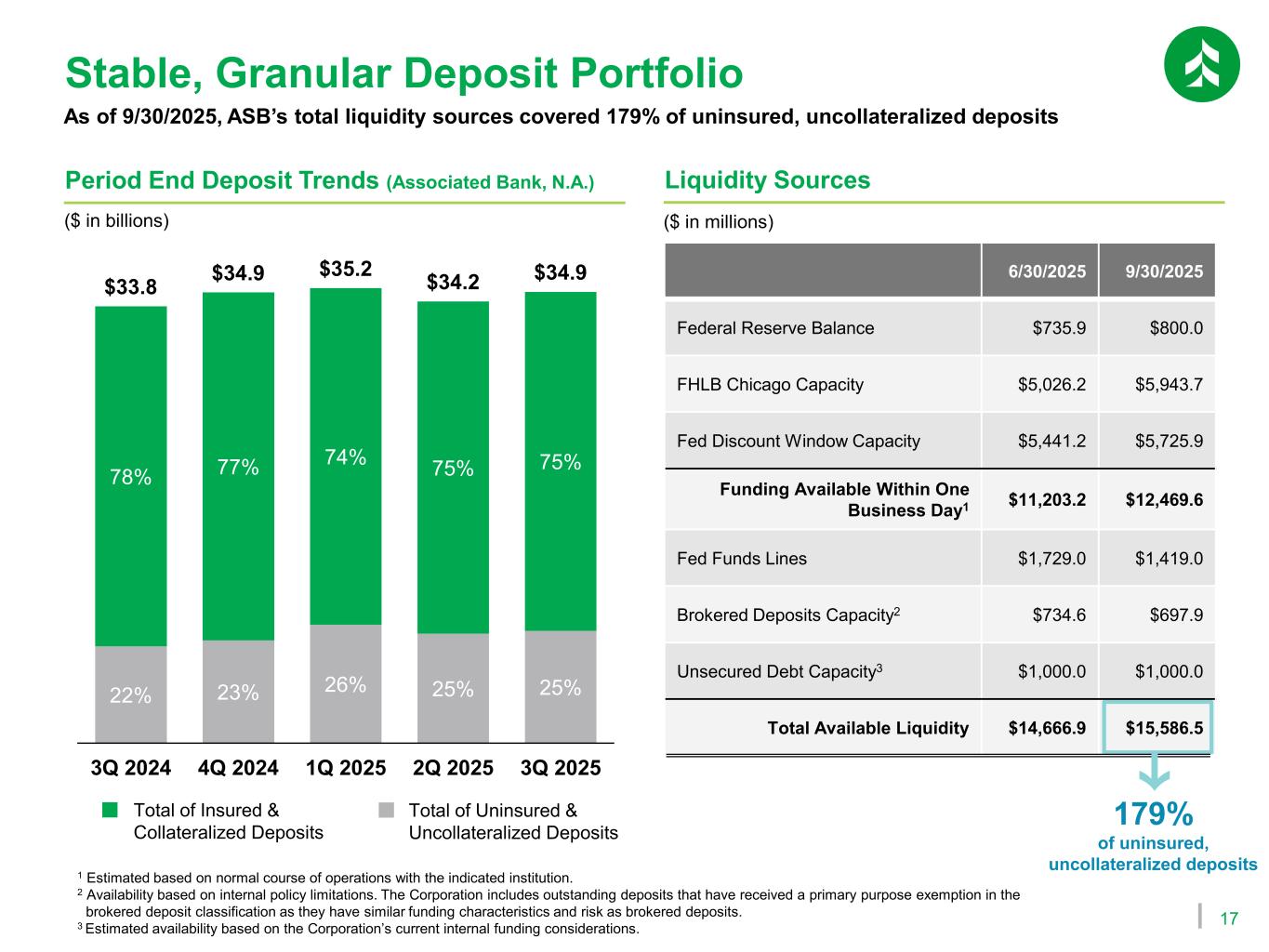
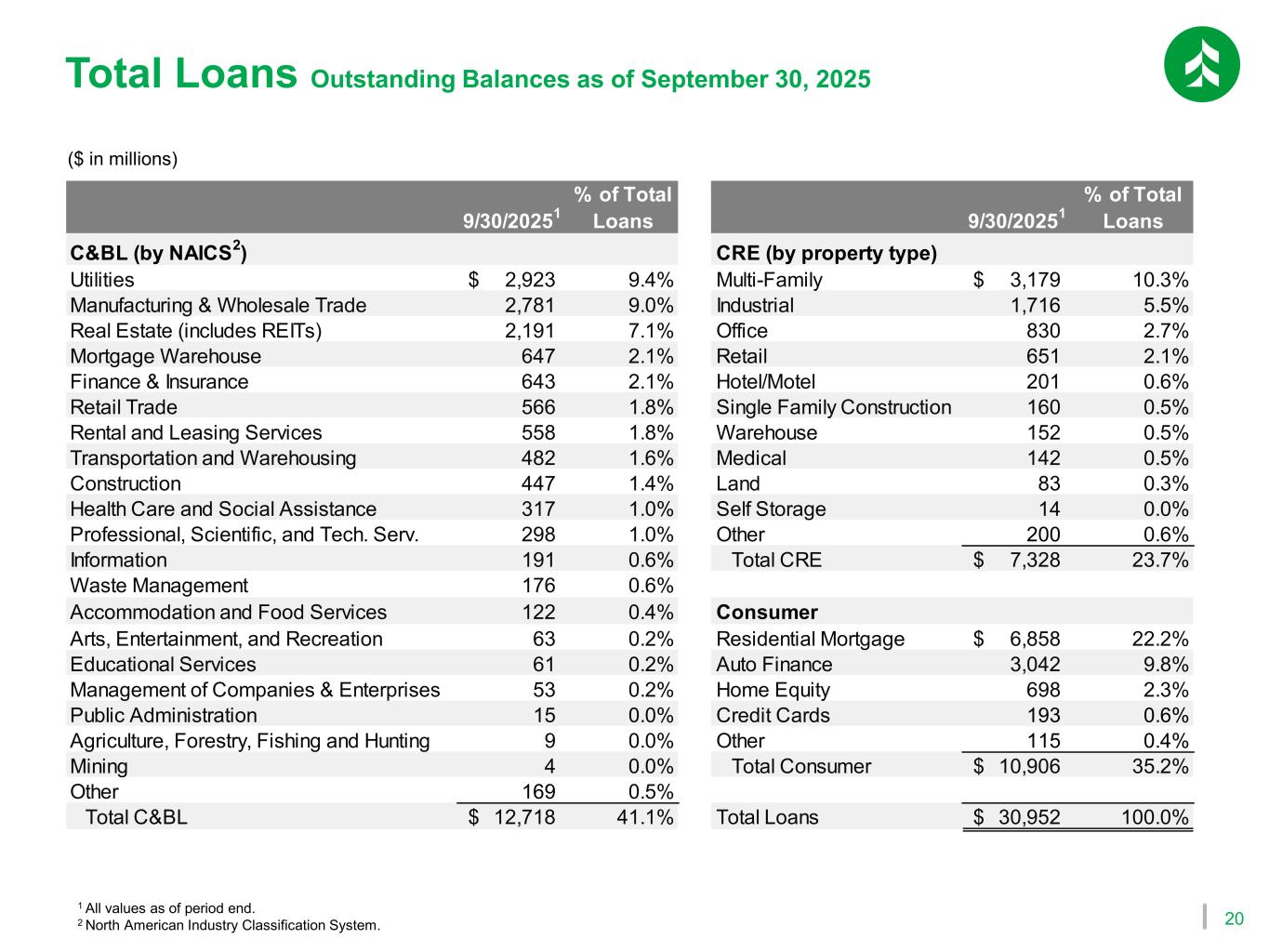
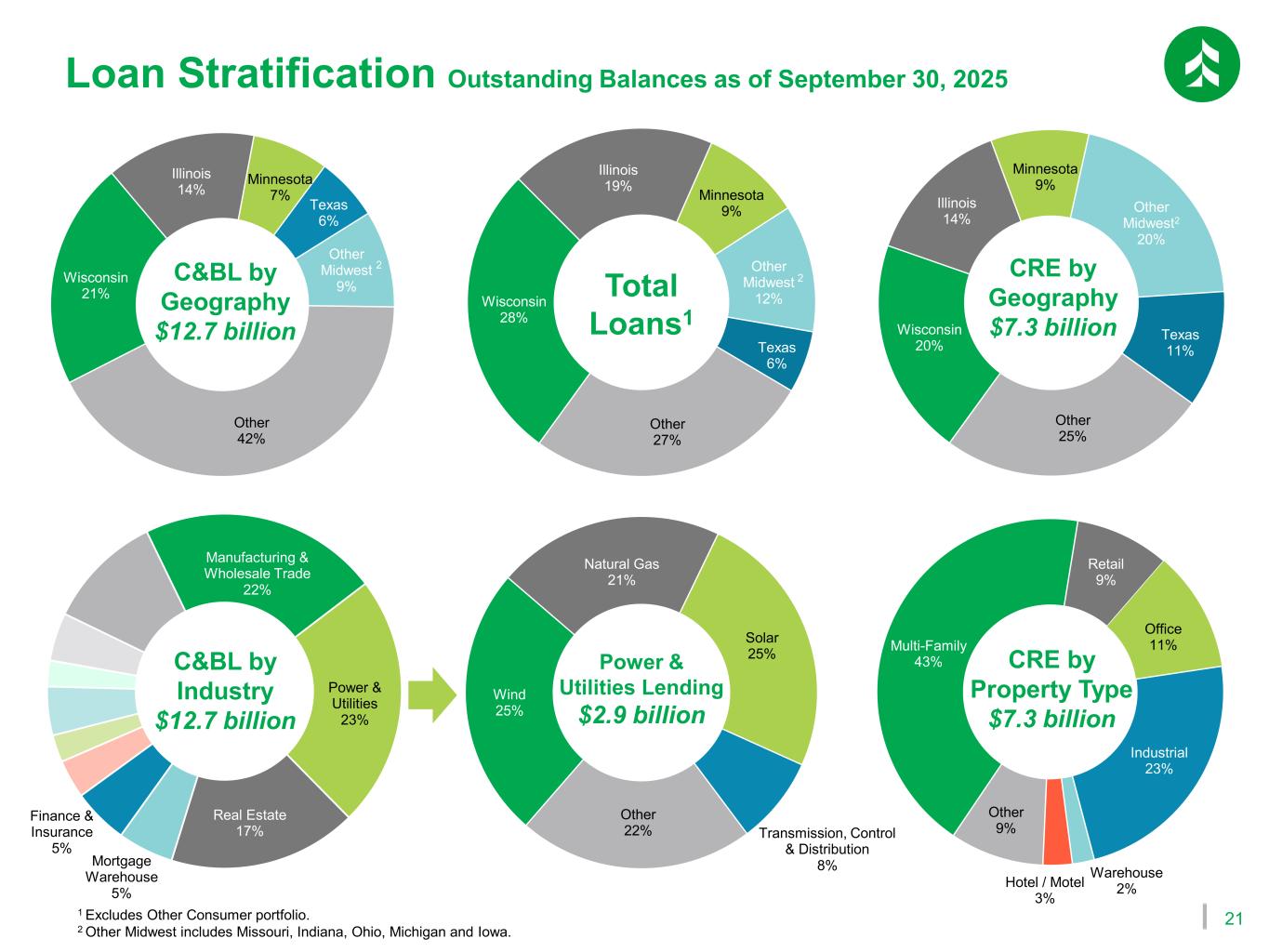
Thanks, Derek. I'll start with an allowance update on Slide 13. Our CECL forward-looking assumptions utilized the Moody's August 2025 baseline forecast. This forecast remains consistent with a resilient economy despite the higher interest rate environment. It contains no additional rate hikes, slower but positive GDP growth rates, a cooling labor market, continued elevated levels of inflation, and continued monitoring of ongoing market developments and tariff negotiations. In Q3, our ACLL increased by $3 million to $415 million. This increase was primarily driven by an increase in commercial and business lending, which largely stemmed from a combination of loan growth plus normal movement within risk rating categories. Our ACL ratio decreased to 1.34%, down 1 basis point from the prior quarter. On Slide 14, we continue to review our portfolios closely given ongoing uncertainty in the macro picture, but we maintain a high degree of confidence in our loan portfolios and continue to see solid performance in Q3. Total delinquencies were flat at $52 million in Q3. These delinquency trends are largely in line with the benign trends we've seen for the past several quarters. Total criticized loans ticked higher in Q3 with an increase in substandard accruing partially offset by decreases in the special mention and nonaccrual categories. With the current industry guidance. As a reminder, we do not feel that recent trends in this category are an indication of a material shift in the credit profile of the portfolio, nor has there been a corresponding risk of loss. In fact, we continue to see resolution with some of our more stressed credits and liquidity remains present in the market in terms of both payoffs and loan re-margin. Nonaccrual balances decreased to $106 million in Q3, down $7 million versus Q2 and down $22 million from Q3 of 2024. Finally, we booked $13 million in net charge-offs during the quarter and $16 million in provision. Our net charge-off ratio held flat at 0.17%. All three of these numbers remain squarely in line with the figures we've seen over the past several quarters. In response specifically to tariffs and ongoing trade policy negotiations, we remain in contact with clients as the trade policy discussion continues. I would note that clients have been planning for tariff changes for some time, and we feel comfortable with the positioning of their strategies and the ability to execute when more clarity exists. Going forward, we remain diligent in monitoring other credit stresses in the macro economy to ensure current underwriting reflects the impact of ongoing inflation pressures and shifting labor markets to name just a few economic concerns. In addition, we continue to maintain specific attention to the effects of elevated interest rates on the portfolio, including ongoing interest rate sensitivity analysis bank-wide. We expect any future provision adjustments will continue to reflect changes to risk rates, economic conditions, loan volumes, and other indications of credit quality. And finally, given the recent industry news surrounding nondepository financial institutions or NBFIs, I'd like to provide a brief update on where we stand. NBFI balances represent a minimal part of the bank's total loans largely comprised of REITs, mortgage warehouse lines, and insurance company lending. These facilities have historically performed very well with relationships that average over 10 years with the bank. With that, I will now pass it back to Andy for closing remarks.
Thanks, Pat. In summary, we're really pleased with the results, both in the third quarter and year-to-date over the first nine months. We feel very well positioned based on the actions we've taken and believe that the enhanced strength and profitability profile, solid capital position, and disciplined approach to growth will serve us well going forward. With that, we'll open it up for questions.
Operator
And our first question comes from Timur Braziler with Wells Fargo.
Speaker 4
C&I growth has been and remains pretty impressive here. I guess I'm just wondering what happens when the remaining RMs come off of their noncompete? To what extent should we expect that growth rate to accelerate? Is the expectation of that growth rate accelerates from the area as they come online?
Yes. Well, good question. Look, we still have quite a bit of lag, we think, left in this. There are a couple of things that I look at, specific to this initiative I look at what is our production this year? Well, that production is up 12%. What does our pipeline look like? Our pipeline is up 31%. That's on the loan side. So as we head into the end of the year and you start to see some of the nonsolicitations and about half of them are already off. So we're getting up to that point where production we would expect to go up just a little bit next year. You may have a little more amortization because your portfolio has grown. What we believe, though, is we're set for a strong C&I growth above the market in 2026, probably as exciting and something we don't talk about. We thought there would be a lag effect to deposit production on commercial, and it's panning out the way that we thought we're adding some very good new names on the deposit side. But when we pull up our deposit production right now, our deposit production is up 23%. Now that's not seasoned, and we'll roll that into our seasonality and be able to forecast very clearly. But it's a very good omen because the pipeline itself is also up 46%. And I've been asking continually each quarter to our Head of Commercial Banking. When will we see that production start to catch up with the pipeline? And the answer is right now.
Speaker 4
That's good color. And then looking at fees this quarter, obviously very impressive. The guide does imply a pretty large step down in 4Q. Can you just maybe talk through some of the success you saw in 3Q and what the expectation is for decline in the coming quarter?
Yes. I mean, the fee income in some categories can be a little lumpy. We did have a one-time benefit through a portfolio asset gain. So that's not likely as repeatable at that level. However, when I look towards 2026 versus the fourth quarter, so it was a little bit higher in the fourth quarter but some of the underlying benefit that we're getting in capital markets, commercial production is up. Rates are trending down and likely to continue. That makes fixed rate conversion more attractive. Pipelines are up. And with fixed rate likely up and more popular in 2026 and production trending up. We think that bodes pretty well for the forward view. The linked quarter-over-quarter is not likely to be quite as high for the reasons that I mentioned in Q4.
Speaker 4
Okay. And then just last for me. ROTCE, 14% this quarter continues to grind higher, 15% seems to be in striking distance. I guess how are you thinking about further improvement here in these next couple of quarters with rate cuts? Is there an ability here to continue grinding that higher? Or does that trend maybe take a step back a little bit as you digest these hikes or these cuts?
Derek, do you want to take that?
Yes. Thanks, Tim. Yes. I think the opportunity is there. I think, again, I was just going to come back to the market's response to rates vis-a-vis deposits because obviously, the big, we had a nice uptick in fees we expect the hiring to help that continue, but it will still be choppy. So I see the opportunity on the margin side in the long run still being a bigger lever. And based on what we saw the first couple of weeks after the rate cut in September and the response to how we rolled out our deposit back book rate cuts and what we're seeing in the market response, the outlook is pretty good. So I think we have the ability to continue to grind that higher. I think it's going to bounce around quarter-to-quarter while we do that. But it feels like everything is on track.
Operator
Your next question comes from Daniel Tamayo with Raymond James.
Speaker 5
Maybe just to follow up on the deposit side. You talked about the momentum you have there, certainly evident in the numbers. We did see deposit costs overall up a bit in the third quarter. Is there a read-through there on an increase in competition? Or something unusual. I'm just curious what you saw in the third quarter that drove those costs modestly higher?
Yes. I don't think there's a lot to read you there. Part of our benefit, I know you remember the first part of the year and then the last year, we have seasonality that's in addition to account acquisition that affects the rates. And what happens this quarter is some of that seasonality is in accounts that are at the higher end of pricing. So as those things came back in, they came in at the higher rates relative to the back book and put a little bit of pressure on the overall yields. But I don't think we're uncomfortable with what we netted out altogether. Again, why my early canary in the coal mine read on deposit pricing is what happened when we went and looked at the $11 billion, $12 billion of managed rates we had to reprice right when the Fed cut and where we were able to execute on it and what was the response from the customers, and that went very well.
Speaker 5
Great. That's helpful color. Appreciate it. And then maybe for you, Andy, on the hires. You talked a lot about the solicitation agreements that those folks will be coming off. They are coming off and more coming. Just curious in terms of additional incremental hires that the pace around that timing if there's the time of the year, beginning of the year when that tends to happen.
Yes, I feel like we're open for quality relationship managers year-round. We've shared with our Head of the Commercial Bank that if there is a team that is well known in a market, that has a following that is interested in joining us, we'll consider that any quarter of the year. We don't have a stated plan to increase off of what we have because we know that what we have will lead to pretty solid growth next year. But we'll be opportunistic in a market where we see disruption in dislocation. When you see the M&A activity in the world, that usually leads to opportunity for those banks that have a good reputation in the space. I'll say, as you start to track talent as you start to do deals, you get a reputation that's positive. And so what I would say to that, Daniel, is we will be opportunistic. We won't have a stated number of new RMs, but should that opportunity arise. And I suspect it will during the year, we'll take advantage of that.
Operator
Your next question comes from Scott Siefers with Piper Sandler.
Speaker 6
Let's see. So Andy, I just wanted to follow up a little on the loan growth discussion. I mean like the C&I really it speaks for itself. Maybe just a thought or two on where we stand with some of those areas that have been more of headwinds on total growth, like residential real estate, rundown, and the CRE payoffs. I know you mentioned those in particular will likely stay elevated in coming periods. But any reason that either of those or are there any recent headwinds would either accelerate or decelerate in coming periods? Just trying to get a sense for kind of likely interplay between the momentum in C&I and the things that have held back even stronger net growth.
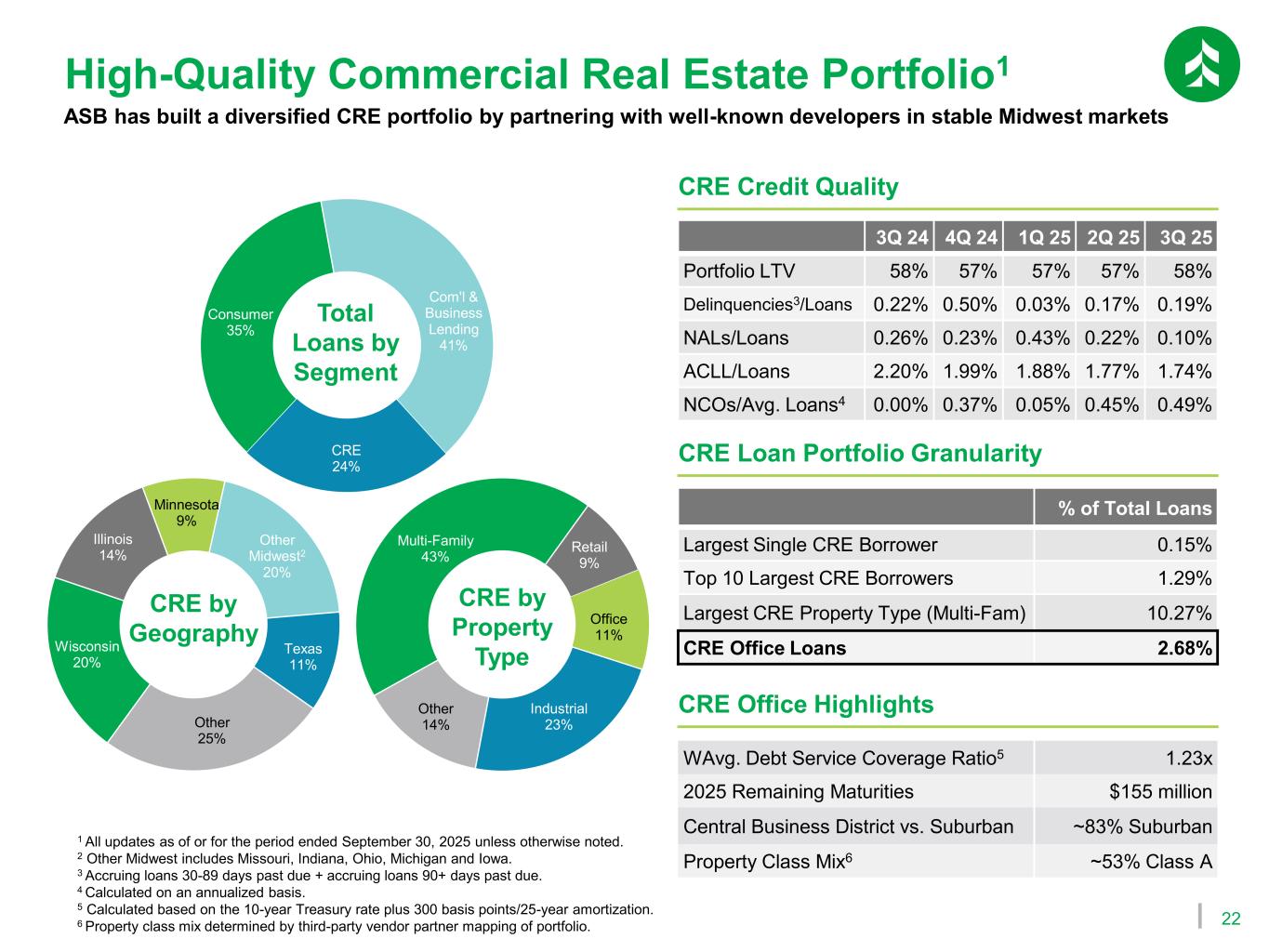
Yes, that's a great question. You described residential as a challenge. It is indeed a challenge in terms of balances, but it has its advantages as it runs off, and this is intentional. If rates were to decrease, they would need to drop significantly, say by 1% to 2%, given the current position for any substantial adjustment to occur. However, we are accounting for the decrease we're currently observing, which is part of our plan. The aspect that is perhaps a bit less predictable but anticipated is the commercial real estate (CRE) scenario. As rates decline, there should be some pent-up demand for pay downs, not only from us but across the industry, and we are forecasting that. It's uncertain whether this will take place in 90, 120, or 180 days. It might result in a short-term effect. Nevertheless, we have already returned to the market, and our production in commercial real estate has risen compared to the previous year. For example, we have recorded an increase of about $100 million in construction lending compared to last year. These are loans that will help counterbalance some of the effects in 2026. Therefore, while there could be a temporary influence if rates drop and our clients have the chance to refinance in the permanent market, I am not concerned through 2026 as we have positioned ourselves with additional lending to compensate for that. However, in the CRE sector, we could see faster changes if rates become more favorable.
Speaker 6
Got it. Okay, perfect. Following up on the previous question regarding the team and RM lists, during the third quarter, you mentioned the possibility of entering some new markets, specifically Oklahoma, Kansas City, and Denver. I believe the team lift in Kansas City has already been completed. As you consider expanding your footprint, are you leaning more towards organic growth, or is M&A a potential option in the future?
The focus remains strongly on organic growth. We believe we've demonstrated this successfully over the past year and are consistently adding to our progress. We aim to continue this trend into the fourth quarter. My experience over the last four and a half years has been centered around execution and opportunity. Any new initiatives must align with our expertise and capabilities. This approach will not change. Whether growth is organic or involves acquisitions, we will continue to assess opportunities in line with our established practices from the past five years.
Operator
Your next question comes from Jon Arfstrom with RBC Capital Markets.
Speaker 7
Andy, a question for you on the pipelines. When you talk about the lending pipeline increases, is that from new hires and market share gains? Or is it borrowers expanding and becoming more optimistic? Can you just kind of separate the two?
I don't believe it's related to the latter. The economy has been experiencing fluctuations, and there are forecasts suggesting a potentially slower GDP growth. However, we maintain that regardless of whether GDP is at 1.5%, 2%, or 2.5%, we are confident in our ability to grow. This confidence largely stems from the high-caliber individuals we've brought onto our team; these are top performers who could excel anywhere in the banking industry. By attracting such talent and providing them with the necessary tools, we are facilitating their ability to conduct business effectively. The majority of our progress can be attributed to our pipeline, and I am quite pleased to see production improving now. This is precisely what we've been anticipating, and we've observed steady progress each quarter. Overall, it is predominantly about our people.
Speaker 7
Okay. Good. Derek, one for you, just a follow-up on the margin. I appreciate Slide 8, but what is the message on the kind of the near-term margin outlook from here if we get a couple more cuts? You're talking about reducing asset sensitivity, but I'm wondering, are you signaling a little bit of a dip in the margin? Or do you think the mix shift is enough to keep the margin stable and moving higher?
I believe we have been very focused on maintaining stability. Generally, our remixing results in a small improvement in margins, and this has been consistent across many forecasts. There may be fluctuations in certain quarters due to unusual market behaviors, such as deposit pricing changes or shifts in the portfolio from payoffs or reversals. However, looking over a couple of quarters, the trend remains one of stability. I understand your concern regarding potential compression if there is a significant delay in repricing deposits. This is why I've been reflecting on our initial actions, customer responses, and any unusual market trends that could disrupt our course, but I haven't observed significant issues. While it is still early, I feel confident in our stable outlook moving forward.
Jon, I agree with everything Derek said, but I would also add that as we move from negative 2% to negative 1% to 0% household growth, and from 2.5% to 1% to 1.5%, we plan to continue that trend into next year. These are small incremental movements, but they represent the key operating accounts we are bringing in. This is crucial for managing our margins and funding sources. Looking ahead, we have more tools than ever before, whether it's our focus on wealth, the new product mix we plan to launch before year-end, or the expansion into verticals like HOA and title. These developments are significant and have not been part of our strategy before. With the growth in households and the addition of new capabilities, we believe we can maintain a stable or slightly improved position over the next several quarters, despite any changes in interest rates.
Operator
And your next question comes from Jared Shaw with Barclays.
Speaker 8
Tying into the margin, I guess it was this time last year that we got a little bit of an update on thoughts around beta on the deposits through the cycle. If we get the two cuts or if we get two more cuts this quarter, where do you see with the changes in the deposit base, where do you see that sort of cumulative beta moving from there?
Yes. I think the range I'm thinking about now is about 55% to 58%, I think that's a little bit better potential. I think last time, it was more like 55%, 56% to the cycle. So again, things look good. And I also think we get more confidence as we get closer to the additional verticals rolling out because it gives us more options on how to manage levers and handle the higher-priced accounts.
Speaker 8
Okay. Regarding the personnel expenses, you mentioned a few factors. As we look at the fourth quarter, should we expect the incentive compensation to be included in future numbers, or is it more of a one-time adjustment? How should we consider this?
The deferred compensation is primarily linked to market value. It should remain stable unless there are significant market fluctuations. We base it mostly on our forecasts, so as long as we adhere to our guidance, we expect it to stay at similar levels and not increase. However, we wouldn't mind if we exceed our guidance and have to adjust some of the compensation accordingly.
To build on that point, Jared, while you didn't specifically ask about our expectations for next year, it's often the follow-up question. We anticipate that our expense increase for 2026 will be under 25%. This year, we've been strategic in seizing opportunities to enhance revenue, returns, and operational efficiency. These factors are manageable, and we have already made plans for any outcome, even if the circumstances are not identical to what we experienced previously.
Speaker 8
Okay. All right. And then, Andy, I think in your comments, you mentioned something about a new deposit system or a system upgrade that can help drive maybe some incremental growth. Any details around that? And is that fully baked into the expense structure?
It is baked into the expense structure. The capability, really, it's a product enhancement first, on the wealth side that we expect to launch by the end of November that is substantial in the value proposition that we've had, which we've largely not built out before. So we focused on the consumer, growing that, mass affluent, growing that, commercial growing that, and it kind of meets at wealth management. So we believe that's one of the opportunities. The HOA title is a business where we have a very good team that's ready to go. They have helped us with what capabilities their customers require in detail. And so that will be an ongoing roadmap. We expect to launch something either by the end of the year, if not the first part of January, but then we think we'll have additional pieces in the second quarter and third quarter. That will be a priority for us. It won't raise the cost. We'll do that at the expense of something else that is not such a large opportunity for the bank.
Operator
And ladies and gentlemen, there are no further questions at this time. So I'll hand the floor back to Andy Harmening for closing remarks.
Well, look, we leave here pleased with the third quarter. We expect to land the plane in the fourth quarter and are optimistic about the fundamentals going into 2026. And as always, we appreciate your interest in Associated Bank.
Operator
Thank you. And with that, we conclude today's call. All parties may disconnect. Have a good day.